Skip to content

High-quality research proteins.

  • 1-800-805-6531

  • Mon - Sat 8.00-18.00, Sun - Closed

  • info@prospecbio.com

  • PO Box 6591 East Brunswick NJ 08816

  • Products
    • Cytokines
    • Growth factors
    • Chemokines
    • Cd antigens
    • Neurotrophins
    • Hormones
    • Enzymes
    • Viral antigens
    • Recombinant proteins
    • Natural proteins
    • Monoclonal antibodies
    • Polyclonal antibodies
    • Thermal Packaging
  • About
    • Company
    • Founder
    • Contribution
  • Customers
    • Eastern Asia
    • Eastern Europe
    • North America
    • South America
    • South East Asia
    • Southern Asia
    • Western Europe
  • Ordering
    • Ordering Method
    • Ordering - Credit Card
    • Ordering - PO
    • Shipping Fees
    • FAQs
  • Services
    • DNA Cloning
    • Protein Expression
    • Monoclonal Antibody
    • Fermentation
    • Technology License
  • Contact us
Log in

Country/region

  • USD $ | Albania
  • USD $ | Andorra
  • USD $ | Argentina
  • USD $ | Armenia
  • USD $ | Australia
  • USD $ | Austria
  • USD $ | Azerbaijan
  • USD $ | Belarus
  • USD $ | Belgium
  • USD $ | Bolivia
  • USD $ | Brazil
  • USD $ | Bulgaria
  • USD $ | Cambodia
  • USD $ | Canada
  • USD $ | Chile
  • USD $ | China
  • USD $ | Colombia
  • USD $ | Costa Rica
  • USD $ | Croatia
  • USD $ | Cyprus
  • USD $ | Czechia
  • USD $ | Denmark
  • USD $ | Estonia
  • USD $ | Finland
  • USD $ | France
  • USD $ | Georgia
  • USD $ | Germany
  • USD $ | Greece
  • USD $ | Hong Kong SAR
  • USD $ | Hungary
  • USD $ | Iceland
  • USD $ | India
  • USD $ | Ireland
  • USD $ | Israel
  • USD $ | Italy
  • USD $ | Japan
  • USD $ | Kazakhstan
  • USD $ | Latvia
  • USD $ | Liechtenstein
  • USD $ | Lithuania
  • USD $ | Madagascar
  • USD $ | Malta
  • USD $ | Mexico
  • USD $ | Moldova
  • USD $ | Monaco
  • USD $ | Netherlands
  • USD $ | New Zealand
  • USD $ | North Macedonia
  • USD $ | Norway
  • USD $ | Panama
  • USD $ | Paraguay
  • USD $ | Peru
  • USD $ | Philippines
  • USD $ | Poland
  • USD $ | Portugal
  • USD $ | Romania
  • USD $ | Singapore
  • USD $ | Slovakia
  • USD $ | Slovenia
  • USD $ | South Africa
  • USD $ | South Korea
  • USD $ | Spain
  • USD $ | Sri Lanka
  • USD $ | Sweden
  • USD $ | Switzerland
  • USD $ | Taiwan
  • USD $ | Thailand
  • USD $ | Türkiye
  • USD $ | Ukraine
  • USD $ | United Kingdom
  • USD $ | United States
  • USD $ | Uruguay
  • USD $ | Vatican City
  • USD $ | Venezuela
  • USD $ | Vietnam
  • Facebook
  • Instagram
logoProSpec - Recombinant Protein Manufacturer for academic and R&D industry
Become a distributor
Account Log in
Wishlist
Cart Cart(0)
  • Products
    +
    • Cytokines
    • Growth factors
    • Chemokines
    • Cd antigens
    • Neurotrophins
    • Hormones
    • Enzymes
    • Viral antigens
    • Recombinant proteins
    • Natural proteins
    • Monoclonal antibodies
    • Polyclonal antibodies
    • Thermal Packaging
  • About
    +
    • Company
    • Founder
    • Contribution
  • Customers
    +
    • Eastern Asia
    • Eastern Europe
    • North America
    • South America
    • South East Asia
    • Southern Asia
    • Western Europe
  • Ordering
    +
    • Ordering Method
    • Ordering - Credit Card
    • Ordering - PO
    • Shipping Fees
    • FAQs
  • Services
    +
    • DNA Cloning
    • Protein Expression
    • Monoclonal Antibody
    • Fermentation
    • Technology License
  • Contact us

Item added to your cart

View cart
View All
  • Cytokines
  • Growth factors
  • Chemokines
  • Cd antigens
  • Neurotrophins
  • Hormones
  • Enzymes
  • Viral antigens
  • Recombinant proteins
  • Natural proteins
  • Monoclonal antibodies
  • Polyclonal antibodies
  • Thermal Packaging
  • Tumor Necrosis Factor

    Tumor Necrosis Factor

    View All
  • 4-1BB

    4-1BB

    View All
  • Adiponectin

    Adiponectin

    View All
  • AIF1

    AIF1

    View All
  • Other Cytokines

    Other Cytokines

    View All
  • AITRL

    AITRL

    View All
  • Angiopoietin

    Angiopoietin

    View All
  • Apolipoprotein

    Apolipoprotein

    View All
  • B-Cell Activating Factor

    B-Cell Activating Factor

    View All
  • Beta Defensin

    Beta Defensin

    View All
  • Bone Morphogenetic Protein

    Bone Morphogenetic Protein

    View All
  • B type Natriuretic Peptide

    B type Natriuretic Peptide

    View All
  • BST

    BST

    View All
  • Betacellulin

    Betacellulin

    View All
  • Cardiotrophin

    Cardiotrophin

    View All
  • Activin

    Activin

    View All
  • Fibroblast Growth Factor

    Fibroblast Growth Factor

    View All
  • Other Growth Factors

    Other Growth Factors

    View All
  • CSF

    CSF

    View All
  • CTGF

    CTGF

    View All
  • IGFBP

    IGFBP

    View All
  • VEGF Protein

    VEGF Protein

    View All
  • EGF

    EGF

    View All
  • Epigen

    Epigen

    View All
  • Erythropoietin

    Erythropoietin

    View All
  • Insulin-Like Growth Factor

    Insulin-Like Growth Factor

    View All
  • Growth Hormone

    Growth Hormone

    View All
  • HDGF

    HDGF

    View All
  • Hepatocyte Growth Factor

    Hepatocyte Growth Factor

    View All
  • Insulin

    Insulin

    View All
  • BCA-1/ BLC (CXCL13)

    BCA-1/ BLC (CXCL13)

    View All
  • BRAK (CXCL14)

    BRAK (CXCL14)

    View All
  • C-10 (CCL6)

    C-10 (CCL6)

    View All
  • Other Chemokines

    Other Chemokines

    View All
  • MEC (CCL28)

    MEC (CCL28)

    View All
  • LD78-beta (CCL3L1)

    LD78-beta (CCL3L1)

    View All
  • CTACK (CCL27)

    CTACK (CCL27)

    View All
  • CXCL16

    CXCL16

    View All
  • CXCL17

    CXCL17

    View All
  • Platelet Factor-4 (CXCL4)

    Platelet Factor-4 (CXCL4)

    View All
  • ENA-78 (CXCL5)

    ENA-78 (CXCL5)

    View All
  • Eotaxin (CCL11,24,26)

    Eotaxin (CCL11,24,26)

    View All
  • Exodus-2 (CCL21)

    Exodus-2 (CCL21)

    View All
  • Fractalkine (CX3CL1)

    Fractalkine (CX3CL1)

    View All
  • CXCL6

    CXCL6

    View All
  • Other CD Antigens

    Other CD Antigens

    View All
  • CD14

    CD14

    View All
  • CD164

    CD164

    View All
  • CD1

    CD1

    View All
  • CD2

    CD2

    View All
  • CD200

    CD200

    View All
  • CD207

    CD207

    View All
  • CD226

    CD226

    View All
  • CD23

    CD23

    View All
  • CD244

    CD244

    View All
  • CD247

    CD247

    View All
  • CD27

    CD27

    View All
  • CD274

    CD274

    View All
  • CD300

    CD300

    View All
  • CD33

    CD33

    View All
  • Other Neurotrophins

    Other Neurotrophins

    View All
  • Beta-NGF

    Beta-NGF

    View All
  • BDNF

    BDNF

    View All
  • CDNF

    CDNF

    View All
  • CNTF

    CNTF

    View All
  • GDNF

    GDNF

    View All
  • Glia Maturation Factor

    Glia Maturation Factor

    View All
  • MANF

    MANF

    View All
  • Midkine

    Midkine

    View All
  • Neuroglobin

    Neuroglobin

    View All
  • Neurotrophic factors

    Neurotrophic factors

    View All
  • Neuregulin

    Neuregulin

    View All
  • Neuropilin

    Neuropilin

    View All
  • Pigment Epithelium-Derived Factor

    Pigment Epithelium-Derived Factor

    View All
  • Pleiotrophin

    Pleiotrophin

    View All
  • Peptide Hormones

    Peptide Hormones

    View All
  • Other Hormones

    Other Hormones

    View All
  • HCG

    HCG

    View All
  • Endothelin

    Endothelin

    View All
  • Exendin

    Exendin

    View All
  • FSH

    FSH

    View All
  • Glucagon

    Glucagon

    View All
  • GHRP

    GHRP

    View All
  • GLP

    GLP

    View All
  • Thyrostimulin

    Thyrostimulin

    View All
  • Inhibin A

    Inhibin A

    View All
  • LHRH

    LHRH

    View All
  • Melanotan

    Melanotan

    View All
  • Procalcitonin

    Procalcitonin

    View All
  • PTH

    PTH

    View All
  • Peroxiredoxin

    Peroxiredoxin

    View All
  • Peptidase

    Peptidase

    View All
  • Synthetase

    Synthetase

    View All
  • Transferase

    Transferase

    View All
  • Hydrolase

    Hydrolase

    View All
  • Dehydrogenase

    Dehydrogenase

    View All
  • ACE2

    ACE2

    View All
  • Esterase

    Esterase

    View All
  • Protein Kinases

    Protein Kinases

    View All
  • Other Enzymes

    Other Enzymes

    View All
  • Phosphatase

    Phosphatase

    View All
  • Deaminase

    Deaminase

    View All
  • Oxygenase

    Oxygenase

    View All
  • Adenylate Kinase

    Adenylate Kinase

    View All
  • Lyase

    Lyase

    View All
  • Chagas

    Chagas

    View All
  • SARS

    SARS

    View All
  • Influenza

    Influenza

    View All
  • ASFV

    ASFV

    View All
  • Astrovirus

    Astrovirus

    View All
  • Borrelia

    Borrelia

    View All
  • Helicobacter Pylori

    Helicobacter Pylori

    View All
  • Chikungunya

    Chikungunya

    View All
  • Chlamydia

    Chlamydia

    View All
  • Cytomegalo

    Cytomegalo

    View All
  • Dengue

    Dengue

    View All
  • EBV

    EBV

    View All
  • Ebola

    Ebola

    View All
  • Feline Leukemia Virus

    Feline Leukemia Virus

    View All
  • Hepatitis A

    Hepatitis A

    View All
  • Other

    Other

    View All
  • Actin

    Actin

    View All
  • ADAM

    ADAM

    View All
  • Complement Component

    Complement Component

    View All
  • Ag85

    Ag85

    View All
  • Eukaryotic Translation Initiation Factor

    Eukaryotic Translation Initiation Factor

    View All
  • Anterior Gradient Protein

    Anterior Gradient Protein

    View All
  • Heat Shock Protein

    Heat Shock Protein

    View All
  • Alpha-2-HS-Glycoprotein

    Alpha-2-HS-Glycoprotein

    View All
  • Hemoglobin

    Hemoglobin

    View All
  • Allergy

    Allergy

    View All
  • Anaplasma

    Anaplasma

    View All
  • Angiogenin

    Angiogenin

    View All
  • Ankyrin Repeat Domain

    Ankyrin Repeat Domain

    View All
  • Annexin

    Annexin

    View All
  • Other Natural Proteins

    Other Natural Proteins

    View All
  • Aprotinin

    Aprotinin

    View All
  • Transferrin

    Transferrin

    View All
  • Avidin

    Avidin

    View All
  • Anti Coagulation Factors

    Anti Coagulation Factors

    View All
  • Natural Albumin

    Natural Albumin

    View All
  • Natural Coagulation Factors

    Natural Coagulation Factors

    View All
  • Fibronectin

    Fibronectin

    View All
  • Thrombin

    Thrombin

    View All
  • Anti Human Enzyme

    Anti Human Enzyme

    View All
  • Other Monoclonal Antibodies

    Other Monoclonal Antibodies

    View All
  • Anti Human Cytokine

    Anti Human Cytokine

    View All
  • Anti Human Heat Shock Protein

    Anti Human Heat Shock Protein

    View All
  • Anti Mouse Lymphocyte

    Anti Mouse Lymphocyte

    View All
  • Anti Human Chemokine

    Anti Human Chemokine

    View All
  • Anti Human Lymphocyte

    Anti Human Lymphocyte

    View All
  • Anti Viral Monoclonal

    Anti Viral Monoclonal

    View All
  • Anti Mouse Cytokine

    Anti Mouse Cytokine

    View All
  • Anti-GST Monoclonal

    Anti-GST Monoclonal

    View All
  • Other Polyclonal Antibodies

    Other Polyclonal Antibodies

    View All
  • Anti Viral

    Anti Viral

    View All
  • Anti-GST Monoclonal

    Anti-GST Monoclonal

    View All
Back

Search results

1000 results found for “epiregulin”

Name

Description

Product #

Price

Quantity

Shipping Method

  • View Data Sheet

    Name :

    EPHB4 Human

    Description:

    EPH Receptor B4 Human Recombinant

    Tyrosine-Protein Kinase TYRO11, Hepatoma Transmembrane Kinase, TYRO11, MYK1, HTK, Ephrin Type-B Receptor, Tyrosine-Protein Kinase Receptor HTK.

    Product # :

    PRO-2592

    Price :

    Quantity :

    Shipping Method :

    Ice Icon

    Shipped with Ice Packs

    Add To Cart

    More Info

    • description
    • source
    • formulation
    • purity
    • More Info
    • Citations

    Description

    EPHB4 produced in Sf9 Baculovirus cells is a single, glycosylated polypeptide chain (16-539a.a.) and fused to an 8 aa His Tag at C-terminus containing a total of 532 amino acids and having a molecular mass of 58.1 kDa. EPHB4 shows multiple bands between 50-70kDa on SDS-PAGE, reducing conditions and purified by proprietary chromatographic techniques.

    Source

    Sf9, Baculovirus cells.

    Formulation

    EPHB4 protein solution (0.25mg/ml) contains Phosphate Buffered Saline (pH 7.4) & 10% glycerol.

    Purity

    Greater than 90.0% as determined by SDS-PAGE.

    Citations

    More Info

    • Introduction

      EPHB4 or Ephrin type-B receptor 4 is encoded by the EPHB4 gene in humans. The receptor and its ligands (the ephrins) take part in different developmental stages, mainly in the nervous system. EPHB4 and other Ephrin receptors are the biggest subgroup of the RTK receptors. EPHB4 binds to ephrin B2 and has a crucial part in the development of the vascular system.

    • Synonyms

      Tyrosine-Protein Kinase TYRO11, Hepatoma Transmembrane Kinase, TYRO11, MYK1, HTK, Ephrin Type-B Receptor, Tyrosine-Protein Kinase Receptor HTK.

    • Physical Appearance

      Sterile Filtered clear solution.

    • Stability

      Store at 4°C if entire vial will be used within 2-4 weeks. Store, frozen at -20°C for longer periods of time. For long term storage it is recommended to add a carrier protein (0.1% HSA or BSA).Avoid multiple freeze-thaw cycles.

    • Amino Acid Sequence

      LEETLLNTKL ETADLKWVTF PQVDGQWEEL SGLDEEQHSV RTYEVCDVQR APGQAHWLRT GWVPRRGAVH VYATLRFTML ECLSLPRAGRSCKETFTVFY YESDADTATA LTPAWMENPY IKVDTVAAEH LTRKRPGAEA TGKVNVKTLR LGPLSKAGFY LAFQDQGACM ALLSLHLFYK KCAQLTVNLT RFPETVPREL VVPVAGSCVV DAVPAPGPSP SLYCREDGQW AEQPVTGCSC APGFEAAEGN TKCRACAQGT FKPLSGEGSC QPCPANSHSN TIGSAVCQCR VGYFRARTDP RGAPCTTPPS APRSVVSRLN GSSLHLEWSA PLESGGREDL TYALRCRECR PGGSCAPCGG DLTFDPGPRD LVEPWVVVRG LRPDFTYTFE VTALNGVSSL ATGPVPFEPV NVTTDREVPP AVSDIRVTRS SPSSLSLAWA VPRAPSGAVL DYEVKYHEKG AEGPSSVRFL KTSENRAELR GLKRGASYLV QVRARSEAGY GPFGQEHHSQ TQLDESEGWR EQLAVEHHHH HH.

    ProSpec's products are furnished for LABORATORY RESEARCH USE ONLY. The product may not be used as drugs, agricultural or pesticidal products, food additives or household chemicals.

    Ephb4 Human
  • View Data Sheet

    Name :

    EFNA3 Human, Sf9

    Description:

    Ephrin A3 Human Recombinant, Sf9

    Ephrin-A3, EFL2, Ehk1-L, EPLG3, LERK3, EPH-related receptor tyrosine kinase ligand 3.

    Product # :

    PRO-2614

    Price :

    Quantity :

    Shipping Method :

    Ice Icon

    Shipped with Ice Packs

    Add To Cart

    More Info

    • description
    • source
    • formulation
    • purity
    • More Info
    • Citations

    Description

    EFNA3 Human Recombinant produced in Sf9 Baculovirus cells is a single, glycosylated polypeptide chain containing 434 amino acids (23-214aa) and having a molecular mass of 48.7kDaEFNA3 is fused to a 242 amino acid hIgG-His-Tag at C-terminus and purified by proprietary chromatographic techniques.

    Source

    Sf9, Baculovirus cells.

    Formulation

    The Fractalkine solution (0.5 mg/ml) contains 10% Glycerol and Phosphate Buffered Saline (pH 7.4).

    Purity

    Greater than 90.0% as determined by SDS-PAGE.

    Citations

    More Info

    • Introduction

      EFNA3 belongs to the ephrin (EPH) family. The ephrins and EPH-related receptors include thelargest subfamily of receptor protein-tyrosine kinases which have been implicated in mediating developmental events, especially in the nervous system and in erythropoiesis. Ephrins are divided into the ephrin-A (EFNA) class and the ephrin-B (EFNB) class, based on their structures and sequence relationships. The Ephrins from the EFNA class are anchored to the membrane by aglycosylphosphatidylinositol linkage, while the others from the EFNB class are transmembrane proteins.

    • Synonyms

      Ephrin-A3, EFL2, Ehk1-L, EPLG3, LERK3, EPH-related receptor tyrosine kinase ligand 3.

    • Physical Appearance

      Sterile Filtered colorless solution.

    • Stability

      Store at 4°C if entire vial will be used within 2-4 weeks. Store, frozen at -20°C for longer periods of time. For long term storage it is recommended to add a carrier protein (0.1% HSA or BSA).Avoid multiple freeze-thaw cycles.

    • Amino Acid Sequence

      ADPQGPGGAL GNRHAVYWNS SNQHLRREGY TVQVNVNDYL DIYCPHYNSS GVGPGAGPGP
      GGGAEQYVLY MVSRNGYRTC NASQGFKRWE CNRPHAPHSP IKFSEKFQRY SAFSLGYEFH
      AGHEYYYIST PTHNLHWKCL RMKVFVCCAS TSHSGEKPVP TLPQFTMGPN VKINVLEDFE
      GENPQVPKLE KSISGLEPKS CDKTHTCPPC PAPELLGGPS VFLFPPKPKD TLMISRTPEV
      TCVVVDVSHE DPEVKFNWYV DGVEVHNAKT KPREEQYNST YRVVSVLTVL HQDWLNGKEY
      KCKVSNKALP APIEKTISKA KGQPREPQVY TLPPSRDELT KNQVSLTCLV KGFYPSDIAV
      EWESNGQPEN NYKTTPPVLD SDGSFFLYSK LTVDKSRWQQ GNVFSCSVMH EALHNHYTQK SLSLSPGKHH
      HHHH

    ProSpec's products are furnished for LABORATORY RESEARCH USE ONLY. The product may not be used as drugs, agricultural or pesticidal products, food additives or household chemicals.

    Efna3 Protein
  • View Data Sheet

    Name :

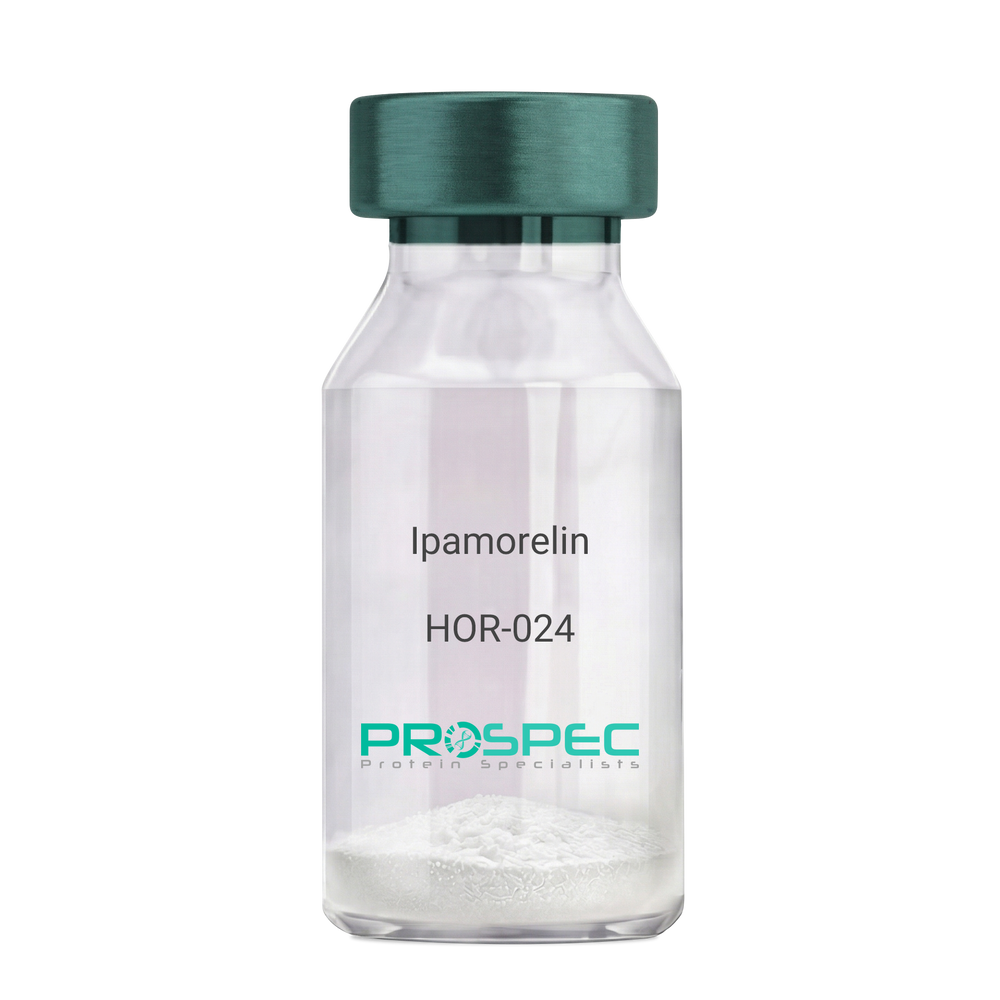
    Ipamorelin

    Description:

    Ipamorelin

    Ipamorelin

    Product # :

    HOR-024

    Price :

    Quantity :

    Shipping Method :

    Room Temp Icon

    Shipped at Room temp

    Add To Cart

    More Info

    • description
    • formulation
    • purity
    • More Info
    • Citations

    Description

    Ipamorelin Synthetic is a single, non-glycosylated polypeptide chain containing 4 amino acids, having a molecular mass of 711.85 Dalton and a Molecular formula of C38H49N9O5.

    Formulation

    The protein was lyophilized with no additives.

    Purity

    Greater than 97.0% as determined by analysis by RP-HPLC.

    Citations

    More Info

    • Introduction

      Ipamorelin is a peptide selective agonist of the ghrelin/growth hormone secretagogue receptor and a growth hormone secretagogue. Ipamorelin is a pentapeptide that was derived from GHRP1. Ipamorelin significantly increases plasma growth hormone levels in both animals and humans. Like pralmorelin and GHRP-6, ipamorelin does not affect prolactin, FSH, LH or TSH levels. However, unlike GHRP2 and GHRP6, but as growth hormone-releasing hormone (GHRH), ipamorelin does not stimulate the secretion of adrenocorticotropic hormone (ACTH) or cortisol, and is highly selective for inducing the secretion only of GH.

    • Synonyms

      Ipamorelin

    • Physical Appearance

      Sterile Filtered White lyophilized (freeze-dried) powder.

    • Stability

      Lyophilized Ipamorelin although stable at room temperature for 3 weeks, should be stored desiccated below -18°C. Upon reconstitution Ipamorelin should be stored at 4°C between 2-7 days and for future use below -18°C. For long term storage it is recommended to add a carrier protein (0.1% HSA or BSA). Please prevent freeze-thaw cycles.

    • Solubility

      It is recommended to reconstitute the lyophilized Ipamorelin in sterile 18MΩ-cm H2O not less than 100 µg/ml, which can then be further diluted to other aqueous solutions.

    • Amino Acid Sequence

      Aib-His-D-2-Nal-D-Phe-Lys-NH2.

    ProSpec's products are furnished for LABORATORY RESEARCH USE ONLY. The product may not be used as drugs, agricultural or pesticidal products, food additives or household chemicals.

    Ipamorelin
  • View Data Sheet

    Name :

    EFNB2 Human

    Description:

    Ephrin- B2 Human Recombinant

    Ephrin-B2, EPH-related receptor tyrosine kinase ligand 5, LERK-5, HTK ligand, HTK-L, EFNB2, EPLG5, HTKL, LERK5, MGC126226, MGC126227, MGC126228.

    Product # :

    PRO-937

    Price :

    Quantity :

    Shipping Method :

    Ice Icon

    Shipped with Ice Packs

    Add To Cart

    More Info

    • description
    • source
    • formulation
    • purity
    • More Info
    • Citations

    Description

    EFNB2 Human Recombinant produced in E.Coli is a single, non-glycosylated polypeptide chain containing 227 amino acids (28-229 a.a.) and having a molecular mass of 24.9kDa.EFNB2 is fused to a 25 amino acid His-tag at N-terminus & purified by proprietary chromatographic techniques.

    Source

    E.coli.

    Formulation

    EFNB2 protein solution (0.5mg/ml) containing 20mM Tris-HCl buffer (pH 8.0), 2mM DTT, 20% glycerol and 200mM NaCl.

    Purity

    Greater than 85% as determined by SDS-PAGE.

    Citations

    More Info

    • Introduction

      Ephrin-B2 belongs to the ephrin (EPH) family. The ephrins and EPH-related receptors contain the largest subfamily of receptor protein-tyrosine kinases and have been associated with mediating developmental events, particularly in the nervous system and in erythropoiesis. Based upon their structures and sequence relationships, ephrins are allocated into the ephrin-A (EFNA) class, which are anchored to the membrane by a glycosylphosphatidylinositol linkage, and the ephrin-B (EFNB) class, which are transmembrane proteins. Ephrin-B2 binds to the EPHB4 and EPHA3 receptors.

    • Synonyms

      Ephrin-B2, EPH-related receptor tyrosine kinase ligand 5, LERK-5, HTK ligand, HTK-L, EFNB2, EPLG5, HTKL, LERK5, MGC126226, MGC126227, MGC126228.

    • Physical Appearance

      Sterile Filtered colorless solution.

    • Stability

      Store at 4°C if entire vial will be used within 2-4 weeks. Store, frozen at -20°C for longer periods of time. For long term storage it is recommended to add a carrier protein (0.1% HSA or BSA).Avoid multiple freeze-thaw cycles.

    • Amino Acid Sequence

      MGSSHHHHHH SSGLVPRGSH MGSHMIVLEP IYWNSSNSKF LPGQGLVLYP QIGDKLDIIC PKVDSKTVGQ YEYYKVYMVD KDQADRCTIK KENTPLLNCA KPDQDIKFTI KFQEFSPNLW GLEFQKNKDY YIISTSNGSL EGLDNQEGGV CQTRAMKILM KVGQDASSAG STRNKDPTRR PELEAGTNGR SSTTSPFVKP NPGSSTDGNS AGHSGNNILG SEVALFA.

    ProSpec's products are furnished for LABORATORY RESEARCH USE ONLY. The product may not be used as drugs, agricultural or pesticidal products, food additives or household chemicals.

    Efnb2 Human
  • View Data Sheet

    Name :

    SCGN Rat

    Description:

    Secretagogin Rat Recombinant

    SCGN, EF-hand calcium binding protein, Setagin, SEGN, CALBL, Secretagogin.

    Product # :

    PRO-657

    Price :

    Quantity :

    Shipping Method :

    Room Temp Icon

    Shipped at Room temp

    Add To Cart

    More Info

    • description
    • source
    • formulation
    • purity
    • More Info
    • Citations

    Description

    Secretagogin Rat Recombinant produced in E.Coli is a single, non-glycosylated, polypeptide chain containing 286 amino acids and having a molecular mass of 33.3 kDa. The Rat SCGN is fused to a 10 a.a. His tag at N-Terminus.The protein’s amino acids sequence is identical to UniProtKB/Swiss-Prot entry Q6R556.The Rat SCGN is purified by proprietary chromatographic techniques.

    Source

    Escherichia Coli.

    Formulation

    The sterile filtered concentrated protein solution was lyophilized with 20mM Tris & 50mM NaCl pH-7.5.

    Purity

    Greater than 95% as determined by SDS-PAGE.

    Citations

    More Info

    • Introduction

      SCGN is a secreted calcium-binding protein which is found in the cytoplasm. It is related to calbindin D-28K and calretinin. Secretagogin is involved in KCL-stimulated calcium flux and cell proliferation.
      Secretagogin plays a role in human non-functional pituitary adenomas.

    • Synonyms

      SCGN, EF-hand calcium binding protein, Setagin, SEGN, CALBL, Secretagogin.

    • Physical Appearance

      Sterile Filtered White lyophilized (freeze-dried) powder.

    • Stability

      Store lyophilized protein at -20°C. Aliquot the product after reconstitution to avoid repeated freezing/thawing cycles. Reconstituted protein can be stored at 4°C for a limited period of time.

    • Solubility

      Add deionized water to a working concentration of 0.5mg/ml and let the lyophilized pellet dissolve completely.

    • Amino Acid Sequence

      MKHHHHHHAS MDNAHRQTQA HLDAACFWQI WQRFDKDEKG YIKETELDAF FDDLLAKFGI EDTLMEENVQ KMKEQLMVGH DISKEGRILM KELASMFLSE DENFLLFFRL ETPLDNSVEF MQIWRKYDAD SSGFISAAEL SNFLRDLFLH HKKVISEAEL EEYTSTMMKI FDRNKDGRLD LNDLARILAL QENFLLQFKM DASSTEERKR DFEKIFAHYD VSKTGALEGP EVDGFVKDMM ELVQPSISGV DLDKFREILL RHCDVNKDGK IQKSELALCLGLKINP.

    ProSpec's products are furnished for LABORATORY RESEARCH USE ONLY. The product may not be used as drugs, agricultural or pesticidal products, food additives or household chemicals.

    Scgn Rat
  • View Data Sheet

    Name :

    EPHA2 Antibody

    Description:

    EPH receptor A2, Mouse Anti Human

    EPH receptor A2, Ephrin type-A receptor 2, Tyrosine-protein kinase receptor ECK, Epithelial cell kinase, EPHA2, ECK, ARCC2.

    Product # :

    ANT-425

    Price :

    Quantity :

    Shipping Method :

    Ice Icon

    Shipped with Ice Packs

    Add To Cart

    More Info

    • formulation
    • More Info
    • Citations

    Formulation

    1mg/ml containing PBS, pH-7.4, & 0.1% Sodium Azide.

    Citations

    More Info

    • Introduction

      EPHA2 is a member of the ephrin receptor subfamily of the protein-tyrosine kinase family. EPH and EPH-related receptors are implicated in mediating developmental events, particularly in the nervous system. Receptors in the EPH subfamily typically have a single kinase domain and an extracellular region containing a Cys-rich domain and 2 fibronectin type III repeats. The ephrin receptors are divided into two groups based on the similarity of their extracellular domain sequences and their affinities for binding ephrin-A and ephrin-B ligands. The EPHA2 gene encodes a protein that binds ephrin-A ligands. Mutations in the EPHA2 gene are the origin of certain genetically-related cataract disorders.

    • Synonyms

      EPH receptor A2, Ephrin type-A receptor 2, Tyrosine-protein kinase receptor ECK, Epithelial cell kinase, EPHA2, ECK, ARCC2.

    • Immunogen

      Anti-human EPHA2 mAb, is derived from hybridization of mouse F0 myeloma cells with spleen cells from BALB/c mice immunized with recombinant human EPHA2 amino acids 1-154 purified from E. coli.

    • Ig Subclass

      Mouse IgG2b heavy chain and κ light chain.

    • Clone

      P3D7AT.

    • Applications

      EPHA2 antibody has been tested by ELISA, Western blot and immunohistochemistry analysis to assure specificity and reactivity. Since application varies, however, each investigation should be titrated by the reagent to obtain optimal results. Recommended dilution range for Western blot is 1:500 ~ 1:2,000 and immunohistochemistry analysis is 1:100~200. Recommended starting dilution for Western blot is 1:500 and Immunohistochemistry is 1:100.

    • Type

      Mouse Anti Human Monoclonal.

    • Storage Procedures

      For periods up to 1 month store at 4°C, for longer periods of time, store at -20°C. Prevent freeze thaw cycles.

    • Purification Method

      EPHA2 antibody was purified from mouse ascitic fluids by protein-G affinity chromatography.

    ProSpec's products are furnished for LABORATORY RESEARCH USE ONLY. The product may not be used as drugs, agricultural or pesticidal products, food additives or household chemicals.

    Epha2 Antibody
  • View Data Sheet

    Name :

    EPHA2 Human, sf9

    Description:

    EPH Receptor A2 Human Recombinant, sf9

    EPHA2, ARCC2, CTPA, CTPP1, CTRCT6, ECK, EPHA2, sf9, EPH Receptor A2, sf9, Ephrin type-A receptor 2.

    Product # :

    PRO-2332

    Price :

    Quantity :

    Shipping Method :

    Ice Icon

    Shipped with Ice Packs

    Add To Cart

    More Info

    • description
    • source
    • formulation
    • purity
    • More Info
    • Citations

    Description

    EPHA2 Human Recombinant produced in Sf9 Baculovirus cells is a single, glycosylated polypeptide chain containing 520 amino acids (27-537) and having a molecular mass of 57.3kDa (Molecular size on SDS-PAGE will appear at approximately 50-70kDa).EPHA2 is fused to 6 amino acid His-Tag at C-terminus and purified by proprietary chromatographic techniques.

    Source

    Sf9, Baculovirus cells.

    Formulation

    EPHA2 protein solution (0.5mg/ml) containing Phosphate Buffered Saline (pH 7.4) and 10% glycerol.

    Purity

    Greater than 95.0% as determined by analysis by SDS-PAGE.

    Citations

    More Info

    • Introduction

      EPH Receptor A2 (EPHA2) is a member of the ephrin receptor subfamily of the protein-tyrosine kinase family. EPHA2 is a protein which binds ephrin-A ligands. EPH and EPH-related receptors are associated with mediating developmental events, particularly in the nervous system. Receptors in the EPH subfamily normally have a single kinase domain and an extracellular region containing a Cys-rich domain and 2 fibronectin type III repeats. The ephrin receptors are divided into two groups based on the similarity of their extracellular domain sequences and their affinities for binding ephrin-A and ephrin-B ligands. EPHA2 gene mutations are the cause of certain genetically-related cataract disorders.

    • Synonyms

      EPHA2, ARCC2, CTPA, CTPP1, CTRCT6, ECK, EPHA2, sf9, EPH Receptor A2, sf9, Ephrin type-A receptor 2.

    • Physical Appearance

      Sterile Filtered clear solution.

    • Stability

      Store at 4°C if entire vial will be used within 2-4 weeks. Store, frozen at -20°C for longer periods of time. For long term storage it is recommended to add a carrier protein (0.1% HSA or BSA).Avoid multiple freeze-thaw cycles.

    • Amino Acid Sequence

      ADPKEVVLLD FAAAGGELGW LTHPYGKGWD LMQNIMNDMP IYMYSVCNVM SGDQDNWLRT NWVYRGEAER IFIELKFTVR DCNSFPGGAS SCKETFNLYY AESDLDYGTN FQKRLFTKID TIAPDEITVS SDFEARHVKL NVEERSVGPL TRKGFYLAFQ DIGACVALLS VRVYYKKCPE LLQGLAHFPE TIAGSDAPSL ATVAGTCVDH AVVPPGGEEP RMHCAVDGEW LVPIGQCLCQ AGYEKVEDAC QACSPGFFKF EASESPCLEC PEHTLPSPEG ATSCECEEGF FRAPQDPASM PCTRPPSAPH YLTAVGMGAK VELRWTPPQD SGGREDIVYS VTCEQCWPES GECGPCEASV RYSEPPHGLT RTSVTVSDLE PHMNYTFTVE ARNGVSGLVT SRSFRTASVS INQTEPPKVR LEGRSTTSLS VSWSIPPPQQ SRVWKYEVTY RKKGDSNSYN VRRTEGFSVT LDDLAPDTTY LVQVQALTQE GQGAGSKVHE FQTLSPEGSG NLAVHHHHHH.

    ProSpec's products are furnished for LABORATORY RESEARCH USE ONLY. The product may not be used as drugs, agricultural or pesticidal products, food additives or household chemicals.

    Epha2 Human Sf9
  • View Data Sheet

    Name :

    EPHB4 Mouse

    Description:

    EPH Receptor B4 Mouse Recombinant

    Ephrin type-B receptor 4 (EC:2.7.10.1), Developmental kinase 2, mDK-2, Hepatoma transmembrane kinase, Tyrosine kinase MYK-1, Ephb4, Htk, Mdk2, Myk1.

    Product # :

    PRO-2344

    Price :

    Quantity :

    Shipping Method :

    Ice Icon

    Shipped with Ice Packs

    Add To Cart

    More Info

    • description
    • source
    • formulation
    • purity
    • More Info
    • Citations

    Description

    EPHB4 Mouse Recombinant produced in Sf9 Baculovirus cells is a single, glycosylated polypeptide chain containing 532 amino acids (16-539 a.a.) and having a molecular mass of 58.7kDa (Migrates at 50-70kDa on SDS-PAGE under reducing conditions).EPHB4 is expressed with an 8 amino acid His tag at C-Terminus and purified by proprietary chromatographic techniques.

    Source

    Sf9, Baculovirus cells.

    Formulation

    EPHB4 protein solution (0.25mg/ml) contains Phosphate Buffered Saline (pH 7.4) and 10% glycerol.

    Purity

    Greater than 85.0% as determined by analysis by SDS-PAGE.

    Citations

    More Info

    • Introduction

      Ephrin type-B receptor 4 isoform b (Ephb4) belongs to the Eph receptor tyrosine kinase family which functions in neuronal guidance and mediate venal/arterial separation. EPHB4-mediated forward signaling regulates cellular repulsion and segregation form EFNB2-expressing cells. Furthermore, Ephb4 has a role in postnatal blood vessel remodeling, morphogenesis and permeability and is therefore essential in the context of tumor angiogenesis.

    • Synonyms

      Ephrin type-B receptor 4 (EC:2.7.10.1), Developmental kinase 2, mDK-2, Hepatoma transmembrane kinase, Tyrosine kinase MYK-1, Ephb4, Htk, Mdk2, Myk1.

    • Physical Appearance

      Sterile Filtered clear solution.

    • Stability

      Store at 4°C if entire vial will be used within 2-4 weeks. Store, frozen at -20°C for longer periods of time. For long term storage it is recommended to add a carrier protein (0.1% HSA or BSA).Avoid multiple freeze-thaw cycles.

    • Amino Acid Sequence

      LEETLLNTKLETADLKWVTYPQAEGQWEELSGLDEEQHSVRTYEVCDMKRPGGQAHWLRT
      GWVPRRGAVHVYATIRFTMMECLSLPRASRSCKETFTVFYYESEADTATAHTPAWMENPY
      IKVDTVAAEHLTRKRPGAEATGKVNIKTLRLGPLSKAGFYLAFQDQGACMALLSLHLFYK
      KCSWLITNLTYFPETVPRELVVPVAGSCVANAVPTANPSPSLYCREDGQWAEQQVTGCSC
      APGYEAAESNKVCRACGQGTFKPQIGDESCLPCPANSHSNNIGSPVCLCRIGYYRARSDP
      RSSPCTTPPSAPRSVVHHLNGSTLRLEWSAPLESGGREDLTYAVRCRECRPGGSCLPCGG
      DMTFDPGPRDLVEPWVAIRGLRPDVTYTFEVAALNGVSTLATGPPPFEPVNVTTDREVPP
      AVSDIRVTRSSPSSLILSWAIPRAPSGAVLDYEVKYHEKGAEGPSSVRFLKTSENRAELR
      GLKRGASYLVQVRARSEAGYGPFGQEHHSQTQLDESESWREQLAVEHHHHHH.

    ProSpec's products are furnished for LABORATORY RESEARCH USE ONLY. The product may not be used as drugs, agricultural or pesticidal products, food additives or household chemicals.

    Ephb4 Mouse
  • View Data Sheet

    Name :

    SRGN Human, HEK

    Description:

    Serglycin Human Recombinant, HEK

    Serglycin, PRG, PRG1, PPG, Proteoglycan 1 secretory granule, Hematopoetic proteoglycan core protein, Platelet proteoglycan core protein, proteoglycan protein core for mast cell secretory granule.

    Product # :

    PRO-2046

    Price :

    Quantity :

    Shipping Method :

    Ice Icon

    Shipped with Ice Packs

    Add To Cart

    More Info

    • description
    • source
    • formulation
    • purity
    • More Info
    • Citations

    Description

    Serglycin Human Recombinant produced in HEK cells is a single, glycosylated, polypeptide chain (Tyr28-Leu158) containing a total of 137 amino acids, having a calculated molecular mass of 15.5kDa and fused to a 6 aa His tag at C-Terminus.

    Source

    HEK 293.

    Formulation

    SRGN filtered (0.4µm) solution in phosphate buffered saline and 20% (w/v) glycerol.

    Purity

    Greater than 95.0% as determined by SDS-PAGE.

    Citations

    More Info

    • Introduction

      SRGN is identified as a hematopoietic cell granule proteoglycan. Proteoglycans stored in the secretory granules of various hematopoietic cells also hold a protease-resistant peptide core, and is vital for neutralizing hydrolytic enzymes. SRGN is related to the macromolecular complex of granzymes and perforin that acts as a intermediary of granule-mediated apoptosis.

    • Synonyms

      Serglycin, PRG, PRG1, PPG, Proteoglycan 1 secretory granule, Hematopoetic proteoglycan core protein, Platelet proteoglycan core protein, proteoglycan protein core for mast cell secretory granule.

    • Physical Appearance

      Filtered colorless solution.

    • Stability

      Store at 4°C if entire vial will be used within 2-4 weeks. Store, frozen at -20°C for longer periods of time. For long term storage it is recommended to add a carrier protein (0.1% HSA or BSA).Avoid multiple freeze-thaw cycles.

    • Amino Acid Sequence

      YPTRRARYQW VRCNPDSNSA NCLEEKGPMF ELLPGESNKI PRLRTDLFPK TRIQDLNRIF PLSEDYSGSG FGSGSGSGSG SGSGFLTEME QDYQLVDESD AFHDNLRSLD RNLPSDSQDL GQHGLEEDFM L HHHHHH.

    ProSpec's products are furnished for LABORATORY RESEARCH USE ONLY. The product may not be used as drugs, agricultural or pesticidal products, food additives or household chemicals.

    Srgn Human Hek
  • View Data Sheet

    Name :

    EFNB3 Human

    Description:

    Ephrin- B3 Human Recombinant

    Ephrin-B3, EPH-related receptor transmembrane ligand ELK-L3, EPH-related receptor tyrosine kinase ligand 8, LERK-8, EFNB3, EPLG8, LERK8, EFL6.

    Product # :

    PRO-1169

    Price :

    Quantity :

    Shipping Method :

    Ice Icon

    Shipped with Ice Packs

    Add To Cart

    More Info

    • description
    • source
    • formulation
    • purity
    • More Info
    • Citations

    Description

    EFNB3 Human Recombinant produced in E.Coli is a single, non-glycosylated polypeptide chain containing 224 amino acids (28-226 a.a) and having a molecular mass of 24.6kDa.EFNB3 is fused to a 25 amino acid His-tag at N-terminus & purified by proprietary chromatographic techniques.

    Source

    E.coli.

    Formulation

    EFNB3 protein solution (1mg/ml) containing 20mM Tris-HCl buffer (pH8.0), 20% glycerol, 0.1M NaCl and 2M urea.

    Purity

    Greater than 90% as determined by SDS-PAGE.

    Citations

    More Info

    • Introduction

      Ephrin-B3 (EFNB3) which belongs to the ephrin gene family is essential in brain development as well as in its maintenance. EFNB3 binds to, and induces the collapse of, commissural axons/growth cones in vitro. EFNB3 loosely binds Eph receptors located on bordering cells, leading to contact-dependent bidirectional signaling into neighboring cells. The EPH and EPH-related receptors comprise the largest subfamily of receptor protein-tyrosine kinases and are implicated in mediating developmental events, mostly in the nervous system.

    • Synonyms

      Ephrin-B3, EPH-related receptor transmembrane ligand ELK-L3, EPH-related receptor tyrosine kinase ligand 8, LERK-8, EFNB3, EPLG8, LERK8, EFL6.

    • Physical Appearance

      Sterile Filtered colorless solution.

    • Stability

      Store at 4°C if entire vial will be used within 2-4 weeks. Store, frozen at -20°C for longer periods of time. For long term storage it is recommended to add a carrier protein (0.1% HSA or BSA).Avoid multiple freeze-thaw cycles.

    • Amino Acid Sequence

      MGSSHHHHHH SSGLVPRGSH MGSHMLSLEP VYWNSANKRF QAEGGYVLYP QIGDRLDLLC PRARPPGPHS SPNYEFYKLY LVGGAQGRRC EAPPAPNLLL TCDRPDLDLR FTIKFQEYSP NLWGHEFRSH HDYYIIATSD GTREGLESLQ GGVCLTRGMK VLLRVGQSPR GGAVPRKPVS EMPMERDRGA AHSLEPGKEN LPGDPTSNAT SRGAEGPLPP PSMP.

    ProSpec's products are furnished for LABORATORY RESEARCH USE ONLY. The product may not be used as drugs, agricultural or pesticidal products, food additives or household chemicals.

    Efnb3 Human
  • View Data Sheet

    Name :

    EPHB2 Human

    Description:

    EPH Receptor B2 Human Recombinant

    EPHB2, CAPB, DRT, EK5, EPHT3, ERK, Hek5, PCBC, Tyro5, Developmentally-regulated Eph-related tyrosine kinase, ELK-related tyrosine kinase, EPH tyrosine kinase 3, EPH-like kinase 5, hEK5, Renal carcinoma antigen NY-REN-47, Tyrosine-protein kinase TYRO5, Tyrosine-protein kinase receptor EPH-3.

    Product # :

    PRO-2379

    Price :

    Quantity :

    Shipping Method :

    Ice Icon

    Shipped with Ice Packs

    Add To Cart

    More Info

    • description
    • source
    • formulation
    • purity
    • More Info
    • Citations

    Description

    EPHB2 Human Recombinant produced in Sf9 Baculovirus cells is a single, glycosylated polypeptide chain containing 533 amino acids (19-543a.a) and having a molecular mass of 59.1kDa (Molecular size on SDS-PAGE will appear at approximately 50-70kDa). EPHB2 is fused to a 8 amino acid His-tag at C-terminus & purified by proprietary chromatographic techniques.

    Source

    Sf9, Baculovirus cells.

    Formulation

    EPHB2 protein solution (0.5mg/ml) containing Phosphate Buffered Saline (pH 7.4), 1mM DTT and 20% glycerol.

    Purity

    Greater than 90% as determined by SDS-PAGE.

    Citations

    More Info

    • Introduction

      EPH Receptor B2 (EPHB2) is a part of the transmembrane Eph receptor tyrosine kinase family (RTKs) which binds proteins of the Ephrin family on adjacent cells. The interaction leads to contact-dependent bidirectional signaling into neighboring cells. Hippocampal neurons can release vesicles containing full length EPHB2, and these are taken up by neighboring glial cells. EPHB2 takes part in the guidance of commissural axons through the embryonic midline and regulates dendritic spines development and maturation and stimulates the formation of excitatory synapses.

    • Synonyms

      EPHB2, CAPB, DRT, EK5, EPHT3, ERK, Hek5, PCBC, Tyro5, Developmentally-regulated Eph-related tyrosine kinase, ELK-related tyrosine kinase, EPH tyrosine kinase 3, EPH-like kinase 5, hEK5, Renal carcinoma antigen NY-REN-47, Tyrosine-protein kinase TYRO5, Tyrosine-protein kinase receptor EPH-3.

    • Physical Appearance

      Sterile Filtered colorless solution.

    • Stability

      Store at 4°C if entire vial will be used within 2-4 weeks. Store, frozen at -20°C for longer periods of time. For long term storage it is recommended to add a carrier protein (0.1% HSA or BSA).Avoid multiple freeze-thaw cycles.

    • Amino Acid Sequence

      VEETLMDSTT ATAELGWMVH PPSGWEEVSG YDENMNTIRT YQVCNVFESS QNNWLRTKFI RRRGAHRIHV EMKFSVRDCS SIPSVPGSCK ETFNLYYYEA DFDSATKTFP NWMENPWVKV DTIAADESFS QVDLGGRVMK INTEVRSFGP VSRSGFYLAF QDYGGCMSLI AVRVFYRKCP RIIQNGAIFQ ETLSGAESTS LVAARGSCIA NAEEVDVPIK LYCNGDGEWL VPIGRCMCKA GFEAVENGTV CRGCPSGTFK ANQGDEACTH CPINSRTTSE GATNCVCRNG YYRADLDPLD MPCTTIPSAP QAVISSVNET SLMLEWTPPR DSGGREDLVY NIICKSCGSG RGACTRCGDN VQYAPRQLGL TEPRIYISDL LAHTQYTFEI QAVNGVTDQS PFSPQFASVN ITTNQAAPSA VSIMHQVSRT VDSITLSWSQ PDQPNGVILD YELQYYEKEL SEYNATAIKS PTNTVTVQGL KAGAIYVFQV RARTVAGYGR YSGKMYFQTM TEAEYQTSIQ EKLPLLEHHH HHH.

    ProSpec's products are furnished for LABORATORY RESEARCH USE ONLY. The product may not be used as drugs, agricultural or pesticidal products, food additives or household chemicals.

    Ephb2 Human
  • View Data Sheet

    Name :

    EGF Mouse, Biotin

    Description:

    Epidermal Growth Factor Mouse Recombinant, Biotin

    Urogastrone, URG, EGF.

    Product # :

    CYT-841

    Price :

    Quantity :

    Shipping Method :

    Ice Icon

    Shipped with Ice Packs

    Add To Cart

    More Info

    • description
    • source
    • formulation
    • purity
    • biological activity
    • More Info
    • Citations

    Description

    EGF Mouse Recombinant, Biotin produced in E.Coli is a non-glycosylated polypeptide chain containing 61 amino acids and having a total molecular mass of 7.0kDa. This version of EGF has a N terminal leader sequence hosting a biotin conjugation. There are 0.5 biotins for each EGF protein.

    Source

    Escherichia Coli.

    Formulation

    The protein (0.5mg/ml) solution contains sterile PBS.

    Purity

    Greater than 95.0% as determined by analysis by SDS-PAGE.

    Biological Activity

    The ED50 as determined by the dose-dependent proliferation of mouse BALB/c 3T3 cells is 0.14-0.2ng/ml, corresponding to a specific activity of 7.1x10⁶units/mg.

    Citations

    More Info

    • Introduction

      Epidermal growth factor has a profound effect on the differentiation of specific cells in vivo and is a potent mitogenic factor for a variety of cultured cells of both ectodermal and mesodermal origin. The EGF precursor is believed to exist as a membrane-bound molecule which is proteolytically cleaved to generate the 53-amino acid peptide hormone that stimulates cells to divide. EGF stimulates the growth of various epidermal and epithelial tissues in vivo and in vitro and of some fibroblasts in cell culture.

    • Synonyms

      Urogastrone, URG, EGF.

    • Physical Appearance

      Sterile Filtered clear solution.

    • Stability

      Should be stored at 4°C.Please do not freeze.

    • Amino Acid Sequence

      MKKIDDDKNS YPGCPSSYDG YCLNGGVCMH IESLDSYTCN CVIGYSGDRC QTRDLEWWEL R.

    • Background

      Synergistic Explorations: Epidermal Growth Factor Mouse Recombinant and Biotin Conjugation for Enhanced Therapeutic Potential

      Abstract:

      This research paper delves into the innovative convergence of Epidermal Growth Factor Mouse Recombinant (EGF-MR) and biotin conjugation, unraveling their intricate interplay, molecular attributes, and therapeutic implications. By employing cutting-edge methodologies involving protein engineering, conjugation chemistry, and cellular assays, this study uncovers the augmented cellular responses driven by EGF-MR-biotin complex. The findings highlight a novel avenue for tailored regenerative medicine and targeted therapy.

      Introduction:

      Epidermal Growth Factor (EGF) governs pivotal cellular processes. This paper navigates the unexplored realm of Epidermal Growth Factor Mouse Recombinant (EGF-MR) in synergy with biotin conjugation, elucidating their combined molecular attributes and therapeutic potential.

      Protein Engineering and Biotin Conjugation:

      EGF-MR is strategically engineered to enable biotin conjugation, a process that enhances targeting and delivery. This paper delves into site-specific modification approaches, ensuring precise and controlled conjugation of biotin moieties to EGF-MR.

      Cellular Signaling Amplification:

      The EGF receptor (EGFR) activation triggers cascades of intracellular events. Structural studies and binding kinetics illuminate how the biotin-conjugated EGF-MR modulates EGFR interactions, amplifying downstream signaling pathways like the MAPK and PI3K/Akt cascades.

      Cellular Assays and Functional Responses:

      In vitro cellular assays, encompassing cell proliferation and migration studies, elucidate the effect of EGF-MR-biotin complex on cellular responses. Live-cell imaging techniques reveal enhanced cell motility and survival, underpinning the potential therapeutic impact.

      Tailored Delivery Strategies:

      The biotin-avidin interaction offers a strategic avenue for targeted drug delivery. Employing this interaction, EGF-MR-biotin complex can be directed to specific cell types, revolutionizing precision medicine and enabling tailored therapeutic interventions.

      Regenerative Medicine and Targeted Therapy:

      The augmented cellular responses initiated by EGF-MR-biotin complex hold significant promise. In regenerative medicine, the complex's potential to accelerate tissue regeneration becomes evident. Furthermore, in targeted therapy, the complex's enhanced cellular uptake offers a novel approach to modulate tumor microenvironments.

      Future Prospects and Challenges:

      While transformative, challenges persist, including optimizing conjugation efficiency and unraveling long-term effects. Future research should focus on refining delivery strategies and conducting comprehensive long-term studies to harness the full therapeutic potential.

      Conclusion:

      In a convergence of ingenious methodologies and visionary therapeutic approaches, the synergy between Epidermal Growth Factor Mouse Recombinant and biotin emerges as a captivating frontier. The molecular marriage between EGF-MR and biotin not only amplifies cellular responses but also opens doors for targeted interventions and precision therapies, revolutionizing the landscape of medical advancements.

      What is the molecular weight/Mw of MEGF, BIOTIN Protein?
      MEGF, BIOTIN Protein has a total Mw of 7kDa.

      What is the source or expression system of MEGF, BIOTIN Protein?
      Escherichia Coli.

      What is the Purity of MEGF, BIOTIN Protein?
      MEGF, BIOTIN Protein is >95% pure as determined by SDS-PAGE.

      What is the Biological Activity of MEGF, BIOTIN Protein?
      The ED50 as determined by the dose-dependent proliferation of mouse BALB/c 3T3 cells is 0.14-0.2ng/ml, corresponding to a specific activity of 7.1x10⁶units/mg.

      What is the amino acid sequence of MEGF, BIOTIN Protein?
      MKKIDDDKNS YPGCPSSYDG YCLNGGVCMH IESLDSYTCN CVIGYSGDRC QTRDLEWWEL R.

      What applications can MEGF, BIOTIN Protein be used in?
      MEGF, BIOTIN Protein can probably be used in western blot, ELISA and Lateral Flow.

      What is the endotoxin level for MEGF, BIOTIN Protein?
      The endotoxin level is minimal, MEGF, BIOTIN Protein was purified using conventional chromatography techniques.

    ProSpec's products are furnished for LABORATORY RESEARCH USE ONLY. The product may not be used as drugs, agricultural or pesticidal products, food additives or household chemicals.

    Egf Mouse Biotin
  • View Data Sheet

    Name :

    EPCAM Human

    Description:

    Epithelial Cell Adhesion Molecule Human Recombinant

    Epithelial cell adhesion molecule, Ep-CAM, Adenocarcinoma-associated antigen, Cell surface glycoprotein Trop-1, Epithelial cell surface antigen, Epithelial glycoprotein, EGP, Epithelial glycoprotein 314, EGP314, hEGP314, KS 1/4 antigen, KSA, Major gastrointestinal tumor-associated protein GA733-2, Tumor-associated calcium signal transducer 1, CD326, EPCAM, GA733-2, M1S2, M4S1, MIC18, TACSTD1, TROP1, ESA, MK-1, DIAR5, EGP-2, EGP40, KS1/4, HNPCC8.

    Product # :

    PRO-1322

    Price :

    Quantity :

    Shipping Method :

    Ice Icon

    Shipped with Ice Packs

    Add To Cart

    More Info

    • description
    • source
    • formulation
    • purity
    • More Info
    • Citations

    Description

    EPCAM Human Recombinant produced in E.Coli is a single, non-glycosylated polypeptide chain containing 267 amino acids (24-265 a.a.) and having a molecular mass of 30.1kDa.EPCAM is fused to a 25 amino acid His-tag at N-terminus & purified by proprietary chromatographic techniques.

    Source

    Escherichia Coli.

    Formulation

    EPCAM protein solution (1mg/ml) containing 20mM Tris-HCl buffer (pH 8.0), 0.4M urea and 10% glycerol.

    Purity

    Greater than 85.0% as determined by SDS-PAGE.

    Citations

    More Info

    • Introduction

      EPCAM is a carcinoma-associated antigen and belongs to a family which includes at least 2 type I membrane proteins. The EPCAM protein has a role in embryonic stem cells proliferation and differentiation. EPCAM is used as a target for immunotherapy treatment of human carcinomas. EPCAM is expressed on most normal epithelial cells and gastrointestinal carcinomas and acts as a homotypic calcium-independent cell adhesion molecule. Epithelial cell adhesion molecules (EPCAM) can act as a physical homophilic interaction molecule between intestinal epithelial cells (IECs) and intraepithelial lymphocytes (IELs) at the mucosal epithelium for supplying immunological barrier as a first line of defense against mucosal infection. EPCAM gene mutations result in congenital tufting enteropathy.

    • Synonyms

      Epithelial cell adhesion molecule, Ep-CAM, Adenocarcinoma-associated antigen, Cell surface glycoprotein Trop-1, Epithelial cell surface antigen, Epithelial glycoprotein, EGP, Epithelial glycoprotein 314, EGP314, hEGP314, KS 1/4 antigen, KSA, Major gastrointestinal tumor-associated protein GA733-2, Tumor-associated calcium signal transducer 1, CD326, EPCAM, GA733-2, M1S2, M4S1, MIC18, TACSTD1, TROP1, ESA, MK-1, DIAR5, EGP-2, EGP40, KS1/4, HNPCC8.

    • Physical Appearance

      Sterile Filtered colorless solution.

    • Stability

      Store at 4°C if entire vial will be used within 2-4 weeks. Store, frozen at -20°C for longer periods of time. For long term storage it is recommended to add a carrier protein (0.1% HSA or BSA).Avoid multiple freeze-thaw cycles.

    • Amino Acid Sequence

      MGSSHHHHHH SSGLVPRGSH MGSHMQEECV CENYKLAVNC FVNNNRQCQC TSVGAQNTVI CSKLAAKCLV MKAEMNGSKL GRRAKPEGALQNNDGLYDPD CDESGLFKAK QCNGTSMCWC VNTAGVRRTD KDTEITCSER VRTYWIIIEL KHKAREKPYD SKSLRTALQK EITTRYQLDP KFITSILYEN NVITIDLVQN SSQKTQNDVD IADVAYYFEK DVKGESLFHS KKMDLTVNGE QLDLDPGQTL IYYVDEKAPE FSMQGLK.

    ProSpec's products are furnished for LABORATORY RESEARCH USE ONLY. The product may not be used as drugs, agricultural or pesticidal products, food additives or household chemicals.

    Epcam Human
  • View Data Sheet

    Name :

    EFNB1 Human

    Description:

    Ephrin-B1 Human Recombinant

    ephrin-B1, LERK2, EPLG2, Elk-L, EPH-related receptor tyrosine kinase ligand 2, EFL-3, ELK ligand, CFND, CFNS, Craniofrontonasal Syndrome (craniofrontonasal dysplasia), MGC8782.

    Product # :

    PRO-918

    Price :

    Quantity :

    Shipping Method :

    Ice Icon

    Shipped with Ice Packs

    Add To Cart

    More Info

    • description
    • source
    • formulation
    • purity
    • More Info
    • Citations

    Description

    EFNB1 Human Recombinant produced in E.coli is a single, non-glycosylated polypeptide chain containing 231 amino acids (28-237) and having a molecular mass of 25.3 kDa.The EFNB1 is fused to a 21 amino acid His-Tag at N-terminus and purified by proprietary chromatographic techniques.

    Source

    E.coli.

    Formulation

    The EFNB1 solution (1mg/ml) contains 20mM Tris-HCl buffer (pH 8.0), 0.4M Urea and 5% glycerol.

    Purity

    Greater than 95% as determined by SDS-PAGE.

    Citations

    More Info

    • Introduction

      EFNB1 is a member of the Eph family. The cell-surface proteins Ephrins split into two groups, ephrin-A and ephrin-B, based on their structure and function and perform as ligands for Eph receptors. The transmembrane EFNB1 proteins have conserved cytoplasmic tyrosine residues that are phosphorylated upon interaction with an EphB receptor. In addition, EFNB1 transduces outside-in signals by C-terminal protein interfaces which influence integrin-mediated cell attachment and migration.

    • Synonyms

      ephrin-B1, LERK2, EPLG2, Elk-L, EPH-related receptor tyrosine kinase ligand 2, EFL-3, ELK ligand, CFND, CFNS, Craniofrontonasal Syndrome (craniofrontonasal dysplasia), MGC8782.

    • Physical Appearance

      Sterile Filtered colorless solution.

    • Stability

      Store at 4°C if entire vial will be used within 2-4 weeks. Store, frozen at -20°C for longer periods of time. For long term storage it is recommended to add a carrier protein (0.1% HSA or BSA).Avoid multiple freeze-thaw cycles.

    • Amino Acid Sequence

      MGSSHHHHHH SSGLVPRGSH MLAKNLEPVS WSSLNPKFLS GKGLVIYPKI GDKLDIICPR AEAGRPYEYY KLYLVRPEQA AACSTVLDPN VLVTCNRPEQ EIRFTIKFQE FSPNYMGLEF KKHHDYYITS TSNGSLEGLE NREGGVCRTR TMKIIMKVGQ DPNAVTPEQL TTSRPSKEAD NTVKMATQAP GSRGSLGDSD GKHETVNQEE KSGPGASGGS SGDPDGFFNS K

    ProSpec's products are furnished for LABORATORY RESEARCH USE ONLY. The product may not be used as drugs, agricultural or pesticidal products, food additives or household chemicals.

    Efnb1 Human
  • View Data Sheet

    Name :

    EGF (Leu 21) Human

    Description:

    Epidermal Growth Factor (Leu-21) Human Recombinant

    Urogastrone, URG, EGF.

    Product # :

    CYT-466

    Price :

    Quantity :

    Shipping Method :

    Room Temp Icon

    Shipped at Room temp

    Add To Cart

    More Info

    • description
    • source
    • formulation
    • purity
    • biological activity
    • More Info
    • Citations

    Description

    EGF 21-Leu Human Recombinant produced in E.Coli is a single, non-glycosylated, polypeptide chain containing 53 amino acids and having a molecular mass of 6205 Dalton.The EGF 21-Leu is purified by proprietary chromatographic techniques.

    Source

    Escherichia Coli.

    Formulation

    The protein was lyophilized from a concentrated (1mg/ml) solution with no additives.

    Purity

    Greater than 98.0% as determined by(a) Analysis by RP-HPLC.
    (b) Analysis by SDS-PAGE.

    Biological Activity

    The ED50, calculated by the dose-dependant proliferation of MDCK cells is < 10ng/ml concentration corresponding to a Specific Activity of 100,000IU/mg.

    Citations

    More Info

    • Introduction

      Epidermal growth factor has a profound effect on the differentiation of specific cells in vivo and is a potent mitogenic factor for a variety of cultured cells of both ectodermal and mesodermal origin. The EGF precursor is believed to exist as a membrane-bound molecule which is proteolytically cleaved to generate the 53-amino acid peptide hormone that stimulates cells to divide. EGF stimulates the growth of various epidermal and epithelial tissues in vivo and in vitro and of some fibroblasts in cell culture.

    • Synonyms

      Urogastrone, URG, EGF.

    • Physical Appearance

      Sterile Filtered White lyophilized (freeze-dried) powder.

    • Stability

      Lyophilized Epidermal Growth Factor 21 Leu although stable at room temperature for 3 weeks, should be stored desiccated below -18°C. Upon reconstitution EGF 21-Leu should be stored at 4°C between 2-7 days and for future use below -18°C.For long term storage it is recommended to add a carrier protein (0.1% HSA or BSA).Please prevent freeze-thaw cycles.

    • Solubility

      It is recommended to reconstitute the lyophilized Epidermal Growth Factor 21-Leu in sterile 18MΩ-cm H2O not less than 100µg/ml, which can then be further diluted to other aqueous solutions.

    • Amino Acid Sequence

      The sequence of the first five N-terminal amino acids was determined and was found to be Asn-Ser-Asp-Ser-Glu.

    • Background

      Deciphering the Potential of Epidermal Growth Factor (Leu-21) Human Recombinant: Unveiling Novel Insights and Therapeutic Implications

      Abstract:

      This concise research paper delves into the enigmatic landscape of Epidermal Growth Factor (Leu-21) Human Recombinant, illuminating its intricate molecular characteristics, signaling pathways, and promising therapeutic avenues. Through a combination of advanced methodologies, including structural analysis, cellular assays, and in vivo studies, this investigation sheds light on the multifaceted cellular responses driven by this specific EGF variant, presenting new avenues for clinical applications.

      Introduction:

      Central to cellular processes, Epidermal Growth Factor (EGF) stands as a pivotal cytokine. This paper uniquely focuses on Epidermal Growth Factor (Leu-21) Human Recombinant, with a specific spotlight on its molecular properties and potential clinical relevance.

      Molecular Insights and Signaling Dynamics:

      The crux of its functionality lies in the interaction between Epidermal Growth Factor (Leu-21) and its cognate receptor, initiating a cascade of intracellular events. Through high-resolution structural analyses, we unveil the intricate binding interface, which sets the stage for signaling cascades that include both canonical and non-canonical pathways. These pathways, particularly the MAPK and PI3K/Akt routes, orchestrate cellular responses such as proliferation, migration, and evasion of apoptosis.

      Experimental Profiling and Cellular Responses:

      In decoding the cellular ramifications, a repertoire of in vitro assays has been meticulously employed. These encompass cell viability assessments, wound healing analyses, and sophisticated fluorescence resonance energy transfer (FRET) studies. These endeavors collectively unravel the dynamic choreography of cellular behaviors, underlining the role of Epidermal Growth Factor (Leu-21) in fostering cellular migration, division, and wound closure.

      In Vivo Implications and Therapeutic Prospects:

      Translating these in vitro insights to clinical potential, in vivo investigations present a compelling narrative. Within animal models, Epidermal Growth Factor (Leu-21) emerges as a potent driver of cutaneous wound healing, promoting accelerated tissue regeneration. Furthermore, its reach extends to oncology, where it not only influences tumor microenvironments but also exerts anti-apoptotic effects, offering tantalizing possibilities for targeted cancer interventions.

      Future Challenges and Prospects:

      While these discoveries hold immense promise, challenges linger. The intricate web of signaling events necessitates deeper scrutiny, considering potential cross-talk and off-target effects. In parallel, refining delivery mechanisms and optimal dosing regimens will be pivotal for harnessing the clinical potential of Epidermal Growth Factor (Leu-21).

      Conclusion:

      In a symphony of complex molecular insights and tangible therapeutic potential, Epidermal Growth Factor (Leu-21) Human Recombinant emerges as a captivating enigma. Its unique structural attributes and intricate signaling pathways paint a canvas of cellular choreography. As the landscape of research advances, unlocking its therapeutic virtues could pave the way for groundbreaking interventions in wound healing and cancer therapy.

      What is the molecular weight/Mw of EGF Protein?
      EGF Protein has a total Mw of 6.2kDa.

      What is the source or expression system of EGF Protein?
      Escherichia Coli.

      What is the Purity of EGF Protein?
      EGF Protein is >98% pure as determined by SDS-PAGE.

      What is the Biological Activity of EGF Protein?
      The ED50, calculated by the dose-dependant proliferation of MDCK cells is < 10ng/ml concentration corresponding to a Specific Activity of 100,000IU/mg.

      What is the amino acid sequence of EGF Protein?
      EGF Protein is composed from 53 amino acids.

      What applications can EGF Protein be used in?
      EGF Protein can probably be used in western blot, ELISA and Lateral Flow.

      What is the endotoxin level for EGF Protein?
      The endotoxin level is minimal, EGF Protein was purified using conventional chromatography techniques.

    ProSpec's products are furnished for LABORATORY RESEARCH USE ONLY. The product may not be used as drugs, agricultural or pesticidal products, food additives or household chemicals.

    Egf 21 Leu Human
  • View Data Sheet

    Name :

    EPHA4 Mouse

    Description:

    EPH Receptor A4 Mouse Recombinant

    Ephrin type-A receptor 4, Epha4, Tyrosine-protein kinase receptor MPK-3, Tyrosine-protein kinase receptor SEK-1, Sek, Sek1, EPHA4, EPH Receptor A4.

    Product # :

    PRO-2339

    Price :

    Quantity :

    Shipping Method :

    Ice Icon

    Shipped with Ice Packs

    Add To Cart

    More Info

    • description
    • source
    • formulation
    • purity
    • More Info
    • Citations

    Description

    EPHA4 Mouse Recombinant produced in Sf9 Baculovirus cells is a single polypeptide chain containing 536 amino acids (20-547) and having a molecular mass of 59.3kDa.(Molecular size on SDS-PAGE will appear at approximately 50-70KDa).EPHA4 is fused to 8 amino acid His-tag at C-terminus & purified by proprietary chromatographic techniques.

    Source

    Sf9, Baculovirus cells.

    Formulation

    The EPHA4 solution (0.5mg/1ml) contains phosphate buffered saline (pH7.4) and 10% glycerol.

    Purity

    Greater than 95.0% as determined by SDS-PAGE.

    Citations

    More Info

    • Introduction

      EPH Receptor A4 (Epha4), is a single-pass type 1 membrane protein which is a part of the protein kinase superfamily and ephrin receptor subfamily. Epha4 is a receptor tyrosine kinase which binds membrane-bound ephrin family ligands residing on adjacent cells, leading to contact-dependent bidirectional signaling into neighboring cells mainly in the nervous system and in erythropoiesis.

    • Synonyms

      Ephrin type-A receptor 4, Epha4, Tyrosine-protein kinase receptor MPK-3, Tyrosine-protein kinase receptor SEK-1, Sek, Sek1, EPHA4, EPH Receptor A4.

    • Physical Appearance

      Sterile Filtered clear solution.

    • Stability

      Store at 4°C if entire vial will be used within 2-4 weeks. Store, frozen at -20°C for longer periods of time. For long term storage it is recommended to add a carrier protein (0.1% HSA or BSA).Avoid multiple freeze-thaw cycles.

    • Amino Acid Sequence

      VTGSRVYPAN EVTLLDSRSV QGELGWIASP LEGGWEEVSI MDEKNTPIRT YQVCNVMEAS QNNWLRTDWI TREGAQRVYI EIKFTLRDCN SLPGVMGTCK ETFNLYYYES DNDKERFIRE SQFGKIDTIA ADESFTQVDI GDRIMKLNTE IRDVGPLSKK GFYLAFQDVG ACIALVSVRV FYKKCPLTVR NLAQFPDTIT GADTSSLVEV RGSCVNNSEE KDVPKMYCGA DGEWLVPIGN CLCNAGHEEQ NGECQACKIG YYKALSTDAS CAKCPPHSYS VWEGATSCTC DRGFFRADND AASMPCTRPP SAPLNLISNV NETSVNLEWS SPQNTGGRQD ISYNVVCKKC GAGDPSKCRP CGSGVHYTPQ QNGLKTTRVS ITDLLAHTNY TFEIWAVNGV SKYNPSPDQS VSVTVTTNQA APSSIALVQA KEVTRYSVAL AWLEPDRPNG VILEYEVKYY EKDQNERSYR IVRTAARNTD IKGLNPLTSY VFHVRARTAA GYGDFSEPLE VTTNTVPSRI IGDGANSTLE HHHHHH.

    ProSpec's products are furnished for LABORATORY RESEARCH USE ONLY. The product may not be used as drugs, agricultural or pesticidal products, food additives or household chemicals.

    Epha4 Mouse
  • View Data Sheet

    Name :

    EGF Mouse, His

    Description:

    Epidermal Growth Factor Mouse Recombinant, His Tag

    Urogastrone, URG, EGF.

    Product # :

    CYT-138

    Price :

    Quantity :

    Shipping Method :

    Ice Icon

    Shipped with Ice Packs

    Add To Cart

    More Info

    • description
    • source
    • formulation
    • purity
    • More Info
    • SDS-PAGE
    • Citations

    Description

    EGF mouse Recombinant produced in E. coli is a single polypeptide chain containing 77 amino acids (977-1029) and having a molecular mass of 8.6kDa.EGF is fused to a 24 amino acid His-tag at N-terminus & purified by proprietary chromatographic techniques.

    Source

    E.coli.

    Formulation

    The EGF solution (0.5mg/1ml) contains 20mM Tris-HCl buffer (pH 8.0), 100mM NaCl, 2mM DTT and 10% glycerol.

    Purity

    Greater than 90% as determined by SDS-PAGE.

    SDS-PAGE

    EGF Mouse, His-SDS-PAGE - Product image 1

    Citations

    More Info

    • Introduction

      Epidermal growth factor has a profound effect on the differentiation of specific cells in vivo and is a potent mitogenic factor for a variety of cultured cells of both ectodermal and mesodermal origin. The EGF precursor is believed to exist as a membrane-bound molecule which is proteolytically cleaved to generate the 53-amino acid peptide hormone that stimulates cells to divide.
      EGF stimulates the growth of various epidermal and epithelial tissues in vivo and in vitro and of some fibroblasts in cell culture.

    • Synonyms

      Urogastrone, URG, EGF.

    • Physical Appearance

      Sterile Filtered colorless solution.

    • Stability

      Store at 4°C if entire vial will be used within 2-4 weeks. Store, frozen at -20°C for longer periods of time. For long term storage it is recommended to add a carrier protein (0.1% HSA or BSA).Avoid multiple freeze-thaw cycles.

    • Amino Acid Sequence

      MGSSHHHHHH SSGLVPRGSH MGSMNSYPGC PSSYDGYCLN GGVCMHIESL DSYTCNCVIG YSGDRCQTRD LRWWELR.

    • Background

      Unveiling Epidermal Growth Factor Mouse Recombinant: Harnessing His Tag for Enhanced Insights and Therapeutic Prospects

      Abstract:

      This research paper delves into the realm of Epidermal Growth Factor Mouse Recombinant (EGF-MR), focusing on the strategic integration of a Histidine (His) Tag. By employing sophisticated methodologies encompassing protein engineering, chromatographic techniques, and cellular assays, this study unveils the multifaceted molecular attributes of EGF-MR with His Tag. The findings not only enhance our understanding of EGF-MR's behavior but also illuminate potential avenues for therapeutic interventions.

      Introduction:

      Epidermal Growth Factor (EGF) governs vital cellular processes. This paper delves into Epidermal Growth Factor Mouse Recombinant (EGF-MR) with a specific emphasis on the incorporation of a Histidine (His) Tag, unraveling its molecular intricacies and therapeutic implications.

      Protein Engineering and His Tag Integration:

      The paper navigates the tailored engineering of EGF-MR to accommodate a His Tag, a peptide sequence that facilitates protein purification. The process involves strategic modification of the EGF-MR gene to ensure proper folding and presentation of the His Tag.

      Chromatographic Purification and His Tag Affinity:

      Chromatographic techniques, specifically immobilized metal ion affinity chromatography (IMAC), are employed to purify the His-tagged EGF-MR. The His Tag's high affinity for metal ions facilitates efficient purification, yielding a highly purified and bioactive protein product.

      Structural and Functional Insights:

      The presence of the His Tag is not just for purification; it serves as a molecular handle to investigate EGF-MR's structural dynamics. High-resolution structural analyses coupled with biophysical assays unravel how the His Tag affects EGF-MR's conformation and binding interactions.

      Cellular Assays and Bioactivity Assessment:

      In vitro cellular assays, including proliferation and migration studies, provide insights into the impact of His Tag on EGF-MR's bioactivity. Comparative analyses shed light on the functionality of His-tagged EGF-MR and its potential implications in cellular responses.

      Therapeutic Prospects and Targeted Delivery:

      The incorporation of a His Tag presents a unique avenue for tailored drug delivery. The His Tag can serve as a docking site for targeted therapies, enabling precise interactions with specific receptors on target cells.

      Future Directions and Challenges:

      While promising, challenges such as potential steric hindrance from the His Tag require consideration. Future research should focus on optimizing the positioning of the His Tag to maintain EGF-MR's full biological activity.

      Conclusion:

      In a harmonious synthesis of advanced methodologies and innovative insights, the integration of His Tag into Epidermal Growth Factor Mouse Recombinant emerges as a transformative paradigm. The His Tag not only facilitates purification but also offers a molecular window into EGF-MR's behavior, potentially redefining targeted therapies and precision medicine.

      What is the molecular weight/Mw of EGF MOUSE, HIS Protein?
      EGF MOUSE, HIS Protein has a total Mw of 8.6kDa.

      What is the source or expression system of EGF MOUSE, HIS Protein?
      Escherichia Coli.

      What is the Purity of EGF MOUSE, HIS Protein?
      EGF MOUSE, HIS Protein is >90% pure as determined by SDS-PAGE.

      What is the Biological Activity of EGF MOUSE, HIS Protein?
      The biological functionality of EGF MOUSE, HIS Protein will be determined in the future.

      What is the amino acid sequence of EGF MOUSE, HIS Protein?
      MGSSHHHHHH SSGLVPRGSH MGSMNSYPGC PSSYDGYCLN GGVCMHIESL DSYTCNCVIG YSGDRCQTRD LRWWELR.

      What applications can EGF MOUSE, HIS Protein be used in?
      EGF MOUSE, HIS Protein can probably be used in western blot, ELISA and Lateral Flow.

      What is the endotoxin level for EGF MOUSE, HIS Protein?
      The endotoxin level is minimal, EGF MOUSE, HIS Protein was purified using conventional chromatography techniques

    ProSpec's products are furnished for LABORATORY RESEARCH USE ONLY. The product may not be used as drugs, agricultural or pesticidal products, food additives or household chemicals.

    Egf Mouse His
  • View Data Sheet

    Name :

    EGFR Human, CHO

    Description:

    Epidermal Growth Factor Receptor, CHO Human Recombinant

    Epidermal Growth Factor Receptor, Receptor Tyrosine-Protein Kinase ErbB-1, Erb-B2 Receptor Tyrosine Kinase, Proto-Oncogene C-ErbB-1, EC 2.7.10.1, ERBB1, ERBB, HER1, Epidermal Growth Factor Receptor (Avian Erythroblastic Leukemia Viral (V-Erb-B) Oncogene Homolog), Erythroblastic Leukemia Viral (V-Erb-B) Oncogene Homolog (Avian), Avian Erythroblastic Leukemia Viral (V-Erb-B) Oncogene Homolog, Cell Proliferation-Inducing Protein 61, Cell Growth Inhibiting Protein 40, EC 2.7.10, NISBD2, PIG61, MENA.

    Product # :

    PKA-086

    Price :

    Quantity :

    Shipping Method :

    Ice Icon

    Shipped with Ice Packs

    Add To Cart

    More Info

    • description
    • source
    • formulation
    • purity
    • More Info
    • Citations

    Description

    EGFR produced in CHO cells is a single, glycosylated polypeptide chain containing 860 amino acids (25-645 a.a.) and having a molecular mass of 95.5 kDa (Migrates at 100-150 on SDS-PAGE under reducing conditions). EGFR is expressed with a 239 amino acid hIgG-His tag at C-Terminus and purified by proprietary chromatographic techniques.

    Source

    Chinese Hamster Ovary cells.

    Formulation

    EGFR protein solution (0.25mg/ml) contains Phosphate Buffered Saline (pH 7.4) and 10% glycerol.

    Purity

    Greater than 90.0% as determined by SDS-PAGE.

    Citations

    More Info

    • Introduction

      The epidermal growth factor receptor (EGF R) subfamily of receptor tyrosine kinases comprises four members: EGF R (also known as HER1, ErbB1 or ErbB), ErbB2 (Neu, HER-2), ErbB3 (HER-3), and ErbB4 (HER-4). All family members are type I transmembrane glycoprotein that has an extracellular domain which contains two cysteine-rich domains separated by a spacer region that is involved in ligand-binding, and a cytoplasmic domain which has a membrane-proximal tyrosine kinase domain and a C-terminal tail with multiple tyrosine autophosphorylation sites. The human EGF R gene encodes a 1210 amino acid (aa) residue precursor with a 24 aa putative signal peptide, a 621 aa extracellular domain, a 23 aa transmembrane domain, and a 542 aa cytoplasmic domain. EGF R has been shown to bind a subset of the EGF family ligands, including EGF, amphiregulin, TGFa , betacellulin, epiregulin, heparin-binding EGF and neuregulin-2 in the absence of a co-receptor. Ligand binding induces EGF R homodimerization as well as heterdimerization with ErbB2, resulting in kinase activation, tyrosine phosphorylation and cell signaling. EGF R can also be recruited to form heterodimers with the ligand-activated ErbB3 or ErbB4. EGF R signaling has been shown to regulate multiple biological functions including cell proliferation, differentiation, motility and apoptosis. In addition, EGF R signaling has also been shown to play a role in carcinogenesis.

    • Synonyms

      Epidermal Growth Factor Receptor, Receptor Tyrosine-Protein Kinase ErbB-1, Erb-B2 Receptor Tyrosine Kinase, Proto-Oncogene C-ErbB-1, EC 2.7.10.1, ERBB1, ERBB, HER1, Epidermal Growth Factor Receptor (Avian Erythroblastic Leukemia Viral (V-Erb-B) Oncogene Homolog), Erythroblastic Leukemia Viral (V-Erb-B) Oncogene Homolog (Avian), Avian Erythroblastic Leukemia Viral (V-Erb-B) Oncogene Homolog, Cell Proliferation-Inducing Protein 61, Cell Growth Inhibiting Protein 40, EC 2.7.10, NISBD2, PIG61, MENA.

    • Physical Appearance

      Sterile Filtered colorless solution.

    • Stability

      Store at 4°C if entire vial will be used within 2-4 weeks. Store, frozen at -20°C for longer periods of time. For long term storage it is recommended to add a carrier protein (0.1% HSA or BSA). Avoid multiple freeze-thaw cycles.

    • Amino Acid Sequence

      LEEKKVCQGT SNKLTQLGTF EDHFLSLQRM FNNCEVVLGN LEITYVQRNY DLSFLKTIQE VAGYVLIALN TVERIPLENL QIIRGNMYYE NSYALAVLSN YDANKTGLKE LPMRNLQEIL HGAVRFSNNP ALCNVESIQW RDIVSSDFLS NMSMDFQNHL GSCQKCDPSC PNGSCWGAGE ENCQKLTKII CAQQCSGRCR GKSPSDCCHN QCAAGCTGPR ESDCLVCRKF RDEATCKDTC PPLMLYNPTT YQMDVNPEGK YSFGATCVKK CPRNYVVTDH GSCVRACGAD SYEMEEDGVR KCKKCEGPCR KVCNGIGIGE FKDSLSINAT NIKHFKNCTS ISGDLHILPV AFRGDSFTHT PPLDPQELDI LKTVKEITGF LLIQAWPENR TDLHAFENLE IIRGRTKQHG QFSLAVVSLN ITSLGLRSLK EISDGDVIIS GNKNLCYANT INWKKLFGTS GQKTKIISNR GENSCKATGQ VCHALCSPEG CWGPEPRDCV SCRNVSRGRE CVDKCNLLEG EPREFVENSE CIQCHPECLP QAMNITCTGR GPDNCIQCAH YIDGPHCVKT CPAGVMGENN TLVWKYADAG HVCHLCHPNC TYGCTGPGLE GCPTNGPKIP SRSPKSCDKT HTCPPCPAPE LLGGPSVFLF PPKPKDTLMI SRTPEVTCVV VDVSHEDPEV KFNWYVDGVE VHNAKTKPRE EQYNSTYRVV SVLTVLHQDW LNGKEYKCKV SNKALPAPIE KTISKAKGQP REPQVYTLPP SRDELTKNQV SLTCLVKGFY PSDIAVEWES NGQPENNYKT TPPVLDSDGS FFLYSKLTVD KSRWQQGNVF SCSVMHEALH NHYTQKSLSL SPGKHHHHHH.

    ProSpec's products are furnished for LABORATORY RESEARCH USE ONLY. The product may not be used as drugs, agricultural or pesticidal products, food additives or household chemicals.

    Egfr Human Cho
  • View Data Sheet

    Name :

    GIP Human

    Description:

    Gastric Inhibitory Polypeptide Human Recombinant

    Gastric inhibitory polypeptide, GIP, Incretin hormone.

    Product # :

    PRO-1438

    Price :

    Quantity :

    Shipping Method :

    Ice Icon

    Shipped with Ice Packs

    Add To Cart

    More Info

    • description
    • source
    • formulation
    • purity
    • More Info
    • Citations

    Description

    GIP Human Recombinant produced in E. coli is a single polypeptide chain containing 155 amino acids (22-153) and having a molecular mass of 17.3kDa. GIP is fused to a 23 amino acid His-tag at N-terminus & purified by proprietary chromatographic techniques.

    Source

    E.coli.

    Formulation

    The GIP solution (0.25mg/ml) contains 20mM Tris-HCl buffer (pH8.0), 50% glycerol 0.1M NaCl and 2mM DTT.

    Purity

    Greater than 90% as determined by SDS-PAGE.

    Citations

    More Info

    • Introduction

      Gastric Inhibitory Polypeptide (GIP) which is a significant hormone of the enteroinsular axis has a functional profile of possible therapeutic value for type 2 diabetes. GIP is an important incretin hormone released into the circulation from endocrine K-cells of the duodenum and jejunum after ingestion of food1. GIP was evaluated for his ability to elevate cellular cAMP production. GIP promotes plasma triglyceride clearance in response to oral fat loading.

    • Synonyms

      Gastric inhibitory polypeptide, GIP, Incretin hormone.

    • Physical Appearance

      Sterile Filtered colorless solution.

    • Stability

      Store at 4°C if entire vial will be used within 2-4 weeks. Store, frozen at -20°C for longer periods of time. For long term storage it is recommended to add a carrier protein (0.1% HSA or BSA).Avoid multiple freeze-thaw cycles.

    • Amino Acid Sequence

      MGSSHHHHHH SSGLVPRGSH MGSEKKEGHF SALPSLPVGS HAKVSSPQPR GPRYAEGTFI SDYSIAMDKI HQQDFVNWLL AQKGKKNDWK HNITQREARA LELAGQANRK EEEAVEPQSS PAKNPSDEDL LRDLLIQELL ACLLDQTNLC RLRSR.

    ProSpec's products are furnished for LABORATORY RESEARCH USE ONLY. The product may not be used as drugs, agricultural or pesticidal products, food additives or household chemicals.

    Gip Human
  • View Data Sheet

    Name :

    Insulin Human, His

    Description:

    Insulin Human Recombinant, His Tag

    Insulin, Insulin-Dependent Diabetes Mellitus 2, Preproinsulin, Proinsulin, MODY10, IDDM1, IDDM2, IDDM, ILPR, IRDN.    

    Product # :

    CYT-1076

    Price :

    Quantity :

    Shipping Method :

    Ice Icon

    Shipped with Ice Packs

    Add To Cart

    More Info

    • description
    • source
    • formulation
    • purity
    • biological activity
    • More Info
    • Citations

    Description

    Insulin Recombinant produced in E.Coli is a single, non-glycosylated polypeptide chain containing 109 amino acids (25-110 a.a) and having a molecular mass of 11.8kDa. Insulin is fused to a 23 amino acid His-tag at N-terminus & purified by proprietary chromatographic techniques.

    Source

    Escherichia Coli.

    Formulation

    Insulin protein solution (0.5mg/ml) containing Phosphate-Buffered Saline (pH 7.4) and 10% Glycerol.

    Purity

    Greater than 95.0% as determined by SDS-PAGE.

    Biological Activity

    Measured in a cell proliferation assay using MCF7 human breast cancer cell. The ED50 for this effect is less or equal to 4 ug/ml.

    Citations

    More Info

    • Introduction

      Insulin decreases blood glucose concentration. it increases cell permeability to monosaccharides, amino acids and fatty acids. it accelerates glycolysis, the pentose phosphate cycle, and glycogen synthesis in liver.

    • Synonyms

      Insulin, Insulin-Dependent Diabetes Mellitus 2, Preproinsulin, Proinsulin, MODY10, IDDM1, IDDM2, IDDM, ILPR, IRDN.

    • Physical Appearance

      Sterile Filtered clear solution.

    • Stability

      Store at 4°C if entire vial will be used within 2-4 weeks. Store, frozen at -20°C for longer periods of time. For long term storage it is recommended to add a carrier protein (0.1% HSA or BSA).Avoid multiple freeze-thaw cycles.

    • Amino Acid Sequence

      MGSSHHHHHH SSGLVPRGSH MGSFVNQHLC GSHLVEALYL VCGERGFFYT PKTRREAEDL QVGQVELGGG PGAGSLQPLA LEGSLQKRGI VEQCCTSICS LYQLENYCN

    ProSpec's products are furnished for LABORATORY RESEARCH USE ONLY. The product may not be used as drugs, agricultural or pesticidal products, food additives or household chemicals.

    Insulin 2
  • View Data Sheet

    Name :

    EPHA3 Mouse

    Description:

    EPH Receptor A3 Mouse Recombinant

    Cek4, EK4, End3, ETK1, Hek, Hek4, Mek4, Tyro4, ephrin type-A receptor 3, ephrin type-A receptor 3 isoform1, receptor protein-tyrosine kinase, EPH-like kinase 4, tyrosine-protein kinase TYRO4, tyrosine-protein kinase receptor ETK1, Eph receptor A3, AW492086.

    Product # :

    PRO-2817

    Price :

    Quantity :

    Shipping Method :

    Ice Icon

    Shipped with Ice Packs

    Add To Cart

    More Info

    • description
    • source
    • formulation
    • purity
    • biological activity
    • More Info
    • Citations

    Description

    EPHA3 Mouse Recombinant produced in HEK293 cells is a single, polypeptide chain containing 527 amino acids (21-541 a.a.) and having a molecular mass of 59.5kDa. EPHA3 is expressed with a 6 amino acid His tag at C-Terminus and purified by proprietary chromatographic techniques.

    Source

    HEK293 Cells.

    Formulation

    EPHA3 protein solution (1mg/ml) containing Phosphate Buffered Saline (pH 7.4) and 10% glycerol.

    Purity

    Greater than 95% as determined by SDS-PAGE.

    Biological Activity

    Measured by its binding ability in a functional ELISA with cat#pro-2816.

    Citations

    More Info

    • Synonyms

      Cek4, EK4, End3, ETK1, Hek, Hek4, Mek4, Tyro4, ephrin type-A receptor 3, ephrin type-A receptor 3 isoform1, receptor protein-tyrosine kinase, EPH-like kinase 4, tyrosine-protein kinase TYRO4, tyrosine-protein kinase receptor ETK1, Eph receptor A3, AW492086.

    • Physical Appearance

      Sterile Filtered colorless solution.

    • Stability

      Store at 4°C if entire vial will be used within 2-4 weeks. Store, frozen at -20°C for longer periods of time. For long term storage it is recommended to add a carrier protein (0.1% HSA or BSA). Avoid multiple freeze-thaw cycles.

    • Amino Acid Sequence

      ELSPQPSNEV NLLDSKTIQG ELGWISYPSH GWEEISGVDE HYTPIRTYQV CNVMDHSQNN WLRTNWVPRN SAQKIYVELK FTLRDCNSIP LVLGTCKETF NLYYMESDDD HGVKFREHQF TKIDTIAADE SFTQMDLGDR ILKLNTEIRE VGPVNKKGFY LAFQDVGACV ALVSVRVYFK KCPFTVKNLA MFPDTVPMDS QSLVEVRGSC VNNSKEEDPP RMYCSTEGEW LVPIGKCTCN AGYEERGFIC QACRPGFYKA SDGAAKCAKC PPHSSTQEDG SMNCRCENNY FRAEKDPPSM ACTRPPSAPR NVISNINETS VILDWSWPLD TGGRKDITFN IICKKCGWNV RQCEPCSPNV RFLPRQLGLT NTTVTVTDLL AHTNYTFEID AVNGVSELSS PPRQYAAVSI TTNQAAPSPV MTIKKDRTSR NSISLSWQEP EHPNGIILDY EVKYYEKQEQ ETSYTILRAR GTNVTISSLK PDTTYVFQIR ARTAAGYGTN SRKFEFETSP DSFSISGENS HHHHHHH.

    • Background

      Research on EphA3 in mice has highlighted its critical involvement in the development of the nervous system, cardiovascular system, and skeletal system. EphA3 signaling influences axon pathfinding, synaptic plasticity, and the formation of tissue boundaries, ensuring proper tissue and organ development. Dysregulation of EphA3 has been implicated in various pathologies, including cancer, where it contributes to tumor growth, angiogenesis, and metastasis.

    ProSpec's products are furnished for LABORATORY RESEARCH USE ONLY. The product may not be used as drugs, agricultural or pesticidal products, food additives or household chemicals.

    Epha3 Mouse
  • View Data Sheet

    Name :

    Elcatonin

    Description:

    Elcatonin

    Product # :

    HOR-302

    Price :

    Quantity :

    Shipping Method :

    Room Temp Icon

    Shipped at Room temp

    Add To Cart

    More Info

    • description
    • formulation
    • purity
    • biological activity
    • More Info
    • Citations

    Description

    Elcatonin Synthetic is a single, non-glycosylated polypeptide chain containing 31 amino acids, having a molecular mass of 3363.2 Dalton and a Molecular formula of C148H244N42O47.

    Formulation

    The protein was lyophilized with no additives.

    Purity

    Greater than 93.3% as determined by:
    (a) Analysis by RP-HPLC.
    (b) Analysis by SDS-PAGE.

    Biological Activity

    Biological Activity (based on net peptide) was found to be 6695.2 IU/mg.

    Citations

    More Info

    • Introduction

      Elcatonin is a Calcitonin derivative which is transformed from eel´s calcitonin by changing the S-S bond into the stable C-N bond. It inhibits the absorption and autolysis of bones, thus leads to blood calcium descending. In addition, it inhibits the bone salts dissolving and transferring and promotes the excretion of calcium and phosphorus in urine. Meanwhile, it inhibits renal tubules reabsorbing calcium, phosphorus and sodium and keeps blood calcium at normal level. It is mainly used for remitting or eliminating the pain caused by Osteoporosis.

    • Physical Appearance

      Sterile Filtered White lyophilized (freeze-dried) powder.

    • Stability

      Lyophilized Elcatonin although stable at room temperature for 3 weeks, should be stored desiccated below -18°C. Upon reconstitution Elcatonin should be stored at 4°C between 2-7 days and for future use below -18°C. For long term storage it is recommended to add a carrier protein (0.1% HSA or BSA).Please prevent freeze-thaw cycles.

    • Solubility

      It is recommended to reconstitute the lyophilized Elcatonin in sterile 18MΩ-cm H2O not less than 100 µg/ml, which can then be further diluted to other aqueous solutions.

    • Amino Acid Sequence

      Ser-Asn-Leu-Ser-Thr-Asu-Val-Leu-Gly-Lys-Leu-Ser-Gln-Glu-Leu-His-Lys-Leu-Gln-Thr-Tyr-Pro-Arg-Thr-Asn-Val-Gly-Ala-Gly-Thr-Pro-NH2.

    ProSpec's products are furnished for LABORATORY RESEARCH USE ONLY. The product may not be used as drugs, agricultural or pesticidal products, food additives or household chemicals.

    Elcatonin
  • View Data Sheet

    Name :

    EGF (1-51), Human

    Description:

    Epidermal Growth Factor (1-51 a.a.)Human Recombinant

    Urogastrone, URG, EGF.

    Product # :

    CYT-1115

    Price :

    Quantity :

    Shipping Method :

    Room Temp Icon

    Shipped at Room temp

    Add To Cart

    More Info

    • description
    • source
    • formulation
    • purity
    • biological activity
    • More Info
    • Citations

    Description

    Epidermal Growth Factor (1-51 a.a.) Human Recombinant produced in yeast is a single, glycosylated polypeptide chain containing 51 amino acids and having a molecular mass of 6.0kDa. The EGF is purified by proprietary chromatographic techniques.

    Source

    Saccharomyces cerevisiae

    Formulation

    Lyophilized from a 0.2μm filtered concentrated solution in PBS, pH 7.4.

    Purity

    Greater than 98.0% as determined by:
    (a) Analysis by RP-HPLC.
    (b) Analysis by SDS-PAGE.

    Biological Activity

    The ED50 is determined by a cell proliferation assay using murine Balb/c 3T3 cells and is < than 0.1 ng/ml, corresponding to a specific activity of > 1.0 × 10⁷ IU/mg.

    Citations

    More Info

    • Introduction

      Epidermal growth factor has a profound effect on the differentiation of specific cells in vivo and is a potent mitogenic factor for a variety of cultured cells of both ectodermal and mesodermal origin. The EGF precursor is believed to exist as a membrane-bound molecule which is proteolytically cleaved to generate the 53-amino acid peptide hormone that stimulates cells to divide. EGF stimulates the growth of several epidermal and epithelial tissues in vivo and in vitro and of some fibroblasts in cell culture.

    • Synonyms

      Urogastrone, URG, EGF.

    • Physical Appearance

      Sterile Filtered White lyophilized (freeze-dried) powder.

    • Stability

      Lyophilized EGF although stable at room temperature for 3 weeks, should be stored desiccated below -18°C. Upon reconstitution Epidermal Growth Factor should be stored at 4°C between 2-7 days and for future use below -18°C.Please prevent freeze-thaw cycles.

    • Solubility

      It is recommended to reconstitute the lyophilized Epidermal Growth Factor in sterile 18MΩ-cm H2O not less than 100µg/ml, which can then be further diluted to other aqueous solutions.

    • Amino Acid Sequence

      NSDSECPLSH DGYCLHDGVC MYIEALDKYA CNCVVGYIGE RCQYRDLKWW E.

    • Background

      Exploring the Potential of Epidermal Growth Factor (1-51 a.a.) Human Recombinant: Novel Insights and Therapeutic Prospects

      Abstract:

      Epidermal Growth Factor (EGF) stands as a pivotal cytokine orchestrating essential cellular processes. This concise research paper delves into the unique realm of Epidermal Growth Factor (1-51 a.a.) Human Recombinant, unveiling its intricate molecular dynamics, signaling cascades, and therapeutic promise. Employing cutting-edge methodologies encompassing in vitro assays and animal models, this study elucidates the multifaceted cellular responses sparked by this truncated EGF variant, paving the way for potential clinical applications.

      Introduction:

      The truncated form of EGF, spanning amino acids 1 to 51 (a.a.), carries distinct attributes that set it apart from the full-length counterpart. This paper centers on exploring the intriguing dimensions of Epidermal Growth Factor (1-51 a.a.) Human Recombinant, offering new insights into its interactions and potential utility.

      Molecular Insights and Signaling Dynamics:

      At the heart of its function lies the interplay between EGF (1-51 a.a.) and the epidermal growth factor receptor (EGFR). High-resolution structural analyses unveil the nuances of their binding interface, initiating a cascade of phosphorylation events that trigger canonical and non-canonical signaling pathways. The MAPK pathway and the PI3K/Akt pathway, intricately modulated by EGF (1-51 a.a.), propel cellular processes like proliferation, migration, and evasion of apoptosis.

      In Vitro Profiling and Cellular Responses:

      In dissecting the cellular responses, diverse in vitro assays have been employed. These encompass cell viability assays, wound healing assays, and intricate fluorescence resonance energy transfer (FRET) studies. These assays converge to illuminate the dynamic orchestration of EGF-induced cellular behaviors, showcasing its role in promoting cellular migration, division, and wound closure.

      In Vivo Implications and Therapeutic Horizons:

      Translating these insights into tangible therapeutic possibilities, in vivo studies present a compelling narrative. In animal models, EGF (1-51 a.a.) emerges as a potent player in cutaneous wound healing, fostering accelerated tissue regeneration. Moreover, its potential extends to oncology, as it not only influences tumor microenvironments but also demonstrates anti-apoptotic effects, hinting at its role in tailored cancer interventions.

      Future Prospects and Challenges:

      While these discoveries hold immense promise, challenges persist. The intricate network of signaling events demands further scrutiny, considering potential cross-talk and off-target effects. Refining delivery mechanisms and dosing regimens is essential for realizing the clinical potential of EGF (1-51 a.a.).

      Conclusion:

      In a synthesis of complex molecular insights and tangible therapeutic potential, Epidermal Growth Factor (1-51 a.a.) Human Recombinant emerges as a captivating subject. Its truncated structure and distinctive signaling cascades paint a canvas of cellular orchestration. As research advances, harnessing its therapeutic benefits could usher in novel interventions for wound healing and cancer therapy.

      What is the molecular weight/Mw of EGF Protein?
      EGF Protein has a total Mw of 6kDa.

      What is the source or expression system of EGF Protein?
      Saccharomyces cerevisiae

      What is the Purity of EGF Protein?
      EGF Protein is >98% pure as determined by SDS-PAGE.

      What is the Biological Activity of EGF Protein?
      The ED50 is determined by a cell proliferation assay using murine Balb/c 3T3 cells and is < than 0.1 ng/ml, corresponding to a specific activity of > 1.0 × 10⁷ IU/mg.

      What is the amino acid sequence of EGF Protein?
      NSDSECPLSH DGYCLHDGVC MYIEALDKYA CNCVVGYIGE RCQYRDLKWW E.

      What applications can EGF Protein be used in?
      EGF Protein can probably be used in western blot, ELISA and Lateral Flow.

      What is the endotoxin level for EGF Protein?
      The endotoxin level is minimal, EGF Protein was purified using conventional chromatography techniques.

    ProSpec's products are furnished for LABORATORY RESEARCH USE ONLY. The product may not be used as drugs, agricultural or pesticidal products, food additives or household chemicals.

    Egf Protein
  • View Data Sheet

    Name :

    PMSG

    Description:

    Pregnant Mare Serum Gonadotropin

    Product # :

    HOR-272

    Price :

    Quantity :

    Shipping Method :

    Room Temp Icon

    Shipped at Room temp

    Add To Cart

    More Info

    • description
    • source
    • formulation
    • More Info
    • Citations

    Description

    PMSG is a complex glycoprotein obtained from the serum of pregnant mares. This 43-63 kda protein is capable of supplementing and being substituted for the follicle stimulating and interstitial cell-stimulating hormone of the anterior pituitary gland in both the male and female. Thus PMSG-Intervet stimulates development of the ovarian follicle in the female.

    Source

    Serum of pregnant mares.

    Formulation

    The PMSG was lyophilized with no additives.

    Citations

    More Info

    • Introduction

      PMSG Hormone is a well know used hormone together with progestogen to increase ovulation just before to artificial insemination. PMSG hormone is a placental glycoprotein produced from the serum of pregnant mares. PMSG comprises of an alfa subunit and a beta subunit. PMSG hormone is secreted from endometrial cups within the pregnant mare uterus aging from 40 to 130 days into their maturation, and once extracted, it can been used to promote artificially estrus in female animals. These assemblies produce PMSG hormone to induce mare's ovarian and repsouctive structures. PMSG can induce the growth of follicles by ovaries and results in ovulatation. PMSG hormone has an about a 4 day half-life of bioactivity in species other than horses. The extended biological activity can cause ovarian stimulation and ovulation. However, PMSG use alone often causes cystic ovarian disease because of the unrestrained ovarian stimulation and due to the sugar molecules which decrease clearance of the hormone. PMSG is more likely to be used than other pituitary hormones due to the extended circulatory half-life. PMSG solely exhibits luteinizing hormone like activity, however in other animal classes it has FSH & LH like activity.

    • Physical Appearance

      Sterile Filtered White lyophilized (freeze-dried) powder.

    • Stability

      Lyophilized PMSG although stable at room temperature for 3 weeks, should be stored between 2-8°C.

    • Solubility

      It is recommended to reconstitute the lyophilized PMSG in sterile 18M-cm H2O at a concentration of 1000 IU/ml, which can then be further diluted to other aqueous solutions.

    ProSpec's products are furnished for LABORATORY RESEARCH USE ONLY. The product may not be used as drugs, agricultural or pesticidal products, food additives or household chemicals.

    Pmsg
  • 1
  • 2
  • 3
  • 4
  • …
  • 42
Your browser does not support the video tag.

Products

  • Cytokines
  • Growth Factors
  • Chemokines
  • CD Antigens
  • Neurotrophins
  • Hormones
  • Enzymes
  • Viral Antigens
  • Recombinant Proteins
  • Natural Proteins
  • Monoclonal Antibodies
  • Polyclonal Antibodies
  • Thermal Packaging

About

  • Company
  • Founder
  • Contribution
  • Contact Us
  • My Account

Ordering

  • Ordering Method
  • Ordering - Credit Card
  • Ordering PO
  • Shipping Fees
  • FAQ's

Legal

  • Terms & Conditions
  • Privacy
  • Site Map
  • info@prospecbio.com
  • Facebook
  • Instagram
  • Linkedin Profile

© 2026 ProSpec-Tany TechnoGene Ltd. All Rights Reserved.

  • Choosing a selection results in a full page refresh.
  • Opens in a new window.