Search results
37 results found for “eotaxin (ccl11,24,26)”
Name
Description
Product #
Price
Quantity
Shipping Method
- View Data Sheet
Name :
GST S. JaponicumDescription:
Glutathione S-Transferase Schistosoma Japonicum Recombinant
Glutathione S-Transferase class-mu 26 kDa isozyme, Sj26 antigen, SjGST, Glutathione S-Transferase class-mu 26 kDa isozyme Glutathione S Transferase.
Product # :
ENZ-1147Price :
Quantity :
Shipping Method :
Shipped with Ice Packs
More Info
- description
- source
- formulation
- purity
- biological activity
- More Info
Description
GST S. Japonicum Recombinant produced in E.Coli is a single, non-glycosylated polypeptide chain containing 218 amino acids (1-218) and having a molecular mass of 25.4 kDa.
Source
Escherichia Coli.
Formulation
GST S. Japonicum protein solution (1mg/ml) contains Phosphate-Buffered Saline (pH 7.4) and 10% glycerol.
Purity
Greater than 90.0% as determined by SDS-PAGE.
Biological Activity
Specific activity is > 30unit/mg, and is defined as the amount of enzyme that conjugate 1.0 umole of 1-chloro2,4-dinitrobenzene (CDNB) with reduced glutathione per minute at pH 6.5 at 25C.
More Info
-
Introduction
Glutathione S-transferase, also known as GST, is an antioxidant enzyme. It is the primary defense mechanism from reactive oxygen in the cell. The enzyme GST reduces hydroperoxides of lipids via a Se-independent glutathione peroxidase actions. GST detoxifies peroxidation of lipids bi-products, for example 4-hydroxynonenal.
-
Synonyms
Glutathione S-Transferase class-mu 26 kDa isozyme, Sj26 antigen, SjGST, Glutathione S-Transferase class-mu 26 kDa isozyme Glutathione S Transferase.
-
Physical Appearance
Sterile Filtered colorless solution.
-
Stability
Store at 4°C if entire vial will be used within 2-4 weeks. Store, frozen at -20°C for longer periods of time. For long term storage it is recommended to add a carrier protein (0.1% HSA or BSA).Avoid multiple freeze-thaw cycles.
-
Amino Acid Sequence
MSPILGYWKI KGLVQPTRLL LEYLEEKYEE HLYERDEGDK WRNKKFELGL EFPNLPYYID GDVKLTQSMA IIRYIADKHN MLGGCPKERA EISMLEGAVL DIRYGVSRIA YSKDFETLKV DFLSKLPEML KMFEDRLCHK TYLNGDHVTH PDFMLYDALD VVLYMDPMCL DAFPKLVCFK KRIEAIPQID KYLKSSKYIA WPLQGWQATF GGGDHPPK
ProSpec's products are furnished for LABORATORY RESEARCH USE ONLY. The product may not be used as drugs, agricultural or pesticidal products, food additives or household chemicals.
- View Data Sheet
Name :
IL 22 RatDescription:
Interleukin-22 Rat Recombinant
IL-TIF, TIFa, IL-10-related T-cell-derived-inducible factor, IL-22, ILTIF, IL-D110, zcyto18, MGC79382, MGC79384, TIFIL-23.
Product # :
CYT-173Price :
Quantity :
Shipping Method :
Shipped at Room temp
More Info
- description
- source
- formulation
- purity
- biological activity
- More Info
Description
IL-22 Rat Recombinant produced in E.Coli is a single, non-glycosylated, polypeptide chain containing 146 amino acids and having a molecular mass of 16.6kDa.The IL22 is purified by proprietary chromatographic techniques.
Source
Escherichia Coli.
Formulation
Lyophilized from a 0.2µm filtered concentrated solution in 1xPBS, pH 7.4.
Purity
Greater than 97.0% as determined by:
(a) Analysis by RP-HPLC.
(b) Analysis by SDS-PAGE.Biological Activity
The biological activity is measured by its ability to induce IL-10 secretion in COLO 205 (human colon carcinoma cells). The expected ED50 for this effect is 0.15-0.75ng/ml.More Info
-
Introduction
IL-22 is a member of the IL-10 family of regulatory cytokines.Members of this family share partial homology in their amino acid sequences, but they are dissimilar in their biological functions. Produced by T lymphocytes, IL-22 inhibits IL-4 production by Th2 cells, and induces acute phase reactants in the liver and pancreas. IL-22 signals through a receptor system consisting of IL-10R-beta/CRF2-4 and IL-22R, both of which are members of the class II cytokine-receptor family.
-
Synonyms
IL-TIF, TIFa, IL-10-related T-cell-derived-inducible factor, IL-22, ILTIF, IL-D110, zcyto18, MGC79382, MGC79384, TIFIL-23.
-
Physical Appearance
Sterile Filtered White lyophilized (freeze-dried) powder.
-
Stability
Lyophilized Interleukin-22 although stable at room temperature for 3 weeks, should be stored desiccated below -18°C. Upon reconstitution IL22 should be stored at 4°C between 2-7 days and for future use below -18°C.Please prevent freeze-thaw cycles.
-
Solubility
It is recommended to reconstitute the lyophilized Interleukin -22 in sterile 18MΩ-cm H2O not less than 100µg/ml, which can then be further diluted to other aqueous solutions.
-
Amino Acid Sequence
LPINSQCKLE AANFQQPYIV NRTFMLAKEA SLADNNTDVR LIGEELFRGV KAKDQCYLMK QVLNFTLEDV LLPQSDRFQP YMQEVVPFLT KLSIHLSPCH ISGDDQNIQK NVRQLKETVQ KLGESGEIKA IGELDLLFMS LRNACV.
ProSpec's products are furnished for LABORATORY RESEARCH USE ONLY. The product may not be used as drugs, agricultural or pesticidal products, food additives or household chemicals.
- View Data Sheet
Name :
MMP1 (24-207) HumanDescription:
Matrix Metalloproteinase-1 (24-207 a.a) Human Recombinant, HEK
nterstitial collagenase, Fibroblast collagenase, Matrix metalloproteinase-1, MMP-1, MMP1, CLG, CLGN.
Product # :
ENZ-1085Price :
Quantity :
Shipping Method :
Shipped at Room temp
More Info
- description
- source
- formulation
- purity
- More Info
Description
MMP1 (24-207) Human Recombinant is a single, glycosylated polypeptide chain containing 190 amino acids and having a molecular mass of 21.2kDa. MMP1 (24-207) is fused to a 6 a.a C-terminal His tag.
Source
HEK293 Cells.
Formulation
MMP1 (24-207) filtered (0.4 µm) and lyophilized from 0.5mg/ml in PBS, pH7.5 and 5% (w/v) Threalose.
Purity
Greater than 95.0% as determined by SDS-PAGE.
More Info
-
Introduction
MMP-1 (interstitial collagenase) can break down a wide range of substrates including types I, II, III, VII, VIII, and X collagens as well as L-Selectin, pro-TNF, IGFBP-3, IGFBP-5, casein, gelatin, myelin basic protein, pro-MMP2 and pro-MMP9. A significant function of MMP-1 is the degradation of fibrillar collagens in extracellular matrix remodeling. MMP-1 is expressed in fibroblasts, keratinocytes, endothelial cells, monocytes and macrophages. MMP1 can be divided into a number of distinct domains: a prodomain which is cleaved on activation, a catalytic domain containing the zinc binding site and a short hinge region with a carboxyl terminal domain. MMP1 is part of a cluster of MMP genes which localize to chromosome 11q22.3.
-
Synonyms
nterstitial collagenase, Fibroblast collagenase, Matrix metalloproteinase-1, MMP-1, MMP1, CLG, CLGN.
-
Physical Appearance
Filtered White lyophilized (freeze-dried) powder.
-
Stability
Store lyophilized protein at -20°C. Aliquot the product after reconstitution to avoid repeated freezing/thawing cycles. Reconstituted protein can be stored at 4°C for a limited period of time; it does not show any change after two weeks at 4°C.
-
Solubility
It is recommended to add deionized water to prepare a working stock solution of approximately 0.5mg/ml and let the lyophilized pellet dissolve completely.
-
Amino Acid Sequence
CTCVPPHPQT AFCNSDLVIR AKFVGTPEVN QTTLYQRYEI KMTKMYKGFQ ALGDAADIRF VYTPAMESVC GYFHRSHNRS EEFLIAGKLQ DGLLHITTCS FVAPWNSLSL AQRRGFTKTY TVGCEECTVF PCLSIPCKLQ SGTHCLWTDQ LLQGSEKGFQ SRHLACLPRE PGLCTWQSLR SQIAHHHHHH.
ProSpec's products are furnished for LABORATORY RESEARCH USE ONLY. The product may not be used as drugs, agricultural or pesticidal products, food additives or household chemicals.
- View Data Sheet
Name :
PSMD5 HumanDescription:
Proteasome 26S Subunit, Non-ATPase 5 Human Recombinant
PSMD5, Proteasome (Prosome, Macropain) 26S Subunit, Non-ATPase, 526S Protease Subunit S5 Basic,26S Proteasome Subunit S5B,S5B,26S Proteasome Non-ATPase Regulatory Subunit 5,KIAA0072.
Product # :
ENZ-914Price :
Quantity :
Shipping Method :
Shipped with Ice Packs
More Info
- description
- source
- formulation
- purity
- More Info
Description
PSMD5 Human Recombinant produced in E.Coli is a single, non-glycosylated polypeptide chain containing 529 amino acids (1-504 a.a) and having a molecular mass of 58.9kDa.PSMD5 is fused to a 25 amino acid His-tag at N-terminus & purified by proprietary chromatographic techniques.
Source
E.coli.
Formulation
PSMD5 protein solution (1mg/ml) containing Phosphate Buffered Saline (pH7.4) and 10% glycerol.
Purity
Greater than 90.0% as determined by SDS-PAGE.
More Info
-
Introduction
Proteasome 26S Subunit, Non-ATPase 5, also known as PSMD5 is a member of the proteasome subunit S5B/HSM3 family. The 26S proteasome is an enzymatic complex which degrades ubiquitinated proteins in eukaryotic cells. Furthermore, PSMD5 acts as a chaperones which is involved in the assembly of the 26s proteasome, particularly of the base subcomplex of the PA700/19S regulatory complex. PSMD5 is full of dileucine repeats, which have been involved in trafficking of various transmembrane proteins.
-
Synonyms
PSMD5, Proteasome (Prosome, Macropain) 26S Subunit, Non-ATPase, 526S Protease Subunit S5 Basic,26S Proteasome Subunit S5B,S5B,26S Proteasome Non-ATPase Regulatory Subunit 5,KIAA0072.
-
Physical Appearance
Sterile Filtered colorless solution.
-
Stability
Store at 4°C if entire vial will be used within 2-4 weeks. Store, frozen at -20°C for longer periods of time. For long term storage it is recommended to add a carrier protein (0.1% HSA or BSA).Avoid multiple freeze-thaw cycles.
-
Amino Acid Sequence
MGSSHHHHHH SSGLVPRGSH MGSEFMAAQA LALLREVARL EAPLEELRAL HSVLQAVPLN ELRQQAAELR LGPLFSLLNE NHREKTTLCV SILERLLQAM EPVHVARNLR VDLQRGLIHP DDSVKILTLS QIGRIVENSD AVTEILNNAE LLKQIVYCIG GENLSVAKAA IKSLSRISLT QAGLEALFES NLLDDLKSVM KTNDIVRYRV YELIIEISSV SPESLNYCTT SGLVTQLLRE LTGEDVLVRA TCIEMVTSLA YTHHGRQYLA QEGVIDQISN IIVGADSDPF SSFYLPGFVK FFGNLAVMDS PQQICERYPI FVEKVFEMIE SQDPTMIGVA VDTVGILGSN VEGKQVLQKT GTRFERLLMR IGHQSKNAPV ELKIRCLDAI SSLLYLPPEQ QTDDLLRMTE SWFSSLSRDP LELFRGISSQ PFPELHCAAL KVFTAIANQP WAQKLMFNSP GFVEYVVDRS VEHDKASKDA KYELVKALAN SKTIAEIFGN PNYLRLRTYL SEGPYYVKPV STTAVEGAE.
ProSpec's products are furnished for LABORATORY RESEARCH USE ONLY. The product may not be used as drugs, agricultural or pesticidal products, food additives or household chemicals.
- View Data Sheet
Name :
GST S. Japonicum, HisDescription:
Glutathione S-Transferase Schistosoma Japonicum Recombinant, His
Glutathione S-Transferase class-mu 26 kDa isozyme, Sj26 antigen, SjGST, Glutathione S-Transferase class-mu 26 kDa isozyme Glutathione S Transferase.
Product # :
ENZ-1146Price :
Quantity :
Shipping Method :
Shipped with Ice Packs
More Info
- description
- source
- formulation
- purity
- biological activity
- More Info
Description
GST S. Japonicum Recombinant produced in E.Coli is a single, non-glycosylated polypeptide chain containing 244 amino acids (1-218) and having a molecular mass of 28.3 kDa.GST S. Japonicum is fused to a 26 amino acid His-Tag at N-terminus and purified by proprietary chromatographic techniques.
Source
Escherichia Coli.
Formulation
GST S. Japonicum protein solution (1mg/ml) contains Phosphate-Buffered Saline (pH 7.4) and 10% glycerol.
Purity
Greater than 95.0% as determined by SDS-PAGE.
Biological Activity
Specific activity is > 10unit/mg, and is defined as the amount of enzyme that conjugate 1.0 umole of 1-chloro2,4-dinitrobenzene (CDNB) with reduced glutathione per minute at pH 6.5 at 25C.
More Info
-
Introduction
Glutathione S-transferase or GST, stands for a large family of detoxification proteins and enzymes. Glutathione S-transferase catalyzes glutathione reaction and an acceptor molecule to create S-substituted glutathione (S stands for sulfur). By this reaction, a large variety of compounds, for example therapeutic drugs, carcinogens & oxidative stress products, transformed. Glutathione S-transferase acts as a transport protein by binding toxins and acts as a transport protein. At first, the protein was isolated from Schistosomajaponicum, nowadays it is isolated from E. coli bacteria.
-
Synonyms
Glutathione S-Transferase class-mu 26 kDa isozyme, Sj26 antigen, SjGST, Glutathione S-Transferase class-mu 26 kDa isozyme Glutathione S Transferase.
-
Physical Appearance
Sterile Filtered colorless solution.
-
Stability
Store at 4°C if entire vial will be used within 2-4 weeks. Store, frozen at -20°C for longer periods of time. For long term storage it is recommended to add a carrier protein (0.1% HSA or BSA).Avoid multiple freeze-thaw cycles.
-
Amino Acid Sequence
MGSSHHHHHH SSGLVPRGSH MSPILGYWKI KGLVQPTRLL LEYLEEKYEE HLYERDEGDK WRNKKFELGL EFPNLPYYID GDVKLTQSMA IIRYIADKHN MLGGCPKERA EISMLEGAVL DIRYGVSRIA YSKDFETLKV DFLSKLPEML KMFEDRLCHK TYLNGDHVTH PDFMLYDALD VVLYMDPMCL DAFPKLVCFK KRIEAIPQID KYLKSSKYIA WPLQGWQATF GGGDHPPKSD
LVPR
ProSpec's products are furnished for LABORATORY RESEARCH USE ONLY. The product may not be used as drugs, agricultural or pesticidal products, food additives or household chemicals.
- View Data Sheet
Name :
TGFB3 (24-412 a.a.) HumanDescription:
Transforming Growth Factor-Beta 3 (24-412 a.a.) Human Recombinant
Transforming Growth Factor, Beta 3, Prepro-Transforming Growth Factor Beta-3, TGF-Beta-3, ARVD1, RNHF, Arrhythmogenic Right Ventricular Dysplasia 1, Transforming Growth Factor Beta-3, TGF-Beta3, ARVD, Transforming growth factor beta-3, TGF-beta-3.
Product # :
CYT-886Price :
Quantity :
Shipping Method :
Shipped with Ice Packs
More Info
- description
- source
- formulation
- purity
- More Info
Description
TGFB3 Human Recombinant produced in E.Coli is a single, non-glycosylated polypeptide chain containing 412 amino acids (24-412 a.a) and having a molecular mass of 47.2kDa. TGFB3 is fused to a 23 amino acid His-tag at N-terminus & purified by proprietary chromatographic techniques.
Source
Escherichia Coli.
Formulation
TGFB3 protein solution (0.5mg/ml) containing 20mM Tris-HCl (pH8.0) and 10% glycerol.
Purity
Greater than 85.0% as determined by SDS-PAGE.
More Info
-
Introduction
Transforming growth factor betas (TGF Betas) mediate many cell-cell interactions that occur during embryonic development. Three TGF Betas have been identified in mammals. TGF Beta 1, TGF Beta 2 and TGF Beta 3 are each synthesized as precursor proteins that are very similar in that each is cleaved to yield a 112 amino acid polypeptide that remains associated with the latent portion of the molecule.
-
Synonyms
Transforming Growth Factor, Beta 3, Prepro-Transforming Growth Factor Beta-3, TGF-Beta-3, ARVD1, RNHF, Arrhythmogenic Right Ventricular Dysplasia 1, Transforming Growth Factor Beta-3, TGF-Beta3, ARVD, Transforming growth factor beta-3, TGF-beta-3.
-
Physical Appearance
Sterile Filtered colorless solution.
-
Stability
Store at 4°C if entire vial will be used within 2-4 weeks. Store, frozen at -20°C for longer periods of time. For long term storage it is recommended to add a carrier protein (0.1% HSA or BSA).Avoid multiple freeze-thaw cycles.
-
Amino Acid Sequence
MGSSHHHHHH SSGLVPRGSH MGSLSTCTTL DFGHIKKKRV EAIRGQILSK LRLTSPPEPT VMTHVPYQVL ALYNSTRELL EEMHGEREEG CTQENTESEY YAKEIHKFDM IQGLAEHNEL AVCPKGITSK VFRFNVSSVE KNRTNLFRAE FRVLRVPNPS SKRNEQRIEL FQILRPDEHI AKQRYIGGKN LPTRGTAEWL SFDVTDTVRE WLLRRESNLG LEISIHCPCH TFQPNGDILE NIHEVMEIKF KGVDNEDDHG RGDLGRLKKQ KDHHNPHLIL MMIPPHRLDN PGQGGQRKKR ALDTNYCFRN LEENCCVRPL YIDFRQDLGW KWVHEPKGYY ANFCSGPCPY LRSADTTHST VLGLYNTLNP EASASPCCVP QDLEPLTILY YVGRTPKVEQ LSNMVVKSCK CS.
ProSpec's products are furnished for LABORATORY RESEARCH USE ONLY. The product may not be used as drugs, agricultural or pesticidal products, food additives or household chemicals.
- View Data Sheet
Name :
TNFSF8 HumanDescription:
CD30 Ligand Human Recombinant
Tumor necrosis factor ligand superfamily member 8, CD30 ligand, CD30-L, CD153, TNFSF8, CD30L, CD30LG, CD30 Antigen Ligand, CD153 Antigen.
Product # :
CYT-824Price :
Quantity :
Shipping Method :
Shipped with Ice Packs
More Info
- description
- source
- formulation
- purity
- More Info
Description
TNFSF8 Human Recombinant produced in E.Coli is a single, non-glycosylated polypeptide chain containing 195 amino acids (63-234 a.a.) and having a molecular mass of 22kDa.TNFSF8 is fused to a 23 amino acid His-tag at N-terminus & purified by proprietary chromatographic techniques.
Source
Escherichia Coli.
Formulation
TNFSF8 protein solution (0.5mg/ml) contains 20mM Tris-HCl buffer (pH 8.0), 10% glycerol and 0.4M Urea.
Purity
Greater than 80% as determined by SDS-PAGE.
More Info
-
Introduction
CD30 Ligand (TNFSF8) is a cytokine which is a member of the tumor necrosis factor (TNF) ligand family. The TNFSF8 cytokine is a ligand for TNFRSF8/CD30, which is a cell surface antigen and a marker for Hodgkin lymphoma and related hematologic malignancies. The employment of the TNFSF8 cytokine expressed on B cell surface has an inhibitory role in modulating Ig class switch. TNFSF8 enhances cell proliferation of some lymphoma cell lines, while inducing cell death and reducing cell proliferation of other lymphoma cell lines. The pleiotropic biological activities of the TNFSF8 cytokine on different CD30+ lymphoma cell lines has a pathophysiologic role in Hodgkin's and some non-Hodgkin's lymphomas.
-
Synonyms
Tumor necrosis factor ligand superfamily member 8, CD30 ligand, CD30-L, CD153, TNFSF8, CD30L, CD30LG, CD30 Antigen Ligand, CD153 Antigen.
-
Physical Appearance
Sterile Filtered clear solution.
-
Stability
Store at 4°C if entire vial will be used within 2-4 weeks. Store, frozen at -20°C for longer periods of time.For long term storage it is recommended to add a carrier protein (0.1% HSA or BSA).Please avoid freeze thaw cycles.
-
Amino Acid Sequence
MGSSHHHHHH SSGLVPRGSH MGSQRTDSIP NSPDNVPLKG GNCSEDLLCI LKRAPFKKSW AYLQVAKHLN KTKLSWNKDG ILHGVRYQDG NLVIQFPGLY FIICQLQFLV QCPNNSVDLK LELLINKHIK KQALVTVCES GMQTKHVYQN LSQFLLDYLQ VNTTISVNVD TFQYIDTSTF PLENVLSIFL YSNSD.
ProSpec's products are furnished for LABORATORY RESEARCH USE ONLY. The product may not be used as drugs, agricultural or pesticidal products, food additives or household chemicals.
- View Data Sheet
Name :
PSMD9 HumanDescription:
Proteasome 26S Subunit, Non-ATPase 9 Human Recombinant
p27, Rpn4, 26S proteasome non-ATPase regulatory subunit 9, 26S proteasome regulatory subunit p27, PSMD9.
Product # :
ENZ-666Price :
Quantity :
Shipping Method :
Shipped with Ice Packs
More Info
- description
- source
- formulation
- purity
- More Info
Description
PSMD9 Human Recombinant produced in E.coli is a single, non-glycosylated polypeptide chain containing 246 amino acids (1-223) and having a molecular mass of 27.1kDa. PSMD9 is fused to a 23 amino acid His-tag at N-terminus & purified by proprietary chromatographic techniques.
Source
Escherichia Coli.
Formulation
The PSMD9 solution (1mg/ml) contains 20mM Tris-HCl buffer (pH 8.0), 0.15M NaCl, 10% glycerol and 1mM DTT.
Purity
Greater than 90.0% as determined by SDS-PAGE.
More Info
-
Introduction
PSMD9 is a multicatalytic proteinase complex with a highly ordered structure composed of 2 complexes, a 20S core and a 19S regulator. PSMD9 acts as a chaperone through the assembly of the 26S proteasome, specifically of the base subcomplex of the PA700/19S regulatory complex (RC). During the base subcomplex compilation, PSMD9 is part of an intermediate PSMD9:PSMC6:PSMC3 module, also called modulator trimer complex. PSMD9 is released during the further base assembly process.
-
Synonyms
p27, Rpn4, 26S proteasome non-ATPase regulatory subunit 9, 26S proteasome regulatory subunit p27, PSMD9.
-
Physical Appearance
Sterile Filtered colorless solution.
-
Stability
Store at 4°C if entire vial will be used within 2-4 weeks.Store, frozen at -20°C for longer periods of time. For long term storage it is recommended to add a carrier protein (0.1% HSA or BSA).Avoid multiple freeze-thaw cycles.
-
Amino Acid Sequence
MGSSHHHHHH SSGLVPRGSH MGSMSDEEAR QSGGSSQAGV VTVSDVQELM RRKEEIEAQI KANYDVLESQ KGIGMNEPLV DCEGYPRSDV DLYQVRTARH NIICLQNDHK AVMKQVEEAL HQLHARDKEK QARDMAEAHK EAMSRKLGQS ESQGPPRAFA KVNSISPGSP ASIAGLQVDD EIVEFGSVNT QNFQSLHNIG SVVQHSEGKP LNVTVIRRGE KHQLRLVPTR WAGKGLLGCN IIPLQR.
ProSpec's products are furnished for LABORATORY RESEARCH USE ONLY. The product may not be used as drugs, agricultural or pesticidal products, food additives or household chemicals.
- View Data Sheet
Name :
PSMD13 HumanDescription:
Proteasome 26S Subunit, Non-ATPase 13 Human Recombinant
HSPC027, p40.5, Rpn9, S11, 26S proteasome non-ATPase regulatory subunit 13, 26S proteasome regulatory subunit RPN9, 26S proteasome regulatory subunit S11, 26S proteasome regulatory subunit p40.5, PSMD13.
Product # :
ENZ-802Price :
Quantity :
Shipping Method :
Shipped with Ice Packs
More Info
- description
- source
- formulation
- purity
- More Info
Description
PSMD13 Human Recombinant produced in E.coli is a single, non-glycosylated polypeptide chain containing 399 amino acids (1-376a.a) and having a molecular mass of 45.3kDa. PSMD13 is fused to a 23 amino acid His-tag at N-terminus & purified by proprietary chromatographic techniques.
Source
Escherichia Coli.
Formulation
The PSMD13 solution (1mg/ml) contains 20mM Tris-HCl buffer (pH 8.0), 0.4M UREA and 10% glycerol.
Purity
Greater than 90% as determined by SDS-PAGE.
More Info
-
Introduction
Proteasome 26S Subunit, Non-ATPase 13 (PSMD13) is a part of the proteasome subunit S11 family and contains one PCI domain. PSMD13 plays a role as a regulatory subunit of the 26S proteasome which takes part in the ATP-dependent degradation of ubiquitinated proteins.
-
Synonyms
HSPC027, p40.5, Rpn9, S11, 26S proteasome non-ATPase regulatory subunit 13, 26S proteasome regulatory subunit RPN9, 26S proteasome regulatory subunit S11, 26S proteasome regulatory subunit p40.5, PSMD13.
-
Physical Appearance
Sterile Filtered colorless solution.
-
Stability
Store at 4°C if entire vial will be used within 2-4 weeks. Store, frozen at -20°C for longer periods of time. For long term storage it is recommended to add a carrier protein (0.1% HSA or BSA). Avoid multiple freeze-thaw cycles.
-
Amino Acid Sequence
MGSSHHHHHH SSGLVPRGSH MGSMKDVPGF LQQSQNSGPG QPAVWHRLEE LYTKKLWHQL TLQVLDFVQD PCFAQGDGLI KLYENFISEF EHRVNPLSLV EIILHVVRQM TDPNVALTFL EKTREKVKSS DEAVILCKTA IGALKLNIGD LQVTKETIED VEEMLNNLPG VTSVHSRFYD LSSKYYQTIG NHASYYKDAL RFLGCVDIKD LPVSEQQERA FTLGLAGLLG EGVFNFGELL MHPVLESLRN TDRQWLIDTL YAFNSGNVER FQTLKTAWGQ QPDLAANEAQ LLRKIQLLCL MEMTFTRPAN HRQLTFEEIA KSAKITVNEV ELLVMKALSV GLVKGSIDEV DKRVHMTWVQ PRVLDLQQIK GMKDRLEFWC TDVKSMEMLV EHQAHDILT.
ProSpec's products are furnished for LABORATORY RESEARCH USE ONLY. The product may not be used as drugs, agricultural or pesticidal products, food additives or household chemicals.
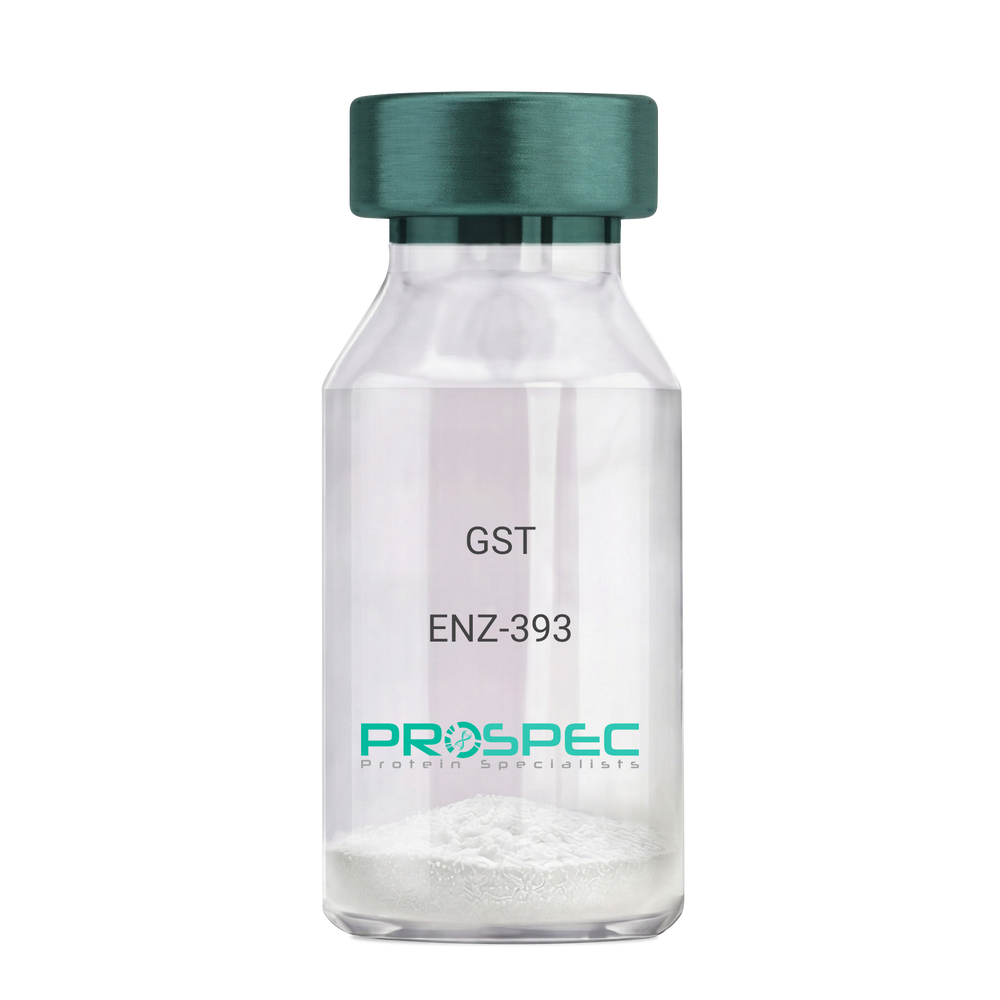
- View Data Sheet
Name :
GSTDescription:
Glutathione S-Transferase Recombinant
Glutathione S-Transferase, GST, Glutathione S-transferase class-mu 26 kDa isozyme, GST 26, Sj26 antigen, SjGST.
Product # :
ENZ-393Price :
Quantity :
Shipping Method :
Shipped with Ice Packs
More Info
- description
- source
- formulation
- purity
- biological activity
- More Info
Description
Recombinant Glutathione S-Transferase full length protein (1-218a.a.) expressed in E.coli, having a molecular mass of 26kDa. GST was isolated from an E. coli strain that carries the coding sequence for Schistosoma japonicum GST under the control of a T7 promoter. The GST is purified by proprietary chromatographic techniques.
Source
Escherichia Coli.
Formulation
GST supplied in Phosphate Buffered Saline pH 7.4.
Purity
Greater than 95% as determined by SDS-PAGE.
Biological Activity
Specific activity is >20 units/mg. A unit is defined as the amount of enzyme that conjugate 1.0 u mole of 1-chloro-2,4-dinitrobenzene (CDNB) with reduced glutathione per minute at pH 6.5 at 25°C.More Info
-
Introduction
Antioxidant enzyme Glutathione S- Transferase (GST) is thought to do the primary cellular defense mechanism against reactive oxygen species. GST reduces lipid hydroperoxides through its Se-independent glutathione peroxidase activity. The enzyme also detoxifies lipid peroxidation end products such as 4-hydroxynonenal (4-HNE).
The soluble GST is a 26 kDa protein which occurs as a dimer in all aerobic organisms. Each monomer has two domains, one that binds GSH and is an /-structure similar to thioredoxin and the other, all helical, that binds the hydrophobic substrate. The GST -fusion protein expression system is a widely used recombinant protein expression system that allows a peptide or a regulatory protein domain to be expressed as a fusion to the C-terminus of Schistosoma japonicum GST. Fusion proteins also possess GST -enzymatic activity and can undergo dimerization similar to in vivo. The fusion protein can be purified via GST -affinity column chromatography. In most cases, the desired peptides or domains are removed from GST by applying a specific protease that recognizes and cleaves the linker between the protein domain and GST. The technique has been widely used to generate different kinds of proteins for crystallization, molecular immunology studies, the production of vaccines and studies involving protein-protein and protein-DNA interactions. -
Synonyms
Glutathione S-Transferase, GST, Glutathione S-transferase class-mu 26 kDa isozyme, GST 26, Sj26 antigen, SjGST.
-
Physical Appearance
Sterile Filtered clear solution.
-
Stability
Store at 4°C if entire vial will be used within 2-4 weeks. Store, frozen at -20°C for longer periods of time. For long term storage it is recommended to add a carrier protein (0.1% HSA or BSA).Avoid multiple freeze-thaw cycles.
-
Amino Acid Sequence
MSPILGYWKI KGLVQPTRLL LEYLEEKYEE HLYERDEGDK WRNKKFELGL EFPNLPYYID GDVKLTQSMA IIRYIADKHN MLGGCPKERA EISMLEGAVL DIRYGVSRIA YSKDFETLKV DFLSKLPEML KMFEDRLCHK TYLNGDHVTH PDFMLYDALD VVLYMDPMCL DAFPKLVCFK KRIEAIPQID KYLKSSKYIA WPLQGWQATF GGGDHPPKSD LVPR.
ProSpec's products are furnished for LABORATORY RESEARCH USE ONLY. The product may not be used as drugs, agricultural or pesticidal products, food additives or household chemicals.
- View Data Sheet
Name :
GSTA1 HumanDescription:
Glutathione S-Transferase Alpha-1 Human Recombinant
GST2, GSTA1-1, GTH1, GSTA-1, GSTAI, GSTA-I, EC 2.5.1.18, Glutathione S-transferase A1, GST HA subunit 1, GST-epsilon, GST class-alpha member 1, GSTA1, MGC131939.
Product # :
ENZ-469Price :
Quantity :
Shipping Method :
Shipped with Ice Packs
More Info
- description
- source
- formulation
- purity
- biological activity
- More Info
Description
GSTA1 Human Recombinant produced in E.Coli is a single, non-glycosylated, polypeptide chain containing 222 amino acids (1-222 a.a.) and having a molecular mass of 25.6 kDa. The GSTA1 is purified by proprietary chromatographic techniques.
Source
Escherichia Coli.
Formulation
The GSTA1 solution (1mg/ml) contains 20mM Tris-HCl buffer (pH 8.0), 1mM DTT and 10% glycerol.
Purity
Greater than 90.0% as determined by SDS-PAGE.
Biological Activity
Specific activity is 35,000 pmol/min/ug, and is defined as the amount of enzyme that conjugate 1.0 u mole of 1-chloro-2,4-dinitrobenzene (CDNB) with reduced glutathione per minute at pH 6.5 at 25°C.
More Info
-
Introduction
Membrane-bound & Cytosolic forms of GST are encoded by 2 separate supergene families. These enzymes function in the detoxification of electrophilic compounds, including carcinogens, therapeutic drugs, environmental toxins and products of oxidative stress, by conjugation with glutathione. There are 8 different classes of soluble cytoplasmic mammalian GST: alpha, kappa, mu, omega, pi, sigma, theta and zeta. The GSTA1 is found in a cluster mapped to chromosome 6, and is highly expressed in the liver. GSTA1 protects the cells from reactive oxygen species.
-
Synonyms
GST2, GSTA1-1, GTH1, GSTA-1, GSTAI, GSTA-I, EC 2.5.1.18, Glutathione S-transferase A1, GST HA subunit 1, GST-epsilon, GST class-alpha member 1, GSTA1, MGC131939.
-
Physical Appearance
Sterile Filtered colorless solution.
-
Stability
Store at 4°C if entire vial will be used within 2-4 weeks. Store, frozen at -20°C for longer periods of time. For long term storage it is recommended to add a carrier protein (0.1% HSA or BSA).Avoid multiple freeze-thaw cycles.
-
Amino Acid Sequence
MAEKPKLHYF NARGRMESTR WLLAAAGVEF EEKFIKSAED LDKLRNDGYL MFQQVPMVEI DGMKLVQTRA ILNYIASKYN LYGKDIKERA LIDMYIEGIA DLGEMILLLP VCPPEEKDAK LALIKEKIKN RYFPAFEKVL KSHGQDYLVG NKLSRADIHL VELLYYVEEL DSSLISSFPL LKALKTRISN LPTVKKFLQP GSPRKPPMDE KSLEEARKIF RF.
ProSpec's products are furnished for LABORATORY RESEARCH USE ONLY. The product may not be used as drugs, agricultural or pesticidal products, food additives or household chemicals.
- View Data Sheet
Name :
HIV-1 p24, 24 kDaDescription:
HIV-1 p24, 24 kDa Recombinant
Product # :
HIV-155Price :
Quantity :
Shipping Method :
Shipped with Ice Packs
More Info
- description
- source
- formulation
- purity
- More Info
Description
HIV-1 p24 recombinant is a full-length 231 amino acid recombinant protein having a molecular mass of 24 kDa.
Source
Escherichia Coli.
Formulation
HIV-1 p24 2.17mg/ml containing PBS, 50mM arginine and 0.05% NaN3.
Purity
Greater than 93.0% as determined by SDS-PAGE.
More Info
-
Introduction
Human immunodeficiency virus type-1 (HIV-1) capsid protein p24 is the main component of tubular core in the mature virus particle. Decrease in the level of antibodies to p24 and p24 antigen has been considered to be one of the most useful prognostic markers.
Determination of p24 antigen, as well as anti-p24 antibodies, has vast diagnostic value. Therefore, most diagnostic kits to detect HIV antibodies use p24 as an integral component in addition to envelope glycoproteins. Inhibition of capsid formation can be an effective therapeutic strategy. -
Physical Appearance
Sterile Filtered solution.
-
Stability
HIV-1 p24, 24 kDa although stable at 4°C for 1 week, should be stored below -18°C. Please prevent freeze thaw cycles.
ProSpec's products are furnished for LABORATORY RESEARCH USE ONLY. The product may not be used as drugs, agricultural or pesticidal products, food additives or household chemicals.
- View Data Sheet
Name :
FAM50A HumanDescription:
Family with Sequence Similarity 50, Member A Human Recombinant
9F, DXS9928E, HXC-26, HXC26, XAP5, XAP-5.
Product # :
PRO-1477Price :
Quantity :
Shipping Method :
Shipped with Ice Packs
More Info
- description
- source
- formulation
- purity
- More Info
Description
FAM50A Human Recombinant produced in E.Coli is a single, non-glycosylated polypeptide chain containing 213 amino acids (150-339 a.a.) and having a molecular mass of 25.2kDa.FAM50A is fused to a 23 amino acid His-tag at N-terminus & purified by proprietary chromatographic techniques.
Source
E.coli.
Formulation
FAM50A protein solution (0.5mg/ml) contains 20mM Tris-HCl buffer, (pH 8.0), 0.15M NaCl, 20% glycerol and 1mM DTT.
Purity
Greater than 90% as determined by SDS-PAGE.
More Info
-
Introduction
FAM50A is a member of the FAM50 family. FAM50A is highly conserved in length and sequence among numerous species. FAM50A is a basic protein comprised of a nuclear localization signal, and can function as a DNA-binding protein or a transcriptional factor. FAM50A expressed in all tissues mainly abundant in fetal brain, liver and kidney. High levels of FAM50A were observed in the adult's skeletal muscle, spleen, thymus, prostate and the small intestine.
-
Synonyms
9F, DXS9928E, HXC-26, HXC26, XAP5, XAP-5.
-
Physical Appearance
Sterile Filtered colorless solution.
-
Stability
Store at 4°C if entire vial will be used within 2-4 weeks. Store, frozen at -20°C for longer periods of time. For long term storage it is recommended to add a carrier protein (0.1% HSA or BSA).Avoid multiple freeze-thaw cycles.
-
Amino Acid Sequence
MGSSHHHHHH SSGLVPRGSH MGSTTKKRKL GKNPDVDTSF LPDRDREEEE NRLREELRQE WEAKQEKIKS EEIEITFSYW DGSGHRRTVK MRKGNTMQQF LQKALEILRK DFSELRSAGV EQLMYIKEDL IIPHHHSFYD FIVTKARGKS GPLFNFDVHD DVRLLSDATV EKDESHAGKV VLRSWYEKNK HIFPASRWEP YDPEKKWDKY TIR.
ProSpec's products are furnished for LABORATORY RESEARCH USE ONLY. The product may not be used as drugs, agricultural or pesticidal products, food additives or household chemicals.