Skip to content

High-quality research proteins.

  • 1-800-805-6531

  • Mon - Sat 8.00-18.00, Sun - Closed

  • info@prospecbio.com

  • PO Box 6591 East Brunswick NJ 08816

  • Products
    • Cytokines
    • Growth factors
    • Chemokines
    • Cd antigens
    • Neurotrophins
    • Hormones
    • Enzymes
    • Viral antigens
    • Recombinant proteins
    • Natural proteins
    • Monoclonal antibodies
    • Polyclonal antibodies
    • Thermal Packaging
  • About
    • Company
    • Founder
    • Contribution
  • Customers
    • Eastern Asia
    • Eastern Europe
    • North America
    • South America
    • South East Asia
    • Southern Asia
    • Western Europe
  • Ordering
    • Ordering Method
    • Ordering - Credit Card
    • Ordering - PO
    • Shipping Fees
    • FAQs
  • Services
    • DNA Cloning
    • Protein Expression
    • Monoclonal Antibody
    • Fermentation
    • Technology License
  • Contact us
Log in

Country/region

  • USD $ | Albania
  • USD $ | Andorra
  • USD $ | Argentina
  • USD $ | Armenia
  • USD $ | Australia
  • USD $ | Austria
  • USD $ | Azerbaijan
  • USD $ | Belarus
  • USD $ | Belgium
  • USD $ | Bolivia
  • USD $ | Brazil
  • USD $ | Bulgaria
  • USD $ | Cambodia
  • USD $ | Canada
  • USD $ | Chile
  • USD $ | China
  • USD $ | Colombia
  • USD $ | Costa Rica
  • USD $ | Croatia
  • USD $ | Cyprus
  • USD $ | Czechia
  • USD $ | Denmark
  • USD $ | Estonia
  • USD $ | Finland
  • USD $ | France
  • USD $ | Georgia
  • USD $ | Germany
  • USD $ | Greece
  • USD $ | Hong Kong SAR
  • USD $ | Hungary
  • USD $ | Iceland
  • USD $ | India
  • USD $ | Ireland
  • USD $ | Israel
  • USD $ | Italy
  • USD $ | Japan
  • USD $ | Kazakhstan
  • USD $ | Latvia
  • USD $ | Liechtenstein
  • USD $ | Lithuania
  • USD $ | Madagascar
  • USD $ | Malta
  • USD $ | Mexico
  • USD $ | Moldova
  • USD $ | Monaco
  • USD $ | Netherlands
  • USD $ | New Zealand
  • USD $ | North Macedonia
  • USD $ | Norway
  • USD $ | Panama
  • USD $ | Paraguay
  • USD $ | Peru
  • USD $ | Philippines
  • USD $ | Poland
  • USD $ | Portugal
  • USD $ | Romania
  • USD $ | Singapore
  • USD $ | Slovakia
  • USD $ | Slovenia
  • USD $ | South Africa
  • USD $ | South Korea
  • USD $ | Spain
  • USD $ | Sri Lanka
  • USD $ | Sweden
  • USD $ | Switzerland
  • USD $ | Taiwan
  • USD $ | Thailand
  • USD $ | Türkiye
  • USD $ | Ukraine
  • USD $ | United Kingdom
  • USD $ | United States
  • USD $ | Uruguay
  • USD $ | Vatican City
  • USD $ | Venezuela
  • USD $ | Vietnam
  • Facebook
  • Instagram
logoProSpec - Recombinant Protein Manufacturer for academic and R&D industry
Become a distributor
Account Log in
Wishlist
Cart Cart(0)
  • Products
    +
    • Cytokines
    • Growth factors
    • Chemokines
    • Cd antigens
    • Neurotrophins
    • Hormones
    • Enzymes
    • Viral antigens
    • Recombinant proteins
    • Natural proteins
    • Monoclonal antibodies
    • Polyclonal antibodies
    • Thermal Packaging
  • About
    +
    • Company
    • Founder
    • Contribution
  • Customers
    +
    • Eastern Asia
    • Eastern Europe
    • North America
    • South America
    • South East Asia
    • Southern Asia
    • Western Europe
  • Ordering
    +
    • Ordering Method
    • Ordering - Credit Card
    • Ordering - PO
    • Shipping Fees
    • FAQs
  • Services
    +
    • DNA Cloning
    • Protein Expression
    • Monoclonal Antibody
    • Fermentation
    • Technology License
  • Contact us

Item added to your cart

View cart
View All
  • Cytokines
  • Growth factors
  • Chemokines
  • Cd antigens
  • Neurotrophins
  • Hormones
  • Enzymes
  • Viral antigens
  • Recombinant proteins
  • Natural proteins
  • Monoclonal antibodies
  • Polyclonal antibodies
  • Thermal Packaging
  • Tumor Necrosis Factor

    Tumor Necrosis Factor

    View All
  • 4-1BB

    4-1BB

    View All
  • Adiponectin

    Adiponectin

    View All
  • AIF1

    AIF1

    View All
  • Other Cytokines

    Other Cytokines

    View All
  • AITRL

    AITRL

    View All
  • Angiopoietin

    Angiopoietin

    View All
  • Apolipoprotein

    Apolipoprotein

    View All
  • B-Cell Activating Factor

    B-Cell Activating Factor

    View All
  • Beta Defensin

    Beta Defensin

    View All
  • Bone Morphogenetic Protein

    Bone Morphogenetic Protein

    View All
  • B type Natriuretic Peptide

    B type Natriuretic Peptide

    View All
  • BST

    BST

    View All
  • Betacellulin

    Betacellulin

    View All
  • Cardiotrophin

    Cardiotrophin

    View All
  • Activin

    Activin

    View All
  • Fibroblast Growth Factor

    Fibroblast Growth Factor

    View All
  • Other Growth Factors

    Other Growth Factors

    View All
  • CSF

    CSF

    View All
  • CTGF

    CTGF

    View All
  • IGFBP

    IGFBP

    View All
  • VEGF Protein

    VEGF Protein

    View All
  • EGF

    EGF

    View All
  • Epigen

    Epigen

    View All
  • Erythropoietin

    Erythropoietin

    View All
  • Insulin-Like Growth Factor

    Insulin-Like Growth Factor

    View All
  • Growth Hormone

    Growth Hormone

    View All
  • HDGF

    HDGF

    View All
  • Hepatocyte Growth Factor

    Hepatocyte Growth Factor

    View All
  • Insulin

    Insulin

    View All
  • BCA-1/ BLC (CXCL13)

    BCA-1/ BLC (CXCL13)

    View All
  • BRAK (CXCL14)

    BRAK (CXCL14)

    View All
  • C-10 (CCL6)

    C-10 (CCL6)

    View All
  • Other Chemokines

    Other Chemokines

    View All
  • MEC (CCL28)

    MEC (CCL28)

    View All
  • LD78-beta (CCL3L1)

    LD78-beta (CCL3L1)

    View All
  • CTACK (CCL27)

    CTACK (CCL27)

    View All
  • CXCL16

    CXCL16

    View All
  • CXCL17

    CXCL17

    View All
  • Platelet Factor-4 (CXCL4)

    Platelet Factor-4 (CXCL4)

    View All
  • ENA-78 (CXCL5)

    ENA-78 (CXCL5)

    View All
  • Eotaxin (CCL11,24,26)

    Eotaxin (CCL11,24,26)

    View All
  • Exodus-2 (CCL21)

    Exodus-2 (CCL21)

    View All
  • Fractalkine (CX3CL1)

    Fractalkine (CX3CL1)

    View All
  • CXCL6

    CXCL6

    View All
  • Other CD Antigens

    Other CD Antigens

    View All
  • CD14

    CD14

    View All
  • CD164

    CD164

    View All
  • CD1

    CD1

    View All
  • CD2

    CD2

    View All
  • CD200

    CD200

    View All
  • CD207

    CD207

    View All
  • CD226

    CD226

    View All
  • CD23

    CD23

    View All
  • CD244

    CD244

    View All
  • CD247

    CD247

    View All
  • CD27

    CD27

    View All
  • CD274

    CD274

    View All
  • CD300

    CD300

    View All
  • CD33

    CD33

    View All
  • Other Neurotrophins

    Other Neurotrophins

    View All
  • Beta-NGF

    Beta-NGF

    View All
  • BDNF

    BDNF

    View All
  • CDNF

    CDNF

    View All
  • CNTF

    CNTF

    View All
  • GDNF

    GDNF

    View All
  • Glia Maturation Factor

    Glia Maturation Factor

    View All
  • MANF

    MANF

    View All
  • Midkine

    Midkine

    View All
  • Neuroglobin

    Neuroglobin

    View All
  • Neurotrophic factors

    Neurotrophic factors

    View All
  • Neuregulin

    Neuregulin

    View All
  • Neuropilin

    Neuropilin

    View All
  • Pigment Epithelium-Derived Factor

    Pigment Epithelium-Derived Factor

    View All
  • Pleiotrophin

    Pleiotrophin

    View All
  • Peptide Hormones

    Peptide Hormones

    View All
  • Other Hormones

    Other Hormones

    View All
  • HCG

    HCG

    View All
  • Endothelin

    Endothelin

    View All
  • Exendin

    Exendin

    View All
  • FSH

    FSH

    View All
  • Glucagon

    Glucagon

    View All
  • GHRP

    GHRP

    View All
  • GLP

    GLP

    View All
  • Thyrostimulin

    Thyrostimulin

    View All
  • Inhibin A

    Inhibin A

    View All
  • LHRH

    LHRH

    View All
  • Melanotan

    Melanotan

    View All
  • Procalcitonin

    Procalcitonin

    View All
  • PTH

    PTH

    View All
  • Peroxiredoxin

    Peroxiredoxin

    View All
  • Peptidase

    Peptidase

    View All
  • Synthetase

    Synthetase

    View All
  • Transferase

    Transferase

    View All
  • Hydrolase

    Hydrolase

    View All
  • Dehydrogenase

    Dehydrogenase

    View All
  • ACE2

    ACE2

    View All
  • Esterase

    Esterase

    View All
  • Protein Kinases

    Protein Kinases

    View All
  • Other Enzymes

    Other Enzymes

    View All
  • Phosphatase

    Phosphatase

    View All
  • Deaminase

    Deaminase

    View All
  • Oxygenase

    Oxygenase

    View All
  • Adenylate Kinase

    Adenylate Kinase

    View All
  • Lyase

    Lyase

    View All
  • Chagas

    Chagas

    View All
  • SARS

    SARS

    View All
  • Influenza

    Influenza

    View All
  • ASFV

    ASFV

    View All
  • Astrovirus

    Astrovirus

    View All
  • Borrelia

    Borrelia

    View All
  • Helicobacter Pylori

    Helicobacter Pylori

    View All
  • Chikungunya

    Chikungunya

    View All
  • Chlamydia

    Chlamydia

    View All
  • Cytomegalo

    Cytomegalo

    View All
  • Dengue

    Dengue

    View All
  • EBV

    EBV

    View All
  • Ebola

    Ebola

    View All
  • Feline Leukemia Virus

    Feline Leukemia Virus

    View All
  • Hepatitis A

    Hepatitis A

    View All
  • Other

    Other

    View All
  • Actin

    Actin

    View All
  • ADAM

    ADAM

    View All
  • Complement Component

    Complement Component

    View All
  • Ag85

    Ag85

    View All
  • Eukaryotic Translation Initiation Factor

    Eukaryotic Translation Initiation Factor

    View All
  • Anterior Gradient Protein

    Anterior Gradient Protein

    View All
  • Heat Shock Protein

    Heat Shock Protein

    View All
  • Alpha-2-HS-Glycoprotein

    Alpha-2-HS-Glycoprotein

    View All
  • Hemoglobin

    Hemoglobin

    View All
  • Allergy

    Allergy

    View All
  • Anaplasma

    Anaplasma

    View All
  • Angiogenin

    Angiogenin

    View All
  • Ankyrin Repeat Domain

    Ankyrin Repeat Domain

    View All
  • Annexin

    Annexin

    View All
  • Other Natural Proteins

    Other Natural Proteins

    View All
  • Aprotinin

    Aprotinin

    View All
  • Transferrin

    Transferrin

    View All
  • Avidin

    Avidin

    View All
  • Anti Coagulation Factors

    Anti Coagulation Factors

    View All
  • Natural Albumin

    Natural Albumin

    View All
  • Natural Coagulation Factors

    Natural Coagulation Factors

    View All
  • Fibronectin

    Fibronectin

    View All
  • Thrombin

    Thrombin

    View All
  • Anti Human Enzyme

    Anti Human Enzyme

    View All
  • Other Monoclonal Antibodies

    Other Monoclonal Antibodies

    View All
  • Anti Human Cytokine

    Anti Human Cytokine

    View All
  • Anti Human Heat Shock Protein

    Anti Human Heat Shock Protein

    View All
  • Anti Mouse Lymphocyte

    Anti Mouse Lymphocyte

    View All
  • Anti Human Chemokine

    Anti Human Chemokine

    View All
  • Anti Human Lymphocyte

    Anti Human Lymphocyte

    View All
  • Anti Viral Monoclonal

    Anti Viral Monoclonal

    View All
  • Anti Mouse Cytokine

    Anti Mouse Cytokine

    View All
  • Anti-GST Monoclonal

    Anti-GST Monoclonal

    View All
  • Other Polyclonal Antibodies

    Other Polyclonal Antibodies

    View All
  • Anti Viral

    Anti Viral

    View All
  • Anti-GST Monoclonal

    Anti-GST Monoclonal

    View All
Back

Search results

32 results found for “Synovial Sarcoma, X Breakpoint”

Name

Description

Product #

Price

Quantity

Shipping Method

  • View Data Sheet

    Name :

    TRAIL Human (114-281 a.a.)

    Description:

    TRAIL/APO 2 Ligand (114-281 a.a.) Human Recombinant

    Tumor necrosis factor ligand superfamily member 10, TNF-related apoptosis-inducing ligand, Protein TRAIL, Apo-2 ligand, Apo-2L, CD253 antigen, TL2, APO2L, TNFSF10.

    Product # :

    CYT-546

    Price :

    Quantity :

    Shipping Method :

    Ice Icon

    Shipped with Ice Packs

    Add To Cart

    More Info

    • description
    • source
    • formulation
    • purity
    • More Info
    • Citations

    Description

    Soluble TNF-related apoptosis-inducing ligand Human Recombinant produced in E.Coli is a single, non-glycosylated polypeptide chain containing 169 amino acids (114-281) and having a molecular mass of 19.6 kDa. The sTRAIL is purified by proprietary chromatographic techniques.

    Source

    Escherichia Coli.

    Formulation

    1mg/ml in 20mM Tris-HCl pH-7.5, 300mM NaCl, 0.1mM DTT & 10% glycerol.

    Purity

    Greater than 95.0% as determined by SDS-PAGE.

    Citations

    More Info

    • Introduction

      TNF-related apoptosis-inducing ligand (TRAIL) is a ligand molecule which induces apoptosis. It is a type II transmembrane protein with homology to other members of the tumor necrosis factor family.
      In humans, the gene that encodes for TRAIL is located at chromosome 3q26.
      TRAIL binds to the death receptors, DR4 and DR5. The process of apoptosis is caspase-8-dependent. This protein preferentially induces apoptosis in transformed and tumor cells, but does not appear to kill normal cells although it is expressed at a significant level in most normal tissues.

    • Synonyms

      Tumor necrosis factor ligand superfamily member 10, TNF-related apoptosis-inducing ligand, Protein TRAIL, Apo-2 ligand, Apo-2L, CD253 antigen, TL2, APO2L, TNFSF10.

    • Physical Appearance

      Sterile Filtered colorless liquid.

    • Stability

      Store at 4°C if entire vial will be used within 2-4 weeks. Store, frozen at -20°C for longer periods of time. For long term storage it is recommended to add a carrier protein (0.1% HSA or BSA).Avoid multiple freeze-thaw cycles.

    • Amino Acid Sequence

      MVRERGPQRV AAHITGTRGR SNTLSSPNSK NEKALGRKIN SWESSRSGHS FLSNLHLRNGELVIHEKGFY YIYSQTYFRF QEEIKENTKN DKQMVQYIYK YTSYPDPILL MKSARNSCWSKDAEYGLYSI YQGGIFELKE NDRIFVSVTN EHLIDMDHEA SFFGAFLVG.

    ProSpec's products are furnished for LABORATORY RESEARCH USE ONLY. The product may not be used as drugs, agricultural or pesticidal products, food additives or household chemicals.

    Apo2L 114 281 Human
  • View Data Sheet

    Name :

    C-JUN Human

    Description:

    Jun Proto-Oncogene Human Recombinant

    Transcription factor AP-1, Activator protein 1, AP1, Proto-oncogene c-jun, V-jun avian sarcoma virus 17 oncogene homolog, p39, c-Jun.

    Product # :

    PKA-323

    Price :

    Quantity :

    Shipping Method :

    Room Temp Icon

    Shipped at Room temp

    Add To Cart

    More Info

    • description
    • source
    • formulation
    • purity
    • biological activity
    • More Info
    • Citations

    Description

    C-JUN amino acids 1-81 produced in E.coli, is a non-glycosylated, polypeptide chain having a molecular mass of 52 kDa.C-JUN is a maltose binding protein (MBP) fusion protein with an amino-terminal polyhistidine tag and purified by proprietary chromatographic techniques.

    Source

    Escherichia Coli.

    Formulation

    C-JUN is supplied as lyophilized powder containing no additives.

    Purity

    Greater than 95% as determined by SDS-PAGE.

    Biological Activity

    C-Jun is phosphorylatable in vitro, using either recombinant active JNK1 or JNK2, or with JNK immunoprecipitated from stimulated cells. This phosphorylation can be monitored by Western blot analysis using an antibody directed to c-Jun [pS73], in conjunction with chemiluminescence detection methods. Optimization of the cell stimulation protocol, cell lysis procedure, and reaction conditions may be required for each specific application.

    Citations

    More Info

    • Introduction

      C-JUN is a gene which, in combination with c-Fos, forms the AP-1early response transcription factor. C-JUN is activated by the JNKpathway. C-JUN is the putative transforming gene of avian sarcoma virus 17. C-JUN is a protein which is highly similar to the viral protein, and which interacts directly with specific target DNA sequences to regulate gene expression. The C-JUN gene is intronless and is mapped to 1p32-p31, a chromosomal region involved in both translocations and deletions in human malignancies.

    • Synonyms

      Transcription factor AP-1, Activator protein 1, AP1, Proto-oncogene c-jun, V-jun avian sarcoma virus 17 oncogene homolog, p39, c-Jun.

    • Physical Appearance

      Sterile Filtered White lyophilized (freeze-dried) powder.

    • Stability

      Store at 4°C if entire vial will be used within 1-2 weeks. Store, frozen at -20°C for longer periods of time. Avoid multiple freeze-thaw cycles.

    • Solubility

      It is recommended to centrifuge the vial prior to opening in order to bring the contents to the bottom. The reconstitution of the lyophilized c-Jun is recommended in 40mM Tris, pH 7.5, to a concentration of 0.2-1.0 mg/ml.

    • Note

      Kinase activity may vary depending on the substrate and reaction conditions.

    ProSpec's products are furnished for LABORATORY RESEARCH USE ONLY. The product may not be used as drugs, agricultural or pesticidal products, food additives or household chemicals.

    C Jun Human
  • View Data Sheet

    Name :

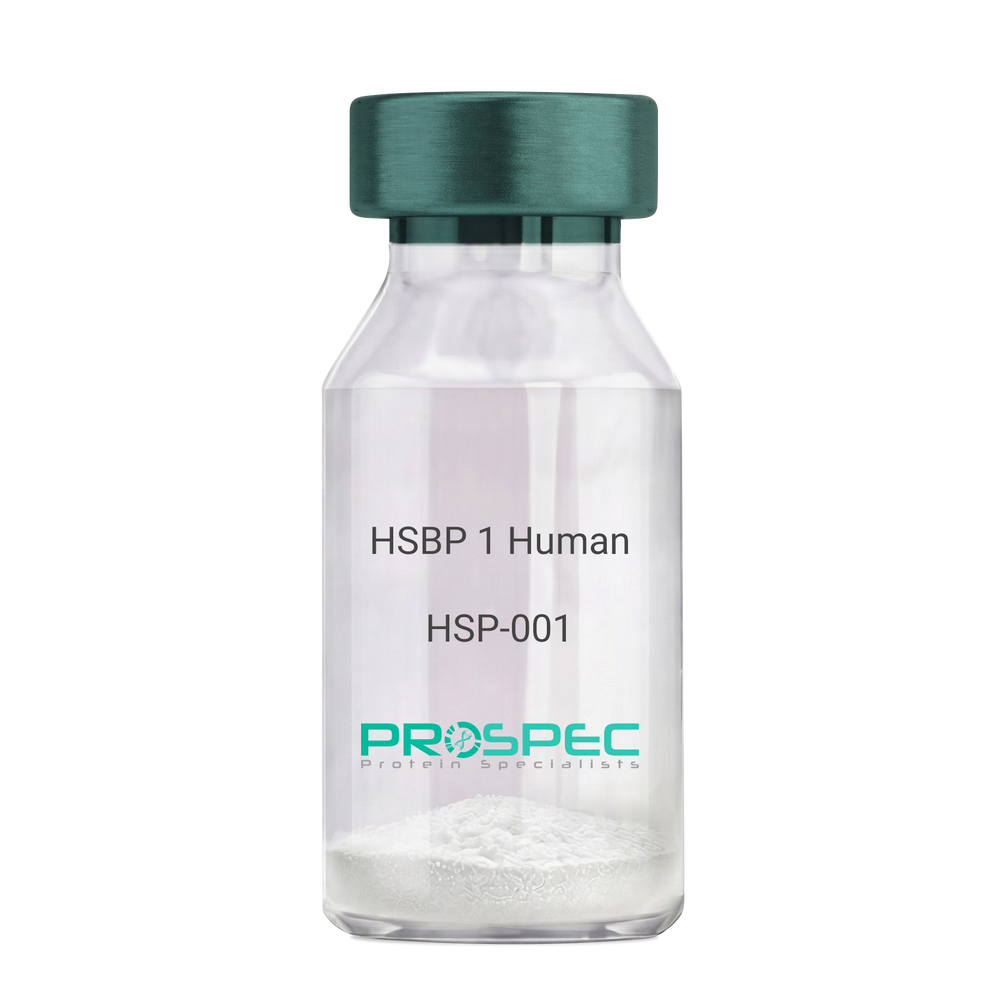
    HSBP 1 Human

    Description:

    Heat Shock Factor Binding Protein - 1 Human Recombinant

    NPC-A-13, HSBP1, Heat shock factor-binding protein 1, Nasopharyngeal carcinoma-associated antigen 13, HSF1BP, DKFZp686D1664, DKFZp686O24200.

    Product # :

    HSP-001

    Price :

    Quantity :

    Shipping Method :

    Ice Icon

    Shipped with Ice Packs

    Add To Cart

    More Info

    • description
    • source
    • formulation
    • purity
    • More Info
    • Citations

    Description

    Recombinant Human HSBP1 produced in E.Coli is a single,non-glycosylated polypeptide chain containing 76 amino acids and having a molecular mass of 8.5 kDa.

    Source

    Escherichia Coli.

    Formulation

    The HSBP1 protein (1mg/ml) solution contains 20mM Tris-HCl buffer pH-7.5, 50mM NaCl, 1mM EDTA and 20% Glycerol.

    Purity

    Greater than 95.0% as determined by SDS-PAGE.

    Citations

    More Info

    • Introduction

      The heat-shock response is elicited by exposure of cells to thermal and chemical stress and through the activation of HSFs (heat shock factors) results in the elevated expression of heat-shock induced genes. Heat shock factor binding protein-1 (HSBP1), is a 76-amino-acid protein that binds to heat shock factor 1(HSF1), which is a transcription factor involved in the HS response. During HS response, HSF1 undergoes conformational transition from an inert non-DNA-binding monomer to active functional trimers. HSBP1 is nuclear-localized and interacts with the active trimeric state of HSF1 to negatively regulate HSF1 DNA-binding activity. Overexpression of HSBP1 in mammalian cells represses the transactivation activity of HSF1. When overexpressed in C.elegans HSBP1 has severe effects on survival of the animals after thermal and chemical stress consistent with a role of HSBP1 as a negative regulator of heat shock response.

    • Synonyms

      NPC-A-13, HSBP1, Heat shock factor-binding protein 1, Nasopharyngeal carcinoma-associated antigen 13, HSF1BP, DKFZp686D1664, DKFZp686O24200.

    • Physical Appearance

      Sterile filtered colorless solution.

    • Stability

      Store at 4°C if entire vial will be used within 2-4 weeks. Store, frozen at -20°C for longer periods of time. For long term storage it is recommended to add a carrier protein (0.1% HSA or BSA).Avoid multiple freeze-thaw cycles.

    • Amino Acid Sequence

      MAETDPKTVQ DLTSVVQTLL QQMQDKFQTM SDQIIGRIDD MSSRIDDLEK NIADLMTQAG VEELESENKI PATQKS.

    ProSpec's products are furnished for LABORATORY RESEARCH USE ONLY. The product may not be used as drugs, agricultural or pesticidal products, food additives or household chemicals.

    Hsbp 1 Human
  • View Data Sheet

    Name :

    SHH Human

    Description:

    Sonic HedgeHog Human Recombinant

    SHH, HHG-1, HHG1, Sonic hedgehog protein, TPT, HLP3, HPE3, SMMCI, TPTPS, MCOPCB5.

    Product # :

    CYT-676

    Price :

    Quantity :

    Shipping Method :

    Room Temp Icon

    Shipped at Room temp

    Add To Cart

    More Info

    • description
    • source
    • formulation
    • purity
    • biological activity
    • More Info
    • Citations

    Description

    Sonic HedgeHog Recombinant Human produced in E.Coli is a single, non-glycosylated polypeptide chain containing 179 amino acids and having a molecular mass of 20.2kDa. The Cys at position 2 has been substituted with 2 Ile’s.

    Source

    Escherichia Coli.

    Formulation

    SHH is lyophilized from 10mM Na3PO4, pH 7.5.

    Purity

    Greater than 95.0% as determined by SDS-PAGE.

    Biological Activity

    The ED50 is measured by the dose-dependent induction of alkaline phosphatase production by CCL-226 fibroblasts and is 1.47μg/ml corresponding to a specific activity of 680U/mg.

    Citations

    More Info

    • Introduction

      Recombinant Human Sonic Hedgehog is part of a small group of secreted proteins that are vital for development in both vertebrates and invertebrates. 3 mammalian hedgehog genes (sonic, desert, Indian) share about 60% homology. The Human Sonic Hedgehog is 99% homologous to the mouse gene. Sonic HedgeHog is a protein that is vital in guding the early embryo. It has been associated as the major inductive signal in patterning of the ventral neural tube, the anterior-posterior limb axis, and the ventral somites. Sonic HedgeHog binds to the patched receptor, which functions in association with smoothened, to activate the transcription of target genes. In the absence of sonic HedgeHog, patched receptor represses the constitutive signaling activity of smoothened. Sonic HedgeHog also regulates another factor, the gli oncogene. Sonic HedgeHog intercellular signal is essential for a various patterning events during development: signal produced by the notochord that induces ventral cell fate in the neural tube and somites, and the polarizing signal for patterning of the anterior-posterior axis of the developing limb bud. Sonic HedgeHog exhibits both floor plate- and motor neuron-inducing activity. Mutations in a long-range Sonic HedgeHog enhancer located in an intron of the limb region 1 gene result in preaxial polydactyly.

    • Synonyms

      SHH, HHG-1, HHG1, Sonic hedgehog protein, TPT, HLP3, HPE3, SMMCI, TPTPS, MCOPCB5.

    • Physical Appearance

      Sterile Filtered White lyophilized (freeze-dried) powder.

    • Stability

      Lyophilized Human Sonic HedgeHog although stable at room temperature for 3 weeks, should be stored desiccated below -18°C. Upon reconstitution Sonic HedgeHog should be stored at 4°C between 2-7 days and for future use below -18°C.Please prevent freeze-thaw cycles.

    • Solubility

      It is recommended to reconstitute the lyophilized SHH in sterile water not less than 100µg/ml, which can then be further diluted to other aqueous solutions.

    • Amino Acid Sequence

      MIIGPGRGFG KRRHPKKLTP LAYKQFIPNV AEKTLGASGR YEGKISRNSE RFKELTPNYN PDIIFKDEEN TGADRLMTQR CKDKLNALAI SVMNQWPGVK LRVTEGWDED GHHSEESLHY EGRALDITTS DRDRSKYGML ARLAVEAGFD WVYYESKAHI HCSVKAENSV AAKSGGCFP

    ProSpec's products are furnished for LABORATORY RESEARCH USE ONLY. The product may not be used as drugs, agricultural or pesticidal products, food additives or household chemicals.

    Sonic Hedgehog Human
  • View Data Sheet

    Name :

    SNCA 1-95, Human

    Description:

    Alpha-Synuclein 1-95 Human Recombinant

    SNCA, NACP, PARK1, alpha-Synuclein, Non-A beta component of AD amyloid, Non-A4 component of amyloid precursor, Alpha synuclein, Alpha-synuclein isoform NACP140, alphaSYN, MGC105443, MGC110988, MGC127560, MGC64356, Non A beta component of AD amyloid, Non A4 component of amyloid precursor, Non-A-beta component of alzheimers disease amyloid, precursor of PARK 1, PARK 4, PARK4, Parkinson disease familial 1, PD 1, PD1, Synuclein alpha.

    Product # :

    PRO-2625

    Price :

    Quantity :

    Shipping Method :

    Ice Icon

    Shipped with Ice Packs

    Add To Cart

    More Info

    • description
    • source
    • formulation
    • purity
    • More Info
    • Citations

    Description

    SNCA Human Recombinant produced in E.Coli is a single, non-glycosylated polypeptide chain containing 95 amino acids (1-95 a.a.) and having a molecular mass of 9.3kDa.SNCA is purified by proprietary chromatographic techniques.

    Source

    E.coli.

    Formulation

    SNCA protein solution (1mg/ml) containing 20 mM Tris-HCl buffer (pH 7.5) and 0.1 M NaCl.

    Purity

    Greater than 95.0% as determined by SDS-PAGE.

    Citations

    More Info

    • Introduction

      Alpha-synuclein or SNCA is a synuclein protein. SNCA mainly found in the brain, small concentration of the protein can also be located in other tissues such as heart and muscle. When looking in the brain tissue, SNCA is located in the end of the neuron, in an area called presynaptic terminal. In the presynaptic terminal SNCA has interaction with phospholipids & other proteins. Neurotransmitters are released from the synaptic vesicles in the Presynaptic terminals and act as messengers. Once released, the neurotransmitters send signals across the neurons that are crucial for the brain’s operation.

    • Synonyms

      SNCA, NACP, PARK1, alpha-Synuclein, Non-A beta component of AD amyloid, Non-A4 component of amyloid precursor, Alpha synuclein, Alpha-synuclein isoform NACP140, alphaSYN, MGC105443, MGC110988, MGC127560, MGC64356, Non A beta component of AD amyloid, Non A4 component of amyloid precursor, Non-A-beta component of alzheimers disease amyloid, precursor of PARK 1, PARK 4, PARK4, Parkinson disease familial 1, PD 1, PD1, Synuclein alpha.

    • Physical Appearance

      Sterile Filtered colorless solution.

    • Stability

      Store at 4°C if entire vial will be used within 2-4 weeks. Store, frozen at -20°C for longer periods of time. For long term storage it is recommended to add a carrier protein (0.1% HSA or BSA).Avoid multiple freeze-thaw cycles.

    • Amino Acid Sequence

      MDVFMKGLSK AKEGVVAAAE KTKQGVAEAA GKTKEGVLYV GSKTKEGVVH GVATVAEKTK EQVTNVGGAV VTGVTAVAQK TVEGAGSIAA ATGFV

    ProSpec's products are furnished for LABORATORY RESEARCH USE ONLY. The product may not be used as drugs, agricultural or pesticidal products, food additives or household chemicals.

    Alpha Synuclein
  • View Data Sheet

    Name :

    SNCA E46K, Human

    Description:

    Alpha-Synuclein E46K Human Recombinant

    SNCA, NACP, PARK1, alpha-Synuclein, Non-A beta component of AD amyloid, Non-A4 component of amyloid precursor, Alpha synuclein, Alpha-synuclein isoform NACP140, alphaSYN, MGC105443, MGC110988, MGC127560, MGC64356, Non A beta component of AD amyloid, Non A4 component of amyloid precursor, Non-A-beta component of alzheimers disease amyloid, precursor of PARK 1, PARK 4, PARK4, Parkinson disease familial 1, PD 1, PD1, Synuclein alpha.

    Product # :

    PRO-2626

    Price :

    Quantity :

    Shipping Method :

    Ice Icon

    Shipped with Ice Packs

    Add To Cart

    More Info

    • description
    • source
    • formulation
    • purity
    • More Info
    • Citations

    Description

    SNCA E46K Human Recombinant produced in E.Coli is a single, non-glycosylated polypeptide chain containing 140 amino acids (1-140a.a.) and having a molecular mass of 14.4kDa.SNCA is purified by proprietary chromatographic techniques.

    Source

    E.coli.

    Formulation

    SNCA protein solution (1mg/ml) containing 20 mM Tris-HCl buffer (pH 7.5) and 0.1 M NaCl.

    Purity

    Greater than 95.0% as determined by SDS-PAGE.

    Citations

    More Info

    • Introduction

      SNCA or Alpha-synuclein is a protein with undisclosed function that mainly concentrated in the brain tissue, mainly in the tips of the neurons in the presynaptic terminals. Almost 1% of the proteins in the brain tissues are synucleins. The protein is located mainly in the hippocampus, thalamus, cerebellum & neocortex. Smaller amounts of the SNCA protein can be found in the neuroglial cells. The MITF protein regulates the SNCA expression in melanocytic cells.

    • Synonyms

      SNCA, NACP, PARK1, alpha-Synuclein, Non-A beta component of AD amyloid, Non-A4 component of amyloid precursor, Alpha synuclein, Alpha-synuclein isoform NACP140, alphaSYN, MGC105443, MGC110988, MGC127560, MGC64356, Non A beta component of AD amyloid, Non A4 component of amyloid precursor, Non-A-beta component of alzheimers disease amyloid, precursor of PARK 1, PARK 4, PARK4, Parkinson disease familial 1, PD 1, PD1, Synuclein alpha.

    • Physical Appearance

      Sterile Filtered colorless solution.

    • Stability

      Store at 4°C if entire vial will be used within 2-4 weeks. Store, frozen at -20°C for longer periods of time. For long term storage it is recommended to add a carrier protein (0.1% HSA or BSA).Avoid multiple freeze-thaw cycles.

    • Amino Acid Sequence

      MDVFMKGLSK AKEGVVAAAE KTKQGVAEAA GKTKEGVLYV GSKTKKGVVH GVATVAEKTK EQVTNVGGAV VTGVTAVAQK TVEGAGSIAA ATGFVKKDQL GKNEEGAPQE GILEDMPVDP DNEAYEMPSE EGYQDYEPEA

    ProSpec's products are furnished for LABORATORY RESEARCH USE ONLY. The product may not be used as drugs, agricultural or pesticidal products, food additives or household chemicals.

    Synuclein Alpha
  • View Data Sheet

    Name :

    FKBP4 Human

    Description:

    FK506 Binding Protein 4 Human Recombinant

    HBI, p52, Hsp56, FKBP52, FKBP59, PPIase, FKBP4, FK506-binding protein 4, Peptidyl-prolyl cis-trans isomerase, HSP-binding immunophilin, FKBP52 protein, 52 kDa FK506-binding protein, p59 protein.

    Product # :

    ENZ-412

    Price :

    Quantity :

    Shipping Method :

    Ice Icon

    Shipped with Ice Packs

    Add To Cart

    More Info

    • description
    • source
    • formulation
    • purity
    • biological activity
    • More Info
    • Citations

    Description

    FKBP4 produced in E.Coli is a single,non-glycosylated polypeptide chain containing 479 amino acids (1-459 a.a.) and having a molecular mass of 53.9 kDa.FKBP4 is fused to a 20 amino acid His Tag at N-terminus and purified by proprietary chromatographic techniques.

    Source

    Escherichia Coli.

    Formulation

    The FKBP4 protein solution contains 20mM Tris-HCl, pH-8 and 10% glycerol.

    Purity

    Greater than 90.0% as determined by SDS-PAGE.

    Biological Activity

    Specific activity is > 300 nmoles/min/mg, and is defined as the amount of enzyme that cleaves 1umole of suc-AAFP-pNA per minute at 25C in Tris-Hcl pH 8.0 using chymotrypsin.

    Citations

    More Info

    • Introduction

      FKBP4 is part of the immunophilin protein family, which takes part in immunoregulation and necessary cellular processes concerning protein folding and trafficking. FKBP4 is a cis-trans prolyl isomerase that connects to the immunosuppressants FK506 and rapamycin. FKBP4 has high structural and functional similarity to FKBP1A, though, FKBP4 does not have immunosuppressant activity when complexed with FK506. FKBP4 is known to connect with phytanoyl-CoA alpha-hydroxylase. FKBP4 associates with HSP90 & HSP70 thus takes part in the intracellular trafficking of hetero-oligomeric forms of the steroid hormone receptors. FKBP4 highly associates with adeno-associated virus type 2 vectors (AAV) resulting in a considerable increase in AAV-mediated transgene expression in human cell lines. FKBP4 is involved in the optimal use of AAV vectors in human gene therapy.

    • Synonyms

      HBI, p52, Hsp56, FKBP52, FKBP59, PPIase, FKBP4, FK506-binding protein 4, Peptidyl-prolyl cis-trans isomerase, HSP-binding immunophilin, FKBP52 protein, 52 kDa FK506-binding protein, p59 protein.

    • Physical Appearance

      Sterile filtered colorless solution.

    • Stability

      Store at 4°C if entire vial will be used within 2-4 weeks. Store, frozen at -20°C for longer periods of time. For long term storage it is recommended to add a carrier protein (0.1% HSA or BSA). Avoid multiple freeze-thaw cycles.

    • Amino Acid Sequence

      MGSSHHHHHH SSGLVPRGSH MTAEEMKATE SGAQSAPLPM EGVDISPKQD EGVLKVIKRE GTGTEMPMIG DRVFVHYTGW LLDGTKFDSS LDRKDKFSFDLGKGEVIKAW DIAIATMKVG EVCHITCKPE YAYGSAGSPP KIPPNATLVF EVELFEFKGE DLTEEEDGGI IRRIQTRGEG YAKPNEGAIV EVALEGYYKDKLFDQRELRF EIGEGENLDL PYGLERAIQR MEKGEHSIVY LKPSYAFGSV GKEKFQIPPN AELKYELHLK SFEKAKESWE MNSEEKLEQS TIVKERGTVYFKEGKYKQAL LQYKKIVSWL EYESSFSNEE AQKAQALRLA SHLNLAMCHL KLQAFSAAIE SCNKALELDS NNEKGLFRRG EAHLAVNDFE LARADFQKVLQLYPNNKAAK TQLAVCQQRI RRQLAREKKL YANMFERLAE EENKAKAEAS SGDHPTDTEM KEEQKSNTAG SQSQVETEA.

    ProSpec's products are furnished for LABORATORY RESEARCH USE ONLY. The product may not be used as drugs, agricultural or pesticidal products, food additives or household chemicals.

    Fkbp4 Human
  • View Data Sheet

    Name :

    CHI3L1 Human

    Description:

    Chitinase 3-Like 1 Human Recombinant

    Chitinase 3-like 1, CHI3L1, Chitinase-3-like protein 1, 39 kDa synovial protein, Cartilage glycoprotein 39, CGP-39, GP-39, hCGP-39.

    Product # :

    ENZ-688

    Price :

    Quantity :

    Shipping Method :

    Ice Icon

    Shipped with Ice Packs

    Add To Cart

    More Info

    • description
    • source
    • formulation
    • purity
    • More Info
    • Citations

    Description

    CHI3L1 Human Recombinant produced in CHO is a single, glycosylated polypeptide chain containing 408 amino acids (1-383) and having a molecular mass of 45.5kDa. CHI3L1 is fused to a 25 amino acid myc-His-tag at C-terminus & purified by proprietary chromatographic techniques.

    Source

    CHO (chinese hamster ovary cells).

    Formulation

    The CHI3L1 solution (0.25mg/ml) contains Phosphate-Buffered Saline (pH 7.4).

    Purity

    Greater than 90.0% as determined by SDS-PAGE.

    Citations

    More Info

    • Introduction

      Chitinase 3-Like 1 (CHI3L1) catalyze the hydrolysis of chitin that is an abundant glycopolymer present in insect exoskeletons and fungal cell walls. The glycoside hydrolase 18 family of chitinases comprises 8 human family members. CHI3L1 belongs to the glycosyl hydrolase 18 family. CHI3L1 lacks chitinase activity and is secreted by activated macrophages, chondrocytes, neutrophils and synovial cells. CHI3L1 takes part in the process of inflammation and tissue remodeling.

    • Synonyms

      Chitinase 3-like 1, CHI3L1, Chitinase-3-like protein 1, 39 kDa synovial protein, Cartilage glycoprotein 39, CGP-39, GP-39, hCGP-39.

    • Physical Appearance

      Sterile Filtered colorless solution.

    • Stability

      Store at 4°C if entire vial will be used within 2-4 weeks. Store, frozen at -20°C for longer periods of time. For long term storage it is recommended to add a carrier protein (0.1% HSA or BSA).Avoid multiple freeze-thaw cycles.

    • Amino Acid Sequence

      MGVKASQTGF VVLVLLQCCS AYKLVCYYTS WSQYREGDGS CFPDALDRFL CTHIIYSFAN ISNDHIDTWE WNDVTLYGML NTLKNRNPNL KTLLSVGGWN FGSQRFSKIA SNTQSRRTFI KSVPPFLRTH GFDGLDLAWL YPGRRDKQHF TTLIKEMKAE FIKEAQPGKK QLLLSAALSA GKVTIDSSYD IAKISQHLDF ISIMTYDFHG AWRGTTGHHS PLFRGQEDAS PDRFSNTDYA VGYMLRLGAP ASKLVMGIPT FGRSFTLASS ETGVGAPISG PGIPGRFTKE AGTLAYYEIC DFLRGATVHR ILGQQVPYAT KGNQWVGYDD QESVKSKVQY LKDRQLAGAM VWALDLDDFQ GSFCGQDLRF PLTNAIKDAL AATKLGPEQK LISEEDLNSA VDHHHHHH .

    ProSpec's products are furnished for LABORATORY RESEARCH USE ONLY. The product may not be used as drugs, agricultural or pesticidal products, food additives or household chemicals.

    Chi3L1 Human
  • 1
  • 2
Your browser does not support the video tag.

Products

  • Cytokines
  • Growth Factors
  • Chemokines
  • CD Antigens
  • Neurotrophins
  • Hormones
  • Enzymes
  • Viral Antigens
  • Recombinant Proteins
  • Natural Proteins
  • Monoclonal Antibodies
  • Polyclonal Antibodies
  • Thermal Packaging

About

  • Company
  • Founder
  • Contribution
  • Contact Us
  • My Account

Ordering

  • Ordering Method
  • Ordering - Credit Card
  • Ordering PO
  • Shipping Fees
  • FAQ's

Legal

  • Terms & Conditions
  • Privacy
  • Site Map
  • info@prospecbio.com
  • Facebook
  • Instagram
  • Linkedin Profile

© 2026 ProSpec-Tany TechnoGene Ltd. All Rights Reserved.

  • Choosing a selection results in a full page refresh.
  • Opens in a new window.