Skip to content

High-quality research proteins.

  • 1-800-805-6531

  • Mon - Sat 8.00-18.00, Sun - Closed

  • info@prospecbio.com

  • PO Box 6591 East Brunswick NJ 08816

  • Products
    • Cytokines
    • Growth factors
    • Chemokines
    • Cd antigens
    • Neurotrophins
    • Hormones
    • Enzymes
    • Viral antigens
    • Recombinant proteins
    • Natural proteins
    • Monoclonal antibodies
    • Polyclonal antibodies
    • Thermal Packaging
  • About
    • Company
    • Founder
    • Contribution
  • Customers
    • Eastern Asia
    • Eastern Europe
    • North America
    • South America
    • South East Asia
    • Southern Asia
    • Western Europe
  • Ordering
    • Ordering Method
    • Ordering - Credit Card
    • Ordering - PO
    • Shipping Fees
    • FAQs
  • Services
    • DNA Cloning
    • Protein Expression
    • Monoclonal Antibody
    • Fermentation
    • Technology License
  • Contact us
Log in

Country/region

  • USD $ | Albania
  • USD $ | Andorra
  • USD $ | Argentina
  • USD $ | Armenia
  • USD $ | Australia
  • USD $ | Austria
  • USD $ | Azerbaijan
  • USD $ | Belarus
  • USD $ | Belgium
  • USD $ | Bolivia
  • USD $ | Brazil
  • USD $ | Bulgaria
  • USD $ | Cambodia
  • USD $ | Canada
  • USD $ | Chile
  • USD $ | China
  • USD $ | Colombia
  • USD $ | Costa Rica
  • USD $ | Croatia
  • USD $ | Cyprus
  • USD $ | Czechia
  • USD $ | Denmark
  • USD $ | Estonia
  • USD $ | Finland
  • USD $ | France
  • USD $ | Georgia
  • USD $ | Germany
  • USD $ | Greece
  • USD $ | Hong Kong SAR
  • USD $ | Hungary
  • USD $ | Iceland
  • USD $ | India
  • USD $ | Ireland
  • USD $ | Israel
  • USD $ | Italy
  • USD $ | Japan
  • USD $ | Kazakhstan
  • USD $ | Latvia
  • USD $ | Liechtenstein
  • USD $ | Lithuania
  • USD $ | Madagascar
  • USD $ | Malta
  • USD $ | Mexico
  • USD $ | Moldova
  • USD $ | Monaco
  • USD $ | Netherlands
  • USD $ | New Zealand
  • USD $ | North Macedonia
  • USD $ | Norway
  • USD $ | Panama
  • USD $ | Paraguay
  • USD $ | Peru
  • USD $ | Philippines
  • USD $ | Poland
  • USD $ | Portugal
  • USD $ | Romania
  • USD $ | Singapore
  • USD $ | Slovakia
  • USD $ | Slovenia
  • USD $ | South Africa
  • USD $ | South Korea
  • USD $ | Spain
  • USD $ | Sri Lanka
  • USD $ | Sweden
  • USD $ | Switzerland
  • USD $ | Taiwan
  • USD $ | Thailand
  • USD $ | Türkiye
  • USD $ | Ukraine
  • USD $ | United Kingdom
  • USD $ | United States
  • USD $ | Uruguay
  • USD $ | Vatican City
  • USD $ | Venezuela
  • USD $ | Vietnam
  • Facebook
  • Instagram
logoProSpec - Recombinant Protein Manufacturer for academic and R&D industry
Become a distributor
Account Log in
Wishlist
Cart Cart(0)
  • Products
    +
    • Cytokines
    • Growth factors
    • Chemokines
    • Cd antigens
    • Neurotrophins
    • Hormones
    • Enzymes
    • Viral antigens
    • Recombinant proteins
    • Natural proteins
    • Monoclonal antibodies
    • Polyclonal antibodies
    • Thermal Packaging
  • About
    +
    • Company
    • Founder
    • Contribution
  • Customers
    +
    • Eastern Asia
    • Eastern Europe
    • North America
    • South America
    • South East Asia
    • Southern Asia
    • Western Europe
  • Ordering
    +
    • Ordering Method
    • Ordering - Credit Card
    • Ordering - PO
    • Shipping Fees
    • FAQs
  • Services
    +
    • DNA Cloning
    • Protein Expression
    • Monoclonal Antibody
    • Fermentation
    • Technology License
  • Contact us

Item added to your cart

View cart
View All
  • Cytokines
  • Growth factors
  • Chemokines
  • Cd antigens
  • Neurotrophins
  • Hormones
  • Enzymes
  • Viral antigens
  • Recombinant proteins
  • Natural proteins
  • Monoclonal antibodies
  • Polyclonal antibodies
  • Thermal Packaging
  • Tumor Necrosis Factor

    Tumor Necrosis Factor

    View All
  • 4-1BB

    4-1BB

    View All
  • Adiponectin

    Adiponectin

    View All
  • AIF1

    AIF1

    View All
  • Other Cytokines

    Other Cytokines

    View All
  • AITRL

    AITRL

    View All
  • Angiopoietin

    Angiopoietin

    View All
  • Apolipoprotein

    Apolipoprotein

    View All
  • B-Cell Activating Factor

    B-Cell Activating Factor

    View All
  • Beta Defensin

    Beta Defensin

    View All
  • Bone Morphogenetic Protein

    Bone Morphogenetic Protein

    View All
  • B type Natriuretic Peptide

    B type Natriuretic Peptide

    View All
  • BST

    BST

    View All
  • Betacellulin

    Betacellulin

    View All
  • Cardiotrophin

    Cardiotrophin

    View All
  • Activin

    Activin

    View All
  • Fibroblast Growth Factor

    Fibroblast Growth Factor

    View All
  • Other Growth Factors

    Other Growth Factors

    View All
  • CSF

    CSF

    View All
  • CTGF

    CTGF

    View All
  • IGFBP

    IGFBP

    View All
  • VEGF Protein

    VEGF Protein

    View All
  • EGF

    EGF

    View All
  • Epigen

    Epigen

    View All
  • Erythropoietin

    Erythropoietin

    View All
  • Insulin-Like Growth Factor

    Insulin-Like Growth Factor

    View All
  • Growth Hormone

    Growth Hormone

    View All
  • HDGF

    HDGF

    View All
  • Hepatocyte Growth Factor

    Hepatocyte Growth Factor

    View All
  • Insulin

    Insulin

    View All
  • BCA-1/ BLC (CXCL13)

    BCA-1/ BLC (CXCL13)

    View All
  • BRAK (CXCL14)

    BRAK (CXCL14)

    View All
  • C-10 (CCL6)

    C-10 (CCL6)

    View All
  • Other Chemokines

    Other Chemokines

    View All
  • MEC (CCL28)

    MEC (CCL28)

    View All
  • LD78-beta (CCL3L1)

    LD78-beta (CCL3L1)

    View All
  • CTACK (CCL27)

    CTACK (CCL27)

    View All
  • CXCL16

    CXCL16

    View All
  • CXCL17

    CXCL17

    View All
  • Platelet Factor-4 (CXCL4)

    Platelet Factor-4 (CXCL4)

    View All
  • ENA-78 (CXCL5)

    ENA-78 (CXCL5)

    View All
  • Eotaxin (CCL11,24,26)

    Eotaxin (CCL11,24,26)

    View All
  • Exodus-2 (CCL21)

    Exodus-2 (CCL21)

    View All
  • Fractalkine (CX3CL1)

    Fractalkine (CX3CL1)

    View All
  • CXCL6

    CXCL6

    View All
  • Other CD Antigens

    Other CD Antigens

    View All
  • CD14

    CD14

    View All
  • CD164

    CD164

    View All
  • CD1

    CD1

    View All
  • CD2

    CD2

    View All
  • CD200

    CD200

    View All
  • CD207

    CD207

    View All
  • CD226

    CD226

    View All
  • CD23

    CD23

    View All
  • CD244

    CD244

    View All
  • CD247

    CD247

    View All
  • CD27

    CD27

    View All
  • CD274

    CD274

    View All
  • CD300

    CD300

    View All
  • CD33

    CD33

    View All
  • Other Neurotrophins

    Other Neurotrophins

    View All
  • Beta-NGF

    Beta-NGF

    View All
  • BDNF

    BDNF

    View All
  • CDNF

    CDNF

    View All
  • CNTF

    CNTF

    View All
  • GDNF

    GDNF

    View All
  • Glia Maturation Factor

    Glia Maturation Factor

    View All
  • MANF

    MANF

    View All
  • Midkine

    Midkine

    View All
  • Neuroglobin

    Neuroglobin

    View All
  • Neurotrophic factors

    Neurotrophic factors

    View All
  • Neuregulin

    Neuregulin

    View All
  • Neuropilin

    Neuropilin

    View All
  • Pigment Epithelium-Derived Factor

    Pigment Epithelium-Derived Factor

    View All
  • Pleiotrophin

    Pleiotrophin

    View All
  • Peptide Hormones

    Peptide Hormones

    View All
  • Other Hormones

    Other Hormones

    View All
  • HCG

    HCG

    View All
  • Endothelin

    Endothelin

    View All
  • Exendin

    Exendin

    View All
  • FSH

    FSH

    View All
  • Glucagon

    Glucagon

    View All
  • GHRP

    GHRP

    View All
  • GLP

    GLP

    View All
  • Thyrostimulin

    Thyrostimulin

    View All
  • Inhibin A

    Inhibin A

    View All
  • LHRH

    LHRH

    View All
  • Melanotan

    Melanotan

    View All
  • Procalcitonin

    Procalcitonin

    View All
  • PTH

    PTH

    View All
  • Peroxiredoxin

    Peroxiredoxin

    View All
  • Peptidase

    Peptidase

    View All
  • Synthetase

    Synthetase

    View All
  • Transferase

    Transferase

    View All
  • Hydrolase

    Hydrolase

    View All
  • Dehydrogenase

    Dehydrogenase

    View All
  • ACE2

    ACE2

    View All
  • Esterase

    Esterase

    View All
  • Protein Kinases

    Protein Kinases

    View All
  • Other Enzymes

    Other Enzymes

    View All
  • Phosphatase

    Phosphatase

    View All
  • Deaminase

    Deaminase

    View All
  • Oxygenase

    Oxygenase

    View All
  • Adenylate Kinase

    Adenylate Kinase

    View All
  • Lyase

    Lyase

    View All
  • Chagas

    Chagas

    View All
  • SARS

    SARS

    View All
  • Influenza

    Influenza

    View All
  • ASFV

    ASFV

    View All
  • Astrovirus

    Astrovirus

    View All
  • Borrelia

    Borrelia

    View All
  • Helicobacter Pylori

    Helicobacter Pylori

    View All
  • Chikungunya

    Chikungunya

    View All
  • Chlamydia

    Chlamydia

    View All
  • Cytomegalo

    Cytomegalo

    View All
  • Dengue

    Dengue

    View All
  • EBV

    EBV

    View All
  • Ebola

    Ebola

    View All
  • Feline Leukemia Virus

    Feline Leukemia Virus

    View All
  • Hepatitis A

    Hepatitis A

    View All
  • Other

    Other

    View All
  • Actin

    Actin

    View All
  • ADAM

    ADAM

    View All
  • Complement Component

    Complement Component

    View All
  • Ag85

    Ag85

    View All
  • Eukaryotic Translation Initiation Factor

    Eukaryotic Translation Initiation Factor

    View All
  • Anterior Gradient Protein

    Anterior Gradient Protein

    View All
  • Heat Shock Protein

    Heat Shock Protein

    View All
  • Alpha-2-HS-Glycoprotein

    Alpha-2-HS-Glycoprotein

    View All
  • Hemoglobin

    Hemoglobin

    View All
  • Allergy

    Allergy

    View All
  • Anaplasma

    Anaplasma

    View All
  • Angiogenin

    Angiogenin

    View All
  • Ankyrin Repeat Domain

    Ankyrin Repeat Domain

    View All
  • Annexin

    Annexin

    View All
  • Other Natural Proteins

    Other Natural Proteins

    View All
  • Aprotinin

    Aprotinin

    View All
  • Transferrin

    Transferrin

    View All
  • Avidin

    Avidin

    View All
  • Anti Coagulation Factors

    Anti Coagulation Factors

    View All
  • Natural Albumin

    Natural Albumin

    View All
  • Natural Coagulation Factors

    Natural Coagulation Factors

    View All
  • Fibronectin

    Fibronectin

    View All
  • Thrombin

    Thrombin

    View All
  • Anti Human Enzyme

    Anti Human Enzyme

    View All
  • Other Monoclonal Antibodies

    Other Monoclonal Antibodies

    View All
  • Anti Human Cytokine

    Anti Human Cytokine

    View All
  • Anti Human Heat Shock Protein

    Anti Human Heat Shock Protein

    View All
  • Anti Mouse Lymphocyte

    Anti Mouse Lymphocyte

    View All
  • Anti Human Chemokine

    Anti Human Chemokine

    View All
  • Anti Human Lymphocyte

    Anti Human Lymphocyte

    View All
  • Anti Viral Monoclonal

    Anti Viral Monoclonal

    View All
  • Anti Mouse Cytokine

    Anti Mouse Cytokine

    View All
  • Anti-GST Monoclonal

    Anti-GST Monoclonal

    View All
  • Other Polyclonal Antibodies

    Other Polyclonal Antibodies

    View All
  • Anti Viral

    Anti Viral

    View All
  • Anti-GST Monoclonal

    Anti-GST Monoclonal

    View All
Back

Search results

215 results found for “Signal Recognition Particle”

Name

Description

Product #

Price

Quantity

Shipping Method

  • View Data Sheet

    Name :

    TNFRSF10A Human Fc

    Description:

    TRAIL Receptor-1 Human Recombinant Fc

    Tumor Necrosis Factor Receptor Superfamily Member 10a, TRAILR1, APO2, DR4, TNF-Related Apoptosis-Inducing Ligand Receptor 1, Death Receptor 4, TRAIL Receptor 1, TRAIL-R1, Tumor Necrosis Factor Receptor Superfamily Member 10a Variant 2, Tumor Necrosis Factor Receptor Superfamily Member 10A, Cytotoxic TRAIL Receptor, CD261 Antigen, TRAILR-1, CD261, TNFRSF10A.

    Product # :

    CYT-877

    Price :

    Quantity :

    Shipping Method :

    Room Temp Icon

    Shipped at Room temp

    Add To Cart

    More Info

    • description
    • source
    • formulation
    • purity
    • biological activity
    • More Info

    Description

    TRAIL R1 Fc Human Recombinant (24-240) produced in E.Coli is a non-glycosylated, disulfide-linked homodimer containing two polypeptide chains of 217 amino acids each and having a molecular mass of 41kDa [including tag] each chain. TRAILR1 is fused to a 236 amino acid Fc tag at C-terminal and purified by proprietary chromatographic techniques.

    Source

    Escherichia Coli.

    Formulation

    Lyophilized from a 0.2µm filtered solution in PBS.

    Purity

    Greater than 95.0% as determined by SDS-PAGE.

    Biological Activity

    The ED50, as measured by its ability to inhibit Trail-mediated cytotoxicity in mouse L-929 cells, is less than 1.25ng/ml.

    More Info

    • Introduction

      Human TNFRSF10A is a type 1 transmembrane protein in the TNF R superfamily. TNFRSF10A is not expressed in rodents. The trimeric ligand Trail binds TNFRSF10A and induces apoptosis, and recombinant, soluble forms of the receptor inhibit Trail-induced apoptosis. TNFRSF10A is expressed generally in damaged, infected, and malignant cells. TNFRSF10A functions in immune surveillance, inducing apoptosis in cancer cells but not normal cells.

    • Synonyms

      Tumor Necrosis Factor Receptor Superfamily Member 10a, TRAILR1, APO2, DR4, TNF-Related Apoptosis-Inducing Ligand Receptor 1, Death Receptor 4, TRAIL Receptor 1, TRAIL-R1, Tumor Necrosis Factor Receptor Superfamily Member 10a Variant 2, Tumor Necrosis Factor Receptor Superfamily Member 10A, Cytotoxic TRAIL Receptor, CD261 Antigen, TRAILR-1, CD261, TNFRSF10A.

    • Physical Appearance

      Sterile Filtered White lyophilized (freeze-dried) powder.

    • Stability

      Lyophilized TNFRSF10A although stable at room temperature for 3 weeks, should be stored desiccated below -18°C. Upon reconstitution TRAIL-R1 should be stored at 4°C between 2-7 days and for future use below -18°C.For long term storage it is recommended to add a carrier protein (0.1% HSA or BSA).Please prevent freeze-thaw cycles.

    • Solubility

      It is recommended to reconstitute the lyophilized TNFRSF10A in sterile 18M-cm H2O not less than 100µg/ml, which can then be further diluted to other aqueous solutions.

    • Amino Acid Sequence

      ASGTEAAAAT PSKVWGSSAG RIEPRGGGRG ALPTSMGQHG PSARARAGRA PGPRPAREAS PRLRVHKTFK FVVVGVLLQV VPSSAATIKL HDQSIGTQQW EHSPLGELCP PGSHRSERPG ACNRCTEGVG YTNASNNLFA CLPCTACKSD EEERSPCTTT RNTACQCKPG TFRNDNSAEM CRKCSTGCPR GMVKVKDCTP WSDIECVHKE SGNGHNIEGR MDPKSCDKTH TCPPCPAPEL LGGPSVFLFP PKPKDTLMIS RTPEVTCVVV DVSHEDPEVK FNWYVDGVEV HNAKTKPREE QYNSTYRVVS VLTVLHQDWL NGKEYKCKVS NKALPAPIEK TISKAKGQPR EPQVYTLPPS RDELTKNQVS LTCLVKGFYP SDIAVEWESN GQPENNYKTT PPVLDSDGSF FLYSKLTVDK SRWQQGNVFS CSVMHEALHN HYTQKSLSLS PGK.

    ProSpec's products are furnished for LABORATORY RESEARCH USE ONLY. The product may not be used as drugs, agricultural or pesticidal products, food additives or household chemicals.

    Tnfrsf10A Human Fc
  • View Data Sheet

    Name :

    COPS6 Human

    Description:

    COP9 Constitutive Photomorphogenic 6 Human Recombinant

    CSN6, MOV34-34KD, COP9 signalosome complex subunit 6, JAB1-containing signalosome subunit 6, MOV34 homolog, Vpr-interacting protein, hVIP, COPS6.

    Product # :

    PRO-1650

    Price :

    Quantity :

    Shipping Method :

    Ice Icon

    Shipped with Ice Packs

    Add To Cart

    More Info

    • description
    • source
    • formulation
    • purity
    • More Info

    Description

    COPS6 Human Recombinant produced in E.Coli is a single, non-glycosylated polypeptide chain containing 347 amino acids (1-327 a.a.) and having a molecular mass of 38.9kDa.COPS6 is fused to a 20 amino acid His-tag at N-terminus & purified by proprietary chromatographic techniques.

    Source

    Escherichia Coli.

    Formulation

    COPS6 protein solution (0.25mg/ml) contains 20mM Tris-HCl buffer, (pH 8.0), 0.4M UREA and 10% glycerol.

    Purity

    Greater than 80.0% as determined by SDS-PAGE.

    More Info

    • Introduction

      COP9 Constitutive Photomorphogenic 6 (COPS6) is a member of the translation initiation factor 3 (eIF3) superfamily,peptidase M67A family and CSN6 subfamily. COPS6 is one of 8 subunits of COP9 signalosome,a highly conserved protein complex which functions as an significant regulator in multiple signaling pathways. COP9's structure and function of signalosome is similar to 19S regulatory particle of 26S proteasome. COP9 signalosome can interact with SCF-type E3 ubiquitin ligases and act as a positive regulator of E3 ubiquitin ligases.COP9 takes part in the regulation of cell cycle and likely to be a cellular cofactor for HIV-1 accessory gene product Vpr.

    • Synonyms

      CSN6, MOV34-34KD, COP9 signalosome complex subunit 6, JAB1-containing signalosome subunit 6, MOV34 homolog, Vpr-interacting protein, hVIP, COPS6.

    • Physical Appearance

      Sterile Filtered clear solution.

    • Stability

      Store at 4°C if entire vial will be used within 2-4 weeks. Store, frozen at -20°C for longer periods of time. For long term storage it is recommended to add a carrier protein (0.1% HSA or BSA).Avoid multiple freeze-thaw cycles.

    • Amino Acid Sequence

      MGSSHHHHHH SSGLVPRGSH MAAAAAAAAA TNGTGGSSGM EVDAAVVPSV MACGVTGSVS VALHPLVILN ISDHWIRMRS QEGRPVQVIG ALIGKQEGRN IEVMNSFELL SHTVEEKIII DKEYYYTKEE QFKQVFKELE FLGWYTTGGP PDPSDIHVHK QVCEIIESPL FLKLNPMTKH TDLPVSVFES VIDIINGEAT MLFAELTYTL ATEEAERIGV DHVARMTATG SGENSTVAEH LIAQHSAIKM LHSRVKLILE YVKASEAGEV PFNHEILREA YALCHCLPVL STDKFKTDFY DQCNDVGLMA YLGTITKTCN TMNQFVNKFN VLYDRQGIGR RMRGLFF.

    ProSpec's products are furnished for LABORATORY RESEARCH USE ONLY. The product may not be used as drugs, agricultural or pesticidal products, food additives or household chemicals.

    Cops6 Human
  • View Data Sheet

    Name :

    SOCS3 Human

    Description:

    Suppressor Of Cytokine Signaling 3 Human Recombinant

    Suppressor Of Cytokine Signaling 3, CIS3, SSI3, Cytokine-Inducible SH2 Protein 3, STAT-Induced STAT Inhibitor 3, ATOD4, Cish3, MGC71791, CIS-3.

    Product # :

    PRO-1891

    Price :

    Quantity :

    Shipping Method :

    Ice Icon

    Shipped with Ice Packs

    Add To Cart

    More Info

    • description
    • source
    • formulation
    • purity
    • More Info

    Description

    SOCS3 Human Recombinant produced in E.Coli is a single, non-glycosylated polypeptide chain containing 262 amino acids (1-225 a.a) and having a molecular mass of 29kDa.SOCS3 is fused to a 37 amino acid His-tag at N-terminus & purified by proprietary chromatographic techniques.

    Source

    Escherichia Coli.

    Formulation

    SOCS3 protein solution (0.5mg/ml) containing 20mM Tris-HCl buffer (pH 8.0), 0.4M Urea and 10% glycerol.

    Purity

    Greater than 90% as determined by SDS-PAGE.

    More Info

    • Introduction

      Suppressor of Cytokine Signaling 3, also known as SOCS3 belongs to the SOCS family; in addition SOCS3 is a member of the STAT-induced STAT inhibitor (SSI). The SSI family members are cytokine-inducible negative regulators of cytokine signaling. The expression of SOCS3 is induced by different cytokines, including IL6 and IL10. SOCS3 can bind to JAK2 kinase, and inhibit the activity of JAK2 kinase. Studies of the mouse counterpart of SOCS3 have shown the roles of SOCS3 in the negative regulation of fetal liver hematopoiesis, and placental development.

    • Synonyms

      Suppressor Of Cytokine Signaling 3, CIS3, SSI3, Cytokine-Inducible SH2 Protein 3, STAT-Induced STAT Inhibitor 3, ATOD4, Cish3, MGC71791, CIS-3.

    • Physical Appearance

      Sterile Filtered clear solution.

    • Stability

      Store at 4°C if entire vial will be used within 2-4 weeks. Store, frozen at -20°C for longer periods of time.For long term storage it is recommended to add a carrier protein (0.1% HSA or BSA).Please avoid freeze thaw cycles.

    • Amino Acid Sequence

      MRGSHHHHHH GMASMTGGQQ MGRDLYDDDD KDRWGSHMVT HSKFPAAGMS RPLDTSLRLK TFSSKSEYQL VVNAVRKLQE SGFYWSAVTG GEANLLLSAE PAGTFLIRDS SDQRHFFTLS VKTQSGTKNL RIQCEGGSFS LQSDPRSTQP VPRFDCVLKL VHHYMPPPGA PSFPSPPTEP SSEVPEQPSA QPLPGSPPRR AYYIYSGGEK IPLVLSRPLS SNVATLQHLC RKTVNGHLDS YEKVTQLPGP IREFLDQYDA PL

    ProSpec's products are furnished for LABORATORY RESEARCH USE ONLY. The product may not be used as drugs, agricultural or pesticidal products, food additives or household chemicals.

    Socs3 Human
  • View Data Sheet

    Name :

    BMPR1A Human, CHO

    Description:

    Bone Morphogenetic Protein Receptor-1A Human Recombinant, CHO

    BMPR-1A, BMP-R1A, BMPR1A, BMR1A, CD292, CD-292, Serine/threonine-protein kinase receptor R5, SKR5, ALK-3, ACVRLK3, EC 2.7.11.30, CD292 antigen.

    Product # :

    CYT-1094

    Price :

    Quantity :

    Shipping Method :

    Room Temp Icon

    Shipped at Room temp

    Add To Cart

    More Info

    • description
    • source
    • formulation
    • purity
    • biological activity
    • More Info

    Description

    Bone Morphogenetic Protein Receptor-1A Human Recombinant produced in CHO cells is a glycosylated homodimer chain containing 2x362 amino acids and having a total molecular mass of 80.8kDa. BMPR1A is purified by proprietary chromatographic techniques.

    Source

    CHO cells.

    Formulation

    The protein was lyophilized from a sterile (0.2µm) filtered solution containing PBS.

    Purity

    Greater than 95.0% as determined by SDS-PAGE.

    Biological Activity

    The ED50, as calculated by the Inhibition of human BMP-4-induced alkaline phosphatase production caused by ATDC5 cells is 120ng/ml corresponding to a specific activity of 8.3x10^3 units/mg.

    More Info

    • Introduction

      The bone morphogenetic protein (BMP) receptors are a family of transmembrane serine/threonine kinases that include the type I receptors BMPR1A and BMPR1B and the type II receptor BMPR2. These receptors are also closely related to the receptors, ACVR1 and ACVR2. The ligands of these receptors are members of the TGF-beta superfamily. TGF-betas transduce their signals through the formation of heteromeric complexes with 2 different types of serine (threonine) kinase receptors: type I receptors of about 50-55 kD and type II receptors of about 70-80 kD. Type II receptors bind ligands in the absence of type I receptors, but they require their respective type I receptors for signaling, whereas type I receptors require their respective type II receptors for ligand binding.

    • Synonyms

      BMPR-1A, BMP-R1A, BMPR1A, BMR1A, CD292, CD-292, Serine/threonine-protein kinase receptor R5, SKR5, ALK-3, ACVRLK3, EC 2.7.11.30, CD292 antigen.

    • Physical Appearance

      Sterile Filtered White lyophilized (freeze-dried) powder.

    • Stability

      Lyophilized BMPR1A although stable at room temperature for 3 weeks, should be stored desiccated below -18°C. Upon reconstitution BMPR1A should be stored at 4°C between 2-7 days and for future use below -18°C. Please prevent freeze-thaw cycles.

    • Solubility

      It is recommended to reconstitute the lyophilized BMPR1A in sterile 18MΩ-cm H2O not less than 100µg/ml, which can then be further diluted to other aqueous solutions.

    • Amino Acid Sequence

      QNLDSMLHGT GMKSDSDQKK SENGVTLAPE DTLPFLKCYC SGHCPDDAIN NTCITNGHCF AIIEEDDQGE TTLASGCMKY EGSDFQCKDS PKAQLRRTIE CCRTNLCNQY LQPTLPPVVI GPFFDGSIRI EGRMDDKTHT CPPCPAPELL GGPSVFLFPP KPKDTLMISR TPEVTCVVVD VSHEDPEVKF NWYVDGVEVH NAKTKPREEQ YNSTYRVVSV LTVLHQDWLN GKEYKCKVSN KALPAPIEKT ISKAKGQPRE PQVYTLPPSR DELTKNQVSL TCLVKGFYPS DIAVEWESNG QPENNYKTTP PVLDSDGSFF LYSKLTVDKS RWQQGNVFSC SVMHEALHNH YTQKSLSLSP GK.

    • Background

      Research Paper on Bone Morphogenetic Protein Receptor-1A Human Recombinant, CHO, Monomer, HEK

      Abstract:

      Welcome to the captivating world of Bone Morphogenetic Protein Receptor-1A Human Recombinant, CHO, Monomer (BMPR-1A HR) in Human Embryonic Kidney Cells (HEK). This research paper explores the vital role of BMPR-1A HR in cellular responses. As a key receptor in the transforming growth factor-beta (TGF-β) superfamily, BMPR-1A HR plays a significant part in guiding cellular differentiation and tissue development. Join us as we unravel the molecular mechanisms behind BMPR-1A HR signaling in HEK cells and delve into its interactions with key cytokines, including Tumor Necrosis Factor-alpha (TNF-α) and Tumor Necrosis Factor-alpha Superfamily Member 2 (TNFα SF2 or TNFSF2).

      Introduction:

      Welcome to the intriguing world of BMPR-1A HR! In this section, we introduce the remarkable BMPR-1A HR and its crucial role in shaping cellular responses. Together, let's explore how this receptor influences cellular behavior and contributes to tissue growth, fostering our understanding of its importance in biological processes.

      BMPR-1A HR Signaling in HEK Cells:

      Be amazed by the intricate dance of BMPR-1A HR signaling within HEK cells! Uncover the complex process of ligand-receptor binding, initiating both the canonical SMAD-dependent and non-canonical SMAD-independent pathways. This harmonious interplay regulates a wide range of cellular processes, including gene transcription, cell proliferation, and differentiation, forming the foundation of cellular communication.

      Influential Role in Cellular Responses:

      Marvel at the influential role of BMPR-1A HR as a critical mediator of cellular responses within HEK cells. Witness its ability to modulate cellular differentiation, driving the expression of key differentiation markers such as DIF. Our exploration will highlight the multifaceted nature of BMPR-1A HR, impacting diverse cellular pathways, including those involving TNF-α and TNFSF2, shaping a dynamic and interconnected cellular network.

      Interplay with Key Cytokines:

      Discover the intriguing interactions between BMPR-1A HR and key cytokines like TNF-α and TNFSF2. Explore how BMPR-1A HR influences their expression and activity, hinting at potential cross-talk between BMPR-1A HR and inflammatory pathways. This delicate balance fosters a harmonious cellular environment, where multiple players contribute to overall cellular responses.

      Therapeutic Implications and Tissue Development:

      Witness the potential therapeutic implications of BMPR-1A HR in tissue development. Together, we explore the exciting possibilities of utilizing BMPR-1A HR in regenerative medicine, offering hope for enhanced tissue development and repair. As we venture forth, we also address challenges, such as optimal dosage, innovative delivery methods, and safety considerations, ensuring a responsible and effective approach.

      Conclusion:

      As we conclude our exploration of BMPR-1A HR in HEK cells, we stand in awe of its role in mediating cellular responses and tissue development. Equipped with this knowledge, we look forward to a promising future, where BMPR-1A HR from CHO cells opens doors to innovative applications in regenerative medicine, contributing to improved human health and well-being.

      What is the molecular weight/Mw of BMPR1A Protein?
      BMPR1A Protein has a total Mw of 80.8kDa.

      What is the source or expression system of BMPR1A Protein?
      CHO cells.

      What is the Purity of BMPR1A Protein?
      BMPR1A Protein is >95% pure as determined by SDS-PAGE.

      What is the Biological Activity of BMPR1A Protein?
      The ED50, as calculated by the Inhibition of human BMP-4-induced alkaline phosphatase production caused by ATDC5 cells is 120ng/ml corresponding to a specific activity of 8.3x10^3 units/mg.

      What is the amino acid sequence of BMPR1A Protein?
      QNLDSMLHGT GMKSDSDQKK SENGVTLAPE DTLPFLKCYC SGHCPDDAIN NTCITNGHCF AIIEEDDQGE TTLASGCMKY EGSDFQCKDS PKAQLRRTIE CCRTNLCNQY LQPTLPPVVI GPFFDGSIRI EGRMDDKTHT CPPCPAPELL GGPSVFLFPP KPKDTLMISR TPEVTCVVVD VSHEDPEVKF NWYVDGVEVH NAKTKPREEQ YNSTYRVVSV LTVLHQDWLN GKEYKCKVSN KALPAPIEKT ISKAKGQPRE PQVYTLPPSR DELTKNQVSL TCLVKGFYPS DIAVEWESNG QPENNYKTTP PVLDSDGSFF LYSKLTVDKS RWQQGNVFSC SVMHEALHNH YTQKSLSLSP GK.

      What applications can BMPR1A Protein be used in?
      BMPR1A Protein can probably be used in western blot, ELISA and Lateral Flow.

      What is the endotoxin level for BMPR1A Protein?
      The endotoxin level is minimal, BMPR1A Protein was purified using conventional chromatography techniques.

    ProSpec's products are furnished for LABORATORY RESEARCH USE ONLY. The product may not be used as drugs, agricultural or pesticidal products, food additives or household chemicals.

    Bmpr1A Protein
  • View Data Sheet

    Name :

    WISP2 Human

    Description:

    WNT1 Inducible Signaling Pathway Protein 2 Human Recombinant

    WNT1 Inducible Signaling Pathway Protein 2, Connective Tissue Growth Factor-Related Protein 58, Connective Tissue Growth Factor-Like Protein, CCN Family Member 5, CTGF-L, CT58, CCN5, WISP-2, CTGFL, WISP2.

    Product # :

    CYT-970

    Price :

    Quantity :

    Shipping Method :

    Room Temp Icon

    Shipped at Room temp

    Add To Cart

    More Info

    • description
    • source
    • formulation
    • purity
    • More Info

    Description

    WISP2 Human Recombinant produced in E.coli is a single, non-glycosylated polypeptide chain containing a total of 228 amino acids and having a molecular mass of 24.4kDa.

    Source

    Escherichia Coli.

    Formulation

    Lyophilized from a sterile (0.2µm) filtered aqueous solution containing 0.1% Trifluoroacetic Acid (TFA).

    Purity

    Greater than 95.0% as determined by SDS-PAGE.

    More Info

    • Introduction

      WNT1-inducible-signaling pathway protein 2 (WISP2) belongs to the WNT1 inducible signaling pathway (WISP) protein subfamily, which belongs to the connective tissue growth factor (CTGF) family. The CTGF family members are characterized by 4 conserved cysteine-rich domains: insulin-like growth factor-binding domain, von Willebrand factor type C module, thrombospondin domain and C-terminal cystine knot-like (CT) domain. WISP2 protein lacks the CT domain which is implicated in dimerization binding. WISP2 is possibly involved in bone remodeling. WISP2 is expressed in primary osteoblasts and fibroblasts. WISP2 stimulates osteoblast adhesion and inhibits osteocalcin production. WISP2 expression in colon tumors is reduced while the other 2 WISP members are overexpressed in colon tumors. WISP2 may play an imperative role in modulating bone turnover.

    • Synonyms

      WNT1 Inducible Signaling Pathway Protein 2, Connective Tissue Growth Factor-Related Protein 58, Connective Tissue Growth Factor-Like Protein, CCN Family Member 5, CTGF-L, CT58, CCN5, WISP-2, CTGFL, WISP2.

    • Physical Appearance

      Sterile Filtered White lyophilized (freeze-dried) powder.

    • Stability

      Lyophilized WISP2 although stable at room temperature for 3 weeks, should be stored desiccated below -18°C. Upon reconstitution WISP-2 should be stored at 4°C between 2-7 days and for future use below -18°C.For long term storage it is recommended to add a carrier protein (0.1% HSA or BSA).Please prevent freeze-thaw cycles.

    • Solubility

      It is recommended to reconstitute the lyophilized WISP-2 in sterile 10mM acetic acidnot less than 100µg/ml, which can then be further diluted to other aqueous solutions.

    • Amino Acid Sequence

      MQLCPTPCTC PWPPPRCPLG VPLVLDGCGC CRVCARRLGE PCDQLHVCDA SQGLVCQPGA GPGGRGALCL LAEDDSSCEV NGRLYREGET FQPHCSIRCR CEDGGFTCVP LCSEDVRLPS WDCPHPRRVE VLGKCCPEWV CGQGGGLGTQ PLPAQGPQFS GLVSSLPPGV PCPEWSTAWG PCSTTCGLGM ATRVSNQNRF CRLETQRRLC LSRPCPPSRG RSPQNSAF.

    ProSpec's products are furnished for LABORATORY RESEARCH USE ONLY. The product may not be used as drugs, agricultural or pesticidal products, food additives or household chemicals.

    Wisp2 Human
  • View Data Sheet

    Name :

    SHH Human, His

    Description:

    Sonic HedgeHog Human Recombinant, His Tag

    SHH, HHG-1, HHG1, Sonic hedgehog protein, TPT, HLP3, HPE3, SMMCI, TPTPS, MCOPCB5.

    Product # :

    CYT-717

    Price :

    Quantity :

    Shipping Method :

    Ice Icon

    Shipped with Ice Packs

    Add To Cart

    More Info

    • description
    • source
    • formulation
    • purity
    • More Info

    Description

    Sonic HedgeHog Recombinant Human produced in E.Coli is a single, non-glycosylated polypeptide chain containing 183 amino acids and having a molecular mass of 20.7kDa. The Sonic HedgeHog is fused to 8 amino acid His-Tag at C-terminus and purified by proprietary chromatographic techniques.

    Source

    Escherichia Coli.

    Formulation

    SHH Human solution containing 20mM Tris HCL pH-8, 0.1M NaCl, & 10% glycerol.

    Purity

    Greater than 95.0% as determined by SDS-PAGE.

    More Info

    • Introduction

      Recombinant Human Sonic Hedgehog is part of a small group of secreted proteins that are vital for development in both vertebrates and invertebrates. 3 mammalian hedgehog genes (sonic, desert, Indian) share about 60% homology. The Human Sonic Hedgehog is 99% homologous to the mouse gene. Sonic HedgeHog is a protein that is vital in guding the early embryo. It has been associated as the major inductive signal in patterning of the ventral neural tube, the anterior-posterior limb axis, and the ventral somites. Sonic HedgeHog binds to the patched receptor, which functions in association with smoothened, to activate the transcription of target genes. In the absence of sonic HedgeHog, patched receptor represses the constitutive signaling activity of smoothened. Sonic HedgeHog also regulates another factor, the gli oncogene. Sonic HedgeHog intercellular signal is essential for a various patterning events during development: signal produced by the notochord that induces ventral cell fate in the

    • Synonyms

      SHH, HHG-1, HHG1, Sonic hedgehog protein, TPT, HLP3, HPE3, SMMCI, TPTPS, MCOPCB5.

    • Physical Appearance

      Sterile filtered colorless solution.

    • Stability

      Store at 4°C if entire vial will be used within 2-4 weeks. Store, frozen at -20°C for longer periods of time. For long term storage it is recommended to add a carrier protein (0.1% HSA or BSA). Please prevent freeze thaw cycles.

    • Amino Acid Sequence

      MCGPGRGFGK RRHPKKLTPL AYKQFIPNVA EKTLGASGRY EGKISRNSER FKELTPNYNP DIIFKDEENT GADRLMTQRC KDKLNALAIS VMNQWPGVKL RVTEGWDEDG HHSEESLHYE GRAVDITTSD RDRSKYGMLA RLAVEAGFDW VYYESKAHIH CSVKAENSVA AKSGGLEHHH HHH.

    ProSpec's products are furnished for LABORATORY RESEARCH USE ONLY. The product may not be used as drugs, agricultural or pesticidal products, food additives or household chemicals.

    Shh Human His
  • View Data Sheet

    Name :

    BMPR1A Human, IgG-His

    Description:

    Bone Morphogenetic protein Receptor-1A Human Recombinant, IgG-His

    BMPR1A, 10q23del, ACVRLK3, ALK3, CD292, SKR5, Bone Morphogenetic Protein Receptor Type 1A, Bone Morphogenetic Protein Receptor, Type IA, Serine/Threonine-Protein Kinase Receptor R5, Activin Receptor-Like Kinase 3, BMP Type-1A Receptor, EC 2.7.11.30, ALK-3, Bone Morphogenetic Protein Receptor Type-1A, Activin A Receptor, Type II-Like Kinase 3, CD292 Antigen, EC 2.7.1.

    Product # :

    CYT-1005

    Price :

    Quantity :

    Shipping Method :

    Ice Icon

    Shipped with Ice Packs

    Add To Cart

    More Info

    • description
    • source
    • formulation
    • purity
    • More Info

    Description

    BMPR1A Human Recombinant produced in Sf9 Baculovirus cells is a single, glycosylated polypeptide chain containing 371 amino acids (24-152a.a.) and having a molecular mass of 41.4kDa (Molecular size on SDS-PAGE will appear at approximately 40-57kDa).BMPR1A is fused with a 242 amino acids hIgG-His tag at C-Terminus and purified by proprietary chromatographic techniques.

    Source

    Sf9, Baculovirus cells.

    Formulation

    BMPR1A protein solution (1mg/ml) contains Phosphate Buffered Saline (pH7.4) and 10% glycerol.

    Purity

    Greater than 95.0% as determined by SDS-PAGE.

    More Info

    • Introduction

      The bone morphogenetic protein (BMP) receptors are a family of transmembrane serine/threonine kinases that include the type I receptors BMPR1A and BMPR1B and the type II receptor BMPR2. These receptors are also closely related to the activin receptors, ACVR1 and ACVR2. The ligands of these receptors are members of the TGF-beta superfamily. TGF-betas and activins transduce their signals through the formation of heteromeric complexes with 2 different types of serine (threonine) kinase receptors: type I receptors of about 50-55 kD and type II receptors of about 70-80 kD. Type II receptors bind ligands in the absence of type I receptors, but they require their respective type I receptors for signaling, whereas type I receptors require their respective type II receptors for ligand binding.

    • Synonyms

      BMPR1A, 10q23del, ACVRLK3, ALK3, CD292, SKR5, Bone Morphogenetic Protein Receptor Type 1A, Bone Morphogenetic Protein Receptor, Type IA, Serine/Threonine-Protein Kinase Receptor R5, Activin Receptor-Like Kinase 3, BMP Type-1A Receptor, EC 2.7.11.30, ALK-3, Bone Morphogenetic Protein Receptor Type-1A, Activin A Receptor, Type II-Like Kinase 3, CD292 Antigen, EC 2.7.1.

    • Physical Appearance

      Sterile Filtered colorless solution.

    • Stability

      Store at 4°C if entire vial will be used within 2-4 weeks. Store, frozen at -20°C for longer periods of time. For long term storage it is recommended to add a carrier protein (0.1% HSA or BSA).Avoid multiple freeze-thaw cycles.

    • Amino Acid Sequence

      ADPQNLDSML HGTGMKSDSD QKKSENGVTL APEDTLPFLK CYCSGHCPDD AINNTCITNG HCFAIIEEDD QGETTLASGC MKYEGSDFQC KDSPKAQLRR TIECCRTNLC NQYLQPTLPP VVIGPFFDGS IRLEPKSCDK THTCPPCPAP ELLGGPSVFL FPPKPKDTLM ISRTPEVTCV VVDVSHEDPE VKFNWYVDGV EVHNAKTKPR EEQYNSTYRV VSVLTVLHQD WLNGKEYKCK VSNKALPAPI EKTISKAKGQ PREPQVYTLP PSRDELTKNQ VSLTCLVKGF YPSDIAVEWE SNGQPENNYK TTPPVLDSDG SFFLYSKLTV DKSRWQQGNV FSCSVMHEAL HNHYTQKSLS LSPGKHHHHH H.

    • Background

      Research Paper on Bone Morphogenetic Protein Receptor-1A Human Recombinant, IgG-His, Monomer, HEK

      Abstract:

      Welcome to the fascinating world of Bone Morphogenetic Protein Receptor-1A Human Recombinant, IgG-His, Monomer (BMPR-1A HR) in Human Embryonic Kidney Cells (HEK). This paper explores the vital role of BMPR-1A HR in cellular responses. As a critical receptor in the transforming growth factor-beta (TGF-β) superfamily, BMPR-1A HR guides cellular differentiation and tissue development. Join us as we uncover the molecular mechanisms behind BMPR-1A HR signaling in HEK cells and explore its synonyms, along with its interactions with key cytokines, including Tumor Necrosis Factor-alpha (TNF-α) and Tumor Necrosis Factor-alpha Superfamily Member 2 (TNFα SF2 or TNFSF2).

      Introduction:

      Step into the captivating realm of BMPR-1A HR! This paper introduces the remarkable BMPR-1A HR and its crucial role in shaping cellular responses. As researchers, we are driven by curiosity to understand how BMPR-1A HR influences cellular behavior and contributes to tissue growth.

      BMPR-1A HR Signaling in HEK Cells:

      Unravel the intricate dance of BMPR-1A HR signaling within HEK cells! We explore the complex process of ligand-receptor binding, which initiates both the canonical SMAD-dependent and non-canonical SMAD-independent pathways, regulating gene transcription, cell proliferation, and differentiation.

      Extensive Description of BMPR-1A HR:

      As researchers, we provide a comprehensive overview of BMPR-1A HR's structural characteristics and unique attributes. With its Monomeric nature and the IgG-His tag, crucial for detection and purification, we delve into the intricacies of BMPR-1A HR.

      Influential Role in Cellular Responses:

      Marvel at BMPR-1A HR's influential role as a critical mediator of cellular responses within HEK cells! Witness how it skillfully modulates cellular differentiation, driving the expression of key differentiation markers like DIF, impacting diverse cellular pathways.

      Interplay with Key Cytokines:

      Uncover the intriguing interactions between BMPR-1A HR and key cytokines like TNF-α and TNFSF2, fostering efficient cellular responses.

      Therapeutic Implications and Tissue Development:

      Explore the potential therapeutic implications of BMPR-1A HR in tissue development. We envision exciting possibilities of utilizing BMPR-1A HR in regenerative medicine, offering hope for enhanced tissue development and repair.

      Conclusion:

      As we conclude our exploration of BMPR-1A HR in HEK cells, we anticipate a promising future where BMPR-1A HR with an IgG-His tag becomes an invaluable tool in biomedical research, promoting human well-being.

      What is the molecular weight/Mw of BMPR1A Protein?
      BMPR1A Protein has a total Mw of 41.4kDa.

      What is the source or expression system of BMPR1A Protein?
      Sf9, Baculovirus cells.

      What is the Purity of BMPR1A Protein?
      BMPR1A Protein is >95% pure as determined by SDS-PAGE.

      What is the Biological Activity of BMPR1A Protein?
      The biological functionality of BMPR1A Protein will be determined in the future.

      What is the amino acid sequence of BMPR1A Protein?
      ADPQNLDSML HGTGMKSDSD QKKSENGVTL APEDTLPFLK CYCSGHCPDD AINNTCITNG HCFAIIEEDD QGETTLASGC MKYEGSDFQC KDSPKAQLRR TIECCRTNLC NQYLQPTLPP VVIGPFFDGS IRLEPKSCDK THTCPPCPAP ELLGGPSVFL FPPKPKDTLM ISRTPEVTCV VVDVSHEDPE VKFNWYVDGV EVHNAKTKPR EEQYNSTYRV VSVLTVLHQD WLNGKEYKCK VSNKALPAPI EKTISKAKGQ PREPQVYTLP PSRDELTKNQ VSLTCLVKGF YPSDIAVEWE SNGQPENNYK TTPPVLDSDG SFFLYSKLTV DKSRWQQGNV FSCSVMHEAL HNHYTQKSLS LSPGKHHHHH H.

      What applications can BMPR1A Protein be used in?
      BMPR1A Protein can probably be used in western blot, ELISA and Lateral Flow.

      What is the endotoxin level for BMPR1A Protein?
      The endotoxin level is minimal, BMPR1A Protein was purified using conventional chromatography techniques.

    ProSpec's products are furnished for LABORATORY RESEARCH USE ONLY. The product may not be used as drugs, agricultural or pesticidal products, food additives or household chemicals.

    Bmpr1A Human Igg His
  • View Data Sheet

    Name :

    LINGO1 Human

    Description:

    Leucine Rich Repeat And Ig Domain Containing 1 Human Recombinant

    Leucine Rich Repeat And Ig Domain Containing 1, LRRN6A, Leucine-Rich Repeat And Immunoglobulin Domain-Containing Protein 1, Leucine-Rich Repeat Neuronal Protein 1, Leucine Rich Repeat Neuronal 6A, LERN1, Leucine-Rich Repeat And Immunoglobulin-Like Domain-Containing Nogo Receptor-Interacting Protein 1, Leucine-Rich Repeat Neuronal Protein 6A, UNQ201, LERN1, Leucine-rich repeat and immunoglobulin-like domain-containing nogo receptor-interacting protein 1.

    Product # :

    PRO-2187

    Price :

    Quantity :

    Shipping Method :

    Ice Icon

    Shipped with Ice Packs

    Add To Cart

    More Info

    • description
    • source
    • formulation
    • purity
    • More Info

    Description

    LINGO1 Human Recombinant produced in E.Coli is a single, non-glycosylated polypeptide chain containing 133 amino acids (241-337 a.a) and having a molecular mass of 15.1kDa. LINGO1 is fused to a 36 amino acid His-tag at N-terminus & purified by proprietary chromatographic techniques.

    Source

    Escherichia Coli.

    Formulation

    LINGO1 protein solution (1mg/ml) containing 20mM Tris-HCl buffer (pH 8.0) and 10% glycerol.

    Purity

    Greater than 90.0% as determined by SDS-PAGE.

    More Info

    • Introduction

      Leucine Rich Repeat And Ig Domain Containing 1, also known as Lingo1 is primarily expressed in neuronal tissue, and most abundantly in the cortex. In addition, Lingo 1 is involved in the inhibition of axon regeneration all the way through a ternary complex formed with NgR1 (ligand-binding subunit) and p75 (signal transducing subunit). The inhibitory action is accomplished through RhoA-GTP upregulation in response to the presence of MOG, MAG or Nogo-66 in the central nervous system. Furthermore, LINGO-1 inhibits oligodendrocyte precursor differentiation as well as myelination, by a mechanism which also involves activation of RhoA, however it appears that it does not require 75 or NgR1.

    • Synonyms

      Leucine Rich Repeat And Ig Domain Containing 1, LRRN6A, Leucine-Rich Repeat And Immunoglobulin Domain-Containing Protein 1, Leucine-Rich Repeat Neuronal Protein 1, Leucine Rich Repeat Neuronal 6A, LERN1, Leucine-Rich Repeat And Immunoglobulin-Like Domain-Containing Nogo Receptor-Interacting Protein 1, Leucine-Rich Repeat Neuronal Protein 6A, UNQ201, LERN1, Leucine-rich repeat and immunoglobulin-like domain-containing nogo receptor-interacting protein 1.

    • Physical Appearance

      Sterile Filtered colorless solution.

    • Stability

      Store at 4°C if entire vial will be used within 2-4 weeks. Store, frozen at -20°C for longer periods of time. For long term storage it is recommended to add a carrier protein (0.1% HSA or BSA).Avoid multiple freeze-thaw cycles.

    • Amino Acid Sequence

      MRGSHHHHHH GMASMTGGQQ MGRDLYDDDD KDRWGSLKVL EISHWPYLDT MTPNCLYGLN LTSLSITHCN LTAVPYLAVR HLVYLRFLNL SYNPISTIEG SMLHELLRLQ EIQLVGGQLA VVEPYAFRGL NYL.

    ProSpec's products are furnished for LABORATORY RESEARCH USE ONLY. The product may not be used as drugs, agricultural or pesticidal products, food additives or household chemicals.

    Lingo1 Human
  • View Data Sheet

    Name :

    STAP1 Human

    Description:

    Signal Transducing Adaptor Family Member 1 Human Recombinant

    Signal-transducing adaptor protein 1, STAP-1, BCR downstream-signaling protein 1, Docking protein BRDG1, Stem cell adaptor protein 1, STAP1, BRDG1.

    Product # :

    PRO-1110

    Price :

    Quantity :

    Shipping Method :

    Ice Icon

    Shipped with Ice Packs

    Add To Cart

    More Info

    • description
    • source
    • formulation
    • purity
    • More Info

    Description

    STAP1 Human Recombinant produced in E.Coli is a single, non-glycosylated polypeptide chain containing 319 amino acids (1-295 a.a) and having a molecular mass of 36.8kDa.STAP1 is fused to a 24 amino acid His-tag at N-terminus & purified by proprietary chromatographic techniques.

    Source

    Escherichia Coli.

    Formulation

    STAP1 protein solution (1mg/ml) containing 20mM Tris-HCl buffer (pH8.0), 30% glycerol, 0.1M NaCl and 1mM DTT.

    Purity

    Greater than 95.0% as determined by SDS-PAGE.

    More Info

    • Introduction

      Signal-transducing adaptor protein 1 (STAP1) acts as a docking protein which operates downstream of Tec tyrosine kinase in B cell antigen receptor signaling. The STAP1 protein is directly phosphorylated by Tec in vitro where it partakes in a positive feedback loop, increasing Tec activity.

    • Synonyms

      Signal-transducing adaptor protein 1, STAP-1, BCR downstream-signaling protein 1, Docking protein BRDG1, Stem cell adaptor protein 1, STAP1, BRDG1.

    • Physical Appearance

      Sterile Filtered colorless solution.

    • Stability

      Store at 4°C if entire vial will be used within 2-4 weeks. Store, frozen at -20°C for longer periods of time. For long term storage it is recommended to add a carrier protein (0.1% HSA or BSA).Avoid multiple freeze-thaw cycles.

    • Amino Acid Sequence

      MGSSHHHHHH SSGLVPRGSH MGSHMMAKKP PKPAPRRIFQ ERLKITALPL YFEGFLLIKR SGYREYEHYW TELRGTTLFF YTDKKSIIYV DKLDIVDLTC LTEQNSTEKN CAKFTLVLPK EEVQLKTENT ESGEEWRGFI LTVTELSVPQ NVSLLPGQVI KLHEVLEREK KRRIETEQST SVEKEKEPTE DYVDVLNPMP ACFYTVSRKE ATEMLQKNPS LGNMILRPGS DSRNYSITIR QEIDIPRIKH YKVMSVGQNY TIELEKPVTL PNLFSVIDYF VKETRGNLRP FICSTDENTG QEPSMEGRSE KLKKNPHIA.

    ProSpec's products are furnished for LABORATORY RESEARCH USE ONLY. The product may not be used as drugs, agricultural or pesticidal products, food additives or household chemicals.

    Stap1 Human
  • View Data Sheet

    Name :

    PSPN Mouse

    Description:

    Persephin Mouse Recombinant

    Persephin, PSPN.

    Product # :

    CYT-802

    Price :

    Quantity :

    Shipping Method :

    Room Temp Icon

    Shipped at Room temp

    Add To Cart

    More Info

    • description
    • source
    • formulation
    • purity
    • biological activity
    • More Info

    Description

    PSPN Mouse Recombinant produced in E.Coli is a disulfide-linked homodimer containing 2x96 amino acids and having a molecular mass of 20.7kDa. The PSPN is purified by proprietary chromatographic techniques.

    Source

    Escherichia Coli.

    Formulation

    Lyophilized from a 0.2?m filtered concentrated solution in 30 %ACN, 0.1 %TFA, 150mM NaCl.

    Purity

    Greater than 95.0% as determined by:
    (a) Analysis by RP-HPLC.
    (b) Analysis by SDS-PAGE.

    Biological Activity

    Fully biologically active when compared to standard. The ED50 as determined by a cell proliferation assay using human TT medullary thyroid cancer cells is less than 0.1ng/ml, corresponding to a specific activity of > 1.0 × 10,000,000 IU/mg. 

    More Info

    • Introduction

      Persephin is a member of the GDNF ligand subfamily of the TGF-beta superfamily. PSPN encourages the existence and growth of key dopaminergic and motor neurons, as well as taking part in kidney development. Nonetheless, persephin does not support existence of peripheral neurons.

    • Synonyms

      Persephin, PSPN.

    • Physical Appearance

      Sterile Filtered White lyophilized (freeze-dried) powder.

    • Stability

      Lyophilized PSPN although stable at room temperature for 3 weeks, should be stored desiccated below -18°C. Upon reconstitution PSPN should be stored at 4°C between 2-7 days and for future use below -18°C. For long term storage it is recommended to add a carrier protein (0.1% HSA or BSA). Please prevent freeze-thaw cycles.

    • Solubility

      It is recommended to reconstitute the lyophilized PSPN in sterile 18MΩ-cm H2O not less than 100µg/ml, which can then be further diluted to other aqueous solutions.

    • Amino Acid Sequence

      ALAGSCRLWS LTLPVAELGL GYASEEKVIF RYCAGSCPQE ARTQHSLVLA RLRGRGRAHG RPCCQPTSYA DVTFLDDQHH WQQLPQLSAA ACGCGG

    ProSpec's products are furnished for LABORATORY RESEARCH USE ONLY. The product may not be used as drugs, agricultural or pesticidal products, food additives or household chemicals.

    Pspn Mouse
  • View Data Sheet

    Name :

    TNFRSF6B Human

    Description:

    Tumor Necrosis Factor Receptor Superfamily, Member 6b Human Recombinant

    Tumor Necrosis Factor Receptor Superfamily, Member 6b Decoy, Decoy Receptor For Fas Ligand, Decoy Receptor 3, DCR3, M68E, M68, TR6, DJ583P15.1.1, DcR3.

    Product # :

    CYT-799

    Price :

    Quantity :

    Shipping Method :

    Ice Icon

    Shipped with Ice Packs

    Add To Cart

    More Info

    • description
    • source
    • formulation
    • purity
    • More Info

    Description

    TNFRSF6B Human Recombinant produced in E.Coli is a single, non-glycosylated polypeptide chain containing 294 amino acids (30-300aa) and having a molecular mass of 32.1kDa.TNFRSF6B is fused to a 23 amino acid His-tag at N-terminus & purified by proprietary chromatographic techniques.

    Source

    Escherichia Coli.

    Formulation

    TNFRSF6B protein solution (1mg/ml) containing 20mM Tris-HCl buffer (pH 8.0), 0.4M Urea and 10% glycerol.

    Purity

    Greater than 85% as determined by SDS-PAGE.

    More Info

    • Introduction

      TNFRSF6B is a member of the Tumor necrosis factor receptor superfamily. TNFRSF6B performs as a decoy receptor which races against death receptors for ligand binding. TNFRSF6B has a regulatory role in suppressing FasL- and LIGHT-mediated cell death and T cell activation in addition to inducing angiogenesis via neutralization of TL1A.

    • Synonyms

      Tumor Necrosis Factor Receptor Superfamily, Member 6b Decoy, Decoy Receptor For Fas Ligand, Decoy Receptor 3, DCR3, M68E, M68, TR6, DJ583P15.1.1, DcR3.

    • Physical Appearance

      Sterile Filtered clear solution.

    • Stability

      Store at 4°C if entire vial will be used within 2-4 weeks. Store, frozen at -20°C for longer periods of time.For long term storage it is recommended to add a carrier protein (0.1% HSA or BSA).Please avoid freeze thaw cycles.

    • Amino Acid Sequence

      MGSSHHHHHH SSGLVPRGSH MGSVAETPTY PWRDAETGER LVCAQCPPGT FVQRPCRRDS PTTCGPCPPR HYTQFWNYLE RCRYCNVLCG EREEEARACH ATHNRACRCR TGFFAHAGFC LEHASCPPGA GVIAPGTPSQ NTQCQPCPPG TFSASSSSSE QCQPHRNCTA LGLALNVPGS SSHDTLCTSC TGFPLSTRVP GAEECERAVI DFVAFQDISI KRLQRLLQAL EAPEGWGPTP RAGRAALQLK LRRRLTELLG AQDGALLVRL LQALRVARMP GLERSVRERF LPVH.

    ProSpec's products are furnished for LABORATORY RESEARCH USE ONLY. The product may not be used as drugs, agricultural or pesticidal products, food additives or household chemicals.

    Tnfrsf6B Human
  • View Data Sheet

    Name :

    SLAMF1 Human

    Description:

    SLAMF1 Human Recombinant

    Signaling lymphocytic activation molecule, CDw150, IPO-3, CD150, SLAMF1, SLAM.

    Product # :

    PRO-1342

    Price :

    Quantity :

    Shipping Method :

    Ice Icon

    Shipped with Ice Packs

    Add To Cart

    More Info

    • description
    • source
    • formulation
    • purity
    • More Info

    Description

    SLAMF1 Human Recombinant produced in E.Coli is a single, non-glycosylated polypeptide chain containing 240 amino acids (21-237 a.a) and having a molecular mass of 26.7kDa.SLAMF1 is fused to a 23 amino acid His-tag at N-terminus & purified by proprietary chromatographic techniques.

    Source

    Escherichia Coli.

    Formulation

    SLAMF1 protein solution (0.5mg/ml) containing 20mM Tris-HCl buffer (pH 8.0), 0.4M UREA and 10% glycerol.

    Purity

    Greater than 85.0% as determined by SDS-PAGE.

    More Info

    • Introduction

      SLAMF1 is a member of the immunoglobulin gene superfamily and is involved in T-cell stimulation. The SLAMF1 protein is constitutively expressed on peripheral blood memory T cells, T-cell clones, immature thymocytes, and a fraction of B cells, and is swiftly induced on naive T cells after activation. There are probably 2 modes of SLAM signaling: one in which the inhibitor SH2D1A serves as a negative regulator and another in which protein-tyrosine phosphatase 2C (PTPN11)-dependent signal transduction functions.

    • Synonyms

      Signaling lymphocytic activation molecule, CDw150, IPO-3, CD150, SLAMF1, SLAM.

    • Physical Appearance

      Sterile Filtered colorless solution.

    • Stability

      Store at 4°C if entire vial will be used within 2-4 weeks. Store, frozen at -20°C for longer periods of time. For long term storage it is recommended to add a carrier protein (0.1% HSA or BSA).Avoid multiple freeze-thaw cycles.

    • Amino Acid Sequence

      MGSSHHHHHH SSGLVPRGSH MGSASYGTGG RMMNCPKILR QLGSKVLLPL TYERINKSMN KSIHIVVTMA KSLENSVENK IVSLDPSEAG PPRYLGDRYK FYLENLTLGI RESRKEDEGW YLMTLEKNVS VQRFCLQLRL YEQVSTPEIK VLNKTQENGT CTLILGCTVE KGDHVAYSWS EKAGTHPLNP ANSSHLLSLT LGPQHADNIY ICTVSNPISN NSQTFSPWPG CRTDPSETKP.

    ProSpec's products are furnished for LABORATORY RESEARCH USE ONLY. The product may not be used as drugs, agricultural or pesticidal products, food additives or household chemicals.

    Slamf1 Human
  • View Data Sheet

    Name :

    S100A9 Human

    Description:

    S100 Calcium Binding Protein A9 Human Recombinant

    Calgranulin B, 60B8AG, CAGB, CFAG, CGLB, L1AG, LIAG, MAC387, MIF, MRP14, NIF, P14, Protein S100-A9, S100 calcium-binding protein A9.

    Product # :

    PRO-814

    Price :

    Quantity :

    Shipping Method :

    Ice Icon

    Shipped with Ice Packs

    Add To Cart

    More Info

    • description
    • source
    • formulation
    • purity
    • More Info

    Description

    S100A9 Human Recombinant produced in E.Coli is a single, non-glycosylated, polypeptide chain containing 122 amino acids (1-114 a.a.) and having a molecular mass of 14.3kDa. S100A9 protein is fused to an 8 amino acid His-Tag at C-terminus and purified by standard chromatography.

    Source

    Escherichia Coli.

    Formulation

    S100A9 Human solution containing 20mM Tris HCl pH-8, 0.1M NaCl and 10% glycerol.

    Purity

    Greater than 90% as determined by SDS-PAGE.

    More Info

    • Introduction

      S100A9 is part of the S100 family of proteins containing 2 EF-hand calcium-binding motifs. S100A9 protein is localized in the cytoplasm and/or nucleus of a wide range of cells, and participates in the regulation of several cellular processes such as cell cycle progression and differentiation. S100 genes include no less than 13 proteins which are localized as a cluster on chromosome 1q21. S100A9 is involved in the inhibition of casein kinase and altered expression of this protein is associated with the disease cystic fibrosis.

    • Synonyms

      Calgranulin B, 60B8AG, CAGB, CFAG, CGLB, L1AG, LIAG, MAC387, MIF, MRP14, NIF, P14, Protein S100-A9, S100 calcium-binding protein A9.

    • Physical Appearance

      Sterile filtered colorless solution.

    • Stability

      Store at 4°C if entire vial will be used within 2-4 weeks. Store, frozen at -20°C for longer periods of time. For long term storage it is recommended to add a carrier protein (0.1% HSA or BSA).Avoid multiple freeze-thaw cycles.

    • Amino Acid Sequence

      MTCKMSQLER NIETIINTFH QYSVKLGHPD TLNQGEFKEL VRKDLQNFLK KENKNEKVIE HIMEDLDTNA DKQLSFEEFI MLMARLTWAS HEKMHEGDEG PGHHHKPGLG EGTPLEHHHH HH.

    ProSpec's products are furnished for LABORATORY RESEARCH USE ONLY. The product may not be used as drugs, agricultural or pesticidal products, food additives or household chemicals.

    S100A9 Human
  • View Data Sheet

    Name :

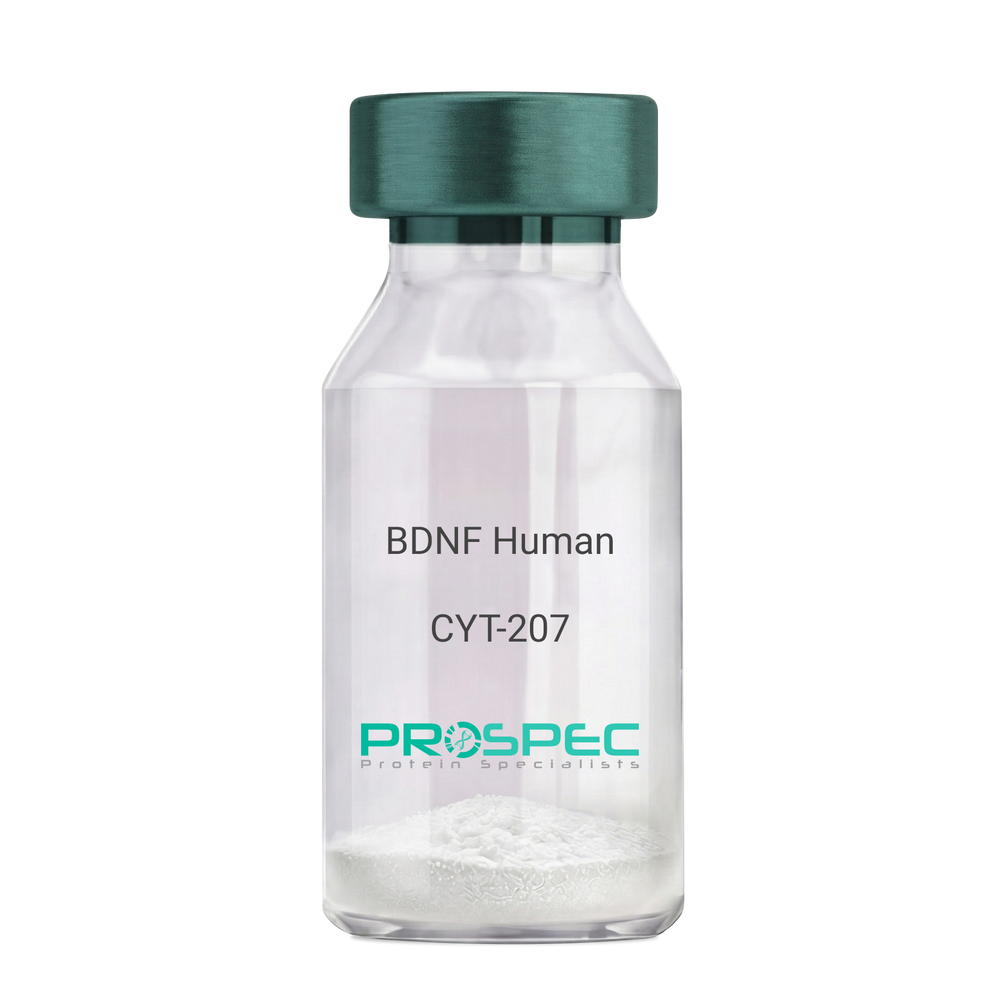
    BDNF Human

    Description:

    Brain-Derived Neurotrophic Factor Human Recombinant

    Brain-Derived Neurotrophic Factor, BDNF, MGC34632.

    Product # :

    CYT-207

    Price :

    Quantity :

    Shipping Method :

    Room Temp Icon

    Shipped at Room temp

    Add To Cart

    More Info

    • description
    • source
    • formulation
    • purity
    • biological activity
    • More Info
    • Activity

    Description

    BDNF Human Recombinant produced in E.Coli is a homodimer, non-glycosylated, polypeptide chain containing 2 x 119 amino acids (and an N-terminal Met) and having a total molecular mass of 28kDa. BDNF Human Recombinant is purified by proprietary chromatographic techniques.

    Source

    Escherichia Coli.

    Formulation

    The protein was lyophilized with 20mM PB and 400mM NaCl, pH 7.2.

    Purity

    BDNF is greater than 950% as determined SDS-PAGE.

    Biological Activity

    The activity was determined using Immobilized Human TrkB-His tag protein 2ug/ml (100 μl/well) for its binding to NHS-Biotin BDNF. The ED50 of was found to be ≤20ng/mL

    Activity

    bdnf activity - Product image 1

    More Info

    • Introduction

      BDNF promotes the survival of neuronal populations that are all located either in the central nervous system or directly connected to it. BDNF is a major regulator of synaptic transmission and plasticity at adult synapses in many regions of the cns. The versatility of BDNF is emphasized by its contribution to a range of adaptive neuronal responses including long-term potentiation (ltp), long-term depression (ltd), certain forms of short-term synaptic plasticity, as well as homeostatic regulation of intrinsic neuronal excitability.

    • Synonyms

      Brain-Derived Neurotrophic Factor, BDNF, MGC34632.

    • Physical Appearance

      Sterile Filtered White lyophilized (freeze-dried) powder.

    • Stability

      Lyophilized BDNF although stable at room temperature for 3 weeks, should be stored desiccated below -18°C. Upon reconstitution BDNF should be stored at 4°C between 2-7 days and for future use below -18°C.For long term storage it is recommended to add a carrier protein (0.1% HSA or BSA).Please prevent freeze-thaw cycles.

    • Solubility

      It is recommended to reconstitute the lyophilized BDNF in sterile 18M-cm H2O not less than 100µg/ml, which can then be further diluted to other aqueous solutions.

    • Amino Acid Sequence

      HSDPARRGE LSVCDSISEW VTAADKKTAV DMSGGTVTVL EKVPVSKGQL KQYFYETKCN PMGYTKEGCR GIDKRHWNSQ CRTTQSYVRA LTMDSKKRIG WRFIRIDTSC VCTLTIKRGR.

    • Background

      Final Thoughts

      Although more research is needed on the safety and effectiveness of BDNF human recombinant, trials suggest that this laboratory-produced protein may be effective in managing and treating several neurological and psychiatric disorders. It's important for experts to stay up to date on the latest developments and research to learn more about potential risks and benefits.

      What is the molecular weight/Mw of BDNF Protein?
      BDNF Protein has a total Mw of 27kDa.

      What is the source or expression system of BDNF Protein?
      Escherichia Coli.

      What is the Purity of BDNF Protein?
      BDNF Protein is >97% pure as determined by SDS-PAGE.

      What is the Biological Activity of BDNF Protein?
      The ED50, as determined by the dose-dependent induction of C6 cells proliferation, is 1.3-2µg/ml.

      What is the amino acid sequence of BDNF Protein?
      MHSDPARRGE LSVCDSISEW VTAADKKTAV DMSGGTVTVL EKVPVSKGQL KQYFYETKCN PMGYTKEGCR GIDKRHWNSQ CRTTQSYVRA LTMDSKKRIG WRFIRIDTSC VCTLTIKRGR.

      What applications can BDNF Protein be used in?
      BDNF Protein can probably be used in western blot, ELISA and Lateral Flow.

      What is the endotoxin level for BDNF Protein?
      The endotoxin level is minimal, BDNF Protein was purified using conventional chromatography techniques.

    • Protein content

      BDNF quantitation was carried out by two independent methods:1. UV spectroscopy at 280 nm using the absorbency value of 1.6 as the extinction coefficient for a 0.1% (1mg/ml) solution. This value is calculated by the PC GENE computer analysis program of protein sequences (IntelliGenetics). 2. Analysis by RP-HPLC, using a standard solution of Brain-derived Neurotrophic Factor as a Reference Standard.

    ProSpec's products are furnished for LABORATORY RESEARCH USE ONLY. The product may not be used as drugs, agricultural or pesticidal products, food additives or household chemicals.

    Bdnf Human
  • View Data Sheet

    Name :

    PARK7 Mouse

    Description:

    Parkinson Disease Protein 7 Mouse Recombinant

    Protein deglycase DJ-1, Parkinson disease protein 7 homolog.

    Product # :

    PRO-2226

    Price :

    Quantity :

    Shipping Method :

    Ice Icon

    Shipped with Ice Packs

    Add To Cart

    More Info

    • description
    • source
    • formulation
    • purity
    • More Info

    Description

    PARK7 Mouse Recombinant produced in E.Coli is a single, non-glycosylated polypeptide chain containing 212 amino acids (1-189 a.a) and having a molecular mass of 22.4kDa. PARK7 is fused to a 23 amino acid His-tag at N-terminus & purified by proprietary chromatographic techniques.

    Source

    Escherichia Coli.

    Formulation

    PARK7 protein solution (0.5mg/ml) containing Phosphate Buffered Saline (pH 7.4), 20% glycerol and 1mM DTT.

    Purity

    Greater than 90.0% as determined by SDS-PAGE.

    More Info

    • Introduction

      The PARK7 is a ubiquitously expressed protein involved in various cellular processes including spermatogenesis and fertilization, cancer, RNA-binding, androgen-receptor signaling and oxidative stress. Mutations in the PARK7 are the cause of autosomal recessive early-onset Parkinson’s disease 7 (Park7).

    • Synonyms

      Protein deglycase DJ-1, Parkinson disease protein 7 homolog.

    • Physical Appearance

      Sterile Filtered colorless solution.

    • Stability

      Store at 4°C if entire vial will be used within 2-4 weeks. Store, frozen at -20°C for longer periods of time. For long term storage it is recommended to add a carrier protein (0.1% HSA or BSA).Avoid multiple freeze-thaw cycles.

    • Amino Acid Sequence

      MGSSHHHHHH SSGLVPRGSH MGSMASKRAL VILAKGAEEM ETVIPVDVMR RAGIKVTVAG LAGKDPVQCS RDVMICPDTS LEDAKTQGPY DVVVLPGGNL GAQNLSESPM VKEILKEQES RKGLIAAICA GPTALLAHEV GFGCKVTTHP LAKDKMMNGS HYSYSESRVE KDGLILTSRG PGTSFEFALA IVEALVGKDM ANQVKAPLVL KD.

    ProSpec's products are furnished for LABORATORY RESEARCH USE ONLY. The product may not be used as drugs, agricultural or pesticidal products, food additives or household chemicals.

    Park7 Mouse
  • View Data Sheet

    Name :

    ECSIT Human

    Description:

    ECSIT homolog Human Recombinant

    ECSIT Homolog (Drosophila), Evolutionarily Conserved Signaling Intermediate In Toll Pathway Mitochondrial, Likely Ortholog Of Mouse Signaling Intermediate In Toll Pathway Evolutionarily Conserved, Protein SITPEC.

    Product # :

    PRO-1241

    Price :

    Quantity :

    Shipping Method :

    Ice Icon

    Shipped with Ice Packs

    Add To Cart

    More Info

    • description
    • source
    • formulation
    • purity
    • More Info

    Description

    ECSIT Human Recombinant produced in E. coli is a single polypeptide chain containing 222 amino acids (19-217) and having a molecular mass of 24.6 kDa.ECSIT is fused to a 23 amino acid His-tag at N-terminus & purified by proprietary chromatographic techniques.

    Source

    E.coli.

    Formulation

    The ECSIT solution contains 20mM Tris-HCl buffer (pH 8.0), 0.1M NaCl, 1mM DTT and 10% glycerol.

    Purity

    Greater than 90% as determined by SDS-PAGE.

    More Info

    • Introduction

      ECSIT homolog (ECSIT) is a ubiquitously expressed protein which has a vital role as an adaptor protein in the cytosolic signal transduction cascade events triggered by Toll receptor activation. ECSIT promotes proteolytic activation of MAP3K1. ECSIT is also involved in the BMP signaling pathway. ECSIT is essential for normal embryonic development. ECSIT was originally classified as a cytoplasmic protein interacting specifically with TNF receptor associated factor (TRAF)-6 in the TLR pathway. ECSIT gene knockdown results in gravely impaired complex I assembly and disrupted mitochondrial function.

    • Synonyms

      ECSIT Homolog (Drosophila), Evolutionarily Conserved Signaling Intermediate In Toll Pathway Mitochondrial, Likely Ortholog Of Mouse Signaling Intermediate In Toll Pathway Evolutionarily Conserved, Protein SITPEC.

    • Physical Appearance

      Sterile Filtered colorless solution.

    • Stability

      Store at 4°C if entire vial will be used within 2-4 weeks. Store, frozen at -20°C for longer periods of time. For long term storage it is recommended to add a carrier protein (0.1% HSA or BSA).Avoid multiple freeze-thaw cycles.

    • Amino Acid Sequence

      MGSSHHHHHH SSGLVPRGSH MGSGTCGAAL TGTSISQVPL PKDSTGAADP PQPHIVGIQS PDQQAALARH NPARPVFVEG PFSLWLRNKC VYYHILRADL LPPEEREVEE TPEEWNLYYP MQLDLEYVRS GWDNYEFDIN EVEEGPVFAM CMAGAHDQAT MAKWIQGLQE TNPTLAQIPV VFRLAGSTRE LQTSSAGLEE PPLPEDHQEE DDNLQRQQQG QS

    ProSpec's products are furnished for LABORATORY RESEARCH USE ONLY. The product may not be used as drugs, agricultural or pesticidal products, food additives or household chemicals.

    Ecsit Human
  • View Data Sheet

    Name :

    TSLPR Human, Sf9

    Description:

    Thymic Stromal Lymphopoietin Receptor Human Recombinant, Sf9

    Cytokine receptor-like factor 2, CRLF2, Cytokine receptor-like factor 2, Cytokine receptor-like 2, IL-XR, Thymic stromal lymphopoietin protein receptor, TSLP receptor, CRL2, ILXR, TSLPR, Cytokine receptor-like factor 2 isoform 1, CRLF2Y.

    Product # :

    CYT-995

    Price :

    Quantity :

    Shipping Method :

    Ice Icon

    Shipped with Ice Packs

    Add To Cart

    More Info

    • description
    • source
    • formulation
    • purity
    • More Info

    Description

    TSLPR Human Recombinant produced in Sf9 Baculovirus cells is a single, glycosylated polypeptide chain containing 218 amino acids (23-231) and having a molecular mass of 25.2kDa (Molecular size on SDS-PAGE will appear at approximately 28-40kDa).TSLPR is fused to a 6 amino acid His-Tag at C-terminus and purified by proprietary chromatographic techniques.

    Source

    Sf9, Baculovirus cells.

    Formulation

    TSLPR protein solution (1mg/ml) containing Phosphate Buffered Saline (pH 7.4) and 10% glycerol.

    Purity

    Greater than 95.0% as determined by SDS-PAGE.

    More Info

    • Introduction

      Thymic Stromal Lymphopoietin Receptor (TSLPR) is a member of the type I cytokine receptor family. TSLPR alongside the interleukin 7 receptor (IL7R) activate STAT3, STAT5, and JAK2 pathways, which is regulated processes such as cell proliferation and development of the hematopoietic system. Two transcript variants encoding dissimilar isoforms have been found for this gene. TSLPR is expressed in heart, skeletal muscle, kidney and adult and fetal liver.

    • Synonyms

      Cytokine receptor-like factor 2, CRLF2, Cytokine receptor-like factor 2, Cytokine receptor-like 2, IL-XR, Thymic stromal lymphopoietin protein receptor, TSLP receptor, CRL2, ILXR, TSLPR, Cytokine receptor-like factor 2 isoform 1, CRLF2Y.

    • Physical Appearance

      Sterile Filtered clear solution.

    • Stability

      Store at 4°C if entire vial will be used within 2-4 weeks. Store, frozen at -20°C for longer periods of time. For long term storage it is recommended to add a carrier protein (0.1% HSA or BSA).Avoid multiple freeze-thaw cycles.

    • Amino Acid Sequence

      ADPQGGAAEG VQIQIIYFNL ETVQVTWNAS KYSRTNLTFH YRFNGDEAYD QCTNYLLQEG HTSGCLLDAE QRDDILYFSI RNGTHPVFTA SRWMVYYLKP SSPKHVRFSW HQDAVTVTCS DLSYGDLLYE VQYRSPFDTE WQSKQENTCN VTIEGLDAEK CYSFWVRVKA MEDVYGPDTY PSDWSEVTCW QRGEIRDACA ETPTPPKPKL SKHHHHHH.

    ProSpec's products are furnished for LABORATORY RESEARCH USE ONLY. The product may not be used as drugs, agricultural or pesticidal products, food additives or household chemicals.

    Tslpr Human Sf9
  • View Data Sheet

    Name :

    sIL 6R Human

    Description:

    Interleukin-6 Soluble Receptor Human Recombinant

    IL6R-alpha, CD126, IL-6R 1, CD126 antigen, IL6RA, Interleukin 6 receptor, Interleukin 6 receptor alpha subunit, Interleukin-6 receptor alpha chain precursor, B cell stimulatory factor-2,Membrane glycoprotein 80, gp80, IL-6R, MGC104991.

    Product # :

    CYT-286

    Price :

    Quantity :

    Shipping Method :

    Ice Icon

    Shipped with Ice Packs

    Add To Cart

    More Info

    • description
    • source
    • formulation
    • purity
    • More Info

    Description

    sIL-6R Human Recombinant produced in E.Coli is a single, non-glycosylated polypeptide chain containing 338 amino acids (20-357) corresponding to the mature IL-6R protein, having a molecular weight of 42.25 kDa, with an aminoterminal hexahistidine tag.The sIL6R is purified by proprietary chromatographic techniques.

    Source

    Escherichia Coli.

    Formulation

    CD126 His-Tag protein is supplied in 20mM Tris-HCl, pH 8.0, 0.8M Urea & 50% glycerol.

    Purity

    Greater than 90.0% as determined by SDS-PAGE.

    More Info

    • Introduction

      The IL-6 receptor complex is composed of two membrane glycoproteins: the low affinity receptor and the signaltransducing component. The soluble form of IL6R is found in the urine of healthy adult humans and the serum of HIV positive individuals, as well as in the cell culture supernatants of stimulated PBMC’s. This soluble form of IL6R results from either proteolytic cleavage from the membrane, or an isoform derived splice variant.

    • Synonyms

      IL6R-alpha, CD126, IL-6R 1, CD126 antigen, IL6RA, Interleukin 6 receptor, Interleukin 6 receptor alpha subunit, Interleukin-6 receptor alpha chain precursor, B cell stimulatory factor-2,Membrane glycoprotein 80, gp80, IL-6R, MGC104991.

    • Physical Appearance

      Sterile Filtered clear solution.

    • Stability

      Store at 4°C if entire vial will be used within 2-4 weeks. Store, frozen at -20°C for longer periods of time. Please avoid freeze thaw cycles.

    • Background

      Research Paper on Interleukin-6 Soluble Receptor Human Recombinant

      Abstract:

      Interleukin-6 (IL-6) Soluble Receptor Human Recombinant holds a critical place in immunological research, offering a unique lens into the intricate world of immune signaling. This research paper explores the molecular intricacies and the profound implications of IL-6 Soluble Receptor Human Recombinant in the context of immune responses. As we unravel its functions, synonyms, including DIF, TNFA, and TNFSF2, and potential applications, we gain valuable insights into the multifaceted role of immune regulation.

      Introduction:

      IL-6 Soluble Receptor Human Recombinant has emerged as a focal point of interest in the field of immunology. This paper aims to provide a comprehensive overview of its molecular characteristics and its role in shaping immune responses.

      Molecular Insights and Receptor Specificity:

      Delving into the molecular structure of IL-6 Soluble Receptor Human Recombinant, we uncover its pivotal role in binding IL-6. Its high affinity and specificity contribute to precise modulation of IL-6-mediated signaling pathways.

      Mediating Immune Responses:

      IL-6 exerts profound effects on immune cell activation, inflammation, and homeostasis. IL-6 Soluble Receptor Human Recombinant acts as a strategic player in fine-tuning these responses by sequestering IL-6, thereby influencing immune balance.

      Synonyms and Complex Interactions:

      Understanding the synonyms linked to IL-6, such as DIF, TNFA, and TNFSF2, enriches our comprehension of immune signaling networks. The interplay between IL-6 Soluble Receptor Human Recombinant and these molecules intricately shapes immune outcomes.

      Potential Therapeutic and Diagnostic Applications:

      The implications of IL-6 Soluble Receptor Human Recombinant extend beyond research settings. Its potential as a therapeutic candidate for immune-related disorders and its diagnostic utility in disease monitoring highlight its translational significance.

      Clinical Relevance and Future Prospects:

      IL-6 Soluble Receptor Human Recombinant's clinical potential is underscored by its role in diseases characterized by dysregulated IL-6 signaling. Investigating its role as a therapeutic intervention paves the way for innovative treatment strategies.

      Conclusion:

      In the realm of immunology, IL-6 Soluble Receptor Human Recombinant emerges as a key regulator of immune equilibrium. Its molecular intricacies, vital functions, and potential therapeutic implications position it as a cornerstone in unraveling immune responses and disease pathogenesis.

    ProSpec's products are furnished for LABORATORY RESEARCH USE ONLY. The product may not be used as drugs, agricultural or pesticidal products, food additives or household chemicals.

    Il 6R Human
  • View Data Sheet

    Name :

    TNFR2 Human

    Description:

    Tumor Necrosis Factor Receptor Type 2 Human Recombinant

    Tumor necrosis factor receptor superfamily member 1B, Tumor necrosis factor receptor 2, TNF-R2, Tumor necrosis factor receptor type II, TNF-RII, TNFR-II, p75, p80 TNF-alpha receptor, TNFRSF1B, TNFBR, TNFR2.

    Product # :

    CYT-769

    Price :

    Quantity :

    Shipping Method :

    Room Temp Icon

    Shipped at Room temp

    Add To Cart

    More Info

    • description
    • source
    • formulation
    • purity
    • biological activity
    • More Info

    Description

    TNFR2 Human produced in E.Coli is a single, non-glycosylated polypeptide chain containing 184 amino acids and having a molecular mass of 20kDa. The TNFR2 is purified by proprietary chromatographic techniques.

    Source

    Escherichia Coli.

    Formulation

    TNFR2 was Lyophilized from a 0.2µm filtered concentrated solution in PBS, pH7.4.

    Purity

    Greater than 97.0% as determined by SDS-PAGE.

    Biological Activity

    The ED50 as determined by its ability to inhibit the TNF-a mediated cytotoxicity in the L-929 cells is less than 0.2µg/ml, corresponding to a specific activity of > 5000IU/mg in the presence of 0.25ng/mL of rHuTNF-a.

    More Info

    • Introduction

      TNFR2 belongs to the TNF-receptor superfamily. TNFR2 is receptor with high affinity for TNFSF2/TNF-alpha and approximately 5-fold lower affinity for homotrimeric TNFSF1/lymphotoxin-alpha. TNFR2 mediates the majority of the metabolic effects of TNF-alpha. In addition, knockout studies in mice propose a role for TNFR2 in protecting neurons from apoptosis by stimulating antioxidative pathways. TNFR2 expression might have a significant role in the angiogenesis, tumor cell proliferation and metastasis of Invasive micropapillary carcinoma of the breast.
      There are 2 types of soluble TNF receptors: sTNFR-I and sTNFR-II, which act to neutralize the biological activities of TNF alpha and TNF beta. The levels of these soluble receptors seem to increase as a result of shedding of the extracellular domains of the membrane bound receptors. High levels of soluble TNF receptors are found in the amniotic fluid of pregnant women. TNFR2 and TNFR1 form a heterocomplex which mediates the recruitment of 2 anti-apoptotic proteins, c-IAP1 and c-IAP2, which possess E3 ubiquitin ligase activity. IAPs’ function in TNF-receptor signaling is unknown; nevertheless, c-IAP1 is believed to potentiate TNF-induced apoptosis by the ubiquitination and degradation of TNF-receptor-associated factor 2, which mediates anti-apoptotic signals. Oxidative stress promotes TNFR1 and TNFR2 self-interaction, ligand-independent and enhanced ligand-dependent TNF signaling. TNF-a, TNFR1 and TNFR2 have roles in cellular differentiation. TNFR1 and TNFR2 function in cell type-specific renal injury.

    • Synonyms

      Tumor necrosis factor receptor superfamily member 1B, Tumor necrosis factor receptor 2, TNF-R2, Tumor necrosis factor receptor type II, TNF-RII, TNFR-II, p75, p80 TNF-alpha receptor, TNFRSF1B, TNFBR, TNFR2.

    • Physical Appearance

      Sterile Filtered White lyophilized (freeze-dried) powder.

    • Stability

      Lyophilized TNFR2 although stable at room temperature for 3 weeks, should be stored desiccated below -18C. Upon reconstitution TNFR2 should be stored at 4C between 2-7 days and for future use below -18C. For long term storage it is recommended to add a carrier protein (0.1% HSA or BSA). Please prevent freeze-thaw cycles.

    • Solubility

      It is recommended to reconstitute the lyophilized TNFR2 in sterile 18M-cm H2O not less than 100µg/ml, which can then be further diluted to other aqueous solutions.

    • Amino Acid Sequence

      MPAQVAFTPY APEPGSTCRL REYYDQTAQM CCSKCSPGQH AKVFCTKTSD TVCDSCEDST YTQLWNWVPE CLSCGSRCSS DQVETQACTR EQNRICTCRP GWYCALSKQE GCRLCAPLRK CRPGFGVARP GTETSDVVCK PCAPGTFSNT TSSTDICRPH QICNVVAIPG NASMDAVCTS TSPT.

    ProSpec's products are furnished for LABORATORY RESEARCH USE ONLY. The product may not be used as drugs, agricultural or pesticidal products, food additives or household chemicals.

    Human Tnfr2
  • View Data Sheet

    Name :

    SYT11 Human

    Description:

    Synaptotagmin XI Human Recombinant

    Synaptotagmin XI, SytXI, Synaptotagmin 12, KIAA0080, SYT12, Synaptotagmin-11.

    Product # :

    PRO-2301

    Price :

    Quantity :

    Shipping Method :

    Ice Icon

    Shipped with Ice Packs

    Add To Cart

    More Info

    • description
    • source
    • formulation
    • purity
    • More Info

    Description

    SYT11 Human Recombinant produced in E.Coli is a single, non-glycosylated polypeptide chain containing 418 amino acids (37-431 a.a) and having a molecular mass of 47kDa. SYT11 is fused to a 23 amino acid His-tag at N-terminus & purified by proprietary chromatographic techniques.

    Source

    E.coli.

    Formulation

    SYT11 protein solution (0.25mg/ml) containing Phosphate Buffered Saline (pH7.4) and 50% glycerol.

    Purity

    Greater than 80% as determined by SDS-PAGE.

    More Info

    • Introduction

      Synaptotagmin-11 (SYT11) protein may be involved in Ca2+-dependent exocytosis of secretory vesicles through Ca2+ and phospholipid binding to the C2 domain or may function as Ca2+ sensors in the process of vesicular trafficking and exocytosis.

    • Synonyms

      Synaptotagmin XI, SytXI, Synaptotagmin 12, KIAA0080, SYT12, Synaptotagmin-11.

    • Physical Appearance

      Sterile Filtered colorless solution.

    • Stability

      Store at 4°C if entire vial will be used within 2-4 weeks. Store, frozen at -20°C for longer periods of time. For long term storage it is recommended to add a carrier protein (0.1% HSA or BSA).Avoid multiple freeze-thaw cycles.

    • Amino Acid Sequence

      MGSSHHHHHH SSGLVPRGSH MGSWSCCHQQ AEKKQKNPPY KFIHMLKGIS IYPETLSNKK KIIKVRRDKD GPGREGGRRN LLVDAAEAGL LSRDKDPRGP SSGSCIDQLP IKMDYGEELR SPITSLTPGE SKTTSPSSPE EDVMLGSLTF SVDYNFPKKA LVVTIQEAHG LPVMDDQTQG SDPYIKMTIL PDKRHRVKTR VLRKTLDPVF DETFTFYGIP YSQLQDLVLH FLVLSFDRFS RDDVIGEVMV PLAGVDPSTG KVQLTRDIIK RNIQKCISRG ELQVSLSYQP VAQRMTVVVL KARHLPKMDI TGLSGNPYVK VNVYYGRKRI AKKKTHVKKC TLNPIFNESF IYDIPTDLLP DISIEFLVID FDRTTKNEVV GRLILGAHSV TASGAEHWRE VCESPRKPVA KWHSLSEY.

    ProSpec's products are furnished for LABORATORY RESEARCH USE ONLY. The product may not be used as drugs, agricultural or pesticidal products, food additives or household chemicals.

    Syt11 Human
  • View Data Sheet

    Name :

    SYT13 Human

    Description:

    Synaptotagmin XIII Human Recombinant

    Synaptotagmin XIII, KIAA1427, synaptotagmin-13, sytXIII.

    Product # :

    PRO-1550

    Price :

    Quantity :

    Shipping Method :

    Ice Icon

    Shipped with Ice Packs

    Add To Cart

    More Info

    • description
    • source
    • formulation
    • purity
    • More Info

    Description

    SYT13 Human Recombinant produced in E.coli is a single, non-glycosylated polypeptide chain containing 420 amino acids (30-426) and having a molecular mass of 46.5kDa.SYT13 is fused to a 23 amino acid His-tag at N-terminus & purified by proprietary chromatographic techniques.

    Source

    Escherichia Coli.

    Formulation

    The SYT13 solution (0.25mg/ml) contains 20mM Tris-HCl buffer (pH 8.0), 0.15M NaCl, 1mM DTT, 1mM PMSF, 1mM EDTA and 30% glycerol.

    Purity

    Greater than 85% as determined by SDS-PAGE.

    More Info

    • Introduction

      SYT13 belongs to the great synaptotagmin protein family which contain 2 domains: cytoplasmic C terminus with two tandem C2 domains (C2A and C2B) and extracellular N-terminal transmembrane domain. Synaptotogmin family members have dissimilar biochemical properties and developmental profiles, and patterns of tissue distribution. Additionally, Synaptotogmins formulate homo- and heteromeric complexes with each other. Synaptotagmins operate as membrane traffickers in multicellular organisms.

    • Synonyms

      Synaptotagmin XIII, KIAA1427, synaptotagmin-13, sytXIII.

    • Physical Appearance

      Sterile Filtered clear solution.

    • Stability

      Store at 4°C if entire vial will be used within 2-4 weeks. Store, frozen at -20°C for longer periods of time. For long term storage it is recommended to add a carrier protein (0.1% HSA or BSA).Avoid multiple freeze-thaw cycles.

    • Amino Acid Sequence

      MGSSHHHHHH SSGLVPRGSH MGSCRHMHPK KGLLPRDQDP DLEKAKPSLL GSAQQFNVKK STEPVQPRAL LKFPDIYGPR PAVTAPEVIN YADYSLRSTE EPTAPASPQP PNDSRLKRQV TEELFILPQN GVVEDVCVME TWNPEKAASW NQAPKLHYCL DYDCQKAELF VTRLEAVTSN HDGGCDCYVQ GSVANRTGSV EAQTALKKRQ LHTTWEEGLV LPLAEEELPT ATLTLTLRTC DRFSRHSVAG ELRLGLDGTS VPLGAAQWGE LKTSAKEPSA GAGEVLLSIS YLPAANRLLV VLIKAKNLHS NQSKELLGKD VSVKVTLKHQ ARKLKKKQTK RAKHKINPVW NEMIMFELPD DLLQASSVEL EVLGQDDSGQ SCALGHCSLG LHTSGSERSH WEEMLKNPRR QIAMWHQLHL

    ProSpec's products are furnished for LABORATORY RESEARCH USE ONLY. The product may not be used as drugs, agricultural or pesticidal products, food additives or household chemicals.

    Syt13 Human
  • View Data Sheet

    Name :

    LAIR2 Human

    Description:

    Leukocyte-Associated Ig-Like Receptor 2 Human Recombinant

    Leukocyte-associated immunoglobulin-like receptor 2, LAIR-2, CD306, LAIR2.

    Product # :

    PRO-1081

    Price :

    Quantity :

    Shipping Method :

    Ice Icon

    Shipped with Ice Packs

    Add To Cart

    More Info

    • description
    • source
    • formulation
    • purity
    • More Info

    Description

    LAIR2 Human Recombinant produced in E.Coli is a single, non-glycosylated polypeptide chain containing 139 amino acids (22-135 a.a) and having a molecular mass of 15.2kDa.LAIR2 is fused to a 25 amino acid His-tag at N-terminus & purified by proprietary chromatographic techniques.

    Source

    Escherichia Coli.

    Formulation

    LAIR2 protein solution (1mg/ml) containing 20mM Tris-HCl buffer (pH8.0), 20% glycerol, 0.1M NaCl and 1mM DTT.

    Purity

    Greater than 90.0% as determined by SDS-PAGE.

    More Info

    • Introduction

      Leukocyte-associated immunoglobulin-like receptor 2 (LAIR2) is a secreted, 131 amino acids protein which contains one IglikeC2 type domain, rendering it a member of the Ig superfamily. Even though one is secreted and one is membrane bound, the 2 LAIR proteins are assumed to have evolved from a common gene ancestor and seem to share similar adhesion profiles, suggesting that LAIR2 may compete with LAIR1 for ligand binding. LAIR2 was discovered by its similarity to LAIR1, which is an inhibitory receptor present on mononuclear leukocytes. The LAIR2 gene maps to a region of 19q13.4, dubbed the leukocyte receptor cluster, which contains 29 genes in the immunoglobulin superfamily, including LAIR1. The function of the LAIR2 protein is unknown, though it is assumed to be secreted and may help modulate mucosal tolerance.

    • Synonyms

      Leukocyte-associated immunoglobulin-like receptor 2, LAIR-2, CD306, LAIR2.

    • Physical Appearance

      Sterile Filtered colorless solution.

    • Stability

      Store at 4°C if entire vial will be used within 2-4 weeks. Store, frozen at -20°C for longer periods of time. For long term storage it is recommended to add a carrier protein (0.1% HSA or BSA).Avoid multiple freeze-thaw cycles.

    • Amino Acid Sequence

      MGSSHHHHHH SSGLVPRGSH MGSHMQEGAL PRPSISAEPG TVISPGSHVT FMCRGPVGVQ TFRLEREDRA KYKDSYNVFR LGPSESEARF HIDSVSEGNA GLYRCLYYKP PGWSEHSDFL ELLVKGTVPG TEASGFDAP.

    ProSpec's products are furnished for LABORATORY RESEARCH USE ONLY. The product may not be used as drugs, agricultural or pesticidal products, food additives or household chemicals.

    Lair2 Human
  • View Data Sheet

    Name :

    p85a Bovine

    Description:

    Phosphoinositide 3-kinase a, regulatory subunit Bovine Recombinant

    Phosphatidylinositol 3-kinase regulatory subunit alpha, PI3-kinase p85 subunit alpha, PtdIns-3-kinase p85-alpha, PI3K, P85a.

    Product # :

    PKA-328

    Price :

    Quantity :

    Shipping Method :

    Ice Icon

    Shipped with Ice Packs

    Add To Cart

    More Info

    • description
    • source
    • formulation
    • purity
    • More Info

    Description

    Phosphoinositide 3-kinase subunit p85a Bovine Recombinant has a molecular weight of 83.5 kDa.

    Source

    Leishmania tarentolae.

    Formulation

    Supplied as a 1 mg/ml solution in 25mM HEPES, pH 8.0, 25mM NaCl, 2.5mM MgCl2 and 50% glycerol.

    Purity

    Greater than 90.0% as determined by SDS-PAGE.

    More Info

    • Introduction

      P85a functions as the regulatory subunit of the class IA PI3-kinase isoforms a, b, and d.
      It contains two SH2 domains that bind to tyrosine-phosphorylated growth factor receptors or substrate adaptor proteins.
      It also contains a BH (breakpoint cluster region homology) domain that shows GAP activity towards the small GTPases Rab4, Rab5, Cdc42, Rac1 and to a lesser extend towards Rab6 and Rab11.
      It was shown that PI3Ka catalytic subunit mediated phosphorylation of the p85a adapter reduces the lipid kinase activity of the heterodimer and this gives hints for PI3K-dependent signaling events not requiring production of 3’-phosphorylated phosphoinositides.
      PI3Ka protein kinase activity has been implicated in IRS-1 serine phosphorylation in insulin-treated adipocytes and in STAT3 and IRS-1 phosphorylation upon activation of the type 1 IFN receptor by IFN-a.

    • Synonyms

      Phosphatidylinositol 3-kinase regulatory subunit alpha, PI3-kinase p85 subunit alpha, PtdIns-3-kinase p85-alpha, PI3K, P85a.

    • Physical Appearance

      Sterile filtered liquid formualtion.

    • Stability

      Store at 4°C if entire vial will be used within 2-4 weeks. Store, frozen at -20°C for longer periods of time. For long term storage it is recommended to add a carrier protein (0.1% HSA or BSA).Avoid multiple freeze-thaw cycles.

    ProSpec's products are furnished for LABORATORY RESEARCH USE ONLY. The product may not be used as drugs, agricultural or pesticidal products, food additives or household chemicals.

    P85A Bovine
  • View Data Sheet

    Name :

    SLAMF1 Human, Sf9

    Description:

    SLAMF1 Human Recombinant, Sf9

    Signaling lymphocytic activation molecule, CDw150, IPO-3, CD150, SLAMF1, SLAM.

    Product # :

    PRO-2393

    Price :

    Quantity :

    Shipping Method :

    Ice Icon

    Shipped with Ice Packs

    Add To Cart

    More Info

    • description
    • source
    • formulation
    • purity
    • More Info

    Description

    SLAMF1 Human Recombinant produced in Sf9 Baculovirus cells is a single, glycosylated polypeptide chain containing 226 amino acids (21-237a.a.) and having a molecular mass of 25.3kDa (Molecular size on SDS-PAGE will appear at approximately 28-40kDa).SLAMF1 is expressed with a 6 amino acid His tag at C-Terminus and purified by proprietary chromatographic techniques.

    Source

    Sf9, Baculovirus cells.

    Formulation

    SLAMF1 protein solution (0.5mg/ml) contains Phosphate Buffered Saline (pH 7.4) and 10% glycerol.

    Purity

    Greater than 95.0% as determined by SDS-PAGE.

    More Info

    • Introduction

      SLAMF1 is a member of the immunoglobulin gene superfamily and is involved in T-cell stimulation. The SLAMF1 protein is constitutively expressed on peripheral blood memory T cells, T-cell clones, immature thymocytes, and a fraction of B cells, and is swiftly induced on naive T cells after activation. There are probably 2 modes of SLAM signaling: one in which the inhibitor SH2D1A serves as a negative regulator and another in which protein-tyrosine phosphatase 2C (PTPN11)-dependent signal transduction functions.

    • Synonyms

      Signaling lymphocytic activation molecule, CDw150, IPO-3, CD150, SLAMF1, SLAM.

    • Physical Appearance

      Sterile Filtered colorless solution.

    • Stability

      Store at 4°C if entire vial will be used within 2-4 weeks. Store, frozen at -20°C for longer periods of time. For long term storage it is recommended to add a carrier protein (0.1% HSA or BSA).Avoid multiple freeze-thaw cycles.

    • Amino Acid Sequence

      ADPASYGTGG RMMNCPKILR QLGSKVLLPL TYERINKSMN KSIHIVVTMA KSLENSVENK IVSLDPSEAG PPRYLGDRYK FYLENLTLGI RESRKEDEGW YLMTLEKNVS VQRFCLQLRL YEQVSTPEIK VLNKTQENGT CTLILGCTVE KGDHVAYSWS EKAGTHPLNP ANSSHLLSLT
      LGPQHADNIY ICTVSNPISN NSQTFSPWPG CRTDPSETKP HHHHHH.

    ProSpec's products are furnished for LABORATORY RESEARCH USE ONLY. The product may not be used as drugs, agricultural or pesticidal products, food additives or household chemicals.

    Slamf1 Human Sf9
  • 1
  • 2
  • 3
  • 4
  • …
  • 9
Your browser does not support the video tag.

Products

  • Cytokines
  • Growth Factors
  • Chemokines
  • CD Antigens
  • Neurotrophins
  • Hormones
  • Enzymes
  • Viral Antigens
  • Recombinant Proteins
  • Natural Proteins
  • Monoclonal Antibodies
  • Polyclonal Antibodies
  • Thermal Packaging

About

  • Company
  • Founder
  • Contribution
  • Contact Us
  • My Account

Ordering

  • Ordering Method
  • Ordering - Credit Card
  • Ordering PO
  • Shipping Fees
  • FAQ's

Legal

  • Terms & Conditions
  • Privacy
  • Site Map
  • info@prospecbio.com
  • Facebook
  • Instagram
  • Linkedin Profile

© 2026 ProSpec-Tany TechnoGene Ltd. All Rights Reserved.

  • Choosing a selection results in a full page refresh.
  • Opens in a new window.