Search results
1000 results found for “Sclerostin”
Name
Description
Product #
Price
Quantity
Shipping Method
- View Data Sheet
Name :
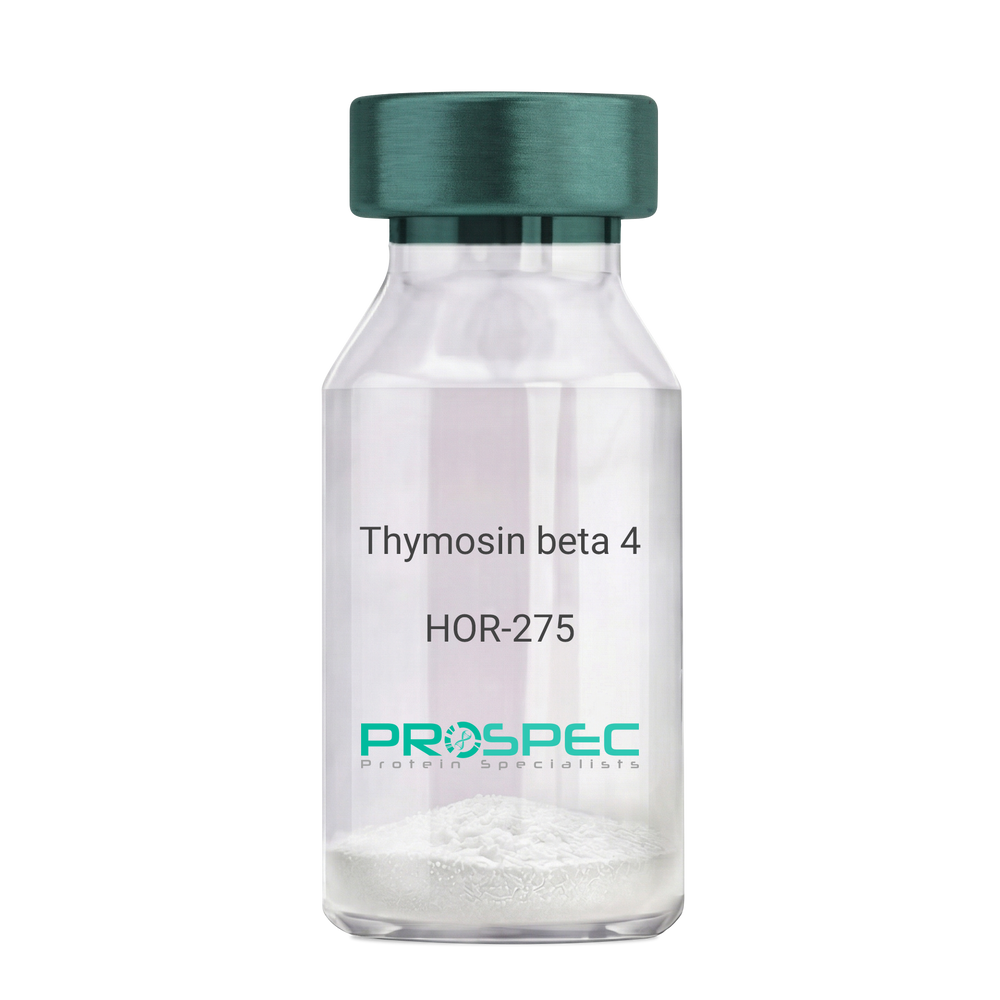
Thymosin beta 4Description:
Thymosin β4
Thymosin beta-4. TB500, TB-500
Product # :
HOR-275Price :
Quantity :
Shipping Method :
Shipped at Room temp
More Info
- description
- formulation
- purity
- More Info
Description
Thymosin b4 is a 43 amino acid peptide which is regarded as the main intracellular G-actin sequestering peptide. It has a molecular weight of 4963.55 Da, and its molecular formula is: C212H350N56O78S1. Extracellular Thymosin b4 may contribute to physiological processes such as angiogenesis, wound healing, and regulation of inflammation.
Formulation
The protein (1mg/ml) was lyophilized with no additives.
Purity
Greater than 98.0% as determined by RP-HPLC.
More Info
-
Introduction
Thymosin is a hormone secreted from the thymus. Its primary function is to stimulate the production of T cells, which are an important part of the immune system. Thymosin also assists in the development of B cells to plasma cells to produce antibodies. The predominant form of thymosin, thymosin b4, is a member of a highly conserved family of actin monomer-sequestering proteins. b-thymosins are the primary regulators of unpolymerized actin, and are essential for maintaining the small cytoplasmic pool of free G-actin monomers required for rapid filament elongation and allowing for the flux of monomers between the thymosin-bound pool and F-actin.
-
Synonyms
Thymosin beta-4. TB500, TB-500
-
Physical Appearance
Sterile Filtered White lyophilized (freeze-dried) powder.
-
Stability
Lyophilized Thymosin b4 although stable at room temperature for 3 weeks, should be stored desiccated below -18°C. Upon reconstitution T beta 4 should be stored at 4°C between 2-7 days and for future use below -18°C.For long term storage it is recommended to add a carrier protein (0.1% HSA or BSA).Please prevent freeze-thaw cycles.
-
Solubility
It is recommended to reconstitute the lyophilized Thymosin beta-4 in sterile 18MΩ-cm H2O not less than 100 µg/ml, which can then be further diluted to other aqueous solutions.
-
Amino Acid Sequence
Thymosin b4 has an a.a. sequence of Ac-Ser-Asp-Lys-Pro-Asp-Met-Ala-Glu-Ile-Glu-Lys-Phe-Asp-Lys-Ser-Lys-Leu-Lys-Lys-Thr-Glu-Thr-Gln-Glu-Lys-Asn-Pro-Leu-Pro-Ser-Lys-Glu-Thr-Ile-Glu-Gln-Glu-Lys-Gln-Ala-Gly-Glu-Ser-OH.
ProSpec's products are furnished for LABORATORY RESEARCH USE ONLY. The product may not be used as drugs, agricultural or pesticidal products, food additives or household chemicals.
- View Data Sheet
Name :
SCGN RatDescription:
Secretagogin Rat Recombinant
SCGN, EF-hand calcium binding protein, Setagin, SEGN, CALBL, Secretagogin.
Product # :
PRO-657Price :
Quantity :
Shipping Method :
Shipped at Room temp
More Info
- description
- source
- formulation
- purity
- More Info
Description
Secretagogin Rat Recombinant produced in E.Coli is a single, non-glycosylated, polypeptide chain containing 286 amino acids and having a molecular mass of 33.3 kDa. The Rat SCGN is fused to a 10 a.a. His tag at N-Terminus.The protein’s amino acids sequence is identical to UniProtKB/Swiss-Prot entry Q6R556.The Rat SCGN is purified by proprietary chromatographic techniques.
Source
Escherichia Coli.
Formulation
The sterile filtered concentrated protein solution was lyophilized with 20mM Tris & 50mM NaCl pH-7.5.
Purity
Greater than 95% as determined by SDS-PAGE.
More Info
-
Introduction
SCGN is a secreted calcium-binding protein which is found in the cytoplasm. It is related to calbindin D-28K and calretinin. Secretagogin is involved in KCL-stimulated calcium flux and cell proliferation.
Secretagogin plays a role in human non-functional pituitary adenomas. -
Synonyms
SCGN, EF-hand calcium binding protein, Setagin, SEGN, CALBL, Secretagogin.
-
Physical Appearance
Sterile Filtered White lyophilized (freeze-dried) powder.
-
Stability
Store lyophilized protein at -20°C. Aliquot the product after reconstitution to avoid repeated freezing/thawing cycles. Reconstituted protein can be stored at 4°C for a limited period of time.
-
Solubility
Add deionized water to a working concentration of 0.5mg/ml and let the lyophilized pellet dissolve completely.
-
Amino Acid Sequence
MKHHHHHHAS MDNAHRQTQA HLDAACFWQI WQRFDKDEKG YIKETELDAF FDDLLAKFGI EDTLMEENVQ KMKEQLMVGH DISKEGRILM KELASMFLSE DENFLLFFRL ETPLDNSVEF MQIWRKYDAD SSGFISAAEL SNFLRDLFLH HKKVISEAEL EEYTSTMMKI FDRNKDGRLD LNDLARILAL QENFLLQFKM DASSTEERKR DFEKIFAHYD VSKTGALEGP EVDGFVKDMM ELVQPSISGV DLDKFREILL RHCDVNKDGK IQKSELALCLGLKINP.
ProSpec's products are furnished for LABORATORY RESEARCH USE ONLY. The product may not be used as drugs, agricultural or pesticidal products, food additives or household chemicals.
- View Data Sheet
Name :
Secretin HumanDescription:
Secretin Human
Product # :
HOR-273Price :
Quantity :
Shipping Method :
Shipped at Room temp
More Info
- description
- formulation
- purity
- More Info
Description
Secretin has a molecular formula of C130H220N44O41, a.a. sequence of H-His-Ser-Asp-Gly-Thr-Phe-Thr-Ser-Glu-Leu-Ser-Arg-Leu-Arg- Asp-Ser-Ala-Arg-Leu-Gln-Arg-Leu-Leu-Gln-Gly-Leu-Val-NH2 and having an Mw of 3055.4 Dalton.
Formulation
The protein (1mg/ml) was lyophilized with no additives.
Purity
Greater than 98.0% as determined by:
(a) Analysis by RP-HPLC.
(b) Analysis by SDS-PAGE.More Info
-
Introduction
Human Secretin stimulates the secretion of bicarbonate by the pancreas and inhibits the production of gastrin and acid production in the stomach. It also potentiates the release of digestive enzymes from the pancreas triggered by cholecystokinin.
-
Physical Appearance
Sterile Filtered White lyophilized (freeze-dried) powder.
-
Stability
Lyophilized Secretin although stable at room temperature for 3 weeks, should be stored desiccated below -18°C. Upon reconstitution Secretin should be stored at 4°C between 2-7 days and for future use below -18°C.For long term storage it is recommended to add a carrier protein (0.1% HSA or BSA).Please prevent freeze-thaw cycles.
-
Solubility
It is recommended to reconstitute the lyophilized Secretin in sterile 18MΩ-cm H2O not less than 100 µg/ml, which can then be further diluted to other aqueous solutions.
ProSpec's products are furnished for LABORATORY RESEARCH USE ONLY. The product may not be used as drugs, agricultural or pesticidal products, food additives or household chemicals.
- View Data Sheet
Name :
SPP1 Human, ActiveDescription:
Osteopontin Human Recombinant, BioActive
OPN, SPP-1, BNSP, BSPI, ETA-1, Bone sialoprotein 1, BSP I.Early T lymphocyte activation 1, ETA 1, ETA1, MGC110940, Nephropontin, Secreted phosphoprotein 1, SPP 1, SPP1, urinary stone protein, uropontin.
Product # :
CYT-1166Price :
Quantity :
Shipping Method :
Shipped with Ice Packs
More Info
- description
- source
- formulation
- purity
- biological activity
- More Info
Description
SPP1 Human Recombinant produced in E.Coli is a single, non-glycosylated polypeptide chain containing 321 amino acids (17-314 a.a.) and having a molecular mass of 36.2kDa. SPP1 is fused to a 23 amino acid His tag at N-Terminus and purified by proprietary chromatographic techniques.
Source
Escherichia Coli.
Formulation
The SPP1 solution (1mg/ml) contains 20mM Tris-HCl buffer (pH 7.5), 1mM DTT, 10% glycerol and 2mM EDTA.
Purity
Greater than 90.0% as determined by SDS-PAGE.
Biological Activity
Measured by the ability of the immobilized protein to support the adhesion of HEK293 human embryonic kidney cells. When cells are added to OPN coated plates 10ug/ml. This effect is more to 40%.
More Info
-
Introduction
Osteopontin is a glycoprotein that was primarilyfound in osteoblasts and takes part in bone remodeling, immune functions in fibroblasts, macrophages, & lymphocytes during inflammation and wound healing. SPP1 highlybinds to hydroxyapatite. SPP1 forms an integral part of the mineralized matrix. SPP1 is vital to cell-matrix interaction.
Secreted Phosphoprotein-1 protects against cardiac ischemia-reperfusion injury through late preconditioning. Expression of Ostepontin and CD44 in hepatocellular carcinoma is linked to advanced tumor stage &leads to prognosis information. SPP1 is the most over-expressed gene in intrahepatic cholangiocarcinoma. Secreted Phosphoprotein-1 overexpression is related with interstitial lung diseases. -
Synonyms
OPN, SPP-1, BNSP, BSPI, ETA-1, Bone sialoprotein 1, BSP I.Early T lymphocyte activation 1, ETA 1, ETA1, MGC110940, Nephropontin, Secreted phosphoprotein 1, SPP 1, SPP1, urinary stone protein, uropontin.
-
Physical Appearance
Sterile Filtered clear colorless solution.
-
Stability
Store at 4°C if entire vial will be used within 2-4 weeks. Store, frozen at -20°C for longer periods of time. For long term storage it is recommended to add a carrier protein (0.1% HSA or BSA).Avoid multiple freeze-thaw cycles.
-
Amino Acid Sequence
MGSSHHHHHH SSGLVPRGSH RSMIPVKQAD SGSSEEKQLY NKYPDAVATW LNPDPSQKQN LLAPQNAVSS EETNDFKQET LPSKSNESHD HMDDMDDEDD DDHVDSQDSI DSNDSDDVDD TDDSHQSDES HHSDESDELV TDFPTDLPAT EVFTPVVPTV DTYDGRGDSV VYGLRSKSKK FRRPDIQYPD ATDEDITSHM ESEELNGAYK AIPVAQDLNA PSDWDSRGKD SYETSQLDDQ SAETHSHKQS RLYKRKANDE SNEHSDVIDS QELSKVSREF HSHEFHSHED MLVVDPKSKE EDKHLKFRIS HELDSASSEV N.
ProSpec's products are furnished for LABORATORY RESEARCH USE ONLY. The product may not be used as drugs, agricultural or pesticidal products, food additives or household chemicals.
- View Data Sheet
Name :
Osteocrin Human, HEKDescription:
Osteocrin Human Recombinant, HEK
Osteocrin, Musclin, OSTN.
Product # :
PRO-2818Price :
Quantity :
Shipping Method :
Shipped with Ice Packs
More Info
- description
- source
- formulation
- purity
- biological activity
- More Info
Description
Osteocrin Human Recombinant is a single, glycosylated, polypeptide chain (28-133 a.a) containing a total of 112 amino acids and having a molecular mass of 12.5 kDa. Osteocrin is fused to a 6 a.a His-Tag at C-terminus and is purified by proprietary chromatographic techniques.
Source
HEK293 Cells.
Formulation
The Osteocrin solution (0.5mg/ml) contains 10% Glycerol and Phosphate-Buffered Saline (pH 7.4).
Purity
Greater than 95.0% as determined by SDS-PAGE.
Biological Activity
The ED50 range ≤ 20 ng/ml measured by its binding ability in a functional ELISA with Human NPRC.
More Info
-
Synonyms
Osteocrin, Musclin, OSTN.
-
Physical Appearance
Sterile Filtered colorless solution.
-
Stability
Store at 4°C if entire vial will be used within 2-4 weeks. Store, frozen at -20°C for longer periods of time. For long term storage it is recommended to add a carrier protein (0.1% HSA or BSA). Avoid multiple freeze-thaw cycles.
-
Amino Acid Sequence
VDVTTTEAFD SGVIDVQSTP TVREEKSATD LTAKLLLLDE LVSLENDVIE TKKKRSFSGF GSPLDRLSAG SVDHKGKQRK VVDHPKRRFG IPMDRIGRNR LSNSRGHHHH HH.
-
Background
Research has demonstrated that osteocrin influences bone formation by enhancing the anabolic effects of osteoblasts, the cells responsible for new bone formation. In addition to its skeletal roles, osteocrin has been shown to regulate cardiovascular functions by modulating blood pressure and cardiac hypertrophy. Furthermore, emerging evidence suggests that osteocrin may play a role in the central nervous system, impacting cognitive function and neuroprotection.
ProSpec's products are furnished for LABORATORY RESEARCH USE ONLY. The product may not be used as drugs, agricultural or pesticidal products, food additives or household chemicals.
- View Data Sheet
Name :
SDF 1b RatDescription:
Stromal Cell-Derived Factor-1 beta Rat Recombinant (CXCL12)
SDF-1, CXCL12, Pre-B cell growth-stimulating factor, PBSF, hIRH, chemokine (C-X-C motif) ligand 12, SDF1, SDF1B, TPAR1, SCYB12, SDF-1b, TLSF-b, 12-O-tetradecanoylphorbol 13-acetate repressed protein 1, Thymic lymphoma cell-stimulating factor, TLSF.
Product # :
CHM-248Price :
Quantity :
Shipping Method :
Shipped at Room temp
More Info
- description
- source
- formulation
- purity
- biological activity
- More Info
Description
SDF-1 beta Rat Recombinant produced in E.Coli is a non-glycosylated, Polypeptide chain containing 72 amino acids and having a molecular mass of 8.4 kDa. The Rat SDF-1b is purified by proprietary chromatographic techniques.
Source
Escherichia Coli.
Formulation
The Rat SDF1B protein was lyophilized from a concentrated (1mg/ml) sterile solution containing 20mM Phsophate buffer pH-7.4 and 0.15M NaCl.
Purity
Greater than 97.0% as determined by:
(a) Analysis by RP-HPLC.
(b) Analysis by SDS-PAGE.Biological Activity
The specific activity as determined by its ability to chemoattract human peripheral blood monocytes at 100-150ng/ml corresponding to a Specific Activity of 6,667-10,000IU/mg.More Info
-
Introduction
SDF-1 (stromal cell-derived factor-1) is small cytokine belonging to the chemokine family that is officially designated Chemokine (C-X-C motif) ligand 12 (CXCL12). It is produced in two forms, SDF-1?/CXCL12a and SDF-1?/CXCL12b, by alternate splicing of the same gene. Chemokines are characterized by the presence of four conserved cysteines, which form two disulfide bonds. The CXCL12 proteins belong to the group of CXC chemokines, whose initial pair of cysteines are separated by one intervening amino acid. CXCL12 is strongly chemotactic for lymphocytes and has been implicated as an important cell co-ordinator during development. During embryogenesis it directs the migration of hematopoietic cells from foetal liver to bone marrow. Mice which were knocked-out for CXCL12 gene were lethal before the birth or within just 1 hour of life. As another role, CXCL12a alters also the electrophysiology of neurons. CXCL12 was shown to be expressend in many tissues in mice (including brain, thymus, heart, lung, liver, kidney, spleen and bone marrow).
The receptor for this chemokine is CXCR4, which was previously called fusin. This CXCL12-CXCR4 interaction used to be considered exclusive (unlike for other chemokines and their receptors), but recently it was suggested that CXCL12 is also bound by CXCR7 receptor.
The gene for CXCL12 is located on human chromosome 10. In human and mouse both CXCL12 and CXCR4 show high identity of sequence: 99% and 90%, respectively. -
Synonyms
SDF-1, CXCL12, Pre-B cell growth-stimulating factor, PBSF, hIRH, chemokine (C-X-C motif) ligand 12, SDF1, SDF1B, TPAR1, SCYB12, SDF-1b, TLSF-b, 12-O-tetradecanoylphorbol 13-acetate repressed protein 1, Thymic lymphoma cell-stimulating factor, TLSF.
-
Physical Appearance
Sterile Filtered White lyophilized (freeze-dried) powder.
-
Stability
Lyophilized SDF-1b although stable at room temperature for 3 weeks, should be stored desiccated below -18°C. Upon reconstitution CXCL12 should be stored at 4°C between 2-7 days and for future use below -18°C.For long term storage it is recommended to add a carrier protein (0.1% HSA or BSA).Please prevent freeze-thaw cycles.
-
Solubility
It is recommended to reconstitute the lyophilized SDF-1b in sterile 18MΩ-cm H2O not less than 100µg/ml, which can then be further diluted to other aqueous solutions.
-
Amino Acid Sequence
KPVSLSYRCP CRFFESHVAR ANVKHLKILN TPNCALQIVA RLKSNNRQVC IDPKLKWIQE YLDKALNKRL KM.
ProSpec's products are furnished for LABORATORY RESEARCH USE ONLY. The product may not be used as drugs, agricultural or pesticidal products, food additives or household chemicals.
- View Data Sheet
Name :
SCF Human, HEKDescription:
Stem Cell Factor Human Recombinant, HEK
Kit ligand Precursor, C-kit ligand, SCF, Mast cell growth factor, MGF, SF, KL-1, Kitl, DKFZp686F2250.
Product # :
CYT-111Price :
Quantity :
Shipping Method :
Shipped at Room temp
More Info
- description
- source
- formulation
- purity
- biological activity
- More Info
Description
SCF Human Recombinant produced in HEK cells is a glycosylated monomer, having a molecular weight range of 35-45kDa due to glycosylation.The SCF is purified by proprietary chromatographic techniques.
Source
HEK.
Formulation
SCF was lyophilized from a 0.2µm filtered solution (1mg/ml) containing 1xPBS.
Purity
Greater than 95% as obsereved by SDS-PAGE.
Biological Activity
The specific activity was determined by the dose-dependent stimulation of the proliferation of human TF-1 cells (human erythroleukemic indicator cell line).
The EC50 is 15.25ng/ml.More Info
-
Introduction
Stem cell factor / KIT ligand (SCF) is a cytokine which binds CD117(c-Kit). SCF is also known as "steel factor" or "c-kit ligand". SCF exists in two forms, cell surface bound SCF and soluble (or free) SCF. Soluble SCF is produced by the cleavage of surface bound SCF by metalloproteases. SCF is a growth factor important for the survival, proliferation, and differentiation of hematopoietic stem cells and other hematopoietic progenitor cells. One of its roles is to change the BFU-E (burst-forming unit-erythroid) cells, which are the earliest erythrocyte precursors in the erythrocytic series, into the CFU-E (colony-forming unit-erythroid).
-
Synonyms
Kit ligand Precursor, C-kit ligand, SCF, Mast cell growth factor, MGF, SF, KL-1, Kitl, DKFZp686F2250.
-
Physical Appearance
Sterile Filtered White lyophilized (freeze-dried) powder.
-
Stability
Lyophilized SCF although stable at room temperature for 3 weeks, should be stored desiccated below -18°C. Upon reconstitution SCF should be stored at 4°C between 2-7 days and for future use below -18°C.For long term storage it is recommended to add a carrier protein (0.1% HSA or BSA).Please prevent freeze-thaw cycles.
-
Solubility
It is recommended to reconstitute the lyophilized SCF in sterile PBS containing 0.1% endotoxin-free recombinant HSA.
ProSpec's products are furnished for LABORATORY RESEARCH USE ONLY. The product may not be used as drugs, agricultural or pesticidal products, food additives or household chemicals.
- View Data Sheet
Name :
Resistin RatDescription:
Resistin Rat Recombinant
Cysteine-rich secreted protein FIZZ3, Adipose tissue-specific secretory factor, ADSF, C/EBP-epsilon-regulated myeloid-specific secreted cysteine-rich protein, Cysteine-rich secreted protein A12-alpha-like 2, RSTN, XCP1, RETN1, MGC126603, MGC126609.
Product # :
CYT-1129Price :
Quantity :
Shipping Method :
Shipped at Room temp
More Info
- description
- source
- formulation
- purity
- More Info
Description
Resistin Rat Recombinant produced in E.Coli is disulfide-linked homodimer consisting of 2x95 amino acid polypeptide chains and having a molecular mass of approximately 20.2kDa.Resistin is purified by proprietary chromatographic techniques.
Source
Escherichia Coli.
Formulation
Lyophilized from a 0.2μm filtered concentrated solution in PBS, pH7.4 and 0.02 % Tween-20.
Purity
Greater than 97.0% as determined by:
(a) Analysis by RP-HPLC.
(b) Analysis by SDS-PAGE.More Info
-
Introduction
Resistin, a product of the RSTN gene, is a peptide hormone belongs to the class of cysteine-rich secreted proteins (monomeric peptide contains 11 cysteine residues) referred to as the RELM family, and is also described as ADSF (Adipose Tissue-Specific Secretory Factor) or FIZZ3 (Found in Inflammatory Zone 3). Resistin may be an important link between obesity. Mouse resistin, specifically produced and secreted by adipocyte, acts on skeletal muscle myocytes, hepatocytes and adipocytes themselves so that it reduces their sensitivity. Steppan et al. have suggested that resistin suppressed the ability to stimulate glucose uptake. They have also suggested that resistin was present at elevated levels in blood of obese mice, and was down regulated by fasting and by antidiabetic drugs. Way et al., on the other hand, have found that resistin expression is severely suppressed in obesity.
Other studies have shown that mouse resistin increases during the differentiation of adipocytes, but it also seems to inhibit adipogenesis. In contrast, the human adipogenic differentiation is likely to be associated with a down regulation of resistin gene expression. -
Synonyms
Cysteine-rich secreted protein FIZZ3, Adipose tissue-specific secretory factor, ADSF, C/EBP-epsilon-regulated myeloid-specific secreted cysteine-rich protein, Cysteine-rich secreted protein A12-alpha-like 2, RSTN, XCP1, RETN1, MGC126603, MGC126609.
-
Physical Appearance
Sterile Filtered White lyophilized (freeze-dried) powder.
-
Stability
Lyophilized Resistin although stable at room temperature for 3 weeks, should be stored desiccated below -18°C. Upon reconstitution Resistin should be stored at 4°C between 2-7 days and for future use below -18°C. Please prevent freeze-thaw cycles.
-
Solubility
It is recommended to reconstitute the lyophilized Resistin in sterile PBS not less than 100µg/ml, which can then be further diluted to other aqueous solutions.
-
Amino Acid Sequence
MPSMSLCPMD EAISKKINQD FSSLLPAAMK NTVLHCWSVS SRGRLASCPE GTTVTSCSCG SGCGSWDVRE DTMCHCQCGS IDWTAARCCT LRVGS.
ProSpec's products are furnished for LABORATORY RESEARCH USE ONLY. The product may not be used as drugs, agricultural or pesticidal products, food additives or household chemicals.
- View Data Sheet
Name :
Follistatin HumanDescription:
Follistatin Human Recombinant
FST, FS
Product # :
CYT-232Price :
Quantity :
Shipping Method :
Shipped at Room temp
More Info
- description
- source
- formulation
- purity
- biological activity
- More Info
Description
Follistatin Human Recombinant produced in E.Coli is a single, non-glycosylated polypeptide chain containing 288 amino acids and having a total molecular mass of 31.5kDa.The FST is purified by proprietary chromatographic techniques.
Source
Escherichia Coli.
Formulation
Lyophilized from a concentrated (1mg/ml) solution containing no additives.
Purity
Greater than 95.0% as determined by:
(a) Analysis by RP-HPLC.
(b) Analysis by SDS-PAGE.Biological Activity
The activity is determined by the ability to neutralize ACTV inhibitory effect of mouse MPC-11 cells. The expected ED50 is 100-400ng/ml, corresponding to a Specific Activity of 2,500-10,000units/mg in the presence of 7.5ng/ml ACTV A.
More Info
-
Introduction
Follistatin is a single-chain gonadal protein that specifically inhibits follicle-stimulating hormone release. The single FST gene encodes two isoforms, FST317 and FST344 containing 317 and 344 amino acids respectively, resulting from alternative splicing of the precursor mRNA. In a study in which 37 candidate genes were tested for linkage and association with polycystic ovary syndrome (PCOS) or hyperandrogenemia in 150 families, evidence was found for linkage between PCOS and follistatin. Follistatin functions as an ACTV antagonist. specific inhibitor of the biosynthesis and secretion of pituitary follicle stimulating hormone (fsh).
-
Synonyms
FST, FS
-
Physical Appearance
Sterile Filtered White lyophilized (freeze-dried) powder.
-
Stability
Lyophilized Follistatin although stable at room temperature for 3 weeks, should be stored desiccated below -18°C. Upon reconstitution FST should be stored at 4°C between 2-7 days and for future use below -18°C.For long term storage it is recommended to add a carrier protein (0.1% HSA or BSA).Please prevent freeze-thaw cycles.
-
Solubility
It is recommended to reconstitute the lyophilized Follistatin in sterile 18MΩ-cm H2O not less than 100µg/ml, which can then be further diluted to other aqueous solutions.
-
Amino Acid Sequence
The sequence of the first five N-terminal amino acids was determined and was found to be Gly-Asn-Cys-Trp-Leu.
-
Background
What is the molecular weight/Mw of FOLLISTATIN HUMAN Protein?
FOLLISTATIN HUMAN Protein has a total Mw of 31.5kDa.
What is the source or expression system of FOLLISTATIN HUMAN Protein?
Escherichia Coli.
What is the Purity of FOLLISTATIN HUMAN Protein?
FOLLISTATIN HUMAN Protein is >95% pure as determined by SDS-PAGE.
What is the Biological Activity of FOLLISTATIN HUMAN Protein?
The activity is determined by the ability to neutralize ACTV inhibitory effect of mouse MPC-11 cells. The expected ED50 is 100-400ng/ml, corresponding to a Specific Activity of 2,500-10,000units/mg in the presence of 7.5ng/ml ACTV A.
What is the amino acid sequence of FOLLISTATIN HUMAN Protein?
The sequence of the first five N-terminal amino acids was determined and was found to be Gly-Asn-Cys-Trp-Leu.
What applications can FOLLISTATIN HUMAN Protein be used in?
FOLLISTATIN HUMAN Protein can probably be used in western blot, ELISA and Lateral Flow.
What is the endotoxin level for FOLLISTATIN HUMAN Protein?
The endotoxin level is minimal, FOLLISTATIN HUMAN Protein was purified using conventional chromatography techniques.
ProSpec's products are furnished for LABORATORY RESEARCH USE ONLY. The product may not be used as drugs, agricultural or pesticidal products, food additives or household chemicals.
- View Data Sheet
Name :
G CSF Human, PEGDescription:
Granulocyte-Colony Stimulating Factor Pegylated Human Recombinant
CSF-3, MGI-1G, GM-CSF beta, Pluripoietin, Filgrastim, Lenograstim, G-CSF, MGC45931, GCSF.
Product # :
CYT-018Price :
Quantity :
Shipping Method :
Shipped with Ice Packs
More Info
- description
- source
- formulation
- purity
- biological activity
- More Info
Description
Granulocyte Colony Stimulating Factor Human Recombinant produced in E.coli is a single, non-glycosylated, polypeptide chain containing 175 amino acids and having a molecular mass of 18.8kDa. The Pegylated G-CSF is produced by attaching a 20kDa methoxypolyethylene glycol propionaldehyde (mPEG-ALD) to the N-terminal amino acid of G-CSF giving a total molecular mass of 38.8kDa. G-CSF is purified by proprietary chromatographic techniques.
Source
Escherichia Coli.
Formulation
G-CSF is supplied in solution (0.69mg/ml) containing 10mM Acetate Buffer (pH 4.0), and 0.004% Polysorbate 80.
Purity
Greater than 95.0% as determined by SEC-HPLC.
Biological Activity
The ED50, calculated by the dose-dependent proliferation of murine NFS-60 indicator cells is less than 0.1 ng/ml, corresponding to a Specific Activity of 10,000,000IU/mg.
More Info
-
Introduction
GCSF is a cytokine that controls the production, differentiation, and function of granulocytes. The active protein is found extracellularly. Three transcript variants encoding three different isoforms have been found for this gene. Granulocyte/macrophage colony-stimulating factors are cytokines that act in hematopoiesis by controlling the production, differentiation, and function of 2 related white cell populations of the blood, the granulocytes and the monocytes-macrophages. This csf induces granulocytes.
-
Synonyms
CSF-3, MGI-1G, GM-CSF beta, Pluripoietin, Filgrastim, Lenograstim, G-CSF, MGC45931, GCSF.
-
Physical Appearance
Colorless, clear and transparent solution.
-
Stability
G-CSF PEG should be stored refrigerated at 2° to 8°C. Vials should be kept in theirpackaging to protect from light until the time of use. Shaking and freezing should be avoided.
-
Background
What is the molecular weight/Mw of G CSF HUMAN, PEG Protein?
G CSF HUMAN, PEG Protein has a total Mw of 18.8kDa.
What is the source or expression system of G CSF HUMAN, PEG Protein?
Escherichia Coli.
What is the Purity of G CSF HUMAN, PEG Protein?
G CSF HUMAN, PEG Protein is >95% pure as determined by SDS-PAGE.
What is the Biological Activity of G CSF HUMAN, PEG Protein?
The ED50, calculated by the dose-dependent proliferation of murine NFS-60 indicator cells is less than 0.1 ng/ml, corresponding to a Specific Activity of 10,000,000IU/mg.
What is the amino acid sequence of G CSF HUMAN, PEG Protein?
G CSF HUMAN, PEG Protein is composed from 175 amino acids.
What applications can G CSF HUMAN, PEG Protein be used in?
G CSF HUMAN, PEG Protein can probably be used in western blot, ELISA and Lateral Flow.
What is the endotoxin level for G CSF HUMAN, PEG Protein?
The endotoxin level is minimal, G CSF HUMAN, PEG Protein was purified using conventional chromatography techniques.
ProSpec's products are furnished for LABORATORY RESEARCH USE ONLY. The product may not be used as drugs, agricultural or pesticidal products, food additives or household chemicals.
- View Data Sheet
Name :
SCF RatDescription:
Stem Cell Factor Rat Recombinant
Kit ligand Precursor, C-kit ligand, SCF, Mast cell growth factor, MGF, SF, KL-1, Kitl, DKFZp686F2250, Hematopoietic growth factor KL.
Product # :
CYT-323Price :
Quantity :
Shipping Method :
Shipped at Room temp
More Info
- description
- source
- formulation
- purity
- biological activity
- More Info
Description
Stem cell factor Rat Recombinant produced in E.Coli is a single, non-glycosylated polypeptide chain containing 164 amino acids (26-189) and having a molecular mass of 18.4 kDa.The Rat SCF is purified by proprietary chromatographic techniques.
Source
Escherichia Coli.
Formulation
Lyophilized from a concentrated (1mg/ml) solution in water containing 0.02% NaHCO3.
Purity
Greater than 98.0% as determined by:
(a) Analysis by SEC-HPLC.
(b) Analysis by SDS-PAGE.Biological Activity
The ED50 is determined by the dose-dependant stimulation of the proliferation of human TF-1 cells which is < 10 ng/ml, corresponding to a specific activity of 100,000units/mg.More Info
-
Introduction
Stem cell factor / KIT ligand (SCF) is a cytokine which binds CD117 (c-Kit). SCF is also known as "steel factor" or "c-kit ligand". SCF exists in two forms, cell surface bound SCF and soluble (or free) SCF. Soluble SCF is produced by the cleavage of surface bound SCF by metalloproteases.
SCF is a growth factor important for the survival, proliferation, and differentiation of hematopoietic stem cells and other hematopoietic progenitor cells. One of its roles is to change the BFU-E (burst-forming unit-erythroid) cells, which are the earliest erythrocyte precursors in the erythrocytic series, into the CFU-E (colony-forming unit-erythroid). -
Synonyms
Kit ligand Precursor, C-kit ligand, SCF, Mast cell growth factor, MGF, SF, KL-1, Kitl, DKFZp686F2250, Hematopoietic growth factor KL.
-
Physical Appearance
Sterile Filtered White lyophilized (freeze-dried) powder.
-
Stability
Lyophilized rat SCF although stable at room temperature for 3 weeks, should be stored desiccated below -18°C. Upon reconstitution SCF should be stored at 4°C between 2-7 days and for future use below -18°C.For long term storage it is recommended to add a carrier protein (0.1% HSA or BSA).Please prevent freeze-thaw cycles.
-
Solubility
It is recommended to reconstitute the lyophilized SCF in sterile 18MΩ-cm H2O not less than 100µg/ml, which can then be further diluted to other aqueous solutions.
-
Amino Acid Sequence
MQEICRNPVT DNVKDITKLV ANLPNDYMIT LNYVAGMDVL PSHCWLRDMV THLSVSLTTL LDKFSNISEG LSNYSIIDKL GKIVDDLVAC MEENAPKNVK ESLKKPETRN FTPEEFFSIF NRSIDAFKDF MVASDTSDCV LSSTLGPEKD SRVSVTKPFM LPPVA.
ProSpec's products are furnished for LABORATORY RESEARCH USE ONLY. The product may not be used as drugs, agricultural or pesticidal products, food additives or household chemicals.
- View Data Sheet
Name :
SPP1 Human, HEKDescription:
Osteopontin Human Recombinant, HEK
Secreted Phosphoprotein-1, OPN, BNSP, BSPI, ETA-1, MGC110940, SPP-1, Osteopontin, Bone sialoprotein 1, Urinary stone protein, Nephropontin, Uropontin, SPP1.
Product # :
CYT-047Price :
Quantity :
Shipping Method :
Shipped at Room temp
More Info
- description
- source
- formulation
- purity
- More Info
Description
Osteopontin Human Recombinant is a single, glycosylated, polypeptide chain produced in HEK293 cells, is a full length protein (amino acids 17-314) fused with a polyhistidine tag at the C-terminus, having a total calculated molecular mass of 34.5kDa (The actual molecular mass may be approximately 60-65kDa in SDS-PAGE under reducing conditions due to glycosylation).Osteopontin is purified by proprietary chromatographic techniques.
Source
HEK293 cells.
Formulation
Osteopontin was lyophilized from a 0.2µM filtered solution of 20mM PBS and 150mM NaCl, pH 7.2.
Purity
Greater than 95.0% as determined by SDS-PAGE.
More Info
-
Introduction
Osteopontin is a glycoprotein that was first identified in osteoblasts and is involved in bone remodeling, immune functions in fibroblasts, macrophages, and lymphocytes during inflammation and wound healing. SPP1 binds tightly to hydroxyapatite. SPP1 forms an integral part of the mineralized matrix. SPP1 is vital to cell-matrix interaction.
Secreted Phosphoprotein-1 protects against cardiac ischemia-reperfusion injury via late preconditioning. Expression of both Ostepontin and CD44 in hepatocellular carcinoma is linked with advanced tumor stage and contributes to prognosis information. SPP1 is the most over-expressed gene in intrahepatic cholangiocarcinoma. Secreted Phosphoprotein-1 overexpression is related with interstitial lung diseases. -
Synonyms
Secreted Phosphoprotein-1, OPN, BNSP, BSPI, ETA-1, MGC110940, SPP-1, Osteopontin, Bone sialoprotein 1, Urinary stone protein, Nephropontin, Uropontin, SPP1.
-
Physical Appearance
Sterile Filtered White lyophilized (freeze-dried) powder.
-
Stability
Store at 4°C if entire vial will be used within 2-4 weeks. Store, frozen at -20°C for longer periods of time.Please avoid freeze thaw cycles.
-
Solubility
It is recommended to reconstitute the lyophilized SPP1 in 1xPBS to a concentration no less than 100 µg/ml, which can then be further diluted to other aqueous solutions.
-
Amino Acid Sequence
IPVKQADSGSSEEKQLYNKYPDAVATWLNPDPSQKQNLLAPQNAVSSEETNDFKQETL
PSKSNESHDHMDDMDDEDDDDHVDSQDSIDSNDSDDVDDTDDSHQSDESHHSDESDEL
VTDFPTDLPATEVFTPVVPTVDTYDGRGDSVVYGLRSKSKKFRRPDIQYPDATDEDIT
SHMESEELNGAYKAIPVAQDLNAPSDWDSRGKDSYETSQLDDQSAETHSHKQSRLYKRK
ANDESNEHSDVIDSQELSKVSREFHSHEFHSHEDMLVVDPKSKEEDKHLKFRISHELDS
ASSEVNVDHHHHHH.
ProSpec's products are furnished for LABORATORY RESEARCH USE ONLY. The product may not be used as drugs, agricultural or pesticidal products, food additives or household chemicals.
- View Data Sheet
Name :
PCOLCE HumanDescription:
Procollagen C-Endopeptidase Enhancer Human Recombinant
Procollagen C-Endopeptidase Enhancer, Procollagen C-Proteinase Enhancer 1, Type I Procollagen COOH-Terminal Proteinase Enhancer, Type 1 Procollagen C-Proteinase Enhancer Protein, Procollagen COOH-Terminal Proteinase Enhancer 1, PCPE-1, PCPE1, Procollagen, Type 1, COOH-Terminal Proteinase Enhancer, Procollagen C-Endopeptidase Enhancer 1, COOH-Terminal Proteinase Enhancer, Procollagen, Type 1, PCPE, Procollagen C-endopeptidase enhancer 1.
Product # :
ENZ-863Price :
Quantity :
Shipping Method :
Shipped with Ice Packs
More Info
- description
- source
- formulation
- purity
- More Info
Description
PCOLCE Human Recombinant produced in E.Coli is a single, non-glycosylated polypeptide chain containing 447 amino acids (26-449 a.a) and having a molecular mass of 47.9kDa. PCOLCE is fused to a 23 amino acid His-tag at N-terminus & purified by proprietary chromatographic techniques.
Source
Escherichia Coli.
Formulation
PCOLCE protein solution (1mg/ml) containing 20mM Tris-HCl buffer (pH 8.0) and 10% glycerol.
Purity
Greater than 85.0% as determined by SDS-PAGE.
More Info
-
Introduction
Procollagen C-endopeptidase enhancer 1, also known as PCOLCE binds to the C-terminal propeptide of type I procollagen and enhances procollagen C-proteinase activity. In addition, C-terminal processed part of PCPE (CT-PCPE) has a metalloproteinase inhibitory activity. Among the diseases which are associated with PCOLCE: bone fracture & oculopharyngeal muscular dystrophy.
-
Synonyms
Procollagen C-Endopeptidase Enhancer, Procollagen C-Proteinase Enhancer 1, Type I Procollagen COOH-Terminal Proteinase Enhancer, Type 1 Procollagen C-Proteinase Enhancer Protein, Procollagen COOH-Terminal Proteinase Enhancer 1, PCPE-1, PCPE1, Procollagen, Type 1, COOH-Terminal Proteinase Enhancer, Procollagen C-Endopeptidase Enhancer 1, COOH-Terminal Proteinase Enhancer, Procollagen, Type 1, PCPE, Procollagen C-endopeptidase enhancer 1.
-
Physical Appearance
Sterile filtered colorless solution.
-
Stability
Store at 4°C if entire vial will be used within 2-4 weeks. Store, frozen at -20°C for longer periods of time. For long term storage it is recommended to add a carrier protein (0.1% HSA or BSA).Avoid multiple freeze-thaw cycles.
-
Amino Acid Sequence
MGSSHHHHHH SSGLVPRGSH MGSQTPNYTR PVFLCGGDVK GESGYVASEG FPNLYPPNKE CIWTITVPEG QTVSLSFRVF DLELHPACRY DALEVFAGSG TSGQRLGRFC GTFRPAPLVA PGNQVTLRMT TDEGTGGRGF LLWYSGRATS GTEHQFCGGR LEKAQGTLTT PNWPESDYPP GISCSWHIIA PPDQVIALTF EKFDLEPDTY CRYDSVSVFN GAVSDDSRRL GKFCGDAVPG SISSEGNELL VQFVSDLSVT ADGFSASYKT LPRGTAKEGQ GPGPKRGTEP KVKLPPKSQP PEKTEESPSA PDAPTCPKQC RRTGTLQSNF CASSLVVTAT VKSMVREPGE GLAVTVSLIG AYKTGGLDLP SPPTGASLKF YVPCKQCPPM KKGVSYLLMG QVEENRGPVL PPESFVVLHR PNQDQILTNL SKRKCPSQPV RAAASQD.
ProSpec's products are furnished for LABORATORY RESEARCH USE ONLY. The product may not be used as drugs, agricultural or pesticidal products, food additives or household chemicals.
- View Data Sheet
Name :
Myostatin Human, HisDescription:
Myostatin Human Recombinant, His Tag
GDF-8, MSTN, Growth/Differentiation Factor 8,MSTN Muscle Hypertrophy.
Product # :
CYT-445Price :
Quantity :
Shipping Method :
Shipped at Room temp
More Info
- description
- source
- formulation
- purity
- More Info
Description
Total 152AA. M.W. 16.7kDa (calculated). N-terminal His-tag and spacer (43AA – highlighted). The AA sequence of the human myostatin part of the fusion protein is corresponding to the UniProtKB/Swiss-Prot entry O14793.
Source
Escherichia Coli.
Formulation
Filtered (0.4µm) and lyophilized from 0.5mg/ml in 0.05M acetate buffer, pH 4.5.
Purity
Greater than 95% as determined by SDS-PAGE.
More Info
-
Introduction
Myostatin (GDF-8) is expressed uniquely in human skeletal muscle as a 12 kDa mature glycoprotein consisting of 113 amino acid residues and secreted into plasma. Myostatin is a member of the transforming growth factor ? superfamily of secreted growth and differentiation factors that is essential for proper regulation of skeletal muscle mass. Studies have shown that myostatin could play an important role in cardiac development and physiology.
-
Synonyms
GDF-8, MSTN, Growth/Differentiation Factor 8,MSTN Muscle Hypertrophy.
-
Physical Appearance
Filtered white lyophilized (freeze-dried) powder.
-
Stability
Store lyophilized protein at -20°C. Aliquot the product after reconstitution to avoid repeated freezing/thawing cycles. Reconstituted protein can be stored at 4°C for a limited period of time; it does not show any change after two weeks at 4°C.
-
Solubility
Add 0.1M Acetate buffer pH-4 to prepare a working stock solution of approximately 0.5 mg/mL and let the lyophilized pellet dissolve completely. For conversion into higher pH value, we recommend intensive dilution by relevant buffer to a concentration of 10μg/ml. In higher concentrations the solubility of this antigen is limited.
-
Amino Acid Sequence
MRGSHHHHHH GMASMTGGQQ MGRDLYDDDD KDPSSRSAVR SRRDFGLDCD EHSTESRCCR YPLTVDFEAFGWDWIIAPKR YKANYCSGEC EFVFLQKYPH THLVHQANPR GSAGPCCTPT KMSPINMLYF NGKEQIIYGKIPAMVVDRCG CS.
ProSpec's products are furnished for LABORATORY RESEARCH USE ONLY. The product may not be used as drugs, agricultural or pesticidal products, food additives or household chemicals.
- View Data Sheet
Name :
sRANKL MouseDescription:
RANK Ligand Soluble Mouse Recombinant
Soluble Receptor Activator of NFkB Ligand, TNFSF11, TRANCE, TNF-related activation-induced cytokine, OPGL, ODF, Osteoclast differentiation factor, Tumor necrosis factor ligand superfamily member 11, Receptor activator of nuclear factor kappa B ligand, RANKL, Osteoprotegerin ligand, CD254 antigen, sRANKL, sOdf.
Product # :
CYT-320Price :
Quantity :
Shipping Method :
Shipped at Room temp
More Info
- description
- source
- formulation
- purity
- biological activity
- More Info
Description
sRANKL Mouse Recombinant produced in E.coli is single, non-glycosylated, polypeptide chain containing 174 amino acids ( 143-316 a.a.) and having a total molecular mass of 19.9kDa. CD254 is purified by proprietary chromatographic techniques.
Source
Escherichia Coli.
Formulation
The protein (1mg/ml) was lyophilized with 10mM Na2PO4, pH 7.5 & 50mM NaCl.
Purity
Greater than 95.0% as determined by SDS-PAGE.
Biological Activity
Measured by its ability to induce osteoclast formation on murine RAW264.7 cells using a concentration of 50ng/ml shown in “Corning® Osteo Assay Surface 24 Well Plates with Transwell® Permeable Supports- A Useful Tool for Co-Culture Studies” by Rebecca M. Wood and Mark Rothenber, corresponding to a specific activity of 20,000Units/mg.
More Info
-
Introduction
RANKL binds to tnfrsf11b/opg and to tnfrsf11a/rank. Osteoclast differentiation and activation factor. augments the ability of dendritic cells to stimulate naive t-cell proliferation. May be an important regulator of interactions between t-cells and dendritic cells and may play a role in the regulation of the t-cell-dependent immune response. sRANKL may also play an important role in enhanced bone-resorption in humoral hypercalcemia of malignancy.
-
Synonyms
Soluble Receptor Activator of NFkB Ligand, TNFSF11, TRANCE, TNF-related activation-induced cytokine, OPGL, ODF, Osteoclast differentiation factor, Tumor necrosis factor ligand superfamily member 11, Receptor activator of nuclear factor kappa B ligand, RANKL, Osteoprotegerin ligand, CD254 antigen, sRANKL, sOdf.
-
Physical Appearance
Sterile Filtered White lyophilized (freeze-dried) powder.
-
Stability
Lyophilized TNFSF11 although stable at room temperature for 3 weeks, should be stored desiccated below -18°C. Upon reconstitution sRANKL should be stored at 4°C between 2-7 days and for future use below -18°C. For long term storage it is recommended to add a carrier protein (0.1% HSA or BSA). Please prevent freeze-thaw cycles.
-
Solubility
It is recommended to reconstitute the lyophilized sRANKL in sterile 18MΩ-cm H2O not less than 100µg/ml, which can then be further diluted to other aqueous solutions.
-
Amino Acid Sequence
PAMMEGSWLD VAQRGKPEAQ PFAHLTINAA SIPSGSHKVT LSSWYHDRGW AKISNMTLSN GKLRVNQDGF YYLYANICFR HHETSGSVPT DYLQLMVYVV KTSIKIPSSH NLMKGGSTKN WSGNSEFHFY SINVGGFFKL RAGEEISIQV SNPSLLDPDQ DATYFGAFKV QDID.
ProSpec's products are furnished for LABORATORY RESEARCH USE ONLY. The product may not be used as drugs, agricultural or pesticidal products, food additives or household chemicals.
- View Data Sheet
Name :
OSM Human, 195 a.aDescription:
Oncostatin-M Human Recombinant (195 a.a.)
OSM, MGC20461, Oncostatin M.
Product # :
CYT-735Price :
Quantity :
Shipping Method :
Shipped at Room temp
More Info
- description
- source
- formulation
- purity
- biological activity
- More Info
Description
Oncostatin-M Human Recombinant produced in E.Coli is a single, non-glycosylated polypeptide chain containing 195 amino acids and having a molecular mass of 22kDa. The OSM is purified by proprietary chromatographic techniques.
Source
Escherichia Coli.
Formulation
Lyophilized from a concentrated (1mg/ml) solution containing 1xPBS pH-7.4.
Purity
Greater than 97.0% as determined by:
(a) Analysis by RP-HPLC.
(b) Analysis by SDS-PAGE.Biological Activity
The ED50 as determined by the dose-dependent stimulation of the proliferation of human TF-1 cells is < 0.2ng/ml, corresponding to a specific activity of > 5.0x10⁶ units/mg.More Info
-
Introduction
Oncostatin M is a member of a cytokine family that includes leukemia-inhibitory factor, granulocyte colony-stimulating factor, and interleukin 6. This gene encodes a growth regulator which inhibits the proliferation of a number of tumor cell lines. It regulates cytokine production, including IL-6, G-CSF and GM-CSF from endothelial cells.
-
Synonyms
OSM, MGC20461, Oncostatin M.
-
Physical Appearance
Sterile Filtered White lyophilized (freeze-dried) powder.
-
Stability
Lyophilized Oncostatin M although stable at room temperature for 3 weeks, should be stored desiccated below -18°C. Upon reconstitution Oncostatin should be stored at 4°C between 2-7 days and for future use below -18°C.For long term storage it is recommended to add a carrier protein (0.1% HSA or BSA).Please prevent freeze-thaw cycles.
-
Solubility
It is recommended to reconstitute the lyophilized Oncostatin M in sterile 18MΩ-cm H2O not less than 100µg/ml, which can then be further diluted to other aqueous solutions.
-
Amino Acid Sequence
AAIGSCSKEY RVLLGQLQKQ TDLMQDTSRL LDPYIRIQGL DVPKLREHCR ERPGAFPSEE TLRGLGRRGF LQTLNATLGC VLHRLADLEQ RLPKAQDLER SGLNIEDLEK LQMARPNILG LRNNIYCMAQ LLDNSDTAEP TKAGRGASQP PTPTPASDAF QRKLEGCRFL HGYHRFMHSV GRVFSKWGES PNRSR.
ProSpec's products are furnished for LABORATORY RESEARCH USE ONLY. The product may not be used as drugs, agricultural or pesticidal products, food additives or household chemicals.
- View Data Sheet
Name :
OPG HumanDescription:
Osteoprotegerin Human Recombinant
TNFRSF11B, OPG, OCIF, Osteoclastogenesis inhibitory factor, Osteoprotegerin, TR1, MGC29565.
Product # :
CYT-177Price :
Quantity :
Shipping Method :
Shipped at Room temp
More Info
- description
- source
- formulation
- purity
- biological activity
- More Info
Description
Recombinant Human Osteoprotegerin produced in E.coli cells is a single, non-glycosylated, polypeptide chain containing 174 amino acids and having a molecular mass of 20kDa. The OPG is purified by proprietary chromatographic techniques.
Source
Escherichia Coli.
Formulation
The OPG was lyophilized from a 0.2µm filtered concentrated (0.5mg/ml) solution in PBS, pH 7.4.
Purity
Greater than 95.0% as determined by:
(a) Analysis by RP-HPLC.
(b) Analysis by SDS-PAGE.Biological Activity
The activity is determined by its ability to neutralize the stimulation of U937 cells treated with 10ng/ml of soluble RANKL corresponding to a specific activity of 100,000IU/mg.More Info
-
Introduction
Osteoprotegerin acts as decoy receptor for rankl and thereby neutralizes its function in osteoclastogenesis. OPG inhibits the activation of osteoclasts and promotes osteoclast apoptosis in vitro. Bone homeostasis seems to depend on the local rankl/opg ratio. Osteoprotegerin may also play a role in preventing arterial calcification. May act as decoy receptor for trail and protect against apoptosis. Trail binding blocks the inhibition of osteoclastogenesis.
-
Synonyms
TNFRSF11B, OPG, OCIF, Osteoclastogenesis inhibitory factor, Osteoprotegerin, TR1, MGC29565.
-
Physical Appearance
Sterile Filtered White lyophilized (freeze-dried) powder.
-
Stability
Lyophilized Osteoprotegerin although stable at room temperature for 3 weeks, should be stored desiccated below -18°C. Upon reconstitution OCIF should be stored at 4°C between 2-7 days and for future use below -18°C. For long term storage it is recommended to add a carrier protein (0.1% HSA or BSA).Please prevent freeze-thaw cycles.
-
Solubility
It is recommended to reconstitute the lyophilized Osteoprotegerin in sterile 18MΩ-cm H2O not less than 100µg/ml, which can then be further diluted to other aqueous solutions.
-
Amino Acid Sequence
METFPPKYLH YDEETSHQLL CDKCPPGTYL KQHCTAKWKT VCAPCPDHYY TDSWHTSDEC LYCSPVCKEL QYVKQECNRT HNRVCECKEG RYLEIEFCLK HRSCPPGFGV VQAGTPERNT VCKRCPDGFF SNETSSKAPC RKHTNCSVFG LLLTQKGNAT HDNICSGNSE STQK.
ProSpec's products are furnished for LABORATORY RESEARCH USE ONLY. The product may not be used as drugs, agricultural or pesticidal products, food additives or household chemicals.
- View Data Sheet
Name :
OstreolysinDescription:
Ostreolysin Pleurotus Ostreatus Recombinant
Product # :
PRO-2600Price :
Quantity :
Shipping Method :
Shipped at Room temp
More Info
- description
- source
- formulation
- purity
- biological activity
- More Info
Description
Pleurotus Ostreatus Ostreolysin Recombinant produced in E.Coli is a single, non-glycosylated polypeptide chain containing 137 amino acids and having a molecular mass of 15 kDa. The Ostreolysin is purified by proprietary chromatographic techniques.
Source
Escherichia Coli.
Formulation
The Ostreolysin protein was lyophilized from a concentrated (1mg/ml) solution with 0.02% NaHCO3.
Purity
Greater than 98.0% as determined by:
(a) Analysis by Gel filtration analysis.
(b) Analysis by SDS-PAGE.Biological Activity
Ostreolysin has potent anti-carcinogenic activity in several colon cancer cell lines.
More Info
-
Introduction
Ostreolysin is extracted from Pleurotus ostreatus (oyster mushroom). It is a pore forming protein, which contains a lytic part to both cholesterol and sphingomyelin containing membranes. Because of their cholesterol content and the appearance of ostreolysin in the detergent resistant membranes, ostreolysin is cytotoxic towards the ovary cells of Chinese hamster. It seems that Ostreolysin spots a rich lipid cholesterol phase, presumably the liquid ordered phase.
-
Physical Appearance
Sterile Filtered White lyophilized (freeze-dried) powder.
-
Stability
Lyophilized Pleurotus Ostreatus Ostreolysin although stable at room temperature for 3 weeks, should be stored desiccated below -18°C. Upon C between 2-7 days and for future use reconstituted Ostreolysin should be stored at 4°C below -18°C. For long term storage it is recommended to add a carrier protein (0.1% HSA or BSA). Please avoid freeze-thaw cycles.
-
Solubility
It is recommended to reconstitute the lyophilized Ostreolysin in sterile 0.4% NaHCO3, not less than 100µg/ml, which can then be further diluted to other aqueous solutions.
-
Amino Acid Sequence
The N-terminal amino sequence is Ala-Tyr-Ala-Gln-Trp-Val.
-
Protein content
Protein quantitation was carried out by UV spectroscopy at 280 nm using the absorbency value of 2.64 as the extinction coefficient for a 0.1% (1mg/ml) solution at pH 8.0. This value is calculated by the DNA-man computer analysis program.
ProSpec's products are furnished for LABORATORY RESEARCH USE ONLY. The product may not be used as drugs, agricultural or pesticidal products, food additives or household chemicals.
- View Data Sheet
Name :
sRANKL Human, HisDescription:
Soluble RANK Ligand Human Recombinant, His Tag
Soluble Receptor Activator of NFkB Ligand, TNFSF11, TRANCE, TNF-related activation-induced cytokine, OPGL, ODF, Osteoclast differentiation factor, Tumor necrosis factor ligand superfamily member 11, Receptor activator of nuclear factor kappa B ligand, RANKL, Osteoprotegerin ligand, CD254 antigen, sRANKL, sOdf, hRANKL2.
Product # :
CYT-692Price :
Quantity :
Shipping Method :
Shipped with Ice Packs
More Info
- description
- source
- formulation
- purity
- More Info
Description
sRANKL Human Recombinant produced in E.Coli is a single, non-glycosylated polypeptide chain containing 199 amino acids (140-317 a.a) and having a molecular mass of 22.3kDa.sRANKL is fused to a 21 amino acid His-tag at N-terminus & purified by proprietary chromatographic techniques.
Source
Escherichia Coli.
Formulation
sRANKL protein solution (0.5mg/ml) containing 20mM Tris-HCl buffer (pH8.0), 20% glycerol, 0.1M NaCl and 1mM DTT.
Purity
Greater than 80.0% as determined by SDS-PAGE.
More Info
-
Introduction
RANKL binds to tnfrsf11b/opg and to tnfrsf11a/rank. Osteoclast differentiation and activation factor. Augments the ability of dendritic cells to stimulate naive t-cell proliferation. May be an important regulator of interactions between t-cells and dendritic cells and may play a role in the regulation of the t-cell-dependent immune response. sRANKL may also play an important role in enhanced bone-resorption in humoral hypercalcemia of malignancy.
-
Synonyms
Soluble Receptor Activator of NFkB Ligand, TNFSF11, TRANCE, TNF-related activation-induced cytokine, OPGL, ODF, Osteoclast differentiation factor, Tumor necrosis factor ligand superfamily member 11, Receptor activator of nuclear factor kappa B ligand, RANKL, Osteoprotegerin ligand, CD254 antigen, sRANKL, sOdf, hRANKL2.
-
Physical Appearance
Sterile Filtered colorless solution.
-
Stability
Store at 4°C if entire vial will be used within 2-4 weeks. Store, frozen at -20°C for longer periods of time. For long term storage it is recommended to add a carrier protein (0.1% HSA or BSA).Avoid multiple freeze-thaw cycles.
-
Amino Acid Sequence
MGSSHHHHHH SSGLVPRGSH MIRAEKAMVD GSWLDLAKRS KLEAQPFAHL TINATDIPSG SHKVSLSSWY HDRGWAKISN MTFSNGKLIV NQDGFYYLYA NICFRHHETS GDLATEYLQL MVYVTKTSIK IPSSHTLMKG GSTKYWSGNS EFHFYSINVG GFFKLRSGEE ISIEVSNPSL LDPDQDATYF GAFKVRDID.
ProSpec's products are furnished for LABORATORY RESEARCH USE ONLY. The product may not be used as drugs, agricultural or pesticidal products, food additives or household chemicals.
- View Data Sheet
Name :
BMP 4 HumanDescription:
Bone Morphogenetic Protein-4 Human Recombinant
BMP4, ZYME, BMP2B, BMP2B1.
Product # :
CYT-361Price :
Quantity :
Shipping Method :
Shipped at Room temp
More Info
- description
- source
- formulation
- purity
- More Info
Description
Bone Morphogenetic Protein-4 Human Recombinant produced in E.Coli is a monomeric, non-glycosylated, Polypeptide chain containing 116 amino acids and having a molecular mass of 13kDa. The BMP-4 is purified by proprietary chromatographic techniques.
Source
Escherichia Coli.
Formulation
BMP-4 was lyophilized from a 0.2µm filtered concentrated (1mg/ml) solution in 20mM Na2CO3 buffer, pH 9.0.
Purity
Greater than 95.0% as determined by:
(a) Analysis by RP-HPLC.
(b) Analysis by SDS-PAGE.More Info
-
Introduction
The protein encoded by this gene is a member of the bone morphogenetic protein family which is part of the transforming growth factor-beta superfamily. The superfamily includes large families of growth and differentiation factors. Bone morphogenetic proteins were originally identified by an ability of demineralized bone extract to induce endochondral osteogenesis in vivo in an extraskeletal site. This particular family member plays an important role in the onset of endochondral bone formation in humans, and a reduction in expression has been associated with a variety of bone diseases, including the heritable disorder Fibrodysplasia Ossificans Progressiva. Alternative splicing in the 5' untranslated region of this gene has been described and three variants are described, all encoding an identical protein.
-
Synonyms
BMP4, ZYME, BMP2B, BMP2B1.
-
Physical Appearance
Sterile Filtered White lyophilized (freeze-dried) powder.
-
Stability
Lyophilized Bone Morphogenetic Protein-4 although stable at room temperature for 3 weeks, should be stored desiccated below -18°C. Upon reconstitution BMP4 should be stored at 4°C between 2-7 days and for future use below -18°C.For long term storage it is recommended to add a carrier protein (0.1% HSA or BSA).Please prevent freeze-thaw cycles.
-
Solubility
It is recommended to reconstitute the lyophilized Bone Morphogenetic Protein-4 in sterile 18M-cm H2O not less than 100µg/ml, which can then be further diluted to other aqueous solutions.
-
Amino Acid Sequence
SPKHHSQRAR KKNKNCRRHS LYVDFSDVGW NDWIVAPPGY QAFYCHGDCP FPLADHLNST NHAIVQTLVN SVNSSIPKAC CVPTELSAIS MLYLDEYDKV VLKNYQEMVV EGCGCR.
-
Background
What You Should Know About Bone Morphogenetic Protein-4 (BMP-4) Human Recombinant
As part of the transforming growth factor-beta (TGF-β) superfamily, Bone morphogenetic protein-4 (BMP-4) participates in multiple developmental processes, from embryogenesis to bone and cartilage formation.
Since this signaling protein is involved in many physiological processes, its laboratory-produced version has been studied for different medical applications. Additionally, a reduction in BMP-4 expression has been associated with multiple diseases, leading to further research into its potential therapeutic benefits.
Are you interested in learning more about Bone Morphogenetic Protein-4 (BMP-4) human recombinant? Read on to find more information!
How Does Bone Morphogenetic Protein-4 (BMP-4) Work?
Bone Morphogenetic Protein-4 (BMP-4) regulates microRNAs miR-494 and miR-126-5p expression, controlling endothelial cells' involvement and function in angiogenesis. As such, it has diverse effects on cell growth, differentiation, and survival.
The Role of BMP-4
This protein emits signals that promote the formation of different tissues and organs, including the bones and cartilage, kidneys, teeth, and the neural tube. In other words, it's essential for the development of the heart, skeleton, and central nervous system.
However, the role of BMP-4 goes beyond these processes. It participates in different physiological activities, such as:
- Embryonic development
- Wound healing
- Bone remodeling
- Immune response modulation
- Tissue repair
- Cardiac development and function
What Is Bone Morphogenetic Protein-4 (BMP-4) Human Recombinant?
To replicate the effects of the BMP4 found in humans and explore its possible therapeutic applications, many laboratories have started producing this protein in Chinese hamster ovary (CHO) cells.
As mentioned, decreased BMP-4 expression has been associated with different diseases, including bone disorders, fibrosis, and cancer, which can cause other conditions, such as organ dysfunction.
More research is needed, but BMP-4 human recombinant (rhBMP4) produced in CHO has the potential to address these diseases and could be used for other medical applications. These are some examples:
- Cancer therapy
- Development of engineered tissues and organs
- Bone regeneration for the treatment of osteoporosis and nonunion fractures
- Bone growth and fusion in spinal fusion surgeries (the U.S. Food and Drug Administration approved some bone morphogenetic proteins for these procedures)
- Promotion of tissue repair and regeneration
Final Thoughts BMP-4
Although BMP-4 human recombinant produced in CHO offers potential benefits, several challenges remain, including possible side effects, as high doses can cause inflammation, bone overgrowth, and other issues.
However, the long-term effects of rhBMP4 are still under investigation. Further research will provide solutions to address these challenges and allow experts to explore this laboratory-produced protein's power in different medical fields.
What is the molecular weight/Mw of BMP4 Protein?
BMP4 Protein has a total Mw of 13kDa.
What is the source or expression system of BMP4 Protein?
Escherichia Coli.
What is the Purity of BMP4 Protein?
BMP4 Protein is >95% pure as determined by SDS-PAGE.
What is the Biological Activity of BMP4 Protein?
The biological functionality of BMP4 Protein will be determined in the future.
What is the amino acid sequence of BMP4 Protein?
SPKHHSQRAR KKNKNCRRHS LYVDFSDVGW NDWIVAPPGY QAFYCHGDCP FPLADHLNST NHAIVQTLVN SVNSSIPKAC CVPTELSAIS MLYLDEYDKV VLKNYQEMVV EGCGCR.
What applications can BMP4 Protein be used in?
BMP4 Protein can probably be used in western blot, ELISA and Lateral Flow.
What is the endotoxin level for BMP4 Protein?
The endotoxin level is minimal, BMP4 Protein was purified using conventional chromatography techniques.
ProSpec's products are furnished for LABORATORY RESEARCH USE ONLY. The product may not be used as drugs, agricultural or pesticidal products, food additives or household chemicals.
- View Data Sheet
Name :
Resistin HumanDescription:
Resistin Human Recombinant
Cysteine-rich secreted protein FIZZ3, Adipose tissue-specific secretory factor, ADSF, C/EBP-epsilon-regulated myeloid-specific secreted cysteine-rich protein, Cysteine-rich secreted protein A12-alpha-like 2, RSTN, XCP1, RETN1, MGC126603, MGC126609.
Product # :
CYT-456Price :
Quantity :
Shipping Method :
Shipped at Room temp
More Info
- description
- source
- formulation
- purity
- More Info
Description
Resistin Human Recombinant produced in e.coli is a homodimeric, non-glycosylated, polypeptide chain containing 2 x 93 amino acids and having a total molecular weight of 19.7kDa.The Resistin Human Recombinant protein is purified by standard chromatographic techniques.
Source
Escherichia Coli.
Formulation
Sterile filtered and lyophilized from 0.1% Trifluoroacetic Acis (TFA).
Purity
Greater than 95% as determined by SDS-PAGE.
More Info
-
Introduction
Resistin, a product of the RSTN gene, is a peptide hormone belonging to the class of cysteine-rich secreted proteins which is termed the RELM family, and is also described as ADSF (Adipose Tissue- Specific Secretory Factor) and FIZZ3 (Found in Inflammatory Zone). Human resistin contains 108 amino acids as a prepeptide, and its hydrofobic signal peptide is cleaved before its secretion. Resistin circulates in human blood as a dimeric protein consisting of two 92 amino acid polypeptides, which are disulfide-linked via Cys26.
Mouse resistin, specifically produced and secreted by adipocyte, acts on skeletal muscle myocytes, hepatocytes and adipocytes themselves so that it reduces their sensitivity. Steppan et al. have suggested that resistin suppresses the ability to stimulate glucose uptake. They have also suggested that resistin is present at elevated levels in blood of obese mice, and is down regulated by fasting and antidiabetic drugs. Way et al., on the other hand, have found that resistin expression is severly suppressed in obesity and is stimulated by several antidiabetic drugs.
Other studies have shown that mouse resistin increases during the differentiation of adipocytes, but it also seems to inhibit adipogenesis. In contrast, the human adipogenic differentiation is likely to be associated with a down regulation of resistin gene expression. -
Synonyms
Cysteine-rich secreted protein FIZZ3, Adipose tissue-specific secretory factor, ADSF, C/EBP-epsilon-regulated myeloid-specific secreted cysteine-rich protein, Cysteine-rich secreted protein A12-alpha-like 2, RSTN, XCP1, RETN1, MGC126603, MGC126609.
-
Physical Appearance
Filtered White lyophilized (freeze-dried) powder.
-
Stability
Store lyophilized protein at -20°C. Aliquot the product after reconstitution to avoid repeated freezing/thawing cycles. Reconstituted protein can be stored at 4°C for a limited period of time; it does not show any change after two weeks at 4°C.
-
Solubility
It is recommended to reconstitute the lyophilized Resistin in sterile 18MΩ-cm H2O at a concentration of 100µg/ml, which can then be further diluted to other aqueous solutions.
-
Amino Acid Sequence
MSSKTLCSME EAINERIQEV AGSLIFRAIS SIGLECQSVT SRGDLATCPR GFAVTGCTCG SACGSWDVRA ETTCHCQCAG MDWTGARCCR VQP
ProSpec's products are furnished for LABORATORY RESEARCH USE ONLY. The product may not be used as drugs, agricultural or pesticidal products, food additives or household chemicals.
- View Data Sheet
Name :
MCSFR HumanDescription:
Colony Stimulating Factor 1 Receptor Human Recombinant
Macrophage colony-stimulating factor 1 receptor, CSF-1 receptor (EC:2.7.10.1), CSF-1-R, CSF-1R, M-CSF-R, Proto-oncogene c-Fms, CD115, CSF1R, FMS.
Product # :
CYT-1068Price :
Quantity :
Shipping Method :
Shipped with Ice Packs
More Info
- description
- source
- formulation
- purity
- biological activity
- More Info
Description
MCSFR produced in Sf9 Baculovirus cells is a single, glycosylated polypeptide chain containing 737 amino acids (20-517a.a.) and having a molecular mass of 82.1kDa. (Molecular size on SDS-PAGE will appear at approximately 70-100kDa).MCSFR is expressed with a 239 amino acid hIgG-His tag at C-Terminus and purified by proprietary chromatographic techniques.
Source
Sf9, Baculovirus cells.
Formulation
MCSFR protein solution (0.25mg/ml) contains Phosphate Buffered Saline (pH 7.4) and 10% glycerol.
Purity
Greater than 90.0% as determined by SDS-PAGE.
Biological Activity
Measured by its ability to inhibit M-CSF dependent proliferation of M-NFS-60 mouse myelogenous leukemia lymphoblast cells. The ED50 for this effect is less or equal to 100ng/ml in the presence of 10 ng/ml M-CSF.
More Info
-
Introduction
MCSFR which is also familiar as CSF1R, is part of the type3 subfamily of receptor tyrosine kinases. MCSFR is expressed mainly on cells of the monocyte and macrophage lineage, stem cells, and in the growing placenta. Most of the biological effects of this cytokine are mediated by MCSFR. MCSFR contains an extracellular ligand-binding domain, a single membrane-spanning segment, and an intracellular tyrosine kinase domain. Originally CSF1 and this receptor were implicated as vital for normal trophoblastic implantation as well as monocyte development. The role of CSF1/CSF1R in normal mammary gland development is actually very interesting since this connection has also been discovered in the biology of breast cancer with the results of abnormal expression of CSF1 and its receptor. Likewise, in Alzheimer's disease and after brain injuries an increased level of CSF1R was found in the microglia, which causes the microglia to become more active.
-
Synonyms
Macrophage colony-stimulating factor 1 receptor, CSF-1 receptor (EC:2.7.10.1), CSF-1-R, CSF-1R, M-CSF-R, Proto-oncogene c-Fms, CD115, CSF1R, FMS.
-
Physical Appearance
Sterile filtered colorless solution.
-
Stability
Store at 4°C if entire vial will be used within 2-4 weeks. Store, frozen at -20°C for longer periods of time. For long term storage it is recommended to add a carrier protein (0.1% HSA or BSA).Avoid multiple freeze-thaw cycles.
-
Amino Acid Sequence
IPVIEPSVPE LVVKPGATVT LRCVGNGSVE WDGPPSPHWT LYSDGSSSIL STNNATFQNT GTYRCTEPGD PLGGSAAIHL YVKDPARPWN VLAQEVVVFE DQDALLPCLL TDPVLEAGVS LVRVRGRPLM RHTNYSFSPW HGFTIHRAKF IQSQDYQCSA LMGGRKVMSI SIRLKVQKVI PGPPALTLVP AELVRIRGEA AQIVCSASSV DVNFDVFLQH NNTKLAIPQQ SDFHNNRYQK VLTLNLDQVD FQHAGNYSCV ASNVQGKHST SMFFRVVESA YLNLSSEQNL IQEVTVGEGL NLKVMVEAYP GLQGFNWTYL GPFSDHQPEP KLANATTKDT YRHTFTLSLP RLKPSEAGRY SFLARNPGGW RALTFELTLR YPPEVSVIWT FINGSGTLLC AASGYPQPNV TWLQCSGHTD RCDEAQVLQV WDDPYPEVLS QEPFHKVTVQ SLLTVETLEH NQTYECRAHN SVGSGSWAFI PISAGAHTHP PDEFLFTPLE PKSCDKTHTC PPCPAPELLG GPSVFLFPPK PKDTLMISRT PEVTCVVVDV SHEDPEVKFN WYVDGVEVHN AKTKPREEQY NSTYRVVSVL TVLHQDWLNG KEYKCKVSNK ALPAPIEKTI SKAKGQPREP QVYTLPPSRD ELTKNQVSLT CLVKGFYPSD IAVEWESNGQ PENNYKTTPP VLDSDGSFFL YSKLTVDKSR WQQGNVFSCS VMHEALHNHY TQKSLSLSPG KHHHHHH.
ProSpec's products are furnished for LABORATORY RESEARCH USE ONLY. The product may not be used as drugs, agricultural or pesticidal products, food additives or household chemicals.
- View Data Sheet
Name :
SCG3 HumanDescription:
Secretogranin III Human Recombinant
Secretogranin III, secretogranin-3, SGIII.
Product # :
PRO-1556Price :
Quantity :
Shipping Method :
Shipped with Ice Packs
More Info
- description
- source
- formulation
- purity
- More Info
Description
SCG3 Human Recombinant produced in E.coli is a single, non-glycosylated polypeptide chain containing 472 amino acids (20-468) and having a molecular mass of 53.0kDa.SCG3 is fused to a 23 amino acid His-tag at N-terminus & purified by proprietary chromatographic techniques.
Source
Escherichia Coli.
Formulation
The SCG3 solution (0.5mg/ml) contains 20mM Tris-HCl buffer (pH 8.0), 0.15M NaCl, 1mM DTT and 20% glycerol.
Purity
Greater than 85% as determined by SDS-PAGE.
More Info
-
Introduction
SCG3 belongs to the chromogranin/secretogranin family of neuroendocrine secretory proteins. Though, the function of SCG3 is unknown, Granins operate as precursors for biologically active peptides. Several granins are known to serve as helper proteins in sorting and proteolytic processing of prohormones.
-
Synonyms
Secretogranin III, secretogranin-3, SGIII.
-
Physical Appearance
Sterile Filtered clear solution.
-
Stability
Store at 4°C if entire vial will be used within 2-4 weeks. Store, frozen at -20°C for longer periods of time. For long term storage it is recommended to add a carrier protein (0.1% HSA or BSA).Avoid multiple freeze-thaw cycles.
-
Amino Acid Sequence
MGSSHHHHHH SSGLVPRGSH MGSFPKPGGS QDKSLHNREL SAERPLNEQI AEAEEDKIKK TYPPENKPGQ SNYSFVDNLN LLKAITEKEK IEKERQSIRS SPLDNKLNVE DVDSTKNRKL IDDYDSTKSG LDHKFQDDPD GLHQLDGTPL TAEDIVHKIA ARIYEENDRA VFDKIVSKLL NLGLITESQA HTLEDEVAEV LQKLISKEAN NYEEDPNKPT SWTENQAGKI PEKVTPMAAI QDGLAKGEND ETVSNTLTLT NGLERRTKTY SEDNFEELQY FPNFYALLKS IDSEKEAKEK ETLITIMKTL IDFVKMMVKY GTISPEEGVS YLENLDEMIA LQTKNKLEKN ATDNISKLFP APSEKSHEET DSTKEEAAKM EKEYGSLKDS TKDDNSNPGG KTDEPKGKTE AYLEAIRKNI EWLKKHDKKG NKEDYDLSKM RDFINKQADA YVEKGILDKE EAEAIKRIYS SL.
ProSpec's products are furnished for LABORATORY RESEARCH USE ONLY. The product may not be used as drugs, agricultural or pesticidal products, food additives or household chemicals.
- View Data Sheet
Name :
OSM RatDescription:
Oncostatin-M Rat Recombinant
Oncostatin-M, OSM, OncoM.
Product # :
CYT-169Price :
Quantity :
Shipping Method :
Shipped at Room temp
More Info
- description
- source
- formulation
- purity
- biological activity
- More Info
Description
OSM Rat Recombinant produced in E.coli is a single, non-glycosylated polypeptide chain containing 214 amino acids and having a molecular mass of 24.3kDa.The OSM is purified by proprietary chromatographic techniques.
Source
Escherichia Coli.
Formulation
OSM protein was lyophilized from a 0.2µm filtered concentrated solution in 1xPBS, pH 7.4.
Purity
Greater than 95.0% as determined by:
(a) Analysis by RP-HPLC.
(b) Analysis by SDS-PAGE.Biological Activity
The ED50 as determined by the dose-dependent stimulation of the proliferation of rat C6 cells is < 5.0 µg/ml, corresponding to a specific activity of > 200 units/mg.More Info
-
Introduction
Oncostatin M is a member of a cytokine family that includes leukemia-inhibitory factor, granulocyte colony-stimulating factor, and interleukin 6. This gene encodes a growth regulator which inhibits the proliferation of a number of tumor cell lines. It regulates cytokine production, including IL-6, G-CSF and GM-CSF from endothelial cells.
-
Synonyms
Oncostatin-M, OSM, OncoM.
-
Physical Appearance
Sterile Filtered White lyophilized (freeze-dried) powder.
-
Stability
Lyophilized Oncostatin M although stable at room temperature for 3 weeks, should be stored desiccated below -18°C. Upon reconstitution Oncostatin should be stored at 4°C between 2-7 days and for future use below -18°C.For long term storage it is recommended to add a carrier protein (0.1% HSA or BSA).Please prevent freeze-thaw cycles.
-
Solubility
It is recommended to reconstitute the lyophilized Oncostatin M in sterile 18MΩ-cm H2O not less than 100µg/ml, which can then be further diluted to other aqueous solutions.
-
Amino Acid Sequence
KRGCSSSSPK LLSQLKSQAN ITGNTASLLE PYILHQNLNT LTLRAACTEH PVAFPSEDML RQLSKPDFLS TVHATLGRVW HQLGAFRQQF PKIQDFPELE RARQNIQGIR NNVYCMARLL HPPLEIPEPT QADSGTSRPT TTAPGIFQIK IDSCRFLWGY HRFMGSVGRV FEEWGDGSRR SR RHSPLWAW LKGDHRIRPS RSSQSAMLRS LVPR.
ProSpec's products are furnished for LABORATORY RESEARCH USE ONLY. The product may not be used as drugs, agricultural or pesticidal products, food additives or household chemicals.