Skip to content

High-quality research proteins.

  • 1-800-805-6531

  • Mon - Sat 8.00-18.00, Sun - Closed

  • info@prospecbio.com

  • PO Box 6591 East Brunswick NJ 08816

  • Products
    • Cytokines
    • Growth factors
    • Chemokines
    • Cd antigens
    • Neurotrophins
    • Hormones
    • Enzymes
    • Viral antigens
    • Recombinant proteins
    • Natural proteins
    • Monoclonal antibodies
    • Polyclonal antibodies
    • Thermal Packaging
  • About
    • Company
    • Founder
    • Contribution
  • Customers
    • Eastern Asia
    • Eastern Europe
    • North America
    • South America
    • South East Asia
    • Southern Asia
    • Western Europe
  • Ordering
    • Ordering Method
    • Ordering - Credit Card
    • Ordering - PO
    • Shipping Fees
    • FAQs
  • Services
    • DNA Cloning
    • Protein Expression
    • Monoclonal Antibody
    • Fermentation
    • Technology License
  • Contact us
Log in

Country/region

  • USD $ | Albania
  • USD $ | Andorra
  • USD $ | Argentina
  • USD $ | Armenia
  • USD $ | Australia
  • USD $ | Austria
  • USD $ | Azerbaijan
  • USD $ | Belarus
  • USD $ | Belgium
  • USD $ | Bolivia
  • USD $ | Brazil
  • USD $ | Bulgaria
  • USD $ | Cambodia
  • USD $ | Canada
  • USD $ | Chile
  • USD $ | China
  • USD $ | Colombia
  • USD $ | Costa Rica
  • USD $ | Croatia
  • USD $ | Cyprus
  • USD $ | Czechia
  • USD $ | Denmark
  • USD $ | Estonia
  • USD $ | Finland
  • USD $ | France
  • USD $ | Georgia
  • USD $ | Germany
  • USD $ | Greece
  • USD $ | Hong Kong SAR
  • USD $ | Hungary
  • USD $ | Iceland
  • USD $ | India
  • USD $ | Ireland
  • USD $ | Israel
  • USD $ | Italy
  • USD $ | Japan
  • USD $ | Kazakhstan
  • USD $ | Latvia
  • USD $ | Liechtenstein
  • USD $ | Lithuania
  • USD $ | Madagascar
  • USD $ | Malta
  • USD $ | Mexico
  • USD $ | Moldova
  • USD $ | Monaco
  • USD $ | Netherlands
  • USD $ | New Zealand
  • USD $ | North Macedonia
  • USD $ | Norway
  • USD $ | Panama
  • USD $ | Paraguay
  • USD $ | Peru
  • USD $ | Philippines
  • USD $ | Poland
  • USD $ | Portugal
  • USD $ | Romania
  • USD $ | Singapore
  • USD $ | Slovakia
  • USD $ | Slovenia
  • USD $ | South Africa
  • USD $ | South Korea
  • USD $ | Spain
  • USD $ | Sri Lanka
  • USD $ | Sweden
  • USD $ | Switzerland
  • USD $ | Taiwan
  • USD $ | Thailand
  • USD $ | Türkiye
  • USD $ | Ukraine
  • USD $ | United Kingdom
  • USD $ | United States
  • USD $ | Uruguay
  • USD $ | Vatican City
  • USD $ | Venezuela
  • USD $ | Vietnam
  • Facebook
  • Instagram
logoProSpec - Recombinant Protein Manufacturer for academic and R&D industry
Become a distributor
Account Log in
Wishlist
Cart Cart(0)
  • Products
    +
    • Cytokines
    • Growth factors
    • Chemokines
    • Cd antigens
    • Neurotrophins
    • Hormones
    • Enzymes
    • Viral antigens
    • Recombinant proteins
    • Natural proteins
    • Monoclonal antibodies
    • Polyclonal antibodies
    • Thermal Packaging
  • About
    +
    • Company
    • Founder
    • Contribution
  • Customers
    +
    • Eastern Asia
    • Eastern Europe
    • North America
    • South America
    • South East Asia
    • Southern Asia
    • Western Europe
  • Ordering
    +
    • Ordering Method
    • Ordering - Credit Card
    • Ordering - PO
    • Shipping Fees
    • FAQs
  • Services
    +
    • DNA Cloning
    • Protein Expression
    • Monoclonal Antibody
    • Fermentation
    • Technology License
  • Contact us

Item added to your cart

View cart
View All
  • Cytokines
  • Growth factors
  • Chemokines
  • Cd antigens
  • Neurotrophins
  • Hormones
  • Enzymes
  • Viral antigens
  • Recombinant proteins
  • Natural proteins
  • Monoclonal antibodies
  • Polyclonal antibodies
  • Thermal Packaging
  • Tumor Necrosis Factor

    Tumor Necrosis Factor

    View All
  • 4-1BB

    4-1BB

    View All
  • Adiponectin

    Adiponectin

    View All
  • AIF1

    AIF1

    View All
  • Other Cytokines

    Other Cytokines

    View All
  • AITRL

    AITRL

    View All
  • Angiopoietin

    Angiopoietin

    View All
  • Apolipoprotein

    Apolipoprotein

    View All
  • B-Cell Activating Factor

    B-Cell Activating Factor

    View All
  • Beta Defensin

    Beta Defensin

    View All
  • Bone Morphogenetic Protein

    Bone Morphogenetic Protein

    View All
  • B type Natriuretic Peptide

    B type Natriuretic Peptide

    View All
  • BST

    BST

    View All
  • Betacellulin

    Betacellulin

    View All
  • Cardiotrophin

    Cardiotrophin

    View All
  • Activin

    Activin

    View All
  • Fibroblast Growth Factor

    Fibroblast Growth Factor

    View All
  • Other Growth Factors

    Other Growth Factors

    View All
  • CSF

    CSF

    View All
  • CTGF

    CTGF

    View All
  • IGFBP

    IGFBP

    View All
  • VEGF Protein

    VEGF Protein

    View All
  • EGF

    EGF

    View All
  • Epigen

    Epigen

    View All
  • Erythropoietin

    Erythropoietin

    View All
  • Insulin-Like Growth Factor

    Insulin-Like Growth Factor

    View All
  • Growth Hormone

    Growth Hormone

    View All
  • HDGF

    HDGF

    View All
  • Hepatocyte Growth Factor

    Hepatocyte Growth Factor

    View All
  • Insulin

    Insulin

    View All
  • BCA-1/ BLC (CXCL13)

    BCA-1/ BLC (CXCL13)

    View All
  • BRAK (CXCL14)

    BRAK (CXCL14)

    View All
  • C-10 (CCL6)

    C-10 (CCL6)

    View All
  • Other Chemokines

    Other Chemokines

    View All
  • MEC (CCL28)

    MEC (CCL28)

    View All
  • LD78-beta (CCL3L1)

    LD78-beta (CCL3L1)

    View All
  • CTACK (CCL27)

    CTACK (CCL27)

    View All
  • CXCL16

    CXCL16

    View All
  • CXCL17

    CXCL17

    View All
  • Platelet Factor-4 (CXCL4)

    Platelet Factor-4 (CXCL4)

    View All
  • ENA-78 (CXCL5)

    ENA-78 (CXCL5)

    View All
  • Eotaxin (CCL11,24,26)

    Eotaxin (CCL11,24,26)

    View All
  • Exodus-2 (CCL21)

    Exodus-2 (CCL21)

    View All
  • Fractalkine (CX3CL1)

    Fractalkine (CX3CL1)

    View All
  • CXCL6

    CXCL6

    View All
  • Other CD Antigens

    Other CD Antigens

    View All
  • CD14

    CD14

    View All
  • CD164

    CD164

    View All
  • CD1

    CD1

    View All
  • CD2

    CD2

    View All
  • CD200

    CD200

    View All
  • CD207

    CD207

    View All
  • CD226

    CD226

    View All
  • CD23

    CD23

    View All
  • CD244

    CD244

    View All
  • CD247

    CD247

    View All
  • CD27

    CD27

    View All
  • CD274

    CD274

    View All
  • CD300

    CD300

    View All
  • CD33

    CD33

    View All
  • Other Neurotrophins

    Other Neurotrophins

    View All
  • Beta-NGF

    Beta-NGF

    View All
  • BDNF

    BDNF

    View All
  • CDNF

    CDNF

    View All
  • CNTF

    CNTF

    View All
  • GDNF

    GDNF

    View All
  • Glia Maturation Factor

    Glia Maturation Factor

    View All
  • MANF

    MANF

    View All
  • Midkine

    Midkine

    View All
  • Neuroglobin

    Neuroglobin

    View All
  • Neurotrophic factors

    Neurotrophic factors

    View All
  • Neuregulin

    Neuregulin

    View All
  • Neuropilin

    Neuropilin

    View All
  • Pigment Epithelium-Derived Factor

    Pigment Epithelium-Derived Factor

    View All
  • Pleiotrophin

    Pleiotrophin

    View All
  • Peptide Hormones

    Peptide Hormones

    View All
  • Other Hormones

    Other Hormones

    View All
  • HCG

    HCG

    View All
  • Endothelin

    Endothelin

    View All
  • Exendin

    Exendin

    View All
  • FSH

    FSH

    View All
  • Glucagon

    Glucagon

    View All
  • GHRP

    GHRP

    View All
  • GLP

    GLP

    View All
  • Thyrostimulin

    Thyrostimulin

    View All
  • Inhibin A

    Inhibin A

    View All
  • LHRH

    LHRH

    View All
  • Melanotan

    Melanotan

    View All
  • Procalcitonin

    Procalcitonin

    View All
  • PTH

    PTH

    View All
  • Peroxiredoxin

    Peroxiredoxin

    View All
  • Peptidase

    Peptidase

    View All
  • Synthetase

    Synthetase

    View All
  • Transferase

    Transferase

    View All
  • Hydrolase

    Hydrolase

    View All
  • Dehydrogenase

    Dehydrogenase

    View All
  • ACE2

    ACE2

    View All
  • Esterase

    Esterase

    View All
  • Protein Kinases

    Protein Kinases

    View All
  • Other Enzymes

    Other Enzymes

    View All
  • Phosphatase

    Phosphatase

    View All
  • Deaminase

    Deaminase

    View All
  • Oxygenase

    Oxygenase

    View All
  • Adenylate Kinase

    Adenylate Kinase

    View All
  • Lyase

    Lyase

    View All
  • Chagas

    Chagas

    View All
  • SARS

    SARS

    View All
  • Influenza

    Influenza

    View All
  • ASFV

    ASFV

    View All
  • Astrovirus

    Astrovirus

    View All
  • Borrelia

    Borrelia

    View All
  • Helicobacter Pylori

    Helicobacter Pylori

    View All
  • Chikungunya

    Chikungunya

    View All
  • Chlamydia

    Chlamydia

    View All
  • Cytomegalo

    Cytomegalo

    View All
  • Dengue

    Dengue

    View All
  • EBV

    EBV

    View All
  • Ebola

    Ebola

    View All
  • Feline Leukemia Virus

    Feline Leukemia Virus

    View All
  • Hepatitis A

    Hepatitis A

    View All
  • Other

    Other

    View All
  • Actin

    Actin

    View All
  • ADAM

    ADAM

    View All
  • Complement Component

    Complement Component

    View All
  • Ag85

    Ag85

    View All
  • Eukaryotic Translation Initiation Factor

    Eukaryotic Translation Initiation Factor

    View All
  • Anterior Gradient Protein

    Anterior Gradient Protein

    View All
  • Heat Shock Protein

    Heat Shock Protein

    View All
  • Alpha-2-HS-Glycoprotein

    Alpha-2-HS-Glycoprotein

    View All
  • Hemoglobin

    Hemoglobin

    View All
  • Allergy

    Allergy

    View All
  • Anaplasma

    Anaplasma

    View All
  • Angiogenin

    Angiogenin

    View All
  • Ankyrin Repeat Domain

    Ankyrin Repeat Domain

    View All
  • Annexin

    Annexin

    View All
  • Other Natural Proteins

    Other Natural Proteins

    View All
  • Aprotinin

    Aprotinin

    View All
  • Transferrin

    Transferrin

    View All
  • Avidin

    Avidin

    View All
  • Anti Coagulation Factors

    Anti Coagulation Factors

    View All
  • Natural Albumin

    Natural Albumin

    View All
  • Natural Coagulation Factors

    Natural Coagulation Factors

    View All
  • Fibronectin

    Fibronectin

    View All
  • Thrombin

    Thrombin

    View All
  • Anti Human Enzyme

    Anti Human Enzyme

    View All
  • Other Monoclonal Antibodies

    Other Monoclonal Antibodies

    View All
  • Anti Human Cytokine

    Anti Human Cytokine

    View All
  • Anti Human Heat Shock Protein

    Anti Human Heat Shock Protein

    View All
  • Anti Mouse Lymphocyte

    Anti Mouse Lymphocyte

    View All
  • Anti Human Chemokine

    Anti Human Chemokine

    View All
  • Anti Human Lymphocyte

    Anti Human Lymphocyte

    View All
  • Anti Viral Monoclonal

    Anti Viral Monoclonal

    View All
  • Anti Mouse Cytokine

    Anti Mouse Cytokine

    View All
  • Anti-GST Monoclonal

    Anti-GST Monoclonal

    View All
  • Other Polyclonal Antibodies

    Other Polyclonal Antibodies

    View All
  • Anti Viral

    Anti Viral

    View All
  • Anti-GST Monoclonal

    Anti-GST Monoclonal

    View All
Back

Search results

40 results found for “Family with Sequence Similarity”

Name

Description

Product #

Price

Quantity

Shipping Method

  • View Data Sheet

    Name :

    MCTS1 Human

    Description:

    Malignant T-Cell-Amplified Sequence 1 Human Recombinant

    MCT-1, MCT1, Malignant T-cell-amplified sequence 1, Multiple copies T-cell malignancies.

    Product # :

    PRO-1387

    Price :

    Quantity :

    Shipping Method :

    Ice Icon

    Shipped with Ice Packs

    Add To Cart

    More Info

    • description
    • source
    • formulation
    • purity
    • More Info

    Description

    MCTF1 Human Recombinant produced in E.Coli is a single, non-glycosylated polypeptide chain containing 204 amino acids (1-181 a.a.) and having a molecular mass of 22.9kDa. MCTF1 is fused to a 23 amino acid His-tag at N-terminus & purified by proprietary chromatographic techniques.

    Source

    E.coli.

    Formulation

    MCTF1 protein solution (0.5mg/ml) contains 20mM Tris-HCl buffer (pH 8.0), 0.15M NaCl, 20% glycerol and 1mM DTT.

    Purity

    Greater than 95% as determined by SDS-PAGE.

    More Info

    • Introduction

      Malignant T cell amplified sequence 1 (MCTS1) is an Anti-oncogene which takes part in cell cycle regulation by means of decreasing cell doubling time and encouraging-dependent growth and also by shorting the duration of G1 transit time and G1/S transition. MCTS1 also plays a role as translation enhancer. MCTS1 recruits the density-regulated protein/DENR and binds to the cap complex of the 5'-terminus of mRNAs, thereupon altering the mRNA translation profile; Up-regulates protein levels of BCL2L2, TFDP1, MRE11A, CCND1 and E2F1, while mRNA levels remains constant.

    • Synonyms

      MCT-1, MCT1, Malignant T-cell-amplified sequence 1, Multiple copies T-cell malignancies.

    • Physical Appearance

      Sterile Filtered colorless solution.

    • Stability

      Store at 4°C if entire vial will be used within 2-4 weeks. Store, frozen at -20°C for longer periods of time. For long term storage it is recommended to add a carrier protein (0.1% HSA or BSA).Avoid multiple freeze-thaw cycles.

    • Amino Acid Sequence

      MGSSHHHHHH SSGLVPRGSH MGSMFKKFDE KENVSNCIQL KTSVIKGIKN QLIEQFPGIE PWLNQIMPKK DPVKIVRCHE HIEILTVNGE LLFFRQREGP FYPTLRLLHK YPFILPHQQV DKGAIKFVLS GANIMCPGLT SPGAKLYPAA VDTIVAIMAE GKQHALCVGV MKMSAEDIEK VNKGIGIENI HYLNDGLWHM KTYK.

    ProSpec's products are furnished for LABORATORY RESEARCH USE ONLY. The product may not be used as drugs, agricultural or pesticidal products, food additives or household chemicals.

    Mcts1 Human
  • View Data Sheet

    Name :

    KLRK1 Human, Sf9

    Description:

    Killer Cell lectin-Like Receptor Subfamily K, Member 1 Human Recombinant, Sf9

    Killer Cell Lectin Like Receptor K1, Killer Cell Lectin-Like Receptor Subfamily K, Member 1, NKG2-D-Activating NK Receptor, NK Cell Receptor D, D12S2489E, NKG2D, DNA Segment On Chromosome 12 (Unique) 2489 Expressed Sequence, Killer Cell Lectin-Like Receptor Subfamily K Member 1, NKG2-D Type II Integral Membrane Protein, CD314 Antigen, NKG2-D, CD314, KLR.

    Product # :

    PRO-2474

    Price :

    Quantity :

    Shipping Method :

    Ice Icon

    Shipped with Ice Packs

    Add To Cart

    More Info

    • description
    • source
    • formulation
    • purity
    • More Info

    Description

    KLRK1 Human Recombinant produced in Sf9 Baculovirus cells is a single, glycosylated polypeptide chain containing 386 amino acids (73-216a.a.) and having a molecular mass of 43.9kDa (Molecular size on SDS-PAGE will appear at approximately 40-57kDa). KLRK1 is expressed with a 242 amino acids hIgG-His tag at C-Terminus and purified by proprietary chromatographic techniques.

    Source

    Sf9, Baculovirus cells.

    Formulation

    KLRK1 protein solution (0.5mg/ml) contains Phosphate Buffered Saline (pH 7.4) and 10% glycerol.

    Purity

    Greater than 95.0% as determined by SDS-PAGE.

    More Info

    • Introduction

      Killer Cell lectin-Like Receptor Subfamily K, Member 1 (KLRK1) is an activating receptor which has recently generated considerable interest. The most fascinating of these, are a couple of closely related proteins known as MICA and MICB. These are cell-surface molecules distantly related to MHC class I proteins, and their genes have elements of heat shock promoters. Thus, MICA and MICB are expressed in the course of cell stress and are up-regulated in tumor cells and during viral infections. This receptor-ligand combination has a crucial role in the immune response to various pathologies.

    • Synonyms

      Killer Cell Lectin Like Receptor K1, Killer Cell Lectin-Like Receptor Subfamily K, Member 1, NKG2-D-Activating NK Receptor, NK Cell Receptor D, D12S2489E, NKG2D, DNA Segment On Chromosome 12 (Unique) 2489 Expressed Sequence, Killer Cell Lectin-Like Receptor Subfamily K Member 1, NKG2-D Type II Integral Membrane Protein, CD314 Antigen, NKG2-D, CD314, KLR.

    • Physical Appearance

      Sterile Filtered colorless solution.

    • Stability

      Store at 4°C if entire vial will be used within 2-4 weeks. Store, frozen at -20°C for longer periods of time. For long term storage it is recommended to add a carrier protein (0.1% HSA or BSA).Avoid multiple freeze-thaw cycles.

    • Amino Acid Sequence

      ADPIWSAVFL NSLFNQEVQI PLTESYCGPC PKNWICYKNN CYQFFDESKN WYESQASCMS QNASLLKVYS KEDQDLLKLV KSYHWMGLVH IPTNGSWQWE DGSILSPNLL TIIEMQKGDC ALYASSFKGY IENCSTPNTY ICMQRTVVEP KSCDKTHTCP PCPAPELLGG PSVFLFPPKP KDTLMISRTP EVTCVVVDVS HEDPEVKFNW YVDGVEVHNA KTKPREEQYN STYRVVSVLT VLHQDWLNGK EYKCKVSNKA LPAPIEKTIS KAKGQPREPQ VYTLPPSRDE LTKNQVSLTC LVKGFYPSDI AVEWESNGQP ENNYKTTPPV LDSDGSFFLY SKLTVDKSRW QQGNVFSCSV MHEALHNHYT QKSLSLSPGK HHHHHH.

    ProSpec's products are furnished for LABORATORY RESEARCH USE ONLY. The product may not be used as drugs, agricultural or pesticidal products, food additives or household chemicals.

    Nkg2D Human
  • View Data Sheet

    Name :

    ZFAND3 Human

    Description:

    Zinc Finger, AN1-Type Domain 3 Human Recombinant

    Zinc finger, AN1-type domain 3, TEX27, Testis-expressed sequence 27, FLJ13222, AN1-type zinc finger protein 3.

    Product # :

    PRO-1030

    Price :

    Quantity :

    Shipping Method :

    Ice Icon

    Shipped with Ice Packs

    Add To Cart

    More Info

    • description
    • source
    • formulation
    • purity
    • More Info

    Description

    ZFAND3 Human Recombinant produced in E.coli is a single, non-glycosylated polypeptide chain containing 251 amino acids (1-227) and having a molecular mass of 27.7kDa.ZFAND3 is fused to a 24 amino acid His-tag at N-terminus & purified by proprietary chromatographic techniques.

    Source

    E.coli.

    Formulation

    The ZFAND3 solution (1mg/ml) contains 20mM Tris-HCl buffer (pH 8.0), 100mM NaCl, 1mM DTT and 30% glycerol.

    Purity

    Greater than 90% as determined by SDS-PAGE.

    More Info

    • Introduction

      ZFAND3 holds a DNA-binding domain and has a large number of purposes, most of which include certain form of transcriptional activation or repression. ZFAND3 is a 251 aa protein having two AN1-type zinc fingers and two UIM (ubiquitin-interacting motif) repeats. The AN1-type zinc finger domain is conserved in animals and plants and is frequently found in proteins which hold an ubiquitin-like domain, which proposes a part in the ubiquitination pathway.

    • Synonyms

      Zinc finger, AN1-type domain 3, TEX27, Testis-expressed sequence 27, FLJ13222, AN1-type zinc finger protein 3.

    • Physical Appearance

      Sterile Filtered colorless solution.

    • Stability

      Store at 4°C if entire vial will be used within 2-4 weeks. Store, frozen at -20°C for longer periods of time. For long term storage it is recommended to add a carrier protein (0.1% HSA or BSA).Avoid multiple freeze-thaw cycles.

    • Amino Acid Sequence

      MGSSHHHHHH SSGLVPRGSH MGSHMGDAGS ERSKAPSLPP RCPCGFWGSS KTMNLCSKCF ADFQKKQPDD DSAPSTSNSQ SDLFSEETTS DNNNTSITTP TLSPSQQPLP TELNVTSPSK EECGPCTDTA HVSLITPTKR SCGTDSQSEN EASPVKRPRL LENTERSEET SRSKQKSRRR CFQCQTKLEL VQQELGSCRC GYVFCMLHRL PEQHDCTFDH MGRGREEAIM KMVKLDRKVG RSCQRIGEGC S

    ProSpec's products are furnished for LABORATORY RESEARCH USE ONLY. The product may not be used as drugs, agricultural or pesticidal products, food additives or household chemicals.

    Zfand3 Human
  • View Data Sheet

    Name :

    ERCC1 Human

    Description:

    Excision Repair Cross-Complementing 1 Human Recombinant

    Excision Repair Cross-complementing rodent repair deficiency complementation group 1 (includes overlapping antisense sequence), RAD10, COFS4, UV20, DNA excision repair protein ERCC-1.

    Product # :

    PRO-1106

    Price :

    Quantity :

    Shipping Method :

    Ice Icon

    Shipped with Ice Packs

    Add To Cart

    More Info

    • description
    • source
    • formulation
    • purity
    • More Info

    Description

    ERCC1 Human Recombinant produced in E. coli is a single polypeptide chain containing 297 amino acids (1-273) and having a molecular mass of 32.5kDa.ERCC1 is fused to a 24 amino acid His-tag at N-terminus & purified by proprietary chromatographic techniques.

    Source

    E.coli.

    Formulation

    The ERCC1 solution (0.5mg/1ml) contains 20mM Tris-HCl buffer (pH 8.0), 100mM NaCl, 1mM DTT and 20% glycerol.

    Purity

    Greater than 90% as determined by SDS-PAGE.

    More Info

    • Introduction

      ERCC1 polypeptide is essential for nucleotide excision repair (NER) of damaged DNA and is homologous to Saccharomyces cerevisiae RAD10, which takes part in repair and mitotic intra-chromosomal recombination. NER mechanism includes dual incisions on both sides of the damage catalyzed by two nucleases. In mammalian cells XPG cleaves 3' of the DNA lesion while the ERCC1-XPF complex makes the 5' incision.

    • Synonyms

      Excision Repair Cross-complementing rodent repair deficiency complementation group 1 (includes overlapping antisense sequence), RAD10, COFS4, UV20, DNA excision repair protein ERCC-1.

    • Physical Appearance

      Sterile Filtered colorless solution.

    • Stability

      Store at 4°C if entire vial will be used within 2-4 weeks. Store, frozen at -20°C for longer periods of time. For long term storage it is recommended to add a carrier protein (0.1% HSA or BSA).Avoid multiple freeze-thaw cycles.

    • Amino Acid Sequence

      MGSSHHHHHH SSGLVPRGSH MGSHMDPGKD KEGVPQPSGP PARKKFVIPL DEDEVPPGVA KPLFRSTQSL PTVDTSAQAA PQTYAEYAIS QPLEGAGATC PTGSEPLAGE TPNQALKPGA KSNSIIVSPR QRGNPVLKFV RNVPWEFGDV IPDYVLGQST CALFLSLRYH NLHPDYIHGR LQSLGKNFAL RVLLVQVDVK DPQQALKELA KMCILADCTL ILAWSPEEAG RYLETYKAYE QKPADLLMEK LEQDFVSRSL EQLIAASRED LALCPGLGPQ KARRLFDVLH EPFLKVP

    ProSpec's products are furnished for LABORATORY RESEARCH USE ONLY. The product may not be used as drugs, agricultural or pesticidal products, food additives or household chemicals.

    Ercc1 Human
  • View Data Sheet

    Name :

    SSR4 Antibody

    Description:

    Signal Sequence Receptor Delta, Mouse Anti Human

    TRAPD, Translocon-associated protein subunit delta, TRAP-delta, Signal sequence receptor subunit delta SSR-delta.

    Product # :

    ANT-509

    Price :

    Quantity :

    Shipping Method :

    Ice Icon

    Shipped with Ice Packs

    Add To Cart

    More Info

    • formulation
    • More Info

    Formulation

    1mg/ml containing PBS, pH-7.4, 10% Glycerol and 0.02% Sodium Azide.

    More Info

    • Introduction

      SSR4 is a member of the TRAP-delta family. SSR4 is the delta subunit of the translocon-associated protein complex that participates in translocating proteins through the endoplasmic reticulum membrane. SSR4 positioned in the Xq28 region and organized in a compact head-to-head manner with the isocitrate dehydrogenase 3 (NAD+) gamma gene. Both genes are motivated by a CpG-embedded bidirectional promoter.

    • Synonyms

      TRAPD, Translocon-associated protein subunit delta, TRAP-delta, Signal sequence receptor subunit delta SSR-delta.

    • Physical Appearance

      Sterile filtered colorless solution.

    • Immunogen

      Anti-human SSR4 mAb, clone PAT26G5AT, is derived from hybridization of mouse F0 myeloma cells with spleen cells from BALB/c mice immunized with a recombinant human SSR4 protein 24-144 amino acids purified from E. coli.

    • Ig Subclass

      Mouse IgG1 heavy chain and k light chain.

    • Clone

      PAT26G5AT.

    • Applications

      The antibody has been tested by ELISA, Western blot analysis to assure specificity and reactivity. Since application varies, however, each investigation should be titrated by the reagent to obtain optimal results. Recommended starting dilution is 1:1000.

    • Type

      Mouse Anti Human Monoclonal.

    • Storage Procedures

      For periods up to 1 month store at 4°C, for longer periods of time, store at -20°C. Prevent freeze thaw cycles.

    • Purification Method

      SSR4 antibody was purified from mouse ascitic fluids by protein-A affinity chromatography.

    ProSpec's products are furnished for LABORATORY RESEARCH USE ONLY. The product may not be used as drugs, agricultural or pesticidal products, food additives or household chemicals.

    Ssr4 Antibody
  • View Data Sheet

    Name :

    SSR2 Antibody

    Description:

    Signal Sequence Receptor Beta, Mouse Anti Human

    HSD25, TLAP, TRAP-BETA, TRAPB, Translocon-associated protein subunit beta, Signal sequence receptor subunit beta, SSR-beta.

    Product # :

    ANT-501

    Price :

    Quantity :

    Shipping Method :

    Ice Icon

    Shipped with Ice Packs

    Add To Cart

    More Info

    • formulation
    • More Info

    Formulation

    1mg/ml containing PBS, pH-7.4, 10% Glycerol and 0.02% Sodium Azide.

    More Info

    • Introduction

      The signal sequence receptor (SSR) is a glycosylated endoplasmic reticulum membrane receptor related with protein translocation across the ER membrane. The SSR consists of 2 subunits, a 34-kD glycoprotein (alpha-SSR or SSR1) and a 22-kD glycoprotein (beta-SSR or SSR2). The human beta-signal sequence receptor gene (SSR2) maps to chromosome bands 1q21-q23. Diseases correlated with SSR2 include calcaneonavicular coalition, and osteosarcoma, and among its related super-pathways are Viral mRNA Translation and Generic Transcription Pathway.

    • Synonyms

      HSD25, TLAP, TRAP-BETA, TRAPB, Translocon-associated protein subunit beta, Signal sequence receptor subunit beta, SSR-beta.

    • Physical Appearance

      Sterile filtered colorless solution.

    • Immunogen

      Anti-human SSR2 mAb, clone PAT31G6AT, is derived from hybridization of mouse F0 myeloma cells with spleen cells from BALB/c mice immunized with a recombinant human SSR2 protein 18-149 amino acids purified from E. coli.

    • Ig Subclass

      Mouse IgG1 heavy chain and k light chain.

    • Clone

      PAT31G6AT.

    • Applications

      The antibody has been tested by ELISA, Western blot analysis to assure specificity and reactivity. Since application varies, however, each investigation should be titrated by the reagent to obtain optimal results. Recommended starting dilution is 1:500.

    • Type

      Mouse Anti Human Monoclonal.

    • Storage Procedures

      For periods up to 1 month store at 4°C, for longer periods of time, store at -20°C. Prevent freeze thaw cycles.

    • Purification Method

      SSR2 antibody was purified from mouse ascitic fluids by protein-A affinity chromatography.

    ProSpec's products are furnished for LABORATORY RESEARCH USE ONLY. The product may not be used as drugs, agricultural or pesticidal products, food additives or household chemicals.

    Ssr2 Antibody
  • View Data Sheet

    Name :

    YEATS4 Human

    Description:

    YEATS Domain Containing 4 Human Recombinant

    YEATS domain-containing protein 4, Glioma-amplified sequence 41, Gas41, NuMA-binding protein 1, NuBI-1, NuBI1, YEATS4, GAS41, YAF9, 4930573H17Rik, B230215M10Rik.

    Product # :

    PRO-1019

    Price :

    Quantity :

    Shipping Method :

    Ice Icon

    Shipped with Ice Packs

    Add To Cart

    More Info

    • description
    • source
    • formulation
    • purity
    • More Info

    Description

    YEATS4 Human Recombinant produced in E.Coli is a single, non-glycosylated polypeptide chain containing 250 amino acids (1-227 a.a.) and having a molecular mass of 28.9kDa. YEATS4 is fused to a 23 amino acid His-tag at N-terminus & purified by proprietary chromatographic techniques.

    Source

    E.coli.

    Formulation

    YEATS4 protein solution (0.5mg/ml) containing 20mM Tris-HCl buffer (pH8.0), 30% glycerol, 2mM DTT,0.2M NaCl and 0.1mM PMSF.

    Purity

    Greater than 90% as determined by SDS-PAGE.

    More Info

    • Introduction

      YEATS Domain Containing 4 (YEATS4) has a high sequence homology to the human MLLT1, and yeast and human MLLT3 proteins. MLLT1 and MLLT3 proteins, both belong to a group of transcription factors, which indicates that YEATS might also represent a transcription factor. YEATS is believed to be necessary for RNA transcription. The YEATS gene has been shown to be amplified in tumors.

    • Synonyms

      YEATS domain-containing protein 4, Glioma-amplified sequence 41, Gas41, NuMA-binding protein 1, NuBI-1, NuBI1, YEATS4, GAS41, YAF9, 4930573H17Rik, B230215M10Rik.

    • Physical Appearance

      Sterile Filtered colorless solution.

    • Stability

      Store at 4°C if entire vial will be used within 2-4 weeks. Store, frozen at -20°C for longer periods of time. For long term storage it is recommended to add a carrier protein (0.1% HSA or BSA).Avoid multiple freeze-thaw cycles.

    • Amino Acid Sequence

      MGSSHHHHHH SSGLVPRGSH MGSMFKRMAE FGPDSGGRVK GVTIVKPIVY GNVARYFGKK REEDGHTHQW TVYVKPYRNE DMSAYVKKIQ FKLHESYGNP LRVVTKPPYE ITETGWGEFE IIIKIFFIDP NERPVTLYHL LKLFQSDTNA MLGKKTVVSE FYDEMIFQDP TAMMQQLLTT SRQLTLGAYK HETEFAELEV KTREKLEAAK KKTSFEIAEL KERLKASRET INCLKNEIRK LEEDDQAKDI.

    ProSpec's products are furnished for LABORATORY RESEARCH USE ONLY. The product may not be used as drugs, agricultural or pesticidal products, food additives or household chemicals.

    Yeats4 Human
  • View Data Sheet

    Name :

    MICB Human

    Description:

    MHC Class-I chain related gene B Human Recombinant

    MHC class I polypeptide-related sequence B, MIC-B, MICB, PERB11.2.

    Product # :

    PRO-368

    Price :

    Quantity :

    Shipping Method :

    Room Temp Icon

    Shipped at Room temp

    Add To Cart

    More Info

    • description
    • source
    • formulation
    • purity
    • biological activity
    • More Info

    Description

    MICB Human Recombinant produced in E.Coli is a single, non-glycosylated polypeptide chain containing 326 amino acids and having a molecular mass of 37kDa. The sequence contains the extracellular domain of the mature human MICB (amino acid residues Ala23 – Tyr312). The MICB is purified by proprietary chromatographic techniques.

    Source

    Escherichia Coli.

    Formulation

    Lyophilized from a concentrated (1mg/ml) solution containing no additives.

    Purity

    Greater than 95.0% as determined by(a) Analysis by RP-HPLC.
    (b) Analysis by SDS-PAGE.

    Biological Activity

    Measured by its ability to bind MICB antibody in ELISA.

    More Info

    • Introduction

      MICB (MHC class I chain-related gene B) is a transmembrane glycoprotein that functions as a ligand for human NKG2D type II receptor. A closely related protein, MICA, shares 85% amino acid identity with MICB. These 2 proteins are distantly related to the MHC class I proteins. MICA and MICB (MICA/B) possess three extracellular immunoglobulin-like domains, but have no capacity to bind peptide or interact with ?2-microglobulin. The genes encoding MICA/B are found within the major histocompatibility complex on human chromosome 6. The MICB locus is polymorphic with more than 15 recognized human alleles. MICA/B are minimally expressed on normal cells, but are frequently expressed on epithelial tumors and can be induced by bacterial and viral infections. MICA/B are ligands for NKG2D, an activating receptor expressed on NK cells, NKT cells, ?? T cells, and CD8+ ?? T cells. Recognition of MICA/B by NKG2D results in the activation of cytolytic activity and/or cytokine production by these effector cells. MICA/B recognition is involved in tumor surveillance, viral infections, and autoimmune diseases. The release of soluble forms of MICA/B from tumors down-regulates NKG2D surface expression on effector cells resulting in the impairment of anti-tumor immune response.

    • Synonyms

      MHC class I polypeptide-related sequence B, MIC-B, MICB, PERB11.2.

    • Physical Appearance

      Sterile Filtered White lyophilized (freeze-dried) powder.

    • Stability

      Lyophilized MICB although stable at room temperature for 3 weeks, should be stored desiccated below -18°C. Upon reconstitution MICB should be stored at 4°C between 2-7 days and for future use below -18°C.For long term storage it is recommended to add a carrier protein (0.1% HSA or BSA).Please prevent freeze-thaw cycles.

    • Solubility

      It is recommended to reconstitute the lyophilized MICB in sterile 18MΩ-cm H2O not less than 100µg/ml, which can then be further diluted to other aqueous solutions.

    ProSpec's products are furnished for LABORATORY RESEARCH USE ONLY. The product may not be used as drugs, agricultural or pesticidal products, food additives or household chemicals.

    Mic B Human
  • View Data Sheet

    Name :

    LYVE1 Mouse Sf9

    Description:

    Lymphatic Vessel Endothelial Hyaluronic Acid Receptor 1 Mouse Recombinant, Sf9

    Lymphatic vessel endothelial hyaluronic acid receptor 1 precursor, LYVE-1, Cell surface retention sequence-binding protein 1, CRSBP-1, Hyaluronic acid receptor, Extracellular link domain-containing protein.

    Product # :

    PKA-251

    Price :

    Quantity :

    Shipping Method :

    Room Temp Icon

    Shipped at Room temp

    Add To Cart

    More Info

    • description
    • source
    • formulation
    • purity
    • More Info

    Description

    Soluble LYVE1 Mouse Recombinant fused to a C-terminal His-tag (6xHis) produced in baculovirus is a monomeric, glycosylated, polypeptide containing 228 amino acids (Met-1 to Gly 228) and having a molecular mass of 25 kDa but as a result of glycosilation the Mw is 40 kDa. The LYVE-1 is purified by proprietary chromatographic techniques.

    Source

    Insect Cells.

    Formulation

    LYVE1 was lyophilized from a concentrated (1mg/ml) sterile solution containing no additives.

    Purity

    Greater than 95.0% as determined by:
    (a)Analysis by RP-HPLC.
    (b)Analysis by SDS-PAGE.

    More Info

    • Introduction

      LYVE-1 has been identified as a major receptor for HA (extracellular matrix glycosaminoglycan hyaluronan) on the lymph vessel wall. The deduced amino acid sequence of LYVE-1 predicts a 322-residue type I integral membrane polypeptide 41% similar to the CD44 HA receptor with a 212-residue extracellular domain containing a single Link module the prototypic HA binding domain of the Link protein superfamily. Like CD44, the LYVE-1 molecule binds both soluble and immobilized HA. However, unlike CD44, the LYVE-1 molecule colocalizes with HA on the luminal face of the lymph vessel wall and is completely absent from blood vessels. Hence, LYVE-1 is the first lymph-specific HA receptor to be characterized and is a uniquely powerful marker for lymph vessels themselves.

    • Synonyms

      Lymphatic vessel endothelial hyaluronic acid receptor 1 precursor, LYVE-1, Cell surface retention sequence-binding protein 1, CRSBP-1, Hyaluronic acid receptor, Extracellular link domain-containing protein.

    • Physical Appearance

      Sterile Filtered White lyophilized (freeze-dried) powder.

    • Stability

      Lyophilized sLYVE-1 although stable at room temperature for 3 weeks, should be stored desiccated below -18°C. Upon reconstitution sLYVE-1 should be stored at 4°C between 2-7 days and for future use below -18°C.For long term storage it is recommended to add a carrier protein (0.1% HSA or BSA).Please prevent freeze-thaw cycles.

    • Solubility

      It is recommended to reconstitute the lyophilized LYVE1 in sterile water not less than 100µg/ml, which can then be further diluted to other aqueous solutions.

    ProSpec's products are furnished for LABORATORY RESEARCH USE ONLY. The product may not be used as drugs, agricultural or pesticidal products, food additives or household chemicals.

    Lyve1 Mouse Sf9
  • View Data Sheet

    Name :

    MAPK12 Human

    Description:

    Mitogen-Activated Protein Kinase 12 Human Recombinant

    Mitogen-activated protein kinase 12, SAPK3, ERK6, PRKM12, Extracellular signal-regulated kinase 6, Mitogen-activated protein kinase p38 gamma, Stress-activated protein kinase 3, MAP kinase 12, MAP kinase p38 gamma, MAPK 12, ERK3, p38gamma, EC 2.7.11.24, EC 2.7.11.

    Product # :

    PKA-015

    Price :

    Quantity :

    Shipping Method :

    Ice Icon

    Shipped with Ice Packs

    Add To Cart

    More Info

    • description
    • source
    • formulation
    • purity
    • More Info

    Description

    MAPK12 Human Recombinant produced in E.Coli is a single, non-glycosylated polypeptide chain containing 387 amino acids (1-367 a.a.) and having a molecular mass of 44.1kDa.MAPK12 is fused to a 20 amino acid His-tag at N-terminus & purified by proprietary chromatographic techniques.

    Source

    Escherichia Coli.

    Formulation

    MAPK12 protein solution (0.5mg/ml) containing 20mM Tris-HCl buffer (pH8.0), 100mM NaCl, 1mM DTT and 10% glycerol.

    Purity

    Greater than 95.0% as determined by SDS-PAGE analysis.

    More Info

    • Introduction

      MAPK12 is a member of the MAP kinase family. MAPK12 acts as a signal transducer during differentiation of myoblasts to myotubes. p38 proteins utilizes magnesium as a cofactor to catalyze the ATP-dependent phosphorylation of target proteins and is produced in several regions all over the body with common expression patterns in heart.

    • Synonyms

      Mitogen-activated protein kinase 12, SAPK3, ERK6, PRKM12, Extracellular signal-regulated kinase 6, Mitogen-activated protein kinase p38 gamma, Stress-activated protein kinase 3, MAP kinase 12, MAP kinase p38 gamma, MAPK 12, ERK3, p38gamma, EC 2.7.11.24, EC 2.7.11.

    • Physical Appearance

      Sterile Filtered colorless solution.

    • Stability

      Store at 4°C if entire vial will be used within 2-4 weeks.Store, frozen at -20°C for longer periods of time. For long term storage it is recommended to add a carrier protein (0.1% HSA or BSA).Avoid multiple freeze-thaw cycles.

    • Amino Acid Sequence

      MGSSHHHHHH SSGLVPRGSH MSSPPPARSG FYRQEVTKTA WEVRAVYRDL QPVGSGAYGA VCSAVDGRTG AKVAIKKLYR PFQSELFAKR AYRELRLLKH MRHENVIGLL DVFTPDETLD DFTDFYLVMP FMGTDLGKLM KHEKLGEDRI QFLVYQMLKG LRYIHAAGII HRDLKPGNLA VNEDCELKIL DFGLARQADS EMTGYVVTRW YRAPEVILNW MRYTQTVDIW SVGCIMAEMI TGKTLFKGSD HLDQLKEIMK VTGTPPAEFV QRLQSDEAKN YMKGLPELEK KDFASILTNA SPLAVNLLEK MLVLDAEQRV TAGEALAHPY FESLHDTEDE PQVQKYDDSF DDVDRTLDEW KRVTYKEVLS FKPPRQLGAR VSKETPL.

    ProSpec's products are furnished for LABORATORY RESEARCH USE ONLY. The product may not be used as drugs, agricultural or pesticidal products, food additives or household chemicals.

    Mapk12 Human
  • View Data Sheet

    Name :

    ORAOV1 Human

    Description:

    Oral Cancer Overexpressed 1 Human Recombinant

    Oral cancer-overexpressed protein 1, Tumor-amplified and overexpressed sequence 1, ORAOV1, TAOS1.

    Product # :

    PRO-1092

    Price :

    Quantity :

    Shipping Method :

    Ice Icon

    Shipped with Ice Packs

    Add To Cart

    More Info

    • description
    • source
    • formulation
    • purity
    • More Info

    Description

    ORAOV1 Human Recombinant produced in E.Coli is a single, non-glycosylated polypeptide chain containing 161 amino acids (1-137 a.a) and having a molecular mass of 17.9kDa.ORAOV1 is fused to a 24 amino acid His-tag at N-terminus & purified by proprietary chromatographic techniques.

    Source

    Escherichia Coli.

    Formulation

    ORAOV1 protein solution (0.5mg/ml) containing 20mM Tris-HCl buffer (pH 8.0), 0.1M NaCl and 10% glycerol.

    Purity

    Greater than 90.0% as determined by SDS-PAGE.

    More Info

    • Introduction

      Oral cancer-overexpressed protein 1 (ORAOV1) is a candidate oncogene in the 11q13 chromosomal region. Functional analyses showed that ORAOV1 was involved in the regulation of HeLa cell growth via its effect on cell cycle and apoptosis. ORAOV1 is widely expressed; it has a high expression in the placenta, kidney and skeletal muscle. ORAOV1 is amplified and overexpressed in oral cancer cells.

    • Synonyms

      Oral cancer-overexpressed protein 1, Tumor-amplified and overexpressed sequence 1, ORAOV1, TAOS1.

    • Physical Appearance

      Sterile Filtered colorless solution.

    • Stability

      Store at 4°C if entire vial will be used within 2-4 weeks. Store, frozen at -20°C for longer periods of time. For long term storage it is recommended to add a carrier protein (0.1% HSA or BSA).Avoid multiple freeze-thaw cycles.

    • Amino Acid Sequence

      MGSSHHHHHH SSGLVPRGSH MGSHMAGSQD IFDAIVMADE RFHGEGYREG YEEGSSLGVM EGRQHGTLHG AKIGSEIGCY QGFAFAWKCL LHSCTTEKDS RKMKVLESLI GMIQKFPYDD PTYDKLHEDL DKIRGKFKQF CSLLNVQPDF KISAEGSGLS F.

    ProSpec's products are furnished for LABORATORY RESEARCH USE ONLY. The product may not be used as drugs, agricultural or pesticidal products, food additives or household chemicals.

    Oraov1 Human
  • View Data Sheet

    Name :

    XRCC2 Human

    Description:

    X-Ray Repair Cross Complementing Protein 2 Human Recombinant

    X-Ray Repair Complementing Defective Repair In Chinese Hamster Cells 2, X-Ray Repair Cross-Complementing Protein 2, RAD51-like, DNA Repair Protein XRCC2.

    Product # :

    PRO-1833

    Price :

    Quantity :

    Shipping Method :

    Ice Icon

    Shipped with Ice Packs

    Add To Cart

    More Info

    • description
    • source
    • formulation
    • purity
    • More Info

    Description

    XRCC2 Human Recombinant produced in E.coli is a single, non-glycosylated polypeptide chain containing 303 amino acids (1-280) and having a molecular mass of 34.3 kDa. XRCC2 is fused to a 23 amino acid His-tag at N-terminus.

    Source

    Escherichia Coli.

    Formulation

    The XRCC2 solution (1mg/ml) contains 20mM Tris-HCl buffer (pH 8.0), 0.4M Urea and 10% glycerol.

    Purity

    Greater than 80% as determined by SDS-PAGE.

    More Info

    • Introduction

      XRCC2 belongs to the RecA/Rad51-related protein family which takes part in homologous recombination to repair DNA damage and preserve chromosome stability. XRCC2 gene participates in the mending of DNA double-strand disruptions by homologous recombination. Additionally, XRCC2 functionally complements Chinese hamster irs1, a repair-deficient mutant which displays hypersensitivity to diverse DNA-damaging agents.

    • Synonyms

      X-Ray Repair Complementing Defective Repair In Chinese Hamster Cells 2, X-Ray Repair Cross-Complementing Protein 2, RAD51-like, DNA Repair Protein XRCC2.

    • Physical Appearance

      Sterile Filtered clear solution.

    • Stability

      Store at 4°C if entire vial will be used within 2-4 weeks. Store, frozen at -20°C for longer periods of time. For long term storage it is recommended to add a carrier protein (0.1% HSA or BSA).Avoid multiple freeze-thaw cycles.

    • Amino Acid Sequence

      MGSSHHHHHH SSGLVPRGSH MGSMCSAFHR AESGTELLAR LEGRSSLKEI EPNLFADEDS PVHGDILEFH GPEGTGKTEM LYHLTARCIL PKSEGGLEVE VLFIDTDYHF DMLRLVTILE HRLSQSSEEI IKYCLGRFFL VYCSSSTHLL LTLYSLESMF CSHPSLCLLI LDSLSAFYWI DRVNGGESVN LQESTLRKCS QCLEKLVNDY RLVLFATTQT IMQKASSSSE EPSHASRRLC DVDIDYRPYL CKAWQQLVKH RMFFSKQDDS QSSNQFSLVS RCLKSNSLKK HFFIIGESGV EFC

    ProSpec's products are furnished for LABORATORY RESEARCH USE ONLY. The product may not be used as drugs, agricultural or pesticidal products, food additives or household chemicals.

    Xrcc2 Human
  • View Data Sheet

    Name :

    CST3 Human, His Active

    Description:

    Cystatin C, His BioActive Human Recombinant

    Cystatin-C, Cystatin-3, Neuroendocrine basic polypeptide, Gamma-trace, Post-gamma-globulin, CST3, MGC117328.

    Product # :

    PRO-2632

    Price :

    Quantity :

    Shipping Method :

    Ice Icon

    Shipped with Ice Packs

    Add To Cart

    More Info

    • description
    • source
    • formulation
    • purity
    • biological activity
    • More Info

    Description

    CST3 Human Recombinant produced in E.Coli is a single, non-glycosylated polypeptide chain containing 141 amino acids (27-146 a.a.) and having a molecular mass of 15.6kDa.CST3 is fused to a 21 amino acid His tag at N-Terminus and purified by proprietary chromatographic techniques.

    Source

    E.coli.

    Formulation

    The CST3 solution (0.25mg/1ml) contains 0.1M NaCl, 20mM Tris-HCl buffer (pH 8.0) and 20% glycerol.

    Purity

    Greater than 95.0% as determined by SDS-PAGE.

    Biological Activity

    The IC50 value is < 2.0nM. The inhibitory function of Cystatin 3 on protease activity of papain was measured by a fluorometric assay using Z-FR-AMC at pH 7.5 at 25˚C.

    More Info

    • Introduction

      Cystatin C is part to the cystatin protein family, which has members with various cystatin-like sequences. Part of the proteins has the ability to act as active cysteine protease inhibitors, other members has lost or never had the ability. Three sub members of the cystatin protein family are the type 1 cystatins, type 2 cystatins & kininogens. The locus in chromosome twenty holds the most type 2 cystatin genes. Cystatin C can be found in the cystatin locus, it is the most common extracellular inhibitor of cysteine proteases, that is available in big volumes in biological fluids and exist in every tissue in the body.

    • Synonyms

      Cystatin-C, Cystatin-3, Neuroendocrine basic polypeptide, Gamma-trace, Post-gamma-globulin, CST3, MGC117328.

    • Physical Appearance

      Sterile Filtered colorless solution.

    • Stability

      Store at 4°C if entire vial will be used within 2-4 weeks. Store, frozen at -20°C for longer periods of time. For long term storage it is recommended to add a carrier protein (0.1% HSA or BSA).Avoid multiple freeze-thaw cycles.

    • Amino Acid Sequence

      MGSSHHHHHH SSGLVPRGSH MSSPGKPPRL VGGPMDASVE EEGVRRALDF AVGEYNKASN DMYHSRALQV VRARKQIVAG VNYFLDVELG RTTCTKTQPN LDNCPFHDQP HLKRKAFCSF QIYAVPWQGT MTLSKSTCQD A

    ProSpec's products are furnished for LABORATORY RESEARCH USE ONLY. The product may not be used as drugs, agricultural or pesticidal products, food additives or household chemicals.

    Cystatin C Human
  • View Data Sheet

    Name :

    ACADL Human

    Description:

    Acyl-CoA Dehydrogenase, Long Chain, Human Recombinant

    Acyl-CoA dehydrogenase long chain, Acyl-Coenzyme A dehydrogenase long chain, LCAD, ong-chain specific acyl-CoA dehydrogenase mitochondrial, ACAD4, EC 1.3.99.13.

    Product # :

    ENZ-190

    Price :

    Quantity :

    Shipping Method :

    Ice Icon

    Shipped with Ice Packs

    Add To Cart

    More Info

    • description
    • source
    • formulation
    • purity
    • More Info

    Description

    ACADL Human Recombinant produced in E.coli is a single, non-glycosylated polypeptide chain containing 421 amino acids (31-430) and having a molecular mass of 46.7 kDa.ACADL is fused to a 21 amino acid His-tag at N-terminus & purified by proprietary chromatographic techniques.

    Source

    E.coli.

    Formulation

    The ACADL solution (1mg/ml) contains 20mM Tris-HCl buffer (pH 8.0), 0.15M NaCl, 1mM DTT and 10% glycerol.

    Purity

    Greater than 85% as determined by SDS-PAGE.

    More Info

    • Introduction

      ACADL is a homotetramer belonging to the acyl-CoA dehydrogenase family. ACADL takes part in the catabolism of fatty acids and amino acids and is a key source of energy for the heart and skeletal muscle. Mutation in the ACADL gene results in non-ketotic hypoglycemia and hypotonia (muscle weakness).

    • Synonyms

      Acyl-CoA dehydrogenase long chain, Acyl-Coenzyme A dehydrogenase long chain, LCAD, ong-chain specific acyl-CoA dehydrogenase mitochondrial, ACAD4, EC 1.3.99.13.

    • Physical Appearance

      Sterile Filtered colorless solution.

    • Stability

      Store at 4°C if entire vial will be used within 2-4 weeks. Store, frozen at -20°C for longer periods of time. For long term storage it is recommended to add a carrier protein (0.1% HSA or BSA).Avoid multiple freeze-thaw cycles.

    • Amino Acid Sequence

      MGSSHHHHHH SSGLVPRGSH MGGEERLETP SAKKLTDIGI RRIFSPEHDI FRKSVRKFFQ EEVIPHHSEW EKAGEVSREV WEKAGKQGLL GVNIAEHLGG IGGDLYSAAI VWEEQAYSNC SGPGFSIHSG IVMSYITNHG SEEQIKHFIP QMTAGKCIGA IAMTEPGAGS DLQGIKTNAK KDGSDWILNG SKVFISNGSL SDVVIVVAVT NHEAPSPAHG ISLFLVENGM KGFIKGRKLH KMGLKAQDTA ELFFEDIRLP ASALLGEENK GFYYIMKELP QERLLIADVA ISASEFMFEE TRNYVKQRKA FGKTVAHLQT VQHKLAELKT HICVTRAFVD NCLQLHEAKR LDSATACMAK YWASELQNSV AYDCVQLHGG WGYMWEYPIA KAYVDARVQP IYGGTNEIMK ELIAREIVFD K

    ProSpec's products are furnished for LABORATORY RESEARCH USE ONLY. The product may not be used as drugs, agricultural or pesticidal products, food additives or household chemicals.

    Acadl Human
  • View Data Sheet

    Name :

    GNMT Antibody

    Description:

    Glycine N-Methyltransferase, Mouse Anti Human

    Glycine N-methyltransferase, GNMT.

    Product # :

    ANT-590

    Price :

    Quantity :

    Shipping Method :

    Ice Icon

    Shipped with Ice Packs

    Add To Cart

    More Info

    • formulation
    • More Info

    Formulation

    1mg/ml containing PBS, pH-7.4, 10% Glycerol and 0.02% Sodium Azide.

    More Info

    • Introduction

      GNMT is an enzyme that catalyzes the conversion of S-adenosyl-L-methionine with glycine to S-adenosyl-L-homocysteine and sarcosine. GNMT is located in the cytoplasm and acts as a homotetramer. Defects in the GNMT gene causes of GNMT deficiency (hypermethioninemia). GNMT affects DNA methylation by regulating the ratio of S-adenosylmethionine to S-adenosylhomocystine and is involved in the detoxification pathway in liver cells. GNMT expression is diminished in human hepatocellular carcinoma (HCC). GNMT catalyzes the methylation of glycine by using s- adenosylmethionine (adomet) to form n-methylglycine (sarcosine) with the concomitant production of s-adenosylhomocysteine (adohcy). GNMT plays an essential role in the regulation of tissue concentration of adomet and of metabolism of methionine.

    • Synonyms

      Glycine N-methyltransferase, GNMT.

    • Physical Appearance

      Sterile filtered colorless solution.

    • Immunogen

      Anti-human GNMT mAb, is derived from hybridization of mouse F0 myeloma cells with spleen cells from BALB/c mice immunized with recombinant human GNMT amino acids 1-295 purified from E. coli.

    • Ig Subclass

      Mouse IgG2a heavy chain and k light chain.

    • Clone

      PAT5D1AT.

    • Applications

      GNMT antibody has been tested by ELISA, Western blot analysis and ICC/IF analysis to assure specificity and reactivity. Since application varies, however, each investigation should be titrated by the reagent to obtain optimal results.

    • Type

      Mouse Anti Human Monoclonal.

    • Storage Procedures

      For periods up to 1 month store at 4°C, for longer periods of time, store at -20°C. Prevent freeze thaw cycles.

    • Purification Method

      GNMT antibody was purified from mouse ascitic fluids by protein-A affinity chromatography.

    ProSpec's products are furnished for LABORATORY RESEARCH USE ONLY. The product may not be used as drugs, agricultural or pesticidal products, food additives or household chemicals.

    Gnmt Antibody
  • View Data Sheet

    Name :

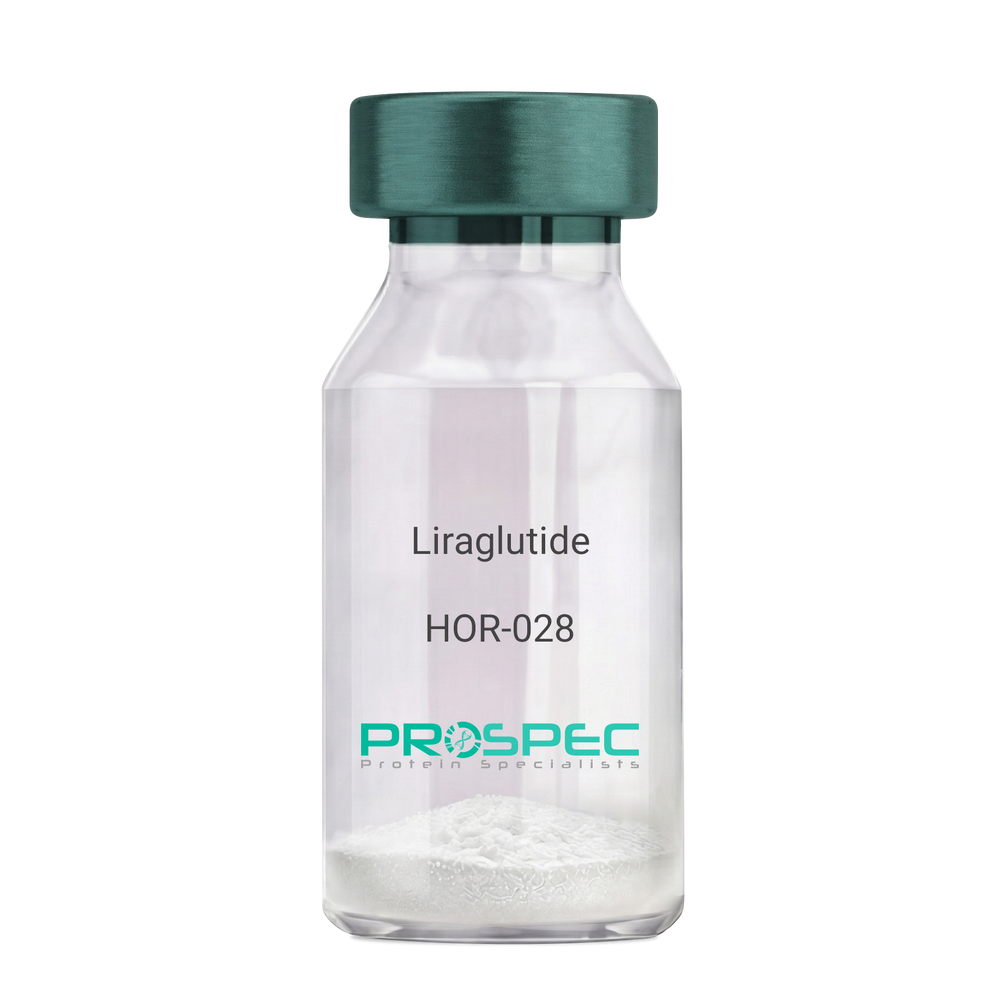
    Liraglutide

    Description:

    Liraglutide

    Product # :

    HOR-028

    Price :

    Quantity :

    Shipping Method :

    Room Temp Icon

    Shipped at Room temp

    Add To Cart

    More Info

    • description
    • formulation
    • purity
    • More Info
    • HPLC, MS

    Description

    Liraglutide peptide is a single, non-glycosylated polypeptide chain containing 31 amino acids, having a molecular mass of 3751 Dalton and a Molecular formula of C172H265N43O51.

    Formulation

    The protein (1mg/ml) was lyophilized with no additives.

    Purity

    Greater than 97% as determined by RP-HPLC.

    HPLC, MS

    liraglutide hplc - Product image 1
    liraglutide mass spec - Product image 2

    More Info

    • Introduction

      Liraglutide is a long-acting GLP1 analogue sharing 97% a.a. homology to human GLP1. Liraglutide differs from GLP1 by the substitution of arginine for lysine at position 34. While GLP1 is degraded swiftly by DPP4 resulting in short life of insulin, Liraglutide contains a fatty acid that binds to albumin and prolongs the half-life of the structure. liraglutide causes insulin to secret in the presence of increasing glucose levels. Due toits receptor site, liraglutide inhibits glucagon secretion and delays gastric emptying.

    • Physical Appearance

      Sterile Filtered White lyophilized (freeze-dried) powder.

    • Stability

      Store the lyophilized Liraglutide between 2-8°C, do not freeze. Upon reconstitution Lypressin should be stored at 4°C between 2-7 days and for future use below -18°C. Please prevent freeze-thaw cycles.

    • Solubility

      It is recommended to reconstitute the lyophilized Liraglutide in sterile 18MΩ-cm H2O not less than 100 µg/ml, which can then be further diluted to other aqueous solutions.
      Lypressin is also soluble in 1% Acetic Acid.

    • Amino Acid Sequence

      H-His-Ala-Glu-Gly-Thr-Phe-Thr-Ser-Asp-Val-Ser-Ser-Tyr-Leu-Glu-Gly-Gln-Ala-Ala-Lys(γ-Glu-palmitoyl)-Glu-Phe-Ile-Ala-Trp-Leu-Val-Arg-Gly-Arg-Gly-OH

    ProSpec's products are furnished for LABORATORY RESEARCH USE ONLY. The product may not be used as drugs, agricultural or pesticidal products, food additives or household chemicals.

    Liraglutide
  • 1
  • 2
Your browser does not support the video tag.

Products

  • Cytokines
  • Growth Factors
  • Chemokines
  • CD Antigens
  • Neurotrophins
  • Hormones
  • Enzymes
  • Viral Antigens
  • Recombinant Proteins
  • Natural Proteins
  • Monoclonal Antibodies
  • Polyclonal Antibodies
  • Thermal Packaging

About

  • Company
  • Founder
  • Contribution
  • Contact Us
  • My Account

Ordering

  • Ordering Method
  • Ordering - Credit Card
  • Ordering PO
  • Shipping Fees
  • FAQ's

Legal

  • Terms & Conditions
  • Privacy
  • Site Map
  • info@prospecbio.com
  • Facebook
  • Instagram
  • Linkedin Profile

© 2026 ProSpec-Tany TechnoGene Ltd. All Rights Reserved.

  • Choosing a selection results in a full page refresh.
  • Opens in a new window.