Skip to content

High-quality research proteins.

  • 1-800-805-6531

  • Mon - Sat 8.00-18.00, Sun - Closed

  • info@prospecbio.com

  • PO Box 6591 East Brunswick NJ 08816

  • Products
    • Cytokines
    • Growth factors
    • Chemokines
    • Cd antigens
    • Neurotrophins
    • Hormones
    • Enzymes
    • Viral antigens
    • Recombinant proteins
    • Natural proteins
    • Monoclonal antibodies
    • Polyclonal antibodies
    • Thermal Packaging
  • About
    • Company
    • Founder
    • Contribution
  • Customers
    • Eastern Asia
    • Eastern Europe
    • North America
    • South America
    • South East Asia
    • Southern Asia
    • Western Europe
  • Ordering
    • Ordering Method
    • Ordering - Credit Card
    • Ordering - PO
    • Shipping Fees
    • FAQs
  • Services
    • DNA Cloning
    • Protein Expression
    • Monoclonal Antibody
    • Fermentation
    • Technology License
  • Contact us
Log in

Country/region

  • USD $ | Albania
  • USD $ | Andorra
  • USD $ | Argentina
  • USD $ | Armenia
  • USD $ | Australia
  • USD $ | Austria
  • USD $ | Azerbaijan
  • USD $ | Belarus
  • USD $ | Belgium
  • USD $ | Bolivia
  • USD $ | Brazil
  • USD $ | Bulgaria
  • USD $ | Cambodia
  • USD $ | Canada
  • USD $ | Chile
  • USD $ | China
  • USD $ | Colombia
  • USD $ | Costa Rica
  • USD $ | Croatia
  • USD $ | Cyprus
  • USD $ | Czechia
  • USD $ | Denmark
  • USD $ | Estonia
  • USD $ | Finland
  • USD $ | France
  • USD $ | Georgia
  • USD $ | Germany
  • USD $ | Greece
  • USD $ | Hong Kong SAR
  • USD $ | Hungary
  • USD $ | Iceland
  • USD $ | India
  • USD $ | Ireland
  • USD $ | Israel
  • USD $ | Italy
  • USD $ | Japan
  • USD $ | Kazakhstan
  • USD $ | Latvia
  • USD $ | Liechtenstein
  • USD $ | Lithuania
  • USD $ | Madagascar
  • USD $ | Malta
  • USD $ | Mexico
  • USD $ | Moldova
  • USD $ | Monaco
  • USD $ | Netherlands
  • USD $ | New Zealand
  • USD $ | North Macedonia
  • USD $ | Norway
  • USD $ | Panama
  • USD $ | Paraguay
  • USD $ | Peru
  • USD $ | Philippines
  • USD $ | Poland
  • USD $ | Portugal
  • USD $ | Romania
  • USD $ | Singapore
  • USD $ | Slovakia
  • USD $ | Slovenia
  • USD $ | South Africa
  • USD $ | South Korea
  • USD $ | Spain
  • USD $ | Sri Lanka
  • USD $ | Sweden
  • USD $ | Switzerland
  • USD $ | Taiwan
  • USD $ | Thailand
  • USD $ | Türkiye
  • USD $ | Ukraine
  • USD $ | United Kingdom
  • USD $ | United States
  • USD $ | Uruguay
  • USD $ | Vatican City
  • USD $ | Venezuela
  • USD $ | Vietnam
  • Facebook
  • Instagram
logoProSpec - Recombinant Protein Manufacturer for academic and R&D industry
Become a distributor
Account Log in
Wishlist
Cart Cart(0)
  • Products
    +
    • Cytokines
    • Growth factors
    • Chemokines
    • Cd antigens
    • Neurotrophins
    • Hormones
    • Enzymes
    • Viral antigens
    • Recombinant proteins
    • Natural proteins
    • Monoclonal antibodies
    • Polyclonal antibodies
    • Thermal Packaging
  • About
    +
    • Company
    • Founder
    • Contribution
  • Customers
    +
    • Eastern Asia
    • Eastern Europe
    • North America
    • South America
    • South East Asia
    • Southern Asia
    • Western Europe
  • Ordering
    +
    • Ordering Method
    • Ordering - Credit Card
    • Ordering - PO
    • Shipping Fees
    • FAQs
  • Services
    +
    • DNA Cloning
    • Protein Expression
    • Monoclonal Antibody
    • Fermentation
    • Technology License
  • Contact us

Item added to your cart

View cart
View All
  • Cytokines
  • Growth factors
  • Chemokines
  • Cd antigens
  • Neurotrophins
  • Hormones
  • Enzymes
  • Viral antigens
  • Recombinant proteins
  • Natural proteins
  • Monoclonal antibodies
  • Polyclonal antibodies
  • Thermal Packaging
  • Tumor Necrosis Factor

    Tumor Necrosis Factor

    View All
  • 4-1BB

    4-1BB

    View All
  • Adiponectin

    Adiponectin

    View All
  • AIF1

    AIF1

    View All
  • Other Cytokines

    Other Cytokines

    View All
  • AITRL

    AITRL

    View All
  • Angiopoietin

    Angiopoietin

    View All
  • Apolipoprotein

    Apolipoprotein

    View All
  • B-Cell Activating Factor

    B-Cell Activating Factor

    View All
  • Beta Defensin

    Beta Defensin

    View All
  • Bone Morphogenetic Protein

    Bone Morphogenetic Protein

    View All
  • B type Natriuretic Peptide

    B type Natriuretic Peptide

    View All
  • BST

    BST

    View All
  • Betacellulin

    Betacellulin

    View All
  • Cardiotrophin

    Cardiotrophin

    View All
  • Activin

    Activin

    View All
  • Fibroblast Growth Factor

    Fibroblast Growth Factor

    View All
  • Other Growth Factors

    Other Growth Factors

    View All
  • CSF

    CSF

    View All
  • CTGF

    CTGF

    View All
  • IGFBP

    IGFBP

    View All
  • VEGF Protein

    VEGF Protein

    View All
  • EGF

    EGF

    View All
  • Epigen

    Epigen

    View All
  • Erythropoietin

    Erythropoietin

    View All
  • Insulin-Like Growth Factor

    Insulin-Like Growth Factor

    View All
  • Growth Hormone

    Growth Hormone

    View All
  • HDGF

    HDGF

    View All
  • Hepatocyte Growth Factor

    Hepatocyte Growth Factor

    View All
  • Insulin

    Insulin

    View All
  • BCA-1/ BLC (CXCL13)

    BCA-1/ BLC (CXCL13)

    View All
  • BRAK (CXCL14)

    BRAK (CXCL14)

    View All
  • C-10 (CCL6)

    C-10 (CCL6)

    View All
  • Other Chemokines

    Other Chemokines

    View All
  • MEC (CCL28)

    MEC (CCL28)

    View All
  • LD78-beta (CCL3L1)

    LD78-beta (CCL3L1)

    View All
  • CTACK (CCL27)

    CTACK (CCL27)

    View All
  • CXCL16

    CXCL16

    View All
  • CXCL17

    CXCL17

    View All
  • Platelet Factor-4 (CXCL4)

    Platelet Factor-4 (CXCL4)

    View All
  • ENA-78 (CXCL5)

    ENA-78 (CXCL5)

    View All
  • Eotaxin (CCL11,24,26)

    Eotaxin (CCL11,24,26)

    View All
  • Exodus-2 (CCL21)

    Exodus-2 (CCL21)

    View All
  • Fractalkine (CX3CL1)

    Fractalkine (CX3CL1)

    View All
  • CXCL6

    CXCL6

    View All
  • Other CD Antigens

    Other CD Antigens

    View All
  • CD14

    CD14

    View All
  • CD164

    CD164

    View All
  • CD1

    CD1

    View All
  • CD2

    CD2

    View All
  • CD200

    CD200

    View All
  • CD207

    CD207

    View All
  • CD226

    CD226

    View All
  • CD23

    CD23

    View All
  • CD244

    CD244

    View All
  • CD247

    CD247

    View All
  • CD27

    CD27

    View All
  • CD274

    CD274

    View All
  • CD300

    CD300

    View All
  • CD33

    CD33

    View All
  • Other Neurotrophins

    Other Neurotrophins

    View All
  • Beta-NGF

    Beta-NGF

    View All
  • BDNF

    BDNF

    View All
  • CDNF

    CDNF

    View All
  • CNTF

    CNTF

    View All
  • GDNF

    GDNF

    View All
  • Glia Maturation Factor

    Glia Maturation Factor

    View All
  • MANF

    MANF

    View All
  • Midkine

    Midkine

    View All
  • Neuroglobin

    Neuroglobin

    View All
  • Neurotrophic factors

    Neurotrophic factors

    View All
  • Neuregulin

    Neuregulin

    View All
  • Neuropilin

    Neuropilin

    View All
  • Pigment Epithelium-Derived Factor

    Pigment Epithelium-Derived Factor

    View All
  • Pleiotrophin

    Pleiotrophin

    View All
  • Peptide Hormones

    Peptide Hormones

    View All
  • Other Hormones

    Other Hormones

    View All
  • HCG

    HCG

    View All
  • Endothelin

    Endothelin

    View All
  • Exendin

    Exendin

    View All
  • FSH

    FSH

    View All
  • Glucagon

    Glucagon

    View All
  • GHRP

    GHRP

    View All
  • GLP

    GLP

    View All
  • Thyrostimulin

    Thyrostimulin

    View All
  • Inhibin A

    Inhibin A

    View All
  • LHRH

    LHRH

    View All
  • Melanotan

    Melanotan

    View All
  • Procalcitonin

    Procalcitonin

    View All
  • PTH

    PTH

    View All
  • Peroxiredoxin

    Peroxiredoxin

    View All
  • Peptidase

    Peptidase

    View All
  • Synthetase

    Synthetase

    View All
  • Transferase

    Transferase

    View All
  • Hydrolase

    Hydrolase

    View All
  • Dehydrogenase

    Dehydrogenase

    View All
  • ACE2

    ACE2

    View All
  • Esterase

    Esterase

    View All
  • Protein Kinases

    Protein Kinases

    View All
  • Other Enzymes

    Other Enzymes

    View All
  • Phosphatase

    Phosphatase

    View All
  • Deaminase

    Deaminase

    View All
  • Oxygenase

    Oxygenase

    View All
  • Adenylate Kinase

    Adenylate Kinase

    View All
  • Lyase

    Lyase

    View All
  • Chagas

    Chagas

    View All
  • SARS

    SARS

    View All
  • Influenza

    Influenza

    View All
  • ASFV

    ASFV

    View All
  • Astrovirus

    Astrovirus

    View All
  • Borrelia

    Borrelia

    View All
  • Helicobacter Pylori

    Helicobacter Pylori

    View All
  • Chikungunya

    Chikungunya

    View All
  • Chlamydia

    Chlamydia

    View All
  • Cytomegalo

    Cytomegalo

    View All
  • Dengue

    Dengue

    View All
  • EBV

    EBV

    View All
  • Ebola

    Ebola

    View All
  • Feline Leukemia Virus

    Feline Leukemia Virus

    View All
  • Hepatitis A

    Hepatitis A

    View All
  • Other

    Other

    View All
  • Actin

    Actin

    View All
  • ADAM

    ADAM

    View All
  • Complement Component

    Complement Component

    View All
  • Ag85

    Ag85

    View All
  • Eukaryotic Translation Initiation Factor

    Eukaryotic Translation Initiation Factor

    View All
  • Anterior Gradient Protein

    Anterior Gradient Protein

    View All
  • Heat Shock Protein

    Heat Shock Protein

    View All
  • Alpha-2-HS-Glycoprotein

    Alpha-2-HS-Glycoprotein

    View All
  • Hemoglobin

    Hemoglobin

    View All
  • Allergy

    Allergy

    View All
  • Anaplasma

    Anaplasma

    View All
  • Angiogenin

    Angiogenin

    View All
  • Ankyrin Repeat Domain

    Ankyrin Repeat Domain

    View All
  • Annexin

    Annexin

    View All
  • Other Natural Proteins

    Other Natural Proteins

    View All
  • Aprotinin

    Aprotinin

    View All
  • Transferrin

    Transferrin

    View All
  • Avidin

    Avidin

    View All
  • Anti Coagulation Factors

    Anti Coagulation Factors

    View All
  • Natural Albumin

    Natural Albumin

    View All
  • Natural Coagulation Factors

    Natural Coagulation Factors

    View All
  • Fibronectin

    Fibronectin

    View All
  • Thrombin

    Thrombin

    View All
  • Anti Human Enzyme

    Anti Human Enzyme

    View All
  • Other Monoclonal Antibodies

    Other Monoclonal Antibodies

    View All
  • Anti Human Cytokine

    Anti Human Cytokine

    View All
  • Anti Human Heat Shock Protein

    Anti Human Heat Shock Protein

    View All
  • Anti Mouse Lymphocyte

    Anti Mouse Lymphocyte

    View All
  • Anti Human Chemokine

    Anti Human Chemokine

    View All
  • Anti Human Lymphocyte

    Anti Human Lymphocyte

    View All
  • Anti Viral Monoclonal

    Anti Viral Monoclonal

    View All
  • Anti Mouse Cytokine

    Anti Mouse Cytokine

    View All
  • Anti-GST Monoclonal

    Anti-GST Monoclonal

    View All
  • Other Polyclonal Antibodies

    Other Polyclonal Antibodies

    View All
  • Anti Viral

    Anti Viral

    View All
  • Anti-GST Monoclonal

    Anti-GST Monoclonal

    View All
Back

Search results

1000 results found for “Cyclophilin”

Name

Description

Product #

Price

Quantity

Shipping Method

  • View Data Sheet

    Name :

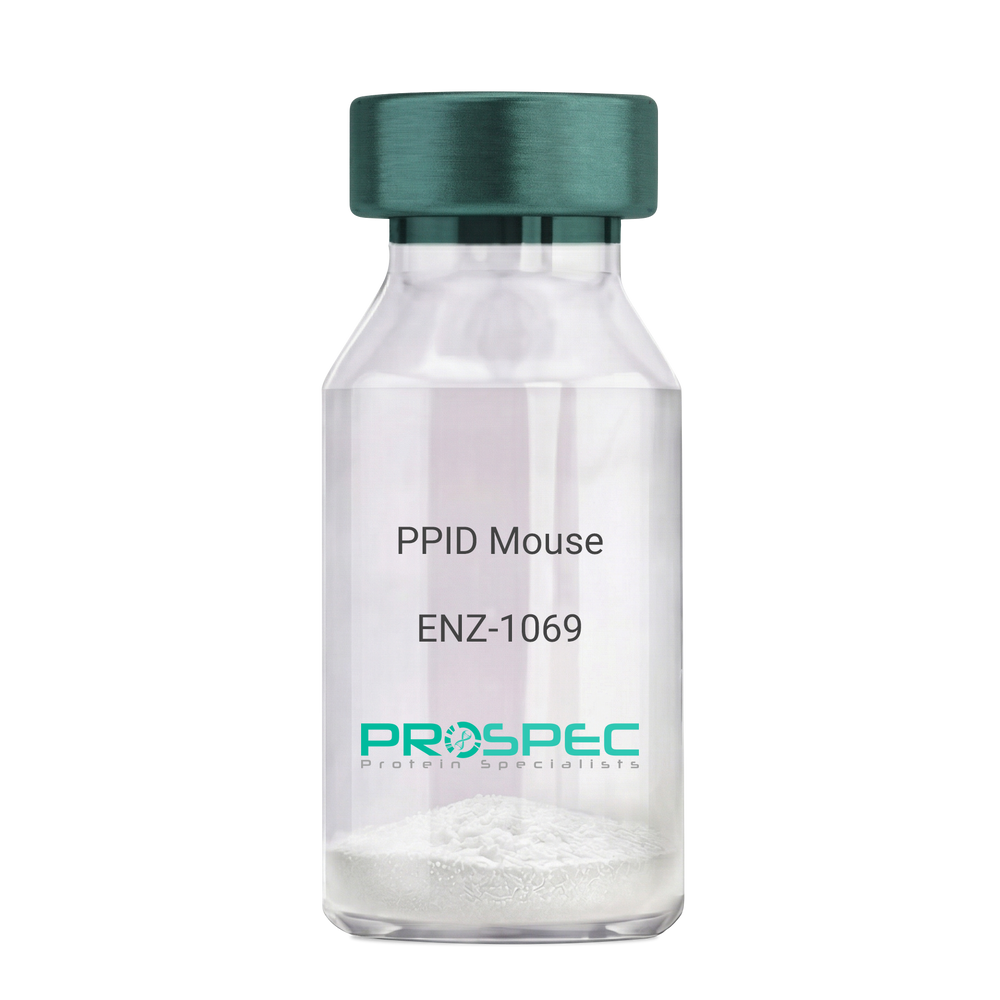
    PPID Mouse

    Description:

    Peptidylprolyl Isomerase D Mouse Recombinant

    Peptidyl-prolyl cis-trans isomerase D, PPIase D, 40 kDa peptidyl-prolyl cis-trans isomerase, Cyclophilin-40, CYP-40, Cyclophilin-related protein, CYP40, CYPD, PPID, Peptidylprolyl Isomerase D.

    Product # :

    ENZ-1069

    Price :

    Quantity :

    Shipping Method :

    Ice Icon

    Shipped with Ice Packs

    Add To Cart

    More Info

    • description
    • source
    • formulation
    • purity
    • biological activity
    • More Info

    Description

    PPID Mouse Recombinant produced in E.Coli is a single, non-glycosylated polypeptide chain containing 395 amino acids (1-370a.a.) and having a molecular mass of 43.4kDa. PPID is fused to a 25 amino acid His-tag at N-terminus & purified by proprietary chromatographic techniques.

    Source

    Escherichia Coli.

    Formulation

    PPID protein solution (1mg/ml) containing 20mM Tris-Hcl buffer (pH8.0), 10% glycerol and 1mM DTT.

    Purity

    Greater than 90.0% as determined by SDS-PAGE.

    Biological Activity

    Specific activity is > 700nmol/min/mg, and is defined as the amount of enzyme that cleaves 1umole of suc-AAFP-PNA per minute at 37°C in Tris–HCl pH 8.0 using chymotrypsin.

    More Info

    • Introduction

      Cyclophilin-D is a member of the peptidyl-prolyl cis-trans isomerase (PPIase) family. PPIases catalyze the cis-trans isomerization of proline imidic peptide bonds in oligopeptides and speeds up the protein folding. Cyclophilin-D possess PPIase activity and binds to the immunosuppressant cyclosporin-A. Cyclophilin-D is very well known that its overexpression suppresses the apoptosis in cancer cell. Cyclophilin-D suppresses apoptotic cell death by the use of mitochondrial hexokinase-2 dependent mechanism in cancer cells.

    • Synonyms

      Peptidyl-prolyl cis-trans isomerase D, PPIase D, 40 kDa peptidyl-prolyl cis-trans isomerase, Cyclophilin-40, CYP-40, Cyclophilin-related protein, CYP40, CYPD, PPID, Peptidylprolyl Isomerase D.

    • Physical Appearance

      Sterile Filtered colorless solution.

    • Stability

      Store at 4°C if entire vial will be used within 2-4 weeks. Store, frozen at -20°C for longer periods of time. For long term storage it is recommended to add a carrier protein (0.1% HSA or BSA). Please prevent freeze-thaw cycles.

    • Amino Acid Sequence

      MGSSHHHHHH SSGLVPRGSH MGSEFMSHAS PAAKPSNSKN PRVFFDVDIG GERVGRIVLE LFADIVPKTA ENFRALCTGE KGTGSTTGKP LHFKGCPFHR IIKKFMIQGG DFSNQNGTGG ESIYGEKFED ENFHYKHDRE GLLSMANAGP NTNGSQFFIT TVPTPHLDGK HVVFGQVIKG LGVARTLENV EVNGEKPAKL CVIAECGELK EGDDWGIFPK DGSGDSHPDF PEDADIDLKD VDKILLISED LKNIGNTFFK SQNWEMAIKK YAKVLRYVDS SKAVIEKADR SRLQPIALSC VLNIGACKLK MSNWQGAIDS CLEALEMDPS NTKALYRKAQ GWQGLKEYDQ ALADLKKAQE IAPGDKAIQA ELLKVKQMIK AQKDKEKAVY AKMFA.

    ProSpec's products are furnished for LABORATORY RESEARCH USE ONLY. The product may not be used as drugs, agricultural or pesticidal products, food additives or household chemicals.

    Ppid Mouse
  • View Data Sheet

    Name :

    PIN1 Human

    Description:

    Peptidyl-Prolyl Cis/Trans Isomerase NIMA-Interacting 1 Human Recombinant

    Peptidyl-prolyl cis-trans isomerase NIMA-interacting 1, EC 5.2.1.8, Rotamase Pin1, PPIase Pin1, DOD, UBL5, PIN1, PPIase.

    Product # :

    ENZ-331

    Price :

    Quantity :

    Shipping Method :

    Ice Icon

    Shipped with Ice Packs

    Add To Cart

    More Info

    • description
    • source
    • formulation
    • purity
    • biological activity
    • More Info

    Description

    PPIase Human Recombinant produced in E.Coli is a single, non-glycosylated polypeptide chain containing 163 amino acids & having a molecular mass of 18.2 kDa. The PIN1 is purified by proprietary chromatographic techniques.

    Source

    Escherichia Coli.

    Formulation

    The PIN1 protein solution (1 mg/ml) containing 20mM Tris-HCl buffer (pH7.5) 0.1M NaCl, 5mM DTT & 20% Glycerol.

    Purity

    Greater than 95.0% as determined by SDS-PAGE.

    Biological Activity

    Specific activity is > 330 nmoles/min/mg, and is defined as the amount of enzyme that cleaves 1umole of suc-AAFP-pNA per minute at 25C in Tris-HCl pH8.0 using chymotrypsin.

    More Info

    • Introduction

      Human Pin 1 is a peptidyl-prolyl cis/trans isomerase (PPIase) that interacts with NIMA and essential for cell cycle regulation Pin1 is nuclear PPIase containing a WW protein interaction domain, and is structurally and functionally related to Ess1/Ptf1, an essential protein in budding yeast. PPIase activity is necessary for Ess1/Pin1 function in yeast. Pin1 is thus an essential PPIase that regulates mitosis presumably by interacting with NIMA and attenuating its mitosis-promoting activity. Substrates of Pin1 include the mitotic regulators (Cdc25 phosphatase and NIMA, PLK I, Wee, and Myt1 kinases), several transcription factors like b-Catenin, c-Jun, and the tumor suppressor protein p53, and some specific proteins like the RNA Pol II, the cytoskeleton protein tau, and the G1/S protein Cyclin D1.

    • Synonyms

      Peptidyl-prolyl cis-trans isomerase NIMA-interacting 1, EC 5.2.1.8, Rotamase Pin1, PPIase Pin1, DOD, UBL5, PIN1, PPIase.

    • Physical Appearance

      Sterile filtered colorless solution.

    • Stability

      Store at 4°C if entire vial will be used within 2-4 weeks. Store, frozen at -20°C for longer periods of time. For long term storage it is recommended to add a carrier protein (0.1% HSA or BSA).Avoid multiple freeze-thaw cycles.

    • Amino Acid Sequence

      MADEEKLPPG WEKRMSRSSG RVYYFNHITN ASQWERPSGN SSSGGKNGQG EPARVRCSHL LVKHSQSRRP SSWRQEKITR TKEEALELIN GYIQKIKSGE EDFESLASQF SDCSSAKARG DLGAFSRGQM QKPFEDASFA LRTGEMSGPV FTDSGIHIIL RTE.

    ProSpec's products are furnished for LABORATORY RESEARCH USE ONLY. The product may not be used as drugs, agricultural or pesticidal products, food additives or household chemicals.

    Pin1 Human
  • View Data Sheet

    Name :

    PIN1 Mouse

    Description:

    Peptidyl-Prolyl Cis/Trans Isomerase NIMA-Interacting 1 Mouse Recombinant

    Peptidyl-prolyl cis-trans isomerase NIMA-interacting 1 (EC:5.2.1.8), Peptidyl-prolyl cis-trans isomerase Pin1, PPIase Pin1, Pin1, PIN1.

    Product # :

    ENZ-1045

    Price :

    Quantity :

    Shipping Method :

    Ice Icon

    Shipped with Ice Packs

    Add To Cart

    More Info

    • description
    • source
    • formulation
    • purity
    • biological activity
    • More Info

    Description

    PIN1 Mouse Recombinant produced in E.Coli is a single, non-glycosylated polypeptide chain containing 188 amino acids (1-165 a.a) and having a molecular mass of 20.8kDa. PIN1 is fused to a 23 amino acid His-tag at N-terminus & purified by proprietary chromatographic techniques.

    Source

    Escherichia Coli.

    Formulation

    PIN1 protein solution (1mg/ml) containing Phosphate buffered saline (pH7.4) and 10% glycerol.

    Purity

    Greater than 95.0% as determined by SDS-PAGE.

    Biological Activity

    Specific activity is > 1,200 nmol/min/mg, and is defined as the amount of enzyme that cleaves 1nmole of suc-AAFP-PNA per minute at 37°C in Tris-HCl pH 8.0 using chymotrypsin.

    More Info

    • Introduction

      Pin 1 is a peptidyl-prolyl cis/trans isomerase (PPIase) which interacts with NIMA and essential for cell cycle regulation Pin1 is nuclear PPIase containing a WW protein interaction domain, and is structurally and functionally related to Ess1/Ptf1, an essential protein in budding yeast. PPIase activity is necessary for Ess1/Pin1 function in yeast. Pin1 is thus an essential PPIase that regulates mitosis presumably by interacting with NIMA and attenuating its mitosis-promoting activity. Substrates of Pin1 include the mitotic regulators (Cdc25 phosphatase and NIMA, PLK I, Wee, and Myt1 kinases), several transcription factors like b-Catenin, c-Jun, and the tumor suppressor protein p53, and some specific proteins like the RNA Pol II, the cytoskeleton protein tau, and the G1/S protein Cyclin D1.

    • Synonyms

      Peptidyl-prolyl cis-trans isomerase NIMA-interacting 1 (EC:5.2.1.8), Peptidyl-prolyl cis-trans isomerase Pin1, PPIase Pin1, Pin1, PIN1.

    • Physical Appearance

      Sterile Filtered clear solution.

    • Stability

      Store at 4°C if entire vial will be used within 2-4 weeks. Store, frozen at -20°C for longer periods of time. For long term storage it is recommended to add a carrier protein (0.1% HSA or BSA).Avoid multiple freeze-thaw cycles.

    • Amino Acid Sequence

      MGSSHHHHHH SSGLVPRGSH MGSMADEEKL PPGWEKRMSR SSGRVYYFNH ITNASQWERP SGGSTVGGSS KNGQGEPAKV RCSHLLVKHS QSRRPSSWRQ EKITRSKEEA LELINGYIQK IKSGEEDFES LASQFSDCSS AKARGDLGPF SRGQMQKPFE DASFALRTGE MSGPVFTDSG IHIILRTE.

    ProSpec's products are furnished for LABORATORY RESEARCH USE ONLY. The product may not be used as drugs, agricultural or pesticidal products, food additives or household chemicals.

    Pin1 Mouse
  • View Data Sheet

    Name :

    CAMLG Human

    Description:

    Calcium Modulating Ligand Human Recombinant

    Calcium Modulating Ligand, Calcium-Modulating Cyclophilin Ligand, Calcium-Signal Modulating Cyclophilin Ligand, Cyclophilin B-Binding Protein, CAML.

    Product # :

    PRO-1612

    Price :

    Quantity :

    Shipping Method :

    Ice Icon

    Shipped with Ice Packs

    Add To Cart

    More Info

    • description
    • source
    • formulation
    • purity
    • More Info

    Description

    CAMLG Human Recombinant produced in E.coli is a single, non-glycosylated polypeptide chain containing 212 amino acids (1-189) and having a molecular mass of 23.2kDa.CAMLG is fused to a 23 amino acid His-tag at N-terminus & purified by proprietary chromatographic techniques.

    Source

    Escherichia Coli.

    Formulation

    The CAMLG solution contains 20mM Tris-HCl buffer (pH 8.0), 0.15M NaCl and 10% glycerol.

    Purity

    Greater than 85% as determined by SDS-PAGE.

    More Info

    • Introduction

      CAMLG binds to cyclophilin B and operates downstream of the TCR and upstream of calcineurin by causing an influx of calcium. CAMLG is an essential membrane protein that takes part in the calcium signal transduction pathway, connecting cyclophilin B to calcium signaling.

    • Synonyms

      Calcium Modulating Ligand, Calcium-Modulating Cyclophilin Ligand, Calcium-Signal Modulating Cyclophilin Ligand, Cyclophilin B-Binding Protein, CAML.

    • Physical Appearance

      Sterile filtered colorless solution.

    • Stability

      Store at 4°C if entire vial will be used within 2-4 weeks. Store, frozen at -20°C for longer periods of time. For long term storage it is recommended to add a carrier protein (0.1% HSA or BSA).Avoid multiple freeze-thaw cycles.

    • Amino Acid Sequence

      MGSSHHHHHH SSGLVPRGSH MGSMESMAVA TDGGERPGVP AGSGLSASQR RAELRRRKLL MNSEQRINRI MGFHRPGSGA EEESQTKSKQ QDSDKLNSLS VPSVSKRVVL GDSVSTGTTD QQGGVAEVKG TQLGDKLDSF IKPPECSSDV NLELRQRNRG DLTADSVQRG SRHGLEQYLS RFEEAMKLRK QLISEKPSQE DGNTTEEFDS FR

    ProSpec's products are furnished for LABORATORY RESEARCH USE ONLY. The product may not be used as drugs, agricultural or pesticidal products, food additives or household chemicals.

    Camlg Human
  • View Data Sheet

    Name :

    Cyclosporin A

    Description:

    Cyclosporin-A

    Product # :

    PRO-408

    Price :

    Quantity :

    Shipping Method :

    Room Temp Icon

    Shipped at Room temp

    Add To Cart

    More Info

    • description
    • source
    • formulation
    • purity
    • More Info

    Description

    Cyclosporin is a cyclic polypeptide immunosuppressant agent consisting of 11 amino acids and having a molecular weight of 1202.64. It is produced as a metabolite by the fungus species Beauveria nlyea. Chemically, cyclosporin is designated as [R-[R*,R*-(E)]]-cyclic(L-alanyl-D- alanyl-N-methyl-L-leucyl-N-methyl-L-leucyl-N-methyl-L-valyl-3-hydroxy-N, 4-dimethyl-L-2-amino-6-octenoyl-L-a-amino-butyryl- N-methylglycyl-N- methyl-L-leucyl-L-valyl-N-methyl-L-leucyl). Molecular Formula: C62H111N11O12.

    Source

    Beauveria Nivea.

    Formulation

    The Cyclosporin-A was lyophilized from a concentrated (1mg/ml) solution with no additives.

    Purity

    Greater than 99.0% as determined by RP-HPLC.

    More Info

    • Introduction

      Cyclosporin A is a noncytotoxic, natural, 11 amino acid cyclic peptide used clinically as an immunosuppressant for the treatment of autoimmune and inflammatory disorders and to prevent organ rejection after transplantation. Cyclosporin acts chiefly by inhibiting T lymphocyte function, which is vital for the propagation of inflammation. Cyclosporin A does not suppress the activity of other hematopoietic cells, does not cause bone marrow suppression and has a rapid onset of action as opposed to other immunosuppressive agents. Nevertheless, Cyclosporin A -induced nephrotoxicity remains an important clinical problem, and oxidative stress has been implicated as a potential responsible mechanism.

    • Physical Appearance

      Sterile Filtered White lyophilized (freeze-dried) powder.

    • Stability

      Lyophilized Cyclosporin A although stable at room temperature for 3 weeks, should be stored desiccated below -18°C. Upon reconstitution Cyclosporin A should be stored at 4°C between 2-7 days and for future use below -18°C.Please prevent freeze-thaw cycles.

    • Solubility

      It is recommended to reconstitute the lyophilized Cyclosporin-A in anhydrous ethanol R at a concentration of 50mg/ml.

    ProSpec's products are furnished for LABORATORY RESEARCH USE ONLY. The product may not be used as drugs, agricultural or pesticidal products, food additives or household chemicals.

    Cyclosporin A
  • View Data Sheet

    Name :

    GCHFR Human

    Description:

    GTP Cyclohydrolase I Feedback Regulator Human Recombinant

    GFRP, HsT16933, P35,GTP cyclohydrolase 1 feedback regulatory protein, GTP cyclohydrolase I feedback regulatory protein, p35, GCHFR

    Product # :

    PRO-2006

    Price :

    Quantity :

    Shipping Method :

    Ice Icon

    Shipped with Ice Packs

    Add To Cart

    More Info

    • description
    • source
    • formulation
    • purity
    • More Info

    Description

    GCHFR Human Recombinant produced in E.Coli is a single, non-glycosylated polypeptide chain containing 107 amino acids (1-84a.a) and having a molecular mass of 12.1kDa. GCHFR is fused to a 23 amino acid His-tag at N-terminus & purified by proprietary chromatographic techniques.

    Source

    Escherichia Coli.

    Formulation

    GCHFR protein solution (1mg/ml) containing 20mM Tris-HCl buffer (pH 8.0), 0.15M NaCl, 40% glycerol and 1mM DTT.

    Purity

    Greater than 95.0% as determined by SDS-PAGE.

    More Info

    • Introduction

      GTP Cyclohydrolase I Feedback Regulator, also known as GCHFR, is a Protein coding gene which includes a homodimer. GCHFR binds and mediates tetrahydrobiopterin inhibition of GTP cyclohydrolase I. GCHFR also regulates phenylalanine metabolism in the liver and in the production of biogenic amine neurotransmitters and nitric oxide.

    • Synonyms

      GFRP, HsT16933, P35,GTP cyclohydrolase 1 feedback regulatory protein, GTP cyclohydrolase I feedback regulatory protein, p35, GCHFR

    • Physical Appearance

      Sterile Filtered colorless solution.

    • Stability

      Store at 4°C if entire vial will be used within 2-4 weeks. Store, frozen at -20°C for longer periods of time. For long term storage it is recommended to add a carrier protein (0.1% HSA or BSA).Avoid multiple freeze-thaw cycles.

    • Amino Acid Sequence

      MGSSHHHHHH SSGLVPRGSH MGSMPYLLIS TQIRMEVGPT MVGDEQSDPE LMQHLGASKR RALGNNFYEY YVDDPPRIVL DKLERRGFRV LSMTGVGQTL VWCLHKE.

    ProSpec's products are furnished for LABORATORY RESEARCH USE ONLY. The product may not be used as drugs, agricultural or pesticidal products, food additives or household chemicals.

    Gchfr Human
  • View Data Sheet

    Name :

    CFL2 Human

    Description:

    Cofilin-2 Human Recombinant

    Cofilin-2, Cofilin- muscle isoform, CFL2, NEM7.

    Product # :

    PRO-912

    Price :

    Quantity :

    Shipping Method :

    Ice Icon

    Shipped with Ice Packs

    Add To Cart

    More Info

    • description
    • source
    • formulation
    • purity
    • More Info

    Description

    CFL2 Human Recombinant produced in E.Coli is a single, non-glycosylated polypeptide chain containing 186 amino acids (1-166 a.a.) and having a molecular mass of 20.9kDa.CFL2 is fused to a 20 amino acid His-tag at N-terminus & purified by proprietary chromatographic techniques.

    Source

    Escherichia Coli.

    Formulation

    CFL2 protein solution (1mg/ml) containing 20mM Tris-HCl buffer (pH 8.0), 2mM DTT, 10% glycerol and 50mM NaCl.

    Purity

    Greater than 90.0% as determined by SDS-PAGE.

    More Info

    • Introduction

      CFL2 protein is a member of the actin-binding proteins ADF family which contains 1 ADF-H domain. Cofilin is a broadly distributed intracellular actin-modulating protein which binds and depolymerizes filamentous F-actin and inhibits the polymerization of monomeric G-actin in a pH-dependent manner. Defects in the CFL2 gene are the cause of nemaline myopathy type 7 (NEM7).

    • Synonyms

      Cofilin-2, Cofilin- muscle isoform, CFL2, NEM7.

    • Physical Appearance

      Sterile filtered colorless solution.

    • Stability

      Store at 4°C if entire vial will be used within 2-4 weeks. Store, frozen at -20°C for longer periods of time. For long term storage it is recommended to add a carrier protein (0.1% HSA or BSA).Avoid multiple freeze-thaw cycles.

    • Amino Acid Sequence

      MGSSHHHHHH SSGLVPRGSH MASGVTVNDE VIKVFNDMKV RKSSTQEEIK KRKKAVLFCL SDDKRQIIVE EAKQILVGDI GDTVEDPYTS FVKLLPLNDC RYALYDATYE TKESKKEDLV FIFWAPESAP LKSKMIYASS KDAIKKKFTG IKHEWQVNGL DDIKDRSTLG EKLGGNVVVS LEGKPL.

    ProSpec's products are furnished for LABORATORY RESEARCH USE ONLY. The product may not be used as drugs, agricultural or pesticidal products, food additives or household chemicals.

    Cfl2 Human
  • View Data Sheet

    Name :

    CIAPIN1 Human

    Description:

    Cytokine Induced Apoptosis Inhibitor 1 Human Recombinant

    DRE2, PRO0915, Anamorsin, Cytokine-induced apoptosis inhibitor 1, Fe-S cluster assembly protein DRE2 homolog, CIAPIN1.

    Product # :

    PRO-024

    Price :

    Quantity :

    Shipping Method :

    Ice Icon

    Shipped with Ice Packs

    Add To Cart

    More Info

    • description
    • source
    • formulation
    • purity
    • More Info

    Description

    CIAPIN1 Human Recombinant produced in E.Coli is a single, non-glycosylated polypeptide chain containing 335 amino acids (1-312 a.a.) and having a molecular mass of 36kDa.CIAPIN1 is fused to a 23 amino acid His-tag at N-terminus & purified by proprietary chromatographic techniques.

    Source

    Escherichia Coli.

    Formulation

    CIAPIN1 protein solution (1mg/ml) contains 20mM Tris-HCl buffer (pH 8.0), 0.4M Urea and 10% glycerol.

    Purity

    Greater than 90.0% as determined by SDS-PAGE.

    More Info

    • Introduction

      Anamorsin, ( CIAPIN) is a member of anamorsin family. CIAPIN mainly expressed in the cytoplasm of liver, pancreas and heart tissue cells and does not show any homology to known apoptosis regulatory molecules of the Bcl-2 or CASP families, or to signal transduction molecules. CIAPIN1 Expression is reliant on growth factor stimulation. It is a ubiquitously expressed protein, and when it is overexpressed, it grants apoptotic resistance.

    • Synonyms

      DRE2, PRO0915, Anamorsin, Cytokine-induced apoptosis inhibitor 1, Fe-S cluster assembly protein DRE2 homolog, CIAPIN1.

    • Physical Appearance

      Sterile Filtered clear solution.

    • Stability

      Store at 4°C if entire vial will be used within 2-4 weeks. Store, frozen at -20°C for longer periods of time. For long term storage it is recommended to add a carrier protein (0.1% HSA or BSA).Avoid multiple freeze-thaw cycles.

    • Amino Acid Sequence

      MGSSHHHHHH SSGLVPRGSH MGSMADFGIS AGQFVAVVWD KSSPVEALKG LVDKLQALTG NEGRVSVENI KQLLQSAHKE SSFDIILSGL VPGSTTLHSA EILAEIARIL RPGGCLFLKE PVETAVDNNS KVKTASKLCS ALTLSGLVEV KELQREPLTP EEVQSVREHL GHESDNLLFV QITGKKPNFE VGSSRQLKLS ITKKSSPSVK PAVDPAAAKL WTLSANDMED DSMDLIDSDE LLDPEDLKKP DPASLRAASC GEGKKRKACK NCTCGLAEEL EKEKSREQMS SQPKSACGNC YLGDAFRCAS CPYLGMPAFK PGEKVLLSDS NLHDA.

    ProSpec's products are furnished for LABORATORY RESEARCH USE ONLY. The product may not be used as drugs, agricultural or pesticidal products, food additives or household chemicals.

    Ciapin1 Human
  • View Data Sheet

    Name :

    CFL1 Human

    Description:

    Cofilin-1 Human Recombinant

    CFL-1, CFL1, Cofilin1, Cofilin-1, Cofilin, non-muscle isoform, 18 kDa phosphoprotein, p18.

    Product # :

    PRO-591

    Price :

    Quantity :

    Shipping Method :

    Ice Icon

    Shipped with Ice Packs

    Add To Cart

    More Info

    • description
    • source
    • formulation
    • purity
    • More Info

    Description

    Cofilin1 Human Recombinant (aa 1-166) fused to a 20 aa N-terminal His-Tag produced in E.Coli is a single, non-glycosylated polypeptide chain containing a total of 186 amino acids and having a molecular mass of 20kDa.

    Source

    Escherichia Coli.

    Formulation

    The protein solution contains 20mM Tris pH-8 and 10% glycerol.

    Purity

    Greater than 95.0% as determined by Analysis by SDS-PAGE.

    More Info

    • Introduction

      Cofilin is a family of actin-binding proteins which disassembles actin filaments. It is a widely distributed intracellular actin-modulating protein that binds and depolymerizes filamentous F-actin and inhibits the polymerization of monomeric G-actin in a pH-dependent manner. It is involved in the translocation of actin-cofilin complex from cytoplasm to nucleus.

    • Synonyms

      CFL-1, CFL1, Cofilin1, Cofilin-1, Cofilin, non-muscle isoform, 18 kDa phosphoprotein, p18.

    • Physical Appearance

      Sterile Filtered colorless solution.

    • Stability

      Store at 4°C if entire vial will be used within 2-4 weeks. Store, frozen at -20°C for longer periods of time. For long term storage it is recommended to add a carrier protein (0.1% HSA or BSA).Please prevent freeze-thaw cycles.

    • Amino Acid Sequence

      MGSSHHHHHH SSGLVPRGSH MASGVAVSDG VIKVFNDMKV RKSSTPEEVK KRKKAVLFCLSEDKKNIILE EGKEILVGDV GQTVDDPYAT FVKMLPDKDC RYALYDATYE TKESKKEDLVFIFWAPESAP LKSKMIYASS KDAIKKKLTG IKHELQANCY EEVKDRCTLA EKLGGSAVIS LEGKPL.

    ProSpec's products are furnished for LABORATORY RESEARCH USE ONLY. The product may not be used as drugs, agricultural or pesticidal products, food additives or household chemicals.

    Cfl1 Human
  • View Data Sheet

    Name :

    PPID Antibody

    Description:

    Peptidylprolyl Isomerase D, Mouse Anti Human

    Peptidyl-prolyl cis-trans isomerase D, PPIase D, 40 kDa peptidyl-prolyl cis-trans isomerase, Cyclophilin-40, CYP-40, Cyclophilin-related protein, CYP40, CYPD, PPID, Peptidylprolyl Isomerase D.

    Product # :

    ANT-704

    Price :

    Quantity :

    Shipping Method :

    Ice Icon

    Shipped with Ice Packs

    Add To Cart

    More Info

    • formulation
    • More Info

    Formulation

    1mg/ml containing PBS, pH-7.4, 10% Glycerol and 0.02% Sodium Azide.

    More Info

    • Introduction

      Cyclophilin-D is a member of the peptidyl-prolyl cis-trans isomerase (PPIase) family. PPIases catalyze the cis-trans isomerization of proline imidic peptide bonds in oligopeptides and speeds up the protein folding. Cyclophilin-D possess PPIase activity and binds to the immunosuppressant cyclosporin-A. Cyclophilin-D is very well known that its overexpression suppresses the apoptosis in cancer cell. Cyclophilin-D suppresses apoptotic cell death by the use of mitochondrial hexokinase-2 dependent mechanism in cancer cells.

    • Synonyms

      Peptidyl-prolyl cis-trans isomerase D, PPIase D, 40 kDa peptidyl-prolyl cis-trans isomerase, Cyclophilin-40, CYP-40, Cyclophilin-related protein, CYP40, CYPD, PPID, Peptidylprolyl Isomerase D.

    • Physical Appearance

      Sterile filtered colorless solution.

    • Immunogen

      Anti-human PPID mAb, is derived from hybridization of mouse F0 myeloma cells with spleen cells from BALB/c mice immunized with recombinant human PPID amino acids 1-370 purified from E. coli.

    • Ig Subclass

      Mouse IgG2b heavy chain and κ light chain.

    • Clone

      PAT1B8AT.

    • Applications

      PPID antibody has been tested by ELISA and Western blot analysis to assure specificity and reactivity. Since application varies, however, each investigation should be titrated by the reagent to obtain optimal results.

    • Type

      Mouse Anti Human Monoclonal.

    • Storage Procedures

      For periods up to 1 month store at 4°C, for longer periods of time, store at -20°C. Prevent freeze thaw cycles.

    • Purification Method

      PPID antibody was purified from mouse ascitic fluids by protein-A affinity chromatography.

    ProSpec's products are furnished for LABORATORY RESEARCH USE ONLY. The product may not be used as drugs, agricultural or pesticidal products, food additives or household chemicals.

    Ppid Antibody
  • View Data Sheet

    Name :

    PPIC Antibody

    Description:

    Peptidylprolyl Isomerase C, Mouse Anti Human

    Peptidyl-prolyl cis-trans isomerase C, PPIase C, Cyclophilin C, Rotamase C, PPIC, CYPC.

    Product # :

    ANT-069

    Price :

    Quantity :

    Shipping Method :

    Ice Icon

    Shipped with Ice Packs

    Add To Cart

    More Info

    • formulation
    • More Info

    Formulation

    1mg/ml containing PBS, pH-7.4, & 0.1% Sodium Azide.

    More Info

    • Introduction

      Peptidylprolyl Isomerase C (PPIC) belongs to the peptidyl-prolyl cis-trans isomerase (PPIase) family. PPIases catalyze the cis-trans isomerization of proline imidic peptide bonds in oligopeptides and hasten the folding of proteins. Like other PPIases, PPIC binds immunosuppressant cyclosporin A.

    • Synonyms

      Peptidyl-prolyl cis-trans isomerase C, PPIase C, Cyclophilin C, Rotamase C, PPIC, CYPC.

    • Immunogen

      Anti-human PPIC mAb, is derived from hybridization of mouse FO myeloma cells with spleen cells from BALB/c mice immunized with recombinant human PPIC amino acids 39-197 purified from E. coli.

    • Ig Subclass

      Mouse IgG2b heavy chain and k light chain.

    • Clone

      PAT3C6AT.

    • Applications

      PPIC antibody has been tested by ELISA, Western blot analysis to assure specificity and reactivity. Since application varies, however, each investigation should be titrated by the reagent to obtain optimal results. Recommended dilution range for Western blot analysis is 1:1000.

    • Type

      Mouse Anti Human Monoclonal.

    • Storage Procedures

      For periods up to 1 month store at 4°C, for longer periods of time, store at -20°C. Prevent freeze thaw cycles.

    • Purification Method

      PPIC antibody was purified from mouse ascitic fluids by protein-G affinity chromatography.

    ProSpec's products are furnished for LABORATORY RESEARCH USE ONLY. The product may not be used as drugs, agricultural or pesticidal products, food additives or household chemicals.

    Ppic Antibody
  • View Data Sheet

    Name :

    CYP2D6

    Description:

    Cytochrome P450 2D6 Human Recombinant

    Cytochrome P450 2D6, CYPIID6, P450-DB1, Debrisoquine 4-hydroxylase, CYP2D6, CPD6, CYP2D, CYP2D@, CYP2DL1, P450C2D, MGC120389, MGC120390, LKM1, liver/kidney microsomal antigen 1.

    Product # :

    ENZ-316

    Price :

    Quantity :

    Shipping Method :

    Ice Icon

    Shipped with Ice Packs

    Add To Cart

    More Info

    • description
    • source
    • formulation
    • purity
    • More Info

    Description

    Cytochrome P450 2D6 Human Recombinant (also called liver/kidney microsomal antigen 1) produced in SF9, is a glycosylated, polypeptide chain having a molecular mass of 60 kDa. The LKM1 is purified by proprietary chromatographic techniques.

    Source

    Sf9 insect cells.

    Formulation

    LKM-1 is supplied in 17mM HEPES pH-7.5, 425mM NaCl, 1mM DTT, 1% Triton X-100 and 15% glycerol.

    Purity

    Greater than 95% as determined by SDS-PAGE.

    More Info

    • Introduction

      Cytochrome P450 2D6 is a member of a complex family of microsomal enzymes (mono-oxygenases) present in the endoplasmic reticulum membrane, which perform detoxification reaction on xenobiotic compounds. Cytochrome P450 2D6 is the molecular target of autoantibodies against the "liver kidney microsomal antigen 1" (LKM 1) which has been classically defined by immunofluorescence microscopy. The presence of these autoantibodies is considered indicative of Autoimmune Hepatitis Type 2; LKM 1 antibodies have also been detected in patients with hepatitis C viral infection. The International Autoimmune Hepatitis Group therefore has subdivided the AIH type 2 into two subgroups: 2a with HCV and 2b without HCV. AIH 2a patients are often over 40 and predominantly male.
      The use of a purified recombinant Cytochrome P450 2D6 antigen allows the differentiation of autoimmune hepatitis from drug-induced hepatitis where transient autoantibodies to other P450 family members occur which cannot be differentiated by immunofluorescence techniques.

    • Synonyms

      Cytochrome P450 2D6, CYPIID6, P450-DB1, Debrisoquine 4-hydroxylase, CYP2D6, CPD6, CYP2D, CYP2D@, CYP2DL1, P450C2D, MGC120389, MGC120390, LKM1, liver/kidney microsomal antigen 1.

    • Physical Appearance

      Sterile filtered liquid formulation.

    • Stability

      Store at 4°C if entire vial will be used within 2-4 weeks. Store, frozen at -20°C for longer periods of time. Avoid multiple freeze-thaw cycles.

    • Immunological Functions

      1. Binds IgG-type human auto-antibodies.2. Standard ELISA test (checker-board analysis of positive/negative samples). 3. Immunodot analysis with positive/negative samples.

    • coating concentration

      0.35-0.6 µg/ml (depending on the type of ELISA plate and coating buffer). Suitable for labeling of functional groups.

    • Applications

      Western-Blot with monoclonal anti-LKM-1 antibody and anti-LKM-1 autoantibody- positive sample.

    ProSpec's products are furnished for LABORATORY RESEARCH USE ONLY. The product may not be used as drugs, agricultural or pesticidal products, food additives or household chemicals.

    Cyp2D6 Human
  • View Data Sheet

    Name :

    CLCF1 Human, His

    Description:

    Neurotrophin-1 Human Recombinant, His Tag

    Cardiotrophin-like cytokine factor 1, B-cell-stimulating factor 3, BSF-3, Novel neurotrophin-1, NNT-1, CLCF1, BSF3, CLC, NNT1, NR6, CISS2.

    Product # :

    CYT-071

    Price :

    Quantity :

    Shipping Method :

    Ice Icon

    Shipped with Ice Packs

    Add To Cart

    More Info

    • description
    • source
    • formulation
    • purity
    • More Info
    • sds-page

    Description

    CLCF1 Human Recombinant produced in E.Coli is a single, non-glycosylated polypeptide chain containing 219 amino acids (28-225 a.a) and having a molecular mass of 24.6kDa.CLCF1 is fused to a 21 amino acid His-tag at N-terminus & purified by proprietary chromatographic techniques.

    Source

    Escherichia Coli.

    Formulation

    CLCF1 protein solution (1mg/ml) containing 20mM sodium citrate (pH 3.5), 0.4M Urea and 10% glycerol.

    Purity

    Greater than 90% as determined by SDS-PAGE.

    sds-page

    CLCF-sds-page - Product image 1

    More Info

    • Introduction

      Cardiotrophin-like cytokine factor 1 (CLCF1) is a member of the interleukin 6 family of cytokines, which are involved in cell signaling via phosphorylation of gp130. CLCF1 has a sequence of 225 amino acids with a 27 aa signal peptide, having a molecular mass of 22kDa in the mature form, and the maximum homology to cardiotrophin-1 and ciliary neurotrophic factor. CLCF1 is actively secreted from cells by forming a complex with soluble type I CRLF1 or soluble CNTFR. Defects in the CLCF1 gene cause cold-induced sweating syndrome 2 (CISS2). The CISS2 syndrome is typified by profuse sweating after exposure to cold as well as congenital physical abnormalities of the head and spine.

    • Synonyms

      Cardiotrophin-like cytokine factor 1, B-cell-stimulating factor 3, BSF-3, Novel neurotrophin-1, NNT-1, CLCF1, BSF3, CLC, NNT1, NR6, CISS2.

    • Physical Appearance

      Sterile Filtered clear solution.

    • Stability

      Store at 4°C if entire vial will be used within 2-4 weeks. Store, frozen at -20°C for longer periods of time. For long term storage it is recommended to add a carrier protein (0.1% HSA or BSA).Avoid multiple freeze-thaw cycles.

    • Amino Acid Sequence

      MGSSHHHHHH SSGLVPRGSH MLNRTGDPGP GPSIQKTYDL TRYLEHQLRS LAGTYLNYLG PPFNEPDFNP PRLGAETLPR ATVDLEVWRS LNDKLRLTQN YEAYSHLLCY LRGLNRQAAT AELRRSLAHF CTSLQGLLGS IAGVMAALGY PLPQPLPGTE PTWTPGPAHS DFLQKMDDFW LLKELQTWLW RSAKDFNRLK KKMQPPAAAV TLHLGAHGF.

    • Background

      Cardiotrophin-Like Cytokine Factor 1 Human Recombinant: A Significant Player in Neuronal Development and Immune Regulation

      Cardiotrophin-like cytokine factor 1 (CLCF1) has emerged as a crucial player in neuronal development and immune regulation. As a heterodimeric neurotropic cytokine, CLCF1 in complex with cytokine-like factor-1 (CLF-1) has demonstrated vital roles in neuronal development. Studies show that mice lacking this heterodimer exhibit reduced motor neurons and die shortly after birth due to suckling defects. In humans, mutations in the genes encoding for CLCF1 and CLF-1 manifest as Sohar-Crisponi or cold-induced sweating syndrome, with individuals at high risk of early death​1​.

      CLCF1 also exhibits a significant role in the regulation of hematopoiesis, particularly skewing towards myeloid cell differentiation. It has been demonstrated that in mice, CLCF1 promotes B-cell expansion, enhances humoral responses, and triggers autoimmunity. Further, CLCF1 administration resulted in an increase in circulating myeloid cells, along with augmented hematopoietic progenitor cells in the bone marrow. These findings underscore CLCF1's crucial role in modulating the immune system, particularly in the context of bonemarrow transplants and recovery following sub-lethal irradiation​2​.

      Interestingly, CLCF1 is a member of the IL-6 family of cytokines, known for their significant roles in immune regulation and stem cell biology. Like other family members, CLCF1 is secreted as a composite cytokine with CRLF1 and signals through the heterodimerization of the signaling chains LIFRβ and gp130. This suggests overlapping functions with leukemia inhibitor factor (LIF), another IL-6 family member. Expression of CLCF1 is documented in lymph nodes, spleen, and circulating lymphocytes, further establishing its role in immune modulation. However, the comprehensive implications of CLCF1 in immune regulation and hematopoiesis remain an active area of investigation​3​.

      In summary, Cardiotrophin-like cytokine factor 1 human recombinant represents a promising area of research with potential therapeutic implications in neurodevelopmental disorders and immune regulation.

      What is the molecular weight/Mw of CLCF Protein?
      CLCF Protein has a total Mw of 24.6kDa.

      What is the source or expression system of CLCF Protein?
      Escherichia Coli.

      What is the Purity of CLCF Protein?
      CLCF Protein is >90% pure as determined by SDS-PAGE.

      What is the Biological Activity of CLCF Protein?
      The biological functionality of CLCF Protein will be determined in the future.

      What is the amino acid sequence of CLCF Protein?
      MGSSHHHHHH SSGLVPRGSH MLNRTGDPGP GPSIQKTYDL TRYLEHQLRS LAGTYLNYLG PPFNEPDFNP PRLGAETLPR ATVDLEVWRS LNDKLRLTQN YEAYSHLLCY LRGLNRQAAT AELRRSLAHF CTSLQGLLGS IAGVMAALGY PLPQPLPGTE PTWTPGPAHS DFLQKMDDFW LLKELQTWLW RSAKDFNRLK KKMQPPAAAV TLHLGAHGF.

      What applications can CLCF Protein be used in?
      CLCF Protein can probably be used in western blot, ELISA and Lateral Flow.

      What is the endotoxin level for CLCF Protein?
      The endotoxin level is minimal, CLCF Protein was purified using conventional chromatography techniqu

    ProSpec's products are furnished for LABORATORY RESEARCH USE ONLY. The product may not be used as drugs, agricultural or pesticidal products, food additives or household chemicals.

    Clcf1 Human
  • View Data Sheet

    Name :

    GDF6 Human

    Description:

    Bone Morphogenetic protein-13 Human Recombinant

    Growth Differentiation Factor 6, Growth/Differentiation Factor 16, Bone Morphogenetic Protein 13, BMP-13, BMP13, GDF-6, Klippel-Feil Malformation, Segmentation Syndrome 1, Klip-Feil Malformation, Klippel-Feil Syndrome, MCOPCB6, SCDO4, CDMP2, LCA17, MCOP4, GDF16, KFS1, KFSL, SGM1, KFM, KFS, GDF6.

    Product # :

    CYT-938

    Price :

    Quantity :

    Shipping Method :

    Room Temp Icon

    Shipped at Room temp

    Add To Cart

    More Info

    • description
    • source
    • formulation
    • purity
    • biological activity
    • More Info

    Description

    BMP13 Human Recombinant produced in E.coli is a non-glycosylated disulfide linked homodimer containing 2 chains of 120 amino acids and having a molecular mass of 27.1kDa.The BMP-13 is purified by proprietary chromatographic techniques.

    Source

    Escherichia Coli.

    Formulation

    BMP-13 protein was lyophilized from a 0.2µm filtered concentrated solution in 30% Acetonitrile and 0.1% TFA.

    Purity

    Greater than 95.0% as determined by: (a) Analysis by HPLC. (b) Analysis by SDS-PAGE.

    Biological Activity

    The ED50 as determined by inducing alkaline phosphatase production of murine ATDC5 cells is less than 2.0µg/ml, corresponding to a specific activity of > 500IU/mg.

    More Info

    • Introduction

      Growth/differentiation factors (GDF1-GDF15) belong to the BMP family of TGF-beta superfamily proteins. These factors are produced as inactive preproproteins which are subsequently cleaved and assembled into active secreted homodimers. BMP13 is a growth factor which controls proliferation and cellular differentiation in the retina and bone formation. BMP13 has a central role in regulating apoptosis during retinal development. GDF proteins are vital during embryonic development, particularly in the skeletal, nervous, and muscular systems. BMP13 gene mutations result in colobomata, which are congenital abnormalities in ocular development, and in Klippel-Feil syndrome (KFS), which is a congenital disorder of spinal segmentation.

    • Synonyms

      Growth Differentiation Factor 6, Growth/Differentiation Factor 16, Bone Morphogenetic Protein 13, BMP-13, BMP13, GDF-6, Klippel-Feil Malformation, Segmentation Syndrome 1, Klip-Feil Malformation, Klippel-Feil Syndrome, MCOPCB6, SCDO4, CDMP2, LCA17, MCOP4, GDF16, KFS1, KFSL, SGM1, KFM, KFS, GDF6.

    • Physical Appearance

      Sterile Filtered White lyophilized (freeze-dried) powder.

    • Stability

      Lyophilized BMP13 although stable at room temperature for 3 weeks, should be stored desiccated below -18°C. Upon reconstitution BMP-13 should be stored at 4°C between 2-7 days and for future use below -18°C. For long term storage it is recommended to add a carrier protein (0.1% HSA or BSA). Please prevent freeze-thaw cycles.

    • Solubility

      It is recommended to reconstitute the lyophilized BMP13 in sterile 18M-cm H2O not less than 100µg/ml, which can then be further diluted to other aqueous solutions.

    • Amino Acid Sequence

      TAFASRHGKR HGKKSRLRCS KKPLHVNFKE LGWDDWIIAP LEYEAYHCEG VCDFPLRSHL EPTNHAIIQT LMNSMDPGST PPSCCVPTKL TPISILYIDA GNNVVYKQYE DMVVESCGCR.

    • Background

      Bone Morphogenetic Protein-13 Human Recombinant: Unraveling its Potential in Tissue Engineering and Regenerative Medicine

      Abstract:

      Bone Morphogenetic Protein-13 (BMP-13) human recombinant is a pivotal member of the bone morphogenetic protein family, known for its crucial role in tissue development, regeneration, and repair. This research paper aims to provide a comprehensive analysis of BMP-13, including its characteristics, signaling pathways, and potential therapeutic applications. Furthermore, innovative methodologies for the production and optimization of BMP-13 human recombinant are proposed, shedding light on its future implications in the field of tissue engineering and regenerative medicine.

      Introduction:

      Tissue engineering and regenerative medicine hold great promise in addressing tissue repair and regeneration challenges. BMP-13, a prominent member of the BMP family, plays a vital role in orchestrating cellular responses during tissue development and healing. This paper explores the distinctive features of BMP-13 and presents novel approaches for the production and optimization of BMP-13 human recombinant, aiming to unlock its therapeutic potential in various regenerative contexts.

      Characteristics and Signaling Pathways:

      BMP-13 is a secreted growth factor belonging to the transforming growth factor-beta (TGF-β) superfamily. It exerts its biological effects by binding to specific cell surface receptors, initiating intricate intracellular signaling cascades. BMP-13 signaling pathways, including Smad-dependent and Smad-independent pathways, regulate critical processes such as cell differentiation, proliferation, and extracellular matrix synthesis, influencing tissue development and repair.

      Production of BMP-13 Human Recombinant:

      Efficient production methodologies are crucial for harnessing the therapeutic potential of BMP-13 human recombinant. Various recombinant protein expression systems, such as mammalian cells or baculovirus-insect cell systems, have been utilized for the production of functional BMP-13. Optimization strategies, including codon optimization, signal peptide engineering, and protein folding enhancement, have been employed to improve the yield and bioactivity of BMP-13 recombinant protein.

      Potential Therapeutic Applications:

      BMP-13 human recombinant holds immense promise in the field of tissue engineering and regenerative medicine. Its involvement in cartilage formation, osteogenesis, and tissue repair makes it a potential candidate for the treatment of musculoskeletal disorders, joint injuries, and cartilage defects. Furthermore, the ability of BMP-13 to modulate cell behavior and tissue remodeling indicates its wider therapeutic applications in diverse regenerative processes.

      Conclusion:

      BMP-13 human recombinant emerges as a crucial regulator in tissue engineering and regenerative medicine, offering significant potential for tissue repair and regeneration. Optimizing production methodologies and further unraveling its signaling mechanisms will undoubtedly enhance its therapeutic applications. Given its involvement in cartilage and bone formation, as well as tissue repair, BMP-13 human recombinant represents a valuable tool for promoting tissue regeneration and addressing the unmet clinical needs in regenerative medicine.

      What is the molecular weight/Mw of GDF6 Protein?
      GDF6 Protein has a total Mw of 27.1kDa.

      What is the source or expression system of GDF6 Protein?
      Escherichia Coli.

      What is the Purity of GDF6 Protein?
      GDF6 Protein is >95% pure as determined by SDS-PAGE.

      What is the Biological Activity of GDF6 Protein?
      The ED50 as determined by inducing alkaline phosphatase production of murine ATDC5 cells is less than 2.0µg/ml, corresponding to a specific activity of > 500IU/mg.

      What is the amino acid sequence of GDF6 Protein?
      TAFASRHGKR HGKKSRLRCS KKPLHVNFKE LGWDDWIIAP LEYEAYHCEG VCDFPLRSHL EPTNHAIIQT LMNSMDPGST PPSCCVPTKL TPISILYIDA GNNVVYKQYE DMVVESCGCR.

      What applications can GDF6 Protein be used in?
      GDF6 Protein can probably be used in western blot, ELISA and Lateral Flow.

      What is the endotoxin level for GDF6 Protein?

      The endotoxin level is minimal, GDF6 Protein was purified using conventional chromatography techniques.

    ProSpec's products are furnished for LABORATORY RESEARCH USE ONLY. The product may not be used as drugs, agricultural or pesticidal products, food additives or household chemicals.

    Bmp13 Human
  • View Data Sheet

    Name :

    CYTIP Human

    Description:

    Cytohesin 1 Interacting Protein Human Recombinant

    Cytohesin 1 Interacting Protein, Cytohesin Binder And Regulator, PSCDBP, Pleckstrin Homology, Sec7 And Coiled-Coil Domains, Binding Protein,Pleckstrin Homology Sec7 And Coiled-Coil Domains-Binding Protein, Cytohesin-Associated Scaffolding Protein, Cytohesin Binding Protein HE, Cytohesin-Binding Protein HE, Cbp HE, CASP, CYBR, HE Pleckstrin Homology, Sec7 And Coiled/Coil Domains, Binding Protein, Cytohesin-1 Interacting Protein, Cytohesin-Interacting Protein, CYTHIP, B3-1, CYTIP.

    Product # :

    PRO-2172

    Price :

    Quantity :

    Shipping Method :

    Ice Icon

    Shipped with Ice Packs

    Add To Cart

    More Info

    • description
    • source
    • formulation
    • purity
    • More Info

    Description

    CYTIP Human Recombinant produced in E.Coli is a single, non-glycosylated polypeptide chain containing 384 amino acids (1-359 a.a) and having a molecular mass of 42.6kDa.CYTIP is fused to a 25 amino acid His-tag at N-terminus & purified by proprietary chromatographic techniques.

    Source

    E.coli.

    Formulation

    CYTIP protein solution (1mg/ml) containing 20mM Tris-HCl (pH 8.0) and 10% glycerol.

    Purity

    Greater than 85% as determined by SDS-PAGE.

    More Info

    • Introduction

      Cytohesin-interacting protein, also known as CYTIP contains 2 leucine zipper domains as well as a putative C-terminal nuclear targeting signal. However, CYTIP does not contain any hydrophobic regions. In addition, CYTIP is expressed weakly in resting NK and T cells. It also modulates the activation of ARF genes by CYTH1.

    • Synonyms

      Cytohesin 1 Interacting Protein, Cytohesin Binder And Regulator, PSCDBP, Pleckstrin Homology, Sec7 And Coiled-Coil Domains, Binding Protein,Pleckstrin Homology Sec7 And Coiled-Coil Domains-Binding Protein, Cytohesin-Associated Scaffolding Protein, Cytohesin Binding Protein HE, Cytohesin-Binding Protein HE, Cbp HE, CASP, CYBR, HE Pleckstrin Homology, Sec7 And Coiled/Coil Domains, Binding Protein, Cytohesin-1 Interacting Protein, Cytohesin-Interacting Protein, CYTHIP, B3-1, CYTIP.

    • Physical Appearance

      Sterile Filtered colorless solution.

    • Stability

      Store at 4°C if entire vial will be used within 2-4 weeks. Store, frozen at -20°C for longer periods of time. For long term storage it is recommended to add a carrier protein (0.1% HSA or BSA).Avoid multiple freeze-thaw cycles.

    • Amino Acid Sequence

      MGSSHHHHHH SSGLVPPGSH MGSEFMSLQR LLQHSSNGNL ADFCAGPAYS SYSTLTGSLT MDDNRRIQML ADTVATLPRG RKQLALTRSS SLSDFSWSQR KLVTVEKQDN ETFGFEIQSY RPQNQNACSS EMFTLICKIQ EDSPAHCAGL QAGDVLANIN GVSTEGFTYK QVVDLIRSSG NLLTIETLNG TMILKRTELE AKLQVLKQTL KQKWVEYRSL QLQEHRLLHG DAANCPSLEN MDLDELSLFG PLPGPGPALV DRNRLSSESS CKSWLSSMTM DSEDGYQTCV SEDSSRGAFS RQTSTDDECF IPKEGDDFLR RSSSRRNRSI SNTSSGSMSP LWEGNLSSMF GTLPRKSRKG SVRKQLLKFI PGLHRAVEEE ESRF

    ProSpec's products are furnished for LABORATORY RESEARCH USE ONLY. The product may not be used as drugs, agricultural or pesticidal products, food additives or household chemicals.

    Cytip Human
  • View Data Sheet

    Name :

    CYTH1 Human

    Description:

    Cytohesin 1 Human Recombinant

    Cytohesin 1, D17S811E, PH, SEC7 And Coiled-Coil Domain-Containing Protein 1, Pleckstrin Homology, Sec7 And Coiled-Coil Domains 1, SEC7 Homolog B2-1, PSCD1, SEC7, Homolog Of Secretory Protein SEC7, Cytoadhesin 1, CYTOHESIN-1, B2-1, Cytohesin-1.

    Product # :

    PRO-2215

    Price :

    Quantity :

    Shipping Method :

    Ice Icon

    Shipped with Ice Packs

    Add To Cart

    More Info

    • description
    • source
    • formulation
    • purity
    • More Info

    Description

    CYTH1 Human Recombinant produced in E.Coli is a single, non-glycosylated polypeptide chain containing 421 amino acids (1-398 a.a) and having a molecular mass of 48.8kDa. CYTH1 is fused to a 23 amino acid His-tag at N-terminus & purified by proprietary chromatographic techniques.

    Source

    E.coli.

    Formulation

    CYTH1 protein solution (0.5mg/ml) containing Phosphate buffered saline (pH7.4), 10% glycerol and 1mM DTT.

    Purity

    Greater than 85% as determined by SDS-PAGE.

    More Info

    • Introduction

      Cytohesin 1 also known as CYTH1 belongs to the PSCD family. CYTH1 is responsible for promoting guanine-nucleotide exchange on ARF1 and ARF5 and also promotes the activation of ARF factors by the replacement of GDP with GTP.

    • Synonyms

      Cytohesin 1, D17S811E, PH, SEC7 And Coiled-Coil Domain-Containing Protein 1, Pleckstrin Homology, Sec7 And Coiled-Coil Domains 1, SEC7 Homolog B2-1, PSCD1, SEC7, Homolog Of Secretory Protein SEC7, Cytoadhesin 1, CYTOHESIN-1, B2-1, Cytohesin-1.

    • Physical Appearance

      Sterile Filtered colorless solution.

    • Stability

      Store at 4°C if entire vial will be used within 2-4 weeks. Store, frozen at -20°C for longer periods of time. For long term storage it is recommended to add a carrier protein (0.1% HSA or BSA).Avoid multiple freeze-thaw cycles.

    • Amino Acid Sequence

      MGSSHHHHHH SSGLVPRGSH MGSMEEDDSY VPSDLTAEER QELENIRRRK QELLADIQRL KDEIAEVANE IENLGSTEER KNMQRNKQVA MGRKKFNMDP KKGIQFLIEN DLLKNTCEDI AQFLYKGEGL NKTAIGDYLG ERDEFNIQVL HAFVELHEFT DLNLVQALRQ FLWSFRLPGE AQKIDRMMEA FAQRYCQCNN GVFQSTDTCY VLSFAIIMLN TSLHNPNVKD KPTVERFIAM NRGINDGGDL PEELLRNLYE SIKNEPFKIP EDDGNDLTHT FFNPDREGWL LKLGGGRVKT WKRRWFILTD NCLYYFEYTT DKEPRGIIPL ENLSIREVED SKKPNCFELY IPDNKDQVIK ACKTEADGRV VEGNHTVYRI SAPTPEEKEE WIKCIKAAIS RDPFYEMLAA RKKKVSSTKR H.

    ProSpec's products are furnished for LABORATORY RESEARCH USE ONLY. The product may not be used as drugs, agricultural or pesticidal products, food additives or household chemicals.

    Cyth1 Human
  • View Data Sheet

    Name :

    Flagellin FliA (H)

    Description:

    Flagellin FliA (H) Recombinant

    Product # :

    PRO-2718

    Price :

    Quantity :

    Shipping Method :

    Room Temp Icon

    Shipped at Room temp

    Add To Cart

    More Info

    • description
    • source
    • formulation
    • purity
    • More Info

    Description

    Flagellin FliA (H) Recombinant produced in E.Coli is a single, non-glycosylated, polypeptide chain containing 302 amino acids and having a molecular mass of approximately 33.1kDa.The Flagellin FliA (H) is purified by proprietary chromatographic techniques.

    Source

    Escherichia Coli.

    Formulation

    Lyophilized from a 0.2um filtered concentrated solution in PBS, pH 7.4.

    Purity

    Greater than 97.0% as determined by SDS-PAGE and HPLC analyses.

    More Info

    • Introduction

      Flagellin FliA (H), also known as RNA polymerase sigma factor for flagellar operon, Sigma F and Sigma-28, is a part of the FliA subfamily or sigma-70 factor family. This sigma factor controls the expression of flagella-related genes. Flagellin FliA (H) regulates the expression of genes involved in virulence. Flagellin FliA (H) is an initiation factors which endorses the attachment of RNA polymerase to specific initiation sites and are then released.

    • Physical Appearance

      Sterile Filtered White lyophilized (freeze-dried) powder.

    • Stability

      Lyophilized Flagellin FliA (H) although stable at room temperature for 3 weeks, should be stored desiccated below -18°C. Upon reconstitution Flagellin should be stored at 4°C between 2-7 days and for future use below -18°C.Please prevent freeze-thaw cycles.

    • Solubility

      It is recommended to reconstitute the lyophilized Flagellin FliA (H) in sterile 18MΩ-cm H2O not less than 100µg/ml, which can then be further diluted to other aqueous solutions.

    • Amino Acid Sequence

      MKGLKTGWIE KSVENIKTAY GIEPTGANKL KVTISDDGAY GVLASVTPKT GEFELHIDSS DFEKGDGESG NNIHGKLYDD RIIQHEMTHA VMNDALGIDK MNDLHDKNKL WFIEGTAEAM AGADERVKDI IGNDTQTGID NTKLSKLATR ADALLNGVSW NSSDEDYAAG YLMVKYIASK GIDLKAVMKE IKNTGASGLD NKIDLTNLKI DFKNNLENYI KDISKVHLDW DDDEKDVGSI LGSDHGHGDI KAEDVVKGTT PEKEQPLDKF KIIWPDDNSD NTTGKIQLQV GANEGQSITI LE

    ProSpec's products are furnished for LABORATORY RESEARCH USE ONLY. The product may not be used as drugs, agricultural or pesticidal products, food additives or household chemicals.

    Flagellin Flia H
  • View Data Sheet

    Name :

    Streptavidin

    Description:

    Streptavidin Recombinant

    Product # :

    PRO-791

    Price :

    Quantity :

    Shipping Method :

    Room Temp Icon

    Shipped at Room temp

    Add To Cart

    More Info

    • description
    • source
    • formulation
    • purity
    • More Info

    Description

    Streptavidin Streptomyces Avidinii Recombinant produced in E.Coli. The molecular weight per tetramer is approximately 52kDa.

    Source

    Escherichia Coli.

    Formulation

    Lyophilized in 10mM potassium phosphate buffer pH 6.5.

    Purity

    Greater than 98.0% as determined by SDS-PAGE and HPLC.

    More Info

    • Introduction

      Streptavidin is a tetrameric protein secreted by Streptomyces avidinii which binds firmly to biotin. Streptavidin is widely used in molecular biology through its unique high affinity for the vitamin biotin. The dissociation constant (Kd) of the biotin-streptavidin complex is about ~10-15 mol/L. The strong affinity recognition of biotin and biotinylated molecules has made streptavidin one of the most important components in diagnostics and laboratory kits. The streptavidin/biotin system has one of the biggest free energies of association of yet observed for noncovalent binding of a protein and small ligand in aqueous solution (K_assoc = 10**14). The complexes are also extremely stable over a wide range of temperature and pH.

    • Physical Appearance

      Sterile Filtered White lyophilized (freeze-dried) powder.

    • Stability

      Streptavidin is shipped at ambient temperature, upon arrival store at -20°C.

    • Solubility

      It is recommended to reconstitute the lyophilized Streptavidin in sterile 18MΩ-cm H2O not less than 0.5mg/ml, which can then be further diluted to other aqueous solutions.

    • Amino Acid Sequence

      MAEAGITGTWYNQLGSTFIVTAGADGALTGTYESAVGNAESRYVLT
      GRYDSAPATDGSGTALGWTVAWKNNYRNAHSATTWSGQYVGGA
      EARINTQWLLTSGTTEANAWKSTLVGHDTFTKVKPSAAS.

    • Proteolytic Activity

      < 10-3 U/mg protein (Azocoll, 25 °C, 24 h, pH 8.0).

    • Specific Activity

      > 17U/mg (one unit binds 1 μg D-biotin).

    ProSpec's products are furnished for LABORATORY RESEARCH USE ONLY. The product may not be used as drugs, agricultural or pesticidal products, food additives or household chemicals.

    Streptavidin Recombinant
  • View Data Sheet

    Name :

    Intein Bacillus Circulans

    Description:

    Intein Bacillus Circulans Recombinant

    Intein-CBD

    Product # :

    PRO-958

    Price :

    Quantity :

    Shipping Method :

    Ice Icon

    Shipped with Ice Packs

    Add To Cart

    More Info

    • description
    • source
    • formulation
    • purity
    • More Info

    Description

    Intein Bacillus Recombinant produced in E.coli is a single, non-glycosylated polypeptide chain containing 533 amino acids (3-518) and having a molecular mass of 59.4 kDa.Intein is fused to a 16 amino acid His-tag at C-terminus & purified by proprietary chromatographic techniques.

    Source

    E.coli.

    Formulation

    The Intein solution (1mg/ml) contains 20mM Tris-HCl buffer (pH 8.0), 1mM DTT, 0.1M NaCl and 10% glycerol.

    Purity

    Greater than 95% as determined by SDS-PAGE.

    More Info

    • Introduction

      Intein is a section of a protein which can remove itself and return the remaining segment with a peptide bond. In addition, Inteins hold an endonuclease domain which takes part in Intein proliferation. Actually, various genes have unrelated intein-coding segments inserted at altered positions and they were found in all three domains of life (eukaryotes, bacteria, and archaea) and in viruses.

    • Synonyms

      Intein-CBD

    • Physical Appearance

      Sterile Filtered colorless solution.

    • Stability

      Store at 4°C if entire vial will be used within 2-4 weeks. Store, frozen at -20°C for longer periods of time. For long term storage it is recommended to add a carrier protein (0.1% HSA or BSA).Avoid multiple freeze-thaw cycles.

    • Amino Acid Sequence

      MKIEEGKLVI GSLEGCFAKG TNVLMADGSI ECIENIEVGN KVMGKDGRPR EVIKLPRGRE TMYSVVQKSQ HRAHKSDSSR EVPELLKFTC NATHELVVRT PRSVRRLSRT IKGVEYFEVI TFEMGQKKAP DGRIVELVKE VSKSYPISEG PERANELVES YRKASNKAYF EWTIEARDLS LLGSHVRKAT YQTYAPILYE NDHFFDYMQK SKFHLTIEGP KVLAYLLGLW IGDGLSDRAT FSVDSRDTSL MERVTEYAEK LNLCAEYKDR KEPQVAKTVN LYSKVVRGAS TNPGVSAWQV NTAYTAGQLV TYNGKTYKCL QPHTSLAGWE PSNVPALWQL QGGHGGIRNN LNTENPLWDA IVGLGFLKDG VKNIPSFLST DNIGTRETFL AGLIDSDGYV TDEHGIKATI KTIHTSVRDG LVSLARSLGL VVSVNAEPAK VDMNVTKHKI SYAIYMSGGD VLLNVLSKCA GSKKFRPAPA AAFARECRGF YFELQELKED DYYGITLSDD SDHQFLLGSQ VVVQNLEHHH HHH

    ProSpec's products are furnished for LABORATORY RESEARCH USE ONLY. The product may not be used as drugs, agricultural or pesticidal products, food additives or household chemicals.

    Intein Bacillus Circulans
  • View Data Sheet

    Name :

    Lymphotactin Human

    Description:

    Lymphotactin Human Recombinant (XCL1)

    XCL1, Cytokine SCM-1, ATAC, Lymphotaxin, SCM-1-alpha, Small inducible cytokine C1, XC chemokine ligand 1, LTN, LPTN, SCM1, SCM-1, SCYC1, SCM-1a.

    Product # :

    CHM-314

    Price :

    Quantity :

    Shipping Method :

    Room Temp Icon

    Shipped at Room temp

    Add To Cart

    More Info

    • description
    • source
    • formulation
    • purity
    • biological activity
    • More Info

    Description

    Lymphotactin Human Recombinant produced in E.Coli is a single, non-glycosylated, polypeptide chain containing 92 amino acids and having a molecular mass of 10007 Dalton. The Lymphotactin is purified by proprietary chromatographic techniques.

    Source

    Escherichia Coli.

    Formulation

    The XCL1 was lyophilized from a concentrated (1mg/ml) solution in water containing no additives.

    Purity

    Greater than 99.0% as determined by:
    (a) Analysis by RP-HPLC.
    (b) Analysis by SDS-PAGE.

    Biological Activity

    The Biological activity is calculated by its ability to chemoattract human T cells at 10-100ng/ml corresponding to a Specific Activity of 10,000-100,000IU/mg.

    More Info

    • Introduction

      Chemokine (C motif) ligand (XCL1) is a small cytokine belonging to the XC chemokine family that is also known as lymphotactin. It is found in high levels in spleen, thymus, intestine and peripheral blood leukocytes, and at lower levels in lung, prostate gland and ovary. Cellular sources for XCL1 include activated thymic and peripheral blood CD8+ T cells. This chemokine attracts T cells. In humans, XCL1 is closely related to another chemokine called XCL2, whose geneis found at the same locus on chromosome 1. XCL1 induces it chemotactic function by binding to a chemokine receptor called XCR1.

    • Synonyms

      XCL1, Cytokine SCM-1, ATAC, Lymphotaxin, SCM-1-alpha, Small inducible cytokine C1, XC chemokine ligand 1, LTN, LPTN, SCM1, SCM-1, SCYC1, SCM-1a.

    • Physical Appearance

      Sterile Filtered White lyophilized (freeze-dried) powder.

    • Stability

      Lyophilized Lymphotactin although stable at room temperature for 3 weeks, should be stored desiccated below -18°C. Upon reconstitution XCL1 should be stored at 4°C between 2-7 days and for future use below -18°C. For long term storage it is recommended to add a carrier protein (0.1% HSA or BSA). Please avoid freeze-thaw cycles.

    • Solubility

      It is recommended to reconstitute the lyophilized Lymphotactin in sterile 18MΩ-cm H2O not less than 100µg/ml, which can then be further diluted to other aqueous solutions.

    • Amino Acid Sequence

      The sequence of the first five N-terminal amino acids was determined and was found to be Gln-Ser-Glu-Val-Ser.

    ProSpec's products are furnished for LABORATORY RESEARCH USE ONLY. The product may not be used as drugs, agricultural or pesticidal products, food additives or household chemicals.

    Lymphotactin Human
  • View Data Sheet

    Name :

    CCNH Human

    Description:

    Cyclin-H Human Recombinant

    CCNH, CAK, p34, p37, Cyclin-H, MO15-associated protein.

    Product # :

    PKA-364

    Price :

    Quantity :

    Shipping Method :

    Ice Icon

    Shipped with Ice Packs

    Add To Cart

    More Info

    • description
    • source
    • formulation
    • purity
    • More Info

    Description

    CCNH Human Recombinant produced in E.Coli is a single, non-glycosylated, polypeptide chain containing 343 amino acids (1-323 a.a.) and having a molecular mass of 39.8 kDa. The CCNH is fused to a 20 amino acid His Tag and purified by proprietary chromatographic techniques.

    Source

    Escherichia Coli.

    Formulation

    The CCNH solution contains 20mM Tris-HCl pH-8, 2mM DTT, 2mM EDTA, 0.1M NaCl and 30% glycerol.

    Purity

    Greater than 90% as determined by SDS-PAGE.

    More Info

    • Introduction

      CCNH is part of the cyclin family that is known for its protein abundance through the cell cycle. Cyclins act as regulators of CDK kinases. CCNH forms a complex with CDK7 kinase and ring finger protein MAT1. The kinase complex is able to phosphorylate CDK2 and CDC2 kinases, therefore it functions as a CDK-activating kinase (CAK). CCNH and its kinase collaborator are components of TFIIH, as well as RNA polymerase II protein complexes.

    • Synonyms

      CCNH, CAK, p34, p37, Cyclin-H, MO15-associated protein.

    • Physical Appearance

      Sterile Filtered clear colorless solution.

    • Stability

      Store at 4°C if entire vial will be used within 2-4 weeks. Store, frozen at -20°C for longer periods of time. For long term storage it is recommended to add a carrier protein (0.1% HSA or BSA).Avoid multiple freeze-thaw cycles.

    • Amino Acid Sequence

      MGSSHHHHHH SSGLVPRGSH MYHNSSQKRH WTFSSEEQLA RLRADANRKF RCKAVANGKV LPNDPVFLEP HEEMTLCKYY EKRLLEFCSV FKPAMPRSVV GTACMYFKRF YLNNSVMEYH PRIIMLTCAF LACKVDEFNV SSPQFVGNLR ESPLGQEKAL EQILEYELLL IQQLNFHLIV HNPYRPFEGF LIDLKTRYPI LENPEILRKT ADDFLNRIAL TDAYLLYTPS QIALTAILSS ASRAGITMES YLSESLMLKE NRTCLSQLLD IMKSMRNLVK KYEPPRSEEV AVLKQKLERC HSAELALNVI TKKRKGYEDD DYVSKKSKHE EEEWTDDDLV ESL.

    ProSpec's products are furnished for LABORATORY RESEARCH USE ONLY. The product may not be used as drugs, agricultural or pesticidal products, food additives or household chemicals.

    Ccnh Human
  • View Data Sheet

    Name :

    KLF3 Human

    Description:

    Kruppel-Like Factor 3 Human Recombinant

    ATP Synthase H+ Transporting, Mitochondrial Fo Complex Subunit D, ATP Synthase D Chain Mitochondrial, ATP Synthase H+ Transporting Mitochondrial F1F0 Subunit D, ATPase Subunit D, My032 Protein, ATPQ. Kruppel-Like Factor 3 (Basic), CACCC-Box-Binding Protein BKLF , Basic Kruppel Like Factor, Krueppel-Like Factor 3, Transcript Ch138, BKLF, TEF-2.

    Product # :

    PRO-1632

    Price :

    Quantity :

    Shipping Method :

    Ice Icon

    Shipped with Ice Packs

    Add To Cart

    More Info

    • description
    • source
    • formulation
    • purity
    • More Info

    Description

    KLF3 Human Recombinant produced in E.coli is a single, non-glycosylated polypeptide chain containing 368 amino acids (1-345) and having a molecular mass of 41.2kDa.KLF3 is fused to a 23 amino acid His-tag at N-terminus & purified by proprietary chromatographic techniques.

    Source

    Escherichia Coli.

    Formulation

    The KLF3 solution contains 20mM Tris-HCl buffer (pH 8.0), 0.4M Urea and 10% glycerol.

    Purity

    Greater than 90% as determined by SDS-PAGE.

    More Info

    • Introduction

      KLF3 belongs to the Sp1-like/KLF family. KLFs is a family of evolutionarily conserved zinc finger-having transcription factors with various regulatory purposes in cell growth, embryogenesis, proliferation and differentiation. KLF3 is Kruppel-like zinc finger which contain transcription factors and take part in hematopoiesis.

    • Synonyms

      ATP Synthase H+ Transporting, Mitochondrial Fo Complex Subunit D, ATP Synthase D Chain Mitochondrial, ATP Synthase H+ Transporting Mitochondrial F1F0 Subunit D, ATPase Subunit D, My032 Protein, ATPQ. Kruppel-Like Factor 3 (Basic), CACCC-Box-Binding Protein BKLF , Basic Kruppel Like Factor, Krueppel-Like Factor 3, Transcript Ch138, BKLF, TEF-2.

    • Physical Appearance

      Sterile filtered colorless solution.

    • Stability

      Store at 4°C if entire vial will be used within 2-4 weeks. Store, frozen at -20°C for longer periods of time. For long term storage it is recommended to add a carrier protein (0.1% HSA or BSA).Avoid multiple freeze-thaw cycles.

    • Amino Acid Sequence

      MGSSHHHHHH SSGLVPRGSH MGSMLMFDPV PVKQEAMDPV SVSYPSNYME SMKPNKYGVI YSTPLPEKFF QTPEGLSHGI QMEPVDLTVN KRSSPPSAGN SPSSLKFPSS HRRASPGLSM PSSSPPIKKY SPPSPGVQPF GVPLSMPPVM AAALSRHGIR SPGILPVIQP VVVQPVPFMY TSHLQQPLMV SLSEEMENSS SSMQVPVIES YEKPISQKKI KIEPGIEPQR TDYYPEEMSP PLMNSVSPPQ ALLQENHPSV IVQPGKRPLP VESPDTQRKR RIHRCDYDGC NKVYTKSSHL KAHRRTHTGE KPYKCTWEGC TWKFARSDEL TRHFRKHTGI KPFQCPDCDR SFSRSDHLAL HRKRHMLV

    ProSpec's products are furnished for LABORATORY RESEARCH USE ONLY. The product may not be used as drugs, agricultural or pesticidal products, food additives or household chemicals.

    Klf3 Human
  • View Data Sheet

    Name :

    GYPA Human

    Description:

    Glycophorin A Human Recombinant

    Glycophorin A (MNS Blood Group), Glycophorin A (MN Blood Group), Sialoglycoprotein Alpha, MN Sialoglycoprotein, PAS-2, GPA, Erythroid-Lineage-Specific Membrane Sialoglycoprotein, Recombinant Glycophorin A-B Miltenberger-DR, Glycophorin A (Includes MN Blood Group),  Mi.V Glycoprotein (24 AA), Glycophorin Sta Type C, Glycophorin A, GPA, Glycophorin Erik, Glycophorin MiV, Glycophorin SAT, CD235a Antigen, Glycophorin-A, HGpSta(C),  HGpMiXI, CD235a, GPErik, HGpMiV, GPSAT, MNS, MN.

    Product # :

    PRO-2426

    Price :

    Quantity :

    Shipping Method :

    Ice Icon

    Shipped with Ice Packs

    Add To Cart

    More Info

    • description
    • source
    • formulation
    • purity
    • More Info

    Description

    GYPA Human Recombinant produced in Sf9 Insect cells is a single, glycosylated polypeptide chain containing 81 amino acids (20-91a.a.) and having a molecular mass of 9.1kDa. (Molecular size on SDS-PAGE under reducing conditions 18-28kDa).GYPA is expressed with a 9 amino acids His tag at C-Terminus and purified by proprietary chromatographic techniques.

    Source

    Sf9, Insect cells.

    Formulation

    GYPA protein solution (1mg/ml) containing Phosphate Buffered Saline (pH 7.4) and 10% glycerol.

    Purity

    Greater than 85.0% as determined by SDS-PAGE.

    More Info

    • Introduction

      Glycophorins A & B (GYPA &GYPB) are the main sialoglycoproteins of the human erythrocyte membrane which carry the antigenic determinants for the MN and Ss blood groups. Along with the M or N and S or s antigens which normally occur in all populations, approximately 40 related variant phenotypes were identified. These variants comprise all the variants of the Miltenberger complex and some isoforms of Sta, as well as Dantu, Sat, He, Mg, and deletion variants Ena, S-s-U- and Mk. GYPA is significant for the function of SLC4A1 and is necessary for high activity of SLC4A1. GYPA is involved in translocation of SLC4A1 to the plasma membrane. GYPA is also a receptor for: the influenza virus, Plasmodium falciparum erythrocyte-binding antigen 175 (EBA-175); binding of EBA-175 is dependent on sialic acid residues of the O-linked glycans and is also a receptor for Hepatitis A virus (HAV).

    • Synonyms

      Glycophorin A (MNS Blood Group), Glycophorin A (MN Blood Group), Sialoglycoprotein Alpha, MN Sialoglycoprotein, PAS-2, GPA, Erythroid-Lineage-Specific Membrane Sialoglycoprotein, Recombinant Glycophorin A-B Miltenberger-DR, Glycophorin A (Includes MN Blood Group), Mi.V Glycoprotein (24 AA), Glycophorin Sta Type C, Glycophorin A, GPA, Glycophorin Erik, Glycophorin MiV, Glycophorin SAT, CD235a Antigen, Glycophorin-A, HGpSta(C), HGpMiXI, CD235a, GPErik, HGpMiV, GPSAT, MNS, MN.

    • Physical Appearance

      Sterile Filtered colorless solution.

    • Stability

      Store at 4°C if entire vial will be used within 2-4 weeks. Store, frozen at -20°C for longer periods of time. For long term storage it is recommended to add a carrier protein (0.1% HSA or BSA).Avoid multiple freeze-thaw cycles.

    • Amino Acid Sequence

      ADPLSTTEVA MHTSTSSSVT KSYISSQTND THKRDTYAAT PRAHEVSEIS VRTVYPPEEE TGERVQLAHH FSEPEHHHHH H

    ProSpec's products are furnished for LABORATORY RESEARCH USE ONLY. The product may not be used as drugs, agricultural or pesticidal products, food additives or household chemicals.

    Gypa Human
  • View Data Sheet

    Name :

    CRIP1 Human

    Description:

    Cysteine-Rich Protein 1 Human Recombinant

    Cysteine-rich protein 1, Cysteine-rich heart protein, CRHP, hCRHP, Cysteine-rich intestinal protein, CRIP, CRP1.

    Product # :

    PRO-1563

    Price :

    Quantity :

    Shipping Method :

    Ice Icon

    Shipped with Ice Packs

    Add To Cart

    More Info

    • description
    • source
    • formulation
    • purity
    • More Info

    Description

    CRIP1 Human Recombinant produced in E.Coli is a single, non-glycosylated polypeptide chain containing 100 amino acids (1-77 a.a) and having a molecular mass of 10.9kDa.CRIP1 is fused to a 23 amino acid His-tag at N-terminus & purified by proprietary chromatographic techniques.

    Source

    Escherichia Coli.

    Formulation

    CRIP1 protein solution (0.25mg/ml) containing 20mM Tris-HCl(pH 8.0), 20% glycerol, 0.15M NaCl and 1mM DTT.

    Purity

    Greater than 95.0% as determined by SDS-PAGE.

    More Info

    • Introduction

      CRIP1 also known as Cysteine-Rich Protein 1is a member to the LIM/double zinc finger protein family, membersof which comprise cysteine- and glycine-rich protein-1, rhombotin-1, rhombotin-2, and rhombotin-3. CRIP1 may beimplicated in zinc absorption and also may function as an intracellular zinc transport protein. Among the diseases associated with CRIP1 are situs inversus, and osteosarcoma.

    • Synonyms

      Cysteine-rich protein 1, Cysteine-rich heart protein, CRHP, hCRHP, Cysteine-rich intestinal protein, CRIP, CRP1.

    • Physical Appearance

      Sterile Filtered clear solution.

    • Stability

      Store at 4°C if entire vial will be used within 2-4 weeks. Store, frozen at -20°C for longer periods of time. For long term storage it is recommended to add a carrier protein (0.1% HSA or BSA).Avoid multiple freeze-thaw cycles.

    • Amino Acid Sequence

      MGSSHHHHHH SSGLVPRGSH MGSMPKCPKC NKEVYFAERV TSLGKDWHRP CLKCEKCGKT LTSGGHAEHE GKPYCNHPCY AAMFGPKGFG RGGAESHTFK

    ProSpec's products are furnished for LABORATORY RESEARCH USE ONLY. The product may not be used as drugs, agricultural or pesticidal products, food additives or household chemicals.

    Crip1 Human
  • 1
  • 2
  • 3
  • 4
  • …
  • 42
Your browser does not support the video tag.

Products

  • Cytokines
  • Growth Factors
  • Chemokines
  • CD Antigens
  • Neurotrophins
  • Hormones
  • Enzymes
  • Viral Antigens
  • Recombinant Proteins
  • Natural Proteins
  • Monoclonal Antibodies
  • Polyclonal Antibodies
  • Thermal Packaging

About

  • Company
  • Founder
  • Contribution
  • Contact Us
  • My Account

Ordering

  • Ordering Method
  • Ordering - Credit Card
  • Ordering PO
  • Shipping Fees
  • FAQ's

Legal

  • Terms & Conditions
  • Privacy
  • Site Map
  • info@prospecbio.com
  • Facebook
  • Instagram
  • Linkedin Profile

© 2026 ProSpec-Tany TechnoGene Ltd. All Rights Reserved.

  • Choosing a selection results in a full page refresh.
  • Opens in a new window.