Search results
1000 results found for “Cadherin”
Name
Description
Product #
Price
Quantity
Shipping Method
- View Data Sheet
Name :
Clusterin Human, HisDescription:
Apolipoprotein-J Human Recombinant, His Tag
CLI, AAG4, APOJ, KUB1, SGP2, SGP-2, SP-40, TRPM2, TRPM-2, MGC24903, Clusterin, ging-associated gene 4 protein, Apolipoprotein J,Complement cytolysis inhibitor, Complement-associated protein SP-40,40, Ku70-binding protein 1, NA1/NA2, Testosterone-repressed prostate message 2, CLU.
Product # :
CYT-814Price :
Quantity :
Shipping Method :
Shipped with Ice Packs
More Info
- description
- source
- formulation
- purity
- More Info
- sds-page
Description
Clusterin Human Recombinant produced in E.Coli is a single, non-glycosylated polypeptide chain containing 463 amino acids (23-449 a.a.) and having a molecular mass of 54.1kDa. Clusterin is fused to a 36 amino acid His-tag at N-terminus & purified by proprietary chromatographic techniques.
Source
Escherichia Coli.
Formulation
Clusterin protein solution (0.5mg/ml) contains 20mM Tris-HCl buffer (pH 8.0), 0.15M NaCl, 10% glycerol and 1mM DTT.
Purity
Greater than 85% as determined by SDS-PAGE.
sds-page
More Info
-
Introduction
Clusterin also named Apolipoprotein J (APO-J) is a 75-80 kD disulfide-linked heterodimeric protein containing about 30% of N-linked carbohydrate rich in sialic acid but truncated forms targeted to the nucleus have also been identified.
The precursor polypeptide chain is cleaved proteolytically to remove the 22-mer secretory signal peptide and subsequently between residues 227/228 to generate the a and b chains. These are assembled in anti-parallel to give a heterodimeric molecule in which the cysteine-rich centers are linked by five disulfide bridges and are flanked by two predicted coiled-coil a-helices and three predicted amphipathic a-helices.
Across a broad range of species clusterin shows a high degree of sequence homology ranging from 70% to 80%. It is nearly ubiquitously expressed in most mammalian tissues and can be found in plasma, milk, urine, cerebrospinal fluid and semen.
It is able to bind and form complexes with numerous partners such as immunoglobulins, lipids, heparin, bacteria, complement components, paraoxonase, beta amyloid, leptin and others. Clusterin has been ascribed a plethora of functions such as phagocyte recruitment, aggregation induction, complement attack prevention, apoptosis inhibition, membrane remodeling, lipid transport, hormone transport and/or scavenging, matrix metalloproteinase inhibition.
A genuine function of clusterin has not been defined. One tempting hypothesis says that clusterin is an extracellular chaperone protecting cells from stress induced insults caused by degraded and misfolded protein precipitates.
Clusterin is up- or down regulated on the mRNA or protein level in many pathological and clinically relevant situations including cancer, organ regeneration, infection, Alzheimer disease, retinitis pigmentosa, myocardial infarction, renal tubular damage, autoimmunity and others. -
Synonyms
CLI, AAG4, APOJ, KUB1, SGP2, SGP-2, SP-40, TRPM2, TRPM-2, MGC24903, Clusterin, ging-associated gene 4 protein, Apolipoprotein J,Complement cytolysis inhibitor, Complement-associated protein SP-40,40, Ku70-binding protein 1, NA1/NA2, Testosterone-repressed prostate message 2, CLU.
-
Physical Appearance
Sterile filtered colorless solution.
-
Stability
Store at 4°C if entire vial will be used within 2-4 weeks. Store, frozen at -20°C for longer periods of time. For long term storage it is recommended to add a carrier protein (0.1% HSA or BSA).Avoid multiple freeze-thaw cycles.
-
Amino Acid Sequence
MRGSHHHHHH GMASMTGGQQ MGRDLYDDDD KDRWGSDQTV SDNELQEMSN QGSKYVNKEI QNAVNGVKQI KTLIEKTNEE RKTLLSNLEE AKKKKEDALN ETRESETKLK ELPGVCNETM MALWEECKPC LKQTCMKFYA RVCRSGSGLV GRQLEEFLNQ SSPFYFWMNG DRIDSLLEND RQQTHMLDVM QDHFSRASSI IDELFQDRFF TREPQDTYHY LPFSLPHRRP HFFFPKSRIV RSLMPFSPYE PLNFHAMFQP FLEMIHEAQQ AMDIHFHSPA FQHPPTEFIR EGDDDRTVCR EIRHNSTGCL RMKDQCDKCR EILSVDCSTN NPSQAKLRRE LDESLQVAER LTRKYNELLK SYQWKMLNTS SLLEQLNEQF NWVSRLANLT QGEDQYYLRV TTVASHTSDS DVPSGVTEVV VKLFDSDPIT VTVPVEVSRK NPKFMETVAE KALQEYRKKH REE.
-
Background
What is the molecular weight/Mw of CLUSTERIN Protein?
CLUSTERIN Protein has a total Mw of 54.1kDa.
What is the source or expression system of CLUSTERIN Protein?
Escherichia Coli.
What is the Purity of CLUSTERIN Protein?
CLUSTERIN Protein is >85% pure as determined by SDS-PAGE.
What is the Biological Activity of CLUSTERIN Protein?
The biological functionality of CLUSTERIN Protein will be determined in the future.
What is the amino acid sequence of CLUSTERIN Protein?
MRGSHHHHHH GMASMTGGQQ MGRDLYDDDD KDRWGSDQTV SDNELQEMSN QGSKYVNKEI QNAVNGVKQI KTLIEKTNEE RKTLLSNLEE AKKKKEDALN ETRESETKLK ELPGVCNETM MALWEECKPC LKQTCMKFYA RVCRSGSGLV GRQLEEFLNQ SSPFYFWMNG DRIDSLLEND RQQTHMLDVM QDHFSRASSI IDELFQDRFF TREPQDTYHY LPFSLPHRRP HFFFPKSRIV RSLMPFSPYE PLNFHAMFQP FLEMIHEAQQ AMDIHFHSPA FQHPPTEFIR EGDDDRTVCR EIRHNSTGCL RMKDQCDKCR EILSVDCSTN NPSQAKLRRE LDESLQVAER LTRKYNELLK SYQWKMLNTS SLLEQLNEQF NWVSRLANLT QGEDQYYLRV TTVASHTSDS DVPSGVTEVV VKLFDSDPIT VTVPVEVSRK NPKFMETVAE KALQEYRKKH REE.
What applications can CLUSTERIN Protein be used in?
CLUSTERIN Protein can probably be used in western blot, ELISA and Lateral Flow.
What is the endotoxin level for CLUSTERIN Protein?
The endotoxin level is minimal, CLUSTERIN Protein was purified using conventional chromatography techniques.
ProSpec's products are furnished for LABORATORY RESEARCH USE ONLY. The product may not be used as drugs, agricultural or pesticidal products, food additives or household chemicals.
- View Data Sheet
Name :
CYTH1 HumanDescription:
Cytohesin 1 Human Recombinant
Cytohesin 1, D17S811E, PH, SEC7 And Coiled-Coil Domain-Containing Protein 1, Pleckstrin Homology, Sec7 And Coiled-Coil Domains 1, SEC7 Homolog B2-1, PSCD1, SEC7, Homolog Of Secretory Protein SEC7, Cytoadhesin 1, CYTOHESIN-1, B2-1, Cytohesin-1.
Product # :
PRO-2215Price :
Quantity :
Shipping Method :
Shipped with Ice Packs
More Info
- description
- source
- formulation
- purity
- More Info
Description
CYTH1 Human Recombinant produced in E.Coli is a single, non-glycosylated polypeptide chain containing 421 amino acids (1-398 a.a) and having a molecular mass of 48.8kDa. CYTH1 is fused to a 23 amino acid His-tag at N-terminus & purified by proprietary chromatographic techniques.
Source
E.coli.
Formulation
CYTH1 protein solution (0.5mg/ml) containing Phosphate buffered saline (pH7.4), 10% glycerol and 1mM DTT.
Purity
Greater than 85% as determined by SDS-PAGE.
More Info
-
Introduction
Cytohesin 1 also known as CYTH1 belongs to the PSCD family. CYTH1 is responsible for promoting guanine-nucleotide exchange on ARF1 and ARF5 and also promotes the activation of ARF factors by the replacement of GDP with GTP.
-
Synonyms
Cytohesin 1, D17S811E, PH, SEC7 And Coiled-Coil Domain-Containing Protein 1, Pleckstrin Homology, Sec7 And Coiled-Coil Domains 1, SEC7 Homolog B2-1, PSCD1, SEC7, Homolog Of Secretory Protein SEC7, Cytoadhesin 1, CYTOHESIN-1, B2-1, Cytohesin-1.
-
Physical Appearance
Sterile Filtered colorless solution.
-
Stability
Store at 4°C if entire vial will be used within 2-4 weeks. Store, frozen at -20°C for longer periods of time. For long term storage it is recommended to add a carrier protein (0.1% HSA or BSA).Avoid multiple freeze-thaw cycles.
-
Amino Acid Sequence
MGSSHHHHHH SSGLVPRGSH MGSMEEDDSY VPSDLTAEER QELENIRRRK QELLADIQRL KDEIAEVANE IENLGSTEER KNMQRNKQVA MGRKKFNMDP KKGIQFLIEN DLLKNTCEDI AQFLYKGEGL NKTAIGDYLG ERDEFNIQVL HAFVELHEFT DLNLVQALRQ FLWSFRLPGE AQKIDRMMEA FAQRYCQCNN GVFQSTDTCY VLSFAIIMLN TSLHNPNVKD KPTVERFIAM NRGINDGGDL PEELLRNLYE SIKNEPFKIP EDDGNDLTHT FFNPDREGWL LKLGGGRVKT WKRRWFILTD NCLYYFEYTT DKEPRGIIPL ENLSIREVED SKKPNCFELY IPDNKDQVIK ACKTEADGRV VEGNHTVYRI SAPTPEEKEE WIKCIKAAIS RDPFYEMLAA RKKKVSSTKR H.
ProSpec's products are furnished for LABORATORY RESEARCH USE ONLY. The product may not be used as drugs, agricultural or pesticidal products, food additives or household chemicals.
- View Data Sheet
Name :
Clusterin CanineDescription:
Clusterin Canine Recombinant
CLI, AAG4, KUB1, SGP2, SGP-2, SP-40, TRPM2, MGC24903, Glycoprotein 80, Gp80, CLU, Clusterin, Apolipoprotein J, Apo-J.
Product # :
CYT-549Price :
Quantity :
Shipping Method :
Shipped at Room temp
More Info
- description
- source
- formulation
- purity
- More Info
- sds-page
Description
Apolipoprotein-J canine Recombinant produced in E.Coli is a single, non-glycosylated, Polypeptide chain (Asn227~Glu445) and having a molecular mass of 30 kDa.
The protein is fused to His tag at N-Terminus.
The Apolipoprotein-J canine is purified by proprietary chromatographic techniques.Source
Escherichia Coli.
Formulation
Canine Clusterin was lyophilized from 20mM Tris, 150mM NaCl, pH8.0, 0.01% skl and 5%Trehalose.
Purity
Greater than 90% as determined by SDS PAGE.
sds-page
More Info
-
Introduction
Clusterin also named Apolipoprotein J (APO-J) is a 75-80 kD disulfide-linked heterodimeric protein containing about 30% of N-linked carbohydrate rich in sialic acid but truncated forms targeted to the nucleus have also been identified.
The precursor polypeptide chain is cleaved proteolytically to remove the 22-mer secretory signal peptide and subsequently between residues 227/228 to generate the a and b chains. These are assembled in anti-parallel to give a heterodimeric molecule in which the cysteine-rich centers are linked by five disulfide bridges and are flanked by two predicted coiled-coil a-helices and three predicted amphipathic a-helices.
Across a broad range of species clusterin shows a high degree of sequence homology ranging from 70% to 80%. It is nearly ubiquitously expressed in most mammalian tissues and can be found in plasma, milk, urine, cerebrospinal fluid and semen.
It is able to bind and form complexes with numerous partners such as immunoglobulins, lipids, heparin, bacteria, complement components, paraoxonase, beta amyloid, leptin and others. Clusterin has been ascribed a plethora of functions such as phagocyte recruitment, aggregation induction, complement attack prevention, apoptosis inhibition, membrane remodeling, lipid transport, hormone transport and/or scavenging, matrix metalloproteinase inhibition.
A genuine function of clusterin has not been defined. One tempting hypothesis says that clusterin is an extracellular chaperone protecting cells from stress induced insults caused by degraded and misfolded protein precipitates.
Clusterin is up- or down regulated on the mRNA or protein level in many pathological and clinically relevant situations including cancer, organ regeneration, infection, Alzheimer disease, retinitis pigmentosa, myocardial infarction, renal tubular damage, autoimmunity and others. -
Synonyms
CLI, AAG4, KUB1, SGP2, SGP-2, SP-40, TRPM2, MGC24903, Glycoprotein 80, Gp80, CLU, Clusterin, Apolipoprotein J, Apo-J.
-
Physical Appearance
Sterile Filtered White lyophilized (freeze-dried) powder.
-
Stability
Store lyophilized protein at -20°C. Aliquot the product after reconstitution to avoid repeated freezing/thawing cycles. Reconstituted protein can be stored at 4°C for a limited period of time; it does not show any change after two weeks at 4°C.
-
Solubility
Reconstitute in 20mM Tris and 150mM NaCl (pH8.0) to a concentration of 0.1-1.0 mg/mL and let the lyophilized pellet dissolve completely.
-
Amino Acid Sequence
NIIPFP RFQPLNFHDM FQPFFDMIHQ AQQAMDVNLH RIPYHFPIEF PEEDNRTVCK EIRHNSTGCL KMKDQCEKCQ EILSVDCSSN NPAQVQLRQE LSNSLQIAEK FTKLYDELLQ SYQEKMFNTS SLLKQLNEQF SWVSQLANLT QSEDPFYLQV TTVGSQTSDS NVPVGFTKVV VKLFDSDPIT VMIPEAVSRN NPKFMETVAE KALQEYRQKHREE.
-
Background
What is the molecular weight/Mw of CLUSTERIN Protein?
CLUSTERIN Protein has a total Mw of 30kDa.
What is the source or expression system of CLUSTERIN Protein?
Escherichia Coli.
What is the Purity of CLUSTERIN Protein?
CLUSTERIN Protein is >90% pure as determined by SDS-PAGE.
What is the Biological Activity of CLUSTERIN Protein?
The biological functionality of CLUSTERIN Protein will be determined in the future.
What is the amino acid sequence of CLUSTERIN Protein?
NIIPFP RFQPLNFHDM FQPFFDMIHQ AQQAMDVNLH RIPYHFPIEF PEEDNRTVCK EIRHNSTGCL KMKDQCEKCQ EILSVDCSSN NPAQVQLRQE LSNSLQIAEK FTKLYDELLQ SYQEKMFNTS SLLKQLNEQF SWVSQLANLT QSEDPFYLQV TTVGSQTSDS NVPVGFTKVV VKLFDSDPIT VMIPEAVSRN NPKFMETVAE KALQEYRQKHREE.
What applications can CLUSTERIN Protein be used in?
CLUSTERIN Protein can probably be used in western blot, ELISA and Lateral Flow.
What is the endotoxin level for CLUSTERIN Protein?
The endotoxin level is minimal, CLUSTERIN Protein was purified using conventional chromatography techniques
ProSpec's products are furnished for LABORATORY RESEARCH USE ONLY. The product may not be used as drugs, agricultural or pesticidal products, food additives or household chemicals.
- View Data Sheet
Name :
Clusterin AntibodyDescription:
Clusterin, Mouse Anti Human
CLI, AAG4, KUB1, SGP2, SGP-2, SP-40, TRPM2, MGC24903, Complement-associated protein SP-40,40, Complement cytolysis inhibitor, NA1/NA2, Apolipoprotein J, Apo-J, Testosterone-repressed prostate message 2, TRPM-2.
Product # :
ANT-314Price :
Quantity :
Shipping Method :
Shipped with Ice Packs
More Info
- formulation
- More Info
Formulation
1mg/ml containing PBS, pH-7.4, 10% Glycerol & 0.02% Sodium Azide.
More Info
-
Introduction
Clusterin also named Apolipoprotein J (APO-J) is a 75-80 kD disulfide-linked heterodimeric protein containing about 30% of N-linked carbohydrate rich in sialic acid but truncated forms targeted to the nucleus have also been identified. The precursor polypeptide chain is cleaved proteolytically to remove the 22-mer secretory signal peptide and subsequently between residues 227/228 to generate the ? and ? chains. These are assembled in anti-parallel to give a heterodimeric molecule in which the cysteine-rich centers are linked by five disulfide bridges and are flanked by two predicted coiled-coil ? -helices and three predicted amphipathic a-helices. Across a broad range of species clusterin shows a high degree of sequence homology ranging from 70% to 80%. It is nearly ubiquitously expressed in most mammalian tissues and can be found in plasma, milk, urine, cerebrospinal fluid and semen. It is able to bind and form complexes with numerous partners such as immunoglobulins, lipids, heparin, b
-
Synonyms
CLI, AAG4, KUB1, SGP2, SGP-2, SP-40, TRPM2, MGC24903, Complement-associated protein SP-40,40, Complement cytolysis inhibitor, NA1/NA2, Apolipoprotein J, Apo-J, Testosterone-repressed prostate message 2, TRPM-2.
-
Physical Appearance
Sterile Filtered clear solution.
-
Immunogen
Anti-human Clusterin mAb, is derived from hybridization of mouse SP2/O myeloma cells with spleen cells from BALB/c mice immunized with Recombinant human Clusterin amino acids 1-333 purified from E. coli.
-
Ig Subclass
Mouse IgG1 heavy chain and κ light chain.
-
Clone
P1A11AT.
-
Applications
Clusterin antibody has been tested by ELISA, Western blot, ICC/IF, IHC and FACS analysis to assure specificity and reactivity. Since application varies, however, each investigation should be titrated by the reagent to obtain optimal results.
-
Type
Mouse Anti Human Monoclonal.
-
Storage Procedures
For periods up to 1 month store at 4°C, for longer periods of time, store at -20°C. Prevent freeze thaw cycles.
-
Purification Method
Clusterin antibody was purified from mouse ascitic fluids by protein-G affinity chromatography.
ProSpec's products are furnished for LABORATORY RESEARCH USE ONLY. The product may not be used as drugs, agricultural or pesticidal products, food additives or household chemicals.
- View Data Sheet
Name :
KRT19 Human, HisDescription:
Cytokeratin 19 Human Recombinant , His Tag
Keratin type I cytoskeletal 19, Cytokeratin-19, CK-19, Keratin-19, K19, KRT19, CK19, K1CS, MGC15366.
Product # :
PRO-1347Price :
Quantity :
Shipping Method :
Shipped with Ice Packs
More Info
- description
- source
- formulation
- purity
- More Info
Description
KRT19 Human Recombinant produced in E.coli is a single, non-glycosylated polypeptide chain containing 423 amino acids (1-400) and having a molecular mass of 46.5kDa.KRT19 is fused to a 23 amino acid His-Tag at N-terminus and purified by proprietary chromatographic techniques.
Source
Escherichia Coli.
Formulation
The KRT19 solution (0.5mg/ml) contains 20mM Tris-HCl buffer (pH 8.0), 0.4M Urea and 10% glycerol.
Purity
Greater than 90.0% as determined by SDS-PAGE.
More Info
-
Introduction
CTK-19 is a member of the keratin family. The keratins are intermediate filament proteins responsible for the structural integrity of epithelial cells and are subdivided into cytokeratins and hair keratins. The type I cytokeratins consist of acidic proteins which are arranged in pairs of heterotypic keratin chains. Unlike its related family members, this smallest known acidic cytokeratin is not paired with a basic cytokeratin in epithelial cells. It is specifically expressed in the periderm, the transiently superficial layer that envelopes the developing epidermis. The type I cytokeratins are clustered in a region of chromosome 17q12-q21.
-
Synonyms
Keratin type I cytoskeletal 19, Cytokeratin-19, CK-19, Keratin-19, K19, KRT19, CK19, K1CS, MGC15366.
-
Physical Appearance
Sterile Filtered colorless solution.
-
Stability
Store at 4°C if entire vial will be used within 2-4 weeks. Store, frozen at -20°C for longer periods of time. For long term storage it is recommended to add a carrier protein (0.1% HSA or BSA).Please avoid freeze thaw cycles.
-
Amino Acid Sequence
MGSSHHHHHH SSGLVPRGSH MGSMTSYSYR QSSATSSFGG LGGGSVRFGP GVAFRAPSIH GGSGGRGVSV SSARFVSSSS SGAYGGGYGG VLTASDGLLA GNEKLTMQNL NDRLASYLDK VRALEAANGE LEVKIRDWYQ KQGPGPSRDY SHYYTTIQDL RDKILGATIE NSRIVLQIDN ARLAADDFRT KFETEQALRM SVEADINGLR RVLDELTLAR TDLEMQIEGL KEELAYLKKN HEEEISTLRG QVGGQVSVEV DSAPGTDLAK ILSDMRSQYE VMAEQNRKDA EAWFTSRTEE LNREVAGHTE QLQMSRSEVT DLRRTLQGLE IELQSQLSMK AALEDTLAET EARFGAQLAH IQALISGIEA QLGDVRADSE RQNQEYQRLM DIKSRLEQEI ATYRSLLEGQ EDHYNNLSAS KVL.
ProSpec's products are furnished for LABORATORY RESEARCH USE ONLY. The product may not be used as drugs, agricultural or pesticidal products, food additives or household chemicals.
- View Data Sheet
Name :
CYTH2 HumanDescription:
Cytohesin 2 Human Recombinant
ARF Nucleotide-Binding Site Opener, Pleckstrin Homology Sec7 And Coiled-Coil Domains 2 (Cytohesin-2), PH SEC7 And Coiled-Coil Domain-Containing Protein 2, Cytohesin 2, Protein ARNO, ARF Exchange Factor, Sec7p-Like, PSCD2, PSCD2L, CTS18.1, Sec7p-L, SEC7L.
Product # :
PRO-1248Price :
Quantity :
Shipping Method :
Shipped with Ice Packs
More Info
- description
- source
- formulation
- purity
- More Info
Description
CYTH2 Human Recombinant produced in E. coli is a single polypeptide chain containing 422 amino acids (1-399) and having a molecular mass of 48.9 kDa. CYTH2 is fused to a 23 amino acid His-tag at N-terminus & purified by proprietary chromatographic techniques.
Source
E.coli.
Formulation
The CYTH2 solution (1mg/1ml) contains 20mM Tris-HCl buffer (pH 8.0), 0.2M NaCl, 1mM DTT and 10% glycerol.
Purity
Greater than 90% as determined by SDS-PAGE.
More Info
-
Introduction
Cytohesin 2 (CYTH2) is an ARF-1 guanine nucleotide exchange factor (GEF). ARF (ADP ribosylation factor) proteins are a part of a group within the RAS superfamily and bindes GTP-b proteins central to the process of vesicle budding. CYTH2 promotes guanine-nucleotide exchange on ARF1, ARF3 and ARF6. Furthermore, CYTH2 promotes the activation of ARF factors through replacement of GDP with GTP. The protein encoded by CYTH2 is a member of the PSCD family. Members of PSCD family appear to mediate the regulation of protein sorting and membrane trafficking. The cell membrane form, in association with ARL4 proteins, recruits ARF6 to the plasma membrane.
-
Synonyms
ARF Nucleotide-Binding Site Opener, Pleckstrin Homology Sec7 And Coiled-Coil Domains 2 (Cytohesin-2), PH SEC7 And Coiled-Coil Domain-Containing Protein 2, Cytohesin 2, Protein ARNO, ARF Exchange Factor, Sec7p-Like, PSCD2, PSCD2L, CTS18.1, Sec7p-L, SEC7L.
-
Physical Appearance
Sterile Filtered colorless solution.
-
Stability
Store at 4°C if entire vial will be used within 2-4 weeks. Store, frozen at -20°C for longer periods of time. For long term storage it is recommended to add a carrier protein (0.1% HSA or BSA).Avoid multiple freeze-thaw cycles.
-
Amino Acid Sequence
MGSSHHHHHH SSGLVPRGSH MGSMEDGVYE PPDLTPEERM ELENIRRRKQ ELLVEIQRLR EELSEAMSEV EGLEANEGSK TLQRNRKMAM GRKKFNMDPK KGIQFLVENE LLQNTPEEIA RFLYKGEGLN KTAIGDYLGE REELNLAVLH AFVDLHEFTD LNLVQALRQF LWSFRLPGEA QKIDRMMEAF AQRYCLCNPG VFQSTDTCYV LSFAVIMLNT SLHNPNVRDK PGLERFVAMN RGINEGGDLP EELLRNLYDS IRNEPFKIPE DDGNDLTHTF FNPDREGWLL KLGGRVKTWK RRWFILTDNC LYYFEYTTDK EPRGIIPLEN LSIREVDDPR KPNCFELYIP NNKGQLIKAC KTEADGRVVE GNHMVYRISA PTQEEKDEWI KSIQAAVSVD PFYEMLAARK KRISVKKKQE QP.
ProSpec's products are furnished for LABORATORY RESEARCH USE ONLY. The product may not be used as drugs, agricultural or pesticidal products, food additives or household chemicals.
- View Data Sheet
Name :
KRT8 Human, HisDescription:
Cytokeratin 8 Human Recombinant, His Tag
Keratin type II cytoskeletal 8, Cytokeratin-8, CK-8, Keratin-8, K8, KRT8, CYK8, KO, CK8, K2C8, CARD2.
Product # :
PRO-1567Price :
Quantity :
Shipping Method :
Shipped with Ice Packs
More Info
- description
- source
- formulation
- purity
- More Info
Description
KRT8 Human Recombinant produced in E.Coli is a single, non-glycosylated polypeptide chain containing 506 amino acids (1-483 a.a) and having a molecular mass of 56kDa. KRT8 is fused to a 23 amino acid His-tag at N-terminus & purified by proprietary chromatographic techniques.
Source
Escherichia Coli.
Formulation
KRT8 protein solution (1mg/ml) containing 20mM Tris-HCl buffer (pH 8.0), 0.4M Urea and 10% glycerol.
Purity
Greater than 90.0% as determined by SDS-PAGE.
More Info
-
Introduction
Cytokeratin 8 (KRT8) belongs to the type II keratin family clustered on the long arm of chromosome 12. Type I and type II keratins heteropolymerize to form intermediate-sized filaments in the cytoplasm of epithelial cells. KRT8 typically dimerizes with keratin 18 to form an intermediate filament in simple single-layered epithelial cells. KRT8 has a role in retaining cellular structural integrity and also functions in signal transduction and cellular differentiation. KRT8 gene mutations cause cryptogenic cirrhosis.
-
Synonyms
Keratin type II cytoskeletal 8, Cytokeratin-8, CK-8, Keratin-8, K8, KRT8, CYK8, KO, CK8, K2C8, CARD2.
-
Physical Appearance
Sterile Filtered colorless solution.
-
Stability
Store at 4°C if entire vial will be used within 2-4 weeks. Store, frozen at -20°C for longer periods of time.For long term storage it is recommended to add a carrier protein (0.1% HSA or BSA).Avoid multiple freeze-thaw cycles.
-
Amino Acid Sequence
MGSSHHHHHH SSGLVPRGSH MGSMSIRVTQ KSYKVSTSGP RAFSSRSYTS GPGSRISSSS FSRVGSSNFR GGLGGGYGGA SGMGGITAVT VNQSLLSPLV LEVDPNIQAV RTQEKEQIKT LNNKFASFID KVRFLEQQNK MLETKWSLLQ QQKTARSNMD NMFESYINNL RRQLETLGQE KLKLEAELGN MQGLVEDFKN KYEDEINKRT EMENEFVLIK KDVDEAYMNK VELESRLEGL TDEINFLRQL YEEEIRELQS QISDTSVVLS MDNSRSLDMD SIIAEVKAQY EDIANRSRAE AESMYQIKYE ELQSLAGKHG DDLRRTKTEI SEMNRNISRL QAEIEGLKGQ RASLEAAIAD AEQRGELAIK DANAKLSELE AALQRAKQDM ARQLREYQEL MNVKLALDIE IATYRKLLEG EESRLESGMQ NMSIHTKTTS GYAGGLSSAY GGLTSPGLSY SLGSSFGSGA GSSSFSRTSS SRAVVVKKIE TRDGKLVSES SDVLPK.
ProSpec's products are furnished for LABORATORY RESEARCH USE ONLY. The product may not be used as drugs, agricultural or pesticidal products, food additives or household chemicals.
- View Data Sheet
Name :
CLTA HumanDescription:
Clathrin, Light Chain A Human Recombinant
Clathrin light chain A, Lca, CLTA.
Product # :
PRO-1144Price :
Quantity :
Shipping Method :
Shipped with Ice Packs
More Info
- description
- source
- formulation
- purity
- More Info
Description
CLTA Human Recombinant produced in E.Coli is a single, non-glycosylated polypeptide chain containing 242 amino acids (1-218 a.a) and having a molecular mass of 26.2kDa (Molecular weight on SDS-PAGE will appear higher).CLTA is fused to a 24 amino acid His-tag at N-terminus & purified by proprietary chromatographic techniques.
Source
Escherichia Coli.
Formulation
CLTA protein solution (1mg/ml) containing 20mM Tris-HCl buffer (pH 8.0), 0.1M NaCl and 10% glycerol.
Purity
Greater than 90.0% as determined by SDS-PAGE.
More Info
-
Introduction
Clathrin, light chain A (CLTA) is a member of the clathrin family. Clathrin, which is a large, soluble protein, is comprised of heavy and light chains. CLTA is one of 2 clathrin light chain proteins which are supposed to function as regulatory elements. CLTA is a key cytosolic coat protein in pits and vesicles originating from the plasma membrane and the trans-Golgi network. In receptor-mediated endocytosis, receptor proteins are encapsulated by Clathrin-coated vesicles.
-
Synonyms
Clathrin light chain A, Lca, CLTA.
-
Physical Appearance
Sterile Filtered colorless solution.
-
Stability
Store at 4°C if entire vial will be used within 2-4 weeks. Store, frozen at -20°C for longer periods of time. For long term storage it is recommended to add a carrier protein (0.1% HSA or BSA).Avoid multiple freeze-thaw cycles.
-
Amino Acid Sequence
MGSSHHHHHH SSGLVPRGSH MGSHMAELDP FGAPAGAPGG PALGNGVAGA GEEDPAAAFL AQQESEIAGI ENDEAFAILD GGAPGPQPHG EPPGGPDAVD GVMNGEYYQE SNGPTDSYAA ISQVDRLQSE PESIRKWREE QMERLEALDA NSRKQEAEWK EKAIKELEEW YARQDEQLQK
TKANNRAAEE AFVNDIDESS PGTEWERVAR LCDFNPKSSK QAKDVSRMRS VLISLKQAPL VH.
ProSpec's products are furnished for LABORATORY RESEARCH USE ONLY. The product may not be used as drugs, agricultural or pesticidal products, food additives or household chemicals.
- View Data Sheet
Name :
KRT18 HumanDescription:
Cytokeratin 18 Human Recombinant
Keratin type I cytoskeletal 18, Cytokeratin-18, CK-18, Keratin-18, K18, KRT18,CYK18,Cell proliferation-inducing gene 46 protein.
Product # :
PRO-349Price :
Quantity :
Shipping Method :
Shipped at Room temp
More Info
- description
- source
- formulation
- purity
- More Info
Description
Cytokeratin 18 Human Recombinant produced in E.Coli is a single, non-glycosylated polypeptide chain having a calculated molecular mass of 48,201 Dalton, showing a 45kDa band on SDS-page, pI-5.7.The KRT18 is purified by proprietary chromatographic techniques.
Source
Escherichia Coli.
Formulation
The protein (1mg/ml) was lyophilized from a sterile solution containing 30mM Tris-HCl pH-8, 9.5M urea, 2mM EDTA, 2mM DTT and 10mM methylammonium chloride.
Purity
Greater than 95.0% as determined by analysis by SDS-PAGE.
More Info
-
Introduction
KRT18 encodes the type I intermediate filament chain keratin 18. Keratin 18, together with its filament partner keratin 8, are perhaps the most commonly found members of the intermediate filament gene family. They are expressed in single layer epithelial tissues of the body. Mutations in this gene have been linked to cryptogenic cirrhosis. Two transcript variants encoding the same protein have been found for this gene.
-
Synonyms
Keratin type I cytoskeletal 18, Cytokeratin-18, CK-18, Keratin-18, K18, KRT18,CYK18,Cell proliferation-inducing gene 46 protein.
-
Physical Appearance
Sterile Filtered White lyophilized (freeze-dried) powder.
-
Stability
Lyophilized CK-18 although stable at room temperature for 3 weeks, should be stored between 2-8°C. Upon reconstitution CK-18 should be stored at 4°C between 2-7 days and for future use below -18°C. For long term storage it is recommended to add a carrier protein (0.1% HSA or BSA). Please prevent freeze-thaw cycles.
-
Solubility
It is recommended to reconstitute the lyophilized 1mg CK-18 in sterile 18MΩ-cm H2O not less than 700µl, which can then be further diluted to other aqueous solutions.
-
Reconstitution to filaments
Performed by mixing equimolar amounts of cytokeratins of type I and type II at concentrations of approx. 0.5 mg/ml, both dissolved in 9.5M urea buffer (see above). Protofilaments and filament complexes are obtained by dialyzing the resulting polypeptide solution stepwise to a concentration of 4M urea and then to low salt condition (50mM NaCl, 2mM dithiothreitol, 10mM Tris-HCI, pH 7.4). For immunization purposes, the solution can be further dialyzed against PBS (phosphate buffered saline, e.g. Dulbecco's PBS).
ProSpec's products are furnished for LABORATORY RESEARCH USE ONLY. The product may not be used as drugs, agricultural or pesticidal products, food additives or household chemicals.
- View Data Sheet
Name :
KRT19 HumanDescription:
Cytokeratin 19 Human Recombinant
Keratin type I cytoskeletal 19, Cytokeratin-19, CK-19, Keratin-19, K19, KRT19, CK19, K1CS, MGC15366.
Product # :
PRO-350Price :
Quantity :
Shipping Method :
Shipped at Room temp
More Info
- description
- source
- formulation
- purity
- More Info
Description
Cytokeratin 19 Human Recombinant produced in E.Coli is a single, non-glycosylated polypeptide chain having a molecular mass of 44,098 Dalton. The KRT19 is purified by proprietary chromatographic techniques.
Source
Escherichia Coli.
Formulation
The protein (1mg/ml) was lyophilized after from a sterile solution containing 30mM Tris-HCl pH-8, 9.5M urea, 2mM DTT, 2mM EDTA and 10mM methylammonium chloride.
Purity
Greater than 95.0% as determined by SDS-PAGE.
More Info
-
Introduction
CTK-19 is a member of the keratin family. The keratins are intermediate filament proteins responsible for the structural integrity of epithelial cells and are subdivided into cytokeratins and hair keratins. The type I cytokeratins consist of acidic proteins which are arranged in pairs of heterotypic keratin chains. Unlike its related family members, this smallest known acidic cytokeratin is not paired with a basic cytokeratin in epithelial cells. It is specifically expressed in the periderm, the transiently superficial layer that envelopes the developing epidermis. The type I cytokeratins are clustered in a region of chromosome 17q12-q21.
-
Synonyms
Keratin type I cytoskeletal 19, Cytokeratin-19, CK-19, Keratin-19, K19, KRT19, CK19, K1CS, MGC15366.
-
Physical Appearance
Sterile Filtered White lyophilized (freeze-dried) powder.
-
Stability
Lyophilized KRT19 although stable at room temperature for 3 weeks, should be stored desiccated below -18°C. Upon reconstitution KRT19 should be stored at 4°C between 2-7 days and for future use below -18°C.For long term storage it is recommended to add a carrier protein (0.1% HSA or BSA).Please prevent freeze-thaw cycles.
-
Solubility
It is recommended to reconstitute the lyophilized KRT19 in sterile 18MΩ-cm H2O not less than 100µg/ml, which can then be further diluted to other aqueous solutions.
-
Reconstitution to filaments
Performed by mixing equimolar amounts of cytokeratins of type I and type II at concentrations of approx. 0.5 mg/ml, both dissolved in 9.5 M urea buffer (see above). Protofilaments and filament complexes are obtained by dialyzing the resulting polypeptide solution stepwise to a concentration of 4 M urea and then to low salt condition (50 mM NaCl, 2 mM dithiothreitol, 10 mM Tris-HCl, pH 7.4). For immunization purposes, the solution can be further dialyzed against PBS (phosphate buffered saline, e.g. Dulbecco's PBS).
ProSpec's products are furnished for LABORATORY RESEARCH USE ONLY. The product may not be used as drugs, agricultural or pesticidal products, food additives or household chemicals.
- View Data Sheet
Name :
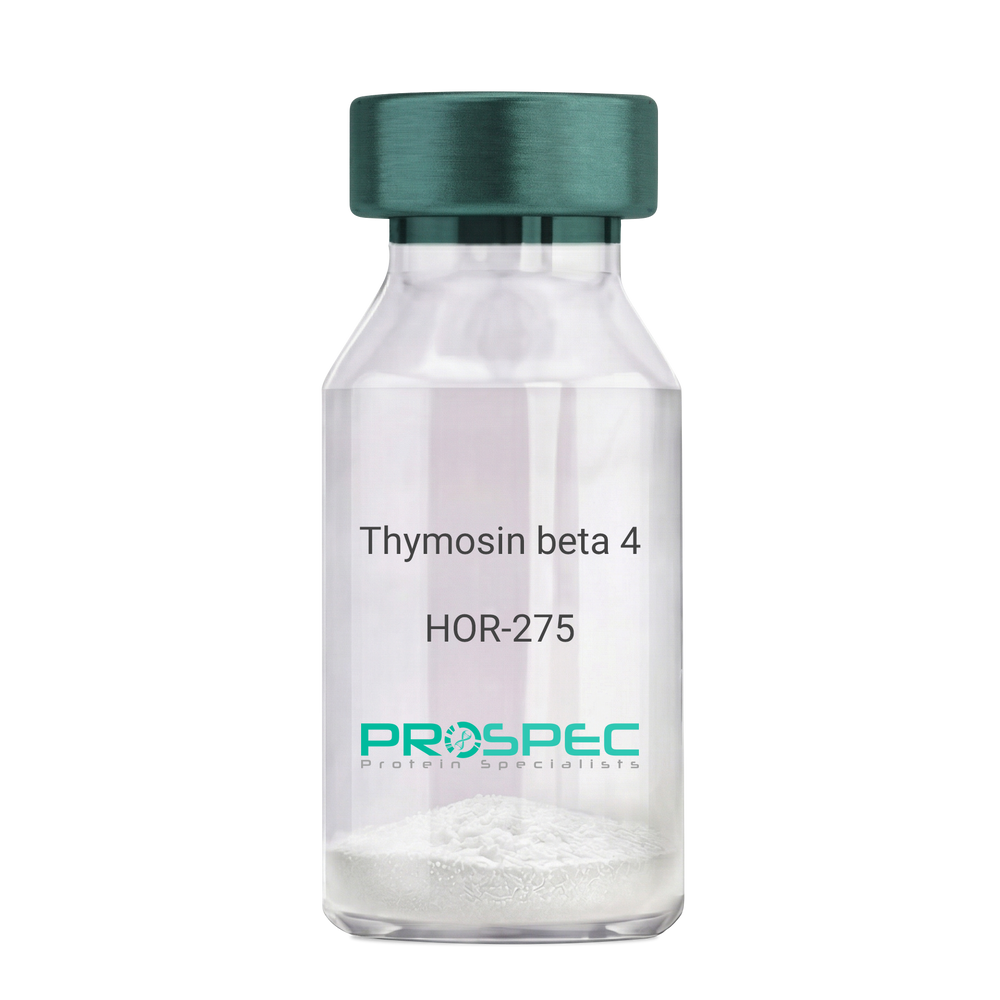
Thymosin beta 4Description:
Thymosin β4
Thymosin beta-4. TB500, TB-500
Product # :
HOR-275Price :
Quantity :
Shipping Method :
Shipped at Room temp
More Info
- description
- formulation
- purity
- More Info
Description
Thymosin b4 is a 43 amino acid peptide which is regarded as the main intracellular G-actin sequestering peptide. It has a molecular weight of 4963.55 Da, and its molecular formula is: C212H350N56O78S1. Extracellular Thymosin b4 may contribute to physiological processes such as angiogenesis, wound healing, and regulation of inflammation.
Formulation
The protein (1mg/ml) was lyophilized with no additives.
Purity
Greater than 98.0% as determined by RP-HPLC.
More Info
-
Introduction
Thymosin is a hormone secreted from the thymus. Its primary function is to stimulate the production of T cells, which are an important part of the immune system. Thymosin also assists in the development of B cells to plasma cells to produce antibodies. The predominant form of thymosin, thymosin b4, is a member of a highly conserved family of actin monomer-sequestering proteins. b-thymosins are the primary regulators of unpolymerized actin, and are essential for maintaining the small cytoplasmic pool of free G-actin monomers required for rapid filament elongation and allowing for the flux of monomers between the thymosin-bound pool and F-actin.
-
Synonyms
Thymosin beta-4. TB500, TB-500
-
Physical Appearance
Sterile Filtered White lyophilized (freeze-dried) powder.
-
Stability
Lyophilized Thymosin b4 although stable at room temperature for 3 weeks, should be stored desiccated below -18°C. Upon reconstitution T beta 4 should be stored at 4°C between 2-7 days and for future use below -18°C.For long term storage it is recommended to add a carrier protein (0.1% HSA or BSA).Please prevent freeze-thaw cycles.
-
Solubility
It is recommended to reconstitute the lyophilized Thymosin beta-4 in sterile 18MΩ-cm H2O not less than 100 µg/ml, which can then be further diluted to other aqueous solutions.
-
Amino Acid Sequence
Thymosin b4 has an a.a. sequence of Ac-Ser-Asp-Lys-Pro-Asp-Met-Ala-Glu-Ile-Glu-Lys-Phe-Asp-Lys-Ser-Lys-Leu-Lys-Lys-Thr-Glu-Thr-Gln-Glu-Lys-Asn-Pro-Leu-Pro-Ser-Lys-Glu-Thr-Ile-Glu-Gln-Glu-Lys-Gln-Ala-Gly-Glu-Ser-OH.
ProSpec's products are furnished for LABORATORY RESEARCH USE ONLY. The product may not be used as drugs, agricultural or pesticidal products, food additives or household chemicals.
- View Data Sheet
Name :
KRT8 HumanDescription:
Cytokeratin 8 Human Recombinant
Keratin type II cytoskeletal 8, Cytokeratin-8, CK-8, Keratin-8, K8, KRT8, CYK8, KO, CK8, K2C8, CARD2.
Product # :
PRO-347Price :
Quantity :
Shipping Method :
Shipped at Room temp
More Info
- description
- source
- formulation
- purity
- More Info
Description
Cytokeratin 8 Human Recombinant produced in E.Coli is a single, non-glycosylated polypeptide chain having a molecular mass of 53,532 Dalton. The KRT8 is purified by proprietary chromatographic techniques.
Source
Escherichia Coli.
Formulation
The protein (1mg/ml) was lyophilized after from a sterile solution containing 30mM Tris-HCl pH-8, 9.5M urea, 2mM DTT, 2mM EDTA and 10mM methylammonium chloride.
Purity
Greater than 95.0% as determined by:
(a) Analysis by RP-HPLC.
(b) Analysis by SDS-PAGE.More Info
-
Introduction
Keratin 8 and 18 (K8/18) are the major components of intermediate filament (IF) proteins of simple or single-layered epithelia.
-
Synonyms
Keratin type II cytoskeletal 8, Cytokeratin-8, CK-8, Keratin-8, K8, KRT8, CYK8, KO, CK8, K2C8, CARD2.
-
Physical Appearance
Sterile Filtered White lyophilized (freeze-dried) powder.
-
Stability
Lyophilized KRT8 although stable at room temperature for 3 weeks, should be stored at 2-8°C. Upon reconstitution KRT8 should be stored at 4°C between 2-7 days and for future use below -18°C. For long term storage it is recommended to add a carrier protein (0.1% HSA or BSA). Please prevent freeze-thaw cycles.
-
Solubility
It is recommended to reconstitute the lyophilized KRT8 in sterile 18MΩ-cm H2O not less than 100µg/ml, which can then be further diluted to other aqueous solutions.
-
Reconstitution to filaments
Performed by mixing equimolar amounts of cytokeratins of type I and type II at concentrations of approx. 0.5 mg/ml, both dissolved in 9.5 M urea buffer (see above). Protofilaments and filament complexes are obtained by dialyzing the resulting polypeptide solution stepwise to a concentration of 4 M urea and then to low salt condition (50 mM NaCl, 2 mM dithiothreitol, 10 mM Tris-HCl, pH 7.4). For immunization purposes, the solution can be further dialyzed against PBS (phosphate buffered saline, e.g. Dulbecco's PBS).
ProSpec's products are furnished for LABORATORY RESEARCH USE ONLY. The product may not be used as drugs, agricultural or pesticidal products, food additives or household chemicals.
- View Data Sheet
Name :
BCDIN3D HumanDescription:
BCDIN3D Human Recombinant
Pre-miRNA 5'-monophosphate methyltransferase, BCDIN3 domain-containing protein, BCDIN3D.
Product # :
PRO-1262Price :
Quantity :
Shipping Method :
Shipped with Ice Packs
More Info
- description
- source
- formulation
- purity
- More Info
Description
BCDIN3D Human Recombinant produced in E.Coli is a single, non-glycosylated polypeptide chain containing 315 amino acids (1-292 a.a) and having a molecular mass of 35kDa.BCDIN3D is fused to a 23 amino acid His-tag at N-terminus & purified by proprietary chromatographic techniques.
Source
Escherichia Coli.
Formulation
BCDIN3D protein solution (0.25mg/ml) containing 20mM Tris-HCl buffer (pH 8.0), 0.2M NaCl, 40% glycerol, 1mM DTT and 2mM EDTA.
Purity
Greater than 85.0% as determined by SDS-PAGE.
More Info
-
Introduction
BCDIN3D is a member of the methyltransferase superfamily and contains 1 Bin3-type SAM domain. BCDIN3D acts in the catalysis of the transfer of a methyl group to an acceptor molecule. BCDIN3D is an O-methyltransferase which specifically dimethylates the 5' monophosphate of pre-miRNAs, serving as a negative regulator of miRNA processing. BCDIN3D mediates the methylation of pre-miR-145, as well as other pre-miRNAs.
-
Synonyms
Pre-miRNA 5'-monophosphate methyltransferase, BCDIN3 domain-containing protein, BCDIN3D.
-
Physical Appearance
Sterile Filtered colorless solution.
-
Stability
Store at 4°C if entire vial will be used within 2-4 weeks. Store, frozen at -20°C for longer periods of time. For long term storage it is recommended to add a carrier protein (0.1% HSA or BSA).Avoid multiple freeze-thaw cycles.
-
Amino Acid Sequence
MGSSHHHHHH SSGLVPRGSH MGSMAVPTEL DGGSVKETAA EEESRVLAPG AAPFGNFPHY SRFHPPEQRL RLLPPELLRQ LFPESPENGP ILGLDVGCNS GDLSVALYKH FLSLPDGETC SDASREFRLL CCDIDPVLVK RAEKECPFPD ALTFITLDFM NQRTRKVLLS SFLSQFGRSV FDIGFCMSIT MWIHLNHGDH GLWEFLAHLS SLCHYLLVEP QPWKCYRAAA RRLRKLGLHD FDHFHSLAIR GDMPNQIVQI LTQDHGMELI CCFGNTSWDR SLLLFRAKQT IETHPIPESL IEKGKEKNRL SFQKQ.
ProSpec's products are furnished for LABORATORY RESEARCH USE ONLY. The product may not be used as drugs, agricultural or pesticidal products, food additives or household chemicals.
- View Data Sheet
Name :
RCAN3 HumanDescription:
Regulator of Calcineurin 3 Human Recombinant
DSCR1L2, hRCN3, MCIP3, RCN3, Calcipressin-3, Down syndrome candidate region 1-like protein 2, Myocyte-enriched calcineurin-interacting protein 3, Regulator of calcineurin 3.
Product # :
PRO-1284Price :
Quantity :
Shipping Method :
Shipped with Ice Packs
More Info
- description
- source
- formulation
- purity
- More Info
Description
RCAN3 Human Recombinant produced in E. coli is a single polypeptide chain containing 209 amino acids (56-241) and having a molecular mass of 23.5 kDa. RCAN3 is fused to 23 amino acid His-tag at N-terminus & purified by proprietary chromatographic techniques.
Source
E.coli.
Formulation
The RCAN3 solution (0.5mg/1ml) contains 20mM Tris-HCl buffer (pH 8.0), 2M Urea, 20% glycerol and 0.2M NaCl.
Purity
Greater than 90% as determined by SDS-PAGE.
More Info
-
Introduction
Calcipressin-3 (RCAN3) takes part in central nervous system development. RCAN3 inhibits calcineurin-dependent transcriptional responses by binding to the catalytic domain of calcineurin A. Overexpression of calcipressin-3 results in inhibition of calcineurin activity towards the nuclear factor of activated T-cells (NFAT) transcription factors and also downregulates NFAT-dependent cytokine gene expression in activated Jurkat T-cells. Highest expression takes place s in heart, skeletal muscle kidney, liver and peripheral blood leukocytes.
-
Synonyms
DSCR1L2, hRCN3, MCIP3, RCN3, Calcipressin-3, Down syndrome candidate region 1-like protein 2, Myocyte-enriched calcineurin-interacting protein 3, Regulator of calcineurin 3.
-
Physical Appearance
Sterile Filtered colorless solution.
-
Stability
Store at 4°C if entire vial will be used within 2-4 weeks. Store, frozen at -20°C for longer periods of time. For long term storage it is recommended to add a carrier protein (0.1% HSA or BSA).Avoid multiple freeze-thaw cycles.
-
Amino Acid Sequence
MGSSHHHHHH SSGLVPRGSH MGSEAVFEAR EQKERFEALF TIYDDQVTFQ LFKSFRRVRI NFSKPEAAAR ARIELHETDF NGQKLKLYFA QVQMSGEVRD KSYLLPPQPV KQFLISPPAS PPVGWKQSED AMPVINYDLL CAVSKLGPGE KYELHAGTES TPSVVVHVCE SETEEEEETK NPKQKIAQTR RPDPPTAALN EPQTFDCAL.
ProSpec's products are furnished for LABORATORY RESEARCH USE ONLY. The product may not be used as drugs, agricultural or pesticidal products, food additives or household chemicals.
- View Data Sheet
Name :
KRT14 Human, HisDescription:
Cytokeratin 14 Human Recombinant, His Tag
Keratin, type I cytoskeletal 14, Cytokeratin-14, CK-14, Keratin-14, K14, KRT14, NFJ, CK14, EBS3, EBS4.
Product # :
PRO-941Price :
Quantity :
Shipping Method :
Shipped with Ice Packs
More Info
- description
- source
- formulation
- purity
- More Info
Description
KRT14 Human Recombinant produced in E.Coli is a single, non-glycosylated polypeptide chain containing 492 amino acids (1-472 a.a.) and having a molecular mass of 53.8kDa.KRT14 is fused to a 20 amino acid His-tag at N-terminus & purified by proprietary chromatographic techniques.
Source
Escherichia Coli.
Formulation
KRT14 protein solution (1mg/ml) containing 20mM Tris-HCl buffer (pH8.0), 10% glycerol and 0.4M Urea.
Purity
Greater than 90.0% as determined by SDS-PAGE.
More Info
-
Introduction
Cytokeratin 14 is a member of the keratin family, the most diverse group of intermediate filaments. Cytokeratin 14 is a type I keratin, is usually found as a heterotetramer with two keratin 5 molecules, a type II keratin. Together they form the cytoskeleton of epithelial cells. Mutations in the genes for these keratins are associated with epidermolysis bullosa simplex. At least one pseudogene has been identified at 17p12-p11.
-
Synonyms
Keratin, type I cytoskeletal 14, Cytokeratin-14, CK-14, Keratin-14, K14, KRT14, NFJ, CK14, EBS3, EBS4.
-
Physical Appearance
Sterile Filtered colorless solution.
-
Stability
Store at 4°C if entire vial will be used within 2-4 weeks. Store, frozen at -20°C for longer periods of time.For long term storage it is recommended to add a carrier protein (0.1% HSA or BSA).Avoid multiple freeze-thaw cycles.
-
Amino Acid Sequence
MGSSHHHHHH SSGLVPRGSH MTTCSRQFTS SSSMKGSCGI GGGIGGGSSR ISSVLAGGSC RAPSTYGGGL SVSSSRFSSG GAYGLGGGYG GGFSSSSSSF GSGFGGGYGG GLGTGLGGGF GGGFAGGDGL LVGSEKVTMQ NLNDRLASYL DKVRALEEAN ADLEVKIRDW YQRQRPAEIK
DYSPYFKTIE DLRNKILTAT VDNANVLLQI DNARLAADDF RTKYETELNL RMSVEADING LRRVLDELTL ARADLEMQIE SLKEELAYLK KNHEEEMNAL RGQVGGDVNV EMDAAPGVDL SRILNEMRDQ YEKMAEKNRK DAEEWFFTKT EELNREVATN SELVQSGKSE ISELRRTMQN
LEIELQSQLS MKASLENSLE ETKGRYCMQL AQIQEMIGSV EEQLAQLRCE MEQQNQEYKI LLDVKTRLEQ EIATYRRLLE GEDAHLSSSQ FSSGSQSSRD VTSSSRQIRT KVMDVHDGKV VSTHEQVLRT KN.
ProSpec's products are furnished for LABORATORY RESEARCH USE ONLY. The product may not be used as drugs, agricultural or pesticidal products, food additives or household chemicals.
- View Data Sheet
Name :
RCAN2 HumanDescription:
Regulator of Calcineurin 2 Human Recombinant
Regulator of calcineurin 2, DSCR1L1, MCIP2, Down syndrome critical region gene 1-like 1, ZAKI4, Myocyte-enriched calcineurin-interacting protein 2, Thyroid hormone-responsive protein ZAKI-4, CSP2, RCN2, thyroid hormone-responsive (skin fibroblasts).
Product # :
PRO-990Price :
Quantity :
Shipping Method :
Shipped with Ice Packs
More Info
- description
- source
- formulation
- purity
- More Info
Description
RCAN2 Human Recombinant produced in E.Coli is a single, non-glycosylated polypeptide chain containing 217 amino acids (1-197 a.a.) and having a molecular mass of 24.1kDa.RCAN2 is fused to a 20 amino acid His-tag at N-terminus & purified by proprietary chromatographic techniques.
Source
E.coli.
Formulation
RCAN2 protein solution (0.5mg/ml) containing 20mM Tris-HCl buffer (pH8.0), 200mM NaCl, 1mM DTT and 20% glycerol.
Purity
Greater than 85% as determined by SDS-PAGE.
More Info
-
Introduction
RCAN2 is a member of the RCAN (Regulator of calcineurin) family that controls the activity of Calcineurin using a valine-rich region placed in their carboxyl tail. RCANs race against NFAT (nuclear factor of activated T-cells) to bind to the same docking site in calcineurin, and consequently inhibits or activates calcineurin activity. RCAN2 is a Ca(2+) dependent protein phosphatase which takes part in numerous neuornal functions.
-
Synonyms
Regulator of calcineurin 2, DSCR1L1, MCIP2, Down syndrome critical region gene 1-like 1, ZAKI4, Myocyte-enriched calcineurin-interacting protein 2, Thyroid hormone-responsive protein ZAKI-4, CSP2, RCN2, thyroid hormone-responsive (skin fibroblasts).
-
Physical Appearance
Sterile Filtered colorless solution.
-
Stability
Store at 4°C if entire vial will be used within 2-4 weeks. Store, frozen at -20°C for longer periods of time. For long term storage it is recommended to add a carrier protein (0.1% HSA or BSA).Avoid multiple freeze-thaw cycles.
-
Amino Acid Sequence
MGSSHHHHHH SSGLVPRGSH MPAPSMDCDV STLVACVVDV EVFTNQEVKE KFEGLFRTYD DCVTFQLFKS FRRVRINFSN PKSAARARIE LHETQFRGKK LKLYFAQVQT PETDGDKLHL APPQPAKQFL ISPPSSPPVG WQPINDATPV LNYDLLYAVA KLGPGEKYEL HAGTESTPSV VVHVCDSDIE EEEDPKTSPK PKIIQTRRPG LPPSVSN
ProSpec's products are furnished for LABORATORY RESEARCH USE ONLY. The product may not be used as drugs, agricultural or pesticidal products, food additives or household chemicals.
- View Data Sheet
Name :
RARRES2 Human, Sf9Description:
Retinoic Acid Receptor Responder 2 Human Recombinant, Sf9
Retinoic Acid Receptor Responder 2, Chemerin, Retinoic Acid Receptor Responder (Tazarotene Induced) 2, Tazarotene-Induced Gene 2 Protein, RAR-Responsive Protein TIG2, TIG2, Retinoic Acid Receptor Responder Protein 2, HP10433, Retinoic acid receptor responder protein 2, Chemerin, RAR-responsive protein TIG2, Tazarotene-induced gene 2 protein.
Product # :
PRO-2382Price :
Quantity :
Shipping Method :
Shipped with Ice Packs
More Info
- description
- source
- formulation
- purity
- More Info
Description
RARRES2 produced in Sf9 Baculovirus cells is a single, glycosylated polypeptide chain containing 146 amino acids (21-157a.a.) and having a molecular mass of 16.9kDa. (Molecular size on SDS-PAGE will appear at approximately 18-28kDa). RARRES2 is expressed with a 6 amino acid His tag at C-Terminus and purified by proprietary chromatographic techniques.
Source
Sf9, Baculovirus cells.
Formulation
RARRES2 protein solution (0.5mg/ml) contains Phosphate Buffered Saline (pH 7.4) and 10% glycerol.
Purity
Greater than 90.0% as determined by SDS-PAGE.
More Info
-
Introduction
RARRES2 is a secreted chemotactic protein that initiates chemotaxis through the ChemR23 G protein-coupled seven-transmembrane domain ligand. RARRES2 is upregulated by the synthetic retinoid tazarotene and found in a vast variety of tissues. RARRES2 acts as an adipokine, and is truncated on both termini from the proprotein. RARRES2 is structurally related to the cathelicidin precursors, cystatin C and kininogens. RARRES2 promotes calcium mobilization and chemotaxis of immature dendritic cells and macrophages. RARRES2 is secreted as a precursor of little biological activity, which requires proteolytic cleavage of its COOH-terminal domain to be exchangeed into a potent and highly specific agonist of ChemR23. RARRES2 signals via its receptor, ChemR23 (CMKLR1), as a positive regulator of adipocyte differentiation and metabolic function. The Chemerin receptor acts as a coreceptor for SIV and some primary HIV-1 strains. The Chemerin receptor has another ligand, called tazarotene-induced gene.
-
Synonyms
Retinoic Acid Receptor Responder 2, Chemerin, Retinoic Acid Receptor Responder (Tazarotene Induced) 2, Tazarotene-Induced Gene 2 Protein, RAR-Responsive Protein TIG2, TIG2, Retinoic Acid Receptor Responder Protein 2, HP10433, Retinoic acid receptor responder protein 2, Chemerin, RAR-responsive protein TIG2, Tazarotene-induced gene 2 protein.
-
Physical Appearance
Sterile Filtered colorless solution.
-
Stability
Store at 4°C if entire vial will be used within 2-4 weeks. Store, frozen at -20°C for longer periods of time. For long term storage it is recommended to add a carrier protein (0.1% HSA or BSA).Avoid multiple freeze-thaw cycles.
-
Amino Acid Sequence
ADPELTEAQR RGLQVALEEF HKHPPVQWAF QETSVESAVD TPFPAGIFVR LEFKLQQTSC RKRDWKKPEC KVRPNGRKRK CLACIKLGSE DKVLGRLVHC PIETQVLREA EEHQETQCLR VQRAGEDPHS FYFPGQFAFS HHHHHH.
ProSpec's products are furnished for LABORATORY RESEARCH USE ONLY. The product may not be used as drugs, agricultural or pesticidal products, food additives or household chemicals.
- View Data Sheet
Name :
S100A8 Human, HisDescription:
S100 Calcium Binding Protein A8 Human Recombinant, His Tag
Calgranulin A, MRP8, CAGA, CGLA, CFAG, Protein S100-A8, S100 calcium-binding protein A8, Migration inhibitory factor-related protein 8, MRP-8, p8, Cystic fibrosis antigen, Leukocyte L1 complex light chain, Calprotectin L1L subunit, Urinary stone protein band A, S100A8, MIF, NIF, L1Ag, CP-10, MA387, 60B8AG.
Product # :
PRO-150Price :
Quantity :
Shipping Method :
Shipped at Room temp
More Info
- description
- source
- formulation
- More Info
Description
The Recombinant Human S100A8 produced in E.coli has a molecular mass of 12.08kDa containing 103 amino acid residues of the human S100A8 and fused to a 10 a.a. His tag at N-terminus.
Source
Escherichia Coli.
Formulation
S100A8 was filtered (0.4µm) and lyophilized in 0.5mg/ml in 20mM Tris and 100mM NaCl, pH 7.5.
More Info
-
Introduction
S100A8 is a part of the S100 family of proteins containing 2 EF-hand calcium-binding motifs. S100 proteins are localized in the cytoplasm and/or nucleus of a broad range of cells, and participate in the regulation of cellular processes such as cell cycle progression and differentiation. S100A8 plays a role in the inhibition of casein kinase and as a cytokine. S100A8 altered expression is related with cystic fibrosis disease. S100A8 is a calcium-binding protein that has antimicrobial activity against bacteria and fungi.S100A8 is crucial for resistance towards invasion by pathogenic bacteria. S100A8 up-regulates transcription of genes that are under the control of NF-kappa-B. S100A8 plays a role in the development of endotoxic shock in response to bacterial lipopolysaccharide. S100A8 endorses tubulin polymerization and promotes phagocyte migration and infiltration of granulocytes at sites of wounding. S100A8 takes part as a pro-inflammatory mediator in acute and chronic inflammation and up-regulates the release of IL8 and cell-surface expression of ICAM1.
-
Synonyms
Calgranulin A, MRP8, CAGA, CGLA, CFAG, Protein S100-A8, S100 calcium-binding protein A8, Migration inhibitory factor-related protein 8, MRP-8, p8, Cystic fibrosis antigen, Leukocyte L1 complex light chain, Calprotectin L1L subunit, Urinary stone protein band A, S100A8, MIF, NIF, L1Ag, CP-10, MA387, 60B8AG.
-
Stability
Store lyophilized protein at -20°C. Aliquot the product after reconstitution to avoid repeated freezing/thawing cycles. Reconstituted protein can be stored at 4°C for a limited period of time; it does not show any change after two weeks at 4°C.
-
Solubility
It is recommended to add deionized water to prepare a working stock solution of approximately 0.5 mg/ml and let the lyophilized pellet dissolve completely. Product is not sterile! Please filter the product by an appropriate sterile filter before using it in the cell culture.
-
Amino Acid Sequence
MKHHHHHHAS MLTELEKALN SIIDVYHKYS LIKGNFHAVY RDDLKKLLET ECPQYIRKKG ADVWFKELDI NTDGAVNFQEMLTELEKALN SIIDVYHKYS LIKGNFHAVY RDDLKKLLET ECPQYIRKKG ADVWFKELDI NTDGAVNFQE FLILVIKMGV AAHKKSHEES HKE.
ProSpec's products are furnished for LABORATORY RESEARCH USE ONLY. The product may not be used as drugs, agricultural or pesticidal products, food additives or household chemicals.
- View Data Sheet
Name :
KPNA2 HumanDescription:
Karyopherin Alpha 2 Human Recombinant
Karyopherin subunit alpha 2 (RAG cohort 1 importin alpha 1), RCH1, QIP2, IPOA1, SRP1 alpha, RAG cohort protein 1, importin alpha 1, importin subunit alpha-2, importin-alpha-P1, pendulin.
Product # :
PRO-1032Price :
Quantity :
Shipping Method :
Shipped with Ice Packs
More Info
- description
- source
- formulation
- purity
- More Info
Description
KPNA2 Human Recombinant produced in E.coli is a single, non-glycosylated polypeptide chain containing 553 amino acids (1-529) and having a molecular mass of 60.5kDa.KPNA2 is fused to a 24 amino acid His-tag at N-terminus & purified by proprietary chromatographic techniques.
Source
E.coli.
Formulation
The KPNA2 solution (1mg/ml) contains 20mM Tris-HCl buffer (pH 8.0), 1mM DTT and 20% glycerol.
Purity
Greater than 90% as determined by SDS-PAGE.
More Info
-
Introduction
KPNA2 belongs to the karyopherin alpha family. KPNA2 has a vital part in the nuclear import of proteins with a conventional nuclear localization signal (NLS).
In vitro, KPNA2 bound specifically and directly to substrates having a simple or bipartite NLS motif. KPNA2 stimulated docking of import substrates to the nuclear envelope and together with Ran reconstituted complete nuclear protein import. -
Synonyms
Karyopherin subunit alpha 2 (RAG cohort 1 importin alpha 1), RCH1, QIP2, IPOA1, SRP1 alpha, RAG cohort protein 1, importin alpha 1, importin subunit alpha-2, importin-alpha-P1, pendulin.
-
Physical Appearance
Sterile Filtered colorless solution.
-
Stability
Store at 4°C if entire vial will be used within 2-4 weeks. Store, frozen at -20°C for longer periods of time. For long term storage it is recommended to add a carrier protein (0.1% HSA or BSA).Avoid multiple freeze-thaw cycles.
-
Amino Acid Sequence
MGSSHHHHHH SSGLVPRGSH MGSHMSTNEN ANTPAARLHR FKNKGKDSTE MRRRRIEVNV ELRKAKKDDQ MLKRRNVSSF PDDATSPLQE NRNNQGTVNW SVDDIVKGIN SSNVENQLQA TQAARKLLSR EKQPPIDNII RAGLIPKFVS FLGRTDCSPI QFESAWALTN IASGTSEQTK VVVDGGAIPA FISLLASPHA HISEQAVWAL GNIAGDGSVF RDLVIKYGAV DPLLALLAVP DMSSLACGYL RNLTWTLSNL CRNKNPAPPI DAVEQILPTL VRLLHHDDPE VLADTCWAIS YLTDGPNERI GMVVKTGVVP QLVKLLGASE LPIVTPALRA IGNIVTGTDE QTQVVIDAGA LAVFPSLLTN PKTNIQKEAT WTMSNITAGR QDQIQQVVNH GLVPFLVSVL SKADFKTQKE AVWAVTNYTS GGTVEQIVYL VHCGIIEPLM NLLTAKDTKI ILVILDAISN IFQAAENLGE TEKLSIMIEE CGGLDKIEAL QNHENESVYK ASLSLIEKYF SVEEEEDQNV VPETTSEGYT FQVQDGAPGT FNF.
ProSpec's products are furnished for LABORATORY RESEARCH USE ONLY. The product may not be used as drugs, agricultural or pesticidal products, food additives or household chemicals.
- View Data Sheet
Name :
CHODL HumanDescription:
Chondrolectin Human Recombinant
Chondrolectin, Transmembrane Protein MT75, C21orf68, Chromosome 21 Open Reading Frame 68, PRED12, MT75, CHODL.
Product # :
PRO-1964Price :
Quantity :
Shipping Method :
Shipped with Ice Packs
More Info
- description
- source
- formulation
- purity
- More Info
Description
CHODL Human Recombinant produced in E.coli is a single, non-glycosylated polypeptide chain containing 220 amino acids (22-216) and having a molecular mass of 24.6 kDa.CHODL is fused to a 25 amino acid His-tag at N-terminus & purified by proprietary chromatographic techniques.
Source
Escherichia Coli.
Formulation
The CHODL solution (1mg/ml) contains 20mM Tris-HCl buffer (pH 8.0), 0.15M NaCl, 10% glycerol and 1mM DTT.
Purity
Greater than 90.0% as determined by SDS-PAGE.
More Info
-
Introduction
Chondrolectin (CHODL) is a type I membrane protein with a carbohydrate recognition domain characteristic of C-type lectins in its extracellular portion. In other proteins, this domain is involved in endocytosis of glycoproteins and exogenous sugar-bearing pathogens. The CHODL protein localizes mainly to the perinuclear region.
-
Synonyms
Chondrolectin, Transmembrane Protein MT75, C21orf68, Chromosome 21 Open Reading Frame 68, PRED12, MT75, CHODL.
-
Physical Appearance
Sterile Filtered colorless solution.
-
Stability
Store at 4°C if entire vial will be used within 2-4 weeks. Store, frozen at -20°C for longer periods of time. For long term storage it is recommended to add a carrier protein (0.1% HSA or BSA).Avoid multiple freeze-thaw cycles.
-
Amino Acid Sequence
MGSSHHHHHH SSGLVPRGSH MGSFCRRVVS GQKVCFADFK HPCYKMAYFH ELSSRVSFQE ARLACESEGG VLLSLENEAE QKLIESMLQN LTKPGTGISD GDFWIGLWRN GDGQTSGACP DLYQWSDGSN SQYRNWYTDE PSCGSEKCVV MYHQPTANPG LGGPYLYQWN DDRCNMKHNY ICKYEPEINP TAPVEKPYLT NQPGDTHQNV VVTEAGIIPN.
ProSpec's products are furnished for LABORATORY RESEARCH USE ONLY. The product may not be used as drugs, agricultural or pesticidal products, food additives or household chemicals.
- View Data Sheet
Name :
Agrin RatDescription:
Agrin Rat Recombinant
Agrin, Agrn, C90, C22, Agrin N-terminal 110 kDa subunit, Agrin C-terminal 110 kDa subunit, Agrin C-terminal 90 kDa fragment, Agrin C-terminal 22 kDa fragment, AGR
Product # :
PRO-2627Price :
Quantity :
Shipping Method :
Shipped with Ice Packs
More Info
- description
- source
- formulation
- purity
- More Info
Description
Agrin Rat produced in Sf9 Baculovirus cells is a single, glycosylated polypeptide chain containing 766 amino acids (997-1753 a.a.) and having a molecular mass of 82.5kDa.Agrin is fused to a 9 amino acid His tag at C-Terminus and purified by proprietary chromatographic techniques.
Source
Sf9, Baculovirus cells.
Formulation
The Agrin solution (0.5mg/ml) contains 10% Glycerol in Phosphate-Buffered Saline (pH 7.4).
Purity
Greater than 90.0% as determined by SDS-PAGE.
More Info
-
Introduction
Agrin or AGRN is a large protein (proteoglycan) that has a crucial part in the development of neuromuscular junction amid embryogenesis. The protein has an involvement in the collection and aggregation of acetylcholine receptors through synaptogenesis. The agrin gene can be found and expressed in rat embryonic nervous system andmuscle tissue. This Agrin protein is aggregated in the synapses, there it can take part in regeneration & development. The protein binds to receptors on the surface of skeletal muscle.
-
Synonyms
Agrin, Agrn, C90, C22, Agrin N-terminal 110 kDa subunit, Agrin C-terminal 110 kDa subunit, Agrin C-terminal 90 kDa fragment, Agrin C-terminal 22 kDa fragment, AGR
-
Physical Appearance
Sterile Filtered colorless solution.
-
Stability
Store at 4°C if entire vial will be used within 2-4 weeks. Store, frozen at -20°C for longer periods of time. For long term storage it is recommended to add a carrier protein (0.1% HSA or BSA).Avoid multiple freeze-thaw cycles.
-
Amino Acid Sequence
ADPSCYNSPL GCCSDGKTPS LDSEGSNCPA TKAFQGVLEL EGVEGQELFY TPEMADPKSE LFGETARSIE STLDDLFRNS DVKKDFWSVR LRELGPGKLV RAIVDVHFDP TTAFQASDVG QALLRQIQVS RPWALAVRRP LQEHVRFLDF DWFPTFFTGA ATGTTAAMAT ARATTVSRLP ASSVTPRVYP SHTSRPVGRT TAPPTTRRPP TTATNMDRPR TPGHQQPSKS CDSQPCLHGG
TCQDQDSGKG FTCSCTAGRG GSVCEKVQPP SMPAFKGHSF LAFPTLRAYH TLRLALEFRA LETEGLLLYN GNARGKDFLA LALLDGRVQF RFDTGSGPAV LTSLVPVEPG RWHRLELSRH WRQGTLSVDG ETPVVGESPS GTDGLNLDTN LYVGGIPEEQ VAMVLDRTSV GVGLKGCIRM LDINNQQLEL SDWQRAAVQS SGVGECGDHP CLPNPCHGGA LCQALEAGMF LCQCPPGRFG PTCADEKSPC QPNPCHGAAP CRVLSSGGAK CECPLGRSGT FCQTVLETAG SRPFLADFNG FSYLELKGLH TFERDLGEKM ALEMVFLARG PSGLLLYNGQ KTDGKGDFVS LALHNRHLEF CYDLGKGAAV IRSKEPIALG TWVRVFLERN GRKGALQVGD GPRVLGESPK SRKVPHTMLN LKEPLYIGGA PDFSKLARGA AVSSGFSGVI QLVSLRGHQL LTQEHVLRAV DVSPFADHPC TQALGNPCLN GGSCVPREAT YECLCPGGFS GLHCEKGLVE HHHHHH
ProSpec's products are furnished for LABORATORY RESEARCH USE ONLY. The product may not be used as drugs, agricultural or pesticidal products, food additives or household chemicals.
- View Data Sheet
Name :
PODXL HumanDescription:
Podocalyxin-Like Human Recombinant
Podocalyxin, Podocalyxin-like protein 1, PC, PCLP-1.
Product # :
PRO-2768Price :
Quantity :
Shipping Method :
Shipped with Ice Packs
More Info
- description
- source
- formulation
- purity
- More Info
Description
PODXL Human Recombinant produced in HEK293 cells is a single, glycosylated polypeptide chain containing 416 amino acids (23-429 a.a.) and having a molecular mass of 43.1 kDa. PODXL is expressed with a 6 amino acid His tag at C-Terminus and purified by proprietary chromatographic techniques.
Source
HEK293 Cells
Formulation
PODXL protein solution (1mg/ml) containing Phosphate Buffered Saline (pH 7.4) and 10% glycerol.
Purity
Greater than 95% as determined by SDS-PAGE.
More Info
-
Introduction
Podocalyxin (PODXL) is a greatly glycosylated transmembrane sialoprotein in the CD34 and endoglycan family. The PODXL protein is involved in the regulation of both adhesion and cell morphology and cancer progression. PODXL functions as an anti-adhesive molecule, which retains an open filtration pathway between neighboring foot processes in the podocyte by charge repulsion. Moreover, PODXL serves as a pro-adhesive molecule, enhancing the adherence of cells to immobilized ligands, increasing the rate of migration and cell-cell contacts in an integrin-dependent manner.
-
Synonyms
Podocalyxin, Podocalyxin-like protein 1, PC, PCLP-1.
-
Physical Appearance
Sterile Filtered clear solution.
-
Stability
Store at 4°C if entire vial will be used within 2-4 weeks. Store, frozen at -20°C for longer periods of time.For long term storage it is recommended to add a carrier protein (0.1% HSA or BSA).Please avoid freeze thaw cycles.
-
Amino Acid Sequence
DGS-SPSPSPS PSQNATQTTT DSSNKTAPTP ASSVTIMATD TAQQSTVPTS KANEILASVK ATTLGVSSDS PGTTTLAQQV SGPVNTTVAR GGGSGNPTTT IESPKSTKSA DTTTVATSTA TAKPNTTSSQ NGAEDTTNSG GKSSHSVTTD LTSTKAEHLT TPHPTSPLSP RQPTSTHPVA TPTSSGHDHL MKISSSSSTV AIPGYTFTSP GMTTTLPSSV ISQRTQQTSS QMPASSTAPS SQETVQPTSP ATALRTPTLP ETMSSSPTAA STTHRYPKTP SPTVAHESNW AKCEDLETQT QSEKQLVLNL TGNTLCAGGA SDEKLISLIC RAVKATFNPA QDKCGIRLAS VPGSQTVVVK EITIHTKLPA KDVYERLKDK WDELKEAGVS DMKLGDQGPP EEAEDRFSMP-HHHHHH.
ProSpec's products are furnished for LABORATORY RESEARCH USE ONLY. The product may not be used as drugs, agricultural or pesticidal products, food additives or household chemicals.
- View Data Sheet
Name :
CTF1 HumanDescription:
Cardiotrophin-1 Human Recombinant
CTF1, CT1, CT-1, Cardiophin 1, Cardiotrophin-1.
Product # :
CYT-944Price :
Quantity :
Shipping Method :
Shipped at Room temp
More Info
- description
- source
- formulation
- purity
- biological activity
- More Info
Description
Cardiotrophin-1 Human Recombinant produced in E.coli is a single, non-glycosylated, polypeptide chain containing 201 amino acids and having a molecular mass of 21.2kDa.The CTF1 is purified by proprietary chromatographic techniques.
Source
Escherichia Coli.
Formulation
CTF-1 protein was lyophilized from a 0.2µm filtered concentrated solution in 30% Acetonitrile and 0.1% TFA.
Purity
Greater than 95.0% as determined by:
(a) Analysis by RP-HPLC.
(b) Analysis by SDS-PAGE.Biological Activity
The ED50 as determined by a cell proliferation assay using human TF-1 cells is less than 1.0 ng/ml, corresponding to a specific activity of > 1.0×10⁶ IU/mg.More Info
-
Introduction
Cardiotrophin 1 (CT-1) is a 201 amino acid member of the interleukin-6 superfamily. It was identified by its ability to induce hypertrophic response in cardiac myocytes. CT-1 mRNA levels were found both in cardiac myocytes and in cardiac nonmyocytes. CT 1 was also detected in abundance in normal adult human lung and was expressed in both fetal and adult airway smooth muscle cells. CT 1 activates gp130 dependent signaling and stimulates the Janus kinase/signal transducers and activators of transcription (JAK/STAT) pathway to transduce hypertrophic and cytoprotective signals in cardiac myocytes.
CT 1 has also a neurotrophic function. CTF1 deficiency causes increased motoneuron cell death in spinal cord and brainstem nuclei of mice during a period between embryonic day 14 and the first postnatal week. Moreover, CT-1 is a hepatocyte survival factor that efficiently reduces hepatocellular damage in animal models of acute liver injury. Cardiotrophin 1 expression is augmented after hypoxic stimulation and it can protect cardiac cells when added either prior to simulated ischaemia or at the time of reoxygenation following simulated ischaemia. Cardiotrophin 1 can induce expression of the protective heat shock proteins (hsps) in cardiac cells.
Cardiotrophin-1 increased ventricular expression of ANP, brain natriuretic peptide (BNP) and angiotensinogen mRNA.
Cardiophin 1 levels were significantly elevated in patients with heart failure, patients with dilatative cardiomyopathy, moderate/severe mitral regurgitation, stable and unstable angina and after acute myocardial infarction. -
Synonyms
CTF1, CT1, CT-1, Cardiophin 1, Cardiotrophin-1.
-
Physical Appearance
Sterile Filtered White lyophilized (freeze-dried) powder.
-
Stability
Lyophilized CTF1 although stable at room temperature for 3 weeks, should be stored desiccated below -18°C. Upon reconstitution CTF-1 should be stored at 4°C between 2-7 days and for future use below -18°C. For long term storage it is recommended to add a carrier protein (0.1% HSA or BSA). Please prevent freeze-thaw cycles.
-
Solubility
It is recommended to reconstitute the lyophilized CTF1 in sterile 4mM HCl not less than 100µg/ml, which can then be further diluted to other aqueous solutions.
-
Amino Acid Sequence
MSRREGSLED PQTDSSVSLL PHLEAKIRQT HSLAHLLTKY AEQLLQEYVQ LQGDPFGLPS FSPPRLPVAG LSAPAPSHAG LPVHERLRLD AAALAALPPL LDAVCRRQAE LNPRAPRLLR RLEDAARQAR ALGAAVEALL AALGAANRGP RAEPPAATAS AASATGVFPA KVLGLRVCGL YREWLSRTEG DLGQLLPGGS A.
-
Background
Title: Cardiotrophin-1 Human Recombinant: A Potential Therapeutic Target for Cardiovascular Diseases
Abstract:
Cardiotrophin-1 (CT-1) is a cytokine that plays a crucial role in cardiac development and homeostasis. This research paper provides a comprehensive analysis of human recombinant CT-1, focusing on its production, characterization, and potential therapeutic implications in cardiovascular diseases. The paper discusses the significance of CT-1 in cardiac cell survival, hypertrophy, and regeneration. Furthermore, it elucidates the ongoing research and clinical trials exploring the therapeutic potential of recombinant CT-1 in cardiovascular disorders. The information presented in this paper aims to enhance the understanding of human recombinant CT-1 and its utility as a research tool and a potential therapeutic agent for cardiovascular diseases.Introduction:
Cardiotrophin-1 (CT-1) is a member of the interleukin-6 cytokine family, primarily produced by cardiac cells. It exerts its effects by binding to the CT-1 receptor complex, leading to the activation of various signaling pathways. Human recombinant CT-1, produced through genetic engineering techniques, provides researchers with a valuable tool to explore its biological functions and therapeutic potential.Production and Characterization:
Recombinant CT-1 is typically produced using expression systems such as mammalian cells or bacteria. The protein is then purified and characterized to ensure its structural integrity and functional activity. Quality control measures are implemented to confirm the specificity and bioactivity of the recombinant CT-1.Role in Cardiovascular Physiology:
CT-1 plays a critical role in cardiac cell survival, hypertrophy, and regeneration. It promotes cardiomyocyte growth and survival, contributing to the adaptation of the heart to stress and injury. CT-1 also exhibits angiogenic properties, stimulating the formation of new blood vessels in the heart. These functions make recombinant CT-1 an important tool for studying cardiac physiology and exploring potential therapeutic interventions.Therapeutic Implications:
The dysregulation of CT-1 signaling has been implicated in various cardiovascular diseases, including heart failure, myocardial infarction, and cardiac hypertrophy. Recombinant CT-1 holds promise as a potential therapeutic agent for these conditions. Clinical trials are underway to evaluate the safety and efficacy of CT-1-based therapies, including recombinant CT-1 administration and gene therapy approaches.Conclusion:
Human recombinant CT-1 is a valuable research tool and a potential therapeutic target for cardiovascular diseases. Its production, characterization, and applications in cardiac cell signaling contribute to our understanding of cardiovascular physiology and the development of novel treatments. Continued research and clinical trials exploring the therapeutic potential of recombinant CT-1 hold promise for improving outcomes in patients with cardiovascular disorders.What is the molecular weight/Mw of CTF1 Protein?
CTF1 Protein has a total Mw of 21.2kDa.
What is the source or expression system of CTF1 Protein?
Escherichia Coli.
What is the Purity of CTF1 Protein?
CTF1 Protein is >95% pure as determined by SDS-PAGE.
What is the Biological Activity of CTF1 Protein?
The ED50 as determined by a cell proliferation assay using human TF-1 cells is less than 1.0 ng/ml, corresponding to a specific activity of > 1.0×10⁶ IU/mg.
What is the amino acid sequence of CTF1 Protein?
MSRREGSLED PQTDSSVSLL PHLEAKIRQT HSLAHLLTKY AEQLLQEYVQ LQGDPFGLPS FSPPRLPVAG LSAPAPSHAG LPVHERLRLD AAALAALPPL LDAVCRRQAE LNPRAPRLLR RLEDAARQAR ALGAAVEALL AALGAANRGP RAEPPAATAS AASATGVFPA KVLGLRVCGL YREWLSRTEG DLGQLLPGGS A.
What applications can CTF1 Protein be used in?
CTF1 Protein can probably be used in western blot, ELISA and Lateral Flow.
What is the endotoxin level for CTF1 Protein?
The endotoxin level is minimal, CTF1 Protein was purified using conventional chromatography techniques.
ProSpec's products are furnished for LABORATORY RESEARCH USE ONLY. The product may not be used as drugs, agricultural or pesticidal products, food additives or household chemicals.
- View Data Sheet
Name :
Recoverin HumanDescription:
Recoverin Human Recombinant
RCV1, Cancer-associated retinopathy protein, Protein CAR, RCVRN, Recoverin.
Product # :
PRO-441Price :
Quantity :
Shipping Method :
Shipped with Ice Packs
More Info
- description
- source
- formulation
- purity
- More Info
Description
Recoverin Human Recombinant produced in E.Coli is a single, non-glycosylated polypeptide chain containing 200 amino acids & having a molecular mass of 23kDa.
Source
Escherichia Coli.
Formulation
The protein (1mg/ml) contains 20mM Tris-HCl pH 8.0, 1mM EDTA, 2mM MgCl2 and 10% Glycerol.
Purity
Greater than 95.0% as determined by SDS-PAGE.
More Info
-
Introduction
Recoverin is a member of the recoverin family of neuronal calcium sensors. Recoverin is a heterogeneously acylated calcium-binding and intracellular signal transduction 23kDa protein in the photoreceptor cells of retina. Recoverin contains four EF-hands, of which two bind Ca. Ca-induced extrusion of the acyl group from a hydrophobic cleft in the protein drives the translocation of recoverin from solution to the disc membrane. Recoverin may prolong the termination of the phototransduction cascade in the retina by blocking the phosphorylation of photo-activated rhodopsin. Recoverin plays a key role in the inhibition of rhodopsin kinase, a molecule that regulates the phosphorylation of rhodopsin. This in due course controls the ability of the eye to adapt to, and recover from, exposure to the presence of light. Recoverin is a detectable serologic protein that is expressed in patients with cancer-associated retinopathy, a paraneoplastic syndrome.
-
Synonyms
RCV1, Cancer-associated retinopathy protein, Protein CAR, RCVRN, Recoverin.
-
Physical Appearance
Sterile filtered colorless solution.
-
Stability
Store at 4°C if entire vial will be used within 2-4 weeks. Store, frozen at -20°C for longer periods of time. For long term storage it is recommended to add a carrier protein (0.1% HSA or BSA). Avoid multiple freeze-thaw cycles.
-
Amino Acid Sequence
MGNSKSGALS KEILEELQLN TKFSEEELCS WYQSFLKDCP TGRITQQQFQ SIYAKFFPDT DPKAYAQHVF RSFDSNLDGT LDFKEYVIAL HMTTAGKTNQ KLEWAFSLYD VDGNGTISKNEVLEIVMAIF KMITPEDVKL LPDDENTPEK RAEKIWKYFG KNDDDKLTEK EFIEGTLANK EILRLIQFEP QKVKEKMKNA.
ProSpec's products are furnished for LABORATORY RESEARCH USE ONLY. The product may not be used as drugs, agricultural or pesticidal products, food additives or household chemicals.