Skip to content

High-quality research proteins.

  • 1-800-805-6531

  • Mon - Sat 8.00-18.00, Sun - Closed

  • info@prospecbio.com

  • PO Box 6591 East Brunswick NJ 08816

  • Products
    • Cytokines
    • Growth factors
    • Chemokines
    • Cd antigens
    • Neurotrophins
    • Hormones
    • Enzymes
    • Viral antigens
    • Recombinant proteins
    • Natural proteins
    • Monoclonal antibodies
    • Polyclonal antibodies
    • Thermal Packaging
  • About
    • Company
    • Founder
    • Contribution
  • Customers
    • Eastern Asia
    • Eastern Europe
    • North America
    • South America
    • South East Asia
    • Southern Asia
    • Western Europe
  • Ordering
    • Ordering Method
    • Ordering - Credit Card
    • Ordering - PO
    • Shipping Fees
    • FAQs
  • Services
    • DNA Cloning
    • Protein Expression
    • Monoclonal Antibody
    • Fermentation
    • Technology License
  • Contact us
Log in

Country/region

  • USD $ | Albania
  • USD $ | Andorra
  • USD $ | Argentina
  • USD $ | Armenia
  • USD $ | Australia
  • USD $ | Austria
  • USD $ | Azerbaijan
  • USD $ | Belarus
  • USD $ | Belgium
  • USD $ | Bolivia
  • USD $ | Brazil
  • USD $ | Bulgaria
  • USD $ | Cambodia
  • USD $ | Canada
  • USD $ | Chile
  • USD $ | China
  • USD $ | Colombia
  • USD $ | Costa Rica
  • USD $ | Croatia
  • USD $ | Cyprus
  • USD $ | Czechia
  • USD $ | Denmark
  • USD $ | Estonia
  • USD $ | Finland
  • USD $ | France
  • USD $ | Georgia
  • USD $ | Germany
  • USD $ | Greece
  • USD $ | Hong Kong SAR
  • USD $ | Hungary
  • USD $ | Iceland
  • USD $ | India
  • USD $ | Ireland
  • USD $ | Israel
  • USD $ | Italy
  • USD $ | Japan
  • USD $ | Kazakhstan
  • USD $ | Latvia
  • USD $ | Liechtenstein
  • USD $ | Lithuania
  • USD $ | Madagascar
  • USD $ | Malta
  • USD $ | Mexico
  • USD $ | Moldova
  • USD $ | Monaco
  • USD $ | Netherlands
  • USD $ | New Zealand
  • USD $ | North Macedonia
  • USD $ | Norway
  • USD $ | Panama
  • USD $ | Paraguay
  • USD $ | Peru
  • USD $ | Philippines
  • USD $ | Poland
  • USD $ | Portugal
  • USD $ | Romania
  • USD $ | Singapore
  • USD $ | Slovakia
  • USD $ | Slovenia
  • USD $ | South Africa
  • USD $ | South Korea
  • USD $ | Spain
  • USD $ | Sri Lanka
  • USD $ | Sweden
  • USD $ | Switzerland
  • USD $ | Taiwan
  • USD $ | Thailand
  • USD $ | Türkiye
  • USD $ | Ukraine
  • USD $ | United Kingdom
  • USD $ | United States
  • USD $ | Uruguay
  • USD $ | Vatican City
  • USD $ | Venezuela
  • USD $ | Vietnam
  • Facebook
  • Instagram
logoProSpec - Recombinant Protein Manufacturer for academic and R&D industry
Become a distributor
Account Log in
Wishlist
Cart Cart(0)
  • Products
    +
    • Cytokines
    • Growth factors
    • Chemokines
    • Cd antigens
    • Neurotrophins
    • Hormones
    • Enzymes
    • Viral antigens
    • Recombinant proteins
    • Natural proteins
    • Monoclonal antibodies
    • Polyclonal antibodies
    • Thermal Packaging
  • About
    +
    • Company
    • Founder
    • Contribution
  • Customers
    +
    • Eastern Asia
    • Eastern Europe
    • North America
    • South America
    • South East Asia
    • Southern Asia
    • Western Europe
  • Ordering
    +
    • Ordering Method
    • Ordering - Credit Card
    • Ordering - PO
    • Shipping Fees
    • FAQs
  • Services
    +
    • DNA Cloning
    • Protein Expression
    • Monoclonal Antibody
    • Fermentation
    • Technology License
  • Contact us

Item added to your cart

View cart
View All
  • Cytokines
  • Growth factors
  • Chemokines
  • Cd antigens
  • Neurotrophins
  • Hormones
  • Enzymes
  • Viral antigens
  • Recombinant proteins
  • Natural proteins
  • Monoclonal antibodies
  • Polyclonal antibodies
  • Thermal Packaging
  • Tumor Necrosis Factor

    Tumor Necrosis Factor

    View All
  • 4-1BB

    4-1BB

    View All
  • Adiponectin

    Adiponectin

    View All
  • AIF1

    AIF1

    View All
  • Other Cytokines

    Other Cytokines

    View All
  • AITRL

    AITRL

    View All
  • Angiopoietin

    Angiopoietin

    View All
  • Apolipoprotein

    Apolipoprotein

    View All
  • B-Cell Activating Factor

    B-Cell Activating Factor

    View All
  • Beta Defensin

    Beta Defensin

    View All
  • Bone Morphogenetic Protein

    Bone Morphogenetic Protein

    View All
  • B type Natriuretic Peptide

    B type Natriuretic Peptide

    View All
  • BST

    BST

    View All
  • Betacellulin

    Betacellulin

    View All
  • Cardiotrophin

    Cardiotrophin

    View All
  • Activin

    Activin

    View All
  • Fibroblast Growth Factor

    Fibroblast Growth Factor

    View All
  • Other Growth Factors

    Other Growth Factors

    View All
  • CSF

    CSF

    View All
  • CTGF

    CTGF

    View All
  • IGFBP

    IGFBP

    View All
  • VEGF Protein

    VEGF Protein

    View All
  • EGF

    EGF

    View All
  • Epigen

    Epigen

    View All
  • Erythropoietin

    Erythropoietin

    View All
  • Insulin-Like Growth Factor

    Insulin-Like Growth Factor

    View All
  • Growth Hormone

    Growth Hormone

    View All
  • HDGF

    HDGF

    View All
  • Hepatocyte Growth Factor

    Hepatocyte Growth Factor

    View All
  • Insulin

    Insulin

    View All
  • BCA-1/ BLC (CXCL13)

    BCA-1/ BLC (CXCL13)

    View All
  • BRAK (CXCL14)

    BRAK (CXCL14)

    View All
  • C-10 (CCL6)

    C-10 (CCL6)

    View All
  • Other Chemokines

    Other Chemokines

    View All
  • MEC (CCL28)

    MEC (CCL28)

    View All
  • LD78-beta (CCL3L1)

    LD78-beta (CCL3L1)

    View All
  • CTACK (CCL27)

    CTACK (CCL27)

    View All
  • CXCL16

    CXCL16

    View All
  • CXCL17

    CXCL17

    View All
  • Platelet Factor-4 (CXCL4)

    Platelet Factor-4 (CXCL4)

    View All
  • ENA-78 (CXCL5)

    ENA-78 (CXCL5)

    View All
  • Eotaxin (CCL11,24,26)

    Eotaxin (CCL11,24,26)

    View All
  • Exodus-2 (CCL21)

    Exodus-2 (CCL21)

    View All
  • Fractalkine (CX3CL1)

    Fractalkine (CX3CL1)

    View All
  • CXCL6

    CXCL6

    View All
  • Other CD Antigens

    Other CD Antigens

    View All
  • CD14

    CD14

    View All
  • CD164

    CD164

    View All
  • CD1

    CD1

    View All
  • CD2

    CD2

    View All
  • CD200

    CD200

    View All
  • CD207

    CD207

    View All
  • CD226

    CD226

    View All
  • CD23

    CD23

    View All
  • CD244

    CD244

    View All
  • CD247

    CD247

    View All
  • CD27

    CD27

    View All
  • CD274

    CD274

    View All
  • CD300

    CD300

    View All
  • CD33

    CD33

    View All
  • Other Neurotrophins

    Other Neurotrophins

    View All
  • Beta-NGF

    Beta-NGF

    View All
  • BDNF

    BDNF

    View All
  • CDNF

    CDNF

    View All
  • CNTF

    CNTF

    View All
  • GDNF

    GDNF

    View All
  • Glia Maturation Factor

    Glia Maturation Factor

    View All
  • MANF

    MANF

    View All
  • Midkine

    Midkine

    View All
  • Neuroglobin

    Neuroglobin

    View All
  • Neurotrophic factors

    Neurotrophic factors

    View All
  • Neuregulin

    Neuregulin

    View All
  • Neuropilin

    Neuropilin

    View All
  • Pigment Epithelium-Derived Factor

    Pigment Epithelium-Derived Factor

    View All
  • Pleiotrophin

    Pleiotrophin

    View All
  • Peptide Hormones

    Peptide Hormones

    View All
  • Other Hormones

    Other Hormones

    View All
  • HCG

    HCG

    View All
  • Endothelin

    Endothelin

    View All
  • Exendin

    Exendin

    View All
  • FSH

    FSH

    View All
  • Glucagon

    Glucagon

    View All
  • GHRP

    GHRP

    View All
  • GLP

    GLP

    View All
  • Thyrostimulin

    Thyrostimulin

    View All
  • Inhibin A

    Inhibin A

    View All
  • LHRH

    LHRH

    View All
  • Melanotan

    Melanotan

    View All
  • Procalcitonin

    Procalcitonin

    View All
  • PTH

    PTH

    View All
  • Peroxiredoxin

    Peroxiredoxin

    View All
  • Peptidase

    Peptidase

    View All
  • Synthetase

    Synthetase

    View All
  • Transferase

    Transferase

    View All
  • Hydrolase

    Hydrolase

    View All
  • Dehydrogenase

    Dehydrogenase

    View All
  • ACE2

    ACE2

    View All
  • Esterase

    Esterase

    View All
  • Protein Kinases

    Protein Kinases

    View All
  • Other Enzymes

    Other Enzymes

    View All
  • Phosphatase

    Phosphatase

    View All
  • Deaminase

    Deaminase

    View All
  • Oxygenase

    Oxygenase

    View All
  • Adenylate Kinase

    Adenylate Kinase

    View All
  • Lyase

    Lyase

    View All
  • Chagas

    Chagas

    View All
  • SARS

    SARS

    View All
  • Influenza

    Influenza

    View All
  • ASFV

    ASFV

    View All
  • Astrovirus

    Astrovirus

    View All
  • Borrelia

    Borrelia

    View All
  • Helicobacter Pylori

    Helicobacter Pylori

    View All
  • Chikungunya

    Chikungunya

    View All
  • Chlamydia

    Chlamydia

    View All
  • Cytomegalo

    Cytomegalo

    View All
  • Dengue

    Dengue

    View All
  • EBV

    EBV

    View All
  • Ebola

    Ebola

    View All
  • Feline Leukemia Virus

    Feline Leukemia Virus

    View All
  • Hepatitis A

    Hepatitis A

    View All
  • Other

    Other

    View All
  • Actin

    Actin

    View All
  • ADAM

    ADAM

    View All
  • Complement Component

    Complement Component

    View All
  • Ag85

    Ag85

    View All
  • Eukaryotic Translation Initiation Factor

    Eukaryotic Translation Initiation Factor

    View All
  • Anterior Gradient Protein

    Anterior Gradient Protein

    View All
  • Heat Shock Protein

    Heat Shock Protein

    View All
  • Alpha-2-HS-Glycoprotein

    Alpha-2-HS-Glycoprotein

    View All
  • Hemoglobin

    Hemoglobin

    View All
  • Allergy

    Allergy

    View All
  • Anaplasma

    Anaplasma

    View All
  • Angiogenin

    Angiogenin

    View All
  • Ankyrin Repeat Domain

    Ankyrin Repeat Domain

    View All
  • Annexin

    Annexin

    View All
  • Other Natural Proteins

    Other Natural Proteins

    View All
  • Aprotinin

    Aprotinin

    View All
  • Transferrin

    Transferrin

    View All
  • Avidin

    Avidin

    View All
  • Anti Coagulation Factors

    Anti Coagulation Factors

    View All
  • Natural Albumin

    Natural Albumin

    View All
  • Natural Coagulation Factors

    Natural Coagulation Factors

    View All
  • Fibronectin

    Fibronectin

    View All
  • Thrombin

    Thrombin

    View All
  • Anti Human Enzyme

    Anti Human Enzyme

    View All
  • Other Monoclonal Antibodies

    Other Monoclonal Antibodies

    View All
  • Anti Human Cytokine

    Anti Human Cytokine

    View All
  • Anti Human Heat Shock Protein

    Anti Human Heat Shock Protein

    View All
  • Anti Mouse Lymphocyte

    Anti Mouse Lymphocyte

    View All
  • Anti Human Chemokine

    Anti Human Chemokine

    View All
  • Anti Human Lymphocyte

    Anti Human Lymphocyte

    View All
  • Anti Viral Monoclonal

    Anti Viral Monoclonal

    View All
  • Anti Mouse Cytokine

    Anti Mouse Cytokine

    View All
  • Anti-GST Monoclonal

    Anti-GST Monoclonal

    View All
  • Other Polyclonal Antibodies

    Other Polyclonal Antibodies

    View All
  • Anti Viral

    Anti Viral

    View All
  • Anti-GST Monoclonal

    Anti-GST Monoclonal

    View All
Back

Search results

1000 results found for “mmp”

Name

Description

Product #

Price

Quantity

Shipping Method

  • View Data Sheet

    Name :

    GGPS1 Human

    Description:

    Geranylgeranyl Diphosphate Synthase 1 Human Recombinant

    GGPPS, GGPPS1, GGPP synthetase.

    Product # :

    ENZ-555

    Price :

    Quantity :

    Shipping Method :

    Ice Icon

    Shipped with Ice Packs

    Add To Cart

    More Info

    • description
    • source
    • formulation
    • purity
    • More Info

    Description

    GGPS1 Recombinant Human produced in E.Coli is a single, non-glycosylated polypeptide chain containing 320 amino acids (1-300 a.a.) and having a molecular mass of 37 kDa. The GGPS1 is fused to a 20 amino acids His-Tag at N-terminus and purified by proprietary chromatographic techniques.

    Source

    Escherichia Coli.

    Formulation

    GGPS1 Human recombinant (1mg/ml) protein solution contains 20mM Tris-HCl pH-8, 1mM DTT & 10% glycerol.

    Purity

    Greater than 90.0% as determined by SDS-PAGE.

    More Info

    • Introduction

      GGPS1 is PART of the prenyltransferase family. GGPS1 is widely expressed in testis, heart and skeletal muscle, GGPS1 is localized in the cytoplasm and catalyzes the formation of geranylgeranyl pyrophosphate, a precursor of geranylgeranylated proteins and carotenoids. GGPS1 is a significant enzyme that is responsible for the C20-prenylation of proteins and for the regulation of a nuclear hormone receptor.

    • Synonyms

      GGPPS, GGPPS1, GGPP synthetase.

    • Physical Appearance

      Sterile filtered colorless solution.

    • Stability

      Store at 4°C if entire vial will be used within 2-4 weeks. Store, frozen at -20°C for longer periods of time. For long term storage it is recommended to add a carrier protein (0.1% HSA or BSA).Avoid multiple freeze-thaw cycles.

    • Amino Acid Sequence

      MGSSHHHHHH SSGLVPRGSH MEKTQETVQR ILLEPYKYLL QLPGKQVRTK LSQAFNHWLK VPEDKLQIII EVTEMLHNAS LLIDDIEDNS KLRRGFPVAH SIYGIPSVIN SANYVYFLGL EKVLTLDHPD AVKLFTRQLL ELHQGQGLDI YWRDNYTCPT EEEYKAMVLQ KTGGLFGLAV
      GLMQLFSDYK EDLKPLLNTL GLFFQIRDDY ANLHSKEYSE NKSFCEDLTE GKFSFPTIHA IWSRPESTQV QNILRQRTEN IDIKKYCVHY LEDVGSFEYT RNTLKELEAK AYKQIDARGG NPELVALVKH LSKMFKEENE.

    ProSpec's products are furnished for LABORATORY RESEARCH USE ONLY. The product may not be used as drugs, agricultural or pesticidal products, food additives or household chemicals.

    Ggps1 Human
  • View Data Sheet

    Name :

    PPP4C Human

    Description:

    Protein Phosphatase 4 Catalytic subunit Human Recombinant

    800x600 800x600 Serine/threonine-protein phosphatase 4 catalytic subunit, PP4, PP4C, PPH3, PPP4, PPX, PPP4C, Protein Phosphatase 4 Catalytic subunit, Protein phosphatase X, PP-X, Pp4.

    Product # :

    ENZ-266

    Price :

    Quantity :

    Shipping Method :

    Ice Icon

    Shipped with Ice Packs

    Add To Cart

    More Info

    • description
    • source
    • formulation
    • purity
    • More Info

    Description

    800x600 800x600 800x600 PPP4C Human Recombinant produced in E. coli is a single polypeptide chain containing 330 amino acids (1-307) and having a molecular mass of 37.5kDa. PPP4C is fused to a 23 amino acid His-tag at N-terminus & purified by proprietary chromatographic techniques.

    Source

    E.coli.

    Formulation

    The PPP4C solution (1mg/1ml) contains 20mM Tris-HCl buffer (pH 8.0), 0.4M Urea and 10% glycerol.

    Purity

    Greater than 90% as determined by SDS-PAGE.

    More Info

    • Introduction

      Protein Phosphatase 4 Catalytic subunit (PPP4C), is a part of the Serine/threonine-protein phosphatase catalytic subunits which tskes part in dephosphorylation and regulation of HDAC3. The protein phosphatase (PP) holoenzyme is a trimeric complex compound of a regulatory subunit, a variable subunit and a catalytic subunit. 4 major families of protein phosphatase catalytic subunits have been identified, designated PP1, PP2A, PP2B (calcineurin) and PP2C.

    • Synonyms

      Serine/threonine-protein phosphatase 4 catalytic subunit, PP4, PP4C, PPH3, PPP4, PPX, PPP4C, Protein Phosphatase 4 Catalytic subunit, Protein phosphatase X, PP-X, Pp4.

    • Physical Appearance

      Sterile Filtered colorless solution.

    • Stability

      Store at 4°C if entire vial will be used within 2-4 weeks. Store, frozen at -20°C for longer periods of time. For long term storage it is recommended to add a carrier protein (0.1% HSA or BSA).Avoid multiple freeze-thaw cycles.

    • Amino Acid Sequence

      MGSSHHHHHH SSGLVPRGSH MGSMAEISDL DRQIEQLRRC ELIKESEVKA LCAKAREILV EESNVQRVDS PVTVCGDIHG QFYDLKELFR VGGDVPETNY LFMGDFVDRG FYSVETFLLL LALKVRYPDR ITLIRGNHES RQITQVYGFY DECLRKYGSV TVWRYCTEIF DYLSLSAIID GKIFCVHGGL SPSIQTLDQI RTIDRKQEVP HDGPMCDLLW SDPEDTTGWG VSPRGAGYLF GSDVVAQFNA ANDIDMICRA HQLVMEGYKW HFNETVLTVW SAPNYCYRCG NVAAILELDE HLQKDFIIFE AAPQETRGIP SKKPVADYFL.

    ProSpec's products are furnished for LABORATORY RESEARCH USE ONLY. The product may not be used as drugs, agricultural or pesticidal products, food additives or household chemicals.

    Ppp4C Human
  • View Data Sheet

    Name :

    MAP1LC3B Mouse

    Description:

    Microtubule-Associated Protein 1 Light Chain 3 Beta Mouse Recombinant

    Microtubule-Associated Protein 1 Light Chain 3 beta, ATG8F, Autophagy-related ubiquitin-like modifier LC3 B, MAP1 light chain 3-like protein 2, MAP1A/MAP1B LC3 B, LC3B, MAP1A/1BLC3, MAP1ALC3.

    Product # :

    PRO-2482

    Price :

    Quantity :

    Shipping Method :

    Ice Icon

    Shipped with Ice Packs

    Add To Cart

    More Info

    • description
    • source
    • formulation
    • purity
    • More Info

    Description

    MAP1LC3B Mouse Recombinant produced in E.Coli is a single, non-glycosylated polypeptide chain containing 144 amino acids (1-120 a.a.) and having a molecular mass of 16.7kDa. MAP1LC3B is fused to a 24 amino acid His-tag at N-terminus & purified by proprietary chromatographic techniques.

    Source

    Escherichia Coli.

    Formulation

    MAP1LC3B protein solution (0.25mg/ml) containing 20mM MES(pH6.0), 0.1M NaCl, 1mM DTT and 30% glycerol.

    Purity

    Greater than 95.0% as determined by SDS-PAGE.

    More Info

    • Introduction

      MAP1LC3B is a member of the MAP1 LC3 family. MAP1LC3B is a subunit of neuronal microtubule-associated MAP1A and MAP1B proteins, that are involved in microtubule assembly and important for neurogenesis. In addition, MAP1LC3B takes part in formation of autophagosomal vacuoles and is expressed mainly in heart, testis, brain and skeletal muscle.

    • Synonyms

      Microtubule-Associated Protein 1 Light Chain 3 beta, ATG8F, Autophagy-related ubiquitin-like modifier LC3 B, MAP1 light chain 3-like protein 2, MAP1A/MAP1B LC3 B, LC3B, MAP1A/1BLC3, MAP1ALC3.

    • Physical Appearance

      Sterile filtered colorless solution.

    • Stability

      Store at 4°C if entire vial will be used within 2-4 weeks. Store, frozen at -20°C for longer periods of time. For long term storage it is recommended to add a carrier protein (0.1% HSA or BSA).Avoid multiple freeze-thaw cycles.

    • Amino Acid Sequence

      MGSSHHHHHH SSGLVPRGSH MGSHMPSEKT FKQRRSFEQR VEDVRLIREQ HPTKIPVIIE RYKGEKQLPV LDKTKFLVPD HVNMSELIKI IRRRLQLNAN QAFFLLVNGH SMVSVSTPIS EVYESERDED GFLYMVYASQ ETFG.

    ProSpec's products are furnished for LABORATORY RESEARCH USE ONLY. The product may not be used as drugs, agricultural or pesticidal products, food additives or household chemicals.

    Map1Lc3B Mouse
  • View Data Sheet

    Name :

    MED4 Human

    Description:

    Mediator Complex Subunit 4 Human Recombinant

    Mediator of RNA polymerase II transcription subunit 4, Mediator complex subunit 4, Vitamin D3 receptor-interacting protein complex 36 kDa component, Activator-recruited cofactor 36 kDa component, TRAP/SMCC/PC2 subunit p36 subunit, DRIP36, ARC36, MED4, VDRIP, TRAP36, HSPC126, FLJ10956, RP11-90M2.2.

    Product # :

    PRO-785

    Price :

    Quantity :

    Shipping Method :

    Ice Icon

    Shipped with Ice Packs

    Add To Cart

    More Info

    • description
    • source
    • formulation
    • purity
    • More Info

    Description

    MED4 produced in E.Coli is a single, non-glycosylated polypeptide chain containing 278 amino acids (1-270 a.a.) and having a molecular mass of 30.7kDa. MED4 is fused to 8 amino acids His Tag at C-terminus and purified by proprietary chromatographic techniques.

    Source

    Escherichia Coli.

    Formulation

    The MED4 protein solution (0.5mg/ml) contains 20mM Tris-HCl buffer (pH8.0), 20% glycerol, 1mM DTT and 100mM NaCl.

    Purity

    Greater than 80.0% as determined by SDS-PAGE.

    More Info

    • Introduction

      Mediator complex subunit 4 (MED4) is a component of the Mediator complex, a coactivator involved in the regulated transcription of nearly all RNA polymerase II-dependent genes. MED4 is a component of the vitamin D receptor-interacting protein (DRIP) complex which functions as a nuclear receptor coactivator. The DRIP complex is able to activate nuclear receptors in a ligand-dependent manner. MED4 functions as a link to convey information from gene-specific regulatory proteins to the basal RNA polymerase II transcription apparatus. MED4 is recruited to promoters by direct interactions with regulatory proteins and serves as a scaffold for the assembly of a functional preinitiation complex with RNA polymerase II and the general transcription factors.

    • Synonyms

      Mediator of RNA polymerase II transcription subunit 4, Mediator complex subunit 4, Vitamin D3 receptor-interacting protein complex 36 kDa component, Activator-recruited cofactor 36 kDa component, TRAP/SMCC/PC2 subunit p36 subunit, DRIP36, ARC36, MED4, VDRIP, TRAP36, HSPC126, FLJ10956, RP11-90M2.2.

    • Physical Appearance

      Sterile filtered colorless solution.

    • Stability

      Store at 4°C if entire vial will be used within 2-4 weeks. Store, frozen at -20°C for longer periods of time. For long term storage it is recommended to add a carrier protein (0.1% HSA or BSA). Avoid multiple freeze-thaw cycles.

    • Amino Acid Sequence

      MAASSSGEKE KERLGGGLGV AGGNSTRERL LSALEDLEVL SRELIEMLAI SRNQKLLQAG EENQVLELLI HRDGEFQELM KLALNQGKIH HEMQVLEKEV EKRDGDIQQL QKQLKEAEQI LATAVYQAKE KLKSIEKARK GAISSEEIIK YAHRISASNA VCAPLTWVPG DPRRPYPTDL EMRSGLLGQM NNPSTNGVNG HLPGDALAAG RLPDVLAPQY PWQSNDMSMN MLPPNHSSDF LLEPPGHNKE DEDDVEIMST DSSSSSSESD LEHHHHHH.

    ProSpec's products are furnished for LABORATORY RESEARCH USE ONLY. The product may not be used as drugs, agricultural or pesticidal products, food additives or household chemicals.

    Med4 Human
  • View Data Sheet

    Name :

    RLBP1 Human

    Description:

    Retinaldehyde Binding Protein 1 Human Recombinant

    Retinaldehyde Binding Protein 1, Cellular Retinaldehyde-Binding Protein, CRALBP.

    Product # :

    PRO-1845

    Price :

    Quantity :

    Shipping Method :

    Ice Icon

    Shipped with Ice Packs

    Add To Cart

    More Info

    • description
    • source
    • formulation
    • purity
    • More Info

    Description

    RLBP1 Human Recombinant produced in E.coli is a single, non-glycosylated polypeptide chain containing 340 amino acids (1-317) and having a molecular mass of 38.9 kDa. RLBP1 is fused to a 23 amino acid His-tag at N-terminus.

    Source

    Escherichia Coli.

    Formulation

    The RLBP1 solution (1mg/ml) contains 20mM Tris-HCl buffer (pH 8.0), 0.4M Urea and 10% glycerol.

    Purity

    Greater than 90% as determined by SDS-PAGE.

    More Info

    • Introduction

      RLBP1 is a 36-kD water-soluble protein that transports 11-cis-retinal or 11-cis-retinaldehyde as physiologic ligands. RLBP1 is a functional element of the visual cycle. RLBP1 gene mutations cause retinitis punctata albescens, severe rod-cone dystrophy and Bothnia dystrophy (nonsyndromic autosomal recessive retinitis pigmentosa).

    • Synonyms

      Retinaldehyde Binding Protein 1, Cellular Retinaldehyde-Binding Protein, CRALBP.

    • Physical Appearance

      Sterile Filtered clear solution.

    • Stability

      Store at 4°C if entire vial will be used within 2-4 weeks. Store, frozen at -20°C for longer periods of time. For long term storage it is recommended to add a carrier protein (0.1% HSA or BSA).Avoid multiple freeze-thaw cycles.

    • Amino Acid Sequence

      MGSSHHHHHH SSGLVPRGSH MGSMSEGVGT FRMVPEEEQE LRAQLEQLTT KDHGPVFGPC SQLPRHTLQK AKDELNEREE TREEAVRELQ EMVQAQAASG EELAVAVAER VQEKDSGFFL RFIRARKFNV GRAYELLRGY VNFRLQYPEL FDSLSPEAVR CTIEAGYPGV LSSRDKYGRV VMLFNIENWQ SQEITFDEIL QAYCFILEKL LENEETQING FCIIENFKGF TMQQAASLRT SDLRKMVDML QDSFPARFKA IHFIHQPWYF TTTYNVVKPF LKSKLLERVF VHGDDLSGFY QEIDENILPS DFGGTLPKYD GKAVAEQLFG PQAQAENTAF

    ProSpec's products are furnished for LABORATORY RESEARCH USE ONLY. The product may not be used as drugs, agricultural or pesticidal products, food additives or household chemicals.

    Rlbp1 Human
  • View Data Sheet

    Name :

    PCOLCE Human

    Description:

    Procollagen C-Endopeptidase Enhancer Human Recombinant

    Procollagen C-Endopeptidase Enhancer, Procollagen C-Proteinase Enhancer 1, Type I Procollagen COOH-Terminal Proteinase Enhancer, Type 1 Procollagen C-Proteinase Enhancer Protein, Procollagen COOH-Terminal Proteinase Enhancer 1, PCPE-1, PCPE1, Procollagen, Type 1, COOH-Terminal Proteinase Enhancer, Procollagen C-Endopeptidase Enhancer 1, COOH-Terminal Proteinase Enhancer, Procollagen, Type 1, PCPE, Procollagen C-endopeptidase enhancer 1.

    Product # :

    ENZ-863

    Price :

    Quantity :

    Shipping Method :

    Ice Icon

    Shipped with Ice Packs

    Add To Cart

    More Info

    • description
    • source
    • formulation
    • purity
    • More Info

    Description

    PCOLCE Human Recombinant produced in E.Coli is a single, non-glycosylated polypeptide chain containing 447 amino acids (26-449 a.a) and having a molecular mass of 47.9kDa. PCOLCE is fused to a 23 amino acid His-tag at N-terminus & purified by proprietary chromatographic techniques.

    Source

    Escherichia Coli.

    Formulation

    PCOLCE protein solution (1mg/ml) containing 20mM Tris-HCl buffer (pH 8.0) and 10% glycerol.

    Purity

    Greater than 85.0% as determined by SDS-PAGE.

    More Info

    • Introduction

      Procollagen C-endopeptidase enhancer 1, also known as PCOLCE binds to the C-terminal propeptide of type I procollagen and enhances procollagen C-proteinase activity. In addition, C-terminal processed part of PCPE (CT-PCPE) has a metalloproteinase inhibitory activity. Among the diseases which are associated with PCOLCE: bone fracture & oculopharyngeal muscular dystrophy.

    • Synonyms

      Procollagen C-Endopeptidase Enhancer, Procollagen C-Proteinase Enhancer 1, Type I Procollagen COOH-Terminal Proteinase Enhancer, Type 1 Procollagen C-Proteinase Enhancer Protein, Procollagen COOH-Terminal Proteinase Enhancer 1, PCPE-1, PCPE1, Procollagen, Type 1, COOH-Terminal Proteinase Enhancer, Procollagen C-Endopeptidase Enhancer 1, COOH-Terminal Proteinase Enhancer, Procollagen, Type 1, PCPE, Procollagen C-endopeptidase enhancer 1.

    • Physical Appearance

      Sterile filtered colorless solution.

    • Stability

      Store at 4°C if entire vial will be used within 2-4 weeks. Store, frozen at -20°C for longer periods of time. For long term storage it is recommended to add a carrier protein (0.1% HSA or BSA).Avoid multiple freeze-thaw cycles.

    • Amino Acid Sequence

      MGSSHHHHHH SSGLVPRGSH MGSQTPNYTR PVFLCGGDVK GESGYVASEG FPNLYPPNKE CIWTITVPEG QTVSLSFRVF DLELHPACRY DALEVFAGSG TSGQRLGRFC GTFRPAPLVA PGNQVTLRMT TDEGTGGRGF LLWYSGRATS GTEHQFCGGR LEKAQGTLTT PNWPESDYPP GISCSWHIIA PPDQVIALTF EKFDLEPDTY CRYDSVSVFN GAVSDDSRRL GKFCGDAVPG SISSEGNELL VQFVSDLSVT ADGFSASYKT LPRGTAKEGQ GPGPKRGTEP KVKLPPKSQP PEKTEESPSA PDAPTCPKQC RRTGTLQSNF CASSLVVTAT VKSMVREPGE GLAVTVSLIG AYKTGGLDLP SPPTGASLKF YVPCKQCPPM KKGVSYLLMG QVEENRGPVL PPESFVVLHR PNQDQILTNL SKRKCPSQPV RAAASQD.

    ProSpec's products are furnished for LABORATORY RESEARCH USE ONLY. The product may not be used as drugs, agricultural or pesticidal products, food additives or household chemicals.

    Pcolce Human
  • View Data Sheet

    Name :

    PhI p 12

    Description:

    Pollen Allergen Phl p 12 Recombinant

    Profilin-1, Allergen Phl p 11, Pollen allergen Phl p 12, Phl p 12, PRO1, PHLPXI.

    Product # :

    ALR-016

    Price :

    Quantity :

    Shipping Method :

    Ice Icon

    Shipped with Ice Packs

    Add To Cart

    More Info

    • description
    • source
    • formulation
    • purity
    • More Info

    Description

    Recombinant PhI p 12 produced in SF9 is a glycosylated, polypeptide chain having a calculated molecular mass of 15,607 Dalton. PhI p 12 is expressed with a 10xHis tag at N-terminus and purified by proprietary chromatographic techniques.

    Source

    Sf9 insect cells.

    Formulation

    PhI p 12 is supplied in 20mM HEPES buffer pH-7.9 and 6M Urea.

    Purity

    Greater than 80.0% as determined by SDS-PAGE.

    More Info

    • Introduction

      Phl p 12.0101 a profilin, is a minor grass pollen allergen which is involved in cytoskeleton mobility by interacting with actin filaments. It is well recognized that IgE binding can cause immune cross-reactivity with profilins of plant-derived foods and pollen profilin.

    • Synonyms

      Profilin-1, Allergen Phl p 11, Pollen allergen Phl p 12, Phl p 12, PRO1, PHLPXI.

    • Physical Appearance

      Sterile Filtered clear solution.

    • Stability

      Store at 4°C if entire vial will be used within 2-4 weeks. Store, frozen at -20°C for longer periods of time. Avoid multiple freeze-thaw cycles.

    • Immunological Functions

      1. Binds IgE type human antibodies. 2. Immunodot test with positive/negative sera panels.

    ProSpec's products are furnished for LABORATORY RESEARCH USE ONLY. The product may not be used as drugs, agricultural or pesticidal products, food additives or household chemicals.

    Phi P 12
  • View Data Sheet

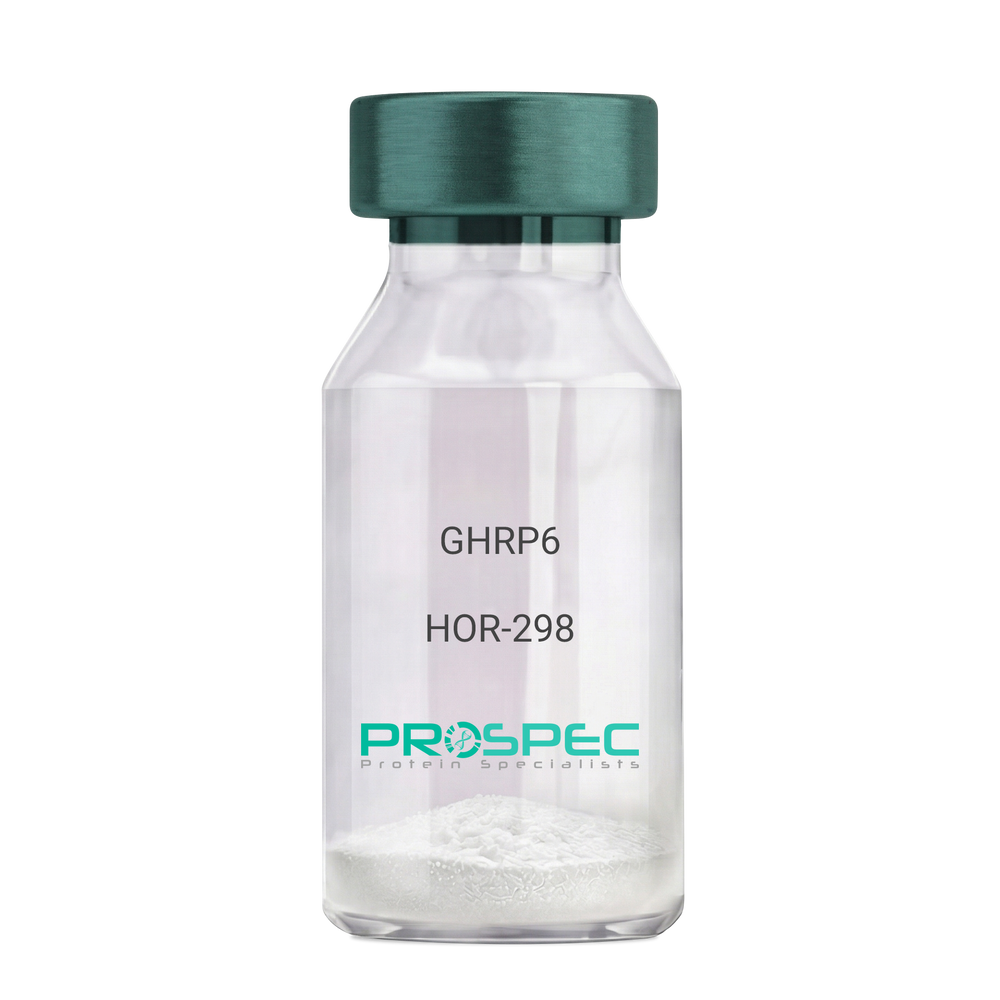
    Name :

    GHRP6

    Description:

    Growth Hormone Releasing Peptide-6

    GHRP-6, GHRP6

    Product # :

    HOR-298

    Price :

    Quantity :

    Shipping Method :

    Room Temp Icon

    Shipped at Room temp

    Add To Cart

    More Info

    • description
    • formulation
    • purity
    • More Info

    Description

    Growth Hormone Releasing Peptide-6 Synthetic is a single, non-glycosylated polypeptide chain containing 6 amino acids, having a molecular mass of 873 Dalton and a Molecular formula of C46H56N12O6.

    Formulation

    The GHRP-6 peptide was lyophilized with no additives.

    Purity

    Greater than 98.0% as determined by analysis by RP-HPLC.

    More Info

    • Introduction

      GH-releasing peptides (GHRPs) are synthetic peptides that like GHRH act directly on pituitary somatotrophs to stimulate GH release. Growth hormone (GH) release is stimulated by a variety of synthetic secretagogues, of which growth hormone-releasing hexapeptide (GHRP-6) has been most thoroughly studied; it is thought to have actions at both pituitary and hypothalamic site.

    • Synonyms

      GHRP-6, GHRP6

    • Physical Appearance

      Sterile Filtered White lyophilized (freeze-dried) powder.

    • Stability

      Lyophilized Growth Hormone Releasing Peptide-6 although stable at room temperature for 3 weeks, should be stored desiccated below -18°C. Upon reconstitution GHRP-6 should be stored at 4°C between 2-7 days and for future use below -18°C. For long term storage it is recommended to add a carrier protein (0.1% HSA or BSA).Please prevent freeze-thaw cycles.

    • Solubility

      It is recommended to reconstitute the lyophilized GHRP-6 in sterile 18MΩ-cm H2O not less than 100 µg/ml, which can then be further diluted to other aqueous solutions.

    • Amino Acid Sequence

      His-D-Trp-Ala-Trp-D-Phe-Lys-NH2.

    ProSpec's products are furnished for LABORATORY RESEARCH USE ONLY. The product may not be used as drugs, agricultural or pesticidal products, food additives or household chemicals.

    Ghrp 6
  • View Data Sheet

    Name :

    RYBP Human

    Description:

    RING1 & YY1 Binding Protein Human Recombinant

    RING1 and YY1 binding protein, Death effector domain-associated factor, Apoptin-associating protein 1, YY1 and E4TF1-associated factor 1, ring1 interactor RYBP, DED-associated factor, APAP-1, DEDAF, YEAF1.

    Product # :

    PRO-1139

    Price :

    Quantity :

    Shipping Method :

    Ice Icon

    Shipped with Ice Packs

    Add To Cart

    More Info

    • description
    • source
    • formulation
    • purity
    • More Info

    Description

    RYBP Human Recombinant produced in E. coli is a single polypeptide chain containing 252 amino acids (1-228) and having a molecular mass of 27.4 kDa.RYBP is fused to a 24 amino acid His-tag at N-terminus & purified by proprietary chromatographic techniques.

    Source

    E.coli.

    Formulation

    The RYBP solution (0.5mg/ml) contains 20mM Tris-HCl buffer (pH 8.0), 0.1M NaCl, 1mM DTT and 20% glycerol.

    Purity

    Greater than 85% as determined by SDS-PAGE.

    More Info

    • Introduction

      RING1- and YY1-binding protein (RYBP) belongs to the polycomb group (PcG). RYBP interacts with MDM2 and decreases MDM2-mediated p53 ubiquitination, which leads to stabilization of p53 and an increase in p53 activity. RYBP causes cell-cycle arrest and is involved in the p53 response to DNA damage. RYBP interacts with RING1, YY1, Caspase 10, E2F3, E2F2, Mdm2, Abl gene and CBX2. RYBP inhibits ubiquitination and subsequent degradation of TP53, and thus has a role in regulating transcription of TP53 target genes. RYBP may also be involved in the regulation of the transcription as a repressor of the transcriptional activity of E4TF1. RYBP may bind to DNA, and promote apoptosis.

    • Synonyms

      RING1 and YY1 binding protein, Death effector domain-associated factor, Apoptin-associating protein 1, YY1 and E4TF1-associated factor 1, ring1 interactor RYBP, DED-associated factor, APAP-1, DEDAF, YEAF1.

    • Physical Appearance

      Sterile Filtered colorless solution.

    • Stability

      Store at 4°C if entire vial will be used within 2-4 weeks. Store, frozen at -20°C for longer periods of time. For long term storage it is recommended to add a carrier protein (0.1% HSA or BSA).Avoid multiple freeze-thaw cycles.

    • Amino Acid Sequence

      MGSSHHHHHH SSGLVPRGSH MGSHMTMGDK KSPTRPKRQA KPAADEGFWD CSVCTFRNSA EAFKCSICDV RKGTSTRKPR INSQLVAQQV AQQYATPPPP KKEKKEKVEK QDKEKPEKDK EISPSVTKKN TNKKTKPKSD ILKDPPSEAN SIQSANATTK TSETNHTSRP RLKNVDRSTA QQLAVTVGNV TVIITDFKEK TRSSSTSSST VTSSAGSEQQ NQSSSGSEST DKGSSRSSTP KGDMSAVNDE SF

    ProSpec's products are furnished for LABORATORY RESEARCH USE ONLY. The product may not be used as drugs, agricultural or pesticidal products, food additives or household chemicals.

    Rybp Human
  • View Data Sheet

    Name :

    ALPL Human

    Description:

    Alkaline Phosphatase Human Recombinant

    Alkaline phosphatase liver/bone/kidney isozyme, phosphoamidase, Phosphocreatine phosphatase, aalkaline phosphatase, tissue-nonspecific isozyme isoform 1, ALPL, AP-TNAP, APTNAP, HOPS, HPPA, HPPC, HPPI, HPPO, TNALP, TNAP, TNS-ALP, TNSALP.

    Product # :

    ENZ-1190

    Price :

    Quantity :

    Shipping Method :

    Ice Icon

    Shipped with Ice Packs

    Add To Cart

    More Info

    • description
    • source
    • formulation
    • purity
    • biological activity
    • More Info

    Description

    ALPL Human Recombinant produced in HEK293 is a single, glycosylated polypeptide chain containing 493 amino acids (18-501 a.a) and having a molecular mass of 54.3kDa. ALPL is fused to a 6 amino acid His-tag at C-terminus & purified by proprietary chromatographic techniques.

    Source

    HEK293.

    Formulation

    ALPL protein solution (1mg/ml) containing Phosphate buffered saline (pH7.4) & 10% glycerol.

    Purity

    Greater than 95.0% as determined by SDS-PAGE.

    Biological Activity

    Specific activity is > 40,000 pmol/min/ug and is defined as the amount of enzyme that hydrolyze 1pmole of 4-Methylumbelliferyl phosphate to phosphate and 4-Methylumbelliferone per minute at pH 8.8 at 37C.

    More Info

    • Synonyms

      Alkaline phosphatase liver/bone/kidney isozyme, phosphoamidase, Phosphocreatine phosphatase, aalkaline phosphatase, tissue-nonspecific isozyme isoform 1, ALPL, AP-TNAP, APTNAP, HOPS, HPPA, HPPC, HPPI, HPPO, TNALP, TNAP, TNS-ALP, TNSALP.

    • Physical Appearance

      Sterile Filtered colorless solution.

    • Stability

      Store at 4°C if entire vial will be used within 2-4 weeks. Store, frozen at -20°C for longer periods of time. For long term storage it is recommended to add a carrier protein (0.1% HSA or BSA). Avoid multiple freeze-thaw cycles.

    • Amino Acid Sequence

      DGSLVPEKEK DPKYWRDQAQ ETLKYALELQ KLNTNVAKNV IMFLGDGMGV STVTAARILK GQLHHNPGEE TRLEMDKFPF VALSKTYNTN AQVPDSAGTA TAYLCGVKAN EGTVGVSAAT ERSRCNTTQG NEVTSILRWA KDAGKSVGIV TTTRVNHATP SAAYAHSADR DWYSDNEMPP EALSQGCKDI AYQLMHNIRD IDVIMGGGRK YMYPKNKTDV EYESDEKARG TRLDGLDLVD TWKSFKPRYK HSHFIWNRTE LLTLDPHNVD YLLGLFEPGD MQYELNRNNV TDPSLSEMVV VAIQILRKNP KGFFLLVEGG RIDHGHHEGK AKQALHEAVE MDRAIGQAGS LTSSEDTLTV VTADHSHVFT FGGYTPRGNS IFGLAPMLSD TDKKPFTAIL YGNGPGYKVV GGERENVSMV DYAHNNYQAQ SAVPLRHETH GGEDVAVFSK GPMAHLLHGV HEQNYVPHVM AYAACIGANL GHCAPAS HHHHHH.

    • Background

      The ALPL human recombinant, a variant of the alkaline phosphatase enzyme, has emerged as a significant focus of biomedical research due to its diverse biological functions and potential therapeutic applications. Alkaline phosphatase (ALPL) is an essential enzyme involved in various physiological processes, including bone mineralization, liver function, and immune regulation. The ALPL human recombinant, generated through recombinant DNA technology, offers a unique platform to explore the molecular complexity and therapeutic implications of this enzyme.

      Understanding the molecular characteristics of ALPL is crucial to unravel its functional diversity. ALPL belongs to a family of enzymes that hydrolyze phosphate esters under alkaline conditions. The structural features, post-translational modifications, and molecular interactions of ALPL contribute to its complexity and enable its participation in multiple biological processes.

      ALPL plays diverse roles in different tissues and physiological contexts. In bone, ALPL is involved in the regulation of mineralization, ensuring proper skeletal development and maintenance. In the liver, ALPL participates in bile acid metabolism and detoxification processes. Furthermore, ALPL has been implicated in immune regulation and inflammation modulation.

      The therapeutic potential of the ALPL human recombinant is vast, offering opportunities for the diagnosis, treatment, and management of various diseases. ALPL-based therapies hold promise for addressing skeletal disorders, such as hypophosphatasia, where ALPL deficiency leads to impaired bone mineralization. ALPL's involvement in liver function also presents avenues for therapeutic interventions in liver diseases. Moreover, the immunomodulatory properties of ALPL highlight its potential role in immune-related disorders.

      This research aims to provide a comprehensive analysis of the ALPL human recombinant, focusing on its molecular characteristics, biological functions, and therapeutic implications. By exploring the intricate nature of ALPL, we aim to shed light on its therapeutic potential and pave the way for future research in this exciting field.

    ProSpec's products are furnished for LABORATORY RESEARCH USE ONLY. The product may not be used as drugs, agricultural or pesticidal products, food additives or household chemicals.

    Alpl Protein
  • View Data Sheet

    Name :

    SNRPC Human

    Description:

    Small Nuclear Ribonucleoprotein Polypeptide C Human Recombinant

    U1 small nuclear ribonucleoprotein C, U1 snRNP C, U1-C, U1C, SNRPC, Yhc1.

    Product # :

    PRO-1004

    Price :

    Quantity :

    Shipping Method :

    Ice Icon

    Shipped with Ice Packs

    Add To Cart

    More Info

    • description
    • source
    • formulation
    • purity
    • More Info

    Description

    SNRPC Human Recombinant produced in E.Coli is a single, non-glycosylated polypeptide chain containing 182 amino acids (1-159 a.a.) and having a molecular mass of 19.8kDa (Molecular weight on SDS-PAGE will appear higher).SNRPC is fused to a 23 amino acid His-tag at N-terminus & purified by proprietary chromatographic techniques.

    Source

    Escherichia Coli.

    Formulation

    SNRPC protein solution (0.25mg/ml) containing 20mM Tris-HCl buffer (pH8.0), 50% glycerol, 0.3M NaCl, 5mM DTT and 2mM EDTA.

    Purity

    Greater than 85% as determined by SDS-PAGE.

    More Info

    • Introduction

      SNRPC is a member of the U1 small nuclear ribonucleoprotein C family. The SNRPC protein component of the U1 small nuclear ribonucleoprotein (snRNP) particle required for the formation of the spliceosome. SNRPC participates in the processing of nuclear precursor messenger RNA splicing. snRNP particles are tackled by autoantibodies frequently produced by patients with connective tissue diseases.

    • Synonyms

      U1 small nuclear ribonucleoprotein C, U1 snRNP C, U1-C, U1C, SNRPC, Yhc1.

    • Physical Appearance

      Sterile Filtered clear solution.

    • Stability

      Store at 4°C if entire vial will be used within 2-4 weeks. Store, frozen at -20°C for longer periods of time. For long term storage it is recommended to add a carrier protein (0.1% HSA or BSA).Avoid multiple freeze-thaw cycles.

    • Amino Acid Sequence

      MGSSHHHHHH SSGLVPRGSH MGSMPKFYCD YCDTYLTHDS PSVRKTHCSG RKHKENVKDY YQKWMEEQAQ SLIDKTTAAF QQGKIPPTPF SAPPPAGAMI PPPPSLPGPP RPGMMPAPHM GGPPMMPMMG PPPPGMMPVG PAPGMRPPMG GHMPMMPGPP MMRPPARPMM VPTRPGMTRP DR.

    ProSpec's products are furnished for LABORATORY RESEARCH USE ONLY. The product may not be used as drugs, agricultural or pesticidal products, food additives or household chemicals.

    Snrpc Human
  • View Data Sheet

    Name :

    BMPR1B Human

    Description:

    Bone Morphogenetic protein Receptor-1B Human Recombinant

    Bone Morphogenetic Protein Receptor, Type IB, BMP Type-1B Receptor, EC 2.7.11.30, BMPR-1B, ALK6, Bone Morphogenetic Protein Receptor Type-1B, Serine/Threonine Receptor Kinase, CDw293 Antigen, EC 2.7.11, CDw293, ALK-6, Bone morphogenetic protein receptor type-1B.

    Product # :

    CYT-897

    Price :

    Quantity :

    Shipping Method :

    Ice Icon

    Shipped with Ice Packs

    Add To Cart

    More Info

    • description
    • source
    • formulation
    • purity
    • More Info

    Description

    BMPR1B Human Recombinant produced in E.Coli is a single, non-glycosylated polypeptide chain containing 136 amino acids (14-126 a.a) and having a molecular mass of 15.1kDa. BMPR1B is fused to a 23 amino acid His-tag at N-terminus & purified by proprietary chromatographic techniques.

    Source

    Escherichia Coli.

    Formulation

    BMPR1B protein solution (0.5mg/ml) containing Phosphate buffered saline (pH7.4), 20% glycerol, 1mM DTT and 0.1mM PMSF.

    Purity

    Greater than 80.0% as determined by SDS-PAGE.

    More Info

    • Introduction

      Bone Morphogenetic protein Receptor-1B, also known as BMPR1B belongs to the TKL Ser/Thr protein kinase family. BMPR1Bis on ligand binding, forms a receptor complex consisting of two type II and two type I transmembrane serine/threonine kinases. Type II receptors phosphorylate as well as activate type I receptors which autophosphorylate, afterward bind and activate SMAD transcriptional regulators. BMPR1B is receptor for BMP7/OP-1 as well as GDF5.

    • Synonyms

      Bone Morphogenetic Protein Receptor, Type IB, BMP Type-1B Receptor, EC 2.7.11.30, BMPR-1B, ALK6, Bone Morphogenetic Protein Receptor Type-1B, Serine/Threonine Receptor Kinase, CDw293 Antigen, EC 2.7.11, CDw293, ALK-6, Bone morphogenetic protein receptor type-1B.

    • Physical Appearance

      Sterile Filtered colorless solution.

    • Stability

      Store at 4°C if entire vial will be used within 2-4 weeks. Store, frozen at -20°C for longer periods of time. For long term storage it is recommended to add a carrier protein (0.1% HSA or BSA).Avoid multiple freeze-thaw cycles.

    • Amino Acid Sequence

      MGSSHHHHHH SSGLVPRGSH MGSKKEDGES TAPTPRPKVL RCKCHHHCPE DSVNNICSTD GYCFTMIEED DSGLPVVTSG CLGLEGSDFQ CRDTPIPHQR RSIECCTERN ECNKDLHPTL PPLKNRDFVD GPIHHR.

    • Background

      Bone Morphogenetic Protein Receptor-1B Human Recombinant: A Key Regulator of Cellular Signaling in Development and Disease

      Abstract:

      Bone Morphogenetic Protein Receptor-1B (BMPR1B) human recombinant is a critical component of the bone morphogenetic protein (BMP) signaling pathway, governing cellular processes such as embryogenesis, tissue homeostasis, and disease progression. This research paper provides a comprehensive analysis of BMPR1B, including its characteristics, signaling mechanisms, and potential therapeutic applications. Additionally, innovative methodologies for the production and optimization of BMPR1B human recombinant are proposed, shedding light on its future implications in the field of regenerative medicine.

      Introduction:

      The precise regulation of cellular signaling pathways is essential for proper development and tissue maintenance. BMPR1B, a key receptor in the BMP pathway, plays a crucial role in various biological processes. This paper explores the unique features of BMPR1B and presents novel approaches for its production and optimization, aiming to unravel its therapeutic potential in a wide range of developmental and disease contexts.

      Characteristics and Signaling Mechanisms:

      BMPR1B belongs to the serine/threonine kinase receptor family and is predominantly expressed in embryonic tissues, skeletal structures, and reproductive organs. Upon binding to BMP ligands, BMPR1B initiates downstream signaling cascades, including Smad-dependent and Smad-independent pathways. These pathways regulate gene expression, cellular proliferation, differentiation, and apoptosis, ultimately influencing tissue development and homeostasis.

      Production of BMPR1B Human Recombinant:

      Efficient production methodologies are pivotal for harnessing the therapeutic potential of BMPR1B human recombinant. Mammalian expression systems, such as Chinese hamster ovary (CHO) cells, have been widely employed to ensure proper folding and post-translational modifications of the receptor. Optimization strategies, including codon optimization and vector engineering, have been utilized to enhance production efficiency. Purification techniques, such as affinity chromatography and size exclusion chromatography, have been optimized to obtain high-quality BMPR1B recombinant protein.

      Potential Therapeutic Applications:

      BMPR1B human recombinant holds tremendous promise in the field of regenerative medicine and disease therapy. Dysregulation of the BMP signaling pathway has been implicated in various developmental disorders, including skeletal abnormalities and congenital malformations. Modulating BMPR1B activity using BMPR1B human recombinant may offer a targeted approach for promoting tissue regeneration and repair in these conditions. Furthermore, BMPR1B signaling is involved in several diseases, such as cancer and cardiovascular disorders, highlighting its potential as a therapeutic target for intervention.

      Conclusion:

      BMPR1B human recombinant represents a vital regulator in cellular signaling, with significant implications in development and disease. Optimizing production methodologies and expanding our understanding of its signaling mechanisms will further enhance its therapeutic potential. With its involvement in various biological processes and disease contexts, BMPR1B human recombinant emerges as a promising tool for regenerative medicine and targeted therapeutics.

      What is the molecular weight/Mw of BMPR1B Protein?
      BMPR1B Protein has a total Mw of 15.1kDa.

      What is the source or expression system of BMPR1B Protein?
      Escherichia Coli.

      What is the Purity of BMPR1B Protein?
      BMPR1B Protein is >80% pure as determined by SDS-PAGE.

      What is the Biological Activity of BMPR1B Protein?
      The biological functionality of BMPR1B Protein will be determined in the future.

      What is the amino acid sequence of BMPR1B Protein?
      MGSSHHHHHH SSGLVPRGSH MGSKKEDGES TAPTPRPKVL RCKCHHHCPE DSVNNICSTD GYCFTMIEED DSGLPVVTSG CLGLEGSDFQ CRDTPIPHQR RSIECCTERN ECNKDLHPTL PPLKNRDFVD GPIHHR.

      What applications can BMPR1B Protein be used in?
      BMPR1B Protein can probably be used in western blot, ELISA and Lateral Flow.

      What is the endotoxin level for BMPR1B Protein?
      The endotoxin level is minimal, BMPR1B Protein was purified using conventional chromatography techniques.

    ProSpec's products are furnished for LABORATORY RESEARCH USE ONLY. The product may not be used as drugs, agricultural or pesticidal products, food additives or household chemicals.

    Bmpr1B Human
  • View Data Sheet

    Name :

    PNPT1 Human

    Description:

    Polyribonucleotide Nucleotidyltransferase 1 Human Recombinant

    Polyribonucleotide Nucleotidyltransferase 1, Polynucleotide Phosphorylase-Like Protein, Polynucleotide Phosphorylase 1, 3-5 RNA Exonuclease OLD35, PNPase Old-35, EC 2.7.7.8, PNPase 1, COXPD13, DFNB70, PNPASE, OLD35, Polyribonucleotide Nucleotidyltransferase 1, Mitochondrial, Deafness, Autosomal Recessive 70, Polynucleotide Phosphorylase, 3-5 RNA Exonuclease, EC 2.7.7, Old-35, Polyribonucleotide nucleotidyltransferase 1, mitochondrial, 3'-5' RNA exonuclease OLD35, PNPase old-35.

    Product # :

    ENZ-888

    Price :

    Quantity :

    Shipping Method :

    Ice Icon

    Shipped with Ice Packs

    Add To Cart

    More Info

    • description
    • source
    • formulation
    • purity
    • More Info

    Description

    PNPT1 Human Recombinant produced in E.Coli is a single, non-glycosylated polypeptide chain containing 761 amino acids (46-783 a.a) and having a molecular mass of 83.3kDa. PNPT1 is fused to a 23 amino acid His-tag at N-terminus & purified by proprietary chromatographic techniques.

    Source

    Escherichia Coli.

    Formulation

    PNPT1 protein solution (0.25mg/ml) containing Phosphate buffered saline (pH7.4), 10% glycerol and 1mM DTT.

    Purity

    Greater than 85.0% as determined by SDS-PAGE.

    More Info

    • Introduction

      Polyribonucleotide nucleotidyltransferase 1, also known as PNPT1 is predominantly localized in the mitochondrial intermembrane space and is implicated in the import of RNA to mitochondria. Mutations in PNPT1 have been connected with combined oxidative phosphorylation deficiency-13 as well as autosomal recessive nonsyndromic deafness-70. Related pseudogenes have been found on chromosomes 3 & 7.

    • Synonyms

      Polyribonucleotide Nucleotidyltransferase 1, Polynucleotide Phosphorylase-Like Protein, Polynucleotide Phosphorylase 1, 3-5 RNA Exonuclease OLD35, PNPase Old-35, EC 2.7.7.8, PNPase 1, COXPD13, DFNB70, PNPASE, OLD35, Polyribonucleotide Nucleotidyltransferase 1, Mitochondrial, Deafness, Autosomal Recessive 70, Polynucleotide Phosphorylase, 3-5 RNA Exonuclease, EC 2.7.7, Old-35, Polyribonucleotide nucleotidyltransferase 1, mitochondrial, 3'-5' RNA exonuclease OLD35, PNPase old-35.

    • Physical Appearance

      Sterile filtered colorless solution.

    • Stability

      Store at 4°C if entire vial will be used within 2-4 weeks. Store, frozen at -20°C for longer periods of time. For long term storage it is recommended to add a carrier protein (0.1% HSA or BSA). Avoid multiple freeze-thaw cycles.

    • Amino Acid Sequence

      MGSSHHHHHH SSGLVPRGSH MGSAVAVDLG NRKLEISSGK LARFADGSAV VQSGDTAVMV TAVSKTKPSP SQFMPLVVDY RQKAAAAGRI PTNYLRREIG TSDKEILTSR IIDRSIRPLF PAGYFYDTQV LCNLLAVDGV NEPDVLAING ASVALSLSDI PWNGPVGAVR IGIIDGEYVV NPTRKEMSSS TLNLVVAGAP KSQIVMLEAS AENILQQDFC HAIKVGVKYT QQIIQGIQQL VKETGVTKRT PQKLFTPSPE IVKYTHKLAM ERLYAVFTDY EHDKVSRDEA VNKIRLDTEE QLKEKFPEAD PYEIIESFNV VAKEVFRSIV LNEYKRCDGR DLTSLRNVSC EVDMFKTLHG SALFQRGQTQ VLCTVTFDSL ESGIKSDQVI TAINGIKDKN FMLHYEFPPY ATNEIGKVTG LNRRELGHGA LAEKALYPVI PRDFPFTIRV TSEVLESNGS SSMASACGGS LALMDSGVPI SSAVAGVAIG LVTKTDPEKG EIEDYRLLTD ILGIEDYNGD MDFKIAGTNK GITALQADIK LPGIPIKIVM EAIQQASVAK KEILQIMNKT ISKPRASRKE NGPVVETVQV PLSKRAKFVG PGGYNLKKLQ AETGVTISQV DEETFSVFAP TPSAMHEARD FITEICKDDQ EQQLEFGAVY TATITEIRDT GVMVKLYPNM TAVLLHNTQL DQRKIKHPTA LGLEVGQEIQ VKYFGRDPAD GRMRLSRKVL QSPATTVVRT LNDRSSIVMG EPISQSSSNS Q.

    ProSpec's products are furnished for LABORATORY RESEARCH USE ONLY. The product may not be used as drugs, agricultural or pesticidal products, food additives or household chemicals.

    Pnpt1 Human
  • View Data Sheet

    Name :

    CHMP1B Human

    Description:

    Charged Multivesicular Body Protein 1B Human Recombinant

    Charged multivesicular body protein 1b, CHMP1.5, Chromatin-modifying protein 1b, CHMP1b, Vacuolar protein sorting-associated protein 46-2, Vps46-2, hVps46-2, CHMP1B, C18orf2, Vps46B, C10orf2, C18-ORF2.

    Product # :

    PRO-1117

    Price :

    Quantity :

    Shipping Method :

    Ice Icon

    Shipped with Ice Packs

    Add To Cart

    More Info

    • description
    • source
    • formulation
    • purity
    • More Info

    Description

    CHMP1B Human Recombinant produced in E.Coli is a single, non-glycosylated polypeptide chain containing 223 amino acids (1-199 a.a) and having a molecular mass of 24.7kDa (Molecular weight on SDS-PAGE will appear higher).CHMP1B is fused to a 24 amino acid His-tag at N-terminus & purified by proprietary chromatographic techniques.

    Source

    Escherichia Coli.

    Formulation

    CHMP1B protein solution (0.25mg/ml) containing 20mM Tris-HCl buffer (pH8.0), 20% glycerol, 0.1M NaCl and 1mM DTT.

    Purity

    Greater than 85.0% as determined by SDS-PAGE.

    More Info

    • Introduction

      Charged multivesicular body protein 1b (CHMP1B) is a member of the chromatin-modifying protein/charged multivesicular body protein (CHMP) family. CHMP1B is a possible peripherally associated component of the ESCRT-III (endosomal sorting required for transport complex III) which is involved in MVBs (multivesicular bodies) formation and sorting of endosomal cargo proteins into MVBs. The MVBs contain ILVs (intraluminal vesicles) which are created by invagination and scission from the limiting membrane of the endosome and generally are transported to lysosomes enabling degradation of membrane proteins, such as stimulated growth factor receptors, lysosomal enzymes and lipids.

    • Synonyms

      Charged multivesicular body protein 1b, CHMP1.5, Chromatin-modifying protein 1b, CHMP1b, Vacuolar protein sorting-associated protein 46-2, Vps46-2, hVps46-2, CHMP1B, C18orf2, Vps46B, C10orf2, C18-ORF2.

    • Physical Appearance

      Sterile Filtered colorless solution.

    • Stability

      Store at 4°C if entire vial will be used within 2-4 weeks. Store, frozen at -20°C for longer periods of time. For long term storage it is recommended to add a carrier protein (0.1% HSA or BSA).Avoid multiple freeze-thaw cycles.

    • Amino Acid Sequence

      MGSSHHHHHH SSGLVPRGSH MGSHMSNMEK HLFNLKFAAK ELSRSAKKCD KEEKAEKAKI KKAIQKGNME VARIHAENAI RQKNQAVNFL RMSARVDAVA ARVQTAVTMG KVTKSMAGVV KSMDATLKTM NLEKISALMD KFEHQFETLD VQTQQMEDTM SSTTTLTTPQ NQVDMLLQEM ADEAGLDLNM ELPQGQTGSV GTSVASAEQD ELSQRLARLR DQV.

    ProSpec's products are furnished for LABORATORY RESEARCH USE ONLY. The product may not be used as drugs, agricultural or pesticidal products, food additives or household chemicals.

    Chmp1B Human
  • View Data Sheet

    Name :

    CNDP1 Human, Active

    Description:

    CNDP Dipeptidase 1 Human Recombinant, Active

    Carnosine Dipeptidase 1 (Metallopeptidase M20 Family), Glutamate Carboxypeptidase-Like Protein 2, CNDP Dipeptidase 1, Serum Carnosinase, Carnosinase 1, CPGL2, CN1, Carnosine Dipeptidase 1, EC 3.4.13.20, HsT2308.

    Product # :

    ENZ-1022

    Price :

    Quantity :

    Shipping Method :

    Ice Icon

    Shipped with Ice Packs

    Add To Cart

    More Info

    • description
    • source
    • formulation
    • purity
    • biological activity
    • More Info

    Description

    CNDP1 Human Recombinant produced in Sf9 Baculovirus cells is a single, glycosylated polypeptide chain containing 489 amino acids (27-507 a.a.) and having a molecular mass of 54.9kDa (Migrates at 50-70kDa on SDS-PAGE under reducing conditions).CNDP1 is expressed with a 8 amino acid His tag at C-Terminus and purified by proprietary chromatographic techniques.

    Source

    Sf9, Insect cells.

    Formulation

    CNDP1 protein solution (0.25mg/ml) contains Phosphate Buffered Saline (pH 7.4) and 10% glycerol.

    Purity

    Greater than 95.0% as determined by SDS-PAGE.

    Biological Activity

    Specific activity is >3,000 pmol/min/ug, and as measured by the hydrolysis of carnosine per minute at pH6.8 at 25°C.

    More Info

    • Introduction

      CNDP Dipeptidase 1, also known as CNDP1 is a member of the peptidase M20A family. CNDP1 Mannheim which is the shortest allelic form has been more common in the absence of nephropathy in addition to being associated with lower serum carnosinase levels. Furthermore, Carnosine inhibited the increased production of fibronectin as well as collagen type VI in podocytes and the increased production of TGF-beta in mesangial cells. Diabetic patients with the CNDP1 Mannheim variant are less at risk for nephropathy. In addition, on renal cells carnosine protects against the adverse effects of high glucose levels.

    • Synonyms

      Carnosine Dipeptidase 1 (Metallopeptidase M20 Family), Glutamate Carboxypeptidase-Like Protein 2, CNDP Dipeptidase 1, Serum Carnosinase, Carnosinase 1, CPGL2, CN1, Carnosine Dipeptidase 1, EC 3.4.13.20, HsT2308.

    • Physical Appearance

      Sterile filtered colorless solution.

    • Stability

      Store at 4°C if entire vial will be used within 2-4 weeks.Store, frozen at -20°C for longer periods of time. For long term storage it is recommended to add a carrier protein (0.1% HSA or BSA).Avoid multiple freeze-thaw cycles.

    • Amino Acid Sequence

      SPSPPPALLE KVFQYIDLHQ DEFVQTLKEW VAIESDSVQP VPRFRQELFR MMAVAADTLQ RLGARVASVD MGPQQLPDGQ SLPIPPVILA ELGSDPTKGT VCFYGHLDVQ PADRGDGWLT DPYVLTEVDG KLYGRGATDN KGPVLAWINA VSAFRALEQD LPVNIKFIIE GMEEAGSVAL EELVEKEKDR FFSGVDYIVI SDNLWISQRK PAITYGTRGN SYFMVEVKCR DQDFHSGTFG GILHEPMADL VALLGSLVDS SGHILVPGIY DEVVPLTEEE INTYKAIHLD LEEYRNSSRV EKFLFDTKEE ILMHLWRYPS LSIHGIEGAF DEPGTKTVIP GRVIGKFSIR LVPHMNVSAV EKQVTRHLED VFSKRNSSNK MVVSMTLGLH PWIANIDDTQ YLAAKRAIRT VFGTEPDMIR DGSTIPIAKM FQEIVHKSVV LIPLGAVDDG EHSQNEKINR WNYIEGTKLF AAFFLEMAQL HLEHHHHHH.

    ProSpec's products are furnished for LABORATORY RESEARCH USE ONLY. The product may not be used as drugs, agricultural or pesticidal products, food additives or household chemicals.

    Cndp1 Human Active
  • View Data Sheet

    Name :

    Gly m 4.0101

    Description:

    Stress-Induced Protein SAM22 Recombinant

    Stress-induced protein SAM22, Starvation-associated message 22, Gly m 4.

    Product # :

    PRO-2278

    Price :

    Quantity :

    Shipping Method :

    Ice Icon

    Shipped with Ice Packs

    Add To Cart

    More Info

    • description
    • source
    • formulation
    • purity
    • More Info

    Description

    Recombinant Stress-Induced Protein SAM22 produced in SF9 is a glycosylated, polypeptide chain having a calculated molecular mass of 19,484 Dalton. Gly m 4.0101 is expressed with a 10xHis tag at N-terminus and purified by proprietary chromatographic techniques.

    Source

    Sf9 insect cells.

    Formulation

    Gly m 4.0101 is supplied in in 20mM HEPES buffer pH-7.9 and 6M Urea.

    Purity

    Greater than 80.0% as determined by SDS-PAGE.

    More Info

    • Introduction

      Stress-Induced Protein SAM22 (Gly m 4.0101) causes an allergic reaction in humans. Gly m 4 is the main soy allergen for patients allergic to birch pollen with soy allergy.

    • Synonyms

      Stress-induced protein SAM22, Starvation-associated message 22, Gly m 4.

    • Physical Appearance

      Sterile Filtered clear solution.

    • Stability

      Store at 4°C if entire vial will be used within 2-4 weeks. Store, frozen at -20°C for longer periods of time. Avoid multiple freeze-thaw cycles.

    • Immunological Functions

      1. Binds IgE type human antibodies. 2. Immunodot test with positive/negative sera panels.

    ProSpec's products are furnished for LABORATORY RESEARCH USE ONLY. The product may not be used as drugs, agricultural or pesticidal products, food additives or household chemicals.

    Gly M 40101
  • View Data Sheet

    Name :

    CMV Pp28

    Description:

    Cytomegalo Virus Pp28 (UL99) Recombinant

    Product # :

    CMV-212

    Price :

    Quantity :

    Shipping Method :

    Ice Icon

    Shipped with Ice Packs

    Add To Cart

    More Info

    • description
    • source
    • formulation
    • purity
    • More Info

    Description

    The E.Coli derived recombinant protein contains the CMV Pp28 (UL99) immunodominant regions, 130-160 amino acids.

    Source

    Escherichia Coli.

    Formulation

    50mM Tris-Hcl pH 7.2, 1mM EDTA and 50% glycerol.

    Purity

    CMV Pp28 protein is >95% pure as determined by 10% PAGE (coomassie staining).

    More Info

    • Introduction

      The human cytomegalovirus UL99-encoded pp28 is a myristylated phosphoprotein that is a constituent of the virion. The pp28 protein is positioned within the tegument of the virus particle, a protein structure that resides between the capsid and envelope. In the infected cell, pp28 is found in a cytoplasmic compartment derived from the Golgi apparatus, where the virus buds into vesicles to acquire its final membrane.

    • Stability

      CMV Pp28 protein although stable at 4°C for 1 week, should be stored below -18°C. Please prevent freeze thaw cycles.

    • Applications

      CMV Pp28 antigen is suitable for ELISA and Western blots, excellent antigen for detection of CMV with minimal specificity problems.

    • Specificity

      Immunoreactive with sera of CMV-infected individuals.

    • Purification Method

      Purified by GS-4B Sepharose-Affinity Purification.

    ProSpec's products are furnished for LABORATORY RESEARCH USE ONLY. The product may not be used as drugs, agricultural or pesticidal products, food additives or household chemicals.

    Cmv Pp28
  • View Data Sheet

    Name :

    EGFP

    Description:

    Enhanced Green Fluorescent Protein Recombinant

    Green fluorescent protein, GFP.

    Product # :

    PRO-1606

    Price :

    Quantity :

    Shipping Method :

    Room Temp Icon

    Shipped at Room temp

    Add To Cart

    More Info

    • description
    • source
    • formulation
    • purity
    • More Info

    Description

    Recombinant EGFP produced in E.coli cells is a single non-glycosylated protein containing 239 amino acid chain and having a molecular mass of 26.9kDa. EGFP is purified by proprietary chromatographic techniques.

    Source

    Escherichia Coli.

    Formulation

    The EGFP was lyophilized from a 0.2µm filtered concentrated solution in PBS pH 7.4.

    Purity

    Greater than 95.0% as determined by:
    (a) Analysis by RP-HPLC.
    (b) Analysis by SDS-PAGE.

    More Info

    • Introduction

      GFP, also known as Green Fluorescent Protein, is a protein produced by the jellyfish (Aequorea Victoria) that produces bioluminescence in the green zone of the noticeable spectrum. Green Fluorescent Protein is a useful and ubiquitous instrument for producing chimeric proteins, where it functions as a fluorescent protein tag. GFP is expressed in most known cell types and is used as a noninvasive fluorescent marker in living cells and organisms. Green Fluorescent Protein permits a broad range of applications where it has functioned as a cell lineage tracer, reporter of gene expression, or as a measure of protein-protein interactions. Enhanced GFP (eGFP) has F64L and S65T mutations, which make GFP show increased fluorescence and fold more efficiently under 370.

    • Synonyms

      Green fluorescent protein, GFP.

    • Physical Appearance

      Sterile Filtered White lyophilized (freeze-dried) powder.

    • Stability

      Lyophilized EGFP although stable at room temperature for 3 weeks, should be stored desiccated below -180C. Upon reconstitution EGFP should be stored at 40C between 2-7 days and for future use below -180C.For long term storage it is recommended to add a carrier protein (0.1% HSA or BSA).Please prevent freeze-thaw cycles.

    • Solubility

      It is recommended to reconstitute the lyophilized EGFP in sterile distilled H2O not less than 100µg/ml, which can then be further diluted to other aqueous solutions.

    • Amino Acid Sequence

      MVSKGEELFT GVVPILVELD GDVNGHKFSV SGEGEGDATY GKLTLKFICT TGKLPVPWPT LVTTLTYGVQ CFSRYPDHMK QHDFFKSAMP EGYVQERTIF FKDDGNYKTR AEVKFEGDTL VNRIELKGID FKEDGNILGH KLEYNYNSHN VYIMADKQKN GIKVNFKIRH NIEDGSVQLA DHYQQNTPIG DGPVLLPDNH YLSTQSALSK DPNEKRDHMV LLEFVTAAGI TLGMDELYK

    ProSpec's products are furnished for LABORATORY RESEARCH USE ONLY. The product may not be used as drugs, agricultural or pesticidal products, food additives or household chemicals.

    Egfp
  • View Data Sheet

    Name :

    MUC1 Human

    Description:

    Mucin-1 (CA15-3) Human

    Product # :

    PRO-2747

    Price :

    Quantity :

    Shipping Method :

    Ice Icon

    Shipped with Ice Packs

    Add To Cart

    More Info

    • description
    • source
    • formulation
    • purity
    • More Info

    Description

    The Human Mucin-1 (CA15-3) is having a molecular mass of approximately 400kDa, and was purified from human carcinoma cell line.

    Source

    Human carcinoma cell line.

    Formulation

    MUC1 is supplied in a 0.05M sodium phosphate buffer, pH 7.5, 0.09% NaN3 and 0.15M NaCl.

    Purity

    Greater than 60%.

    More Info

    • Introduction

      Human Mucin-1 (CA15-3), aka MUC1, is a glycoprotein with extensive O-linked glycosylation of its extracellular domain. This protein has alpha and beta subunits that form a heterodimeric complex. The N-terminal alpha subunit roles in cell-adhesion and the C-terminal beta subunit is involved in cell signaling. Mucins line the apical surface of epithelial cells in the stomach, lungs, intestines, eyes and other tissues. Mucins protect the body from infection by pathogen binding to oligosaccharides in the extracellular domain, preventing the pathogen from reaching the cell surface. Overexpression of CA15-3 is often associated with colon, breast, ovarian, lung and pancreatic cancers.

    • Physical Appearance

      Clear to opalescent colorless frozen solution.

    • Stability

      Human MUC1 although stable at 4°C for 1 week, should be stored at -20°C.

    • Human Virus Test

      Tissue sample tested and found negative for HIV-1 & 2 antibodies, HBsAg, and Hepatitis-C antibodies, Syphilis and HIV/HBV/HCV NAT.

    ProSpec's products are furnished for LABORATORY RESEARCH USE ONLY. The product may not be used as drugs, agricultural or pesticidal products, food additives or household chemicals.

    Ca15 3 Muc1 Human
  • View Data Sheet

    Name :

    SELPLG Human

    Description:

    Selectin P Ligand Human Recombinant

    Cutaneous Lymphocyte-Associated Associated Antigen, Selectin P Ligand, PSGL-1, CD162 Antigen, P-Selectin Glycoprotein Ligand 1, CLA.

    Product # :

    PRO-2714

    Price :

    Quantity :

    Shipping Method :

    Ice Icon

    Shipped with Ice Packs

    Add To Cart

    More Info

    • description
    • source
    • formulation
    • purity
    • More Info

    Description

    SELPLG Human Recombinant produced in HEK293 Cells is a single, glycosylated polypeptide chain containing 496 amino acids (42-295 a.a) and having a molecular mass of 53.4kDa.SELPLG is fused to a 239 amino acid hIgG-His-Tag at C-terminus & purified by proprietary chromatographic techniques.

    Source

    HEK293 Cells.

    Formulation

    The SELPLG solution (1mg/1ml) contains phosphate buffered saline (pH7.4) and 10% glycerol.

    Purity

    Greater than 90.0% as determined by SDS-PAGE.

    More Info

    • Introduction

      SELPLG glycoprotein functions as a high affinity counter-receptor for the cell adhesion selectin molecules (P, E and L) located in stimulated T lymphocytes and myeloid cells. SELPLG binds leukocytes to activated platelets or endothelia expressing selectins, a vital role in leukocyte trafficking throughout inflammation. In order to have a high-affinity binding activity SELPLG needs two post-translational modifications, tyrosine sulfation and the addition of the sialyl Lewis x tetrasaccharide (sLex) to its O-linked glycans. Polymorphisms and abnormal expression of SELPLG are linked to defects in the innate and adaptive immune response. Alternate splicing results in multiple transcript variants.

    • Synonyms

      Cutaneous Lymphocyte-Associated Associated Antigen, Selectin P Ligand, PSGL-1, CD162 Antigen, P-Selectin Glycoprotein Ligand 1, CLA.

    • Physical Appearance

      Sterile filtered colorless solution.

    • Stability

      Store at 4°C if entire vial will be used within 2-4 weeks.Store, frozen at -20°C for longer periods of time.For long term storage it is recommended to add a carrier protein (0.1% HSA or BSA).Avoid multiple freeze-thaw cycles.

    • Amino Acid Sequence

      DGSQATEYEY LDYDFLPETE PPEMLRNSTD TTPLTGPGTP ESTTVEPAAR RSTGLDAGGA VTELTTELAN MGNLSTDSAA MEIQTTQPAA TEAQTTPLAA TEAQTTRLTA TEAQTTPLAA TEAQTTPPAA TEAQTTQPTG LEAQTTAPAA MEAQTTAPAA MEAQTTPPAA MEAQTTQTTA MEAQTTAPEA TEAQTTQPTA TEAQTTPLAA MEALSTEPSA TEALSMEPTT KRGLFIPFSV SSVTHKGIPM AASNLSVLEP KSCDKTHTCP PCPAPELLGG PSVFLFPPKP KDTLMISRTP EVTCVVVDVS HEDPEVKFNW YVDGVEVHNA KTKPREEQYN STYRVVSVLT VLHQDWLNGK EYKCKVSNKA LPAPIEKTIS KAKGQPREPQ VYTLPPSRDE LTKNQVSLTC LVKGFYPSDI AVEWESNGQP ENNYKTTPPV LDSDGSFFLY SKLTVDKSRW QQGNVFSCSV MHEALHNHYT QKSLSLSPGK HHHHHH

    ProSpec's products are furnished for LABORATORY RESEARCH USE ONLY. The product may not be used as drugs, agricultural or pesticidal products, food additives or household chemicals.

    Cd162 Human
  • View Data Sheet

    Name :

    NKp46 Antibody

    Description:

    Natural Cytotoxicity Receptor NKp46, Mouse Anti Human

    Natural cytotoxicity triggering receptor 1, Natural killer cell p46-related protein, hNKp46, NK-p46, NKp46, NK cell-activating receptor, Lymphocyte antigen 94 homolog, CD335 antigen, NCR1, LY94, NCRNKp46, CD335.

    Product # :

    ANT-303

    Price :

    Quantity :

    Shipping Method :

    Ice Icon

    Shipped with Ice Packs

    Add To Cart

    More Info

    • formulation
    • More Info

    Formulation

    1mg/ml containing PBS, pH-7.4, & 0.1% Sodium Azide.

    More Info

    • Introduction

      A natural cytotoxicity receptor (NCR) NKp46 has been shown to represent a novel NK cell-specific molecule involved in human NK cell activation. The natural cytotoxicity receptors (NCRs) are a recently characterized family of Ig-like activation receptors that appear to be major triggering receptors in tumor cell recognition. The three known NCRs include NKp46 and NKp30, which are expressed on circulating NKcells, and NKp44, which is expressed only on activating NK cells. NKp46 has been implicated in NK cell-mediated lysis of several autologous tumor cells, pathogen-infected cell lines and mononuclear phagocytes infected with an intracellular bacterium. The Lysis of tumor cells by NK-cells involves recognition by NKp46 of heparan sulfate moieties of membrane heparan sulfate proteoglycans. Furthermore, NKp46 is a surface receptor involved in NK-cell cell death by apoptosis. NKp46 has two extracellular Ig-like domains followed by a ~40 residue stalk region, a type I transmembrane domain, and a short cytoplasmic tail. The extracellular Ig-like domain of NKp46 (22-255aa) is purified by FPLC gel-filtration chromatography, after refolding of the isolated inclusion bodies in a redox buffer. In addition, engagement of the antigen with the monoclonal antibody stimulates intracellular calcium levels and the synthesis of cytokines. CD59 is an NKp46 coreceptor (by physical association) together they activate cytotoxicity of human NK-cells, their engagement results in tyrosine phosphorylation of CD3-zeta chains associated with NKp46. Reduced cell surface expression of NKp46 and other NK-cell receptors is linked to the impaired NK-cell cytolytic function in viremic HIV-1 infection.

    • Synonyms

      Natural cytotoxicity triggering receptor 1, Natural killer cell p46-related protein, hNKp46, NK-p46, NKp46, NK cell-activating receptor, Lymphocyte antigen 94 homolog, CD335 antigen, NCR1, LY94, NCRNKp46, CD335.

    • Physical Appearance

      Sterile Filtered colorless solution.

    • Immunogen

      Anti-human NKp46 mAb, is derived from hybridization of mouse SP2/0 myeloma cells with spleen cells from BALB/c mice immunized with recombinant human NKp46 amino acids 22-255 purified from E. coli.

    • Ig Subclass

      Mouse IgG1 heavy chain and κ light chain.

    • Clone

      Pn1D9AT.

    • Applications

      NKp46 antibody has been tested by immunofluorescent staining with flow cytometric analysis and by Western blot analysis to assure specificity and reactivity. Since application varies, however, each investigation should be titrated by the reagent to obtain optimal results.

    • Type

      Mouse Anti Human Monoclonal.

    • Storage Procedures

      For periods up to 1 month store at 4°C, for longer periods of time, store at -20°C. Prevent freeze thaw cycles.

    • Purification Method

      NKp46 antibody was purified from mouse ascitic fluids by protein-G affinity chromatography.

    ProSpec's products are furnished for LABORATORY RESEARCH USE ONLY. The product may not be used as drugs, agricultural or pesticidal products, food additives or household chemicals.

    Nkp46 Antibody
  • View Data Sheet

    Name :

    PNPO Antibody

    Description:

    Pyridoxamine 5'-Phosphate Oxidase, Mouse Anti Human

    Pyridoxine-5'-phosphate oxidase, Pyridoxamine-phosphate oxidase, PNPO, PDXPO, FLJ10535.

    Product # :

    ANT-063

    Price :

    Quantity :

    Shipping Method :

    Ice Icon

    Shipped with Ice Packs

    Add To Cart

    More Info

    • formulation
    • More Info

    Formulation

    1mg/ml containing PBS, pH-7.4, & 0.1% Sodium Azide.

    More Info

    • Introduction

      Pyridoxine-5'-phosphate oxidase (PNPO) is the rate-limiting enzyme in vitamin B6 synthesis. Vitamin B6 (Pyridoxal 5-prime-phosphate or PLP) is vital for normal cellular function, and some cancer cells have notable differences in vitamin B6 metabolism compared to their normal counterparts.Vitamin B6 is an essential co-factor for enzymes involved in both homocysteine metabolism and synthesis of neurotransmitters such as catecholamine. Mutations in the PNPO gene result in PNPO deficiency, a form of neonatal epileptic encephalopathy.

    • Synonyms

      Pyridoxine-5'-phosphate oxidase, Pyridoxamine-phosphate oxidase, PNPO, PDXPO, FLJ10535.

    • Immunogen

      Anti-human PNPO mAb, is derived from hybridization of mouse FO myeloma cells with spleen cells from BALB/c mice immunized with recombinant human PNPO amino acids 57-261 purified from E. coli.

    • Ig Subclass

      Mouse IgG1 heavy chain and k light chain.

    • Clone

      PAT2C7AT.

    • Applications

      PNPO antibody has been tested by ELISA and Western blot analysis to assure specificity and reactivity. Since application varies, however, each investigation should be titrated by the reagent to obtain optimal results. Recommended dilution range for Western blot analysis is 1:500 ~ 1:5000.
      Recommended starting dilution is 1:1000.

    • Type

      Mouse Anti Human Monoclonal.

    • Storage Procedures

      For periods up to 1 month store at 4°C, for longer periods of time, store at -20°C. Prevent freeze thaw cycles.

    • Purification Method

      PNPO antibody was purified from mouse ascitic fluids by protein-G affinity chromatography.

    ProSpec's products are furnished for LABORATORY RESEARCH USE ONLY. The product may not be used as drugs, agricultural or pesticidal products, food additives or household chemicals.

    Pnpo Antibody
  • View Data Sheet

    Name :

    TPMT Antibody

    Description:

    Thiopurine S-methyltransferase, Mouse Anti Human

    TPMT, Thiopurine S-methyltransferase, EC 2.1.1.67, Thiopurine methyltransferase.

    Product # :

    ANT-055

    Price :

    Quantity :

    Shipping Method :

    Ice Icon

    Shipped with Ice Packs

    Add To Cart

    More Info

    • formulation
    • More Info

    Formulation

    1mg/ml containing PBS, pH-7.4, & 0.1% Sodium Azide.

    More Info

    • Introduction

      TPMT, thiopurine S-methyltransferase, is a cytosolic enzyme that metabolizes thiopurine drugs via S-adenosyl-L-methionine as the S-methyl donor and S-adenosyl-L-homocysteine as a byproduct. TPMT activity exhibits autosomal codominant genetic polymorphism, and patients inheriting TPMT-deficiency are at high risk of potentially fatal hematopoietic toxicity.

    • Synonyms

      TPMT, Thiopurine S-methyltransferase, EC 2.1.1.67, Thiopurine methyltransferase.

    • Immunogen

      Anti-human TPMT mAb, is derived from hybridization of mouse FO myeloma cells with spleen cells from BALB/c mice immunized with recombinant human TPMT amino acids 1-245 purified from E. coli.

    • Ig Subclass

      Mouse IgG1 heavy chain and k light chain.

    • Clone

      PAT2E7AT.

    • Applications

      TPMT antibody has been tested by ELISA, Western blot analysis to assure specificity and reactivity. Since application varies, however, each investigation should be titrated by the reagent to obtain optimal results. Recommended dilution range for Western blot analysis is 1:1,000.

    • Type

      Mouse Anti Human Monoclonal.

    • Storage Procedures

      For periods up to 1 month store at 4°C, for longer periods of time, store at -20°C. Prevent freeze thaw cycles.

    • Purification Method

      TPMT antibody was purified from mouse ascitic fluids by protein-G affinity chromatography.

    ProSpec's products are furnished for LABORATORY RESEARCH USE ONLY. The product may not be used as drugs, agricultural or pesticidal products, food additives or household chemicals.

    Tpmt Antibody
  • View Data Sheet

    Name :

    PPM1F Antibody

    Description:

    Protein Phosphatase 1F, Mouse Anti Human

    Protein phosphatase 1F, Ca(2+)/calmodulin-dependent protein kinase phosphatase, CaM-kinase phosphatase, CaMKPase, Partner of PIX 2, Protein fem-2 homolog, hFem-2, KIAA0015, POPX2, PPM1F, CAMKP, FEM-2.

    Product # :

    ANT-502

    Price :

    Quantity :

    Shipping Method :

    Ice Icon

    Shipped with Ice Packs

    Add To Cart

    More Info

    • formulation
    • More Info

    Formulation

    1mg/ml containing PBS, pH-7.4, 10% Glycerol and 0.02% Sodium Azide.

    More Info

    • Introduction

      Protein Phosphatase 1F (PPM1F) is a part of the PP2C family of Ser/Thr protein phosphatases whose members are known to be negative regulators of cell stress response pathways. PPM1F interacts with Rho guanine nucleotide exchange factors (PIX), and as a result blocks the effects of p21-activated kinase 1 (PAK), a protein kinase mediating biological effects downstream of Rho GTPases. Calcium/calmodulin-dependent protein kinase II gamma (CAMK2G/CAMK-II) is one of the substrates of PPM1F. PPM1F is found to be an apoptosis Promoter.

    • Synonyms

      Protein phosphatase 1F, Ca(2+)/calmodulin-dependent protein kinase phosphatase, CaM-kinase phosphatase, CaMKPase, Partner of PIX 2, Protein fem-2 homolog, hFem-2, KIAA0015, POPX2, PPM1F, CAMKP, FEM-2.

    • Physical Appearance

      Sterile filtered colorless solution.

    • Immunogen

      Anti-human PPM1F mAb, clone PAT6D11AT, is derived from hybridization of mouse F0 myeloma cells with spleen cells from BALB/c mice immunized with a recombinant human PPM1F protein 1-454 amino acids purified from E. coli.

    • Ig Subclass

      Mouse IgG1 heavy chain and k light chain.

    • Clone

      PAT6D11AT.

    • Applications

      The antibody has been tested by ELISA, Western blot analysis to assure specificity and reactivity. Since application varies, however, each investigation should be titrated by the reagent to obtain optimal results. Recommended starting dilution is 1:1000.

    • Type

      Mouse Anti Human Monoclonal.

    • Storage Procedures

      For periods up to 1 month store at 4°C, for longer periods of time, store at -20°C. Prevent freeze thaw cycles.

    • Purification Method

      PPM1F antibody was purified from mouse ascitic fluids by protein-A affinity chromatography.

    ProSpec's products are furnished for LABORATORY RESEARCH USE ONLY. The product may not be used as drugs, agricultural or pesticidal products, food additives or household chemicals.

    Ppm1F Antibody
  • 1
  • …
  • 17
  • 18
  • 19
  • 20
  • 21
  • …
  • 42
Your browser does not support the video tag.

Products

  • Cytokines
  • Growth Factors
  • Chemokines
  • CD Antigens
  • Neurotrophins
  • Hormones
  • Enzymes
  • Viral Antigens
  • Recombinant Proteins
  • Natural Proteins
  • Monoclonal Antibodies
  • Polyclonal Antibodies
  • Thermal Packaging

About

  • Company
  • Founder
  • Contribution
  • Contact Us
  • My Account

Ordering

  • Ordering Method
  • Ordering - Credit Card
  • Ordering PO
  • Shipping Fees
  • FAQ's

Legal

  • Terms & Conditions
  • Privacy
  • Site Map
  • info@prospecbio.com
  • Facebook
  • Instagram
  • Linkedin Profile

© 2026 ProSpec-Tany TechnoGene Ltd. All Rights Reserved.

  • Choosing a selection results in a full page refresh.
  • Opens in a new window.