Search results
1000 results found for “cysteine-rich”
Name
Description
Product #
Price
Quantity
Shipping Method
- View Data Sheet
Name :
Pleiotrophin Human, HisDescription:
Pleiotrophin Human Recombinant, His Tag
PTN, Heparin Affin Regulatory Protein, HARP, Heparin-binding growth factor-8, HBGF-8, Osteoblast-Specific Factor-1, OSF-1, Heparin-binding growth-associated molecule, HB-GAM, HBNF-1 Heparin-binding brain mitogen, Heparin-binding neurite outgrowth-promoting factor 1, HBBM, NEGF1.
Product # :
CYT-451Price :
Quantity :
Shipping Method :
Shipped at Room temp
More Info
- description
- source
- formulation
- purity
- More Info
Description
Pleiotrophin Human Recombinant contains His-Tagged Fusion Protein, produced in E. coli, its molecular weight is 17.3 kDa protein containing 136 amino acid residues of the OSF-1 human and 16 additional amino acid residues - HisTag, thrombin cleavage site (underlined).
Source
Escherichia Coli.
Formulation
Filtered and lyophilized from 0.5 mg/ml in 0.1M phosphate buffer and 0.1M NaCl, pH 7.2.
Purity
Greater than 95% as determined by SDS-PAGE.
More Info
-
Introduction
Pleiotrophin (Osteoblast-Specific Factor-1, OSF-1) contains 136 amino acid residues. The sequence is very rich in cationic amino acids (24% of the residues); lysine cluster sequences are found in the N-terminal and C-terminal ends of the structure.
The OSF-1 gene was shown by Northern blotting analysis to be expressed in mouse calvarial osteoblast-enriched cells and in mouse brain tissues, but not in thymus, spleen, kidney, liver, lung, testis or heart. Pleiotrophin has the ability to promote adhesion, migration, expansion, and differentiation of human osteoprogenitor cells. In addition to certain types of cancer, the embryonic growth and differentiation factor pleiotrophin is found also in adults in inflammatory diseases. In osteoarthritis, pleiotrophin is especially expressed in early stages, and its concentrations in the synovial fluid could serve as a marker for the progress of the disease. Pleitrophin might be involved in cartilage repair in osteoarthritis, in particular, in earlier stages. -
Synonyms
PTN, Heparin Affin Regulatory Protein, HARP, Heparin-binding growth factor-8, HBGF-8, Osteoblast-Specific Factor-1, OSF-1, Heparin-binding growth-associated molecule, HB-GAM, HBNF-1 Heparin-binding brain mitogen, Heparin-binding neurite outgrowth-promoting factor 1, HBBM, NEGF1.
-
Physical Appearance
Filtered White lyophilized (freeze-dried) powder.
-
Stability
Store lyophilized protein at -20°C. Aliquot the product after reconstitution to avoid repeated freezing/thawing cycles. Reconstituted protein can be stored at 4°C for a limited period of time; it does not show any change after two weeks at 4°C.
-
Solubility
Add PBS pH 7.2 and let the lyophilized pellet dissolve completely.
-
Amino Acid Sequence
MKHHHHHHHM LVPRGSGKKE KPEKKVKKSD CGEWQWSVCV PTSGDCGLGT REGTRTGAEC KQTMKTQRCK IPCNWKKQFG AECKYQFQAW GECDLNTALK TRTGSLKRAL HNAECQKTVT ISKPCGKLTK PKPQAESKKK KKEGKKQEKM LD.
ProSpec's products are furnished for LABORATORY RESEARCH USE ONLY. The product may not be used as drugs, agricultural or pesticidal products, food additives or household chemicals.
- View Data Sheet
Name :
STIP1 Human, HisDescription:
Stress-Induced-Phosphoprotein 1 Human Recombinant, His Tag
HOP, P60, STI1, STI1L, IEF-SSP-3521, STIP1, Stress-induced-phosphoprotein 1, Hsc70/Hsp90-organizing protein, Transformation-sensitive protein IEF SSP 3521, Renal carcinoma antigen NY-REN-11.
Product # :
PRO-753Price :
Quantity :
Shipping Method :
Shipped with Ice Packs
More Info
- description
- source
- formulation
- purity
- More Info
Description
Recombinant Human STIP1 produced in E.Coli is a single, non-glycosylated polypeptide chain containing 563 amino acids (1-543 a.a) and having a molecular mass of 64.8kDa. STIP1 is fused to a 20 amino acid His-Tag at N-terminus and purified by conventional chromatography techniques.
Source
Escherichia Coli.
Formulation
The STIP1 protein solution (1mg/ml) contains 20mM Tris-HCl, pH-8, 1mM DTT, 1mM EDTA, 0.2mM PMSF and 20% Glycerol.
Purity
Greater than 90.0% as determined by SDS-PAGE.
More Info
-
Introduction
STIP1 is an adaptor protein that mediates the functions of HSP70 & HSP90 in protein folding. STIP1 supports the transfer of proteins from HSP70 to HSP90 by binding together HSP90 and substrate-bound HSP70. STIP1 stimulates the ATPase activity of HSP70 and inhibits the ATPase activity of HSP90, suggesting that it regulates both the conformations and ATPase cycles of these chaperones. STIP1 genetic variations are involved in regulating corticosteroid response in asthmatic subjects with reduced lung function.
-
Synonyms
HOP, P60, STI1, STI1L, IEF-SSP-3521, STIP1, Stress-induced-phosphoprotein 1, Hsc70/Hsp90-organizing protein, Transformation-sensitive protein IEF SSP 3521, Renal carcinoma antigen NY-REN-11.
-
Physical Appearance
Sterile filtered colorless solution.
-
Stability
Store at 4°C if entire vial will be used within 2-4 weeks. Store, frozen at -20°C for longer periods of time. For long term storage it is recommended to add a carrier protein (0.1% HSA or BSA). Avoid multiple freeze-thaw cycles.
-
Amino Acid Sequence
MGSSHHHHHH SSGLVPRGSH MEQVNELKEK GNKALSVGNI DDALQCYSEA IKLDPHNHVL YSNRSAAYAK KGDYQKAYED GCKTVDLKPDWGKGYSRKAA ALEFLNRFEE AKRTYEEGLK HEANNPQLKE GLQNMEARLA ERKFMNPFNM PNLYQKLESD PRTRTLLSDP TYRELIEQLRNKPSDLGTKL QDPRIMTTLS VLLGVDLGSM DEEEEIATPP PPPPPKKETK PEPMEEDLPE NKKQALKEKE LGNDAYKKKD FDTALKHYDKAKELDPTNMT YITNQAAVYF EKGDYNKCRE LCEKAIEVGR ENREDYRQIA KAYARIGNSY FKEEKYKDAI HFYNKSLAEH TPDVLKKCQQAEKILKEQE RLAYINPDLA LEEKNKGNEC FQKGDYPQAM KHYTEAIKRN PKDAKLYSNR AACYTKLLEF QLALKDCEEC QLEPTFIKGYTRKAAALEA MKDYTKAMDV YQKALDLDSS CKEAADGYQR CMMAQYNRHD SPEDVKRRAM ADPEVQQIMS DPAMRLILEQ MQKDPQALSE HLKNPVIAQK IQKLMDVGLI AIR.
ProSpec's products are furnished for LABORATORY RESEARCH USE ONLY. The product may not be used as drugs, agricultural or pesticidal products, food additives or household chemicals.
- View Data Sheet
Name :
GKN3P HumanDescription:
Gastrokine 3 Human Recombinant
Gastrokine 3 Pseudogene, Gastrokine-3, GKN3P.
Product # :
PRO-2033Price :
Quantity :
Shipping Method :
Shipped with Ice Packs
More Info
- description
- source
- formulation
- purity
- More Info
Description
GKN3P Human Recombinant produced in E.Coli is a single, non-glycosylated, polypeptide chain (Met21-Leu181) containing 171 amino acids including a 10 aa His tag at N-terminus. The total calculated molecular mass is 19.4kDa.
Source
Escherichia Coli.
Formulation
GKN3P filtered (0.4µm) solution at a concentration of 0.3mg/ml in 0.03M acetate buffer, pH 4.0 and 20% glycerol.
Purity
Greater than 95.0% as determined by SDS-PAGE.
More Info
-
Introduction
Gastrokine 3 (GKN3P) is a Pseudogene, which May inhibit gastric epithelial cell proliferation.
-
Synonyms
Gastrokine 3 Pseudogene, Gastrokine-3, GKN3P.
-
Physical Appearance
Filtered colorless solution.
-
Stability
Store at 4°C if entire vial will be used within 2-4 weeks. Store, frozen at -20°C for longer periods of time. For long term storage it is recommended to add a carrier protein (0.1% HSA or BSA).Avoid multiple freeze-thaw cycles.
-
Amino Acid Sequence
MKHHHHHHASMMNIRFNHPL YGSFGTQIIH IGAFQGMVSI RDNNIFSEWD GILDYKNALL VAKVFNKMAC VLARMDKAVF PSLDDISKAL DKQAFKYYPS TRGLTYTVLP SWVKNLAQYG KPIKNMCRDD PTYFAQQQKE GTALAIDSNS CFEIQLLSFM GLFICGETPG L.
ProSpec's products are furnished for LABORATORY RESEARCH USE ONLY. The product may not be used as drugs, agricultural or pesticidal products, food additives or household chemicals.
- View Data Sheet
Name :
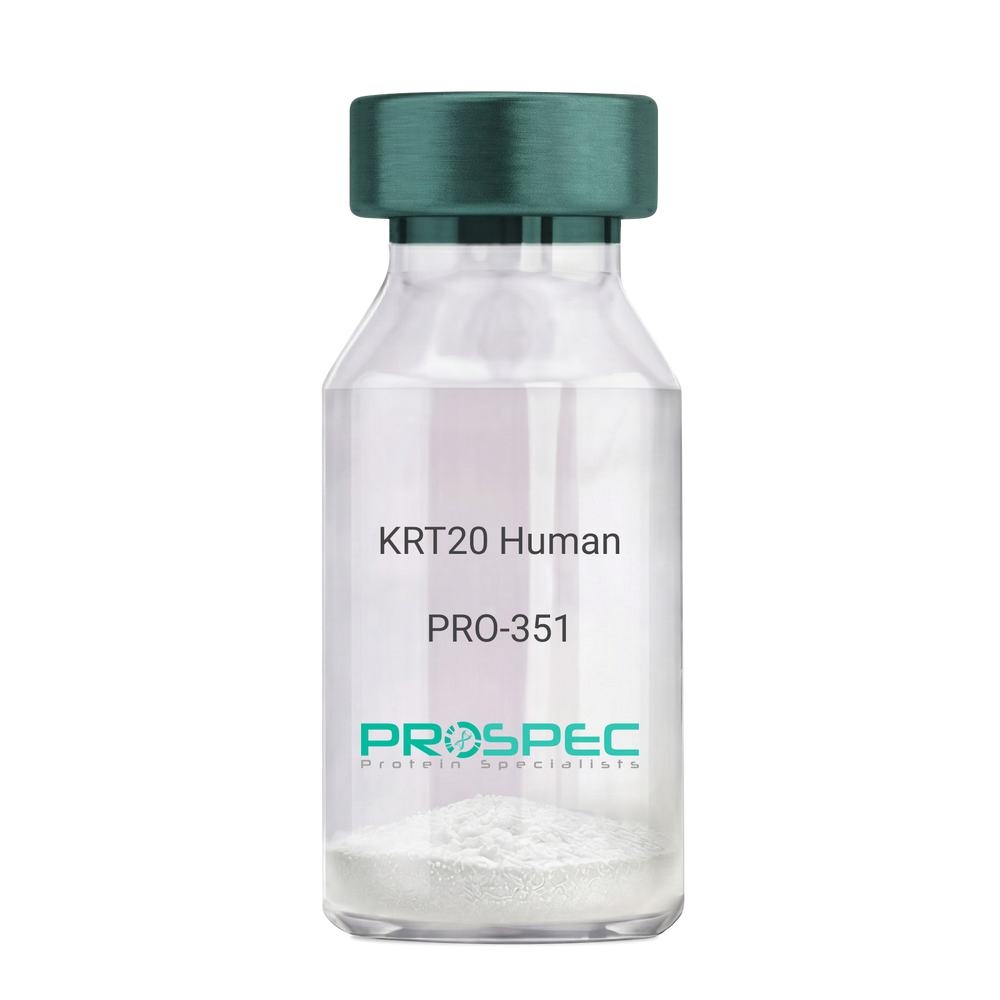
KRT20 HumanDescription:
Cytokeratin 20 Human Recombinant
Keratin type I cytoskeletal 20, Cytokeratin-20, CK-20, Keratin-20, K20, Protein IT, KRT20, CD20, CK20, KRT21, MGC35423.
Product # :
PRO-351Price :
Quantity :
Shipping Method :
Shipped at Room temp
More Info
- description
- source
- formulation
- purity
- More Info
Description
Cytokeratin 20 Human Recombinant produced in E.Coli is a single,non-glycosylated polypeptide chain having a molecular mass of 48,553 Dalton. The KRT20 is purified by proprietary chromatographic techniques.
Source
Escherichia Coli.
Formulation
The protein (1mg/1ml) was lyophilized after from a sterile solution containing 30mM Tris-HCL pH-8, 9.5M urea, 2mM DDT, 2mM EDTA and 10mM methylammonium chloride.
Purity
Greater than 95.0% as determined by SDS-PAGE.
More Info
-
Introduction
KRT20 is a member of the keratin family. The keratins are intermediate filament proteins responsible for the structural integrity of epithelial cells and are subdivided into cytokeratins and hair keratins. The type I cytokeratins consist of acidic proteins which are arranged in pairs of heterotypic keratin chains. This cytokeratin is a major cellular protein of mature enterocytes and goblet cells and is specifically expressed in the gastric and intestinal mucosa. The type I cytokeratin genes are clustered in a region of chromosome 17q12-q21.
-
Synonyms
Keratin type I cytoskeletal 20, Cytokeratin-20, CK-20, Keratin-20, K20, Protein IT, KRT20, CD20, CK20, KRT21, MGC35423.
-
Physical Appearance
Sterile Filtered White lyophilized (freeze-dried) powder.
-
Stability
Lyophilized KRT20 although stable at room temperature for 3 weeks, should be stored desiccated below -18°C. Upon reconstitution KRT20 should be stored at 4°C between 2-7 days and for future use below -18°C.For long term storage it is recommended to add a carrier protein (0.1% HSA or BSA).Please prevent freeze-thaw cycles.
-
Solubility
It is recommended to reconstitute the lyophilized KRT20 in sterile 18MΩ-cm H2O not less than 100µg/ml, which can then be further diluted to other aqueous solutions.
-
Reconstitution to filaments
Performed by mixing equimolar amounts of cytokeratins of type I and type II at concentrations of approx. 0.5 mg/ml, both dissolved in 9.5 M urea buffer (see above). Protofilaments and filament complexes are obtained by dialyzing the resulting polypeptide solution stepwise to a concentration of 4 M urea and then to low salt condition (50 mM NaCI, 2 mM dithiothreitol, 10 mM Tris-HCI, pH 7.4). For immunization purposes, the solution can be further dialyzed against PBS (phosphate buffered saline, e.g. Dulbecco's PBS).
ProSpec's products are furnished for LABORATORY RESEARCH USE ONLY. The product may not be used as drugs, agricultural or pesticidal products, food additives or household chemicals.
- View Data Sheet
Name :
CYB5R2 HumanDescription:
Cytochrome B5 Reductase 2 Human Recombinant
CYB5R2, Cytochrome B5 Reductase 2, EC 1.6.2.2, B5R.2, Cytochrome B5 Reductase B5R.2, NADH-Cytochrome B5 Reductase 2, b5R.2.
Product # :
ENZ-799Price :
Quantity :
Shipping Method :
Shipped with Ice Packs
More Info
- description
- source
- formulation
- purity
- More Info
Description
CYB5R2 Human Recombinant produced in E.Coli is a single, non-glycosylated polypeptide chain containing 299 amino acids (1-276 a.a.) and having a molecular mass of 33.8kDa. CYB5R2 is fused to a 23 amino acid His-tag at N-terminus.
Source
Escherichia Coli.
Formulation
CYB5R2 protein solution (1mg/ml) contains 20mM Tris-HCl buffer (pH 8.0), 0.15M NaCl, 10% glycerol and 1mM DTT.
Purity
Greater than 90.0% as determined by SDS-PAGE.
More Info
-
Introduction
Cytochrome b5 reductase 2 (CYB5R2) is involved in desaturation and elongation of fatty acids, cholesterol biosynthesis, drug metabolism, and, in erythrocyte, methemoglobin reduction. CYB5R2 is responsible for NADH-dependent lucigenin chemiluminescence in spermatozoa by reducing both lucigenin and 2-[4-iodophenyl]-3-[4-nitrophenyl]-5-[2,4-disulfophenyl]-2H tetrazolium monosodium salt (WST-1).
-
Synonyms
CYB5R2, Cytochrome B5 Reductase 2, EC 1.6.2.2, B5R.2, Cytochrome B5 Reductase B5R.2, NADH-Cytochrome B5 Reductase 2, b5R.2.
-
Physical Appearance
Sterile Filtered colorless solution.
-
Stability
Store at 4°C if entire vial will be used within 2-4 weeks. Store, frozen at -20°C for longer periods of time. For long term storage it is recommended to add a carrier protein (0.1% HSA or BSA).Avoid multiple freeze-thaw cycles.
-
Amino Acid Sequence
MGSSHHHHHH SSGLVPRGSH MGSMNSRRRE PITLQDPEAK YPLPLIEKEK ISHNTRRFRF GLPSPDHVLG LPVGNYVQLL AKIDNELVVR AYTPVSSDDD RGFVDLIIKI YFKNVHPQYP EGGKMTQYLE NMKIGETIFF RGPRGRLFYH GPGNLGIRPD QTSEPKKTLA DHLGMIAGGT GITPMLQLIR HITKDPSDRT RMSLIFANQT EEDILVRKEL EEIARTHPDQ FNLWYTLDRP PIGWKYSSGF VTADMIKEHL PPPAKSTLIL VCGPPPLIQT AAHPNLEKLG YTQDMIFTY.
ProSpec's products are furnished for LABORATORY RESEARCH USE ONLY. The product may not be used as drugs, agricultural or pesticidal products, food additives or household chemicals.
- View Data Sheet
Name :
Myoglobin His HumanDescription:
Myoglobin His Human Recombinant
PVALB, MGC13548.
Product # :
PRO-071Price :
Quantity :
Shipping Method :
Shipped with Ice Packs
More Info
- description
- source
- formulation
- purity
- More Info
Description
MB produced in E.Coli is a single, non-glycosylated polypeptide chain containing 174 amino acids (1-154a.a.) and having a molecular mass of 19.3kDa.MB is fused to a 20 amino acid His-tag at N-terminus & purified by proprietary chromatographic techniques.
Source
Escherichia Coli.
Formulation
The MB protein solution (1mg/1ml) is formulated in 20mM Tris-HCl buffer (pH8.0)
1mM DTT, 100mM NaCl and 20% glycerol.Purity
Greater than 90% as determined by SDS-PAGE.
More Info
-
Introduction
Myoglobin, mitochondrial precursor is a cytosolic oxygen-binding protein in charge of the storage and diffusion of oxygen within myocytes. The largest expression of MB is in the skeletal and cardiac muscle. MB operates in various functions in muscular oxygen supply, such as oxygen storage, facilitated diffusion, and myoglobin-mediated oxidative phosphorylation.
-
Synonyms
PVALB, MGC13548.
-
Physical Appearance
Sterile Filtered clear solution.
-
Stability
Store at 4°C if entire vial will be used within 2-4 weeks. Store, frozen at -20°C for longer periods of time.Please avoid freeze thaw cycles.
-
Amino Acid Sequence
MGSSHHHHHH SSGLVPRGSH MGLSDGEWQL VLNVWGKVEA DIPGHGQEVL IRLFKGHPET LEKFDKFKHL KSEDEMKASE DLKKHGATVL TALGGILKKK GHHEAEIKPL AQSHATKHKI PVKYLEFISE CIIQVLQSKH PGDFGADAQG AMNKALELFR KDMASNYKEL GFQG
ProSpec's products are furnished for LABORATORY RESEARCH USE ONLY. The product may not be used as drugs, agricultural or pesticidal products, food additives or household chemicals.
- View Data Sheet
Name :
CCDC104 HumanDescription:
Coiled-Coil Domain Containing 104 Human Recombinant
Coiled-Coil Domain Containing 104, Coiled-CoilDomain- Protein104, CCDC104.
Product # :
PRO-1728Price :
Quantity :
Shipping Method :
Shipped with Ice Packs
More Info
- description
- source
- formulation
- purity
- More Info
Description
CCDC104 Human Recombinant produced in E.Coli is a single, non-glycosylated polypeptide chain containing 365 amino acids (1-342 a.a) and having a molecular mass of 41.8kDa.CCDC104 is fused to a 23 amino acid His-tag at N-terminus & purified by proprietary chromatographic techniques.
Source
Escherichia Coli.
Formulation
CCDC104 protein solution (1mg/ml) containing 20mM Tris-HCl buffer (pH 8.0) and 10% glycerol.
Purity
Greater than 90.0% as determined by SDS-PAGE.
More Info
-
Introduction
CCDC104 also known as coiled-coil domain-containing protein 104 is a 342 amino acid protein that exists as two alternatively spliced isoforms. CCDC104 undergoes post-translational phosphorylation following DNA damage, most likely by either ATR or ATM. Among the diseases associated with CCDC104 are pancreatic cancer, and pancreatitis.
-
Synonyms
Coiled-Coil Domain Containing 104, Coiled-CoilDomain- Protein104, CCDC104.
-
Physical Appearance
Sterile Filtered clear solution.
-
Stability
Store at 4°C if entire vial will be used within 2-4 weeks. Store, frozen at -20°C for longer periods of time. For long term storage it is recommended to add a carrier protein (0.1% HSA or BSA).Avoid multiple freeze-thaw cycles.
-
Amino Acid Sequence
MGSSHHHHHH SSGLVPRGSH MGSMAAEEED EVEWVVESIA GFLRGPDWSI PILDFVEQKC EVFDDEEESK LTYTEIHQEY KELVEKLLEG YLKEIGINED QFQEACTSPL AKTHTSQAIL QPVLAAEDFT IFKAMMVQKN IEMQLQAIRI IQERNGVLPD CLTDGSDVVS DLEHEEMKIL REVLRKSKEE YDQEEERKRK KQLSEAKTEE PTVHSSEAAI MNNSQGDGEH FAHPPSEVKM HFANQSIEPL GRKVERSETS SLPQKDLKIP GLEHASIEGP IANLSVLGTE ELRQREHYLK QKRDKLMSMR KDMRTKQIQN MEQKGKPTGE VEEMTEKPEM TAEEKQTLLK RRLLAEKLKE EVINK
ProSpec's products are furnished for LABORATORY RESEARCH USE ONLY. The product may not be used as drugs, agricultural or pesticidal products, food additives or household chemicals.
- View Data Sheet
Name :
CFB-a HumanDescription:
Complement Factor B Fragment a Human
Complement factor B (EC:3.4.21.47), C3/C5 convertase, Glycine-rich beta glycoprotein, GBG, PBF2, Properdin factor B, Complement factor B Ba fragment, Complement factor B Bb fragment, CFB, Complement Factor B, BFD, AHUS4, BF, BFD, CFAB, FB, FBI12, H2-Bf.
Product # :
PRO-2735Price :
Quantity :
Shipping Method :
Shipped with Ice Packs
More Info
- description
- source
- formulation
- purity
- More Info
Description
CFB-a Human produced in Human Plasma having a molecular mass of 33 kDa.
Source
Human Plasma.
Formulation
CFB-a solution (1mg/ml) contains Phosphate-buffered saline, pH 7.2.
Purity
Greater than 95.0% as determined by SDS-PAGE.
More Info
-
Introduction
Complement Factor B, also known as CFB, encodes complement factor B which is a component of the alternative pathway of complement activation. Factor B circulates in the blood as a single chain polypeptide. Once the alternative pathway is activated it is cleaved by complement factor D yielding the noncatalytic chain Ba and the catalytic subunit Bb. The active subunit Bb is a serine protease which connects with C3b to form the alternative pathway C3 convertase. Also, Bb is involved in the proliferation of preactivated B lymphocytes, while Ba inhibits their proliferation.
-
Synonyms
Complement factor B (EC:3.4.21.47), C3/C5 convertase, Glycine-rich beta glycoprotein, GBG, PBF2, Properdin factor B, Complement factor B Ba fragment, Complement factor B Bb fragment, CFB, Complement Factor B, BFD, AHUS4, BF, BFD, CFAB, FB, FBI12, H2-Bf.
-
Physical Appearance
Sterile filtered solution.
-
Stability
CFB-a Human is stable at 4°C if entire vial will be used within 2-4 weeks. Store, frozen below -20°C for longer periods of time.For long term storage it is recommended to add a carrier protein (0.1% HSA or BSA).Avoid multiple freeze-thaw cycles.
-
Human Virus Test
Plasma from each donor has been tested and found negative for antibody to HIV-1, HIV-2, HCV and HBSAG.
ProSpec's products are furnished for LABORATORY RESEARCH USE ONLY. The product may not be used as drugs, agricultural or pesticidal products, food additives or household chemicals.
- View Data Sheet
Name :
MGMT HumanDescription:
O-6-Methylguanine-DNA Methyltransferase Human Recombinant
Methylated-DNA--protein-cysteine methyltransferase, 6-O-methylguanine-DNA methyltransferase, O-6-methylguanine-DNA-alkyltransferase, MGMT.
Product # :
ENZ-389Price :
Quantity :
Shipping Method :
Shipped with Ice Packs
More Info
- description
- source
- formulation
- purity
- More Info
Description
MGMT Human Recombinant fused to a 20 amino acid His Tag at N-terminal produced in E.Coli is a single, non-glycosylated, polypeptide chain containing 227 amino acids (1-207) and having a molecular mass of 23.8 kDa. The MGMT is purified by proprietary chromatographic techniques.
Source
Escherichia Coli.
Formulation
The MGMT solution contains 20mM Tris-HCl pH-7.5, 1mM DTT and 10% glycerol.
Purity
Greater than 95.0% as determined by SDS-PAGE.
More Info
-
Introduction
MGMT is an enzyme that repairs O-6-methylguanine, a mutagenic DNA base damaged by endogenous and environmental alkylating agents and takes part in the cellular defense against the biological effects of O-6-methylguanine in DNA. MGMT repairs alkylated guanine in DNA by stoichiometrically transferring the alkyl group at the O-6 position to a cysteine residue in the enzyme. abnormal MGMT expression correlates with the prognosis in human solid cancers. MGMT decrease of expression is correlated with methylation. The human MGMT is a negative regulator of estrogen receptor-mediated transcription upon alkylation DNA damage. MGMT promoter hypermethylation plays an important role in the early steps of colorectal carcinogenesis. Abnormal promoter hypermethylation of MGMT gene is associated with oral squamous cell carcinomas.
-
Synonyms
Methylated-DNA--protein-cysteine methyltransferase, 6-O-methylguanine-DNA methyltransferase, O-6-methylguanine-DNA-alkyltransferase, MGMT.
-
Physical Appearance
Sterile Filtered clear colorless solution.
-
Stability
Store at 4°C if entire vial will be used within 2-4 weeks. Store, frozen at -20°C for longer periods of time. For long term storage it is recommended to add a carrier protein (0.1% HSA or BSA).Avoid multiple freeze-thaw cycles.
-
Amino Acid Sequence
MGSSHHHHHH SSGLVPRGSH MDKDCEMKRT TLDSPLGKLE LSGCEQGLHE IKLLGKGTSA ADAVEVPAPA AVLGGPEPLM QCTAWLNAYF HQPEAIEEFP VPAFHHPVFQ QESFTRQVLW KLLKVVKFGE VISYQQLAAL AGNPKAARAV GGAMRGNPVP ILIPCHRVVC SSGAVGNYSG GLAVKEWLLA HEGHRLGKPG LGGSSGLAGA WLKGAGATSG SPPAGRN.
ProSpec's products are furnished for LABORATORY RESEARCH USE ONLY. The product may not be used as drugs, agricultural or pesticidal products, food additives or household chemicals.
- View Data Sheet
Name :
AHCY MouseDescription:
Adenosylhomocysteinase Mouse Recombinant
EC 3.3.1.1, SAHH, AdoHcyase, S-adenosyl-L-homocysteine hydrolase, Adenosylhomocysteinase.
Product # :
ENZ-1054Price :
Quantity :
Shipping Method :
Shipped with Ice Packs
More Info
- description
- source
- formulation
- purity
- More Info
Description
AHCY Mouse Recombinant produced in E.Coli is a single, non-glycosylated polypeptide chain containing 456 amino acids (1-432 a.a) and having a molecular mass of 50.2kDa.AHCY is fused to a 24 amino acid His-tag at N-terminus & purified by proprietary chromatographic techniques.
Source
Escherichia Coli.
Formulation
AHCY protein solution (0.25mg/ml) containing 20mM Tris-Hcl buffer (pH8.0) containing 40% glycerol 0.2M NaCl, 1mM DTT.
Purity
Greater than 90.0% as determined by SDS-PAGE.
More Info
-
Introduction
AHCY is an enzyme that catalyzes the reversible hydrolysis of S-adenosylhomocysteine (AdoHcy) to adenosine (Ado) and L-homocysteine (Hcy). AHCY controls the intracellular S-adenosylhomocysteine (SAH) concentration that is crucial for transmethylation reactions. AHCY deficiency causes hypermethioninemia.
-
Synonyms
EC 3.3.1.1, SAHH, AdoHcyase, S-adenosyl-L-homocysteine hydrolase, Adenosylhomocysteinase.
-
Physical Appearance
Sterile filtered colorless solution.
-
Stability
Store at 4°C if entire vial will be used within 2-4 weeks. Store, frozen at -20°C for longer periods of time. For long term storage, it is recommended to add a carrier protein (0.1% HSA or BSA).Avoid multiple freeze-thaw cycles.
-
Amino Acid Sequence
MGSSHHHHHH SSGLVPRGSH MGSHMSDKLP YKVADIGLAA WGRKALDIAE NEMPGLMRMR EMYSASKPLK GARIAGCLHM TVETAVLIET LVALGAEVRW SSCNIFSTQD HAAAAIAKAG IPVFAWKGET DEEYLWCIEQ TLHFKDGPLN MILDDGGDLT NLIHTKYPQL LSGIRGISEE TTTGVHNLYK MMSNGILKVP AINVNDSVTK SKFDNLYGCR ESLIDGIKRA TDVMIAGKVA VVAGYGDVGK GCAQALRGFG ARVIITEIDP INALQAAMEG YEVTTMDEAC KEGNIFVTTT GCVDIILGRH FEQMKDDAIV CNIGHFDVEI DVKWLNENAV EKVNIKPQVD RYWLKNGRRI ILLAEGRLVN LGCAMGHPSF VMSNSFTNQV MAQIELWTHP DKYPVGVHFL PKKLDEAVAE AHLGKLNVKL TKLTEKQAQY LGMPINGPFK PDHYRY.
ProSpec's products are furnished for LABORATORY RESEARCH USE ONLY. The product may not be used as drugs, agricultural or pesticidal products, food additives or household chemicals.
- View Data Sheet
Name :
CTGF Human, HisDescription:
Connective Tissue Growth Factor Human Recombinant, His Tag
CCN2, NOV2, HCS24, IGFBP8, MGC102839, CTGF, Connective Tissue Growth Factor.
Product # :
CYT-438Price :
Quantity :
Shipping Method :
Shipped with Ice Packs
More Info
- description
- source
- formulation
- purity
- More Info
- sds-page
Description
CTGF Human Recombinant produced in E.coli is a single, non-glycosylated polypeptide chain containing 344 amino acids (27-349) and having a molecular mass of 37.7kDa.The CTGF is fused to a 21 amino acid His-Tag at N-terminus and purified by proprietary chromatographic techniques.
Source
Escherichia Coli.
Formulation
CTGF protein (1mg/ml) is supplied in 20mM Tris-HCl, pH-8 and 10% Glycerol.
Purity
Greater than 85.0% as determined by Analysis by SDS-PAGE.
sds-page
More Info
-
Introduction
Connective Tissue Growth Factor belongs to the CCN family of proteins. The CCN family presently consists of six members in human also known as: Cyr61 (Cystein rich 61), CTGF (Connective Tissue Growth Factor), Nov (Nephroblastoma Overexpressed gene), WISP-1, 2 and 3 (Wnt-1 Induced Secreted Proteins). The CCN genes encode secreted proteins associated with the Extracellular Matrix (ECM) and cell membrane. CCN proteins are matricellular proteins which are involved in the regulation of various cellular functions including: proliferation, differentiation, survival, adhesion and migration. They are expressed in derivatives of the three embryonic sheets and are implicated in the development of kidney, nervous system, muscle, bone marrow, cartilage and bone. During adulthood, they are implicated in wound healing, bone fracture repair, and pathologies such as: fibrosis, vascular ailments and tumorigenesis.
Full length secreted CCN proteins can show an antiproliferative activity, whereas truncated isoforms are likely to stimulate proliferation and behave as oncogenes. The full length protein consists of four modulesModule I shares partial identity with the N-terminal part of the Insulin-like Growth Factor Binding Proteins (IGFBPs).
Module II includes a stretch of 70amino acid residues – which shares sequence identity with the Von Willebrand Factor Type C repeat (VWC).
Module III contains sequences sharing identity with the Thrombospondin type 1 repeat (TSP1) (WSXCSXXCG), which is thought to be implicated in the binding of sulfated glycoconjugates and to be important for cell adhesion. Module IV, also designated CT, is encoded by exon5. It is the leasts conserved one of the four domains at the level of nucleotide sequence, but it appears to be critical for several of the biological functions attributed to the CCN proteins. Module IV resembles the CT domain of several extracellular protein including, Von Willebrand's factor and mucins. Sequence similarities to heparin-binding motifs are also found within this domain.
Proteolysis of the secreted full-length CCN proteins that has been reported in the case of CCN2 and CCN3 might result in the production of CCN-derived peptides with high affinity for ligands that full-length CNN proteins bind only poorly. Amino-truncated CCN2 isoforms were biologically active whereas no specific biological activity has been attributed to the truncated CCN3. Although the molecular processes underlying the production of these secreted isoforms is presently unknown, it is important to note that proteolysis occur at the same amino acid residues in both CCN2 and CCN3. An elevated expression of CCN2 has also been detected by Northern blotting in human invasive mammary ductal carcinomas, dermatofibromas, pyogenic granuloma, endothelial cells of angiolipomas and angioleiomyomas, and in pancreatic tumors. A study performed with chondrosarcomas representative of various histological grades established that CCN2 expression was closely correlated with increasing levels of malignancy. In agreement with CCN2 playing a role in brain tumor angiogenesis, immunocytochemistry studies indicated that both glioblastoma tumor cells and proliferating endothelial cells stained positive for CCN2. In astrocytomas, CCN2 expression was particularly elevated in high grade tumors, with a marked effect of CCN2 on cell proliferation. Downregulation of CCN2 expression in these cells was associated with a growth arrest at the G1/S transition while over-expression of CCN2 induced a two-fold increase of the number of cells in the G1 phase. Gene profiling analysis allowed to identify a set of about 50 genes whose expression might account for the proliferative activity of CCN2 in these cells. CCN2 was seen in a higher proportion of mononuclear cells of patients with acute lymphoblastic leukemia. -
Synonyms
CCN2, NOV2, HCS24, IGFBP8, MGC102839, CTGF, Connective Tissue Growth Factor.
-
Physical Appearance
Sterile Filtered clear solution.
-
Stability
Store at 4°C if entire vial will be used within 2-4 weeks. Store, frozen at -20°C for longer periods of time. For long term storage it is recommended to add a carrier protein (0.1% HSA or BSA).Avoid multiple freeze-thaw cycles.
-
Amino Acid Sequence
MGSSHHHHHH SSGLVPRGSH MQNCSGPCRC PDEPAPRCPA GVSLVLDGCG CCRVCAKQLG ELCTERDPCD PHKGLFCDFG SPANRKIGVC TAKDGAPCIF GGTVYRSGES FQSSCKYQCT CLDGAVGCMP LCSMDVRLPS PDCPFPRRVK LPGKCCEEWV CDEPKDQTVV GPALAAYRLE DTFGPDPTMI RANCLVQTTE WSACSKTCGM GISTRVTNDN ASCRLEKQSR LCMVRPCEAD LEENIKKGKK CIRTPKISKP IKFELSGCTS MKTYRAKFCG VCTDGRCCTP HRTTTLPVEF KCPDGEVMKK NMMFIKTCAC HYNCPGDNDI FESLYYRKMY GDMA.
-
Background
What is the molecular weight/Mw of CTGF Protein?
CTGF Protein has a total Mw of 37.7kDa.
What is the source or expression system of CTGF Protein?
Escherichia Coli.
What is the Purity of CTGF Protein?
CTGF Protein is >85% pure as determined by SDS-PAGE.
What is the Biological Activity of CTGF Protein?
The biological functionality of CTGF Protein will be determined in the future.
What is the amino acid sequence of CTGF Protein?
MGSSHHHHHH SSGLVPRGSH MQNCSGPCRC PDEPAPRCPA GVSLVLDGCG CCRVCAKQLG ELCTERDPCD PHKGLFCDFG SPANRKIGVC TAKDGAPCIF GGTVYRSGES FQSSCKYQCT CLDGAVGCMP LCSMDVRLPS PDCPFPRRVK LPGKCCEEWV CDEPKDQTVV GPALAAYRLE DTFGPDPTMI RANCLVQTTE WSACSKTCGM GISTRVTNDN ASCRLEKQSR LCMVRPCEAD LEENIKKGKK CIRTPKISKP IKFELSGCTS MKTYRAKFCG VCTDGRCCTP HRTTTLPVEF KCPDGEVMKK NMMFIKTCAC HYNCPGDNDI FESLYYRKMY GDMA.
What applications can CTGF Protein be used in?
CTGF Protein can probably be used in western blot, ELISA and Lateral Flow.
What is the endotoxin level for CTGF Protein?
The endotoxin level is minimal, CTGF Protein was purified using conventional chromatography techniques.
ProSpec's products are furnished for LABORATORY RESEARCH USE ONLY. The product may not be used as drugs, agricultural or pesticidal products, food additives or household chemicals.
- View Data Sheet
Name :
CFH HumanDescription:
Complement Factor H Human
Complement factor H, H factor 1, CFH, HF, HF1, HF2.
Product # :
PRO-2700Price :
Quantity :
Shipping Method :
Shipped with Ice Packs
More Info
- description
- source
- formulation
- purity
- More Info
Description
Human Complement Factor H produced in Human plasma having a total molecular mass of 155kDa.
Source
Human Plasma.
Formulation
CFH protein solution contains PBS, pH 7.2.
Purity
Greater than 95.0% as determined by SDS-PAGE.
More Info
-
Introduction
Complement factor H (CFH) is an important regulatory component of the alternative pathway of complement. CFH is prevents complement activation on host cells and tissues, mainly the kidney. CFH controls the formation and decay of the alternative pathway C3/C5 convertase and acts as a cofactor for factor I which proteolytically inactivates C3b when C3b is bound to factor H. The N-terminal 5 domains of CFH bind to C3b and inhibit binding of factor B thus reducing the formation of C3/C5 convertase. CFH also binds to preformed C3/C5 convertases and causes quick release of the catalytic subunit Bb. These activities are necessary for controlling the spontaneous activation of the alternative pathway amplification process in plasma. In addition, CFH controls the formation and decay of these enzymes when C3b is attached to the surface of particles.
-
Synonyms
Complement factor H, H factor 1, CFH, HF, HF1, HF2.
-
Physical Appearance
Sterile filtered solution.
-
Stability
CFH Human is stable at 4°C if entire vial will be used within 2-4 weeks.Store, frozen below -20°C for longer periods of time.For long term storage it is recommended to add a carrier protein (0.1% HSA or BSA).Avoid multiple freeze-thaw cycles.
-
Human Virus Test
Plasma from each donor has been tested and found negative for antibody to HIV-1, HIV-2, HCV and HBSAG.
ProSpec's products are furnished for LABORATORY RESEARCH USE ONLY. The product may not be used as drugs, agricultural or pesticidal products, food additives or household chemicals.
- View Data Sheet
Name :
SENP8 HumanDescription:
Sentrin Specific Peptidase Family Member 8 Human Recombinant
SUMO/sentrin specific peptidase family member 8, DEN1, NEDP1, Protease cysteine 2 (NEDD8 specific), PRSC2, NEDD8-specific protease 1, HsT17512, Deneddylase-1, NEDD8 specific-protease cysteine 2, Sentrin/SUMO-specific protease SENP8.
Product # :
ENZ-146Price :
Quantity :
Shipping Method :
Shipped with Ice Packs
More Info
- description
- source
- formulation
- purity
- More Info
Description
SENP8 Human Recombinant produced in E.coli is a single, non-glycosylated polypeptide chain containing 232 amino acids (1-212) and having a molecular mass of 26.2 kDa.The SENP8 is fused to a 20 amino acid His-Tag at N-terminus and purified by proprietary chromatographic techniques.
Source
Escherichia Coli.
Formulation
SENP8 protein 1mg/ml is supplied in 20mM Tris-HCL, pH-8, 0.1M NaCl, 1mM DTT and 10% Glycerol.
Purity
Greater than 95.0% as determined by SDS-PAGE.
More Info
-
Introduction
SENP8 is a cysteine protease which belongs to the sentrin-specific protease family. SENP8 takes part in processing and deconjugation of the ubiquitin-like protein labeled, neural precursor cell expressed developmentally downregulated 8(NEDD8).
-
Synonyms
SUMO/sentrin specific peptidase family member 8, DEN1, NEDP1, Protease cysteine 2
(NEDD8 specific), PRSC2, NEDD8-specific protease 1, HsT17512, Deneddylase-1, NEDD8 specific-protease cysteine 2, Sentrin/SUMO-specific protease SENP8. -
Physical Appearance
SENP8 is supplied as a sterile filtered clear solution.
-
Stability
Store at 4°C if entire vial will be used within 2-4 weeks. Store, frozen at -20°C for longer periods of time. For long term storage it is recommended to add a carrier protein (0.1% HSA or BSA).Avoid multiple freeze-thaw cycles.
-
Amino Acid Sequence
MGSSHHHHHH SSGLVPRGSH MDPVVLSYMD SLLRQSDVSL LDPPSWLNDH IIGFAFEYFA NSQFHDCSDH VSFISPEVTQ FIKCTSNPAE IAMFLEPLDL PNKRVVFLAI NDNSNQAAGG THWSLLVYLQ DKNSFFHYDS HSRSNSVHAK QVAEKLEAFL GRKGDKLAFV EEKAPAQQNS YDCGMYVICN TEALCQNFFR QQTESLLQLL TPAYITKKRG EWKDLITTLA KK
ProSpec's products are furnished for LABORATORY RESEARCH USE ONLY. The product may not be used as drugs, agricultural or pesticidal products, food additives or household chemicals.
- View Data Sheet
Name :
SYT11 HumanDescription:
Synaptotagmin XI Human Recombinant
Synaptotagmin XI, SytXI, Synaptotagmin 12, KIAA0080, SYT12, Synaptotagmin-11.
Product # :
PRO-2301Price :
Quantity :
Shipping Method :
Shipped with Ice Packs
More Info
- description
- source
- formulation
- purity
- More Info
Description
SYT11 Human Recombinant produced in E.Coli is a single, non-glycosylated polypeptide chain containing 418 amino acids (37-431 a.a) and having a molecular mass of 47kDa. SYT11 is fused to a 23 amino acid His-tag at N-terminus & purified by proprietary chromatographic techniques.
Source
E.coli.
Formulation
SYT11 protein solution (0.25mg/ml) containing Phosphate Buffered Saline (pH7.4) and 50% glycerol.
Purity
Greater than 80% as determined by SDS-PAGE.
More Info
-
Introduction
Synaptotagmin-11 (SYT11) protein may be involved in Ca2+-dependent exocytosis of secretory vesicles through Ca2+ and phospholipid binding to the C2 domain or may function as Ca2+ sensors in the process of vesicular trafficking and exocytosis.
-
Synonyms
Synaptotagmin XI, SytXI, Synaptotagmin 12, KIAA0080, SYT12, Synaptotagmin-11.
-
Physical Appearance
Sterile Filtered colorless solution.
-
Stability
Store at 4°C if entire vial will be used within 2-4 weeks. Store, frozen at -20°C for longer periods of time. For long term storage it is recommended to add a carrier protein (0.1% HSA or BSA).Avoid multiple freeze-thaw cycles.
-
Amino Acid Sequence
MGSSHHHHHH SSGLVPRGSH MGSWSCCHQQ AEKKQKNPPY KFIHMLKGIS IYPETLSNKK KIIKVRRDKD GPGREGGRRN LLVDAAEAGL LSRDKDPRGP SSGSCIDQLP IKMDYGEELR SPITSLTPGE SKTTSPSSPE EDVMLGSLTF SVDYNFPKKA LVVTIQEAHG LPVMDDQTQG SDPYIKMTIL PDKRHRVKTR VLRKTLDPVF DETFTFYGIP YSQLQDLVLH FLVLSFDRFS RDDVIGEVMV PLAGVDPSTG KVQLTRDIIK RNIQKCISRG ELQVSLSYQP VAQRMTVVVL KARHLPKMDI TGLSGNPYVK VNVYYGRKRI AKKKTHVKKC TLNPIFNESF IYDIPTDLLP DISIEFLVID FDRTTKNEVV GRLILGAHSV TASGAEHWRE VCESPRKPVA KWHSLSEY.
ProSpec's products are furnished for LABORATORY RESEARCH USE ONLY. The product may not be used as drugs, agricultural or pesticidal products, food additives or household chemicals.
- View Data Sheet
Name :
CFB Human, NativeDescription:
Complement Factor B Human
CFB, C3/C5 convertase, Glycine-rich beta glycoprotein, GBG, PBF2, Properdin factor B, BF, BFD, AHUS4, ARMD14, CFAB, CFBD, FB, FBI12, GBG, H2-Bf.
Product # :
PRO-2698Price :
Quantity :
Shipping Method :
Shipped with Ice Packs
More Info
- description
- source
- formulation
- purity
- More Info
Description
Human Complement Factor B produced in Human plasma is glycosylated polypeptide chain having a total molecular mass of 93kDa.
Source
Human Plasma.
Formulation
CFB protein solution contains 10mM Sodium phosphate and 145mM NaCl, pH 7.2.
Purity
Greater than 95.0% as determined by SDS-PAGE.
More Info
-
Introduction
Complement Factor B, also known as CFB, encodes complement factor B which is a component of the alternative pathway of complement activation. Factor B circulates in the blood as a single chain polypeptide. Once the alternative pathway is activated it is cleaved by complement factor D yielding the noncatalytic chain Ba and the catalytic subunit Bb. The active subunit Bb is a serine protease which connects with C3b to form the alternative pathway C3 convertase. Also, Bb is involved in the proliferation of preactivated B lymphocytes, while Ba inhibits their proliferation.
-
Synonyms
CFB, C3/C5 convertase, Glycine-rich beta glycoprotein, GBG, PBF2, Properdin factor B, BF, BFD, AHUS4, ARMD14, CFAB, CFBD, FB, FBI12, GBG, H2-Bf.
-
Physical Appearance
Sterile filtered solution.
-
Stability
CFB Human is stable at 4°C if entire vial will be used within 2-4 weeks.Store, frozen below -20°C for longer periods of time.For long term storage it is recommended to add a carrier protein (0.1% HSA or BSA).Avoid multiple freeze-thaw cycles.
-
Human Virus Test
Plasma from each donor has been tested and found negative for antibody to HIV-1, HIV-2, HCV and HBSAG.
ProSpec's products are furnished for LABORATORY RESEARCH USE ONLY. The product may not be used as drugs, agricultural or pesticidal products, food additives or household chemicals.
- View Data Sheet
Name :
HIF1A Human, HisDescription:
Hypoxia-Inducible Factor-1 Alpha Human Recombinant, His Tag
Hypoxia-inducible factor 1 alpha, HIF-1 alpha, HIF1 alpha, ARNT-interacting protein, Member of PAS protein 1, Basic-helix-loop-helix-PAS protein MOP1, HIF1A, MOP1, HIF1, PASD8, HIF-1A.
Product # :
PRO-415Price :
Quantity :
Shipping Method :
Shipped with Ice Packs
More Info
- description
- source
- formulation
- purity
- More Info
Description
HIF1A Recombinant Human produced in E.Coli is a single, non-glycosylated polypeptide chain containing 231 amino acids (576-785 a.a.) and having a molecular mass of 25.1 kDa. The HIF1A is fused to a 21 amino acid His-Tag at N-terminus and purified by proprietary chromatographic techniques.
Source
Escherichia Coli.
Formulation
HIF1A Human solution containing 20mM Tris-HCl pH-8, 1mM DTT, 0.2M NaCl & 10% glycerol.
Purity
Greater than 85.0% as determined by SDS-PAGE.
More Info
-
Introduction
HIF1A has a role as a master transcriptional monitor of the adaptive response to hypoxia. Under hypoxic conditions HIF1A activates the transcription of over 40 genes, including, erythropoietin, glucose transporters, glycolytic enzymes, vascular endothelial growth factor, and genes whose protein products increase oxygen release or facilitate metabolic adaptation to hypoxia. HIF1A functions as an essential role in embryonic vascularization, tumor angiogenesis and pathophysiology of ischemic disease.
-
Synonyms
Hypoxia-inducible factor 1 alpha, HIF-1 alpha, HIF1 alpha, ARNT-interacting protein, Member of PAS protein 1, Basic-helix-loop-helix-PAS protein MOP1, HIF1A, MOP1, HIF1, PASD8, HIF-1A.
-
Physical Appearance
Sterile filtered colorless solution.
-
Stability
Store at 4°C if entire vial will be used within 2-4 weeks. Store, frozen at -20°C for longer periods of time. For long term storage it is recommended to add a carrier protein (0.1% HSA or BSA).Avoid multiple freeze-thaw cycles.
-
Amino Acid Sequence
MGSSHHHHHH SSGLVPRGSH MSFDQLSPLE SSSASPESAS PQSTVTVFQQ TQIQEPTANA TTTTATTDEL KTVTKDRMED IKILIASPSP THIHKETTSA TSSPYRDTQS RTASPNRAGK GVIEQTEKSH PRSPNVLSVA LSQRTTVPEE ELNPKILALQ NAQRKRKMEH DGSLFQAVGI GTLLQQPDDH AATTSLSWKR VKGCKSSEQN GMEQKTIILI PSDLACRLLG Q.
ProSpec's products are furnished for LABORATORY RESEARCH USE ONLY. The product may not be used as drugs, agricultural or pesticidal products, food additives or household chemicals.
- View Data Sheet
Name :
OAZ1 HumanDescription:
Ornithine Decarboxylase Antizyme 1 Human Recombinant
Ornithine decarboxylase antizyme 1, OAZ, ODC-Az, AZI, antizyme 1, MGC138338.
Product # :
PRO-1200Price :
Quantity :
Shipping Method :
Shipped with Ice Packs
More Info
- description
- source
- formulation
- purity
- More Info
Description
OAZ1 Human Recombinant produced in E. coli is a single polypeptide chain containing 251 amino acids (1-228) and having a molecular mass of 27.8 kDa.OAZ1 is fused to a 23 amino acid His-tag at N-terminus & purified by proprietary chromatographic techniques.
Source
E.coli.
Formulation
The OAZ1 solution (0.25mg/1ml) contains 20mM Tris-HCl buffer (pH 8.0), 0.15M NaCl, 1mM DTT and 30% glycerol.
Purity
Greater than 90% as determined by SDS-PAGE.
More Info
-
Introduction
OAZ1 is a member of the ODC antizyme family. OAZ1 is auto-regulated expressed by polyamine-enhanced translational frame shifting. OAZ1 negatively controls polyamine synthesis by increasing the negative feedback loop regulating ornithine decarboxylase (ODC) activity. The OAZ1 protein inhibits ornithine decarboxylase and speeds up its detraction.
-
Synonyms
Ornithine decarboxylase antizyme 1, OAZ, ODC-Az, AZI, antizyme 1, MGC138338.
-
Physical Appearance
Sterile Filtered colorless solution.
-
Stability
Store at 4°C if entire vial will be used within 2-4 weeks. Store, frozen at -20°C for longer periods of time. For long term storage it is recommended to add a carrier protein (0.1% HSA or BSA).Avoid multiple freeze-thaw cycles.
-
Amino Acid Sequence
MGSSHHHHHH SSGLVPRGSH MGSMVKSSLQ RILNSHCFAR EKEGDKPSAT IHASRTMPLL SLHSRGGSSS ESSRVSLHCC SNPGPGPRWC SDAPHPPLKI PGGRGNSQRD HNLSANLFYS DDRLNVTEEL TSNDKTRILN VQSRLTDAKR INWRTVLSGG SLYIEIPGGA LPEGSKDSFA VLLEFAEEQL RADHVFICFH KNREDRAALL RTFSFLGFEI VRPGHPLVPK RPDACFMAYT FERESSGEEE E
ProSpec's products are furnished for LABORATORY RESEARCH USE ONLY. The product may not be used as drugs, agricultural or pesticidal products, food additives or household chemicals.
- View Data Sheet
Name :
CEACAM7 HumanDescription:
Carcinoembryonic Antigen-Related Cell Adhesion Molecule 7 Human Recombinant
CEA, CGM2, Carcinoembryonic antigen CGM2.
Product # :
PRO-1483Price :
Quantity :
Shipping Method :
Shipped with Ice Packs
More Info
- description
- source
- formulation
- purity
- More Info
Description
CEACAM7 Human Recombinant produced in E.Coli is a single, non-glycosylated polypeptide chain containing 230 amino acids (36-242 a.a.) and having a molecular mass of 25.7kDa.CEACAM7 is fused to a 23 amino acid His-tag at N-terminus & purified by proprietary chromatographic techniques.
Source
Escherichia Coli.
Formulation
CEACAM7 protein solution (0.25mg/ml) contains 20mM Tris-HCl buffer (pH 8.0), 0.15M NaCl and 10% glycerol.
Purity
Greater than 90.0% as determined by SDS-PAGE.
More Info
-
Introduction
Carcinoembryonic Antigen-Related Cell Adhesion Molecule 7 (CEACAM7) is a member of the immunoglobulin superfamily, CEA family. CEACAM7 contains 1 Ig-like C2-type (immunoglobulin-like) domain and 1 Ig-like V-type (immunoglobulin-like) domain. CEACAM7 is intensely down-regulated in colonic adenocarcinomas.
-
Synonyms
CEA, CGM2, Carcinoembryonic antigen CGM2.
-
Physical Appearance
Sterile Filtered clear solution.
-
Stability
Store at 4°C if entire vial will be used within 2-4 weeks. Store, frozen at -20°C for longer periods of time. For long term storage it is recommended to add a carrier protein (0.1% HSA or BSA).Avoid multiple freeze-thaw cycles.
-
Amino Acid Sequence
MGSSHHHHHH SSGLVPRGSH MGSTNIDVVP FNVAEGKEVL LVVHNESQNL YGYNWYKGER VHANYRIIGY VKNISQENAP GPAHNGRETI YPNGTLLIQN VTHNDAGIYT LHVIKENLVN EEVTRQFYVF SEPPKPSITS NNFNPVENKD IVVLTCQPET QNTTYLWWVN NQSLLVSPRL LLSTDNRTLV LLSATKNDIG PYECEIQNPV GASRSDPVTL NVRYESVQAS.
ProSpec's products are furnished for LABORATORY RESEARCH USE ONLY. The product may not be used as drugs, agricultural or pesticidal products, food additives or household chemicals.
- View Data Sheet
Name :
M CSF Rat HEKDescription:
Macrophage Colony Stimulating Factor Rat Recombinant HEK
CSF-1, Lanimostim, MCSF, MGC31930, M-CSF.
Product # :
CYT-046Price :
Quantity :
Shipping Method :
Shipped at Room temp
More Info
- description
- source
- formulation
- purity
- biological activity
- More Info
Description
MCSF Rat Recombinant produced in HEK-293 cells is a secreted protein (amino acids Glu33-Arg254). M-CSF is disulfide-linked homodimer containing 2 x 222 a.a chains.
Source
HEK293
Formulation
The recombinant MCSF was lyophilized after extensive dialysis against PBS.
Purity
Greater than 95.0% as determined by SDS-PAGE.
Biological Activity
The ED50 of 3-4ng/ml is measured by its ability to stimulate the proliferation of mouse M-NFS-60 cells.More Info
-
Introduction
Granulocyte/Macrophage Colony-Stimulating Factors are cytokines that act in hematopoiesis by controlling the production, differentiation, and function of 2 related white cell populations of the blood, the granulocytes and the monocytes-macrophages. CSF-1 induces cells of the monocyte/macrophage lineage. It plays a role in immunological defenses, bone metabolism, lipoproteins clearance, fertility and pregnancy.
-
Synonyms
CSF-1, Lanimostim, MCSF, MGC31930, M-CSF.
-
Physical Appearance
Sterile Filtered White lyophilized (freeze-dried) powder.
-
Stability
Lyophilized MCSF although stable at room temperature for 3 weeks, should be stored desiccated below -18°C. Upon reconstitution MCSF should be stored at 4°C between 2-7 days and for future use below -18°C.For long term storage it is recommended to add a carrier protein (0.1% HSA or BSA).Please prevent freeze-thaw cycles.
-
Solubility
It is recommended to reconstitute the MCSF in sterile PBS not less than 100 µg/ml, which can then be further diluted to other aqueous solutions.
ProSpec's products are furnished for LABORATORY RESEARCH USE ONLY. The product may not be used as drugs, agricultural or pesticidal products, food additives or household chemicals.
- View Data Sheet
Name :
YARS HumanDescription:
Tyrosyl-tRNA Synthetase Human Recombinant
Tyrosyl-tRNA synthetase cytoplasmic, Tyrosyl--tRNA ligase, TyrRS, YARS, YRS, YTS, CMTDIC.
Product # :
ENZ-134Price :
Quantity :
Shipping Method :
Shipped with Ice Packs
More Info
- description
- source
- formulation
- purity
- More Info
Description
YARS produced in E.Coli is a single, non-glycosylated polypeptide chain containing 548 amino acids (1-528 a.a.) and having a molecular mass of 61.3kDa.YARS is fused to a 20 amino acid His-tag at N-terminus & purified by proprietary chromatographic techniques.
Source
Escherichia Coli.
Formulation
YARS protein solution (1mg/ml) containing 20mM Tris-HCl buffer (pH 8.0), 1mM DTT, 10% glycerol and 0.1M NaCl.
Purity
Greater than 90.0% as determined by SDS-PAGE.
More Info
-
Introduction
Tyrosyl-tRNA synthetase (YARS) is a member of the class I tRNA synthetase family. YARS is a vital enzyme which catalyzes the aminoacylation of tRNATrp with tryptophan, a critical function of the cell’s protein synthesis machinery. Expression of YARS is highly stimulated in human cells by the addition of IFN-gamma.
-
Synonyms
Tyrosyl-tRNA synthetase cytoplasmic, Tyrosyl--tRNA ligase, TyrRS, YARS, YRS, YTS, CMTDIC.
-
Physical Appearance
Sterile Filtered colorless solution.
-
Stability
Store at 4°C if entire vial will be used within 2-4 weeks. Store, frozen at -20°C for longer periods of time. For long term storage it is recommended to add a carrier protein (0.1% HSA or BSA).Avoid multiple freeze-thaw cycles.
-
Amino Acid Sequence
MGSSHHHHHH SSGLVPRGSH MGDAPSPEEK LHLITRNLQE VLGEEKLKEI LKERELKIYW GTATTGKPHV AYFVPMSKIA DFLKAGCEVT ILFADLHAYL DNMKAPWELL ELRVSYYENV IKAMLESIGV PLEKLKFIKG TDYQLSKEYT LDVYRLSSVV TQHDSKKAGA EVVKQVEHPL LSGLLYPGLQ ALDEEYLKVD AQFGGIDQRK IFTFAEKYLP ALGYSKRVHL MNPMVPGLTG SKMSSSEEES KIDLLDRKED VKKKLKKAFC EPGNVENNGV LSFIKHVLFP LKSEFVILRD EKWGGNKTYT AYVDLEKDFA AEVVHPGDLK NSVEVALNKL LDPIREKFNT PALKKLASAA YPDPSKQKPM AKGPAKNSEP EEVIPSRLDI RVGKIITVEK HPDADSLYVE KIDVGEAEPR TVVSGLVQFV PKEELQDRLV VVLCNLKPQK MRGVESQGML LCASIEGINR QVEPLDPPAG SAPGEHVFVK GYEKGQPDEE LKPKKKVFEK LQADFKISEE CIAQWKQTNF MTKLGSISCK SLKGGNIS.
ProSpec's products are furnished for LABORATORY RESEARCH USE ONLY. The product may not be used as drugs, agricultural or pesticidal products, food additives or household chemicals.
- View Data Sheet
Name :
TNNI3 Human NativeDescription:
Cardiac Troponin-I Human
Troponin I cardiac muscle, Cardiac troponin I, TNNI3, TNNC1, CMH7, RCM1, cTnI, CMD2A, MGC116817.
Product # :
PRO-2788Price :
Quantity :
Shipping Method :
Shipped at Room temp
More Info
- description
- source
- formulation
- purity
- More Info
Description
TNNI3 Native produced in Human heart tissue is a full length protein which has an additional amino acid residues on its N terminus that are not present on the skeletal form, making this protein a promising analyte for indicating cardiac specificity.TNNI3 Native is purified by proprietary chromatographic technique.
Source
Human heart tissue.
Formulation
TNNI3 was lyophilized from 0.01M HCl.
Purity
Greater than 98.0% as determined by SDS-PAGE.
More Info
-
Synonyms
Troponin I cardiac muscle, Cardiac troponin I, TNNI3, TNNC1, CMH7, RCM1, cTnI, CMD2A, MGC116817.
-
Physical Appearance
Sterile Filtered White lyophilized (freeze-dried) powder.
-
Stability
Lyophilized Cardiac Troponin-I although stable at room temperature for 3 weeks, should be stored desiccated below -18°C. Upon reconstitution TNNI3 should be stored at 4°C between 2-7 days and for future use below -18°C.For long term storage it is recommended to add a carrier protein (0.1% HSA or BSA).Please prevent freeze-thaw cycles.
-
Solubility
It is recommended to reconstitute the lyophilized TNNI3 in Tris/urea buffer (20mM Tris, pH 7.5, 7M urea, 5mM EDTA, 15mM 2-mercaptoethanol) not less than 100µg/ml, which can then be further diluted to other aqueous solutions.
-
Background
Troponin I, encoded by the TNNI3 gene, is a critical component of the troponin complex in cardiac muscle cells. It plays a central role in the regulation of cardiac muscle contraction by modulating the interaction between actin and myosin filaments.
While extensive research has been conducted on troponin I in the context of cardiac diseases, there is a growing need to investigate native human troponin I (TNNI3) in its unmodified form to gain a deeper understanding of its functions, structural significance, and implications for heart health. This research aims to provide a comprehensive exploration of TNNI3 in its native state, shedding light on its various roles and potential applications in cardiology and biomedical research.
The primary objective of this research is to elucidate the physiological role of native human TNNI3 in cardiac muscle contraction. Experiments involving human cardiac tissue samples and isolated myocytes will be conducted to investigate how TNNI3 interacts with other components of the troponin complex and influences calcium-mediated muscle contraction. Understanding these mechanisms is fundamental for deciphering the complexities of cardiac muscle physiology and its implications for heart health.
The second objective is to assess the clinical relevance of native TNNI3 in cardiac diseases. Clinical studies involving patients with various cardiac conditions will be conducted to evaluate the diagnostic and prognostic value of TNNI3 as a biomarker. These investigations may provide valuable insights into the use of native TNNI3 in the early detection and management of heart diseases.
The third objective is to explore the potential applications of native TNNI3 in biomedical research and drug development. Research will investigate the use of native TNNI3-expressing cells as models for studying cardiac disorders and for developing novel therapeutic interventions targeting the troponin complex.
By delving into the functions and roles of native human TNNI3, this research aims to expand our knowledge of cardiac muscle physiology, its implications for cardiac diseases, and its potential applications in cardiology and biomedical research.
ProSpec's products are furnished for LABORATORY RESEARCH USE ONLY. The product may not be used as drugs, agricultural or pesticidal products, food additives or household chemicals.
- View Data Sheet
Name :
CTHRC1 HumanDescription:
Collagen Triple Helix Repeat Containing 1 Human Recombinant
Collagen Triple Helix Repeat Containing 1, Protein NMTC1, CTHRC1.
Product # :
PRO-2027Price :
Quantity :
Shipping Method :
Shipped with Ice Packs
More Info
- description
- source
- formulation
- purity
- More Info
Description
CTHRC1 Human Recombinant produced in E.Coli is a single, non-glycosylated polypeptide chain containing 234 amino acids (31-243 a.a) and having a molecular mass of 25.3kDa.CTHRC1 is fused to a 21 amino acid His-tag at N-terminus & purified by proprietary chromatographic techniques.
Source
Escherichia Coli.
Formulation
CTHRC1 protein solution (1mg/ml) containing 20mM Tris-HCl (pH 8.0) and 10% glycerol.
Purity
Greater than 90.0% as determined by SDS-PAGE.
More Info
-
Introduction
Collagen triple helix repeat-containing protein 1 (CTHRC1) functions as a negative regulator of collagen matrix deposition. CTHRC1 is a secreted 28kDa protein which is glycosylated and highly conserved from lower chordates to mammals. CTHRC1 is highly connected with calcified tissues and cartilaginous matrix, but not with endothelial cells. CTHRC1 is detected qualitatively in plasma of healthy human subjects. CTHRC1 plasma levels are also significantly elevated during pregnancy, in diabetes, in inflammatory and infectious conditions, in subjects with acute myeloid leukemia but not in subjects with solid cancers. The hormonal functions of CTHRC1 include regulation of lipid storage and cellular glycogen levels with potentially far-reaching implications for cell metabolism and physiology. CTHRC1 gene deletion leads to fatty liver (steatosis) formation in mice while others exhibited inactivation of the CTHRC1 gene also results in low bone mass.
-
Synonyms
Collagen Triple Helix Repeat Containing 1, Protein NMTC1, CTHRC1.
-
Physical Appearance
Sterile filtered colorless solution.
-
Stability
Store at 4°C if entire vial will be used within 2-4 weeks. Store, frozen at -20°C for longer periods of time. For long term storage it is recommended to add a carrier protein (0.1% HSA or BSA).Avoid multiple freeze-thaw cycles.
-
Amino Acid Sequence
MGSSHHHHHH SSGLVPRGSH MSEIPKGKQK AQLRQREVVD LYNGMCLQGP AGVPGRDGSP GANGIPGTPG IPGRDGFKGE KGECLRESFE ESWTPNYKQC SWSSLNYGID LGKIAECTFT KMRSNSALRV LFSGSLRLKC RNACCQRWYF TFNGAECSGP LPIEAIIYLD QGSPEMNSTI NIHRTSSVEG LCEGIGAGLV DVAIWVGTCS DYPKGDASTG WNSVSRIIIE ELPK.
ProSpec's products are furnished for LABORATORY RESEARCH USE ONLY. The product may not be used as drugs, agricultural or pesticidal products, food additives or household chemicals.
- View Data Sheet
Name :
CXCL17 RatDescription:
VEGF Co-regulated Chemokine 1 Rat Recombinant
Protein Cxcl17, Cxcl17, RGD1304717, C-X-C motif chemokine 17, VEGF co-regulated chemokine 1, Vcc1, VCC-1.
Product # :
CHM-281Price :
Quantity :
Shipping Method :
Shipped at Room temp
More Info
- description
- source
- formulation
- purity
- biological activity
- More Info
Description
CXCL17 Rat Recombinant produced in E.coli is a single, non-glycosylated polypeptide chain containing 97 amino acids and having a molecular mass of 11.5kDa.The CXCL17 is purified by proprietary chromatographic techniques.
Source
Escherichia Coli.
Formulation
CXCL17 protein was lyophilized from a 0.2µm filtered concentrated solution in 20mM PB, 300mM NaCl, pH 7.4.
Purity
Greater than 95.0% as determined by:
(a) Analysis by RP-HPLC.
(b) Analysis by SDS-PAGE.Biological Activity
Measured by its ability to induce VEGF expression in mouse endothelial cells. The ED50 for this effect is typically 1-5 µg/ml.More Info
-
Introduction
Dendritic cell and monocyte chemokinelike protein (DMC/CXCL17/VEGF-correlated chemokine 1/VCC1), is a secreted molecule with a size and predicted 3-dimensional folding pattern similar to that of chemokines CXCL8/IL8 and CXCL14/BRAK. CXCL17 is constitutively generated by airway and intestinal epithelium. CXCL17 induces the chemotaxis of quiescent, but not LPS-activated peripheral blood monocytes and dendritic cells, and it also binds these cells specifically. The expression of CXCL17 is increased in endothelial cells when they are induced to form tubes in vitro. CXCL17, CXCL1/GRO and CXCL8/IL8 which have roles in angiogenesis, show significantly correlated expression with that of VEGF in primary lung, breast and esophageal tumors. Therefore, CXCL17 is suggested to have a role in tumor angiogenesis. The mature Rat CXCL17 shares 82%, 71% amino acid sequence identity with mouse, human CXCL17, respectively.
-
Synonyms
Protein Cxcl17, Cxcl17, RGD1304717, C-X-C motif chemokine 17, VEGF co-regulated chemokine 1, Vcc1, VCC-1.
-
Physical Appearance
Sterile Filtered White lyophilized (freeze-dried) powder.
-
Stability
Lyophilized CXCL17 although stable at room temperature for 3 weeks, should be stored desiccated below -18°C. Upon reconstitution CXCL17 should be stored at 4°C between 2-7 days and for future use below -18°C. For long term storage it is recommended to add a carrier protein (0.1% HSA or BSA). Please prevent freeze-thaw cycles.
-
Solubility
It is recommended to reconstitute the lyophilized CXCL17 in sterile 18M-cm H2O not less than 100µg/ml, which can then be further diluted to other aqueous solutions.
-
Amino Acid Sequence
SPNQEVARHH GDQHQAPRRW LWEGGQECDC KDWSLRVSKR KTTAVLEPPR KQCPCDHVKG SEKKNRRQKH HRKSQRPSRT CQQFLKRCQL ASFTLPL.
-
Background
What is the molecular weight/Mw of CXCL17 RAT Protein?
CXCL17 RAT Protein has a total Mw of 11.5kDa.
What is the source or expression system of CXCL17 RAT Protein?
Escherichia Coli.
What is the Purity of CXCL17 RAT Protein?
CXCL17 RAT Protein is >95% pure as determined by SDS-PAGE.
What is the Biological Activity of CXCL17 RAT Protein?
Measured by its ability to induce VEGF expression in mouse endothelial cells. The ED50 for this effect is typically 1-5 µg/ml.
What is the amino acid sequence of CXCL17 RAT Protein?
SPNQEVARHH GDQHQAPRRW LWEGGQECDC KDWSLRVSKR KTTAVLEPPR KQCPCDHVKG SEKKNRRQKH HRKSQRPSRT CQQFLKRCQL ASFTLPL.
What applications can CXCL17 RAT Protein be used in?
CXCL17 RAT Protein can probably be used in western blot, ELISA and Lateral Flow.
What is the endotoxin level for CXCL17 RAT Protein?
The endotoxin level is minimal, CXCL17 RAT Protein was purified using conventional chromatography techniques.
ProSpec's products are furnished for LABORATORY RESEARCH USE ONLY. The product may not be used as drugs, agricultural or pesticidal products, food additives or household chemicals.
- View Data Sheet
Name :
Eotaxin HumanDescription:
Eotaxin Human Recombinant (CCL11)
Small inducible cytokine A11, CCL11, Eosinophil chemotactic protein, chemokine (C-C motif) ligand 11, SCYA11, MGC22554.
Product # :
CHM-256Price :
Quantity :
Shipping Method :
Shipped at Room temp
More Info
- description
- source
- formulation
- purity
- biological activity
- More Info
Description
Eotaxin Human Recombinant produced in E.Coli is a single, non-glycosylated polypeptide chain containing 74 amino acids and having a molecular mass of 8345.9 Dalton. The CCL11 is purified by proprietary chromatographic techniques.
Source
Escherichia Coli.
Formulation
Lyophilized from a 0.2µm filtered concentrated (1.0mg/ml) solution in 20mM PB, pH 7.4, 150mM NaCl.
Purity
Greater than 97.0% as determined by:
(a) Analysis by RP-HPLC.
(b) Analysis by SDS-PAGE.Biological Activity
The activity is determined by the chemoattract of human PBE (peripheral blood eosinophils) at a concentration between 0.1-10 ng/ml corresponding to a Specific Activity of 100,000-10,000,000IU/mg.More Info
-
Introduction
Chemokine (C-C motif) ligand 11 (CCL11) is a small cytokine belonging to the CC chemokine family that is also known as eotaxin. CCL11 selectively recruits eosinophils by inducing their chemotaxis, and therefore, is implicated in allergic responses. The effects of CCL11 are mediated by its binding to a G-protein-linked receptor known as a chemokine receptor. Chemokine receptors for which CCL11 is a ligand include CCR2, CCR3 and CCR5. The gene for human CCL11 (scya11) is encoded on three exons and is located on chromosome 17.
-
Synonyms
Small inducible cytokine A11, CCL11, Eosinophil chemotactic protein, chemokine (C-C motif) ligand 11, SCYA11, MGC22554.
-
Physical Appearance
Sterile Filtered White lyophilized (freeze-dried) powder.
-
Stability
Lyophilized Eotaxin although stable at room temperature for 3 weeks, should be stored desiccated below -18°C. Upon reconstitution CCL11 should be stored at 4°C between 2-7 days and for future use below -18°C.For long term storage it is recommended to add a carrier protein (0.1% HSA or BSA).Please prevent freeze-thaw cycles.
-
Solubility
It is recommended to reconstitute the lyophilized Eotaxin Human Recombinant in sterile 18MΩ-cm H2O not less than 100µg/ml, which can then be further diluted to other aqueous solutions.
-
Amino Acid Sequence
GPASVPTTCC FNLANRKIPL QRLESYRRIT SGKCPQKAVI FKTKLAKDICADPKKKWVQD
SMKYLDQKSP TPKP.
-
Background
What is the molecular weight/Mw of EOTAXIN HUMAN Protein?
EOTAXIN HUMAN Protein has a total Mw of 8.3459kDa.
What is the source or expression system of EOTAXIN HUMAN Protein?
Escherichia Coli.
What is the Purity of EOTAXIN HUMAN Protein?
EOTAXIN HUMAN Protein is >97% pure as determined by SDS-PAGE.
What is the Biological Activity of EOTAXIN HUMAN Protein?
The activity is determined by the chemoattract of human PBE (peripheral blood eosinophils) at a concentration between 0.1-10 ng/ml corresponding to a Specific Activity of 100,000-10,000,000IU/mg.
What is the amino acid sequence of EOTAXIN HUMAN Protein?
GPASVPTTCC FNLANRKIPL QRLESYRRIT SGKCPQKAVI FKTKLAKDICADPKKKWVQD
SMKYLDQKSP TPKP.
What applications can EOTAXIN HUMAN Protein be used in?
EOTAXIN HUMAN Protein can probably be used in western blot, ELISA and Lateral Flow.
What is the endotoxin level for EOTAXIN HUMAN Protein?
The endotoxin level is minimal, EOTAXIN HUMAN Protein was purified using conventional chromatography techniques.
ProSpec's products are furnished for LABORATORY RESEARCH USE ONLY. The product may not be used as drugs, agricultural or pesticidal products, food additives or household chemicals.