Search results
1000 results found for “Midkine”
Name
Description
Product #
Price
Quantity
Shipping Method
- View Data Sheet
Name :
PKAR-I alpha HumanDescription:
Protein Kinase A regulatory subunit-1 alpha Human Recombinant
cAMP-dependent protein kinase type I-alpha regulatory subunit, Tissue-specific extinguisher 1, TSE1, PRKAR1A PKR1, PRKAR1, CAR, CNC, CNC1, PKR1, ADOHR, PPNAD1, ACRDYS1.
Product # :
PKA-202Price :
Quantity :
Shipping Method :
Shipped with Ice Packs
More Info
- description
- source
- formulation
- purity
- More Info
Description
PKA regulatory subunit I a Human Recombinant is a dimeric 86kDa protein (the monomer is 381 aa 43kDa). PKAR-I alpha is purified by proprietary chromatographic techniques.
Source
Escherichia Coli.
Formulation
PKA regulatory subunit-I alpha is supplied at a concentration of 0.8 mg/ml in 20mM MOPS (pH 7.0), 150mM NaCl, 1mM 2-mercaptoethanol and 50% glycerol.
Purity
Greater than 95% as determined by SDS-PAGE.
More Info
-
Introduction
The Regulatory (R) subunit of Protein Kinase A (PKA) inhibits its kinase activity by shielding the Catalytic (C) subunit from physiological substrates. This inhibition is reversed in response to extra-cellular signals that increase cAMP levels in the cytoplasm. Upon cAMP binding to R, C is allosterically released from R, activating a spectrum of downstream signaling cascades. Crystallographic data indicated that a series of distinct conformational changes within CBD-A must occur to relay the cAMP signal from the cAMP binding site to the R:C interaction interface. One critical cAMP relay site within the CBD-A of R has been identified as Asp170 because the D170A mutation selectively reduces the negative cooperativity between the cAMP- and C-recognition sites (i.e. the KD for the R:C complex in the presence of cAMP is reduced by more than 12-fold), without significantly compromising the high affinity of R for both binding partners.
-
Synonyms
cAMP-dependent protein kinase type I-alpha regulatory subunit, Tissue-specific extinguisher 1, TSE1, PRKAR1A PKR1, PRKAR1, CAR, CNC, CNC1, PKR1, ADOHR, PPNAD1, ACRDYS1.
-
Physical Appearance
Sterile Filtered clear solution.
-
Stability
PKAR-Ia should be stored at 4°C if entire vial will be used within 2-4 weeks. For long term storage it is recommended to store at -20°C. Avoid multiple freeze-thaw cycles.
-
Inhibitory Activity
The cAMP-dependent protein kinase, regulatory subunit RIa reversibly inhibits the catalytic subunit Ca of the cAMP-dependent protein kinase PKA. The inhibition of the catalytic subunit can be reversed by the addition of the second messenger cAMP.
-
Antigen Amino Acid Sequence
MESGSTAASE EARSLRECEL YVQKHNIQAL LKDSIVQLCT ARPERPMAFL REYFERLEKEEAKQIQNLQK AGTRTDSRED EISPPPPNPV VKGRRRRGAI SAEVYTEEDA ASYVRKVIPKDYKTMAALAK AIEKNVLFSH LDDNERSDIF DAMFSVSFIA GETVIQQGDE GDNFYVIDQGETDVYVNNEW ATSVGEGGSF GELALIYGTP RAATVKAKTN VKLWGIDRDS YRRILMGSTLRKRKMYEEFL SKVSILESLD KWERLTVADA LEPVQFEDGQ KIVVQGEPGD EFFIILEGSAAVLQRRSENE EFVEVGRLGP SDYFGEIALL MNRPRAATVV ARGPLKCVKL DRPRFERVLGPCSDILKRNI QQYNSFVSLS V
ProSpec's products are furnished for LABORATORY RESEARCH USE ONLY. The product may not be used as drugs, agricultural or pesticidal products, food additives or household chemicals.
- View Data Sheet
Name :
Leptin-A TilapiaDescription:
Leptin-A Tilapia Recombinant
Product # :
CYT-1109Price :
Quantity :
Shipping Method :
Shipped at Room temp
More Info
- description
- source
- formulation
- purity
- biological activity
- More Info
Description
Leptin-A Tilapia Recombinant produced in E.Coli is a single, non-glycosylated polypeptide chain containing 161 amino acids and having a molecular mass of 16,491 Dalton. The Leptin-A Tilapia is purified by proprietary chromatographic techniques.
Source
Escherichia Coli.
Formulation
Lyophilized from a concentrated (1mg/ml) solution containing NaHCO3 at 1:2 salt: protein ratio.
Purity
Greater than 95.0% as determined by:
(a) Gel filtration analysis.
(b) Analysis by SDS-PAGE.Biological Activity
Tilapia leptins were found to be biologically active in promoting proliferation of BAF/3 cells stably transfected with the long form of human leptin receptor, but their activity was lower than that of mammalian leptin. Furthermore, the Tilapia leptins were biologically active in promoting STAT‐LUC activation in COS7 cells transfected with Tilapia leptin receptor but not in cells transfected with human leptin receptor. Tilapia Leptin A was more active than Tilapia Leptin B.
More Info
-
Introduction
Leptin is a protein hormone. It is mainly produced in adipose cells that regulate energy homeostasis by restraining hunger. Leptin ties to nuclear receptors in the hypothalamus (arcuate nucleus). Similar to insulin resistance in type II diabetes, in obesity there is a decrease in the sensitivity towards leptin, ending in a failure to identify satiety, even in high levels of energy stores or leptin itself. Full-length cDNA encoding 2 leptin sequences (tLepA and tLepB) and 1 leptin receptor sequence (tLepR) exists in tilapia (Oreochromis niloticus). The full-length cDNA of tLepR is 3423 bp, encoding a protein of 1140 amino acid which contained all functionally important domains conserved among vertebrate leptin receptors. The cDNAs of tLepA and tLepB are 486 bp and 459 bp in length, encoding proteins of 161 aa and 152 aa, respectively. The three-dimensional structures of tLepA and tLepB demonstrates strong conservation of tertiary structure with that of human leptin comprised of 4 helixes.
-
Physical Appearance
Sterile Filtered White lyophilized (freeze-dried) powder.
-
Stability
Lyophilized Leptin-A Tilapia although stable at room temperature for 3 weeks, should be stored desiccated below -18°C. Upon reconstitution Leptin-A Tilapia should be stored at 4°C between 2-7 days and for future use below -18°C. For long term storage it is recommended to add a carrier protein (0.1% HSA or BSA). Please prevent freeze-thaw cycles.
-
Solubility
It is recommended to reconstitute the lyophilized Leptin-A Tilapia in sterile water or 0.4% NaHCO3 adjusted to pH 8-9, not less than 100µg/ml, which can then be further diluted to other aqueous solutions.
-
Amino Acid Sequence
The first six N-terminal amino acids of recombinant Tilapia leptin A are Ala-Pro-Leu-Pro-Val-Glu.
-
Protein content
Protein quantitation was carried out by UV spectroscopy at 280 nm using the absorbency value of 1.33 for 1 mg/ml Leptin-A Tilapia as the extinction coefficient for a 0.1% (1mg/ml) solution at pH 8.0. This value is calculated by the DNAman computer analysis program of protein sequences.
ProSpec's products are furnished for LABORATORY RESEARCH USE ONLY. The product may not be used as drugs, agricultural or pesticidal products, food additives or household chemicals.
- View Data Sheet
Name :
Leptin-B TilapiaDescription:
Leptin-B Tilapia Recombinant
Product # :
CYT-1110Price :
Quantity :
Shipping Method :
Shipped at Room temp
More Info
- description
- source
- formulation
- purity
- biological activity
- More Info
Description
Leptin-B Tilapia Recombinant produced in E.Coli is a single, non-glycosylated polypeptide chain containing 152 amino acids and having a molecular mass of 15,243 Dalton. The Leptin-B Tilapia is purified by proprietary chromatographic techniques.
Source
Escherichia Coli.
Formulation
Lyophilized from a concentrated (1mg/ml) solution containing NaHCO3 at 1:2 salt: protein ratio.
Purity
Greater than 95.0% as determined by:
(a) Gel filtration analysis.
(b) Analysis by SDS-PAGE.Biological Activity
Tilapia leptins were found to be biologically active in promoting proliferation of BAF/3 cells stably transfected with the long form of human leptin receptor, but their activity was lower than that of mammalian leptin. Furthermore, the Tilapia leptins were biologically active in promoting STAT‐LUC activation in COS7 cells transfected with Tilapia leptin receptor but not in cells transfected with human leptin receptor. Tilapia Leptin A was more active than Tilapia Leptin B.
More Info
-
Introduction
Leptin is a protein hormone. It is mainly produced in adipose cells that regulate energy homeostasis by restraining hunger. Leptin ties to nuclear receptors in the hypothalamus (arcuate nucleus). Similar to insulin resistance in type II diabetes, in obesity there is a decrease in the sensitivity towards leptin, ending in a failure to identify satiety, even in high levels of energy stores or leptin itself. Full-length cDNA encoding 2 leptin sequences (tLepA and tLepB) and 1 leptin receptor sequence (tLepR) exists in tilapia (Oreochromis niloticus). The full-length cDNA of tLepR is 3423 bp, encoding a protein of 1140 amino acid which contained all functionally important domains conserved among vertebrate leptin receptors. The cDNAs of tLepA and tLepB are 486 bp and 459 bp in length, encoding proteins of 161 aa and 152 aa, respectively. The three-dimensional structures of tLepA and tLepB demonstrates strong conservation of tertiary structure with that of human leptin comprised of 4 helixes.
-
Physical Appearance
Sterile Filtered White lyophilized (freeze-dried) powder.
-
Stability
Lyophilized Leptin-B Tilapia although stable at room temperature for 3 weeks, should be stored desiccated below -18°C. Upon reconstitution Leptin-B Tilapia should be stored at 4°C between 2-7 days and for future use below -18°C. For long term storage it is recommended to add a carrier protein (0.1% HSA or BSA). Please prevent freeze-thaw cycles.
-
Solubility
It is recommended to reconstitute the lyophilized Leptin-B Tilapia in sterile water or 0.4% NaHCO3 adjusted to pH 8-9, not less than 100µg/ml, which can then be further diluted to other aqueous solutions.
-
Amino Acid Sequence
The first six N-terminal amino acids of recombinant Tilapia leptin B are Ala-Leu-Leu-Thr-Lys-Gly.
-
Protein content
Protein quantitation was carried out by UV spectroscopy at 280 nm using the absorbency value of 0.19 for 1 mg/ml Leptin-B Tilapia as the extinction coefficient for a 0.1% (1mg/ml) solution at pH 8.0. This value is calculated by the DNAman computer analysis program of protein sequences.
ProSpec's products are furnished for LABORATORY RESEARCH USE ONLY. The product may not be used as drugs, agricultural or pesticidal products, food additives or household chemicals.
- View Data Sheet
Name :
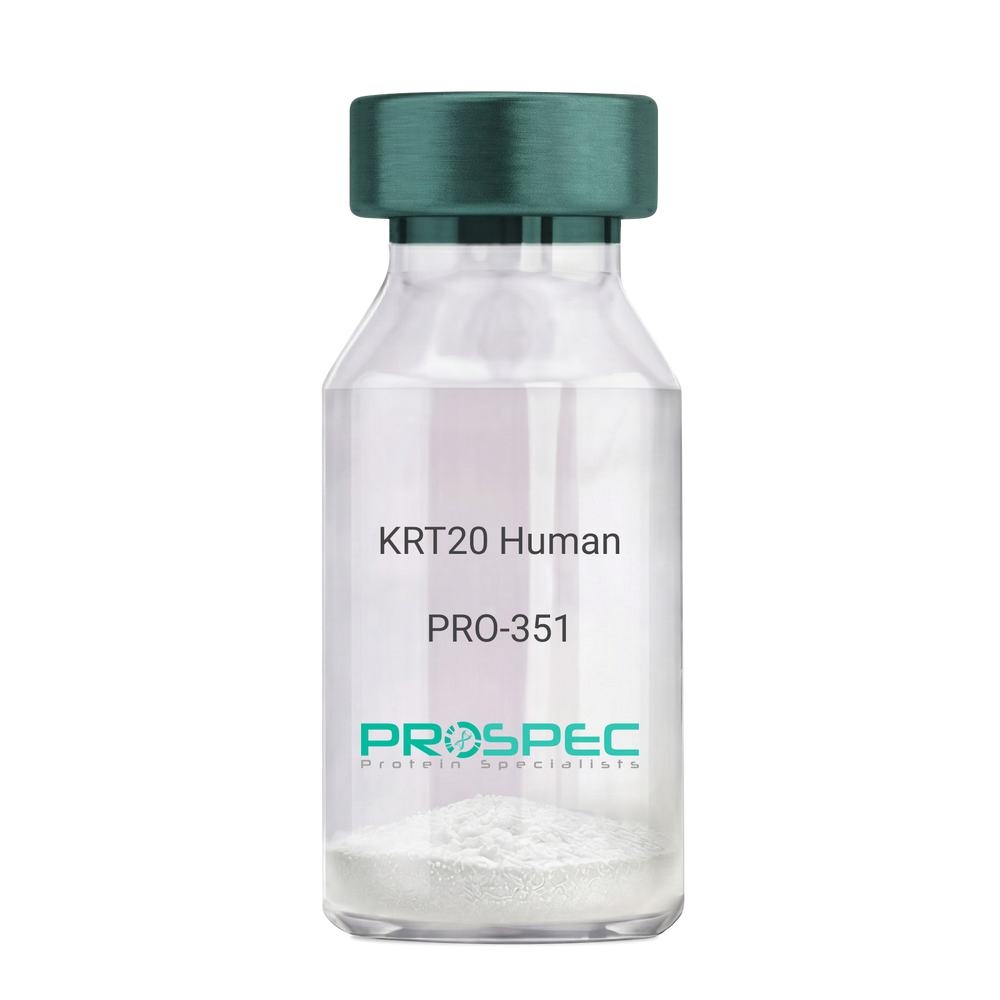
KRT20 HumanDescription:
Cytokeratin 20 Human Recombinant
Keratin type I cytoskeletal 20, Cytokeratin-20, CK-20, Keratin-20, K20, Protein IT, KRT20, CD20, CK20, KRT21, MGC35423.
Product # :
PRO-351Price :
Quantity :
Shipping Method :
Shipped at Room temp
More Info
- description
- source
- formulation
- purity
- More Info
Description
Cytokeratin 20 Human Recombinant produced in E.Coli is a single,non-glycosylated polypeptide chain having a molecular mass of 48,553 Dalton. The KRT20 is purified by proprietary chromatographic techniques.
Source
Escherichia Coli.
Formulation
The protein (1mg/1ml) was lyophilized after from a sterile solution containing 30mM Tris-HCL pH-8, 9.5M urea, 2mM DDT, 2mM EDTA and 10mM methylammonium chloride.
Purity
Greater than 95.0% as determined by SDS-PAGE.
More Info
-
Introduction
KRT20 is a member of the keratin family. The keratins are intermediate filament proteins responsible for the structural integrity of epithelial cells and are subdivided into cytokeratins and hair keratins. The type I cytokeratins consist of acidic proteins which are arranged in pairs of heterotypic keratin chains. This cytokeratin is a major cellular protein of mature enterocytes and goblet cells and is specifically expressed in the gastric and intestinal mucosa. The type I cytokeratin genes are clustered in a region of chromosome 17q12-q21.
-
Synonyms
Keratin type I cytoskeletal 20, Cytokeratin-20, CK-20, Keratin-20, K20, Protein IT, KRT20, CD20, CK20, KRT21, MGC35423.
-
Physical Appearance
Sterile Filtered White lyophilized (freeze-dried) powder.
-
Stability
Lyophilized KRT20 although stable at room temperature for 3 weeks, should be stored desiccated below -18°C. Upon reconstitution KRT20 should be stored at 4°C between 2-7 days and for future use below -18°C.For long term storage it is recommended to add a carrier protein (0.1% HSA or BSA).Please prevent freeze-thaw cycles.
-
Solubility
It is recommended to reconstitute the lyophilized KRT20 in sterile 18MΩ-cm H2O not less than 100µg/ml, which can then be further diluted to other aqueous solutions.
-
Reconstitution to filaments
Performed by mixing equimolar amounts of cytokeratins of type I and type II at concentrations of approx. 0.5 mg/ml, both dissolved in 9.5 M urea buffer (see above). Protofilaments and filament complexes are obtained by dialyzing the resulting polypeptide solution stepwise to a concentration of 4 M urea and then to low salt condition (50 mM NaCI, 2 mM dithiothreitol, 10 mM Tris-HCI, pH 7.4). For immunization purposes, the solution can be further dialyzed against PBS (phosphate buffered saline, e.g. Dulbecco's PBS).
ProSpec's products are furnished for LABORATORY RESEARCH USE ONLY. The product may not be used as drugs, agricultural or pesticidal products, food additives or household chemicals.
- View Data Sheet
Name :
KRT14 HumanDescription:
Cytokeratin 14 Human Recombinant
Keratin, type I cytoskeletal 14, Cytokeratin-14, CK-14, Keratin-14, K14, KRT14, NFJ, CK14, EBS3, EBS4.
Product # :
PRO-348Price :
Quantity :
Shipping Method :
Shipped at Room temp
More Info
- description
- source
- formulation
- purity
- More Info
Description
Cytokeratin 14 Human Recombinant produced in E.Coli is a single, non-glycosylated polypeptide chain having a molecular mass of 51,530 Dalton. The KRT14 is purified by proprietary chromatographic techniques.
Source
Escherichia Coli.
Formulation
The protein (1mg/ml) was lyophilized after from a sterile solution containing 30mM Tris-HCl pH-8, 9.5M urea, 2mM DTT, 2mM EDTA and 10mM methylammonium chloride.
Purity
Greater than 95.0% as determined by SDS-PAGE.
More Info
-
Introduction
Cytokeratin 14 is a member of the keratin family, the most diverse group of intermediate filaments. Cytokeratin 14 is a type I keratin, is usually found as a heterotetramer with two keratin 5 molecules, a type II keratin. Together they form the cytoskeleton of epithelial cells. Mutations in the genes for these keratins are associated with epidermolysis bullosa simplex. At least one pseudogene has been identified at 17p12-p11.
-
Synonyms
Keratin, type I cytoskeletal 14, Cytokeratin-14, CK-14, Keratin-14, K14, KRT14, NFJ, CK14, EBS3, EBS4.
-
Physical Appearance
Sterile Filtered White lyophilized (freeze-dried) powder.
-
Stability
Lyophilized KRT14 although stable at room temperature for 3 weeks, should be stored desiccated below -18°C. Upon reconstitution KRT14 should be stored at 4°C between 2-7 days and for future use below -18°C.For long term storage it is recommended to add a carrier protein (0.1% HSA or BSA).Please prevent freeze-thaw cycles.
-
Solubility
It is recommended to reconstitute the lyophilized CK-14 in sterile 18MΩ-cm H2O not less than 100µg/ml, which can then be further diluted to other aqueous solutions.
-
Reconstitution to filaments
Performed by mixing equimolar amounts of cytokeratins of type I and type II at concentrations of approx. 0.5 mg/ml, both dissolved in 9.5M urea buffer (see above). Protofilaments and filament complexes are obtained by dialyzing the resulting polypeptide solution stepwise to a concentration of 4M urea and then to low salt condition (50mM NaCI, 2mM dithiothreitol, 10mM Tris-HCI, pH 7.4). For immunization purposes, the solution can be further dialyzed against PBS (phosphate buffered saline, e.g. Dulbecco's PBS).
ProSpec's products are furnished for LABORATORY RESEARCH USE ONLY. The product may not be used as drugs, agricultural or pesticidal products, food additives or household chemicals.
- View Data Sheet
Name :
NPPA HumanDescription:
Natriuretic Peptide A Human Recombinant
Natriuretic peptides A, CDD-ANF, Cardiodilatin, CDD, Cardiodilatin-related peptide, CDP, N-terminal proatrial natriuretic peptide, ANP, PND.
Product # :
CYT-1028Price :
Quantity :
Shipping Method :
Shipped at Room temp
More Info
- description
- source
- formulation
- purity
- More Info
Description
NPPA Human Recombinant produced in E.Coli is a single, non-glycosylated, polypeptide chain (a.a 26-123) containing 106 amino acids including an 8 a.a N-terminal His tag. The total molecular mass is 11.7kDa (calculated).
Source
Escherichia Coli.
Formulation
NPPA filtered (0.4 µm) and lyophilized from 0.5mg/ml in 20 mM Tris buffer, 50 mM NaCl and 5% w/v trehalosa, pH 7.5.
Purity
Greater than 95.0% as determined by SDS-PAGE.
More Info
-
Introduction
Natriuretic Peptide A (NPPA) is a part of the natriuretic peptide family and is involved in cardiovascular homeostasis through regulation of natriuresis, diuresis, and vasodilation. NPPA is synthesized as a great precursor which releases a peptide from the N-terminus with similarity to vasoactive peptide, cardiodilatin, and another peptide from the C-terminus with natriuretic-diuretic activity. In female pregnancy, NPPA is promoting trophoblast invasion and spiral artery remodeling in uterus.
-
Synonyms
Natriuretic peptides A, CDD-ANF, Cardiodilatin, CDD, Cardiodilatin-related peptide, CDP, N-terminal proatrial natriuretic peptide, ANP, PND.
-
Physical Appearance
Filtered White lyophilized (freeze-dried) powder.
-
Stability
Store lyophilized protein at -20°C. Aliquot the product after reconstitution to avoid repeated freezing/thawing cycles. Reconstituted protein can be stored at 4°C for a limited period of time; it does not show any change after two weeks at 4°C.
-
Solubility
It is recommended to add deionized water to prepare a working stock solution of approximately 0.5mg/ml and let the lyophilized pellet dissolve completely. NPPA is not sterile! Please filter the product by an appropriate sterile filter before using it in the cell culture.
-
Amino Acid Sequence
MKHHHHHHNP MYNAVSNADL MDFKNLLDHL EEKMPLEDEV VPPQVLSEPN EEAGAALSPL PEVPPWTGEV SPAQRDGGAL GRGPWDSSDR SALLKSKLRA LLTAPR.
ProSpec's products are furnished for LABORATORY RESEARCH USE ONLY. The product may not be used as drugs, agricultural or pesticidal products, food additives or household chemicals.
- View Data Sheet
Name :
VEGF E (Orf Virus)Description:
Vascular Endothelial Growth Factor-E Recombinant (Orf Virus)
Product # :
CYT-263Price :
Quantity :
Shipping Method :
Shipped at Room temp
More Info
- description
- source
- formulation
- purity
- biological activity
- More Info
Description
A DNA sequence encoding the mature variant of ovVEGF-E isolate D1701 (Dehio et al., 1999; GenBank accession No. AF106020) was expressed in E. coli as a 132 amino acid residue fusion protein with an N-terminal His-tag sequence and a thrombin cleavage site. Recombinant VEGF-E homodimer was dimerized in vitro and has a predicted mass of approximately 35 kDa.
Source
Escherichia Coli.
Formulation
The protein was lyophilized from a concentrated (1mg/ml) solution containing PBS.
Purity
Greater than 90.0% as determined by SDS-PAGE.
Biological Activity
The biological activity was determined (1) by the ability to induce VEGFR-2/KDR receptor phosphorylation in PAE/KDR cells and (2) in a cell proliferation assay using primary HUVECs. The ED50 for this effect is typically 1-5ng/ml.More Info
-
Introduction
Based on sequence similarity to VEGF-A, a gene encoding a VEGF homologue has recently been discovered in the genome of Orf virus (OV) (Lyttle et al., 1994). Different isolates of Orf virus show significant amino acid sequence similarity to VEGF-A and described as a viral virulence factor that appears to be derived from captured host genes. All eight cysteine residues of the central cysteine knot motif characteristic of members of the VEGF family are conserved among other residues in the VEGF-E proteins (Dehio et al., 1999; Wise et al., 1999). Alignment of all mammalian VEGF sequences indicated that VEGF-E is distinct from the previously described VEGFs but most closely related to VEGF-A. Like VEGF-A, VEGF-E was found to bind with high affinity to VEGF receptor-2 (KDR) resulting in receptor autophosphorylation, whilst in contrast to VEGF-A, VEGF-E can not bind to VEGF receptor-1 (Flt-1). Furthermore VEGF-E can also not bind to VEGF receptor-3 (FLT-4). Therefore VEGF-E is a potent angiog
-
Physical Appearance
Sterile Filtered White lyophilized (freeze-dried) powder.
-
Stability
Lyophilized Vascular Endothelial Growth Factor-E Orf Virus although stable at room temperature for 3 weeks, should be stored desiccated below -18°C. Upon reconstitution VEGF E -OV should be stored at 4°C between 2-7 days and for future use below -18°C.Please prevent freeze-thaw cycles.
-
Solubility
The lyophilized oVEGF-E Orf Virus should be reconstituted in water or medium to a concentration not lower than 50µg/ml. For long term storage we would recommend to add at least 0.1% human or bovine serum albumin.
-
Amino Acid Sequence
MGSSHHHHHH SSGLVPRGSH DSTKTWSEVF ENSGCKPRPM VFRVHDEHPE LTSQRFNPPC VTLMRCGGCC NDESLECVPT EEANVTMQLM GASVSGGNGM QHLSFVEHKK CDCKPPLTTT PPTTTRPPRR RR
ProSpec's products are furnished for LABORATORY RESEARCH USE ONLY. The product may not be used as drugs, agricultural or pesticidal products, food additives or household chemicals.
- View Data Sheet
Name :
SPARC HumanDescription:
Secreted Protein Acidic & Rich in Cysteine Recombinant Human
Osteonectin, ON, Basement-membrane protein 40, BM-40, SPARC, Secreted Protein acidic and Rich in Cysteine.
Product # :
PRO-2602Price :
Quantity :
Shipping Method :
Shipped at Room temp
More Info
- description
- source
- formulation
- purity
- biological activity
- More Info
Description
Secreted Protein Acidic & Rich in Cysteine Human Recombinant produced in E.Coli is a single, non- glycosylated polypeptide chain containing 286 amino acids and having a molecular mass of 32.7kDa.SPARC is purified by proprietary chromatographic techniques.
Source
Escherichia Coli.
Formulation
Lyophilized from a 0.2μm filtered concentrated solution in PBS, pH 7.4.
Purity
Greater than 98.0% as determined by:
(a) Analysis by RP-HPLC.
(b) Analysis by SDS-PAGE.Biological Activity
The ED50 as determined by its ability to inhibit the cell growth of Mv1Lu mink lung epithelial cells is < 3.0 µg/mL, corresponding to a specific activity of > 333 IU/mg.
More Info
-
Introduction
SPARC, an acronym for “secreted protein, acidic and rich in cysteine”, is also known as osteonectin or BM-40. It is the founding member of a family of secreted matricellular proteins with similar domain structure. The 303 amino acid, 43 kDa protein contains a 17 aa signal sequence, an N-terminal acidic region that binds calcium, a follistatin domain containing Kazal-like sequences, and a C-terminal extracellular calcium (EC) binding domain with two EF-hand motifs. SPARC is produced by fibroblasts, capillary endothelial cells, platelets and macrophages, especially in areas of tissue morphogenesis and remodeling. SPARC shows context-specific effects, but generally inhibits adhesion, spreading and proliferation, and promotes collagen matrix formation. For endothelial cells, SPARC disrupts focal adhesions and binds and sequesters PDGF and VEGF. SPARC is abundantly expressed in bone, where it promotes osteoblast differentiation and inhibits adipogenesis.
-
Synonyms
Osteonectin, ON, Basement-membrane protein 40, BM-40, SPARC, Secreted Protein acidic and Rich in Cysteine.
-
Physical Appearance
Sterile Filtered White lyophilized (freeze-dried) powder.
-
Stability
Lyophilized SPARC although stable at room temperature for 3 weeks, should be stored desiccated below -18°C. Upon reconstitution Secreted Protein Acidic & Rich in Cysteine should be stored at 4°C between 2-7 days and for future use below -18°C.Please prevent freeze-thaw cycles.
-
Solubility
It is recommended to reconstitute the lyophilized SPARC in sterile 18MΩ-cm H2O not less than 100µg/ml, which can then be further diluted to other aqueous solutions.
-
Amino Acid Sequence
APQQEALPDE TEVVEETVAE VTEVSVGANP VQVEVGEFDD GAEETEEEVV AENPCQNHHC KHGKVCELDE NNTPMCVCQD PTSCPAPIGE FEKVCSNDNK TFDSSCHFFA TKCTLEGTKK GHKLHLDYIG PCKYIPPCLD SELTEFPLRM RDWLKNVLVT LYERDEDNNL LTEKQKLRVK KIHENEKRLE AGDHPVELLA RDFEKNYNMY IFPVHWQFGQ LDQHPIDGYL SHTELAPLRA PLIPMEHCTT RFFETCDLDN DKYIALDEWA GCFGIKQKDI DKDLVI.
ProSpec's products are furnished for LABORATORY RESEARCH USE ONLY. The product may not be used as drugs, agricultural or pesticidal products, food additives or household chemicals.
- View Data Sheet
Name :
MX1 BovineDescription:
Myxovirus Resistance 1 Bovine Recombinant
Interferon-induced GTP-binding protein Mx1, Myxoma resistance protein 1, Myxovirus resistance protein 1, MX1, Interferon-Induced Protein P78, IFI-78K, IFI78, MxA.
Product # :
PRO-1662Price :
Quantity :
Shipping Method :
Shipped at Room temp
More Info
- description
- source
- formulation
- purity
- More Info
Description
MX1 Bovine Recombinant fused with a 20 amino acid His tag at N-terminus produced in E.Coli is a single, non-glycosylated, polypeptide chain (1-648 a.a) containing a total of 668 amino acids and having a molecular mass of 77kDa. The MX1 is purified by proprietary chromatographic techniques.
Source
Escherichia Coli.
Formulation
The MX1 protein was lyophilized from a (1mg/ml) 0.2µm filtered solution containing 20mM Tris-HCl, pH7.9, 500mM NaCl, 0.5mM Imidazole, 0.1mM DTT and 6M urea.
Purity
Greater than 90.0% as determined by:
(a) Analysis by RP-HPLC.
(b) Analysis by SDS-PAGE.More Info
-
Introduction
Myxoma Resistance Protein 1 (MX1) is a member of the dynamin family and contains 1 GED domain. MX1 is an Interferon-induced dynamin-like GTPase with antiviral activity against rabies virus (RABV), vesicular stomatitis virus (VSV) and murine pneumonia virus (MPV). MX1 is ubiquitously expressed. MX1 is induced by type I and type III interferons.
-
Synonyms
Interferon-induced GTP-binding protein Mx1, Myxoma resistance protein 1, Myxovirus resistance protein 1, MX1, Interferon-Induced Protein P78, IFI-78K, IFI78, MxA.
-
Physical Appearance
Sterile Filtered White lyophilized (freeze-dried) powder.
-
Stability
Lyophilized MX1 although stable at room temperature for 3 weeks, should be stored desiccated below -18°C. Upon reconstitution MX1 should be stored at 4°C between 2-7 days and for future use below -18°C.For long term storage it is recommended to add a carrier protein (0.1% HSA or BSA).Please prevent freeze-thaw cycles.
-
Solubility
It is recommended to reconstitute the lyophilized MX1 in sterile 18M-cm H2O not less than 100µg/ml, which can then be further diluted to other aqueous solutions.
-
Amino Acid Sequence
MGSSHHHHHHSSGLVPRGSHMVHSDLGIEELDSPESSLNGSEDMESKSNLYSQYEEKVRPCID
LIDSLRSLGVEQDLALPAIAVIGDQSSGKSSVLEALSGVALPRGSGIVTRCPLVLRLKKLGNE
DEWKGKVSFLDKEIEIPDASQVEKEISEAQIAIAGEGTGISHELISLEVSSPHVPDLTLIDLP
GITRVAVGNQPPDIEYQIKSLIRKYILRQETINLVVVPANVDIATTEALRMAQEVDPQGDRTI
GILTKPDLVDKGTEDKVVDVVRNLVFHLKKGYMIVKCRGQQDIKHRMSLDKALQRERIFFEDH
AHFRDLLEEGKATIPCLAERLTSELIMHICKTLPLLENQIKETHQRITEELQKYGKDIPEEES
EKMFCLIEKIDTFNKEIISTIEGEEFVEQYDSRLFTKVRAEFSKWSAVVEKNFEKGYEAIRKE
IKQFENRYRGRELPGFVNYKTFETIIKKQVRVLEEPAVDMLHTVTDIIRNTFTDVSGKHFNEF
FNLHRTAKSKIEDIRLEQENEAEKSIRLHFQMEQLVYCQDQVYRRALQQVREKEAEEEKNKKS
NHYFQSQVSEPSTDEIFQHLTAYQQEVSTRISGHIPLIIQFFVLRTYGEQLKKSMLQLLQDKD
QYDWLLKERTDTRDKRKFLKERLERLTRARQRLAKFPG.
ProSpec's products are furnished for LABORATORY RESEARCH USE ONLY. The product may not be used as drugs, agricultural or pesticidal products, food additives or household chemicals.
- View Data Sheet
Name :
IL5 CanineDescription:
Interleukin-5 Canine Recombinant
Interleukin-5, IL-5, EDF, TRF, Eosinophil differentiation factor, T-cell replacing factor.
Product # :
CYT-1184Price :
Quantity :
Shipping Method :
Shipped with Ice Packs
More Info
- description
- source
- formulation
- purity
- biological activity
- More Info
Description
IL5 Canine produced in Sf9 Baculovirus cells is a single, glycosylated polypeptide chain containing 119 amino acids (22-134 aa) and having a molecular mass of 13.9kDa.IL5 is fused to a 6 amino acid His tag at C-terminus and purified by proprietary chromatographic techniques.
Source
Sf9, Baculovirus cells.
Formulation
The IL5 solution (0.25mg/ml) contains 10% Glycerol and Phosphate-Buffered Saline (pH 7.4).
Purity
Greater than 90.0% as determined by SDS-PAGE.
Biological Activity
Measured in a cell proliferation assay using TF-1 human erythroleukemic cell. The ED50 range ≤ 15 ng/ml.
More Info
-
Introduction
The protein encoded by IL5is a cytokine that acts as a growth and differentiation factor for both B cells and eosinophils. IL5is a main regulator of eosinopoiesis, eosinophil maturation and activation. The elevated production of IL5is reported to be related to asthma or hypereosinophilic syndromes. The receptor of this cytokine is a heterodimer, whose beta subunit is shared with the receptors for interleukine 3 (IL3) and colony stimulating factor 2 (CSF2/GM-CSF). Interleukin-5, together with those for interleukin 4 (IL4), interleukin 13 (IL13), and CSF2, form a cytokine gene cluster on chromosome 5. Interleukin-5, IL4, and IL13 are found to be regulated coordinately by long-range regulatory elements spread over 120 kilobases on chromosome 5q31.
-
Synonyms
Interleukin-5, IL-5, EDF, TRF, Eosinophil differentiation factor, T-cell replacing factor.
-
Physical Appearance
Sterile Filtered colorless solution.
-
Stability
Store at 4°C if entire vial will be used within 2-4 weeks. Store, frozen at -20°C for longer periods of time. For long term storage it is recommended to add a carrier protein (0.1% HSA or BSA).Avoid multiple freeze-thaw cycles.
-
Amino Acid Sequence
VENPMNRLVA ETLTLLSTHR TWLIGDGNLM IPTPENKNHQ LCIKEVFQGI DTLKNQTAHG EAVDKLFQNL SLIKEHIERQ KKRCAGERWR VTKFLDYLQV FLGVINTEWT PESHHHHHH
ProSpec's products are furnished for LABORATORY RESEARCH USE ONLY. The product may not be used as drugs, agricultural or pesticidal products, food additives or household chemicals.
- View Data Sheet
Name :
HTF HumanDescription:
Holo Transferrin Human
Serotransferrin, Transferrin, Siderophilin, Beta-1-metal-binding globulin, TF, PRO1557, PRO2086, DKFZp781D0156, Holo Transferrin, HTF.
Product # :
PRO-315Price :
Quantity :
Shipping Method :
Shipped at Room temp
More Info
- description
- source
- formulation
- purity
- More Info
Description
Human Holo Transferrin is a glycoprotein of approximately 77 kDa.
Source
Human serum.
Formulation
The protein (10mg/ml) was lyophilized from 20mM NH4HC03 solution.
May contain traces of buffer salts.Purity
Greater than 98.0% as determined by coomassie blue stained SDS-PAGE and Cellulose Acetate electrophoresis.
More Info
-
Introduction
Transferrin is the iron-transport protein of vertebrate serum and donates iron to cells through interaction with a specific membrane receptor, CD71. Transferrin appears to be indispensable for most cells growing in tissue culture.
It is referred to frequently as a growth factor because, in analogy to other growth factor-receptor interactions, proliferating cells express high numbers of transferrin receptors, and the binding of transferrin to their receptors is needed for cells to initiate and maintain their DNA synthesis. Apart from its role as an iron transport protein transferrin acts as a cytokine and has functions that may not be related to its iron-carrying capacity.
Human Transferrin is a crucial component for the cultivation of mammalian cells in-vitro. Human Transferrin is Critical for long-term cells growth in-vitro. Human Transferrin is used as detoxificant in media by binding contaminating metal ions. Human Transferrin is often used as a nutrient in fermentation media for recombinant protein and biopharmaceutical production. Additional common uses of Human Transferrin areMolecular weight, Affinity purification of anti-human transferrin antibodies and also as receptor mediated transfection of molecules such as DNA, into cells. -
Synonyms
Serotransferrin, Transferrin, Siderophilin, Beta-1-metal-binding globulin, TF, PRO1557, PRO2086, DKFZp781D0156, Holo Transferrin, HTF.
-
Physical Appearance
Sterile Filtered Pink lyophilized (freeze-dried) powder.
-
Stability
Store the lyophilized Holo Transferrin between 2-8°C, do not freeze. Upon reconstitution Apo Transferrin should be stored at 4°C between 2-7 days and for future use below -18°C.Please prevent freeze-thaw cycles.
-
Solubility
It is recommended to reconstitute the lyophilized Holo Transferrin in sterile 18MΩ-cm H2O not less than 100µg/ml, which can then be further diluted to other aqueous solutions.
-
Human Virus Test
FDA approved Plasma from each donor has been tested and found negative for antibodies to HIV-1 & 2, HCV, HBsAG, HBc, HBV, HAV, HIV and Syphilis.
-
Iron Content
The Iron content was estimated by ICP and was found to be 1232 ppm.
ProSpec's products are furnished for LABORATORY RESEARCH USE ONLY. The product may not be used as drugs, agricultural or pesticidal products, food additives or household chemicals.
- View Data Sheet
Name :
EIF3K (50-94) HumanDescription:
Eukaryotic Translation Initiation Factor 3K (50-94 a.a.) Human Recombinant
PLAC-24, eIF3k, eIF-3 p25, eIF-3 p28, EIF3S12.
Product # :
PRO-2833Price :
Quantity :
Shipping Method :
Shipped at Room temp
More Info
- description
- source
- formulation
- purity
- More Info
Description
The EIF3KHuman is created as a recombinant protein with a 4kda N-terminal fusion of His Tag. The EIF3KHis-Tagged Fusion Protein, produced in E. coli, is a 10kDa protein containing 45 amino acid residues of the EIF3KHuman, 50-94 amino acids.
Source
Escherichia Coli.
Formulation
Each mg was lyophilized with 1xPBS, 0.4% SDS and 4mM DTT.
Purity
Greater than 90% as determined by SDS-PAGE.
More Info
-
Synonyms
PLAC-24, eIF3k, eIF-3 p25, eIF-3 p28, EIF3S12.
-
Physical Appearance
Filtered White lyophilized (freeze-dried) powder.
-
Stability
Store lyophilized EIF3Kat -20°C. Aliquot the product after reconstitution to avoid repeated freezing/thawing cycles. Reconstituted protein can be stored at 4°C for a limited period of time; it does not show any change after two weeks at 4°C.
-
Solubility
It is recommended to add deionized water to prepare a working stock solution of approximately 0.5mg/ml and let the lyophilized pellet dissolve completely. Product is not sterile! Please filter the product by an appropriate sterile filter before using it on cell culture.
-
Background
Eukaryotic Translation Initiation Factor 3K (EIF3K) is a part of the eIF3 subunit K family. EIF3K is the smallest subunit of eIF3 and it interacts with a few other subunits of the 40S ribosomal subunit and eIF3. EIF3K is found both in nucleus and cytoplasm and colocalized with cyclin D3, a regulatory subunit of cyclin-dependent kinase 4. EIF3K is conserved among high eukaryotes, including mammals, plants and insects and is expressed in human tissues.
ProSpec's products are furnished for LABORATORY RESEARCH USE ONLY. The product may not be used as drugs, agricultural or pesticidal products, food additives or household chemicals.
- View Data Sheet
Name :
Leptin qA Ovine, PEGDescription:
Leptin Quadruple Antagonist Pegylated Ovine Recombinant
Product # :
CYT-1246Price :
Quantity :
Shipping Method :
Shipped at Room temp
More Info
- description
- source
- formulation
- purity
- biological activity
- More Info
Description
Leptin Antagonist Quadruple Mutant Ovine Recombinant is a single non-glycosilated polypeptide chain containing 146 amino acids and additional Ala at N-terminus. The Ovine Leptin antagonist was mutated, resulting in D23L/L39A/D40A/F41A mutant. The Ovine Leptin antagonist is bound to 20 kDa mono-PEG at N-terminus, resulting in 35.6 kDa. The Ovine Leptin Quadruple anatagonist Pegylated runs as a 48 kDa due to enlarged hydrodymanic volume. Leptin Antagonist Quadruple Mutant Ovine Recombinant was purified by proprietary chromatographic techniques.
Source
Escherichia coli.
Formulation
The Ovine Leptin Quadruple anatagonist was lyophilized from a concentrated (0.65mg/ml) solution with 0.003mM NaHCO3.
Purity
Greater than 95.0% as determined by:
(a) Gel filtration analysis.
(b) Analysis by SDS-PAGE.
Biological Activity
Pegylated Ovine Leptin Quadruple Antagonist inhibits leptin-induced proliferation of BAF/3 cells stably transfected with the long form of human leptin receptor. Pegylated recombinant Ovine leptin antagonist in vitro activity is 6-8 fold lower than the non-pegylated recombinant super Ovine leptin antagonist but is 15 fold higher as compared to pegylated recombinant super active ovine leptin antagonist.
More Info
-
Physical Appearance
White lyophilized (freeze-dried) powder.
-
Stability
Lyophilized Leptin Antagonist Quadruple Mutant Ovine Recombinant although stable at room temperature for several weeks, should be stored desiccated below -18°C. Upon reconstitution at > 0.1 mg/ml and up to 2mM and filter sterilization LEP mutant can be stored at 4°C or even room temperature for several weeks making it suitable for long term infusion studies using osmotic pumps. At lower concentration addition of a carrier protein (0.1% HSA or BSA) is suggested. Please prevent freeze-thaw cycles.
-
Solubility
It is recommended to reconstitute the lyophilized Leptin Antagonist Quadruple Mutant Ovine Recombinant in sterile water or sterile 0.4% NaHCO3adjusted to pH 8-9, not less than 100µg/ml, which can then be further diluted with other aqueous solutions.
-
Background
Leptin is mainly produced by adipocytes. Leptin’s main part is to regulate long-term energy balance. Leptin is encoded by the LEP gene. Leptin effects mostly on leptin receptors in the cell mambrane of various cells in the human body. The leptin receptor can be found on a various cell types. The leptin receptor is a single-transmembrane-domain type 1 cytokine receptor. leptin levels influence satiety, appetite and triggers behaviours which save energy. High leptin levels are interpreted by the brain that energy reserves are high, whereas low leptin levels means that energy reserves are low, in the process adapting the organism to starvation through a variety of metabolic, neurobiochemical, endocrine and behavioral change.
-
Protein content
Protein quantization was carried out by UV spectroscopy at 280 nm using the absorbency value of 0.2 as the extinction coefficient for a 0.1% (1mg/ml) solution at pH 8.0. This value is calculated by the PC GENE computer analysis program of protein sequences (IntelliGenetics).
ProSpec's products are furnished for LABORATORY RESEARCH USE ONLY. The product may not be used as drugs, agricultural or pesticidal products, food additives or household chemicals.
- View Data Sheet
Name :
MIP 4 Human, HisDescription:
Macrophage Inflammatory protein-4 (CCL18) Human Recombinant, His-Tag
Small inducible cytokine A18, CCL18, Macrophage inflammatory protein 4, MIP-4, Pulmonary and activation-regulated chemokine, CC chemokine PARC, Alternative macrophage activation-associated CC chemokine 1, AMAC-1, Dendritic cell chemokine 1, DC-CK1, chemokine (C-C motif) ligand 18, CKb7, PARC, AMAC1, DCCK1, SCYA18.
Product # :
CHM-339Price :
Quantity :
Shipping Method :
Shipped with Ice Packs
More Info
- description
- source
- formulation
- purity
- More Info
Description
MIP-4 Human Recombinant fused with a 25 amino acid His tag at N-terminus produced in E.Coli is a single, non-glycosylated, polypeptide chain containing 93 amino acids (22-89 a.a.) and having a molecular mass of 10.4kDa. The MIP-4 is purified by proprietary chromatographic techniques.
Source
Escherichia Coli.
Formulation
The MIP-4 solution (0.25 mg/ml) contains 10mM Sodium Citrate pH3.5 and 10% Glycerol.
Purity
Greater than 95.0% as determined by SDS-PAGE.
More Info
-
Introduction
Chemokine (C-C motif) ligand 18 (CCL18) is a small cytokine belonging to the CC chemokine family that was previously called PARC (pulmonary and activation-regulated chemokine). CCL18 is approximately 60% identical in amino acid sequence to CCL3. It is expressed at high levels in lung and at lower levels in certain lymphoid tissues, such as the lymph nodes, and is chemotactic for activated T cells and non activated lymphocytes. The gene for human CCL18 contains three exons and is located on chromosome 17.
-
Synonyms
Small inducible cytokine A18, CCL18, Macrophage inflammatory protein 4, MIP-4, Pulmonary and activation-regulated chemokine, CC chemokine PARC, Alternative macrophage activation-associated CC chemokine 1, AMAC-1, Dendritic cell chemokine 1, DC-CK1, chemokine (C-C motif) ligand 18, CKb7, PARC, AMAC1, DCCK1, SCYA18.
-
Physical Appearance
Sterile Filtered colorless solution.
-
Stability
Store at 4°C if entire vial will be used within 2-4 weeks. Store, frozen at -20°C for longer periods of time. For long term storage it is recommended to add a carrier protein (0.1% HSA or BSA).Avoid multiple freeze-thaw cycles.
-
Amino Acid Sequence
MGSSHHHHHH SSGLVPRGSH MGSHMQVGTN KELCCLVYTS WQIPQKFIVD YSETSPQCPK PGVILLTKRG RQICADPNKK WVQKYISDLK LNA.
ProSpec's products are furnished for LABORATORY RESEARCH USE ONLY. The product may not be used as drugs, agricultural or pesticidal products, food additives or household chemicals.
- View Data Sheet
Name :
MMP 7 HumanDescription:
Matrix Metalloproteinase-7 Human Recombinant
Matrilysin, EC 3.4.24.23, Pump-1 protease, Uterine metalloproteinase, Matrix metalloproteinase-7, MMP-7, Matrin, MPSL1, PUMP-1, MMP7.
Product # :
ENZ-867Price :
Quantity :
Shipping Method :
Shipped with Ice Packs
More Info
- description
- source
- formulation
- purity
- More Info
Description
MMP-7 Human Recombinant produced in E.Coli is a single, non-glycosylated polypeptide chain containing 174 amino acids (95-267 a.a) and having a molecular mass of 19.2kDa.MMP7 is purified by proprietary chromatographic techniques.
Source
Escherichia Coli.
Formulation
MMP7 protein solution (1mg/ml) containing 20mM Tris 8.0 and 10% glycerol.
Purity
Greater than 90% as determined by SDS-PAGE.
More Info
-
Introduction
Matrix metalloproteinase-7 (MMP-7) also known as matrilysin and PUMP (EC 3.4.24.23) cleaves a number of substrates including collagen types IV and X, elastin, fibronectin, gelatin, laminin and proteoglycans. MMP-7 is closely related to the stromelysin family members but is encoded by a different gene. MMP-7 is the smallest of all the MMPs consisting of a pro-peptide domain and a catalytic domain. It lacks the hemopexin-like domain common to other members of the MMPs. MMP-7 is secreted as a 28 kDa proenzyme and can be activated in vitro by organomercurials and trypsin and in vivo by MMP-3 to a 18 kDa active MMP-7 enzyme. Once activated, MMP-7 can activate pro-MMP-1 and pro-MMP-9 but not pro-MMP-2. MMP-7 is widely expressed having been reported in elevated levels in cycling endometrium as well as in colorectal cancers and adenomas, hepatocellular carcinomas, rectal carcinomas, and approximately 50% of gliomas.
-
Synonyms
Matrilysin, EC 3.4.24.23, Pump-1 protease, Uterine metalloproteinase, Matrix metalloproteinase-7, MMP-7, Matrin, MPSL1, PUMP-1, MMP7.
-
Physical Appearance
Sterile Filtered colorless solution.
-
Stability
Store at 4°C if entire vial will be used within 2-4 weeks. Store, frozen at -20°C for longer periods of time. For long term storage it is recommended to add a carrier protein (0.1% HSA or BSA). Avoid multiple freeze-thaw cycles.
-
Amino Acid Sequence
MYSLFPNSPK WTSKVVTYRI VSYTRDLPHI TVDRLVSKAL NMWGKEIPLH FRKVVWGTAD IMIGFARGAH GDSYPFDGPG NTLAHAFAPG TGLGGDAHFD EDERWTDGSS LGINFLYAAT HELGHSLGMG HSSDPNAVMY PTYGNGDPQN FKLSQDDIKG IQKLYGKRSN SRKK.
ProSpec's products are furnished for LABORATORY RESEARCH USE ONLY. The product may not be used as drugs, agricultural or pesticidal products, food additives or household chemicals.
- View Data Sheet
Name :
SELE Human, Sf9Description:
E-Selectin Human Recombinant, Sf9
E-selectin, Endothelial leukocyte adhesion molecule 1, ELAM-1, Leukocyte-endothelial cell adhesion molecule 2, LECAM2, CD62E antigen, SELE, ELAM1, ELAM, ESEL, CD62E
Product # :
PRO-2712Price :
Quantity :
Shipping Method :
Shipped with Ice Packs
More Info
- description
- source
- formulation
- purity
- biological activity
- More Info
Description
SELE Human Recombinant produced in Sf9 Baculovirus cells is a single, glycosylated polypeptide chain containing 541 amino acids (22-556 a.a) and having a molecular mass of 59.4kDa.SELE is fused to a 6 amino acid His-tag at C-terminus & purified by proprietary chromatographic techniques.
Source
Sf9, Baculovirus cells.
Formulation
The SELE solution (0.5mg/1ml) contains Phosphate-Buffered Saline (pH 7.4) and 10% glycerol.
Purity
Greater than 95.0% as determined by SDS-PAGE.
Biological Activity
Measured by the ability of the immobilized protein to support the adhesion of U937 human histiocytic lymphoma cells, which are added to human E-Seletin/CD62E coated plates 2ug/ml. This effect is > 40%.
More Info
-
Introduction
E-selectin (SELE) is a part of a family of divalent cation-dependent carbohydrate-binding glycoproteins or adhesion molecules. E-selectin is expressed on the surface of endothelial cells and mediates the interaction of leukocytes and platelets with endothelial cells during an inflammatory response. E-selectin is present in single copy in the human genome and contains 14 exons spanning about 13 kb of DNA.
-
Synonyms
E-selectin, Endothelial leukocyte adhesion molecule 1, ELAM-1, Leukocyte-endothelial cell adhesion molecule 2, LECAM2, CD62E antigen, SELE, ELAM1, ELAM, ESEL, CD62E
-
Physical Appearance
Sterile filtered colorless solution.
-
Stability
Store at 4°C if entire vial will be used within 2-4 weeks.Store, frozen at -20°C for longer periods of time.For long term storage it is recommended to add a carrier protein (0.1% HSA or BSA).Avoid multiple freeze-thaw cycles.
-
Amino Acid Sequence
WSYNTSTEAM TYDEASAYCQ QRYTHLVAIQ NKEEIEYLNS ILSYSPSYYW IGIRKVNNVW VWVGTQKPLT EEAKNWAPGE PNNRQKDEDC VEIYIKREKD VGMWNDERCS KKKLALCYTA ACTNTSCSGH GECVETINNY TCKCDPGFSG LKCEQIVNCT ALESPEHGSL VCSHPLGNFS YNSSCSISCD RGYLPSSMET MQCMSSGEWS APIPACNVVE CDAVTNPANG FVECFQNPGS FPWNTTCTFD CEEGFELMGA QSLQCTSSGN WDNEKPTCKA VTCRAVRQPQ NGSVRCSHSP AGEFTFKSSC NFTCEEGFML QGPAQVECTT QGQWTQQIPV CEAFQCTALS NPERGYMNCL PSASGSFRYG SSCEFSCEQG FVLKGSKRLQ CGPTGEWDNE KPTCEAVRCD AVHQPPKGLV RCAHSPIGEF TYKSSCAFSC EEGFELHGST QLECTSQGQW TEEVPSCQVV KCSSLAVPGK INMSCSGEPV FGTVCKFACP EGWTLNGSAA RTCGATGHWS GLLPTCEAPT ESNIPHHHHH H
ProSpec's products are furnished for LABORATORY RESEARCH USE ONLY. The product may not be used as drugs, agricultural or pesticidal products, food additives or household chemicals.
- View Data Sheet
Name :
IL31 CanineDescription:
Interleukin-31 Canine Recombinant
IL-31, Interleukin 31, IL31.
Product # :
CYT-1137Price :
Quantity :
Shipping Method :
Shipped with Ice Packs
More Info
- description
- source
- formulation
- purity
- More Info
Description
IL31 Canine produced in Sf9 Baculovirus cells is a single, glycosylated polypeptide chain containing 136 amino acids (24-159 aa) and having a molecular mass of 15.3kDa.IL31 is purified by proprietary chromatographic techniques.
Source
Sf9, Baculovirus cells.
Formulation
The IL31 solution (0.25mg/ml) contains 20% Glycerol and Phosphate Buffered Saline (pH 7.4).
Purity
Greater than 95.0% as determined by SDS-PAGE.
More Info
-
Introduction
IL-31 produced by activated Th2-type T cells, cooperates with a heterodimeric receptor consisting of IL-31 Receptor Anatagonist and Onconstatin-M Receptor that is continuesly expressed on epithelial cells and keratinocytes. IL-31 plays a role in the promotion of allergic skin disorders and in regulating other allergic diseases, such as asthma. IL-31 is involved in the itching sensation and endorses the scratching behavior in NC/Nga mice with atopic dermatitis. IL-31 expression is connectd with CLA(+) T cells and contributes to the development of atopic dermatitis-induced skin inflammation and pruritus. IL-31 is a powerful inducer of proinflammatory mediators in human colonic SEMFs. IL-31 takes part as a proinflammatory cytokine derived from Th2 cells.
Serum IL-31 level is higher in patients with atopic dermatitis. IL-31 is involved in a broad range of immune- & non-immune cells & possesses potential pleiotropic physiological functions, including regulating hematopoiesis & immune response, causing inflammatory bowel disease, airway hypersensitivity & dermatitis. -
Synonyms
IL-31, Interleukin 31, IL31.
-
Physical Appearance
Sterile Filtered colorless solution.
-
Stability
Store at 4°C if entire vial will be used within 2-4 weeks. Store, frozen at -20°C for longer periods of time. For long term storage it is recommended to add a carrier protein (0.1% HSA or BSA).Avoid multiple freeze-thaw cycles.
-
Amino Acid Sequence
SHMAPTHQLP PSDVRKIILE LQPLSRGLLE DYQKKETGVP ESNRTLLLCL TSDSQPPRLN
SSAILPYFRA IRPLSDKNII DKIIEQLDKL KFQHEPETEI SVPADTFECK SFILTILQQF SACLESVFKS
LNSGPQ
ProSpec's products are furnished for LABORATORY RESEARCH USE ONLY. The product may not be used as drugs, agricultural or pesticidal products, food additives or household chemicals.
- View Data Sheet
Name :
Fibronectin RatDescription:
Fibronectin Rat
Product # :
PRO-131Price :
Quantity :
Shipping Method :
Shipped at Room temp
More Info
- description
- source
- formulation
- purity
- More Info
Description
Plasma fibronectin level is elevated in severe coronary artery disease. Increased plasma fibronectin levels are related with venous thromboembolism (VTE) particularly in males, and extend the probable association between biomarkers and risk factors for arterial atherothrombosis and VTE. Fibronectin plays a role in several cellular processes, including tissue repair, embryogenesis, blood clotting, and cell migration/adhesion. Fibronectin consists in two main forms: 1) as an insoluble glycoprotein dimer that serves as a linker in the etracellular matrix and 2) as a soluble disulphide linked dimer found in the plasma. The plasma form is produced by hepatocytes, and the ECM form is synthesized by fibroblasts, chondrocytes, endothelial cells, macrophages, as well as certain epithelial cells. Fibronectin alos takes part as a general cell adhesion molecule by anchoring cells to collagen or proteoglycan substrates. Fibronectin organizes cellular interaction with the ECM by binding to different components of the extracellular matrix and to membrane-bound Fibronectin receptors on cell surfaces. Molecular Weight 220kDa.
Source
Rat Plasma.
Formulation
The Rat Fibronectin was lyophilized from a concentrated 1mg/ml solution containing 20mM Tris Cl pH-7.5.
Purity
Greater than 95.0% as determined by SDS-PAGE.
More Info
-
Physical Appearance
Sterile Filtered White lyophilized (freeze-dried) powder.
-
Stability
Store the lyophilized fibronectin at 4°C. Upon reconstitution fibronectin should be stored at 4°C for 2 weeks and for future use below -18°C.Please prevent freeze-thaw cycles.
-
Solubility
It is recommended to reconstitute the lyophilized Rat Fibronectin in sterile 18M-cm H2O not less than 100µg/ml, which can then be further diluted to other aqueous solutions.
ProSpec's products are furnished for LABORATORY RESEARCH USE ONLY. The product may not be used as drugs, agricultural or pesticidal products, food additives or household chemicals.
- View Data Sheet
Name :
EREG Human, HEKDescription:
Epiregulin Human Recombinant, HEK
EPR, Epiregulin, Ep, ER, Proepiregulin, EREG.
Product # :
CYT-1206Price :
Quantity :
Shipping Method :
Shipped with Ice Packs
More Info
- description
- source
- formulation
- purity
- biological activity
- More Info
Description
EREG Human Recombinant produced in HEK293 cells is a single, glycosylated polypeptide chain (63-108a.a) containing 289 amino acids and having a molecular mass of 32.6 kDa.EREG is fused to a 239 amino acid hIgG-His-Tag at C-terminus & purified by proprietary chromatographic techniques.
Source
HEK293 cells.
Formulation
EREG protein (0.25mg/ml) contains 10% glycerol and Phosphate-Buffered Saline (pH 7.4).
Purity
Greater than 90.0% as determined by SDS-PAGE.
Biological Activity
Measured in a cell proliferation assay using Balb/3T3 mouse embryonic fibroblast cells. The ED50 range ≤ 1ug/ml.
More Info
-
Introduction
"Epiregulin is part of the EGF family. Epiregulin functions as a ligand of EGFR, as well as a ligand of most members of the ERBB (v-erb-b2 oncogene homolog) family of tyrosine-kinase receptors.Epiregulin is expressed mostly in the placenta and peripheral blood leukocytes and in specific carcinomas of the bladder, lung, kidney and colon. Epiregulin stimulates the proliferation of keratinocytes, hepatocytes, fibroblasts and vascular smooth muscle cells. Epiregulin inhibits the growth of several tumor-derived epithelial cell lines. Human Epiregulin is initially synthesized as a glycosylated 19.0 kDa transmembrane precursor protein, which is processed by proteolytic cleavage to produce a 6.0 kDa mature secreted sequence."
-
Synonyms
EPR, Epiregulin, Ep, ER, Proepiregulin, EREG.
-
Physical Appearance
Sterile filtered colorless solution.
-
Stability
Store at 4°C if entire vial will be used within 2-4 weeks.Store, frozen at -20°C for longer periods of time.For long term storage it is recommended to add a carrier protein (0.1% HSA or BSA).Avoid multiple freeze-thaw cycles.
-
Amino Acid Sequence
DGSMVSITKC SSDMNGYCLH GQCIYLVDMS QNYCRCEVGY TGVRCEHFFL LEPKSCDKTH TCPPCPAPEL LGGPSVFLFP PKPKDTLMIS RTPEVTCVVV DVSHEDPEVK FNWYVDGVEV HNAKTKPREE QYNSTYRVVS VLTVLHQDWL NGKEYKCKVS NKALPAPIEK TISKAKGQPR EPQVYTLPPS RDELTKNQVS LTCLVKGFYP SDIAVEWESN GQPENNYKTT PPVLDSDGSF FLYSKLTVDK SRWQQGNVFS CSVMHEALHN HYTQKSLSLS PGKHHHHHH
-
Background
What is the molecular weight/Mw of EREG Protein?
EREG Protein has a total Mw of 32.6kDa.
What is the source or expression system of EREG Protein?
HEK293 cells.
What is the Purity of EREG Protein?
EREG Protein is >90% pure as determined by SDS-PAGE.
What is the Biological Activity of EREG Protein?
Measured in a cell proliferation assay using Balb/3T3 mouse embryonic fibroblast cells. The ED50 range ≤ 1ug/ml.
What is the amino acid sequence of EREG Protein?
DGSMVSITKC SSDMNGYCLH GQCIYLVDMS QNYCRCEVGY TGVRCEHFFL LEPKSCDKTH TCPPCPAPEL LGGPSVFLFP PKPKDTLMIS RTPEVTCVVV DVSHEDPEVK FNWYVDGVEV HNAKTKPREE QYNSTYRVVS VLTVLHQDWL NGKEYKCKVS NKALPAPIEK TISKAKGQPR EPQVYTLPPS RDELTKNQVS LTCLVKGFYP SDIAVEWESN GQPENNYKTT PPVLDSDGSF FLYSKLTVDK SRWQQGNVFS CSVMHEALHN HYTQKSLSLS PGKHHHHHH
What applications can EREG Protein be used in?
EREG Protein can probably be used in western blot, ELISA and Lateral Flow.
What is the endotoxin level for EREG Protein?
The endotoxin level is minimal, EREG Protein was purified using conventional chromatography techniques.
ProSpec's products are furnished for LABORATORY RESEARCH USE ONLY. The product may not be used as drugs, agricultural or pesticidal products, food additives or household chemicals.
- View Data Sheet
Name :
PGK2 Human, ActiveDescription:
Phosphoglycerate Kinase 2 Human Recombinant, BioActive
Phosphoglycerate kinase 2, dJ417L20.2, PGKB, PGKPSS, Phosphoglycerate kinase, testis specific
Product # :
PKA-125Price :
Quantity :
Shipping Method :
Shipped with Ice Packs
More Info
- description
- source
- formulation
- purity
- biological activity
- More Info
Description
PGK2 Human Recombinant produced in E.Coli is a single, non-glycosylated polypeptide chain containing 437 amino acids (1-417a.a.) and having a molecular mass of 46.9kDa.PGK2 is fused to a 20 amino acid His tag at N-Terminus and purified by proprietary chromatographic techniques.
Source
Escherichia Coli.
Formulation
The PGK2 solution (0.5mg/ml) contains 20% glycerol, 20mM Tris-HCl buffer (pH 8.0), 1mM DTT and 0.1M NaCl.
Purity
Greater than 95.0% as determined by SDS-PAGE.
Biological Activity
Specific activity > 500unit/mg. One unit will convert 1 umole of 1,3-Bisphosphoglycerate to 3-PGA per minute at pH 8.0 at 37˚C.
More Info
-
Introduction
PGK2, also known as Phosphoglycerate kinase 2, is a testis-specific form of phosphoglycerate kinase.Originally, it was assumed that PGK2was a pseudogene. However, nowadays it is known that this protein is a functional phosphoglycerate kinase. During the Embden-Meyerhof-Parnas pathway of glycolysis, in thelater stages of spermatogenesis, the protein catalyses the reversible conversion of 1, 3- bisphosphoglycerate to 3-phosphoglycerate.
-
Synonyms
Phosphoglycerate kinase 2, dJ417L20.2, PGKB, PGKPSS, Phosphoglycerate kinase, testis specific
-
Physical Appearance
Sterile Filtered colorless solution.
-
Stability
Store at 4°C if entire vial will be used within 2-4 weeks. Store, frozen at -20°C for longer periods of time. For long term storage it is recommended to add a carrier protein (0.1% HSA or BSA).Avoid multiple freeze-thaw cycles.
-
Amino Acid Sequence
MGSSHHHHHH SSGLVPRGSH MSLSKKLTLD KLDVRGKRVI MRVDFNVPMK KNQITNNQRI KASIPSIKYC LDNGAKAVVL MSHLGRPDGV PMPDKYSLAP VAVELKSLLG KDVLFLKDCV GAEVEKACAN PAPGSVILLE NLRFHVEEEG KGQDPSGKKI KAEPDKIEAF RASLSKLGDV YVNDAFGTAH RAHSSMVGVN LPHKASGFLM KKELDYFAKA LENPVRPFLA ILGGAKVADK IQLIKNMLDK VNEMIIGGGM AYTFLKVLNN MEIGASLFDE EGAKIVKDIM AKAQKNGVRI TFPVDFVTGD KFDENAQVGK ATVASGISPG WMGLDCGPES NKNHAQVVAQ ARLIVWNGPL GVFEWDAFAK GTKALMDEIV KATSKGCITV IGGGDTATCC AKWNTEDKVS HVSTGGGASL ELLEGKILPG VEALSNM
ProSpec's products are furnished for LABORATORY RESEARCH USE ONLY. The product may not be used as drugs, agricultural or pesticidal products, food additives or household chemicals.
- View Data Sheet
Name :
Histone BovineDescription:
Bovine Histone
Product # :
PRO-2558Price :
Quantity :
Shipping Method :
Shipped with Ice Packs
More Info
- description
- source
- formulation
- purity
- More Info
Description
Histone Bovine is purified from bovine tissues by proprietary protein-chemical techniques.
Source
Bovine tissues.
Formulation
Histone Bovine is supplied in 20mM HEPES buffer pH-7.6, 250mM NaCl and 20% glycerol.
Purity
Greater than 80.0% as determined by SDS-PAGE.
More Info
-
Introduction
Histone is vastly alkaline protein exists in eukaryotic cell nuclei which set and direct the DNA into structural units named nucleosomes. 5 key families of histones are: H1/H5, H2A, H2B, H3, including H4. The core histones are H2A, H2B, H3 and H4, whereas histones H1/H5 are identified as the linker histones. Moreover the dynamics of chromatin structure depend on posttranslational modification of histones in addition to the appearance of different histone variants. Histone H3 as well as H4 are modified covalently at several residues. The histone code is constitute by these and the H2A/H2B modifications.
-
Physical Appearance
Sterile Filtered clear solution.
-
Stability
Store at 4°C if entire vial will be used within 2-4 weeks. Store, frozen at -20°C for longer periods of time. Avoid multiple freeze-thaw cycles.
-
Immunological Functions
1. Binds IgG type human auto antibodies.2. Checkerboard/immunodot analysis of positive/negative samples.
-
coating concentration
0.2-0.5 μg/ml (depending on the type of ELISA plate and coating buffer). Suitable for labeling of functional groups.
ProSpec's products are furnished for LABORATORY RESEARCH USE ONLY. The product may not be used as drugs, agricultural or pesticidal products, food additives or household chemicals.
- View Data Sheet
Name :
Thyroglobulin CanineDescription:
Thyroglobulin Canine
Thyroglobulin, TGN, AITD3, TG.
Product # :
PRO-2804Price :
Quantity :
Shipping Method :
Shipped at Room temp
More Info
- description
- source
- formulation
- purity
- More Info
Description
Thyroglobulin produced from canine thyroid gland can be used as an antigen in immunoassays for determination of thyroglobulin autoantibodies in canine serum.
Source
Canine thyroid gland.
Formulation
Thyroglobulin was lyophilized with PBS, pH 7.4.
Purity
Greater than 90.0% as determined by SDS-PAGE.
More Info
-
Synonyms
Thyroglobulin, TGN, AITD3, TG.
-
Physical Appearance
Sterile Filtered White lyophilized (freeze-dried) powder.
-
Stability
Lyophilized Thyroglobulin although stable at room temperature for 3 weeks, should be stored desiccated below -18°C. Upon reconstitution Thyroglobulin should be stored at 4°C between 2-7 days and for future use below -18°C. For long term storage it is recommended to add a carrier protein (0.1% HSA or BSA). Please prevent freeze-thaw cycles.
-
Solubility
It is recommended to reconstitute the lyophilized Thyroglobulin in sterile 18MΩ-cm H2O not less than 100µg/ml, which can then be further diluted to other aqueous solutions.
-
Background
Thyroglobulin's presence in the bloodstream, typically at low levels, is crucial for post-thyroidectomy monitoring and diagnosing thyroid disorders. Elevated serum thyroglobulin levels often indicate thyroid tissue remnants or recurrence of thyroid cancer. Thyroglobulin assays, including those utilizing recombinant thyroglobulin protein, serve as invaluable tools in assessing the effectiveness of thyroid cancer treatments, aiding clinicians in disease management decisions.
In the realm of thyroid research, recombinant thyroglobulin finds extensive use as a research tool. Scientists utilize it to study thyroid hormone synthesis mechanisms, exploring the intricacies of iodination, thyroglobulin proteolysis, and hormone release. Additionally, it serves as a model for investigating autoimmune thyroid diseases, aiding in the understanding of conditions like Hashimoto's thyroiditis and Graves' disease.
Thyroglobulin human recombinant protein, with its multifaceted roles in thyroid hormone synthesis and disease diagnostics, stands as a testament to the complexity of thyroid physiology. Its structural intricacies and diagnostic significance underscore its pivotal position in the field of endocrinology. As our understanding of thyroid disorders deepens, thyroglobulin, both as a biological entity and a research tool, continues to illuminate the path towards effective diagnostic methods and therapeutic interventions, emphasizing its indispensable role in the intricate workings of the thyroid gland.
ProSpec's products are furnished for LABORATORY RESEARCH USE ONLY. The product may not be used as drugs, agricultural or pesticidal products, food additives or household chemicals.
- View Data Sheet
Name :
GM-CSF Poricne, HisDescription:
Granulocyte Macrophage-Colony Stimulating Factor Porcine Recombinant, His Tag
CSF-2, MGI-1GM, GM-CSF, Pluripoietin-alpha, Molgramostin, Sargramostim
Product # :
CYT-1160Price :
Quantity :
Shipping Method :
Shipped with Ice Packs
More Info
- description
- source
- formulation
- purity
- biological activity
- More Info
Description
GMCSF Poricne Recombinant produced in E.Coli is a single, non-glycosylated polypeptide chain containing 148 amino acids (18-144a.a.) and having a molecular mass of 16.6kDa.GMCSF is fused to a 21 amino acid His tag at N-Terminus and purified by proprietary chromatographic techniques.
Source
Escherichia Coli.
Formulation
GMCSF protein solution (0.5mg/ml) containing Phosphate-Buffered Saline (pH7.4).
Purity
Greater than 95.0% as determined by SDS-PAGE.
Biological Activity
The ED50 range is ≤ 40 ng/ml, and is measured in a cell proliferation assay using TF-1 human erythroleukemic cells.
More Info
-
Introduction
The hematopoietic growth factor GM-CSF or granulocyte macrophage colony-stimulating factor, stimulates the development of neutrophils & macrophages, enhance proliferation and development of early erythroid megakaryocytic & eosinophilic progenitor cells. GM-CSF is secreted from the fibroblasts, monocytes, T-lymphocytes & endothelial cells. This protein blocks the migration of neutrophils & induces the biological activity of mature end-cells.
-
Synonyms
CSF-2, MGI-1GM, GM-CSF, Pluripoietin-alpha, Molgramostin, Sargramostim
-
Physical Appearance
Sterile Filtered colorless solution.
-
Stability
Store at 4°C if entire vial will be used within 2-4 weeks. Store, frozen at -20°C for longer periods of time. For long term storage it is recommended to add a carrier protein (0.1% HSA or BSA).Avoid multiple freeze-thaw cycles.
-
Amino Acid Sequence
MGSSHHHHHH SSGLVPRGSH MAPTRPPSPV TRPWQHVDAI KEALSLLNNS NDTAAVMNET VDVVCEMFDP QEPTCVQTRL NLYKQGLRGS LTRLKSPLTL LAKHYEQHCP LTEETSCETQ SITFKSFKDS LNKFLFTIPF DCWGPVKK
-
Background
What is the molecular weight/Mw of GM-CSF PORCINE, HIS Protein?
GM-CSF PORCINE, HIS Protein has a total Mw of 16.6kDa.
What is the source or expression system of GM-CSF PORCINE, HIS Protein?
Escherichia Coli.
What is the Purity of GM-CSF PORCINE, HIS Protein?
GM-CSF PORCINE, HIS Protein is >95% pure as determined by SDS-PAGE.
What is the Biological Activity of GM-CSF PORCINE, HIS Protein?
The ED50 range is ≤ 40 ng/ml, and is measured in a cell proliferation assay using TF-1 human erythroleukemic cells.
What is the amino acid sequence of GM-CSF PORCINE, HIS Protein?
MGSSHHHHHH SSGLVPRGSH MAPTRPPSPV TRPWQHVDAI KEALSLLNNS NDTAAVMNET VDVVCEMFDP QEPTCVQTRL NLYKQGLRGS LTRLKSPLTL LAKHYEQHCP LTEETSCETQ SITFKSFKDS LNKFLFTIPF DCWGPVKK
What applications can GM-CSF PORCINE, HIS Protein be used in?
GM-CSF PORCINE, HIS Protein can probably be used in western blot, ELISA and Lateral Flow.
What is the endotoxin level for GM-CSF PORCINE, HIS Protein?
The endotoxin level is minimal, GM-CSF PORCINE, HIS Protein was purified using conventional chromatography techniques.
ProSpec's products are furnished for LABORATORY RESEARCH USE ONLY. The product may not be used as drugs, agricultural or pesticidal products, food additives or household chemicals.
- View Data Sheet
Name :
SEPT2 HumanDescription:
Septin-2 Human Recombinant
Septin 2, DIFF6, NEDD5, hNedd5, Pnutl3, NEDD-5.
Product # :
PRO-255Price :
Quantity :
Shipping Method :
Shipped with Ice Packs
More Info
- description
- source
- formulation
- purity
- More Info
Description
SEPT2 Human Recombinant produced in E.Coli is a single, non-glycosylated, polypeptide chain containing 381 amino acids (1-361 a.a.) and having a molecular mass of 43.6kDa. SEPT2 is fused to a 20 amino acid His Tag at N-terminus and purified by proprietary chromatographic techniques.
Source
Escherichia Coli.
Formulation
SEPT2 solution (0.25mg/1ml) containing 20mM Tris-HCl buffer (pH8.0), 0.1M NaCl, 1mM DTT and 10% glycerol.
Purity
Greater than 90% as determined by SDS-PAGE.
More Info
-
Introduction
SEPT2 is a GTPase which is mandatory for cytokinesis and related to exocytosis. Septin-2 protein is able to hetero-oligomerize with Septin6, 7 and in addition takes part in the organization of new growth in organisms. SEPT2 is associated with a Tau-based paired helical filament core and contributes to the creation of neurofibrillary tangle as integral constituents of paired helical filaments.
-
Synonyms
Septin 2, DIFF6, NEDD5, hNedd5, Pnutl3, NEDD-5.
-
Physical Appearance
Sterile filtered colorless solution.
-
Stability
Store at 4°C if entire vial will be used within 2-4 weeks. Store, frozen at -20°C for longer periods of time. For long term storage it is recommended to add a carrier protein (0.1% HSA or BSA).Avoid multiple freeze-thaw cycles.
-
Amino Acid Sequence
MGSSHHHHHH SSGLVPRGSH MSKQQPTQFI NPETPGYVGF ANLPNQVHRK SVKKGFEFTL MVVGESGLGK STLINSLFLT DLYPERVISG AAEKIERTVQ IEASTVEIEE RGVKLRLTVV DTPGYGDAIN CRDCFKTIIS YIDEQFERYL HDESGLNRRH IIDNRVHCCF YFISPFGHGL KPLDVAFMKA IHNKVNIVPV IAKADTLTLK ERERLKKRIL DEIEEHNIKI YHLPDAESDE DEDFKEQTRL LKASIPFSVV GSNQLIEAKG KKVRGRLYPW GVVEVENPEH NDFLKLRTML ITHMQDLQEV TQDLHYENFR SERLKRGGRK VENEDMNKDQ ILLEKEAELR RMQEMIARMQ AQMQMQMQGG DGDGGALGHH V.
ProSpec's products are furnished for LABORATORY RESEARCH USE ONLY. The product may not be used as drugs, agricultural or pesticidal products, food additives or household chemicals.