Search results
665 results found for “Charged Multivesicular Body Protein”
Name
Description
Product #
Price
Quantity
Shipping Method
- View Data Sheet
Name :
CEA Human, HisDescription:
Carcinoembryonic Antigen Human Recombinant, His Tag
Carcinoembryonic Antigen Related Cell Adhesion Molecule 5, Carcinoembryonic Antigen-Related Cell Adhesion Molecule 5, Meconium Antigen 100, CEA, Carcinoembryonic Antigen, CD66e Antigen, CD66e, Carcinoembryonic antigen-related cell adhesion molecule 5, Carcinoembryonic antigen, CEA.
Product # :
PRO-2407Price :
Quantity :
Shipping Method :
Shipped with Ice Packs
More Info
- description
- source
- formulation
- purity
- More Info
Description
CEA Human Recombinant produced in Sf9 Baculovirus cells is a single, glycosylated polypeptide chain containing 659 amino acids (35-685a.a.) and having a molecular mass of 72.3kDa (Molecular size on SDS-PAGE will appear at approximately 70-150kDa). CEA is expressed with an 8 amino acids His tag at C-Terminus and purified by proprietary chromatographic techniques.
Source
Sf9, Baculovirus cells.
Formulation
CEA protein solution (0.5mg/ml) contains Phosphate Buffered Saline (pH 7.4) and 10% glycerol.
Purity
Greater than 95.0% as determined by SDS-PAGE.
More Info
-
Introduction
Carcinoembryonic antigen (CEA) is a glycoprotein present in fetal digestive-tract tissues; it’s involved in cell adhesion. The production of CEA stops before birth. CEA is called tumor marker since its elevated levels are found in the serum from individuals with colorectal, gastric, pancreatic, lung and breast carcinomas and in heavy smokers.
There are also benign conditions that elevate CEA levels such as smoking, infection, inflammatory bowel disease, pancreatitis, cirrhosis of the liver, and some benign tumors (in the equivalent organs which have cancers with elevated CEA). Typically, higher levels of CEA are found in men, smokers, and older individuals.
The presence of CEA assists in screening, in evaluating recurrent or disseminated disease, and in determining the success of surgical removal of malignant tumors.
CEA levels can be used as indicators of treatment success. The normal values range from 0.0 to 2.5 ng/ml of serum (from blood), in non-smokers, a greater amount than that may be suggestive of cancer. Levels above 20 ng/ml before treatment are associated with cancer which has already metastasized. Benign conditions do not usually cause a CEA increase over 10 ng/ml.
The high levels of CEA should return to normal after successful therapy, however if during follow up there’s an elevation in CEA levels it indicates a recurrence of tumor.
Carcinoembryonic antigen family belongs to the immunoglobulin superfamily; it consists of 29 genes, 18 of which are normally expressed. -
Synonyms
Carcinoembryonic Antigen Related Cell Adhesion Molecule 5, Carcinoembryonic Antigen-Related Cell Adhesion Molecule 5, Meconium Antigen 100, CEA, Carcinoembryonic Antigen, CD66e Antigen, CD66e, Carcinoembryonic antigen-related cell adhesion molecule 5, Carcinoembryonic antigen, CEA.
-
Physical Appearance
Sterile Filtered colorless solution.
-
Stability
Store at 4°C if entire vial will be used within 2-4 weeks. Store, frozen at -20°C for longer periods of time. For long term storage it is recommended to add a carrier protein (0.1% HSA or BSA). Avoid multiple freeze-thaw cycles.
-
Amino Acid Sequence
KLTIESTPFN VAEGKEVLLL VHNLPQHLFG YSWYKGERVD GNRQIIGYVI GTQQATPGPA YSGREIIYPN ASLLIQNIIQ NDTGFYTLHV IKSDLVNEEA TGQFRVYPEL PKPSISSNNS KPVEDKDAVA FTCEPETQDA TYLWWVNNQS LPVSPRLQLS NGNRTLTLFN VTRNDTASYK CETQNPVSAR RSDSVILNVL YGPDAPTISP LNTSYRSGEN LNLSCHAASN PPAQYSWFVN GTFQQSTQEL FIPNITVNNS GSYTCQAHNS DTGLNRTTVT TITVYAEPPK PFITSNNSNP VEDEDAVALT CEPEIQNTTY LWWVNNQSLP VSPRLQLSND NRTLTLLSVT RNDVGPYECG IQNKLSVDHS DPVILNVLYG PDDPTISPSY TYYRPGVNLS LSCHAASNPP AQYSWLIDGN IQQHTQELFI SNITEKNSGL YTCQANNSAS GHSRTTVKTI TVSAELPKPS ISSNNSKPVE DKDAVAFTCE PEAQNTTYLW WVNGQSLPVS PRLQLSNGNR TLTLFNVTRN DARAYVCGIQ NSVSANRSDP VTLDVLYGPD TPIISPPDSS YLSGANLNLS CHSASNPSPQ YSWRINGIPQ QHTQVLFIAK ITPNNNGTYA CFVSNLATGR NNSIVKSITV SASGTSPGLS ALEHHHHHH.
ProSpec's products are furnished for LABORATORY RESEARCH USE ONLY. The product may not be used as drugs, agricultural or pesticidal products, food additives or household chemicals.
- View Data Sheet
Name :
TNNI3 Human, HisDescription:
Cardiac Troponin-I Human Recombinant, His Tag
Troponin I cardiac muscle, Cardiac troponin I, TNNI3, TNNC1, CMH7, RCM1, cTnI, CMD2A, MGC116817.
Product # :
PRO-2266Price :
Quantity :
Shipping Method :
Shipped with Ice Packs
More Info
- description
- source
- formulation
- purity
- More Info
Description
Recombinant Human TNNI3 protein produced in E.Coli is a full length protein containing a total of 260 amino acids and fused to a 6 His Tag at C-terminus, migrating as a 27kDa band on SDS-PAGE.Purified by proprietary chromatographic technique.
Source
Escherichia Coli.
Formulation
TNNI3 protein solution in PBS and 25mM arginine.
Purity
Protein is >95% pure as determined by 12% PAGE (coomassie staining).
More Info
-
Introduction
Troponin I (TnI), troponin T (TnT) and troponin C (TnC) form the troponin complex of the thin filaments of striated muscle. TnI is acts as the inhibitory subunit by blocking actin-myosin interactions and thereby mediating striated muscle relaxation. The TnI subfamily contains 3 genes: TnI-skeletal-fast-twitch, TnI-skeletal-slow-twitch, and TnI-cardiac. The TNNI3 gene encodes the TnI-cardiac protein and is exclusively expressed in cardiac muscle tissues. Mutations in the TNNI3 gene cause familial hypertrophic cardiomyopathy type 7 (CMH7) and familial restrictive cardiomyopathy (RCM).
-
Synonyms
Troponin I cardiac muscle, Cardiac troponin I, TNNI3, TNNC1, CMH7, RCM1, cTnI, CMD2A, MGC116817.
-
Physical Appearance
Sterile Filtered clear solution.
-
Stability
TNNI3 although stable at 4°C for 1 week, should be stored below -18°C. Please prevent freeze thaw cycles.
ProSpec's products are furnished for LABORATORY RESEARCH USE ONLY. The product may not be used as drugs, agricultural or pesticidal products, food additives or household chemicals.
- View Data Sheet
Name :
LECT2 HumanDescription:
Leukocyte Cell-Derived Chemotaxin 2 Human Recombinant
Leukocyte Cell-Derived Chemotaxin 2, Leukocyte Cell-Derived Chemotaxin-2, Chondromodulin-II, Chm-II, LECT-2, HLECT2, Chm2, LECT2.
Product # :
PRO-2037Price :
Quantity :
Shipping Method :
Shipped at Room temp
More Info
- description
- source
- formulation
- purity
- More Info
Description
LECT2 Human Recombinant produced in E.Coli is a single, non-glycosylated, polypeptide chain (Gly19-Leu151) containing 143 amino acids including a 10 aa His tag at N-terminus. The total calculated molecular mass is 16kDa.
Source
Escherichia Coli.
Formulation
LECT2 was filtered (0.4 µm) and lyophilized in 20mM Tris buffer, 50mM NaCl & pH 7.5.
Purity
Greater than 95.0% as determined by SDS-PAGE.
More Info
-
Introduction
Leukocyte Cell-Derived Chemotaxin 2 (LECT2) functions as a chemotactic factor to neutrophils. LECT2 stimulates the proliferation of chondrocytes and osteoblasts. LECT2 is strongly expressed in the liver and weakly in the testis. LECT2 is a secreted, 16kDa protein which serves as a chemotactic factor to neutrophils and stimulates the growth of chondrocytes and osteoblasts. LECT2 protein has a high sequence similarity to the chondromodulin repeat regions of the chicken myb-induced myeloid 1 protein. A polymorphism in the LECT2 gene is linked with rheumatoid arthritis.
-
Synonyms
Leukocyte Cell-Derived Chemotaxin 2, Leukocyte Cell-Derived Chemotaxin-2, Chondromodulin-II, Chm-II, LECT-2, HLECT2, Chm2, LECT2.
-
Physical Appearance
Filtered White lyophilized (freeze-dried) powder.
-
Stability
Store lyophilized protein at -20°C. Aliquot the product after reconstitution to avoid repeated freezing/thawing cycles. Reconstituted protein can be stored at 4°C for a limited period of time; it does not show any change after two weeks at 4°C.
-
Solubility
It is recommended to add deionized water to prepare a working stock solution of approximately 0.5mg/ml and let the lyophilized pellet dissolve completely. LECT2 is not sterile! Please filter the product by an appropriate sterile filter before using it in the cell culture.
-
Amino Acid Sequence
MKHHHHHHASGPWANICAGK SSNEIRTCDR HGCGQYSAQR SQRPHQGVDI LCSAGSTVYA PFTGMIVGQE KPYQNKNAIN NGVRISGRGF CVKMFYIKPI KYKGPIKKGE KLGTLLPLQK VYPGIQSHVH IENCDSSDPT AYL.
ProSpec's products are furnished for LABORATORY RESEARCH USE ONLY. The product may not be used as drugs, agricultural or pesticidal products, food additives or household chemicals.
- View Data Sheet
Name :
SCN3B HumanDescription:
Sodium Channel Voltage-Gated, Type III Beta Human Recombinant
Sodium channel subunit beta-3 precursor, Sodium channel, voltage-gated, type III, beta subunit, HSA243396, SCNB3, KIAA1158.
Product # :
PRO-1670Price :
Quantity :
Shipping Method :
Shipped with Ice Packs
More Info
- description
- source
- formulation
- purity
- More Info
Description
SCN3B Human Recombinant produced in E.coli is a single, non-glycosylated polypeptide chain containing 160 amino acids (23-159) and having a molecular mass of 18.1kDa.SCN3B is fused to a 23 amino acid His-tag at N-terminus & purified by proprietary chromatographic techniques.
Source
Escherichia Coli.
Formulation
The SCN3B solution (0.5mg/ml) contains 20mM Tris-HCl buffer (pH 8.0), 0.4M Urea and 10% glycerol.
Purity
Greater than 90.0% as determined by SDS-PAGE.
More Info
-
Introduction
Voltage-gated sodium channels are transmembrane glycoprotein complexes composed of a large alpha subunit and one or more regulatory beta subunits. SCN3B is a part of the sodium channel beta subunit gene family whose members are responsible for the generation and propagation of action potentials in neurons and muscle. SCN3B influences the inactivation kinetics of the sodium channel.
-
Synonyms
Sodium channel subunit beta-3 precursor, Sodium channel, voltage-gated, type III, beta subunit, HSA243396, SCNB3, KIAA1158.
-
Physical Appearance
Sterile Filtered colorless solution.
-
Stability
Store at 4°C if entire vial will be used within 2-4 weeks. Store, frozen at -20°C for longer periods of time. For long term storage it is recommended to add a carrier protein (0.1% HSA or BSA).Avoid multiple freeze-thaw cycles.
-
Amino Acid Sequence
MGSSHHHHHH SSGLVPRGSH MGSFPVCVEV PSETEAVQGN PMKLRCISCM KREEVEATTV VEWFYRPEGG KDFLIYEYRN GHQEVESPFQ GRLQWNGSKD LQDVSITVLN VTLNDSGLYT CNVSREFEFE AHRPFVKTTR LIPLRVTEEA GEDFTSVVSE.
ProSpec's products are furnished for LABORATORY RESEARCH USE ONLY. The product may not be used as drugs, agricultural or pesticidal products, food additives or household chemicals.
- View Data Sheet
Name :
CFL2 HumanDescription:
Cofilin-2 Human Recombinant
Cofilin-2, Cofilin- muscle isoform, CFL2, NEM7.
Product # :
PRO-912Price :
Quantity :
Shipping Method :
Shipped with Ice Packs
More Info
- description
- source
- formulation
- purity
- More Info
Description
CFL2 Human Recombinant produced in E.Coli is a single, non-glycosylated polypeptide chain containing 186 amino acids (1-166 a.a.) and having a molecular mass of 20.9kDa.CFL2 is fused to a 20 amino acid His-tag at N-terminus & purified by proprietary chromatographic techniques.
Source
Escherichia Coli.
Formulation
CFL2 protein solution (1mg/ml) containing 20mM Tris-HCl buffer (pH 8.0), 2mM DTT, 10% glycerol and 50mM NaCl.
Purity
Greater than 90.0% as determined by SDS-PAGE.
More Info
-
Introduction
CFL2 protein is a member of the actin-binding proteins ADF family which contains 1 ADF-H domain. Cofilin is a broadly distributed intracellular actin-modulating protein which binds and depolymerizes filamentous F-actin and inhibits the polymerization of monomeric G-actin in a pH-dependent manner. Defects in the CFL2 gene are the cause of nemaline myopathy type 7 (NEM7).
-
Synonyms
Cofilin-2, Cofilin- muscle isoform, CFL2, NEM7.
-
Physical Appearance
Sterile filtered colorless solution.
-
Stability
Store at 4°C if entire vial will be used within 2-4 weeks. Store, frozen at -20°C for longer periods of time. For long term storage it is recommended to add a carrier protein (0.1% HSA or BSA).Avoid multiple freeze-thaw cycles.
-
Amino Acid Sequence
MGSSHHHHHH SSGLVPRGSH MASGVTVNDE VIKVFNDMKV RKSSTQEEIK KRKKAVLFCL SDDKRQIIVE EAKQILVGDI GDTVEDPYTS FVKLLPLNDC RYALYDATYE TKESKKEDLV FIFWAPESAP LKSKMIYASS KDAIKKKFTG IKHEWQVNGL DDIKDRSTLG EKLGGNVVVS LEGKPL.
ProSpec's products are furnished for LABORATORY RESEARCH USE ONLY. The product may not be used as drugs, agricultural or pesticidal products, food additives or household chemicals.
- View Data Sheet
Name :
Leptin Human, HisDescription:
Leptin Human Recombinant, His Tag
OB Protein, Obesity Protein, OBS, Obesity factor.
Product # :
CYT-287Price :
Quantity :
Shipping Method :
Shipped at Room temp
More Info
- description
- source
- formulation
- purity
- More Info
Description
Leptin Human Recombinant produced in E.Coli is a single, non-glycosylated, polypeptide chain containing amino acids 48-167 and having a total molecular mass of 19 kDa including the 4 kDa His tag.The Leptin is purified by proprietary chromatographic techniques.
Source
Escherichia Coli.
Formulation
The protein was lyophilized from a concentrated (1mg/ml) solution with 1X PBS, 0.1% SDS and 1mM DTT.
Purity
Greater than 90.0% as determined by SDS-PAGE.
More Info
-
Introduction
Leptin is a protein hormone with important effects in regulating body weight, metabolism and reproductive function. The protein is approximately~16 kDa in mass and encoded by the obese (ob)gene. leptin is expressed predominantly by adipocytes, which fits with the idea that body weight is sensed as the total mass of fat in the body. Smaller amounts of leptin are also secreted by cellsin the epithelium of the stomach and in the placenta. Leptin receptors are highly expressed in areas of the hypothalamus known to be important in regulating body weight, as well as in T lymphocytes and vascular endothelial cells.
-
Synonyms
OB Protein, Obesity Protein, OBS, Obesity factor.
-
Physical Appearance
Sterile Filtered White lyophilized (freeze-dried) powder.
-
Stability
Lyophilized Leptin although stable at room temperature, should be stored desiccated below 0°C. Reconstituted Leptin is best stored refrigerated at 4°C.Please avoid freeze-thaw cycles.
-
Solubility
The lyophilized Leptin is very soluble in water and most aqueous buffers below and above the isoelectric point.
ProSpec's products are furnished for LABORATORY RESEARCH USE ONLY. The product may not be used as drugs, agricultural or pesticidal products, food additives or household chemicals.
- View Data Sheet
Name :
SARS Spike MosaicDescription:
SARS-Associated Coronavirus Spike Mosaic, Recombinant
Product # :
SARS-010Price :
Quantity :
Shipping Method :
Shipped with Ice Packs
More Info
- description
- source
- formulation
- purity
- More Info
Description
The E.coli derived recombinant protein contains the Spike Mosaic protein immunodominant regions 20-210 a.a. fused to 6xHis tag at C-terminal.
Source
Escherichia Coli.
Formulation
SARS Spike Mosaic protein solution is supplied in 1xPBS, pH 7.8.
Purity
Protein is >90% pure as determined SDS-PAGE.
More Info
-
Introduction
SARS or severe acute respiratory syndrome is a lethal kind of pneumonia generated by coronavirus. Coronaviruses are a family of viruses that causes a mild respiratory tract infection is a large type of creatures such as humans, pigs, cows, mice, cats etc. up to this day, the origin of the coronavirus is still unknown.
-
Physical Appearance
Sterile Filtered clear solution.
-
Stability
Protein is shipped on ice packs. Upon arrival, Store at -20°C.
-
Antigen Amino Acid Sequence
RTQLPPAYTN SFTRGVYYPD KVFRSSVLHS TQDLFLPFFS NVTWFHAIHV SGTNGTKRFD NPVLPFNDGV YFASTEKSNI IRGWIFGTTL DSKTQSLLIV NNATNVVIKV CEFQFCNDPF LGVYYHKNNK SWMESEFRVY SSANNCTFEY VSQPFLMDLE GKQGNFKNLR EFVFKNIDGY FKIYSKHTPI
-
Specificity
Immunoreactive with sera of SARS Associated Coronavirus infected individuals.
-
Purification Method
Purified by proprietary chromatographic technique.
ProSpec's products are furnished for LABORATORY RESEARCH USE ONLY. The product may not be used as drugs, agricultural or pesticidal products, food additives or household chemicals.
- View Data Sheet
Name :
SNPH HumanDescription:
Syntaphilin Human Recombinant
KIAA0374, MGC46096, bA314N13.5, SNPH, Syntaphilin.
Product # :
PRO-545Price :
Quantity :
Shipping Method :
Shipped with Ice Packs
More Info
- description
- source
- formulation
- purity
- More Info
Description
SNPH Human Recombinant produced in E.Coli is a single, non-glycosylated polypeptide chain containing 444 amino acids (1-424) and having a molecular mass of 48.2 kDa.The SNPH is fused to 20 amino acid His-Tag at N-terminus and purified by standard chromatography techniques.
Source
Escherichia Coli.
Formulation
The Syntaphilin protein solution contains 20mM Tris-HCl pH-8, 1mM DTT and 10% glycerol.
Purity
Greater than 90.0% as determined by SDS-PAGE.
More Info
-
Introduction
Syntaxin-1, synaptobrevin, and SNAP25 cooperate to form the SNARE complex, which is needed for synaptic vesicle docking and fusion SNPH is a neuron-specific protein originally characterized as a binding partner of syntaxin-1. SNPH participates with SNAP25 for the binding to Syntaxin-1 and prevents the construction of the SNARE core complex, thus manageling free syntaxin-1 availability for the assembly of the SNARE complex and potentially regulating synaptic vesicle exocytosis. Expression Syntaphilin appears to be brain-specific. SNPH is an inhibitor of both SNARE-based fusion and dynamin-mediated endocytosis.
-
Synonyms
KIAA0374, MGC46096, bA314N13.5, SNPH, Syntaphilin.
-
Physical Appearance
Sterile Filtered colorless solution.
-
Stability
Store at 4°C if entire vial will be used within 2-4 weeks. Store, frozen at -20°C for longer periods of time. For long term storage it is recommended to add a carrier protein (0.1% HSA or BSA). Avoid multiple freeze-thaw cycles.
-
Amino Acid Sequence
MGSSHHHHHH SSGLVPRGSH MAMSLPGSRR TSAGSRRRTS PPVSVRDAYG TSSLSSSSNS GSYKGSDSSP TPRRSMKYTL CSDNHGIKPPTPEQYLTPLQ QKEVCIRHLK ARLKDTQDRL QDRDTEIDDL KTQLSRMQED WIEEECHRVE AQLALKEARK EIKQLKQVID TVKNNLIDKDKGLQKYFVDI NIQNKKLETL LHSMEVAQNG MAKEDGTGES AGGSPARSLT RSSTYTKLSD PAVCGDRQPG DPSSGSAEDG ADSGFAAADD
TLSRTDALEA SSLLSSGVDC GTEETSLHSS FGLGPRFPAS NTYEKLLCGM EAGVQASCMQ ERAIQTDFVQ YQPDLDTILE KVTQAQVCGTDPESGDRCPE LDAHPSGPRD PNSAVVVTVG DELEAPEPIT RGPTPQRPGA NPNPGQSVSV VCPMEEEEEA AVAEKEPKSY WSRH.
ProSpec's products are furnished for LABORATORY RESEARCH USE ONLY. The product may not be used as drugs, agricultural or pesticidal products, food additives or household chemicals.
- View Data Sheet
Name :
SERPINE1 HumanDescription:
Plasminogen Activator Inhibitor-1 Human Recombinant
PAI-1, PAI1, PLANH1, SERPINE1, PAIE, PLASMINOGEN ACTIVATOR INHIBITOR, BETA-MIGRATING ENDOTHELIAL-CELL-DERIVED TYPE.
Product # :
ENZ-357Price :
Quantity :
Shipping Method :
Shipped with Ice Packs
More Info
- description
- source
- formulation
- purity
- biological activity
- More Info
Description
SERPINE1 Human Recombinant fused to an N-terminal His-Tag produced in E.Coli is a single, non-glycosylated polypeptide chain containing 400 amino acids (24-402) and having a molecular mass of 45kDa.SERPINE1 is fused to a 21 amino acid His-Tag at N-terminus and purified by proprietary chromatographic techniques.
Source
Escherichia Coli.
Formulation
50mM NaAc (pH 5.5), 10% glycerol and 0.1M NaCl.
Purity
Greater than 95.0% as determined by SDS-PAGE.
Biological Activity
The IC50 for this effect is less than 3nM, measured by its ability to inhibit uPA cleavage of the substrate Z-GGRAMC.
More Info
-
Introduction
Plasminogen activator inhibitor-1 is the principal inhibitor of tissue plasminogen activator(tPA) and uPA, the activators of plasminogenand hence fibrinolysis(the physiological breakdown of blood clots). It is a serine protease inhibitor(serpin) protein (SERPINE1). The other PAI, plasminogen activator inhibitor-2(PAI-2) is secreted by the placentaand only present in significant amounts during pregnancy. In addition, protease nexinacts as an inhibitor of tPA. SERPINE1, however, is the main inhibitor of the plasminogen activators.
-
Synonyms
PAI-1, PAI1, PLANH1, SERPINE1, PAIE, PLASMINOGEN ACTIVATOR INHIBITOR, BETA-MIGRATING ENDOTHELIAL-CELL-DERIVED TYPE.
-
Physical Appearance
Sterile Filtered clear colorless solution.
-
Stability
Store at 4°C if entire vial will be used within 2-4 weeks. Store, frozen at -20°C for longer periods of time. For long term storage it is recommended to add a carrier protein (0.1% HSA or BSA).Avoid multiple freeze-thaw cycles.
-
Amino Acid Sequence
MGSSHHHHHH SSGLVPRGSH MVHHPPSYVA HLASDFGVRV FQQVAQASKD RNVVFSPYGVASVLAMLQLT TGGETQQQIQ AAMGFKIDDK GMAPALRHLY KELMGPWNKD EISTTDAIFVQRDLKLVQGF MPHFFRLFRS TVKQVDFSEV ERARFIINDW VKTHTKGMIS NLLGKGAVDQLTRLVLVNAL YFNGQWKTPF PDSSTHRRLF HKSDGSTVSV PMMAQTNKFN YTEFTTPDGHYYDILELPYH GDTLSMFIAA PYEKEVPLSA LTNILSAQLI SHWKGNMTRL PRLLVLPKFSLETEVDLRKP LENLGMTDMF RQFQADFTSL SDQEPLHVAQ ALQKVKIEVN ESGTVASSSTAVIVSARMAP EEIIMDRPFL FVVRHNPTGT VLFMGQVMEP.
ProSpec's products are furnished for LABORATORY RESEARCH USE ONLY. The product may not be used as drugs, agricultural or pesticidal products, food additives or household chemicals.
- View Data Sheet
Name :
HSPB8 Human, HisDescription:
Heat Shock 22kDa Protein 8 Human Recombinant, His Tag
HSPB8, H11, HMN2, CMT2L, DHMN2, E2IG1, HMN2A, HSP22, Heat shock protein beta-8, Alpha-crystallin C chain, Small stress protein-like protein HSP22, E2-induced gene 1 protein, Protein kinase H11, CRYAC.
Product # :
HSP-031Price :
Quantity :
Shipping Method :
Shipped with Ice Packs
More Info
- description
- source
- formulation
- purity
- More Info
Description
HSPB8 Human Recombinant produced in E.Coli is a single, non-glycosylated polypeptide chain containing 216 amino acids (1-196 a.a.) and having a molecular mass of 23.7kDa. The HSPB8 is fused to a 20 amino acid His Tag at N-terminus and purified by conventional chromatography.
Source
Escherichia Coli.
Formulation
The HSPB8 protein solution contains 20mM Tris-HCl pH-8, 100mM NaCl, and 10% glycerol.
Purity
Greater than 95.0% as determined by SDS-PAGE.
More Info
-
Introduction
HSPB8 is part of the superfamily of small heat-shock proteins containing a conservative alpha-crystallin domain at the C-terminal part of the molecule. HSPB8 is induced by estrogen in estrogen receptor-positive breast cancer cells. HSPB8 protein functions as a chaperone in association with BAG3, a stimulator of macroautophagy. HSPB8 participates in the regulation of cell proliferation, apoptosis, and carcinogenesis. Mutations in HSPB8 gene have been related with different neuromuscular diseases, including Charcot-Marie-Tooth disease.
-
Synonyms
HSPB8, H11, HMN2, CMT2L, DHMN2, E2IG1, HMN2A, HSP22, Heat shock protein beta-8, Alpha-crystallin C chain, Small stress protein-like protein HSP22, E2-induced gene 1 protein, Protein kinase H11, CRYAC.
-
Physical Appearance
Sterile Filtered colorless solution.
-
Stability
Store at 4°C if entire vial will be used within 2-4 weeks. Store, frozen at -20°C for longer periods of time. For long term storage it is recommended to add a carrier protein (0.1% HSA or BSA).Avoid multiple freeze-thaw cycles.
-
Amino Acid Sequence
MGSSHHHHHH SSGLVPRGSH MADGQMPFSC HYPSRLRRDP FRDSPLSSRL LDDGFGMDPF PDDLTASWPD WALPRLSSAW PGTLRSGMVP RGPTATARFG VPAEGRTPPP FPGEPWKVCV NVHSFKPEEL MVKTKDGYVE VSGKHEEKQQ EGGIVSKNFT KKIQLPAEVD PVTVFASLSP EGLLIIEAPQ VPPYSTFGES SFNNELPQDS QEVTCT.
ProSpec's products are furnished for LABORATORY RESEARCH USE ONLY. The product may not be used as drugs, agricultural or pesticidal products, food additives or household chemicals.
- View Data Sheet
Name :
LIF Human, Sf9Description:
Leukemia Inhibitory Factor Human Recombinant, Sf9
Leukemia Inhibitory Factor, Differentiation Inhibitory Activity, Cholinergic Differentiation Factor, Differentiation-Stimulating Factor, Hepatocyte-Stimulating Factor III, Differentiation-Inducing Factor, Melanoma-Derived LPL Inhibitor, Human Interleukin In DA Cells, D Factor, HILDA, MLPLI, Emfilermin, DIA, CDF, Leukemia inhibitory factor, LIF, Differentiation-stimulating factor, D factor, Melanoma-derived LPL inhibitor, MLPLI, Emfilermin.
Product # :
CYT-1003Price :
Quantity :
Shipping Method :
Shipped with Ice Packs
More Info
- description
- source
- formulation
- purity
- biological activity
- More Info
Description
LIF Human Recombinant produced in Sf9 Baculovirus cells is a single, glycosylated polypeptide chain containing 189 amino acids (23-202a.a.) and having a molecular mass of 20.8kDa (Molecular size on SDS-PAGE will appear at approximately 18-40kDa). LIF is expressed with a 6 amino acid His tag at C-Terminus and purified by proprietary chromatographic techniques.
Source
Sf9, Baculovirus cells.
Formulation
LIF protein solution (0.25mg/ml) contains Phosphate Buffered Saline (pH 7.4) and 10% glycerol.
Purity
Greater than 90.0% as determined by SDS-PAGE.
Biological Activity
Measured in a cell proliferation assay using TF-1 human erythroleukemic cell. The ED50 for this effects is less or equal to 0.5 ng/ml.
More Info
-
Introduction
Leukemia Inhibitory Factor also called LIF is a lymphoid factor that promotes long-term maintenance of embryonic stem cells by suppressing spontaneous differentiation. Leukemia Inhibitory Factor has several functions such as cholinergic neuron differentiation, control of stem cell pluripotency, bone & fat metabolism, mitogenesis of factor dependent cell lines & promotion of megakaryocyte production in vivo. Human and mouse LIF exhibit a 78% identity in its amino acid sequence.
-
Synonyms
Leukemia Inhibitory Factor, Differentiation Inhibitory Activity, Cholinergic Differentiation Factor, Differentiation-Stimulating Factor, Hepatocyte-Stimulating Factor III, Differentiation-Inducing Factor, Melanoma-Derived LPL Inhibitor, Human Interleukin In DA Cells, D Factor, HILDA, MLPLI, Emfilermin, DIA, CDF, Leukemia inhibitory factor, LIF, Differentiation-stimulating factor, D factor, Melanoma-derived LPL inhibitor, MLPLI, Emfilermin.
-
Physical Appearance
Sterile filtered colorless solution.
-
Stability
Store at 4°C if entire vial will be used within 2-4 weeks. Store, frozen at -20°C for longer periods of time. For long term storage it is recommended to add a carrier protein (0.1% HSA or BSA). Avoid multiple freeze-thaw cycles.
-
Amino Acid Sequence
ADPSPLPITP VNATCAIRHP CHNNLMNQIR SQLAQLNGSA NALFILYYTA QGEPFPNNLD KLCGPNVTDF PPFHANGTEK AKLVELYRIV VYLGTSLGNI TRDQKILNPS ALSLHSKLNA TADILRGLLS NVLCRLCSKY HVGHVDVTYG PDTSGKDVFQ KKKLGCQLLG KYKQIIAVLA
QAFHHHHHH.
ProSpec's products are furnished for LABORATORY RESEARCH USE ONLY. The product may not be used as drugs, agricultural or pesticidal products, food additives or household chemicals.
- View Data Sheet
Name :
GMFB His HumanDescription:
Glia Maturation Factor Beta Human His Tag Recombinant
GMF, GMF beta.
Product # :
CYT-726Price :
Quantity :
Shipping Method :
Shipped with Ice Packs
More Info
- description
- source
- formulation
- purity
- More Info
Description
GMFB Human Recombinant produced in E.Coli is a signle, non-glycosylated, polypeptide chain containing 162 amino acids (1-142 a.a.)and having a total molecular mass of 18.8 kDa. GMGB is fused to a 20 amino acid His Tag at N-terminus and is purified by proprietary chromatographic techniques.
Source
Escherichia Coli.
Formulation
The GMFB 1mg/ml protein solution contains 20mM Tris-HCL pH-8, 1mM DTT, 0.1M NaCl and 10% Glycerol.
Purity
Greater than 95.0% as determined by SDS-PAGE.
More Info
-
Introduction
GMFB is part of the GMF subfamily of the larger actin-binding protein ADF family. GMFB is phosphorylated after phorbol ester stimulation, and is crucial for the nervous system. GMFB causes brain cell differentiation, stimulates neural regeneration and inhibits tumor cell proliferation. GMFB overexpression in astrocytes results in the increase of BDNF production. GMFB expression is increased by exercise, thus BDNF is important for exercise-induction of BDNF.
-
Synonyms
GMF, GMF beta.
-
Physical Appearance
Sterile Filtered colorless clear solution.
-
Stability
Store at 4°C if entire vial will be used within 2-4 weeks. Store, frozen at -20°C for longer periods of time. Please avoid freeze thaw cycles.
-
Amino Acid Sequence
MGSSHHHHHH SSGLVPRGSH MSESLVVCDV AEDLVEKLRK FRFRKETNNA AIIMKIDKDK RLVVLDEELE GISPDELKDE LPERQPRFIV
YSYKYQHDDG RVSYPLCFIF SSPVGCKPEQ QMMYAGSKNK LVQTAELTKV FEIRNTEDLT EEWLREKLGF FH. -
Background
What is the molecular weight/Mw of GMFB HIS HUMAN Protein?
GMFB HIS HUMAN Protein has a total Mw of 18.8kDa.
What is the source or expression system of GMFB HIS HUMAN Protein?
Escherichia Coli.
What is the Purity of GMFB HIS HUMAN Protein?
GMFB HIS HUMAN Protein is >95% pure as determined by SDS-PAGE.
What is the Biological Activity of GMFB HIS HUMAN Protein?
The biological functionality of GMFB HIS HUMAN Protein will be determined in the future.
What is the amino acid sequence of GMFB HIS HUMAN Protein?
MGSSHHHHHH SSGLVPRGSH MSESLVVCDV AEDLVEKLRK FRFRKETNNA AIIMKIDKDK RLVVLDEELE GISPDELKDE LPERQPRFIV
YSYKYQHDDG RVSYPLCFIF SSPVGCKPEQ QMMYAGSKNK LVQTAELTKV FEIRNTEDLT EEWLREKLGF FH.
What applications can GMFB HIS HUMAN Protein be used in?
GMFB HIS HUMAN Protein can probably be used in western blot, ELISA and Lateral Flow.
What is the endotoxin level for GMFB HIS HUMAN Protein?
The endotoxin level is minimal, GMFB HIS HUMAN Protein was purified using conventional chromatography techniques.
ProSpec's products are furnished for LABORATORY RESEARCH USE ONLY. The product may not be used as drugs, agricultural or pesticidal products, food additives or household chemicals.
- View Data Sheet
Name :
EPYC HumanDescription:
Epiphycan Human Recombinant
Epiphycan, SLRR3B, DSPG3, EPYC Dermatan sulfate proteoglycan 3, Proteoglycan-Lb, PG-Lb, Small chondroitin/dermatan sulfate proteoglycan, PGLB, epiphycan proteoglycan.
Product # :
PRO-2778Price :
Quantity :
Shipping Method :
Shipped with Ice Packs
More Info
- description
- source
- formulation
- purity
- biological activity
- More Info
Description
EPYC Human Recombinant produced in HEK293 Cells.is a single, glycosylated polypeptide chain containing 309 amino acids (20-322 a.a.) and having a molecular mass of 35.5kDa. EPYC is fused to a 6 amino acid His-tag at C-terminus and is purified by proprietary chromatographic techniques.
Source
HEK293 Cells.
Formulation
EPYC protein solution (0.5mg/ml) containing 10% Glycerol and Phosphate-Buffered Saline (pH 7.4).
Purity
Greater than 95.0% as determined by SDS-PAGE.
Biological Activity
>60% and is measured by the ability of the immobilized protein to support the adhesion of Saos‑2 human osteosarcoma cells. When cells are added to human DSPG3 1.25 ug/ml and human fibronectin 0.5 ug/ml coated plates.
More Info
-
Synonyms
Epiphycan, SLRR3B, DSPG3, EPYC Dermatan sulfate proteoglycan 3, Proteoglycan-Lb, PG-Lb, Small chondroitin/dermatan sulfate proteoglycan, PGLB, epiphycan proteoglycan.
-
Physical Appearance
Sterile Filtered colorless solution.
-
Stability
Store at 4°C if entire vial will be used within 2-4 weeks. Store, frozen at -20°C for longer periods of time. For long term storage it is recommended to add a carrier protein (0.1% HSA or BSA).Avoid multiple freeze-thaw cycles.
-
Amino Acid Sequence
APTLESINYD SETYDATLED LDNLYNYENI PVDKVEIEIA TVMPSGNREL LTPPPQPEKA QEEEEEEEST PRLIDGSSPQ EPEFTGVLGP HTNEDFPTCL LCTCISTTVY CDDHELDAIP PLPKNTAYFY SRFNRIKKIN KNDFASLSDL KRIDLTSNLI SEIDEDAFRK LPQLRELVLR DNKIRQLPEL PTTLTFIDIS NNRLGRKGIK QEAFKDMYDL HHLYLTDNNL DHIPLPLPEN LRALHLQNNN ILEMHEDTFC NVKNLTYIRK ALEDIRLDGN PINLSKTPQA YMCLPRLPVG SLVHHHHHH.
-
Background
Epiphycan, a small leucine-rich proteoglycan, has gained recognition as a crucial player in tissue development, repair, and homeostasis. This research aims to explore the significance of epiphycan and its potential therapeutic applications in various physiological and pathological contexts. By investigating the properties and functions of epiphycan, we can uncover new insights into its role in tissue biology and its potential as a target for therapeutic interventions.
Epiphycan is a proteoglycan primarily expressed in skeletal tissues, such as the growth plate of long bones, articular cartilage, and intervertebral discs. It is an extracellular matrix component that interacts with various growth factors, cytokines, and other matrix proteins, influencing cell behavior and tissue organization. The unique structure of epiphycan, comprising a core protein and attached glycosaminoglycan chains, endows it with diverse regulatory functions.
The involvement of epiphycan in tissue development and repair has been highlighted in several studies. It plays a critical role in chondrogenesis, modulating the differentiation and proliferation of chondrocytes. Furthermore, epiphycan has been implicated in the maintenance of articular cartilage integrity and the prevention of osteoarthritis progression. Its ability to interact with growth factors, such as transforming growth factor-beta (TGF-β) and bone morphogenetic proteins (BMPs), suggests its potential as a modulator of tissue regeneration and repair.
This research will delve into the molecular mechanisms underlying epiphycan's functions and its interactions with various signaling pathways. The paper will explore the regulatory effects of epiphycan on cell behavior, matrix remodeling, and tissue architecture. Additionally, it will examine the implications of epiphycan dysregulation in pathological conditions, such as osteoarthritis, and discuss its potential as a therapeutic target for promoting tissue regeneration and repair.
The study will also investigate the diagnostic and prognostic value of epiphycan in various diseases and conditions. Understanding the expression patterns and alterations of epiphycan in different tissues and disease states may provide valuable insights into disease progression and aid in the development of personalized treatment strategies.
By unraveling the multifaceted roles of epiphycan in tissue biology and its potential therapeutic applications, this research aims to contribute to our understanding of tissue development and repair mechanisms. Furthermore, it highlights the potential of epiphycan as a target for therapeutic interventions and emphasizes the importance of further investigations to harness its full therapeutic potential.
ProSpec's products are furnished for LABORATORY RESEARCH USE ONLY. The product may not be used as drugs, agricultural or pesticidal products, food additives or household chemicals.
- View Data Sheet
Name :
Malaria Pf. MSP1Description:
Malaria Falciparum MSP1 Recombinant
Product # :
MAL-004Price :
Quantity :
Shipping Method :
Shipped with Ice Packs
More Info
- description
- formulation
- purity
- More Info
Description
Merozoite surface antigen is a protein located on the outside of the merozoite, playing an imperative role in immune reaction. About 55% cases of malaria are infected by Plasmodium falciparum (Pf). Pf MSP1 has to be used with Plasmodium vivax (Pv) together for ELISA and rapid diagnostic test, Plasmodium falciparum and vivax infection takes about 95% of Plasmodium caused infection. Recombinant Malaria Falciparum MSP1 produced in E.coli, is a 62kDa protein fused to a GST tag at N-terminus and purified by proprietary chromatographic technique.
Formulation
Sterile Filtered solution containing PBS and 25mM K2CO3.
Purity
Protein is >90% pure as determined by 10% PAGE (coomassie staining).
More Info
-
Introduction
Plasmodium falciparum is a protozoan parasite, one of the species of Plasmodium that cause malaria. Malaria parasites are members of the Apicomplexa. Apicomplexa are characterized by a set of organelles found in some stages of the parasite's life cycle. These organelles, collectively known as apical organelles because of their localization at one end of the parasite, are involved in interactions between the parasite and host. In particular, the apical organelles have been implicated in the process of host cell invasion. In the case of Plasmodium, three distinct invasive forms have been identified: sporozoite, merozoite, and ookinete.
-
Physical Appearance
Sterile Filtered clear solution.
-
Stability
Pf. MSP1 although stable at 4°C for 1 week, should be stored below -18°C. Please prevent freeze thaw cycles.
-
Applications
Rapid test and Immunoassay.
ProSpec's products are furnished for LABORATORY RESEARCH USE ONLY. The product may not be used as drugs, agricultural or pesticidal products, food additives or household chemicals.
- View Data Sheet
Name :
NAP 2 AntibodyDescription:
Natural anti-proliferative protein, Mouse-Anti Human
Platelet basic protein, PBP, Small inducible cytokine B7, CXCL7, Leukocyte-derived growth factor, LDGF, Macrophage-derived growth factor, MDGF, pro-platelet basic protein (chemokine (C-X-C motif) ligand 7), TC1, TC2, TGB, TGB1, B-TG1, CTAP3, NAP-2, SCYB7, THBGB, LA-PF4, THBGB1, Beta-TG, CTAPIII, CTAP-III.
Product # :
ANT-170Price :
Quantity :
Shipping Method :
Shipped at Room temp
More Info
- formulation
- More Info
Formulation
1mg/ml in PBS (after reconstitution).
More Info
-
Introduction
Chemokine (C-X-C motif) ligand (CXCL7) is a small cytokine belonging to the CXC chemokine family. It is a protein that is released in large amounts from platelets following their activation. It stimulates various processes including mitogenesis, synthesis of extracellular matrix, glucose metabolism and synthesis of plasminogen activator.
-
Synonyms
Platelet basic protein, PBP, Small inducible cytokine B7, CXCL7, Leukocyte-derived growth factor, LDGF, Macrophage-derived growth factor, MDGF, pro-platelet basic protein (chemokine (C-X-C motif) ligand 7), TC1, TC2, TGB, TGB1, B-TG1, CTAP3, NAP-2, SCYB7, THBGB, LA-PF4, THBGB1, Beta-TG, CTAPIII, CTAP-III.
-
Solubility
Reconstitute with sterile H20. Mix gently, wash the sides of the vial and wait 30-60 seconds before use.
-
Immunogen
r.Human NAP-2.
-
Ig Subclass
Mouse IgG1.
-
Clone
NYRhNAP-2.
-
Applications
Direct ELISA, Western Blot, Immuneprecipitation.
-
Note
This antibody will bind very well to protein A in a buffer (PBS) containing high salt concentration (3M Nacl).
-
Titer
In direct ELISA, using alkaline phosphatase goat anti-mouse Ig (Jackson Laboratories) 1:10,000 dilution will yield 0.5 O.D within 10 minutes.
-
Shipping Conditions
Antibody is shipped lyophilized at ambient temperature.
-
Type
Mouse Anti Human Monoclonal.
-
Storage Procedures
In lyophilized form, for long periods, store at 4oC in a dry environment. After reconstitution, if not intended for use within a month, aliquot and store at -20oC.
-
Purification Method
ion exchange.
ProSpec's products are furnished for LABORATORY RESEARCH USE ONLY. The product may not be used as drugs, agricultural or pesticidal products, food additives or household chemicals.
- View Data Sheet
Name :
ORM2 HumanDescription:
Orosomucoid 2 Human Recombinant
Orosomucoid 2, Alpha-1-Acid Glycoprotein Type 2, OMD 2, AGP2, AGP-B, Type 2.
Product # :
PRO-1560Price :
Quantity :
Shipping Method :
Shipped with Ice Packs
More Info
- description
- source
- formulation
- purity
- More Info
Description
ORM2 Human Recombinant produced in E.coli is a single, non-glycosylated polypeptide chain containing 208 amino acids (19-201) and having a molecular mass of 24.3kDa.ORM2 is fused to a 25 amino acid His-tag at N-terminus.
Source
Escherichia Coli.
Formulation
The ORM2 solution (1mg/ml) contains 20mM Tris-HCl buffer (pH 8.0), 0.4M Urea and 10% glycerol.
Purity
Greater than 95% as determined by SDS-PAGE.
More Info
-
Introduction
ORM2 is a significant acute phase plasma protein. ORM2 is highly expressed as a result of acute inflammation there for it is categorized as an acute-phase reactant.
-
Synonyms
Orosomucoid 2, Alpha-1-Acid Glycoprotein Type 2, OMD 2, AGP2, AGP-B, Type 2.
-
Physical Appearance
Sterile Filtered clear solution.
-
Stability
Store at 4°C if entire vial will be used within 2-4 weeks. Store, frozen at -20°C for longer periods of time. For long term storage it is recommended to add a carrier protein (0.1% HSA or BSA).Avoid multiple freeze-thaw cycles.
-
Amino Acid Sequence
MGSSHHHHHH SSGLVPRGSH MGSHMQIPLC ANLVPVPITN ATLDRITGKW FYIASAFRNE EYNKSVQEIQ ATFFYFTPNK TEDTIFLREY QTRQNQCFYN SSYLNVQREN GTVSRYEGGR EHVAHLLFLR DTKTLMFGSY LDDEKNWGLS FYADKPETTK EQLGEFYEAL DCLCIPRSDV MYTDWKKDKC EPLEKQHEKE RKQEEGES.
ProSpec's products are furnished for LABORATORY RESEARCH USE ONLY. The product may not be used as drugs, agricultural or pesticidal products, food additives or household chemicals.
- View Data Sheet
Name :
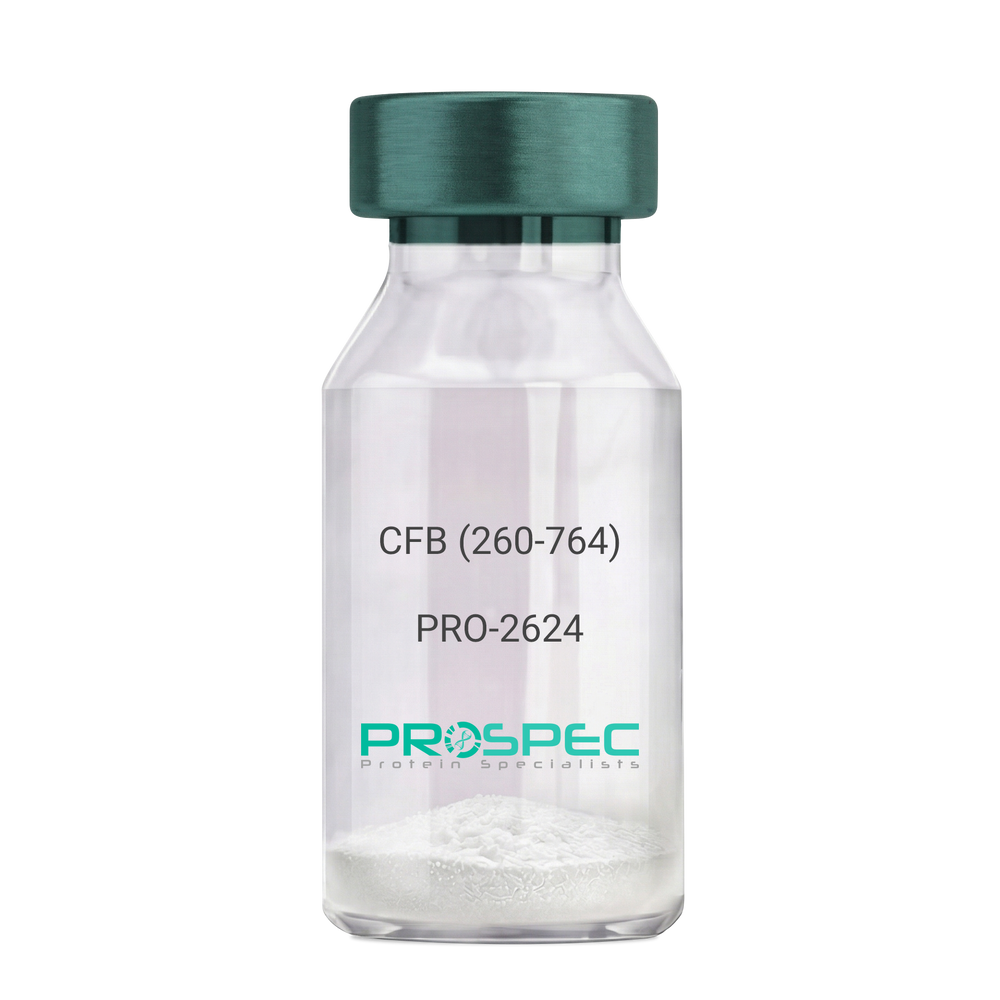
CFB (260-764) Human, Sf9Description:
Complement Factor B (260-764 a.a.) Human Recombinant, Sf9
CFB, C3/C5 convertase, Glycine-rich beta glycoprotein, GBG, PBF2, Properdin factor B, BF, BFD, AHUS4, ARMD14, CFAB, CFBD, FB, FBI12, GBG, H2-Bf.
Product # :
PRO-2624Price :
Quantity :
Shipping Method :
Shipped with Ice Packs
More Info
- description
- source
- formulation
- purity
- More Info
Description
CFB Human Recombinant produced in Sf9 Baculovirus cells is a single, glycosylated polypeptide chain containing 514 amino acids (260-764 a.a) and having a molecular mass of 58.1kDa.CFB is fused to an 9 amino acid His-tag at C-terminus & purified by proprietary chromatographic techniques.
Source
Sf9, Baculovirus cells.
Formulation
CFB protein solution (0.5mg/ml) containing Phosphate Buffered Saline (pH 7.4) and 20% glycerol.
Purity
Greater than 90.0% as determined by SDS-PAGE.
More Info
-
Introduction
Factor B is a protein, build from a single chain that circulates in the blood. Complement factor D cleaves and activates factor B, thus creating a catalytic subunit Bb and noncatalytic chain Ba. Subunit Bb is a serine protease that can bind to C3b and forms alternative pathway C3 convertase. Subunit Ba acts as an inhibitor for proliferation of lymphocytes, when Bb is part of the lymphocytes’ proliferation. The gene that codes for this protein is located on chromosome six.
-
Synonyms
CFB, C3/C5 convertase, Glycine-rich beta glycoprotein, GBG, PBF2, Properdin factor B, BF, BFD, AHUS4, ARMD14, CFAB, CFBD, FB, FBI12, GBG, H2-Bf.
-
Physical Appearance
Sterile Filtered colorless solution.
-
Stability
Store at 4°C if entire vial will be used within 2-4 weeks. Store, frozen at -20°C for longer periods of time. For long term storage it is recommended to add a carrier protein (0.1% HSA or BSA).Avoid multiple freeze-thaw cycles.
-
Amino Acid Sequence
ADPKIVLDPS GSMNIYLVLD GSDSIGASNF TGAKKCLVNL IEKVASYGVK PRYGLVTYAT
YPKIWVKVSE ADSSNADWVT KQLNEINYED HKLKSGTNTK KALQAVYSMM SWPDDVPPEG
WNRTRHVIIL MTDGLHNMGG DPITVIDEIR DLLYIGKDRK NPREDYLDVY VFGVGPLVNQ
VNINALASKK DNEQHVFKVK DMENLEDVFY QMIDESQSLS LCGMVWEHRK GTDYHKQPWQ
AKISVIRPSK GHESCMGAVV SEYFVLTAAH CFTVDDKEHS IKVSVGGEKR DLEIEVVLFH
PNYNINGKKE AGIPEFYDYD VALIKLKNKL KYGQTIRPIC LPCTEGTTRA LRLPPTTTCQ
QQKEELLPAQ DIKALFVSEE EKKLTRKEVY IKNGDKKGSC ERDAQYAPGY DKVKDISEVV
TPRFLCTGGV SPYADPNTCR GDSGGPLIVH KRSRFIQVGV ISWGVVDVCK NQKRQKQVPA HARDFHINLF QVLPWLKEKL QDEDLGFLHH HHHH
ProSpec's products are furnished for LABORATORY RESEARCH USE ONLY. The product may not be used as drugs, agricultural or pesticidal products, food additives or household chemicals.
- View Data Sheet
Name :
DSTN HumanDescription:
Destrin Human Recombinant
Destrin (actin depolymerizing factor), ACTDP, ADF, bA462D18.2 (destrin (actin depolymerizing factor ADF) (ACTDP)), destrin, DSN.
Product # :
PRO-1137Price :
Quantity :
Shipping Method :
Shipped with Ice Packs
More Info
- description
- source
- formulation
- purity
- More Info
Description
DSTN Human Recombinant produced in E. coli is a single polypeptide chain containing 173 amino acids (1-165) and having a molecular mass of 19.5 kDa.DSTN is fused to an 8 amino acid His-tag at C-terminus & purified by proprietary chromatographic techniques.
Source
E.coli.
Formulation
The DSTN solution (0.5mg/ml) contains 20mM Tris-HCl buffer (pH 8.0), 0.1M NaCl, 1mM DTT and 10% glycerol.
Purity
Greater than 95% as determined by SDS-PAGE.
More Info
-
Introduction
Actin depolymerizing factor (Destrin/DSTN) belongs to the ADF/Cofilin/destrin superfamily which has the ability to swiftly depolymerize F-Actin in a stoichiometric mode. The ADF family of proteins is responsible for enhancing the turnover rate of actin in vivo. Destrin is a small phosphoinositide-sensitive actin-binding protein capable of depolymerizing actin-filaments in vitro. DSTN functions in a pH-independent manner. DSTN is found in a variety of epithelial and endothelial cells, however it is virtually nonexistent in adult mouse heart and skeletal muscle cells. Destrin shares a 71% sequence homology with Cofilin, however the 2 proteins vary in their interaction with Actin.
-
Synonyms
Destrin (actin depolymerizing factor), ACTDP, ADF, bA462D18.2 (destrin (actin depolymerizing factor ADF) (ACTDP)), destrin, DSN.
-
Physical Appearance
Sterile Filtered colorless solution.
-
Stability
Store at 4°C if entire vial will be used within 2-4 weeks. Store, frozen at -20°C for longer periods of time. For long term storage it is recommended to add a carrier protein (0.1% HSA or BSA).Avoid multiple freeze-thaw cycles.
-
Amino Acid Sequence
MASGVQVADE VCRIFYDMKV RKCSTPEEIK KRKKAVIFCL SADKKCIIVE EGKEILVGDV GVTITDPFKH FVGMLPEKDC RYALYDASFE TKESRKEELM FFLWAPELAP LKSKMIYASS KDAIKKKFQG IKHECQANGP EDLNRACIAE KLGGSLIVAF EGCPVLEHHH HHH
ProSpec's products are furnished for LABORATORY RESEARCH USE ONLY. The product may not be used as drugs, agricultural or pesticidal products, food additives or household chemicals.
- View Data Sheet
Name :
CLEC5A HumanDescription:
C-Type Lectin Domain Family 5, Member A Human Recombinant
C-type lectin domain family 5 member A , CLECSF5, MDL-1, MDL1, C-type lectin superfamily member 5, Myeloid DAP12-associating lectin 1.
Product # :
PRO-2165Price :
Quantity :
Shipping Method :
Shipped with Ice Packs
More Info
- description
- source
- formulation
- purity
- More Info
Description
CLEC5A Human Recombinant produced in E.Coli is a single, non-glycosylated polypeptide chain containing 184 amino acids (28-188 a.a) and having a molecular mass of 20.8kDa.CLEC5A is fused to a 23 amino acid His-tag at N-terminus & purified by proprietary chromatographic techniques.
Source
Escherichia Coli.
Formulation
CLEC5A protein solution (0.25mg/ml) containing 20mM Tris-HCl buffer, (pH8.0) and 10% glycerol.
Purity
Greater than 80.0% as determined by SDS-PAGE.
More Info
-
Introduction
C-type lectin domain family 5-member A isoform 1 (CLEC5A) is part of the CTL/CTLD superfamily which carry various functions, for instance cell-cell signaling, cell adhesion, glycoprotein turnover, in addition to their inflammation & immune response abilities. CLEC5A operates as a cell attachment receptor for all 4 serotypes of Dengue virus in addition to Japanese encephalitis virus. CLEC5A binds to the dengue virus and it triggers signaling through the phosphylation of TYROBP, as a result no viral entrance occurs, however this interaction does stimulate proinflammatory cytokine release. CLEC5A preforms as a positive regulator of osteoclastogenesis and also a main regulator of synovial injury & bone erosion for the period of autoimmune joint inflammation.
-
Synonyms
C-type lectin domain family 5 member A , CLECSF5, MDL-1, MDL1, C-type lectin superfamily member 5, Myeloid DAP12-associating lectin 1.
-
Physical Appearance
Sterile Filtered clear solution.
-
Stability
Store at 4°C if entire vial will be used within 2-4 weeks. Store, frozen at -20°C for longer periods of time. For long term storage it is recommended to add a carrier protein (0.1% HSA or BSA).Avoid multiple freeze-thaw cycles.
-
Amino Acid Sequence
MGSSHHHHHH SSGLVPRGSH MGSPQIFNKS NDGFTTTRSY GTVSQIFGSS SPSPNGFITT RSYGTVCPKD WEFYQARCFF LSTSESSWNE SRDFCKGKGS TLAIVNTPEK LKFLQDITDA EKYFIGLIYH REEKRWRWIN NSVFNGNVTN QNQNFNCATI GLTKTFDAAS CDISYRRICE KNAK.
ProSpec's products are furnished for LABORATORY RESEARCH USE ONLY. The product may not be used as drugs, agricultural or pesticidal products, food additives or household chemicals.
- View Data Sheet
Name :
CXCL13 MouseDescription:
BCA-1/BLC Mouse Recombinant (CXCL13)
C-X-C motif chemokine 13, B lymphocyte chemoattractant, CXC chemokine BLC, Small-inducible cytokine B13, Cxcl13, Blc, Scyb13.
Product # :
CHM-030Price :
Quantity :
Shipping Method :
Shipped at Room temp
More Info
- description
- source
- formulation
- purity
- biological activity
- More Info
Description
CXCL13 Mouse Recombinant (22-109) produced in E.Coli is a single, non-glycosylated, polypeptide chain containing 88 amino acids and having a molecular mass of 10kDa.The BCA-1 is purified by proprietary chromatographic techniques.
Source
Escherichia Coli.
Formulation
The BCA1 protein was lyophilized from a 0.2µm filtered solution in Acetonitrile and TFA.
Purity
Greater than 97.0% as determined by SDS-PAGE.
Biological Activity
The ED50, as measured by its ability to chemoattract human CXCR5-transfected mouse BaF3 cells, is less than 2µg/ml.More Info
-
Introduction
BCA-1 is a CXC chemokine that is highly expressed in thesecondary lymphoid organs, such as follicles of the spleen, lymph nodes, and Peyer's patches. CXCL13 promotes the migration of B lymphocytes (compared to T cells and macrophages), by stimulating calcium influx into, and chemotaxis of, cells expressing Burkitt's lymphoma receptor 1 (BLR1). BCA1 therefore function in the homing of B lymphocytes to follicles. Human BCA-1 shares a 64% amino acid sequence similarity with the mouse protein and 23 - 34% amino acid sequence identity with other known CXC chemokines. Recombinant or chemically synthesized BCA1 is a potent chemoattractant for B lymphocytes but not T lymphocytes, monocytes or neutrophils. BLR1, a G protein-coupled receptor originally isolated from Burkitt’s lymphoma cells, has now been shown to be the specific receptor for BCA1. Among cells of the hematopoietic lineages, the expression of BLR-1, now designated CXCR-5, is restricted to B lymphocytes and a subpopulation of T helper memory cells.
-
Synonyms
C-X-C motif chemokine 13, B lymphocyte chemoattractant, CXC chemokine BLC, Small-inducible cytokine B13, Cxcl13, Blc, Scyb13.
-
Physical Appearance
Sterile Filtered White lyophilized (freeze-dried) powder.
-
Stability
Lyophilized BCA1 although stable at room temperature for 3 weeks, should be stored desiccated below -18°C. Upon reconstitution BCA1 should be stored at 4°C between 2-7 days and for future use below -18°C.For long term storage it is recommended to add a carrier protein (0.1% HSA or BSA).Please prevent freeze-thaw cycles.
-
Solubility
It is recommended to reconstitute the lyophilized CXCL13 in sterile 18MΩ-cm H2O not less than 100µg/ml, which can then be further diluted to other aqueous solutions.
-
Amino Acid Sequence
ILEAHYTNLK CRCSGVISTV VGLNIIDRIQ VTPPGNGCPK TEVVIWTKMK KVICVNPRAK WLQRLLRHVQ SKSLSSTPQA PVSKRRAA.
-
Background
What is the molecular weight/Mw of CXCL13 MOUSE Protein?
CXCL13 MOUSE Protein has a total Mw of 10kDa.
What is the source or expression system of CXCL13 MOUSE Protein?
Escherichia Coli.
What is the Purity of CXCL13 MOUSE Protein?
CXCL13 MOUSE Protein is >97% pure as determined by SDS-PAGE.
What is the Biological Activity of CXCL13 MOUSE Protein?
The ED50, as measured by its ability to chemoattract human CXCR5-transfected mouse BaF3 cells, is less than 2µg/ml.
What is the amino acid sequence of CXCL13 MOUSE Protein?
ILEAHYTNLK CRCSGVISTV VGLNIIDRIQ VTPPGNGCPK TEVVIWTKMK KVICVNPRAK WLQRLLRHVQ SKSLSSTPQA PVSKRRAA.
What applications can CXCL13 MOUSE Protein be used in?
CXCL13 MOUSE Protein can probably be used in western blot, ELISA and Lateral Flow.
What is the endotoxin level for CXCL13 MOUSE Protein?
The endotoxin level is minimal, CXCL13 MOUSE Protein was purified using conventional chromatography techniques.
ProSpec's products are furnished for LABORATORY RESEARCH USE ONLY. The product may not be used as drugs, agricultural or pesticidal products, food additives or household chemicals.
- View Data Sheet
Name :
GDF11 Human, HisDescription:
Growth and Differentiation factor 11 Human Recombinant, His Tag
Growth Differentiation Factor 11, BMP11, Bone Morphogenetic Protein 11, BMP-11, GDF-11, Growth/Differentiation Factor 11, Growth/differentiation factor 11.
Product # :
CYT-887Price :
Quantity :
Shipping Method :
Shipped with Ice Packs
More Info
- description
- source
- formulation
- purity
- More Info
Description
GDF11 Human Recombinant produced in E.Coli is a single, non-glycosylated polypeptide chain containing 132 amino acids (299-407a.a) and having a molecular mass of 14.8kDa. GDF11 is fused to a 23 amino acid His-tag at N-terminus & purified by proprietary chromatographic techniques.
Source
Escherichia Coli.
Formulation
GDF11 protein solution (1mg/ml) containing 20mM Tris-HCl (pH8.0) and 10% glycerol.
Purity
Greater than 85.0% as determined by SDS-PAGE.
More Info
-
Introduction
GDF-11 belongs to the bone morphogenetic protein (BMP) family and the TGF-beta superfamily. GDF-11 is a central developmental factor which controls muscular and neural development. In adults, GDF-11 encourages cardiac hypertrophy reverse by the revival of cardiomyocytes.
-
Synonyms
Growth Differentiation Factor 11, BMP11, Bone Morphogenetic Protein 11, BMP-11, GDF-11, Growth/Differentiation Factor 11, Growth/differentiation factor 11.
-
Physical Appearance
Sterile Filtered colorless solution.
-
Stability
Store at 4°C if entire vial will be used within 2-4 weeks. Store, frozen at -20°C for longer periods of time. For long term storage it is recommended to add a carrier protein (0.1% HSA or BSA).Avoid multiple freeze-thaw cycles.
-
Amino Acid Sequence
MGSSHHHHHH SSGLVPRGSH MGSNLGLDCD EHSSESRCCR YPLTVDFEAF GWDWIIAPKR YKANYCSGQC EYMFMQKYPH THLVQQANPR GSAGPCCTPT KMSPINMLYF NDKQQIIYGK IPGMVVDRCG CS.
-
Background
What is the molecular weight/Mw of GDF11 HUMAN, HIS Protein?
GDF11 HUMAN, HIS Protein has a total Mw of 14.8kDa.
What is the source or expression system of GDF11 HUMAN, HIS Protein?
Escherichia Coli.
What is the Purity of GDF11 HUMAN, HIS Protein?
GDF11 HUMAN, HIS Protein is >85% pure as determined by SDS-PAGE.
What is the Biological Activity of GDF11 HUMAN, HIS Protein?
The biological functionality of GDF11 HUMAN, HIS Protein will be determined in the future.
What is the amino acid sequence of GDF11 HUMAN, HIS Protein?
MGSSHHHHHH SSGLVPRGSH MGSNLGLDCD EHSSESRCCR YPLTVDFEAF GWDWIIAPKR YKANYCSGQC EYMFMQKYPH THLVQQANPR GSAGPCCTPT KMSPINMLYF NDKQQIIYGK IPGMVVDRCG CS.
What applications can GDF11 HUMAN, HIS Protein be used in?
GDF11 HUMAN, HIS Protein can probably be used in western blot, ELISA and Lateral Flow.
What is the endotoxin level for GDF11 HUMAN, HIS Protein?
The endotoxin level is minimal, GDF11 HUMAN, HIS Protein was purified using conventional chromatography techniques.
ProSpec's products are furnished for LABORATORY RESEARCH USE ONLY. The product may not be used as drugs, agricultural or pesticidal products, food additives or household chemicals.
- View Data Sheet
Name :
GMNN HumanDescription:
Geminin Human Recombinant
GMNN, Geminin, DNA Replication Inhibitor, Gem, RP3-369A17.3.
Product # :
PRO-579Price :
Quantity :
Shipping Method :
Shipped with Ice Packs
More Info
- description
- source
- formulation
- purity
- More Info
Description
Geminin Human Recombinant fused to N-terminal His-Tag produced in E.Coli is a single, non-glycosylated polypeptide chain containing 245 amino acids and having a molecular mass of 27.7 kDa.
Source
Escherichia Coli.
Formulation
The protein solution contains 20mM Tris pH 8, 100mM NaCl and 10% glycerol.
Purity
Greater than 95.0% as determined by:
(a) Analysis by RP-HPLC.
(b) Analysis by SDS-PAGE.More Info
-
Introduction
Geminin is a 25 kDa nuclear protein, which inhibits DNA replication and is degraded during the mitotic phase of the cell cycle. Geminin controls replication by binding to the licensing factor Cdt1, and is involved in neural differentiation. In addition, Geminin directly interacts with Six3 and Hox homeodomain proteins during embryogenesis and inhibits their functions. Geminin can also promote DNA replication. Geminin has 2 roles in 2 different stages of the cell cycle: Geminin is a negative regulator of DNA replication during the “S phase” of the cell cycle. Inhibition of Geminin during the “S phase” (by RNAi) results in an additional round of replication of portions of the genome. During the “M phase” of the cell cycle (mitosis) Geminin stabilizes the replication factor Cdt1 promoting DNA replication during the next cell cycle. Moreover, inhibition of Geminin during mitosis (by RNAi) causes destabilization of Cdt1 protein and impairment of DNA replication during the next cell cycle. Geminin thus guarantees that only one round of replication occurs during each cell cycle. It was discovered that Geminin is overexpressed in a number of malignancies and cancer cell lines. This maintains the concept that Geminin has also a positive role in DNA replication and cell cycle progression. Geminin accumulates through S, G2 and M phases of the cell cycle but is absent during the G1 phase. During the metaphase/anaphase transition of mitosis Geminin levels decrease.
-
Synonyms
GMNN, Geminin, DNA Replication Inhibitor, Gem, RP3-369A17.3.
-
Physical Appearance
Sterile Filtered colorless solution.
-
Stability
Store at 4°C if entire vial will be used within 2-4 weeks. Store, frozen at -20°C for longer periods of time. For long term storage it is recommended to add a carrier protein (0.1% HSA or BSA).Avoid multiple freeze-thaw cycles.
-
Amino Acid Sequence
MRGSHHHHHH GMASMTGGQQ MGRDLYDDDD KDRWGSMNPS MKQKQEEIKE NIKNSSVPRR TLKMIQPSAS GSLVGRENEL SAGLSKRKHR NDHLTSTTSS PGVIVPESSE NKNLGGVTQE SFDLMIKENP SSQYWKEVAE KRRKALYEAL KENEKLHKEI EQKDNEIARL KKENKELAEV AEHVQYMAEL IERLNGEPLD NFESLDNQEF DSEEETVEDS LVEDSEIGTC AEGTVSSSTD
AKPCI.
ProSpec's products are furnished for LABORATORY RESEARCH USE ONLY. The product may not be used as drugs, agricultural or pesticidal products, food additives or household chemicals.
- View Data Sheet
Name :
LIF Human, HisDescription:
Leukemia Inhibitory Factor Human Recombinant, His tag
CDF, HILDA, D-FACTOR, Differentiation- stimulating factor, Melanoma-derived LPL inhibitor, MLPLI, Emfilermin, Leukemia inhibitory factor, LIF, DIA.
Product # :
CYT-1082Price :
Quantity :
Shipping Method :
Shipped at Room temp
More Info
- description
- source
- formulation
- purity
- More Info
Description
LIF Human Recombinant produced in E.Coli is a single, non-glycosylated, polypeptide chain (a.a 23-202) containing 189 amino acids including a 9 a.a N-terminal His tag. The total molecular mass is 20.9kDa (calculated).
Source
Escherichia Coli.
Formulation
LIF filtered (0.4 µm) and lyophilized from 0.5mg/ml solution in 20 mM Tris buffer, 20 mM NaCl and 5% w/v trehalose, pH 7.5.
Purity
Greater than 95.0% as determined by SDS-PAGE.
More Info
-
Introduction
Leukemia Inhibitory Factor also called LIF is a lymphoid factor that promotes long-term maintenance of embryonic stem cells by suppressing spontaneous differentiation. Leukemia Inhibitory Factor has several functions such as cholinergic neuron differentiation, control of stem cell pluripotency, bone & fat metabolism, mitogenesis of factor dependent cell lines & promotion of megakaryocyte production in vivo. Human and mouse LIF exhibit a 78% identity in its amino acid sequence.
-
Synonyms
CDF, HILDA, D-FACTOR, Differentiation- stimulating factor, Melanoma-derived LPL inhibitor, MLPLI, Emfilermin, Leukemia inhibitory factor, LIF, DIA.
-
Physical Appearance
Filtered White lyophilized (freeze-dried) powder.
-
Stability
Store lyophilized protein at -20°C. Aliquot the product after reconstitution to avoid repeated freezing/thawing cycles. Reconstituted protein can be stored at 4°C for a limited period of time; it does not show any change after two weeks at 4°C.
-
Solubility
It is recommended to add deionized water to prepare a working stock solution of approximately 0.5mg/ml and let the lyophilized pellet dissolve completely.
-
Amino Acid Sequence
MKHHHHHHAS PLPITPVNAT CAIRHPCHNN LMNQIRSQLA QLNGSANALF ILYYTAQGEP FPNNLDKLCG PNVTDFPPFH ANGTEKAKLV ELYRIVVYLG TSLGNITRDQ KILNPSALSL HSKLNATADI LRGLLSNVLC RLCSKYHVGH VDVTYGPDTS GKDVFQKKKL GCQLLGKYKQ IIAVLAQAF.
ProSpec's products are furnished for LABORATORY RESEARCH USE ONLY. The product may not be used as drugs, agricultural or pesticidal products, food additives or household chemicals.
- View Data Sheet
Name :
HBG1 HumanDescription:
Hemoglobin Gamma A Human Recombinant
HBGA, HBGR, HSGGL1, PRO2979, Hemoglobin subunit gamma-1, Gamma-1-globin, Hb F Agamma, Hemoglobin gamma-1 chain, Hemoglobin gamma-A chain, HBG1.
Product # :
PRO-1502Price :
Quantity :
Shipping Method :
Shipped with Ice Packs
More Info
- description
- source
- formulation
- purity
- More Info
Description
HBG1 Human Recombinant produced in E. coli is a single polypeptide chain containing 170 amino acids (1-147) and having a molecular mass of 18kDa. HBG1 is fused to a 23 amino acid His-tag at N-terminus & purified by proprietary chromatographic techniques.
Source
Escherichia Coli.
Formulation
The HBG1 solution (0.25mg/ml) contains 20mM Tris-HCl buffer (pH 8.0), 0.15M NaCl and 10% glycerol.
Purity
Greater than 85% as determined by SDS-PAGE.
More Info
-
Introduction
The gamma globin genes which are HBG1 and HBG2, usually expressed in the fetal liver, spleen and bone marrow. 2 gamma chains together along with 2 alpha chains comprise fetal hemoglobin (HbF) which is normally replaced by mature hemoglobin (HbA) at birth. Gamma chain production continues into adulthood in several beta-thalassemias and linked situations. The two types of gamma chains differ at residue 136 where glycine is found in the G-gamma product (HBG2) and alanine is found in the A-gamma product (HBG1). The former is predominant at birth.
-
Synonyms
HBGA, HBGR, HSGGL1, PRO2979, Hemoglobin subunit gamma-1, Gamma-1-globin, Hb F Agamma, Hemoglobin gamma-1 chain, Hemoglobin gamma-A chain, HBG1.
-
Physical Appearance
Sterile Filtered clear solution.
-
Stability
Store at 4°C if entire vial will be used within 2-4 weeks. Store, frozen at -20°C for longer periods of time. For long term storage it is recommended to add a carrier protein (0.1% HSA or BSA).Avoid multiple freeze-thaw cycles.
-
Amino Acid Sequence
MGSSHHHHHH SSGLVPRGSH MGSMGHFTEE DKATITSLWG KVNVEDAGGE TLGRLLVVYP WTQRFFDSFG NLSSASAIMG NPKVKAHGKK VLTSLGDATK HLDDLKGTFA QLSELHCDKL HVDPENFKLL GNVLVTVLAI HFGKEFTPEV QASWQKMVTA VASALSSRYH.
ProSpec's products are furnished for LABORATORY RESEARCH USE ONLY. The product may not be used as drugs, agricultural or pesticidal products, food additives or household chemicals.