Skip to content

High-quality research proteins.

  • 1-800-805-6531

  • Mon - Sat 8.00-18.00, Sun - Closed

  • info@prospecbio.com

  • PO Box 6591 East Brunswick NJ 08816

  • Products
    • Cytokines
    • Growth factors
    • Chemokines
    • Cd antigens
    • Neurotrophins
    • Hormones
    • Enzymes
    • Viral antigens
    • Recombinant proteins
    • Natural proteins
    • Monoclonal antibodies
    • Polyclonal antibodies
    • Thermal Packaging
  • About
    • Company
    • Founder
    • Contribution
  • Customers
    • Eastern Asia
    • Eastern Europe
    • North America
    • South America
    • South East Asia
    • Southern Asia
    • Western Europe
  • Ordering
    • Ordering Method
    • Ordering - Credit Card
    • Ordering - PO
    • Shipping Fees
    • FAQs
  • Services
    • DNA Cloning
    • Protein Expression
    • Monoclonal Antibody
    • Fermentation
    • Technology License
  • Contact us
Log in

Country/region

  • USD $ | Albania
  • USD $ | Andorra
  • USD $ | Argentina
  • USD $ | Armenia
  • USD $ | Australia
  • USD $ | Austria
  • USD $ | Azerbaijan
  • USD $ | Belarus
  • USD $ | Belgium
  • USD $ | Bolivia
  • USD $ | Brazil
  • USD $ | Bulgaria
  • USD $ | Cambodia
  • USD $ | Canada
  • USD $ | Chile
  • USD $ | China
  • USD $ | Colombia
  • USD $ | Costa Rica
  • USD $ | Croatia
  • USD $ | Cyprus
  • USD $ | Czechia
  • USD $ | Denmark
  • USD $ | Estonia
  • USD $ | Finland
  • USD $ | France
  • USD $ | Georgia
  • USD $ | Germany
  • USD $ | Greece
  • USD $ | Hong Kong SAR
  • USD $ | Hungary
  • USD $ | Iceland
  • USD $ | India
  • USD $ | Ireland
  • USD $ | Israel
  • USD $ | Italy
  • USD $ | Japan
  • USD $ | Kazakhstan
  • USD $ | Latvia
  • USD $ | Liechtenstein
  • USD $ | Lithuania
  • USD $ | Madagascar
  • USD $ | Malta
  • USD $ | Mexico
  • USD $ | Moldova
  • USD $ | Monaco
  • USD $ | Netherlands
  • USD $ | New Zealand
  • USD $ | North Macedonia
  • USD $ | Norway
  • USD $ | Panama
  • USD $ | Paraguay
  • USD $ | Peru
  • USD $ | Philippines
  • USD $ | Poland
  • USD $ | Portugal
  • USD $ | Romania
  • USD $ | Singapore
  • USD $ | Slovakia
  • USD $ | Slovenia
  • USD $ | South Africa
  • USD $ | South Korea
  • USD $ | Spain
  • USD $ | Sri Lanka
  • USD $ | Sweden
  • USD $ | Switzerland
  • USD $ | Taiwan
  • USD $ | Thailand
  • USD $ | Türkiye
  • USD $ | Ukraine
  • USD $ | United Kingdom
  • USD $ | United States
  • USD $ | Uruguay
  • USD $ | Vatican City
  • USD $ | Venezuela
  • USD $ | Vietnam
  • Facebook
  • Instagram
logoProSpec - Recombinant Protein Manufacturer for academic and R&D industry
Become a distributor
Account Log in
Wishlist
Cart Cart(0)
  • Products
    +
    • Cytokines
    • Growth factors
    • Chemokines
    • Cd antigens
    • Neurotrophins
    • Hormones
    • Enzymes
    • Viral antigens
    • Recombinant proteins
    • Natural proteins
    • Monoclonal antibodies
    • Polyclonal antibodies
    • Thermal Packaging
  • About
    +
    • Company
    • Founder
    • Contribution
  • Customers
    +
    • Eastern Asia
    • Eastern Europe
    • North America
    • South America
    • South East Asia
    • Southern Asia
    • Western Europe
  • Ordering
    +
    • Ordering Method
    • Ordering - Credit Card
    • Ordering - PO
    • Shipping Fees
    • FAQs
  • Services
    +
    • DNA Cloning
    • Protein Expression
    • Monoclonal Antibody
    • Fermentation
    • Technology License
  • Contact us

Item added to your cart

View cart
View All
  • Cytokines
  • Growth factors
  • Chemokines
  • Cd antigens
  • Neurotrophins
  • Hormones
  • Enzymes
  • Viral antigens
  • Recombinant proteins
  • Natural proteins
  • Monoclonal antibodies
  • Polyclonal antibodies
  • Thermal Packaging
  • Tumor Necrosis Factor

    Tumor Necrosis Factor

    View All
  • 4-1BB

    4-1BB

    View All
  • Adiponectin

    Adiponectin

    View All
  • AIF1

    AIF1

    View All
  • Other Cytokines

    Other Cytokines

    View All
  • AITRL

    AITRL

    View All
  • Angiopoietin

    Angiopoietin

    View All
  • Apolipoprotein

    Apolipoprotein

    View All
  • B-Cell Activating Factor

    B-Cell Activating Factor

    View All
  • Beta Defensin

    Beta Defensin

    View All
  • Bone Morphogenetic Protein

    Bone Morphogenetic Protein

    View All
  • B type Natriuretic Peptide

    B type Natriuretic Peptide

    View All
  • BST

    BST

    View All
  • Betacellulin

    Betacellulin

    View All
  • Cardiotrophin

    Cardiotrophin

    View All
  • Activin

    Activin

    View All
  • Fibroblast Growth Factor

    Fibroblast Growth Factor

    View All
  • Other Growth Factors

    Other Growth Factors

    View All
  • CSF

    CSF

    View All
  • CTGF

    CTGF

    View All
  • IGFBP

    IGFBP

    View All
  • VEGF Protein

    VEGF Protein

    View All
  • EGF

    EGF

    View All
  • Epigen

    Epigen

    View All
  • Erythropoietin

    Erythropoietin

    View All
  • Insulin-Like Growth Factor

    Insulin-Like Growth Factor

    View All
  • Growth Hormone

    Growth Hormone

    View All
  • HDGF

    HDGF

    View All
  • Hepatocyte Growth Factor

    Hepatocyte Growth Factor

    View All
  • Insulin

    Insulin

    View All
  • BCA-1/ BLC (CXCL13)

    BCA-1/ BLC (CXCL13)

    View All
  • BRAK (CXCL14)

    BRAK (CXCL14)

    View All
  • C-10 (CCL6)

    C-10 (CCL6)

    View All
  • Other Chemokines

    Other Chemokines

    View All
  • MEC (CCL28)

    MEC (CCL28)

    View All
  • LD78-beta (CCL3L1)

    LD78-beta (CCL3L1)

    View All
  • CTACK (CCL27)

    CTACK (CCL27)

    View All
  • CXCL16

    CXCL16

    View All
  • CXCL17

    CXCL17

    View All
  • Platelet Factor-4 (CXCL4)

    Platelet Factor-4 (CXCL4)

    View All
  • ENA-78 (CXCL5)

    ENA-78 (CXCL5)

    View All
  • Eotaxin (CCL11,24,26)

    Eotaxin (CCL11,24,26)

    View All
  • Exodus-2 (CCL21)

    Exodus-2 (CCL21)

    View All
  • Fractalkine (CX3CL1)

    Fractalkine (CX3CL1)

    View All
  • CXCL6

    CXCL6

    View All
  • Other CD Antigens

    Other CD Antigens

    View All
  • CD14

    CD14

    View All
  • CD164

    CD164

    View All
  • CD1

    CD1

    View All
  • CD2

    CD2

    View All
  • CD200

    CD200

    View All
  • CD207

    CD207

    View All
  • CD226

    CD226

    View All
  • CD23

    CD23

    View All
  • CD244

    CD244

    View All
  • CD247

    CD247

    View All
  • CD27

    CD27

    View All
  • CD274

    CD274

    View All
  • CD300

    CD300

    View All
  • CD33

    CD33

    View All
  • Other Neurotrophins

    Other Neurotrophins

    View All
  • Beta-NGF

    Beta-NGF

    View All
  • BDNF

    BDNF

    View All
  • CDNF

    CDNF

    View All
  • CNTF

    CNTF

    View All
  • GDNF

    GDNF

    View All
  • Glia Maturation Factor

    Glia Maturation Factor

    View All
  • MANF

    MANF

    View All
  • Midkine

    Midkine

    View All
  • Neuroglobin

    Neuroglobin

    View All
  • Neurotrophic factors

    Neurotrophic factors

    View All
  • Neuregulin

    Neuregulin

    View All
  • Neuropilin

    Neuropilin

    View All
  • Pigment Epithelium-Derived Factor

    Pigment Epithelium-Derived Factor

    View All
  • Pleiotrophin

    Pleiotrophin

    View All
  • Peptide Hormones

    Peptide Hormones

    View All
  • Other Hormones

    Other Hormones

    View All
  • HCG

    HCG

    View All
  • Endothelin

    Endothelin

    View All
  • Exendin

    Exendin

    View All
  • FSH

    FSH

    View All
  • Glucagon

    Glucagon

    View All
  • GHRP

    GHRP

    View All
  • GLP

    GLP

    View All
  • Thyrostimulin

    Thyrostimulin

    View All
  • Inhibin A

    Inhibin A

    View All
  • LHRH

    LHRH

    View All
  • Melanotan

    Melanotan

    View All
  • Procalcitonin

    Procalcitonin

    View All
  • PTH

    PTH

    View All
  • Peroxiredoxin

    Peroxiredoxin

    View All
  • Peptidase

    Peptidase

    View All
  • Synthetase

    Synthetase

    View All
  • Transferase

    Transferase

    View All
  • Hydrolase

    Hydrolase

    View All
  • Dehydrogenase

    Dehydrogenase

    View All
  • ACE2

    ACE2

    View All
  • Esterase

    Esterase

    View All
  • Protein Kinases

    Protein Kinases

    View All
  • Other Enzymes

    Other Enzymes

    View All
  • Phosphatase

    Phosphatase

    View All
  • Deaminase

    Deaminase

    View All
  • Oxygenase

    Oxygenase

    View All
  • Adenylate Kinase

    Adenylate Kinase

    View All
  • Lyase

    Lyase

    View All
  • Chagas

    Chagas

    View All
  • SARS

    SARS

    View All
  • Influenza

    Influenza

    View All
  • ASFV

    ASFV

    View All
  • Astrovirus

    Astrovirus

    View All
  • Borrelia

    Borrelia

    View All
  • Helicobacter Pylori

    Helicobacter Pylori

    View All
  • Chikungunya

    Chikungunya

    View All
  • Chlamydia

    Chlamydia

    View All
  • Cytomegalo

    Cytomegalo

    View All
  • Dengue

    Dengue

    View All
  • EBV

    EBV

    View All
  • Ebola

    Ebola

    View All
  • Feline Leukemia Virus

    Feline Leukemia Virus

    View All
  • Hepatitis A

    Hepatitis A

    View All
  • Other

    Other

    View All
  • Actin

    Actin

    View All
  • ADAM

    ADAM

    View All
  • Complement Component

    Complement Component

    View All
  • Ag85

    Ag85

    View All
  • Eukaryotic Translation Initiation Factor

    Eukaryotic Translation Initiation Factor

    View All
  • Anterior Gradient Protein

    Anterior Gradient Protein

    View All
  • Heat Shock Protein

    Heat Shock Protein

    View All
  • Alpha-2-HS-Glycoprotein

    Alpha-2-HS-Glycoprotein

    View All
  • Hemoglobin

    Hemoglobin

    View All
  • Allergy

    Allergy

    View All
  • Anaplasma

    Anaplasma

    View All
  • Angiogenin

    Angiogenin

    View All
  • Ankyrin Repeat Domain

    Ankyrin Repeat Domain

    View All
  • Annexin

    Annexin

    View All
  • Other Natural Proteins

    Other Natural Proteins

    View All
  • Aprotinin

    Aprotinin

    View All
  • Transferrin

    Transferrin

    View All
  • Avidin

    Avidin

    View All
  • Anti Coagulation Factors

    Anti Coagulation Factors

    View All
  • Natural Albumin

    Natural Albumin

    View All
  • Natural Coagulation Factors

    Natural Coagulation Factors

    View All
  • Fibronectin

    Fibronectin

    View All
  • Thrombin

    Thrombin

    View All
  • Anti Human Enzyme

    Anti Human Enzyme

    View All
  • Other Monoclonal Antibodies

    Other Monoclonal Antibodies

    View All
  • Anti Human Cytokine

    Anti Human Cytokine

    View All
  • Anti Human Heat Shock Protein

    Anti Human Heat Shock Protein

    View All
  • Anti Mouse Lymphocyte

    Anti Mouse Lymphocyte

    View All
  • Anti Human Chemokine

    Anti Human Chemokine

    View All
  • Anti Human Lymphocyte

    Anti Human Lymphocyte

    View All
  • Anti Viral Monoclonal

    Anti Viral Monoclonal

    View All
  • Anti Mouse Cytokine

    Anti Mouse Cytokine

    View All
  • Anti-GST Monoclonal

    Anti-GST Monoclonal

    View All
  • Other Polyclonal Antibodies

    Other Polyclonal Antibodies

    View All
  • Anti Viral

    Anti Viral

    View All
  • Anti-GST Monoclonal

    Anti-GST Monoclonal

    View All
Back

Search results

1000 results found for “ATP Synthase Mitochondrial”

Name

Description

Product #

Price

Quantity

Shipping Method

  • View Data Sheet

    Name :

    MutY E.Coli

    Description:

    Adenine DNA Glycosylase E.Coli Recombinant

    ECK2956, JW2928, mica, mutB, mutY.

    Product # :

    ENZ-702

    Price :

    Quantity :

    Shipping Method :

    Ice Icon

    Shipped with Ice Packs

    Add To Cart

    More Info

    • description
    • source
    • formulation
    • purity
    • More Info
    • Citations

    Description

    MutY Recombinant produced in E.coli is a single, non-glycosylated polypeptide chain containing 373 amino acids (1-350) and having a molecular mass of 41.5kDa. MutY is fused to a 23 amino acid His-tag at N-terminus & purified by proprietary chromatographic techniques.

    Source

    E.coli.

    Formulation

    The MutY solution (0.25mg/ml) contains 20mM Tris-HCl buffer (pH 8.0), 0.1M NaCl and 20% glycerol.

    Purity

    Greater than 90% as determined by SDS-PAGE.

    Citations

    More Info

    • Introduction

      Adenine DNA glycosylase (mutY) is an adenine DNA glycosylase active on DNA substrates including A/G, A/8-oxoG, or A/C mismatches and also has a weak guanine glycosylase activity on G/8- oxoG-containing DNA. mutY is essential for the prevention of mutations resulting from oxidative DNA impairment. Rising levels of mutY in A549 cells exposed to oxygen and infrared radiation leads to improvements in cell survival. mutY is common in neurons where mitochondrial genomes exposed to reactive oxygen species that damage DNA must uphold integrity over the whole mammalian life span.

    • Synonyms

      ECK2956, JW2928, mica, mutB, mutY.

    • Physical Appearance

      Sterile Filtered colorless solution.

    • Stability

      Store at 4°C if entire vial will be used within 2-4 weeks. Store, frozen at -20°C for longer periods of time. For long term storage it is recommended to add a carrier protein (0.1% HSA or BSA).Avoid multiple freeze-thaw cycles.

    • Amino Acid Sequence

      MGSSHHHHHH SSGLVPRGSH MGSMQASQFS AQVLDWYDKY GRKTLPWQID KTPYKVWLSE VMLQQTQVAT VIPYFERFMA RFPTVTDLAN APLDEVLHLW TGLGYYARAR NLHKAAQQVA TLHGGKFPET FEEVAALPGV GRSTAGAILS LSLGKHFPIL DGNVKRVLAR CYAVSGWPGK KEVENKLWSL SEQVTPAVGV ERFNQAMMDL GAMICTRSKP KCSLCPLQNG CIAAANNSWA LYPGKKPKQT LPERTGYFLL LQHEDEVLLA QRPPSGLWGG LYCFPQFADE ESLRQWLAQR QIAADNLTQL TAFRHTFSHF HLDIVPMWLP VSSFTGCMDE GNALWYNLAQ PPSVGLAAPV ERLLQQLRTG APV.

    ProSpec's products are furnished for LABORATORY RESEARCH USE ONLY. The product may not be used as drugs, agricultural or pesticidal products, food additives or household chemicals.

    Muty Ecoli
  • View Data Sheet

    Name :

    ITPK1 Human

    Description:

    Inositol-Tetrakisphosphate 1-Kinase Human Recombinant

    Inositol-tetrakisphosphate 1-kinase, Inositol 1,3,4-trisphosphate 5/6-kinase, Inositol-triphosphate 5/6-kinase, Ins(1,3,4)P(3) 5/6-kinase, ITPK1, ITRPK1.

    Product # :

    PKA-040

    Price :

    Quantity :

    Shipping Method :

    Ice Icon

    Shipped with Ice Packs

    Add To Cart

    More Info

    • description
    • source
    • formulation
    • purity
    • More Info
    • Citations

    Description

    ITPK1 Human Recombinant produced in E.Coli is a single, non-glycosylated polypeptide chain containing 438 amino acids (1-414 a.a) and having a molecular mass of 48.1kDa.ITPK1 is fused to a 24 amino acid His-tag at N-terminus & purified by proprietary chromatographic techniques.

    Source

    E.coli.

    Formulation

    ITPK1 protein solution (1mg/ml) containing 20mM Tris-HCl buffer (pH 8.0), 0.1M NaCl, 10% glycerol and 1mM EDTA.

    Purity

    Greater than 95% as determined by SDS-PAGE.

    Citations

    More Info

    • Introduction

      Inositol-tetrakisphosphate 1-kinase (ITPK1) is a 414 amino acid monomer which is a member of the ITPK1 family and exists as 2 alternatively spliced isoforms. ITPK1 highest levels are found in the brain, followed by the heart, skeletal muscle, kidney, pancreas, liver, placenta and lung. ITPK1 is comprised of one ATP-grasp domain and has been shown to phosphorylate various inositol polyphosphates and modify TNFa induced apoptosis.

    • Synonyms

      Inositol-tetrakisphosphate 1-kinase, Inositol 1,3,4-trisphosphate 5/6-kinase, Inositol-triphosphate 5/6-kinase, Ins(1,3,4)P(3) 5/6-kinase, ITPK1, ITRPK1.

    • Physical Appearance

      Sterile Filtered colorless solution.

    • Stability

      Store at 4°C if entire vial will be used within 2-4 weeks. Store, frozen at -20°C for longer periods of time. For long term storage it is recommended to add a carrier protein (0.1% HSA or BSA).Avoid multiple freeze-thaw cycles.

    • Amino Acid Sequence

      MGSSHHHHHH SSGLVPRGSH MGSHMQTFLK GKRVGYWLSE KKIKKLNFQA FAELCRKRGM EVVQLNLSRP IEEQGPLDVI IHKLTDVILE ADQNDSQSLE LVHRFQEYID AHPETIVLDP LPAIRTLLDR SKSYELIRKI EAYMEDDRIC SPPFMELTSL CGDDTMRLLE KNGLTFPFIC KTRVAHGTNS HEMAIVFNQE GLNAIQPPCV VQNFINHNAV LYKVFVVGES YTVVQRPSLK NFSAGTSDRE SIFFNSHNVS KPESSSVLTE LDKIEGVFER PSDEVIRELS RALRQALGVS LFGIDIIINN QTGQHAVIDI NAFPGYEGVS EFFTDLLNHI ATVLQGQSTA MAATGDVALL RHSKLLAEPA GGLVGERTCS ASPGCCGSMM GQDAPWKAEA DAGGTAKLPH QRLGCNAGVS PSFQQHCVAS LATKASSQ.

    ProSpec's products are furnished for LABORATORY RESEARCH USE ONLY. The product may not be used as drugs, agricultural or pesticidal products, food additives or household chemicals.

    Itpk1 Human
  • View Data Sheet

    Name :

    PSMB3 Human

    Description:

    Proteasome Subunit Beta Type 3 Human Recombinant

    Proteasome (prosome, macropain) subunit beta type 3, Proteasome chain 13, HC10-II, Proteasome component C10-II, Proteasome theta chain, EC 3.4.25.1, MGC4147.

    Product # :

    ENZ-200

    Price :

    Quantity :

    Shipping Method :

    Ice Icon

    Shipped with Ice Packs

    Add To Cart

    More Info

    • description
    • source
    • formulation
    • purity
    • More Info
    • Citations

    Description

    PSMB3 Human Recombinant produced in E.Coli is a single, non-glycosylated polypeptide chain containing 225 amino acids (1-205 a.a.) and having a molecular mass of 25.1kDa.PSMB3 is fused to a 20 amino acid His-tag at N-terminus & purified by proprietary chromatographic techniques.

    Source

    Escherichia Coli.

    Formulation

    PSMB3 protein solution (0.25mg/ml) containing 20mM Tris-HCl buffer (pH8.0), 200mM NaCl, 1mM DTT and 50% glycerol.

    Purity

    Greater than 90.0% as determined by SDS-PAGE.

    Citations

    More Info

    • Introduction

      The proteasome is a multicatalytic proteinase complex with an extremely organized ring-shaped 20S core structure. The core structure consists of 4 rings of 28 non-identical subunits; 2 rings consist of 7 alpha subunits and 2 rings consist of 7 beta subunits. Proteasomes are spread all over the eukaryotic cells in large quantities and cleave peptides in an ATP/ubiquitin-dependent procedure in a non-lysosomal pathway. A vital role of a modified proteasome, the immunoproteasome, is the handling of class I MHC peptides.

    • Synonyms

      Proteasome (prosome, macropain) subunit beta type 3, Proteasome chain 13, HC10-II, Proteasome component C10-II, Proteasome theta chain, EC 3.4.25.1, MGC4147.

    • Physical Appearance

      Sterile Filtered colorless solution.

    • Stability

      Store at 4°C if entire vial will be used within 2-4 weeks. Store, frozen at -20°C for longer periods of time. For long term storage it is recommended to add a carrier protein (0.1% HSA or BSA).Avoid multiple freeze-thaw cycles.

    • Amino Acid Sequence

      MGSSHHHHHH SSGLVPRGSH MSIMSYNGGA VMAMKGKNCV AIAADRRFGI QAQMVTTDFQ KIFPMGDRLY IGLAGLATDV QTVAQRLKFR LNLYELKEGR QIKPYTLMSM VANLLYEKRF GPYYTEPVIA GLDPKTFKPF ICSLDLIGCP MVTDDFVVSG TCAEQMYGMC ESLWEPNMDP DHLFETISQA MLNAVDRDAV SGMGVIVHII EKDKITTRTL KARMD

    ProSpec's products are furnished for LABORATORY RESEARCH USE ONLY. The product may not be used as drugs, agricultural or pesticidal products, food additives or household chemicals.

    Psmb3 Human
  • View Data Sheet

    Name :

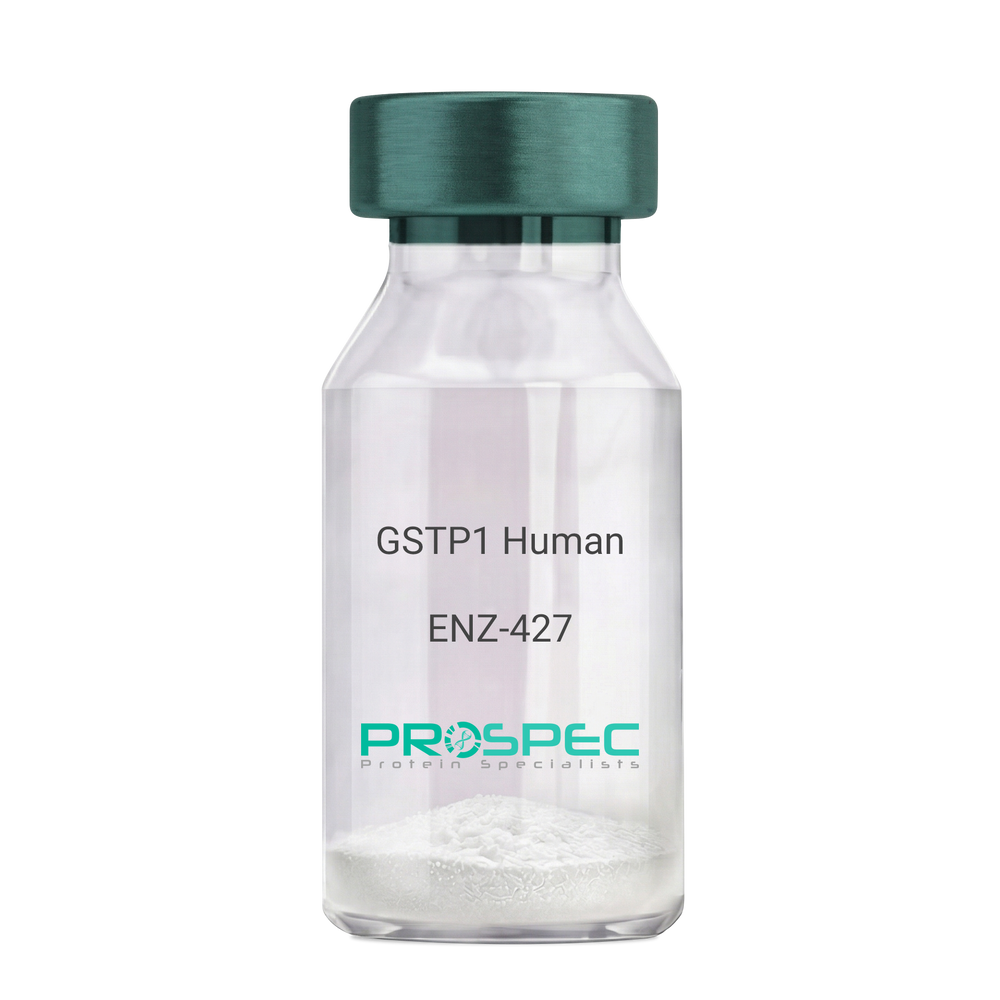
    GSTP1 Human

    Description:

    Glutathione S-Transferase pi 1 Human Recombinant

    Glutathione S-transferase P, GST class-pi, GSTP1-1, GSTP1, FAEES3, GST3, PI, DFN7.

    Product # :

    ENZ-427

    Price :

    Quantity :

    Shipping Method :

    Ice Icon

    Shipped with Ice Packs

    Add To Cart

    More Info

    • description
    • source
    • formulation
    • purity
    • biological activity
    • More Info
    • Citations

    Description

    GSTP1 Human Recombinant fused with 36 amino acid His tag at N-terminus produced in E.Coli is a single, non-glycosylated, polypeptide chain containing 246 amino acids (1-210 a.a.) And having a molecular mass of 27.4kDa. The GSTP1 is purified by proprietary chromatographic techniques.

    Source

    Escherichia Coli.

    Formulation

    The GSTP1 solution (0.5mg/ml) contains 20mM Tris-HCl buffer (pH7.0), 30% glycerol, 1mM EDTA and 0.1mM PMSF.

    Purity

    Greater than 95.0% as determined by SDS-PAGE.

    Biological Activity

    Specific activity is > 80 units/mg, and is defined as the amount of enzyme that conjugate 1.0 u mole of 1-chloro-2,4-dinitrobenzene (CDNB) with reduced glutathione per minute at pH 6.5 at 25°C.

    Citations

    More Info

    • Introduction

      GSTP1 is a polymorphic gene encoding active, functionally different GSTP1 variant proteins that are believed to function in xenobiotic metabolism and have a part in susceptibility to cancer, and other diseases. GSTP1 is a glutathione S-transferase belonging to the pi class. GST family enzymes play a significant role in detoxification by catalyzing the conjugation of many hydrophobic and electrophilic compounds with reduced glutathione. Based upon the biochemical, immunologic and structural properties of the soluble GSTs they are grouped into 4 main classes: alpha, mu, pi, and theta. The GSTP1 enzyme acts by catalyzing the reaction of glutathione with an acceptor molecule to form a Sulfur-substituted glutathione. The reactions employing glutathione contribute the transformation of a broad range of electrophiles, including reactive products of lipid, protein, carcinogens, therapeutic drugs, environmental toxins, and products of oxidative stress.
      The GSTP1 inactivation through CpG hypermethylation is frequent in pituitary adenomas and may be a factor in aggressive pituitary tumor behavior. GSTP1 is may be a transcriptional target of the p53 tumor suppressor gene. Single-nucleotide polymorphism in GSTP1 is linked to modified protein binding, which influence GSTP1's contribution to carcinogen and drug metabolism, and possibly disease pathogenesis and/or drug response. GST-pi might have central roles in proliferation of androgen-independent human prostate cancer cells.

    • Synonyms

      Glutathione S-transferase P, GST class-pi, GSTP1-1, GSTP1, FAEES3, GST3, PI, DFN7.

    • Physical Appearance

      Sterile Filtered colorless solution.

    • Stability

      Store at 4°C if entire vial will be used within 2-4 weeks. Store, frozen at -20°C for longer periods of time. For long term storage it is recommended to add a carrier protein (0.1% HSA or BSA). Avoid multiple freeze-thaw cycles.

    • Amino Acid Sequence

      MRGSHHHHHH GMASMTGGQQ MGRDLYDDDD KDRWGSMPPY TVVYFPVRGR CAALRMLLAD QGQSWKEEVV TVETWQEGSL KASCLYGQLP KFQDGDLTLY QSNTILRHLG RTLGLYGKDQ QEAALVDMVN DGVEDLRCKY ISLIYTNYEA GKDDYVKALP GQLKPFETLL SQNQGGKTFI VGDQISFADY NLLDLLLIHE VLAPGCLDAF PLLSAYVGRL SARPKLKAFL ASPEYVNLPI NGNGKQ.

    ProSpec's products are furnished for LABORATORY RESEARCH USE ONLY. The product may not be used as drugs, agricultural or pesticidal products, food additives or household chemicals.

    Gstp1 Human
  • View Data Sheet

    Name :

    PECI Human

    Description:

    Peroxisomal D3,D2-Enoyl-CoA Isomerase Human Recombinant

    EC 5.3.3.8, ACBD2, DRS1, HCA88, PECI, Peroxisomal 3,2-trans-enoyl-CoA isomerase, Dodecenoyl-CoA isomerase, Delta(3),delta(2)-enoyl-CoA isomerase, D3,D2-enoyl-CoA isomerase, Diazepam-binding inhibitor-related protein 1, DBI-related protein 1, DRS-1, Hepatocellular carcinoma-associated antigen 88, Renal carcinoma antigen NY-REN-1, KIAA0536, dJ1013A10.

    Product # :

    ENZ-531

    Price :

    Quantity :

    Shipping Method :

    Ice Icon

    Shipped with Ice Packs

    Add To Cart

    More Info

    • description
    • source
    • formulation
    • purity
    • More Info
    • Citations

    Description

    PECI Recombinant Human produced in E.Coli is a single, non-glycosylated polypeptide chain containing 384 amino acids (1-364 a.a.) and having a molecular mass of 42.3 kDa. The PECI is fused to 20 amino acid His-Tag at N-terminus and purified by proprietary chromatographic techniques.

    Source

    Escherichia Coli.

    Formulation

    PECI Human solution (1mg/ml) containing 20mM Tris-HCl, pH-8 and 10% glycerol.

    Purity

    Greater than 95.0% as determined by SDS-PAGE.

    Citations

    More Info

    • Introduction

      PECI is an enzyme that localized to the peroxisomal matrix and encloses one ACB (acyl-CoA-binding) domain. PECI is expressed abundantly in liver, heart and skeletal muscle. PECI functions to catalyze the isomerization of both 3-cis and 3-trans double bonds into the 2-trans form in an array of enoyl-CoA species. PECI takes part in the beta-oxidation of unsaturated fatty acids.

    • Synonyms

      EC 5.3.3.8, ACBD2, DRS1, HCA88, PECI, Peroxisomal 3,2-trans-enoyl-CoA isomerase, Dodecenoyl-CoA isomerase, Delta(3),delta(2)-enoyl-CoA isomerase, D3,D2-enoyl-CoA isomerase, Diazepam-binding inhibitor-related protein 1, DBI-related protein 1, DRS-1, Hepatocellular carcinoma-associated antigen 88, Renal carcinoma antigen NY-REN-1, KIAA0536, dJ1013A10.

    • Physical Appearance

      Sterile filtered colorless solution.

    • Stability

      Store at 4°C if entire vial will be used within 2-4 weeks. Store, frozen at -20°C for longer periods of time. For long term storage it is recommended to add a carrier protein (0.1% HSA or BSA).Avoid multiple freeze-thaw cycles.

    • Amino Acid Sequence

      MGSSHHHHHH SSGLVPRGSH MNRTAMRASQ KDFENSMNQV KLLKKDPGNE VKLKLYALYK QATEGPCNMP KPGVFDLINK AKWDAWNALG SLPKEAARQN YVDLVSSLSP SLESSSQVEP GTDRKSTGFE TLVVTSEDGI TKIMFNRPKK KNAINTEMYH EIMRALKAAS KDDSIITVLT GNGDYYSSGN DLTNFTDIPP GGVEEKAKNN AVLLREFVGC FIDFPKPLIA VVNGPAVGIS VTLLGLFDAV YASDRATFHT PFSHLGQSPE GCSSYTFPKI MSPAKATEML IFGKKLTAGE ACAQGLVTEV FPDSTFQKEV WTRLKAFAKL PPNALRISKE VIRKREREKL HAVNAEECNV LQGRWLSDEC TNAVVNFLSR KSKL.

    ProSpec's products are furnished for LABORATORY RESEARCH USE ONLY. The product may not be used as drugs, agricultural or pesticidal products, food additives or household chemicals.

    Peci Human
  • View Data Sheet

    Name :

    LDHB Human, His

    Description:

    Lactate Dehydrogenase B Human Recombinant, His Tag

    LDH-H, TRG-5, L-lactate dehydrogenase B chain, LDH-B, EC=1.1.1.27, Renal carcinoma antigen NY-REN-46, LDHB.

    Product # :

    ENZ-539

    Price :

    Quantity :

    Shipping Method :

    Ice Icon

    Shipped with Ice Packs

    Add To Cart

    More Info

    • description
    • source
    • formulation
    • purity
    • biological activity
    • More Info
    • Citations

    Description

    LDHB Recombinant Human produced in E.Coli is a single, non-glycosylated polypeptide chain containing 354 amino acids (1-334 a.a.) and having a molecular mass of 38.8 kDa. The LDHB is fused to a 20 amino acids His-Tag at N-terminus and purified by proprietary chromatographic techniques.

    Source

    Escherichia Coli.

    Formulation

    LDHB Human solution containing 20mM Tris-HCl pH-8, 1mM DTT & 10% glycerol.

    Purity

    Greater than 95.0% as determined by SDS-PAGE.

    Biological Activity

    Specific activity is > 6 units/mg. in which one unit will convert 1.0 umole of pyruvate to L-lactate and beta-NAD per minute at pH 7.5 at 37°C.

    Citations

    More Info

    • Introduction

      LDHB is part of the lactate dehydrogenase family. LDHB is an oxidoreductase which catalyses the interconversion of pyruvate and lactate with concomitant interconversion of NADH and NAD+. LDHB catalyzes the oxidation of hydroxybutyrate, and frequently called Hydroxybutyrate Dehydrogenase (HBD). The LDH family consists of three members, LDH-A, LDH-B and LDH-C. LDHs function as powerful markers for germ cell tumors.

    • Synonyms

      LDH-H, TRG-5, L-lactate dehydrogenase B chain, LDH-B, EC=1.1.1.27, Renal carcinoma antigen NY-REN-46, LDHB.

    • Physical Appearance

      Sterile filtered colorless solution.

    • Stability

      Store at 4°C if entire vial will be used within 2-4 weeks. Store, frozen at -20°C for longer periods of time. For long term storage it is recommended to add a carrier protein (0.1% HSA or BSA).Avoid multiple freeze-thaw cycles.

    • Amino Acid Sequence

      MGSSHHHHHH SSGLVPRGSH MATLKEKLIA PVAEEEATVP NNKITVVGVG QVGMACAISI LGKSLADELA LVDVLEDKLK GEMMDLQHGS LFLQTPKIVA DKDYSVTANS KIVVVTAGVR QQEGESRLNL VQRNVNVFKF IIPQIVKYSP DCIIIVVSNP VDILTYVTWK LSGLPKHRVI GSGCNLDSAR FRYLMAEKLG IHPSSCHGWI LGEHGDSSVA VWSGVNVAGV SLQELNPEMG TDNDSENWKE VHKMVVESAY EVIKLKGYTN WAIGLSVADL IESMLKNLSR IHPVSTMVKG MYGIENEVFL SLPCILNARG LTSVINQKLK DDEVAQLKKS ADTLWDIQKD LKDL.

    ProSpec's products are furnished for LABORATORY RESEARCH USE ONLY. The product may not be used as drugs, agricultural or pesticidal products, food additives or household chemicals.

    Ldhb Human
  • View Data Sheet

    Name :

    ASNA1 Antibody

    Description:

    arsA Arsenite Transporter ATP-Binding, Homolog 1, Mouse Anti Human

    ArsA Arsenite Transporter ATP-Binding Homolog 1 (Bacterial), Arsenical Pump-Driving ATPase, Transmembrane Domain Recognition Complex 40kDa, TRC40. ASNA-I, ATPase ASNA1, ARSA-I, GET3, Golgi To ER Traffic 3 Homolog, Arsenite-Stimulated ATPase, Transmembrane Domain Recognition Complex 40 KDa ATPase Subunit, HASNA-I, HARSA-I, ARSA, ARSA1, EC 3.6.3.16, EC 3.6.

    Product # :

    ANT-516

    Price :

    Quantity :

    Shipping Method :

    Ice Icon

    Shipped with Ice Packs

    Add To Cart

    More Info

    • formulation
    • More Info
    • Citations

    Formulation

    1mg/ml containing PBS, pH-7.4, 10% Glycerol and 0.02% Sodium Azide.

    Citations

    More Info

    • Introduction

      ArsA Arsenite Transporter, ATP-Binding, Homolog 1 (ASNA1) is a part of the arsA ATPase family. ASNA1 is the human homolog of the bacterial arsA gene. ArsA ATPase is the catalytic component of a multisubunit oxyanion pump In E.coli, which is in charge for resistance to arsenicals and antimonials. ASNA1 is also a main component of a transmembrane domain (TMD) recognition complex (TRC) which is involved in the post-translational delivery of tail-anchored (TA) proteins from the cytosol to the endoplasmic reticulum (ER).

    • Synonyms

      ArsA Arsenite Transporter ATP-Binding Homolog 1 (Bacterial), Arsenical Pump-Driving ATPase, Transmembrane Domain Recognition Complex 40kDa, TRC40. ASNA-I, ATPase ASNA1, ARSA-I, GET3, Golgi To ER Traffic 3 Homolog, Arsenite-Stimulated ATPase, Transmembrane Domain Recognition Complex 40 KDa ATPase Subunit, HASNA-I, HARSA-I, ARSA, ARSA1, EC 3.6.3.16, EC 3.6.

    • Physical Appearance

      Sterile filtered colorless solution.

    • Immunogen

      Anti-human ASNA1 mAb, clone PAT2A1AT, is derived from hybridization of mouse F0 myeloma cells with spleen cells from BALB/c mice immunized with a recombinant human ASNA1 protein 1-348 amino acids purified from E. coli.

    • Ig Subclass

      Mouse IgG2b heavy chain and k light chain.

    • Clone

      PAT2A1AT.

    • Applications

      The antibody has been tested by ELISA, Western blot analysis to assure specificity and reactivity. Since application varies, however, each investigation should be titrated by the reagent to obtain optimal results. Recommended starting dilution is 1:1000.

    • Type

      Mouse Anti Human Monoclonal.

    • Storage Procedures

      For periods up to 1 month store at 4°C, for longer periods of time, store at -20°C. Prevent freeze thaw cycles.

    • Purification Method

      ASNA1 antibody was purified from mouse ascitic fluids by protein-A affinity chromatography.

    ProSpec's products are furnished for LABORATORY RESEARCH USE ONLY. The product may not be used as drugs, agricultural or pesticidal products, food additives or household chemicals.

    Asna1 Antibody
  • View Data Sheet

    Name :

    NMT1 Antibody

    Description:

    N-Myristoyltransferase 1, Mouse Anti Human

    N-Myristoyltransferase 1, NMT, Myristoyl-CoA:Protein N-Myristoyltransferase 1, Type I N-Myristoyltransferase, EC 2.3.1.97, Myristoyl-CoA:Protein,N- Myristoyltransferase, Glycylpeptide N-Tetradecanoyltransferase 1,Peptide N-Myristoyltransferase 1,Alternative, Short Form NMT-S, Short Form NMT-S,Long Form, NMT-L, Alternative, Long Form, NMT-L, NMT 1.

    Product # :

    ANT-731

    Price :

    Quantity :

    Shipping Method :

    Ice Icon

    Shipped with Ice Packs

    Add To Cart

    More Info

    • formulation
    • More Info
    • Citations

    Formulation

    1mg/ml containing PBS, pH-7.4, 10% Glycerol and 0.02% Sodium Azide.

    Citations

    More Info

    • Introduction

      Myristate, a rare 14-carbon saturated fatty acid, is co-translationally attached by an amide linkage to the N-terminal glycine residue of cellular & viral proteins with various functions. N-Myristoyltransferase 1, also known as NMT1 catalyzes the transfer of myristate from CoA to proteins. NMT1 seems to be irreversible and is essential for full expression of the biologic activities of several N-myristoylated proteins, as well as the alpha subunit of the signal-transducing guanine nucleotide-binding protein, G protein.

    • Synonyms

      N-Myristoyltransferase 1, NMT, Myristoyl-CoA:Protein N-Myristoyltransferase 1, Type I N-Myristoyltransferase, EC 2.3.1.97, Myristoyl-CoA:Protein,N- Myristoyltransferase, Glycylpeptide N-Tetradecanoyltransferase 1,Peptide N-Myristoyltransferase 1,Alternative, Short Form NMT-S, Short Form NMT-S,Long Form, NMT-L, Alternative, Long Form, NMT-L, NMT 1.

    • Physical Appearance

      Sterile filtered colorless solution.

    • Immunogen

      Anti-human NMT1 mAb, is derived from hybridization of mouse F0 myeloma cells with spleen cells from BALB/c mice immunized with recombinant human NMT1 amino acids 1-496 purified from E. coli.

    • Ig Subclass

      Mouse IgG2a heavy chain and κ light chain.

    • Clone

      PAT2C8AT.

    • Applications

      NMT1 antibody has been tested by ELISA, Western blot analysis, ICC/IF and Flow cytometry to assure specificity and reactivity. Since application varies, however, each investigation should be titrated by the reagent to obtain optimal results.

    • Type

      Mouse Anti Human Monoclonal.

    • Storage Procedures

      For periods up to 1 month store at 4°C, for longer periods of time, store at -20°C. Prevent freeze thaw cycles.

    • Purification Method

      NMT1 antibody was purified from mouse ascitic fluids by protein-A affinity chromatography.

    ProSpec's products are furnished for LABORATORY RESEARCH USE ONLY. The product may not be used as drugs, agricultural or pesticidal products, food additives or household chemicals.

    Nmt1 Antibody
  • View Data Sheet

    Name :

    ACP2 Human

    Description:

    Acid Phosphatase-2 Human Recombinant

    Acid Phosphatase 2, Lysosoma, EC 3.1.3.2 LAP, Lysosomal Acid Phosphatase, ACP2.

    Product # :

    ENZ-849

    Price :

    Quantity :

    Shipping Method :

    Ice Icon

    Shipped with Ice Packs

    Add To Cart

    More Info

    • description
    • source
    • formulation
    • purity
    • More Info
    • Citations

    Description

    ACP2 Human Recombinant produced in E.Coli is a single, non-glycosylated polypeptide chain containing 373 amino acids (31-380 a.a.) and having a molecular mass of 42.9kDa. ACP2 is fused to a 23 amino acid His-Tag at N-Terminus and purified by conventional chromatography techniques.

    Source

    Escherichia Coli.

    Formulation

    ACP2 protein solution (1mg/ml) contains 20mM Tris-HCl (pH8.0) and 10% glycerol.

    Purity

    Greater than 85.0% as determined by SDS-PAGE.

    Citations

    More Info

    • Introduction

      Acid Phosphatase-2, also known as ACP2 is composed of two subunits, Alpha & beta, and is chemically as well as genetically distinct from red cell acid phosphatase. ACP2 belongs to a family of distinct isoenzymes which hydrolyze orthophosphoric monoesters to alcohol and phosphate. In addition, Acid phosphatase deficiency is caused by mutations in the ACP2-beta subunit as well as ACP3-alpha subunit genes.

    • Synonyms

      Acid Phosphatase 2, Lysosoma, EC 3.1.3.2 LAP, Lysosomal Acid Phosphatase, ACP2.

    • Physical Appearance

      Sterile filtered colorless solution.

    • Stability

      Store at 4°C if entire vial will be used within 2-4 weeks. Store, frozen at -20°C for longer periods of time. For long term storage it is recommended to add a carrier protein (0.1% HSA or BSA).Avoid multiple freeze-thaw cycles.

    • Amino Acid Sequence

      MGSSHHHHHH SSGLVPRGSH MGSRSLRFVT LLYRHGDRSP VKTYPKDPYQ EEEWPQGFGQ LTKEGMLQHW ELGQALRQRY HGFLNTSYHR QEVYVRSTDF DRTLMSAEAN LAGLFPPNGM QRFNPNISWQ PIPVHTVPIT EDRLLKFPLG PCPRYEQLQN ETRQTPEYQN ESSRNAQFLD MVANETGLTD LTLETVWNVY DTLFCEQTHG LRLPPWASPQ TMQRLSRLKD FSFRFLFGIY QQAEKARLQG GVLLAQIRKN LTLMATTSQL PKLLVYSAHD TTLVALQMAL DVYNGEQAPY ASCHIFELYQ EDSGNFSVEM YFRNESDKAP WPLSLPGCPH RCPLQDFLRL TEPVVPKDWQ QECQLASGPA DTE

    ProSpec's products are furnished for LABORATORY RESEARCH USE ONLY. The product may not be used as drugs, agricultural or pesticidal products, food additives or household chemicals.

    Acp2 Human
  • View Data Sheet

    Name :

    HDDC3 Human

    Description:

    HD domain containing 3 Human Recombinant

    Guanosine-3',5'-bis(diphosphate) 3'-pyrophosphohydrolase MESH1, HD domain-containing protein 3, Metazoan SpoT homolog 1, MESH1, Penta-phosphate guanosine-3'-pyrophosphohydrolase, (ppGpp)ase, HDDC3.

    Product # :

    ENZ-184

    Price :

    Quantity :

    Shipping Method :

    Ice Icon

    Shipped with Ice Packs

    Add To Cart

    More Info

    • description
    • source
    • formulation
    • purity
    • More Info
    • Citations

    Description

    HDDC3 Human Recombinant produced in E.coli is a single, non-glycosylated polypeptide chain containing 160 amino acids (1-140) and having a molecular mass of 17.9kDa.HDDC3 is fused to a 20 amino acid His-tag at N-terminus & purified by proprietary chromatographic techniques.

    Source

    Escherichia Coli.

    Formulation

    The HDDC3 solution (0.5mg/ml) contains 20mM Tris-HCl buffer (pH8.0), 40% glycerol, 0.15M NaCl and 1mM DTT.

    Purity

    Greater than 90.0% as determined by SDS-PAGE.

    Citations

    More Info

    • Introduction

      Guanosine-3',5'-bis(diphosphate)-pyrophosphohydrolase MESH1 (HDDC3) contains an active site for ppGpp hydrolysis and a conserved His-Asp-box motif for Mn(2+) binding. In accordance with its structure, HDDC3 effectively catalyzes the hydrolysis of guanosine 3',5'-diphosphate (ppGpp) both in vitro and in vivo. In addition, HDDC3 suppresses SpoT-deficient lethality and RelA-induced delayed cell growth in bacteria.

    • Synonyms

      Guanosine-3',5'-bis(diphosphate) 3'-pyrophosphohydrolase MESH1, HD domain-containing protein 3, Metazoan SpoT homolog 1, MESH1, Penta-phosphate guanosine-3'-pyrophosphohydrolase, (ppGpp)ase, HDDC3.

    • Physical Appearance

      Sterile Filtered colorless solution.

    • Stability

      Store at 4°C if entire vial will be used within 2-4 weeks.Store, frozen at -20°C for longer periods of time. For long term storage it is recommended to add a carrier protein (0.1% HSA or BSA).Avoid multiple freeze-thaw cycles.

    • Amino Acid Sequence

      MGSSHHHHHH SSGLVPRGSH MGSEAAQLLE AADFAARKHR QQRRKDPEGT PYINHPIGVA RILTHEAGIT DIVVLQAALL HDTVEDTDTT LDEVELHFGA QVRRLVEEVT DDKTLPKLER KRLQVEQAPH SSPGAKLVKL ADKLYNLRDL NRCTPEVKIQ.

    ProSpec's products are furnished for LABORATORY RESEARCH USE ONLY. The product may not be used as drugs, agricultural or pesticidal products, food additives or household chemicals.

    Hddc3 Human
  • View Data Sheet

    Name :

    MPI Human

    Description:

    Mannose Phosphate Isomerase Human Recombinant

    Mannose-6-phosphate isomerase, PMI1, CDG1B, Phosphohexomutase, Phosphomannose isomerase, EC 5.3.1.8, FLJ39201.

    Product # :

    ENZ-169

    Price :

    Quantity :

    Shipping Method :

    Ice Icon

    Shipped with Ice Packs

    Add To Cart

    More Info

    • description
    • source
    • formulation
    • purity
    • More Info
    • Citations

    Description

    MPI Human Recombinant produced in E.coli is a single, non-glycosylated polypeptide chain containing 382 amino acids (1-362) and having a molecular mass of 41.9 kDa.The MPI is fused to a 20 amino acid His-Tag at N-terminus and purified by proprietary chromatographic techniques.

    Source

    E.coli.

    Formulation

    The MPI solution (0.5mg/ml) contains 20mM Tris-HCl buffer (pH 8.0), 0.4M Urea and 5% glycerol.

    Purity

    Greater than 90% as determined by SDS-PAGE.

    Citations

    More Info

    • Introduction

      MPI is a member of the mannose-6-phosphate isomerase type 1 family. Although MPI is expressed in all tissues, it can be found more abundantly in heart, brain and skeletal muscle. Localized to the cytoplasm, MPI exploits zinc as a cofactor and catalyzes the interconversion of fructose-6-phosphate and mannose-6-phosphate. Mutations in the MPI gene are the cause of carbohydrate-deficient glycoprotein syndrome, type Ib.

    • Synonyms

      Mannose-6-phosphate isomerase, PMI1, CDG1B, Phosphohexomutase, Phosphomannose isomerase, EC 5.3.1.8, FLJ39201.

    • Physical Appearance

      Sterile Filtered colorless solution.

    • Stability

      Store at 4°C if entire vial will be used within 2-4 weeks. Store, frozen at -20°C for longer periods of time. For long term storage it is recommended to add a carrier protein (0.1% HSA or BSA).Avoid multiple freeze-thaw cycles.

    • Amino Acid Sequence

      MGSSHHHHHH SSGLVPRGSH MAAPRVFPLS CAVQQYAWGK MGSNSEVARL LASSDPLAQI AEDKPYAELW MGTHPRGDAK ILDNRISQKT LSQWIAENQD SLGSKVKDTF NGNLPFLFKV LSVETPLSIQ AHPNKELAEK LHLQAPQHYP DANHKPEMAI ALTPFQGLCG FRPVEEIVTF LKTAAGNNME DIFGELLLQL HQQYPGDIGC FAIYFLNLLT LKPGEAMFLE ANVPHAYLKG DCVECMACSD NTVRAGLTPK FIDVPTLCEM LSYTPSSSKD RLFLPTRSQE DPYLSIYDPP VPDFTIMKTE VPGSVTEYKV LALDSASILL MVQGTVIAST PTTQTPIPLQ RGGVLFIGAN ESVSLKLTEP KDLLIFRACC LL

    ProSpec's products are furnished for LABORATORY RESEARCH USE ONLY. The product may not be used as drugs, agricultural or pesticidal products, food additives or household chemicals.

    Mpi Human
  • View Data Sheet

    Name :

    STX1A Human

    Description:

    Syntaxin-1A Human Recombinant

    STX1, HPC-1, p35-1, Syntaxin-1A, Neuron-specific antigen HPC-1, STX-1A, STX1A.

    Product # :

    PRO-574

    Price :

    Quantity :

    Shipping Method :

    Ice Icon

    Shipped with Ice Packs

    Add To Cart

    More Info

    • description
    • source
    • formulation
    • purity
    • More Info
    • Citations

    Description

    Syntaxin-1A Human Recombinant fused to N-terminal His-Tag produced in E.Coli is a single, non-glycosylated polypeptide chain containing 226 amino acids (1-226) and having a molecular mass of 26.1 kDa.Recombinant Human STX1A contains N-terminal domain (Habc) and t_SNARE domain (H3 domain).

    Source

    Escherichia Coli.

    Formulation

    The protein solution contains 20mM Tris-HCl pH7.5, 10% glycerol, and 1mM DTT.

    Purity

    Greater than 95.0% as determined by Analysis by SDS-PAGE.

    Citations

    More Info

    • Introduction

      Syntaxin is membrane integrated Q-SNARE protein participating in exocytosis. Syntaxin is composed of an N-terminal regulatory domain (Habc), a SNARE domain (known as H3), and a single C-terminal transmembrane domain. The SNARE (H3) domain binds to both synaptobrevin and SNAP-25 forming the core SNARE complex. Synaptic vesicles store neurotransmitters that are released during calcium-regulated exocytosis. The specificity of neurotransmitter release requires the localization of both synaptic vesicles and calcium channels to the presynaptic active zone. Syntaxins function in this vesicle fusion process. Syntaxins also serve as a substrate for botulinum neurotoxin type C, a metalloprotease that blocks exocytosis and has high affinity for a molecular complex that includes the alpha-latrotoxin receptor which produces exocytosis.

    • Synonyms

      STX1, HPC-1, p35-1, Syntaxin-1A, Neuron-specific antigen HPC-1, STX-1A, STX1A.

    • Physical Appearance

      Sterile Filtered colorless solution.

    • Stability

      Store at 4°C if entire vial will be used within 2-4 weeks.Store, frozen at -20°C for longer periods of time. For long term storage it is recommended to add a carrier protein (0.1% HSA or BSA).Avoid multiple freeze-thaw cycles.

    • Amino Acid Sequence

      MKDRTQELRT AKDSDDDDDV AVTVDRDRFM DEFFEQVEEI RGFIDKIAEN VEEVKRKHSA ILASPNPDEK TKEELEELMS DIKKTANKVR SKLKSIEQSI EQEEGLNRSS ADLRIRKTQH STLSRKFVEV MSEYNATQSD YRERCKGRIQ RQLEITGRTT TSEELEDMLE SGNPAIFASG IIMDSSISKQ ALSEIETRHS EIIKLENSIR ELHDMFMDMA MLVESQ.

    ProSpec's products are furnished for LABORATORY RESEARCH USE ONLY. The product may not be used as drugs, agricultural or pesticidal products, food additives or household chemicals.

    Stx1A Human
  • View Data Sheet

    Name :

    PAFAH1B3 Human

    Description:

    Platelet-activating Factor Acetylhydrolase 1b, Catalytic Subunit 3 Human Recombinant

    Platelet-activating factor acetylhydrolase 1b catalytic subunit 3 (29kDa), PAF acetylhydrolase 29 kDa subunit, platelet-activating factor acetylhydrolase, isoform Ib gamma subunit (29kD), PAF-AH1b alpha 1 subunit, PAF-AH 29 kDa subunit, PAFAHG, PAFAH subunit gamma, EC 3.1.1.47.

    Product # :

    ENZ-641

    Price :

    Quantity :

    Shipping Method :

    Ice Icon

    Shipped with Ice Packs

    Add To Cart

    More Info

    • description
    • source
    • formulation
    • purity
    • More Info
    • Citations

    Description

    PAFAH1B3 Human Recombinant produced in E. coli is a single polypeptide chain containing 254 amino acids (1-231) and having a molecular mass of 28.2 kDa.PAFAH1B3 is fused to a 23 amino acid His-tag at N-terminus & purified by proprietary chromatographic techniques.

    Source

    E.coli.

    Formulation

    The PAFAH1B3 solution (1mg/1ml) contains 20mM Tris-HCl buffer (pH 8.0), 100mM NaCl and 10% glycerol.

    Purity

    Greater than 95% as determined by SDS-PAGE.

    Citations

    More Info

    • Introduction

      Platelet-activating Factor Acetylhydrolase 1b Catalytic Subunit 3 (PAFAH1B3) is a member of the 'GDSL' lipolytic enzyme family. Acetylhydrolase catalyzes the elimination of an acetyl group from the glycerol backbone of platelet-activating factor. PAFAH1B3, which is a subunit of the platelet-activating factor cetylhydrolase isoform 1B complex, is comprised of the catalytic beta and gamma subunits and the regulatory alpha subunit. The PAFAH1B3 complex has an imperative role during the development of brain.

    • Synonyms

      Platelet-activating factor acetylhydrolase 1b catalytic subunit 3 (29kDa), PAF acetylhydrolase 29 kDa subunit, platelet-activating factor acetylhydrolase, isoform Ib gamma subunit (29kD), PAF-AH1b alpha 1 subunit, PAF-AH 29 kDa subunit, PAFAHG, PAFAH subunit gamma, EC 3.1.1.47.

    • Physical Appearance

      Sterile Filtered colorless solution.

    • Stability

      Store at 4°C if entire vial will be used within 2-4 weeks. Store, frozen at -20°C for longer periods of time. For long term storage it is recommended to add a carrier protein (0.1% HSA or BSA).Avoid multiple freeze-thaw cycles.

    • Amino Acid Sequence

      MGSSHHHHHH SSGLVPRGSH MGSMSGEENP ASKPTPVQDV QGDGRWMSLH HRFVADSKDK EPEVVFIGDS LVQLMHQCEI WRELFSPLHA LNFGIGGDGT QHVLWRLENG ELEHIRPKIV VVWVGTNNHG HTAEQVTGGI KAIVQLVNER QPQARVVVLG LLPRGQHPNP LREKNRQVNE LVRAALAGHP RAHFLDADPG FVHSDGTISH HDMYDYLHLS RLGYTPVCRA LHSLLLRLLA QDQGQGAPLL EPAP

    ProSpec's products are furnished for LABORATORY RESEARCH USE ONLY. The product may not be used as drugs, agricultural or pesticidal products, food additives or household chemicals.

    Pafah1B3 Human
  • View Data Sheet

    Name :

    TNAA E.Coli

    Description:

    Tryptophanase E.Coli Recombinant

    Tryptophanase/L-cysteine desulfhydrase, PLP-dependent, Tryptophanase, TNAA, L-tryptophan indole-lyase, TNase, tnaA, ind.

    Product # :

    ENZ-852

    Price :

    Quantity :

    Shipping Method :

    Ice Icon

    Shipped with Ice Packs

    Add To Cart

    More Info

    • description
    • source
    • formulation
    • purity
    • More Info
    • Citations

    Description

    TNAA Recombinant produced in E.coli is a single, non-glycosylated polypeptide chain containing 494 amino acids (1-471) and having a molecular mass of 55.2kDa.TNAA is fused to a 23 amino acid His-tag at N-terminus & purified by proprietary chromatographic techniques.

    Source

    E.coli.

    Formulation

    The TNAA solution (0.5mg/ml) contains Phosphate buffered saline (pH7.4), 10% glycerol and 1mM DTT.

    Purity

    Greater than 95% as determined by SDS-PAGE.

    Citations

    More Info

    • Introduction

      Tryptophanase, also known as tnaA, catalyzes chemical reaction using 2 substrates which are L-tryptophan and H2O. tnaA protein's three products are indole, pyruvate, and NH3.

    • Synonyms

      Tryptophanase/L-cysteine desulfhydrase, PLP-dependent, Tryptophanase, TNAA, L-tryptophan indole-lyase, TNase, tnaA, ind.

    • Physical Appearance

      Sterile Filtered colorless solution.

    • Stability

      Store at 4°C if entire vial will be used within 2-4 weeks. Store, frozen at -20°C for longer periods of time. For long term storage it is recommended to add a carrier protein (0.1% HSA or BSA).Avoid multiple freeze-thaw cycles.

    • Amino Acid Sequence

      MGSSHHHHHH SSGLVPRGSH MGSMENFKHL PEPFRIRVIE PVKRTTRAYR EEAIIKSGMN PFLLDSEDVF IDLLTDSGTG AVTQSMQAAM MRGDEAYSGS RSYYALAESV KNIFGYQYTI PTHQGRGAEQ IYIPVLIKKR EQEKGLDRSK MVAFSNYFFD TTQGHSQING CTVRNVYIKE AFDTGVRYDF KGNFDLEGLE RGIEEVGPNN VPYIVATITS NSAGGQPVSL ANLKAMYSIA KKYDIPVVMD SARFAENAYF IKQREAEYKD WTIEQITRET YKYADMLAMS AKKDAMVPMG GLLCMKDDSF FDVYTECRTL CVVQEGFPTY GGLEGGAMER LAVGLYDGMN LDWLAYRIAQ VQYLVDGLEE IGVVCQQAGG HAAFVDAGKL LPHIPADQFP AQALACELYK VAGIRAVEIG SFLLGRDPKT GKQLPCPAEL LRLTIPRATY TQTHMDFIIE AFKHVKENAA NIKGLTFTYE PKVLRHFTAK LKEV.

    ProSpec's products are furnished for LABORATORY RESEARCH USE ONLY. The product may not be used as drugs, agricultural or pesticidal products, food additives or household chemicals.

    Tnaa Ecoli
  • View Data Sheet

    Name :

    UBA3 Human

    Description:

    Ubiquitin-Like Modifier Activating Enzyme 3 Human Recombinant

    NEDD8-activating enzyme E1 catalytic subunit, NEDD8-activating enzyme E1C, Ubiquitin-activating enzyme E1C, Ubiquitin-like modifier-activating enzyme 3, Ubiquitin-activating enzyme 3, UBA3, UBE1C, hUBA3.

    Product # :

    ENZ-576

    Price :

    Quantity :

    Shipping Method :

    Ice Icon

    Shipped with Ice Packs

    Add To Cart

    More Info

    • description
    • source
    • formulation
    • purity
    • More Info
    • Citations

    Description

    UBA3 Human Recombinant produced in E.coli is a single, non-glycosylated polypeptide chain containing 487 amino acids (1-463) and having a molecular mass of 54.4kDa.UBA3 is fused to a 24 amino acid His-tag at N-terminus & purified by proprietary chromatographic techniques.

    Source

    Escherichia Coli.

    Formulation

    The UBA3 solution (1mg/ml) contains 20mM Tris-HCl buffer (pH8.0), 20% glycerol and 1mM DTT.

    Purity

    Greater than 90.0% as determined by SDS-PAGE.

    Citations

    More Info

    • Introduction

      NEDD8-activating enzyme E1 catalytic subunit (UBA3) is the catalytic subunit of the dimeric UBA3-NAE1 E1 enzyme, which belongs to the E1 ubiquitin-activating enzyme family. E1 activates NEDD8 by initially adenylating its C-terminal glycine residue with ATP, afterwards linking this residue to the side chain of the catalytic cysteine, generating a NEDD8-UBA3 thioester and free AMP. E1 at last transfers NEDD8 to the catalytic cysteine of UBE2M. The UBA3 enzyme connects with AppBp1, an amyloid beta precursor protein binding protein, to form a heterodimer, and at that point the enzyme complex activates NEDD8, a ubiquitin-like protein, which controls cell division, signaling and embryogenesis.

    • Synonyms

      NEDD8-activating enzyme E1 catalytic subunit, NEDD8-activating enzyme E1C, Ubiquitin-activating enzyme E1C, Ubiquitin-like modifier-activating enzyme 3, Ubiquitin-activating enzyme 3, UBA3, UBE1C, hUBA3.

    • Physical Appearance

      Sterile filtered colorless solution.

    • Stability

      Store at 4°C if entire vial will be used within 2-4 weeks. Store, frozen at -20°C for longer periods of time. For long term storage it is recommended to add a carrier protein (0.1% HSA or BSA).Avoid multiple freeze-thaw cycles.

    • Amino Acid Sequence

      MGSSHHHHHH SSGLVPRGSH MGSHMADGEE PERKRRRIEE LLAEKMAVDG GCGDTGDWEG RWNHVKKFLE RSGPFTHPDF EPSTESLQFL LDTCKVLVIG AGGLGCELLK NLALSGFRQI HVIDMDTIDV SNLNRQFLFR PKDIGRPKAE VAAEFLNDRV PNCNVVPHFN KIQDFNDTFY RQFHIIVCGL DSIIARRWIN GMLISLLNYE DGVLDPSSIV PLIDGGTEGF KGNARVILPG MTACIECTLE LYPPQVNFPM CTIASMPRLP EHCIEYVRML QWPKEQPFGE GVPLDGDDPE HIQWIFQKSL ERASQYNIRG VTYRLTQGVV KRIIPAVAST NAVIAAVCAT EVFKIATSAY IPLNNYLVFN DVDGLYTYTF EAERKENCPA CSQLPQNIQF SPSAKLQEVL DYLTNSASLQ MKSPAITATL EGKNRTLYLQ SVTSIEERTR PNLSKTLKEL GLVDGQELAV ADVTTPQTVL FKLHFTS.

    ProSpec's products are furnished for LABORATORY RESEARCH USE ONLY. The product may not be used as drugs, agricultural or pesticidal products, food additives or household chemicals.

    Uba3 Human
  • View Data Sheet

    Name :

    GSTT2 Human

    Description:

    Glutathione S-Transferase Theta-2 Human Recombinant

    Glutathione S-transferase theta 2, GST class-theta-2, GSTT2B, Glutathione S-transferase theta-2B, EC 2.5.1.18.

    Product # :

    ENZ-593

    Price :

    Quantity :

    Shipping Method :

    Ice Icon

    Shipped with Ice Packs

    Add To Cart

    More Info

    • description
    • source
    • formulation
    • purity
    • More Info
    • Citations

    Description

    GSTT2 Recombinant produced in E. coli is a single polypeptide chain containing 264 amino acids (1-244) and having a molecular mass of 29.6kDa.GSTT2 is fused to a 20 amino acid His-tag at N-terminus & purified by proprietary chromatographic techniques.

    Source

    E.coli.

    Formulation

    The GSTT2 solution (1mg/ml) contains 20mM Tris-HCl buffer (pH 8.0), 100mM Nacl,
    1mM DTT and 10% glycerol.

    Purity

    Greater than 95% as determined by SDS-PAGE.

    Citations

    More Info

    • Introduction

      GSTT2 belongs to the glutathione s-transferase (GST) family of proteins. There are eight GST proteins families, named alpha, kappa, mu, omega, pi, sigma, theta and zeta. Each one of the GST families has several proteins with different functions throughout the cell. The theta type members GSTT1 and GSTT2 have a 55% aa sequence homology and hold a vital role in human carcinogenesis. The theta genes are structurally similar – each has five exons with identical exon/intron boundaries.

    • Synonyms

      Glutathione S-transferase theta 2, GST class-theta-2, GSTT2B, Glutathione S-transferase theta-2B, EC 2.5.1.18.

    • Physical Appearance

      Sterile Filtered colorless solution.

    • Stability

      Store at 4°C if entire vial will be used within 2-4 weeks. Store, frozen at -20°C for longer periods of time. For long term storage it is recommended to add a carrier protein (0.1% HSA or BSA).Avoid multiple freeze-thaw cycles.

    • Amino Acid Sequence

      MGSSHHHHHH SSGLVPRGSH MGLELFLDLV SQPSRAVYIF AKKNGIPLEL RTVDLVKGQH KSKEFLQINS LGKLPTLKDG DFILTESSAI LIYLSCKYQT PDHWYPSDLQ ARARVHEYLG WHADCIRGTF GIPLWVQVLG PLIGVQVPEE KVERNRTAMD QALQWLEDKF LGDRPFLAGQ QVTLADLMAL EELMQPVALG YELFEGRPRL AAWRGRVEAF LGAELCQEAH SIILSILEQA AKKTLPTPSP EAYQAMLLRI ARIP

    ProSpec's products are furnished for LABORATORY RESEARCH USE ONLY. The product may not be used as drugs, agricultural or pesticidal products, food additives or household chemicals.

    Gstt2 Human
  • View Data Sheet

    Name :

    MAP1LC3B Human

    Description:

    Microtubule-Associated Protein 1 Light Chain 3 Beta Human Recombinant

    Microtubule-Associated Protein 1 Light Chain 3 beta, ATG8F, Autophagy-related ubiquitin-like modifier LC3 B, MAP1 light chain 3-like protein 2, MAP1A/MAP1B LC3 B, LC3B, MAP1A/1BLC3, MAP1ALC3.

    Product # :

    PRO-076

    Price :

    Quantity :

    Shipping Method :

    Ice Icon

    Shipped with Ice Packs

    Add To Cart

    More Info

    • description
    • source
    • formulation
    • purity
    • More Info
    • Citations

    Description

    MAP1LC3B produced in E.Coli is a single, non-glycosylated polypeptide chain containing 140 amino acids (1-120a.a.) and having a molecular mass of 16.2kDa.MAP1LC3B is fused to a 20 amino acid His-tag at N-terminus & purified by proprietary chromatographic techniques.

    Source

    Escherichia Coli.

    Formulation

    The MAP1LC3B protein solution (0.5mg/1ml) is formulated in 20mM Tris-HCl buffer (pH8.0)
    1mM DTT, 100mM NaCl and 20% glycerol.

    Purity

    Greater than 95% as determined by SDS-PAGE.

    Citations

    More Info

    • Introduction

      MAP1LC3B is a member of the MAP1 LC3 family. MAP1LC3B is a subunit of neuronal microtubule-associated MAP1A and MAP1B proteins, that are involved in microtubule assembly and important for neurogenesis. In addition, MAP1LC3B takes part in formation of autophagosomal vacuoles and is expressed mainly in heart, testis, brain and skeletal muscle.

    • Synonyms

      Microtubule-Associated Protein 1 Light Chain 3 beta, ATG8F, Autophagy-related ubiquitin-like modifier LC3 B, MAP1 light chain 3-like protein 2, MAP1A/MAP1B LC3 B, LC3B, MAP1A/1BLC3, MAP1ALC3.

    • Physical Appearance

      Sterile Filtered clear solution.

    • Stability

      Store at 4°C if entire vial will be used within 2-4 weeks. Store, frozen at -20°C for longer periods of time. For long term storage it is recommended to add a carrier protein (0.1% HSA or BSA).Avoid multiple freeze-thaw cycles.

    • Amino Acid Sequence

      MGSSHHHHHH SSGLVPRGSH MPSEKTFKQR RTFEQRVEDV RLIREQHPTK IPVIIERYKG EKQLPVLDKT KFLVPDHVNM SELIKIIRRR LQLNANQAFF LLVNGHSMVS VSTPISEVYE SEKDEDGFLY MVYASQETFG

    ProSpec's products are furnished for LABORATORY RESEARCH USE ONLY. The product may not be used as drugs, agricultural or pesticidal products, food additives or household chemicals.

    Map1Lc3B Human
  • View Data Sheet

    Name :

    IDH1

    Description:

    Isocitrate Dehydrogenase-1 Yeast Recombinant

    Isocitrate dehydrogenase [NADP] cytoplasmic, EC 1.1.1.42, Cytosolic NADP-isocitrate dehydrogenase, Oxalosuccinate decarboxylase, IDH, NADP(+)-specific ICDH, IDP, PICD.

    Product # :

    ENZ-289

    Price :

    Quantity :

    Shipping Method :

    Ice Icon

    Shipped with Ice Packs

    Add To Cart

    More Info

    • description
    • source
    • formulation
    • purity
    • biological activity
    • More Info
    • Citations

    Description

    Recombinant Saccharomyces Cerevisiae ICDH (NADP) derived from yeast host cells by using over-expression system, is full length same as designated ICD1 from Saccharomyces Cerevisiae. The N-terminal amino acid Phenylalanine residue next to Met is substituted with Alanine for overexpression. The ICDH is purified by proprietary chromatographic techniques.

    Source

    Yeast cells.

    Formulation

    One ml of solution contains 0.075 mol/l KPO4, 50% Glycerol, pH 7.1.

    Purity

    Greater than 90% as determined by SDS-PAGE.

    Biological Activity

    The specific activity was found to be 115 U/mg.

    Citations

    More Info

    • Introduction

      Isocitrate Dehydrogenase is an enzyme of the oxidoreductase class that catalyzes the conversion of isocitrate and NAD+ to yield 2-ketoglutarate, carbon dioxide, and NADH. It occurs in cell mitochondria. The enzyme requires Mg2+, Mn2+; it is activated by ADP, citrate, and Ca2+, and inhibited by NADH, NADPH, and ATP. The reaction is the key rate-limiting step of the citric acid (tricarboxylic) cycle.

    • Synonyms

      Isocitrate dehydrogenase [NADP] cytoplasmic, EC 1.1.1.42, Cytosolic NADP-isocitrate dehydrogenase, Oxalosuccinate decarboxylase, IDH, NADP(+)-specific ICDH, IDP, PICD.

    • Physical Appearance

      Sterile Filtered clear solution.

    • Stability

      Store at 4°C if entire vial will be used within 2-4 weeks. Store, frozen at -20°C for longer periods of time. For long term storage it is recommended to add a carrier protein (0.1% HSA or BSA).Avoid multiple freeze-thaw cycles.

    • Unit Definition

      One unit is defined as 1 µmol of NAD+ production per minute under the assay conditions (25°C, pH 7.5).

    ProSpec's products are furnished for LABORATORY RESEARCH USE ONLY. The product may not be used as drugs, agricultural or pesticidal products, food additives or household chemicals.

    Isocitrate Dehydrogenase
  • View Data Sheet

    Name :

    PPA Yeast

    Description:

    Inorganic Pyrophosphatase Yeast Recombinant

    Inorganic pyrophosphatase, PPA.

    Product # :

    ENZ-1181

    Price :

    Quantity :

    Shipping Method :

    Ice Icon

    Shipped with Ice Packs

    Add To Cart

    More Info

    • description
    • source
    • formulation
    • purity
    • More Info
    • Citations

    Description

    PPA Yeast Recombinant produced in E.Coli is a single, non-glycosylated polypeptide chain containing 286 amino acids and having a molecular mass of 35kDa. Inorganic Pyrophosphatase is purified by proprietary chromatographic techniques.

    Source

    Escherichia Coli.

    Formulation

    Inorganic pyrophosphatase protein solution (100U/ml) containing 20mM Tris-HCl (25℃, pH 8.0), 100mM KCl, 0.1mM EDTA, 1mM DTT and 50% glycerol.

    Purity

    Greater than 98.0% as determined by SDS-PAGE.

    Citations

    More Info

    • Introduction

      Inorganic pyrophosphatase (ppa) is a member of the Ppase family. PPA is an enzyme which catalyzes the conversion of one molecule of pyrophosphate to two phosphate ions. Since this is a highly exergonic reaction, it can therefore be coupled to unfavorable biochemical transformations in order to drive these transformations to completion. The role of the PPA enzyme is a critical one in the lipid metabolism (including lipid synthesis and degradation), calcium absorption and bone formation, DNA synthesis, as well as other biochemical transformations.

    • Synonyms

      Inorganic pyrophosphatase, PPA.

    • Physical Appearance

      Sterile filtered colorless solution.

    • Stability

      Store at 4°C if entire vial will be used within 2-4 weeks. Store, frozen at -20°C for longer periods of time. Do not store at -70C. For long term storage it is recommended to add a carrier protein (0.1% HSA or BSA). Avoid multiple freeze-thaw cycles.

    • Unit Definition

      Under standard conditions, 1U is defined as the amount of enzyme required to catalyze the hydrolysis of pyrophosphate (PPi)/min. to produce 1μmol of orthophosphate (Pi). Optimal reaction temp. is 25℃ , activity at 16 ~ 37℃. Cofactor: Mg+2

    ProSpec's products are furnished for LABORATORY RESEARCH USE ONLY. The product may not be used as drugs, agricultural or pesticidal products, food additives or household chemicals.

    Ppa Yeast
  • View Data Sheet

    Name :

    PI3Ka Bovine

    Description:

    Phosphoinositide 3-kinase alpha p110a/p85a Bovine Recombinant

    Phosphoinositide 3-kinase alpha p110a/p85a, PI3Ka, 2.7.1.137, Phosphatidylinositol 3-kinase, 1-phosphatidylinositol 3-kinase, PI3-kinase, PtdIns-3-kinase, Type I phosphatidylinositol kinase, Type III phosphoinositide 3-kinase.

    Product # :

    PKA-327

    Price :

    Quantity :

    Shipping Method :

    Ice Icon

    Shipped with Ice Packs

    Add To Cart

    More Info

    • description
    • source
    • formulation
    • purity
    • More Info
    • Citations

    Description

    The PI3Ka catalytic and regulatory subunits are coexpressed in Sf9 insect cells. Phosphoinositide 3-kinase alpha Bovine Recombinant is a glycosilated protein having a molecular weight as follows: p85a chain 83.5 kDa, p110 chain 124.3 kDa.

    Source

    Sf9 insect cells.

    Formulation

    PI3Ka solution in 25mM HEPES, pH 8.0, 25mM NaCl, 2.5mM MgCl2 and 50% glycerol.

    Purity

    Greater than 90.0% as determined by SDS-PAGE.

    Citations

    More Info

    • Introduction

      PI3Ka plays a specific role in apoptosis in human colon cancer cells. Injection of neutralizing antibodies specific to PI3Ka into adenocarcinoma cells induced apoptosis, a response that was reverted by treating cells with caspase inhibitor. It was also shown that PI3Ka mediated phosphorylation of the p85a adapter reduces the lipid kinase activity of the heterodimer and this gives hints for PI3K-dependent signaling events not requiring production of 3’-phosphorylated phosphoinositides.
      PI3Ka is a key regulator of the initiation of keratinocyte differentiation. A decrease in PI3Ka activity results in a loss of keratinocyte adhesion to the extracellular membrane and the initiation of early phase differentiation.

    • Synonyms

      Phosphoinositide 3-kinase alpha p110a/p85a, PI3Ka, 2.7.1.137, Phosphatidylinositol 3-kinase, 1-phosphatidylinositol 3-kinase, PI3-kinase, PtdIns-3-kinase, Type I phosphatidylinositol kinase, Type III phosphoinositide 3-kinase.

    • Physical Appearance

      Sterile filtered liquid formualtion.

    • Stability

      Store at 4°C if entire vial will be used within 2-4 weeks. Store, frozen at -20°C for longer periods of time. For long term storage it is recommended to add a carrier protein (0.1% HSA or BSA).Avoid multiple freeze-thaw cycles.

    • Unit Definition

      1 unit is defined as 1 picomole phosphate transferred to PIP2 per minute.

    • Specific Activity

      1,000 U/mg.

    ProSpec's products are furnished for LABORATORY RESEARCH USE ONLY. The product may not be used as drugs, agricultural or pesticidal products, food additives or household chemicals.

    Pi3Ka Bovine
  • View Data Sheet

    Name :

    PLA2G1B Human

    Description:

    Secreted Phospholipase A2-IB Human Recombinant

    Phospholipase A2, EC 3.1.1.4, Phosphatidylcholine 2-acylhydrolase, Group IB phospholipase A2, PLA2, PLA2A, PPLA2, sPLA2-IB,MGC119834, MGC119835, PLA2G1B.

    Product # :

    ENZ-325

    Price :

    Quantity :

    Shipping Method :

    Room Temp Icon

    Shipped at Room temp

    Add To Cart

    More Info

    • description
    • source
    • formulation
    • purity
    • More Info
    • Citations

    Description

    Secreted Phospholipase A2-IB Human Recombinant is manufactured with N-terminal fusionf HisTag. PLA2G1B His-Tagged Fusion Protein is 16 kDa containing 126 amino acid residues of the human secreted phospholipase A2-IB and 16 additional amino acid residues - HisTag (underlined).

    Source

    Escherichia Coli.

    Formulation

    Filtered (0.4µm) and lyophilized from 0.5 mg/ml in 0.05M Acetate buffer pH-4.

    Purity

    Greater than 95% as determined by SDS-PAGE.

    Citations

    More Info

    • Introduction

      Group IB secretory phospholipase A2 (sPLA2-IB) mediates cell proliferation, cell migration, hormone release and eicosanoid production via its receptor in peripheral tissues. In the CNS, high-affinity binding sites of sPLA2-IB have been documented. sPLA2-IB induced neuronal cell death in a concentrationdependent manner depending on PGD2 metabolites, especially Delta12-PGJ2 that might mediate sPLA2-IB-induced apoptosis. The secretory PLA2 (sPLA2) family, in which 10 isozymes have been identified, consists of lowmolecular weight, Ca2+-requiring secretory enzymes that have been implicated in a number of biological processes, such as modification of eicosanoid generation, inflammation, and host defense.

    • Synonyms

      Phospholipase A2, EC 3.1.1.4, Phosphatidylcholine 2-acylhydrolase, Group IB phospholipase A2, PLA2, PLA2A, PPLA2, sPLA2-IB,MGC119834, MGC119835, PLA2G1B.

    • Physical Appearance

      Lyophilized (freeze-dried) powder.

    • Stability

      Store lyophilized protein at -20°C. Aliquot the product after reconstitution to avoid repeated freezing/thawing cycles. Reconstituted protein can be stored at 4°C for a limited period of time; it does not show any change after two weeks at 4°C.

    • Solubility

      Add 0.1M Acetate buffer pH4 to prepare a working stock solution of approximately 0.5 mg/mL and let the lyophilized pellet dissolve completely. For conversion into higher pH value, we recommend intensive dilution by relevant buffer to a concentration of 10μg/ml. In higher concentrations the solubility of this antigen is limited. Product is not sterile! Please filter the product by an appropriate sterile filter before using it in the cell culture.

    • Amino Acid Sequence

      MRGSHHHHHH GMASHMAVWQ FRKMIKCVIP GSDPFLEYNN YGCYCGLGGS GTPVDELDKC CQTHDNCYDQ AKKLDSCKFL LDNPYTHTYS YSCSGSAITC SSKNKECEAF ICNCDRNAAI CFSKAPYNKA HKNLDTKKYC QS.

    ProSpec's products are furnished for LABORATORY RESEARCH USE ONLY. The product may not be used as drugs, agricultural or pesticidal products, food additives or household chemicals.

    Pla2G1B Human
  • View Data Sheet

    Name :

    AGA Human, sf9

    Description:

    Aspartylglucosaminidase Human Recombinant, sf9

    Aspartylglucosaminidase, Glycosylasparaginase, N4-(N-Acetyl-Beta-Glucosaminyl)-L-Asparagine Amidase, N(4)-(Beta-N-Acetylglucosaminyl)-L-Asparaginase , EC 3.5.1.26, Aspartylglucosylamine Deaspartylase, EC 3.5.1, ASRG, AGU, GA.

    Product # :

    ENZ-990

    Price :

    Quantity :

    Shipping Method :

    Ice Icon

    Shipped with Ice Packs

    Add To Cart

    More Info

    • description
    • source
    • formulation
    • purity
    • More Info
    • Citations

    Description

    AGA produced in Sf9 Baculovirus cells is a single, glycosylated polypeptide chain containing 332 amino acids (24-346 a.a.) and having a molecular mass of 35.7kDa (Molecular size on SDS-PAGE will appear at approximately 18-57kDa). AGA is expressed with a 6 amino acid His tag at C-Terminus and purified by proprietary chromatographic techniques.

    Source

    Sf9, Baculovirus cells.

    Formulation

    AGA protein solution (0.25mg/ml) contains Phosphate Buffered Saline (pH 7.4) and 10% glycerol.

    Purity

    Greater than 90.0% as determined by SDS-PAGE.

    Citations

    More Info

    • Introduction

      Aspartylglucosaminidase, also known as AGA, takes part in the catabolism of Nlinked oligosaccharides of glycoproteins. AGA is a protein coding gene which cleaves asparagine from N-acetylglucosamines in the lysosomal breakdown of glycoproteins.

    • Synonyms

      Aspartylglucosaminidase, Glycosylasparaginase, N4-(N-Acetyl-Beta-Glucosaminyl)-L-Asparagine Amidase, N(4)-(Beta-N-Acetylglucosaminyl)-L-Asparaginase , EC 3.5.1.26, Aspartylglucosylamine Deaspartylase, EC 3.5.1, ASRG, AGU, GA.

    • Physical Appearance

      Sterile Filtered colorless solution.

    • Stability

      Store at 4°C if entire vial will be used within 2-4 weeks. Store, frozen at -20°C for longer periods of time. For long term storage it is recommended to add a carrier protein (0.1% HSA or BSA). Avoid multiple freeze-thaw cycles.

    • Amino Acid Sequence

      ADPSSPLPLV VNTWPFKNAT EAAWRALASG GSALDAVESG CAMCEREQCD GSVGFGGSPD ELGETTLDAM IMDGTTMDVG AVGDLRRIKN AIGVARKVLE HTTHTLLVGE SATTFAQSMG FINEDLSTTA SQALHSDWLA RNCQPNYWRN VIPDPSKYCG PYKPPGILKQ DIPIHKETED DRGHDTIGMV VIHKTGHIAA GTSTNGIKFK IHGRVGDSPI PGAGAYADDT AGAAAATGNG DILMRFLPSY QAVEYMRRGE DPTIACQKVI SRIQKHFPEF FGAVICANVT GSYGAACNKL STFTQFSFMV YNSEKNQPTE EKVDCIHHHH HH.

    ProSpec's products are furnished for LABORATORY RESEARCH USE ONLY. The product may not be used as drugs, agricultural or pesticidal products, food additives or household chemicals.

    Aga Human Sf9
  • View Data Sheet

    Name :

    AMD1 Human

    Description:

    Adenosylmethionine Decarboxylase 1 Human Recombinant

    Adenosylmethionine decarboxylase 1, S-adenosylmethionine decarboxylase proenzyme, AdoMetDC, S-adenosylmethionine decarboxylase 1, SAMDC, AMD, EC 4.1.1.50.

    Product # :

    ENZ-624

    Price :

    Quantity :

    Shipping Method :

    Ice Icon

    Shipped with Ice Packs

    Add To Cart

    More Info

    • description
    • source
    • formulation
    • purity
    • More Info
    • Citations

    Description

    AMD1 Human Recombinant produced in E. coli is a single polypeptide chain containing 292 amino acids (68-334) and having a molecular mass of 33.4 kDa.AMD1 is fused to a 25 amino acid His-tag at N-terminus & purified by proprietary chromatographic techniques.

    Source

    E.coli.

    Formulation

    The AMD1 solution (0.5mg/1ml) contains 20mM Tris-HCl buffer (pH 8.0), 100mM NaCl, 1mM DTT and 20% glycerol.

    Purity

    Greater than 80% as determined by SDS-PAGE.

    Citations

    More Info

    • Introduction

      Adenosylmethionine decarboxylase proenzyme (AMD1) is synthesized originally as an inactive proenzyme. Putrescine stimulates both the proenzyme processing and the catalytic activity. The catalytic activity is inhibited by iodoacetic acid. The active enzyme formation entails a self-maturation process in which the active site pyruvoyl group is produced from an internal serine residue using an autocatalytic post-translational modification.

    • Synonyms

      Adenosylmethionine decarboxylase 1, S-adenosylmethionine decarboxylase proenzyme, AdoMetDC, S-adenosylmethionine decarboxylase 1, SAMDC, AMD, EC 4.1.1.50.

    • Physical Appearance

      Sterile Filtered colorless solution.

    • Stability

      Store at 4°C if entire vial will be used within 2-4 weeks. Store, frozen at -20°C for longer periods of time. For long term storage it is recommended to add a carrier protein (0.1% HSA or BSA).Avoid multiple freeze-thaw cycles.

    • Amino Acid Sequence

      GSSHHHHHH SSGLVPRGSH MGSHMSSMFV SKRRFILKTC GTTLLLKALV PLLKLARDYS GFDSIQSFFY SRKNFMKPSH QGYPHRNFQE EIEFLNAIFP NGAAYCMGRM NSDCWYLYTL DFPESRVISQ PDQTLEILMS ELDPAVMDQF YMKDGVTAKD VTRESGIRDL IPGSVIDATM FNPCGYSMNG MKSDGTYWTI HITPEPEFSY VSFETNLSQT SYDDLIRKVV EVFKPGKFVT TLFVNQSSKC RTVLASPQKI EGFKRLDCQS AMFNDYNFVF TSFAKKQQQQ QS

    ProSpec's products are furnished for LABORATORY RESEARCH USE ONLY. The product may not be used as drugs, agricultural or pesticidal products, food additives or household chemicals.

    Amd1 Human
  • View Data Sheet

    Name :

    SIRT2 Human

    Description:

    Sirtuin 2 Human Recombinant

    Sirtuin 2, SIR2L2, SIR2-like protein 2, NAD-dependent deacetylase sirtuin-2, Silent Information Regulator 2.

    Product # :

    PRO-033

    Price :

    Quantity :

    Shipping Method :

    Ice Icon

    Shipped with Ice Packs

    Add To Cart

    More Info

    • description
    • source
    • formulation
    • purity
    • More Info
    • Citations

    Description

    SIRT2 produced in E.Coli is a single, non-glycosylated polypeptide chain containing 372 amino acids (1-352a.a.) and having a molecular mass of 41.7kDa.SIRT2 is fused to a 20 amino acid His-tag at N-terminus & purified by proprietary chromatographic techniques.

    Source

    Escherichia Coli.

    Formulation

    The SIRT2 protein solution (0.25mg/1ml) is formulated in 20mM Tris-HCl buffer (pH8.0) 2mM DTT, 200mM NaCl, 0.5mM EDTA and 30% glycerol.

    Purity

    Greater than 90% as determined by SDS-PAGE.

    Citations

    More Info

    • Introduction

      SIRT2 belongs to the sirtuin family of proteins, homologs to the yeast Sir2 protein. Proteins of the sirtuin family are characterized by a sirtuin core domain and grouped into four classes and take part in various processes, including transcriptional regulation, cell cycle progression, DNA-damage repair and aging. SIRT2 is a NAD-dependent deacetylase, which deacetylates the 'Lys-40' of alpha-tubulin.

    • Synonyms

      Sirtuin 2, SIR2L2, SIR2-like protein 2, NAD-dependent deacetylase sirtuin-2, Silent Information Regulator 2.

    • Physical Appearance

      Sterile Filtered clear solution.

    • Stability

      Store at 4°C if entire vial will be used within 2-4 weeks. Store, frozen at -20°C for longer periods of time.Please avoid freeze thaw cycles.

    • Amino Acid Sequence

      MGSSHHHHHH SSGLVPRGSH MDFLRNLFSQ TLSLGSQKER LLDELTLEGV ARYMQSERCR RVICLVGAGI STSAGIPDFR SPSTGLYDNL EKYHLPYPEA IFEISYFKKH PEPFFALAKE LYPGQFKPTI CHYFMRLLKD KGLLLRCYTQ NIDTLERIAG LEQEDLVEAH GTFYTSHCVS ASCRHEYPLS WMKEKIFSEV TPKCEDCQSL VKPDIVFFGE SLPARFFSCM QSDFLKVDLL LVMGTSLQVQ PFASLISKAP LSTPRLLINK EKAGQSDPFL GMIMGLGGGM DFDSKKAYRD VAWLGECDQG CLALAELLGW KKELEDLVRR EHASIDAQSG AGVPNPSTSA SPKKSPPPAK DEARTTEREK PQ

    ProSpec's products are furnished for LABORATORY RESEARCH USE ONLY. The product may not be used as drugs, agricultural or pesticidal products, food additives or household chemicals.

    Sirt2 Human
  • 1
  • …
  • 17
  • 18
  • 19
  • 20
  • 21
  • …
  • 42
Your browser does not support the video tag.

Products

  • Cytokines
  • Growth Factors
  • Chemokines
  • CD Antigens
  • Neurotrophins
  • Hormones
  • Enzymes
  • Viral Antigens
  • Recombinant Proteins
  • Natural Proteins
  • Monoclonal Antibodies
  • Polyclonal Antibodies
  • Thermal Packaging

About

  • Company
  • Founder
  • Contribution
  • Contact Us
  • My Account

Ordering

  • Ordering Method
  • Ordering - Credit Card
  • Ordering PO
  • Shipping Fees
  • FAQ's

Legal

  • Terms & Conditions
  • Privacy
  • Site Map
  • info@prospecbio.com
  • Facebook
  • Instagram
  • Linkedin Profile

© 2026 ProSpec-Tany TechnoGene Ltd. All Rights Reserved.

  • Choosing a selection results in a full page refresh.
  • Opens in a new window.