Skip to content

High-quality research proteins.

  • 1-800-805-6531

  • Mon - Sat 8.00-18.00, Sun - Closed

  • info@prospecbio.com

  • PO Box 6591 East Brunswick NJ 08816

  • Products
    • Cytokines
    • Growth factors
    • Chemokines
    • Cd antigens
    • Neurotrophins
    • Hormones
    • Enzymes
    • Viral antigens
    • Recombinant proteins
    • Natural proteins
    • Monoclonal antibodies
    • Polyclonal antibodies
    • Thermal Packaging
  • About
    • Company
    • Founder
    • Contribution
  • Customers
    • Eastern Asia
    • Eastern Europe
    • North America
    • South America
    • South East Asia
    • Southern Asia
    • Western Europe
  • Ordering
    • Ordering Method
    • Ordering - Credit Card
    • Ordering - PO
    • Shipping Fees
    • FAQs
  • Services
    • DNA Cloning
    • Protein Expression
    • Monoclonal Antibody
    • Fermentation
    • Technology License
  • Contact us
Log in

Country/region

  • USD $ | Albania
  • USD $ | Andorra
  • USD $ | Argentina
  • USD $ | Armenia
  • USD $ | Australia
  • USD $ | Austria
  • USD $ | Azerbaijan
  • USD $ | Belarus
  • USD $ | Belgium
  • USD $ | Bolivia
  • USD $ | Brazil
  • USD $ | Bulgaria
  • USD $ | Cambodia
  • USD $ | Canada
  • USD $ | Chile
  • USD $ | China
  • USD $ | Colombia
  • USD $ | Costa Rica
  • USD $ | Croatia
  • USD $ | Cyprus
  • USD $ | Czechia
  • USD $ | Denmark
  • USD $ | Estonia
  • USD $ | Finland
  • USD $ | France
  • USD $ | Georgia
  • USD $ | Germany
  • USD $ | Greece
  • USD $ | Hong Kong SAR
  • USD $ | Hungary
  • USD $ | Iceland
  • USD $ | India
  • USD $ | Ireland
  • USD $ | Israel
  • USD $ | Italy
  • USD $ | Japan
  • USD $ | Kazakhstan
  • USD $ | Latvia
  • USD $ | Liechtenstein
  • USD $ | Lithuania
  • USD $ | Madagascar
  • USD $ | Malta
  • USD $ | Mexico
  • USD $ | Moldova
  • USD $ | Monaco
  • USD $ | Netherlands
  • USD $ | New Zealand
  • USD $ | North Macedonia
  • USD $ | Norway
  • USD $ | Panama
  • USD $ | Paraguay
  • USD $ | Peru
  • USD $ | Philippines
  • USD $ | Poland
  • USD $ | Portugal
  • USD $ | Romania
  • USD $ | Singapore
  • USD $ | Slovakia
  • USD $ | Slovenia
  • USD $ | South Africa
  • USD $ | South Korea
  • USD $ | Spain
  • USD $ | Sri Lanka
  • USD $ | Sweden
  • USD $ | Switzerland
  • USD $ | Taiwan
  • USD $ | Thailand
  • USD $ | Türkiye
  • USD $ | Ukraine
  • USD $ | United Kingdom
  • USD $ | United States
  • USD $ | Uruguay
  • USD $ | Vatican City
  • USD $ | Venezuela
  • USD $ | Vietnam
  • Facebook
  • Instagram
logoProSpec - Recombinant Protein Manufacturer for academic and R&D industry
Become a distributor
Account Log in
Wishlist
Cart Cart(0)
  • Products
    +
    • Cytokines
    • Growth factors
    • Chemokines
    • Cd antigens
    • Neurotrophins
    • Hormones
    • Enzymes
    • Viral antigens
    • Recombinant proteins
    • Natural proteins
    • Monoclonal antibodies
    • Polyclonal antibodies
    • Thermal Packaging
  • About
    +
    • Company
    • Founder
    • Contribution
  • Customers
    +
    • Eastern Asia
    • Eastern Europe
    • North America
    • South America
    • South East Asia
    • Southern Asia
    • Western Europe
  • Ordering
    +
    • Ordering Method
    • Ordering - Credit Card
    • Ordering - PO
    • Shipping Fees
    • FAQs
  • Services
    +
    • DNA Cloning
    • Protein Expression
    • Monoclonal Antibody
    • Fermentation
    • Technology License
  • Contact us

Item added to your cart

View cart
View All
  • Cytokines
  • Growth factors
  • Chemokines
  • Cd antigens
  • Neurotrophins
  • Hormones
  • Enzymes
  • Viral antigens
  • Recombinant proteins
  • Natural proteins
  • Monoclonal antibodies
  • Polyclonal antibodies
  • Thermal Packaging
  • Tumor Necrosis Factor

    Tumor Necrosis Factor

    View All
  • 4-1BB

    4-1BB

    View All
  • Adiponectin

    Adiponectin

    View All
  • AIF1

    AIF1

    View All
  • Other Cytokines

    Other Cytokines

    View All
  • AITRL

    AITRL

    View All
  • Angiopoietin

    Angiopoietin

    View All
  • Apolipoprotein

    Apolipoprotein

    View All
  • B-Cell Activating Factor

    B-Cell Activating Factor

    View All
  • Beta Defensin

    Beta Defensin

    View All
  • Bone Morphogenetic Protein

    Bone Morphogenetic Protein

    View All
  • B type Natriuretic Peptide

    B type Natriuretic Peptide

    View All
  • BST

    BST

    View All
  • Betacellulin

    Betacellulin

    View All
  • Cardiotrophin

    Cardiotrophin

    View All
  • Activin

    Activin

    View All
  • Fibroblast Growth Factor

    Fibroblast Growth Factor

    View All
  • Other Growth Factors

    Other Growth Factors

    View All
  • CSF

    CSF

    View All
  • CTGF

    CTGF

    View All
  • IGFBP

    IGFBP

    View All
  • VEGF Protein

    VEGF Protein

    View All
  • EGF

    EGF

    View All
  • Epigen

    Epigen

    View All
  • Erythropoietin

    Erythropoietin

    View All
  • Insulin-Like Growth Factor

    Insulin-Like Growth Factor

    View All
  • Growth Hormone

    Growth Hormone

    View All
  • HDGF

    HDGF

    View All
  • Hepatocyte Growth Factor

    Hepatocyte Growth Factor

    View All
  • Insulin

    Insulin

    View All
  • BCA-1/ BLC (CXCL13)

    BCA-1/ BLC (CXCL13)

    View All
  • BRAK (CXCL14)

    BRAK (CXCL14)

    View All
  • C-10 (CCL6)

    C-10 (CCL6)

    View All
  • Other Chemokines

    Other Chemokines

    View All
  • MEC (CCL28)

    MEC (CCL28)

    View All
  • LD78-beta (CCL3L1)

    LD78-beta (CCL3L1)

    View All
  • CTACK (CCL27)

    CTACK (CCL27)

    View All
  • CXCL16

    CXCL16

    View All
  • CXCL17

    CXCL17

    View All
  • Platelet Factor-4 (CXCL4)

    Platelet Factor-4 (CXCL4)

    View All
  • ENA-78 (CXCL5)

    ENA-78 (CXCL5)

    View All
  • Eotaxin (CCL11,24,26)

    Eotaxin (CCL11,24,26)

    View All
  • Exodus-2 (CCL21)

    Exodus-2 (CCL21)

    View All
  • Fractalkine (CX3CL1)

    Fractalkine (CX3CL1)

    View All
  • CXCL6

    CXCL6

    View All
  • Other CD Antigens

    Other CD Antigens

    View All
  • CD14

    CD14

    View All
  • CD164

    CD164

    View All
  • CD1

    CD1

    View All
  • CD2

    CD2

    View All
  • CD200

    CD200

    View All
  • CD207

    CD207

    View All
  • CD226

    CD226

    View All
  • CD23

    CD23

    View All
  • CD244

    CD244

    View All
  • CD247

    CD247

    View All
  • CD27

    CD27

    View All
  • CD274

    CD274

    View All
  • CD300

    CD300

    View All
  • CD33

    CD33

    View All
  • Other Neurotrophins

    Other Neurotrophins

    View All
  • Beta-NGF

    Beta-NGF

    View All
  • BDNF

    BDNF

    View All
  • CDNF

    CDNF

    View All
  • CNTF

    CNTF

    View All
  • GDNF

    GDNF

    View All
  • Glia Maturation Factor

    Glia Maturation Factor

    View All
  • MANF

    MANF

    View All
  • Midkine

    Midkine

    View All
  • Neuroglobin

    Neuroglobin

    View All
  • Neurotrophic factors

    Neurotrophic factors

    View All
  • Neuregulin

    Neuregulin

    View All
  • Neuropilin

    Neuropilin

    View All
  • Pigment Epithelium-Derived Factor

    Pigment Epithelium-Derived Factor

    View All
  • Pleiotrophin

    Pleiotrophin

    View All
  • Peptide Hormones

    Peptide Hormones

    View All
  • Other Hormones

    Other Hormones

    View All
  • HCG

    HCG

    View All
  • Endothelin

    Endothelin

    View All
  • Exendin

    Exendin

    View All
  • FSH

    FSH

    View All
  • Glucagon

    Glucagon

    View All
  • GHRP

    GHRP

    View All
  • GLP

    GLP

    View All
  • Thyrostimulin

    Thyrostimulin

    View All
  • Inhibin A

    Inhibin A

    View All
  • LHRH

    LHRH

    View All
  • Melanotan

    Melanotan

    View All
  • Procalcitonin

    Procalcitonin

    View All
  • PTH

    PTH

    View All
  • Peroxiredoxin

    Peroxiredoxin

    View All
  • Peptidase

    Peptidase

    View All
  • Synthetase

    Synthetase

    View All
  • Transferase

    Transferase

    View All
  • Hydrolase

    Hydrolase

    View All
  • Dehydrogenase

    Dehydrogenase

    View All
  • ACE2

    ACE2

    View All
  • Esterase

    Esterase

    View All
  • Protein Kinases

    Protein Kinases

    View All
  • Other Enzymes

    Other Enzymes

    View All
  • Phosphatase

    Phosphatase

    View All
  • Deaminase

    Deaminase

    View All
  • Oxygenase

    Oxygenase

    View All
  • Adenylate Kinase

    Adenylate Kinase

    View All
  • Lyase

    Lyase

    View All
  • Chagas

    Chagas

    View All
  • SARS

    SARS

    View All
  • Influenza

    Influenza

    View All
  • ASFV

    ASFV

    View All
  • Astrovirus

    Astrovirus

    View All
  • Borrelia

    Borrelia

    View All
  • Helicobacter Pylori

    Helicobacter Pylori

    View All
  • Chikungunya

    Chikungunya

    View All
  • Chlamydia

    Chlamydia

    View All
  • Cytomegalo

    Cytomegalo

    View All
  • Dengue

    Dengue

    View All
  • EBV

    EBV

    View All
  • Ebola

    Ebola

    View All
  • Feline Leukemia Virus

    Feline Leukemia Virus

    View All
  • Hepatitis A

    Hepatitis A

    View All
  • Other

    Other

    View All
  • Actin

    Actin

    View All
  • ADAM

    ADAM

    View All
  • Complement Component

    Complement Component

    View All
  • Ag85

    Ag85

    View All
  • Eukaryotic Translation Initiation Factor

    Eukaryotic Translation Initiation Factor

    View All
  • Anterior Gradient Protein

    Anterior Gradient Protein

    View All
  • Heat Shock Protein

    Heat Shock Protein

    View All
  • Alpha-2-HS-Glycoprotein

    Alpha-2-HS-Glycoprotein

    View All
  • Hemoglobin

    Hemoglobin

    View All
  • Allergy

    Allergy

    View All
  • Anaplasma

    Anaplasma

    View All
  • Angiogenin

    Angiogenin

    View All
  • Ankyrin Repeat Domain

    Ankyrin Repeat Domain

    View All
  • Annexin

    Annexin

    View All
  • Other Natural Proteins

    Other Natural Proteins

    View All
  • Aprotinin

    Aprotinin

    View All
  • Transferrin

    Transferrin

    View All
  • Avidin

    Avidin

    View All
  • Anti Coagulation Factors

    Anti Coagulation Factors

    View All
  • Natural Albumin

    Natural Albumin

    View All
  • Natural Coagulation Factors

    Natural Coagulation Factors

    View All
  • Fibronectin

    Fibronectin

    View All
  • Thrombin

    Thrombin

    View All
  • Anti Human Enzyme

    Anti Human Enzyme

    View All
  • Other Monoclonal Antibodies

    Other Monoclonal Antibodies

    View All
  • Anti Human Cytokine

    Anti Human Cytokine

    View All
  • Anti Human Heat Shock Protein

    Anti Human Heat Shock Protein

    View All
  • Anti Mouse Lymphocyte

    Anti Mouse Lymphocyte

    View All
  • Anti Human Chemokine

    Anti Human Chemokine

    View All
  • Anti Human Lymphocyte

    Anti Human Lymphocyte

    View All
  • Anti Viral Monoclonal

    Anti Viral Monoclonal

    View All
  • Anti Mouse Cytokine

    Anti Mouse Cytokine

    View All
  • Anti-GST Monoclonal

    Anti-GST Monoclonal

    View All
  • Other Polyclonal Antibodies

    Other Polyclonal Antibodies

    View All
  • Anti Viral

    Anti Viral

    View All
  • Anti-GST Monoclonal

    Anti-GST Monoclonal

    View All
Back

Search results

519 results found for “methylmalonic aciduria”

Name

Description

Product #

Price

Quantity

Shipping Method

  • View Data Sheet

    Name :

    ANGPTL3 (243-460) Human

    Description:

    Angiopoietin-like Protein 3 (243-460 a.a.) Human Recombinant

    Angiopoietin-Like 3, ANGPT5, Angiopoietin 5, FHBL2, ANG-5, Angiopoietin-Related Protein 3, Angiopoietin-Like Protein 3, Angiopoietin-5, ANL3, Angiopoietin-related protein 3.

    Product # :

    CYT-902

    Price :

    Quantity :

    Shipping Method :

    Ice Icon

    Shipped with Ice Packs

    Add To Cart

    More Info

    • description
    • source
    • formulation
    • purity
    • More Info
    • sds-page

    Description

    ANGPTL3 Human Recombinant produced in E.Coli is a single, non-glycosylated polypeptide chain containing 239 amino acids (243-460 a.a) and having a molecular mass of 27.7kDa. ANGPTL3 is fused to a 21 amino acid His-tag at N-terminus & purified by proprietary chromatographic techniques.

    Source

    E.coli.

    Formulation

    ANGPTL3 protein solution (1mg/ml) containing 20mM Tris-HCl (pH8.0) and 10% glycerol.

    Purity

    Greater than 90% as determined by SDS-PAGE.

    sds-page

    ANGPTL3-sds-page - Product image 1

    More Info

    • Introduction

      ANGPTL3 and ANGPTL4 are angiopoietin-like proteins secreted and expressed mainly by the liver, their role being the regulation of triglyceride metabolism by inhibiting the lipolysis of triglyceride-rich lipoproteins. During different nutritional states (feeding/fasting) the levels of the circulating triglycerides are regulated by Angptl3 and Angptl4 through differential inhibition of Lipoprotein lipase (LPL) as shown by the experimental data. The molecular structure of ANGPTL3 is similar to that of the angiopoietins (vascular endothelial growth factors). Deletion mutants of human Angiopoietin 5 were used in order to demonstrate that the N-terminal domain (fragment 17-207) and not the C-terminal fibrinogen-like domain (fragment 207-460) increased the plasma triglyceride levels in mice.

    • Synonyms

      Angiopoietin-Like 3, ANGPT5, Angiopoietin 5, FHBL2, ANG-5, Angiopoietin-Related Protein 3, Angiopoietin-Like Protein 3, Angiopoietin-5, ANL3, Angiopoietin-related protein 3.

    • Physical Appearance

      Sterile Filtered colorless solution.

    • Stability

      Store at 4°C if entire vial will be used within 2-4 weeks. Store, frozen at -20°C for longer periods of time. For long term storage it is recommended to add a carrier protein (0.1% HSA or BSA).Avoid multiple freeze-thaw cycles.

    • Amino Acid Sequence

      MGSSHHHHHH SSGLVPRGSH MPAECTTIYN RGEHTSGMYA IRPSNSQVFH VYCDVISGSP WTLIQHRIDG SQNFNETWEN YKYGFGRLDG EFWLGLEKIY SIVKQSNYVL RIELEDWKDN KHYIEYSFYL GNHETNYTLH LVAITGNVPN AIPENKDLVF STWDHKAKGH FNCPEGYSGG WWWHDECGEN NLNGKYNKPR AKSKPERRRG LSWKSQNGRL YSIKSTKMLI HPTDSESFE.

    • Background

      What is the molecular weight/Mw of ANGPTL3 Protein?
      ANGPTL3 Protein has a total Mw of 27.7kDa.

      What is the source or expression system of ANGPTL3 Protein?
      Escherichia Coli.

      What is the Purity of ANGPTL3 Protein?
      ANGPTL3 Protein is >90% pure as determined by SDS-PAGE.

      What is the Biological Activity of ANGPTL3 Protein?
      The biological functionality of ANGPTL3 Protein will be determined in the future.

      What is the amino acid sequence of ANGPTL3 Protein?
      MGSSHHHHHH SSGLVPRGSH MPAECTTIYN RGEHTSGMYA IRPSNSQVFH VYCDVISGSP WTLIQHRIDG SQNFNETWEN YKYGFGRLDG EFWLGLEKIY SIVKQSNYVL RIELEDWKDN KHYIEYSFYL GNHETNYTLH LVAITGNVPN AIPENKDLVF STWDHKAKGH FNCPEGYSGG WWWHDECGEN NLNGKYNKPR AKSKPERRRG LSWKSQNGRL YSIKSTKMLI HPTDSESFE.

      What applications can ANGPTL3 Protein be used in?
      ANGPTL3 Protein can probably be used in western blot, ELISA and Lateral Flow.

      What is the endotoxin level for ANGPTL3 Protein?
      The endotoxin level is minimal, ANGPTL3 Protein was purified using conventional chromatography techniques.

    ProSpec's products are furnished for LABORATORY RESEARCH USE ONLY. The product may not be used as drugs, agricultural or pesticidal products, food additives or household chemicals.

    Angptl3 243 460 Human
  • View Data Sheet

    Name :

    SIRPA Human

    Description:

    Signal-Regulatory Protein Alpha Human Recombinant

    Signal-Regulatory Protein Alpha, SHPS1, CD172 Antigen-Like Family Member A, Inhibitory Receptor SHPS-1, Macrophage Fusion Receptor, PTPNS1, SIRP, P84, BIT, MFR, Brain-Immunoglobulin-Like Molecule With Tyrosine-Based Activation Motifs, Brain Ig-Like Molecule With Tyrosine-Based Activation Motifs, Protein Tyrosine Phosphatase, Non-Receptor Type Substrate 1, Tyrosine-Protein Phosphatase Non-Receptor Type Substrate 1, Tyrosine Phosphatase SHP Substrate 1, Signal-Regulatory Protein Alpha-1 , ignal-Regulatory Protein Alpha-2, Signal-Regulatory Protein Alpha-3, SHP Substrate 1, CD172a Antigen, Myd-1 Antigen, MyD-1 Antigen, Sirp-Alpha-1, Sirp-Alpha-2, Sirp-Alpha-3, CD172A, SHPS-1, MYD-1, MYD1, Tyrosine-protein phosphatase non-receptor type substrate 1.

    Product # :

    PRO-2080

    Price :

    Quantity :

    Shipping Method :

    Ice Icon

    Shipped with Ice Packs

    Add To Cart

    More Info

    • description
    • source
    • formulation
    • purity
    • More Info

    Description

    SIRPA Human Recombinant produced in E.Coli is a single, non-glycosylated polypeptide chain containing 370 amino acids (27-373 a.a) and having a molecular mass of 40.4kDa. SIRPA is fused to a 23 amino acid His-tag at N-terminus & purified by proprietary chromatographic techniques.

    Source

    Escherichia Coli.

    Formulation

    SIRPA protein solution (0.5mg/ml) containing PBS buffer (pH 7.4), 10% glycerol and 1mM DTT.

    Purity

    Greater than 90.0% as determined by SDS-PAGE.

    More Info

    • Introduction

      Signal-Regulatory Protein Alpha, SIRPA belongs to the signal-regulatory-protein (SIRP) family, as well as theimmunoglobulin super family. The members of the SIRP family are receptor-type transmembrane glycoproteins which areinvolved in the negative regulation of receptor tyrosine kinase-coupled signaling processes. SIRPA can bephosphorylated by tyrosine kinases. The phospho-tyrosine residues of this PTP have been shown to recruit SH2domain containing tyrosine phosphatases (PTP), and perform as substrates of PTPs. SIRPA take part insignal transduction mediated by a variety of growth factor receptors. CD47 has been shown to be a ligand for SIRPA.

    • Synonyms

      Signal-Regulatory Protein Alpha, SHPS1, CD172 Antigen-Like Family Member A, Inhibitory Receptor SHPS-1, Macrophage Fusion Receptor, PTPNS1, SIRP, P84, BIT, MFR, Brain-Immunoglobulin-Like Molecule With Tyrosine-Based Activation Motifs, Brain Ig-Like Molecule With Tyrosine-Based Activation Motifs, Protein Tyrosine Phosphatase, Non-Receptor Type Substrate 1, Tyrosine-Protein Phosphatase Non-Receptor Type Substrate 1, Tyrosine Phosphatase SHP Substrate 1, Signal-Regulatory Protein Alpha-1 , ignal-Regulatory Protein Alpha-2, Signal-Regulatory Protein Alpha-3, SHP Substrate 1, CD172a Antigen, Myd-1 Antigen, MyD-1 Antigen, Sirp-Alpha-1, Sirp-Alpha-2, Sirp-Alpha-3, CD172A, SHPS-1, MYD-1, MYD1, Tyrosine-protein phosphatase non-receptor type substrate 1.

    • Physical Appearance

      Sterile Filtered colorless solution.

    • Stability

      Store at 4°C if entire vial will be used within 2-4 weeks. Store, frozen at -20°C for longer periods of time. For long term storage it is recommended to add a carrier protein (0.1% HSA or BSA).Avoid multiple freeze-thaw cycles.

    • Amino Acid Sequence

      MGSSHHHHHH SSGLVPRGSH MGSGVAGEEE LQVIQPDKSV LVAAGETATL RCTATSLIPV GPIQWFRGAG PGRELIYNQK EGHFPRVTTV SDLTKRNNMD FSIRIGNITP ADAGTYYCVK FRKGSPDDVE FKSGAGTELS VRAKPSAPVV SGPAARATPQ HTVSFTCESH GFSPRDITLK WFKNGNELSD FQTNVDPVGE SVSYSIHSTA KVVLTREDVH SQVICEVAHV TLQGDPLRGT ANLSETIRVP PTLEVTQQPV RAENQVNVTC QVRKFYPQRL QLTWLENGNV SRTETASTVT ENKDGTYNWM SWLLVNVSAH RDDVKLTCQV EHDGQPAVSK SHDLKVSAHP KEQGSNTAAE NTGSNERNIY.

    ProSpec's products are furnished for LABORATORY RESEARCH USE ONLY. The product may not be used as drugs, agricultural or pesticidal products, food additives or household chemicals.

    Sirpa Human
  • View Data Sheet

    Name :

    ACADSB Human

    Description:

    Acyl-CoA Dehydrogenase, Short Chain Human Recombinant

    Short/branched chain specific acyl-CoA dehydrogenase mitochondrial, SBCAD, 2-methyl branched chain acyl-CoA dehydrogenase, 2-MEBCAD, 2-methylbutyryl-coenzyme A dehydrogenase, 2-methylbutyryl-CoA dehydrogenase, ACADSB, ACAD7, SBCAD, 2-MEBCAD.

    Product # :

    ENZ-643

    Price :

    Quantity :

    Shipping Method :

    Ice Icon

    Shipped with Ice Packs

    Add To Cart

    More Info

    • description
    • source
    • formulation
    • purity
    • More Info

    Description

    ACADSB Human Recombinant produced in E.coli is a single, non-glycosylated polypeptide chain containing 424 amino acids (34-432) and having a molecular mass of 46.4kDa.ACADSB is fused to a 25 amino acid His-tag at N-terminus & purified by proprietary chromatographic techniques.

    Source

    Escherichia Coli.

    Formulation

    The ACADSB solution (0.5mg/ml) contains 20mM Tris-HCl buffer (pH 8.0), 0.1M NaCl, 10% glycerol and 1mM DTT.

    Purity

    Greater than 90.0% as determined by SDS-PAGE.

    More Info

    • Introduction

      Short/branched chain specific acyl-CoA dehydrogenase (ACADSB) belongs to the acyl-CoA dehydrogenase family of enzymes which catalyze the dehydrogenation of acyl-CoA derivatives in the metabolism of fatty acids or branch chained amino acids. ACADSB catalyzes the degradation of L-isoleucine while having the highest affinity for (s)-2-methylbutyryl-CoA, isobutyryl-CoA and 2-methylhexanoyl-CoA as substrates. ACADSB may use valproyl-CoA as substrate. ACADSB gene defects cause the short/branched-chain acyl-CoA dehydrogenase deficiency (SBCADD), which is an autosomal recessive disorder characterized by an increase of 2-methylbutyrylglycine and 2-methylbutyrylcarnitine in blood and urine.

    • Synonyms

      Short/branched chain specific acyl-CoA dehydrogenase mitochondrial, SBCAD, 2-methyl branched chain acyl-CoA dehydrogenase, 2-MEBCAD, 2-methylbutyryl-coenzyme A dehydrogenase, 2-methylbutyryl-CoA dehydrogenase, ACADSB, ACAD7, SBCAD, 2-MEBCAD.

    • Physical Appearance

      Sterile Filtered clear solution.

    • Stability

      Store at 4°C if entire vial will be used within 2-4 weeks. Store, frozen at -20°C for longer periods of time. For long term storage it is recommended to add a carrier protein (0.1% HSA or BSA).Avoid multiple freeze-thaw cycles.

    • Amino Acid Sequence

      MGSSHHHHHH SSGLVPRGSH MGSHMKSSQS EALLNITNNG IHFAPLQTFT DEEMMIKSSV KKFAQEQIAP LVSTMDENSK MEKSVIQGLF QQGLMGIEVD PEYGGTGASF LSTVLVIEEL AKVDASVAVF CEIQNTLINT LIRKHGTEEQ KATYLPQLTT EKVGSFCLSE AGAGSDSFAL KTRADKEGDY YVLNGSKMWI SSAEHAGLFL VMANVDPTIG YKGITSFLVD RDTPGLHIGK PENKLGLRAS STCPLTFENV KVPEANILGQ IGHGYKYAIG SLNEGRIGIA AQMLGLAQGC FDYTIPYIKE RIQFGKRLFD FQGLQHQVAH VATQLEAARL LTYNAARLLE AGKPFIKEAS MAKYYASEIA GQTTSKCIEW MGGVGYTKDY PVEKYFRDAK IGTIYEGASN IQLNTIAKHI DAEY.

    ProSpec's products are furnished for LABORATORY RESEARCH USE ONLY. The product may not be used as drugs, agricultural or pesticidal products, food additives or household chemicals.

    Acadsb Human
  • View Data Sheet

    Name :

    C-JUN Human (241 a.a.)

    Description:

    Jun Proto-Oncogene (1-241 a.a.) Human Recombinant

    Transcription factor AP-1, Activator protein 1, AP1, Proto-oncogene c-jun, V-jun avian sarcoma virus 17 oncogene homolog, p39, c-Jun.

    Product # :

    PKA-001

    Price :

    Quantity :

    Shipping Method :

    Ice Icon

    Shipped with Ice Packs

    Add To Cart

    More Info

    • description
    • source
    • formulation
    • purity
    • More Info

    Description

    C-JUN Human Recombinant fused with a 20 amino acid His tag at N-terminus produced in E.Coli is a single, non-glycosylated, polypeptide chain containing 261 amino acids (1-241 a.a.) and having a molecular mass of 27.3kDa. The C-JUN is purified by proprietary chromatographic techniques.

    Source

    Escherichia Coli.

    Formulation

    The C-JUN solution (0.25mg/ml) contains 20mM Tris-HCl buffer (pH 8.0), 10% glycerol, 2mM DTT and 0.1M NaCl.

    Purity

    Greater than 90.0% as determined by SDS-PAGE.

    More Info

    • Introduction

      C-JUN is a gene which, in combination with c-Fos, forms the AP-1early response transcription factor. C-JUN is activated by the JNKpathway. C-JUN is the putative transforming gene of avian sarcoma virus 17. C-JUN is a protein which is highly similar to the viral protein, and which interacts directly with specific target DNA sequences to regulate gene expression. The C-JUN gene is intronless and is mapped to 1p32-p31, a chromosomal region involved in both translocations and deletions in human malignancies.

    • Synonyms

      Transcription factor AP-1, Activator protein 1, AP1, Proto-oncogene c-jun, V-jun avian sarcoma virus 17 oncogene homolog, p39, c-Jun.

    • Physical Appearance

      Sterile Filtered colorless solution.

    • Stability

      Store at 4°C if entire vial will be used within 2-4 weeks. Store, frozen at -20°C for longer periods of time. For long term storage it is recommended to add a carrier protein (0.1% HSA or BSA).Avoid multiple freeze-thaw cycles.

    • Amino Acid Sequence

      MGSSHHHHHH SSGLVPRGSH MTAKMETTFY DDALNASFLP SESGPYGYSN PKILKQSMTL NLADPVGSLK PHLRAKNSDL LTSPDVGLLK LASPELERLI IQSSNGHITT TPTPTQFLCP KNVTDEQEGF AEGFVRALAE LHSQNTLPSV TSAAQPVNGA GMVAPAVASV AGGSGSGGFS ASLHSEPPVY ANLSNFNPGA LSSGGGAPSY GAAGLAFPAQ PQQQQQPPHH LPQQMPVQHP RLQALKEEPQ TVPEMPGETP P.

    ProSpec's products are furnished for LABORATORY RESEARCH USE ONLY. The product may not be used as drugs, agricultural or pesticidal products, food additives or household chemicals.

    Cjun Human
  • View Data Sheet

    Name :

    ACPP Mouse

    Description:

    Acid Phosphatase Prostate Mouse Recombinant

    acid phosphatase, prostate, ACP3, ACP-3, ACPP, EC 3.1.3.2, PAP, Prostatic Acid Phosphatase, prostatic acid phosphatase, 5-nucleotidase, 5'-NT, Acid phosphatase 3, Ecto-5'-nucleotidase, Fluoride-resistant acid phosphatase, FRAP, Thiamine monophosphatase, TMPase, A030005E02Rik, Lap, PAP, Ppal.

    Product # :

    ENZ-1157

    Price :

    Quantity :

    Shipping Method :

    Ice Icon

    Shipped with Ice Packs

    Add To Cart

    More Info

    • description
    • source
    • formulation
    • purity
    • biological activity
    • More Info

    Description

    ACPP Mouse produced in Sf9 Baculovirus cells is a single, glycosylated polypeptide chain containing 356 amino acids (32-381 aa) and having a molecular mass of 41.3kDa.ACPP is fused to a 6 amino acid His tag at C-terminus and purified by proprietary chromatographic techniques.

    Source

    Sf9, Baculovirus cells.

    Formulation

    The ACPP solution (0.5mg/ml) contains 10% Glycerol and Phosphate-Buffered Saline (pH 7.4).

    Purity

    Greater than 95.0% as determined by SDS-PAGE.

    Biological Activity

    Specific activity is >80,000 unit/mg, and is defined as the amount of enzyme that hydrolyze 1.0nmole of pnitrophenyl phosphate (pNPP) per minute at pH 5.0 at 37C.

    More Info

    • Introduction

      Prostatic Acid Phosphatase or ACPP is part of a family of proteins called histidine acid phosphatase. ACPP enhances the hydrolyzation of many phosphate monoesters and proteins that are phosphorylated. In order to function best, ACPP needs a range of range of 4-6 pH, furthermore, L(+)-tartrate inhibits ACPP’s catalyzation. This enzyme can act as a lipid phosphatase as well and can inhibit lysophosphatidic acid in seminal plasma.

    • Synonyms

      acid phosphatase, prostate, ACP3, ACP-3, ACPP, EC 3.1.3.2, PAP, Prostatic Acid Phosphatase, prostatic acid phosphatase, 5-nucleotidase, 5'-NT, Acid phosphatase 3, Ecto-5'-nucleotidase, Fluoride-resistant acid phosphatase, FRAP, Thiamine monophosphatase, TMPase, A030005E02Rik, Lap, PAP, Ppal.

    • Physical Appearance

      Sterile Filtered colorless solution.

    • Stability

      Store at 4°C if entire vial will be used within 2-4 weeks. Store, frozen at -20°C for longer periods of time. For long term storage it is recommended to add a carrier protein (0.1% HSA or BSA).Avoid multiple freeze-thaw cycles.

    • Amino Acid Sequence

      KELKFVTLVF RHGDRGPIET FPTDPITESS WPQGFGQLTQ WGMEQHYELG SYIRKRYGRF LNDTYKHDQI YIRSTDVDRT LMSAMTNLAA LFPPEGISIW NPRLLWQPIP VHTVSLSEDR LLYLPFRDCP RFEELKSETL ESEEFLKRLH PYKSFLDTLS SLSGFDDQDL FGIWSKVYDP LFCESVHNFT LPSWATEDAM IKLKELSELS LLSLYGIHKQ KEKSRLQGGV LVNEILKNMK LATQPQKYKK LVMYSAHDTT VSGLQMALDV YNGVLPPYAS CHMMELYHDK GGHFVEMYYR NETQNEPYPL TLPGCTHSCP LEKFAELLDP VISQDWATEC MATSSHQGRN HHHHHH.

    ProSpec's products are furnished for LABORATORY RESEARCH USE ONLY. The product may not be used as drugs, agricultural or pesticidal products, food additives or household chemicals.

    Acpp Mouse
  • View Data Sheet

    Name :

    AHCY Mouse

    Description:

    Adenosylhomocysteinase Mouse Recombinant

    EC 3.3.1.1, SAHH, AdoHcyase, S-adenosyl-L-homocysteine hydrolase, Adenosylhomocysteinase.

    Product # :

    ENZ-1054

    Price :

    Quantity :

    Shipping Method :

    Ice Icon

    Shipped with Ice Packs

    Add To Cart

    More Info

    • description
    • source
    • formulation
    • purity
    • More Info

    Description

    AHCY Mouse Recombinant produced in E.Coli is a single, non-glycosylated polypeptide chain containing 456 amino acids (1-432 a.a) and having a molecular mass of 50.2kDa.AHCY is fused to a 24 amino acid His-tag at N-terminus & purified by proprietary chromatographic techniques.

    Source

    Escherichia Coli.

    Formulation

    AHCY protein solution (0.25mg/ml) containing 20mM Tris-Hcl buffer (pH8.0) containing 40% glycerol 0.2M NaCl, 1mM DTT.

    Purity

    Greater than 90.0% as determined by SDS-PAGE.

    More Info

    • Introduction

      AHCY is an enzyme that catalyzes the reversible hydrolysis of S-adenosylhomocysteine (AdoHcy) to adenosine (Ado) and L-homocysteine (Hcy). AHCY controls the intracellular S-adenosylhomocysteine (SAH) concentration that is crucial for transmethylation reactions. AHCY deficiency causes hypermethioninemia.

    • Synonyms

      EC 3.3.1.1, SAHH, AdoHcyase, S-adenosyl-L-homocysteine hydrolase, Adenosylhomocysteinase.

    • Physical Appearance

      Sterile filtered colorless solution.

    • Stability

      Store at 4°C if entire vial will be used within 2-4 weeks. Store, frozen at -20°C for longer periods of time. For long term storage, it is recommended to add a carrier protein (0.1% HSA or BSA).Avoid multiple freeze-thaw cycles.

    • Amino Acid Sequence

      MGSSHHHHHH SSGLVPRGSH MGSHMSDKLP YKVADIGLAA WGRKALDIAE NEMPGLMRMR EMYSASKPLK GARIAGCLHM TVETAVLIET LVALGAEVRW SSCNIFSTQD HAAAAIAKAG IPVFAWKGET DEEYLWCIEQ TLHFKDGPLN MILDDGGDLT NLIHTKYPQL LSGIRGISEE TTTGVHNLYK MMSNGILKVP AINVNDSVTK SKFDNLYGCR ESLIDGIKRA TDVMIAGKVA VVAGYGDVGK GCAQALRGFG ARVIITEIDP INALQAAMEG YEVTTMDEAC KEGNIFVTTT GCVDIILGRH FEQMKDDAIV CNIGHFDVEI DVKWLNENAV EKVNIKPQVD RYWLKNGRRI ILLAEGRLVN LGCAMGHPSF VMSNSFTNQV MAQIELWTHP DKYPVGVHFL PKKLDEAVAE AHLGKLNVKL TKLTEKQAQY LGMPINGPFK PDHYRY.

    ProSpec's products are furnished for LABORATORY RESEARCH USE ONLY. The product may not be used as drugs, agricultural or pesticidal products, food additives or household chemicals.

    Ahcy Mouse
  • View Data Sheet

    Name :

    DHH (C23II) Mouse

    Description:

    Desert Hedgehog (C23II) Mouse Recombinant

    Desert hedgehog protein, DHH, HHG-3, C78960.

    Product # :

    CYT-773

    Price :

    Quantity :

    Shipping Method :

    Room Temp Icon

    Shipped at Room temp

    Add To Cart

    More Info

    • description
    • source
    • formulation
    • purity
    • biological activity
    • More Info

    Description

    DHH (C23II) Mouse Recombinant produced in E.Coli is a single, non-glycosylated polypeptide chain containing 177 amino acids and having a molecular mass of 20kDa. The DHH (C23II) is purified by proprietary chromatographic techniques.

    Source

    Escherichia Coli.

    Formulation

    Lyophilized from a 0.2µm filtered concentrated solution in PBS, pH7.4, 1mM DTT and 0.05% Tween-80.

    Purity

    Greater than 97.0% as determined by:
    (a) Analysis by RP-HPLC.
    (b) Analysis by SDS-PAGE.

    Biological Activity

    The ED50 as determined by its ability to induce alkaline phosphatase production by murine MC3T3-E1 cells is 5-20 µg/ml.

    More Info

    • Introduction

      DHH is part of the Hedgehog family which encodes signaling molecules that are involved in regulating morphogenesis. DHH protein is a precursor that is autocatalytically cleaved, the N-terminal portion is soluble and contains the signalling activity while the C-terminal portion is involved in precursor processing. Additionally, the C-terminal product covalently attaches a cholesterol moiety to the N-terminal product, restricting the N-terminal product to the cell surface and preventing it from freely diffusing throughout the organism. Defects in DHH protein have been associated with partial gonadal dysgenesis (PGD) accompanied by minifascicular polyneuropathy. DHH plays a role both male gonadal differentiation and perineurial development.
      DHH plays a role in intercellular signaling which is essential for a variety of patterning events during development. DHH functions as a spermatocyte survival factor in the testes & is essential for testes development.

    • Synonyms

      Desert hedgehog protein, DHH, HHG-3, C78960.

    • Physical Appearance

      Sterile Filtered White lyophilized (freeze-dried) powder.

    • Stability

      Lyophilized DHH (C23II) although stable at room temperature for 3 weeks, should be stored desiccated below -18°C. Upon reconstitution DHH (C23II) should be stored at 4°C between 2-7 days and for future use below -18°C. For long term storage it is recommended to add a carrier protein (0.1% HSA or BSA).Please prevent freeze-thaw cycles.

    • Solubility

      It is recommended to reconstitute the lyophilized DHH (C23II) in sterile 18M-cm H2O not less than 100µg/ml, which can then be further diluted to other aqueous solutions.

    • Amino Acid Sequence

      IIGPGRGPVG RRRYVRKQLV PLLYKQFVPS MPERTLGASG PAEGRVTRGS ERFRDLVPNY NPDIIFKDEE NSGADRLMTE RCKERVNALA IAVMNMWPGV RLRVTEGWDE DGHHAQDSLH YEGRALDITT SDRDRNKYGL LARLAVEAGF DWVYYESRNH IHVSVKADNS LAVRAGG.

    ProSpec's products are furnished for LABORATORY RESEARCH USE ONLY. The product may not be used as drugs, agricultural or pesticidal products, food additives or household chemicals.

    Dhh C23Ii Mouse
  • View Data Sheet

    Name :

    SNCA E46K, Human

    Description:

    Alpha-Synuclein E46K Human Recombinant

    SNCA, NACP, PARK1, alpha-Synuclein, Non-A beta component of AD amyloid, Non-A4 component of amyloid precursor, Alpha synuclein, Alpha-synuclein isoform NACP140, alphaSYN, MGC105443, MGC110988, MGC127560, MGC64356, Non A beta component of AD amyloid, Non A4 component of amyloid precursor, Non-A-beta component of alzheimers disease amyloid, precursor of PARK 1, PARK 4, PARK4, Parkinson disease familial 1, PD 1, PD1, Synuclein alpha.

    Product # :

    PRO-2626

    Price :

    Quantity :

    Shipping Method :

    Ice Icon

    Shipped with Ice Packs

    Add To Cart

    More Info

    • description
    • source
    • formulation
    • purity
    • More Info

    Description

    SNCA E46K Human Recombinant produced in E.Coli is a single, non-glycosylated polypeptide chain containing 140 amino acids (1-140a.a.) and having a molecular mass of 14.4kDa.SNCA is purified by proprietary chromatographic techniques.

    Source

    E.coli.

    Formulation

    SNCA protein solution (1mg/ml) containing 20 mM Tris-HCl buffer (pH 7.5) and 0.1 M NaCl.

    Purity

    Greater than 95.0% as determined by SDS-PAGE.

    More Info

    • Introduction

      SNCA or Alpha-synuclein is a protein with undisclosed function that mainly concentrated in the brain tissue, mainly in the tips of the neurons in the presynaptic terminals. Almost 1% of the proteins in the brain tissues are synucleins. The protein is located mainly in the hippocampus, thalamus, cerebellum & neocortex. Smaller amounts of the SNCA protein can be found in the neuroglial cells. The MITF protein regulates the SNCA expression in melanocytic cells.

    • Synonyms

      SNCA, NACP, PARK1, alpha-Synuclein, Non-A beta component of AD amyloid, Non-A4 component of amyloid precursor, Alpha synuclein, Alpha-synuclein isoform NACP140, alphaSYN, MGC105443, MGC110988, MGC127560, MGC64356, Non A beta component of AD amyloid, Non A4 component of amyloid precursor, Non-A-beta component of alzheimers disease amyloid, precursor of PARK 1, PARK 4, PARK4, Parkinson disease familial 1, PD 1, PD1, Synuclein alpha.

    • Physical Appearance

      Sterile Filtered colorless solution.

    • Stability

      Store at 4°C if entire vial will be used within 2-4 weeks. Store, frozen at -20°C for longer periods of time. For long term storage it is recommended to add a carrier protein (0.1% HSA or BSA).Avoid multiple freeze-thaw cycles.

    • Amino Acid Sequence

      MDVFMKGLSK AKEGVVAAAE KTKQGVAEAA GKTKEGVLYV GSKTKKGVVH GVATVAEKTK EQVTNVGGAV VTGVTAVAQK TVEGAGSIAA ATGFVKKDQL GKNEEGAPQE GILEDMPVDP DNEAYEMPSE EGYQDYEPEA

    ProSpec's products are furnished for LABORATORY RESEARCH USE ONLY. The product may not be used as drugs, agricultural or pesticidal products, food additives or household chemicals.

    Synuclein Alpha
  • View Data Sheet

    Name :

    IRF3 Human

    Description:

    IFN Regulatory Factor-3 Human Recombinant

    IRF-3, IRF3, IFN Regulatory Factor 3.

    Product # :

    CYT-292

    Price :

    Quantity :

    Shipping Method :

    Ice Icon

    Shipped with Ice Packs

    Add To Cart

    More Info

    • description
    • source
    • formulation
    • purity
    • More Info

    Description

    IRF-3 Human Recombinant produced in E.Coli is a single, non-glycosylated, polypeptide chain containing 111 amino acids (1-112) and having a molecular mass of 13 kDa.The IRF3 is purified by proprietary chromatographic techniques.

    Source

    Escherichia Coli.

    Formulation

    1mg/ml in phosphate-buffered saline (PBS), pH 7.4.

    Purity

    Greater than 95.0% as determined by(a) Analysis by RP-HPLC.
    (b) Analysis by SDS-PAGE.

    More Info

    • Introduction

      Members of the IFN regulatory factor (IRF) family regulate gene expression critical to immune response, hemopoiesis, and proliferation. IRF-3 is a member of the IRF family, and is distinct from other family members. Its transcriptional activity is regulated solely by posttranslational modifications. It plays a crucial role in activation of innate immunity and inflammation in response to viral infection. IRF-3 mediates IFN-stimulated response element (isre) promoter activation. Functions as a molecular switch for antiviral activity. Dsrna generated during the course of an viral infection leads to IRF3 phosphorylation on the c-terminal serine/threonine cluster. This induces a conformational change, leading to its dimerization, nuclear localization and association with creb binding protein (crebbp) to form dsrna-activated factor 1 (draf1), a complex which activates the transcription of genes under the control of isre. The complex binds to the ie and prdiii regions on the ifn-alpha and ifn-beta promoters respectively. IRF-3 does not have any transcription activation domains.

    • Synonyms

      IRF-3, IRF3, IFN Regulatory Factor 3.

    • Physical Appearance

      Sterile Filtered colorless solution.

    • Stability

      Liquid IRF3 although stable at 10°C for 1 week, should be stored below -18°C. For long term storage it is recommended to add a carrier protein (0.1% HSA or BSA).Please prevent freeze-thaw cycles.

    • Amino Acid Sequence

      MGTPKPRILP WLVSQLDLGQ LEGVAWVNKS RTRFRIPWKH GLRQDAQQED FGIFQAWAEA TGAYVPGRDK PDLPTWKRNF RSALNRKEGL RLAEDRSKDP HDPHKIYEFV NS.

    • Background

      What is the molecular weight/Mw of IRF3 HUMAN Protein?
      IRF3 HUMAN Protein has a total Mw of 13kDa.

      What is the source or expression system of IRF3 HUMAN Protein?
      Escherichia Coli.

      What is the Purity of IRF3 HUMAN Protein?
      IRF3 HUMAN Protein is >95% pure as determined by SDS-PAGE.

      What is the Biological Activity of IRF3 HUMAN Protein?
      The biological functionality of IRF3 HUMAN Protein will be determined in the future.

      What is the amino acid sequence of IRF3 HUMAN Protein?
      MGTPKPRILP WLVSQLDLGQ LEGVAWVNKS RTRFRIPWKH GLRQDAQQED FGIFQAWAEA TGAYVPGRDK PDLPTWKRNF RSALNRKEGL RLAEDRSKDP HDPHKIYEFV NS.

      What applications can IRF3 HUMAN Protein be used in?
      IRF3 HUMAN Protein can probably be used in western blot, ELISA and Lateral Flow.

      What is the endotoxin level for IRF3 HUMAN Protein?
      The endotoxin level is minimal, IRF3 HUMAN Protein was purified using conventional chromatography techniques.

    ProSpec's products are furnished for LABORATORY RESEARCH USE ONLY. The product may not be used as drugs, agricultural or pesticidal products, food additives or household chemicals.

    Irf 3 Human
  • View Data Sheet

    Name :

    COMMD7 Human

    Description:

    COMM Domain Containing 7 Human Recombinant

    C20orf92, dJ1085F17.3.

    Product # :

    PRO-1481

    Price :

    Quantity :

    Shipping Method :

    Ice Icon

    Shipped with Ice Packs

    Add To Cart

    More Info

    • description
    • source
    • formulation
    • purity
    • More Info

    Description

    COMMD7 Human Recombinant produced in E.Coli is a single, non-glycosylated polypeptide chain containing 223 amino acids (1-200 a.a.) and having a molecular mass of 24.9kDa.COMMD7 is fused to a 23 amino acid His-tag at N-terminus & purified by proprietary chromatographic techniques.

    Source

    Escherichia Coli.

    Formulation

    COMMD7 protein solution (1mg/ml) contains 20mM Tris-HCl buffer (pH 8.0), 0.15M NaCl, 10% glycerol and 1mM DTT.

    Purity

    Greater than 90.0% as determined by SDS-PAGE.

    More Info

    • Introduction

      COMM Domain Containing 7 (COMMD7) composed of 200 amino acid which contains 1 COMM domain. COMMD7 interacts (through COMM domain) with COMMD1 via its COMM domain.COMMD7 also associates with the NF-kappa-B complex and suppresses its transcriptional activity. COMMD7 is highly expressed in lung.

    • Synonyms

      C20orf92, dJ1085F17.3.

    • Physical Appearance

      Sterile Filtered clear solution.

    • Stability

      Store at 4°C if entire vial will be used within 2-4 weeks. Store, frozen at -20°C for longer periods of time. For long term storage it is recommended to add a carrier protein (0.1% HSA or BSA).Avoid multiple freeze-thaw cycles.

    • Amino Acid Sequence

      MGSSHHHHHH SSGLVPRGSH MGSMGRLHCT EDPVPEAVGG DMQQLNQLGA QQFSALTEVL FHFLTEPKEV ERFLAQLSEF ATTNQISLGS LRSIVKSLLL VPNGALKKSL TAKQVQADFI TLGLSEEKAT YFSEKWKQNA PTLARWAIGQ TLMINQLIDM EWKFGVTSGS SELEKVGSIF LQLKLVVKKG NQTENVYIEL TLPQFYSFLH EMERVRTSME CFC.

    ProSpec's products are furnished for LABORATORY RESEARCH USE ONLY. The product may not be used as drugs, agricultural or pesticidal products, food additives or household chemicals.

    Commd7 Human
  • View Data Sheet

    Name :

    CRP (19-224 a.a) Human

    Description:

    c-Reactive Protein (19-224 a.a) Human Recombinant

    C-reactive protein, CRP, PTX1, MGC88244, MGC149895.

    Product # :

    PRO-914

    Price :

    Quantity :

    Shipping Method :

    Ice Icon

    Shipped with Ice Packs

    Add To Cart

    More Info

    • description
    • source
    • formulation
    • purity
    • More Info

    Description

    CRP Human Recombinant produced in E.Coli is a single, non-glycosylated polypeptide chain containing 207 amino acids (19-224 a.a.) and having a molecular mass of 23.2kDa.CRP is purified by proprietary chromatographic techniques.

    Source

    Escherichia Coli.

    Formulation

    CRP protein solution (1mg/ml) containing 20mM Tris-HCl, pH8.0, 2M Urea and 20% Glycerol.

    Purity

    Greater than 90.0% as determined by SDS-PAGE.

    More Info

    • Introduction

      CRP is an acute phase protein that correlates with inflammatory disease and is synthesized by hepatocytes during the acute phase response by certain cytokines (IL-1 and TNF Alpha and Beta). CRP levels increase dramatically (up to 1,000 fold) and serve as a useful marker of inflammation in such conditions as bacterial infection, rheumatoid arthritis, viral infections, transplantation rejection, meningitis, myocardial infarction, septicemia, osteomyelitis and others. CRP is also highly correlated to Serum Amyloid A levels.

    • Synonyms

      C-reactive protein, CRP, PTX1, MGC88244, MGC149895.

    • Physical Appearance

      Sterile Filtered clear solution.

    • Stability

      Store at 4°C if entire vial will be used within 2-4 weeks. Store, frozen at -20°C for longer periods of time. For long term storage it is recommended to add a carrier protein (0.1% HSA or BSA).Avoid multiple freeze-thaw cycles.

    • Amino Acid Sequence

      MQTDMSRKAF VFPKESDTSY VSLKAPLTKP LKAFTVCLHF YTELSSTRGY SIFSYATKRQ DNEILIFWSK DIGYSFTVGG SEILFEVPEV TVAPVHICTS WESASGIVEF WVDGKPRVRK SLKKGYTVGA EASIILGQEQ DSFGGNFEGS QSLVGDIGNV NMWDFVLSPD EINTIYLGGP FSPNVLNWRA LKYEVQGEVF TKPQLWP.

    ProSpec's products are furnished for LABORATORY RESEARCH USE ONLY. The product may not be used as drugs, agricultural or pesticidal products, food additives or household chemicals.

    CRP (19-224 a.a) Human
  • View Data Sheet

    Name :

    GABARAPL1 Human

    Description:

    GABA(A) Receptor-Associated Protein Like 1 Human Recombinant

    Gamma-aminobutyric acid receptor-associated protein-like 1, Early estrogen-regulated protein, GABA(A) receptor-associated protein-like 1, Glandular epithelial cell protein 1, GEC-1, GABARAPL1, GEC1, ATG8, APG8L, ATG8B, ATG8L, APG8-LIKE.

    Product # :

    PRO-048

    Price :

    Quantity :

    Shipping Method :

    Ice Icon

    Shipped with Ice Packs

    Add To Cart

    More Info

    • description
    • source
    • formulation
    • purity
    • More Info

    Description

    GABARAPL1 Human Recombinant fused with a 20 amino acid His tag at N-terminus produced in E.Coli is a single, non-glycosylated, polypeptide chain containing 137 amino acids (1-117 a.a.) and having a molecular mass of 16.2kDa (Molecular size on SDS-PAGE will appear higher). The GABARAPL1 is purified by proprietary chromatographic techniques.

    Source

    Escherichia Coli.

    Formulation

    The GABARAPL1 solution (1 mg/ml) contains 20mM Tris buffer (pH 8.0), 10% glycerol, 1mM DTT and 0.1M NaCl.

    Purity

    Greater than 85.0% as determined by SDS-PAGE.

    More Info

    • Introduction

      GABARAPL1 [Gamma-aminobutyric acid (GABA) receptor-associated protein-like 1] is a member of the MAP1 LC3 family. GABARAPL1 increases cell surface expression of kappa type opioid receptor through facilitating anterograde intracellular trafficking of the receptor.

    • Synonyms

      Gamma-aminobutyric acid receptor-associated protein-like 1, Early estrogen-regulated protein, GABA(A) receptor-associated protein-like 1, Glandular epithelial cell protein 1, GEC-1, GABARAPL1, GEC1, ATG8, APG8L, ATG8B, ATG8L, APG8-LIKE.

    • Physical Appearance

      Sterile Filtered colorless solution.

    • Stability

      Store at 4°C if entire vial will be used within 2-4 weeks. Store, frozen at -20°C for longer periods of time. For long term storage it is recommended to add a carrier protein (0.1% HSA or BSA).Avoid multiple freeze-thaw cycles.

    • Amino Acid Sequence

      MGSSHHHHHH SSGLVPRGSH MKFQYKEDHP FEYRKKEGEK IRKKYPDRVP VIVEKAPKAR VPDLDKRKYL VPSDLTVGQF YFLIRKRIHL RPEDALFFFV NNTIPPTSAT MGQLYEDNHE EDYFLYVAYS DESVYGK.

    ProSpec's products are furnished for LABORATORY RESEARCH USE ONLY. The product may not be used as drugs, agricultural or pesticidal products, food additives or household chemicals.

    Gabarapl1 Human
  • View Data Sheet

    Name :

    GBA3 Human

    Description:

    Glucosidase Beta Acid 3 Human Recombinant

    Cytosolic beta-glucosidase, Cytosolic beta-glucosidase-like protein 1, GBA3, CBG, CBGL1, Glucosidase Beta Acid 3, GH1, Glycoside Hydrolase Family 1, GLUC, KLRP.

    Product # :

    ENZ-831

    Price :

    Quantity :

    Shipping Method :

    Ice Icon

    Shipped with Ice Packs

    Add To Cart

    More Info

    • description
    • source
    • formulation
    • purity
    • More Info

    Description

    GBA3 produced in E.Coli is a single, non-glycosylated polypeptide chain containing 492 amino acids (1-469 a.a.) and having a molecular mass of 56.1kDa.GBA3 is fused to a 23 amino acid His-tag at N-terminus & purified by proprietary chromatographic techniques.

    Source

    E.coli.

    Formulation

    GBA3 protein solution (0.25mg/ml) containing Phosphate Buffered Saline (pH7.4), 20% glycerol and 1mM DTT.

    Purity

    Greater than 85% as determined by SDS-PAGE.

    More Info

    • Introduction

      Glucosidase Beta Acid 3, also known as GBA3, hydrolyzes various types of glycosides. GBA3 takes part in a nonlysosomal catabolic pathway of glycosylceramide. GBA3 is a protein coding gene which acts as beta-glycosylceramidase.

    • Synonyms

      Cytosolic beta-glucosidase, Cytosolic beta-glucosidase-like protein 1, GBA3, CBG, CBGL1, Glucosidase Beta Acid 3, GH1, Glycoside Hydrolase Family 1, GLUC, KLRP.

    • Physical Appearance

      Sterile Filtered colorless solution.

    • Stability

      Store at 4°C if entire vial will be used within 2-4 weeks. Store, frozen at -20°C for longer periods of time. For long term storage it is recommended to add a carrier protein (0.1% HSA or BSA).Avoid multiple freeze-thaw cycles.

    • Amino Acid Sequence

      MGSSHHHHHH SSGLVPRGSH MGSMAFPAGF GWAAATAAYQ VEGGWDADGK GPCVWDTFTH QGGERVFKNQ TGDVACGSYT LWEEDLKCIK QLGLTHYRFS LSWSRLLPDG TTGFINQKGI DYYNKIIDDL LKNGVTPIVT LYHFDLPQTL EDQGGWLSEA IIESFDKYAQ FCFSTFGDRV KQWITINEAN VLSVMSYDLG MFPPGIPHFG TGGYQAAHNL IKAHARSWHS YDSLFRKKQK GMVSLSLFAV WLEPADPNSV SDQEAAKRAI TFHLDLFAKP IFIDGDYPEV VKSQIASMSQ KQGYPSSRLP EFTEEEKKMI KGTADFFAVQ YYTTRLIKYQ ENKKGELGIL QDAEIEFFPD PSWKNVDWIY VVPWGVCKLL KYIKDTYNNP VIYITENGFP QSDPAPLDDT QRWEYFRQTF QELFKAIQLD KVNLQVYCAW SLLDNFEWNQ GYSSRFGLFH VDFEDPARPR VPYTSAKEYA KIIRNNGLEA HL.

    ProSpec's products are furnished for LABORATORY RESEARCH USE ONLY. The product may not be used as drugs, agricultural or pesticidal products, food additives or household chemicals.

    Gba3 Human
  • View Data Sheet

    Name :

    GALNT1 Human

    Description:

    Polypeptide N-Acetylgalactosaminyltransferase 1 Human Recombinant

    Polypeptide N-acetylgalactosaminyltransferase 1, GALNT1, GALNAC-T1

    Product # :

    enz-1098

    Price :

    Quantity :

    Shipping Method :

    Ice Icon

    Shipped with Ice Packs

    Add To Cart

    More Info

    • description
    • source
    • formulation
    • purity
    • biological activity
    • More Info

    Description

    GALNT1 produced in Sf9 Insect cells is a single, glycosylated polypeptide chain containing 528 amino acids (41-559a.a.) and having a molecular mass of 60.4kDa.GALNT1 is expressed with an 9 amino acid His tag at C-Terminus and purified by proprietary chromatographic techniques.

    Source

    Sf9, Insect cells.

    Formulation

    GALNT1 protein solution (1mg/ml) contains 20mM Tris-HCl buffer (pH 8.0) containing 0.1M NaCl and 10% glycerol.

    Purity

    Greater than 90.0% as determined by SDS-PAGE.

    Biological Activity

    The specific activity which is defined as the amount of enzyme that transfer 1.0 pmole of GalNAc from UDP-GalNAc to peptide EA2 per minute at pH 8.0 at 37C is > 300 pmol/min/ug.

    More Info

    • Introduction

      Polypeptide N-Acetylgalactosaminyltransferase 1 (Galnt1) is a part of the UDP-N-acetyl-alpha-D-galactosamine:polypeptide N-acetylgalactosaminyltransferase (GalNAc-T) family of enzymes. The initial reaction in O-linked oligosaccharide biosynthesis is catalyzed by Glant1, the transfer of an N-acetyl-D-galactosamine residue to a serine or threonine residue on the protein receptor. Moreover, Galnt1 is implicated in the glycosylation of proteins vital for bone formation for instance osteopontin and bone sialoprotein.

    • Synonyms

      Polypeptide N-acetylgalactosaminyltransferase 1, GALNT1, GALNAC-T1

    • Physical Appearance

      Sterile filtered colorless solution.

    • Stability

      Store at 4°C if entire vial will be used within 2-4 weeks. Store, frozen at -20°C for longer periods of time. For long term storage it is recommended to add a carrier protein (0.1% HSA or BSA).Avoid multiple freeze-thaw cycles.

    • Amino Acid Sequence

      ADPGLPAGDV LEPVQKPHEG PGEMGKPVVI PKEDQEKMKE MFKINQFNLM ASEMIALNRS
      LPDVRLEGCK TKVYPDNLPT TSVVIVFHNE AWSTLLRTVH SVINRSPRHM IEEIVLVDDA
      SERDFLKRPL ESYVKKLKVP VHVIRMEQRS GLIRARLKGA AVSKGQVITF LDAHCECTVG
      WLEPLLARIK HDRRTVVCPI IDVISDDTFE YMAGSDMTYG GFNWKLNFRW YPVPQREMDR
      RKGDRTLPVR TPTMAGGLFS IDRDYFQEIG TYDAGMDIWG GENLEISFRI WQCGGTLEIV
      TCSHVGHVFR KATPYTFPGG TGQIINKNNR RLAEVWMDEF KNFFYIISPG VTKVDYGDIS
      SRVGLRHKLQ CKPFSWYLEN IYPDSQIPRH YFSLGEIRNV ETNQCLDNMA RKENEKVGIF
      NCHGMGGNQV FSYTANKEIR TDDLCLDVSK LNGPVTMLKC HHLKGNQLWE YDPVKLTLQH
      VNSNQCLDKA TEEDSQVPSI RDCNGSRSQQ WLLRNVTLPE IFHHHHHH.

    ProSpec's products are furnished for LABORATORY RESEARCH USE ONLY. The product may not be used as drugs, agricultural or pesticidal products, food additives or household chemicals.

    product_image.jpg
  • View Data Sheet

    Name :

    ALDH5A1 Antibody

    Description:

    Aldehyde Dehydrogenase 5 A1, Mouse Anti Human

    Succinate-semialdehyde dehydrogenase mitochondrial, Aldehyde dehydrogenase family 5 member A1, NAD(+)-dependent succinic semialdehyde dehydrogenase, ALDH5A1, SSADH, SSDH.

    Product # :

    ANT-621

    Price :

    Quantity :

    Shipping Method :

    Ice Icon

    Shipped with Ice Packs

    Add To Cart

    More Info

    • formulation
    • More Info

    Formulation

    1mg/ml containing PBS, pH-7.4, 10% Glycerol and 0.02% Sodium Azide.

    More Info

    • Introduction

      ALDH5A1 is a mitochondrial NAD(+)-dependent succinic semialdehyde dehydrogenase, which is a member of the aldehyde dehydrogenase family of proteins. The ALDH5A1 protein functions as a mediator to the NADP+-dependent oxidation of aldehydes into acids and has an imperative role in the detoxification of alcohol-derived acetaldehyde, as well as in lipid peroxidation and in the metabolism of corticosteroids, biogenic amines and neurotransmitters. ALDH5A1 is expressed in various tissues, including the liver, heart, lung, brain, kidney and placenta. Deficiency in the ALDH5A1 enzyme, known as 4-hydroxybutyricaciduria, is a rare inborn error in the metabolism of the neurotransmitter 4-aminobutyric acid (GABA). In response to this defect, physiologic fluids from patients accumulate GHB, which is a compound with numerous neuromodulatory properties.

    • Synonyms

      Succinate-semialdehyde dehydrogenase mitochondrial, Aldehyde dehydrogenase family 5 member A1, NAD(+)-dependent succinic semialdehyde dehydrogenase, ALDH5A1, SSADH, SSDH.

    • Physical Appearance

      Sterile filtered colorless solution.

    • Immunogen

      Anti-human ALDH5A1 mAb, is derived from hybridization of mouse F0 myeloma cells with spleen cells from BALB/c mice immunized with a recombinant human ALDH5A1 protein 48-535 amino acids purified from E. coli.

    • Ig Subclass

      Mouse IgG2a heavy chain and k light chain.

    • Clone

      PAT17F5AT.

    • Applications

      The antibody has been tested by ELISA, Western blot analysis, Flow cytometry and ICC/IF to assure specificity and reactivity. Since application varies, however, each investigation should be titrated by the reagent to obtain optimal results.

    • Type

      Mouse Anti Human Monoclonal.

    • Storage Procedures

      For periods up to 1 month store at 4°C, for longer periods of time, store at -20°C. Prevent freeze thaw cycles.

    • Purification Method

      ALDH5A1 antibody was purified from mouse ascitic fluids by protein-A affinity chromatography.

    ProSpec's products are furnished for LABORATORY RESEARCH USE ONLY. The product may not be used as drugs, agricultural or pesticidal products, food additives or household chemicals.

    Aldh5A1 Antibody
  • View Data Sheet

    Name :

    CCL24 Mouse

    Description:

    Eotaxin-2 Mouse Recombinant (CCL24)

    C-C motif chemokine 24, Small-inducible cytokine A24, Myeloid progenitor inhibitory factor 2, CK-beta-6, Eosinophil chemotactic protein 2, Eotaxin-2, CCL24, Ckb-6, MPIF2, MPIF-2, SCYA24, Eotaxin2, CCL-24.

    Product # :

    CHM-368

    Price :

    Quantity :

    Shipping Method :

    Room Temp Icon

    Shipped at Room temp

    Add To Cart

    More Info

    • description
    • source
    • formulation
    • purity
    • biological activity
    • More Info

    Description

    CCL24 Mouse Recombinant produced in E.Coli is a single, non-glycosylated polypeptide chain containing 93 amino acids and having a molecular mass of 10.3 kDa. The CCL24 is purified by proprietary chromatographic techniques.

    Source

    Escherichia Coli.

    Formulation

    The CCL24 protein was lyophilized from a concentrated (1mg/ml) sterile solution containing 20mM Phosphate buffer pH-7.4 and 0.15M sodium chloride.

    Purity

    Greater than 97.0% as determined by:(a) Analysis by RP-HPLC.
    (b) Analysis by SDS-PAGE.

    Biological Activity

    Determined by its ability to chemoattract murine lymphocytes using a concentration range of 10-100ng/ml corresponding to a Specific Activity of 10,000-100,000IU/mg.

    More Info

    • Introduction

      Eotaxin-2, also called MPIF2 & Ckb6, is a novel CC chemokine produced by activated monocytes and T lymphocytes. Eotaxin-2 selectively chemoattracts cells expressing CCR3 including eosinophils, basophils, Th2 T cells, mast cells, and certain subsets of dendritic cells. Furthermore, Eotaxin-2 inhibits the proliferation of multipotential hematopoietic progenitor cells. The mature protein, which includes C-terminal truncation, contains 78 amino acids (92 amino acids for the mouse homolog, without C-terminal truncation).
      CCL24 functions as a chemotactic chemokine for resting t-lymphocytes, and eosinophils. CCL24 has lower chemotactic activity for neutrophils but none for monocytes and activated lymphocytes. CCL24 is a strong suppressor of colony formation by a multipotential hematopoietic progenitor cell line and binds to CCR3.

    • Synonyms

      C-C motif chemokine 24, Small-inducible cytokine A24, Myeloid progenitor inhibitory factor 2, CK-beta-6, Eosinophil chemotactic protein 2, Eotaxin-2, CCL24, Ckb-6, MPIF2, MPIF-2, SCYA24, Eotaxin2, CCL-24.

    • Physical Appearance

      Sterile Filtered White lyophilized (freeze-dried) powder.

    • Stability

      Lyophilized Eotaxin-2 although stable at room temperature for 3 weeks, should be stored desiccated below -18°C. Upon reconstitution CCL24 should be stored at 4°C between 2-7 days and for future use below -18°C. For long term storage it is recommended to add a carrier protein (0.1% HSA or BSA).Please prevent freeze-thaw cycles.

    • Solubility

      It is recommended to reconstitute the lyophilized CCL24 Mouse Recombinant in sterile 18MΩ-cm H2O not less than 100µg/ml, which can then be further diluted to other aqueous solutions.

    • Amino Acid Sequence

      VTIPSSCCTS FISKKIPENR VVSYQLANGS ICPKAGVIFI TKKGHKICTD PKLLWVQRHI QKLDAKKNQP SKGAKAVRTK FAVQRRRGNS TEV.

    • Background

      What is the molecular weight/Mw of CCL24 MOUSE Protein?
      CCL24 MOUSE Protein has a total Mw of 10.3kDa.

      What is the source or expression system of CCL24 MOUSE Protein?
      Escherichia Coli.

      What is the Purity of CCL24 MOUSE Protein?
      CCL24 MOUSE Protein is >97% pure as determined by SDS-PAGE.

      What is the Biological Activity of CCL24 MOUSE Protein?
      Determined by its ability to chemoattract murine lymphocytes using a concentration range of 10-100ng/ml corresponding to a Specific Activity of 10,000-100,000IU/mg.

      What is the amino acid sequence of CCL24 MOUSE Protein?
      VTIPSSCCTS FISKKIPENR VVSYQLANGS ICPKAGVIFI TKKGHKICTD PKLLWVQRHI QKLDAKKNQP SKGAKAVRTK FAVQRRRGNS TEV.

      What applications can CCL24 MOUSE Protein be used in?
      CCL24 MOUSE Protein can probably be used in western blot, ELISA and Lateral Flow.

      What is the endotoxin level for CCL24 MOUSE Protein?
      The endotoxin level is minimal, CCL24 MOUSE Protein was purified using conventional chromatography techniques.


    ProSpec's products are furnished for LABORATORY RESEARCH USE ONLY. The product may not be used as drugs, agricultural or pesticidal products, food additives or household chemicals.

    Ccl24 Mouse
  • View Data Sheet

    Name :

    JMJD7 Human

    Description:

    Jumonji Domain Containing 7 Human Recombinant

    Jumonji Domain Containing 7, Jumonji Domain-Containing Protein 7, JmjC Domain-Containing Protein 7.

    Product # :

    PRO-1762

    Price :

    Quantity :

    Shipping Method :

    Ice Icon

    Shipped with Ice Packs

    Add To Cart

    More Info

    • description
    • source
    • formulation
    • purity
    • More Info

    Description

    JMJD7 Human Recombinant produced in E.Coli is a single, non-glycosylated polypeptide chain containing 339 amino acids (1-316 a.a) and having a molecular mass of 38.3kDa.JMJD7 is fused to a 23 amino acid His-tag at N-terminus & purified by proprietary chromatographic techniques.

    Source

    Escherichia Coli.

    Formulation

    JMJD7 protein solution (1mg/ml) containing 20mM Tris-HCl buffer (pH8.0), 10% glycerol and 0.1M NaCl.

    Purity

    Greater than 90.0% as determined by SDS-PAGE.

    More Info

    • Introduction

      JmjC domain-containing protein 7 (JMJD7) is a member of the JMJD family. JMJD7 encodes highly conserved proteins with a JmjC domain, which are part of the cupin metalloenzyme superfamily. JMJD7 was first thought to be an alternatively spliced isoform of PLA2G4B. It is derived from JMJD7 which is located upstream of PLA2G4B. Most tissues also express read-through transcripts from JMJD7 into the downstream PLA2G4B gene, some of which may encode fusion proteins combining the N-terminus of JMJD7 with PLA2G4B protein.

    • Synonyms

      Jumonji Domain Containing 7, Jumonji Domain-Containing Protein 7, JmjC Domain-Containing Protein 7.

    • Physical Appearance

      Sterile Filtered clear solution.

    • Stability

      Store at 4°C if entire vial will be used within 2-4 weeks. Store, frozen at -20°C for longer periods of time.For long term storage it is recommended to add a carrier protein (0.1% HSA or BSA).Please avoid freeze thaw cycles.

    • Amino Acid Sequence

      MGSSHHHHHH SSGLVPRGSH MGSMAEAALE AVRSELREFP AAARELCVPL AVPYLDKPPT PLHFYRDWVC PNRPCIIRNA LQHWPALQKW SLPYFRATVG STEVSVAVTP DGYADAVRGD RFMMPAERRL PLSFVLDVLE GRAQHPGVLY VQKQCSNLPS ELPQLLPDLE SHVPWASEAL GKMPDAVNFW LGEAAAVTSL HKDHYENLYC VVSGEKHFLF HPPSDRPFIP YELYTPATYQ LTEEGTFKVV DEEAMEKVPW IPLDPLAPDL ARYPSYSQAQ ALRCTVRAGE MLYLPALWFH HVQQSQGCIA VNFWYDMEYD LKYSYFQLLD SLTKASGLD

    ProSpec's products are furnished for LABORATORY RESEARCH USE ONLY. The product may not be used as drugs, agricultural or pesticidal products, food additives or household chemicals.

    Jmjd7 Human
  • View Data Sheet

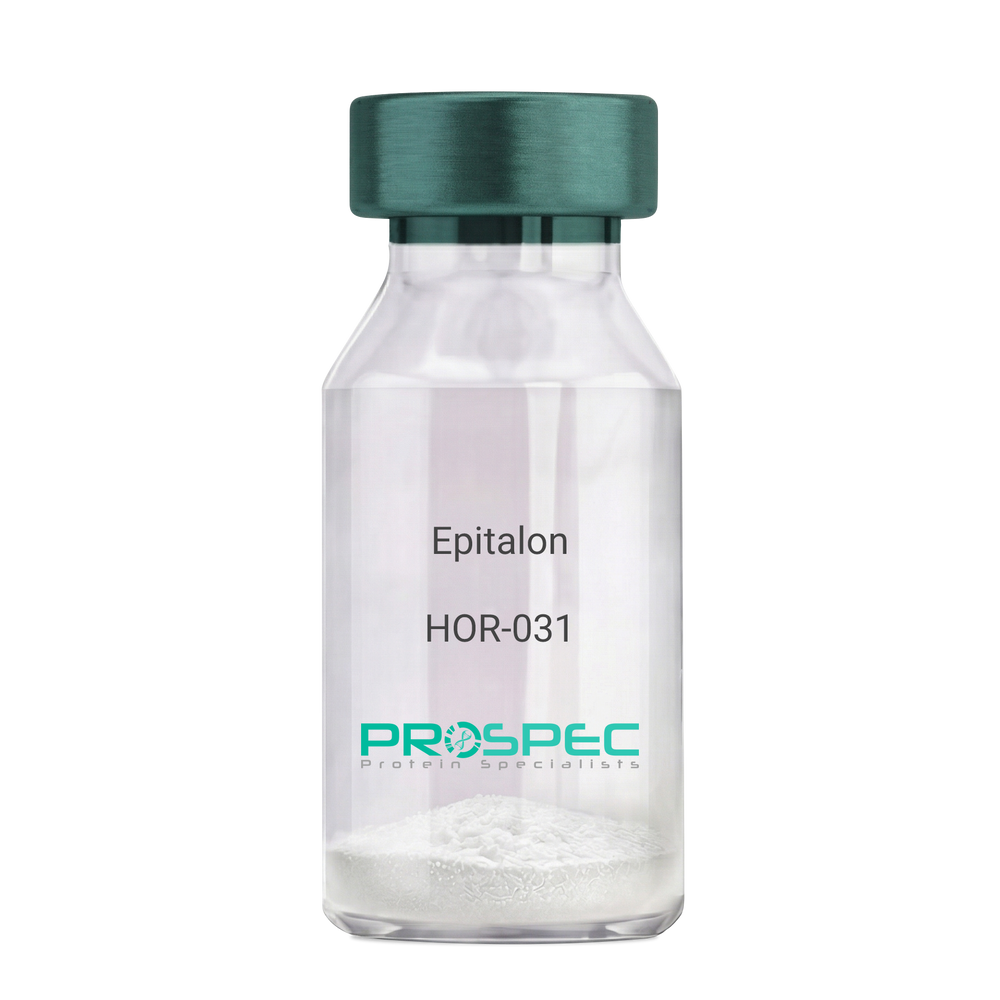
    Name :

    Epitalon

    Description:

    Epitalon

    Product # :

    HOR-031

    Price :

    Quantity :

    Shipping Method :

    Room Temp Icon

    Shipped at Room temp

    Add To Cart

    More Info

    • description
    • formulation
    • purity
    • More Info

    Description

    Epithalon Synthetic is a single, non-glycosylated polypeptide chain containing 4 amino acids, having a molecular mass of 390.35 Dalton and a Molecular formula of C14H22N4O9.

    Formulation

    The protein was lyophilized with no additives.

    Purity

    Greater than 97.0% as determined by analysis by RP-HPLC.

    More Info

    • Physical Appearance

      Sterile Filtered White lyophilized (freeze-dried) powder.

    • Stability

      Lyophilized Epithalon although stable at room temperature for 3 weeks, should be stored desiccated below -18°C. Upon reconstitution Epithalon should be stored at 4°C between 2-7 days and for future use below -18°C.For long term storage it is recommended to add a carrier protein (0.1% HSA or BSA). Please prevent freeze-thaw cycles.

    • Solubility

      It is recommended to reconstitute the lyophilized Epithalon in sterile 18MΩ-cm H2O not less than 100 µg/ml, which can then be further diluted to other aqueous solutions.

    • Amino Acid Sequence

      H-Ala-Glu-Asp-Gly-OH .

    • Background

      Epitalon, also known as Epithalon, is a synthetic tetrapeptide that has been a focal point in the field of aging and longevity research. This peptide, consisting of four amino acids, is derived from the pineal gland and has been associated with a variety of biological effects, most notably its potential role in extending the lifespan of cells.

      Epitalon's primary function is its interaction with telomeres, the protective caps at the ends of chromosomes that shorten as cells divide. By stimulating the production of telomerase, an enzyme that can repair and lengthen telomeres, Epitalon may slow down the aging process at a cellular level.

      Numerous studies have explored the potential of Epitalon in extending the lifespan of organisms. For instance, Khavinson and colleagues (2003) found that Epitalon increased the lifespan of fruit flies, while Anisimov et al. (2003) reported similar results in mice. These findings suggest that Epitalon could potentially have similar effects in humans.

      Epitalon has also been studied for its role in regulating circadian rhythms. Korkushko et al. (2011) found that Epitalon could restore disrupted circadian rhythms in elderly people, suggesting potential applications in sleep disorders and other conditions related to circadian rhythm disruption.

      Beyond its potential role in aging and longevity, Epitalon has been explored for its potential therapeutic applications. Anisimov et al. (2011) found that Epitalon could reduce the incidence of spontaneous tumors in mice, suggesting potential applications in cancer prevention.

      While research on Epitalon is promising, it is important to note that most studies have been conducted in animals or in vitro. More research is needed to fully understand the potential effects and applications of Epitalon in humans. However, the existing body of research suggests that Epitalon could be a promising tool in the fight against aging and age-related diseases.

    ProSpec's products are furnished for LABORATORY RESEARCH USE ONLY. The product may not be used as drugs, agricultural or pesticidal products, food additives or household chemicals.

    Epitalon
  • View Data Sheet

    Name :

    GPT Human, Active

    Description:

    Glutamic-Pyruvate Transaminase Human Recombinant, Active

    Alanine aminotransferase 1, ALT1, EC 2.6.1.2, Glutamate pyruvate transaminase 1, GPT 1, Glutamic--alanine transaminase 1, Glutamic--pyruvic transaminase 1, GPT, AAT1, GPT1.

    Product # :

    ENZ-280

    Price :

    Quantity :

    Shipping Method :

    Ice Icon

    Shipped with Ice Packs

    Add To Cart

    More Info

    • description
    • source
    • formulation
    • purity
    • biological activity
    • More Info

    Description

    Alanine Aminotransferase Human Recombinant produced in E.Coli is a homodimer, non-glycosylated, polypeptide chain containing 495a.a and having a molecular mass of 54,479 Dalton. The amino acid sequence is the same as that of native form of human liver ALT.The ALT is purified by proprietary chromatographic techniques.

    Source

    Escherichia Coli.

    Formulation

    The protein was dialyzed against 40mM sodium acetate buffer (pH 5.5), 1mM DTT,1mM EDTA, 5mM 2-oxoglutarate and 0.1mM pyridoxal-5'-phosphate.

    Purity

    Greater than 95.0% as determined by Analysis by SDS-PAGE.

    Biological Activity

    The specific activity was found to be 839 U/mg.

    More Info

    • Introduction

      Alanine transaminase or ALT is a transaminaseenzyme.
      ALT is found in serumand in various bodily tissues, but is most commonly associated with the liver; It catalyzes the transfer of an aminogroup from alanineto a-ketoglutarate, the products of this reversible transaminationreaction being pyruvateand glutamatealanine+ a-ketoglutarate= pyruvate+ glutamate
      It is commonly measured clinically as a part of a diagnostic liver function test, to determine liver health. It is also called serum glutamate pyruvate transaminase (SGPT) or alanine aminotransferase (ALAT). Diagnostically, it is almost always measured in units/litre (U/L).

    • Synonyms

      Alanine aminotransferase 1, ALT1, EC 2.6.1.2, Glutamate pyruvate transaminase 1, GPT 1, Glutamic--alanine transaminase 1, Glutamic--pyruvic transaminase 1, GPT, AAT1, GPT1.

    • Physical Appearance

      Sterile liquid formulation.

    • Stability

      AAT1 although stable at 10°C for 5 days, should be stored below -18°C.Please prevent freeze-thaw cycles.

    ProSpec's products are furnished for LABORATORY RESEARCH USE ONLY. The product may not be used as drugs, agricultural or pesticidal products, food additives or household chemicals.

    Alanine Aminotransferase Human
  • View Data Sheet

    Name :

    ANPEP Mouse

    Description:

    Alanyl Aminopeptidase Membrane Mouse Recombinant

    Anpep, AP-M, AP-N, Apn, Cd13, P150, mAPN, Alanyl aminopeptidase, Aminopeptidase M, Membrane protein p161, Microsomal aminopeptidase, CD13, Lap-1, Lap1, aminopeptidase N.

    Product # :

    ENZ-1134

    Price :

    Quantity :

    Shipping Method :

    Ice Icon

    Shipped with Ice Packs

    Add To Cart

    More Info

    • description
    • source
    • formulation
    • purity
    • biological activity
    • More Info

    Description

    ANPEP Mouse produced in Sf9 Insect cells is a single, glycosylated polypeptide chain containing 943 amino acids (33-966 a.a.) and having a molecular mass of 107.5 kDa. ANPEPis expressed with a 9 amino acid His tag at C-Terminus and purified by proprietary chromatographic techniques.

    Source

    Sf9, Baculovirus cells.

    Formulation

    ANPEP protein solution ( 0.5mg/ml ) contains PBS (pH 7.4) and 10% glycerol.

    Purity

    Greater than 95.0% as determined by SDS-PAGE.

    Biological Activity

    Specific activity is > 4,000pmol/min/ug, and is defined as the amount of enzyme that hydrolyze 1pmole of H-AlaAMC to Alanine and AMC per minute at pH7.5 at 25C.

    More Info

    • Introduction

      ANPEP or aminopeptidase N, is an enzyme, found in the small-intestinal and renal microvillar membrane and other plasma membranes. The enzyme has a critical part in the digestion of peptides after their hydrolysis by gastric and pancreatic proteases. ANPEP is also part ofthe processing of different peptides as well as peptide hormones, neuropeptides & chemokines. The protein takes part in angiogenesis, enhancing cholesterol crystallization &amino acid transport by formatting with SLC6A19 transport protein and regulating its activity.

    • Synonyms

      Anpep, AP-M, AP-N, Apn, Cd13, P150, mAPN, Alanyl aminopeptidase, Aminopeptidase M, Membrane protein p161, Microsomal aminopeptidase, CD13, Lap-1, Lap1, aminopeptidase N.

    • Physical Appearance

      Sterile Filtered colorless solution.

    • Stability

      Store at 4°C if entire vial will be used within 2-4 weeks. Store, frozen at -20°C for longer periods of time. For long term storage it is recommended to add a carrier protein (0.1% HSA or BSA).Avoid multiple freeze-thaw cycles.

    • Amino Acid Sequence

      ADPYAQEKNR NAENSATAPT LPGSTSATTA TTTPAVDESK PWNQYRLPKT LIPDSYRVIL RPYLTPNNQG LYIFQGNSTV RFTCNQTTDV IIIHSKKLNY TLKGNHRVVL RTLDGTPAPN IDKTELVERT EYLVVHLQGS LVEGRQYEMD SQFQGELADD LAGFYRSEYM EGDVKKVVAT TQMQAADARK SFPCFDEPAM KAMFNITLIY PNNLIALSNM LPKESKPYPE DPSCTMTEFH STPKMSTYLL AYIVSEFKNI SSVSANGVQI GIWARPSAID EGQGDYALNV TGPILNFFAQ HYNTSYPLPK SDQIALPDFN AGAMENWGLV TYRESSLVFD SQSSSISNKE RVVTVIAHEL AHQWFGNLVT VAWWNDLWLN EGFASYVEYL GADYAEPTWN LKDLMVLNDV YRVMAVDALA SSHPLSSPAD EIKTPDQIME LFDSITYSKG ASVIRMLSSF LTEDLFKKGL SSYLHTYQYS NTVYLDLWEH LQKAVNQQTA VQPPATVRTI MDRWILQMGF PVITVNTNTG EISQKHFLLD SKSNVTRPSE FNYIWIAPIP FLKSGQEDHY WLDVEKNQSA KFQTSSNEWI LLNINVTGYY LVNYDENNWK KLQNQLQTDL SVIPVINRAQ IIHDSFNLAS AKMIPITLAL DNTLFLVKEA EYMPWQAALS SLNYFTLMFD RSEVYGPMKR YLKKQVTPLF FYFQNRTNNW VNRPPTLMEQ YNEINAISTA CSSGLKECRD LVVELYSQWM KNPNNNTIHP NLRSTVYCNA IAFGGEEEWN FAWEQFRNAT LVNEADKLRS ALACSKDVWI LNRYLSYTLN PDYIRKQDTT STIISIASNV AGHPLVWDFV RSNWKKLFEN YGGGSFSFAN LIQGVTRRFS SEFELQQLEQ FKADNSATGF GTGTRALEQA LEKTRANIDW VKENKDAVFK WFTENSSHHH HHH

    ProSpec's products are furnished for LABORATORY RESEARCH USE ONLY. The product may not be used as drugs, agricultural or pesticidal products, food additives or household chemicals.

    Anpep Protein Mouse
  • View Data Sheet

    Name :

    CRYBA4 Human

    Description:

    Crystallin Beta A4 Human Recombinant

    Beta-crystallin A4, Beta-A4 crystallin, CRYBA4, MCOPCT4.

    Product # :

    HSP-048

    Price :

    Quantity :

    Shipping Method :

    Ice Icon

    Shipped with Ice Packs

    Add To Cart

    More Info

    • description
    • source
    • formulation
    • purity
    • More Info

    Description

    CRYBA4 Human Recombinant produced in E.Coli is a single, non-glycosylated polypeptide chain containing 216 amino acids (1-196 a.a.) and having a molecular mass of 24.5kDa.CRYBA4 is fused to a 20 amino acid His-tag at N-terminus & purified by proprietary chromatographic techniques.

    Source

    Escherichia Coli.

    Formulation

    The CRYBA4 protein (1mg/ml) 20mM Tris-HCl buffer (pH8.0), 20% glycerol, 0.1M NaCl and 1mM DTT.

    Purity

    Greater than 95.0% as determined by SDS-PAGE.

    More Info

    • Introduction

      Beta-crystallin A4 (CRYBA4) is a member of the beta/gamma-crystallin family which are the dominant structural components of the vertebrate eye lens. Beta-crystallins construct aggregates of various sizes and are able to self-associate to form dimers or to form heterodimers with other beta-crystallins. The CRYBA4 gene being a beta acidic group member is part of a gene cluster with beta-B1, beta-B2, and beta-B3.

    • Synonyms

      Beta-crystallin A4, Beta-A4 crystallin, CRYBA4, MCOPCT4.

    • Physical Appearance

      Sterile filtered colorless solution.

    • Stability

      Store at 4°C if entire vial will be used within 2-4 weeks. Store, frozen at -20°C for longer periods of time. For long term storage it is recommended to add a carrier protein (0.1% HSA or BSA).Avoid multiple freeze-thaw cycles.

    • Amino Acid Sequence

      MGSSHHHHHH SSGLVPRGSH MTLQCTKSAG PWKMVVWDED GFQGRRHEFT AECPSVLELG FETVRSLKVL SGAWVGFEHA GFQGQQYILE RGEYPSWDAW GGNTAYPAER LTSFRPAACA NHRDSRLTIF EQENFLGKKG ELSDDYPSLQ AMGWEGNEVG SFHVHSGAWV CSQFPGYRGF QYVLECDHHS GDYKHFREWG SHAPTFQVQS IRRIQQ.

    ProSpec's products are furnished for LABORATORY RESEARCH USE ONLY. The product may not be used as drugs, agricultural or pesticidal products, food additives or household chemicals.

    Cryba4 Human
  • View Data Sheet

    Name :

    CRYBB1 Human

    Description:

    Crystallin Beta B1 Human Recombinant

    EC 1.17.4.1, RR2M, Beta-B1 crystallin, CATCN3.

    Product # :

    HSP-033

    Price :

    Quantity :

    Shipping Method :

    Ice Icon

    Shipped with Ice Packs

    Add To Cart

    More Info

    • description
    • source
    • formulation
    • purity
    • More Info

    Description

    CRYBB1 Recombinant Human produced in E.Coli is a single, non-glycosylated polypeptide chain containing 260 amino acids (1-252 a.a.) and having a molecular mass of 29.1 kDa. The CRYBB1 is fused to an 8 amino acid His-Tag at C-terminus and purified by proprietary chromatographic techniques.

    Source

    Escherichia Coli.

    Formulation

    The CRYBB1 solution (1mg/ml) contains 20mM Tris-HCl pH-8, 1mM DTT & 10% glycerol.

    Purity

    Greater than 90.0% as determined by SDS-PAGE.

    More Info

    • Introduction

      Crystallins are the main structural proteins of the vertebrate eye lens, where they maintain the transparency and refractive index of the lens. Crystallins are divided into 3 fprotein families, α, β, & γ families. Because lens central fiber cells lose their nuclei during development, these crystallins are prepared and then retained throughout life, making them extremely stable proteins. CRYBB1 is a beta basic group member and undergoes extensive cleavage at its N-terminal extension during lens maturation.

    • Synonyms

      EC 1.17.4.1, RR2M, Beta-B1 crystallin, CATCN3.

    • Physical Appearance

      Sterile filtered colorless solution.

    • Stability

      Store at 4°C if entire vial will be used within 2-4 weeks. Store, frozen at -20°C for longer periods of time.For long term storage it is recommended to add a carrier protein (0.1% HSA or BSA).Avoid multiple freeze-thaw cycles.

    • Amino Acid Sequence

      MSQAAKASAS ATVAVNPGPD TKGKGAPPAG TSPSPGTTLA PTTVPITSAK AAELPPGNYR LVVFELENFQ GRRAEFSGEC SNLADRGFDR VRSIIVSAGP WVAFEQSNFR GEMFILEKGE YPRWNTWSSS YRSDRLMSFR PIKMDAQEHK ISLFEGANFK GNTIEIQGDD APSLWVYGFS DRVGSVKVSS GTWVGYQYPG YRGYQYLLEP GDFRHWNEWG AFQPQMQSLR RLRDKQWHLE GSFPVLATEP PKRSHHHHHH.

    ProSpec's products are furnished for LABORATORY RESEARCH USE ONLY. The product may not be used as drugs, agricultural or pesticidal products, food additives or household chemicals.

    Crybb1 Human
  • View Data Sheet

    Name :

    CCL9 Mouse

    Description:

    Macrophage Inflammatory Protein-1 Gamma Mouse Recombinant (CCL9)

    CCL9/10, MRP2, CCF18.

    Product # :

    CHM-257

    Price :

    Quantity :

    Shipping Method :

    Room Temp Icon

    Shipped at Room temp

    Add To Cart

    More Info

    • description
    • source
    • formulation
    • purity
    • biological activity
    • More Info

    Description

    MIP-1 gamma Mouse Recombinant produced in E.Coli is a single, non-glycosylated, polypeptide chain containing 101 amino acids and having a molecular mass of 11.6 kDa. The MIP-1 gamma is purified by proprietary chromatographic techniques.

    Source

    Escherichia Coli.

    Formulation

    The MIP-1 gamma was lyophilized from 1xPBS solution pH-7.4.

    Purity

    Greater than 97.0% as determined by:
    (a) Analysis by RP-HPLC.
    (b) Analysis by SDS-PAGE.

    Biological Activity

    Defined by its ability to chemoattract human neutrophils using a concentration range of 0.1-10 ng/ml, corresponding to a Specific Activity of 10,000-100,000IU/mg.

    More Info

    • Introduction

      Mouse MIP-1 gamma is 75% identical in its amino acid compostion as compared to the rat specie. MIP-1 gamma is a CC chemokine localized in murine blood and a widespread range of murine tissues, without having an identified human homolog. MIP-1 gamma signals through the CCR1 receptor. MIP-1 gamma chemoattracts neutrophils and also inhibits colony formation of bone marrow myeloid immature progenitors. MIP-1 gamma has six cysteines including the four highly conserved cysteine residues present in CC chemokines.

    • Synonyms

      CCL9/10, MRP2, CCF18.

    • Physical Appearance

      Sterile Filtered White lyophilized (freeze-dried) powder.

    • Stability

      Lyophilized MIP-1 gamma although stable at room temperature for 3 weeks, should be stored desiccated below -18°C. Upon reconstitution CCL9/10 should be stored at 4°C between 2-7 days and for future use below -18°C. For long term storage it is recommended to add a carrier protein (0.1% HSA or BSA). Please prevent freeze-thaw cycles.

    • Solubility

      It is recommended to reconstitute the lyophilized MIP-1 gamma in sterile 18M-cm H2O not less than 100µg/ml, which can then be further diluted to other aqueous solutions.

    • Amino Acid Sequence

      QITHATETKE VQSSLKAQQG LEIEMFHMGF QDSSDCCLSY NSRIQCSRFI GYFPTSGGCT RPGIIFISKR GFQVCANPSD RRVQRCIERL EQNSQPRTYK Q.

    • Background

      What is the molecular weight/Mw of CCL9 MOUSE Protein?
      CCL9 MOUSE Protein has a total Mw of 11.6kDa.

      What is the source or expression system of CCL9 MOUSE Protein?
      Escherichia Coli.

      What is the Purity of CCL9 MOUSE Protein?
      CCL9 MOUSE Protein is > 97% pure as determined by SDS-PAGE.

      What is the Biological Activity of CCL9 MOUSE Protein?
      Defined by its ability to chemoattract human neutrophils using a concentration range of 0.1-10 ng/ml, corresponding to a Specific Activity of 10,000-100,000IU/mg.

      What is the amino acid sequence of CCL9 MOUSE Protein?
      QITHATETKE VQSSLKAQQG LEIEMFHMGF QDSSDCCLSY NSRIQCSRFI GYFPTSGGCT RPGIIFISKR GFQVCANPSD RRVQRCIERL EQNSQPRTYK Q.

      What applications can CCL9 MOUSE Protein be used in?
      CCL9 MOUSE Protein can probably be used in western blot, ELISA and Lateral Flow.

      What is the endotoxin level for CCL9 MOUSE Protein?
      The endotoxin level is minimal, CCL9 MOUSE Protein was purified using conventional chromatography techniques.


    ProSpec's products are furnished for LABORATORY RESEARCH USE ONLY. The product may not be used as drugs, agricultural or pesticidal products, food additives or household chemicals.

    Mip 1 Gamma Mouse
  • View Data Sheet

    Name :

    DHH (C23II) Human

    Description:

    Desert Hedgehog (C23II) Human Recombinant

    HHG-3, Desert Hedgehog homolog, MGC35145, Desert hedgehog protein, DHH.

    Product # :

    CYT-362

    Price :

    Quantity :

    Shipping Method :

    Room Temp Icon

    Shipped at Room temp

    Add To Cart

    More Info

    • description
    • source
    • formulation
    • purity
    • biological activity
    • More Info

    Description

    DHH (C23II) Human Recombinant produced in E.Coli is a single, non-glycosylated polypeptide chain containing 177 amino acids and having a molecular mass of 19.9kDa. The DHH (C23II) is purified by proprietary chromatographic techniques.

    Source

    Escherichia Coli.

    Formulation

    Lyophilized from a 0.2µm filtered concentrated solution in 1×PBS, pH 7.4.

    Purity

    Greater than 95.0% as determined by:
    (a) Analysis by RP-HPLC.
    (b) Analysis by SDS-PAGE.

    Biological Activity

    The Biological Activity was determined by its ability to induce alkaline phosphatase production by C3H/10T1/2 (CCL-226) cells. The expected ED50 for this effect is 15-45 μg/ml.

    More Info

    • Introduction

      DHH is part of the Hedgehog family which encodes signaling molecules that are involved in regulating morphogenesis. DHH protein is a precursor that is autocatalytically cleaved, the N-terminal portion is soluble and contains the signalling activity while the C-terminal portion is involved in precursor processing. Additionally, the C-terminal product covalently attaches a cholesterol moiety to the N-terminal product, restricting the N-terminal product to the cell surface and preventing it from freely diffusing throughout the organism. Defects in DHH protein have been associated with partial gonadal dysgenesis (PGD) accompanied by minifascicular polyneuropathy. DHH plays a role both male gonadal differentiation and perineurial development.
      DHH plays a role in intercellular signaling which is essential for a variety of patterning events during development. DHH functions as a spermatocyte survival factor in the testes & is essential for testes development.

    • Synonyms

      HHG-3, Desert Hedgehog homolog, MGC35145, Desert hedgehog protein, DHH.

    • Physical Appearance

      Sterile Filtered White lyophilized (freeze-dried) powder.

    • Stability

      Lyophilized DHH (C23II) although stable at room temperature for 3 weeks, should be stored desiccated below -18°C. Upon reconstitution DHH (C23II) should be stored at 4°C between 2-7 days and for future use below -18°C. For long term storage it is recommended to add a carrier protein (0.1% HSA or BSA).Please prevent freeze-thaw cycles.

    • Solubility

      It is recommended to reconstitute the lyophilized DHH (C23II) in sterile 18M-cm H2O not less than 100µg/ml, which can then be further diluted to other aqueous solutions.

    • Amino Acid Sequence

      IIGPGRGPVG RRRYARKQLV PLLYKQFVPG VPERTLGASG PAEGRVARGS ERFRDLVPNY NPDIIFKDEE NSGADRLMTE RCKERVNALA IAVMNMWPGV RLRVTEGWDE DGHHAQDSLH YEGRALDITT SDRDRNKYGL LARLAVEAGF DWVYYESRNH VHVSVKADNS LAVRAGG.

    ProSpec's products are furnished for LABORATORY RESEARCH USE ONLY. The product may not be used as drugs, agricultural or pesticidal products, food additives or household chemicals.

    Dhh C23Ii Human
  • 1
  • …
  • 16
  • 17
  • 18
  • 19
  • 20
  • …
  • 22
Your browser does not support the video tag.

Products

  • Cytokines
  • Growth Factors
  • Chemokines
  • CD Antigens
  • Neurotrophins
  • Hormones
  • Enzymes
  • Viral Antigens
  • Recombinant Proteins
  • Natural Proteins
  • Monoclonal Antibodies
  • Polyclonal Antibodies
  • Thermal Packaging

About

  • Company
  • Founder
  • Contribution
  • Contact Us
  • My Account

Ordering

  • Ordering Method
  • Ordering - Credit Card
  • Ordering PO
  • Shipping Fees
  • FAQ's

Legal

  • Terms & Conditions
  • Privacy
  • Site Map
  • info@prospecbio.com
  • Facebook
  • Instagram
  • Linkedin Profile

© 2026 ProSpec-Tany TechnoGene Ltd. All Rights Reserved.

  • Choosing a selection results in a full page refresh.
  • Opens in a new window.