Skip to content

High-quality research proteins.

  • 1-800-805-6531

  • Mon - Sat 8.00-18.00, Sun - Closed

  • info@prospecbio.com

  • PO Box 6591 East Brunswick NJ 08816

  • Products
    • Cytokines
    • Growth factors
    • Chemokines
    • Cd antigens
    • Neurotrophins
    • Hormones
    • Enzymes
    • Viral antigens
    • Recombinant proteins
    • Natural proteins
    • Monoclonal antibodies
    • Polyclonal antibodies
    • Thermal Packaging
  • About
    • Company
    • Founder
    • Contribution
  • Customers
    • Eastern Asia
    • Eastern Europe
    • North America
    • South America
    • South East Asia
    • Southern Asia
    • Western Europe
  • Ordering
    • Ordering Method
    • Ordering - Credit Card
    • Ordering - PO
    • Shipping Fees
    • FAQs
  • Services
    • DNA Cloning
    • Protein Expression
    • Monoclonal Antibody
    • Fermentation
    • Technology License
  • Contact us
Log in

Country/region

  • USD $ | Albania
  • USD $ | Andorra
  • USD $ | Argentina
  • USD $ | Armenia
  • USD $ | Australia
  • USD $ | Austria
  • USD $ | Azerbaijan
  • USD $ | Belarus
  • USD $ | Belgium
  • USD $ | Bolivia
  • USD $ | Brazil
  • USD $ | Bulgaria
  • USD $ | Cambodia
  • USD $ | Canada
  • USD $ | Chile
  • USD $ | China
  • USD $ | Colombia
  • USD $ | Costa Rica
  • USD $ | Croatia
  • USD $ | Cyprus
  • USD $ | Czechia
  • USD $ | Denmark
  • USD $ | Estonia
  • USD $ | Finland
  • USD $ | France
  • USD $ | Georgia
  • USD $ | Germany
  • USD $ | Greece
  • USD $ | Hong Kong SAR
  • USD $ | Hungary
  • USD $ | Iceland
  • USD $ | India
  • USD $ | Ireland
  • USD $ | Israel
  • USD $ | Italy
  • USD $ | Japan
  • USD $ | Kazakhstan
  • USD $ | Latvia
  • USD $ | Liechtenstein
  • USD $ | Lithuania
  • USD $ | Madagascar
  • USD $ | Malta
  • USD $ | Mexico
  • USD $ | Moldova
  • USD $ | Monaco
  • USD $ | Netherlands
  • USD $ | New Zealand
  • USD $ | North Macedonia
  • USD $ | Norway
  • USD $ | Panama
  • USD $ | Paraguay
  • USD $ | Peru
  • USD $ | Philippines
  • USD $ | Poland
  • USD $ | Portugal
  • USD $ | Romania
  • USD $ | Singapore
  • USD $ | Slovakia
  • USD $ | Slovenia
  • USD $ | South Africa
  • USD $ | South Korea
  • USD $ | Spain
  • USD $ | Sri Lanka
  • USD $ | Sweden
  • USD $ | Switzerland
  • USD $ | Taiwan
  • USD $ | Thailand
  • USD $ | Türkiye
  • USD $ | Ukraine
  • USD $ | United Kingdom
  • USD $ | United States
  • USD $ | Uruguay
  • USD $ | Vatican City
  • USD $ | Venezuela
  • USD $ | Vietnam
  • Facebook
  • Instagram
logoProSpec - Recombinant Protein Manufacturer for academic and R&D industry
Become a distributor
Account Log in
Wishlist
Cart Cart(0)
  • Products
    +
    • Cytokines
    • Growth factors
    • Chemokines
    • Cd antigens
    • Neurotrophins
    • Hormones
    • Enzymes
    • Viral antigens
    • Recombinant proteins
    • Natural proteins
    • Monoclonal antibodies
    • Polyclonal antibodies
    • Thermal Packaging
  • About
    +
    • Company
    • Founder
    • Contribution
  • Customers
    +
    • Eastern Asia
    • Eastern Europe
    • North America
    • South America
    • South East Asia
    • Southern Asia
    • Western Europe
  • Ordering
    +
    • Ordering Method
    • Ordering - Credit Card
    • Ordering - PO
    • Shipping Fees
    • FAQs
  • Services
    +
    • DNA Cloning
    • Protein Expression
    • Monoclonal Antibody
    • Fermentation
    • Technology License
  • Contact us

Item added to your cart

View cart
View All
  • Cytokines
  • Growth factors
  • Chemokines
  • Cd antigens
  • Neurotrophins
  • Hormones
  • Enzymes
  • Viral antigens
  • Recombinant proteins
  • Natural proteins
  • Monoclonal antibodies
  • Polyclonal antibodies
  • Thermal Packaging
  • Tumor Necrosis Factor

    Tumor Necrosis Factor

    View All
  • 4-1BB

    4-1BB

    View All
  • Adiponectin

    Adiponectin

    View All
  • AIF1

    AIF1

    View All
  • Other Cytokines

    Other Cytokines

    View All
  • AITRL

    AITRL

    View All
  • Angiopoietin

    Angiopoietin

    View All
  • Apolipoprotein

    Apolipoprotein

    View All
  • B-Cell Activating Factor

    B-Cell Activating Factor

    View All
  • Beta Defensin

    Beta Defensin

    View All
  • Bone Morphogenetic Protein

    Bone Morphogenetic Protein

    View All
  • B type Natriuretic Peptide

    B type Natriuretic Peptide

    View All
  • BST

    BST

    View All
  • Betacellulin

    Betacellulin

    View All
  • Cardiotrophin

    Cardiotrophin

    View All
  • Activin

    Activin

    View All
  • Fibroblast Growth Factor

    Fibroblast Growth Factor

    View All
  • Other Growth Factors

    Other Growth Factors

    View All
  • CSF

    CSF

    View All
  • CTGF

    CTGF

    View All
  • IGFBP

    IGFBP

    View All
  • VEGF Protein

    VEGF Protein

    View All
  • EGF

    EGF

    View All
  • Epigen

    Epigen

    View All
  • Erythropoietin

    Erythropoietin

    View All
  • Insulin-Like Growth Factor

    Insulin-Like Growth Factor

    View All
  • Growth Hormone

    Growth Hormone

    View All
  • HDGF

    HDGF

    View All
  • Hepatocyte Growth Factor

    Hepatocyte Growth Factor

    View All
  • Insulin

    Insulin

    View All
  • BCA-1/ BLC (CXCL13)

    BCA-1/ BLC (CXCL13)

    View All
  • BRAK (CXCL14)

    BRAK (CXCL14)

    View All
  • C-10 (CCL6)

    C-10 (CCL6)

    View All
  • Other Chemokines

    Other Chemokines

    View All
  • MEC (CCL28)

    MEC (CCL28)

    View All
  • LD78-beta (CCL3L1)

    LD78-beta (CCL3L1)

    View All
  • CTACK (CCL27)

    CTACK (CCL27)

    View All
  • CXCL16

    CXCL16

    View All
  • CXCL17

    CXCL17

    View All
  • Platelet Factor-4 (CXCL4)

    Platelet Factor-4 (CXCL4)

    View All
  • ENA-78 (CXCL5)

    ENA-78 (CXCL5)

    View All
  • Eotaxin (CCL11,24,26)

    Eotaxin (CCL11,24,26)

    View All
  • Exodus-2 (CCL21)

    Exodus-2 (CCL21)

    View All
  • Fractalkine (CX3CL1)

    Fractalkine (CX3CL1)

    View All
  • CXCL6

    CXCL6

    View All
  • Other CD Antigens

    Other CD Antigens

    View All
  • CD14

    CD14

    View All
  • CD164

    CD164

    View All
  • CD1

    CD1

    View All
  • CD2

    CD2

    View All
  • CD200

    CD200

    View All
  • CD207

    CD207

    View All
  • CD226

    CD226

    View All
  • CD23

    CD23

    View All
  • CD244

    CD244

    View All
  • CD247

    CD247

    View All
  • CD27

    CD27

    View All
  • CD274

    CD274

    View All
  • CD300

    CD300

    View All
  • CD33

    CD33

    View All
  • Other Neurotrophins

    Other Neurotrophins

    View All
  • Beta-NGF

    Beta-NGF

    View All
  • BDNF

    BDNF

    View All
  • CDNF

    CDNF

    View All
  • CNTF

    CNTF

    View All
  • GDNF

    GDNF

    View All
  • Glia Maturation Factor

    Glia Maturation Factor

    View All
  • MANF

    MANF

    View All
  • Midkine

    Midkine

    View All
  • Neuroglobin

    Neuroglobin

    View All
  • Neurotrophic factors

    Neurotrophic factors

    View All
  • Neuregulin

    Neuregulin

    View All
  • Neuropilin

    Neuropilin

    View All
  • Pigment Epithelium-Derived Factor

    Pigment Epithelium-Derived Factor

    View All
  • Pleiotrophin

    Pleiotrophin

    View All
  • Peptide Hormones

    Peptide Hormones

    View All
  • Other Hormones

    Other Hormones

    View All
  • HCG

    HCG

    View All
  • Endothelin

    Endothelin

    View All
  • Exendin

    Exendin

    View All
  • FSH

    FSH

    View All
  • Glucagon

    Glucagon

    View All
  • GHRP

    GHRP

    View All
  • GLP

    GLP

    View All
  • Thyrostimulin

    Thyrostimulin

    View All
  • Inhibin A

    Inhibin A

    View All
  • LHRH

    LHRH

    View All
  • Melanotan

    Melanotan

    View All
  • Procalcitonin

    Procalcitonin

    View All
  • PTH

    PTH

    View All
  • Peroxiredoxin

    Peroxiredoxin

    View All
  • Peptidase

    Peptidase

    View All
  • Synthetase

    Synthetase

    View All
  • Transferase

    Transferase

    View All
  • Hydrolase

    Hydrolase

    View All
  • Dehydrogenase

    Dehydrogenase

    View All
  • ACE2

    ACE2

    View All
  • Esterase

    Esterase

    View All
  • Protein Kinases

    Protein Kinases

    View All
  • Other Enzymes

    Other Enzymes

    View All
  • Phosphatase

    Phosphatase

    View All
  • Deaminase

    Deaminase

    View All
  • Oxygenase

    Oxygenase

    View All
  • Adenylate Kinase

    Adenylate Kinase

    View All
  • Lyase

    Lyase

    View All
  • Chagas

    Chagas

    View All
  • SARS

    SARS

    View All
  • Influenza

    Influenza

    View All
  • ASFV

    ASFV

    View All
  • Astrovirus

    Astrovirus

    View All
  • Borrelia

    Borrelia

    View All
  • Helicobacter Pylori

    Helicobacter Pylori

    View All
  • Chikungunya

    Chikungunya

    View All
  • Chlamydia

    Chlamydia

    View All
  • Cytomegalo

    Cytomegalo

    View All
  • Dengue

    Dengue

    View All
  • EBV

    EBV

    View All
  • Ebola

    Ebola

    View All
  • Feline Leukemia Virus

    Feline Leukemia Virus

    View All
  • Hepatitis A

    Hepatitis A

    View All
  • Other

    Other

    View All
  • Actin

    Actin

    View All
  • ADAM

    ADAM

    View All
  • Complement Component

    Complement Component

    View All
  • Ag85

    Ag85

    View All
  • Eukaryotic Translation Initiation Factor

    Eukaryotic Translation Initiation Factor

    View All
  • Anterior Gradient Protein

    Anterior Gradient Protein

    View All
  • Heat Shock Protein

    Heat Shock Protein

    View All
  • Alpha-2-HS-Glycoprotein

    Alpha-2-HS-Glycoprotein

    View All
  • Hemoglobin

    Hemoglobin

    View All
  • Allergy

    Allergy

    View All
  • Anaplasma

    Anaplasma

    View All
  • Angiogenin

    Angiogenin

    View All
  • Ankyrin Repeat Domain

    Ankyrin Repeat Domain

    View All
  • Annexin

    Annexin

    View All
  • Other Natural Proteins

    Other Natural Proteins

    View All
  • Aprotinin

    Aprotinin

    View All
  • Transferrin

    Transferrin

    View All
  • Avidin

    Avidin

    View All
  • Anti Coagulation Factors

    Anti Coagulation Factors

    View All
  • Natural Albumin

    Natural Albumin

    View All
  • Natural Coagulation Factors

    Natural Coagulation Factors

    View All
  • Fibronectin

    Fibronectin

    View All
  • Thrombin

    Thrombin

    View All
  • Anti Human Enzyme

    Anti Human Enzyme

    View All
  • Other Monoclonal Antibodies

    Other Monoclonal Antibodies

    View All
  • Anti Human Cytokine

    Anti Human Cytokine

    View All
  • Anti Human Heat Shock Protein

    Anti Human Heat Shock Protein

    View All
  • Anti Mouse Lymphocyte

    Anti Mouse Lymphocyte

    View All
  • Anti Human Chemokine

    Anti Human Chemokine

    View All
  • Anti Human Lymphocyte

    Anti Human Lymphocyte

    View All
  • Anti Viral Monoclonal

    Anti Viral Monoclonal

    View All
  • Anti Mouse Cytokine

    Anti Mouse Cytokine

    View All
  • Anti-GST Monoclonal

    Anti-GST Monoclonal

    View All
  • Other Polyclonal Antibodies

    Other Polyclonal Antibodies

    View All
  • Anti Viral

    Anti Viral

    View All
  • Anti-GST Monoclonal

    Anti-GST Monoclonal

    View All
Back

Search results

1000 results found for “hydratase”

Name

Description

Product #

Price

Quantity

Shipping Method

  • View Data Sheet

    Name :

    Enterokinase Porcine

    Description:

    Enteropeptidase/ Enterokinase Porcine

    Enteropeptidase, EC 3.4.21.9, Enterokinase, Serine protease 7, ENTK, MGC133046.

    Product # :

    ENZ-267

    Price :

    Quantity :

    Shipping Method :

    Ice Icon

    Shipped with Ice Packs

    Add To Cart

    More Info

    • description
    • source
    • formulation
    • More Info

    Description

    Porcine enteropeptidase is a specific protease which cleaves after the lysine at its recognition site: Asp-Asp-Asp-Asp-Lys. Enterokinase will not cleave a site followed by proline. Theoretical Mw is 21,880 Dalton, the apparent Mw on SDS-PAGE is about 40 kDa.If a fusion tag is located in the N-terminus with an enterokinase site, enterokinase will be able to remove the fusion tag and to generate the protein exactly as you need without adding any unwanted residues. ProSpec’s enterokinase is a highly purified enterokinase from porcine. The enzyme has been extensively purified and tested to ensure that there are no other contaminating proteases.

    Source

    Porcine.

    Formulation

    2 IU/µl, 50mM Tris-HCl, pH 8.0, 0.5M NaCl and 50% glycerol.

    More Info

    • Introduction

      Enteropeptidase or enterokinase is an enzymeinvolved in human digestion. It is produced by cells in the duodenum wall, and is secreted from duodenum's glands, the crypts of Lieberk?hn, whenever ingested food enters the duodenum from the stomach. Enteropeptidase has the critical job of turning trypsinogen(a zymogen) to trypsin, indirectly activating a number of pancreaticdigestive enzymes.
      Enteropeptidase is a serine proteaseenzyme(EC3.4.21.9). Enteropeptidase is a part of the Chymotrypsin-clan of serine proteases, and is structurally similar to these proteins.

    • Synonyms

      Enteropeptidase, EC 3.4.21.9, Enterokinase, Serine protease 7, ENTK, MGC133046.

    • Physical Appearance

      Sterile Liquid.

    • Stability

      One year when stored at -20°C, one week at room temperature.

    • Unit Definition

      One unit is defined as the amount of enzyme needed to cleave 50 ug of fusion protein in 16 hours to 95% completion at 25°C in a buffer containing 25mM Tris-HCl, pH 7.6, 50mM NaCl, and 2mM CaCl2.

    ProSpec's products are furnished for LABORATORY RESEARCH USE ONLY. The product may not be used as drugs, agricultural or pesticidal products, food additives or household chemicals.

    Enterokinase Porcine
  • View Data Sheet

    Name :

    UNG

    Description:

    Uracil DNA Glycosilase

    Uracil DNA Glycosilase, Uracil DNA Glycosylase, UNG.

    Product # :

    ENZ-352

    Price :

    Quantity :

    Shipping Method :

    Ice Icon

    Shipped with Ice Packs

    Add To Cart

    More Info

    • description
    • source
    • formulation
    • More Info

    Description

    E.Coli Uracil DNA Glycosilase (UNG) catalyses the release of free Uracil from Uracil-containing DNA. UNG efficiently hydrolyzes uracil from signle-stranded or double-stranded DNA, but not from oligomers (6 fewer bases).

    Source

    Escherichia Coli strain that carries the UNG gene from E.coli.

    Formulation

    UNG solution in 10mM Tris-HCl (pH-7.4 at 25°C), 50mM KCl, 1mM DTT, 0.1mM EDTA, 0.1 mg/ml BSA and 50% glycerol.

    More Info

    • Synonyms

      Uracil DNA Glycosilase, Uracil DNA Glycosylase, UNG.

    • Physical Appearance

      Sterile Filtered colorless solution.

    • Stability

      Uracil DNA Glycosilase although stable at 15°C for 1 week, should be stored below -18°C. Please prevent freeze-thaw cycles.

    • Reaction Conditions

      1X UNG Reaction Buffer, incubate at 37°C.UNG is active over a broad pH rabge with an optimum at pH-8.0, doesn't require divalent cation, and is inhibited by high ionic strength (>200mM). The abasic sites formed in DNA by UNG may be cleaved by heat, alkali-treatment or endonucleases that cleave specifically at abasic sites.

    • Inactivation

      Inactivated by heating at 95°C for 10min. Enzyme activity is partially restored at temperatures lower than 55°C.

    • Unit Definition

      1 Unit of the enzyme catalyzes the release of 1 nanomole of uracil-containing DNA template in 60 min at 37°C.

    • Specific Activity

      The Specific Activity was found to be 5U/µl.

    ProSpec's products are furnished for LABORATORY RESEARCH USE ONLY. The product may not be used as drugs, agricultural or pesticidal products, food additives or household chemicals.

    Uracil Dna Glycosylase Enzyme
  • View Data Sheet

    Name :

    Enterokinase Bovine His

    Description:

    Enteropeptidase/ Enterokinase Bovine Recombinant His Tag

    Enteropeptidase, EC 3.4.21.9, Enterokinase, Serine protease 7, ENTK, MGC133046.

    Product # :

    ENZ-655

    Price :

    Quantity :

    Shipping Method :

    Ice Icon

    Shipped with Ice Packs

    Add To Cart

    More Info

    • description
    • source
    • formulation
    • More Info

    Description

    Enterokinase Bovine Recombinant produced in E.Coli is a single, non-glycosylated, polypeptide chain containing 241 amino acids with a 6 × His at C-terminus and having a molecular mass of 28.0kDa.The Enterokinase Bovine is purified by proprietary chromatographic techniques.

    Source

    Escherichia Coli.

    Formulation

    Bovine EK is supplied in 50mM Tris-HCl, pH 8.0, 0.5M NaCl and 50% glycerol.

    More Info

    • Introduction

      Enteropeptidase or enterokinase is an enzymeinvolved in human digestion. It is produced by cells in the duodenum wall, and is secreted from duodenum's glands, the crypts of Lieberk?hn, whenever ingested food enters the duodenum from the stomach. Enteropeptidase has the critical job of turning trypsinogen(a zymogen) to trypsin, indirectly activating a number of pancreaticdigestive enzymes.
      Enteropeptidase is a serine proteaseenzyme(EC3.4.21.9). Enteropeptidase is a part of the Chymotrypsin-clan of serine proteases, and is structurally similar to these proteins.

    • Synonyms

      Enteropeptidase, EC 3.4.21.9, Enterokinase, Serine protease 7, ENTK, MGC133046.

    • Physical Appearance

      Sterile liquid solution.

    • Stability

      One year when stored at -20°C. Please avoid freeze-thaw cycles.

    • Unit Definition

      One unit is defined as the amount of enzyme needed to cleave 50ug of fusion protein in 16 hours to 95% completion at 25°C in a buffer containing 25mM Tris-HCl, pH 7.6, 50mM NaCl, and 2mM CaCl2.

    ProSpec's products are furnished for LABORATORY RESEARCH USE ONLY. The product may not be used as drugs, agricultural or pesticidal products, food additives or household chemicals.

    Enterokinase Bovine His
  • View Data Sheet

    Name :

    GAPDH Human, Active

    Description:

    Glyceraldehyde-3-Phosphate Dehydrogenase Human Recombinant, Active

    G3PD, GAPD, MGC88685, GAPDH, Glyceraldehyde-3-Phosphate Dehydrogenase.

    Product # :

    ENZ-985

    Price :

    Quantity :

    Shipping Method :

    Ice Icon

    Shipped with Ice Packs

    Add To Cart

    More Info

    • description
    • source
    • formulation
    • purity
    • biological activity
    • More Info

    Description

    GAPDH Human Recombinant produced in E. coli is a single polypeptide chain containing 335 amino acids (1-335) and having a molecular mass of 36kDa. The GAPDH is purified by proprietary chromatographic techniques.

    Source

    Escherichia Coli.

    Formulation

    The GAPDH protein (1 mg/ml) contains 20mM Tris-HCl buffer pH-8, 1mM EDTA, 1mM DTT and 20% glycerol.

    Purity

    Greater than 95.0% as determined by SDS-PAGE.

    Biological Activity

    Specific activity is > 50 units/mg, and is defined as the amount of enzyme that convert 1.0 umole of glyceraldehyde-3-phosphate to 1,3-Bisphosphoglycerate per minute at pH 8.5 at 37C.

    More Info

    • Introduction

      GAPDH is a catalytic enzyme normally known to play a role in glycolysis. GAPDH exists as a tetramer composed of 36-kDa subunits and has a range of intracellular functions. GAPDH catalyzes the reversible reduction of 1,3-bisphosphoglycerate to glyceraldehyde 3-phosphophate in the presence of NADPH. Besides functioning as a glycolytic enzyme in cytoplasm, GAPDH has function in intracellular processes such as membrane fusion, microtubule bundling, phosphotransferase activity, nuclear RNA export, DNA replication and DNA repair. GAPDH catalyzes a vital energy-yielding step in carbohydrate metabolism, the reversible oxidative phosphorylation of glyceraldehyde-3-phosphate in the presence of inorganic phosphate and nicotinamide adenine dinucleotide (NAD). The enzyme exists as a tetramer of identical chains.

    • Synonyms

      G3PD, GAPD, MGC88685, GAPDH, Glyceraldehyde-3-Phosphate Dehydrogenase.

    • Physical Appearance

      Sterile filtered colorless solution.

    • Stability

      Store at 4°C if entire vial will be used within 2-4 weeks. Store, frozen at -20°C for longer periods of time. For long term storage it is recommended to add a carrier protein (0.1% HSA or BSA).Avoid multiple freeze-thaw cycles.

    • Amino Acid Sequence

      MGKVKVGVNG FGRIGRLVTR AAFNSGKVDI VAINDPFIDL NYMVYMFQYD STHGKFHGTV KAENGKLVIN GNPITIFQER DPSKIKWGDA GAEYVVESTG VFTTMEKAGA HLQGGAKRVI ISAPSADAPM FVMGVNHEKY DNSLKIISNA SCTTNCLAPL AKVIHDNFGI VEGLMTTVHA ITATQKTVDG PSGKLWRDGR GALQNIIPAS TGAAKAVGKV IPELNGKLTG MAFRVPTANV SVVDLTCRLE KPAKYDDIKK VVKQASEGPL KGILGYTEHQ VVSSDFNSDT HSSTFDAGAG IALNDHFVKL ISWYDNEFGY SNRVVDLMAH MASKE.

    ProSpec's products are furnished for LABORATORY RESEARCH USE ONLY. The product may not be used as drugs, agricultural or pesticidal products, food additives or household chemicals.

    Gapdh Human Active
  • View Data Sheet

    Name :

    ACAA2 Human

    Description:

    Acetyl-COA Acyltransferase 2 Human Recombinant

    DSAEC, 3-ketoacyl-CoA thiolase, mitochondrial, Acetyl-CoA acyltransferase, Beta-ketothiolase.

    Product # :

    ENZ-697

    Price :

    Quantity :

    Shipping Method :

    Ice Icon

    Shipped with Ice Packs

    Add To Cart

    More Info

    • description
    • source
    • formulation
    • purity
    • More Info

    Description

    ACAA2 Human Recombinant produced in E.coli is a single, non-glycosylated polypeptide chain containing 404 amino acids (17-397) and having a molecular mass of 42.6kDa.ACAA2 is fused to a 23 amino acid His-tag at N-terminus & purified by proprietary chromatographic techniques.

    Source

    Escherichia Coli.

    Formulation

    The ACAA2 solution (0.5mg/ml) contains 20mM Tris-HCl buffer (pH 8.0), 0.15M NaCl, 10% glycerol and 1mM DTT.

    Purity

    Greater than 85.0% as determined by SDS-PAGE.

    More Info

    • Introduction

      Acetyl-COA Acyltransferase 2, (ACAA2) is a member of the thiolase family. ACAA2 catalyzes the final step of the mitochondrial fatty acid beta-oxidation spiral. Not like most mitochondrial matrix proteins, ACAA2 contains a non-cleavable amino-terminal targeting signal.

    • Synonyms

      DSAEC, 3-ketoacyl-CoA thiolase, mitochondrial, Acetyl-CoA acyltransferase, Beta-ketothiolase.

    • Physical Appearance

      Sterile Filtered clear solution.

    • Stability

      Store at 4°C if entire vial will be used within 2-4 weeks. Store, frozen at -20°C for longer periods of time. For long term storage it is recommended to add a carrier protein (0.1% HSA or BSA).Avoid multiple freeze-thaw cycles.

    • Amino Acid Sequence

      MGSSHHHHHH SSGLVPRGSH MGSFGAYGGL LKDFTATDLS EFAAKAALSA GKVSPETVDS VIMGNVLQSS SDAIYLARHV GLRVGIPKET PALTINRLCG SGFQSIVNGC QEICVKEAEV VLCGGTESMS QAPYCVRNVR FGTKLGSDIK LEDSLWVSLT DQHVQLPMAM TAENLAVKHK ISREECDKYA LQSQQRWKAA NDAGYFNDEM APIEVKTKKG KQTMQVDEHA RPQTTLEQLQ KLPPVFKKDG TVTAGNASGV ADGAGAVIIA SEDAVKKHNF TPLARIVGYF VSGCDPSIMG IGPVPAISGA LKKAGLSLKD MDLVEVNEAF APQYLAVERS LDLDISKTNV NGGAIALGHP LGGSGSRITA HLVHELRRRG GKYAVGSACI GGGQGIAVII QSTA.

    ProSpec's products are furnished for LABORATORY RESEARCH USE ONLY. The product may not be used as drugs, agricultural or pesticidal products, food additives or household chemicals.

    Acaa2 Human
  • View Data Sheet

    Name :

    ACOT13 Human

    Description:

    Acyl-CoA Thioesterase 13 Human Recombinant

    Acyl-coenzyme A thioesterase 13, Acyl-CoA thioesterase 13, Thioesterase superfamily member 2, ACOT13, THEM2, HT012, MGC4961, PNAS-27, ACOT13.

    Product # :

    ENZ-004

    Price :

    Quantity :

    Shipping Method :

    Ice Icon

    Shipped with Ice Packs

    Add To Cart

    More Info

    • description
    • source
    • formulation
    • purity
    • More Info

    Description

    ACOT13 Human Recombinant fused with a 20 amino acid His tag at N-terminus produced in E.Coli is a single, non-glycosylated, polypeptide chain containing 160 amino acids (1-140 a.a.) and having a molecular mass of 17.1kDa. The ACOT13 is purified by proprietary chromatographic techniques.

    Source

    Escherichia Coli.

    Formulation

    The ACOT13 solution (1mg/ml) contains 20mM Tris-HCl buffer (pH 8.0), 1mM DTT and 10% glycerol.

    Purity

    Greater than 95.0% as determined by SDS-PAGE.

    More Info

    • Introduction

      Acyl-coenzyme A thioesterase 13 (ACOT13) belongs to the thioesterase subfamily of esterase family. ACOT13 is highly expressed in the kidney with moderate expression in the brain, liver and intestines. ACOT13 contains a hotdog-fold and is thought to co-localize with microtubules, possibly having a role in cellular proliferation events. Deletion of a segment of the q arm of chromosome 6 is linked to early onset intestinal cancer, suggesting the presence of a cancer susceptibility locus.

    • Synonyms

      Acyl-coenzyme A thioesterase 13, Acyl-CoA thioesterase 13, Thioesterase superfamily member 2, ACOT13, THEM2, HT012, MGC4961, PNAS-27, ACOT13.

    • Physical Appearance

      Sterile Filtered colorless solution.

    • Stability

      Store at 4°C if entire vial will be used within 2-4 weeks. Store, frozen at -20°C for longer periods of time. For long term storage it is recommended to add a carrier protein (0.1% HSA or BSA).Avoid multiple freeze-thaw cycles.

    • Amino Acid Sequence

      MGSSHHHHHH SSGLVPRGSH MTSMTQSLRE VIKAMTKARN FERVLGKITL VSAAPGKVIC EMKVEEEHTN AIGTLHGGLT ATLVDNISTM ALLCTERGAP GVSVDMNITY MSPAKLGEDI VITAHVLKQG KTLAFTSVDL TNKATGKLIA QGRHTKHLGN.

    ProSpec's products are furnished for LABORATORY RESEARCH USE ONLY. The product may not be used as drugs, agricultural or pesticidal products, food additives or household chemicals.

    Acot13 Human
  • View Data Sheet

    Name :

    ACP5 Human, His

    Description:

    Acid Phosphatase-5 Human Recombinant, His Tag

    Acid Phosphatase 5, Tartrate Resistant, Tartrate-Resistant Acid ATPase, EC 3.1.3.2, TrATPase, SPENCDI, Tartrate-Resistant Acid Phosphatase Type 5, Tartrate-Resistant Acid Phosphatase, Type 5 Acid Phosphatase, TR-AP, TRAP, ACP5.

    Product # :

    ENZ-913

    Price :

    Quantity :

    Shipping Method :

    Ice Icon

    Shipped with Ice Packs

    Add To Cart

    More Info

    • description
    • source
    • formulation
    • purity
    • biological activity
    • More Info

    Description

    ACP5 Human Recombinant produced in Sf9 Baculovirus cells is a single, glycosylated polypeptide chain containing 310 amino acids (22-325 a.a) and having a molecular mass of 35.1kDa.ACP5 is fused to a 6 amino acid His-tag at C-terminus & purified by proprietary chromatographic techniques.

    Source

    Sf9, Baculovirus cells.

    Formulation

    ACP5 protein solution (0.5mg/ml) containing Phosphate Buffered Saline (pH 7.4) and 10% glycerol.

    Purity

    Greater than 95.0% as determined by SDS-PAGE.

    Biological Activity

    Specific activity is > 5,000 units/mg, and is defined as the amount of enzyme that hydrolyze 1.0 nmoles of p-nitrophenyl phosphate (pNPP) per minute at pH 5.0 at 37C.

    More Info

    • Introduction

      Acid Phosphatase-5, also known as ACP5 is a member of the Purple acid phosphatase family. ACP5 is implicated in osteopontin as well as bone sialoprotein dephosphorylation. ACP5 expression appears to increase in certain pathological states for instance Gaucher & Hodgkin diseases, the hairy cell, the B-cell, as well as the T-cell leukemias.

    • Synonyms

      Acid Phosphatase 5, Tartrate Resistant, Tartrate-Resistant Acid ATPase, EC 3.1.3.2, TrATPase, SPENCDI, Tartrate-Resistant Acid Phosphatase Type 5, Tartrate-Resistant Acid Phosphatase, Type 5 Acid Phosphatase, TR-AP, TRAP, ACP5.

    • Physical Appearance

      Sterile filtered colorless solution.

    • Stability

      Store at 4°C if entire vial will be used within 2-4 weeks. Store, frozen at -20°C for longer periods of time. For long term storage it is recommended to add a carrier protein (0.1% HSA or BSA).Avoid multiple freeze-thaw cycles.

    • Amino Acid Sequence

      ATPALRFVAV GDWGGVPNAP FHTAREMANA KEIARTVQIL GADFILSLGD NFYFTGVQDI NDKRFQETFE DVFSDRSLRK VPWYVLAGNH DHLGNVSAQI AYSKISKRWN FPSPFYRLHF KIPQTNVSVA IFMLDTVTLC GNSDDFLSQQ PERPRDVKLA RTQLSWLKKQ LAAAREDYVL VAGHYPVWSI AEHGPTHCLV KQLRPLLATY GVTAYLCGHD HNLQYLQDEN GVGYVLSGAG NFMDPSKRHQ RKVPNGYLRF HYGTEDSLGG FAYVEISSKE MTVTYIEASG KSLFKTRLPR RARPHHHHHH.

    ProSpec's products are furnished for LABORATORY RESEARCH USE ONLY. The product may not be used as drugs, agricultural or pesticidal products, food additives or household chemicals.

    Acp5 Human
  • View Data Sheet

    Name :

    MMP 3 Human, HEK

    Description:

    Matrix Metalloproteinase-3 Human Recombinant, HEK

    Stromelysin-1, EC 3.4.24.17, Matrix metalloproteinase-3, MMP-3, Transin-1, SL-1, STMY, STR1, STMY1, MGC126102, MGC126103, MGC126104.

    Product # :

    ENZ-284

    Price :

    Quantity :

    Shipping Method :

    Ice Icon

    Shipped with Ice Packs

    Add To Cart

    More Info

    • description
    • source
    • formulation
    • purity
    • biological activity
    • More Info
    • sds-page

    Description

    MMP-3 Human Recombinant produced in HEK293 cells is a proform of the Human MMP3 [Tyr18-Cys477 (Lys45Glu)] and fused with a ployhistide tag at the C-terminus, having an Mw of 52kDa. MMP-3 is purified by proprietary chromatographic techniques.

    Source

    HEK293 cells.

    Formulation

    The MMP-3 is supplied as a 0.2µm filtered solution in 20mM Tris-HCl, 150mM NaCl and 0.05% Brij35, pH 7.5.

    Purity

    Greater than 95% as determined by SDS-PAGE.

    Biological Activity

    The activity was measured by its ability to cleave the fluorogenic peptide substrate, Mca-RPKPVE-Nval-WRK(Dnp)-NH2. The specific activity is > 150 pmoles/min/µg.
    Recombinant Human MMP-3 protein pro form needs to be activated with Chymotrypsin.
    Activation Protocol:
    1. Dilute MMP3 to 20µg/ml in the Assay Buffer: 50mM Tris, 10mM CaCl2, 150mM NaCl, 0.05% (w/v) and Brij 35, pH 7.5.
    2. Activate MMP3 by adding Chymotrypsin(Sigma, Catalog#C­3142,1mg/ml stock in 1mM HCl) to a final concentration of 5ug/ml.
    3. Incubate at 37°C for 30 minutes.
    4. Stop activation with 2mM PMSF. Pre-warm the PMSF to 37°C prior to adding to sample.

    sds-page

    mmp-3 human hek sds-page - Product image 1

    More Info

    • Introduction

      MMP-3 enzyme is also known as Stromelysin-1or as Transin-1 which hydrolyzes natural collagen at physiological pH and temperature. It dissolves the intervertebral nucleus pulposus and annulus fibrosus of Herniated Lumbar Intervertebral Disk . MMP-3 hydrolyzes components of the extracellular matrix like proteoglycan, laminin, fibronectin, gelatin and collagen types III, IV and IX. It also activates pro-MMP-9 and pro-MMP-8 and superactivates plasmin activated MMP-1. MMP-3 is secreted as a latent proenzyme and is activated by a variety of proteinases, e.g. plasmin, trypsin, chymotrypsin, cathepsin G or human neutrophil elastase. MMP-3 was found to be capable of activating the precursor of IL1-beta.

    • Synonyms

      Stromelysin-1, EC 3.4.24.17, Matrix metalloproteinase-3, MMP-3, Transin-1, SL-1, STMY, STR1, STMY1, MGC126102, MGC126103, MGC126104.

    • Physical Appearance

      Sterile Filtered colorless solution.

    • Stability

      Store at 4°C if entire vial will be used within 2-4 weeks. Store, frozen at -20°C for longer periods of time.Avoid multiple freeze-thaw cycles.

    ProSpec's products are furnished for LABORATORY RESEARCH USE ONLY. The product may not be used as drugs, agricultural or pesticidal products, food additives or household chemicals.

    Mmp3 Human
  • View Data Sheet

    Name :

    MMP1 Human, sf9

    Description:

    Matrix Metalloproteinase-1 Human Recombinant, sf9

    Matrix Metallopeptidase 1, Interstitial Collagenase, Fibroblast Collagenase, EC 3.4.24.7, CLG, Matrix Metalloproteinase 1 (Interstitial Collagenase), Matrix Metallopeptidase 1 (Interstitial Collagenase), Matrix Metalloproteinase 1, Matrix Metalloproteinase-1, Matrix Metalloprotease 1, EC 3.4.24, MMP-1, CLGN, Fibroblast collagenase, Matrix metalloproteinase-1, MMP-1.

    Product # :

    ENZ-989

    Price :

    Quantity :

    Shipping Method :

    Ice Icon

    Shipped with Ice Packs

    Add To Cart

    More Info

    • description
    • source
    • formulation
    • purity
    • More Info

    Description

    MMP1 Human Recombinant produced in Sf9 Baculovirus cells is a single, non-glycosylated polypeptide chain containing 460 amino acids (18-469a.a) and having a molecular mass of 53.1kDa (Molecular size on SDS-PAGE will appear at approximately 50-70kDa). MMP1 is fused to an 8 amino acid His-tag at C-terminus & purified by proprietary chromatographic techniques.

    Source

    Sf9, Baculovirus cells.

    Formulation

    MMP1 protein solution (0.25mg/ml) containing 20mM MES buffer (pH 5.5), 10mM CaCl2, 100 mM NaCl, 0.05% Brij35 and 30% glycerol.

    Purity

    Greater than 95% as determined by SDS-PAGE.

    More Info

    • Introduction

      MMP-1 (interstitial collagenase) can break down a wide range of substrates including types I, II, III, VII, VIII, and X collagens as well as L-Selectin, pro-TNF, IL-1?, IGFBP-3, IGFBP-5, casein, gelatin, ?1 antitrypsin, myelin basic protein, pro-MMP2 and pro-MMP9. A significant function of MMP-1 is the degradation of fibrillar collagens in extracellular matrix remodeling. MMP-1 is expressed in fibroblasts, keratinocytes, endothelial cells, monocytes and macrophages. MMP1 can be divided into a number of distinct domains: a prodomain which is cleaved on activation, a catalytic domain containing the zinc binding site and a short hinge region with a carboxyl terminal domain. MMP1 is part of a cluster of MMP genes which localize to chromosome 11q22.3.

    • Synonyms

      Matrix Metallopeptidase 1, Interstitial Collagenase, Fibroblast Collagenase, EC 3.4.24.7, CLG, Matrix Metalloproteinase 1 (Interstitial Collagenase), Matrix Metallopeptidase 1 (Interstitial Collagenase), Matrix Metalloproteinase 1, Matrix Metalloproteinase-1, Matrix Metalloprotease 1, EC 3.4.24, MMP-1, CLGN, Fibroblast collagenase, Matrix metalloproteinase-1, MMP-1.

    • Physical Appearance

      Sterile Filtered colorless solution.

    • Stability

      Store at 4°C if entire vial will be used within 2-4 weeks. Store, frozen at -20°C for longer periods of time. For long term storage it is recommended to add a carrier protein (0.1% HSA or BSA). Avoid multiple freeze-thaw cycles.

    • Amino Acid Sequence

      HSFPATLETQ EQDVDLVQKY LEKYYNLKND GRQVEKRRNS GPVVEKLKQM QEFFGLKVTG KPDAETLKVM KQPRCGVPDV AQFVLTEGNP RWEQTHLTYR IENYTPDLPR ADVDHAIEKA FQLWSNVTPL TFTKVSEGQA DIMISFVRGD HRDNSPFDGP GGNLAHAFQP GPGIGGDAHF DEDERWTNNF REYNLHRVAA HELGHSLGLS HSTDIGALMY PSYTFSGDVQ LAQDDIDGIQ AIYGRSQNPV QPIGPQTPKA CDSKLTFDAI TTIRGEVMFF KDRFYMRTNP FYPEVELNFI SVFWPQLPNG LEAAYEFADR DEVRFFKGNK YWAVQGQNVL HGYPKDIYSS FGFPRTVKHI DAALSEENTG KTYFFVANKY WRYDEYKRSM DPGYPKMIAH DFPGIGHKVD AVFMKDGFFY FFHGTRQYKF DPKTKRILTL QKANSWFNCR KNLEHHHHHH.

    ProSpec's products are furnished for LABORATORY RESEARCH USE ONLY. The product may not be used as drugs, agricultural or pesticidal products, food additives or household chemicals.

    Mmp1 Human Sf9
  • View Data Sheet

    Name :

    HS3ST1 Human

    Description:

    Heparan Sulfate 3-O-Sulfotransferase 1 Human Recombinant

    Heparan sulfate glucosamine 3-O-sulfotransferase 1, Heparan sulfate D-glucosaminyl 3-O-sulfotransferase 1, 3-OST-1, Heparan sulfate 3-O-sulfotransferase 1, h3-OST-1, HS3ST1, 3OST, 3OST1, HS3S1.

    Product # :

    ENZ-744

    Price :

    Quantity :

    Shipping Method :

    Ice Icon

    Shipped with Ice Packs

    Add To Cart

    More Info

    • description
    • source
    • formulation
    • purity
    • More Info

    Description

    HS3ST1 Human Recombinant produced in E.Coli is a single, non-glycosylated polypeptide chain containing 310 amino acids (21-307 a.a) and having a molecular mass of 36.2kDa.HS3ST1 is fused to a 23 amino acid His-tag at N-terminus & purified by proprietary chromatographic techniques.

    Source

    Escherichia Coli.

    Formulation

    HS3ST1 protein solution (0.25mg/ml) containing 20mM Tris-HCl buffer (pH 8.0), 0.2M NaCl, 40% glycerol and 2mM DTT.

    Purity

    Greater than 90.0% as determined by SDS-PAGE.

    More Info

    • Introduction

      Heparan Sulfate 3-O-Sulfotransferase 1 (HS3ST1), is sulfotransferase which uses 3'-phospho-5'-adenylyl sulfate (PAPS) to catalyze the transfer of a sulfo group to position 3 of glucosamine residues in heparan. HS3ST1 catalyzes the rate limiting step in the biosynthesis of heparan sulfate (HSact). This modification is a vital part in the biosynthesis of anticoagulant heparan sulfate since it concludes the structure of the antithrombin pentasaccharide binding site.

    • Synonyms

      Heparan sulfate glucosamine 3-O-sulfotransferase 1, Heparan sulfate D-glucosaminyl 3-O-sulfotransferase 1, 3-OST-1, Heparan sulfate 3-O-sulfotransferase 1,
      h3-OST-1, HS3ST1, 3OST, 3OST1, HS3S1.

    • Physical Appearance

      Sterile Filtered colorless solution.

    • Stability

      Store at 4°C if entire vial will be used within 2-4 weeks. Store, frozen at -20°C for longer periods of time. For long term storage it is recommended to add a carrier protein (0.1% HSA or BSA).Avoid multiple freeze-thaw cycles.

    • Amino Acid Sequence

      MGSSHHHHHH SSGLVPRGSH MGSRPAELGQ QELLRKAGTL QDDVRDGVAP NGSAQQLPQT IIIGVRKGGT RALLEMLSLH PDVAAAENEV HFFDWEEHYS HGLGWYLSQM PFSWPHQLTV EKTPAYFTSP KVPERVYSMN PSIRLLLILR DPSERVLSDY TQVFYNHMQK HKPYPSIEEF LVRDGRLNVD YKALNRSLYH VHMQNWLRFF PLRHIHIVDG DRLIRDPFPE IQKVERFLKL SPQINASNFY FNKTKGFYCL RDSGRDRCLH ESKGRAHPQV DPKLLNKLHE YFHEPNKKFF ELVGRTFDWH.

    ProSpec's products are furnished for LABORATORY RESEARCH USE ONLY. The product may not be used as drugs, agricultural or pesticidal products, food additives or household chemicals.

    Hs3St1 Human
  • View Data Sheet

    Name :

    AOC3 Human

    Description:

    Amine Oxidase Copper Containing 3 Human Recombinant

    VAP-1, AOC3, HPAO, VAP1, Membrane primary amine oxidase, Copper amine oxidase, HPAO, Semicarbazidesensitive amine oxidase, SSAO, Vascular adhesion protein 1.

    Product # :

    ENZ-1152

    Price :

    Quantity :

    Shipping Method :

    Ice Icon

    Shipped with Ice Packs

    Add To Cart

    More Info

    • description
    • source
    • formulation
    • purity
    • More Info

    Description

    AOC3 Human produced in Sf9 Baculovirus cells is a single, glycosylated polypeptide chain containing 746 amino acids (27-763 aa) and having a molecular mass of 82.8kDa.AOC3 is fused to a 9 amino acid His tag at C-terminus and purified by proprietary chromatographic techniques.

    Source

    Sf9, Baculovirus cells.

    Formulation

    The AOC3 solution (0.25 mg/ml) contains 10% Glycerol and Phosphate-Buffered Saline (pH 7.4).

    Purity

    Greater than 90.0% as determined by SDS-PAGE.

    More Info

    • Introduction

      Amine Oxidase Copper Containing 3 , also referred to AOC3, a copper amine oxidase with a topaquinone cofactor.
      AOC3 is a cell adhesion protein which participates in recirculation & extravasation of lymphocyte by mediating the binding of lymphocytes to peripheral lymph node vascular endothelial cells in an L-selectin independent fashion.
      Amine Oxidase Copper Containing 3 acts in adipogenesis.
      The protein catalyzes the oxidative deamination of small primary amines such as methylamine, benzylamine & aminoacetone in a reaction that produces an aldehyde, ammonia and H2O2.

    • Synonyms

      VAP-1, AOC3, HPAO, VAP1, Membrane primary amine oxidase, Copper amine oxidase, HPAO, Semicarbazidesensitive amine oxidase, SSAO, Vascular adhesion protein 1.

    • Physical Appearance

      Sterile Filtered colorless solution.

    • Stability

      Store at 4°C if entire vial will be used within 2-4 weeks. Store, frozen at -20°C for longer periods of time. For long term storage it is recommended to add a carrier protein (0.1% HSA or BSA).Avoid multiple freeze-thaw cycles.

    • Amino Acid Sequence

      ADPGRGGDGG EPSQLPHCPS VSPSAQPWTH PGQSQLFADL SREELTAVMR FLTQRLGPGL VDAAQARPSD NCVFSVELQL PPKAAALAHL DRGSPPPARE ALAIVFFGRQ PQPNVSELVV GPLPHPSYMR DVTVERHGGP LPYHRRPVLF QEYLDIDQMI FNRELPQASG LLHHCCFYKH RGRNLVTMTT APRGLQSGDR ATWFGLYYNI SGAGFFLHHV GLELLVNHKA LDPARWTIQK VFYQGRYYDS LAQLEAQFEA GLVNVVLIPD NGTGGSWSLK SPVPPGPAPP LQFYPQGPRF SVQGSRVASS LWTFSFGLGA FSGPRIFDVR FQGERLVYEI SLQEALAIYG GNSPAAMTTR YVDGGFGMGK YTTPLTRGVD CPYLATYVDW HFLLESQAPK TIRDAFCVFE QNQGLPLRRH HSDLYSHYFG GLAETVLVVR SMSTLLNYDY VWDTVFHPSG AIEIRFYATG YISSAFLFGA TGKYGNQVSE HTLGTVHTHS AHFKVDLDVA GLENWVWAED MVFVPMAVPW SPEHQLQRLQ VTRKLLEMEE QAAFLVGSAT PRYLYLASNH SNKWGHPRGY RIQMLSFAGE PLPQNSSMAR GFSWERYQLA VTQRKEEEPS SSSVFNQNDP WAPTVDFSDF INNETIAGKD LVAWVTAGFL HIPHAEDIPN TVTVGNGVGF FLRPYNFFDE DPSFYSADSI YFRGDQDAGA CEVNPLACLP QAAACAPDLP AFSHGGFSHN HHHHHH

    ProSpec's products are furnished for LABORATORY RESEARCH USE ONLY. The product may not be used as drugs, agricultural or pesticidal products, food additives or household chemicals.

    Aoc3 Human
  • View Data Sheet

    Name :

    BCOADC-E2 Human

    Description:

    2-Oxo-Acid Dehydrogenase Complex E2 Human Recombinant

    Product # :

    ENZ-084

    Price :

    Quantity :

    Shipping Method :

    Ice Icon

    Shipped with Ice Packs

    Add To Cart

    More Info

    • description
    • source
    • formulation
    • purity
    • More Info

    Description

    BCOADC-E2 is a Full-length cDNA coding for the mature form of the human BCOADC-E2 protein having a molecular mass of 47,321 Dalton(pH 6.5). BCOADC-E2 protein is fused to a hexa-histidine purification tag.

    Source

    Sf9 insect cells.

    Formulation

    DLST (0.91mg/ml) is supplied in 20mM HEPES buffer pH-8.0, 200mM NaCl and 20% glycerol.

    Purity

    Greater than 75% as determined by SDS-PAGE.

    More Info

    • Stability

      Store at 4°C if entire vial will be used within 2-4 weeks. Store, frozen at -20°C for longer periods of time. Avoid multiple freeze-thaw cycles.

    • Immunological Functions

      1. Binds IgG-type human auto-antibodies. 2. Standard ELISA test (checkerboard analysis of positive/negative sera panels); immunodot test with positive/negative sera panels.

    • coating concentration

      0.4-0.8 µg/ml (depending on the type of ELISA plate and coating buffer). Suitable for biotinylation and iodination.

    • Applications

      Western blot with anti-M2-Antigen autoantibody-positive patient sera or monoclonal
      anti-hexa-His-tag antibody.

    ProSpec's products are furnished for LABORATORY RESEARCH USE ONLY. The product may not be used as drugs, agricultural or pesticidal products, food additives or household chemicals.

    Bcoadc E2 Human
  • View Data Sheet

    Name :

    GAPDH Mouse, Active

    Description:

    GAPDH Mouse Recombinant, Active

    Glyceraldehyde-3-phosphate dehydrogenase, GAPDH, Peptidyl-cysteine S-nitrosylase GAPDH, Gapdh, Gapd, Glyceraldehyde-3-phosphate dehydrogenase isoform 2, G3PD, GAPD, HEL-S-162eP.

    Product # :

    ENZ-986

    Price :

    Quantity :

    Shipping Method :

    Ice Icon

    Shipped with Ice Packs

    Add To Cart

    More Info

    • description
    • source
    • formulation
    • purity
    • biological activity
    • More Info

    Description

    GAPDH Mouse Recombinant produced in E.Coli is a single, non-glycosylated polypeptide chain containing 356 amino acids (1-333a.a.) and having a molecular mass of 38.2kDa.GAPDH is fused to a 23 amino acid His-tag at N-terminus & purified by proprietary chromatographic techniques.

    Source

    E.coli.

    Formulation

    GAPDH protein solution (0.25mg/ml) containing Phosphate buffered saline (pH7.4), 20% glycerol and 1mM DTT.

    Purity

    Greater than 95% as determined by SDS-PAGE.

    Biological Activity

    Specific activity is > 40 units/mg, and is defined as the amount of enzyme that convert 1.0 umole of glyceraldehyde-3-phosphate to 1,3-Bisphosphoglycerate per minute at pH 8.5 at 37C.

    More Info

    • Introduction

      GAPDH is a catalytic enzyme normally known to play a role in glycolysis. GAPDH exists as a tetramer composed of 36-kDa subunits and has a range of intracellular functions. GAPDH catalyzes the reversible reduction of 1,3-bisphosphoglycerate to glyceraldehyde 3-phosphophate in the presence of NADPH. Besides functioning as a glycolytic enzyme in cytoplasm, GAPDH has function in intracellular processes such as membrane fusion, microtubule bundling, phosphotransferase activity, nuclear RNA export, DNA replication and DNA repair. GAPDH catalyzes a vital energy-yielding step in carbohydrate metabolism, the reversible oxidative phosphorylation of glyceraldehyde-3-phosphate in the presence of inorganic phosphate and nicotinamide adenine dinucleotide (NAD). The enzyme exists as a tetramer of identical chains.

    • Synonyms

      Glyceraldehyde-3-phosphate dehydrogenase, GAPDH, Peptidyl-cysteine S-nitrosylase GAPDH, Gapdh, Gapd, Glyceraldehyde-3-phosphate dehydrogenase isoform 2, G3PD, GAPD, HEL-S-162eP.

    • Physical Appearance

      Sterile Filtered colorless solution.

    • Stability

      Store at 4°C if entire vial will be used within 2-4 weeks. Store, frozen at -20°C for longer periods of time. For long term storage it is recommended to add a carrier protein (0.1% HSA or BSA).Avoid multiple freeze-thaw cycles.

    • Amino Acid Sequence

      MGSSHHHHHH SSGLVPRGSH MGSMVKVGVN GFGRIGRLVT RAAICSGKVE IVAINDPFID LNYMVYMFQY DSTHGKFNGT VKAENGKLVI NGKPITIFQE RDPTNIKWGE AGAEYVVEST GVFTTMEKAG AHLKGGAKRV IISAPSADAP MFVMGVNHEK YDNSLKIVSN ASCTTNCLAP LAKVIHDNFG IVEGLMTTVH AITATQKTVD GPSGKLWRDG RGAAQNIIPA STGAAKAVGK VIPELNGKLT GMAFRVPTPN VSVVDLTCRL EKPAKYDDIK KVVKQASEGP LKGILGYTED QVVSCDFNSN SHSSTFDAGA GIALNDNFVK LISWYDNEYG YSNRVVDLMA YMASKE.

    ProSpec's products are furnished for LABORATORY RESEARCH USE ONLY. The product may not be used as drugs, agricultural or pesticidal products, food additives or household chemicals.

    Gapdh Mouse Active
  • View Data Sheet

    Name :

    LDHA, E.Coli Active

    Description:

    Lactate Dehydrogenase A, BioActive E.Coli Recombinant

    LDH-A, GSD11, LDH1, LDHM, PIG19, EC 1.1.1.27, lactate dehydrogenase M, LDH-M, LDH-1, L-lactate dehydrogenase A chain, LDH muscle subunit, Renal carcinoma antigen NY-REN-59, Cell proliferation-inducing gene 19 protein, LDHA.

    Product # :

    ENZ-1144

    Price :

    Quantity :

    Shipping Method :

    Ice Icon

    Shipped with Ice Packs

    Add To Cart

    More Info

    • description
    • source
    • formulation
    • purity
    • biological activity
    • More Info

    Description

    LDHA E.Coli Recombinant produced in E.Coli is a single, non-glycosylated polypeptide chain containing 353 amino acids (1-329) and having a molecular mass of 39.1 kDa.LDHA E.Coli is fused to a 24 amino acid His-Tag at N-terminus and purified by proprietary chromatographic techniques.

    Source

    Escherichia Coli.

    Formulation

    LDHA E.Coli protein (1mg/ml) is formulated in 20mM Tris-HCl buffer (pH 8.0), containing 100mM NaCland 10% glycerol.

    Purity

    Greater than 95.0% as determined by SDS-PAGE.

    Biological Activity

    Specific activity is > 200unit/mg. 1 unit converts 1.0 umole of pyruvate to L-lactate and beta-NAD per minute at pH 7.5 at 37˚C

    More Info

    • Introduction

      D-lactate dehydrogenase or ldhA is an enzyme, part of the D-lactate dehydrogenase protein family. IDHA is a cytochrome that enhances the catalyzation of D-lactate dehydrogenase ldhA reaction. This enzyme has 2 substrates ((D) -lactate & ferricytochrome c), thus, it has 2 end products (pyruvate & ferrocytochrome c).

    • Synonyms

      LDH-A, GSD11, LDH1, LDHM, PIG19, EC 1.1.1.27, lactate dehydrogenase M, LDH-M, LDH-1, L-lactate dehydrogenase A chain, LDH muscle subunit, Renal carcinoma antigen NY-REN-59, Cell proliferation-inducing gene 19 protein, LDHA.

    • Physical Appearance

      Sterile Filtered colorless solution.

    • Stability

      Store at 4°C if entire vial will be used within 2-4 weeks. Store, frozen at -20°C for longer periods of time. For long term storage it is recommended to add a carrier protein (0.1% HSA or BSA).Avoid multiple freeze-thaw cycles.

    • Amino Acid Sequence

      MGSSHHHHHH SSGLVPRGSH MGSHMKLAVY STKQYDKKYL QQVNESFGFE LEFFDFLLTE KTAKTANGCE AVCIFVNDDG SRPVLEELKK HGVKYIALRC AGFNNVDLDA AKELGLKVVR VPAYDPEAVA EHAIGMMMTL NRRIHRAYQR TRDANFSLEG LTGFTMYGKT AGVIGTGKIG VAMLRILKGF GMRLLAFDPY PSAAALELGV EYVDLPTLFS ESDVISLHCP LTPENYHLLN EAAFEQMKNG VMIVNTSRGA LIDSQAAIEA LKNQKIGSLG MDVYENERDL FFEDKSNDVI QDDVFRRLSA CHNVLFTGHQ AFLTAEALTS ISQTTLQNLS NLEKGETCPN ELV

    ProSpec's products are furnished for LABORATORY RESEARCH USE ONLY. The product may not be used as drugs, agricultural or pesticidal products, food additives or household chemicals.

    Ldha Enzyme
  • View Data Sheet

    Name :

    LDHB Human

    Description:

    Lactate Dehydrogenase B Human Recombinant

    Lactate Dehydrogenase B, Renal Carcinoma Antigen NY-REN-46, LDH Heart Subunit, EC 1.1.1.27, LDH-B, LDH-H, Epididymis Secretory Protein Li 281, Testicular Secretory Protein Li 25, Lactate Dehydrogenase H Chain, HEL-S-281, EC 1.1.1 , LDHBD, TRG-5.

    Product # :

    ENZ-967

    Price :

    Quantity :

    Shipping Method :

    Ice Icon

    Shipped with Ice Packs

    Add To Cart

    More Info

    • description
    • source
    • formulation
    • purity
    • biological activity
    • More Info

    Description

    LDHB Human Recombinant produced in E.coli is a single, non-glycosylated polypeptide chain containing 334 amino acids (1-334) and having a molecular mass of 36.6kDa.

    Source

    Escherichia Coli.

    Formulation

    The LDHB solution (1mg/ml) contains 20mM Tris-HCl (pH 8.0), 10% glycerol and 1mM DTT.

    Purity

    Greater than 90% as determined by SDS-PAGE.

    Biological Activity

    Specific activity is >300 units/mg, in which 1 unit will convert 1.0 umole of pyruvate to L-lactate and beta-NAD per min at pH 7.5 at 37°.

    More Info

    • Introduction

      LDHB is part of the lactate dehydrogenase family. LDHB is an oxidoreductase which catalyses the interconversion of pyruvate and lactate with concomitant interconversion of NADH and NAD+. LDHB catalyzes the oxidation of hydroxybutyrate, and frequently called Hydroxybutyrate Dehydrogenase (HBD). The LDH family consists of three members, LDH-A, LDH-B and LDH-C. LDHs function as powerful markers for germ cell tumors.

    • Synonyms

      Lactate Dehydrogenase B, Renal Carcinoma Antigen NY-REN-46, LDH Heart Subunit, EC 1.1.1.27, LDH-B, LDH-H, Epididymis Secretory Protein Li 281, Testicular Secretory Protein Li 25, Lactate Dehydrogenase H Chain, HEL-S-281, EC 1.1.1 , LDHBD, TRG-5.

    • Physical Appearance

      Sterile Filtered colorless solution.

    • Stability

      Store at 4°C if entire vial will be used within 2-4 weeks. Store, frozen at -20°C for longer periods of time. For long term storage it is recommended to add a carrier protein (0.1% HSA or BSA).Avoid multiple freeze-thaw cycles.

    • Amino Acid Sequence

      MATLKEKLIA PVAEEEATVP NNKITVVGVG QVGMACAISI LGKSLADELA LVDVLEDKLK GEMMDLQHGS LFLQTPKIVA DKDYSVTANS KIVVVTAGVR QQEGESRLNL VQRNVNVFKF IIPQIVKYSP DCIIIVVSNP VDILTYVTWK LSGLPKHRVI GSGCNLDSAR FRYLMAEKLG IHPSSCHGWI LGEHGDSSVA VWSGVNVAGV SLQELNPEMG TDNDSENWKE VHKMVVESAY EVIKLKGYTN WAIGLSVADL IESMLKNLSR IHPVSTMVKG MYGIENEVFL SLPCILNARG LTSVINQKLK DDEVAQLKKS ADTLWDIQKD LKDL.

    ProSpec's products are furnished for LABORATORY RESEARCH USE ONLY. The product may not be used as drugs, agricultural or pesticidal products, food additives or household chemicals.

    Human Ldhb
  • View Data Sheet

    Name :

    LPL Human, HEK

    Description:

    Lipoprotein Lipase Human Recombinant, HEK

    Lipoprotein lipase, LPL, LIPD, HDLCQ11.

    Product # :

    ENZ-087

    Price :

    Quantity :

    Shipping Method :

    Room Temp Icon

    Shipped at Room temp

    Add To Cart

    More Info

    • description
    • source
    • formulation
    • More Info

    Description

    The Recombinant Human LPL produced in HEK293 cell line has a molecular mass of 51.8kDa containing 461 amino acid residues of the human LPL (Ala28-Gly475, variant Asn > Ser318) and fused to a 13 a.a. Flag-tag at N-terminus.

    Source

    HEK293 (Human Embryonic Kidney cell line).

    Formulation

    LPL was filtered (0.4 µm) and lyophilized from 0.5mg/ml in 20mM Tris buffer and 50mM NaCl, pH 7.5.

    More Info

    • Introduction

      LPL is a lipoprotein lipase, which is expressed in the heart, muscle, and adipose tissue. LPL acts as a homodimer, and has the dual functions of triglyceride hydrolase and ligand/bridging factor for receptor-mediated lipoprotein uptake. Type I hyperlipoproteinemia is a result of severe mutations which cause LPL deficiency, whereas less extreme mutations in LPL are linked to many disorders of lipoprotein metabolism. Lipoprotein lipase (LPL) is a fundamental enzyme in plasma triglyceride hydrolysis and is secreted by macrophages in the subendothelial space. LPL also promotes the development of atherosclerosis through facilitation of monocyte adhesion to endothelial cells, stimulation of tumor necrosis factor alpha (TNF) secretion and induction of vascular smooth muscle cell proliferation.

    • Synonyms

      Lipoprotein lipase, LPL, LIPD, HDLCQ11.

    • Physical Appearance

      Filtered white lyophilized powder.

    • Stability

      Store lyophilized protein at -20°C. Aliquot the product after reconstitution to avoid repeated freezing/thawing cycles. Reconstituted protein can be stored at 4°C for a limited period of time; it does not show any change after two weeks at 4°C.

    • Solubility

      It is recommended to add deionized water to prepare a working stock solution of approximately 0.5 mg/ml and let the lyophilized pellet dissolve completely. Product is not sterile! Please filter the product by an appropriate sterile filter before using it in the cell culture.

    • Amino Acid Sequence

      HVDYKDDDDK PAGADQRRDF IDIESKFALR TPEDTAEDTC HLIPGVAESV ATCHFNHSSK TFMVIHGWTV TGMYESWVPK ADQRRDF IDIESKFALR TPEDTAEDTC HLIPGVAESV ATCHFNHSSK TFMVIHGWTV TGMYESWVPK LVAALYKREP DSNVIVVDWL SRAQEHYPVS AGYTKLVGQD VARFINWMEE EFNYPLDNVH LLGYSLGAHA AGIAGSLTNK KVNRITGLDP AGPNFEYAEA PSRLSPDDAD FVDVLHTFTR GSPGRSIGIQ KPVGHVDIYP NGGTFQPGCN IGEAIRVIAE RGLGDVDQLV KCSHERSIHL FIDSLLNEEN PSKAYRCSSK EAFEKGLCLS CRKNRCNNLG YEISKVRAKR SSKMYLKTRS QMPYKVFHYQ VKIHFSGTES ETHTNQAFEI SLYGTVAESE NIPFTLPEVS TNKTYSFLIY TEVDIGELLM LKLKWKSDSY FSWSDWWSSP GFAIQKIRVK AGETQKKVIF CSREKVSHLQ KGKAPAVFVK CHDKSLNKKS G.

    ProSpec's products are furnished for LABORATORY RESEARCH USE ONLY. The product may not be used as drugs, agricultural or pesticidal products, food additives or household chemicals.

    Lpl Human Hek
  • View Data Sheet

    Name :

    CHST3 Human

    Description:

    Carbohydrate Sulfotransferase 3 Human Recombinant

    Carbohydrate sulfotransferase 3, Chondroitin 6-O-sulfotransferase 1, C6ST-1, Chondroitin 6-sulfotransferase, GST-0, CHST3, CHST-3,C6ST1HSD.

    Product # :

    ENZ-1166

    Price :

    Quantity :

    Shipping Method :

    Ice Icon

    Shipped with Ice Packs

    Add To Cart

    More Info

    • description
    • source
    • formulation
    • purity
    • biological activity
    • More Info

    Description

    CHST3 produced in Sf9 Baculovirus cells is a single, glycosylated polypeptide chain containing 450 amino acids (39-479.a.a) and having a molecular mass of 51.3kDa. CHST3 is expressed with a 6 amino acid His tag at C-Terminus and purified by proprietary chromatographic techniques.

    Source

    Sf9, Baculovirus cells.

    Formulation

    CHST3 protein solution (0.25mg/ml) contains Phosphate buffered saline (pH7.4) and 10% glycerol.

    Purity

    Greater than 90.0% as determined by SDS-PAGE.

    Biological Activity

    Specific activity is greater than 1,000 pmol/min/ug, and is defined as the amount of enzyme that sulfate from PAPS to Chondroitin Sulfate per minute at pH 7.5, at 25C.

    More Info

    • Introduction

      Carbohydrate Sulfotransferase 3 (CHST3) belong to sulfotransferase 1 family which iincludes 14 enzymes that all members are Golgi-localized type II membrane proteins. These enzymes utilizes 3'-phospho-5'-adenylyl sulfate (PAPS) as sulfonate donor to catalyze the transfer of sulfate to position 6 of the N-acetylgalactosamine (GalNAc) residue of chondroitin. CHST3 can also sulfate Gal residues of keratan sulfate and Gal residues in sialyl N-acetyllactosamine (sialyl LacNAc) oligosaccharides. CHST3 is expressed in heart, placenta, skeletal muscle and pancreas. CHST3 takes part in maintenance of naive T-lymphocytes in the spleen.

    • Synonyms

      Carbohydrate sulfotransferase 3, Chondroitin 6-O-sulfotransferase 1, C6ST-1, Chondroitin 6-sulfotransferase, GST-0, CHST3, CHST-3,C6ST1HSD.

    • Physical Appearance

      Sterile filtered colorless solution.

    • Stability

      Store at 4°C if entire vial will be used within 2-4 weeks.Store, frozen at -20°C for longer periods of time.For long term storage it is recommended to add a carrier protein (0.1% HSA or BSA).Avoid multiple freeze-thaw cycles.

    • Amino Acid Sequence

      ADLEKENKII SRVSDKLKQI PQALADANST DPALILAENA SLLSLSELDS AFSQLQSRLR NLSLQLGVEP AMEAAGEEEE EQRKEEEPPR PAVAGPRRHV LLMATTRTGS SFVGEFFNQQ GNIFYLFEPL WHIERTVSFE PGGANAAGSA LVYRDVLKQL FLCDLYVLEH FITPLPEDHL TQFMFRRGSS RSLCEDPVCT PFVKKVFEKY HCKNRRCGPL NVTLAAEACR RKEHMALKAV RIRQLEFLQP LAEDPRLDLR VIQLVRDPRA VLASRMVAFA GKYKTWKKWL DDEGQDGLRE EEVQRLRGNC ESIRLSAELG LRQPAWLRGR YMLVRYEDVA RGPLQKAREM YRFAGIPLTP QVEDWIQKNT QAAHDGSGIY STQKNSSEQF EKWRFSMPFK LAQVVQAACG PAMRLFGYKL ARDAAALTNR SVSLLEERGT FWVTHHHHHH.

    ProSpec's products are furnished for LABORATORY RESEARCH USE ONLY. The product may not be used as drugs, agricultural or pesticidal products, food additives or household chemicals.

    Chst3 Human
  • View Data Sheet

    Name :

    GPT2 Human

    Description:

    Glutamic-Pyruvate Transaminase 2 Human Recombinant

    ALT2, AAT2, Alanine aminotransferase 2, Glutamate pyruvate transaminase 2, Glutamic--alanine transaminase 2, Glutamic--pyruvic transaminase 2.

    Product # :

    ENZ-680

    Price :

    Quantity :

    Shipping Method :

    Ice Icon

    Shipped with Ice Packs

    Add To Cart

    More Info

    • description
    • source
    • formulation
    • purity
    • More Info

    Description

    GPT2 Human Recombinant produced in E. coli is a single polypeptide chain containing 546 amino acids (1-523) and having a molecular mass of 60.3 kDa. GPT2 is fused to a 23 amino acid His-tag at N-terminus & purified by proprietary chromatographic techniques.

    Source

    E.coli.

    Formulation

    The GPT2 solution (0.5mg/1ml) contains 20mM Tris-HCl buffer (pH 7.5), 30% glycerol, 0.2M NaCl and 2mM DTT.

    Purity

    Greater than 90% as determined by SDS-PAGE.

    More Info

    • Introduction

      Alanine aminotransferase 2 (GPT2), catalyzes the reversible transamination among alanine and 2-oxoglutarate to create pyruvate and glutamate. GPT2 expressed mainly in muscle, fat and kidney and participates in the intermediary metabolism of glucose and amino acids. Multiple transcript variants encoding various isoforms have been found for GPT2.

    • Synonyms

      ALT2, AAT2, Alanine aminotransferase 2, Glutamate pyruvate transaminase 2, Glutamic--alanine transaminase 2, Glutamic--pyruvic transaminase 2.

    • Physical Appearance

      Sterile Filtered colorless solution.

    • Stability

      Store at 4°C if entire vial will be used within 2-4 weeks. Store, frozen at -20°C for longer periods of time. For long term storage it is recommended to add a carrier protein (0.1% HSA or BSA).Avoid multiple freeze-thaw cycles.

    • Amino Acid Sequence

      MGSSHHHHHH SSGLVPRGSH MGSMQRAAAL VRRGCGPRTP SSWGRSQSSA AAEASAVLKV RPERSRRERI LTLESMNPQV KAVEYAVRGP IVLKAGEIEL ELQRGIKKPF TEVIRANIGD AQAMGQQPIT FLRQVMALCT YPNLLDSPSF PEDAKKRARR ILQACGGNSL GSYSASQGVN CIREDVAAYI TRRDGGVPAD PDNIYLTTGA SDGISTILKI LVSGGGKSRT GVMIPIPQYP LYSAVISELD AIQVNYYLDE ENCWALNVNE LRRAVQEAKD HCDPKVLCII NPGNPTGQVQ SRKCIEDVIH FAWEEKLFLL ADEVYQDNVY SPDCRFHSFK KVLYEMGPEY SSNVELASFH STSKGYMGEC GYRGGYMEVI NLHPEIKGQL VKLLSVRLCP PVSGQAAMDI VVNPPVAGEE SFEQFSREKE SVLGNLAKKA KLTEDLFNQV PGIHCNPLQG AMYAFPRIFI PAKAVEAAQA HQMAPDMFYC MKLLEETGIC VVPGSGFGQR EGTYHFRMTI LPPVEKLKTV LQKVKDFHIN FLEKYA.

    ProSpec's products are furnished for LABORATORY RESEARCH USE ONLY. The product may not be used as drugs, agricultural or pesticidal products, food additives or household chemicals.

    Gpt2 Human
  • View Data Sheet

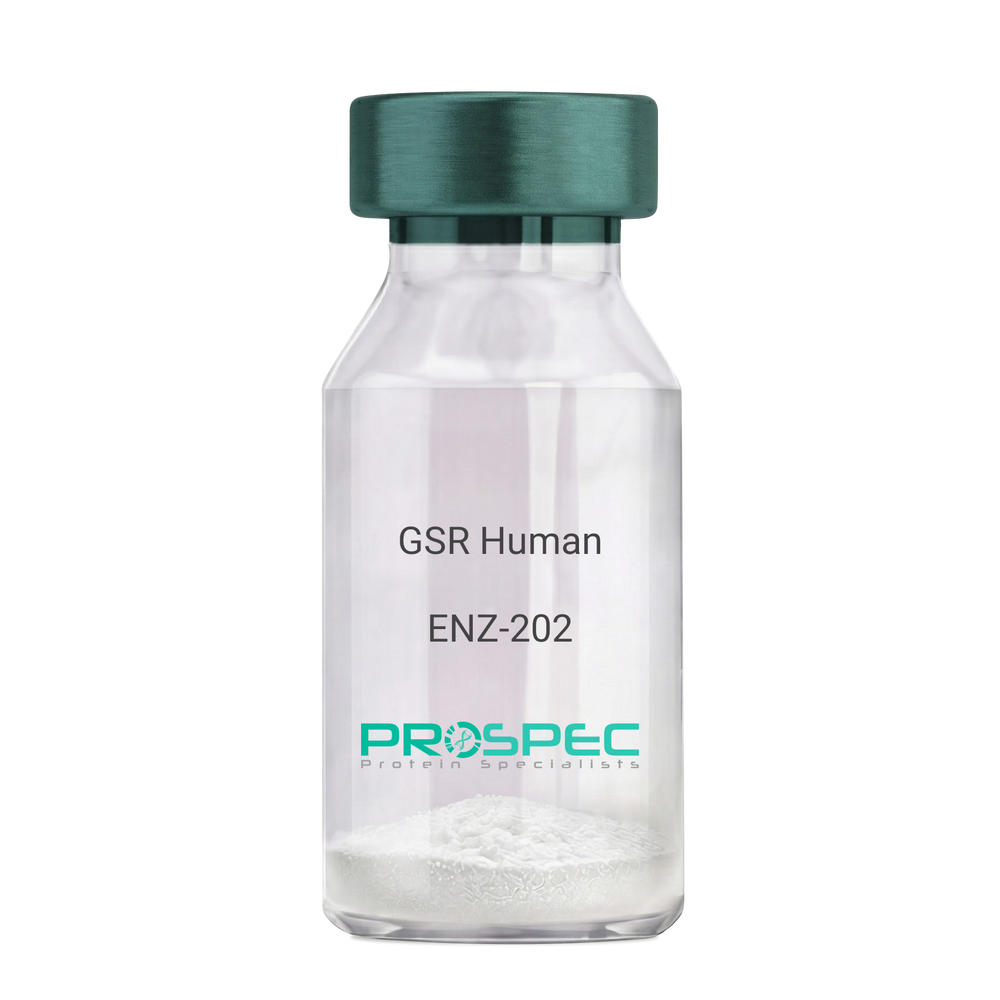
    Name :

    GSR Human

    Description:

    Glutathione Reductase Human Recombinant

    Glutathione reductase mitochondrial, GR, GRase, GSR, GLUR, GRD1.

    Product # :

    ENZ-202

    Price :

    Quantity :

    Shipping Method :

    Ice Icon

    Shipped with Ice Packs

    Add To Cart

    More Info

    • description
    • source
    • formulation
    • purity
    • biological activity
    • More Info

    Description

    GSR Human Recombinant produced in E.coli is a single, non-glycosylated polypeptide chain containing 504 amino acids (43-522) and having a molecular mass of 54.3kDa.GSR is fused to a 24 amino acid His-tag at N-terminus & purified by proprietary chromatographic techniques.

    Source

    Escherichia Coli.

    Formulation

    The GSR solution (1mg/ml) contains 20mM Tris-HCl buffer (pH 8.0), 1mM DTT, 10% glycerol and 0.1M NaCl.

    Purity

    Greater than 95.0% as determined by SDS-PAGE.

    Biological Activity

    Specific activity: > 29 unit/ml.
    One unit will reduce 1.0 umol of oxidized glutathione per minute at pH 7.5 at 25°C.

    More Info

    • Introduction

      Glutathione reductase (GSR) belongs to the class-I pyridine nucleotide-disulfide oxidoreductase family. The GSR enzyme is a homodimeric flavoprotein and has a role in maintaining glutathione (GSH) in its reduced form by catalyzing the reduction of glutathione disulfide (GSSG): GSSG + NADPH + H+ ->2GSH + NADP+. In the majority of eukaryotic cells, GSR upholds the ratio of [GSH] / [GSSG], and partakes in quite a few critical functions such as the detoxification of reactive oxygen species as well as protein and DNA biosynthesis.

    • Synonyms

      Glutathione reductase mitochondrial, GR, GRase, GSR, GLUR, GRD1.

    • Physical Appearance

      Sterile Filtered colorless solution.

    • Stability

      Store at 4°C if entire vial will be used within 2-4 weeks.Store, frozen at -20°C for longer periods of time. For long term storage it is recommended to add a carrier protein (0.1% HSA or BSA).Avoid multiple freeze-thaw cycles.

    • Amino Acid Sequence

      MGSSHHHHHH SSGLVPRGSH MGSMAMACRQ EPQPQGPPPA AGAVASYDYL VIGGGSGGLA SARRAAELGA RAAVVESHKL GGTCVNVGCV PKKVMWNTAV HSEFMHDHAD YGFPSCEGKF NWRVIKEKRD AYVSRLNAIY QNNLTKSHIE IIRGHAAFTS DPKPTIEVSG KKYTAPHILI
      ATGGMPSTPH ESQIPGASLG ITSDGFFQLE ELPGRSVIVG AGYIAVEMAG ILSALGSKTS LMIRHDKVLR SFDSMISTNC TEELENAGVE VLKFSQVKEV KKTLSGLEVS MVTAVPGRLP VMTMIPDVDC LLWAIGRVPN TKDLSLNKLG IQTDDKGHII VDEFQNTNVK GIYAVGDVCG
      KALLTPVAIA AGRKLAHRLF EYKEDSKLDY NNIPTVVFSH PPIGTVGLTE DEAIHKYGIE NVKTYSTSFT PMYHAVTKRK TKCVMKMVCA NKEEKVVGIH MQGLGCDEML QGFAVAVKMG ATKADFDNTV AIHPTSSEEL VTLR.

    ProSpec's products are furnished for LABORATORY RESEARCH USE ONLY. The product may not be used as drugs, agricultural or pesticidal products, food additives or household chemicals.

    Gsr Human
  • View Data Sheet

    Name :

    MMP 1 Human, HEK

    Description:

    Matrix Metalloproteinase-1 Human Recombinant, HEK

    Interstitial collagenase, Fibroblast collagenase, Matrix metalloproteinase-1, MMP-1, MMP1, CLG, CLGN.

    Product # :

    ENZ-099

    Price :

    Quantity :

    Shipping Method :

    Ice Icon

    Shipped with Ice Packs

    Add To Cart

    More Info

    • description
    • source
    • formulation
    • purity
    • biological activity
    • More Info
    • sds-page

    Description

    MMP-1 Human Recombinant produced in HEK293 cells is a proform of the Human MMP1 (Met1-Asn469) and fused with a ployhistide tag at the C-terminus, having an Mw of 52kDa. MMP-1 is purified by proprietary chromatographic techniques.

    Source

    HEK293 cells.

    Formulation

    The MMP-1 is supplied as a 0.2µm filtered solution in MES, NaCl, Glycerol and Brij35.

    Purity

    Greater than 95% as determined by SDS-PAGE.

    Biological Activity

    The activity was measured by its ability to cleave fluorogenic peptide substrate, Mca-KPLGL-Dpa-AR-NH2, The specific activity is > 400 pmoles/min/µg.
    Recombinant Human MMP-1 protein pro form needs to be activated with p-aminophenylmercuric acetate (APMA).
    Activation Protocol:
    1. Dilute MMP1 to 50µg/ml in the Assay Buffer: 50mM Tris, 10mM CaCl2, 150mM NaCl, 0.05% (w/v) and Brij 35, pH 7.5.
    2. Activate MMP1 by adding APMA to a final concentration of 1mM. (Sigma, Catalog # A9563) and 100mM stock in DMSO.
    3. Incubate at 37°C for 2 hours.

    sds-page

    mmp1 human hek sds-page - Product image 1

    More Info

    • Introduction

      MMP-1 (interstitial collagenase) can break down a wide range of substrates including types I, II, III, VII, VIII, and X collagens as well as L-Selectin, pro-TNF, IL-1?, IGFBP-3, IGFBP-5, casein, gelatin, ?1 antitrypsin, myelin basic protein, pro-MMP2 and pro-MMP9. A significant function of MMP-1 is the degradation of fibrillar collagens in extracellular matrix remodeling. MMP-1 is expressed in fibroblasts, keratinocytes, endothelial cells, monocytes and macrophages. MMP1 can be divided into a number of distinct domains: a prodomain which is cleaved on activation, a catalytic domain containing the zinc binding site and a short hinge region with a carboxyl terminal domain. MMP1 is part of a cluster of MMP genes which localize to chromosome 11q22.3.

    • Synonyms

      Interstitial collagenase, Fibroblast collagenase, Matrix metalloproteinase-1, MMP-1, MMP1, CLG, CLGN.

    • Physical Appearance

      Sterile Filtered colorless solution.

    • Stability

      Store at 4°C if entire vial will be used within 2-4 weeks. Store, frozen at -20°C for longer periods of time.Avoid multiple freeze-thaw cycles.

    ProSpec's products are furnished for LABORATORY RESEARCH USE ONLY. The product may not be used as drugs, agricultural or pesticidal products, food additives or household chemicals.

    Mmp 1 Human
  • View Data Sheet

    Name :

    L-Asparaginase

    Description:

    L-Asparaginase

    Product # :

    ENZ-287

    Price :

    Quantity :

    Shipping Method :

    Room Temp Icon

    Shipped at Room temp

    Add To Cart

    More Info

    • description
    • source
    • formulation
    • purity
    • biological activity
    • More Info

    Description

    L-asparaginase was purified from E.coli ASI.357.

    Source

    Escherichia Coli.

    Formulation

    The enzyme was lyophilized with no additives.

    Purity

    Greater than 96.0% as determined by SDS-PAGE.

    Biological Activity

    One IU of L- Asparaginase is defined as that amount of enzyme required to generate 1 µmol of ammonia per minute at pH 7.3 and 37°C.

    More Info

    • Introduction

      L-Asparaginase is an enzyme that depletes L-Asparagine "an important nutrient for cancer cells" resulting in cancer/tumor cell starvation. L-asparaginase is an anti-tumor agent derived from E.coli.,which can inhibit the growth of malignant cells. It is used mainly for the induction of remission in acute lymphoblastic leukaemia. Because of the lymph node origin of malignant B cells in Multiple Myeloma, L-Asparagine is an essential amino acid for their cell metabolism, and, consequently, L-Asparaginase may be of value in managing the disease.
      The rationale behind asparaginase is that it takes advantage of the fact that ALL cellsare unable to synthesize the non-essential amino acidasparaginewhereas normal cells are able to make their own asparagine. These leukemic cells depend on circulating asparagine. Asparaginase however catalyzes the conversion of L-asparagine to aspartic acidand ammonia. This deprives the leukemic cell of circulating asparagine.

    • Physical Appearance

      Sterile Filtered White lyophilized (freeze-dried) powder.

    • Stability

      Lyophilized L-Asparaginase although stable at room temperature for 3 weeks, should be stored desiccated below -18°C. Upon reconstitution L-Asparaginase should be stored at 4°C between 2-7 days and for future use below -18°C. Please prevent freeze-thaw cycles.

    • Solubility

      It is recommended to reconstitute the lyophilized L-Asparaginase in 18M-cm H2O at 1mg/ml.

    • Background

      L-Asparaginase Enzyme: Unraveling Its Therapeutic Potential in Cancer Treatment

      Abstract: L-Asparaginase is an enzyme that plays a crucial role in cancer therapy by depleting the levels of asparagine in the blood, thereby inhibiting the growth of cancer cells.

      This research paper provides a comprehensive analysis of L-Asparaginase, including its biochemical properties, mechanisms of action, therapeutic applications, and clinical implications.

      The paper explores the significance of L-Asparaginase as a key enzyme in cancer treatment and highlights its potential for improving patient outcomes.

      1. Introduction L-Asparaginase is an enzyme widely used in cancer therapy, particularly in the treatment of acute lymphoblastic leukemia (ALL). This section introduces L-Asparaginase and its role in cancer treatment, emphasizing its importance in medical research and clinical practice.
      2. Biochemical Properties of L-Asparaginase L-Asparaginase belongs to the class of enzymes known as hydrolases and catalyzes the hydrolysis of asparagine to aspartic acid and ammonia. This section discusses the biochemical properties of L-Asparaginase, including its structure, catalytic mechanism, and factors influencing its activity and stability.
      3. Mechanisms of Action L-Asparaginase exerts its anti-cancer effects by depleting circulating asparagine, an essential amino acid for cancer cell survival. This section delves into the mechanisms of action of L-Asparaginase, including its ability to selectively target cancer cells and induce metabolic stress, leading to cell death. The impact of asparagine deprivation on cancer cell metabolism and survival is also explored.
      4. Therapeutic Applications of L-Asparaginase L-Asparaginase has demonstrated therapeutic efficacy in the treatment of various malignancies, including ALL and certain solid tumors. This section provides an overview of the therapeutic applications of L-Asparaginase, highlighting its use as a first-line treatment in ALL and its potential in other cancer types. The challenges and limitations associated with L-Asparaginase therapy are also discussed.
      5. Clinical Implications and Future Perspectives L-Asparaginase therapy has shown promising results in improving patient outcomes, but it is not without side effects and challenges. This section discusses the clinical implications of L-Asparaginase treatment, including its impact on patient survival, toxicity profile, and the development of resistance. Additionally, the future prospects of L-Asparaginase therapy, such as the development of novel formulations and combination strategies, are explored.
      6. Conclusion L-Asparaginase is a vital enzyme in cancer treatment, particularly in the management of ALL. This research paper has provided a comprehensive analysis of L-Asparaginase, highlighting its biochemical properties, mechanisms of action, therapeutic applications, and clinical implications. Further research on L-Asparaginase and its optimization in cancer therapy will enhance our understanding and pave the way for improved treatments.

    • Unit Definition

      One unit of enzyme catalyzes hydrolyzation of 10 nanomoles of dUTP to dUMP in one hour at 85 Centigrade.

    • Specific Activity

      250IU/mg.

    ProSpec's products are furnished for LABORATORY RESEARCH USE ONLY. The product may not be used as drugs, agricultural or pesticidal products, food additives or household chemicals.

    L Asparaginase
  • View Data Sheet

    Name :

    ACP2 Human

    Description:

    Acid Phosphatase-2 Human Recombinant

    Acid Phosphatase 2, Lysosoma, EC 3.1.3.2 LAP, Lysosomal Acid Phosphatase, ACP2.

    Product # :

    ENZ-849

    Price :

    Quantity :

    Shipping Method :

    Ice Icon

    Shipped with Ice Packs

    Add To Cart

    More Info

    • description
    • source
    • formulation
    • purity
    • More Info

    Description

    ACP2 Human Recombinant produced in E.Coli is a single, non-glycosylated polypeptide chain containing 373 amino acids (31-380 a.a.) and having a molecular mass of 42.9kDa. ACP2 is fused to a 23 amino acid His-Tag at N-Terminus and purified by conventional chromatography techniques.

    Source

    Escherichia Coli.

    Formulation

    ACP2 protein solution (1mg/ml) contains 20mM Tris-HCl (pH8.0) and 10% glycerol.

    Purity

    Greater than 85.0% as determined by SDS-PAGE.

    More Info

    • Introduction

      Acid Phosphatase-2, also known as ACP2 is composed of two subunits, Alpha & beta, and is chemically as well as genetically distinct from red cell acid phosphatase. ACP2 belongs to a family of distinct isoenzymes which hydrolyze orthophosphoric monoesters to alcohol and phosphate. In addition, Acid phosphatase deficiency is caused by mutations in the ACP2-beta subunit as well as ACP3-alpha subunit genes.

    • Synonyms

      Acid Phosphatase 2, Lysosoma, EC 3.1.3.2 LAP, Lysosomal Acid Phosphatase, ACP2.

    • Physical Appearance

      Sterile filtered colorless solution.

    • Stability

      Store at 4°C if entire vial will be used within 2-4 weeks. Store, frozen at -20°C for longer periods of time. For long term storage it is recommended to add a carrier protein (0.1% HSA or BSA).Avoid multiple freeze-thaw cycles.

    • Amino Acid Sequence

      MGSSHHHHHH SSGLVPRGSH MGSRSLRFVT LLYRHGDRSP VKTYPKDPYQ EEEWPQGFGQ LTKEGMLQHW ELGQALRQRY HGFLNTSYHR QEVYVRSTDF DRTLMSAEAN LAGLFPPNGM QRFNPNISWQ PIPVHTVPIT EDRLLKFPLG PCPRYEQLQN ETRQTPEYQN ESSRNAQFLD MVANETGLTD LTLETVWNVY DTLFCEQTHG LRLPPWASPQ TMQRLSRLKD FSFRFLFGIY QQAEKARLQG GVLLAQIRKN LTLMATTSQL PKLLVYSAHD TTLVALQMAL DVYNGEQAPY ASCHIFELYQ EDSGNFSVEM YFRNESDKAP WPLSLPGCPH RCPLQDFLRL TEPVVPKDWQ QECQLASGPA DTE

    ProSpec's products are furnished for LABORATORY RESEARCH USE ONLY. The product may not be used as drugs, agricultural or pesticidal products, food additives or household chemicals.

    Acp2 Human
  • View Data Sheet

    Name :

    ALKBH2 Human

    Description:

    ALKB Alkylation Repair Homolog 2 Human Recombinant

    Alpha-ketoglutarate-dependent dioxygenase alkB homolog 2, Alkylated DNA repair protein alkB homolog 2, Oxy DC1, ALKBH2, ABH2, FLJ99103, MGC90512.

    Product # :

    ENZ-112

    Price :

    Quantity :

    Shipping Method :

    Ice Icon

    Shipped with Ice Packs

    Add To Cart

    More Info

    • description
    • source
    • formulation
    • purity
    • More Info

    Description

    ALKBH2 produced in E.Coli is a single, non-glycosylated polypeptide chain containing 281 amino acids (1-261 a.a.) and having a molecular mass of 31.4kDa.ALKBH2 is fused to a 20 amino acid His-tag at N-terminus & purified by proprietary chromatographic techniques.

    Source

    Escherichia Coli.

    Formulation

    ALKBH2 solution (0.5mg/ml) containing 20mM Tris-HCl buffer (pH 8.0), 1mM DTT and 30% glycerol.

    Purity

    Greater than 90.0% as determined by SDS-PAGE.

    More Info

    • Introduction

      ALKBH2 is a member of the ALKB family.ALKBH2 is expressed in the heart, colon, liver, testis, ovary, prostate and the small intestine. ALKBH2 uses iron as a cofactor and acts as a dioxygenase which catalyzes the repair of alkylated DNA and RNA containing 1-methyladenine and 3-meth-ylcytosine. ALKBH2 is functionally activated by ascorbate and requires oxygen and ?-ketoglutarate for enzymatic activity.

    • Synonyms

      Alpha-ketoglutarate-dependent dioxygenase alkB homolog 2, Alkylated DNA repair protein alkB homolog 2, Oxy DC1, ALKBH2, ABH2, FLJ99103, MGC90512.

    • Physical Appearance

      Sterile filtered colorless solution.

    • Stability

      Store at 4°C if entire vial will be used within 2-4 weeks. Store, frozen at -20°C for longer periods of time. For long term storage it is recommended to add a carrier protein (0.1% HSA or BSA).Avoid multiple freeze-thaw cycles.

    • Amino Acid Sequence

      MGSSHHHHHH SSGLVPRGSH MDRFLVKGAQ GGLLRKQEEQ EPTGEEPAVL GGDKESTRKR PRREAPGNGG HSAGPSWRHI RAEGLDCSYT VLFGKAEADE IFQELEKEVE YFTGALARVQ VFGKWHSVPR KQATYGDAGL TYTFSGLTLS PKPWIPVLER IRDHVSGVTG QTFNFVLINR YKDGCDHIGE HRDDERELAP GSPIASVSFG ACRDFVFRHK DSRGKSPSRR VAVVRLPLAH GSLLMMNHPT NTHWYHSLPV RKKVLAPRVN LTFRKILLTK K.

    ProSpec's products are furnished for LABORATORY RESEARCH USE ONLY. The product may not be used as drugs, agricultural or pesticidal products, food additives or household chemicals.

    Alkbh2 Human
  • View Data Sheet

    Name :

    HPRT1 Human

    Description:

    Hypoxanthine-Guanine Phosphoribosyltransferase Human Recombinant

    Hypoxanthine-Guanine Phosphoribosyltransferase , EC 2.4.2.8, HGPRT, HGPRTase, HPRT, HPRT1.

    Product # :

    ENZ-524

    Price :

    Quantity :

    Shipping Method :

    Ice Icon

    Shipped with Ice Packs

    Add To Cart

    More Info

    • description
    • source
    • formulation
    • purity
    • More Info

    Description

    HPRT1 Recombinant Human produced in E.Coli is a single, non-glycosylated polypeptide chain containing 238 amino acids (1-218 a.a.) and having a molecular mass of 26.7 kDa. The HPRT1 is fused to a 20 amino acids His-Tag at N-terminus and purified by proprietary chromatographic techniques.

    Source

    Escherichia Coli.

    Formulation

    HPRT1 Human solution containing 20mM Tris HCl pH-8, & 20% glycerol.

    Purity

    Greater than 95.0% as determined by SDS-PAGE.

    More Info

    • Introduction

      HPRT1 has a main part in the generation of purine nucleotides through the purine salvage pathway. HPRT1 primarily functions to salvage purines from degraded DNA to renewed purine synthesis. Therefore, it performs as a catalyst in the reaction between guanine and phosphoribosyl pyrophosphate to form GMP.

    • Synonyms

      Hypoxanthine-Guanine Phosphoribosyltransferase , EC 2.4.2.8, HGPRT, HGPRTase, HPRT, HPRT1.

    • Physical Appearance

      Sterile filtered colorless solution.

    • Stability

      Store at 4°C if entire vial will be used within 2-4 weeks. Store, frozen at -20°C for longer periods of time. For long term storage it is recommended to add a carrier protein (0.1% HSA or BSA).Avoid multiple freeze-thaw cycles.

    • Amino Acid Sequence

      MGSSHHHHHH SSGLVPRGSH MATRSPGVVI SDDEPGYDLD LFCIPNHYAE DLERVFIPHG LIMDRTERLA RDVMKEMGGH HIVALCVLKG GYKFFADLLD YIKALNRNSD RSIPMTVDFI RLKSYCNDQS TGDIKVIGGD DLSTLTGKNV LIVEDIIDTG KTMQTLLSLV RQYNPKMVKV ASLLVKRTPR SVGYKPDFVG FEIPDKFVVG YALDYNEYFR DLNHVCVISE TGKAKYKA.

    ProSpec's products are furnished for LABORATORY RESEARCH USE ONLY. The product may not be used as drugs, agricultural or pesticidal products, food additives or household chemicals.

    Hprt1 Human
  • 1
  • …
  • 16
  • 17
  • 18
  • 19
  • 20
  • …
  • 42
Your browser does not support the video tag.

Products

  • Cytokines
  • Growth Factors
  • Chemokines
  • CD Antigens
  • Neurotrophins
  • Hormones
  • Enzymes
  • Viral Antigens
  • Recombinant Proteins
  • Natural Proteins
  • Monoclonal Antibodies
  • Polyclonal Antibodies
  • Thermal Packaging

About

  • Company
  • Founder
  • Contribution
  • Contact Us
  • My Account

Ordering

  • Ordering Method
  • Ordering - Credit Card
  • Ordering PO
  • Shipping Fees
  • FAQ's

Legal

  • Terms & Conditions
  • Privacy
  • Site Map
  • info@prospecbio.com
  • Facebook
  • Instagram
  • Linkedin Profile

© 2026 ProSpec-Tany TechnoGene Ltd. All Rights Reserved.

  • Choosing a selection results in a full page refresh.
  • Opens in a new window.