Search results
1000 results found for “calcium/calmodulin-dependent protein kinase”
Name
Description
Product #
Price
Quantity
Shipping Method
- View Data Sheet
Name :
BMPR1A Human, CHODescription:
Bone Morphogenetic Protein Receptor-1A Human Recombinant, CHO
BMPR-1A, BMP-R1A, BMPR1A, BMR1A, CD292, CD-292, Serine/threonine-protein kinase receptor R5, SKR5, ALK-3, ACVRLK3, EC 2.7.11.30, CD292 antigen.
Product # :
CYT-1094Price :
Quantity :
Shipping Method :
Shipped at Room temp
More Info
- description
- source
- formulation
- purity
- biological activity
- More Info
Description
Bone Morphogenetic Protein Receptor-1A Human Recombinant produced in CHO cells is a glycosylated homodimer chain containing 2x362 amino acids and having a total molecular mass of 80.8kDa. BMPR1A is purified by proprietary chromatographic techniques.
Source
CHO cells.
Formulation
The protein was lyophilized from a sterile (0.2µm) filtered solution containing PBS.
Purity
Greater than 95.0% as determined by SDS-PAGE.
Biological Activity
The ED50, as calculated by the Inhibition of human BMP-4-induced alkaline phosphatase production caused by ATDC5 cells is 120ng/ml corresponding to a specific activity of 8.3x10^3 units/mg.
More Info
-
Introduction
The bone morphogenetic protein (BMP) receptors are a family of transmembrane serine/threonine kinases that include the type I receptors BMPR1A and BMPR1B and the type II receptor BMPR2. These receptors are also closely related to the receptors, ACVR1 and ACVR2. The ligands of these receptors are members of the TGF-beta superfamily. TGF-betas transduce their signals through the formation of heteromeric complexes with 2 different types of serine (threonine) kinase receptors: type I receptors of about 50-55 kD and type II receptors of about 70-80 kD. Type II receptors bind ligands in the absence of type I receptors, but they require their respective type I receptors for signaling, whereas type I receptors require their respective type II receptors for ligand binding.
-
Synonyms
BMPR-1A, BMP-R1A, BMPR1A, BMR1A, CD292, CD-292, Serine/threonine-protein kinase receptor R5, SKR5, ALK-3, ACVRLK3, EC 2.7.11.30, CD292 antigen.
-
Physical Appearance
Sterile Filtered White lyophilized (freeze-dried) powder.
-
Stability
Lyophilized BMPR1A although stable at room temperature for 3 weeks, should be stored desiccated below -18°C. Upon reconstitution BMPR1A should be stored at 4°C between 2-7 days and for future use below -18°C. Please prevent freeze-thaw cycles.
-
Solubility
It is recommended to reconstitute the lyophilized BMPR1A in sterile 18MΩ-cm H2O not less than 100µg/ml, which can then be further diluted to other aqueous solutions.
-
Amino Acid Sequence
QNLDSMLHGT GMKSDSDQKK SENGVTLAPE DTLPFLKCYC SGHCPDDAIN NTCITNGHCF AIIEEDDQGE TTLASGCMKY EGSDFQCKDS PKAQLRRTIE CCRTNLCNQY LQPTLPPVVI GPFFDGSIRI EGRMDDKTHT CPPCPAPELL GGPSVFLFPP KPKDTLMISR TPEVTCVVVD VSHEDPEVKF NWYVDGVEVH NAKTKPREEQ YNSTYRVVSV LTVLHQDWLN GKEYKCKVSN KALPAPIEKT ISKAKGQPRE PQVYTLPPSR DELTKNQVSL TCLVKGFYPS DIAVEWESNG QPENNYKTTP PVLDSDGSFF LYSKLTVDKS RWQQGNVFSC SVMHEALHNH YTQKSLSLSP GK.
-
Background
Research Paper on Bone Morphogenetic Protein Receptor-1A Human Recombinant, CHO, Monomer, HEK
Abstract:
Welcome to the captivating world of Bone Morphogenetic Protein Receptor-1A Human Recombinant, CHO, Monomer (BMPR-1A HR) in Human Embryonic Kidney Cells (HEK). This research paper explores the vital role of BMPR-1A HR in cellular responses. As a key receptor in the transforming growth factor-beta (TGF-β) superfamily, BMPR-1A HR plays a significant part in guiding cellular differentiation and tissue development. Join us as we unravel the molecular mechanisms behind BMPR-1A HR signaling in HEK cells and delve into its interactions with key cytokines, including Tumor Necrosis Factor-alpha (TNF-α) and Tumor Necrosis Factor-alpha Superfamily Member 2 (TNFα SF2 or TNFSF2).
Introduction:
Welcome to the intriguing world of BMPR-1A HR! In this section, we introduce the remarkable BMPR-1A HR and its crucial role in shaping cellular responses. Together, let's explore how this receptor influences cellular behavior and contributes to tissue growth, fostering our understanding of its importance in biological processes.
BMPR-1A HR Signaling in HEK Cells:
Be amazed by the intricate dance of BMPR-1A HR signaling within HEK cells! Uncover the complex process of ligand-receptor binding, initiating both the canonical SMAD-dependent and non-canonical SMAD-independent pathways. This harmonious interplay regulates a wide range of cellular processes, including gene transcription, cell proliferation, and differentiation, forming the foundation of cellular communication.
Influential Role in Cellular Responses:
Marvel at the influential role of BMPR-1A HR as a critical mediator of cellular responses within HEK cells. Witness its ability to modulate cellular differentiation, driving the expression of key differentiation markers such as DIF. Our exploration will highlight the multifaceted nature of BMPR-1A HR, impacting diverse cellular pathways, including those involving TNF-α and TNFSF2, shaping a dynamic and interconnected cellular network.
Interplay with Key Cytokines:
Discover the intriguing interactions between BMPR-1A HR and key cytokines like TNF-α and TNFSF2. Explore how BMPR-1A HR influences their expression and activity, hinting at potential cross-talk between BMPR-1A HR and inflammatory pathways. This delicate balance fosters a harmonious cellular environment, where multiple players contribute to overall cellular responses.
Therapeutic Implications and Tissue Development:
Witness the potential therapeutic implications of BMPR-1A HR in tissue development. Together, we explore the exciting possibilities of utilizing BMPR-1A HR in regenerative medicine, offering hope for enhanced tissue development and repair. As we venture forth, we also address challenges, such as optimal dosage, innovative delivery methods, and safety considerations, ensuring a responsible and effective approach.
Conclusion:
As we conclude our exploration of BMPR-1A HR in HEK cells, we stand in awe of its role in mediating cellular responses and tissue development. Equipped with this knowledge, we look forward to a promising future, where BMPR-1A HR from CHO cells opens doors to innovative applications in regenerative medicine, contributing to improved human health and well-being.
What is the molecular weight/Mw of BMPR1A Protein?
BMPR1A Protein has a total Mw of 80.8kDa.
What is the source or expression system of BMPR1A Protein?
CHO cells.
What is the Purity of BMPR1A Protein?
BMPR1A Protein is >95% pure as determined by SDS-PAGE.
What is the Biological Activity of BMPR1A Protein?
The ED50, as calculated by the Inhibition of human BMP-4-induced alkaline phosphatase production caused by ATDC5 cells is 120ng/ml corresponding to a specific activity of 8.3x10^3 units/mg.
What is the amino acid sequence of BMPR1A Protein?
QNLDSMLHGT GMKSDSDQKK SENGVTLAPE DTLPFLKCYC SGHCPDDAIN NTCITNGHCF AIIEEDDQGE TTLASGCMKY EGSDFQCKDS PKAQLRRTIE CCRTNLCNQY LQPTLPPVVI GPFFDGSIRI EGRMDDKTHT CPPCPAPELL GGPSVFLFPP KPKDTLMISR TPEVTCVVVD VSHEDPEVKF NWYVDGVEVH NAKTKPREEQ YNSTYRVVSV LTVLHQDWLN GKEYKCKVSN KALPAPIEKT ISKAKGQPRE PQVYTLPPSR DELTKNQVSL TCLVKGFYPS DIAVEWESNG QPENNYKTTP PVLDSDGSFF LYSKLTVDKS RWQQGNVFSC SVMHEALHNH YTQKSLSLSP GK.
What applications can BMPR1A Protein be used in?
BMPR1A Protein can probably be used in western blot, ELISA and Lateral Flow.
What is the endotoxin level for BMPR1A Protein?
The endotoxin level is minimal, BMPR1A Protein was purified using conventional chromatography techniques.
ProSpec's products are furnished for LABORATORY RESEARCH USE ONLY. The product may not be used as drugs, agricultural or pesticidal products, food additives or household chemicals.
- View Data Sheet
Name :
ME2 HumanDescription:
Malic Enzyme 2 Human Recombinant
Malic enzyme 2 NAD(+)-dependent mitochondrial, NAD-ME, ODS1, Malate Dehydrogenase, NAD-dependent malic enzyme mitochondrial, pyruvic-malic carboxylase, Malic enzyme 2, EC 1.1.1.38, EC 1.1.1.
Product # :
ENZ-376Price :
Quantity :
Shipping Method :
Shipped at Room temp
More Info
- description
- source
- formulation
- purity
- More Info
Description
ME2 Human Recombinant produced in E.coli is a single, non-glycosylated polypeptide chain containing 573 amino acids and having a total molecular mass of 64.4kDa.ME2 is purified by proprietary chromatographic techniques.
Source
Escherichia Coli.
Formulation
The protein was Lyophilized from a 0.2µm filtered concentrated solution in 20mM Tris, 150mM NaCl, 1mM b-mercaptoethanol, 1mM EDTA, pH8.0.
Purity
Greater than 95.0% as determined by
(a) Analysis by HPLC.
(b) Analysis by SDS-PAGE.More Info
-
Introduction
ME2 catalyzes the oxidative decarboxylation of malate to pyruvate, malat + NAD(P)+? pyruvate + CO2 + NAD(P)H+, and is found both in eukaryotic and prokaryotic cells. Three different isoforms of ME are known to be in mammalian tissues: a strictly cytosolic NADP+-dependent enzyme, an NADP+-dependent mitochondriail isoform, and a mitochondrial isoenzyme that is able to use both NAD+ and NADP+ but is more effective with NAD+. The mammalian isoforms size is about 62-64 kDa. A native size of 240,000 Da proposes a tetrameric structure for the active enzyme.
Mitochondrial NAD+-dependent ME 2 activity is seen in tissues that experience many cell divisions, like spleen, thymus, and the basal cells of the small intestinal mucosa. ME2 is also expressed all through the rapid cleavage stages of early Xenopus development. Activity for this isoform is low or nonexistent in brain, muscle, and normal and regenerating liver tissue from rat but was observed in rat adrenal cortex, pigeon and human skeletal muscle, and in heart muscle of some species. In addition, it is expressed in mitochondria of all tumor cells inspected to detain ascites tumors, hepatoma cells, and a variety of other tumors and transformed cell lines. -
Synonyms
Malic enzyme 2 NAD(+)-dependent mitochondrial, NAD-ME, ODS1, Malate Dehydrogenase, NAD-dependent malic enzyme mitochondrial, pyruvic-malic carboxylase, Malic enzyme 2, EC 1.1.1.38, EC 1.1.1.
-
Physical Appearance
Sterile Filtered White lyophilized (freeze-dried) powder.
-
Stability
Lyophilized ME2 although stable at room temperature for 3 weeks, should be stored desiccated below -18°C. Upon reconstitution ME2 should be stored at 4°C between 2-7 days and for future use below -18°C.Please prevent freeze-thaw cycles.
-
Solubility
It is recommended to reconstitute the lyophilized ME2 in sterile 18M-cm H2O not less than 100µg/ml, which can then be further diluted to other aqueous solutions.
-
Amino Acid Sequence
MLHIKEKGKPLMLNPRTNKGMAFTLQERQMLGLQGLLPPKIETQDIQALRFHRNLK
KMTSPLEKYIYIMGIQERNEKLFYRILQDDIESLMPIVYTPTVGLACSQYGHIFRRPKGL
FISISDRGHVRSIVDNWPENHVKAVVVTDGERILGLGDLGVYGMGIPVGKLCLYTAC
AGIRPDRCLPVCIDVGTDNIALLKDPFYMGLYQKRDRTQQYDDLIDEFMKAITDRYG
RNTLIQFEDFGNHNAFRFLRKYREKYCTFNDDIQGTAAVALAGLLAAQKVISKPISEH
KILFLGAGEAALGIANLIVMSMVENGLSEQEAQKKIWMFDKYGLLVKGRKAKIDSYQ
EPFTHSAPESIPDTFEDAVNILKPSTIIGVAGAGRLFTPDVIRAMASINERPVIFALSNPT
AQAECTAEEAYTLTEGRCLFASGSPFGPVKLTDGRVFTPGQGNNVYIFPGVALAVILC
NTRHISDSVFLEAAKALTSQLTDEELAQGRLYPPLANIQEVSINIAIKVTEYLYANKMAF
RYPEPEDKAKYVKERTWRSEYDSLLPDVYEWPESASSPPVITEHHHHHH.
ProSpec's products are furnished for LABORATORY RESEARCH USE ONLY. The product may not be used as drugs, agricultural or pesticidal products, food additives or household chemicals.
- View Data Sheet
Name :
SMARCA4 HumanDescription:
SMARCA4 Human Recombinant
SWI/SNF Related, Matrix Associated, Actin Dependent Regulator Of Chromatin, Subfamily A, Member 4, Mitotic Growth And Transcription Activator, ATP-Dependent Helicase SMARCA4, BRG1, Global Transcription Activator Homologous Sequence Sucrose Nonfermenting-Like 4, BRG1-Associated Factor 190A, Protein Brahma Homolog 1, BRM/SWI2-Related Gene 1, Homeotic Gene Regulator, Brahma Protein-Like 1 Nuclear Protein GRB1, Protein BRG-1, SNF2-Like 4, SNF2-Beta, BAF190A, SNF2L4, MRD16, RTPS2, SWI/SNF-Related Matrix-Associated Actin-Dependent Regulator Of Chromatin Subfamily A Member 4, Transcription Activator BRG1, EC 3.6.4.-, EC 3.6.1, BAF190, SNF2LB, HSNF2b, SNF2B, SNF2, SWI2, Transcription activator BRG1.
Product # :
PRO-2071Price :
Quantity :
Shipping Method :
Shipped with Ice Packs
More Info
- description
- source
- formulation
- purity
- More Info
Description
SMARCA4 Human Recombinant produced in E.Coli is a single, non-glycosylated polypeptide chain containing 211 amino acids (362-549aa) and having a molecular mass of 25kDa. SMARCA4 is fused to a 23 amino acid His-tag at N-terminus & purified by proprietary chromatographic techniques.
Source
Escherichia Coli.
Formulation
SMARCA4 protein solution (1mg/ml) containing 20mM Tris-HCl buffer (pH 8.0), 0.4M UREA and 10% glycerol.
Purity
Greater than 80.0% as determined by SDS-PAGE.
More Info
-
Introduction
SMARCA4 belongs to the SWI/SNF family of proteins and is similar to the brahma protein of Drosophila. Proteins in this family have helicase and ATPase activities and are considered to regulate transcription ofcertain genes by altering the chromatin structure around those genes. SMARCA4 is part of the large ATP-dependent chromatin remodeling complex SNF/SWI, which is essential for transcriptional activation of genesnormally repressed by chromatin. In addition, SMARCA4 is able to bind BRCA1, as well as regulating the expression ofthe tumorigenic protein CD44. Moreover, mutations in SMARCA4 cause rhabdoid tumor predisposition syndrome type 2.
-
Synonyms
SWI/SNF Related, Matrix Associated, Actin Dependent Regulator Of Chromatin, Subfamily A, Member 4, Mitotic Growth And Transcription Activator, ATP-Dependent Helicase SMARCA4, BRG1, Global Transcription Activator Homologous Sequence Sucrose Nonfermenting-Like 4, BRG1-Associated Factor 190A, Protein Brahma Homolog 1, BRM/SWI2-Related Gene 1, Homeotic Gene Regulator, Brahma Protein-Like 1 Nuclear Protein GRB1, Protein BRG-1, SNF2-Like 4, SNF2-Beta, BAF190A, SNF2L4, MRD16, RTPS2, SWI/SNF-Related Matrix-Associated Actin-Dependent Regulator Of Chromatin Subfamily A Member 4, Transcription Activator BRG1, EC 3.6.4.-, EC 3.6.1, BAF190, SNF2LB, HSNF2b, SNF2B, SNF2, SWI2, Transcription activator BRG1.
-
Physical Appearance
Sterile Filtered clear solution.
-
Stability
Store at 4°C if entire vial will be used within 2-4 weeks. Store, frozen at -20°C for longer periods of time. For long term storage it is recommended to add a carrier protein (0.1% HSA or BSA).Avoid multiple freeze-thaw cycles.
-
Amino Acid Sequence
MGSSHHHHHH SSGLVPRGSH MGSDPVEILQ EREYRLQARI AHRIQELENL PGSLAGDLRT KATIELKALR LLNFQRQLRQ EVVVCMRRDT ALETALNAKA YKRSKRQSLR EARITEKLEK QQKIEQERKR RQKHQEYLNS ILQHAKDFKE YHRSVTGKIQ KLTKAVATYH ANTEREQKKE NERIEKERMR RLMAEDEEGY RKLIDQKKDK R.
ProSpec's products are furnished for LABORATORY RESEARCH USE ONLY. The product may not be used as drugs, agricultural or pesticidal products, food additives or household chemicals.
- View Data Sheet
Name :
PGP Human, ActiveDescription:
Phosphoglycolate Phosphatase Human Recombinant, Active
Glycerol-3-phosphate phosphatase, G3PP, Aspartate-based ubiquitous Mg(2+)-dependent phosphatase, AUM, Phosphoglycolate phosphatase, PGP.
Product # :
ENZ-1044Price :
Quantity :
Shipping Method :
Shipped with Ice Packs
More Info
- description
- source
- formulation
- purity
- biological activity
- More Info
Description
PGP Human Recombinant produced in E.coli is a single, non-glycosylated polypeptide chain containing 345 amino acids (1-321a.a) and having a molecular mass of 36.5kDa.PGP is fused to a 24 amino acid His-tag at N-terminus & purified by proprietary chromatographic techniques.
Source
Escherichia Coli.
Formulation
PGP protein solution (0.5mg/ml) containing 20mM Tris-HCl buffer (pH 8.0), 0.15M NaCl, 10% glycerol and 1mM DTT..
Purity
Greater than 95% as determined by SDS-PAGE.
Biological Activity
Specific activity is > 3,000 units/mg, and is defined as the amount of enzyme that hydrolyze 1.0 nmole of p-nitrophenyl phosphate (pNPP) per minute at pH 7.5 at 37C.
More Info
-
Introduction
Phosphoglycolate phosphatase (PGP) is discovered in all tissues including red cells, lymphocytes and cultured fibroblasts (at protein level). PGP is most active in skeletal muscle and cardiac muscle. The catalytic activity of PGP is 2-phosphoglycolate + H2O = glycolate + phosphate. Diseases associated with PGP include tardive dyskinesia and polycystic kidney disease.
-
Synonyms
Glycerol-3-phosphate phosphatase, G3PP, Aspartate-based ubiquitous Mg(2+)-dependent phosphatase, AUM, Phosphoglycolate phosphatase, PGP.
-
Physical Appearance
Sterile Filtered colorless solution.
-
Stability
Store at 4°C if entire vial will be used within 2-4 weeks.Store, frozen at -20°C for longer periods of time. For long term storage it is recommended to add a carrier protein (0.1% HSA or BSA).Avoid multiple freeze-thaw cycles.
-
Amino Acid Sequence
MGSSHHHHHH SSGLVPRGSH MGSHMAAAEA GGDDARCVRL SAERAQALLA DVDTLLFDCD GVLWRGETAV PGAPEALRAL RARGKRLGFI TNNSSKTRAA YAEKLRRLGF GGPAGPGASL EVFGTAYCTA LYLRQRLAGA PAPKAYVLGS PALAAELEAV GVASVGVGPE PLQGEGPGDW LHAPLEPDVR AVVVGFDPHF SYMKLTKALR YLQQPGCLLV GTNMDNRLPL ENGRFIAGTG CLVRAVEMAA QRQADIIGKP SRFIFDCVSQ EYGINPERTV MVGDRLDTDI LLGATCGLKT ILTLTGVSTL GDVKNNQESD CVSKKKMVPD FYVDSIADLL PALQG.
ProSpec's products are furnished for LABORATORY RESEARCH USE ONLY. The product may not be used as drugs, agricultural or pesticidal products, food additives or household chemicals.
- View Data Sheet
Name :
RAC2 HumanDescription:
RAC2 Human Recombinant
p21-Rac2, Small G protein, GX, RAC2, HSPC022, EN-7.
Product # :
PRO-619Price :
Quantity :
Shipping Method :
Shipped with Ice Packs
More Info
- description
- source
- formulation
- purity
- More Info
Description
Recombinant RAC2 produced in E.Coli is a single, non-glycosylated polypeptide chain containing 419 amino acids and having a molecular mass of 47 kDa. RAC2 is fused to GST and purified by conventional chromatography techniques.
Source
Escherichia Coli.
Formulation
The RAC2 protein solution (1mg/ml) contains 1x PBS pH-7.4.
Purity
Greater than 90.0% as determined by SDS-PAGE.
More Info
-
Introduction
RAC2 is a small signaling G protein/GTPase which is part of the RAS superfamily of small GTP-binding proteins which regulate cell growth, actin cytoskeletal organization, cell proliferation, survival, cell cycle progression, gene transcription rgulation and the activation of protein kinases. RAC2 cycles between an active gtp-bound and inactive gdp-bound state. In active state, RAC2 binds to a variety of effector proteins to regulate cellular responses, such as secretory processes, phagocytose of apoptotic cells and epithelial cell polarization. RAC2 is involved in the regulation of the nadph oxidase.
-
Synonyms
p21-Rac2, Small G protein, GX, RAC2, HSPC022, EN-7.
-
Physical Appearance
Sterile filtered colorless solution.
-
Stability
Store at 4°C if entire vial will be used within 2-4 weeks. Store, frozen at -20°C for longer periods of time. For long term storage it is recommended to add a carrier protein (0.1% HSA or BSA). Avoid multiple freeze-thaw cycles.
-
Amino Acid Sequence
MSPILGYWKI KGLVQPTRLL LEYLEEKYEE HLYERDEGDK WRNKKFELGL EFPNLPYYID GDVKLTQSMA IIRYIADKHN MLGGCPKERA EISMLEGAVL DIRYGVSRIA YSKDFETLKV DFLSKLPEML KMFEDRLCHK TYLNGDHVTH PDFMLYDALD VVLYMDPMCL DAFPKLVCFK KRIEAIPQID KYLKSSKYIA WPLQGWQATF GGGDHPPKSD LVPRGSHMQA IKCVVVGDGA VGKTCLLISY TTNAFPGEYI PTVFDNYSAN VMVDSKPVNL GLWDTAGQED YDRLRPLSYP QTDVFLICFS LVSPASYENV RAKWFPEVRH HCPSTPIILV GTKLDLRDDK DTIEKLKEKK
LAPITYPQGL ALAKEIDSVK YLECSALTQR GLKTVFDEAI RAV
LCPQPTR QQKRACSLL.
ProSpec's products are furnished for LABORATORY RESEARCH USE ONLY. The product may not be used as drugs, agricultural or pesticidal products, food additives or household chemicals.
- View Data Sheet
Name :
PPP3R1 HumanDescription:
Protein Phosphatase 3, Regulatory subunit, Alpha Isozyme Recombinant Human
Protein phosphatase 3 regulatory subunit B alpha, CNB1, CALNB1, Protein phosphatase 3 (formerly 2B) regulatory subunit B (19kD) alpha isoform (calcineurin B type I), Calcineurin B type I (19kDa).
Product # :
ENZ-066Price :
Quantity :
Shipping Method :
Shipped with Ice Packs
More Info
- description
- source
- formulation
- purity
- More Info
Description
PPP3R1 produced in E.Coli is a single, non-glycosylated polypeptide chain containing 190 amino acids (1-170.a.a) and having a molecular mass of 21.5kDa. PPP3R1 is fused to a 20 amino acid His-tag at N-terminus & purified by proprietary chromatographic techniques.
Source
Escherichia Coli.
Formulation
PPP3R1 Human solution (1mg/1ml) containing 20mM Trsi HCL pH-8, 0.1M NaCl, 2mM DTT and 10% glycerol.
Purity
Greater than 90% as determined by SDS-PAGE.
More Info
-
Introduction
PPP3R1 is a Ser/Thr-specific calcium and calmodulin-dependent protein phosphatase which takes a vital part in the T cell activation pathway. Calcineurin is composed of two subunits; calcineurin A (CnA) and calcineurin B (CnB). Dephosphorylation of the nuclear factor of activated T-cells (NF-AT) by Calcineurin is essential for NF-AT activation, nuclear translocation, and early gene expression in T-cells.
-
Synonyms
Protein phosphatase 3 regulatory subunit B alpha, CNB1, CALNB1, Protein phosphatase 3 (formerly 2B) regulatory subunit B (19kD) alpha isoform (calcineurin B type I), Calcineurin B type I (19kDa).
-
Physical Appearance
Sterile filtered colorless solution.
-
Stability
Store at 4°C if entire vial will be used within 2-4 weeks. Store, frozen at -20°C for longer periods of time.Please avoid freeze thaw cycles.
-
Amino Acid Sequence
MGSSHHHHHH SSGLVPRGSH MGNEASYPLE MCSHFDADEI KRLGKRFKKL DLDNSGSLSV EEFMSLPELQ QNPLVQRVID IFDTDGNGEV DFKEFIEGVS QFSVKGDKEQ KLRFAFRIYD MDKDGYISNG ELFQVLKMMV GNNLKDTQLQ QIVDKTIINA DKDGDGRISF EEFCAVVGGL DIHKKMVVDV
ProSpec's products are furnished for LABORATORY RESEARCH USE ONLY. The product may not be used as drugs, agricultural or pesticidal products, food additives or household chemicals.
- View Data Sheet
Name :
CKMB HumanDescription:
Creatine Kinase MB Human Recombinant
CKMB, CK-MB
Product # :
CKI-286Price :
Quantity :
Shipping Method :
Shipped with Ice Packs
More Info
- description
- source
- formulation
- purity
- More Info
Description
Recombinant Human Creatine Kinase MB produced in E.Coli is a single, non-glycosylated, polypeptide chain, having a molecular weight of ~44kDa.The CKMB is purified by proprietary chromatographic techniques.
Source
Escherichia Coli.
Formulation
The protein solution contains 50mM Tris-HCL, 5mM B-mercaptoethanol, 1mM EDTA, 5mM disodium Succinate, Ph 8.0 and 50% glycerol.
Purity
Greater than 90.0% as determined by SDS-PAGE.
More Info
-
Introduction
The three isoenzymes (MM, MB, and BB) are found in muscle, cardiac and brain tissues. These recombinant proteins are ideal for calibrating diagnostic instruments and researching neuromuscular diseases. Creatine Kinases can be used for indications in many neuromuscular applications. These disorders include cardiac disease, mitochondrial disorders, inflammatory myopathies, myasthenia, polymyositis, McArdle's disease, NMJ disorders, muscular dystrophy, ALS, hypo and hyperthyroid disorders, central core disease, acid maltase deficiency, myoglobinuria, rhabdomyolysis, motor neuron diseases, rheumatic diseases, and other that create elevated or reduced levels of Creatine Kinases.
-
Physical Appearance
Sterile Filtered colorless liquid formulation.
-
Stability
CKMB although stable at 10°C for 7 days, should be stored below -18°C.Please prevent freeze-thaw cycles.
ProSpec's products are furnished for LABORATORY RESEARCH USE ONLY. The product may not be used as drugs, agricultural or pesticidal products, food additives or household chemicals.
- View Data Sheet
Name :
S100A8 Human, HisDescription:
S100 Calcium Binding Protein A8 Human Recombinant, His Tag
Calgranulin A, MRP8, CAGA, CGLA, CFAG, Protein S100-A8, S100 calcium-binding protein A8, Migration inhibitory factor-related protein 8, MRP-8, p8, Cystic fibrosis antigen, Leukocyte L1 complex light chain, Calprotectin L1L subunit, Urinary stone protein band A, S100A8, MIF, NIF, L1Ag, CP-10, MA387, 60B8AG.
Product # :
PRO-150Price :
Quantity :
Shipping Method :
Shipped at Room temp
More Info
- description
- source
- formulation
- More Info
Description
The Recombinant Human S100A8 produced in E.coli has a molecular mass of 12.08kDa containing 103 amino acid residues of the human S100A8 and fused to a 10 a.a. His tag at N-terminus.
Source
Escherichia Coli.
Formulation
S100A8 was filtered (0.4µm) and lyophilized in 0.5mg/ml in 20mM Tris and 100mM NaCl, pH 7.5.
More Info
-
Introduction
S100A8 is a part of the S100 family of proteins containing 2 EF-hand calcium-binding motifs. S100 proteins are localized in the cytoplasm and/or nucleus of a broad range of cells, and participate in the regulation of cellular processes such as cell cycle progression and differentiation. S100A8 plays a role in the inhibition of casein kinase and as a cytokine. S100A8 altered expression is related with cystic fibrosis disease. S100A8 is a calcium-binding protein that has antimicrobial activity against bacteria and fungi.S100A8 is crucial for resistance towards invasion by pathogenic bacteria. S100A8 up-regulates transcription of genes that are under the control of NF-kappa-B. S100A8 plays a role in the development of endotoxic shock in response to bacterial lipopolysaccharide. S100A8 endorses tubulin polymerization and promotes phagocyte migration and infiltration of granulocytes at sites of wounding. S100A8 takes part as a pro-inflammatory mediator in acute and chronic inflammation and up-regulates the release of IL8 and cell-surface expression of ICAM1.
-
Synonyms
Calgranulin A, MRP8, CAGA, CGLA, CFAG, Protein S100-A8, S100 calcium-binding protein A8, Migration inhibitory factor-related protein 8, MRP-8, p8, Cystic fibrosis antigen, Leukocyte L1 complex light chain, Calprotectin L1L subunit, Urinary stone protein band A, S100A8, MIF, NIF, L1Ag, CP-10, MA387, 60B8AG.
-
Stability
Store lyophilized protein at -20°C. Aliquot the product after reconstitution to avoid repeated freezing/thawing cycles. Reconstituted protein can be stored at 4°C for a limited period of time; it does not show any change after two weeks at 4°C.
-
Solubility
It is recommended to add deionized water to prepare a working stock solution of approximately 0.5 mg/ml and let the lyophilized pellet dissolve completely. Product is not sterile! Please filter the product by an appropriate sterile filter before using it in the cell culture.
-
Amino Acid Sequence
MKHHHHHHAS MLTELEKALN SIIDVYHKYS LIKGNFHAVY RDDLKKLLET ECPQYIRKKG ADVWFKELDI NTDGAVNFQEMLTELEKALN SIIDVYHKYS LIKGNFHAVY RDDLKKLLET ECPQYIRKKG ADVWFKELDI NTDGAVNFQE FLILVIKMGV AAHKKSHEES HKE.
ProSpec's products are furnished for LABORATORY RESEARCH USE ONLY. The product may not be used as drugs, agricultural or pesticidal products, food additives or household chemicals.
- View Data Sheet
Name :
BRK1 HumanDescription:
BRK1 Human Recombinant
BRICK1 SCAR/WAVE Actin-Nucleating Complex Subunit, Haematopoietic Stem/Progenitor Cell Protein 300, Homolog (Arabidopsis Thaliana), Chromosome 3 Open Reading Frame 10, Probable Protein BRICK1, BRICK1, HSPC300, MDS027, C3orf10.
Product # :
PRO-1836Price :
Quantity :
Shipping Method :
Shipped with Ice Packs
More Info
- description
- source
- formulation
- purity
- More Info
Description
BRK1 Human Recombinant produced in E.coli is a single, non-glycosylated polypeptide chain containing 98 amino acids (1-75) and having a molecular mass of 11.0 kDa. BRK1 is fused to a 23 amino acid His-tag at N-terminus.
Source
Escherichia Coli.
Formulation
The BRK1 solution (0.5mg/ml) contains 20mM Tris-HCl buffer (pH 8.0), 1mM DTT, 150mM NaCl and 20% glycerol.
Purity
Greater than 90% as determined by SDS-PAGE.
More Info
-
Introduction
BRK1 is a member of the BRK1 family. BRK1 takes part in regulating actin and microtubule organization and is a fragment of a WAVE complex which activates the Arp2/3 complex.
-
Synonyms
BRICK1 SCAR/WAVE Actin-Nucleating Complex Subunit, Haematopoietic Stem/Progenitor Cell Protein 300, Homolog (Arabidopsis Thaliana), Chromosome 3 Open Reading Frame 10, Probable Protein BRICK1, BRICK1, HSPC300, MDS027, C3orf10.
-
Physical Appearance
Sterile Filtered clear solution.
-
Stability
Store at 4°C if entire vial will be used within 2-4 weeks. Store, frozen at -20°C for longer periods of time. For long term storage it is recommended to add a carrier protein (0.1% HSA or BSA).Avoid multiple freeze-thaw cycles.
-
Amino Acid Sequence
MGSSHHHHHH SSGLVPRGSH MGSMAGQEDP VQREIHQDWA NREYIEIITS SIKKIADFLN SFDMSCRSRL ATLNEKLTAL ERRIEYIEAR VTKGETLT
ProSpec's products are furnished for LABORATORY RESEARCH USE ONLY. The product may not be used as drugs, agricultural or pesticidal products, food additives or household chemicals.
- View Data Sheet
Name :
S100A11 HumanDescription:
S100 Calcium Binding Protein A11 Human Recombinant
Protein S100-A11, S100 calcium-binding protein A11, Calgizzarin, MLN 70, S100A11, MLN70, S100C.
Product # :
PRO-385Price :
Quantity :
Shipping Method :
Shipped with Ice Packs
More Info
- description
- source
- formulation
- purity
- More Info
Description
S100A11 Human Recombinant is expressed in E. coli having a molecular weight of 17kDa fused to an amino terminal hexahistidine tag.
Source
Escherichia Coli.
Formulation
S100A11 is supplied in PBS and 50% glycerol.
Purity
Greater than 95% as determined by SDS-PAGE.
2 bands on Western blot at 17 and 34 kDa, respectively representing monomeric and dimeric form.More Info
-
Introduction
S100A11 is a member of the S100 family of proteins which contains two EF-hand calcium-binding motifs and is thought to be involved in the regulation of a number of cellular processes including cell cycle progression and differentiation. S100A11 may function in motility, invasion and tubulin polymerisation. S100 proteins are localized either in the cytoplasm or the nucleus of a wide range of cells. There are at least 13 members in the S100 gene family, which are located as a cluster on chromosome 1q21. Chromosomal rearrangements and altered expression of S100A11 have been implicated in tumor metastasis.
-
Synonyms
Protein S100-A11, S100 calcium-binding protein A11, Calgizzarin, MLN 70, S100A11, MLN70, S100C.
-
Stability
Store at 4°C if entire vial will be used within 1-2 weeks. Store, frozen at -20°C for longer periods of time. Avoid multiple freeze-thaw cycles.
-
Applications
S100A11 can be used directly as a positive control in Western blotting, ELISA, immunoprecipitation and other immunological experiments.
The biological activity of this product has not yet been tested.
ProSpec's products are furnished for LABORATORY RESEARCH USE ONLY. The product may not be used as drugs, agricultural or pesticidal products, food additives or household chemicals.
- View Data Sheet
Name :
KLRK1 HumanDescription:
Killer Cell lectin-Like Receptor Subfamily K, Member 1 Human Recombinant
CD314, D12S2489E, KLR, NKG2-D, NKG2D, Killer cell lectin-like receptor subfamily K member 1, NK cell receptor D, NKG2-D-activating NK receptor, CD314.
Product # :
PRO-1290Price :
Quantity :
Shipping Method :
Shipped with Ice Packs
More Info
- description
- source
- formulation
- purity
- More Info
Description
KLRK1 Human Recombinant produced in E.Coli is a single, non-glycosylated polypeptide chain containing 168 amino acids (73-216 a.a.) and having a molecular mass of 19.2kDa. KLRK1 is fused to a 24 amino acid His-tag at N-terminus & purified by proprietary chromatographic techniques.
Source
Escherichia Coli.
Formulation
KLRK1 protein solution (0.5mg/ml) contains 20mM Tris-HCl buffer (pH8.0), 10% glycerol and 0.4M Urea.
Purity
Greater than 90.0% as determined by SDS-PAGE.
More Info
-
Introduction
Killer Cell lectin-Like Receptor Subfamily K, Member 1 (KLRK1) is an activating receptor which has recently generated considerable interest. The most fascinating of these, are a couple of closely related proteins known as MICA and MICB. These are cell-surface molecules distantly related to MHC class I proteins, and their genes have elements of heat shock promoters. Thus, MICA and MICB are expressed in the course of cell stress and are up-regulated in tumor cells and during viral infections. This receptor-ligand combination has a crucial role in the immune response to various pathologies.
-
Synonyms
CD314, D12S2489E, KLR, NKG2-D, NKG2D, Killer cell lectin-like receptor subfamily K member 1, NK cell receptor D, NKG2-D-activating NK receptor, CD314.
-
Physical Appearance
Sterile Filtered clear solution.
-
Stability
Store at 4°C if entire vial will be used within 2-4 weeks. Store, frozen at -20°C for longer periods of time. For long term storage it is recommended to add a carrier protein (0.1% HSA or BSA).Avoid multiple freeze-thaw cycles.
-
Amino Acid Sequence
MGSSHHHHHH SSGLVPRGSH MGSMIWSAVF LNSLFNQEVQ IPLTESYCGP CPKNWICYKN NCYQFFDESK NWYESQASCM SQNASLLKVY SKEDQDLLKL VKSYHWMGLV HIPTNGSWQW EDGSILSPNL LTIIEMQKGD CALYASSFKG YIENCSTPNT YICMQRTV.
ProSpec's products are furnished for LABORATORY RESEARCH USE ONLY. The product may not be used as drugs, agricultural or pesticidal products, food additives or household chemicals.
- View Data Sheet
Name :
DCTPP1 HumanDescription:
dCTP Pyrophosphatase 1 Human Recombinant
dCTP pyrophosphatase 1, RS21C6, XTP3TPA, Deoxycytidine-triphosphatase 1, dCTPase 1, XTP3-transactivated gene A protein, CDA03, MGC5627, XTP3-transactivated protein A, EC 3.6.1.12.
Product # :
ENZ-234Price :
Quantity :
Shipping Method :
Shipped with Ice Packs
More Info
- description
- source
- formulation
- purity
- More Info
Description
DCTPP1 Human Recombinant produced in E.coli is a single, non-glycosylated polypeptide chain containing 194 amino acids (1-170) and having a molecular mass of 21.2kDa.DCTPP1 is fused to a 24 amino acid His-tag at N-terminus & purified by proprietary chromatographic techniques.
Source
E.coli.
Formulation
The DCTPP1 solution (0.5mg/ml) contains 20mM Tris-HCl buffer (pH 8.0), 100mM NaCl and 10% glycerol.
Purity
Greater than 90% as determined by SDS-PAGE.
More Info
-
Introduction
DCTPP1, also known as dCTP pyrophosphatase 1, contains an epilepsy-associated repeat (EAR) domain that is predicted to participate in protein-protein interactions, most likely involved in ligand recognition. This protein functions to hydrolyze abnormal nucleotide triphosphates (NTPs) in cancer cells that, if unregulated, could be incorporated into nascent DNA or RNA.
-
Synonyms
dCTP pyrophosphatase 1, RS21C6, XTP3TPA, Deoxycytidine-triphosphatase 1, dCTPase 1, XTP3-transactivated gene A protein, CDA03, MGC5627, XTP3-transactivated protein A, EC 3.6.1.12.
-
Physical Appearance
Sterile Filtered colorless solution.
-
Stability
Store at 4°C if entire vial will be used within 2-4 weeks. Store, frozen at -20°C for longer periods of time. For long term storage it is recommended to add a carrier protein (0.1% HSA or BSA).Avoid multiple freeze-thaw cycles.
-
Amino Acid Sequence
MGSSHHHHHH SSGLVPRGSH MGSHMSVAGG EIRGDTGGED TAAPGRFSFS PEPTLEDIRR LHAEFAAERD WEQFHQPRNL LLALVGEVGE LAELFQWKTD GEPGPQGWSP RERAALQEEL SDVLIYLVAL AARCRVDLPL AVLSKMDINR RRYPAHLARS SSRKYTELPH GAISEDQAVG PADIPCDSTG QTST.
ProSpec's products are furnished for LABORATORY RESEARCH USE ONLY. The product may not be used as drugs, agricultural or pesticidal products, food additives or household chemicals.
- View Data Sheet
Name :
PRMT3 HumanDescription:
Protein Arginine Methyltransferase 3 Human Recombinant
Protein Arginine Methyltransferase 3, Heterogeneous Nuclear Ribonucleoprotein, Methyltransferase-Like Protein 3, HRMT1L3, HMT1 HnRNP Methyltransferase-Like 3 (S. Cerevisiae), Protein Arginine N-Methyltransferase 3, HMT1 HnRNP Methyltransferase-Like 3, EC 2.1.1.- ,EC 2.1.1, PRMT3.
Product # :
ENZ-848Price :
Quantity :
Shipping Method :
Shipped with Ice Packs
More Info
- description
- source
- formulation
- purity
- More Info
Description
PRMT3 Human Recombinant produced in E.Coli is a single, non-glycosylated polypeptide chain containing 554 amino acids (1-531 a.a) and having a molecular mass of 62.3kDa.PRMT3 is fused to a 23 amino acid His-tag at N-terminus & purified by proprietary chromatographic techniques.
Source
Escherichia Coli.
Formulation
PRMT3 protein solution (0.5mg/ml) containing Phosphate buffered saline (pH7.4) and 20% glycerol, 1mM DTT.
Purity
Greater than 90.0% as determined by SDS-PAGE.
More Info
-
Introduction
PRMT3, also known as protein arginine N-methyltransferase 3, is a member of the protein arginine methyltransferase family. PRMT3 catalyzes the methylation of guanidino nitrogens of arginyl residues of proteins. PRMT3 operates on 40S ribosomal protein S2 ,rpS2, which is the major in-vivo substrate, additionally PRMT3 is also involved in the proper maturation of the 80S ribosome.
-
Synonyms
Protein Arginine Methyltransferase 3, Heterogeneous Nuclear Ribonucleoprotein, Methyltransferase-Like Protein 3, HRMT1L3, HMT1 HnRNP Methyltransferase-Like 3 (S. Cerevisiae), Protein Arginine N-Methyltransferase 3, HMT1 HnRNP Methyltransferase-Like 3, EC 2.1.1.- ,EC 2.1.1, PRMT3.
-
Physical Appearance
Sterile Filtered colorless solution.
-
Stability
Store at 4°C if entire vial will be used within 2-4 weeks. Store, frozen at -20°C for longer periods of time. For long term storage it is recommended to add a carrier protein (0.1% HSA or BSA).Avoid multiple freeze-thaw cycles.
-
Amino Acid Sequence
MGSSHHHHHH SSGLVPRGSH MGSMCSLASG ATGGRGAVEN EEDLPELSDS GDEAAWEDED DADLPHGKQQ TPCLFCNRLF TSAEETFSHC KSEHQFNIDS MVHKHGLEFY GYIKLINFIR LKNPTVEYMN SIYNPVPWEK EEYLKPVLED DLLLQFDVED LYEPVSVPFS YPNGLSENTS VVEKLKHMEA RALSAEAALA RAREDLQKMK QFAQDFVMHT DVRTCSSSTS VIADLQEDED GVYFSSYGHY GIHEEMLKDK IRTESYRDFI YQNPHIFKDK VVLDVGCGTG ILSMFAAKAG AKKVLGVDQS EILYQAMDII RLNKLEDTIT LIKGKIEEVH LPVEKVDVII SEWMGYFLLF ESMLDSVLYA KNKYLAKGGS VYPDICTISL VAVSDVNKHA DRIAFWDDVY GFKMSCMKKA VIPEAVVEVL DPKTLISEPC GIKHIDCHTT SISDLEFSSD FTLKITRTSM CTAIAGYFDI YFEKNCHNRV VFSTGPQSTK THWKQTVFLL EKPFSVKAGE ALKGKVTVHK NKKDPRSLTV TLTLNNSTQT YGLQ
ProSpec's products are furnished for LABORATORY RESEARCH USE ONLY. The product may not be used as drugs, agricultural or pesticidal products, food additives or household chemicals.
- View Data Sheet
Name :
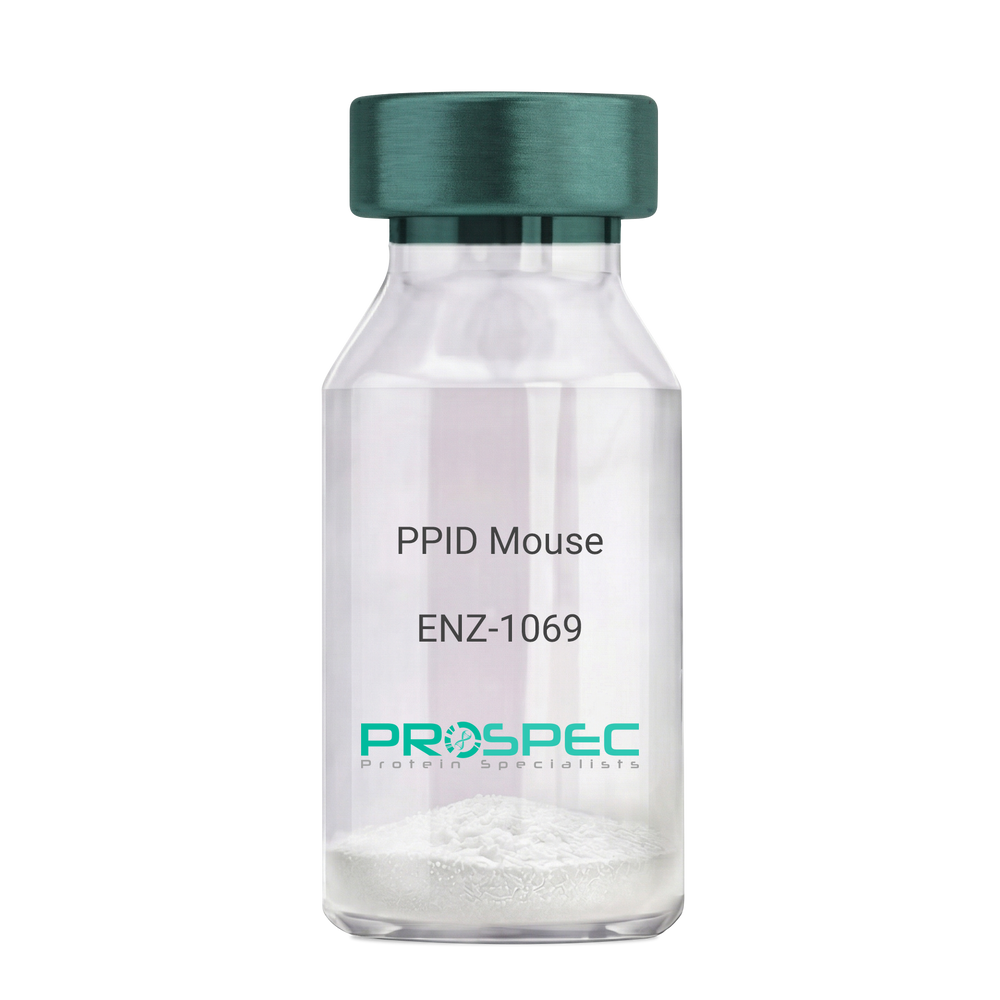
PPID MouseDescription:
Peptidylprolyl Isomerase D Mouse Recombinant
Peptidyl-prolyl cis-trans isomerase D, PPIase D, 40 kDa peptidyl-prolyl cis-trans isomerase, Cyclophilin-40, CYP-40, Cyclophilin-related protein, CYP40, CYPD, PPID, Peptidylprolyl Isomerase D.
Product # :
ENZ-1069Price :
Quantity :
Shipping Method :
Shipped with Ice Packs
More Info
- description
- source
- formulation
- purity
- biological activity
- More Info
Description
PPID Mouse Recombinant produced in E.Coli is a single, non-glycosylated polypeptide chain containing 395 amino acids (1-370a.a.) and having a molecular mass of 43.4kDa. PPID is fused to a 25 amino acid His-tag at N-terminus & purified by proprietary chromatographic techniques.
Source
Escherichia Coli.
Formulation
PPID protein solution (1mg/ml) containing 20mM Tris-Hcl buffer (pH8.0), 10% glycerol and 1mM DTT.
Purity
Greater than 90.0% as determined by SDS-PAGE.
Biological Activity
Specific activity is > 700nmol/min/mg, and is defined as the amount of enzyme that cleaves 1umole of suc-AAFP-PNA per minute at 37°C in Tris–HCl pH 8.0 using chymotrypsin.
More Info
-
Introduction
Cyclophilin-D is a member of the peptidyl-prolyl cis-trans isomerase (PPIase) family. PPIases catalyze the cis-trans isomerization of proline imidic peptide bonds in oligopeptides and speeds up the protein folding. Cyclophilin-D possess PPIase activity and binds to the immunosuppressant cyclosporin-A. Cyclophilin-D is very well known that its overexpression suppresses the apoptosis in cancer cell. Cyclophilin-D suppresses apoptotic cell death by the use of mitochondrial hexokinase-2 dependent mechanism in cancer cells.
-
Synonyms
Peptidyl-prolyl cis-trans isomerase D, PPIase D, 40 kDa peptidyl-prolyl cis-trans isomerase, Cyclophilin-40, CYP-40, Cyclophilin-related protein, CYP40, CYPD, PPID, Peptidylprolyl Isomerase D.
-
Physical Appearance
Sterile Filtered colorless solution.
-
Stability
Store at 4°C if entire vial will be used within 2-4 weeks. Store, frozen at -20°C for longer periods of time. For long term storage it is recommended to add a carrier protein (0.1% HSA or BSA). Please prevent freeze-thaw cycles.
-
Amino Acid Sequence
MGSSHHHHHH SSGLVPRGSH MGSEFMSHAS PAAKPSNSKN PRVFFDVDIG GERVGRIVLE LFADIVPKTA ENFRALCTGE KGTGSTTGKP LHFKGCPFHR IIKKFMIQGG DFSNQNGTGG ESIYGEKFED ENFHYKHDRE GLLSMANAGP NTNGSQFFIT TVPTPHLDGK HVVFGQVIKG LGVARTLENV EVNGEKPAKL CVIAECGELK EGDDWGIFPK DGSGDSHPDF PEDADIDLKD VDKILLISED LKNIGNTFFK SQNWEMAIKK YAKVLRYVDS SKAVIEKADR SRLQPIALSC VLNIGACKLK MSNWQGAIDS CLEALEMDPS NTKALYRKAQ GWQGLKEYDQ ALADLKKAQE IAPGDKAIQA ELLKVKQMIK AQKDKEKAVY AKMFA.
ProSpec's products are furnished for LABORATORY RESEARCH USE ONLY. The product may not be used as drugs, agricultural or pesticidal products, food additives or household chemicals.
- View Data Sheet
Name :
KLK7 HumanDescription:
Kallikrein-7 Human Recombinant
kallikrein-related peptidase 7, SCCE, hSCCE, EC 3.4.21.117, hK7, Kallikrein-7, PRSS6, KLK7.
Product # :
ENZ-510Price :
Quantity :
Shipping Method :
Shipped with Ice Packs
More Info
- description
- source
- formulation
- purity
- More Info
Description
KLK7 Human Recombinant produced in E.coli is a single, non-glycosylated polypeptide chain containing 249 amino acids (30-253) and having a molecular mass of 27.1 kDa.The KLK7 is fused to a 25 amino acid His-Tag at N-terminus and purified by proprietary chromatographic techniques.
Source
Escherichia Coli.
Formulation
KLK7 protein 1mg/ml is supplied in 20mM Tris-HCl, pH-8, 2M Urea and 10% Glycerol.
Purity
Greater than 90.0% as determined by Analysis by SDS-PAGE.
More Info
-
Introduction
KLK7 catalyzes the degradation of intercellular cohesive structures in the cornified layer of the skin in the continuous shedding of cells from the skin surface. Specific for amino acid residues with aromatic side chains in the P1 position. KLK7 is involved in the activation of precursors to inflammatory cytokines.
-
Synonyms
kallikrein-related peptidase 7, SCCE, hSCCE, EC 3.4.21.117, hK7, Kallikrein-7, PRSS6, KLK7.
-
Physical Appearance
Sterile Filtered clear solution.
-
Stability
Store at 4°C if entire vial will be used within 2-4 weeks. Store, frozen at -20°C for longer periods of time. For long term storage it is recommended to add a carrier protein (0.1% HSA or BSA).Avoid multiple freeze-thaw cycles.
-
Amino Acid Sequence
MGSSHHHHHH SSGLVPRGSH MGSHMIIDGA PCARGSHPWQ VALLSGNQLH CGGVLVNERW VLTAAHCKMN EYTVHLGSDT LGDRRAQRIK ASKSFRHPGY STQTHVNDLM LVKLNSQARL SSMVKKVRLP SRCEPPGTTC TVSGWGTTTS PDVTFPSDLM CVDVKLISPQ DCTKVYKDLL ENSMLCAGIP DSKKNACNGD SGGPLVCRGT LQGLVSWGTF PCGQPNDPGV YTQVCKFTKW INDTMKKHR.
ProSpec's products are furnished for LABORATORY RESEARCH USE ONLY. The product may not be used as drugs, agricultural or pesticidal products, food additives or household chemicals.
- View Data Sheet
Name :
ENO2 ProteinDescription:
Enolase-2 Human
Gamma-enolase, EC 4.2.1.11, 2-phospho-D-glycerate hydro-lyase, Neural enolase, Neuron-specific enolase, NSE, Enolase 2, ENO2.
Product # :
ENZ-371Price :
Quantity :
Shipping Method :
Shipped with Ice Packs
More Info
- description
- source
- formulation
- purity
- More Info
Description
Human Neurone Specific Enolase produced in Human CNS having a molecular mass of 45kDa.
Source
Human CNS.
Formulation
The protein solution is in 10mM NaH2PO4 buffer pH 7.4 containing 150mM NaCl and 5mM MgSO4.
Purity
Greater than 96.0%.
More Info
-
Introduction
Neuron-specificenolase also caled NSE is a glycolytic isoenzyme which is situated in central and peripheral neurons and neuroendocrine cells. Enolase-2 is released into the CSF when neural tissue is injured. Neoplasms derived from neural or neuroendocrine tissue release Enolase-2 into the blood. Enolase-2 is a useful substance that has been detected in patients with certain tumors, such as neuroblastoma, small cell lung cancer, medullary thyroid cancer, carcinoid tumors, pancreatic endocrine tumors, and melanoma. ENO2 is 1 of the 3 enolase isoenzymes found in mammals. ENO2 isoenzyme, is found in mature neurons and cells of neuronal origin. An exchange from alpha enolase to gamma enolase occurs in neural tissue during development in rats and primates.
-
Synonyms
Gamma-enolase, EC 4.2.1.11, 2-phospho-D-glycerate hydro-lyase, Neural enolase, Neuron-specific enolase, NSE, Enolase 2, ENO2.
-
Physical Appearance
Sterile Filtered clear solution.
-
Stability
Human NSE although stable at 4°C for 1 week, should be stored at -18°C.
ProSpec's products are furnished for LABORATORY RESEARCH USE ONLY. The product may not be used as drugs, agricultural or pesticidal products, food additives or household chemicals.
- View Data Sheet
Name :
NTRK3 MouseDescription:
Neurotrophic Receptor Tyrosine Kinase 3 Mouse Recombinant
NT-3 growth factor receptor, GP145-TrkC, Trk-C, Neurotrophic tyrosine kinase receptor type 3, TrkC tyrosine kinase, Ntrk3, TrkC, AW125844, Ntrk3_tv3
Product # :
CYT-1163Price :
Quantity :
Shipping Method :
Shipped with Ice Packs
More Info
- description
- source
- formulation
- purity
- More Info
Description
NTRK3 Mouse Recombinant produced in Baculovirus is a single glycosylated polypeptide chain containing 404 amino acids (32-429 aa) and having a molecular mass of 45.4kDa.NTRK3 is fused to a 6 amino acid His tag at C-terminus and purified by proprietary chromatographic techniques.
Source
Sf9, Baculovirus cells.
Formulation
NTRK3 protein (0.25mg/ml) contains 10% glycerol and Phosphate-Buffered Saline (pH 7.4).
Purity
Greater than 90.0% as determined by SDS-PAGE.
More Info
-
Introduction
Neurotrophic Receptor Tyrosine Kinase 3 (NTRK3)belongs to the receptor tyrosine kinases family and is a high affinity catalytic receptor of neurotrophin NT-3. NTRK3 mediates multiple effects of this neurotrophic factor, which includes neuronal differentiation and survival. NTRK3 inducesvarious pleiotorpic responses in malignant cells, including enhanced tumor cell invasiveness and chemotoxis.Increased NTRK3 expression was observed in neuroblastoma, medulloblastoma, and in neuroectodermal brain tumors.
-
Synonyms
NT-3 growth factor receptor, GP145-TrkC, Trk-C, Neurotrophic tyrosine kinase receptor type 3, TrkC tyrosine kinase, Ntrk3, TrkC, AW125844, Ntrk3_tv3
-
Physical Appearance
Sterile Filtered colorless solution.
-
Stability
Store at 4°C if entire vial will be used within 2-4 weeks. Store, frozen at -20°C for longer periods of time. For long term storage it is recommended to add a carrier protein (0.1% HSA or BSA).Avoid multiple freeze-thaw cycles.
-
Amino Acid Sequence
CPANCVCSKT EINCRRPDDG NLFPLLEGQD SGNSNGNASI NITDISRNIT SIHIENWRGL HTLNAVDMEL YTGLQKLTIK NSGLRNIQPR AFAKNPHLRY INLSSNRLTT LSWQLFQTLS LRELRLEQNF FNCSCDIRWM QLWQEQGEAR LDSQSLYCIS ADGSQLPLFR MNISQCDLPE ISVSHVNLTV REGDNAVITC NGSGSPLPDV DWIVTGLQSI NTHQTNLNWT NVHAINLTLV NVTSEDNGFT LTCIAENVVG MSNASVALTV YYPPRVVSLV EPEVRLEHCI EFVVRGNPTP TLHWLYNGQP LRESKIIHMD YYQEGEVSEG CLLFNKPTHY NNGNYTLIAK NALGTANQTI NGHFLKEPFP ESTDFFDFES DASPTPPITV THKPEEDTHH HHHH
ProSpec's products are furnished for LABORATORY RESEARCH USE ONLY. The product may not be used as drugs, agricultural or pesticidal products, food additives or household chemicals.
- View Data Sheet
Name :
EGFR Human Sf9, ActiveDescription:
Epidermal Growth Factor Receptor Human Recombinant Sf9, Active
Epidermal growth factor receptor, EC 2.7.10.1, Receptor tyrosine-protein kinase ErbB-1, ERBB, mENA, ERBB1, EGFR.
Product # :
PKA-335Price :
Quantity :
Shipping Method :
Shipped with Ice Packs
More Info
- description
- source
- formulation
- biological activity
- More Info
Description
EGFR Human Recombinant encoding a.a. 672-1210 expressed in Baculovirus infected Sf9 cells, fused with a GST-tag at N-terminus with thrombin cleavage sites, having a molecular weight of 89,171 Dalton.EGFR is purified by proprietary chromatographic techniques.
Source
Baculovirus infected Sf9 cells.
Formulation
EGFR in 50mM HEPES pH 7.5, 100mM NaCl, 5mM DTT, 15mM reduced glutathione and 20% glycerol.
Biological Activity
Determination of Km value by Filter binding assay MAFC membrane.
More Info
-
Introduction
The epidermal growth factor receptor (EGF R) subfamily of receptor tyrosine kinases comprises four members: EGF R (also known as HER1, ErbB1 or ErbB), ErbB2 (Neu, HER-2), ErbB3 (HER-3), and ErbB4 (HER-4). All family members are type I transmembrane glycoprotein that has an extracellular domain which contains two cysteine-rich domains separated by a spacer region that is involved in ligand-binding, and a cytoplasmic domain which has a membrane-proximal tyrosine kinase domain and a C-terminal tail with multiple tyrosine autophosphorylation sites. The human EGF R gene encodes a 1210 amino acid (aa) residue precursor with a 24 aa putative signal peptide, a 621 aa extracellular domain, a 23 aa transmembrane domain, and a 542 aa cytoplasmic domain. EGF R has been shown to bind a subset of the EGF family ligands, including EGF, amphiregulin, TGF-a , betacellulin, epiregulin, heparin-binding EGF and neuregulin-2 in the absence of a co-receptor. Ligand binding induces EGF R homodimerization as well as heterdimerization with ErbB2, resulting in kinase activation, tyrosine phosphorylation and cell signaling. EGF R can also be recruited to form heterodimers with the ligand-activated ErbB3 or ErbB4. EGF R signaling has been shown to regulate multiple biological functions including cell proliferation, differentiation, motility and apoptosis. In addition, EGF R signaling has also been shown to play a role in carcinogenesis.
-
Synonyms
Epidermal growth factor receptor, EC 2.7.10.1, Receptor tyrosine-protein kinase ErbB-1, ERBB, mENA, ERBB1, EGFR.
-
Physical Appearance
Sterile filtered liquid.
-
Stability
Store vial at -20°C to -80°C. When stored at the recommended temperature, this protein is stable for 12 months. Please avoid freeze-thaw cycles.
-
Specific Activity
30 pmol/µgxmin.
ProSpec's products are furnished for LABORATORY RESEARCH USE ONLY. The product may not be used as drugs, agricultural or pesticidal products, food additives or household chemicals.
- View Data Sheet
Name :
FBP2 HumanDescription:
Fructose-1,6-Bisphosphatase 2 Human Recombinant
Fructose-1,6-bisphosphatase isozyme 2, Fructose-1,6-bisphosphatase isozyme 2, FBPase 2, D-fructose-1,6-bisphosphate 1-phosphohydrolase 2, FBP2.
Product # :
ENZ-667Price :
Quantity :
Shipping Method :
Shipped with Ice Packs
More Info
- description
- source
- formulation
- purity
- More Info
Description
FBP2 Human Recombinant produced in E.coli is a single, non-glycosylated polypeptide chain containing 362 amino acids (1-339) and having a molecular mass of 39kDa. FBP2 is fused to a 23 amino acid His-tag at N-terminus & purified by proprietary chromatographic techniques.
Source
Escherichia Coli.
Formulation
The FBP2 solution (1mg/ml) contains 20mM Tris-HCl buffer (pH 8.0), 0.15M NaCl, 10% glycerol and 1mM DTT.
Purity
Greater than 90.0% as determined by SDS-PAGE.
More Info
-
Introduction
Fructose-1,6-bisphosphatase isozyme 2 (FBP2) is a part of the FBPase class 1 family. FBP2 is a gluconeogenesis regulatory enzyme Which catalyzes the hydrolysis of fructose 1,6-bisphosphate to fructose 6-phosphate and inorganic phosphate.
-
Synonyms
Fructose-1,6-bisphosphatase isozyme 2, Fructose-1,6-bisphosphatase isozyme 2, FBPase 2, D-fructose-1,6-bisphosphate 1-phosphohydrolase 2, FBP2.
-
Physical Appearance
Sterile Filtered colorless solution.
-
Stability
Store at 4°C if entire vial will be used within 2-4 weeks.Store, frozen at -20°C for longer periods of time. For long term storage it is recommended to add a carrier protein (0.1% HSA or BSA).Avoid multiple freeze-thaw cycles.
-
Amino Acid Sequence
MGSSHHHHHH SSGLVPRGSH MGSMTDRSPF ETDMLTLTRY VMEKGRQAKG TGELTQLLNS MLTAIKAISS AVRKAGLAHL YGIAGSVNVT GDEVKKLDVL SNSLVINMVQ SSYSTCVLVS EENKDAIITA KEKRGKYVVC FDPLDGSSNI DCLASIGTIF AIYRKTSEDE PSEKDALQCG RNIVAAGYAL YGSATLVALS TGQGVDLFML DPALGEFVLV EKDVKIKKKG KIYSLNEGYA KYFDAATTEY VQKKKFPEDG SAPYGARYVG SMVADVHRTL VYGGIFLYPA NQKSPKGKLR LLYECNPVAY IIEQAGGLAT TGTQPVLDVK PEAIHQRVPL ILGSPEDVQE YLTCVQKNQA GS.
ProSpec's products are furnished for LABORATORY RESEARCH USE ONLY. The product may not be used as drugs, agricultural or pesticidal products, food additives or household chemicals.
- View Data Sheet
Name :
MMP-2 Human, HEKDescription:
Matrix Metalloproteinase-2 Human Recombinant, HEK
72 kDa type IV collagenase, 72 kDa gelatinase, Gelatinase A, Matrix metalloproteinase-2, MMP-2, TBE-1, MMP2, CLG4A, CLG4, MONA, MMP-II.
Product # :
ENZ-100Price :
Quantity :
Shipping Method :
Shipped with Ice Packs
More Info
- description
- source
- formulation
- purity
- biological activity
- More Info
- sds-page
Description
MMP-2 Human Recombinant produced in HEK293 cells is a proform of the Human MMP-2 (Ala30-Cys660) and fused with a ployhistide tag at the C-terminus, having an Mw of 71kDa. MMP-2 is purified by proprietary chromatographic techniques.
Source
HEK293 cells.
Formulation
The MMP-2 is supplied as a 0.2µm filtered solution in 20mM Tris-HCl, 150mM NaCl and 0.05% Brij 35, pH 7.4.
Purity
Greater than 95% as determined by SDS-PAGE.
Biological Activity
The activity was measured by its ability to cleave fluorogenic peptide substrate, Mca-PLGL-Dpa-AR-NH2 (RND,Catalog # ES001)., The specific activity is > 1,000 pmoles/min/µg.
Recombinant Human MMP-2 protein pro form needs to be activated with p-aminophenylmercuric acetate (APMA).
Activation Protocol:
1. Dilute MMP2 to 100µg/ml in the Assay Buffer: 50mM Tris, 10mM CaCl2, 150mM NaCl, 0.05% (w/v) and Brij 35, pH 7.5.
2. Activate MMP2 by adding APMA to a final concentration of 1mM. (Sigma, Catalog # A9563) and 100mM stock in DMSO.
3. Incubate at 37°C for 1 hour.sds-page
More Info
-
Introduction
Matrix metalloproteinase-2 (MMP-2) is a type IV collagenase, which is involved in endometrial menstrual breakdown, regulation of vascularization and the inflammatory response. MMP-2 contains a number of distinct domains: a prodomain that is cleaved upon activation; a catalytic domain containing the zinc binding site; a fibronectin like domain believed to have a role in substrate targeting; and a carboxyl terminal (hemopexin like) domain containing 2 N-linked glycosylation. The MMP-2 can degrade an extensive array of substrates including type IV, V, VII and X collagens as well as gelatin type I. In addition, MMP-2 interacts with THBS2, TIMP2, Thrombospondin 1, CCL7 and TIMP4. MMP-2 autocatalytic cleavage in the C-terminal generates the anti-angiogenic peptide, PEX. This process seems to be made possible by binding integrinv/beta3. Defects in the MMP-2 are the cause of Torg-Winchester syndrome (TWS), aka multicentric osteolysis nodulosis and arthropathy (MONA).
-
Synonyms
72 kDa type IV collagenase, 72 kDa gelatinase, Gelatinase A, Matrix metalloproteinase-2, MMP-2, TBE-1, MMP2, CLG4A, CLG4, MONA, MMP-II.
-
Physical Appearance
The MMP-2 is supplied as a sterile Filtered colorless solution.
-
Stability
Store MMP-2 at 4°C if entire vial will be used within 2-4 weeks. Store frozen at -20°C for longer periods of time.Avoid multiple freeze-thaw cycles.
ProSpec's products are furnished for LABORATORY RESEARCH USE ONLY. The product may not be used as drugs, agricultural or pesticidal products, food additives or household chemicals.
- View Data Sheet
Name :
ASNS MouseDescription:
Asparagine Synthetase Mouse Recombinant
Glutamine-dependent asparagine synthetase, Asns, Asparagine synthetase.
Product # :
ENZ-1100Price :
Quantity :
Shipping Method :
Shipped with Ice Packs
More Info
- description
- source
- formulation
- purity
- More Info
Description
ASNS produced in Sf9 Insect cells is a single, glycosylated polypeptide chain containing 567 amino acids (1-561a.a.) and having a molecular mass of 65.1 kDa.ASNS is expressed with a 6 amino acid His tag at C-Terminus and purified by proprietary chromatographic techniques.
Source
Sf9, Insect cells.
Formulation
ASNS protein solution ( 0.25mg/ml ) contains PBS (pH 7.4) and 40% glycerol.
Purity
Greater than 95.0% as determined by SDS-PAGE.
More Info
-
Introduction
Asparagine synthetase (ASNS) is a cytoplasmic enzyme that turns aspartate toasparagine and functions mostly in mammalian organs. ASNS is responsible for cell growthand its mRNA content is associated with changes in the cell cycle. ASNS may also play a role as a biomarker for ovarian cancer.
-
Synonyms
Glutamine-dependent asparagine synthetase, Asns, Asparagine synthetase.
-
Physical Appearance
Sterile Filtered colorless solution.
-
Stability
Store at 4°C if entire vial will be used within 2-4 weeks. Store, frozen at -20°C for longer periods of time. For long term storage it is recommended to add a carrier protein (0.1% HSA or BSA). Avoid multiple freeze-thaw cycles.
-
Amino Acid Sequence
MCGIWALFGS DDCLSVQCLS AMKIAHRGPD AFRFENVNGY TNCCFGFHRL AVVDPLFGMQ PIRVRKYPYL WLCYNGEIYN HKALQQRFEF EYQTNVDGEI ILHLYDKGGI EKTICMLDGV FAFILLDTAN KKVFLGRDTY GVRPLFKAMT EDGFLAVCSE AKGLVSLKHS TTPFLKVEPF LPGHYEVLDL KPNGKVASVE MVKYHHCTDE PLHAIYDSVE KLFPGFDLET VKNNLRILFD NAIKKRLMTD RRIGCLLSGG LDSSLVAASL LKQLKEAQVQ YPLQTFAIGM EDSPDLLAAR KVANYIGSEH HEVLFNSEEG IQALDEVIFS LETYDITTVR ASVGMYLISK YIRKNTDSVV IFSGEGSDEL TQGYIYFHKA PSPEKAEEES ERLLKELYLF DVLRADRTTA AHGLELRVPF LDHRFSSYYL SLPPDMRIPK NGIEKHLLRE TFEDCNLLPK EILWRPKEAF SDGITSVKNS WFKILQDYVE HQVDDEMMSA SQKFPFNTP KTKEGYFYRQ IFERHYPGRA DWLTHYWMPK WINATDPSAR TLTHYKS AAK AHHHHHH.
ProSpec's products are furnished for LABORATORY RESEARCH USE ONLY. The product may not be used as drugs, agricultural or pesticidal products, food additives or household chemicals.
- View Data Sheet
Name :
S100A15 MouseDescription:
S100 Calcium Binding Protein A15 Mouse Recombinant
Protein S100-A7A, S100 calcium-binding protein A15A, S100 calcium-binding protein A7A.
Product # :
PRO-1145Price :
Quantity :
Shipping Method :
Shipped with Ice Packs
More Info
- description
- source
- formulation
- purity
- More Info
Description
S100A15 Mouse Recombinant produced in E. coli is a single polypeptide chain containing 132 amino acids (1-108) and having a molecular mass of 15.0 kDa.S100A15 is fused to a 24 amino acid His-tag at N-terminus & purified by proprietary chromatographic techniques.
Source
E.coli.
Formulation
The S100A15 solution (0.25mg/1ml) contains 20mM Tris-HCl buffer (pH 8.0), 150mM NaCl and 20% glycerol.
Purity
Greater than 85% as determined by SDS-PAGE.
More Info
-
Introduction
Mouse S100A15 is a protein of 104 amino acids with an expected molecular weight of 12,870 Dalton having 2 EF-hand calcium binding sites. The S100A15 expression is upregulated in cultured keratinocytes stimulated to differentiate by calcium or phorbol esters. S100A15 is expressed in the skin and keratinocytes.
-
Synonyms
Protein S100-A7A, S100 calcium-binding protein A15A, S100 calcium-binding protein A7A.
-
Physical Appearance
Sterile Filtered colorless solution.
-
Stability
Store at 4°C if entire vial will be used within 2-4 weeks. Store, frozen at -20°C for longer periods of time. For long term storage it is recommended to add a carrier protein (0.1% HSA or BSA).Avoid multiple freeze-thaw cycles.
-
Amino Acid Sequence
MGSSHHHHHH SSGLVPRGSH MGSHMPDTPV EDSLFQIIHC FHHYAAREGD KETLSLEELK ALLLDSVPRF MDTLGRRQPY YITELFRAAD KNKDNQICFD EFLYILGKLV KDYHLQFHRQ LCAHYCTEHS LY.
ProSpec's products are furnished for LABORATORY RESEARCH USE ONLY. The product may not be used as drugs, agricultural or pesticidal products, food additives or household chemicals.
- View Data Sheet
Name :
CBR1 HumanDescription:
Carbonyl Reductase-1 Human Recombinant
CBR, hCBR1, SDR21C1, CBR1, Carbonyl reductase [NADPH] 1, NADPH-dependent carbonyl reductase 1, Prostaglandin-E(2) 9-reductase, Prostaglandin 9-ketoreductase, 15-hydroxyprostaglandin dehydrogenase [NADP+], CRN.
Product # :
ENZ-415Price :
Quantity :
Shipping Method :
Shipped with Ice Packs
More Info
- description
- source
- formulation
- purity
- More Info
Description
Recombinant Human CBR1 produced in E.Coli is a single, non-glycosylated polypeptide chain containing 277 amino acids (1-277 a.a) and having a molecular mass of 30 kDa. CBR1 is purified by proprietary chromatographic techniques.
Source
Escherichia Coli.
Formulation
The CBR1 protein contains 20mM Tris-HCl buffer pH-8.5, and 10% glycerol.
Purity
Greater than 95.0% as determined by analysis by SDS-PAGE.
More Info
-
Introduction
CBR1 is one of numerous monomeric, NADPH-dependent oxidoreductases having ubiquistly specificity for carbonyl compounds. CBR1 is broadly distributed in human tissues. CBR1 metabolizes toxic environmental quinones and pharmacological relevant substrates. CBR1 converts prostaglandin E2 to prostaglandin F2-alpha.
-
Synonyms
CBR, hCBR1, SDR21C1, CBR1, Carbonyl reductase [NADPH] 1, NADPH-dependent carbonyl reductase 1, Prostaglandin-E(2) 9-reductase, Prostaglandin 9-ketoreductase, 15-hydroxyprostaglandin dehydrogenase [NADP+], CRN.
-
Physical Appearance
Sterile filtered colorless solution.
-
Stability
Store at 4°C if entire vial will be used within 2-4 weeks. Store, frozen at -20°C for longer periods of time. For long term storage it is recommended to add a carrier protein (0.1% HSA or BSA). Avoid multiple freeze-thaw cycles.
-
Amino Acid Sequence
MSSGIHVALV TGGNKGIGLA IVRDLCRLFS GDVVLTARDV TRGQAAVQQL QAEGLSPRFH QLDIDDLQSI RALRDFLRKE YGGLDVLVNN AGIAFKVADP TPFHIQAEVT MKTNFFGTRD VCTELLPLIK PQGRVVNVSS IMSVRALKSC SPELQQKFRS ETITEEELVG LMNKFVEDTK KGVHQKEGWP SSAYGVTKIG VTVLSRIHAR KLSEQRKGDK ILLNACCPGW VRTDMAGPKA TKSPEEGAET PVYLALLPPD AEGPHGQFVS EKRVEQW.
ProSpec's products are furnished for LABORATORY RESEARCH USE ONLY. The product may not be used as drugs, agricultural or pesticidal products, food additives or household chemicals.
- View Data Sheet
Name :
Protein ADescription:
Staphylococcal Protein A Recombinant
Immunoglobulin G-binding protein A, IgG-binding protein A, Staphylococcal protein A, SPA.
Product # :
PRO-356Price :
Quantity :
Shipping Method :
Shipped with Ice Packs
More Info
- description
- source
- formulation
- purity
- biological activity
- More Info
Description
Recombinant Staphylococcal Protein A produced in E.Coli is a non-glycosylated, Polypeptide chain having a molecular mass of 46.7 kDa.Recombinant Staphylococcal Protein A is purified by proprietary chromatographic techniques.
Source
Escherichia Coli.
Formulation
The protein solution contains no additives.
Purity
Greater than 95.0% as determined by RP-HPLC.
Biological Activity
Greater than 95.0% binding activity to human IgG.
More Info
-
Introduction
Protein A is a cell wall protein deriving from Staphylococcus aureus which exhibits unique binding properties for IgG from a variety of mammalian species and for some IgM and IgA as well. It binds with the Fc region of immunoglobulins through interaction with the heavy chain. It couples to a wide variety of reporter molecules including fluorescent dyes, enzyme markers, biotin, colloidal gold and radioactive iodine without affecting the antibody binding site. Recombinant Protein A was developed to increase the specificity of the molecule for IgG and is widely used both in research and bioprocessing. The recombinant protein A is produced by expressing a modified protein A gene in E.coli. A specific purification process with strict quality control was taken to get the recombinant protein A with the purity of more than 98% , no human IgG affinity step is used during validated fermentation and purification and devoid of bacterial contaminant found normally in native Protein A. (Free of Staphylococcus endotoxins and hemolysin).
-
Synonyms
Immunoglobulin G-binding protein A, IgG-binding protein A, Staphylococcal protein A, SPA.
-
Physical Appearance
Sterile Filtered clear colorless solution.
-
Stability
SPA should be stored at -20°C.
ProSpec's products are furnished for LABORATORY RESEARCH USE ONLY. The product may not be used as drugs, agricultural or pesticidal products, food additives or household chemicals.