Skip to content

High-quality research proteins.

  • 1-800-805-6531

  • Mon - Sat 8.00-18.00, Sun - Closed

  • info@prospecbio.com

  • PO Box 6591 East Brunswick NJ 08816

  • Products
    • Cytokines
    • Growth factors
    • Chemokines
    • Cd antigens
    • Neurotrophins
    • Hormones
    • Enzymes
    • Viral antigens
    • Recombinant proteins
    • Natural proteins
    • Monoclonal antibodies
    • Polyclonal antibodies
    • Thermal Packaging
  • About
    • Company
    • Founder
    • Contribution
  • Customers
    • Eastern Asia
    • Eastern Europe
    • North America
    • South America
    • South East Asia
    • Southern Asia
    • Western Europe
  • Ordering
    • Ordering Method
    • Ordering - Credit Card
    • Ordering - PO
    • Shipping Fees
    • FAQs
  • Services
    • DNA Cloning
    • Protein Expression
    • Monoclonal Antibody
    • Fermentation
    • Technology License
  • Contact us
Log in

Country/region

  • USD $ | Albania
  • USD $ | Andorra
  • USD $ | Argentina
  • USD $ | Armenia
  • USD $ | Australia
  • USD $ | Austria
  • USD $ | Azerbaijan
  • USD $ | Belarus
  • USD $ | Belgium
  • USD $ | Bolivia
  • USD $ | Brazil
  • USD $ | Bulgaria
  • USD $ | Cambodia
  • USD $ | Canada
  • USD $ | Chile
  • USD $ | China
  • USD $ | Colombia
  • USD $ | Costa Rica
  • USD $ | Croatia
  • USD $ | Cyprus
  • USD $ | Czechia
  • USD $ | Denmark
  • USD $ | Estonia
  • USD $ | Finland
  • USD $ | France
  • USD $ | Georgia
  • USD $ | Germany
  • USD $ | Greece
  • USD $ | Hong Kong SAR
  • USD $ | Hungary
  • USD $ | Iceland
  • USD $ | India
  • USD $ | Ireland
  • USD $ | Israel
  • USD $ | Italy
  • USD $ | Japan
  • USD $ | Kazakhstan
  • USD $ | Latvia
  • USD $ | Liechtenstein
  • USD $ | Lithuania
  • USD $ | Madagascar
  • USD $ | Malta
  • USD $ | Mexico
  • USD $ | Moldova
  • USD $ | Monaco
  • USD $ | Netherlands
  • USD $ | New Zealand
  • USD $ | North Macedonia
  • USD $ | Norway
  • USD $ | Panama
  • USD $ | Paraguay
  • USD $ | Peru
  • USD $ | Philippines
  • USD $ | Poland
  • USD $ | Portugal
  • USD $ | Romania
  • USD $ | Singapore
  • USD $ | Slovakia
  • USD $ | Slovenia
  • USD $ | South Africa
  • USD $ | South Korea
  • USD $ | Spain
  • USD $ | Sri Lanka
  • USD $ | Sweden
  • USD $ | Switzerland
  • USD $ | Taiwan
  • USD $ | Thailand
  • USD $ | Türkiye
  • USD $ | Ukraine
  • USD $ | United Kingdom
  • USD $ | United States
  • USD $ | Uruguay
  • USD $ | Vatican City
  • USD $ | Venezuela
  • USD $ | Vietnam
  • Facebook
  • Instagram
logoProSpec - Recombinant Protein Manufacturer for academic and R&D industry
Become a distributor
Account Log in
Wishlist
Cart Cart(0)
  • Products
    +
    • Cytokines
    • Growth factors
    • Chemokines
    • Cd antigens
    • Neurotrophins
    • Hormones
    • Enzymes
    • Viral antigens
    • Recombinant proteins
    • Natural proteins
    • Monoclonal antibodies
    • Polyclonal antibodies
    • Thermal Packaging
  • About
    +
    • Company
    • Founder
    • Contribution
  • Customers
    +
    • Eastern Asia
    • Eastern Europe
    • North America
    • South America
    • South East Asia
    • Southern Asia
    • Western Europe
  • Ordering
    +
    • Ordering Method
    • Ordering - Credit Card
    • Ordering - PO
    • Shipping Fees
    • FAQs
  • Services
    +
    • DNA Cloning
    • Protein Expression
    • Monoclonal Antibody
    • Fermentation
    • Technology License
  • Contact us

Item added to your cart

View cart
View All
  • Cytokines
  • Growth factors
  • Chemokines
  • Cd antigens
  • Neurotrophins
  • Hormones
  • Enzymes
  • Viral antigens
  • Recombinant proteins
  • Natural proteins
  • Monoclonal antibodies
  • Polyclonal antibodies
  • Thermal Packaging
  • Tumor Necrosis Factor

    Tumor Necrosis Factor

    View All
  • 4-1BB

    4-1BB

    View All
  • Adiponectin

    Adiponectin

    View All
  • AIF1

    AIF1

    View All
  • Other Cytokines

    Other Cytokines

    View All
  • AITRL

    AITRL

    View All
  • Angiopoietin

    Angiopoietin

    View All
  • Apolipoprotein

    Apolipoprotein

    View All
  • B-Cell Activating Factor

    B-Cell Activating Factor

    View All
  • Beta Defensin

    Beta Defensin

    View All
  • Bone Morphogenetic Protein

    Bone Morphogenetic Protein

    View All
  • B type Natriuretic Peptide

    B type Natriuretic Peptide

    View All
  • BST

    BST

    View All
  • Betacellulin

    Betacellulin

    View All
  • Cardiotrophin

    Cardiotrophin

    View All
  • Activin

    Activin

    View All
  • Fibroblast Growth Factor

    Fibroblast Growth Factor

    View All
  • Other Growth Factors

    Other Growth Factors

    View All
  • CSF

    CSF

    View All
  • CTGF

    CTGF

    View All
  • IGFBP

    IGFBP

    View All
  • VEGF Protein

    VEGF Protein

    View All
  • EGF

    EGF

    View All
  • Epigen

    Epigen

    View All
  • Erythropoietin

    Erythropoietin

    View All
  • Insulin-Like Growth Factor

    Insulin-Like Growth Factor

    View All
  • Growth Hormone

    Growth Hormone

    View All
  • HDGF

    HDGF

    View All
  • Hepatocyte Growth Factor

    Hepatocyte Growth Factor

    View All
  • Insulin

    Insulin

    View All
  • BCA-1/ BLC (CXCL13)

    BCA-1/ BLC (CXCL13)

    View All
  • BRAK (CXCL14)

    BRAK (CXCL14)

    View All
  • C-10 (CCL6)

    C-10 (CCL6)

    View All
  • Other Chemokines

    Other Chemokines

    View All
  • MEC (CCL28)

    MEC (CCL28)

    View All
  • LD78-beta (CCL3L1)

    LD78-beta (CCL3L1)

    View All
  • CTACK (CCL27)

    CTACK (CCL27)

    View All
  • CXCL16

    CXCL16

    View All
  • CXCL17

    CXCL17

    View All
  • Platelet Factor-4 (CXCL4)

    Platelet Factor-4 (CXCL4)

    View All
  • ENA-78 (CXCL5)

    ENA-78 (CXCL5)

    View All
  • Eotaxin (CCL11,24,26)

    Eotaxin (CCL11,24,26)

    View All
  • Exodus-2 (CCL21)

    Exodus-2 (CCL21)

    View All
  • Fractalkine (CX3CL1)

    Fractalkine (CX3CL1)

    View All
  • CXCL6

    CXCL6

    View All
  • Other CD Antigens

    Other CD Antigens

    View All
  • CD14

    CD14

    View All
  • CD164

    CD164

    View All
  • CD1

    CD1

    View All
  • CD2

    CD2

    View All
  • CD200

    CD200

    View All
  • CD207

    CD207

    View All
  • CD226

    CD226

    View All
  • CD23

    CD23

    View All
  • CD244

    CD244

    View All
  • CD247

    CD247

    View All
  • CD27

    CD27

    View All
  • CD274

    CD274

    View All
  • CD300

    CD300

    View All
  • CD33

    CD33

    View All
  • Other Neurotrophins

    Other Neurotrophins

    View All
  • Beta-NGF

    Beta-NGF

    View All
  • BDNF

    BDNF

    View All
  • CDNF

    CDNF

    View All
  • CNTF

    CNTF

    View All
  • GDNF

    GDNF

    View All
  • Glia Maturation Factor

    Glia Maturation Factor

    View All
  • MANF

    MANF

    View All
  • Midkine

    Midkine

    View All
  • Neuroglobin

    Neuroglobin

    View All
  • Neurotrophic factors

    Neurotrophic factors

    View All
  • Neuregulin

    Neuregulin

    View All
  • Neuropilin

    Neuropilin

    View All
  • Pigment Epithelium-Derived Factor

    Pigment Epithelium-Derived Factor

    View All
  • Pleiotrophin

    Pleiotrophin

    View All
  • Peptide Hormones

    Peptide Hormones

    View All
  • Other Hormones

    Other Hormones

    View All
  • HCG

    HCG

    View All
  • Endothelin

    Endothelin

    View All
  • Exendin

    Exendin

    View All
  • FSH

    FSH

    View All
  • Glucagon

    Glucagon

    View All
  • GHRP

    GHRP

    View All
  • GLP

    GLP

    View All
  • Thyrostimulin

    Thyrostimulin

    View All
  • Inhibin A

    Inhibin A

    View All
  • LHRH

    LHRH

    View All
  • Melanotan

    Melanotan

    View All
  • Procalcitonin

    Procalcitonin

    View All
  • PTH

    PTH

    View All
  • Peroxiredoxin

    Peroxiredoxin

    View All
  • Peptidase

    Peptidase

    View All
  • Synthetase

    Synthetase

    View All
  • Transferase

    Transferase

    View All
  • Hydrolase

    Hydrolase

    View All
  • Dehydrogenase

    Dehydrogenase

    View All
  • ACE2

    ACE2

    View All
  • Esterase

    Esterase

    View All
  • Protein Kinases

    Protein Kinases

    View All
  • Other Enzymes

    Other Enzymes

    View All
  • Phosphatase

    Phosphatase

    View All
  • Deaminase

    Deaminase

    View All
  • Oxygenase

    Oxygenase

    View All
  • Adenylate Kinase

    Adenylate Kinase

    View All
  • Lyase

    Lyase

    View All
  • Chagas

    Chagas

    View All
  • SARS

    SARS

    View All
  • Influenza

    Influenza

    View All
  • ASFV

    ASFV

    View All
  • Astrovirus

    Astrovirus

    View All
  • Borrelia

    Borrelia

    View All
  • Helicobacter Pylori

    Helicobacter Pylori

    View All
  • Chikungunya

    Chikungunya

    View All
  • Chlamydia

    Chlamydia

    View All
  • Cytomegalo

    Cytomegalo

    View All
  • Dengue

    Dengue

    View All
  • EBV

    EBV

    View All
  • Ebola

    Ebola

    View All
  • Feline Leukemia Virus

    Feline Leukemia Virus

    View All
  • Hepatitis A

    Hepatitis A

    View All
  • Other

    Other

    View All
  • Actin

    Actin

    View All
  • ADAM

    ADAM

    View All
  • Complement Component

    Complement Component

    View All
  • Ag85

    Ag85

    View All
  • Eukaryotic Translation Initiation Factor

    Eukaryotic Translation Initiation Factor

    View All
  • Anterior Gradient Protein

    Anterior Gradient Protein

    View All
  • Heat Shock Protein

    Heat Shock Protein

    View All
  • Alpha-2-HS-Glycoprotein

    Alpha-2-HS-Glycoprotein

    View All
  • Hemoglobin

    Hemoglobin

    View All
  • Allergy

    Allergy

    View All
  • Anaplasma

    Anaplasma

    View All
  • Angiogenin

    Angiogenin

    View All
  • Ankyrin Repeat Domain

    Ankyrin Repeat Domain

    View All
  • Annexin

    Annexin

    View All
  • Other Natural Proteins

    Other Natural Proteins

    View All
  • Aprotinin

    Aprotinin

    View All
  • Transferrin

    Transferrin

    View All
  • Avidin

    Avidin

    View All
  • Anti Coagulation Factors

    Anti Coagulation Factors

    View All
  • Natural Albumin

    Natural Albumin

    View All
  • Natural Coagulation Factors

    Natural Coagulation Factors

    View All
  • Fibronectin

    Fibronectin

    View All
  • Thrombin

    Thrombin

    View All
  • Anti Human Enzyme

    Anti Human Enzyme

    View All
  • Other Monoclonal Antibodies

    Other Monoclonal Antibodies

    View All
  • Anti Human Cytokine

    Anti Human Cytokine

    View All
  • Anti Human Heat Shock Protein

    Anti Human Heat Shock Protein

    View All
  • Anti Mouse Lymphocyte

    Anti Mouse Lymphocyte

    View All
  • Anti Human Chemokine

    Anti Human Chemokine

    View All
  • Anti Human Lymphocyte

    Anti Human Lymphocyte

    View All
  • Anti Viral Monoclonal

    Anti Viral Monoclonal

    View All
  • Anti Mouse Cytokine

    Anti Mouse Cytokine

    View All
  • Anti-GST Monoclonal

    Anti-GST Monoclonal

    View All
  • Other Polyclonal Antibodies

    Other Polyclonal Antibodies

    View All
  • Anti Viral

    Anti Viral

    View All
  • Anti-GST Monoclonal

    Anti-GST Monoclonal

    View All
Back

Search results

474 results found for “MIP (CCL3,4,9,15)”

Name

Description

Product #

Price

Quantity

Shipping Method

  • View Data Sheet

    Name :

    GGCT Human

    Description:

    Gamma-Glutamylcyclotransferase Human Recombinant

    Gamma-Glutamylcyclotransferase, CRF21, C7orf24, MGC3077, Cytochrome c-releasing factor 21, GCTG, Ggc, Chromosome 7 open reading frame 24, FLJ11717, EC 2.3.2.4.

    Product # :

    ENZ-062

    Price :

    Quantity :

    Shipping Method :

    Ice Icon

    Shipped with Ice Packs

    Add To Cart

    More Info

    • description
    • source
    • formulation
    • purity
    • More Info
    • Citations

    Description

    GGCT produced in E.Coli is a single, non-glycosylated polypeptide chain containing 208 amino acids (1-188a.a.) and having a molecular mass of 23.2kDa.GGCT is fused to a 20 amino acid His-tag at N-terminus & purified by proprietary chromatographic techniques.

    Source

    Escherichia Coli.

    Formulation

    The GGCT protein solution (1mg/1ml) is formulated in 20mM Tris-HCl buffer (pH8.0) and 10% glycerol.

    Purity

    Greater than 95% as determined by SDS-PAGE.

    Citations

    More Info

    • Introduction

      GGCT is a member of the family of transferases, specifically the aminoacyltransferases. GGCT protein catalyzes the formation of 5-oxoproline from gamma-glutamyl dipeptides and takes an important part in glutathione homeostasis. GGCT induces release of cytochrome c from mitochondria with resultant induction of apoptosis.

    • Synonyms

      Gamma-Glutamylcyclotransferase, CRF21, C7orf24, MGC3077, Cytochrome c-releasing factor 21, GCTG, Ggc, Chromosome 7 open reading frame 24, FLJ11717, EC 2.3.2.4.

    • Physical Appearance

      Sterile Filtered clear solution.

    • Stability

      Store at 4°C if entire vial will be used within 2-4 weeks. Store, frozen at -20°C for longer periods of time.Please avoid freeze thaw cycles.

    • Amino Acid Sequence

      MGSSHHHHHH SSGLVPRGSHMANSGCKDVT GPDEESFLYF AYGSNLLTER IHLRNPSAAF FCVARLQDFK LDFGNSQGKT SQTWHGGIAT IFQSPGDEVW GVVWKMNKSN LNSLDEQEGV KSGMYVVIEV KVATQEGKEI TCRSYLMTNY ESAPPSPQYK KIICMGAKEN GLPLEYQEKL KAIEPNDYTG KVSEEIEDII KKGETQTL

    ProSpec's products are furnished for LABORATORY RESEARCH USE ONLY. The product may not be used as drugs, agricultural or pesticidal products, food additives or household chemicals.

    Ggct Human
  • View Data Sheet

    Name :

    IL1B Porcine

    Description:

    Interleukin-1 beta Porcine Recombinant

    Catabolin, Lymphocyte-activating factor (LAF), Endogenous Pyrogen (EP), Leukocyte Endogenous Mediator (LEM), Mononuclear Cell Factor (MCF), IL1F2, IL-1 beta.

    Product # :

    CYT-400

    Price :

    Quantity :

    Shipping Method :

    Room Temp Icon

    Shipped at Room temp

    Add To Cart

    More Info

    • description
    • source
    • formulation
    • purity
    • biological activity
    • More Info
    • Citations

    Description

    Recombinant IL 1 beta Porcine produced in E.coli cells is a non-glycosylated, homodimeric protein containing 153 amino acid chain and having a molecular mass of 17.6kDa. The IL 1 beta is purified by proprietary chromatographic techniques.

    Source

    Escherichia Coli.

    Formulation

    The IL 1 beta was lyophilized from a 0.2µm filtered concentrated solution in PBS pH 7.4, containing 3 % trehalose.

    Purity

    Greater than 95.0% as determined by:
    (a) Analysis by RP-HPLC.
    (b) Analysis by SDS-PAGE.

    Biological Activity

    The ED50 as determined by a cell proliferation assay using murine D10S cells is less than 5.0 ng/ml, corresponding to a specific activity of > 2.0 × 10⁵ IU/mg.

    Citations

    More Info

    • Introduction

      Interleukin-1b is produced by activated macrophages, IL-1B stimulates thymocyte proliferation by inducing il-2 release, b-cell maturation and proliferation, and fibroblast growth factor activity. IL1B proteins are involved in the inflammatory response, being identified as endogenous pyrogens, and are reported to stimulate the release of prostaglandin and collagenase from synovial cells.

    • Synonyms

      Catabolin, Lymphocyte-activating factor (LAF), Endogenous Pyrogen (EP), Leukocyte Endogenous Mediator (LEM), Mononuclear Cell Factor (MCF), IL1F2, IL-1 beta.

    • Physical Appearance

      Sterile Filtered White lyophilized (freeze-dried) powder.

    • Stability

      Lyophilized IL 1 beta although stable at room temperature for 3 weeks, should be stored desiccated below -18°C. Upon reconstitution IL 1 beta should be stored at 4°C between 2-7 days and for future use below -18°C.For long term storage it is recommended to add a carrier protein (0.1% HSA or BSA).Please prevent freeze-thaw cycles.

    • Solubility

      It is recommended to reconstitute the lyophilized IL 1 beta in sterile distilled H2O not less than 100µg/ml, which can then be further diluted to other aqueous solutions.

    • Amino Acid Sequence

      ANVQSMECKL QDKDHKSLVL AGPHMLKALH LLTGDLKREV VFCMSFVQGD DSNNKIPVTL GIKGKNLYLS CVMKDNTPTL QLEDIDPKRY PKRDMEKRFV FYKTEIKNRV EFESALYPNW YISTSQAEQK PVFLGNSKGR QDITDFTMEV LSP

    • Background

      What is the molecular weight/Mw of IL1B PORCINE Protein?
      IL1B PORCINE Protein has a total Mw of 17.6kDa.

      What is the source or expression system of IL1B PORCINE Protein?
      Escherichia Coli.

      What is the Purity of IL1B PORCINE Protein?
      IL1B PORCINE Protein is >95% pure as determined by SDS-PAGE.

      What is the Biological Activity of IL1B PORCINE Protein?
      The ED50 as determined by a cell proliferation assay using murine D10S cells is less than 5.0 ng/ml, corresponding to a specific activity of > 2.0 × 10⁵ IU/mg.

      What is the amino acid sequence of IL1B PORCINE Protein?
      ANVQSMECKL QDKDHKSLVL AGPHMLKALH LLTGDLKREV VFCMSFVQGD DSNNKIPVTL GIKGKNLYLS CVMKDNTPTL QLEDIDPKRY PKRDMEKRFV FYKTEIKNRV EFESALYPNW YISTSQAEQK PVFLGNSKGR QDITDFTMEV LSP.

      What applications can IL1B PORCINE Protein be used in?
      IL1B PORCINE Protein can probably be used in western blot, ELISA and Lateral Flow.

      What is the endotoxin level for IL1B PORCINE Protein?
      The endotoxin level is minimal, IL1B PORCINE Protein was purified using conventional chromatography techniques.


    ProSpec's products are furnished for LABORATORY RESEARCH USE ONLY. The product may not be used as drugs, agricultural or pesticidal products, food additives or household chemicals.

    Il 1 Beta Porcine
  • View Data Sheet

    Name :

    NAPG Human

    Description:

    N-ethylmaleimide-Sensitive Factor Attachment Protein, Gamma Human Recombinant

    Gamma-soluble NSF attachment protein, SNAP-gamma, N-ethylmaleimide-sensitive factor attachment protein gamma, NAPG, SNAPG, GAMMASNAP.

    Product # :

    PRO-944

    Price :

    Quantity :

    Shipping Method :

    Ice Icon

    Shipped with Ice Packs

    Add To Cart

    More Info

    • description
    • source
    • formulation
    • purity
    • More Info
    • Citations

    Description

    NAPG Human Recombinant produced in E.Coli is a single, non-glycosylated polypeptide chain containing 336 amino acids (1-312 a.a.) and having a molecular mass of 37.3kDa.NAPG is fused to a 24 amino acid His-tag at N-terminus & purified by proprietary chromatographic techniques.

    Source

    Escherichia Coli.

    Formulation

    NAPG protein solution (1mg/ml) containing 20mM Tris-HCl buffer (pH8.0), 10% glycerol, 0.1M NaCl and 1mM DTT.

    Purity

    Greater than 95.0% as determined by SDS-PAGE.

    Citations

    More Info

    • Introduction

      Gamma-SNAP (NAPG) is a cytoplasmic protein which binds to a membrane receptor complex composed of VAMP, SNAP25 and syntaxin. NAPG mediates the membrane binding of NSF, which is crucial for membrane fusion reactions. NSF and SNAPs seem to be general components of the intracellular membrane fusion system, and their action at specific sites of fusion needs be controlled by SNAP receptors specific to the membranes being fused. NAPG mediates platelet exocytosis and controls the membrane fusion events of this process.

    • Synonyms

      Gamma-soluble NSF attachment protein, SNAP-gamma, N-ethylmaleimide-sensitive factor attachment protein gamma, NAPG, SNAPG, GAMMASNAP.

    • Physical Appearance

      Sterile Filtered colorless solution.

    • Stability

      Store at 4°C if entire vial will be used within 2-4 weeks. Store, frozen at -20°C for longer periods of time. For long term storage it is recommended to add a carrier protein (0.1% HSA or BSA).Avoid multiple freeze-thaw cycles.

    • Amino Acid Sequence

      MGSSHHHHHH SSGLVPRGSH MGSHMAAQKI NEGLEHLAKA EKYLKTGFLK WKPDYDSAAS EYGKAAVAFK NAKQFEQAKD ACLREAVAHE NNRALFHAAK AYEQAGMMLK EMQKLPEAVQ LIEKASMMYL ENGTPDTAAM ALERAGKLIE NVDPEKAVQL YQQTANVFEN EERLRQAVEL LGKASRLLVR GRRFDEAALS IQKEKNIYKE IENYPTCYKK TIAQVLVHLH RNDYVAAERC VRESYSIPGF NGSEDCAALE QLLEGYDQQD QDQVSDVCNS PLFKYMDNDY AKLGLSLVVP GGGIKKKSPA TPQAKPDGVT ATAADEEEDE YSGGLC.

    ProSpec's products are furnished for LABORATORY RESEARCH USE ONLY. The product may not be used as drugs, agricultural or pesticidal products, food additives or household chemicals.

    Napg Human
  • View Data Sheet

    Name :

    CD4 (26-396) Human

    Description:

    CD4 (26-396) Human Recombinant

    CD4 Molecule, T-Cell Surface Glycoprotein CD4, T-Cell Surface Antigen T4/Leu-3, CD4 Antigen (P55), CD4 Receptor, CD4 Antigen, CD4mut, T-cell surface glycoprotein CD4.

    Product # :

    CYT-885

    Price :

    Quantity :

    Shipping Method :

    Ice Icon

    Shipped with Ice Packs

    Add To Cart

    More Info

    • description
    • source
    • formulation
    • purity
    • More Info
    • Citations

    Description

    CD4 Human Recombinant produced in E.Coli is a single, non-glycosylated polypeptide chain containing 396 amino acids (26-396 a.a) and having a molecular mass of 44kDa. CD4 is fused to a 25 amino acid His-tag at N-terminus & purified by proprietary chromatographic techniques.

    Source

    E.coli.

    Formulation

    CD4 protein solution (0.25mg/ml) containing 20mM Tris Hcl, PH8.0 and 10% glycerol.

    Purity

    Greater than 85% as determined by SDS-PAGE.

    Citations

    More Info

    • Introduction

      CD4 is a cell-surface glycoprotein found on the mature helper T cells and immature thymocytes, as well as on monocytes and macrophages. (Some cytotoxic T cells have CD4 protein as well.) Normally, about 65% of T cells in the blood are CD4+ (have CD4 protein protruding from their membrane). A mature T cell with either have CD4 or CD8, but not both. During one stage of development T cells develop CD4 and CD8 receptors, but they eventually are differentiated in the thymus and become more specialized.

    • Synonyms

      CD4 Molecule, T-Cell Surface Glycoprotein CD4, T-Cell Surface Antigen T4/Leu-3, CD4 Antigen (P55), CD4 Receptor, CD4 Antigen, CD4mut, T-cell surface glycoprotein CD4.

    • Physical Appearance

      Sterile Filtered colorless solution.

    • Stability

      Store at 4°C if entire vial will be used within 2-4 weeks. Store, frozen at -20°C for longer periods of time. For long term storage it is recommended to add a carrier protein (0.1% HSA or BSA).Avoid multiple freeze-thaw cycles.

    • Amino Acid Sequence

      MGSSHHHHHH SSGLVPRGSH MGSHMKKVVL GKKGDTVELT CTASQKKSIQ FHWKNSNQIK ILGNQGSFLT KGPSKLNDRA DSRRSLWDQG NFPLIIKNLK IEDSDTYICE VEDQKEEVQL LVFGLTANSD THLLQGQSLT LTLESPPGSS PSVQCRSPRG KNIQGGKTLS VSQLELQDSG TWTCTVLQNQ KKVEFKIDIV VLAFQKASSI VYKKEGEQVE FSFPLAFTVE KLTGSGELWW QAERASSSKS WITFDLKNKE VSVKRVTQDP KLQMGKKLPL HLTLPQALPQ YAGSGNLTLA LEAKTGKLHQ EVNLVVMRAT QLQKNLTCEV WGPTSPKLML SLKLENKEAK VSKREKAVWV LNPEAGMWQC LLSDSGQVLL ESNIKVLPTW STPVQP.

    ProSpec's products are furnished for LABORATORY RESEARCH USE ONLY. The product may not be used as drugs, agricultural or pesticidal products, food additives or household chemicals.

    Cd4 26 396 Human
  • View Data Sheet

    Name :

    S100A10 Mouse

    Description:

    Recombinant Mouse S100 Calcium Binding Protein A10

    Protein S100-A10, Calpactin I light chain, Calpactin-1 light chain, Cellular ligand of, annexin II, S100 calcium-binding protein A10, p10 protein, p11, S100a10, Cal1l.

    Product # :

    PRO-2252

    Price :

    Quantity :

    Shipping Method :

    Ice Icon

    Shipped with Ice Packs

    Add To Cart

    More Info

    • description
    • source
    • formulation
    • purity
    • More Info
    • Citations

    Description

    S100A10 Mouse Recombinant produced in E. coli is a single, non-glycosylated polypeptide chain containing 120 amino acids (1-97a.a) and having a molecular mass of 13.6kDa.S100A10 is fused to a 23 amino acid His-tag at N-terminus & purified by proprietary chromatographic techniques.

    Source

    Escherichia Coli.

    Formulation

    S100A10 protein solution (1mg/ml) containing phosphate buffered saline (pH 7.4) and 10% glycerol.

    Purity

    Greater than 90.0% as determined by SDS-PAGE.

    Citations

    More Info

    • Introduction

      S100A10 is a member of the S100 family of proteins contains two EF-hand calcium-binding motifs and is thought to be involved in the regulation of a number of cellular processes including cell cycle progression and differentiation. S100 proteins are localized either in the cytoplasm or the nucleus of a wide range of cells. There are at least 13 members in the S100 gene family, which are located as a cluster on chromosome 1q21. S100A10 may function in exocytosis and endocytosis.

    • Synonyms

      Protein S100-A10, Calpactin I light chain, Calpactin-1 light chain, Cellular ligand of, annexin II, S100 calcium-binding protein A10, p10 protein, p11, S100a10, Cal1l.

    • Physical Appearance

      Sterile filtered colorless solution.

    • Stability

      Store at 4°C if entire vial will be used within 2-4 weeks.Store, frozen at -20°C for longer periods of time. For long term storage it is recommended to add a carrier protein (0.1% HSA or BSA).Avoid multiple freeze-thaw cycles.

    • Amino Acid Sequence

      MGSSHHHHHH SSGLVPRGSH MGSMPSQMEH AMETMMLTFH RFAGDKDHLT KEDLRVLMER EFPGFLENQK DPLAVDKIMK DLDQCRDGKV GFQSFLSLVA GLTIACNDYF VVNMKQKGKK.

    ProSpec's products are furnished for LABORATORY RESEARCH USE ONLY. The product may not be used as drugs, agricultural or pesticidal products, food additives or household chemicals.

    S100A10 Mouse
  • View Data Sheet

    Name :

    LTA4H Human

    Description:

    Leukotriene A4 Hydrolase Human Recombinant

    Leukotriene A-4 hydrolase isoform1, LTA-4 hydrolase, Leukotriene A(4) hydrolase, LTA4.

    Product # :

    ENZ-869

    Price :

    Quantity :

    Shipping Method :

    Ice Icon

    Shipped with Ice Packs

    Add To Cart

    More Info

    • description
    • source
    • formulation
    • purity
    • More Info
    • Citations

    Description

    LTA4H Human Recombinant produced in E.Coli is a single, non-glycosylated polypeptide chain containing 634 amino acids (1-611 a.a) and having a molecular mass of 71.7kDa.LTA4H is fused to a 23 amino acid His-tag at N-terminus & purified by proprietary chromatographic techniques.

    Source

    Escherichia Coli.

    Formulation

    LTA4H protein solution (0.25mg/ml) in Phosphate buffered saline (pH7.4), 20% glycerol and 1mM DTT.

    Purity

    Greater than 90.0% as determined by SDS-PAGE.

    Citations

    More Info

    • Introduction

      Leukotriene A-4 hydrolase (LTA4H) is a bifunctional enzyme that converts leukotriene A4 to leukotriene B4 and functions as an aminopeptidase. The LTA4H enzyme is a member of the family of hydrolases, specifically those acting on ether bonds (ether hydrolases). LTA4H participates in arachidonic acid metabolism.

    • Synonyms

      Leukotriene A-4 hydrolase isoform1, LTA-4 hydrolase, Leukotriene A(4) hydrolase, LTA4.

    • Physical Appearance

      Sterile Filtered colorless solution.

    • Stability

      Store at 4°C if entire vial will be used within 2-4 weeks. Store, frozen at -20°C for longer periods of time. For long term storage it is recommended to add a carrier protein (0.1% HSA or BSA).Avoid multiple freeze-thaw cycles.

    • Amino Acid Sequence

      MGSSHHHHHH SSGLVPRGSH MGSMPEIVDT CSLASPASVC RTKHLHLRCS VDFTRRTLTG TAALTVQSQE DNLRSLVLDT KDLTIEKVVI NGQEVKYALG ERQSYKGSPM EISLPIALSK NQEIVIEISF ETSPKSSALQ WLTPEQTSGK EHPYLFSQCQ AIHCRAILPC QDTPSVKLTY TAEVSVPKEL VALMSAIRDG ETPDPEDPSR KIYKFIQKVP IPCYLIALVV GALESRQIGP RTLVWSEKEQ VEKSAYEFSE TESMLKIAED LGGPYVWGQY DLLVLPPSFP YGGMENPCLT FVTPTLLAGD KSLSNVIAHE ISHSWTGNLV TNKTWDHFWL NEGHTVYLER HICGRLFGEK FRHFNALGGW GELQNSVKTF GETHPFTKLV VDLTDIDPDV AYSSVPYEKG FALLFYLEQL LGGPEIFLGF LKAYVEKFSY KSITTDDWKD FLYSYFKDKV DVLNQVDWNA WLYSPGLPPI KPNYDMTLTN ACIALSQRWI TAKEDDLNSF NATDLKDLSS HQLNEFLAQT LQRAPLPLGH IKRMQEVYNF NAINNSEIRF RWLRLCIQSK WEDAIPLALK MATEQGRMKF TRPLFKDLAA FDKSHDQAVR TYQEHKASMH PVTAMLVGKD LKVD.

    ProSpec's products are furnished for LABORATORY RESEARCH USE ONLY. The product may not be used as drugs, agricultural or pesticidal products, food additives or household chemicals.

    Lta4H Human
  • View Data Sheet

    Name :

    SF20 Mouse, His

    Description:

    MYDGF Mouse Recombinant, His Tag

    D17Wsu104e, Il25, Ly6elg, MYDGF, Interleukin-25, IL-25, Stromal cell-derived growth factor SF20.

    Product # :

    CYT-1040

    Price :

    Quantity :

    Shipping Method :

    Ice Icon

    Shipped with Ice Packs

    Add To Cart

    More Info

    • description
    • source
    • formulation
    • purity
    • More Info
    • sds-page
    • Citations

    Description

    MYDGF Mouse Recombinant produced in E.Coli is a single, non-glycosylated polypeptide chain containing 165 amino acids (25-166 a.a) and having a molecular mass of 18.1kDa. MYDGF is fused to a 23 amino acid His-tag at N-terminus & purified by proprietary chromatographic techniques.

    Source

    Escherichia Coli.

    Formulation

    MYDGF protein solution (0.5mg/ml) containing 20mM Tris-HCl (pH8.0), 0.1M NaCl and 10% glycerol.

    Purity

    Greater than 95.0% as determined by SDS-PAGE.

    sds-page

    SF20 Mouse sds-page - Product image 1

    Citations

    More Info

    • Introduction

      Myeloid-derived growth factor (Mydgf) is a paracrine-acting protein and a bone marrow-derived monocyte which stimulates cardiac myocyte survival and adaptive angiogenesis for cardiac protection and repair after myocardial infarction. Mydgf induces endothelial cell proliferation through a MAPK1/3-, STAT3- and CCND1-mediated signaling lane. When comparing wild-type mice to mice with a Mydgf-deficiency, the later develop larger infarct scars and more acute contractile dysfunction.

    • Synonyms

      D17Wsu104e, Il25, Ly6elg, MYDGF, Interleukin-25, IL-25, Stromal cell-derived growth factor SF20.

    • Physical Appearance

      Sterile Filtered clear solution.

    • Stability

      Store at 4°C if entire vial will be used within 2-4 weeks. Store, frozen at -20°C for longer periods of time. For long term storage it is recommended to add a carrier protein (0.1% HSA or BSA).Avoid multiple freeze-thaw cycles.

    • Amino Acid Sequence

      MGSSHHHHHH SSGLVPRGSH MGSVSEPTTV PFDVRPGGVV HSFSQDVGPG NKFTCTFTYA SQGGTNEQWQ MSLGTSEDSQ HFTCTIWRPQ GKSYLYFTQF KAELRGAEIE YAMAYSKAAF ERESDVPLKS EEFEVTKTAV SHRPGAFKAE LSKLVIVAKA ARSEL.

    ProSpec's products are furnished for LABORATORY RESEARCH USE ONLY. The product may not be used as drugs, agricultural or pesticidal products, food additives or household chemicals.

    Mydgf Mouse
  • View Data Sheet

    Name :

    DTNBP1 Human

    Description:

    Dystrobrevin-Binding Protein 1 Isoform C Human Recombinant

    Dysbindin, SDY, DBND, HPS7, My031, FLJ30031, MGC20210, DKFZp564K192, Dystrobrevin-binding protein 1, Hermansky-Pudlak syndrome 7 protein homolog, Hps7-like protein, DTNBP1.

    Product # :

    PRO-675

    Price :

    Quantity :

    Shipping Method :

    Ice Icon

    Shipped with Ice Packs

    Add To Cart

    More Info

    • description
    • source
    • formulation
    • purity
    • More Info
    • Citations

    Description

    DTNBP1 Human Recombinant fused to 37 a.a. N-terminal His-Tag produced in E.Coli is a single, non-glycosylated polypeptide chain containing 307 amino acids (1-270a.a.) and having a molecular mass of 34.6 kDa.

    Source

    Escherichia Coli.

    Formulation

    The DTNBP1 solution contains 20mM Tris pH-8, 0.5mM DTT, 0.1M NaCl, and 20% glycerol.

    Purity

    Greater than 95.0% as determined by SDS-PAGE.

    Citations

    More Info

    • Introduction

      DTNBP1 is involved in organelle biogenesis connected with melanosomes, platelet dense granules, and lysosomes. An analogous protein in murine is a part of a protein complex called BLOC-1, and connects to alpha- and beta-dystrobrevins, which are factors of the dystrophin-associated protein complex (DPC). Mutations in DTNBP1 gene are associated with Hermansky-Pudlak syndrome type 7. DTNBP1 gene may also be associated with schizophrenia.

    • Synonyms

      Dysbindin, SDY, DBND, HPS7, My031, FLJ30031, MGC20210, DKFZp564K192, Dystrobrevin-binding protein 1, Hermansky-Pudlak syndrome 7 protein homolog, Hps7-like protein, DTNBP1.

    • Physical Appearance

      Sterile Filtered colorless solution.

    • Stability

      Store at 4°C if entire vial will be used within 2-4 weeks. Store, frozen at -20°C for longer periods of time. For long term storage it is recommended to add a carrier protein (0.1% HSA or BSA).Avoid multiple freeze-thaw cycles.

    • Amino Acid Sequence

      MRGSHHHHHH GMASMTGGQQ MGRDLYDDDD KDRWGSHMLS AHWEKKKTSL VELQEQLQQL PALIADLESM TANLTHLEAS FEEVENNLLHLEDLCGQCEL ERCKHMQSQQ LENYKKNKRK ELETFKAELD AEHAQKVLEM EHTQQMKLKE RQKFFEEAFQ QDMEQYLSTG YLQIAERREP IGSMSSMEVN VDMLEQMDLM DISDQEALDV FLNSGGEENT VLSPALGPES STCQNEITLQ VPNPSELRAK PPSSSSTCTD SATRDISEGG ESPVVQSDEE EVQVDTALAT SHTDREATPD GGEDSDS.

    ProSpec's products are furnished for LABORATORY RESEARCH USE ONLY. The product may not be used as drugs, agricultural or pesticidal products, food additives or household chemicals.

    Dtnbp1 Human
  • View Data Sheet

    Name :

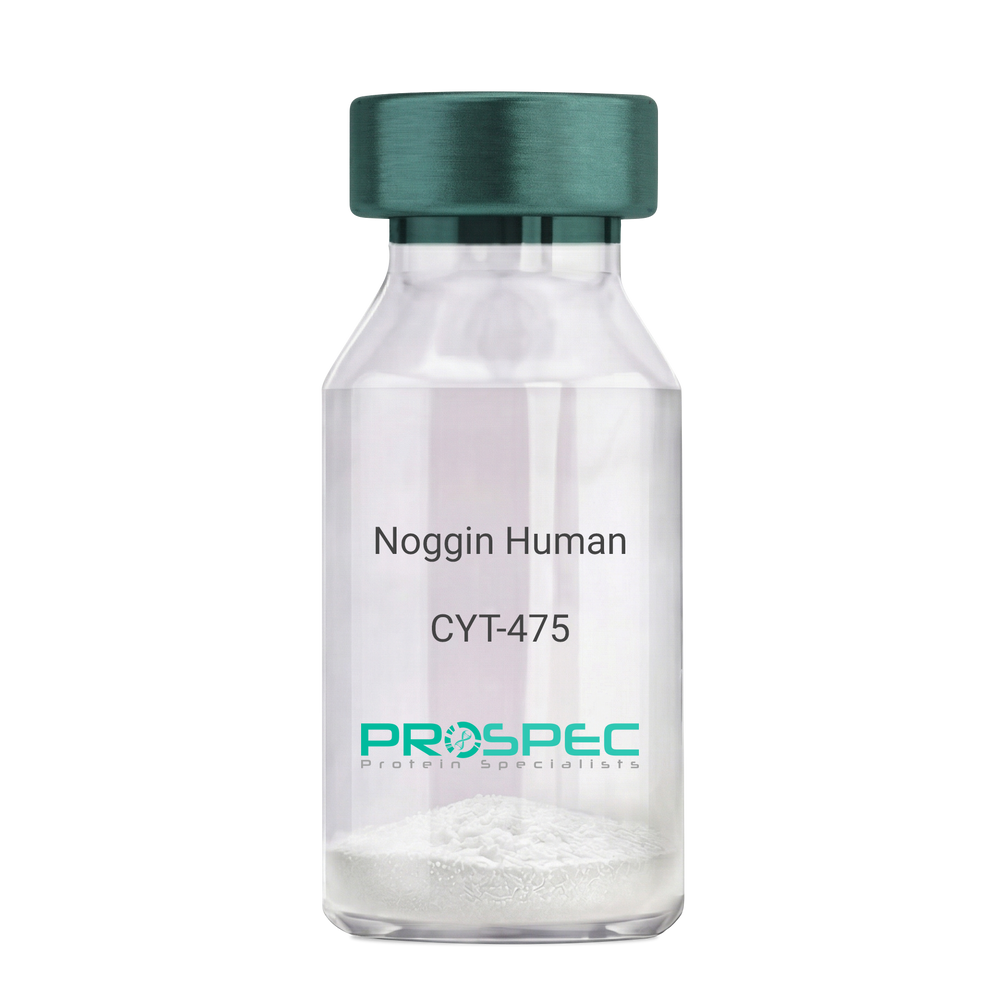
    Noggin Human

    Description:

    Noggin Human Recombinant

    SYM1, SYNS1, NOG.

    Product # :

    CYT-475

    Price :

    Quantity :

    Shipping Method :

    Room Temp Icon

    Shipped at Room temp

    Add To Cart

    More Info

    • description
    • source
    • formulation
    • purity
    • biological activity
    • More Info
    • Citations

    Description

    Noggin Human Recombinant produced in E.Coli is a non-glycosylated, non-disulfide-linked homodimer consisting of two 206 amino acid polypeptide chains, having a total molecular mass of approximately 46.3kDa. Noggin is purified by proprietary chromatographic techniques.

    Source

    Escherichia Coli.

    Formulation

    Lyophilized from a 0.2μm filtered solution in 30% CH3CN, 0.1% TFA.

    Purity

    Greater than 95.0% as determined by SDS-PAGE.

    Biological Activity

    The ED50 was determined by its ability to inhibit 5.0ng/ml of BMP-4 induced alkaline phosphatase production by murine ATDC-5 cells. The expected ED50 for this effect  is < 3ng/ml of Noggin, corresponding to a Specific Activity of 3.3x10⁵units/mg.

    Citations

    More Info

    • Introduction

      The secreted polypeptide noggin, encoded by the NOG gene, binds and inactivates members of the transforming growth factor-beta (TGF-beta) superfamily signaling proteins, such as bone morphogenetic protein-4 (BMP4). By diffusing through extracellular matrices more efficiently than members of the TGF-beta superfamily, noggin may have a principal role in creating morphogenic gradients. Noggin appears to have pleiotropic effect, both early in development as well as in later stages. It was originally isolated from Xenopus based on its ability to restore normal dorsal-ventral body axis in embryos that had been artificially ventralized by UV treatment. The results of the mouse knockout of noggin suggest that it is involved in numerous developmental processes, such as neural tube fusion and joint formation. Recently, several dominant human NOG mutations in unrelated families with proximal symphalangism (SYM1) and multiple synostoses syndrome (SYNS1) were identified; both SYM1 and SYNS1 have multiple joint fusion as their principal feature, and map to the same region (17q22) as NOG. All NOG mutations altered evolutionarily conserved amino acid residues. The amino acid sequence of human noggin is highly homologous to that of Xenopus, rat and mouse.

    • Synonyms

      SYM1, SYNS1, NOG.

    • Physical Appearance

      Sterile Filtered White lyophilized (freeze-dried) powder.

    • Stability

      Lyophilized Noggin although stable at room temperature for 3 weeks, should be stored desiccated below -18°C. Upon reconstitution Noggin should be stored at 4°C between 2-7 days and for future use below -18°C.For long term storage it is recommended to add a carrier protein (0.1% HSA or BSA).Please prevent freeze-thaw cycles.

    • Solubility

      It is recommended to be briefly centrifuged prior to opening to bring the contents to the bottom. Reconstitute in 10mM HCl to a concentration of 0.1-1.0 mg/ml. Further dilutions should be made in appropriate buffered solutions.

    • Amino Acid Sequence

      MQHYLHIRPAPSDNLPLVDLIEHPDPIFDPKEKDLNETLLRSLLGGHYDPGFMATSPP
      EDRPGGGGGAAGGAEDLAELDQLLRQRPSGAMPSEIKGLEFSEGLAQGKKQRLSKKLR
      RKLQMWLWSQTFCPVLYAWNDLGSRFWPRYVKVGSCFSKRSCSVPEGMVCKPSKSVHL
      TVLRWRCQRRGGQRCGWIPIQYPIISECKCSC.

    • Background

      Recombinant Human Noggin Growth Beta Factor: A Potent Inhibitor of Bone Morphogenetic Protein Signaling.

      Abstract:

      Recombinant human Noggin Growth Beta Factor (Noggin) is a highly conserved protein that acts as a potent antagonist of the Bone Morphogenetic Protein (BMP) signaling pathway.

      Noggin plays a critical role in embryonic development, tissue homeostasis, and disease processes.

      This research paper provides a comprehensive analysis of the molecular characteristics, signaling mechanisms, and diverse physiological functions of recombinant human Noggin.

      Additionally, it explores the therapeutic implications of Noggin in various disorders. Synonyms such as SYM1, SYNS1, and NOG associated with Noggin are discussed throughout the paper to highlight their relevance in scientific literature.

      Introduction:

      1. Recombinant human Noggin Growth Beta Factor (Noggin) is a protein with multifaceted roles in development, tissue homeostasis, and disease. This section introduces Noggin and its synonyms, including SYM1, SYNS1, and NOG, emphasizing their significance and relevance in scientific research.

      Molecular Characteristics of Noggin :

      1. This section explores the molecular characteristics of Noggin, including its primary amino acid sequence, protein structure, and post-translational modifications. The interactions of Noggin with BMPs and other regulatory molecules are also discussed, highlighting the importance of these interactions in modulating BMP signaling.

      Inhibition of BMP Signaling by Noggin:

      1. Noggin acts as a potent inhibitor of BMP signaling by binding to BMP ligands and preventing their interaction with BMP receptors. This section delves into the mechanisms through which Noggin interferes with BMP signaling, including competition for receptor binding and sequestration of BMPs in extracellular spaces. The implications of Noggin-mediated inhibition of BMP signaling in development and tissue homeostasis are also discussed.

      Physiological Functions of Noggin:

      1. Noggin plays critical roles in various physiological processes, including embryonic development, neurogenesis, skeletal development, and joint formation. This section provides an in-depth analysis of Noggin's contributions to these processes, highlighting its role in maintaining proper tissue patterning, cell fate determination, and morphogenesis.

      Therapeutic Implications of Noggin:

      1. The unique inhibitory properties of Noggin make it an attractive therapeutic candidate for various disorders. This section discusses the potential applications of Noggin in bone and joint diseases, neurological disorders, and cancer. Additionally, it explores the challenges and future prospects of utilizing Noggin as a therapeutic agent.

      Clinical Studies and Translational Research:

      1. This section reviews clinical studies and translational research involving Noggin, emphasizing its potential in regenerative medicine and tissue engineering. It highlights ongoing efforts to develop Noggin-based therapeutics and discusses the promising results observed in preclinical and clinical studies.

    ProSpec's products are furnished for LABORATORY RESEARCH USE ONLY. The product may not be used as drugs, agricultural or pesticidal products, food additives or household chemicals.

    Noggin Human
  • View Data Sheet

    Name :

    IL4 Rhesus Macaque

    Description:

    Interleukin-4 Rhesus Macaque Recombinant

    Interleukin-4, IL-4, B-cell stimulatory factor 1, BSF-1, Lymphocyte stimulatory factor 1, IL4.

    Product # :

    CYT-172

    Price :

    Quantity :

    Shipping Method :

    Room Temp Icon

    Shipped at Room temp

    Add To Cart

    More Info

    • description
    • source
    • formulation
    • purity
    • biological activity
    • More Info
    • Citations

    Description

    IL-4 Rhesus Macaque Recombinant produced in E.Coli is a single, non-glycosylated, polypeptide chain containing 129 amino acids and having a molecular mass of 14.9kDa.The IL4 Rhesus Macaque is purified by proprietary chromatographic techniques.

    Source

    Escherichia Coli.

    Formulation

    Lyophilized from a 0.2µm filtered concentrated solution in 1xPBS, pH 7.4.

    Purity

    Greater than 97.0% as determined by:
    (a) Analysis by RP-HPLC.
    (b) Analysis by SDS-PAGE.

    Biological Activity

    The ED50 as determined by the dose-dependent stimulation of TF1 cells is less than 0.2ng/ml, corresponding to a specific activity of >5.0×10⁶ IU/mg.

    Citations

    More Info

    • Introduction

      IL4 is a pleiotropic cytokine produced by activated T cells. IL4 is a ligand for interleukin 4 receptor. The interleukin 4 receptor also binds to IL13, which may contribute to many overlapping functions of this cytokine and IL13. STAT6, a signal transducer and activator of transcription, has been shown to play a central role in mediating the immune regulatory signal of this cytokine. This gene, IL3, IL5, IL13, and CSF2 form a cytokine gene cluster on chromosome 5q, with this gene particularly close to IL13. IL4, IL13 and IL5 are found to be regulated coordinately by several long-range regulatory elements in an over 120 kilobase range on the chromosome. Two alternatively spliced transcript variants of this gene encoding distinct isoforms have been reported.

    • Synonyms

      Interleukin-4, IL-4, B-cell stimulatory factor 1, BSF-1, Lymphocyte stimulatory factor 1, IL4.

    • Physical Appearance

      Sterile Filtered White lyophilized (freeze-dried) powder.

    • Stability

      Lyophilized Interleukin-4 although stable at room temperature for 3 weeks, should be stored desiccated below -18°C. Upon reconstitution IL4 should be stored at 4°C between 2-7 days and for future use below -18°C.Please prevent freeze-thaw cycles.

    • Solubility

      It is recommended to reconstitute the lyophilized Interleikin-4 in sterile 18MΩ-cm H2O not less than 100µg/ml, which can then be further diluted to other aqueous solutions.

    • Amino Acid Sequence

      HNCHIALREI IETLNSLTEQ KTLCTKLTIT DILAASKNTT EKETFCRAAT VLRQFYSHHE KDTRCLGATA QQFHRHKQLI RFLKRLDRNL WGLAGLNSCP VKEANQSTLE DFLERLKTIM REKYSKCSS.

    • Background

      What is the molecular weight/Mw of IL 4 RHESUS MACAQUE Protein?
      IL 4 RHESUS MACAQUE Protein has a total Mw of 14.9kDa.

      What is the source or expression system of IL 4 RHESUS MACAQUE Protein?
      Escherichia Coli.

      What is the Purity of IL 4 RHESUS MACAQUE Protein?
      IL 4 RHESUS MACAQUE Protein is >97% pure as determined by SDS-PAGE.

      What is the Biological Activity of IL 4 RHESUS MACAQUE Protein?
      The ED50 as determined by the dose-dependent stimulation of TF1 cells is less than 0.2ng/ml, corresponding to a specific activity of >5.0×10⁶ IU/mg.

      What is the amino acid sequence of IL 4 RHESUS MACAQUE Protein?
      HNCHIALREI IETLNSLTEQ KTLCTKLTIT DILAASKNTT EKETFCRAAT VLRQFYSHHE KDTRCLGATA QQFHRHKQLI RFLKRLDRNL WGLAGLNSCP VKEANQSTLE DFLERLKTIM REKYSKCSS.

      What applications can IL 4 RHESUS MACAQUE Protein be used in?
      IL 4 RHESUS MACAQUE Protein can probably be used in western blot, ELISA and Lateral Flow.

      What is the endotoxin level for IL 4 RHESUS MACAQUE Protein?
      The endotoxin level is minimal, IL 4 RHESUS MACAQUE Protein was purified using conventional chromatography techniques.

      Who supplies recombinant IL 4 RHESUS MACAQUE that is in stock and available to order?
      ProSpec has the protein in stock and available for immediate delivery.

      Where can I order bulk mg quantities of IL 4 RHESUS MACAQUE?
      ProSpec supplies bulk mg quantities at affordable prices that meets research and academic budgets.

    ProSpec's products are furnished for LABORATORY RESEARCH USE ONLY. The product may not be used as drugs, agricultural or pesticidal products, food additives or household chemicals.

    Il 4 Rhesus Macaque
  • View Data Sheet

    Name :

    HERV-K

    Description:

    Endogenous retrovirus K Envelope Human Recombinant

    Product # :

    HER-001

    Price :

    Quantity :

    Shipping Method :

    Ice Icon

    Shipped with Ice Packs

    Add To Cart

    More Info

    • description
    • source
    • formulation
    • purity
    • More Info
    • Citations

    Description

    The E.Coli derived HERV-K recombinant truncated protein is fused to a Six histidine tag at C-terminus and has a MW of 51.5kDa (pI 9.06).

    Source

    Escherichia Coli.

    Formulation

    10mM Tris-HCl, pH 7.2.

    Purity

    Protein is >90% pure as determined by SDS PAGE.

    Citations

    More Info

    • Introduction

      HERVK is related with several tumors such as passenger virus, and anti-Retroviral therapy against amyotrophic lateral sclerosis/ALS has exhibited to decrease the symptoms of amyotrophic lateral sclerosis/ALS. High counts of viral sequences exist in the human genome but stay silent. Though, in pathological conditions, these viruses are produced. Human Endogenous Retrovirus-K, is produced in neurons of a subpopulation of patients with amyotrophic lateral sclerosis/ALS, a progressive neurodegenerative disease. The envelope protein of this HERV results in degeneration of neurons, and transgenic animals producing this protein advance an ALS-like syndrome triggered by nucleolar dysfunction in motor neurons. Reactivation of the HERVK is controlled by the transcription factor TDP-43. Therefore, therapeutic tactics against this virus alter the course of the disease.

    • Physical Appearance

      Sterile Filtered clear solution.

    • Stability

      HERV-K although stable at 4°C for 1 week, should be stored below -18°C. Please prevent freeze thaw cycles.

    • Amino Acid Sequence

      MWTVPSFTND SYQVYNVFST NSFQLLTVKR TPHEAWRVPL TTKTNKTKGL PDCPKKPTNG PFIVTSILWD NCNAPKAVVL QTLAMGIVID WAPKGHYWQD CSSKNTLCSE FIYSLDYIEH GWQSYTMRQR VSPYPFKWMD TGIAPPRPKI IHPFFTPEHP ELWKLAAALS GIKIWNTTYQ LLRTKTKTPT FNITLISEWV IPIRSCVKPP YMLLVGNIIM MPDAQTIECH NCKLFTCIDA TFNPTTSILL VRAREGVWIP VSLHRPWESS PSIHIVNEVL KDILKRTKRF IFTLIAVLAG LLAVTATAAT AGVAIRSSVQ TAHYVEACQK NSSRLWNSQA QIDQKLANQI NDLRQSVTWL GDRVMNLQHR MQLQCDWNTS DYCITPYAYN QDQHSWENVS RHLKAWDDNL TLDISQLKEQIFEASQAHLS TVPGSHIFEG ITKQLPDFNP FKWLKPVRGS LLLLALLILV CLCCLLLVCRCL.

    • Applications

      Detection of Human Endogenious Retrovirus K in individuals is untested.

    ProSpec's products are furnished for LABORATORY RESEARCH USE ONLY. The product may not be used as drugs, agricultural or pesticidal products, food additives or household chemicals.

    Human Endogenous Retrovirus K
  • View Data Sheet

    Name :

    SAA4 Human

    Description:

    Serum Amyloid A4 Human Recombinant

    Serum amyloid A-4 protein, Constitutively expressed serum amyloid A protein, C-SAA, SAA4, CSAA.

    Product # :

    CYT-002

    Price :

    Quantity :

    Shipping Method :

    Ice Icon

    Shipped with Ice Packs

    Add To Cart

    More Info

    • description
    • source
    • formulation
    • purity
    • More Info
    • Citations

    Description

    SAA4 Human Recombinant fused with a 21 amino acid His tag at N-terminus produced in E.Coli is a single, non-glycosylated, polypeptide chain containing 131 amino acids (21-130 a.a.) and having a molecular mass of 14.9kDa. The SAA4 is purified by proprietary chromatographic techniques.

    Source

    Escherichia Coli.

    Formulation

    The SAA4 solution (0.5 mg/ml) contains 20mM Tris-HCl buffer (pH 8.0), 20% glycerol, 5mM DTT, 0.2M NaCl and 0.5mM EDTA.

    Purity

    Greater than 90.0% as determined by SDS-PAGE.

    Citations

    More Info

    • Introduction

      SAA4 is a constitutively expressed protein which is a member of the SAA family. SAA4 is a major acute phase reactant and an apolipoprotein of the HDL complex. SAA4 is constitutively expressed only in humans and mice; it is connected almost completely with lipoproteins of the high density range. The physiological function of SAA4 is unknown, and its serum concentration has no association with those of other major apolipoproteins. SAA4 mRNA and protein occurrence in macrophage derived foam cells of coronary and carotid arteries implied a specific role of human SAA4 during inflammation including atherosclerosis.

    • Synonyms

      Serum amyloid A-4 protein, Constitutively expressed serum amyloid A protein, C-SAA, SAA4, CSAA.

    • Physical Appearance

      Sterile Filtered colorless solution.

    • Stability

      Store at 4°C if entire vial will be used within 2-4 weeks. Store, frozen at -20°C for longer periods of time. For long term storage it is recommended to add a carrier protein (0.1% HSA or BSA).Avoid multiple freeze-thaw cycles.

    • Amino Acid Sequence

      MGSSHHHHHH SSGLVPRGSH MWRSFFKEAL QGVGDMGRAY WDIMISNHQN SNRYLYARGN YDAAQRGPGG VWAAKLISRS RVYLQGLIDY YLFGNSSTVL EDSKSNEKAE EWGRSGKDPD RFRPDGLPKK Y.

    ProSpec's products are furnished for LABORATORY RESEARCH USE ONLY. The product may not be used as drugs, agricultural or pesticidal products, food additives or household chemicals.

    Saa4 Human
  • View Data Sheet

    Name :

    IL4 Human, HEK

    Description:

    Interleukin-4 Human Recombinant, HEK

    BCGF, BCDF, B cell stimulating factor, BSF-1, Lymphocyte stimulatory factor 1, IL-4, MGC79402, Binetrakin, Pitrakinra.

    Product # :

    CYT-097

    Price :

    Quantity :

    Shipping Method :

    Room Temp Icon

    Shipped at Room temp

    Add To Cart

    More Info

    • description
    • source
    • formulation
    • purity
    • biological activity
    • More Info
    • Citations

    Description

    IL-4 Human Recombinant produced in HEK cells is a glycosylated monomer, having a molecular weight range of 14-19kDa due to glycosylation.The IL-4 is purified by proprietary chromatographic techniques.

    Source

    HEK.

    Formulation

    The IL-4 was lyophilized from a 0.2µm filtered protein solution (0.68mg/ml) in 1xPBS.

    Purity

    Greater than 95% as obsereved by SDS-PAGE.

    Biological Activity

    The activity was determined by the dose dependent stimulation of the proliferation of human TF-1 cells (human erythroleukemic indicator cell line) and was found to be 0.17ng/ml.

    Citations

    More Info

    • Introduction

      IL4 is a pleiotropic cytokine produced by activated T cells. IL4 is a ligand for interleukin 4 receptor. The interleukin 4 receptor also binds to IL13, which may contribute to many overlapping functions of this cytokine and IL13. STAT6, a signal transducer and activator of transcription, has been shown to play a central role in mediating the immune regulatory signal of this cytokine. This gene, IL3, IL5, IL13, and CSF2 form a cytokine gene cluster on chromosome 5q, with this gene particularly close to IL13. IL4, IL13 and IL5 are found to be regulated coordinately by several long-range regulatory elements in an over 120 kilobase range on the chromosome. Two alternatively spliced transcript variants of this gene encoding distinct isoforms have been reported.

    • Synonyms

      BCGF, BCDF, B cell stimulating factor, BSF-1, Lymphocyte stimulatory factor 1, IL-4, MGC79402, Binetrakin, Pitrakinra.

    • Physical Appearance

      Sterile Filtered White lyophilized (freeze-dried) powder.

    • Stability

      Lyophilized IL-4 although stable at room temperature for 3 weeks, should be stored desiccated below -18°C. Upon reconstitution IL4 should be stored at 4°C between 2-7 days and for future use below -18°C.For long term storage it is recommended to add a carrier protein (0.1% HSA or BSA).Please prevent freeze-thaw cycles.

    • Solubility

      It is recommended to reconstitute the lyophilized IL-4 in sterile 1xPBS containing 0.1% endotoxin-free recombinant HSA.

    • Background

      What is the molecular weight/Mw of IL 4 HUMAN, HEK Protein?
      IL 4 HUMAN, HEK Protein has a total Mw of 16.5kDa.

      What is the source or expression system of IL 4 HUMAN, HEK Protein?
      HEK.

      What is the Purity of IL 4 HUMAN, HEK Protein?
      IL 4 HUMAN, HEK Protein is >95% pure as determined by SDS-PAGE.

      What is the Biological Activity of IL 4 HUMAN, HEK Protein?
      The activity was determined by the dose dependent stimulation of the proliferation of human TF-1 cells (human erythroleukemic indicator cell line) and was found to be 0.17ng/ml.

      What applications can IL 4 HUMAN, HEK Protein be used in?
      IL 4 HUMAN, HEK Protein can probably be used in western blot, ELISA and Lateral Flow.

      What is the endotoxin level for IL 4 HUMAN, HEK Protein?
      The endotoxin level is minimal, IL 4 HUMAN, HEK Protein was purified using conventional chromatography techniques.

      Who supplies recombinant IL 4 HUMAN, HEK that is in stock and available to order?
      ProSpec has the protein in stock and available for immediate delivery.

      Where can I order bulk mg quantities of IL 4 HUMAN, HEK?
      ProSpec supplies bulk mg quantities at affordable prices that meets research and academic budgets.

    ProSpec's products are furnished for LABORATORY RESEARCH USE ONLY. The product may not be used as drugs, agricultural or pesticidal products, food additives or household chemicals.

    Il 4 Human Hek
  • View Data Sheet

    Name :

    NRG1 (HRG-beta3) Antibody

    Description:

    Neuregulin1 isoform HRG-beta3, Mouse Anti Human

    Product # :

    ANT-458

    Price :

    Quantity :

    Shipping Method :

    Ice Icon

    Shipped with Ice Packs

    Add To Cart

    More Info

    • formulation
    • More Info
    • Citations

    Formulation

    1mg/ml containing PBS, pH-7.4, & 0.1% Sodium Azide.

    Citations

    More Info

    • Introduction

      NRG1 is one of 4 proteins in the neuregulin family which act on the EGFR family of receptors. NRG1 was initially identified as a 44kDa glycoprotein that interacts with the ERBB2 receptor tyrosine kinase to increase its phosphorylation on tyrosine residues. In various brain areas, NRG1 is expressed at synaptic regions and its processing can be regulated by neuronal activity. The HRG-beta3variant of NRG1, along with HRG-alpha, beta1 and beta2 variants, was identified in various normal tissues and cancer cell lines.

    • Immunogen

      Anti-human NRG1 mAb is derived from hybridization of mouse F0 myeloma cells with spleen cells from BALB/c mice immunized with recombinant human NRG1 amino acids 20-241 purified from E. coli.

    • Ig Subclass

      Mouse IgG1 heavy chain and κ light chain.

    • Clone

      Pk1G13AT.

    • Applications

      NRG1 antibody has been tested by ELISA and Western blot analysis to assure specificity and reactivity. Since application varies, however, each investigation should be titrated by the reagent to obtain optimal results. Recommended dilution range for Western blot analysis is 1:1,000 ~ 2,000. Recommended starting dilution is 1:1,000.

    • Type

      Mouse Anti Human Monoclonal.

    • Storage Procedures

      For periods up to 1 month store at 4°C, for longer periods of time, store at -20°C. Prevent freeze thaw cycles.

    • Purification Method

      NRG1 antibody was purified from mouse ascitic fluids by protein-G affinity chromatography.

    ProSpec's products are furnished for LABORATORY RESEARCH USE ONLY. The product may not be used as drugs, agricultural or pesticidal products, food additives or household chemicals.

    Nrg1 Hrg Beta3 Antibody
  • View Data Sheet

    Name :

    PNPLA2 Antibody

    Description:

    Patatin-like phospholipase domain-containing protein 2, Mouse Anti Human

    Patatin-like phospholipase domain-containing protein 2, Adipose triglyceride lipase, Desnutrin Transport-secretion protein 2, TTS2.2, Calcium-independent phospholipase A2, IPLA2-zeta Pigment epithelium-derived factor, TTS2, PNPLA2, ATGL, PEDF-R, FP17548, TTS-2.2, DKFZp667M109, 1110001C14Rik.

    Product # :

    ANT-684

    Price :

    Quantity :

    Shipping Method :

    Ice Icon

    Shipped with Ice Packs

    Add To Cart

    More Info

    • formulation
    • More Info
    • Citations

    Formulation

    1mg/ml containing PBS, pH-7.4, 10% Glycerol and 0.02% Sodium Azide.

    Citations

    More Info

    • Introduction

      PNPLA2 is an enzyme which catalyzes the first step in the hydrolysis of triglycerides in adipose tissue. Mutations in the PNPLA2 gene are linked to neutral lipid storage disease with myopathy.

    • Synonyms

      Patatin-like phospholipase domain-containing protein 2, Adipose triglyceride lipase, Desnutrin Transport-secretion protein 2, TTS2.2, Calcium-independent phospholipase A2, IPLA2-zeta Pigment epithelium-derived factor, TTS2, PNPLA2, ATGL, PEDF-R, FP17548, TTS-2.2, DKFZp667M109, 1110001C14Rik.

    • Physical Appearance

      Sterile filtered colorless solution.

    • Immunogen

      Anti-human PNPLA2 mAb, is derived from hybridization of mouse F0 myeloma cells with spleen cells from BALB/c mice immunized with a recombinant human PNPLA2 protein 30-504 amino acids purified from E. coli.

    • Ig Subclass

      Mouse IgG2b heavy chain and k light chain.

    • Clone

      PAT18E6AT.

    • Applications

      PNPLA2 antibody has been tested by ELISA, Western blot analysis, Flow cytometry and ICC/IF to assure specificity and reactivity. Since application varies, however, each investigation should be titrated by the reagent to obtain optimal results.

    • Type

      Mouse Anti Human Monoclonal.

    • Storage Procedures

      For periods up to 1 month store at 4°C, for longer periods of time, store at -20°C. Prevent freeze thaw cycles.

    • Purification Method

      PNPLA2 antibody was purified from mouse ascitic fluids by protein-A affinity chromatography.

    ProSpec's products are furnished for LABORATORY RESEARCH USE ONLY. The product may not be used as drugs, agricultural or pesticidal products, food additives or household chemicals.

    Pnpla2 Pat18E6At Antibody
  • View Data Sheet

    Name :

    GPD1L Human

    Description:

    Glycerol-3-Phosphate Dehydrogenase 1 Like Human Recombinant

    Glycerol-3-phosphate dehydrogenase 1-like protein, GPD1-L, GPD1L, KIAA0089.

    Product # :

    ENZ-171

    Price :

    Quantity :

    Shipping Method :

    Ice Icon

    Shipped with Ice Packs

    Add To Cart

    More Info

    • description
    • source
    • formulation
    • purity
    • More Info
    • Citations

    Description

    GPD1L Human Recombinant produced in E.Coli is a single, non-glycosylated polypeptide chain containing 371 amino acids (1-351 a.a.) and having a molecular mass of 40.6kDa.GPD1L is fused to a 20 amino acid His-tag at N-terminus & purified by proprietary chromatographic techniques.

    Source

    Escherichia Coli.

    Formulation

    GPD1L protein solution (1mg/ml) containing 20mM Tris-HCl buffer (pH8.0), 20% glycerol and 1mM DTT.

    Purity

    Greater than 95.0% as determined by SDS-PAGE.

    Citations

    More Info

    • Introduction

      Glycerol-3-phosphate dehydrogenase 1-like protein (GPD1L) converts sn-glycerol 3-phosphate to glycerone phosphate. GPD1L is found in the cytoplasm, associated with the plasma membrane, where it binds the sodium channel, voltage-gated, type V, alpha subunit (SCN5A). Mutations in the GPD1L gene are the cause of SIDS (sudden infant death syndrome) and Brugada syndrome type 2 (an autosomal dominant tachyarrhythmia).

    • Synonyms

      Glycerol-3-phosphate dehydrogenase 1-like protein, GPD1-L, GPD1L, KIAA0089.

    • Physical Appearance

      Sterile Filtered colorless solution.

    • Stability

      Store at 4°C if entire vial will be used within 2-4 weeks. Store, frozen at -20°C for longer periods of time. For long term storage it is recommended to add a carrier protein (0.1% HSA or BSA).Avoid multiple freeze-thaw cycles.

    • Amino Acid Sequence

      MGSSHHHHHH SSGLVPRGSH MAAAPLKVCI VGSGNWGSAV AKIIGNNVKK LQKFASTVKM WVFEETVNGR KLTDIINNDH ENVKYLPGHK LPENVVAMSN LSEAVQDADL LVFVIPHQFI HRICDEITGR VPKKALGITL IKGIDEGPEG LKLISDIIRE KMGIDISVLM GANIANEVAA EKFCETTIGS KVMENGLLFK ELLQTPNFRI TVVDDADTVE LCGALKNIVA VGAGFCDGLR CGDNTKAAVI RLGLMEMIAF ARIFCKGQVS TATFLESCGV ADLITTCYGG RNRRVAEAFA RTGKTIEELE KEMLNGQKLQ GPQTSAEVYR ILKQKGLLDK FPLFTAVYQI CYESRPVQEM LSCLQSHPEH T.

    ProSpec's products are furnished for LABORATORY RESEARCH USE ONLY. The product may not be used as drugs, agricultural or pesticidal products, food additives or household chemicals.

    Gpd1L Human
  • View Data Sheet

    Name :

    VAMP1 Human

    Description:

    Synaptobrevin-1 Human Recombinant

    Vesicle-associated membrane protein 1, SYB1, VAMP-1, Synaptobrevin-1, VAMP1, DKFZp686H12131.

    Product # :

    PRO-577

    Price :

    Quantity :

    Shipping Method :

    Ice Icon

    Shipped with Ice Packs

    Add To Cart

    More Info

    • description
    • source
    • formulation
    • purity
    • More Info
    • Citations

    Description

    VAMP1 Human Recombinant produced in E.Coli is a single, non-glycosylated polypeptide chain containing 111 amino acids (1-91) and having a molecular mass of 11.9 kDa. The VAMP-1 contains 20 amino acids His-Tag fused at N-terminus and purified by standard chromatography techniques.

    Source

    Escherichia Coli.

    Formulation

    The protein solution (1mg/ml) contains 1X PBS and 1mM EDTA.

    Purity

    Greater than 95.0% as determined by SDS-PAGE.

    Citations

    More Info

    • Introduction

      Synaptobrevin 1(Vehicle-associated membrane, VAMP1) is one of the key proteins in the SNARE complex which is involved in regulated exocytosis. Synaptobrevin1 binds to t-SNAREs, syntaxin (STX) and SNAP25, after the fusion of synaptic vesicles to plasma membrane.

    • Synonyms

      Vesicle-associated membrane protein 1, SYB1, VAMP-1, Synaptobrevin-1, VAMP1, DKFZp686H12131.

    • Physical Appearance

      Sterile Filtered colorless solution.

    • Stability

      Store at 4°C if entire vial will be used within 2-4 weeks. Store, frozen at -20°C for longer periods of time. For long term storage it is recommended to add a carrier protein (0.1% HSA or BSA).Avoid multiple freeze-thaw cycles.

    • Amino Acid Sequence

      MGSSHHHHHH SSGLVPRGSH MSAPAQPPAE GTEGTAPGGG PPGPPPNMTS NRRLQQTQAQVEEVVDIIRV NVDKVLERDQ KLSELDDRAD ALQAGASQFE SSAAKLKRKY W.

    ProSpec's products are furnished for LABORATORY RESEARCH USE ONLY. The product may not be used as drugs, agricultural or pesticidal products, food additives or household chemicals.

    Vamp1 Human
  • View Data Sheet

    Name :

    FABP9 Antibody

    Description:

    Fatty Acid Binding Protein-9, Mouse Anti Human

    Fatty acid-binding protein 9, Testis lipid-binding protein, TLBP, Testis-type fatty acid-binding protein, T-FABP, FABP9, PERF, PERF15.

    Product # :

    ANT-523

    Price :

    Quantity :

    Shipping Method :

    Ice Icon

    Shipped with Ice Packs

    Add To Cart

    More Info

    • formulation
    • More Info
    • Citations

    Formulation

    1mg/ml containing PBS, pH-7.4, 10% Glycerol and 0.02% Sodium Azide.

    Citations

    More Info

    • Introduction

      Fatty acid binding protein 9 (FABP9) belongs to the fatty acid-binding proteins (FABPs) which are a family of small, extremely conserved, cytoplasmic proteins to bind long-chain fatty acids and other hydrophobic ligands. FABP9 is found in midpachytene spermatocytes and round spermatids, and comprises part of the perinuclear theca. FABP9 probably links intracellular membranes and signals abnormal sperm formation during spermatogenesis.

    • Synonyms

      Fatty acid-binding protein 9, Testis lipid-binding protein, TLBP, Testis-type fatty acid-binding protein, T-FABP, FABP9, PERF, PERF15.

    • Physical Appearance

      Sterile filtered colorless solution.

    • Immunogen

      Anti-human FABP9 mAb, clone PAT13F9AT, is derived from hybridization of mouse F0 myeloma cells with spleen cells from BALB/c mice immunized with a recombinant human FABP9 protein 1-132 amino acids purified from E. coli.

    • Ig Subclass

      Mouse IgG1 heavy chain and k light chain.

    • Clone

      PAT13F9AT.

    • Applications

      The antibody has been tested by ELISA, Western blot analysis to assure specificity and reactivity. Since application varies, however, each investigation should be titrated by the reagent to obtain optimal results. Recommended starting dilution is 1:1000.

    • Type

      Mouse Anti Human Monoclonal.

    • Storage Procedures

      For periods up to 1 month store at 4°C, for longer periods of time, store at -20°C. Prevent freeze thaw cycles.

    • Purification Method

      FABP9 antibody was purified from mouse ascitic fluids by protein-A affinity chromatography.

    ProSpec's products are furnished for LABORATORY RESEARCH USE ONLY. The product may not be used as drugs, agricultural or pesticidal products, food additives or household chemicals.

    Fabp9 Antibody
  • View Data Sheet

    Name :

    MAT2B Human

    Description:

    Methionine Adenosyltransferase II Beta Human Recombinant

    MAT2-beta, MAT-2B, MAT2-B, DTDP-4-keto-6-deoxy-D-glucose 4-reductase, MAT-II, MATIIbeta, MAT II beta, Methionine adenosyltransferase 2 subunit beta, Methionine adenosyltransferase II beta, MGC12237, MSTP045, Nbla02999, SDR23E1, TGR, UNQ2435/PRO4995, MAT2B.

    Product # :

    ENZ-461

    Price :

    Quantity :

    Shipping Method :

    Ice Icon

    Shipped with Ice Packs

    Add To Cart

    More Info

    • description
    • source
    • formulation
    • purity
    • More Info
    • Citations

    Description

    Recombinant Human MAT2B produced in E.Coli is a single, non-glycosylated polypeptide chain containing 323 amino acids (1-323 a.a) and having a molecular mass of 36.4 kDa. MAT2B is is purified by conventional chromatography techniques.

    Source

    Escherichia Coli.

    Formulation

    The MAT2B protein solution contains 20mM Tris-HCl, pH-8, 1mM DTT, 1mM EDTA and 10% Glycerol.

    Purity

    Greater than 90.0% as determined by SDS-PAGE.

    Citations

    More Info

    • Introduction

      MAT2B is part of the methionine adenosyltransferase family. MAT2B catalyzes the biosynthesis of S-adenosylmethionine from methionine and ATP. MAT2B is the regulatory beta subunit of MAT. MAT2B expression in hepatoma cell lines increases DNA synthesis and thus take part in cell proliferation.

    • Synonyms

      MAT2-beta, MAT-2B, MAT2-B, DTDP-4-keto-6-deoxy-D-glucose 4-reductase, MAT-II, MATIIbeta, MAT II beta, Methionine adenosyltransferase 2 subunit beta, Methionine adenosyltransferase II beta, MGC12237, MSTP045, Nbla02999, SDR23E1, TGR, UNQ2435/PRO4995, MAT2B.

    • Physical Appearance

      Sterile filtered colorless solution.

    • Stability

      Store at 4°C if entire vial will be used within 2-4 weeks. Store, frozen at -20°C for longer periods of time. For long term storage it is recommended to add a carrier protein (0.1% HSA or BSA). Avoid multiple freeze-thaw cycles.

    • Amino Acid Sequence

      MPEMPEDMEQ EEVNIPNRRV LVTGATGLLG RAVHKEFQQN NWHAVGCGFR RARPKFEQVN LLDSNAVHHI IHDFQPHVIV HCAAERRPDV VENQPDAASQ LNVDASGNLA KEAAAVGAFL IYISSDYVFD GTNPPYREED IPAPLNLYGK TKLDGEKAVL ENNLGAAVLR IPILYGEVEK LEESAVTVMF DKVQFSNKSA NMDHWQQRFP THVKDVATVC RQLAEKRMLD PSIKGTFHWS GNEQMTKYEM ACAIADAFNL PSSHLRPITD SPVLGAQRPR NTQLDCSKLE TLGIGQRTPF RIGIKESLWP FLIDKRWRQT VFH.

    ProSpec's products are furnished for LABORATORY RESEARCH USE ONLY. The product may not be used as drugs, agricultural or pesticidal products, food additives or household chemicals.

    Mat2B Human
  • View Data Sheet

    Name :

    PGAM1 Antibody

    Description:

    Phosphoglycerate Mutase 1, Mouse Anti Human

    Phosphoglycerate mutase isozyme B, PGAM-B, PGAMA.

    Product # :

    ANT-577

    Price :

    Quantity :

    Shipping Method :

    Ice Icon

    Shipped with Ice Packs

    Add To Cart

    More Info

    • formulation
    • More Info
    • Citations

    Formulation

    1mg/ml containing PBS, pH-7.4, 10% Glycerol and 0.02% Sodium Azide.

    Citations

    More Info

    • Introduction

      PGAM1 is part of the phosphoglycerate mutase family. PGAM1 is an essential component of glucose and 2,3-BPGA (2,3-bisphosphoglycerate) metabolism and catalyzes the reversible reaction of 3-phosphoglycerate (3-PGA) to 2-phosphoglycerate (2-PGA) in the glycolytic pathway. PGAM1 is a dimeric enzyme containing, in different tissues, different proportions of a slow-migrating muscle (MM) isozyme, a fast-migrating brain (BB) isozyme, and a hybrid form (MB). PGAM1 mutations lead to muscle phosphoglycerate mutase deficiency, a.k.a. glycogen storage disease X.

    • Synonyms

      Phosphoglycerate mutase isozyme B, PGAM-B, PGAMA.

    • Physical Appearance

      Sterile filtered colorless solution.

    • Immunogen

      Anti-human PGAM1 mAb, is derived from hybridization of mouse F0 myeloma cells with spleen cells from BALB/c mice immunized with recombinant human PGAM1 amino acids 1-254 purified from E. coli.

    • Ig Subclass

      Mouse IgG2a heavy chain and l light chain.

    • Clone

      PAT1G4AT.

    • Applications

      PGAM1 antibody has been tested by ELISA, Western blot analysis, ICC/IF and Flow cytometry to assure specificity and reactivity. Since application varies, however, each investigation should be titrated by the reagent to obtain optimal results.

    • Type

      Mouse Anti Human Monoclonal.

    • Storage Procedures

      For periods up to 1 month store at 4°C, for longer periods of time, store at -20°C. Prevent freeze thaw cycles.

    • Purification Method

      PGAM1 antibody was purified from mouse ascitic fluids by protein-A affinity chromatography.

    ProSpec's products are furnished for LABORATORY RESEARCH USE ONLY. The product may not be used as drugs, agricultural or pesticidal products, food additives or household chemicals.

    Pgam1 Antibody
  • View Data Sheet

    Name :

    GroEL Antibody

    Description:

    GroEL (HSP60), Mouse Anti Human

    CPN60, GROEL, HSP60, HSP65, SPG13, CHA60, GROL, crpA, mopA, 60 kDa heat shock protein mitochondrial, Heat shock protein 60, HSP-60, 60 kDa chaperonin, Chaperonin 60, Mitochondrial matrix protein P1, P60 lymphocyte protein, HuCHA60, HSPD1.

    Product # :

    ANT-327

    Price :

    Quantity :

    Shipping Method :

    Ice Icon

    Shipped with Ice Packs

    Add To Cart

    More Info

    • formulation
    • More Info
    • Citations

    Formulation

    1mg/ml containing PBS, pH-7.4, & 0.1% Sodium Azide.

    Citations

    More Info

    • Introduction

      GroEL, HSP60 is a chaperonin located in the mitochondria which is responsible for the transportation & refolding of proteins from the cytoplasm directly into the mitochondrial matrix. GroEL is regulated by the HSP10 cochaperonin, which is a single heptameric protein ring having a molecular mass of 10 kDa which form a unique complex with HSP60. HSP10, GroES coordinates the ATPase activity of the HSP60 subunits in order to allow the release of bound polypeptide in a manner that is productive for its correct folding.

    • Synonyms

      CPN60, GROEL, HSP60, HSP65, SPG13, CHA60, GROL, crpA, mopA, 60 kDa heat shock protein mitochondrial, Heat shock protein 60, HSP-60, 60 kDa chaperonin, Chaperonin 60, Mitochondrial matrix protein P1, P60 lymphocyte protein, HuCHA60, HSPD1.

    • Physical Appearance

      Sterile Filtered solution.

    • Immunogen

      Anti-human GroEL mAb, is derived from hybridization of mouse F0 myeloma cells with spleen cells from BALB/c mice immunized with recombinant human GroEL amino acids 1-573 purified from E. coli.

    • Ig Subclass

      Mouse IgG1 heavy chain and κ light chain.

    • Clone

      P2E4AT.

    • Applications

      GroEL antibody has been tested by ELISA, Western blot and immunohistochemistry analysis to assure specificity and reactivity. Since application varies, however, each investigation should be titrated by the reagent to obtain optimal results. Recommended dilution range for Western blot is 1:1,000 ~ 1:2,000 and immunohistochemistry analysis is 1:50~100. Recommended starting dilution for Western blot is 1:1,000 and Immunohistochemistry is 1:50.

    • Type

      Mouse Anti Human Monoclonal.

    • Storage Procedures

      For periods up to 1 month store at 4°C, for longer periods of time, store at -20°C. Prevent freeze thaw cycles.

    • Purification Method

      GroEL antibody was purified from mouse ascitic fluids by protein-G affinity chromatography.

    ProSpec's products are furnished for LABORATORY RESEARCH USE ONLY. The product may not be used as drugs, agricultural or pesticidal products, food additives or household chemicals.

    Groel Antibody
  • View Data Sheet

    Name :

    SCF Rat

    Description:

    Stem Cell Factor Rat Recombinant

    Kit ligand Precursor, C-kit ligand, SCF, Mast cell growth factor, MGF, SF, KL-1, Kitl, DKFZp686F2250, Hematopoietic growth factor KL.

    Product # :

    CYT-323

    Price :

    Quantity :

    Shipping Method :

    Room Temp Icon

    Shipped at Room temp

    Add To Cart

    More Info

    • description
    • source
    • formulation
    • purity
    • biological activity
    • More Info
    • Citations

    Description

    Stem cell factor Rat Recombinant produced in E.Coli is a single, non-glycosylated polypeptide chain containing 164 amino acids (26-189) and having a molecular mass of 18.4 kDa.The Rat SCF is purified by proprietary chromatographic techniques.

    Source

    Escherichia Coli.

    Formulation

    Lyophilized from a concentrated (1mg/ml) solution in water containing 0.02% NaHCO3.

    Purity

    Greater than 98.0% as determined by:
    (a) Analysis by SEC-HPLC.
    (b) Analysis by SDS-PAGE.

    Biological Activity

    The ED50 is determined by the dose-dependant stimulation of the proliferation of human TF-1 cells which is < 10 ng/ml, corresponding to a specific activity of 100,000units/mg.

    Citations

    More Info

    • Introduction

      Stem cell factor / KIT ligand (SCF) is a cytokine which binds CD117 (c-Kit). SCF is also known as "steel factor" or "c-kit ligand". SCF exists in two forms, cell surface bound SCF and soluble (or free) SCF. Soluble SCF is produced by the cleavage of surface bound SCF by metalloproteases.
      SCF is a growth factor important for the survival, proliferation, and differentiation of hematopoietic stem cells and other hematopoietic progenitor cells. One of its roles is to change the BFU-E (burst-forming unit-erythroid) cells, which are the earliest erythrocyte precursors in the erythrocytic series, into the CFU-E (colony-forming unit-erythroid).

    • Synonyms

      Kit ligand Precursor, C-kit ligand, SCF, Mast cell growth factor, MGF, SF, KL-1, Kitl, DKFZp686F2250, Hematopoietic growth factor KL.

    • Physical Appearance

      Sterile Filtered White lyophilized (freeze-dried) powder.

    • Stability

      Lyophilized rat SCF although stable at room temperature for 3 weeks, should be stored desiccated below -18°C. Upon reconstitution SCF should be stored at 4°C between 2-7 days and for future use below -18°C.For long term storage it is recommended to add a carrier protein (0.1% HSA or BSA).Please prevent freeze-thaw cycles.

    • Solubility

      It is recommended to reconstitute the lyophilized SCF in sterile 18MΩ-cm H2O not less than 100µg/ml, which can then be further diluted to other aqueous solutions.

    • Amino Acid Sequence

      MQEICRNPVT DNVKDITKLV ANLPNDYMIT LNYVAGMDVL PSHCWLRDMV THLSVSLTTL LDKFSNISEG LSNYSIIDKL GKIVDDLVAC MEENAPKNVK ESLKKPETRN FTPEEFFSIF NRSIDAFKDF MVASDTSDCV LSSTLGPEKD SRVSVTKPFM LPPVA.

    ProSpec's products are furnished for LABORATORY RESEARCH USE ONLY. The product may not be used as drugs, agricultural or pesticidal products, food additives or household chemicals.

    Scf Rat
  • View Data Sheet

    Name :

    UBE2W Human

    Description:

    Ubiquitin Conjugating Enzyme E2W Human Recombinant

    Probable ubiquitin-conjugating enzyme E2 W, Ubiquitin carrier protein W, Ubiquitin-protein ligase W, UBE2W, hUBC-16, FLJ11011.

    Product # :

    ENZ-117

    Price :

    Quantity :

    Shipping Method :

    Ice Icon

    Shipped with Ice Packs

    Add To Cart

    More Info

    • description
    • source
    • formulation
    • purity
    • More Info
    • Citations

    Description

    UBE2W produced in E.Coli is a single, non-glycosylated polypeptide chain containing 171 amino acids (1-151 a.a.) and having a molecular mass of 19.5kDa.UBE2W is fused to a 20 amino acid His-tag at N-terminus & purified by proprietary chromatographic techniques.

    Source

    Escherichia Coli.

    Formulation

    UBE2W solution (1mg/ml) containing 20mM Tris-HCl buffer (pH 8.0), 10% glycerol, 2mM DTT and 0.1M NaCl.

    Purity

    Greater than 90.0% as determined by SDS-PAGE.

    Citations

    More Info

    • Introduction

      UBE2W receives ubiquitin from the E1 complex and catalyzes its covalent attachment to other proteins. In vitro, UBE2W catalyzes monoubiquitination and 'Lys-11'-linked polyubiquitination. UBE2W is broadly expressed, particularly at highest levels in the testis.

    • Synonyms

      Probable ubiquitin-conjugating enzyme E2 W, Ubiquitin carrier protein W, Ubiquitin-protein ligase W, UBE2W, hUBC-16, FLJ11011.

    • Physical Appearance

      Sterile filtered colorless solution.

    • Stability

      UBE2W Human Recombinant although stable at 4°C for 1 week, should be stored below -18°C. Please prevent freeze thaw cycles.

    • Amino Acid Sequence

      MGSSHHHHHH SSGLVPRGSH MASMQKRLQK ELLALQNDPP PGMTLNEKSV QNSITQWIVD MEGAPGTLYE GEKFQLLFKF SSRYPFDSPQ VMFTGENIPV HPHVYSNGHI CLSILTEDWS PALSVQSVCL SIISMLSSCK EKRRPPDNSF YVRTCNKNPK KTKWWYHDDT C.

    ProSpec's products are furnished for LABORATORY RESEARCH USE ONLY. The product may not be used as drugs, agricultural or pesticidal products, food additives or household chemicals.

    Ube2W Human
  • View Data Sheet

    Name :

    GH Antibody

    Description:

    Growth Hormone, Mouse Anti Human

    GH1, GH, GHN, GH-N, hGH-N, Pituitary growth hormone, Growth hormone 1, Somatotropin.

    Product # :

    ANT-197

    Price :

    Quantity :

    Shipping Method :

    Room Temp Icon

    Shipped at Room temp

    Add To Cart

    More Info

    • formulation
    • More Info
    • Citations

    Formulation

    1mg/ml in PBS (after reconstitution).

    Citations

    More Info

    • Introduction

      GH is a member of the somatotropin/prolactin family of hormones which play an important role in growth control. The gene, along with four other related genes, is located at the growth hormone locus on chromosome 17 where they are interspersed in the same transcriptional orientation; an arrangement which is thought to have evolved by a series of gene duplications. The five genes share a remarkably high degree of sequence identity. Alternative splicing generates additional isoforms of each of the five growth hormones, leading to further diversity and potential for specialization. This particular family member is expressed in the pituitary but not in placental tissue as is the case for the other four genes in the growth hormone locus. Mutations in or deletions of the gene lead to growth hormone deficiency and short stature.

    • Synonyms

      GH1, GH, GHN, GH-N, hGH-N, Pituitary growth hormone, Growth hormone 1, Somatotropin.

    • Solubility

      Reconstitute with sterile H20. Mix gently, wash the sides of the vial and wait 30-60 seconds before use.

    • Immunogen

      r.Human Growth Hormone.

    • Ig Subclass

      Mouse IgG1.

    • Clone

      NYRhGH.

    • Applications

      Direct ELISA, Western Blot, Immuneprecipitation.

    • Titer

      By direct ELISA, 1:10,000 dilution will yield 0.5 O.D using alkaline phosphatase conjugated rabbit anti-mouse Ig (Jackson Laboratories).

    • Shipping Conditions

      Antibody is shipped lyophilized at ambient temperature.

    • Type

      Mouse Anti Human Monoclonal.

    • Storage Procedures

      In lyophilized form, for long periods, store at 4C in a dry environment. After reconstitution, if not intended for use within a month, aliquot and store at -20C.

    • Purification Method

      Ion exchange.

    ProSpec's products are furnished for LABORATORY RESEARCH USE ONLY. The product may not be used as drugs, agricultural or pesticidal products, food additives or household chemicals.

    Growth Hormone Human Antibody
  • 1
  • …
  • 16
  • 17
  • 18
  • 19
  • 20
Your browser does not support the video tag.

Products

  • Cytokines
  • Growth Factors
  • Chemokines
  • CD Antigens
  • Neurotrophins
  • Hormones
  • Enzymes
  • Viral Antigens
  • Recombinant Proteins
  • Natural Proteins
  • Monoclonal Antibodies
  • Polyclonal Antibodies
  • Thermal Packaging

About

  • Company
  • Founder
  • Contribution
  • Contact Us
  • My Account

Ordering

  • Ordering Method
  • Ordering - Credit Card
  • Ordering PO
  • Shipping Fees
  • FAQ's

Legal

  • Terms & Conditions
  • Privacy
  • Site Map
  • info@prospecbio.com
  • Facebook
  • Instagram
  • Linkedin Profile

© 2026 ProSpec-Tany TechnoGene Ltd. All Rights Reserved.

  • Choosing a selection results in a full page refresh.
  • Opens in a new window.