Skip to content

High-quality research proteins.

  • 1-800-805-6531

  • Mon - Sat 8.00-18.00, Sun - Closed

  • info@prospecbio.com

  • PO Box 6591 East Brunswick NJ 08816

  • Products
    • Cytokines
    • Growth factors
    • Chemokines
    • Cd antigens
    • Neurotrophins
    • Hormones
    • Enzymes
    • Viral antigens
    • Recombinant proteins
    • Natural proteins
    • Monoclonal antibodies
    • Polyclonal antibodies
    • Thermal Packaging
  • About
    • Company
    • Founder
    • Contribution
  • Customers
    • Eastern Asia
    • Eastern Europe
    • North America
    • South America
    • South East Asia
    • Southern Asia
    • Western Europe
  • Ordering
    • Ordering Method
    • Ordering - Credit Card
    • Ordering - PO
    • Shipping Fees
    • FAQs
  • Services
    • DNA Cloning
    • Protein Expression
    • Monoclonal Antibody
    • Fermentation
    • Technology License
  • Contact us
Log in

Country/region

  • USD $ | Albania
  • USD $ | Andorra
  • USD $ | Argentina
  • USD $ | Armenia
  • USD $ | Australia
  • USD $ | Austria
  • USD $ | Azerbaijan
  • USD $ | Belarus
  • USD $ | Belgium
  • USD $ | Bolivia
  • USD $ | Brazil
  • USD $ | Bulgaria
  • USD $ | Cambodia
  • USD $ | Canada
  • USD $ | Chile
  • USD $ | China
  • USD $ | Colombia
  • USD $ | Costa Rica
  • USD $ | Croatia
  • USD $ | Cyprus
  • USD $ | Czechia
  • USD $ | Denmark
  • USD $ | Estonia
  • USD $ | Finland
  • USD $ | France
  • USD $ | Georgia
  • USD $ | Germany
  • USD $ | Greece
  • USD $ | Hong Kong SAR
  • USD $ | Hungary
  • USD $ | Iceland
  • USD $ | India
  • USD $ | Ireland
  • USD $ | Israel
  • USD $ | Italy
  • USD $ | Japan
  • USD $ | Kazakhstan
  • USD $ | Latvia
  • USD $ | Liechtenstein
  • USD $ | Lithuania
  • USD $ | Madagascar
  • USD $ | Malta
  • USD $ | Mexico
  • USD $ | Moldova
  • USD $ | Monaco
  • USD $ | Netherlands
  • USD $ | New Zealand
  • USD $ | North Macedonia
  • USD $ | Norway
  • USD $ | Panama
  • USD $ | Paraguay
  • USD $ | Peru
  • USD $ | Philippines
  • USD $ | Poland
  • USD $ | Portugal
  • USD $ | Romania
  • USD $ | Singapore
  • USD $ | Slovakia
  • USD $ | Slovenia
  • USD $ | South Africa
  • USD $ | South Korea
  • USD $ | Spain
  • USD $ | Sri Lanka
  • USD $ | Sweden
  • USD $ | Switzerland
  • USD $ | Taiwan
  • USD $ | Thailand
  • USD $ | Türkiye
  • USD $ | Ukraine
  • USD $ | United Kingdom
  • USD $ | United States
  • USD $ | Uruguay
  • USD $ | Vatican City
  • USD $ | Venezuela
  • USD $ | Vietnam
  • Facebook
  • Instagram
logoProSpec - Recombinant Protein Manufacturer for academic and R&D industry
Become a distributor
Account Log in
Wishlist
Cart Cart(0)
  • Products
    +
    • Cytokines
    • Growth factors
    • Chemokines
    • Cd antigens
    • Neurotrophins
    • Hormones
    • Enzymes
    • Viral antigens
    • Recombinant proteins
    • Natural proteins
    • Monoclonal antibodies
    • Polyclonal antibodies
    • Thermal Packaging
  • About
    +
    • Company
    • Founder
    • Contribution
  • Customers
    +
    • Eastern Asia
    • Eastern Europe
    • North America
    • South America
    • South East Asia
    • Southern Asia
    • Western Europe
  • Ordering
    +
    • Ordering Method
    • Ordering - Credit Card
    • Ordering - PO
    • Shipping Fees
    • FAQs
  • Services
    +
    • DNA Cloning
    • Protein Expression
    • Monoclonal Antibody
    • Fermentation
    • Technology License
  • Contact us

Item added to your cart

View cart
View All
  • Cytokines
  • Growth factors
  • Chemokines
  • Cd antigens
  • Neurotrophins
  • Hormones
  • Enzymes
  • Viral antigens
  • Recombinant proteins
  • Natural proteins
  • Monoclonal antibodies
  • Polyclonal antibodies
  • Thermal Packaging
  • Tumor Necrosis Factor

    Tumor Necrosis Factor

    View All
  • 4-1BB

    4-1BB

    View All
  • Adiponectin

    Adiponectin

    View All
  • AIF1

    AIF1

    View All
  • Other Cytokines

    Other Cytokines

    View All
  • AITRL

    AITRL

    View All
  • Angiopoietin

    Angiopoietin

    View All
  • Apolipoprotein

    Apolipoprotein

    View All
  • B-Cell Activating Factor

    B-Cell Activating Factor

    View All
  • Beta Defensin

    Beta Defensin

    View All
  • Bone Morphogenetic Protein

    Bone Morphogenetic Protein

    View All
  • B type Natriuretic Peptide

    B type Natriuretic Peptide

    View All
  • BST

    BST

    View All
  • Betacellulin

    Betacellulin

    View All
  • Cardiotrophin

    Cardiotrophin

    View All
  • Activin

    Activin

    View All
  • Fibroblast Growth Factor

    Fibroblast Growth Factor

    View All
  • Other Growth Factors

    Other Growth Factors

    View All
  • CSF

    CSF

    View All
  • CTGF

    CTGF

    View All
  • IGFBP

    IGFBP

    View All
  • VEGF Protein

    VEGF Protein

    View All
  • EGF

    EGF

    View All
  • Epigen

    Epigen

    View All
  • Erythropoietin

    Erythropoietin

    View All
  • Insulin-Like Growth Factor

    Insulin-Like Growth Factor

    View All
  • Growth Hormone

    Growth Hormone

    View All
  • HDGF

    HDGF

    View All
  • Hepatocyte Growth Factor

    Hepatocyte Growth Factor

    View All
  • Insulin

    Insulin

    View All
  • BCA-1/ BLC (CXCL13)

    BCA-1/ BLC (CXCL13)

    View All
  • BRAK (CXCL14)

    BRAK (CXCL14)

    View All
  • C-10 (CCL6)

    C-10 (CCL6)

    View All
  • Other Chemokines

    Other Chemokines

    View All
  • MEC (CCL28)

    MEC (CCL28)

    View All
  • LD78-beta (CCL3L1)

    LD78-beta (CCL3L1)

    View All
  • CTACK (CCL27)

    CTACK (CCL27)

    View All
  • CXCL16

    CXCL16

    View All
  • CXCL17

    CXCL17

    View All
  • Platelet Factor-4 (CXCL4)

    Platelet Factor-4 (CXCL4)

    View All
  • ENA-78 (CXCL5)

    ENA-78 (CXCL5)

    View All
  • Eotaxin (CCL11,24,26)

    Eotaxin (CCL11,24,26)

    View All
  • Exodus-2 (CCL21)

    Exodus-2 (CCL21)

    View All
  • Fractalkine (CX3CL1)

    Fractalkine (CX3CL1)

    View All
  • CXCL6

    CXCL6

    View All
  • Other CD Antigens

    Other CD Antigens

    View All
  • CD14

    CD14

    View All
  • CD164

    CD164

    View All
  • CD1

    CD1

    View All
  • CD2

    CD2

    View All
  • CD200

    CD200

    View All
  • CD207

    CD207

    View All
  • CD226

    CD226

    View All
  • CD23

    CD23

    View All
  • CD244

    CD244

    View All
  • CD247

    CD247

    View All
  • CD27

    CD27

    View All
  • CD274

    CD274

    View All
  • CD300

    CD300

    View All
  • CD33

    CD33

    View All
  • Other Neurotrophins

    Other Neurotrophins

    View All
  • Beta-NGF

    Beta-NGF

    View All
  • BDNF

    BDNF

    View All
  • CDNF

    CDNF

    View All
  • CNTF

    CNTF

    View All
  • GDNF

    GDNF

    View All
  • Glia Maturation Factor

    Glia Maturation Factor

    View All
  • MANF

    MANF

    View All
  • Midkine

    Midkine

    View All
  • Neuroglobin

    Neuroglobin

    View All
  • Neurotrophic factors

    Neurotrophic factors

    View All
  • Neuregulin

    Neuregulin

    View All
  • Neuropilin

    Neuropilin

    View All
  • Pigment Epithelium-Derived Factor

    Pigment Epithelium-Derived Factor

    View All
  • Pleiotrophin

    Pleiotrophin

    View All
  • Peptide Hormones

    Peptide Hormones

    View All
  • Other Hormones

    Other Hormones

    View All
  • HCG

    HCG

    View All
  • Endothelin

    Endothelin

    View All
  • Exendin

    Exendin

    View All
  • FSH

    FSH

    View All
  • Glucagon

    Glucagon

    View All
  • GHRP

    GHRP

    View All
  • GLP

    GLP

    View All
  • Thyrostimulin

    Thyrostimulin

    View All
  • Inhibin A

    Inhibin A

    View All
  • LHRH

    LHRH

    View All
  • Melanotan

    Melanotan

    View All
  • Procalcitonin

    Procalcitonin

    View All
  • PTH

    PTH

    View All
  • Peroxiredoxin

    Peroxiredoxin

    View All
  • Peptidase

    Peptidase

    View All
  • Synthetase

    Synthetase

    View All
  • Transferase

    Transferase

    View All
  • Hydrolase

    Hydrolase

    View All
  • Dehydrogenase

    Dehydrogenase

    View All
  • ACE2

    ACE2

    View All
  • Esterase

    Esterase

    View All
  • Protein Kinases

    Protein Kinases

    View All
  • Other Enzymes

    Other Enzymes

    View All
  • Phosphatase

    Phosphatase

    View All
  • Deaminase

    Deaminase

    View All
  • Oxygenase

    Oxygenase

    View All
  • Adenylate Kinase

    Adenylate Kinase

    View All
  • Lyase

    Lyase

    View All
  • Chagas

    Chagas

    View All
  • SARS

    SARS

    View All
  • Influenza

    Influenza

    View All
  • ASFV

    ASFV

    View All
  • Astrovirus

    Astrovirus

    View All
  • Borrelia

    Borrelia

    View All
  • Helicobacter Pylori

    Helicobacter Pylori

    View All
  • Chikungunya

    Chikungunya

    View All
  • Chlamydia

    Chlamydia

    View All
  • Cytomegalo

    Cytomegalo

    View All
  • Dengue

    Dengue

    View All
  • EBV

    EBV

    View All
  • Ebola

    Ebola

    View All
  • Feline Leukemia Virus

    Feline Leukemia Virus

    View All
  • Hepatitis A

    Hepatitis A

    View All
  • Other

    Other

    View All
  • Actin

    Actin

    View All
  • ADAM

    ADAM

    View All
  • Complement Component

    Complement Component

    View All
  • Ag85

    Ag85

    View All
  • Eukaryotic Translation Initiation Factor

    Eukaryotic Translation Initiation Factor

    View All
  • Anterior Gradient Protein

    Anterior Gradient Protein

    View All
  • Heat Shock Protein

    Heat Shock Protein

    View All
  • Alpha-2-HS-Glycoprotein

    Alpha-2-HS-Glycoprotein

    View All
  • Hemoglobin

    Hemoglobin

    View All
  • Allergy

    Allergy

    View All
  • Anaplasma

    Anaplasma

    View All
  • Angiogenin

    Angiogenin

    View All
  • Ankyrin Repeat Domain

    Ankyrin Repeat Domain

    View All
  • Annexin

    Annexin

    View All
  • Other Natural Proteins

    Other Natural Proteins

    View All
  • Aprotinin

    Aprotinin

    View All
  • Transferrin

    Transferrin

    View All
  • Avidin

    Avidin

    View All
  • Anti Coagulation Factors

    Anti Coagulation Factors

    View All
  • Natural Albumin

    Natural Albumin

    View All
  • Natural Coagulation Factors

    Natural Coagulation Factors

    View All
  • Fibronectin

    Fibronectin

    View All
  • Thrombin

    Thrombin

    View All
  • Anti Human Enzyme

    Anti Human Enzyme

    View All
  • Other Monoclonal Antibodies

    Other Monoclonal Antibodies

    View All
  • Anti Human Cytokine

    Anti Human Cytokine

    View All
  • Anti Human Heat Shock Protein

    Anti Human Heat Shock Protein

    View All
  • Anti Mouse Lymphocyte

    Anti Mouse Lymphocyte

    View All
  • Anti Human Chemokine

    Anti Human Chemokine

    View All
  • Anti Human Lymphocyte

    Anti Human Lymphocyte

    View All
  • Anti Viral Monoclonal

    Anti Viral Monoclonal

    View All
  • Anti Mouse Cytokine

    Anti Mouse Cytokine

    View All
  • Anti-GST Monoclonal

    Anti-GST Monoclonal

    View All
  • Other Polyclonal Antibodies

    Other Polyclonal Antibodies

    View All
  • Anti Viral

    Anti Viral

    View All
  • Anti-GST Monoclonal

    Anti-GST Monoclonal

    View All
Back

Search results

1000 results found for “FABP”

Name

Description

Product #

Price

Quantity

Shipping Method

  • View Data Sheet

    Name :

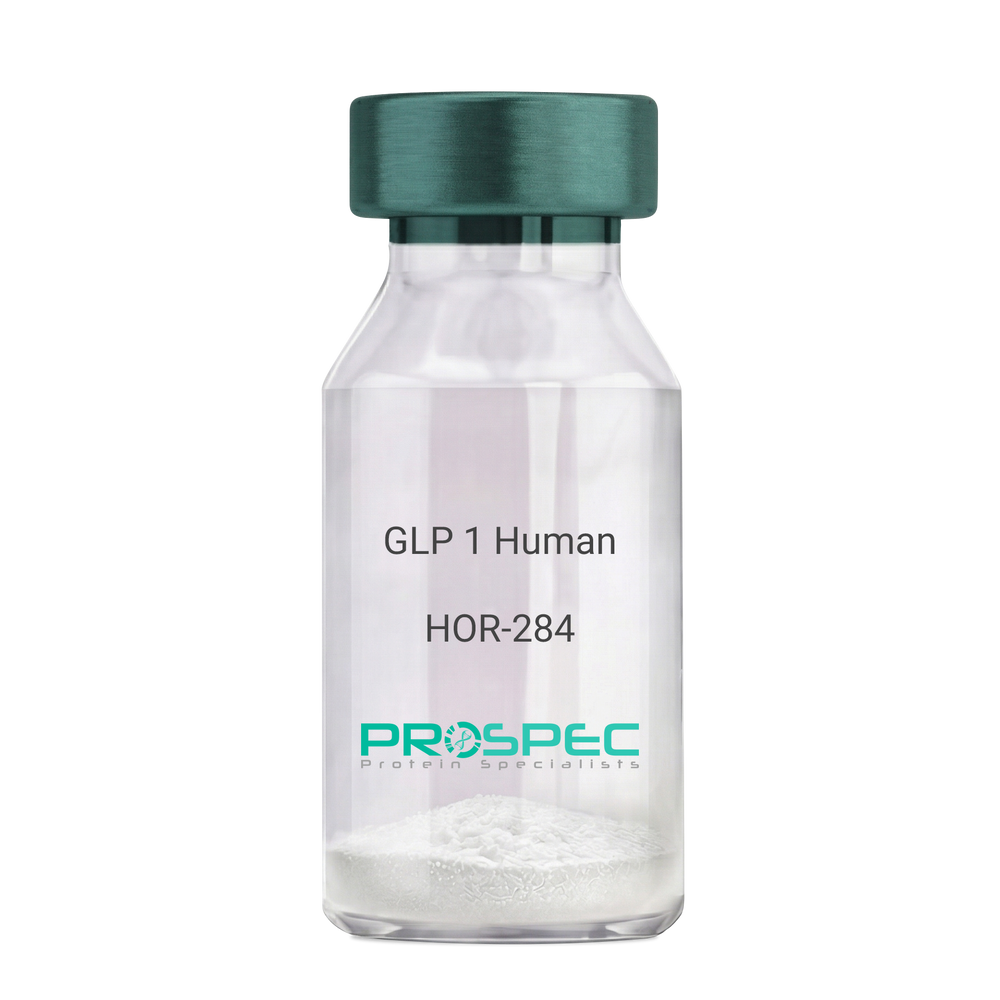
    GLP 1 Human

    Description:

    Human Glucagon Like Peptide-1

    GLP1, Glucagon Like Peptide-1, Incretin hormone.

    Product # :

    HOR-284

    Price :

    Quantity :

    Shipping Method :

    Room Temp Icon

    Shipped at Room temp

    Add To Cart

    More Info

    • description
    • formulation
    • purity
    • More Info

    Description

    Glucagon Like Peptide-1 is a single, non-glycosylated, polypeptide chain containing 30 amino acids and having a molecular mass of 3297.7 Dalton.The GLP-1 is purified by proprietary chromatographic techniques.

    Formulation

    The GLP-1 peptide was lyophilized with no additives.

    Purity

    Greater than 96.0% as determined by RP-HPLC.

    More Info

    • Introduction

      Glucagon-like peptide-1 (GLP-1) is derived from the transcription product of the proglucagon gene. The major source of GLP-1 in the body is the intestinal L cell that secretes GLP-1 as a guthormone. The biologically active forms of GLP-1 are: GLP-1-(7-37) and GLP-1-(7-36)NH2.
      GLP-1 secretion by L cells is dependent on the presence of nutrients in the lumen of the small intestine. The secretagogues (agents that causes or stimulates secretion) of this hormone include major nutrients like carbohydrate, proteinand lipid. Once in the circulation, GLP-1 has a half life of less than 2 minutes, due to rapid degradation by the enzyme dipeptidyl peptidase-4.
      GLP-1 possesses several physiological properties that make it a subject of intensive investigation as a potential treatment of diabetes mellitus. The known physiological functions of GLP-1 include: Increases insulin secretion from the pancreas in a glucose-dependent manner, decreases glucagon secretion from the pancreas, increases beta cells mass and insulin gene expression, inhibits acid secretion and gastric emptying in the stomach, decreases food intake by increasing satiety.

    • Synonyms

      GLP1, Glucagon Like Peptide-1, Incretin hormone.

    • Physical Appearance

      Sterile Filtered White lyophilized (freeze-dried) powder.

    • Stability

      Lyophilized Glucagon Like Peptide-1 although stable at room temperature for 3 weeks, should be stored desiccated below -18°C. Upon reconstitution GLP-1 should be stored at 4°C between 2-7 days and for future use below -18°C. For long term storage it is recommended to add a carrier protein (0.1% HSA or BSA).Please prevent freeze-thaw cycles.

    • Solubility

      It is recommended to reconstitute the lyophilized Glucagon Like Peptide-1 in sterile H2O at 0.5mg/ml, which can then be further diluted to other aqueous solutions.

    • Amino Acid Sequence

      H-His-Ala-Glu-Gly-Thr-Phe-Thr-Ser-Asp-Val-Ser-Ser-Tyr-Leu-Glu-Gly-Gln-Ala-Ala-Lys-Glu-Phe-Ile-Ala-Trp-Leu-Val-Lys-Gly-Arg-NH2.

    ProSpec's products are furnished for LABORATORY RESEARCH USE ONLY. The product may not be used as drugs, agricultural or pesticidal products, food additives or household chemicals.

    Glp 1 Human
  • View Data Sheet

    Name :

    S100A9 Human

    Description:

    S100 Calcium Binding Protein A9 Human Recombinant

    Calgranulin B, 60B8AG, CAGB, CFAG, CGLB, L1AG, LIAG, MAC387, MIF, MRP14, NIF, P14, Protein S100-A9, S100 calcium-binding protein A9.

    Product # :

    PRO-814

    Price :

    Quantity :

    Shipping Method :

    Ice Icon

    Shipped with Ice Packs

    Add To Cart

    More Info

    • description
    • source
    • formulation
    • purity
    • More Info

    Description

    S100A9 Human Recombinant produced in E.Coli is a single, non-glycosylated, polypeptide chain containing 122 amino acids (1-114 a.a.) and having a molecular mass of 14.3kDa. S100A9 protein is fused to an 8 amino acid His-Tag at C-terminus and purified by standard chromatography.

    Source

    Escherichia Coli.

    Formulation

    S100A9 Human solution containing 20mM Tris HCl pH-8, 0.1M NaCl and 10% glycerol.

    Purity

    Greater than 90% as determined by SDS-PAGE.

    More Info

    • Introduction

      S100A9 is part of the S100 family of proteins containing 2 EF-hand calcium-binding motifs. S100A9 protein is localized in the cytoplasm and/or nucleus of a wide range of cells, and participates in the regulation of several cellular processes such as cell cycle progression and differentiation. S100 genes include no less than 13 proteins which are localized as a cluster on chromosome 1q21. S100A9 is involved in the inhibition of casein kinase and altered expression of this protein is associated with the disease cystic fibrosis.

    • Synonyms

      Calgranulin B, 60B8AG, CAGB, CFAG, CGLB, L1AG, LIAG, MAC387, MIF, MRP14, NIF, P14, Protein S100-A9, S100 calcium-binding protein A9.

    • Physical Appearance

      Sterile filtered colorless solution.

    • Stability

      Store at 4°C if entire vial will be used within 2-4 weeks. Store, frozen at -20°C for longer periods of time. For long term storage it is recommended to add a carrier protein (0.1% HSA or BSA).Avoid multiple freeze-thaw cycles.

    • Amino Acid Sequence

      MTCKMSQLER NIETIINTFH QYSVKLGHPD TLNQGEFKEL VRKDLQNFLK KENKNEKVIE HIMEDLDTNA DKQLSFEEFI MLMARLTWAS HEKMHEGDEG PGHHHKPGLG EGTPLEHHHH HH.

    ProSpec's products are furnished for LABORATORY RESEARCH USE ONLY. The product may not be used as drugs, agricultural or pesticidal products, food additives or household chemicals.

    S100A9 Human
  • View Data Sheet

    Name :

    ANPEP Mouse

    Description:

    Alanyl Aminopeptidase Membrane Mouse Recombinant

    Anpep, AP-M, AP-N, Apn, Cd13, P150, mAPN, Alanyl aminopeptidase, Aminopeptidase M, Membrane protein p161, Microsomal aminopeptidase, CD13, Lap-1, Lap1, aminopeptidase N.

    Product # :

    ENZ-1134

    Price :

    Quantity :

    Shipping Method :

    Ice Icon

    Shipped with Ice Packs

    Add To Cart

    More Info

    • description
    • source
    • formulation
    • purity
    • biological activity
    • More Info

    Description

    ANPEP Mouse produced in Sf9 Insect cells is a single, glycosylated polypeptide chain containing 943 amino acids (33-966 a.a.) and having a molecular mass of 107.5 kDa. ANPEPis expressed with a 9 amino acid His tag at C-Terminus and purified by proprietary chromatographic techniques.

    Source

    Sf9, Baculovirus cells.

    Formulation

    ANPEP protein solution ( 0.5mg/ml ) contains PBS (pH 7.4) and 10% glycerol.

    Purity

    Greater than 95.0% as determined by SDS-PAGE.

    Biological Activity

    Specific activity is > 4,000pmol/min/ug, and is defined as the amount of enzyme that hydrolyze 1pmole of H-AlaAMC to Alanine and AMC per minute at pH7.5 at 25C.

    More Info

    • Introduction

      ANPEP or aminopeptidase N, is an enzyme, found in the small-intestinal and renal microvillar membrane and other plasma membranes. The enzyme has a critical part in the digestion of peptides after their hydrolysis by gastric and pancreatic proteases. ANPEP is also part ofthe processing of different peptides as well as peptide hormones, neuropeptides & chemokines. The protein takes part in angiogenesis, enhancing cholesterol crystallization &amino acid transport by formatting with SLC6A19 transport protein and regulating its activity.

    • Synonyms

      Anpep, AP-M, AP-N, Apn, Cd13, P150, mAPN, Alanyl aminopeptidase, Aminopeptidase M, Membrane protein p161, Microsomal aminopeptidase, CD13, Lap-1, Lap1, aminopeptidase N.

    • Physical Appearance

      Sterile Filtered colorless solution.

    • Stability

      Store at 4°C if entire vial will be used within 2-4 weeks. Store, frozen at -20°C for longer periods of time. For long term storage it is recommended to add a carrier protein (0.1% HSA or BSA).Avoid multiple freeze-thaw cycles.

    • Amino Acid Sequence

      ADPYAQEKNR NAENSATAPT LPGSTSATTA TTTPAVDESK PWNQYRLPKT LIPDSYRVIL RPYLTPNNQG LYIFQGNSTV RFTCNQTTDV IIIHSKKLNY TLKGNHRVVL RTLDGTPAPN IDKTELVERT EYLVVHLQGS LVEGRQYEMD SQFQGELADD LAGFYRSEYM EGDVKKVVAT TQMQAADARK SFPCFDEPAM KAMFNITLIY PNNLIALSNM LPKESKPYPE DPSCTMTEFH STPKMSTYLL AYIVSEFKNI SSVSANGVQI GIWARPSAID EGQGDYALNV TGPILNFFAQ HYNTSYPLPK SDQIALPDFN AGAMENWGLV TYRESSLVFD SQSSSISNKE RVVTVIAHEL AHQWFGNLVT VAWWNDLWLN EGFASYVEYL GADYAEPTWN LKDLMVLNDV YRVMAVDALA SSHPLSSPAD EIKTPDQIME LFDSITYSKG ASVIRMLSSF LTEDLFKKGL SSYLHTYQYS NTVYLDLWEH LQKAVNQQTA VQPPATVRTI MDRWILQMGF PVITVNTNTG EISQKHFLLD SKSNVTRPSE FNYIWIAPIP FLKSGQEDHY WLDVEKNQSA KFQTSSNEWI LLNINVTGYY LVNYDENNWK KLQNQLQTDL SVIPVINRAQ IIHDSFNLAS AKMIPITLAL DNTLFLVKEA EYMPWQAALS SLNYFTLMFD RSEVYGPMKR YLKKQVTPLF FYFQNRTNNW VNRPPTLMEQ YNEINAISTA CSSGLKECRD LVVELYSQWM KNPNNNTIHP NLRSTVYCNA IAFGGEEEWN FAWEQFRNAT LVNEADKLRS ALACSKDVWI LNRYLSYTLN PDYIRKQDTT STIISIASNV AGHPLVWDFV RSNWKKLFEN YGGGSFSFAN LIQGVTRRFS SEFELQQLEQ FKADNSATGF GTGTRALEQA LEKTRANIDW VKENKDAVFK WFTENSSHHH HHH

    ProSpec's products are furnished for LABORATORY RESEARCH USE ONLY. The product may not be used as drugs, agricultural or pesticidal products, food additives or household chemicals.

    Anpep Protein Mouse
  • View Data Sheet

    Name :

    FGF 21 Human, His

    Description:

    Fibroblast Growth Factor-21 Human Recombinant, His Tag

    Fibroblast growth factor 21, FGF-21.

    Product # :

    CYT-281

    Price :

    Quantity :

    Shipping Method :

    Ice Icon

    Shipped with Ice Packs

    Add To Cart

    More Info

    • description
    • source
    • formulation
    • purity
    • More Info

    Description

    Fibroblast Growth Factor -21 Human Recombinant produced in E.Coli is a single, non-glycosylated, polypeptide chain containing 202 amino acids (29-209) and having a molecular mass of 21.6 kDa (molecular weight on SDS-PAGE will appear higher). The FGF-21 is fused to a 20 amino acid His Tag at N-terminus and purified by proprietary chromatographic techniques.

    Source

    Escherichia Coli.

    Formulation

    The FGF-21 His tag protein (1mg/ml) solution in 20mM Tris-HCl buffer pH-8 and 10% glycerol.

    Purity

    Greater than 90.0% as determined by SDS-PAGE.

    More Info

    • Introduction

      The FGFs are a family of more than 20 small (~17–26 kDa) secreted peptides. The initial characterization of these proteins focused on their ability to stimulate fibroblast proliferation. This mitogenic activity was mediated through FGF receptors (FGFRs) 1, 2, or 3. A fourth closely related tyrosine kinase receptor (FGFR4) was able to bind the FGFs but did not lead to a mitogenic response.
      FGFs modulate cellular activity via at least 5 distinct subfamilies of high-affinity FGF receptors (FGFRs): FGFR-1, -2, -3, and -4, all with intrinsic tyrosine kinase activity and, except for FGFR-4, multiple splice isoforms, and FGFR-5, which lacks an intracellular kinase domain. There is growing evidence that FGFRs can be important for regulation of glucose and lipid homeostasis. The overexpression of a dominant negative form of FGFR-1 in ? cells leads to diabetes in mice, which thus implies that proper FGF signaling is required for normal ? cell function and glycemia maintenance. FGFR-2 appears to be a key molecule during pancreatic development. Moreover, FGFR-4 has been implicated in cholesterol metabolism and bile acid synthesis.
      FGF-19, has been shown to cause resistance to diet-induced obesity and insulin desensitization and to improve insulin, glucose, and lipid profiles in diabetic rodents. Since these effects, at least in part, are mediated through the observed changes in metabolic rates, FGF-19 can be considered as a regulator of energy expenditure.
      FGF-21 is preferentially expressed in liver, but an exact knowledge of FGF-21 bioactivity and its mode of action have been lacking to date. FGF-21 is a potent activator of glucose uptake on adipocytes, protects animals from diet-induced obesity when overexpressed in transgenic mice, and lowers blood glucose and triglyceride levels when therapeutically administered to diabetic rodents.

    • Synonyms

      Fibroblast growth factor 21, FGF-21.

    • Physical Appearance

      Sterile Filtered colorless clear solution.

    • Stability

      Store at 4°C if entire vial will be used within 2-4 weeks. Store, frozen at -20°C for longer periods of time. For long term storage it is recommended to add a carrier protein (0.1% HSA or BSA).Please avoid freeze thaw cycles.

    • Amino Acid Sequence

      MGSSHHHHHH SSGLVPRGSH MHPIPDSSPL LQFGGQVRQR YLYTDDAQQT EAHLEIREDG TVGGAADQSP ESLLQLKALK PGVIQILGVKTSRFLCQRPD GALYGSLHFD PEACSFRELL LEDGYNVYQS EAHGLPLHLP GNKSPHRDPA PRGPARFLPL PGLPPAPPEP PGILAPQPPD VGSSDPLSMV GPSQGRSPSY AS.

    • Background

      What is the molecular weight/Mw of FGF21,HIS Protein?
      FGF21,HIS Protein has a total Mw of 21.6kDa.

      What is the source or expression system of FGF21,HIS Protein?
      Escherichia Coli.

      What is the Purity of FGF21,HIS Protein?
      FGF21,HIS Protein is >90% pure as determined by SDS-PAGE.

      What is the Biological Activity of FGF21,HIS Protein?
      The biological functionality of FGF21,HIS Protein will be determined in the future.

      What is the amino acid sequence of FGF21,HIS Protein?
      MGSSHHHHHH SSGLVPRGSH MHPIPDSSPL LQFGGQVRQR YLYTDDAQQT EAHLEIREDG TVGGAADQSP ESLLQLKALK PGVIQILGVKTSRFLCQRPD GALYGSLHFD PEACSFRELL LEDGYNVYQS EAHGLPLHLP GNKSPHRDPA PRGPARFLPL PGLPPAPPEP PGILAPQPPD VGSSDPLSMV GPSQGRSPSY AS.

      What applications can FGF21,HIS Protein be used in?
      FGF21,HIS Protein can probably be used in western blot, ELISA and Lateral Flow.

      What is the endotoxin level for FGF21,HIS Protein?
      The endotoxin level is minimal, FGF21,HIS Protein was purified using conventional chromatography techniques.

    ProSpec's products are furnished for LABORATORY RESEARCH USE ONLY. The product may not be used as drugs, agricultural or pesticidal products, food additives or household chemicals.

    Fgf21 Human His
  • View Data Sheet

    Name :

    Fra e 1.0101

    Description:

    Allergen Fra e 1.0101 Recombinant

    Allergen Fra e 1.0101, Fra e 1.0101, Fra e 1.

    Product # :

    PRO-2286

    Price :

    Quantity :

    Shipping Method :

    Ice Icon

    Shipped with Ice Packs

    Add To Cart

    More Info

    • description
    • source
    • formulation
    • purity
    • More Info

    Description

    Recombinant Allergen Fra e 1.0101 produced in SF9 is a glycosylated, polypeptide chain having a calculated molecular mass of 17,794 Dalton. Fra e 1.0101 is expressed with a 10xHis tag at N-terminus and purified by proprietary chromatographic techniques.

    Source

    Sf9 insect cells.

    Formulation

    Fra e 1.0101 is supplied in 20mM HEPES buffer pH-7.9 and 6M Urea.

    Purity

    Greater than 80.0% as determined by SDS-PAGE.

    More Info

    • Introduction

      Allergen Fra e 1.0101 (Fra e 1.0101) causes an allergic reaction in humans.

    • Synonyms

      Allergen Fra e 1.0101, Fra e 1.0101, Fra e 1.

    • Physical Appearance

      Sterile Filtered clear solution.

    • Stability

      Store at 4°C if entire vial will be used within 2-4 weeks. Store, frozen at -20°C for longer periods of time. Avoid multiple freeze-thaw cycles.

    • Immunological Functions

      1. Binds IgE type human antibodies. 2. Immunodot test with positive/negative sera panels.

    • Molar extinction coefficient

      14815; A280(1mg/ml)=0.833

    ProSpec's products are furnished for LABORATORY RESEARCH USE ONLY. The product may not be used as drugs, agricultural or pesticidal products, food additives or household chemicals.

    Fra E 10101
  • View Data Sheet

    Name :

    FGF14 Human

    Description:

    Fibroblast Growth Factor 14 Human Recombinant

    Fibroblast growth factor 14, FGF-14, Fibroblast growth factor homologous factor 4, FHF-4, FGF14, FHF4, SCA27, bA397O8.2.

    Product # :

    CYT-756

    Price :

    Quantity :

    Shipping Method :

    Ice Icon

    Shipped with Ice Packs

    Add To Cart

    More Info

    • description
    • source
    • formulation
    • purity
    • More Info
    • sds-page

    Description

    FGF14 Human Recombinant produced in E.Coli is a single, non-glycosylated polypeptide chain containing 271 amino acids (1-247 a.a) and having a molecular mass of 30kDa.FGF14 is fused to a 24 amino acid His-tag at N-terminus & purified by proprietary chromatographic techniques.

    Source

    E.coli.

    Formulation

    FGF14 protein solution (0.25mg/ml) contains 20mM Tris-HCl buffer, (pH 8.0), 0.2M NaCl, 50% glycerol and 5mM DTT.

    Purity

    Greater than 90% as determined by SDS-PAGE.

    sds-page

    FGF14-sds-page - Product image 1

    More Info

    • Introduction

      Fibroblast Growth Factor 14 (FGF14) belongs to the fibroblast growth factor (FGF) family. FGF family members have broad mitogenic and cell survival activities, and are involved in a various biological processes, including embryonic development, cell growth, morphogenesis, tissue repair, tumor growth and invasion. FGF14 gene mutation is linked with autosomal dominant cerebral ataxia.

    • Synonyms

      Fibroblast growth factor 14, FGF-14, Fibroblast growth factor homologous factor 4, FHF-4, FGF14, FHF4, SCA27, bA397O8.2.

    • Physical Appearance

      Sterile Filtered colorless solution.

    • Stability

      Store at 4°C if entire vial will be used within 2-4 weeks. Store, frozen at -20°C for longer periods of time. For long term storage it is recommended to add a carrier protein (0.1% HSA or BSA).Avoid multiple freeze-thaw cycles.

    • Amino Acid Sequence

      MGSSHHHHHH SSGLVPRGSH MGSHMAAAIA SGLIRQKRQA REQHWDRPSA SRRRSSPSKN RGLCNGNLVD IFSKVRIFGL KKRRLRRQDP QLKGIVTRLY CRQGYYLQMH PDGALDGTKD DSTNSTLFNL IPVGLRVVAI QGVKTGLYIA MNGEGYLYPS ELFTPECKFK ESVFENYYVI YSSMLYRQQE SGRAWFLGLN KEGQAMKGNR VKKTKPAAHF LPKPLEVAMY REPSLHDVGE TVPKPGVTPS KSTSASAIMN GGKPVNKSKT T.

    • Background

      What is the molecular weight/Mw of FGF14 Protein?
      FGF14 Protein has a total Mw of 30kDa.

      What is the source or expression system of FGF14 Protein?
      Escherichia Coli.

      What is the Purity of FGF14 Protein?
      FGF14 Protein is >90% pure as determined by SDS-PAGE.

      What is the Biological Activity of FGF14 Protein?
      The biological functionality of FGF14 Protein will be determined in the future.

      What is the amino acid sequence of FGF14 Protein?
      MGSSHHHHHH SSGLVPRGSH MGSHMAAAIA SGLIRQKRQA REQHWDRPSA SRRRSSPSKN RGLCNGNLVD IFSKVRIFGL KKRRLRRQDP QLKGIVTRLY CRQGYYLQMH PDGALDGTKD DSTNSTLFNL IPVGLRVVAI QGVKTGLYIA MNGEGYLYPS ELFTPECKFK ESVFENYYVI YSSMLYRQQE SGRAWFLGLN KEGQAMKGNR VKKTKPAAHF LPKPLEVAMY REPSLHDVGE TVPKPGVTPS KSTSASAIMN GGKPVNKSKT T.

      What applications can FGF14 Protein be used in?
      FGF14 Protein can probably be used in western blot, ELISA and Lateral Flow.

      What is the endotoxin level for FGF14 Protein?
      The endotoxin level is minimal, FGF14 Protein was purified using conventional chromatography techniques.

    ProSpec's products are furnished for LABORATORY RESEARCH USE ONLY. The product may not be used as drugs, agricultural or pesticidal products, food additives or household chemicals.

    Fgf14 Human
  • View Data Sheet

    Name :

    G3BP1 Human

    Description:

    GTPase Activating Protein (SH3 domain) Binding Protein 1 Human Recombinant

    Ras GTPase-activating protein-binding protein 1, G3BP-1, ATP-dependent DNA helicase VIII, hDH VIII, GAP SH3 domain-binding protein 1, G3BP1, G3BP, HDH-VIII, MGC111040.

    Product # :

    ENZ-048

    Price :

    Quantity :

    Shipping Method :

    Ice Icon

    Shipped with Ice Packs

    Add To Cart

    More Info

    • description
    • source
    • formulation
    • purity
    • More Info

    Description

    G3BP1 Human Recombinant fused with an 8 amino acid His tag at C-terminus produced in E.Coli is a single, non-glycosylated, polypeptide chain containing 474 amino acids (1-466 a.a.) and having a molecular mass of 53.2kDa.The G3BP1 is purified by proprietary chromatographic techniques.

    Source

    Escherichia Coli.

    Formulation

    The G3BP1 solution (0.5 mg/ml) contains 20mM Tris-HCl buffer (pH8.0), 10% glycerol, 2mM DTT and 100mM NaCl.

    Purity

    Greater than 85.0% as determined by SDS-PAGE.

    More Info

    • Introduction

      G3BP1 belongs to the heterogeneous nuclear RNA-binding proteins and is also an element of the Ras signal transduction pathway. G3BP1 is one of the DNA-unwinding enzymes that favors partially unwound 3'-tailed substrates and is also able to unwind partial RNA/DNA and RNA/RNA duplexes in an ATP-dependent fashion. G3BP1 binds specifically to the Ras-GTPase-activating protein by associating with its SH3 domain. In addition, G3BP1 cleaves exclusively between cytosine and adenine and cleaves MYC mRNA preferentially at the 3'-UTR.

    • Synonyms

      Ras GTPase-activating protein-binding protein 1, G3BP-1, ATP-dependent DNA helicase VIII, hDH VIII, GAP SH3 domain-binding protein 1, G3BP1, G3BP, HDH-VIII, MGC111040.

    • Physical Appearance

      Sterile Filtered colorless solution.

    • Stability

      Store at 4°C if entire vial will be used within 2-4 weeks. Store, frozen at -20°C for longer periods of time. For long term storage it is recommended to add a carrier protein (0.1% HSA or BSA).Avoid multiple freeze-thaw cycles.

    • Amino Acid Sequence

      MVMEKPSPLL VGREFVRQYY TLLNQAPDML HRFYGKNSSY VHGGLDSNGK PADAVYGQKE IHRKVMSQNF TNCHTKIRHV DAHATLNDGV VVQVMGLLSN NNQALRRFMQ TFVLAPEGSV ANKFYVHNDI FRYQDEVFGG FVTEPQEESE EEVEEPEERQ QTPEVVPDDS GTFYDQAVVS NDMEEHLEEP VAEPEPDPEP EPEQEPVSEI QEEKPEPVLE ETAPEDAQKS SSPAPADIAQ TVQEDLRTFS WASVTSKNLP PSGAVPVTGI PPHVVKVPAS QPRPESKPES QIPPQRPQRD QRVREQRINI PPQRGPRPIR EAGEQGDIEP RRMVRHPDSH QLFIGNLPHE VDKSELKDFF QSYGNVVELR INSGGKLPNF GFVVFDDSEP VQKVLSNRPI MFRGEVRLNV EEKKTRAARE GDRRDNRLRG PGGPRGGLGG GMRGPPRGGM VQKPGFGVGR GLAPRQVEHH HHHH.

    ProSpec's products are furnished for LABORATORY RESEARCH USE ONLY. The product may not be used as drugs, agricultural or pesticidal products, food additives or household chemicals.

    G3Bp1 Human
  • View Data Sheet

    Name :

    SDCBP Human

    Description:

    Syndecan Binding Protein Human Recombinant

    SYCL, syntenin-1, Syndecan-binding protein 1, Scaffold protein Pbp1, MDA-9, Melanoma differentiation-associated protein 9, TACIP18, Pro-TGF-alpha cytoplasmic domain-interacting protein 18.

    Product # :

    PRO-036

    Price :

    Quantity :

    Shipping Method :

    Ice Icon

    Shipped with Ice Packs

    Add To Cart

    More Info

    • description
    • source
    • formulation
    • purity
    • More Info

    Description

    SDCBP produced in E.Coli is a single, non-glycosylated polypeptide chain containing 318 amino acids (1-298a.a.) and having a molecular mass of 34.6kDa.SDCBP is fused to a 20 amino acid His-tag at N-terminus & purified by proprietary chromatographic techniques.

    Source

    Escherichia Coli.

    Formulation

    The SDCBP protein solution (0.5mg/1ml) is formulated in 20 mM Tris-HCl Buffer (pH 8.0), 100 mM NaCl, and 40% Glycerol.

    Purity

    Greater than 90% as determined by SDS-PAGE.

    More Info

    • Introduction

      SDCBP is a multifunctional intracellular adapter protein. SDCBP protein has tandemly repeated PDZ domains which react with the FYA (phe-tyr-ala) carboxyterminal amino acid sequence of the syndecans. SDCBP is has a role in organization of protein complexes in the plasma membranes, regulation of B-cell development, activation of transcription factors, intracellular trafficking and cell-surface targeting, synaptic transmission, and axonal outgrowth.

    • Synonyms

      SYCL, syntenin-1, Syndecan-binding protein 1, Scaffold protein Pbp1, MDA-9, Melanoma differentiation-associated protein 9, TACIP18, Pro-TGF-alpha cytoplasmic domain-interacting protein 18.

    • Physical Appearance

      Sterile Filtered clear solution.

    • Stability

      Store at 4°C if entire vial will be used within 2-4 weeks. Store, frozen at -20°C for longer periods of time.Please avoid freeze thaw cycles.

    • Amino Acid Sequence

      MGSSHHHHHH SSGLVPRGSH MSLYPSLEDL KVDKVIQAQT AFSANPANPA ILSEASAPIP HDGNLYPRLY PELSQYMGLS LNEEEIRANV AVVSGAPLQG QLVARPSSIN YMVAPVTGND VGIRRAEIKQ GIREVILCKD QDGKIGLRLK SIDNGIFVQL VQANSPASLV GLRFGDQVLQ INGENCAGWS SDKAHKVLKQ AFGEKITMTI RDRPFERTIT MHKDSTGHVG FIFKNGKITS IVKDSSAARN GLLTEHNICE INGQNVIGLK

    ProSpec's products are furnished for LABORATORY RESEARCH USE ONLY. The product may not be used as drugs, agricultural or pesticidal products, food additives or household chemicals.

    Sdcbp Human
  • View Data Sheet

    Name :

    COL4A3BP Human

    Description:

    Collagen Type IV Alpha 3 Binding Protein Human Recombinant

    COL4A3BP, FLJ20597, Collagen type IV alpha-3-binding protein, GPBP, STARD11, CERT, HCERT, CERTL, Ceramide Transfer Protein, Goodpasture antigen-binding protein, StAR-related lipid transfer protein 11, START domain-containing protein 11.

    Product # :

    PRO-837

    Price :

    Quantity :

    Shipping Method :

    Ice Icon

    Shipped with Ice Packs

    Add To Cart

    More Info

    • description
    • source
    • formulation
    • purity
    • More Info

    Description

    COL4A3BP Recombinant Human produced in E.Coli is a single, non-glycosylated polypeptide chain containing 290 amino acids (347-598 a.a.) and having a molecular mass of 33.1 kDa. The COL4A3BP is fused to 38 amino acid His-Tag at N-terminus and purified by proprietary chromatographic techniques.

    Source

    Escherichia Coli.

    Formulation

    COL4A3BP Human solution containing 20mM Tris HCL pH-8, 0.1M NaCl, & 10% glycerol.

    Purity

    Greater than 95.0% as determined by SDS-PAGE.

    More Info

    • Introduction

      COL4A3BP is a kinase that particularly phosphorylates the N-terminal region of the non-collagenous domain of the alpha 3 chain of type IV collagen, recognized as the Goodpasture antigen that is the outcome of an autoimmune reaction directed at COL4A3BP. One isoform of COL4A3BP participates in ceramide intracellular transport.

    • Synonyms

      COL4A3BP, FLJ20597, Collagen type IV alpha-3-binding protein, GPBP, STARD11, CERT, HCERT, CERTL, Ceramide Transfer Protein, Goodpasture antigen-binding protein, StAR-related lipid transfer protein 11, START domain-containing protein 11.

    • Physical Appearance

      Sterile filtered colorless solution.

    • Stability

      Store at 4°C if entire vial will be used within 2-4 weeks. Store, frozen at -20°C for longer periods of time. For long term storage it is recommended to add a carrier protein (0.1% HSA or BSA).Avoid multiple freeze-thaw cycles.

    • Amino Acid Sequence

      MRGSHHHHHH GMASMTGGQQ MGRDLYDDDD KDRWAGSMLH WPTSLPSGDA FSSVGTHRFV QKVEEMVQNH MTYSLQDVGG DANWQLVVEE GEMKVYRREV EENGIVLDPL KATHAVKGVT GHEVCNYFWN VDVRNDWETT IENFHVVETL ADNAIIIYQT HKRVWPASQR DVLYLSVIRK IPALTENDPE TWIVCNFSVD HDSAPLNNRC VRAKINVAMI CQTLVSPPEG NQEISRDNIL CKITYVANVN PGGWAPASVL RAVAKREYPK FLKRFTSYVQ EKTAGKPILF.

    ProSpec's products are furnished for LABORATORY RESEARCH USE ONLY. The product may not be used as drugs, agricultural or pesticidal products, food additives or household chemicals.

    Col4A3Bp Human
  • View Data Sheet

    Name :

    FAM111B Human

    Description:

    Family with Sequence Similarity 111, Member B Human Recombinant

    CANP.

    Product # :

    PRO-2835

    Price :

    Quantity :

    Shipping Method :

    Room Temp Icon

    Shipped at Room temp

    Add To Cart

    More Info

    • description
    • source
    • formulation
    • purity
    • More Info

    Description

    The FAM111B Human is created as a recombinant protein with a 4kda N-terminal fusion of His Tag. The FAM111BHis-Tagged Fusion Protein, produced in E. coli, is a 35kDa protein containing 235 amino acid residues of the FAM111BHuman, 500-734 amino acids.

    Source

    Escherichia Coli.

    Formulation

    Each mg was lyophilized with 1xPBS, 0.4% SDS and 4mM DTT.

    Purity

    Greater than 90% as determined by SDS-PAGE.

    More Info

    • Synonyms

      CANP.

    • Physical Appearance

      Filtered White lyophilized (freeze-dried) powder.

    • Stability

      Store lyophilized FAM111B at -20°C. Aliquot the product after reconstitution to avoid repeated freezing/thawing cycles. Reconstituted protein can be stored at 4°C for a limited period of time; it does not show any change after two weeks at 4°C.

    • Solubility

      It is recommended to add deionized water to prepare a working stock solution of approximately 0.5mg/ml and let the lyophilized pellet dissolve completely. Product is not sterile! Please filter the product by an appropriate sterile filter before using it on cell culture.

    • Background

      Family with Sequence Similarity 111 Member B (FAM111B) is a part of the FAM111 gene family which participates in cellular processes such as cell cycle regulation, DNA replication and maintenance of genomic stability. FAM111B is a protein-coding gene located on human chromosome 10. FAM111B function is linked to its interactions with other cellular machinery that ensures the fidelity of DNA replication and the repair of DNA damage. FAM111B has conserved domains which may be critical for its interactions with other proteins involved in DNA repair and replication.

    ProSpec's products are furnished for LABORATORY RESEARCH USE ONLY. The product may not be used as drugs, agricultural or pesticidal products, food additives or household chemicals.

    Fam111B Human
  • View Data Sheet

    Name :

    FGF23 Human, His

    Description:

    Fibroblast Growth Factor-23 Human Recombinant, His Tag

    Tumor-derived hypophosphatemia-inducing factor, HYPF, ADHR, HPDR2, PHPTC, FGF23, FGF-23, Fibroblast Growth Factor-23.

    Product # :

    CYT-374

    Price :

    Quantity :

    Shipping Method :

    Room Temp Icon

    Shipped at Room temp

    Add To Cart

    More Info

    • description
    • source
    • formulation
    • purity
    • biological activity
    • More Info

    Description

    Fibroblast Growth Factor-23 Human Recombinant produced in E.Coli is a single, non-glycosylated polypeptide chain expressed with a -6xHis tag containing a total of 257 amino acids (251 a.a. FGF23+ 6 a.a. His tag) and having a molecular mass of 28629.5 Dalton. The FGF-23 is and purified by chromatographic techniques.

    Source

    Escherichia Coli.

    Formulation

    The protein (0.5mg/ml) was lyophilized from 25mM Tris pH7.5 and 0.6M NaCl solution.

    Purity

    Greater than 90.0% as determined by:
    (a) Analysis by RP-HPLC.
    (b) Analysis by SDS-PAGE.

    Biological Activity

    Treatment with hrFGF23 has been shown to induce FGFR mediated Erk phosphorylation, reduce plasma PTH levels in rats and to reduce blood phosphate levels.

    More Info

    • Introduction

      FGF-23 is a member of the fibroblast growth factor (FGF) family. FGF family members possess broad mitogenic and cell survival activities and are involved in a variety of biological processes including embryonic development, cell growth, morphogenesis, tissue repair, tumor growth and invasion. FGF-23 inhibits renal tubular phosphate transport. This gene was identified by its mutations associated with autosomal dominant hypophosphatemic rickets (ADHR), an inherited phosphate wasting disorder. Abnormally high level expression of FGF23 was found in oncogenic hypophosphatemic osteomalacia (OHO), a phenotypically similar disease caused by abnormal phosphate metabolism. Mutations FGF23 have also been shown to cause familial tumoral calcinosis with hyperphosphatemia.

    • Synonyms

      Tumor-derived hypophosphatemia-inducing factor, HYPF, ADHR, HPDR2, PHPTC, FGF23, FGF-23, Fibroblast Growth Factor-23.

    • Physical Appearance

      Sterile Filtered white lyophilized powder.

    • Stability

      Lyophilized Fibroblast Growth Factor 23 although stable at room temperature for 3 weeks, should be stored desiccated below -18°C. Upon reconstitution FGF-23 should be stored at 4°C between 2-7 days and for future use below -18°C.For long term storage it is recommended to add a carrier protein (0.1% HSA or BSA).Please prevent freeze-thaw cycles.

    • Solubility

      It is recommended to reconstitute the lyophilized Fibroblast Growth Factor-23 in sterile 18MΩ-cm H2O not less than 100µg/ml, which can then be further diluted to other aqueous solutions.

    • Amino Acid Sequence

      MLGARLRLWVCALCSVCSMSVLRAYPNASPLLGSSWGGLIHLYTATARN
      SYHLQIHKNGHVDGAPHQTIYSALMIRSEDAGFVVITGVMSRRYLCMDFR
      GNIFGSHYFDPENCRFQHQTLENGYDVYHSPQYHFLVSLGRAKRAFLPG
      MNPPPYSQFLSRRNEIPLIHFNTPIPRRHTRSAEDDSERDPLNVLKPRAR
      MTPAPASCSQELPSAEDNSPMASDPLGVVRGGRVNTHAGGTGPEGCRP
      FAKFIHHHHHH.

    • Background

      What is the molecular weight/Mw of FGF23 HUMAN, HIS Protein?
      FGF23 HUMAN, HIS Protein has a total Mw of 28.6kDa.

      What is the source or expression system of FGF23 HUMAN, HIS Protein?
      Escherichia Coli.

      What is the Purity of FGF23 HUMAN, HIS Protein?
      FGF23 HUMAN, HIS Protein is >90% pure as determined by SDS-PAGE.

      What is the Biological Activity of FGF23 HUMAN, HIS Protein?
      Treatment with hrFGF23 has been shown to induce FGFR mediated Erk phosphorylation, reduce plasma PTH levels in rats and to reduce blood phosphate levels.

      What is the amino acid sequence of FGF23 HUMAN, HIS Protein?
      MLGARLRLWVCALCSVCSMSVLRAYPNASPLLGSSWGGLIHLYTATARN
      SYHLQIHKNGHVDGAPHQTIYSALMIRSEDAGFVVITGVMSRRYLCMDFR
      GNIFGSHYFDPENCRFQHQTLENGYDVYHSPQYHFLVSLGRAKRAFLPG
      MNPPPYSQFLSRRNEIPLIHFNTPIPRRHTRSAEDDSERDPLNVLKPRAR
      MTPAPASCSQELPSAEDNSPMASDPLGVVRGGRVNTHAGGTGPEGCRP
      FAKFIHHHHHH.

      What applications can FGF23 HUMAN, HIS Protein be used in?
      FGF23 HUMAN, HIS Protein can probably be used in western blot, ELISA and Lateral Flow.

      What is the endotoxin level for FGF23 HUMAN, HIS Protein?
      The endotoxin level is minimal, FGF23 HUMAN, HIS Protein was purified using conventional chromatography techniques.

    ProSpec's products are furnished for LABORATORY RESEARCH USE ONLY. The product may not be used as drugs, agricultural or pesticidal products, food additives or household chemicals.

    Fgf23 Human His
  • View Data Sheet

    Name :

    TFRC Native

    Description:

    Transferrin Receptor Human

    Transferrin receptor protein 1, TR, TfR, TfR1, Trfr, T9, p90, CD_antigen: CD71, Transferrin receptor, serum form, sTfR, TFRC, CD71

    Product # :

    PRO-2742

    Price :

    Quantity :

    Shipping Method :

    Ice Icon

    Shipped with Ice Packs

    Add To Cart

    More Info

    • description
    • source
    • formulation
    • More Info

    Description

    Human Transferrin Receptor Protein produced in human serum tissue having a molecular mass of 85kDa.

    Source

    Human serum.

    Formulation

    TFRC Native solution (0.2µm filtered) contains 250mM TRIS-HCl buffer, 0.15M NaCl, 0.09% NaN3, pH 8.0.

    More Info

    • Introduction

      Transferrin receptor protein 1 (TFRC) is required for iron delivery from transferring to cells. The TFRC protein is a transmembrane glycoprotein comprised of 2 disulfide-linked monomers joined by 2 disulfide bonds. Each monomer will bind one holo-transferrin molecule producing an iron-Tf-TfR complex which enters the cell by endocytosis.

    • Synonyms

      Transferrin receptor protein 1, TR, TfR, TfR1, Trfr, T9, p90, CD_antigen: CD71, Transferrin receptor, serum form, sTfR, TFRC, CD71

    • Physical Appearance

      Sterile Filtered brown solution.

    • Stability

      Store at 4°C if entire vial will be used within 2-4 weeks. Store, frozen at -20°C for longer periods of time. For long term storage it is recommended to add a carrier protein (0.1% HSA or BSA). Avoid multiple freeze-thaw cycles.

    • Human Virus Test

      Starting material donor has been tested and certified negative for antibodies to HIV-1, HIV-2, HCV, HBSAG, Parvovirus B19, Syphilis and HIV/HBV/HCV (PCR).

    ProSpec's products are furnished for LABORATORY RESEARCH USE ONLY. The product may not be used as drugs, agricultural or pesticidal products, food additives or household chemicals.

    Transferrin Receptor Tfrc
  • View Data Sheet

    Name :

    PMSG

    Description:

    Pregnant Mare Serum Gonadotropin

    Product # :

    HOR-272

    Price :

    Quantity :

    Shipping Method :

    Room Temp Icon

    Shipped at Room temp

    Add To Cart

    More Info

    • description
    • source
    • formulation
    • More Info

    Description

    PMSG is a complex glycoprotein obtained from the serum of pregnant mares. This 43-63 kda protein is capable of supplementing and being substituted for the follicle stimulating and interstitial cell-stimulating hormone of the anterior pituitary gland in both the male and female. Thus PMSG-Intervet stimulates development of the ovarian follicle in the female.

    Source

    Serum of pregnant mares.

    Formulation

    The PMSG was lyophilized with no additives.

    More Info

    • Introduction

      PMSG Hormone is a well know used hormone together with progestogen to increase ovulation just before to artificial insemination. PMSG hormone is a placental glycoprotein produced from the serum of pregnant mares. PMSG comprises of an alfa subunit and a beta subunit. PMSG hormone is secreted from endometrial cups within the pregnant mare uterus aging from 40 to 130 days into their maturation, and once extracted, it can been used to promote artificially estrus in female animals. These assemblies produce PMSG hormone to induce mare's ovarian and repsouctive structures. PMSG can induce the growth of follicles by ovaries and results in ovulatation. PMSG hormone has an about a 4 day half-life of bioactivity in species other than horses. The extended biological activity can cause ovarian stimulation and ovulation. However, PMSG use alone often causes cystic ovarian disease because of the unrestrained ovarian stimulation and due to the sugar molecules which decrease clearance of the hormone. PMSG is more likely to be used than other pituitary hormones due to the extended circulatory half-life. PMSG solely exhibits luteinizing hormone like activity, however in other animal classes it has FSH & LH like activity.

    • Physical Appearance

      Sterile Filtered White lyophilized (freeze-dried) powder.

    • Stability

      Lyophilized PMSG although stable at room temperature for 3 weeks, should be stored between 2-8°C.

    • Solubility

      It is recommended to reconstitute the lyophilized PMSG in sterile 18M-cm H2O at a concentration of 1000 IU/ml, which can then be further diluted to other aqueous solutions.

    ProSpec's products are furnished for LABORATORY RESEARCH USE ONLY. The product may not be used as drugs, agricultural or pesticidal products, food additives or household chemicals.

    Pmsg
  • View Data Sheet

    Name :

    FGF 21 Mouse, His

    Description:

    Fibroblast Growth Factor-21 Mouse Recombinant, His Tag

    Fibroblast growth factor 21, FGF-21.

    Product # :

    CYT-516

    Price :

    Quantity :

    Shipping Method :

    Room Temp Icon

    Shipped at Room temp

    Add To Cart

    More Info

    • description
    • source
    • formulation
    • purity
    • More Info

    Description

    Fibroblast Growth Factor -21 Mouse Recombinant produced in E.Coli is a single, non-glycosylated, polypeptide chain containing 192 amino acids and having a molecular mass of 21.2 kDa. The amino acid sequence of the recombinant human FGF21 is 100% homologous to the amino acid sequence of the Mouse FGF21 without signal sequence and contains 10 a.a. His tag at N-terminal.The FGF-21 is purified by proprietary chromatographic techniques.

    Source

    Escherichia Coli.

    Formulation

    Filtered (0.4 µm) and lyophilized from 0.5 mg/ml in 20mM TRIS, 20mM NaCl, pH 7.5.

    Purity

    Greater than 95.0% as determined by:
    (a) Analysis by RP-HPLC.
    (b) Analysis by SDS-PAGE.

    More Info

    • Introduction

      The FGFs are a family of more than 20 small (~17–26 kDa) secreted peptides. The initial characterization of these proteins focused on their ability to stimulate fibroblast proliferation. This mitogenic activity was mediated through FGF receptors (FGFRs) 1, 2, or 3. A fourth closely related tyrosine kinase receptor (FGFR4) was able to bind the FGFs but did not lead to a mitogenic response.
      FGFs modulate cellular activity via at least 5 distinct subfamilies of high-affinity FGF receptors (FGFRs): FGFR-1, -2, -3, and -4, all with intrinsic tyrosine kinase activity and, except for FGFR-4, multiple splice isoforms, and FGFR-5, which lacks an intracellular kinase domain. There is growing evidence that FGFRs can be important for regulation of glucose and lipid homeostasis. The overexpression of a dominant negative form of FGFR-1 in ? cells leads to diabetes in mice, which thus implies that proper FGF signaling is required for normal ? cell function and glycemia maintenance. FGFR-2 appears to be a key molecule during pancreatic development. Moreover, FGFR-4 has been implicated in cholesterol metabolism and bile acid synthesis.
      FGF-19, has been shown to cause resistance to diet-induced obesity and insulin desensitization and to improve insulin, glucose, and lipid profiles in diabetic rodents. Since these effects, at least in part, are mediated through the observed changes in metabolic rates, FGF-19 can be considered as a regulator of energy expenditure.
      FGF-21 is preferentially expressed in liver, but an exact knowledge of FGF-21 bioactivity and its mode of action have been lacking to date. FGF-21 is a potent activator of glucose uptake on adipocytes, protects animals from diet-induced obesity when overexpressed in transgenic mice, and lowers blood glucose and triglyceride levels when therapeutically administered to diabetic rodents.

    • Synonyms

      Fibroblast growth factor 21, FGF-21.

    • Physical Appearance

      Filtered white lyophilized powder.

    • Stability

      Lyophilized FGF-21 Mouse Recombinant although stable at room temperature for 3 weeks, should be stored desiccated below -18°C. Upon reconstitution Fibroblast Growth Factor 21 should be stored at 4°C between 2-7 days and for future use below -18°C. For long term storage it is recommended to add a carrier protein (0.1% HSA or BSA).Please prevent freeze-thaw cycles.

    • Solubility

      It is recommended to add deionized water to prepare a working stock solution of approximately 0.5 mg/ml and let the lyophilized pellet dissolve completely. Product is not sterile! Please filter the product by an appropriate sterile filter before using it in the cell culture. Add DTT (0.2mM) and NaCl (0.1-0.15M) before freezing to prevent potential aggregation.

    • Amino Acid Sequence

      MKHHHHHHAS AYPIPDSSPL LQFGGQVRQR YLYTDDDQDT EAHLEIREDG TVVGAAHRSP ESLLELKALKPGVIQILGVK ASRFLCQQPD GALYGSPHFD PEACSFRELL LEDGYNVYQS EAHGLPLRLP QKDSPNQDATSWGPVRFLPM PGLLHEPQDQ AGFLPPEPPD VGSSDPLSMV EPLQGRSPSY AS.

    • Background

      What is the molecular weight/Mw of FGF21 MOUSE,HIS Protein?
      FGF21 MOUSE,HIS Protein has a total Mw of 21.2kDa.

      What is the source or expression system of FGF21 MOUSE,HIS Protein?
      Escherichia Coli.

      What is the Purity of FGF21 MOUSE,HIS Protein?
      FGF21 MOUSE,HIS Protein is >95% pure as determined by SDS-PAGE.

      What is the Biological Activity of FGF21 MOUSE,HIS Protein?
      The biological functionality of FGF21 MOUSE,HIS Protein will be determined in the future.

      What is the amino acid sequence of FGF21 MOUSE,HIS Protein?
      MKHHHHHHAS AYPIPDSSPL LQFGGQVRQR YLYTDDDQDT EAHLEIREDG TVVGAAHRSP ESLLELKALKPGVIQILGVK ASRFLCQQPD GALYGSPHFD PEACSFRELL LEDGYNVYQS EAHGLPLRLP QKDSPNQDATSWGPVRFLPM PGLLHEPQDQ AGFLPPEPPD VGSSDPLSMV EPLQGRSPSY AS.

      What applications can FGF21 MOUSE,HIS Protein be used in?
      FGF21 MOUSE,HIS Protein can probably be used in western blot, ELISA and Lateral Flow.

      What is the endotoxin level for FGF21 MOUSE,HIS Protein?
      The endotoxin level is minimal, FGF21 MOUSE,HIS Protein was purified using conventional chromatography techniques.

    ProSpec's products are furnished for LABORATORY RESEARCH USE ONLY. The product may not be used as drugs, agricultural or pesticidal products, food additives or household chemicals.

    Fgf21 Mouse His
  • View Data Sheet

    Name :

    GPHB5 Human

    Description:

    Thyrostimulin Beta Human Recombinant

    Glycoprotein hormone beta-5, ZLUT1, GPHB5, GPB5.

    Product # :

    HOR-257

    Price :

    Quantity :

    Shipping Method :

    Room Temp Icon

    Shipped at Room temp

    Add To Cart

    More Info

    • description
    • source
    • formulation
    • purity
    • More Info

    Description

    GPHB5 Human Recombinant produced in E.Coli is a single, non-glycosylated, polypeptide chain containing 120 amino acids and having a total molecular mass of 13.34 kDa. The Thyrostimulin contains His tag which consists of 14 additional amino acids.The amino acid sequence of the recombinant human Thyrostimulin beta subunit is 100% homologous to the amino acid sequence of the human Thyrostimulin beta subunit without signal sequence. (N-terminal 24AA).Thyrostimulin is purified by proprietary chromatographic techniques.

    Source

    Escherichia Coli.

    Formulation

    The GPHB5 filtered (0.4µm) and lyophilized from 0.5mg/ml in 0.05M Acetate buffer pH 4.

    Purity

    Greater than 95.0% as determined by:
    (a) Analysis by RP-HPLC.
    (b) Analysis by SDS-PAGE.

    More Info

    • Introduction

      Human thyrostimulin ranks among the glycoprotein hormone family. These hormones consist of two subunits, the common alpha- and specific beta-subunits, which associate noncovalently to form a heterodimer. The alpha-subunit combines with four distinct beta-subunits giving rise to four biologically active hormones in human: FSH, LH, TSH, and CG. FSH, LH, and TSH, mainly expressed in the anterior pituitary, are essential for coordinated endocrine regulation in the hypothalamus- pituitary axis and show to activate specific G protein–coupled receptors in the thyroid (TSH receptor) and gonads (LH and FSH receptors), respectively.
      The heterodimeric glycoprotein hormones have only been identified in vertebrates and are highly conserved in organisms from primitive rayfin fish (Chondrostei) to human in both primary sequences and functional characteristics.
      Corticotroph-derived glycoprotein hormone (CGH), also referred to as thyrostimulin, is a noncovalent heterodimer of glycoprotein hormone alpha 2 (GPHA2) and glycoprotein hormone beta 5 (GPHB5).
      Recombinant A2/B5 heterodimeric glycoproteins activates human TSH receptors, but not LH and FSH receptors, and shows high affinity to TSH receptors in a radioligand receptor assay. The heterodimer also stimulates cAMP production and thymidine incorporation by cultured thyroid cells and increases serum thyroxine levels in TSH-suppressed rats in vivo. This new heterodimeric glycoprotein hormone was named as thyrostimulin based on its thyroid-stimulating activity. The expression of thyrostimulin in the anterior pituitary known to express TSH receptors suggested a paracrine mechanism.

    • Synonyms

      Glycoprotein hormone beta-5, ZLUT1, GPHB5, GPB5.

    • Physical Appearance

      Filtered White lyophilized (freeze-dried) powder.

    • Stability

      Lyophilized Thyrostimulin although stable at room temperature for 3 weeks, should be stored desiccated below -18°C. Upon reconstitution GPHB5 should be stored at 4°C between 2-7 days and for future use below -18°C. For long term storage it is recommended to add a carrier protein (0.1% HSA or BSA).Please prevent freeze-thaw cycles.

    • Solubility

      It is recommended to add 0.1M Acetate buffer pH4 to prepare a working stock solution of ~ 0.5 mg/ml and let the lyophilized pellet dissolve completely. For conversion into higher pH value, we recommend intensive dilution by relevant buffer to a concentration of 10μg/ml. In higher concentrations the solubility of this protein is limited. Product is not sterile! Please filter the product by an appropriate sterile filter before using it in the cell culture.

    • Amino Acid Sequence

      MRGSHHHHHH GMASASSGNL RTFVGCAVRE FTFLAKKPGC RGLRITTDAC WGRCETWEKP ILEPPYIEAH HRVCTYNETK QVTVKLPNCA PGVDPFYTYP VAIRCDCGAC STATTECETI.

    ProSpec's products are furnished for LABORATORY RESEARCH USE ONLY. The product may not be used as drugs, agricultural or pesticidal products, food additives or household chemicals.

    Gphb5 Human
  • View Data Sheet

    Name :

    SFRP4 Human

    Description:

    Secreted Frizzled-Related Protein 4 Human Recombinant

    Secreted frizzled-related protein 4, sFRP-4, Frizzled protein, human endometrium, FrpHE, SFRP4, FRPHE, FRP-4.

    Product # :

    PRO-1604

    Price :

    Quantity :

    Shipping Method :

    Room Temp Icon

    Shipped at Room temp

    Add To Cart

    More Info

    • description
    • source
    • formulation
    • purity
    • More Info

    Description

    SFRP4 Human Recombinant produced in HEK cells is a single, glycosylated, polypeptide chain (a.a 19-346) containing a total of 341 amino acids, having a molecular mass of 39kDa (calculated), though it migrates at approximately 55kDa on SDS PAGE, the SFRP4 is fused to a 5 a.a N-terminal linker and an 8 a.a Flag tag at N-Terminus.The Human SFRP4 is purified by proprietary chromatographic techniques.

    Source

    HEK 293.

    Formulation

    Filtered (0.4µm) and lyophilized from 0.5mg/ml in 0.05M phosphate buffer and 0.075M NaCl, pH 7.4.

    Purity

    Greater than 90.0% as determined by SDS-PAGE.

    More Info

    • Introduction

      Secreted frizzled-related protein 4 (SFRP4) belongs to the SFRP family which contains a cysteine-rich domain homologous to the putative Wnt-binding site of Frizzled proteins. SFRPs serve as soluble modulators of Wnt signaling. SFRP4 may serve as a regulator of adult uterine morphology and function. SFRP4 increases apoptosis during ovulation possibly via modulation of FZ1/FZ4/WNT4 signaling. SFRP4 also has phosphaturic effects by specifically inhibiting sodium-dependent phosphate uptake. SFRP4 is expressed in proliferative endometrium and several types of ovarian, endometrial and Brest tumors. SFRP4 is expressed in mesenchymal cells and in cardiomyocytes. SFRP4 expression in ventricular myocardium correlates with apoptosis related gene expression. SFRP4 is up-regulated in failing myocardium.

    • Synonyms

      Secreted frizzled-related protein 4, sFRP-4, Frizzled protein, human endometrium, FrpHE, SFRP4, FRPHE, FRP-4.

    • Physical Appearance

      Filtered White lyophilized (freeze-dried) powder.

    • Stability

      Store lyophilized protein at -20°C. Aliquot the product after reconstitution to avoid repeated freezing/thawing cycles. Reconstituted protein can be stored at 4°C for a limited period of time; it does not show any change after two weeks at 4°C.

    • Solubility

      It is recommended to add deionized water to a working concentration of 0.5mg/ml and let the lyophilized pellet dissolve completely. SFRP4 is not sterile! Please filter the product by an appropriate sterile filter before using it in the cell culture.

    • Amino Acid Sequence

      PGDYKDDDDK PAGVRGAPCE AVRIPMCRHM PWNITRMPNH LHHSTQENAI LAIEQYEELV DVNCSAVLRF FLCAMYAPIC TLEFLHDPIK PCKSVCQRAR DDCEPLMKMY NHSWPESLAC DELPVYDRGV CISPEAIVTD LPEDVKWIDI TPDMMVQERP LDVDCKRLSP DRCKCKKVKP TLATYLSKNY SYVIHAKIKA VQRSGCNEVT TVVDVKEIFK SSSPIPRTQV PLITNSSCQC PHILPHQDVL IMCYEWRSRM MLLENCLVEK WRDQLSKRSI QWEERLQEQR RTVQDKKKTA GRTSRSNPPK PKGKPPAPKP ASPKKNIKTR SAQKRTNPKR V.

    ProSpec's products are furnished for LABORATORY RESEARCH USE ONLY. The product may not be used as drugs, agricultural or pesticidal products, food additives or household chemicals.

    Sfrp4 Human
  • View Data Sheet

    Name :

    FGFR4 Human

    Description:

    Fibroblast Growth Factor Receptor 4 Fc Chimera Human Recombinant

    Fibroblast Growth Factor Receptor 4, EC 2.7.10.1, JTK2, TKF, Tyrosine Kinase Related To Fibroblast Growth Factor Receptor, Hydroxyaryl-Protein Kinase, Protein-Tyrosine Kinase, Tyrosylprotein Kinase, CD334 Antigen, EC 2.7.10, FGFR-4, CD334, FGFR4.

    Product # :

    PKA-233

    Price :

    Quantity :

    Shipping Method :

    Room Temp Icon

    Shipped at Room temp

    Add To Cart

    More Info

    • description
    • source
    • formulation
    • purity
    • biological activity
    • More Info

    Description

    Soluble FGFR-4a (IIIc) Fc Chimera Human Recombinant fused with Xa cleavage site with the Fc part of human IgG1 produced in baculovirus is a heterodimeric, glycosylated, Polypeptide chain and having a molecular mass of 170 kDa. The FGFR4 is purified by proprietary chromatographic techniques.

    Source

    Insect Cells.

    Formulation

    CD334 was lyophilized from a concentrated (1mg/ml) sterile solution containing no additives.

    Purity

    Greater than 90.0% as determined by:
    (a) Analysis by RP-HPLC.
    (b) Analysis by SDS-PAGE.

    Biological Activity

    Determined by its ability to inhibit human FGF acidic-dependent proliferation on R1 cells. The ED50 for this effect is typically at 15.0-30.0 ng/ml.

    More Info

    • Introduction

      Fibroblast growth factors (FGFs) comprise a family of at least eighteen structurally related proteins that are involved in a multitude of physiological and pathological cellular processes, including cell growth, differentiation, angiogenesis, wound healing and tumorgenesis. The biological activities of the FGFs are mediated by a family of type I transmembrane tyrosine kinases which undergo dimerization and autophosphorylation after ligand binding. Four distinct genes encoding closely related FGF receptors, FGF R1 - 4, are known. All four genes for FGF Rs encode proteins with an N-terminal signal peptide, three immunoglobulin (Ig)-like domains, an acid-box region containing a run of acidic residues between the IgI and IgII domains, a transmembrane domain and the split tyrosine-kinase domain. Multiple forms of FGF R1 - 3 are generated by alternative splicing of the mRNAs. A frequent splicing event involving FGF R1 and 2 results in receptors containing all three Ig domains, referred to as the a isoform, or only IgII and IgIII, referred to as the b isoform. Only the a isoform has been identified for FGF R3 and FGF R4. Additional splicing events for FGF R1 - 3, involving the C-terminal half of the IgIII domain encoded by two mutually exclusive alternative exons, generate FGF receptors with alternative IgIII domains (IIIb and IIIc). A IIIa isoform which is a secreted FGF binding protein containing only the N-terminal half of the IgIII domain plus some intron sequences has also been reported for FGF R1. Mutations in FGF R1 - 3 have been found in patients with birth defects involving craniosynostosis. The complex patterns of expression of these receptors as well as the specificity of their interactions with the various FGF ligand family members are under investigation.

    • Synonyms

      Fibroblast Growth Factor Receptor 4, EC 2.7.10.1, JTK2, TKF, Tyrosine Kinase Related To Fibroblast Growth Factor Receptor, Hydroxyaryl-Protein Kinase, Protein-Tyrosine Kinase, Tyrosylprotein Kinase, CD334 Antigen, EC 2.7.10, FGFR-4, CD334, FGFR4.

    • Physical Appearance

      Sterile Filtered White lyophilized (freeze-dried) powder.

    • Stability

      Lyophilized FGFR4 although stable at room temperature for 3 weeks, should be stored desiccated below -18°C. Upon reconstitution FGFR4 should be stored at 4°C between 2-7 days and for future use below -18°C.For long term storage it is recommended to add a carrier protein (0.1% HSA or BSA).Please prevent freeze-thaw cycles.

    • Solubility

      It is recommended to reconstitute the lyophilized FGFR-4 in sterile PBS not less than 100 µg/ml, which can then be further diluted to other aqueous solutions.

    ProSpec's products are furnished for LABORATORY RESEARCH USE ONLY. The product may not be used as drugs, agricultural or pesticidal products, food additives or household chemicals.

    Fgfr4 Human
  • View Data Sheet

    Name :

    ULBP4 Human

    Description:

    UL16 Binding Protein 4 Human Recombinant

    Retinoic Acid Early Transcript 1E, Lymphocyte Effector Toxicity Activation Ligand, RAE-1-Like Transcript 4, NKG2DL4, N2DL-4, LETAL, ULBP4, RL-4, NKG2D Ligand 4, BA350J20.7, RAET1E2, N2DL4, RAET1E.

    Product # :

    PRO-2040

    Price :

    Quantity :

    Shipping Method :

    Room Temp Icon

    Shipped at Room temp

    Add To Cart

    More Info

    • description
    • source
    • formulation
    • purity
    • More Info

    Description

    ULBP4 Human Recombinant produced in E.Coli is a single, non-glycosylated, polypeptide chain (Isoform 3 of Q8TD07) containing 192 amino acids including a 10 aa His tag at N-terminus. The total calculated molecular mass is 22kDa.

    Source

    Escherichia Coli.

    Formulation

    ULBP4 was filtered (0.4 µm) and lyophilized in 0.05M Acetate buffer pH 4.0, 1% (w/v) Sucrose and 4% (w/v) Mannitol.

    Purity

    Greater than 85.0% as determined by SDS-PAGE.

    More Info

    • Introduction

      UL16 Binding Protein 4 (ULBP4) is a member of the RAET1 family, which is comprised of major histocompatibility complex (MHC) class I-related genes located in a cluster on chromosome 6q24.2-q25.3. ULBP4 functions as a ligand for the NKG2D receptor on the surface of NK cells. ULBP4 binding to the receptor induces expansion of anti-tumor cytotoxic lymphocytes. ULBP4 is expressed mainly in the skin, but also in the testis or trachea. ULBP4 is upregulated in different tumors. ULBP4 doesn’t interact with the CMV glycoprotein UL16. ULBP4 is also a ligand for the KLRK1 receptor. ULBP4 distributes activating signals to NK cells and stimulates tumor immune surveillance by inducing the expansion of anti-tumor cytotoxic lymphocytes.

    • Synonyms

      Retinoic Acid Early Transcript 1E, Lymphocyte Effector Toxicity Activation Ligand, RAE-1-Like Transcript 4, NKG2DL4, N2DL-4, LETAL, ULBP4, RL-4, NKG2D Ligand 4, BA350J20.7, RAET1E2, N2DL4, RAET1E.

    • Physical Appearance

      Filtered White lyophilized (freeze-dried) powder.

    • Stability

      Store lyophilized protein at -20°C. Aliquot the product after reconstitution to avoid repeated freezing/thawing cycles. Reconstituted protein can be stored at 4°C for a limited period of time; it does not show any change after two weeks at 4°C.

    • Solubility

      It is recommended to add 0.1M acetate buffer pH 4.0 to prepare a working stock solution of approximately 0.5mg/ml and let the lyophilized pellet dissolve completely. For conversion into higher pH value, we recommend intensive dilution by relevant buffer to a concentration of 10µg/ml. In higher concentrations the solubility of this antigen is limited. ULBP4 is not sterile! Please filter the product by an appropriate sterile filter before using it in the cell culture.

    • Amino Acid Sequence

      MKHHHHHHASHSLCFNFTIK SLSRPGQPWC EAQVFLNKNL FLQYNSDNNM VKPLGLLGKK VYATSTWGEL TQTLGEVGRD LRMLLCDIKP QIKTSDPSTL QVEMFCQREA ERCTGASWQF ATNGEKSLLF DAMNMTWTVI NHEASKIKET WKKDRGLEKY FRKLSKGDCD HWLREFLGHW EAMPEPTGRR ST.

    ProSpec's products are furnished for LABORATORY RESEARCH USE ONLY. The product may not be used as drugs, agricultural or pesticidal products, food additives or household chemicals.

    Ulbp4 Human
  • View Data Sheet

    Name :

    MMAB Human

    Description:

    Methylmalonic Aciduria Type B Human Recombinant

    CBIB, Cob(I)alamin adenosyltransferase, EC 2.5.1.17.

    Product # :

    ENZ-248

    Price :

    Quantity :

    Shipping Method :

    Ice Icon

    Shipped with Ice Packs

    Add To Cart

    More Info

    • description
    • source
    • formulation
    • purity
    • More Info

    Description

    MMAB Recombinant Human produced in E.Coli is a single, non-glycosylated polypeptide chain containing 239 amino acids (33-250 a.a.) and having a molecular mass of 26.3 kDa. The MMAB is fused to 21 amino acid His-Tag at N-terminus and purified by proprietary chromatographic techniques.

    Source

    Escherichia Coli.

    Formulation

    MMAB 1mg/ml protein solution contains 20mM Tris pH-7.5 & 10% glycerol.

    Purity

    Greater than 95.0% as determined by SDS-PAGE.

    More Info

    • Introduction

      MMAB protein catalyzes the last step in the conversion of vitamin B(12) into adenosylcobalamin (AdoCbl), a vitamin B12 containing coenzyme for methylmalonyl-CoA mutase(MCM). Decreased MMAB activity leads to the inherited disorder vitamin B12 dependent methylmalonic aciduria linked to the cblB complementation group.

    • Synonyms

      CBIB, Cob(I)alamin adenosyltransferase, EC 2.5.1.17.

    • Physical Appearance

      Sterile Filtered clear solution.

    • Stability

      MMAB Human although stable at 4°C for 1 week, should be stored below -18°C. Please prevent freeze thaw cycles.

    • Amino Acid Sequence

      MGSSHHHHHH SSGLVPRGSH MQSRGPQGVE DGDRPQPSSK TPRIPKIYTK TGDKGFSSTF TGERRPKDDQ VFEAVGTTDE LSSAIGFALE LVTEKGHTFA EELQKIQCTL QDVGSALATP CSSAREAHLK YTTFKAGPIL ELEQWIDKYT SQLPPLTAFI LPSGGKISSA LHFCRAVCRR AERRVVPLVQ MGETDANVAK FLNRLSDYLF TLARYAAMKE GNQEKIYKKN DPSAESEGL.

    ProSpec's products are furnished for LABORATORY RESEARCH USE ONLY. The product may not be used as drugs, agricultural or pesticidal products, food additives or household chemicals.

    Mmab Human
  • View Data Sheet

    Name :

    SFRP2 Human

    Description:

    Secreted Frizzled-Related Protein 2 Human Recombinant

    FRP-2, SARP1, SDF-5, Secreted frizzled-related protein 2, UNQ361/PRO697, FKSG12, FKSG12.

    Product # :

    PRO-1905

    Price :

    Quantity :

    Shipping Method :

    Ice Icon

    Shipped with Ice Packs

    Add To Cart

    More Info

    • description
    • source
    • formulation
    • purity
    • More Info

    Description

    SFRP2 Human Recombinant produced in E.Coli is a single, non-glycosylated polypeptide chain containing 297 amino acids (20-295 a.a) and having a molecular mass of 33.8kDa.SFRP2 is fused to a 21 amino acid His-tag at N-terminus & purified by proprietary chromatographic techniques.

    Source

    Escherichia Coli.

    Formulation

    SFRP2 protein solution (1mg/ml) contains 20mM Tris-HCl buffer (pH8.0), 10% glycerol and 0.4M Urea.

    Purity

    Greater than 85.0% as determined by SDS-PAGE.

    More Info

    • Introduction

      Secreted frizzled-related protein 2 (SFRP2) belongs to the SFRP family which contains a cysteine-rich domain homologous to the putative Wnt-binding site of Frizzled proteins. SFRP2 function as soluble modulators of Wnt signaling. Methylation of SFRP2 is a possible marker for the existence of colorectal cancer.

    • Synonyms

      FRP-2, SARP1, SDF-5, Secreted frizzled-related protein 2, UNQ361/PRO697, FKSG12, FKSG12.

    • Physical Appearance

      Sterile Filtered clear solution.

    • Stability

      Store at 4°C if entire vial will be used within 2-4 weeks. Store, frozen at -20°C for longer periods of time. For long term storage it is recommended to add a carrier protein (0.1% HSA or BSA).Avoid multiple freeze-thaw cycles.

    • Amino Acid Sequence

      MGSSHHHHHH SSGLVPRGSH MGSARGLFLF GQPDFSYKRS NCKPIPVNLQ LCHGIEYQNM RLPNLLGHET MKEVLEQAGA WIPLVMKQCH PDTKKFLCSL FAPVCLDDLD ETIQPCHSLC VQVKDRCAPV MSAFGFPWPD MLECDRFPQD NDLCIPLASS DHLLPATEEA PKVCEACKNK NDDDNDIMET LCKNDFALKI KVKEITYINR DTKIILETKS KTIYKLNGVS ERDLKKSVLW LKDSLQCTCE EMNDINAPYL VMGQKQGGEL VITSVKRWQK GQREFKRISR SIRKLQC.

    ProSpec's products are furnished for LABORATORY RESEARCH USE ONLY. The product may not be used as drugs, agricultural or pesticidal products, food additives or household chemicals.

    Sfrp2 Human
  • View Data Sheet

    Name :

    EFNA5 Human

    Description:

    Ephrin A5 Human Recombinant

    EFNA5, AF1, EFL5, EPLG7, GLC1M, LERK7, RAGS, Ephrin-A5, AL-1, EPH-related receptor tyrosine kinase ligand 7.

    Product # :

    PRO-2327

    Price :

    Quantity :

    Shipping Method :

    Ice Icon

    Shipped with Ice Packs

    Add To Cart

    More Info

    • description
    • source
    • formulation
    • purity
    • More Info

    Description

    EFNA5 produced in Sf9 Baculovirus cells is a single, glycosylated polypeptide chain containing 422 amino acids (21-203 a.a.) and having a molecular mass of 48.1kDa. EFNA5 is expressed with a 239 amino acid hIgG-His-tag at C-Terminus and purified by proprietary chromatographic techniques.

    Source

    Sf9, Baculovirus cells.

    Formulation

    EFNA5 protein solution (0.5mg/ml) contains Phosphate Buffered Saline (pH 7.4) and 10% glycerol.

    Purity

    Greater than 95.0% as determined by SDS-PAGE.

    More Info

    • Introduction

      Ephrin A5 (EFNA5) is a part of the ephrin ligand family which binds the members of ephrin receptor subfamily of tyrosine kinases and stimulates contact-dependent bidirectional signaling into neighboring cells. EFNA5 is mainly expressed in human adult brain, heart, spleen, and ovary and human fetal brain, lung, and kidney.

    • Synonyms

      EFNA5, AF1, EFL5, EPLG7, GLC1M, LERK7, RAGS, Ephrin-A5, AL-1, EPH-related receptor tyrosine kinase ligand 7.

    • Physical Appearance

      Sterile Filtered colorless solution.

    • Stability

      Store at 4°C if entire vial will be used within 2-4 weeks. Store, frozen at -20°C for longer periods of time. For long term storage it is recommended to add a carrier protein (0.1% HSA or BSA). Avoid multiple freeze-thaw cycles.

    • Amino Acid Sequence

      QDPGSKAVAD RYAVYWNSSN PRFQRGDYHI DVCINDYLDV FCPHYEDSVP EDKTERYVLY MVNFDGYSAC DHTSKGFKRW ECNRPHSPNG PLKFSEKFQL FTPFSLGFEF RPGREYFYIS SAIPDNGRRS CLKLKVFVRP TNSCMKTIGV HDRVFDVNDK VENSLEPADD TVHESAEPSR GENLEPKSCD KTHTCPPCPA PELLGGPSVF LFPPKPKDTL MISRTPEVTC VVVDVSHEDP EVKFNWYVDG VEVHNAKTKP REEQYNSTYR VVSVLTVLHQ DWLNGKEYKC KVSNKALPAP IEKTISKAKG QPREPQVYTL PPSRDELTKN QVSLTCLVKG FYPSDIAVEW ESNGQPENNY KTTPPVLDSD GSFFLYSKLT VDKSRWQQGN VFSCSVMHEA LHNHYTQKSL SLSPGKHHHH HH.

    ProSpec's products are furnished for LABORATORY RESEARCH USE ONLY. The product may not be used as drugs, agricultural or pesticidal products, food additives or household chemicals.

    Efna5 Human
  • View Data Sheet

    Name :

    MBIP Human

    Description:

    MAP3K12 Binding Inhibitory Protein 1 Human Recombinant

    MAP3K12 binding inhibitory protein 1, MAPK upstream kinase-binding inhibitory protein, MUK-binding inhibitory protein, MBIP.

    Product # :

    PRO-1803

    Price :

    Quantity :

    Shipping Method :

    Ice Icon

    Shipped with Ice Packs

    Add To Cart

    More Info

    • description
    • source
    • formulation
    • purity
    • More Info

    Description

    MBIP Human Recombinant produced in E. coli is a single polypeptide chain containing 367 amino acids (1-344) and having a molecular mass of 41.7kDa. MBIP is fused to a 23 amino acid His-tag at N-terminus & purified by proprietary chromatographic techniques.

    Source

    Escherichia Coli.

    Formulation

    The MBIP solution (1mg/ml) contains 20mM Tris-HCl buffer (pH 8.0), 10% glycerol and 0.4M Urea.

    Purity

    Greater than 85% as determined by SDS-PAGE.

    More Info

    • Introduction

      MAP3K12 Binding Inhibitory Protein 1 (MBIP) is a part of the ATAC complex which consists of histones H3 and H4 with a histone acetyltransferase activity. MBIP inhibits the MAP3K12 activity in order to induce the activation of the JNK/SAPK pathway.

    • Synonyms

      MAP3K12 binding inhibitory protein 1, MAPK upstream kinase-binding inhibitory protein, MUK-binding inhibitory protein, MBIP.

    • Physical Appearance

      Sterile Filtered clear solution.

    • Stability

      Store at 4°C if entire vial will be used within 2-4 weeks. Store frozen at -20°C for longer periods of time. For long term storage it is recommended to add a carrier protein (0.1% HSA or BSA).Avoid multiple freeze-thaw cycles.

    • Amino Acid Sequence

      MGSSHHHHHH SSGLVPRGSH MGSMAAATEL NRPSSGDRNL ERRCRPNLSR EVLYEIFRSL HTLVGQLDLR DDVVKITIDW NKLQSLSAFQ PALLFSALEQ HILYLQPFLA KLQSPIKEEN TTAVEEIGRT EMGNKNEVND KFSIGDLQEE EKHKESDLRD VKKTQIHFDP EVVQIKAGKA EIDRRISAFI ERKQAEINEN NVREFCNVID CNQENSCART DAIFTPYPGF KSHVKVSRVV NTYGPQTRPE GIPGSGHKPN SMLRDCGNQA VEERLQNIEA HLRLQTGGPV PRDIYQRIKK LEDKILELEG ISPEYFQSVS FSGKRRKVQP PQQNYSLAEL DEKISALKQA LLRKSREAES MATHHLP.

    ProSpec's products are furnished for LABORATORY RESEARCH USE ONLY. The product may not be used as drugs, agricultural or pesticidal products, food additives or household chemicals.

    Mbip Human
  • View Data Sheet

    Name :

    HSPBAP1 Human

    Description:

    HSPB Associated Protein 1 Human Recombinant

    HSPB (heat shock 27kDa) associated protein 1, Protein associated with small stress protein 1, PASS1, FLJ22623, FLJ39386.

    Product # :

    HSP-045

    Price :

    Quantity :

    Shipping Method :

    Ice Icon

    Shipped with Ice Packs

    Add To Cart

    More Info

    • description
    • source
    • formulation
    • purity
    • More Info

    Description

    HSPBAP1 Human Recombinant fused with a 20 amino acid His tag at N-terminus produced in E.Coli is a single, non-glycosylated, polypeptide chain containing 508 amino acids (1-488a.a.) and having a molecular mass of 57.3kDa. The HSPBAP1 is purified by proprietary chromatographic techniques.

    Source

    Escherichia Coli.

    Formulation

    The HSPBAP1 solution (0.25mg/1ml) contains phosphate-buffered saline (pH 7.4).

    Purity

    Greater than 80.0% as determined by SDS-PAGE.

    More Info

    • Introduction

      HSPBAP1 holds a jumonji C (JMJC) domain. HSPBAP1 protein has a part in regulating stress response in the living cell. HSPBAP1 is known to interact with CRYAB and HSPB1.

    • Synonyms

      HSPB (heat shock 27kDa) associated protein 1, Protein associated with small stress protein 1, PASS1, FLJ22623, FLJ39386.

    • Physical Appearance

      Sterile Filtered colorless solution.

    • Stability

      HSPBAP1 should be stored below -18°C. For long term storage it is recommended to add a carrier protein (0.1% HSA or BSA). Please prevent freeze-thaw cycles.

    • Amino Acid Sequence

      MGSSHHHHHH SSGLVPRGSH MAAGSEATTP VIVAAGAGGE EGEHVKPFKP EKAKEIIMSL QQPAIFCNMV FDWPARHWNA KYLSQVLHGK QIRFRMGMKS MSTVPQFETT CNYVEATLEE FLTWNCDQSS ISGPFRDYDH SKFWAYADYK YFVSLFEDKT DLFQDVKWSD FGFPGRNGQE
      STLWIGSLGA HTPCHLDSYG CNLVFQVQGR KRWHLFPPED TPFLYPTRIP YEESSVFSKI NVVNPDLKRF PQFRKAQRHA VTLSPGQVLF VPRHWWHYVE SIDPVTVSIN SWIELEEDHL ARVEEAITRM LVCALKTAEN PQNTRAWLNP TEVEETSHAV NCCYLNAAVS AFFDRCRTSE VVEIQALRTD GEHMKKEELN VCNHMEVGQT GSQNLTTGTD KPEAASPFGP DLVPVAQRSE EPPSERGGIF GSDGKDFVDK DGEHFGKLHC AKRQQIMSNS ENAIEEQIAS NTTTTPQTFI STDDLLDCLV NPQVTRIVAQ LLIQGRSL

    ProSpec's products are furnished for LABORATORY RESEARCH USE ONLY. The product may not be used as drugs, agricultural or pesticidal products, food additives or household chemicals.

    Hspbap1 Human
  • View Data Sheet

    Name :

    JAM2 antibody

    Description:

    Mouse Anti Human Junctional Adhesion Molecule 2

    Junctional adhesion molecule B, JAM-B, Junctional adhesion molecule 2, JAM-2, Vascular endothelial junction-associated molecule, VE-JAM, CD322.

    Product # :

    ANT-738

    Price :

    Quantity :

    Shipping Method :

    Ice Icon

    Shipped with Ice Packs

    Add To Cart

    More Info

    • formulation
    • More Info

    Formulation

    1mg/ml containing PBS, pH-7.4, 10% Glycerol and 0.02% Sodium Azide.

    More Info

    • Introduction

      Junctional Adhesion Molecule 2 (JAM2) is a member of the immunoglobulin superfamily, and the junctional adhesion molecule (JAM) family. JAM2 is a type I membrane protein which is localized at the tight junctions of both epithelial and endothelial cells. JAM2 functions as an adhesive ligand for interacting with various immune cell types, and may have a role in lymphocyte homing to secondary lymphoid organs.

    • Synonyms

      Junctional adhesion molecule B, JAM-B, Junctional adhesion molecule 2, JAM-2, Vascular endothelial junction-associated molecule, VE-JAM, CD322.

    • Physical Appearance

      Sterile filtered colorless solution.

    • Immunogen

      Anti-human JAM2 mAb, is derived from hybridization of mouse F0 myeloma cells with spleen cells from BALB/c mice immunized with a recombinant human JAM2 protein 21-238 amino acids purified from E. coli.

    • Ig Subclass

      Mouse IgG2a heavy chain and k light chain.

    • Clone

      PAT21D7AT.

    • Applications

      JAM2 antibody has been tested by ELISA and Western blot analysis to assure specificity and reactivity. Since application varies, however, each investigation should be titrated by the reagent to obtain optimal results.

    • Type

      Mouse Anti Human Monoclonal.

    • Storage Procedures

      For periods up to 1 month store at 4°C, for longer periods of time, store at -20°C. Prevent freeze thaw cycles.

    • Purification Method

      JAM2 antibody was purified from mouse ascitic fluids by protein-A affinity chromatography.

    ProSpec's products are furnished for LABORATORY RESEARCH USE ONLY. The product may not be used as drugs, agricultural or pesticidal products, food additives or household chemicals.

    Jam2 Antibody
  • 1
  • …
  • 16
  • 17
  • 18
  • 19
  • 20
  • …
  • 42
Your browser does not support the video tag.

Products

  • Cytokines
  • Growth Factors
  • Chemokines
  • CD Antigens
  • Neurotrophins
  • Hormones
  • Enzymes
  • Viral Antigens
  • Recombinant Proteins
  • Natural Proteins
  • Monoclonal Antibodies
  • Polyclonal Antibodies
  • Thermal Packaging

About

  • Company
  • Founder
  • Contribution
  • Contact Us
  • My Account

Ordering

  • Ordering Method
  • Ordering - Credit Card
  • Ordering PO
  • Shipping Fees
  • FAQ's

Legal

  • Terms & Conditions
  • Privacy
  • Site Map
  • info@prospecbio.com
  • Facebook
  • Instagram
  • Linkedin Profile

© 2026 ProSpec-Tany TechnoGene Ltd. All Rights Reserved.

  • Choosing a selection results in a full page refresh.
  • Opens in a new window.