Skip to content

High-quality research proteins.

  • 1-800-805-6531

  • Mon - Sat 8.00-18.00, Sun - Closed

  • info@prospecbio.com

  • PO Box 6591 East Brunswick NJ 08816

  • Products
    • Cytokines
    • Growth factors
    • Chemokines
    • Cd antigens
    • Neurotrophins
    • Hormones
    • Enzymes
    • Viral antigens
    • Recombinant proteins
    • Natural proteins
    • Monoclonal antibodies
    • Polyclonal antibodies
    • Thermal Packaging
  • About
    • Company
    • Founder
    • Contribution
  • Customers
    • Eastern Asia
    • Eastern Europe
    • North America
    • South America
    • South East Asia
    • Southern Asia
    • Western Europe
  • Ordering
    • Ordering Method
    • Ordering - Credit Card
    • Ordering - PO
    • Shipping Fees
    • FAQs
  • Services
    • DNA Cloning
    • Protein Expression
    • Monoclonal Antibody
    • Fermentation
    • Technology License
  • Contact us
Log in

Country/region

  • USD $ | Albania
  • USD $ | Andorra
  • USD $ | Argentina
  • USD $ | Armenia
  • USD $ | Australia
  • USD $ | Austria
  • USD $ | Azerbaijan
  • USD $ | Belarus
  • USD $ | Belgium
  • USD $ | Bolivia
  • USD $ | Brazil
  • USD $ | Bulgaria
  • USD $ | Cambodia
  • USD $ | Canada
  • USD $ | Chile
  • USD $ | China
  • USD $ | Colombia
  • USD $ | Costa Rica
  • USD $ | Croatia
  • USD $ | Cyprus
  • USD $ | Czechia
  • USD $ | Denmark
  • USD $ | Estonia
  • USD $ | Finland
  • USD $ | France
  • USD $ | Georgia
  • USD $ | Germany
  • USD $ | Greece
  • USD $ | Hong Kong SAR
  • USD $ | Hungary
  • USD $ | Iceland
  • USD $ | India
  • USD $ | Ireland
  • USD $ | Israel
  • USD $ | Italy
  • USD $ | Japan
  • USD $ | Kazakhstan
  • USD $ | Latvia
  • USD $ | Liechtenstein
  • USD $ | Lithuania
  • USD $ | Madagascar
  • USD $ | Malta
  • USD $ | Mexico
  • USD $ | Moldova
  • USD $ | Monaco
  • USD $ | Netherlands
  • USD $ | New Zealand
  • USD $ | North Macedonia
  • USD $ | Norway
  • USD $ | Panama
  • USD $ | Paraguay
  • USD $ | Peru
  • USD $ | Philippines
  • USD $ | Poland
  • USD $ | Portugal
  • USD $ | Romania
  • USD $ | Singapore
  • USD $ | Slovakia
  • USD $ | Slovenia
  • USD $ | South Africa
  • USD $ | South Korea
  • USD $ | Spain
  • USD $ | Sri Lanka
  • USD $ | Sweden
  • USD $ | Switzerland
  • USD $ | Taiwan
  • USD $ | Thailand
  • USD $ | Türkiye
  • USD $ | Ukraine
  • USD $ | United Kingdom
  • USD $ | United States
  • USD $ | Uruguay
  • USD $ | Vatican City
  • USD $ | Venezuela
  • USD $ | Vietnam
  • Facebook
  • Instagram
logoProSpec - Recombinant Protein Manufacturer for academic and R&D industry
Become a distributor
Account Log in
Wishlist
Cart Cart(0)
  • Products
    +
    • Cytokines
    • Growth factors
    • Chemokines
    • Cd antigens
    • Neurotrophins
    • Hormones
    • Enzymes
    • Viral antigens
    • Recombinant proteins
    • Natural proteins
    • Monoclonal antibodies
    • Polyclonal antibodies
    • Thermal Packaging
  • About
    +
    • Company
    • Founder
    • Contribution
  • Customers
    +
    • Eastern Asia
    • Eastern Europe
    • North America
    • South America
    • South East Asia
    • Southern Asia
    • Western Europe
  • Ordering
    +
    • Ordering Method
    • Ordering - Credit Card
    • Ordering - PO
    • Shipping Fees
    • FAQs
  • Services
    +
    • DNA Cloning
    • Protein Expression
    • Monoclonal Antibody
    • Fermentation
    • Technology License
  • Contact us

Item added to your cart

View cart
View All
  • Cytokines
  • Growth factors
  • Chemokines
  • Cd antigens
  • Neurotrophins
  • Hormones
  • Enzymes
  • Viral antigens
  • Recombinant proteins
  • Natural proteins
  • Monoclonal antibodies
  • Polyclonal antibodies
  • Thermal Packaging
  • Tumor Necrosis Factor

    Tumor Necrosis Factor

    View All
  • 4-1BB

    4-1BB

    View All
  • Adiponectin

    Adiponectin

    View All
  • AIF1

    AIF1

    View All
  • Other Cytokines

    Other Cytokines

    View All
  • AITRL

    AITRL

    View All
  • Angiopoietin

    Angiopoietin

    View All
  • Apolipoprotein

    Apolipoprotein

    View All
  • B-Cell Activating Factor

    B-Cell Activating Factor

    View All
  • Beta Defensin

    Beta Defensin

    View All
  • Bone Morphogenetic Protein

    Bone Morphogenetic Protein

    View All
  • B type Natriuretic Peptide

    B type Natriuretic Peptide

    View All
  • BST

    BST

    View All
  • Betacellulin

    Betacellulin

    View All
  • Cardiotrophin

    Cardiotrophin

    View All
  • Activin

    Activin

    View All
  • Fibroblast Growth Factor

    Fibroblast Growth Factor

    View All
  • Other Growth Factors

    Other Growth Factors

    View All
  • CSF

    CSF

    View All
  • CTGF

    CTGF

    View All
  • IGFBP

    IGFBP

    View All
  • VEGF Protein

    VEGF Protein

    View All
  • EGF

    EGF

    View All
  • Epigen

    Epigen

    View All
  • Erythropoietin

    Erythropoietin

    View All
  • Insulin-Like Growth Factor

    Insulin-Like Growth Factor

    View All
  • Growth Hormone

    Growth Hormone

    View All
  • HDGF

    HDGF

    View All
  • Hepatocyte Growth Factor

    Hepatocyte Growth Factor

    View All
  • Insulin

    Insulin

    View All
  • BCA-1/ BLC (CXCL13)

    BCA-1/ BLC (CXCL13)

    View All
  • BRAK (CXCL14)

    BRAK (CXCL14)

    View All
  • C-10 (CCL6)

    C-10 (CCL6)

    View All
  • Other Chemokines

    Other Chemokines

    View All
  • MEC (CCL28)

    MEC (CCL28)

    View All
  • LD78-beta (CCL3L1)

    LD78-beta (CCL3L1)

    View All
  • CTACK (CCL27)

    CTACK (CCL27)

    View All
  • CXCL16

    CXCL16

    View All
  • CXCL17

    CXCL17

    View All
  • Platelet Factor-4 (CXCL4)

    Platelet Factor-4 (CXCL4)

    View All
  • ENA-78 (CXCL5)

    ENA-78 (CXCL5)

    View All
  • Eotaxin (CCL11,24,26)

    Eotaxin (CCL11,24,26)

    View All
  • Exodus-2 (CCL21)

    Exodus-2 (CCL21)

    View All
  • Fractalkine (CX3CL1)

    Fractalkine (CX3CL1)

    View All
  • CXCL6

    CXCL6

    View All
  • Other CD Antigens

    Other CD Antigens

    View All
  • CD14

    CD14

    View All
  • CD164

    CD164

    View All
  • CD1

    CD1

    View All
  • CD2

    CD2

    View All
  • CD200

    CD200

    View All
  • CD207

    CD207

    View All
  • CD226

    CD226

    View All
  • CD23

    CD23

    View All
  • CD244

    CD244

    View All
  • CD247

    CD247

    View All
  • CD27

    CD27

    View All
  • CD274

    CD274

    View All
  • CD300

    CD300

    View All
  • CD33

    CD33

    View All
  • Other Neurotrophins

    Other Neurotrophins

    View All
  • Beta-NGF

    Beta-NGF

    View All
  • BDNF

    BDNF

    View All
  • CDNF

    CDNF

    View All
  • CNTF

    CNTF

    View All
  • GDNF

    GDNF

    View All
  • Glia Maturation Factor

    Glia Maturation Factor

    View All
  • MANF

    MANF

    View All
  • Midkine

    Midkine

    View All
  • Neuroglobin

    Neuroglobin

    View All
  • Neurotrophic factors

    Neurotrophic factors

    View All
  • Neuregulin

    Neuregulin

    View All
  • Neuropilin

    Neuropilin

    View All
  • Pigment Epithelium-Derived Factor

    Pigment Epithelium-Derived Factor

    View All
  • Pleiotrophin

    Pleiotrophin

    View All
  • Peptide Hormones

    Peptide Hormones

    View All
  • Other Hormones

    Other Hormones

    View All
  • HCG

    HCG

    View All
  • Endothelin

    Endothelin

    View All
  • Exendin

    Exendin

    View All
  • FSH

    FSH

    View All
  • Glucagon

    Glucagon

    View All
  • GHRP

    GHRP

    View All
  • GLP

    GLP

    View All
  • Thyrostimulin

    Thyrostimulin

    View All
  • Inhibin A

    Inhibin A

    View All
  • LHRH

    LHRH

    View All
  • Melanotan

    Melanotan

    View All
  • Procalcitonin

    Procalcitonin

    View All
  • PTH

    PTH

    View All
  • Peroxiredoxin

    Peroxiredoxin

    View All
  • Peptidase

    Peptidase

    View All
  • Synthetase

    Synthetase

    View All
  • Transferase

    Transferase

    View All
  • Hydrolase

    Hydrolase

    View All
  • Dehydrogenase

    Dehydrogenase

    View All
  • ACE2

    ACE2

    View All
  • Esterase

    Esterase

    View All
  • Protein Kinases

    Protein Kinases

    View All
  • Other Enzymes

    Other Enzymes

    View All
  • Phosphatase

    Phosphatase

    View All
  • Deaminase

    Deaminase

    View All
  • Oxygenase

    Oxygenase

    View All
  • Adenylate Kinase

    Adenylate Kinase

    View All
  • Lyase

    Lyase

    View All
  • Chagas

    Chagas

    View All
  • SARS

    SARS

    View All
  • Influenza

    Influenza

    View All
  • ASFV

    ASFV

    View All
  • Astrovirus

    Astrovirus

    View All
  • Borrelia

    Borrelia

    View All
  • Helicobacter Pylori

    Helicobacter Pylori

    View All
  • Chikungunya

    Chikungunya

    View All
  • Chlamydia

    Chlamydia

    View All
  • Cytomegalo

    Cytomegalo

    View All
  • Dengue

    Dengue

    View All
  • EBV

    EBV

    View All
  • Ebola

    Ebola

    View All
  • Feline Leukemia Virus

    Feline Leukemia Virus

    View All
  • Hepatitis A

    Hepatitis A

    View All
  • Other

    Other

    View All
  • Actin

    Actin

    View All
  • ADAM

    ADAM

    View All
  • Complement Component

    Complement Component

    View All
  • Ag85

    Ag85

    View All
  • Eukaryotic Translation Initiation Factor

    Eukaryotic Translation Initiation Factor

    View All
  • Anterior Gradient Protein

    Anterior Gradient Protein

    View All
  • Heat Shock Protein

    Heat Shock Protein

    View All
  • Alpha-2-HS-Glycoprotein

    Alpha-2-HS-Glycoprotein

    View All
  • Hemoglobin

    Hemoglobin

    View All
  • Allergy

    Allergy

    View All
  • Anaplasma

    Anaplasma

    View All
  • Angiogenin

    Angiogenin

    View All
  • Ankyrin Repeat Domain

    Ankyrin Repeat Domain

    View All
  • Annexin

    Annexin

    View All
  • Other Natural Proteins

    Other Natural Proteins

    View All
  • Aprotinin

    Aprotinin

    View All
  • Transferrin

    Transferrin

    View All
  • Avidin

    Avidin

    View All
  • Anti Coagulation Factors

    Anti Coagulation Factors

    View All
  • Natural Albumin

    Natural Albumin

    View All
  • Natural Coagulation Factors

    Natural Coagulation Factors

    View All
  • Fibronectin

    Fibronectin

    View All
  • Thrombin

    Thrombin

    View All
  • Anti Human Enzyme

    Anti Human Enzyme

    View All
  • Other Monoclonal Antibodies

    Other Monoclonal Antibodies

    View All
  • Anti Human Cytokine

    Anti Human Cytokine

    View All
  • Anti Human Heat Shock Protein

    Anti Human Heat Shock Protein

    View All
  • Anti Mouse Lymphocyte

    Anti Mouse Lymphocyte

    View All
  • Anti Human Chemokine

    Anti Human Chemokine

    View All
  • Anti Human Lymphocyte

    Anti Human Lymphocyte

    View All
  • Anti Viral Monoclonal

    Anti Viral Monoclonal

    View All
  • Anti Mouse Cytokine

    Anti Mouse Cytokine

    View All
  • Anti-GST Monoclonal

    Anti-GST Monoclonal

    View All
  • Other Polyclonal Antibodies

    Other Polyclonal Antibodies

    View All
  • Anti Viral

    Anti Viral

    View All
  • Anti-GST Monoclonal

    Anti-GST Monoclonal

    View All
Back

Search results

1000 results found for “Chlamydia”

Name

Description

Product #

Price

Quantity

Shipping Method

  • View Data Sheet

    Name :

    CXCL5 Mouse LIX

    Description:

    LIX Mouse Recombinant (CXCL5)

    C-X-C motif chemokine 5, Small-inducible cytokine B5, Cytokine LIX, Cxcl5, Scyb5, LIX, GCP-2, Scyb6, ENA-78, AMCF-II.

    Product # :

    CHM-031

    Price :

    Quantity :

    Shipping Method :

    Room Temp Icon

    Shipped at Room temp

    Add To Cart

    More Info

    • description
    • source
    • formulation
    • purity
    • biological activity
    • More Info
    • Citations

    Description

    LIX Mouse (CXCL5) Recombinant (49-118) produced in E.Coli is a single, non-glycosylated, polypeptide chain containing 74 amino acids and having a molecular mass of 8kDa.The LIX Mouse is expressed with 4 additional amino acids [VIAA] at n-terminus and purified by proprietary chromatographic techniques.

    Source

    Escherichia Coli.

    Formulation

    LIX Mouse is lyophilized from a 0.2µm filtered solution in PBS.

    Purity

    Greater than 97.0% as determined by SDS-PAGE.

    Biological Activity

    The ED50, as measured by its ability to chemoattract human CXCR2-transfected mouse BaF3 cells, is less than 0.1µg/ml.

    Citations

    More Info

    • Introduction

      Chemokine (C-X-C motif) ligand 5 (CXCL5) is a small cytokine belonging to the CXC chemokine family that is also known as epithelial-derived neutrophil-activating peptide 78 (ENA-78). It is produced following stimulation of cells with the inflammatory cytokines interleukin-1 or tumor necrosis factor-alpha. Expression of CXCL5 has also been observed in eosinophils, and can be inhibited with the type II IFN. This chemokine stimulates the chemotaxis of neutrophils possesses angiogenic properties. It elicits these effects by interacting with the cell surface chemokine receptor CXCR2. The gene for CXCL5 is encoded on four exons and is located on human chromosome 4 amongst several other CXC chemokine genes. CXCL5 has been implicated in connective tissue remodelling.

    • Synonyms

      C-X-C motif chemokine 5, Small-inducible cytokine B5, Cytokine LIX, Cxcl5, Scyb5, LIX, GCP-2, Scyb6, ENA-78, AMCF-II.

    • Physical Appearance

      Sterile Filtered White lyophilized (freeze-dried) powder.

    • Stability

      Lyophilized LIX Mouse although stable at room temperature for 3 weeks, should be stored desiccated below -18°C. Upon reconstitution CXCL5 should be stored at 4°C between 2-7 days and for future use below -18°C. For long term storage it is recommended to add a carrier protein (0.1% HSA or BSA). Please prevent freeze-thaw cycles.

    • Solubility

      It is recommended to reconstitute the lyophilized LIX Mouse in sterile 18M-cm H2O not less than 100µg/ml, which can then be further diluted to other aqueous solutions.

    • Amino Acid Sequence

      VIAATELRCV CLTVTPKINP KLIANLEVIP AGPQCPTVEV IAKLKNQKEV CLDPEAPVIK KIIQKILGSD KKKA.

    • Background

      What is the molecular weight/Mw of CXCL5 MOUSE LIX Protein?
      CXCL5 MOUSE LIX Protein has a total Mw of 8kDa.

      What is the source or expression system of CXCL5 MOUSE LIX Protein?
      Escherichia Coli.

      What is the Purity of CXCL5 MOUSE LIX Protein?
      CXCL5 MOUSE LIX Protein is >97% pure as determined by SDS-PAGE.

      What is the Biological Activity of CXCL5 MOUSE LIX Protein?
      The ED50, as measured by its ability to chemoattract human CXCR2-transfected mouse BaF3 cells, is less than 0.1µg/ml.

      What is the amino acid sequence of CXCL5 MOUSE LIX Protein?
      VIAATELRCV CLTVTPKINP KLIANLEVIP AGPQCPTVEV IAKLKNQKEV CLDPEAPVIK KIIQKILGSD KKKA.

      What applications can CXCL5 MOUSE LIX Protein be used in?
      CXCL5 MOUSE LIX Protein can probably be used in western blot, ELISA and Lateral Flow.

      What is the endotoxin level for CXCL5 MOUSE LIX Protein?
      The endotoxin level is minimal, CXCL5 MOUSE LIX Protein was purified using conventional chromatography techniques.

      Who supplies recombinant CXCL5 MOUSE LIX that is in stock and available to order?
      ProSpec has the protein in stock and available for immediate delivery.

      Where can I order bulk mg quantities of CXCL5 MOUSE LIX?
      ProSpec supplies bulk mg quantities at affordable prices that meets research and academic budgets.

    ProSpec's products are furnished for LABORATORY RESEARCH USE ONLY. The product may not be used as drugs, agricultural or pesticidal products, food additives or household chemicals.

    Lix Mouse
  • View Data Sheet

    Name :

    CXCL1 Human

    Description:

    GRO-Alpha Human Recombinant (CXCL1)

    Growth-regulated protein alpha, CXCL1, Melanoma growth stimulatory activity, MGSA, Neutrophil-activating protein 3, NAP-3, GRO-alpha (1-73), chemokine (C-X-C motif) ligand 1, GRO1, GROa, SCYB1, MGSA-a, MGSA alpha.

    Product # :

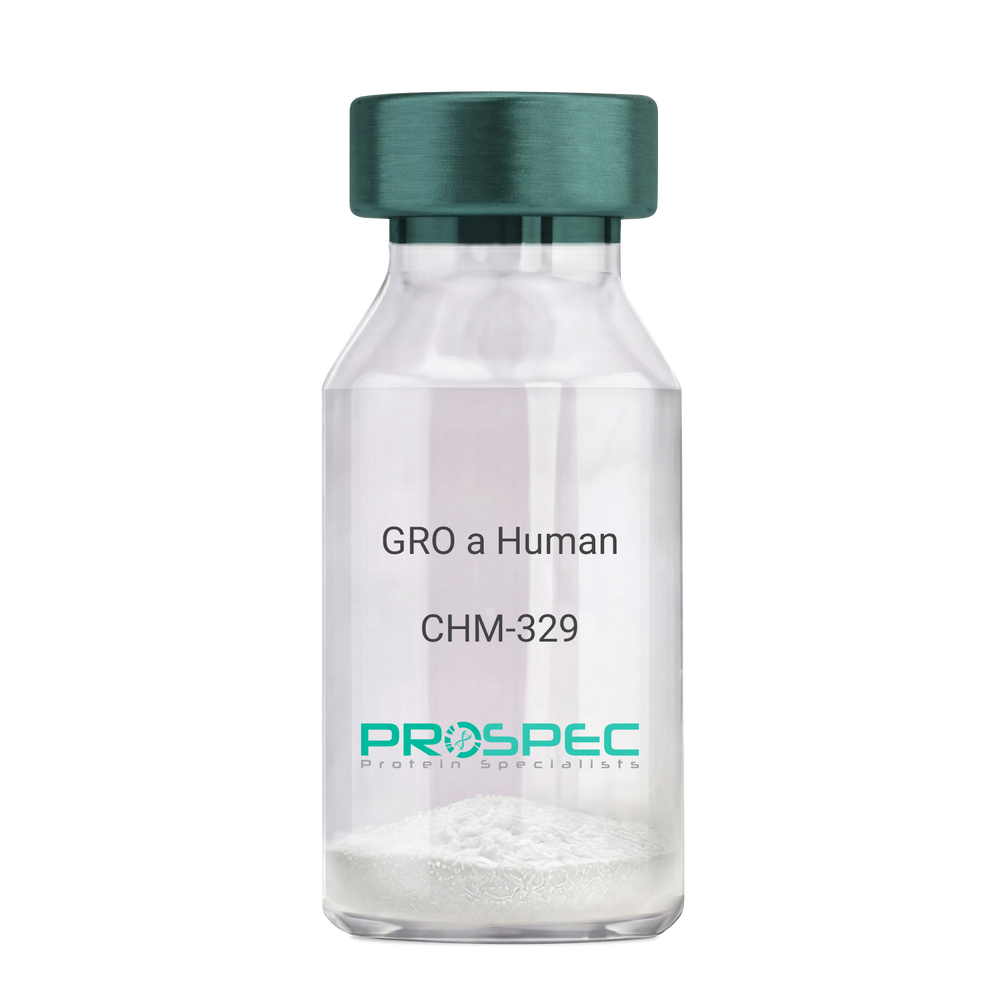
    CHM-329

    Price :

    Quantity :

    Shipping Method :

    Room Temp Icon

    Shipped at Room temp

    Add To Cart

    More Info

    • description
    • source
    • formulation
    • purity
    • biological activity
    • More Info
    • sds-page
    • Citations

    Description

    GRO Alpha Human Recombinant produced in E.Coli is a single,non-glycosylated, polypeptide chain containing 73 amino acids and having a molecular mass of 7811 Dalton. The GRO-alpha is purified by proprietary chromatographic techniques.

    Source

    Escherichia Coli.

    Formulation

    Lyophilized from a 0.2µm filtered concentrated (1mg/ml) solution in 20mM PB, pH 7.4, 50mM NaCl.

    Purity

    Greater than 97.0% as determined by:
    (a) Analysis by RP-HPLC.
    (b) Analysis by SDS-PAGE.

    Biological Activity

    Determined by its ability to chemoattract human peripheral blood neutrophils using a concentration range of 10.0-100.0 ng/ml.

    sds-page

    CXCL1 Human SDS-PAGE - Product image 1

    Citations

    More Info

    • Introduction

      Chemokine (C-X-C motif) ligand 1 (CXCL1) is a small cytokine belonging to the CXC chemokine family that was previously called GRO1 oncogene, Neutrophil-activating protein 3 (NAP-3) and melanoma growth stimulating activity, alpha (MSGA-a). It is secreted by human melanoma cells, has mitogenic properties and is implicated in melanoma pathogenesis. CXCL1 is expressed by macrophages, neutrophilsand epithelial cells, and has neutrophil chemoattractant activity. CXCL1 plays a role in spinal cord development by inhibiting the migration of oligodendrocyte precursors and is involved in the processes of angiogenesis, inflammation, wound healing, and tumorigenesis. This chemokine elicits its effects by signaling through the chemokine receptor CXCR2. The gene for CXCL1 is located on human chromosome 4 amongst genes for other CXC chemokines.

    • Synonyms

      Growth-regulated protein alpha, CXCL1, Melanoma growth stimulatory activity, MGSA, Neutrophil-activating protein 3, NAP-3, GRO-alpha (1-73), chemokine (C-X-C motif) ligand 1, GRO1, GROa, SCYB1, MGSA-a, MGSA alpha.

    • Physical Appearance

      Sterile Filtered White lyophilized (freeze-dried) powder.

    • Stability

      Lyophilized GRO-alpha although stable at room temperature for 3 weeks, should be stored desiccated below -18°C. Upon reconstitution CXCL1 should be stored at 4°C between 2-7 days and for future use below -18°C. For long term storage it is recommended to add a carrier protein (0.1% HSA or BSA).Please prevent freeze-thaw cycles.

    • Solubility

      It is recommended to reconstitute the lyophilized CXCL1 in sterile 18MΩ-cm H2O not less than 100µg/ml, which can then be further diluted to other aqueous solutions.

    • Amino Acid Sequence

      The sequence of the first five N-terminal amino acids was determined and was found to be Ala-Ser-Val-Ala-Thr.

    • Background

      What is the molecular weight/Mw of CXCL1 HUMAN Protein?
      CXCL1 HUMAN Protein has a total Mw of 7.81kDa.

      What is the source or expression system of CXCL1 HUMAN Protein?
      Escherichia Coli.

      What is the Purity of CXCL1 HUMAN Protein?
      CXCL1 HUMAN Protein is >97% pure as determined by SDS-PAGE.

      What is the Biological Activity of CXCL1 HUMAN Protein?
      Determined by its ability to chemoattract human peripheral blood neutrophils using a concentration range of 10.0-100.0 ng/ml.

      What is the amino acid sequence of CXCL1 HUMAN Protein?
      The sequence of the first five N-terminal amino acids was determined and was found to be Ala-Ser-Val-Ala-Thr.

      What applications can CXCL1 HUMAN Protein be used in?
      CXCL1 HUMAN Protein can probably be used in western blot, ELISA and Lateral Flow.

      What is the endotoxin level for CXCL1 HUMAN Protein?
      The endotoxin level is minimal, CXCL1 HUMAN Protein was purified using conventional chromatography techniques.

      Who supplies recombinant CXCL1 HUMAN that is in stock and available to order?
      ProSpec has the protein in stock and available for immediate delivery.

      Where can I order bulk mg quantities of CXCL1 HUMAN?
      ProSpec supplies bulk mg quantities at affordable prices that meets research and academic budgets.

    ProSpec's products are furnished for LABORATORY RESEARCH USE ONLY. The product may not be used as drugs, agricultural or pesticidal products, food additives or household chemicals.

    Gro A Human
  • View Data Sheet

    Name :

    CXCL3 Mouse

    Description:

    GRO-Gamma Mouse Recombinant (CXCL3)

    C-X-C motif chemokine 3, Dendritic cell inflammatory protein 1, Cxcl3, Dcip1, Gm1960.

    Product # :

    CHM-255

    Price :

    Quantity :

    Shipping Method :

    Room Temp Icon

    Shipped at Room temp

    Add To Cart

    More Info

    • description
    • source
    • formulation
    • purity
    • biological activity
    • More Info
    • Citations

    Description

    GRO-g Mouse Recombinant produced in E.Coli is a single,non-glycosylated, polypeptide chain containing 69 amino acids and having a molecular mass of 7.7kDa. The CXCL3 is purified by proprietary chromatographic techniques.

    Source

    Escherichia Coli.

    Formulation

    The Mouse CXCL3 lyophilized from a 0.2µm filtered concentrated solution in 1×PBS, pH 7.4.

    Purity

    Greater than 97.0% as determined by:
    (a) Analysis by RP-HPLC.
    (b) Analysis by SDS-PAGE.

    Biological Activity

    Determined by its ability to chemoattract 293 transfected CXCR2 cells using a concentration range of 10-100 ng/ml, corresponding to a specific activity of 10,000-100,000 units/mg.

    Citations

    More Info

    • Introduction

      Chemokine (C-X-C motif) ligand 3 (CXCL3) is a small cytokine belonging to the CXC chemokine family that is also known as GRO3 oncogene (GRO3), GRO protein gamma (GROg) and macrophage inflammatory protein-2-beta (MIP2b). CXCL3 controls migration and adhesion of monocytes and mediates it effects on its target cell by interacting with a cell surface chemokine receptor called CXCR2. The gene for CXCL3 is located on chromosome 4 in a cluster of other CXC chemokines.

    • Synonyms

      C-X-C motif chemokine 3, Dendritic cell inflammatory protein 1, Cxcl3, Dcip1, Gm1960.

    • Physical Appearance

      Sterile Filtered White lyophilized (freeze-dried) powder.

    • Stability

      Lyophilized GRO-gamma although stable at room temperature for 3 weeks, should be stored desiccated below -18°C. Upon reconstitution CXCL3 should be stored at 4°C between 2-7 days and for future use below -18°C.For long term storage it is recommended to add a carrier protein (0.1% HSA or BSA).Please prevent freeze-thaw cycles.

    • Solubility

      It is recommended to reconstitute the lyophilized GRO-gamma in sterile 18M-cm H2O not less than 100µg/ml, which can then be further diluted to other aqueous solutions.

    • Amino Acid Sequence

      SELRCQCLNT LPRVDFETIQ SLTVTPPGPH CTQTEVIATL KDGQEVCLNP QGPRLQIIIK KILKSGKSS.

    • Background

      What is the molecular weight/Mw of CXCL3 MOUSE Protein?
      CXCL3 MOUSE Protein has a total Mw of 7.7kDa.

      What is the source or expression system of CXCL3 MOUSE Protein?
      Escherichia Coli.

      What is the Purity of CXCL3 MOUSE Protein?
      CXCL3 MOUSE Protein is >97% pure as determined by SDS-PAGE.

      What is the Biological Activity of CXCL3 MOUSE Protein?
      Determined by its ability to chemoattract 293 transfected CXCR2 cells using a concentration range of 10-100 ng/ml, corresponding to a specific activity of 10,000-100,000 units/mg.

      What is the amino acid sequence of CXCL3 MOUSE Protein?
      SELRCQCLNT LPRVDFETIQ SLTVTPPGPH CTQTEVIATL KDGQEVCLNP QGPRLQIIIK KILKSGKSS.

      What applications can CXCL3 MOUSE Protein be used in?
      CXCL3 MOUSE Protein can probably be used in western blot, ELISA and Lateral Flow.

      What is the endotoxin level for CXCL3 MOUSE Protein?
      The endotoxin level is minimal, CXCL3 MOUSE Protein was purified using conventional chromatography techniques.

      Who supplies recombinant CXCL3 MOUSE that is in stock and available to order?
      ProSpec has the protein in stock and available for immediate delivery.

      Where can I order bulk mg quantities of CXCL3 MOUSE?
      ProSpec supplies bulk mg quantities at affordable prices that meets research and academic budgets.

    ProSpec's products are furnished for LABORATORY RESEARCH USE ONLY. The product may not be used as drugs, agricultural or pesticidal products, food additives or household chemicals.

    Gro G Mouse
  • View Data Sheet

    Name :

    CLTB Human

    Description:

    Clathrin, Light Chain B Human Recombinant

    Clathrin light chain B, Lcb, CLTB.

    Product # :

    PRO-1172

    Price :

    Quantity :

    Shipping Method :

    Ice Icon

    Shipped with Ice Packs

    Add To Cart

    More Info

    • description
    • source
    • formulation
    • purity
    • More Info
    • Citations

    Description

    CLTB Human Recombinant produced in E.Coli is a single, non-glycosylated polypeptide chain containing 234 amino acids (1-211 a.a) and having a molecular mass of 25.6kDa (Molecular size on SDS-PAGE will appear higher).CLTB is fused to a 23 amino acid His-tag at N-terminus & purified by proprietary chromatographic techniques.

    Source

    Escherichia Coli.

    Formulation

    CLTB protein solution (1mg/ml) containing 20mM Tris-HCl buffer, pH8.0, 10% glycerol, 0.2mM PMSF and 100mM NaCl.

    Purity

    Greater than 85.0% as determined by SDS-PAGE.

    Citations

    More Info

    • Introduction

      Clathrin light chain B (CLTB) is a member of the clathrin light chain family. Clathrin is a protein that has a key role in the formation of coated vesicles. CLTB functions as the key structural component of the lattice-type cytoplasmic face of coated pits and vesicles which capture certain macromolecules during receptor-mediated endocytosis. CLTB forms a triskelion form comprised of 3 clathrin heavy chains and 3 light chains. When the triskelia interact they form a polyhedral pattern which encircles the vesicle. CME (Clathrin-mediated endocytosis) controls numerous cellular physiological processes such as the internalization of growth factors and receptors, entry of pathogens, and synaptic transmission.

    • Synonyms

      Clathrin light chain B, Lcb, CLTB.

    • Physical Appearance

      Sterile Filtered colorless solution.

    • Stability

      Store at 4°C if entire vial will be used within 2-4 weeks. Store, frozen at -20°C for longer periods of time. For long term storage it is recommended to add a carrier protein (0.1% HSA or BSA).Avoid multiple freeze-thaw cycles.

    • Amino Acid Sequence

      MGSSHHHHHH SSGLVPRGSH MGSMADDFGF FSSSESGAPE AAEEDPAAAF LAQQESEIAG IENDEGFGAP AGSHAAPAQP GPTSGAGSED MGTTVNGDVF QEANGPADGY AAIAQADRLT QEPESIRKWR EEQRKRLQEL DAASKVTEQE WREKAKKDLE EWNQRQSEQV EKNKINNRAS
      EEAFVKESKE ETPGTEWEKV AQLCDFNPKS SKQCKDVSRL RSVLMSLKQT PLSR.

    ProSpec's products are furnished for LABORATORY RESEARCH USE ONLY. The product may not be used as drugs, agricultural or pesticidal products, food additives or household chemicals.

    Cltb Human
  • View Data Sheet

    Name :

    COAA E.Coli

    Description:

    Pantothenate Kinase E.Coli Recombinant

    PanK, ts-9, rts.

    Product # :

    PKA-022

    Price :

    Quantity :

    Shipping Method :

    Ice Icon

    Shipped with Ice Packs

    Add To Cart

    More Info

    • description
    • source
    • formulation
    • purity
    • More Info
    • Citations

    Description

    COAA E.Coli Recombinant produced in E.coli is a single, non-glycosylated polypeptide chain containing 340 amino acids (1-316) and having a molecular mass of 38.9kDa.COAA is fused to a 24 amino acid His-tag at N-terminus & purified by proprietary chromatographic techniques.

    Source

    E.coli.

    Formulation

    The COAA solution (1mg/ml) contains 20mM Tris-HCl buffer (pH 8.0), 200mM NaCl, 2mM DTT and 10% glycerol.

    Purity

    Greater than 95% as determined by SDS-PAGE.

    Citations

    More Info

    • Introduction

      COAA is a member of the prokaryotic pantothenate kinase family and it is the first enzyme in the Coenzyme A biosynthetic pathway. COAA phosphorylates pantothenate (vitamin B5) to form 4'-phosphopantothenate. The key factor controlling the intracellular CoA concentration is the regulation of COAA activity by feedback inhibition.

    • Synonyms

      PanK, ts-9, rts.

    • Physical Appearance

      Sterile Filtered colorless solution.

    • Stability

      Store at 4°C if entire vial will be used within 2-4 weeks. Store, frozen at -20°C for longer periods of time. For long term storage it is recommended to add a carrier protein (0.1% HSA or BSA).Avoid multiple freeze-thaw cycles.

    • Amino Acid Sequence

      MGSSHHHHHH SSGLVPRGSH MGSHMSIKEQ TLMTPYLQFD RNQWAALRDS VPMTLSEDEI ARLKGINEDL SLEEVAEIYL PLSRLLNFYI SSNLRRQAVL EQFLGTNGQR IPYIISIAGS VAVGKSTTAR VLQALLSRWP EHRRVELITT DGFLHPNQVL KERGLMKKKG FPESYDMHRL VKFVSDLKSG VPNVTAPVYS HLIYDVIPDG DKTVVQPDIL ILEGLNVLQS GMDYPHDPHH VFVSDFVDFS IYVDAPEDLL QTWYINRFLK FREGAFTDPD SYFHNYAKLT KEEAIKTAMT LWKEINWLNL KQNILPTRER ASLILTKSAN HAVEEVRLRK.

    ProSpec's products are furnished for LABORATORY RESEARCH USE ONLY. The product may not be used as drugs, agricultural or pesticidal products, food additives or household chemicals.

    Coaa
  • View Data Sheet

    Name :

    CD4 Human (125-202)

    Description:

    CD-4 (125-202 a.a.) Human Recombinant

    gp55, HLA-2, L3 / T4, Ly-4, T cell antigen T4/LEU3, T4, sCD4.

    Product # :

    CYT-315

    Price :

    Quantity :

    Shipping Method :

    Room Temp Icon

    Shipped at Room temp

    Add To Cart

    More Info

    • description
    • source
    • formulation
    • purity
    • More Info
    • Citations

    Description

    CD-4 Human Recombinant is fused with a 4kDa His Tag and encoding amino acids 125-202, having a total molecular weight of 19 kDa.

    Source

    Escherichia Coli.

    Formulation

    Each mg contains 1X PBS.

    Purity

    Greater than 90% as determined by SDS-PAGE.

    Citations

    More Info

    • Introduction

      CD4, a single chain transmembrane glycoprotein, is found on a T cell subset (helper/inducer) representing 45% of peripheral blood lymphocytes. It is also present on 80% of thymocytes and at a lower level on monocytes. It is involved in recognition of antigen presented along with MHC class II by APCs. It serves as receptor for HIV. Antibody to CD4 recognizes T-helper cells required for recognition of class II antigens. It reacts with ~60% of peripheral blood E rosette-positive (E+) cells while showing negligible reactivity with E- cells, monocytes, granulocytes, EBV-transformed B cell lines, and mouse splenocytes.

    • Synonyms

      gp55, HLA-2, L3 / T4, Ly-4, T cell antigen T4/LEU3, T4, sCD4.

    • Physical Appearance

      Sterile lyophilized powder.

    • Stability

      Store vial at -20oC to -80oC. When stored at the recommended temperature, this protein is stable for 12 months. Please avoid freeze-thaw cycles.

    • Solubility

      It is recommended to reconstitute the lyophilized CD-4 (125-202) in sterile 18MΩ-cm H2O not less than 100µg/ml, which can then be further diluted to other aqueous solutions.

    ProSpec's products are furnished for LABORATORY RESEARCH USE ONLY. The product may not be used as drugs, agricultural or pesticidal products, food additives or household chemicals.

    Cd4 202 Human
  • View Data Sheet

    Name :

    CD4 Antibody, Biotin

    Description:

    Rat Anti-Mouse CD4, Biotinylated

    gp55, HLA-2, L3 / T4, Ly-4, T cell antigen T4/LEU3, T4, sCD4, CD4mut.

    Product # :

    ANT-291

    Price :

    Quantity :

    Shipping Method :

    Room Temp Icon

    Shipped at Room temp

    Add To Cart

    More Info

    • formulation
    • More Info
    • Citations

    Formulation

    1mg/ml in PBS (after reconstitution).

    Citations

    More Info

    • Introduction

      CD4 is a cell-surface glycoprotein found on the mature helper T cells and immature thymocytes, as well as on monocytes and macrophages. (Some cytotoxic T cells have CD4 protein as well.) Normally, about 65% of T cells in the blood are CD4+ (have CD4 protein protruding from their membrane). A mature T cell with either have CD4 or CD8, but not both. During one stage of development T cells develop CD4 and CD8 receptors, but they eventually are differentiated in the thymus and become more specialized.

    • Synonyms

      gp55, HLA-2, L3 / T4, Ly-4, T cell antigen T4/LEU3, T4, sCD4, CD4mut.

    • Solubility

      Reconstitute with of H20. Mix gently, wash the sides of the vial and wait 30-60 seconds before use.

    • Immunogen

      Purified mouse LN CD4+ T cells.

    • Ig Subclass

      Rat IgG.

    • Clone

      mCD4.

    • Applications

      FACS staining, immunohistochemistry, Western Blotting. For staining, use 10 µl/1,000,000 cells.

    • Available Conjugates

      This antibody is also available unconjugated and conjugated to FITC.

    • Type

      Rat Anti Mouse Monoclonal.

    • Storage Procedures

      Lyophilized: store at 4°C. After reconstitution, if not intended for use within a month, aliquot and store at -20°C.

    • Purification Method

      Ion exchange column.

    ProSpec's products are furnished for LABORATORY RESEARCH USE ONLY. The product may not be used as drugs, agricultural or pesticidal products, food additives or household chemicals.

    Cd4 Mouse Antibody Biotin
  • View Data Sheet

    Name :

    CRTAM Human

    Description:

    Cytotoxic and Regulatory T Cell Molecule Human Recombinant

    Cytotoxic and Regulatory T Cell Molecule, Class I MHC Restricted T Cell Associated Molecule, Class-I MHC-Restricted T-Cell-Associated Molecule, Class-I MHC-Restricted T Cell Associated Molecule, Cytotoxic and Regulatory T-Cell Molecule, CD355 Antigen, CD355.

    Product # :

    PRO-2247

    Price :

    Quantity :

    Shipping Method :

    Ice Icon

    Shipped with Ice Packs

    Add To Cart

    More Info

    • description
    • source
    • formulation
    • purity
    • More Info
    • Citations

    Description

    CRTAM produced in Sf9 Insect cells is a single, glycosylated polypeptide chain containing 278 amino acids (18-287 a.a.) and having a molecular mass of 31.0kDa. (Molecular size on SDS-PAGE will appear at approximately 40-57kDa).CRTAM is expressed with an 8 amino acid His tag at C-Terminus and purified by proprietary chromatographic techniques.

    Source

    Sf9, Insect cells.

    Formulation

    CRTAM protein solution (1mg/ml) contains phosphate buffered saline (pH7.4) and 10% glycerol.

    Purity

    Greater than 90.0% as determined by SDS-PAGE.

    Citations

    More Info

    • Introduction

      Cytotoxic and Regulatory T Cell Molecule, also known as CRTAM belongs to the immunoglobulin superfamily which complies with the structural characteristics of the JAM family and is phylogenetically more closely related to nectin-like proteins. CRTAM is implicated in epithelial cell adhesion. Furthermore, CRTAM interacts with CADM1 as well as promotes natural killer (NK) cell cytotoxicity.

    • Synonyms

      Cytotoxic and Regulatory T Cell Molecule, Class I MHC Restricted T Cell Associated Molecule, Class-I MHC-Restricted T-Cell-Associated Molecule, Class-I MHC-Restricted T Cell Associated Molecule, Cytotoxic and Regulatory T-Cell Molecule, CD355 Antigen, CD355.

    • Physical Appearance

      Sterile filtered colorless solution.

    • Stability

      Store at 4°C if entire vial will be used within 2-4 weeks.Store, frozen at -20°C for longer periods of time. For long term storage it is recommended to add a carrier protein (0.1% HSA or BSA).Avoid multiple freeze-thaw cycles.

    • Amino Acid Sequence

      SLTNHTETIT VEEGQTLTLK CVTSLRKNSS LQWLTPSGFT IFLNEYPALK NSKYQLLHHS ANQLSITVPN VTLQDEGVYK CLHYSDSVST KEVKVIVLAT PFKPILEASV IRKQNGEEHV VLMCSTMRSK PPPQITWLLG NSMEVSGGTL HEFETDGKKC NTTSTLIIHT YGKNSTVDCI IRHRGLQGRK LVAPFRFEDL VTDEETASDA LERNSLSSQD PQQPTSTVSV TEDSSTSEID KEEKEQTTQD PDLTTEANPQ YLGLARKKSG LEHHHHHH.

    ProSpec's products are furnished for LABORATORY RESEARCH USE ONLY. The product may not be used as drugs, agricultural or pesticidal products, food additives or household chemicals.

    Crtam Human
  • View Data Sheet

    Name :

    CAMP Human

    Description:

    Cathelicidin Antimicrobial Peptide Human Recombinant

    CAP-18, CAP18, CRAMP, FALL-39, FALL39, HSD26, LL37, 18 kDa cationic antimicrobial protein, FALL-39 peptide antibiotic, Cathelicidin antimicrobial peptide.

    Product # :

    PRO-1405

    Price :

    Quantity :

    Shipping Method :

    Ice Icon

    Shipped with Ice Packs

    Add To Cart

    More Info

    • description
    • source
    • formulation
    • purity
    • More Info
    • Citations

    Description

    CAMP Human Recombinant produced in E.Coli is a single, non-glycosylated polypeptide chain containing 163 amino acids (34-173 a.a.) and having a molecular mass of 18.4kDa.CAMP is fused to a 23 amino acid His-tag at N-terminus.

    Source

    Escherichia Coli.

    Formulation

    CAMP protein solution (0.5mg/ml) contains 20mM Tris-HCl buffer (pH 8.0), 0.4M UREA and 10% glycerol.

    Purity

    Greater than 85.0% as determined by SDS-PAGE.

    Citations

    More Info

    • Introduction

      CAMP belongs to the antimicrobial peptide family, contains highly conserved N-terminal signal peptide, a cathelin domain and a structurally variable cationic antimicrobial peptide that produced by extracellular proteolysis from the C-terminus. CAMP has numerous functions besides the antimicrobial activity such as: cell chemotaxis, immune mediator induction and inflammatory response regulation.

    • Synonyms

      CAP-18, CAP18, CRAMP, FALL-39, FALL39, HSD26, LL37, 18 kDa cationic antimicrobial protein, FALL-39 peptide antibiotic, Cathelicidin antimicrobial peptide.

    • Physical Appearance

      Sterile Filtered clear solution.

    • Stability

      Store at 4°C if entire vial will be used within 2-4 weeks. Store, frozen at -20°C for longer periods of time. For long term storage it is recommended to add a carrier protein (0.1% HSA or BSA).Avoid multiple freeze-thaw cycles.

    • Amino Acid Sequence

      MGSSHHHHHH SSGLVPRGSH MGSQVLSYKE AVLRAIDGIN QRSSDANLYR LLDLDPRPTM DGDPDTPKPV SFTVKETVCP RTTQQSPEDC DFKKDGLVKR CMGTVTLNQA RGSFDISCDK DNKRFALLGD FFRKSKEKIG KEFKRIVQRI KDFLRNLVPR TES.

    ProSpec's products are furnished for LABORATORY RESEARCH USE ONLY. The product may not be used as drugs, agricultural or pesticidal products, food additives or household chemicals.

    Camp Human
  • View Data Sheet

    Name :

    Flagellin FliA (H)

    Description:

    Flagellin FliA (H) Recombinant

    Product # :

    PRO-2718

    Price :

    Quantity :

    Shipping Method :

    Room Temp Icon

    Shipped at Room temp

    Add To Cart

    More Info

    • description
    • source
    • formulation
    • purity
    • More Info
    • Citations

    Description

    Flagellin FliA (H) Recombinant produced in E.Coli is a single, non-glycosylated, polypeptide chain containing 302 amino acids and having a molecular mass of approximately 33.1kDa.The Flagellin FliA (H) is purified by proprietary chromatographic techniques.

    Source

    Escherichia Coli.

    Formulation

    Lyophilized from a 0.2um filtered concentrated solution in PBS, pH 7.4.

    Purity

    Greater than 97.0% as determined by SDS-PAGE and HPLC analyses.

    Citations

    More Info

    • Introduction

      Flagellin FliA (H), also known as RNA polymerase sigma factor for flagellar operon, Sigma F and Sigma-28, is a part of the FliA subfamily or sigma-70 factor family. This sigma factor controls the expression of flagella-related genes. Flagellin FliA (H) regulates the expression of genes involved in virulence. Flagellin FliA (H) is an initiation factors which endorses the attachment of RNA polymerase to specific initiation sites and are then released.

    • Physical Appearance

      Sterile Filtered White lyophilized (freeze-dried) powder.

    • Stability

      Lyophilized Flagellin FliA (H) although stable at room temperature for 3 weeks, should be stored desiccated below -18°C. Upon reconstitution Flagellin should be stored at 4°C between 2-7 days and for future use below -18°C.Please prevent freeze-thaw cycles.

    • Solubility

      It is recommended to reconstitute the lyophilized Flagellin FliA (H) in sterile 18MΩ-cm H2O not less than 100µg/ml, which can then be further diluted to other aqueous solutions.

    • Amino Acid Sequence

      MKGLKTGWIE KSVENIKTAY GIEPTGANKL KVTISDDGAY GVLASVTPKT GEFELHIDSS DFEKGDGESG NNIHGKLYDD RIIQHEMTHA VMNDALGIDK MNDLHDKNKL WFIEGTAEAM AGADERVKDI IGNDTQTGID NTKLSKLATR ADALLNGVSW NSSDEDYAAG YLMVKYIASK GIDLKAVMKE IKNTGASGLD NKIDLTNLKI DFKNNLENYI KDISKVHLDW DDDEKDVGSI LGSDHGHGDI KAEDVVKGTT PEKEQPLDKF KIIWPDDNSD NTTGKIQLQV GANEGQSITI LE

    ProSpec's products are furnished for LABORATORY RESEARCH USE ONLY. The product may not be used as drugs, agricultural or pesticidal products, food additives or household chemicals.

    Flagellin Flia H
  • View Data Sheet

    Name :

    CCL14 Human, His

    Description:

    HCC-1 (CCL14) Human Recombinant, His Tag

    Small inducible cytokine A14, CCL14, Chemokine CC-1/CC-3, HCC-1/HCC-3, HCC-1(1-74), NCC-2, chemokine (C-C motif) ligand 14, CC-1, CC-3, CKb1, MCIF, SY14, HCC-1, HCC-3, SCYL2, SCYA14.

    Product # :

    CHM-253

    Price :

    Quantity :

    Shipping Method :

    Ice Icon

    Shipped with Ice Packs

    Add To Cart

    More Info

    • description
    • source
    • formulation
    • purity
    • More Info
    • Citations

    Description

    HCC-1 Human Recombinant fused with a 21 amino acid His tag at N-terminus produced in E.Coli is a single, non-glycosylated, polypeptide chain containing 95 amino acids (20-93 a.a.) and having a molecular mass of 10.9kDa. The HCC-1 is purified by proprietary chromatographic techniques.

    Source

    Escherichia Coli.

    Formulation

    The HCC-1 solution (0.5 mg/ml) contains Phosphate Buffered Saline pH7.4 containing 10% glycerol.

    Purity

    Greater than 95.0% as determined by SDS-PAGE.

    Citations

    More Info

    • Introduction

      Chemokine (C-C motif) ligand 14 (CCL14) is a small cytokine belonging to the CC chemokine family. It is also commonly known as HCC-1. It is produced as a protein precursor that is procesed to generate a mature active protein containing 74 amino acids that and is 46% identical in amino acid composition to CCL3 and CCL4. This chemokine is expressed in various tissues including spleen, bone marrow, liver, muscle, and gut. CCL13 activates monocytes, but does not induce their chemotaxis. Human CCL13 is located on chromosome 17 within a cluster of other chemokines belonging to the CC family.

    • Synonyms

      Small inducible cytokine A14, CCL14, Chemokine CC-1/CC-3, HCC-1/HCC-3, HCC-1(1-74), NCC-2, chemokine (C-C motif) ligand 14, CC-1, CC-3, CKb1, MCIF, SY14, HCC-1, HCC-3, SCYL2, SCYA14.

    • Physical Appearance

      Sterile Filtered colorless solution.

    • Stability

      Store at 4°C if entire vial will be used within 2-4 weeks. Store, frozen at -20°C for longer periods of time. For long term storage it is recommended to add a carrier protein (0.1% HSA or BSA).Avoid multiple freeze-thaw cycles.

    • Amino Acid Sequence

      MGSSHHHHHH SSGLVPRGSH MTKTESSSRG PYHPSECCFT YTTYKIPRQR IMDYYETNSQ CSKPGIVFIT KRGHSVCTNP SDKWVQDYIK DMKEN.

    • Background

      What is the molecular weight/Mw of CCL14 HUMAN, HIS Protein?
      CCL14 HUMAN, HIS Protein has a total Mw of 10.9kDa.

      What is the source or expression system of CCL14 HUMAN, HIS Protein?
      Escherichia Coli.

      What is the Purity of CCL14 HUMAN, HIS Protein?
      CCL14 HUMAN, HIS Protein is >95% pure as determined by SDS-PAGE.

      What is the Biological Activity of CCL14 HUMAN, HIS Protein?
      The biological functionality of CCL14 HUMAN, HIS Protein will be determined in the future.

      What is the amino acid sequence of CCL14 HUMAN, HIS Protein?
      MGSSHHHHHH SSGLVPRGSH MTKTESSSRG PYHPSECCFT YTTYKIPRQR IMDYYETNSQ CSKPGIVFIT KRGHSVCTNP SDKWVQDYIK DMKEN.

      What applications can CCL14 HUMAN, HIS Protein be used in?
      CCL14 HUMAN, HIS Protein can probably be used in western blot, ELISA and Lateral Flow.

      What is the endotoxin level for CCL14 HUMAN, HIS Protein?
      The endotoxin level is minimal, CCL14 HUMAN, HIS Protein was purified using conventional chromatography techniques.

      Who supplies recombinant CCL14 HUMAN, HIS that is in stock and available to order?
      ProSpec has the protein in stock and available for immediate delivery.

      Where can I order bulk mg quantities of CCL14 HUMAN, HIS?
      ProSpec supplies bulk mg quantities at affordable prices that meets research and academic budgets.

    ProSpec's products are furnished for LABORATORY RESEARCH USE ONLY. The product may not be used as drugs, agricultural or pesticidal products, food additives or household chemicals.

    Hcc 1 Human His
  • View Data Sheet

    Name :

    NANA E.Coli

    Description:

    N-Acetylneuraminate Lyase E.Coli Recombinant

    N-acetylneuraminate lyase, N-acetylneuraminate pyruvate-lyase, N-acetylneuraminic acid aldolase, NALase, Sialate lyase, Sialic acid aldolase, Sialic acid lyase, nanA, npl, b3225, JW3194.

    Product # :

    ENZ-128

    Price :

    Quantity :

    Shipping Method :

    Ice Icon

    Shipped with Ice Packs

    Add To Cart

    More Info

    • description
    • source
    • formulation
    • purity
    • More Info
    • Citations

    Description

    NANA produced in E.Coli is a single, non-glycosylated polypeptide chain containing 317 amino acids (1-297 a.a.) and having a molecular mass of 34.7kDa.NANA is fused to a 20 amino acid His-tag at N-terminus & purified by proprietary chromatographic techniques.

    Source

    Escherichia Coli.

    Formulation

    The NANA protein solution (1mg/ml) 20mM Tris-HCl buffer (pH8.0) and 20% glycerol.

    Purity

    Greater than 95% as determined by SDS-PAGE.

    Citations

    More Info

    • Introduction

      N-acetylneuraminate lyase (NanA) is a member of a family of lyases, specifically the oxo-acid-lyases, which cleave carbon-carbon bonds. NanA catalyzes the cleavage of N-acetylneuraminic acid (sialic acid) to form pyruvate and N-acetyl-D-mannosamine. NanA is inhibited by reduction with NaBH4 in the presence of the substrate, which indicates that it belongs to the Schiff-base-forming Class I aldolases. NanA is strongly inhibited by Cu2+ ions, p-chloromercuribenzoate and N-bromosuccinimide, it is also inhibited competitively by the reaction product, pyruvate, and its structurally related compounds, dihydroxyacetone and DL-glyceraldehyde.

    • Synonyms

      N-acetylneuraminate lyase, N-acetylneuraminate pyruvate-lyase, N-acetylneuraminic acid aldolase, NALase, Sialate lyase, Sialic acid aldolase, Sialic acid lyase, nanA, npl, b3225, JW3194.

    • Physical Appearance

      Sterile Filtered clear solution.

    • Stability

      Store at 4°C if entire vial will be used within 2-4 weeks. Store, frozen at -20°C for longer periods of time. For long term storage it is recommended to add a carrier protein (0.1% HSA or BSA). Avoid multiple freeze-thaw cycles.

    • Amino Acid Sequence

      MGSSHHHHHH SSGLVPRGSH MATNLRGVMA ALLTPFDQQQ ALDKASLRRL VQFNIQQGID GLYVGGSTGE AFVQSLSERE QVLEIVAEEA KGKIKLIAHV GCVSTAESQQ LAASAKRYGF DAVSAVTPFY YPFSFEEHCD HYRAIIDSAD GLPMVVYNIP ALSGVKLTLD QINTLVTLPG
      VGALKQTSGD LYQMEQIRRE HPDLVLYNGY DEIFASGLLA GADGGIGSTY NIMGWRYQGI VKALKEGDIQ TAQKLQTECN KVIDLLIKTG VFRGLKTVLH YMDVVSVPLC RKPFGPVDEK YLPELKALAQ QLMQERG.

    ProSpec's products are furnished for LABORATORY RESEARCH USE ONLY. The product may not be used as drugs, agricultural or pesticidal products, food additives or household chemicals.

    Nana Ecoli
  • View Data Sheet

    Name :

    GLC8 Yeast

    Description:

    GLC8 Yeast Recombinant

    Protein GLC8, GLC8, YMR311C, YM9924.03C.

    Product # :

    PRO-540

    Price :

    Quantity :

    Shipping Method :

    Ice Icon

    Shipped with Ice Packs

    Add To Cart

    More Info

    • description
    • source
    • formulation
    • purity
    • More Info
    • Citations

    Description

    GLC8 Yeast (Saccharomyces cerevisiae) Recombinant produced in E.coli is a single, glycosylated polypeptide chain containing 265 amino acids (1-229) and having a molecular mass of 30.7 kDa (molecular size on SDS-PAGE will appear higher). The GLC8 is fused to a 35 amino acid His Tag at N-Terminus and purified by standard chromatography techniques.

    Source

    Escherichia Coli.

    Formulation

    The protein solution (1mg/ml) contains 20mM Tris-HCl pH-8, 1mM DTT, and 10% glycerol.

    Purity

    Greater than 95% as determined by SDS-PAGE.

    Citations

    More Info

    • Introduction

      GLC8 is a regulatory subunit of protein phosphatase 1 (Glc7p). GLC8 plays a role in glycogen metabolism and chromosome segregation, and regulates Glc7p activity through conformational alteration; ortholog of the mammalian protein phosphatase inhibitor 2. Under regular conditions, GLC8 triggers GLC7, but when GLC8 is over epxressed, it inhibits Glc7p function. GLC8 is activated upon phosphoylation by Pho85p complexed with four cyclins (Pcl6p, Pcl7p, Pcl8p, or Pcl10p).

    • Synonyms

      Protein GLC8, GLC8, YMR311C, YM9924.03C.

    • Physical Appearance

      Sterile Filtered colorless solution.

    • Stability

      Store at 4°C if entire vial will be used within 2-4 weeks. Store, frozen at -20°C for longer periods of time. For long term storage it is recommended to add a carrier protein (0.1% HSA or BSA). Avoid multiple freeze-thaw cycles.

    • Amino Acid Sequence

      MRGSHHHHHH GMASMTGGQQ MGRDLYDDDD KDRWGSMGGI LKNPLALSPE QLAQQDPETL EEFRRQVYEN TQKNAKLTSH KRNIPGLDNT KEEGEIIGTS STFLPKDTLS LKHEQDMLAK MTPEERVQWN QRNLAENEIT KKQFQDIHID EPKTPYQGAV DPHGEYYRVD DDEDEDNSDK KPCQVANDDI DDLSLGEPEF EIKENKQPDF ETNDENDEDS PEARHKKFEE MRKKHYDVRA IFNKKSREAL KDEDEDEDDS TTKEP.

    ProSpec's products are furnished for LABORATORY RESEARCH USE ONLY. The product may not be used as drugs, agricultural or pesticidal products, food additives or household chemicals.

    Glc8
  • View Data Sheet

    Name :

    CD58 Antibody, Biotin

    Description:

    CD58, Mouse Anti-Human, Biotin

    CD58, LFA-3, Ag3, Surface glycoprotein LFA-3.

    Product # :

    ANT-278

    Price :

    Quantity :

    Shipping Method :

    Room Temp Icon

    Shipped at Room temp

    Add To Cart

    More Info

    • More Info
    • Citations

    Citations

    More Info

    • Introduction

      CD58 is part of the immunoglobulin superfamily. CD58 is a ligand of the T lymphocyte CD2 protein, and is invloved in adhesion and activation of T lymphocytes. CD58 is localized to the plasma membrane.

    • Synonyms

      CD58, LFA-3, Ag3, Surface glycoprotein LFA-3.

    • Solubility

      Reconstitute with of H20. Mix gently, wash the sides of the vial and wait 30-60 seconds before use.

    • Immunogen

      Human Erythrocytes.

    • Ig Subclass

      Mouse IgG1.

    • Clone

      hCD58.

    • Applications

      Staining antibody. For staining, use 10µl/1,000,000 cells.

    • Available Conjugates

      This antibody is also available unconjugated to and conjugated to FITC. For staining with biotin or FITC-conjugated antibody use 5-10µl/1,000,000 cells.

    • Type

      Mouse Anti Human Monoclonal.

    • Storage Procedures

      Lyophilized: store at 4°C. After reconstitution, if not intended for use within a month, aliquot and store at -20°C.

    • Purification Method

      Ion-Exchange Column Protein concentration1mg/ml in PBS (after reconstitution).

    ProSpec's products are furnished for LABORATORY RESEARCH USE ONLY. The product may not be used as drugs, agricultural or pesticidal products, food additives or household chemicals.

    Cd58 Antibody Biotin
  • View Data Sheet

    Name :

    CX3CL1 Human, Sf9

    Description:

    Fractalkine (CX3CL1) Human Recombinant, Sf9

    Fractalkine, CX3CL1, Neurotactin, CX3C membrane-anchored chemokine, Small inducible cytokine D1, NTN, NTT, CXC3, CXC3C, SCYD1, ABCD-3, C3Xkine.

    Product # :

    CHM-042

    Price :

    Quantity :

    Shipping Method :

    Ice Icon

    Shipped with Ice Packs

    Add To Cart

    More Info

    • description
    • source
    • formulation
    • purity
    • More Info
    • SDS-PAGE
    • Citations

    Description

    Fractalkine Human Recombinant produced in Sf9 Baculovirus cells is a single, glycosylated polypeptide chain containing 323 amino acids (25-339aa) and having a molecular mass of 34.3kDa.Fractalkine is fused to a 8 amino acid His tag at C-terminus and purified by proprietary chromatographic techniques.

    Source

    Sf9, Baculovirus cells.

    Formulation

    The Fractalkine solution (1 mg/ml) contains 10% Glycerol and Phosphate Buffered Saline (pH 7.4).

    Purity

    Greater than 90.0% as determined by SDS-PAGE.

    SDS-PAGE

    CX3CL1 Human, Sf9-SDS-PAGE - Product image 1

    Citations

    More Info

    • Introduction

      Fractalkine soluble form is chemotactic for t-cells and monocytes, but not for neutrophils. Fractalkine membrane-bound form promotes adhesion of those leukocytes to endothelial cells. Fractalkine regulates leukocyte adhesion and migration processes at the endothelium and binds to CX3CR1. Fractalkine gene is located on human chromosome 16 along with some CC chemokines known as CCL17 and CCL22.

    • Synonyms

      Fractalkine, CX3CL1, Neurotactin, CX3C membrane-anchored chemokine, Small inducible cytokine D1, NTN, NTT, CXC3, CXC3C, SCYD1, ABCD-3, C3Xkine.

    • Physical Appearance

      Sterile Filtered colorless solution.

    • Stability

      Store at 4°C if entire vial will be used within 2-4 weeks. Store, frozen at -20°C for longer periods of time. For long term storage it is recommended to add a carrier protein (0.1% HSA or BSA).Avoid multiple freeze-thaw cycles.

    • Amino Acid Sequence

      QHHGVTKCNI TCSKMTSKIP VALLIHYQQN QASCGKRAII LETRQHRLFC ADPKEQWVKD
      AMQHLDRQAA ALTRNGGTFE KQIGEVKPRT TPAAGGMDES VVLEPEATGE SSSLEPTPSS
      QEAQRALGTS PELPTGVTGS SGTRLPPTPK AQDGGPVGTE LFRVPPVSTA ATWQSSAPHQ
      PGPSLWAEAK TSEAPSTQDP STQASTASSP APEENAPSEG QRVWGQGQSP RPENSLEREE
      MGPVPAHTDA FQDWGPGSMA HVSVVPVSSE GTPSREPVAS GSWTPKAEEP IHATMDPQRL GVLITPVPDA QAATRLEHHH HHH

    • Background

      What is the molecular weight/Mw of CX3CL1 HUMAN, SF9 Protein?
      CX3CL1 HUMAN, SF9 Protein has a total Mw of 34.3kDa.

      What is the source or expression system of CX3CL1 HUMAN, SF9 Protein?
      Sf9, Baculovirus cells.

      What is the Purity of CX3CL1 HUMAN, SF9 Protein?
      CX3CL1 HUMAN, SF9 Protein is >90% pure as determined by SDS-PAGE.

      What is the Biological Activity of CX3CL1 HUMAN, SF9 Protein?
      The biological functionality of CX3CL1 HUMAN, SF9 Protein will be determined in the future.

      What is the amino acid sequence of CX3CL1 HUMAN, SF9 Protein?
      QHHGVTKCNI TCSKMTSKIP VALLIHYQQN QASCGKRAII LETRQHRLFC ADPKEQWVKD
      AMQHLDRQAA ALTRNGGTFE KQIGEVKPRT TPAAGGMDES VVLEPEATGE SSSLEPTPSS
      QEAQRALGTS PELPTGVTGS SGTRLPPTPK AQDGGPVGTE LFRVPPVSTA ATWQSSAPHQ
      PGPSLWAEAK TSEAPSTQDP STQASTASSP APEENAPSEG QRVWGQGQSP RPENSLEREE
      MGPVPAHTDA FQDWGPGSMA HVSVVPVSSE GTPSREPVAS GSWTPKAEEP IHATMDPQRL GVLITPVPDA QAATRLEHHH HHH

      What applications can CX3CL1 HUMAN, SF9 Protein be used in?
      CX3CL1 HUMAN, SF9 Protein can probably be used in western blot, ELISA and Lateral Flow.

      What is the endotoxin level for CX3CL1 HUMAN, SF9 Protein?
      The endotoxin level is minimal, CX3CL1 HUMAN, SF9 Protein was purified using conventional chromatography techniques.

      Who supplies recombinant CX3CL1 HUMAN, SF9 that is in stock and available to order?
      ProSpec has the protein in stock and available for immediate delivery.

      Where can I order bulk mg quantities of CX3CL1 HUMAN, SF9?
      ProSpec supplies bulk mg quantities at affordable prices that meets research and academic budgets.

    ProSpec's products are furnished for LABORATORY RESEARCH USE ONLY. The product may not be used as drugs, agricultural or pesticidal products, food additives or household chemicals.

    Cx3Cl1 Human
  • View Data Sheet

    Name :

    TSLP Human

    Description:

    Thymic Stromal Lymphopoietin Human Recombinant

    Thymic Stromal Lymphopoietin, TSLP.

    Product # :

    CYT-572

    Price :

    Quantity :

    Shipping Method :

    Room Temp Icon

    Shipped at Room temp

    Add To Cart

    More Info

    • description
    • source
    • formulation
    • purity
    • biological activity
    • More Info
    • Citations

    Description

    TSLP Human Recombinant produced in E.Coli is a single, non-glycosylated polypeptide chain containing 132 amino acids and having a molecular mass of 15 kDa.The TSLP is purified by proprietary chromatographic techniques.

    Source

    Escherichia Coli.

    Formulation

    Lyophilized from a concentrated solution (1mg/ml) contains 130mM NaCl, and 20mM sodium phosphate, pH 7.4.

    Purity

    Greater than 97.0% as determined by:
    (a) Analysis by RP-HPLC.
    (b) Analysis by SDS-PAGE.

    Biological Activity

    The ED50 is determined by the ability to induce proliferation of human Interleukin-7 receptor alpha & human TSLP Receptor co-transfected with mouse BaF3 cells which was found to be less than 0.3ng/ml.

    Citations

    More Info

    • Introduction

      TSLP protein is a hemopoietic cytokine which signals throughout a heterodimeric receptor complex composed of the thymic stromal lymphopoietin receptor & the Interleukin-7 receptor alpha chain. TSLP impacts myeloid cells thus induces the discharge of T cell-attracting chemokines from monocytes & increases the growth of CD11c(+) dendritic cells. TSLP is mainly expressed in the heart, liver and prostate. TSLP is related in its biological activities with IL-7 and binds with the heterodimeric receptor complex consisting of the Interleukin-7 receptor alpha chain & the TSLPR. Similar to IL-7, TSLP enhances phosphorylation of STAT3 and STAT5, though uses kinases excluding JAKs for its activation. TSLP induces the release of T cell-attracting chemokines such asTARC & MDC from monocytes & triggers CD11c(+) dendritic cells. TSLP activated dendritic cells primes naive T cells to manufacture pro-allergic cytokines such as Iinterleukin-4, Interleukin-5, Interleukin-13 and TNF-alpha whereas down-regulating Interleukin-10 and IFN-gamma play a role in the initiation of allergic inflammation.

    • Synonyms

      Thymic Stromal Lymphopoietin, TSLP.

    • Physical Appearance

      Sterile Filtered White lyophilized (freeze-dried) powder.

    • Stability

      Lyophilized TSLP although stable at room temperature for 3 weeks, should be stored desiccated below -18°C. Upon reconstitution TSLP should be stored at 4°C between 2-7 days and for future use below -18°C.For long term storage it is recommended to add a carrier protein (0.1% HSA or BSA).Please prevent freeze-thaw cycles.

    • Solubility

      It is recommended to reconstitute the lyophilized TSLP in sterile 18MΩ-cm H2O not less than 100µg/ml, which can then be further diluted to other aqueous solutions.

    • Amino Acid Sequence

      MYDFTNCDFE KIKAAYLSTI SKDLITYMSG TKSTEFNNTV SCSNRPHCLT EIQSLTFNPT AGCASLAKEM FAMKTKAALA IWCPGYSETQ INATQAMKKR RKRKVTTNKC LEQVSQLQGL WRRFNRPLLK QQ.

    ProSpec's products are furnished for LABORATORY RESEARCH USE ONLY. The product may not be used as drugs, agricultural or pesticidal products, food additives or household chemicals.

    Tslp Human
  • View Data Sheet

    Name :

    CD8 Biotin Antibody

    Description:

    CD8, Rat Anti-Mouse, Biotin

    CD8, MAL, p32.

    Product # :

    ANT-281

    Price :

    Quantity :

    Shipping Method :

    Room Temp Icon

    Shipped at Room temp

    Add To Cart

    More Info

    • formulation
    • More Info
    • Citations

    Formulation

    1mg/ml in PBS (after reconstitution).

    Citations

    More Info

    • Introduction

      CD8 is a cell surface glycoprotein found on most cytotoxic T lymphocytes that mediates efficient cell-cell interactions within the immune system. CD8 acts as a co-receptor, and the T-cell receptor on the T lymphocyte recognize antigen displayed by an antigen presenting cell (APC) in the context of class I MHC molecules. The functional CD8 is either a homodimer composed of two alpha chains, or a heterodimer composed of one alpha and one beta chain. Both alpha and beta chains share significant homology to immunoglobulin variable light chains.
      CD8 identifies cytotoxic/suppressor t-cells that interact with MHC class I bearing targets. CD8 is thought to play a role in the process of t-cell mediated killing. CD8 alpha chains bind to class-I MHC molecules alpha-3 domains.

    • Synonyms

      CD8, MAL, p32.

    • Solubility

      Reconstitute with of H20. Mix gently, wash the sides of the vial and wait 30-60 seconds before use.

    • Immunogen

      Purified Mouse LN T cells.

    • Ig Subclass

      Rat IgM.

    • Clone

      NYRmCD8.

    • Applications

      FACS staining, immunohistochemistry, Western Blotting. For staining, use 10 µl/1,000,000 cells.

    • Available Conjugates

      This antibody is only available unconjugated and conjugated to FITC.

    • Type

      Rat Anti Mouse Monoclonal.

    • Storage Procedures

      Lyophilized: store at 4°C. After reconstitution, if not intended for use within a month, aliquot and store at -20°C.

    • Purification Method

      Ion Exchange Column.

    ProSpec's products are furnished for LABORATORY RESEARCH USE ONLY. The product may not be used as drugs, agricultural or pesticidal products, food additives or household chemicals.

    Cd8 Antibody Biotin
  • View Data Sheet

    Name :

    MIP 1a Human, His

    Description:

    Macrophage Inflammatory Protein-1 Alpha Human Recombinant (CCL3), His Tag

    Small inducible cytokine A3, CCL3, Macrophage inflammatory protein 1-alpha, MIP-1-alpha, Tonsillar lymphocyte LD78 alpha protein, G0/G1 switch regulatory protein 19-1, G0S19-1 protein, SIS-beta, PAT 464.1, chemokine (C-C motif) ligand 3, MIP1A, SCYA3, G0S19-1, LD78ALPHA.

    Product # :

    CHM-347

    Price :

    Quantity :

    Shipping Method :

    Ice Icon

    Shipped with Ice Packs

    Add To Cart

    More Info

    • description
    • source
    • formulation
    • purity
    • More Info
    • Citations

    Description

    MIP-1a Mouse Recombinant produced in E.Coli is a single, non-glycosylated polypeptide chain containing 90 amino acids (24-92 a.a.) and having a molecular mass of 10.0kDa. MIP-1a is fused to a 21 amino acid His-tag at N-terminus & purified by proprietary chromatographic techniques.

    Source

    Escherichia Coli.

    Formulation

    MIP-1a protein solution (0.25mg/ml) containing 10mM Sodium Citrate buffer (pH 3.5) and 20% glycerol.

    Purity

    Greater than 90.0% as determined by SDS-PAGE.

    Citations

    More Info

    • Introduction

      Macrophage Inflammatory Proteins (MIP) belong to the family of chemotactic cytokines known as chemokines. In humans, there are two major forms, MIP-1a and MIP-1b that are now officially named CCL3 and CCL4 respectively. Both are major factors produced by macrophages after they are stimulated with bacterial endotoxins. They activate human granulocytes (neutrophils, eosinophils and basophils) which can lead to acute neutrophilic inflammation. They also induce the synthesis and release of other pro-inflammatory cytokines such as interleukin 1 (IL-1), IL-6 and TNF-a from fibroblasts and macrophages. The genes for CCL3 and CCL4 are both located on human chromosome 17.

    • Synonyms

      Small inducible cytokine A3, CCL3, Macrophage inflammatory protein 1-alpha, MIP-1-alpha, Tonsillar lymphocyte LD78 alpha protein, G0/G1 switch regulatory protein 19-1, G0S19-1 protein, SIS-beta, PAT 464.1, chemokine (C-C motif) ligand 3, MIP1A, SCYA3, G0S19-1, LD78ALPHA.

    • Physical Appearance

      Sterile Filtered clear solution.

    • Stability

      Store at 4°C if entire vial will be used within 2-4 weeks. Store, frozen at -20°C for longer periods of time. For long term storage it is recommended to add a carrier protein (0.1% HSA or BSA). Avoid multiple freeze-thaw cycles.

    • Amino Acid Sequence

      MGSSHHHHHH SSGLVPRGSH MSLAADTPTA CCFSYTSRQI PQNFIADYFE TSSQCSKPGV IFLTKRSRQVCADPSEEWVQ KYVSDLELSA.

    • Background

      What is the molecular weight/Mw of MIP 1A HUMAN, HIS Protein?
      MIP 1A HUMAN, HIS Protein has a total Mw of 10kDa.

      What is the source or expression system of MIP 1A HUMAN, HIS Protein?
      Escherichia Coli.

      What is the Purity of MIP 1A HUMAN, HIS Protein?
      MIP 1A HUMAN, HIS Protein is > 90% pure as determined by SDS-PAGE.

      What is the Biological Activity of MIP 1A HUMAN, HIS Protein?
      The biological functionality of MIP 1A HUMAN, HIS Protein will be determined in the future.

      What is the amino acid sequence of MIP 1A HUMAN, HIS Protein?
      MGSSHHHHHH SSGLVPRGSH MSLAADTPTA CCFSYTSRQI PQNFIADYFE TSSQCSKPGV IFLTKRSRQVCADPSEEWVQ KYVSDLELSA.

      What applications can MIP 1A HUMAN, HIS Protein be used in?
      MIP 1A HUMAN, HIS Protein can probably be used in western blot, ELISA and Lateral Flow.

      What is the endotoxin level for MIP 1A HUMAN, HIS Protein?
      The endotoxin level is minimal, MIP 1A HUMAN, HIS Protein was purified using conventional chromatography techniques.


    ProSpec's products are furnished for LABORATORY RESEARCH USE ONLY. The product may not be used as drugs, agricultural or pesticidal products, food additives or household chemicals.

    Mip 1A Human His
  • View Data Sheet

    Name :

    CXCL12 Mouse beta

    Description:

    Stromal Cell Derived Factor-1 Beta Mouse Recombinant (CXCL12)

    SDF-1, CXCL12, Pre-B cell growth-stimulating factor, PBSF, hIRH, chemokine (C-X-C motif) ligand 12, SDF1, SDF1B, TPAR1, SCYB12, SDF-1b, TLSF-b, 12-O-tetradecanoylphorbol 13-acetate repressed protein 1, Thymic lymphoma cell-stimulating factor, TLSF.

    Product # :

    CHM-326

    Price :

    Quantity :

    Shipping Method :

    Room Temp Icon

    Shipped at Room temp

    Add To Cart

    More Info

    • description
    • source
    • formulation
    • purity
    • biological activity
    • More Info
    • Citations

    Description

    Stromal Cell-Derived Factor-1 beta Mouse Recombinant produced in E.Coli is a non-glycosylated, Polypeptide chain containing 72 amino acids and having a molecular mass of 8513 Dalton. The SDF-1b is purified by proprietary chromatographic techniques.

    Source

    Escherichia Coli.

    Formulation

    The CXCL12 protein was lyophilized from a concentrated (1mg/ml) sterile solution containing no additives.

    Purity

    Greater than 98.0% as determined by:
    (a) Analysis by RP-HPLC.
    (b) Analysis by SDS-PAGE.

    Biological Activity

    The specific activity as determined by its ability to chemoattract human monocytes at 50-100ng/ml corresponding to a Specific Activity of 10,000-20,000IU/mg.

    Citations

    More Info

    • Introduction

      SDF-1 (stromal cell-derived factor-1) is small cytokine belonging to the chemokine family that is officially designated Chemokine (C-X-C motif) ligand 12 (CXCL12). It is produced in two forms, SDF-1?/CXCL12a and SDF-1?/CXCL12b, by alternate splicing of the same gene. Chemokines are characterized by the presence of four conserved cysteines, which form two disulfide bonds. The CXCL12 proteins belong to the group of CXC chemokines, whose initial pair of cysteines are separated by one intervening amino acid. CXCL12 is strongly chemotactic for lymphocytes and has been implicated as an important cell co-ordinator during development. During embryogenesis it directs the migration of hematopoietic cells from foetal liver to bone marrow. Mice which were knocked-out for CXCL12 gene were lethal before the birth or within just 1 hour of life. As another role, CXCL12a alters also the electrophysiology of neurons. CXCL12 was shown to be expressend in many tissues in mice (including brain, thymus, heart, lung, liver, kidney, spleen and bone marrow).
      The receptor for this chemokine is CXCR4, which was previously called fusin. This CXCL12-CXCR4 interaction used to be considered exclusive (unlike for other chemokines and their receptors), but recently it was suggested that CXCL12 is also bound by CXCR7 receptor.
      The gene for CXCL12 is located on human chromosome 10. In human and mouse both CXCL12 and CXCR4 show high identity of sequence: 99% and 90%, respectively.

    • Synonyms

      SDF-1, CXCL12, Pre-B cell growth-stimulating factor, PBSF, hIRH, chemokine (C-X-C motif) ligand 12, SDF1, SDF1B, TPAR1, SCYB12, SDF-1b, TLSF-b, 12-O-tetradecanoylphorbol 13-acetate repressed protein 1, Thymic lymphoma cell-stimulating factor, TLSF.

    • Physical Appearance

      Sterile Filtered White lyophilized (freeze-dried) powder.

    • Stability

      Lyophilized SDF-1b although stable at room temperature for 3 weeks, should be stored desiccated below -18°C. Upon reconstitution CXCL12 should be stored at 4°C between 2-7 days and for future use below -18°C.For long term storage it is recommended to add a carrier protein (0.1% HSA or BSA).Please prevent freeze-thaw cycles.

    • Solubility

      It is recommended to reconstitute the lyophilized Stromal Cell-Derived Factor-1b in sterile 18MΩ-cm H2O not less than 100µg/ml, which can then be further diluted to other aqueous solutions.

    • Amino Acid Sequence

      The sequence of the first five N-terminal amino acids was determined and was found to be Lys-Pro-Val-Ser-Leu.

    • Background

      What is the molecular weight/Mw of CXCL12 MOUSE BETA Protein?
      CXCL12 MOUSE BETA Protein has a total Mw of 8.5kDa.

      What is the source or expression system of CXCL12 MOUSE BETA Protein?
      Escherichia Coli.

      What is the Purity of CXCL12 MOUSE BETA Protein?
      CXCL12 MOUSE BETA Protein is > 98% pure as determined by SDS-PAGE.

      What is the Biological Activity of CXCL12 MOUSE BETA Protein?
      The specific activity as determined by its ability to chemoattract human monocytes at 50-100ng/ml corresponding to a Specific Activity of 10,000-20,000IU/mg.

      What is the amino acid sequence of CXCL12 MOUSE BETA Protein?
      The sequence of the first five N-terminal amino acids was determined and was found to be Lys-Pro-Val-Ser-Leu.

      What applications can CXCL12 MOUSE BETA Protein be used in?
      CXCL12 MOUSE BETA Protein can probably be used in western blot, ELISA and Lateral Flow.

      What is the endotoxin level for CXCL12 MOUSE BETA Protein?
      The endotoxin level is minimal, CXCL12 MOUSE BETA Protein was purified using conventional chromatography techniques.

      Who supplies recombinant CXCL12 MOUSE BETA that is in stock and available to order?
      ProSpec has the protein in stock and available for immediate delivery.

      Where can I order bulk mg quantities of CXCL12 MOUSE BETA?
      ProSpec supplies bulk mg quantities at affordable prices that meets research and academic budgets.

    ProSpec's products are furnished for LABORATORY RESEARCH USE ONLY. The product may not be used as drugs, agricultural or pesticidal products, food additives or household chemicals.

    Sdf 1 B Mouse
  • View Data Sheet

    Name :

    SODA E.Coli

    Description:

    Superoxide Dismutase E.Coli Recombinant

    Superoxide dismutase [Mn], MnSOD, soda, b3908, JW3879.

    Product # :

    PRO-208

    Price :

    Quantity :

    Shipping Method :

    Ice Icon

    Shipped with Ice Packs

    Add To Cart

    More Info

    • description
    • source
    • formulation
    • purity
    • biological activity
    • More Info
    • Citations

    Description

    SODA produced in E.Coli is a single, non-glycosylated polypeptide chain containing 226 amino acids (1-206 a.a.) and having a molecular mass of 25.2kDa.SODA is fused to a 20 amino acid His-tag at N-terminus & purified by proprietary chromatographic techniques.

    Source

    Escherichia Coli.

    Formulation

    SODA E.coli solution (1mg/ml) containining 20mM Tris-HCl buffer (pH 8.0), 1mM DTT, 10% glycerol and 0.1M NaCl.

    Purity

    Greater than 95% as determined by SDS-PAGE.

    Biological Activity

    Specific activity is > 350 units/mg, in which one unit will inhibit the rate of reduction of cytochrome c by 50% in a coupled system, using xanthine and xanthine oxidase at pH 7.8 at 25C in a 1.5 ml reaction volume.

    Citations

    More Info

    • Introduction

      Superoxide dismutase Mn (soda) belongs to the iron/manganese superoxide dismutase family. SodA destroys radicals that are typically produced within the cells and which are toxic to biological systems. SodA works by catalyzing the dismutation of the superoxide radical O2- to O2 and H2O2, which are then metabolized to H2O and O2 by catalase and glutathione peroxidase.

    • Synonyms

      Superoxide dismutase [Mn], MnSOD, soda, b3908, JW3879.

    • Physical Appearance

      Sterile filtered colorless solution.

    • Stability

      Store at 4°C if entire vial will be used within 2-4 weeks. Store, frozen at -20°C for longer periods of time. For long term storage it is recommended to add a carrier protein (0.1% HSA or BSA).Avoid multiple freeze-thaw cycles.

    • Amino Acid Sequence

      MGSSHHHHHH SSGLVPRGSH MSYTLPSLPY AYDALEPHFD KQTMEIHHTK HHQTYVNNAN AALESLPEFA NLPVEELITK LDQLPADKKT VLRNNAGGHA NHSLFWKGLK KGTTLQGDLK AAIERDFGSV DNFKAEFEKA AASRFGSGWA WLVLKGDKLA VVSTANQDSP LMGEAISGAS
      GFPIMGLDVW EHAYYLKFQN RRPDYIKEFW NVVNWDEAAA RFAAKK.

    ProSpec's products are furnished for LABORATORY RESEARCH USE ONLY. The product may not be used as drugs, agricultural or pesticidal products, food additives or household chemicals.

    Soda Ecoli
  • View Data Sheet

    Name :

    CXCL5 Human (8-78 a.a)

    Description:

    Epithelial Neutrophil-Activating Protein 78, 8-78 a.a. Human Recombinant (CXCL5)

    Small inducible cytokine B5, CXCL5, Epithelial-derived neutrophil-activating protein 78, Neutrophil-activating peptide ENA-78, ENA-78(1-78), chemokine (C-X-C motif) ligand 5, SCYB5.

    Product # :

    CHM-265

    Price :

    Quantity :

    Shipping Method :

    Room Temp Icon

    Shipped at Room temp

    Add To Cart

    More Info

    • description
    • source
    • formulation
    • purity
    • biological activity
    • More Info
    • Citations

    Description

    Epithelial Neutrophil-Activating Protein 78 Human Recombinant produced in E.Coli is a single, non-glycosylated, polypeptide chain containing 71 amino acids (8-78 a.a.) and having a molecular mass of 7.8kDa. The CXCL5 is purified by proprietary chromatographic techniques.

    Source

    Escherichia Coli.

    Formulation

    Lyophilized from a 0.2µm filtered concentrated solution in 1xPBS, pH 7.4.

    Purity

    Greater than 97.0% as determined by:
    (a) Analysis by RP-HPLC.
    (b) Analysis by SDS-PAGE.

    Biological Activity

    The biological activity was determined by its ability to chemoattract human peripheral blood neutrophils using a concentration range of 10.0-100.0 ng/ml.

    Citations

    More Info

    • Introduction

      Chemokine (C-X-C motif) ligand 5 (CXCL5) is a small cytokine belonging to the CXC chemokine family that is also known as epithelial-derived neutrophil-activating peptide 78 (ENA-78). It is produced following stimulation of cells with the inflammatory cytokines interleukin-1 or tumor necrosis factor-alpha. Expression of CXCL5 has also been observed in eosinophils, and can be inhibited with the type II interferon IFN-?. This chemokine stimulates the chemotaxis of neutrophils possesses angiogenic properties. It elicits these effects by interacting with the cell surface chemokine receptor CXCR2. The gene for CXCL5 is encoded on four exons and is located on human chromosome 4 amongst several other CXC chemokine genes. CXCL5 has been implicated in connective tissue remodelling.

    • Synonyms

      Small inducible cytokine B5, CXCL5, Epithelial-derived neutrophil-activating protein 78, Neutrophil-activating peptide ENA-78, ENA-78(1-78), chemokine (C-X-C motif) ligand 5, SCYB5.

    • Physical Appearance

      Sterile Filtered White lyophilized (freeze-dried) powder.

    • Stability

      Lyophilized ENA78 although stable at room temperature for 3 weeks, should be stored desiccated below -18°C. Upon reconstitution CXCL5 should be stored at 4°C between 2-7 days and for future use below -18°C.For long term storage it is recommended to add a carrier protein (0.1% HSA or BSA).Please prevent freeze-thaw cycles.

    • Solubility

      It is recommended to reconstitute the lyophilized ENA-78 in sterile 18MΩ-cm H2O not less than 100µg/ml, which can then be further diluted to other aqueous solutions.

    • Amino Acid Sequence

      LRELRCVCLQ TTQGVHPKMI SNLQVFAIGP QCSKVEVVAS LKNGKEICLD PEAPFLKKVI QKILDGGNKE N.

    • Background

      What is the molecular weight/Mw of CXCL5 HUMAN (8-78 A.A) Protein?
      CXCL5 HUMAN (8-78 A.A) Protein has a total Mw of 7.8kDa.

      What is the source or expression system of CXCL5 HUMAN (8-78 A.A) Protein?
      Escherichia Coli.

      What is the Purity of CXCL5 HUMAN (8-78 A.A) Protein?
      CXCL5 HUMAN (8-78 A.A) Protein is >97% pure as determined by SDS-PAGE.

      What is the Biological Activity of CXCL5 HUMAN (8-78 A.A) Protein?
      The biological activity was determined by its ability to chemoattract human peripheral blood neutrophils using a concentration range of 10.0-100.0 ng/ml.

      What is the amino acid sequence of CXCL5 HUMAN (8-78 A.A) Protein?
      LRELRCVCLQ TTQGVHPKMI SNLQVFAIGP QCSKVEVVAS LKNGKEICLD PEAPFLKKVI QKILDGGNKE N.

      What applications can CXCL5 HUMAN (8-78 A.A) Protein be used in?
      CXCL5 HUMAN (8-78 A.A) Protein can probably be used in western blot, ELISA and Lateral Flow.

      What is the endotoxin level for CXCL5 HUMAN (8-78 A.A) Protein?
      The endotoxin level is minimal, CXCL5 HUMAN (8-78 A.A) Protein was purified using conventional chromatography techniques.

      Who supplies recombinant CXCL5 HUMAN (8-78 A.A) that is in stock and available to order?
      ProSpec has the protein in stock and available for immediate delivery.

      Where can I order bulk mg quantities of CXCL5 HUMAN (8-78 A.A)?
      ProSpec supplies bulk mg quantities at affordable prices that meets research and academic budgets.

    ProSpec's products are furnished for LABORATORY RESEARCH USE ONLY. The product may not be used as drugs, agricultural or pesticidal products, food additives or household chemicals.

    Ena 78 Human 8 78 Aa
  • View Data Sheet

    Name :

    NusA E.Coli

    Description:

    Transcription Termination/Antitermination L Factor E.Coli Recombinant

    Transcription elongation protein nusA, N utilization substance protein A, L factor, nusA, ECK3158, JW3158, b3169, Transcription Termination/Antitermination L Factor.

    Product # :

    PRO-623

    Price :

    Quantity :

    Shipping Method :

    Ice Icon

    Shipped with Ice Packs

    Add To Cart

    More Info

    • description
    • source
    • formulation
    • purity
    • More Info
    • Citations

    Description

    NusA Recombinant produced in E.Coli is a single, non-glycosylated polypeptide chain containing 495 amino acids (1-495a.a.) and having a molecular mass of 54 kDa.

    Source

    Escherichia Coli.

    Formulation

    NusA protein solution contains 1x PBS pH-7.4.

    Purity

    Greater than 95.0% as determined by SDS-PAGE.

    Citations

    More Info

    • Introduction

      NusA is an important player in both prevention and enhancement of transcriptional termination. NusA is important both in Rho-dependent and intrinsic termination, as well as in lambda and other phage antitermination systems. The NusA gene was first identified by isolation of the nusAl mutation, which limits bacteriophage-l growth by preventing the antitermination activity of the l N protein. NusA plays a role in transcriptional antitermination in the cell. It has been shown to specifically aid in read-through of the RNA polymerase genes rpoB and rpoC, as well as in successful synthesis of the ribosomal RNA genes. Additionally to its anti-termination role, NusA is needed for both Rho-dependent and intrinsic transcriptional termination. NusA is obligatory for Rho-dependent termination in lambda phage and in the cell. NusA plays a role in intrinsic termination and the inhibition of RNA elongation. However NusA interacts with all three subunits of RNA polymerase, its termination activity primarily depends on its interaction with the carboxy-terminus of RpoA. NusA induces conformational change in RNA polymerase & prevents RNA interaction with RpoA. This binding sequentially activates NusA, allowing it to bind RNA and promote formation of hairpins at intrinsic termination sites. NusA binds Rho, and participates with sigma70 for binding to the core RNA polymerase complex. NusA does not compete with NusG for binding to either Rho or the polymerase, despite modulating the same process as NusG in both cases.

    • Synonyms

      Transcription elongation protein nusA, N utilization substance protein A, L factor, nusA, ECK3158, JW3158, b3169, Transcription Termination/Antitermination L Factor.

    • Physical Appearance

      Sterile Filtered colorless solution.

    • Stability

      Store at 4°C if entire vial will be used within 2-4 weeks. Store, frozen at -20°C for longer periods of time. For long term storage it is recommended to add a carrier protein (0.1% HSA or BSA).Avoid multiple freeze-thaw cycles.

    • Amino Acid Sequence

      MNKEILAVVE AVSNEKALPR EKIFEALESA LATATKKKYE QEIDVRVQID RKSGDFDTFRRWLVVDEVTQ PTKEITLEAA RYEDESLNLG DYVEDQIESV TFDRITTQTA KQVIVQKVREAERAMVVDQF REHEGEIITG VVKKVNRDNI SLDLGNNAEA VILREDMLPR ENFRPGDRVR GVLYSVRPEA RGAQLFVTRS KPEMLIELFR IEVPEIGEEV IEIKAAARDP GSRAKIAVKT NDKRIDPVGA CVGMRGARVQ AVSTELGGER IDIVLWDDNP AQFVINAMAP ADVASIVVDE DKHTMDIAVE AGNLAQAIGR NGQNVRLASQ LSGWELNVMT DDLQAKHQA EAHAAIDTFT KYLDIDEDFA TVLVEEGFST LEELAYVPMK ELLEIEGLDE PTVEALRERA KNALATIAQA QEESLGDNKP ADDLLNLEGV DRDLAFKLAA RGVCTLEDLA EQGIDDLADI EGLTDEKAGA LIMAARNICW FGDEA.

    ProSpec's products are furnished for LABORATORY RESEARCH USE ONLY. The product may not be used as drugs, agricultural or pesticidal products, food additives or household chemicals.

    Nusa Ecoli
  • View Data Sheet

    Name :

    IL3 Rhesus Macaque

    Description:

    Interleukin-3 Rhesus Macaque Recombinant

    MCGF (Mast cell growth factor), Multi-CSF, HCGF, P-cell stimulation factor, IL-3, MGC79398, MGC79399

    Product # :

    CYT-156

    Price :

    Quantity :

    Shipping Method :

    Room Temp Icon

    Shipped at Room temp

    Add To Cart

    More Info

    • description
    • source
    • formulation
    • purity
    • biological activity
    • More Info
    • Citations

    Description

    IL 3 Rhesus Macaque Recombinant produced in E.Coli is a single, non-glycosylated, polypeptide chain containing 124 amino acids and having a molecular mass of 14.0kDa.The IL 3 Rhesus Macaque is purified by proprietary chromatographic techniques.

    Source

    Escherichia Coli.

    Formulation

    Lyophilized from a 0.2µm filtered concentrated solution in PBS, pH 7.4.

    Purity

    Greater than 97.0% as determined by SDS-PAGE.

    Biological Activity

    The ED50 as determined by the dose-dependant stimulation of the proliferation of human
    TF-1 cells is less than 0.1ng/ml, corresponding to a Specific Activity of 10,000,000IU/mg.

    Citations

    More Info

    • Introduction

      IL3 is a potent growth promoting cytokine. This cytokine is capable of supporting the proliferation of a broad range of hematopoietic cell types. It is involved in a variety of cell activities such as cell growth, differentiation and apoptosis. This cytokine has been shown to also possess neurotrophic activity, and it may be associated with neurologic disorders.

    • Synonyms

      MCGF (Mast cell growth factor), Multi-CSF, HCGF, P-cell stimulation factor, IL-3, MGC79398, MGC79399

    • Physical Appearance

      Sterile Filtered White lyophilized (freeze-dried) powder.

    • Stability

      Lyophilized IL-3 although stable at room temperature for 3 weeks, should be stored desiccated below -18°C. Upon reconstitution IL-3 should be stored at 4°C between 2-7 days and for future use below -18°C.Please prevent freeze-thaw cycles.

    • Solubility

      It is recommended to reconstitute the lyophilized IL-3 in sterile 18M-cm H2O not less than 100µg/ml, which can then be further diluted to other aqueous solutions.

    • Amino Acid Sequence

      APMTQTTSLK TSWAKCSNMI DEIITHLNQP PLPSPDFNNL NEEDQTILVE KNLRRSNLEA FSKAVKSLQN ASAIESILKN LPPCLPMATA APTRPPIRIT NGDRNDFRRK LKFYLKTLEN EQAQ

    • Background

      What is the molecular weight/Mw of IL 3 RHESUS MACAQUE Protein?
      IL 3 RHESUS MACAQUE Protein has a total Mw of 14kDa.

      What is the source or expression system of IL 3 RHESUS MACAQUE Protein?
      Escherichia Coli.

      What is the Purity of IL 3 RHESUS MACAQUE Protein?
      IL 3 RHESUS MACAQUE Protein is >97% pure as determined by SDS-PAGE.

      What is the Biological Activity of IL 3 RHESUS MACAQUE Protein?
      The ED50 as determined by the dose-dependant stimulation of the proliferation of human TF-1 cells is less than 0.1ng/ml, corresponding to a Specific Activity of 10,000,000IU/mg.

      What is the amino acid sequence of IL 3 RHESUS MACAQUE Protein?
      APMTQTTSLK TSWAKCSNMI DEIITHLNQP PLPSPDFNNL NEEDQTILVE KNLRRSNLEA FSKAVKSLQN ASAIESILKN LPPCLPMATA APTRPPIRIT NGDRNDFRRK LKFYLKTLEN EQAQ.

      What applications can IL 3 RHESUS MACAQUE Protein be used in?
      IL 3 RHESUS MACAQUE Protein can probably be used in western blot, ELISA and Lateral Flow.

      What is the endotoxin level for IL 3 RHESUS MACAQUE Protein?
      The endotoxin level is minimal, IL 3 RHESUS MACAQUE Protein was purified using conventional chromatography techniques.

      Who supplies recombinant IL 3 RHESUS MACAQUE that is in stock and available to order?
      ProSpec has the protein in stock and available for immediate delivery.

      Where can I order bulk mg quantities of IL 3 RHESUS MACAQUE?
      ProSpec supplies bulk mg quantities at affordable prices that meets research and academic budgets.

    ProSpec's products are furnished for LABORATORY RESEARCH USE ONLY. The product may not be used as drugs, agricultural or pesticidal products, food additives or household chemicals.

    Il 3 Rhesus Macaque
  • View Data Sheet

    Name :

    G6PD E.Coli

    Description:

    Glucose-6-Phosphate Dehydrogenase E.coli Recombinant

    G6PD, G6PD1, Glucose-6-phosphate 1-dehydrogenase.

    Product # :

    ENZ-399

    Price :

    Quantity :

    Shipping Method :

    Ice Icon

    Shipped with Ice Packs

    Add To Cart

    More Info

    • description
    • source
    • formulation
    • purity
    • biological activity
    • More Info
    • Citations

    Description

    G6PD E.Coli Recombinant produced in E.Coli is a single, non-glycosylated polypeptide chain containing 491 amino acids and having a molecular mass of 55.7kDa. The G6PD is purified by proprietary chromatographic techniques.

    Source

    Escherichia Coli.

    Formulation

    The G6PD protein contains 50mM MES 6.0, 0.1mM PMSF, 2mM EDTA, 0.5mM DTT and 10% glycerol.

    Purity

    Greater than 90.0% as determined by SDS-PAGE.

    Biological Activity

    Specific activity > 70 units/mg obtained by measuring  the increase of beta-NADPH in absorbance at 340 nm resulting from the reduction beta- NADP. One unit oxidizes 1.0 umole D-glucose-6-phosphate to 6-phospho-D-gluconate per min in the presence of beta-NADP at pH 7.4 at 25C.

    Citations

    More Info

    • Introduction

      G6PD is the rate-limiting enzyme of the pentose phosphate pathway, a metabolic pathway that supplies reducing energy to cells by maintaining the level of NADPH. G6PD converts glucose-6-phosphate into 6-phosphoglucono-?-lactone and at the same time produces NADPH. The NADPH maintains the level of glutathione in these cells that helps protect the red blood cells against oxidative damage. G6PD deficiency causes acute hemolytic anemia, neonatal jaundice or acute hemolysis. G6PD is a cytosolic enzyme encoded by an X-linked gene whose main function is to produce NADPH, a crucial electron donor in the defense against oxidizing agents and in reductive biosynthetic reactions. G6PD produces pentose sugars for nucleic acid synthesis and is a main producer of NADPH reducing power.

    • Synonyms

      G6PD, G6PD1, Glucose-6-phosphate 1-dehydrogenase.

    • Physical Appearance

      Sterile filtered colorless solution.

    • Stability

      Store at 4°C if entire vial will be used within 2-4 weeks. Store, frozen at -20°C for longer periods of time. For long term storage it is recommended to add a carrier protein (0.1% HSA or BSA).Avoid multiple freeze-thaw cycles.

    • Amino Acid Sequence

      MAVTQTAQAC DLVIFGAKGD LARRKLLPSL YQLEKAGQLN PDTRIIGVGR ADWDKAAYTK VVREALETFM KETIDEGLWD TLSARLDFCN LDVNDTAAFS RLGAMLDQKN RITINYFAMP PSTFGAICKG LGEAKLNAKP ARVVMEKPLG TSLATSQEIN DQVGEYFEEC QVYRIDHYLG KETVLNLLAL RFANSLFVNN WDNRTIDHVE ITVAEEVGIE GRWGYFDKAG QMRDMIQNHL LQILCMIAMS PPSDLSADSI RDEKVKVLKS LRRIDRSNVR EKTVRGQYTA GFAQGKKVPG YLEEEGANKS SNTETFVAIR VDIDNWRWAG VPFYLRTGKR LPTKCSEVVV YFKTPELNLF KESWQDLPQN KLTIRLQPDE GVDIQVLNKV PGLDHKHNLQ ITKLDLSYSE TFNQTHLADA YERLLLETMR GIQALFVRRD EVEEAWKWVDSITEAWAMDN DAPKPYQAGT WGPVASVAMI TRDGRSWNEF E.

    ProSpec's products are furnished for LABORATORY RESEARCH USE ONLY. The product may not be used as drugs, agricultural or pesticidal products, food additives or household chemicals.

    G6Pd
  • 1
  • …
  • 16
  • 17
  • 18
  • 19
  • 20
  • …
  • 42
Your browser does not support the video tag.

Products

  • Cytokines
  • Growth Factors
  • Chemokines
  • CD Antigens
  • Neurotrophins
  • Hormones
  • Enzymes
  • Viral Antigens
  • Recombinant Proteins
  • Natural Proteins
  • Monoclonal Antibodies
  • Polyclonal Antibodies
  • Thermal Packaging

About

  • Company
  • Founder
  • Contribution
  • Contact Us
  • My Account

Ordering

  • Ordering Method
  • Ordering - Credit Card
  • Ordering PO
  • Shipping Fees
  • FAQ's

Legal

  • Terms & Conditions
  • Privacy
  • Site Map
  • info@prospecbio.com
  • Facebook
  • Instagram
  • Linkedin Profile

© 2026 ProSpec-Tany TechnoGene Ltd. All Rights Reserved.

  • Choosing a selection results in a full page refresh.
  • Opens in a new window.