Search results
1000 results found for “jun proto-oncogene”
Name
Description
Product #
Price
Quantity
Shipping Method
- View Data Sheet
Name :
SNCA MouseDescription:
Alpha-Synuclein Mouse Recombinant
Alpha-synuclein, Non-A beta component of AD amyloid, Non-A4 component of amyloid precursor, NACP, PD1, PARK1, PARK4, MGC110988, α-Synuclein, SNCA, Syn, SNCA.
Product # :
PRO-858Price :
Quantity :
Shipping Method :
Shipped with Ice Packs
More Info
- description
- source
- formulation
- purity
- More Info
Description
SNCA Recombinant Mouse produced in E.Coli is a single, non-glycosylated polypeptide chain containing 140 amino acids (1-140 a.a.) and having a molecular mass of 14.4 kDa. The SNCA is purified by proprietary chromatographic techniques.
Source
Escherichia Coli.
Formulation
The SNCA protein contains 20mM Tris-HCl buffer (pH 7.5) and 10% glycerol.
Purity
Greater than 95.0% as determined by SDS-PAGE.
More Info
-
Introduction
a-Synuclein (amino acids 1-140), an acidic neuronal protein of 140 amino acids, is extremely heat-resistant and is natively unfolded with an extended structure primarily composed of random coils. a-synuclein has been suggested to be implicated in the pathogenesis of Parkinson’s disease and related neurodegenerative disorders, and more recently, to be an important regulatory component of vesicular transport in neuronal cells. Moreover, recent studies have shown that a-synuclein has chaperone activity and that this activity is lost upon removing its C-terminal acidic tail (amino acids 96-140).
-
Synonyms
Alpha-synuclein, Non-A beta component of AD amyloid, Non-A4 component of amyloid precursor, NACP, PD1, PARK1, PARK4, MGC110988, α-Synuclein, SNCA, Syn, SNCA.
-
Physical Appearance
Sterile filtered colorless solution.
-
Stability
Store at 4°C if entire vial will be used within 2-4 weeks. Store, frozen at -20°C for longer periods of time. For long term storage it is recommended to add a carrier protein (0.1% HSA or BSA). Avoid multiple freeze-thaw cycles.
-
Amino Acid Sequence
MDVFMKGLSK AKEGVVAAAE KTKQGVAEAA GKTKEGVLYV GSKTKEGVVH GVTTVAEKTK EQVTNVGGAV VTGVTAVAQK TVEGAGNIAA ATGFVKKDQM GKGEEGYPQE GILEDMPVDP GSEAYEMPSE EGYQDYEPEA.
ProSpec's products are furnished for LABORATORY RESEARCH USE ONLY. The product may not be used as drugs, agricultural or pesticidal products, food additives or household chemicals.
- View Data Sheet
Name :
SYNJ2BP HumanDescription:
Synaptojanin 2 Binding Protein Human Recombinant
Synaptojanin 2 binding protein, ARIP2, OMP25, Synaptojanin-2-binding protein, Mitochondrial outer membrane protein 25, SYNJ2BP.
Product # :
PRO-1876Price :
Quantity :
Shipping Method :
Shipped with Ice Packs
More Info
- description
- source
- formulation
- purity
- More Info
Description
SYNJ2BP Human Recombinant produced in E.Coli is a single, non-glycosylated polypeptide chain containing 140 amino acids (1-117 a.a) and having a molecular mass of 15.0kDa. SYNJ2BP is fused to a 23 amino acid His-tag at N-terminus & purified by proprietary chromatographic techniques.
Source
Escherichia Coli.
Formulation
SYNJ2BP protein solution (1mg/ml) containing 20mM Tris-HCl buffer (pH 8.0), 0.15M NaCl, 20% glycerol and 1mM DTT.
Purity
Greater than 95.0% as determined by SDS-PAGE.
More Info
-
Introduction
Synaptojanin 2 Binding Protein (SYNJ2BP) contains 1 PDZ (DHR) domain which binds to isoform 2A of SYNJ2 (through the unique motif in the C-terminus) and interacts with MAPK12.
-
Synonyms
Synaptojanin 2 binding protein, ARIP2, OMP25, Synaptojanin-2-binding protein, Mitochondrial outer membrane protein 25, SYNJ2BP.
-
Physical Appearance
Sterile Filtered colorless solution.
-
Stability
Store at 4°C if entire vial will be used within 2-4 weeks. Store, frozen at -20°C for longer periods of time. For long term storage it is recommended to add a carrier protein (0.1% HSA or BSA).Avoid multiple freeze-thaw cycles.
-
Amino Acid Sequence
MGSSHHHHHH SSGLVPRGSH MGSMNGRVDY LVTEEEINLT RGPSGLGFNI VGGTDQQYVS NDSGIYVSRI KENGAAALDG RLQEGDKILS VNGQDLKNLL HQDAVDLFRN AGYAVSLRVQ HRLQVQNGPI GHRGEGDPSG.
ProSpec's products are furnished for LABORATORY RESEARCH USE ONLY. The product may not be used as drugs, agricultural or pesticidal products, food additives or household chemicals.
- View Data Sheet
Name :
PAX9 HumanDescription:
Paired Box 9 Human Recombinant
Paired Box 9, STHAG3, Paired Box Gene 9, Paired Box Protein Pax-9, Paired Domain Gene 9.
Product # :
PRO-1724Price :
Quantity :
Shipping Method :
Shipped with Ice Packs
More Info
- description
- source
- formulation
- purity
- More Info
Description
PAX9 Human Recombinant produced in E.Coli is a single, non-glycosylated polypeptide chain containing 364 amino acids (1-341 a.a) and having a molecular mass of 38.7kDa.PAX9 is fused to a 23 amino acid His-tag at N-terminus & purified by proprietary chromatographic techniques.
Source
Escherichia Coli.
Formulation
PAX9 protein solution (1mg/ml) containing 20mM Tris-HCl buffer (pH 8.0), 0.4M Urea and 10% glycerol.
Purity
Greater than 85.0% as determined by SDS-PAGE.
More Info
-
Introduction
PAX9 (Paired box protein Pax-9) belongs to the paired box (PAX) family of transcription factors. Members of PAX9 family typically contain a paired box domain, an octapeptide, and a paired-type homeodomain. These genes play critical roles during fetal development and cancer growth. In addition, PAX9 is vital for the development of different organs and skeletal elements.
-
Synonyms
Paired Box 9, STHAG3, Paired Box Gene 9, Paired Box Protein Pax-9, Paired Domain Gene 9.
-
Physical Appearance
Sterile Filtered clear solution.
-
Stability
Store at 4°C if entire vial will be used within 2-4 weeks. Store, frozen at -20°C for longer periods of time. For long term storage it is recommended to add a carrier protein (0.1% HSA or BSA).Avoid multiple freeze-thaw cycles.
-
Amino Acid Sequence
MGSSHHHHHH SSGLVPRGSH MGSMEPAFGE VNQLGGVFVN GRPLPNAIRL RIVELAQLGI RPCDISRQLR VSHGCVSKIL ARYNETGSIL PGAIGGSKPR VTTPTVVKHI RTYKQRDPGI FAWEIRDRLL ADGVCDKYNV PSVSSISRIL RNKIGNLAQQ GHYDSYKQHQ PTPQPALPYN HIYSYPSPIT AAAAKVPTPP GVPAIPGSVA MPRTWPSSHS VTDILGIRSI TDQVSDSSPY HSPKVEEWSS LGRNNFPAAA PHAVNGLEKG ALEQEAKYGQ APNGLPAVGS FVSASSMAPY PTPAQVSPYM TYSAAPSGYV AGHGWQHAGG TSLSPHNCDI PASLAFKGMQ AAREGSHSVT ASAL.
ProSpec's products are furnished for LABORATORY RESEARCH USE ONLY. The product may not be used as drugs, agricultural or pesticidal products, food additives or household chemicals.
- View Data Sheet
Name :
TFB1M HumanDescription:
Transcription Factor B1, Mitochondrial Human Recombinant
Dimethyladenosine transferase 1 mitochondrial, Mitochondrial 12S rRNA dimethylase 1, Mitochondrial transcription factor B1, h-mtTFB, h-mtTFB1, hTFB1M, mtTFB1, S-adenosylmethionine-6-N'-N'-adenosyl(rRNA) dimethyltransferase 1, TFB1M, CGI-75, CGI75, mtTFB.
Product # :
PRO-903Price :
Quantity :
Shipping Method :
Shipped with Ice Packs
More Info
- description
- source
- formulation
- purity
- More Info
Description
TFB1M Human Recombinant produced in E.Coli is a single, non-glycosylated polypeptide chain containing 340 amino acids (28-346 a.a.) and having a molecular mass of 38.8kDa.TFB1M is fused to a 21 amino acid His-tag at N-terminus & purified by proprietary chromatographic techniques.
Source
Escherichia Coli.
Formulation
TFB1M protein solution (0.5mg/ml) containing 20mM Tris-HCl buffer (pH8.0), 20% glycerol, 0.1M NaCl and 1mM DTT.
Purity
Greater than 90.0% as determined by SDS-PAGE.
More Info
-
Introduction
TFB1M is a member of the methyltransferase superfamily. TFB1M is a dimethyltransferase which methylates mitochondrial 12S rRNA at the conserved stem loop. The TFB1M protein also is part of the basal mitochondrial transcription complex and is required for mitochondrial gene expression. TFB1M stimulates transcription independently of the methyltransferase activity.
-
Synonyms
Dimethyladenosine transferase 1 mitochondrial, Mitochondrial 12S rRNA dimethylase 1, Mitochondrial transcription factor B1, h-mtTFB, h-mtTFB1, hTFB1M, mtTFB1, S-adenosylmethionine-6-N'-N'-adenosyl(rRNA) dimethyltransferase 1, TFB1M, CGI-75, CGI75, mtTFB.
-
Physical Appearance
Sterile Filtered clear solution.
-
Stability
Store at 4°C if entire vial will be used within 2-4 weeks. Store, frozen at -20°C for longer periods of time. For long term storage it is recommended to add a carrier protein (0.1% HSA or BSA).Avoid multiple freeze-thaw cycles.
-
Amino Acid Sequence
MGSSHHHHHH SSGLVPRGSH MQAAKQLSQN FLLDLRLTDK IVRKAGNLTN AYVYEVGPGP GGITRSILNA DVAELLVVEK DTRFIPGLQM LSDAAPGKLR IVHGDVLTFK VEKAFSESLK RPWEDDPPNV HIIGNLPFSV STPLIIKWLE NISCRDGPFV YGRTQMTLTF QKEVAERLAA NTGSKQRSRL SVMAQYLCNV RHIFTIPGQA FVPKPEVDVG VVHFTPLIQP KIEQPFKLVE KVVQNVFQFR RKYCHRGLRM LFPEAQRLES TGRLLELADI DPTLRPRQLS ISHFKSLCDV YRKMCDEDPQ LFAYNFREEL KRRKSKNEEK EEDDAENYRL.
ProSpec's products are furnished for LABORATORY RESEARCH USE ONLY. The product may not be used as drugs, agricultural or pesticidal products, food additives or household chemicals.
- View Data Sheet
Name :
TWF1 HumanDescription:
Twinfilin-1 Human Recombinant
Twinfilin-1, Protein A6, Protein tyrosine kinase 9, TWF1, PTK9.
Product # :
PRO-1003Price :
Quantity :
Shipping Method :
Shipped with Ice Packs
More Info
- description
- source
- formulation
- purity
- More Info
Description
TWF1 Human Recombinant produced in E.Coli is a single, non-glycosylated polypeptide chain containing 277 amino acids (1-252 a.a.) and having a molecular mass of 31.5kDa. TWF1 is fused to a 25 amino acid His-tag at N-terminus & purified by proprietary chromatographic techniques.
Source
E.coli.
Formulation
TWF1 protein solution (0.25mg/ml) containing 20mM Tris-HCl buffer (pH8.0), 40% glycerol, 0.15M NaCl and 1mM DTT.
Purity
Greater than 80% as determined by SDS-PAGE.
More Info
-
Introduction
Twinfilin (TWF1) is a ubiquitous actin-monomer-binding protein which is composed of two ADF-homology domains. Twinfilin forms a 1:1 complex with ADP-actin-monomers, prevents nucleotide exchange on actin monomers and blocks assembly of the monomer into filaments. TWF1 is composed of 2 ADF/cofilin-like (ADF-H) domains joined by a short linker region and followed by a C-terminal tail of approximately 20 residues. The 2 ADF-H domains are approximately 20% homologous to ADF/cofilin and to each other. TWF1 protein may be an actin monomer-binding protein, and its localization to cortical G-actin-rich structures might be regulated by the small GTPase RAC1.
-
Synonyms
Twinfilin-1, Protein A6, Protein tyrosine kinase 9, TWF1, PTK9.
-
Physical Appearance
Sterile Filtered colorless solution.
-
Stability
Store at 4°C if entire vial will be used within 2-4 weeks. Store, frozen at -20°C for longer periods of time. For long term storage it is recommended to add a carrier protein (0.1% HSA or BSA).Avoid multiple freeze-thaw cycles.
-
Amino Acid Sequence
MGSSHHHHHH SSGLVPRGSH MGSHMMLYAA TRATLKKEFG GGHIKDEVFG TVKEDVSLHG YKKYLLSQSS PAPLTAAEEE LRQIKINEVQ TDVGVDTKHQ TLQGVAFPIS REAFQALEKL NNRQLNYVQL EIDIKNEIII LANTTNTELK DLPKRIPKDS ARYHFFLYKH SHEGDYLESI VFIYSMPGYT CSIRERMLYS SCKSRLLEIV ERQLQMDVIR KIEIDNGDEL TADFLYEEVH PKQHAHKQSF AKPKGPAGKR GIRRLIRGPA ETEATTD.
ProSpec's products are furnished for LABORATORY RESEARCH USE ONLY. The product may not be used as drugs, agricultural or pesticidal products, food additives or household chemicals.
- View Data Sheet
Name :
PTPN6 HumanDescription:
Protein Tyrosine Phosphatase Non Receptor Type-6 Human Recombinant
Tyrosine-protein phosphatase non-receptor type 6, EC 3.1.3.48, Protein-tyrosine phosphatase 1C, PTP-1C, Hematopoietic cell protein-tyrosine phosphatase, SH-PTP1, Protein-tyrosine phosphatase SHP-1, PTPN6, HCP, HCPH, SHP1, HPTP1C, SHP-1L.
Product # :
PKA-221Price :
Quantity :
Shipping Method :
Shipped with Ice Packs
More Info
- description
- source
- formulation
- purity
- More Info
Description
PTPN6 Human Recombinant produced in E.Coli is a single,non-glycosylated polypeptide chain containing 300 amino acids and having a molecular mass of 34.3 kDa. The protein coding region of the catalytic domain of PTPN6 (amino acids 243-541). The catalytic domain of PTPN6 was overexpressed as insoluble protein aggregates (inclusion bodies). The recombinant PTPN6 protein was purified by FPLC gel-filtration chromatography, after refolding of the isolated inclusion bodies in a redox buffer. Additional amino acid(Met) is attached at N-terminus.
Source
Escherichia Coli.
Formulation
The protein contains 25mM Tris-HCl, pH 7.5, 2mM b-mercaptoethanol, 1mM EDTA, 1mMDTT and 20% Glycerol.
Purity
Greater than 95.0% as determined by SDS-PAGE.
More Info
-
Introduction
PTPN6 is a member of the protein tyrosine phosphatase (PTP) family. PTPs are known to be signaling molecules that regulate a variety of cellular processes including cell growth, differentiation, mitotic cycle, and oncogenic transformation. N-terminal part of this PTP contains two tandem Src homolog (SH2) domains, which act as protein phospho-tyrosine binding domains, and mediate the interaction of this PTP with its substrates. This PTP is expressed primarily in hematopoietic cells, and functions as an important regulator of multiple signaling pathways in hematopoietic cells. This PTP has been shown to interact with, and dephosphorylate a wide spectrum of phospho-proteins involved in hematopoietic cell signaling. Multiple alternatively spliced variants of this gene, which encode distinct isoforms, have been reported.
-
Synonyms
Tyrosine-protein phosphatase non-receptor type 6, EC 3.1.3.48, Protein-tyrosine phosphatase 1C, PTP-1C, Hematopoietic cell protein-tyrosine phosphatase, SH-PTP1, Protein-tyrosine phosphatase SHP-1, PTPN6, HCP, HCPH, SHP1, HPTP1C, SHP-1L.
-
Physical Appearance
Sterile filtered colorless solution.
-
Stability
Store at 4°C if entire vial will be used within 2-4 weeks. Store, frozen at -20°C for longer periods of time. For long term storage it is recommended to add a carrier protein (0.1% HSA or BSA). Avoid multiple freeze-thaw cycles.
-
Amino Acid Sequence
MGFWEEFES LQKQEVKNLH QRLEGQRPEN KGKNRYKNIL PFDHSRVILQ GRDSNIPGSD YINANYIKNQ LLGPDENAKT YIASQGCLEA TVNDFWQMAW QENSRVIVMT TREVEKGRNK CVPYWPEVGM QRAYGPYSVT NCGEHDTTEY KLRTLQVSPL DNGDLIREIW HYQYLSWPDH GVPSEPGGVL SFLDQINQRQ ESLPHAGPII VHCSAGIGRT GTIIVIDMLM ENISTKGLDCDIDIQKTIQM VRAQRSGMVQ TEAQYKFIYV AIAQFIETTK KKLEVLQSQK GQESEYGNITY.
-
Unit Definition
One unit will hydrolyze 1 nanomole of p-nitrophenylphosphatate per minute at pH 7.5 at 37°C using 10mM of substrate.
-
Specific Activity
>5,000 U/mg of PTPN6.
ProSpec's products are furnished for LABORATORY RESEARCH USE ONLY. The product may not be used as drugs, agricultural or pesticidal products, food additives or household chemicals.
- View Data Sheet
Name :
GTSF1 HumanDescription:
Gametocyte Specific Factor 1 Human Recombinant
Gametocyte Specific Factor 1, FAM112B, Family with Sequence Similarity 112 Member B, Gametocyte-Specific Factor 1, Protein FAM112B, GTSF1.
Product # :
PRO-561Price :
Quantity :
Shipping Method :
Shipped with Ice Packs
More Info
- description
- source
- formulation
- purity
- More Info
Description
GTSF1 Human Recombinant produced in E.coli is a single, non-glycosylated polypeptide chain containing 190 amino acids (1-167) and having a molecular mass of 21.7 kDa.GTSF1 is fused to a 23 amino acid His-tag at N-terminus & purified by proprietary chromatographic techniques.
Source
Escherichia Coli.
Formulation
The GTSF1 solution (0.5mg/ml) contains 20mM Tris-HCl buffer (pH 8.0), 0.15M NaCl and 20% glycerol and 1mM DTT.
Purity
Greater than 90.0% as determined by SDS-PAGE.
More Info
-
Introduction
Gametocyte Specific Factor 1 (GTSF1) is a member of the UPF0224 (FAM112) family and contains 1 CHHC-type zinc finger. A key paralog of the GTSF1 gene is GTSF1L.
-
Synonyms
Gametocyte Specific Factor 1, FAM112B, Family with Sequence Similarity 112 Member B, Gametocyte-Specific Factor 1, Protein FAM112B, GTSF1.
-
Physical Appearance
Sterile Filtered clear solution.
-
Stability
Store at 4°C if entire vial will be used within 2-4 weeks. Store, frozen at -20°C for longer periods of time. For long term storage it is recommended to add a carrier protein (0.1% HSA or BSA).Avoid multiple freeze-thaw cycles.
-
Amino Acid Sequence
MGSSHHHHHH SSGLVPRGSH MGSMEETYTD SLDPEKLLQC PYDKNHQIRA CRFPYHLIKC RKNHPDVASK LATCPFNARH QVPRAEISHH ISSCDDRSCI EQDVVNQTRS LRQETLAEST WQCPPCDEDW DKDLWEQTST PFVWGTTHYS DNNSPASNIV TEHKNNLASG MRVPKSLPYV LPWKNNGNAQ.
ProSpec's products are furnished for LABORATORY RESEARCH USE ONLY. The product may not be used as drugs, agricultural or pesticidal products, food additives or household chemicals.
- View Data Sheet
Name :
ZNHIT3 HumanDescription:
Zinc Finger HIT-Type Containing 3 Human Recombinant
Zinc finger HIT domain-containing protein 3, HNF-4a coactivator, Thyroid hormone receptor interactor 3, Thyroid receptor-interacting protein 3, TR-interacting protein 3, TRIP-3, ZNHIT3, TRIP3, Zinc finger, HIT-type containing 3.
Product # :
PRO-1699Price :
Quantity :
Shipping Method :
Shipped with Ice Packs
More Info
- description
- source
- formulation
- purity
- More Info
Description
ZNHIT3 Human Recombinant produced in E.coli is a single, non-glycosylated polypeptide chain containing 178 amino acids (1-155) and having a molecular mass of 20 kDa.ZNHIT3 is fused to a 23 amino acid His-tag at N-terminus & purified by proprietary chromatographic techniques.
Source
Escherichia Coli.
Formulation
The ZNHIT3 solution (1mg/ml) contains 20mM Tris-HCl buffer (pH 8.0), 10% glycerol and 0.4M Urea.
Purity
Greater than 85.0% as determined by SDS-PAGE.
More Info
-
Introduction
Zinc Finger HIT-Type Containing 3 (ZNHIT3) which contains one HIT-type zinc finger, requires the presence of thyroid hormone for its interaction. Thyroid receptor interacting proteins particularly interact with the ligand binding domain of the thyroid receptor (TR).
-
Synonyms
Zinc finger HIT domain-containing protein 3, HNF-4a coactivator, Thyroid hormone receptor interactor 3, Thyroid receptor-interacting protein 3, TR-interacting protein 3, TRIP-3, ZNHIT3, TRIP3, Zinc finger, HIT-type containing 3.
-
Physical Appearance
Sterile Filtered colorless solution.
-
Stability
Store at 4°C if entire vial will be used within 2-4 weeks. Store, frozen at -20°C for longer periods of time. For long term storage it is recommended to add a carrier protein (0.1% HSA or BSA).Avoid multiple freeze-thaw cycles.
-
Amino Acid Sequence
MGSSHHHHHH SSGLVPRGSH MGSMASLKCS TVVCVICLEK PKYRCPACRV PYCSVVCFRK HKEQCNPETR PVEKKIRSAL PTKTVKPVEN KDDDDSIADF LNSDEEEDRV SLQNLKNLGE SATLRSLLLN PHLRQLMVNL DQGEDKAKLM RAYMQEPLFV EFADCCLGIV EPSQNEES.
ProSpec's products are furnished for LABORATORY RESEARCH USE ONLY. The product may not be used as drugs, agricultural or pesticidal products, food additives or household chemicals.
- View Data Sheet
Name :
RNASEH2A E.ColiDescription:
Ribonuclease H2A E.Coli Recombinant
AGS4, JUNB, RNASEHI, RNHIA, RNHL , Ribonuclease H2 subunit A, Aicardi-Goutieres syndrome 4 protein, RNase H(35), Ribonuclease HI large subunit, RNase HI large subunit, EC=3.1.26.4.
Product # :
ENZ-713Price :
Quantity :
Shipping Method :
Shipped with Ice Packs
More Info
- description
- source
- formulation
- purity
- More Info
Description
RNASEH2A Recombinant produced in E.coli is a single, non-glycosylated polypeptide chain containing 322 amino acids (1-299) and having a molecular mass of 35.8kDa.RNASEH2A is fused to a 23 amino acid His-tag at N-terminus & purified by proprietary chromatographic techniques.
Source
Escherichia Coli.
Formulation
The RNASEH2A solution (0.5mg/ml) contains 20mM Tris-HCl buffer (pH 8.0), 0.4M Urea and 10% glycerol.
Purity
Greater than 85% as determined by SDS-PAGE.
More Info
-
Introduction
Ribonuclease H2 subunit A (RNASEH2A) is a member of the RNase HII family and eukaryotic subfamily. RNASEH2A Plays a part in DNA replication, probably by mediating the removal of lagging-strand Okazaki fragment RNA primers throughout DNA replication. RNASEH2A catalyzes the endonucleolytic cleavage of RNA to a 5’-phosphomonoester and is capable to bind magnesium or manganese as cofactors. Aicardi-Goutieres syndrome type 4 (AGS4) caused by defects in RNASEH2A.
-
Synonyms
AGS4, JUNB, RNASEHI, RNHIA, RNHL , Ribonuclease H2 subunit A, Aicardi-Goutieres syndrome 4 protein, RNase H(35), Ribonuclease HI large subunit, RNase HI large subunit, EC=3.1.26.4.
-
Physical Appearance
Sterile filtered colorless solution.
-
Stability
Store at 4°C if entire vial will be used within 2-4 weeks. Store, frozen at -20°C for longer periods of time. For long term storage it is recommended to add a carrier protein (0.1% HSA or BSA).Avoid multiple freeze-thaw cycles.
-
Amino Acid Sequence
MGSSHHHHHH SSGLVPRGSH MGSMDLSELE RDNTGRCRLS SPVPAVCRKE PCVLGVDEAG RGPVLGPMVY AICYCPLPRL ADLEALKVAD SKTLLESERE RLFAKMEDTD FVGWALDVLS PNLISTSMLG RVKYNLNSLS HDTATGLIQY ALDQGVNVTQ VFVDTVGMPE TYQARLQQSF PGIEVTVKAK ADALYPVVSA ASICAKVARD QAVKKWQFVE KLQDLDTDYG SGYPNDPKTK AWLKEHVEPV FGFPQFVRFS WRTAQTILEK EAEDVIWEDS ASENQEGLRK ITSYFLNEGS QARPRSSHRY FLERGLESAT SL.
ProSpec's products are furnished for LABORATORY RESEARCH USE ONLY. The product may not be used as drugs, agricultural or pesticidal products, food additives or household chemicals.
- View Data Sheet
Name :
CXCL9 MouseDescription:
MIG Mouse Recombinant (CXCL9)
Small inducible cytokine B9, CXCL9, MIG, chemokine (C-X-C motif) ligand 9, CMK, Humig, SCYB9, crg-10, M119.
Product # :
CHM-337Price :
Quantity :
Shipping Method :
Shipped at Room temp
More Info
- description
- source
- formulation
- purity
- biological activity
- More Info
Description
MIG (CXCK9) Mouse Recombinant produced in E.Coli is a single, non-glycosylated, polypeptide chain containing 105 amino acids and having a molecular mass of 12208 Dalton. The MIG is purified by proprietary chromatographic techniques.
Source
Escherichia Coli.
Formulation
Filtered (0.2µm) and lyophilized from a concentrated (0.5mg/ml) solution in 20mM PB, pH7.4 and 100mM NaCl.
Purity
Greater than 97.0% as determined by:
(a) Analysis by RP-HPLC.
(b) Analysis by SDS-PAGE.Biological Activity
The Activity is calculated by the ability to chemoattract Human lymphocytes using a concentration of 0.1-1 ng/ml.More Info
-
Introduction
Chemokine (C-X-C motif) ligand 9 (CXCL9) is a small cytokine belonging to the CXC chemokine family that is also known as Monokine induced by MIG. CXCL9 is a T-cell chemoattractant. It is closely related to two other CXC chemokines called CXCL10 and CXCL11, whose genes are located near the gene for CXCL9 on human chromosome 4. CXCL9, CXCL10 and CXCL11 all elicit their chemotactic functions by interacting with the chemokine receptor CXCR3.
-
Synonyms
Small inducible cytokine B9, CXCL9, MIG, chemokine (C-X-C motif) ligand 9, CMK, Humig, SCYB9, crg-10, M119.
-
Physical Appearance
Sterile Filtered White lyophilized (freeze-dried) powder.
-
Stability
Lyophilized MIG although stable at room temperature for 3 weeks, should be stored desiccated below -18°C. Upon reconstitution CXCL9 should be stored at 4°C between 2-7 days and for future use below -18°C. For long term storage it is recommended to add a carrier protein (0.1% HSA or BSA).Please prevent freeze-thaw cycles.
-
Solubility
It is recommended to reconstitute the lyophilized MIG in sterile 18MΩ-cm H2O not less than 100µg/ml, which can then be further diluted to other aqueous solutions.
-
Amino Acid Sequence
TLVIRNARCS CISTSRGTIH YKSLKDLKQF APSPNCNKTE IIATLKNGDQ TCLDPDSANV KKLMKEWEKK INQKKKQKRG KKHQKNMKNR KPKTPQSRRR SRKTT.
-
Background
What is the molecular weight/Mw of CXCL9 MOUSE Protein?
CXCL9 MOUSE Protein has a total Mw of 12.2kDa.
What is the source or expression system of CXCL9 MOUSE Protein?
Escherichia Coli.
What is the Purity of CXCL9 MOUSE Protein?
CXCL9 MOUSE Protein is > 97% pure as determined by SDS-PAGE.
What is the Biological Activity of CXCL9 MOUSE Protein?
The Activity is calculated by the ability to chemoattract Human lymphocytes using a concentration of 0.1-1 ng/ml.
What is the amino acid sequence of CXCL9 MOUSE Protein?
TLVIRNARCS CISTSRGTIH YKSLKDLKQF APSPNCNKTE IIATLKNGDQ TCLDPDSANV KKLMKEWEKK INQKKKQKRG KKHQKNMKNR KPKTPQSRRR SRKTT.
What applications can CXCL9 MOUSE Protein be used in?
CXCL9 MOUSE Protein can probably be used in western blot, ELISA and Lateral Flow.
What is the endotoxin level for CXCL9 MOUSE Protein?
The endotoxin level is minimal, CXCL9 MOUSE Protein was purified using conventional chromatography techniques.
ProSpec's products are furnished for LABORATORY RESEARCH USE ONLY. The product may not be used as drugs, agricultural or pesticidal products, food additives or household chemicals.
- View Data Sheet
Name :
DDX56 HumanDescription:
DEAD Box Protein 56 Human Recombinant
DEAD (Asp-Glu-Ala-Asp) Box Helicase 56, 61-Kd Nucleolar Helicase, DEAD (Asp-Glu-Ala-Asp) Box Polypeptide 56, DDX26, Nucleolar Helicase Of 61 KDa, DEAD-Box RNA Helicase, DDX21, Probable ATP-Dependent RNA Helicase DDX56, NOH61, Putative Nucleolar RNA Helicase, ATP-Dependent 61 KDa Nucleolar RNA Helicase, EC 3.6.4.13, DEAD Box Protein 21, EC 3.6.1, DEAD Box Protein 56.
Product # :
PRO-1723Price :
Quantity :
Shipping Method :
Shipped with Ice Packs
More Info
- description
- source
- formulation
- purity
- More Info
Description
DDX56 Human Recombinant produced in E.Coli is a single, non-glycosylated polypeptide chain containing 570 amino acids (1-547 a.a) and having a molecular mass of 64kDa.DDX56 is fused to a 23 amino acid His-tag at N-terminus & purified by proprietary chromatographic techniques.
Source
Escherichia Coli.
Formulation
DDX56 protein solution (1mg/ml) containing 20mM Tris-HCl buffer (pH8.0), 10% glycerol and 0.4M urea.
Purity
Greater than 85.0% as determined by SDS-PAGE.
More Info
-
Introduction
DEAD Box Protein 56 (DDX56) belongs to the DEAD box protein family. DEAD box proteins, categorized by the conserved motif Asp-Glu-Ala-Asp (DEAD), are putative RNA helicases. DEAD box proteins are implicated in several cellular processes involving alteration of RNA secondary structure such as translation initiation, nuclear and mitochondrial splicing, and ribosome and spliceosome assembly. Based upon their distribution patterns, certain members of this family are assumed to be involved in embryogenesis, spermatogenesis, and cellular growth and division. DDX56 exhibits ATPase activity in the presence of polynucleotides and associates with nucleoplasmic 65S preribosomal particles.
-
Synonyms
DEAD (Asp-Glu-Ala-Asp) Box Helicase 56, 61-Kd Nucleolar Helicase, DEAD (Asp-Glu-Ala-Asp) Box Polypeptide 56, DDX26, Nucleolar Helicase Of 61 KDa, DEAD-Box RNA Helicase, DDX21, Probable ATP-Dependent RNA Helicase DDX56, NOH61, Putative Nucleolar RNA Helicase, ATP-Dependent 61 KDa Nucleolar RNA Helicase, EC 3.6.4.13, DEAD Box Protein 21, EC 3.6.1, DEAD Box Protein 56.
-
Physical Appearance
Sterile Filtered clear solution.
-
Stability
Store at 4°C if entire vial will be used within 2-4 weeks. Store, frozen at -20°C for longer periods of time. For long term storage it is recommended to add a carrier protein (0.1% HSA or BSA).Avoid multiple freeze-thaw cycles.
-
Amino Acid Sequence
MGSSHHHHHH SSGLVPRGSH MGSMEDSEAL GFEHMGLDPR LLQAVTDLGW SRPTLIQEKA IPLALEGKDL LARARTGSGK TAAYAIPMLQ LLLHRKATGP VVEQAVRGLV LVPTKELARQ AQSMIQQLAT YCARDVRVAN VSAAEDSVSQ RAVLMEKPDV VVGTPSRILS HLQQDSLKLR DSLELLVVDE ADLLFSFGFE EELKSLLCHL PRIYQAFLMS ATFNEDVQAL KELILHNPVT LKLQESQLPG PDQLQQFQVV CETEEDKFLL LYALLKLSLI RGKSLLFVNT LERSYRLRLF LEQFSIPTCV LNGELPLRSR CHIISQFNQG FYDCVIATDA EVLGAPVKGK RRGRGPKGDK ASDPEAGVAR GIDFHHVSAV LNFDLPPTPE AYIHRAGRTA RANNPGIVLT FVLPTEQFHL GKIEELLSGE NRGPILLPYQ FRMEEIEGFR YRCRDAMRSV TKQAIREARL KEIKEELLHS EKLKTYFEDN PRDLQLLRHD LPLHPAVVKP HLGHVPDYLV PPALRGLVRP HKKRKKLSSS CRKAKRAKSQ NPLRSFKHKG KKFRPTAKPS.
ProSpec's products are furnished for LABORATORY RESEARCH USE ONLY. The product may not be used as drugs, agricultural or pesticidal products, food additives or household chemicals.
- View Data Sheet
Name :
SELE Human, Sf9Description:
E-Selectin Human Recombinant, Sf9
E-selectin, Endothelial leukocyte adhesion molecule 1, ELAM-1, Leukocyte-endothelial cell adhesion molecule 2, LECAM2, CD62E antigen, SELE, ELAM1, ELAM, ESEL, CD62E
Product # :
PRO-2712Price :
Quantity :
Shipping Method :
Shipped with Ice Packs
More Info
- description
- source
- formulation
- purity
- biological activity
- More Info
Description
SELE Human Recombinant produced in Sf9 Baculovirus cells is a single, glycosylated polypeptide chain containing 541 amino acids (22-556 a.a) and having a molecular mass of 59.4kDa.SELE is fused to a 6 amino acid His-tag at C-terminus & purified by proprietary chromatographic techniques.
Source
Sf9, Baculovirus cells.
Formulation
The SELE solution (0.5mg/1ml) contains Phosphate-Buffered Saline (pH 7.4) and 10% glycerol.
Purity
Greater than 95.0% as determined by SDS-PAGE.
Biological Activity
Measured by the ability of the immobilized protein to support the adhesion of U937 human histiocytic lymphoma cells, which are added to human E-Seletin/CD62E coated plates 2ug/ml. This effect is > 40%.
More Info
-
Introduction
E-selectin (SELE) is a part of a family of divalent cation-dependent carbohydrate-binding glycoproteins or adhesion molecules. E-selectin is expressed on the surface of endothelial cells and mediates the interaction of leukocytes and platelets with endothelial cells during an inflammatory response. E-selectin is present in single copy in the human genome and contains 14 exons spanning about 13 kb of DNA.
-
Synonyms
E-selectin, Endothelial leukocyte adhesion molecule 1, ELAM-1, Leukocyte-endothelial cell adhesion molecule 2, LECAM2, CD62E antigen, SELE, ELAM1, ELAM, ESEL, CD62E
-
Physical Appearance
Sterile filtered colorless solution.
-
Stability
Store at 4°C if entire vial will be used within 2-4 weeks.Store, frozen at -20°C for longer periods of time.For long term storage it is recommended to add a carrier protein (0.1% HSA or BSA).Avoid multiple freeze-thaw cycles.
-
Amino Acid Sequence
WSYNTSTEAM TYDEASAYCQ QRYTHLVAIQ NKEEIEYLNS ILSYSPSYYW IGIRKVNNVW VWVGTQKPLT EEAKNWAPGE PNNRQKDEDC VEIYIKREKD VGMWNDERCS KKKLALCYTA ACTNTSCSGH GECVETINNY TCKCDPGFSG LKCEQIVNCT ALESPEHGSL VCSHPLGNFS YNSSCSISCD RGYLPSSMET MQCMSSGEWS APIPACNVVE CDAVTNPANG FVECFQNPGS FPWNTTCTFD CEEGFELMGA QSLQCTSSGN WDNEKPTCKA VTCRAVRQPQ NGSVRCSHSP AGEFTFKSSC NFTCEEGFML QGPAQVECTT QGQWTQQIPV CEAFQCTALS NPERGYMNCL PSASGSFRYG SSCEFSCEQG FVLKGSKRLQ CGPTGEWDNE KPTCEAVRCD AVHQPPKGLV RCAHSPIGEF TYKSSCAFSC EEGFELHGST QLECTSQGQW TEEVPSCQVV KCSSLAVPGK INMSCSGEPV FGTVCKFACP EGWTLNGSAA RTCGATGHWS GLLPTCEAPT ESNIPHHHHH H
ProSpec's products are furnished for LABORATORY RESEARCH USE ONLY. The product may not be used as drugs, agricultural or pesticidal products, food additives or household chemicals.
- View Data Sheet
Name :
SEPSECS HumanDescription:
Selenocysteinyl-tRNA(Sec) synthase Human Recombinant
SLA, SLA/LP autoantigen, SLA-p35, Selenocysteinyl-tRNA(Sec) synthase, Selenocysteine synthase, Liver-pancreas antigen, Soluble liver antigen, Sec synthase, UGA suppressor tRNA-associated protein.
Product # :
ENZ-033Price :
Quantity :
Shipping Method :
Shipped with Ice Packs
More Info
- description
- source
- formulation
- purity
- More Info
Description
SEPSECS produced in E.Coli is a single, non-glycosylated polypeptide chain containing 521 amino acids (1-501a.a.) and having a molecular mass of 57.9kDa.SEPSECS is fused to a 20 amino acid His-tag at N-terminus & purified by proprietary chromatographic techniques.
Source
Escherichia Coli.
Formulation
The SEPSECS protein solution (0.5mg/1ml) is formulated in 20mM Tris-HCl buffer (pH8.0) 1mM DTT, 100mM NaCl and 10% glycerol.
Purity
Greater than 90% as determined by SDS-PAGE.
More Info
-
Introduction
SEPSECS catalyzes the last step of sec synthesis by way of converting O-phosphoseryl-tRNA(sec) to selenocysteinyl-tRNA(sec) using selenophosphate as the selenium donor. Furthermore, SEPSECS protein is considered a specific marker of autoimmune hepatitis.
-
Synonyms
SLA, SLA/LP autoantigen, SLA-p35, Selenocysteinyl-tRNA(Sec) synthase, Selenocysteine synthase, Liver-pancreas antigen, Soluble liver antigen, Sec synthase, UGA suppressor tRNA-associated protein.
-
Physical Appearance
Sterile Filtered clear solution.
-
Stability
Store at 4°C if entire vial will be used within 2-4 weeks. Store, frozen at -20°C for longer periods of time. For long term storage it is recommended to add a carrier protein (0.1% HSA or BSA).Avoid multiple freeze-thaw cycles
-
Amino Acid Sequence
MGSSHHHHHH SSGLVPRGSH MNRESFAAGE RLVSPAYVRQ GCEARRSHEH LIRLLLEKGK CPENGWDEST LELFLHELAI MDSNNFLGNC GVGEREGRVA SALVARRHYR FIHGIGRSGD ISAVQPKAAG SSLLNKITNS LVLDIIKLAG VHTVANCFVV PMATGMSLTL CFLTLRHKRP KAKYIIWPRI DQKSCFKSMI TAGFEPVVIE NVLEGDELRT DLKAVEAKVQ ELGPDCILCI HSTTSCFAPR VPDRLEELAV ICANYDIPHI VNNAYGVQSS KCMHLIQQGA RVGRIDAFVQ SLDKNFMVPV GGAIIAGFND SFIQEISKMY PGRASASPSL DVLITLLSLG SNGYKKLLKE RKEMFSYLSN QIKKLSEAYN ERLLHTPHNP ISLAMTLKTL DEHRDKAVTQ LGSMLFTRQV SGARVVPLGS MQTVSGYTFR GFMSHTNNYP CAYLNAASAI GMKMQDVDLF IKRLDRCLKA VRKERSKESD DNYDKTEDVD IEEMALKLDN VLLDTYQDAS S.
ProSpec's products are furnished for LABORATORY RESEARCH USE ONLY. The product may not be used as drugs, agricultural or pesticidal products, food additives or household chemicals.
- View Data Sheet
Name :
SPINK7 HumanDescription:
Serine Peptidase Inhibitor Kazal Type 7 Human Recombinant
Serine peptidase inhibitor Kazal type 7, ECG2, ECRG2, Serine protease inhibitor Kazal-type 7, Esophagus cancer-related gene 2 protein, ECRG-2, SPINK7.
Product # :
PRO-1507Price :
Quantity :
Shipping Method :
Shipped with Ice Packs
More Info
- description
- source
- formulation
- purity
- More Info
Description
SPINK7 Human Recombinant produced in E.coli is a single, non-glycosylated polypeptide chain containing 89 amino acids (20-85) and having a molecular mass of 9.6 kDa.SPINK7 is fused to a 23 amino acid His-tag at N-terminus & purified by proprietary chromatographic techniques.
Source
Escherichia Coli.
Formulation
The SPINK7 solution (0.25mg/ml) contains 20mM Tris-HCl buffer (pH 8.0), 0.2M NaCl, 40% glycerol and 2mM DTT.
Purity
Greater than 85.0% as determined by SDS-PAGE.
More Info
-
Introduction
Serine peptidase inhibitor Kazal type 7 (SPINK7) which includes one Kazal-like domain is most likely serine protease inhibitor. Diseases linked with SPINK7 include esophageal cancer, and oral squamous cell carcinoma
-
Synonyms
Serine peptidase inhibitor Kazal type 7, ECG2, ECRG2, Serine protease inhibitor Kazal-type 7, Esophagus cancer-related gene 2 protein, ECRG-2, SPINK7.
-
Physical Appearance
Sterile Filtered colorless solution.
-
Stability
Store at 4°C if entire vial will be used within 2-4 weeks. Store, frozen at -20°C for longer periods of time. For long term storage it is recommended to add a carrier protein (0.1% HSA or BSA).Avoid multiple freeze-thaw cycles.
-
Amino Acid Sequence
MGSSHHHHHH SSGLVPRGSH MGSSEAASLS PKKVDCSIYK KYPVVAIPCP ITYLPVCGSD YITYGNECHL CTESLKSNGR VQFLHDGSC.
ProSpec's products are furnished for LABORATORY RESEARCH USE ONLY. The product may not be used as drugs, agricultural or pesticidal products, food additives or household chemicals.
- View Data Sheet
Name :
IL18BP Human, Sf9Description:
Interleukin-18 Binding Protein Human Recombinant, Sf9
Interleukin 18 Binding Protein, MC51L-53L-54L Homolog Gene Product, Tadekinig-Alfa, IL-18BP, Interleukin-18-Binding Protein, IL18BPa, Interleukin-18-binding protein, IL-18BP, Tadekinig-alfa.
Product # :
CYT-878Price :
Quantity :
Shipping Method :
Shipped with Ice Packs
More Info
- description
- source
- formulation
- purity
- More Info
Description
IL18BP Human Recombinant produced in Sf9 Baculovirus cells is a single, non-glycosylated polypeptide chain containing 406 amino acids (31-194a.a) and having a molecular mass of 44.9kDa. (Molecular size on SDS-PAGE will appear at approximately 40-57kDa). IL18BP is fused to a 239 amino acid hIgG-His-tag at C-terminus & purified by proprietary chromatographic techniques.
Source
Sf9, Baculovirus cells.
Formulation
IL18BP protein solution (0.5mg/ml) containing Phosphate Buffered Saline (pH 7.4) and 10% glycerol.
Purity
Greater than 90.0% as determined by SDS-PAGE.
More Info
-
Introduction
Interleukin-18 Binding Protein (IL18BP) serves as an inhibitor of the proinflammatory cytokine, IL18. IL18BP binds IL18, inhibits the binding of IL18 to its receptor, and consequently inhibits IL18-induced IFN-gamma production, resulting in reduced T-helper type 1 immune responses. The IL18BP protein is constitutively expressed and secreted in mononuclear cells. Elevated levels of IL18BP protein are detected in the intestinal tissues of patients with Crohn's disease.
-
Synonyms
Interleukin 18 Binding Protein, MC51L-53L-54L Homolog Gene Product, Tadekinig-Alfa, IL-18BP, Interleukin-18-Binding Protein, IL18BPa, Interleukin-18-binding protein, IL-18BP, Tadekinig-alfa.
-
Physical Appearance
Sterile filtered colorless solution.
-
Stability
Store at 4°C if entire vial will be used within 2-4 weeks. Store, frozen at -20°C for longer periods of time. For long term storage it is recommended to add a carrier protein (0.1% HSA or BSA).Avoid multiple freeze-thaw cycles.
-
Amino Acid Sequence
ADPTPVSQTT TAATASVRST KDPCPSQPPV FPAAKQCPAL EVTWPEVEVP LNGTLSLSCV ACSRFPNFSI LYWLGNGSFI EHLPGRLWEG STSRERGSTG TQLCKALVLE QLTPALHSTN FSCVLVDPEQ VVQRHVVLAQ LWAGLRATLP PTQEALPSSH SSPQQQGLEP KSCDKTHTCP PCPAPELLGG PSVFLFPPKP KDTLMISRTP EVTCVVVDVS HEDPEVKFNW YVDGVEVHNA KTKPREEQYN STYRVVSVLT VLHQDWLNGK EYKCKVSNKA LPAPIEKTIS KAKGQPREPQ VYTLPPSRDE LTKNQVSLTC LVKGFYPSDI AVEWESNGQP ENNYKTTPPV LDSDGSFFLY SKLTVDKSRW QQGNVFSCSV MHEALHNHYT QKSLSLSPGK HHHHHH.
ProSpec's products are furnished for LABORATORY RESEARCH USE ONLY. The product may not be used as drugs, agricultural or pesticidal products, food additives or household chemicals.
- View Data Sheet
Name :
TBCEL HumanDescription:
Tubulin Folding Cofactor E-Like Human Recombinant
Tubulin Folding Cofactor E-Like, E-Like, LRRC351, Leucine Rich Repeat Containing Catastrophin, Tubulin-Specific Chaperone E-Like.
Product # :
PRO-030Price :
Quantity :
Shipping Method :
Shipped with Ice Packs
More Info
- description
- source
- formulation
- purity
- More Info
Description
TBCEL Recombinant Human produced in E.Coli is a single, non-glycosylated polypeptide chain containing 447 amino acids and having a molecular mass of 50.6kDa. The TBCEL is purified by proprietary chromatographic techniques.
Source
Escherichia Coli.
Formulation
The TBCEL solution (1mg/ml) contains 20mM Tris-HCl buffer (pH 8.0) 0.15M NaCl, 20% glycerol and 1mM DTT.
Purity
Greater than 95% as determined by SDS-PAGE.
More Info
-
Introduction
TBCEL, is a factor that is in charge of the microtubule cytoskeleton in determining cell behavior. TBCEL plays a role as a regulator of tubulin stability. While widely expressed in testis, TBCEL is also present in several tissues at a much lower level. TBCEL comprises of seven LRR (leucine-rich) repeats, one LRRCT domain and one ubiquitin-like domain. The gene that translates TBCEL consists of 66,704 bases and maps to human chromosome 11q23.3. Chromosome 11 houses over 1,400 genes and consist of nearly 4% of the human genome. Jervell and Lange-Nielsen syndrome, Jacobsen syndrome, Niemann-Pick disease, hereditary angioedema and Smith-Lemli-Opitz syndrome are associated with defects in genes that map to chromosome 11.
-
Synonyms
Tubulin Folding Cofactor E-Like, E-Like, LRRC351, Leucine Rich Repeat Containing Catastrophin, Tubulin-Specific Chaperone E-Like.
-
Physical Appearance
Sterile filtered colorless solution.
-
Stability
Store at 4°C if entire vial will be used within 2-4 weeks. Store, frozen at -20°C for longer periods of time. For long term storage it is recommended to add a carrier protein (0.1% HSA or BSA).Avoid multiple freeze-thaw cycles.
-
Amino Acid Sequence
MGSSHHHHHH SSGLVPRGSH MGSMDQPSGR SFMQVLCEKY SPENFPYRRG PGMGVHVPAT PQGSPMKDRL NLPSVLVLNS CGITCAGDEK EIAAFCAHVS ELDLSDNKLE DWHEVSKIVS NVPQLEFLNL SSNPLNLSVL ERTCAGSFSG VRKLVLNNSK ASWETVHMIL QELPDLEELF LCLNDYETVS CPSICCHSLK LLHITDNNLQ DWTEIRKLGV MFPSLDTLVL ANNHLNAIEE PDDSLARLFP NLRSISLHKS GLQSWEDIDK LNSFPKLEEV RLLGIPLLQP YTTEERRKLV IARLPSVSKL NGSVVTDGER EDSERFFIRY YVDVPQEEVP FRYHELITKY GKLEPLAEVD LRPQSSAKVE VHFNDQVEEM SIRLDQTVAE LKKQLKTLVQ LPTSNMLLYY FDHEAPFGPE EMKYSSRALH SFGIRDGDKI YVESKTK.
ProSpec's products are furnished for LABORATORY RESEARCH USE ONLY. The product may not be used as drugs, agricultural or pesticidal products, food additives or household chemicals.
- View Data Sheet
Name :
PF 4 MouseDescription:
Platelet Factor-4 Mouse Recombinant (CXCL4)
CXCL4, PF-4, PF4, Iroplact, Oncostatin-A, SCYB4, MGC138298.
Product # :
CHM-245Price :
Quantity :
Shipping Method :
Shipped at Room temp
More Info
- description
- source
- formulation
- purity
- biological activity
- More Info
Description
CXCL4 Mouse Recombinant produced in E.Coli is a single, non-glycosylated polypeptide chain containing 76 amino acids and having a molecular mass of 8.2kDa.
Source
Escherichia Coli.
Formulation
The Mouse CXCL4 protein was lyophilized from a 0.2µm filtered concentrated solution in 20mM PB, pH 7.4 and 1.5M NaCl.
Purity
Greater than 97.0% as determined by:
(a) Analysis by RP-HPLC.
(b) Analysis by SDS-PAGE.Biological Activity
Determined by its ability to chemoattract human neutrophils using a concentration range of 10-100ng/ml.
More Info
-
Introduction
Platelet factor-4 is a 70-amino acid protein that is released from the alpha-granules of activated platelets. Its major physiologic role appears to be neutralization of molecules on the endothelial surface of blood vessels, thereby inhibiting local activity and promoting coagulation. As a strong chemoattractant for neutrophils and fibroblasts, PF4 probably has a role in inflammation and wound repair. Oncostatin-A is a member of the CXC chemocinfamily.
-
Synonyms
CXCL4, PF-4, PF4, Iroplact, Oncostatin-A, SCYB4, MGC138298.
-
Physical Appearance
Sterile Filtered white lyophilized powder.
-
Stability
Lyophilized CXCL4 Mouse Recombinant although stable at room temperature for 3 weeks, should be stored desiccated below -18°C. Upon reconstitution Mouse CXCL4 should be stored at 4°C between 2-7 days and for future use below -18°C.For long term storage it is recommended to add a carrier protein (0.1% HSA or BSA).Please prevent freeze-thaw cycles.
-
Solubility
It is recommended to reconstitute the lyophilized CXCL4 in sterile 18MΩ-cm H2O not less than 100µg/ml, which can then be further diluted to other aqueous solutions.
-
Amino Acid Sequence
VTSAGPEESD GDLSCVCVKT ISSGIHLKHI TSLEVIKAGR HCAVPQLIAT LKNGRKICLD RQAPLYKKVI KKILES.
ProSpec's products are furnished for LABORATORY RESEARCH USE ONLY. The product may not be used as drugs, agricultural or pesticidal products, food additives or household chemicals.
- View Data Sheet
Name :
TSEN15 HumanDescription:
tRNA Splicing Endonuclease 15 Human Recombinant
tRNA-splicing endonuclease subunit Sen15, SEN15 homolog, HsSEN15, tRNA-intron endonuclease Sen15, TSEN15, C1orf19, SEN15.
Product # :
PRO-144Price :
Quantity :
Shipping Method :
Shipped with Ice Packs
More Info
- description
- source
- formulation
- purity
- More Info
Description
TSEN15 Human Recombinant fused with a 20 amino acid His tag at N-terminus produced in E.Coli is a single, non-glycosylated, polypeptide chain containing 191 amino acids (1-171 a.a.) and having a molecular mass of 20.9kDa. The TSEN15 is purified by proprietary chromatographic techniques.
Source
Escherichia Coli.
Formulation
The TSEN15 solution (0.5mg/ml) contains 20mM Tris-HCl buffer (pH 8.0), 2mM DTT, 20% glycerol and 200mM NaCl.
Purity
Greater than 90.0% as determined by SDS-PAGE.
More Info
-
Introduction
tRNA-splicing endonuclease subunit Sen15 (TSEN15) is a member of the SEN15 family. tRNA splicing is an essential process required for cell growth and division. TSEN15 is a subunit of the tRNA splicing endonuclease. TSEN15 cleaves pre-tRNA at the 5' and 3' splice sites to release the intron.
-
Synonyms
tRNA-splicing endonuclease subunit Sen15, SEN15 homolog, HsSEN15, tRNA-intron endonuclease Sen15, TSEN15, C1orf19, SEN15.
-
Physical Appearance
Sterile Filtered colorless solution.
-
Stability
Store at 4°C if entire vial will be used within 2-4 weeks. Store, frozen at -20°C for longer periods of time. For long term storage it is recommended to add a carrier protein (0.1% HSA or BSA).Avoid multiple freeze-thaw cycles.
-
Amino Acid Sequence
MGSSHHHHHH SSGLVPRGSH MEERGDSEPT PGCSGLGPDG VRGFGDGGGA PSWAPEDAWM GTHPKYLEMM ELDIGDATHV YVAFLVYLDL MESKSWHEVN CVGLPELQLI CLVGTEIEGE GLQTVVPTPI TASLSHNRIR EILKASRKLQ GDPDLPMSFT LAIVESDSTI VYYKLTDGFM LPDPQNISLR R.
ProSpec's products are furnished for LABORATORY RESEARCH USE ONLY. The product may not be used as drugs, agricultural or pesticidal products, food additives or household chemicals.
- View Data Sheet
Name :
TSG101 HumanDescription:
Tumor Susceptibility Gene 101 Human Recombinant
TSG10, VPS23, TSG101, ESCRT-I complex subunit TSG101, Tumor susceptibility gene 101 protein.
Product # :
PRO-805Price :
Quantity :
Shipping Method :
Shipped with Ice Packs
More Info
- description
- source
- formulation
- purity
- More Info
Description
TSG101 Human Recombinant produced in E.Coli is a single, non-glycosylated, polypeptide chain containing 181 amino acids (1-145 a.a.) and having a molecular mass of 20.7 kDa. TSG101 protein is fused to a 36 amino acid His-Tag at N-terminus and purified by standard chromatography.
Source
Escherichia Coli.
Formulation
TSG101 protein solution (0.5mg/ml) containing 20mM Tris-HCl pH-8, 1mM DTT and 10% glycerol.
Purity
Greater than 90% as determined by SDS-PAGE.
More Info
-
Introduction
TSG101 is a member of apparently inactive homologs of ubiquitin-conjugating enzymes. TSG101 contains a coiled-coil domain that interacts with stathmin, a cytosolic phosphoprotein implicated in tumorigenesis. TSG101 is involved in cell growth and differentiation and acts as a negative growth regulator. TSG101 in vitro steady-state expression is important for maintenance of genomic stability and cell cycle regulation. TSG101 mutations and alternative splicing occur in high rate in breast cancer and implicate that defects occur during breast cancer tumorigenesis and/or progression. TSG101 is a factor of the ESCRT-I complex, a monitor of vesicular trafficking process. TSG101 binds to ubiquitinated cargo proteins and is needed for the sorting of endocytic ubiquitinated cargos into multivesicular bodies. TSG101 is needed for completion of cytokinesis and is involved in cell growth and differentiation.
-
Synonyms
TSG10, VPS23, TSG101, ESCRT-I complex subunit TSG101, Tumor susceptibility gene 101 protein.
-
Physical Appearance
Sterile filtered colorless solution.
-
Stability
Store at 4°C if entire vial will be used within 2-4 weeks. Store, frozen at -20°C for longer periods of time. For long term storage it is recommended to add a carrier protein (0.1% HSA or BSA).Avoid multiple freeze-thaw cycles.
-
Amino Acid Sequence
MRGSHHHHHH GMASMTGGQQ MGRDLYDDDD KDRWGSMAVS ESQLKKMVSK YKYRDLTVRE TVNVITLYKD LKPVLDSYVF NDGSSRELMN LTGTIPVPYR GNTYNIPICL WLLDTYPYNP PICFVKPTSS MTIKTGKHVD ANGKIYLPYL HEWKHPQSDL LGLIQVMIVV FGDEPPVFSR P.
ProSpec's products are furnished for LABORATORY RESEARCH USE ONLY. The product may not be used as drugs, agricultural or pesticidal products, food additives or household chemicals.
- View Data Sheet
Name :
M6PR (242-277) HumanDescription:
Mannose-6-Phosphate Receptor (242-277) Human Recombinant
CD-MPR, MPR46, MPR 46, 46-KDa Mannose 6-Phosphate Receptor, MPR-46.
Product # :
PRO-2828Price :
Quantity :
Shipping Method :
Shipped at Room temp
More Info
- description
- source
- formulation
- purity
- More Info
Description
The M6PRHuman is created as a recombinant protein with a 4kda N-terminal fusion of His Tag. The M6PRHis-Tagged Fusion Protein, produced in E. coli, is a 9kDa protein containing 36 amino acid residues of the M6PRHuman, 242-277 amino acids.
Source
Escherichia Coli.
Formulation
Each mg was lyophilized with 1xPBS, 0.4% SDS and 4mM DTT.
Purity
Greater than 90% as determined by SDS-PAGE.
More Info
-
Synonyms
CD-MPR, MPR46, MPR 46, 46-KDa Mannose 6-Phosphate Receptor, MPR-46.
-
Physical Appearance
Filtered White lyophilized (freeze-dried) powder.
-
Stability
Store lyophilized M6PRat -20°C. Aliquot the product after reconstitution to avoid repeated freezing/thawing cycles. Reconstituted protein can be stored at 4°C for a limited period of time; it does not show any change after two weeks at 4°C.
-
Solubility
It is recommended to add deionized water to prepare a working stock solution of approximately 0.5mg/ml and let the lyophilized pellet dissolve completely. Product is not sterile! Please filter the product by an appropriate sterile filter before using it on cell culture.
-
Background
Mannose 6-phosphate receptors are membrane proteins which take part in the intracellular transport of lysosomal enzymes.
These receptors recognize and sort lysosomal hydrolases, facilitate their delivery to lysosomes via endocytic pathways.
M6PR binds to mannose 6-phosphate (M6P) residues on newly synthesized lysosomal enzymes in the Golgi apparatus, directing them to lysosomes.
After delivering enzymes to lysosomes, M6PRs are recycled back to the cell surface. This mechanism is critical for maintaining cellular homeostasis and efficient enzyme delivery.
M6PRs may also play a role in signaling pathways, influencing cellular responses to stress and metabolic changes.
Mutations or dysfunction in M6PRs can cause lysosomal storage disorders, emphasizing their importance in human health.
Recombinant M6PR has significant implications in therapeutic development, mainly in understanding lysosomal storage diseases and enhancing enzyme replacement therapies.
ProSpec's products are furnished for LABORATORY RESEARCH USE ONLY. The product may not be used as drugs, agricultural or pesticidal products, food additives or household chemicals.
- View Data Sheet
Name :
HCV NS3 Genotype-6Description:
Hepatitis C Virus NS3 Genotype-6, (1356-1459 a.a.) Recombinant
Product # :
HCV-254Price :
Quantity :
Shipping Method :
Shipped with Ice Packs
More Info
- description
- formulation
- purity
- More Info
Description
The E.coli derived recombinant protein contains the HCV NS3 immunodominant regions, amino acids 1356-1459. The protein is fused to a GST tag at N-Terminus.
Formulation
1.5M urea, 25mM Tris-HCl pH-8, 0.2% Triton-X & 50% Glycerol.
Purity
HCV NS3 Genotype-6 protein is >95% pure as determined by 10% PAGE (coomassie staining).
More Info
-
Introduction
HCV is a small 50nm, enveloped, single-stranded, positive sense RNAvirus in the family Flaviviridae.
HCV has a high rate of replication with approximately one trillion particles produced each day in an infected individual. Due to lack of proofreading by the HCV RNA polymerase, the HCV has an exceptionally high mutation rate, a factor that may help it elude the host's immune response. Hepatitis C virus is classified into six genotypes(1-6) with several subtypes within each genotype. The preponderance and distribution of HCV genotypes varies globally. Genotype is clinically important in determining potential response to interferon-based therapy and the required duration of such therapy. Genotypes 1 and 4 are less responsive to interferon-based treatment than are the other genotypes (2, 3, 5 and 6). -
Stability
HCV NS3 Genotype-6 although stable at 4°C for 1 week, should be stored below -18°C. Please prevent freeze thaw cycles.
-
Applications
HCV NS3 Genotype-6 antigen is suitable for ELISA and Western blots, excellent antigen for detection of HCV with minimal specificity problems.
-
Specificity
Immunoreactive with sera of HCV-infected individuals.
-
Purification Method
HCV NS3 Genotype-6 protein was Purified by proprietary chromatographic technique.
ProSpec's products are furnished for LABORATORY RESEARCH USE ONLY. The product may not be used as drugs, agricultural or pesticidal products, food additives or household chemicals.
- View Data Sheet
Name :
TRAIL HumanDescription:
TRAIL / APO2 Ligand Human Recombinant
Tumor necrosis factor ligand superfamily member 10, TNF-related apoptosis-inducing ligand, Protein TRAIL, Apo-2 ligand, Apo-2L, CD253 antigen, TL2, APO2L, TNFSF10.
Product # :
CYT-443Price :
Quantity :
Shipping Method :
Shipped at Room temp
More Info
- description
- source
- formulation
- purity
- biological activity
- More Info
Description
TRAIL/APO 2 Ligand Human Recombinant produced in E.Coli is a single, non-glycosylated polypeptide chain containing 168 amino acids (Met+Arg115-Gly281) and having a molecular mass of ~21kDa. The sTRAIL is purified by proprietary chromatographic techniques.
Source
Escherichia Coli.
Formulation
Lyophilized from a filtered (0.2µm) solution containing 20mM Tris-HCl pH 8.0 and 150mM NaCl.
Purity
Greater than 95.0% as determined by:
(a) Analysis by RP-HPLC.
(b) Analysis by SDS-PAGE.Biological Activity
The activity is determined by the cytolysis of Murine L929 cells in the presence of Actinomycin D, ED50 for this effect is less than 2ng/ml, corresponding to a specific activity of 5,000,000IU/mg.More Info
-
Introduction
TNF-related apoptosis-inducing ligand (TRAIL) is a ligand molecule which induces apoptosis. It is a type II transmembrane protein with homology to other members of the tumor necrosis factor family.
In humans, the gene that encodes for TRAIL is located at chromosome 3q26. TRAIL binds to the death receptors, DR4 and DR5. The process of apoptosis is caspase-8-dependent. This protein preferentially induces apoptosis in transformed and tumor cells, but does not appear to kill normal cells although it is expressed at a significant level in most normal tissues. -
Synonyms
Tumor necrosis factor ligand superfamily member 10, TNF-related apoptosis-inducing ligand, Protein TRAIL, Apo-2 ligand, Apo-2L, CD253 antigen, TL2, APO2L, TNFSF10.
-
Physical Appearance
Sterile Filtered White lyophilized (freeze-dried) powder.
-
Stability
Lyophilized APO 2 Ligand although stable at room temperature for 3 weeks, should be stored desiccated below -18°C. Upon reconstitution TRAIL should be stored at 4°C between 2-7 days and for future use below -18°C.For long term storage it is recommended to add a carrier protein (0.1% HSA or BSA).Please prevent freeze-thaw cycles.
-
Solubility
It is recommended to reconstitute the lyophilized TRAIL in sterile 18MΩ-cm H2O not less than 100µg/ml, which can then be further diluted to other aqueous solutions.
-
Amino Acid Sequence
MRERGPQRVA AHITGTRGRS NTLSSPNSKN EKALGRKINS WESSRSGHSF LSNLHLRNGE LVIHEKGFYY IYSQTYFRFQ EEIKENTKND KQMVQYIYKY TSYPDPILLM KSARNSCWSK DAEYGLYSIY QGGIFELKEN DRIFVSVTNE HLIDMDHEAS FFGAFLVG.
ProSpec's products are furnished for LABORATORY RESEARCH USE ONLY. The product may not be used as drugs, agricultural or pesticidal products, food additives or household chemicals.
- View Data Sheet
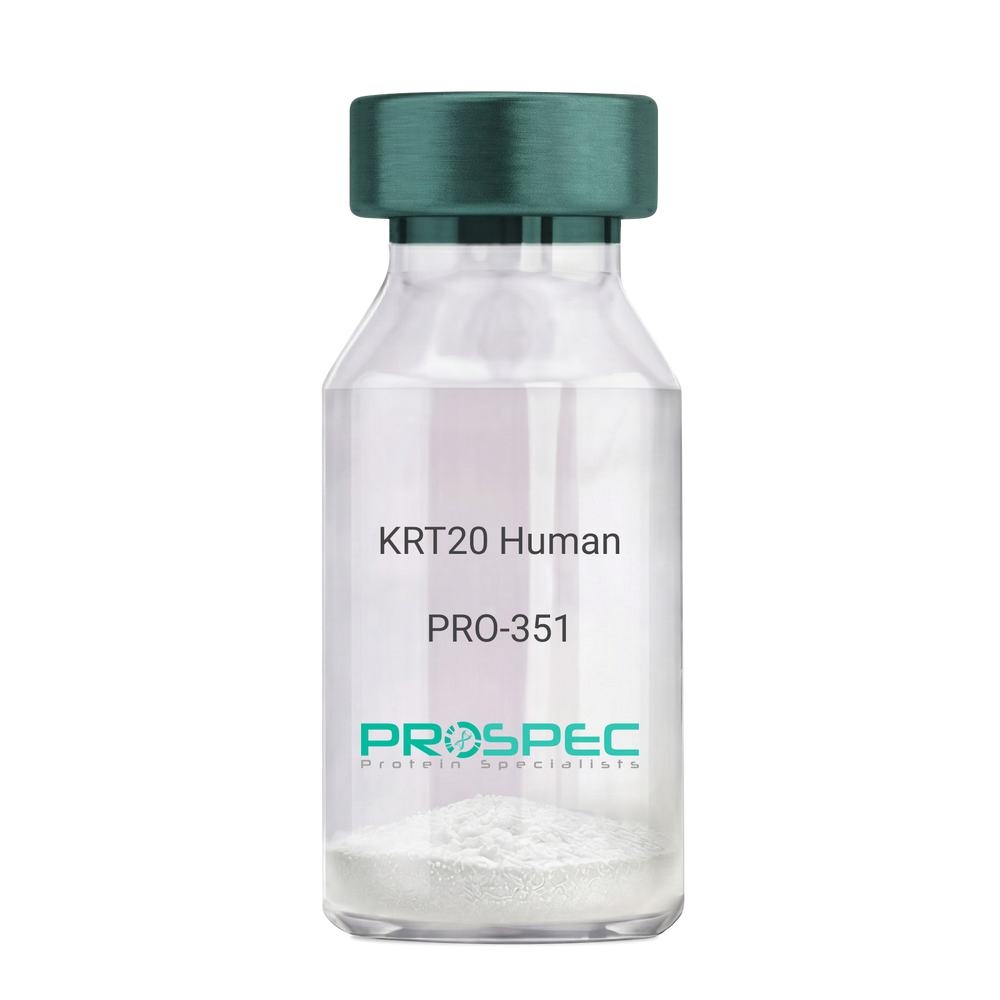
Name :
KRT20 HumanDescription:
Cytokeratin 20 Human Recombinant
Keratin type I cytoskeletal 20, Cytokeratin-20, CK-20, Keratin-20, K20, Protein IT, KRT20, CD20, CK20, KRT21, MGC35423.
Product # :
PRO-351Price :
Quantity :
Shipping Method :
Shipped at Room temp
More Info
- description
- source
- formulation
- purity
- More Info
Description
Cytokeratin 20 Human Recombinant produced in E.Coli is a single,non-glycosylated polypeptide chain having a molecular mass of 48,553 Dalton. The KRT20 is purified by proprietary chromatographic techniques.
Source
Escherichia Coli.
Formulation
The protein (1mg/1ml) was lyophilized after from a sterile solution containing 30mM Tris-HCL pH-8, 9.5M urea, 2mM DDT, 2mM EDTA and 10mM methylammonium chloride.
Purity
Greater than 95.0% as determined by SDS-PAGE.
More Info
-
Introduction
KRT20 is a member of the keratin family. The keratins are intermediate filament proteins responsible for the structural integrity of epithelial cells and are subdivided into cytokeratins and hair keratins. The type I cytokeratins consist of acidic proteins which are arranged in pairs of heterotypic keratin chains. This cytokeratin is a major cellular protein of mature enterocytes and goblet cells and is specifically expressed in the gastric and intestinal mucosa. The type I cytokeratin genes are clustered in a region of chromosome 17q12-q21.
-
Synonyms
Keratin type I cytoskeletal 20, Cytokeratin-20, CK-20, Keratin-20, K20, Protein IT, KRT20, CD20, CK20, KRT21, MGC35423.
-
Physical Appearance
Sterile Filtered White lyophilized (freeze-dried) powder.
-
Stability
Lyophilized KRT20 although stable at room temperature for 3 weeks, should be stored desiccated below -18°C. Upon reconstitution KRT20 should be stored at 4°C between 2-7 days and for future use below -18°C.For long term storage it is recommended to add a carrier protein (0.1% HSA or BSA).Please prevent freeze-thaw cycles.
-
Solubility
It is recommended to reconstitute the lyophilized KRT20 in sterile 18MΩ-cm H2O not less than 100µg/ml, which can then be further diluted to other aqueous solutions.
-
Reconstitution to filaments
Performed by mixing equimolar amounts of cytokeratins of type I and type II at concentrations of approx. 0.5 mg/ml, both dissolved in 9.5 M urea buffer (see above). Protofilaments and filament complexes are obtained by dialyzing the resulting polypeptide solution stepwise to a concentration of 4 M urea and then to low salt condition (50 mM NaCI, 2 mM dithiothreitol, 10 mM Tris-HCI, pH 7.4). For immunization purposes, the solution can be further dialyzed against PBS (phosphate buffered saline, e.g. Dulbecco's PBS).
ProSpec's products are furnished for LABORATORY RESEARCH USE ONLY. The product may not be used as drugs, agricultural or pesticidal products, food additives or household chemicals.
- View Data Sheet
Name :
Noggin Human, HEKDescription:
Noggin Human Recombinant, HEK
Noggin, Symphalangism 1 (Proximal), Synostoses (Multiple) Syndrome 1, SYNS1A, SYNS1, SYM1.
Product # :
CYT-977Price :
Quantity :
Shipping Method :
Shipped with Ice Packs
More Info
- description
- source
- formulation
- purity
- More Info
Description
Noggin produced in HEK293 cells is a polypeptide chain containing 211 amino acids (28-232a.a.) and having a molecular mass of 23.8kDa. (Molecular size on SDS-PAGE will appear at approximately 28-40kDa).Noggin is expressed with a 6 amino acid His tag at C-Terminus and purified by proprietary chromatographic techniques.
Source
HEK293 Cells.
Formulation
Recombinant Human Noggin hek293 derived protein is provided as a solution (0.25mg/ml) containing 50mM MES (pH 6.5) and 30% glycerol.
Purity
Greater than 90.0% as determined by SDS-PAGE.
More Info
-
Introduction
The secreted polypeptide noggin, encoded by the NOG gene, binds and inactivates members of the transforming growth factor-beta (TGF-beta) superfamily signaling proteins, such as bone morphogenetic protein-4 (BMP4). By diffusing through extracellular matrices more efficiently than members of the TGF-beta superfamily, noggin may have a principal role in creating morphogenic gradients. Noggin appears to have pleiotropic effect, both early in development as well as in later stages. It was originally isolated from Xenopus based on its ability to restore normal dorsal-ventral body axis in embryos that had been artificially ventralized by UV treatment. The results of the mouse knockout of noggin suggest that it is involved in numerous developmental processes, such as neural tube fusion and joint formation. Recently, several dominant human NOG mutations in unrelated families with proximal symphalangism (SYM1) and multiple synostoses syndrome (SYNS1) were identified; both SYM1 and SYNS1 have multiple joint fusion as their principal feature, and map to the same region (17q22) as NOG. All NOG mutations altered evolutionarily conserved amino acid residues. The amino acid sequence of human noggin is highly homologous to that of Xenopus, rat and mouse.
-
Synonyms
Noggin, Symphalangism 1 (Proximal), Synostoses (Multiple) Syndrome 1, SYNS1A, SYNS1, SYM1.
-
Physical Appearance
Sterile filtered colorless solution.
-
Stability
Store at 4°C if entire vial will be used within 2-4 weeks.Store, frozen at -20°C for longer periods of time. For long term storage it is recommended to add a carrier protein (0.1% HSA or BSA).Avoid multiple freeze-thaw cycles.
-
Amino Acid Sequence
QHYLHIRPAP SDNLPLVDLI EHPDPIFDPK EKDLNETLLR SLLGGHYDPG FMATSPPEDR PGGGGGAAGG AEDLAELDQL LRQRPSGAMP SEIKGLEFSE GLAQGKKQRL SKKLRRKLQM WLWSQTFCPV LYAWNDLGSR FWPRYVKVGS CFSKRSCSVP EGMVCKPSKS VHLTVLRWRC QRRGGQRCGW IPIQYPIISE CKCSCHHHHH H.
ProSpec's products are furnished for LABORATORY RESEARCH USE ONLY. The product may not be used as drugs, agricultural or pesticidal products, food additives or household chemicals.