Skip to content

High-quality research proteins.

  • 1-800-805-6531

  • Mon - Sat 8.00-18.00, Sun - Closed

  • info@prospecbio.com

  • PO Box 6591 East Brunswick NJ 08816

  • Products
    • Cytokines
    • Growth factors
    • Chemokines
    • Cd antigens
    • Neurotrophins
    • Hormones
    • Enzymes
    • Viral antigens
    • Recombinant proteins
    • Natural proteins
    • Monoclonal antibodies
    • Polyclonal antibodies
    • Thermal Packaging
  • About
    • Company
    • Founder
    • Contribution
  • Customers
    • Eastern Asia
    • Eastern Europe
    • North America
    • South America
    • South East Asia
    • Southern Asia
    • Western Europe
  • Ordering
    • Ordering Method
    • Ordering - Credit Card
    • Ordering - PO
    • Shipping Fees
    • FAQs
  • Services
    • DNA Cloning
    • Protein Expression
    • Monoclonal Antibody
    • Fermentation
    • Technology License
  • Contact us
Log in

Country/region

  • USD $ | Albania
  • USD $ | Andorra
  • USD $ | Argentina
  • USD $ | Armenia
  • USD $ | Australia
  • USD $ | Austria
  • USD $ | Azerbaijan
  • USD $ | Belarus
  • USD $ | Belgium
  • USD $ | Bolivia
  • USD $ | Brazil
  • USD $ | Bulgaria
  • USD $ | Cambodia
  • USD $ | Canada
  • USD $ | Chile
  • USD $ | China
  • USD $ | Colombia
  • USD $ | Costa Rica
  • USD $ | Croatia
  • USD $ | Cyprus
  • USD $ | Czechia
  • USD $ | Denmark
  • USD $ | Estonia
  • USD $ | Finland
  • USD $ | France
  • USD $ | Georgia
  • USD $ | Germany
  • USD $ | Greece
  • USD $ | Hong Kong SAR
  • USD $ | Hungary
  • USD $ | Iceland
  • USD $ | India
  • USD $ | Ireland
  • USD $ | Israel
  • USD $ | Italy
  • USD $ | Japan
  • USD $ | Kazakhstan
  • USD $ | Latvia
  • USD $ | Liechtenstein
  • USD $ | Lithuania
  • USD $ | Madagascar
  • USD $ | Malta
  • USD $ | Mexico
  • USD $ | Moldova
  • USD $ | Monaco
  • USD $ | Netherlands
  • USD $ | New Zealand
  • USD $ | North Macedonia
  • USD $ | Norway
  • USD $ | Panama
  • USD $ | Paraguay
  • USD $ | Peru
  • USD $ | Philippines
  • USD $ | Poland
  • USD $ | Portugal
  • USD $ | Romania
  • USD $ | Singapore
  • USD $ | Slovakia
  • USD $ | Slovenia
  • USD $ | South Africa
  • USD $ | South Korea
  • USD $ | Spain
  • USD $ | Sri Lanka
  • USD $ | Sweden
  • USD $ | Switzerland
  • USD $ | Taiwan
  • USD $ | Thailand
  • USD $ | Türkiye
  • USD $ | Ukraine
  • USD $ | United Kingdom
  • USD $ | United States
  • USD $ | Uruguay
  • USD $ | Vatican City
  • USD $ | Venezuela
  • USD $ | Vietnam
  • Facebook
  • Instagram
logoProSpec - Recombinant Protein Manufacturer for academic and R&D industry
Become a distributor
Account Log in
Wishlist
Cart Cart(0)
  • Products
    +
    • Cytokines
    • Growth factors
    • Chemokines
    • Cd antigens
    • Neurotrophins
    • Hormones
    • Enzymes
    • Viral antigens
    • Recombinant proteins
    • Natural proteins
    • Monoclonal antibodies
    • Polyclonal antibodies
    • Thermal Packaging
  • About
    +
    • Company
    • Founder
    • Contribution
  • Customers
    +
    • Eastern Asia
    • Eastern Europe
    • North America
    • South America
    • South East Asia
    • Southern Asia
    • Western Europe
  • Ordering
    +
    • Ordering Method
    • Ordering - Credit Card
    • Ordering - PO
    • Shipping Fees
    • FAQs
  • Services
    +
    • DNA Cloning
    • Protein Expression
    • Monoclonal Antibody
    • Fermentation
    • Technology License
  • Contact us

Item added to your cart

View cart
View All
  • Cytokines
  • Growth factors
  • Chemokines
  • Cd antigens
  • Neurotrophins
  • Hormones
  • Enzymes
  • Viral antigens
  • Recombinant proteins
  • Natural proteins
  • Monoclonal antibodies
  • Polyclonal antibodies
  • Thermal Packaging
  • Tumor Necrosis Factor

    Tumor Necrosis Factor

    View All
  • 4-1BB

    4-1BB

    View All
  • Adiponectin

    Adiponectin

    View All
  • AIF1

    AIF1

    View All
  • Other Cytokines

    Other Cytokines

    View All
  • AITRL

    AITRL

    View All
  • Angiopoietin

    Angiopoietin

    View All
  • Apolipoprotein

    Apolipoprotein

    View All
  • B-Cell Activating Factor

    B-Cell Activating Factor

    View All
  • Beta Defensin

    Beta Defensin

    View All
  • Bone Morphogenetic Protein

    Bone Morphogenetic Protein

    View All
  • B type Natriuretic Peptide

    B type Natriuretic Peptide

    View All
  • BST

    BST

    View All
  • Betacellulin

    Betacellulin

    View All
  • Cardiotrophin

    Cardiotrophin

    View All
  • Activin

    Activin

    View All
  • Fibroblast Growth Factor

    Fibroblast Growth Factor

    View All
  • Other Growth Factors

    Other Growth Factors

    View All
  • CSF

    CSF

    View All
  • CTGF

    CTGF

    View All
  • IGFBP

    IGFBP

    View All
  • VEGF Protein

    VEGF Protein

    View All
  • EGF

    EGF

    View All
  • Epigen

    Epigen

    View All
  • Erythropoietin

    Erythropoietin

    View All
  • Insulin-Like Growth Factor

    Insulin-Like Growth Factor

    View All
  • Growth Hormone

    Growth Hormone

    View All
  • HDGF

    HDGF

    View All
  • Hepatocyte Growth Factor

    Hepatocyte Growth Factor

    View All
  • Insulin

    Insulin

    View All
  • BCA-1/ BLC (CXCL13)

    BCA-1/ BLC (CXCL13)

    View All
  • BRAK (CXCL14)

    BRAK (CXCL14)

    View All
  • C-10 (CCL6)

    C-10 (CCL6)

    View All
  • Other Chemokines

    Other Chemokines

    View All
  • MEC (CCL28)

    MEC (CCL28)

    View All
  • LD78-beta (CCL3L1)

    LD78-beta (CCL3L1)

    View All
  • CTACK (CCL27)

    CTACK (CCL27)

    View All
  • CXCL16

    CXCL16

    View All
  • CXCL17

    CXCL17

    View All
  • Platelet Factor-4 (CXCL4)

    Platelet Factor-4 (CXCL4)

    View All
  • ENA-78 (CXCL5)

    ENA-78 (CXCL5)

    View All
  • Eotaxin (CCL11,24,26)

    Eotaxin (CCL11,24,26)

    View All
  • Exodus-2 (CCL21)

    Exodus-2 (CCL21)

    View All
  • Fractalkine (CX3CL1)

    Fractalkine (CX3CL1)

    View All
  • CXCL6

    CXCL6

    View All
  • Other CD Antigens

    Other CD Antigens

    View All
  • CD14

    CD14

    View All
  • CD164

    CD164

    View All
  • CD1

    CD1

    View All
  • CD2

    CD2

    View All
  • CD200

    CD200

    View All
  • CD207

    CD207

    View All
  • CD226

    CD226

    View All
  • CD23

    CD23

    View All
  • CD244

    CD244

    View All
  • CD247

    CD247

    View All
  • CD27

    CD27

    View All
  • CD274

    CD274

    View All
  • CD300

    CD300

    View All
  • CD33

    CD33

    View All
  • Other Neurotrophins

    Other Neurotrophins

    View All
  • Beta-NGF

    Beta-NGF

    View All
  • BDNF

    BDNF

    View All
  • CDNF

    CDNF

    View All
  • CNTF

    CNTF

    View All
  • GDNF

    GDNF

    View All
  • Glia Maturation Factor

    Glia Maturation Factor

    View All
  • MANF

    MANF

    View All
  • Midkine

    Midkine

    View All
  • Neuroglobin

    Neuroglobin

    View All
  • Neurotrophic factors

    Neurotrophic factors

    View All
  • Neuregulin

    Neuregulin

    View All
  • Neuropilin

    Neuropilin

    View All
  • Pigment Epithelium-Derived Factor

    Pigment Epithelium-Derived Factor

    View All
  • Pleiotrophin

    Pleiotrophin

    View All
  • Peptide Hormones

    Peptide Hormones

    View All
  • Other Hormones

    Other Hormones

    View All
  • HCG

    HCG

    View All
  • Endothelin

    Endothelin

    View All
  • Exendin

    Exendin

    View All
  • FSH

    FSH

    View All
  • Glucagon

    Glucagon

    View All
  • GHRP

    GHRP

    View All
  • GLP

    GLP

    View All
  • Thyrostimulin

    Thyrostimulin

    View All
  • Inhibin A

    Inhibin A

    View All
  • LHRH

    LHRH

    View All
  • Melanotan

    Melanotan

    View All
  • Procalcitonin

    Procalcitonin

    View All
  • PTH

    PTH

    View All
  • Peroxiredoxin

    Peroxiredoxin

    View All
  • Peptidase

    Peptidase

    View All
  • Synthetase

    Synthetase

    View All
  • Transferase

    Transferase

    View All
  • Hydrolase

    Hydrolase

    View All
  • Dehydrogenase

    Dehydrogenase

    View All
  • ACE2

    ACE2

    View All
  • Esterase

    Esterase

    View All
  • Protein Kinases

    Protein Kinases

    View All
  • Other Enzymes

    Other Enzymes

    View All
  • Phosphatase

    Phosphatase

    View All
  • Deaminase

    Deaminase

    View All
  • Oxygenase

    Oxygenase

    View All
  • Adenylate Kinase

    Adenylate Kinase

    View All
  • Lyase

    Lyase

    View All
  • Chagas

    Chagas

    View All
  • SARS

    SARS

    View All
  • Influenza

    Influenza

    View All
  • ASFV

    ASFV

    View All
  • Astrovirus

    Astrovirus

    View All
  • Borrelia

    Borrelia

    View All
  • Helicobacter Pylori

    Helicobacter Pylori

    View All
  • Chikungunya

    Chikungunya

    View All
  • Chlamydia

    Chlamydia

    View All
  • Cytomegalo

    Cytomegalo

    View All
  • Dengue

    Dengue

    View All
  • EBV

    EBV

    View All
  • Ebola

    Ebola

    View All
  • Feline Leukemia Virus

    Feline Leukemia Virus

    View All
  • Hepatitis A

    Hepatitis A

    View All
  • Other

    Other

    View All
  • Actin

    Actin

    View All
  • ADAM

    ADAM

    View All
  • Complement Component

    Complement Component

    View All
  • Ag85

    Ag85

    View All
  • Eukaryotic Translation Initiation Factor

    Eukaryotic Translation Initiation Factor

    View All
  • Anterior Gradient Protein

    Anterior Gradient Protein

    View All
  • Heat Shock Protein

    Heat Shock Protein

    View All
  • Alpha-2-HS-Glycoprotein

    Alpha-2-HS-Glycoprotein

    View All
  • Hemoglobin

    Hemoglobin

    View All
  • Allergy

    Allergy

    View All
  • Anaplasma

    Anaplasma

    View All
  • Angiogenin

    Angiogenin

    View All
  • Ankyrin Repeat Domain

    Ankyrin Repeat Domain

    View All
  • Annexin

    Annexin

    View All
  • Other Natural Proteins

    Other Natural Proteins

    View All
  • Aprotinin

    Aprotinin

    View All
  • Transferrin

    Transferrin

    View All
  • Avidin

    Avidin

    View All
  • Anti Coagulation Factors

    Anti Coagulation Factors

    View All
  • Natural Albumin

    Natural Albumin

    View All
  • Natural Coagulation Factors

    Natural Coagulation Factors

    View All
  • Fibronectin

    Fibronectin

    View All
  • Thrombin

    Thrombin

    View All
  • Anti Human Enzyme

    Anti Human Enzyme

    View All
  • Other Monoclonal Antibodies

    Other Monoclonal Antibodies

    View All
  • Anti Human Cytokine

    Anti Human Cytokine

    View All
  • Anti Human Heat Shock Protein

    Anti Human Heat Shock Protein

    View All
  • Anti Mouse Lymphocyte

    Anti Mouse Lymphocyte

    View All
  • Anti Human Chemokine

    Anti Human Chemokine

    View All
  • Anti Human Lymphocyte

    Anti Human Lymphocyte

    View All
  • Anti Viral Monoclonal

    Anti Viral Monoclonal

    View All
  • Anti Mouse Cytokine

    Anti Mouse Cytokine

    View All
  • Anti-GST Monoclonal

    Anti-GST Monoclonal

    View All
  • Other Polyclonal Antibodies

    Other Polyclonal Antibodies

    View All
  • Anti Viral

    Anti Viral

    View All
  • Anti-GST Monoclonal

    Anti-GST Monoclonal

    View All
Back

Search results

1000 results found for “esterase”

Name

Description

Product #

Price

Quantity

Shipping Method

  • View Data Sheet

    Name :

    ACP5 Human, His

    Description:

    Acid Phosphatase-5 Human Recombinant, His Tag

    Acid Phosphatase 5, Tartrate Resistant, Tartrate-Resistant Acid ATPase, EC 3.1.3.2, TrATPase, SPENCDI, Tartrate-Resistant Acid Phosphatase Type 5, Tartrate-Resistant Acid Phosphatase, Type 5 Acid Phosphatase, TR-AP, TRAP, ACP5.

    Product # :

    ENZ-913

    Price :

    Quantity :

    Shipping Method :

    Ice Icon

    Shipped with Ice Packs

    Add To Cart

    More Info

    • description
    • source
    • formulation
    • purity
    • biological activity
    • More Info

    Description

    ACP5 Human Recombinant produced in Sf9 Baculovirus cells is a single, glycosylated polypeptide chain containing 310 amino acids (22-325 a.a) and having a molecular mass of 35.1kDa.ACP5 is fused to a 6 amino acid His-tag at C-terminus & purified by proprietary chromatographic techniques.

    Source

    Sf9, Baculovirus cells.

    Formulation

    ACP5 protein solution (0.5mg/ml) containing Phosphate Buffered Saline (pH 7.4) and 10% glycerol.

    Purity

    Greater than 95.0% as determined by SDS-PAGE.

    Biological Activity

    Specific activity is > 5,000 units/mg, and is defined as the amount of enzyme that hydrolyze 1.0 nmoles of p-nitrophenyl phosphate (pNPP) per minute at pH 5.0 at 37C.

    More Info

    • Introduction

      Acid Phosphatase-5, also known as ACP5 is a member of the Purple acid phosphatase family. ACP5 is implicated in osteopontin as well as bone sialoprotein dephosphorylation. ACP5 expression appears to increase in certain pathological states for instance Gaucher & Hodgkin diseases, the hairy cell, the B-cell, as well as the T-cell leukemias.

    • Synonyms

      Acid Phosphatase 5, Tartrate Resistant, Tartrate-Resistant Acid ATPase, EC 3.1.3.2, TrATPase, SPENCDI, Tartrate-Resistant Acid Phosphatase Type 5, Tartrate-Resistant Acid Phosphatase, Type 5 Acid Phosphatase, TR-AP, TRAP, ACP5.

    • Physical Appearance

      Sterile filtered colorless solution.

    • Stability

      Store at 4°C if entire vial will be used within 2-4 weeks. Store, frozen at -20°C for longer periods of time. For long term storage it is recommended to add a carrier protein (0.1% HSA or BSA).Avoid multiple freeze-thaw cycles.

    • Amino Acid Sequence

      ATPALRFVAV GDWGGVPNAP FHTAREMANA KEIARTVQIL GADFILSLGD NFYFTGVQDI NDKRFQETFE DVFSDRSLRK VPWYVLAGNH DHLGNVSAQI AYSKISKRWN FPSPFYRLHF KIPQTNVSVA IFMLDTVTLC GNSDDFLSQQ PERPRDVKLA RTQLSWLKKQ LAAAREDYVL VAGHYPVWSI AEHGPTHCLV KQLRPLLATY GVTAYLCGHD HNLQYLQDEN GVGYVLSGAG NFMDPSKRHQ RKVPNGYLRF HYGTEDSLGG FAYVEISSKE MTVTYIEASG KSLFKTRLPR RARPHHHHHH.

    ProSpec's products are furnished for LABORATORY RESEARCH USE ONLY. The product may not be used as drugs, agricultural or pesticidal products, food additives or household chemicals.

    Acp5 Human
  • View Data Sheet

    Name :

    UNG E.Coli Active

    Description:

    Recombinant E.Coli Uracil DNA Glycosylase, Active

    UDG, b2580, JW2564, EC 3.2.2.27, DGU, UNG15, HIGM5, Uracil-DNA Glycosylase 1, EC 3.2.2, HIGM4, UNG2.

    Product # :

    ENZ-1182

    Price :

    Quantity :

    Shipping Method :

    Ice Icon

    Shipped with Ice Packs

    Add To Cart

    More Info

    • description
    • source
    • formulation
    • purity
    • More Info

    Description

    UNG E.Coli Recombinant produced in E.Coli is a single, non-glycosylated polypeptide UNG is purified by proprietary chromatographic techniques.

    Source

    Escherichia Coli.

    Formulation

    UNG protein solution (5U/ul) containing 10mM Tris-HCl (25℃, pH 7.4), 50mM KCl, 0.1 mM EDTA, 1mM DTT, 0.1mg/ml BSA & 50% glycerol.

    Purity

    Greater than 97.0% as determined by SDS-PAGE.

    More Info

    • Introduction

      Uracil DNA glycosylase (UDG), or uracil-DNA glycosylase 1, is a crucial enzyme found in all life forms, involved in repairing damaged DNA by specifically removing uracil bases that are misincorporated into DNA during replication or deaminated cytosine. In various organisms, UDG goes by different names, such as b2580, JW2564, EC 3.2.2.27, DGU, UNG15, HIGM5, EC 3.2.2, HIGM4, and UNG2. Here, we delve into the E. coli UDG, examining its structure, function, and applications in molecular biology.

      Structure: The crystal structure of E. coli UDG has been extensively studied, revealing that it belongs to the uracil DNA glycosylase (UDG) superfamily. The E. coli UDG monomer has 229 amino acids with a molecular weight of 25 kDa. The protein has a beta-sheet-rich structure with an alpha-helix on one side and a groove on the other side that binds to DNA. The active site of E. coli UDG contains a conserved glutamic acid residue that acts as a catalytic base to facilitate the hydrolysis of the N-glycosidic bond between uracil and the sugar phosphate backbone.

      Function: E. coli UDG plays a critical role in maintaining the integrity of the genome by preventing the accumulation of mutations that can arise from the incorporation of uracil into DNA. Uracil in DNA can occur spontaneously from the deamination of cytosine or can be incorporated during DNA synthesis when dUTP is used instead of dTTP. Unrepaired uracil bases can lead to DNA damage and genomic instability, possibly resulting in cell death or disease. E. coli UDG specifically recognizes and removes uracil bases from DNA, creating an abasic site that is further processed by other repair enzymes.

    • Synonyms

      UDG, b2580, JW2564, EC 3.2.2.27, DGU, UNG15, HIGM5, Uracil-DNA Glycosylase 1, EC 3.2.2, HIGM4, UNG2.

    • Physical Appearance

      Sterile Filtered clear solution.

    • Stability

      Store at 4°C if entire vial will be used within 2-4 weeks. Store, frozen at -20°C for longer periods of time. For long term storage it is recommended to add a carrier protein (0.1% HSA or BSA).Avoid multiple freeze-thaw cycles.

    • Applications

      Treatment of 0.1μg of uracil containing DNA with 1U UDG for 10 min. at 37℃ renders the DNA incapable of being copied by DNA polymerase. The enzyme can be 95% heat killed by incubation at 95℃ for 10 minutes. Since UDG remains partially active following heat treatment at 95℃, it is recommended that uracil glycosylase inhibitor be added to prevent degradation of product DNA. Alternatively, reaction products can be immediately extracted with phenol/chloroform

    • Unit Definition

      1 unit is defined as the amount of enzyme that catalyzes the release of 60pmol of uracil/minute from double-stranded, uracil-containing DNA. Activity is measured by release of [3H]-uracil in a 50µl reaction containing 0.2µg DNA (104-105 cpm/µg) in 30 min. at 37°C.

    ProSpec's products are furnished for LABORATORY RESEARCH USE ONLY. The product may not be used as drugs, agricultural or pesticidal products, food additives or household chemicals.

    Uracil Dna Glycosylase
  • View Data Sheet

    Name :

    NARS Human, Sf9

    Description:

    Asparaginyl-TRNA Synthetase Human Recombinant, Sf9

    Asparagine--tRNA ligase, cytoplasmic, EC 6.1.1.22, Asparaginyl-tRNA synthetase, AsnRS, NARS, NARS1.

    Product # :

    ENZ-716

    Price :

    Quantity :

    Shipping Method :

    Ice Icon

    Shipped with Ice Packs

    Add To Cart

    More Info

    • description
    • source
    • formulation
    • purity
    • More Info

    Description

    NARS Human Recombinant produced in SF9 is a glycosylated, polypeptide chain having a calculated molecular mass of 63,853 Dalton. NARS is expressed with a -6xHis tag at N-terminus and purified by proprietary chromatographic techniques.

    Source

    Sf9 Insect Cells.

    Formulation

    NARS is supplied in 20mM HEPES buffer pH-7.6, 250mM NaCl and 20% glycerol.

    Purity

    Greater than 80.0% as determined by SDS-PAGE.

    More Info

    • Introduction

      Aminoacyl-tRNA synthetases are a class of enzymes which charge tRNAs with their cognate amino acids. Asparaginyl-tRNA synthetase (NARS) is localized to the cytoplasm and is a member of the class II family of tRNA synthetases. The N-terminal domain characterizes the signature sequence for the eukaryotic asparaginyl-tRNA synthetases.

    • Synonyms

      Asparagine--tRNA ligase, cytoplasmic, EC 6.1.1.22, Asparaginyl-tRNA synthetase, AsnRS, NARS, NARS1.

    • Physical Appearance

      Sterile Filtered clear solution.

    • Stability

      Store at 4°C if entire vial will be used within 2-4 weeks. Store, frozen at -20°C for longer periods of time. Avoid multiple freeze-thaw cycles.

    ProSpec's products are furnished for LABORATORY RESEARCH USE ONLY. The product may not be used as drugs, agricultural or pesticidal products, food additives or household chemicals.

    Nars Human
  • View Data Sheet

    Name :

    TKT Human

    Description:

    Transketolase Human Recombinant

    Transketolase, TK, TKT1, EC 2.2.1.1.

    Product # :

    ENZ-588

    Price :

    Quantity :

    Shipping Method :

    Ice Icon

    Shipped with Ice Packs

    Add To Cart

    More Info

    • description
    • source
    • formulation
    • purity
    • More Info

    Description

    TKT Human Recombinant produced in E. coli is a single polypeptide chain containing 643 amino acids (1-623) and having a molecular mass of 70.0kDa.TKT is fused to a 20 amino acid His-tag at N-terminus & purified by proprietary chromatographic techniques.

    Source

    E.coli.

    Formulation

    The TKT solution (0.25mg/ml) contains 20mM Tris-HCl buffer (pH 8.0), 100mM Nacl, 1mM DTT and 10% glycerol.

    Purity

    Greater than 85% as determined by SDS-PAGE.

    More Info

    • Introduction

      TKT is a thiamine-dependent enzyme that takes part in the channeling of leftover sugar phosphates to glycolysis in the pentose phosphate pathway. Multiple alternatively spliced variants are known that encode the same protein.

    • Synonyms

      Transketolase, TK, TKT1, EC 2.2.1.1.

    • Physical Appearance

      Sterile Filtered colorless solution.

    • Stability

      Store at 4°C if entire vial will be used within 2-4 weeks. Store, frozen at -20°C for longer periods of time. For long term storage it is recommended to add a carrier protein (0.1% HSA or BSA).Avoid multiple freeze-thaw cycles.

    • Amino Acid Sequence

      MGSSHHHHHH SSGLVPRGSH MESYHKPDQQ KLQALKDTAN RLRISSIQAT TAAGSGHPTS CCSAAEIMAV LFFHTMRYKS QDPRNPHNDR FVLSKGHAAP ILYAVWAEAG FLAEAELLNL RKISSDLDGH PVPKQAFTDV ATGSLGQGLG AACGMAYTGK YFDKASYRVY CLLGDGELSE GSVWEAMAFA SIYKLDNLVA ILDINRLGQS DPAPLQHQMD IYQKRCEAFG WHAIIVDGHS VEELCKAFGQ AKHQPTAIIA KTFKGRGITG VEDKESWHGK PLPKNMAEQI IQEIYSQIQS KKKILATPPQ EDAPSVDIAN IRMPSLPSYK VGDKIATRKA YGQALAKLGH ASDRIIALDG DTKNSTFSEI FKKEHPDRFI ECYIAEQNMV SIAVGCATRN RTVPFCSTFA AFFTRAFDQI RMAAISESNI NLCGSHCGVS IGEDGPSQMA LEDLAMFRSV PTSTVFYPSD GVATEKAVEL AANTKGICFI RTSRPENAII YNNNEDFQVG QAKVVLKSKD DQVTVIGAGV TLHEALAAAE LLKKEKINIR VLDPFTIKPL DRKLILDSAR ATKGRILTVE DHYYEGGIGE AVSSAVVGEP GITVTHLAVN RVPRSGKPAE LLKMFGIDRD AIAQAVRGLI TKA.

    ProSpec's products are furnished for LABORATORY RESEARCH USE ONLY. The product may not be used as drugs, agricultural or pesticidal products, food additives or household chemicals.

    Tkt Human
  • View Data Sheet

    Name :

    MSRB3 Human

    Description:

    Methionine Sulfoxide Reductase B3 Human Recombinant

    Methionine-R-sulfoxide reductase B3, MSRB3, DFNB74, FLJ36866, DKFZp686C1178.

    Product # :

    ENZ-093

    Price :

    Quantity :

    Shipping Method :

    Ice Icon

    Shipped with Ice Packs

    Add To Cart

    More Info

    • description
    • source
    • formulation
    • purity
    • More Info

    Description

    MSRB3 Human Recombinant fused with an 8 amino acid His tag at C-terminus produced in E.Coli is a single, non-glycosylated, polypeptide chain containing 174 amino acids (21-185 a.a.) and having a molecular mass of 19kDa. The MSRB3 is purified by proprietary chromatographic techniques.

    Source

    Escherichia Coli.

    Formulation

    The MSRB3 solution (1 mg/ml) contains 20mM Tris-HCl buffer (pH 8.0), 1mM DTT, 10% glycerol and 0.1mM PMSF.

    Purity

    Greater than 90.0% as determined by SDS-PAGE.

    More Info

    • Introduction

      Methionine sulfoxide reductase B3 (MSRB3) is a member of the methionine sulfoxide reductases (MSR) family proteins. MSRB3 catalyzes the reduction of methionine sulfoxide to methionine. The MSRB3 enzyme acts as a monomer and requires zinc as a cofactor. MSRs are thought to defend against reactive oxygen species-induced oxidative damage in various organs, including the most environmentally exposed organ, the human skin. MSRB3 has a vital role in cold tolerance by eliminating MetO and ROS which accumulate at the ER during cold acclimation.

    • Synonyms

      Methionine-R-sulfoxide reductase B3, MSRB3, DFNB74, FLJ36866, DKFZp686C1178.

    • Physical Appearance

      Sterile Filtered colorless solution.

    • Stability

      Store at 4°C if entire vial will be used within 2-4 weeks. Store, frozen at -20°C for longer periods of time. For long term storage it is recommended to add a carrier protein (0.1% HSA or BSA).Avoid multiple freeze-thaw cycles.

    • Amino Acid Sequence

      MCGLPSGSCR DKKNCKVVFS QQELRKRLTP LQYHVTQEKG TESAFEGEYT HHKDPGIYKC VVCGTPLFKS ETKFDSGSGW PSFHDVINSE AITFTDDFSY GMHRVETSCS QCGAHLGHIF DDGPRPTGKR YCINSAALSF TPADSSGTAE GGSGVASPAQ ADKAELLEHH HHHH.

    ProSpec's products are furnished for LABORATORY RESEARCH USE ONLY. The product may not be used as drugs, agricultural or pesticidal products, food additives or household chemicals.

    Msrb3 Human
  • View Data Sheet

    Name :

    LDHB Mouse

    Description:

    Lactate Dehydrogenase B Mouse Recombinant

    L-lactate dehydrogenase B chain, LDH-B, LDH heart subunit, LDH-H, Ldh-2, Ldh2, Ldhb.

    Product # :

    ENZ-1052

    Price :

    Quantity :

    Shipping Method :

    Ice Icon

    Shipped with Ice Packs

    Add To Cart

    More Info

    • description
    • source
    • formulation
    • purity
    • biological activity
    • More Info

    Description

    LDHB Mouse Recombinant produced in E.Coli is a single, non-glycosylated polypeptide chain containing 357 amino acids (1-334 a.a) and having a molecular mass of 39kDa.LDHB is fused to a 23 amino acid His-tag at N-terminus & purified by proprietary chromatographic techniques.

    Source

    Escherichia Coli.

    Formulation

    LDHB protein solution (1mg/ml) containing 20mM Tris-HCl (pH8.0), 1mM DTT and 10% glycerol.

    Purity

    Greater than 95.0% as determined by SDS-PAGE.

    Biological Activity

    Specific activity is > 150 units/mg, in which one unit will 1.0 umole of pyruvate to L-lactate and beta-NAD per minute at pH 7.5.

    More Info

    • Introduction

      Lactate dehydrogenase (LDH) is an enzyme(EC1.1.1.27) present in a wide variety of organisms, including plants and animals.
      A tetrameric enzyme that catalyses the interconversion of pyruvateand lactate with concomitant interconversion of NADH and NAD+. At high concentrations of pyruvate, the enzyme exhibits feedback inhibition and the rate of conversion of pyruvate to lactate is decreased. In vertebrates, genes for three different subunits (LDH-A, LDH-B and LDH-C) exist.

    • Synonyms

      L-lactate dehydrogenase B chain, LDH-B, LDH heart subunit, LDH-H, Ldh-2, Ldh2, Ldhb.

    • Physical Appearance

      Sterile filtered colorless solution.

    • Stability

      Store at 4°C if entire vial will be used within 2-4 weeks. Store, frozen at -20°C for longer periods of time. For long term storage, it is recommended to add a carrier protein (0.1% HSA or BSA).Avoid multiple freeze-thaw cycles.

    • Amino Acid Sequence

      MGSSHHHHHH SSGLVPRGSH MGSMATLKEK LIASVADDEA AVPNNKITVV GVGQVGMACA ISILGKSLAD ELALVDVLED KLKGEMMDLQ HGSLFLQTPK IVADKDYSVT ANSKIVVVTA GVRQQEGESR LNLVQRNVNV FKFIIPQIVK YSPDCTIIVV SNPVDILTYV TWKLSGLPKH RVIGSGCNLD SARFRYLMAE KLGIHPSSCH GWILGEHGDS SVAVWSGVNV AGVSLQELNP EMGTDNDSEN WKEVHKMVVD SAYEVIKLKG YTNWAIGLSV ADLIESMLKN LSRIHPVSTM VKGMYGIENE VFLSLPCILN ARGLTSVINQ KLKDDEVAQL RKSADTLWDI QKDLKDL.

    ProSpec's products are furnished for LABORATORY RESEARCH USE ONLY. The product may not be used as drugs, agricultural or pesticidal products, food additives or household chemicals.

    Ldhb Mouse
  • View Data Sheet

    Name :

    ADI1 Human

    Description:

    Acireductone Dioxygenase 1 Human Recombinant

    APL1, ARD, FLJ10913, HMFT1638, MTCBP-1, SIPL, 1,2-dihydroxy-3-keto-5-methylthiopentene dioxygenase, Acireductone dioxygenase, Fe-ARD, Membrane-type 1 matrix metalloproteinase cytoplasmic tail-binding protein 1, Submergence-induced protein-like factor.

    Product # :

    ENZ-700

    Price :

    Quantity :

    Shipping Method :

    Ice Icon

    Shipped with Ice Packs

    Add To Cart

    More Info

    • description
    • source
    • formulation
    • purity
    • More Info

    Description

    ADI1 produced in E.Coli is a single, non-glycosylated polypeptide chain containing 216 amino acids (1-179 a.a.) and having a molecular mass of 25.6kDa. ADI1 is fused to a 37 amino acid His-tag at N-terminus & purified by proprietary chromatographic techniques.

    Source

    Escherichia Coli.

    Formulation

    The ADI1 protein solution (0.5mg/1ml) is formulated in 20mM Tris-HCl buffer (pH 8.0), 0.15M NaCl, 10% glycerol and 1mM DTT.

    Purity

    Greater than 90% as determined by SDS-PAGE.

    More Info

    • Introduction

      Acireductone dioxygenase 1 (ADI1) is a part of the acireductone dioxygenase family of metal-binding enzymes, which are involved in methionine salvage. ADI1 regulates mRNA processing in the nucleus, and carries out different functions depending on its localization. Related pseudogenes have been defined on chromosomes 8 and 20. ADI1 down-regulates cell migration arbitrated by MMP14.

    • Synonyms

      APL1, ARD, FLJ10913, HMFT1638, MTCBP-1, SIPL, 1,2-dihydroxy-3-keto-5-methylthiopentene dioxygenase, Acireductone dioxygenase, Fe-ARD, Membrane-type 1 matrix metalloproteinase cytoplasmic tail-binding protein 1, Submergence-induced protein-like factor.

    • Physical Appearance

      Sterile Filtered colorless solution.

    • Stability

      Store at 4°C if entire vial will be used within 2-4 weeks.Store, frozen at -20°C for longer periods of time. For long term storage it is recommended to add a carrier protein (0.1% HSA or BSA).Avoid multiple freeze-thaw cycles.

    • Amino Acid Sequence

      MRGSHHHHHH GMASMTGGQQ MGRDLYDDDD KDRWGSSMVL AWYMDDAPGD PRQPHRPDPG RPVGLEQLRR LGVLYWKLDA DKYENDPELE KIRRERNYSW MDIITICKDK LPNYEEKIKM FYEEHLHLDD EIRYILDGSG YFDVRDKEDQ WIRIFMEKGD MVTLPAGIYH RFTVDEKNYT KAMRLFVGEP VWTAYNRPAD HFEARGQYVK FLAQTA.

    ProSpec's products are furnished for LABORATORY RESEARCH USE ONLY. The product may not be used as drugs, agricultural or pesticidal products, food additives or household chemicals.

    Adi1 Human
  • View Data Sheet

    Name :

    GAMT Human

    Description:

    Guanidinoacetate N-Methyltransferase Human Recombinant

    PIG2, TP53I2, GAMT, Guanidinoacetate N-methyltransferase.

    Product # :

    ENZ-460

    Price :

    Quantity :

    Shipping Method :

    Ice Icon

    Shipped with Ice Packs

    Add To Cart

    More Info

    • description
    • source
    • formulation
    • purity
    • More Info

    Description

    Recombinant Human GAMT produced in E.Coli is a single, non-glycosylated polypeptide chain containing 256 amino acids (1-236 a.a) and having a molecular mass of 28.4 kDa. GAMT is fused to a 20 amino acids His-Tag at N-terminus and purified by conventional chromatography techniques.

    Source

    Escherichia Coli.

    Formulation

    The GAMT protein solution contains 20mM Tris-HCl, pH-8, 1mM DTT and 10% Glycerol.

    Purity

    Greater than 95.0% as determined by SDS-PAGE.

    More Info

    • Introduction

      GAMT is a methyltransferase that transfers guanidoacetate to creatine, using S-adenosylmethionine as the methyl donor. Defects GAMT gene result in neurologic syndromes and muscular hypotonia, probably due to creatine deficiency and accumulation of guanidinoacetate in the brain of affected individuals. GAMT take parts in the two-step synthesis of creatine from the protein building blocks glycine, arginine, and methionine. GAMT takes part in supplying the energy for muscle contraction, and is in addition a significant player in nervous system functioning. GAMT is active in the liver, pancreas, and kidne.

    • Synonyms

      PIG2, TP53I2, GAMT, Guanidinoacetate N-methyltransferase.

    • Physical Appearance

      Sterile filtered colorless solution.

    • Stability

      Store at 4°C if entire vial will be used within 2-4 weeks. Store, frozen at -20°C for longer periods of time. For long term storage it is recommended to add a carrier protein (0.1% HSA or BSA). Avoid multiple freeze-thaw cycles.

    • Amino Acid Sequence

      MGSSHHHHHH SSGLVPRGSH MSAPSATPIF APGENCSPAW GAAPAAYDAA DTHLRILGKP VMERWETPYM HALAAAASSK GGRVLEVGFG MAIAASKVQE APIDEHWIIE CNDGVFQRLR DWAPRQTHKV IPLKGLWEDV APTLPDGHFD GILYDTYPLS EETWHTHQFN FIKNHAFRLL KPGGVLTYCN LTSWGELMKS KYSDITIMFE ETQVPALLEA GFRRENIRTE VMALVPPADC RYYAFPQMIT PLVTKG.

    ProSpec's products are furnished for LABORATORY RESEARCH USE ONLY. The product may not be used as drugs, agricultural or pesticidal products, food additives or household chemicals.

    Gamt Human
  • View Data Sheet

    Name :

    LPL Human, HEK

    Description:

    Lipoprotein Lipase Human Recombinant, HEK

    Lipoprotein lipase, LPL, LIPD, HDLCQ11.

    Product # :

    ENZ-087

    Price :

    Quantity :

    Shipping Method :

    Room Temp Icon

    Shipped at Room temp

    Add To Cart

    More Info

    • description
    • source
    • formulation
    • More Info

    Description

    The Recombinant Human LPL produced in HEK293 cell line has a molecular mass of 51.8kDa containing 461 amino acid residues of the human LPL (Ala28-Gly475, variant Asn > Ser318) and fused to a 13 a.a. Flag-tag at N-terminus.

    Source

    HEK293 (Human Embryonic Kidney cell line).

    Formulation

    LPL was filtered (0.4 µm) and lyophilized from 0.5mg/ml in 20mM Tris buffer and 50mM NaCl, pH 7.5.

    More Info

    • Introduction

      LPL is a lipoprotein lipase, which is expressed in the heart, muscle, and adipose tissue. LPL acts as a homodimer, and has the dual functions of triglyceride hydrolase and ligand/bridging factor for receptor-mediated lipoprotein uptake. Type I hyperlipoproteinemia is a result of severe mutations which cause LPL deficiency, whereas less extreme mutations in LPL are linked to many disorders of lipoprotein metabolism. Lipoprotein lipase (LPL) is a fundamental enzyme in plasma triglyceride hydrolysis and is secreted by macrophages in the subendothelial space. LPL also promotes the development of atherosclerosis through facilitation of monocyte adhesion to endothelial cells, stimulation of tumor necrosis factor alpha (TNF) secretion and induction of vascular smooth muscle cell proliferation.

    • Synonyms

      Lipoprotein lipase, LPL, LIPD, HDLCQ11.

    • Physical Appearance

      Filtered white lyophilized powder.

    • Stability

      Store lyophilized protein at -20°C. Aliquot the product after reconstitution to avoid repeated freezing/thawing cycles. Reconstituted protein can be stored at 4°C for a limited period of time; it does not show any change after two weeks at 4°C.

    • Solubility

      It is recommended to add deionized water to prepare a working stock solution of approximately 0.5 mg/ml and let the lyophilized pellet dissolve completely. Product is not sterile! Please filter the product by an appropriate sterile filter before using it in the cell culture.

    • Amino Acid Sequence

      HVDYKDDDDK PAGADQRRDF IDIESKFALR TPEDTAEDTC HLIPGVAESV ATCHFNHSSK TFMVIHGWTV TGMYESWVPK ADQRRDF IDIESKFALR TPEDTAEDTC HLIPGVAESV ATCHFNHSSK TFMVIHGWTV TGMYESWVPK LVAALYKREP DSNVIVVDWL SRAQEHYPVS AGYTKLVGQD VARFINWMEE EFNYPLDNVH LLGYSLGAHA AGIAGSLTNK KVNRITGLDP AGPNFEYAEA PSRLSPDDAD FVDVLHTFTR GSPGRSIGIQ KPVGHVDIYP NGGTFQPGCN IGEAIRVIAE RGLGDVDQLV KCSHERSIHL FIDSLLNEEN PSKAYRCSSK EAFEKGLCLS CRKNRCNNLG YEISKVRAKR SSKMYLKTRS QMPYKVFHYQ VKIHFSGTES ETHTNQAFEI SLYGTVAESE NIPFTLPEVS TNKTYSFLIY TEVDIGELLM LKLKWKSDSY FSWSDWWSSP GFAIQKIRVK AGETQKKVIF CSREKVSHLQ KGKAPAVFVK CHDKSLNKKS G.

    ProSpec's products are furnished for LABORATORY RESEARCH USE ONLY. The product may not be used as drugs, agricultural or pesticidal products, food additives or household chemicals.

    Lpl Human Hek
  • View Data Sheet

    Name :

    GLYATL2 Human

    Description:

    Glycine-N-Acyltransferase-Like 2 Human Recombinant

    BXMAS2-10, GATF-B, Glycine N-acyltransferase-like protein 2, Acyl-CoA:glycine N-acyltransferase-like protein 2, GLYATL2.

    Product # :

    ENZ-770

    Price :

    Quantity :

    Shipping Method :

    Ice Icon

    Shipped with Ice Packs

    Add To Cart

    More Info

    • description
    • source
    • formulation
    • purity
    • More Info

    Description

    GLYATL2 Human Recombinant produced in E.coli is a single, non-glycosylated polypeptide chain containing 317 amino acids (1-294a.a) and having a molecular mass of 36.7kDa. GLYATL2 is fused to a 23 amino acid His-tag at N-terminus & purified by proprietary chromatographic techniques.

    Source

    Escherichia Coli.

    Formulation

    The GLYATL2 solution (0.5mg/ml) contains 20mM Tris-HCl buffer (pH 8.0), 0.1M NaCl, 50% glycerol and 2mM DTT.

    Purity

    Greater than 85% as determined by SDS-PAGE.

    More Info

    • Introduction

      Glycine-N-Acyltransferase-Like 2 (GLYATL2) is a part of the glycine N-acyltransferase family expressed mainly in salivary gland and trachea. GLYATL2 is a mitochondrial acyltransferase that transfers the acyl group to the N-terminus of glycine. GLYATL2 conjugates numerous substrates, like arachidonoyl-CoA and saturated medium and longchain acyl-CoAs ranging from chain-length C8:0-CoA to C18:0-CoA, to form a variety of N-acylglycines. GLYATL2 also shows a preference for monounsaturated fatty acid oleoyl-CoA (C18:1-CoA) as an acyl donor.

    • Synonyms

      BXMAS2-10, GATF-B, Glycine N-acyltransferase-like protein 2, Acyl-CoA:glycine N-acyltransferase-like protein 2, GLYATL2.

    • Physical Appearance

      Sterile Filtered colorless solution.

    • Stability

      Store at 4°C if entire vial will be used within 2-4 weeks. Store, frozen at -20°C for longer periods of time. For long term storage it is recommended to add a carrier protein (0.1% HSA or BSA). Avoid multiple freeze-thaw cycles.

    • Amino Acid Sequence

      MGSSHHHHHH SSGLVPRGSH MGSMLVLHNS QKLQILYKSL EKSIPESIKV YGAIFNIKDK NPFNMEVLVD AWPDYQIVIT RPQKQEMKDD QDHYTNTYHI FTKAPDKLEE VLSYSNVISW EQTLQIQGCQ EGLDEAIRKV ATSKSVQVDY MKTILFIPEL PKKHKTSSND KMELFEVDDD NKEGNFSNMF LDASHAGLVN EHWAFGKNER SLKYIERCLQ DFLGFGVLGP EGQLVSWIVM EQSCELRMGY TVPKYRHQGN MLQIGYHLEK YLSQKEIPFY FHVADNNEKS LQALNNLGFK ICPCGWHQWK CTPKKYC.

    ProSpec's products are furnished for LABORATORY RESEARCH USE ONLY. The product may not be used as drugs, agricultural or pesticidal products, food additives or household chemicals.

    Glyatl2 Human
  • View Data Sheet

    Name :

    GALNT1 Mouse

    Description:

    Polypeptide N-Acetylgalactosaminyltransferase 1 Mouse Recombinant

    Polypeptide N-acetylgalactosaminyltransferase 1, Polypeptide GalNAc transferase 1, GalNAc-T1, pp-GaNTase 1, Protein-UDP acetylgalactosaminyltransferase 1, polypeptide N-acetylgalactosaminyltransferase 1. 

    Product # :

    ENZ-1066

    Price :

    Quantity :

    Shipping Method :

    Ice Icon

    Shipped with Ice Packs

    Add To Cart

    More Info

    • description
    • source
    • formulation
    • purity
    • More Info

    Description

    GALNT1 produced in Sf9 Insect cells is a single, glycosylated polypeptide chain containing 528 amino acids (41-559 a.a.) and having a molecular mass of 60.5kDa (Molecular size on SDS-PAGE will appear at approximately 50-70kDa).GALNT1 is expressed with an 9 amino acid His tag at C-Terminus and purified by proprietary chromatographic techniques.

    Source

    Sf9, Insect cells.

    Formulation

    GALNT1 protein solution (0.25mg/ml) contains Phosphate Buffered Saline (pH 7.4) and 10% glycerol.

    Purity

    Greater than 90.0% as determined by SDS-PAGE.

    More Info

    • Introduction

      Polypeptide N-Acetylgalactosaminyltransferase 1 (Galnt1) , is part of the UDP-N-acetyl-alpha-D-galactosamine:polypeptide N-acetylgalactosaminyltransferase (GalNAc-T) family of enzymes. The initial reaction in O-linked oligosaccharide biosynthesis is catalyzed by Glant1, the transfer of an N-acetyl-D-galactosamine residue to a serine or threonine residue on the protein receptor. Moreover, Galnt1 is implicated in the glycosylation of proteins vital for bone formation for instance osteopontin and bone sialoprotein.

    • Synonyms

      Polypeptide N-acetylgalactosaminyltransferase 1, Polypeptide GalNAc transferase 1, GalNAc-T1, pp-GaNTase 1, Protein-UDP acetylgalactosaminyltransferase 1, polypeptide N-acetylgalactosaminyltransferase 1.

    • Physical Appearance

      Sterile filtered colorless solution.

    • Stability

      Store at 4°C if entire vial will be used within 2-4 weeks. Store, frozen at -20°C for longer periods of time. For long term storage it is recommended to add a carrier protein (0.1% HSA or BSA).Avoid multiple freeze-thaw cycles.

    • Amino Acid Sequence

      ADPGLPAGDV LELVQKPHEG PGEMGKPVVI PKEDQEKMKE MFKINQFNLM ASEMIALNRS LPDVRLEGCK TKVYPDNLPT TSVVIVFHNE AWSTLLRTVH SVINRSPRHM IEEIVLVDDA SERDFLKRPL ESYVKKLKVP VHVIRMEQRS GLIRARLKGA AVSRGQVITF LDAHCECTAG WLEPLLARIK HDRRTVVCPI IDVISDDTFE YMAGSDMTYG GFNWKLNFRW YPVPQREMDR RKGDRTLPVR TPTMAGGLFS IDRDYFQEIG TYDAGMDIWG GENLEISFRI WQCGGTLEIV TCSHVGHVFR KATPYTFPGG TGQIINKNNR RLAEVWMDEF KNFFYIISPG VTKVDYGDIS SRLGLRRKLQ CKPFSWYLEN IYPDSQIPRH YFSLGEIRNV ETNQCLDNMA RKENEKVGIF NCHGMGGNQV FSYTANKEIR TDDLCLDVSK LNGPVTMLKC HHLKGNQLWE YDPVKLTLQH VNSNQCLDKA TEEDSQVPSI RDCTGSRSQQ WLLRNVTLPE IFHHHHHH .

    ProSpec's products are furnished for LABORATORY RESEARCH USE ONLY. The product may not be used as drugs, agricultural or pesticidal products, food additives or household chemicals.

    Galnt1 Mouse
  • View Data Sheet

    Name :

    ADA Human

    Description:

    Adenosine Deaminase Human Recombinant

    Adenosine deaminase, Adenosine aminohydrolase, ADA1, EC 3.5.4.4.

    Product # :

    ENZ-147

    Price :

    Quantity :

    Shipping Method :

    Ice Icon

    Shipped with Ice Packs

    Add To Cart

    More Info

    • description
    • source
    • formulation
    • purity
    • biological activity
    • More Info

    Description

    ADA Human Recombinant produced in E.coli is a single, non-glycosylated polypeptide chain containing 383 amino acids (1-363) and having a molecular mass of 42.9 kDa.The ADA is fused to a 20 amino acid His-Tag at N-terminus and purified by proprietary chromatographic techniques.

    Source

    Escherichia Coli.

    Formulation

    ADA protein 0.5mg/ml is supplied in 20mM Tris-HCL, pH-8, 1mM DTT and 20% Glycerol.

    Purity

    Greater than 85.0% as determined by SDS-PAGE.

    Biological Activity

    Specific activity: approximately >25 units/mg. Enzymatic activity was confirmed by measuring the amount of enzyme that deaminates 1.0 umol of adenosine to inosine per minute at pH 7.5 at 25C.

    More Info

    • Introduction

      ADA catalyzes the hydrolytic deamination of adenosine and 2-deoxyadenosine. ADA has a vital part in purine metabolism and in adenosine homeostasis. ADA performs as a positive regulator of T-cell coactivation, by binding DPP4 which regulates lymphocyte-epithelial cell adhesion.

    • Synonyms

      Adenosine deaminase, Adenosine aminohydrolase, ADA1, EC 3.5.4.4.

    • Physical Appearance

      ADA is supplied as a sterile filtered clear solution.

    • Stability

      Store at 4°C if entire vial will be used within 2-4 weeks. Store, frozen at -20°C for longer periods of time. For long term storage it is recommended to add a carrier protein (0.1% HSA or BSA).Avoid multiple freeze-thaw cycles.

    • Amino Acid Sequence

      MGSSHHHHHH SSGLVPRGSH MAQTPAFDKP KVELHVHLDG SIKPETILYY GRRRGIALPA NTAEGLLNVI GMDKPLTLPD FLAKFDYYMP AIAGCREAIK RIAYEFVEMK AKEGVVYVEV RYSPHLLANS KVEPIPWNQA EGDLTPDEVV ALVGQGLQEG ERDFGVKARS ILCCMRHQPN WSPKVVELCK KYQQQTVVAI DLAGDETIPG SSLLPGHVQA YQEAVKSGIH RTVHAGEVGS AEVVKEAVDI LKTERLGHGY HTLEDQALYN RLRQENMHFE ICPWSSYLTG AWKPDTEHAV IRLKNDQANY SLNTDDPLIF KSTLDTDYQM TKRDMGFTEE EFKRLNINAA KSSFLPEDEK RELLDLLYKA YGMPPSASAG QNL

    ProSpec's products are furnished for LABORATORY RESEARCH USE ONLY. The product may not be used as drugs, agricultural or pesticidal products, food additives or household chemicals.

    Ada Human
  • View Data Sheet

    Name :

    MMP9 Human, Sf9

    Description:

    Matrix Metalloproteinase-9 Human Recombinant, Sf9

    Matrix metalloproteinase-9, MMP-9, 92 kDa gelatinase, Gelatinase B, GELB, MMP9, CLG4B.

    Product # :

    ENZ-1091

    Price :

    Quantity :

    Shipping Method :

    Ice Icon

    Shipped with Ice Packs

    Add To Cart

    More Info

    • description
    • source
    • formulation
    • purity
    • More Info

    Description

    MMP9 produced in Sf9 Insect cells is a single, glycosylated polypeptide chain containing 694 amino acids (20-707a.a.) and having a molecular mass of 77.1 kDa (Molecular size on SDS-PAGE will appear at approximately 70-100kDa). MMP9 is expressed with a 6 amino acid His tag at C-Terminus and purified by proprietary chromatographic techniques.

    Source

    Sf9, Baculovirus cells.

    Formulation

    MMP9 protein solution ( 0.5mg/ml) contains Phosphate Buffered Saline (pH 7.4) and 10% glycerol.

    Purity

    Greater than 90% as determined by SDS-PAGE.

    More Info

    • Introduction

      MMP9 is part of the matrix metalloproteinase family. MMP enzymes take part in the dismantle of extracellular matrix in different physiological pathways, for instance wound healing, bone development, reproduction etc. the enzyme is also involved in pathological pathways: metastasis, arthritis and intracerebral hemorrhage.

    • Synonyms

      Matrix metalloproteinase-9, MMP-9, 92 kDa gelatinase, Gelatinase B, GELB, MMP9, CLG4B.

    • Physical Appearance

      Sterile Filtered colorless solution.

    • Stability

      Store at 4°C if entire vial will be used within 2-4 weeks. Store, frozen at -20°C for longer periods of time. For long term storage it is recommended to add a carrier protein (0.1% HSA or BSA).Avoid multiple freeze-thaw cycles.

    • Amino Acid Sequence

      APRQRQSTLV LFPGDLRTNL TDRQLAEEYL YRYGYTRVAE MRGESKSLGP ALLLLQKQLS LPETGELDSA TLKAMRTPRC GVPDLGRFQTFEGDLKWHHH NITYWIQNYS EDLPRAVIDD AFARAFALWS AVTPLTFTRV YSRDADIVIQ FGVAEHGDGY PFDGKDGLLA HAFPPGPGIQ GDAHFDDDEL WSLGKGVVVP TRFGNADGAA CHFPFIFEGR SYSACTTDGR SDGLPWCSTT ANYDTDDRFG FCPSERLYTQ DGNADGKPCQ FPFIFQGQSY SACTTDGRSD GYRWCATTAN YDRDKLFGFC PTRADSTVMG GNSAGELCVF PFTFLGKEYS TCTSEGRGDG RLWCATTSNF DSDKKWGFCP DQGYSLFLVA AHEFGHALGL DHSSVPEALM YPMYRFTEGP PLHKDDVNGI RHLYGPRPEP EPRPPTTTTP QPTAPPTVCP TGPPTVHPSE RPTAGPTGPP SAGPTGPPTA GPSTATTVPL SPVDDACNVN IFDAIAEIGN QLYLFKDGKY WRFSEGRGSR PQGPFLIADK WPALPRKLDS VFEERLSKKL FFFSGRQVWV YTGASVLGPR RLDKLGLGAD VAQVTGALRS GRGKMLLFSG RRLWRFDVKA QMVDPRSASE VDRMFPGVPL DTHDVFQYRE KAYFCQDRFY WRVSSRSELN QVDQVGYVTY DILQCPEDHH HHHH.

    ProSpec's products are furnished for LABORATORY RESEARCH USE ONLY. The product may not be used as drugs, agricultural or pesticidal products, food additives or household chemicals.

    Mmp9 Enzyme
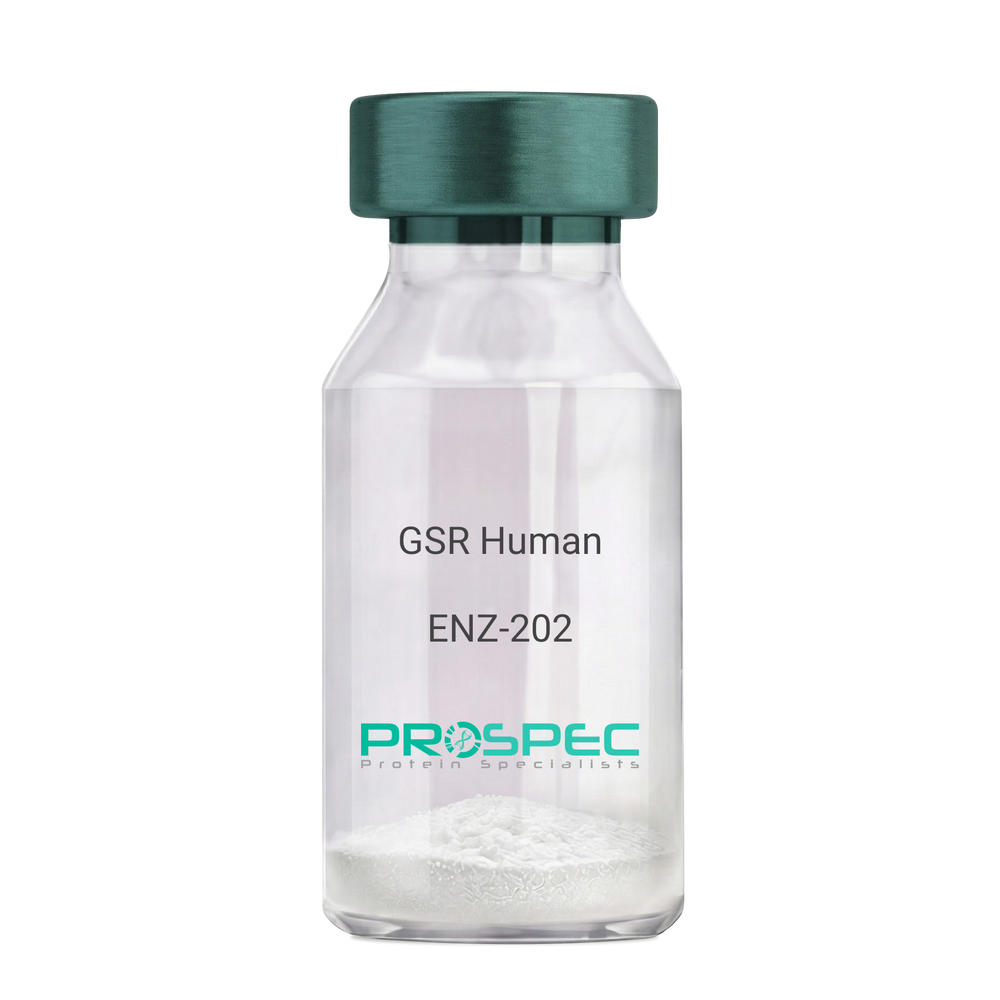
  • View Data Sheet

    Name :

    GSR Human

    Description:

    Glutathione Reductase Human Recombinant

    Glutathione reductase mitochondrial, GR, GRase, GSR, GLUR, GRD1.

    Product # :

    ENZ-202

    Price :

    Quantity :

    Shipping Method :

    Ice Icon

    Shipped with Ice Packs

    Add To Cart

    More Info

    • description
    • source
    • formulation
    • purity
    • biological activity
    • More Info

    Description

    GSR Human Recombinant produced in E.coli is a single, non-glycosylated polypeptide chain containing 504 amino acids (43-522) and having a molecular mass of 54.3kDa.GSR is fused to a 24 amino acid His-tag at N-terminus & purified by proprietary chromatographic techniques.

    Source

    Escherichia Coli.

    Formulation

    The GSR solution (1mg/ml) contains 20mM Tris-HCl buffer (pH 8.0), 1mM DTT, 10% glycerol and 0.1M NaCl.

    Purity

    Greater than 95.0% as determined by SDS-PAGE.

    Biological Activity

    Specific activity: > 29 unit/ml.
    One unit will reduce 1.0 umol of oxidized glutathione per minute at pH 7.5 at 25°C.

    More Info

    • Introduction

      Glutathione reductase (GSR) belongs to the class-I pyridine nucleotide-disulfide oxidoreductase family. The GSR enzyme is a homodimeric flavoprotein and has a role in maintaining glutathione (GSH) in its reduced form by catalyzing the reduction of glutathione disulfide (GSSG): GSSG + NADPH + H+ ->2GSH + NADP+. In the majority of eukaryotic cells, GSR upholds the ratio of [GSH] / [GSSG], and partakes in quite a few critical functions such as the detoxification of reactive oxygen species as well as protein and DNA biosynthesis.

    • Synonyms

      Glutathione reductase mitochondrial, GR, GRase, GSR, GLUR, GRD1.

    • Physical Appearance

      Sterile Filtered colorless solution.

    • Stability

      Store at 4°C if entire vial will be used within 2-4 weeks.Store, frozen at -20°C for longer periods of time. For long term storage it is recommended to add a carrier protein (0.1% HSA or BSA).Avoid multiple freeze-thaw cycles.

    • Amino Acid Sequence

      MGSSHHHHHH SSGLVPRGSH MGSMAMACRQ EPQPQGPPPA AGAVASYDYL VIGGGSGGLA SARRAAELGA RAAVVESHKL GGTCVNVGCV PKKVMWNTAV HSEFMHDHAD YGFPSCEGKF NWRVIKEKRD AYVSRLNAIY QNNLTKSHIE IIRGHAAFTS DPKPTIEVSG KKYTAPHILI
      ATGGMPSTPH ESQIPGASLG ITSDGFFQLE ELPGRSVIVG AGYIAVEMAG ILSALGSKTS LMIRHDKVLR SFDSMISTNC TEELENAGVE VLKFSQVKEV KKTLSGLEVS MVTAVPGRLP VMTMIPDVDC LLWAIGRVPN TKDLSLNKLG IQTDDKGHII VDEFQNTNVK GIYAVGDVCG
      KALLTPVAIA AGRKLAHRLF EYKEDSKLDY NNIPTVVFSH PPIGTVGLTE DEAIHKYGIE NVKTYSTSFT PMYHAVTKRK TKCVMKMVCA NKEEKVVGIH MQGLGCDEML QGFAVAVKMG ATKADFDNTV AIHPTSSEEL VTLR.

    ProSpec's products are furnished for LABORATORY RESEARCH USE ONLY. The product may not be used as drugs, agricultural or pesticidal products, food additives or household chemicals.

    Gsr Human
  • View Data Sheet

    Name :

    PYCRL Human

    Description:

    Pyrroline-5-Carboxylate Reductase Like Human Recombinant

    Pyrroline-5-carboxylate reductase 3, P5C reductase 3, P5CR 3, Pyrroline-5-carboxylate reductase-like protein, PYCRL.

    Product # :

    ENZ-678

    Price :

    Quantity :

    Shipping Method :

    Ice Icon

    Shipped with Ice Packs

    Add To Cart

    More Info

    • description
    • source
    • formulation
    • purity
    • More Info

    Description

    PYCRL Human Recombinant produced in E.coli is a single, non-glycosylated polypeptide chain containing 297 amino acids (1-274) and having a molecular mass of 31kDa.PYCRL is fused to a 23 amino acid His-tag at N-terminus & purified by proprietary chromatographic techniques.

    Source

    Escherichia Coli.

    Formulation

    The PYCRL solution (0.25mg/ml) contains 20mM Tris-HCl buffer (pH 8.0), 0.2M NaCl, 50% glycerol and 2mM DTT.

    Purity

    Greater than 90.0% as determined by SDS-PAGE.

    More Info

    • Introduction

      Pyrroline-5-Carboxylate Reductase Like (PYCRL) is a member of the pyrroline-5-carboxylate reductase family and acts as a homodecamer. PYCRL plays a key role in proline bio-synthesis. Proline serves as a non-enzymatic antioxidant to reduce damage caused by reactive oxygen species (ROS) in microorganisms, animals and plants. In the final stage of proline biosynthesis, PYCRL catalyzes the reduction of aldehyde dehydrogenase 4A1 (ALDH4A1) to proline with NAD(P)H as the cofactor.

    • Synonyms

      Pyrroline-5-carboxylate reductase 3, P5C reductase 3, P5CR 3, Pyrroline-5-carboxylate reductase-like protein, PYCRL.

    • Physical Appearance

      Sterile Filtered colorless solution.

    • Stability

      Store at 4°C if entire vial will be used within 2-4 weeks.Store, frozen at -20°C for longer periods of time. For long term storage it is recommended to add a carrier protein (0.1% HSA or BSA).Avoid multiple freeze-thaw cycles.

    • Amino Acid Sequence

      MGSSHHHHHH SSGLVPRGSH MGSMAAAEPS PRRVGFVGAG RMAGAIAQGL IRAGKVEAQH ILASAPTDRN LCHFQALGCR TTHSNQEVLQ SCLLVIFATK PHVLPAVLAE VAPVVTTEHI LVSVAAGVSL STLEELLPPN TRVLRVLPNL PCVVQEGAIV MARGRHVGSS ETNLLQHLLE ACGRCEEVPE AYVDIHTGLS GSGVAFVCAF SEALAEGAVK MGMPSSLAHR IAAQTLLGTA KMLLHEGQHP AQLRSDVCTP GGTTIYGLHA LEQGGLRAAT MSAVEAATCR AKELSRK.

    ProSpec's products are furnished for LABORATORY RESEARCH USE ONLY. The product may not be used as drugs, agricultural or pesticidal products, food additives or household chemicals.

    Pycrl Human
  • View Data Sheet

    Name :

    LIPG Human, HEK

    Description:

    Lipase Endothelial Human Recombinant, HEK

    LIPG, Lipase Endothelial, EDL, EL, Endothelial Cell-Derived Lipase, EC 3.1.1.3, PRO719, Endothelial Lipase, Lipoprotein Lipase H, EC 3.1.1.

    Product # :

    ENZ-810

    Price :

    Quantity :

    Shipping Method :

    Room Temp Icon

    Shipped at Room temp

    Add To Cart

    More Info

    • description
    • source
    • formulation
    • purity
    • More Info

    Description

    LIPG Human Recombinant produced in HEK cells is a single, glycosylated, polypeptide chain (Ser21-Pro500) containing a total of 490 amino acids, having a calculated molecular mass of 55.8kDa. LIPG is fused to a 2 aa N-terminal linker, a 2 aa C-terminal linker and a 6 aa His tag at C-Terminus.

    Source

    HEK 293.

    Formulation

    LIPG was filtered (0.4 µm) and lyophilized from a solution in phosphate buffered saline pH 7.5 (PBS), 1% (w/v) Sucrose and 4% (w/v) Mannitol.

    Purity

    Greater than 85.0% as determined by SDS-PAGE.

    More Info

    • Introduction

      Lipase Endothelial (LIPG) has extensive phospholipase activity and may be involved in lipoprotein metabolism and vascular biology. The LIPG protein is considered a member of the TG lipase family through its sequence and characteristic lid region which provides substrate specificity for enzymes of the TG lipase family. In addition, the LIPG has triglyceride lipase activities. LIPG hydrolyzes HDLs more efficiently than other lipoproteins. LIPG also binds heparin.

    • Synonyms

      LIPG, Lipase Endothelial, EDL, EL, Endothelial Cell-Derived Lipase, EC 3.1.1.3, PRO719, Endothelial Lipase, Lipoprotein Lipase H, EC 3.1.1.

    • Physical Appearance

      Filtered White lyophilized (freeze-dried) powder.

    • Stability

      Store lyophilized protein at -20°C. Aliquot the product after reconstitution to avoid repeated freezing/thawing cycles. Reconstituted protein can be stored at 4°C for a limited period of time; it does not show any change after two weeks at 4°C.

    • Solubility

      It is recommended to add deionized water to prepare a working stock solution of approximately 0.5 mg/ml and let the lyophilized pellet dissolve completely. LIPG is not sterile! Please filter the product by an appropriate sterile filter before using it in the cell culture.

    • Amino Acid Sequence

      ASSPVPFGPE GRLEDKLHKP KATQTEVKPS VRFNLRTSKD PEHEGCYLSV GHSQPLEDCS FNMTAKTFFI IHGWTMSGIF ENWLHKLVSA LHTREKDANV VVVDWLPLAH QLYTDAVNNT RVVGHSIARM LDWLQEKDDF SLGNVHLIGY SLGAHVAGYA GNFVKGTVGR ITGLDPAGPM FEGADIHKRL SPDDADFVDV LHTYTRSFGL SIGIQMPVGH IDIYPNGGDF QPGCGLNDVL GSIAYGTITE VVKCEHERAV HLFVDSLVNQ DKPSFAFQCT DSNRFKKGIC LSCRKNRCNS IGYNAKKMRN KRNSKMYLKT RAGMPFRVYH YQMKIHVFSY KNMGEIEPTF YVTLYGTNAD SQTLPLEIVE RIEQNATNTF LVYTEEDLGD LLKIQLTWEG ASQSWYNLWK EFRSYLSQPR NPGRELNIRR IRVKSGETQR KLTFCTEDPE NTSISPGREL WFRKCRDGWR MKNETSPTVE LP KLHHHHHH.

    ProSpec's products are furnished for LABORATORY RESEARCH USE ONLY. The product may not be used as drugs, agricultural or pesticidal products, food additives or household chemicals.

    Lipg Human Hek
  • View Data Sheet

    Name :

    GST, 218 a.a.

    Description:

    Glutathione S-Transferase, 218 a.a. Recombinant

    Glutathione S-Transferase, GST, Glutathione S-transferase class-mu 28 kDa isozyme, GST 28, EC 2.5.1.18, Sj28GST, Sj28 antigen, Sj26 antigen.

    Product # :

    ENZ-1079

    Price :

    Quantity :

    Shipping Method :

    Ice Icon

    Shipped with Ice Packs

    Add To Cart

    More Info

    • description
    • source
    • formulation
    • purity
    • biological activity
    • More Info

    Description

    GST Recombinant produced in E.Coli is a single, non-glycosylated polypeptide chain containing 218 amino acids (1-218 a.a) and having a molecular mass of 25.4kDa

    Source

    Escherichia Coli.

    Formulation

    GST protein solution (1mg/ml) containing PBS and 10% glycerol.

    Purity

    Greater than 90.0% as determined by SDS-PAGE.

    Biological Activity

    The Specific activity is > 30 units/mg, and is defined as the amount of enzyme that conjugate 1.0 umole of 1-chloro-2,4-dinitrobenzene (CDNB) with reduced glutathione per minute at pH 6.5 at 25C.

    More Info

    • Introduction

      Antioxidant enzyme Glutathione S- Transferase (GST) is thought to do the primary cellular defense mechanism against reactive oxygen species. GST reduces lipid hydroperoxides through its Se-independent glutathione peroxidase activity. The enzyme also detoxifies lipid peroxidation end products such as 4-hydroxynonenal (4-HNE).
      The soluble GST is a 26 kDa protein which occurs as a dimer in all aerobic organisms. Each monomer has two domains, one that binds GSH and is an /-structure similar to thioredoxin and the other, all helical, that binds the hydrophobic substrate. The GST -fusion protein expression system is a widely used recombinant protein expression system that allows a peptide or a regulatory protein domain to be expressed as a fusion to the C-terminus of Schistosoma japonicum GST. Fusion proteins also possess GST -enzymatic activity and can undergo dimerization similar to in vivo. The fusion protein can be purified via GST -affinity column chromatography. In most cases, the desired peptides or domains are removed from GST by applying a specific protease that recognizes and cleaves the linker between the protein domain and GST. The technique has been widely used to generate different kinds of proteins for crystallization, molecular immunology studies, the production of vaccines and studies involving protein-protein and protein-DNA interactions.

    • Synonyms

      Glutathione S-Transferase, GST, Glutathione S-transferase class-mu 28 kDa isozyme, GST 28, EC 2.5.1.18, Sj28GST, Sj28 antigen, Sj26 antigen.

    • Physical Appearance

      Sterile Filtered clear solution.

    • Stability

      Store at 4°C if entire vial will be used within 2-4 weeks. Store, frozen at -20°C for longer periods of time. For long term storage it is recommended to add a carrier protein (0.1% HSA or BSA).Avoid multiple freeze-thaw cycles.

    • Amino Acid Sequence

      MSPILGYWKI KGLVQPTRLL LEYLEEKYEE HLYERDEGDK WRNKKFELGL EFPNLPYYID GDVKLTQSMA IIRYIADKHN MLGGCPKERA EISMLEGAVL DIRYGVSRIA YSKDFETLKV DFLSKLPEML KMFEDRLCHK TYLNGDHVTH PDFMLYDALD VVLYMDPMCL DAFPKLVCFK KRIEAIPQID KYLKSSKYIA WPLQGWQATF GGGDHPPK.

    ProSpec's products are furnished for LABORATORY RESEARCH USE ONLY. The product may not be used as drugs, agricultural or pesticidal products, food additives or household chemicals.

    Gst Protein 3
  • View Data Sheet

    Name :

    UMPS Human, Sf9

    Description:

    Uridine Monophosphate Synthetase Human Recombinant, Sf9

    Uridine Monophosphate Synthetase, UMP Synthase, Orotate Phosphoribosyl Transferase And Orotidine-5-Decarboxylase, Orotidine 5-Phosphate Decarboxylase, Orotate Phosphoribosyltransferase, Uridine 5-Monophosphate Synthase, OMPdecase, OPRTase, OPRT, Uridine 5'-monophosphate synthase, UMP synthase, Orotate phosphoribosyltransferase, Orotidine 5'-phosphate decarboxylase, ODC.

    Product # :

    ENZ-1057

    Price :

    Quantity :

    Shipping Method :

    Ice Icon

    Shipped with Ice Packs

    Add To Cart

    More Info

    • description
    • source
    • formulation
    • purity
    • More Info

    Description

    UMPS Human Recombinant produced in Sf9 Baculovirus cells is a single, glycosylated polypeptide chain containing 486 amino acids (1-480 a.a.) and having a molecular mass of 53kDa (Molecular size on SDS-PAGE will appear at approximately 50-70kDa). UMPS is expressed with a 6 amino acid His tag at C-Terminus and purified by proprietary chromatographic techniques.

    Source

    Sf9, Baculovirus cells.

    Formulation

    UMPS protein solution (0.25mg/ml) contains Phosphate Buffered Saline (pH 7.4) and 30% glycerol.

    Purity

    Greater than 95.0% as determined by SDS-PAGE.

    More Info

    • Introduction

      Uridine 5'-monophosphate synthase (UMPS), is a bifunctional enzyme that catalyzes the ultimate two steps of the de novo pyrimidine biosynthetic pathway. UMPS in eukaryotes links the orotate phosphoribosyltransferase and the orotidine-5’-monophosphate (OMP) decarboxylase activities into a single protein. The harmony of these 2 enzymes is assumed to be stabilized the catalytic centers as a result of the low molar concentration of the protein in mammalian cells. Mutations in UMPS are the reason of inherited orotic aciduria disease.

    • Synonyms

      Uridine Monophosphate Synthetase, UMP Synthase, Orotate Phosphoribosyl Transferase And Orotidine-5-Decarboxylase, Orotidine 5-Phosphate Decarboxylase, Orotate Phosphoribosyltransferase, Uridine 5-Monophosphate Synthase, OMPdecase, OPRTase, OPRT, Uridine 5'-monophosphate synthase, UMP synthase, Orotate phosphoribosyltransferase, Orotidine 5'-phosphate decarboxylase, ODC.

    • Physical Appearance

      Sterile Filtered clear solution.

    • Stability

      Store at 4°C if entire vial will be used within 2-4 weeks. Store, frozen at -20°C for longer periods of time. For long term storage it is recommended to add a carrier protein (0.1% HSA or BSA).Avoid multiple freeze-thaw cycles.

    • Amino Acid Sequence

      MAVARAALGP LVTGLYDVQA FKFGDFVLKS GLSSPIYIDL RGIVSRPRLL SQVADILFQT AQNAGISFDT VCGVPYTALP LATVICSTNQ IPMLIRRKET KDYGTKRLVE GTINPGETCL IIEDVVTSGS SVLETVEVLQ KEGLKVTDAI VLLDREQGGK DKLQAHGIRL HSVCTLSKML EILEQQKKVD AETVGRVKRF IQENVFVAAN HNGSPLSIKE APKELSFGAR AELPRIHPVA SKLLRLMQKK ETNLCLSADV SLARELLQLA DALGPSICML KTHVDILNDF TLDVMKELIT LAKCHEFLIF EDRKFADIGN TVKKQYEGGI FKIASWADLV NAHVVPGSGV VKGLQEVGLP LHRGCLLIAE MSSTGSLATG DYTRAAVRMA EEHSEFVVGF ISGSRVSMKP EFLHLTPGVQ LEAGGDNLGQ QYNSPQEVIG KRGSDIIIVG RGIISAADRL EAAEMYRKAA WEAYLSRLGV HHHHHH.

    ProSpec's products are furnished for LABORATORY RESEARCH USE ONLY. The product may not be used as drugs, agricultural or pesticidal products, food additives or household chemicals.

    Umps Enzyme
  • View Data Sheet

    Name :

    UPP1 E.coli

    Description:

    Uridine Phosphorylase E.coli Recombinant

    UPASE, UDRPASE, UPP, UDP.

    Product # :

    ENZ-258

    Price :

    Quantity :

    Shipping Method :

    Ice Icon

    Shipped with Ice Packs

    Add To Cart

    More Info

    • description
    • source
    • formulation
    • purity
    • More Info

    Description

    UPP1 E.Coli Recombinant protein produced in E.Coli is a single, non-glycosylated, polypeptide chain containing 273 amino acids (1-253) and having a molecular mass of 29.3 kDa. UPP1 is fused to a 20 amino acid His Tag at N-terminus and is purified by proprietary chromatographic techniques.

    Source

    Escherichia Coli.

    Formulation

    UPP1 solution (1mg/ml) contains 20 mM Tris-HCl buffer (pH 8.0), 1mM DTT, 50mM NaCl and 10% glycerol.

    Purity

    Greater than 95.0% as determined by SDS-PAGE.

    More Info

    • Introduction

      UPP1 catalyzes the reversible phosphorylytic cleavage of uridine and deoxyuridine to uracil and ribose- or deoxyribose-1-phosphate which are used as carbon and energy sources or in the release of pyrimidine bases for nucleotide synthesis. UPP1 is part of the family of glycosyltransferases, specifically the pentosyltransferases. Pyrimidine nucleoside phosphorylases add ribose or deoxyribose to pyrimidine bases to form nucleosides that can be incorporated into RNA or DNA.

    • Synonyms

      UPASE, UDRPASE, UPP, UDP.

    • Physical Appearance

      Sterile filtered colorless solution.

    • Stability

      Store at 4°C if entire vial will be used within 2-4 weeks. Store, frozen at -20°C for longer periods of time. For long term storage it is recommended to add a carrier protein (0.1% HSA or BSA).Avoid multiple freeze-thaw cycles.

    • Amino Acid Sequence

      MGSSHHHHHH SSGLVPRGSH MSKSDVFHLG LTKNDLQGAT LAIVPGDPDR VEKIAALMDK PVKLASHREF TTWRAELDGK PVIVCSTGIG GPSTSIAVEE LAQLGIRTFL RIGTTGAIQP HINVGDVLVT TASVRLDGAS LHFAPLEFPA VADFECTTAL VEAAKSIGAT THVGVTASSD TFYPGQERYD TYSGRVVRHF KGSMEEWQAM GVMNYEMESA TLLTMCASQG LRAGMVAGVI VNRTQQEIPN AETMKQTESH AVKIVVEAAR RLL.

    ProSpec's products are furnished for LABORATORY RESEARCH USE ONLY. The product may not be used as drugs, agricultural or pesticidal products, food additives or household chemicals.

    Upp1
  • View Data Sheet

    Name :

    QDPR Human

    Description:

    Quinoid Dihydropteridine Reductase Human Recombinant

    Dihydropteridine reductase, HDHPR, Quinoid dihydropteridine reductase, QDPR, DHPR, PKU2, SDR33C1.

    Product # :

    ENZ-163

    Price :

    Quantity :

    Shipping Method :

    Ice Icon

    Shipped with Ice Packs

    Add To Cart

    More Info

    • description
    • source
    • formulation
    • purity
    • More Info

    Description

    QDPR Human Recombinant produced in E.Coli is a single, non-glycosylated polypeptide chain containing 267 amino acids (1-244 a.a.) and having a molecular mass of 28.2kDa.QDPR is fused to a 23 amino acid His-tag at N-terminus & purified by proprietary chromatographic techniques.

    Source

    Escherichia Coli.

    Formulation

    QDPR protein solution (1mg/ml) containing 20mM Tris-HCl buffer (pH 8.0), 10% glycerol and 2mM DTT.

    Purity

    Greater than 90.0% as determined by SDS-PAGE.

    More Info

    • Introduction

      QDPR belongs to the short-chain dehydrogenases/reductase (SDR) family of enzymes. Operating as a homodimer, QDPR has an imperative role in the recycling of tetrahydrobiopterin (BH4), a vital cofactor for the hydroxylation of the aromatic amino acids (tryptophan, tyrosine and phenylalanine). More precisely, QDPR catalyzes the regeneration of BH4 from quinonoid dihydrobiopterin (qBH2), the product generated from the hydroxylation reactions. Mutations in the QDPR gene may lead to phenylketonuria II.

    • Synonyms

      Dihydropteridine reductase, HDHPR, Quinoid dihydropteridine reductase, QDPR, DHPR, PKU2, SDR33C1.

    • Physical Appearance

      Sterile Filtered colorless solution.

    • Stability

      Store at 4°C if entire vial will be used within 2-4 weeks.Store, frozen at -20°C for longer periods of time. For long term storage it is recommended to add a carrier protein (0.1% HSA or BSA).Avoid multiple freeze-thaw cycles.

    • Amino Acid Sequence

      MGSSHHHHHH SSGLVPRGSH MGSMAAAAAA GEARRVLVYG GRGALGSRCV QAFRARNWWV ASVDVVENEE ASASIIVKMT DSFTEQADQV TAEVGKLLGE EKVDAILCVA GGWAGGNAKS KSLFKNCDLM WKQSIWTSTI SSHLATKHLK EGGLLTLAGA KAALDGTPGM IGYGMAKGAV HQLCQSLAGK NSGMPPGAAA IAVLPVTLDT PMNRKSMPEA DFSSWTPLEF LVETFHDWIT GKNRPSSGSL IQVVTTEGRT ELTPAYF.

    ProSpec's products are furnished for LABORATORY RESEARCH USE ONLY. The product may not be used as drugs, agricultural or pesticidal products, food additives or household chemicals.

    Qdpr Human
  • View Data Sheet

    Name :

    MAT2A Human

    Description:

    Methionine Adenosyltransferase II Alpha Human Recombinant

    MATA2, MATII, SAMS2, MAT-2A, S-adenosylmethionine synthetase isoform type-2, AdoMet synthetase 2, Methionine adenosyltransferase 2, Methionine adenosyltransferase II, MAT2A, AMS2.

    Product # :

    ENZ-320

    Price :

    Quantity :

    Shipping Method :

    Ice Icon

    Shipped with Ice Packs

    Add To Cart

    More Info

    • description
    • source
    • formulation
    • purity
    • More Info

    Description

    MAT2A Human Recombinant fused with His tag (20 a.a.) at N-terminus produced in E.Coli is a single, non-glycosylated, polypeptide chain containing 415 amino acids and having a molecular mass of 45.8 kDa.The MAT2A is purified by proprietary chromatographic techniques.

    Source

    Escherichia Coli.

    Formulation

    The MAT2A solution (1mg/ml) contains 20mM Tris pH-8 & 10% glycerol.

    Purity

    Greater than 95.0% as determined by SDS-PAGE.

    More Info

    • Introduction

      MAT2A is an important enzyme in cellular metabolism and catalyzes the formation of S-adenosylmethionine (SAMe) from L-methionine and ATP. MAT2A is expressed in extrahepatic tissues. In liver, MAT2A expression associates with growth, dedifferentiation, and cancer. NF-kappa B and AP-1 are necessary for basal MAT2A expression in HepG2 cells and mediate the increase in MAT2A expression in response to TNF-alpha. Up-regulation of MAT2A provides growth improvement and s-adenosylmethionine and methylthioadenosine thus can block mitogenic signaling in colon cancer cells. Lower expression of both MAT2A and MAT2beta and interfere with leptin signaling in liver cancer cells.

    • Synonyms

      MATA2, MATII, SAMS2, MAT-2A, S-adenosylmethionine synthetase isoform type-2, AdoMet synthetase 2, Methionine adenosyltransferase 2, Methionine adenosyltransferase II, MAT2A, AMS2.

    • Physical Appearance

      Sterile Filtered colorless solution.

    • Stability

      Store at 4°C if entire vial will be used within 2-4 weeks. Store, frozen at -20°C for longer periods of time. For long term storage it is recommended to add a carrier protein (0.1% HSA or BSA).Please prevent freeze-thaw cycles.

    • Amino Acid Sequence

      MGSSHHHHHH SSGLVPRGSH MNGQLNGFHE AFIEEGTFLF TSESVGEGHP DKICDQISDA VLDAHLQQDP DAKVACETVA KTGMILLAGE ITSRAAVDYQ KVVREAVKHI GYDDSSKGFD YKTCNVLVAL EQQSPDIAQG VHLDRNEEDI GAGDQGLMFG YATDETEECM PLTIVLAHKL NAKLAELRRN GTLPWLRPDS KTQVTVQYMQ DRGAVLPIRV HTIVISVQHD EEVCLDEMRD ALKEKVIKAV VPAKYLDEDT IYHLQPSGRF VIGGPQGDAG LTGRKIIVDT YGGWGAHGGG AFSGKDYTKV DRSAAYAARW VAKSLVKGGL CRRVLVQVSY AIGVSHPLSI SIFHYGTSQK SERELLEIVK KNFDLRPGVI VRDLDLKKPI YQRTAAYGHF GRDSFPWEVP KKLKY.

    ProSpec's products are furnished for LABORATORY RESEARCH USE ONLY. The product may not be used as drugs, agricultural or pesticidal products, food additives or household chemicals.

    Mat2A Human
  • View Data Sheet

    Name :

    tPA Human, Sf9

    Description:

    Tissue Plasminogen Activator Human Recombinant, Sf9

    Tissue-type plasminogen activator, EC 3.4.21.68, tPA, t-PA, t-plasminogen activator, TPA, T-PA, DKFZp686I03148, PLAT and tPA.

    Product # :

    ENZ-1011

    Price :

    Quantity :

    Shipping Method :

    Ice Icon

    Shipped with Ice Packs

    Add To Cart

    More Info

    • description
    • source
    • formulation
    • purity
    • More Info

    Description

    tPA Human Recombinant produced in Sf9 Baculovirus cells is a single, glycosylated polypeptide chain containing 545 amino acids (24-562 a.a) and having a molecular mass of 61.3kDa (Molecular size on SDS-PAGE will appear at approximately 50-70kDa).tPA is fused to a 6 amino acid His-tag at C-terminus & purified by proprietary chromatographic techniques.

    Source

    Sf9, Baculovirus cells.

    Formulation

    tPA protein solution (0.25mg/ml) containing 50mM MES buffer(pH 5.5 ), 40% glycerol, 5mM CaCl2, 1mM DTT and 0.5M NaCl.

    Purity

    Greater than 90.0% as determined by SDS-PAGE.

    More Info

    • Introduction

      Tissue plasminogen activator (abbreviated PLAT or tPA) is a secreted serine proteasewhich converts the proenzymeplasminogento plasmin, a fibrinolyticenzyme. Plasminogen is synthesized as a single chain which is cleaved by PLAT into the two chain disulfide linked plasmin.
      This enzyme plays a role in cell migrationand tissue remodeling. Increased enzymatic activity causes hyperfibrinolysis, which manifests as excessive bleeding; decreased activity leads to hypofibrinolysiswhich can result in thrombosisor embolism.

    • Synonyms

      Tissue-type plasminogen activator, EC 3.4.21.68, tPA, t-PA, t-plasminogen activator, TPA, T-PA, DKFZp686I03148, PLAT and tPA.

    • Physical Appearance

      Sterile Filtered colorless solution.

    • Stability

      Store at 4°C if entire vial will be used within 2-4 weeks. Store, frozen at -20°C for longer periods of time. For long term storage it is recommended to add a carrier protein (0.1% HSA or BSA).Avoid multiple freeze-thaw cycles.

    • Amino Acid Sequence

      QEIHARFRRG ARSYQVICRD EKTQMIYQQH QSWLRPVLRS NRVEYCWCNS GRAQCHSVPV KSCSEPRCFN GGTCQQALYF SDFVCQCPEG FAGKCCEIDT RATCYEDQGI SYRGTWSTAE SGAECTNWNS SALAQKPYSG RRPDAIRLGL GNHNYCRNPD RDSKPWCYVF KAGKYSSEFC STPACSEGNS DCYFGNGSAY RGTHSLTESG ASCLPWNSMI LIGKVYTAQN PSAQALGLGK HNYCRNPDGD AKPWCHVLKN RRLTWEYCDV PSCSTCGLRQ YSQPQFRIKG GLFADIASHP WQAAIFAKHR RSPGERFLCG GILISSCWIL SAAHCFQERF PPHHLTVILG RTYRVVPGEE EQKFEVEKYI VHKEFDDDTY DNDIALLQLK SDSSRCAQES SVVRTVCLPP ADLQLPDWTE CELSGYGKHE ALSPFYSERL KEAHVRLYPS SRCTSQHLLN RTVTDNMLCA GDTRSGGPQA NLHDACQGDS GGPLVCLNDG RMTLVGIISW GLGCGQKDVP GVYTKVTNYL DWIRDNMRPHHHHHH.

    ProSpec's products are furnished for LABORATORY RESEARCH USE ONLY. The product may not be used as drugs, agricultural or pesticidal products, food additives or household chemicals.

    Tpa Human Sf9
  • View Data Sheet

    Name :

    CTSS Mouse

    Description:

    Cathepsin-S Mouse Recombinant

    Cathepsin S, Ctss, Cats.

    Product # :

    ENZ-954

    Price :

    Quantity :

    Shipping Method :

    Ice Icon

    Shipped with Ice Packs

    Add To Cart

    More Info

    • description
    • source
    • formulation
    • purity
    • More Info

    Description

    CTSS Mouse Recombinant produced in Sf9 Baculovirus cells is a single, glycosylated polypeptide chain containing 325 amino acids (24-340 a.a.) and having a molecular mass of 36.9kDa.CTSS is expressed with an 8 amino acid His tag at C-Terminus and purified by proprietary chromatographic techniques.

    Source

    Sf9, Baculovirus cells.

    Formulation

    CTSS protein solution (0.5mg/ml) containing Phosphate Buffered Saline (pH 7.4) and 10% glycerol.

    Purity

    Greater than 90.0% as determined by SDS-PAGE.

    More Info

    • Introduction

      Cathepsin S (CTSS) belongs to the peptidase C1 family. CTSS is a lysosomal cysteine proteinase that participates in the degradation of antigenic proteins to peptides for presentation on MHC class II molecules. CTSS functions as an elastase over a broad pH range in alveolar macrophages.

    • Synonyms

      Cathepsin S, Ctss, Cats.

    • Physical Appearance

      Sterile filtered colorless solution.

    • Stability

      Store at 4°C if entire vial will be used within 2-4 weeks. Store, frozen at -20°C for longer periods of time. For long term storage it is recommended to add a carrier protein (0.1% HSA or BSA).Avoid multiple freeze-thaw cycles.

    • Amino Acid Sequence

      EQLQRDP TLDYHWDLWK KTHEKEYKDK NEEEVRRLIW EKNLKFIMIH NLEYSMGMHT YQVGMNDMGD MTNEEISCRM GALRISRQSP KTVTFRSYSN RTLPDTVDWR EKGCVTEVKY QGSCGACWAF SAVGALEGQL KLKTGKLISL SAQNLVDCSN EEKYGNKGCG GGYMTEAFQY IIDNGGIEAD ASYPYKAMDE KCHYNSKNRA ATCSRYIQLP FGDEDALKEA VATKGPVSVG IDASHSSFFF YKSGVYDDPS CTGNVNHGVL VVGYGTLDGK DYWLVKNSWG LNFGDQGYIR MARNNKNHCG IASYCSYPEI LEHHHHHHDY WLVKNSWGLN FGDQGYIRMA RNNKNHCGIA
      SYCSYPEILE HHHHHH.

    ProSpec's products are furnished for LABORATORY RESEARCH USE ONLY. The product may not be used as drugs, agricultural or pesticidal products, food additives or household chemicals.

    Ctss Mouse
  • View Data Sheet

    Name :

    AMT Human

    Description:

    Aminomethyltransferase Human Recombinant

    GCE, GCST, GCVT, NKH, Aminomethyltransferase, mitochondrial, Glycine cleavage system T protein, GCVT.

    Product # :

    ENZ-900

    Price :

    Quantity :

    Shipping Method :

    Ice Icon

    Shipped with Ice Packs

    Add To Cart

    More Info

    • description
    • source
    • formulation
    • purity
    • More Info

    Description

    AMT Human Recombinant produced in E.Coli is a single, non-glycosylated polypeptide chain containing 398 amino acids (29-403 a.a) and having a molecular mass of 43.3kDa.AMT is fused to a 23 amino acid His-tag at N-terminus & purified by proprietary chromatographic techniques.

    Source

    Escherichia Coli.

    Formulation

    AMT protein solution (1mg/ml) in Phosphate Buffered Saline, 30% glycerol and 1mM DTT.

    Purity

    Greater than 95.0% as determined by SDS-PAGE.

    More Info

    • Introduction

      Aminomethyltransferase, mitochondrial isoform 1 (AMT) is a component of the glycine cleavage system termed T-protein. AMT reversibly catalyzes the degradation of the aminomethyl moiety of glycine attached to the lipoate cofactor of H-protein, leading to the production of ammonia, 5,10-methylenetetrahydrofolate, and dihydrolipoate-bearing H-protein in the presence of tetrahydrofolate.

    • Synonyms

      GCE, GCST, GCVT, NKH, Aminomethyltransferase, mitochondrial, Glycine cleavage system T protein, GCVT.

    • Physical Appearance

      Sterile Filtered colorless solution.

    • Stability

      Store at 4°C if entire vial will be used within 2-4 weeks. Store, frozen at -20°C for longer periods of time. For long term storage it is recommended to add a carrier protein (0.1% HSA or BSA).Avoid multiple freeze-thaw cycles.

    • Amino Acid Sequence

      MGSSHHHHHH SSGLVPRGSH MGSAQEVLRR TPLYDFHLAH GGKMVAFAGW SLPVQYRDSH TDSHLHTRQH CSLFDVSHML QTKILGSDRV KLMESLVVGD IAELRPNQGT LSLFTNEAGG ILDDLIVTNT SEGHLYVVSN AGCWEKDLAL MQDKVRELQN QGRDVGLEVL DNALLALQGP TAAQVLQAGV ADDLRKLPFM TSAVMEVFGV SGCRVTRCGY TGEDGVEISV PVAGAVHLAT AILKNPEVKL AGLAARDSLR LEAGLCLYGN DIDEHTTPVE GSLSWTLGKR RRAAMDFPGA KVIVPQLKGR VQRRRVGLMC EGAPMRAHSP ILNMEGTKIG TVTSGCPSPS LKKNVAMGYV PCEYSRPGTM LLVEVRRKQQ MAVVSKMPFV PTNYYTLK.

    ProSpec's products are furnished for LABORATORY RESEARCH USE ONLY. The product may not be used as drugs, agricultural or pesticidal products, food additives or household chemicals.

    Amt Human
  • 1
  • …
  • 15
  • 16
  • 17
  • 18
  • 19
  • …
  • 42
Your browser does not support the video tag.

Products

  • Cytokines
  • Growth Factors
  • Chemokines
  • CD Antigens
  • Neurotrophins
  • Hormones
  • Enzymes
  • Viral Antigens
  • Recombinant Proteins
  • Natural Proteins
  • Monoclonal Antibodies
  • Polyclonal Antibodies
  • Thermal Packaging

About

  • Company
  • Founder
  • Contribution
  • Contact Us
  • My Account

Ordering

  • Ordering Method
  • Ordering - Credit Card
  • Ordering PO
  • Shipping Fees
  • FAQ's

Legal

  • Terms & Conditions
  • Privacy
  • Site Map
  • info@prospecbio.com
  • Facebook
  • Instagram
  • Linkedin Profile

© 2026 ProSpec-Tany TechnoGene Ltd. All Rights Reserved.

  • Choosing a selection results in a full page refresh.
  • Opens in a new window.