Skip to content

High-quality research proteins.

  • 1-800-805-6531

  • Mon - Sat 8.00-18.00, Sun - Closed

  • info@prospecbio.com

  • PO Box 6591 East Brunswick NJ 08816

  • Products
    • Cytokines
    • Growth factors
    • Chemokines
    • Cd antigens
    • Neurotrophins
    • Hormones
    • Enzymes
    • Viral antigens
    • Recombinant proteins
    • Natural proteins
    • Monoclonal antibodies
    • Polyclonal antibodies
    • Thermal Packaging
  • About
    • Company
    • Founder
    • Contribution
  • Customers
    • Eastern Asia
    • Eastern Europe
    • North America
    • South America
    • South East Asia
    • Southern Asia
    • Western Europe
  • Ordering
    • Ordering Method
    • Ordering - Credit Card
    • Ordering - PO
    • Shipping Fees
    • FAQs
  • Services
    • DNA Cloning
    • Protein Expression
    • Monoclonal Antibody
    • Fermentation
    • Technology License
  • Contact us
Log in

Country/region

  • USD $ | Albania
  • USD $ | Andorra
  • USD $ | Argentina
  • USD $ | Armenia
  • USD $ | Australia
  • USD $ | Austria
  • USD $ | Azerbaijan
  • USD $ | Belarus
  • USD $ | Belgium
  • USD $ | Bolivia
  • USD $ | Brazil
  • USD $ | Bulgaria
  • USD $ | Cambodia
  • USD $ | Canada
  • USD $ | Chile
  • USD $ | China
  • USD $ | Colombia
  • USD $ | Costa Rica
  • USD $ | Croatia
  • USD $ | Cyprus
  • USD $ | Czechia
  • USD $ | Denmark
  • USD $ | Estonia
  • USD $ | Finland
  • USD $ | France
  • USD $ | Georgia
  • USD $ | Germany
  • USD $ | Greece
  • USD $ | Hong Kong SAR
  • USD $ | Hungary
  • USD $ | Iceland
  • USD $ | India
  • USD $ | Ireland
  • USD $ | Israel
  • USD $ | Italy
  • USD $ | Japan
  • USD $ | Kazakhstan
  • USD $ | Latvia
  • USD $ | Liechtenstein
  • USD $ | Lithuania
  • USD $ | Madagascar
  • USD $ | Malta
  • USD $ | Mexico
  • USD $ | Moldova
  • USD $ | Monaco
  • USD $ | Netherlands
  • USD $ | New Zealand
  • USD $ | North Macedonia
  • USD $ | Norway
  • USD $ | Panama
  • USD $ | Paraguay
  • USD $ | Peru
  • USD $ | Philippines
  • USD $ | Poland
  • USD $ | Portugal
  • USD $ | Romania
  • USD $ | Singapore
  • USD $ | Slovakia
  • USD $ | Slovenia
  • USD $ | South Africa
  • USD $ | South Korea
  • USD $ | Spain
  • USD $ | Sri Lanka
  • USD $ | Sweden
  • USD $ | Switzerland
  • USD $ | Taiwan
  • USD $ | Thailand
  • USD $ | Türkiye
  • USD $ | Ukraine
  • USD $ | United Kingdom
  • USD $ | United States
  • USD $ | Uruguay
  • USD $ | Vatican City
  • USD $ | Venezuela
  • USD $ | Vietnam
  • Facebook
  • Instagram
logoProSpec - Recombinant Protein Manufacturer for academic and R&D industry
Become a distributor
Account Log in
Wishlist
Cart Cart(0)
  • Products
    +
    • Cytokines
    • Growth factors
    • Chemokines
    • Cd antigens
    • Neurotrophins
    • Hormones
    • Enzymes
    • Viral antigens
    • Recombinant proteins
    • Natural proteins
    • Monoclonal antibodies
    • Polyclonal antibodies
    • Thermal Packaging
  • About
    +
    • Company
    • Founder
    • Contribution
  • Customers
    +
    • Eastern Asia
    • Eastern Europe
    • North America
    • South America
    • South East Asia
    • Southern Asia
    • Western Europe
  • Ordering
    +
    • Ordering Method
    • Ordering - Credit Card
    • Ordering - PO
    • Shipping Fees
    • FAQs
  • Services
    +
    • DNA Cloning
    • Protein Expression
    • Monoclonal Antibody
    • Fermentation
    • Technology License
  • Contact us

Item added to your cart

View cart
View All
  • Cytokines
  • Growth factors
  • Chemokines
  • Cd antigens
  • Neurotrophins
  • Hormones
  • Enzymes
  • Viral antigens
  • Recombinant proteins
  • Natural proteins
  • Monoclonal antibodies
  • Polyclonal antibodies
  • Thermal Packaging
  • Tumor Necrosis Factor

    Tumor Necrosis Factor

    View All
  • 4-1BB

    4-1BB

    View All
  • Adiponectin

    Adiponectin

    View All
  • AIF1

    AIF1

    View All
  • Other Cytokines

    Other Cytokines

    View All
  • AITRL

    AITRL

    View All
  • Angiopoietin

    Angiopoietin

    View All
  • Apolipoprotein

    Apolipoprotein

    View All
  • B-Cell Activating Factor

    B-Cell Activating Factor

    View All
  • Beta Defensin

    Beta Defensin

    View All
  • Bone Morphogenetic Protein

    Bone Morphogenetic Protein

    View All
  • B type Natriuretic Peptide

    B type Natriuretic Peptide

    View All
  • BST

    BST

    View All
  • Betacellulin

    Betacellulin

    View All
  • Cardiotrophin

    Cardiotrophin

    View All
  • Activin

    Activin

    View All
  • Fibroblast Growth Factor

    Fibroblast Growth Factor

    View All
  • Other Growth Factors

    Other Growth Factors

    View All
  • CSF

    CSF

    View All
  • CTGF

    CTGF

    View All
  • IGFBP

    IGFBP

    View All
  • VEGF Protein

    VEGF Protein

    View All
  • EGF

    EGF

    View All
  • Epigen

    Epigen

    View All
  • Erythropoietin

    Erythropoietin

    View All
  • Insulin-Like Growth Factor

    Insulin-Like Growth Factor

    View All
  • Growth Hormone

    Growth Hormone

    View All
  • HDGF

    HDGF

    View All
  • Hepatocyte Growth Factor

    Hepatocyte Growth Factor

    View All
  • Insulin

    Insulin

    View All
  • BCA-1/ BLC (CXCL13)

    BCA-1/ BLC (CXCL13)

    View All
  • BRAK (CXCL14)

    BRAK (CXCL14)

    View All
  • C-10 (CCL6)

    C-10 (CCL6)

    View All
  • Other Chemokines

    Other Chemokines

    View All
  • MEC (CCL28)

    MEC (CCL28)

    View All
  • LD78-beta (CCL3L1)

    LD78-beta (CCL3L1)

    View All
  • CTACK (CCL27)

    CTACK (CCL27)

    View All
  • CXCL16

    CXCL16

    View All
  • CXCL17

    CXCL17

    View All
  • Platelet Factor-4 (CXCL4)

    Platelet Factor-4 (CXCL4)

    View All
  • ENA-78 (CXCL5)

    ENA-78 (CXCL5)

    View All
  • Eotaxin (CCL11,24,26)

    Eotaxin (CCL11,24,26)

    View All
  • Exodus-2 (CCL21)

    Exodus-2 (CCL21)

    View All
  • Fractalkine (CX3CL1)

    Fractalkine (CX3CL1)

    View All
  • CXCL6

    CXCL6

    View All
  • Other CD Antigens

    Other CD Antigens

    View All
  • CD14

    CD14

    View All
  • CD164

    CD164

    View All
  • CD1

    CD1

    View All
  • CD2

    CD2

    View All
  • CD200

    CD200

    View All
  • CD207

    CD207

    View All
  • CD226

    CD226

    View All
  • CD23

    CD23

    View All
  • CD244

    CD244

    View All
  • CD247

    CD247

    View All
  • CD27

    CD27

    View All
  • CD274

    CD274

    View All
  • CD300

    CD300

    View All
  • CD33

    CD33

    View All
  • Other Neurotrophins

    Other Neurotrophins

    View All
  • Beta-NGF

    Beta-NGF

    View All
  • BDNF

    BDNF

    View All
  • CDNF

    CDNF

    View All
  • CNTF

    CNTF

    View All
  • GDNF

    GDNF

    View All
  • Glia Maturation Factor

    Glia Maturation Factor

    View All
  • MANF

    MANF

    View All
  • Midkine

    Midkine

    View All
  • Neuroglobin

    Neuroglobin

    View All
  • Neurotrophic factors

    Neurotrophic factors

    View All
  • Neuregulin

    Neuregulin

    View All
  • Neuropilin

    Neuropilin

    View All
  • Pigment Epithelium-Derived Factor

    Pigment Epithelium-Derived Factor

    View All
  • Pleiotrophin

    Pleiotrophin

    View All
  • Peptide Hormones

    Peptide Hormones

    View All
  • Other Hormones

    Other Hormones

    View All
  • HCG

    HCG

    View All
  • Endothelin

    Endothelin

    View All
  • Exendin

    Exendin

    View All
  • FSH

    FSH

    View All
  • Glucagon

    Glucagon

    View All
  • GHRP

    GHRP

    View All
  • GLP

    GLP

    View All
  • Thyrostimulin

    Thyrostimulin

    View All
  • Inhibin A

    Inhibin A

    View All
  • LHRH

    LHRH

    View All
  • Melanotan

    Melanotan

    View All
  • Procalcitonin

    Procalcitonin

    View All
  • PTH

    PTH

    View All
  • Peroxiredoxin

    Peroxiredoxin

    View All
  • Peptidase

    Peptidase

    View All
  • Synthetase

    Synthetase

    View All
  • Transferase

    Transferase

    View All
  • Hydrolase

    Hydrolase

    View All
  • Dehydrogenase

    Dehydrogenase

    View All
  • ACE2

    ACE2

    View All
  • Esterase

    Esterase

    View All
  • Protein Kinases

    Protein Kinases

    View All
  • Other Enzymes

    Other Enzymes

    View All
  • Phosphatase

    Phosphatase

    View All
  • Deaminase

    Deaminase

    View All
  • Oxygenase

    Oxygenase

    View All
  • Adenylate Kinase

    Adenylate Kinase

    View All
  • Lyase

    Lyase

    View All
  • Chagas

    Chagas

    View All
  • SARS

    SARS

    View All
  • Influenza

    Influenza

    View All
  • ASFV

    ASFV

    View All
  • Astrovirus

    Astrovirus

    View All
  • Borrelia

    Borrelia

    View All
  • Helicobacter Pylori

    Helicobacter Pylori

    View All
  • Chikungunya

    Chikungunya

    View All
  • Chlamydia

    Chlamydia

    View All
  • Cytomegalo

    Cytomegalo

    View All
  • Dengue

    Dengue

    View All
  • EBV

    EBV

    View All
  • Ebola

    Ebola

    View All
  • Feline Leukemia Virus

    Feline Leukemia Virus

    View All
  • Hepatitis A

    Hepatitis A

    View All
  • Other

    Other

    View All
  • Actin

    Actin

    View All
  • ADAM

    ADAM

    View All
  • Complement Component

    Complement Component

    View All
  • Ag85

    Ag85

    View All
  • Eukaryotic Translation Initiation Factor

    Eukaryotic Translation Initiation Factor

    View All
  • Anterior Gradient Protein

    Anterior Gradient Protein

    View All
  • Heat Shock Protein

    Heat Shock Protein

    View All
  • Alpha-2-HS-Glycoprotein

    Alpha-2-HS-Glycoprotein

    View All
  • Hemoglobin

    Hemoglobin

    View All
  • Allergy

    Allergy

    View All
  • Anaplasma

    Anaplasma

    View All
  • Angiogenin

    Angiogenin

    View All
  • Ankyrin Repeat Domain

    Ankyrin Repeat Domain

    View All
  • Annexin

    Annexin

    View All
  • Other Natural Proteins

    Other Natural Proteins

    View All
  • Aprotinin

    Aprotinin

    View All
  • Transferrin

    Transferrin

    View All
  • Avidin

    Avidin

    View All
  • Anti Coagulation Factors

    Anti Coagulation Factors

    View All
  • Natural Albumin

    Natural Albumin

    View All
  • Natural Coagulation Factors

    Natural Coagulation Factors

    View All
  • Fibronectin

    Fibronectin

    View All
  • Thrombin

    Thrombin

    View All
  • Anti Human Enzyme

    Anti Human Enzyme

    View All
  • Other Monoclonal Antibodies

    Other Monoclonal Antibodies

    View All
  • Anti Human Cytokine

    Anti Human Cytokine

    View All
  • Anti Human Heat Shock Protein

    Anti Human Heat Shock Protein

    View All
  • Anti Mouse Lymphocyte

    Anti Mouse Lymphocyte

    View All
  • Anti Human Chemokine

    Anti Human Chemokine

    View All
  • Anti Human Lymphocyte

    Anti Human Lymphocyte

    View All
  • Anti Viral Monoclonal

    Anti Viral Monoclonal

    View All
  • Anti Mouse Cytokine

    Anti Mouse Cytokine

    View All
  • Anti-GST Monoclonal

    Anti-GST Monoclonal

    View All
  • Other Polyclonal Antibodies

    Other Polyclonal Antibodies

    View All
  • Anti Viral

    Anti Viral

    View All
  • Anti-GST Monoclonal

    Anti-GST Monoclonal

    View All
Back

Search results

1000 results found for “PCNA”

Name

Description

Product #

Price

Quantity

Shipping Method

  • View Data Sheet

    Name :

    SNAI2 Human

    Description:

    Snail Family Zinc Finger 2 Human Recombinant

    Snail Family Zinc Finger 2, SLUG, Protein Snail Homolog 2, WS2D, Slug Homolog, Zinc Finger Protein (Chicken), Slug (Chicken Homolog), Zinc Finger Protein, Neural Crest Transcription Factor SLUG, Neural Crest Transcription Factor Slug, Snail Homolog 2 (Drosophila), Zinc Finger Protein SNAI2, Snail Homolog 2, SLUGH1, SNAIL2, SLUGH, SNAI2.

    Product # :

    PRO-2194

    Price :

    Quantity :

    Shipping Method :

    Ice Icon

    Shipped with Ice Packs

    Add To Cart

    More Info

    • description
    • source
    • formulation
    • purity
    • More Info

    Description

    SNAI2 Human Recombinant produced in E.Coli is a single, non-glycosylated polypeptide chain containing 291 amino acids (1-268 a.a) and having a molecular mass of 32.4kDa.SNAI2 is fused to a 23 amino acid His-tag at N-terminus & purified by proprietary chromatographic techniques.

    Source

    Escherichia Coli.

    Formulation

    SNAI2 protein solution (0.5mg/ml) containing 20mM Tris-HCl Buffer (pH8.0) and 10% glycerol.

    Purity

    Greater than 80.0% as determined by SDS-PAGE.

    More Info

    • Introduction

      Snail Family Zinc Finger 2 also known as SNAI2 is a member of the snail C2H2-type zinc-finger protein family. SNAI2 acts as a transcriptional repressor which binds to E-box motifs and is as well likely to repress E-cadherin transcription in breast carcinoma. SNAI2 is implicated in epithelial-mesenchymal transitions furthermore, it has antiapoptotic activity.

    • Synonyms

      Snail Family Zinc Finger 2, SLUG, Protein Snail Homolog 2, WS2D, Slug Homolog, Zinc Finger Protein (Chicken), Slug (Chicken Homolog), Zinc Finger Protein, Neural Crest Transcription Factor SLUG, Neural Crest Transcription Factor Slug, Snail Homolog 2 (Drosophila), Zinc Finger Protein SNAI2, Snail Homolog 2, SLUGH1, SNAIL2, SLUGH, SNAI2.

    • Physical Appearance

      Sterile Filtered clear solution.

    • Stability

      Store at 4°C if entire vial will be used within 2-4 weeks. Store, frozen at -20°C for longer periods of time. For long term storage it is recommended to add a carrier protein (0.1% HSA or BSA).Avoid multiple freeze-thaw cycles.

    • Amino Acid Sequence

      MGSSHHHHHH SSGLVPRGSH MGSMPRSFLV KKHFNASKKP NYSELDTHTV IISPYLYESY SMPVIPQPEI LSSGAYSPIT VWTTAAPFHA QLPNGLSPLS GYSSSLGRVS PPPPSDTSSK DHSGSESPIS DEEERLQSKL SDPHAIEAEK FQCNLCNKTY STFSGLAKHK QLHCDAQSRK SFSCKYCDKE YVSLGALKMH IRTHTLPCVC KICGKAFSRP WLLQGHIRTH TGEKPFSCPH CNRAFADRSN LRAHLQTHSD VKKYQCKNCS KTFSRMSLLH KHEESGCCVA H

    ProSpec's products are furnished for LABORATORY RESEARCH USE ONLY. The product may not be used as drugs, agricultural or pesticidal products, food additives or household chemicals.

    Snai2 Human
  • View Data Sheet

    Name :

    PPA2 Human

    Description:

    Pyrophosphatase-2 Human Recombinant

    PPA2, Pyrophosphatase-2, Inorganic pyrophosphatase 2, mitochondrial, PPase 2, Pyrophosphatase SID6-306, Pyrophosphate phospho-hydrolase 2, HSPC124, Pyrophosphatase (inorganic) 2, SID6-306, Inorganic pyrophosphatase 2, mitochondrial isoform 1.

    Product # :

    ENZ-815

    Price :

    Quantity :

    Shipping Method :

    Ice Icon

    Shipped with Ice Packs

    Add To Cart

    More Info

    • description
    • source
    • formulation
    • purity
    • More Info

    Description

    PPA2 Human Recombinant produced in E.Coli is a single, non-glycosylated polypeptide chain containing 325 amino acids (33-334 a.a) and having a molecular mass of 37.1kDa.PPA2 is fused to a 23 amino acid His-tag at N-terminus & purified by proprietary chromatographic techniques.

    Source

    Escherichia Coli.

    Formulation

    PPA2 protein solution (1mg/ml) containing 20mM Tris-HCl buffer (pH 8.0), 0.15M NaCl, 10% glycerol, 1mM DTT.

    Purity

    Greater than 95.0% as determined by SDS-PAGE.

    More Info

    • Introduction

      PPA2 shares great imagination with members of the inorganic pyrophosphatase (PPase) family. PPA2 is localized to the mitochondrion and owns the signature sequence necessary for the catalytic activity of PPase. PPases catalyze the hydrolysis of pyrophosphate to inorganic phosphate, which is vital for the phosphate metabolism of cells.

    • Synonyms

      PPA2, Pyrophosphatase-2, Inorganic pyrophosphatase 2, mitochondrial, PPase 2, Pyrophosphatase SID6-306, Pyrophosphate phospho-hydrolase 2, HSPC124, Pyrophosphatase (inorganic) 2, SID6-306, Inorganic pyrophosphatase 2, mitochondrial isoform 1.

    • Physical Appearance

      Sterile Filtered colorless solution.

    • Stability

      Store at 4°C if entire vial will be used within 2-4 weeks. Store, frozen at -20°C for longer periods of time. For long term storage it is recommended to add a carrier protein (0.1% HSA or BSA).Avoid multiple freeze-thaw cycles.

    • Amino Acid Sequence

      MGSSHHHHHH SSGLVPRGSH MGSALYHTEE RGQPCSQNYR LFFKNVTGHY ISPFHDIPLK VNSKEENGIP MKKARNDEYE NLFNMIVEIP RWTNAKMEIA TKEPMNPIKQ YVKDGKLRYV ANIFPYKGYI WNYGTLPQTW EDPHEKDKST NCFGDNDPID VCEIGSKILS CGEVIHVKIL GILALIDEGE TDWKLIAINA NDPEASKFHD IDDVKKFKPG YLEATLNWFR LYKVPDGKPE NQFAFNGEFK NKAFALEVIK STHQCWKALL MKKCNGGAIN CTNVQISDSP FRCTQEEARS LVESVSSSPN KESNEEEQVW HFLGK.

    ProSpec's products are furnished for LABORATORY RESEARCH USE ONLY. The product may not be used as drugs, agricultural or pesticidal products, food additives or household chemicals.

    Ppa2 Human
  • View Data Sheet

    Name :

    PPP1R14A Human

    Description:

    Protein Phosphatase-1 Regulatory Subunit-14A Human Recombinant

    Protein phosphatase 1 regulatory subunit 14A, 17 kDa PKC-potentiated inhibitory protein of PP1, CPI17, CPI-17, PPP1INL, PPP1R14A.

    Product # :

    ENZ-370

    Price :

    Quantity :

    Shipping Method :

    Ice Icon

    Shipped with Ice Packs

    Add To Cart

    More Info

    • description
    • source
    • formulation
    • purity
    • More Info

    Description

    Recombinant PPP1R14A produced in E.Coli is a single, non-glycosylated polypeptide chain containing 167 amino acids and having a molecular mass of 18kDa. PPP1R14A is fused to a 20 aa His Tag and is purified by conventional chromatography techniques.

    Source

    Escherichia Coli.

    Formulation

    The PPP1R14A protein solution (1mg/ml) contains 20mM Tris-HCl, pH-8, 0.2mM EDTA, 1mM DTT and 10% glycerol.

    Purity

    Greater than 95.0% as determined by SDS-PAGE.

    More Info

    • Introduction

      PPP1R14A is a phosphorylation-dependent inhibitor of smooth muscle myosin phosphatase. Inhibition of PPP1R14A results to increased myosin phosphorylation and enhances smooth muscle contraction in the absence of increased intracellular Ca(2+) concentration. Myosin phosphatase can reverse MYL (myosin light chain) phosphorylation to induce a state of relaxation. However, during agonist-induced contraction at constant Ca2+ concurrent inhibition of myosin phosphatase leads to increases in MYL phosphorylation and tension. These calcium-independent increases in myosin phosphorylation and tension are termed calcium sensitization.
      Human pregnancy is characterized by the increases of PKN1 expression and CPI-17 phosphorylation in the myometrium. PPP1R14A is mapped to chromosome 19q13.13-q13.2.
      PPP1R14A binds directly to protein kinase C and casein kinase I.
      PPP1R14A siRNA decreased the level of merlin phosphorylation and consequently Ras and ERK activity in human tumor cell lines.
      PKC/CPI-17 mediated pathway in histamine, triggeres cytoskeletal rearrangements causing lung microvascular barrier compromise.

    • Synonyms

      Protein phosphatase 1 regulatory subunit 14A, 17 kDa PKC-potentiated inhibitory protein of PP1, CPI17, CPI-17, PPP1INL, PPP1R14A.

    • Physical Appearance

      Sterile filtered colorless solution.

    • Stability

      Store at 4°C if entire vial will be used within 2-4 weeks. Store, frozen at -20°C for longer periods of time. For long term storage it is recommended to add a carrier protein (0.1% HSA or BSA). Avoid multiple freeze-thaw cycles.

    • Amino Acid Sequence

      MGSSHHHHHH SSGLVPRGSH MAAQRLGKRV LSKLQSPSRA RGPGGSPGGL QKRHARVTVK YDRRELQRRL DVEKWIDGRL EELYRGMEAD MPDEINIDEL LELESEEERS RKIQGLLKSC GKPVEDFIQE LLAKLQGLHR QPGLRQPSPS HDGSLSPLQD RARTAHP.

    ProSpec's products are furnished for LABORATORY RESEARCH USE ONLY. The product may not be used as drugs, agricultural or pesticidal products, food additives or household chemicals.

    Ppp1R14A Human
  • View Data Sheet

    Name :

    CHRAC1 Human

    Description:

    Chromatin Accessibility Complex 1 Human Recombinant

    CHARC1, CHARC15, CHRAC-1, CHRAC-15, CHRAC15, YCL1, Chromatin accessibility complex protein 1, Chromatin accessibility complex 15 kDa protein, DNA polymerase epsilon subunit p15.

    Product # :

    PRO-1391

    Price :

    Quantity :

    Shipping Method :

    Ice Icon

    Shipped with Ice Packs

    Add To Cart

    More Info

    • description
    • source
    • formulation
    • purity
    • More Info

    Description

    CHRAC1 Human Recombinant produced in E.Coli is a single, non-glycosylated polypeptide chain containing 154 amino acids (1-131 a.a.) and having a molecular mass of 17.1kDa. CHRAC1 is fused to a 23 amino acid His-tag at N-terminus & purified by proprietary chromatographic techniques.

    Source

    E.coli.

    Formulation

    CHRAC1 protein solution (1mg/ml) contains 20mM Tris-HCl buffer (pH 8.0), 0.4M urea and 10% glycerol.

    Purity

    Greater than 90% as determined by SDS-PAGE.

    More Info

    • Introduction

      Chromatin Accessibility Complex 1 (CHRAC1) is a histone-fold protein which interacts with further histone-fold proteins to bind DNA in a sequence-independent mode. These histone-fold protein dimers combine within larger enzymatic complexes for DNA replication, transcription, and packaging.

    • Synonyms

      CHARC1, CHARC15, CHRAC-1, CHRAC-15, CHRAC15, YCL1, Chromatin accessibility complex protein 1, Chromatin accessibility complex 15 kDa protein, DNA polymerase epsilon subunit p15.

    • Physical Appearance

      Sterile Filtered colorless solution.

    • Stability

      Store at 4°C if entire vial will be used within 2-4 weeks. Store, frozen at -20°C for longer periods of time. For long term storage it is recommended to add a carrier protein (0.1% HSA or BSA).Avoid multiple freeze-thaw cycles.

    • Amino Acid Sequence

      MGSSHHHHHH SSGLVPRGSH MGSMADVVVG KDKGGEQRLI SLPLSRIRVI MKSSPEVSSI NQEALVLTAK ATELFVQCLA TYSYRHGSGK EKKVLTYSDL ANTAQQSETF QFLADILPKK ILASKYLKML KEEKREEDEE NDNDNESDHD EADS.

    ProSpec's products are furnished for LABORATORY RESEARCH USE ONLY. The product may not be used as drugs, agricultural or pesticidal products, food additives or household chemicals.

    Chrac1 Human
  • View Data Sheet

    Name :

    PSMA3 Human

    Description:

    Proteasome Subunit Alpha Type 3 Human Recombinant

    proteasome (prosome, macropain) subunit alpha type-3, HC8, Macropain subunit C8, Multicatalytic endopeptidase complex subunit C8, Proteasome component C8, PSC3, PSC8, EC 3.4.25.1.

    Product # :

    ENZ-196

    Price :

    Quantity :

    Shipping Method :

    Ice Icon

    Shipped with Ice Packs

    Add To Cart

    More Info

    • description
    • source
    • formulation
    • purity
    • More Info

    Description

    PSMA3 Human Recombinant produced in E.coli is a single, non-glycosylated polypeptide chain containing 275 amino acids (1-255) and having a molecular mass of 30.6 kDa.PSMA3 is fused to a 20 amino acid His-tag at N-terminus & purified by proprietary chromatographic techniques.

    Source

    E.coli.

    Formulation

    The PSMA3 solution (1mg/ml) contains 20mM Tris-HCl buffer (pH 8.0), 0.15M NaCl, 1mM DTT and 10% glycerol.

    Purity

    Greater than 95% as determined by SDS-PAGE.

    More Info

    • Introduction

      The proteasome is a multicatalytic proteinase complex which holds an extremely organized 20S core structure shaped like a ring. The central structure is assembled from 4 rings of 28 non-identical subunits; 2 rings are composed of 7 alpha subunits and 2 rings are composed of 7 beta subunits. There is a high concentration of proteasomes all over the eukaryotic cells and their job is to cleave peptides in an ATP/ubiquitin-dependent procedure in a non-lysosomal pathway. PSMA3 encodes several of the peptidase T1A family which is a 20S core alpha subunit. Two alternative transcripts encoding diverse isoforms were recognized.

    • Synonyms

      proteasome (prosome, macropain) subunit alpha type-3, HC8, Macropain subunit C8, Multicatalytic endopeptidase complex subunit C8, Proteasome component C8, PSC3, PSC8, EC 3.4.25.1.

    • Physical Appearance

      Sterile Filtered colorless solution.

    • Stability

      Store at 4°C if entire vial will be used within 2-4 weeks. Store, frozen at -20°C for longer periods of time. For long term storage it is recommended to add a carrier protein (0.1% HSA or BSA).Avoid multiple freeze-thaw cycles.

    • Amino Acid Sequence

      MGSSHHHHHH SSGLVPRGSH MSSIGTGYDL SASTFSPDGR VFQVEYAMKA VENSSTAIGI RCKDGVVFGV EKLVLSKLYE EGSNKRLFNV DRHVGMAVAG LLADARSLAD IAREEASNFR SNFGYNIPLK HLADRVAMYV HAYTLYSAVR PFGCSFMLGS YSVNDGAQLY MIDPSGVSYG YWGCAIGKAR QAAKTEIEKL QMKEMTCRDI VKEVAKIIYI VHDEVKDKAF ELELSWVGEL TNGRHEIVPK DIREEAEKYA KESLKEEDES DDDNM

    ProSpec's products are furnished for LABORATORY RESEARCH USE ONLY. The product may not be used as drugs, agricultural or pesticidal products, food additives or household chemicals.

    Psma3 Human
  • View Data Sheet

    Name :

    GSTA1 Human

    Description:

    Glutathione S-Transferase Alpha-1 Human Recombinant

    GST2, GSTA1-1, GTH1, GSTA-1, GSTAI, GSTA-I, EC 2.5.1.18, Glutathione S-transferase A1, GST HA subunit 1, GST-epsilon, GST class-alpha member 1, GSTA1, MGC131939.

    Product # :

    ENZ-469

    Price :

    Quantity :

    Shipping Method :

    Ice Icon

    Shipped with Ice Packs

    Add To Cart

    More Info

    • description
    • source
    • formulation
    • purity
    • biological activity
    • More Info

    Description

    GSTA1 Human Recombinant produced in E.Coli is a single, non-glycosylated, polypeptide chain containing 222 amino acids (1-222 a.a.) and having a molecular mass of 25.6 kDa. The GSTA1 is purified by proprietary chromatographic techniques.

    Source

    Escherichia Coli.

    Formulation

    The GSTA1 solution (1mg/ml) contains 20mM Tris-HCl buffer (pH 8.0), 1mM DTT and 10% glycerol.

    Purity

    Greater than 90.0% as determined by SDS-PAGE.

    Biological Activity

    Specific activity is 35,000 pmol/min/ug, and is defined as the amount of enzyme that conjugate 1.0 u mole of 1-chloro-2,4-dinitrobenzene (CDNB) with reduced glutathione per minute at pH 6.5 at 25°C.

    More Info

    • Introduction

      Membrane-bound & Cytosolic forms of GST are encoded by 2 separate supergene families. These enzymes function in the detoxification of electrophilic compounds, including carcinogens, therapeutic drugs, environmental toxins and products of oxidative stress, by conjugation with glutathione. There are 8 different classes of soluble cytoplasmic mammalian GST: alpha, kappa, mu, omega, pi, sigma, theta and zeta. The GSTA1 is found in a cluster mapped to chromosome 6, and is highly expressed in the liver. GSTA1 protects the cells from reactive oxygen species.

    • Synonyms

      GST2, GSTA1-1, GTH1, GSTA-1, GSTAI, GSTA-I, EC 2.5.1.18, Glutathione S-transferase A1, GST HA subunit 1, GST-epsilon, GST class-alpha member 1, GSTA1, MGC131939.

    • Physical Appearance

      Sterile Filtered colorless solution.

    • Stability

      Store at 4°C if entire vial will be used within 2-4 weeks. Store, frozen at -20°C for longer periods of time. For long term storage it is recommended to add a carrier protein (0.1% HSA or BSA).Avoid multiple freeze-thaw cycles.

    • Amino Acid Sequence

      MAEKPKLHYF NARGRMESTR WLLAAAGVEF EEKFIKSAED LDKLRNDGYL MFQQVPMVEI DGMKLVQTRA ILNYIASKYN LYGKDIKERA LIDMYIEGIA DLGEMILLLP VCPPEEKDAK LALIKEKIKN RYFPAFEKVL KSHGQDYLVG NKLSRADIHL VELLYYVEEL DSSLISSFPL LKALKTRISN LPTVKKFLQP GSPRKPPMDE KSLEEARKIF RF.

    ProSpec's products are furnished for LABORATORY RESEARCH USE ONLY. The product may not be used as drugs, agricultural or pesticidal products, food additives or household chemicals.

    Gsta1 Human
  • View Data Sheet

    Name :

    HCV NS3 Genotype-2b

    Description:

    Hepatitis C Virus NS3 Genotype-2b, (1192-1459) Recombinant

    Product # :

    HCV-210

    Price :

    Quantity :

    Shipping Method :

    Ice Icon

    Shipped with Ice Packs

    Add To Cart

    More Info

    • description
    • formulation
    • purity
    • More Info

    Description

    The E.coli derived recombinant protein fused to a His tag contains the HCV NS3 immunodominant regions, amino acids 1192-1459.

    Formulation

    1.5M urea, 25mM Tris-HCl pH-8, 0.2% Triton-X & 50% Glycerol.

    Purity

    HCV NS3 Genotype-2b protein is >95% pure as determined by 10% PAGE (coomassie staining).

    More Info

    • Introduction

      HCV is a small 50nm, enveloped, single-stranded, positive sense RNAvirus in the family Flaviviridae.
      HCV has a high rate of replication with approximately one trillion particles produced each day in an infected individual. Due to lack of proofreading by the HCV RNA polymerase, the HCV has an exceptionally high mutation rate, a factor that may help it elude the host's immune response. Hepatitis C virus is classified into six genotypes(1-6) with several subtypes within each genotype. The preponderance and distribution of HCV genotypes varies globally. Genotype is clinically important in determining potential response to interferon-based therapy and the required duration of such therapy. Genotypes 1 and 4 are less responsive to interferon-based treatment than are the other genotypes (2, 3, 5 and 6).

    • Stability

      HCV NS3 Genotype-2b although stable at 4°C for 1 week, should be stored below -18°C. Please prevent freeze thaw cycles.

    • Applications

      HCV NS3 Genotype-2b antigen is suitable for ELISA and Western blots, excellent antigen for detection of HCV with minimal specificity problems.

    • Specificity

      Immunoreactive with sera of HCV-infected individuals.

    • Purification Method

      HCV NS3 Genotype-2b protein was purified by proprietary chromatographic technique.

    ProSpec's products are furnished for LABORATORY RESEARCH USE ONLY. The product may not be used as drugs, agricultural or pesticidal products, food additives or household chemicals.

    Hcv Ns3 Genotype 2B
  • View Data Sheet

    Name :

    HCV NS5B

    Description:

    Hepatitis C Virus NS5B Recombinant

    Product # :

    HCV-269

    Price :

    Quantity :

    Shipping Method :

    Ice Icon

    Shipped with Ice Packs

    Add To Cart

    More Info

    • description
    • formulation
    • purity
    • More Info

    Description

    The E.coli derived recombinant protein contains the full length of the NS5B immunodominant regions Genotype 1B and fused to a 6xHis tag at C-Terminus.

    Formulation

    1.5M urea, 25mM Tris-HCl pH 8.0, 0.2% Triton-X and 50% Glycerol.

    Purity

    Protein is >95% pure as determined by SDS-PAGE.

    More Info

    • Introduction

      HCV is a small 50nm, enveloped, single-stranded, positive sense RNAvirus in the family Flaviviridae.
      HCV has a high rate of replication with approximately one trillion particles produced each day in an infected individual. Due to lack of proofreading by the HCV RNA polymerase, the HCV has an exceptionally high mutation rate, a factor that may help it elude the host's immune response. Hepatitis C virus is classified into six genotypes(1-6) with several subtypes within each genotype. The preponderance and distribution of HCV genotypes varies globally. Genotype is clinically important in determining potential response to interferon-based therapy and the required duration of such therapy. Genotypes 1 and 4 are less responsive to interferon-based treatment than are the other genotypes (2, 3, 5 and 6).

    • Stability

      HCV NS5B although stable at 4°C for 1 week, should be stored below -18°C. Please prevent freeze thaw cycles.

    • Applications

      HCV NS5B antigen in ELISA and Western blots, excellent antigen for detection of HCV with minimal specificity problems.

    • Specificity

      Immunoreactive with sera of HCV-infected individuals.

    • Purification Method

      HCV NS5B Genotype-1b protein was purified by proprietary chromatographic technique.

    ProSpec's products are furnished for LABORATORY RESEARCH USE ONLY. The product may not be used as drugs, agricultural or pesticidal products, food additives or household chemicals.

    Hcv Ns5B
  • View Data Sheet

    Name :

    HIV-1 p30

    Description:

    HIV-1 p30 Recombinant

    Product # :

    HIV-016

    Price :

    Quantity :

    Shipping Method :

    Ice Icon

    Shipped with Ice Packs

    Add To Cart

    More Info

    • description
    • source
    • formulation
    • purity
    • More Info

    Description

    Recombinant HIV-1 p30 produced in E. coli having a Mw of 30kDa. Recombinant HIV-1 p30 is fused to a 6xHis tag at its C-terminus and purified by proprietary chromatographic technique.

    Source

    Escherichia Coli.

    Formulation

    HIV-1 p30 solution contains 25mM K2₂CO₃ & PBS.

    Purity

    Protein is >95% pure as determined by 10% PAGE (coomassie staining).

    More Info

    • Physical Appearance

      Sterile Filtered clear solution.

    • Stability

      Store at 4°C if entire vial will be used within 2-4 weeks. Store, frozen at -20°C for longer periods of time. For long term storage it is recommended to add a carrier protein (0.1% HSA or BSA).Avoid multiple freeze-thaw cycles.

    • Applications

      ELISA, WB & LFA.

    • Background

      HIV-1 p30, a multifunctional regulatory protein encoded by the Human Immunodeficiency Virus type 1 (HIV-1), has drawn considerable attention due to its critical roles in viral replication and pathogenesis. While HIV research has traditionally focused on better-known viral proteins like gp120 and reverse transcriptase, the significance of p30 in the HIV lifecycle and its potential as a therapeutic target have become increasingly evident. This study aims to provide a comprehensive exploration of HIV-1 p30, shedding light on its various functions and potential applications in understanding and combatting HIV/AIDS.

      The primary objective of this research is to elucidate the multifaceted roles of HIV-1 p30 in viral replication and pathogenesis. In vitro and in vivo experiments will be conducted to investigate the protein's interactions with host cellular factors, its influence on viral transcription, and its impact on immune evasion. Understanding these mechanisms is crucial for unraveling the complexities of HIV-1 infection.

      The second objective is to assess the clinical relevance of HIV-1 p30 in HIV/AIDS progression. Clinical studies involving HIV-infected individuals will be conducted to evaluate the correlation between p30 expression levels and disease progression. These investigations may provide insights into the potential use of p30 as a prognostic marker and therapeutic target in HIV/AIDS management.

      The third objective is to explore the therapeutic implications of targeting HIV-1 p30. Research will investigate the development of novel antiretroviral agents or immunotherapies that specifically target p30-mediated processes, such as viral latency and immune suppression. Harnessing the potential of p30 as a therapeutic target may lead to innovative approaches in the fight against HIV/AIDS.

    ProSpec's products are furnished for LABORATORY RESEARCH USE ONLY. The product may not be used as drugs, agricultural or pesticidal products, food additives or household chemicals.

    Hiv 1 P30
  • View Data Sheet

    Name :

    MMP 9 Rabbit

    Description:

    Matrix Metalloproteinase-9 Rabbit Recombinant

    Matrix metalloproteinase-9, MMP-9, 92 kDa type IV collagenase, 92 kDa gelatinase, Gelatinase B, GELB, MMP9, CLG4B.

    Product # :

    ENZ-121

    Price :

    Quantity :

    Shipping Method :

    Ice Icon

    Shipped with Ice Packs

    Add To Cart

    More Info

    • description
    • source
    • formulation
    • purity
    • More Info

    Description

    MMP-9 Rabbit Recombinant is a full length secreted protein (688 amino acids - a.a. 20-707). The MMP-9 is expressed in insect cells and fused to a 30 aa C-terminal Myc-His tag, having a total MW of 79.94kDa. Purified MMP9 protein appears at 95kDa on SDS-PAGE gel due to protein modification.

    Source

    Baculovirus system, insect cells.

    Formulation

    The MMP-9 solution (0.3mg/ml) contains 50mM Tris, 150mM NaCl, 10% Glycerol, pH 7.5.

    Purity

    Greater than 85.0% as determined by SDS-PAGE.

    More Info

    • Introduction

      Matrix metalloproteinases are a family of zinc and calcium-dependent endopeptidases that break down extracellular matrix proteins. The MMP9 is secreted as a 92kDa zymogen. Cleavage of ProMMP-9 results in the active enzyme, having a molecular weight of approximately 82kDa. MMP9 is composed of the following domains: a gelatin-binding domain consisting of three fibronectin type II units, a catalytic domain containing the zinc-binding site, a proline-rich type V collagen-homologous domain and a hemopexin-like domain. MMP9 is produced by the several cell types: monocytes, macrophages, neutrophils, keratinocytes, fibroblasts, osteoclasts and endothelial cells. MMP9 is involved in inflammatory responses, tissue remodeling, wound healing, tumor growth and metastasis. MMP9 may also play an important part in local proteolysis of the extracellular matrix and in leukocyte migration, as well as in bone osteoclastic resorption. MMP9 cleaves type IV and type V collagens into large C-terminal three qu

    • Synonyms

      Matrix metalloproteinase-9, MMP-9, 92 kDa type IV collagenase, 92 kDa gelatinase, Gelatinase B, GELB, MMP9, CLG4B.

    • Physical Appearance

      Sterile Filtered clear solution.

    • Stability

      Store at 4°C if entire vial will be used within 2-4 weeks. Store, frozen at -20°C for longer periods of time. For long term storage it is recommended to add a carrier protein (0.1% HSA or BSA).Avoid multiple freeze-thaw cycles.

    • Amino Acid Sequence

      APRRRQPTLVVFPGELRTRLTDRQLAEEYLFRYGYTRVASMHGDSQSLRLPLLLLQK
      HLSLPETGELDNATLEAMRAPRCGVPDVGKFQTFEGDLKWHHHNITYWIQNYSEDLP
      RDVIDDAFARAFALWSAVTPLTFTRVYSRDADIVIQFGVAEHGDGYPFDGKDGLLAHA
      FPPGPGIQGDAHFDDEELWSLGKGVVVPTYFGNADGAPCHFPFTFEGRSYTACTTD
      GRSDGMAWCSTTADYDTDRRFGFCPSERLYTQDGNADGKPCEFPFIFQGRTYSACT
      TDGRSDGHRWCATTASYDKDKLYGFCPTRADSTVVGGNSAGELCVFPFVFLGKEYS
      SCTSEGRRDGRLWCATTSNFDSDKKWGFCPDKGYSLFLVAAHEFGHALGLDHSSVP
      ERLMYPMYRYLEGSPLHEDDVRGIQHLYGPNPNPQPPATTTPEPQPTAPPTACPTWP
      ATVRPSEHPTTSPTGAPSAGPTGPPTASPSAAPTASLDPAEDVCNVNVFDAIAEIGNK
      LHVFKDGRYWRFSEGSGRRPQGPFLIADTWPALPAKLDSAFEEPLTKKLFFFSGRQV
      WVYTGASVLGPRRLDKLGLGPEVPHVTGALPRAGGKVLLFGAQRFWRFDVKTQTVD
      SRSGAPVDQMFPGVPLNTHDVFQYREKAYFCQDRFFWRVSTRNEVNLVDQVGYVS
      FDILHCPEDENLYFQGLEEQKLISEEDLNSAVDHHHHHH.

    ProSpec's products are furnished for LABORATORY RESEARCH USE ONLY. The product may not be used as drugs, agricultural or pesticidal products, food additives or household chemicals.

    Mmp 9 Rabbit
  • View Data Sheet

    Name :

    Zika Envelope N

    Description:

    Zika Envelope N-Terminal Recombinant

    Product # :

    ZKV-009

    Price :

    Quantity :

    Shipping Method :

    Ice Icon

    Shipped with Ice Packs

    Add To Cart

    More Info

    • description
    • source
    • formulation
    • purity
    • More Info

    Description

    Zika Envelope N protein is a peptide partially derived from zika envelope N terminal containing 270 amino acids, having an Mw of 30kDa and the Isoelectric point is 6.37. The Zika Envelope N protein is fused to a 6xHis tag at C-terminus and purified by proprietary chromatographic technique.

    Source

    Escherichia Coli.

    Formulation

    Zika Envelope N protein solution contains PBS with 0.05% NaN3.

    Purity

    Zika Envelope N protein is >95% pure as determined by SDS-PAGE.

    More Info

    • Introduction

      Zika virus (ZIKV) belongs to the family Flaviviridae and the genus Flavivirus, it is transmitted by daytime-active Aedes mosquitoes, such as A. aegypti and A. albopictus. The Zika virus is related to the dengue, yellow fever, Japanese encephalitis, and West Nile viruses. Much like the other flaviviruses, Zika virus is enveloped and icosahedral and has a nonsegmented, single-stranded, positive-sense RNA genome. Zika fever is an infection, which often causes no symptoms or only mild ones, like a mild form of dengue fever, and it is treated by rest. As of February 2016, there has been mounting evidence that Zika fever in pregnant women can cause abnormal brain development in their fetuses by mother-to-child transmission, which may result in miscarriage or microcephaly, however it is not yet known whether Zika virus causes microcephaly. Furthermore, a connection has been established with neurologic conditions in infected adults, including Guillain–Barre syndrome. Since the 1950s, Zika virus has been detected only within a narrow equatorial belt from Africa to Asia. Between the years 2013 and 2014, Zika virus has spread eastward across the Pacific Ocean to French Polynesia, New Caledonia, the Cook Islands, and Easter Island, and in 2015 to Mexico, Central America, the Caribbean, and South America, where the Zika outbreak has reached pandemic levels.

    • Physical Appearance

      Sterile Filtered solution.

    • Stability

      Zika Envelope N protein although stable at 4°C for 1 week, should be stored below -18°C. Please prevent freeze thaw cycles.

    • Applications

      Each laboratory should determine an optimum working titer for use in its particular application.

    ProSpec's products are furnished for LABORATORY RESEARCH USE ONLY. The product may not be used as drugs, agricultural or pesticidal products, food additives or household chemicals.

    Zika Envelope N
  • View Data Sheet

    Name :

    TNNI1 Human Native

    Description:

    Troponin I Skeletal Muscle Human

    DKFZp451O223, SSTNI, TNN1, Troponin I, slow skeletal muscle, Troponin I, slow-twitch isoform.

    Product # :

    PRO-2789

    Price :

    Quantity :

    Shipping Method :

    Room Temp Icon

    Shipped at Room temp

    Add To Cart

    More Info

    • description
    • source
    • formulation
    • purity
    • More Info

    Description

    TNNI1 Native produced in Human skeletal is Immunological identity confirmed by reaction with monoclonal antibody that is specific for the Human Troponin I Skeletal Muscle. TNNI1 Native is purified by proprietary chromatographic technique.

    Source

    Human skeletal muscle.

    Formulation

    TNNI1 was lyophilized from 0.01M HCl.

    Purity

    Greater than 95.0% as determined by SDS-PAGE.

    More Info

    • Synonyms

      DKFZp451O223, SSTNI, TNN1, Troponin I, slow skeletal muscle, Troponin I, slow-twitch isoform.

    • Physical Appearance

      Sterile Filtered White lyophilized (freeze-dried) powder.

    • Stability

      Lyophilized Troponin I Skeletal Muscle although stable at room temperature for 3 weeks, should be stored desiccated below -18°C. Upon reconstitution TNNI1 should be stored at 4°C between 2-7 days and for future use below -18°C. For long term storage it is recommended to add a carrier protein (0.1% HSA or BSA). Please prevent freeze-thaw cycles.

    • Solubility

      It is recommended to reconstitute the lyophilized TNNI1 in Tris/urea buffer (20mM Tris, pH 7.5, 7M urea, 5mM EDTA, 15mM 2-mercaptoethanol) not less than 100µg/ml, which can then be further diluted to other aqueous solutions.

    • Background

      Troponin I, specifically the skeletal muscle isoform encoded by the TNNI1 gene, is a crucial regulator of muscle contraction. It functions as part of the troponin complex, which controls the interaction between actin and myosin filaments during muscle contraction. While extensive research has been conducted on troponin I in the context of cardiac muscle and cardiac diseases, the study of native human skeletal muscle troponin I remains an important but relatively understudied area. This research aims to provide a comprehensive exploration of native human skeletal muscle troponin I (TNNI1), elucidating its functions, structural significance, and potential applications in musculoskeletal research and clinical medicine.

      The primary objective of this research is to elucidate the physiological role of native human skeletal muscle TNNI1 in muscle contraction. Experiments involving human skeletal muscle tissue samples and isolated muscle fibers will be conducted to investigate how TNNI1 interacts with other components of the troponin complex and influences calcium-mediated muscle contraction. Understanding these mechanisms is fundamental for deciphering the complexities of skeletal muscle physiology and its implications for musculoskeletal health.

      The second objective is to assess the clinical relevance of native TNNI1 in muscle-related diseases. Clinical studies involving patients with various neuromuscular and muscle-wasting conditions will be conducted to evaluate the diagnostic and prognostic value of TNNI1 as a biomarker. These investigations may provide valuable insights into the use of native TNNI1 in the early detection and management of muscle disorders.

      The third objective is to explore the potential applications of native TNNI1 in musculoskeletal research and therapeutic development. Research will investigate the use of native TNNI1-expressing cells and tissues as models for studying muscle disorders and for developing novel therapeutic interventions targeting the troponin complex.

      By delving into the functions and roles of native human skeletal muscle TNNI1, this research aims to expand our knowledge of skeletal muscle physiology, its implications for muscle-related diseases, and its potential applications in musculoskeletal research and clinical medicine.

    ProSpec's products are furnished for LABORATORY RESEARCH USE ONLY. The product may not be used as drugs, agricultural or pesticidal products, food additives or household chemicals.

    Troponin 1 Skeletal Muscle
  • View Data Sheet

    Name :

    PTPN7 Human

    Description:

    Protein Tyrosine Phosphatase Non Receptor Type-7 Human Recombinant

    Protein tyrosine phosphatase non-receptor type 7, HEPTP, LC-PTP, Hematopoietic protein-tyrosine phosphatase, Protein-tyrosine phosphatase LC-PTP, PTPNI, LPTP, BPTP-4, dual specificity phosphatase 1, protein-tyrosine phosphatase non-receptor-type, stress induced, EC 3.1.3.48.

    Product # :

    PKA-025

    Price :

    Quantity :

    Shipping Method :

    Ice Icon

    Shipped with Ice Packs

    Add To Cart

    More Info

    • description
    • source
    • formulation
    • purity
    • More Info

    Description

    PTPN7 Human Recombinant produced in E. coli is a single polypeptide chain containing 384 amino acids (1-360) and having a molecular mass of 43.1kDa.PTPN7 is fused to a 24 amino acid His-tag at N-terminus & purified by proprietary chromatographic techniques.

    Source

    E.coli.

    Formulation

    The PTPN7 solution (0.5mg/ml) contains 20mM Tris-HCl buffer (pH 8.0), 100mM NaCl, 1mM DTT and 20% glycerol.

    Purity

    Greater than 90% as determined by SDS-PAGE.

    More Info

    • Introduction

      PTPN7 performs specifically on tyrosine-phosphorylated MAPK1. PTPN7 takes part in the regulation of signal transduction and T and B-lymphocyte development.

    • Synonyms

      Protein tyrosine phosphatase non-receptor type 7, HEPTP, LC-PTP, Hematopoietic protein-tyrosine phosphatase, Protein-tyrosine phosphatase LC-PTP, PTPNI, LPTP, BPTP-4, dual specificity phosphatase 1, protein-tyrosine phosphatase non-receptor-type, stress induced, EC 3.1.3.48.

    • Physical Appearance

      Sterile Filtered colorless solution.

    • Stability

      Store at 4°C if entire vial will be used within 2-4 weeks. Store, frozen at -20°C for longer periods of time. For long term storage it is recommended to add a carrier protein (0.1% HSA or BSA).Avoid multiple freeze-thaw cycles.

    • Amino Acid Sequence

      MGSSHHHHHH SSGLVPRGSH MGSHMVQAHG GRSRAQPLTL SLGAAMTQPP PEKTPAKKHV RLQERRGSNV ALMLDVRSLG AVEPICSVNT PREVTLHFLR TAGHPLTRWA LQRQPPSPKQ LEEEFLKIPS NFVSPEDLDI PGHASKDRYK TILPNPQSRV CLGRAQSQED GDYINANYIR GYDGKEKVYI ATQGPMPNTV SDFWEMVWQE EVSLIVMLTQ LREGKEKCVH YWPTEEETYG PFQIRIQDMK ECPEYTVRQL TIQYQEERRS VKHILFSAWP DHQTPESAGP LLRLVAEVEE SPETAAHPGP IVVHCSAGIG RTGCFIATRI GCQQLKARGE VDILGIVCQL RLDRGGMIQT AEQYQFLHHT LALYAGQLPE EPSP

    ProSpec's products are furnished for LABORATORY RESEARCH USE ONLY. The product may not be used as drugs, agricultural or pesticidal products, food additives or household chemicals.

    Ptpn7 Human
  • View Data Sheet

    Name :

    HCV NS5B (2634-2752 a.a)

    Description:

    Hepatitis C Virus NS5B (2634-2752 a.a) Recombinant

    Product # :

    HCV-003

    Price :

    Quantity :

    Shipping Method :

    Ice Icon

    Shipped with Ice Packs

    Add To Cart

    More Info

    • description
    • source
    • formulation
    • purity
    • More Info

    Description

    Recombinant Hepatitis C Virus NS5B produced in E. coli is a single polypeptide chain containing 155 amino acids (aa 2634-2752) and having a molecular mass of 17kDa (NCBI Accession # NP_671491).Recombinant HCV NS5B is fused to a 36 amino acid His-tag at N-terminus & purified by proprietary chromatographic techniques.

    Source

    Escherichia Coli.

    Formulation

    The HCV NS5B protein solution (0.25mg/ml) contains 20mM Tris-HCl buffer (pH 8.0), 0.15M NaCl, 10% glycerol and 1mM DTT.

    Purity

    Greater than 90% as determined by SDS-PAGE.

    More Info

    • Introduction

      HCV is a small 50nm, enveloped, single-stranded, positive sense RNAvirus in the family Flaviviridae. HCV has a high rate of replication with approximately one trillion particles produced each day in an infected individual. Due to lack of proofreading by the HCV RNA polymerase, the HCV has an exceptionally high mutation rate, a factor that may help it elude the host's immune response. Hepatitis C virus is classified into six genotypes(1-6) with several subtypes within each genotype. The preponderance and distribution of HCV genotypes varies globally. Genotype is clinically important in determining potential response to interferon-based therapy and the required duration of such therapy. Genotypes 1 and 4 are less responsive to interferon-based treatment than are the other genotypes (2, 3, 5 and 6).

    • Physical Appearance

      Sterile filtered colorless solution.

    • Stability

      Store at 4°C if entire vial will be used within 2-4 weeks. Store, frozen at -20°C for longer periods of time. For long term storage it is recommended to add a carrier protein (0.1% HSA or BSA).Avoid multiple freeze-thaw cycles.

    • Amino Acid Sequence

      MRGSHHHHHH GMASMTGGQQ MGRDLYDDDD KDRWGSPMGF SYDTRCFDST VTESDIRTEE AIYQCCDLDP QARVAIKSLT ERLYVGGPLT NSRGENCGYR RCRASGVLTT SCGNTLTCYI KARAACRAAG LQDCTMLVCG DDLVVICESA GVQED.

    ProSpec's products are furnished for LABORATORY RESEARCH USE ONLY. The product may not be used as drugs, agricultural or pesticidal products, food additives or household chemicals.

    Hcv Ns5B 2634 2752 Aa
  • View Data Sheet

    Name :

    SNRPC Human, Sf9

    Description:

    Small Nuclear Ribonucleoprotein Polypeptide C Human Recombinant, Sf9

    U1 small nuclear ribonucleoprotein C, U1 snRNP C, U1-C, U1C, SNRPC, Yhc1.

    Product # :

    PRO-1510

    Price :

    Quantity :

    Shipping Method :

    Ice Icon

    Shipped with Ice Packs

    Add To Cart

    More Info

    • description
    • source
    • formulation
    • purity
    • More Info

    Description

    SNRPC Human Recombinant produced in SF9 is a glycosylated, polypeptide chain having a calculated molecular mass of 25,000 Dalton. SNRPC is expressed with a -6x His tag at N-terminus and purified by proprietary chromatographic techniques.

    Source

    Sf9 insect cells.

    Formulation

    SNRPC is supplied in 20mM HEPES buffer pH-7.5, 0.01mM EDTA and 0.02% SDS.

    Purity

    Greater than 90% as determined by SDS-PAGE.

    More Info

    • Introduction

      SNRPC is a member of the U1 small nuclear ribonucleoprotein C family. The SNRPC protein component of the U1 small nuclear ribonucleoprotein (snRNP) particle required for the formation of the spliceosome. SNRPC participates in the processing of nuclear precursor messenger RNA splicing. snRNP particles are tackled by autoantibodies frequently produced by patients with connective tissue diseases.

    • Synonyms

      U1 small nuclear ribonucleoprotein C, U1 snRNP C, U1-C, U1C, SNRPC, Yhc1.

    • Physical Appearance

      Sterile Filtered clear solution.

    • Stability

      Store at 4°C if entire vial will be used within 2-4 weeks. Store, frozen at -20°C for longer periods of time. Avoid multiple freeze-thaw cycles.

    ProSpec's products are furnished for LABORATORY RESEARCH USE ONLY. The product may not be used as drugs, agricultural or pesticidal products, food additives or household chemicals.

    Snrpc Human Sf9
  • View Data Sheet

    Name :

    IFNAR1 Mouse

    Description:

    Interferon Alpha And Beta Receptor Mouse Recombinant

    IFN-R-1, IFN-alpha/beta receptor 1, Type I interferon receptor 1, Ifar, Ifnar, Infar CD118 and Ifnar1.

    Product # :

    CYT-994

    Price :

    Quantity :

    Shipping Method :

    Ice Icon

    Shipped with Ice Packs

    Add To Cart

    More Info

    • description
    • source
    • formulation
    • purity
    • More Info
    • SDS-PAGE

    Description

    IFNAR1 Mouse Recombinant produced in Sf9 Baculovirus cells is a single, glycosylated polypeptide chain containing 411 amino acids (27-429a.a) and having a molecular mass of 46.8kDa (Molecular size on SDS-PAGE will appear at approximately 40-57kDa).IFNAR1 is fused to an 6 amino acid His-tag at C-terminus & purified by proprietary chromatographic techniques.

    Source

    Sf9, Baculovirus cells.

    Formulation

    IFNAR1 protein solution (0.5mg/ml) contains Phosphate buffered saline (pH7.4) and 10% glycerol.

    Purity

    Greater than 90.0% as determined by SDS-PAGE.

    SDS-PAGE

    IFNAR1 Mouse - Product image 1

    More Info

    • Introduction

      Interferon Alpha And Beta Receptor, also known IFNAR1, belongs to the class II cytokine receptor family. IFNAR1 protein forms one of the two chains of a receptor for interferons alpha as well as beta. IFNAR1 binds and activates the receptor which stimulates Janus protein kinases, which in turn phosphorylate some proteins, including STAT1 & STAT2. Furthermore, IFNAR1 also functions as an antiviral factor.

    • Synonyms

      IFN-R-1, IFN-alpha/beta receptor 1, Type I interferon receptor 1, Ifar, Ifnar, Infar CD118 and Ifnar1.

    • Physical Appearance

      Sterile filtered colorless solution.

    • Stability

      Store at 4°C if entire vial will be used within 2-4 weeks. Store, frozen at -20°C for longer periods of time. For long term storage it is recommended to add a carrier protein (0.1% HSA or BSA).Avoid multiple freeze-thaw cycles.

    • Amino Acid Sequence

      ENLKPPENID VYIIDDNYTL KWSSHGESMG SVTFSAEYRT KDEAKWLKVP ECQHTTTTKC EFSLLDTNVY IKTQFRVRAE EGNSTSSWNE VDPFIPFYTA HMSPPEVRLE AEDKAILVHI SPPGQDGNMW ALEKPSFSYT IRIWQKSSSD KKTINSTYYV EKIPELLPET TYCLEVKAIH PSLKKHSNYS TVQCISTTVA NKMPVPGNLQ VDAQGKSYVL KWDYIASADV LFRAQWLPGY SKSSSGSRSD KWKPIPTCAN VQTTHCVFSQ DTVYTGTFFL HVQASEGNHT SFWSEEKFID SQKHILPPPP VITVTAMSDT LLVYVNCQDS TCDGLNYEII FWENTSNTKI SMEKDGPEFT LKNLQPLTVY CVQARVLFRA LLNKTSNFSE KLCEKTRPGS FSTLEHHHHH H

    • Background

      What is the molecular weight/Mw of IFNAR1 MOUSE Protein?
      IFNAR1 MOUSE Protein has a total Mw of 46.8kDa.

      What is the source or expression system of IFNAR1 MOUSE Protein?
      Sf9, Baculovirus cells.
      What is the Purity of IFNAR1 MOUSE Protein?
      IFNAR1 MOUSE Protein is >90% pure as determined by SDS-PAGE.

      What is the Biological Activity of IFNAR1 MOUSE Protein?
      The biological functionality of IFNAR1 MOUSE Protein will be determined in the future.

      What is the amino acid sequence of IFNAR1 MOUSE Protein?
      ENLKPPENID VYIIDDNYTL KWSSHGESMG SVTFSAEYRT KDEAKWLKVP ECQHTTTTKC EFSLLDTNVY IKTQFRVRAE EGNSTSSWNE VDPFIPFYTA HMSPPEVRLE AEDKAILVHI SPPGQDGNMW ALEKPSFSYT IRIWQKSSSD KKTINSTYYV EKIPELLPET TYCLEVKAIH PSLKKHSNYS TVQCISTTVA NKMPVPGNLQ VDAQGKSYVL KWDYIASADV LFRAQWLPGY SKSSSGSRSD KWKPIPTCAN VQTTHCVFSQ DTVYTGTFFL HVQASEGNHT SFWSEEKFID SQKHILPPPP VITVTAMSDT LLVYVNCQDS TCDGLNYEII FWENTSNTKI SMEKDGPEFT LKNLQPLTVY CVQARVLFRA LLNKTSNFSE KLCEKTRPGS FSTLEHHHHH H

      What applications can IFNAR1 MOUSE Protein be used in?
      IFNAR1 MOUSE Protein can probably be used in western blot, ELISA and Lateral Flow.

      What is the endotoxin level for IFNAR1 MOUSE Protein?
      The endotoxin level is minimal, IFNAR1 MOUSE Protein was purified using conventional chromatography techniques.


    ProSpec's products are furnished for LABORATORY RESEARCH USE ONLY. The product may not be used as drugs, agricultural or pesticidal products, food additives or household chemicals.

    Ifnar1 Mouse
  • View Data Sheet

    Name :

    ST6GALNAC5 Human

    Description:

    ST6GALNAC5 Human Recombinant

    Alpha-N-acetylgalactosaminide alpha-2,6-sialyltransferase 5, GD1 alpha synthase, GalNAc alpha-2,6-sialyltransferase V, ST6GalNAc V, ST6GalNAcV, Sialyltransferase 7E, SIAT7-E, SIAT7E

    Product # :

    ENZ-1153

    Price :

    Quantity :

    Shipping Method :

    Ice Icon

    Shipped with Ice Packs

    Add To Cart

    More Info

    • description
    • source
    • formulation
    • purity
    • More Info

    Description

    ST6GALNAC5 produced in Sf9 Baculovirus cells is a single, glycosylated polypeptide chain containing 316 amino acids (30-336a.a.) and having a molecular mass of 36.4kDa.ST6GALNAC5 is expressed with a 6 amino acid His tag at C-Terminus and purified by proprietary chromatographic techniques.

    Source

    Sf9, Baculovirus cells.

    Formulation

    ST6GALNAC5 protein solution (0.25mg/ml) contains 10% glycerol & Phosphate Buffered Saline (pH 7.4).

    Purity

    Greater than 90.0% as determined by SDS-PAGE.

    More Info

    • Introduction

      Alpha-N-acetylgalactosaminide alpha-2,6-sialyltransferase 5 or ST6GALNAC5, is part of the glycosyltransferase 29 group of proteins. ST6GALNAC5 is a sialyltransferase that takes part in the synthesis of ganglioside GD1a. This protein is part of the protein glycosylation transduction, meaning, modification of proteins. ST6GALNAC5 is expressed strictly in the brain tissue, and is a crucial component in breast cancer cells metastasis to the brain tissue. It is thought to enable cancer cells to go through the blood-brain barrier.

    • Synonyms

      Alpha-N-acetylgalactosaminide alpha-2,6-sialyltransferase 5, GD1 alpha synthase, GalNAc alpha-2,6-sialyltransferase V, ST6GalNAc V, ST6GalNAcV, Sialyltransferase 7E, SIAT7-E, SIAT7E

    • Physical Appearance

      Sterile Filtered colorless solution.

    • Stability

      Store at 4°C if entire vial will be used within 2-4 weeks. Store, frozen at -20°C for longer periods of time. For long term storage it is recommended to add a carrier protein (0.1% HSA or BSA).Avoid multiple freeze-thaw cycles.

    • Amino Acid Sequence

      ADLGGQKERP PQQQQQQQQQ QQQASATGSS QPAAESSTQQ RPGVPAGPRP LDGYLGVADH KPLKMHCRDC ALVTSSGHLL HSRQGSQIDQ TECVIRMNDA PTRGYGRDVG NRTSLRVIAH SSIQRILRNR HDLLNVSQGT VFIFWGPSSY MRRDGKGQVY NNLHLLSQVL PRLKAFMITR HKMLQFDELF KQETGKDRKI SNTWLSTGWF TMTIALELCD RINVYGMVPP DFCRDPNHPS VPYHYYEPFG PDECTMYLSH ERGRKGSHHR FITEKRVFKN WARTFNIHFF QPDWKPESLA INHPENKPVF HHHHHH

    ProSpec's products are furnished for LABORATORY RESEARCH USE ONLY. The product may not be used as drugs, agricultural or pesticidal products, food additives or household chemicals.

    St6Galnac5 Human
  • View Data Sheet

    Name :

    STMN2 Human

    Description:

    Stathmin Like-2 Human Recombinant

    SCG10, STMB2, SCGN10, AI159727, STMN-2, Stathmin-2, Superior cervical ganglion-10 protein, Protein SCG10, STMN2, SGC10, stathmin-like 2.

    Product # :

    PRO-752

    Price :

    Quantity :

    Shipping Method :

    Ice Icon

    Shipped with Ice Packs

    Add To Cart

    More Info

    • description
    • source
    • formulation
    • purity
    • More Info

    Description

    Recombinant Human Stathmin Like-2 produced in E.Coli is a single, non-glycosylated polypeptide chain containing 142 amino acids (39-179 a.a) and having a molecular mass of 16.4 kDa. STMN2 is purified by conventional chromatography techniques.

    Source

    Escherichia Coli.

    Formulation

    The STMN2 protein solution contains 50mM MES, pH-6.0, 0.1mM PMSF, 1 mM EDTA and 10% Glycerol.

    Purity

    Greater than 85.0% as determined by SDS-PAGE.

    More Info

    • Introduction

      STMN2 is a neuronal growth-associated protein which shares a majority of its amino acid sequence with the phosphoprotein stathmin. STMN2 is involved in neuronal differentiation and in modulating membrane interaction with the cytoskeleton through neurite outgrowth. STMN2 is necessary for maintaining the anchorage-independent growth state of beta-catenin/TCF-activated hepatoma cells. SCG10 is a novel indicator of osteogenesis and osteoblast that takes part in the regulation of the adipocyte/osteoblast balance. STMN2 plays a role as an effector downstream of Rnd1 to regulate axon extensions by modulating microtubule organization.

    • Synonyms

      SCG10, STMB2, SCGN10, AI159727, STMN-2, Stathmin-2, Superior cervical ganglion-10 protein, Protein SCG10, STMN2, SGC10, stathmin-like 2.

    • Physical Appearance

      Sterile filtered colorless solution.

    • Stability

      Store at 4°C if entire vial will be used within 2-4 weeks. Store, frozen at -20°C for longer periods of time. For long term storage it is recommended to add a carrier protein (0.1% HSA or BSA).Avoid multiple freeze-thaw cycles.

    • Amino Acid Sequence

      MDMEVKQINK RASGQAFELI LKPPSPISEA PRTLASPKKK DLSLEEIQKK LEAAEERRKS QEAQVLKQLA EKREHEREVL QKALEENNNF SKMAEEKLIL KMEQIKENRE ANLAAIIERL QEKERHAAEV RRNKELQVEL SG.

    ProSpec's products are furnished for LABORATORY RESEARCH USE ONLY. The product may not be used as drugs, agricultural or pesticidal products, food additives or household chemicals.

    Stmn2 Human
  • View Data Sheet

    Name :

    CANT1 Human

    Description:

    Calcium Activated Nucleotidase 1 Human Recombinant

    Soluble calcium-activated nucleotidase 1, SCAN-1, Apyrase homolog, Putative MAPK-activating protein PM09, Putative NF-kappa-B-activating protein 107, CANT1, SHAPY, DBQD, SCAN1.

    Product # :

    PRO-1010

    Price :

    Quantity :

    Shipping Method :

    Ice Icon

    Shipped with Ice Packs

    Add To Cart

    More Info

    • description
    • source
    • formulation
    • purity
    • More Info

    Description

    CANT1 Human Recombinant produced in E.Coli is a single, non-glycosylated polypeptide chain containing 364 amino acids (63-401 a.a.) and having a molecular mass of 40.5kDa. CANT1 is fused to a 25 amino acid His-tag at N-terminus & purified by proprietary chromatographic techniques.

    Source

    E.coli.

    Formulation

    CANT1 protein solution (1mg/ml) containing 20mM Tris-HCl buffer (pH 8.0), 1mM DTT, 10% glycerol and 50mM NaCl.

    Purity

    Greater than 90% as determined by SDS-PAGE.

    More Info

    • Introduction

      Calcium-activated nucleotidase 1 (CANT1) is a member of the apyrase family. The CANT1 protein is calcium-dependent nucleotidase with a preference for UDP. The order of activity with different substrates is as follows: UDP > GDP > UTP > GTP. Moreover, CANT1 has a very low activity towards ADP and an even lower activity towards ATP. As well as it doesn’t hydrolyze AMP and GMP. CANT1’s specific function is yet unknown, nevertheless its substrates are involved in several key signaling functions, including Ca2+ release, through activation of pyrimidinergic signaling. Mutations in the CANT1 gene are linked with Desbuquois dysplasia with hand anomalies.

    • Synonyms

      Soluble calcium-activated nucleotidase 1, SCAN-1, Apyrase homolog, Putative MAPK-activating protein PM09, Putative NF-kappa-B-activating protein 107, CANT1, SHAPY, DBQD, SCAN1.

    • Physical Appearance

      Sterile Filtered colorless solution.

    • Stability

      Store at 4°C if entire vial will be used within 2-4 weeks. Store, frozen at -20°C for longer periods of time. For long term storage it is recommended to add a carrier protein (0.1% HSA or BSA).Avoid multiple freeze-thaw cycles.

    • Amino Acid Sequence

      MGSSHHHHHH SSGLVPRGSH MGSHMRPAPG RPPTHNAHNW RLGQAPANWY NDTYPLSPPQ RTPAGIRYRI AVIADLDTES RAQEENTWFS YLKKGYLTLS DSGDKVAVEW DKDHGVLESH LAEKGRGMEL SDLIVFNGKL YSVDDRTGVV YQIEGSKAVP WVILSDGDGT VEKGFKAEWL AVKDERLYVG GLGKEWTTTT GDVVNENPEW VKVVGYKGSV DHENWVSNYN ALRAAAGIQP PGYLIHESAC WSDTLQRWFF LPRRASQERY SEKDDERKGA NLLLSASPDF GDIAVSHVGA VVPTHGFSSF KFIPNTDDQI IVALKSEEDS GRVASYIMAF TLDGRFLLPE TKIGSVKYEG IEFI.

    ProSpec's products are furnished for LABORATORY RESEARCH USE ONLY. The product may not be used as drugs, agricultural or pesticidal products, food additives or household chemicals.

    Cant1 Human
  • View Data Sheet

    Name :

    PKLR Human

    Description:

    Pyruvate Kinase, Liver and RBC Human Recombinant

    PK1, PKL, RPK, pyruvate kinase isozyme R/L, Red cell/liver pyruvate kinase, PKRL

    Product # :

    PKA-307

    Price :

    Quantity :

    Shipping Method :

    Ice Icon

    Shipped with Ice Packs

    Add To Cart

    More Info

    • description
    • source
    • formulation
    • purity
    • biological activity
    • More Info

    Description

    PKLR Human Recombinant produced in E.Coli is a single, non-glycosylated polypeptide chain containing 549 amino acids (47-574a.a.) and having a molecular wieght of 59.2kDa. The PKLR is fused to 21a.a. His-Tag at N-terminus and purified by proprietary chromatographic techniques.

    Source

    Escherichia Coli.

    Formulation

    The PKLR protein solution (1mg/1ml) contains 20mM Tris-HCl buffer (pH8.0), 1mM DTT 0.2M NaCl and 10% glycerol.

    Purity

    Greater than 90.0% as determined by SDS-PAGE.

    Biological Activity

    Specific activity: >0.1 unit/mg. One unit will form 1.0 umol of phospho(enol)pyruvate to pyruvate per minute at pH 7.5 at 37C.

    More Info

    • Introduction

      PKLR is a pyruvate kinase which catalyzes the transphosphorylation of phohsphoenolpyruvate into pyruvate and ATP. That is the rate-limiting step of glycolysis. PKLR gene encodes the L- and R-type isoenzymes through alternate splicing events controlled by different promoters. L-type isoform can also appear as a tetramer and is upregulated by glucose with implications in maturity-onset diabetes of the young.

    • Synonyms

      PK1, PKL, RPK, pyruvate kinase isozyme R/L, Red cell/liver pyruvate kinase, PKRL

    • Physical Appearance

      Sterile filtered colorless solution.

    • Stability

      Store at 4°C if entire vial will be used within 2-4 weeks. Store, frozen at -20°C for longer periods of time. For long term storage it is recommended to add a carrier protein (0.1% HSA or BSA). Avoid multiple freeze-thaw cycles.

    • Amino Acid Sequence

      MGSSHHHHHH SSGLVPRGSH MLTQELGTAF FQQQQLPAAM ADTFLEHLCL LDIDSEPVAA RSTSIIATIG PASRSVERLK EMIKAGMNIA RLNFSHGSHE YHAESIANVR EAVESFAGSP LSYRPVAIAL DTKGPEIRTG ILQGGPESEV ELVKGSQVLV TVDPAFRTRG NANTVWVDYP NIVRVVPVGG RIYIDDGLIS LVVQKIGPEG LVTQVENGGV LGSRKGVNLP GAQVDLPGLS EQDVRDLRFG VEHGVDIVFA SFVRKASDVA AVRAALGPEG HGIKIISKIE NHEGVKRFDE ILEVSDGIMV ARGDLGIEIP AEKVFLAQKM MIGRCNLAGK PVVCATQMLE SMITKPRPTR AETSDVANAV LDGADCIMLS GETAKGNFPV EAVKMQHAIA REAEAAVYHR QLFEELRRAA PLSRDPTEVT AIGAVEAAFK CCAAAIIVLT TTGRSAQLLS RYRPRAAVIA VTRSAQAARQ VHLCRGVFPL LYREPPEAIW ADDVDRRVQF GIESGKLRGF LRVGDLVIVV TGWRPGSGYT NIMRVLSIS.

    ProSpec's products are furnished for LABORATORY RESEARCH USE ONLY. The product may not be used as drugs, agricultural or pesticidal products, food additives or household chemicals.

    Pklr Human
  • View Data Sheet

    Name :

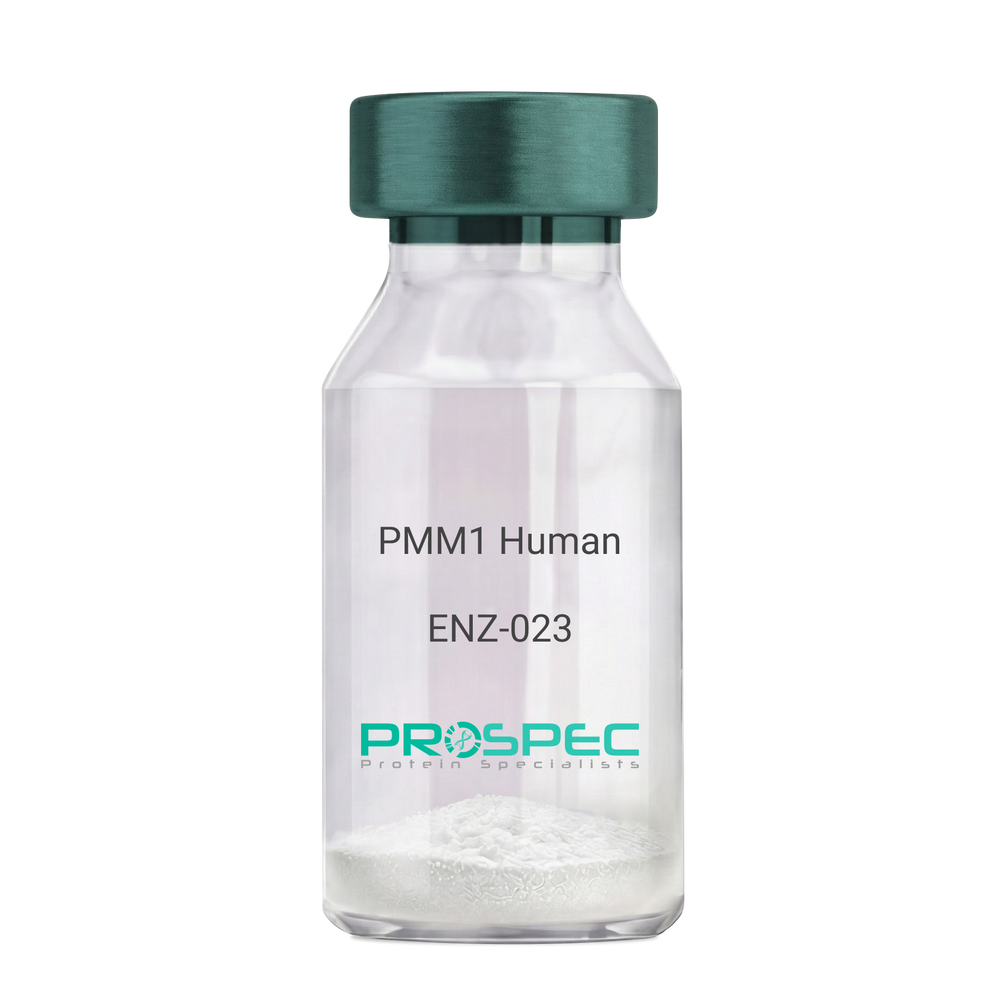
    PMM1 Human

    Description:

    Phosphomannomutase 1 Human Recombinant

    Phosphomannomutase 1, PMM 1, PMMH-22, PMM1, PMMH22, Sec53.

    Product # :

    ENZ-023

    Price :

    Quantity :

    Shipping Method :

    Ice Icon

    Shipped with Ice Packs

    Add To Cart

    More Info

    • description
    • source
    • formulation
    • purity
    • More Info

    Description

    PMM1 Human Recombinant fused with a 20 amino acid His tag at N-terminus produced in E.Coli is a single, non-glycosylated, polypeptide chain containing 282 amino acids (1-262 a.a.) and having a molecular mass of 31.9kDa. The PMM1 is purified by proprietary chromatographic techniques.

    Source

    Escherichia Coli.

    Formulation

    The PMM1 solution (0.5mg/ml) contains 20mM Tris-HCl buffer (pH8.0), 10% glycerol, 2mM DTT, 100mM NaCl and 0.1mM PMSF.

    Purity

    Greater than 90.0% as determined by SDS-PAGE.

    More Info

    • Introduction

      Phosphomannomutase 1 (PMM1) is an enzyme involved in the synthesis of the GDP-mannose and dolichol-phosphate-mannose required for a number of critical mannosyl transfer reactions. PMM1 catalyzes the conversion between D-mannose 6-phosphate and D-mannose 1-phosphate which is a substrate for GDP-mannose synthesis. GDP-mannose is used for the synthesis of dolichol-phosphate-mannose, which is crucial for N-linked glycosylation and accordingly the secretion of several glycoproteins as well as for the synthesis of glycosyl-phosphatidyl-inositol (GPI) anchored proteins. Additionally, PMM1 may be responsible for the degradation of glucose-1,6-bisphosphate in ischemic brain.

    • Synonyms

      Phosphomannomutase 1, PMM 1, PMMH-22, PMM1, PMMH22, Sec53.

    • Physical Appearance

      Sterile Filtered colorless solution.

    • Stability

      Store at 4°C if entire vial will be used within 2-4 weeks. Store, frozen at -20°C for longer periods of time. For long term storage it is recommended to add a carrier protein (0.1% HSA or BSA).Avoid multiple freeze-thaw cycles.

    • Amino Acid Sequence

      MGSSHHHHHH SSGLVPRGSH MAVTAQAARR KERVLCLFDV DGTLTPARQK IDPEVAAFLQ KLRSRVQIGV VGGSDYCKIA EQLGDGDEVI EKFDYVFAEN GTVQYKHGRL LSKQTIQNHL GEELLQDLIN FCLSYMALLR LPKKRGTFIE FRNGMLNISP IGRSCTLEER IEFSELDKKE KIREKFVEAL KTEFAGKGLR FSRGGMISFD VFPEGWDKRY CLDSLDQDSF DTIHFFGNET SPGGNDFEIF ADPRTVGHSV VSPQDTVQRC REIFFPETAH EA.

    ProSpec's products are furnished for LABORATORY RESEARCH USE ONLY. The product may not be used as drugs, agricultural or pesticidal products, food additives or household chemicals.

    Pmm1 Human
  • View Data Sheet

    Name :

    CENPA Human

    Description:

    Centromere Protein A Human Recombinant

    Histone H3-like centromeric protein A, Centromere protein A, CENP-A, Centromere autoantigen A, CENPA.

    Product # :

    PRO-389

    Price :

    Quantity :

    Shipping Method :

    Ice Icon

    Shipped with Ice Packs

    Add To Cart

    More Info

    • description
    • source
    • formulation
    • purity
    • More Info

    Description

    CENPA Human Recombinant produced in SF9 is a glycosylated, polypeptide chain having a molecular mass of 17,015 Dalton. CENPA is expressed with a -6x His tag and purified by proprietary chromatographic techniques.

    Source

    Sf9 insect cells.

    Formulation

    CENPA is supplied in 20mM HEPES buffer pH-8, 100mM sodium chloride, and 6M Urea.

    Purity

    Greater than 90% as determined by SDS-PAGE.

    More Info

    • Introduction

      Centromere proteins are a group of proteins which form and/or mediate the function of centromeres, the central structures of chromosomes to which spindle fibers/microtubuli attach and pull the chromosomes apart in cell division. Currently, 9 centromere proteins are known and designated CENPA to CENP-I. Most of the centromere proteins are targets of autoantibodies, the anti-centromere antibodies.
      CENPA is another important centromeric autoantigen in addition to CENPB: it has a molecular weight of approx. 20 kDa and is incorporated into centromeric chromatin due to its histone-like properties. CENPA antibodies are an important marker for correct diagnosis of Scleroderma / CREST syndrome in CENPB-autoantibody negative patients.

    • Synonyms

      Histone H3-like centromeric protein A, Centromere protein A, CENP-A, Centromere autoantigen A, CENPA.

    • Physical Appearance

      Sterile Filtered liquid formulation.

    • Stability

      Store at 4°C if entire vial will be used within 2-4 weeks. Store, frozen at -20°C for longer periods of time. Avoid multiple freeze-thaw cycles.

    • Immunological Functions

      1. Binds IgG-type human auto-antibodies.2. Standard ELISA test (checker-board analysis of positive/negative sera panels including CDC international reference sera).

    • coating concentration

      0.15-0.4 µg/ml (depending on the type of ELISA plate and coating buffer).Suitable for biotinylation and iodination.

    • Applications

      Western-Blot with monoclonal anti-hexa-His-tag antibody & Scleroderma patient sera.

    ProSpec's products are furnished for LABORATORY RESEARCH USE ONLY. The product may not be used as drugs, agricultural or pesticidal products, food additives or household chemicals.

    Cenpa Human
  • View Data Sheet

    Name :

    RCN2 Human

    Description:

    Reticulocalbin 2 Human Recombinant

    Reticulocalbin-2, Calcium-binding protein ERC-55, E6-binding protein, 6BP, RCN2, ERC55, E6BP, ERC-55, TCBP49.

    Product # :

    PRO-189

    Price :

    Quantity :

    Shipping Method :

    Ice Icon

    Shipped with Ice Packs

    Add To Cart

    More Info

    • description
    • source
    • formulation
    • purity
    • More Info

    Description

    RCN2 produced in E.Coli is a single, non-glycosylated polypeptide chain containing 313 amino acids (26-317 a.a.) and having a molecular mass of 36.8kDa (Molecular weight on SDS-PAGE will appear higher).RCN2 is fused to a 21 amino acid His-tag at N-terminus & purified by proprietary chromatographic techniques.

    Source

    Escherichia Coli.

    Formulation

    The RCN2 solution (1 mg/ml) contains 20mM Tris-HCl buffer (pH8.0), 10% glycerol and 1mM DTT.

    Purity

    Greater than 90.0% as determined by SDS-PAGE.

    More Info

    • Introduction

      Reticulocalbin-2 (RCN2) is a member of the CREC protein family. RCN2 is a calcium-binding protein found in the lumen of the ER. RCN2 contains 6 conserved regions with similarity to a high affinity Ca(+2)-binding motif, the EF-hand.

    • Synonyms

      Reticulocalbin-2, Calcium-binding protein ERC-55, E6-binding protein, 6BP, RCN2, ERC55, E6BP, ERC-55, TCBP49.

    • Physical Appearance

      Sterile Filtered colorless solution.

    • Stability

      Store at 4°C if entire vial will be used within 2-4 weeks. Store, frozen at -20°C for longer periods of time. For long term storage it is recommended to add a carrier protein (0.1% HSA or BSA).Avoid multiple freeze-thaw cycles.

    • Amino Acid Sequence

      MGSSHHHHHH SSGLVPRGSH MEELHYPLGE RRSDYDREAL LGVQEDVDEY VKLGHEEQQK RLQAIIKKID LDSDGFLTES ELSSWIQMSF KHYAMQEAKQ QFVEYDKNSD DTVTWDEYNI QMYDRVIDFD ENTALDDAEE ESFRKLHLKD KKRFEKANQD SGPGLSLEEF IAFEHPEEVD
      YMTEFVIQEA LEEHDKNGDG FVSLEEFLGD YRWDPTANED PEWILVEKDR FVNDYDKDND GRLDPQELLP WVVPNNQGIA QEEALHLIDE MDLNGDKKLS EEEILENPDL FLTSEATDYG RQLHDDYFYH DEL.

    ProSpec's products are furnished for LABORATORY RESEARCH USE ONLY. The product may not be used as drugs, agricultural or pesticidal products, food additives or household chemicals.

    Rcn2 Human
  • View Data Sheet

    Name :

    RNGTT Human

    Description:

    RNA Guanylyltransferase And 5'-Phosphatase Human Recombinant

    RNA Guanylyltransferase And 5'-Phosphatase, CAP1A, RNA Guanylyltransferase And 5-Phosphatase, HCAP1, HCE1, HCE, MRNA-Capping Enzyme, HCAP 3, mRNA-capping enzyme.

    Product # :

    ENZ-823

    Price :

    Quantity :

    Shipping Method :

    Ice Icon

    Shipped with Ice Packs

    Add To Cart

    More Info

    • description
    • source
    • formulation
    • purity
    • More Info

    Description

    RNGTT Human Recombinant produced in E.Coli is a single, non-glycosylated polypeptide chain containing 620 amino acids (1-597a.a) and having a molecular mass of 70.9kDa. RNGTT is fused to a 23 amino acid His-tag at N-terminus & purified by proprietary chromatographic techniques.

    Source

    Escherichia Coli.

    Formulation

    RNGTT protein solution (0.25mg/ml) containing 20mM Tris-HCl buffer (pH 7.5), 0.2M NaCl, 40% glycerol, 2mM DTT and 0.1mM PMSF.

    Purity

    Greater than 85.0% as determined by SDS-PAGE.

    More Info

    • Introduction

      RNA Guanylyltransferase And 5'-Phosphatase also known as RNGTT is a bifunctional mRNA-capping enzyme which exhibits RNA 5'-triphosphatase activity in the N-terminal section and mRNA guanylyltransferase activity in the C-terminal section. In addition, RNGTT catalyzes the first two steps of cap formation, through removing the gamma-phosphate from the 5'-triphosphate end of nascent mRNA to yield a diphosphate end, and also by transferring the gmp moiety of GTP to the 5'-diphosphate terminus.

    • Synonyms

      RNA Guanylyltransferase And 5'-Phosphatase, CAP1A, RNA Guanylyltransferase And 5-Phosphatase, HCAP1, HCE1, HCE, MRNA-Capping Enzyme, HCAP 3, mRNA-capping enzyme.

    • Physical Appearance

      Sterile filtered colorless solution.

    • Stability

      Store at 4°C if entire vial will be used within 2-4 weeks. Store, frozen at -20°C for longer periods of time. For long term storage it is recommended to add a carrier protein (0.1% HSA or BSA).Avoid multiple freeze-thaw cycles.

    • Amino Acid Sequence

      MGSSHHHHHH SSGLVPRGSH MGSMAHNKIP PRWLNCPRRG QPVAGRFLPL KTMLGPRYDS QVAEENRFHP SMLSNYLKSL KVKMGLLVDL TNTSRFYDRN DIEKEGIKYI KLQCKGHGEC PTTENTETFI RLCERFNERN PPELIGVHCT HGFNRTGFLI CAFLVEKMDW SIEAAVATFA QARPPGIYKG DYLKELFRRY GDIEEAPPPP LLPDWCFEDD EDEDEDEDGK KESEPGSSAS FGKRRKERLK LGAIFLEGVT VKGVTQVTTQ PKLGEVQQKC HQFCGWEGSG FPGAQPVSMD KQNIKLLDLK PYKVSWKADG TRYMMLIDGT NEVFMIDRDN SVFHVSNLEF PFRKDLRMHL SNTLLDGEMI IDRVNGQAVP RYLIYDIIKF NSQPVGDCDF NVRLQCIERE IISPRHEKMK TGLIDKTQEP FSVRNKPFFD ICTSRKLLEG NFAKEVSHEM DGLIFQPTGK YKPGRCDDIL KWKPPSLNSV DFRLKITRMG GEGLLPQNVG LLYVGGYERP FAQIKVTKEL KQYDNKIIEC KFENNSWVFM RQRTDKSFPN AYNTAMAVCN SISNPVTKEM LFEFIDRCTA ASQGQKRKHH LDPDTELMPP PPPKRPRPLT.

    ProSpec's products are furnished for LABORATORY RESEARCH USE ONLY. The product may not be used as drugs, agricultural or pesticidal products, food additives or household chemicals.

    Rngtt Human
  • 1
  • …
  • 15
  • 16
  • 17
  • 18
  • 19
  • …
  • 42
Your browser does not support the video tag.

Products

  • Cytokines
  • Growth Factors
  • Chemokines
  • CD Antigens
  • Neurotrophins
  • Hormones
  • Enzymes
  • Viral Antigens
  • Recombinant Proteins
  • Natural Proteins
  • Monoclonal Antibodies
  • Polyclonal Antibodies
  • Thermal Packaging

About

  • Company
  • Founder
  • Contribution
  • Contact Us
  • My Account

Ordering

  • Ordering Method
  • Ordering - Credit Card
  • Ordering PO
  • Shipping Fees
  • FAQ's

Legal

  • Terms & Conditions
  • Privacy
  • Site Map
  • info@prospecbio.com
  • Facebook
  • Instagram
  • Linkedin Profile

© 2026 ProSpec-Tany TechnoGene Ltd. All Rights Reserved.

  • Choosing a selection results in a full page refresh.
  • Opens in a new window.