Search results
1000 results found for “Cyclophilin”
Name
Description
Product #
Price
Quantity
Shipping Method
- View Data Sheet
Name :
CACYBP HumanDescription:
Calcyclin Binding Protein Human Recombinant
S100A6BP, S100A6 Binding Protein, GIG5, PNAS-107, RP1-102G20.6, SIP, CACYBP, hCacyBP, Siah-interacting protein, MGC87971.
Product # :
PRO-831Price :
Quantity :
Shipping Method :
Shipped with Ice Packs
More Info
- description
- source
- formulation
- purity
- More Info
Description
CACYBP Human Recombinant produced in E.Coli is a single, non-glycosylated, polypeptide chain containing 205 amino acids (1-185a.a.) and having a molecular mass of 23.4 kDa. CACYBP protein is fused to a 20 amino acid His tag at N-terminus and is purified by standard chromatography.
Source
Escherichia Coli.
Formulation
CACYBP Human solution containing 20mM Tris HCL pH-8, 1mM DTT, 0.1M NaCl & 10% glycerol.
Purity
Greater than 85% as determined by SDS-PAGE.
More Info
-
Introduction
CACYBP (calcyclin binding protein) participates in calcium-dependent ubiquitination and subsequent proteosomal degradation of target proteins. CACYBP acts as a molecular bridge in ubiquitin E3 complexes. CACYBP is involved in the ubiquitin-mediated degradation of beta-catenin.
-
Synonyms
S100A6BP, S100A6 Binding Protein, GIG5, PNAS-107, RP1-102G20.6, SIP, CACYBP, hCacyBP, Siah-interacting protein, MGC87971.
-
Physical Appearance
Sterile filtered colorless solution.
-
Stability
Store at 4°C if entire vial will be used within 2-4 weeks. Store, frozen at -20°C for longer periods of time. For long term storage it is recommended to add a carrier protein (0.1% HSA or BSA).Avoid multiple freeze-thaw cycles.
-
Amino Acid Sequence
MGSSHHHHHH SSGLVPRGSH MQQKSQKKAE LLDNEKPAAV VAPITTGYTV KISNYGWDQS DKFVKIYITL TGVHQVPTEN VQVHFTERSF DLLVKNLNGK SYSMIVNNLL KPISVEGSSK KVKTDTVLIL CRKKVENTRW DYLTQVEKEC KEKEKPSYDT ETDPSEGLMN VLKKIYEDGD DDMKRTINKA WVESREKQAK GDTEF.
ProSpec's products are furnished for LABORATORY RESEARCH USE ONLY. The product may not be used as drugs, agricultural or pesticidal products, food additives or household chemicals.
- View Data Sheet
Name :
Calumenin Human, HisDescription:
Calumenin Human Recombinant, His Tag
CALU, Crocalbin, IEF SSP 9302, FLJ90608, Calumenin.
Product # :
PRO-696Price :
Quantity :
Shipping Method :
Shipped with Ice Packs
More Info
- description
- source
- formulation
- purity
- More Info
Description
Recombinant Human Calumenin produced in E.Coli is a single, non-glycosylated polypeptide chain containing 317 amino acids (20-315 a.a) and having a molecular mass of 37.2 kDa. Calumenin is fused to a 20 amino acid His Tag at N-terminus and purified by proprietary chromatographic techniques.
Source
Escherichia Coli.
Formulation
The Calumenin protein contains 20mM Tris-HCl buffer pH-8 and 10% glycerol.
Purity
Greater than 90% as determined by Analysis by SDS-PAGE.
More Info
-
Introduction
Calumenin is a calcium-binding protein located in the endoplasmic reticulum (ER) and sarcoplasmic reticulum (SR) of mammalian tissues which plays a role in ER functions as protein folding and sorting. Calumenin belongs to a family of multiple EF-hand proteins (CERC) that include reticulocalbin, ERC-55, and Cab45 and the product of this gene. Calumenin binds 7 calcium ions having low affinity and takes part in such ER functions as protein folding and sorting.
-
Synonyms
CALU, Crocalbin, IEF SSP 9302, FLJ90608, Calumenin.
-
Physical Appearance
Sterile filtered colorless solution.
-
Stability
Store at 4°C if entire vial will be used within 2-4 weeks. Store, frozen at -20°C for longer periods of time. For long term storage it is recommended to add a carrier protein (0.1% HSA or BSA). Avoid multiple freeze-thaw cycles.
-
Amino Acid Sequence
MGSSHHHHHH SSGLVPRGSH MKPTEKKDRV HHEPQLSDKV HNDAQSFDYD HDAFLGAEEA KTFDQLTPEE SKERLGKIVS KIDGDKDGFV TVDELKDWIK FAQKRWIYED VERQWKGHDL NEDGLVSWEE YKNATYGYVL DDPDPDDGFN YKQMMVRDER RFKMADKDGD LIATKEEFTA FLHPEEYDYM KDIVVQETME DIDKNADGFI DLEEYIGDMY SHDGNTDEPE WVKTEREQFV EFRDKNRDGK MDKEETKDWI LPSDYDHAEA EARHLVYESD QNKDGKLTKE EIVDKYDLFV GSQATDFGEA LVRHDEF.
ProSpec's products are furnished for LABORATORY RESEARCH USE ONLY. The product may not be used as drugs, agricultural or pesticidal products, food additives or household chemicals.
- View Data Sheet
Name :
CCL16 HumanDescription:
LEC/NCC-4 Human Recombinant
C-C motif chemokine 16, Small-inducible cytokine A16, IL-10-inducible chemokine, Chemokine LEC, Monotactin-1, Chemokine CC-4, Lymphocyte and monocyte chemoattractant, CCL-16, HCC-4, HCC4, NCC4, NCC-4, Liver Expressed Chemokine, LMC, LCC-1, LCC1, MTN-1, MTN1, SCYL4, ckB12, SCYA16, LEC, ILINCK, MGC117051.
Product # :
CHM-237Price :
Quantity :
Shipping Method :
Shipped at Room temp
More Info
- description
- source
- formulation
- purity
- biological activity
- More Info
Description
CCL16 Human Recombinant produced in E.Coli is a non-glycosylated, Polypeptide chain containing 97 amino acids and having a molecular mass of 11.2 kDa. The CCL16 is purified by proprietary chromatographic techniques.
Source
Escherichia Coli.
Formulation
The CCL16 protein was lyophilized from a concentrated (1mg/ml) sterile solution containing 20mM PBS pH-7.4 and 0.15M sodium chloride.
Purity
Greater than 97.0% as determined by:
(a) Analysis by RP-HPLC.
(b) Analysis by SDS-PAGE.Biological Activity
Determined by its ability to chemoattract total human monocytes using a concentration range of 10-100 ng/ml corresponding to a Specific Activity of 10,000-100,000IU/mg.More Info
-
Introduction
Human CCL16, also called HCC-4, liver-expressed chemokine (LEC), and lymphocyte and monocyte chemoattractant (LMC), is a novel CC chemokine recognized by bioinformatics. NCC-4 cDNA encodes a 120 amino acids along with a 23 amino acids signal peptide that is cleaved to generate 97 amino acid protein. HCC4 is vaguely related to other CC chemokines, showing less than 30% sequence identity. Among CC chemokines, CCL-16 has the largest similarity to HCC-1. 2 potential polyadenylation signals are present on the human HCC-4 gene, and as a result, 2 transcripts containing roughly 1,500 base pairs and 500 base pairs have been detected. HCC-4 is expressed weakly by some lymphocytes, including NK cells, T cells, and some T cell clones. The expression of HCC-4 in monocytes is greatly upregulated in the presence of IL-10.
CCL16 shows chemotactic activity for lymphocytes and monocytes rather than to neutrophils. NCC-4 has potent myelosuppressive activity, suppresses proliferation of myeloid progenitor cells. CCL16 demonstrates chemotactic activity for monocytes and thp-1 monocytes, rather than for resting lymphocytes and neutrophils. HCC-4 induces a calcium flux in thp-1 cells that desensitized prior to the expression of rantes. -
Synonyms
C-C motif chemokine 16, Small-inducible cytokine A16, IL-10-inducible chemokine, Chemokine LEC, Monotactin-1, Chemokine CC-4, Lymphocyte and monocyte chemoattractant, CCL-16, HCC-4, HCC4, NCC4, NCC-4, Liver Expressed Chemokine, LMC, LCC-1, LCC1, MTN-1, MTN1, SCYL4, ckB12, SCYA16, LEC, ILINCK, MGC117051.
-
Physical Appearance
Sterile Filtered White lyophilized (freeze-dried) powder.
-
Stability
Lyophilized CCL16 although stable at room temperature for 3 weeks, should be stored desiccated below -18°C. Upon reconstitution CCL16 should be stored at 4°C between 2-7 days and for future use below -18°C.For long term storage it is recommended to add a carrier protein (0.1% HSA or BSA).Please prevent freeze-thaw cycles.
-
Solubility
It is recommended to reconstitute the lyophilized CCL16in sterile 18MΩ-cm H2O not less than 100µg/ml, which can then be further diluted to other aqueous solutions.
-
Amino Acid Sequence
QPKVPEWVNTPSTCCLKYYEKVLPRRLVVGYRKALNCHLPAIIFVTKRNREVCTNP NDDWVQEYIKDPNLPLLPTRNLSTVKIITAKNGQPQLLNSQ.
-
Background
What is the molecular weight/Mw of CCL16 HUMAN Protein?
CCL16 HUMAN Protein has a total Mw of 11.2kDa.
What is the source or expression system of CCL16 HUMAN Protein?
Escherichia Coli.
What is the Purity of CCL16 HUMAN Protein?
CCL16 HUMAN Protein is >97% pure as determined by SDS-PAGE.
What is the Biological Activity of CCL16 HUMAN Protein?
Determined by its ability to chemoattract total human monocytes using a concentration range of 10-100 ng/ml corresponding to a Specific Activity of 10,000-100,000IU/mg.
What is the amino acid sequence of CCL16 HUMAN Protein?
QPKVPEWVNTPSTCCLKYYEKVLPRRLVVGYRKALNCHLPAIIFVTKRNREVCTNP NDDWVQEYIKDPNLPLLPTRNLSTVKIITAKNGQPQLLNSQ.
What applications can CCL16 HUMAN Protein be used in?
CCL16 HUMAN Protein can probably be used in western blot, ELISA and Lateral Flow.
What is the endotoxin level for CCL16 HUMAN Protein?
The endotoxin level is minimal, CCL16 HUMAN Protein was purified using conventional chromatography techniques.
ProSpec's products are furnished for LABORATORY RESEARCH USE ONLY. The product may not be used as drugs, agricultural or pesticidal products, food additives or household chemicals.
- View Data Sheet
Name :
CCL28 HumanDescription:
Mucosae-Associated Epithelial Chemokine Human Recombinant (CCL28)
MEC, CCK1, SCYA28, MGC71902, CCL28, C-C motif chemokine 28, Small-inducible cytokine A28, Mucosae-associated epithelial chemokine, Protein CCK1.
Product # :
CHM-353Price :
Quantity :
Shipping Method :
Shipped at Room temp
More Info
- description
- source
- formulation
- purity
- biological activity
- More Info
Description
CCL28 Human Recombinant produced in E.Coli is a single, non-glycosylated, polypeptide chain containing 108 amino acids and having a molecular mass of 12.3 kDa. The CCL28 is purified by proprietary chromatographic techniques.
Source
Escherichia Coli.
Formulation
Lyophilized from a concentrated (1mg/ml) solution in water containing 20mM PBS and 150mM NaCl.
Purity
Greater than 97.0% as determined by:
(a) Analysis by RP-HPLC.
(b) Analysis by SDS-PAGE.Biological Activity
Determined by its ability to chemoattract human lymphocytes using a concentration range of 1-10ng/ml corresponding to a Specific Activity of 100,000-1,000,000IU/mg.More Info
-
Introduction
CCL28 is part of the subfamily of small cytokine CC genes. CCL28 shows chemotactic activity for resting CD4 or CD8 T cells and eosinophils. CCL28 binds to chemokine receptors CCR3 and CCR10. CCL28 is involved in the physiology of extracutaneous epithelial tissues, including diverse mucosal organs. CCL28 mediates mucosal immunity in HIV exposure and infection. CCL28 is involved in the pathogenesis of inflammatory skin diseases.
Human CCL28 cDNA encodes a 127 amino acid residue precursor protein with a putative 22 amino acid residue signal peptide that is cleaved to produce the 105 amino acid residue mature protein. Human and mouse CCL28 are highly conserved, sharing 83% amino acid identity in their mature regions. CCL28 shares the most homology with CCL27/CTACK. Human and mouse CCL28 RNA expression was found to be highest in normal and pathologic colon with the protein being expressed by epithelial cells. Human CCL28 RNA was also present in normal and asthmatic lung tissues. -
Synonyms
MEC, CCK1, SCYA28, MGC71902, CCL28, C-C motif chemokine 28, Small-inducible cytokine A28, Mucosae-associated epithelial chemokine, Protein CCK1.
-
Physical Appearance
Sterile Filtered White lyophilized (freeze-dried) powder.
-
Stability
Lyophilized CCL28 although stable at room temperature for 3 weeks, should be stored desiccated below -18°C. Upon reconstitution CCL28 should be stored at 4°C between 2-7 days and for future use below -18°C.For long term storage it is recommended to add a carrier protein (0.1% HSA or BSA).Please prevent freeze-thaw cycles.
-
Solubility
It is recommended to reconstitute the lyophilized CCL28 in sterile 18MΩ-cm H2O not less than 100µg/ml, which can then be further diluted to other aqueous solutions.
-
Amino Acid Sequence
SEAILPIASS CCTEVSHHIS RRLLERVNMC RIQRADGDCD LAAVILHVKR RRICVSPHNH TVKQWMKVQA AKKNGKGNVC HRKKHHGKRN SNRAHQGKHE TYGHKTPY.
-
Background
What is the molecular weight/Mw of CCL28 HUMAN Protein?
CCL28 HUMAN Protein has a total Mw of 12.3kDa.
What is the source or expression system of CCL28 HUMAN Protein?
Escherichia Coli.
What is the Purity of CCL28 HUMAN Protein?
CCL28 HUMAN Protein is > 97% pure as determined by SDS-PAGE.
What is the Biological Activity of CCL28 HUMAN Protein?
Determined by its ability to chemoattract human lymphocytes using a concentration range of 1-10ng/ml corresponding to a Specific Activity of 100,000-1,000,000IU/mg.
What is the amino acid sequence of CCL28 HUMAN Protein?
SEAILPIASS CCTEVSHHIS RRLLERVNMC RIQRADGDCD LAAVILHVKR RRICVSPHNH TVKQWMKVQA AKKNGKGNVC HRKKHHGKRN SNRAHQGKHE TYGHKTPY.
What applications can CCL28 HUMAN Protein be used in?
CCL28 HUMAN Protein can probably be used in western blot, ELISA and Lateral Flow.
What is the endotoxin level for CCL28 HUMAN Protein?
The endotoxin level is minimal, CCL28 HUMAN Protein was purified using conventional chromatography techniques.
ProSpec's products are furnished for LABORATORY RESEARCH USE ONLY. The product may not be used as drugs, agricultural or pesticidal products, food additives or household chemicals.
- View Data Sheet
Name :
KLRC3 HumanDescription:
Killer Cell Lectin-Like Receptor Subfamily C, Member 3 Human Recombinant
Killer Cell Lectin-Like Receptor Subfamily C Member 3, NK Cell Receptor E, NKG2-E Type II Integral Membrane Protein, NKG2-E-Activating NK Receptor, NKG2E.
Product # :
PRO-1230Price :
Quantity :
Shipping Method :
Shipped with Ice Packs
More Info
- description
- source
- formulation
- purity
- More Info
Description
KLRC3 Human Recombinant produced in E. coli is a single polypeptide chain containing 171 amino acids (94-240) and having a molecular mass of 19.0 kDa.KLRC3 is fused to a 24 amino acid His-tag at N-terminus & purified by proprietary chromatographic techniques.
Source
E.coli.
Formulation
The KLRC3 solution (1mg/1ml) contains 20mM Tris-HCl buffer (pH 8.0), 0.4M NaCl and 10% glycerol.
Purity
Greater than 90% as determined by SDS-PAGE.
More Info
-
Introduction
KLRC3 belongs to the NKG2 group that can be found mostly in natural killer (NK) cells and encodes a family of transmembrane proteins known for their C-type lectin domain and their type II membrane orientation (extracellular C terminus). The NKG2 gene family is situated inside the NK complex, a region which has quite a few C-type lectin genes mostly expressed on NK cells.
-
Synonyms
Killer Cell Lectin-Like Receptor Subfamily C Member 3, NK Cell Receptor E, NKG2-E Type II Integral Membrane Protein, NKG2-E-Activating NK Receptor, NKG2E.
-
Physical Appearance
Sterile Filtered colorless solution.
-
Stability
Store at 4°C if entire vial will be used within 2-4 weeks. Store, frozen at -20°C for longer periods of time. For long term storage it is recommended to add a carrier protein (0.1% HSA or BSA).Avoid multiple freeze-thaw cycles.
-
Amino Acid Sequence
MGSSHHHHHH SSGLVPRGSH MGSMIPFLEQ NNSSPNTRTQ KARPCGHCPE EWITYSNSCY YIGKERRTWE ESLQACASKN SSSLLSIDNE EEMKFLASIL PSSWIGVFRN SSHHPWVTIN GLAFKHEIKD SDHAERNCAM LHVRGLISDQ CGSSRIIRRG FIMLTRLVLN S
ProSpec's products are furnished for LABORATORY RESEARCH USE ONLY. The product may not be used as drugs, agricultural or pesticidal products, food additives or household chemicals.
- View Data Sheet
Name :
CTGF Human, HEKDescription:
Connective Tissue Growth Factor Human Recombinant , HEK
CCN2, NOV2, HCS24, IGFBP8, MGC102839, CTGF.
Product # :
CYT-687Price :
Quantity :
Shipping Method :
Shipped with Ice Packs
More Info
- description
- source
- formulation
- purity
- More Info
Description
The CTGF Human Recombinant produced in HEK293 cells, is 36kDa protein containing a total of 329 amino acid residues (aa 27-349) including a C-terminal 6×His tag.
Source
HEK293 cells.
Formulation
CTGF filtered (0.2µm) solution in 0.1M Citrate buffer pH 4.7 and 20% (w/v) glycerol.
Purity
Greater than 90.0% as determined by SDS-PAGE.
More Info
-
Introduction
Connective Tissue Growth Factor belongs to the CCN family of proteins. The CCN family presently consists of six members in human also known as: Cyr61 (Cystein rich 61), CTGF (Connective Tissue Growth Factor), Nov (Nephroblastoma Overexpressed gene), WISP-1, 2 and 3 (Wnt-1 Induced Secreted Proteins). The CCN genes encode secreted proteins associated with the Extracellular Matrix (ECM) and cell membrane.
CCN proteins are matricellular proteins which are involved in the regulation of various cellular functions including: proliferation, differentiation, survival, adhesion and migration. They are expressed in derivatives of the three embryonic sheets and are implicated in the development of kidney, nervous system, muscle, bone marrow, cartilage and bone. During adulthood, they are implicated in wound healing, bone fracture repair, and pathologies such as: fibrosis, vascular ailments and tumorigenesis.
Full length secreted CCN proteins can show an antiproliferative activity, whereas truncated isoforms are likely to stimulate proliferation and behave as oncogenes.
The full length protein consists of four modules: Module I shares partial identity with the N-terminal part of the Insulin-like Growth Factor Binding Proteins (IGFBPs).
Module II includes a stretch of 70amino acid residues – which shares sequence identity with the Von Willebrand Factor Type C repeat (VWC).
Module III contains sequences sharing identity with the Thrombospondin type 1 repeat (TSP1) (WSXCSXXCG), which is thought to be implicated in the binding of sulfated glycoconjugates and to be important for cell adhesion.
Module IV, also designated CT, is encoded by exon5. It is the leasts conserved one of the four domains at the level of nucleotide sequence, but it appears to be critical for several of the biological functions attributed to the CCN proteins. Module IV resembles the CT domain of several extracellular protein including, Von Willebrand's factor and mucins. Sequence similarities to heparin-binding motifs are also found within this domain.
Proteolysis of the secreted full-length CCN proteins that has been reported in the case of CCN2 and CCN3 might result in the production of CCN-derived peptides with high affinity for ligands that full-length CNN proteins bind only poorly. Amino-truncated CCN2 isoforms were biologically active whereas no specific biological activity has been attributed to the truncated CCN3. Although the molecular processes underlying the production of these secreted isoforms is presently unknown, it is important to note that proteolysis occur at the same amino acid residues in both CCN2 and CCN3. An elevated expression of CCN2 has also been detected by Northern blotting in human invasive mammary ductal carcinomas, dermatofibromas, pyogenic granuloma, endothelial cells of angiolipomas and angioleiomyomas, and in pancreatic tumors. A study performed with chondrosarcomas representative of various histological grades established that CCN2 expression was closely correlated with increasing levels of malignancy.
In agreement with CCN2 playing a role in brain tumor angiogenesis, immunocytochemistry studies indicated that both glioblastoma tumor cells and proliferating endothelial cells stained positive for CCN2. In astrocytomas, CCN2 expression was particularly elevated in high grade tumors, with a marked effect of CCN2 on cell proliferation. Downregulation of CCN2 expression in these cells was associated with a growth arrest at the G1/S transition while over-expression of CCN2 induced a two-fold increase of the number of cells in the G1 phase. Gene profiling analysis allowed to identify a set of about 50 genes whose expression might account for the proliferative activity of CCN2 in these cells.
CCN2 was seen in a higher proportion of mononuclear cells of patients with acute lymphoblastic leukemia. -
Synonyms
CCN2, NOV2, HCS24, IGFBP8, MGC102839, CTGF.
-
Physical Appearance
Filtered colorless solution.
-
Stability
Store at 4°C if entire vial will be used within 2-4 weeks. Store, frozen at -20°C for longer periods of time. For long term storage it is recommended to add a carrier protein (0.1% HSA or BSA).Avoid multiple freeze-thaw cycles.
-
Amino Acid Sequence
QNCSGPCRCP DEPAPRCPAG VSLVLDGCGC CRVCAKQLGE LCTERDPCDP HKGLFCHFGS PANRKIGVCT AKDGAPCIFG GTVYRSGESF QSSCKYQCTC LDGAVGCMPL CSMDVRLPSP DCPFPRRVKL PGKCCEEWVC DEPKDQTVVG PALAAYRLED TFGPDPTMIR ANCLVQTTEW SACSKTCGMG ISTRVTNDNA SCRLEKQSRL CMVRPCEADL EENIKKGKKC IRTPKISKPI KFELSGCTSM KTYRAKFCGV CTDGRCCTPH RTTTLPVEFK CPDGEVMKKN MMFIKTCACH YNCPGDNDIF ESLYYRKMYG DMA HHHHHH.
-
Background
What is the molecular weight/Mw of CTGF Protein?
CTGF Protein has a total Mw of 36kDa.
What is the source or expression system of CTGF Protein?
HEK293 cells.
What is the Purity of CTGF Protein?
CTGF Protein is >90% pure as determined by SDS-PAGE.
What is the Biological Activity of CTGF Protein?
The biological functionality of CTGF Protein will be determined in the future.
What is the amino acid sequence of CTGF Protein?
QNCSGPCRCP DEPAPRCPAG VSLVLDGCGC CRVCAKQLGE LCTERDPCDP HKGLFCHFGS PANRKIGVCT AKDGAPCIFG GTVYRSGESF QSSCKYQCTC LDGAVGCMPL CSMDVRLPSP DCPFPRRVKL PGKCCEEWVC DEPKDQTVVG PALAAYRLED TFGPDPTMIR ANCLVQTTEW SACSKTCGMG ISTRVTNDNA SCRLEKQSRL CMVRPCEADL EENIKKGKKC IRTPKISKPI KFELSGCTSM KTYRAKFCGV CTDGRCCTPH RTTTLPVEFK CPDGEVMKKN MMFIKTCACH YNCPGDNDIF ESLYYRKMYG DMA HHHHHH.
What applications can CTGF Protein be used in?
CTGF Protein can probably be used in western blot, ELISA and Lateral Flow.
What is the endotoxin level for CTGF Protein?
The endotoxin level is minimal, CTGF Protein was purified using conventional chromatography techniques.
ProSpec's products are furnished for LABORATORY RESEARCH USE ONLY. The product may not be used as drugs, agricultural or pesticidal products, food additives or household chemicals.
- View Data Sheet
Name :
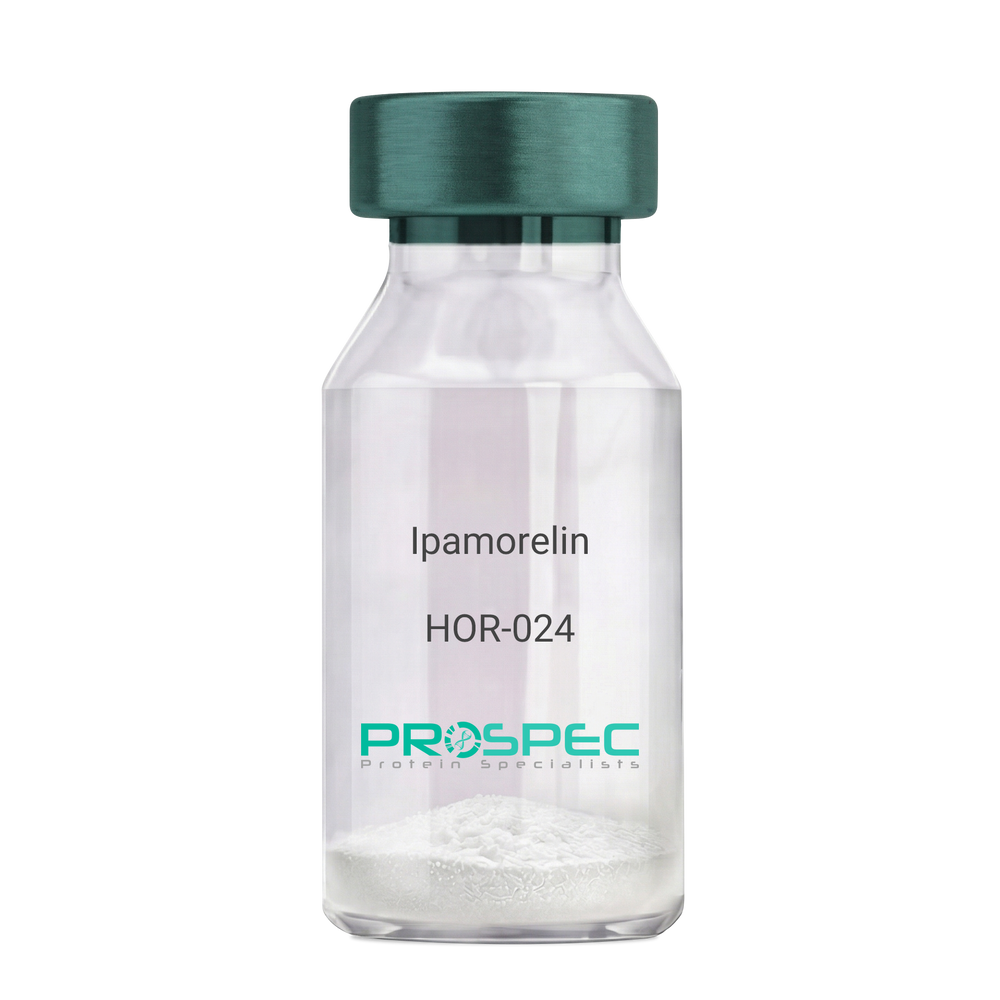
IpamorelinDescription:
Ipamorelin
Ipamorelin
Product # :
HOR-024Price :
Quantity :
Shipping Method :
Shipped at Room temp
More Info
- description
- formulation
- purity
- More Info
Description
Ipamorelin Synthetic is a single, non-glycosylated polypeptide chain containing 4 amino acids, having a molecular mass of 711.85 Dalton and a Molecular formula of C38H49N9O5.
Formulation
The protein was lyophilized with no additives.
Purity
Greater than 97.0% as determined by analysis by RP-HPLC.
More Info
-
Introduction
Ipamorelin is a peptide selective agonist of the ghrelin/growth hormone secretagogue receptor and a growth hormone secretagogue. Ipamorelin is a pentapeptide that was derived from GHRP1. Ipamorelin significantly increases plasma growth hormone levels in both animals and humans. Like pralmorelin and GHRP-6, ipamorelin does not affect prolactin, FSH, LH or TSH levels. However, unlike GHRP2 and GHRP6, but as growth hormone-releasing hormone (GHRH), ipamorelin does not stimulate the secretion of adrenocorticotropic hormone (ACTH) or cortisol, and is highly selective for inducing the secretion only of GH.
-
Synonyms
Ipamorelin
-
Physical Appearance
Sterile Filtered White lyophilized (freeze-dried) powder.
-
Stability
Lyophilized Ipamorelin although stable at room temperature for 3 weeks, should be stored desiccated below -18°C. Upon reconstitution Ipamorelin should be stored at 4°C between 2-7 days and for future use below -18°C. For long term storage it is recommended to add a carrier protein (0.1% HSA or BSA). Please prevent freeze-thaw cycles.
-
Solubility
It is recommended to reconstitute the lyophilized Ipamorelin in sterile 18MΩ-cm H2O not less than 100 µg/ml, which can then be further diluted to other aqueous solutions.
-
Amino Acid Sequence
Aib-His-D-2-Nal-D-Phe-Lys-NH2.
ProSpec's products are furnished for LABORATORY RESEARCH USE ONLY. The product may not be used as drugs, agricultural or pesticidal products, food additives or household chemicals.
- View Data Sheet
Name :
LIN28 HumanDescription:
LIN28 Human Recombinant
CSDD1, FLJ12457, LIN-28, LIN28A, Protein lin-28 homolog A, ZCCHC1, Zinc finger CCHC domain-containing protein 1, Lin-28A, LIN28.
Product # :
PRO-743Price :
Quantity :
Shipping Method :
Shipped with Ice Packs
More Info
- description
- source
- formulation
- purity
- More Info
Description
Recombinant Human LIN28 produced in E.Coli is a single, non-glycosylated polypeptide chain containing 191 amino acids (42-209) and having a molecular mass of 21.1 kDa.LIN28 is expressed with a 23 amino acid His tag fused at N-Terminus and purified by proprietary chromatographic techniques.
Source
Escherichia Coli.
Formulation
The LIN28 protein solution (0.5mg/ml) contains 20mM Tris-HCl, pH-8, 10% glycerol, 0.1mM PMSF and 0.1M NaCl.
Purity
Greater than 85.0% as determined by SDS-PAGE
More Info
-
Introduction
LIN28 plays an important role as a 'translational enhancer', leading specific mRNAs to polysomes and therefore increasing the competence of protein synthesis. LIN28 is a marker of undifferentiated human embryonic stem cells and it enhances the efficiency of the formation of induced pluripotent stem (iPS) cells from human fibroblasts. LIN28 binds to the let-7 pre-miRNA and blocks production of the mature let-7 microRNA in mouse embryonic stem cells. Overexpression of LIN28 is associated with human germ-cell tumors.
-
Synonyms
CSDD1, FLJ12457, LIN-28, LIN28A, Protein lin-28 homolog A, ZCCHC1, Zinc finger CCHC domain-containing protein 1, Lin-28A, LIN28.
-
Physical Appearance
Sterile filtered colorless solution.
-
Stability
Store at 4°C if entire vial will be used within 2-4 weeks. Store, frozen at -20°C for longer periods of time. For long term storage it is recommended to add a carrier protein (0.1% HSA or BSA). Avoid multiple freeze-thaw cycles.
-
Amino Acid Sequence
MGSSHHHHHH SSGLVPRGSHRSMGICKWFN VRMGFGFLSM TARAGVALDP PVDVFVHQSK LHMEGFRSLK EGEAVEFTFK KSAKGLESIR VTGPGGVFCI GSERRPKGKS MQKRRSKGDR CYNCGGLDHH AKECKLPPQP KKCHFCQSIS HMVASCPLKA QQGPSAQGKP TYFREEEEEI HSPTLLPEAQ N.
ProSpec's products are furnished for LABORATORY RESEARCH USE ONLY. The product may not be used as drugs, agricultural or pesticidal products, food additives or household chemicals.
- View Data Sheet
Name :
Pleiotrophin HumanDescription:
Pleiotrophin Human Recombinant
PTN, Heparin Affin Regulatory Protein, HARP, Heparin-binding growth factor-8, HBGF-8, Osteoblast-Specific Factor-1, OSF-1, Heparin-binding growth-associated molecule, HB-GAM, HBNF-1 Heparin-binding brain mitogen, Heparin-binding neurite outgrowth-promoting factor 1, HBBM, NEGF1.
Product # :
CYT-749Price :
Quantity :
Shipping Method :
Shipped at Room temp
More Info
- description
- source
- formulation
- purity
- More Info
- sds-page
Description
Pleiotrophin Human Recombinant produced in E.coli is a single, non-glycosylated polypeptide chain containing 136 amino acids and having a molecular mass of 15.3kDa.The Pleiotrophin is purified by proprietary chromatographic techniques.
Source
Escherichia Coli.
Formulation
The Pleiotrophin protein was lyophilized from a 0.2µm filtered concentrated solution in PBS, pH 7.4.
Purity
Greater than 97.0% as determined by:
(a) Analysis by RP-HPLC.
(b) Analysis by SDS-PAGE.sds-page
More Info
-
Introduction
Pleiotrophin (Osteoblast-Specific Factor-1, OSF-1) contains 136 amino acid residues. The sequence is very rich in cationic amino acids (24% of the residues); lysine cluster sequences are found in the N-terminal and C-terminal ends of the structure.
The OSF-1 gene was shown by Northern blotting analysis to be expressed in mouse calvarial osteoblast-enriched cells and in mouse brain tissues, but not in thymus, spleen, kidney, liver, lung, testis or heart. Pleiotrophin has the ability to promote adhesion, migration, expansion, and differentiation of human osteoprogenitor cells. In addition to certain types of cancer, the embryonic growth and differentiation factor pleiotrophin is found also in adults in inflammatory diseases. In osteoarthritis, pleiotrophin is especially expressed in early stages, and its concentrations in the synovial fluid could serve as a marker for the progress of the disease. Pleitrophin might be involved in cartilage repair in osteoarthritis, in particular, in earlier stages. -
Synonyms
PTN, Heparin Affin Regulatory Protein, HARP, Heparin-binding growth factor-8, HBGF-8, Osteoblast-Specific Factor-1, OSF-1, Heparin-binding growth-associated molecule, HB-GAM, HBNF-1 Heparin-binding brain mitogen, Heparin-binding neurite outgrowth-promoting factor 1, HBBM, NEGF1.
-
Physical Appearance
Sterile Filtered White lyophilized (freeze-dried) powder.
-
Stability
Lyophilized Pleiotrophin although stable at room temperature for 3 weeks, should be stored desiccated below -18°C. Upon reconstitution Pleiotrophin should be stored at 4°C between 2-7 days and for future use below -18°C. For long term storage it is recommended to add a carrier protein (0.1% HSA or BSA). Please prevent freeze-thaw cycles.
-
Solubility
It is recommended to reconstitute the lyophilized Pleiotrophin in sterile 18M-cm H2O not less than 100µg/ml, which can then be further diluted to other aqueous solutions.
-
Amino Acid Sequence
GKKEKPEKKV KKSDCGEWQW SVCVPTSGDC GLGTREGTRT GAECKQTMKT QRCKIPCNWK KQFGAECKYQ FQAWGECDLN TALKTRTGSL KRALHNAECQ KTVTISKPCG KLTKPKPQAE SKKKKKEGKK QEKMLD.
ProSpec's products are furnished for LABORATORY RESEARCH USE ONLY. The product may not be used as drugs, agricultural or pesticidal products, food additives or household chemicals.
- View Data Sheet
Name :
Cys-Protein-LDescription:
Cys-Protein L Recombinant
Product # :
PRO-1933Price :
Quantity :
Shipping Method :
Shipped at Room temp
More Info
- description
- source
- formulation
- purity
- More Info
Description
Recombinant Protein-L produced in E.Coli is a single non-glycosylated polypeptide chain fused with a Cys at N-terminus. Protein-L is comprised of 5 IgG-binding regions of protein L (B1-B2-B3-B4-B5) containing 366 amino acids in total and having a molecular mass of 40.6kDa, however, it migrates with an apparent molecular mass of 46kDa on SDS-PAGE. Cell wall binding region, cell membrane binding region and albumin binding region have been eliminated from the recombinant Protein-L to guarantee the maximum specific IgG binding.
Source
Escherichia Coli.
Formulation
Protein-L was lyophilized without any additives.
Purity
Greater than 95.0% as determined by SDS-PAGE.
More Info
-
Introduction
The Recombinant Protein L is comprised of 5 kappa-binding domains. Protein L has the exceptional ability to bind through kappa light chain interactions without hindering with the antibody’s antigen-binding site. This gives Protein L the capacity to bind a broader range of Ig classes and subclasses than other antibody-binding proteins. The recombinant Protein L is perfect for purification of polyclonal or monoclonal IgG antibodies. Protein L binds to IgG from humans, mice, rats and pigs.
-
Physical Appearance
Sterile Filtered White lyophilized (freeze-dried) powder.
-
Stability
Lyophilized Protein-L although stable at room temperature for 3 weeks, should be stored desiccated below -18°C. Upon reconstitution Protein-L should be stored at 4°C between 2-7 days and for future use below -18°C. For long term storage it is recommended to add a carrier protein (0.1% HSA or BSA). Please prevent freeze-thaw cycles.
-
Solubility
It is recommended to reconstitute the lyophilized Protein-L in sterile 18M-cm H2O not less than 0.1mg/ml, which can then be further diluted to other aqueous solutions.
-
Amino Acid Sequence
CKEETPETPE TDSEEEVTIK ANLIFANGST QTAEFKGTFE KATSEAYAYA DTLKKDNGEY TVDVADKGYT LNIKFAGKEK TPEEPKEEVT IKANLIYADG KTQTAEFKGT FEEATAEAYR YADALKKDNG EYTVDVADKG YTLNIKFAGK EKTPEEPKEE VTIKANLIYA DGKTQTAEFK GTFEEATAEA YRYADLLAKE NGKYTVDVAD KGYTLNIKFA GKEKTPEEPK EEVTIKANLI YADGKTQTAE FKGTFAEATA EAYRYADLLA KENGKYTADL EDGGYTINIR FAGKKVDEKP EEKEQVTIKE NIYFEDGTVQ TATFKGTFAE ATAEAYRYAD LLSKEHGKYT ADLEDGGYTI NIRFAG.
ProSpec's products are furnished for LABORATORY RESEARCH USE ONLY. The product may not be used as drugs, agricultural or pesticidal products, food additives or household chemicals.
- View Data Sheet
Name :
OSM MouseDescription:
Oncostatin-M Mouse Recombinant
Oncostatin-M, OSM, OncoM.
Product # :
CYT-168Price :
Quantity :
Shipping Method :
Shipped at Room temp
More Info
- description
- source
- formulation
- purity
- biological activity
- More Info
Description
OSM Mouse Recombinant produced in E.coli is a single, non-glycosylated polypeptide chain containing 181 amino acids and having a molecular mass of 20.4kDa.The OSM is purified by proprietary chromatographic techniques.
Source
Escherichia Coli.
Formulation
OSM protein was lyophilized from a 0.2µm filtered concentrated solution in 1xPBS, pH 7.4.
Purity
Greater than 95.0% as determined by:
(a) Analysis by RP-HPLC.
(b) Analysis by SDS-PAGE.Biological Activity
The ED50 as determined by the dose-dependent stimulation of the proliferation of NIH-3T3 mouse embryonic fibroblast cells is < 1 ng/ml, corresponding to a specific activity of > 1.0×10⁶ units/mg.More Info
-
Introduction
Oncostatin M is a member of a cytokine family that includes leukemia-inhibitory factor, granulocyte colony-stimulating factor, and interleukin 6. This gene encodes a growth regulator which inhibits the proliferation of a number of tumor cell lines. It regulates cytokine production, including IL-6, G-CSF and GM-CSF from endothelial cells.
-
Synonyms
Oncostatin-M, OSM, OncoM.
-
Physical Appearance
Sterile Filtered White lyophilized (freeze-dried) powder.
-
Stability
Lyophilized Oncostatin M although stable at room temperature for 3 weeks, should be stored desiccated below -18°C. Upon reconstitution Oncostatin should be stored at 4°C between 2-7 days and for future use below -18°C.For long term storage it is recommended to add a carrier protein (0.1% HSA or BSA).Please prevent freeze-thaw cycles.
-
Solubility
It is recommended to reconstitute the lyophilized Oncostatin M in sterile 18MΩ-cm H2O not less than 100µg/ml, which can then be further diluted to other aqueous solutions.
-
Amino Acid Sequence
NRGCSNSSSQ LLSQLQNQAN LTGNTESLLE PYIRLQNLNT PDLRAACTQH SVAFPSEDTL RQLSKPHFLS TVYTTLDRVL YQLDALRQKF LKTPAFPKLD SARHNILGIR NNVFCMARLL NHSLEIPEPT QTDSGASRST TTPDVFNTKI GSCGFLWGYH RFMGSVGRVF REWDDGSTRS R.
ProSpec's products are furnished for LABORATORY RESEARCH USE ONLY. The product may not be used as drugs, agricultural or pesticidal products, food additives or household chemicals.
- View Data Sheet
Name :
KLK11 Human, Sf9Description:
Kallikrein-11, 4 Human Recombinant, Sf9
Kallikrein-11 isoform 1, KLK11, PRSS20, TLSP.
Product # :
ENZ-1089Price :
Quantity :
Shipping Method :
Shipped with Ice Packs
More Info
- description
- source
- formulation
- purity
- More Info
Description
KLK11 produced in Sf9 Insect cells is a single, glycosylated polypeptide chain containing 241 amino acids (19-250a.a.) and having a molecular mass of 26.7 kDa (Molecular size on SDS-PAGE will appear at approximately 28-40kDa).KLK11 is expressed with a 9 amino acid His tag at C-Terminus and purified by proprietary chromatographic techniques.
Source
Sf9, Insect cells.
Formulation
KLK11 protein solution ( 0.5mg/m ) contains 50mM Tris-HCl (pH 7.5), 0.1M NaCl, 2mM CaCl2 and 10% glycerol.
Purity
Greater than 90.0% as determined by SDS-PAGE.
More Info
-
Introduction
Kallikreins are a subgroup of serine proteases having various physiological functions. Numerous kallikreins are involved in carcinogenesis. Kallikrein-11 (KLK11) which is a multifunctional protease is 1 of the 15 kallikrein subfamily members found in a cluster on chromosome 19. KLK11 cleaves synthetic peptides after arginine but not lysine residues.
-
Synonyms
Kallikrein-11 isoform 1, KLK11, PRSS20, TLSP.
-
Physical Appearance
Sterile Filtered colorless solution.
-
Stability
Store at 4°C if entire vial will be used within 2-4 weeks. Store, frozen at -20°C for longer periods of time. For long term storage it is recommended to add a carrier protein (0.1% HSA or BSA). Avoid multiple freeze-thaw cycles.
-
Amino Acid Sequence
ADLETRIIKG FECKPHSQPW QAALFEKTRL LCGATLIAPR WLLTAAHCLK PRYIVHLGQH NLQKEEGCEQ TRTATESFPH PGFNNSLPNK DHRNDIMLVK MASPVSITWA VRPLTLSSRC VTAGTSCLIS GWGSTSSPQL RLPHTLRCAN ITIIEHQKCE NAYPGNITDT MVCASVQEGG KDSCQGDSGG PLVCNQSLQG IISWGQDPCA ITRKPGVYTK VCKYVDWIQE TMKNNHHHHH H.
ProSpec's products are furnished for LABORATORY RESEARCH USE ONLY. The product may not be used as drugs, agricultural or pesticidal products, food additives or household chemicals.
- View Data Sheet
Name :
Resistin RatDescription:
Resistin Rat Recombinant
Cysteine-rich secreted protein FIZZ3, Adipose tissue-specific secretory factor, ADSF, C/EBP-epsilon-regulated myeloid-specific secreted cysteine-rich protein, Cysteine-rich secreted protein A12-alpha-like 2, RSTN, XCP1, RETN1, MGC126603, MGC126609.
Product # :
CYT-1129Price :
Quantity :
Shipping Method :
Shipped at Room temp
More Info
- description
- source
- formulation
- purity
- More Info
Description
Resistin Rat Recombinant produced in E.Coli is disulfide-linked homodimer consisting of 2x95 amino acid polypeptide chains and having a molecular mass of approximately 20.2kDa.Resistin is purified by proprietary chromatographic techniques.
Source
Escherichia Coli.
Formulation
Lyophilized from a 0.2μm filtered concentrated solution in PBS, pH7.4 and 0.02 % Tween-20.
Purity
Greater than 97.0% as determined by:
(a) Analysis by RP-HPLC.
(b) Analysis by SDS-PAGE.More Info
-
Introduction
Resistin, a product of the RSTN gene, is a peptide hormone belongs to the class of cysteine-rich secreted proteins (monomeric peptide contains 11 cysteine residues) referred to as the RELM family, and is also described as ADSF (Adipose Tissue-Specific Secretory Factor) or FIZZ3 (Found in Inflammatory Zone 3). Resistin may be an important link between obesity. Mouse resistin, specifically produced and secreted by adipocyte, acts on skeletal muscle myocytes, hepatocytes and adipocytes themselves so that it reduces their sensitivity. Steppan et al. have suggested that resistin suppressed the ability to stimulate glucose uptake. They have also suggested that resistin was present at elevated levels in blood of obese mice, and was down regulated by fasting and by antidiabetic drugs. Way et al., on the other hand, have found that resistin expression is severely suppressed in obesity.
Other studies have shown that mouse resistin increases during the differentiation of adipocytes, but it also seems to inhibit adipogenesis. In contrast, the human adipogenic differentiation is likely to be associated with a down regulation of resistin gene expression. -
Synonyms
Cysteine-rich secreted protein FIZZ3, Adipose tissue-specific secretory factor, ADSF, C/EBP-epsilon-regulated myeloid-specific secreted cysteine-rich protein, Cysteine-rich secreted protein A12-alpha-like 2, RSTN, XCP1, RETN1, MGC126603, MGC126609.
-
Physical Appearance
Sterile Filtered White lyophilized (freeze-dried) powder.
-
Stability
Lyophilized Resistin although stable at room temperature for 3 weeks, should be stored desiccated below -18°C. Upon reconstitution Resistin should be stored at 4°C between 2-7 days and for future use below -18°C. Please prevent freeze-thaw cycles.
-
Solubility
It is recommended to reconstitute the lyophilized Resistin in sterile PBS not less than 100µg/ml, which can then be further diluted to other aqueous solutions.
-
Amino Acid Sequence
MPSMSLCPMD EAISKKINQD FSSLLPAAMK NTVLHCWSVS SRGRLASCPE GTTVTSCSCG SGCGSWDVRE DTMCHCQCGS IDWTAARCCT LRVGS.
ProSpec's products are furnished for LABORATORY RESEARCH USE ONLY. The product may not be used as drugs, agricultural or pesticidal products, food additives or household chemicals.
- View Data Sheet
Name :
CCL24 MouseDescription:
Eotaxin-2 Mouse Recombinant (CCL24)
C-C motif chemokine 24, Small-inducible cytokine A24, Myeloid progenitor inhibitory factor 2, CK-beta-6, Eosinophil chemotactic protein 2, Eotaxin-2, CCL24, Ckb-6, MPIF2, MPIF-2, SCYA24, Eotaxin2, CCL-24.
Product # :
CHM-368Price :
Quantity :
Shipping Method :
Shipped at Room temp
More Info
- description
- source
- formulation
- purity
- biological activity
- More Info
Description
CCL24 Mouse Recombinant produced in E.Coli is a single, non-glycosylated polypeptide chain containing 93 amino acids and having a molecular mass of 10.3 kDa. The CCL24 is purified by proprietary chromatographic techniques.
Source
Escherichia Coli.
Formulation
The CCL24 protein was lyophilized from a concentrated (1mg/ml) sterile solution containing 20mM Phosphate buffer pH-7.4 and 0.15M sodium chloride.
Purity
Greater than 97.0% as determined by:(a) Analysis by RP-HPLC.
(b) Analysis by SDS-PAGE.Biological Activity
Determined by its ability to chemoattract murine lymphocytes using a concentration range of 10-100ng/ml corresponding to a Specific Activity of 10,000-100,000IU/mg.More Info
-
Introduction
Eotaxin-2, also called MPIF2 & Ckb6, is a novel CC chemokine produced by activated monocytes and T lymphocytes. Eotaxin-2 selectively chemoattracts cells expressing CCR3 including eosinophils, basophils, Th2 T cells, mast cells, and certain subsets of dendritic cells. Furthermore, Eotaxin-2 inhibits the proliferation of multipotential hematopoietic progenitor cells. The mature protein, which includes C-terminal truncation, contains 78 amino acids (92 amino acids for the mouse homolog, without C-terminal truncation).
CCL24 functions as a chemotactic chemokine for resting t-lymphocytes, and eosinophils. CCL24 has lower chemotactic activity for neutrophils but none for monocytes and activated lymphocytes. CCL24 is a strong suppressor of colony formation by a multipotential hematopoietic progenitor cell line and binds to CCR3. -
Synonyms
C-C motif chemokine 24, Small-inducible cytokine A24, Myeloid progenitor inhibitory factor 2, CK-beta-6, Eosinophil chemotactic protein 2, Eotaxin-2, CCL24, Ckb-6, MPIF2, MPIF-2, SCYA24, Eotaxin2, CCL-24.
-
Physical Appearance
Sterile Filtered White lyophilized (freeze-dried) powder.
-
Stability
Lyophilized Eotaxin-2 although stable at room temperature for 3 weeks, should be stored desiccated below -18°C. Upon reconstitution CCL24 should be stored at 4°C between 2-7 days and for future use below -18°C. For long term storage it is recommended to add a carrier protein (0.1% HSA or BSA).Please prevent freeze-thaw cycles.
-
Solubility
It is recommended to reconstitute the lyophilized CCL24 Mouse Recombinant in sterile 18MΩ-cm H2O not less than 100µg/ml, which can then be further diluted to other aqueous solutions.
-
Amino Acid Sequence
VTIPSSCCTS FISKKIPENR VVSYQLANGS ICPKAGVIFI TKKGHKICTD PKLLWVQRHI QKLDAKKNQP SKGAKAVRTK FAVQRRRGNS TEV.
-
Background
What is the molecular weight/Mw of CCL24 MOUSE Protein?
CCL24 MOUSE Protein has a total Mw of 10.3kDa.
What is the source or expression system of CCL24 MOUSE Protein?
Escherichia Coli.
What is the Purity of CCL24 MOUSE Protein?
CCL24 MOUSE Protein is >97% pure as determined by SDS-PAGE.
What is the Biological Activity of CCL24 MOUSE Protein?
Determined by its ability to chemoattract murine lymphocytes using a concentration range of 10-100ng/ml corresponding to a Specific Activity of 10,000-100,000IU/mg.
What is the amino acid sequence of CCL24 MOUSE Protein?
VTIPSSCCTS FISKKIPENR VVSYQLANGS ICPKAGVIFI TKKGHKICTD PKLLWVQRHI QKLDAKKNQP SKGAKAVRTK FAVQRRRGNS TEV.
What applications can CCL24 MOUSE Protein be used in?
CCL24 MOUSE Protein can probably be used in western blot, ELISA and Lateral Flow.
What is the endotoxin level for CCL24 MOUSE Protein?
The endotoxin level is minimal, CCL24 MOUSE Protein was purified using conventional chromatography techniques.
ProSpec's products are furnished for LABORATORY RESEARCH USE ONLY. The product may not be used as drugs, agricultural or pesticidal products, food additives or household chemicals.
- View Data Sheet
Name :
I TAC HumanDescription:
I-TAC Human Recombinant (CXCL11)
Small inducible cytokine B11, CXCL11, I-TAC, IP-9, H174, Beta-R1, chemokine (C-X-C motif) ligand 11, IP9, b-R1, SCYB11, SCYB9B, MGC102770.
Product # :
CHM-334Price :
Quantity :
Shipping Method :
Shipped at Room temp
More Info
- description
- source
- formulation
- purity
- biological activity
- More Info
Description
I-TAC Human Recombinant produced in E.Coli is a single, non-glycosylated, polypeptide chain containing 73 amino acids and having a molecular mass of 8300 Dalton. The I-TAC is purified by proprietary chromatographic techniques.
Source
Escherichia Coli.
Formulation
Lyophilized from a 0.2?m filtered concentrated (0.5mg/ml) solution in 20mM PB, pH 7.4, 100mM NaCl.
Purity
Greater than 97.0% as determined by:
(a) Analysis by RP-HPLC.
(b) Analysis by SDS-PAGE.Biological Activity
Determined by its ability to chemoattract human IL-2 activated T-Lymphocytes using a concentration range of 0.1-10.0 ng/ml.More Info
-
Introduction
Chemokine (C-X-C motif) ligand 11 (CXCL11) is a small cytokine belonging to the CXC chemokinen family that is also called inducible T-cell alpha chemoattractant (I-TAC) and (IP-9). I-TAC is highly expressed in peripheral blood leukocytes, pancreas and liver, with moderate levels in thymus, spleen and lung and low expression levels were in small intestine, placenta and prostate. Gene expression of CXCL11 is strongly induced by IFN-g and IFN-b, and weakly induced by IFN-a. The I-TAC chemokine elicits its effects on its target cells by interacting with the cell surface chemokine receptor CXCR3, with a higher affinity than do the other ligands for this receptor, CXCL9 and CXCL10. I-TAC is chemotactic for activated T cells. The CXCL11 gene is located on human chromosome 4 along with many other members of the CXC chemokine family.
-
Synonyms
Small inducible cytokine B11, CXCL11, I-TAC, IP-9, H174, Beta-R1, chemokine (C-X-C motif) ligand 11, IP9, b-R1, SCYB11, SCYB9B, MGC102770.
-
Physical Appearance
Sterile Filtered White lyophilized (freeze-dried) powder.
-
Stability
Lyophilized I-TAC although stable at room temperature for 3 weeks, should be stored desiccated below -18°C. Upon reconstitution I-TAC should be stored at 4°C between 2-7 days and for future use below -18°C. For long term storage it is recommended to add a carrier protein (0.1% HSA or BSA).Please prevent freeze-thaw cycles.
-
Solubility
It is recommended to reconstitute the lyophilized I-TAC in sterile 18MΩ-cm H2O not less than 100µg/ml, which can then be further diluted to other aqueous solutions.
-
Amino Acid Sequence
FPMFKRGRCLCIGPGVKAVKVADIEKASIMYPSNNCDKIEVIITLKENKGQRCLNPKSKQARLIIKKVERKNF.
ProSpec's products are furnished for LABORATORY RESEARCH USE ONLY. The product may not be used as drugs, agricultural or pesticidal products, food additives or household chemicals.
- View Data Sheet
Name :
CNTFR Human, Sf9Description:
Ciliary Neurotrophic Factor Receptor Human Recombinant, Sf9
Ciliary Neurotrophic Factor Receptor, CNTF Receptor Subunit Alpha, CNTFR-Alpha, Ciliary Neurotrophic Factor Receptor Subunit Alpha.
Product # :
CYT-1087Price :
Quantity :
Shipping Method :
Shipped with Ice Packs
More Info
- description
- source
- formulation
- purity
- More Info
Description
CTNFR produced in Sf9 Baculovirus cells is a single, glycosylated polypeptide chain containing 329 amino acids (23-342a.a.) and having a molecular mass of 36.9kDa. (Molecular size on SDS-PAGE will appear at approximately 40-57kDa).CTNFR is expressed with a 9 amino acid His tag at C-Terminus and purified by proprietary chromatographic techniques.
Source
Sf9, Baculovirus cells.
Formulation
CTNFR protein solution (1mg/ml) contains 10% glycerol & Phosphate Buffered Saline (pH 7.4).
Purity
Greater than 95.0% as determined by SDS-PAGE.
More Info
-
Introduction
Ciliary Neurotrophic Factor Receptor (CNTFR) is a member of the type I cytokine receptor family and binds to CNTF. The alpha subunit provides the receptor specificity. Sole nucleotide polymorphisms in CNTFR has been associated with variations in muscle strength, in addition to early onset of eating disorders.
-
Synonyms
Ciliary Neurotrophic Factor Receptor, CNTF Receptor Subunit Alpha, CNTFR-Alpha, Ciliary Neurotrophic Factor Receptor Subunit Alpha.
-
Physical Appearance
Sterile Filtered colorless clear solution.
-
Stability
Store at 4°C if entire vial will be used within 2-4 weeks. Store, frozen at -20°C for longer periods of time. For long term storage it is recommended to add a carrier protein (0.1% HSA or BSA).Avoid multiple freeze-thaw cycles.
-
Amino Acid Sequence
ADPQRHSPQE APHVQYERLG SDVTLPCGTA NWDAAVTWRV NGTDLAPDLL NGSQLVLHGL ELGHSGLYAC FHRDSWHLRH QVLLHVGLPPREPVLSCRSN TYPKGFYCSW HLPTPTYIPN TFNVTVLHGS KIMVCEKDPA LKNRCHIRYM HLFSTIKYKV SISVSNALGH NATAITFDEF TIVKPDPPEN VVARPVPSNP RRLEVTWQTP STWPDPESFP LKFFLRYRPL ILDQWQHVEL SDGTAHTITD AYAGKEYIIQ VAAKDNEIGTWSDWSVAAHA TPWTEEPRHL TTEAQAAETT TSTTSSLAPP PTTKICDPGE LGSHHHHHH.
-
Background
What is the molecular weight/Mw of CNTFR Protein?
CNTFR Protein has a total Mw of 36.9kDa.
What is the source or expression system of CNTFR Protein?
Sf9, Baculovirus cells.
What is the Purity of CNTFR Protein?
CNTFR Protein is >95% pure as determined by SDS-PAGE.
What is the Biological Activity of CNTFR Protein?
The biological functionality of CNTFR Protein will be determined in the future.
What is the amino acid sequence of CNTFR Protein?
ADPQRHSPQE APHVQYERLG SDVTLPCGTA NWDAAVTWRV NGTDLAPDLL NGSQLVLHGL ELGHSGLYAC FHRDSWHLRH QVLLHVGLPPREPVLSCRSN TYPKGFYCSW HLPTPTYIPN TFNVTVLHGS KIMVCEKDPA LKNRCHIRYM HLFSTIKYKV SISVSNALGH NATAITFDEF TIVKPDPPEN VVARPVPSNP RRLEVTWQTP STWPDPESFP LKFFLRYRPL ILDQWQHVEL SDGTAHTITD AYAGKEYIIQ VAAKDNEIGTWSDWSVAAHA TPWTEEPRHL TTEAQAAETT TSTTSSLAPP PTTKICDPGE LGSHHHHHH.
What applications can CNTFR Protein be used in?
CNTFR Protein can probably be used in western blot, ELISA and Lateral Flow.
What is the endotoxin level for CNTFR Protein?
The endotoxin level is minimal, CNTFR Protein was purified using conventional chromatography techniques.
ProSpec's products are furnished for LABORATORY RESEARCH USE ONLY. The product may not be used as drugs, agricultural or pesticidal products, food additives or household chemicals.
- View Data Sheet
Name :
EFNA1 Human, HEKDescription:
Ephrin A1 Human Recombinant, HEK
Ephrin-A1, EPLG1, TNFAIP4, LERK1, EFL1, ECKLG, EPH-related receptor tyrosine kinase ligand 1, Immediate early response protein B61, Tumor necrosis factor alpha-induced protein 4, TNF alpha-induced protein 4, ligand of eph-related kinase 1, tumor necrosis factor, alpha-induced protein 4.
Product # :
PRO-2477Price :
Quantity :
Shipping Method :
Shipped at Room temp
More Info
- description
- source
- formulation
- purity
- More Info
Description
EFNA1 Human Recombinant produced in HEK293 cells is a single, glycosylated polypeptide chain (a.a 19-182) containing 170 amino acids including a 6 a.a C-terminal His tag. The total molecular mass is 20.2kDa (calculated).
Source
HEK293 cells.
Formulation
EFNA1 filtered (0.4 µm) and lyophilized from 0.5mg/ml in phosphate buffered saline, pH 7.5 containing 5 % (w/v) trehalose.
Purity
Greater than 95.0% as determined by SDS-PAGE.
More Info
-
Introduction
EFNA1 belongs to the ephrin (EPH) family. The EPH subfamily is the biggest group of receptor protein kinases and they take part in vital nervous system function and development.
-
Synonyms
Ephrin-A1, EPLG1, TNFAIP4, LERK1, EFL1, ECKLG, EPH-related receptor tyrosine kinase ligand 1, Immediate early response protein B61, Tumor necrosis factor alpha-induced protein 4, TNF alpha-induced protein 4, ligand of eph-related kinase 1, tumor necrosis factor, alpha-induced protein 4.
-
Physical Appearance
Filtered White lyophilized (freeze-dried) powder.
-
Stability
Store lyophilized protein at -20°C. Aliquot the product after reconstitution to avoid repeated freezing/thawing cycles. Reconstituted protein can be stored at 4°C for a limited period of time; it does not show any change after one week at 4°C.
-
Solubility
It is recommended to add deionized water to prepare a working stock solution of approximately 0.5mg/ml and let the lyophilized pellet dissolve completely. EFNA1 is not sterile! Please filter the product by an appropriate sterile filter before using it in the cell culture.
-
Amino Acid Sequence
DRHTVFWNSS NPKFRNEDYT IHVQLNDYVD IICPHYEDHS VADAAMEQYI LYLVEHEEYQ LCQPQSKDQV RWQCNRPSAK HGPEKLSEKF QRFTPFTLGK EFKEGHSYYY ISKPIHQHED RCLRLKVTVS GKITHSPQAH DNPQEKRLAA DDPEVRVLHS IGHS HHHHHH.
ProSpec's products are furnished for LABORATORY RESEARCH USE ONLY. The product may not be used as drugs, agricultural or pesticidal products, food additives or household chemicals.
- View Data Sheet
Name :
C19ORF80 RatDescription:
Chromosome 19 Open Reading Frame 80 Rat Recombinant
Betatrophin, Angiopoietin-like protein 8, Lipasin, C19orf80, Angptl8, RIFL, TD26, PRO1185, PVPA599.
Product # :
PRO-2024Price :
Quantity :
Shipping Method :
Shipped at Room temp
More Info
- description
- source
- formulation
- purity
- More Info
Description
C19ORF80 Rat Recombinant produced in E. coli is a polypeptide chain containing 193 amino acids and having a total molecular mass of 22.0 kDa. C19ORF80 has a N-Terminal His-tag (10 AA residue).
Source
Escherichia Coli.
Formulation
Filtered (0.4 µm) and lyophilized from a 0.5mg/ml solution containing 0.03M Acetate buffer pH 4.0.
Purity
Greater than 95.0% as determined by SDS-PAGE.
More Info
-
Introduction
Chromosome 19 Open Reading Frame 80 (C19ORF80) is a significant new regulator of lipid metabolism which regulates serum triglyceride levels, possibly by promoting ANGPTL3 cleavage. C19ORF80 belongs to the ANGPTL protein family. C19ORF80 is a hormone which specifically promotes pancreatic beta cell proliferation and beta cell mass expansion, thus improving glucose tolerance. C19ORF80 is mainly expressed in the liver; it is also expressed in adipose tissues. C19ORF80 is expressed in response to food intake and stimulated by insulin.
-
Synonyms
Betatrophin, Angiopoietin-like protein 8, Lipasin, C19orf80, Angptl8, RIFL, TD26, PRO1185, PVPA599.
-
Physical Appearance
Filtered White lyophilized (freeze-dried) powder.
-
Stability
Store lyophilized protein at -20°C. Aliquot the product after reconstitution to avoid repeated freezing/thawing cycles. Reconstituted protein can be stored at 4°C for a limited period of time; it does not show any change after two weeks at 4°C.
-
Solubility
It is recommended to add 0.1M Acetate buffer pH-4 to prepare a working stock solution of approximately 0.5mg/ml and let the lyophilized pellet dissolve completely. For conversion into higher pH value, we recommend intensive dilution by relevant buffer to a concentration of 10µg/ml. In higher concentrations the solubility of this antigen is limited. C19ORF80 is not sterile! Please filter the product by an appropriate sterile filter before using it in the cell culture.
-
Amino Acid Sequence
MKHHHHHHAS VRPAPVAPLG GPEPAQYEEL TLLFHGALQL GQALNGVYKA TEARLTEAGR NLGLFDQALE FLGREVNQGR DATRELRTSL SEIQAEEDTL HLRAEATARS LREVARAQHA LRNSVRRLQV QLRGAWLGQA HQEFENLKDR ADKQNHLLWA LTGHVQRQQR EMAEQQQWLR QIQQRLHMAA LPA
ProSpec's products are furnished for LABORATORY RESEARCH USE ONLY. The product may not be used as drugs, agricultural or pesticidal products, food additives or household chemicals.
- View Data Sheet
Name :
MTPN HumanDescription:
Myotrophin Human Recombinant
Protein V-1, GCDP, Myotrophin, FLJ31098, FLJ99857.
Product # :
CYT-723Price :
Quantity :
Shipping Method :
Shipped with Ice Packs
More Info
- description
- source
- formulation
- purity
- More Info
Description
MTPN Recombinant Human produced in E.Coli is a single, non-glycosylated polypeptide chain containing 138 amino acids (1-118 a.a.) and having a molecular mass of 15 kDa. The MTPN is fused to 20 amino acid His-Tag at N-terminus and purified by proprietary chromatographic techniques.
Source
Escherichia Coli.
Formulation
MTPN Human solution containing 20mM Tris-HCl pH-8 and 10% glycerol.
Purity
Greater than 90.0% as determined by SDS-PAGE.
More Info
-
Introduction
MTPN is an ankyrin repeat protein, that stimulates protein synthesis and cardiomyocyte growth to commence cardiac hypertrophy by activating the NF-kappaB signaling cascade. Myotrophin participates in cerebellar morphogenesis and takes part in differentiation of cerebellar neurons, particularly of granule cells. High levels of MTPN are expressed in human dilated cardiomyopathic and ischemic hearts.
-
Synonyms
Protein V-1, GCDP, Myotrophin, FLJ31098, FLJ99857.
-
Physical Appearance
Sterile filtered colorless solution.
-
Stability
Store at 4°C if entire vial will be used within 2-4 weeks. Store, frozen at -20°C for longer periods of time. For long term storage it is recommended to add a carrier protein (0.1% HSA or BSA).Avoid multiple freeze-thaw cycles.
-
Amino Acid Sequence
MGSSHHHHHH SSGLVPRGSH MCDKEFMWAL KNGDLDEVKD YVAKGEDVNR TLEGGRKPLH YAADCGQLEI LEFLLLKGAD INAPDKHHIT PLLSAVYEGH VSCVKLLLSK GADKTVKGPD GLTAFEATDN QAIKALLQ.
ProSpec's products are furnished for LABORATORY RESEARCH USE ONLY. The product may not be used as drugs, agricultural or pesticidal products, food additives or household chemicals.
- View Data Sheet
Name :
ANGPTL3 (243-460) HumanDescription:
Angiopoietin-like Protein 3 (243-460 a.a.) Human Recombinant
Angiopoietin-Like 3, ANGPT5, Angiopoietin 5, FHBL2, ANG-5, Angiopoietin-Related Protein 3, Angiopoietin-Like Protein 3, Angiopoietin-5, ANL3, Angiopoietin-related protein 3.
Product # :
CYT-902Price :
Quantity :
Shipping Method :
Shipped with Ice Packs
More Info
- description
- source
- formulation
- purity
- More Info
- sds-page
Description
ANGPTL3 Human Recombinant produced in E.Coli is a single, non-glycosylated polypeptide chain containing 239 amino acids (243-460 a.a) and having a molecular mass of 27.7kDa. ANGPTL3 is fused to a 21 amino acid His-tag at N-terminus & purified by proprietary chromatographic techniques.
Source
E.coli.
Formulation
ANGPTL3 protein solution (1mg/ml) containing 20mM Tris-HCl (pH8.0) and 10% glycerol.
Purity
Greater than 90% as determined by SDS-PAGE.
sds-page
More Info
-
Introduction
ANGPTL3 and ANGPTL4 are angiopoietin-like proteins secreted and expressed mainly by the liver, their role being the regulation of triglyceride metabolism by inhibiting the lipolysis of triglyceride-rich lipoproteins. During different nutritional states (feeding/fasting) the levels of the circulating triglycerides are regulated by Angptl3 and Angptl4 through differential inhibition of Lipoprotein lipase (LPL) as shown by the experimental data. The molecular structure of ANGPTL3 is similar to that of the angiopoietins (vascular endothelial growth factors). Deletion mutants of human Angiopoietin 5 were used in order to demonstrate that the N-terminal domain (fragment 17-207) and not the C-terminal fibrinogen-like domain (fragment 207-460) increased the plasma triglyceride levels in mice.
-
Synonyms
Angiopoietin-Like 3, ANGPT5, Angiopoietin 5, FHBL2, ANG-5, Angiopoietin-Related Protein 3, Angiopoietin-Like Protein 3, Angiopoietin-5, ANL3, Angiopoietin-related protein 3.
-
Physical Appearance
Sterile Filtered colorless solution.
-
Stability
Store at 4°C if entire vial will be used within 2-4 weeks. Store, frozen at -20°C for longer periods of time. For long term storage it is recommended to add a carrier protein (0.1% HSA or BSA).Avoid multiple freeze-thaw cycles.
-
Amino Acid Sequence
MGSSHHHHHH SSGLVPRGSH MPAECTTIYN RGEHTSGMYA IRPSNSQVFH VYCDVISGSP WTLIQHRIDG SQNFNETWEN YKYGFGRLDG EFWLGLEKIY SIVKQSNYVL RIELEDWKDN KHYIEYSFYL GNHETNYTLH LVAITGNVPN AIPENKDLVF STWDHKAKGH FNCPEGYSGG WWWHDECGEN NLNGKYNKPR AKSKPERRRG LSWKSQNGRL YSIKSTKMLI HPTDSESFE.
-
Background
What is the molecular weight/Mw of ANGPTL3 Protein?
ANGPTL3 Protein has a total Mw of 27.7kDa.
What is the source or expression system of ANGPTL3 Protein?
Escherichia Coli.
What is the Purity of ANGPTL3 Protein?
ANGPTL3 Protein is >90% pure as determined by SDS-PAGE.
What is the Biological Activity of ANGPTL3 Protein?
The biological functionality of ANGPTL3 Protein will be determined in the future.
What is the amino acid sequence of ANGPTL3 Protein?
MGSSHHHHHH SSGLVPRGSH MPAECTTIYN RGEHTSGMYA IRPSNSQVFH VYCDVISGSP WTLIQHRIDG SQNFNETWEN YKYGFGRLDG EFWLGLEKIY SIVKQSNYVL RIELEDWKDN KHYIEYSFYL GNHETNYTLH LVAITGNVPN AIPENKDLVF STWDHKAKGH FNCPEGYSGG WWWHDECGEN NLNGKYNKPR AKSKPERRRG LSWKSQNGRL YSIKSTKMLI HPTDSESFE.
What applications can ANGPTL3 Protein be used in?
ANGPTL3 Protein can probably be used in western blot, ELISA and Lateral Flow.
What is the endotoxin level for ANGPTL3 Protein?
The endotoxin level is minimal, ANGPTL3 Protein was purified using conventional chromatography techniques.
ProSpec's products are furnished for LABORATORY RESEARCH USE ONLY. The product may not be used as drugs, agricultural or pesticidal products, food additives or household chemicals.
- View Data Sheet
Name :
NAP 2 HumanDescription:
Neutrophil Activating Protein-2 Human Recombinant (CXCL7)
Platelet basic protein, PBP, Small inducible cytokine B7, CXCL7, Leukocyte-derived growth factor, LDGF, Macrophage-derived growth factor, MDGF, pro-platelet basic protein (chemokine (C-X-C motif) ligand 7), TC1, TC2, TGB, TGB1, B-TG1, CTAP3, NAP-2, SCYB7, THBGB, LA-PF4, THBGB1, Beta-TG, CTAPIII, CTAP-III.
Product # :
CHM-274Price :
Quantity :
Shipping Method :
Shipped at Room temp
More Info
- description
- source
- formulation
- purity
- biological activity
- More Info
Description
Neutrophil Activating Protein-2 Human Recombinant produced in E.Coli is a non-glycosylated, Polypeptide chain containing 70 amino acids and having a molecular mass of 7609 Dalton. The NAP-2 is purified by proprietary chromatographic techniques.
Source
Escherichia Coli.
Formulation
The CXCL7 protein was lyophilized from a concentrated (1mg/ml) sterile solution containing no additives.
Purity
Greater than 97% as determined by:
(a) Analysis by RP-HPLC.
(b) Analysis by SDS-PAGE.Biological Activity
The specific activity as determined by the ability of NAP2 to chemoattract human neurotrophils using a concentration of 1-10ng/ml corresponding to a Specific Activity of 100,000-1,000,000IU/mg.More Info
-
Introduction
Chemokine (C-X-C motif) ligand (CXCL7) is a small cytokine belonging to the CXC chemokine family. It is a protein that is released in large amounts from platelets following their activation. It stimulates various processes including mitogenesis, synthesis of extracellular matrix, glucose metabolism and synthesis of plasminogen activator.
-
Synonyms
Platelet basic protein, PBP, Small inducible cytokine B7, CXCL7, Leukocyte-derived growth factor, LDGF, Macrophage-derived growth factor, MDGF, pro-platelet basic protein (chemokine (C-X-C motif) ligand 7), TC1, TC2, TGB, TGB1, B-TG1, CTAP3, NAP-2, SCYB7, THBGB, LA-PF4, THBGB1, Beta-TG, CTAPIII, CTAP-III.
-
Physical Appearance
Sterile Filtered White lyophilized (freeze-dried) powder.
-
Stability
Lyophilized NAP-2 although stable at room temperature for 3 weeks, should be stored desiccated below -18°C. Upon reconstitution CXCL7should be stored at 4°C between 2-7 days and for future use below -18°C. For long term storage it is recommended to add a carrier protein (0.1% HSA or BSA).Please prevent freeze-thaw cycles.
-
Solubility
It is recommended to reconstitute the lyophilized Neutrophil Activating Protein-2in sterile 18MΩ-cm H2O not less than 100µg/ml, which can then be further diluted to other aqueous solutions.
-
Amino Acid Sequence
The sequence of the first five N-terminal amino acids was determined and was found to be Ala-Glu-Leu-Arg-Cys.
ProSpec's products are furnished for LABORATORY RESEARCH USE ONLY. The product may not be used as drugs, agricultural or pesticidal products, food additives or household chemicals.
- View Data Sheet
Name :
DNALI1 HumanDescription:
Dynein Axonemal Light Intermediate Chain 1 Human Recombinant
Dynein, Axonemal, Light Intermediate Chain 1, DJ423B22.5 (Axonemal Dynein Light Chain (Hp28)), Inner Dynein Arm Light Chain Axonemal, hp28, P28, Homolog Of Clamydomonas, Axonemal Dynein Light Intermediate Polypeptide 1, dJ423B22.5, Inner Dynein Arm, Homolog Of Clamydomonas, Dynein, Axonemal, Light Intermediate Polypeptide 1.
Product # :
PRO-1756Price :
Quantity :
Shipping Method :
Shipped with Ice Packs
More Info
- description
- source
- formulation
- purity
- More Info
Description
DNALI1 Human Recombinant produced in E.Coli is a single, non-glycosylated polypeptide chain containing 303 amino acids (1-280 a.a) and having a molecular mass of 34.2kDa. DNALI1 is fused to a 23 amino acid His-tag at N-terminus & purified by proprietary chromatographic techniques.
Source
Escherichia Coli.
Formulation
DNALI1 protein solution (1mg/ml) containing 20mM Tris-HCl buffer (pH 8.0), 0.15M NaCl, 10% glycerol, 1mM DTT and 0.1mM PMSF.
Purity
Greater than 90.0% as determined by SDS-PAGE.
More Info
-
Introduction
Dynein Axonemal Light Intermediate Chain1 also known as DNALI1 belongs to the inner dynein arm light chain family. DNALI1 take a dynamic role in flagellar motility. DNALI1 is the human homolog of the Chlamydomonas inner dynein arm gene, p28. The exactfunction of DNALI1 is not known yet, on the other hand, it is a potential candidate for immotile cilia syndrome. In addition it has been found that the following diseases: primary ciliary dyskinesia, and huntington's disease have been associated with DNALI1. Ultrastructural defects of the inner dynein arms are seen in patients with ICS. Immotile mutant strains ofChlamydomonas, biflagellated algae, show similar defects.
-
Synonyms
Dynein, Axonemal, Light Intermediate Chain 1, DJ423B22.5 (Axonemal Dynein Light Chain (Hp28)), Inner Dynein Arm Light Chain Axonemal, hp28, P28, Homolog Of Clamydomonas, Axonemal Dynein Light Intermediate Polypeptide 1, dJ423B22.5, Inner Dynein Arm, Homolog Of Clamydomonas, Dynein, Axonemal, Light Intermediate Polypeptide 1.
-
Physical Appearance
Sterile Filtered clear solution.
-
Stability
Store at 4°C if entire vial will be used within 2-4 weeks. Store, frozen at -20°C for longer periods of time.For long term storage it is recommended to add a carrier protein (0.1% HSA or BSA).Please avoid freeze thaw cycles.
-
Amino Acid Sequence
MGSSHHHHHH SSGLVPRGSH MGSMVTANKA HTGQGSCWVA TLASAMIPPA DSLLKYDTPV LVSRNTEKRS PKARLLKVSP QQPGPSGSAP QPPKTKLPST PCVPDPTKQA EEILNAILPP REWVEDTQLW IQQVSSTPST RMDVVHLQEQ LDLKLQQRQA RETGICPVRR ELYSQCFDEL IREVTINCAE RGLLLLRVRD EIRMTIAAYQ TLYESSVAFG MRKALQAEQG KSDMERKIAE LETEKRDLER QVNEQKAKCE ATEKRESERR QVEEKKHNEE IQFLKRTNQQ LKAQLEGIIA PKK
ProSpec's products are furnished for LABORATORY RESEARCH USE ONLY. The product may not be used as drugs, agricultural or pesticidal products, food additives or household chemicals.
- View Data Sheet
Name :
ARF3 HumanDescription:
ADP-Ribosylation Factor 3 Human Recombinant
ADP-ribosylation factor 3, ARF3.
Product # :
PRO-933Price :
Quantity :
Shipping Method :
Shipped with Ice Packs
More Info
- description
- source
- formulation
- purity
- More Info
Description
ARF3 Human Recombinant produced in E.Coli is a single, non-glycosylated polypeptide chain containing 201 amino acids (1-181 a.a.) and having a molecular mass of 22.8kDa.ARF3 is fused to a 20 amino acid His-tag at N-terminus & purified by proprietary chromatographic techniques.
Source
Escherichia Coli.
Formulation
ARF3 protein solution (1mg/ml) containing 20mM Tris-HCl buffer (pH8.0), 20% glycerol and 1mM DTT.
Purity
Greater than 95.0% as determined by SDS-PAGE.
More Info
-
Introduction
ADP-ribosylation factor 3 (ARF3) belongs to the human ARF gene family. This family encodes small guanine nucleotide-binding proteins which stimulate the ADP-ribosyltransferase activity of cholera toxin and have a role in vesicular trafficking and as activators of phospholipase D. ARF3 functions as an allosteric activator of the cholera toxin catalytic subunit, an ADP-ribosyltransferase. ARF3 is involved in protein trafficking; may modulate vesicle budding and uncoating within the Golgi apparatus. The ARF3 gene is comprised of 5 exons and 4 introns.
-
Synonyms
ADP-ribosylation factor 3, ARF3.
-
Physical Appearance
Sterile Filtered colorless solution.
-
Stability
Store at 4°C if entire vial will be used within 2-4 weeks. Store, frozen at -20°C for longer periods of time. For long term storage it is recommended to add a carrier protein (0.1% HSA or BSA).Avoid multiple freeze-thaw cycles.
-
Amino Acid Sequence
MGSSHHHHHH SSGLVPRGSH MGNIFGNLLK SLIGKKEMRI LMVGLDAAGK TTILYKLKLG EIVTTIPTIG FNVETVEYKN ISFTVWDVGG QDKIRPLWRH YFQNTQGLIF VVDSNDRERV NEAREELMRM LAEDELRDAV LLVFANKQDL PNAMNAAEIT DKLGLHSLRH RNWYIQATCA TSGDGLYEGL DWLANQLKNK K.
ProSpec's products are furnished for LABORATORY RESEARCH USE ONLY. The product may not be used as drugs, agricultural or pesticidal products, food additives or household chemicals.
- View Data Sheet
Name :
SlyD E.ColiDescription:
FKBP-Type Peptidyl-Prolyl Cis-Trans Isomerase E.Coli Recombinant
FKBP-Type Peptidyl-Prolyl Cis-Trans Isomerase, SlyD.
Product # :
ENZ-338Price :
Quantity :
Shipping Method :
Shipped with Ice Packs
More Info
- description
- source
- formulation
- purity
- biological activity
- More Info
Description
SlyD Recombinant produced in E.Coli is a single, non-glycosylated polypeptide chain containing 196 amino acids and having a molecular mass of 21 kDa.
Source
Escherichia Coli.
Formulation
SlyD protein solution contains 20mM Tris pH-7.5.
Purity
Greater than 95.0% as determined by:
(a) Analysis by RP-HPLC.
(b) Analysis by SDS-PAGE.Biological Activity
Specific activity is > 220 nmoles/min/mg, and is defined as the amount of enzyme that cleaves 1umole of suc-AAFP-pNA per minute at 25C in Tris-Hcl pH8.0 using chymotrypsin.More Info
-
Introduction
SlyD accessiton#: NP_755987 is a putative folding helper protein from the Escherichia coli cytosol, which has N-terminal prolyl isomerase domain of the FKBP type and a most likely unstructured C-terminal tail. SlyD is an important factor in the biosynthesis of the metal cluster in the [NiFe]-hydrogenase enzymes, and exhibits several activities including that of a peptidyl-prolyl isomerase.
-
Synonyms
FKBP-Type Peptidyl-Prolyl Cis-Trans Isomerase, SlyD.
-
Physical Appearance
Sterile Filtered colorless solution.
-
Stability
Store at 4°C if entire vial will be used within 2-4 weeks. Store, frozen at -20°C for longer periods of time. For long term storage it is recommended to add a carrier protein (0.1% HSA or BSA).Please prevent freeze-thaw cycles.
-
Amino Acid Sequence
MKVAKDLVVS LAYQVRTEDG VLVDESPVSA PLDYLHGHGS LISGLETALE GHEVGDKFDV AVGANDAYGQ YDENLVQRVP KDVFMGVDEL QVGMRFLAET DQGPVPVEIT AVEDDHVVVD GNHMLAGQNL KFNVEVVAIR EATEEELAHG HVHGAHDHHH DHDHDGCCGG HGHDHGHEHG GEGCCGGKGN GGCGCH.
ProSpec's products are furnished for LABORATORY RESEARCH USE ONLY. The product may not be used as drugs, agricultural or pesticidal products, food additives or household chemicals.