Skip to content

High-quality research proteins.

  • 1-800-805-6531

  • Mon - Sat 8.00-18.00, Sun - Closed

  • info@prospecbio.com

  • PO Box 6591 East Brunswick NJ 08816

  • Products
    • Cytokines
    • Growth factors
    • Chemokines
    • Cd antigens
    • Neurotrophins
    • Hormones
    • Enzymes
    • Viral antigens
    • Recombinant proteins
    • Natural proteins
    • Monoclonal antibodies
    • Polyclonal antibodies
    • Thermal Packaging
  • About
    • Company
    • Founder
    • Contribution
  • Customers
    • Eastern Asia
    • Eastern Europe
    • North America
    • South America
    • South East Asia
    • Southern Asia
    • Western Europe
  • Ordering
    • Ordering Method
    • Ordering - Credit Card
    • Ordering - PO
    • Shipping Fees
    • FAQs
  • Services
    • DNA Cloning
    • Protein Expression
    • Monoclonal Antibody
    • Fermentation
    • Technology License
  • Contact us
Log in

Country/region

  • USD $ | Albania
  • USD $ | Andorra
  • USD $ | Argentina
  • USD $ | Armenia
  • USD $ | Australia
  • USD $ | Austria
  • USD $ | Azerbaijan
  • USD $ | Belarus
  • USD $ | Belgium
  • USD $ | Bolivia
  • USD $ | Brazil
  • USD $ | Bulgaria
  • USD $ | Cambodia
  • USD $ | Canada
  • USD $ | Chile
  • USD $ | China
  • USD $ | Colombia
  • USD $ | Costa Rica
  • USD $ | Croatia
  • USD $ | Cyprus
  • USD $ | Czechia
  • USD $ | Denmark
  • USD $ | Estonia
  • USD $ | Finland
  • USD $ | France
  • USD $ | Georgia
  • USD $ | Germany
  • USD $ | Greece
  • USD $ | Hong Kong SAR
  • USD $ | Hungary
  • USD $ | Iceland
  • USD $ | India
  • USD $ | Ireland
  • USD $ | Israel
  • USD $ | Italy
  • USD $ | Japan
  • USD $ | Kazakhstan
  • USD $ | Latvia
  • USD $ | Liechtenstein
  • USD $ | Lithuania
  • USD $ | Madagascar
  • USD $ | Malta
  • USD $ | Mexico
  • USD $ | Moldova
  • USD $ | Monaco
  • USD $ | Netherlands
  • USD $ | New Zealand
  • USD $ | North Macedonia
  • USD $ | Norway
  • USD $ | Panama
  • USD $ | Paraguay
  • USD $ | Peru
  • USD $ | Philippines
  • USD $ | Poland
  • USD $ | Portugal
  • USD $ | Romania
  • USD $ | Singapore
  • USD $ | Slovakia
  • USD $ | Slovenia
  • USD $ | South Africa
  • USD $ | South Korea
  • USD $ | Spain
  • USD $ | Sri Lanka
  • USD $ | Sweden
  • USD $ | Switzerland
  • USD $ | Taiwan
  • USD $ | Thailand
  • USD $ | Türkiye
  • USD $ | Ukraine
  • USD $ | United Kingdom
  • USD $ | United States
  • USD $ | Uruguay
  • USD $ | Vatican City
  • USD $ | Venezuela
  • USD $ | Vietnam
  • Facebook
  • Instagram
logoProSpec - Recombinant Protein Manufacturer for academic and R&D industry
Become a distributor
Account Log in
Wishlist
Cart Cart(0)
  • Products
    +
    • Cytokines
    • Growth factors
    • Chemokines
    • Cd antigens
    • Neurotrophins
    • Hormones
    • Enzymes
    • Viral antigens
    • Recombinant proteins
    • Natural proteins
    • Monoclonal antibodies
    • Polyclonal antibodies
    • Thermal Packaging
  • About
    +
    • Company
    • Founder
    • Contribution
  • Customers
    +
    • Eastern Asia
    • Eastern Europe
    • North America
    • South America
    • South East Asia
    • Southern Asia
    • Western Europe
  • Ordering
    +
    • Ordering Method
    • Ordering - Credit Card
    • Ordering - PO
    • Shipping Fees
    • FAQs
  • Services
    +
    • DNA Cloning
    • Protein Expression
    • Monoclonal Antibody
    • Fermentation
    • Technology License
  • Contact us

Item added to your cart

View cart
View All
  • Cytokines
  • Growth factors
  • Chemokines
  • Cd antigens
  • Neurotrophins
  • Hormones
  • Enzymes
  • Viral antigens
  • Recombinant proteins
  • Natural proteins
  • Monoclonal antibodies
  • Polyclonal antibodies
  • Thermal Packaging
  • Tumor Necrosis Factor

    Tumor Necrosis Factor

    View All
  • 4-1BB

    4-1BB

    View All
  • Adiponectin

    Adiponectin

    View All
  • AIF1

    AIF1

    View All
  • Other Cytokines

    Other Cytokines

    View All
  • AITRL

    AITRL

    View All
  • Angiopoietin

    Angiopoietin

    View All
  • Apolipoprotein

    Apolipoprotein

    View All
  • B-Cell Activating Factor

    B-Cell Activating Factor

    View All
  • Beta Defensin

    Beta Defensin

    View All
  • Bone Morphogenetic Protein

    Bone Morphogenetic Protein

    View All
  • B type Natriuretic Peptide

    B type Natriuretic Peptide

    View All
  • BST

    BST

    View All
  • Betacellulin

    Betacellulin

    View All
  • Cardiotrophin

    Cardiotrophin

    View All
  • Activin

    Activin

    View All
  • Fibroblast Growth Factor

    Fibroblast Growth Factor

    View All
  • Other Growth Factors

    Other Growth Factors

    View All
  • CSF

    CSF

    View All
  • CTGF

    CTGF

    View All
  • IGFBP

    IGFBP

    View All
  • VEGF Protein

    VEGF Protein

    View All
  • EGF

    EGF

    View All
  • Epigen

    Epigen

    View All
  • Erythropoietin

    Erythropoietin

    View All
  • Insulin-Like Growth Factor

    Insulin-Like Growth Factor

    View All
  • Growth Hormone

    Growth Hormone

    View All
  • HDGF

    HDGF

    View All
  • Hepatocyte Growth Factor

    Hepatocyte Growth Factor

    View All
  • Insulin

    Insulin

    View All
  • BCA-1/ BLC (CXCL13)

    BCA-1/ BLC (CXCL13)

    View All
  • BRAK (CXCL14)

    BRAK (CXCL14)

    View All
  • C-10 (CCL6)

    C-10 (CCL6)

    View All
  • Other Chemokines

    Other Chemokines

    View All
  • MEC (CCL28)

    MEC (CCL28)

    View All
  • LD78-beta (CCL3L1)

    LD78-beta (CCL3L1)

    View All
  • CTACK (CCL27)

    CTACK (CCL27)

    View All
  • CXCL16

    CXCL16

    View All
  • CXCL17

    CXCL17

    View All
  • Platelet Factor-4 (CXCL4)

    Platelet Factor-4 (CXCL4)

    View All
  • ENA-78 (CXCL5)

    ENA-78 (CXCL5)

    View All
  • Eotaxin (CCL11,24,26)

    Eotaxin (CCL11,24,26)

    View All
  • Exodus-2 (CCL21)

    Exodus-2 (CCL21)

    View All
  • Fractalkine (CX3CL1)

    Fractalkine (CX3CL1)

    View All
  • CXCL6

    CXCL6

    View All
  • Other CD Antigens

    Other CD Antigens

    View All
  • CD14

    CD14

    View All
  • CD164

    CD164

    View All
  • CD1

    CD1

    View All
  • CD2

    CD2

    View All
  • CD200

    CD200

    View All
  • CD207

    CD207

    View All
  • CD226

    CD226

    View All
  • CD23

    CD23

    View All
  • CD244

    CD244

    View All
  • CD247

    CD247

    View All
  • CD27

    CD27

    View All
  • CD274

    CD274

    View All
  • CD300

    CD300

    View All
  • CD33

    CD33

    View All
  • Other Neurotrophins

    Other Neurotrophins

    View All
  • Beta-NGF

    Beta-NGF

    View All
  • BDNF

    BDNF

    View All
  • CDNF

    CDNF

    View All
  • CNTF

    CNTF

    View All
  • GDNF

    GDNF

    View All
  • Glia Maturation Factor

    Glia Maturation Factor

    View All
  • MANF

    MANF

    View All
  • Midkine

    Midkine

    View All
  • Neuroglobin

    Neuroglobin

    View All
  • Neurotrophic factors

    Neurotrophic factors

    View All
  • Neuregulin

    Neuregulin

    View All
  • Neuropilin

    Neuropilin

    View All
  • Pigment Epithelium-Derived Factor

    Pigment Epithelium-Derived Factor

    View All
  • Pleiotrophin

    Pleiotrophin

    View All
  • Peptide Hormones

    Peptide Hormones

    View All
  • Other Hormones

    Other Hormones

    View All
  • HCG

    HCG

    View All
  • Endothelin

    Endothelin

    View All
  • Exendin

    Exendin

    View All
  • FSH

    FSH

    View All
  • Glucagon

    Glucagon

    View All
  • GHRP

    GHRP

    View All
  • GLP

    GLP

    View All
  • Thyrostimulin

    Thyrostimulin

    View All
  • Inhibin A

    Inhibin A

    View All
  • LHRH

    LHRH

    View All
  • Melanotan

    Melanotan

    View All
  • Procalcitonin

    Procalcitonin

    View All
  • PTH

    PTH

    View All
  • Peroxiredoxin

    Peroxiredoxin

    View All
  • Peptidase

    Peptidase

    View All
  • Synthetase

    Synthetase

    View All
  • Transferase

    Transferase

    View All
  • Hydrolase

    Hydrolase

    View All
  • Dehydrogenase

    Dehydrogenase

    View All
  • ACE2

    ACE2

    View All
  • Esterase

    Esterase

    View All
  • Protein Kinases

    Protein Kinases

    View All
  • Other Enzymes

    Other Enzymes

    View All
  • Phosphatase

    Phosphatase

    View All
  • Deaminase

    Deaminase

    View All
  • Oxygenase

    Oxygenase

    View All
  • Adenylate Kinase

    Adenylate Kinase

    View All
  • Lyase

    Lyase

    View All
  • Chagas

    Chagas

    View All
  • SARS

    SARS

    View All
  • Influenza

    Influenza

    View All
  • ASFV

    ASFV

    View All
  • Astrovirus

    Astrovirus

    View All
  • Borrelia

    Borrelia

    View All
  • Helicobacter Pylori

    Helicobacter Pylori

    View All
  • Chikungunya

    Chikungunya

    View All
  • Chlamydia

    Chlamydia

    View All
  • Cytomegalo

    Cytomegalo

    View All
  • Dengue

    Dengue

    View All
  • EBV

    EBV

    View All
  • Ebola

    Ebola

    View All
  • Feline Leukemia Virus

    Feline Leukemia Virus

    View All
  • Hepatitis A

    Hepatitis A

    View All
  • Other

    Other

    View All
  • Actin

    Actin

    View All
  • ADAM

    ADAM

    View All
  • Complement Component

    Complement Component

    View All
  • Ag85

    Ag85

    View All
  • Eukaryotic Translation Initiation Factor

    Eukaryotic Translation Initiation Factor

    View All
  • Anterior Gradient Protein

    Anterior Gradient Protein

    View All
  • Heat Shock Protein

    Heat Shock Protein

    View All
  • Alpha-2-HS-Glycoprotein

    Alpha-2-HS-Glycoprotein

    View All
  • Hemoglobin

    Hemoglobin

    View All
  • Allergy

    Allergy

    View All
  • Anaplasma

    Anaplasma

    View All
  • Angiogenin

    Angiogenin

    View All
  • Ankyrin Repeat Domain

    Ankyrin Repeat Domain

    View All
  • Annexin

    Annexin

    View All
  • Other Natural Proteins

    Other Natural Proteins

    View All
  • Aprotinin

    Aprotinin

    View All
  • Transferrin

    Transferrin

    View All
  • Avidin

    Avidin

    View All
  • Anti Coagulation Factors

    Anti Coagulation Factors

    View All
  • Natural Albumin

    Natural Albumin

    View All
  • Natural Coagulation Factors

    Natural Coagulation Factors

    View All
  • Fibronectin

    Fibronectin

    View All
  • Thrombin

    Thrombin

    View All
  • Anti Human Enzyme

    Anti Human Enzyme

    View All
  • Other Monoclonal Antibodies

    Other Monoclonal Antibodies

    View All
  • Anti Human Cytokine

    Anti Human Cytokine

    View All
  • Anti Human Heat Shock Protein

    Anti Human Heat Shock Protein

    View All
  • Anti Mouse Lymphocyte

    Anti Mouse Lymphocyte

    View All
  • Anti Human Chemokine

    Anti Human Chemokine

    View All
  • Anti Human Lymphocyte

    Anti Human Lymphocyte

    View All
  • Anti Viral Monoclonal

    Anti Viral Monoclonal

    View All
  • Anti Mouse Cytokine

    Anti Mouse Cytokine

    View All
  • Anti-GST Monoclonal

    Anti-GST Monoclonal

    View All
  • Other Polyclonal Antibodies

    Other Polyclonal Antibodies

    View All
  • Anti Viral

    Anti Viral

    View All
  • Anti-GST Monoclonal

    Anti-GST Monoclonal

    View All
Back

Search results

1000 results found for “Calbindin”

Name

Description

Product #

Price

Quantity

Shipping Method

  • View Data Sheet

    Name :

    COL4A3BP Human

    Description:

    Collagen Type IV Alpha 3 Binding Protein Human Recombinant

    COL4A3BP, FLJ20597, Collagen type IV alpha-3-binding protein, GPBP, STARD11, CERT, HCERT, CERTL, Ceramide Transfer Protein, Goodpasture antigen-binding protein, StAR-related lipid transfer protein 11, START domain-containing protein 11.

    Product # :

    PRO-837

    Price :

    Quantity :

    Shipping Method :

    Ice Icon

    Shipped with Ice Packs

    Add To Cart

    More Info

    • description
    • source
    • formulation
    • purity
    • More Info

    Description

    COL4A3BP Recombinant Human produced in E.Coli is a single, non-glycosylated polypeptide chain containing 290 amino acids (347-598 a.a.) and having a molecular mass of 33.1 kDa. The COL4A3BP is fused to 38 amino acid His-Tag at N-terminus and purified by proprietary chromatographic techniques.

    Source

    Escherichia Coli.

    Formulation

    COL4A3BP Human solution containing 20mM Tris HCL pH-8, 0.1M NaCl, & 10% glycerol.

    Purity

    Greater than 95.0% as determined by SDS-PAGE.

    More Info

    • Introduction

      COL4A3BP is a kinase that particularly phosphorylates the N-terminal region of the non-collagenous domain of the alpha 3 chain of type IV collagen, recognized as the Goodpasture antigen that is the outcome of an autoimmune reaction directed at COL4A3BP. One isoform of COL4A3BP participates in ceramide intracellular transport.

    • Synonyms

      COL4A3BP, FLJ20597, Collagen type IV alpha-3-binding protein, GPBP, STARD11, CERT, HCERT, CERTL, Ceramide Transfer Protein, Goodpasture antigen-binding protein, StAR-related lipid transfer protein 11, START domain-containing protein 11.

    • Physical Appearance

      Sterile filtered colorless solution.

    • Stability

      Store at 4°C if entire vial will be used within 2-4 weeks. Store, frozen at -20°C for longer periods of time. For long term storage it is recommended to add a carrier protein (0.1% HSA or BSA).Avoid multiple freeze-thaw cycles.

    • Amino Acid Sequence

      MRGSHHHHHH GMASMTGGQQ MGRDLYDDDD KDRWAGSMLH WPTSLPSGDA FSSVGTHRFV QKVEEMVQNH MTYSLQDVGG DANWQLVVEE GEMKVYRREV EENGIVLDPL KATHAVKGVT GHEVCNYFWN VDVRNDWETT IENFHVVETL ADNAIIIYQT HKRVWPASQR DVLYLSVIRK IPALTENDPE TWIVCNFSVD HDSAPLNNRC VRAKINVAMI CQTLVSPPEG NQEISRDNIL CKITYVANVN PGGWAPASVL RAVAKREYPK FLKRFTSYVQ EKTAGKPILF.

    ProSpec's products are furnished for LABORATORY RESEARCH USE ONLY. The product may not be used as drugs, agricultural or pesticidal products, food additives or household chemicals.

    Col4A3Bp Human
  • View Data Sheet

    Name :

    Transferrin Human

    Description:

    Transferrin Human Recombinant

    Serotransferrin, Transferrin, Siderophilin, Beta-1-metal-binding globulin, TF, PRO1557, PRO2086, DKFZp781D0156, HTF.

    Product # :

    PRO-747

    Price :

    Quantity :

    Shipping Method :

    Room Temp Icon

    Shipped at Room temp

    Add To Cart

    More Info

    • description
    • source
    • formulation
    • purity
    • biological activity
    • More Info

    Description

    Recombinant Human Transferrin produced in Plant is a non-glycosylated, polypeptide chain containing 679 amino acids and having a molecular mass of 76 kDa. The Recombinant Human Transferrin is purified by proprietary chromatographic techniques.

    Source

    Oryza sativa (rice).

    Formulation

    The protein (1mg/ml) was lyophilized with no additives.

    Purity

    Purity as determined by SDS-PAGE is 97%.

    Biological Activity

    One mg of Recombinant Human Transferrin will bind to approximately 2 micrograms of Fe.

    More Info

    • Introduction

      Transferrin is the iron-transport protein of vertebrate serum and donates iron to cells through interaction with a specific membrane receptor, CD71. Transferrin appears to be indispensable for most cells growing in tissue culture.
      It is referred to frequently as a growth factor because, in analogy to other growth factor-receptor interactions, proliferating cells express high numbers of transferrin receptors, and the binding of transferrin to their receptors is needed for cells to initiate and maintain their DNA synthesis. Apart from its role as an iron transport protein transferrin acts as a cytokine and has functions that may not be related to its iron-carrying capacity.

    • Synonyms

      Serotransferrin, Transferrin, Siderophilin, Beta-1-metal-binding globulin, TF, PRO1557, PRO2086, DKFZp781D0156, HTF.

    • Physical Appearance

      Sterile Filtered lyophilized (freeze-dried) powder.

    • Stability

      Lyophilized Transferrin although stable at room temperature for 3 weeks, should be stored desiccated below -18°C. Upon reconstitution Transferrin Human Recombinant should be stored at 4°C between 2-7 days and for future use below -18°C.For long term storage it is recommended to add a carrier protein (0.1% HSA or BSA).Please prevent freeze-thaw cycles.

    • Solubility

      Stock solutions can be prepared by dissolving gently into PBS for several minutes. Recommended stock concentrations are 5mg/ml to 20 mg/ml in PBS, though others can be used as well. Please try to avoid the formation of bubbles when dissolving the protein. Sterile filter through 0.2µm filter.

    ProSpec's products are furnished for LABORATORY RESEARCH USE ONLY. The product may not be used as drugs, agricultural or pesticidal products, food additives or household chemicals.

    Transferrin Human
  • View Data Sheet

    Name :

    PCBP1 Antibody

    Description:

    Poly (RC) Binding Protein 1, Mouse Anti Human

    Poly(rC) binding protein 1, hnRNP-E1, hnRNP-X, HNRPE1, HNRPX, Alpha-CP1, Heterogeneous nuclear ribonucleoprotein E1, Nucleic acid-binding protein SUB2.3, PCBP1.

    Product # :

    ANT-507

    Price :

    Quantity :

    Shipping Method :

    Ice Icon

    Shipped with Ice Packs

    Add To Cart

    More Info

    • formulation
    • More Info

    Formulation

    1mg/ml containing PBS, pH-7.4, 10% Glycerol and 0.02% Sodium Azide.

    More Info

    • Introduction

      PCBP1 is a single-stranded nucleic acid binding protein that binds preferentially to oligo dC. PCBP1 plays a role in formation of a sequence-specific alpha-globin mRNP complex which is associated with alpha-globin mRNA stability. PCBP1 along with PCBP-2 and hnRNPK corresponds to the major cellular poly(rC)-binding protein. PCBP1 and PCBP-2 also functions as translational coactivators of poliovirus RNA via a sequence-specific interaction with stem-loop IV of the IRES and promotes poliovirus RNA replication by binding to its 5'-terminal cloverleaf structure.

    • Synonyms

      Poly(rC) binding protein 1, hnRNP-E1, hnRNP-X, HNRPE1, HNRPX, Alpha-CP1, Heterogeneous nuclear ribonucleoprotein E1, Nucleic acid-binding protein SUB2.3, PCBP1.

    • Physical Appearance

      Sterile filtered colorless solution.

    • Immunogen

      Anti-human PCBP1 mAb, clone PAT2A10AT, is derived from hybridization of mouse F0 myeloma cells with spleen cells from BALB/c mice immunized with a recombinant human PCBP1 protein 1-163 amino acids purified from E. coli.

    • Ig Subclass

      Mouse IgG2a heavy chain and k light chain.

    • Clone

      PAT2A10AT.

    • Applications

      The antibody has been tested by ELISA, Western blot analysis to assure specificity and reactivity. Since application varies, however, each investigation should be titrated by the reagent to obtain optimal results.

    • Type

      Mouse Anti Human Monoclonal.

    • Storage Procedures

      For periods up to 1 month store at 4°C, for longer periods of time, store at -20°C. Prevent freeze thaw cycles.

    • Purification Method

      PCBP1 antibody was purified from mouse ascitic fluids by protein-A affinity chromatography.

    ProSpec's products are furnished for LABORATORY RESEARCH USE ONLY. The product may not be used as drugs, agricultural or pesticidal products, food additives or household chemicals.

    Pcbp1 Antibody
  • View Data Sheet

    Name :

    CRABP2 Antibody

    Description:

    Cellular Retinoic Acid binding Protein 2, Mouse Anti Human

    RBP6, CRABP-II, CRABP2, RETINOIC ACID-BINDING PROTEIN CELLULAR TYPE II, Cellular retinoic acid-binding protein 2, Cellular retinoic acid-binding protein II.

    Product # :

    ANT-356

    Price :

    Quantity :

    Shipping Method :

    Ice Icon

    Shipped with Ice Packs

    Add To Cart

    More Info

    • formulation
    • More Info

    Formulation

    1mg/ml containing PBS, pH-7.4, & 0.1% Sodium Azide.

    More Info

    • Introduction

      CRABP2 NCBI Accession No: NP_001869 regulates the access of retinoic acid to the nuclear retinoic acid receptors. CRABP2 is involved in a regulatory feedback mechanism that controls the action of retinoic acid on cell differentiation. CRABP2 is involved in the conversion of vitamin A into its intracellular active form retinoic acid, which regulate the genes responsible for lipid metabolism and adipocyte differentiation. CRABP2 gene is located on chromosome 1q21-23 and this region has been linked with related disorders such as familial combined hyperlipidemia (FCHL) and type 2 diabetes mellitus. CRABP proteins are of low molecular weight having an important function in retinoic acid-mediated regulation of human skin growth and differentiation.

    • Synonyms

      RBP6, CRABP-II, CRABP2, RETINOIC ACID-BINDING PROTEIN CELLULAR TYPE II, Cellular retinoic acid-binding protein 2, Cellular retinoic acid-binding protein II.

    • Immunogen

      Anti-human CRABP2 mAb is derived from hybridization of mouse F0 myeloma cells with spleen cells from BALB/c mice immunized with recombinant human CRABP2 amino acids 1-138 purified from E. coli.

    • Ig Subclass

      Mouse IgG2a heavy chain and κ light chain.

    • Clone

      PAT2E11AT.

    • Applications

      CRABP2 antibody has been tested by ELISA and Western blot analysis to assure specificity and reactivity. Since application varies, however, each investigation should be titrated by the reagent to obtain optimal results. Recommended dilution range for Western blot analysis is 1:250 ~ 1000. Recommended starting dilution is 1:250.

    • Type

      Mouse Anti Human Monoclonal.

    • Storage Procedures

      For periods up to 1 month store at 4°C, for longer periods of time, store at -20°C. Prevent freeze thaw cycles.

    • Purification Method

      CRABP2 antibody was purified from mouse ascitic fluids by protein-G affinity chromatography.

    ProSpec's products are furnished for LABORATORY RESEARCH USE ONLY. The product may not be used as drugs, agricultural or pesticidal products, food additives or household chemicals.

    Crabp2 Antibody
  • View Data Sheet

    Name :

    Leptin Dog

    Description:

    Leptin Dog Recombinant

    OB Protein, Obesity Protein, OBS, Obesity factor.

    Product # :

    CYT-506

    Price :

    Quantity :

    Shipping Method :

    Room Temp Icon

    Shipped at Room temp

    Add To Cart

    More Info

    • description
    • source
    • formulation
    • purity
    • biological activity
    • More Info

    Description

    Leptin Dog Recombinant produced in E.Coli is a single, non-glycosylated, polypeptide chain containing 146 amino acids and having a molecular mass of 16 kDa.The Leptin is purified by proprietary chromatographic techniques.

    Source

    Escherichia Coli.

    Formulation

    The protein was lyophilized from a concentrated (1mg/ml) solution with 0.02% NaHCO3.

    Purity

    Greater than 98.0% as determined by:
    (a) Analysis by SEC-HPLC.
    (b) Analysis by SDS-PAGE.

    Biological Activity

    Biological active as evidenced by inducing proliferation of BAF/3 cells stably transfected with the long form of human leptin receptor.

    More Info

    • Introduction

      A 16-kDa peptide hormone secreted from white adipocytes and implicated in the regulation of food intake and energy balance. Leptin provides the key afferent signal from fat cells in the feedback system that controls body fat stores.

    • Synonyms

      OB Protein, Obesity Protein, OBS, Obesity factor.

    • Physical Appearance

      Sterile Filtered White lyophilized (freeze-dried) powder.

    • Stability

      Lyophilized Leptin although stable at room temperature for 3 weeks, should be stored desiccated below -18°C. Upon reconstitution Leptin should be stored at 4°C between 2-7 days and for future use below -18°C.For long term storage it is recommended to add a carrier protein (0.1% HSA or BSA).Please prevent freeze-thaw cycles.

    • Solubility

      It is recommended to reconstitute the lyophilized Leptin in sterile 0.4% NaHCO3 adjusted to pH 8-9, not less than 100µg/ml, which can then be further diluted to other aqueous solutions.

    • Amino Acid Sequence

      The sequence of the first five N-terminal amino acids was determined and was found to be Ala-Val-Pro-Ile-Arg.

    • Protein content

      Protein quantitation was carried out by UV spectroscopy at 280 nm using the absorbency value of 0.20 as the extinction coefficient for a 0.1% (1mg/ml) solution at pH 8.0. This value is calculated by the PC GENE computer analysis program of protein sequences (IntelliGenetics).

    ProSpec's products are furnished for LABORATORY RESEARCH USE ONLY. The product may not be used as drugs, agricultural or pesticidal products, food additives or household chemicals.

    Leptin Dog
  • View Data Sheet

    Name :

    Leptin-A Tilapia

    Description:

    Leptin-A Tilapia Recombinant

    Product # :

    CYT-1109

    Price :

    Quantity :

    Shipping Method :

    Room Temp Icon

    Shipped at Room temp

    Add To Cart

    More Info

    • description
    • source
    • formulation
    • purity
    • biological activity
    • More Info

    Description

    Leptin-A Tilapia Recombinant produced in E.Coli is a single, non-glycosylated polypeptide chain containing 161 amino acids and having a molecular mass of 16,491 Dalton. The Leptin-A Tilapia is purified by proprietary chromatographic techniques.

    Source

    Escherichia Coli.

    Formulation

    Lyophilized from a concentrated (1mg/ml) solution containing NaHCO3 at 1:2 salt: protein ratio.

    Purity

    Greater than 95.0% as determined by:
    (a) Gel filtration analysis.
    (b) Analysis by SDS-PAGE.

    Biological Activity

    Tilapia leptins were found to be biologically active in promoting proliferation of BAF/3 cells stably transfected with the long form of human leptin receptor, but their activity was lower than that of mammalian leptin. Furthermore, the Tilapia leptins were biologically active in promoting STAT‐LUC activation in COS7 cells transfected with Tilapia leptin receptor but not in cells transfected with human leptin receptor. Tilapia Leptin A was more active than Tilapia Leptin B.

    More Info

    • Introduction

      Leptin is a protein hormone. It is mainly produced in adipose cells that regulate energy homeostasis by restraining hunger. Leptin ties to nuclear receptors in the hypothalamus (arcuate nucleus). Similar to insulin resistance in type II diabetes, in obesity there is a decrease in the sensitivity towards leptin, ending in a failure to identify satiety, even in high levels of energy stores or leptin itself. Full-length cDNA encoding 2 leptin sequences (tLepA and tLepB) and 1 leptin receptor sequence (tLepR) exists in tilapia (Oreochromis niloticus). The full-length cDNA of tLepR is 3423 bp, encoding a protein of 1140 amino acid which contained all functionally important domains conserved among vertebrate leptin receptors. The cDNAs of tLepA and tLepB are 486 bp and 459 bp in length, encoding proteins of 161 aa and 152 aa, respectively. The three-dimensional structures of tLepA and tLepB demonstrates strong conservation of tertiary structure with that of human leptin comprised of 4 helixes.

    • Physical Appearance

      Sterile Filtered White lyophilized (freeze-dried) powder.

    • Stability

      Lyophilized Leptin-A Tilapia although stable at room temperature for 3 weeks, should be stored desiccated below -18°C. Upon reconstitution Leptin-A Tilapia should be stored at 4°C between 2-7 days and for future use below -18°C. For long term storage it is recommended to add a carrier protein (0.1% HSA or BSA). Please prevent freeze-thaw cycles.

    • Solubility

      It is recommended to reconstitute the lyophilized Leptin-A Tilapia in sterile water or 0.4% NaHCO3 adjusted to pH 8-9, not less than 100µg/ml, which can then be further diluted to other aqueous solutions.

    • Amino Acid Sequence

      The first six N-terminal amino acids of recombinant Tilapia leptin A are Ala-Pro-Leu-Pro-Val-Glu.

    • Protein content

      Protein quantitation was carried out by UV spectroscopy at 280 nm using the absorbency value of 1.33 for 1 mg/ml Leptin-A Tilapia as the extinction coefficient for a 0.1% (1mg/ml) solution at pH 8.0. This value is calculated by the DNAman computer analysis program of protein sequences.

    ProSpec's products are furnished for LABORATORY RESEARCH USE ONLY. The product may not be used as drugs, agricultural or pesticidal products, food additives or household chemicals.

    Leptin A
  • View Data Sheet

    Name :

    Desmin Chicken

    Description:

    Desmin Chicken Gizzard

    Desmin, DES, CSM1, CSM2, CMD1I, FLJ12025, FLJ39719, FLJ41013, FLJ41793.

    Product # :

    PRO-2783

    Price :

    Quantity :

    Shipping Method :

    Room Temp Icon

    Shipped at Room temp

    Add To Cart

    More Info

    • description
    • source
    • formulation
    • purity
    • More Info

    Description

    Desmin Chicken having a calculated molecular mass of 53 kDa, pI-5.4.

    Source

    Chicken gizzard.

    Formulation

    Desmin was lyophilized from a 1mg/ml solution containing 10 mM sodium phosphate buffer pH 7.5, 6M urea, 1mM EDTA, 2mM DTT and 10mM methylammonium chloride.

    Purity

    Greater than 98.0% as determined by SDS-PAGE.

    More Info

    • Synonyms

      Desmin, DES, CSM1, CSM2, CMD1I, FLJ12025, FLJ39719, FLJ41013, FLJ41793.

    • Physical Appearance

      Sterile Filtered White lyophilized (freeze-dried) powder.

    • Stability

      Store the lyophilized Desmin between 2-8°C, do not freeze. Upon reconstitution Desmin should be stored at -20°C. Please prevent freeze-thaw cycles.

    • Solubility

      It is recommended to reconstitute the lyophilized Desmin in sterile 18MΩ-cm H2O not less than 100µg/ml, which can then be further diluted to other aqueous solutions.

    • Background

      Desmin, an intermediate filament protein, plays a fundamental role in maintaining the structural integrity and function of muscle cells. While extensive research has been conducted on desmin in mammals, the study of desmin in chickens is an emerging area with considerable potential for advancing our understanding of muscle biology. Chickens are valuable model organisms for studying muscle development, growth, and regeneration due to their relatively simple muscular system and economic significance in poultry production. This research aims to provide a comprehensive exploration of desmin in chickens, shedding light on its functions and implications for muscle structure and function.

      The primary objective of this research is to elucidate the role of desmin in chicken muscle structure and development. In vitro and in vivo experiments, utilizing chicken cell cultures and embryonic models, will be conducted to investigate how desmin contributes to the organization of muscle fibers, sarcomere assembly, and myofibrillogenesis. Understanding these mechanisms is fundamental for deciphering the complexities of muscle development in chickens.

      The second objective is to assess the clinical and economic relevance of desmin in poultry production. Studies involving broiler chickens will be conducted to evaluate the impact of desmin mutations or variations on muscle growth, meat quality, and disease susceptibility. These investigations may provide valuable insights into potential strategies for enhancing poultry production efficiency and meat quality.

      The third objective is to explore the potential applications of desmin in biotechnology and tissue engineering. Research will investigate the use of desmin-expressing chicken cells as models for studying muscle-related diseases and for developing tissue engineering approaches for muscle repair and regeneration.

      By delving into the functions and roles of desmin in chickens, this research aims to expand our knowledge of muscle biology, its implications for poultry production, and its potential applications in biotechnology and regenerative medicine.

    ProSpec's products are furnished for LABORATORY RESEARCH USE ONLY. The product may not be used as drugs, agricultural or pesticidal products, food additives or household chemicals.

    Desmin Chicken
  • View Data Sheet

    Name :

    Leptin Human, PEG

    Description:

    Leptin Human Recombinant, PEG

    OB Protein, Obesity Protein, OBS, Obesity factor.

    Product # :

    CYT-1108

    Price :

    Quantity :

    Shipping Method :

    Room Temp Icon

    Shipped at Room temp

    Add To Cart

    More Info

    • description
    • source
    • formulation
    • purity
    • biological activity
    • More Info

    Description

    Pegylated Leptin Human Recombinant produced in E.Coli is a single non-glycosilated polypeptide chain containing 146 amino acids, an additional Ala at N-terminus and one molecule of PEG 20 kDa at its N-terminus acids and having a molecular weight of 35.6kDa. However due to enlarged hydrodymanic volume it runs on the SDS-PAGE as 48 kDa protein and in gel-filtration on Superdex 200 as over 100 kDa protein. Pegylated Leptin Human Recombinant was purified by proprietary chromatographic techniques.

    Source

    Escherichia Coli.

    Formulation

    Lyophilized from a concentrated (1mg/ml) solution with 0.0045mM NaHCO3.

    Purity

    Greater than 98.0% as determined by:
    (a) Gel filtration analysis.
    (b) Analysis by SDS-PAGE.

    Biological Activity

    Biological Activity is < than 0.1% as determined by inducing proliferation of BAF/3 cells stably transfected with the long form of human leptin receptor. It’s in vitro activity is 5-7 fold lower than the non-pegylated recombinant human leptin but in vivo it has profound weight reducing effect, resulting mainly from reduced food intake.

    More Info

    • Introduction

      Leptin takes an important part in the regulation of energy balance and body weight control.After entering the circulation, Leptin binds LEPRwhich results in the activation of several major signalling pathways. In the hypothalamus Leptin acts as an appetite-regulating factor that induces a decrease in food intake and an increase in energy consumption and also regulates bone mass and secretion of hypothalamo-pituitary-adrenal hormones. In the periphery, increases basal metabolism, regulates pancreatic beta-cell function and insulin secretion and affects innate and adaptive immunity.

    • Synonyms

      OB Protein, Obesity Protein, OBS, Obesity factor.

    • Physical Appearance

      Sterile Filtered White lyophilized (freeze-dried) powder.

    • Stability

      Lyophilized Pegylated leptin although stable at room temperature for 3 weeks, should be stored desiccated below -18°C. Upon reconstitution leptin N82K should be stored at 4°C between 2-7 days and for future use below -18°C. For long term storage it is recommended to add a carrier protein (0.1% HSA or BSA). Please prevent freeze-thaw cycles.

    • Solubility

      It is recommended to reconstitute the lyophilized Pegylated leptin in sterile water or 0.4% NaHCO3 adjusted to pH 8-9, not less than 100µg/ml, which can then be further diluted to other aqueous solutions.

    • Protein content

      Protein quantitation was carried out by UV spectroscopy at 280 nm using the absorbency value of 0.87 as the extinction coefficient for a 0.1% (1mg/ml) solution at pH 8.0. This value is calculated by the PC GENE computer analysis program of protein sequences (IntelliGenetics).

    ProSpec's products are furnished for LABORATORY RESEARCH USE ONLY. The product may not be used as drugs, agricultural or pesticidal products, food additives or household chemicals.

    Leptin Mutant
  • View Data Sheet

    Name :

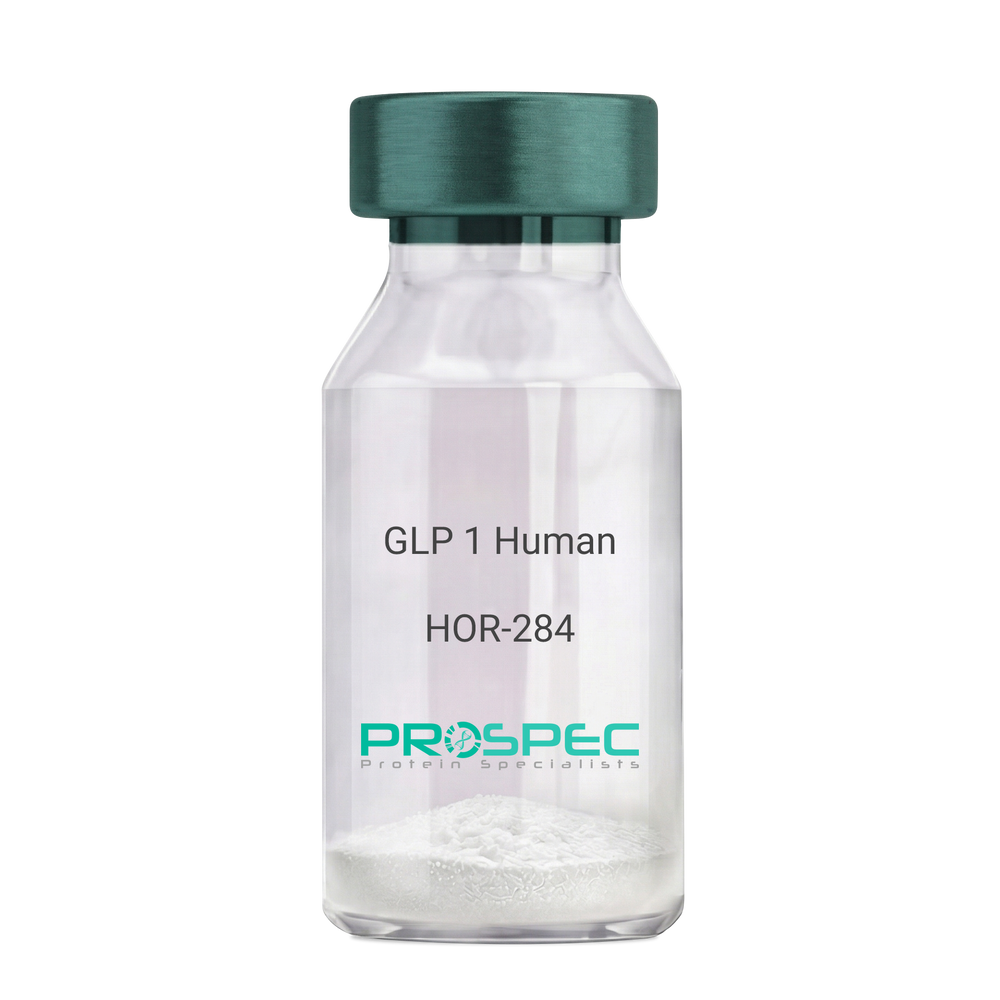
    GLP 1 Human

    Description:

    Human Glucagon Like Peptide-1

    GLP1, Glucagon Like Peptide-1, Incretin hormone.

    Product # :

    HOR-284

    Price :

    Quantity :

    Shipping Method :

    Room Temp Icon

    Shipped at Room temp

    Add To Cart

    More Info

    • description
    • formulation
    • purity
    • More Info

    Description

    Glucagon Like Peptide-1 is a single, non-glycosylated, polypeptide chain containing 30 amino acids and having a molecular mass of 3297.7 Dalton.The GLP-1 is purified by proprietary chromatographic techniques.

    Formulation

    The GLP-1 peptide was lyophilized with no additives.

    Purity

    Greater than 96.0% as determined by RP-HPLC.

    More Info

    • Introduction

      Glucagon-like peptide-1 (GLP-1) is derived from the transcription product of the proglucagon gene. The major source of GLP-1 in the body is the intestinal L cell that secretes GLP-1 as a guthormone. The biologically active forms of GLP-1 are: GLP-1-(7-37) and GLP-1-(7-36)NH2.
      GLP-1 secretion by L cells is dependent on the presence of nutrients in the lumen of the small intestine. The secretagogues (agents that causes or stimulates secretion) of this hormone include major nutrients like carbohydrate, proteinand lipid. Once in the circulation, GLP-1 has a half life of less than 2 minutes, due to rapid degradation by the enzyme dipeptidyl peptidase-4.
      GLP-1 possesses several physiological properties that make it a subject of intensive investigation as a potential treatment of diabetes mellitus. The known physiological functions of GLP-1 include: Increases insulin secretion from the pancreas in a glucose-dependent manner, decreases glucagon secretion from the pancreas, increases beta cells mass and insulin gene expression, inhibits acid secretion and gastric emptying in the stomach, decreases food intake by increasing satiety.

    • Synonyms

      GLP1, Glucagon Like Peptide-1, Incretin hormone.

    • Physical Appearance

      Sterile Filtered White lyophilized (freeze-dried) powder.

    • Stability

      Lyophilized Glucagon Like Peptide-1 although stable at room temperature for 3 weeks, should be stored desiccated below -18°C. Upon reconstitution GLP-1 should be stored at 4°C between 2-7 days and for future use below -18°C. For long term storage it is recommended to add a carrier protein (0.1% HSA or BSA).Please prevent freeze-thaw cycles.

    • Solubility

      It is recommended to reconstitute the lyophilized Glucagon Like Peptide-1 in sterile H2O at 0.5mg/ml, which can then be further diluted to other aqueous solutions.

    • Amino Acid Sequence

      H-His-Ala-Glu-Gly-Thr-Phe-Thr-Ser-Asp-Val-Ser-Ser-Tyr-Leu-Glu-Gly-Gln-Ala-Ala-Lys-Glu-Phe-Ile-Ala-Trp-Leu-Val-Lys-Gly-Arg-NH2.

    ProSpec's products are furnished for LABORATORY RESEARCH USE ONLY. The product may not be used as drugs, agricultural or pesticidal products, food additives or household chemicals.

    Glp 1 Human
  • View Data Sheet

    Name :

    CD86 Antibody, Biotin

    Description:

    CD86, Rat Anti-Mouse, Biotinylated

    B70, B7-2, LAB72, CD28LG2, FUN-1, BU63.

    Product # :

    ANT-284

    Price :

    Quantity :

    Shipping Method :

    Room Temp Icon

    Shipped at Room temp

    Add To Cart

    More Info

    • formulation
    • More Info

    Formulation

    1mg/ml in PBS (after reconstitution).

    More Info

    • Introduction

      CD86 type I membrane protein is a member of the immunoglobulin superfamily which is expressed by antigen-presenting cells, and acts as the ligand for two proteins at the cell surface of T cells, CD28 antigen and cytotoxic T-lymphocyte-associated protein 4. CD86 binding with CD28 protein is a co-stimulatory signal for initiation of the T-cell. CD86 binding with CTLA-4 negatively regulates T-cell activation and diminishes the immune response.

    • Synonyms

      B70, B7-2, LAB72, CD28LG2, FUN-1, BU63.

    • Solubility

      Reconstitute with of H20. Mix gently, wash the sides of the vial and wait 30-60 seconds before use.

    • Immunogen

      Purified mouse LPS-activated B cells.

    • Ig Subclass

      Rat IgG2a.

    • Clone

      mB7-2.

    • Applications

      Blocking and staining antibody. For staining, use 10µl/1,000,000 cells. Titer for blocking T cell activation should be determined by the investigator.

    • Available Conjugates

      This antibody is only available non-conjugated and conjugated to FITC.

    • Type

      Rat Anti Mouse Monoclonal.

    • Storage Procedures

      Lyophilized: store at 4°C. After reconstitution, if not intended for use within a month, aliquot and store at -20°C.

    • Purification Method

      Protein-A.

    ProSpec's products are furnished for LABORATORY RESEARCH USE ONLY. The product may not be used as drugs, agricultural or pesticidal products, food additives or household chemicals.

    Cd86 Antibody Biotin
  • View Data Sheet

    Name :

    GDF15 Human

    Description:

    Growth and Differentiation Factor 15 Human Recombinant

    GDF-15, MIC1, MIC-1, NAG-1, PDF, PLAB, PTGFB, Growth/differentiation factor 15, Placental bone morphogenetic protein, Placental TGF-beta, Macrophage inhibitory cytokine 1, Prostate differentiation factor, NSAID-activated gene 1 protein, NSAID-regulated gene 1 protein, NRG-1, GDF15.

    Product # :

    CYT-335

    Price :

    Quantity :

    Shipping Method :

    Room Temp Icon

    Shipped at Room temp

    Add To Cart

    More Info

    • description
    • source
    • formulation
    • purity
    • More Info

    Description

    GDF15 Human Recombinant produced in E.Coli is a homodimeric, non-glycosylated, Polypeptide chain containing 2x113 amino acids and having a molecular mass of 24.8 kDa. The GDF15 is purified by proprietary chromatographic techniques.

    Source

    Escherichia Coli.

    Formulation

    GDF15 is lyophilized from a sterile filtered solution containing 0.1% Trifluoroacetic Acid (TFA).

    Purity

    Greater than 95.0% as determined by SDS-PAGE.

    More Info

    • Introduction

      GDF15 is part of the TGF-Beta superfamily that is involved in regulating inflammatory and apoptotic pathways in injured tissues and throughout disease processes. GDF15 is most abundant in the liver. Its expression in liver can be considerably up-regulated in during injury of organs such as liver, kidney, heart and lung. GDF-15 promotes proliferation or growth arrest and differentiation due to differences in cellular differentiation. GDF15 prevents apoptosis in cerebellar granule neurons by activating Akt and inhibiting endogenously active ERK. GDF15 is a novel autocrine/endocrine factor that antagonizes the hypertrophic response and loss of ventricular performance.

    • Synonyms

      GDF-15, MIC1, MIC-1, NAG-1, PDF, PLAB, PTGFB, Growth/differentiation factor 15, Placental bone morphogenetic protein, Placental TGF-beta, Macrophage inhibitory cytokine 1, Prostate differentiation factor, NSAID-activated gene 1 protein, NSAID-regulated gene 1 protein, NRG-1, GDF15.

    • Physical Appearance

      Sterile Filtered White lyophilized (freeze-dried) powder.

    • Stability

      Lyophilized GDF15 although stable at room temperature for 3 weeks, should be stored desiccated below -18°C. Upon reconstitution GDF15 should be stored at 4°C between 2-7 days and for future use below -18°C.For long term storage it is recommended to add a carrier protein (0.1% HSA or BSA).Please prevent freeze-thaw cycles.

    • Solubility

      It is recommended to reconstitute the lyophilized GDF15 in sterile 18M-cm H2O at a concentration of 100µg/ml, which can then be further diluted to other aqueous solutions.

    • Amino Acid Sequence

      MARNGDHCPL GPGRCCRLHT VRASLEDLGW ADWVLSPREV QVTMCIGACP SQFRAANMHA QIKTSLHRLK PDTVPAPCCV PASYNPMVLI QKTDTGVSLQ TYDDLLAKDC HCI.

    • Background

      What is the molecular weight/Mw of GDF15 HUMAN Protein?
      GDF15 HUMAN Protein has a total Mw of 24.8kDa.

      What is the source or expression system of GDF15 HUMAN Protein?
      Escherichia Coli.

      What is the Purity of GDF15 HUMAN Protein?
      GDF15 HUMAN Protein is >95% pure as determined by SDS-PAGE.

      What is the Biological Activity of GDF15 HUMAN Protein?
      The biological functionality of GDF15 HUMAN Protein will be determined in the future.

      What is the amino acid sequence of GDF15 HUMAN Protein?
      MARNGDHCPL GPGRCCRLHT VRASLEDLGW ADWVLSPREV QVTMCIGACP SQFRAANMHA QIKTSLHRLK PDTVPAPCCV PASYNPMVLI QKTDTGVSLQ TYDDLLAKDC HCI.

      What applications can GDF15 HUMAN Protein be used in?
      GDF15 HUMAN Protein can probably be used in western blot, ELISA and Lateral Flow.

      What is the endotoxin level for GDF15 HUMAN Protein?
      The endotoxin level is minimal, GDF15 HUMAN Protein was purified using conventional chromatography techniques.


    ProSpec's products are furnished for LABORATORY RESEARCH USE ONLY. The product may not be used as drugs, agricultural or pesticidal products, food additives or household chemicals.

    Gdf15 H Human
  • View Data Sheet

    Name :

    SERPINB4 Human

    Description:

    Serpin Peptidase Inhibitor, Clade B Member 4 Human Recombinant

    SERPINB4, Serpin Peptidase Inhibitor, Clade B (Ovalbumin), Member, Squamous Cell Carcinoma, Antigen, SCCA2, Serine (Or Cysteine) Proteinase Inhibitor, Clade B (Ovalbumin), Member, Peptidase Inhibitor, LEUPIN, SCCA, PI11, Protease Inhibitor (Leucine-Serpin) Squamous Cell Carcinoma Antigen, SCCA2/SCCA1 Fusion Protein, Serpin B4, SCCA1 PI-11.

    Product # :

    PRO-2208

    Price :

    Quantity :

    Shipping Method :

    Ice Icon

    Shipped with Ice Packs

    Add To Cart

    More Info

    • description
    • source
    • formulation
    • purity
    • More Info

    Description

    SERPINB4 Human Recombinant produced in E.Coli is a single, non-glycosylated polypeptide chain containing 413 amino acids (1-390 a.a) and having a molecular mass of 47.2kDa.SERPINB4 is fused to a 23 amino acid His-tag at N-terminus & purified by proprietary chromatographic techniques.

    Source

    Escherichia Coli.

    Formulation

    SERPINB4 protein solution (0.5mg/ml) containing Phosphate buffered saline (pH7.4), 10% glycerol and 1mM DTT.

    Purity

    Greater than 90.0% as determined by SDS-PAGE.

    More Info

    • Introduction

      Serpin Peptidase Inhibitor, Clade B Member 4, also known as SERPINB4 is a member of the serpin family. SERPINB4 acts as a protease inhibitor to modulate the host immune response against tumor cells. Among the diseases associated with SERPINB4 are: inverted papilloma as well as burns.

    • Synonyms

      SERPINB4, Serpin Peptidase Inhibitor, Clade B (Ovalbumin), Member, Squamous Cell Carcinoma, Antigen, SCCA2, Serine (Or Cysteine) Proteinase Inhibitor, Clade B (Ovalbumin), Member, Peptidase Inhibitor, LEUPIN, SCCA, PI11, Protease Inhibitor (Leucine-Serpin) Squamous Cell Carcinoma Antigen, SCCA2/SCCA1 Fusion Protein, Serpin B4, SCCA1 PI-11.

    • Physical Appearance

      Sterile filtered colorless solution.

    • Stability

      Store at 4°C if entire vial will be used within 2-4 weeks. Store, frozen at -20°C for longer periods of time. For long term storage it is recommended to add a carrier protein (0.1% HSA or BSA).Avoid multiple freeze-thaw cycles.

    • Amino Acid Sequence

      MGSSHHHHHH SSGLVPRGSH MGSMEDLCVA NTLFALNLFK HLAKASPTQN LFLSPWSISS TMAMVYMGSR GSTEDQMAKV LQFNEVGANA VTPMTPENFT SCGFMQQIQK GSYPDAILQA QAADKIHSSF RSLSSAINAS TGNYLLESVN KLFGEKSASF REEYIRLCQK YYSSEPQAVD FLECAEEARK KINSWVKTQT KGKIPNLLPE GSVDGDTRMV LVNAVYFKGK WKTPFEKKLN GLYPFRVNSA QRTPVQMMYL REKLNIGYIE DLKAQILELP YAGDVSMFLL LPDEIADVST GLELLESEIT YDKLNKWTSK DKMAEDEVEV YIPQFKLEEH YELRSILRSM GMEDAFNKGR ANFSGMSERN DLFLSEVFHQ AMVDVNEEGT EAAAGTGGVM TGRTGHGGPQ FVADHPFLFL IMHKITNCIL FFGRFSSP.

    ProSpec's products are furnished for LABORATORY RESEARCH USE ONLY. The product may not be used as drugs, agricultural or pesticidal products, food additives or household chemicals.

    Serpinb4 Human
  • View Data Sheet

    Name :

    Noggin Human, Sf9

    Description:

    Noggin Human Recombinant, Sf9

    SYM1, SYNS1, NOG.

    Product # :

    CYT-1119

    Price :

    Quantity :

    Shipping Method :

    Room Temp Icon

    Shipped at Room temp

    Add To Cart

    More Info

    • description
    • source
    • formulation
    • purity
    • biological activity
    • More Info

    Description

    Noggin produced in Sf9 Baculovirus cells is a glycosylated homodimer containing 205 amino acids and having a molecular mass of 47.9kDa under non-reducing conditions. (Molecular size on SDS-PAGE will appear at approximately 50-80kDa).Noggin is purified by proprietary chromatographic techniques.

    Source

    Sf9, Baculovirus cells.

    Formulation

    Lyophilized from a 0.2μm filtered concentrated solution in PBS, pH7.4 and 0.02 % Tween-20 and 5% trehalose.

    Purity

    Greater than 95.0% as determined by:
    (a) Analysis by RP-HPLC
    (b) Analysis by SDS-PAGE.

    Biological Activity

    Measured by its ability to inhibit BMP-4-induced alkaline phosphatase production by ATDC5 mouse chondrogenic cellsans was fount to be 0.04‑0.2 μg/mL in the presence of 50 ng/mL of Recombinant Human BMP‑4.

    More Info

    • Introduction

      Nogginwhich is encoded by the NOG gene, binds and inactivates members of the transforming growth factor-beta (TGF-beta) superfamily signaling proteins, such as bone morphogenetic protein-4 (BMP4). By diffusing through extracellular matrices more efficiently than members of the TGF-beta superfamily, noggin may play and important role in creating morphogenic gradients. Noggin appears to have pleiotropic effect, both early in development as well as in later stages. Noggin was originally isolated from Xenopus based on its ability to restore normal dorsal-ventral body axis in embryos that had been artificially ventralized by UV treatment. The results of the mouse knockout of noggin suggest that it is involved in numerous developmental processes, such as neural tube fusion and joint formation. There are several dominant human NOG mutations in unrelated families with proximal symphalangism (SYM1) and multiple synostoses syndrome (SYNS1). All NOG mutations altered evolutionarily conserved amino acid residues. The amino acid sequence of human noggin is highly homologous to that of Xenopus, rat and mouse.

    • Synonyms

      SYM1, SYNS1, NOG.

    • Physical Appearance

      Sterile Filtered White lyophilized (freeze-dried) powder.

    • Stability

      Lyophilized Noggin although stable at room temperature for 3 weeks, should be stored desiccated below -18°C. Upon reconstitution Noggin should be stored at 4°C between 2-7 days and for future use below -18°C.Please prevent freeze-thaw cycles.

    • Solubility

      It is recommended to reconstitute the lyophilized Noggin in sterile 18MΩ-cm H2O not less than 100µg/ml, which can then be further diluted to other aqueous solutions.

    • Amino Acid Sequence

      QHYLHIRPAP SDNLPLVDLI EHPDPIFDPK EKDLNETLLR SLLGGHYDPG FMATSPPEDR PGGGGGAAGG AEDLAELDQL LRQRPSGAMP SEIKGLEFSE GLAQGKKQRL SKKLRRKLQM WLWSQTFCPV LYAWNDLGSR FWPRYVKVGS CFSKRSCSVP EGMVCKPSKS VHLTVLRWRC QRRGGQRCGW IPIQYPIISE CKCSC.

    ProSpec's products are furnished for LABORATORY RESEARCH USE ONLY. The product may not be used as drugs, agricultural or pesticidal products, food additives or household chemicals.

    Noggin Protein
  • View Data Sheet

    Name :

    EFNB1 Human, Sf9

    Description:

    Ephrin-B1 Human Recombinant, Sf9

    Ephrin B1, ELK Ligand, Ephrin-B1, Elk-L, EPLG2, LERK2, EFL3, Craniofrontonasal Syndrome (Craniofrontonasal Dysplasia), Eph-Related Receptor Tyrosine Kinase Ligand 2, EPH-Related Receptor Tyrosine Kinase Ligand 2, LERK-2, EFL-3, CFND, EFB1, CFNS, ELK ligand, ELK-L, EPH-related receptor tyrosine kinase ligand 2. 

    Product # :

    PRO-2543

    Price :

    Quantity :

    Shipping Method :

    Ice Icon

    Shipped with Ice Packs

    Add To Cart

    More Info

    • description
    • source
    • formulation
    • purity
    • More Info

    Description

    EFNB1 produced in Sf9 Baculovirus cells is a single, glycosylated polypeptide chain containing 452 amino acids (28-237a.a.) and having a molecular mass of 50.3kDa. (Molecular size on SDS-PAGE will appear at approximately 50-70kDa).EFNB1 is expressed with a 242 amino acid hIgG-His-tag at C-Terminus and purified by proprietary chromatographic techniques.

    Source

    Sf9, Baculovirus cells.

    Formulation

    EFNB1 protein solution (1mg/ml) contains 10% glycerol & Phosphate Buffered Saline (pH 7.4).

    Purity

    Greater than 90% as determined by SDS-PAGE.

    More Info

    • Introduction

      EFNB1 is a member of the Eph family. The cell-surface proteins Ephrins split into two groups, ephrin-A and ephrin-B, based on their structure and function and perform as ligands for Eph receptors. The transmembrane EFNB1 proteins have conserved cytoplasmic tyrosine residues that are phosphorylated upon interaction with an EphB receptor. In addition, EFNB1 transduces outside-in signals by C-terminal protein interfaces which influence integrin-mediated cell attachment and migration.

    • Synonyms

      Ephrin B1, ELK Ligand, Ephrin-B1, Elk-L, EPLG2, LERK2, EFL3, Craniofrontonasal Syndrome (Craniofrontonasal Dysplasia), Eph-Related Receptor Tyrosine Kinase Ligand 2, EPH-Related Receptor Tyrosine Kinase Ligand 2, LERK-2, EFL-3, CFND, EFB1, CFNS, ELK ligand, ELK-L, EPH-related receptor tyrosine kinase ligand 2.

    • Physical Appearance

      Sterile Filtered colorless solution.

    • Stability

      Store at 4°C if entire vial will be used within 2-4 weeks. Store, frozen at -20°C for longer periods of time. For long term storage it is recommended to add a carrier protein (0.1% HSA or BSA).Avoid multiple freeze-thaw cycles.

    • Amino Acid Sequence

      ADPLAKNLEP VSWSSLNPKF LSGKGLVIYP KIGDKLDIIC PRAEAGRPYE YYKLYLVRPE QAAACSTVLD PNVLVTCNRP EQEIRFTIKF QEFSPNYMGL EFKKHHDYYI TSTSNGSLEG LENREGGVCR TRTMKIIMKV GQDPNAVTPE QLTTSRPSKE ADNTVKMATQ APGSRGSLGD
      SDGKHETVNQ EEKSGPGASG GSSGDPDGFF NSKLEPKSCD KTHTCPPCPA PELLGGPSVF LFPPKPKDTL MISRTPEVTC VVVDVSHEDP EVKFNWYVDG VEVHNAKTKP REEQYNSTYR VVSVLTVLHQ DWLNGKEYKC KVSNKALPAP IEKTISKAKG QPREPQVYTL PPSRDELTKN
      QVSLTCLVKG FYPSDIAVEW ESNGQPENNY KTTPPVLDSD GSFFLYSKLT VDKSRWQQGN VFSCSVMHEA LHNHYTQKSL SLSPGKHHHH HH.

    ProSpec's products are furnished for LABORATORY RESEARCH USE ONLY. The product may not be used as drugs, agricultural or pesticidal products, food additives or household chemicals.

    Ephrin B1
  • View Data Sheet

    Name :

    BCCIP Human

    Description:

    BRCA2 And CDKN1A Interacting Protein Human Recombinant

    BRCA2 and CDKN1A-interacting protein, P21- and CDK-associated protein 1, Protein TOK-1, BCCIP, TOK1, BRCA2 and CDKN1A-interacting protein.

    Product # :

    PRO-2014

    Price :

    Quantity :

    Shipping Method :

    Ice Icon

    Shipped with Ice Packs

    Add To Cart

    More Info

    • description
    • source
    • formulation
    • purity
    • More Info

    Description

    BCCIP Human Recombinant produced in E.Coli is a single, non-glycosylated polypeptide chain containing 339 amino acids (1-314 a.a.) and having a molecular mass of 38.6kDa.BCCIP is fused to a 25 amino acid His-tag at N-terminus & purified by proprietary chromatographic techniques.

    Source

    Escherichia Coli.

    Formulation

    BCCIP protein solution (0.5mg/ml) containing 20mM Tris-HCl buffer (pH 8.0), 0.15M NaCl, 10% glycerol and 1mM DTT.

    Purity

    Greater than 90.0% as determined by SDS-PAGE.

    More Info

    • Introduction

      BRCA2 And CDKN1A Interacting Protein (BCCIP) is a nuclear protein with multiple interacting domains which remained conserved throughout the evolution. BCCIP is an important cofactor for BRCA2 in tumor suppression, and a modulator of CDK2 kinase activity via p21. BCCIP takes also part in the regulation of BRCA2 and RAD51 nuclear focus formation, doublestrand break-induced homologous recombination, and cell cycle progression.

    • Synonyms

      BRCA2 and CDKN1A-interacting protein, P21- and CDK-associated protein 1, Protein TOK-1, BCCIP, TOK1, BRCA2 and CDKN1A-interacting protein.

    • Physical Appearance

      Sterile Filtered colorless solution.

    • Stability

      Store at 4°C if entire vial will be used within 2-4 weeks. Store, frozen at -20°C for longer periods of time. For long term storage it is recommended to add a carrier protein (0.1% HSA or BSA).Avoid multiple freeze-thaw cycles.

    • Amino Acid Sequence

      MGSSHHHHHH SSGLVPRGSH MGSEFMASRS KRRAVESGVP QPPDPPVQRD EEEEKEVENE DEDDDDSDKE KDEEDEVIDE EVNIEFEAYS LSDNDYDGIK KLLQQLFLKA PVNTAELTDL LIQQNHIGSV IKQTDVSEDS NDDMDEDEVF GFISLLNLTE RKGTQCVEQI QELVLRFCEK NCEKSMVEQL DKFLNDTTKP VGLLLSERFI NVPPQIALPM YQQLQKELAG AHRTNKPCGK CYFYLLISKT FVEAGKNNSK KKPSNKKKAA LMFANAEEEF FYEKAILKFN YSVQEESDTC LGGKWSFDDV PMTPLRTVML IPGDKMNEIM DKLKEYLSV.

    ProSpec's products are furnished for LABORATORY RESEARCH USE ONLY. The product may not be used as drugs, agricultural or pesticidal products, food additives or household chemicals.

    Bccip Human
  • View Data Sheet

    Name :

    Omentin Human, His

    Description:

    Omentin Human Recombinant, His Tag

    Intelectin-1, HL1, LFR, HL-1, INTL, ITLN, hIntL.

    Product # :

    CYT-551

    Price :

    Quantity :

    Shipping Method :

    Room Temp Icon

    Shipped at Room temp

    Add To Cart

    More Info

    • description
    • source
    • formulation
    • purity
    • More Info

    Description

    Omentin Human Recombinant is produced in E.Coli by recombinant DNA technology is a single, polypeptide chain containing 294 amino acids and having a molecular mass of 32.7 kDa. Recombinant Human Omentin contains His tag fused at N-Terminus.Intelectin is purified by proprietary chromatographic techniques.

    Source

    Escherichia Coli.

    Formulation

    Each mg of lyophilized powder contains 20mM Tris & 50mM NaCl pH-8.0.

    Purity

    Greater than 95.0% as determined by(a) Analysis by RP-HPLC.
    (b) Analysis by SDS-PAGE.

    More Info

    • Introduction

      Omentin is a recently recognized gene highly localized to the mental tissue (visceral adipose tissue). Omentin is present in the stromal vascular cells in the adipose tissue rather than in the adipocytes. Omentin is predominantly expressed in the visceral adipose tissue than the subcutaneous tissue, with the omentin mRNA being 150 times higher in the visceral adipose tissue. Omentin has also been detected in human blood using western blot analysis, and seems to increase insulin-stimulated glucose uptake in 3T3-L1 adipocytes in mice. Omentin seems to increase Akt phosphorylation irrespective of insulin presence. Its role in glucose metabolism and obesity remains to be described; an insulin-sensitizing action is possible.Differences in Omentin expression has been noted in adipose tissue from normals and patients with inflammatory bowel disease although its significance is unknown.

    • Synonyms

      Intelectin-1, HL1, LFR, HL-1, INTL, ITLN, hIntL.

    • Physical Appearance

      Sterile Filtered White lyophilized (freeze-dried) powder.

    • Stability

      Lyophilized Intelectin His Tag although stable at room temperature for 3 weeks, should be stored desiccated below -18°C. Upon reconstitution Intelectin should be stored at 4°C between 2-7 days and for future use below -18°C.For long term storage it is recommended to add a carrier protein (0.1% HSA or BSA).Please prevent freeze-thaw cycles.

    • Solubility

      It is recommended to reconstitute the lyophilized Omentin His Tag in sterile 18MΩ-cm H2O not less than 100µg/ml, which can then be further diluted to other aqueous solutions.

    • Amino Acid Sequence

      MRGSHHHHHH GMASTDEANT YFKEWTCSSS PSLPRSCKEI KDECPSAFDG LYFLRTENGV IYQTFCDMTS GGGGWTLVAS VHENDMRGKC TVGDRWSSQQ GSKAVYPEGD GNWANYNTFG SAEAATSDDY KNPGYYDIQA KDLGIWHVPN KSPMQHWRNS SLLRYRTDTG FLQTLGHNLF GIYQKYPVKY GEGKCWTDNG PVIPVVYDFG DAQKTASYYS PYGQREFTAG FVQFRVFNNE RAANALCAGM RVTGCNTEHH CIGGGGYFPE ASPQQCGDFS GFDWSGYGTH VGYS.

    • Applications

      Elisa
      Western blot.

    ProSpec's products are furnished for LABORATORY RESEARCH USE ONLY. The product may not be used as drugs, agricultural or pesticidal products, food additives or household chemicals.

    Omentin Human His
  • View Data Sheet

    Name :

    PFN2 Human

    Description:

    Profilin-2 Human Recombinant

    Profilin-II, PFN2, Profilin-2, PFL, D3S1319E.

    Product # :

    PRO-809

    Price :

    Quantity :

    Shipping Method :

    Ice Icon

    Shipped with Ice Packs

    Add To Cart

    More Info

    • description
    • source
    • formulation
    • purity
    • More Info

    Description

    PFN2 Human Recombinant produced in E.Coli is a single, non-glycosylated, polypeptide chain containing 160 amino acids (1-140 a.a.) and having a molecular mass of 17.2 kDa. PFN2 protein is fused to a 20 amino acid His-Tag at N-terminus and purified by standard chromatography.

    Source

    Escherichia Coli.

    Formulation

    PFN2 protein solution (1mg/ml) containing 20mM Tris-HCl pH-8, 1mM DTT and 10% glycerol.

    Purity

    Greater than 95% as determined by SDS-PAGE.

    More Info

    • Introduction

      PFN2 is a ubiquitous actin monomer-binding protein which is part of the profilin family. PFN2 regulates actin polymerization in response to extra cellular signals. PFN2 binds to actin and affects the structure of the cytoskeleton. At high concentrations, profilin prevents the polymerization of actin, while it increases it at low concentrations. PFN2 binds to PIP2, it inhibits the formation of IP3 and DG.

    • Synonyms

      Profilin-II, PFN2, Profilin-2, PFL, D3S1319E.

    • Physical Appearance

      Sterile filtered colorless solution.

    • Stability

      Store at 4°C if entire vial will be used within 2-4 weeks. Store, frozen at -20°C for longer periods of time. For long term storage it is recommended to add a carrier protein (0.1% HSA or BSA).Avoid multiple freeze-thaw cycles.

    • Amino Acid Sequence

      MGSSHHHHHH SSGLVPRGSH MAGWQSYVDN LMCDGCCQEA AIVGYCDAKY VWAATAGGVF QSITPIEIDM IVGKDREGFF TNGLALGAKK CSVIRDSLYV DGDCTMDIRT KSQGGEPTYN VAVGRAGRVL VFVMGKEGVH GGGLNKKAYS MAKYLRDSGF.

    ProSpec's products are furnished for LABORATORY RESEARCH USE ONLY. The product may not be used as drugs, agricultural or pesticidal products, food additives or household chemicals.

    Pfn2 Human
  • View Data Sheet

    Name :

    TIGIT Human

    Description:

    T-Cell Immunoreceptor With Ig And ITIM Domains Human Recombinant

    VSIG9, VSTM3, WUCAM, V-set and immunoglobulin domain-containing protein 9, V-set and transmembrane domain-containing protein 3.

    Product # :

    PRO-2498

    Price :

    Quantity :

    Shipping Method :

    Ice Icon

    Shipped with Ice Packs

    Add To Cart

    More Info

    • description
    • source
    • formulation
    • purity
    • More Info

    Description

    TIGIT produced in Sf9 Baculovirus cells is a single, glycosylated polypeptide chain containing 359 amino acids (22-141a.a.) and having a molecular mass of 40.0kDa. (Molecular size on SDS-PAGE will appear at approximately 40-57kDa).TIGIT is expressed with a 239 amino acid hlgG-His tag at C-Terminus and purified by proprietary chromatographic techniques.

    Source

    Sf9, Baculovirus cells.

    Formulation

    TIGIT protein solution (0.5mg/ml) contains phosphate buffered saline (pH7.4) and 10% glycerol.

    Purity

    Greater than 90.0% as determined by SDS-PAGE.

    More Info

    • Introduction

      T cell immunoreceptor with Ig and ITIM domains or TIGIT, is an immune receptor located on part of T cells and Natural Killer Cells(NK). TIGIT is also known as Vstm3 and WUCAM. The receptor can bind with high affinity to dendritic cells(DCs), CD155(PVR) on macrophages, etc., and it can bind with lower affinity to CD112(PVRL2). TIGIT can inhibit the cytotoxicity of Natural Killer Cells through its ITIM domain via antibodies against the interaction with PVR and the activity is directed. It has been show on research that TIGIT-Fc fusion molecule can have interaction with PVR on dendritic cells and elevate its IL-10 secretion level or lower the secretion on IL-12 under the stimulation of LPS, moreover, it can inhibit the activation of T cell in vivo.

    • Synonyms

      VSIG9, VSTM3, WUCAM, V-set and immunoglobulin domain-containing protein 9, V-set and transmembrane domain-containing protein 3.

    • Physical Appearance

      Sterile Filtered colorless solution.

    • Stability

      Store at 4°C if entire vial will be used within 2-4 weeks. Store, frozen at -20°C for longer periods of time. For long term storage it is recommended to add a carrier protein (0.1% HSA or BSA).Avoid multiple freeze-thaw cycles.

    • Amino Acid Sequence

      MMTGTIETTG NISAEKGGSI ILQCHLSSTT AQVTQVNWEQ QDQLLAICNA DLGWHISPSF KDRVAPGPGL GLTLQSLTVN DTGEYFCIYH TYPDGTYTGR IFLEVLESSV AEHGARFQIP LEPKSCDKTH TCPPCPAPEL LGGPSVFLFP PKPKDTLMIS RTPEVTCVVV DVSHEDPEVK FNWYVDGVEV HNAKTKPREE QYNSTYRVVS VLTVLHQDWL NGKEYKCKVS NKALPAPIEK TISKAKGQPR EPQVYTLPPS RDELTKNQVS LTCLVKGFYP SDIAVEWESN GQPENNYKTT PPVLDSDGSF FLYSKLTVDK SRWQQGNVFS CSVMHEALHN HYTQKSLSLS PGKHHHHHH.

    ProSpec's products are furnished for LABORATORY RESEARCH USE ONLY. The product may not be used as drugs, agricultural or pesticidal products, food additives or household chemicals.

    Tigit Human
  • View Data Sheet

    Name :

    PLDN Human

    Description:

    Pallidin Homolog Human Recombinant

    Pallidin protein homolog (mouse), PA, HPS9, PALLID, syntaxin 13-interacting protein pallid.

    Product # :

    PRO-1068

    Price :

    Quantity :

    Shipping Method :

    Ice Icon

    Shipped with Ice Packs

    Add To Cart

    More Info

    • description
    • source
    • formulation
    • purity
    • More Info

    Description

    PLDN Human Recombinant produced in E. coli is a single polypeptide chain containing 192 amino acids (1-172) and having a molecular mass of 21.9kDa.PLDN is fused to a 20 amino acid His-tag at N-terminus & purified by proprietary chromatographic techniques.

    Source

    E.coli.

    Formulation

    The PLDN solution (1mg/1ml) contains 20mM Tris-HCl buffer (pH 8.0), 100mM Nacl, 2mM DTT and 10% glycerol.

    Purity

    Greater than 90% as determined by SDS-PAGE.

    More Info

    • Introduction

      Pallidin is involved in intracellular vesicle trafficking. PLDN cooperates with Syntaxin 13 that facilitates intracellular membrane fusion. A Few alternatively spliced transcript variations of this gene have been discovered however the full-length nature of several of these variants has not been determined. PLDN takes part in the creation of lysosome-related organelles, for example melanosomes and platelet-dense granules. PLDN is known to cooperate with Dysbindin, BLOC1S1, STX12, CNO, MUTED, SNAPAP and BLOC1S2.

    • Synonyms

      Pallidin protein homolog (mouse), PA, HPS9, PALLID, syntaxin 13-interacting protein pallid.

    • Physical Appearance

      Sterile Filtered colorless solution.

    • Stability

      Store at 4°C if entire vial will be used within 2-4 weeks. Store, frozen at -20°C for longer periods of time. For long term storage it is recommended to add a carrier protein (0.1% HSA or BSA).Avoid multiple freeze-thaw cycles.

    • Amino Acid Sequence

      MGSSHHHHHH SSGLVPRGSH MSVPGPSSPD GALTRPPYCL EAGEPTPGLS DTSPDEGLIE DLTIEDKAVE QLAEGLLSHY LPDLQRSKQA LQELTQNQVV LLDTLEQEIS KFKECHSMLD INALFAEAKH YHAKLVNIRK EMLMLHEKTS KLKKRALKLQ QKRQKEELER EQQREKEFER EKQLTARPAK RM

    ProSpec's products are furnished for LABORATORY RESEARCH USE ONLY. The product may not be used as drugs, agricultural or pesticidal products, food additives or household chemicals.

    Pldn Human
  • View Data Sheet

    Name :

    CDH5 Human

    Description:

    Cadherin 5 Human Recombinant

    Cadherin 5, VE-Cadherin, Cadherin 5 Type 2 VE-Cadherin (Vascular Epithelium), CDH5, Cadherin 5 Type 2 (Vascular Endothelium), Vascular Endothelial Cadherin, 7B4 Antigen, Endothelial-Specific Cadherin, Cd144 Antigen, CD144 Antigen, Cadherin-5, CD144, 7B4.

    Product # :

    PRO-2384

    Price :

    Quantity :

    Shipping Method :

    Ice Icon

    Shipped with Ice Packs

    Add To Cart

    More Info

    • description
    • source
    • formulation
    • purity
    • More Info

    Description

    Cadherin 5 Human Recombinant produced in Sf9 Baculovirus cells is a single, glycosylated polypeptide chain containing 810 amino acids (29-599 a.a.) and having a molecular mass of 91.5kDa (Migrates at 70-100kDa on SDS-PAGE under reducing conditions). CDH5 is expressed with a 239 amino acid hIgG-His-tag at C-Terminus and purified by proprietary chromatographic techniques.

    Source

    Sf9, Insect cells.

    Formulation

    CDH5 solution (0.5mg/ml) contains Phosphate Buffered Saline (pH 7.4) & 10% glycerol.

    Purity

    Greater than 90.0% as determined by SDS-PAGE.

    More Info

    • Introduction

      Cadherin-5 (CDH5) belongs to the atypical/type 2 subgroup of Cadherin homophilic adhesion proteins. Cadherin-5 is a calcium-dependent cell-cell adhesion molecule, which is comprised of 5 extracellular cadherin repeats, a transmembrane region and a highly conserved cytoplasmic tail. Cadherin-5 protein plays a role in the formation, maturation and remodeling of the vascular wall. CDH5 is generally considered to be specific for vascular endothelia in which it is either the sole or the predominant cadherin, often co-existing with N-cadherin. Moreover, the CDH5 protein regulates or is regulated by VEGF R2, type 1 and type 2 TGF-beta receptors, and other endothelial junction proteins such as JAM-C, Claudin-5, and N-Cadherin. CDH5 also connects with alpha-catenin forming a link to the cytoskeleton. CDH5 functions jointly with KRIT1 to create and maintain correct endothelial cell polarity and vascular lumen. Furthermore, Cadherin-5 is essential for activation of PRKCZ and for the localization of phosphorylated PRKCZ, PARD3, TIAM1 and RAP1B to the cell junction. The CDH5 gene is located in a gene cluster in a region on the long arm of chromosome 16 which is involved in loss of heterozygosity events in breast and prostate cancer.

    • Synonyms

      Cadherin 5, VE-Cadherin, Cadherin 5 Type 2 VE-Cadherin (Vascular Epithelium), CDH5, Cadherin 5 Type 2 (Vascular Endothelium), Vascular Endothelial Cadherin, 7B4 Antigen, Endothelial-Specific Cadherin, Cd144 Antigen, CD144 Antigen, Cadherin-5, CD144, 7B4.

    • Physical Appearance

      Sterile filtered colorless solution.

    • Stability

      Store at 4°C if entire vial will be used within 2-4 weeks.Store, frozen at -20°C for longer periods of time. For long term storage it is recommended to add a carrier protein (0.1% HSA or BSA).Avoid multiple freeze-thaw cycles.

    • Amino Acid Sequence

      NPAQRDTHSL LPTHRRQKRD WIWNQMHIDE EKNTSLPHHV GKIKSSVSRK NAKYLLKGEY VGKVFRVDAE TGDVFAIERL DRENISEYHL TAVIVDKDTG ENLETPSSFT IKVHDVNDNW PVFTHRLFNA SVPESSAVGT SVISVTAVDA DDPTVGDHAS VMYQILKGKE YFAIDNSGRI ITITKSLDRE KQARYEIVVE ARDAQGLRGD SGTATVLVTL QDINDNFPFF TQTKYTFVVP EDTRVGTSVG SLFVEDPDEP QNRMTKYSIL RGDYQDAFTI ETNPAHNEGI IKPMKPLDYE YIQQYSFIVE ATDPTIDLRY MSPPAGNRAQ VIINITDVDE PPIFQQPFYH FQLKENQKKP LIGTVLAMDP DAARHSIGYS IRRTSDKGQF FRVTKKGDIY NEKELDREVY PWYNLTVEAK ELDSTGTPTG KESIVQVHIE VLDENDNAPE FAKPYQPKVC ENAVHGQLVL QISAIDKDIT PRNVKFKFIL NTENNFTLTD NHDNTANITV KYGQFDREHT KVHFLPVVIS DNGMPSRTGT STLTVAVCKC NEQGEFTFCE DMAAQVGVSI QLEPKSCDKT HTCPPCPAPE LLGGPSVFLF PPKPKDTLMI SRTPEVTCVV VDVSHEDPEV KFNWYVDGVE VHNAKTKPRE EQYNSTYRVV SVLTVLHQDW LNGKEYKCKV SNKALPAPIE KTISKAKGQP REPQVYTLPP SRDELTKNQV SLTCLVKGFY PSDIAVEWES NGQPENNYKT TPPVLDSDGS FFLYSKLTVD KSRWQQGNVF SCSVMHEALH NHYTQKSLSL SPGKHHHHHH.

    ProSpec's products are furnished for LABORATORY RESEARCH USE ONLY. The product may not be used as drugs, agricultural or pesticidal products, food additives or household chemicals.

    Cdh5 Human
  • View Data Sheet

    Name :

    LGALS3 Mouse

    Description:

    Galectin-3 Mouse Recombinant

    CBP35, GAL3, GALBP, GALIG, LGALS2, MAC2, Galectin-3, Lectin, galactose binding, soluble 3, Lectin, galactose binding, soluble 3, isoform CRA_a, Lectin, galactose binding, soluble 3, isoform CRA_d, Lgals3.

    Product # :

    CYT-188

    Price :

    Quantity :

    Shipping Method :

    Ice Icon

    Shipped with Ice Packs

    Add To Cart

    More Info

    • description
    • source
    • formulation
    • purity
    • More Info
    • sds-page

    Description

    LGALS3 Mouse Recombinant produced in E. coli is a single polypeptide chain containing 287 amino acids (1-264) and having a molecular mass of 29.8 kDa. LGALS3 is fused to a 23 amino acid His-tag at N-terminus & purified by proprietary chromatographic techniques.

    Source

    E.coli.

    Formulation

    The LGALS3 solution (0.5mg/1ml) contains 20mM Tris-HCl buffer (pH 8.0), 0.15M NaCl, 50% glycerol, 1mM DTT and 2mM EDTA.

    Purity

    Greater than 95% as determined by SDS-PAGE.

    sds-page

    LGALS3-sds-page - Product image 1

    More Info

    • Introduction

      Galectin-3 mediates with the alpha-3, beta-1 integrin the stimulation by cspg4 of endothelial cells migration. Galectin-3 plays an necessary part during the acquisition of vasculogenic mimicry and angiogenic properties associated with melanoma progression. LGALS3 overexpression is highly expressed in early stages of papillary carcinoma, and its expression intensity declines during tumor progression. Serum levels of LGALS3 are high in patients with thyroid malignancy but there is considerable overlap in serum LGALS3 concentrations between those with benign and malignant nodular thyroid disease. LGLAS3 takes part as an immune regulator to inhibit T-cell immune responses and promote tumor growth, as a result providing a new mechanism for tumor immune tolerance.

    • Synonyms

      CBP35, GAL3, GALBP, GALIG, LGALS2, MAC2, Galectin-3, Lectin, galactose binding, soluble 3, Lectin, galactose binding, soluble 3, isoform CRA_a, Lectin, galactose binding, soluble 3, isoform CRA_d, Lgals3.

    • Physical Appearance

      Sterile Filtered colorless solution.

    • Stability

      Store at 4°C if entire vial will be used within 2-4 weeks. Store, frozen at -20°C for longer periods of time. For long term storage it is recommended to add a carrier protein (0.1% HSA or BSA).Avoid multiple freeze-thaw cycles.

    • Amino Acid Sequence

      MGSSHHHHHH SSGLVPRGSH MGSMADSFSL NDALAGSGNP NPQGYPGAWG NQPGAGGYPG AAYPGAYPGQ APPGAYPGQA PPGAYPGQAP PSAYPGPTAP GAYPGPTAPG AYPGSTAPGA FPGQPGAPGA YPSAPGGYPA AGPYGVPAGP LTVPYDLPLP GGVMPRMLIT IMGTVKPNAN RIVLDFRRGN DVAFHFNPRF NENNRRVIVC NTKQDNNWGK EERQSAFPFE SGKPFKIQVL VEADHFKVAV NDAHLLQYNH RMKNLREISQ LGISGDITLT SANHAMI.

    • Background

      What is the molecular weight/Mw of LGALS3 Protein?
      LGALS3 Protein has a total Mw of 29.8kDa.

      What is the source or expression system of LGALS3 Protein?
      Escherichia Coli.

      What is the Purity of LGALS3 Protein?
      LGALS3 Protein is >95% pure as determined by SDS-PAGE.

      What is the Biological Activity of LGALS3 Protein?
      The biological functionality of LGALS3 Protein will be determined in the future.

      What is the amino acid sequence of LGALS3 Protein?
      MGSSHHHHHH SSGLVPRGSH MGSMADSFSL NDALAGSGNP NPQGYPGAWG NQPGAGGYPG AAYPGAYPGQ APPGAYPGQA PPGAYPGQAP PSAYPGPTAP GAYPGPTAPG AYPGSTAPGA FPGQPGAPGA YPSAPGGYPA AGPYGVPAGP LTVPYDLPLP GGVMPRMLIT IMGTVKPNAN RIVLDFRRGN DVAFHFNPRF NENNRRVIVC NTKQDNNWGK EERQSAFPFE SGKPFKIQVL VEADHFKVAV NDAHLLQYNH RMKNLREISQ LGISGDITLT SANHAMI.

      What applications can LGALS3 Protein be used in?
      LGALS3 Protein can probably be used in western blot, ELISA and Lateral Flow.

      What is the endotoxin level for LGALS3 Protein?
      The endotoxin level is minimal, LGALS3 Protein was purified using conventional chromatography techniques.

    ProSpec's products are furnished for LABORATORY RESEARCH USE ONLY. The product may not be used as drugs, agricultural or pesticidal products, food additives or household chemicals.

    Lgals3 Mouse
  • View Data Sheet

    Name :

    Resistin Mutant Human

    Description:

    Resistin Mutant Human Recombinant

    Resistin, Cysteine-rich secreted protein FIZZ3, Adipose tissue-specific secretory factor, ADSF, C/EBP-epsilon-regulated myeloid-specific secreted cysteine-rich protein, Cysteine-rich secreted protein A12-alpha-like 2, RSTN, XCP1, RETN1, MGC126603, MGC126609.

    Product # :

    CYT-585

    Price :

    Quantity :

    Shipping Method :

    Room Temp Icon

    Shipped at Room temp

    Add To Cart

    More Info

    • description
    • source
    • formulation
    • purity
    • More Info

    Description

    9.9 kDa protein containing 93 amino acid residues, produced in E.coli. Mutant-Resistin has had a Cysteine residue mutated to prevent dimerization and possibly acts as an antagonist.

    Source

    Escherichia Coli.

    Formulation

    Recombinant Human Resistin was lyophilized from a concentrated (1mg/ml) solution containing 0.1% TFA.

    Purity

    Greater than 95% as determined by SDS-PAGE.

    More Info

    • Introduction

      Resistin, a product of the RSTN gene, is a peptide hormone belonging to the class of cysteine-rich secreted proteins which is termed the RELM family, and is also described as ADSF (Adipose Tissue- Specific Secretory Factor) and FIZZ3 (Found in Inflammatory Zone). Human resistin contains 108 amino acids as a prepeptide, and its hydrophobic signal peptide is cleaved before its secretion. Resistin circulates in human blood as a dimeric protein consisting of two 92 amino acid polypeptides, which are disulfide-linked via Cys26.
      Resistin may be an important link between obesity and insulin resistance. Mouse resistin, specifically produced and secreted by adipocyte, acts on skeletal muscle myocytes, hepatocytes and adipocytes themselves so that it reduces their sensitivity to insulin. Steppan et al. have suggested that resistin suppresses the ability of insulin to stimulate glucose uptake. They have also suggested that resistin is present at elevated levels in blood of obese mice, and is down regulated by fasting and antidiabetic drugs. Way et al., on the other hand, have found that resistin expression is severely suppressed in obesity and is stimulated by several antidiabetic drugs.
      Other studies have shown that mouse resistin increases during the differentiation of adipocytes, but it also seems to inhibit adipogenesis. In contrast, the human adipogenic differentiation is likely to be associated with a down regulation of resistin gene expression.

    • Synonyms

      Resistin, Cysteine-rich secreted protein FIZZ3, Adipose tissue-specific secretory factor, ADSF, C/EBP-epsilon-regulated myeloid-specific secreted cysteine-rich protein, Cysteine-rich secreted protein A12-alpha-like 2, RSTN, XCP1, RETN1, MGC126603, MGC126609.

    • Stability

      Store lyophilized protein at -20°C. Aliquot the product after reconstitution to avoid repeated freezing/thawing cycles. Reconstituted protein can be stored at 4°C for a limited period of time; it does not show any change after two weeks at 4°C.

    • Solubility

      Add 0.2 ml of deionized water and let the lyophilized pellet dissolve completely.

    • Amino Acid Sequence

      MSSKTLCSME EAINERIQEV AGSLIFRAIS SIGLECQSVT SRGDLATCPR GFAVTGCTCG SACGSWDVRA ETTCHCQCAG MDWTGARCCR VQP.

    ProSpec's products are furnished for LABORATORY RESEARCH USE ONLY. The product may not be used as drugs, agricultural or pesticidal products, food additives or household chemicals.

    Resistin Mutant Human
  • View Data Sheet

    Name :

    SERPINB3 Human

    Description:

    Serpin Peptidase Inhibitor, Clade B Member 3 Human Recombinant

    Serpin B3, Squamous cell carcinoma antigen 1, Protein T4-A, SCCA-1, Serpin Peptidase Inhibitor, Clade B (Ovalbumin), Member 3, SCCA1, Serine (Or Cysteine) Proteinase Inhibitor, Clade B (Ovalbumin), Member 3, Squamous Cell Carcinoma Antigen 1, Protein T4-A, SCCA-1, Serpin B3, HsT1196, SCCA-PD, T4-A , SCCA, SCC.

    Product # :

    PRO-2198

    Price :

    Quantity :

    Shipping Method :

    Ice Icon

    Shipped with Ice Packs

    Add To Cart

    More Info

    • description
    • source
    • formulation
    • purity
    • More Info

    Description

    SERPINB3 Human Recombinant produced in E.Coli is a single, non-glycosylated polypeptide chain containing 413 amino acids (1-390 a.a) and having a molecular mass of 47kDa. SERPINB3 is fused to a 23 amino acid His-tag at N-terminus & purified by proprietary chromatographic techniques.

    Source

    Escherichia Coli.

    Formulation

    SERPINB3 protein solution (0.5mg/ml) containing Phosphate buffered saline (pH7.4), 10% glycerol and 1mM DTT.

    Purity

    Greater than 90.0% as determined by SDS-PAGE.

    More Info

    • Introduction

      Serpin Peptidase Inhibitor, Clade B Member 3, also known as SERPINB3 is a papain-like cysteine protease inhibitor which modulates the host immune response versus tumor cells. SERPINB3 is a protein coding gene which acts as an inhibitor of UV-induced apoptosis by suppressing the activity of c-Jun NH(2)-terminal kinase (JNK1).

    • Synonyms

      Serpin B3, Squamous cell carcinoma antigen 1, Protein T4-A, SCCA-1, Serpin Peptidase Inhibitor, Clade B (Ovalbumin), Member 3, SCCA1, Serine (Or Cysteine) Proteinase Inhibitor, Clade B (Ovalbumin), Member 3, Squamous Cell Carcinoma Antigen 1, Protein T4-A, SCCA-1, Serpin B3, HsT1196, SCCA-PD, T4-A , SCCA, SCC.

    • Physical Appearance

      Sterile Filtered colorless solution.

    • Stability

      Store at 4°C if entire vial will be used within 2-4 weeks. Store, frozen at -20°C for longer periods of time. For long term storage it is recommended to add a carrier protein (0.1% HSA or BSA). Avoid multiple freeze-thaw cycles.

    • Amino Acid Sequence

      MGSSHHHHHH SSGLVPRGSH MGSMNSLSEA NTKFMFDLFQ QFRKSKENNI FYSPISITSA LGMVLLGAKD NTAQQIKKVL HFDQVTENTT GKAATYHVDR SGNVHHQFQK LLTEFNKSTD AYELKIANKL FGEKTYLFLQ EYLDAIKKFY QTSVESVDFA NAPEESRKKI NSWVESQTNE KIKNLIPEGN IGSNTTLVLV NAIYFKGQWE KKFNKEDTKE EKFWPNKNTY KSIQMMRQYT SFHFASLEDV QAKVLEIPYK GKDLSMIVLL PNEIDGLQKL EEKLTAEKLM EWTSLQNMRE TRVDLHLPRF KVEESYDLKD TLRTMGMVDI FNGDADLSGM TGSRGLVLSG VLHKAFVEVT EEGAEAAAAT AVVGFGSSPT STNEEFHCNH PFLFFIRQNK TNSILFYGRF SSP.

    ProSpec's products are furnished for LABORATORY RESEARCH USE ONLY. The product may not be used as drugs, agricultural or pesticidal products, food additives or household chemicals.

    Serpinb3 Human
  • View Data Sheet

    Name :

    SERPINB8 Human

    Description:

    Serpin Peptidase Inhibitor, Clade B Member 8 Human Recombinant

    CAP2, PI8, Serpin B8, Cytoplasmic antiproteinase 2, Peptidase inhibitor 8, CAP-2.

    Product # :

    PRO-2142

    Price :

    Quantity :

    Shipping Method :

    Ice Icon

    Shipped with Ice Packs

    Add To Cart

    More Info

    • description
    • source
    • formulation
    • purity
    • More Info

    Description

    SERPINB8 Human Recombinant produced in E.Coli is a single, non-glycosylated polypeptide chain containing 397 amino acids (1-374 a.a) and having a molecular mass of 45.2kDa.SERPINB8 is fused to a 23 amino acid His-tag at N-terminus & purified by proprietary chromatographic techniques.

    Source

    Escherichia Coli.

    Formulation

    SERPINB8 protein solution (0.5mg/ml) containing 20mM Tris-HCl buffer (pH 8.0), 0.15M NaCl, 30% glycerol and 1mM DTT.

    Purity

    Greater than 95.0% as determined by SDS-PAGE.

    More Info

    • Introduction

      Serpin Peptidase Inhibitor, Clade B Member 8 (SERPINB8) belongs to the ov-serpin subfamily, which, compared with the archetypal serpin PI1, is characterized by a high degree of homology to chicken ovalbumin, absence of N- and C-terminal extensions, lack of a signal peptide, and a serine instead of an asparagine residue at the penultimate position. The superfamily of high molecular weight serine proteinase inhibitors (serpins) control various intracellular and extracellular processes such as complement activation, fibrinolysis, coagulation, cellular differentiation, tumor suppression, apoptosis, and cell migration.

    • Synonyms

      CAP2, PI8, Serpin B8, Cytoplasmic antiproteinase 2, Peptidase inhibitor 8, CAP-2.

    • Physical Appearance

      Sterile Filtered clear solution.

    • Stability

      Store at 4°C if entire vial will be used within 2-4 weeks. Store, frozen at -20°C for longer periods of time. For long term storage it is recommended to add a carrier protein (0.1% HSA or BSA).Avoid multiple freeze-thaw cycles.

    • Amino Acid Sequence

      MGSSHHHHHH SSGLVPRGSH MGSMDDLCEA NGTFAISLFK ILGEEDNSRN VFFSPMSISS ALAMVFMGAK GSTAAQMSQA LCLYKDGDIH RGFQSLLSEV NRTGTQYLLR TANRLFGEKT CDFLPDFKEY CQKFYQAELE ELSFAEDTEE CRKHINDWVA EKTEGKISEV LDAGTVDPLT KLVLVNAIYF KGKWNEQFDR KYTRGMLFKT NEEKKTVQMM FKEAKFKMGY ADEVHTQVLE LPYVEEELSM VILLPDDNTD LAVVEKALTY EKFKAWTNSE KLTKSKVQVF LPRLKLEESY DLEPFLRRLG MIDAFDEAKA DFSGMSTEKN VPLSKVAHKC FVEVNEEGTE AAAATAVVRN SRCSRMEPRF CADHPFLFFI RHHKTNCILF CGRFSSP.

    ProSpec's products are furnished for LABORATORY RESEARCH USE ONLY. The product may not be used as drugs, agricultural or pesticidal products, food additives or household chemicals.

    Serpinb8 Human
  • 1
  • …
  • 15
  • 16
  • 17
  • 18
  • 19
  • …
  • 42
Your browser does not support the video tag.

Products

  • Cytokines
  • Growth Factors
  • Chemokines
  • CD Antigens
  • Neurotrophins
  • Hormones
  • Enzymes
  • Viral Antigens
  • Recombinant Proteins
  • Natural Proteins
  • Monoclonal Antibodies
  • Polyclonal Antibodies
  • Thermal Packaging

About

  • Company
  • Founder
  • Contribution
  • Contact Us
  • My Account

Ordering

  • Ordering Method
  • Ordering - Credit Card
  • Ordering PO
  • Shipping Fees
  • FAQ's

Legal

  • Terms & Conditions
  • Privacy
  • Site Map
  • info@prospecbio.com
  • Facebook
  • Instagram
  • Linkedin Profile

© 2026 ProSpec-Tany TechnoGene Ltd. All Rights Reserved.

  • Choosing a selection results in a full page refresh.
  • Opens in a new window.