Search results
774 results found for “transforming growth factor beta induced”
Name
Description
Product #
Price
Quantity
Shipping Method
- View Data Sheet
Name :
EGF Mouse, His ActiveDescription:
Epidermal Growth Factor, His Active Mouse Recombinant
AI790464, Pro-epidermal growth factor, URG.
Product # :
CYT-1054Price :
Quantity :
Shipping Method :
Shipped with Ice Packs
More Info
- description
- source
- formulation
- purity
- biological activity
- More Info
- SDS-PAGE
Description
EGF Mouse Recombinant produced in E.Coli is a single, non-glycosylated polypeptide chain containing 77 amino acids (977-1029 a.a) and having a molecular mass of 8.6kDa.EGF is fused to a 24 amino acid His-tag at N-terminus & purified by proprietary chromatographic techniques.
Source
Escherichia Coli.
Formulation
EGF protein solution (0.25mg/ml) contains 10% glycerol, 20mM Tris-HCl (pH 8.0), 0.1M NaCl & 2mM DTT.
Purity
Greater than 95.0% as determined by SDS-PAGE.
Biological Activity
Measured in a cell proliferation assay using mouse Balb/3T3 cell. The ED50 for this effect less or equal to 1ng/ml.
SDS-PAGE
More Info
-
Introduction
Pro-Epidermal Growth Factor Isoform 1 or EGF, is a globular peptide (77aa residues) which includes three intra molecular disulfide bonds. This protein acts as a growth factor that mediates the growth and proliferation of different epithelial & epidermal cells. Among other processes that EGF is part of are inhibition of gastric secretion and wound healing. EGF is a ligand for class I tyrosine kinase receptor (c-erbB).
-
Synonyms
AI790464, Pro-epidermal growth factor, URG.
-
Physical Appearance
Sterile Filtered clear solution.
-
Stability
Store at 4°C if entire vial will be used within 2-4 weeks. Store, frozen at -20°C for longer periods of time. For long term storage it is recommended to add a carrier protein (0.1% HSA or BSA).Avoid multiple freeze-thaw cycles.
-
Amino Acid Sequence
MGSSHHHHHH SSGLVPRGSH MGSMNSYPGC PSSYDGYCLN GGVCMHIESL DSYTCNCVIG YSGDRCQTRD LRWWELR.
-
Background
Deciphering Epidermal Growth Factor Signaling: Unveiling the Potential of His-Tagged Active Mouse Recombinant
Abstract:
This research paper delves into the intricate realm of Epidermal Growth Factor (EGF) signaling, focusing on the novel application of Histidine (His)-tagged Active Mouse Recombinant EGF. By employing sophisticated methodologies encompassing protein engineering, receptor binding assays, and cellular response analyses, this study sheds light on the multifaceted molecular attributes and therapeutic prospects of this innovative variant.
Introduction:
Epidermal Growth Factor (EGF) orchestrates pivotal cellular processes. This paper delves into the intricate signaling dynamics of EGF, with a spotlight on the innovative approach of utilizing His-Tagged Active Mouse Recombinant EGF to unravel its complexities and therapeutic potential.
Protein Engineering and His-Tag Integration:
The study embarks on strategic protein engineering, introducing a Histidine (His) Tag to the Active Mouse Recombinant EGF. This His-Tag facilitates purification and subsequent analyses, enabling a comprehensive exploration of EGF signaling.
Receptor Binding Assays and Ligand Interaction:
Advanced receptor binding assays unravel the nuances of EGF's interaction with its cognate receptor, including affinities and kinetics. By employing His-Tagged EGF, the study dissects the impact of the tag on receptor binding, shedding light on its potential implications on downstream signaling.
Cellular Responses and Pathway Activation:
In vitro cellular assays unveil the complex web of signaling pathways triggered by EGF. The study employs high-throughput techniques to investigate the intricate cascades initiated by His-Tagged Active Mouse Recombinant EGF, providing insights into its potential role in cell proliferation, migration, and survival.
Structural Dynamics and Conformational Insights:
In-depth biophysical analyses, including nuclear magnetic resonance (NMR) spectroscopy, delve into the structural dynamics of His-Tagged EGF. This sheds light on potential conformational changes induced by the tag and their impact on receptor binding affinity.
Therapeutic Implications and Future Prospects:
The integration of a His Tag not only facilitates purification but also offers avenues for targeted therapies. His-Tagged EGF could serve as a platform for tailored drug delivery, enhancing the precision of interventions in various pathologies.
Challenges and Future Research Directions:
While the His Tag offers immense potential, challenges such as potential interference with receptor binding warrant scrutiny. Future research should focus on optimizing the positioning of the tag and exploring its impact on downstream signaling cascades.
Conclusion:
In a synthesis of innovative methodologies and visionary insights, the integration of a His Tag into Active Mouse Recombinant EGF emerges as a paradigm-shifting approach. This technique not only enriches our understanding of EGF signaling dynamics but also presents exciting prospects for personalized therapeutic interventions.
What is the molecular weight/Mw of EGF MOUSE, HIS ACTIVE Protein?
EGF MOUSE, HIS ACTIVE Protein has a total Mw of 8.6kDa.
What is the source or expression system of EGF MOUSE, HIS ACTIVE Protein?
Escherichia Coli.
What is the Purity of EGF MOUSE, HIS ACTIVE Protein?
EGF MOUSE, HIS ACTIVE Protein is >95% pure as determined by SDS-PAGE.
What is the Biological Activity of EGF MOUSE, HIS ACTIVE Protein?
Measured in a cell proliferation assay using mouse Balb/3T3 cell. The ED50 for this effect less or equal to 1ng/ml.
What is the amino acid sequence of EGF MOUSE, HIS ACTIVE Protein?
MGSSHHHHHH SSGLVPRGSH MGSMNSYPGC PSSYDGYCLN GGVCMHIESL DSYTCNCVIG YSGDRCQTRD LRWWELR.
What applications can EGF MOUSE, HIS ACTIVE Protein be used in?
EGF MOUSE, HIS ACTIVE Protein can probably be used in western blot, ELISA and Lateral Flow.
What is the endotoxin level for EGF MOUSE, HIS ACTIVE Protein?
The endotoxin level is minimal, EGF MOUSE, HIS ACTIVE Protein was purified using conventional chromatography techniques..
ProSpec's products are furnished for LABORATORY RESEARCH USE ONLY. The product may not be used as drugs, agricultural or pesticidal products, food additives or household chemicals.
- View Data Sheet
Description:
Placental Lactogen Human Recombinant, Sf9
Chorionic Somatomammotropin Hormone 1, CSH1, Choriomammotropin, Lactogen, CSH2, PL, CSA, CSMT, FLJ75407
Product # :
CYT-1164Price :
Quantity :
Shipping Method :
Shipped with Ice Packs
More Info
- description
- source
- formulation
- purity
- biological activity
- More Info
Description
Placental Lactogen Human produced in Sf9 Baculovirus cells is a single, glycosylated polypeptide chain containing 197 amino acids (27-217 aa) and having a molecular mass of 23.1kDa.Placental Lactogen is fused to a 6 amino acid His tag at C-terminus and purified by proprietary chromatographic techniques.
Source
Sf9, Baculovirus cells.
Formulation
The Placental Lactogen solution (0.25mg/ml) contains 30% Glycerol and Phosphate-Buffered Saline (pH 7.4).
Purity
Greater than 90.0% as determined by SDS-PAGE.
Biological Activity
Determined by cell proliferation assay using Nb2-11 Rat lymphoma cells. ED50 range for this effect is ≤ 0.8 ng/ml.
More Info
-
Introduction
Placental Lactogen is a polypeptide hormone that is produced by the Syncytiotrophoblasts of the Placenta.Placental Lactogen has both GH and Prolactin activities on growth, lactation, and luteal steroid production. In women, placental lactogen secretion begins soon after implantation and increases to 1 g or more a day in late pregnancy. Placental Lactogen Bovine is also capable of activating human and other heterologous GH receptors.
-
Synonyms
Chorionic Somatomammotropin Hormone 1, CSH1, Choriomammotropin, Lactogen, CSH2, PL, CSA, CSMT, FLJ75407
-
Physical Appearance
Sterile Filtered colorless solution.
-
Stability
Store at 4°C if entire vial will be used within 2-4 weeks. Store, frozen at -20°C for longer periods of time. For long term storage it is recommended to add a carrier protein (0.1% HSA or BSA).Avoid multiple freeze-thaw cycles.
-
Amino Acid Sequence
VQTVPLSRLF DHAMLQAHRA HQLAIDTYQE FEETYIPKDQ KYSFLHDSQT SFCFSDSIPT PSNMEETQQK SNLELLRISL LLIESWLEPV RFLRSMFANN LVYDTSDSDD YHLLKDLEEG IQTLMGRLED GSRRTGQILK QTYSKFDTNS HNHDALLKNY GLLYCFRKDM DKVETFLRMV QCRSVEGSCG FHHHHHH
ProSpec's products are furnished for LABORATORY RESEARCH USE ONLY. The product may not be used as drugs, agricultural or pesticidal products, food additives or household chemicals.
- View Data Sheet
Name :
IGFBP6 MouseDescription:
Insulin Like Growth Factor Binding Protein-6 Mouse Recombinant
Insulin-like growth factor-binding protein 6, Igfbp6, IGFBP-6, IBP-6, IGF-binding protein 6, IGFBP-6, Igfbp-6.
Product # :
CYT-987Price :
Quantity :
Shipping Method :
Shipped with Ice Packs
More Info
- description
- source
- formulation
- purity
- More Info
Description
IGFBP6 Mouse Recombinant produced in Sf9 Baculovirus cells is a single, glycosylated polypeptide chain containing 221 amino acids (26-238 a.a.) and having a molecular mass of 23.7kDa (Migrates at 28-40kDa on SDS-PAGE under reducing conditions).IGFBP6 is expressed with a 8 amino acid His tag at C-Terminus and purified by proprietary chromatographic techniques.
Source
Sf9, Baculovirus cells.
Formulation
IGFBP6 protein solution (0.25mg/ml) contains Phosphate Buffered Saline (pH 7.4) and 40% glycerol.
Purity
Greater than 90.0% as determined by SDS-PAGE.
More Info
-
Introduction
IGFBP6 plays a role in lipoprotein assembly and dietary cholesterol absorption. in addition to its acyltransferase activity, it may act as a ligase. may provide cholesteryl esters for lipoprotein secretion from hepatocytes and intestinal mucosa.
-
Synonyms
Insulin-like growth factor-binding protein 6, Igfbp6, IGFBP-6, IBP-6, IGF-binding protein 6, IGFBP-6, Igfbp-6.
-
Physical Appearance
Sterile Filtered colorless solution.
-
Stability
Store at 4°C if entire vial will be used within 2-4 weeks. Store, frozen at -20°C for longer periods of time. For long term storage it is recommended to add a carrier protein (0.1% HSA or BSA). Avoid multiple freeze-thaw cycles.
-
Amino Acid Sequence
ALAGCPGCGA GMQTGCRGGC VEEEDAGSPA DGCTEAGGCL RREGQPCGVY SPKCAPGLQC QPRENEEAPL RALLIGQGRC QRARGPSEET TKESKPQGGA SRSRDTNHRD RQKNPRTSAA PIRPNPVQDS EMGPCRRHLD SVLQQLQTEV FRGGARGLYV PNCDLRGFYR KQQCRSSQGN RRGPCWCVDP MGQPLPVSPD GQGSTQCSAR SSGLEHHHHH H.
-
Background
What is the molecular weight/Mw of IGFBP6 MOUSE Protein?
IGFBP6 MOUSE Protein has a total Mw of 23.7kDa.
What is the source or expression system of IGFBP6 MOUSE Protein?
Sf9, Baculovirus cells.
What is the Purity of IGFBP6 MOUSE Protein?
IGFBP6 MOUSE Protein is >90% pure as determined by SDS-PAGE.
What is the Biological Activity of IGFBP6 MOUSE Protein?
The biological functionality of IGFBP6 MOUSE Protein will be determined in the future.
What is the amino acid sequence of IGFBP6 MOUSE Protein?
ALAGCPGCGA GMQTGCRGGC VEEEDAGSPA DGCTEAGGCL RREGQPCGVY SPKCAPGLQC QPRENEEAPL RALLIGQGRC QRARGPSEET TKESKPQGGA SRSRDTNHRD RQKNPRTSAA PIRPNPVQDS EMGPCRRHLD SVLQQLQTEV FRGGARGLYV PNCDLRGFYR KQQCRSSQGN RRGPCWCVDP MGQPLPVSPD GQGSTQCSAR SSGLEHHHHH H.
What applications can IGFBP6 MOUSE Protein be used in?
IGFBP6 MOUSE Protein can probably be used in western blot, ELISA and Lateral Flow.
What is the endotoxin level for IGFBP6 MOUSE Protein?
The endotoxin level is minimal, IGFBP6 MOUSE Protein was purified using conventional chromatography techniques.
ProSpec's products are furnished for LABORATORY RESEARCH USE ONLY. The product may not be used as drugs, agricultural or pesticidal products, food additives or household chemicals.
- View Data Sheet
Name :
MIA2 HumanDescription:
Melanoma Inhibitory Activity 2 Human Recombinant
MIA-2, MIA2, Melanoma Inhibitory Activity 2, FLJ22404.
Product # :
CYT-638Price :
Quantity :
Shipping Method :
Shipped at Room temp
More Info
- description
- source
- formulation
- purity
- More Info
Description
MIA2 Human Recombinant produced in E.Coli is a single, non-glycosylated, polypeptide chain consisting of 101 amino having a total molecular mass of 11.5 kDa.The MIA2 is purified by proprietary chromatographic techniques.
Source
Escherichia Coli.
Formulation
The MIA2 protein was lyophilized from a concentrated (1mg/ml) solution containing 20mM Phosphate buffer pH=7.4 and 150mM NaCl.
Purity
Greater than 97.0% as determined by(a) Analysis by RP-HPLC.
(b) Analysis by SDS-PAGE.More Info
-
Introduction
MIA2 performs as a tumour suppressor in hepatocellular carcinoma. MIA2is a novel acute phase protein which its expression is found in the liver and reacts to liver damage in chronic liver diseases and is considerably higher in severe fibrosis patients . MIA2 is induced by IL6, TGF-B & and conditioned medium from activated hepatic stellate cells. MIA2 is is mainly expressed in hepatocytes.
-
Synonyms
MIA-2, MIA2, Melanoma Inhibitory Activity 2, FLJ22404.
-
Physical Appearance
Sterile Filtered White lyophilized (freeze-dried) powder.
-
Stability
Lyophilized MIA2 although stable at room temperature for 3 weeks, should be stored desiccated below -18°C. Upon reconstitution MIA2 should be stored at 4°C between 2-7 days and for future use below -18°C.Please prevent freeze-thaw cycles.
-
Solubility
It is recommended to reconstitute the lyophilized MIA2 in sterile 18MΩ-cm H2O not less than 100µg/ml, which can then be further diluted to other aqueous solutions.
-
Amino Acid Sequence
MLESTKLLAD LKKCGDLECE ALINRVSAMR DYRGPDCRYL NFTKGEEISV YVKLAGERED LWAGSKGKEF GYFPRDAVQI EEVFISEEIQ MSTKESDFLC L.
ProSpec's products are furnished for LABORATORY RESEARCH USE ONLY. The product may not be used as drugs, agricultural or pesticidal products, food additives or household chemicals.
- View Data Sheet
Name :
VEGF E (Orf Virus)Description:
Vascular Endothelial Growth Factor-E Recombinant (Orf Virus)
Product # :
CYT-263Price :
Quantity :
Shipping Method :
Shipped at Room temp
More Info
- description
- source
- formulation
- purity
- biological activity
- More Info
Description
A DNA sequence encoding the mature variant of ovVEGF-E isolate D1701 (Dehio et al., 1999; GenBank accession No. AF106020) was expressed in E. coli as a 132 amino acid residue fusion protein with an N-terminal His-tag sequence and a thrombin cleavage site. Recombinant VEGF-E homodimer was dimerized in vitro and has a predicted mass of approximately 35 kDa.
Source
Escherichia Coli.
Formulation
The protein was lyophilized from a concentrated (1mg/ml) solution containing PBS.
Purity
Greater than 90.0% as determined by SDS-PAGE.
Biological Activity
The biological activity was determined (1) by the ability to induce VEGFR-2/KDR receptor phosphorylation in PAE/KDR cells and (2) in a cell proliferation assay using primary HUVECs. The ED50 for this effect is typically 1-5ng/ml.More Info
-
Introduction
Based on sequence similarity to VEGF-A, a gene encoding a VEGF homologue has recently been discovered in the genome of Orf virus (OV) (Lyttle et al., 1994). Different isolates of Orf virus show significant amino acid sequence similarity to VEGF-A and described as a viral virulence factor that appears to be derived from captured host genes. All eight cysteine residues of the central cysteine knot motif characteristic of members of the VEGF family are conserved among other residues in the VEGF-E proteins (Dehio et al., 1999; Wise et al., 1999). Alignment of all mammalian VEGF sequences indicated that VEGF-E is distinct from the previously described VEGFs but most closely related to VEGF-A. Like VEGF-A, VEGF-E was found to bind with high affinity to VEGF receptor-2 (KDR) resulting in receptor autophosphorylation, whilst in contrast to VEGF-A, VEGF-E can not bind to VEGF receptor-1 (Flt-1). Furthermore VEGF-E can also not bind to VEGF receptor-3 (FLT-4). Therefore VEGF-E is a potent angiog
-
Physical Appearance
Sterile Filtered White lyophilized (freeze-dried) powder.
-
Stability
Lyophilized Vascular Endothelial Growth Factor-E Orf Virus although stable at room temperature for 3 weeks, should be stored desiccated below -18°C. Upon reconstitution VEGF E -OV should be stored at 4°C between 2-7 days and for future use below -18°C.Please prevent freeze-thaw cycles.
-
Solubility
The lyophilized oVEGF-E Orf Virus should be reconstituted in water or medium to a concentration not lower than 50µg/ml. For long term storage we would recommend to add at least 0.1% human or bovine serum albumin.
-
Amino Acid Sequence
MGSSHHHHHH SSGLVPRGSH DSTKTWSEVF ENSGCKPRPM VFRVHDEHPE LTSQRFNPPC VTLMRCGGCC NDESLECVPT EEANVTMQLM GASVSGGNGM QHLSFVEHKK CDCKPPLTTT PPTTTRPPRR RR
ProSpec's products are furnished for LABORATORY RESEARCH USE ONLY. The product may not be used as drugs, agricultural or pesticidal products, food additives or household chemicals.
- View Data Sheet
Name :
IGFBP7 Human, HisDescription:
Insulin Like Growth Factor Binding Protein-7Human Recombinant, His Tag
Insulin-like growth factor-binding protein 7, IBP-7, IGF-binding protein 7, IGFBP-7, IGFBP-rP1, MAC25 protein, PGI2-stimulating factor, Prostacyclin-stimulating factor, Tumor-derived adhesion factor, TAF, IGFBP7, MAC25, PSF, AGM, FSTL2, RAMSVPS, IGFBP-7v, IGFBPRP1.
Product # :
CYT-809Price :
Quantity :
Shipping Method :
Shipped with Ice Packs
More Info
- description
- source
- formulation
- purity
- More Info
- SDS-PAGE
Description
IGFBP7 Human Recombinant produced in E.Coli is a single, non-glycosylated polypeptide chain containing 279 amino acids (27-282 a.a.) and having a molecular mass of 28.8kDa.IGFBP7 is fused to a 23 amino acid His-tag at N-terminus & purified by proprietary chromatographic techniques.
Source
Escherichia Coli.
Formulation
IGFBP7 protein solution (0.25mg/ml) containing 20mM Tris-HCl buffer (pH8.0), 0.2M NaCl, 50% glycerol, 2mM DTT and 1mM EDTA.
Purity
Greater than 85% as determined by SDS-PAGE.
SDS-PAGE
More Info
-
Introduction
Insulin-like Growth Factor-Binding Protein 7 (IGFBP7) is a member of the IGFBP family. IGFBP family members are all cysteine rich proteins with conserved cysteine and have an IGFBP domain, a Kazal-like domain and an Ig-like C2-type domain. IGFBP7 is expressed in a broad range of normal human tissues and it mostly shows reduced expression in cancer cell lines of prostate, breast, colon, and lung origin. IGFBP7 has a role in skeletal myogenesis by binding to IGF in a manner which inhibits IGF induced differentiation of skeletal myoblasts, without disturbing IGF induced proliferation. Moreover, IGFBP7 suppresses growth and colony formation of prostate and breast cancer cell lines via an IGF independent mechanism, which triggers a delay in the G1 phase of the cell cycle, and increased apoptosis.
-
Synonyms
Insulin-like growth factor-binding protein 7, IBP-7, IGF-binding protein 7, IGFBP-7, IGFBP-rP1, MAC25 protein, PGI2-stimulating factor, Prostacyclin-stimulating factor, Tumor-derived adhesion factor, TAF, IGFBP7, MAC25, PSF, AGM, FSTL2, RAMSVPS, IGFBP-7v, IGFBPRP1.
-
Physical Appearance
Sterile Filtered clear solution.
-
Stability
Store at 4°C if entire vial will be used within 2-4 weeks. Store, frozen at -20°C for longer periods of time. For long term storage it is recommended to add a carrier protein (0.1% HSA or BSA).Avoid multiple freeze-thaw cycles.
-
Amino Acid Sequence
MGSSHHHHHH SSGLVPRGSH MGSSSSDTCG PCEPASCPPL PPLGCLLGET RDACGCCPMC ARGEGEPCGG GGAGRGYCAP GMECVKSRKR RKGKAGAAAG GPGVSGVCVC KSRYPVCGSD GTTYPSGCQL RAASQRAESR GEKAITQVSK GTCEQGPSIV TPPKDIWNVT GAQVYLSCEV IGIPTPVLIW NKVKRGHYGV QRTELLPGDR DNLAIQTRGG PEKHEVTGWV LVSPLSKEDA GEYECHASNS QGQASASAKI TVVDALHEIP VKKGEGAEL.
-
Background
What is the molecular weight/Mw of IGFBP7 HUMAN, HIS Protein?
IGFBP7 HUMAN, HIS Protein has a total Mw of 28.8kDa.
What is the source or expression system of IGFBP7 HUMAN, HIS Protein?
Escherichia Coli.
What is the Purity of IGFBP7 HUMAN, HIS Protein?
IGFBP7 HUMAN, HIS Protein is >85% pure as determined by SDS-PAGE.
What is the Biological Activity of IGFBP7 HUMAN, HIS Protein?
The biological functionality of IGFBP7 HUMAN, HIS Protein will be determined in the future.
What is the amino acid sequence of IGFBP7 HUMAN, HIS Protein?
MGSSHHHHHH SSGLVPRGSH MGSSSSDTCG PCEPASCPPL PPLGCLLGET RDACGCCPMC ARGEGEPCGG GGAGRGYCAP GMECVKSRKR RKGKAGAAAG GPGVSGVCVC KSRYPVCGSD GTTYPSGCQL RAASQRAESR GEKAITQVSK GTCEQGPSIV TPPKDIWNVT GAQVYLSCEV IGIPTPVLIW NKVKRGHYGV QRTELLPGDR DNLAIQTRGG PEKHEVTGWV LVSPLSKEDA GEYECHASNS QGQASASAKI TVVDALHEIP VKKGEGAEL.
What applications can IGFBP7 HUMAN, HIS Protein be used in?
IGFBP7 HUMAN, HIS Protein can probably be used in western blot, ELISA and Lateral Flow.
What is the endotoxin level for IGFBP7 HUMAN, HIS Protein?
The endotoxin level is minimal, IGFBP7 HUMAN, HIS Protein was purified using conventional chromatography techniques.
ProSpec's products are furnished for LABORATORY RESEARCH USE ONLY. The product may not be used as drugs, agricultural or pesticidal products, food additives or household chemicals.
- View Data Sheet
Name :
EGF RatDescription:
Epidermal Growth Factor Rat Recombinant
Urogastrone, URG, EGF.
Product # :
CYT-669Price :
Quantity :
Shipping Method :
Shipped at Room temp
More Info
- description
- source
- formulation
- purity
- biological activity
- More Info
Description
Epidermal Growth Factor Rat Recombinant produced in E.Coli is a single, non-glycosylated, polypeptide chain containing 53 amino acids and having a molecular mass of 6151 Dalton. The Rat EGF is purified by proprietary chromatographic techniques.
Source
Escherichia Coli.
Formulation
Rat EGF was lyophilized from a 0.2µm filtered concentrated (1.0mg/ml) solution in PBS, pH 7.4.
Purity
Greater than 98.0% as determined by(a) Analysis by RP-HPLC.
(b) Analysis by SDS-PAGE.Biological Activity
The ED50 as calculated by the dose-dependant proliferation of murine BALB/c 3T3 cells is less than 0.1ng/ml, corresponding to a specific activity of > 10,000,000 units/mg.More Info
-
Introduction
Epidermal growth factor has a profound effect on the differentiation of specific cells in vivo and is a potent mitogenic factor for a variety of cultured cells of both ectodermal and mesodermal origin. The EGF precursor is believed to exist as a membrane-bound molecule which is proteolytically cleaved to generate the 53-amino acid peptide hormone that stimulates cells to divide.
EGF stimulates the growth of various epidermal and epithelial tissues in vivo and in vitro and of some fibroblasts in cell culture. -
Synonyms
Urogastrone, URG, EGF.
-
Physical Appearance
Sterile Filtered White lyophilized (freeze-dried) powder.
-
Stability
Lyophilized Rat EGF although stable at room temperature for 3 weeks, should be stored desiccated below -18°C. Upon reconstitution Rat EGF should be stored at 4°C between 2-7 days and for future use below -18°C. For long term storage it is recommended to add a carrier protein (0.1% HSA or BSA).Please prevent freeze-thaw cycles.
-
Solubility
It is recommended to reconstitute the lyophilized Rat EGF in sterile water not less than 100µg/ml, which can then be further diluted to other aqueous solutions.
-
Amino Acid Sequence
NSNTGCPPSY DGYCLNGGVC MYVESVDRYV CNCVIGYIGE RCQHRDLRWW KLR.
-
Background
Pioneering Insights into Epidermal Growth Factor Rat Recombinant: Unraveling Signaling Dynamics and Therapeutic Implications
Abstract:
This research paper delves into the unexplored landscape of Epidermal Growth Factor Rat Recombinant (EGF-RR), delving into its intricate molecular attributes, signaling pathways, and potential therapeutic applications. By employing advanced methodologies encompassing protein expression, receptor binding assays, and bioinformatics analyses, this study sheds light on the complex interplay between EGF-RR and cellular responses, offering a new perspective for therapeutic interventions.
Introduction:
Epidermal Growth Factor (EGF) holds a key role in cellular regulation. This paper navigates the intricacies of Epidermal Growth Factor Rat Recombinant (EGF-RR), focusing on its unique molecular properties and its potential therapeutic implications.
Protein Expression and Purification:
The paper delves into the meticulous engineering of EGF-RR, involving gene optimization for enhanced expression. Protein purification strategies, such as affinity chromatography, are employed to obtain highly purified EGF-RR for subsequent analyses.
Receptor Binding Assays and Ligand Interaction:
Advanced receptor binding assays elucidate the interaction of EGF-RR with its cognate receptor. By quantifying binding affinities and kinetic rates, the study unveils the nuances of EGF-RR's engagement with its receptor, shedding light on potential structural determinants.
Cellular Signaling Pathways and Functional Responses:
Through in vitro cellular assays, the study unravels the intricate signaling pathways initiated by EGF-RR. Quantitative phosphoproteomic analyses expose the dynamic phosphorylation events triggered by EGF-RR, providing insights into its role in cellular proliferation, migration, and differentiation.
Bioinformatics Insights and Molecular Modeling:
Utilizing advanced bioinformatics tools, molecular dynamics simulations provide a deeper understanding of EGF-RR's interactions with its receptor and potential downstream effectors. Structural modeling unveils the conformational changes driving signaling cascades.
Therapeutic Prospects and Novel Avenues:
The molecular insights into EGF-RR's signaling dynamics open avenues for therapeutic exploration. Targeted interventions harnessing EGF-RR's potential in wound healing and tissue regeneration, as well as its role in modulating cancer microenvironments, emerge as promising prospects.
Challenges and Future Directions:
Despite progress, challenges such as deciphering context-dependent signaling responses remain. Future research should focus on unraveling the intricate cross-talk between different signaling pathways and exploring EGF-RR's role in specific disease contexts.
Conclusion:
In a convergence of advanced methodologies and visionary insights, Epidermal Growth Factor Rat Recombinant emerges as a captivating subject. Its distinctive molecular attributes and complex cellular interplay offer potential avenues for therapeutic interventions, ushering in a new era of precision medicine.
What is the molecular weight/Mw of EGF RAT Protein?
EGF RAT Protein has a total Mw of 6.1kDa.
What is the source or expression system of EGF RAT Protein?
Escherichia Coli.
What is the Purity of EGF RAT Protein?
EGF RAT Protein is >98% pure as determined by SDS-PAGE.
What is the Biological Activity of EGF RAT Protein?
The ED50 as calculated by the dose-dependant proliferation of murine BALB/c 3T3 cells is less than 0.1ng/ml, corresponding to a specific activity of > 10,000,000 units/mg.
What is the amino acid sequence of EGF RAT Protein?
NSNTGCPPSY DGYCLNGGVC MYVESVDRYV CNCVIGYIGE RCQHRDLRWW KLR.
What applications can EGF RAT Protein be used in?
EGF RAT Protein can probably be used in western blot, ELISA and Lateral Flow.
What is the endotoxin level for EGF RAT Protein?
The endotoxin level is minimal, EGF RAT Protein was purified using conventional chromatography techniques.
ProSpec's products are furnished for LABORATORY RESEARCH USE ONLY. The product may not be used as drugs, agricultural or pesticidal products, food additives or household chemicals.
- View Data Sheet
Name :
GM-CSF MonkeyDescription:
Granulocyte Macrophage-Colony Stimulating Factor Rhesus Macaque Recombinant
CSF-2, MGI-1GM, GM-CSF, Pluripoietin-alpha, MGC131935, MGC138897.
Product # :
CYT-720Price :
Quantity :
Shipping Method :
Shipped at Room temp
More Info
- description
- source
- formulation
- purity
- biological activity
- More Info
Description
Granulocyte Macrophage Colony Stimulating Factor Monkey Recombinant produced in E.Coli is a single, non-glycosylated, polypeptide chain containing 127 amino acids and having a molecular mass of 14.4 kDa.GM-CSF is purified by proprietary chromatographic techniques.
Source
Escherichia Coli.
Formulation
GM-CSF was lyophilized from a concentrated (1mg/ml) solution containing 1x PBS pH 7.4.
Purity
Greater than 98.0% as determined by SDS-PAGE and RP-HPLC.
Biological Activity
The ED50 as determined by a cell proliferation assay using human TF-1 cells is less than 0.1ng/ml, corresponding to a specific activity of > 10,000,000 IU/mg.More Info
-
Introduction
GMCSF is a cytokine that controls the production, differentiation, and function of granulocytes and macrophages. The active form of the protein is found extracellularly as a homodimer. This gene has been localized to a cluster of related genes at chromosome region 5q31, which is known to be associated with interstitial deletions in the 5q- syndrome and acute myelogenous leukemia. Other genes in the cluster include those encoding interleukins 4, 5, and 13. GM-CSF stimulates the growth and differentiation of hematopoietic precursor cells from various lineages, including granulocytes, macrophages, eosinophils and erythrocytes.
-
Synonyms
CSF-2, MGI-1GM, GM-CSF, Pluripoietin-alpha, MGC131935, MGC138897.
-
Physical Appearance
Sterile Filtered White lyophilized (freeze-dried) powder.
-
Stability
Lyophilized GMCSF although stable at room temperature for 3 weeks, should be stored desiccated below -18°C. Upon reconstitution GMCSF should be stored at 4°C between 2-7 days and for future use below -18°C. For long term storage it is recommended to add a carrier protein (0.1% HSA or BSA). Please prevent freeze-thaw cycles.
-
Solubility
It is recommended to reconstitute the lyophilized GMCSF in sterile 18MΩ-cm H2O not less than 100µg/ml, which can then be further diluted to other aqueous solutions.
-
Amino Acid Sequence
APARSPSPGT QPWEHVNAIQ EARRLLNLSR DTAAEMNKTV EVVSEMFDLQ EPSCLQTRLE LYKQGLQGSL TKLKGPLTMM ASHYKQHCPP TPETSCATQI ITFQSFKENL KDFLLVIPFD CWEPVQE.
ProSpec's products are furnished for LABORATORY RESEARCH USE ONLY. The product may not be used as drugs, agricultural or pesticidal products, food additives or household chemicals.
- View Data Sheet
Name :
M CSF HumanDescription:
Macrophage-Colony Stimulating Factor Human Recombinant
Macrophage Colony Stimulating Factor, CSF-1, Lanimostim, MCSF, MGC31930, M-CSF.
Product # :
CYT-308Price :
Quantity :
Shipping Method :
Shipped at Room temp
More Info
- description
- source
- formulation
- purity
- biological activity
- More Info
Description
Macrophage Colony Stimulating Factor Human Recombinant produced in E.coli is a disulfide linked homodimer, non-glycosylated, polypeptide chain containing 2 x 159 amino acids and having a total molecular mass of 37.1 KD. MCSF is purified by proprietary chromatographic techniques.
Source
Escherichia Coli.
Formulation
The MCSF protein was lyophilized with 10mM sodium Phosphate, pH-8.0 & 50mM NaCl.
Purity
Greater than 95.0% as determined by SDS-PAGE.
Biological Activity
The ED50, calculated by the dose-dependent stimulation of the proliferation of murine M-NFS-60 indicator cells was found to be 1.15ng/ml corresponding to a specific activity of 8.7x10⁵ Units/mg.
More Info
-
Introduction
Granulocyte/Macrophage Colony-Stimulating Factors are cytokines that act in hematopoiesis by controlling the production, differentiation, and function of 2 related white cell populations of the blood, the granulocytes and the monocytes-macrophages. MCSF induces cells of the monocyte/macrophage lineage. MCSF plays a role in immunological defenses, bone metabolism, lipoproteins clearance, fertility and pregnancy.
-
Synonyms
Macrophage Colony Stimulating Factor, CSF-1, Lanimostim, MCSF, MGC31930, M-CSF.
-
Physical Appearance
Sterile Filtered White lyophilized (freeze-dried) powder.
-
Stability
Lyophilized MCSF although stable at room temperature for 3 weeks, should be stored desiccated below -18°C. Upon reconstitution MCSF should be stored at 4°C between 2-7 days and for future use below -18°C.Please prevent freeze-thaw cycles.
-
Solubility
It is recommended to reconstitute the lyophilized MCSF in sterile 18M-cm H2O not less than 100µg/ml, which can then be further diluted to other aqueous solutions.
-
Amino Acid Sequence
MEEVSEYCSH MIGSGHLQSL QRLIDSQMET SCQITFEFVD QEQLKDPVCY LKKAFLLVQD IMEDTMRFRD NTPNAIAIVQ LQELSLRLKS CFTKDYEEHD KACVRTFYET PLQLLEKVKN VFNETKNLLD KDWNIFSKNC NNSFAECSSQ GHERQSEGS.
-
Background
M-CSF (Macrophage-Colony Stimulating Factor) Human Recombinant: Unraveling Its Role in Macrophage Biology and Beyond
Abstract:
M-CSF (Macrophage-Colony Stimulating Factor), also known as Lanimostim, MCSF, or MGC31930, is a crucial growth factor that regulates the development, proliferation, and function of macrophages.
This research paper aims to provide a comprehensive analysis of the molecular characteristics, signaling pathways, and diverse physiological functions of M-CSF. Additionally, it explores the therapeutic implications of M-CSF in various diseases and disorders.
Synonyms such as Lanimostim, MCSF, and MGC31930 associated with the protein are discussed throughout the paper to highlight their relevance in scientific literature.
Introduction:
- M-CSF, also known as Lanimostim, MCSF, or MGC31930, is a growth factor that plays a critical role in the regulation of macrophage biology. This section introduces M-CSF and its synonyms, highlighting their significance and relevance in scientific research.
Molecular Characteristics of M-CSF:
- This section explores the molecular characteristics of M-CSF, including its primary amino acid sequence, protein structure, and post-translational modifications. The importance of these factors in determining M-CSF's biological activity and receptor binding is discussed.
Signaling Pathways Activated by M-CSF:
- M-CSF activates specific signaling pathways upon binding to its receptor, leading to diverse cellular responses. This section focuses on the activation of the MAPK/ERK and PI3K/Akt pathways. The downstream effectors and transcriptional regulators involved in mediating M-CSF's cellular responses are also discussed.
Physiological Functions of M-CSF:
- M-CSF plays critical roles in various physiological processes, particularly in macrophage development, survival, polarization, and immune regulation. This section provides an in-depth analysis of M-CSF's contributions to these processes, emphasizing its role in hematopoiesis, tissue homeostasis, wound healing, and host defense.
Therapeutic Implications of M-CSF:
- The unique properties of M-CSF make it a promising therapeutic candidate for various diseases and disorders. This section discusses the potential applications of M-CSF in immunotherapy, tissue regeneration, cancer treatment, and autoimmune diseases. The challenges and future directions in utilizing M-CSF as a therapeutic agent are also explored.
M-CSF in Disease Pathogenesis:
- M-CSF dysregulation is implicated in the pathogenesis of several diseases, including cancer, inflammation, and bone disorders. This section examines the role of M-CSF in promoting tumor progression, macrophage-mediated inflammation, osteoclast differentiation, and metabolic diseases. The therapeutic implications and targeting of M-CSF in disease management are also discussed.
Conclusion:
- M-CSF, also known as Lanimostim, MCSF, or MGC31930, is a critical growth factor involved in macrophage biology and disease pathogenesis. Understanding the molecular characteristics, signaling pathways, and physiological functions of M-CSF contributes to the exploration of its therapeutic potential in various disorders.
ProSpec's products are furnished for LABORATORY RESEARCH USE ONLY. The product may not be used as drugs, agricultural or pesticidal products, food additives or household chemicals.
- View Data Sheet
Name :
Epigen HumanDescription:
Epigen Human Recombinant
EPG, Epigen, PRO9904, ALGV3072, FLJ75542, EPGN, Epithelial mitogen.
Product # :
CYT-601Price :
Quantity :
Shipping Method :
Shipped at Room temp
More Info
- description
- source
- formulation
- purity
- biological activity
- More Info
Description
Epigen Recombinant Human produced in E.Coli is a single, non-glycosylated, polypeptide chain containing 72 amino acids and having a molecular mass of 7.9 kDa. Epigen is purified by proprietary chromatographic techniques.
Source
Escherichia Coli.
Formulation
EPGN was lyophilized from 20mM PBS buffer pH-7.4 .
Purity
Greater than 98.0% as determined by:
(a) Analysis by RP-HPLC.
(b) Analysis by SDS-PAGE.Biological Activity
Determined by the dose-dependent stimulation of the proliferation of murine Balb/3T3 cells. The expected ED50 for this effect is less than 300 ng/ml, corresponding to a specific activity of > 3.3 ×10³ IU/mg.
More Info
-
Introduction
EPGN is an EGF-related polypeptide growth factor that signals through the ErbB receptor-1. EPGN is produced in numerous tissues, including the testis, liver, heart and in certain tumor cells. EPGN is mitogenic for fibroblasts and epithelial cells. Human EPGN is originally synthesized as a glycosylated 14.7 kDa transmembrane precursor protein, which is processed by proteolytic cleavage to produce a mature soluble sequence.
-
Synonyms
EPG, Epigen, PRO9904, ALGV3072, FLJ75542, EPGN, Epithelial mitogen.
-
Physical Appearance
Sterile Filtered White lyophilized (freeze-dried) powder.
-
Stability
Lyophilized Epigen although stable at room temperature for 3 weeks, should be stored desiccated below -18°C. Upon reconstitution EPGN should be stored at 4°C between 2-7 days and for future use below -18°C.For long term storage it is recommended to add a carrier protein (0.1% HSA or BSA).Please prevent freeze-thaw cycles.
-
Solubility
It is recommended to reconstitute the lyophilized Epigen in sterile 18MΩ-cm H2O not less than 100µg/ml, which can then be further diluted to other aqueous solutions.
-
Amino Acid Sequence
AVTVTPPITA QQADNIEGPI ALKFSHLCLE DHNSYCINGA CAFHHELEKA ICRCFTGYTG ERCEHLTLTS YA
-
Background
What is the molecular weight/Mw of EPIGEN Protein?
EPIGEN Protein has a total Mw of 7.9kDa.
What is the source or expression system of EPIGEN Protein?
Escherichia Coli.
What is the Purity of EPIGEN Protein?
EPIGEN Protein is >98% pure as determined by SDS-PAGE.
What is the Biological Activity of EPIGEN Protein?
Determined by the dose-dependent stimulation of the proliferation of murine Balb/3T3 cells. The expected ED50 for this effect is less than 300 ng/ml, corresponding to a specific activity of > 3.3 ×10³ IU/mg.
What is the amino acid sequence of EPIGEN Protein?
AVTVTPPITA QQADNIEGPI ALKFSHLCLE DHNSYCINGA CAFHHELEKA ICRCFTGYTG ERCEHLTLTS YA
What applications can EPIGEN Protein be used in?
EPIGEN Protein can probably be used in western blot, ELISA and Lateral Flow.
What is the endotoxin level for EPIGEN Protein?
The endotoxin level is minimal, EPIGEN Protein was purified using conventional chromatography techniques.
ProSpec's products are furnished for LABORATORY RESEARCH USE ONLY. The product may not be used as drugs, agricultural or pesticidal products, food additives or household chemicals.
- View Data Sheet
Name :
VEGF Human, PlantDescription:
Vascular Endothelial Growth Factor Human Recombinant, Plant
Vascular endothelial growth factor A, VEGF-A, Vascular permeability factor, VPF, VEGF, MGC70609.
Product # :
CYT-1213Price :
Quantity :
Shipping Method :
Shipped at Room temp
More Info
- description
- source
- formulation
- purity
- biological activity
- More Info
Description
Vascular Endothelial Growth Factor Human Recombinant produced in Oryza Sativa has a molecular mass of 19.2kDa. The VEGF is purified by proprietary chromatographic techniques.
Source
Rice Grain
Formulation
The VEGF protein was lyophilized from a concentrated (1mg/ml) solution with no additives.
Purity
Greater than 95.0% as determined by SDS-PAGE.
Biological Activity
Determined by the dose-dependent stimulation of the proliferation of human umbilical vein endothelial cells (HUVEC) using a concentration range of 10ng/ml, corresponding to a Specific Activity of 100,000IU/mg
More Info
-
Introduction
Vascular endothelial growth factor (VEGF) is an important signaling protein involved in vessel formation As its name implies, VEGF activity has been mostly studied on cells of the vascular endothelium, although it does have effects on a number of other cell types (e.g. stimulation monocyte/macrophage migration, neurons, cancer cells, kidney epithelial cells ). VEGF mediates increased vascular permeability, induces vasculogenesis and endothelial cell production, promotes cell migration, and inhibits apoptosis. In vitro, VEGF has been shown to stimulate endothelial cell mitogenesis and cell migration. VEGF is also a vasodilator and increases microvascular permeability and was originally referred to as vascular permeability factor. VEGF is located in normal cartilage though only osteoarthritic cartilage expresses the VEGF receptors, NP1, VEGFR1 and VEGFR2. The VEGF level in the culture media from OA chondrocytes was more than 3 folds higher than in media from normal chondrocytes
-
Synonyms
Vascular endothelial growth factor A, VEGF-A, Vascular permeability factor, VPF, VEGF, MGC70609.
-
Physical Appearance
Sterile Filtered White lyophilized (freeze-dried) powder.
-
Stability
Lyophilized VEGF although stable at room temperature for 3 weeks, should be stored desiccated below -18°C. Upon reconstitution VEGF should be stored at 4°C between 2-7 days and for future use below -18°C.For long term storage it is recommended to add a carrier protein (0.1% HSA or BSA).Please prevent freeze-thaw cycles.
-
Solubility
It is recommended to reconstitute the lyophilized VEGF in sterile 18M-cm H2O not less than 100µg/ml, which can then be further diluted to other aqueous solutions.
ProSpec's products are furnished for LABORATORY RESEARCH USE ONLY. The product may not be used as drugs, agricultural or pesticidal products, food additives or household chemicals.
- View Data Sheet
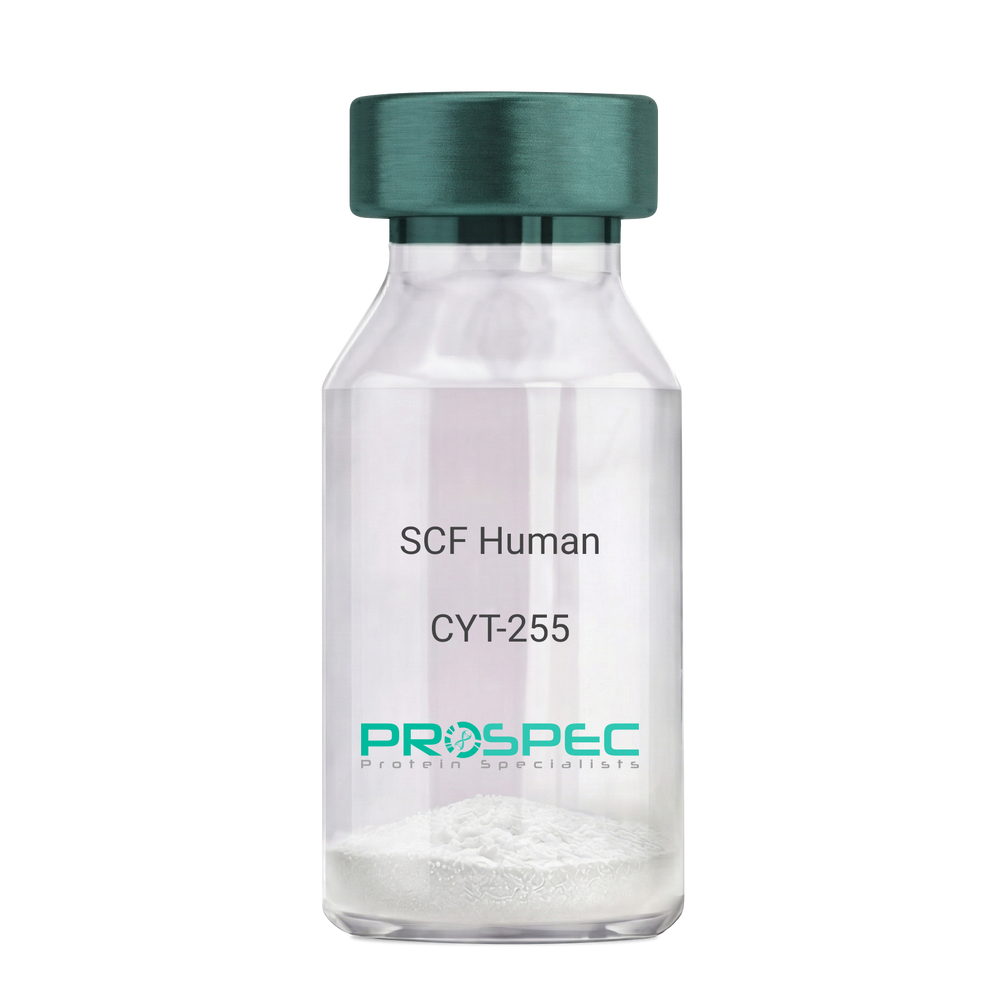
Name :
SCF HumanDescription:
Stem Cell Factor Human Recombinant
Kit ligand Precursor, C-kit ligand, SCF, Mast cell growth factor, MGF, SF, KL-1, Kitl, DKFZp686F2250.
Product # :
CYT-255Price :
Quantity :
Shipping Method :
Shipped at Room temp
More Info
- description
- source
- formulation
- purity
- biological activity
- More Info
Description
Stem Cell Factor Human Recombinant produced in E.Coli is a single, non-glycosylated polypeptide chain containing 165 amino acids and having a molecular mass of 18409 Dalton. The SCF is purified by proprietary chromatographic techniques.
Source
Escherichia Coli.
Formulation
Lyophilized from a concentrated (1mg/ml) solution in water containing 0.02% NaHCO3.
Purity
Greater than 98.0% as determined by:
(a) Analysis by SEC-HPLC.
(b) Analysis by SDS-PAGE.Biological Activity
The ED50 as determined by the dose-dependant stimulation of Human TF-1 cells is < 2 ng/ml, corresponding to a Specific Activity of 500,000 IU/mg.More Info
-
Introduction
Stem cell factor / KIT ligand (SCF) is a cytokine which binds CD117(c-Kit). SCF is also known as "steel factor" or "c-kit ligand". SCF exists in two forms, cell surface bound SCF and soluble (or free) SCF. Soluble SCF is produced by the cleavage of surface bound SCF by metalloproteases. SCF is a growth factor important for the survival, proliferation, and differentiation of hematopoietic stem cells and other hematopoietic progenitor cells. One of its roles is to change the BFU-E (burst-forming unit-erythroid) cells, which are the earliest erythrocyte precursors in the erythrocytic series, into the CFU-E (colony-forming unit-erythroid).
-
Synonyms
Kit ligand Precursor, C-kit ligand, SCF, Mast cell growth factor, MGF, SF, KL-1, Kitl, DKFZp686F2250.
-
Physical Appearance
Sterile Filtered White lyophilized (freeze-dried) powder.
-
Stability
Lyophilized KIT ligand although stable at room temperature for 3 weeks, should be stored desiccated below -18°C. Upon reconstitution SCF should be stored at 4°C between 2-7 days and for future use below -18°C.For long term storage it is recommended to add a carrier protein (0.1% HSA or BSA).Please prevent freeze-thaw cycles.
-
Solubility
It is recommended to reconstitute the lyophilized Stem Cell Factor in sterile 18MΩ-cm H2O not less than 100µg/ml, which can then be further diluted to other aqueous solutions.
-
Amino Acid Sequence
The sequence of the first five N-terminal amino acids was determined and was found to be Met-Glu-Gly-Ile-Cys.
-
Protein content
Protein quantitation was carried out by two independent methods1. UV spectroscopy at 280 nm using the absorbency value of 0.52 as the extinction coefficient for a 0.1% (1mg/ml) solution. This value is calculated by the PC GENE computer analysis program of protein sequences (IntelliGenetics). 2. Analysis by RP-HPLC, using a standard solution of Stem Cell Factor as a Reference Standard.
ProSpec's products are furnished for LABORATORY RESEARCH USE ONLY. The product may not be used as drugs, agricultural or pesticidal products, food additives or household chemicals.
- View Data Sheet
Name :
FLT4 HumanDescription:
Vascular Endothelial Growth Factor Receptor-3 Human Recombinant
Tyrosine-protein kinase receptor FLT4, PCL, FLT41, FMS-LIKE TYROSINE KINASE 4, VEGFR-3, VEGFR3.
Product # :
PKA-244Price :
Quantity :
Shipping Method :
Shipped at Room temp
More Info
- description
- source
- formulation
- purity
- biological activity
- More Info
Description
Soluble FLT4 Human Recombinant fused with a carboxy-terminal 6X histidine-tag produced in baculovirus is a monomeric, glycosylated, polypeptide containing the extracellular part, 25-774 amino acids and having a total molecular mass of 120 kDa. The soluble receptor protein contains only the first 7 extracellular domains, which contain all the information necessary for ligand binding. The FLT4 is purified by proprietary chromatographic techniques.
Source
Insect Cells.
Formulation
FLT4 was lyophilized from a concentrated (1mg/ml) sterile solution containing 1xPBS.
Purity
Greater than 90.0% as determined by SDS-PAGE.
Biological Activity
Measured by its ability to bind recombinant rat VEGF-C in a functional solid phase binding assay. Immobilised recombinant human VEGFR-3/FLT-4 at 5 µg/ml can bind recombinant rat VEGF-C in a linear range of 8-500 ng/ml.More Info
-
Introduction
All three VEGF receptors belong to the class III subfamily of receptor tyrosine kinases (RTKs) characterised by the seven immunoglobulin-like loops in the extracellular domain. The expression of VEGFR-1 to -3 is almost exclusively restricted to hematopoietic precursor cells, vascular and lymphatic endothelial cells and to the monocyte/macrophage lineage. They play key roles in vasculogenesis, hematopoiesis, angiogenesis and lymphangiogenesis. The FLT-4 cDNA encodes a 1298 amino acid (aa) residue precursor protein with a 23 aa residue signal peptide. Mature VEGFR-3/FLT-4 is composed of a 751 aa residue extracellular domain, a 22 aa transmembrane domain and a 482 aa residue cytoplasmic domain. Both VEGF family members VEGF-C and VEGF-D have been shown to bind and activate VEGFR-3/FLT-4. The Flt-4 gene is widely expressed in the early embryo but becomes restricted to the lymphatic endothelial a latter stages of development. It is important for lymphangiogenesis.
-
Synonyms
Tyrosine-protein kinase receptor FLT4, PCL, FLT41, FMS-LIKE TYROSINE KINASE 4, VEGFR-3, VEGFR3.
-
Physical Appearance
Sterile Filtered White lyophilized (freeze-dried) powder.
-
Stability
Lyophilized FLT4 although stable at room temperature for 3 weeks, should be stored desiccated below -18°C. Upon reconstitution FLT4 should be stored at 4°C between 2-7 days and for future use below -18°C.For long term storage it is recommended to add a carrier protein (0.1% HSA or BSA).Please prevent freeze-thaw cycles.
-
Solubility
It is recommended to reconstitute the lyophilized FLT4 in sterile water not less than 100 µg/ml, which can then be further diluted to other aqueous solutions.
ProSpec's products are furnished for LABORATORY RESEARCH USE ONLY. The product may not be used as drugs, agricultural or pesticidal products, food additives or household chemicals.
- View Data Sheet
Name :
EGF Human, PichiaDescription:
Epidermal Growth Factor Human Recombinant, Pichia
Urogastrone, URG, EGF.
Product # :
CYT-332Price :
Quantity :
Shipping Method :
Shipped at Room temp
More Info
- description
- source
- formulation
- purity
- biological activity
- More Info
Description
Epidermal Growth Factor Human Recombinant produced in Pichia Pastoris is a single, glycosylated, polypeptide chain containing 51 amino acids and having a molecular mass of 6KDa.The EGF is purified by proprietary chromatographic techniques.
Source
Pichia Pastoris.
Formulation
Lyophilized from a filtered concentrated solution in PBS, pH 7.4.
Purity
Greater than 98.0% as determined by(a) Analysis by RP-HPLC.
(b) Analysis by SDS-PAGE.Biological Activity
The ED₅₀, calculated by the dose-dependant proliferation of murine BALB/c 3T3 cells (measured by 3H-thymidine uptake) is < 0.1 ng/ml corresponding to a specific activity of 1 x 10⁷ Units/mg.
More Info
-
Introduction
Epidermal growth factor has a profound effect on the differentiation of specific cells in vivo and is a potent mitogenic factor for a variety of cultured cells of both ectodermal and mesodermal origin. The EGF precursor is believed to exist as a membrane-bound molecule which is proteolytically cleaved to generate the 53-amino acid peptide hormone that stimulates cells to divide. EGF stimulates the growth of various epidermal and epithelial tissues in vivo and in vitro and of some fibroblasts in cell culture.
-
Synonyms
Urogastrone, URG, EGF.
-
Physical Appearance
Sterile Filtered White lyophilized (freeze-dried) powder.
-
Stability
Lyophilized Epidermal Growth Factor Recombinant although stable at room temperature for 3 weeks, should be stored desiccated below -18°C. Upon reconstitution EGF should be stored at 4°C between 2-7 days and for future use below -18°C.For long term storage it is recommended to add a carrier protein (0.1% HSA or BSA).Please prevent freeze-thaw cycles.
-
Solubility
It is recommended to reconstitute the lyophilized Epidermal Growth Factor in sterile 18MΩ-cm H2O not less than 100µg/ml, which can then be further diluted to other aqueous solutions.
-
Amino Acid Sequence
NSDSECPLSH DGYCLHDGVC MYIEALDKYA CNCVVGYIGE RCQYRDLKWW E.
-
Background
Harnessing Pichia for Epidermal Growth Factor Human Recombinant Production: Novel Approaches and Therapeutic Implications
Abstract:
This research paper delves into a cutting-edge avenue of Epidermal Growth Factor (EGF) Human Recombinant production by leveraging Pichia as an expression host. Through a synthesis of advanced methodologies encompassing genetic engineering, fermentation, and bioinformatics, this study explores the potential of Pichia-based platforms for enhanced EGF yield and biological activity. The findings not only offer insights into efficient EGF production but also underscore the therapeutic prospects of this approach.
Introduction:
Epidermal Growth Factor (EGF) holds a crucial place in cellular processes. This paper explores a novel dimension of EGF Human Recombinant production utilizing Pichia expression systems, emphasizing both technical aspects and the potential impact on therapeutic applications.
Pichia as an Expression Host:
Pichia stands as a promising alternative to conventional expression platforms due to its robustness and eukaryotic machinery. This paper investigates the strategic integration of EGF gene into Pichia, utilizing tailored vectors and promoters for optimal protein production.
Genetic Engineering Strategies:
Precise genetic manipulation is pivotal for enhanced EGF yield. Gene codon optimization and signal peptide selection are meticulously undertaken to ensure proper protein folding and secretion in Pichia. Through these approaches, EGF expression and secretion are finely tuned, resulting in biologically active EGF.
Fermentation and Protein Purification:
Expression is followed by fermentation in controlled conditions, leading to EGF accumulation. This step is supplemented by purification processes like chromatography, ensuring high EGF purity. Biochemical assays validate the biological activity of the purified EGF, affirming its therapeutic potential.
Bioinformatics in EGF-Pichia Interaction:
Advanced bioinformatics analyses shed light on the intricate interactions between EGF and Pichia host. Structural modeling and molecular dynamics simulations provide insights into potential post-translational modifications and protein-protein interactions, enriching our understanding of EGF behavior in Pichia.
Therapeutic Implications:
Beyond production, the paper emphasizes the therapeutic significance of EGF produced in Pichia. Enhanced production efficiency directly impacts cost-effectiveness, broadening its accessibility for therapeutic use. The EGF-Pichia approach presents exciting avenues for wound healing therapies and targeted cancer interventions.
Challenges and Future Directions:
Despite the progress, challenges such as glycosylation patterns and scaling-up strategies remain. Future efforts should focus on refining glycosylation profiles to ensure consistent bioactivity and optimizing bioreactor designs to scale up production for clinical applications.
Conclusion:
In a synergy of advanced methodologies and therapeutic implications, the Pichia-based Epidermal Growth Factor Human Recombinant production presents an innovative paradigm. The intricate harmony between Pichia host and EGF production holds promise for novel therapies, underscoring the potential impact of this pioneering approach.
What is the molecular weight/Mw of EGF Protein?
EGF Protein has a total Mw of 6kDa.
What is the source or expression system of EGF Protein?
Pichia Pastoris.
What is the Purity of EGF Protein?
EGF Protein is >98% pure as determined by SDS-PAGE.
What is the Biological Activity of EGF Protein?
The ED₅₀, calculated by the dose-dependant proliferation of murine BALB/c 3T3 cells (measured by 3H-thymidine uptake) is < 0.1 ng/ml corresponding to a specific activity of 1 x 10⁷ Units/mg.
What is the amino acid sequence of EGF Protein?
NSDSECPLSH DGYCLHDGVC MYIEALDKYA CNCVVGYIGE RCQYRDLKWW E.
What applications can EGF Protein be used in?
EGF Protein can probably be used in western blot, ELISA and Lateral Flow.
What is the endotoxin level for EGF Protein?
The endotoxin level is minimal, EGF Protein was purified using conventional chromatography techniques.
ProSpec's products are furnished for LABORATORY RESEARCH USE ONLY. The product may not be used as drugs, agricultural or pesticidal products, food additives or household chemicals.
- View Data Sheet
Name :
CFB Human, NativeDescription:
Complement Factor B Human
CFB, C3/C5 convertase, Glycine-rich beta glycoprotein, GBG, PBF2, Properdin factor B, BF, BFD, AHUS4, ARMD14, CFAB, CFBD, FB, FBI12, GBG, H2-Bf.
Product # :
PRO-2698Price :
Quantity :
Shipping Method :
Shipped with Ice Packs
More Info
- description
- source
- formulation
- purity
- More Info
Description
Human Complement Factor B produced in Human plasma is glycosylated polypeptide chain having a total molecular mass of 93kDa.
Source
Human Plasma.
Formulation
CFB protein solution contains 10mM Sodium phosphate and 145mM NaCl, pH 7.2.
Purity
Greater than 95.0% as determined by SDS-PAGE.
More Info
-
Introduction
Complement Factor B, also known as CFB, encodes complement factor B which is a component of the alternative pathway of complement activation. Factor B circulates in the blood as a single chain polypeptide. Once the alternative pathway is activated it is cleaved by complement factor D yielding the noncatalytic chain Ba and the catalytic subunit Bb. The active subunit Bb is a serine protease which connects with C3b to form the alternative pathway C3 convertase. Also, Bb is involved in the proliferation of preactivated B lymphocytes, while Ba inhibits their proliferation.
-
Synonyms
CFB, C3/C5 convertase, Glycine-rich beta glycoprotein, GBG, PBF2, Properdin factor B, BF, BFD, AHUS4, ARMD14, CFAB, CFBD, FB, FBI12, GBG, H2-Bf.
-
Physical Appearance
Sterile filtered solution.
-
Stability
CFB Human is stable at 4°C if entire vial will be used within 2-4 weeks.Store, frozen below -20°C for longer periods of time.For long term storage it is recommended to add a carrier protein (0.1% HSA or BSA).Avoid multiple freeze-thaw cycles.
-
Human Virus Test
Plasma from each donor has been tested and found negative for antibody to HIV-1, HIV-2, HCV and HBSAG.
ProSpec's products are furnished for LABORATORY RESEARCH USE ONLY. The product may not be used as drugs, agricultural or pesticidal products, food additives or household chemicals.
- View Data Sheet
Name :
GCSF RatDescription:
Granulocyte-Colony Stimulating Factor Rat Recombinant
Granulocyte colony stimulating factor, Protein Csf3, Csf3.
Product # :
CYT-940Price :
Quantity :
Shipping Method :
Shipped at Room temp
More Info
- description
- source
- formulation
- purity
- biological activity
- More Info
Description
GCSF Rat Recombinant produced in E.Coli is a single, non-glycosylated, polypeptide chain containing 195 amino acids and having a molecular mass of 21.5kDa.The G-CSF is purified by proprietary chromatographic techniques.
Source
Escherichia Coli.
Formulation
Lyophilized from a 0.2µm filtered solution in 5mM Sodium Citrate, pH 4.0.
Purity
Greater than 97.0% as determined by:
(a)Analysis by RP-HPLC.
(b)Analysis by SDS-PAGE.Biological Activity
The ED50 determined by a cell proliferation assay using murine NFS-60 cells is less than 0.05ng/ml, corresponding to a specific activity of > 2.0× 10⁷ IU/mg.More Info
-
Introduction
GCSF is a cytokine that controls the production, differentiation, and function of granulocytes. The active protein is found extracellularly. Three transcript variants encoding three different isoforms have been found for the GCSF gene. Granulocyte/macrophage colony-stimulating factors are cytokines that act in hematopoiesis by controlling the production, differentiation, and function of 2 related white cell populations of the blood, the granulocytes and the monocytes-macrophages. This csf induces granulocytes.
-
Synonyms
Granulocyte colony stimulating factor, Protein Csf3, Csf3.
-
Physical Appearance
Sterile Filtered White lyophilized (freeze-dried) powder.
-
Stability
Lyophilized G-CSF although stable at room temperature for 3 weeks, should be stored desiccated below -18°C. Upon reconstitution GCSF should be stored at 4°C between 2-7 days and for future use below -18°C.For long term storage it is recommended to add a carrier protein (0.1% HSA or BSA).Please prevent freeze-thaw cycles.
-
Solubility
It is recommended to reconstitute the lyophilized GCSF in sterile 18M-cm H2O not less than 100µg/ml, which can then be further diluted to other aqueous solutions.
-
Amino Acid Sequence
KKIPLLTVSS LPPSLPLPRS FLLKSLEQVR KIQARNTELL EQLCATYKLC HPEELVLFGH SLGIPKASLS SCSSQALQQT KCLSQLHSGL FLYQGLLQAL AGISSELAPT LDMLHLDVDN FATTIWQQME SLGVAPTVQP TQSTMPIFTS AFQRRAGGVL VTSYLQSFLE TAHHALHHLP RPAQKHFPES LFISI.
-
Background
What is the molecular weight/Mw of G CSF RAT Protein?
G CSF RAT Protein has a total Mw of 21.5kDa.
What is the source or expression system of G CSF RAT Protein?
Escherichia Coli.
What is the Purity of G CSF RAT Protein?
G CSF RAT Protein is >97% pure as determined by SDS-PAGE.
What is the Biological Activity of G CSF RAT Protein?
The ED50 determined by a cell proliferation assay using murine NFS-60 cells is less than 0.05ng/ml, corresponding to a specific activity of > 2.0× 10⁷ IU/mg.
What is the amino acid sequence of G CSF RAT Protein?
KKIPLLTVSS LPPSLPLPRS FLLKSLEQVR KIQARNTELL EQLCATYKLC HPEELVLFGH SLGIPKASLS SCSSQALQQT KCLSQLHSGL FLYQGLLQAL AGISSELAPT LDMLHLDVDN FATTIWQQME SLGVAPTVQP TQSTMPIFTS AFQRRAGGVL VTSYLQSFLE TAHHALHHLP RPAQKHFPES LFISI.
What applications can G CSF RAT Protein be used in?
G CSF RAT Protein can probably be used in western blot, ELISA and Lateral Flow.
What is the endotoxin level for G CSF RAT Protein?
The endotoxin level is minimal, G CSF RAT Protein was purified using conventional chromatography techniques.
ProSpec's products are furnished for LABORATORY RESEARCH USE ONLY. The product may not be used as drugs, agricultural or pesticidal products, food additives or household chemicals.
- View Data Sheet
Name :
OSM HumanDescription:
Oncostatin-M Human Recombinant
OSM, MGC20461.
Product # :
CYT-231Price :
Quantity :
Shipping Method :
Shipped at Room temp
More Info
- description
- source
- formulation
- purity
- biological activity
- More Info
Description
Oncostatin-M Human Recombinant produced in E.Coli is a single, non-glycosylated polypeptide chain containing 227 amino acids and having a molecular mass of 26kDa. The OSM is purified by proprietary chromatographic techniques.
Source
Escherichia Coli.
Formulation
Lyophilized from a concentrated (1mg/ml) solution containing PBS pH-7.4.
Purity
Greater than 95.0% as determined by
(a) Analysis by RP-HPLC.
(b) Analysis by SDS-PAGE.Biological Activity
The ED50 as determined by the dose-dependant stimulation of Human TF-1 cells is < 2 ng/ml, corresponding to a Specific Activity of 500,000IU/mg.More Info
-
Introduction
Oncostatin M is a member of a cytokine family that includes leukemia-inhibitory factor, granulocyte colony-stimulating factor, and interleukin 6. This gene encodes a growth regulator which inhibits the proliferation of a number of tumor cell lines. It regulates cytokine production, including IL-6, G-CSF and GM-CSF from endothelial cells.
-
Synonyms
OSM, MGC20461.
-
Physical Appearance
Sterile Filtered White lyophilized (freeze-dried) powder.
-
Stability
Lyophilized Oncostatin M although stable at room temperature for 3 weeks, should be stored desiccated below -18°C. Upon reconstitution Oncostatin should be stored at 4°C between 2-7 days and for future use below -18°C.For long term storage it is recommended to add a carrier protein (0.1% HSA or BSA).Please prevent freeze-thaw cycles.
-
Solubility
It is recommended to reconstitute the lyophilized Oncostatin M in sterile 18MΩ-cm H2O not less than 100µg/ml, which can then be further diluted to other aqueous solutions.
-
Amino Acid Sequence
AAIGSCSKEY RVLLGQLQKQ TDLMQDTSRL LDPYIRIQGL DVPKLREHCR
ERPGAFPSEE TLRGLGRRGF LQTLNATLGC VLHRLADLEQ RLPKAQDLER
SGLNIEDLEK LQMARPNILG LRNNIYCMAQ LLDNSDTAEP TKAGRGASQP
PTPTPASDAF QRKLEGCRFL HGYHRFMHSV GRVFSKWGES PNRSRRHSPH
QALRKGVRRT RPSRKGKRLM TRGQLPR. -
Protein content
Protein quantitation was carried out by two independent methods1. UV spectroscopy at 280 nm using the absorbency value of 0.45 as the extinction coefficient for a 0.1% (1mg/ml) solution. This value is calculated by the PC GENE computer analysis program of protein sequences (IntelliGenetics). 2. Analysis by RP-HPLC, using standard solution of Oncostatin as Reference.
ProSpec's products are furnished for LABORATORY RESEARCH USE ONLY. The product may not be used as drugs, agricultural or pesticidal products, food additives or household chemicals.
- View Data Sheet
Name :
SCF MouseDescription:
Stem Cell Factor Mouse Recombinant
Kit ligand Precursor, C-kit ligand, SCF, Mast cell growth factor, MGF, SF, KL-1, Kitl, DKFZp686F2250, Hematopoietic growth factor KL, Steel factor.
Product # :
CYT-275Price :
Quantity :
Shipping Method :
Shipped at Room temp
More Info
- description
- source
- formulation
- purity
- biological activity
- More Info
Description
Stem Cell Factor Mouse Recombinant produced in E.Coli is a single, non-glycosylated polypeptide chain containing 165 amino acids and having a molecular mass of 18309 Dalton. The SCF is purified by proprietary chromatographic techniques.
Source
Escherichia Coli.
Formulation
Lyophilized from a concentrated (1mg/ml) solution in water containing 0.02% NaHCO3.
Purity
Greater than 98.0% as determined by:
(a) Analysis by SEC-HPLC.
(b) Analysis by SDS-PAGE.Biological Activity
The ED50 as determined by the dose-dependant stimulation of Human TF-1 cell line is < 10 ng/ml, corresponding to a Specific Activity of 1x10⁵ IU/mg.More Info
-
Introduction
Stem cell factor / KIT ligand (SCF) is a cytokine which binds CD117(c-Kit). SCF is also known as "steel factor" or "c-kit ligand". SCF exists in two forms, cell surface bound SCF and soluble (or free) SCF. Soluble SCF is produced by the cleavage of surface bound SCF by metalloproteases.
SCF is a growth factor important for the survival, proliferation, and differentiation of hematopoietic stem cells and other hematopoietic progenitor cells. One of its roles is to change the BFU-E (burst-forming unit-erythroid) cells, which are the earliest erythrocyte precursors in the erythrocytic series, into the CFU-E (colony-forming unit-erythroid). -
Synonyms
Kit ligand Precursor, C-kit ligand, SCF, Mast cell growth factor, MGF, SF, KL-1, Kitl, DKFZp686F2250, Hematopoietic growth factor KL, Steel factor.
-
Physical Appearance
Sterile Filtered White lyophilized (freeze-dried) powder.
-
Stability
Lyophilized KIT ligand although stable at room temperature for 3 weeks, should be stored desiccated below -18°C. Upon reconstitution SCF should be stored at 4°C between 2-7 days and for future use below -18°C.For long term storage it is recommended to add a carrier protein (0.1% HSA or BSA).Please prevent freeze-thaw cycles.
-
Solubility
It is recommended to reconstitute the lyophilized Stem Cell Factor in sterile 18MΩ-cm H2O not less than 100µg/ml, which can then be further diluted to other aqueous solutions.
-
Amino Acid Sequence
MKEICGNPVT DNVKDITKLV ANLPNDYMIT LNYVAGMDVL PSHCWLRDMV IQLSLSLTTL LDKFSNISEG LSNYSIIDKL GKIVDDLVLC MEENAPKNIK ESPKRPETRS FTPEEFFSIF NRSIDAFKDF MVASDTSDCV LSSTLGPEKD SRVSVTKPFM LPPVA.
-
Protein content
Protein quantitation was carried out by two independent methods:1. UV spectroscopy at 280 nm using the absorbency value of 0.52 as the extinction coefficient for a 0.1% (1mg/ml) solution. This value is calculated by the PC GENE computer analysis program of protein sequences (IntelliGenetics). 2. Analysis by RP-HPLC, using a standard solution of Stem Cell Factor as a Reference Standard.
ProSpec's products are furnished for LABORATORY RESEARCH USE ONLY. The product may not be used as drugs, agricultural or pesticidal products, food additives or household chemicals.
- View Data Sheet
Name :
ING2 HumanDescription:
Inhibitor of Growth Family, Member 2 Human Recombinant
Inhibitor Of Growth Family Member 2, ING1L, Inhibitor Of Growth 1-Like Protein, P33ING2, ING1Lp, P32, Inhibitor Of Growth Family Member 1-Like, Inhibitor Of Growth Protein 2, ING2.
Product # :
PRO-1739Price :
Quantity :
Shipping Method :
Shipped with Ice Packs
More Info
- description
- source
- formulation
- purity
- More Info
Description
ING2 Human Recombinant produced in E.Coli is a single, non-glycosylated polypeptide chain containing 303 amino acids (1-280 a.a) and having a molecular mass of 35.2kDa.ING2 is fused to a 23 amino acid His-tag at N-terminus & purified by proprietary chromatographic techniques.
Source
Escherichia Coli.
Formulation
ING2 protein solution (1mg/ml) containing 20mM Tris-HCl buffer (pH 8.0), 0.4M UREA and 10% glycerol.
Purity
Greater than 85.0% as determined by SDS-PAGE.
More Info
-
Introduction
Inhibitor of Growth Family, Member 2 (ING2) belongs to the inhibitor of growth (ING) family. ING family members associate with and modulate the activity of histone acetyltransferase (HAT) and histone deacetylase (HDAC) complexes and serve in DNA repair and apoptosis. ING2 appears to be involved in p53/TP53 activation and p53/TP53-dependent apoptotic pathways, most likely by enhancing acetylation of p53/TP53. ING2 is a component of an mSin3A-like corepressor complex, which is probably involved in deacetylation of nucleosomal histones. ING2 activity is modulated by binding to phosphoinositides (PtdInsPs).
-
Synonyms
Inhibitor Of Growth Family Member 2, ING1L, Inhibitor Of Growth 1-Like Protein, P33ING2, ING1Lp, P32, Inhibitor Of Growth Family Member 1-Like, Inhibitor Of Growth Protein 2, ING2.
-
Physical Appearance
Sterile Filtered clear solution.
-
Stability
Store at 4°C if entire vial will be used within 2-4 weeks. Store, frozen at -20°C for longer periods of time. For long term storage it is recommended to add a carrier protein (0.1% HSA or BSA).Avoid multiple freeze-thaw cycles.
-
Amino Acid Sequence
MGSSHHHHHH SSGLVPRGSH MGSMLGQQQQ QLYSSAALLT GERSRLLTCY VQDYLECVES LPHDMQRNVS VLRELDNKYQ ETLKEIDDVY EKYKKEDDLN QKKRLQQLLQ RALINSQELG DEKIQIVTQM LELVENRARQ MELHSQCFQD PAESERASDK AKMDSSQPER SSRRPRRQRT SESRDLCHMA NGIEDCDDQP PKEKKSKSAK KKKRSKAKQE REASPVEFAI DPNEPTYCLC NQVSYGEMIG CDNEQCPIEW FHFSCVSLTY KPKGKWYCPK CRGDNEKTMD KSTEKTKKDR RSR.
ProSpec's products are furnished for LABORATORY RESEARCH USE ONLY. The product may not be used as drugs, agricultural or pesticidal products, food additives or household chemicals.
- View Data Sheet
Name :
TNFRSF10A HumanDescription:
TRAIL Receptor-1 Human Recombinant
TNFRSF10A, TNF Receptor Superfamily Member 10a, Tumor Necrosis Factor Receptor Superfamily, Member 10a, TNF-Related Apoptosis-Inducing Ligand Receptor 1, Death Receptor 4, TRAIL Receptor 1, TRAIL-R1, TRAILR1, APO2, DR4, Tumor Necrosis Factor Receptor Superfamily Member 10a Variant 2, Tumor Necrosis Factor Receptor Superfamily Member 10A, Cytotoxic TRAIL Receptor, CD261 Antigen, TRAILR-1, CD261.
Product # :
CYT-1043Price :
Quantity :
Shipping Method :
Shipped with Ice Packs
More Info
- description
- source
- formulation
- purity
- More Info
Description
TNFRSF10A produced in Sf9 Baculovirus cells is a single, glycosylated polypeptide chain containing 224 amino acids (24-239a.a.) and having a molecular mass of 23.9kDa. TNFRSF10A is expressed with an 6 amino acid His tag at C-Terminus and purified by proprietary chromatographic techniques.
Source
Sf9, Baculovirus cells.
Formulation
TNFRSF10A protein solution (0.5mg/ml) contains Phosphate Buffered Saline (pH 7.4) and 10% glycerol.
Purity
Greater than 90.0% as determined by SDS-PAGE.
More Info
-
Introduction
Human TNFRSF10A is a type 1 transmembrane protein in the TNF R superfamily. TNFRSF10A is not expressed in rodents. The trimeric ligand Trail binds TNFRSF10A and induces apoptosis, and recombinant, soluble forms of the receptor inhibit Trail-induced apoptosis. TNFRSF10A is expressed generally in damaged, infected, and malignant cells. TNFRSF10A functions in immune surveillance, inducing apoptosis in cancer cells but not normal cells.
-
Synonyms
TNFRSF10A, TNF Receptor Superfamily Member 10a, Tumor Necrosis Factor Receptor Superfamily, Member 10a, TNF-Related Apoptosis-Inducing Ligand Receptor 1, Death Receptor 4, TRAIL Receptor 1, TRAIL-R1, TRAILR1, APO2, DR4, Tumor Necrosis Factor Receptor Superfamily Member 10a Variant 2, Tumor Necrosis Factor Receptor Superfamily Member 10A, Cytotoxic TRAIL Receptor, CD261 Antigen, TRAILR-1, CD261.
-
Physical Appearance
Sterile Filtered colorless solution.
-
Stability
Store at 4°C if entire vial will be used within 2-4 weeks. Store, frozen at -20°C for longer periods of time. For long term storage it is recommended to add a carrier protein (0.1% HSA or BSA). Avoid multiple freeze-thaw cycles.
-
Amino Acid Sequence
ASGTEAAAAT PSKVWGSSAG RIEPRGGGRG ALPTSMGQHG PSARARAGRA PGPRPAREAS PRLRVHKTFK FVVVGVLLQV VPSSAATIKL HDQSIGTQQW EHSPLGELCP PGSHRSEHPG ACNRCTEGVG YTNASNNLFA CLPCTACKSD EEERSPCTTT RNTACQCKPG TFRNDNSAEM CRKCSRGCPR GMVKVKDCTP WSDIECVHKE SGNGHNLEHH HHHH
ProSpec's products are furnished for LABORATORY RESEARCH USE ONLY. The product may not be used as drugs, agricultural or pesticidal products, food additives or household chemicals.
- View Data Sheet
Name :
IL 1 beta MonkeyDescription:
Interleukin-1 beta Rhesus Macaque Recombinant
Catabolin, Lymphocyte-activating factor (LAF), Endogenous Pyrogen (EP), Leukocyte Endogenous Mediator (LEM), Mononuclear Cell Factor (MCF), IL1F2, IL-1 beta.
Product # :
CYT-718Price :
Quantity :
Shipping Method :
Shipped at Room temp
More Info
- description
- source
- formulation
- purity
- biological activity
- More Info
Description
Interleukin-1 beta Monkey Recombinant produced in E.Coli is a non-glycosylated, Polypeptide chain containing 153 amino acids and having a molecular mass of 17.3 kDa. The IL-1b is purified by proprietary chromatographic techniques.
Source
Escherichia Coli.
Formulation
The protein was lyophilized with 1x PBS pH-7.4
Purity
Greater than 98.0% as determined by: (a) Analysis by RP-HPLC. (b) Analysis by SDS-PAGE.
Biological Activity
The ED50 as determined by the dose-dependant stimulation of D10.G4.1 mouse helper T cells is typically 3-10pg/mL.More Info
-
Introduction
Interleukin-1b is produced by activated macrophages, IL-1B stimulates thymocyte proliferation by inducing il-2 release, b-cell maturation and proliferation, and fibroblast growth factor activity. IL1B proteins are involved in the inflammatory response, being identified as endogenous pyrogens, and are reported to stimulate the release of prostaglandin from synovial cells.
-
Synonyms
Catabolin, Lymphocyte-activating factor (LAF), Endogenous Pyrogen (EP), Leukocyte Endogenous Mediator (LEM), Mononuclear Cell Factor (MCF), IL1F2, IL-1 beta.
-
Physical Appearance
Sterile Filtered White lyophilized (freeze-dried) powder.
-
Stability
Lyophilized IL1B although stable at room temperature for 3 weeks, should be stored desiccated below -18°C. Upon reconstitution IL1B should be stored at 4°C between 2-7 days and for future use below -18°C. For long term storage it is recommended to add a carrier protein (0.1% HSA or BSA). Please prevent freeze-thaw cycles.
-
Solubility
It is recommended to reconstitute the lyophilized IL1B in sterile 18MΩ-cm H2O not less than 100µg/ml, which can then be further diluted to other aqueous solutions.
-
Amino Acid Sequence
APVRSLHCTL RDAQLKSLVM SGPYELKALH LQGQDLEQQV VFSMSFVQGE ESNDKIPVAL GLKAKNLYLS CVLKDDKPTL QLESVDPKNY PKKKMEKRFV FNKIEINNKL EFESAQFPNW YISTSQAENM PVFLGGTRGG QDITDFTMQF VSS.
ProSpec's products are furnished for LABORATORY RESEARCH USE ONLY. The product may not be used as drugs, agricultural or pesticidal products, food additives or household chemicals.
- View Data Sheet
Name :
GDF5 MouseDescription:
Growth and Differentiation factor 5 Mouse Recombinant
Bmp-14, Bp, GDF-5, Bone morphogenetic protein 14, GDF5, Growth/differentiation factor 5.
Product # :
CYT-941Price :
Quantity :
Shipping Method :
Shipped at Room temp
More Info
- description
- source
- formulation
- purity
- biological activity
- More Info
Description
GDF5 Mouse Recombinant produced in E.coli is a non-glycosylated disulfide linked homodimer containing 2 chains of 120 amino acids and having a molecular mass of 27.2kDa.The GDF-5 is purified by proprietary chromatographic techniques.
Source
Escherichia Coli.
Formulation
GDF-5 protein was lyophilized from a 0.2µm filtered concentrated solution in 30% Acetonitrile and 0.1% TFA.
Purity
Greater than 96.0% as determined by:
(a) Analysis by RP-HPLC.
(b) Analysis by SDS-PAGE.Biological Activity
The ED50 as determined by inducing alkaline phosphatase production of murine ATDC5 cells is less than 1.0µg/ml, corresponding to a specific activity of > 1000IU/mg.More Info
-
Introduction
GDF-5 is a member of the bone morphogenetic protein (BMP) family and the TGF-beta superfamily. This group of proteins is characterized by a polybasic proteolytic processing site which is cleaved to produce a mature protein containing seven conserved cysteine residues. The members of this family are regulators of cell growth and differentiation in both embryonic and adult tissues. Mutations in this gene are associated with acromesomelic dysplasia, Hunter-Thompson type; brachydactyly, type C; and chondrodysplasia, Grebe type. These associations confirm that the gene product plays a role in skeletal development.
-
Synonyms
Bmp-14, Bp, GDF-5, Bone morphogenetic protein 14, GDF5, Growth/differentiation factor 5.
-
Physical Appearance
Sterile Filtered White lyophilized (freeze-dried) powder.
-
Stability
Lyophilized GDF5 although stable at room temperature for 3 weeks, should be stored desiccated below -18°C. Upon reconstitution GDF-5 should be stored at 4°C between 2-7 days and for future use below -18°C. For long term storage it is recommended to add a carrier protein (0.1% HSA or BSA). Please prevent freeze-thaw cycles.
-
Solubility
It is recommended to reconstitute the lyophilized GDF5 in sterile 4mM HCl not less than 100µg/ml, which can then be further diluted to other aqueous solutions.
-
Amino Acid Sequence
APLANRQGKR PSKNLKARCS RKALHVNFKD MGWDDWIIAP LEYEAFHCEG LCEFPLRSHL EPTNHAVIQT LMNSMDPEST PPTCCVPTRL SPISILFIDS ANNVVYKQYE DMVVESCGCR.
-
Background
What is the molecular weight/Mw of GDF5 MOUSE Protein?
GDF5 MOUSE Protein has a total Mw of 27.2kDa.
What is the source or expression system of GDF5 MOUSE Protein?
Escherichia Coli.
What is the Purity of GDF5 MOUSE Protein?
GDF5 MOUSE Protein is >96% pure as determined by SDS-PAGE.
What is the Biological Activity of GDF5 MOUSE Protein?
The ED50 as determined by inducing alkaline phosphatase production of murine ATDC5 cells is less than 1.0µg/ml, corresponding to a specific activity of > 1000IU/mg.
What is the amino acid sequence of GDF5 MOUSE Protein?
APLANRQGKR PSKNLKARCS RKALHVNFKD MGWDDWIIAP LEYEAFHCEG LCEFPLRSHL EPTNHAVIQT LMNSMDPEST PPTCCVPTRL SPISILFIDS ANNVVYKQYE DMVVESCGCR.
What applications can GDF5 MOUSE Protein be used in?
GDF5 MOUSE Protein can probably be used in western blot, ELISA and Lateral Flow.
What is the endotoxin level for GDF5 MOUSE Protein?
The endotoxin level is minimal, GDF5 MOUSE Protein was purified using conventional chromatography techniques.
ProSpec's products are furnished for LABORATORY RESEARCH USE ONLY. The product may not be used as drugs, agricultural or pesticidal products, food additives or household chemicals.
- View Data Sheet
Name :
TIFA HumanDescription:
TRAF-Interacting Protein with Forkhead-Associated Domain Human Recombinant
TRAF-interacting protein with FHA domain-containing protein A, Putative MAPK-activating protein PM14, Putative NF-kappa-B-activating protein 20, TRAF2-binding protein, TIFA, T2BP, T6BP, TIFAA.
Product # :
PRO-1041Price :
Quantity :
Shipping Method :
Shipped with Ice Packs
More Info
- description
- source
- formulation
- purity
- More Info
Description
TIFA Human Recombinant produced in E.Coli is a single, non-glycosylated polypeptide chain containing 208 amino acids (1-184 a.a.) and having a molecular mass of 24kDa.TIFA is fused to a 24 amino acid His-tag at N-terminus & purified by proprietary chromatographic techniques.
Source
Escherichia Coli.
Formulation
TIFA protein solution (0.5mg/ml) containing 20mM Tris-HCl buffer (pH8.0), 20% glycerol and 1mM DTT.
Purity
Greater than 90.0% as determined by SDS-PAGE.
More Info
-
Introduction
TRAF-interacting protein with FHA domain-containing protein A (TIFA) is an adapter protein that mediates the IRAK1 and TRAF6 interaction following IL-1 stimulation, triggering the downstream activation of NF-kappa-B and AP-1 pathways. The TIFA protein stimulates the oligomerization and polyubiquitination of TRAF6, leading to the activation of TAK1 and IKK through a proteasome-independent mechanism.
-
Synonyms
TRAF-interacting protein with FHA domain-containing protein A, Putative MAPK-activating protein PM14, Putative NF-kappa-B-activating protein 20, TRAF2-binding protein, TIFA, T2BP, T6BP, TIFAA.
-
Physical Appearance
Sterile Filtered clear solution.
-
Stability
Store at 4°C if entire vial will be used within 2-4 weeks. Store, frozen at -20°C for longer periods of time. For long term storage it is recommended to add a carrier protein (0.1% HSA or BSA).Avoid multiple freeze-thaw cycles.
-
Amino Acid Sequence
MGSSHHHHHH SSGLVPRGSH MGSHMTSFED ADTEETVTCL QMTVYHPGQL QCGIFQSISF NREKLPSSEV VKFGRNSNIC HYTFQDKQVS RVQFSLQLFK KFNSSVLSFE IKNMSKKTNL IVDSRELGYL NKMDLPYRCM VRFGEYQFLM EKEDGESLEF FETQFILSPR SLLQENNWPP HRPIPEYGTY SLCSSQSSSP TEMDENES.
ProSpec's products are furnished for LABORATORY RESEARCH USE ONLY. The product may not be used as drugs, agricultural or pesticidal products, food additives or household chemicals.
- View Data Sheet
Name :
Myostatin Propeptide HumanDescription:
Myostatin Propeptide Human Recombinant
GDF-8, MSTN, Growth Differentiation Factor 8, MSTN Muscle Hypertrophy.
Product # :
CYT-448Price :
Quantity :
Shipping Method :
Shipped at Room temp
More Info
- description
- source
- formulation
- purity
- biological activity
- More Info
Description
Recombinant Human Myostatin Propeptide is a 27.8kDa protein containing 244 amino acid residues of the human Myostatin Propeptide.
Source
Escherichia Coli.
Formulation
Lyophilized with no additives.
Purity
Greater than 95.0% as determined by SDS-PAGE.
Biological Activity
The protein has full biological activity when compared to a standard. The activity is determined by its ability to inhibit 50ng/ml of Myostatin on MPC-11 cells and is typically 0.13-0.2 μg/ml.More Info
-
Introduction
Myostatin (GDF-8), a member of the TGFbeta superfamily, is a potent and specific negative regulator of skeletal muscle mass. In serum, myostatin circulates as part of a latent complex containing myostatin propeptide and/or follistatin-related gene. The myostatin propeptide is known to bind and inhibit myostatin in vitro. This interaction is relevant in vivo, with a majority (>70%) of myostatin in serum bound to its propeptide. The myostatin propeptide is negative regulator of myostatin in vivo.
-
Synonyms
GDF-8, MSTN, Growth Differentiation Factor 8, MSTN Muscle Hypertrophy.
-
Physical Appearance
Sterile Filtered white lyophilized (freeze-dried) powder.
-
Stability
Store lyophilized protein at -20°C. Aliquot the product after reconstitution to avoid repeated freezing/thawing cycles. Reconstituted protein can be stored at 4°C for a limited period of time.
-
Solubility
It is recommended to reconstitute the lyophilized Myostatin Propeptide in sterile 20mM HCl at 0.1mg/ml, which can then be further diluted to other aqueous solutions.
-
Amino Acid Sequence
MNENSEQKE NVEKEGLCNA CTWRQNTKSS RIEAIKIQIL SKLRLETAPN ISKDVIRQLL PKAPPLRELI DQYDVQRDDS SDGSLEDDDY HATTETIITM PTESDFLMQV DGKPKCCFFK FSSKIQYNKV VKAQLWIYLR PVETPTTVFV QILRLIKPMK DGTRYTGIRS LKLDMNPGTG IWQSIDVKTV LQNWLKQPES NLGIEIKALD ENGHDLAVTF PGPGEDGLNP FLEVKVTDTP KRSRR.
ProSpec's products are furnished for LABORATORY RESEARCH USE ONLY. The product may not be used as drugs, agricultural or pesticidal products, food additives or household chemicals.