Search results
1000 results found for “lipocalin”
Name
Description
Product #
Price
Quantity
Shipping Method
- View Data Sheet
Name :
APOB ProteinDescription:
Apolipoprotein-B Human Recombinant
APOB, APO-B, Apolipoprotein B.
Product # :
CYT-1233Price :
Quantity :
Shipping Method :
Shipped at Room temp
More Info
- description
- source
- formulation
- purity
- More Info
Description
The APOBHuman is created as a recombinant protein with a 4kda N-terminal fusion of His Tag. The APOBHis-Tagged Fusion Protein, produced in E. coli, is a 31kDa protein containing 201 amino acid residues of the APOBHuman, 1406-1606 amino acids.
Source
Escherichia Coli.
Formulation
Each mg was lyophilized with 1xPBS, 0.4% SDS and 4mM DTT.
Purity
Greater than 80% as determined by SDS-PAGE.
More Info
-
Synonyms
APOB, APO-B, Apolipoprotein B.
-
Physical Appearance
Filtered White lyophilized (freeze-dried) powder.
-
Stability
Store lyophilized APOBat -20°C. Aliquot the product after reconstitution to avoid repeated freezing/thawing cycles. Reconstituted protein can be stored at 4°C for a limited period of time; it does not show any change after two weeks at 4°C.
-
Solubility
It is recommended to add deionized water to prepare a working stock solution of approximately 0.5mg/ml and let the lyophilized pellet dissolve completely. Product is not sterile! Please filter the product by an appropriate sterile filter before using it on cell culture.
-
Background
Apolipoprotein-B (ApoB) is the main apolipoprotein of LDL, VLDL, IDL and chylomicrons particles which serves as the carrier of lipids in the water surrounding the cells in every tissue across the body. Apolipoprotein B acts as the key organizing protein of all other carriers of lipids. across LDL membranes, ApoB also plays a role as a ligand for LDL receptors in many cells across the body, meaning, it shows that lipid carriers that are set to cross into cells with Apolipoprotein B receptors, this is how lipids are transported within and into cells.
What is the molecular weight/Mw of APOB Protein?
APOB Protein has a total Mw of 31kDa.
What is the source or expression system of APOB Protein?
Escherichia Coli.
What is the Purity of APOB Protein?
APOB Protein is >80% pure as determined by SDS-PAGE.
What is the Biological Activity of APOB Protein?
The biological functionality of APOB Protein will be determined in the future.
What is the amino acid sequence of APOB Protein?
APOB Protein is composed from 201 amino acids.
What applications can APOB Protein be used in?
APOB Protein can probably be used in western blot, ELISA and Lateral Flow.
What is the endotoxin level for APOB Protein?
The endotoxin level is minimal, APOB Protein was purified using conventional chromatography techniques.
ProSpec's products are furnished for LABORATORY RESEARCH USE ONLY. The product may not be used as drugs, agricultural or pesticidal products, food additives or household chemicals.
- View Data Sheet
Name :
LGALS14 HumanDescription:
Galectin-14 Human Recombinant
Placental protein 13-like, Charcot-Leyden crystal protein 2, CLC2, Galectin-14, Gal-14, LGALS14, PPL13, MGC22235.
Product # :
CYT-003Price :
Quantity :
Shipping Method :
Shipped with Ice Packs
More Info
- description
- source
- formulation
- purity
- More Info
Description
LGALS14 Human Recombinant fused with a 23 amino acid His tag at N-terminus produced in E.Coli is a single, non-glycosylated, polypeptide chain containing 162 amino acids (1-139 a.a.) and having a molecular mass of 18.5kDa. The LGALS14 is purified by proprietary chromatographic techniques.
Source
Escherichia Coli.
Formulation
The LGALS14 solution (0.5mg/ml) contains 20mM Tris-HCl buffer (pH8.0), 20% glycerol, 0.1M NaCl and 1mM DTT.
Purity
Greater than 90.0% as determined by SDS-PAGE.
More Info
-
Introduction
Galectin14, aka LGALS14, is a member of the galectin family of carbohydrate binding proteins. Galectin family members contain one or two carbohydrate recognition domains, which can bind beta-galactoside. The LGALS14 gene is predominantly expressed in the placenta. LGALS14 is expressed intracellularly in the placenta and eosinophils and is released by eosinophils following allergen stimulation. LGALS14 may be involved in the development of allergic inflammation.
-
Synonyms
Placental protein 13-like, Charcot-Leyden crystal protein 2, CLC2, Galectin-14, Gal-14, LGALS14, PPL13, MGC22235.
-
Physical Appearance
Sterile Filtered colorless solution.
-
Stability
Store at 4°C if entire vial will be used within 2-4 weeks. Store, frozen at -20°C for longer periods of time. For long term storage it is recommended to add a carrier protein (0.1% HSA or BSA).Avoid multiple freeze-thaw cycles.
-
Amino Acid Sequence
MGSSHHHHHH SSGLVPRGSH MGSMSSLPVP YTLPVSLPVG SCVIITGTPI LTFVKDPQLE VNFYTGMDED SDIAFQFRLH FGHPAIMNSR VFGIWRYEEK CYYLPFEDGK PFELCIYVRH KEYKVMVNGQ RIYNFAHRFP PASVKMLQVL RDISLTRVLI SD.
-
Background
What is the molecular weight/Mw of LGALS14 HUMAN Protein?
LGALS14 HUMAN Protein has a total Mw of 18.5kDa.
What is the source or expression system of LGALS14 HUMAN Protein?
Escherichia Coli.
What is the Purity of LGALS14 HUMAN Protein?
LGALS14 HUMAN Protein is >90% pure as determined by SDS-PAGE.
What is the Biological Activity of LGALS14 HUMAN Protein?
The biological functionality of LGALS14 HUMAN Protein will be determined in the future.
What is the amino acid sequence of LGALS14 HUMAN Protein?
MGSSHHHHHH SSGLVPRGSH MGSMSSLPVP YTLPVSLPVG SCVIITGTPI LTFVKDPQLE VNFYTGMDED SDIAFQFRLH FGHPAIMNSR VFGIWRYEEK CYYLPFEDGK PFELCIYVRH KEYKVMVNGQ RIYNFAHRFP PASVKMLQVL RDISLTRVLI SD.
What applications can LGALS14 HUMAN Protein be used in?
LGALS14 HUMAN Protein can probably be used in western blot, ELISA and Lateral Flow.
What is the endotoxin level for LGALS14 HUMAN Protein?
The endotoxin level is minimal, LGALS14 HUMAN Protein was purified using conventional chromatography techniques.
ProSpec's products are furnished for LABORATORY RESEARCH USE ONLY. The product may not be used as drugs, agricultural or pesticidal products, food additives or household chemicals.
- View Data Sheet
Name :
SERPINE1 HumanDescription:
Plasminogen Activator Inhibitor-1 Human Recombinant
PAI-1, PAI1, PLANH1, SERPINE1, PAIE, PLASMINOGEN ACTIVATOR INHIBITOR, BETA-MIGRATING ENDOTHELIAL-CELL-DERIVED TYPE.
Product # :
ENZ-357Price :
Quantity :
Shipping Method :
Shipped with Ice Packs
More Info
- description
- source
- formulation
- purity
- biological activity
- More Info
Description
SERPINE1 Human Recombinant fused to an N-terminal His-Tag produced in E.Coli is a single, non-glycosylated polypeptide chain containing 400 amino acids (24-402) and having a molecular mass of 45kDa.SERPINE1 is fused to a 21 amino acid His-Tag at N-terminus and purified by proprietary chromatographic techniques.
Source
Escherichia Coli.
Formulation
50mM NaAc (pH 5.5), 10% glycerol and 0.1M NaCl.
Purity
Greater than 95.0% as determined by SDS-PAGE.
Biological Activity
The IC50 for this effect is less than 3nM, measured by its ability to inhibit uPA cleavage of the substrate Z-GGRAMC.
More Info
-
Introduction
Plasminogen activator inhibitor-1 is the principal inhibitor of tissue plasminogen activator(tPA) and uPA, the activators of plasminogenand hence fibrinolysis(the physiological breakdown of blood clots). It is a serine protease inhibitor(serpin) protein (SERPINE1). The other PAI, plasminogen activator inhibitor-2(PAI-2) is secreted by the placentaand only present in significant amounts during pregnancy. In addition, protease nexinacts as an inhibitor of tPA. SERPINE1, however, is the main inhibitor of the plasminogen activators.
-
Synonyms
PAI-1, PAI1, PLANH1, SERPINE1, PAIE, PLASMINOGEN ACTIVATOR INHIBITOR, BETA-MIGRATING ENDOTHELIAL-CELL-DERIVED TYPE.
-
Physical Appearance
Sterile Filtered clear colorless solution.
-
Stability
Store at 4°C if entire vial will be used within 2-4 weeks. Store, frozen at -20°C for longer periods of time. For long term storage it is recommended to add a carrier protein (0.1% HSA or BSA).Avoid multiple freeze-thaw cycles.
-
Amino Acid Sequence
MGSSHHHHHH SSGLVPRGSH MVHHPPSYVA HLASDFGVRV FQQVAQASKD RNVVFSPYGVASVLAMLQLT TGGETQQQIQ AAMGFKIDDK GMAPALRHLY KELMGPWNKD EISTTDAIFVQRDLKLVQGF MPHFFRLFRS TVKQVDFSEV ERARFIINDW VKTHTKGMIS NLLGKGAVDQLTRLVLVNAL YFNGQWKTPF PDSSTHRRLF HKSDGSTVSV PMMAQTNKFN YTEFTTPDGHYYDILELPYH GDTLSMFIAA PYEKEVPLSA LTNILSAQLI SHWKGNMTRL PRLLVLPKFSLETEVDLRKP LENLGMTDMF RQFQADFTSL SDQEPLHVAQ ALQKVKIEVN ESGTVASSSTAVIVSARMAP EEIIMDRPFL FVVRHNPTGT VLFMGQVMEP.
ProSpec's products are furnished for LABORATORY RESEARCH USE ONLY. The product may not be used as drugs, agricultural or pesticidal products, food additives or household chemicals.
- View Data Sheet
Name :
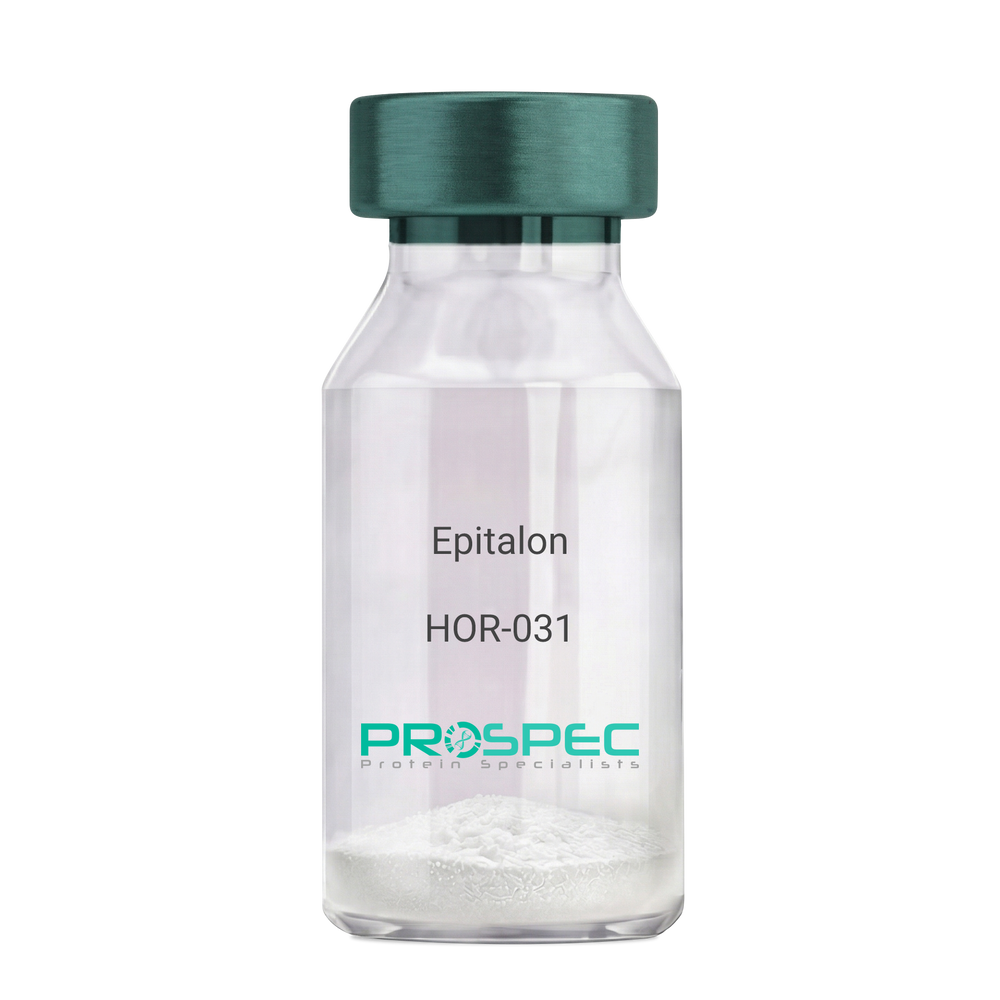
EpitalonDescription:
Epitalon
Product # :
HOR-031Price :
Quantity :
Shipping Method :
Shipped at Room temp
More Info
- description
- formulation
- purity
- More Info
Description
Epithalon Synthetic is a single, non-glycosylated polypeptide chain containing 4 amino acids, having a molecular mass of 390.35 Dalton and a Molecular formula of C14H22N4O9.
Formulation
The protein was lyophilized with no additives.
Purity
Greater than 97.0% as determined by analysis by RP-HPLC.
More Info
-
Physical Appearance
Sterile Filtered White lyophilized (freeze-dried) powder.
-
Stability
Lyophilized Epithalon although stable at room temperature for 3 weeks, should be stored desiccated below -18°C. Upon reconstitution Epithalon should be stored at 4°C between 2-7 days and for future use below -18°C.For long term storage it is recommended to add a carrier protein (0.1% HSA or BSA). Please prevent freeze-thaw cycles.
-
Solubility
It is recommended to reconstitute the lyophilized Epithalon in sterile 18MΩ-cm H2O not less than 100 µg/ml, which can then be further diluted to other aqueous solutions.
-
Amino Acid Sequence
H-Ala-Glu-Asp-Gly-OH .
-
Background
Epitalon, also known as Epithalon, is a synthetic tetrapeptide that has been a focal point in the field of aging and longevity research. This peptide, consisting of four amino acids, is derived from the pineal gland and has been associated with a variety of biological effects, most notably its potential role in extending the lifespan of cells.
Epitalon's primary function is its interaction with telomeres, the protective caps at the ends of chromosomes that shorten as cells divide. By stimulating the production of telomerase, an enzyme that can repair and lengthen telomeres, Epitalon may slow down the aging process at a cellular level.
Numerous studies have explored the potential of Epitalon in extending the lifespan of organisms. For instance, Khavinson and colleagues (2003) found that Epitalon increased the lifespan of fruit flies, while Anisimov et al. (2003) reported similar results in mice. These findings suggest that Epitalon could potentially have similar effects in humans.
Epitalon has also been studied for its role in regulating circadian rhythms. Korkushko et al. (2011) found that Epitalon could restore disrupted circadian rhythms in elderly people, suggesting potential applications in sleep disorders and other conditions related to circadian rhythm disruption.
Beyond its potential role in aging and longevity, Epitalon has been explored for its potential therapeutic applications. Anisimov et al. (2011) found that Epitalon could reduce the incidence of spontaneous tumors in mice, suggesting potential applications in cancer prevention.
While research on Epitalon is promising, it is important to note that most studies have been conducted in animals or in vitro. More research is needed to fully understand the potential effects and applications of Epitalon in humans. However, the existing body of research suggests that Epitalon could be a promising tool in the fight against aging and age-related diseases.
ProSpec's products are furnished for LABORATORY RESEARCH USE ONLY. The product may not be used as drugs, agricultural or pesticidal products, food additives or household chemicals.
- View Data Sheet
Name :
SincalideDescription:
Sincalide
Product # :
HOR-274Price :
Quantity :
Shipping Method :
Shipped at Room temp
More Info
- description
- formulation
- purity
- More Info
Description
Sincalide also called CCK-8 has a molecular formula of C49H62N10O16S3 , H-Asp-Tyr(SO3H)-Met-Gly-Trp-Met-Asp-Phe-NH2 having an Mw of 1143.29 Dalton.
Formulation
The Sincalide was lyophilized from a concentrated (1mg/ml) solution with no additives.
Purity
Greater than 99.0% as determined by RP-HPLC.
More Info
-
Introduction
Sincalide corresponds to the C-terminal octapeptide of cholecystokinin (CCK) which acts on receptors within the gallbladder wall causing it to contract.
Cholecystokinin (CCK) is a hormone originally isolated from porcine intestinal mucosa and described as a linear 33-amino acid peptide containing a sulfated tyrosine, which is essential for its biological activity. It has been found in mammals in both the digestive tract and the central nervous system. Among its multiple biological functions, this hormone stimulates pancreatic exocrine secretion, gallbladder contraction, and intestine motility and may also act as a neurotransmitter/neuromodulator in the central nervous system. -
Physical Appearance
Sterile Filtered White lyophilized (freeze-dried) powder.
-
Stability
Lyophilized Sincalide although stable at room temperature for 3 weeks, should be stored desiccated below -18°C. Upon reconstitution CCK-8 should be stored at 4°C between 2-7 days and for future use below -18°C.For long term storage it is recommended to add a carrier protein (0.1% HSA or BSA).Please prevent freeze-thaw cycles.
-
Solubility
It is recommended to reconstitute the lyophilized Sincalide in sterile 18MΩ-cm H2O at a concentration of 0.5mg/ml, which can then be further diluted to other aqueous solutions.
ProSpec's products are furnished for LABORATORY RESEARCH USE ONLY. The product may not be used as drugs, agricultural or pesticidal products, food additives or household chemicals.
- View Data Sheet
Name :
S100A11 HumanDescription:
S100 Calcium Binding Protein A11 Human Recombinant
Protein S100-A11, S100 calcium-binding protein A11, Calgizzarin, MLN 70, S100A11, MLN70, S100C.
Product # :
PRO-385Price :
Quantity :
Shipping Method :
Shipped with Ice Packs
More Info
- description
- source
- formulation
- purity
- More Info
Description
S100A11 Human Recombinant is expressed in E. coli having a molecular weight of 17kDa fused to an amino terminal hexahistidine tag.
Source
Escherichia Coli.
Formulation
S100A11 is supplied in PBS and 50% glycerol.
Purity
Greater than 95% as determined by SDS-PAGE.
2 bands on Western blot at 17 and 34 kDa, respectively representing monomeric and dimeric form.More Info
-
Introduction
S100A11 is a member of the S100 family of proteins which contains two EF-hand calcium-binding motifs and is thought to be involved in the regulation of a number of cellular processes including cell cycle progression and differentiation. S100A11 may function in motility, invasion and tubulin polymerisation. S100 proteins are localized either in the cytoplasm or the nucleus of a wide range of cells. There are at least 13 members in the S100 gene family, which are located as a cluster on chromosome 1q21. Chromosomal rearrangements and altered expression of S100A11 have been implicated in tumor metastasis.
-
Synonyms
Protein S100-A11, S100 calcium-binding protein A11, Calgizzarin, MLN 70, S100A11, MLN70, S100C.
-
Stability
Store at 4°C if entire vial will be used within 1-2 weeks. Store, frozen at -20°C for longer periods of time. Avoid multiple freeze-thaw cycles.
-
Applications
S100A11 can be used directly as a positive control in Western blotting, ELISA, immunoprecipitation and other immunological experiments.
The biological activity of this product has not yet been tested.
ProSpec's products are furnished for LABORATORY RESEARCH USE ONLY. The product may not be used as drugs, agricultural or pesticidal products, food additives or household chemicals.
- View Data Sheet
Name :
APOA5 Human, HEKDescription:
Apolipoprotein A-V Human Recombinant, HEK
Apolipoprotein A-V, Apo-AV, ApoA-V, Apolipoprotein A5, Regeneration-associated protein 3, APOA5, RAP3, APOAV.
Product # :
CYT-025Price :
Quantity :
Shipping Method :
Shipped at Room temp
More Info
- description
- source
- formulation
- purity
- More Info
Description
APOA5 Human Recombinant Flag-Tagged Fusion Protein is 40.1 kDa protein containing 354 amino acid residues of the APOA5 Human and 11 additional amino acid residues of flagTag.
Source
HEK293
Formulation
APOA5 Human was filtered (0.4µm) and lyophilized from 0.5 mg/ml supplied in 20mM TRIS and 50mM NaCl, pH 7.5
Purity
Greater than 90% as determined by SDS-PAGE.
More Info
-
Introduction
ApoA5 is an important regulator of serum triglyceride concentrations. An ApoA5 mouse nock-out model produced an approximately four fold increase in serum triglycerides, whereas a knock-in model human ApoA5 produced 50-70% lower concentrations of mouse serum triglycerides. Furthermore, peroxisome proliferators-activated receptoragonists, which are used clinically to lower serum triglyceride concentrations, cause increased ApoA5 mRNA expression. There is very little known about ApoA5 protein in human serum. Lately, it was established that ApoA5 is present in the human serum and it can be detected by polyclonal antibodies against both the HN2 and COOH termini, but at much lower concentration than other apolipoproteins.
-
Synonyms
Apolipoprotein A-V, Apo-AV, ApoA-V, Apolipoprotein A5, Regeneration-associated protein 3, APOA5, RAP3, APOAV.
-
Physical Appearance
Filtered White lyophilized (freeze-dried) powder.
-
Stability
Store lyophilized APOA5 Human at -20°C. Aliquot the product after reconstitution to avoid repeated freezing/thawing cycles. Reconstituted APOA5 Human can be stored at 4°C for a limited period of time; it does not show any change after two weeks at 4°C.
-
Solubility
It is recommended to add deionized water to prepare a working stock solution of approximately 0.5mg/ml and let the lyophilized pellet dissolve completely. Product is not sterile! Please filter the product by an appropriate sterile filter before using it on cell culture.
-
Amino Acid Sequence
RKGFWDYFSQ TSGDKGRVEQ IHQQKMAREP ATLKDSLEQD LNNMNKFLEK LRPLSGSEAP RLPQDPVGMR RQLQEELEEV KARLQPYMAE AHELVGWNLE GLRQQLKPYT MDLMEQVALR VQELQEQLRV VGEDTKAQLL GGVDEAWALL QGLQSRVVHH TGRFKELFHP YAESLVSGIG RHVQELHRSV APHAPASPAR LSRCVQVLSR KLTLKAKALH ARIQQNLDQL REELSRAFAG TGTEEGAGPD PQMLSEEVRQ RLQAFRQDTY LQIAAFTRAI DQETEEVQQQ LAPPPPGHSA FAPEFQQTDS GKVLSKLQAR LDDLWEDITH SLHDQGHSHL GDPAAADYKD DDDK
-
Background
What is the molecular weight/Mw of APOA5 Protein?
APOA5 Protein has a total Mw of 40.1kDa.
What is the source or expression system of APOA5 Protein?
HEK293
What is the Purity of APOA5 Protein?
APOA5 Protein is >90% pure as determined by SDS-PAGE.
What is the Biological Activity of APOA5 Protein?
The biological functionality of APOA5 Protein will be determined in the future.
What is the amino acid sequence of APOA5 Protein?
RKGFWDYFSQ TSGDKGRVEQ IHQQKMAREP ATLKDSLEQD LNNMNKFLEK LRPLSGSEAP RLPQDPVGMR RQLQEELEEV KARLQPYMAE AHELVGWNLE GLRQQLKPYT MDLMEQVALR VQELQEQLRV VGEDTKAQLL GGVDEAWALL QGLQSRVVHH TGRFKELFHP YAESLVSGIG RHVQELHRSV APHAPASPAR LSRCVQVLSR KLTLKAKALH ARIQQNLDQL REELSRAFAG TGTEEGAGPD PQMLSEEVRQ RLQAFRQDTY LQIAAFTRAI DQETEEVQQQ LAPPPPGHSA FAPEFQQTDS GKVLSKLQAR LDDLWEDITH SLHDQGHSHL GDPAAADYKD DDDK
What applications can APOA5 Protein be used in?
APOA5 Protein can probably be used in western blot, ELISA and Lateral Flow.
What is the endotoxin level for APOA5 Protein?
The endotoxin level is minimal, APOA5 Protein was purified using conventional chromatography techniques.
ProSpec's products are furnished for LABORATORY RESEARCH USE ONLY. The product may not be used as drugs, agricultural or pesticidal products, food additives or household chemicals.
- View Data Sheet
Name :
GLP1R HumanDescription:
Glucagon Like Peptide 1 Receptor Human Recombinant
GLP1, GLP2, GRPP
Product # :
HOR-027Price :
Quantity :
Shipping Method :
Shipped at Room temp
More Info
- description
- source
- formulation
- purity
- More Info
Description
GLP1R Human Recombinant produced in E.Coli is a single, non-glycosylated, polypeptide chain (aa 24-145) containing 132 amino acids including a 10 a.a N-terminal His tag. The total molecular mass is 15.55 kDa (calculated).
Source
Escherichia Coli.
Formulation
GLP1R filtered (0.4 µm) and lyophilized from 0.5mg/ml in 50mM Acetate Buffer, pH 4.0.
Purity
Greater than 90.0% as determined by SDS-PAGE.
More Info
-
Introduction
The glucagon-like peptide-1 receptor, also known as GLP1R, is a receptor protein found on brain neurons and beta cells of the pancreas. GLP1R activates a signalling cascade that leads to the initiation of adenylyl cyclase and increased intracellular cAMP levels. In humans, GLP1R is synthesized by GLP1R gene, which is present on chromosome 6.
GLP1R takes part in the control of blood sugar level by enhancing insulin secretion. GLP1R is a part of the glucagon receptor family of G protein-coupled receptors. GLP1R consists of two domains, one transmembrane (TMD) domain, that binds the N-terminal region of GLP-1. And one extracellular (ECD) which binds the C-terminal helix of GLP-1. The TMD domain contains a fulcrum of polar residues that controls the biased signaling of the receptor, while the transmembrane helical boundaries and extracellular surface are a trigger for biased agonism. -
Synonyms
GLP1, GLP2, GRPP
-
Physical Appearance
Filtered White lyophilized (freeze-dried) powder.
-
Stability
Store lyophilized protein at -20°C. Aliquot the product after reconstitution to avoid repeated freezing/thawing cycles. Reconstituted protein can be stored at 4°C for a limited period of time; it does not show any change after two weeks at 4°C.
-
Solubility
It is recommended to reconstitute the lyophilized Hepatocyte Growth Factor in 100mM Acetate buffer to a working concentration approximately 0.5mg/ml. Further dilutions should be made using buffer containing protein.
-
Amino Acid Sequence
MKHHHHHHAS RPQGATVSLW ETVQKWREYR RQCQRSLTED PPPATDLFCN RTFDEYACWP DGEPGSFVNV SCPWYLPWAS SVPQGHVYRF CTAEGLWLQK DNSSLPWRDL SECEESKRGE RSSPEEQLLF LY
ProSpec's products are furnished for LABORATORY RESEARCH USE ONLY. The product may not be used as drugs, agricultural or pesticidal products, food additives or household chemicals.
- View Data Sheet
Name :
LGALSL HumanDescription:
Lectin Galactoside-Binding-Like Human Recombinant
GRP, HSPC159, Galectin-related protein, Lectin galactoside-binding-like protein, LGALSL.
Product # :
PRO-1374Price :
Quantity :
Shipping Method :
Shipped with Ice Packs
More Info
- description
- source
- formulation
- purity
- More Info
Description
LGALSL Human Recombinant produced in E.Coli is a single, non-glycosylated polypeptide chain containing 195 amino acids (1-172a.a) and having a molecular mass of 21.4kDa. LGALSL is fused to a 23 amino acid His-tag at N-terminus & purified by proprietary chromatographic techniques.
Source
E.coli.
Formulation
LGALSL protein solution (0.5mg/ml) containing 20mM Tris-HCl buffer (pH 8.0), 0.1M NaCl, 20% glycerol and 1mM DTT.
Purity
Greater than 90% as determined by SDS-PAGE.
More Info
-
Introduction
Galectins are a family of soluble b-galactoside-binding animal lectins that modulate cell-to-cell adhesion and cell-to-extracellular matrix interactions. Galectins also take part in tumor progression, pre-mRNA splicing and apoptosis. Galectin-related protein (LGALSL) is a 172 amino acid protein which holds one galectin domain. In spite of this, LGALSL does not appear to bind carbohydrates or lactose since the critical residues required for binding are not conserved.
-
Synonyms
GRP, HSPC159, Galectin-related protein, Lectin galactoside-binding-like protein, LGALSL.
-
Physical Appearance
Sterile Filtered colorless solution.
-
Stability
Store at 4°C if entire vial will be used within 2-4 weeks. Store, frozen at -20°C for longer periods of time. For long term storage it is recommended to add a carrier protein (0.1% HSA or BSA).Avoid multiple freeze-thaw cycles.
-
Amino Acid Sequence
MGSSHHHHHH SSGLVPRGSH MGSMAGSVAD SDAVVKLDDG HLNNSLSSPV QADVYFPRLI VPFCGHIKGG MRPGKKVLVM GIVDLNPESF AISLTCGDSE DPPADVAIEL KAVFTDRQLL RNSCISGERG EEQSAIPYFP FIPDQPFRVE ILCEHPRFRV FVDGHQLFDF YHRIQTLSAI DTIKINGDLQ ITKLG.
ProSpec's products are furnished for LABORATORY RESEARCH USE ONLY. The product may not be used as drugs, agricultural or pesticidal products, food additives or household chemicals.
- View Data Sheet
Name :
LPL HumanDescription:
Lipoprotein Lipase Human Recombinant
Lipoprotein lipase, LPL, LIPD, HDLCQ11.
Product # :
ENZ-086Price :
Quantity :
Shipping Method :
Shipped at Room temp
More Info
- description
- source
- formulation
- More Info
Description
The Recombinant Human LPL produced in E.coli has a molecular mass of 51.61kDa containing 458 amino acid residues of the human LPL and fused to a 10 a.a. His tag at N-terminus.
Source
Escherichia Coli.
Formulation
LPL was filtered (0.4 µm) and lyophilized from 0.5 mg/ml in 50mM Acetate buffer, pH=4.
More Info
-
Introduction
LPL is a lipoprotein lipase, which is expressed in the heart, muscle, and adipose tissue. LPL acts as a homodimer, and has the dual functions of triglyceride hydrolase and ligand/bridging factor for receptor-mediated lipoprotein uptake. Type I hyperlipoproteinemia is a result of severe mutations which cause LPL deficiency, whereas less extreme mutations in LPL are linked to many disorders of lipoprotein metabolism. Lipoprotein lipase (LPL) is a fundamental enzyme in plasma triglyceride hydrolysis and is secreted by macrophages in the subendothelial space. LPL also promotes the development of atherosclerosis through facilitation of monocyte adhesion to endothelial cells, stimulation of tumor necrosis factor alpha (TNF) secretion and induction of vascular smooth muscle cell proliferation.
-
Synonyms
Lipoprotein lipase, LPL, LIPD, HDLCQ11.
-
Stability
Store lyophilized protein at -20°C. Aliquot the product after reconstitution to avoid repeated freezing/thawing cycles. Reconstituted protein can be stored at 4°C for a limited period of time; it does not show any change after two weeks at 4°C.
-
Solubility
It is recommended to add 0.1M Acetate buffer pH4 to prepare a working stock solution of approximately 0.5 mg/ml and let the lyophilized pellet dissolve completely. For conversion into higher pH value, we recommend intensive dilution by relevant buffer to a concentration of 10µg/ml. In higher concentrations the solubility of this antigen is limited. Product is not sterile! Please filter the product by an appropriate sterile filter before using it in the cell culture.
-
Amino Acid Sequence
MKHHHHHHAS ADQRRDFIDI ESKFALRTPE DTAEDTCHLI PGVAESVATC HFNHSSKTFM VIHGWTVTGM YESWVPKLVA ADQRRDFIDI ESKFALRTPE DTAEDTCHLI PGVAESVATC HFNHSSKTFM VIHGWTVTGM YESWVPKLVA ALYKREPDSN VIVVDWLSRA QEHYPVSAGY TKLVGQDVAR FINWMEEEFN YPLDNVHLLG YSLGAHAAGI AGSLTNKKVN RITGLDPAGP NFEYAEAPSR LSPDDADFVD VLHTFTRGSP GRSIGIQKPV GHVDIYPNGG TFQPGCNIGE AIRVIAERGL GDVDQLVKCS HERSIHLFID SLLNEENPSK AYRCSSKEAF EKGLCLSCRK NRCNNLGYEI SKVRAKRSSK MYLKTRSQMP YKVFHYQVKI HFSGTESETH TNQAFEISLY GTVAESENIP FTLPEVSTNK TYSFLIYTEV DIGELLMLKL KWKSDSYFSW SDWWSSPGFA IQKIRVKAGE TQKKVIFCSR EKVSHLQKGK APAVFVKCHD KSLNKKSG.
ProSpec's products are furnished for LABORATORY RESEARCH USE ONLY. The product may not be used as drugs, agricultural or pesticidal products, food additives or household chemicals.
- View Data Sheet
Name :
EPCAM Human, sf9Description:
Epithelial Cell Adhesion Molecule Human Recombinant, Sf9
Epithelial Cell Adhesion Molecule , Tumor-Associated Calcium Signal Transducer 1, Major Gastrointestinal Tumor-Associated Protein GA733-2, Adenocarcinoma-Associated Antigen, Cell Surface Glycoprotein Trop-1, Epithelial Glycoprotein 314, TACSTD1, EGP314, MIC18, TROP1, M4S1, KSA, Membrane Component, Chromosome 4, Surface Marker (35kD Glycoprotein), Antigen Identified By Monoclonal Antibody AUA1, Human Epithelial Glycoprotein-2, Epithelial Cell Surface Antigen, Epithelial Glycoprotein, KS 1/4 Antigen, CD326 Antigen, GA733-2, HEGP314, HNPCC8, Ep-CAM, DIAR5, EGP-2, EGP40, KS1/4, MK-1, M1S2, ESA, EGP, EPCAM.
Product # :
PRO-2238Price :
Quantity :
Shipping Method :
Shipped with Ice Packs
More Info
- description
- source
- formulation
- purity
- More Info
Description
EPCAM produced in Sf9 Baculovirus cells is a single, glycosylated polypeptide chain (24-265 a.a.) and fused to a 6 aa His Tag at C-terminus containing a total of 248 amino acids and having a molecular mass of 28.2kDa.EPCAM shows multiple bands between 28-40kDa on SDS-PAGE, reducing conditions and purified by proprietary chromatographic techniques.
Source
Sf9, Baculovirus cells.
Formulation
EPCAM protein solution (1mg/ml) contains Phosphate buffered saline (pH7.4) and 10% glycerol.
Purity
Greater than 95.0% as determined by SDS-PAGE.
More Info
-
Introduction
EPCAM is a carcinoma-associated antigen and belongs to a family which includes at least 2 type I membrane proteins. The EPCAM protein has a role in embryonic stem cells proliferation and differentiation. EPCAM is used as a target for immunotherapy treatment of human carcinomas. EPCAM is expressed on most normal epithelial cells and gastrointestinal carcinomas and acts as a homotypic calcium-independent cell adhesion molecule. Epithelial cell adhesion molecules (EPCAM) can act as a physical homophilic interaction molecule between intestinal epithelial cells (IECs) and intraepithelial lymphocytes (IELs) at the mucosal epithelium for supplying immunological barrier as a first line of defense against mucosal infection. EPCAM gene mutations result in congenital tufting enteropathy.
-
Synonyms
Epithelial Cell Adhesion Molecule , Tumor-Associated Calcium Signal Transducer 1, Major Gastrointestinal Tumor-Associated Protein GA733-2, Adenocarcinoma-Associated Antigen, Cell Surface Glycoprotein Trop-1, Epithelial Glycoprotein 314, TACSTD1, EGP314, MIC18, TROP1, M4S1, KSA, Membrane Component, Chromosome 4, Surface Marker (35kD Glycoprotein), Antigen Identified By Monoclonal Antibody AUA1, Human Epithelial Glycoprotein-2, Epithelial Cell Surface Antigen, Epithelial Glycoprotein, KS 1/4 Antigen, CD326 Antigen, GA733-2, HEGP314, HNPCC8, Ep-CAM, DIAR5, EGP-2, EGP40, KS1/4, MK-1, M1S2, ESA, EGP, EPCAM.
-
Physical Appearance
Sterile filtered colorless solution.
-
Stability
Store at 4°C if entire vial will be used within 2-4 weeks. Store, frozen at -20°C for longer periods of time. For long term storage it is recommended to add a carrier protein (0.1% HSA or BSA).Avoid multiple freeze-thaw cycles.
-
Amino Acid Sequence
QEECVCENYK LAVNCFVNNN RQCQCTSVGA QNTVICSKLA AKCLVMKAEM NGSKLGRRAK PEGALQNNDG LYDPDCDESG LFKAKQCNGT STCWCVNTAG VRRTDKDTEI TCSERVRTYW IIIELKHKAR EKPYDSKSLR TALQKEITTR YQLDPKFITS ILYENNVITI DLVQNSSQKT QNDVDIADVA YYFEKDVKGE SLFHSKKMDL TVNGEQLDLD PGQTLIYYVD EKAPEFSMQG LKHHHHHH
ProSpec's products are furnished for LABORATORY RESEARCH USE ONLY. The product may not be used as drugs, agricultural or pesticidal products, food additives or household chemicals.
- View Data Sheet
Name :
CD207 HumanDescription:
CD207 Human Recombinant
C-type lectin domain family 4 member K, CLEC4K, Langerin, CD207.
Product # :
PRO-2204Price :
Quantity :
Shipping Method :
Shipped with Ice Packs
More Info
- description
- source
- formulation
- purity
- More Info
Description
CD207 Human Recombinant produced in E.Coli is a single, non-glycosylated polypeptide chain containing 287 amino acids (65-328 a.a) and having a molecular mass of 32.2kDa.CD207 is fused to a 23 amino acid His-tag at N-terminus & purified by proprietary chromatographic techniques.
Source
Escherichia Coli.
Formulation
CD207 protein solution (1mg/ml) containing 20mM Tris 8.0 and 10% glycerol.
Purity
Greater than 85.0% as determined by SDS-PAGE.
More Info
-
Introduction
CD207 (C-type lectin domain family 4 member K) is expressed in Langerhans cells which are immature dendritic cells of the epidermis and mucosa. Moreover, CD207 is expressed in several other dendritic cell types including dermal CD103+ DCs and splenic CD8+ DCs. Langerin is localized in the Birbeck granules, the organelles present in the cytoplasm of Langerhans cells and comprised of superimposed and zippered membranes. CD207 is a C-type lectin with mannose binding specificity, and it has been suggested that mannose binding by the CD207 protein leads to internalization of antigen into Birbeck granules thus providing access to a nonclassical antigen-processing pathway.
-
Synonyms
C-type lectin domain family 4 member K, CLEC4K, Langerin, CD207.
-
Physical Appearance
Sterile Filtered clear solution.
-
Stability
Store at 4°C if entire vial will be used within 2-4 weeks. Store, frozen at -20°C for longer periods of time. For long term storage it is recommended to add a carrier protein (0.1% HSA or BSA).Avoid multiple freeze-thaw cycles.
-
Amino Acid Sequence
MGSSHHHHHH SSGLVPRGSH MGSPRFMGTI SDVKTNVQLL KGRVDNISTL DSEIKKNSDG MEAAGVQIQM VNESLGYVRS QFLKLKTSVE KANAQIQILT RSWEEVSTLN AQIPELKSDL EKASALNTKI RALQGSLENM SKLLKRQNDI LQVVSQGWKY FKGNFYYFSL IPKTWYSAEQ FCVSRNSHLT SVTSESEQEF LYKTAGGLIY WIGLTKAGME GDWSWVDDTP FNKVQSARFW IPGEPNNAGN NEHCGNIKAP SLQAWNDAPC DKTFLFICKR PYVPSEP.
ProSpec's products are furnished for LABORATORY RESEARCH USE ONLY. The product may not be used as drugs, agricultural or pesticidal products, food additives or household chemicals.
- View Data Sheet
Name :
PVALB HumanDescription:
Parvalbumin Human Recombinant
Parvalbumin alpha, PVALB, D22S749, MGC116759.
Product # :
PRO-004Price :
Quantity :
Shipping Method :
Shipped with Ice Packs
More Info
- description
- source
- formulation
- purity
- More Info
Description
PVALB Human Recombinant fused with a 24 amino acid His tag at N-terminus produced in E.Coli is a single, non-glycosylated, polypeptide chain containing 134 amino acids (1-110 a.a.) and having a molecular mass of 14.6kDa. The PVALB is purified by proprietary chromatographic techniques.
Source
Escherichia Coli.
Formulation
The PVALB solution (1 mg/ml) contains 20mM Tris-HCl buffer (pH 8.0), 1mM DTT, 10% glycerol and 50mM NaCl.
Purity
Greater than 95.0% as determined by SDS-PAGE.
More Info
-
Introduction
Parvalbumin alpha (PVALB) is a member of a larger group of EF hand proteins. PVALB is a high affinity calcium ion-binding protein which is structurally and functionally similar to calmodulin and troponin C. Parvalbumin is expressed in a specific population of GABAergic interneurones which are believed to have a role in maintaining the balance between excitation and inhibition in the cortex as well as the hippocampus.
-
Synonyms
Parvalbumin alpha, PVALB, D22S749, MGC116759.
-
Physical Appearance
Sterile Filtered colorless solution.
-
Stability
Store at 4°C if entire vial will be used within 2-4 weeks.Store, frozen at -20°C for longer periods of time. For long term storage it is recommended to add a carrier protein (0.1% HSA or BSA).Avoid multiple freeze-thaw cycles.
-
Amino Acid Sequence
MGSSHHHHHH SSGLVPRGSH MGSHMSMTDL LNAEDIKKAV GAFSATDSFD HKKFFQMVGLKKKSADDVKK VFHMLDKDKS GFIEEDELGF ILKGFSPDAR DLSAKETKML MAAGDKDGDG KIGVDEFSTL VAES.
ProSpec's products are furnished for LABORATORY RESEARCH USE ONLY. The product may not be used as drugs, agricultural or pesticidal products, food additives or household chemicals.
- View Data Sheet
Name :
Visfatin AntibodyDescription:
Visfatin, Mouse Anti Human
PBEF, Pre-B cell colony-enhancing factor, Nicotinamide phosphoribosyltransferase NAmPRTase, Nampt, MGC117256, DKFZP666B131, 1110035O14Rik.
Product # :
ANT-368Price :
Quantity :
Shipping Method :
Shipped with Ice Packs
More Info
- formulation
- More Info
Formulation
1mg/ml containing PBS, pH-7.4, 10% glycerol & 0.02% Sodium Azide.
More Info
-
Introduction
Excess adiposity is the most important risk in the development of insulin resistance and type 2 diabetes mellitus (T2DM). Adipose tissue produces several proteins (adipocytokines) such as leptin, adiponectin, resistin, tumor necrosis factor-α, and IL-6, that modulate insulin sensitivity and appear to play an important role in the pathogenesis of insulin resistance, diabetes, dyslipidemia, inflammation, and atherosclerosis. However, the mechanisms by which fat tissue induces insulin resistance and the role of adipocytokines in the pathogenesis of T2DM have not been well established. Visfatin, also known as pre-B cell colony-enhancing factor (PBEF), is a cytokine that is highly expressed in visceral fat and was originally isolated as a secreted factor that synergizes with IL-7 and stem cell factors to promote the growth of B cell precursors. Visfatin homologs have been identified in carp, invertebrate mollusks, and bacteria, as well as in vertebrates, including humans and the mouse. It h
-
Synonyms
PBEF, Pre-B cell colony-enhancing factor, Nicotinamide phosphoribosyltransferase NAmPRTase, Nampt, MGC117256, DKFZP666B131, 1110035O14Rik.
-
Immunogen
Anti-human Visfatin mAb, is derived from hybridization of mouse FO myeloma cells with spleen cells from BALB/c mice immunized with Recombinant human Visfatin amino acids 1-491 purified from E. coli.
-
Ig Subclass
Mouse IgG1heavy chain and κ light chain.
-
Clone
P4D5AT.
-
Applications
Visfatin antibody has been tested by ELISA and Western blot analysis to assure specificity and reactivity. Since application varies, however, each investigation should be titrated by the reagent to obtain optimal results.
-
Type
Mouse Anti Human Monoclonal.
-
Storage Procedures
For periods up to 1 month store at 4°C, for longer periods of time, store at -20°C. Prevent freeze thaw cycles.
-
Purification Method
Visfatin antibody was purified from mouse ascitic fluids by protein-G affinity chromatography.
ProSpec's products are furnished for LABORATORY RESEARCH USE ONLY. The product may not be used as drugs, agricultural or pesticidal products, food additives or household chemicals.
- View Data Sheet
Name :
HexarelinDescription:
Hexarelin
Product # :
HOR-288Price :
Quantity :
Shipping Method :
Shipped at Room temp
More Info
- description
- formulation
- purity
- More Info
Description
Hexarelin has 7 amino acids H-His-D-2-Methyl-Trp-Ala-Trp-D-Phe-Lys-NH2 and having a molecular weight of 887 Dalton. The Molecular Formula is C47H58N12O6.
Formulation
The Hexarelin peptide was lyophilized with no additives.
Purity
Greater than 98.0% as determined by:
(a) Analysis by RP-HPLC.
(b) Analysis by SDS-PAGE.More Info
-
Introduction
Hexarelin stimulates GH secretion. Hexarelin is more resistant to proteolytic degradation than GHRP-6.
-
Physical Appearance
Sterile Filtered lyophilized (freeze-dried) powder.
-
Stability
Lyophilized Hexarelin although stable at room temperature for 3 weeks, should be stored desiccated below -18°C. Upon reconstitution Hexarelin should be stored at 4°C between 2-7 days and for future use below -18°C. For long term storage it is recommended to add a carrier protein (0.1% HSA or BSA).Please prevent freeze-thaw cycles.
-
Solubility
It is recommended to reconstitute the lyophilized Hexarelin 18MΩ-cm H2O not less than 100 µg/ml, which can then be further diluted to other aqueous solutions.
ProSpec's products are furnished for LABORATORY RESEARCH USE ONLY. The product may not be used as drugs, agricultural or pesticidal products, food additives or household chemicals.
- View Data Sheet
Name :
SPOP HumanDescription:
Speckle-Type POZ Protein Human Recombinant
Speckle-type POZ protein, HIB homolog 1, Roadkill homolog 1, SPOP, TEF2.
Product # :
PRO-195Price :
Quantity :
Shipping Method :
Shipped with Ice Packs
More Info
- description
- source
- formulation
- purity
- More Info
Description
SPOP Human Recombinant fused with a 20 amino acid His tag at N-terminus produced in E.Coli is a single, non-glycosylated, polypeptide chain containing 394 amino acids (1-374 a.a.) and having a molecular mass of 44.3kDa. The SPOP is purified by proprietary chromatographic techniques.
Source
Escherichia Coli.
Formulation
The SPOP solution (0.25mg/ml) contains 20mM Tris-HCl buffer (pH 8.0), 5mM DTT, 50% glycerol, 0.2M NaCl and 2mM EDTA.
Purity
Greater than 90.0% as determined by SDS-PAGE.
More Info
-
Introduction
Speckle-type POZ protein (SPOP) belongs to the Tdpoz family containing one N-terminal MATH (Meprin and TRAF homology) domain and one C-terminal BTB/POZ domain. SPOP inhibits IPF1/PDX1 transactivation of established target promoters, may be by recruiting a repressor complex. SPOP is involved in ubiquitinylation and protein degradation as a result of an interaction with CUL-3.
-
Synonyms
Speckle-type POZ protein, HIB homolog 1, Roadkill homolog 1, SPOP, TEF2.
-
Physical Appearance
SPOP is supplied as a sterile Filtered colorless solution.
-
Stability
Store at 4°C if entire vial will be used within 2-4 weeks. Store, frozen at -20°C for longer periods of time. For long term storage it is recommended to add a carrier protein (0.1% HSA or BSA).Avoid multiple freeze-thaw cycles.
-
Amino Acid Sequence
MGSSHHHHHH SSGLVPRGSH MSRVPSPPPP AEMSSGPVAE SWCYTQIKVV KFSYMWTINN FSFCREEMGE VIKSSTFSSG ANDKLKWCLR VNPKGLDEES KDYLSLYLLL VSCPKSEVRA KFKFSILNAK GEETKAMESQ RAYRFVQGKD WGFKKFIRRD FLLDEANGLL PDDKLTLFCE
VSVVQDSVNI SGQNTMNMVK VPECRLADEL GGLWENSRFT DCCLCVAGQE FQAHKAILAA RSPVFSAMFE HEMEESKKNR VEINDVEPEV FKEMMCFIYT GKAPNLDKMA DDLLAAADKY ALERLKVMCE DALCSNLSVE NAAEILILAD LHSADQLKTQ AVDFINYHAS DVLETSGWKS MVVSHPHLVA EAYRSLASAQ CPFLGPPRKR LKQS.
ProSpec's products are furnished for LABORATORY RESEARCH USE ONLY. The product may not be used as drugs, agricultural or pesticidal products, food additives or household chemicals.
- View Data Sheet
Name :
GPC3 HumanDescription:
Glypican-3 Human Recombinant
Glypican 3, Intestinal Protein OCI-5, Glypican Proteoglycan 3, GTR2-2, MXR7, Heparan Sulphate Proteoglycan, Secreted Glypican-3, Glypican-3, OCI-5, SGBS1, DGSX, SGBS, SDYS, OCI5, SGB, GPC3.
Product # :
PRO-2423Price :
Quantity :
Shipping Method :
Shipped with Ice Packs
More Info
- description
- source
- formulation
- purity
- More Info
Description
GPC3 Human Recombinant produced in Sf9 Baculovirus cells is a single, glycosylated polypeptide chain containing 544 amino acids (25-559a.a.) and having a molecular mass of 61.8kDa (Molecular size on SDS-PAGE will appear at approximately 50-70kDa). GPC3 is expressed with a 6 amino acids His tag at C-Terminus and purified by proprietary chromatographic techniques.
Source
Sf9, Baculovirus cells.
Formulation
GPC3 protein solution (0.5mg/ml) contains Phosphate Buffered Saline (pH 7.4) and 10% glycerol.
Purity
Greater than 90.0% as determined by SDS-PAGE.
More Info
-
Introduction
Glypican-3 (GPC3) belongs to the glypican family, and is highly expressed in the lung, liver, and the kidney. In some tissues, GPC3 functionss as a tumor suppressor gene and an oncofetal protein. The Glypican-3 protein is currently considered as a tumor marker and potential target for immunotherapy. Glypican-3 binds to and inhibits the dipeptidyl peptidase activity of CD26, and it can also induce apoptosis in certain cell types. Deletion mutations in the GPC3 gene are linked with Simpson-Golabi-Behmel syndrome, aka Simpson dysmorphia syndrome.
-
Synonyms
Glypican 3, Intestinal Protein OCI-5, Glypican Proteoglycan 3, GTR2-2, MXR7, Heparan Sulphate Proteoglycan, Secreted Glypican-3, Glypican-3, OCI-5, SGBS1, DGSX, SGBS, SDYS, OCI5, SGB, GPC3.
-
Physical Appearance
Sterile filtered colorless solution.
-
Stability
Store at 4°C if entire vial will be used within 2-4 weeks. Store, frozen at -20°C for longer periods of time. For long term storage it is recommended to add a carrier protein (0.1% HSA or BSA).Avoid multiple freeze-thaw cycles.
-
Amino Acid Sequence
ADPQPPPPPP DATCHQVRSF FQRLQPGLKW VPETPVPGSD LQVCLPKGPT CCSRKMEEKY QLTARLNMEQ LLQSASMELK FLIIQNAAVF QEAFEIVVRH AKNYTNAMFK NNYPSLTPQA FEFVGEFFTD VSLYILGSDI NVDDMVNELF DSLFPVIYTQ LMNPGLPDSA LDINECLRGA RRDLKVFGNF PKLIMTQVSK SLQVTRIFLQ ALNLGIEVIN TTDHLKFSKD CGRMLTRMWY CSYCQGLMMV KPCGGYCNVV MQGCMAGVVE IDKYWREYIL SLEELVNGMY RIYDMENVLL GLFSTIHDSI QYVQKNAGKL TTTIGKLCAH SQQRQYRSAY YPEDLFIDKK VLKVAHVEHE ETLSSRRREL IQKLKSFISF YSALPGYICS HSPVAENDTL CWNGQELVER YSQKAARNGM KNQFNLHELK MKGPEPVVSQ IIDKLKHINQ LLRTMSMPKG RVLDKNLDEE GFESGDCGDD EDECIGGSGD GMIKVKNQLR FLAELAYDLD VDDAPGNSQQ ATPKDNEIST FHNLGNVHHH HHHH.
ProSpec's products are furnished for LABORATORY RESEARCH USE ONLY. The product may not be used as drugs, agricultural or pesticidal products, food additives or household chemicals.
- View Data Sheet
Name :
ATF HumanDescription:
Apo Transferrin Human
Serotransferrin, Transferrin, Siderophilin, Beta-1-metal-binding globulin, TF, PRO1557, PRO2086, DKFZp781D0156, Apo Transferrin, ATF.
Product # :
PRO-325Price :
Quantity :
Shipping Method :
Shipped at Room temp
More Info
- description
- source
- formulation
- purity
- More Info
Description
Human Apo Transferrin is a glycoprotein of approximately 77 kDa.
Source
Human serum.
Formulation
The protein was lyophilized from 20mM NH4HC03 solution. May contain traces of buffer salts.
Purity
Greater than 98.0% as determined by coomassie blue stained SDS-PAGE and Cellulose Acetate electrophoresis.
More Info
-
Introduction
Transferrin is the iron-transport protein of vertebrate serum and donates iron to cells through interaction with a specific membrane receptor, CD71. Transferrin appears to be indispensable for most cells growing in tissue culture.
It is referred to frequently as a growth factor because, in analogy to other growth factor-receptor interactions, proliferating cells express high numbers of transferrin receptors, and the binding of transferrin to their receptors is needed for cells to initiate and maintain their DNA synthesis. Apart from its role as an iron transport protein transferrin acts as a cytokine and has functions that may not be related to its iron-carrying capacity.
Human Transferrin is a crucial component for the cultivation of mammalian cells in-vitro. Human Transferrin is Critical for long-term cells growth in-vitro. Human Transferrin is used as detoxificant in media by binding contaminating metal ions. Human Transferrin is often used as a nutrient in fermentation media for recombinant protein and biopharmaceutical production. Additional common uses of Human Transferrin areMolecular weight, Affinity purification of anti-human transferrin antibodies and also as receptor mediated transfection of molecules such as DNA, into cells. -
Synonyms
Serotransferrin, Transferrin, Siderophilin, Beta-1-metal-binding globulin, TF, PRO1557, PRO2086, DKFZp781D0156, Apo Transferrin, ATF.
-
Physical Appearance
Sterile Filtered White lyophilized (freeze-dried) powder.
-
Stability
Store the lyophilized Apo Transferrin between 2-8°C, do not freeze. Upon reconstitution Apo Transferrin should be stored at 4°C between 2-7 days and for future use below -18°C.Please prevent freeze-thaw cycles.
-
Solubility
It is recommended to reconstitute the lyophilized Apo Transferrin in sterile 18MΩ-cm H2O not less than 100µg/ml, which can then be further diluted to other aqueous solutions.
-
Human Virus Test
Plasma from each donor has been tested and found negative for antibody to HIV-1, HIV-2, HCV, HBSAG and Syphilis.
-
Iron Content
The Iron content was estimated by ICP and was found to be <6 ppm.
ProSpec's products are furnished for LABORATORY RESEARCH USE ONLY. The product may not be used as drugs, agricultural or pesticidal products, food additives or household chemicals.
- View Data Sheet
Name :
ExenatideDescription:
Exenatide
Exendin-4.
Product # :
HOR-246Price :
Quantity :
Shipping Method :
Shipped at Room temp
More Info
- description
- formulation
- purity
- More Info
Description
Exenatide is a single, non-glycosylated, peptide containing 39 amino acids and having a molecular mass of 4186.6 Dalton. Exenatide has the empirical formula C184H282N50O60S.
Formulation
The Exenatide peptide was lyophilized from a concentrated solution with no additives.
Purity
Greater than 99.0% as determined by:
(a) Analysis by RP-HPLC.
(b) Analysis by SDS-PAGE.More Info
-
Introduction
Exenatide Derived from the saliva of the gila monster, is a 39 amino acid peptide that mimics the GLP-1 incretin, an insulin secretagogue with glucoregulatory effects. Typical responses to exenatide include improvements in the initial rapid release of endogenous insulin, suppression of glucagon release by the pancreas, regulation of gastric empyting, and reduced appetite - all of which function to lower blood glucose. Exenatide is self-regulating in that it lowers blood sugar when levels are elevated but does not continue to lower blood sugar when levels return to normal, unlike with sulfonylureas or insulins.
-
Synonyms
Exendin-4.
-
Physical Appearance
Sterile Filtered White lyophilized (freeze-dried) powder.
-
Stability
Lyophilized Exenatide although stable at room temperature for 3 weeks, should be stored desiccated below -18°C. Upon reconstitution Exenatide should be stored at 4°C between 2-7 days and for future use below -18°C. For long term storage it is recommended to add a carrier protein (0.1% HSA or BSA).Please prevent freeze-thaw cycles.
-
Solubility
It is recommended to reconstitute the lyophilized Exenatide in sterile 18MΩ-cm H2O not less than 100 µg/ml, which can then be further diluted to other aqueous solutions.
-
Amino Acid Sequence
H-His-Gly-Glu-Gly-Thr-Phe-Thr-Ser-Asp-Leu-Ser-Lys-Gln-Met-Glu-Glu-Glu-Ala-Val-Arg-Leu-Phe-Ile-Glu-Trp-Leu-Lys-Asn-Gly-Gly-Pro-Ser-Ser-Gly-Ala-Pro-Pro-Pro-Ser-NH2.
ProSpec's products are furnished for LABORATORY RESEARCH USE ONLY. The product may not be used as drugs, agricultural or pesticidal products, food additives or household chemicals.
- View Data Sheet
Name :
CABP7 HumanDescription:
Calcium Binding Protein 7 Human Recombinant
Calcium-binding protein 7, CaBP7, Calneuron II, Calneuron-2, CABP7, CALN2.
Product # :
PRO-211Price :
Quantity :
Shipping Method :
Shipped with Ice Packs
More Info
- description
- source
- formulation
- purity
- More Info
Description
CABP7 produced in E.Coli is a single, non-glycosylated polypeptide chain containing 208 amino acids (1-188 a.a.) and having a molecular mass of 23.7kDa.CABP7 is fused to a 20 amino acid His-tag at N-terminus & purified by proprietary chromatographic techniques.
Source
Escherichia Coli.
Formulation
CABP7 protein solution (0.5mg/ml) containing Phosphate-buffered saline (pH 7.4).
Purity
Greater than 80.0% as determined by SDS-PAGE.
More Info
-
Introduction
Calcium-binding protein 7 (CABP7) contains 2 EF-hand domains. CABP7 negatively regulates Golgi-to-plasma membrane trafficking by interacting with PI4KB and inhibiting its activity. The CaBP family of EF-hand containing small Ca (2+)-binding proteins has lately emerged as significant regulators of multiple targets essential to normal neuronal function in the mammalian central nervous system.
-
Synonyms
Calcium-binding protein 7, CaBP7, Calneuron II, Calneuron-2, CABP7, CALN2.
-
Physical Appearance
Sterile filtered colorless solution.
-
Stability
CABP7 Human Recombinant although stable at 4°C for 1 week, should be stored below -18°C. Please prevent freeze thaw cycles.
-
Amino Acid Sequence
MGSSHHHHHH SSGLVPRGSH MPFHPVTAAL MYRGIYTVPN LLSEQRPVDI PEDELEEIRE AFKVFDRDGN GFISKQELGT AMRSLGYMPN EVELEVIIQR LDMDGDGQVD FEEFVTLLGP KLSTSGIPEK FHGTDFDTVF WKCDMQKLTV DELKRLLYDT FCEHLSMKDI ENIIMTEEES HLGTAEECPV DVETCSNQQI RQTCVRKS.
ProSpec's products are furnished for LABORATORY RESEARCH USE ONLY. The product may not be used as drugs, agricultural or pesticidal products, food additives or household chemicals.
- View Data Sheet
Name :
Protein-L CysDescription:
Protein L Cys Recombinant
Product # :
PRO-1931Price :
Quantity :
Shipping Method :
Shipped at Room temp
More Info
- description
- source
- formulation
- purity
- More Info
- sds-page, HPLC
Description
Recombinant Protein-L produced in E.Coli is a single non-glycosylated polypeptide chain fused with a Cys at C-terminus. Protein-L is comprised of 5 IgG-binding regions of protein L (B1-B2-B3-B4-B5) containing 366 amino acids in total and having a molecular mass of 40.6kDa, however, it migrates with an apparent molecular mass of 46kDa on SDS-PAGE. Cell wall binding region, cell membrane binding region and albumin binding region have been eliminated from the recombinant Protein-L to guarantee the maximum specific IgG binding.
Source
Escherichia Coli.
Formulation
Protein-L was lyophilized without any additives.
Purity
Greater than 96.0% as determined by:
(a) Analysis by SEC-HPLC.
(b) Analysis by SDS-PAGE.sds-page, HPLC
More Info
-
Introduction
The Recombinant Protein L is comprised of 5 kappa-binding domains. Protein L has the exceptional ability to bind through kappa light chain interactions without hindering with the antibody’s antigen-binding site. This gives Protein L the capacity to bind a broader range of Ig classes and subclasses than other antibody-binding proteins. The recombinant Protein L is perfect for purification of polyclonal or monoclonal IgG antibodies. Protein L binds to IgG from humans, mice, rats and pigs.
-
Physical Appearance
Sterile Filtered White lyophilized (freeze-dried) powder.
-
Stability
Lyophilized Protein-L although stable at room temperature for 3 weeks, should be stored desiccated below -18°C. Upon reconstitution Protein-L should be stored at 4°C between 2-7 days and for future use below -18°C. For long term storage it is recommended to add a carrier protein (0.1% HSA or BSA). Please prevent freeze-thaw cycles.
-
Solubility
It is recommended to reconstitute the lyophilized Protein-L in sterile 18M-cm H2O not less than 0.1mg/ml, which can then be further diluted to other aqueous solutions.
-
Amino Acid Sequence
KEETPETPET DSEEEVTIKA NLIFANGSTQ TAEFKGTFEK ATSEAYAYAD TLKKDNGEYT VDVADKGYTL NIKFAGKEKT PEEPKEEVTI KANLIYADGK TQTAEFKGTF EEATAEAYRY ADALKKDNGE YTVDVADKGY TLNIKFAGKE KTPEEPKEEV TIKANLIYAD GKTQTAEFKG TFEEATAEAY RYADLLAKEN GKYTVDVADK GYTLNIKFAG KEKTPEEPKE EVTIKANLIY ADGKTQTAEF KGTFAEATAE AYRYADLLAK ENGKYTADLE DGGYTINIRF AGKKVDEKPE EKEQVTIKEN IYFEDGTVQT ATFKGTFAEA TAEAYRYADL LSKEHGKYTA DLEDGGYTIN IRFAGC.
ProSpec's products are furnished for LABORATORY RESEARCH USE ONLY. The product may not be used as drugs, agricultural or pesticidal products, food additives or household chemicals.
- View Data Sheet
Name :
SPP1 Human, HEKDescription:
Osteopontin Human Recombinant, HEK
Secreted Phosphoprotein-1, OPN, BNSP, BSPI, ETA-1, MGC110940, SPP-1, Osteopontin, Bone sialoprotein 1, Urinary stone protein, Nephropontin, Uropontin, SPP1.
Product # :
CYT-047Price :
Quantity :
Shipping Method :
Shipped at Room temp
More Info
- description
- source
- formulation
- purity
- More Info
Description
Osteopontin Human Recombinant is a single, glycosylated, polypeptide chain produced in HEK293 cells, is a full length protein (amino acids 17-314) fused with a polyhistidine tag at the C-terminus, having a total calculated molecular mass of 34.5kDa (The actual molecular mass may be approximately 60-65kDa in SDS-PAGE under reducing conditions due to glycosylation).Osteopontin is purified by proprietary chromatographic techniques.
Source
HEK293 cells.
Formulation
Osteopontin was lyophilized from a 0.2µM filtered solution of 20mM PBS and 150mM NaCl, pH 7.2.
Purity
Greater than 95.0% as determined by SDS-PAGE.
More Info
-
Introduction
Osteopontin is a glycoprotein that was first identified in osteoblasts and is involved in bone remodeling, immune functions in fibroblasts, macrophages, and lymphocytes during inflammation and wound healing. SPP1 binds tightly to hydroxyapatite. SPP1 forms an integral part of the mineralized matrix. SPP1 is vital to cell-matrix interaction.
Secreted Phosphoprotein-1 protects against cardiac ischemia-reperfusion injury via late preconditioning. Expression of both Ostepontin and CD44 in hepatocellular carcinoma is linked with advanced tumor stage and contributes to prognosis information. SPP1 is the most over-expressed gene in intrahepatic cholangiocarcinoma. Secreted Phosphoprotein-1 overexpression is related with interstitial lung diseases. -
Synonyms
Secreted Phosphoprotein-1, OPN, BNSP, BSPI, ETA-1, MGC110940, SPP-1, Osteopontin, Bone sialoprotein 1, Urinary stone protein, Nephropontin, Uropontin, SPP1.
-
Physical Appearance
Sterile Filtered White lyophilized (freeze-dried) powder.
-
Stability
Store at 4°C if entire vial will be used within 2-4 weeks. Store, frozen at -20°C for longer periods of time.Please avoid freeze thaw cycles.
-
Solubility
It is recommended to reconstitute the lyophilized SPP1 in 1xPBS to a concentration no less than 100 µg/ml, which can then be further diluted to other aqueous solutions.
-
Amino Acid Sequence
IPVKQADSGSSEEKQLYNKYPDAVATWLNPDPSQKQNLLAPQNAVSSEETNDFKQETL
PSKSNESHDHMDDMDDEDDDDHVDSQDSIDSNDSDDVDDTDDSHQSDESHHSDESDEL
VTDFPTDLPATEVFTPVVPTVDTYDGRGDSVVYGLRSKSKKFRRPDIQYPDATDEDIT
SHMESEELNGAYKAIPVAQDLNAPSDWDSRGKDSYETSQLDDQSAETHSHKQSRLYKRK
ANDESNEHSDVIDSQELSKVSREFHSHEFHSHEDMLVVDPKSKEEDKHLKFRISHELDS
ASSEVNVDHHHHHH.
ProSpec's products are furnished for LABORATORY RESEARCH USE ONLY. The product may not be used as drugs, agricultural or pesticidal products, food additives or household chemicals.
- View Data Sheet
Name :
RELM b HumanDescription:
RELM-Beta Human Recombinant
Resistin-like beta, RELM beta, Cysteine-rich secreted protein FIZZ2, Colon and small intestine-specific cysteine-rich protein, Cysteine-rich secreted protein A12-alpha-like 1, Colon carcinoma-related gene protein, RELM-b, XCP2, HXCP2.
Product # :
CYT-780Price :
Quantity :
Shipping Method :
Shipped at Room temp
More Info
- description
- source
- formulation
- purity
- More Info
Description
RELM-b Human Recombinant produced in E.Coli is a disulfide-linked homodimer, non-glycosylated, polypeptide chain containing 2 x 89 amino acids and having a total molecular mass of 19kDa. RELM-b is purified by proprietary chromatographic techniques.
Source
Escherichia Coli.
Formulation
RELM-b was lyophilized from a solution containing 0.1% Trifluoroacetic Acid (TFA).
Purity
Greater than 90.0% as determined by SDS-PAGE.
More Info
-
Introduction
RELM-beta (Resistin-Like Molecule-beta) is a member of a recently identified family of secreted proteins containing a conserved cystein-rich C-terminus. The RELM family consists of resistin (also called FIZZ3), RELM-alfa (FIZZ1), RELM-beta (FIZZ2) and RELM-gamma. Only resisistin and RELM-beta were found in humans whereas all four RELM family members were identified in rodents.
RELM-beta appears to be produced as a homodimer exclusively by intestinal goblet cells and can be found in high quantities in stool. Remarkably, stool of germ-free mice displaying sterile intestinal tract does not contain RELM-beta until bacterial colonization takes place after pathogen-free mice entered natural environment. Some, but not all, colon carcinoma cell lines secrete RELM-beta into the cell culture supernatant.
The physiological function of RELM-beta is not known. High doses of recombinant RELM-beta showed hyperglycemic effects including lowered glucose disposal and increased hepatic glucose production in mice. -
Synonyms
Resistin-like beta, RELM beta, Cysteine-rich secreted protein FIZZ2, Colon and small intestine-specific cysteine-rich protein, Cysteine-rich secreted protein A12-alpha-like 1, Colon carcinoma-related gene protein, RELM-b, XCP2, HXCP2.
-
Physical Appearance
Sterile Filtered White lyophilized (freeze-dried) powder.
-
Stability
Lyophilized RELM-b although stable at room temperature for 3 weeks, should be stored desiccated below -18°C. Upon reconstitution RELM-b Human Recombinant should be stored at 4°C between 2-7 days and for future use below -18°C.For long term storage it is recommended to add a carrier protein (0.1% HSA or BSA).Please prevent freeze-thaw cycles.
-
Solubility
It is recommended to reconstitute the lyophilized RELM-b in sterile 0.1% TFA not less than 100µg/ml, which can then be further diluted to other aqueous solutions.
-
Amino Acid Sequence
MQCSLDSVMD KKIKDVLNSL EYSPSPISKK LSCASVKSQG RPSSCPAGMA VTGCACGYGC GSWDVQLETT CHCQCSVVDW TTARCCHLT.
ProSpec's products are furnished for LABORATORY RESEARCH USE ONLY. The product may not be used as drugs, agricultural or pesticidal products, food additives or household chemicals.
- View Data Sheet
Name :
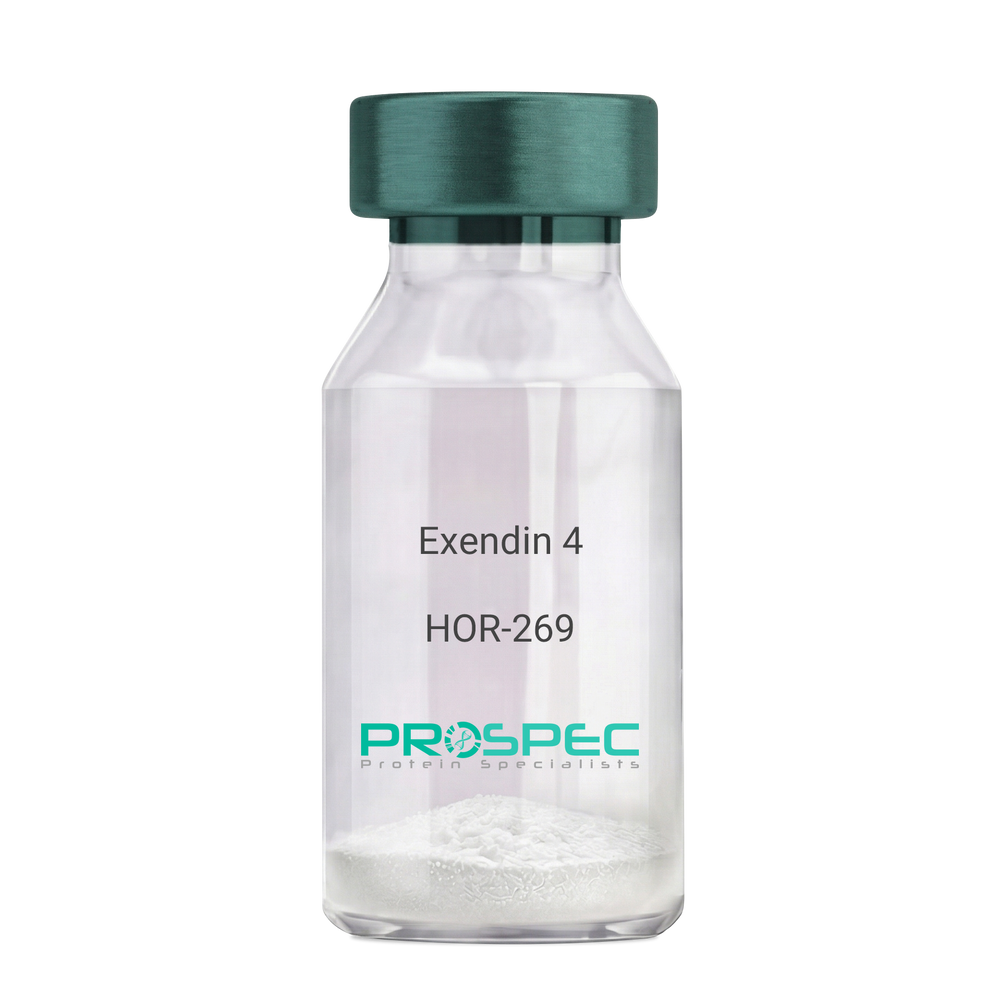
Exendin 4Description:
Exendin-4 Recombinant
Product # :
HOR-269Price :
Quantity :
Shipping Method :
Shipped at Room temp
More Info
- description
- source
- formulation
- purity
- biological activity
- More Info
Description
Exendin-4 Recombinant produced in E.Coli is a non-glycosylated polypeptide chain containing 39 amino acids and having a molecular mass of approximately 4.2kDa. Exendin-4 is purified by proprietary chromatographic techniques.
Source
Escherichia Coli.
Formulation
Lyophilized from a 0.2μm filtered concentrated solution in PBS, pH 7.4.
Purity
Greater than 96.0% as determined by:
(a) Analysis by RP-HPLC.
(b) Analysis by SDS-PAGE.Biological Activity
1. Regulates Glucose levels rapidly
2. Reduces Insulin resistance
3. Reduces Glucagon4. Stimulates beta cell growth production.
More Info
-
Introduction
Exedin-4 Recombinant is a like peptide-1 receptor agonist. The native hormone is produced in the gut of Gila monster Heloderma suspectrum (a type of reptile found in the desert) that stimulates production without causing threateningly low blood sugar, which can occur after using some anti-diabetes products. Recently, researchers used extracted saliva from gila monsters to create an unprecedented breakthrough in Diabetes Type 2 treatment. Unlike other products taken for type 2 diabetes, Exedin-4 has not been linked with weight gain and actually resulted in weight loss, according to the researchers. Exedin-4 enhances glucose-dependant secretion, suppresses inappropriately elevated secretion and slows gastric emptying in vivo. It also promotes B-cell proliferation and neogenesis in vitro and in animal models. Exedin-4 stimulates an increase in acinar cAMP, without stimulating the release of amylase.
-
Physical Appearance
Sterile Filtered White lyophilized (freeze-dried) powder.
-
Stability
Lyophilized Exendin Recombinant although stable at room temperature for 3 weeks, should be stored desiccated below -18°C. Upon reconstitution Exendin-4 should be stored at 4°C between 2-7 days and for future use below -18°C. For long term storage it is recommended to add a carrier protein (0.1% HSA or BSA).Please prevent freeze-thaw cycles.
-
Solubility
It is recommended to reconstitute the lyophilized Exendin Recombinant in sterile 18MΩ-cm H2O not less than 100 µg/ml, which can then be further diluted to other aqueous solutions.
-
Amino Acid Sequence
HGEGTFTSDL SKQMEEEAVR LFIEWLKNGG PSSGAPPPS.
ProSpec's products are furnished for LABORATORY RESEARCH USE ONLY. The product may not be used as drugs, agricultural or pesticidal products, food additives or household chemicals.