Search results
374 results found for “junctional adhesion molecule”
Name
Description
Product #
Price
Quantity
Shipping Method
- View Data Sheet
Name :
FAIM HumanDescription:
Fas Apoptotic Inhibitory Molecule Human Recombinant
FAIM1, Fas Apoptotic Inhibitory Molecule, FAIM2, LFG, NMP35, Fas Apoptotic Inhibitory Molecule 1, FAIM.
Product # :
PRO-1742Price :
Quantity :
Shipping Method :
Shipped with Ice Packs
More Info
- description
- source
- formulation
- purity
- More Info
Description
FAIM Human Recombinant produced in E.Coli is a single, non-glycosylated polypeptide chain containing 236 amino acids (1-213aa) and having a molecular mass of 26.4kDa.FAIM is fused to a 23 amino acid His-tag at N-terminus & purified by proprietary chromatographic techniques.
Source
Escherichia Coli.
Formulation
FAIM protein solution (0.5 mg /ml) containing 20mM Tris-HCl buffer (pH 8.0), 0.4M UREA and 10% glycerol.
Purity
Greater than 85% as determined by SDS-PAGE.
More Info
-
Introduction
Fas apoptotic inhibitory molecule, also known as FAIM function as an inducible effector molecule which mediates Fas resistance produced by surface Ig engagement in B cells. In addition FAIM protects against death receptor-triggered apoptosis and regulates B-cell signaling and differentiation. Among the diseases associated with FAIM are hemorrhagic thrombocythemia, and food allergy.
-
Synonyms
FAIM1, Fas Apoptotic Inhibitory Molecule, FAIM2, LFG, NMP35, Fas Apoptotic Inhibitory Molecule 1, FAIM.
-
Physical Appearance
Sterile Filtered clear solution.
-
Stability
Store at 4°C if entire vial will be used within 2-4 weeks. Store, frozen at -20°C for longer periods of time.For long term storage it is recommended to add a carrier protein (0.1% HSA or BSA).Please avoid freeze thaw cycles.
-
Amino Acid Sequence
MGSSHHHHHH SSGLVPRGSH MGSMLLPFIR TLPLLCYNHL LVSPDSATLS PPYSLEKMTD LVAVWDVALS DGVHKIEFEH GTTSGKRVVY VDGKEEIRKE WMFKLVGKET FYVGAAKTKA TINIDAISGF AYEYTLEING KSLKKYMEDR SKTTNTWVLH MDGENFRIVL EKDAMDVWCN GKKLETAGEF VDDGTETHFS IGNHDCYIKA VSSGKRKEGI IHTLIVDNRE IPEIAS.
ProSpec's products are furnished for LABORATORY RESEARCH USE ONLY. The product may not be used as drugs, agricultural or pesticidal products, food additives or household chemicals.
- View Data Sheet
Name :
CD300C HumanDescription:
CD300C Human Recombinant
CLM-6, CMRF-35, CMRF-35A, CMRF35, CMRF35-A1, CMRF35A, CMRF35A1, IGSF16, LIR, CMRF35-like molecule 6, CD300 antigen-like family member C, Immunoglobulin superfamily member 16.
Product # :
PRO-273Price :
Quantity :
Shipping Method :
Shipped with Ice Packs
More Info
- description
- source
- formulation
- purity
- More Info
Description
CD300C Human Recombinant produced in E.Coli is a single, non-glycosylated polypeptide chain containing 186 amino acids (21-183a.a.) and having a molecular mass of 20.2kDa. CD300C is fused to a 23 amino acid His-tag at N-terminus & purified by proprietary chromatographic techniques.
Source
Escherichia Coli.
Formulation
CD300C protein solution (1mg/ml) containing 20mM Tris-HCl buffer (pH 8.0), 0.4M urea and 10% glycerol.
Purity
Greater than 85.0% as determined by SDS-PAGE.
More Info
-
Introduction
CMRF35-like molecule 6 (CD300C), is a member of the CD300 family. The CMRF35 antigen was identified by reactivity with a monoclonal antibody and present on monocytes, neutrophils, and some T and B lymphocytes.
-
Synonyms
CLM-6, CMRF-35, CMRF-35A, CMRF35, CMRF35-A1, CMRF35A, CMRF35A1, IGSF16, LIR, CMRF35-like molecule 6, CD300 antigen-like family member C, Immunoglobulin superfamily member 16.
-
Physical Appearance
Sterile Filtered clear solution.
-
Stability
Store at 4°C if entire vial will be used within 2-4 weeks. Store, frozen at -20°C for longer periods of time. For long term storage it is recommended to add a carrier protein (0.1% HSA or BSA).Avoid multiple freeze-thaw cycles.
-
Amino Acid Sequence
MGSSHHHHHH SSGLVPRGSH MGSGYFPLSH PMTVAGPVGG SLSVQCRYEK EHRTLNKFWC RPPQILRCDK IVETKGSAGK RNGRVSIRDS PANLSFTVTL ENLTEEDAGT YWCGVDTPWL RDFHDPIVEV EVSVFPAGTT TASSPQSSMG TSGPPTKLPV HTWPSVTRKD SPEPSPHPGS
LFSNVR.
ProSpec's products are furnished for LABORATORY RESEARCH USE ONLY. The product may not be used as drugs, agricultural or pesticidal products, food additives or household chemicals.
- View Data Sheet
Name :
HK2 AntibodyDescription:
Hexokinase-2, Mouse Anti Human
Hexokinase-2, EC 2.7.1.1, HK2, Hexokinase type II, HK II, Muscle form hexokinase, HXK2, DKFZp686M1669.
Product # :
ANT-378Price :
Quantity :
Shipping Method :
Shipped with Ice Packs
More Info
- formulation
- More Info
Formulation
1mg/ml containing PBS, pH-7.4, & 0.1% Sodium Azide.
More Info
-
Introduction
Hexokinases phosphorylate glucose to produce glucose-6-phosphate, thus committing glucose to the glycolytic pathway. Hexokinase 2 is the predominant form found in skeletal muscle. It localizes to the outer membrane of mitochondria. Expression of this gene is insulin-responsive, and studies in rat suggest that it is involved in the increased rate of glycolysis seen in rapidly growing cancer cells.
-
Synonyms
Hexokinase-2, EC 2.7.1.1, HK2, Hexokinase type II, HK II, Muscle form hexokinase, HXK2, DKFZp686M1669.
-
Immunogen
Anti-human Hexokinase-2 mAb is derived from hybridization of mouse F0 myeloma cells with spleen cells from BALB/c mice immunized with recombinant human Hexokinase-2 amino acids 1-917 purified from E. coli.
-
Ig Subclass
Mouse IgG1 heavy chain and κ light chain.
-
Clone
P1A7AT.
-
Applications
Hexokinase-2 antibody has been tested by ELISA and Western blot analysis to assure specificity and reactivity. Since application varies, however, each investigation should be titrated by the reagent to obtain optimal results. Recommended dilution range for Western blot analysis is 1:1,000 ~ 3,000. Recommended starting dilution is 1:2,000.
-
Type
Mouse Anti Human Monoclonal.
-
Storage Procedures
For periods up to 1 month store at 4°C, for longer periods of time, store at -20°C. Prevent freeze thaw cycles.
-
Purification Method
Hexokinase-2 antibody was purified from mouse ascitic fluids by protein-G affinity chromatography.
ProSpec's products are furnished for LABORATORY RESEARCH USE ONLY. The product may not be used as drugs, agricultural or pesticidal products, food additives or household chemicals.
- View Data Sheet
Name :
CD55 HumanDescription:
CD55 Human Recombinant
CD55 Antigen, DAF, CD55 Molecule, CHAPLE, Cromer Blood Group Antigen, Complement Decay-Accelerating Factor, CROM.
Product # :
PRO-2514Price :
Quantity :
Shipping Method :
Shipped with Ice Packs
More Info
- description
- source
- formulation
- purity
- More Info
Description
CD55 produced in Sf9 Baculovirus cells is a single, glycosylated polypeptide chain (35-353 a.a.) and fused to a 9 aa His Tag at C-terminus containing a total of 328 amino acids and having a molecular mass of 36kDa. CD55 shows multiple bands between 40-57kDa on SDS-PAGE, reducing conditions and purified by proprietary chromatographic techniques.
Source
Sf9, Baculovirus cells.
Formulation
CD55 protein solution (0.5mg/ml) contains Phosphate Buffered Saline (pH 7.4) and 10% glycerol.
Purity
Greater than 95.0% as determined by SDS-PAGE.
More Info
-
Introduction
Decay-Accelerating Factor Isoform 1 or CD55, is a protein that attached to the cell membrane through glycophosphatidylinositol (GPI) anchor. CD55 regulates the complement system in the outer membrane. The protein is a receptor to many types of enteroviruses such as coxsackieviruses. CD55 is widely scattered amidst hematopoietic & non-hematopoietic cells. The CD55 has a crucial part in tumorigenesis, autocrine loops for cell rescue and evasion of apoptosis, cell motility, invasiveness etc.
-
Synonyms
CD55 Antigen, DAF, CD55 Molecule, CHAPLE, Cromer Blood Group Antigen, Complement Decay-Accelerating Factor, CROM.
-
Physical Appearance
Sterile Filtered colorless solution.
-
Stability
Store at 4°C if entire vial will be used within 2-4 weeks. Store, frozen at -20°C for longer periods of time. For long term storage it is recommended to add a carrier protein (0.1% HSA or BSA). Avoid multiple freeze-thaw cycles.
-
Amino Acid Sequence
ADPDCGLPPD VPNAQPALEG RTSFPEDTVI TYKCEESFVK IPGEKDSVIC LKGSQWSDIE EFCNRSCEVP TRLNSASLKQ PYITQNYFPV GTVVEYECRP GYRREPSLSP KLTCLQNLKW STAVEFCKKK SCPNPGEIRN GQIDVPGGIL FGATISFSCN TGYKLFGSTS SFCLISGSSV QWSDPLPECR EIYCPAPPQI DNGIIQGERD HYGYRQSVTY ACNKGFTMIG EHSIYCTVNN DEGEWSGPPP ECRGKSLTSK VPPTVQKPTT VNVPTTEVSP TSQKTTTKTT TPNAQATRST PVSRTTKHFH ETTPNKGSGT TSHHHHHH.
ProSpec's products are furnished for LABORATORY RESEARCH USE ONLY. The product may not be used as drugs, agricultural or pesticidal products, food additives or household chemicals.
- View Data Sheet
Name :
PPM1A AntibodyDescription:
Protein Phosphatase 1A Alpha Isoform, Mouse Anti Human
Protein phosphatase 1A, EC 3.1.3.16, Protein phosphatase 2C isoform alpha, PP2C-alpha, IA, PPM1A, PP2CA, MGC9201.
Product # :
ANT-309Price :
Quantity :
Shipping Method :
Shipped with Ice Packs
More Info
- formulation
- More Info
Formulation
1mg/ml containing PBS, pH-7.4, & 0.1% Sodium Azide.
More Info
-
Introduction
Protein Phosphatase 2C alpha is a member of the PP2C family of Ser/Thr protein phosphatases. PP2C family members are known to be negative regulators of cell stress response pathways. This phosphatase dephosphorylates, and negatively regulates the activities of, MAP kinases and MAP kinase kinases. It has been shown to inhibit the activation of p38 and JNK kinase cascades induced by environmental stresses. This phosphatase can also dephosphorylate cyclin-dependent kinases, and thus may be involved in cell cycle control. Overexpression of this phosphatase is reported to activate the expression of the tumor suppressor gene TP53/p53, which leads to G2/M cell cycle arrest and apoptosis. Three alternatively spliced transcript variants encoding two distinct isoforms have been described. Protein phosphatase 2C(PP2Cα) is a Mn2+- or Mg2+-dependent protein serine/threonine phosphatase that is essential for regulating cellular stress response in eukaryotes.
-
Synonyms
Protein phosphatase 1A, EC 3.1.3.16, Protein phosphatase 2C isoform alpha, PP2C-alpha, IA, PPM1A, PP2CA, MGC9201.
-
Immunogen
Anti-human PPM1A mAb, is derived from hybridization of mouse SP2/O myeloma cells with spleen cells from BALB/c mice immunized with recombinant human PPM1A amino acids 1-382 purified from E. coli.
-
Ig Subclass
Mouse IgG2b heavy chain and κ light chain.
-
Clone
Pp6c7AT.
-
Applications
PPM1A antibody has been tested by ELISA and Western blot analysis to assure specificity and reactivity. Since application varies, however, each investigation should be titrated by the reagent to obtain optimal results. Recommended dilution range for Western blot analysis is 1:250 ~ 500. Recommended starting dilution is 1:250.
-
Type
Mouse Anti Human Monoclonal.
-
Storage Procedures
For periods up to 1 month store at 4°C, for longer periods of time, store at -20°C. Prevent freeze thaw cycles.
-
Purification Method
PPM1A antibody was purified from mouse ascitic fluids by protein-G affinity chromatography.
ProSpec's products are furnished for LABORATORY RESEARCH USE ONLY. The product may not be used as drugs, agricultural or pesticidal products, food additives or household chemicals.
- View Data Sheet
Name :
TIAF1 HumanDescription:
TGFB1-Induced Anti-Apoptotic Factor 1 Human Recombinant
TGFB1-Induced Anti-Apoptotic Factor 1, 12 KDa TGF-Beta-1-Induced Antiapoptotic Factor, Molecule Associated With Jak-3 N-Terminal, KIAA0216, MYO18A, MYSPDZ, MAJN, SPR210.
Product # :
PRO-1211Price :
Quantity :
Shipping Method :
Shipped with Ice Packs
More Info
- description
- source
- formulation
- purity
- More Info
Description
TIAF1 Human Recombinant produced in E. coli is a single polypeptide chain containing 152 amino acids (1-115) and having a molecular mass of 16.6 kDa.TIAF1 is fused to a 37 amino acid His-tag at N-terminus & purified by proprietary chromatographic techniques.
Source
E.coli.
Formulation
The TIAF1 solution (0.5mg/1ml) contains 20mM Tris-HCl buffer (pH 8.0), 0.4M Urea and 10% glycerol.
Purity
Greater than 85% as determined by SDS-PAGE.
More Info
-
Introduction
TGFB1-induced anti-apoptotic factor 1 (TIAF1) hinders the cytotoxic effects of TNF-alpha and overexpressed TNF receptor adapters TRADD, FADD, and RIPK1. The TIAF1 protein is involved in TGF-beta1 inhibition of IkappaB-alpha expression and suppression of TNF-mediated IkappaB-alpha degradation. TIAF1 is not detected in normal kidney and liver. TIAF1 is up-regulated in chronic and acute allograft rejection: expressed in the inflammatory infiltrate and in tubular epithelial cells.
-
Synonyms
TGFB1-Induced Anti-Apoptotic Factor 1, 12 KDa TGF-Beta-1-Induced Antiapoptotic Factor, Molecule Associated With Jak-3 N-Terminal, KIAA0216, MYO18A, MYSPDZ, MAJN, SPR210.
-
Physical Appearance
Sterile Filtered colorless solution.
-
Stability
Store at 4°C if entire vial will be used within 2-4 weeks. Store, frozen at -20°C for longer periods of time. For long term storage it is recommended to add a carrier protein (0.1% HSA or BSA).Avoid multiple freeze-thaw cycles.
-
Amino Acid Sequence
MRGSHHHHHH GMASMTGGQQ MGRDLYDDDD KDRWGSHMSS PSSPFREQSF LCAAGDAGEE SRVQVLKNEV RRGSPVLLGW VEQAYADKCV CGPSAPPAPT PPSLSQRVMC NDLFKVNPFQ LQQFRADPST ASLLLCPGGL DHKLNLRGKA WG
ProSpec's products are furnished for LABORATORY RESEARCH USE ONLY. The product may not be used as drugs, agricultural or pesticidal products, food additives or household chemicals.
- View Data Sheet
Name :
SH2D1B HumanDescription:
SH2 domain containing 1B Human Recombinant
SH2 Domain Containing 1B, EWS/FLI1-Activated Transcript 2, EAT-2, EAT2, SH2 Domain-Containing Molecule EAT2, SH2 Domain-Containing Protein 1B, SH2 domain-containing protein 1B, EWS/FLI1-activated transcript 2, EAT-2.
Product # :
PRO-2470Price :
Quantity :
Shipping Method :
Shipped with Ice Packs
More Info
- description
- source
- formulation
- purity
- More Info
Description
SH2D1B Human Recombinant produced in Sf9 Baculovirus cells is a single, glycosylated polypeptide chain containing 141 amino acids (1-132a.a.) and having a molecular mass of 16.4kDa (Molecular size on SDS-PAGE will appear at approximately 18-28kDa). SH2D1B is expressed with a 6 amino acid His tag at C-Terminus and purified by proprietary chromatographic techniques.
Source
Sf9, Baculovirus cells.
Formulation
SH2D1B protein solution (0.25mg/ml) contains Phosphate Buffered Saline (pH 7.4) and 20% glycerol.
Purity
Greater than 90.0% as determined by SDS-PAGE.
More Info
-
Introduction
SH2 domain-containing protein 1B, also known as SH2D1B activates NK cells. SH2D1B participates in controlling signal transduction through at least 4 receptors, CD84, SLAMF1, LY9 and CD244, expressed on the surface of professional antigen-presenting cells. Two isoforms of the human SH2D1B are produced by alternative splicing. Superior Mesenteric Artery Syndrome is one of the diseases which is associated with SH2D1B.
-
Synonyms
SH2 Domain Containing 1B, EWS/FLI1-Activated Transcript 2, EAT-2, EAT2, SH2 Domain-Containing Molecule EAT2, SH2 Domain-Containing Protein 1B, SH2 domain-containing protein 1B, EWS/FLI1-activated transcript 2, EAT-2.
-
Physical Appearance
Sterile filtered colorless solution.
-
Stability
Store at 4°C if entire vial will be used within 2-4 weeks.Store, frozen at -20°C for longer periods of time. For long term storage it is recommended to add a carrier protein (0.1% HSA or BSA).Avoid multiple freeze-thaw cycles.
-
Amino Acid Sequence
ADPMDLPYYH GRLTKQDCET LLLKEGVDGN FLLRDSESIP GVLCLCVSFK NIVYTYRIFR EKHGYYRIQT AEGSPKQVFP SLKELISKFE KPNQGMVVHL LKPIKRTSPS LRWRGLKLEL ETFVNSNSDY VDVLPHHHHH H.
ProSpec's products are furnished for LABORATORY RESEARCH USE ONLY. The product may not be used as drugs, agricultural or pesticidal products, food additives or household chemicals.
- View Data Sheet
Name :
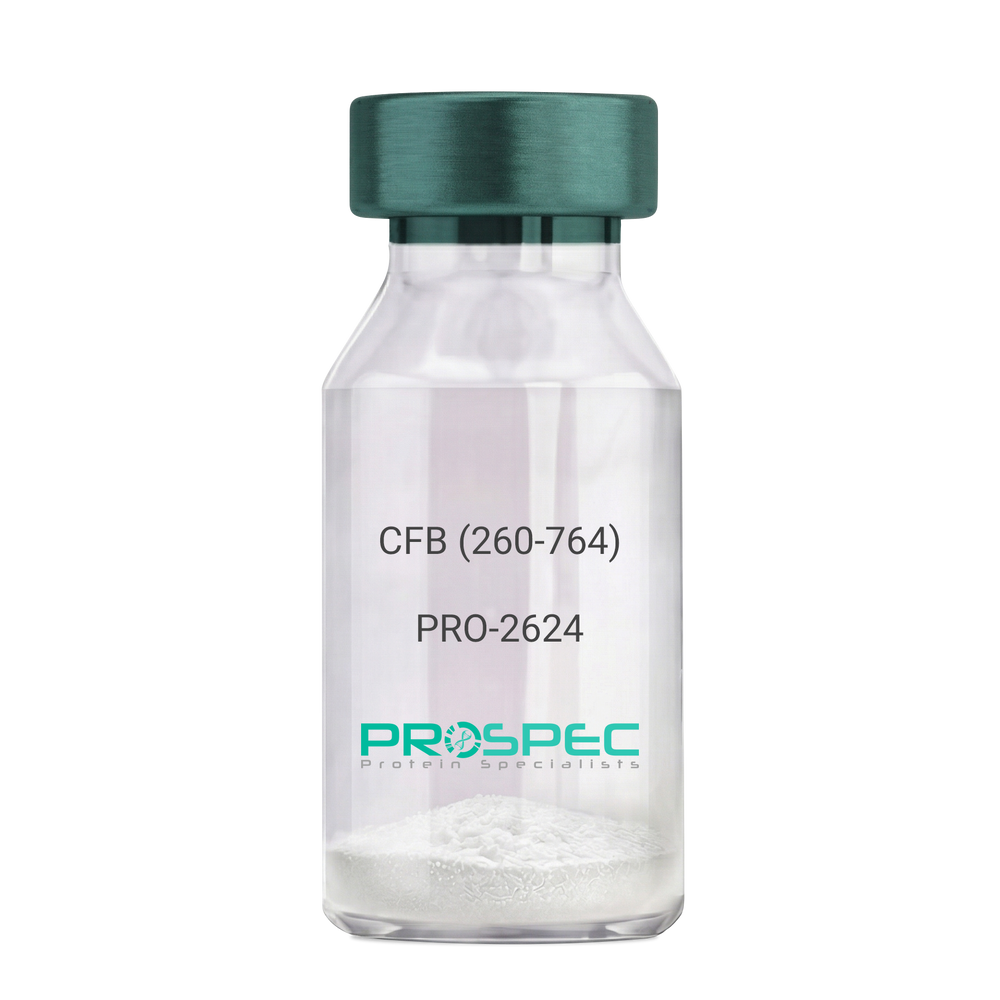
CFB (260-764) Human, Sf9Description:
Complement Factor B (260-764 a.a.) Human Recombinant, Sf9
CFB, C3/C5 convertase, Glycine-rich beta glycoprotein, GBG, PBF2, Properdin factor B, BF, BFD, AHUS4, ARMD14, CFAB, CFBD, FB, FBI12, GBG, H2-Bf.
Product # :
PRO-2624Price :
Quantity :
Shipping Method :
Shipped with Ice Packs
More Info
- description
- source
- formulation
- purity
- More Info
Description
CFB Human Recombinant produced in Sf9 Baculovirus cells is a single, glycosylated polypeptide chain containing 514 amino acids (260-764 a.a) and having a molecular mass of 58.1kDa.CFB is fused to an 9 amino acid His-tag at C-terminus & purified by proprietary chromatographic techniques.
Source
Sf9, Baculovirus cells.
Formulation
CFB protein solution (0.5mg/ml) containing Phosphate Buffered Saline (pH 7.4) and 20% glycerol.
Purity
Greater than 90.0% as determined by SDS-PAGE.
More Info
-
Introduction
Factor B is a protein, build from a single chain that circulates in the blood. Complement factor D cleaves and activates factor B, thus creating a catalytic subunit Bb and noncatalytic chain Ba. Subunit Bb is a serine protease that can bind to C3b and forms alternative pathway C3 convertase. Subunit Ba acts as an inhibitor for proliferation of lymphocytes, when Bb is part of the lymphocytes’ proliferation. The gene that codes for this protein is located on chromosome six.
-
Synonyms
CFB, C3/C5 convertase, Glycine-rich beta glycoprotein, GBG, PBF2, Properdin factor B, BF, BFD, AHUS4, ARMD14, CFAB, CFBD, FB, FBI12, GBG, H2-Bf.
-
Physical Appearance
Sterile Filtered colorless solution.
-
Stability
Store at 4°C if entire vial will be used within 2-4 weeks. Store, frozen at -20°C for longer periods of time. For long term storage it is recommended to add a carrier protein (0.1% HSA or BSA).Avoid multiple freeze-thaw cycles.
-
Amino Acid Sequence
ADPKIVLDPS GSMNIYLVLD GSDSIGASNF TGAKKCLVNL IEKVASYGVK PRYGLVTYAT
YPKIWVKVSE ADSSNADWVT KQLNEINYED HKLKSGTNTK KALQAVYSMM SWPDDVPPEG
WNRTRHVIIL MTDGLHNMGG DPITVIDEIR DLLYIGKDRK NPREDYLDVY VFGVGPLVNQ
VNINALASKK DNEQHVFKVK DMENLEDVFY QMIDESQSLS LCGMVWEHRK GTDYHKQPWQ
AKISVIRPSK GHESCMGAVV SEYFVLTAAH CFTVDDKEHS IKVSVGGEKR DLEIEVVLFH
PNYNINGKKE AGIPEFYDYD VALIKLKNKL KYGQTIRPIC LPCTEGTTRA LRLPPTTTCQ
QQKEELLPAQ DIKALFVSEE EKKLTRKEVY IKNGDKKGSC ERDAQYAPGY DKVKDISEVV
TPRFLCTGGV SPYADPNTCR GDSGGPLIVH KRSRFIQVGV ISWGVVDVCK NQKRQKQVPA HARDFHINLF QVLPWLKEKL QDEDLGFLHH HHHH
ProSpec's products are furnished for LABORATORY RESEARCH USE ONLY. The product may not be used as drugs, agricultural or pesticidal products, food additives or household chemicals.
- View Data Sheet
Name :
CD1D HumanDescription:
CD1D Human Recombinant
Antigen-presenting glycoprotein CD1d, R3G1, CD antigen: CD1d, Differentiation Antigen CD1-Alpha-3, T-Cell Surface Glycoprotein CD1d, Thymocyte Antigen CD1D, CD1A, R3, CD1d Molecule, CD1D Antigen, D Polypeptide, CD1d Antigen, R3G1, HMC Class I, Antigen-Like Glycoprotein CD1D, Antigen-Presenting Glycoprotein CD1d.
Product # :
PRO-2491Price :
Quantity :
Shipping Method :
Shipped with Ice Packs
More Info
- description
- source
- formulation
- purity
- More Info
Description
CD1D produced in Sf9 Insect cells is a single, glycosylated polypeptide chain containing 290 amino acids (20-301 a.a.) and having a molecular mass of 32.9kDa (Molecular size on SDS-PAGE will appear at approximately 40-57kDa). CD1Dis expressed with an 8 amino acid His tag at C-Terminus and purified by proprietary chromatographic techniques.
Source
Sf9, Insect cells.
Formulation
CD1D protein solution (0.25mg/ml) contains Phosphate Buffered Saline (pH 7.4) and 10% glycerol.
Purity
Greater than 85.0% as determined by SDS-PAGE.
More Info
-
Introduction
CD1D, also known as antigen-presenting glycoprotein CD1d, is a transmembrane glycoprotein which belongs to the CD1 family of glycolipid antigen-presenting MHC-like molecules. CD1d-presented lipid antigens activate a special class of T cells, familiar as natural killer T (NKT) cells, during the interaction with the T-cell receptor present on NKT membranes. Once activated, NKT cells rapidly produce Th1 &Th2 cytokines, usually represented by interleukin 4 production.
-
Synonyms
Antigen-presenting glycoprotein CD1d, R3G1, CD antigen: CD1d, Differentiation Antigen CD1-Alpha-3, T-Cell Surface Glycoprotein CD1d, Thymocyte Antigen CD1D, CD1A, R3, CD1d Molecule, CD1D Antigen, D Polypeptide, CD1d Antigen, R3G1, HMC Class I, Antigen-Like Glycoprotein CD1D, Antigen-Presenting Glycoprotein CD1d.
-
Physical Appearance
Sterile filtered colorless solution.
-
Stability
Store at 4°C if entire vial will be used within 2-4 weeks. Store, frozen at -20°C for longer periods of time. For long term storage, it is recommended to add a carrier protein (0.1% HSA or BSA).Avoid multiple freeze-thaw cycles.
-
Amino Acid Sequence
EVPQRLFPLR CLQISSFANS SWTRTDGLAW LGELQTHSWS NDSDTVRSLK PWSQGTFSDQ QWETLQHIFR VYRSSFTRDV KEFAKMLRLS YPLELQVSAG CEVHPGNASN NFFHVAFQGK DILSFQGTSW EPTQEAPLWV NLAIQVLNQD KWTRETVQWL LNGTCPQFVS GLLESGKSEL
KKQVKPKAWL SRGPSPGPGR LLLVCHVSGF YPKPVWVKWM RGEQEQQGTQ PGDILPNADE TWYLRATLDV VAGEAAGLSC RVKHSSLEGQ DIVLYWGGSY TSLEHHHHHH.
ProSpec's products are furnished for LABORATORY RESEARCH USE ONLY. The product may not be used as drugs, agricultural or pesticidal products, food additives or household chemicals.
- View Data Sheet
Name :
CD34 Human, Sf9Description:
CD34 Human Recombinant, Sf9
CD34 molecule, Hematopoietic progenitor cell antigen CD34, CD34 Antigen, CD34.
Product # :
PRO-2358Price :
Quantity :
Shipping Method :
Shipped with Ice Packs
More Info
- description
- source
- formulation
- purity
- More Info
Description
CD34 Human Recombinant produced in Sf9 Baculovirus cells is a single, glycosylated polypeptide chain containing 268 amino acids (32-290a.a.) and having a molecular mass of 28.6kDa (Molecular size on SDS-PAGE will appear at approximately 40-57kDa).CD34 is fused with a 6 amino acids His tag at C-Terminus and purified by proprietary chromatographic techniques.
Source
Sf9, Baculovirus cells.
Formulation
CD34 protein solution (0.25mg/ml) contains Phosphate buffered saline (pH7.4) and 10% glycerol.
Purity
Greater than 95.0% as determined by SDS-PAGE.
More Info
-
Introduction
CD34 is a single chain transmembrane glycoprotein which is selectively expressed on human lymphoid and myeloid hemapoietic progenitor cells. CD34 has been used to measure angiogenesis, which reportedly predicts tumor recurrence.
-
Synonyms
CD34 molecule, Hematopoietic progenitor cell antigen CD34, CD34 Antigen, CD34.
-
Physical Appearance
Sterile filtered colorless solution.
-
Stability
Store at 4°C if entire vial will be used within 2-4 weeks. Store, frozen at -20°C for longer periods of time. For long term storage it is recommended to add a carrier protein (0.1% HSA or BSA).Avoid multiple freeze-thaw cycles.
-
Amino Acid Sequence
ADLSLDNNGT ATPELPTQGT FSNVSTNVSY QETTTPSTLG STSLHPVSQH GNEATTNITE TTVKFTSTSV ITSVYGNTNS SVQSQTSVIS TVFTTPANVS TPETTLKPSL SPGNVSDLST TSTSLATSPT KPYTSSSPIL SDIKAEIKCS GIREVKLTQG ICLEQNKTSS CAEFKKDRGE GLARVLCGEE QADADAGAQV CSLLLAQSEV RPQCLLLVLA NRTEISSKLQ LMKKHQSDLK KLGILDFTEQ DVASHQSYSQ KTHHHHHH.
ProSpec's products are furnished for LABORATORY RESEARCH USE ONLY. The product may not be used as drugs, agricultural or pesticidal products, food additives or household chemicals.
- View Data Sheet
Name :
DEDD HumanDescription:
Death Effector Domain Containing Human Recombinant
CASP8IP1, DEDD1, DEFT, FLDED1, KE05, DEDPro1, Death effector domain-containing testicular molecule.
Product # :
PRO-1349Price :
Quantity :
Shipping Method :
Shipped with Ice Packs
More Info
- description
- source
- formulation
- purity
- More Info
Description
DEDD Human Recombinant produced in E.Coli is a single, non-glycosylated polypeptide chain containing 338 amino acids (1-318a.a) and having a molecular mass of 38.9kDa. DEDD is fused to a 20 amino acid His-tag at N-terminus & purified by proprietary chromatographic techniques.
Source
Escherichia Coli.
Formulation
DEDD protein solution (0.5mg/ml) contains 20mM Tris-HCl buffer (pH 8.0), 0.4M Urea and 10% glycerol.
Purity
Greater than 85.0% as determined by SDS-PAGE.
More Info
-
Introduction
Death effector domain-containing protein (DEDD) is a cytoplasmic protein. The cell death activity of DEDD relates to its nuclear localization. DEDD translocates to the nucleus during CD95-mediated apoptosis, there it localizes to nucleoli-like structures, activates caspase-6 and particularly inhibits RNA polymerase I-dependent transcription. DEDD is usually expressed in a variety of tissues, and found in the highest levels in the testis. Overexpression of DEDD was shown to induce weak apoptosis.
-
Synonyms
CASP8IP1, DEDD1, DEFT, FLDED1, KE05, DEDPro1, Death effector domain-containing testicular molecule.
-
Physical Appearance
Sterile Filtered colorless solution.
-
Stability
Store at 4°C if entire vial will be used within 2-4 weeks. Store, frozen at -20°C for longer periods of time. For long term storage it is recommended to add a carrier protein (0.1% HSA or BSA).Avoid multiple freeze-thaw cycles.
-
Amino Acid Sequence
MGSSHHHHHH SSGLVPRGSH MAGLKRRASQ VWPEEHGEQE HGLYSLHRMF DIVGTHLTHR DVRVLSFLFV DVIDDHERGL IRNGRDFLLA LERQGRCDES NFRQVLQLLR IITRHDLLPY VTLKRRRAVC PDLVDKYLEE TSIRYVTPRA LSDPEPRPPQ PSKTVPPHYP VVCCPTSGPQ MCSKRPARGR ATLGSQRKRR KSVTPDPKEK QTCDIRLRVR AEYCQHETAL QGNVFSNKQD PLERQFERFN QANTILKSRD LGSIICDIKF SELTYLDAFW RDYINGSLLE ALKGVFITDS LKQAVGHEAI KLLVNVDEED YELGRQKLLR NLMLQALP.
ProSpec's products are furnished for LABORATORY RESEARCH USE ONLY. The product may not be used as drugs, agricultural or pesticidal products, food additives or household chemicals.
- View Data Sheet
Name :
AIF1L HumanDescription:
Allograft Inflammatory Factor 1 Like Human Recombinant
Allograft Inflammatory Factor 1-like, IBA2, FLJ12783, Ionized calcium-binding adapter molecule 2, C9orf58, chromosome 9 open reading frame 58, MGC29466.
Product # :
CYT-007Price :
Quantity :
Shipping Method :
Shipped with Ice Packs
More Info
- description
- source
- formulation
- purity
- More Info
- sds-page
Description
AIF1L produced in E.Coli is a single, non-glycosylated polypeptide chain containing 170 amino acids (1-150a.a.) and having a molecular mass of 19.2kDa.AIF1L is fused to a 20 amino acid His-tag at N-terminus & purified by proprietary chromatographic techniques.
Source
Escherichia Coli.
Formulation
The AIF1L protein solution (1mg/1ml) is formulated in 20mM Tris-HCl buffer (pH8.0), 1mM DTT, 0.1mM NaCl and 20% glycerol.
Purity
Greater than 95% as determined by SDS-PAGE.
sds-page
More Info
-
Synonyms
Allograft Inflammatory Factor 1-like, IBA2, FLJ12783, Ionized calcium-binding adapter molecule 2, C9orf58, chromosome 9 open reading frame 58, MGC29466.
-
Physical Appearance
Sterile Filtered clear solution.
-
Stability
Store at 4°C if entire vial will be used within 2-4 weeks. Store, frozen at -20°C for longer periods of time. For long term storage it is recommended to add a carrier protein (0.1% HSA or BSA).Avoid multiple freeze-thaw cycles.
-
Amino Acid Sequence
MGSSHHHHHH SSGLVPRGSH MSGELSNRFQ GGKAFGLLKA RQERRLAEIN REFLCDQKYS DEENLPEKLT AFKEKYMEFD LNNEGEIDLM SLKRMMEKLG VPKTHLEMKK MISEVTGGVS DTISYRDFVN MMLGKRSAVL KLVMMFEGKA NESSPKPVGP PPERDIASLP.
-
Background
Allograft Inflammatory Factor 1-Like Human Recombinant: Investigating its Role in Immune Responses and Potential Therapeutic Applications
1. Abstract
This paper seeks to provide an in-depth overview of Allograft Inflammatory Factor 1-Like Human Recombinant (AIF-1L), a significant protein involved in the regulation of inflammatory responses. By delving into the structure, biological functions, and pathological implications of AIF-1L, we attempt to shed light on its potential as a therapeutic target in immune-mediated disorders.
2. Introduction
AIF-1L belongs to the allograft inflammatory factor protein family and is implicated in immune responses. With its intricate interaction with a multitude of immune cells and involvement in various inflammatory and immune-related diseases, it serves as a pivotal point of interest for therapeutic intervention research.
3. Structure and Signaling of AIF-1L
AIF-1L shares a conserved EF-hand calcium-binding motif with its counterpart AIF-1, suggesting similar calcium-dependent activities. While its signaling pathway remains largely elusive, the protein is believed to modulate macrophage activation, an integral part of immune response regulation.
4. Biological Functions of AIF-1L
AIF-1L is fundamentally involved in immune response modulation, especially in the context of macrophage activation. It plays key roles in managing inflammation, cell proliferation, survival, and differentiation.
5. AIF-1L in Disease Pathology
AIF-1L is linked with a range of inflammatory and immune-related disorders, including but not limited to rheumatoid arthritis, atherosclerosis, and certain cancers. This association underscores its profound physiological relevance and potential as a therapeutic target.
6. Therapeutic Potential of AIF-1L
Given its central role in immune responses, AIF-1L presents a promising target for therapeutic strategies. Manipulating AIF-1L activity could pave the way for novel treatments of various inflammatory and immune-mediated diseases.
7. Conclusion and Future Perspectives
Though our comprehension of AIF-1L has made significant strides, there is still much terrain left to explore. Future research directed at the precise molecular mechanisms and pathological roles of AIF-1L will undoubtedly contribute to the development of novel therapeutic strategies.
What is the molecular weight/Mw of AIF1L Protein?
AIF1L Protein has a total Mw of 19.2kDa.
What is the source or expression system of AIF1L Protein?
Escherichia Coli.
What is the Purity of AIF1L Protein?
AIF1L Protein is >95% pure as determined by SDS-PAGE.
What is the Biological Activity of AIF1L Protein?
The biological functionality of AIF1L Protein will be determined in the future.
What is the amino acid sequence of AIF1L Protein?
MGSSHHHHHH SSGLVPRGSH MSGELSNRFQ GGKAFGLLKA RQERRLAEIN REFLCDQKYS DEENLPEKLT AFKEKYMEFD LNNEGEIDLM SLKRMMEKLG VPKTHLEMKK MISEVTGGVS DTISYRDFVN MMLGKRSAVL KLVMMFEGKA NESSPKPVGP PPERDIASLP.
What applications can AIF1L Protein be used in?
AIF1L Protein can probably be used in western blot, ELISA and Lateral Flow.
What is the endotoxin level for AIF1L Protein?
The endotoxin level is minimal, AIF1L Protein was purified using conventional chromatography techniques.
ProSpec's products are furnished for LABORATORY RESEARCH USE ONLY. The product may not be used as drugs, agricultural or pesticidal products, food additives or household chemicals.
- View Data Sheet
Name :
Pleiotrophin Human, HisDescription:
Pleiotrophin Human Recombinant, His Tag
PTN, Heparin Affin Regulatory Protein, HARP, Heparin-binding growth factor-8, HBGF-8, Osteoblast-Specific Factor-1, OSF-1, Heparin-binding growth-associated molecule, HB-GAM, HBNF-1 Heparin-binding brain mitogen, Heparin-binding neurite outgrowth-promoting factor 1, HBBM, NEGF1.
Product # :
CYT-451Price :
Quantity :
Shipping Method :
Shipped at Room temp
More Info
- description
- source
- formulation
- purity
- More Info
Description
Pleiotrophin Human Recombinant contains His-Tagged Fusion Protein, produced in E. coli, its molecular weight is 17.3 kDa protein containing 136 amino acid residues of the OSF-1 human and 16 additional amino acid residues - HisTag, thrombin cleavage site (underlined).
Source
Escherichia Coli.
Formulation
Filtered and lyophilized from 0.5 mg/ml in 0.1M phosphate buffer and 0.1M NaCl, pH 7.2.
Purity
Greater than 95% as determined by SDS-PAGE.
More Info
-
Introduction
Pleiotrophin (Osteoblast-Specific Factor-1, OSF-1) contains 136 amino acid residues. The sequence is very rich in cationic amino acids (24% of the residues); lysine cluster sequences are found in the N-terminal and C-terminal ends of the structure.
The OSF-1 gene was shown by Northern blotting analysis to be expressed in mouse calvarial osteoblast-enriched cells and in mouse brain tissues, but not in thymus, spleen, kidney, liver, lung, testis or heart. Pleiotrophin has the ability to promote adhesion, migration, expansion, and differentiation of human osteoprogenitor cells. In addition to certain types of cancer, the embryonic growth and differentiation factor pleiotrophin is found also in adults in inflammatory diseases. In osteoarthritis, pleiotrophin is especially expressed in early stages, and its concentrations in the synovial fluid could serve as a marker for the progress of the disease. Pleitrophin might be involved in cartilage repair in osteoarthritis, in particular, in earlier stages. -
Synonyms
PTN, Heparin Affin Regulatory Protein, HARP, Heparin-binding growth factor-8, HBGF-8, Osteoblast-Specific Factor-1, OSF-1, Heparin-binding growth-associated molecule, HB-GAM, HBNF-1 Heparin-binding brain mitogen, Heparin-binding neurite outgrowth-promoting factor 1, HBBM, NEGF1.
-
Physical Appearance
Filtered White lyophilized (freeze-dried) powder.
-
Stability
Store lyophilized protein at -20°C. Aliquot the product after reconstitution to avoid repeated freezing/thawing cycles. Reconstituted protein can be stored at 4°C for a limited period of time; it does not show any change after two weeks at 4°C.
-
Solubility
Add PBS pH 7.2 and let the lyophilized pellet dissolve completely.
-
Amino Acid Sequence
MKHHHHHHHM LVPRGSGKKE KPEKKVKKSD CGEWQWSVCV PTSGDCGLGT REGTRTGAEC KQTMKTQRCK IPCNWKKQFG AECKYQFQAW GECDLNTALK TRTGSLKRAL HNAECQKTVT ISKPCGKLTK PKPQAESKKK KKEGKKQEKM LD.
ProSpec's products are furnished for LABORATORY RESEARCH USE ONLY. The product may not be used as drugs, agricultural or pesticidal products, food additives or household chemicals.
- View Data Sheet
Name :
Pleiotrophin HumanDescription:
Pleiotrophin Human Recombinant
PTN, Heparin Affin Regulatory Protein, HARP, Heparin-binding growth factor-8, HBGF-8, Osteoblast-Specific Factor-1, OSF-1, Heparin-binding growth-associated molecule, HB-GAM, HBNF-1 Heparin-binding brain mitogen, Heparin-binding neurite outgrowth-promoting factor 1, HBBM, NEGF1.
Product # :
CYT-749Price :
Quantity :
Shipping Method :
Shipped at Room temp
More Info
- description
- source
- formulation
- purity
- More Info
- sds-page
Description
Pleiotrophin Human Recombinant produced in E.coli is a single, non-glycosylated polypeptide chain containing 136 amino acids and having a molecular mass of 15.3kDa.The Pleiotrophin is purified by proprietary chromatographic techniques.
Source
Escherichia Coli.
Formulation
The Pleiotrophin protein was lyophilized from a 0.2µm filtered concentrated solution in PBS, pH 7.4.
Purity
Greater than 97.0% as determined by:
(a) Analysis by RP-HPLC.
(b) Analysis by SDS-PAGE.sds-page
More Info
-
Introduction
Pleiotrophin (Osteoblast-Specific Factor-1, OSF-1) contains 136 amino acid residues. The sequence is very rich in cationic amino acids (24% of the residues); lysine cluster sequences are found in the N-terminal and C-terminal ends of the structure.
The OSF-1 gene was shown by Northern blotting analysis to be expressed in mouse calvarial osteoblast-enriched cells and in mouse brain tissues, but not in thymus, spleen, kidney, liver, lung, testis or heart. Pleiotrophin has the ability to promote adhesion, migration, expansion, and differentiation of human osteoprogenitor cells. In addition to certain types of cancer, the embryonic growth and differentiation factor pleiotrophin is found also in adults in inflammatory diseases. In osteoarthritis, pleiotrophin is especially expressed in early stages, and its concentrations in the synovial fluid could serve as a marker for the progress of the disease. Pleitrophin might be involved in cartilage repair in osteoarthritis, in particular, in earlier stages. -
Synonyms
PTN, Heparin Affin Regulatory Protein, HARP, Heparin-binding growth factor-8, HBGF-8, Osteoblast-Specific Factor-1, OSF-1, Heparin-binding growth-associated molecule, HB-GAM, HBNF-1 Heparin-binding brain mitogen, Heparin-binding neurite outgrowth-promoting factor 1, HBBM, NEGF1.
-
Physical Appearance
Sterile Filtered White lyophilized (freeze-dried) powder.
-
Stability
Lyophilized Pleiotrophin although stable at room temperature for 3 weeks, should be stored desiccated below -18°C. Upon reconstitution Pleiotrophin should be stored at 4°C between 2-7 days and for future use below -18°C. For long term storage it is recommended to add a carrier protein (0.1% HSA or BSA). Please prevent freeze-thaw cycles.
-
Solubility
It is recommended to reconstitute the lyophilized Pleiotrophin in sterile 18M-cm H2O not less than 100µg/ml, which can then be further diluted to other aqueous solutions.
-
Amino Acid Sequence
GKKEKPEKKV KKSDCGEWQW SVCVPTSGDC GLGTREGTRT GAECKQTMKT QRCKIPCNWK KQFGAECKYQ FQAWGECDLN TALKTRTGSL KRALHNAECQ KTVTISKPCG KLTKPKPQAE SKKKKKEGKK QEKMLD.
ProSpec's products are furnished for LABORATORY RESEARCH USE ONLY. The product may not be used as drugs, agricultural or pesticidal products, food additives or household chemicals.