Skip to content

High-quality research proteins.

  • 1-800-805-6531

  • Mon - Sat 8.00-18.00, Sun - Closed

  • info@prospecbio.com

  • PO Box 6591 East Brunswick NJ 08816

  • Products
    • Cytokines
    • Growth factors
    • Chemokines
    • Cd antigens
    • Neurotrophins
    • Hormones
    • Enzymes
    • Viral antigens
    • Recombinant proteins
    • Natural proteins
    • Monoclonal antibodies
    • Polyclonal antibodies
    • Thermal Packaging
  • About
    • Company
    • Founder
    • Contribution
  • Customers
    • Eastern Asia
    • Eastern Europe
    • North America
    • South America
    • South East Asia
    • Southern Asia
    • Western Europe
  • Ordering
    • Ordering Method
    • Ordering - Credit Card
    • Ordering - PO
    • Shipping Fees
    • FAQs
  • Services
    • DNA Cloning
    • Protein Expression
    • Monoclonal Antibody
    • Fermentation
    • Technology License
  • Contact us
Log in

Country/region

  • USD $ | Albania
  • USD $ | Andorra
  • USD $ | Argentina
  • USD $ | Armenia
  • USD $ | Australia
  • USD $ | Austria
  • USD $ | Azerbaijan
  • USD $ | Belarus
  • USD $ | Belgium
  • USD $ | Bolivia
  • USD $ | Brazil
  • USD $ | Bulgaria
  • USD $ | Cambodia
  • USD $ | Canada
  • USD $ | Chile
  • USD $ | China
  • USD $ | Colombia
  • USD $ | Costa Rica
  • USD $ | Croatia
  • USD $ | Cyprus
  • USD $ | Czechia
  • USD $ | Denmark
  • USD $ | Estonia
  • USD $ | Finland
  • USD $ | France
  • USD $ | Georgia
  • USD $ | Germany
  • USD $ | Greece
  • USD $ | Hong Kong SAR
  • USD $ | Hungary
  • USD $ | Iceland
  • USD $ | India
  • USD $ | Ireland
  • USD $ | Israel
  • USD $ | Italy
  • USD $ | Japan
  • USD $ | Kazakhstan
  • USD $ | Latvia
  • USD $ | Liechtenstein
  • USD $ | Lithuania
  • USD $ | Madagascar
  • USD $ | Malta
  • USD $ | Mexico
  • USD $ | Moldova
  • USD $ | Monaco
  • USD $ | Netherlands
  • USD $ | New Zealand
  • USD $ | North Macedonia
  • USD $ | Norway
  • USD $ | Panama
  • USD $ | Paraguay
  • USD $ | Peru
  • USD $ | Philippines
  • USD $ | Poland
  • USD $ | Portugal
  • USD $ | Romania
  • USD $ | Singapore
  • USD $ | Slovakia
  • USD $ | Slovenia
  • USD $ | South Africa
  • USD $ | South Korea
  • USD $ | Spain
  • USD $ | Sri Lanka
  • USD $ | Sweden
  • USD $ | Switzerland
  • USD $ | Taiwan
  • USD $ | Thailand
  • USD $ | Türkiye
  • USD $ | Ukraine
  • USD $ | United Kingdom
  • USD $ | United States
  • USD $ | Uruguay
  • USD $ | Vatican City
  • USD $ | Venezuela
  • USD $ | Vietnam
  • Facebook
  • Instagram
logoProSpec - Recombinant Protein Manufacturer for academic and R&D industry
Become a distributor
Account Log in
Wishlist
Cart Cart(0)
  • Products
    +
    • Cytokines
    • Growth factors
    • Chemokines
    • Cd antigens
    • Neurotrophins
    • Hormones
    • Enzymes
    • Viral antigens
    • Recombinant proteins
    • Natural proteins
    • Monoclonal antibodies
    • Polyclonal antibodies
    • Thermal Packaging
  • About
    +
    • Company
    • Founder
    • Contribution
  • Customers
    +
    • Eastern Asia
    • Eastern Europe
    • North America
    • South America
    • South East Asia
    • Southern Asia
    • Western Europe
  • Ordering
    +
    • Ordering Method
    • Ordering - Credit Card
    • Ordering - PO
    • Shipping Fees
    • FAQs
  • Services
    +
    • DNA Cloning
    • Protein Expression
    • Monoclonal Antibody
    • Fermentation
    • Technology License
  • Contact us

Item added to your cart

View cart
View All
  • Cytokines
  • Growth factors
  • Chemokines
  • Cd antigens
  • Neurotrophins
  • Hormones
  • Enzymes
  • Viral antigens
  • Recombinant proteins
  • Natural proteins
  • Monoclonal antibodies
  • Polyclonal antibodies
  • Thermal Packaging
  • Tumor Necrosis Factor

    Tumor Necrosis Factor

    View All
  • 4-1BB

    4-1BB

    View All
  • Adiponectin

    Adiponectin

    View All
  • AIF1

    AIF1

    View All
  • Other Cytokines

    Other Cytokines

    View All
  • AITRL

    AITRL

    View All
  • Angiopoietin

    Angiopoietin

    View All
  • Apolipoprotein

    Apolipoprotein

    View All
  • B-Cell Activating Factor

    B-Cell Activating Factor

    View All
  • Beta Defensin

    Beta Defensin

    View All
  • Bone Morphogenetic Protein

    Bone Morphogenetic Protein

    View All
  • B type Natriuretic Peptide

    B type Natriuretic Peptide

    View All
  • BST

    BST

    View All
  • Betacellulin

    Betacellulin

    View All
  • Cardiotrophin

    Cardiotrophin

    View All
  • Activin

    Activin

    View All
  • Fibroblast Growth Factor

    Fibroblast Growth Factor

    View All
  • Other Growth Factors

    Other Growth Factors

    View All
  • CSF

    CSF

    View All
  • CTGF

    CTGF

    View All
  • IGFBP

    IGFBP

    View All
  • VEGF Protein

    VEGF Protein

    View All
  • EGF

    EGF

    View All
  • Epigen

    Epigen

    View All
  • Erythropoietin

    Erythropoietin

    View All
  • Insulin-Like Growth Factor

    Insulin-Like Growth Factor

    View All
  • Growth Hormone

    Growth Hormone

    View All
  • HDGF

    HDGF

    View All
  • Hepatocyte Growth Factor

    Hepatocyte Growth Factor

    View All
  • Insulin

    Insulin

    View All
  • BCA-1/ BLC (CXCL13)

    BCA-1/ BLC (CXCL13)

    View All
  • BRAK (CXCL14)

    BRAK (CXCL14)

    View All
  • C-10 (CCL6)

    C-10 (CCL6)

    View All
  • Other Chemokines

    Other Chemokines

    View All
  • MEC (CCL28)

    MEC (CCL28)

    View All
  • LD78-beta (CCL3L1)

    LD78-beta (CCL3L1)

    View All
  • CTACK (CCL27)

    CTACK (CCL27)

    View All
  • CXCL16

    CXCL16

    View All
  • CXCL17

    CXCL17

    View All
  • Platelet Factor-4 (CXCL4)

    Platelet Factor-4 (CXCL4)

    View All
  • ENA-78 (CXCL5)

    ENA-78 (CXCL5)

    View All
  • Eotaxin (CCL11,24,26)

    Eotaxin (CCL11,24,26)

    View All
  • Exodus-2 (CCL21)

    Exodus-2 (CCL21)

    View All
  • Fractalkine (CX3CL1)

    Fractalkine (CX3CL1)

    View All
  • CXCL6

    CXCL6

    View All
  • Other CD Antigens

    Other CD Antigens

    View All
  • CD14

    CD14

    View All
  • CD164

    CD164

    View All
  • CD1

    CD1

    View All
  • CD2

    CD2

    View All
  • CD200

    CD200

    View All
  • CD207

    CD207

    View All
  • CD226

    CD226

    View All
  • CD23

    CD23

    View All
  • CD244

    CD244

    View All
  • CD247

    CD247

    View All
  • CD27

    CD27

    View All
  • CD274

    CD274

    View All
  • CD300

    CD300

    View All
  • CD33

    CD33

    View All
  • Other Neurotrophins

    Other Neurotrophins

    View All
  • Beta-NGF

    Beta-NGF

    View All
  • BDNF

    BDNF

    View All
  • CDNF

    CDNF

    View All
  • CNTF

    CNTF

    View All
  • GDNF

    GDNF

    View All
  • Glia Maturation Factor

    Glia Maturation Factor

    View All
  • MANF

    MANF

    View All
  • Midkine

    Midkine

    View All
  • Neuroglobin

    Neuroglobin

    View All
  • Neurotrophic factors

    Neurotrophic factors

    View All
  • Neuregulin

    Neuregulin

    View All
  • Neuropilin

    Neuropilin

    View All
  • Pigment Epithelium-Derived Factor

    Pigment Epithelium-Derived Factor

    View All
  • Pleiotrophin

    Pleiotrophin

    View All
  • Peptide Hormones

    Peptide Hormones

    View All
  • Other Hormones

    Other Hormones

    View All
  • HCG

    HCG

    View All
  • Endothelin

    Endothelin

    View All
  • Exendin

    Exendin

    View All
  • FSH

    FSH

    View All
  • Glucagon

    Glucagon

    View All
  • GHRP

    GHRP

    View All
  • GLP

    GLP

    View All
  • Thyrostimulin

    Thyrostimulin

    View All
  • Inhibin A

    Inhibin A

    View All
  • LHRH

    LHRH

    View All
  • Melanotan

    Melanotan

    View All
  • Procalcitonin

    Procalcitonin

    View All
  • PTH

    PTH

    View All
  • Peroxiredoxin

    Peroxiredoxin

    View All
  • Peptidase

    Peptidase

    View All
  • Synthetase

    Synthetase

    View All
  • Transferase

    Transferase

    View All
  • Hydrolase

    Hydrolase

    View All
  • Dehydrogenase

    Dehydrogenase

    View All
  • ACE2

    ACE2

    View All
  • Esterase

    Esterase

    View All
  • Protein Kinases

    Protein Kinases

    View All
  • Other Enzymes

    Other Enzymes

    View All
  • Phosphatase

    Phosphatase

    View All
  • Deaminase

    Deaminase

    View All
  • Oxygenase

    Oxygenase

    View All
  • Adenylate Kinase

    Adenylate Kinase

    View All
  • Lyase

    Lyase

    View All
  • Chagas

    Chagas

    View All
  • SARS

    SARS

    View All
  • Influenza

    Influenza

    View All
  • ASFV

    ASFV

    View All
  • Astrovirus

    Astrovirus

    View All
  • Borrelia

    Borrelia

    View All
  • Helicobacter Pylori

    Helicobacter Pylori

    View All
  • Chikungunya

    Chikungunya

    View All
  • Chlamydia

    Chlamydia

    View All
  • Cytomegalo

    Cytomegalo

    View All
  • Dengue

    Dengue

    View All
  • EBV

    EBV

    View All
  • Ebola

    Ebola

    View All
  • Feline Leukemia Virus

    Feline Leukemia Virus

    View All
  • Hepatitis A

    Hepatitis A

    View All
  • Other

    Other

    View All
  • Actin

    Actin

    View All
  • ADAM

    ADAM

    View All
  • Complement Component

    Complement Component

    View All
  • Ag85

    Ag85

    View All
  • Eukaryotic Translation Initiation Factor

    Eukaryotic Translation Initiation Factor

    View All
  • Anterior Gradient Protein

    Anterior Gradient Protein

    View All
  • Heat Shock Protein

    Heat Shock Protein

    View All
  • Alpha-2-HS-Glycoprotein

    Alpha-2-HS-Glycoprotein

    View All
  • Hemoglobin

    Hemoglobin

    View All
  • Allergy

    Allergy

    View All
  • Anaplasma

    Anaplasma

    View All
  • Angiogenin

    Angiogenin

    View All
  • Ankyrin Repeat Domain

    Ankyrin Repeat Domain

    View All
  • Annexin

    Annexin

    View All
  • Other Natural Proteins

    Other Natural Proteins

    View All
  • Aprotinin

    Aprotinin

    View All
  • Transferrin

    Transferrin

    View All
  • Avidin

    Avidin

    View All
  • Anti Coagulation Factors

    Anti Coagulation Factors

    View All
  • Natural Albumin

    Natural Albumin

    View All
  • Natural Coagulation Factors

    Natural Coagulation Factors

    View All
  • Fibronectin

    Fibronectin

    View All
  • Thrombin

    Thrombin

    View All
  • Anti Human Enzyme

    Anti Human Enzyme

    View All
  • Other Monoclonal Antibodies

    Other Monoclonal Antibodies

    View All
  • Anti Human Cytokine

    Anti Human Cytokine

    View All
  • Anti Human Heat Shock Protein

    Anti Human Heat Shock Protein

    View All
  • Anti Mouse Lymphocyte

    Anti Mouse Lymphocyte

    View All
  • Anti Human Chemokine

    Anti Human Chemokine

    View All
  • Anti Human Lymphocyte

    Anti Human Lymphocyte

    View All
  • Anti Viral Monoclonal

    Anti Viral Monoclonal

    View All
  • Anti Mouse Cytokine

    Anti Mouse Cytokine

    View All
  • Anti-GST Monoclonal

    Anti-GST Monoclonal

    View All
  • Other Polyclonal Antibodies

    Other Polyclonal Antibodies

    View All
  • Anti Viral

    Anti Viral

    View All
  • Anti-GST Monoclonal

    Anti-GST Monoclonal

    View All
Back

Search results

1000 results found for “hydrolase”

Name

Description

Product #

Price

Quantity

Shipping Method

  • View Data Sheet

    Name :

    NARS Human

    Description:

    Asparaginyl-TRNA Synthetase Human Recombinant

    NARS, Asparaginyl-TRNA Synthetase, AsnRS, EC 6.1.1.22, Asparaginyl-TRNA Synthetase, Cytoplasmic, Asparagine TRNA Ligase 1, Cytoplasmic, Asparagine--TRNA Ligase, Cytoplasmic, Asparagine TRNA Ligase 1, Cytoplasmic, NARS1.

    Product # :

    ENZ-915

    Price :

    Quantity :

    Shipping Method :

    Ice Icon

    Shipped with Ice Packs

    Add To Cart

    More Info

    • description
    • source
    • formulation
    • purity
    • More Info

    Description

    NARS Human Recombinant produced in E.Coli is a single, non-glycosylated polypeptide chain containing 571 amino acids (1-548 a.a) and having a molecular mass of 65.3kDa. NARS is fused to a 23 amino acid His-tag at N-terminus & purified by proprietary chromatographic techniques.

    Source

    E.coli.

    Formulation

    NARS protein solution (0.25mg/ml) containing Phosphate Buffered Saline (pH7.4) and 10% glycerol.

    Purity

    Greater than 80.0% as determined by SDS-PAGE.

    More Info

    • Introduction

      Aminoacyl-tRNA synthetases are a class of enzymes which charge tRNAs with their cognate amino acids. Asparaginyl-tRNA synthetase (NARS) is localized to the cytoplasm and is a member of the class II family of tRNA synthetases. The N-terminal domain characterizes the signature sequence for the eukaryotic asparaginyl-tRNA synthetases.

    • Synonyms

      NARS, Asparaginyl-TRNA Synthetase, AsnRS, EC 6.1.1.22, Asparaginyl-TRNA Synthetase, Cytoplasmic, Asparagine TRNA Ligase 1, Cytoplasmic, Asparagine--TRNA Ligase, Cytoplasmic, Asparagine TRNA Ligase 1, Cytoplasmic, NARS1.

    • Physical Appearance

      Sterile Filtered colorless solution.

    • Stability

      Store at 4°C if entire vial will be used within 2-4 weeks. Store, frozen at -20°C for longer periods of time. For long term storage it is recommended to add a carrier protein (0.1% HSA or BSA).Avoid multiple freeze-thaw cycles.

    • Amino Acid Sequence

      GSSHHHHHH SSGLVPRGSH MGSMVLAELY VSDREGSDAT GDGTKEKPFK TGLKALMTVG KEPFPTIYVD SQKENERWNV ISKSQLKNIK KMWHREQMKS ESREKKEAED SLRREKNLEE AKKITIKNDP SLPEPKCVKI GALEGYRGQR VKVFGWVHRL RRQGKNLMFL VLRDGTGYLQ CVLADELCQC YNGVLLSTES SVAVYGMLNL TPKGKQAPGG HELSCDFWEL IGLAPAGGAD NLINEESDVD VQLNNRHMMI RGENMSKILK ARSMVTRCFR DHFFDRGYYE VTPPTLVQTQ VEGGATLFKL DYFGEEAFLT QSSQLYLETC LPALGDVFCI AQSYRAEQSR TRRHLAEYTH VEAECPFLTF DDLLNRLEDL VCDVVDRILK SPAGSIVHEL NPNFQPPKRP FKRMNYSDAI VWLKEHDVKK EDGTFYEFGE DIPEAPERLM TDTINEPILL CRFPVEIKSF YMQRCPEDSR LTESVDVLMP NVGEIVGGSM RIFDSEEILA GYKREGIDPT PYYWYTDQRK YGTCPHGGYG LGLERFLTWI LNRYHIRDVC LYPRFVQRCT P.

    ProSpec's products are furnished for LABORATORY RESEARCH USE ONLY. The product may not be used as drugs, agricultural or pesticidal products, food additives or household chemicals.

    Human Nars
  • View Data Sheet

    Name :

    ARSA Human, SF9

    Description:

    Arylsulfatase A Human Recombinant, Sf9

    Arylsulfatase A, Cerebroside-Sulfatase, ASA, Metachromatic Leucodystrophy, MLD, EC 3.1.6.8.

    Product # :

    ENZ-1087

    Price :

    Quantity :

    Shipping Method :

    Ice Icon

    Shipped with Ice Packs

    Add To Cart

    More Info

    • description
    • source
    • formulation
    • purity
    • biological activity
    • More Info

    Description

    ARSA produced in Sf9 Baculovirus cells is a single, glycosylated polypeptide chain containing 498 amino acids (21-509a.a.) and having a molecular mass of 53.0kDa. (Molecular size on SDS-PAGE will appear at approximately 50-70kDa). ARSA is expressed with a 9 amino acid His tag at C-Terminus and purified by proprietary chromatographic techniques.

    Source

    Sf9, Baculovirus cells.

    Formulation

    ARSA protein solution (0.25mg/ml) contains Phosphate Buffered Saline (pH 7.4) and 10% glycerol.

    Purity

    Greater than 95.0% as determined by SDS-PAGE.

    Biological Activity

    Specific activity is > 2,500 pmol/min/ug, and defined as the amount of enzyme that hydrolyze 4-Nitrocatechol at pH 5.0 at 37C.

    More Info

    • Introduction

      The enzyme Arylsulfatase A, also known as cerebroside-sulfatase, is responsible to break down sulfatides. The main molecule that Arylsulfatase A breaks down is cerebroside 3-sulfate into cerebroside and sulfate. The enzyme is encoded by the ARSA gene in humans. Phosphate can form a covalent bond with the Arylsulfatase A’s active site 3-oxoalanine, thus, inhibits the protein.

    • Synonyms

      Arylsulfatase A, Cerebroside-Sulfatase, ASA, Metachromatic Leucodystrophy, MLD, EC 3.1.6.8.

    • Physical Appearance

      Sterile Filtered clear solution.

    • Stability

      Store at 4°C if entire vial will be used within 2-4 weeks. Store, frozen at -20°C for longer periods of time. For long term storage it is recommended to add a carrier protein (0.1% HSA or BSA).Avoid multiple freeze-thaw cycles.

    • Amino Acid Sequence

      ADPRPPNIVL IFADDLGYGD LGCYGHPSST TPNLDQLAAG GLRFTDFYVP VSLCTPSRAA LLTGRLPVRM GMYPGVLVPS SRGGLPLEEVTVAEVLAARG YLTGMAGKWH LGVGPEGAFL PPHQGFHRFL GIPYSHDQGP CQNLTCFPPA TPCDGGCDQG LVPIPLLANL SVEAQPPWLP GLEARYMAFA HDLMADAQRQ DRPFFLYYAS HHTHYPQFSG QSFAERSGRG PFGDSLMELD AAVGTLMTAI GDLGLLEETL VIFTADNGPETMRMSRGGCS GLLRCGKGTT YEGGVREPAL AFWPGHIAPG VTHELASSLD LLPTLAALAG APLPNVTLDG FDLSPLLLGT GKSPRQSLFF YPSYPDEVRG VFAVRTGKYK AHFFTQGSAH SDTTADPACH ASSSLTAHEP PLLYDLSKDP GENYNLLGGV AGATPEVLQA LKQLQLLKAQLDAAVTFGPS QVARGEDPAL QICCHPGCTP RPACCHCPDP HAHHHHHH.

    ProSpec's products are furnished for LABORATORY RESEARCH USE ONLY. The product may not be used as drugs, agricultural or pesticidal products, food additives or household chemicals.

    Arylsulfatase A
  • View Data Sheet

    Name :

    GST S. Japonicum

    Description:

    Glutathione S-Transferase Schistosoma Japonicum Recombinant

    Glutathione S-Transferase class-mu 26 kDa isozyme, Sj26 antigen, SjGST, Glutathione S-Transferase class-mu 26 kDa isozyme Glutathione S Transferase.

    Product # :

    ENZ-1147

    Price :

    Quantity :

    Shipping Method :

    Ice Icon

    Shipped with Ice Packs

    Add To Cart

    More Info

    • description
    • source
    • formulation
    • purity
    • biological activity
    • More Info

    Description

    GST S. Japonicum Recombinant produced in E.Coli is a single, non-glycosylated polypeptide chain containing 218 amino acids (1-218) and having a molecular mass of 25.4 kDa.

    Source

    Escherichia Coli.

    Formulation

    GST S. Japonicum protein solution (1mg/ml) contains Phosphate-Buffered Saline (pH 7.4) and 10% glycerol.

    Purity

    Greater than 90.0% as determined by SDS-PAGE.

    Biological Activity

    Specific activity is > 30unit/mg, and is defined as the amount of enzyme that conjugate 1.0 umole of 1-chloro2,4-dinitrobenzene (CDNB) with reduced glutathione per minute at pH 6.5 at 25C.

    More Info

    • Introduction

      Glutathione S-transferase, also known as GST, is an antioxidant enzyme. It is the primary defense mechanism from reactive oxygen in the cell. The enzyme GST reduces hydroperoxides of lipids via a Se-independent glutathione peroxidase actions. GST detoxifies peroxidation of lipids bi-products, for example 4-hydroxynonenal.

    • Synonyms

      Glutathione S-Transferase class-mu 26 kDa isozyme, Sj26 antigen, SjGST, Glutathione S-Transferase class-mu 26 kDa isozyme Glutathione S Transferase.

    • Physical Appearance

      Sterile Filtered colorless solution.

    • Stability

      Store at 4°C if entire vial will be used within 2-4 weeks. Store, frozen at -20°C for longer periods of time. For long term storage it is recommended to add a carrier protein (0.1% HSA or BSA).Avoid multiple freeze-thaw cycles.

    • Amino Acid Sequence

      MSPILGYWKI KGLVQPTRLL LEYLEEKYEE HLYERDEGDK WRNKKFELGL EFPNLPYYID GDVKLTQSMA IIRYIADKHN MLGGCPKERA EISMLEGAVL DIRYGVSRIA YSKDFETLKV DFLSKLPEML KMFEDRLCHK TYLNGDHVTH PDFMLYDALD VVLYMDPMCL DAFPKLVCFK KRIEAIPQID KYLKSSKYIA WPLQGWQATF GGGDHPPK

    ProSpec's products are furnished for LABORATORY RESEARCH USE ONLY. The product may not be used as drugs, agricultural or pesticidal products, food additives or household chemicals.

    Gst Japonicum
  • View Data Sheet

    Name :

    MMP 1 Human, HEK

    Description:

    Matrix Metalloproteinase-1 Human Recombinant, HEK

    Interstitial collagenase, Fibroblast collagenase, Matrix metalloproteinase-1, MMP-1, MMP1, CLG, CLGN.

    Product # :

    ENZ-099

    Price :

    Quantity :

    Shipping Method :

    Ice Icon

    Shipped with Ice Packs

    Add To Cart

    More Info

    • description
    • source
    • formulation
    • purity
    • biological activity
    • More Info
    • sds-page

    Description

    MMP-1 Human Recombinant produced in HEK293 cells is a proform of the Human MMP1 (Met1-Asn469) and fused with a ployhistide tag at the C-terminus, having an Mw of 52kDa. MMP-1 is purified by proprietary chromatographic techniques.

    Source

    HEK293 cells.

    Formulation

    The MMP-1 is supplied as a 0.2µm filtered solution in MES, NaCl, Glycerol and Brij35.

    Purity

    Greater than 95% as determined by SDS-PAGE.

    Biological Activity

    The activity was measured by its ability to cleave fluorogenic peptide substrate, Mca-KPLGL-Dpa-AR-NH2, The specific activity is > 400 pmoles/min/µg.
    Recombinant Human MMP-1 protein pro form needs to be activated with p-aminophenylmercuric acetate (APMA).
    Activation Protocol:
    1. Dilute MMP1 to 50µg/ml in the Assay Buffer: 50mM Tris, 10mM CaCl2, 150mM NaCl, 0.05% (w/v) and Brij 35, pH 7.5.
    2. Activate MMP1 by adding APMA to a final concentration of 1mM. (Sigma, Catalog # A9563) and 100mM stock in DMSO.
    3. Incubate at 37°C for 2 hours.

    sds-page

    mmp1 human hek sds-page - Product image 1

    More Info

    • Introduction

      MMP-1 (interstitial collagenase) can break down a wide range of substrates including types I, II, III, VII, VIII, and X collagens as well as L-Selectin, pro-TNF, IL-1?, IGFBP-3, IGFBP-5, casein, gelatin, ?1 antitrypsin, myelin basic protein, pro-MMP2 and pro-MMP9. A significant function of MMP-1 is the degradation of fibrillar collagens in extracellular matrix remodeling. MMP-1 is expressed in fibroblasts, keratinocytes, endothelial cells, monocytes and macrophages. MMP1 can be divided into a number of distinct domains: a prodomain which is cleaved on activation, a catalytic domain containing the zinc binding site and a short hinge region with a carboxyl terminal domain. MMP1 is part of a cluster of MMP genes which localize to chromosome 11q22.3.

    • Synonyms

      Interstitial collagenase, Fibroblast collagenase, Matrix metalloproteinase-1, MMP-1, MMP1, CLG, CLGN.

    • Physical Appearance

      Sterile Filtered colorless solution.

    • Stability

      Store at 4°C if entire vial will be used within 2-4 weeks. Store, frozen at -20°C for longer periods of time.Avoid multiple freeze-thaw cycles.

    ProSpec's products are furnished for LABORATORY RESEARCH USE ONLY. The product may not be used as drugs, agricultural or pesticidal products, food additives or household chemicals.

    Mmp 1 Human
  • View Data Sheet

    Name :

    PHOSPHO1 Human

    Description:

    Phosphatase Orphan-1 Human Recombinant

    Phosphoethanolamine/phosphocholine phosphatase, Phosphatase, Orphan 1, EC 3.1.3.75, Phospho1.

    Product # :

    ENZ-363

    Price :

    Quantity :

    Shipping Method :

    Room Temp Icon

    Shipped at Room temp

    Add To Cart

    More Info

    • description
    • source
    • formulation
    • purity
    • More Info

    Description

    Human Phospho1 Recombinant produced in E.Coli is a single, non-glycosylated, polypeptide chain containing 295 amino acids and having a molecular mass of 31.3 kDa. The Human Phospho1 is fused to a 14 aa His tag at N-Terminus. Human Phosphocholine Phosphatase is purified by proprietary chromatographic techniques.

    Source

    Escherichia Coli.

    Formulation

    Filtered (0.4µm) and lyophilized from 0.5mg/ml in 30mM acetate buffer pH-4.

    Purity

    Greater than 95% as determined by SDS-PAGE.

    More Info

    • Introduction

      PHOSPHO1 is involved in mineralization process & plays a role in bone and cartilage matrix mineralization.
      PHOSPHO1 is expressed at sites of mineralization in bone and cartilage. Highly expressed in osteoblast cell line SaOS-2 which produces a mineralized matrix.
      Orphan-1 is collagen type -2 is specific for cartilaginous tissues. Orphan1 is essential for the normal embryonic development of the skeleton, for linear growth and for the ability of cartilage to resist compressive forces.
      Phosphoethanolamine (2-O3POCH2CH2NH3) is a key intermediate in the formation of cephalins, it is formed in liver and brain by phosphorylation of ethanolamine.
      PHOSPHO2 and PHOSPHO1 suggest subtle differences in the charge distributions around the putative substrate entry site and in the location of potential H-bond donors.
      PHOSPHO1 exhibits high specific phosphoethanolamine and phosphocholine phosphatase activities PHOSPHO1 is a phosphatase enzyme for which expression is upregulated in mineralizing cells. PHOSPHO1 has been implicated in the generation of Pi for matrix mineralization, a process central to skeletal development. PHOSPHO1 is a member of the haloacid dehalogenase (HAD) superfamily of Mg2+-dependent hydrolases. PHOSPHO1 exhibits high specific activities toward phosphoethanolamine (PEA) and phosphocholine (PCho).

    • Synonyms

      Phosphoethanolamine/phosphocholine phosphatase, Phosphatase, Orphan 1, EC 3.1.3.75, Phospho1.

    • Physical Appearance

      Filtered lyophilized (freeze-dried) powder.

    • Stability

      Store lyophilized protein at -20°C. Aliquot the product after reconstitution to avoid repeated freezing/thawing cycles. Reconstituted protein can be stored at 4°C for a limited period of time.

    • Solubility

      It is recommended to add 0.1M Acetate buffer pH4 to prepare a working stock solution of approximately 0.5mg/ml and let the lyophilized pellet dissolve completely. For conversion into higher pH value, we recommend intensive dilution by relevant buffer to a concentration of 10µg/ml. In higher concentrations the solubility of this protein is limited. Product is not sterile! Please filter the product by an appropriate sterile filter before using it in the cell culture.

    • Amino Acid Sequence

      MRGSHHHHHH GMASMSGCFP VSGLRCLSRD GRMAAQGAPR FLLTFDFDET IVDENSDDSI VRAAPGQRLP ESLRATYREG FYNEYMQRVF KYLGEQGVRP RDLSAIYEAI PLSPGMSDLL QFVAKQGACF EVILISDANT FGVESSLRAA GHHSLFRRIL SNPSGPDARG LLALRPFHTH SCARCPANMC KHKVLSDYLR ERAHDGVHFE RLFYVGDGAN DFCPMGLLAG GDVAFPRRGY PMHRLIQEAQ KAEPSSFRAS VVPWETAADV RLHLQQVLKSC.

    ProSpec's products are furnished for LABORATORY RESEARCH USE ONLY. The product may not be used as drugs, agricultural or pesticidal products, food additives or household chemicals.

    Phospho1 Human
  • View Data Sheet

    Name :

    Enterokinase Porcine

    Description:

    Enteropeptidase/ Enterokinase Porcine

    Enteropeptidase, EC 3.4.21.9, Enterokinase, Serine protease 7, ENTK, MGC133046.

    Product # :

    ENZ-267

    Price :

    Quantity :

    Shipping Method :

    Ice Icon

    Shipped with Ice Packs

    Add To Cart

    More Info

    • description
    • source
    • formulation
    • More Info

    Description

    Porcine enteropeptidase is a specific protease which cleaves after the lysine at its recognition site: Asp-Asp-Asp-Asp-Lys. Enterokinase will not cleave a site followed by proline. Theoretical Mw is 21,880 Dalton, the apparent Mw on SDS-PAGE is about 40 kDa.If a fusion tag is located in the N-terminus with an enterokinase site, enterokinase will be able to remove the fusion tag and to generate the protein exactly as you need without adding any unwanted residues. ProSpec’s enterokinase is a highly purified enterokinase from porcine. The enzyme has been extensively purified and tested to ensure that there are no other contaminating proteases.

    Source

    Porcine.

    Formulation

    2 IU/µl, 50mM Tris-HCl, pH 8.0, 0.5M NaCl and 50% glycerol.

    More Info

    • Introduction

      Enteropeptidase or enterokinase is an enzymeinvolved in human digestion. It is produced by cells in the duodenum wall, and is secreted from duodenum's glands, the crypts of Lieberk?hn, whenever ingested food enters the duodenum from the stomach. Enteropeptidase has the critical job of turning trypsinogen(a zymogen) to trypsin, indirectly activating a number of pancreaticdigestive enzymes.
      Enteropeptidase is a serine proteaseenzyme(EC3.4.21.9). Enteropeptidase is a part of the Chymotrypsin-clan of serine proteases, and is structurally similar to these proteins.

    • Synonyms

      Enteropeptidase, EC 3.4.21.9, Enterokinase, Serine protease 7, ENTK, MGC133046.

    • Physical Appearance

      Sterile Liquid.

    • Stability

      One year when stored at -20°C, one week at room temperature.

    • Unit Definition

      One unit is defined as the amount of enzyme needed to cleave 50 ug of fusion protein in 16 hours to 95% completion at 25°C in a buffer containing 25mM Tris-HCl, pH 7.6, 50mM NaCl, and 2mM CaCl2.

    ProSpec's products are furnished for LABORATORY RESEARCH USE ONLY. The product may not be used as drugs, agricultural or pesticidal products, food additives or household chemicals.

    Enterokinase Porcine
  • View Data Sheet

    Name :

    ACP2 Human

    Description:

    Acid Phosphatase-2 Human Recombinant

    Acid Phosphatase 2, Lysosoma, EC 3.1.3.2 LAP, Lysosomal Acid Phosphatase, ACP2.

    Product # :

    ENZ-849

    Price :

    Quantity :

    Shipping Method :

    Ice Icon

    Shipped with Ice Packs

    Add To Cart

    More Info

    • description
    • source
    • formulation
    • purity
    • More Info

    Description

    ACP2 Human Recombinant produced in E.Coli is a single, non-glycosylated polypeptide chain containing 373 amino acids (31-380 a.a.) and having a molecular mass of 42.9kDa. ACP2 is fused to a 23 amino acid His-Tag at N-Terminus and purified by conventional chromatography techniques.

    Source

    Escherichia Coli.

    Formulation

    ACP2 protein solution (1mg/ml) contains 20mM Tris-HCl (pH8.0) and 10% glycerol.

    Purity

    Greater than 85.0% as determined by SDS-PAGE.

    More Info

    • Introduction

      Acid Phosphatase-2, also known as ACP2 is composed of two subunits, Alpha & beta, and is chemically as well as genetically distinct from red cell acid phosphatase. ACP2 belongs to a family of distinct isoenzymes which hydrolyze orthophosphoric monoesters to alcohol and phosphate. In addition, Acid phosphatase deficiency is caused by mutations in the ACP2-beta subunit as well as ACP3-alpha subunit genes.

    • Synonyms

      Acid Phosphatase 2, Lysosoma, EC 3.1.3.2 LAP, Lysosomal Acid Phosphatase, ACP2.

    • Physical Appearance

      Sterile filtered colorless solution.

    • Stability

      Store at 4°C if entire vial will be used within 2-4 weeks. Store, frozen at -20°C for longer periods of time. For long term storage it is recommended to add a carrier protein (0.1% HSA or BSA).Avoid multiple freeze-thaw cycles.

    • Amino Acid Sequence

      MGSSHHHHHH SSGLVPRGSH MGSRSLRFVT LLYRHGDRSP VKTYPKDPYQ EEEWPQGFGQ LTKEGMLQHW ELGQALRQRY HGFLNTSYHR QEVYVRSTDF DRTLMSAEAN LAGLFPPNGM QRFNPNISWQ PIPVHTVPIT EDRLLKFPLG PCPRYEQLQN ETRQTPEYQN ESSRNAQFLD MVANETGLTD LTLETVWNVY DTLFCEQTHG LRLPPWASPQ TMQRLSRLKD FSFRFLFGIY QQAEKARLQG GVLLAQIRKN LTLMATTSQL PKLLVYSAHD TTLVALQMAL DVYNGEQAPY ASCHIFELYQ EDSGNFSVEM YFRNESDKAP WPLSLPGCPH RCPLQDFLRL TEPVVPKDWQ QECQLASGPA DTE

    ProSpec's products are furnished for LABORATORY RESEARCH USE ONLY. The product may not be used as drugs, agricultural or pesticidal products, food additives or household chemicals.

    Acp2 Human
  • View Data Sheet

    Name :

    PIN4 Human

    Description:

    Peptidyl-Prolyl Cis/Trans Isomerase NIMA-Interacting 4 Human Recombinant

    Peptidyl-prolyl cis-trans isomerase NIMA-interacting 4, Parvulin-14, Par14, hPar14, Parvulin-17, Par17, hPar17, Peptidyl-prolyl cis-trans isomerase Pin4, PPIase Pin4, Peptidyl-prolyl cis/trans isomerase EPVH, hEPVH, Rotamase Pin4, PIN4, EPVH, MGC138486.

    Product # :

    ENZ-106

    Price :

    Quantity :

    Shipping Method :

    Ice Icon

    Shipped with Ice Packs

    Add To Cart

    More Info

    • description
    • source
    • formulation
    • purity
    • biological activity
    • More Info

    Description

    PIN4 produced in E.Coli is a single, non-glycosylated polypeptide chain containing 176 amino acids (1-156 a.a.) and having a molecular mass of 18.8kDa.PIN4 is fused to a 20 amino acid His-tag at N-terminus & purified by proprietary chromatographic techniques.

    Source

    Escherichia Coli.

    Formulation

    PIN4 solution (1mg/ml) containing 20mM Tris-HCl buffer (pH8.0), 10% glycerol, 1mM DTT and 0.1mM PMSF.

    Purity

    Greater than 85.0% as determined by SDS-PAGE.

    Biological Activity

    Specific activity is > 300 nmoles/min/mg, and is defined as the amount of enzyme that cleaves 1umole of suc-AAFP-pNA per minute at 25C in Tris-HCl pH8.0 using chymotrypsin.

    More Info

    • Introduction

      Peptidyl-prolyl cis-trans isomerase NIMA-interacting 4 (PIN4) is a peptidyl-prolyl cis/trans isomerase (PPIase) which interacts with NIMA and is vital for cell cycle regulation. PIN4 has 2 different isoforms: PAR14 and PAR17. Furthermore, Pin4 protein binds to double-stranded DNA under physiological salt conditions.

    • Synonyms

      Peptidyl-prolyl cis-trans isomerase NIMA-interacting 4, Parvulin-14, Par14, hPar14, Parvulin-17, Par17, hPar17, Peptidyl-prolyl cis-trans isomerase Pin4, PPIase Pin4, Peptidyl-prolyl cis/trans isomerase EPVH, hEPVH, Rotamase Pin4, PIN4, EPVH, MGC138486.

    • Physical Appearance

      Sterile filtered colorless solution.

    • Stability

      Store at 4°C if entire vial will be used within 2-4 weeks. Store, frozen at -20°C for longer periods of time. For long term storage it is recommended to add a carrier protein (0.1% HSA or BSA).Avoid multiple freeze-thaw cycles.

    • Amino Acid Sequence

      MGSSHHHHHH SSGLVPRGSH MPMAGLLKGL VRQLERFSVQ QQASKMPPKG KSGSGKAGKG GAASGSDSAD KKAQGPKGGG NAVKVRHILC EKHGKIMEAM EKLKSGMRFN EVAAQYSEDK ARQGGDLGWM TRGSMVGPFQ EAAFALPVSG MDKPVFTDPP VKTKFGYHII MVEGRK.

    ProSpec's products are furnished for LABORATORY RESEARCH USE ONLY. The product may not be used as drugs, agricultural or pesticidal products, food additives or household chemicals.

    Pin4 Human
  • View Data Sheet

    Name :

    RPE Human

    Description:

    Ribulose-5-Phosphate-3-Epimerase Human Recombinant

    Ribulose-phosphate 3-epimerase, Ribulose-5-phosphate-3-epimerase, RPE, HUSSY-17, RPE2-1.

    Product # :

    ENZ-584

    Price :

    Quantity :

    Shipping Method :

    Ice Icon

    Shipped with Ice Packs

    Add To Cart

    More Info

    • description
    • source
    • formulation
    • purity
    • More Info

    Description

    RPE Human Recombinant produced in E.coli is a single, non-glycosylated polypeptide chain containing 252 amino acids (1-228) and having a molecular mass of 27.5kDa.RPE is fused to a 24 amino acid His-tag at N-terminus & purified by proprietary chromatographic techniques.

    Source

    Escherichia Coli.

    Formulation

    The RPE solution (0.5mg/ml) contains 20mM Tris-HCl buffer (pH 8.0), 2mM DTT, 30% glycerol and 200mM NaCl.

    Purity

    Greater than 95% as determined by SDS-PAGE.

    More Info

    • Introduction

      Ribulose-phosphate 3-epimerase (RPE) is a member of the ribulose-phosphate 3-epimerase family. RPE is the enzyme which converts D-ribulose 5-phosphate into D-xylulose 5-phosphate in Calvin's reductive pentose phosphate cycle. Therefore, the RPE enzyme has one substrate, D-ribulose 5-phosphate, and one product, D-xylulose 5-phosphate. RPE participates in three metabolic pathways: pentose phosphate pathway, pentose and glucuronate interconversions, and carbon fixation.

    • Synonyms

      Ribulose-phosphate 3-epimerase, Ribulose-5-phosphate-3-epimerase, RPE, HUSSY-17, RPE2-1.

    • Physical Appearance

      Sterile Filtered clear solution.

    • Stability

      Store at 4°C if entire vial will be used within 2-4 weeks.Store, frozen at -20°C for longer periods of time. For long term storage it is recommended to add a carrier protein (0.1% HSA or BSA).Avoid multiple freeze-thaw cycles.

    • Amino Acid Sequence

      MGSSHHHHHH SSGLVPRGSH MGSHMASGCK IGPSILNSDL ANLGAECLRM LDSGADYLHL DVMDGHFVPN ITFGHPVVES LRKQLGQDPF FDMHMMVSKP EQWVKPMAVA GANQYTFHLE ATENPGALIK DIRENGMKVG LAIKPGTSVE YLAPWANQID MALVMTVEPG FGGQKFMEDM MPKVHWLRTQ FPSLDIEVDG GVGPDTVHKC AEAGANMIVS GSAIMRSEDP RSVINLLRNV CSEAAQKRSL DR.

    ProSpec's products are furnished for LABORATORY RESEARCH USE ONLY. The product may not be used as drugs, agricultural or pesticidal products, food additives or household chemicals.

    Rpe Human
  • View Data Sheet

    Name :

    HMBS Human

    Description:

    Hydroxymethylbilane Synthase Human Recombinant

    Porphobilinogen deaminase, PBG-D, Hydroxymethylbilane synthase, HMBS, Pre-uroporphyrinogen synthase, HMBS, PBGD, UPS, PORC.

    Product # :

    ENZ-581

    Price :

    Quantity :

    Shipping Method :

    Ice Icon

    Shipped with Ice Packs

    Add To Cart

    More Info

    • description
    • source
    • formulation
    • purity
    • More Info

    Description

    HMBS Human Recombinant produced in E.coli is a single, non-glycosylated polypeptide chain containing 385 amino acids (1-361) and having a molecular mass of 41.9kDa.HMBS is fused to a 24 amino acid His-tag at N-terminus & purified by proprietary chromatographic techniques.

    Source

    Escherichia Coli.

    Formulation

    The HMBS solution (1mg/ml) contains 20mM Tris-HCl buffer (pH 8.0), 1mM DTT, 10% glycerol and 0.1M NaCl.

    Purity

    Greater than 95.0% as determined by SDS-PAGE.

    More Info

    • Introduction

      Porphobilinogen deaminase (HMBS) belongs to the hydroxymethylbilane synthase superfamily. HMBS is a cytoplasmic enzyme found in the heme synthesis pathway. HMBS is the 3rd enzyme of the heme biosynthetic pathway and catalyzes the head to tail condensation of 4 porphobilinogen molecules into the linear hydroxymethylbilane. HMBS gene mutations cause errors in pyrrole metabolism which in turn lead to the autosomal dominant disease acute intermittent porphyria.

    • Synonyms

      Porphobilinogen deaminase, PBG-D, Hydroxymethylbilane synthase, HMBS, Pre-uroporphyrinogen synthase, HMBS, PBGD, UPS, PORC.

    • Physical Appearance

      Sterile Filtered colorless solution.

    • Stability

      Store at 4°C if entire vial will be used within 2-4 weeks. Store, frozen at -20°C for longer periods of time. For long term storage it is recommended to add a carrier protein (0.1% HSA or BSA).Avoid multiple freeze-thaw cycles.

    • Amino Acid Sequence

      MGSSHHHHHH SSGLVPRGSH MGSHMSGNGN AAATAEENSP KMRVIRVGTR KSQLARIQTD SVVATLKASY PGLQFEIIAM STTGDKILDT ALSKIGEKSL FTKELEHALE KNEVDLVVHS LKDLPTVLPP GFTIGAICKR ENPHDAVVFH PKFVGKTLET LPEKSVVGTS SLRRAAQLQR
      KFPHLEFRSI RGNLNTRLRK LDEQQEFSAI ILATAGLQRM GWHNRVGQIL HPEECMYAVG QGALGVEVRA KDQDILDLVG VLHDPETLLR CIAERAFLRH LEGGCSVPVA VHTAMKDGQL YLTGGVWSLD GSDSIQETMQ ATIHVPAQHE DGPEDDPQLV GITARNIPRG PQLAAQNLGI
      SLANLLLSKG AKNILDVARQ LNDAH.

    ProSpec's products are furnished for LABORATORY RESEARCH USE ONLY. The product may not be used as drugs, agricultural or pesticidal products, food additives or household chemicals.

    Hmbs Human
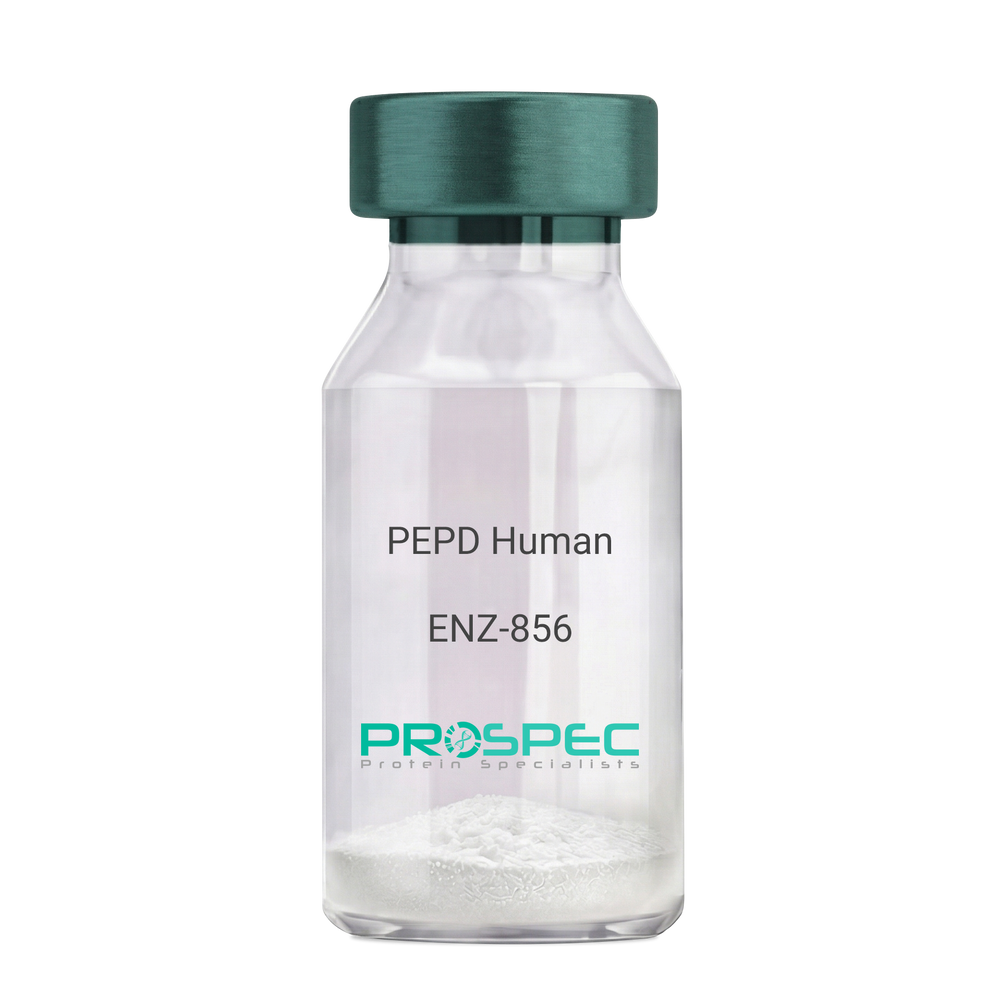
  • View Data Sheet

    Name :

    PEPD Human

    Description:

    Peptidase D Human Recombinant

    Xaa-Pro dipeptidase, X-Pro dipeptidase, Imidodipeptidase, Peptidase D, Proline dipeptidase, Prolidase, PRD, PEPD, Xaa-Pro dipeptidase isoform 1, PROLIDASE.

    Product # :

    ENZ-856

    Price :

    Quantity :

    Shipping Method :

    Ice Icon

    Shipped with Ice Packs

    Add To Cart

    More Info

    • description
    • source
    • formulation
    • purity
    • More Info

    Description

    PEPD Human Recombinant produced in E.Coli is a single, non-glycosylated polypeptide chain containing 516 amino acids (1-493a.a.) and having a molecular mass of 56.9kDa.PEPD is fused to a 23 amino acid His-tag at N-terminus & purified by proprietary chromatographic techniques.

    Source

    E.coli.

    Formulation

    PEPD protein solution (0.5mg/ml) containing Phosphate buffered saline (pH7.4), 10% glycerol and 1mM DTT.

    Purity

    Greater than 90% as determined by SDS-PAGE.

    More Info

    • Introduction

      Peptidase D, also known as PEPD, Is a part of the peptidase family. PEPD is involved in collagen metabolism due to the high level of iminoacids in collagen. PEPD recycles proline, and sets the pace for the production of collagen. PEPD is also parts dipeptides with a prolyl or hydroxyprolyl residue in the C-terminal position.

    • Synonyms

      Xaa-Pro dipeptidase, X-Pro dipeptidase, Imidodipeptidase, Peptidase D, Proline dipeptidase, Prolidase, PRD, PEPD, Xaa-Pro dipeptidase isoform 1, PROLIDASE.

    • Physical Appearance

      Sterile Filtered colorless solution.

    • Stability

      Store at 4°C if entire vial will be used within 2-4 weeks. Store, frozen at -20°C for longer periods of time. For long term storage it is recommended to add a carrier protein (0.1% HSA or BSA).Avoid multiple freeze-thaw cycles.

    • Amino Acid Sequence

      MGSSHHHHHH SSGLVPRGSH MGSMAAATGP SFWLGNETLK VPLALFALNR QRLCERLRKN PAVQAGSIVV LQGGEETQRY CTDTGVLFRQ ESFFHWAFGV TEPGCYGVID VDTGKSTLFV PRLPASHATW MGKIHSKEHF KEKYAVDDVQ YVDEIASVLT SQKPSVLLTL RGVNTDSGSVCREASFDGIS KFEVNNTILH PEIVECRVFK TDMELEVLRY TNKISSEAHR EVMKAVKVGM KEYELESLFE HYCYSRGGMR HSSYTCICGS GENSAVLHYG HAGAPNDRTI QNGDMCLFDM GGEYYCFASD ITCSFPANGK FTADQKAVYE AVLRSSRAVM GAMKPGVWWP DMHRLADRIH LEELAHMGIL SGSVDAMVQA HLGAVFMPHG LGHFLGIDVH DVGGYPEGVE RIDEPGLRSL RTARHLQPGM VLTVEPGIYF IDHLLDEALA DPARASFLNR EVLQRFRGFG GVRIEEDVVV TDSGIELLTC VPRTVEEIEA CMAGCDKAFT PFSGPK.

    ProSpec's products are furnished for LABORATORY RESEARCH USE ONLY. The product may not be used as drugs, agricultural or pesticidal products, food additives or household chemicals.

    Pepd Human
  • View Data Sheet

    Name :

    MMP 3 Human, HEK

    Description:

    Matrix Metalloproteinase-3 Human Recombinant, HEK

    Stromelysin-1, EC 3.4.24.17, Matrix metalloproteinase-3, MMP-3, Transin-1, SL-1, STMY, STR1, STMY1, MGC126102, MGC126103, MGC126104.

    Product # :

    ENZ-284

    Price :

    Quantity :

    Shipping Method :

    Ice Icon

    Shipped with Ice Packs

    Add To Cart

    More Info

    • description
    • source
    • formulation
    • purity
    • biological activity
    • More Info
    • sds-page

    Description

    MMP-3 Human Recombinant produced in HEK293 cells is a proform of the Human MMP3 [Tyr18-Cys477 (Lys45Glu)] and fused with a ployhistide tag at the C-terminus, having an Mw of 52kDa. MMP-3 is purified by proprietary chromatographic techniques.

    Source

    HEK293 cells.

    Formulation

    The MMP-3 is supplied as a 0.2µm filtered solution in 20mM Tris-HCl, 150mM NaCl and 0.05% Brij35, pH 7.5.

    Purity

    Greater than 95% as determined by SDS-PAGE.

    Biological Activity

    The activity was measured by its ability to cleave the fluorogenic peptide substrate, Mca-RPKPVE-Nval-WRK(Dnp)-NH2. The specific activity is > 150 pmoles/min/µg.
    Recombinant Human MMP-3 protein pro form needs to be activated with Chymotrypsin.
    Activation Protocol:
    1. Dilute MMP3 to 20µg/ml in the Assay Buffer: 50mM Tris, 10mM CaCl2, 150mM NaCl, 0.05% (w/v) and Brij 35, pH 7.5.
    2. Activate MMP3 by adding Chymotrypsin(Sigma, Catalog#C­3142,1mg/ml stock in 1mM HCl) to a final concentration of 5ug/ml.
    3. Incubate at 37°C for 30 minutes.
    4. Stop activation with 2mM PMSF. Pre-warm the PMSF to 37°C prior to adding to sample.

    sds-page

    mmp-3 human hek sds-page - Product image 1

    More Info

    • Introduction

      MMP-3 enzyme is also known as Stromelysin-1or as Transin-1 which hydrolyzes natural collagen at physiological pH and temperature. It dissolves the intervertebral nucleus pulposus and annulus fibrosus of Herniated Lumbar Intervertebral Disk . MMP-3 hydrolyzes components of the extracellular matrix like proteoglycan, laminin, fibronectin, gelatin and collagen types III, IV and IX. It also activates pro-MMP-9 and pro-MMP-8 and superactivates plasmin activated MMP-1. MMP-3 is secreted as a latent proenzyme and is activated by a variety of proteinases, e.g. plasmin, trypsin, chymotrypsin, cathepsin G or human neutrophil elastase. MMP-3 was found to be capable of activating the precursor of IL1-beta.

    • Synonyms

      Stromelysin-1, EC 3.4.24.17, Matrix metalloproteinase-3, MMP-3, Transin-1, SL-1, STMY, STR1, STMY1, MGC126102, MGC126103, MGC126104.

    • Physical Appearance

      Sterile Filtered colorless solution.

    • Stability

      Store at 4°C if entire vial will be used within 2-4 weeks. Store, frozen at -20°C for longer periods of time.Avoid multiple freeze-thaw cycles.

    ProSpec's products are furnished for LABORATORY RESEARCH USE ONLY. The product may not be used as drugs, agricultural or pesticidal products, food additives or household chemicals.

    Mmp3 Human
  • View Data Sheet

    Name :

    NMNAT1 Human, Active

    Description:

    Nicotinamide Nucleotide Adenylyltransferase 1 Human Recombinant , Active

    NMNAT, NMNAT1, PNAT1, Nicotinamide mononucleotide adenylyltransferase 1, NMN adenylyltransferase 1, Nicotinate-nucleotide adenylyltransferase 1, NaMN adenylyltransferase 1, EC=2.7.7.1, EC=2.7.7.18.

    Product # :

    ENZ-1002

    Price :

    Quantity :

    Shipping Method :

    Ice Icon

    Shipped with Ice Packs

    Add To Cart

    More Info

    • description
    • source
    • formulation
    • purity
    • biological activity
    • More Info

    Description

    NMNAT1 Recombinant Human produced in E.Coli is a single, non-glycosylated polypeptide chain containing 315 amino acids (1-279 a.a.) and having a molecular mass of 36 kDa. The NMNAT1 is fused to a 36 amino acid His-Tag at N-terminus and purified by proprietary chromatographic techniques.

    Source

    Escherichia Coli.

    Formulation

    The NMNAT1 solution (1mg/ml) contains 20mM Tris-HCl buffer (pH8.0), 20% glycerol, 0.1M NaCl, 1mM DTT and 1mM EDTA.

    Purity

    Greater than 95.0% as determined by SDS-PAGE.

    Biological Activity

    Specific activity is > 7,000 pmol/min/ug, and was obtained by measuring the beta-NAD from nicotinamide mononucleotide and ATP per minute at pH 8.0 at 37C.

    More Info

    • Introduction

      NMNAT1 enzyme is vital for NAD biosynthesis, catalyzing the condensation of nicotinamide mononucleotide (NMN) or nicotinic acid mononucleotide (NaMN) with the AMP moiety of ATP to form NAD or NaAD. NMNAT1 is widely expressed with high levels in skeletal muscle, heart, liver and kidney. This protein appears to have the ability to protect against axonal degeneration following mechanical or toxic insults.

    • Synonyms

      NMNAT, NMNAT1, PNAT1, Nicotinamide mononucleotide adenylyltransferase 1, NMN adenylyltransferase 1, Nicotinate-nucleotide adenylyltransferase 1, NaMN adenylyltransferase 1, EC=2.7.7.1, EC=2.7.7.18.

    • Physical Appearance

      Sterile filtered colorless solution.

    • Stability

      Store at 4°C if entire vial will be used within 2-4 weeks. Store, frozen at -20°C for longer periods of time.For long term storage it is recommended to add a carrier protein (0.1% HSA or BSA). Avoid multiple freeze-thaw cycles.

    • Amino Acid Sequence

      MRGSHHHHHH GMASMTGGQQ MGRDLYDDDD KDRWGSMENS EKTEVVLLAC GSFNPITNMH LRLFELAKDY MNGTGRYTVV KGIISPVGDA YKKKGLIPAY HRVIMAELAT KNSKWVEVDT WESLQKEWKE TLKVLRHHQE KLEASDCDHQ QNSPTLERPG RKRKWTETQD SSQKKSLEPK TKAVPKVKLL CGADLLESFA VPNLWKSEDI TQIVANYGLI CVTRAGNDAQ KFIYESDVLW KHRSNIHVVN EWIANDISST KIRRALRRGQSIRYLVPDLV QEYIEKHNLY SSESEDRNAG VILAPLQRNT AEAKT.

    ProSpec's products are furnished for LABORATORY RESEARCH USE ONLY. The product may not be used as drugs, agricultural or pesticidal products, food additives or household chemicals.

    Nmnat1 Human Active
  • View Data Sheet

    Name :

    TGM2 Human

    Description:

    Tissue Transglutaminase Human Recombinant

    Protein gamma-glutamyltransferase 2, EC 2.3.2.13, Tissue transglutaminase, TGase C, TGC, TG(C), Transglutaminase-2, TGase-H, TG2, TGM2.

    Product # :

    ENZ-394

    Price :

    Quantity :

    Shipping Method :

    Ice Icon

    Shipped with Ice Packs

    Add To Cart

    More Info

    • description
    • source
    • formulation
    • purity
    • More Info

    Description

    Tissue Transglutaminase Human Recombinant produced in E.coli is a non-glycosylated, polypeptide chain having a molecular mass of 78,018 Dalton. tTG is expressed with a -6xHis tag and purified by proprietary chromatographic techniques. By point mutation of the active center the catalytic transglutaminase activity has been eliminated, resulting in increased stability during storage and coating.

    Source

    Escherichia Coli.

    Formulation

    TGM2 is supplied in 16mM HEPES buffer pH-8.0, 400mM NaCl, and 20% glycerol.

    Purity

    Greater than 95% as determined by SDS-PAGE.

    More Info

    • Introduction

      Celiac disease is an enteropathy that is characterized by intestinal lesions of variable severity. Tissue-type transglutaminase (tTG) is believed to be the predominant autoantigen for celiac disease and the corresponding autoantibodies show higher sensitivity and specificity than anti-gliadin antibodies. Highly pure recombinant human tTG is now available to replace the traditionally used tTG fraction from guinea pig.
      Tissue-type transglutaminase antigens have been specifically modified for improved handling: exchange of an active site amino acid eliminates the protein cross-linking activity of the enzyme, while maintaining the native three-dimensional structure and the enzyme's secondary GTPase activity. This engineering assures reproducible properties of the antigen preparations through the absence of variable and ill-defined covalent aggregates of tTG antigen and host cell proteins.

    • Synonyms

      Protein gamma-glutamyltransferase 2, EC 2.3.2.13, Tissue transglutaminase, TGase C, TGC, TG(C), Transglutaminase-2, TGase-H, TG2, TGM2.

    • Physical Appearance

      Sterile Filtered clear solution.

    • Stability

      Store at 4°C if entire vial will be used within 2-4 weeks. Store, frozen at -20°C for longer periods of time. Avoid multiple freeze-thaw cycles.

    ProSpec's products are furnished for LABORATORY RESEARCH USE ONLY. The product may not be used as drugs, agricultural or pesticidal products, food additives or household chemicals.

    Tgm2 Human
  • View Data Sheet

    Name :

    DCXR Human, Bioactive

    Description:

    Dicarbonyl/L-Xylulose Reductase Human Recombinant, Bioactive

    DCR, HCR2, HCRII, KIDCR, P34H, SDR20C1, Dicarbonyl/L-Xylulose Reductase, EC=1.1.1.10, Carbonyl reductase II, Kidney dicarbonyl reductase, Sperm surface protein P34H.

    Product # :

    ENZ-1029

    Price :

    Quantity :

    Shipping Method :

    Ice Icon

    Shipped with Ice Packs

    Add To Cart

    More Info

    • description
    • source
    • formulation
    • purity
    • biological activity
    • More Info

    Description

    DCXR Recombinant Human produced in E.Coli is a single, non-glycosylated polypeptide chain containing 264 amino acids (1-244 a.a.) and having a molecular mass of 28 kDa. The DCXR is fused to a 20 amino acids His-Tag at N-terminus and purified by proprietary chromatographic techniques.

    Source

    Escherichia Coli.

    Formulation

    The DCXR (0.5mg/ml) solution containing 20mM Tris-HCl buffer (pH 8.0), 1mM DTT, 20% glycerol and 50mM NaCl.

    Purity

    Greater than 95.0% as determined by SDS-PAGE.

    Biological Activity

    Specific activity is > 1,800 pmol/min/ug and is defined as the amount of enzyme that oxidize 1pmole of xylitol to L-xylulose per minute at pH 10.0 at 37C.

    More Info

    • Introduction

      DCXR catalyzes the NADPH-dependent reduction of numerous pentoses, tetroses, trioses, alpha-dicarbonyl molecules and L-xylulose. DCXR takes part in the uronate cycle of glucose metabolism. DCXR participates in the water absorption and cellular osmoregulation in the proximal renal tubules by producing xylitol, an osmolyte, thus preventing osmolytic stress from occurring in the renal tubules.

    • Synonyms

      DCR, HCR2, HCRII, KIDCR, P34H, SDR20C1, Dicarbonyl/L-Xylulose Reductase, EC=1.1.1.10, Carbonyl reductase II, Kidney dicarbonyl reductase, Sperm surface protein P34H.

    • Physical Appearance

      Sterile filtered colorless solution.

    • Stability

      Store at 4°C if entire vial will be used within 2-4 weeks. Store, frozen at -20°C for longer periods of time. For long term storage it is recommended to add a carrier protein (0.1% HSA or BSA).Avoid multiple freeze-thaw cycles.

    • Amino Acid Sequence

      MGSSHHHHHH SSGLVPRGSH MELFLAGRRV LVTGAGKGIG RGTVQALHAT GARVVAVSRT QADLDSLVRE CPGIEPVCVD LGDWEATERA LGSVGPVDLL VNNAAVALLQ PFLEVTKEAF DRSFEVNLRA VIQVSQIVAR GLIARGVPGA IVNVSSQCSQ RAVTNHSVYC STKGALDMLT KVMALELGPH KIRVNAVNPT VVMTSMGQAT WSDPHKAKTM LNRIPLGKFA EVEHVVNAIL FLLSDRSGMT TGSTLPVEGG FWAC.

    ProSpec's products are furnished for LABORATORY RESEARCH USE ONLY. The product may not be used as drugs, agricultural or pesticidal products, food additives or household chemicals.

    Dcxr Human Bioactive
  • View Data Sheet

    Name :

    T5 Exonuclease

    Description:

    T5 Exonuclease Recombinant

    T5 Exonuclease

    Product # :

    ENZ-1184

    Price :

    Quantity :

    Shipping Method :

    Ice Icon

    Shipped with Ice Packs

    Add To Cart

    More Info

    • description
    • source
    • formulation
    • purity
    • More Info

    Description

    T5 Exonuclease T5 phage D15 gene Recombinant produced in E.Coli is a single, non-glycosylated polypeptide. T5 Exonuclease is purified by proprietary chromatographic techniques.

    Source

    Escherichia Coli.

    Formulation

    10U/ul, 50mM Tris-HCl (25℃, pH 7.5), 100mM NaCl, 0.1mM EDTA, 1mM DTT, 0.1% Triton X-100 and 50% glycerol.

    Purity

    Greater than 95% as determined by SDS-PAGE.

    More Info

    • Introduction

      T5 Exonuclease is an important enzyme that belongs to the family of exonucleases and plays a vital role in DNA metabolism and genetic engineering. This research paper aims to provide an overview of T5 Exonuclease, including its structure, function, and diverse applications in molecular biology.

      T5 Exonuclease is derived from the bacteriophage T5, and it possesses a remarkable ability to selectively degrade single-stranded DNA in a 5' to 3' direction. It is a highly processive enzyme, meaning it can cleave multiple nucleotides consecutively without dissociating from the DNA substrate. The enzyme exhibits high specificity for single-stranded DNA, making it a valuable tool for various molecular biology applications.

      The primary function of T5 Exonuclease is to remove nucleotides from the 5' ends of single-stranded DNA molecules. By digesting DNA in a processive manner, T5 Exonuclease is involved in DNA repair mechanisms, such as the removal of damaged or mismatched nucleotides. It is also widely utilized in molecular cloning techniques to generate DNA fragments with precise ends for subsequent DNA ligation reactions.

    • Synonyms

      T5 Exonuclease

    • Physical Appearance

      Sterile Filtered colorless solution.

    • Stability

      Store at 4°C if entire vial will be used within 2-4 weeks. Store, frozen at -20°C for longer periods of time. For long term storage it is recommended to add a carrier protein (0.1% HSA or BSA). Avoid multiple freeze-thaw cycles.

    • Applications

      Gibson Assembly

    • Background

      The structural features of T5 Exonuclease play a crucial role in its enzymatic activity. The enzyme consists of distinct functional domains, including an N-terminal domain responsible for DNA binding and a C-terminal domain containing the exonuclease active site. Understanding the three-dimensional structure of T5 Exonuclease provides insights into its catalytic mechanism and substrate specificity.

      The versatility of T5 Exonuclease extends beyond DNA repair and cloning applications. It has been employed in various molecular biology techniques, such as site-directed mutagenesis, DNA sequencing, and preparation of DNA templates for in vitro transcription. Additionally, T5 Exonuclease has found utility in research areas like next-generation sequencing library preparation, restriction fragment length polymorphism (RFLP) analysis, and gene expression studies.

      In recent years, the use of T5 Exonuclease in genome editing technologies, such as CRISPR-Cas9, has gained attention. T5 Exonuclease can be employed to remove unwanted DNA sequences or overhangs, enabling precise and efficient genome editing. This application highlights the significance of T5 Exonuclease in advancing genetic engineering and synthetic biology research.

    • Unit Definition

      1 unit of T5 Exonuclease is defined as the amount of enzyme required to cause the change of 0.00032 A260nm/min at 37° C in 1xReaction Buffer: 20mM Tris-acetate (pH 7.9 @ 25°C), 50mM Potassium Acetate, 10mM Magnesium Acetate and 1mM DTT.

    ProSpec's products are furnished for LABORATORY RESEARCH USE ONLY. The product may not be used as drugs, agricultural or pesticidal products, food additives or household chemicals.

    T5 Exonuclease
  • View Data Sheet

    Name :

    CBR3 Human

    Description:

    Carbonyl Reductase-3 Human Recombinant

    Carbonyl reductase [NADPH] 3, NADPH-dependent carbonyl reductase 3, CBR3, carbonyl reductase 3, hCBR3, SDR21C2.

    Product # :

    ENZ-428

    Price :

    Quantity :

    Shipping Method :

    Ice Icon

    Shipped with Ice Packs

    Add To Cart

    More Info

    • description
    • source
    • formulation
    • purity
    • More Info

    Description

    Recombinant Human CBR3 fused with a 20 amino acid His tag at N-terminus produced in E.Coli is a single, non-glycosylated polypeptide chain containing 297 amino acids (1-277 a.a) and having a molecular mass of 33kDa. CBR3 is purified by proprietary chromatographic techniques.

    Source

    Escherichia Coli.

    Formulation

    The CBR3 protein solution (1mg/ml) contains 20mM Tris-HCl buffer (pH 8.0) and 10% glycerol.

    Purity

    Greater than 95.0% as determined by analysis by SDS-PAGE.

    More Info

    • Introduction

      CBR3 catalyzes the reduction of a large number of biologically and pharmacologically active carbonyl compounds to their corresponding alcohols. CBR3 is one of several monomeric NADPH-dependent oxidoreductases. Furthermore, CBR3 contains 3 exons spanning 11.2 kilobases and is strongly linked to another carbonyl reductase gene, the CBR1. It was suggested that CBR3 mediates 9-cis-retinoic acid-induced cytostatis and is a potential prognostic marker for oral malignancy.
      CBR3 is identified in the ovary, pancreas, intestine, colon, kidney, brain, thymus, lung, heart, liver, spleen, leukocyte, prostate and the testis.

    • Synonyms

      Carbonyl reductase [NADPH] 3, NADPH-dependent carbonyl reductase 3, CBR3, carbonyl reductase 3, hCBR3, SDR21C2.

    • Physical Appearance

      Sterile filtered colorless solution.

    • Stability

      Store at 4°C if entire vial will be used within 2-4 weeks. Store, frozen at -20°C for longer periods of time. For long term storage it is recommended to add a carrier protein (0.1% HSA or BSA). Avoid multiple freeze-thaw cycles.

    • Amino Acid Sequence

      MGSSHHHHHH SSGLVPRGSH MSSCSRVALV TGANRGIGLA IARELCRQFS GDVVLTARDV ARGQAAVQQL QAEGLSPRFH QLDIDDLQSI RALRDFLRKE YGGLNVLVNN AAVAFKSDDP MPFDIKAEMT LKTNFFATRN MCNELLPIMK PHGRVVNISS LQCLRAFENC SEDLQERFHS ETLTEGDLVD LMKKFVEDTK NEVHEREGWP NSPYGVSKLG VTVLSRILAR RLDEKRKADR ILVNACCPGP VKTDMDGKDS IRTVEEGAET PVYLALLPPD ATEPQGQLVH DKVVQNW.

    ProSpec's products are furnished for LABORATORY RESEARCH USE ONLY. The product may not be used as drugs, agricultural or pesticidal products, food additives or household chemicals.

    Cbr3 Human
  • View Data Sheet

    Name :

    NMNAT1 Human

    Description:

    Nicotinamide Nucleotide Adenylyltransferase 1 Human Recombinant

    NMNAT, NMNAT1, PNAT1, Nicotinamide mononucleotide adenylyltransferase 1, NMN adenylyltransferase 1, Nicotinate-nucleotide adenylyltransferase 1, NaMN adenylyltransferase 1, EC=2.7.7.1, EC=2.7.7.18.

    Product # :

    ENZ-384

    Price :

    Quantity :

    Shipping Method :

    Ice Icon

    Shipped with Ice Packs

    Add To Cart

    More Info

    • description
    • source
    • formulation
    • purity
    • More Info

    Description

    NMNAT1 Recombinant Human produced in E.Coli is a single, non-glycosylated polypeptide chain containing 315 amino acids (1-279 a.a.) and having a molecular mass of 36 kDa. The NMNAT1 is fused to a 36 amino acid His-Tag at N-terminus and purified by proprietary chromatographic techniques.

    Source

    Escherichia Coli.

    Formulation

    NMNAT1 Human solution containing 20mM Tris pH-8, 0.1M NaCl, 1mM DTT, 1mM EDTA & 20% glycerol.

    Purity

    Greater than 95.0% as determined by SDS-PAGE.

    More Info

    • Introduction

      NMNAT1 enzyme is vital for NAD biosynthesis, catalyzing the condensation of nicotinamide mononucleotide (NMN) or nicotinic acid mononucleotide (NaMN) with the AMP moiety of ATP to form NAD or NaAD. NMNAT1 is widely expressed with high levels in skeletal muscle, heart, liver and kidney. This protein appears to have the ability to protect against axonal degeneration following mechanical or toxic insults.

    • Synonyms

      NMNAT, NMNAT1, PNAT1, Nicotinamide mononucleotide adenylyltransferase 1, NMN adenylyltransferase 1, Nicotinate-nucleotide adenylyltransferase 1, NaMN adenylyltransferase 1, EC=2.7.7.1, EC=2.7.7.18.

    • Physical Appearance

      Sterile filtered colorless solution.

    • Stability

      Store at 4°C if entire vial will be used within 2-4 weeks.Store, frozen at -20°C for longer periods of time. For long term storage it is recommended to add a carrier protein (0.1% HSA or BSA).Avoid multiple freeze-thaw cycles.

    • Amino Acid Sequence

      MRGSHHHHHH GMASMTGGQQ MGRDLYDDDD KDRWGSMENS EKTEVVLLAC GSFNPITNMH LRLFELAKDY MNGTGRYTVV KGIISPVGDA YKKKGLIPAY HRVIMAELAT KNSKWVEVDT WESLQKEWKE TLKVLRHHQE KLEASDCDHQ QNSPTLERPG RKRKWTETQD SSQKKSLEPK TKAVPKVKLL CGADLLESFA VPNLWKSEDI TQIVANYGLI CVTRAGNDAQ KFIYESDVLW KHRSNIHVVN EWIANDISST KIRRALRRGQSIRYLVPDLV QEYIEKHNLY SSESEDRNAG VILAPLQRNT AEAKT.

    ProSpec's products are furnished for LABORATORY RESEARCH USE ONLY. The product may not be used as drugs, agricultural or pesticidal products, food additives or household chemicals.

    Nmnat1 Human
  • View Data Sheet

    Name :

    SRM Human

    Description:

    Spermidine Synthase Human Recombinant

    Spermidine synthase, SPDSY, Putrescine aminopropyltransferase, SRM, SPS1, SRML1, PAPT.

    Product # :

    ENZ-027

    Price :

    Quantity :

    Shipping Method :

    Ice Icon

    Shipped with Ice Packs

    Add To Cart

    More Info

    • description
    • source
    • formulation
    • purity
    • More Info

    Description

    SRM Human Recombinant fused with a 20 amino acid His tag at N-terminus produced in E.Coli is a single, non-glycosylated, polypeptide chain containing 322 amino acids (1-302 a.a.) and having a molecular mass of 36kDa. The SRM is purified by proprietary chromatographic techniques.

    Source

    Escherichia Coli.

    Formulation

    The SRM solution (1 mg/ml) contains 20mM Tris-HCl buffer(pH 8.0), 10% glycerol, 2mM DTT and 0.1M NaCl.

    Purity

    Greater than 95.0% as determined by SDS-PAGE.

    More Info

    • Introduction

      SRM is an enzyme which catalyzes the transfer of the propylamine group from S-adenosylmethioninamine to putrescine in the biosynthesis of spermidine. The polyamines putrescine, spermine and spermidine are ubiquitous polycationic mediators of cell growth and differentiation. The SRM protein is one of four enzymes in the polyamine-biosynthetic pathway and completes the final step of spermidine biosynthesis.

    • Synonyms

      Spermidine synthase, SPDSY, Putrescine aminopropyltransferase, SRM, SPS1, SRML1, PAPT.

    • Physical Appearance

      Sterile Filtered colorless solution.

    • Stability

      Store at 4°C if entire vial will be used within 2-4 weeks. Store, frozen at -20°C for longer periods of time. For long term storage it is recommended to add a carrier protein (0.1% HSA or BSA). Avoid multiple freeze-thaw cycles.

    • Amino Acid Sequence

      MGSSHHHHHH SSGLVPRGSH MEPGPDGPAA SGPAAIREGW FRETCSLWPG QALSLQVEQL LHHRRSRYQD ILVFRSKTYG NVLVLDGVIQ CTERDEFSYQ EMIANLPLCS HPNPRKVLII GGGDGGVLRE VVKHPSVESV VQCEIDEDVI QVSKKFLPGM AIGYSSSKLT LHVGDGFEFM KQNQDAFDVI ITDSSDPMGP AESLFKESYY QLMKTALKED GVLCCQGECQ WLHLDLIKEM RQFCQSLFPV VAYAYCTIPT YPSGQIGFML CSKNPSTNFQ EPVQPLTQQQ VAQMQLKYYN SDVHRAAFVL PEFARKALND VS.

    ProSpec's products are furnished for LABORATORY RESEARCH USE ONLY. The product may not be used as drugs, agricultural or pesticidal products, food additives or household chemicals.

    Srm Human
  • View Data Sheet

    Name :

    DHFR Mouse

    Description:

    Dihydrofolate Reductase Mouse Recombinant

    Dihydrofolate reductase, DHFR, DHFRP1, AA607882, AI662710, AW555094, 8430436I03Rik.

    Product # :

    ENZ-069

    Price :

    Quantity :

    Shipping Method :

    Ice Icon

    Shipped with Ice Packs

    Add To Cart

    More Info

    • description
    • source
    • formulation
    • purity
    • biological activity
    • More Info

    Description

    DHFR Mouse Recombinant fused with a 20 amino acid His tag at N-terminus produced in E.Coli is a single, non-glycosylated, polypeptide chain containing 207 amino acids (1-187 a.a.) and having a molecular mass of 23.8kDa. The DHFR is purified by proprietary chromatographic techniques.

    Source

    Escherichia Coli.

    Formulation

    The DHFR solution (1 mg/ml) contains 20mM Tris-HCl buffer(pH 8.0), 10% glycerol, 2mM DTT and 0.1M NaCl.

    Purity

    Greater than 95.0% as determined by SDS-PAGE.

    Biological Activity

    Specific activity is > 0.2 units/mg, in which one unit will convert 1.0 umole of 7,8 –dihydrofloate and beta-NADPH to 5,6,7,8-tetrahydrofloate and beta-NADP per min at pH 6.5 at 25C.

    More Info

    • Introduction

      Dihydrofolate reductase (DHFR) is an enzyme that reduces dihydrofolic acid to tetrahydrofolic acid, with NADPH as electron donor that can be converted to the kinds of tetrahydrofolate cofactors applied in 1-carbon transfer chemistry. DHFR converts dihydrofolate into tetrahydrofolate, which is a methyl group shuttle required for the de novo synthesis of purines, thymidylic acid, and specific amino acids. Even though the functional DHFR gene is mapped to chromosome 5, numerous intronless processed pseudogenes or dihydrofolate reductase-like genes are identified on separate chromosomes. DHFR deficiency is associated with megaloblastic anemia. DHFR knockdown plays a role in the anticancer activity of 2-hydroxyoleic acid. DHFR gene insertion/deletion polymorphism is linked to variation in serum and red blood cell folate concentrations in women.

    • Synonyms

      Dihydrofolate reductase, DHFR, DHFRP1, AA607882, AI662710, AW555094, 8430436I03Rik.

    • Physical Appearance

      Sterile Filtered colorless solution.

    • Stability

      Store at 4°C if entire vial will be used within 2-4 weeks. Store, frozen at -20°C for longer periods of time. For long term storage it is recommended to add a carrier protein (0.1% HSA or BSA).Avoid multiple freeze-thaw cycles.

    • Amino Acid Sequence

      MGSSHHHHHH SSGLVPRGSH MVRPLNCIVA VSQNMGIGKN GDLPWPPLRN EFKYFQRMTT TSSVEGKQNL VIMGRKTWFS IPEKNRPLKD RINIVLSREL KEPPRGAHFL AKSLDDALRL IEQPELASKV DMVWIVGGSS VYQEAMNQPG HLRLFVTRIM QEFESDTFFP EIDLGKYKLL PEYPGVLSEV QEEKGIKYKF EVYEKKD.

    ProSpec's products are furnished for LABORATORY RESEARCH USE ONLY. The product may not be used as drugs, agricultural or pesticidal products, food additives or household chemicals.

    Dhfr Mouse
  • View Data Sheet

    Name :

    GDA Human, His

    Description:

    Guanine Deaminase Human Recombinant, His Tag

    CYPIN, GUANASE, NEDASIN, Guanine aminase, Guanine aminohydrolase, GAH, p51-nedasin.

    Product # :

    ENZ-682

    Price :

    Quantity :

    Shipping Method :

    Ice Icon

    Shipped with Ice Packs

    Add To Cart

    More Info

    • description
    • source
    • formulation
    • purity
    • More Info

    Description

    GDA Human Recombinant produced in E. coli is a single polypeptide chain containing 477 amino acids (1-454) and having a molecular mass of 53kDa. GDA is fused to a 23 amino acid His-tag at N-terminus & purified by proprietary chromatographic techniques.

    Source

    Escherichia Coli.

    Formulation

    The GDA solution (1mg/1ml) contains 20mM Tris-HCl buffer (pH 8.0), 0.15M NaCl,10% glycerol and 1mM DTT.

    Purity

    Greater than 90.0% as determined by SDS-PAGE.

    More Info

    • Introduction

      GDA is a member of the ATZ/TRZ family and is in charge for the hydrolytic deamination of guanine. GDA takes part in microtubule assembly. Multiple transcript variants encoding different isoforms have been found for GDA.

    • Synonyms

      CYPIN, GUANASE, NEDASIN, Guanine aminase, Guanine aminohydrolase, GAH, p51-nedasin.

    • Physical Appearance

      Sterile Filtered colorless solution.

    • Stability

      Store at 4°C if entire vial will be used within 2-4 weeks.Store, frozen at -20°C for longer periods of time. For long term storage it is recommended to add a carrier protein (0.1% HSA or BSA).Avoid multiple freeze-thaw cycles.

    • Amino Acid Sequence

      MGSSHHHHHH SSGLVPRGSH MGSMCAAQMP PLAHIFRGTF VHSTWTCPME VLRDHLLGVS DSGKIVFLEE ASQQEKLAKE WCFKPCEIRE LSHHEFFMPG LVDTHIHASQ YSFAGSSIDL PLLEWLTKYT FPAEHRFQNI DFAEEVYTRV VRRTLKNGTT TACYFATIHT DSSLLLADIT DKFGQRAFVG KVCMDLNDTF PEYKETTEES IKETERFVSE MLQKNYSRVK PIVTPRFSLS CSETLMGELG NIAKTRDLHI QSHISENRDE VEAVKNLYPS YKNYTSVYDK NNLLTNKTVM AHGCYLSAEE LNVFHERGAS IAHCPNSNLS LSSGFLNVLE VLKHEVKIGL GTDVAGGYSY SMLDAIRRAV MVSNILLINK VNEKSLTLKE VFRLATLGGS QALGLDGEIG NFEVGKEFDA ILINPKASDS PIDLFYGDFF GDISEAVIQK FLYLGDDRNI EEVYVGGKQV VPFSSSV.

    ProSpec's products are furnished for LABORATORY RESEARCH USE ONLY. The product may not be used as drugs, agricultural or pesticidal products, food additives or household chemicals.

    Gda Human
  • View Data Sheet

    Name :

    USP46 Human

    Description:

    Ubiquitin Specific Peptidase 46 Human Recombinant

    Ubiquitin carboxyl-terminal hydrolase 46, Deubiquitinating enzyme 46, Ubiquitin thioesterase 46, Ubiquitin-specific-processing protease 46, USP46.

    Product # :

    PRO-1866

    Price :

    Quantity :

    Shipping Method :

    Ice Icon

    Shipped with Ice Packs

    Add To Cart

    More Info

    • description
    • source
    • formulation
    • purity
    • More Info

    Description

    USP46 Human Recombinant produced in E. coli is. a single polypeptide chain containing 389 amino acids (1-366) and having a molecular mass of 44.8kDa. USP46 is fused to a 23 amino acid His-tag at N-terminus & purified by proprietary chromatographic techniques.

    Source

    Escherichia Coli.

    Formulation

    The USP46 solution (0.25mg/ml) contains 20mM Tris-HCl buffer (pH 8.0), 0.15M NaCl, 10% glycerol and 1mM DTT.

    Purity

    Greater than 90% as determined by SDS-PAGE.

    More Info

    • Introduction

      USP46 is a part of a large family of cysteine proteases that function as deubiquitinating enzymes which interacts with WDR48 to have a high activity. USP46 operates by mediating the deubiquitination of GAD1/GAD67.

    • Synonyms

      Ubiquitin carboxyl-terminal hydrolase 46, Deubiquitinating enzyme 46, Ubiquitin thioesterase 46, Ubiquitin-specific-processing protease 46, USP46.

    • Physical Appearance

      Sterile Filtered clear solution.

    • Stability

      Store at 4°C if entire vial will be used within 2-4 weeks. Store frozen at -20°C for longer periods of time. For long term storage it is recommended to add a carrier protein (0.1% HSA or BSA).Avoid multiple freeze-thaw cycles.

    • Amino Acid Sequence

      MGSSHHHHHH SSGLVPRGSH MGSMTVRNIA SICNMGTNAS ALEKDIGPEQ FPINEHYFGL VNFGNTCYCN SVLQALYFCR PFRENVLAYK AQQKKKENLL TCLADLFHSI ATQKKKVGVI PPKKFISRLR KENDLFDNYM QQDAHEFLNY LLNTIADILQ EEKKQEKQNG KLKNGNMNEP AENNKPELTW VHEIFQGTLT NETRCLNCET VSSKDEDFLD LSVDVEQNTS ITHCLRDFSN TETLCSEQKY YCETCCSKQE AQKRMRVKKL PMILALHLKR FKYMEQLHRY TKLSYRVVFP LELRLFNTSS DAVNLDRMYD LVAVVVHCGS GPNRGHYITI VKSHGFWLLF DDDIVEKIDA QAIEEFYGLT SDISKNSESG YILFYQSRE.

    ProSpec's products are furnished for LABORATORY RESEARCH USE ONLY. The product may not be used as drugs, agricultural or pesticidal products, food additives or household chemicals.

    Usp46 Human
  • View Data Sheet

    Name :

    CES1G Mouse

    Description:

    Carboxylesterase 1G Mouse Recombinant

    Liver carboxylesterase 1, Acyl-coenzyme A:cholesterol acyltransferase, Carboxylesterase 1G, ES-x, CES1G.

    Product # :

    ENZ-947

    Price :

    Quantity :

    Shipping Method :

    Ice Icon

    Shipped with Ice Packs

    Add To Cart

    More Info

    • description
    • source
    • formulation
    • purity
    • biological activity
    • More Info

    Description

    CES1G produced in Sf9 Baculovirus cells is a single, glycosylated polypeptide chain containing 556 amino acids (19-565 a.a.) and having a molecular mass of 61.9kDa (Migrates at 50-70kDa on SDS-PAGE under reducing conditions). CES1G is expressed with a 6 amino acid His tag at C-Terminus and purified by proprietary chromatographic techniques.

    Source

    Sf9, Baculovirus cells.

    Formulation

    CES1G protein solution (0.5mg/ml) containing Phosphate Buffered Saline (pH 7.4) and 10% glycerol.

    Purity

    Greater than 90.0% as determined by SDS-PAGE.

    Biological Activity

    Specific activity is > 2,000 pmol/min/ug and is defined as the amount of enzyme that hydrolyze 1pmole of p-nitrophenyl acetate to p-nitrophenol per minute at pH 7.5 at 37C.

    More Info

    • Introduction

      Carboxylesterase 1 (CES1G) belongs to a large family of carboxylesterases that are liable for the hydrolysis of ester and amide bonds. CES1G is also participates in the detoxification of xenobiotics prodrugs. CES1G shares the serine hydrolase fold observed in other esterases. CES1G found in rats and mice and is expressed mainly in liver, but also in kidney and lung.

    • Synonyms

      Liver carboxylesterase 1, Acyl-coenzyme A:cholesterol acyltransferase, Carboxylesterase 1G, ES-x, CES1G.

    • Physical Appearance

      Sterile Filtered colorless solution.

    • Stability

      Store at 4°C if entire vial will be used within 2-4 weeks. Store, frozen at -20°C for longer periods of time. For long term storage it is recommended to add a carrier protein (0.1% HSA or BSA). Avoid multiple freeze-thaw cycles.

    • Amino Acid Sequence

      ADPHPSLPPV VHTVHGKVLG KYVTLEGFSQ PVAVFLGVPF AKPPLGSLRF APPEPAEPWS FVKHTTSYPP LCYQNPEAAL RLAELFTNQR KIIPHKFSED CLYLNIYTPA DLTQNSRLPV MVWIHGGGLV IDGASTYDGV PLAVHENVVV VVIQYRLGIW GFFSTEDEHS RGNWGHLDQV AALHWVQDNI ANFGGNPGSV TIFGESAGGE SVSVLVLSPL AKNLFHRAIA QSSVIFNPCL FGRAARPLAK KIAALAGCKT TTSAAMVHCL RQKTEDELLE VSLKMKFGTV DFLGDPRESY PFLPTVIDGV LLPKAPEEIL AEKSFNTVPY MVGINKHEFG WIIPMFLDFP LSERKLDQKT AASILWQAYP ILNISEKLIP AAIEKYLGGT EDPATMTDLF LDLIGDIMFG VPSVIVSRSH RDAGAPTYMY EYQYRPSFVS DDRPQELLGD HADELFSVWG APFLKEGASE EEINLSKMVM KFWANFARNG NPNGEGLPHW PEYDQKEGYL QIGVPAQAAH RLKDKEVDFW TELRAKETAE RSSHREHVEL HHHHHH.

    ProSpec's products are furnished for LABORATORY RESEARCH USE ONLY. The product may not be used as drugs, agricultural or pesticidal products, food additives or household chemicals.

    Ces1 Mouse
  • View Data Sheet

    Name :

    OSGEP Human

    Description:

    O-Sialoglycoprotein Endopeptidase Human Recombinant

    O-Sialoglycoprotein Endopeptidase, T(6)A37 Threonylcarbamoyladenosine Biosynthesis Protein OSGEP, TRNA Threonylcarbamoyladenosine Biosynthesis Protein OSGEP, N6-L-Threonylcarbamoyladenine Synthase, T(6)A Synthase, HOSGEP, GCPL1, Probable TRNA Threonylcarbamoyladenosine Biosynthesis Protein OSGEP, Probable TRNA N6-Adenosine Threonylcarbamoyltransferase , Probable O-Sialoglycoprotein Endopeptidase, EC 3.4.24.57, EC 2.3.1.234, FLJ20411, OSGEP1, PRSMG1, KAE1, Probable tRNA N6-adenosine threonylcarbamoyltransferase.

    Product # :

    ENZ-821

    Price :

    Quantity :

    Shipping Method :

    Ice Icon

    Shipped with Ice Packs

    Add To Cart

    More Info

    • description
    • source
    • formulation
    • purity
    • More Info

    Description

    OSGEP Human Recombinant produced in E.Coli is a single, non-glycosylated polypeptide chain containing 358 amino acids (1-335 a.a) and having a molecular mass of 38.8kDa. OSGEP is fused to a 23 amino acid His-tag at N-terminus & purified by proprietary chromatographic techniques.

    Source

    Escherichia Coli.

    Formulation

    OSGEP protein solution (0.5mg/ml) containing 20mM Tris-HCl buffer (pH8.0), 10% glycerol and 0.4M Urea.

    Purity

    Greater than 80.0% as determined by SDS-PAGE.

    More Info

    • Introduction

      O-Sialoglycoprotein Endopeptidase, also known as OSGEP is a member of the KAE1 / TsaD family. OSGEP is essential for the formation of threonylcarbamoyl group on adenosine at position 37 (t6A37) in tRNAs which read codons beginning with adenine. OSGEP take a direct catalytic part in the above reaction, however other proteins of the complex are required to fulfill this activity.

    • Synonyms

      O-Sialoglycoprotein Endopeptidase, T(6)A37 Threonylcarbamoyladenosine Biosynthesis Protein OSGEP, TRNA Threonylcarbamoyladenosine Biosynthesis Protein OSGEP, N6-L-Threonylcarbamoyladenine Synthase, T(6)A Synthase, HOSGEP, GCPL1, Probable TRNA Threonylcarbamoyladenosine Biosynthesis Protein OSGEP, Probable TRNA N6-Adenosine Threonylcarbamoyltransferase , Probable O-Sialoglycoprotein Endopeptidase, EC 3.4.24.57, EC 2.3.1.234, FLJ20411, OSGEP1, PRSMG1, KAE1, Probable tRNA N6-adenosine threonylcarbamoyltransferase.

    • Physical Appearance

      Sterile filtered colorless solution.

    • Stability

      Store at 4°C if entire vial will be used within 2-4 weeks. Store, frozen at -20°C for longer periods of time. For long term storage it is recommended to add a carrier protein (0.1% HSA or BSA).Avoid multiple freeze-thaw cycles.

    • Amino Acid Sequence

      MGSSHHHHHH SSGLVPRGSH MGSMPAVLGF EGSANKIGVG VVRDGKVLAN PRRTYVTPPG TGFLPGDTAR HHRAVILDLL QEALTESGLT SQDIDCIAYT KGPGMGAPLV SVAVVARTVA QLWNKPLVGV NHCIGHIEMG RLITGATSPT VLYVSGGNTQ VIAYSEHRYR IFGETIDIAV GNCLDRFARV LKISNDPSPG YNIEQMAKRG KKLVELPYTV KGMDVSFSGI LSFIEDVAHR MLATGECTPE DLCFSLQETV FAMLVEITER AMAHCGSQEA LIVGGVGCNV RLQEMMATMC QERGARLFAT DERFCIDNGA MIAQAGWEMF RAGHRTPLSD SGVTQRYRTD EVEVTWRD.

    ProSpec's products are furnished for LABORATORY RESEARCH USE ONLY. The product may not be used as drugs, agricultural or pesticidal products, food additives or household chemicals.

    Osgep Human
  • 1
  • …
  • 14
  • 15
  • 16
  • 17
  • 18
  • …
  • 42
Your browser does not support the video tag.

Products

  • Cytokines
  • Growth Factors
  • Chemokines
  • CD Antigens
  • Neurotrophins
  • Hormones
  • Enzymes
  • Viral Antigens
  • Recombinant Proteins
  • Natural Proteins
  • Monoclonal Antibodies
  • Polyclonal Antibodies
  • Thermal Packaging

About

  • Company
  • Founder
  • Contribution
  • Contact Us
  • My Account

Ordering

  • Ordering Method
  • Ordering - Credit Card
  • Ordering PO
  • Shipping Fees
  • FAQ's

Legal

  • Terms & Conditions
  • Privacy
  • Site Map
  • info@prospecbio.com
  • Facebook
  • Instagram
  • Linkedin Profile

© 2026 ProSpec-Tany TechnoGene Ltd. All Rights Reserved.

  • Choosing a selection results in a full page refresh.
  • Opens in a new window.