Search results
1000 results found for “ephrin”
Name
Description
Product #
Price
Quantity
Shipping Method
- View Data Sheet
Name :
SRI HumanDescription:
Sorcin Human Recombinant
Sorcin, 22 kDa protein, CP-22, CP22, V19, SRI, SCN, FLJ26259.
Product # :
PRO-166Price :
Quantity :
Shipping Method :
Shipped with Ice Packs
More Info
- description
- source
- formulation
- purity
- More Info
Description
SRI Human Recombinant fused with a 23 amino acid His tag at N-terminus produced in E.Coli is a single, non-glycosylated, polypeptide chain containing 221 amino acids (1-198 a.a.) and having a molecular mass of 24.1kDa. The SRI is purified by proprietary chromatographic techniques.
Source
Escherichia Coli.
Formulation
The SRI solution (0.5 mg/ml) contains 20mM Tris-HCl buffer (pH8.0), 40% glycerol, 0.2M NaCl, 1mM DTT and 0.1mM PMSF.
Purity
Greater than 90.0% as determined by SDS-PAGE.
More Info
-
Introduction
Sorcin (SRI) which is a 22kDa calcium-binding protein was originally identified in multidrug-resistant cells. Sorcin, which modulates excitation-contraction coupling in the heart, contributes to calcium homeostasis in the heart sarcoplasmic reticulum.
-
Synonyms
Sorcin, 22 kDa protein, CP-22, CP22, V19, SRI, SCN, FLJ26259.
-
Physical Appearance
Sterile Filtered colorless solution.
-
Stability
Store at 4°C if entire vial will be used within 2-4 weeks. Store, frozen at -20°C for longer periods of time. For long term storage it is recommended to add a carrier protein (0.1% HSA or BSA). Avoid multiple freeze-thaw cycles.
-
Amino Acid Sequence
MGSSHHHHHH SSGLVPRGSH MGSMAYPGHP GAGGGYYPGG YGGAPGGPAF PGQTQDPLYG YFAAVAGQDG QIDADELQRC LTQSGIAGGY KPFNLETCRL MVSMLDRDMS GTMGFNEFKE LWAVLNGWRQ HFISFDTDRS GTVDPQELQK ALTTMGFRLS PQAVNSIAKR YSTNGKITFD DYIACCVKLR ALTDSFRRRD TAQQGVVNFP YDDFIQCVMS V.
ProSpec's products are furnished for LABORATORY RESEARCH USE ONLY. The product may not be used as drugs, agricultural or pesticidal products, food additives or household chemicals.
- View Data Sheet
Name :
RLN2 HumanDescription:
Relaxin-2 Human Recombinant
Prorelaxin H2, RLN2, H2, RLXH2, H2-RLX, bA12D24.1.1, bA12D24.1.2.
Product # :
PRO-1327Price :
Quantity :
Shipping Method :
Shipped with Ice Packs
More Info
- description
- source
- formulation
- purity
- More Info
Description
RLN2 Human Recombinant produced in E.Coli is a single, non-glycosylated polypeptide chain containing 184 amino acids (25-185 a.a) and having a molecular mass of 20.7kDa.RLN2 is fused to a 23 amino acid His-tag at N-terminus & purified by proprietary chromatographic techniques.
Source
Escherichia Coli.
Formulation
RLN2 protein solution (1mg/ml) containing 20mM Tris-HCl buffer (pH 8.0), 0.4M Urea and 10% glycerol.
Purity
Greater than 85.0% as determined by SDS-PAGE.
More Info
-
Introduction
Prorelaxin H2 (RLN2) is a member of a family which is produced by the ovary, targets the mammalian reproductive system to ripen the cervix, elongate the pubic symphysis and inhibit uterine contraction. It may also have other roles in boosting sperm motility, regulating blood pressure, controlling heart rate and releasing vasopressin. RLN2 is a peptide hormone linked to several therapeutically relevant physiological effects, including regulation of collagen metabolism and multiple vascular control pathways. The active form of the RLN2 protein consists of an A chain and a B chain linked by disulfide bonds.
-
Synonyms
Prorelaxin H2, RLN2, H2, RLXH2, H2-RLX, bA12D24.1.1, bA12D24.1.2.
-
Physical Appearance
Sterile Filtered colorless solution.
-
Stability
Store at 4°C if entire vial will be used within 2-4 weeks. Store, frozen at -20°C for longer periods of time. For long term storage it is recommended to add a carrier protein (0.1% HSA or BSA).Avoid multiple freeze-thaw cycles.
-
Amino Acid Sequence
MGSSHHHHHH SSGLVPRGSH MGSDSWMEEV IKLCGRELVR AQIAICGMST WSKRSLSQED APQTPRPVAE IVPSFINKDT ETINMMSEFV ANLPQELKLT LSEMQPALPQ LQQHVPVLKD SSLLFEEFKK LIRNRQSEAA DSSPSELKYL GLDTHSRKKR QLYSALANKC CHVGCTKRSL ARFC.
ProSpec's products are furnished for LABORATORY RESEARCH USE ONLY. The product may not be used as drugs, agricultural or pesticidal products, food additives or household chemicals.
- View Data Sheet
Name :
FCGR2A Human, HEKDescription:
CD32a Human Recombinant, HEK
CD32, CD32A, CDw32, FcGR, IGFR2, MGC23887, MGC30032, Low affinity immunoglobulin gamma Fc region receptor II-a, IgG Fc receptor II-a, Fc-gamma-RIIa, FcRII-a, FCG2, FCGR2A1.
Product # :
PRO-2775Price :
Quantity :
Shipping Method :
Shipped with Ice Packs
More Info
- description
- source
- formulation
- purity
- biological activity
- More Info
Description
FCGR2A Human Recombinant is a single, glycosylated, polypeptide chain (30-218 a.a) containing a total of 195 amino acids, having a molecular mass of 21.6kDa. FCGR2A is fused to a 6 amino acid His-tag at C-terminus and is purified by proprietary chromatographic techniques.
Source
HEK293 Cells.
Formulation
FCGR2A protein solution (1mg/ml) containing 10% Glycerol and Phosphate-Buffered Saline (pH 7.4).
Purity
Greater than 95.0% as determined by SDS-PAGE.
Biological Activity
The ED50 range ≤5 ug/ml. and is measured by its binding ability in a functional ELISA with Human IgG1 Fc (CAT# pro-2763).
More Info
-
Synonyms
CD32, CD32A, CDw32, FcGR, IGFR2, MGC23887, MGC30032, Low affinity immunoglobulin gamma Fc region receptor II-a, IgG Fc receptor II-a, Fc-gamma-RIIa, FcRII-a, FCG2, FCGR2A1.
-
Physical Appearance
Sterile Filtered colorless solution.
-
Stability
Store at 4°C if entire vial will be used within 2-4 weeks. Store, frozen at -20°C for longer periods of time. For long term storage it is recommended to add a carrier protein (0.1% HSA or BSA). Avoid multiple freeze-thaw cycles.
-
Amino Acid Sequence
SADSQAAAPP KAVLKLEPPW INVLQEDSVT LTCQGARSPE SDSIQWFHNG NLIPTHTQPS YRFKANNNDS GEYTCQTGQT SLSDPVHLTV LSEWLVLQTP HLEFQEGETI MLRCHSWKDK PLVKVTFFQN GKSQKFSHLD PTFSIPQANH SHSGDYHCTG NIGYTLFSSK PVTITVQVPS MGSSSPMGIH HHHHH.
-
Background
The immune system is a complex network of cells and molecules that play a crucial role in protecting the body against pathogens and maintaining homeostasis. Fc gamma receptors (FcγRs) are a family of cell surface receptors that mediate the effector functions of antibodies, particularly immunoglobulin G (IgG). Among these receptors, FCGR2A, also known as CD32a, is a prominent member expressed on the surface of various immune cells. This research aims to investigate the structure, function, and implications of FCGR2A protein in immune responses, with a focus on its relevance to human health and therapeutic applications.
Structure and Expression of FCGR2A:
FCGR2A is a transmembrane glycoprotein composed of two extracellular immunoglobulin-like domains, a transmembrane domain, and a cytoplasmic tail. It is primarily expressed on immune cells such as macrophages, monocytes, and dendritic cells. The unique structure of FCGR2A allows it to bind to the Fc portion of IgG antibodies, initiating immune effector functions.
Role of FCGR2A in Immune Responses:
FCGR2A plays a crucial role in modulating immune responses through its involvement in antibody-dependent cellular cytotoxicity (ADCC) and phagocytosis. Upon binding to IgG antibodies, FCGR2A triggers intracellular signaling cascades that activate immune effector cells, leading to the elimination of antibody-bound pathogens or targeted cells. Furthermore, FCGR2A is involved in immune complex clearance, regulation of cytokine production, and modulation of cellular activation, thus contributing to the overall immune response.
Implications of FCGR2A in Human Health:
The dysregulation of FCGR2A has been implicated in various immune-related diseases. Genetic variations in FCGR2A have been associated with increased susceptibility to autoimmune disorders, such as systemic lupus erythematosus and rheumatoid arthritis. Altered FCGR2A expression or function has also been observed in infectious diseases, including HIV and malaria, affecting disease progression and immune control. Understanding the role of FCGR2A in these conditions is crucial for developing targeted therapeutic strategies.
Therapeutic Potential of FCGR2A:
The unique properties of FCGR2A make it an attractive target for therapeutic interventions. Modulating FCGR2A activity and function can potentially enhance immune responses against pathogens or tumor cells. For example, monoclonal antibodies that target FCGR2A have shown promising results in cancer immunotherapy by promoting ADCC and phagocytosis of tumor cells. Furthermore, strategies aimed at selectively activating or inhibiting FCGR2A signaling could lead to the development of novel immunotherapeutic approaches.
Challenges and Future Perspectives:
While the study of FCGR2A holds great promise, several challenges need to be addressed. Further research is required to unravel the intricate interplay between FCGR2A and other immune receptors and signaling molecules. Additionally, the development of therapeutic agents that selectively target FCGR2A without compromising normal immune functions remains a challenge.
Conclusion:
The investigation of FCGR2A protein provides insights into its pivotal role in immune responses and its implications for human health and therapeutics. Understanding the structure, function, and dysregulation of FCGR2A in immune-related diseases opens avenues for the development of targeted therapies. Continued research on FCGR2A and its interactions within the immune system will contribute to advancements in immunotherapy and personalized medicine.
ProSpec's products are furnished for LABORATORY RESEARCH USE ONLY. The product may not be used as drugs, agricultural or pesticidal products, food additives or household chemicals.
- View Data Sheet
Name :
MCP1 Human, HEKDescription:
Monocyte Chemotactic Protein-1/MCAF (CCL2) Human Recombinant, HEK
CCL2, C-C motif chemokine 2, GDCF-2, HSMCR30, JE, HC11, MCAF, MCP-1, MCP1, Scya2, Sigje, SMC-CF, Immediate-early serum-responsive protein JE, Monocyte chemoattractant protein 1, Small-inducible cytokine A2.
Product # :
CHM-048Price :
Quantity :
Shipping Method :
Shipped with Ice Packs
More Info
- description
- source
- formulation
- purity
- biological activity
- More Info
Description
MCP1 Human HEK Recombinant produced in HEK293 Cells is a single, glycosylated polypeptide chain containing 82 amino acids (24-99a.a) and having a molecular mass of 9.5 kDa.MCP1 is expressed with a 6 amino acid His tag at C-Terminus and purified by proprietary chromatographic techniques.
Source
HEK293 Cells.
Formulation
The MCP1 solution (0.25mg/1ml) contains phosphate buffered saline (pH7.4) and 10% glycerol.
Purity
Greater than 90.0% as determined by SDS-PAGE.
Biological Activity
Measured its ability to chemoattract using THP-1 human acute monocytic leukemia cells. The ED50 range ≤ 30 ng/ml.
More Info
-
Introduction
Chemokine (C-C motif) ligand 2 (CCL2) is a small cytokine belonging to the CC chemokine family that is also known as monocyte chemotactic protein-1 (MCP-1). It is found at the site of tooth eruption and bone degradation. In the bone, CCL2 is expressed by mature osteoclasts and osteoblasts and is under the control of nuclear factor ?B (NF?B).CCL2 recruits immune cells, such as monocytes, to sites of tissue injury and infection.This chemokine is produced as a protein precursor containing signal peptide of 23 amino acids and a mature peptide of 76 amino acids. It is a monomeric polypeptide, with a molecular weight of approximately 13kDa. As with many other CC chemokines, CCL2 is located on chromosome 17 in humans.The cell surface receptors that bind CCL2 are CCR2 and CCR5
-
Synonyms
CCL2, C-C motif chemokine 2, GDCF-2, HSMCR30, JE, HC11, MCAF, MCP-1, MCP1, Scya2, Sigje, SMC-CF, Immediate-early serum-responsive protein JE, Monocyte chemoattractant protein 1, Small-inducible cytokine A2.
-
Physical Appearance
Sterile filtered colorless solution.
-
Stability
Store at 4°C if entire vial will be used within 2-4 weeks.Store, frozen at -20°C for longer periods of time. For long term storage it is recommended to add a carrier protein (0.1% HSA or BSA).Avoid multiple freeze-thaw cycles.
-
Amino Acid Sequence
QPDAINAPVT CCYNFTNRKI SVQRLASYRR ITSSKCPKEA VIFKTIVAKE ICADPKQKWV QDSMDHLDKQ TQTPKTHHHH HH
ProSpec's products are furnished for LABORATORY RESEARCH USE ONLY. The product may not be used as drugs, agricultural or pesticidal products, food additives or household chemicals.
- View Data Sheet
Name :
YWHAE Human, HisDescription:
Tyr-3/Trp-5 Monooxygenase Activation Protein, Epsilon Human Recombinant, His Tag
YWHAE, MDS, MDCR, KCIP-1, 14-3-3E, 14-3-3 Epsilon, FLJ45465, Tyr-3/Trp- 5 Monooxygenase Activation Protein Epsilon, HEL2, KCIP-1, MDCR, MDS.
Product # :
PKA-095Price :
Quantity :
Shipping Method :
Shipped with Ice Packs
More Info
- description
- source
- formulation
- purity
- More Info
Description
YWHAE Human Recombinant produced in E. coli is a single polypeptide chain containing 275 amino acids (1-255) and having a molecular mass of 31.3kDa. YWHAE is fused to a 20 amino acid His-tag at N-terminus & purified by proprietary chromatographic techniques.
Source
Escherichia Coli.
Formulation
The YWHAE solution (1mg/1ml) contains phosphate buffered Saline (pH7.4), 1mM DTT and 10% glycerol.
Purity
Greater than 90.0% as determined by SDS-PAGE.
More Info
-
Introduction
The 14-3-3 family of proteins plays a key regulatory role in signal transduction, checkpoint control, apoptotic and nutrient-sensing pathways. 14-3-3 proteins are highly conserved and ubiquitously expressed. There are at least seven isoforms, β, γ, ε, σ, ζ, τ and η that have been identified in mammals. The 14-3-3 epsilon, a subtype of the 14-3-3 family of proteins, was thought to be brain and neuron-specific. It has been shown to interact with CDC25 phosphatases, RAF1 and IRS1 proteins, suggesting its role in diverse biochemical activities related to signal transduction, such as cell division and regulation of insulin sensitivity. It has also been implicated in the pathogenesis of small cell lung cancer.
-
Synonyms
YWHAE, MDS, MDCR, KCIP-1, 14-3-3E, 14-3-3 Epsilon, FLJ45465, Tyr-3/Trp- 5 Monooxygenase Activation Protein Epsilon, HEL2, KCIP-1, MDCR, MDS.
-
Physical Appearance
Sterile Filtered colorless solution.
-
Stability
Store at 4°C if entire vial will be used within 2-4 weeks.Store, frozen at -20°C for longer periods of time. For long term storage it is recommended to add a carrier protein (0.1% HSA or BSA).Avoid multiple freeze-thaw cycles.
-
Amino Acid Sequence
MGSSHHHHHH SSGLVPRGSH MDDREDLVYQ AKLAEQAERY DEMVESMKKV AGMDVELTVE ERNLLSVAYK NVIGARRASW RIISSIEQKE ENKGGEDKLK MIREYRQMVE TELKLICCDI LDVLDKHLIP AANTGESKVF YYKMKGDYHR YLAEFATGND RKEAAENSLV AYKAASDIAM TELPPTHPIR LGLALNFSVF YYEILNSPDR ACRLAKAAFD DAIAELDTLS EESYKDSTLI MQLLRDNLTL WTSDMQGDGE EQNKEALQDV EDENQ.
ProSpec's products are furnished for LABORATORY RESEARCH USE ONLY. The product may not be used as drugs, agricultural or pesticidal products, food additives or household chemicals.
- View Data Sheet
Name :
DPP4 Human, HEKDescription:
Dipeptidyl-Peptidase 4 Human Recombinant, HEK
CD26, ADABP, ADCP2, DPPIV, TP103, DPP4, Dipeptidyl peptidase 4, Dipeptidyl peptidase IV, DPP IV, T-cell activation antigen CD26, Adenosine deaminase complexing protein 2, CD26 antigen.
Product # :
ENZ-1187Price :
Quantity :
Shipping Method :
Shipped with Ice Packs
More Info
- description
- source
- formulation
- purity
- biological activity
- More Info
Description
DPP4 Human Recombinant is a single, glycosylated polypeptide chain containing 977 amino acids (29-766a.a) and having a molecular mass of 112.1kDa (calculated). DPP4 is fused to a 239 amino acid hIgG-Tag at C-terminus and is purified by proprietary chromatographic techniques.
Source
HEK293 Cells.
Formulation
DPP4 protein solution (0.25mg/ml) contains 10% Glycerol and Phosphate-Buffered Saline (pH 7.4).
Purity
Greater than 95.0% as determined by Analysis by SDS-PAGE.
Biological Activity
Specific activity is > 15,000 pmol/min/ug in which one unit defined as the amount of enzyme that hydrolyze 1pmole of H-Gly-Pro-AMC.HBr to H-Gly-Pro and AMC per minute at pH 8.0 at 37℃.
The ED50 range ≤250 ng/ml is measured by its binding ability in a functional ELISA with MERS-CoV Spike S1 Subunit (CAT# sars-052)..
The ED50 range ≤200 ng/ml is measured by its binding ability in a functional ELISA with MERS-CoV Spike RBD (CAT# sars-054).
The ED50 range ≤120 ng/ml is measured by its binding ability in a functional ELISA with MERS-CoV Spike (CAT# sars-051).
More Info
-
Synonyms
CD26, ADABP, ADCP2, DPPIV, TP103, DPP4, Dipeptidyl peptidase 4, Dipeptidyl peptidase IV, DPP IV, T-cell activation antigen CD26, Adenosine deaminase complexing protein 2, CD26 antigen.
-
Physical Appearance
Sterile Filtered colorless solution.
-
Stability
Store at 4°C if entire vial will be used within 2-4 weeks. Store, frozen at -20°C for longer periods of time. For long term storage it is recommended to add a carrier protein (0.1% HSA or BSA).Avoid multiple freeze-thaw cycles.
-
Amino Acid Sequence
DGSMNKGTDD ATADSRKTYT LTDYLKNTYR LKLYSLRWIS DHEYLYKQEN NILVFNAEYG NSSVFLENST FDEFGHSIND YSISPDGQFI LLEYNYVKQW RHSYTASYDI YDLNKRQLIT EERIPNNTQW VTWSPVGHKL AYVWNNDIYV KIEPNLPSYR ITWTGKEDII YNGITDWVYE EEVFSAYSAL WWSPNGTFLA YAQFNDTEVP LIEYSFYSDE SLQYPKTVRV PYPKAGAVNP TVKFFVVNTD SLSSVTNATS IQITAPASML IGDHYLCDVT WATQERISLQ WLRRIQNYSV MDICDYDESS GRWNCLVARQ HIEMSTTGWV GRFRPSEPHF TLDGNSFYKI ISNEEGYRHI CYFQIDKKDC TFITKGTWEV IGIEALTSDY LYYISNEYKG MPGGRNLYKI QLSDYTKVTC LSCELNPERC QYYSVSFSKE AKYYQLRCSG PGLPLYTLHS SVNDKGLRVL EDNSALDKML QNVQMPSKKL DFIILNETKF WYQMILPPHF DKSKKYPLLL DVYAGPCSQK ADTVFRLNWA TYLASTENII VASFDGRGSG YQGDKIMHAI NRRLGTFEVE DQIEAARQFS KMGFVDNKRI AIWGWSYGGY VTSMVLGSGS GVFKCGIAVA PVSRWEYYDS VYTERYMGLP TPEDNLDHYR NSTVMSRAEN FKQVEYLLIH GTADDNVHFQ QSAQISKALV DVGVDFQAMW YTDEDHGIAS STAHQHIYTH MSHFIKQCFS LPKLLEPKSC DKTHTCPPCP APELLGGPSV FLFPPKPKDT LMISRTPEVT CVVVDVSHED PEVKFNWYVD GVEVHNAKTK PREEQYNSTY RVVSVLTVLH QDWLNGKEYK CKVSNKALPA PIEKTISKAK GQPREPQVYT LPPSRDELTK NQVSLTCLVK GFYPSDIAVE WESNGQPENN YKTTPPVLDS DGSFFLYSKL TVDKSRWQQG NVFSCSVMHE ALHNHYTQKS LSLSPGK.
-
Background
DPP4 protein, also known as Dipeptidyl peptidase-4 or CD26, is a cell surface protease with diverse functions in cell signaling and metabolism. This research aims to investigate the role of DPP4 protein in various physiological processes and its implications in disease pathogenesis. Understanding the biological significance of DPP4 can provide insights into its potential as a therapeutic target for several disorders.
Function of DPP4 Protein:
DPP4 protein is involved in the cleavage and regulation of several peptide hormones and chemokines, influencing their bioactivity and half-life. It is widely expressed in various tissues, including immune cells, endothelial cells, and epithelial cells. DPP4 can modulate immune responses, glucose metabolism, and neuropeptide signaling through enzymatic and non-enzymatic activities.
Role of DPP4 Protein in Immune Regulation:
DPP4 protein plays a role in immune cell activation and regulation. It is expressed on the surface of T cells, where it functions as a co-stimulatory molecule. DPP4 engagement on T cells promotes T cell activation, cytokine production, and adhesion to endothelial cells. Additionally, DPP4 can cleave and inactivate certain chemokines, thereby influencing chemotaxis and immune cell recruitment.
Implications of DPP4 Protein in Metabolic Disorders:
DPP4 protein is involved in glucose metabolism and insulin regulation. It cleaves incretin hormones, such as glucagon-like peptide-1 (GLP-1) and gastric inhibitory polypeptide (GIP), which play crucial roles in glucose homeostasis. Inhibition of DPP4 activity can enhance the action of these incretin hormones, leading to improved glycemic control. Therefore, DPP4 inhibitors have been developed as antidiabetic drugs.
Association of DPP4 Protein with Cardiovascular Diseases:
DPP4 protein has been implicated in the pathogenesis of cardiovascular diseases. Elevated DPP4 levels have been observed in patients with heart failure, atherosclerosis, and hypertension. DPP4 can contribute to endothelial dysfunction, inflammation, and vascular remodeling, which are key factors in the development and progression of cardiovascular disorders. Inhibition of DPP4 activity has shown potential as a therapeutic strategy in preclinical studies.
Given its involvement in various biological processes and disease pathogenesis, DPP4 protein has emerged as a potential therapeutic target. DPP4 inhibitors, which prevent the enzymatic activity of DPP4, have been developed for the treatment of type 2 diabetes. These inhibitors enhance the action of incretin hormones, leading to improved glycemic control. Additionally, ongoing research aims to explore the therapeutic potential of DPP4 inhibitors in other conditions, such as immune-mediated disorders and cardiovascular diseases.
Conclusion:
The investigation of DPP4 protein provides insights into its diverse functions in cell signaling, immune regulation, and metabolism. Understanding the role of DPP4 in disease pathogenesis opens avenues for the development of targeted therapies for conditions such as diabetes, cardiovascular diseases, and immune-mediated disorders. Further research on DPP4 protein and its associated pathways may uncover new therapeutic opportunities and improve patient outcomes.
ProSpec's products are furnished for LABORATORY RESEARCH USE ONLY. The product may not be used as drugs, agricultural or pesticidal products, food additives or household chemicals.
- View Data Sheet
Name :
NECTIN2 HumanDescription:
Nectin Cell Adhesion Molecule 2 Human Recombinant
Nectin-2, Herpes virus entry mediator B, Herpesvirus entry mediator B, HveB, Nectin cell adhesion molecule 2, Poliovirus receptor-related protein 2, CD112, HVEB, PRR2, PVRL2.
Product # :
PRO-2461Price :
Quantity :
Shipping Method :
Shipped with Ice Packs
More Info
- description
- source
- formulation
- purity
- More Info
Description
NECTIN2 Human Recombinant produced in Sf9 Insect cells is a single, glycosylated polypeptide chain containing 337 amino acids (32-360a.a.) and having a molecular mass of 36.3kDa (Molecular size on SDS-PAGE will appear at approximately 40-57kDa).NECTIN2 is expressed with an 8 amino acids His tag at C-Terminus and purified by proprietary chromatographic techniques.
Source
Sf9, Insect cells.
Formulation
NECTIN2 protein solution (0.25mg/ml) contains Phosphate Buffered Saline (pH 7.4) and 10% glycerol.
Purity
Greater than 90.0% as determined by SDS-PAGE.
More Info
-
Introduction
Nectin Cell Adhesion Molecule 2, also known as NECTIN2, is a Ca(2+)-independent cell-cell adhesion molecule which is one of the plasma membrane components of adherens junctions. NECTIN2 takes a vital part in the establishment of homotypic as well as heterotypic cell to cell contacts. NECTIN2 is essential for resisting herpes simplex virus type 2 infection in transfected cells. NECTIN2 is also a possible target for antibody therapy of breast & ovarian cancers. NECTIN2 might be related with human longevity. Two diseases which have been associated with NECTIN2 are Herpes Simplex and Ovarian Cystic Teratoma.
-
Synonyms
Nectin-2, Herpes virus entry mediator B, Herpesvirus entry mediator B, HveB, Nectin cell adhesion molecule 2, Poliovirus receptor-related protein 2, CD112, HVEB, PRR2, PVRL2.
-
Stability
Store at 4°C if entire vial will be used within 2-4 weeks. Store, frozen at -20°C for longer periods of time. For long term storage it is recommended to add a carrier protein (0.1% HSA or BSA).Avoid multiple freeze-thaw cycles.
-
Amino Acid Sequence
QDVRVQVLPE VRGQLGGTVE LPCHLLPPVP GLYISLVTWQ RPDAPANHQN VAAFHPKMGP SFPSPKPGSE RLSFVSAKQS TGQDTEAELQ DATLALHGLT VEDEGNYTCE FATFPKGSVR GMTWLRVIAK PKNQAEAQKV TFSQDPTTVA LCISKEGRPP ARISWLSSLD WEAKETQVSG TLAGTVTVTS RFTLVPSGRA DGVTVTCKVE HESFEEPALI PVTLSVRYPP EVSISGYDDN WYLGRTDATL SCDVRSNPEP TGYDWSTTSG TFPTSAVAQG SQLVIHAVDS LFNTTFVCTV TNAVGMGRAE QVIFVRETPN TAGAGATGGL EHHHHHH.
ProSpec's products are furnished for LABORATORY RESEARCH USE ONLY. The product may not be used as drugs, agricultural or pesticidal products, food additives or household chemicals.
- View Data Sheet
Name :
IFNAR1 MouseDescription:
Interferon Alpha And Beta Receptor Mouse Recombinant
IFN-R-1, IFN-alpha/beta receptor 1, Type I interferon receptor 1, Ifar, Ifnar, Infar CD118 and Ifnar1.
Product # :
CYT-994Price :
Quantity :
Shipping Method :
Shipped with Ice Packs
More Info
- description
- source
- formulation
- purity
- More Info
- SDS-PAGE
Description
IFNAR1 Mouse Recombinant produced in Sf9 Baculovirus cells is a single, glycosylated polypeptide chain containing 411 amino acids (27-429a.a) and having a molecular mass of 46.8kDa (Molecular size on SDS-PAGE will appear at approximately 40-57kDa).IFNAR1 is fused to an 6 amino acid His-tag at C-terminus & purified by proprietary chromatographic techniques.
Source
Sf9, Baculovirus cells.
Formulation
IFNAR1 protein solution (0.5mg/ml) contains Phosphate buffered saline (pH7.4) and 10% glycerol.
Purity
Greater than 90.0% as determined by SDS-PAGE.
SDS-PAGE
More Info
-
Introduction
Interferon Alpha And Beta Receptor, also known IFNAR1, belongs to the class II cytokine receptor family. IFNAR1 protein forms one of the two chains of a receptor for interferons alpha as well as beta. IFNAR1 binds and activates the receptor which stimulates Janus protein kinases, which in turn phosphorylate some proteins, including STAT1 & STAT2. Furthermore, IFNAR1 also functions as an antiviral factor.
-
Synonyms
IFN-R-1, IFN-alpha/beta receptor 1, Type I interferon receptor 1, Ifar, Ifnar, Infar CD118 and Ifnar1.
-
Physical Appearance
Sterile filtered colorless solution.
-
Stability
Store at 4°C if entire vial will be used within 2-4 weeks. Store, frozen at -20°C for longer periods of time. For long term storage it is recommended to add a carrier protein (0.1% HSA or BSA).Avoid multiple freeze-thaw cycles.
-
Amino Acid Sequence
ENLKPPENID VYIIDDNYTL KWSSHGESMG SVTFSAEYRT KDEAKWLKVP ECQHTTTTKC EFSLLDTNVY IKTQFRVRAE EGNSTSSWNE VDPFIPFYTA HMSPPEVRLE AEDKAILVHI SPPGQDGNMW ALEKPSFSYT IRIWQKSSSD KKTINSTYYV EKIPELLPET TYCLEVKAIH PSLKKHSNYS TVQCISTTVA NKMPVPGNLQ VDAQGKSYVL KWDYIASADV LFRAQWLPGY SKSSSGSRSD KWKPIPTCAN VQTTHCVFSQ DTVYTGTFFL HVQASEGNHT SFWSEEKFID SQKHILPPPP VITVTAMSDT LLVYVNCQDS TCDGLNYEII FWENTSNTKI SMEKDGPEFT LKNLQPLTVY CVQARVLFRA LLNKTSNFSE KLCEKTRPGS FSTLEHHHHH H
-
Background
What is the molecular weight/Mw of IFNAR1 MOUSE Protein?
IFNAR1 MOUSE Protein has a total Mw of 46.8kDa.
What is the source or expression system of IFNAR1 MOUSE Protein?
Sf9, Baculovirus cells.
What is the Purity of IFNAR1 MOUSE Protein?
IFNAR1 MOUSE Protein is >90% pure as determined by SDS-PAGE.
What is the Biological Activity of IFNAR1 MOUSE Protein?
The biological functionality of IFNAR1 MOUSE Protein will be determined in the future.
What is the amino acid sequence of IFNAR1 MOUSE Protein?
ENLKPPENID VYIIDDNYTL KWSSHGESMG SVTFSAEYRT KDEAKWLKVP ECQHTTTTKC EFSLLDTNVY IKTQFRVRAE EGNSTSSWNE VDPFIPFYTA HMSPPEVRLE AEDKAILVHI SPPGQDGNMW ALEKPSFSYT IRIWQKSSSD KKTINSTYYV EKIPELLPET TYCLEVKAIH PSLKKHSNYS TVQCISTTVA NKMPVPGNLQ VDAQGKSYVL KWDYIASADV LFRAQWLPGY SKSSSGSRSD KWKPIPTCAN VQTTHCVFSQ DTVYTGTFFL HVQASEGNHT SFWSEEKFID SQKHILPPPP VITVTAMSDT LLVYVNCQDS TCDGLNYEII FWENTSNTKI SMEKDGPEFT LKNLQPLTVY CVQARVLFRA LLNKTSNFSE KLCEKTRPGS FSTLEHHHHH H
What applications can IFNAR1 MOUSE Protein be used in?
IFNAR1 MOUSE Protein can probably be used in western blot, ELISA and Lateral Flow.
What is the endotoxin level for IFNAR1 MOUSE Protein?
The endotoxin level is minimal, IFNAR1 MOUSE Protein was purified using conventional chromatography techniques.
ProSpec's products are furnished for LABORATORY RESEARCH USE ONLY. The product may not be used as drugs, agricultural or pesticidal products, food additives or household chemicals.
- View Data Sheet
Name :
C19ORF80 HumanDescription:
Chromosome 19 Open Reading Frame 80 Human Recombinant
Betatrophin, Angiopoietin-like protein 8, Lipasin, C19orf80, Angptl8, RIFL, TD26, PRO1185, PVPA599.
Product # :
PRO-1575Price :
Quantity :
Shipping Method :
Shipped at Room temp
More Info
- description
- source
- formulation
- purity
- More Info
Description
C19ORF80 Human Recombinant produced in E.Coli is a single, non-glycosylated, polypeptide chain (a.a 22-198) containing 187 amino acids including a 10 a.a N-terminal His tag. The total molecular mass is 21.1kDa (calculated).
Source
Escherichia Coli.
Formulation
C19ORF80 filtered (0.4 µm) and lyophilized from 0.5mg/ml in 0.05M Acetate buffer pH-4.0.
Purity
Greater than 95.0% as determined by SDS-PAGE.
More Info
-
Introduction
Chromosome 19 Open Reading Frame 80 (C19ORF80) is a significant new regulator of lipid metabolism which regulates serum triglyceride levels, possibly by promoting ANGPTL3 cleavage. C19ORF80 belongs to the ANGPTL protein family. C19ORF80 is a hormone which specifically promotes pancreatic beta cell proliferation and beta cell mass expansion, thus improving glucose tolerance. C19ORF80 is mainly expressed in the liver; it is also expressed in adipose tissues. C19ORF80 is expressed in response to food intake.
-
Synonyms
Betatrophin, Angiopoietin-like protein 8, Lipasin, C19orf80, Angptl8, RIFL, TD26, PRO1185, PVPA599.
-
Physical Appearance
Filtered White lyophilized (freeze-dried) powder.
-
Stability
Store lyophilized protein at -20°C. Aliquot the product after reconstitution to avoid repeated freezing/thawing cycles. Reconstituted protein can be stored at 4°C for a limited period of time; it does not show any change after two weeks at 4°C.
-
Solubility
It is recommended to add 0.1M Acetate buffer pH-4 to prepare a working stock solution of approximately 0.5mg/ml and let the lyophilized pellet dissolve completely. For conversion into higher pH value, we recommend intensive dilution by relevant buffer to a concentration of 10µg/ml. In higher concentrations the solubility of this antigen is limited. C19ORF80 is not sterile! Please filter the product by an appropriate sterile filter before using it in the cell culture.
-
Amino Acid Sequence
MKHHHHHHASAPMGGPELAQ HEELTLLFHG TLQLGQALNG VYRTTEGRLT KARNSLGLYG RTIELLGQEV SRGRDAAQEL RASLLETQME EDILQLQAEA TAEVLGEVAQ AQKVLRDSVQ RLEVQLRSAW LGPAYREFEV LKAHADKQSH ILWALTGHVQ RQRREMVAQQ HRLRQIQERL HTAALPA.
ProSpec's products are furnished for LABORATORY RESEARCH USE ONLY. The product may not be used as drugs, agricultural or pesticidal products, food additives or household chemicals.
- View Data Sheet
Name :
Follistatin Human, Sf9Description:
Follistatin Human Recombinant, Sf9
Follistatin, FS, Activin-Binding Protein, Follistatin Isoform FST317, FST.
Product # :
CYT-865Price :
Quantity :
Shipping Method :
Shipped with Ice Packs
More Info
- description
- source
- formulation
- purity
- More Info
- sds-page
Description
FST produced in Sf9 Baculovirus cells is a single, glycosylated polypeptide chain containing 295 amino acids (30-317a.a.) and having a molecular mass of 32.5kDa.FST is expressed with a 7 amino acid His tag at C-Terminus and purified by proprietary chromatographic techniques.
Source
Sf9, Baculovirus cells.
Formulation
FST protein solution (0.25mg/ml) contains Phosphate buffered saline (pH7.4) and 10% glycerol.
Purity
Greater than 90.0% as determined by SDS-PAGE.
sds-page
More Info
-
Introduction
Follistatin is a single-chain gonadal protein that specifically inhibits follicle-stimulating hormone release. The single FST gene encodes two isoforms, FST317 and FST344 containing 317 and 344 amino acids respectively, resulting from alternative splicing of the precursor mRNA. In a study in which 37 candidate genes were tested for linkage and association with polycystic ovary syndrome (PCOS) or hyperandrogenemia in 150 families, evidence was found for linkage between PCOS and follistatin. Follistatin binds directly to activin and functions as an activin antagonist. specific inhibitor of the biosynthesis and secretion of pituitary follicle stimulating hormone (fsh).
-
Synonyms
Follistatin, FS, Activin-Binding Protein, Follistatin Isoform FST317, FST.
-
Physical Appearance
Sterile filtered colorless solution.
-
Stability
Store at 4°C if entire vial will be used within 2-4 weeks. Store, frozen at -20°C for longer periods of time. For long term storage it is recommended to add a carrier protein (0.1% HSA or BSA).Avoid multiple freeze-thaw cycles.
-
Amino Acid Sequence
MGNCWLRQAK NGRCQVLYKT ELSKEECCST GRLSTSWTEE DVNDNTLFKW MIFNGGAPNC IPCKETCENV DCGPGKKCRM NKKNKPRCVC APDCSNITWK GPVCGLDGKT YRNECALLKA RCKEQPELEV QYQGRCKKTC RDVFCPGSST CVVDQTNNAY CVTCNRICPE PASSEQYLCG NDGVTYSSAC HLRKATCLLG RSIGLAYEGK CIKAKSCEDI QCTGGKKCLW DFKVGRGRCS LCDELCPDSK SDEPVCASDN ATYASECAMK EAACSSGVLL EVKHSGSCNH HHHHH
-
Background
What is the molecular weight/Mw of FOLLISTATIN HUMAN, SF9 Protein?
FOLLISTATIN HUMAN, SF9 Protein has a total Mw of 32.5kDa.
What is the source or expression system of FOLLISTATIN HUMAN, SF9 Protein?
Sf9, Baculovirus cells.
What is the Purity of FOLLISTATIN HUMAN, SF9 Protein?
FOLLISTATIN HUMAN, SF9 Protein is >90% pure as determined by SDS-PAGE.
What is the Biological Activity of FOLLISTATIN HUMAN, SF9 Protein?
The biological functionality of FOLLISTATIN HUMAN, SF9 Protein will be determined in the future.
What is the amino acid sequence of FOLLISTATIN HUMAN, SF9 Protein?
MGNCWLRQAK NGRCQVLYKT ELSKEECCST GRLSTSWTEE DVNDNTLFKW MIFNGGAPNC IPCKETCENV DCGPGKKCRM NKKNKPRCVC APDCSNITWK GPVCGLDGKT YRNECALLKA RCKEQPELEV QYQGRCKKTC RDVFCPGSST CVVDQTNNAY CVTCNRICPE PASSEQYLCG NDGVTYSSAC HLRKATCLLG RSIGLAYEGK CIKAKSCEDI QCTGGKKCLW DFKVGRGRCS LCDELCPDSK SDEPVCASDN ATYASECAMK EAACSSGVLL EVKHSGSCNH HHHHH.
What applications can FOLLISTATIN HUMAN, SF9 Protein be used in?
FOLLISTATIN HUMAN, SF9 Protein can probably be used in western blot, ELISA and Lateral Flow.
What is the endotoxin level for FOLLISTATIN HUMAN, SF9 Protein?
The endotoxin level is minimal, FOLLISTATIN HUMAN, SF9 Protein was purified using conventional chromatography techniques.
ProSpec's products are furnished for LABORATORY RESEARCH USE ONLY. The product may not be used as drugs, agricultural or pesticidal products, food additives or household chemicals.
- View Data Sheet
Name :
VEGF (121a.a.) Human, HEKDescription:
Vascular Endothelial Growth Factor (121) Human Recombinant, HEK
Vascular endothelial growth factor A, VEGF-A, Vascular permeability factor, VPF, VEGF, MGC70609.
Product # :
CYT-116Price :
Quantity :
Shipping Method :
Shipped at Room temp
More Info
- description
- source
- formulation
- purity
- biological activity
- More Info
Description
Recombinant Human VEGF 121 amino acids, produced in HEK cells is a glycosylated 37kDa homodimer and 50kDa homotrimer.The VEGF is purified by proprietary chromatographic techniques.
Source
HEK.
Formulation
VEGF was lyophilized from a 0.2µm filtered solution containing 1xPBS.
Purity
Greater than 95% as obsereved by SDS-PAGE.
Biological Activity
The specific activity was determined by the dose-dependent stimulation of the proliferation of HUVEC cells (Human Umbilical Vein Endothelial Cells), the ED50 is 3ng/ml.More Info
-
Introduction
Vascular endothelial growth factor is an important signaling protein involved in both vasculogenesis and angiogenesis. As its name implies, VEGF activity has been mostly studied on cells of the vascular endothelium, although it does have effects on a number of other cell types (e.g. stimulation monocyte/ macrophagemigration, neurons, cancer cells, kidney epithelial cells ).VEGF mediates increased vascular permeability, induces angiogenesis, vasculogenesis and endothelial cell growth, promotes cell migration, and inhibits apoptosis. In vitro, VEGF has been shown to stimulate endothelial cell mitogenesisand cell migration. VEGF is also a vasodilator and increases microvascular permeability and was originally referred to as vascular permeability factor.
Elevated levels of this protein are linked to POEMS syndrome, also known as Crow-Fukase syndrome. Mutations in this gene have been associated with proliferative and nonproliferative diabetic retinopathy. -
Synonyms
Vascular endothelial growth factor A, VEGF-A, Vascular permeability factor, VPF, VEGF, MGC70609.
-
Physical Appearance
Sterile Filtered White lyophilized (freeze-dried) powder.
-
Stability
Lyophilized VEGF although stable at room temperature for 3 weeks, should be stored desiccated below -18°C. Upon reconstitution VEGF should be stored at 4°C between 2-7 days and for future use below -18°C.For long term storage it is recommended to add a carrier protein (0.1% HSA or BSA).Please prevent freeze-thaw cycles.
-
Solubility
It is recommended to reconstitute the lyophilized VEGF in sterile PBS containing 0.1% endotoxin-free recombinant HSA.
ProSpec's products are furnished for LABORATORY RESEARCH USE ONLY. The product may not be used as drugs, agricultural or pesticidal products, food additives or household chemicals.
- View Data Sheet
Name :
FABP3 Human, HisDescription:
Fatty Acid Binding Protein 3 Human Recombinant, His Tag
Fatty acid-binding protein heart, H-FABP, Heart-type fatty acid-binding protein, Muscle fatty acid-binding protein, M-FABP, Mammary-derived growth inhibitor, MDGI, FABP3, FABP11, O-FABP.
Product # :
PRO-668Price :
Quantity :
Shipping Method :
Shipped with Ice Packs
More Info
- description
- source
- formulation
- purity
- More Info
Description
FABP3 Human Recombinant produced in E.Coli is a single, non-glycosylated polypeptide chain containing 133 amino acids and having a molecular mass of 19.1 kDa. FABP3 is fused to a 37 amino acid His tag at N-terminus and purified by standard chromatography techniques.
Source
Escherichia Coli.
Formulation
FABP3 His-Tag is supplied in 20mM Tris-HCl pH 8.0 and 10% glycerol.
Purity
Greater than 95% as determined by SDS-PAGE.
More Info
-
Introduction
Recombinant Fatty Acid Binding Protein is a newly introduced plasma marker of acute myocardial infarction (AMI). The plasma kinetics of FABP (15kD) closely resemble those of myoglobin in that elevated plasma concentrations are found within 2 hours after AMI and return to normal generally within 18 to 24 hours. But the concentration of FABP in the skeletal muscle is 20 times lower than in cardiac tissue (for myoglobin the same content for cardiac and skeletal tissue), that makes FABP to be more cardiac specific than myoglobin. This makes FABP a useful biochemical marker for the early assessment or exclusion of AMI. FABP also appears to be a useful plasma marker for the estimation of myocardial infarct size.
-
Synonyms
Fatty acid-binding protein heart, H-FABP, Heart-type fatty acid-binding protein, Muscle fatty acid-binding protein, M-FABP, Mammary-derived growth inhibitor, MDGI, FABP3, FABP11, O-FABP.
-
Physical Appearance
Sterile Filtered colorless liquid formulation.
-
Stability
Store at 4°C if entire vial will be used within 2-4 weeks. Store, frozen at -20°C for longer periods of time.Please avoid freeze thaw cycles.
ProSpec's products are furnished for LABORATORY RESEARCH USE ONLY. The product may not be used as drugs, agricultural or pesticidal products, food additives or household chemicals.
- View Data Sheet
Name :
Leptin tA Mouse, PEG (D23L)Description:
Leptin Triple Antagonist (D23L) Pegylated Mouse Recombinant
OB Protein, Obesity Protein, OBS, Obesity factor.
Product # :
CYT-1242Price :
Quantity :
Shipping Method :
Shipped at Room temp
More Info
- description
- source
- formulation
- purity
- biological activity
- More Info
Description
Leptin Antagonist Triple Mutant D23L Mouse Recombinant is a single non-glycosilated polypeptide chain containing 146 amino and additional Ala at N-terminus. The Leptin antagonist was mutated, resulting in L39A/D40A/F41A mutant. The Mouse Leptin antagonist is bound to 20 kDa mono-PEG at N-terminus, resulting in 35.6 kDa. The Mouse Leptin triple anatagonist runs as a 48 kDa. Leptin Antagonist Triple Mutant Mouse Recombinant was purified by proprietary chromatographic techniques.
Source
Escherichia coli.
Formulation
The Mouse Leptin triple anatagonist was lyophilized from a concentrated (0.65mg/ml) solution with 0.003mM NaHCO3.
Purity
Greater than 99.0% as determined by:
(a) Gel filtration analysis.
(b) Analysis by SDS-PAGE.
Biological Activity
Leptin Antagonist Triple Mutant D23L Mouse Recombinant is capable of stimulating proliferation of BAF/3 cells stably transfected with the long form of human leptin receptor. Its in vitro activity is only slightly lower than the non-pegylated recombinant mouse leptin but in vivo it has profound weight reducing effect (as compared to the non-pegylated recombinant mouse leptin), resulting mainly from reduced food intake.
More Info
-
Synonyms
OB Protein, Obesity Protein, OBS, Obesity factor.
-
Physical Appearance
White lyophilized (freeze-dried) powder.
-
Stability
Lyophilized Leptin Antagonist Triple Mutant Mouse Recombinant although stable at room temperature for several weeks, should be stored desiccated below -18°C. Upon reconstitution at > 0.1mg/ml and up to 2mM and filter sterilization LEP mutant can be stored at 4°C or even room temperature for several weeks making it suitable for long term infusion studies using osmotic pumps. At lower concentration addition of a carrier protein (0.1% HSA or BSA) is suggested. Please prevent freeze-thaw cycles.
-
Solubility
It is recommended to reconstitute the lyophilized Leptin Antagonist Triple Mutant Mouse Recombinant in sterile water or sterile 0.4% NaHCO3adjusted to pH 8-9, not less than 100µg/ml, which can then be further diluted with other aqueous solutions.
-
Background
Leptin is a hormone which mainly produced by adipocytes . Leptin’s main part is to regulate long-term energy balance. Leptin is encoded by the LEP gene. Leptin effects mainly on leptin receptors in the cell mambrane of various cells in the human body. The leptin receptor is found on a wide range of cell types. The leptin receptor is a single-transmembrane-domain type 1 cytokine receptor. leptin levels influence satiety, appetite and triggers behaviors which lead to energy savings High leptin levels are interpreted by the brain that energy reserves are high, whereas low leptin levels means that energy reserves are low, in the process adapting the organism to starvation through a variety of metabolic, neurobiochemical, endocrine and behavioral change.
ProSpec's products are furnished for LABORATORY RESEARCH USE ONLY. The product may not be used as drugs, agricultural or pesticidal products, food additives or household chemicals.
- View Data Sheet
Name :
Leptin Rat, PEGDescription:
Pegylated Rat Leptin Recombinant
OB Protein, Obesity Protein, OBS, Obesity factor.
Product # :
CYT-592Price :
Quantity :
Shipping Method :
Shipped at Room temp
More Info
- description
- source
- formulation
- purity
- biological activity
- More Info
Description
Mono-Pegylated Leptin Rat Recombinant produced in E.Coli is a single, non-glycosylated, polypeptide chain containing 146 amino acids and an additional Ala at N-terminus having a molecular mass of 35.6 kDa (with 20 kDa PEG) as determined by mass spectometry. However due to enlarged hydrodymanic volume it runs on the SDS-PAGE as 48 kDa protein and in gel-filtration on Superdex 200 as over 100 kDa protein. Its half-life in circulation after SC injection was over 20 hours. Rat Leptin was purified by proprietary chromatographic techniques according to Salomon et al (2006) Protein Expression and Purification 47, 128–136 and then pegylated.
Source
Escherichia Coli.
Formulation
The protein was lyophilized from a concentrated (0.65mg/ml) solution with 0.003mM NaHCO3.
Purity
Greater than 99.0% as determined by:
(a) Analysis by Gel-Filtration.
(b) Analysis by SDS-PAGE.Biological Activity
Pegylated Rat Leptin is capable of stimulatng proliferation of BAF/3 cells stably transfected with the long form of human leptin receptor. Its in vitro activity is only slightly lower than the non-pegylated antagonist but in vivo it has profound weight reducing effect (as compared to the non-pegylated leptin), resulting mainly from reduced food intake.More Info
-
Introduction
A 16-kDa peptide hormone secreted from white adipocytes and implicated in the regulation of food intake and energy balance. Leptin provides the key afferent signal from fat cells in the feedback system that controls body fat stores.
-
Synonyms
OB Protein, Obesity Protein, OBS, Obesity factor.
-
Physical Appearance
Sterile Filtered White lyophilized (freeze-dried) powder.
-
Stability
Lyophilized pegylated Rat Leptin Antagonist although stable at room temperature for several weeks, should be stored desiccated below -18°C. Upon reconstitution of pegylated Rat Leptin at > 0.1 mg/ml and up to 2 mg/ml and filter sterilization Rat leptin can be stored at 4C or even room temperature for several weeks making it suitable for long term infusion studies using osmotic pumps. At lower concentration addition of a carrier protein (0.1% HSA or BSA) is suggested. Please prevent freeze-thaw cycles.
-
Solubility
It is recommended to reconstitute the lyophilized pegylated Rat Leptin in sterile water or in sterile 0.4% NaHCO3 adjusted to pH-8.5, not less than 100µg/ml, which can then be further diluted to other aqueous solutions.
ProSpec's products are furnished for LABORATORY RESEARCH USE ONLY. The product may not be used as drugs, agricultural or pesticidal products, food additives or household chemicals.
- View Data Sheet
Name :
SARS Envelope, HisDescription:
SARS-Associated Coronavirus Envelope Recombinant, His Tag
Product # :
SARS-004Price :
Quantity :
Shipping Method :
Shipped with Ice Packs
More Info
- description
- source
- formulation
- purity
- More Info
Description
The E.coli derived recombinant protein contains the Envelope protein 1-76 amino acids immunodominant regions fused to 6xHis tag at C-terminal.
Source
Escherichia Coli.
Formulation
SARS Envelope protein solution is supplied in PBS.
Purity
Protein is >90% pure as determined SDS-PAGE.
More Info
-
Introduction
SARS Associated Coronavirus Envelope is a small membrane protein that takes major part in the life cycle of the virus. This protein is needed for the assembly, budding, creation of the envelope and pathogenesis. This protein contains 3 outer structural proteins, the membrane (M), envelope (E), and spike (S) proteins. Spike (S)-glycoprotein of the virus interacts with a cellular receptor and mediates membrane fusion to assure viral entry thetarget cells. Accordingly, S-protein has a major part in virus infection cycle and is the mainly target of neutralizing antibodies.
-
Physical Appearance
Sterile Filtered clear solution.
-
Stability
Protein is shipped on ice packs. Upon arrival, Store at -20°C.
-
Specificity
Immunoreactive with sera of SARS-infected individuals.
-
Purification Method
Purified by proprietary chromatographic technique.
ProSpec's products are furnished for LABORATORY RESEARCH USE ONLY. The product may not be used as drugs, agricultural or pesticidal products, food additives or household chemicals.
- View Data Sheet
Name :
HumaninDescription:
Humanin
Product # :
HOR-042Price :
Quantity :
Shipping Method :
Shipped at Room temp
More Info
- description
- formulation
- purity
- More Info
Description
Humanin Synthetic is a single, non-glycosylated polypeptide chain containing 24 amino acids, having a molecular mass of 2687 Dalton and a Molecular formula of C119H204N34O32S2 .
Formulation
The protein was lyophilized with no additives.
Purity
Greater than 97.0% as determined by analysis by RP-HPLC.
More Info
-
Physical Appearance
Sterile Filtered White lyophilized (freeze-dried) powder.
-
Stability
Lyophilized Humanin although stable at room temperature for 3 weeks, should be stored desiccated below -18°C. Upon reconstitution Humanin should be stored at 4°C between 2-7 days and for future use below -18°C. For long term storage it is recommended to add a carrier protein (0.1% HSA or BSA). Please prevent freeze-thaw cycles.
-
Solubility
It is recommended to reconstitute the lyophilized Humanin in sterile 18MΩ-cm H2O not less than 100 µg/ml, which can then be further diluted to other aqueous solutions.
-
Amino Acid Sequence
H-Met-Ala-Pro-Arg-Gly-Phe-Ser-Cys-Leu-Leu-Leu-Leu-Thr-Ser-Glu-Ile-Asp-Leu-Pro-Val-Lys-Arg-Arg-Ala-OH.
-
Background
Humanin, a small peptide derived from the mitochondrial genome, has emerged as a remarkable molecule with diverse cellular protective functions. This research paper aims to provide a comprehensive analysis of Humanin, exploring its biochemical properties, mechanisms of action, and potential therapeutic applications in various disease contexts.
Humanin, initially discovered for its role in neuroprotection, has since garnered interest for its broad spectrum of cytoprotective effects. Derived from the mitochondrial 16S ribosomal RNA, this small peptide plays a critical role in safeguarding cells from various stressors (Harvey, 2008). This paper delves into the complexities of Humanin, uncovering its multifaceted nature and potential clinical applications.
Humanin is a 24-amino acid peptide with a unique secondary structure that contributes to its cellular protective functions. It localizes to both the cytoplasm and mitochondria, where it interacts with various proteins involved in apoptotic and oxidative stress pathways (Hoang et al., 2019). Additionally, Humanin can undergo post-translational modifications, further diversifying its actions.
Humanin exerts its protective effects through multiple mechanisms. It interacts with the pro-apoptotic protein Bax, inhibiting its translocation to the mitochondria and preventing the release of cytochrome c (Hashimoto et al., 2001). Humanin also modulates the activities of caspases, key mediators of cell death pathways, thereby promoting cell survival in stressful conditions (Nakagawa et al., 2002).
Beyond its initial recognition as a neuroprotective agent, Humanin has demonstrated cytoprotective effects in various cell types, including cardiomyocytes, neurons, and endothelial cells (Chai et al., 2019). It attenuates oxidative stress, reduces mitochondrial dysfunction, and promotes cell viability, thereby safeguarding cells from a multitude of insults.
The multifaceted protective functions of Humanin offer promising therapeutic potential in various disease contexts. Research has shown its efficacy in mitigating neurodegenerative disorders, cardiovascular diseases, and age-related pathologies (Muzumdar et al., 2009). Furthermore, Humanin's ability to attenuate inflammation and promote tissue repair opens new avenues for therapeutic interventions.
ProSpec's products are furnished for LABORATORY RESEARCH USE ONLY. The product may not be used as drugs, agricultural or pesticidal products, food additives or household chemicals.
- View Data Sheet
Name :
FlagellinDescription:
Flagellin Recombinant
Product # :
PRO-1240Price :
Quantity :
Shipping Method :
Shipped at Room temp
More Info
- description
- source
- formulation
- purity
- More Info
Description
Flagellin Salmonella typhimurium Recombinant produced in E.Coli is a single, non-glycosylated, polypeptide chain containing 503 amino acids with Leu, Glu and a 6 × His at C-terminus and having a molecular mass of 52.7kDa.The Flagellin is purified by proprietary chromatographic techniques.
Source
Escherichia Coli.
Formulation
Lyophilized from a 0.2um filtered concentrated solution in PBS, pH 7.4.
Purity
Greater than 95.0% as determined by SDS-PAGE and HPLC analyses.
More Info
-
Introduction
Flagellin arranges itself in a hollow cylinder to create the filament in bacterial flagellum. Flagellin is the key substituent of bacterial flagellum, and is found in large quantities on almost all flagellated bacteria.
-
Physical Appearance
Sterile Filtered White lyophilized (freeze-dried) powder.
-
Stability
Lyophilized Flagellin although stable at room temperature for 3 weeks, should be stored desiccated below -18°C. Upon reconstitution Flagellin should be stored at 4°C between 2-7 days and for future use below -18°C.Please prevent freeze-thaw cycles.
-
Solubility
It is recommended to reconstitute the lyophilized Flagellin in sterile 18M-cm H2O not less than 100µg/ml, which can then be further diluted to other aqueous solutions.
-
Amino Acid Sequence
MAQVINTNSL SLLTQNNLNK SQSALGTAIE RLSSGLRINS AKDDAAGQAI ANRFTANIKG LTQASRNAND GISIAQTTEG ALNEINNNLQ RVRELAVQSA NSTNSQSDLD SIQAEITQRL NEIDRVSGQT QFNGVKVLAQ DNTLTIQVGA NDGETIDIDL KQINSQTLGL DTLNVQQKYK VSDTAATVTG YADTTIALDN STFKASATGL GGTDQKIDGD LKFDDTTGKY YAKVTVTGGT GKDGYYEVSV DKTNGEVTLA GGATSPLTGG LPATATEDVK NVQVANADLT EAKAALTAAG VTGTASVVKM SYTDNNGKTI DGGLAVKVGD DYYSATQNKD GSISINTTKY TADDGTSKTA LNKLGGADGK TEVVSIGGKT YAASKAEGHN FKAQPDLAEA AATTTENPLQ KIDAALAQVD TLRSDLGAVQ NRFNSAITNL GNTVNNLTSA RSRIEDSDYA TEVSNMSRAQ ILQQAGTSVL AQANQVPQNV LSLLRLEHHH HHH
ProSpec's products are furnished for LABORATORY RESEARCH USE ONLY. The product may not be used as drugs, agricultural or pesticidal products, food additives or household chemicals.
- View Data Sheet
Name :
Ebola Zaire GPDescription:
Ebola Zaire Glycoprotein Recombinant
Product # :
EVD-077Price :
Quantity :
Shipping Method :
Shipped with Ice Packs
More Info
- description
- source
- formulation
- purity
- More Info
Description
Recombinant Ebola Zaire Glycoprotein is a mucin like domain containing 181 amino acids was derived from Zaire Ebola Virus (strain Kikwit-95) gp mucin sequence produced in E. coli, and fused to a 6xHis tag at its C-terminus, having a molecular weight 38kDa.Ebola Zaire GP is purified by a proprietary chromatographic technique.
Source
Escherichia Coli.
Formulation
Ebola Zaire GP protein solution is supplied in Phosphate buffer with 25mM arginine and 0.02% sodium azide.
Purity
>95% pure as determined by 12% SDS-PAGE (Coomassie blue stain).
More Info
-
Introduction
Ebolavirus (EVD) belongs to the Filoviridae family of proteins which is comprised of a single-strand, non-infectious RNA genome. EVD genome is about 19,000 base pairs long and covers 7 genes in the order 3'-UTR-NP-VP35-VP40-GP-VP30-VP24-L-5'-UTR. There are 4 different ebolaviruses such as: Zaire (EBO-Z), Sudan (EBO-S), Cote d’Ivoire (EBO-CI) and Reston (EBO-R) that differ in amino acid sequence and location of where the gene overlaps. The EBOV glycoprotein is the only virally expressed protein above the virion surface. The EBOV glycoprotein is essential for virus attachment to host cell and fusion with target cell. Mucin like domain within Ebola virus glycoprotein contains multiple glycosylated amino acids. It has been shown that antibodies frequently develop against its mucin like domain. Recombinant mucin like domain is a suitable antigen to test specific antibodies from Ebola virus infected patients.
-
Stability
Store at 4°C if entire vial will be used within 2-4 weeks. Store, frozen at -20°C for longer periods of time. For long term storage it is recommended to add a carrier protein (0.1% HSA or BSA).Avoid multiple freeze-thaw cycles.
-
Applications
Immunoassay.
ProSpec's products are furnished for LABORATORY RESEARCH USE ONLY. The product may not be used as drugs, agricultural or pesticidal products, food additives or household chemicals.
- View Data Sheet
Name :
Adiponectin (108-244) HumanDescription:
Adiponectin (108-244 a.a.) Human Recombinant
Acrp30, AdipoQ, GBP-28, APM-1, ACDC.
Product # :
CYT-073Price :
Quantity :
Shipping Method :
Shipped with Ice Packs
More Info
- description
- source
- formulation
- purity
- More Info
- sds-page
Description
Acrp30 Human Recombinant produced in E.Coli is a single, non-glycosylated polypeptide chain containing 158 amino acids (108-244 a.a.) and having a molecular mass of 18.1kDa.Acrp30 is fused to a 21 amino acid His-tag at N-terminus & purified by proprietary chromatographic techniques.
Source
Escherichia Coli.
Formulation
Acrp30 protein solution (1mg/ml) contains 20mM Tris-HCl buffer (pH 8.0), 10% glycerol and 0.4M Urea.
Purity
Greater than 80.0% as determined by SDS-PAGE.
sds-page
More Info
-
Introduction
Adiponectin is an adipocyte specific secreted protein that circulates in the plasma. It is induced during adipocyte differentiation and its secretion is stimulated by insulin. Mouse adiponectin shares about 83% amino acid identity with that human. Adiponectin plays a role in various physiological processes such as energy homeostasis and obesity. Adiponectin is reduced in obese humans, and decreased level is associated with insulin resistance and hyperinsulinemia.
-
Synonyms
Acrp30, AdipoQ, GBP-28, APM-1, ACDC.
-
Stability
Store at 4°C if entire vial will be used within 2-4 weeks. Store, frozen at -20°C for longer periods of time. For long term storage it is recommended to add a carrier protein (0.1% HSA or BSA).Avoid multiple freeze-thaw cycles.
-
Amino Acid Sequence
MGSSHHHHHH SSGLVPRGSH MAYVYRSAFS VGLETYVTIP NMPIRFTKIF YNQQNHYDGS TGKFHCNIPG LYYFAYHITV YMKDVKVSLF KKDKAMLFTY DQYQENNVDQ ASGSVLLHLE VGDQVWLQVY GEGERNGLYA DNDNDSTFTG FLLYHDTN.
-
Background
What is the molecular weight / Mw of ADIPONECTIN Protein?
ADIPONECTIN Protein has a total Mw of 18.1kDa.What is the source or expression system of ADIPONECTIN Protein?
Escherichia Coli.
What is the Purity of ADIPONECTIN Protein?
ADIPONECTIN Protein is >80% pure as determined by SDS-PAGE.
What is the Biological Activity of ADIPONECTIN Protein?
The biological functionality of ADIPONECTIN Protein will be determined in the future.
What is the amino acid sequence of ADIPONECTIN Protein? MGSSHHHHHH SSGLVPRGSH MAYVYRSAFS VGLETYVTIP NMPIRFTKIF YNQQNHYDGS TGKFHCNIPG LYYFAYHITV YMKDVKVSLF KKDKAMLFTY DQYQENNVDQ ASGSVLLHLE VGDQVWLQVY GEGERNGLYA DNDNDSTFTG FLLYHDTN..
What applications can ADIPONECTIN Protein be used in?
ADIPONECTIN Protein can probably be used in western blot, ELISA and Lateral Flow.
What is the endotoxin level for ADIPONECTIN Protein?
The endotoxin level is minimal, ADIPONECTIN Protein was purified using conventional chromatography techniques
ProSpec's products are furnished for LABORATORY RESEARCH USE ONLY. The product may not be used as drugs, agricultural or pesticidal products, food additives or household chemicals.
- View Data Sheet
Name :
PSPN HumanDescription:
Persephin Human Recombinant
Persephin, PSP, PSPN.
Product # :
CYT-801Price :
Quantity :
Shipping Method :
Shipped at Room temp
More Info
- description
- source
- formulation
- purity
- biological activity
- More Info
Description
PSPN Human Recombinant produced in E.Coli is a disulfide-linked homodimer containing 2x96 amino acids and having a molecular mass of 20.5kDa. The PSPN is purified by proprietary chromatographic techniques.
Source
Escherichia Coli.
Formulation
Lyophilized from a 0.2µm filtered concentrated solution in PBS, pH 7.4.
Purity
Greater than 95.0% as determined by:
(a) Analysis by RP-HPLC.
(b) Analysis by SDS-PAGE.Biological Activity
Fully biologically active when compared to standard. The ED50 as determined by a cell proliferation assay using human TT medullary thyroid cancer cells is less than 10ng/ml, corresponding to a specific activity of > 1.0 × 100,000 IU/mg.More Info
-
Introduction
Persephin is a member of the GDNF ligand subfamily of the TGF-beta superfamily. PSPN encourages the existence and growth of key dopaminergic and motor neurons, as well as taking part in kidney development. Nonetheless, persephin does not support existence of peripheral neurons.
-
Synonyms
Persephin, PSP, PSPN.
-
Physical Appearance
Sterile Filtered White lyophilized (freeze-dried) powder.
-
Stability
Lyophilized PSPN although stable at room temperature for 3 weeks, should be stored desiccated below -18°C. Upon reconstitution PSPN should be stored at 4°C between 2-7 days and for future use below -18°C. For long term storage it is recommended to add a carrier protein (0.1% HSA or BSA). Please prevent freeze-thaw cycles.
-
Solubility
It is recommended to reconstitute the lyophilized PSPN in 4mM HCl not less than 100µg/ml, which can then be further diluted to other aqueous solutions.
-
Amino Acid Sequence
ALSGPCQLWS LTLSVAELGL GYASEEKVIF RYCAGSCPRG ARTQHGLALA RLQGQGRAHG GPCCRPTRYT DVAFLDDRHR WQRLPQLSAA ACGCGG.
ProSpec's products are furnished for LABORATORY RESEARCH USE ONLY. The product may not be used as drugs, agricultural or pesticidal products, food additives or household chemicals.
- View Data Sheet
Name :
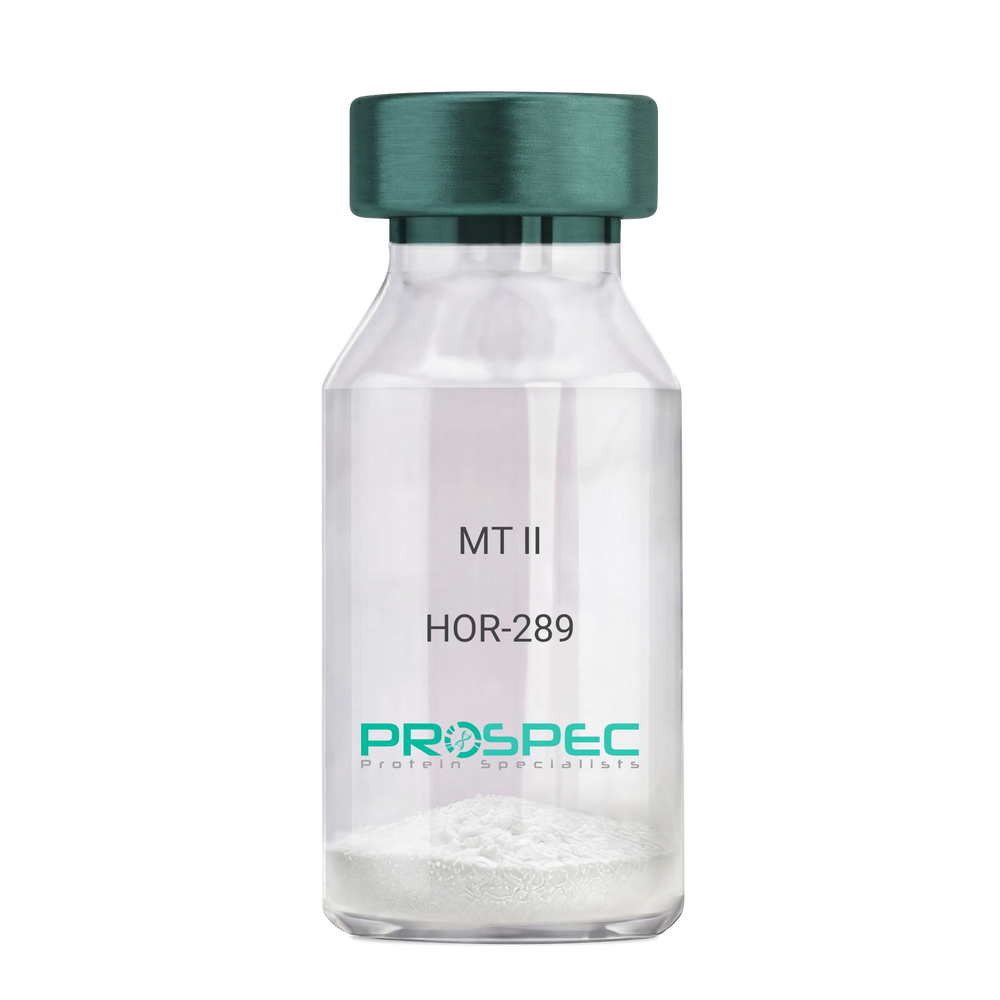
MT IIDescription:
Melanotan-II
Melanotan-II, MT-II, Melanotan.
Product # :
HOR-289Price :
Quantity :
Shipping Method :
Shipped at Room temp
More Info
- description
- formulation
- purity
- More Info
Description
The molecular formula of Melanotan-II is C50H69N15O9. It has the amino acid sequence of Ac-Nle-cyclo [Asp-His-D-Phe-Arg-Trp-Lys]-NH2 and a molecular weight of 1024.2 Dalton. The CAS Number is 121062-08-6.
Formulation
The protein (1mg/ml) was lyophilized with no additives.
Purity
Greater than 99% as determined by by RP-HPLC.
More Info
-
Introduction
Melanotan and Melanotan-II are both analogs of the peptide hormone alpha melanocyte stimulating hormone (a-MSH) that tend to induce skin tanning. Unlike Melanotan, Melanotan-II has the additional effect of increasing libido. Melanotan II has aphrodisiac properties.
-
Synonyms
Melanotan-II, MT-II, Melanotan.
-
Physical Appearance
Sterile Filtered White lyophilized (freeze-dried) powder.
-
Stability
Lyophilized Melanotan-II although stable at room temperature for 3 weeks, should be stored desiccated below -18°C. Upon reconstitution MT-II should be stored at 4°C between 2-7 days and for future use below -18°C.For long term storage it is recommended to add a carrier protein (0.1% HSA or BSA).Please prevent freeze-thaw cycles.
-
Solubility
It is recommended to reconstitute the lyophilized Melanotan-II in sterile 18MΩ-cm H2O not less than 100 µg/ml, which can then be further diluted to other aqueous solutions.
ProSpec's products are furnished for LABORATORY RESEARCH USE ONLY. The product may not be used as drugs, agricultural or pesticidal products, food additives or household chemicals.
- View Data Sheet
Name :
Ferritin HumanDescription:
Human Liver Ferritin
Product # :
PRO-564Price :
Quantity :
Shipping Method :
Shipped with Ice Packs
More Info
- description
- source
- formulation
- purity
- More Info
Description
Ferritin is a glycoprotein produced in Human Liver having a molecular mass of 440- 450kDa and pI of 5.5, which stores iron atoms in the ferric state. It is predominantly intracellular, where it forms an exchangeable pool of iron acting as an iron store. Ferritin level in serum is directly proportional to body iron stores and serum levels are an excellent indicator in monitoring iron status in anemia. It can be used as a marker for inflammation and also used for monitoring and prediction of future events in coronary artery disease.
Source
Human Liver.
Formulation
The protein solution is in 0.05M TRIS buffer pH 7.5 containing 1.0M NaCl and 0.09% NaN3.
Purity
Greater than 96.0%.
More Info
-
Introduction
Ferritin is the main intracellular iron storage protein in prokaryotes and eukaryotes. Ferritin’s major functions are the storage of iron in a soluble and nontoxic state and its release in a controlled fashion. An iron-containing protein complex is found mostly in the intestinal mucosa, spleen, and liver. Ferritin is composed of 24 subunits of the heavy and light chains. Variation in ferritin subunit composition may influence the rates of iron uptake and release in different tissues. Defects in the light chain ferritin gene are linked to a number of neurodegenerative diseases and hyperferritinemia-cataract syndrome. The genes that encode the light and heavy chains are on located different chromosomes. The light chain genes are in chromosome region 19q13.3-q13.4 whilst those for the heavy chain are in chromosome region 11q12-q13. Ferritin is shaped like a hollow sphere, inside which the iron is stored in the Fe(III) oxidation state. The iron is integrated in the mineral ferrihydrite, [FeO(OH)]8[FeO(H2PO4)], which is attached to the inner wall of the sphere. To release iron once the body needs it, the iron must be altered from the Fe(III) to the Fe(II) oxidation state. Subsequently, the iron leaves through channels in the spherical structure. Therefore, the structure of ferritin is tremendously important for the protein's ability to store and release iron in a controlled mode.
The amount of ferritin in the blood (serum ferritin level) is directly related to the amount of iron stored in the body. The body has a "buffer" against iron deficiency (if the blood has too little iron, ferritin can release more) and, to a lesser extent, iron overload (if the blood and tissues of the body have too much iron, ferritin can help store the excess iron). -
Physical Appearance
Sterile Filtered brownish solution.
-
Stability
Human Ferritin should be stored at 2-8°C.
-
Human Virus Test
Tissue sample tested and found negative for HIV-1 & 2 antibodies, Hepatatis B surface antigen, Syphilis RPR and Hepatatis C antibodies.
ProSpec's products are furnished for LABORATORY RESEARCH USE ONLY. The product may not be used as drugs, agricultural or pesticidal products, food additives or household chemicals.
- View Data Sheet
Name :
Clusterin CanineDescription:
Clusterin Canine Recombinant
CLI, AAG4, KUB1, SGP2, SGP-2, SP-40, TRPM2, MGC24903, Glycoprotein 80, Gp80, CLU, Clusterin, Apolipoprotein J, Apo-J.
Product # :
CYT-549Price :
Quantity :
Shipping Method :
Shipped at Room temp
More Info
- description
- source
- formulation
- purity
- More Info
- sds-page
Description
Apolipoprotein-J canine Recombinant produced in E.Coli is a single, non-glycosylated, Polypeptide chain (Asn227~Glu445) and having a molecular mass of 30 kDa.
The protein is fused to His tag at N-Terminus.
The Apolipoprotein-J canine is purified by proprietary chromatographic techniques.Source
Escherichia Coli.
Formulation
Canine Clusterin was lyophilized from 20mM Tris, 150mM NaCl, pH8.0, 0.01% skl and 5%Trehalose.
Purity
Greater than 90% as determined by SDS PAGE.
sds-page
More Info
-
Introduction
Clusterin also named Apolipoprotein J (APO-J) is a 75-80 kD disulfide-linked heterodimeric protein containing about 30% of N-linked carbohydrate rich in sialic acid but truncated forms targeted to the nucleus have also been identified.
The precursor polypeptide chain is cleaved proteolytically to remove the 22-mer secretory signal peptide and subsequently between residues 227/228 to generate the a and b chains. These are assembled in anti-parallel to give a heterodimeric molecule in which the cysteine-rich centers are linked by five disulfide bridges and are flanked by two predicted coiled-coil a-helices and three predicted amphipathic a-helices.
Across a broad range of species clusterin shows a high degree of sequence homology ranging from 70% to 80%. It is nearly ubiquitously expressed in most mammalian tissues and can be found in plasma, milk, urine, cerebrospinal fluid and semen.
It is able to bind and form complexes with numerous partners such as immunoglobulins, lipids, heparin, bacteria, complement components, paraoxonase, beta amyloid, leptin and others. Clusterin has been ascribed a plethora of functions such as phagocyte recruitment, aggregation induction, complement attack prevention, apoptosis inhibition, membrane remodeling, lipid transport, hormone transport and/or scavenging, matrix metalloproteinase inhibition.
A genuine function of clusterin has not been defined. One tempting hypothesis says that clusterin is an extracellular chaperone protecting cells from stress induced insults caused by degraded and misfolded protein precipitates.
Clusterin is up- or down regulated on the mRNA or protein level in many pathological and clinically relevant situations including cancer, organ regeneration, infection, Alzheimer disease, retinitis pigmentosa, myocardial infarction, renal tubular damage, autoimmunity and others. -
Synonyms
CLI, AAG4, KUB1, SGP2, SGP-2, SP-40, TRPM2, MGC24903, Glycoprotein 80, Gp80, CLU, Clusterin, Apolipoprotein J, Apo-J.
-
Physical Appearance
Sterile Filtered White lyophilized (freeze-dried) powder.
-
Stability
Store lyophilized protein at -20°C. Aliquot the product after reconstitution to avoid repeated freezing/thawing cycles. Reconstituted protein can be stored at 4°C for a limited period of time; it does not show any change after two weeks at 4°C.
-
Solubility
Reconstitute in 20mM Tris and 150mM NaCl (pH8.0) to a concentration of 0.1-1.0 mg/mL and let the lyophilized pellet dissolve completely.
-
Amino Acid Sequence
NIIPFP RFQPLNFHDM FQPFFDMIHQ AQQAMDVNLH RIPYHFPIEF PEEDNRTVCK EIRHNSTGCL KMKDQCEKCQ EILSVDCSSN NPAQVQLRQE LSNSLQIAEK FTKLYDELLQ SYQEKMFNTS SLLKQLNEQF SWVSQLANLT QSEDPFYLQV TTVGSQTSDS NVPVGFTKVV VKLFDSDPIT VMIPEAVSRN NPKFMETVAE KALQEYRQKHREE.
-
Background
What is the molecular weight/Mw of CLUSTERIN Protein?
CLUSTERIN Protein has a total Mw of 30kDa.
What is the source or expression system of CLUSTERIN Protein?
Escherichia Coli.
What is the Purity of CLUSTERIN Protein?
CLUSTERIN Protein is >90% pure as determined by SDS-PAGE.
What is the Biological Activity of CLUSTERIN Protein?
The biological functionality of CLUSTERIN Protein will be determined in the future.
What is the amino acid sequence of CLUSTERIN Protein?
NIIPFP RFQPLNFHDM FQPFFDMIHQ AQQAMDVNLH RIPYHFPIEF PEEDNRTVCK EIRHNSTGCL KMKDQCEKCQ EILSVDCSSN NPAQVQLRQE LSNSLQIAEK FTKLYDELLQ SYQEKMFNTS SLLKQLNEQF SWVSQLANLT QSEDPFYLQV TTVGSQTSDS NVPVGFTKVV VKLFDSDPIT VMIPEAVSRN NPKFMETVAE KALQEYRQKHREE.
What applications can CLUSTERIN Protein be used in?
CLUSTERIN Protein can probably be used in western blot, ELISA and Lateral Flow.
What is the endotoxin level for CLUSTERIN Protein?
The endotoxin level is minimal, CLUSTERIN Protein was purified using conventional chromatography techniques
ProSpec's products are furnished for LABORATORY RESEARCH USE ONLY. The product may not be used as drugs, agricultural or pesticidal products, food additives or household chemicals.
- View Data Sheet
Name :
CCL24 MouseDescription:
Eotaxin-2 Mouse Recombinant (CCL24)
C-C motif chemokine 24, Small-inducible cytokine A24, Myeloid progenitor inhibitory factor 2, CK-beta-6, Eosinophil chemotactic protein 2, Eotaxin-2, CCL24, Ckb-6, MPIF2, MPIF-2, SCYA24, Eotaxin2, CCL-24.
Product # :
CHM-368Price :
Quantity :
Shipping Method :
Shipped at Room temp
More Info
- description
- source
- formulation
- purity
- biological activity
- More Info
Description
CCL24 Mouse Recombinant produced in E.Coli is a single, non-glycosylated polypeptide chain containing 93 amino acids and having a molecular mass of 10.3 kDa. The CCL24 is purified by proprietary chromatographic techniques.
Source
Escherichia Coli.
Formulation
The CCL24 protein was lyophilized from a concentrated (1mg/ml) sterile solution containing 20mM Phosphate buffer pH-7.4 and 0.15M sodium chloride.
Purity
Greater than 97.0% as determined by:(a) Analysis by RP-HPLC.
(b) Analysis by SDS-PAGE.Biological Activity
Determined by its ability to chemoattract murine lymphocytes using a concentration range of 10-100ng/ml corresponding to a Specific Activity of 10,000-100,000IU/mg.More Info
-
Introduction
Eotaxin-2, also called MPIF2 & Ckb6, is a novel CC chemokine produced by activated monocytes and T lymphocytes. Eotaxin-2 selectively chemoattracts cells expressing CCR3 including eosinophils, basophils, Th2 T cells, mast cells, and certain subsets of dendritic cells. Furthermore, Eotaxin-2 inhibits the proliferation of multipotential hematopoietic progenitor cells. The mature protein, which includes C-terminal truncation, contains 78 amino acids (92 amino acids for the mouse homolog, without C-terminal truncation).
CCL24 functions as a chemotactic chemokine for resting t-lymphocytes, and eosinophils. CCL24 has lower chemotactic activity for neutrophils but none for monocytes and activated lymphocytes. CCL24 is a strong suppressor of colony formation by a multipotential hematopoietic progenitor cell line and binds to CCR3. -
Synonyms
C-C motif chemokine 24, Small-inducible cytokine A24, Myeloid progenitor inhibitory factor 2, CK-beta-6, Eosinophil chemotactic protein 2, Eotaxin-2, CCL24, Ckb-6, MPIF2, MPIF-2, SCYA24, Eotaxin2, CCL-24.
-
Physical Appearance
Sterile Filtered White lyophilized (freeze-dried) powder.
-
Stability
Lyophilized Eotaxin-2 although stable at room temperature for 3 weeks, should be stored desiccated below -18°C. Upon reconstitution CCL24 should be stored at 4°C between 2-7 days and for future use below -18°C. For long term storage it is recommended to add a carrier protein (0.1% HSA or BSA).Please prevent freeze-thaw cycles.
-
Solubility
It is recommended to reconstitute the lyophilized CCL24 Mouse Recombinant in sterile 18MΩ-cm H2O not less than 100µg/ml, which can then be further diluted to other aqueous solutions.
-
Amino Acid Sequence
VTIPSSCCTS FISKKIPENR VVSYQLANGS ICPKAGVIFI TKKGHKICTD PKLLWVQRHI QKLDAKKNQP SKGAKAVRTK FAVQRRRGNS TEV.
-
Background
What is the molecular weight/Mw of CCL24 MOUSE Protein?
CCL24 MOUSE Protein has a total Mw of 10.3kDa.
What is the source or expression system of CCL24 MOUSE Protein?
Escherichia Coli.
What is the Purity of CCL24 MOUSE Protein?
CCL24 MOUSE Protein is >97% pure as determined by SDS-PAGE.
What is the Biological Activity of CCL24 MOUSE Protein?
Determined by its ability to chemoattract murine lymphocytes using a concentration range of 10-100ng/ml corresponding to a Specific Activity of 10,000-100,000IU/mg.
What is the amino acid sequence of CCL24 MOUSE Protein?
VTIPSSCCTS FISKKIPENR VVSYQLANGS ICPKAGVIFI TKKGHKICTD PKLLWVQRHI QKLDAKKNQP SKGAKAVRTK FAVQRRRGNS TEV.
What applications can CCL24 MOUSE Protein be used in?
CCL24 MOUSE Protein can probably be used in western blot, ELISA and Lateral Flow.
What is the endotoxin level for CCL24 MOUSE Protein?
The endotoxin level is minimal, CCL24 MOUSE Protein was purified using conventional chromatography techniques.
ProSpec's products are furnished for LABORATORY RESEARCH USE ONLY. The product may not be used as drugs, agricultural or pesticidal products, food additives or household chemicals.