Search results
1000 results found for “cyclin”
Name
Description
Product #
Price
Quantity
Shipping Method
- View Data Sheet
Name :
LLODescription:
Listeriolysin-O Recombinant
Listeriolysin-O, LLO, hlyA.
Product # :
PRO-320Price :
Quantity :
Shipping Method :
Shipped with Ice Packs
More Info
- description
- source
- formulation
- purity
- biological activity
- More Info
Description
LLO is a single, non-glycosylated polypeptide chain containing 529 amino acids and having a molecular mass of 58kDa. (accession number: AAF64524).
Source
Escherichia Coli.
Formulation
The protein contains 50mM NaH2PO4, 1mM EDTA, 2.7mM KCl, pH 6.4, 1mM DTT, 5% (v/v) glycerol and 0.5M NaCl.
Purity
Greater than 90.0% as determined by SDS-PAGE.
Biological Activity
Hemolytic activity is 8,27E+05 HU/mg of protein where HU means hemolytic activity unit that is the amount of toxin needed to release half the hemoglobin (50% lysis) of the erythrocytes as determined by hemolysin assay.
More Info
-
Introduction
Listeriolysin O (aka LLO) is a hemolysin produced by Listeria monocytogenes bacteria, the pathogen responsible for causing listeriosis. The toxin may be regarded as a virulence factor, since it is crucial for the virulence of L. monocytogenes. LLO is a single polypeptide protein encoded by the hlyA gene and composed of 529 residues. LLO is a thiol-activated cholesterol-dependent pore forming toxin protein; therefore, it is activated by reducing agents and inhibited by oxidizing agents. Still, LLO differs from other thiol-activated toxins, as its cytolytic activity is maximized at a pH of 5.5. Inside the acidic phagosomes (average pH ~ 5.9) of cells that have phagocytosed L. monocytogenes, LLO is selectively activated by maximizing activity at a pH of 5.5. Following the phagosome lysis by LLO, the bacterium breaks out into the cytosol, where it is able to grow intracellularly, and the toxin has reduced activity in the more basic cytosol. Thus, LLO permits L. monocytogenes to break out from the phagosomes into the cytosol without harming the plasma membrane of the infected cell, which allows the bacteria to live intracellularly, where they are sheltered from extracellular immune system factors such as the complement system and antibodies. LLO also brings about dephosphorylation of histone H3 and deacetylation of histone H4 in the early phases of infection, before entry of L. monocytogenes into the host cell. The pore-forming activity is not implicated in causing the histone modifications. The modifications of the histones affect the down regulation of genes encoding proteins involved in the inflammatory response. Therefore, LLO may be significant in subverting the host immune response to L. monocytogenes. At its NH2-terminus it possesses a 25 residues long typical signal sequence excited during the secretion process. Moreover, in its NH2-terminus there is also a 19 amino acids PEST- like sequence that may target this toxin for degradation. The PEST-like sequence found in LLO and is considered crucial for virulence, given that mutants lacking the sequence lysed the host cell. Nevertheless, contrary to PEST's supposed role in protein degradation, evidence implies that the PEST-like sequence may control LLO production in the cytosol rather than increase degradation of LLO.
-
Synonyms
Listeriolysin-O, LLO, hlyA.
-
Physical Appearance
Sterile Filtered clear solution.
-
Stability
Store at 4°C if entire vial will be used within 2-4 weeks. Store, frozen at -20°C for longer periods of time. Avoid multiple freeze-thaw cycles.
ProSpec's products are furnished for LABORATORY RESEARCH USE ONLY. The product may not be used as drugs, agricultural or pesticidal products, food additives or household chemicals.
- View Data Sheet
Name :
CMV Pp52Description:
Cytomegalo Virus Pp52 (UL44) Recombinant
Product # :
CMV-214Price :
Quantity :
Shipping Method :
Shipped with Ice Packs
More Info
- description
- source
- formulation
- purity
- More Info
Description
The E.coli derived 51 kDa recombinant protein contains the CMV Pp52 (UL44) immunodominant regions, 202-434 amino acids. Recombinant CMV-Pp52 is fused to a 26 kDa GST tag.
Source
Escherichia Coli.
Formulation
50mM Tris pH 7.2, 1mM EDTA and 50% glycerol.
Purity
CMV Pp52 protein is >95% pure as determined by 10% PAGE (coomassie staining).
More Info
-
Introduction
CMV belongs to the Betaherpesvirinae subfamily of Herpesviridae which includes herpes simplex virustypes 1 and 2, varicella-zoster virus, and Epstein-Barrvirus. The herpesviruses share a characteristic ability to remain latentover long periods. CMV is a double-stranded linear DNA virus with 162 hexagonal protein capsomeres surrounded by a lipid membrane. CMV has the largest genome of the herpes viruses, ranging from 230-240 kilobase pairs. Human CMV is composed of unique and inverted repeats that include the existence of 4 genome isomers caused by inversion of L-S genome components (class E). Replication may be divided into immediate early, delayed early, and late gene expression based on time of synthesis after infection. The DNA is replicated by rolling circles. In vitro, CMV replicates in human fibroblasts.
-
Stability
CMV Pp52 protein although stable at 4°C for 1 week, should be stored below -18°C. Please prevent freeze thaw cycles.
-
Applications
CMV Pp52 antigen is suitable for ELISA and Western blots, excellent antigen for detection of CMV with minimal specificity problems.
-
Specificity
Immunoreactive with sera of CMV-infected individuals.
-
Purification Method
CMV Pp52 protein was purified by proprietary chromatographic technique.
ProSpec's products are furnished for LABORATORY RESEARCH USE ONLY. The product may not be used as drugs, agricultural or pesticidal products, food additives or household chemicals.
- View Data Sheet
Name :
CXCL17 Human, HisDescription:
VEGF Co-regulated Chemokine 1, His Tag Human Recombinant
Dcip1, DMC, MGC138300, UNQ473, VCC-1, VCC1, VEGF coregulated chemokine 1, C-X-C motif chemokine 17, Dendritic cell and monocyte chemokine-like protein.
Product # :
CHM-024Price :
Quantity :
Shipping Method :
Shipped with Ice Packs
More Info
- description
- source
- formulation
- purity
- More Info
- SDS-PAGE
Description
CXCL17 Human Recombinant produced in E.Coli is a single, non-glycosylated polypeptide chain containing 119 amino acids (22-119 a.a) and having a molecular mass of 13.7kDa.CXCL17 is fused to a 21 amino acid His-tag at N-terminus & purified by proprietary chromatographic techniques.
Source
Escherichia Coli.
Formulation
CXCL17 protein solution (0.5mg/ml) contains 20mM Tris-HCl buffer (pH 8.0), 0.4M Urea and 10% glycerol.
Purity
Greater than 85.0% as determined by SDS-PAGE.
SDS-PAGE
More Info
-
Introduction
Dendritic cell and monocyte chemokinelike protein (DMC/CXCL17/VEGF-correlated chemokine 1/VCC1), is a secreted molecule with a size and predicted 3-dimensional folding pattern similar to that of chemokines CXCL8/IL8 and CXCL14/BRAK. CXCL17 is constitutively generated by airway and intestinal epithelium. CXCL17 induces the chemotaxis of quiescent, but not LPS-activated peripheral blood monocytes and dendritic cells, and it also binds these cells specifically. The expression of CXCL17 is increased in endothelial cells when they are induced to form tubes in vitro. CXCL17, CXCL1/GRO and CXCL8/IL8 which have roles in angiogenesis, show significantly correlated expression with that of VEGF in primary lung, breast and esophageal tumors. Therefore, CXCL17 is suggested to have a role in tumor angiogenesis. The mature Rat CXCL17 shares 82%, 71% amino acid sequence identity with mouse, human CXCL17, respectively.
-
Synonyms
Dcip1, DMC, MGC138300, UNQ473, VCC-1, VCC1, VEGF coregulated chemokine 1, C-X-C motif chemokine 17, Dendritic cell and monocyte chemokine-like protein.
-
Physical Appearance
Sterile Filtered clear solution.
-
Stability
Store at 4°C if entire vial will be used within 2-4 weeks. Store, frozen at -20°C for longer periods of time. For long term storage it is recommended to add a carrier protein (0.1% HSA or BSA).Avoid multiple freeze-thaw cycles.
-
Amino Acid Sequence
MGSSHHHHHH SSGLVPRGSH MSSLNPGVAR GHRDRGQASR RWLQEGGQEC ECKDWFLRAP RRKFMTVSGL PKKQCPCDHF KGNVKKTRHQ RHHRKPNKHS RACQQFLKQC QLRSFALPL.
-
Background
What is the molecular weight/Mw of CXCL17 HUMAN, HIS Protein?
CXCL17 HUMAN, HIS Protein has a total Mw of 13.7kDa.
What is the source or expression system of CXCL17 HUMAN, HIS Protein?
Escherichia Coli.
What is the Purity of CXCL17 HUMAN, HIS Protein?
CXCL17 HUMAN, HIS Protein is >85% pure as determined by SDS-PAGE.
What is the Biological Activity of CXCL17 HUMAN, HIS Protein?
The biological functionality of CXCL17 HUMAN, HIS Protein will be determined in the future.
What is the amino acid sequence of CXCL17 HUMAN, HIS Protein?
MGSSHHHHHH SSGLVPRGSH MSSLNPGVAR GHRDRGQASR RWLQEGGQEC ECKDWFLRAP RRKFMTVSGL PKKQCPCDHF KGNVKKTRHQ RHHRKPNKHS RACQQFLKQC QLRSFALPL.
What applications can CXCL17 HUMAN, HIS Protein be used in?
CXCL17 HUMAN, HIS Protein can probably be used in western blot, ELISA and Lateral Flow.
What is the endotoxin level for CXCL17 HUMAN, HIS Protein?
The endotoxin level is minimal, CXCL17 HUMAN, HIS Protein was purified using conventional chromatography techniques.
ProSpec's products are furnished for LABORATORY RESEARCH USE ONLY. The product may not be used as drugs, agricultural or pesticidal products, food additives or household chemicals.
- View Data Sheet
Name :
DCN Human, Sf9Description:
Decorin Human Recombinant, Sf9
Decorin, Decorin Proteoglycan, Bone Proteoglycan II, SLRR1B, PG-S2, CSCD, PG40, Dermatan Sulphate Proteoglycans II, Small Leucine-Rich Protein 1B, Proteoglycan Core Protein, DSPG2, PGII, PGS2, Decorin, Bone proteoglycan II, PG-S2, , PG40.
Product # :
PRO-2232Price :
Quantity :
Shipping Method :
Shipped with Ice Packs
More Info
- description
- source
- formulation
- purity
- More Info
Description
DCN produced in Sf9 Baculovirus cells is a single, glycosylated polypeptide chain containing 335 amino acids (31-359a.a.) and having a molecular mass of 37.1kDa. (Molecular size on SDS-PAGE will appear at approximately 40-57kDa). DCN is expressed with a 6 amino acid His tag at C-Terminus and purified by proprietary chromatographic techniques.
Source
Sf9, Baculovirus cells.
Formulation
DCN protein solution (1mg/ml) contains Phosphate Buffered Saline (pH 7.4) and 10% glycerol.
Purity
Greater than 95% as determined by SDS-PAGE.
More Info
-
Introduction
Decorin (DCN) is a small cellular or pericellular matrix proteoglycan which is closely related in structure to biglycan protein. Decorin is a secreted protein which binds to collagen and fibronectin in extracellular matrix. Decorin appears in different glycoforms, substituted with chondroitin sulfate or dermatan sulfate consistent with the original tissue. DCN contains one attached glycosaminoglycan chain. Decorin influences the rate of fibril formation. Decorin is capable of suppressing the growth of various tumor cell lines. DCN gene defects cause corneal dystrophy. The DCN gene is a candidate gene for Marfan syndrome.
-
Synonyms
Decorin, Decorin Proteoglycan, Bone Proteoglycan II, SLRR1B, PG-S2, CSCD, PG40, Dermatan Sulphate Proteoglycans II, Small Leucine-Rich Protein 1B, Proteoglycan Core Protein, DSPG2, PGII, PGS2, Decorin, Bone proteoglycan II, PG-S2, , PG40.
-
Physical Appearance
Sterile filtered colorless solution.
-
Stability
Store at 4°C if entire vial will be used within 2-4 weeks. Store, frozen at -20°C for longer periods of time. For long term storage it is recommended to add a carrier protein (0.1% HSA or BSA).Avoid multiple freeze-thaw cycles.
-
Amino Acid Sequence
DEASGIGPEV PDDRDFEPSL GPVCPFRCQC HLRVVQCSDL GLDKVPKDLP PDTTLLDLQN NKITEIKDGD FKNLKNLHAL ILVNNKISKV SPGAFTPLVK LERLYLSKNQ LKELPEKMPK TLQELRAHEN EITKVRKVTF NGLNQMIVIE LGTNPLKSSG IENGAFQGMK KLSYIRIADT NITSIPQGLP PSLTELHLDG NKISRVDAAS LKGLNNLAKL GLSFNSISAV DNGSLANTPH LRELHLDNNK LTRVPGGLAE HKYIQVVYLH NNNISVVGSS DFCPPGHNTK KASYSGVSLF SNPVQYWEIQ PSTFRCVYVR SAIQLGNYKH HHHHH.
ProSpec's products are furnished for LABORATORY RESEARCH USE ONLY. The product may not be used as drugs, agricultural or pesticidal products, food additives or household chemicals.
- View Data Sheet
Name :
Follistatin MouseDescription:
Follistatin Mouse Recombinant
Follistatin, FST, FS, Activin-binding protein, AL033346.
Product # :
CYT-124Price :
Quantity :
Shipping Method :
Shipped at Room temp
More Info
- description
- source
- formulation
- purity
- biological activity
- More Info
Description
Follistatin Mouse Recombinant produced in E.Coli is a single, non-glycosylated polypeptide chain containing 289 amino acids and having a total molecular mass of 31.6kDa.The FST is purified by proprietary chromatographic techniques.
Source
Escherichia Coli.
Formulation
The Mouse Follistatin is lyophilized from 10mM Na2PO4 and 50mM NaCl, pH 7.5.
Purity
Greater than 90.0% as determined by SDS-PAGE.
Biological Activity
The ED50, determined by the dose-dependent neutralization of 7.5ng/ml human Activin-A on MCP-11 cells, is 0.13-0.19µg/ml.More Info
-
Introduction
Follistatin is a single-chain gonadal protein that specifically inhibits follicle-stimulating hormone release. The single FST gene encodes two isoforms, FST317 and FST344 containing 317 and 344 amino acids respectively, resulting from alternative splicing of the precursor mRNA. In a study in which 37 candidate genes were tested for linkage and association with polycystic ovary syndrome (PCOS) or hyperandrogenemia in 150 families, evidence was found for linkage between PCOS and follistatin. Follistatin binds directly to activin and functions as an activin antagonist. specific inhibitor of the biosynthesis and secretion of pituitary follicle stimulating hormone (fsh).
-
Synonyms
Follistatin, FST, FS, Activin-binding protein, AL033346.
-
Physical Appearance
Sterile Filtered White lyophilized (freeze-dried) powder.
-
Stability
Lyophilized Follistatin although stable at room temperature for 3 weeks, should be stored desiccated below -18°C. Upon reconstitution FST should be stored at 4°C between 2-7 days and for future use below -18°C.For long term storage it is recommended to add a carrier protein (0.1% HSA or BSA).Please prevent freeze-thaw cycles.
-
Solubility
It is recommended to reconstitute the lyophilized Follistatin in sterile 18MΩ-cm H2O not less than 100µg/ml, which can then be further diluted to other aqueous solutions.
-
Amino Acid Sequence
MGNCWLRQAK NGRCQVLTKT ELSKEECCST GRLSTSWTEE DVNDNTLFKW MIFNGGAPNC IPCKETCENV DCGPGKKCRM NKKNKPRCVC APDCSNITWK GPVCGLDGKT YRNECALLKA RCKEQPELEV QYQGRCKKTC RDVFCPGSST CVVDQTNNAY CVTCNRICPE PASSEQYLCG NDGVTYSSAC HLRKATCLLG RSIGLAYEGK CIKAKSCEDI QCTGGKKCLW DS.
-
Background
What is the molecular weight/Mw of FOLLISTATIN MOUSE Protein?
FOLLISTATIN MOUSE Protein has a total Mw of 31.6kDa.
What is the source or expression system of FOLLISTATIN MOUSE Protein?
Escherichia Coli.
What is the Purity of FOLLISTATIN MOUSE Protein?
FOLLISTATIN MOUSE Protein is >90% pure as determined by SDS-PAGE.
What is the Biological Activity of FOLLISTATIN MOUSE Protein?
The ED50, determined by the dose-dependent neutralization of 7.5ng/ml human Activin-A on MCP-11 cells, is 0.13-0.19µg/ml.
What is the amino acid sequence of FOLLISTATIN MOUSE Protein?
MGNCWLRQAK NGRCQVLTKT ELSKEECCST GRLSTSWTEE DVNDNTLFKW MIFNGGAPNC IPCKETCENV DCGPGKKCRM NKKNKPRCVC APDCSNITWK GPVCGLDGKT YRNECALLKA RCKEQPELEV QYQGRCKKTC RDVFCPGSST CVVDQTNNAY CVTCNRICPE PASSEQYLCG NDGVTYSSAC HLRKATCLLG RSIGLAYEGK CIKAKSCEDI QCTGGKKCLW DS.
What applications can FOLLISTATIN MOUSE Protein be used in?
FOLLISTATIN MOUSE Protein can probably be used in western blot, ELISA and Lateral Flow.
What is the endotoxin level for FOLLISTATIN MOUSE Protein?
The endotoxin level is minimal, FOLLISTATIN MOUSE Protein was purified using conventional chromatography techniques.
ProSpec's products are furnished for LABORATORY RESEARCH USE ONLY. The product may not be used as drugs, agricultural or pesticidal products, food additives or household chemicals.
- View Data Sheet
Name :
CD247 HumanDescription:
CD247 Human Recombinant
T-cell surface glycoprotein CD3 zeta chain, T-cell receptor T3 zeta chain, CD247, CD3Z, T3Z, TCRZ, CD3H, CD3Q, CD3-ZETA.
Product # :
PRO-1335Price :
Quantity :
Shipping Method :
Shipped with Ice Packs
More Info
- description
- source
- formulation
- purity
- More Info
Description
CD247 Human Recombinant produced in E. coli is a single polypeptide chain containing 136 amino acids (52-164) and having a molecular mass of 15.4kDa.CD247 is fused to a 23 amino acid His-tag at N-terminus & purified by proprietary chromatographic techniques.
Source
E.coli.
Formulation
The CD247 solution (0.5mg/ml) contains 20mM Tris-HCl buffer (pH 8.0), 0.15M NaCl, 10% glycerol and 1mM DTT.
Purity
Greater than 90% as determined by SDS-PAGE.
More Info
-
Introduction
T-cell surface glycoprotein CD3 zeta chain (CD247) is a member of the CD3Z/FCER1G family. CD247 is T-cell receptor zeta, which along with T-cell receptor alpha/beta and gamma/delta heterodimers, and also with CD3-gamma, -delta and -epsilon, creates the T-cell receptor-CD3 complex. The zeta chain has a central role in coupling antigen recognition to several intracellular signal-transduction pathways. Low expression of the CD247 antigen causes impaired immune response.
-
Synonyms
T-cell surface glycoprotein CD3 zeta chain, T-cell receptor T3 zeta chain, CD247, CD3Z, T3Z, TCRZ, CD3H, CD3Q, CD3-ZETA.
-
Physical Appearance
Sterile Filtered colorless solution.
-
Stability
Store at 4°C if entire vial will be used within 2-4 weeks. Store, frozen at -20°C for longer periods of time. For long term storage it is recommended to add a carrier protein (0.1% HSA or BSA).Avoid multiple freeze-thaw cycles.
-
Amino Acid Sequence
MGSSHHHHHH SSGLVPRGSH MGSRVKFSRS ADAPAYQQGQ NQLYNELNLG RREEYDVLDK RRGRDPEMGG KPQRRKNPQE GLYNELQKDK MAEAYSEIGM KGERRRGKGH DGLYQGLSTA TKDTYDALHM QALPPR.
ProSpec's products are furnished for LABORATORY RESEARCH USE ONLY. The product may not be used as drugs, agricultural or pesticidal products, food additives or household chemicals.
- View Data Sheet
Name :
CHGA Human, HEKDescription:
Chromogranin A Human Recombinant, HEK
CHGA, CGA, Chromogranin-A, Vasostatin I, SP-I, Pituitary secretory protein I.
Product # :
PRO-2664Price :
Quantity :
Shipping Method :
Shipped at Room temp
More Info
- description
- source
- formulation
- purity
- More Info
Description
CHGA Human Recombinant is a single, glycosylated polypeptide chain containing 445 amino acids (19-457a.a) and having a molecular mass of 49.7kDa (calculated). CHGA is fused to a 6 a.a His tag at C-terminal.
Source
HEK293 cells.
Formulation
CHGA filtered (0.4 µm) and lyophilized from 0.5mg/ml in PBS, pH 7.0.
Purity
Greater than 95.0% as determined by SDS-PAGE.
More Info
-
Introduction
Chromogranin A is a 439 amino acid protein which is encoded on chromosome 14 and is present in neuroendocrine cells throughout the body, including the neuroendocrine cells of the large and small intestine, adrenal medulla and pancreatic islets. It is an excellent marker for carcinoid tumors, phenochromocytomas, paragangliomas, and other neuroendocrine tumors.
Coexpression of chromogranin A and neuron specific enolase (NSE) is common in neuroendocrine neoplasms. -
Synonyms
CHGA, CGA, Chromogranin-A, Vasostatin I, SP-I, Pituitary secretory protein I.
-
Physical Appearance
Filtered White lyophilized (freeze-dried) powder.
-
Stability
Store lyophilized protein at -20°C. Aliquot the product after reconstitution to avoid repeated freezing/thawing cycles. Reconstituted protein can be stored at 4°C for a limited period of time; it does not show any change after two weeks at 4°C.
-
Solubility
It is recommended to add deionized water to prepare a working stock solution of approximately 0.5mg/ml and let the lyophilized pellet dissolve completely.
-
Amino Acid Sequence
LPVNSPMNKG DTEVMKCIVE VISDTLSKPS PMPVSQECFE TLRGDERILS ILRHQNLLKE LQDLALQGAK ERAHQQKKHS GFEDELSEVL ENQSSQAELK EAVEEPSSKD VMEKREDSKE AEKSGEATDG ARPQALPEPM QESKAEGNNQ APGEEEEEEE EATNTHPPAS LPSQKYPGPQ AEGDSEGLSQ GLVDREKGLS AEPGWQAKRE EEEEEEEEAE AGEEAVPEEE GPTVVLNPHP SLGYKEIRKG ESRSEALAVD GAGKPGAEEA QDPEGKGEQE HSQQKEEEEE MAVVPQGLFR GGKSGELEQE EERLSKEWED SKRWSKMDQL AKELTAEKRL EGQEEEEDNR DSSMKLSFRA RAYGFRGPGP QLRRGWRPSS REDSLEAGLP LQVRGYPEEK KEEEGSANRR PEDQELESLS AIEAELEKVA HQLQALRRGH HHHHH
ProSpec's products are furnished for LABORATORY RESEARCH USE ONLY. The product may not be used as drugs, agricultural or pesticidal products, food additives or household chemicals.
- View Data Sheet
Name :
ClusterinDescription:
Human Clusterin
CLI, AAG4, KUB1, SGP2, SGP-2, SP-40, TRPM2, MGC24903, Clusterin, Apolipoprotein J, Apo-J.
Product # :
CYT-548Price :
Quantity :
Shipping Method :
Shipped at Room temp
More Info
- source
- formulation
- purity
- More Info
Source
Plasma.
Formulation
Human native Clusterin was filtered (0.4µm) and lyophilized from 0.5mg/ml in 0.1M phosphate buffer, 0.15M NaCl pH 7.5.
Purity
Greater than 95% as determined by SDS PAGE.
More Info
-
Introduction
Clusterin also named Apolipoprotein J (APO-J) is a 75-80 kD disulfide-linked heterodimeric protein containing about 30% of N-linked carbohydrate rich in sialic acid but truncated forms targeted to the nucleus have also been identified.
The precursor polypeptide chain is cleaved proteolytically to remove the 22-mer secretory signal peptide and subsequently between residues 227/228 to generate the a and b chains. These are assembled in anti-parallel to give a heterodimeric molecule in which the cysteine-rich centers are linked by five disulfide bridges and are flanked by two predicted coiled-coil a-helices and three predicted amphipathic a-helices.
Across a broad range of species clusterin shows a high degree of sequence homology ranging from 70% to 80%. It is nearly ubiquitously expressed in most mammalian tissues and can be found in plasma, milk, urine, cerebrospinal fluid and semen.
It is able to bind and form complexes with numerous partners such as immunoglobulins, lipids, heparin, bacteria, complement components, paraoxonase, beta amyloid, leptin and others. Clusterin has been ascribed a plethora of functions such as phagocyte recruitment, aggregation induction, complement attack prevention, apoptosis inhibition, membrane remodeling, lipid transport, hormone transport and/or scavenging, matrix metalloproteinase inhibition.
A genuine function of clusterin has not been defined. One tempting hypothesis says that clusterin is an extracellular chaperone protecting cells from stress induced insults caused by degraded and misfolded protein precipitates.
Clusterin is up- or down regulated on the mRNA or protein level in many pathological and clinically relevant situations including cancer, organ regeneration, infection, Alzheimer disease, retinitis pigmentosa, myocardial infarction, renal tubular damage, autoimmunity and others. -
Synonyms
CLI, AAG4, KUB1, SGP2, SGP-2, SP-40, TRPM2, MGC24903, Clusterin, Apolipoprotein J, Apo-J.
-
Physical Appearance
Filtered White lyophilized (freeze-dried) powder.
-
Stability
Store lyophilized Clusterin at -20°C. Aliquot the product after reconstitution to avoid repeated freezing/thawing cycles. Reconstituted protein can be stored at 4°C for a limited period of time; it does not show any change after two weeks at 4°C.
-
Solubility
It is recommended to add deionized H2O to prepare a working stock solution of 0.5mg/ml and let the lyophilized pellet dissolve completely. Product is not sterile! Please filter the product by an appropriate sterile filter before using it in the cell culture.
ProSpec's products are furnished for LABORATORY RESEARCH USE ONLY. The product may not be used as drugs, agricultural or pesticidal products, food additives or household chemicals.
- View Data Sheet
Name :
MAGEA3 HumanDescription:
Melanoma Antigen Family A, 3 Human Recombinant
CT1.3, MAGE3, HYPD, Melanoma Antigen family A, 3, MAGE-3 antigen, MAGEA6, Antigen MZ2-D, Melanoma-Associated antigen 3.
Product # :
PRO-502Price :
Quantity :
Shipping Method :
Shipped with Ice Packs
More Info
- description
- source
- formulation
- purity
- More Info
Description
MAGEA3 produced in E.Coli is a single, non-glycosylated polypeptide chain containing 337 amino acids (1-314 a.a.) and having a molecular mass of 37.1kDa.MAGEA3 is fused to a 23 amino acid His-tag at N-terminus & purified by proprietary chromatographic techniques.
Source
Escherichia Coli.
Formulation
The MAGEA3 protein solution (1mg/1ml) is formulated in 20mM Tris-HCl buffer (pH 8.0) 1mM DTT, 100mM NaCl and 10% glycerol.
Purity
Greater than 90% as determined by SDS-PAGE.
More Info
-
Introduction
MAGE belongs to the MAGE gene family, that comprises 12 known genes, of which 6 are expressed in tumors. The Melanoma-associated antigen 3 genes were originally isolated from different kinds of tumors, and based on their virtually limited tumor-specific expression in adult tissues, they were used as targets for cancer immunotherapy. MAGEA3 is a tumor-specific antigen extensively expressed in solid and hematologic malignancies, but not in normal tissues, with the exclusion of testis and placenta. Consequently, MAGEA3 is an outstanding candidate tumor antigen.
-
Synonyms
CT1.3, MAGE3, HYPD, Melanoma Antigen family A, 3, MAGE-3 antigen, MAGEA6, Antigen MZ2-D, Melanoma-Associated antigen 3.
-
Physical Appearance
Sterile Filtered clear solution.
-
Stability
Store at 4°C if entire vial will be used within 2-4 weeks.Store, frozen at -20°C for longer periods of time. For long term storage it is recommended to add a carrier protein (0.1% HSA or BSA).Avoid multiple freeze-thaw cycles.
-
Amino Acid Sequence
MGSSHHHHHH SSGLVPRGSH MGSMPLEQRS QHCKPEEGLE ARGEALGLVG AQAPATEEQE AASSSSTLVE VTLGEVPAAE SPDPPQSPQG ASSLPTTMNY PLWSQSYEDS SNQEEEGPST FPDLESEFQA ALSRKVAELV HFLLLKYRAR EPVTKAEMLG SVVGNWQYFF PVIFSKASSS LQLVFGIELM EVDPIGHLYI FATCLGLSYD GLLGDNQIMP KAGLLIIVLA IIAREGDCAP EEKIWEELSV LEVFEGREDS ILGDPKKLLT QHFVQENYLE YRQVPGSDPA CYEFLWGPRA LVETSYVKVL HHMVKISGGP HISYPPLHEW VLREGEE
ProSpec's products are furnished for LABORATORY RESEARCH USE ONLY. The product may not be used as drugs, agricultural or pesticidal products, food additives or household chemicals.
- View Data Sheet
Name :
PDCD12 AntibodyDescription:
Programmed Cell Death 12, Mouse Anti Human
Cell death regulator Aven, AVEN, PDCD12, Programmed Cell Death 12.
Product # :
ANT-457Price :
Quantity :
Shipping Method :
Shipped with Ice Packs
More Info
- formulation
- More Info
Formulation
1mg/ml containing PBS, pH-7.4, & 0.1% Sodium Azide.
More Info
-
Introduction
PDCD12 (AVEN) represents a new class of cell death regulator. PDCD12 is a conserved intracellular membrane protein which blocks apoptosis impeded by Apaf-1 mediated caspase activation. BAD and Bcl-2 also interact with PDCD12 to prevent apoptosis. PDCD12 is expressed in a wide variety of normal tissues including the heart, skeletal muscle, kidney, liver, testis, and also in diseases such as cancer.
-
Synonyms
Cell death regulator Aven, AVEN, PDCD12, Programmed Cell Death 12.
-
Immunogen
Anti-human PDCD12 mAb is derived from hybridization of mouse F0 myeloma cells with spleen cells from BALB/c mice immunized with recombinant human PDCD12 amino acids 254-362 purified from E. coli.
-
Ig Subclass
Mouse IgG2a heavy chain and κ light chain.
-
Clone
P3G4AT.
-
Applications
PDCD12 antibody has been tested by ELISA, Western blot and immunohistochemistry analysis to assure specificity and reactivity. Since application varies, however, each investigation should be titrated by the reagent to obtain optimal results. Recommended dilution range for Western blot is 1:1,000~1:2,000 and immunohistochemistry analysis is 1:50~100. Recommended starting dilution for Western blot is 1:1,000 and Immunohistochemistry is 1:50.
-
Type
Mouse Anti Human Monoclonal.
-
Storage Procedures
For periods up to 1 month store at 4°C, for longer periods of time, store at -20°C. Prevent freeze thaw cycles.
-
Purification Method
PDCD12 antibody was purified from mouse ascitic fluids by protein-G affinity chromatography.
ProSpec's products are furnished for LABORATORY RESEARCH USE ONLY. The product may not be used as drugs, agricultural or pesticidal products, food additives or household chemicals.
- View Data Sheet
Name :
NAP 2 AntibodyDescription:
Natural anti-proliferative protein, Mouse-Anti Human
Platelet basic protein, PBP, Small inducible cytokine B7, CXCL7, Leukocyte-derived growth factor, LDGF, Macrophage-derived growth factor, MDGF, pro-platelet basic protein (chemokine (C-X-C motif) ligand 7), TC1, TC2, TGB, TGB1, B-TG1, CTAP3, NAP-2, SCYB7, THBGB, LA-PF4, THBGB1, Beta-TG, CTAPIII, CTAP-III.
Product # :
ANT-170Price :
Quantity :
Shipping Method :
Shipped at Room temp
More Info
- formulation
- More Info
Formulation
1mg/ml in PBS (after reconstitution).
More Info
-
Introduction
Chemokine (C-X-C motif) ligand (CXCL7) is a small cytokine belonging to the CXC chemokine family. It is a protein that is released in large amounts from platelets following their activation. It stimulates various processes including mitogenesis, synthesis of extracellular matrix, glucose metabolism and synthesis of plasminogen activator.
-
Synonyms
Platelet basic protein, PBP, Small inducible cytokine B7, CXCL7, Leukocyte-derived growth factor, LDGF, Macrophage-derived growth factor, MDGF, pro-platelet basic protein (chemokine (C-X-C motif) ligand 7), TC1, TC2, TGB, TGB1, B-TG1, CTAP3, NAP-2, SCYB7, THBGB, LA-PF4, THBGB1, Beta-TG, CTAPIII, CTAP-III.
-
Solubility
Reconstitute with sterile H20. Mix gently, wash the sides of the vial and wait 30-60 seconds before use.
-
Immunogen
r.Human NAP-2.
-
Ig Subclass
Mouse IgG1.
-
Clone
NYRhNAP-2.
-
Applications
Direct ELISA, Western Blot, Immuneprecipitation.
-
Note
This antibody will bind very well to protein A in a buffer (PBS) containing high salt concentration (3M Nacl).
-
Titer
In direct ELISA, using alkaline phosphatase goat anti-mouse Ig (Jackson Laboratories) 1:10,000 dilution will yield 0.5 O.D within 10 minutes.
-
Shipping Conditions
Antibody is shipped lyophilized at ambient temperature.
-
Type
Mouse Anti Human Monoclonal.
-
Storage Procedures
In lyophilized form, for long periods, store at 4oC in a dry environment. After reconstitution, if not intended for use within a month, aliquot and store at -20oC.
-
Purification Method
ion exchange.
ProSpec's products are furnished for LABORATORY RESEARCH USE ONLY. The product may not be used as drugs, agricultural or pesticidal products, food additives or household chemicals.
- View Data Sheet
Name :
CSNK1D HumanDescription:
Casein Kinase 1 Delta Human Recombinant
Casein kinase I isoform delta, CKI-delta, CKId, Tau-protein kinase CSNK1D, CSNK1D, HCKID, delta isoform 2, Casein Kinase 1 Delta, Casein kinase 1.
Product # :
PKA-306Price :
Quantity :
Shipping Method :
Shipped with Ice Packs
More Info
- description
- source
- formulation
- purity
- More Info
Description
CSNK1D Human Recombinant produced in E. coli is a single polypeptide chain containing 429 amino acids (1-409) and having a molecular mass of 48.9kDa.CSNK1D is fused to a 20 amino acid His-tag at N-terminus & purified by proprietary chromatographic techniques.
Source
Escherichia Coli.
Formulation
The CSNK1D solution (1mg/ml) contains 20mM Tris-HCl buffer (pH 8.0), 10% glycerol and 0.4M Urea.
Purity
Greater than 85.0% as determined by SDS-PAGE.
More Info
-
Introduction
Casein kinase I gene family members take part in the control of cytoplasmic and nuclear processes, including DNA replication and repair. Casein Kinase 1 Delta (CSNK1D) is a member of the casein kinase I (CKI) gene family. CSNK1D is a vital serine/threonine-protein kinase which regulates diverse cellular growth and survival processes including Wnt signaling and circadian rhythms. CSNK1D phosphorylates a great amount of proteins.
-
Synonyms
Casein kinase I isoform delta, CKI-delta, CKId, Tau-protein kinase CSNK1D, CSNK1D, HCKID, delta isoform 2, Casein Kinase 1 Delta, Casein kinase 1.
-
Physical Appearance
CSNK1D is supplied as a sterile filtered clear solution.
-
Stability
Store at 4°C if entire vial will be used within 2-4 weeks. Store, frozen at -20°C for longer periods of time. For long term storage it is recommended to add a carrier protein (0.1% HSA or BSA).Avoid multiple freeze-thaw cycles.
-
Amino Acid Sequence
MGSSHHHHHH SSGLVPRGSH MELRVGNRYR LGRKIGSGSF GDIYLGTDIA AGEEVAIKLE CVKTKHPQLH IESKIYKMMQ GGVGIPTIRW CGAEGDYNVM VMELLGPSLE DLFNFCSRKF SLKTVLLLAD QMISRIEYIH SKNFIHRDVK PDNFLMGLGK KGNLVYIIDF GLAKKYRDAR THQHIPYREN KNLTGTARYA SINTHLGIEQ SRRDDLESLG YVLMYFNLGS LPWQGLKAAT KRQKYERISE KKMSTPIEVL CKGYPSEFAT YLNFCRSLRF DDKPDYSYLR QLFRNLFHRQ GFSYDYVFDW NMLKFGASRA ADDAERERRD REERLRHSRN PATRGLPSTA SGRLRGTQEV APPTPLTPTS HTANTSPRPV SGMERERKVS MRLHRGAPVN ISSSDLTGRQ DTSRMSTSQN SIPFEHHGK.
ProSpec's products are furnished for LABORATORY RESEARCH USE ONLY. The product may not be used as drugs, agricultural or pesticidal products, food additives or household chemicals.
- View Data Sheet
Name :
CXCL16 MouseDescription:
CXCL16 Mouse Recombinant
C-X-C motif chemokine 16, Small-inducible cytokine B16, Transmembrane chemokine CXCL16, Scavenger receptor for phosphatidylserine and oxidized low density lipoprotein, SR-PSOX, Cxcl16, Srpsox, Zmynd15, AV290116, BB024863, 0910001K24Rik.
Product # :
CHM-363Price :
Quantity :
Shipping Method :
Shipped at Room temp
More Info
- description
- source
- formulation
- purity
- biological activity
- More Info
Description
CXCL16 Mouse Recombinant produced in E.Coli is a single, non-glycosylated, polypeptide chain containing 88 amino acids and having a molecular mass of 9.9kDa. The CXCL16 is purified by proprietary chromatographic techniques.
Source
Escherichia Coli.
Formulation
The protein was lyophilized from a concentrated (1.0mg/ml) solution in 20mM PB, pH 7.4, 50mM NaCl.
Purity
Greater than 97.0% as determined by:
(a) Analysis by RP-HPLC.
(b) Analysis by SDS-PAGE.Biological Activity
Determined by its ability to chemoattract murine lymphocytes using a concentration range of 100-1000ng/ml corresponding to a Specific Activity of 1,000-10,000IU/mg.More Info
-
Introduction
Mouse CXCL16 is a nonELR motif including CXC chemokine with a transmembrane domain. Mouse CXCL16 cDNA encodes a 246 a.a. precursor protein with a putative 26 a.a. residue signal peptide, an 88 a.a. residue chemokine domain, an 87 a.a. residue mucinlike spacer region, a 22 a.a. residue transmembrane domain, and a 23 a.a. residue cytoplasmic tail.
CXCL16 induces a strong chemotactic response and calcium mobilization. Furthermore, CXCL16 acts as a scavenger receptor on macrophages, which specifically binds to OxLDL (oxidized low density lipoprotein), suggesting that it may be involved in pathophysiology such as atherogenesis.
Mouse CXCL16 is generated by dendritic cells in lymphoid organ T cell zones as well as by cells in the splenic red pulp both as membranebound and soluble forms. CXCR6/Bonzo (STRL33 and TYMSTR) is the receptor for CXCL16. CXCL16 is expressed in the spleen, lymph nodes, and Peyer patches. It is also expressed in non-lymphoid tissues such as lung, kidney, small intestine, and thymus, with weak expression in heart and liver and no expression in brain and purified B- and T-cells.
CXCL16 deficiency is linked to breast cancer progression. In addition, CXCL16 is involved in immunological liver injury by regulating T lymphocyte infiltration in liver tissue. Furtheremore, CXCL16 has a distinctive role in the maintenance of cardiac allograft tolerance mediated by natural killer T cells. Moreover, CXCL16 has a significant role in not only the production of IFN-gamma by NKT cells, but also promotion of Th1-inclined immune responses mediated by NKT cells. -
Synonyms
C-X-C motif chemokine 16, Small-inducible cytokine B16, Transmembrane chemokine CXCL16, Scavenger receptor for phosphatidylserine and oxidized low density lipoprotein, SR-PSOX, Cxcl16, Srpsox, Zmynd15, AV290116, BB024863, 0910001K24Rik.
-
Physical Appearance
Sterile Filtered White lyophilized (freeze-dried) powder.
-
Stability
Lyophilized CXCL16 although stable at room temperature for 3 weeks, should be stored desiccated below -18°C. Upon reconstitution CXCL16 should be stored at 4°C between 2-7 days and for future use below -18°C.For long term storage it is recommended to add a carrier protein (0.1% HSA or BSA).Please prevent freeze-thaw cycles.
-
Solubility
It is recommended to reconstitute the lyophilized CXCL16 Mouse in sterile 18MΩ-cm H2O not less than 100µg/ml, which can then be further diluted to other aqueous solutions.
-
Amino Acid Sequence
NQGSVAGSCS CDRTISSGTQ IPQGTLDHIR KYLKAFHRCP FFIRFQLQSK SVCGGSQDQW VRELVDCFER KECGTGHGKS FHHQKHLP.
-
Background
What is the molecular weight/Mw of CXCL16 MOUSE Protein?
CXCL16 MOUSE Protein has a total Mw of 9.9kDa.
What is the source or expression system of CXCL16 MOUSE Protein?
Escherichia Coli.
What is the Purity of CXCL16 MOUSE Protein?
CXCL16 MOUSE Protein is >97% pure as determined by SDS-PAGE.
What is the Biological Activity of CXCL16 MOUSE Protein?
Determined by its ability to chemoattract murine lymphocytes using a concentration range of 100-1000ng/ml corresponding to a Specific Activity of 1,000-10,000IU/mg.
What is the amino acid sequence of CXCL16 MOUSE Protein?
NQGSVAGSCS CDRTISSGTQ IPQGTLDHIR KYLKAFHRCP FFIRFQLQSK SVCGGSQDQW VRELVDCFER KECGTGHGKS FHHQKHLP.
What applications can CXCL16 MOUSE Protein be used in?
CXCL16 MOUSE Protein can probably be used in western blot, ELISA and Lateral Flow.
What is the endotoxin level for CXCL16 MOUSE Protein?
The endotoxin level is minimal, CXCL16 MOUSE Protein was purified using conventional chromatography techniques.
ProSpec's products are furnished for LABORATORY RESEARCH USE ONLY. The product may not be used as drugs, agricultural or pesticidal products, food additives or household chemicals.
- View Data Sheet
Name :
Eotaxin HumanDescription:
Eotaxin Human Recombinant (CCL11)
Small inducible cytokine A11, CCL11, Eosinophil chemotactic protein, chemokine (C-C motif) ligand 11, SCYA11, MGC22554.
Product # :
CHM-256Price :
Quantity :
Shipping Method :
Shipped at Room temp
More Info
- description
- source
- formulation
- purity
- biological activity
- More Info
Description
Eotaxin Human Recombinant produced in E.Coli is a single, non-glycosylated polypeptide chain containing 74 amino acids and having a molecular mass of 8345.9 Dalton. The CCL11 is purified by proprietary chromatographic techniques.
Source
Escherichia Coli.
Formulation
Lyophilized from a 0.2µm filtered concentrated (1.0mg/ml) solution in 20mM PB, pH 7.4, 150mM NaCl.
Purity
Greater than 97.0% as determined by:
(a) Analysis by RP-HPLC.
(b) Analysis by SDS-PAGE.Biological Activity
The activity is determined by the chemoattract of human PBE (peripheral blood eosinophils) at a concentration between 0.1-10 ng/ml corresponding to a Specific Activity of 100,000-10,000,000IU/mg.More Info
-
Introduction
Chemokine (C-C motif) ligand 11 (CCL11) is a small cytokine belonging to the CC chemokine family that is also known as eotaxin. CCL11 selectively recruits eosinophils by inducing their chemotaxis, and therefore, is implicated in allergic responses. The effects of CCL11 are mediated by its binding to a G-protein-linked receptor known as a chemokine receptor. Chemokine receptors for which CCL11 is a ligand include CCR2, CCR3 and CCR5. The gene for human CCL11 (scya11) is encoded on three exons and is located on chromosome 17.
-
Synonyms
Small inducible cytokine A11, CCL11, Eosinophil chemotactic protein, chemokine (C-C motif) ligand 11, SCYA11, MGC22554.
-
Physical Appearance
Sterile Filtered White lyophilized (freeze-dried) powder.
-
Stability
Lyophilized Eotaxin although stable at room temperature for 3 weeks, should be stored desiccated below -18°C. Upon reconstitution CCL11 should be stored at 4°C between 2-7 days and for future use below -18°C.For long term storage it is recommended to add a carrier protein (0.1% HSA or BSA).Please prevent freeze-thaw cycles.
-
Solubility
It is recommended to reconstitute the lyophilized Eotaxin Human Recombinant in sterile 18MΩ-cm H2O not less than 100µg/ml, which can then be further diluted to other aqueous solutions.
-
Amino Acid Sequence
GPASVPTTCC FNLANRKIPL QRLESYRRIT SGKCPQKAVI FKTKLAKDICADPKKKWVQD
SMKYLDQKSP TPKP.
-
Background
What is the molecular weight/Mw of EOTAXIN HUMAN Protein?
EOTAXIN HUMAN Protein has a total Mw of 8.3459kDa.
What is the source or expression system of EOTAXIN HUMAN Protein?
Escherichia Coli.
What is the Purity of EOTAXIN HUMAN Protein?
EOTAXIN HUMAN Protein is >97% pure as determined by SDS-PAGE.
What is the Biological Activity of EOTAXIN HUMAN Protein?
The activity is determined by the chemoattract of human PBE (peripheral blood eosinophils) at a concentration between 0.1-10 ng/ml corresponding to a Specific Activity of 100,000-10,000,000IU/mg.
What is the amino acid sequence of EOTAXIN HUMAN Protein?
GPASVPTTCC FNLANRKIPL QRLESYRRIT SGKCPQKAVI FKTKLAKDICADPKKKWVQD
SMKYLDQKSP TPKP.
What applications can EOTAXIN HUMAN Protein be used in?
EOTAXIN HUMAN Protein can probably be used in western blot, ELISA and Lateral Flow.
What is the endotoxin level for EOTAXIN HUMAN Protein?
The endotoxin level is minimal, EOTAXIN HUMAN Protein was purified using conventional chromatography techniques.
ProSpec's products are furnished for LABORATORY RESEARCH USE ONLY. The product may not be used as drugs, agricultural or pesticidal products, food additives or household chemicals.
- View Data Sheet
Name :
STX1A HumanDescription:
Syntaxin-1A Human Recombinant
STX1, HPC-1, p35-1, Syntaxin-1A, Neuron-specific antigen HPC-1, STX-1A, STX1A.
Product # :
PRO-574Price :
Quantity :
Shipping Method :
Shipped with Ice Packs
More Info
- description
- source
- formulation
- purity
- More Info
Description
Syntaxin-1A Human Recombinant fused to N-terminal His-Tag produced in E.Coli is a single, non-glycosylated polypeptide chain containing 226 amino acids (1-226) and having a molecular mass of 26.1 kDa.Recombinant Human STX1A contains N-terminal domain (Habc) and t_SNARE domain (H3 domain).
Source
Escherichia Coli.
Formulation
The protein solution contains 20mM Tris-HCl pH7.5, 10% glycerol, and 1mM DTT.
Purity
Greater than 95.0% as determined by Analysis by SDS-PAGE.
More Info
-
Introduction
Syntaxin is membrane integrated Q-SNARE protein participating in exocytosis. Syntaxin is composed of an N-terminal regulatory domain (Habc), a SNARE domain (known as H3), and a single C-terminal transmembrane domain. The SNARE (H3) domain binds to both synaptobrevin and SNAP-25 forming the core SNARE complex. Synaptic vesicles store neurotransmitters that are released during calcium-regulated exocytosis. The specificity of neurotransmitter release requires the localization of both synaptic vesicles and calcium channels to the presynaptic active zone. Syntaxins function in this vesicle fusion process. Syntaxins also serve as a substrate for botulinum neurotoxin type C, a metalloprotease that blocks exocytosis and has high affinity for a molecular complex that includes the alpha-latrotoxin receptor which produces exocytosis.
-
Synonyms
STX1, HPC-1, p35-1, Syntaxin-1A, Neuron-specific antigen HPC-1, STX-1A, STX1A.
-
Physical Appearance
Sterile Filtered colorless solution.
-
Stability
Store at 4°C if entire vial will be used within 2-4 weeks.Store, frozen at -20°C for longer periods of time. For long term storage it is recommended to add a carrier protein (0.1% HSA or BSA).Avoid multiple freeze-thaw cycles.
-
Amino Acid Sequence
MKDRTQELRT AKDSDDDDDV AVTVDRDRFM DEFFEQVEEI RGFIDKIAEN VEEVKRKHSA ILASPNPDEK TKEELEELMS DIKKTANKVR SKLKSIEQSI EQEEGLNRSS ADLRIRKTQH STLSRKFVEV MSEYNATQSD YRERCKGRIQ RQLEITGRTT TSEELEDMLE SGNPAIFASG IIMDSSISKQ ALSEIETRHS EIIKLENSIR ELHDMFMDMA MLVESQ.
ProSpec's products are furnished for LABORATORY RESEARCH USE ONLY. The product may not be used as drugs, agricultural or pesticidal products, food additives or household chemicals.
- View Data Sheet
Name :
SYNJ2BP HumanDescription:
Synaptojanin 2 Binding Protein Human Recombinant
Synaptojanin 2 binding protein, ARIP2, OMP25, Synaptojanin-2-binding protein, Mitochondrial outer membrane protein 25, SYNJ2BP.
Product # :
PRO-1876Price :
Quantity :
Shipping Method :
Shipped with Ice Packs
More Info
- description
- source
- formulation
- purity
- More Info
Description
SYNJ2BP Human Recombinant produced in E.Coli is a single, non-glycosylated polypeptide chain containing 140 amino acids (1-117 a.a) and having a molecular mass of 15.0kDa. SYNJ2BP is fused to a 23 amino acid His-tag at N-terminus & purified by proprietary chromatographic techniques.
Source
Escherichia Coli.
Formulation
SYNJ2BP protein solution (1mg/ml) containing 20mM Tris-HCl buffer (pH 8.0), 0.15M NaCl, 20% glycerol and 1mM DTT.
Purity
Greater than 95.0% as determined by SDS-PAGE.
More Info
-
Introduction
Synaptojanin 2 Binding Protein (SYNJ2BP) contains 1 PDZ (DHR) domain which binds to isoform 2A of SYNJ2 (through the unique motif in the C-terminus) and interacts with MAPK12.
-
Synonyms
Synaptojanin 2 binding protein, ARIP2, OMP25, Synaptojanin-2-binding protein, Mitochondrial outer membrane protein 25, SYNJ2BP.
-
Physical Appearance
Sterile Filtered colorless solution.
-
Stability
Store at 4°C if entire vial will be used within 2-4 weeks. Store, frozen at -20°C for longer periods of time. For long term storage it is recommended to add a carrier protein (0.1% HSA or BSA).Avoid multiple freeze-thaw cycles.
-
Amino Acid Sequence
MGSSHHHHHH SSGLVPRGSH MGSMNGRVDY LVTEEEINLT RGPSGLGFNI VGGTDQQYVS NDSGIYVSRI KENGAAALDG RLQEGDKILS VNGQDLKNLL HQDAVDLFRN AGYAVSLRVQ HRLQVQNGPI GHRGEGDPSG.
ProSpec's products are furnished for LABORATORY RESEARCH USE ONLY. The product may not be used as drugs, agricultural or pesticidal products, food additives or household chemicals.
- View Data Sheet
Name :
SYT13 HumanDescription:
Synaptotagmin XIII Human Recombinant
Synaptotagmin XIII, KIAA1427, synaptotagmin-13, sytXIII.
Product # :
PRO-1550Price :
Quantity :
Shipping Method :
Shipped with Ice Packs
More Info
- description
- source
- formulation
- purity
- More Info
Description
SYT13 Human Recombinant produced in E.coli is a single, non-glycosylated polypeptide chain containing 420 amino acids (30-426) and having a molecular mass of 46.5kDa.SYT13 is fused to a 23 amino acid His-tag at N-terminus & purified by proprietary chromatographic techniques.
Source
Escherichia Coli.
Formulation
The SYT13 solution (0.25mg/ml) contains 20mM Tris-HCl buffer (pH 8.0), 0.15M NaCl, 1mM DTT, 1mM PMSF, 1mM EDTA and 30% glycerol.
Purity
Greater than 85% as determined by SDS-PAGE.
More Info
-
Introduction
SYT13 belongs to the great synaptotagmin protein family which contain 2 domains: cytoplasmic C terminus with two tandem C2 domains (C2A and C2B) and extracellular N-terminal transmembrane domain. Synaptotogmin family members have dissimilar biochemical properties and developmental profiles, and patterns of tissue distribution. Additionally, Synaptotogmins formulate homo- and heteromeric complexes with each other. Synaptotagmins operate as membrane traffickers in multicellular organisms.
-
Synonyms
Synaptotagmin XIII, KIAA1427, synaptotagmin-13, sytXIII.
-
Physical Appearance
Sterile Filtered clear solution.
-
Stability
Store at 4°C if entire vial will be used within 2-4 weeks. Store, frozen at -20°C for longer periods of time. For long term storage it is recommended to add a carrier protein (0.1% HSA or BSA).Avoid multiple freeze-thaw cycles.
-
Amino Acid Sequence
MGSSHHHHHH SSGLVPRGSH MGSCRHMHPK KGLLPRDQDP DLEKAKPSLL GSAQQFNVKK STEPVQPRAL LKFPDIYGPR PAVTAPEVIN YADYSLRSTE EPTAPASPQP PNDSRLKRQV TEELFILPQN GVVEDVCVME TWNPEKAASW NQAPKLHYCL DYDCQKAELF VTRLEAVTSN HDGGCDCYVQ GSVANRTGSV EAQTALKKRQ LHTTWEEGLV LPLAEEELPT ATLTLTLRTC DRFSRHSVAG ELRLGLDGTS VPLGAAQWGE LKTSAKEPSA GAGEVLLSIS YLPAANRLLV VLIKAKNLHS NQSKELLGKD VSVKVTLKHQ ARKLKKKQTK RAKHKINPVW NEMIMFELPD DLLQASSVEL EVLGQDDSGQ SCALGHCSLG LHTSGSERSH WEEMLKNPRR QIAMWHQLHL
ProSpec's products are furnished for LABORATORY RESEARCH USE ONLY. The product may not be used as drugs, agricultural or pesticidal products, food additives or household chemicals.
- View Data Sheet
Name :
CCDC104 HumanDescription:
Coiled-Coil Domain Containing 104 Human Recombinant
Coiled-Coil Domain Containing 104, Coiled-CoilDomain- Protein104, CCDC104.
Product # :
PRO-1728Price :
Quantity :
Shipping Method :
Shipped with Ice Packs
More Info
- description
- source
- formulation
- purity
- More Info
Description
CCDC104 Human Recombinant produced in E.Coli is a single, non-glycosylated polypeptide chain containing 365 amino acids (1-342 a.a) and having a molecular mass of 41.8kDa.CCDC104 is fused to a 23 amino acid His-tag at N-terminus & purified by proprietary chromatographic techniques.
Source
Escherichia Coli.
Formulation
CCDC104 protein solution (1mg/ml) containing 20mM Tris-HCl buffer (pH 8.0) and 10% glycerol.
Purity
Greater than 90.0% as determined by SDS-PAGE.
More Info
-
Introduction
CCDC104 also known as coiled-coil domain-containing protein 104 is a 342 amino acid protein that exists as two alternatively spliced isoforms. CCDC104 undergoes post-translational phosphorylation following DNA damage, most likely by either ATR or ATM. Among the diseases associated with CCDC104 are pancreatic cancer, and pancreatitis.
-
Synonyms
Coiled-Coil Domain Containing 104, Coiled-CoilDomain- Protein104, CCDC104.
-
Physical Appearance
Sterile Filtered clear solution.
-
Stability
Store at 4°C if entire vial will be used within 2-4 weeks. Store, frozen at -20°C for longer periods of time. For long term storage it is recommended to add a carrier protein (0.1% HSA or BSA).Avoid multiple freeze-thaw cycles.
-
Amino Acid Sequence
MGSSHHHHHH SSGLVPRGSH MGSMAAEEED EVEWVVESIA GFLRGPDWSI PILDFVEQKC EVFDDEEESK LTYTEIHQEY KELVEKLLEG YLKEIGINED QFQEACTSPL AKTHTSQAIL QPVLAAEDFT IFKAMMVQKN IEMQLQAIRI IQERNGVLPD CLTDGSDVVS DLEHEEMKIL REVLRKSKEE YDQEEERKRK KQLSEAKTEE PTVHSSEAAI MNNSQGDGEH FAHPPSEVKM HFANQSIEPL GRKVERSETS SLPQKDLKIP GLEHASIEGP IANLSVLGTE ELRQREHYLK QKRDKLMSMR KDMRTKQIQN MEQKGKPTGE VEEMTEKPEM TAEEKQTLLK RRLLAEKLKE EVINK
ProSpec's products are furnished for LABORATORY RESEARCH USE ONLY. The product may not be used as drugs, agricultural or pesticidal products, food additives or household chemicals.
- View Data Sheet
Name :
CX3CL1 MouseDescription:
Fractalkine Mouse Recombinant (CX3CL1)
Fractalkine, C-X3-C motif chemokine 1, CX3C membrane-anchored chemokine, Neurotactin, Small-inducible cytokine D1, Cx3cl1, Cx3c, Fkn, Scyd1, CX3C, ABCD-3, AB030188, AI848747, D8Bwg0439e.
Product # :
CHM-017Price :
Quantity :
Shipping Method :
Shipped at Room temp
More Info
- description
- source
- formulation
- purity
- biological activity
- More Info
Description
Fractalkine Mouse Recombinant produced in E.Coli is a single, non-glycosylated, polypeptide chain containing 76 amino acids and having a molecular mass of 8.7kDa. The CX3CL1 is purified by proprietary chromatographic techniques.
Source
Escherichia Coli.
Formulation
Lyophilized from a 0.2µm filtered concentrated solution in PBS, pH 7.4.
Purity
Greater than 97.0% as determined by:
(a) Analysis by RP-HPLC.
(b) Analysis by SDS-PAGE.Biological Activity
The ED50as determined by a cell proliferation assay using human peripheral blood lymphocytes (PBL) is less than 0.5 µg/ml, corresponding to a specific activity of > 2000IU/mg.More Info
-
Introduction
Fractalkine soluble form is chemotactic for t-cells and monocytes, but not for neutrophils. Fractalkine membrane-bound form promotes adhesion of those leukocytes to endothelial cells. Fractalkine regulates leukocyte adhesion and migration processes at the endothelium and binds to CX3CR1. Natural Human Fractalkine is produced as a long protein (373-amino acid) with an extended mucin-like stalk and a chemokine domain on top. The mucin-like stalk permits it to bind to the cell surface. Fractalkine gene is located on human chromosome 16 along with some CC chemokines known as CCL17 and CCL22.
-
Synonyms
Fractalkine, C-X3-C motif chemokine 1, CX3C membrane-anchored chemokine, Neurotactin, Small-inducible cytokine D1, Cx3cl1, Cx3c, Fkn, Scyd1, CX3C, ABCD-3, AB030188, AI848747, D8Bwg0439e.
-
Physical Appearance
Sterile Filtered White lyophilized (freeze-dried) powder.
-
Stability
Lyophilized CX3CL1 although stable at room temperature for 3 weeks, should be stored desiccated below -18°C. Upon reconstitution CX3CL1 should be stored at 4°C between 2-7 days and for future use below -18°C.For long term storage it is recommended to add a carrier protein (0.1% HSA or BSA).Please prevent freeze-thaw cycles.
-
Solubility
It is recommended to reconstitute the lyophilized CX3CL1 in sterile 18MΩ-cm H2O not less than 100µg/ml, which can then be further diluted to other aqueous solutions.
-
Amino Acid Sequence
QHLGMTKCEI MCGKMTSRIP VALLIRYQLN QESCGKRAIV LETTQHRRFC ADPKEKWVQD AMKHLDHQAA ALTKNG.
-
Background
What is the molecular weight/Mw of CX3CL1 MOUSE Protein?
CX3CL1 MOUSE Protein has a total Mw of 8.7kDa.
What is the source or expression system of CX3CL1 MOUSE Protein?
Escherichia Coli.
What is the Purity of CX3CL1 MOUSE Protein?
CX3CL1 MOUSE Protein is >97% pure as determined by SDS-PAGE.
What is the Biological Activity of CX3CL1 MOUSE Protein?
The ED50as determined by a cell proliferation assay using human peripheral blood lymphocytes (PBL) is less than 0.5 µg/ml, corresponding to a specific activity of > 2000IU/mg.
What is the amino acid sequence of CX3CL1 MOUSE Protein?
QHLGMTKCEI MCGKMTSRIP VALLIRYQLN QESCGKRAIV LETTQHRRFC ADPKEKWVQD AMKHLDHQAA ALTKNG.
What applications can CX3CL1 MOUSE Protein be used in?
CX3CL1 MOUSE Protein can probably be used in western blot, ELISA and Lateral Flow.
What is the endotoxin level for CX3CL1 MOUSE Protein?
The endotoxin level is minimal, CX3CL1 MOUSE Protein was purified using conventional chromatography techniques.
ProSpec's products are furnished for LABORATORY RESEARCH USE ONLY. The product may not be used as drugs, agricultural or pesticidal products, food additives or household chemicals.
- View Data Sheet
Name :
LCN1 HumanDescription:
Lipocalin-1 Human Recombinant
Lipocalin-1, PMFA, TLC, TP, VEGP, Tear lipocalin, Tear prealbumin, Von Ebner gland protein, VEG protein.
Product # :
ENZ-825Price :
Quantity :
Shipping Method :
Shipped with Ice Packs
More Info
- description
- source
- formulation
- purity
- More Info
Description
LCN1 Human Recombinant produced in E.Coli is a single, non-glycosylated polypeptide chain containing 183 amino acids (19-176 a.a) and having a molecular mass of 20.1kDa. LCN1 is fused to a 25 amino acid His-tag at N-terminus & purified by proprietary chromatographic techniques.
Source
Escherichia Coli.
Formulation
LCN1 protein solution (1mg/ml) containing Phosphate buffered saline (pH7.4), 10% glycerol and 1mM DTT.
Purity
Greater than 90.0% as determined by SDS-PAGE.
More Info
-
Introduction
Lipocalin-1 (LCN1) belongs to the lipocalin family of small secretory proteins. Lipocalins are extracellular transport proteins, which bind to various hydrophobic ligands. LCN1 protein is the principal lipid binding protein in tears and is overproduced in response to numerous stimuli including infection and stress. LCN1 is a marker for chromosome aneuploidy as well as an autoantigen in Sjogren's syndrome.
-
Synonyms
Lipocalin-1, PMFA, TLC, TP, VEGP, Tear lipocalin, Tear prealbumin, Von Ebner gland protein, VEG protein.
-
Physical Appearance
Sterile Filtered colorless solution.
-
Stability
Store at 4°C if entire vial will be used within 2-4 weeks. Store, frozen at -20°C for longer periods of time. For long term storage it is recommended to add a carrier protein (0.1% HSA or BSA).Avoid multiple freeze-thaw cycles.
-
Amino Acid Sequence
MGSSHHHHHH SSGLVPRGSH MGSHMHHLLA SDEEIQDVSG TWYLKAMTVD REFPEMNLES VTPMTLTTLE GGNLEAKVTM LISGRCQEVK AVLEKTDEPG KYTADGGKHV AYIIRSHVKD HYIFYCEGEL HGKPVRGVKL VGRDPKNNLE ALEDFEKAAG ARGLSTESIL IPRQSETCSP GSD.
ProSpec's products are furnished for LABORATORY RESEARCH USE ONLY. The product may not be used as drugs, agricultural or pesticidal products, food additives or household chemicals.
- View Data Sheet
Name :
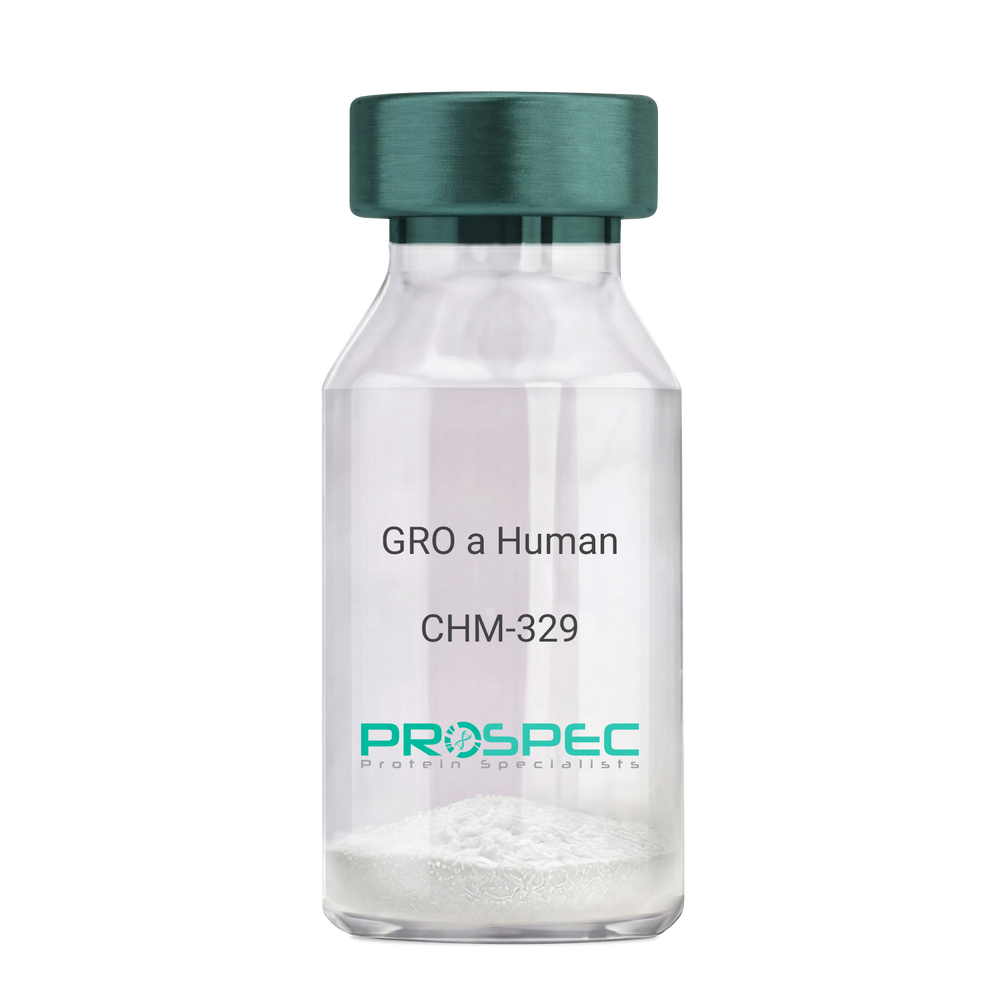
CXCL1 HumanDescription:
GRO-Alpha Human Recombinant (CXCL1)
Growth-regulated protein alpha, CXCL1, Melanoma growth stimulatory activity, MGSA, Neutrophil-activating protein 3, NAP-3, GRO-alpha (1-73), chemokine (C-X-C motif) ligand 1, GRO1, GROa, SCYB1, MGSA-a, MGSA alpha.
Product # :
CHM-329Price :
Quantity :
Shipping Method :
Shipped at Room temp
More Info
- description
- source
- formulation
- purity
- biological activity
- More Info
Description
GRO Alpha Human Recombinant produced in E.Coli is a single,non-glycosylated, polypeptide chain containing 73 amino acids and having a molecular mass of 7811 Dalton. The GRO-alpha is purified by proprietary chromatographic techniques.
Source
Escherichia Coli.
Formulation
Lyophilized from a 0.2µm filtered concentrated (1mg/ml) solution in 20mM PB, pH 7.4, 50mM NaCl.
Purity
Greater than 97.0% as determined by:
(a) Analysis by RP-HPLC.
(b) Analysis by SDS-PAGE.Biological Activity
Determined by its ability to chemoattract human peripheral blood neutrophils using a concentration range of 10.0-100.0 ng/ml.
More Info
-
Introduction
Chemokine (C-X-C motif) ligand 1 (CXCL1) is a small cytokine belonging to the CXC chemokine family that was previously called GRO1 oncogene, Neutrophil-activating protein 3 (NAP-3) and melanoma growth stimulating activity, alpha (MSGA-a). It is secreted by human melanoma cells, has mitogenic properties and is implicated in melanoma pathogenesis. CXCL1 is expressed by macrophages, neutrophilsand epithelial cells, and has neutrophil chemoattractant activity. CXCL1 plays a role in spinal cord development by inhibiting the migration of oligodendrocyte precursors and is involved in the processes of angiogenesis, inflammation, wound healing, and tumorigenesis. This chemokine elicits its effects by signaling through the chemokine receptor CXCR2. The gene for CXCL1 is located on human chromosome 4 amongst genes for other CXC chemokines.
-
Synonyms
Growth-regulated protein alpha, CXCL1, Melanoma growth stimulatory activity, MGSA, Neutrophil-activating protein 3, NAP-3, GRO-alpha (1-73), chemokine (C-X-C motif) ligand 1, GRO1, GROa, SCYB1, MGSA-a, MGSA alpha.
-
Physical Appearance
Sterile Filtered White lyophilized (freeze-dried) powder.
-
Stability
Lyophilized GRO-alpha although stable at room temperature for 3 weeks, should be stored desiccated below -18°C. Upon reconstitution CXCL1 should be stored at 4°C between 2-7 days and for future use below -18°C. For long term storage it is recommended to add a carrier protein (0.1% HSA or BSA).Please prevent freeze-thaw cycles.
-
Solubility
It is recommended to reconstitute the lyophilized CXCL1 in sterile 18MΩ-cm H2O not less than 100µg/ml, which can then be further diluted to other aqueous solutions.
-
Amino Acid Sequence
The sequence of the first five N-terminal amino acids was determined and was found to be Ala-Ser-Val-Ala-Thr.
-
Background
What is the molecular weight/Mw of CXCL1 HUMAN Protein?
CXCL1 HUMAN Protein has a total Mw of 7.81kDa.
What is the source or expression system of CXCL1 HUMAN Protein?
Escherichia Coli.
What is the Purity of CXCL1 HUMAN Protein?
CXCL1 HUMAN Protein is >97% pure as determined by SDS-PAGE.
What is the Biological Activity of CXCL1 HUMAN Protein?
Determined by its ability to chemoattract human peripheral blood neutrophils using a concentration range of 10.0-100.0 ng/ml.
What is the amino acid sequence of CXCL1 HUMAN Protein?
The sequence of the first five N-terminal amino acids was determined and was found to be Ala-Ser-Val-Ala-Thr.
What applications can CXCL1 HUMAN Protein be used in?
CXCL1 HUMAN Protein can probably be used in western blot, ELISA and Lateral Flow.
What is the endotoxin level for CXCL1 HUMAN Protein?
The endotoxin level is minimal, CXCL1 HUMAN Protein was purified using conventional chromatography techniques.
ProSpec's products are furnished for LABORATORY RESEARCH USE ONLY. The product may not be used as drugs, agricultural or pesticidal products, food additives or household chemicals.
- View Data Sheet
Name :
RCAN2 HumanDescription:
Regulator of Calcineurin 2 Human Recombinant
Regulator of calcineurin 2, DSCR1L1, MCIP2, Down syndrome critical region gene 1-like 1, ZAKI4, Myocyte-enriched calcineurin-interacting protein 2, Thyroid hormone-responsive protein ZAKI-4, CSP2, RCN2, thyroid hormone-responsive (skin fibroblasts).
Product # :
PRO-990Price :
Quantity :
Shipping Method :
Shipped with Ice Packs
More Info
- description
- source
- formulation
- purity
- More Info
Description
RCAN2 Human Recombinant produced in E.Coli is a single, non-glycosylated polypeptide chain containing 217 amino acids (1-197 a.a.) and having a molecular mass of 24.1kDa.RCAN2 is fused to a 20 amino acid His-tag at N-terminus & purified by proprietary chromatographic techniques.
Source
E.coli.
Formulation
RCAN2 protein solution (0.5mg/ml) containing 20mM Tris-HCl buffer (pH8.0), 200mM NaCl, 1mM DTT and 20% glycerol.
Purity
Greater than 85% as determined by SDS-PAGE.
More Info
-
Introduction
RCAN2 is a member of the RCAN (Regulator of calcineurin) family that controls the activity of Calcineurin using a valine-rich region placed in their carboxyl tail. RCANs race against NFAT (nuclear factor of activated T-cells) to bind to the same docking site in calcineurin, and consequently inhibits or activates calcineurin activity. RCAN2 is a Ca(2+) dependent protein phosphatase which takes part in numerous neuornal functions.
-
Synonyms
Regulator of calcineurin 2, DSCR1L1, MCIP2, Down syndrome critical region gene 1-like 1, ZAKI4, Myocyte-enriched calcineurin-interacting protein 2, Thyroid hormone-responsive protein ZAKI-4, CSP2, RCN2, thyroid hormone-responsive (skin fibroblasts).
-
Physical Appearance
Sterile Filtered colorless solution.
-
Stability
Store at 4°C if entire vial will be used within 2-4 weeks. Store, frozen at -20°C for longer periods of time. For long term storage it is recommended to add a carrier protein (0.1% HSA or BSA).Avoid multiple freeze-thaw cycles.
-
Amino Acid Sequence
MGSSHHHHHH SSGLVPRGSH MPAPSMDCDV STLVACVVDV EVFTNQEVKE KFEGLFRTYD DCVTFQLFKS FRRVRINFSN PKSAARARIE LHETQFRGKK LKLYFAQVQT PETDGDKLHL APPQPAKQFL ISPPSSPPVG WQPINDATPV LNYDLLYAVA KLGPGEKYEL HAGTESTPSV VVHVCDSDIE EEEDPKTSPK PKIIQTRRPG LPPSVSN
ProSpec's products are furnished for LABORATORY RESEARCH USE ONLY. The product may not be used as drugs, agricultural or pesticidal products, food additives or household chemicals.
- View Data Sheet
Name :
DNAJC15 HumanDescription:
DnaJ (Hsp40) Homolog, Subfamily C, Member 15 Human Recombinant
DnaJ homolog subfamily C member 15, Cell growth-inhibiting gene 22 protein, Methylation-controlled J protein, MCJ, DNAJC15, DNAJD1, GIG22, HSD18.
Product # :
HSP-057Price :
Quantity :
Shipping Method :
Shipped with Ice Packs
More Info
- description
- source
- formulation
- purity
- More Info
Description
DNAJC15 Human Recombinant produced in E.Coli is a single, non-glycosylated polypeptide chain containing 116 amino acids (58-150 a.a.) and having a molecular mass of 12.8 kDa.DNAJC15 is fused to a 23 amino acid His-tag at N-terminus & purified by proprietary chromatographic techniques.
Source
E.coli.
Formulation
The DNAJC15 solution (0.25mg/ml) contains 20mM Tris-HCl buffer (pH8.0), 0.15M NaCl, 20% glycerol and 1mM DTT.
Purity
Greater than 90% as determined by SDS-PAGE.
More Info
-
Introduction
DNAJC15 which is expressed ubiquitously and located on the membrane contains 1 J domain. In many advanced cases of ovarian adenocarcinoma DNAJC15 is absent or down-regulated, due to hypermethylation and allelic loss. Loss of expression correlates with increased resistance to antineoplastic drugs, such as cisplatin. DNAJC15is a crucial component of the TIM23 translocase complex and stimulates the ATPase activity of HSPA9.
-
Synonyms
DnaJ homolog subfamily C member 15, Cell growth-inhibiting gene 22 protein, Methylation-controlled J protein, MCJ, DNAJC15, DNAJD1, GIG22, HSD18.
-
Physical Appearance
Sterile Filtered colorless solution.
-
Stability
Store at 4°C if entire vial will be used within 2-4 weeks. Store, frozen at -20°C for longer periods of time. For long term storage it is recommended to add a carrier protein (0.1% HSA or BSA).Avoid multiple freeze-thaw cycles.
-
Amino Acid Sequence
MGSSHHHHHH SSGLVPRGSH MGSFRIWKPL EQVITETAKK ISTPSFSSYY KGGFEQKMSR REAGLILGVS PSAGKAKIRT AHRRVMILNH PDKGGSPYVA AKINEAKDLL ETTTKH.
ProSpec's products are furnished for LABORATORY RESEARCH USE ONLY. The product may not be used as drugs, agricultural or pesticidal products, food additives or household chemicals.
- View Data Sheet
Name :
KLRB1 Human, Sf9Description:
Killer Cell Lectin-Like Receptor Subfamily B, Member 1 Human Recombinant, Sf9
Killer Cell Lectin Like Receptor B1, Natural Killer Cell Surface Protein P1A, Killer Cell Lectin-Like Receptor Subfamily B, Member 1, C-Type Lectin Domain Family 5 Member B, HNKR-P1A, NKR-P1A, CLEC5B, NKRP1A, Killer Cell Lectin-Like Receptor Subfamily B Member 1, CD161 Antigen, NKR-P1, CD161, NKR.
Product # :
PRO-2488Price :
Quantity :
Shipping Method :
Shipped with Ice Packs
More Info
- description
- source
- formulation
- purity
- More Info
Description
KLRB1 produced in Sf9 Baculovirus cells is a single, glycosylated polypeptide chain containing 401 amino acids (67-225a.a.) and having a molecular mass of 45.7kDa. KLRB1 is expressed with a 239 amino acid hIgG-His-tag at C-Terminus and purified by proprietary chromatographic techniques.
Source
Sf9, Baculovirus cells.
Formulation
KLRB1 protein solution (0.25mg/ml) contains Phosphate Buffered Saline (pH 7.4) and 10% glycerol.
Purity
Greater than 90% as determined by SDS-PAGE.
More Info
-
Introduction
KLRB1 has an inhibitory role on natural killer (NK) cells cytotoxicity which are lymphocytes who facilitate cytotoxicity and secrete cytokines subsequent to immune stimulation. Some genes of the C-type lectin superfamily, like the rodent NKRP1 family of glycoproteins, are expressed by NK cells and take part in NK cell function regulation. KLRB1 holds an extracellular domain with a few characteristic motifs of C-type lectins, a transmembrane domain, and a cytoplasmic domain. Due to its external C terminus KLRB1 is considered to be a type II membrane protein.
-
Synonyms
Killer Cell Lectin Like Receptor B1, Natural Killer Cell Surface Protein P1A, Killer Cell Lectin-Like Receptor Subfamily B, Member 1, C-Type Lectin Domain Family 5 Member B, HNKR-P1A, NKR-P1A, CLEC5B, NKRP1A, Killer Cell Lectin-Like Receptor Subfamily B Member 1, CD161 Antigen, NKR-P1, CD161, NKR.
-
Physical Appearance
Sterile Filtered colorless solution.
-
Stability
Store at 4°C if entire vial will be used within 2-4 weeks. Store, frozen at -20°C for longer periods of time. For long term storage it is recommended to add a carrier protein (0.1% HSA or BSA).Avoid multiple freeze-thaw cycles.
-
Amino Acid Sequence
ADPQKSSIEK CSVDIQQSRN KTTERPGLLN CPIYWQQLRE KCLLFSHTVN PWNNSLADCS TKESSLLLIR DKDELIHTQN LIRDKAILFW IGLNFSLSEK NWKWINGSFL NSNDLEIRGD AKENSCISIS QTSVYSEYCS TEIRWICQKE LTPVRNKVYP DSLEPKSCDK THTCPPCPAP ELLGGPSVFL FPPKPKDTLM ISRTPEVTCV VVDVSHEDPE VKFNWYVDGV EVHNAKTKPR EEQYNSTYRV VSVLTVLHQD WLNGKEYKCK VSNKALPAPI EKTISKAKGQ PREPQVYTLP PSRDELTKNQ VSLTCLVKGF YPSDIAVEWE SNGQPENNYK TTPPVLDSDG SFFLYSKLTV DKSRWQQGNV FSCSVMHEAL HNHYTQKSLS LSPGKHHHHH H.
ProSpec's products are furnished for LABORATORY RESEARCH USE ONLY. The product may not be used as drugs, agricultural or pesticidal products, food additives or household chemicals.