Skip to content

High-quality research proteins.

  • 1-800-805-6531

  • Mon - Sat 8.00-18.00, Sun - Closed

  • info@prospecbio.com

  • PO Box 6591 East Brunswick NJ 08816

  • Products
    • Cytokines
    • Growth factors
    • Chemokines
    • Cd antigens
    • Neurotrophins
    • Hormones
    • Enzymes
    • Viral antigens
    • Recombinant proteins
    • Natural proteins
    • Monoclonal antibodies
    • Polyclonal antibodies
    • Thermal Packaging
  • About
    • Company
    • Founder
    • Contribution
  • Customers
    • Eastern Asia
    • Eastern Europe
    • North America
    • South America
    • South East Asia
    • Southern Asia
    • Western Europe
  • Ordering
    • Ordering Method
    • Ordering - Credit Card
    • Ordering - PO
    • Shipping Fees
    • FAQs
  • Services
    • DNA Cloning
    • Protein Expression
    • Monoclonal Antibody
    • Fermentation
    • Technology License
  • Contact us
Log in

Country/region

  • USD $ | Albania
  • USD $ | Andorra
  • USD $ | Argentina
  • USD $ | Armenia
  • USD $ | Australia
  • USD $ | Austria
  • USD $ | Azerbaijan
  • USD $ | Belarus
  • USD $ | Belgium
  • USD $ | Bolivia
  • USD $ | Brazil
  • USD $ | Bulgaria
  • USD $ | Cambodia
  • USD $ | Canada
  • USD $ | Chile
  • USD $ | China
  • USD $ | Colombia
  • USD $ | Costa Rica
  • USD $ | Croatia
  • USD $ | Cyprus
  • USD $ | Czechia
  • USD $ | Denmark
  • USD $ | Estonia
  • USD $ | Finland
  • USD $ | France
  • USD $ | Georgia
  • USD $ | Germany
  • USD $ | Greece
  • USD $ | Hong Kong SAR
  • USD $ | Hungary
  • USD $ | Iceland
  • USD $ | India
  • USD $ | Ireland
  • USD $ | Israel
  • USD $ | Italy
  • USD $ | Japan
  • USD $ | Kazakhstan
  • USD $ | Latvia
  • USD $ | Liechtenstein
  • USD $ | Lithuania
  • USD $ | Madagascar
  • USD $ | Malta
  • USD $ | Mexico
  • USD $ | Moldova
  • USD $ | Monaco
  • USD $ | Netherlands
  • USD $ | New Zealand
  • USD $ | North Macedonia
  • USD $ | Norway
  • USD $ | Panama
  • USD $ | Paraguay
  • USD $ | Peru
  • USD $ | Philippines
  • USD $ | Poland
  • USD $ | Portugal
  • USD $ | Romania
  • USD $ | Singapore
  • USD $ | Slovakia
  • USD $ | Slovenia
  • USD $ | South Africa
  • USD $ | South Korea
  • USD $ | Spain
  • USD $ | Sri Lanka
  • USD $ | Sweden
  • USD $ | Switzerland
  • USD $ | Taiwan
  • USD $ | Thailand
  • USD $ | Türkiye
  • USD $ | Ukraine
  • USD $ | United Kingdom
  • USD $ | United States
  • USD $ | Uruguay
  • USD $ | Vatican City
  • USD $ | Venezuela
  • USD $ | Vietnam
  • Facebook
  • Instagram
logoProSpec - Recombinant Protein Manufacturer for academic and R&D industry
Become a distributor
Account Log in
Wishlist
Cart Cart(0)
  • Products
    +
    • Cytokines
    • Growth factors
    • Chemokines
    • Cd antigens
    • Neurotrophins
    • Hormones
    • Enzymes
    • Viral antigens
    • Recombinant proteins
    • Natural proteins
    • Monoclonal antibodies
    • Polyclonal antibodies
    • Thermal Packaging
  • About
    +
    • Company
    • Founder
    • Contribution
  • Customers
    +
    • Eastern Asia
    • Eastern Europe
    • North America
    • South America
    • South East Asia
    • Southern Asia
    • Western Europe
  • Ordering
    +
    • Ordering Method
    • Ordering - Credit Card
    • Ordering - PO
    • Shipping Fees
    • FAQs
  • Services
    +
    • DNA Cloning
    • Protein Expression
    • Monoclonal Antibody
    • Fermentation
    • Technology License
  • Contact us

Item added to your cart

View cart
View All
  • Cytokines
  • Growth factors
  • Chemokines
  • Cd antigens
  • Neurotrophins
  • Hormones
  • Enzymes
  • Viral antigens
  • Recombinant proteins
  • Natural proteins
  • Monoclonal antibodies
  • Polyclonal antibodies
  • Thermal Packaging
  • Tumor Necrosis Factor

    Tumor Necrosis Factor

    View All
  • 4-1BB

    4-1BB

    View All
  • Adiponectin

    Adiponectin

    View All
  • AIF1

    AIF1

    View All
  • Other Cytokines

    Other Cytokines

    View All
  • AITRL

    AITRL

    View All
  • Angiopoietin

    Angiopoietin

    View All
  • Apolipoprotein

    Apolipoprotein

    View All
  • B-Cell Activating Factor

    B-Cell Activating Factor

    View All
  • Beta Defensin

    Beta Defensin

    View All
  • Bone Morphogenetic Protein

    Bone Morphogenetic Protein

    View All
  • B type Natriuretic Peptide

    B type Natriuretic Peptide

    View All
  • BST

    BST

    View All
  • Betacellulin

    Betacellulin

    View All
  • Cardiotrophin

    Cardiotrophin

    View All
  • Activin

    Activin

    View All
  • Fibroblast Growth Factor

    Fibroblast Growth Factor

    View All
  • Other Growth Factors

    Other Growth Factors

    View All
  • CSF

    CSF

    View All
  • CTGF

    CTGF

    View All
  • IGFBP

    IGFBP

    View All
  • VEGF Protein

    VEGF Protein

    View All
  • EGF

    EGF

    View All
  • Epigen

    Epigen

    View All
  • Erythropoietin

    Erythropoietin

    View All
  • Insulin-Like Growth Factor

    Insulin-Like Growth Factor

    View All
  • Growth Hormone

    Growth Hormone

    View All
  • HDGF

    HDGF

    View All
  • Hepatocyte Growth Factor

    Hepatocyte Growth Factor

    View All
  • Insulin

    Insulin

    View All
  • BCA-1/ BLC (CXCL13)

    BCA-1/ BLC (CXCL13)

    View All
  • BRAK (CXCL14)

    BRAK (CXCL14)

    View All
  • C-10 (CCL6)

    C-10 (CCL6)

    View All
  • Other Chemokines

    Other Chemokines

    View All
  • MEC (CCL28)

    MEC (CCL28)

    View All
  • LD78-beta (CCL3L1)

    LD78-beta (CCL3L1)

    View All
  • CTACK (CCL27)

    CTACK (CCL27)

    View All
  • CXCL16

    CXCL16

    View All
  • CXCL17

    CXCL17

    View All
  • Platelet Factor-4 (CXCL4)

    Platelet Factor-4 (CXCL4)

    View All
  • ENA-78 (CXCL5)

    ENA-78 (CXCL5)

    View All
  • Eotaxin (CCL11,24,26)

    Eotaxin (CCL11,24,26)

    View All
  • Exodus-2 (CCL21)

    Exodus-2 (CCL21)

    View All
  • Fractalkine (CX3CL1)

    Fractalkine (CX3CL1)

    View All
  • CXCL6

    CXCL6

    View All
  • Other CD Antigens

    Other CD Antigens

    View All
  • CD14

    CD14

    View All
  • CD164

    CD164

    View All
  • CD1

    CD1

    View All
  • CD2

    CD2

    View All
  • CD200

    CD200

    View All
  • CD207

    CD207

    View All
  • CD226

    CD226

    View All
  • CD23

    CD23

    View All
  • CD244

    CD244

    View All
  • CD247

    CD247

    View All
  • CD27

    CD27

    View All
  • CD274

    CD274

    View All
  • CD300

    CD300

    View All
  • CD33

    CD33

    View All
  • Other Neurotrophins

    Other Neurotrophins

    View All
  • Beta-NGF

    Beta-NGF

    View All
  • BDNF

    BDNF

    View All
  • CDNF

    CDNF

    View All
  • CNTF

    CNTF

    View All
  • GDNF

    GDNF

    View All
  • Glia Maturation Factor

    Glia Maturation Factor

    View All
  • MANF

    MANF

    View All
  • Midkine

    Midkine

    View All
  • Neuroglobin

    Neuroglobin

    View All
  • Neurotrophic factors

    Neurotrophic factors

    View All
  • Neuregulin

    Neuregulin

    View All
  • Neuropilin

    Neuropilin

    View All
  • Pigment Epithelium-Derived Factor

    Pigment Epithelium-Derived Factor

    View All
  • Pleiotrophin

    Pleiotrophin

    View All
  • Peptide Hormones

    Peptide Hormones

    View All
  • Other Hormones

    Other Hormones

    View All
  • HCG

    HCG

    View All
  • Endothelin

    Endothelin

    View All
  • Exendin

    Exendin

    View All
  • FSH

    FSH

    View All
  • Glucagon

    Glucagon

    View All
  • GHRP

    GHRP

    View All
  • GLP

    GLP

    View All
  • Thyrostimulin

    Thyrostimulin

    View All
  • Inhibin A

    Inhibin A

    View All
  • LHRH

    LHRH

    View All
  • Melanotan

    Melanotan

    View All
  • Procalcitonin

    Procalcitonin

    View All
  • PTH

    PTH

    View All
  • Peroxiredoxin

    Peroxiredoxin

    View All
  • Peptidase

    Peptidase

    View All
  • Synthetase

    Synthetase

    View All
  • Transferase

    Transferase

    View All
  • Hydrolase

    Hydrolase

    View All
  • Dehydrogenase

    Dehydrogenase

    View All
  • ACE2

    ACE2

    View All
  • Esterase

    Esterase

    View All
  • Protein Kinases

    Protein Kinases

    View All
  • Other Enzymes

    Other Enzymes

    View All
  • Phosphatase

    Phosphatase

    View All
  • Deaminase

    Deaminase

    View All
  • Oxygenase

    Oxygenase

    View All
  • Adenylate Kinase

    Adenylate Kinase

    View All
  • Lyase

    Lyase

    View All
  • Chagas

    Chagas

    View All
  • SARS

    SARS

    View All
  • Influenza

    Influenza

    View All
  • ASFV

    ASFV

    View All
  • Astrovirus

    Astrovirus

    View All
  • Borrelia

    Borrelia

    View All
  • Helicobacter Pylori

    Helicobacter Pylori

    View All
  • Chikungunya

    Chikungunya

    View All
  • Chlamydia

    Chlamydia

    View All
  • Cytomegalo

    Cytomegalo

    View All
  • Dengue

    Dengue

    View All
  • EBV

    EBV

    View All
  • Ebola

    Ebola

    View All
  • Feline Leukemia Virus

    Feline Leukemia Virus

    View All
  • Hepatitis A

    Hepatitis A

    View All
  • Other

    Other

    View All
  • Actin

    Actin

    View All
  • ADAM

    ADAM

    View All
  • Complement Component

    Complement Component

    View All
  • Ag85

    Ag85

    View All
  • Eukaryotic Translation Initiation Factor

    Eukaryotic Translation Initiation Factor

    View All
  • Anterior Gradient Protein

    Anterior Gradient Protein

    View All
  • Heat Shock Protein

    Heat Shock Protein

    View All
  • Alpha-2-HS-Glycoprotein

    Alpha-2-HS-Glycoprotein

    View All
  • Hemoglobin

    Hemoglobin

    View All
  • Allergy

    Allergy

    View All
  • Anaplasma

    Anaplasma

    View All
  • Angiogenin

    Angiogenin

    View All
  • Ankyrin Repeat Domain

    Ankyrin Repeat Domain

    View All
  • Annexin

    Annexin

    View All
  • Other Natural Proteins

    Other Natural Proteins

    View All
  • Aprotinin

    Aprotinin

    View All
  • Transferrin

    Transferrin

    View All
  • Avidin

    Avidin

    View All
  • Anti Coagulation Factors

    Anti Coagulation Factors

    View All
  • Natural Albumin

    Natural Albumin

    View All
  • Natural Coagulation Factors

    Natural Coagulation Factors

    View All
  • Fibronectin

    Fibronectin

    View All
  • Thrombin

    Thrombin

    View All
  • Anti Human Enzyme

    Anti Human Enzyme

    View All
  • Other Monoclonal Antibodies

    Other Monoclonal Antibodies

    View All
  • Anti Human Cytokine

    Anti Human Cytokine

    View All
  • Anti Human Heat Shock Protein

    Anti Human Heat Shock Protein

    View All
  • Anti Mouse Lymphocyte

    Anti Mouse Lymphocyte

    View All
  • Anti Human Chemokine

    Anti Human Chemokine

    View All
  • Anti Human Lymphocyte

    Anti Human Lymphocyte

    View All
  • Anti Viral Monoclonal

    Anti Viral Monoclonal

    View All
  • Anti Mouse Cytokine

    Anti Mouse Cytokine

    View All
  • Anti-GST Monoclonal

    Anti-GST Monoclonal

    View All
  • Other Polyclonal Antibodies

    Other Polyclonal Antibodies

    View All
  • Anti Viral

    Anti Viral

    View All
  • Anti-GST Monoclonal

    Anti-GST Monoclonal

    View All
Back

Search results

1000 results found for “Endonuclease”

Name

Description

Product #

Price

Quantity

Shipping Method

  • View Data Sheet

    Name :

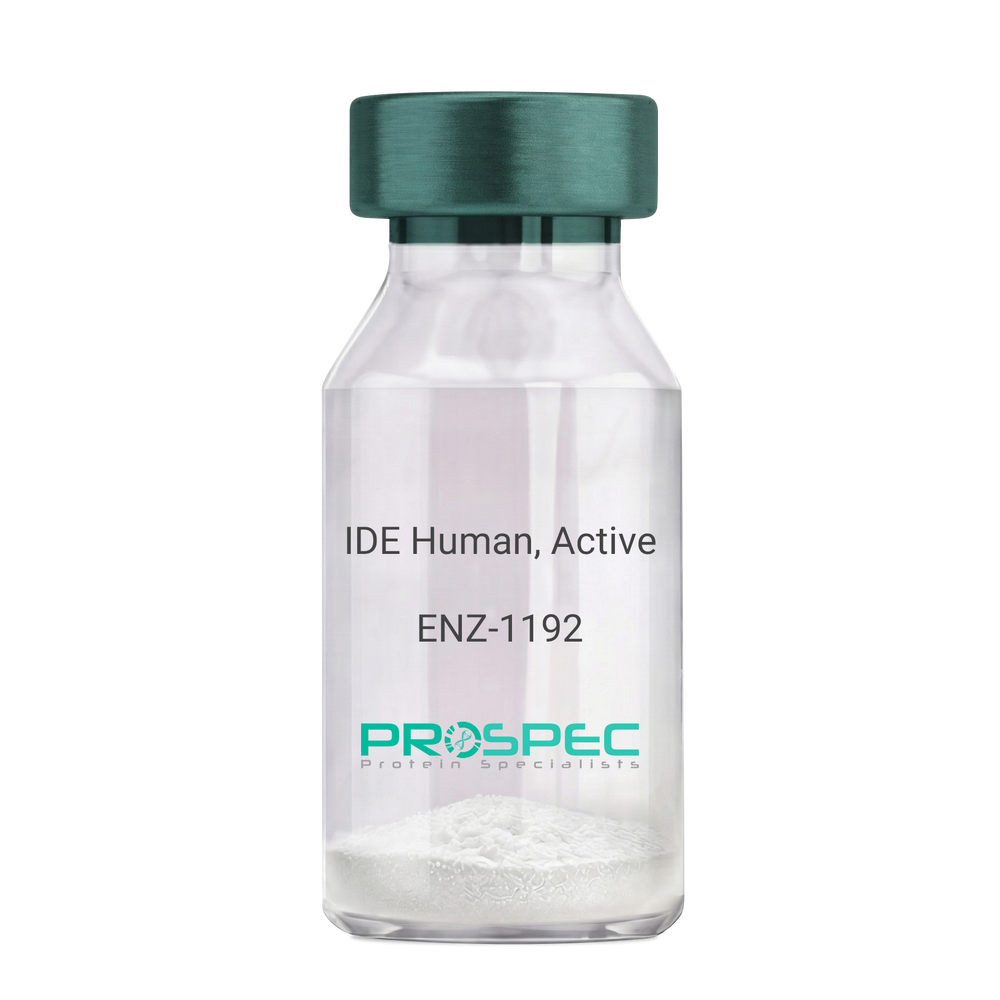
    IDE Human, Active

    Description:

    Insulin-Degrading Enzyme Human Recombinant

    Insulin-Degrading Enzyme, Abeta-Degrading Protease, Insulysin, EC 3.4.24.56, Insulinase, Insulin Protease, INSULYSIN, EC 3.4.24, IDE, insulin-degrading enzyme isoform 1. 

    Product # :

    ENZ-1192

    Price :

    Quantity :

    Shipping Method :

    Ice Icon

    Shipped with Ice Packs

    Add To Cart

    More Info

    • description
    • source
    • formulation
    • purity
    • biological activity
    • More Info

    Description

    IDE Human, Active Human Recombinant produced in E.Coli is a single, non-glycosylated, polypeptide chain (42-1019 a.a) containing a total of 984 amino acids, having a molecular mass of 114 kDa. IDE is fused to a 6 amino acid His-tag at C-terminus and is purified by proprietary chromatographic techniques.

    Source

    Escherichia Coli.

    Formulation

    The IDE solution (0.5mg/ml) contains 10% Glycerol, 100mM NaCl, 0.05% Brij35 and 20mM Tris-HCl buffer (pH 7.5).

    Purity

    Greater than 90.0% as determined by SDS-PAGE.

    Biological Activity

    Specific activity is greater than 3,000 pmol/min/ug in which 1 unit will convert 1.0 pmole of Mca-RPPGFSAFK(Dnp)-OH to MCA-Pro-Leu-OH per minute at pH 7.5 at 25°C.

    More Info

    • Synonyms

      Insulin-Degrading Enzyme, Abeta-Degrading Protease, Insulysin, EC 3.4.24.56, Insulinase, Insulin Protease, INSULYSIN, EC 3.4.24, IDE, insulin-degrading enzyme isoform 1.

    • Physical Appearance

      Filtered colorless solution.

    • Stability

      Store at 4°C if entire vial will be used within 2-4 weeks. Store, frozen at -20°C for longer periods of time. For long term storage it is recommended to add a carrier protein (0.1% HSA or BSA). Avoid multiple freeze-thaw cycles.

    • Amino Acid Sequence

      MNNPAIKRIG NHITKSPEDK REYRGLELAN GIKVLLISDP TTDKSSAALD VHIGSLSDPP NIAGLSHFCE HMLFLGTKKY PKENEYSQFL SEHAGSSNAF TSGEHTNYYF DVSHEHLEGA LDRFAQFFLC PLFDESCKDR EVNAVDSEHE KNVMNDAWRL FQLEKATGNP KHPFSKFGTG NKYTLETRPN QEGIDVRQEL LKFHSAYYSS NLMAVCVLGR ESLDDLTNLV VKLFSEVENK NVPLPEFPEH PFQEEHLKQL YKIVPIKDIR NLYVTFPIPD LQKYYKSNPG HYLGHLIGHE GPGSLLSELK SKGWVNTLVG GQKEGARGFM FFIINVDLTE EGLLHVEDII LHMFQYIQKL RAEGPQEWVF QECKDLNAVA FRFKDKERPR GYTSKIAGIL HYYPLEEVLT AEYLLEEFRP DLIEMVLDKL RPENVRVAIV SKSFEGKTDR TEEWYGTQYK QEAIPDEVIK KWQNADLNGK FKLPTKNEFI PTNFEILPLE KEATPYPALI KDTAMSKLWF KQDDKFFLPK ACLNFEFFSP FAYVDPLHCN MAYLYLELLK DSLNEYAYAA ELAGLSYDLQ NTIYGMYLSV KGYNDKQPIL LKKIIEKMAT FEIDEKRFEI IKEAYMRSLN NFRAEQPHQH AMYYLRLLMT EVAWTKDELK EALDDVTLPR LKAFIPQLLS RLHIEALLHG NITKQAALGI MQMVEDTLIE HAHTKPLLPS
      QLVRYREVQL PDRGWFVYQQ RNEVHNNCGI EIYYQTDMQS TSENMFLELF CQIISEPCFN TLRTKEQLGY IVFSGPRRAN GIQGLRFIIQ SEKPPHYLES RVEAFLITME KSIEDMTEEA FQKHIQALAI RRLDKPKKLS AECAKYWGEI ISQQYNFDRD NTEVAYLKTL TKEDIIKFYK EMLAVDAPRR HKVSVHVLAR EMDSCPVVGE FPCQNDINLS QAPALPQPEV IQNMTEFKRG LPLFPLVKPH INFMAAKLHH HHHH.

    • Background

      Insulin-degrading enzyme (IDE) is a crucial protease that plays a significant role in maintaining glucose homeostasis by degrading insulin and other bioactive peptides. Dysregulation of IDE has been implicated in various metabolic disorders, particularly type 2 diabetes mellitus. IDE is also associated with the clearance of amyloid-beta peptides in the brain, making it relevant to Alzheimer's disease pathology. Studying the recombinant form of IDE is fundamental to understanding its functional mechanisms and exploring potential avenues for therapeutic interventions.

      The primary goal of this research is to express and purify recombinant IDE using diverse expression systems. Recombinant DNA techniques will be employed to construct expression vectors containing the IDE gene, followed by expression in bacterial, yeast, or mammalian cell-based systems. The recombinant IDE will be purified using affinity chromatography or other appropriate methods, facilitating subsequent biochemical and biophysical characterization.

      The second objective is to investigate the substrate specificity and catalytic activity of the purified IDE. In vitro enzymatic assays will be conducted to analyse the ability of the recombinant IDE to degrade insulin and other potential substrates. The effects of various factors, such as pH, temperature, and potential modulators, on IDE activity will be evaluated. Additionally, the interactions between IDE and its substrates will be explored using binding assays.

      The third objective is to elucidate the three-dimensional structure of the IDE recombinant using techniques like X-ray crystallography or nuclear magnetic resonance (NMR) spectroscopy. Structural insights into the active site and binding pockets of IDE will provide valuable information for understanding its substrate recognition and catalytic mechanisms. This knowledge could be instrumental in designing targeted therapeutic compounds.

      By characterizing the IDE recombinant, this research aims to contribute to our understanding of its role in insulin metabolism, glucose regulation, and potential therapeutic applications. The findings from this study may have implications for the development of novel treatments for diabetes and other related disorders.

    ProSpec's products are furnished for LABORATORY RESEARCH USE ONLY. The product may not be used as drugs, agricultural or pesticidal products, food additives or household chemicals.

    Ide Human Active
  • View Data Sheet

    Name :

    UBE2T Human

    Description:

    Ubiquitin-Conjugating Enzyme E2T Human Recombinant

    EC 6.3.2.19, HSPC150, PIG50, Ubiquitin-conjugating enzyme E2 T, Ubiquitin-protein ligase T, Ubiquitin carrier protein T, Cell proliferation-inducing gene 50 protein, UBE2T.

    Product # :

    ENZ-506

    Price :

    Quantity :

    Shipping Method :

    Ice Icon

    Shipped with Ice Packs

    Add To Cart

    More Info

    • description
    • source
    • formulation
    • purity
    • More Info

    Description

    UBE2T Human Recombinant produced in E.Coli is a single, non-glycosylated, polypeptide chain containing 205 amino acids (1-197 a.a.) and having a molecular mass of 23.6 kDa. The UBE2T is fused to an 8 amino acid His Tag at C-Terminus and purified by proprietary chromatographic techniques.

    Source

    Escherichia Coli.

    Formulation

    The UBE2T solution contains 20mM Tris-HCl pH-8, 1mM DTT, and 10% glycerol.

    Purity

    Greater than 95% as determined by SDS-PAGE.

    More Info

    • Introduction

      UBE2T is part of the E2 ubiquitin-conjugating enzyme family that participates in the protein degradation pathway. UBE2T catalyzes the ATP-dependent attachment of ubiquitin to target proteins, thus tagging them for subsequent destruction by the proteasome. UBE2T is an important factor of the Faconi anemia pathway of DNA damage repair and, upon self-inactivation, may negatively regulate the Faconi pathway.

    • Synonyms

      EC 6.3.2.19, HSPC150, PIG50, Ubiquitin-conjugating enzyme E2 T, Ubiquitin-protein ligase T, Ubiquitin carrier protein T, Cell proliferation-inducing gene 50 protein, UBE2T.

    • Physical Appearance

      Sterile Filtered clear colorless solution.

    • Stability

      Store at 4°C if entire vial will be used within 2-4 weeks. Store, frozen at -20°C for longer periods of time. For long term storage it is recommended to add a carrier protein (0.1% HSA or BSA).Avoid multiple freeze-thaw cycles.

    • Amino Acid Sequence

      MQRASRLKRE LHMLATEPPP GITCWQDKDQ MDDLRAQILG GANTPYEKGV FKLEVIIPER YPFEPPQIRF LTPIYHPNID SAGRICLDVL KLPPKGAWRP SLNIATVLTS IQLLMSEPNP DDPLMADISS EFKYNKPAFL KNARQWTEKH ARQKQKADEE EMLDNLPEAG DSRVHNSTQK RKASQLVGIE KKFHPDVLEH HHHHH.

    ProSpec's products are furnished for LABORATORY RESEARCH USE ONLY. The product may not be used as drugs, agricultural or pesticidal products, food additives or household chemicals.

    Ube2T Human
  • View Data Sheet

    Name :

    CBR4 Human

    Description:

    Carbonyl Reductase-4 Human Recombinant

    Carbonyl reductase family member 4, 3-oxoacyl-[acyl-carrier-protein] reductase, Quinone reductase CBR4, CBR4, SDR45C1, FLJ14431.

    Product # :

    ENZ-022

    Price :

    Quantity :

    Shipping Method :

    Ice Icon

    Shipped with Ice Packs

    Add To Cart

    More Info

    • description
    • source
    • formulation
    • purity
    • More Info

    Description

    CBR4 Human Recombinant fused with a 20 amino acid His tag at N-terminus produced in E.Coli is a single, non-glycosylated, polypeptide chain containing 257 amino acids (1-237 a.a.) and having a molecular mass of 27.5kDa. The CBR4 is purified by proprietary chromatographic techniques.

    Source

    Escherichia Coli.

    Formulation

    The CBR4 solution (0.5 mg/ml) contains 20mM Tris-HCl buffer (pH8.0), 10% glycerol, 5mM DTT and 200mM NaCl.

    Purity

    Greater than 95.0% as determined by SDS-PAGE.

    More Info

    • Introduction

      CBR4 is a member of the short-chain dehydrogenase/reductase family. CBR4 has a role in biosynthesis of fatty acids in the mitochondria and a broad substrate specificity and reduces 9,10-phenanthrenequinone, 1,4-benzoquinone and a range of other o-quinones and p-quinones (in vitro). CBR4 formation of a heteroteramer with HSD17B8 has NADH-dependent 3-ketoacyl-acyl carrier protein reductase activity for o- and p-quinones.

    • Synonyms

      Carbonyl reductase family member 4, 3-oxoacyl-[acyl-carrier-protein] reductase, Quinone reductase CBR4, CBR4, SDR45C1, FLJ14431.

    • Physical Appearance

      Sterile Filtered colorless solution.

    • Stability

      Store at 4°C if entire vial will be used within 2-4 weeks. Store, frozen at -20°C for longer periods of time. For long term storage it is recommended to add a carrier protein (0.1% HSA or BSA).Avoid multiple freeze-thaw cycles.

    • Amino Acid Sequence

      MGSSHHHHHH SSGLVPRGSH MDKVCAVFGG SRGIGRAVAQ LMARKGYRLA VIARNLEGAK AAAGDLGGDH LAFSCDVAKE HDVQNTFEEM EKHLGRVNFL VNAAGINRDG LLVRTKTEDM VSQLHTNLLG SMLTCKAAMR TMIQQQGGSI VNVGSIVGLK GNSGQSVYSA SKGGLVGFSR ALAKEVARKK IRVNVVAPGF VHTDMTKDLK EEHLKKNIPL GRFGETIEVA HAVVFLLESP YITGHVLVVD GGLQLIL.

    ProSpec's products are furnished for LABORATORY RESEARCH USE ONLY. The product may not be used as drugs, agricultural or pesticidal products, food additives or household chemicals.

    Cbr4 Human
  • View Data Sheet

    Name :

    CASP3 Human, Sf9

    Description:

    Caspase 3 Apoptosis-Related Cysteine Peptidase Human Recombinant, Sf9

    CASP3, CPP32, CPP32B, SCA-1, CASP-3, Apopain, Cysteine protease CPP32, CPP-32, Protein Yama, SREBP cleavage activity 1.

    Product # :

    ENZ-1106

    Price :

    Quantity :

    Shipping Method :

    Ice Icon

    Shipped with Ice Packs

    Add To Cart

    More Info

    • description
    • source
    • formulation
    • purity
    • biological activity
    • More Info

    Description

    CASP3 Human produced in Sf9 Baculovirus cells is a single, glycosylated polypeptide chain containing 256 amino acids (29-277 a.a.) and having a molecular mass of 29.4kDa (Migrates at 13.5-18kDa on SDS-PAGE under reducing conditions). CASP3 is expressed with a 6 amino acid His tag at C-Terminus and purified by proprietary chromatographic techniques.

    Source

    Sf9, Baculovirus cells.

    Formulation

    CASP3 protein solution (0.5mg/ml) containing 20mM HEPES buffer (pH 7.5), 0.1M NaCl, 1mM EDTA, 20% Glycerol and 1mM DTT.

    Purity

    Greater than 90.0% as determined by SDS-PAGE.

    Biological Activity

    Specific activity is  greater than 5,000 pmol/min/ug. One unit will liberate 1 pmoles of Ac-DEVD-AFC to Ac-DEVD and AFC per minute at pH7.5 at 25C.

    More Info

    • Introduction

      Caspase 3 Apoptosis-Related Cysteine Peptidase (CASP3) belongs to the cysteine-aspartic acid protease (caspase) family. Sequential activation of caspases plays a key role in the execution-phase of cell apoptosis. Caspases exist as inactive proenzymes which undergo proteolytic processing at conserved aspartic residues to generate 2 subunits, large and small, that dimerize to create the active enzyme. CASP3 protein cleaves and activates caspases 6, 7 and 9, and the protein itself is processed by caspases 8, 9 and 10. CASP3 is the leading caspase involved in the cleavage of amyloid-beta 4A precursor protein, which is linked with neuronal death in Alzheimer's disease. In addition, CASP3 is involved in the cleavage of huntingtin. CASP3 also cleaves and activates sterol regulatory element binding proteins (SREBPs) between the basic helix-loop-helix leucine zipper domain and the membrane attachment domain. CASP3 initiates cell adhesion in sympathetic neurons through RET cleavage.

    • Synonyms

      CASP3, CPP32, CPP32B, SCA-1, CASP-3, Apopain, Cysteine protease CPP32, CPP-32, Protein Yama, SREBP cleavage activity 1.

    • Physical Appearance

      Sterile Filtered colorless solution.

    • Stability

      Store at 4°C if entire vial will be used within 2-4 weeks. Store, frozen at -20°C for longer periods of time. For long term storage it is recommended to add a carrier protein (0.1% HSA or BSA).Avoid multiple freeze-thaw cycles.

    • Amino Acid Sequence

      MSGISLDNSY KMDYPEMGLC IIINNKNFHK STGMTSRSGT DVDAANLRET FRNLKYEVRN
      KNDLTREEIV ELMRDVSKED HSKRSSFVCV LLSHGEEGII FGTNGPVDLK KITNFFRGDR
      CRSLTGKPKL FIIQACRGTE LDCGIETDSG VDDDMACHKI PVEADFLYAY STAPGYYSWR
      NSKDGSWFIQ SLCAMLKQYA DKLEFMHILT RVNRKVATEF ESFSFDATFH AKKQIPCIVS MLTKELYFYH HHHHHH

    ProSpec's products are furnished for LABORATORY RESEARCH USE ONLY. The product may not be used as drugs, agricultural or pesticidal products, food additives or household chemicals.

    Caspase 3 Protein
  • View Data Sheet

    Name :

    ASL Human

    Description:

    Argininosuccinate Lyase Human Recombinant

    Argininosuccinate lyase, ASAL, Arginosuccinase, ASL.

    Product # :

    ENZ-185

    Price :

    Quantity :

    Shipping Method :

    Ice Icon

    Shipped with Ice Packs

    Add To Cart

    More Info

    • description
    • source
    • formulation
    • purity
    • More Info

    Description

    ASL Human Recombinant produced in E.coli is a single, non-glycosylated polypeptide chain containing 484 amino acids (1-464) and having a molecular mass of 53.8kDa.ASL is fused to a 20 amino acid His-tag at N-terminus & purified by proprietary chromatographic techniques.

    Source

    Escherichia Coli.

    Formulation

    The ASL solution (0.5mg/ml) contains 20mM Tris-HCl buffer (pH 8.0), 2mM DTT, 10% glycerol and 100mM NaCl.

    Purity

    Greater than 95.0% as determined by SDS-PAGE.

    More Info

    • Introduction

      Argininosuccinate lyase (ASL) is a member of the lyase 1 family. ASL is an enzyme which catalyzes the reversible breakdown of Argininosuccinate (ASA) yielding the amino acids arginine and fumarate. ASL which is located in the liver cytosol is the 4th enzyme of the urea cycle and involved in the biosynthesis of arginine in all species and the production of urea in ureotelic species. While Argininosuccinate synthetase (ASS) catalyzes the formation of argininosuccinate from citrulline and aspartate, ASL breaks down the newly formed argininosuccinate into L-arginine and fumarate. L-arginine continues within the urea cycle to form urea and orinthine, whereas fumarate can enter the citric acid cycle. ASL gene Mutations result in the autosomal recessive disorder argininosuccinic aciduria, or argininosuccinic acid lyase deficiency.

    • Synonyms

      Argininosuccinate lyase, ASAL, Arginosuccinase, ASL.

    • Physical Appearance

      Sterile Filtered colorless solution.

    • Stability

      NPL Human Recombinant although stable at 4°C for 1 week, should be stored below -18°C. For long term storage it is recommended to add a carrier protein (0.1% HSA or BSA).Please prevent freeze thaw cycles.

    • Amino Acid Sequence

      MGSSHHHHHH SSGLVPRGSH MASESGKLWG GRFVGAVDPI MEKFNASIAY DRHLWEVDVQ GSKAYSRGLE KAGLLTKAEM DQILHGLDKV AEEWAQGTFK LNSNDEDIHT ANERRLKELI GATAGKLHTG RSRNDQVVTD LRLWMRQTCS TLSGLLWELI RTMVDRAEAE RDVLFPGYTH LQRAQPIRWS HWILSHAVAL TRDSERLLEV RKRINVLPLG SGAIAGNPLG VDRELLRAEL NFGAITLNSM DATSERDFVA EFLFWASLCM THLSRMAEDL ILYCTKEFSF VQLSDAYSTG SSLMPQKKNP DSLELIRSKA GRVFGRCAGL LMTLKGLPST YNKDLQEDKE AVFEVSDTMS AVLQVATGVI STLQIHQENM GQALSPDMLA TDLAYYLVRK GMPFRQAHEA SGKAVFMAET KGVALNQLSL QELQTISPLF SGDVICVWDY GHSVEQYGAL GGTARSSVDW QIRQVRALLQ AQQA.

    ProSpec's products are furnished for LABORATORY RESEARCH USE ONLY. The product may not be used as drugs, agricultural or pesticidal products, food additives or household chemicals.

    Asl Human
  • View Data Sheet

    Name :

    PGM1 Human

    Description:

    Phosphoglucomutase 1 Human Recombinant

    PGM1, Phosphoglucomutase 1, Glucose Phosphomutase 1, EC 5.4.2.2, PGM 1, CDG1T, GSD14, Phosphoglucomutase-1, EC 5.4.2.

    Product # :

    ENZ-916

    Price :

    Quantity :

    Shipping Method :

    Ice Icon

    Shipped with Ice Packs

    Add To Cart

    More Info

    • description
    • source
    • formulation
    • purity
    • More Info

    Description

    PGM1 Human Recombinant produced in E.Coli is a single, non-glycosylated polypeptide chain containing 585 amino acids (1-562 a.a) and having a molecular mass of 63.8kDa.PGM1 is fused to a 23 amino acid His-tag at N-terminus & purified by proprietary chromatographic techniques.

    Source

    Escherichia Coli.

    Formulation

    PGM1 protein solution (1mg/ml) containing Phosphate Buffered Saline (pH 7.4) and 10% glycerol.

    Purity

    Greater than 95% as determined by SDS-PAGE.

    More Info

    • Introduction

      Phosphoglucomutase-1 also known as PGM1 is a member of the phosphohexose mutase family. There are more than a few PGM isozymes, which catalyze the transfer of phosphate between the 1&6positions of glucose. In nearly all cell types, PGM1 isozymes predominate, representing around 90% of total PGM activity. It has been found that defects in PGM1 are the cause of glycogen storage disease type 14.

    • Synonyms

      PGM1, Phosphoglucomutase 1, Glucose Phosphomutase 1, EC 5.4.2.2, PGM 1, CDG1T, GSD14, Phosphoglucomutase-1, EC 5.4.2.

    • Physical Appearance

      Sterile Filtered clear colorless solution.

    • Stability

      Store at 4°C if entire vial will be used within 2-4 weeks. Store, frozen at -20°C for longer periods of time. For long term storage it is recommended to add a carrier protein (0.1% HSA or BSA).Avoid multiple freeze-thaw cycles.

    • Amino Acid Sequence

      MGSSHHHHHH SSGLVPRGSH MGSMVKIVTV KTQAYQDQKP GTSGLRKRVK VFQSSANYAE NFIQSIISTV EPAQRQEATL VVGGDGRFYM KEAIQLIARI AAANGIGRLV IGQNGILSTP AVSCIIRKIK AIGGIILTAS HNPGGPNGDF GIKFNISNGG PAPEAITDKI FQISKTIEEY AVCPDLKVDL GVLGKQQFDL ENKFKPFTVE IVDSVEAYAT MLRSIFDFSA LKELLSGPNR LKIRIDAMHG VVGPYVKKIL CEELGAPANS AVNCVPLEDF GGHHPDPNLT YAADLVETMK SGEHDFGAAF DGDGDRNMIL GKHGFFVNPS DSVAVIAANI FSIPYFQQTG VRGFARSMPT SGALDRVASA TKIALYETPT GWKFFGNLMD ASKLSLCGEE SFGTGSDHIR EKDGLWAVLA WLSILATRKQ SVEDILKDHW QKYGRNFFTR YDYEEVEAEG ANKMMKDLEA LMFDRSFVGK QFSANDKVYT VEKADNFEYS DPVDGSISRN QGLRLIFTDG SRIVFRLSGT GSAGATIRLY IDSYEKDVAK INQDPQVMLA PLISIALKVS QLQERTGRTA PTVIT.

    ProSpec's products are furnished for LABORATORY RESEARCH USE ONLY. The product may not be used as drugs, agricultural or pesticidal products, food additives or household chemicals.

    Pgm1 Human
  • View Data Sheet

    Name :

    TRXR E.Coli

    Description:

    Thioredoxin Reductase E.Coli Recombinant

    TRXB, TRXR, Thioredoxin Reductase.

    Product # :

    ENZ-507

    Price :

    Quantity :

    Shipping Method :

    Ice Icon

    Shipped with Ice Packs

    Add To Cart

    More Info

    • description
    • source
    • formulation
    • purity
    • biological activity
    • More Info

    Description

    TRXR E.coli Recombinant produced in E.Coli is a single, non-glycosylated, polypeptide chain containing 321 amino acids (1-321 a.a.) and having a molecular mass of 34.6 kDa. TRXR protein is purified by standard chromatography.

    Source

    Escherichia Coli.

    Formulation

    TRXR E.Coli solution containing 20mM Tris HCl pH-8, 1mM DTT, and 10% glycerol.

    Purity

    Greater than 90% as determined by SDS-PAGE.

    Biological Activity

    Specific activity is 4-5 units/ml, and was measured in a coupled assay with DTNB and NADPH. The amount of TNB generated by NADPH was measured in absorbance at 412 nm.

    More Info

    • Introduction

      TRXR is a ubiquitous enzyme which participates in various cellular processes such as cell growth, p53 activity, and protection against oxidation stress. The mammalian Thioredoxin reductase cleaves thioredoxins as well as non-disulfide substrates such as selenite, lipoic acids, lipid hydroperoxides, and hydrogen peroxidec.

    • Synonyms

      TRXB, TRXR, Thioredoxin Reductase.

    • Physical Appearance

      Sterile filtered colorless solution.

    • Stability

      Store at 4°C if entire vial will be used within 2-4 weeks. Store, frozen at -20°C for longer periods of time. For long term storage it is recommended to add a carrier protein (0.1% HSA or BSA).Avoid multiple freeze-thaw cycles.

    • Amino Acid Sequence

      MGTTKHSKLL ILGSGPAGYT AAVYAARANL QPVLITGMEK GGQLTTTTEV ENWPGDPNDL TGPLLMERMH EHATKFETEI IFDHINKVDL QNRPFRLNGD NGEYTCDALI IATGASARYL GLPSEEAFKG RGVSACATCD GFFYRNQKVA VIGGGNTAVE EALYLSNIAS EVHLIHRRDG FRAEKILIKR LMDKVENGNI ILHTNRTLEE VTGDQMGVTG VRLRDTQNSD NIESLDVAGL FVAIGHSPNT AIFEGQLELE NGYIKVQSGI HGNATQTSIP GVFAAGDVMD HIYRQAITSA GTGCMAALDA ERYLDGLADA K.

    ProSpec's products are furnished for LABORATORY RESEARCH USE ONLY. The product may not be used as drugs, agricultural or pesticidal products, food additives or household chemicals.

    Trxr Ecoli
  • View Data Sheet

    Name :

    TSTD3 Human

    Description:

    Thiosulfate Sulfurtransferase Like Domain Containing 3 Human Recombinant

    Thiosulfate Sulfurtransferase (Rhodanese)-Like Domain Containing 3, Rhodanese Domain-Containing Protein 3, Thiosulfate Sulfurtransferase/Rhodanese-Like Domain-Containing Protein 3.

    Product # :

    ENZ-723

    Price :

    Quantity :

    Shipping Method :

    Ice Icon

    Shipped with Ice Packs

    Add To Cart

    More Info

    • description
    • source
    • formulation
    • purity
    • More Info

    Description

    TSTD3 Human Recombinant produced in E.Coli is a single, non-glycosylated polypeptide chain containing 120 amino acids (1-97 a.a) and having a molecular mass of 13.7kDa.TSTD3 is fused to a 23 amino acid His-tag at N-terminus & purified by proprietary chromatographic techniques.

    Source

    Escherichia Coli.

    Formulation

    TSTD3 protein solution (1mg/ml) containing 20mM Tris-HCl buffer (pH 8.0), 0.15M NaCl, 10% glycerol and 1mM DTT.

    Purity

    Greater than 90.0% as determined by SDS-PAGE.

    More Info

    • Introduction

      Thiosulfate Sulfurtransferase Like Domain Containing 3, also known as TSTD3 contains 1 rhodanese domain which is characterized by an active site cysteine residue that has the ability to bind sulfane sulfur and catalyse sulfur transfer.

    • Synonyms

      Thiosulfate Sulfurtransferase (Rhodanese)-Like Domain Containing 3, Rhodanese Domain-Containing Protein 3, Thiosulfate Sulfurtransferase/Rhodanese-Like Domain-Containing Protein 3.

    • Physical Appearance

      Sterile Filtered clear solution.

    • Stability

      Store at 4°C if entire vial will be used within 2-4 weeks. Store, frozen at -20°C for longer periods of time. For long term storage it is recommended to add a carrier protein (0.1% HSA or BSA).Avoid multiple freeze-thaw cycles.

    • Amino Acid Sequence

      MGSSHHHHHH SSGLVPRGSH MGSMKIEKCG WSEGLTSIKG NCHNFYTAIS KDVTYKELKN LLNSKNIMLI DVREIWEILE YQKIPESINV PLDEVGEALQ MNPRDFKEKY NEVKPSKSDS

    ProSpec's products are furnished for LABORATORY RESEARCH USE ONLY. The product may not be used as drugs, agricultural or pesticidal products, food additives or household chemicals.

    Tstd3 Human
  • View Data Sheet

    Name :

    UBE2F Human

    Description:

    Ubiquitin-Conjugating Enzyme E2F Human Recombinant

    Ubiquitin-conjugating enzyme E2F (putative), NEDD8 carrier protein UBE2F, NEDD8 protein ligase UBE2F, NEDD8-conjugating enzyme 2, NEDD8-conjugating enzyme UBE2F, NCE2, EC 6.3.2.-.

    Product # :

    ENZ-625

    Price :

    Quantity :

    Shipping Method :

    Ice Icon

    Shipped with Ice Packs

    Add To Cart

    More Info

    • description
    • source
    • formulation
    • purity
    • More Info

    Description

    UBE2F Human Recombinant produced in E. coli is a single polypeptide chain containing 209 amino acids (1-185) and having a molecular mass of 23.7 kDa.UBE2F is fused to a 24 amino acid His-tag at N-terminus & purified by proprietary chromatographic techniques.

    Source

    E.coli.

    Formulation

    The UBE2F solution (1mg/1ml) contains 20mM Tris-HCl buffer (pH 8.0), 200mM NaCl, 1mM DTT and 30% glycerol.

    Purity

    Greater than 95% as determined by SDS-PAGE.

    More Info

    • Introduction

      Ubiquitin-conjugating enzyme E2 F (UBE2F) is a member of the ubiquitin-conjugating enzyme family and UBE2F subfamily. Ubiquitin-conjugating enzymes or sometimes as ubiquitin-carrier enzymes, run the second step in the ubiquitination reaction which targets a protein for degradation using the proteasome. The UBE2F receives the ubiquitin-like protein NEDD8 from the UBA3-NAE1 E1 complex and catalyzes its covalent attachment to other proteins.
      RBX2-UBE2F complex neddylates specific target proteins, for example CUL5 as can be seen from the specific interaction with the E3 ubiquitin ligase RBX2, but not RBX1.

    • Synonyms

      Ubiquitin-conjugating enzyme E2F (putative), NEDD8 carrier protein UBE2F, NEDD8 protein ligase UBE2F, NEDD8-conjugating enzyme 2, NEDD8-conjugating enzyme UBE2F, NCE2, EC 6.3.2.-.

    • Physical Appearance

      Sterile Filtered colorless solution.

    • Stability

      Store at 4°C if entire vial will be used within 2-4 weeks. Store, frozen at -20°C for longer periods of time. For long term storage it is recommended to add a carrier protein (0.1% HSA or BSA).Avoid multiple freeze-thaw cycles.

    • Amino Acid Sequence

      MGSSHHHHHH SSGLVPRGSH MGSHMLTLAS KLKRDDGLKG SRTAATASDS TRRVSVRDKL LVKEVAELEA NLPCTCKVHF PDPNKLHCFQ LTVTPDEGYY QGGKFQFETE VPDAYNMVPP KVKCLTKIWH PNITETGEIC LSLLREHSID GTGWAPTRTL KDVVWGLNSL FTDLLNFDDP LNIEAAEHHL RDKEDFRNKV DDYIKRYAR

    ProSpec's products are furnished for LABORATORY RESEARCH USE ONLY. The product may not be used as drugs, agricultural or pesticidal products, food additives or household chemicals.

    Ube2F Human
  • View Data Sheet

    Name :

    UBE2C Human

    Description:

    Ubiquitin Conjugating enzyme E2C Human Recombinant

    Ubiquitin-conjugating enzyme E2 C, EC 6.3.2.19, Ubiquitin-protein ligase C, Ubiquitin carrier protein C, Ubc10, UBCH10, dJ447F3.2.

    Product # :

    ENZ-346

    Price :

    Quantity :

    Shipping Method :

    Ice Icon

    Shipped with Ice Packs

    Add To Cart

    More Info

    • description
    • source
    • formulation
    • purity
    • More Info

    Description

    UBE2C Human Recombinant produced in E.coli is a single, non-glycosylated polypeptide chain containing 202 amino acids (1-179) and having a molecular mass of 22.1 kDa.The UBE2C is fused to a 23 amino acid His-Tag at N-terminus and purified by proprietary chromatographic techniques.

    Source

    Escherichia Coli.

    Formulation

    UBE2C protein 1mg/ml is supplied in 20mM Tris-HCL, pH-8, 0.15M NaCl, 1mM DTT and 10% Glycerol.

    Purity

    Greater than 90.0% as determined by Analysis by SDS-PAGE.

    More Info

    • Introduction

      UbcH10 is an essential mediator of mitotic destruction events and cell cycle progression. It catalyzes the destruction of cyclins A and B in conjunction with the anaphase-promoting complex, and therefore, plays an important role in the control of the cell exit from mitosis This activity is essential at then end of mitosis for the inactivation of their partner kinase Cdc2 and exit from mitosis into G1 of the next cell cycle. In addition, UbcH10 bears homology to yeast PAS2, a gene that is essential for biogenesis of peroxisomes. UbcH10 is useful for in vitro ubiquitinylation reactions.

    • Synonyms

      Ubiquitin-conjugating enzyme E2 C, EC 6.3.2.19, Ubiquitin-protein ligase C, Ubiquitin carrier protein C, Ubc10, UBCH10, dJ447F3.2.

    • Physical Appearance

      Sterile Filtered clear solution.

    • Stability

      Store at 4°C if entire vial will be used within 2-4 weeks. Store, frozen at -20°C for longer periods of time. For long term storage it is recommended to add a carrier protein (0.1% HSA or BSA).Avoid multiple freeze-thaw cycles.

    • Amino Acid Sequence

      MGSSHHHHHH SSGLVPRGSH MGSMASQNRD PAATSVAAAR KGAEPSGGAA RGPVGKRLQQ ELMTLMMSGD KGISAFPESD NLFKWVGTIH GAAGTVYEDL RYKLSLEFPS GYPYNAPTVK FLTPCYHPNV DTQGNICLDI LKEKWSALYD VRTILLSIQS LLGEPNIDSP LNTHAAELWK NPTAFKKYLQ ETYSKQVTSQ EP

    ProSpec's products are furnished for LABORATORY RESEARCH USE ONLY. The product may not be used as drugs, agricultural or pesticidal products, food additives or household chemicals.

    Ube2C Human
  • View Data Sheet

    Name :

    UBE2D1 Human

    Description:

    Ubiquitin Conjugating Enzyme E2D1 Human Recombinant

    Ubiquitin-conjugating enzyme E2 D1, Stimulator of Fe transport, SFT, UBC4/5 homolog, UbcH5, Ubiquitin carrier protein D1, Ubiquitin-conjugating enzyme E2(17)KB 1, Ubiquitin-conjugating enzyme E2-17 kDa 1, Ubiquitin-protein ligase D1, UBE2D1, SFT, UBC5A, UBCH5A, E2(17)KB1.

    Product # :

    ENZ-116

    Price :

    Quantity :

    Shipping Method :

    Ice Icon

    Shipped with Ice Packs

    Add To Cart

    More Info

    • description
    • source
    • formulation
    • purity
    • More Info

    Description

    UBE2D1 produced in E.Coli is a single, non-glycosylated polypeptide chain containing 170 amino acids (1-147 a.a.) and having a molecular mass of 19kDa.UBE2D1 is fused to a 23 amino acid His-tag at N-terminus & purified by proprietary chromatographic techniques.

    Source

    Escherichia Coli.

    Formulation

    UBE2D1 solution (1mg/ml) containing 20mM Tris-HCl buffer (pH8.0), 40% glycerol and 0.1M NaCl.

    Purity

    Greater than 95.0% as determined by SDS-PAGE.

    More Info

    • Introduction

      UBE2D1 is a member of the ubiquitin-conjugating enzyme family. Ubiquitination involves at least 3 classes of enzymes: ubiquitin-activating enzymes (E1s), ubiquitin-conjugating enzymes (E2s) and ubiquitin-protein ligases (E3s). UBE2D1 is strongly related to a stimulator of iron transport (SFT), and is up-regulated in hereditary hemochromatosis. In addition, UBE2D1 functions in the ubiquitination of the tumor-suppressor protein p53 and the hypoxia-inducible transcription factor HIF1alpha by interacting with the E1 ubiquitin-activating enzyme and the E3 ubiquitin-protein ligases.

    • Synonyms

      Ubiquitin-conjugating enzyme E2 D1, Stimulator of Fe transport, SFT, UBC4/5 homolog, UbcH5, Ubiquitin carrier protein D1, Ubiquitin-conjugating enzyme E2(17)KB 1, Ubiquitin-conjugating enzyme E2-17 kDa 1, Ubiquitin-protein ligase D1, UBE2D1, SFT, UBC5A, UBCH5A, E2(17)KB1.

    • Physical Appearance

      Sterile filtered colorless solution.

    • Stability

      UBE2D1 Human Recombinant although stable at 4°C for 1 week, should be stored below -18°C. Please prevent freeze thaw cycles.

    • Amino Acid Sequence

      MGSSHHHHHH SSGLVPRGSH MGSMALKRIQ KELSDLQRDP PAHCSAGPVG DDLFHWQATI MGPPDSAYQG GVFFLTVHFP TDYPFKPPKI AFTTKIYHPN INSNGSICLD ILRSQWSPAL TVSKVLLSIC SLLCDPNPDD PLVPDIAQIY KSDKEKYNRH AREWTQKYAM.

    ProSpec's products are furnished for LABORATORY RESEARCH USE ONLY. The product may not be used as drugs, agricultural or pesticidal products, food additives or household chemicals.

    Ube2D1 Human
  • View Data Sheet

    Name :

    UBE2J2 Human

    Description:

    Ubiquitin-Conjugating Enzyme E2, J2 Human Recombinant

    Ubiquitin-conjugating enzyme E2 J2, ubiquitin-conjugating enzyme E2 J2 (UBC6 homolog east), Non-canonical ubiquitin-conjugating enzyme 2, ubiquitin conjugating enzyme 6, PRO2121, yeast UBC6 homolog, Ubc6p, NCUBE-2, EC 6.3.2.19.

    Product # :

    ENZ-626

    Price :

    Quantity :

    Shipping Method :

    Ice Icon

    Shipped with Ice Packs

    Add To Cart

    More Info

    • description
    • source
    • formulation
    • purity
    • More Info

    Description

    UBE2J2 Human Recombinant produced in E. coli is a single polypeptide chain containing 250 amino acids (1-226) and having a molecular mass of 28.0 kDa.UBE2J2 is fused to a 24 amino acid His-tag at N-terminus & purified by proprietary chromatographic techniques.

    Source

    E.coli.

    Formulation

    The UBE2J2 solution (1mg/1ml) contains 20mM Tris-HCl buffer (pH 8.0), 200mM NaCl, 1mM DTT and 30% glycerol.

    Purity

    Greater than 90% as determined by SDS-PAGE.

    More Info

    • Introduction

      Ubiquitin-conjugating enzyme E2 J2 (UBE2J2) is a member of the ubiquitin-conjugating enzyme family. UBE2J2 catalyzes the covalent attachment of ubiquitin to other proteins. UBE2J2 is located in the membrane of the endoplasmic reticulum. UBE2J2 participates in the selective degradation of misfolded membrane proteins from the endoplasmic reticulum (ERAD).

    • Synonyms

      Ubiquitin-conjugating enzyme E2 J2, ubiquitin-conjugating enzyme E2 J2 (UBC6 homolog east), Non-canonical ubiquitin-conjugating enzyme 2, ubiquitin conjugating enzyme 6, PRO2121, yeast UBC6 homolog, Ubc6p, NCUBE-2, EC 6.3.2.19.

    • Physical Appearance

      Sterile Filtered colorless solution.

    • Stability

      Store at 4°C if entire vial will be used within 2-4 weeks. Store, frozen at -20°C for longer periods of time. For long term storage it is recommended to add a carrier protein (0.1% HSA or BSA).Avoid multiple freeze-thaw cycles.

    • Amino Acid Sequence

      MGSSHHHHHH SSGLVPRGSH MGSHMSSTSS KRAPTTATQR LKQDYLRIKK DPVPYICAEP LPSNILEWHY VVRGPEMTPY EGGYYHGKLI FPREFPFKPP SIYMITPNGR FKCNTRLCLS ITDFHPDTWN PAWSVSTILT GLLSFMVEKG PTLGSIETSD FTKRQLAVQS LAFNLKDKVF CELFPEVVEE IKQKQKAQDE LSSRPQTLPL PDVVPDGETH LVQNGIQLLN GHAPGAVPNL AGLQQANRHH

    ProSpec's products are furnished for LABORATORY RESEARCH USE ONLY. The product may not be used as drugs, agricultural or pesticidal products, food additives or household chemicals.

    Ube2J2 Human
  • View Data Sheet

    Name :

    NPEPPS Human

    Description:

    Aminopeptidase Puromycin Sensitive Human Recombinant

    PSA, MP100, AAP-S, Puromycin-sensitive aminopeptidase, Cytosol alanyl aminopeptidase, aminopeptidase puromycin sensitive.

    Product # :

    ENZ-1196

    Price :

    Quantity :

    Shipping Method :

    Ice Icon

    Shipped with Ice Packs

    Add To Cart

    More Info

    • description
    • source
    • formulation
    • purity
    • biological activity
    • More Info

    Description

    NPEPPS Human Recombinant produced in HEK293 Cells is a single, glycosylated polypeptide chain containing 925 amino acids (1-919 a.a.) and having a molecular mass of 104kDa. NPEPPS is fused to a 6 amino acid His-tag at C-terminus and is purified by proprietary chromatographic techniques.

    Source

    HEK293 Cells.

    Formulation

    NPEPPS protein solution (0.25mg/ml) containing 20% Glycerol and Phosphate-Buffered Saline (pH 7.4).

    Purity

    Greater than 85.0% as determined by SDS-PAGE.

    Biological Activity

    Specific activity is > 800 pmol/min/ug and is defined as the amount of enzyme that cleaves 1 pmole of H-Leu[1]AMC per minute at pH7.0 at 37°C.

    More Info

    • Synonyms

      PSA, MP100, AAP-S, Puromycin-sensitive aminopeptidase, Cytosol alanyl aminopeptidase, aminopeptidase puromycin sensitive.

    • Physical Appearance

      Sterile filtered colorless solution.

    • Stability

      Store at 4°C if entire vial will be used within 2-4 weeks. Store, frozen at -20°C for longer periods of time. For long term storage it is recommended to add a carrier protein (0.1% HSA or BSA). Avoid multiple freeze-thaw cycles.

    • Amino Acid Sequence

      MWLAAAAPSL ARRLLFLGPP PPPLLLLVFS RSSRRRLHSL GLAAMPEKRP FERLPADVSP INYSLCLKPD LLDFTFEGKL EAAAQVRQAT NQIVMNCADI DIITASYAPE GDEEIHATGF NYQNEDEKVT LSFPSTLQTG TGTLKIDFVG ELNDKMKGFY RSKYTTPSGE VRYAAVTQFE ATDARRAFPC WDEPAIKATF DISLVVPKDR VALSNMNVID RKPYPDDENL VEVKFARTPV MSTYLVAFVV GEYDFVETRS KDGVCVRVYT PVGKAEQGKF ALEVAAKTLP FYKDYFNVPY PLPKIDLIAI ADFAAGAMEN GLVTYRETA LLIDPKNSCS SSRQWVALVV GHELAHQWFG NLVTMEWWTH LWLNEGFASW IEYLCVDHCF PEYDIWTQFV SADYTRAQEL DALDNSHPIE VSVGHPSEVD EIFDAISYSK GASVIRMLHD YIGDKDFKKG MNMYLTKFQQ KNAATEDLWE SLENASGKPI AAVMNTWTKQ MGFPLIYVEA EQVEDDRLLR LSQKKFCAGG SYVGEDCPQW MVPITISTSE DPNQAKLKIL MDKPEMNVVL KNVKPDQWVK LNLGTVGFYR TQYSSAMLES LLPGIRDLSL PPVDRLGLQN DLFSLARAGI ISTVEVLKVM EAFVNEPNYT VWSDLSCNLG ILSTLLSHTD FYEEIQEFVK DVFSPIGERL GWDPKPGEGH LDALLRGLVL GKLGKAGHKA TLEEARRRFK DHVEGKQILS ADLRSPVYLT VLKHGDGTTL DIMLKLHKQA DMQEEKNRIE RVLGATLLPD LIQKVLTFAL SEEVRPQDTV SVIGGVAGGS KHGRKAAWKF IKDNWEELYN RYQGGFLISR LIKLSVEGFA VDKMAGEVKA FFESHPAPSA ERTIQQCCEN ILLNAAWLKR DAESIHQYLL QRKASPPTVH HHHHH.

    • Background

      NPEPPS is involved in the proteolytic degradation of misfolded or damaged proteins, contributing to the maintenance of protein homeostasis within the cell. It specifically removes N-terminal amino acids from peptides, thereby regulating their activity and facilitating their further degradation by other proteases.

      This enzyme is particularly important in the nervous system, where it degrades neuropeptides and helps regulate synaptic signaling and neuronal communication.

    ProSpec's products are furnished for LABORATORY RESEARCH USE ONLY. The product may not be used as drugs, agricultural or pesticidal products, food additives or household chemicals.

    Npepps Human
  • View Data Sheet

    Name :

    PCYT2 Human

    Description:

    Phosphate Cytidylyltransferase 2 Human Recombinant

    MEA-phosphate cytidylyltransferase, CTP:phospho MEA cytidylyltransferase, Phosphoryl MEA transferase, PCYT2, ET.

    Product # :

    ENZ-221

    Price :

    Quantity :

    Shipping Method :

    Ice Icon

    Shipped with Ice Packs

    Add To Cart

    More Info

    • description
    • source
    • formulation
    • purity
    • More Info

    Description

    PCYT2 Human Recombinant produced in E.coli is a single, non-glycosylated polypeptide chain containing 409 amino acids (1-389) and having a molecular mass of 45.9kDa.PCYT2 is fused to a 20 amino acid His-tag at N-terminus & purified by proprietary chromatographic techniques.

    Source

    Escherichia Coli.

    Formulation

    The PCYT2 solution (0.25mg/ml) contains 20mM Tris-HCl buffer (pH8.0), 20% glycerol, 0.1M NaCl, 1mM DTT and 0.1mM PMSF.

    Purity

    Greater than 90.0% as determined by SDS-PAGE.

    More Info

    • Introduction

      PCYT2 is a member of the cytidylyltransferase family. PCYT2 is an enzyme which catalyzes the formation of CDP-MEA from CTP and phospho MEA in the Kennedy pathway of phospholipid synthesis. PCYT2 has the strongest expression in the liver, heart, and skeletal muscle.

    • Synonyms

      MEA-phosphate cytidylyltransferase, CTP:phospho MEA cytidylyltransferase, Phosphoryl MEA transferase, PCYT2, ET.

    • Physical Appearance

      Sterile Filtered colorless solution.

    • Stability

      Store at 4°C if entire vial will be used within 2-4 weeks. Store, frozen at -20°C for longer periods of time. For long term storage it is recommended to add a carrier protein (0.1% HSA or BSA).Avoid multiple freeze-thaw cycles.

    • Amino Acid Sequence

      MGSSHHHHHH SSGLVPRGSH MIRNGRGAAG GAEQPGPGGR RAVRVWCDGC YDMVHYGHSN QLRQARAMGD YLIVGVHTDE EIAKHKGPPV FTQEERYKMV QAIKWVDEVV PAAPYVTTLE TLDKYNCDFC VHGNDITLTV DGRDTYEEVK QAGRYRECKR TQGVSTTDLV GRMLLVTKAH HSSQEMSSEY REYADSFGKC PGGRNPWTGV SQFLQTSQKI IQFASGKEPQ PGETVIYVAG AFDLFHIGHV DFLEKVHRLA ERPYIIAGLH FDQEVNHYKG KNYPIMNLHE RTLSVLACRY VSEVVIGAPY AVTAELLSHF KVDLVCHGKT EIIPDRDGSD PYQEPKRRGI FRQIDSGSNL TTDLIVQRII TNRLEYEARN QKKEAKELAF LEAARQQAAQ PLGERDGDF.

    ProSpec's products are furnished for LABORATORY RESEARCH USE ONLY. The product may not be used as drugs, agricultural or pesticidal products, food additives or household chemicals.

    Pcyt2 Human
  • View Data Sheet

    Name :

    FUCA1 Human

    Description:

    Fucosidase Alpha-L- 1 Plasma Human Recombinant

    Fucosidase, Alpha-L- 1, Tissue, Alpha-L-Fucoside Fucohydrolase 1, Alpha-L-Fucosidase 1, Alpha-L-Fucosidase I, EC 3.2.1.51, Tissue Alpha-L-Fucosidase, EC 3.2.1, FUCA, Tissue alpha-L-fucosidase.

    Product # :

    ENZ-921

    Price :

    Quantity :

    Shipping Method :

    Ice Icon

    Shipped with Ice Packs

    Add To Cart

    More Info

    • description
    • source
    • formulation
    • purity
    • More Info

    Description

    FUCA1 produced in Sf9 Baculovirus cells is a single, glycosylated polypeptide chain containing 445 amino acids (28-466a.a.) and having a molecular mass of 51.7kDa. (Molecular size on SDS-PAGE will appear at approximately 50-70kDa). FUCA1 is expressed with a 6 amino acid His tag at C-Terminus and purified by proprietary chromatographic techniques.

    Source

    Sf9, Baculovirus cells.

    Formulation

    FUCA1 protein solution (0.5mg/ml) contains Phosphate Buffered Saline (pH 7.4) and 10% glycerol.

    Purity

    Greater than 90% as determined by SDS-PAGE.

    More Info

    • Introduction

      Fucosidase Alpha-L- 1 Plasma, also known as FUCA1 is a member of the glycosyl hydrolase 29 family which is responsible for hydrolyzing the alpha-1,6-linked fucose joined to the reducing-end N-acetylglucosamine of the carbohydrate moieties of glycoproteins. Fucosidosis is an autosomal recessive lysosomal storage disease caused by the absence of alpha-L-fucosidase activity.

    • Synonyms

      Fucosidase, Alpha-L- 1, Tissue, Alpha-L-Fucoside Fucohydrolase 1, Alpha-L-Fucosidase 1, Alpha-L-Fucosidase I, EC 3.2.1.51, Tissue Alpha-L-Fucosidase, EC 3.2.1, FUCA, Tissue alpha-L-fucosidase.

    • Physical Appearance

      Sterile Filtered colorless solution.

    • Stability

      Store at 4°C if entire vial will be used within 2-4 weeks. Store, frozen at -20°C for longer periods of time. For long term storage it is recommended to add a carrier protein (0.1% HSA or BSA).Avoid multiple freeze-thaw cycles.

    • Amino Acid Sequence

      VRRAQPPRRY TPDWPSLDSR PLPAWFDEAK FGVFIHWGVF SVPAWGSEWF WWHWQGEGRP QYQRFMRDNY PPGFSYADFG PQFTARFFHP EEWADLFQAA GAKYVVLTTK HHEGFTNWPS PVSWNWNSKD VGPHRDLVGE LGTALRKRNI RYGLYHSLLE WFHPLYLLDK KNGFKTQHFV SAKTMPELYD LVNSYKPDLI WSDGEWECPD TYWNSTNFLS WLYNDSPVKD EVVVNDRWGQ NCSCHHGGYY NCEDKFKPQS LPDHKWEMCT SIDKFSWGYR RDMALSDVTE ESEIISELVQ TVSLGGNYLL NIGPTKDGLI VPIFQERLLA VGKWLSINGE AIYASKPWRV QWEKNTTSVW YTSKGSAVYA IFLHWPENGV LNLESPITTS TTKITMLGIQ GDLKWSTDPD KGLFISLPQL PPSAVPAEFA WTIKLTGVKH HHHHH.

    ProSpec's products are furnished for LABORATORY RESEARCH USE ONLY. The product may not be used as drugs, agricultural or pesticidal products, food additives or household chemicals.

    Fuca1 Human
  • View Data Sheet

    Name :

    GALNT1 Mouse

    Description:

    Polypeptide N-Acetylgalactosaminyltransferase 1 Mouse Recombinant

    Polypeptide N-acetylgalactosaminyltransferase 1, Polypeptide GalNAc transferase 1, GalNAc-T1, pp-GaNTase 1, Protein-UDP acetylgalactosaminyltransferase 1, polypeptide N-acetylgalactosaminyltransferase 1. 

    Product # :

    ENZ-1066

    Price :

    Quantity :

    Shipping Method :

    Ice Icon

    Shipped with Ice Packs

    Add To Cart

    More Info

    • description
    • source
    • formulation
    • purity
    • More Info

    Description

    GALNT1 produced in Sf9 Insect cells is a single, glycosylated polypeptide chain containing 528 amino acids (41-559 a.a.) and having a molecular mass of 60.5kDa (Molecular size on SDS-PAGE will appear at approximately 50-70kDa).GALNT1 is expressed with an 9 amino acid His tag at C-Terminus and purified by proprietary chromatographic techniques.

    Source

    Sf9, Insect cells.

    Formulation

    GALNT1 protein solution (0.25mg/ml) contains Phosphate Buffered Saline (pH 7.4) and 10% glycerol.

    Purity

    Greater than 90.0% as determined by SDS-PAGE.

    More Info

    • Introduction

      Polypeptide N-Acetylgalactosaminyltransferase 1 (Galnt1) , is part of the UDP-N-acetyl-alpha-D-galactosamine:polypeptide N-acetylgalactosaminyltransferase (GalNAc-T) family of enzymes. The initial reaction in O-linked oligosaccharide biosynthesis is catalyzed by Glant1, the transfer of an N-acetyl-D-galactosamine residue to a serine or threonine residue on the protein receptor. Moreover, Galnt1 is implicated in the glycosylation of proteins vital for bone formation for instance osteopontin and bone sialoprotein.

    • Synonyms

      Polypeptide N-acetylgalactosaminyltransferase 1, Polypeptide GalNAc transferase 1, GalNAc-T1, pp-GaNTase 1, Protein-UDP acetylgalactosaminyltransferase 1, polypeptide N-acetylgalactosaminyltransferase 1.

    • Physical Appearance

      Sterile filtered colorless solution.

    • Stability

      Store at 4°C if entire vial will be used within 2-4 weeks. Store, frozen at -20°C for longer periods of time. For long term storage it is recommended to add a carrier protein (0.1% HSA or BSA).Avoid multiple freeze-thaw cycles.

    • Amino Acid Sequence

      ADPGLPAGDV LELVQKPHEG PGEMGKPVVI PKEDQEKMKE MFKINQFNLM ASEMIALNRS LPDVRLEGCK TKVYPDNLPT TSVVIVFHNE AWSTLLRTVH SVINRSPRHM IEEIVLVDDA SERDFLKRPL ESYVKKLKVP VHVIRMEQRS GLIRARLKGA AVSRGQVITF LDAHCECTAG WLEPLLARIK HDRRTVVCPI IDVISDDTFE YMAGSDMTYG GFNWKLNFRW YPVPQREMDR RKGDRTLPVR TPTMAGGLFS IDRDYFQEIG TYDAGMDIWG GENLEISFRI WQCGGTLEIV TCSHVGHVFR KATPYTFPGG TGQIINKNNR RLAEVWMDEF KNFFYIISPG VTKVDYGDIS SRLGLRRKLQ CKPFSWYLEN IYPDSQIPRH YFSLGEIRNV ETNQCLDNMA RKENEKVGIF NCHGMGGNQV FSYTANKEIR TDDLCLDVSK LNGPVTMLKC HHLKGNQLWE YDPVKLTLQH VNSNQCLDKA TEEDSQVPSI RDCTGSRSQQ WLLRNVTLPE IFHHHHHH .

    ProSpec's products are furnished for LABORATORY RESEARCH USE ONLY. The product may not be used as drugs, agricultural or pesticidal products, food additives or household chemicals.

    Galnt1 Mouse
  • View Data Sheet

    Name :

    SSU72 Human

    Description:

    SSU72 RNA Polymerase II CTD Phosphatase Human Recombinant

    SSU72 RNA polymerase II CTD phosphatase homolog (S. cerevisiae), HSPC182, CTD phosphatase SSU72, Ssu72 RNA polymerase II CTD phosphatase homolog (yeast), PNAS-120, RNA polymerase II subunit A C-terminal domain phosphatase SSU72, EC 3.1.3.16.

    Product # :

    ENZ-243

    Price :

    Quantity :

    Shipping Method :

    Ice Icon

    Shipped with Ice Packs

    Add To Cart

    More Info

    • description
    • source
    • formulation
    • purity
    • More Info

    Description

    SSU72 Human Recombinant produced in E.coli is a single, non-glycosylated polypeptide chain containing 217 amino acids (1-194) and having a molecular mass of 25.0kDa.SSU72 is fused to a 23 amino acid His-tag at N-terminus & purified by proprietary chromatographic techniques.

    Source

    E.coli.

    Formulation

    The SSU72 solution (1mg/ml) contains 20mM Tris-HCl buffer (pH 8.0), 100mM NaCl, 1mM DTT and 10% glycerol.

    Purity

    Greater than 95% as determined by SDS-PAGE.

    More Info

    • Introduction

      SSU72 is an extremely conserved homologue of yeast Ssu72, a CTD phosphatase and a component of the polyadenylation/termination machinery. SSU72 interacts with TFIIB, Rb and DNAM-1 and operates to catalyze the dephosphorylation of target proteins, and taking part in RNA processing and termination via dephosphorylation of Pol II. SSU72 is found in multiple alternatively spliced isoforms.

    • Synonyms

      SSU72 RNA polymerase II CTD phosphatase homolog (S. cerevisiae), HSPC182, CTD phosphatase SSU72, Ssu72 RNA polymerase II CTD phosphatase homolog (yeast), PNAS-120, RNA polymerase II subunit A C-terminal domain phosphatase SSU72, EC 3.1.3.16.

    • Physical Appearance

      Sterile Filtered colorless solution.

    • Stability

      Store at 4°C if entire vial will be used within 2-4 weeks. Store, frozen at -20°C for longer periods of time. For long term storage it is recommended to add a carrier protein (0.1% HSA or BSA).Avoid multiple freeze-thaw cycles.

    • Amino Acid Sequence

      MGSSHHHHHH SSGLVPRGSH MGSMPSSPLR VAVVCSSNQN RSMEAHNILS KRGFSVRSFG TGTHVKLPGP APDKPNVYDF KTTYDQMYND LLRKDKELYT QNGILHMLDR NKRIKPRPER FQNCKDLFDL ILTCEERVYD QVVEDLNSRE QETCQPVHVV NVDIQDNHEE ATLGAFLICE LCQCIQHTED MENEIDELLQ EFEEKSGRTF LHTVCFY

    ProSpec's products are furnished for LABORATORY RESEARCH USE ONLY. The product may not be used as drugs, agricultural or pesticidal products, food additives or household chemicals.

    Ssu72 Human
  • View Data Sheet

    Name :

    UBE2D2 Human

    Description:

    Ubiquitin Conjugating Enzyme E2D2 Human Recombinant

    Ubiquitin-conjugating enzyme E2D 2 (homologous to yeast UBC4/5), UBC4, Ubiquitin carrier protein D2, Ubiquitin-conjugating enzyme E2-17 kDa 2, Ubiquitin-protein ligase D2, UBCH5B, EC 6.3.2.19, E2(17)KB2, PUBC1, UBC4/5, UBC5B, UBCH4.

    Product # :

    ENZ-1036

    Price :

    Quantity :

    Shipping Method :

    Ice Icon

    Shipped with Ice Packs

    Add To Cart

    More Info

    • description
    • source
    • formulation
    • purity
    • More Info

    Description

    UBE2D2 Human Recombinant produced in E.coli is a single, non-glycosylated polypeptide chain containing 147 amino acids (1-147) and having a molecular mass of 16.7kDa. The UBE2D2 is purified by proprietary chromatographic techniques.

    Source

    E.coli.

    Formulation

    The UBE2D2 solution (0.5mg/ml) contains 20mM MES (pH6.0), 50mM NaCl and 1mM DTT.

    Purity

    Greater than 95% as determined by SDS-PAGE.

    More Info

    • Introduction

      UBE2D2 belongs to the E2 ubiquitin-conjugating enzyme family. UBE2D2 takes part in the ubiquitination of the tumor-suppressor protein p53, which is induced by an E3 ubiquitin-protein ligase. UBE2D2 catalyzes ubiquitination of IkB-alpha in a SCFB-TRCP and phosphorylation dependent method.

    • Synonyms

      Ubiquitin-conjugating enzyme E2D 2 (homologous to yeast UBC4/5), UBC4, Ubiquitin carrier protein D2, Ubiquitin-conjugating enzyme E2-17 kDa 2, Ubiquitin-protein ligase D2, UBCH5B, EC 6.3.2.19, E2(17)KB2, PUBC1, UBC4/5, UBC5B, UBCH4.

    • Physical Appearance

      Sterile Filtered colorless solution.

    • Stability

      Store at 4°C if entire vial will be used within 2-4 weeks. Store, frozen at -20°C for longer periods of time. For long term storage it is recommended to add a carrier protein (0.1% HSA or BSA).Avoid multiple freeze-thaw cycles.

    • Amino Acid Sequence

      MALKRIHKEL NDLARDPPAQ CSAGPVGDDM FHWQATIMGP NDSPYQGGVF FLTIHFPTDY PFKPPKVAFT TRIYHPNINS NGSICLDILR SQWSPALTIS KVLLSICSLL CDPNPDDPLV PEIARIYKTD REKYNRIARE WTQKYAM.

    ProSpec's products are furnished for LABORATORY RESEARCH USE ONLY. The product may not be used as drugs, agricultural or pesticidal products, food additives or household chemicals.

    Ube2D2
  • View Data Sheet

    Name :

    GSTM2 Human

    Description:

    Glutathione S-Transferase MU 2 Human Recombinant

    Glutathione S-transferase Mu 2, GST class-mu 2, GSTM2-2, GSTM2, GST4, GSTM, GTHMUS, MGC117303.

    Product # :

    ENZ-003

    Price :

    Quantity :

    Shipping Method :

    Ice Icon

    Shipped with Ice Packs

    Add To Cart

    More Info

    • description
    • source
    • formulation
    • purity
    • biological activity
    • More Info

    Description

    GSTM2 Human Recombinant fused with a 20 amino acid His tag at N-terminus produced in E.Coli is a single, non-glycosylated, polypeptide chain containing 238 amino acids (1-218 a.a.) and having a molecular mass of 27.9kDa. The GSTM2 is purified by proprietary chromatographic techniques.

    Source

    Escherichia Coli.

    Formulation

    The GSTM2 solution (0.5mg/ml) contains 20mM Tris-HCl buffer (pH8.0), 10% glycerol,
    0.1M NaCl and 1mM DTT.

    Purity

    Greater than 95.0% as determined by SDS-PAGE.

    Biological Activity

    Specific activity is < 25 units/mg, and is defined as the amount of enzyme that conjugate 1.0 µmole of 1-chloro-2,4-dinitrobenzene (CDNB) with reduced glutathione per minute at pH 6.5 at 25°C.

    More Info

    • Introduction

      Glutathione S-transferase Mu 2 (GSTM2) belongs to the glutathione s-transferase (GST) family of proteins. GSTM2 is a glutathione S-transferase that belongs to the mu class. There are 8 families of GST proteins, specifically: alpha, kappa, mu, omega, pi, sigma, theta and zeta, each of which is composed of proteins that have various functions throughout the cell. The mu class of enzymes functions in the detoxification of electrophilic compounds, including carcinogens, therapeutic drugs, environmental toxins and products of oxidative stress, by conjugation with glutathione. The genes encoding the mu class of enzymes are structured in a gene cluster on chromosome 1p13.3 and are proven to be highly polymorphic. These genetic variants can change an individual''s susceptibility to carcinogens and toxins as well as have an effect on the toxicity and efficacy of several drugs.

    • Synonyms

      Glutathione S-transferase Mu 2, GST class-mu 2, GSTM2-2, GSTM2, GST4, GSTM, GTHMUS, MGC117303.

    • Physical Appearance

      Sterile Filtered colorless solution.

    • Stability

      Store at 4°C if entire vial will be used within 2-4 weeks. Store, frozen at -20°C for longer periods of time. For long term storage it is recommended to add a carrier protein (0.1% HSA or BSA).Avoid multiple freeze-thaw cycles.

    • Amino Acid Sequence

      MGSSHHHHHH SSGLVPRGSH MPMTLGYWNI RGLAHSIRLL LEYTDSSYEE KKYTMGDAPD YDRSQWLNEK FKLGLDFPNL PYLIDGTHKI TQSNAILRYI ARKHNLCGES EKEQIREDIL ENQFMDSRMQ LAKLCYDPDF EKLKPEYLQA LPEMLKLYSQ FLGKQPWFLG DKITFVDFIA YDVLERNQVF EPSCLDAFPN LKDFISRFEG LEKISAYMKS SRFLPRPVFT KMAVWGNK.

    ProSpec's products are furnished for LABORATORY RESEARCH USE ONLY. The product may not be used as drugs, agricultural or pesticidal products, food additives or household chemicals.

    Gstm2 Human
  • View Data Sheet

    Name :

    HYAL1 Human

    Description:

    Hyaluronidase Human Recombinant

    Hyaluronidase-1, Hyal-1,Hyaluronoglucosaminidase-1, Lung carcinoma protein 1, LuCa-1, HYAL1, Hyaluronidase 1, Hyaluronoglucosaminidase 1, Hyaluronoglucosaminidase1, LUCA 1,MPS9, NAT6, Plasma hyaluronidase, Tumor suppressor LUCA 1.

    Product # :

    ENZ-1155

    Price :

    Quantity :

    Shipping Method :

    Ice Icon

    Shipped with Ice Packs

    Add To Cart

    More Info

    • description
    • source
    • formulation
    • purity
    • More Info

    Description

    HYAL1 Human Recombinant produced in HEK cells is a single, glycosylated, polypeptide chain (22-435 a.a) containing a total of 420 amino acids, having a molecular mass of 46.9 kDa. HYAL1 is fused to a 6 amino acid His-tag at C-terminus,and is purified by proprietary chromatographic techniques.

    Source

    HEK293 Cells.

    Formulation

    The HYAL1 solution (0.25mg/ml) contains 10% Glycerol and Phosphate-Buffered Saline (pH 7.4).

    Purity

    Greater than 90.0% as determined by SDS-PAGE.

    More Info

    • Introduction

      Hyaluronidase-1 or HYAL1 is a protein, part of the endolytic glycoside hydrolase proteins group. Human hyaluronidases proteins, are 5 endo­β­N­acetyl­hexosaminidases (including HYAL1, HYAL2, HYAL3). Hyaluronidase-1 causes degradation to hyaluronic acid in the extracellular matrix of somatic tissues. HYAL1 needs an acidic environment and is the most common hyaluronidase in the plasma. Mutations in this protein can lead to mucopolysaccharidosis type IX and hyaluronidase deficiency.

    • Synonyms

      Hyaluronidase-1, Hyal-1,Hyaluronoglucosaminidase-1, Lung carcinoma protein 1, LuCa-1, HYAL1, Hyaluronidase 1, Hyaluronoglucosaminidase 1, Hyaluronoglucosaminidase1, LUCA 1,MPS9, NAT6, Plasma hyaluronidase, Tumor suppressor LUCA 1.

    • Physical Appearance

      Sterile Filtered colorless solution.

    • Stability

      Store at 4°C if entire vial will be used within 2-4 weeks. Store, frozen at -20°C for longer periods of time. For long term storage it is recommended to add a carrier protein (0.1% HSA or BSA).Avoid multiple freeze-thaw cycles.

    • Amino Acid Sequence

      FRGPLLPNRP FTTVWNANTQ WCLERHGVDV DVSVFDVVAN PGQTFRGPDM TIFYSSQLGT YPYYTPTGEP VFGGLPQNAS LIAHLARTFQ DILAAIPAPD FSGLAVIDWE AWRPRWAFNW DTKDIYRQRS RALVQAQHPD WPAPQVEAVA QDQFQGAARA WMAGTLQLGR ALRPRGLWGF YGFPDCYNYD FLSPNYTGQC PSGIRAQNDQ LGWLWGQSRA LYPSIYMPAV LEGTGKSQMY VQHRVAEAFR VAVAAGDPNL PVLPYVQIFY DTTNHFLPLD ELEHSLGESA AQGAAGVVLW VSWENTRTKE SCQAIKEYMD TTLGPFILNV TSGALLCSQA LCSGHGRCVR RTSHPKALLL LNPASFSIQL TPGGGPLSLR GALSLEDQAQ MAVEFKCRCY PGWQAPWCER KSMWHHHHHH

    ProSpec's products are furnished for LABORATORY RESEARCH USE ONLY. The product may not be used as drugs, agricultural or pesticidal products, food additives or household chemicals.

    Hyaluronidase Enzyme
  • View Data Sheet

    Name :

    HARS Human, Sf9

    Description:

    Histidyl-tRNA Synthetase Human Recombinant, Sf9

    Histidyl-tRNA synthetase, EC 6.1.1.21, Histidine-tRNA ligase, HisRS, HRS, FLJ20491, JO-1.

    Product # :

    ENZ-335

    Price :

    Quantity :

    Shipping Method :

    Ice Icon

    Shipped with Ice Packs

    Add To Cart

    More Info

    • description
    • source
    • formulation
    • purity
    • More Info

    Description

    Histidyl-tRNA Synthetase Human Recombinant produced in baculovirus is a single, glycosylated, polypeptide chain having a molecular mass of 58.3 kDa.The Histidyl-tRNA Synthetase is fused to 6x His Tag and purified by proprietary chromatographic techniques.

    Source

    Sf9 Insect Cells.

    Formulation

    The protein solution contains 20mM HEPES, 250mM sodium chloride 0.1% and 20% Glycerol, (pH 7.5).

    Purity

    Greater than 90.0% as determined by SDS-PAGE.

    More Info

    • Introduction

      Aminoacyl-tRNA synthetases are a class of enzymes that charge tRNAs with their cognate amino acids. The protein encoded by this gene is a cytoplasmic enzyme which belongs to the class II family of aminoacyl-tRNA synthetases. The enzyme is responsible for the synthesis of histidyl-transfer RNA, which is essential for the incorporation of histidine into proteins. The gene is located in a head-to-head orientation with HARSL on chromosome five, where the homologous genes share a bidirectional promoter. The gene product is a frequent target of autoantibodies in the human autoimmune disease polymyositis/dermatomyositis.

    • Synonyms

      Histidyl-tRNA synthetase, EC 6.1.1.21, Histidine-tRNA ligase, HisRS, HRS, FLJ20491, JO-1.

    • Physical Appearance

      Sterile Filtered clear solution.

    • Stability

      Histidyl-tRNA Synthetase although stable at 4°C for 3 weeks, should be stored below -18°C.Please prevent freeze-thaw cycles.

    • Applications

      Western Blot: Strongly reactive with human anti Histidyl-tRNA Synthetase antisera.

    • Protein content

      Protein quantitation was carried out by using 0.25 - 2.0 mg/ml Bradford assay vs. BSA.

    ProSpec's products are furnished for LABORATORY RESEARCH USE ONLY. The product may not be used as drugs, agricultural or pesticidal products, food additives or household chemicals.

    Jo 1 Human Sf9
  • View Data Sheet

    Name :

    UFC1 Human

    Description:

    Ubiquitin Fold Modifier Conjugating Enzyme 1 Human Recombinant

    Ubiquitin-fold modifier-conjugating enzyme 1, Ufm1-conjugating enzyme 1, UFC1, CGI-126, HSPC155.

    Product # :

    ENZ-138

    Price :

    Quantity :

    Shipping Method :

    Ice Icon

    Shipped with Ice Packs

    Add To Cart

    More Info

    • description
    • source
    • formulation
    • purity
    • More Info

    Description

    UFC1 produced in E.Coli is a single, non-glycosylated polypeptide chain containing 187 amino acids (1-167 a.a.) and having a molecular mass of 21.6kDa.UFC1 is fused to a 20 amino acid His-tag at N-terminus & purified by proprietary chromatographic techniques.

    Source

    Escherichia Coli.

    Formulation

    UFC1 protein solution (1mg/ml) containing 20mM Tris-HCl buffer (pH8.0), 20% glycerol, 0.1M NaCl and 1mM DTT.

    Purity

    Greater than 90% as determined by SDS-PAGE.

    More Info

    • Introduction

      UFC1 is a member of the ubiquitin-conjugating enzyme family. UFC1 is an E2-like conjugating enzyme for ubiquitin-fold modifier-1. UFM1 is activated by UBA5 (a novel E1-like enzyme) by forming a high-energy thioester bond. Activated UFM1 is subsequently transferred to its cognate E2-like enzyme, UFC1, in a similar thioester linkage.

    • Synonyms

      Ubiquitin-fold modifier-conjugating enzyme 1, Ufm1-conjugating enzyme 1, UFC1, CGI-126, HSPC155.

    • Physical Appearance

      Sterile Filtered clear solution.

    • Stability

      UFC1 Human Recombinant although stable at 4°C for 1 week, should be stored below -18°C. Please prevent freeze thaw cycles.

    • Amino Acid Sequence

      MGSSHHHHHH SSGLVPRGSH MADEATRRVV SEIPVLKTNA GPRDRELWVQ RLKEEYQSLI RYVENNKNAD NDWFRLESNK EGTRWFGKCW YIHDLLKYEF DIEFDIPITY PTTAPEIAVP ELDGKTAKMY RGGKICLTDH FKPLWARNVP KFGLAHLMAL GLGPWLAVEI PDLIQKGVIQ HKEKCNQ.

    ProSpec's products are furnished for LABORATORY RESEARCH USE ONLY. The product may not be used as drugs, agricultural or pesticidal products, food additives or household chemicals.

    Ufc1 Human
  • View Data Sheet

    Name :

    CA8 Human

    Description:

    Carbonic Anhydrase 8 Human Recombinant

    Carbonic anhydrase VIII, CALS, CARP, CA-VIII, CAMRQ3, CA-related protein, carbonate dehydratase, carbonic anhydrase-like sequence, carbonic anhydrase-related protein.

    Product # :

    ENZ-235

    Price :

    Quantity :

    Shipping Method :

    Ice Icon

    Shipped with Ice Packs

    Add To Cart

    More Info

    • description
    • source
    • formulation
    • purity
    • More Info

    Description

    CA8 Human Recombinant produced in E.coli is a single, non-glycosylated polypeptide chain containing 314 amino acids (1-290) and having a molecular mass of 35.5kDa.CA8 is fused to a 24 amino acid His-tag at N-terminus & purified by proprietary chromatographic techniques.

    Source

    E.coli.

    Formulation

    The CA8 solution (1mg/ml) contains 20mM Tris-HCl buffer (pH 8.0), 1mM DTT and 20% glycerol.

    Purity

    Greater than 90% as determined by SDS-PAGE.

    More Info

    • Introduction

      CA8 was first called CA-related protein since there is a sequence similarity to other identified carbonic anhydrase genes. Still, this protein has no carbonic anhydrase activity - the reversible hydration of carbon dioxide. CA8 still holds a carbonic anhydrase designation due to obvious sequence similarity to other members of the carbonic anhydrase gene family. Mutations in CA8 result in cerebellar ataxia mental retardation and dysequilibrium syndrome type 3 (CMARQ3).

    • Synonyms

      Carbonic anhydrase VIII, CALS, CARP, CA-VIII, CAMRQ3, CA-related protein, carbonate dehydratase, carbonic anhydrase-like sequence, carbonic anhydrase-related protein.

    • Physical Appearance

      Sterile Filtered colorless solution.

    • Stability

      Store at 4°C if entire vial will be used within 2-4 weeks. Store, frozen at -20°C for longer periods of time. For long term storage it is recommended to add a carrier protein (0.1% HSA or BSA).Avoid multiple freeze-thaw cycles.

    • Amino Acid Sequence

      MGSSHHHHHH SSGLVPRGSH MGSHMADLSF IEDTVAFPEK EEDEEEEEEG VEWGYEEGVE WGLVFPDANG EYQSPINLNS REARYDPSLL DVRLSPNYVV CRDCEVTNDG HTIQVILKSK SVLSGGPLPQ GHEFELYEVR FHWGRENQRG SEHTVNFKAF PMELHLIHWN STLFGSIDEA VGKPHGIAII ALFVQIGKEH VGLKAVTEIL QDIQYKGKSK TIPCFNPNTL LPDPLLRDYW VYEGSLTIPP CSEGVTWILF RYPLTISQLQ IEEFRRLRTH VKGAELVEGC DGILGDNFRP TQPLSDRVIR AAFQ

    ProSpec's products are furnished for LABORATORY RESEARCH USE ONLY. The product may not be used as drugs, agricultural or pesticidal products, food additives or household chemicals.

    Ca8 Human
  • View Data Sheet

    Name :

    GLUL Human

    Description:

    Glutamine Synthetase Human Recombinant

    GLNS, EC 6.3.1.2, EC 4.1.1.15, GLUL, Glutamine Synthetase, GS, Glutamate decarboxylase, Glutamate--ammonia ligase, PIG43, PIG59.

    Product # :

    ENZ-544

    Price :

    Quantity :

    Shipping Method :

    Ice Icon

    Shipped with Ice Packs

    Add To Cart

    More Info

    • description
    • source
    • formulation
    • purity
    • More Info

    Description

    GLUL Recombinant Human produced in E.Coli is a single, non-glycosylated polypeptide chain containing 393 amino acids (1-373 a.a.) and having a molecular mass of 44.2 kDa. The GLUL is fused to a 20 amino acid His-Tag at N-terminus and purified by proprietary chromatographic techniques.

    Source

    Escherichia Coli.

    Formulation

    GLUL Human solution containing 20mM Tris-HCl pH-8, 5mM DTT, 0.2M NaCl & 20% glycerol.

    Purity

    Greater than 90.0% as determined by SDS-PAGE.

    More Info

    • Introduction

      GLUL catalyzes the synthesis of glutamine from glutamate and ammonia. Glutamine is a major source of energy and that takes part in cell proliferation, inhibition of apoptosis, and cell signaling. GLUL is expressed during early fetal stages, and has a role in maintaining body pH by removing ammonia from circulation. Mutations in GLUL gene are related with congenital glutamine deficiency.

    • Synonyms

      GLNS, EC 6.3.1.2, EC 4.1.1.15, GLUL, Glutamine Synthetase, GS, Glutamate decarboxylase, Glutamate--ammonia ligase, PIG43, PIG59.

    • Physical Appearance

      Sterile filtered colorless solution.

    • Stability

      Store at 4°C if entire vial will be used within 2-4 weeks. Store, frozen at -20°C for longer periods of time. For long term storage it is recommended to add a carrier protein (0.1% HSA or BSA).Avoid multiple freeze-thaw cycles.

    • Amino Acid Sequence

      MGSSHHHHHH SSGLVPRGSH MTTSASSHLN KGIKQVYMSL PQGEKVQAMY IWIDGTGEGL RCKTRTLDSE PKCVEELPEW NFDGSSTLQS EGSNSDMYLV PAAMFRDPFR KDPNKLVLCE VFKYNRRPAE TNLRHTCKRI MDMVSNQHPW FGMEQEYTLM GTDGHPFGWP SNGFPGPQGP YYCGVGADRA YGRDIVEAHY RACLYAGVKI AGTNAEVMPA QWEFQIGPCE GISMGDHLWV ARFILHRVCE DFGVIATFDP KPIPGNWNGA GCHTNFSTKA MREENGLKYI EEAIEKLSKR HQYHIRAYDP KGGLDNARRL TGFHETSNIN DFSAGVANRS ASIRIPRTVG QEKKGYFEDR RPSANCDPFS VTEALIRTCL LNETGDEPFQ YKN.

    ProSpec's products are furnished for LABORATORY RESEARCH USE ONLY. The product may not be used as drugs, agricultural or pesticidal products, food additives or household chemicals.

    Glul Human
  • 1
  • …
  • 14
  • 15
  • 16
  • 17
  • 18
  • …
  • 42
Your browser does not support the video tag.

Products

  • Cytokines
  • Growth Factors
  • Chemokines
  • CD Antigens
  • Neurotrophins
  • Hormones
  • Enzymes
  • Viral Antigens
  • Recombinant Proteins
  • Natural Proteins
  • Monoclonal Antibodies
  • Polyclonal Antibodies
  • Thermal Packaging

About

  • Company
  • Founder
  • Contribution
  • Contact Us
  • My Account

Ordering

  • Ordering Method
  • Ordering - Credit Card
  • Ordering PO
  • Shipping Fees
  • FAQ's

Legal

  • Terms & Conditions
  • Privacy
  • Site Map
  • info@prospecbio.com
  • Facebook
  • Instagram
  • Linkedin Profile

© 2026 ProSpec-Tany TechnoGene Ltd. All Rights Reserved.

  • Choosing a selection results in a full page refresh.
  • Opens in a new window.