Skip to content

High-quality research proteins.

  • 1-800-805-6531

  • Mon - Sat 8.00-18.00, Sun - Closed

  • info@prospecbio.com

  • PO Box 6591 East Brunswick NJ 08816

  • Products
    • Cytokines
    • Growth factors
    • Chemokines
    • Cd antigens
    • Neurotrophins
    • Hormones
    • Enzymes
    • Viral antigens
    • Recombinant proteins
    • Natural proteins
    • Monoclonal antibodies
    • Polyclonal antibodies
    • Thermal Packaging
  • About
    • Company
    • Founder
    • Contribution
  • Customers
    • Eastern Asia
    • Eastern Europe
    • North America
    • South America
    • South East Asia
    • Southern Asia
    • Western Europe
  • Ordering
    • Ordering Method
    • Ordering - Credit Card
    • Ordering - PO
    • Shipping Fees
    • FAQs
  • Services
    • DNA Cloning
    • Protein Expression
    • Monoclonal Antibody
    • Fermentation
    • Technology License
  • Contact us
Log in

Country/region

  • USD $ | Albania
  • USD $ | Andorra
  • USD $ | Argentina
  • USD $ | Armenia
  • USD $ | Australia
  • USD $ | Austria
  • USD $ | Azerbaijan
  • USD $ | Belarus
  • USD $ | Belgium
  • USD $ | Bolivia
  • USD $ | Brazil
  • USD $ | Bulgaria
  • USD $ | Cambodia
  • USD $ | Canada
  • USD $ | Chile
  • USD $ | China
  • USD $ | Colombia
  • USD $ | Costa Rica
  • USD $ | Croatia
  • USD $ | Cyprus
  • USD $ | Czechia
  • USD $ | Denmark
  • USD $ | Estonia
  • USD $ | Finland
  • USD $ | France
  • USD $ | Georgia
  • USD $ | Germany
  • USD $ | Greece
  • USD $ | Hong Kong SAR
  • USD $ | Hungary
  • USD $ | Iceland
  • USD $ | India
  • USD $ | Ireland
  • USD $ | Israel
  • USD $ | Italy
  • USD $ | Japan
  • USD $ | Kazakhstan
  • USD $ | Latvia
  • USD $ | Liechtenstein
  • USD $ | Lithuania
  • USD $ | Madagascar
  • USD $ | Malta
  • USD $ | Mexico
  • USD $ | Moldova
  • USD $ | Monaco
  • USD $ | Netherlands
  • USD $ | New Zealand
  • USD $ | North Macedonia
  • USD $ | Norway
  • USD $ | Panama
  • USD $ | Paraguay
  • USD $ | Peru
  • USD $ | Philippines
  • USD $ | Poland
  • USD $ | Portugal
  • USD $ | Romania
  • USD $ | Singapore
  • USD $ | Slovakia
  • USD $ | Slovenia
  • USD $ | South Africa
  • USD $ | South Korea
  • USD $ | Spain
  • USD $ | Sri Lanka
  • USD $ | Sweden
  • USD $ | Switzerland
  • USD $ | Taiwan
  • USD $ | Thailand
  • USD $ | Türkiye
  • USD $ | Ukraine
  • USD $ | United Kingdom
  • USD $ | United States
  • USD $ | Uruguay
  • USD $ | Vatican City
  • USD $ | Venezuela
  • USD $ | Vietnam
  • Facebook
  • Instagram
logoProSpec - Recombinant Protein Manufacturer for academic and R&D industry
Become a distributor
Account Log in
Wishlist
Cart Cart(0)
  • Products
    +
    • Cytokines
    • Growth factors
    • Chemokines
    • Cd antigens
    • Neurotrophins
    • Hormones
    • Enzymes
    • Viral antigens
    • Recombinant proteins
    • Natural proteins
    • Monoclonal antibodies
    • Polyclonal antibodies
    • Thermal Packaging
  • About
    +
    • Company
    • Founder
    • Contribution
  • Customers
    +
    • Eastern Asia
    • Eastern Europe
    • North America
    • South America
    • South East Asia
    • Southern Asia
    • Western Europe
  • Ordering
    +
    • Ordering Method
    • Ordering - Credit Card
    • Ordering - PO
    • Shipping Fees
    • FAQs
  • Services
    +
    • DNA Cloning
    • Protein Expression
    • Monoclonal Antibody
    • Fermentation
    • Technology License
  • Contact us

Item added to your cart

View cart
View All
  • Cytokines
  • Growth factors
  • Chemokines
  • Cd antigens
  • Neurotrophins
  • Hormones
  • Enzymes
  • Viral antigens
  • Recombinant proteins
  • Natural proteins
  • Monoclonal antibodies
  • Polyclonal antibodies
  • Thermal Packaging
  • Tumor Necrosis Factor

    Tumor Necrosis Factor

    View All
  • 4-1BB

    4-1BB

    View All
  • Adiponectin

    Adiponectin

    View All
  • AIF1

    AIF1

    View All
  • Other Cytokines

    Other Cytokines

    View All
  • AITRL

    AITRL

    View All
  • Angiopoietin

    Angiopoietin

    View All
  • Apolipoprotein

    Apolipoprotein

    View All
  • B-Cell Activating Factor

    B-Cell Activating Factor

    View All
  • Beta Defensin

    Beta Defensin

    View All
  • Bone Morphogenetic Protein

    Bone Morphogenetic Protein

    View All
  • B type Natriuretic Peptide

    B type Natriuretic Peptide

    View All
  • BST

    BST

    View All
  • Betacellulin

    Betacellulin

    View All
  • Cardiotrophin

    Cardiotrophin

    View All
  • Activin

    Activin

    View All
  • Fibroblast Growth Factor

    Fibroblast Growth Factor

    View All
  • Other Growth Factors

    Other Growth Factors

    View All
  • CSF

    CSF

    View All
  • CTGF

    CTGF

    View All
  • IGFBP

    IGFBP

    View All
  • VEGF Protein

    VEGF Protein

    View All
  • EGF

    EGF

    View All
  • Epigen

    Epigen

    View All
  • Erythropoietin

    Erythropoietin

    View All
  • Insulin-Like Growth Factor

    Insulin-Like Growth Factor

    View All
  • Growth Hormone

    Growth Hormone

    View All
  • HDGF

    HDGF

    View All
  • Hepatocyte Growth Factor

    Hepatocyte Growth Factor

    View All
  • Insulin

    Insulin

    View All
  • BCA-1/ BLC (CXCL13)

    BCA-1/ BLC (CXCL13)

    View All
  • BRAK (CXCL14)

    BRAK (CXCL14)

    View All
  • C-10 (CCL6)

    C-10 (CCL6)

    View All
  • Other Chemokines

    Other Chemokines

    View All
  • MEC (CCL28)

    MEC (CCL28)

    View All
  • LD78-beta (CCL3L1)

    LD78-beta (CCL3L1)

    View All
  • CTACK (CCL27)

    CTACK (CCL27)

    View All
  • CXCL16

    CXCL16

    View All
  • CXCL17

    CXCL17

    View All
  • Platelet Factor-4 (CXCL4)

    Platelet Factor-4 (CXCL4)

    View All
  • ENA-78 (CXCL5)

    ENA-78 (CXCL5)

    View All
  • Eotaxin (CCL11,24,26)

    Eotaxin (CCL11,24,26)

    View All
  • Exodus-2 (CCL21)

    Exodus-2 (CCL21)

    View All
  • Fractalkine (CX3CL1)

    Fractalkine (CX3CL1)

    View All
  • CXCL6

    CXCL6

    View All
  • Other CD Antigens

    Other CD Antigens

    View All
  • CD14

    CD14

    View All
  • CD164

    CD164

    View All
  • CD1

    CD1

    View All
  • CD2

    CD2

    View All
  • CD200

    CD200

    View All
  • CD207

    CD207

    View All
  • CD226

    CD226

    View All
  • CD23

    CD23

    View All
  • CD244

    CD244

    View All
  • CD247

    CD247

    View All
  • CD27

    CD27

    View All
  • CD274

    CD274

    View All
  • CD300

    CD300

    View All
  • CD33

    CD33

    View All
  • Other Neurotrophins

    Other Neurotrophins

    View All
  • Beta-NGF

    Beta-NGF

    View All
  • BDNF

    BDNF

    View All
  • CDNF

    CDNF

    View All
  • CNTF

    CNTF

    View All
  • GDNF

    GDNF

    View All
  • Glia Maturation Factor

    Glia Maturation Factor

    View All
  • MANF

    MANF

    View All
  • Midkine

    Midkine

    View All
  • Neuroglobin

    Neuroglobin

    View All
  • Neurotrophic factors

    Neurotrophic factors

    View All
  • Neuregulin

    Neuregulin

    View All
  • Neuropilin

    Neuropilin

    View All
  • Pigment Epithelium-Derived Factor

    Pigment Epithelium-Derived Factor

    View All
  • Pleiotrophin

    Pleiotrophin

    View All
  • Peptide Hormones

    Peptide Hormones

    View All
  • Other Hormones

    Other Hormones

    View All
  • HCG

    HCG

    View All
  • Endothelin

    Endothelin

    View All
  • Exendin

    Exendin

    View All
  • FSH

    FSH

    View All
  • Glucagon

    Glucagon

    View All
  • GHRP

    GHRP

    View All
  • GLP

    GLP

    View All
  • Thyrostimulin

    Thyrostimulin

    View All
  • Inhibin A

    Inhibin A

    View All
  • LHRH

    LHRH

    View All
  • Melanotan

    Melanotan

    View All
  • Procalcitonin

    Procalcitonin

    View All
  • PTH

    PTH

    View All
  • Peroxiredoxin

    Peroxiredoxin

    View All
  • Peptidase

    Peptidase

    View All
  • Synthetase

    Synthetase

    View All
  • Transferase

    Transferase

    View All
  • Hydrolase

    Hydrolase

    View All
  • Dehydrogenase

    Dehydrogenase

    View All
  • ACE2

    ACE2

    View All
  • Esterase

    Esterase

    View All
  • Protein Kinases

    Protein Kinases

    View All
  • Other Enzymes

    Other Enzymes

    View All
  • Phosphatase

    Phosphatase

    View All
  • Deaminase

    Deaminase

    View All
  • Oxygenase

    Oxygenase

    View All
  • Adenylate Kinase

    Adenylate Kinase

    View All
  • Lyase

    Lyase

    View All
  • Chagas

    Chagas

    View All
  • SARS

    SARS

    View All
  • Influenza

    Influenza

    View All
  • ASFV

    ASFV

    View All
  • Astrovirus

    Astrovirus

    View All
  • Borrelia

    Borrelia

    View All
  • Helicobacter Pylori

    Helicobacter Pylori

    View All
  • Chikungunya

    Chikungunya

    View All
  • Chlamydia

    Chlamydia

    View All
  • Cytomegalo

    Cytomegalo

    View All
  • Dengue

    Dengue

    View All
  • EBV

    EBV

    View All
  • Ebola

    Ebola

    View All
  • Feline Leukemia Virus

    Feline Leukemia Virus

    View All
  • Hepatitis A

    Hepatitis A

    View All
  • Other

    Other

    View All
  • Actin

    Actin

    View All
  • ADAM

    ADAM

    View All
  • Complement Component

    Complement Component

    View All
  • Ag85

    Ag85

    View All
  • Eukaryotic Translation Initiation Factor

    Eukaryotic Translation Initiation Factor

    View All
  • Anterior Gradient Protein

    Anterior Gradient Protein

    View All
  • Heat Shock Protein

    Heat Shock Protein

    View All
  • Alpha-2-HS-Glycoprotein

    Alpha-2-HS-Glycoprotein

    View All
  • Hemoglobin

    Hemoglobin

    View All
  • Allergy

    Allergy

    View All
  • Anaplasma

    Anaplasma

    View All
  • Angiogenin

    Angiogenin

    View All
  • Ankyrin Repeat Domain

    Ankyrin Repeat Domain

    View All
  • Annexin

    Annexin

    View All
  • Other Natural Proteins

    Other Natural Proteins

    View All
  • Aprotinin

    Aprotinin

    View All
  • Transferrin

    Transferrin

    View All
  • Avidin

    Avidin

    View All
  • Anti Coagulation Factors

    Anti Coagulation Factors

    View All
  • Natural Albumin

    Natural Albumin

    View All
  • Natural Coagulation Factors

    Natural Coagulation Factors

    View All
  • Fibronectin

    Fibronectin

    View All
  • Thrombin

    Thrombin

    View All
  • Anti Human Enzyme

    Anti Human Enzyme

    View All
  • Other Monoclonal Antibodies

    Other Monoclonal Antibodies

    View All
  • Anti Human Cytokine

    Anti Human Cytokine

    View All
  • Anti Human Heat Shock Protein

    Anti Human Heat Shock Protein

    View All
  • Anti Mouse Lymphocyte

    Anti Mouse Lymphocyte

    View All
  • Anti Human Chemokine

    Anti Human Chemokine

    View All
  • Anti Human Lymphocyte

    Anti Human Lymphocyte

    View All
  • Anti Viral Monoclonal

    Anti Viral Monoclonal

    View All
  • Anti Mouse Cytokine

    Anti Mouse Cytokine

    View All
  • Anti-GST Monoclonal

    Anti-GST Monoclonal

    View All
  • Other Polyclonal Antibodies

    Other Polyclonal Antibodies

    View All
  • Anti Viral

    Anti Viral

    View All
  • Anti-GST Monoclonal

    Anti-GST Monoclonal

    View All
Back

Search results

1000 results found for “Secretagogin”

Name

Description

Product #

Price

Quantity

Shipping Method

  • View Data Sheet

    Name :

    GIP Human

    Description:

    Gastric Inhibitory Polypeptide Human Recombinant

    Gastric inhibitory polypeptide, GIP, Incretin hormone.

    Product # :

    PRO-1438

    Price :

    Quantity :

    Shipping Method :

    Ice Icon

    Shipped with Ice Packs

    Add To Cart

    More Info

    • description
    • source
    • formulation
    • purity
    • More Info

    Description

    GIP Human Recombinant produced in E. coli is a single polypeptide chain containing 155 amino acids (22-153) and having a molecular mass of 17.3kDa. GIP is fused to a 23 amino acid His-tag at N-terminus & purified by proprietary chromatographic techniques.

    Source

    E.coli.

    Formulation

    The GIP solution (0.25mg/ml) contains 20mM Tris-HCl buffer (pH8.0), 50% glycerol 0.1M NaCl and 2mM DTT.

    Purity

    Greater than 90% as determined by SDS-PAGE.

    More Info

    • Introduction

      Gastric Inhibitory Polypeptide (GIP) which is a significant hormone of the enteroinsular axis has a functional profile of possible therapeutic value for type 2 diabetes. GIP is an important incretin hormone released into the circulation from endocrine K-cells of the duodenum and jejunum after ingestion of food1. GIP was evaluated for his ability to elevate cellular cAMP production. GIP promotes plasma triglyceride clearance in response to oral fat loading.

    • Synonyms

      Gastric inhibitory polypeptide, GIP, Incretin hormone.

    • Physical Appearance

      Sterile Filtered colorless solution.

    • Stability

      Store at 4°C if entire vial will be used within 2-4 weeks. Store, frozen at -20°C for longer periods of time. For long term storage it is recommended to add a carrier protein (0.1% HSA or BSA).Avoid multiple freeze-thaw cycles.

    • Amino Acid Sequence

      MGSSHHHHHH SSGLVPRGSH MGSEKKEGHF SALPSLPVGS HAKVSSPQPR GPRYAEGTFI SDYSIAMDKI HQQDFVNWLL AQKGKKNDWK HNITQREARA LELAGQANRK EEEAVEPQSS PAKNPSDEDL LRDLLIQELL ACLLDQTNLC RLRSR.

    ProSpec's products are furnished for LABORATORY RESEARCH USE ONLY. The product may not be used as drugs, agricultural or pesticidal products, food additives or household chemicals.

    Gip Human
  • View Data Sheet

    Name :

    LGALSL Human

    Description:

    Lectin Galactoside-Binding-Like Human Recombinant

    GRP, HSPC159, Galectin-related protein, Lectin galactoside-binding-like protein, LGALSL.

    Product # :

    PRO-1374

    Price :

    Quantity :

    Shipping Method :

    Ice Icon

    Shipped with Ice Packs

    Add To Cart

    More Info

    • description
    • source
    • formulation
    • purity
    • More Info

    Description

    LGALSL Human Recombinant produced in E.Coli is a single, non-glycosylated polypeptide chain containing 195 amino acids (1-172a.a) and having a molecular mass of 21.4kDa. LGALSL is fused to a 23 amino acid His-tag at N-terminus & purified by proprietary chromatographic techniques.

    Source

    E.coli.

    Formulation

    LGALSL protein solution (0.5mg/ml) containing 20mM Tris-HCl buffer (pH 8.0), 0.1M NaCl, 20% glycerol and 1mM DTT.

    Purity

    Greater than 90% as determined by SDS-PAGE.

    More Info

    • Introduction

      Galectins are a family of soluble b-galactoside-binding animal lectins that modulate cell-to-cell adhesion and cell-to-extracellular matrix interactions. Galectins also take part in tumor progression, pre-mRNA splicing and apoptosis. Galectin-related protein (LGALSL) is a 172 amino acid protein which holds one galectin domain. In spite of this, LGALSL does not appear to bind carbohydrates or lactose since the critical residues required for binding are not conserved.

    • Synonyms

      GRP, HSPC159, Galectin-related protein, Lectin galactoside-binding-like protein, LGALSL.

    • Physical Appearance

      Sterile Filtered colorless solution.

    • Stability

      Store at 4°C if entire vial will be used within 2-4 weeks. Store, frozen at -20°C for longer periods of time. For long term storage it is recommended to add a carrier protein (0.1% HSA or BSA).Avoid multiple freeze-thaw cycles.

    • Amino Acid Sequence

      MGSSHHHHHH SSGLVPRGSH MGSMAGSVAD SDAVVKLDDG HLNNSLSSPV QADVYFPRLI VPFCGHIKGG MRPGKKVLVM GIVDLNPESF AISLTCGDSE DPPADVAIEL KAVFTDRQLL RNSCISGERG EEQSAIPYFP FIPDQPFRVE ILCEHPRFRV FVDGHQLFDF YHRIQTLSAI DTIKINGDLQ ITKLG.

    ProSpec's products are furnished for LABORATORY RESEARCH USE ONLY. The product may not be used as drugs, agricultural or pesticidal products, food additives or household chemicals.

    Lgalsl Human
  • View Data Sheet

    Name :

    Streptavidin

    Description:

    Streptavidin Recombinant

    Product # :

    PRO-791

    Price :

    Quantity :

    Shipping Method :

    Room Temp Icon

    Shipped at Room temp

    Add To Cart

    More Info

    • description
    • source
    • formulation
    • purity
    • More Info

    Description

    Streptavidin Streptomyces Avidinii Recombinant produced in E.Coli. The molecular weight per tetramer is approximately 52kDa.

    Source

    Escherichia Coli.

    Formulation

    Lyophilized in 10mM potassium phosphate buffer pH 6.5.

    Purity

    Greater than 98.0% as determined by SDS-PAGE and HPLC.

    More Info

    • Introduction

      Streptavidin is a tetrameric protein secreted by Streptomyces avidinii which binds firmly to biotin. Streptavidin is widely used in molecular biology through its unique high affinity for the vitamin biotin. The dissociation constant (Kd) of the biotin-streptavidin complex is about ~10-15 mol/L. The strong affinity recognition of biotin and biotinylated molecules has made streptavidin one of the most important components in diagnostics and laboratory kits. The streptavidin/biotin system has one of the biggest free energies of association of yet observed for noncovalent binding of a protein and small ligand in aqueous solution (K_assoc = 10**14). The complexes are also extremely stable over a wide range of temperature and pH.

    • Physical Appearance

      Sterile Filtered White lyophilized (freeze-dried) powder.

    • Stability

      Streptavidin is shipped at ambient temperature, upon arrival store at -20°C.

    • Solubility

      It is recommended to reconstitute the lyophilized Streptavidin in sterile 18MΩ-cm H2O not less than 0.5mg/ml, which can then be further diluted to other aqueous solutions.

    • Amino Acid Sequence

      MAEAGITGTWYNQLGSTFIVTAGADGALTGTYESAVGNAESRYVLT
      GRYDSAPATDGSGTALGWTVAWKNNYRNAHSATTWSGQYVGGA
      EARINTQWLLTSGTTEANAWKSTLVGHDTFTKVKPSAAS.

    • Proteolytic Activity

      < 10-3 U/mg protein (Azocoll, 25 °C, 24 h, pH 8.0).

    • Specific Activity

      > 17U/mg (one unit binds 1 μg D-biotin).

    ProSpec's products are furnished for LABORATORY RESEARCH USE ONLY. The product may not be used as drugs, agricultural or pesticidal products, food additives or household chemicals.

    Streptavidin Recombinant
  • View Data Sheet

    Name :

    Soybean P34 GST

    Description:

    Soybean P34 Protein Recombinant, GST Tag

    Product # :

    ALR-005

    Price :

    Quantity :

    Shipping Method :

    Ice Icon

    Shipped with Ice Packs

    Add To Cart

    More Info

    • description
    • source
    • formulation
    • purity
    • More Info

    Description

    The E.Coli derived GST Tag recombinant protein, 36kDa, contains Soybean P34 Protein epitopes 214-261, 351-379 amino acids.

    Source

    Escherichia Coli.

    Formulation

    50mM Tris-HCl, pH 8.0, 60mM NaCl, 10mM glutathione and 50% glycerol.

    Purity

    Protein is >95% pure as determined by 10% PAGE (coomassie staining).

    More Info

    • Introduction

      The P34 protein is the main allergen for soybean sensitive humans. Soybean protein P34, a thiol protease belonging to the papain family, is a monomeric allergen having an N-terminal amino acid sequence and amino acid composition identical to that of the seed 34kDa protein. It is an insoluble glycoprotein having a pI of 4.5 and a calculated mass of 28.643 Dalton, representing 2–3% of total soybean protein. Upon glycosylation, the mass will be somewhat larger, resulting in a ~32kDa band in non-reduced SDS PAGE gels. It exhibits no enzymatic function due to an absence of the catalytic cysteine. P34 is stored in storage vacuoles of soybean cotyledons.

    • Stability

      Soybean P34 His although stable at 4°C for 1 week, should be stored below -18°C. Please prevent freeze thaw cycles.

    • Purification Method

      Purified by proprietary chromatographic technique

    ProSpec's products are furnished for LABORATORY RESEARCH USE ONLY. The product may not be used as drugs, agricultural or pesticidal products, food additives or household chemicals.

    Soybean P34 His
  • View Data Sheet

    Name :

    FZD4 Human

    Description:

    Frizzled Class Receptor 4 Human Recombinant

    Frizzled-4, Fz-4, hFz4, FzE4, CD344, FZD4.

    Product # :

    PRO-2464

    Price :

    Quantity :

    Shipping Method :

    Ice Icon

    Shipped with Ice Packs

    Add To Cart

    More Info

    • description
    • source
    • formulation
    • purity
    • More Info

    Description

    FZD4 Human Recombinant produced in Sf9 Insect cells is a single, glycosylated polypeptide chain containing 428 amino acids (37-222 a.a.) and having a molecular mass of 48.3kDa (Molecular size on SDS-PAGE will appear at approximately 50-70kDa). FZD4 is expressed with a 239 amino acids hIgG-His tag at C-Terminus and purified by proprietary chromatographic techniques.

    Source

    Sf9, Baculovirus cells.

    Formulation

    FZD4 protein solution (0.5mg/ml) contains Phosphate Buffered Saline (pH 7.4) and 10% glycerol.

    Purity

    Greater than 90.0% as determined by SDS-PAGE.

    More Info

    • Introduction

      Frizzled-4, also known as FZD4 is a 7 ­transmembrane glycoprotein which belongs to the Frizzled family within the G-protein coupled receptor superfamily. FZD4 acts as a positive regulator of the Wingless type MMTV integration site signaling pathway. These pathways appear to include interactions with G-proteins. FZD4 is implicated in transduction as well as intercellular transmission of polarity information in the course of tissue morphogenesis and differentiated tissues.

    • Synonyms

      Frizzled-4, Fz-4, hFz4, FzE4, CD344, FZD4.

    • Physical Appearance

      Sterile Filtered colorless solution.

    • Stability

      Store at 4°C if entire vial will be used within 2-4 weeks. Store, frozen at -20°C for longer periods of time. For long term storage it is recommended to add a carrier protein (0.1% HSA or BSA). Avoid multiple freeze-thaw cycles.

    • Amino Acid Sequence

      ADPFGDEEER RCDPIRISMC QNLGYNVTKM PNLVGHELQT DAELQLTTFT PLIQYGCSSQ LQFFLCSVYV PMCTEKINIP IGPCGGMCLS VKRRCEPVLK EFGFAWPESL NCSKFPPQND HNHMCMEGPG DEEVPLPHKT PIQPGEECHS VGTNSDQYIW VKRSLNCVLK CGYDAGLYSR
      SAKEFTDIWL EPKSCDKTHT CPPCPAPELL GGPSVFLFPP KPKDTLMISR TPEVTCVVVD VSHEDPEVKF NWYVDGVEVH NAKTKPREEQ YNSTYRVVSV LTVLHQDWLN GKEYKCKVSN KALPAPIEKT ISKAKGQPRE PQVYTLPPSR DELTKNQVSL TCLVKGFYPS DIAVEWESNG
      QPENNYKTTP PVLDSDGSFF LYSKLTVDKS RWQQGNVFSC SVMHEALHNH YTQKSLSLSP GKHHHHHH

    ProSpec's products are furnished for LABORATORY RESEARCH USE ONLY. The product may not be used as drugs, agricultural or pesticidal products, food additives or household chemicals.

    Fzd4 Human
  • View Data Sheet

    Name :

    CRYGD Mouse

    Description:

    Crystallin, Gamma D Mouse Recombinant

    Gamma-crystallin D, Gamma-D-crystallin , Gamma-crystallin 1, CRYGD.

    Product # :

    PRO-2484

    Price :

    Quantity :

    Shipping Method :

    Ice Icon

    Shipped with Ice Packs

    Add To Cart

    More Info

    • description
    • source
    • formulation
    • purity
    • More Info

    Description

    CRYGD Mouse Recombinant produced in E.Coli is a single, non-glycosylated polypeptide chain containing 197 amino acids (1-174 a.a.) and having a molecular mass of 23.5kDa.CRYGD is fused to a 23 amino acid His-tag at N-terminus & purified by proprietary chromatographic techniques.

    Source

    Escherichia Coli.

    Formulation

    CRYGD protein solution (1mg/ml) containing 20mM Tris-HCl buffer (pH 8.0), 0.1M NaCl and 10% glycerol.

    Purity

    Greater than 95.0% as determined by SDS-PAGE.

    More Info

    • Introduction

      CRYGD is a member of the beta/gamma-crystallin family. Crystallins are the principal structural components of the vertebrate eye lens. The mammalian lens crystallins are divided into alpha, beta, and gamma families. Gamma-crystallins are involved in cataract formation. Defects in the CRYGD gene are responsible for cataract autosomal dominant (ADC), cataract congenital non-nuclear polymorphic autosomal dominant (CCP), cataract congenital cerulean type 3 (CCA3) and cataract crystalline aculeiform (CACA).

    • Synonyms

      Gamma-crystallin D, Gamma-D-crystallin , Gamma-crystallin 1, CRYGD.

    • Physical Appearance

      Sterile filtered colorless solution.

    • Stability

      Store at 4°C if entire vial will be used within 2-4 weeks. Store, frozen at -20°C for longer periods of time. For long term storage it is recommended to add a carrier protein (0.1% HSA or BSA).Avoid multiple freeze-thaw cycles.

    • Amino Acid Sequence

      MGSSHHHHHH SSGLVPRGSH MGSMGKITFY EDRGFQGRHY ECSTDHSNLQ PYFSRCNSVR VDSGCWMLYE QPNFTGCQYF LRRGDYPDYQ QWMGFSDSVR SCRLIPHAGS HRIRLYEREE YRGQMIEFTE DCPSLQDRFH FNEIYSLNVL EGCWVLYDMT NYRGRQYLLR PGEYRRYHDW
      GAMNARVGSL RRVMDFY

    ProSpec's products are furnished for LABORATORY RESEARCH USE ONLY. The product may not be used as drugs, agricultural or pesticidal products, food additives or household chemicals.

    Crygd Mouse
  • View Data Sheet

    Name :

    CSTF1 Human

    Description:

    Cleavage Stimulation Factor 1 Human Recombinant

    Cleavage stimulation factor subunit 1, CF-1 50 kDa subunit, Cleavage stimulation factor 50 kDa subunit, CSTF 50 kDa subunit, CstF-50, CSTF1, CstFp50.

    Product # :

    PRO-1170

    Price :

    Quantity :

    Shipping Method :

    Ice Icon

    Shipped with Ice Packs

    Add To Cart

    More Info

    • description
    • source
    • formulation
    • purity
    • More Info

    Description

    CSTF1 Human Recombinant produced in E.Coli is a single, non-glycosylated polypeptide chain containing 439 amino acids (1-431 a.a) and having a molecular mass of 49.4kDa.CSTF1 is fused to an 8 amino acid His-tag at C-terminus & purified by proprietary chromatographic techniques.

    Source

    Escherichia Coli.

    Formulation

    CSTF1 protein solution (1mg/ml) containing 20mM Tris-HCl buffer (pH8.0), 20% glycerol, 0.1M NaCl and 2M urea.

    Purity

    Greater than 90% as determined by SDS-PAGE.

    More Info

    • Introduction

      Cleavage stimulation factor subunit 1 (CSTF1) is involved in the polyadenylation and 3'end cleavage of pre-mRNAs. The CSTF1 gene encodes one of three subunits which merge to produce cleavage stimulation factor (CSTF). Like the mammalian G protein beta subunits, CSTF1 contains transducin-like repeats. CSTF1 is one of the numerous factors necessary for polyadenylation and 3'-end cleavage of mammalian pre-mRNAs. CSTF1 is responsible for the interaction of CSTF with other factors to create a stable complex on the pre-mRNA.

    • Synonyms

      Cleavage stimulation factor subunit 1, CF-1 50 kDa subunit, Cleavage stimulation factor 50 kDa subunit, CSTF 50 kDa subunit, CstF-50, CSTF1, CstFp50.

    • Physical Appearance

      Sterile filtered colorless solution.

    • Stability

      Store at 4°C if entire vial will be used within 2-4 weeks. Store, frozen at -20°C for longer periods of time. For long term storage it is recommended to add a carrier protein (0.1% HSA or BSA).Avoid multiple freeze-thaw cycles.

    • Amino Acid Sequence

      MYRTKVGLKD RQQLYKLIIS QLLYDGYISI ANGLINEIKP QSVCAPSEQL LHLIKLGMEN DDTAVQYAIG RSDTVAPGTG IDLEFDADVQ TMSPEASEYE TCYVTSHKGP CRVATYSRDG QLIATGSADA SIKILDTERM LAKSAMPIEV MMNETAQQNM ENHPVIRTLY DHVDEVTCLA FHPTEQILAS GSRDYTLKLF DYSKPSAKRA FKYIQEAEML RSISFHPSGD FILVGTQHPT LRLYDINTFQ CFVSCNPQDQ HTDAICSVNY NSSANMYVTG SKDGCIKLWD GVSNRCITTF EKAHDGAEVC SAIFSKNSKY ILSSGKDSVA KLWEISTGRT LVRYTGAGLS GRQVHRTQAV FNHTEDYVLL PDERTISLCC WDSRTAERRN LLSLGHNNIV RCIVHSPTNP GFMTCSDDFR ARFWYRRSTT DVEHHHHHH.

    ProSpec's products are furnished for LABORATORY RESEARCH USE ONLY. The product may not be used as drugs, agricultural or pesticidal products, food additives or household chemicals.

    Cstf1 Human
  • View Data Sheet

    Name :

    SERPINB5 Human

    Description:

    Serpin Peptidase Inhibitor, Clade B Member 5 Human Recombinant

    PI5, maspin, SERPINB5, serpin peptidase inhibitor clade B (ovalbumin) member 5, Serpin B5, Protease inhibitor 5.

    Product # :

    PRO-202

    Price :

    Quantity :

    Shipping Method :

    Room Temp Icon

    Shipped at Room temp

    Add To Cart

    More Info

    • description
    • source
    • formulation
    • purity
    • More Info

    Description

    SERPINB5 Human Recombinant produced in E.Coli is a single, non-glycosylated, polypeptide chain containing 375 amino acids and having a molecular mass of 42.2 KDa.The SERPINB5 Human is purified by proprietary chromatographic techniques.

    Source

    Escherichia Coli.

    Formulation

    Lyophilized from a 0.2µm filtered concentrated solution in PBS, pH7.0.

    Purity

    Greater than 97.0% as determined by
    (a) Analysis by HPLC.
    (b) Analysis by SDS-PAGE.

    More Info

    • Introduction

      SERPINB5 (Maspin) is a tumor suppressor protein of the serine proteinase inhibitor family. Maspin plays a vital role in embryonic development through critical functions in cell adhesion. In addition, Maspin is present in normal breast and prostatic epithelial cells although down regulated in the particular carcinomas. SERPINB5 impedes the growth, invasion, and metastatic properties of mammary tumors as well as the invasive ability of pancreatic ductal adenocarcinoma cells. SERPINB5 being a breast tumor suppressor gene is a significant marker of the disease progression in breast neoplasms. Furthermore, high expression of maspin is linked to squamous cell carcinoma in non-small-cell lung cancer. Moreover, maspin expression has been directly linked with the biological aggressiveness of ovarian carcinoma. Maspin exhibits no serine protease inhibitory activity since it does not undergo the stressed to relaxed conformational transition typical of active serpins.

    • Synonyms

      PI5, maspin, SERPINB5, serpin peptidase inhibitor clade B (ovalbumin) member 5, Serpin B5, Protease inhibitor 5.

    • Physical Appearance

      Sterile Filtered White lyophilized (freeze-dried) powder.

    • Stability

      Lyophilized SERPINB5 although stable at room temperature for 3 weeks, should be stored desiccated below -18°C. Upon reconstitution SERPINB5 should be stored at 4°C between 2-7 days and for future use below -18°C. For long term storage it is recommended to add a carrier protein (0.1% HSA or BSA).Please prevent freeze-thaw cycles.

    • Solubility

      It is recommended to reconstitute the lyophilized SERPINB5 in sterile 18M-cm H2O not less than 100µg/ml, which can then be further diluted to other aqueous solutions.

    • Amino Acid Sequence

      MDALQLANSA FAVDLFKQLC EKEPLGNVLF SPICLSTSLS LAQVGAKGDT ANEIGQVLHF ENVKDIPFGF QTVTSDVNKL SSFYSLKLIK RLYVDKSLNL STEFISSTKR PYAKELETVD FKDKLEETKG QINNSIKDLT DGHFENILAD NSVNDQTKIL VVNAAYFVGK WMKKFPESET KECPFRLNKT DTKPVQMMNM EATFCMGNID SINCKIIELP FQNKHLSMFI LLPKDVEDES TGLEKIEKQL NSESLSQWTN PSTMANAKVK LSIPKFKVEK MIDPKACLEN LGLKHIFSED TSDFSGMSET KGVALSNVIH KVCLEITEDG GDSIEVPGAR ILQHKDELNA DHPFIYIIRH NKTRNIIFFG KFCSP.

    ProSpec's products are furnished for LABORATORY RESEARCH USE ONLY. The product may not be used as drugs, agricultural or pesticidal products, food additives or household chemicals.

    Maspin Human
  • View Data Sheet

    Name :

    SNX3 Human

    Description:

    Sorting Nexin 3 Human Recombinant

    Sorting nexin-3, Protein SDP3, SNX3, SDP3, Grd19, MCOPS8.

    Product # :

    PRO-246

    Price :

    Quantity :

    Shipping Method :

    Ice Icon

    Shipped with Ice Packs

    Add To Cart

    More Info

    • description
    • source
    • formulation
    • purity
    • More Info

    Description

    SNX3 produced in E.Coli is a single, non-glycosylated polypeptide chain containing 182 amino acids (1-162 a.a) and having a molecular mass of 20.9kDa.SNX3 is fused to a 20 amino acid His-tag at N-terminus & purified by proprietary chromatographic techniques.

    Source

    Escherichia Coli.

    Formulation

    SNX3 protein solution (1mg/ml) containing 20mM Tris-HCl buffer (pH 8.0), 1mM DTT, 20% glycerol and 0.1M NaCl.

    Purity

    Greater than 95.0% as determined by SDS-PAGE.

    More Info

    • Introduction

      Sorting nexin 3 (SNX3) belongs to the large family of hydrophilic proteins, which interact with various receptor types and are involved in intracellular trafficking. SNX3 interacts with phosphatidylinositol-3-phosphate, and is involved in protein trafficking. SNX3 comprises a distinct subgroup of nexins, which share less sequence similarity outside of the PX domain and have significantly different binding affinities for the tyrosine kinase receptors.

    • Synonyms

      Sorting nexin-3, Protein SDP3, SNX3, SDP3, Grd19, MCOPS8.

    • Physical Appearance

      Sterile Filtered colorless solution.

    • Stability

      SNX3 Human Recombinant although stable at 4°C for 1 week, should be stored below -18°C. Please prevent freeze thaw cycles.

    • Amino Acid Sequence

      MGSSHHHHHH SSGLVPRGSH MAETVADTRR LITKPQNLND AYGPPSNFLE IDVSNPQTVG VGRGRFTTYE IRVKTNLPIF KLKESTVRRR YSDFEWLRSE LERESKVVVP PLPGKAFLRQ LPFRGDDGIF DDNFIEERKQ GLEQFINKVA GHPLAQNERC LHMFLQDEII DKSYTPSKIR
      HA.

    ProSpec's products are furnished for LABORATORY RESEARCH USE ONLY. The product may not be used as drugs, agricultural or pesticidal products, food additives or household chemicals.

    Snx3 Human
  • View Data Sheet

    Name :

    SRI Human

    Description:

    Sorcin Human Recombinant

    Sorcin, 22 kDa protein, CP-22, CP22, V19, SRI, SCN, FLJ26259.

    Product # :

    PRO-166

    Price :

    Quantity :

    Shipping Method :

    Ice Icon

    Shipped with Ice Packs

    Add To Cart

    More Info

    • description
    • source
    • formulation
    • purity
    • More Info

    Description

    SRI Human Recombinant fused with a 23 amino acid His tag at N-terminus produced in E.Coli is a single, non-glycosylated, polypeptide chain containing 221 amino acids (1-198 a.a.) and having a molecular mass of 24.1kDa. The SRI is purified by proprietary chromatographic techniques.

    Source

    Escherichia Coli.

    Formulation

    The SRI solution (0.5 mg/ml) contains 20mM Tris-HCl buffer (pH8.0), 40% glycerol, 0.2M NaCl, 1mM DTT and 0.1mM PMSF.

    Purity

    Greater than 90.0% as determined by SDS-PAGE.

    More Info

    • Introduction

      Sorcin (SRI) which is a 22kDa calcium-binding protein was originally identified in multidrug-resistant cells. Sorcin, which modulates excitation-contraction coupling in the heart, contributes to calcium homeostasis in the heart sarcoplasmic reticulum.

    • Synonyms

      Sorcin, 22 kDa protein, CP-22, CP22, V19, SRI, SCN, FLJ26259.

    • Physical Appearance

      Sterile Filtered colorless solution.

    • Stability

      Store at 4°C if entire vial will be used within 2-4 weeks. Store, frozen at -20°C for longer periods of time. For long term storage it is recommended to add a carrier protein (0.1% HSA or BSA). Avoid multiple freeze-thaw cycles.

    • Amino Acid Sequence

      MGSSHHHHHH SSGLVPRGSH MGSMAYPGHP GAGGGYYPGG YGGAPGGPAF PGQTQDPLYG YFAAVAGQDG QIDADELQRC LTQSGIAGGY KPFNLETCRL MVSMLDRDMS GTMGFNEFKE LWAVLNGWRQ HFISFDTDRS GTVDPQELQK ALTTMGFRLS PQAVNSIAKR YSTNGKITFD DYIACCVKLR ALTDSFRRRD TAQQGVVNFP YDDFIQCVMS V.

    ProSpec's products are furnished for LABORATORY RESEARCH USE ONLY. The product may not be used as drugs, agricultural or pesticidal products, food additives or household chemicals.

    Sri Human
  • View Data Sheet

    Name :

    PSG1 Human

    Description:

    Pregnancy Specific Beta-1-Glycoprotein 1 Human Recombinant

    Pregnancy Specific Beta-1-Glycoprotein 1, PSBG1, B1G1, Fetal Liver Non-Specific Cross-Reactive Antigen 1/2, Pregnancy-Specific Beta-1 Glycoprotein C/D, CD66 Antigen-Like Family Member F, PS-Beta-C/D, PS-Beta-G-1, FL-NCA-1/2, PSBG-1, PSGGA, PSG95, SP1, Pregnancy-Specific Beta-1-Glycoprotein 1, Pregnancy-Specific B-1 Glycoprotein, Pregnancy-Specific Glycoprotein 1, CD66f Antigen, DHFRP2, PSGIIA, CD66f, PBG1, PSG1.

    Product # :

    PRO-1966

    Price :

    Quantity :

    Shipping Method :

    Ice Icon

    Shipped with Ice Packs

    Add To Cart

    More Info

    • description
    • source
    • formulation
    • purity
    • More Info

    Description

    PSG1 Human Recombinant produced in E.coli is a single, non-glycosylated polypeptide chain containing 408 amino acids (35-419) and having a molecular mass of 45.9 kDa.PSG1 is fused to a 23 amino acid His-tag at N-terminus & purified by proprietary chromatographic techniques.

    Source

    Escherichia Coli.

    Formulation

    The PSG1 solution (1mg/ml) contains 20mM Tris-HCl buffer (pH 8.0), 0.4M Urea and 10% glycerol.

    Purity

    Greater than 80% as determined by SDS-PAGE.

    More Info

    • Introduction

      Pregnancy Specific Beta-1-Glycoprotein 1 (PSG1) is a member of a subgroup of transcription factors which are phosphorylated upon binding to promoter sequences. PSGs belong to the carcinoembryonic antigen (CEA) family and function as early biochemical markers of syncytiotrophoblast formation. Furthermore, PSG1 is assumed to mediate placental vascular morphogenesis by enhancing VEGF-A production and endothelial tube formation. PSG1 is a major product of the syncytiotrophoblast, reaching concentrations of 100- 290 mg/l at term in the serum of pregnant women.

    • Synonyms

      Pregnancy Specific Beta-1-Glycoprotein 1, PSBG1, B1G1, Fetal Liver Non-Specific Cross-Reactive Antigen 1/2, Pregnancy-Specific Beta-1 Glycoprotein C/D, CD66 Antigen-Like Family Member F, PS-Beta-C/D, PS-Beta-G-1, FL-NCA-1/2, PSBG-1, PSGGA, PSG95, SP1, Pregnancy-Specific Beta-1-Glycoprotein 1, Pregnancy-Specific B-1 Glycoprotein, Pregnancy-Specific Glycoprotein 1, CD66f Antigen, DHFRP2, PSGIIA, CD66f, PBG1, PSG1.

    • Physical Appearance

      Sterile filtered colorless solution.

    • Stability

      Store at 4°C if entire vial will be used within 2-4 weeks. Store, frozen at -20°C for longer periods of time. For long term storage it is recommended to add a carrier protein (0.1% HSA or BSA).Avoid multiple freeze-thaw cycles.

    • Amino Acid Sequence

      MGSSHHHHHH SSGLVPRGSH MGSQVTIEAE PTKVSEGKDV LLLVHNLPQN LTGYIWYKGQ MRDLYHYITS YVVDGEIIIY GPAYSGRETA YSNASLLIQN VTREDAGSYT LHIIKGDDGT RGVTGRFTFT LHLETPKPSI SSSNLNPRET MEAVSLTCDP ETPDASYLWW MNGQSLPMTH SLKLSETNRT LFLLGVTKYT AGPYECEIRN PVSASRSDPV TLNLLPKLPK PYITINNLNP RENKDVLNFT CEPKSENYTY IWWLNGQSLP VSPRVKRPIE NRILILPSVT RNETGPYQCE IRDRYGGIRS DPVTLNVLYG PDLPRIYPSF TYYRSGEVLY LSCSADSNPP AQYSWTINEK FQLPGQKLFI RHITTKHSGL YVCSVRNSAT GKESSKSMTV EVSGKWIP.

    ProSpec's products are furnished for LABORATORY RESEARCH USE ONLY. The product may not be used as drugs, agricultural or pesticidal products, food additives or household chemicals.

    Psg1 Human
  • View Data Sheet

    Name :

    GYG1 Human

    Description:

    Glycogenin-1 Human Recombinant

    Glycogenin-1, GYG1, GYG.

    Product # :

    ENZ-431

    Price :

    Quantity :

    Shipping Method :

    Ice Icon

    Shipped with Ice Packs

    Add To Cart

    More Info

    • description
    • source
    • formulation
    • purity
    • More Info

    Description

    GYG1 Human Recombinant fused with a 32 amino acid His-T7 tag at N-terminus produced in E.Coli is a single, non-glycosylated, polypeptide chain containing 365 amino acids (1-333 a.a.) and having a molecular mass of 41.2kDa.The GYG1 is purified by proprietary chromatographic techniques.

    Source

    Escherichia Coli.

    Formulation

    The GYG1 solution contains 20mM Tris-HCl buffer (pH 8.0), 1mM DTT and 10% glycerol.

    Purity

    Greater than 90.0% as determined by SDS-PAGE.

    More Info

    • Introduction

      Glycogenin-1 (GYG1) is an enzyme involved in glycogen biosynthesis. GYG1 is the chief enzyme involved in glycogen polymerisation. Glycogenin-1 is vital for the function of self-glucosylates, using an inter-subunit mechanism, to form an oligosaccharide primer which acts as substrate for glycogen synthase. In addition, GYG1 has a role in regulating glycogen metabolism and the achievement of maximal glycogen levels in skeletal muscle. GYG1 mRNA and protein content and activity increase in the muscle during recovery from prolonged and exhaustive exercise. GYG1 is inactivated with glycogen catabolism which concurs with an increase in glycogenin gene expression as exercise and glycogenolysis advance. Glycogenin will remain covalently attached to the reducing end of the glycogen molecule.

    • Synonyms

      Glycogenin-1, GYG1, GYG.

    • Physical Appearance

      Sterile Filtered colorless solution.

    • Stability

      Store at 4°C if entire vial will be used within 2-4 weeks. Store, frozen at -20°C for longer periods of time. For long term storage it is recommended to add a carrier protein (0.1% HSA or BSA).Avoid multiple freeze-thaw cycles.

    • Amino Acid Sequence

      MHHHHHHMAS MTGGQQMGRD LYDDDDKDRW GSMTDQAFVT LTTNDAYAKG ALVLGSSLKQ HRTTRRLVVL ATPQVSDSMR KVLETVFDEV IMVDVLDSGD SAHLTLMKRP ELGVTLTKLH CWSLTQYSKC VFMDADTLVL ANIDDLFDRE ELSAAPDPGW PDCFNSGVFV YQPSVETYNQ LLHLASEQGS FDGGDQGILN TFFSSWATTD IRKHLPFIYN LSSISIYSYL PAFKVFGASA KVVHFLGRVK PWNYTYDPKT KSVKSEAHDP NMTHPEFLIL WWNIFTTNVL PLLQQFGLVK DTCSYVNVED VSGAISHLSL GEIPAMAQPF VSSEERKERW EQGQADYMGA DSFDNIKRKL DTYLQ.

    ProSpec's products are furnished for LABORATORY RESEARCH USE ONLY. The product may not be used as drugs, agricultural or pesticidal products, food additives or household chemicals.

    Gyg1 Human
  • View Data Sheet

    Name :

    KLK3 Protein

    Description:

    Kallikrein-3 Recombinant Human

    Prostate-specific antigen, PSA, Gamma-seminoprotein, Seminin, Kallikrein-3, P-30 antigen, Semenogelase, KLK3, APS, hK3, KLK2A1.

    Product # :

    ENZ-1102

    Price :

    Quantity :

    Shipping Method :

    Room Temp Icon

    Shipped at Room temp

    Add To Cart

    More Info

    • description
    • source
    • formulation
    • purity
    • More Info

    Description

    Kallikrein-3 Human Recombinant produced in E.Coli is a single, non- glycosylated polypeptide chain containing 237 amino acids and having a molecular mass of 26.1kDa.KLK3 is purified by proprietary chromatographic techniques.

    Source

    Escherichia Coli.

    Formulation

    Lyophilized from a 0.2μm filtered concentrated solution in 20mM Tris-HCl, pH 8.0, 150mM NaCl and 3% trehalose.

    Purity

    Greater than 95.0% as determined by:
    (a) Analysis by RP-HPLC.
    (b) Analysis by SDS-PAGE.

    More Info

    • Introduction

      Kallikrein-3 (KLK3) is a part of the kallikrein-related peptidase family. Kallikreins are a subgroup of serine proteases having various physiological functions. Numerous kallikreins take part in carcinogenesis and some may be prospective cancer and other disease biomarkers. Kallikrein-3 is 1 of the 15 kallikrein subfamily members located in a cluster on chromosome 19 and is a protease present in seminal plasma. KLK3 hydrolyzes semenogelin-1 consequently leading to the liquefaction of the seminal coagulum. KLK3 acts normally in the liquefaction of seminal coagulum, probably by hydrolysis of the high molecular mass seminal vesicle protein. Serum level of the KLK3 protein, called PSA in the clinical setting, is beneficial in the diagnosis and monitoring of prostatic carcinoma.

    • Synonyms

      Prostate-specific antigen, PSA, Gamma-seminoprotein, Seminin, Kallikrein-3, P-30 antigen, Semenogelase, KLK3, APS, hK3, KLK2A1.

    • Physical Appearance

      Sterile Filtered White lyophilized (freeze-dried) powder.

    • Stability

      Lyophilized KLK3 although stable at room temperature for 3 weeks, should be stored desiccated below -18°C. Upon reconstitution Kallikrein-3 should be stored at 4°C between 2-7 days and for future use below -18°C.Please prevent freeze-thaw cycles.

    • Solubility

      It is recommended to reconstitute the lyophilized Kallikrein-3 in sterile 18MΩ-cm H2O not less than 100µg/ml, which can then be further diluted to other aqueous solutions.

    • Amino Acid Sequence

      IVGGWECEKH SQPWQVLVAS RGRAVCGGVL VHPQWVLTAA HCIRNKSVIL LGRHSLFHPE DTGQVFQVSH SFPHPLYDMS LLKNRFLRPG DDSSHDLMLL RLSEPAELTDA VKVMDLPTQE PALGTTCYAS GWGSIEPEEF LTPKKLQCVD LHVISNDVCA QVHPQKVTKF MLCAGRWTGG KSTCSGDSGG PLVCNGVLQG ITSWGSEPCA LPERPSLYTK VVHYRKWIKD TIVANP.

    ProSpec's products are furnished for LABORATORY RESEARCH USE ONLY. The product may not be used as drugs, agricultural or pesticidal products, food additives or household chemicals.

    Klk3 Protein
  • View Data Sheet

    Name :

    Conglutin

    Description:

    Allergen Ara h 6.0101 Recombinant

    Conglutin, Allergen Ara h 6.

    Product # :

    ALR-009

    Price :

    Quantity :

    Shipping Method :

    Ice Icon

    Shipped with Ice Packs

    Add To Cart

    More Info

    • description
    • source
    • formulation
    • purity
    • More Info

    Description

    Recombinant Conglutin produced in SF9 is a glycosylated, polypeptide chain having a calculated molecular mass of 16,217 Dalton. Conglutin is expressed with a 10xHis tag at N-terminus and purified by proprietary chromatographic techniques.

    Source

    Sf9 insect cells.

    Formulation

    Conglutin is supplied in 20mM HEPES buffer pH-7.9 and 6M Urea.

    Purity

    Greater than 80.0% as determined by SDS-PAGE.

    More Info

    • Introduction

      Conglutin, also known as Ara h 6.0101 is a part of the 2S albumin protein family. Conglutin along with Ara h 2.0201 are considered as some of the most potent elicitors of anaphylaxis. Both proteins hold multiple disulphide-bridged cysteine residues, resulting in a tightly coiled, heat-stable, protease resistant core structure. Conglutin causes an allergic reaction in human and binds to IgE.

    • Synonyms

      Conglutin, Allergen Ara h 6.

    • Physical Appearance

      Sterile Filtered clear solution.

    • Stability

      Store at 4°C if entire vial will be used within 2-4 weeks. Store, frozen at -20°C for longer periods of time. Avoid multiple freeze-thaw cycles.

    • Immunological Functions

      1. Binds IgE type human antibodies. 2. Immunodot test with positive/negative sera panels.

    ProSpec's products are furnished for LABORATORY RESEARCH USE ONLY. The product may not be used as drugs, agricultural or pesticidal products, food additives or household chemicals.

    Conglutin
  • View Data Sheet

    Name :

    YWHAG Human, His

    Description:

    Tyr-3/Trp-5 Monooxygenase Activation Protein Gamma Human Recombinant, His Tag

    14-3-3 protein gamma, Protein kinase C inhibitor protein 1, KCIP-1, YWHAG, Tyrosine 3-monooxygenase/tryptophan 5-monooxygenase activation protein, gamma polypeptide.

    Product # :

    PKA-262

    Price :

    Quantity :

    Shipping Method :

    Ice Icon

    Shipped with Ice Packs

    Add To Cart

    More Info

    • description
    • source
    • formulation
    • purity
    • More Info

    Description

    YWHAG Human Recombinant produced in E.Coli is a single, non-glycosylated, polypeptide chain containing 246 amino acids (2-247) and having a molecular mass of 36 kDa. YWHAG is fused to His Tag and purified by proprietary chromatographic techniques.

    Source

    Escherichia Coli.

    Formulation

    YWHAG solution containing 1x PBS and 50% glycerol.

    Purity

    Greater than 95.0% as determined by SDS-PAGE.

    More Info

    • Introduction

      The 14-3-3 family of proteins plays a key regulatory role in signal transduction, checkpoint control, apoptotic and nutrient-sensing pathways. 14-3-3 proteins are highly conserved and ubiquitously expressed. There are at least seven isoforms that have been identified in mammals. The 14-3-3gamma, a subtype of the 14-3-3 family of proteins, was thought to be brain and neuron-specific. It has been shown to interact with RAF1 and protein kinase C, proteins involved in various signal transduction pathways.

    • Synonyms

      14-3-3 protein gamma, Protein kinase C inhibitor protein 1, KCIP-1, YWHAG, Tyrosine 3-monooxygenase/tryptophan 5-monooxygenase activation protein, gamma polypeptide.

    • Physical Appearance

      Sterile filtered colorless solution.

    • Stability

      Store at 4°C if entire vial will be used within 2-4 weeks. Store, frozen at -20°C for longer periods of time. Avoid multiple freeze-thaw cycles.

    ProSpec's products are furnished for LABORATORY RESEARCH USE ONLY. The product may not be used as drugs, agricultural or pesticidal products, food additives or household chemicals.

    Ywhag Human His
  • View Data Sheet

    Name :

    BMP 4 Human

    Description:

    Bone Morphogenetic Protein-4 Human Recombinant

    BMP4, ZYME, BMP2B, BMP2B1.

    Product # :

    CYT-361

    Price :

    Quantity :

    Shipping Method :

    Room Temp Icon

    Shipped at Room temp

    Add To Cart

    More Info

    • description
    • source
    • formulation
    • purity
    • More Info

    Description

    Bone Morphogenetic Protein-4 Human Recombinant produced in E.Coli is a monomeric, non-glycosylated, Polypeptide chain containing 116 amino acids and having a molecular mass of 13kDa. The BMP-4 is purified by proprietary chromatographic techniques.

    Source

    Escherichia Coli.

    Formulation

    BMP-4 was lyophilized from a 0.2µm filtered concentrated (1mg/ml) solution in 20mM Na2CO3 buffer, pH 9.0.

    Purity

    Greater than 95.0% as determined by:
    (a) Analysis by RP-HPLC.
    (b) Analysis by SDS-PAGE.

    More Info

    • Introduction

      The protein encoded by this gene is a member of the bone morphogenetic protein family which is part of the transforming growth factor-beta superfamily. The superfamily includes large families of growth and differentiation factors. Bone morphogenetic proteins were originally identified by an ability of demineralized bone extract to induce endochondral osteogenesis in vivo in an extraskeletal site. This particular family member plays an important role in the onset of endochondral bone formation in humans, and a reduction in expression has been associated with a variety of bone diseases, including the heritable disorder Fibrodysplasia Ossificans Progressiva. Alternative splicing in the 5' untranslated region of this gene has been described and three variants are described, all encoding an identical protein.

    • Synonyms

      BMP4, ZYME, BMP2B, BMP2B1.

    • Physical Appearance

      Sterile Filtered White lyophilized (freeze-dried) powder.

    • Stability

      Lyophilized Bone Morphogenetic Protein-4 although stable at room temperature for 3 weeks, should be stored desiccated below -18°C. Upon reconstitution BMP4 should be stored at 4°C between 2-7 days and for future use below -18°C.For long term storage it is recommended to add a carrier protein (0.1% HSA or BSA).Please prevent freeze-thaw cycles.

    • Solubility

      It is recommended to reconstitute the lyophilized Bone Morphogenetic Protein-4 in sterile 18M-cm H2O not less than 100µg/ml, which can then be further diluted to other aqueous solutions.

    • Amino Acid Sequence

      SPKHHSQRAR KKNKNCRRHS LYVDFSDVGW NDWIVAPPGY QAFYCHGDCP FPLADHLNST NHAIVQTLVN SVNSSIPKAC CVPTELSAIS MLYLDEYDKV VLKNYQEMVV EGCGCR.

    • Background

      What You Should Know About Bone Morphogenetic Protein-4 (BMP-4) Human Recombinant

      As part of the transforming growth factor-beta (TGF-β) superfamily, Bone morphogenetic protein-4 (BMP-4) participates in multiple developmental processes, from embryogenesis to bone and cartilage formation.

      Since this signaling protein is involved in many physiological processes, its laboratory-produced version has been studied for different medical applications. Additionally, a reduction in BMP-4 expression has been associated with multiple diseases, leading to further research into its potential therapeutic benefits.

      Are you interested in learning more about Bone Morphogenetic Protein-4 (BMP-4) human recombinant? Read on to find more information!

      How Does Bone Morphogenetic Protein-4 (BMP-4) Work?

      Bone Morphogenetic Protein-4 (BMP-4) regulates microRNAs miR-494 and miR-126-5p expression, controlling endothelial cells' involvement and function in angiogenesis. As such, it has diverse effects on cell growth, differentiation, and survival.

      The Role of BMP-4

      This protein emits signals that promote the formation of different tissues and organs, including the bones and cartilage, kidneys, teeth, and the neural tube. In other words, it's essential for the development of the heart, skeleton, and central nervous system.

      However, the role of BMP-4 goes beyond these processes. It participates in different physiological activities, such as:

      • Embryonic development
      • Wound healing
      • Bone remodeling
      • Immune response modulation
      • Tissue repair
      • Cardiac development and function

      What Is Bone Morphogenetic Protein-4 (BMP-4) Human Recombinant?

      To replicate the effects of the BMP4 found in humans and explore its possible therapeutic applications, many laboratories have started producing this protein in Chinese hamster ovary (CHO) cells.

      As mentioned, decreased BMP-4 expression has been associated with different diseases, including bone disorders, fibrosis, and cancer, which can cause other conditions, such as organ dysfunction.

      More research is needed, but BMP-4 human recombinant (rhBMP4) produced in CHO has the potential to address these diseases and could be used for other medical applications. These are some examples:

      • Cancer therapy
      • Development of engineered tissues and organs
      • Bone regeneration for the treatment of osteoporosis and nonunion fractures
      • Bone growth and fusion in spinal fusion surgeries (the U.S. Food and Drug Administration approved some bone morphogenetic proteins for these procedures)
      • Promotion of tissue repair and regeneration

      Final Thoughts BMP-4

      Although BMP-4 human recombinant produced in CHO offers potential benefits, several challenges remain, including possible side effects, as high doses can cause inflammation, bone overgrowth, and other issues.

      However, the long-term effects of rhBMP4 are still under investigation. Further research will provide solutions to address these challenges and allow experts to explore this laboratory-produced protein's power in different medical fields.

      What is the molecular weight/Mw of BMP4 Protein?
      BMP4 Protein has a total Mw of 13kDa.

      What is the source or expression system of BMP4 Protein?
      Escherichia Coli.

      What is the Purity of BMP4 Protein?
      BMP4 Protein is >95% pure as determined by SDS-PAGE.

      What is the Biological Activity of BMP4 Protein?
      The biological functionality of BMP4 Protein will be determined in the future.

      What is the amino acid sequence of BMP4 Protein?
      SPKHHSQRAR KKNKNCRRHS LYVDFSDVGW NDWIVAPPGY QAFYCHGDCP FPLADHLNST NHAIVQTLVN SVNSSIPKAC CVPTELSAIS MLYLDEYDKV VLKNYQEMVV EGCGCR.

      What applications can BMP4 Protein be used in?
      BMP4 Protein can probably be used in western blot, ELISA and Lateral Flow.

      What is the endotoxin level for BMP4 Protein?
      The endotoxin level is minimal, BMP4 Protein was purified using conventional chromatography techniques.

    ProSpec's products are furnished for LABORATORY RESEARCH USE ONLY. The product may not be used as drugs, agricultural or pesticidal products, food additives or household chemicals.

    Bmp4 Human
  • View Data Sheet

    Name :

    ATF Bovine

    Description:

    Apo Transferrin Bovine

    Serotransferrin, Transferrin, Siderophilin, Beta-1-metal-binding globulin, TF, PRO1557, PRO2086, DKFZp781D0156, Apo Transferrin, ATF.

    Product # :

    PRO-511

    Price :

    Quantity :

    Shipping Method :

    Room Temp Icon

    Shipped at Room temp

    Add To Cart

    More Info

    • description
    • source
    • formulation
    • purity
    • More Info

    Description

    Bovine Apo Transferrin is a glycoprotein of approximately 77kDa.

    Source

    Bovine Serum.

    Formulation

    The protein (1mg/ml) was lyophilized with no additives.

    Purity

    Greater than 95.0% as determined by SDS-PAGE.

    More Info

    • Introduction

      Transferrin is the iron-transport protein of vertebrate serum and donates iron to cells through interaction with a specific membrane receptor, CD71. Transferrin appears to be indispensable for most cells growing in tissue culture.
      It is referred to frequently as a growth factor because, in analogy to other growth factor-receptor interactions, proliferating cells express high numbers of transferrin receptors, and the binding of transferrin to their receptors is needed for cells to initiate and maintain their DNA synthesis. Apart from its role as an iron transport protein transferrin acts as a cytokine and has functions that may not be related to its iron-carrying capacity.
      Bovine Transferrin is a crucial component for the cultivation of mammalian cells in- vitro. Bovine Transferrin is Critical for long-term cells growth in-vitro. Bovine Transferrin is used as detoxificant in media by binding contaminating metal ions. Bovine Transferrin is often used as a nutrient in fermentation media for recombinant protein and biopharmaceutical production. Additional common uses of Bovine Transferrin are Molecular weight, Affinity purification of anti-human transferrin antibodies and also as receptor mediated transfection of molecules such as DNA, into cells.

    • Synonyms

      Serotransferrin, Transferrin, Siderophilin, Beta-1-metal-binding globulin, TF, PRO1557, PRO2086, DKFZp781D0156, Apo Transferrin, ATF.

    • Physical Appearance

      Sterile Filtered off-white lyophilized (freeze-dried) powder.

    • Stability

      Store the lyophilized Apo Transferrin between 2-8°C, do not freeze.

    • Solubility

      It is recommended to reconstitute the lyophilized Apo Transferrin in sterile 18MΩ-cm H2O not less than 1gr/30ml in 20min. at 20-25C.

    • Iron Content

      The Iron content was estimated by ICP-OES and was found to be less than 40 ppm.

    ProSpec's products are furnished for LABORATORY RESEARCH USE ONLY. The product may not be used as drugs, agricultural or pesticidal products, food additives or household chemicals.

    Apo Transferrin Bovine
  • View Data Sheet

    Name :

    SEC61B Human

    Description:

    SEC61B Human Recombinant

    Protein transport protein Sec61 subunit beta, SEC61B, Sec61 Beta Subunit, Protein Translocation Complex Beta, Protein Transport Protein SEC61 Beta Subunit, Sec61 Complex Beta Subunit.

    Product # :

    PRO-1795

    Price :

    Quantity :

    Shipping Method :

    Ice Icon

    Shipped with Ice Packs

    Add To Cart

    More Info

    • description
    • source
    • formulation
    • purity
    • More Info

    Description

    SEC61B Human Recombinant produced in E.Coli is a single, non-glycosylated polypeptide chain containing 93 amino acids (1-70 a.a) and having a molecular mass of 9.4kDa.SEC61B is fused to a 23 amino acid His-tag at N-terminus & purified by proprietary chromatographic techniques.

    Source

    Escherichia Coli.

    Formulation

    SEC61B protein solution (0.25mg/ml) containing 20mM Tris-HCl buffer (pH 8.0), 0.2M NaCl, 50% glycerol and 2mM DTT.

    Purity

    Greater than 85.0% as determined by SDS-PAGE.

    More Info

    • Introduction

      The Sec61 complex is the key component of the protein translocation apparatus of the ER (endoplasmic reticulum) membrane. Oligomers of the Sec61 complex construct a transmembrane channel where proteins are translocated across and incorporated into the ER membrane. This complex consists of 3 membrane proteins- alpha, beta, and gamma. The SEC61B gene encodes the beta-subunit protein. The Sec61 subunits are also detected in the post-ER compartment, suggesting that these proteins can get out of the ER and recycle back.

    • Synonyms

      Protein transport protein Sec61 subunit beta, SEC61B, Sec61 Beta Subunit, Protein Translocation Complex Beta, Protein Transport Protein SEC61 Beta Subunit, Sec61 Complex Beta Subunit.

    • Physical Appearance

      Sterile Filtered colorless solution.

    • Stability

      Store at 4°C if entire vial will be used within 2-4 weeks. Store, frozen at -20°C for longer periods of time. For long term storage it is recommended to add a carrier protein (0.1% HSA or BSA).Avoid multiple freeze-thaw cycles.

    • Amino Acid Sequence

      MGSSHHHHHH SSGLVPRGSH MGSMPGPTPS GTNVGSSGRS PSKAVAARAA GSTVRQRKNA SCGTRSAGRT TSAGTGGMWR FYTEDSPGLK VGP.

    ProSpec's products are furnished for LABORATORY RESEARCH USE ONLY. The product may not be used as drugs, agricultural or pesticidal products, food additives or household chemicals.

    Sec61B Human
  • View Data Sheet

    Name :

    CD105 (27-581) Mouse

    Description:

    Endoglin (27-581) Mouse Recombinant

    Endoglin, Cell surface MJ7/18 antigen, CD105, Eng, Edg.

    Product # :

    CYT-972

    Price :

    Quantity :

    Shipping Method :

    Ice Icon

    Shipped with Ice Packs

    Add To Cart

    More Info

    • description
    • source
    • formulation
    • purity
    • More Info

    Description

    Endoglin Mouse Recombinant produced in Sf9 Baculovirus cells is a single, glycosylated polypeptide chain containing 563 amino acids (27-581 a.a.) and having a molecular mass of 60.9kDa (Migrates at 50-70kDa on SDS-PAGE under reducing conditions).Endoglin is expressed with an 8 amino acid His tag at C-Terminus and purified by proprietary chromatographic techniques.

    Source

    Sf9, Baculovirus cells.

    Formulation

    Endoglin protein solution (0.5mg/ml) containing Phosphate Buffered Saline (pH 7.4) and 10% glycerol.

    Purity

    Greater than 95.0% as determined by SDS-PAGE.

    More Info

    • Introduction

      Endoglin is a type I membrane glycoprotein located on cell surfaces and is part of the TGF beta receptor complex.
      The Endoglin protein consists of a homodimer of 180 kDA with disulfide links. Endoglin has been found on endothelial cells, activated macrophages, fibroblasts, and smooth muscle cells. Furthermore, Endoglin has been found to be part of the TGF-beta1 receptor complex. Endoglin thus may be involved in the binding of TGF-beta1, TGF-beta3, activin-A, BMP-2, and BMP-7. Beside TGF-beta signaling endoglin may have other functions. It has been postulated that endoglin is involved in the cytoskeletal organization affecting cell morphology and migration. Endoglin has a role in the development of the cardiovascular system and in vascular remodeling. Endoglin expression is regulated during heart development . Experimental mice without the endoglin gene die due to cardiovascular abnormalities.

    • Synonyms

      Endoglin, Cell surface MJ7/18 antigen, CD105, Eng, Edg.

    • Physical Appearance

      Sterile Filtered colorless solution.

    • Stability

      Store at 4°C if entire vial will be used within 2-4 weeks. Store, frozen at -20°C for longer periods of time. For long term storage it is recommended to add a carrier protein (0.1% HSA or BSA). Avoid multiple freeze-thaw cycles.

    • Amino Acid Sequence

      ERVGCDLQPV DPTRGEVTFT TSQVSEGCVA QAANAVREVH VLFLDFPGML SHLELTLQAS KQNGTETQEV FLVLVSNKNV FVKFQAPEIP LHLAYDSSLV IFQGQPRVNI TVLPSLTSRK QILDWAATKG AITSIAALDD PQSIVLQLGQ DPKAPFLCLP EAHKDMGATL EWQPRAQTPV QSCRLEGVSG HKEAYILRIL PGSEAGPRTV TVMMELSCTS GDAILILHGP PYVSWFIDIN HSMQILTTGE YSVKIFPGSK VKGVELPDTP QGLIAEARKL NASIVTSFVE LPLVSNVSLR ASSCGGVFQT TPAPVVTTPP KDTCSPVLLM SLIQPKCGNQ VMTLALNKKH VQTLQCTITG LTFWDSSCQA EDTDDHLVLS SAYSSCGMKV TAHVVSNEVI ISFPSGSPPL RKKVQCIDMD SLSFQLGLYL SPHFLQASNT IELGQQAFVQ VSVSPLTSEV TVQLDSCHLD LGPEGDMVEL IQSRTAKGSC VTLLSPSPEG DPRFSFLLRV YMVPTPTAGT LSCNLALRPS TLSQEVYKTV SMRLNIVSPD LSGKGLEHHH HHH

    • Background

      What is the molecular weight/Mw of CD105 Protein?
      CD105 Protein has a total Mw of 60.9kDa.

      What is the source or expression system of CD105 Protein?
      Sf9, Baculovirus cells.

      What is the Purity of CD105 Protein?
      CD105 Protein is >95% pure as determined by SDS-PAGE.

      What is the Biological Activity of CD105 Protein?
      The biological functionality of CD105 Protein will be determined in the future.

      What is the amino acid sequence of CD105 Protein?
      ERVGCDLQPV DPTRGEVTFT TSQVSEGCVA QAANAVREVH VLFLDFPGML SHLELTLQAS KQNGTETQEV FLVLVSNKNV FVKFQAPEIP LHLAYDSSLV IFQGQPRVNI TVLPSLTSRK QILDWAATKG AITSIAALDD PQSIVLQLGQ DPKAPFLCLP EAHKDMGATL EWQPRAQTPV QSCRLEGVSG HKEAYILRIL PGSEAGPRTV TVMMELSCTS GDAILILHGP PYVSWFIDIN HSMQILTTGE YSVKIFPGSK VKGVELPDTP QGLIAEARKL NASIVTSFVE LPLVSNVSLR ASSCGGVFQT TPAPVVTTPP KDTCSPVLLM SLIQPKCGNQ VMTLALNKKH VQTLQCTITG LTFWDSSCQA EDTDDHLVLS SAYSSCGMKV TAHVVSNEVI ISFPSGSPPL RKKVQCIDMD SLSFQLGLYL SPHFLQASNT IELGQQAFVQ VSVSPLTSEV TVQLDSCHLD LGPEGDMVEL IQSRTAKGSC VTLLSPSPEG DPRFSFLLRV YMVPTPTAGT LSCNLALRPS TLSQEVYKTV SMRLNIVSPD LSGKGLEHHH HHH

      What applications can CD105 Protein be used in?
      CD105 Protein can probably be used in western blot, ELISA and Lateral Flow.

      What is the endotoxin level for CD105 Protein?
      The endotoxin level is minimal, CD105 Protein was purified using conventional chromatography techniques.

    ProSpec's products are furnished for LABORATORY RESEARCH USE ONLY. The product may not be used as drugs, agricultural or pesticidal products, food additives or household chemicals.

    Endoglin 27 581 Mouse
  • View Data Sheet

    Name :

    CAMP Human

    Description:

    Cathelicidin Antimicrobial Peptide Human Recombinant

    CAP-18, CAP18, CRAMP, FALL-39, FALL39, HSD26, LL37, 18 kDa cationic antimicrobial protein, FALL-39 peptide antibiotic, Cathelicidin antimicrobial peptide.

    Product # :

    PRO-1405

    Price :

    Quantity :

    Shipping Method :

    Ice Icon

    Shipped with Ice Packs

    Add To Cart

    More Info

    • description
    • source
    • formulation
    • purity
    • More Info

    Description

    CAMP Human Recombinant produced in E.Coli is a single, non-glycosylated polypeptide chain containing 163 amino acids (34-173 a.a.) and having a molecular mass of 18.4kDa.CAMP is fused to a 23 amino acid His-tag at N-terminus.

    Source

    Escherichia Coli.

    Formulation

    CAMP protein solution (0.5mg/ml) contains 20mM Tris-HCl buffer (pH 8.0), 0.4M UREA and 10% glycerol.

    Purity

    Greater than 85.0% as determined by SDS-PAGE.

    More Info

    • Introduction

      CAMP belongs to the antimicrobial peptide family, contains highly conserved N-terminal signal peptide, a cathelin domain and a structurally variable cationic antimicrobial peptide that produced by extracellular proteolysis from the C-terminus. CAMP has numerous functions besides the antimicrobial activity such as: cell chemotaxis, immune mediator induction and inflammatory response regulation.

    • Synonyms

      CAP-18, CAP18, CRAMP, FALL-39, FALL39, HSD26, LL37, 18 kDa cationic antimicrobial protein, FALL-39 peptide antibiotic, Cathelicidin antimicrobial peptide.

    • Physical Appearance

      Sterile Filtered clear solution.

    • Stability

      Store at 4°C if entire vial will be used within 2-4 weeks. Store, frozen at -20°C for longer periods of time. For long term storage it is recommended to add a carrier protein (0.1% HSA or BSA).Avoid multiple freeze-thaw cycles.

    • Amino Acid Sequence

      MGSSHHHHHH SSGLVPRGSH MGSQVLSYKE AVLRAIDGIN QRSSDANLYR LLDLDPRPTM DGDPDTPKPV SFTVKETVCP RTTQQSPEDC DFKKDGLVKR CMGTVTLNQA RGSFDISCDK DNKRFALLGD FFRKSKEKIG KEFKRIVQRI KDFLRNLVPR TES.

    ProSpec's products are furnished for LABORATORY RESEARCH USE ONLY. The product may not be used as drugs, agricultural or pesticidal products, food additives or household chemicals.

    Camp Human
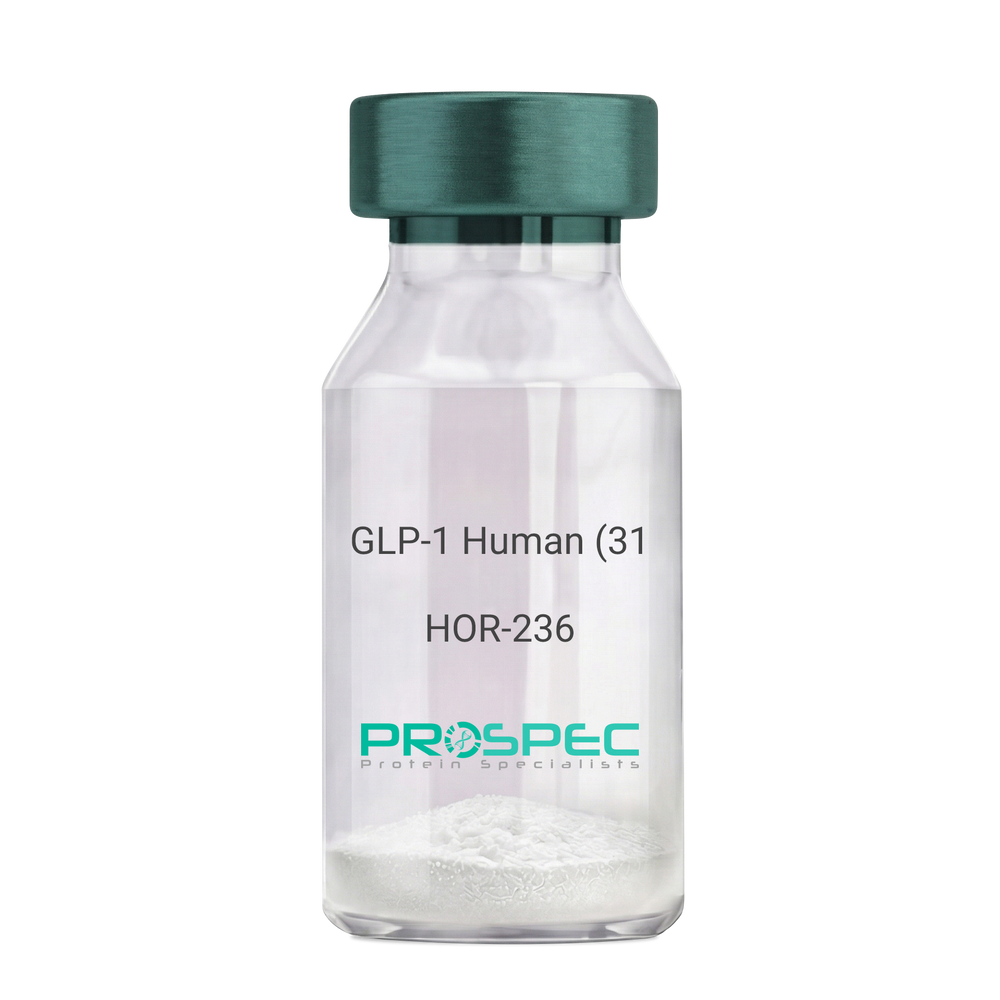
  • View Data Sheet

    Name :

    GLP-1 Human (31 a.a.)

    Description:

    Glucagon Like Peptide-1 (31 a.a.) Human Recombinant

    GLP1, GLP2, GRPP.

    Product # :

    HOR-236

    Price :

    Quantity :

    Shipping Method :

    Room Temp Icon

    Shipped at Room temp

    Add To Cart

    More Info

    • description
    • source
    • formulation
    • purity
    • More Info

    Description

    Glucagon Like Peptide-1 Human Recombinant produced in E.Coli is a single, non-glycosylated, polypeptide chain containing 31 amino acids and having a molecular mass of 3.3 kDa. The GLP-1 is purified by proprietary chromatographic techniques.

    Source

    Escherichia Coli.

    Formulation

    The Recombinant GLP-1 concentrated solution (1mg/ml) was lyophilized after extensive dialyses against 0.1mg sodium phosphate monobasic & 1.6mg sodium phosphate dibasic.

    Purity

    Greater than 98.0% as determined by:
    (a) Analysis by RP-HPLC.
    (b) Analysis by SDS-PAGE.

    More Info

    • Introduction

      Glucagon-like peptide-1 (GLP-1) is derived from the transcription product of the proglucagon gene. The major source of GLP-1 in the body is the intestinal L cell that secretes GLP-1 as a guthormone. The biologically active forms of GLP-1 are: GLP-1-(7-37) and GLP-1-(7-36)NH2.
      GLP-1 secretion by L cells is dependent on the presence of nutrients in the lumen of the small intestine. The secretagogues (agents that causes or stimulates secretion) of this hormone include major nutrients like carbohydrate, proteinand lipid. Once in the circulation, GLP-1 has a half life of less than 2 minutes, due to rapid degradation by the enzyme dipeptidyl peptidase-4.
      GLP-1 possesses several physiological properties that make it a subject of intensive investigation as a potential treatment of diabetes mellitus. The known physiological functions of GLP-1 include: Increases insulin secretion from the pancreas in a glucose-dependent manner, decreases glucagon secretion from the pancreas, increases beta cells mass and insulin gene expression, inhibits acid secretion and gastric emptying in the stomach, decreases food intake by increasing satiety.

    • Synonyms

      GLP1, GLP2, GRPP.

    • Physical Appearance

      Sterile Filtered White lyophilized (freeze-dried) powder.

    • Stability

      Lyophilized Glucagon Like Peptide-1 although stable at room temperature for 3 weeks, should be stored desiccated below -18°C. Upon reconstitution GLP-1 should be stored at 4°C between 2-7 days and for future use below -18°C. For long term storage it is recommended to add a carrier protein (0.1% HSA or BSA).Please prevent freeze-thaw cycles.

    • Solubility

      It is recommended to reconstitute the lyophilized Glucagon Like Peptide-1 in sterile 18MΩ-cm H2O not less than 100µg/ml, which can then be further diluted to other aqueous solutions.

    • Amino Acid Sequence

      HAEGTFTSDV SSYLEGQAAK EFIAWLVKGR G.

    ProSpec's products are furnished for LABORATORY RESEARCH USE ONLY. The product may not be used as drugs, agricultural or pesticidal products, food additives or household chemicals.

    Glucagon Like Peptide 1 Human
  • View Data Sheet

    Name :

    NUCB2 Human

    Description:

    Nucleobindin-2 Human Recombinant

    Nucleobindin-2, DNA-binding protein NEFA, Gastric cancer antigen Zg4, NUCB2, NEFA, Nesfatin.

    Product # :

    PRO-492

    Price :

    Quantity :

    Shipping Method :

    Room Temp Icon

    Shipped at Room temp

    Add To Cart

    More Info

    • description
    • source
    • formulation
    • purity
    • More Info

    Description

    The Recombinant Human NUCB2 (Nesfatin) produced in E.coli has a molecular mass of 9.7kDa containing 82 amino acid residues of the human NUCB2.

    Source

    Escherichia Coli.

    Formulation

    The NUCB2 protein was lyophilized from a 0.2µm filtered concentrated solution in 1×PBS, pH 7.4.

    Purity

    Greater than 95.0% as determined by:
    (a) Analysis by RP-HPLC.
    (b) Analysis by SDS-PAGE.

    More Info

    • Introduction

      Nucleobindin-2 (also known as NUCB2 or Nesfatin) is a EF-hand calcium-binding protein. Nucleobindin-2 takes part in calcium homeostasis and is a multifunctional protein that interacts with Ca(2+) nucleic acids & various regulatory proteins in different signaling pathways. NUCB2 (Nesfatin) is localized in neuronal perikarya and dendrites of mouse brain.

    • Synonyms

      Nucleobindin-2, DNA-binding protein NEFA, Gastric cancer antigen Zg4, NUCB2, NEFA, Nesfatin.

    • Physical Appearance

      Sterile Filtered White lyophilized (freeze-dried) powder.

    • Stability

      Lyophilized NUCB2 although stable at room temperature for 3 weeks, should be stored desiccated below -18°C. Upon reconstitution NUCB2 should be stored at 4°C between 2-7 days and for future use below -18°C.For long term storage it is recommended to add a carrier protein (0.1% HSA or BSA).Please prevent freeze-thaw cycles.

    • Solubility

      It is recommended to reconstitute the lyophilized NUCB2 in sterile 18M-cm H2O not less than 100µg/ml, which can then be further diluted to other aqueous solutions.

    • Amino Acid Sequence

      VPIDIDKTKV QNIHPVESAK IEPPDTGLYY DEYLKQVIDV LETDKHFREK LQKADIEEIK SGRLSKELDL VSHHVRTKLD EL.

    ProSpec's products are furnished for LABORATORY RESEARCH USE ONLY. The product may not be used as drugs, agricultural or pesticidal products, food additives or household chemicals.

    Nucb2 Human
  • View Data Sheet

    Name :

    CoV-2 Spike (318-542)

    Description:

    Coronavirus 2019 Spike Receptor Binding Domain (318-542 a.a.) Recombinant

    Product # :

    SARS-057

    Price :

    Quantity :

    Shipping Method :

    Ice Icon

    Shipped with Ice Packs

    Add To Cart

    More Info

    • description
    • source
    • formulation
    • purity
    • More Info

    Description

    Recombinant Coronavirus 2019 Spike Receptor Binding Domain (318-542 aa) having a Mw of 25.7kDa was purified from E. coli.The CoV-2 Spike is fused to a 6xHis tag at its C terminal and purified by proprietary chromatographic technique.

    Source

    Escherichia Coli.

    Formulation

    CoV-2 Spike protein solution contains PBS and 25mM K2CO3.

    Purity

    Protein is >95% pure as determined by 10% PAGE (coomassie staining).

    More Info

    • Introduction

      A human infecting coronavirus (viral pneumonia) called 2019 novel coronavirus, 2019-nCoV was found in the fish market at the city of Wuhan, Hubei province of China on December 2019.The 2019-nCoV shares an 87% identity to the 2 bat-derived severe acute respiratory syndrome 2018 SARS-CoV-2 located in Zhoushan of eastern China. 2019-nCoV has an analogous receptor-BD-structure to that of 2018 SARS-CoV, even though there is a.a. diversity so thus the 2019-nCoV might bind to ACE2 receptor protein (angiotensin-converting enzyme 2) in humans.While bats are possibly the host of 2019-nCoV, researchers suspect that animal from the ocean sold at the seafood market was an intermediate host. RSCU analysis proposes that the 2019-nCoV is a recombinant within the viral spike glycoprotein between the bat coronavirus and an unknown coronavirus.

    • Physical Appearance

      Sterile Filtered clear solution.

    • Stability

      Store at 4°C if entire vial will be used within 2-4 weeks.Store, frozen at -20°C for longer periods of time.For long term storage it is recommended to add a carrier protein (0.1% HSA or BSA).Avoid multiple freeze-thaw cycles.

    • Amino Acid Sequence

      HMRVQPTESI VRFPNITNLC PFGEVFNATR FASVYAWNRK RISNCVADYS VLYNSASFS TFKCYGVSPT KLNDLCFTNV YADSFVIRGD EVRQIAPGQT GKIADYNYKL PDDFTGCVI AWNSNNLDSKV GGNYNYLYRL FRKSNLKPFE RDISTEIYQA GSTPCNGVEG FNCYFPLQSY GFQPTNGVGY QPYRVVVLSF ELLHAPATVC GPKKSTNLVK NKCVNFNLE

    • Applications

      ELISA, Western blot and lateral flow immunoassay.

    ProSpec's products are furnished for LABORATORY RESEARCH USE ONLY. The product may not be used as drugs, agricultural or pesticidal products, food additives or household chemicals.

    product_image.jpg
  • View Data Sheet

    Name :

    CXCL17 Human, His

    Description:

    VEGF Co-regulated Chemokine 1, His Tag Human Recombinant

    Dcip1, DMC, MGC138300, UNQ473, VCC-1, VCC1, VEGF coregulated chemokine 1, C-X-C motif chemokine 17, Dendritic cell and monocyte chemokine-like protein.

    Product # :

    CHM-024

    Price :

    Quantity :

    Shipping Method :

    Ice Icon

    Shipped with Ice Packs

    Add To Cart

    More Info

    • description
    • source
    • formulation
    • purity
    • More Info
    • SDS-PAGE

    Description

    CXCL17 Human Recombinant produced in E.Coli is a single, non-glycosylated polypeptide chain containing 119 amino acids (22-119 a.a) and having a molecular mass of 13.7kDa.CXCL17 is fused to a 21 amino acid His-tag at N-terminus & purified by proprietary chromatographic techniques.

    Source

    Escherichia Coli.

    Formulation

    CXCL17 protein solution (0.5mg/ml) contains 20mM Tris-HCl buffer (pH 8.0), 0.4M Urea and 10% glycerol.

    Purity

    Greater than 85.0% as determined by SDS-PAGE.

    SDS-PAGE

    CXCL17 Human, His-SDS-PAGE - Product image 1

    More Info

    • Introduction

      Dendritic cell and monocyte chemokinelike protein (DMC/CXCL17/VEGF-correlated chemokine 1/VCC1), is a secreted molecule with a size and predicted 3-dimensional folding pattern similar to that of chemokines CXCL8/IL8 and CXCL14/BRAK. CXCL17 is constitutively generated by airway and intestinal epithelium. CXCL17 induces the chemotaxis of quiescent, but not LPS-activated peripheral blood monocytes and dendritic cells, and it also binds these cells specifically. The expression of CXCL17 is increased in endothelial cells when they are induced to form tubes in vitro. CXCL17, CXCL1/GRO and CXCL8/IL8 which have roles in angiogenesis, show significantly correlated expression with that of VEGF in primary lung, breast and esophageal tumors. Therefore, CXCL17 is suggested to have a role in tumor angiogenesis. The mature Rat CXCL17 shares 82%, 71% amino acid sequence identity with mouse, human CXCL17, respectively.

    • Synonyms

      Dcip1, DMC, MGC138300, UNQ473, VCC-1, VCC1, VEGF coregulated chemokine 1, C-X-C motif chemokine 17, Dendritic cell and monocyte chemokine-like protein.

    • Physical Appearance

      Sterile Filtered clear solution.

    • Stability

      Store at 4°C if entire vial will be used within 2-4 weeks. Store, frozen at -20°C for longer periods of time. For long term storage it is recommended to add a carrier protein (0.1% HSA or BSA).Avoid multiple freeze-thaw cycles.

    • Amino Acid Sequence

      MGSSHHHHHH SSGLVPRGSH MSSLNPGVAR GHRDRGQASR RWLQEGGQEC ECKDWFLRAP RRKFMTVSGL PKKQCPCDHF KGNVKKTRHQ RHHRKPNKHS RACQQFLKQC QLRSFALPL.

    • Background

      What is the molecular weight/Mw of CXCL17 HUMAN, HIS Protein?
      CXCL17 HUMAN, HIS Protein has a total Mw of 13.7kDa.

      What is the source or expression system of CXCL17 HUMAN, HIS Protein?
      Escherichia Coli.

      What is the Purity of CXCL17 HUMAN, HIS Protein?
      CXCL17 HUMAN, HIS Protein is >85% pure as determined by SDS-PAGE.

      What is the Biological Activity of CXCL17 HUMAN, HIS Protein?
      The biological functionality of CXCL17 HUMAN, HIS Protein will be determined in the future.

      What is the amino acid sequence of CXCL17 HUMAN, HIS Protein?
      MGSSHHHHHH SSGLVPRGSH MSSLNPGVAR GHRDRGQASR RWLQEGGQEC ECKDWFLRAP RRKFMTVSGL PKKQCPCDHF KGNVKKTRHQ RHHRKPNKHS RACQQFLKQC QLRSFALPL.

      What applications can CXCL17 HUMAN, HIS Protein be used in?
      CXCL17 HUMAN, HIS Protein can probably be used in western blot, ELISA and Lateral Flow.

      What is the endotoxin level for CXCL17 HUMAN, HIS Protein?
      The endotoxin level is minimal, CXCL17 HUMAN, HIS Protein was purified using conventional chromatography techniques.


    ProSpec's products are furnished for LABORATORY RESEARCH USE ONLY. The product may not be used as drugs, agricultural or pesticidal products, food additives or household chemicals.

    Cxcl17 Human His
  • 1
  • …
  • 13
  • 14
  • 15
  • 16
  • 17
  • …
  • 42
Your browser does not support the video tag.

Products

  • Cytokines
  • Growth Factors
  • Chemokines
  • CD Antigens
  • Neurotrophins
  • Hormones
  • Enzymes
  • Viral Antigens
  • Recombinant Proteins
  • Natural Proteins
  • Monoclonal Antibodies
  • Polyclonal Antibodies
  • Thermal Packaging

About

  • Company
  • Founder
  • Contribution
  • Contact Us
  • My Account

Ordering

  • Ordering Method
  • Ordering - Credit Card
  • Ordering PO
  • Shipping Fees
  • FAQ's

Legal

  • Terms & Conditions
  • Privacy
  • Site Map
  • info@prospecbio.com
  • Facebook
  • Instagram
  • Linkedin Profile

© 2026 ProSpec-Tany TechnoGene Ltd. All Rights Reserved.

  • Choosing a selection results in a full page refresh.
  • Opens in a new window.