Search results
1000 results found for “Follistatin”
Name
Description
Product #
Price
Quantity
Shipping Method
- View Data Sheet
Name :
SERPINA5 Human, ActiveDescription:
Serpin Peptidase Inhibitor, Clade A Member 5 Human Recombinant, Active
Serpin Family A Member 5, Serine (Or Cysteine) Proteinase Inhibitor, Clade A (Alpha-1 Antiproteinase, Antitrypsin), Member 5, Serpin Peptidase Inhibitor, Clade A (Alpha-1 Antiproteinase, Antitrypsin), Member 5, Acrosomal Serine Protease Inhibitor 3 4 Protein C Inhibitor, PLANH3, PAI-3, PROCI, PAI3, PCI, Plasminogen Activator Inhibitor III, Plasminogen Activator Inhibitor-3, Plasminogen Activator Inhibitor 3, Plasma Serine Protease Inhibitor, Serpin A5, PCI-B.
Product # :
PRO-2523Price :
Quantity :
Shipping Method :
Shipped with Ice Packs
More Info
- description
- source
- formulation
- purity
- biological activity
- More Info
- Citations
Description
SERPINA5 Human Recombinant produced in E.Coli is a single, non-glycosylated polypeptide chain containing 408 amino acids (20-406 a.a) and having a molecular mass of 45.9kDa.SERPINA5 is fused to a 21 amino acid His-tag at N-terminus & purified by proprietary chromatographic techniques.
Source
Escherichia Coli.
Formulation
SERPINA5 protein solution (0.5mg/ml) contains 150mM NaCl, 10% glycerol & 20 mM MES buffer (pH6.0).
Purity
Greater than 90.0% as determined by SDS-PAGE.
Biological Activity
Measured by its ability to inhibit Thrombin cleavage of substrate Boc-VPR-AMC. The IC50 for this effect is less or equal to 2 nM.
Citations
More Info
-
Introduction
SERPINA5 up regulates TAFI activation by inhibiting the protein C activation. SERPINA5 is a significant regulator in the equilibrium between coagulation and fibrinolysis by differentially inhibiting the activation of TAFI and of Protein-C. SERPINA5 belongs to the serpin serine proteinase inhibitor family. SERPINA5 protein inhibits plasminogen activators as well as activated protein C.
SERPINA5 is secreted in plasma & liver. SERPINA5 is involved in cell inflammation, proliferation, apoptosis, tumour cell migration, invasion, and metastasis. Moreover, SERPINA5 controls the invasive potential of renal cell carcinoma by inhibiting urinary plasminogen activator secreted by the cells. SERPINA5 participtes in regulating key serine proteases which are involved in metastatic prostate disease. -
Synonyms
Serpin Family A Member 5, Serine (Or Cysteine) Proteinase Inhibitor, Clade A (Alpha-1 Antiproteinase, Antitrypsin), Member 5, Serpin Peptidase Inhibitor, Clade A (Alpha-1 Antiproteinase, Antitrypsin), Member 5, Acrosomal Serine Protease Inhibitor 3 4 Protein C Inhibitor, PLANH3, PAI-3, PROCI, PAI3, PCI, Plasminogen Activator Inhibitor III, Plasminogen Activator Inhibitor-3, Plasminogen Activator Inhibitor 3, Plasma Serine Protease Inhibitor, Serpin A5, PCI-B.
-
Physical Appearance
Sterile Filtered colorless solution.
-
Stability
Store at 4°C if entire vial will be used within 2-4 weeks.Store, frozen at -20°C for longer periods of time. For long term storage it is recommended to add a carrier protein (0.1% HSA or BSA).Avoid multiple freeze-thaw cycles.
-
Amino Acid Sequence
MGSSHHHHHH SSGLVPRGSH MHRHHPREMK KRVEDLHVGA TVAPSSRRDF TFDLYRALAS AAPSQNIFFS PVSISMSLAM LSLGAGSSTK MQILEGLGLN LQKSSEKELH RGFQQLLQEL NQPRDGFQLS LGNALFTDLV VDLQDTFVSA MKTLYLADTF PTNFRDSAGA MKQINDYVAK QTKGKIVDLL KNLDSNAVVI MVNYIFFKAK WETSFNHKGT QEQDFYVTSE TVVRVPMMSR EDQYHYLLDR NLSCRVVGVP YQGNATALFI LPSEGKMQQV ENGLSEKTLR KWLKMFKKRQ LELYLPKFSI EGSYQLEKVL PSLGISNVFT SHADLSGISN HSNIQVSEMV HKAVVEVDES GTRAAAATGT IFTFRSARLN SQRLVFNRPF LMFIVDNNIL FLGKVNRP.
ProSpec's products are furnished for LABORATORY RESEARCH USE ONLY. The product may not be used as drugs, agricultural or pesticidal products, food additives or household chemicals.
- View Data Sheet
Name :
ProInsulin HumanDescription:
ProInsulin C-Peptide Analogue Human Recombinant
Insulin, Insulin-Dependent Diabetes Mellitus 2, Preproinsulin, Proinsulin, MODY10, IDDM1, IDDM2, IDDM, ILPR, IRDN.
Product # :
CYT-1120Price :
Quantity :
Shipping Method :
Shipped at Room temp
More Info
- description
- source
- formulation
- purity
- More Info
- Citations
Description
ProInsulin C-Peptide Analogue Human Recombinant produced in E.Coli is a non-glycosylated polypeptide chain containing 35 amino acid and having a molecular mass of approximately 3.6kDa.ProInsulin is purified by proprietary chromatographic techniques.
Source
Escherichia Coli.
Formulation
Lyophilized from a 0.2μm filtered concentrated solution in PBS, pH 7.4.
Purity
Greater than 95.0% as determined by:
(a) Analysis by RP-HPLC.
(b) Analysis by SDS-PAGE.Citations
More Info
-
Introduction
Insulin decreases blood glucose concentration. Insulin increases cell permeability to monosaccharides, amino acids and fatty acids. Insulin accelerates glycolysis, the pentose phosphate cycle, and glycogen synthesis in liver.
-
Synonyms
Insulin, Insulin-Dependent Diabetes Mellitus 2, Preproinsulin, Proinsulin, MODY10, IDDM1, IDDM2, IDDM, ILPR, IRDN.
-
Physical Appearance
Sterile Filtered White lyophilized (freeze-dried) powder.
-
Stability
Lyophilized ProInsulin although stable at room temperature for 3 weeks, should be stored desiccated below -18°C. Upon reconstitution ProInsulin C-Peptide Analogue should be stored at 4°C between 2-7 days and for future use below -18°C.Please prevent freeze-thaw cycles.
-
Solubility
It is recommended to reconstitute the lyophilized ProInsulin C-Peptide Analogue in sterile 18MΩ-cm H2O not less than 100µg/ml, which can then be further diluted to other aqueous solutions.
-
Amino Acid Sequence
RREAEDLQVG QVELGGGPGA GSLQPLALEG SLQKR.
ProSpec's products are furnished for LABORATORY RESEARCH USE ONLY. The product may not be used as drugs, agricultural or pesticidal products, food additives or household chemicals.
- View Data Sheet
Name :
FHIT Human, GSTDescription:
Fragile Histidine Triad Human Recombinant, GST Tag
Bis(5'-adenosyl)-triphosphatase, EC 3.6.1.29, Diadenosine 5',5'''-P1,P3-triphosphate hydrolase, Dinucleosidetriphosphatase, AP3A hydrolase, AP3Aase, Fragile histidine triad protein, FHIT, FRA3B.
Product # :
PRO-297Price :
Quantity :
Shipping Method :
Shipped with Ice Packs
More Info
- description
- source
- formulation
- More Info
- Citations
Description
FHIT Human Recombinant full length protein expressed in E.coli, shows a 43 kDa band on SDS-PAGE. The FHIT is fused to GST-Tag and purified by proprietary chromatographic techniques.
Source
Escherichia Coli.
Formulation
FHIT in 50mM Tris-Acetate, pH7.5, 1mM EDTA and 20% Glycerol.
Citations
More Info
-
Introduction
FHIT is a member of the histidine triad gene family. FHIT gene encodes a diadenosine 5',5'''-P1,P3-triphosphate hydrolase involved in purine metabolism. FHIT gene includes the common fragile site FRA3B on chromosome 3, where carcinogen-induced damage can lead to translocations and abnormal transcripts of this gene. The FHIT protein is a tumor suppressor with reduced or no expression in numerous types of cancer. FHIT may also act as a tumor suppressor in normal cells. Alterations and deletions of the FHIT (Fragile Histidine Triad) gene are strongly linked to the genesis and establishment of human tumors of the lung, cervix, breast, colon, stomach, and pancreas. The expression of FHIT is more often lost in cancers of individuals with familial mutations causing deficiency in DNA repair genes such as BRCA1, BRCA2 and MSH2. In vitro FHIT functions as a hydrolase that cleaves diadenosine triphosphate (Ap3A) to ADP and AMP. The FHIT -Ap3A enzyme-substrate complex seems to be the tumor suppressor signal. The restoration of FHIT expression in FHIT -deficient cancer cells leads to apoptosis, involving the intrinsic caspase pathway, in cancer-derived cells and in tumor xenografts.
-
Synonyms
Bis(5'-adenosyl)-triphosphatase, EC 3.6.1.29, Diadenosine 5',5'''-P1,P3-triphosphate hydrolase, Dinucleosidetriphosphatase, AP3A hydrolase, AP3Aase, Fragile histidine triad protein, FHIT, FRA3B.
-
Physical Appearance
Sterile Filtered clear solution.
-
Stability
Store vial at -20°C to -80°C. When stored at the recommended temperature, this protein is stable for 12 months.Please prevent freeze-thaw cycles.
-
Applications
• ELISA
• Inhibition Assays
• Western Blotting.
ProSpec's products are furnished for LABORATORY RESEARCH USE ONLY. The product may not be used as drugs, agricultural or pesticidal products, food additives or household chemicals.
- View Data Sheet
Name :
Leptin PAT7E10AT AntibodyDescription:
Leptin Clone PAT7E10AT, Mouse Anti Human
OB Protein, Obesity Protein, OBS, Obesity factor.
Product # :
ANT-690Price :
Quantity :
Shipping Method :
Shipped with Ice Packs
More Info
- formulation
- More Info
- Citations
Formulation
1mg/ml containing PBS, pH-7.4, 10% Glycerol and 0.02% Sodium Azide.
Citations
More Info
-
Introduction
A 16-kDa peptide hormone secreted from white adipocytes and implicated in the regulation of food intake and energy balance. Leptin provides the key afferent signal from fat cells in the feedback system that controls body fat stores.
-
Synonyms
OB Protein, Obesity Protein, OBS, Obesity factor.
-
Physical Appearance
Sterile filtered colorless solution.
-
Immunogen
Anti-human Leptin mAb, is derived from hybridization of mouse F0 myeloma cells with spleen cells from BALB/c mice immunized with recombinant human Leptin amino acids 22-167 purified from E. coli.
-
Ig Subclass
Mouse IgG2b heavy chain and k light chain.
-
Clone
PAT7E10AT.
-
Applications
Leptin antibody has been tested by ELISA, Western blot analysis and ICC/IF to assure specificity and reactivity. Since application varies, however, each investigation should be titrated by the reagent to obtain optimal results.
-
Type
Mouse Anti Human Monoclonal.
-
Storage Procedures
For periods up to 1 month store at 4°C, for longer periods of time, store at -20°C. Prevent freeze thaw cycles.
-
Purification Method
Leptin antibody was purified from mouse ascitic fluids by protein-A affinity chromatography.
ProSpec's products are furnished for LABORATORY RESEARCH USE ONLY. The product may not be used as drugs, agricultural or pesticidal products, food additives or household chemicals.
- View Data Sheet
Name :
FGF 1 HumanDescription:
Fibroblast Growth Factor-Acidic Human Recombinant
HBGF-1, ECGF-beta, FIBP, FGFIBP, FIBP-1, ECGF, ECGFA, GLIO703, FGF1, FGF-a.
Product # :
CYT-264Price :
Quantity :
Shipping Method :
Shipped at Room temp
More Info
- description
- source
- formulation
- purity
- biological activity
- More Info
- Citations
Description
Fibroblast Growth Factor-acidic Human Recombinant (FGF-1) produced in E.Coli is a single, non-glycosylated, polypeptide chain containing 140 amino acids and having a molecular mass of approximately 15.8kDa.The FGF acidic is purified by proprietary chromatographic techniques.
Source
Escherichia Coli.
Formulation
The protein was lyophilized from a concentrated (1mg/ml) sterile solution containing PBS, pH 7.4.
Purity
Greater than 95.0% as determined by:
(a) Analysis by RP-HPLC.
(b) Analysis by SDS-PAGE.Biological Activity
The ED50, calculated by the dose-dependant proliferation of mouse BALB/c 3T3 cells is <0.5 ng/ml, corresponding to a specific activity of > 2,000,000IU/mg.Citations
More Info
-
Introduction
Acidic fibroblast growth factor is a member of the fibroblast growth factor (FGF) family. FGF family members possess broad mitogenic and cell survival activities, and are involved in a variety of biological processes, including embryonic development, cell growth, morphogenesis, tissue repair, tumor growth and invasion. This protein functions as a modifier of endothelial cell migration and proliferation, as well as an angiogenic factor. It acts as a mitogen for a variety of mesoderm- and neuroectoderm-derived cells in vitro, thus is thought to be involved in organogenesis.
Three alternatively spliced variants encoding different isoforms have been described.
The hep-binding growth factors are angiogenic agents in vivo and are potent mitogens for a variety of cell types in vitro. There are differences in the tissue distribution and concentration of these 2 growth factors. -
Synonyms
HBGF-1, ECGF-beta, FIBP, FGFIBP, FIBP-1, ECGF, ECGFA, GLIO703, FGF1, FGF-a.
-
Physical Appearance
Sterile Filtered White lyophilized (freeze-dried) powder.
-
Stability
Lyophilized Fibroblast Growth Factor-1 although stable at room temperature for 3 weeks, should be stored desiccated below -18°C. Upon reconstitution FGF-a should be stored at 4°C between 2-7 days and for future use below -18°C.Please prevent freeze-thaw cycles.
-
Solubility
It is recommended to reconstitute the lyophilized Fibroblast Growth Factor-acidic in sterile 18MΩ-cm H2O at 4 degrees Celsius at a concentration of 0.1mg-0.25mg per 1ml. Allow sample to sit for 5 min. at 4 degrees, spin to remove precipitant.
-
Amino Acid Sequence
MFNLPPGNYK KPKLLYCSNG GHFLRILPDG TVDGTRDRSD QHIQLQLSAE SVGEVYIKST ETGQYLAMDT DGLLYGSQTP NEECLFLERL EENHYNTYIS KKHAEKNWFV GLKKNGSCKR GPRTHYGQKA ILFLPLPVSS D.
-
Background
What is the molecular weight/Mw of FGF 1 Protein?
FGF 1 Protein has a total Mw of 15.8kDa.
What is the source or expression system of FGF 1 Protein?
Escherichia Coli.
What is the Purity of FGF 1 Protein?
FGF 1 Protein is >95% pure as determined by SDS-PAGE.
What is the Biological Activity of FGF 1 Protein?
The ED50, calculated by the dose-dependant proliferation of mouse BALB/c 3T3 cells is <0.5 ng/ml, corresponding to a specific activity of > 2,000,000IU/mg.
What is the amino acid sequence of FGF 1 Protein?
MFNLPPGNYK KPKLLYCSNG GHFLRILPDG TVDGTRDRSD QHIQLQLSAE SVGEVYIKST ETGQYLAMDT DGLLYGSQTP NEECLFLERL EENHYNTYIS KKHAEKNWFV GLKKNGSCKR GPRTHYGQKA ILFLPLPVSS D.
What applications can FGF 1 Protein be used in?
FGF 1 Protein can probably be used in western blot, ELISA and Lateral Flow.
What is the endotoxin level for FGF 1 Protein?
The endotoxin level is minimal, FGF 1 Protein was purified using conventional chromatography techniques.
ProSpec's products are furnished for LABORATORY RESEARCH USE ONLY. The product may not be used as drugs, agricultural or pesticidal products, food additives or household chemicals.
- View Data Sheet
Name :
FLT1 D5 HumanDescription:
Vascular Endothelial Growth Factor Receptor-1 D5 Human Recombinant
FLT-1, FLT1, Tyrosine-protein kinase receptor FLT, Flt-1, Tyrosine-protein kinase FRT, Fms-like tyrosine kinase 1, VEGFR-1.
Product # :
PKA-239Price :
Quantity :
Shipping Method :
Shipped at Room temp
More Info
- description
- source
- formulation
- purity
- biological activity
- More Info
- Citations
Description
Soluble FLT1 D1-5 Human Recombinant produced in baculovirus is monomeric, glycosylated, polypeptide containing 562 amino acids and having a molecular mass of 70 kDa. The soluble receptor protein contains only the first 5 extracellular domains, which contain all the information necessary for binding of VEGF.The FLT1 is purified by proprietary chromatographic techniques.
Source
Insect Cells.
Formulation
FLT1 D1-5 was lyophilized from a concentrated (1 mg/ml) sterile solution containing no additives.
Purity
Greater than 90.0% as determined by(a)Analysis by RP-HPLC.
(b)Analysis by SDS-PAGE.Biological Activity
The activity of FLT1 D5 was determined by its ability to abolish the binding of iodinated VEGF to solid surfaces or cell surfaces. The ED50 for this effect is typically 10 ng/ml, corresponding to a specific activity of 100,000IU/mg.
In a 13 day CAM-assay sVEGFR-1 is able to inhibit VEGF stimulated sprouting of capillaries at 30 pM.Citations
More Info
-
Introduction
Endothelial cells express three different vascular endothelial growth factor (VEGF) receptors, belonging to the family of receptor tyrosine kinases (RTKs). They are named VEGFR-1 (Flt-1), VEGFR-2 (KDR/Flk-1), VEGFR-3 (Flt-4). Their expression is almost exclusively restricted to endothelial cells, but VEGFR-1 can also be found on monocytes, dendritic cells and on trophoblast cells. The flt-1 gene was first described in 1990. The receptor contains seven immunoglobulin-like extracellular domains, a single transmembrane region and an intracellular splited tyrosine kinase domain. Compared to VEGFR-2 the Flt-1 receptor has a higher affinity for VEGF but a weaker signaling activity. VEGFR-1 thus leads not to proliferation of endothelial cells, but mediates signals for differentiation. Interestingly a naturally occuring soluble variant of VEGFR-1 (sVEGFR-1) was found in HUVE supernatants in 1996, which is generated by alternative splicing of the flt-1 mRNA. The biological functions of sVEGFR-1 still are not clear, but it seems to be an endogenous regulator of angiogenesis, binding VEGF with the same affinity as the full-length receptor.
-
Synonyms
FLT-1, FLT1, Tyrosine-protein kinase receptor FLT, Flt-1, Tyrosine-protein kinase FRT, Fms-like tyrosine kinase 1, VEGFR-1.
-
Physical Appearance
Sterile Filtered White lyophilized (freeze-dried) powder.
-
Stability
Lyophilized FLT-1 although stable at room temperature for 3 weeks, should be stored desiccated below -18°C. Upon reconstitution FLT1 should be stored at 4°C between 2-7 days and for future use below -18°C.For long term storage it is recommended to add a carrier protein (0.1% HSA or BSA).Please prevent freeze-thaw cycles.
-
Solubility
It is recommended to reconstitute the lyophilized FLT1 D5 in sterile water not less than 100µg/ml, which can then be further diluted to other aqueous solutions.
ProSpec's products are furnished for LABORATORY RESEARCH USE ONLY. The product may not be used as drugs, agricultural or pesticidal products, food additives or household chemicals.
- View Data Sheet
Name :
LysostaphinDescription:
Lysostaphin Recombinant
Lysostaphin, EC 3.4.24.75, Glycyl-glycine endopeptidase.
Product # :
ENZ-269Price :
Quantity :
Shipping Method :
Shipped at Room temp
More Info
- description
- source
- formulation
- purity
- biological activity
- More Info
- Citations
Description
Lysostaphin Recombinant produced in E.Coli is a non-glycosylated polypeptide chain having a molecular mass of 26.92 kDa.
Source
Escherichia Coli.
Formulation
The protein was lyophilized without any additives.
Purity
98% as determined by RP-HPLC.
Biological Activity
Assessed by the decrease in turbidity of a suspension of heat-killed Staphylococcus aureus at pH-8, 30°C. Lysostaphin is a zinc enzyme therefore EDTA is an inhibitory factor.
Citations
More Info
-
Introduction
Lysostaphin, an endopeptidase specific for the cell wall peptidoglycan of staphylococci, is an extremely potent anti-staphylococcal agent. Lysostaphin is used as a research and diagnostic tool. Because it lyses staphylococci efficiently, it is widely used when preparing staphylococcal DNA or other cellular components for genetic and biochemical studies and for the preparation of protoplasts for transformation. Preparation and analysis of bacterial DNA has become a powerful tool used by clinical and other microbiologists in epidemiological studies aimed at tracing sources of infection or bacterial contamination.
-
Synonyms
Lysostaphin, EC 3.4.24.75, Glycyl-glycine endopeptidase.
-
Physical Appearance
Sterile Filtered lyophilized powder.
-
Stability
Lyophilized Lysostaphin although stable at room temperature for 2 weeks, should be stored desiccated below -18°C. Upon reconstitution Lysostaphin can be stored at 4°C up to 3 weeks and for future use below -18°C.Please prevent freeze-thaw cycles.
-
Solubility
It is recommended to reconstitute the lyophilized Lysostaphin in 20mM sodium acetate, pH 4.5 for optimal stability, which can then be further diluted.
-
Protein content
Protein quantitation was carried out by two independent methods 1. UV spectroscopy at 280 nm using the absorbency value of 2.02 as the extinction coefficient for a 0.1% (1mg/ml) solution. This value is calculated by the PC GENE computer analysis program of protein sequences (IntelliGenetics). 2. Analysis RP-HPLC, using a calibrated solution of Lysostaphin as a Reference standard.
-
Specific Activity
Determined to be 3,540 units/mg.
ProSpec's products are furnished for LABORATORY RESEARCH USE ONLY. The product may not be used as drugs, agricultural or pesticidal products, food additives or household chemicals.
- View Data Sheet
Name :
Leuprorelin HumanDescription:
Leuprolide Human
Leuprolide, Leuprorelin.
Product # :
HOR-260Price :
Quantity :
Shipping Method :
Shipped at Room temp
More Info
- description
- formulation
- purity
- More Info
- Citations
Description
Leuprolide Human Synthetic is a single, non-glycosylated, polypeptide chain containing 9 amino acids and having a molecular mass of 1209 Dalton. The molecular formula is C59H84N16O12.
Formulation
The Leuprorelin was lyophilized from a concentrated (1mg/ml) solution with no additives.
Purity
Greater than 98.0% as determined by RP-HPLC.
Citations
More Info
-
Introduction
Leuprorelin (INN) or leuprolide acetate (USAN) is a gonadotropin-releasing hormone agonist (GnRH agonist).
By causing constant stimulation of the pituitaryGnRH receptors, it initially causes stimulation (flare), but thereafter decreases pituitary secretion (downregulation) of gonadotropins luteinizing hormone(LH) and follicle-stimulating hormone(FSH).
Like other GnRH agonists, leuprolide may be used in the treatment of hormone-responsive cancers such as prostate canceror breast cancer, estrogen-dependent conditions (such as endometriosisor uterine fibroids), to treat precocious puberty, and to control ovarian stimulation in IVF. -
Synonyms
Leuprolide, Leuprorelin.
-
Physical Appearance
Sterile Filtered White lyophilized (freeze-dried) powder.
-
Stability
Lyophilized Leoprolide although stable at room temperature for 3 weeks, should be stored desiccated below -18°C. Upon reconstitution Leuprorelin should be stored at 4°C between 2-7 days and for future use below -18°C.For long term storage it is recommended to add a carrier protein (0.1% HSA or BSA).Please prevent freeze-thaw cycles.
-
Solubility
It is recommended to reconstitute the lyophilized Leoprolide in sterile 18MΩ-cm H2O not less than 100µg/ml, which can then be further diluted to other aqueous solutions.
-
Amino Acid Sequence
pGlu-His-Trp-Ser-Tyr-D-Leu-Leu-Arg-Pro-NHEt.
ProSpec's products are furnished for LABORATORY RESEARCH USE ONLY. The product may not be used as drugs, agricultural or pesticidal products, food additives or household chemicals.
- View Data Sheet
Name :
TesamorelinDescription:
Tesamorelin
Product # :
HOR-062Price :
Quantity :
Shipping Method :
Shipped at Room temp
More Info
- description
- formulation
- purity
- More Info
- Citations
Description
Tesamorelin is a synthetic single, non-glycosylated polypeptide chain containing 44 amino acids, having a molecular mass of 5135.78 Dalton and a Molecular formula of C221H366N72O67S.
Formulation
The protein was lyophilized with no additives.
Purity
Greater than 97.0% as determined by analysis by RP-HPLC.
Citations
More Info
-
Physical Appearance
Sterile Filtered White lyophilized (freeze-dried) powder.
-
Stability
Lyophilized Tesamorelin although stable at room temperature for 3 weeks, should be stored desiccated below -18°C. Upon reconstitution Tesamorelin should be stored at 4°C between 2-7 days and for future use below -18°C.
For long term storage it is recommended to add a carrier protein (0.1% HSA or BSA).
Please prevent freeze-thaw cycles.
-
Solubility
It is recommended to reconstitute the lyophilized Tesamorelin in sterile 18MΩ-cm H2O not less than 100 µg/ml, which can then be further diluted to other aqueous solutions.
-
Amino Acid Sequence
trans-3-hexenoyl-Tyr-Ala-Asp-Ala-IlePhe-Thr-Asn-Ser-Tyr-Arg-Lys-Val-Leu-Gly-Gln-Leu-Ser-Ala-Arg-LysLeu-Leu-Gln-Asp-Ile-Met-Ser-Arg-Gln-Gln-Gly-Glu-Ser-Asn-Gln-GluArg-Gly-Ala-Arg-Ala-Arg-Leu-NH2.
-
Background
Tesamorelin is a growth hormone-releasing hormone (GHRH) analogue. Tesamorelin stimulates the pituitary gland to produce endogenous growth hormone, which targets visceral adipose tissue. Tesamorelin has evolved from a HIV treatment into an effective metabolic and regenerative therapy.
ProSpec's products are furnished for LABORATORY RESEARCH USE ONLY. The product may not be used as drugs, agricultural or pesticidal products, food additives or household chemicals.
- View Data Sheet
Name :
R-Spondin-1 HumanDescription:
R-Spondin-1 Human Recombinant
R-spondin-1, Cristin-3, mCristin-3, Roof plate-specific spondin-1, Rspo1, RSPO, R-spondin 1, R-spondin, Rspondin, CRISTIN3.
Product # :
PRO-2593Price :
Quantity :
Shipping Method :
Shipped at Room temp
More Info
- description
- source
- formulation
- purity
- biological activity
- More Info
- Citations
Description
R-Spondin-1 Human Recombinant produced in CHO cells is a glycosylated monomer chain containing 243 amino acids and having a total molecular mass of 25.6kDa. RSPO1 is purified by proprietary chromatographic techniques.
Source
CHO cells.
Formulation
The protein was lyophilized from a sterile (0.2µm) filtered solution containing PBS.
Purity
Greater than 95.0% as determined by SDS-PAGE.
Biological Activity
The ED50, as calculated by the Luciferase induction in HEK-293 STF cells in the presence of Murine Wnt-3a is 47.99ng/ml corresponding to a specific activity of 2.1 x 10^4 units/mg.
Citations
More Info
-
Introduction
R-Spondin-1 (Rspo1) is a part of the Rspondin family. Rspo1 plays a role as an activator of the canonical Wnt signaling pathway by acting as a ligand for LGR4-6 receptors. Rspo1 induces the onset of crypt cell proliferation and increases intestinal epithelial healing effect. Rspo1 is negatively regulating the TGF-beta pathway.
-
Synonyms
R-spondin-1, Cristin-3, mCristin-3, Roof plate-specific spondin-1, Rspo1, RSPO, R-spondin 1, R-spondin, Rspondin, CRISTIN3.
-
Physical Appearance
Sterile Filtered White lyophilized (freeze-dried) powder.
-
Stability
Lyophilized RSPO1 although stable at room temperature for 3 weeks, should be stored desiccated below -18°C. Upon reconstitution RSPO1 should be stored at 4°C between 2-7 days and for future use below -18°C. Please prevent freeze-thaw cycles.
-
Solubility
It is recommended to reconstitute the lyophilized RSPO1in sterile 18MΩ-cm H2O not less than 100µg/ml, which can then be further diluted to other aqueous solutions.
-
Amino Acid Sequence
SRGIKGKRQR RISAEGSQAC AKGCELCSEV NGCLKCSPKL FILLERNDIR QVGVCLPSCP PGYFDARNPD MNKCIKCKIE HCEACFSHNF CTKCKEGLYL HKGRCYPACP EGSSAANGTM ECSSPAQCEM SEWSPWGPCS KKQQLCGFRR GSEERTRRVL HAPVGDHAAC SDTKETRRCT VRRVPCPEGQ KRRKGGQGRR ENANRNLARK ESKEAGAGSR RRKGQQQQQQ QGTVGPLTSA GPA.
ProSpec's products are furnished for LABORATORY RESEARCH USE ONLY. The product may not be used as drugs, agricultural or pesticidal products, food additives or household chemicals.
- View Data Sheet
Name :
WIF1 HumanDescription:
WNT Inhibitory Factor 1 Human Recombinant
WIF1, WIF-1, Wnt inhibitory factor 1.
Product # :
PRO-684Price :
Quantity :
Shipping Method :
Shipped with Ice Packs
More Info
- description
- source
- formulation
- purity
- More Info
- Citations
Description
WIF1 Human is a single, glycosylated polypeptide chain containing 360 amino acids (29-379 a.a.) and having a molecular mass of 39.5 kDaWIF1 is fused to 6 amino acid His Tag at C-Terminus and purified by proprietary chromatographic techniques.
Source
Sf9, Baculovirus cells.
Formulation
The WIF1 protein solution contains 1X PBS pH 7.4, 20% glycerol, 1mM DTT and 0.1mM PMSF.
Purity
Greater than 90.0% as determined by SDS-PAGE.
Citations
More Info
-
Introduction
WIF1 binds to wnt proteins and inhibits their activities. WIF1 plays a role in mesoderm segmentation. WNT proteins are extracellular signaling molecules that take part in the control of embryonic development & cancer. WIF1 protein contains a WNT inhibitory factor (WIF) domain and 5 epidermal growth factor (EGF)-like domains. WIF1 takes part in mesoderm segmentation. WIF1 protein is found to be present in fish, amphibia and mammals. WIF1 is a recurrent target in human salivary gland oncogenesis. Downregulation of WIF1 takes part in the development and progression of pleomorphic adenomas. WIF1 is a tumor suppressor, specifically in nonfunctioning pituitary tumors.
-
Synonyms
WIF1, WIF-1, Wnt inhibitory factor 1.
-
Physical Appearance
Sterile filtered colorless solution.
-
Stability
Store at 4°C if entire vial will be used within 2-4 weeks. Store, frozen at -20°C for longer periods of time.For long term storage it is recommended to add a carrier protein (0.1% HSA or BSA).Avoid multiple freeze-thaw cycles.
-
Amino Acid Sequence
ADLGPPQEES LYLWIDAHQA RVLIGFEEDI LIVSEGKMAP FTHDFRKAQQ RMPAIPVNIH SMNFTWQAAG QAEYFYEFLS LRSLDKGIMA DPTVNVPLLG TVPHKASVVQ VGFPCLGKQD GVAAFEVDVI VMNSEGNTIL QTPQNAIFFK TCQQAECPGG CRNGGFCNER RICECPDGFH GPHCEKALCT PRCMNGGLCV TPGFCICPPG FYGVNCDKAN CSTTCFNGGT CFYPGKCICP PGLEGEQCEI SKCPQPCRNG GKCIGKSKCK CSKGYQGDLC SKPVCEPGCG AHGTCHEPNK CQCQEGWHGR HCNKRYEASL IHALRPAGAQ LRQHTPSLKK AEERRDPPES NYIWHHHHHH
ProSpec's products are furnished for LABORATORY RESEARCH USE ONLY. The product may not be used as drugs, agricultural or pesticidal products, food additives or household chemicals.
- View Data Sheet
Name :
LHRH HumanDescription:
Luteinizing Hormone Releasing Hormone Human
Progonadoliberin-1, Progonadoliberin I, LHRH, GRH, GNRH, LNRH.
Product # :
HOR-261Price :
Quantity :
Shipping Method :
Shipped at Room temp
More Info
- description
- formulation
- purity
- More Info
- Citations
Description
Lutenizing Hormone Releasing Hormone Human Synthetic is a single, non-glycosylated, polypeptide chain containing 10 amino acids and having a molecular mass of 1182.2 Dalton. The molecular formula is C55H75N17O13.C2H4O2. The CAS Number is 71447-49-9.
Formulation
The LHRH was lyophilized from a concentrated (1 mg/ml) solution with no additives.
Purity
Greater than 98.0% as determined by RP-HPLC.
Citations
More Info
-
Introduction
Gonadotropin-releasing hormone 1 (GNRH1), also known as Luteinising-hormone releasing hormone (LHRH), is a peptide hormone responsible for the release of FSH and LH from the anterior pituitary. GNRH1 is synthesized and released by the hypothalamus.
At the pituitary, GNRH1 stimulates the synthesis and secretion of the gonadotropins follicle-stimulating hormone (FSH) and luteinizing hormone (LH). These processes are controlled by the size and frequency of GNRH1 pulses, as well as by feedback from androgens and estrogens. Low requency GNRH1 pulses lead to FSH release, whereas high frequency GNRH1 pulses stimulate LH release.
There are differences in GNRH1 secretion between males and females. In males, GNRH1 is secreted in pulses at a constant frequency, but in females the frequency of the pulses varies during the menstrual cycle and there is a large surge of GNRH1 just before ovulation.
GNRH1 secretion is pulsatile in all vertebrates, and is necessary for correct reproductive function. Thus, a single hormone, GNRH1, controls a complex process of follicular growth, ovulation, and corpus luteum maintenance in the female, and spermatogenesis in the male. -
Synonyms
Progonadoliberin-1, Progonadoliberin I, LHRH, GRH, GNRH, LNRH.
-
Physical Appearance
Sterile Filtered White lyophilized (freeze-dried) powder.
-
Stability
Lyophilized LHRH although stable at room temperature for 3 weeks, should be stored desiccated below -18°C. Upon reconstitution LNRH should be stored at 4°C between 2-7 days and for future use below -18°C.For long term storage it is recommended to add a carrier protein (0.1% HSA or BSA).Please prevent freeze-thaw cycles.
-
Solubility
It is recommended to reconstitute the lyophilized LHRH in sterile 18MΩ-cm H2O not less than 100µg/ml, which can then be further diluted to other aqueous solutions. The LHRH is also soluble in a 1% glacial acetic acid.
-
Amino Acid Sequence
Pyr-His-Trp-Ser-Tyr-Gly-Leu-Arg-Pro-Gly-NH2.
ProSpec's products are furnished for LABORATORY RESEARCH USE ONLY. The product may not be used as drugs, agricultural or pesticidal products, food additives or household chemicals.
- View Data Sheet
Name :
Flt3-Ligand Rhesus MacaqueDescription:
Flt3-Ligand Rhesus Macaque Recombinant
Fms-related tyrosine kinase 3 ligand, FLK2, STK1, CD135, Stem Cell Tyrosine Kinase 1, FLT3LG, Flt3.
Product # :
CYT-157Price :
Quantity :
Shipping Method :
Shipped at Room temp
More Info
- description
- source
- formulation
- purity
- biological activity
- More Info
- Citations
Description
Flt3 Ligand Rhesus Macaque Recombinant produced in E.Coli is a single, non-glycosylated, polypeptide chain containing 159 amino acids and having a molecular mass of 18.0kDa.The Flt3 Ligand Rhesus Macaque is purified by proprietary chromatographic techniques.
Source
Escherichia Coli.
Formulation
Lyophilized from a 0.2µm filtered concentrated solution in PBS, pH 7.4.
Purity
Greater than 97.0% as determined by SDS-PAGE.
Biological Activity
The ED50 as calculated by the dose-dependant stimulation of the proliferation of human AML5 cells is less than 1.0ng/ml, corresponding to a specific activity of 1,000,000IU/mg.Citations
More Info
-
Introduction
FLT3 ligand is a receptor for the fl cytokine has a tyrosine-protein kinase activity & a growth factor that regulates proliferation of early hematopoietic cells. Flt3-Ligand synergizes with other CSFs and interleukins to induce growth and differentiation.
-
Synonyms
Fms-related tyrosine kinase 3 ligand, FLK2, STK1, CD135, Stem Cell Tyrosine Kinase 1, FLT3LG, Flt3.
-
Physical Appearance
Sterile Filtered White lyophilized (freeze-dried) powder.
-
Stability
Lyophilized Flt3 Ligand Rhesus Macaque although stable at room temperature for 3 weeks, should be stored desiccated below -18°C. Upon reconstitution Flt3 Ligand Rhesus Macaque should be stored at 4°C between 2-7 days and for future use below -18°C.Please prevent freeze-thaw cycles.
-
Solubility
It is recommended to reconstitute the lyophilized Flt3 Ligand in sterile 18MΩ-cm H2O not less than 100µg/ml, which can then be further diluted to other aqueous solutions.
-
Amino Acid Sequence
TQDCSFQHSP ISSDFAVKIR ELSDYLLQDY PVTVPSNLQD EELCGALWRL VLAQRWMERL KTVAGSKMQG LLERVNTEIH FVTKCAFQHP PSCLRFVQTN ISRLLQETSE QLVALKPWIT RQNFSRCLEL QCQPDSSTLP PPRSPGALEA TALTAPQRP
-
Background
What is the molecular weight/Mw of FLT3-LIGAND RHESUS MACAQUE Protein?
FLT3-LIGAND RHESUS MACAQUE Protein has a total Mw of 18kDa.
What is the source or expression system of FLT3-LIGAND RHESUS MACAQUE Protein?
Escherichia Coli.
What is the Purity of FLT3-LIGAND RHESUS MACAQUE Protein?
FLT3-LIGAND RHESUS MACAQUE Protein is >97% pure as determined by SDS-PAGE.
What is the Biological Activity of FLT3-LIGAND RHESUS MACAQUE Protein?
The ED50 as calculated by the dose-dependant stimulation of the proliferation of human AML5 cells is less than 1.0ng/ml, corresponding to a specific activity of 1,000,000IU/mg.
What is the amino acid sequence of FLT3-LIGAND RHESUS MACAQUE Protein?
TQDCSFQHSP ISSDFAVKIR ELSDYLLQDY PVTVPSNLQD EELCGALWRL VLAQRWMERL KTVAGSKMQG LLERVNTEIH FVTKCAFQHP PSCLRFVQTN ISRLLQETSE QLVALKPWIT RQNFSRCLEL QCQPDSSTLP PPRSPGALEA TALTAPQRP
What applications can FLT3-LIGAND RHESUS MACAQUE Protein be used in?
FLT3-LIGAND RHESUS MACAQUE Protein can probably be used in western blot, ELISA and Lateral Flow.
What is the endotoxin level for FLT3-LIGAND RHESUS MACAQUE Protein?
The endotoxin level is minimal, FLT3-LIGAND RHESUS MACAQUE Protein was purified using conventional chromatography techniques.
ProSpec's products are furnished for LABORATORY RESEARCH USE ONLY. The product may not be used as drugs, agricultural or pesticidal products, food additives or household chemicals.
- View Data Sheet
Name :
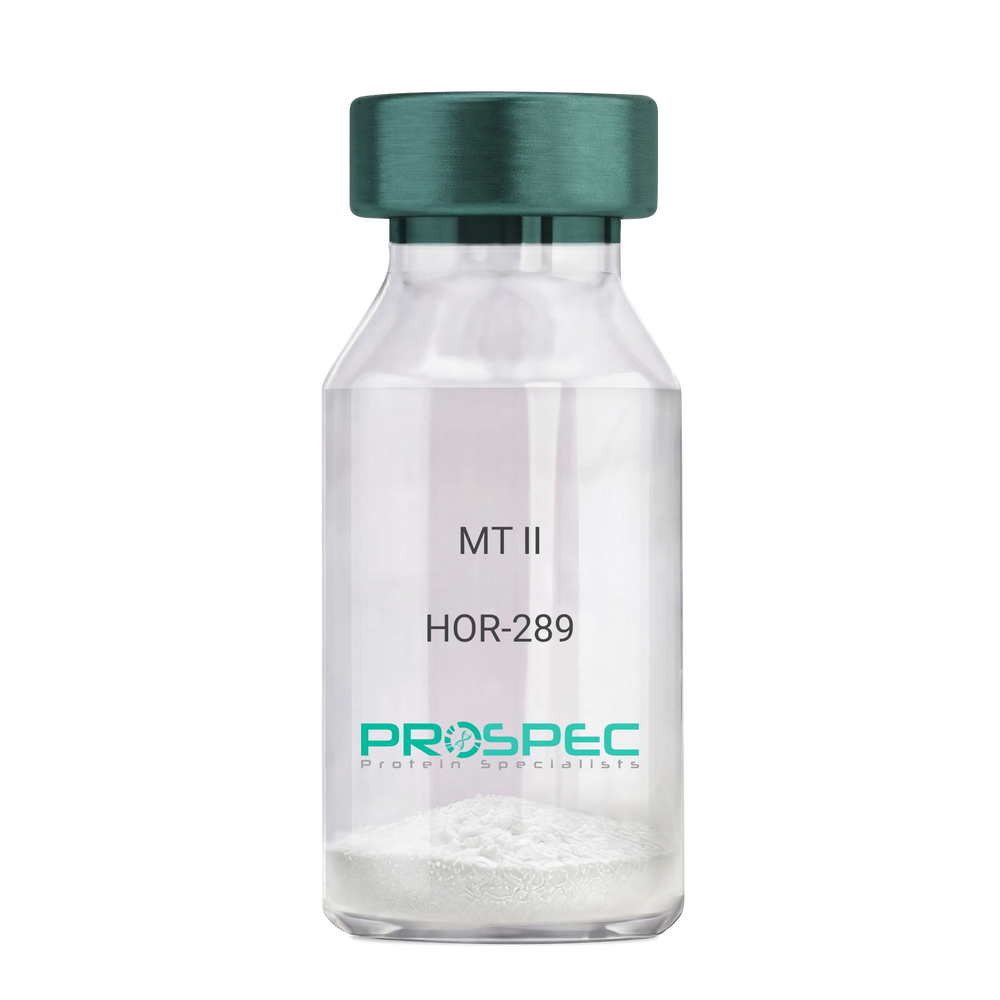
MT IIDescription:
Melanotan-II
Melanotan-II, MT-II, Melanotan.
Product # :
HOR-289Price :
Quantity :
Shipping Method :
Shipped at Room temp
More Info
- description
- formulation
- purity
- More Info
- Citations
Description
The molecular formula of Melanotan-II is C50H69N15O9. It has the amino acid sequence of Ac-Nle-cyclo [Asp-His-D-Phe-Arg-Trp-Lys]-NH2 and a molecular weight of 1024.2 Dalton. The CAS Number is 121062-08-6.
Formulation
The protein (1mg/ml) was lyophilized with no additives.
Purity
Greater than 99% as determined by by RP-HPLC.
Citations
More Info
-
Introduction
Melanotan and Melanotan-II are both analogs of the peptide hormone alpha melanocyte stimulating hormone (a-MSH) that tend to induce skin tanning. Unlike Melanotan, Melanotan-II has the additional effect of increasing libido. Melanotan II has aphrodisiac properties.
-
Synonyms
Melanotan-II, MT-II, Melanotan.
-
Physical Appearance
Sterile Filtered White lyophilized (freeze-dried) powder.
-
Stability
Lyophilized Melanotan-II although stable at room temperature for 3 weeks, should be stored desiccated below -18°C. Upon reconstitution MT-II should be stored at 4°C between 2-7 days and for future use below -18°C.For long term storage it is recommended to add a carrier protein (0.1% HSA or BSA).Please prevent freeze-thaw cycles.
-
Solubility
It is recommended to reconstitute the lyophilized Melanotan-II in sterile 18MΩ-cm H2O not less than 100 µg/ml, which can then be further diluted to other aqueous solutions.
ProSpec's products are furnished for LABORATORY RESEARCH USE ONLY. The product may not be used as drugs, agricultural or pesticidal products, food additives or household chemicals.
- View Data Sheet
Name :
MOTS-CDescription:
MOTS-C
Product # :
HOR-032Price :
Quantity :
Shipping Method :
Shipped at Room temp
More Info
- description
- formulation
- purity
- More Info
- Citations
Description
MOTS-C Synthetic is a single, non-glycosylated polypeptide chain containing 16 amino acids, having a molecular mass of 2174.59 Dalton and a Molecular formula of C10H152N280O22 S2.
Formulation
The protein was lyophilized with no additives.
Purity
Greater than 97.0% as determined by analysis by RP-HPLC.
Citations
More Info
-
Physical Appearance
Sterile Filtered White lyophilized (freeze-dried) powder.
-
Stability
Lyophilized MOTS-C although stable at room temperature for 3 weeks, should be stored desiccated below -18°C. Upon reconstitution MOTS-C should be stored at 4°C between 2-7 days and for future use below -18°C. For long term storage it is recommended to add a carrier protein (0.1% HSA or BSA). Please prevent freeze-thaw cycles.
-
Solubility
It is recommended to reconstitute the lyophilized MOTS-C in sterile 18MΩ-cm H2O not less than 100 µg/ml, which can then be further diluted to other aqueous solutions.
-
Amino Acid Sequence
H-Met-Arg-Trp-Gln-Glu-Met-Gly-Tyr-Ile-Phe-Tyr-Pro-Arg-Lys-Leu-Arg-OH.
-
Background
Mitochondrial-derived peptide (MOTS-c) is a novel bioactive peptide that has recently emerged as a significant player in the field of metabolic regulation and longevity research. Also known as Humanin-like 13 (HN13), this peptide is encoded within the mitochondrial genome and has been associated with a variety of metabolic processes, including glucose metabolism, insulin sensitivity, and physical endurance.
MOTS-c is unique in that it is one of the few known peptides encoded by the mitochondrial genome. This peptide has been shown to target the skeletal muscle and enhance insulin sensitivity, thereby playing a crucial role in glucose metabolism. Research by Lee et al. (2015) demonstrated that MOTS-c administration in mice led to improved metabolic profiles, including reduced weight gain and enhanced insulin sensitivity.
The role of MOTS-c extends beyond metabolic regulation. Recent studies have suggested a potential role in aging and longevity. Kim et al. (2018) found that MOTS-c levels decrease with age in humans, suggesting that this peptide may play a role in the aging process. Furthermore, the same study found that MOTS-c supplementation could extend the lifespan of mice, indicating its potential as a longevity-promoting agent.
Given its role in metabolic regulation and potential effects on lifespan, MOTS-c has been proposed as a potential therapeutic target for a variety of conditions, including metabolic disorders, age-related diseases, and even cancer. For instance, a study by Lu et al. (2020) suggested that MOTS-c could suppress the growth of colorectal cancer cells, indicating its potential as a therapeutic agent in cancer treatment.:
While the research on MOTS-c is still in its early stages, the findings so far are promising. This mitochondrial-derived peptide could revolutionize our understanding of metabolic regulation and aging. However, more research is needed to fully elucidate the mechanisms of action of MOTS-c and to translate these findings into therapeutic applications.
ProSpec's products are furnished for LABORATORY RESEARCH USE ONLY. The product may not be used as drugs, agricultural or pesticidal products, food additives or household chemicals.
- View Data Sheet
Name :
LGALS8 Human, HisDescription:
Galectin-8 Human Recombinant, His Tag
Gal-8, PCTA1, Po66-CBP, Prostate carcinoma tumor antigen 1.
Product # :
CYT-727Price :
Quantity :
Shipping Method :
Shipped with Ice Packs
More Info
- description
- source
- formulation
- purity
- biological activity
- More Info
- SDS-PAGE
- Citations
Description
LGALS8 Human Recombinant produced in E.Coli is a single, non-glycosylated, polypeptide chain containing 337 amino acids (1-317 a.a.) and having a molecular mass of 37.9 kDa. The LGALS8 is fused to a 20 amino acid His-Tag at N-terminus and purified by proprietary chromatographic techniques.
Source
Escherichia Coli.
Formulation
The Galectin-8 His tag 0.5mg/ml protein solution contains 20mM Tris-HCl pH-8, 0.1M NaCl, 10% glycerol & 1mM DTT.
Purity
Greater than 90.0% as determined by SDS-PAGE.
Biological Activity
The ED50 for this effect is 5–10ug/ml. Measured by its ability to agglutinate human red blood cells corresponding to a specific activity of 100-200IU/mg.SDS-PAGE
Citations
More Info
-
Introduction
LGALS8 is a prostate-specific antigen that is solely overexpressed in malignant tumors and thus is a supplementary specific identifier of malignancies. LGALS8 is part of the galectin gene family which facilitates both cell-cell and cell matrix interactions in a method parallel to the selectin subgroup of C-type lectins.
-
Synonyms
Gal-8, PCTA1, Po66-CBP, Prostate carcinoma tumor antigen 1.
-
Physical Appearance
Sterile Filtered colorless solution.
-
Stability
Store at 4°C if entire vial will be used within 2-4 weeks. Store, frozen at -20°C for longer periods of time. For long term storage it is recommended to add a carrier protein (0.1% HSA or BSA).Avoid multiple freeze-thaw cycles.
-
Amino Acid Sequence
MGSSHHHHHH SSGLVPRGSH MMLSLNNLQN IIYNPVIPFV GTIPDQLDPG TLIVIRGHVP SDADRFQVDL QNGSSMKPRA DVAFHFNPRF
KRAGCIVCNT LINEKWGREE ITYDTPFKRE KSFEIVIMVL KDKFQVAVNG KHTLLYGHRI GPEKIDTLGI YGKVNIHSIG FSFSSDLQST
QASSLELTEI SRENVPKSGT PQLRLPFAAR LNTPMGPGRT VVVKGEVNAN AKSFNVDLLA GKSKDIALHL NPRLNIKAFV RNSFLQESWG
EEERNITSFP FSPGMYFEMI IYCDVREFKV AVNGVHSLEY KHRFKELSSI DTLEINGDIH LLEVRSW. -
Background
What is the molecular weight/Mw of LGALS8 HUMAN, HIS Protein?
LGALS8 HUMAN, HIS Protein has a total Mw of 37.9kDa.
What is the source or expression system of LGALS8 HUMAN, HIS Protein?
Escherichia Coli.
What is the Purity of LGALS8 HUMAN, HIS Protein?
LGALS8 HUMAN, HIS Protein is >90% pure as determined by SDS-PAGE.
What is the Biological Activity of LGALS8 HUMAN, HIS Protein?
The ED50 for this effect is 5–10ug/ml. Measured by its ability to agglutinate human red blood cells corresponding to a specific activity of 100-200IU/mg.What is the amino acid
sequence of LGALS8 HUMAN, HIS Protein?
MGSSHHHHHH SSGLVPRGSH MMLSLNNLQN IIYNPVIPFV GTIPDQLDPG TLIVIRGHVP SDADRFQVDL QNGSSMKPRA DVAFHFNPRF
KRAGCIVCNT LINEKWGREE ITYDTPFKRE KSFEIVIMVL KDKFQVAVNG KHTLLYGHRI GPEKIDTLGI YGKVNIHSIG FSFSSDLQST
QASSLELTEI SRENVPKSGT PQLRLPFAAR LNTPMGPGRT VVVKGEVNAN AKSFNVDLLA GKSKDIALHL NPRLNIKAFV RNSFLQESWG
EEERNITSFP FSPGMYFEMI IYCDVREFKV AVNGVHSLEY KHRFKELSSI DTLEINGDIH LLEVRSW.
What applications can LGALS8 HUMAN, HIS Protein be used in?
LGALS8 HUMAN, HIS Protein can probably be used in western blot, ELISA and Lateral Flow.
What is the endotoxin level for LGALS8 HUMAN, HIS Protein?
The endotoxin level is minimal, LGALS8 HUMAN, HIS Protein was purified using conventional chromatography techniques.
ProSpec's products are furnished for LABORATORY RESEARCH USE ONLY. The product may not be used as drugs, agricultural or pesticidal products, food additives or household chemicals.
- View Data Sheet
Name :
AFAP1 HumanDescription:
Actin Filament Associated Protein 1 Human Recombinant
Actin filament-associated protein 1, 110 kDa actin filament-associated protein, AFAP-110, AFAP1, AFAP, Actin Filament Associated Protein 1.
Product # :
PRO-1972Price :
Quantity :
Shipping Method :
Shipped with Ice Packs
More Info
- description
- source
- formulation
- purity
- More Info
- Citations
Description
AFAP1 Human Recombinant produced in E. coli is a single polypeptide chain containing 360 amino acids (250-588) and having a molecular mass of 39.2 kDa.AFAP1 is fused to a 21 amino acid His-tag at N-terminus & purified by proprietary chromatographic techniques.
Source
E.coli.
Formulation
The AFAP1 solution (0.5mg/1ml) contains 20mM Tris-HCl buffer (pH 8.0), 10% glycerol and 0.4M Urea.
Purity
Greater than 80% as determined by SDS-PAGE.
Citations
More Info
-
Introduction
Actin Filament Associated Protein 1 (AFAP1) is a Src binding partner. AFAP1 is a possible modulator of actin filament integrity in response to cellular signals, and is also playing a role as an adaptor protein by connecting Src family members to actin filaments. AFAP1 takes partin the development and progression of prostate adenocarcinoma by regulating cell-matrix adhesions and migration in the cancer cells.
-
Synonyms
Actin filament-associated protein 1, 110 kDa actin filament-associated protein, AFAP-110, AFAP1, AFAP, Actin Filament Associated Protein 1.
-
Physical Appearance
Sterile Filtered colorless solution.
-
Stability
Store at 4°C if entire vial will be used within 2-4 weeks. Store, frozen at -20°C for longer periods of time. For long term storage it is recommended to add a carrier protein (0.1% HSA or BSA).Avoid multiple freeze-thaw cycles.
-
Amino Acid Sequence
MGSSHHHHHH SSGLVPRGSH MGCSGPVDSE CPPPPSSPVH KAELEKKLSS ERPSSDGEGV VENGITTCNG KEQVKRKKSS KSEAKGTVSK VTGKKITKII SLGKKKPSTD EQTSSAEEDV PTCGYLNVLS NSRWRERWCR VKDNKLIFHK DRTDLKTHIV SIPLRGCEVI PGLDCKHPLT FRLLRNGQEV AVLEASSSED MGRWIGILLA ETGSSTDPEA LHYDYIDVEM SASVIQTAKQ TFCFMNRRVI SANPYLGGTS NGYAHPSGTA LHYDDVPCIN GSLRGKKPPV ASNGVTGKGK TLSSQPKKAD PAAVVKRTGS NAAQYKYGKN RVEADAKRLQ TKEEELLKRK EALRNRLAQL.
ProSpec's products are furnished for LABORATORY RESEARCH USE ONLY. The product may not be used as drugs, agricultural or pesticidal products, food additives or household chemicals.
- View Data Sheet
Name :
DCN MouseDescription:
Decorin Mouse Recombinant
Decorin, Bone proteoglycan II, PG-S2, PG40, DCN.
Product # :
PRO-2234Price :
Quantity :
Shipping Method :
Shipped with Ice Packs
More Info
- description
- source
- formulation
- purity
- More Info
- Citations
Description
DCN produced in Sf9 Baculovirus cells is a single, glycosylated polypeptide chain (17-354 a.a.) and fused to a 6 aa His Tag at C-terminus containing a total of 344 amino acids and having a molecular mass of 38.8kDa.DCN shows multiple bands between 40-57kDa on SDS-PAGE, reducing conditions and purified by proprietary chromatographic techniques.
Source
Sf9, Baculovirus cells.
Formulation
DCN protein solution (0.25mg/ml) contains Phosphate buffered saline (pH7.4), 30% glycerol and 0.1mM PMSF.
Purity
Greater than 90.0% as determined by SDS-PAGE.
Citations
More Info
-
Introduction
Decorin (DCN) is a small cellular or pericellular matrix proteoglycan which is closely related in structure to biglycan protein. Decorin is a secreted protein which binds to collagen and fibronectin in extracellular matrix. Decorin appears in different glycoforms, substituted with chondroitin sulfate or dermatan sulfate consistent with the original tissue. DCN contains one attached glycosaminoglycan chain. Decorin influences the rate of fibril formation. Decorin is capable of suppressing the growth of various tumor cell lines. DCN gene defects cause corneal dystrophy. The DCN gene is a candidate gene for Marfan syndrome.
-
Synonyms
Decorin, Bone proteoglycan II, PG-S2, PG40, DCN.
-
Physical Appearance
Sterile filtered colorless solution.
-
Stability
Store at 4°C if entire vial will be used within 2-4 weeks. Store, frozen at -20°C for longer periods of time. For long term storage it is recommended to add a carrier protein (0.1% HSA or BSA).Avoid multiple freeze-thaw cycles.
-
Amino Acid Sequence
GPFEQRGLFD FMLEDEASGI IPYDPDNPLI SMCPYRCQCH LRVVQCSDLG LDKVPWDFPP DTTLLDLQNN KITEIKEGAF KNLKDLHTLI LVNNKISKIS PEAFKPLVKL ERLYLSKNQL KELPEKMPRT LQELRVHENE ITKLRKSDFN GLNNVLVIEL GGNPLKNSGI ENGAFQGLKS LSYIRISDTN ITAIPQGLPT SLTEVHLDGN KITKVDAPSL KGLINLSKLG LSFNSITVME NGSLANVPHL RELHLDNNKL LRVPAGLAQH KYIQVVYLHN NNISAVGQND FCRAGHPSRK ASYSAVSLYG NPVRYWEIFP NTFRCVYVRS AIQLGNYKHH HHHH
ProSpec's products are furnished for LABORATORY RESEARCH USE ONLY. The product may not be used as drugs, agricultural or pesticidal products, food additives or household chemicals.
- View Data Sheet
Name :
EFNB1 Human, Sf9Description:
Ephrin-B1 Human Recombinant, Sf9
Ephrin B1, ELK Ligand, Ephrin-B1, Elk-L, EPLG2, LERK2, EFL3, Craniofrontonasal Syndrome (Craniofrontonasal Dysplasia), Eph-Related Receptor Tyrosine Kinase Ligand 2, EPH-Related Receptor Tyrosine Kinase Ligand 2, LERK-2, EFL-3, CFND, EFB1, CFNS, ELK ligand, ELK-L, EPH-related receptor tyrosine kinase ligand 2.
Product # :
PRO-2543Price :
Quantity :
Shipping Method :
Shipped with Ice Packs
More Info
- description
- source
- formulation
- purity
- More Info
- Citations
Description
EFNB1 produced in Sf9 Baculovirus cells is a single, glycosylated polypeptide chain containing 452 amino acids (28-237a.a.) and having a molecular mass of 50.3kDa. (Molecular size on SDS-PAGE will appear at approximately 50-70kDa).EFNB1 is expressed with a 242 amino acid hIgG-His-tag at C-Terminus and purified by proprietary chromatographic techniques.
Source
Sf9, Baculovirus cells.
Formulation
EFNB1 protein solution (1mg/ml) contains 10% glycerol & Phosphate Buffered Saline (pH 7.4).
Purity
Greater than 90% as determined by SDS-PAGE.
Citations
More Info
-
Introduction
EFNB1 is a member of the Eph family. The cell-surface proteins Ephrins split into two groups, ephrin-A and ephrin-B, based on their structure and function and perform as ligands for Eph receptors. The transmembrane EFNB1 proteins have conserved cytoplasmic tyrosine residues that are phosphorylated upon interaction with an EphB receptor. In addition, EFNB1 transduces outside-in signals by C-terminal protein interfaces which influence integrin-mediated cell attachment and migration.
-
Synonyms
Ephrin B1, ELK Ligand, Ephrin-B1, Elk-L, EPLG2, LERK2, EFL3, Craniofrontonasal Syndrome (Craniofrontonasal Dysplasia), Eph-Related Receptor Tyrosine Kinase Ligand 2, EPH-Related Receptor Tyrosine Kinase Ligand 2, LERK-2, EFL-3, CFND, EFB1, CFNS, ELK ligand, ELK-L, EPH-related receptor tyrosine kinase ligand 2.
-
Physical Appearance
Sterile Filtered colorless solution.
-
Stability
Store at 4°C if entire vial will be used within 2-4 weeks. Store, frozen at -20°C for longer periods of time. For long term storage it is recommended to add a carrier protein (0.1% HSA or BSA).Avoid multiple freeze-thaw cycles.
-
Amino Acid Sequence
ADPLAKNLEP VSWSSLNPKF LSGKGLVIYP KIGDKLDIIC PRAEAGRPYE YYKLYLVRPE QAAACSTVLD PNVLVTCNRP EQEIRFTIKF QEFSPNYMGL EFKKHHDYYI TSTSNGSLEG LENREGGVCR TRTMKIIMKV GQDPNAVTPE QLTTSRPSKE ADNTVKMATQ APGSRGSLGD
SDGKHETVNQ EEKSGPGASG GSSGDPDGFF NSKLEPKSCD KTHTCPPCPA PELLGGPSVF LFPPKPKDTL MISRTPEVTC VVVDVSHEDP EVKFNWYVDG VEVHNAKTKP REEQYNSTYR VVSVLTVLHQ DWLNGKEYKC KVSNKALPAP IEKTISKAKG QPREPQVYTL PPSRDELTKN
QVSLTCLVKG FYPSDIAVEW ESNGQPENNY KTTPPVLDSD GSFFLYSKLT VDKSRWQQGN VFSCSVMHEA LHNHYTQKSL SLSPGKHHHH HH.
ProSpec's products are furnished for LABORATORY RESEARCH USE ONLY. The product may not be used as drugs, agricultural or pesticidal products, food additives or household chemicals.
- View Data Sheet
Name :
SRGN Human, HEKDescription:
Serglycin Human Recombinant, HEK
Serglycin, PRG, PRG1, PPG, Proteoglycan 1 secretory granule, Hematopoetic proteoglycan core protein, Platelet proteoglycan core protein, proteoglycan protein core for mast cell secretory granule.
Product # :
PRO-2046Price :
Quantity :
Shipping Method :
Shipped with Ice Packs
More Info
- description
- source
- formulation
- purity
- More Info
- Citations
Description
Serglycin Human Recombinant produced in HEK cells is a single, glycosylated, polypeptide chain (Tyr28-Leu158) containing a total of 137 amino acids, having a calculated molecular mass of 15.5kDa and fused to a 6 aa His tag at C-Terminus.
Source
HEK 293.
Formulation
SRGN filtered (0.4µm) solution in phosphate buffered saline and 20% (w/v) glycerol.
Purity
Greater than 95.0% as determined by SDS-PAGE.
Citations
More Info
-
Introduction
SRGN is identified as a hematopoietic cell granule proteoglycan. Proteoglycans stored in the secretory granules of various hematopoietic cells also hold a protease-resistant peptide core, and is vital for neutralizing hydrolytic enzymes. SRGN is related to the macromolecular complex of granzymes and perforin that acts as a intermediary of granule-mediated apoptosis.
-
Synonyms
Serglycin, PRG, PRG1, PPG, Proteoglycan 1 secretory granule, Hematopoetic proteoglycan core protein, Platelet proteoglycan core protein, proteoglycan protein core for mast cell secretory granule.
-
Physical Appearance
Filtered colorless solution.
-
Stability
Store at 4°C if entire vial will be used within 2-4 weeks. Store, frozen at -20°C for longer periods of time. For long term storage it is recommended to add a carrier protein (0.1% HSA or BSA).Avoid multiple freeze-thaw cycles.
-
Amino Acid Sequence
YPTRRARYQW VRCNPDSNSA NCLEEKGPMF ELLPGESNKI PRLRTDLFPK TRIQDLNRIF PLSEDYSGSG FGSGSGSGSG SGSGFLTEME QDYQLVDESD AFHDNLRSLD RNLPSDSQDL GQHGLEEDFM L HHHHHH.
ProSpec's products are furnished for LABORATORY RESEARCH USE ONLY. The product may not be used as drugs, agricultural or pesticidal products, food additives or household chemicals.
- View Data Sheet
Name :
GPHA2 HumanDescription:
Thyrostimulin Alpha Human Recombinant
GPA2, GPHA2, ZSIG51, Glycoprotein hormone alpha-2, MGC126572.
Product # :
HOR-258Price :
Quantity :
Shipping Method :
Shipped at Room temp
More Info
- description
- source
- formulation
- purity
- More Info
- Citations
Description
GPHA2 Human Recombinant produced in E.Coli is a single, non-glycosylated, polypeptide chain containing 120 amino acids and having a total molecular mass of 13.28 kDa. The Thyrostimulin contains His tag which consists of 14 additional amino acids.The amino acid sequence of the recombinant human Thyrostimulin beta subunit is 100% homologous to the amino acid sequence of the human Thyrostimulin beta subunit without signal sequence. (N-terminal 24AA).Thyrostimulin is purified by proprietary chromatographic techniques.
Source
Escherichia Coli.
Formulation
GPHA2 filtered (0.4µm) and lyophilized from 0.5mg/ml in 0.05M Acetate buffer pH 4.
Purity
Greater than 95.0% as determined by:
(a) Analysis by RP-HPLC.
(b) Analysis by SDS-PAGE.Citations
More Info
-
Introduction
Human thyrostimulin ranks among the glycoprotein hormone family. These hormones consist of two subunits, the common alpha- and specific beta-subunits, which associate noncovalently to form a heterodimer. The alpha-subunit combines with four distinct beta-subunits giving rise to four biologically active hormones in human: FSH, LH, TSH, and CG. FSH, LH, and TSH, mainly expressed in the anterior pituitary, are essential for coordinated endocrine regulation in the hypothalamus- pituitary axis and show to activate specific G protein–coupled receptors in the thyroid (TSH receptor) and gonads (LH and FSH receptors), respectively.
The heterodimeric glycoprotein hormones have only been identified in vertebrates and are highly conserved in organisms from primitive rayfin fish (Chondrostei) to human in both primary sequences and functional characteristics.
Corticotroph-derived glycoprotein hormone (CGH), also referred to as thyrostimulin, is a noncovalent heterodimer of glycoprotein hormone alpha 2 (GPHA2) and glycoprotein hormone beta 5 (GPHB5).
Recombinant A2/B5 heterodimeric glycoproteins activates human TSH receptors, but not LH and FSH receptors, and shows high affinity to TSH receptors in a radioligand receptor assay. The heterodimer also stimulates cAMP production and thymidine incorporation by cultured thyroid cells and increases serum thyroxine levels in TSH-suppressed rats in vivo. This new heterodimeric glycoprotein hormone was named as thyrostimulin based on its thyroid-stimulating activity. The expression of thyrostimulin in the anterior pituitary known to express TSH receptors suggested a paracrine mechanism. -
Synonyms
GPA2, GPHA2, ZSIG51, Glycoprotein hormone alpha-2, MGC126572.
-
Physical Appearance
Filtered White lyophilized (freeze-dried) powder.
-
Stability
Lyophilized Thyrostimulin although stable at room temperature for 3 weeks, should be stored desiccated below -18°C. Upon reconstitution GPHA2 should be stored at 4°C between 2-7 days and for future use below -18°C. For long term storage it is recommended to add a carrier protein (0.1% HSA or BSA).Please prevent freeze-thaw cycles.
-
Solubility
It is recommended to add 0.1M Acetate buffer pH4 to prepare a working stock solution of ~ 0.5 mg/ml and let the lyophilized pellet dissolve completely. For conversion into higher pH value, we recommend intensive dilution by relevant buffer to a concentration of 10μg/ml. In higher concentrations the solubility of this protein is limited. Product is not sterile! Please filter the product by an appropriate sterile filter before using it in the cell culture.
-
Amino Acid Sequence
MRGSHHHHHH GMAS QEAVIPG CHLHPFNVTV RSDRQGTCQG SHVAQACVGH CESSAFPSRY SVLVASGYRH NITSVSQCCT ISGLKKVKVQ LQCVGSRREE LEIFTARACQCDMCRLSRY.
ProSpec's products are furnished for LABORATORY RESEARCH USE ONLY. The product may not be used as drugs, agricultural or pesticidal products, food additives or household chemicals.
- View Data Sheet
Name :
CTNNBIP1 HumanDescription:
Catenin, Beta Interacting Protein 1 Human Recombinant
ICAT, MGC15093, CNBP1, CTNNBIP1, Beta-catenin-interacting protein 1, Inhibitor of beta-catenin and Tcf-4.
Product # :
PRO-850Price :
Quantity :
Shipping Method :
Shipped with Ice Packs
More Info
- description
- source
- formulation
- purity
- More Info
- Citations
Description
CTNNBIP1 Recombinant E.coli produced in E.Coli is a single, non-glycosylated polypeptide chain containing 101 amino acids (1-81 a.a.) and having a molecular mass of 11.3 kDa. The CTNNBIP1 is fused to a 20 amino acid His-Tag at N-terminus and purified by proprietary chromatographic techniques.
Source
Escherichia Coli.
Formulation
CTNNBIP1 Human solution containing 20mM Tris-HCl pH-7.5, 2mM DTT, 0.1M NaCl & 20% glycerol.
Purity
Greater than 90.0% as determined by SDS-PAGE.
Citations
More Info
-
Introduction
CTNNBIP1 binds CTNNB1 and avoids interaction between CTNNB1 and TCF (T-cell transcription factor) family members. CTNNBIP1 is a negative regulator of the Wnt signaling pathway.
-
Synonyms
ICAT, MGC15093, CNBP1, CTNNBIP1, Beta-catenin-interacting protein 1, Inhibitor of beta-catenin and Tcf-4.
-
Physical Appearance
Sterile filtered colorless solution.
-
Stability
Store at 4°C if entire vial will be used within 2-4 weeks. Store, frozen at -20°C for longer periods of time. For long term storage it is recommended to add a carrier protein (0.1% HSA or BSA).Avoid multiple freeze-thaw cycles.
-
Amino Acid Sequence
MGSSHHHHHH SSGLVPRGSH MNREGAPGKS PEEMYIQQKV RVLLMLRKMG SNLTASEEEF LRTYAGVVNS QLSQLPPHSI DQGAEDVVMA FSRSETEDRR Q.
ProSpec's products are furnished for LABORATORY RESEARCH USE ONLY. The product may not be used as drugs, agricultural or pesticidal products, food additives or household chemicals.
- View Data Sheet
Name :
DCTN6 HumanDescription:
Dynactin 6 Human Recombinant
Dynactin 6, WS3, Dynactin Subunit P27, Protein WS-3, P27, Novel RGD-Containing Protein, Dynactin Subunit 6, WS-3, Dynactin subunit 6.
Product # :
PRO-2094Price :
Quantity :
Shipping Method :
Shipped with Ice Packs
More Info
- description
- source
- formulation
- purity
- More Info
- Citations
Description
DCTN6 Human Recombinant produced in E.Coli is a single, non-glycosylated polypeptide chain containing 213 amino acids (1-190 a.a) and having a molecular mass of 23.1kDa. DCTN6 is fused to a 23 amino acid His-tag at N-terminus & purified by proprietary chromatographic techniques.
Source
Escherichia Coli.
Formulation
DCTN6 protein solution (1mg/ml) containing Phosphate Buffered Saline (pH7.4) and 10% glycerol.
Purity
Greater than 85.0% as determined by SDS-PAGE.
Citations
More Info
-
Introduction
Dynactin 6, also known as DCTN6 is a member of the dynactin subunits 5/6 family. DCTN6 includes an RGD (Arg-Gly-Asp) motif in the N-terminal region, which confers adhesive properties to macromolecular proteins such as fibronectin. DCTN6 has a high degree of sequence resemblance with the mouse homolog, which has been found to participate in mitochondrial biogenesis. Moreover, the precise biological function of DCTN6 is unknown.
-
Synonyms
Dynactin 6, WS3, Dynactin Subunit P27, Protein WS-3, P27, Novel RGD-Containing Protein, Dynactin Subunit 6, WS-3, Dynactin subunit 6.
-
Physical Appearance
Sterile Filtered colorless solution.
-
Stability
Store at 4°C if entire vial will be used within 2-4 weeks. Store, frozen at -20°C for longer periods of time. For long term storage it is recommended to add a carrier protein (0.1% HSA or BSA).Avoid multiple freeze-thaw cycles.
-
Amino Acid Sequence
MGSSHHHHHH SSGLVPRGSH MGSMAEKTQK SVKIAPGAVV CVESEIRGDV TIGPRTVIHP KARIIAEAGP IVIGEGNLIE EQALIINAYP DNITPDTEDP EPKPMIIGTN NVFEVGCYSQ AMKMGDNNVI ESKAYVGRNV ILTSGCIIGA CCNLNTFEVI PENTVIYGAD CLRRVQTERP QPQTLQLDFL MKILPNYHHL KKTMKGSSTP VKN.
ProSpec's products are furnished for LABORATORY RESEARCH USE ONLY. The product may not be used as drugs, agricultural or pesticidal products, food additives or household chemicals.
- View Data Sheet
Name :
Noggin HumanDescription:
Noggin Human Recombinant
SYM1, SYNS1, NOG.
Product # :
CYT-475Price :
Quantity :
Shipping Method :
Shipped at Room temp
More Info
- description
- source
- formulation
- purity
- biological activity
- More Info
- Citations
Description
Noggin Human Recombinant produced in E.Coli is a non-glycosylated, non-disulfide-linked homodimer consisting of two 206 amino acid polypeptide chains, having a total molecular mass of approximately 46.3kDa. Noggin is purified by proprietary chromatographic techniques.
Source
Escherichia Coli.
Formulation
Lyophilized from a 0.2μm filtered solution in 30% CH3CN, 0.1% TFA.
Purity
Greater than 95.0% as determined by SDS-PAGE.
Biological Activity
The ED50 was determined by its ability to inhibit 5.0ng/ml of BMP-4 induced alkaline phosphatase production by murine ATDC-5 cells. The expected ED50 for this effect is < 3ng/ml of Noggin, corresponding to a Specific Activity of 3.3x10⁵units/mg.
Citations
More Info
-
Introduction
The secreted polypeptide noggin, encoded by the NOG gene, binds and inactivates members of the transforming growth factor-beta (TGF-beta) superfamily signaling proteins, such as bone morphogenetic protein-4 (BMP4). By diffusing through extracellular matrices more efficiently than members of the TGF-beta superfamily, noggin may have a principal role in creating morphogenic gradients. Noggin appears to have pleiotropic effect, both early in development as well as in later stages. It was originally isolated from Xenopus based on its ability to restore normal dorsal-ventral body axis in embryos that had been artificially ventralized by UV treatment. The results of the mouse knockout of noggin suggest that it is involved in numerous developmental processes, such as neural tube fusion and joint formation. Recently, several dominant human NOG mutations in unrelated families with proximal symphalangism (SYM1) and multiple synostoses syndrome (SYNS1) were identified; both SYM1 and SYNS1 have multiple joint fusion as their principal feature, and map to the same region (17q22) as NOG. All NOG mutations altered evolutionarily conserved amino acid residues. The amino acid sequence of human noggin is highly homologous to that of Xenopus, rat and mouse.
-
Synonyms
SYM1, SYNS1, NOG.
-
Physical Appearance
Sterile Filtered White lyophilized (freeze-dried) powder.
-
Stability
Lyophilized Noggin although stable at room temperature for 3 weeks, should be stored desiccated below -18°C. Upon reconstitution Noggin should be stored at 4°C between 2-7 days and for future use below -18°C.For long term storage it is recommended to add a carrier protein (0.1% HSA or BSA).Please prevent freeze-thaw cycles.
-
Solubility
It is recommended to be briefly centrifuged prior to opening to bring the contents to the bottom. Reconstitute in 10mM HCl to a concentration of 0.1-1.0 mg/ml. Further dilutions should be made in appropriate buffered solutions.
-
Amino Acid Sequence
MQHYLHIRPAPSDNLPLVDLIEHPDPIFDPKEKDLNETLLRSLLGGHYDPGFMATSPP
EDRPGGGGGAAGGAEDLAELDQLLRQRPSGAMPSEIKGLEFSEGLAQGKKQRLSKKLR
RKLQMWLWSQTFCPVLYAWNDLGSRFWPRYVKVGSCFSKRSCSVPEGMVCKPSKSVHL
TVLRWRCQRRGGQRCGWIPIQYPIISECKCSC. -
Background
Recombinant Human Noggin Growth Beta Factor: A Potent Inhibitor of Bone Morphogenetic Protein Signaling.
Abstract:
Recombinant human Noggin Growth Beta Factor (Noggin) is a highly conserved protein that acts as a potent antagonist of the Bone Morphogenetic Protein (BMP) signaling pathway.
Noggin plays a critical role in embryonic development, tissue homeostasis, and disease processes.
This research paper provides a comprehensive analysis of the molecular characteristics, signaling mechanisms, and diverse physiological functions of recombinant human Noggin.
Additionally, it explores the therapeutic implications of Noggin in various disorders. Synonyms such as SYM1, SYNS1, and NOG associated with Noggin are discussed throughout the paper to highlight their relevance in scientific literature.
Introduction:
- Recombinant human Noggin Growth Beta Factor (Noggin) is a protein with multifaceted roles in development, tissue homeostasis, and disease. This section introduces Noggin and its synonyms, including SYM1, SYNS1, and NOG, emphasizing their significance and relevance in scientific research.
Molecular Characteristics of Noggin :
- This section explores the molecular characteristics of Noggin, including its primary amino acid sequence, protein structure, and post-translational modifications. The interactions of Noggin with BMPs and other regulatory molecules are also discussed, highlighting the importance of these interactions in modulating BMP signaling.
Inhibition of BMP Signaling by Noggin:
- Noggin acts as a potent inhibitor of BMP signaling by binding to BMP ligands and preventing their interaction with BMP receptors. This section delves into the mechanisms through which Noggin interferes with BMP signaling, including competition for receptor binding and sequestration of BMPs in extracellular spaces. The implications of Noggin-mediated inhibition of BMP signaling in development and tissue homeostasis are also discussed.
Physiological Functions of Noggin:
- Noggin plays critical roles in various physiological processes, including embryonic development, neurogenesis, skeletal development, and joint formation. This section provides an in-depth analysis of Noggin's contributions to these processes, highlighting its role in maintaining proper tissue patterning, cell fate determination, and morphogenesis.
Therapeutic Implications of Noggin:
- The unique inhibitory properties of Noggin make it an attractive therapeutic candidate for various disorders. This section discusses the potential applications of Noggin in bone and joint diseases, neurological disorders, and cancer. Additionally, it explores the challenges and future prospects of utilizing Noggin as a therapeutic agent.
Clinical Studies and Translational Research:
- This section reviews clinical studies and translational research involving Noggin, emphasizing its potential in regenerative medicine and tissue engineering. It highlights ongoing efforts to develop Noggin-based therapeutics and discusses the promising results observed in preclinical and clinical studies.
ProSpec's products are furnished for LABORATORY RESEARCH USE ONLY. The product may not be used as drugs, agricultural or pesticidal products, food additives or household chemicals.