Skip to content

High-quality research proteins.

  • 1-800-805-6531

  • Mon - Sat 8.00-18.00, Sun - Closed

  • info@prospecbio.com

  • PO Box 6591 East Brunswick NJ 08816

  • Products
    • Cytokines
    • Growth factors
    • Chemokines
    • Cd antigens
    • Neurotrophins
    • Hormones
    • Enzymes
    • Viral antigens
    • Recombinant proteins
    • Natural proteins
    • Monoclonal antibodies
    • Polyclonal antibodies
    • Thermal Packaging
  • About
    • Company
    • Founder
    • Contribution
  • Customers
    • Eastern Asia
    • Eastern Europe
    • North America
    • South America
    • South East Asia
    • Southern Asia
    • Western Europe
  • Ordering
    • Ordering Method
    • Ordering - Credit Card
    • Ordering - PO
    • Shipping Fees
    • FAQs
  • Services
    • DNA Cloning
    • Protein Expression
    • Monoclonal Antibody
    • Fermentation
    • Technology License
  • Contact us
Log in

Country/region

  • USD $ | Albania
  • USD $ | Andorra
  • USD $ | Argentina
  • USD $ | Armenia
  • USD $ | Australia
  • USD $ | Austria
  • USD $ | Azerbaijan
  • USD $ | Belarus
  • USD $ | Belgium
  • USD $ | Bolivia
  • USD $ | Brazil
  • USD $ | Bulgaria
  • USD $ | Cambodia
  • USD $ | Canada
  • USD $ | Chile
  • USD $ | China
  • USD $ | Colombia
  • USD $ | Costa Rica
  • USD $ | Croatia
  • USD $ | Cyprus
  • USD $ | Czechia
  • USD $ | Denmark
  • USD $ | Estonia
  • USD $ | Finland
  • USD $ | France
  • USD $ | Georgia
  • USD $ | Germany
  • USD $ | Greece
  • USD $ | Hong Kong SAR
  • USD $ | Hungary
  • USD $ | Iceland
  • USD $ | India
  • USD $ | Ireland
  • USD $ | Israel
  • USD $ | Italy
  • USD $ | Japan
  • USD $ | Kazakhstan
  • USD $ | Latvia
  • USD $ | Liechtenstein
  • USD $ | Lithuania
  • USD $ | Madagascar
  • USD $ | Malta
  • USD $ | Mexico
  • USD $ | Moldova
  • USD $ | Monaco
  • USD $ | Netherlands
  • USD $ | New Zealand
  • USD $ | North Macedonia
  • USD $ | Norway
  • USD $ | Panama
  • USD $ | Paraguay
  • USD $ | Peru
  • USD $ | Philippines
  • USD $ | Poland
  • USD $ | Portugal
  • USD $ | Romania
  • USD $ | Singapore
  • USD $ | Slovakia
  • USD $ | Slovenia
  • USD $ | South Africa
  • USD $ | South Korea
  • USD $ | Spain
  • USD $ | Sri Lanka
  • USD $ | Sweden
  • USD $ | Switzerland
  • USD $ | Taiwan
  • USD $ | Thailand
  • USD $ | Türkiye
  • USD $ | Ukraine
  • USD $ | United Kingdom
  • USD $ | United States
  • USD $ | Uruguay
  • USD $ | Vatican City
  • USD $ | Venezuela
  • USD $ | Vietnam
  • Facebook
  • Instagram
logoProSpec - Recombinant Protein Manufacturer for academic and R&D industry
Become a distributor
Account Log in
Wishlist
Cart Cart(0)
  • Products
    +
    • Cytokines
    • Growth factors
    • Chemokines
    • Cd antigens
    • Neurotrophins
    • Hormones
    • Enzymes
    • Viral antigens
    • Recombinant proteins
    • Natural proteins
    • Monoclonal antibodies
    • Polyclonal antibodies
    • Thermal Packaging
  • About
    +
    • Company
    • Founder
    • Contribution
  • Customers
    +
    • Eastern Asia
    • Eastern Europe
    • North America
    • South America
    • South East Asia
    • Southern Asia
    • Western Europe
  • Ordering
    +
    • Ordering Method
    • Ordering - Credit Card
    • Ordering - PO
    • Shipping Fees
    • FAQs
  • Services
    +
    • DNA Cloning
    • Protein Expression
    • Monoclonal Antibody
    • Fermentation
    • Technology License
  • Contact us

Item added to your cart

View cart
View All
  • Cytokines
  • Growth factors
  • Chemokines
  • Cd antigens
  • Neurotrophins
  • Hormones
  • Enzymes
  • Viral antigens
  • Recombinant proteins
  • Natural proteins
  • Monoclonal antibodies
  • Polyclonal antibodies
  • Thermal Packaging
  • Tumor Necrosis Factor

    Tumor Necrosis Factor

    View All
  • 4-1BB

    4-1BB

    View All
  • Adiponectin

    Adiponectin

    View All
  • AIF1

    AIF1

    View All
  • Other Cytokines

    Other Cytokines

    View All
  • AITRL

    AITRL

    View All
  • Angiopoietin

    Angiopoietin

    View All
  • Apolipoprotein

    Apolipoprotein

    View All
  • B-Cell Activating Factor

    B-Cell Activating Factor

    View All
  • Beta Defensin

    Beta Defensin

    View All
  • Bone Morphogenetic Protein

    Bone Morphogenetic Protein

    View All
  • B type Natriuretic Peptide

    B type Natriuretic Peptide

    View All
  • BST

    BST

    View All
  • Betacellulin

    Betacellulin

    View All
  • Cardiotrophin

    Cardiotrophin

    View All
  • Activin

    Activin

    View All
  • Fibroblast Growth Factor

    Fibroblast Growth Factor

    View All
  • Other Growth Factors

    Other Growth Factors

    View All
  • CSF

    CSF

    View All
  • CTGF

    CTGF

    View All
  • IGFBP

    IGFBP

    View All
  • VEGF Protein

    VEGF Protein

    View All
  • EGF

    EGF

    View All
  • Epigen

    Epigen

    View All
  • Erythropoietin

    Erythropoietin

    View All
  • Insulin-Like Growth Factor

    Insulin-Like Growth Factor

    View All
  • Growth Hormone

    Growth Hormone

    View All
  • HDGF

    HDGF

    View All
  • Hepatocyte Growth Factor

    Hepatocyte Growth Factor

    View All
  • Insulin

    Insulin

    View All
  • BCA-1/ BLC (CXCL13)

    BCA-1/ BLC (CXCL13)

    View All
  • BRAK (CXCL14)

    BRAK (CXCL14)

    View All
  • C-10 (CCL6)

    C-10 (CCL6)

    View All
  • Other Chemokines

    Other Chemokines

    View All
  • MEC (CCL28)

    MEC (CCL28)

    View All
  • LD78-beta (CCL3L1)

    LD78-beta (CCL3L1)

    View All
  • CTACK (CCL27)

    CTACK (CCL27)

    View All
  • CXCL16

    CXCL16

    View All
  • CXCL17

    CXCL17

    View All
  • Platelet Factor-4 (CXCL4)

    Platelet Factor-4 (CXCL4)

    View All
  • ENA-78 (CXCL5)

    ENA-78 (CXCL5)

    View All
  • Eotaxin (CCL11,24,26)

    Eotaxin (CCL11,24,26)

    View All
  • Exodus-2 (CCL21)

    Exodus-2 (CCL21)

    View All
  • Fractalkine (CX3CL1)

    Fractalkine (CX3CL1)

    View All
  • CXCL6

    CXCL6

    View All
  • Other CD Antigens

    Other CD Antigens

    View All
  • CD14

    CD14

    View All
  • CD164

    CD164

    View All
  • CD1

    CD1

    View All
  • CD2

    CD2

    View All
  • CD200

    CD200

    View All
  • CD207

    CD207

    View All
  • CD226

    CD226

    View All
  • CD23

    CD23

    View All
  • CD244

    CD244

    View All
  • CD247

    CD247

    View All
  • CD27

    CD27

    View All
  • CD274

    CD274

    View All
  • CD300

    CD300

    View All
  • CD33

    CD33

    View All
  • Other Neurotrophins

    Other Neurotrophins

    View All
  • Beta-NGF

    Beta-NGF

    View All
  • BDNF

    BDNF

    View All
  • CDNF

    CDNF

    View All
  • CNTF

    CNTF

    View All
  • GDNF

    GDNF

    View All
  • Glia Maturation Factor

    Glia Maturation Factor

    View All
  • MANF

    MANF

    View All
  • Midkine

    Midkine

    View All
  • Neuroglobin

    Neuroglobin

    View All
  • Neurotrophic factors

    Neurotrophic factors

    View All
  • Neuregulin

    Neuregulin

    View All
  • Neuropilin

    Neuropilin

    View All
  • Pigment Epithelium-Derived Factor

    Pigment Epithelium-Derived Factor

    View All
  • Pleiotrophin

    Pleiotrophin

    View All
  • Peptide Hormones

    Peptide Hormones

    View All
  • Other Hormones

    Other Hormones

    View All
  • HCG

    HCG

    View All
  • Endothelin

    Endothelin

    View All
  • Exendin

    Exendin

    View All
  • FSH

    FSH

    View All
  • Glucagon

    Glucagon

    View All
  • GHRP

    GHRP

    View All
  • GLP

    GLP

    View All
  • Thyrostimulin

    Thyrostimulin

    View All
  • Inhibin A

    Inhibin A

    View All
  • LHRH

    LHRH

    View All
  • Melanotan

    Melanotan

    View All
  • Procalcitonin

    Procalcitonin

    View All
  • PTH

    PTH

    View All
  • Peroxiredoxin

    Peroxiredoxin

    View All
  • Peptidase

    Peptidase

    View All
  • Synthetase

    Synthetase

    View All
  • Transferase

    Transferase

    View All
  • Hydrolase

    Hydrolase

    View All
  • Dehydrogenase

    Dehydrogenase

    View All
  • ACE2

    ACE2

    View All
  • Esterase

    Esterase

    View All
  • Protein Kinases

    Protein Kinases

    View All
  • Other Enzymes

    Other Enzymes

    View All
  • Phosphatase

    Phosphatase

    View All
  • Deaminase

    Deaminase

    View All
  • Oxygenase

    Oxygenase

    View All
  • Adenylate Kinase

    Adenylate Kinase

    View All
  • Lyase

    Lyase

    View All
  • Chagas

    Chagas

    View All
  • SARS

    SARS

    View All
  • Influenza

    Influenza

    View All
  • ASFV

    ASFV

    View All
  • Astrovirus

    Astrovirus

    View All
  • Borrelia

    Borrelia

    View All
  • Helicobacter Pylori

    Helicobacter Pylori

    View All
  • Chikungunya

    Chikungunya

    View All
  • Chlamydia

    Chlamydia

    View All
  • Cytomegalo

    Cytomegalo

    View All
  • Dengue

    Dengue

    View All
  • EBV

    EBV

    View All
  • Ebola

    Ebola

    View All
  • Feline Leukemia Virus

    Feline Leukemia Virus

    View All
  • Hepatitis A

    Hepatitis A

    View All
  • Other

    Other

    View All
  • Actin

    Actin

    View All
  • ADAM

    ADAM

    View All
  • Complement Component

    Complement Component

    View All
  • Ag85

    Ag85

    View All
  • Eukaryotic Translation Initiation Factor

    Eukaryotic Translation Initiation Factor

    View All
  • Anterior Gradient Protein

    Anterior Gradient Protein

    View All
  • Heat Shock Protein

    Heat Shock Protein

    View All
  • Alpha-2-HS-Glycoprotein

    Alpha-2-HS-Glycoprotein

    View All
  • Hemoglobin

    Hemoglobin

    View All
  • Allergy

    Allergy

    View All
  • Anaplasma

    Anaplasma

    View All
  • Angiogenin

    Angiogenin

    View All
  • Ankyrin Repeat Domain

    Ankyrin Repeat Domain

    View All
  • Annexin

    Annexin

    View All
  • Other Natural Proteins

    Other Natural Proteins

    View All
  • Aprotinin

    Aprotinin

    View All
  • Transferrin

    Transferrin

    View All
  • Avidin

    Avidin

    View All
  • Anti Coagulation Factors

    Anti Coagulation Factors

    View All
  • Natural Albumin

    Natural Albumin

    View All
  • Natural Coagulation Factors

    Natural Coagulation Factors

    View All
  • Fibronectin

    Fibronectin

    View All
  • Thrombin

    Thrombin

    View All
  • Anti Human Enzyme

    Anti Human Enzyme

    View All
  • Other Monoclonal Antibodies

    Other Monoclonal Antibodies

    View All
  • Anti Human Cytokine

    Anti Human Cytokine

    View All
  • Anti Human Heat Shock Protein

    Anti Human Heat Shock Protein

    View All
  • Anti Mouse Lymphocyte

    Anti Mouse Lymphocyte

    View All
  • Anti Human Chemokine

    Anti Human Chemokine

    View All
  • Anti Human Lymphocyte

    Anti Human Lymphocyte

    View All
  • Anti Viral Monoclonal

    Anti Viral Monoclonal

    View All
  • Anti Mouse Cytokine

    Anti Mouse Cytokine

    View All
  • Anti-GST Monoclonal

    Anti-GST Monoclonal

    View All
  • Other Polyclonal Antibodies

    Other Polyclonal Antibodies

    View All
  • Anti Viral

    Anti Viral

    View All
  • Anti-GST Monoclonal

    Anti-GST Monoclonal

    View All
Back

Search results

1000 results found for “ring finger protein”

Name

Description

Product #

Price

Quantity

Shipping Method

  • View Data Sheet

    Name :

    PKIB Human

    Description:

    Protein Kinase Inhibitor Beta Human Recombinant

    cAMP-dependent protein kinase inhibitor beta, PKI-beta, PKIB, PRKACN2, FLJ23817.

    Product # :

    PKA-003

    Price :

    Quantity :

    Shipping Method :

    Ice Icon

    Shipped with Ice Packs

    Add To Cart

    More Info

    • description
    • source
    • formulation
    • purity
    • More Info

    Description

    PKIB Human Recombinant produced in E.Coli is a single, non-glycosylated, polypeptide chain containing 98 amino acids (1-78) and having a molecular mass of 10.6kDa (Molecular size on SDS-PAGE will appear higher). PKIB is fused to a 20 aa His-Tag at N-terminus and purified by proprietary chromatographic techniques.

    Source

    Escherichia Coli.

    Formulation

    PKIB solution (1mg/ml) 20mM Tris-HCl buffer (pH8.0), 20% glycerol, 0.1M NaCl and 1mM DTT.

    Purity

    Greater than 95.0% as determined by SDS-PAGE.

    More Info

    • Introduction

      cAMP-dependent protein kinase inhibitor beta (PKIB) belongs to the cAMP-dependent protein kinase inhibitor family. PKIB may interact with the catalytic subunit of cAMP-dependent protein kinase and function as a competitive inhibitor.

    • Synonyms

      cAMP-dependent protein kinase inhibitor beta, PKI-beta, PKIB, PRKACN2, FLJ23817.

    • Physical Appearance

      Sterile filtered colorless solution.

    • Stability

      Store at 4°C if entire vial will be used within 2-4 weeks. Store, frozen at -20°C for longer periods of time. For long term storage it is recommended to add a carrier protein (0.1% HSA or BSA).Avoid multiple freeze-thaw cycles.

    • Amino Acid Sequence

      MGSSHHHHHH SSGLVPRGSH MRTDSSKMTD VESGVANFAS SARAGRRNAL PDIQSSAATD GTSDLPLKLE ALSVKEDAKE KDEKTTQDQL EKPQNEEK.

    ProSpec's products are furnished for LABORATORY RESEARCH USE ONLY. The product may not be used as drugs, agricultural or pesticidal products, food additives or household chemicals.

    Pkib Human
  • View Data Sheet

    Name :

    GCSH Human

    Description:

    Glycine Cleavage System Protein H Human Recombinant

    Glycine cleavage system protein H (aminomethyl carrier), NKH, GCE, Lipoic acid-containing protein, Mitochondrial glycine cleavage system H-protein.

    Product # :

    PRO-973

    Price :

    Quantity :

    Shipping Method :

    Ice Icon

    Shipped with Ice Packs

    Add To Cart

    More Info

    • description
    • source
    • formulation
    • purity
    • More Info

    Description

    GCSH Human Recombinant produced in E.coli is a single, non-glycosylated polypeptide chain containing 149 amino acids (48-173) and having a molecular mass of 16.4 kDa.GCSH is fused to a 24 amino acid His-tag at N-terminus & purified by proprietary chromatographic techniques.

    Source

    E.coli.

    Formulation

    The GCSH solution (1mg/ml) contains 20mM Tris-HCl buffer (pH 8.0), 1mM DTT, 0.15M NaCl and 10% glycerol.

    Purity

    Greater than 95% as determined by SDS-PAGE.

    More Info

    • Introduction

      There are four mitochondrial proteins composing the enzyme system for cleavage of glycine (glycine cleavage system): P protein, H protein, T protein, and L protein. GCSH is the H protein. GCSH transfers the methylamine group of glycine from the P protein to the T protein. Mutations in this gene results in nonketotic hyperglycinemia (NKH).

    • Synonyms

      Glycine cleavage system protein H (aminomethyl carrier), NKH, GCE, Lipoic acid-containing protein, Mitochondrial glycine cleavage system H-protein.

    • Physical Appearance

      Sterile Filtered colorless solution.

    • Stability

      Store at 4°C if entire vial will be used within 2-4 weeks. Store, frozen at -20°C for longer periods of time. For long term storage it is recommended to add a carrier protein (0.1% HSA or BSA).Avoid multiple freeze-thaw cycles.

    • Amino Acid Sequence

      MGSSHHHHHH SSGLVPRGSH MGSMSVRKFT EKHEWVTTEN GIGTVGISNF AQEALGDVVY CSLPEVGTKL NKQDEFGALE SVKAASELYS PLSGEVTEIN EALAENPGLV NKSCYEDGWL IKMTLSNPSE LDELMSEEAY EKYIKSIEE

    ProSpec's products are furnished for LABORATORY RESEARCH USE ONLY. The product may not be used as drugs, agricultural or pesticidal products, food additives or household chemicals.

    Gcsh Human
  • View Data Sheet

    Name :

    HIF1A Human, His

    Description:

    Hypoxia-Inducible Factor-1 Alpha Human Recombinant, His Tag

    Hypoxia-inducible factor 1 alpha, HIF-1 alpha, HIF1 alpha, ARNT-interacting protein, Member of PAS protein 1, Basic-helix-loop-helix-PAS protein MOP1, HIF1A, MOP1, HIF1, PASD8, HIF-1A.

    Product # :

    PRO-415

    Price :

    Quantity :

    Shipping Method :

    Ice Icon

    Shipped with Ice Packs

    Add To Cart

    More Info

    • description
    • source
    • formulation
    • purity
    • More Info

    Description

    HIF1A Recombinant Human produced in E.Coli is a single, non-glycosylated polypeptide chain containing 231 amino acids (576-785 a.a.) and having a molecular mass of 25.1 kDa. The HIF1A is fused to a 21 amino acid His-Tag at N-terminus and purified by proprietary chromatographic techniques.

    Source

    Escherichia Coli.

    Formulation

    HIF1A Human solution containing 20mM Tris-HCl pH-8, 1mM DTT, 0.2M NaCl & 10% glycerol.

    Purity

    Greater than 85.0% as determined by SDS-PAGE.

    More Info

    • Introduction

      HIF1A has a role as a master transcriptional monitor of the adaptive response to hypoxia. Under hypoxic conditions HIF1A activates the transcription of over 40 genes, including, erythropoietin, glucose transporters, glycolytic enzymes, vascular endothelial growth factor, and genes whose protein products increase oxygen release or facilitate metabolic adaptation to hypoxia. HIF1A functions as an essential role in embryonic vascularization, tumor angiogenesis and pathophysiology of ischemic disease.

    • Synonyms

      Hypoxia-inducible factor 1 alpha, HIF-1 alpha, HIF1 alpha, ARNT-interacting protein, Member of PAS protein 1, Basic-helix-loop-helix-PAS protein MOP1, HIF1A, MOP1, HIF1, PASD8, HIF-1A.

    • Physical Appearance

      Sterile filtered colorless solution.

    • Stability

      Store at 4°C if entire vial will be used within 2-4 weeks. Store, frozen at -20°C for longer periods of time. For long term storage it is recommended to add a carrier protein (0.1% HSA or BSA).Avoid multiple freeze-thaw cycles.

    • Amino Acid Sequence

      MGSSHHHHHH SSGLVPRGSH MSFDQLSPLE SSSASPESAS PQSTVTVFQQ TQIQEPTANA TTTTATTDEL KTVTKDRMED IKILIASPSP THIHKETTSA TSSPYRDTQS RTASPNRAGK GVIEQTEKSH PRSPNVLSVA LSQRTTVPEE ELNPKILALQ NAQRKRKMEH DGSLFQAVGI GTLLQQPDDH AATTSLSWKR VKGCKSSEQN GMEQKTIILI PSDLACRLLG Q.

    ProSpec's products are furnished for LABORATORY RESEARCH USE ONLY. The product may not be used as drugs, agricultural or pesticidal products, food additives or household chemicals.

    Hif1A Human His
  • View Data Sheet

    Name :

    PPARG Human (1-477)

    Description:

    Peroxisome Proliferator Activated Receptor Gamma Human Recombinant, (1-477 a.a)

    Peroxisome proliferator-activated receptor gamma, PPAR-gamma, PPARG, NR1C3, PPARG1, PPARG2.

    Product # :

    PKA-334

    Price :

    Quantity :

    Shipping Method :

    Ice Icon

    Shipped with Ice Packs

    Add To Cart

    More Info

    • description
    • source
    • formulation
    • More Info

    Description

    PPARG Human Recombinant encoding amino acids 1-477 expressed in E.coli, is fused to a GST tag and it is antibody reactive.The PPARG is purified by proprietary chromatographic techniques.

    Source

    Escherichia Coli.

    Formulation

    PPARG at 0.1mg/ml in 50mM Tris-HCl and 10mM L-glutathione (reduced).

    More Info

    • Introduction

      Peroxisome proliferators are non-genotoxic carcinogens which are purported to exert their effect on cells through their interaction with members of the nuclear hormone receptor family termed peroxisome proliferators activated receptors (PPARs). Nuclear hormone receptors are ligand-dependent intracellular proteins that stimulate transcription of specific genes by binding to specific DNA sequences following activation by the appropriate ligand. Studies indicate that PPARs are activated by peroxisome proliferators such as clofibric acid, nafenopin, and WY-14,643, as well as by some fatty acids.

    • Synonyms

      Peroxisome proliferator-activated receptor gamma, PPAR-gamma, PPARG, NR1C3, PPARG1, PPARG2.

    • Physical Appearance

      Sterile Filtered clear solution.

    • Stability

      Store vial at -20°C to -80°C. When stored at the recommended temperature, this protein is stable for 12 months. Avoid multiple freeze-thaw cycles.

    • Applications

      ELISA.
      Inhibition Assays.
      Western Blotting.

    ProSpec's products are furnished for LABORATORY RESEARCH USE ONLY. The product may not be used as drugs, agricultural or pesticidal products, food additives or household chemicals.

    Pparg Human 477 Aa
  • View Data Sheet

    Name :

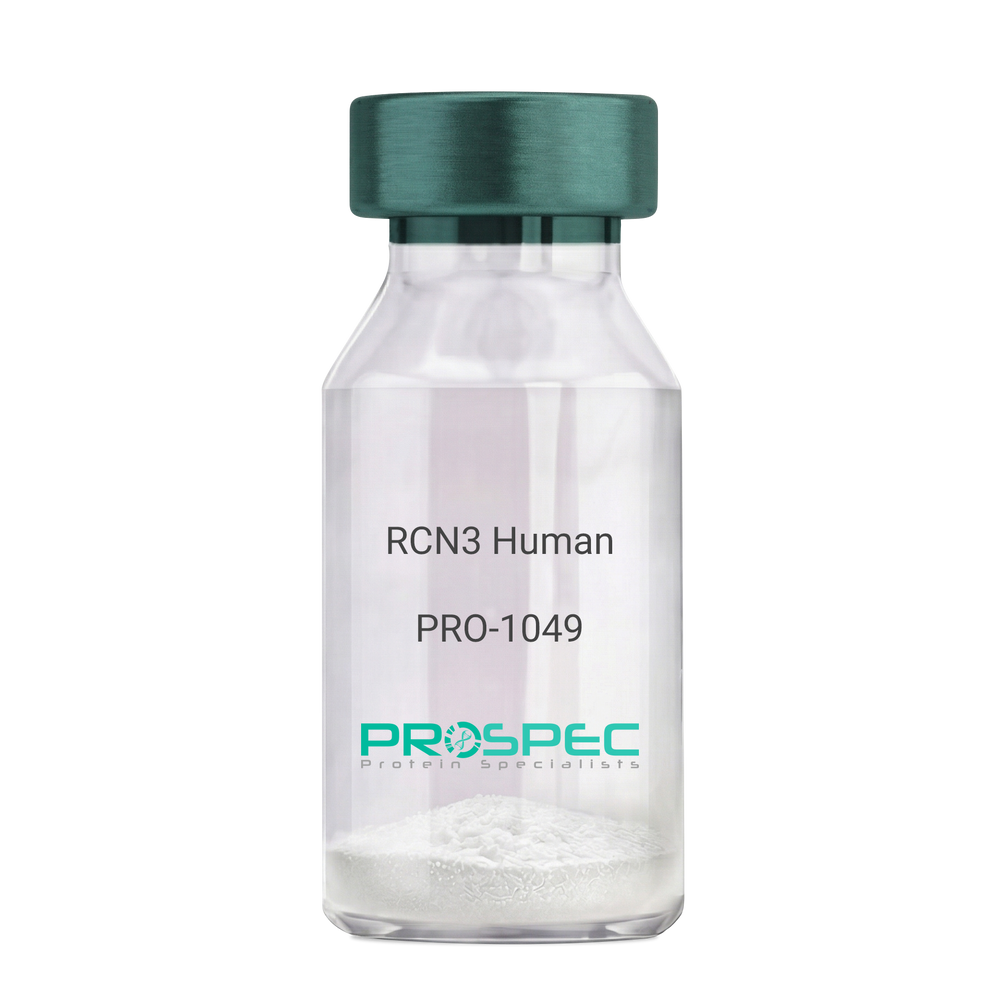
    RCN3 Human

    Description:

    Reticulocalbin 3 Human Recombinant

    Reticulocalbin-3, EF-hand calcium-binding protein RLP49, RCN3, RLP49.

    Product # :

    PRO-1049

    Price :

    Quantity :

    Shipping Method :

    Ice Icon

    Shipped with Ice Packs

    Add To Cart

    More Info

    • description
    • source
    • formulation
    • purity
    • More Info

    Description

    RCN3 Human Recombinant produced in E.Coli is a single, non-glycosylated polypeptide chain containing 333 amino acids (21-328 a.a) and having a molecular mass of 37.9kDa.RCN3 is fused to a 25 amino acid His-tag at N-terminus & purified by proprietary chromatographic techniques.

    Source

    Escherichia Coli.

    Formulation

    RCN3 protein solution (1mg/ml) containing 20mM Tris-HCl buffer (pH 8.0), 1mM DTT, 10% glycerol and 0.1M NaCl.

    Purity

    Greater than 95.0% as determined by SDS-PAGE.

    More Info

    • Introduction

      Reticulocalbin 3 (RCN3) belongs to the CREC (cab45/reticulocalbin/ ERC45/calumenin) family. RCN3 contains 5 Arg-Xaa-Xaa-Arg motifs, which function as target sequences of SPCs (subtilisin-like proprotein convertases), which is a family of serine endoproteases that proteolytically activate proproteins. The synthesis of PACE4 is induced by association and coexpression with RCN3.

    • Synonyms

      Reticulocalbin-3, EF-hand calcium-binding protein RLP49, RCN3, RLP49.

    • Physical Appearance

      Sterile Filtered colorless solution.

    • Stability

      Store at 4°C if entire vial will be used within 2-4 weeks. Store, frozen at -20°C for longer periods of time. For long term storage it is recommended to add a carrier protein (0.1% HSA or BSA).Avoid multiple freeze-thaw cycles.

    • Amino Acid Sequence

      MGSSHHHHHH SSGLVPRGSH MGSHMKPSPD AGPHGQGRVH QAAPLSDAPH DDAHGNFQYD HEAFLGREVA KEFDQLTPEE SQARLGRIVD RMDRAGDGDG WVSLAELRAW IAHTQQRHIR DSVSAAWDTY DTDRDGRVGW EELRNATYGH YAPGEEFHDV EDAETYKKML ARDERRFRVA DQDGDSMATR EELTAFLHPE EFPHMRDIVI AETLEDLDRN KDGYVQVEEY IADLYSAEPG EEEPAWVQTE RQQFRDFRDL NKDGHLDGSE VGHWVLPPAQ DQPLVEANHL LHESDTDKDG RLSKAEILGN WNMFVGSQAT NYGEDLTRHH DEL.

    ProSpec's products are furnished for LABORATORY RESEARCH USE ONLY. The product may not be used as drugs, agricultural or pesticidal products, food additives or household chemicals.

    Rcn3 Human
  • View Data Sheet

    Name :

    Protein Cys-A/G

    Description:

    Protein Cys-A/G Recombinant

    Product # :

    PRO-1929

    Price :

    Quantity :

    Shipping Method :

    Room Temp Icon

    Shipped at Room temp

    Add To Cart

    More Info

    • description
    • source
    • formulation
    • purity
    • More Info

    Description

    Protein-A/G Recombinant produced in E.Coli is a single non-glycosylated polypeptide chain fused with a Cys at N-terminus. Protein-A/G is comprised of 5 IgG-binding regions of protein A (E-D-A-B-C) and 2 of protein G (C1-C3) containing 430 amino acids in total and having a molecular mass of 47.8kDa. Cell wall binding region, cell membrane binding region and albumin binding region have been eliminated from the recombinant Protein A/G to guarantee the maximum specific IgG binding.

    Source

    Escherichia Coli.

    Formulation

    Protein-A/G was lyophilized without any additives.

    Purity

    Greater than 96.0% as determined by:
    (a) Analysis by RP-HPLC.
    (b) Analysis by SDS-PAGE.

    More Info

    • Introduction

      The recombinant Protein A/G is a genetically engineered protein comprised of 7 IgG-binding domains EDABC-C1C3, corresponding to the Protein A and G domains which are included in the recombinant sequence. The Protein A part is from Staphylococcus aureus segments E, D, A, B and C. The Protein G part is from Streptococcus segments C1 and C3. The recombinant Protein A/G has a broader binding capacity than either Protein A or Protein G alone. The recombinant Protein A/G is ideal for purification of monoclonal or polyclonal IgG antibodies. Protein A/G binds to various human, mouse and rat IgG subclasses such as the human IgG1, IgG2, IgG3, IgG4; mouse IgG2a, IgG2b, IgG3 and rat IgG2a, IgG2c. In addition, Protein A/G binds to total IgG from cow, goat, sheep, horse, rabbit, guinea pig, pig, dog and cat.

    • Physical Appearance

      Sterile Filtered White lyophilized (freeze-dried) powder.

    • Stability

      Lyophilized Protein-A/G although stable at room temperature for 3 weeks, should be stored desiccated below -18°C. Upon reconstitution Protein-A/G should be stored at 4°C between 2-7 days and for future use below -18°C. For long term storage it is recommended to add a carrier protein (0.1% HSA or BSA). Please prevent freeze-thaw cycles.

    • Solubility

      It is recommended to reconstitute the lyophilized Protein-A/G in sterile 18M-cm H2O not less than 0.1mg/ml, which can then be further diluted to other aqueous solutions.

    • Amino Acid Sequence

      CNAAQHDEAQ QNAFYQVLNM PNLNADQRNG FIQSLKDDPS QSANVLGEAQ KLNDSQAPKA DAQQNNFNKD QQSAFYEILN MPNLNEAQRN GFIQSLKDDP SQSTNVLGEA KKLNESQAPK ADNNFNKEQQ NAFYEILNMP NLNEEQRNGF IQSLKDDPSQ SANLLSEAKK LNESQAPKAD NKFNKEQQNA FYEILHLPNL NEEQRNGFIQ SLKDDPSQSA NLLAEAKKLN DAQAPKADNK FNKEQQNAFY EILHLPNLTE EQRNGFIQSL KDDPSVSKEI LAEAKKLNDA QAPKEEDSLE GSGSGTYKLI LNGKTLKGET TTEAVDAATA EKVFKQYAND NGVDGEWTYD DATKTFTVTE KPEVIDASEL TPAVTTYKLV INGKTLKGET TTKAVDAETA EKAFKQYAND NGVDGVWTYD DATKTFTVTE.

    ProSpec's products are furnished for LABORATORY RESEARCH USE ONLY. The product may not be used as drugs, agricultural or pesticidal products, food additives or household chemicals.

    Protein Cys A G
  • View Data Sheet

    Name :

    SEPT5 Human

    Description:

    Septin-5 Human Recombinant

    Septin 5, PNUTL1, H5, HCDCREL-1, CDCREL-1, cell division control related protein 1, Peanut-like protein 1 (Drosophila), platelet glycoprotein Ib beta chain.

    Product # :

    PRO-879

    Price :

    Quantity :

    Shipping Method :

    Ice Icon

    Shipped with Ice Packs

    Add To Cart

    More Info

    • description
    • source
    • formulation
    • purity
    • More Info

    Description

    SEPT5 Human Recombinant produced in E.coli is a single, non-glycosylated polypeptide chain containing 392 amino acids (1-369) and having a molecular mass of 45.2 kDa.The SEPT5 is fused to a 23 amino acid His-Tag at N-terminus and purified by proprietary chromatographic techniques.

    Source

    Escherichia Coli.

    Formulation

    SEPT5 protein (0.25mg/ml) is supplied in 20mM Tris-HCL, pH-8, 0.3M NaCl, 1mM DTT and 40% Glycerol.

    Purity

    Greater than 90.0% as determined by SDS-PAGE.

    More Info

    • Introduction

      SEPT5 is a member of the septin gene family of nucleotide binding proteins which were initially defined in yeast as cell division cycle regulatory proteins. Septins are extremely conserved in yeast, Drosophila, and mouse and seem to regulate cytoskeletal organization. Interference of septin function disrupts cytokinesis and results in high multinucleate or polyploid cells.

    • Synonyms

      Septin 5, PNUTL1, H5, HCDCREL-1, CDCREL-1, cell division control related protein 1, Peanut-like protein 1 (Drosophila), platelet glycoprotein Ib beta chain.

    • Physical Appearance

      Sterile Filtered colorless solution.

    • Stability

      Store at 4°C if entire vial will be used within 2-4 weeks. Store, frozen at -20°C for longer periods of time. For long term storage it is recommended to add a carrier protein (0.1% HSA or BSA).Avoid multiple freeze-thaw cycles.

    • Amino Acid Sequence

      MGSSHHHHHH SSGLVPRGSH MGSMSTGLRY KSKLATPEDK QDIDKQYVGF ATLPNQVHRK SVKKGFDFTL MVAGESGLGK STLVHSLFLT DLYKDRKLLS AEERISQTVE ILKHTVDIEE KGVKLKLTIV DTPGFGDAVN NTECWKPITD YVDQQFEQYF RDESGLNRKN IQDNRVHCCL YFISPFGHGL RPVDVGFMKA LHEKVNIVPL IAKADCLVPS EIRKLKERIR EEIDKFGIHV YQFPECDSDE DEDFKQQDRE LKESAPFAVI GSNTVVEAKG QRVRGRLYPW GIVEVENQAH CDFVKLRNML IRTHMHDLKD VTCDVHYENY RAHCIQQMTS KLTQDSRMES PIPILPLPTP DAETEKLIRM KDEELRRMQE MLQRMKQQMQ DQ

    ProSpec's products are furnished for LABORATORY RESEARCH USE ONLY. The product may not be used as drugs, agricultural or pesticidal products, food additives or household chemicals.

    Sept5 Human
  • View Data Sheet

    Name :

    TRIB3 Human

    Description:

    Tribbles Pseudokinase 3 Human Recombinant

    Cell Growth Regulator With EF-Hand Domain 1, Cell Growth Regulatory Gene 11 Protein, Hydrophobestin, CGR11, Cell Growth Regulator With EF Hand Domain Protein 1, Cell Growth Regulator With EF Hand Domain 1, Tribbles homolog 3.

    Product # :

    PKA-070

    Price :

    Quantity :

    Shipping Method :

    Ice Icon

    Shipped with Ice Packs

    Add To Cart

    More Info

    • description
    • source
    • formulation
    • purity
    • More Info

    Description

    TRIB3 Human Recombinant produced in E.Coli is a single, non-glycosylated polypeptide chain containing 381 amino acids (1-358 a.a) and having a molecular mass of 42.0kDa. TRIB3 is fused to a 23 amino acid His-tag at N-terminus & purified by proprietary chromatographic techniques.

    Source

    Escherichia Coli.

    Formulation

    TRIB3 protein solution (0.25mg/ml) containing 20mM Tris-HCl buffer (pH8.0) and 10% glycerol.

    Purity

    Greater than 85.0% as determined by SDS-PAGE.

    More Info

    • Introduction

      Tribbles Pseudokinase 3, also known as TRIB3, is a putative protein kinase which is induced by the transcription factor NF-kappaB. In addition, TRIB3 is a negative regulator of NF-kappaB, and can as well sensitize cells to TNF- and TRAIL-induced apoptosis. Furthermore, TRIB3 is able to negatively regulate the cell survival serine-threonine kinase AKT1. One of the diseases which are associated with TRIB3 is anoxia.

    • Synonyms

      Cell Growth Regulator With EF-Hand Domain 1, Cell Growth Regulatory Gene 11 Protein, Hydrophobestin, CGR11, Cell Growth Regulator With EF Hand Domain Protein 1, Cell Growth Regulator With EF Hand Domain 1, Tribbles homolog 3.

    • Physical Appearance

      Sterile Filtered colorless solution.

    • Stability

      Store at 4°C if entire vial will be used within 2-4 weeks. Store, frozen at -20°C for longer periods of time. For long term storage it is recommended to add a carrier protein (0.1% HSA or BSA).Avoid multiple freeze-thaw cycles.

    • Amino Acid Sequence

      MGSSHHHHHH SSGLVPRGSH MGSMRATPLA APAGSLSRKK RLELDDNLDT ERPVQKRARS GPQPRLPPCL LPLSPPTAPD RATAVATASR LGPYVLLEPE EGGRAYQALH CPTGTEYTCK VYPVQEALAV LEPYARLPPH KHVARPTEVL AGTQLLYAFF TRTHGDMHSL VRSRHRIPEP EAAVLFRQMA TALAHCHQHG LVLRDLKLCR FVFADRERKK LVLENLEDSC VLTGPDDSLW DKHACPAYVG PEILSSRASY SGKAADVWSL GVALFTMLAG HYPFQDSEPV LLFGKIRRGA YALPAGLSAP ARCLVRCLLR REPAERLTAT GILLHPWLRQ DPMPLAPTRS HLWEAAQVVP DGLGLDEARE EEGDREVVLY G.

    ProSpec's products are furnished for LABORATORY RESEARCH USE ONLY. The product may not be used as drugs, agricultural or pesticidal products, food additives or household chemicals.

    Trib3 Human
  • View Data Sheet

    Name :

    MINA Human

    Description:

    MYC Induced Nuclear Antigen Human Recombinant

    MYC Induced Nuclear Antigen, MINA53, MDIG, 60S Ribosomal Protein L27a Histidine Hydroxylase, Mineral Dust-Induced Gene Protein, Histone Lysine Demethylase MINA Ribosomal Oxygenase MINA, Nucleolar Protein 52, NO52, ROX, Bifunctional Lysine-Specific Demethylase And Histidyl-Hydroxylase MINA, Myc-Induced Nuclear Antigen, 53 KDa, Mineral Dust Induced Gene Protein, MYC-Induced Nuclear Antigen, EC 1.14.11.-, Bifunctional lysine-specific demethylase and histidyl-hydroxylase MINA.

    Product # :

    PRO-2078

    Price :

    Quantity :

    Shipping Method :

    Ice Icon

    Shipped with Ice Packs

    Add To Cart

    More Info

    • description
    • source
    • formulation
    • purity
    • More Info

    Description

    MINA Human Recombinant produced in E.Coli is a single, non-glycosylated polypeptide chain containing 485 amino acids (1-465 a.a) and having a molecular mass of 54.9kDa. MINA is fused to a 20 amino acid His-tag at N-terminus & purified by proprietary chromatographic techniques.

    Source

    Escherichia Coli.

    Formulation

    MINA protein solution (0.25mg/ml) containing 20mM Tris-HCl buffer (pH 8.0), 0.15M NaCl, 10% glycerol and 1mM DTT.

    Purity

    Greater than 90.0% as determined by SDS-PAGE.

    More Info

    • Introduction

      MYC Induced Nuclear Antigen, also known as MINA is an oxygenase which can function both as a histone lysine demethylase and a ribosomal histidine hydroxylase. MINA is involved in the demethylation of trimethylated Lys-9 on histone H3 (H3K9me3), leading to an increase in ribosomal RNA expression. MINA also catalyzes the hydroxylation of 60S ribosomal protein L27a on His-39. In addition, MINA plays a significant role in cell growth and survival. MINA is implicated in ribosome biogenesis, probably in the duration of the assembly process of pre-ribosomal particles.

    • Synonyms

      MYC Induced Nuclear Antigen, MINA53, MDIG, 60S Ribosomal Protein L27a Histidine Hydroxylase, Mineral Dust-Induced Gene Protein, Histone Lysine Demethylase MINA Ribosomal Oxygenase MINA, Nucleolar Protein 52, NO52, ROX, Bifunctional Lysine-Specific Demethylase And Histidyl-Hydroxylase MINA, Myc-Induced Nuclear Antigen, 53 KDa, Mineral Dust Induced Gene Protein, MYC-Induced Nuclear Antigen, EC 1.14.11.-, Bifunctional lysine-specific demethylase and histidyl-hydroxylase MINA.

    • Physical Appearance

      Sterile Filtered clear solution.

    • Stability

      Store at 4°C if entire vial will be used within 2-4 weeks. Store, frozen at -20°C for longer periods of time. For long term storage it is recommended to add a carrier protein (0.1% HSA or BSA).Avoid multiple freeze-thaw cycles.

    • Amino Acid Sequence

      MGSSHHHHHH SSGLVPRGSH MPKKAKPTGS GKEEGPAPCK QMKLEAAGGP SALNFDSPSS LFESLISPIK TETFFKEFWE QKPLLIQRDD PALATYYGSL FKLTDLKSLC SRGMYYGRDV NVCRCVNGKK KVLNKDGKAH FLQLRKDFDQ KRATIQFHQP QRFKDELWRI QEKLECYFGS LVGSNVYITP AGSQGLPPHY DDVEVFILQL EGEKHWRLYH PTVPLAREYS VEAEERIGRP VHEFMLKPGD LLYFPRGTIH QADTPAGLAH STHVTISTYQ NNSWGDFLLD TISGLVFDTA KEDVELRTGI PRQLLLQVES TTVATRRLSG FLRTLADRLE GTKELLSSDM KKDFIMHRLP PYSAGDGAEL STPGGKLPRL DSVVRLQFKD HIVLTVLPDQ DQSDETQEKM VYIYHSLKNS RETHMMGNEE ETEFHGLRFP LSHLDALKQI WNSPAISVKD LKLTTDEEKE SLVLSLWTEC LIQVV.

    ProSpec's products are furnished for LABORATORY RESEARCH USE ONLY. The product may not be used as drugs, agricultural or pesticidal products, food additives or household chemicals.

    Mina Human
  • View Data Sheet

    Name :

    RBP Human, Native

    Description:

    Retinol Binding Protein Native Human

    Product # :

    CYT-1203

    Price :

    Quantity :

    Shipping Method :

    Room Temp Icon

    Shipped at Room temp

    Add To Cart

    More Info

    • description
    • source
    • formulation
    • purity
    • More Info

    Description

    Human Retinol Binding Protein Native produced in urine from the patients with renal tubular proteinuria having a molecular mass of approximately 21kD.

    Source

    Urine from the patients with renal tubular proteinuria.

    Formulation

    The protein was lyophilized (0.2 µm filtered) from 20mM NH4HCO3.

    Purity

    Greater than 96.0%.

    More Info

    • Introduction

      Human Retinol Binding Protein, also known as RBP, is responsible for transporting and binding vitamin A. Human RBP has a binding site for 1 molecule of retinol and circulates in the plasma together with prealbumin as a protein complex. The prealbumin binding prevents greater glomerular losses of the human RBP. Only the retinol-free form of the RBP, which has no affinity for prealbumin, undergoes glomerular filtration unhindered as a result of its low Mw. Human RBP is re-absorbed by the tubular cells and catabolized there.

    • Physical Appearance

      Sterile Filtered White lyophilized (freeze-dried) powder.

    • Stability

      RBP Human although stable at room temperature for 3 weeks, should be stored between 2-8°C.

    • Solubility

      It is recommended to reconstitute the lyophilized RBP Human in phosphate buffer containing 0.15M NaCl.

    • Human Virus Test

      Starting material donor has been tested and certified negative for antibodies to HIV-1, HIV-2, HCV, HBSAG and Syphilis.

    ProSpec's products are furnished for LABORATORY RESEARCH USE ONLY. The product may not be used as drugs, agricultural or pesticidal products, food additives or household chemicals.

    Retinol Binding Protein
  • View Data Sheet

    Name :

    VEGF (121 a.a.) Mouse

    Description:

    Vascular Endothelial Growth Factor (121 a.a.) Mouse Recombinant

    Vascular endothelial growth factor A, VEGF-A, Vascular permeability factor, VPF, VEGF, MGC70609.

    Product # :

    CYT-574

    Price :

    Quantity :

    Shipping Method :

    Room Temp Icon

    Shipped at Room temp

    Add To Cart

    More Info

    • description
    • source
    • formulation
    • purity
    • More Info

    Description

    Vascular Endothelial Growth Factor-121 Mouse Recombinant produced in E.Coli is a homodimer, non-glycosylated, polypeptide chain containing 121 amino acids and having a molecular mass of 28.4 kDa.Recombinant Mouse VEGF-121 is a truncated version of Murine VEGF-165.The VEGF-121 is purified by proprietary chromatographic techniques.

    Source

    Escherichia Coli.

    Formulation

    The protein was lyophilized from a concentrated (1mg/ml) solution with no additives.

    Purity

    Greater than 97.0% as determined by:
    (a) Analysis by RP-HPLC.
    (b) Analysis by SDS-PAGE.

    More Info

    • Introduction

      Vascular endothelial growth factor is an important signaling protein involved in both vasculogenesis and angiogenesis. As its name implies, VEGF activity has been mostly studied on cells of the vascular endothelium, although it does have effects on a number of other cell types (e.g. stimulation monocyte/macrophage migration, neurons, cancer cells, kidney epithelial cells ).VEGF mediates increased vascular permeability, induces angiogenesis, vasculogenesis and endothelial cell growth, promotes cell migration, and inhibits apoptosis. In vitro, VEGF has been shown to stimulate endothelial cell mitogenesis and cell migration. VEGF is also a vasodilator and increases microvascular permeability and was originally referred to as vascular permeability factor.
      Elevated levels of this protein is linked to POEMS syndrome, also known as Crow-Fukase syndrome. Mutations in this gene have been associated with proliferative and nonproliferative diabetic retinopathy.

    • Synonyms

      Vascular endothelial growth factor A, VEGF-A, Vascular permeability factor, VPF, VEGF, MGC70609.

    • Physical Appearance

      Sterile Filtered White lyophilized (freeze-dried) powder.

    • Stability

      Lyophilized VEGF-121 although stable at room temperature for 3 weeks, should be stored desiccated below -18°C. Upon reconstitution VEGF-121 should be stored at 4°C between 2-7 days and for future use below -18°C.For long term storage it is recommended to add a carrier protein (0.1% HSA or BSA).Please prevent freeze-thaw cycles.

    • Solubility

      It is recommended to reconstitute the lyophilized VEGF-121 in sterile 18MΩ-cm H2O not less than 100µg/ml, which can then be further diluted to other aqueous solutions.

    • Amino Acid Sequence

      MAPTTEGEQK SHEVIKFMDV YQRSYCRPIE TLVDIFQEYP DEIEYIFKPS CVPLMRCAGC CNDEALECVP TSESNITMQI MRIKPHQSQH IGEMSFLQHS RCECRPKKDR TKPEKCDKRPR R.

    ProSpec's products are furnished for LABORATORY RESEARCH USE ONLY. The product may not be used as drugs, agricultural or pesticidal products, food additives or household chemicals.

    Vegf121 Mouse
  • View Data Sheet

    Name :

    MREG Human

    Description:

    Melanoregulin Human Recombinant

    Melanoregulin, DSU, Dilute Suppressor Protein Homolog, WDT2, Whn-Dependent Transcript 2.

    Product # :

    PRO-1885

    Price :

    Quantity :

    Shipping Method :

    Ice Icon

    Shipped with Ice Packs

    Add To Cart

    More Info

    • description
    • source
    • formulation
    • purity
    • More Info

    Description

    MREG Human Recombinant produced in E.Coli is a single, non-glycosylated polypeptide chain containing 237 amino acids (1-214 a.a) and having a molecular mass of 27.3kDa.MREG is fused to a 23 amino acid His-tag at N-terminus & purified by proprietary chromatographic techniques.

    Source

    Escherichia Coli.

    Formulation

    MREG protein solution (0.5mg/ml) containing 20mM Tris-HCl buffer (pH 8.0), 0.15M NaCl, 10% glycerol and 1mM DTT.

    Purity

    Greater than 90% as determined by SDS-PAGE.

    More Info

    • Introduction

      Melanoregulin (MREG) takes part in membrane fusion and in regulating the biogenesis of disk membranes of photoreceptor rods. MREG is expressed in photoreceptor cells as two isoforms as a result of alternative splicing. MREG interacts with Peripherin-2, a photoreceptor specific tetraspanin protein which is required to preserve normal cell structure during the renewal process of membrane fusion. Moreover, MREG plays a part in the incorporation of pigments into hair.

    • Synonyms

      Melanoregulin, DSU, Dilute Suppressor Protein Homolog, WDT2, Whn-Dependent Transcript 2.

    • Physical Appearance

      Sterile Filtered clear solution.

    • Stability

      Store at 4°C if entire vial will be used within 2-4 weeks. Store, frozen at -20°C for longer periods of time.For long term storage it is recommended to add a carrier protein (0.1% HSA or BSA).Please avoid freeze thaw cycles.

    • Amino Acid Sequence

      MGSSHHHHHH SSGLVPRGSH MGSMGLRDWL RTVCCCCGCE CLEERALPEK EPLVSDNNPY SSFGATLVRD DEKNLWSMPH DVSHTEADDD RTLYNLIVIR NQQAKDSEEW QKLNYDIHTL RQVRREVRNR WKCILEDLGF QKEADSLLSV TKLSTISDSK NTRKAREMLL KLAEETNIFP TSWELSERYL FVVDRLIALD AAEEFFKLAR RTYPKKPGVP CLADGQKELH YLPFPSP

    ProSpec's products are furnished for LABORATORY RESEARCH USE ONLY. The product may not be used as drugs, agricultural or pesticidal products, food additives or household chemicals.

    Mreg Human
  • View Data Sheet

    Name :

    CISD1 Human

    Description:

    CDGSH Iron Sulfur Domain 1 Human Recombinant

    CDGSH Iron Sulfur Domain 1, Chromosome 10 Open Reading Frame 70, CDGSH Iron Sulfur Domain-Containing Protein 1, Zinc Finger CDGSH-Type Domain 1, C10orf70, ZCD1, MitoNEET , MDS029.

    Product # :

    PRO-1221

    Price :

    Quantity :

    Shipping Method :

    Ice Icon

    Shipped with Ice Packs

    Add To Cart

    More Info

    • description
    • source
    • formulation
    • purity
    • More Info

    Description

    CISD1 Human Recombinant produced in E. coli is a single polypeptide chain containing 100 amino acids (32-108) and having a molecular mass of 11.4 kDa.CISD1 is fused to a 23 amino acid His-tag at N-terminus & purified by proprietary chromatographic techniques.

    Source

    E.coli.

    Formulation

    The CISD1 solution contains 20mM Tris-HCl buffer (pH 8.0), 0.15M NaCl, 1mM DTT and 10% glycerol.

    Purity

    Greater than 90% as determined by SDS-PAGE.

    More Info

    • Introduction

      CISD1 protein holds a CDGSH iron-sulfur domain and is known to bind a redox-active [2Fe-2S] cluster. CISD1 is restricted to the outer membrane of mitochondria and takes part in oxidation regulation.

    • Synonyms

      CDGSH Iron Sulfur Domain 1, Chromosome 10 Open Reading Frame 70, CDGSH Iron Sulfur Domain-Containing Protein 1, Zinc Finger CDGSH-Type Domain 1, C10orf70, ZCD1, MitoNEET , MDS029.

    • Physical Appearance

      Sterile Filtered colorless solution.

    • Stability

      Store at 4°C if entire vial will be used within 2-4 weeks. Store, frozen at -20°C for longer periods of time. For long term storage it is recommended to add a carrier protein (0.1% HSA or BSA).Avoid multiple freeze-thaw cycles.

    • Amino Acid Sequence

      MGSSHHHHHH SSGLVPRGSH MGSKRFYVKD HRNKAMINLH IQKDNPKIVH AFDMEDLGDK AVYCRCWRSK KFPFCDGAHT KHNEETGDNV GPLIIKKKET

    ProSpec's products are furnished for LABORATORY RESEARCH USE ONLY. The product may not be used as drugs, agricultural or pesticidal products, food additives or household chemicals.

    Cisd1 Human
  • View Data Sheet

    Name :

    SPARC Human, His

    Description:

    Secreted Protein acidic & Rich in Cysteine Human Recombinant, His Tag

    Osteonectin, ON, Basement-membrane protein 40, BM-40, SPARC, Secreted Protein acidic and Rich in Cysteine.

    Product # :

    PRO-582

    Price :

    Quantity :

    Shipping Method :

    Room Temp Icon

    Shipped at Room temp

    Add To Cart

    More Info

    • description
    • source
    • formulation
    • purity
    • More Info

    Description

    Osteonectin Human Recombinant fused with 6X His tag produced in E.Coli is a single, non-glycosylated, polypeptide chain containing 295 amino acids and having a molecular mass of 34 kDa.SPARC is expressed with a 6 amino acid His tag at N-Terminus and purified by proprietary chromatographic techniques.

    Source

    Escherichia Coli.

    Formulation

    The SPARC (1 mg/ml) was lyophilized after extensive dialyses against 20mM PBS pH-7.4.

    Purity

    Greater than 95.0% as determined by:
    (a) Analysis by RP-HPLC.
    (b) Analysis by SDS-PAGE.

    More Info

    • Introduction

      SPARC, an acronym for “secreted protein, acidic and rich in cysteine”, is also known as osteonectin or BM-40. It is the founding member of a family of secreted matricellular proteins with similar domain structure. The 303 amino acid, 43 kDa protein contains a 17 aa signal sequence, an N-terminal acidic region that binds calcium, a follistatin domain containing Kazal-like sequences, and a C-terminal extracellular calcium (EC) binding domain with two EF-hand motifs. SPARC is produced by fibroblasts, capillary endothelial cells, platelets and macrophages, especially in areas of tissue morphogenesis and remodeling. SPARC shows context-specific effects, but generally inhibits adhesion, spreading and proliferation, and promotes collagen matrix formation. For endothelial cells, SPARC disrupts focal adhesions and binds and sequesters PDGF and VEGF. SPARC is abundantly expressed in bone, where it promotes osteoblast differentiation and inhibits adipogenesis.

    • Synonyms

      Osteonectin, ON, Basement-membrane protein 40, BM-40, SPARC, Secreted Protein acidic and Rich in Cysteine.

    • Physical Appearance

      Sterile Filtered White lyophilized (freeze-dried) powder.

    • Stability

      Lyophilized Osteonectin although stable at room temperature for 3 weeks, should be stored desiccated below -18°C. Upon reconstitution BM-40 should be stored at 4°C between 2-7 days and for future use below -18°C.For long term storage it is recommended to add a carrier protein (0.1% HSA or BSA).Please prevent freeze-thaw cycles.

    • Solubility

      It is recommended to reconstitute the lyophilized SPARC in sterile 18MΩ-cm H2O not less than 100 µg/ml, which can then be further diluted to other aqueous solutions.

    • Amino Acid Sequence

      MSYYHHHHHHPQQEALPDETEVVEETVAEVTEVSVGANPVQVEVGEFD
      DGAEETEEEVVAENPCQNHHCKHGKVCELDENNTPMCVCQDPTSCP
      APIGEFEKVCSNDNKTFDSSCHFFATKCTLEGTKKGHKLHLDYIGPCK
      YIPPCLDSELTEFPLRMRDWLKNVLVTLYERDEDNNLLTKQKLRVKKI
      HENEKRLEAGDHPVELLARDFEKNYNMYIFPVHWQFGQLDQHPIDGY
      LSHTELAPLRAPLIPMEHCTTRFFETCDLDNDKYIALDEWAGCFGIKQK
      DIDKDLVI.

    ProSpec's products are furnished for LABORATORY RESEARCH USE ONLY. The product may not be used as drugs, agricultural or pesticidal products, food additives or household chemicals.

    Osteonectin Human
  • View Data Sheet

    Name :

    BMP 7 Human, His

    Description:

    Bone Morphogenetic Protein-7 Human Recombinant, His Tag

    Osteogenic Protein 1, OP-1, BMP-7, Bone morphogenetic protein 7, BMP7, OP1.

    Product # :

    CYT-629

    Price :

    Quantity :

    Shipping Method :

    Ice Icon

    Shipped with Ice Packs

    Add To Cart

    More Info

    • description
    • source
    • formulation
    • purity
    • More Info
    • sds-page

    Description

    BMP7 Human Recombinant produced in E.Coli is a monomeric, non-glycosylated, polypeptide chain containing 148 amino acids (293-431) and having a molecular mass of 16.8 kDa. The BMP-7 is fused to 8 amino acid His Tag at C-terminus & purified by proprietary chromatographic techniques.

    Source

    Escherichia Coli.

    Formulation

    BMP-7 protein (0.5mg/ml) solution contains 10mM sodium citrate pH3.5 and 10% glycerol.

    Purity

    Greater than 95.0% as determined by SDS-PAGE.

    sds-page

    BMP7-sds-page - Product image 1

    More Info

    • Introduction

      The bone morphogenetic proteins (BMPs) are a family of secreted signaling molecules that can induce ectopic bone growth. Many BMPs are part of the transforming growth factor-beta (TGFB) superfamily. BMPs were originally identified by an ability of demineralized bone extract to induce endochondral osteogenesis in vivo in an extraskeletal site. Based on its expression early in embryogenesis, the BMP encoded by this gene has a proposed role in early development. In addition, the fact that this BMP is closely related to BMP5 and BMP7 has lead to speculation of possible bone inductive activity.

    • Synonyms

      Osteogenic Protein 1, OP-1, BMP-7, Bone morphogenetic protein 7, BMP7, OP1.

    • Physical Appearance

      Sterile Filtered colorless solution.

    • Stability

      Store at 4°C if entire vial will be used within 2-4 weeks. Store, frozen at -20°C for longer periods of time.For long term storage it is recommended to add a carrier protein (0.1% HSA or BSA).Please avoid freeze thaw cycles.

    • Amino Acid Sequence

      MSTGSKQRSQ NRSKTPKNQE ALRMANVAEN SSSDQRQACK KHELYVSFRD LGWQDWIIAP EGYAAYYCEG ECAFPLNSYM NATNHAIVQTLVHFINPETV PKPCCAPTQL NAISVLYFDD SSNVILKKYR NMVVRACGCH LEHHHHHH.

    • Background

      Research Paper on Bone Morphogenetic Protein-7 Human Recombinant, His Tag, Monomer, HEK

      Abstract:

      Step into the fascinating world of Bone Morphogenetic Protein-7 Human Recombinant, His Tag, Monomer (BMP-7 HR) in Human Embryonic Kidney Cells (HEK). In this research paper, we embark on an exciting journey to uncover the wonders of BMP-7 HR and its significance in cellular differentiation. As a pivotal member of the transforming growth factor-beta (TGF-β) superfamily, BMP-7 HR holds immense potential in tissue regeneration and development. Join us as we delve into the intricate molecular mechanisms of BMP-7 HR signaling in HEK cells while also exploring its friendly interactions with key cytokines, including Tumor Necrosis Factor-alpha (TNF-α) and Tumor Necrosis Factor-alpha Superfamily Member 2 (TNFα SF2 or TNFSF2).

      Introduction:

      Welcome to the world of BMP-7 HR! In this section, we introduce the remarkable BMP-7 HR and its essential role in guiding cellular differentiation. Let's get to know our loyal companion, Human Embryonic Kidney Cells (HEK), as they help us unveil the secrets of BMP-7 HR signaling.

      BMP-7 HR Signaling in HEK Cells:

      Be amazed by the graceful dance of BMP-7 HR signaling within HEK cells! Uncover the captivating process of ligands binding to specific receptors, setting the stage for both the canonical SMAD-dependent and non-canonical SMAD-independent pathways. This harmonious interplay orchestrates various cellular processes, including gene transcription, cell proliferation, and differentiation.

      Influential Role in Cellular Differentiation:

      Watch in awe as BMP-7 HR takes center stage as a master conductor of cellular differentiation within HEK cells. Marvel at its ability to promote osteogenic differentiation, leading to the expression of vital osteogenic markers like RUNX2 and Osteocalcin. But that's not all! Join us in exploring BMP-7 HR's versatile nature, influencing other forms of differentiation, such as chondrogenic and adipogenic pathways.

      Interplay with Key Cytokines:

      Uncover the intriguing interactions between BMP-7 HR and key cytokines like TNF-α and TNFSF2. Witness how BMP-7 HR modulates the expression and activity of these cytokines, hinting at potential cross-talk between BMP-7 HR and inflammatory pathways, fostering a harmonious cellular environment.

      Therapeutic Implications and Tissue Regeneration:

      The therapeutic potential of BMP-7 HR in tissue regeneration comes to the forefront. Together, we explore the exciting possibilities of utilizing BMP-7 HR in regenerative medicine, offering hope for healing and tissue repair. As we navigate this path, we also address challenges, such as optimal dosage, innovative delivery methods, and safety considerations, ensuring the best outcomes.

      Conclusion:

      As we conclude our exploration of BMP-7 HR in HEK cells, we stand in awe of its role in guiding cellular differentiation and tissue regeneration. Equipped with this knowledge, we look forward to a future where BMP-7 HR opens doors to innovative applications in regenerative medicine, making a positive impact on human health and well-being.

      What is the molecular weight/Mw of BMP7 Protein?
      BMP7 Protein has a total Mw of 16.8kDa.

      What is the source or expression system of BMP7 Protein?
      Escherichia Coli.

      What is the Purity of BMP7 Protein?
      BMP7 Protein is >95% pure as determined by SDS-PAGE.

      What is the Biological Activity of BMP7 Protein?
      The biological functionality of BMP7 Protein will be determined in the future.

      What is the amino acid sequence of BMP7 Protein?
      MSTGSKQRSQ NRSKTPKNQE ALRMANVAEN SSSDQRQACK KHELYVSFRD LGWQDWIIAP EGYAAYYCEG ECAFPLNSYM NATNHAIVQTLVHFINPETV PKPCCAPTQL NAISVLYFDD SSNVILKKYR NMVVRACGCH LEHHHHHH.

      What applications can BMP7 Protein be used in?
      BMP7 Protein can probably be used in western blot, ELISA and Lateral Flow.

      What is the endotoxin level for BMP7 Protein?
      The endotoxin level is minimal, BMP7 Protein was purified using conventional chromatography techniques.

    ProSpec's products are furnished for LABORATORY RESEARCH USE ONLY. The product may not be used as drugs, agricultural or pesticidal products, food additives or household chemicals.

    Bmp 7 Human His
  • View Data Sheet

    Name :

    KLF3 Human

    Description:

    Kruppel-Like Factor 3 Human Recombinant

    ATP Synthase H+ Transporting, Mitochondrial Fo Complex Subunit D, ATP Synthase D Chain Mitochondrial, ATP Synthase H+ Transporting Mitochondrial F1F0 Subunit D, ATPase Subunit D, My032 Protein, ATPQ. Kruppel-Like Factor 3 (Basic), CACCC-Box-Binding Protein BKLF , Basic Kruppel Like Factor, Krueppel-Like Factor 3, Transcript Ch138, BKLF, TEF-2.

    Product # :

    PRO-1632

    Price :

    Quantity :

    Shipping Method :

    Ice Icon

    Shipped with Ice Packs

    Add To Cart

    More Info

    • description
    • source
    • formulation
    • purity
    • More Info

    Description

    KLF3 Human Recombinant produced in E.coli is a single, non-glycosylated polypeptide chain containing 368 amino acids (1-345) and having a molecular mass of 41.2kDa.KLF3 is fused to a 23 amino acid His-tag at N-terminus & purified by proprietary chromatographic techniques.

    Source

    Escherichia Coli.

    Formulation

    The KLF3 solution contains 20mM Tris-HCl buffer (pH 8.0), 0.4M Urea and 10% glycerol.

    Purity

    Greater than 90% as determined by SDS-PAGE.

    More Info

    • Introduction

      KLF3 belongs to the Sp1-like/KLF family. KLFs is a family of evolutionarily conserved zinc finger-having transcription factors with various regulatory purposes in cell growth, embryogenesis, proliferation and differentiation. KLF3 is Kruppel-like zinc finger which contain transcription factors and take part in hematopoiesis.

    • Synonyms

      ATP Synthase H+ Transporting, Mitochondrial Fo Complex Subunit D, ATP Synthase D Chain Mitochondrial, ATP Synthase H+ Transporting Mitochondrial F1F0 Subunit D, ATPase Subunit D, My032 Protein, ATPQ. Kruppel-Like Factor 3 (Basic), CACCC-Box-Binding Protein BKLF , Basic Kruppel Like Factor, Krueppel-Like Factor 3, Transcript Ch138, BKLF, TEF-2.

    • Physical Appearance

      Sterile filtered colorless solution.

    • Stability

      Store at 4°C if entire vial will be used within 2-4 weeks. Store, frozen at -20°C for longer periods of time. For long term storage it is recommended to add a carrier protein (0.1% HSA or BSA).Avoid multiple freeze-thaw cycles.

    • Amino Acid Sequence

      MGSSHHHHHH SSGLVPRGSH MGSMLMFDPV PVKQEAMDPV SVSYPSNYME SMKPNKYGVI YSTPLPEKFF QTPEGLSHGI QMEPVDLTVN KRSSPPSAGN SPSSLKFPSS HRRASPGLSM PSSSPPIKKY SPPSPGVQPF GVPLSMPPVM AAALSRHGIR SPGILPVIQP VVVQPVPFMY TSHLQQPLMV SLSEEMENSS SSMQVPVIES YEKPISQKKI KIEPGIEPQR TDYYPEEMSP PLMNSVSPPQ ALLQENHPSV IVQPGKRPLP VESPDTQRKR RIHRCDYDGC NKVYTKSSHL KAHRRTHTGE KPYKCTWEGC TWKFARSDEL TRHFRKHTGI KPFQCPDCDR SFSRSDHLAL HRKRHMLV

    ProSpec's products are furnished for LABORATORY RESEARCH USE ONLY. The product may not be used as drugs, agricultural or pesticidal products, food additives or household chemicals.

    Klf3 Human
  • View Data Sheet

    Name :

    MBP (27-396) E.Coli

    Description:

    Maltose Binding Protein (27-396) E.coli Recombinant

    Maltose-binding periplasmic protein, MBP, MMBP, Maltodextrin-binding protein, malE, b4034, JW3994.

    Product # :

    PRO-2321

    Price :

    Quantity :

    Shipping Method :

    Ice Icon

    Shipped with Ice Packs

    Add To Cart

    More Info

    • description
    • source
    • formulation
    • purity
    • More Info

    Description

    Recombinant E.Coli MBP produced in E.Coli is a single, non-glycosylated polypeptide chain containing 371 amino acids (27-396 a.a) and having a molecular mass of 40.8kDa. MBP protein was purified by proprietary chromatographic techniques.

    Source

    Escherichia Coli.

    Formulation

    MBP protein solution (1mg/ml) containing phosphate buffered saline (pH 7.4) and 10% glycerol.

    Purity

    Greater than 95.0% as determined by SDS-PAGE.

    More Info

    • Introduction

      Maltose Binding Protein is a member of the maltose/maltodextrin system of E.Coli, which is accountable for the uptake and efficient catabolism of maltodextrins. The maltose/maltodextrin is a complex regulatory and transport system involving many proteins and protein complexes.
      MBP elevates the yield of its fusion partner in many cases and is often able to promote the solubility of polypeptides to which it is fused.

    • Synonyms

      Maltose-binding periplasmic protein, MBP, MMBP, Maltodextrin-binding protein, malE, b4034, JW3994.

    • Physical Appearance

      Sterile Filtered colorless solution.

    • Stability

      Store at 4°C if entire vial will be used within 2-4 weeks. Store, frozen at -20°C for longer periods of time. For long term storage it is recommended to add a carrier protein (0.1% HSA or BSA).Avoid multiple freeze-thaw cycles.

    • Amino Acid Sequence

      MKIEEGKLVI WINGDKGYNG LAEVGKKFEK DTGIKVTVEH PDKLEEKFPQ VAATGDGPDI IFWAHDRFGG YAQSGLLAEI TPDKAFQDKL YPFTWDAVRY NGKLIAYPIA VEALSLIYNK DLLPNPPKTW EEIPALDKEL KAKGKSALMF NLQEPYFTWP LIAADGGYAF KYENGKYDIK DVGVDNAGAK AGLTFLVDLI KNKHMNADTD YSIAEAAFNK GETAMTINGP WAWSNIDTSK VNYGVTVLPT FKGQPSKPFV GVLSAGINAA SPNKELAKEF LENYLLTDEG LEAVNKDKPL GAVALKSYEE ELAKDPRIAA TMENAQKGEI MPNIPQMSAF WYAVRTAVIN AASGRQTVDE ALKDAQTRIT K.

    ProSpec's products are furnished for LABORATORY RESEARCH USE ONLY. The product may not be used as drugs, agricultural or pesticidal products, food additives or household chemicals.

    Mbp 27 396 Ecoli
  • View Data Sheet

    Name :

    SKP E. Coli

    Description:

    Chaperone Protein SKP E.Coli Recombinant

    hlpA, ompH, Chaperone protein skp, skp.

    Product # :

    HSP-034

    Price :

    Quantity :

    Shipping Method :

    Ice Icon

    Shipped with Ice Packs

    Add To Cart

    More Info

    • description
    • source
    • formulation
    • purity
    • More Info

    Description

    SKP Recombinant E.coli produced in E.Coli is a single, non-glycosylated polypeptide chain containing 162 amino acids (21-161 a.a.) and having a molecular mass of 17.9 kDa. The SKP is fused to a 21 amino acid His-Tag at N-terminus and purified by proprietary chromatographic techniques.

    Source

    Escherichia Coli.

    Formulation

    SKP E.Coli solution containing 20mM Tris-HCl pH-8 & 20% glycerol.

    Purity

    Greater than 95.0% as determined by SDS-PAGE.

    More Info

    • Introduction

      SKP is a 17kDa trimeric periplasmic chaperone that supports outer membrane proteins in their folding and insertion into membranes. SKP protein is necessary for the normal release of ompA from the inner membrane, the maintenance of its solubility in the periplasm, and, in association with lipopolysaccharide (LPS), for the efficient folding and insertion of ompA into the outer membrane.

    • Synonyms

      hlpA, ompH, Chaperone protein skp, skp.

    • Physical Appearance

      Sterile filtered colorless solution.

    • Stability

      Store at 4°C if entire vial will be used within 2-4 weeks. Store, frozen at -20°C for longer periods of time. For long term storage it is recommended to add a carrier protein (0.1% HSA or BSA).Avoid multiple freeze-thaw cycles.

    • Amino Acid Sequence

      MGSSHHHHHH SSGLVPRGSH MADKIAIVNM GSLFQQVAQK TGVSNTLENE FKGRASELQR METDLQAKMK KLQSMKAGSD RTKLEKDVMA QRQTFAQKAQ AFEQDRARRS NEERGKLVTR IQTAVKSVAN SQDIDLVVDA NAVAYNSSDV KDITADVLKQ VK.

    ProSpec's products are furnished for LABORATORY RESEARCH USE ONLY. The product may not be used as drugs, agricultural or pesticidal products, food additives or household chemicals.

    Skp E Coli
  • View Data Sheet

    Name :

    FAM49B Human

    Description:

    Family with Sequence Similarity 49, Member B Human Recombinant

    BM-009, L1, Protein FAM49B, FAM49B.

    Product # :

    PRO-1411

    Price :

    Quantity :

    Shipping Method :

    Ice Icon

    Shipped with Ice Packs

    Add To Cart

    More Info

    • description
    • source
    • formulation
    • purity
    • More Info

    Description

    FAM49B Human Recombinant produced in E.Coli is a single, non-glycosylated polypeptide chain containing 347amino acids (1-324 a.a) and having a molecular mass of 39.1kDa. FAM49B is fused to a 23 amino acid His-tag at N-terminus & purified by proprietary chromatographic techniques.

    Source

    E.coli.

    Formulation

    FAM49B protein solution (1mg/ml) containing 20mM Tris-HCl buffer (pH8.0), 10% glycerol, 0.1M NaCl and 1mM DTT.

    Purity

    Greater than 90% as determined by SDS-PAGE.

    More Info

    • Introduction

      Family with Sequence Similarity 49, Member B (FAM49B) is a member of the FAM49 family. In the latest genome-wide transcriptional analysis, a gene signature was identified for multiple sclerosis (MS), which reverted back to normal during pregnancy. The reversion was mostly evident for seven genes: SOCS2, TNFAIP3, NR4A2, CXCR4, POLR2J, FAM49B, and STAG3L1, most of which are negative regulators of inflammation.

    • Synonyms

      BM-009, L1, Protein FAM49B, FAM49B.

    • Physical Appearance

      Sterile Filtered colorless solution.

    • Stability

      Store at 4°C if entire vial will be used within 2-4 weeks. Store, frozen at -20°C for longer periods of time. For long term storage it is recommended to add a carrier protein (0.1% HSA or BSA).Avoid multiple freeze-thaw cycles.

    • Amino Acid Sequence

      MGSSHHHHHH SSGLVPRGSH MGSMGNLLKV LTCTDLEQGP NFFLDFENAQ PTESEKEIYN QVNVVLKDAE GILEDLQSYR GAGHEIREAI QHPADEKLQE KAWGAVVPLV GKLKKFYEFS QRLEAALRGL LGALTSTPYS PTQHLEREQA LAKQFAEILH FTLRFDELKM TNPAIQNDFS YYRRTLSRMR INNVPAEGEN EVNNELANRM SLFYAEATPM LKTLSDATTK FVSENKNLPI ENTTDCLSTM ASVCRVMLET PEYRSRFTNE ETVSFCLRVM VGVIILYDHV HPVGAFAKTS KIDMKGCIKV LKDQPPNSVE GLLNALRYTT KHLNDETTSK QIKSMLQ.

    ProSpec's products are furnished for LABORATORY RESEARCH USE ONLY. The product may not be used as drugs, agricultural or pesticidal products, food additives or household chemicals.

    Fam49B Human
  • View Data Sheet

    Name :

    Protein A, 434 a.a

    Description:

    Staphylococcal Protein A 434 a.a Recombinant

    Immunoglobulin G-binding protein A, IgG-binding protein A, Staphylococcal protein A, SPA.

    Product # :

    PRO-686

    Price :

    Quantity :

    Shipping Method :

    Ice Icon

    Shipped with Ice Packs

    Add To Cart

    More Info

    • description
    • source
    • formulation
    • purity
    • More Info

    Description

    Recombinant Staphylococcal Protein A produced in E.Coli is a non-glycosylated, Polypeptide chain containing 434 amino acids (37-469 a.a.) and having a molecular mass of 48.1 kDa. Recombinant Staphylococcal Protein A is purified by proprietary chromatographic techniques.

    Source

    Escherichia Coli.

    Formulation

    The Protein-A protein solution contains 20mM Tris-HCl, pH-8 and 10% glycerol.

    Purity

    Greater than 90.0% as determined by SDS-PAGE.

    More Info

    • Introduction

      Protein A is a cell wall protein deriving from Staphylococcus aureus which exhibits unique binding properties for IgG from a variety of mammalian species and for some IgM and IgA as well. It binds with the Fc region of immunoglobulins through interaction with the heavy chain. It couples to a wide variety of reporter molecules including fluorescent dyes, enzyme markers, biotin, colloidal gold and radioactive iodine without affecting the antibody binding site. Recombinant Protein A was developed to increase the specificity of the molecule for IgG and is widely used both in research and bioprocessing. The recombinant protein A is produced by expressing a modified protein A gene in E.coli. A specific purification process with strict quality control was taken to get the recombinant protein A with the purity of more than 98% , no human IgG affinity step is used during validated fermentation and purification and devoid of bacterial contaminant found normally in native Protein A. (Free of Staphylococcus endotoxins and hemolysin).

    • Synonyms

      Immunoglobulin G-binding protein A, IgG-binding protein A, Staphylococcal protein A, SPA.

    • Physical Appearance

      Sterile filtered colorless solution.

    • Stability

      Store at 4°C if entire vial will be used within 2-4 weeks. Store, frozen at -20°C for longer periods of time. For long term storage it is recommended to add a carrier protein (0.1% HSA or BSA).Avoid multiple freeze-thaw cycles.

    • Amino Acid Sequence

      MAQHDEAQQN AFYQVLNMPN LNADQRNGFI QSLKDDPSQS ANVLGEAQKL NDSQAPKADA QQNNFNKDQQ SAFYEILNMP NLNEAQRNGFIQSLKDDPSQ STNVLGEAKK LNESQAPKAD NNFNKEQQNA FYEILNMPNL NEEQRNGFIQ SLKDDPSQSA NLLSEAKKLN ESQAPKADNK
      FNKEQQNAFY EILHLPNLNE EQRNGFIQSL KDDPSQSANL LAEAKKLNDA QAPKADNKFN KEQQNAFYEI LHLPNLTEEQ RNGFIQSLKDDPSVSKEILA EAKKLNDAQA PKEEDNNKPG KEDNNKPGKE DNNKPGKEDG NKPGKEDNKK PGKEDNKKPG KEDNKKPGKE DGNKPGKEDN
      KKPGKEDGNG VHVVKPGDTV NDIAKANGTT ADKIAADNKL ADKNMIKPGQ ELVVDKKQPA NHADANKAQA LPET.

    ProSpec's products are furnished for LABORATORY RESEARCH USE ONLY. The product may not be used as drugs, agricultural or pesticidal products, food additives or household chemicals.

    Protein A 434Aa
  • View Data Sheet

    Name :

    RPS16 Human

    Description:

    Ribosomal Protein S16 Human Recombinant

    Ribosomal Protein S16, 40S Ribosomal Protein S16, S16.

    Product # :

    PRO-1555

    Price :

    Quantity :

    Shipping Method :

    Ice Icon

    Shipped with Ice Packs

    Add To Cart

    More Info

    • description
    • source
    • formulation
    • purity
    • More Info

    Description

    RPS16 Human Recombinant produced in E.coli is a single, non-glycosylated polypeptide chain containing 169 amino acids (1-146) and having a molecular mass of 18.8kDa.RPS16 is fused to a 23 amino acid His-tag at N-terminus & purified by proprietary chromatographic techniques.

    Source

    Escherichia Coli.

    Formulation

    The RPS16 solution (0.5mg/ml) contains 20mM Tris-HCl buffer (pH 8.0), 0.4M Urea and 10% glycerol.

    Purity

    Greater than 90% as determined by SDS-PAGE.

    More Info

    • Introduction

      Ribosomes are the organelles which catalyze protein synthesis and comprised of a small 40S subunit and a large 60S subunit. Combined, the small 40S and large 60S subunits are composed of 4 RNA types and about 80 structurally distinct proteins. RPS16, a ribosomal protein, is a component of the 40S subunit and a member of the S9P family of ribosomal proteins. RPS16 is situated in the cytoplasm. Just like other genes encoding ribosomal proteins, there are numerous processed pseudogenes of RPS16 spread through the genome.

    • Synonyms

      Ribosomal Protein S16, 40S Ribosomal Protein S16, S16.

    • Physical Appearance

      Sterile Filtered clear solution.

    • Stability

      Store at 4°C if entire vial will be used within 2-4 weeks. Store, frozen at -20°C for longer periods of time. For long term storage it is recommended to add a carrier protein (0.1% HSA or BSA).Avoid multiple freeze-thaw cycles.

    • Amino Acid Sequence

      MGSSHHHHHH SSGLVPRGSH MGSMPSKGPL QSVQVFGRKK TATAVAHCKR GNGLIKVNGR PLEMIEPRTL QYKLLEPVLL LGKERFAGVD IRVRVKGGGH VAQIYAIRQS ISKALVAYYQ KYVDEASKKE IKDILIQYDR TLLVADPRRC ESKKFGGPGA RARYQKSYR

    ProSpec's products are furnished for LABORATORY RESEARCH USE ONLY. The product may not be used as drugs, agricultural or pesticidal products, food additives or household chemicals.

    Rps16 Human
  • View Data Sheet

    Name :

    GroEL Human

    Description:

    GroEL (HSP60) Human Recombinant

    CPN60, GROEL, HSP60, HSP65, SPG13, CHA60, GROL, crpA, mopA, 60 kDa heat shock protein mitochondrial, Heat shock protein 60, HSP-60, 60 kDa chaperonin, Chaperonin 60, Mitochondrial matrix protein P1, P60 lymphocyte protein, HuCHA60, HSPD1.

    Product # :

    HSP-016

    Price :

    Quantity :

    Shipping Method :

    Ice Icon

    Shipped with Ice Packs

    Add To Cart

    More Info

    • description
    • source
    • formulation
    • purity
    • More Info

    Description

    Recombinant Human GroEL, HSP60 produced in E.Coli is a single, non-glycosylated polypeptide chain fused to a 20 a.a. His tag at N-terminus containing 593 amino acids (1-573 a.a.) and having a molecular mass of 63kDa.The HSP60 is purified by proprietary chromatographic techniques.

    Source

    Escherichia Coli.

    Formulation

    The GroEL protein contains 20mM Tris-HCl buffer pH-8.0, 5mM DTT and 10% Glycerol.

    Purity

    Greater than 95.0% as determined by SDS-PAGE.

    More Info

    • Introduction

      GroEL, HSP60 is a chaperonin located in the mitochondria which is responsible for the transportation & refolding of proteins from the cytoplasm directly into the mitochondrial matrix. GroEL is regulated by the HSP10 cochaperonin, which is a single heptameric protein ring having a molecular mass of 10 kDa which form a unique complex with HSP60. HSP10, GroES coordinates the ATPase activity of the HSP60 subunits in order to allow the release of bound polypeptide in a manner that is productive for its correct folding.

    • Synonyms

      CPN60, GROEL, HSP60, HSP65, SPG13, CHA60, GROL, crpA, mopA, 60 kDa heat shock protein mitochondrial, Heat shock protein 60, HSP-60, 60 kDa chaperonin, Chaperonin 60, Mitochondrial matrix protein P1, P60 lymphocyte protein, HuCHA60, HSPD1.

    • Physical Appearance

      Sterile filtered colorless solution.

    • Stability

      Store at 4°C if entire vial will be used within 2-4 weeks.Store, frozen at -20°C for longer periods of time. For long term storage it is recommended to add a carrier protein (0.1% HSA or BSA). Avoid multiple freeze-thaw cycles.

    • Amino Acid Sequence

      MGSSHHHHHH SSGLVPRGSH MLRLPTVFRQ MRPVSRVLAP HLTRAYAKDV KFGADARALMLQGVDLLADA VAVTMGPKGR TVIIEQSWGS PKVTKDGVTV AKSIDLKDKY KNIGAKLVQDVANNTNEEAG DGTTTATVLA RSIAKEGFEK ISKGANPVEI RRGVMLAVDA VIAELKKQSKPVTTPEEIAQ VATISANGDK EIGNIISDAM KKVGRKGVIT VKDGKTLNDE LEIIEGMKFD RGYISPYFIN TSKGQKCEFQ DAYVLLSEKK ISSIQSIVPA LEIANAHRKP LVIIAEDVDG EALSTLVLNR LKVGLQVVAV KAPGFGDNRK NQLKDMAIAT GGAVFGEEGL TLNLEDVQPH DLGKVGEVIV TKDDAMLLKG KGDKAQIEKR IQEIIEQLDV TTSEYEKEKL NERLAKLSDG VAVLKVGGTS DVEVNEKKDR VTDALNATRA AVEEGIVLGG GCALLRCIPA LDSLTPANED QKIGIEIIKR TLKIPAMTIA KNAGVEGSLI VEKIMQSSSE VGYDAMAGDF VNMVEKGIID PTKVVRTALL DAAGVASLLT TAEVVVTEIP KEEKDPGMGA MGGMGGGMGG GMF.

    ProSpec's products are furnished for LABORATORY RESEARCH USE ONLY. The product may not be used as drugs, agricultural or pesticidal products, food additives or household chemicals.

    Groel Human
  • View Data Sheet

    Name :

    OTUB2 Human

    Description:

    Ubiquitin Aldehyde Binding 2 Human Recombinant

    Ubiquitin thioesterase OTUB2, Deubiquitinating enzyme OTUB2, OTU domain-containing ubiquitin aldehyde-binding protein 2, Otubain-2, Ubiquitin-specific-processing protease OTUB2, OTUB2, C14orf137, OTB2, OTU2.

    Product # :

    PRO-214

    Price :

    Quantity :

    Shipping Method :

    Ice Icon

    Shipped with Ice Packs

    Add To Cart

    More Info

    • description
    • source
    • formulation
    • purity
    • More Info

    Description

    OTUB2 produced in E.Coli is a single, non-glycosylated polypeptide chain containing 254 amino acids (1-234 a.a.) and having a molecular mass of 29.4kDa.OTUB2 is fused to a 20 amino acid His-tag at N-terminus & purified by proprietary chromatographic techniques.

    Source

    Escherichia Coli.

    Formulation

    OTUB2 protein solution (1mg/ml) containing 20mM Tris-HCl buffer (pH 8.0), 1mM DTT, 10% glycerol and 50mM NaCl.

    Purity

    Greater than 95.0% as determined by SDS-PAGE.

    More Info

    • Introduction

      Ubiquitin thioesterase OTUB2 (OTUB2) is a member of the peptidase C65 family. OTUB2 functions as a hydrolase which can remove conjugated ubiquitin from proteins in vitro and may thus play a key regulatory role at the level of protein turnover by preventing degradation.

    • Synonyms

      Ubiquitin thioesterase OTUB2, Deubiquitinating enzyme OTUB2, OTU domain-containing ubiquitin aldehyde-binding protein 2, Otubain-2, Ubiquitin-specific-processing protease OTUB2, OTUB2, C14orf137, OTB2, OTU2.

    • Physical Appearance

      Sterile Filtered colorless solution.

    • Stability

      Store at 4°C if entire vial will be used within 2-4 weeks. Store, frozen at -20°C for longer periods of time. For long term storage it is recommended to add a carrier protein (0.1% HSA or BSA).Avoid multiple freeze-thaw cycles.

    • Amino Acid Sequence

      MGSSHHHHHH SSGLVPRGSH MSETSFNLIS EKCDILSILR DHPENRIYRR KIEELSKRFT AIRKTKGDGN CFYRALGYSY LESLLGKSRE IFKFKERVLQ TPNDLLAAGF EEHKFRNFFN AFYSVVELVE KDGSVSSLLK VFNDQSASDH IVQFLRLLTS AFIRNRADFF RHFIDEEMDI KDFCTHEVEP MATECDHIQI TALSQALSIA LQVEYVDEMD TALNHHVFPE AATPSVYLLY KTSHYNILYA ADKH.

    ProSpec's products are furnished for LABORATORY RESEARCH USE ONLY. The product may not be used as drugs, agricultural or pesticidal products, food additives or household chemicals.

    Otub2 Human
  • View Data Sheet

    Name :

    NECTIN3 Human

    Description:

    Nectin Cell Adhesion Molecule 3 Human Recombinant

    Nectin-3, CDw113, Nectin cell adhesion molecule 3, Poliovirus receptor-related protein 3, CD113, PVRL3, PRR3, NECTIN-3, PVRR3, PPR3. 

    Product # :

    PRO-2504

    Price :

    Quantity :

    Shipping Method :

    Ice Icon

    Shipped with Ice Packs

    Add To Cart

    More Info

    • description
    • source
    • formulation
    • purity
    • More Info

    Description

    NECTIN3 produced in Sf9 Insect cells is a single, glycosylated polypeptide chain containing 355 amino acids (58-404 a.a.) and having a molecular mass of 39.1kDa (Molecular size on SDS-PAGE will appear at approximately 40-57kDa).NECTIN3 is expressed with an 8 amino acid His tag at C-Terminus and purified by proprietary chromatographic techniques.

    Source

    Sf9, Insect cells.

    Formulation

    NECTIN3 protein solution (0.25mg/ml) contains Phosphate Buffered Saline (pH 7.4), 20% glycerol and 1mM DTT.

    Purity

    Greater than 90.0% as determined by SDS-PAGE.

    More Info

    • Introduction

      NECTIN3, also known as Nectin Cell Adhesion Molecule 3, is part of the nectin family. NECTIN3 is intended to initiate cell-cell adhesion to stimulate cell attachment and to allow subsequent formation of JAM-and cadherin-based intercellular junctions. NECTIN3 induces endocytosis-mediated down-regulation of PVR from the cell surface, which results in reduction of cell movement & proliferation. Following Nectin-3 activity adds strength to the junction through trans-interaction with various molecules.

    • Synonyms

      Nectin-3, CDw113, Nectin cell adhesion molecule 3, Poliovirus receptor-related protein 3, CD113, PVRL3, PRR3, NECTIN-3, PVRR3, PPR3.

    • Physical Appearance

      Sterile filtered colorless solution.

    • Stability

      Store at 4°C if entire vial will be used within 2-4 weeks. Store, frozen at -20°C for longer periods of time. For long term storage it is recommended to add a carrier protein (0.1% HSA or BSA).Avoid multiple freeze-thaw cycles.

    • Amino Acid Sequence

      GPIIVEPHVT AVWGKNVSLK CLIEVNETIT QISWEKIHGK SSQTVAVHHP QYGFSVQGEY QGRVLFKNYS LNDATITLHN IGFSDSGKYI CKAVTFPLGN AQSSTTVTVL VEPTVSLIKG PDSLIDGGNE TVAAICIAAT GKPVAHIDWE GDLGEMESTT TSFPNETATI ISQYKLFPTR FARGRRITCV VKHPALEKDI RYSFILDIQY APEVSVTGYD GNWFVGRKGV NLKCNADANP PPFKSVWSRL DGQWPDGLLA SDNTLHFVHP LTFNYSGVYI CKVTNSLGQR SDQKVIYISD PPTTTTLQPT IQWHPSTADI EDLATEPKKL PFPLSTLATI KDDTIATLEH HHHHH.

    ProSpec's products are furnished for LABORATORY RESEARCH USE ONLY. The product may not be used as drugs, agricultural or pesticidal products, food additives or household chemicals.

    Nectin3 Human
  • 1
  • …
  • 12
  • 13
  • 14
  • 15
  • 16
  • …
  • 42
Your browser does not support the video tag.

Products

  • Cytokines
  • Growth Factors
  • Chemokines
  • CD Antigens
  • Neurotrophins
  • Hormones
  • Enzymes
  • Viral Antigens
  • Recombinant Proteins
  • Natural Proteins
  • Monoclonal Antibodies
  • Polyclonal Antibodies
  • Thermal Packaging

About

  • Company
  • Founder
  • Contribution
  • Contact Us
  • My Account

Ordering

  • Ordering Method
  • Ordering - Credit Card
  • Ordering PO
  • Shipping Fees
  • FAQ's

Legal

  • Terms & Conditions
  • Privacy
  • Site Map
  • info@prospecbio.com
  • Facebook
  • Instagram
  • Linkedin Profile

© 2026 ProSpec-Tany TechnoGene Ltd. All Rights Reserved.

  • Choosing a selection results in a full page refresh.
  • Opens in a new window.