Skip to content

High-quality research proteins.

  • 1-800-805-6531

  • Mon - Sat 8.00-18.00, Sun - Closed

  • info@prospecbio.com

  • PO Box 6591 East Brunswick NJ 08816

  • Products
    • Cytokines
    • Growth factors
    • Chemokines
    • Cd antigens
    • Neurotrophins
    • Hormones
    • Enzymes
    • Viral antigens
    • Recombinant proteins
    • Natural proteins
    • Monoclonal antibodies
    • Polyclonal antibodies
    • Thermal Packaging
  • About
    • Company
    • Founder
    • Contribution
  • Customers
    • Eastern Asia
    • Eastern Europe
    • North America
    • South America
    • South East Asia
    • Southern Asia
    • Western Europe
  • Ordering
    • Ordering Method
    • Ordering - Credit Card
    • Ordering - PO
    • Shipping Fees
    • FAQs
  • Services
    • DNA Cloning
    • Protein Expression
    • Monoclonal Antibody
    • Fermentation
    • Technology License
  • Contact us
Log in

Country/region

  • USD $ | Albania
  • USD $ | Andorra
  • USD $ | Argentina
  • USD $ | Armenia
  • USD $ | Australia
  • USD $ | Austria
  • USD $ | Azerbaijan
  • USD $ | Belarus
  • USD $ | Belgium
  • USD $ | Bolivia
  • USD $ | Brazil
  • USD $ | Bulgaria
  • USD $ | Cambodia
  • USD $ | Canada
  • USD $ | Chile
  • USD $ | China
  • USD $ | Colombia
  • USD $ | Costa Rica
  • USD $ | Croatia
  • USD $ | Cyprus
  • USD $ | Czechia
  • USD $ | Denmark
  • USD $ | Estonia
  • USD $ | Finland
  • USD $ | France
  • USD $ | Georgia
  • USD $ | Germany
  • USD $ | Greece
  • USD $ | Hong Kong SAR
  • USD $ | Hungary
  • USD $ | Iceland
  • USD $ | India
  • USD $ | Ireland
  • USD $ | Israel
  • USD $ | Italy
  • USD $ | Japan
  • USD $ | Kazakhstan
  • USD $ | Latvia
  • USD $ | Liechtenstein
  • USD $ | Lithuania
  • USD $ | Madagascar
  • USD $ | Malta
  • USD $ | Mexico
  • USD $ | Moldova
  • USD $ | Monaco
  • USD $ | Netherlands
  • USD $ | New Zealand
  • USD $ | North Macedonia
  • USD $ | Norway
  • USD $ | Panama
  • USD $ | Paraguay
  • USD $ | Peru
  • USD $ | Philippines
  • USD $ | Poland
  • USD $ | Portugal
  • USD $ | Romania
  • USD $ | Singapore
  • USD $ | Slovakia
  • USD $ | Slovenia
  • USD $ | South Africa
  • USD $ | South Korea
  • USD $ | Spain
  • USD $ | Sri Lanka
  • USD $ | Sweden
  • USD $ | Switzerland
  • USD $ | Taiwan
  • USD $ | Thailand
  • USD $ | Türkiye
  • USD $ | Ukraine
  • USD $ | United Kingdom
  • USD $ | United States
  • USD $ | Uruguay
  • USD $ | Vatican City
  • USD $ | Venezuela
  • USD $ | Vietnam
  • Facebook
  • Instagram
logoProSpec - Recombinant Protein Manufacturer for academic and R&D industry
Become a distributor
Account Log in
Wishlist
Cart Cart(0)
  • Products
    +
    • Cytokines
    • Growth factors
    • Chemokines
    • Cd antigens
    • Neurotrophins
    • Hormones
    • Enzymes
    • Viral antigens
    • Recombinant proteins
    • Natural proteins
    • Monoclonal antibodies
    • Polyclonal antibodies
    • Thermal Packaging
  • About
    +
    • Company
    • Founder
    • Contribution
  • Customers
    +
    • Eastern Asia
    • Eastern Europe
    • North America
    • South America
    • South East Asia
    • Southern Asia
    • Western Europe
  • Ordering
    +
    • Ordering Method
    • Ordering - Credit Card
    • Ordering - PO
    • Shipping Fees
    • FAQs
  • Services
    +
    • DNA Cloning
    • Protein Expression
    • Monoclonal Antibody
    • Fermentation
    • Technology License
  • Contact us

Item added to your cart

View cart
View All
  • Cytokines
  • Growth factors
  • Chemokines
  • Cd antigens
  • Neurotrophins
  • Hormones
  • Enzymes
  • Viral antigens
  • Recombinant proteins
  • Natural proteins
  • Monoclonal antibodies
  • Polyclonal antibodies
  • Thermal Packaging
  • Tumor Necrosis Factor

    Tumor Necrosis Factor

    View All
  • 4-1BB

    4-1BB

    View All
  • Adiponectin

    Adiponectin

    View All
  • AIF1

    AIF1

    View All
  • Other Cytokines

    Other Cytokines

    View All
  • AITRL

    AITRL

    View All
  • Angiopoietin

    Angiopoietin

    View All
  • Apolipoprotein

    Apolipoprotein

    View All
  • B-Cell Activating Factor

    B-Cell Activating Factor

    View All
  • Beta Defensin

    Beta Defensin

    View All
  • Bone Morphogenetic Protein

    Bone Morphogenetic Protein

    View All
  • B type Natriuretic Peptide

    B type Natriuretic Peptide

    View All
  • BST

    BST

    View All
  • Betacellulin

    Betacellulin

    View All
  • Cardiotrophin

    Cardiotrophin

    View All
  • Activin

    Activin

    View All
  • Fibroblast Growth Factor

    Fibroblast Growth Factor

    View All
  • Other Growth Factors

    Other Growth Factors

    View All
  • CSF

    CSF

    View All
  • CTGF

    CTGF

    View All
  • IGFBP

    IGFBP

    View All
  • VEGF Protein

    VEGF Protein

    View All
  • EGF

    EGF

    View All
  • Epigen

    Epigen

    View All
  • Erythropoietin

    Erythropoietin

    View All
  • Insulin-Like Growth Factor

    Insulin-Like Growth Factor

    View All
  • Growth Hormone

    Growth Hormone

    View All
  • HDGF

    HDGF

    View All
  • Hepatocyte Growth Factor

    Hepatocyte Growth Factor

    View All
  • Insulin

    Insulin

    View All
  • BCA-1/ BLC (CXCL13)

    BCA-1/ BLC (CXCL13)

    View All
  • BRAK (CXCL14)

    BRAK (CXCL14)

    View All
  • C-10 (CCL6)

    C-10 (CCL6)

    View All
  • Other Chemokines

    Other Chemokines

    View All
  • MEC (CCL28)

    MEC (CCL28)

    View All
  • LD78-beta (CCL3L1)

    LD78-beta (CCL3L1)

    View All
  • CTACK (CCL27)

    CTACK (CCL27)

    View All
  • CXCL16

    CXCL16

    View All
  • CXCL17

    CXCL17

    View All
  • Platelet Factor-4 (CXCL4)

    Platelet Factor-4 (CXCL4)

    View All
  • ENA-78 (CXCL5)

    ENA-78 (CXCL5)

    View All
  • Eotaxin (CCL11,24,26)

    Eotaxin (CCL11,24,26)

    View All
  • Exodus-2 (CCL21)

    Exodus-2 (CCL21)

    View All
  • Fractalkine (CX3CL1)

    Fractalkine (CX3CL1)

    View All
  • CXCL6

    CXCL6

    View All
  • Other CD Antigens

    Other CD Antigens

    View All
  • CD14

    CD14

    View All
  • CD164

    CD164

    View All
  • CD1

    CD1

    View All
  • CD2

    CD2

    View All
  • CD200

    CD200

    View All
  • CD207

    CD207

    View All
  • CD226

    CD226

    View All
  • CD23

    CD23

    View All
  • CD244

    CD244

    View All
  • CD247

    CD247

    View All
  • CD27

    CD27

    View All
  • CD274

    CD274

    View All
  • CD300

    CD300

    View All
  • CD33

    CD33

    View All
  • Other Neurotrophins

    Other Neurotrophins

    View All
  • Beta-NGF

    Beta-NGF

    View All
  • BDNF

    BDNF

    View All
  • CDNF

    CDNF

    View All
  • CNTF

    CNTF

    View All
  • GDNF

    GDNF

    View All
  • Glia Maturation Factor

    Glia Maturation Factor

    View All
  • MANF

    MANF

    View All
  • Midkine

    Midkine

    View All
  • Neuroglobin

    Neuroglobin

    View All
  • Neurotrophic factors

    Neurotrophic factors

    View All
  • Neuregulin

    Neuregulin

    View All
  • Neuropilin

    Neuropilin

    View All
  • Pigment Epithelium-Derived Factor

    Pigment Epithelium-Derived Factor

    View All
  • Pleiotrophin

    Pleiotrophin

    View All
  • Peptide Hormones

    Peptide Hormones

    View All
  • Other Hormones

    Other Hormones

    View All
  • HCG

    HCG

    View All
  • Endothelin

    Endothelin

    View All
  • Exendin

    Exendin

    View All
  • FSH

    FSH

    View All
  • Glucagon

    Glucagon

    View All
  • GHRP

    GHRP

    View All
  • GLP

    GLP

    View All
  • Thyrostimulin

    Thyrostimulin

    View All
  • Inhibin A

    Inhibin A

    View All
  • LHRH

    LHRH

    View All
  • Melanotan

    Melanotan

    View All
  • Procalcitonin

    Procalcitonin

    View All
  • PTH

    PTH

    View All
  • Peroxiredoxin

    Peroxiredoxin

    View All
  • Peptidase

    Peptidase

    View All
  • Synthetase

    Synthetase

    View All
  • Transferase

    Transferase

    View All
  • Hydrolase

    Hydrolase

    View All
  • Dehydrogenase

    Dehydrogenase

    View All
  • ACE2

    ACE2

    View All
  • Esterase

    Esterase

    View All
  • Protein Kinases

    Protein Kinases

    View All
  • Other Enzymes

    Other Enzymes

    View All
  • Phosphatase

    Phosphatase

    View All
  • Deaminase

    Deaminase

    View All
  • Oxygenase

    Oxygenase

    View All
  • Adenylate Kinase

    Adenylate Kinase

    View All
  • Lyase

    Lyase

    View All
  • Chagas

    Chagas

    View All
  • SARS

    SARS

    View All
  • Influenza

    Influenza

    View All
  • ASFV

    ASFV

    View All
  • Astrovirus

    Astrovirus

    View All
  • Borrelia

    Borrelia

    View All
  • Helicobacter Pylori

    Helicobacter Pylori

    View All
  • Chikungunya

    Chikungunya

    View All
  • Chlamydia

    Chlamydia

    View All
  • Cytomegalo

    Cytomegalo

    View All
  • Dengue

    Dengue

    View All
  • EBV

    EBV

    View All
  • Ebola

    Ebola

    View All
  • Feline Leukemia Virus

    Feline Leukemia Virus

    View All
  • Hepatitis A

    Hepatitis A

    View All
  • Other

    Other

    View All
  • Actin

    Actin

    View All
  • ADAM

    ADAM

    View All
  • Complement Component

    Complement Component

    View All
  • Ag85

    Ag85

    View All
  • Eukaryotic Translation Initiation Factor

    Eukaryotic Translation Initiation Factor

    View All
  • Anterior Gradient Protein

    Anterior Gradient Protein

    View All
  • Heat Shock Protein

    Heat Shock Protein

    View All
  • Alpha-2-HS-Glycoprotein

    Alpha-2-HS-Glycoprotein

    View All
  • Hemoglobin

    Hemoglobin

    View All
  • Allergy

    Allergy

    View All
  • Anaplasma

    Anaplasma

    View All
  • Angiogenin

    Angiogenin

    View All
  • Ankyrin Repeat Domain

    Ankyrin Repeat Domain

    View All
  • Annexin

    Annexin

    View All
  • Other Natural Proteins

    Other Natural Proteins

    View All
  • Aprotinin

    Aprotinin

    View All
  • Transferrin

    Transferrin

    View All
  • Avidin

    Avidin

    View All
  • Anti Coagulation Factors

    Anti Coagulation Factors

    View All
  • Natural Albumin

    Natural Albumin

    View All
  • Natural Coagulation Factors

    Natural Coagulation Factors

    View All
  • Fibronectin

    Fibronectin

    View All
  • Thrombin

    Thrombin

    View All
  • Anti Human Enzyme

    Anti Human Enzyme

    View All
  • Other Monoclonal Antibodies

    Other Monoclonal Antibodies

    View All
  • Anti Human Cytokine

    Anti Human Cytokine

    View All
  • Anti Human Heat Shock Protein

    Anti Human Heat Shock Protein

    View All
  • Anti Mouse Lymphocyte

    Anti Mouse Lymphocyte

    View All
  • Anti Human Chemokine

    Anti Human Chemokine

    View All
  • Anti Human Lymphocyte

    Anti Human Lymphocyte

    View All
  • Anti Viral Monoclonal

    Anti Viral Monoclonal

    View All
  • Anti Mouse Cytokine

    Anti Mouse Cytokine

    View All
  • Anti-GST Monoclonal

    Anti-GST Monoclonal

    View All
  • Other Polyclonal Antibodies

    Other Polyclonal Antibodies

    View All
  • Anti Viral

    Anti Viral

    View All
  • Anti-GST Monoclonal

    Anti-GST Monoclonal

    View All
Back

Search results

1000 results found for “peroxisomal biogenesis ”

Name

Description

Product #

Price

Quantity

Shipping Method

  • View Data Sheet

    Name :

    HMGCL Human, Sf9

    Description:

    3-Hydroxymethyl-3-Methylglutaryl-CoA Lyase Human Recombinant, Sf9

    3-Hydroxymethyl-3-Methylglutaryl-CoA Lyase, 3-Hydroxymethyl-3-Methylglutaryl-Coenzyme A Lyase, 3-Hydroxy-3-Methylglutarate-CoA Lyase, Hydroxymethylglutaricaciduria, HMG-CoA Lyase, EC 4.1.3.4, HL, Mitochondrial 3-Hydroxy-3-Methylglutaryl-CoA Lyase, Hydroxymethylglutaryl-CoA Lyase, Mitochondrial, 3-Hydroxy-3-Methylglutaryl-CoA Lyase, Hydroxymethylglutaryl-CoA lyase, mitochondrial, HMG-CoA lyase, 3-hydroxy-3-methylglutarate-CoA lyase.

    Product # :

    ENZ-1056

    Price :

    Quantity :

    Shipping Method :

    Ice Icon

    Shipped with Ice Packs

    Add To Cart

    More Info

    • description
    • source
    • formulation
    • purity
    • More Info

    Description

    HMGCL Human Recombinant produced in Sf9 Baculovirus cells is a single, glycosylated polypeptide chain containing 305 amino acids (28-325 a.a.) and having a molecular mass of 32.5kDa (Molecular size on SDS-PAGE will appear at approximately 28-40kDa). HMGCL is expressed with a 6 amino acid His tag at C-Terminus and purified by proprietary chromatographic techniques.

    Source

    Sf9, Baculovirus cells.

    Formulation

    HMGCL protein solution (1mg/ml) contains Phosphate Buffered Saline (pH 7.4), 20% glycerol and 1mM DTT.

    Purity

    Greater than 90.0% as determined by SDS-PAGE.

    More Info

    • Introduction

      Hydroxymethylglutaryl-CoA lyase (HMGCL) is a mitochondrial matrix protein which is a member of the HMG-CoA lyase family. HMGCL is a homodimer and participates in leucine catabolism and ketogenesis, the hepatic synthesis of ketone bodies which, during fasting, provides a major source of energy for the heart, brain and kidney. More precisely, HMGCL catalyzes the final step of these processes, the cleavage of 3-hydroxy-3-methylglutaryl-CoA to acetoacetic acid and acetyl-CoA.

    • Synonyms

      3-Hydroxymethyl-3-Methylglutaryl-CoA Lyase, 3-Hydroxymethyl-3-Methylglutaryl-Coenzyme A Lyase, 3-Hydroxy-3-Methylglutarate-CoA Lyase, Hydroxymethylglutaricaciduria, HMG-CoA Lyase, EC 4.1.3.4, HL, Mitochondrial 3-Hydroxy-3-Methylglutaryl-CoA Lyase, Hydroxymethylglutaryl-CoA Lyase, Mitochondrial, 3-Hydroxy-3-Methylglutaryl-CoA Lyase, Hydroxymethylglutaryl-CoA lyase, mitochondrial, HMG-CoA lyase, 3-hydroxy-3-methylglutarate-CoA lyase.

    • Physical Appearance

      Sterile Filtered colorless solution.

    • Stability

      Store at 4°C if entire vial will be used within 2-4 weeks. Store, frozen at -20°C for longer periods of time. For long term storage it is recommended to add a carrier protein (0.1% HSA or BSA).Avoid multiple freeze-thaw cycles.

    • Amino Acid Sequence

      MTLPKRVKIV EVGPRDGLQN EKNIVSTPVK IKLIDMLSEA GLSVIETTSF VSPKWVPQMG DHTEVLKGIQ KFPGINYPVL TPNLKGFEAA VAAGAKEVVI FGAASELFTK KNINCSIEES FQRFDAILKA AQSANISVRG YVSCALGCPY EGKISPAKVA EVTKKFYSMG CYEISLGDTI GVGTPGIMKD MLSAVMQEVP LAALAVHCHD TYGQALANTL MALQMGVSVV DSSVAGLGGC PYAQGASGNL ATEDLVYMLE GLGIHTGVNL QKLLEAGNFI CQALNRKTSS KVAQATCKLH HHHHH.

    ProSpec's products are furnished for LABORATORY RESEARCH USE ONLY. The product may not be used as drugs, agricultural or pesticidal products, food additives or household chemicals.

    Hmgcl Protein
  • View Data Sheet

    Name :

    OTC Human

    Description:

    Ornithine Carbamoyltransferase Human Recombinant

    Ornithine carbamoyltransferase mitochondrial, Ornithine transcarbamylase, OTCase, OCTD, EC 2.1.3.3.

    Product # :

    ENZ-596

    Price :

    Quantity :

    Shipping Method :

    Ice Icon

    Shipped with Ice Packs

    Add To Cart

    More Info

    • description
    • source
    • formulation
    • purity
    • More Info

    Description

    OTC Recombinant produced in E. coli is a single polypeptide chain containing 347 amino acids (33-354) and having a molecular mass of 38.9kDa.OTC is fused to a 25 amino acid His-tag at N-terminus & purified by proprietary chromatographic techniques.

    Source

    E.coli.

    Formulation

    The OTC solution (0.5mg/ml) contains 20mM MES buffer (pH 6.0), 100mM Nacl, 2mM DTT and 10% glycerol.

    Purity

    Greater than 90% as determined by SDS-PAGE.

    More Info

    • Introduction

      OTC is a member of the ATCase/OTCase family. OTC has a key part in the urea cycle, catalyzing the second step in this pathway: the transformation of L-orthinine and carbamoyl phosphate to L-citrulline. In humans, the urea cycle is a vital pathway to detoxification of ammonia. Alterations in the gene encoding OTC are linked to the X-linked disorder OTCD (ornithine carbamoyltransferase deficiency). OTCD disorder of the urea cycle is characterized by hyperammonemia.

    • Synonyms

      Ornithine carbamoyltransferase mitochondrial, Ornithine transcarbamylase, OTCase, OCTD, EC 2.1.3.3.

    • Physical Appearance

      Sterile Filtered colorless solution.

    • Stability

      Store at 4°C if entire vial will be used within 2-4 weeks. Store, frozen at -20°C for longer periods of time. For long term storage it is recommended to add a carrier protein (0.1% HSA or BSA).Avoid multiple freeze-thaw cycles.

    • Amino Acid Sequence

      MGSSHHHHHH SSGLVPRGSH MGSHMNKVQL KGRDLLTLKN FTGEEIKYML WLSADLKFRI KQKGEYLPLL QGKSLGMIFE KRSTRTRLST ETGFALLGGH PCFLTTQDIH LGVNESLTDT ARVLSSMADA VLARVYKQSD LDTLAKEASI PIINGLSDLY HPIQILADYL TLQEHYSSLK GLTLSWIGDG NNILHSIMMS AAKFGMHLQA ATPKGYEPDA SVTKLAEQYA KENGTKLLLT NDPLEAAHGG NVLITDTWIS MGQEEEKKKR LQAFQGYQVT MKTAKVAASD WTFLHCLPRK PEEVDDEVFY SPRSLVFPEA ENRKWTIMAV MVSLLTDYSP QLQKPKF.

    ProSpec's products are furnished for LABORATORY RESEARCH USE ONLY. The product may not be used as drugs, agricultural or pesticidal products, food additives or household chemicals.

    Otc Human
  • View Data Sheet

    Name :

    CBR4 Human

    Description:

    Carbonyl Reductase-4 Human Recombinant

    Carbonyl reductase family member 4, 3-oxoacyl-[acyl-carrier-protein] reductase, Quinone reductase CBR4, CBR4, SDR45C1, FLJ14431.

    Product # :

    ENZ-022

    Price :

    Quantity :

    Shipping Method :

    Ice Icon

    Shipped with Ice Packs

    Add To Cart

    More Info

    • description
    • source
    • formulation
    • purity
    • More Info

    Description

    CBR4 Human Recombinant fused with a 20 amino acid His tag at N-terminus produced in E.Coli is a single, non-glycosylated, polypeptide chain containing 257 amino acids (1-237 a.a.) and having a molecular mass of 27.5kDa. The CBR4 is purified by proprietary chromatographic techniques.

    Source

    Escherichia Coli.

    Formulation

    The CBR4 solution (0.5 mg/ml) contains 20mM Tris-HCl buffer (pH8.0), 10% glycerol, 5mM DTT and 200mM NaCl.

    Purity

    Greater than 95.0% as determined by SDS-PAGE.

    More Info

    • Introduction

      CBR4 is a member of the short-chain dehydrogenase/reductase family. CBR4 has a role in biosynthesis of fatty acids in the mitochondria and a broad substrate specificity and reduces 9,10-phenanthrenequinone, 1,4-benzoquinone and a range of other o-quinones and p-quinones (in vitro). CBR4 formation of a heteroteramer with HSD17B8 has NADH-dependent 3-ketoacyl-acyl carrier protein reductase activity for o- and p-quinones.

    • Synonyms

      Carbonyl reductase family member 4, 3-oxoacyl-[acyl-carrier-protein] reductase, Quinone reductase CBR4, CBR4, SDR45C1, FLJ14431.

    • Physical Appearance

      Sterile Filtered colorless solution.

    • Stability

      Store at 4°C if entire vial will be used within 2-4 weeks. Store, frozen at -20°C for longer periods of time. For long term storage it is recommended to add a carrier protein (0.1% HSA or BSA).Avoid multiple freeze-thaw cycles.

    • Amino Acid Sequence

      MGSSHHHHHH SSGLVPRGSH MDKVCAVFGG SRGIGRAVAQ LMARKGYRLA VIARNLEGAK AAAGDLGGDH LAFSCDVAKE HDVQNTFEEM EKHLGRVNFL VNAAGINRDG LLVRTKTEDM VSQLHTNLLG SMLTCKAAMR TMIQQQGGSI VNVGSIVGLK GNSGQSVYSA SKGGLVGFSR ALAKEVARKK IRVNVVAPGF VHTDMTKDLK EEHLKKNIPL GRFGETIEVA HAVVFLLESP YITGHVLVVD GGLQLIL.

    ProSpec's products are furnished for LABORATORY RESEARCH USE ONLY. The product may not be used as drugs, agricultural or pesticidal products, food additives or household chemicals.

    Cbr4 Human
  • View Data Sheet

    Name :

    GPT2 Human

    Description:

    Glutamic-Pyruvate Transaminase 2 Human Recombinant

    ALT2, AAT2, Alanine aminotransferase 2, Glutamate pyruvate transaminase 2, Glutamic--alanine transaminase 2, Glutamic--pyruvic transaminase 2.

    Product # :

    ENZ-680

    Price :

    Quantity :

    Shipping Method :

    Ice Icon

    Shipped with Ice Packs

    Add To Cart

    More Info

    • description
    • source
    • formulation
    • purity
    • More Info

    Description

    GPT2 Human Recombinant produced in E. coli is a single polypeptide chain containing 546 amino acids (1-523) and having a molecular mass of 60.3 kDa. GPT2 is fused to a 23 amino acid His-tag at N-terminus & purified by proprietary chromatographic techniques.

    Source

    E.coli.

    Formulation

    The GPT2 solution (0.5mg/1ml) contains 20mM Tris-HCl buffer (pH 7.5), 30% glycerol, 0.2M NaCl and 2mM DTT.

    Purity

    Greater than 90% as determined by SDS-PAGE.

    More Info

    • Introduction

      Alanine aminotransferase 2 (GPT2), catalyzes the reversible transamination among alanine and 2-oxoglutarate to create pyruvate and glutamate. GPT2 expressed mainly in muscle, fat and kidney and participates in the intermediary metabolism of glucose and amino acids. Multiple transcript variants encoding various isoforms have been found for GPT2.

    • Synonyms

      ALT2, AAT2, Alanine aminotransferase 2, Glutamate pyruvate transaminase 2, Glutamic--alanine transaminase 2, Glutamic--pyruvic transaminase 2.

    • Physical Appearance

      Sterile Filtered colorless solution.

    • Stability

      Store at 4°C if entire vial will be used within 2-4 weeks. Store, frozen at -20°C for longer periods of time. For long term storage it is recommended to add a carrier protein (0.1% HSA or BSA).Avoid multiple freeze-thaw cycles.

    • Amino Acid Sequence

      MGSSHHHHHH SSGLVPRGSH MGSMQRAAAL VRRGCGPRTP SSWGRSQSSA AAEASAVLKV RPERSRRERI LTLESMNPQV KAVEYAVRGP IVLKAGEIEL ELQRGIKKPF TEVIRANIGD AQAMGQQPIT FLRQVMALCT YPNLLDSPSF PEDAKKRARR ILQACGGNSL GSYSASQGVN CIREDVAAYI TRRDGGVPAD PDNIYLTTGA SDGISTILKI LVSGGGKSRT GVMIPIPQYP LYSAVISELD AIQVNYYLDE ENCWALNVNE LRRAVQEAKD HCDPKVLCII NPGNPTGQVQ SRKCIEDVIH FAWEEKLFLL ADEVYQDNVY SPDCRFHSFK KVLYEMGPEY SSNVELASFH STSKGYMGEC GYRGGYMEVI NLHPEIKGQL VKLLSVRLCP PVSGQAAMDI VVNPPVAGEE SFEQFSREKE SVLGNLAKKA KLTEDLFNQV PGIHCNPLQG AMYAFPRIFI PAKAVEAAQA HQMAPDMFYC MKLLEETGIC VVPGSGFGQR EGTYHFRMTI LPPVEKLKTV LQKVKDFHIN FLEKYA.

    ProSpec's products are furnished for LABORATORY RESEARCH USE ONLY. The product may not be used as drugs, agricultural or pesticidal products, food additives or household chemicals.

    Gpt2 Human
  • View Data Sheet

    Name :

    PSMD11 Antibody

    Description:

    26S proteasome non-ATPase regulatory subunit 11, Mouse Anti Human

    26S proteasome non-ATPase regulatory subunit 11, 26S proteasome regulatory subunit S9, 26S proteasome regulatory subunit RPN6, 26S proteasome regulatory subunit p44.5, PSMD11, S9, Rpn6, p44.5, MGC3844.

    Product # :

    ANT-444

    Price :

    Quantity :

    Shipping Method :

    Ice Icon

    Shipped with Ice Packs

    Add To Cart

    More Info

    • formulation
    • More Info

    Formulation

    1mg/ml containing PBS, pH-7.4, & 0.1% Sodium Azide.

    More Info

    • Introduction

      The 26S proteasome is a multicatalytic proteinase complex with a well ordered structure composed of two complexes- a 20S core and a 19S regulator. PSMD11 is a non-ATPase subunit of the 19S regulator. The 20S core is composed of four rings of 28 non-identical subunits; two rings are composed of 7 alpha subunits and two rings are composed of 7 beta subunits. The 19S regulator is composed of a base that contains six ATPase subunits and two non-ATPase subunits, and a lid that contains up to ten non-ATPase subunits. Proteasomes are spread throughout eukaryotic cells at a high concentration and cleave peptides in an ATP/ubiquitin-dependent process in a non-lysosomal pathway. An indispensable function of a modified proteasome, the immunoproteasome, is the processing of class I MHC peptides.

    • Synonyms

      26S proteasome non-ATPase regulatory subunit 11, 26S proteasome regulatory subunit S9, 26S proteasome regulatory subunit RPN6, 26S proteasome regulatory subunit p44.5, PSMD11, S9, Rpn6, p44.5, MGC3844.

    • Immunogen

      Anti-human PSMD11 mAb, is derived from hybridization of mouse F0 myeloma cells with spleen cells from BALB/c mice immunized with recombinant human PSMD11 amino acids 1-422 purified from E. coli.

    • Ig Subclass

      Mouse IgG1 heavy chain and κ light chain.

    • Clone

      PAT1F4AT.

    • Applications

      PSMD11 antibody has been tested by ELISA and Western blot analysis to assure specificity and reactivity. Since application varies, however, each investigation should be titrated by the reagent to obtain optimal results. Recommended dilution range for Western blot analysis is 1:250 ~ 1000. Recommended starting dilution is 1:250.

    • Type

      Mouse Anti Human Monoclonal.

    • Storage Procedures

      For periods up to 1 month store at 4°C, for longer periods of time, store at -20°C. Prevent freeze thaw cycles.

    • Purification Method

      PSMD11 antibody was purified from mouse ascitic fluids by protein-G affinity chromatography.

    ProSpec's products are furnished for LABORATORY RESEARCH USE ONLY. The product may not be used as drugs, agricultural or pesticidal products, food additives or household chemicals.

    Psmd11 Antibody
  • View Data Sheet

    Name :

    RRM2 Human

    Description:

    Ribonucleotide Reductase M2 Human Recombinant

    EC 1.17.4.1, RR2M, RR2, Ribonucleotide Reductase M2, R2, RRM2.

    Product # :

    ENZ-523

    Price :

    Quantity :

    Shipping Method :

    Ice Icon

    Shipped with Ice Packs

    Add To Cart

    More Info

    • description
    • source
    • formulation
    • purity
    • More Info

    Description

    RRM2 Recombinant Human produced in E.Coli is a single, non-glycosylated polypeptide chain containing 409 amino acids (1-389 a.a.) and having a molecular mass of 47 kDa. The RRM2 is fused to a 20 amino acids His-Tag at N-terminus and purified by proprietary chromatographic techniques.

    Source

    Escherichia Coli.

    Formulation

    The RRM2 protein solution (1mg/ml) contains 20mM Tris-HCl pH-8, 0.1M NaCl, & 10% glycerol.

    Purity

    Greater than 85.0% as determined by SDS-PAGE.

    More Info

    • Introduction

      RRM2 catalyzes the formation of deoxyribonucleotides from ribonucleotides. Synthesis RRM2 is regulated in a cell-cycle dependent method. RRM2 supplies the precursors essential for DNA synthesis. RRM2 catalyzes the biosynthesis of deoxyribonucleotides from the corresponding ribonucleotides. RRM2 Inhibits Wnt signaling.

    • Synonyms

      EC 1.17.4.1, RR2M, RR2, Ribonucleotide Reductase M2, R2, RRM2.

    • Physical Appearance

      Sterile filtered colorless solution.

    • Stability

      Store at 4°C if entire vial will be used within 2-4 weeks. Store, frozen at -20°C for longer periods of time. For long term storage it is recommended to add a carrier protein (0.1% HSA or BSA).Avoid multiple freeze-thaw cycles.

    • Amino Acid Sequence

      MGSSHHHHHH SSGLVPRGSH MLSLRVPLAP ITDPQQLQLS PLKGLSLVDK ENTPPALSGT RVLASKTARR IFQEPTEPKT KAAAPGVEDE PLLRENPRRF VIFPIEYHDI WQMYKKAEAS FWTAEEVDLS KDIQHWESLK PEERYFISHV LAFFAASDGI VNENLVERFS QEVQITEARC FYGFQIAMEN IHSEMYSLLI DTYIKDPKER EFLFNAIETM PCVKKKADWA LRWIGDKEAT YGERVVAFAA VEGIFFSGSF ASIFWLKKRG LMPGLTFSNE LISRDEGLHC DFACLMFKHL VHKPSEERVR EIIINAVRIE QEFLTEALPV KLIGMNCTLM KQYIEFVADR LMLELGFSKV FRVENPFDFM ENISLEGKTN FFEKRVGEYQ RMGVMSSPTE NSFTLDADF.

    ProSpec's products are furnished for LABORATORY RESEARCH USE ONLY. The product may not be used as drugs, agricultural or pesticidal products, food additives or household chemicals.

    Rrm2 Human
  • View Data Sheet

    Name :

    ACAD8 Human

    Description:

    Acyl-Coenzyme A Dehydrogenase 8 Human Recombinant

    Acyl-CoA dehydrogenase family member 8 mitochondrial, ACAD-8, Isobutyryl-CoA dehydrogenase, Activator-recruited cofactor 42 kDa component, ARC42, FLJ22590.

    Product # :

    ENZ-294

    Price :

    Quantity :

    Shipping Method :

    Ice Icon

    Shipped with Ice Packs

    Add To Cart

    More Info

    • description
    • source
    • formulation
    • purity
    • More Info

    Description

    ACAD8 Human Recombinant produced in E.coli is a single, non-glycosylated polypeptide chain containing 416 amino acids (23-415) and having a molecular mass of 45.1kDa.ACAD8 is fused to a 23 amino acid His-tag at N-terminus & purified by proprietary chromatographic techniques.

    Source

    Escherichia Coli.

    Formulation

    The ACAD8 solution contains 20mM Tris-HCl buffer (pH 8.0), 0.15M NaCl, 1mM DTT and 30% glycerol.

    Purity

    Greater than 95% as determined by SDS-PAGE.

    More Info

    • Introduction

      Acyl CoA dehydrogenase is the enzymeused to catalyzethe first step of ?-oxidationin Fatty acid metabolism.
      Acyl-coenzyme A (CoA) dehydrogenases (ACADs) are a family of mitochondrial enzymes that catalyze the first dehydrogenation step in the bets-oxidation of fatty acyl-CoA derivatives. Several human ACADs exist and all ACADs catalyze the same initial dehydrogenation of the substrate at the beta-carbon atom and require electron transfer flavoprotein as an alectron acceptor. The predicted 415-amino acid ACAD8 protein contains many of the residues conserved in most other ACADs, including an active site glutamic acid residue and residues important for tetramer formation.

    • Synonyms

      Acyl-CoA dehydrogenase family member 8 mitochondrial, ACAD-8, Isobutyryl-CoA dehydrogenase, Activator-recruited cofactor 42 kDa component, ARC42, FLJ22590.

    • Physical Appearance

      Sterile Filtered clear solution.

    • Stability

      Store at 4°C if entire vial will be used within 2-4 weeks. Store, frozen at -20°C for longer periods of time. For long term storage it is recommended to add a carrier protein (0.1% HSA or BSA).Avoid multiple freeze-thaw cycles.

    • Amino Acid Sequence

      MGSSHHHHHH SSGLVPRGSH MGSLVQTGHR SLTSCIDPSM GLNEEQKEFQ KVAFDFAARE MAPNMAEWDQ KELFPVDVMR KAAQLGFGGV YIQTDVGGSG LSRLDTSVIF EALATGCTST TAYISIHNMC AWMIDSFGNE EQRHKFCPPL CTMEKFASYC LTEPGSGSDA ASLLTSAKKQ GDHYILNGSK AFISGAGESD IYVVMCRTGG PGPKGISCIV VEKGTPGLSF GKKEKKVGWN SQPTRAVIFE DCAVPVANRI GSEGQGFLIA VRGLNGGRIN IASCSLGAAH ASVILTRDHL NVRKQFGEPL ASNQYLQFTL ADMATRLVAA RLMVRNAAVA LQEERKDAVA LCSMAKLFAT DECFAICNQA LQMHGGYGYL KDYAVQQYVR DSRVHQILEG SNEVMRILIS RSLLQE.

    ProSpec's products are furnished for LABORATORY RESEARCH USE ONLY. The product may not be used as drugs, agricultural or pesticidal products, food additives or household chemicals.

    Acad8 Human
  • View Data Sheet

    Name :

    HMOX2 Human

    Description:

    Heme Oxygenase-2 Human Recombinant

    EC 1.14.99.3, HO2, Heme oxygenase 2, HO-2, HMOX2.

    Product # :

    ENZ-478

    Price :

    Quantity :

    Shipping Method :

    Ice Icon

    Shipped with Ice Packs

    Add To Cart

    More Info

    • description
    • source
    • formulation
    • purity
    • More Info

    Description

    HMOX2 Human Recombinant produced in E.Coli is a single, non-glycosylated, polypeptide chain containing 264 amino acids (1-264 a.a.) and having a molecular mass of 30.5 kDa. HMOX2 is purified by proprietary chromatographic techniques.

    Source

    Escherichia Coli.

    Formulation

    HMOX2 solution containing 20mM Tris pH-8, 1mM DTT and 10% glycerol.

    Purity

    Greater than 90% as determined by SDS-PAGE.

    More Info

    • Introduction

      HMOX2 cleaves the heme ring at the alpha methene bridge to form biliverdin. Biliverdin is subsequently transferred to bilirubin by biliverdin reductase. Under physiological conditions, the activity of HMOX2 is highest in the spleen, where senescent erythrocytes are sequestrated and destroyed. HMOX2 participates in the production of carbon monoxide in the brain where it operates as a neurotransmitter. HMOX2 is an essential enzyme in heme catabolism and is involved in cellular response to oxidative stress.

    • Synonyms

      EC 1.14.99.3, HO2, Heme oxygenase 2, HO-2, HMOX2.

    • Physical Appearance

      Sterile filtered colorless solution.

    • Stability

      HMOX2 Human Recombinant although stable at 4°C for 1 week, should be stored below -18°C. Please prevent freeze thaw cycles.

    • Amino Acid Sequence

      SAEVETSEG VDESEKKNSG ALEKENQMRM ADLSELLKEG TKEAHDRAEN TQFVKDFLKG NIKKELFKLA TTALYFTYSA LEEEMERNKD HPAFAPLYFP MELHRKEALT KDMEYFFGEN WEEQVQCPKA AQKYVERIHY IGQNEPELLV AHAYTRYMGD LSGGQVLKKV AQRALKLPST GEGTQFYLFE NVDNAQQFKQ LYRARMNALD LNMKTKERIV EEANKAFEYN MQIFNELDQA GSTLARETLE DGFPVHDGKG DMRK.

    ProSpec's products are furnished for LABORATORY RESEARCH USE ONLY. The product may not be used as drugs, agricultural or pesticidal products, food additives or household chemicals.

    Hmox2 Human
  • View Data Sheet

    Name :

    HPRT1 Human

    Description:

    Hypoxanthine-Guanine Phosphoribosyltransferase Human Recombinant

    Hypoxanthine-Guanine Phosphoribosyltransferase , EC 2.4.2.8, HGPRT, HGPRTase, HPRT, HPRT1.

    Product # :

    ENZ-524

    Price :

    Quantity :

    Shipping Method :

    Ice Icon

    Shipped with Ice Packs

    Add To Cart

    More Info

    • description
    • source
    • formulation
    • purity
    • More Info

    Description

    HPRT1 Recombinant Human produced in E.Coli is a single, non-glycosylated polypeptide chain containing 238 amino acids (1-218 a.a.) and having a molecular mass of 26.7 kDa. The HPRT1 is fused to a 20 amino acids His-Tag at N-terminus and purified by proprietary chromatographic techniques.

    Source

    Escherichia Coli.

    Formulation

    HPRT1 Human solution containing 20mM Tris HCl pH-8, & 20% glycerol.

    Purity

    Greater than 95.0% as determined by SDS-PAGE.

    More Info

    • Introduction

      HPRT1 has a main part in the generation of purine nucleotides through the purine salvage pathway. HPRT1 primarily functions to salvage purines from degraded DNA to renewed purine synthesis. Therefore, it performs as a catalyst in the reaction between guanine and phosphoribosyl pyrophosphate to form GMP.

    • Synonyms

      Hypoxanthine-Guanine Phosphoribosyltransferase , EC 2.4.2.8, HGPRT, HGPRTase, HPRT, HPRT1.

    • Physical Appearance

      Sterile filtered colorless solution.

    • Stability

      Store at 4°C if entire vial will be used within 2-4 weeks. Store, frozen at -20°C for longer periods of time. For long term storage it is recommended to add a carrier protein (0.1% HSA or BSA).Avoid multiple freeze-thaw cycles.

    • Amino Acid Sequence

      MGSSHHHHHH SSGLVPRGSH MATRSPGVVI SDDEPGYDLD LFCIPNHYAE DLERVFIPHG LIMDRTERLA RDVMKEMGGH HIVALCVLKG GYKFFADLLD YIKALNRNSD RSIPMTVDFI RLKSYCNDQS TGDIKVIGGD DLSTLTGKNV LIVEDIIDTG KTMQTLLSLV RQYNPKMVKV ASLLVKRTPR SVGYKPDFVG FEIPDKFVVG YALDYNEYFR DLNHVCVISE TGKAKYKA.

    ProSpec's products are furnished for LABORATORY RESEARCH USE ONLY. The product may not be used as drugs, agricultural or pesticidal products, food additives or household chemicals.

    Hprt1 Human
  • View Data Sheet

    Name :

    UBE2L3 Human

    Description:

    Ubiquitin-Conjugating Enzyme E2L 3 Human Recombinant

    Ubiquitin-conjugating enzyme E2 L3, EC 6.3.2.19, Ubiquitin-protein ligase L3,Ubiquitin carrier protein L3, UbcH7, E2-F1, L-UBC, UbcM4.

    Product # :

    ENZ-342

    Price :

    Quantity :

    Shipping Method :

    Ice Icon

    Shipped with Ice Packs

    Add To Cart

    More Info

    • description
    • source
    • formulation
    • purity
    • More Info

    Description

    Ubiquitin-Conjugating Enzyme E2L 3 Human Recombinant produced in E.Coli is a single, non-glycosylated polypeptide chain containing 154 amino acids & having a molecular mass of 17.9 kDa.

    Source

    Escherichia Coli.

    Formulation

    The protein contains 50mM HEPES (pH-7.5) 150mM NaCl, 1mM DTT, and 10% glycerol.

    Purity

    Greater than 95.0% as determined by SDS-PAGE.

    More Info

    • Introduction

      Human Ubquitin-conjugating enzyme 7 (UbcH7) is a ubiquitin-conjugating enzyme (E2) mediating c-fos degradation, transcription factor NF-B maturation, and human papilloma virus-mediated p53 and Myc protein degradation, in vitro. The ubiquitin-conjugating enzymes (E2s) are essential components of the post-translational protein ubiquitination pathway, mediating the transfer of activated ubiquitin to substrate proteins. The human UBE2L1-UBE2L4 gene could potentially encode different isoforms of the UbcH7. UBE2L3 gene, located at chromosome 22q11.2, is the only identical family member with introns and encodes a polypeptide sequence identical to that of UbcH7.

    • Synonyms

      Ubiquitin-conjugating enzyme E2 L3, EC 6.3.2.19, Ubiquitin-protein ligase L3,Ubiquitin carrier protein L3, UbcH7, E2-F1, L-UBC, UbcM4.

    • Physical Appearance

      Sterile filtered colorless solution.

    • Stability

      Store at 4°C if entire vial will be used within 2-4 weeks. Store, frozen at -20°C for longer periods of time. For long term storage it is recommended to add a carrier protein (0.1% HSA or BSA).Avoid multiple freeze-thaw cycles.

    • Amino Acid Sequence

      MAASRRLMKE LEEIRKCGMK NFRNIQVDEA NLLTWQGLIV PDNPPYDKGA FRIEINFPAE YPFKPPKITF KTKIYHPNID EKGQVCLPVI SAENWKPATK TDQVIQSLIA LVNDPQPEHP LRADLAEEYS KDRKKFCKNA EEFTKKYGEK RPVD.

    ProSpec's products are furnished for LABORATORY RESEARCH USE ONLY. The product may not be used as drugs, agricultural or pesticidal products, food additives or household chemicals.

    Ube2L3 Human
  • View Data Sheet

    Name :

    PLGF2 Human, HEK

    Description:

    Placental Growth Factor-2, HEK Human Recombinant

    PIGF, PGF, PlGF-2, PLGF-2.

    Product # :

    CYT-1228

    Price :

    Quantity :

    Shipping Method :

    Ice Icon

    Shipped with Ice Packs

    Add To Cart

    More Info

    • description
    • source
    • formulation
    • purity
    • biological activity
    • More Info

    Description

    PLGF2 Human Recombinant produced in HEK293 cells is a single, glycosylated polypeptide chain (a.a 19-170) containing 158 amino acids and having a molecular mass of 18.1kDa. PLGF2 is fused to a 6 amino acid His tag at C-terminus and purified by proprietary chromatographic techniques.

    Source

    HEK293 cells.

    Formulation

    PLGF2 protein (0.5mg/ml) contains Phosphate-Buffered Saline (pH 7.4) and 10% glycerol.

    Purity

    Greater than 90.0% as determined by SDS-PAGE.

    Biological Activity

    Measured by its binding ability in a functional ELISA with Human VEGFR1/Flt-1.

    More Info

    • Synonyms

      PIGF, PGF, PlGF-2, PLGF-2.

    • Physical Appearance

      Sterile Filtered colorless solution.

    • Stability

      Store at 4°C if entire vial will be used within 2-4 weeks. Store, frozen at -20°C for longer periods of time. For long term storage it is recommended to add a carrier protein (0.1% HSA or BSA). Avoid multiple freeze-thaw cycles.

    • Amino Acid Sequence

      LPAVPPQQWA LSAGNGSSEV EVVPFQEVWG RSYCRALERL VDVVSEYPSE VEHMFSPSCV SLLRCTGCCG DENLHCVPVE TANVTMQLLK IRSGDRPSYV ELTFSQHVRC ECRPLREKMK PERRRPKGRG KRRREKQRPT DCHLCGDAVP RRHHHHHH.

    • Background

      PLGF2, a homodimeric glycoprotein, exhibits a unique structural configuration essential for its interactions with VEGF receptors and other signaling molecules. The human recombinant form provides a controlled platform for studying the three-dimensional structure of PLGF2, elucidating its binding affinities and conformational dynamics. Understanding its structure is fundamental for deciphering how PLGF2 mediates angiogenic signaling and vascular remodeling.

    ProSpec's products are furnished for LABORATORY RESEARCH USE ONLY. The product may not be used as drugs, agricultural or pesticidal products, food additives or household chemicals.

    Pigf2 Human
  • View Data Sheet

    Name :

    FTCD Human

    Description:

    Formiminotransferase Cyclodeaminase Human Recombinant

    Formiminotransferase-cyclodeaminase, FTCD, LCHC1, LC-1.

    Product # :

    ENZ-302

    Price :

    Quantity :

    Shipping Method :

    Ice Icon

    Shipped with Ice Packs

    Add To Cart

    More Info

    • description
    • source
    • formulation
    • purity
    • More Info

    Description

    Formiminotransferase Cyclodeaminase Human Recombinant (also called liver cytosol type 1) produced in SF9, is a glycosylated, polypeptide chain having a molecular mass of 59,749 Dalton.The FTCD is expressed with a -6xHis tag and purified by proprietary chromatographic techniques.

    Source

    Sf9 insect cells.

    Formulation

    FTCD is supplied in 16mM HEPES buffer pH-7.6, 240mM sodium chloride, and 20% glycerol.

    Purity

    Greater than 95% as determined by SDS-PAGE.

    More Info

    • Introduction

      Formiminotransferase cyclodeaminase is an enzyme which catalyzes the conversion of formiminoglutamateand tetrahydrofolateinto formiminotetrahydrofolateand glutamate.
      Formiminotransferase cyclodeaminase, a bifunctional enzyme of tetrahydrofolate synthesis, is the target antigen of anti-LC1 (liver cytosol antigen type 1) autoantibodies. Presence of LC1 autoantibodies is a marker for type 2 autoimmune hepatitis (for which anti-LKM 1/cytochrome P450 2D6 autoantibodies are a further marker).
      Serum LC1 autoantibody concentrations appear to fluctuate in parallel with aminotransferase levels, a particularly intriguing observation that suggests a possible role of LC1 autoreactivity in the pathogenic mechanism leading to hepatocyte injury.

    • Synonyms

      Formiminotransferase-cyclodeaminase, FTCD, LCHC1, LC-1.

    • Stability

      Store at 4°C if entire vial will be used within 2-4 weeks. Store, frozen at -20°Cfor longer periods of time. Avoid multiple freeze-thaw cycles.

    • Immunological Functions

      1. Binds IgG-type human auto-antibodies.2. Standard ELISA test (checker-board analysis of positive/negative sera panels, immuno-dot test).

    • coating concentration

      0.35-0.7 µg/ml (depending on the type of ELISA plate and coating buffer).Suitable for biotinylation and iodination.

    ProSpec's products are furnished for LABORATORY RESEARCH USE ONLY. The product may not be used as drugs, agricultural or pesticidal products, food additives or household chemicals.

    Ftcd Hunan
  • View Data Sheet

    Name :

    PPM1A Human

    Description:

    Protein Phosphatase 1A Alpha Isoform Human Recombinant

    Protein phosphatase 1A, EC 3.1.3.16, Protein phosphatase 2C isoform alpha, PP2C-alpha, IA, PPM1A, PP2CA, MGC9201.

    Product # :

    PKA-222

    Price :

    Quantity :

    Shipping Method :

    Ice Icon

    Shipped with Ice Packs

    Add To Cart

    More Info

    • description
    • source
    • formulation
    • purity
    • More Info

    Description

    PPM1A Human Recombinant produced in E.Coli is a single, non-glycosylated polypeptide chain containing 418 amino acids (1-382a.a) and having a molecular mass of 46.6kDa. PPM1A is fused to a 36 amino acid His-tag at N-terminus & purified by proprietary chromatographic techniques.

    Source

    Escherichia Coli.

    Formulation

    PPM1A protein solution (1mg/ml) contains 10mM Tris-HCl, pH7.5, 50mM NaCl, 2mM DTT, 1mM MnCl2 and 20% glycerol.

    Purity

    Greater than 95.0% as determined by SDS-PAGE.

    More Info

    • Introduction

      Protein Phosphatase 2C alpha is a member of the PP2C family of Ser/Thr protein phosphatases. PP2C family members are known to be negative regulators of cell stress response pathways. This phosphatase dephosphorylates, and negatively regulates the activities of, MAP kinases and MAP kinase kinases. It has been shown to inhibit the activation of p38 and JNK kinase cascades induced by environmental stresses. This phosphatase can also dephosphorylate cyclin-dependent kinases, and thus may be involved in cell cycle control. Overexpression of this phosphatase is reported to activate the expression of the tumor suppressor gene TP53/p53, which leads to G2/M cell cycle arrest and apoptosis. Three alternatively spliced transcript variants encoding two distinct isoforms have been described.
      Protein phosphatase 2C(PP2C?) is a Mn2+- or Mg2+-dependent protein serine/threonine phosphatase that is essential for regulating cellular stress response in eukaryotes.

    • Synonyms

      Protein phosphatase 1A, EC 3.1.3.16, Protein phosphatase 2C isoform alpha, PP2C-alpha, IA, PPM1A, PP2CA, MGC9201.

    • Physical Appearance

      Sterile filtered colorless solution.

    • Stability

      Store at 4°C if entire vial will be used within 2-4 weeks. Store, frozen at -20°C for longer periods of time. For long term storage it is recommended to add a carrier protein (0.1% HSA or BSA). Avoid multiple freeze-thaw cycles.

    • Amino Acid Sequence

      MRGSHHHHHH GMASMTGGQQ MGRDLYDDDD KDRWILMGAF LDKPKMEKHN AQGQGNGLRY GLSSMQGWRV EMEDAHTAVI GLPSGLESWS FFAVYDGHAG SQVAKYCCEH LLDHITNNQD FKGSAGAPSV ENVKNGIRTG FLEIDEHMRV MSEKKHGADR SGSTAVGVLI SPQHTYFINC GDSRGLLCRN RKVHFFTQDH KPSNPLEKER IQNAGGSVMI QRVNGSLAVS RALGDFDYKC VHGKGPTEQL VSPEPEVHDI ERSEEDDQFI ILACDGIWDV MGNEELCDFV RSRLEVTDDL EKVCNEVVDT CLYKGSRDNM SVILICFPNA PKVSPEAVKK EAELDKYLEC RVEEIIKKQG EGVPDLVHVM RTLASENIPS LPPGGELASK RNVIEAVYNR LNPYKNDDTD STSTDDMW.

    • Unit Definition

      One unit will hydrolyze 1 nanomole of p-nitrophenyl phosphatate (pNPP) per minute at pH 7.5 at 37°C.

    • Specific Activity

      >1,400 U/mg.

    ProSpec's products are furnished for LABORATORY RESEARCH USE ONLY. The product may not be used as drugs, agricultural or pesticidal products, food additives or household chemicals.

    Ppm1A Human
  • View Data Sheet

    Name :

    TARS Human

    Description:

    Threonyl-tRNA Synthetase Human Recombinant

    Threonine--tRNA ligase, cytoplasmic, Threonyl-tRNA synthetase, ThrRS, TARS.

    Product # :

    ENZ-571

    Price :

    Quantity :

    Shipping Method :

    Ice Icon

    Shipped with Ice Packs

    Add To Cart

    More Info

    • description
    • source
    • formulation
    • purity
    • More Info

    Description

    TARS Human Recombinant produced in E.coli is a single, non-glycosylated polypeptide chain containing 743 amino acids (1-723) and having a molecular mass of 85.6kDa.TARS is fused to a 20 amino acid His-tag at N-terminus & purified by proprietary chromatographic techniques.

    Source

    Escherichia Coli.

    Formulation

    The TARS solution (0.5mg/ml) contains 20mM Tris-HCl buffer (pH 8.0), 2mM DTT, 20% glycerol and 150mM NaCl.

    Purity

    Greater than 90.0% as determined by SDS-PAGE.

    More Info

    • Introduction

      Threonyl-tRNA synthetase, cytoplasmic (TARS) is a member of the class-II aminoacyl-tRNA synthetase family. The main role of TARS is in tRNA aminoacylation. The N-terminal domain of the TARS enzyme is responsible for the competition with the ribosome whereas the catalytic and the C-terminal domain are involved in binding the 2 anticodon arm-like structures in the operator.

    • Synonyms

      Threonine--tRNA ligase, cytoplasmic, Threonyl-tRNA synthetase, ThrRS, TARS.

    • Physical Appearance

      Sterile Filtered colorless solution.

    • Stability

      Store at 4°C if entire vial will be used within 2-4 weeks. Store, frozen at -20°C for longer periods of time. For long term storage it is recommended to add a carrier protein (0.1% HSA or BSA).Avoid multiple freeze-thaw cycles.

    • Amino Acid Sequence

      MGSSHHHHHH SSGLVPRGSH MFEEKASSPS GKMGGEEKPI GAGEEKQKEG GKKKNKEGSG DGGRAELNPW PEYIYTRLEM YNILKAEHDS ILAEKAEKDS KPIKVTLPDG KQVDAESWKT TPYQIACGIS QGLADNTVIA KVNNVVWDLD RPLEEDCTLE LLKFEDEEAQ AVYWHSSAHI MGEAMERVYG GCLCYGPPIE NGFYYDMYLE EGGVSSNDFS SLEALCKKII KEKQAFERLE VKKETLLAMF KYNKFKCRIL NEKVNTPTTT VYRCGPLIDL CRGPHVRHTG KIKALKIHKN SSTYWEGKAD METLQRIYGI SFPDPKMLKE WEKFQEEAKN RDHRKIGRDQ ELYFFHELSP
      GSCFFLPKGA YIYNALIEFI RSEYRKRGFQ EVVTPNIFNS RLWMTSGHWQ HYSENMFSFE VEKELFALKP MNCPGHCLMF DHRPRSWREL PLRLADFGVL HRNELSGALT GLTRVRRFQQ DDAHIFCAME QIEDEIKGCL DFLRTVYSVF GFSFKLNLST RPEKFLGDIE VWDQAEKQLE NSLNEFGEKW ELNSGDGAFY GPKIDIQIKD AIGRYHQCAT IQLDFQLPIR FNLTYVSHDG DDKKRPVIVH RAILGSVERM IAILTENYGG KWPFWLSPRQ VMVVPVGPTC DEYAQKVRQQ FHDAKFMADI DLDPGCTLNK KIRNAQLAQY NFILVVGEKE KISGTVNIRT RDNKVHGERT ISETIERLQQ LKEFRSKQAE EEF.

    ProSpec's products are furnished for LABORATORY RESEARCH USE ONLY. The product may not be used as drugs, agricultural or pesticidal products, food additives or household chemicals.

    Tars Human
  • View Data Sheet

    Name :

    pHGF Porcine

    Description:

    Hepatocyte promoting Growth Factor Porcine

    Scatter Factor (SF), Hepatopoietin (HPTA), HGF, HGFB, F-TCF, pHGF.

    Product # :

    CYT-522

    Price :

    Quantity :

    Shipping Method :

    Room Temp Icon

    Shipped at Room temp

    Add To Cart

    More Info

    • description
    • source
    • formulation
    • purity
    • More Info

    Description

    Hepatocyte Growth Factor porcine is extracted from pig liver.The HGF is purified by proprietary chromatographic techniques.

    Source

    Pig Liver.

    Formulation

    The sterile protein powder is lyophilized with no additives.

    Purity

    Greater than 98.0% as determined by:
    (a) Analysis by RP-HPLC.
    (b) Analysis by SDS-PAGE.

    More Info

    • Introduction

      Hepatocyte Growth Factor (HGF) is a multifunctional growth factor which regulates both cell growth and cell motility. It exerts a strong mitogenic effect on hepatocytes and primary epithelial cells. HGF synergizes with Interleukin-3and GM-CSFto stimulate colony formation of hematopoietic progenitor cells in vitro and may, therefore, also modulate hematopoiesis.

    • Synonyms

      Scatter Factor (SF), Hepatopoietin (HPTA), HGF, HGFB, F-TCF, pHGF.

    • Physical Appearance

      Sterile Filtered White lyophilized (freeze-dried) powder.

    • Stability

      Lyophilized pHGF although stable at room temperature for 3 weeks, should be stored desiccated below -18°C. Upon reconstitution pHGF should be stored at 4°C between 2-7 days and for future use below -18°C. For long term storage it is recommended to add a carrier protein (0.1% HSA or BSA).Please prevent freeze-thaw cycles.

    • Solubility

      It is recommended to reconstitute the lyophilized pHGF in sterile 18MΩ-cm H2O not less than 100µg/ml, which can then be further diluted to other aqueous solutions.

    • Background

      What is the source or expression system of PHGF PORCINE Protein?
      Pig Liver.

      What is the Purity of PHGF PORCINE Protein?
      PHGF PORCINE Protein is >98% pure as determined by SDS-PAGE.

      What is the Biological Activity of PHGF PORCINE Protein?
      The biological functionality of PHGF PORCINE Protein will be determined in the future.

      What applications can PHGF PORCINE Protein be used in?
      PHGF PORCINE Protein can probably be used in western blot, ELISA and Lateral Flow.

      What is the endotoxin level for PHGF PORCINE Protein?
      The endotoxin level is minimal, PHGF PORCINE Protein was purified using conventional chromatography techniques.


    ProSpec's products are furnished for LABORATORY RESEARCH USE ONLY. The product may not be used as drugs, agricultural or pesticidal products, food additives or household chemicals.

    Hgf Porcine
  • View Data Sheet

    Name :

    UBE2G2 Human

    Description:

    Ubiquitin-Conjugating Enzyme E2G2 Human Recombinant

    Ubiquitin-conjugating enzyme E2 G2, E2 ubiquitin-conjugating enzyme G2, Ubiquitin carrier protein G2, Ubiquitin-protein ligase G2, UBE2G2, Ubiquitin-Conjugating Enzyme E2G2, Ubiquitin-conjugating enzyme E2 G2 isoform 1, UBC7.

    Product # :

    ENZ-884

    Price :

    Quantity :

    Shipping Method :

    Ice Icon

    Shipped with Ice Packs

    Add To Cart

    More Info

    • description
    • source
    • formulation
    • purity
    • More Info

    Description

    UBE2G2 Human Recombinant produced in E.Coli is a single, non-glycosylated polypeptide chain containing 188 amino acids (1-165a.a.) and having a molecular mass of 21kDa.UBE2G2 is fused to a 23 amino acid His-tag at N-terminus & purified by proprietary chromatographic techniques.

    Source

    Escherichia Coli.

    Formulation

    UBE2G2 protein solution (1mg/ml) containing Phosphate buffered saline (pH7.4), 10% glycerol and 1mM DTT.

    Purity

    Greater than 95.0% as determined by SDS-PAGE.

    More Info

    • Introduction

      Ubiquitin-Conjugating Enzyme E2G2 (UBE2G2) is a protein coding gene which is a part of the E2 ubiquitin-conjugating enzyme family. UBE2G2 accepts ubiquitin from the E1 complex and catalyzes its covalent attachment to various proteins. UBE2G2 is ubiquitously expressed mainly in adult muscle. UBE2G2 also takes part in endoplasmic reticulum-associated degradation (ERAD).

    • Synonyms

      Ubiquitin-conjugating enzyme E2 G2, E2 ubiquitin-conjugating enzyme G2, Ubiquitin carrier protein G2, Ubiquitin-protein ligase G2, UBE2G2, Ubiquitin-Conjugating Enzyme E2G2, Ubiquitin-conjugating enzyme E2 G2 isoform 1, UBC7.

    • Physical Appearance

      Sterile Filtered clear solution.

    • Stability

      Store at 4°C if entire vial will be used within 2-4 weeks. Store, frozen at -20°C for longer periods of time. For long term storage it is recommended to add a carrier protein (0.1% HSA or BSA).Avoid multiple freeze-thaw cycles.

    • Amino Acid Sequence

      MGSSHHHHHH SSGLVPRGSH MGSMAGTALK RLMAEYKQLT LNPPEGIVAG PMNEENFFEW EALIMGPEDT CFEFGVFPAI LSFPLDYPLS PPKMRFTCEM FHPNIYPDGR VCISILHAPG DDPMGYESSA ERWSPVQSVE KILLSVVSML AEPNDESGAN VDASKMWRDD REQFYKIAKQ IVQKSLGL.

    ProSpec's products are furnished for LABORATORY RESEARCH USE ONLY. The product may not be used as drugs, agricultural or pesticidal products, food additives or household chemicals.

    Ube2G2 Human
  • View Data Sheet

    Name :

    PSPN Mouse

    Description:

    Persephin Mouse Recombinant

    Persephin, PSPN.

    Product # :

    CYT-802

    Price :

    Quantity :

    Shipping Method :

    Room Temp Icon

    Shipped at Room temp

    Add To Cart

    More Info

    • description
    • source
    • formulation
    • purity
    • biological activity
    • More Info

    Description

    PSPN Mouse Recombinant produced in E.Coli is a disulfide-linked homodimer containing 2x96 amino acids and having a molecular mass of 20.7kDa. The PSPN is purified by proprietary chromatographic techniques.

    Source

    Escherichia Coli.

    Formulation

    Lyophilized from a 0.2?m filtered concentrated solution in 30 %ACN, 0.1 %TFA, 150mM NaCl.

    Purity

    Greater than 95.0% as determined by:
    (a) Analysis by RP-HPLC.
    (b) Analysis by SDS-PAGE.

    Biological Activity

    Fully biologically active when compared to standard. The ED50 as determined by a cell proliferation assay using human TT medullary thyroid cancer cells is less than 0.1ng/ml, corresponding to a specific activity of > 1.0 × 10,000,000 IU/mg. 

    More Info

    • Introduction

      Persephin is a member of the GDNF ligand subfamily of the TGF-beta superfamily. PSPN encourages the existence and growth of key dopaminergic and motor neurons, as well as taking part in kidney development. Nonetheless, persephin does not support existence of peripheral neurons.

    • Synonyms

      Persephin, PSPN.

    • Physical Appearance

      Sterile Filtered White lyophilized (freeze-dried) powder.

    • Stability

      Lyophilized PSPN although stable at room temperature for 3 weeks, should be stored desiccated below -18°C. Upon reconstitution PSPN should be stored at 4°C between 2-7 days and for future use below -18°C. For long term storage it is recommended to add a carrier protein (0.1% HSA or BSA). Please prevent freeze-thaw cycles.

    • Solubility

      It is recommended to reconstitute the lyophilized PSPN in sterile 18MΩ-cm H2O not less than 100µg/ml, which can then be further diluted to other aqueous solutions.

    • Amino Acid Sequence

      ALAGSCRLWS LTLPVAELGL GYASEEKVIF RYCAGSCPQE ARTQHSLVLA RLRGRGRAHG RPCCQPTSYA DVTFLDDQHH WQQLPQLSAA ACGCGG

    ProSpec's products are furnished for LABORATORY RESEARCH USE ONLY. The product may not be used as drugs, agricultural or pesticidal products, food additives or household chemicals.

    Pspn Mouse
  • View Data Sheet

    Name :

    TDP2 Human

    Description:

    Tyrosyl-DNA Phosphodiesterase 2 Human Recombinant

    AD022, dJ30M3.3, EAP2, EAPII, RP1-30M3.3, TTRAP, 5'-tyrosyl-DNA phosphodiesterase,hTDP2, ETS1-associated protein 2, ETS1-associated protein II.

    Product # :

    ENZ-698

    Price :

    Quantity :

    Shipping Method :

    Ice Icon

    Shipped with Ice Packs

    Add To Cart

    More Info

    • description
    • source
    • formulation
    • purity
    • More Info

    Description

    TDP2 Human Recombinant produced in E.coli is a single, non-glycosylated polypeptide chain containing 385 amino acids (1-362) and having a molecular mass of 43.3kDa. TDP2 is fused to a 23 amino acid His-tag at N-terminus & purified by proprietary chromatographic techniques.

    Source

    Escherichia Coli.

    Formulation

    The TDP2 solution (0.5mg/ml) contains 20mM Tris-HCl buffer, (pH 8.0), 0.15M NaCl, 10% glycerol and 1mM DTT.

    Purity

    Greater than 85.0% as determined by SDS-PAGE.

    More Info

    • Introduction

      Tyrosyl-DNA Phosphodiesterase 2 (TDP2), belongs to the CCR4/nocturin family of divalent cation-dependent phosphodiesterases.TDP2 associates with CD40, tumor necrosis factor (TNF) receptor-75 and TNF receptor associated factors (TRAFs), and inhibits nuclear factor-kappa-B activation. TDP2 is characterized by similar sequence and structure as APE1 endonuclease, which participates in DNA repair and the activation of transcription factors.

    • Synonyms

      AD022, dJ30M3.3, EAP2, EAPII, RP1-30M3.3, TTRAP, 5'-tyrosyl-DNA phosphodiesterase,hTDP2, ETS1-associated protein 2, ETS1-associated protein II.

    • Physical Appearance

      Sterile filtered colorless solution.

    • Stability

      Store at 4°C if entire vial will be used within 2-4 weeks. Store, frozen at -20°C for longer periods of time. For long term storage it is recommended to add a carrier protein (0.1% HSA or BSA). Avoid multiple freeze-thaw cycles.

    • Amino Acid Sequence

      MGSSHHHHHH SSGLVPRGSH MGSMELGSCL EGGREAAEEE GEPEVKKRRL LCVEFASVAS CDAAVAQCFL AENDWEMERA LNSYFEPPVE ESALERRPET ISEPKTYVDL TNEETTDSTT SKISPSEDTQ QENGSMFSLI TWNIDGLDLN NLSERARGVC SYLALYSPDV IFLQEVIPPY YSYLKKRSSN YEIITGHEEG YFTAIMLKKS RVKLKSQEII PFPSTKMMRN LLCVHVNVSG NELCLMTSHL ESTRGHAAER MNQLKMVLKK MQEAPESATV IFAGDTNLRD REVTRCGGLP NNIVDVWEFL GKPKHCQYTW DTQMNSNLGI TAACKLRFDR IFFRAAAEEG HIIPRSLDLL GLEKLDCGRF PSDHWGLLCN LDIIL.

    ProSpec's products are furnished for LABORATORY RESEARCH USE ONLY. The product may not be used as drugs, agricultural or pesticidal products, food additives or household chemicals.

    Tdp2 Human
  • View Data Sheet

    Name :

    DUT Pyrococcus Fruriosus

    Description:

    Thermostable dUTPase Pyrococcus Fruriosus Recombinant

    Thermostable dUTPase, dUTPase.

    Product # :

    ENZ-281

    Price :

    Quantity :

    Shipping Method :

    Ice Icon

    Shipped with Ice Packs

    Add To Cart

    More Info

    • source
    • formulation
    • purity
    • More Info

    Source

    Escherichia Coli.

    Formulation

    dUTPase is supplied in 20mM Tris-HCl (pH 8.2), 1mM DTT, 0.1mM EDTA, 100mM KCl, 0.1% Nonidet P40, 0.1% Tween 20 and 50% glycerol at a concentration of 1000U/µl of the enzyme.

    Purity

    Greater than 95.0% as determined by SDS-PAGE.

    More Info

    • Synonyms

      Thermostable dUTPase, dUTPase.

    • Physical Appearance

      Sterile filtered liquid formulation.

    • Stability

      Store at 4°C if entire vial will be used within 2-4 weeks. Store, frozen at -20°C for longer periods of time. For long term storage it is recommended to add a carrier protein (0.1% HSA or BSA).Avoid multiple freeze-thaw cycles.

    • Unit Definition

      One unit of enzyme catalyzes hadrylazation of 10 nanomoles of dUTP to dUMP in one hour at 85 Centigrade.

    • Specific Activity

      10³U/ug.

    ProSpec's products are furnished for LABORATORY RESEARCH USE ONLY. The product may not be used as drugs, agricultural or pesticidal products, food additives or household chemicals.

    Dutpase
  • View Data Sheet

    Name :

    SPARC Human

    Description:

    Secreted Protein Acidic & Rich in Cysteine Recombinant Human

    Osteonectin, ON, Basement-membrane protein 40, BM-40, SPARC, Secreted Protein acidic and Rich in Cysteine.

    Product # :

    PRO-2602

    Price :

    Quantity :

    Shipping Method :

    Room Temp Icon

    Shipped at Room temp

    Add To Cart

    More Info

    • description
    • source
    • formulation
    • purity
    • biological activity
    • More Info

    Description

    Secreted Protein Acidic & Rich in Cysteine Human Recombinant produced in E.Coli is a single, non- glycosylated polypeptide chain containing 286 amino acids and having a molecular mass of 32.7kDa.SPARC is purified by proprietary chromatographic techniques.

    Source

    Escherichia Coli.

    Formulation

    Lyophilized from a 0.2μm filtered concentrated solution in PBS, pH 7.4.

    Purity

    Greater than 98.0% as determined by:
    (a) Analysis by RP-HPLC.
    (b) Analysis by SDS-PAGE.

    Biological Activity

    The ED50 as determined by its ability to inhibit the cell growth of Mv1Lu mink lung epithelial cells is < 3.0 µg/mL, corresponding to a specific activity of > 333 IU/mg.

    More Info

    • Introduction

      SPARC, an acronym for “secreted protein, acidic and rich in cysteine”, is also known as osteonectin or BM-40. It is the founding member of a family of secreted matricellular proteins with similar domain structure. The 303 amino acid, 43 kDa protein contains a 17 aa signal sequence, an N-terminal acidic region that binds calcium, a follistatin domain containing Kazal-like sequences, and a C-terminal extracellular calcium (EC) binding domain with two EF-hand motifs. SPARC is produced by fibroblasts, capillary endothelial cells, platelets and macrophages, especially in areas of tissue morphogenesis and remodeling. SPARC shows context-specific effects, but generally inhibits adhesion, spreading and proliferation, and promotes collagen matrix formation. For endothelial cells, SPARC disrupts focal adhesions and binds and sequesters PDGF and VEGF. SPARC is abundantly expressed in bone, where it promotes osteoblast differentiation and inhibits adipogenesis.

    • Synonyms

      Osteonectin, ON, Basement-membrane protein 40, BM-40, SPARC, Secreted Protein acidic and Rich in Cysteine.

    • Physical Appearance

      Sterile Filtered White lyophilized (freeze-dried) powder.

    • Stability

      Lyophilized SPARC although stable at room temperature for 3 weeks, should be stored desiccated below -18°C. Upon reconstitution Secreted Protein Acidic & Rich in Cysteine should be stored at 4°C between 2-7 days and for future use below -18°C.Please prevent freeze-thaw cycles.

    • Solubility

      It is recommended to reconstitute the lyophilized SPARC in sterile 18MΩ-cm H2O not less than 100µg/ml, which can then be further diluted to other aqueous solutions.

    • Amino Acid Sequence

      APQQEALPDE TEVVEETVAE VTEVSVGANP VQVEVGEFDD GAEETEEEVV AENPCQNHHC KHGKVCELDE NNTPMCVCQD PTSCPAPIGE FEKVCSNDNK TFDSSCHFFA TKCTLEGTKK GHKLHLDYIG PCKYIPPCLD SELTEFPLRM RDWLKNVLVT LYERDEDNNL LTEKQKLRVK KIHENEKRLE AGDHPVELLA RDFEKNYNMY IFPVHWQFGQ LDQHPIDGYL SHTELAPLRA PLIPMEHCTT RFFETCDLDN DKYIALDEWA GCFGIKQKDI DKDLVI.

    ProSpec's products are furnished for LABORATORY RESEARCH USE ONLY. The product may not be used as drugs, agricultural or pesticidal products, food additives or household chemicals.

    Sparc Protein
  • View Data Sheet

    Name :

    HAO1 Mouse

    Description:

    Hydroxyacid Oxidase 1 Mouse Recombinant

    (S)-2-hydroxy-acid oxidase; EC 1.1.3.15, Glycolate oxidase, GOX, GOX1MGC142227;GOXMGC142225, HAO1, HAO-1, HAOX1, hydroxyacid oxidase (glycolate oxidase) 1, hydroxyacid oxidase 1, Hydroxyacid Oxidase1, Hydroxyacid Oxidase-1.

    Product # :

    ENZ-1104

    Price :

    Quantity :

    Shipping Method :

    Ice Icon

    Shipped with Ice Packs

    Add To Cart

    More Info

    • description
    • source
    • formulation
    • purity
    • biological activity
    • More Info

    Description

    HAO1 Mouse Recombinant produced in E.coli is a single, non-glycosylated polypeptide chain containing 393 amino acids (1-370) and having a molecular mass of 43.4 kDa.HAO1 is fused to a 23 amino acid His-Tag at N-terminus and purified by proprietary chromatographic techniques.

    Source

    Escherichia Coli.

    Formulation

    HAO1 protein (1mg/ml) is containing Phosphate Buffered Saline (pH 7.4) and 10% glycerol.

    Purity

    Greater than 90.0% as determined by SDS-PAGE.

    Biological Activity

    Specific activity is > 1,000 pmol/min/ug, and defined as the amount of enzyme that oxidize glyoxylate at pH 8.0 at 25C.

    More Info

    • Introduction

      Hydroxyacid Oxidase 1 (HAO1) is a part of the superfamily of the alpha hydroxy acid oxidases (HAO) enzymes. HAO1 catalyses the FMN mediated oxidation of glycolate to glyoxylate and glyoxylate to oxalate by reducing oxygen to hydrogen peroxide. HAO1 is expressed mainly in the liver and pancreas and is most active on twocarbon substrates such as glycolate. HAO1 isthe main cause of hyperoxaluria, a disorder in which large deposits of calcium oxalate form kidney stones.

    • Synonyms

      (S)-2-hydroxy-acid oxidase; EC 1.1.3.15, Glycolate oxidase, GOX, GOX1MGC142227;
      GOXMGC142225, HAO1, HAO-1, HAOX1, hydroxyacid oxidase (glycolate oxidase) 1, hydroxyacid oxidase 1, Hydroxyacid Oxidase1, Hydroxyacid Oxidase-1.

    • Physical Appearance

      Sterile Filtered clear solution.

    • Stability

      Store at 4°C if entire vial will be used within 2-4 weeks. Store, frozen at -20°C for longer periods of time. For long term storage it is recommended to add a carrier protein (0.1% HSA or BSA).Avoid multiple freeze-thaw cycles.

    • Amino Acid Sequence

      MGSSHHHHHH SSGLVPRGSH MGSMLPRLVC ISDYEQHVRS VLQKSVYDYY RSGANDQETL ADNIQAFSRW KLYPRMLRNV ADIDLSTSVL GQRVSMPICV GATAMQCMAH VDGELATVRA CQTMGTGMML SSWATSSIEE VAEAGPEALR WMQLYIYKDR EISRQIVKRA EKQGYKAIFV TVDTPYLGNR IDDVRNRFKL PPQLRMKNFE TNDLAFSPKG NFGDNSGLAE YVAQAIDPSL SWDDITWLRR LTSLPIVVKG ILRGDDAKEA VKHGVDGILV SNHGARQLDG VPATIDVLPE IVEAVEGKVE VFLDGGVRKG TDVLKALALG AKAVFVGRPI IWGLAFQGEK GVQDVLEILK EEFRLAMALS GCQNVKVIDK TLVRKNPLAV SKI.

    ProSpec's products are furnished for LABORATORY RESEARCH USE ONLY. The product may not be used as drugs, agricultural or pesticidal products, food additives or household chemicals.

    Hao1 Mouse
  • View Data Sheet

    Name :

    PFKM Antibody

    Description:

    Phosphofructokinase Muscle, Mouse Anti Human

    EC 2.7.1.11, GSD7, PFK-1, PFK1, PFKA, PFKX, Phosphofructokinase-M, Phosphofructokinase 1, Phosphohexokinase, Phosphofructo-1-kinase isozyme A, MGC8699, PFKM. 

    Product # :

    ANT-475

    Price :

    Quantity :

    Shipping Method :

    Ice Icon

    Shipped with Ice Packs

    Add To Cart

    More Info

    • formulation
    • More Info

    Formulation

    1mg/ml containing PBS, pH-7.4, 10% Glycerol and 0.01% Sodium Azide.

    More Info

    • Introduction

      PFKM is a regulatory glycolytic enzyme that converts fructose 6-phosphate and ATP into fructose 1,6-bisphosphate (through PFK-1), fructose 2,6-bisphosphate (through PFK-2) and ADP. Three phosphofructokinase isozymes exist in humans: muscle, liver and platelet. Mutations in PFKM gene have been related with glycogen storage disease type VII, also identified as Tarui disease.

    • Synonyms

      EC 2.7.1.11, GSD7, PFK-1, PFK1, PFKA, PFKX, Phosphofructokinase-M, Phosphofructokinase 1, Phosphohexokinase, Phosphofructo-1-kinase isozyme A, MGC8699, PFKM.

    • Physical Appearance

      Sterile Filtered colorless solution.

    • Immunogen

      Anti-human PFKM mAb, clone PAT2F11A, is derived from hybridization of mouse F0 myeloma cells with spleen cells from BALB/c mice immunized with a recombinant human PFKM protein.

    • Ig Subclass

      Mouse IgG2a heavy chain and Kappa light chain.

    • Clone

      PAT2F11A.

    • Applications

      The antibody has been tested by ELISA and Western blot analysis to assure specificity and reactivity. Since application varies, however, each investigation should be titrated by the reagent to obtain optimal results. Recommended dilution range for Western blot analysis is 1:500 ~ 1:2000. Recommended starting dilution is 1:2000.

    • Type

      Mouse Anti Human Monoclonal.

    • Storage Procedures

      For periods up to 1 month store at 4°C, for longer periods of time, store at -20°C. Prevent freeze thaw cycles.

    • Purification Method

      PFKM antibody was purified from mouse ascitic fluids by protein-G affinity chromatography.

    ProSpec's products are furnished for LABORATORY RESEARCH USE ONLY. The product may not be used as drugs, agricultural or pesticidal products, food additives or household chemicals.

    Pfkm Antibody
  • View Data Sheet

    Name :

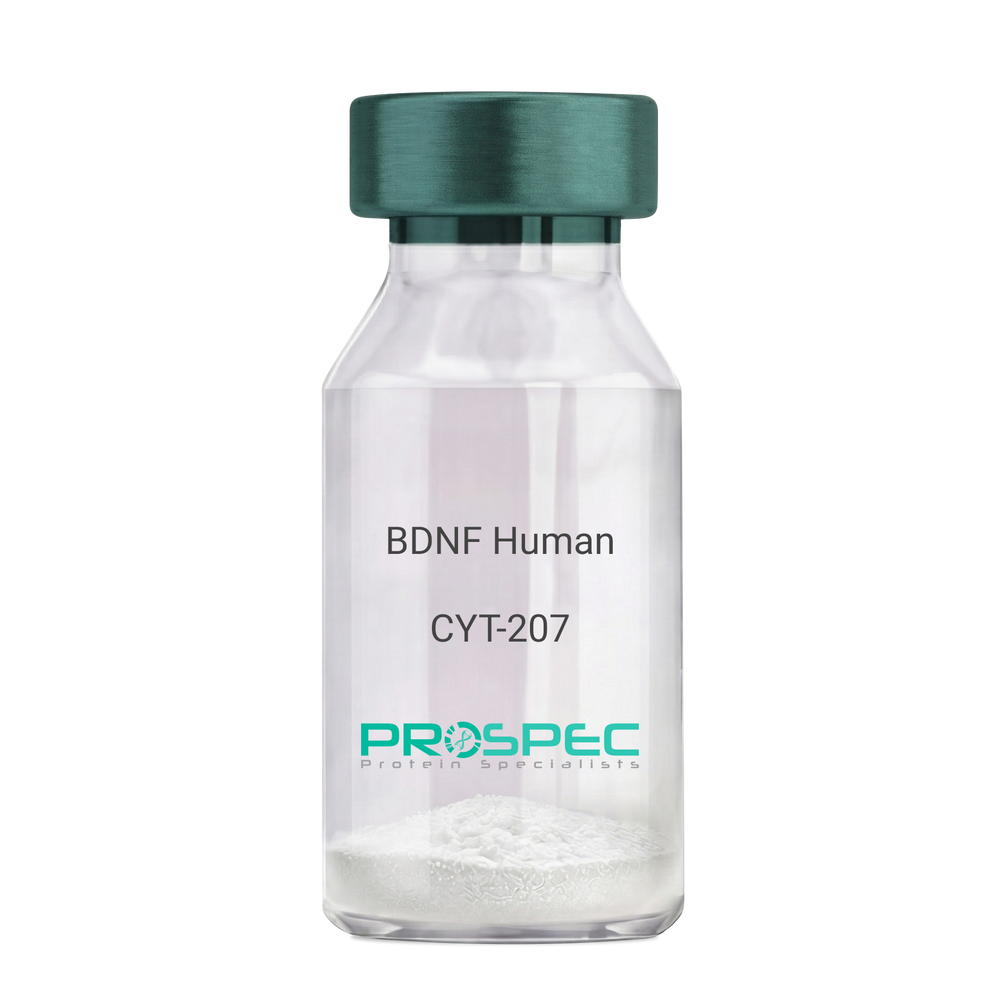
    BDNF Human

    Description:

    Brain-Derived Neurotrophic Factor Human Recombinant

    Brain-Derived Neurotrophic Factor, BDNF, MGC34632.

    Product # :

    CYT-207

    Price :

    Quantity :

    Shipping Method :

    Room Temp Icon

    Shipped at Room temp

    Add To Cart

    More Info

    • description
    • source
    • formulation
    • purity
    • biological activity
    • More Info
    • Activity

    Description

    BDNF Human Recombinant produced in E.Coli is a homodimer, non-glycosylated, polypeptide chain containing 2 x 119 amino acids (and an N-terminal Met) and having a total molecular mass of 28kDa. BDNF Human Recombinant is purified by proprietary chromatographic techniques.

    Source

    Escherichia Coli.

    Formulation

    The protein was lyophilized with 20mM PB and 400mM NaCl, pH 7.2.

    Purity

    BDNF is greater than 950% as determined SDS-PAGE.

    Biological Activity

    The activity was determined using Immobilized Human TrkB-His tag protein 2ug/ml (100 μl/well) for its binding to NHS-Biotin BDNF. The ED50 of was found to be ≤20ng/mL

    Activity

    bdnf activity - Product image 1

    More Info

    • Introduction

      BDNF promotes the survival of neuronal populations that are all located either in the central nervous system or directly connected to it. BDNF is a major regulator of synaptic transmission and plasticity at adult synapses in many regions of the cns. The versatility of BDNF is emphasized by its contribution to a range of adaptive neuronal responses including long-term potentiation (ltp), long-term depression (ltd), certain forms of short-term synaptic plasticity, as well as homeostatic regulation of intrinsic neuronal excitability.

    • Synonyms

      Brain-Derived Neurotrophic Factor, BDNF, MGC34632.

    • Physical Appearance

      Sterile Filtered White lyophilized (freeze-dried) powder.

    • Stability

      Lyophilized BDNF although stable at room temperature for 3 weeks, should be stored desiccated below -18°C. Upon reconstitution BDNF should be stored at 4°C between 2-7 days and for future use below -18°C.For long term storage it is recommended to add a carrier protein (0.1% HSA or BSA).Please prevent freeze-thaw cycles.

    • Solubility

      It is recommended to reconstitute the lyophilized BDNF in sterile 18M-cm H2O not less than 100µg/ml, which can then be further diluted to other aqueous solutions.

    • Amino Acid Sequence

      HSDPARRGE LSVCDSISEW VTAADKKTAV DMSGGTVTVL EKVPVSKGQL KQYFYETKCN PMGYTKEGCR GIDKRHWNSQ CRTTQSYVRA LTMDSKKRIG WRFIRIDTSC VCTLTIKRGR.

    • Background

      Final Thoughts

      Although more research is needed on the safety and effectiveness of BDNF human recombinant, trials suggest that this laboratory-produced protein may be effective in managing and treating several neurological and psychiatric disorders. It's important for experts to stay up to date on the latest developments and research to learn more about potential risks and benefits.

      What is the molecular weight/Mw of BDNF Protein?
      BDNF Protein has a total Mw of 27kDa.

      What is the source or expression system of BDNF Protein?
      Escherichia Coli.

      What is the Purity of BDNF Protein?
      BDNF Protein is >97% pure as determined by SDS-PAGE.

      What is the Biological Activity of BDNF Protein?
      The ED50, as determined by the dose-dependent induction of C6 cells proliferation, is 1.3-2µg/ml.

      What is the amino acid sequence of BDNF Protein?
      MHSDPARRGE LSVCDSISEW VTAADKKTAV DMSGGTVTVL EKVPVSKGQL KQYFYETKCN PMGYTKEGCR GIDKRHWNSQ CRTTQSYVRA LTMDSKKRIG WRFIRIDTSC VCTLTIKRGR.

      What applications can BDNF Protein be used in?
      BDNF Protein can probably be used in western blot, ELISA and Lateral Flow.

      What is the endotoxin level for BDNF Protein?
      The endotoxin level is minimal, BDNF Protein was purified using conventional chromatography techniques.

    • Protein content

      BDNF quantitation was carried out by two independent methods:1. UV spectroscopy at 280 nm using the absorbency value of 1.6 as the extinction coefficient for a 0.1% (1mg/ml) solution. This value is calculated by the PC GENE computer analysis program of protein sequences (IntelliGenetics). 2. Analysis by RP-HPLC, using a standard solution of Brain-derived Neurotrophic Factor as a Reference Standard.

    ProSpec's products are furnished for LABORATORY RESEARCH USE ONLY. The product may not be used as drugs, agricultural or pesticidal products, food additives or household chemicals.

    Bdnf Human
  • View Data Sheet

    Name :

    ACADSB Human

    Description:

    Acyl-CoA Dehydrogenase, Short Chain Human Recombinant

    Short/branched chain specific acyl-CoA dehydrogenase mitochondrial, SBCAD, 2-methyl branched chain acyl-CoA dehydrogenase, 2-MEBCAD, 2-methylbutyryl-coenzyme A dehydrogenase, 2-methylbutyryl-CoA dehydrogenase, ACADSB, ACAD7, SBCAD, 2-MEBCAD.

    Product # :

    ENZ-643

    Price :

    Quantity :

    Shipping Method :

    Ice Icon

    Shipped with Ice Packs

    Add To Cart

    More Info

    • description
    • source
    • formulation
    • purity
    • More Info

    Description

    ACADSB Human Recombinant produced in E.coli is a single, non-glycosylated polypeptide chain containing 424 amino acids (34-432) and having a molecular mass of 46.4kDa.ACADSB is fused to a 25 amino acid His-tag at N-terminus & purified by proprietary chromatographic techniques.

    Source

    Escherichia Coli.

    Formulation

    The ACADSB solution (0.5mg/ml) contains 20mM Tris-HCl buffer (pH 8.0), 0.1M NaCl, 10% glycerol and 1mM DTT.

    Purity

    Greater than 90.0% as determined by SDS-PAGE.

    More Info

    • Introduction

      Short/branched chain specific acyl-CoA dehydrogenase (ACADSB) belongs to the acyl-CoA dehydrogenase family of enzymes which catalyze the dehydrogenation of acyl-CoA derivatives in the metabolism of fatty acids or branch chained amino acids. ACADSB catalyzes the degradation of L-isoleucine while having the highest affinity for (s)-2-methylbutyryl-CoA, isobutyryl-CoA and 2-methylhexanoyl-CoA as substrates. ACADSB may use valproyl-CoA as substrate. ACADSB gene defects cause the short/branched-chain acyl-CoA dehydrogenase deficiency (SBCADD), which is an autosomal recessive disorder characterized by an increase of 2-methylbutyrylglycine and 2-methylbutyrylcarnitine in blood and urine.

    • Synonyms

      Short/branched chain specific acyl-CoA dehydrogenase mitochondrial, SBCAD, 2-methyl branched chain acyl-CoA dehydrogenase, 2-MEBCAD, 2-methylbutyryl-coenzyme A dehydrogenase, 2-methylbutyryl-CoA dehydrogenase, ACADSB, ACAD7, SBCAD, 2-MEBCAD.

    • Physical Appearance

      Sterile Filtered clear solution.

    • Stability

      Store at 4°C if entire vial will be used within 2-4 weeks. Store, frozen at -20°C for longer periods of time. For long term storage it is recommended to add a carrier protein (0.1% HSA or BSA).Avoid multiple freeze-thaw cycles.

    • Amino Acid Sequence

      MGSSHHHHHH SSGLVPRGSH MGSHMKSSQS EALLNITNNG IHFAPLQTFT DEEMMIKSSV KKFAQEQIAP LVSTMDENSK MEKSVIQGLF QQGLMGIEVD PEYGGTGASF LSTVLVIEEL AKVDASVAVF CEIQNTLINT LIRKHGTEEQ KATYLPQLTT EKVGSFCLSE AGAGSDSFAL KTRADKEGDY YVLNGSKMWI SSAEHAGLFL VMANVDPTIG YKGITSFLVD RDTPGLHIGK PENKLGLRAS STCPLTFENV KVPEANILGQ IGHGYKYAIG SLNEGRIGIA AQMLGLAQGC FDYTIPYIKE RIQFGKRLFD FQGLQHQVAH VATQLEAARL LTYNAARLLE AGKPFIKEAS MAKYYASEIA GQTTSKCIEW MGGVGYTKDY PVEKYFRDAK IGTIYEGASN IQLNTIAKHI DAEY.

    ProSpec's products are furnished for LABORATORY RESEARCH USE ONLY. The product may not be used as drugs, agricultural or pesticidal products, food additives or household chemicals.

    Acadsb Human
  • 1
  • …
  • 12
  • 13
  • 14
  • 15
  • 16
  • …
  • 42
Your browser does not support the video tag.

Products

  • Cytokines
  • Growth Factors
  • Chemokines
  • CD Antigens
  • Neurotrophins
  • Hormones
  • Enzymes
  • Viral Antigens
  • Recombinant Proteins
  • Natural Proteins
  • Monoclonal Antibodies
  • Polyclonal Antibodies
  • Thermal Packaging

About

  • Company
  • Founder
  • Contribution
  • Contact Us
  • My Account

Ordering

  • Ordering Method
  • Ordering - Credit Card
  • Ordering PO
  • Shipping Fees
  • FAQ's

Legal

  • Terms & Conditions
  • Privacy
  • Site Map
  • info@prospecbio.com
  • Facebook
  • Instagram
  • Linkedin Profile

© 2026 ProSpec-Tany TechnoGene Ltd. All Rights Reserved.

  • Choosing a selection results in a full page refresh.
  • Opens in a new window.