Skip to content

High-quality research proteins.

  • 1-800-805-6531

  • Mon - Sat 8.00-18.00, Sun - Closed

  • info@prospecbio.com

  • PO Box 6591 East Brunswick NJ 08816

  • Products
    • Cytokines
    • Growth factors
    • Chemokines
    • Cd antigens
    • Neurotrophins
    • Hormones
    • Enzymes
    • Viral antigens
    • Recombinant proteins
    • Natural proteins
    • Monoclonal antibodies
    • Polyclonal antibodies
    • Thermal Packaging
  • About
    • Company
    • Founder
    • Contribution
  • Customers
    • Eastern Asia
    • Eastern Europe
    • North America
    • South America
    • South East Asia
    • Southern Asia
    • Western Europe
  • Ordering
    • Ordering Method
    • Ordering - Credit Card
    • Ordering - PO
    • Shipping Fees
    • FAQs
  • Services
    • DNA Cloning
    • Protein Expression
    • Monoclonal Antibody
    • Fermentation
    • Technology License
  • Contact us
Log in

Country/region

  • USD $ | Albania
  • USD $ | Andorra
  • USD $ | Argentina
  • USD $ | Armenia
  • USD $ | Australia
  • USD $ | Austria
  • USD $ | Azerbaijan
  • USD $ | Belarus
  • USD $ | Belgium
  • USD $ | Bolivia
  • USD $ | Brazil
  • USD $ | Bulgaria
  • USD $ | Cambodia
  • USD $ | Canada
  • USD $ | Chile
  • USD $ | China
  • USD $ | Colombia
  • USD $ | Costa Rica
  • USD $ | Croatia
  • USD $ | Cyprus
  • USD $ | Czechia
  • USD $ | Denmark
  • USD $ | Estonia
  • USD $ | Finland
  • USD $ | France
  • USD $ | Georgia
  • USD $ | Germany
  • USD $ | Greece
  • USD $ | Hong Kong SAR
  • USD $ | Hungary
  • USD $ | Iceland
  • USD $ | India
  • USD $ | Ireland
  • USD $ | Israel
  • USD $ | Italy
  • USD $ | Japan
  • USD $ | Kazakhstan
  • USD $ | Latvia
  • USD $ | Liechtenstein
  • USD $ | Lithuania
  • USD $ | Madagascar
  • USD $ | Malta
  • USD $ | Mexico
  • USD $ | Moldova
  • USD $ | Monaco
  • USD $ | Netherlands
  • USD $ | New Zealand
  • USD $ | North Macedonia
  • USD $ | Norway
  • USD $ | Panama
  • USD $ | Paraguay
  • USD $ | Peru
  • USD $ | Philippines
  • USD $ | Poland
  • USD $ | Portugal
  • USD $ | Romania
  • USD $ | Singapore
  • USD $ | Slovakia
  • USD $ | Slovenia
  • USD $ | South Africa
  • USD $ | South Korea
  • USD $ | Spain
  • USD $ | Sri Lanka
  • USD $ | Sweden
  • USD $ | Switzerland
  • USD $ | Taiwan
  • USD $ | Thailand
  • USD $ | Türkiye
  • USD $ | Ukraine
  • USD $ | United Kingdom
  • USD $ | United States
  • USD $ | Uruguay
  • USD $ | Vatican City
  • USD $ | Venezuela
  • USD $ | Vietnam
  • Facebook
  • Instagram
logoProSpec - Recombinant Protein Manufacturer for academic and R&D industry
Become a distributor
Account Log in
Wishlist
Cart Cart(0)
  • Products
    +
    • Cytokines
    • Growth factors
    • Chemokines
    • Cd antigens
    • Neurotrophins
    • Hormones
    • Enzymes
    • Viral antigens
    • Recombinant proteins
    • Natural proteins
    • Monoclonal antibodies
    • Polyclonal antibodies
    • Thermal Packaging
  • About
    +
    • Company
    • Founder
    • Contribution
  • Customers
    +
    • Eastern Asia
    • Eastern Europe
    • North America
    • South America
    • South East Asia
    • Southern Asia
    • Western Europe
  • Ordering
    +
    • Ordering Method
    • Ordering - Credit Card
    • Ordering - PO
    • Shipping Fees
    • FAQs
  • Services
    +
    • DNA Cloning
    • Protein Expression
    • Monoclonal Antibody
    • Fermentation
    • Technology License
  • Contact us

Item added to your cart

View cart
View All
  • Cytokines
  • Growth factors
  • Chemokines
  • Cd antigens
  • Neurotrophins
  • Hormones
  • Enzymes
  • Viral antigens
  • Recombinant proteins
  • Natural proteins
  • Monoclonal antibodies
  • Polyclonal antibodies
  • Thermal Packaging
  • Tumor Necrosis Factor

    Tumor Necrosis Factor

    View All
  • 4-1BB

    4-1BB

    View All
  • Adiponectin

    Adiponectin

    View All
  • AIF1

    AIF1

    View All
  • Other Cytokines

    Other Cytokines

    View All
  • AITRL

    AITRL

    View All
  • Angiopoietin

    Angiopoietin

    View All
  • Apolipoprotein

    Apolipoprotein

    View All
  • B-Cell Activating Factor

    B-Cell Activating Factor

    View All
  • Beta Defensin

    Beta Defensin

    View All
  • Bone Morphogenetic Protein

    Bone Morphogenetic Protein

    View All
  • B type Natriuretic Peptide

    B type Natriuretic Peptide

    View All
  • BST

    BST

    View All
  • Betacellulin

    Betacellulin

    View All
  • Cardiotrophin

    Cardiotrophin

    View All
  • Activin

    Activin

    View All
  • Fibroblast Growth Factor

    Fibroblast Growth Factor

    View All
  • Other Growth Factors

    Other Growth Factors

    View All
  • CSF

    CSF

    View All
  • CTGF

    CTGF

    View All
  • IGFBP

    IGFBP

    View All
  • VEGF Protein

    VEGF Protein

    View All
  • EGF

    EGF

    View All
  • Epigen

    Epigen

    View All
  • Erythropoietin

    Erythropoietin

    View All
  • Insulin-Like Growth Factor

    Insulin-Like Growth Factor

    View All
  • Growth Hormone

    Growth Hormone

    View All
  • HDGF

    HDGF

    View All
  • Hepatocyte Growth Factor

    Hepatocyte Growth Factor

    View All
  • Insulin

    Insulin

    View All
  • BCA-1/ BLC (CXCL13)

    BCA-1/ BLC (CXCL13)

    View All
  • BRAK (CXCL14)

    BRAK (CXCL14)

    View All
  • C-10 (CCL6)

    C-10 (CCL6)

    View All
  • Other Chemokines

    Other Chemokines

    View All
  • MEC (CCL28)

    MEC (CCL28)

    View All
  • LD78-beta (CCL3L1)

    LD78-beta (CCL3L1)

    View All
  • CTACK (CCL27)

    CTACK (CCL27)

    View All
  • CXCL16

    CXCL16

    View All
  • CXCL17

    CXCL17

    View All
  • Platelet Factor-4 (CXCL4)

    Platelet Factor-4 (CXCL4)

    View All
  • ENA-78 (CXCL5)

    ENA-78 (CXCL5)

    View All
  • Eotaxin (CCL11,24,26)

    Eotaxin (CCL11,24,26)

    View All
  • Exodus-2 (CCL21)

    Exodus-2 (CCL21)

    View All
  • Fractalkine (CX3CL1)

    Fractalkine (CX3CL1)

    View All
  • CXCL6

    CXCL6

    View All
  • Other CD Antigens

    Other CD Antigens

    View All
  • CD14

    CD14

    View All
  • CD164

    CD164

    View All
  • CD1

    CD1

    View All
  • CD2

    CD2

    View All
  • CD200

    CD200

    View All
  • CD207

    CD207

    View All
  • CD226

    CD226

    View All
  • CD23

    CD23

    View All
  • CD244

    CD244

    View All
  • CD247

    CD247

    View All
  • CD27

    CD27

    View All
  • CD274

    CD274

    View All
  • CD300

    CD300

    View All
  • CD33

    CD33

    View All
  • Other Neurotrophins

    Other Neurotrophins

    View All
  • Beta-NGF

    Beta-NGF

    View All
  • BDNF

    BDNF

    View All
  • CDNF

    CDNF

    View All
  • CNTF

    CNTF

    View All
  • GDNF

    GDNF

    View All
  • Glia Maturation Factor

    Glia Maturation Factor

    View All
  • MANF

    MANF

    View All
  • Midkine

    Midkine

    View All
  • Neuroglobin

    Neuroglobin

    View All
  • Neurotrophic factors

    Neurotrophic factors

    View All
  • Neuregulin

    Neuregulin

    View All
  • Neuropilin

    Neuropilin

    View All
  • Pigment Epithelium-Derived Factor

    Pigment Epithelium-Derived Factor

    View All
  • Pleiotrophin

    Pleiotrophin

    View All
  • Peptide Hormones

    Peptide Hormones

    View All
  • Other Hormones

    Other Hormones

    View All
  • HCG

    HCG

    View All
  • Endothelin

    Endothelin

    View All
  • Exendin

    Exendin

    View All
  • FSH

    FSH

    View All
  • Glucagon

    Glucagon

    View All
  • GHRP

    GHRP

    View All
  • GLP

    GLP

    View All
  • Thyrostimulin

    Thyrostimulin

    View All
  • Inhibin A

    Inhibin A

    View All
  • LHRH

    LHRH

    View All
  • Melanotan

    Melanotan

    View All
  • Procalcitonin

    Procalcitonin

    View All
  • PTH

    PTH

    View All
  • Peroxiredoxin

    Peroxiredoxin

    View All
  • Peptidase

    Peptidase

    View All
  • Synthetase

    Synthetase

    View All
  • Transferase

    Transferase

    View All
  • Hydrolase

    Hydrolase

    View All
  • Dehydrogenase

    Dehydrogenase

    View All
  • ACE2

    ACE2

    View All
  • Esterase

    Esterase

    View All
  • Protein Kinases

    Protein Kinases

    View All
  • Other Enzymes

    Other Enzymes

    View All
  • Phosphatase

    Phosphatase

    View All
  • Deaminase

    Deaminase

    View All
  • Oxygenase

    Oxygenase

    View All
  • Adenylate Kinase

    Adenylate Kinase

    View All
  • Lyase

    Lyase

    View All
  • Chagas

    Chagas

    View All
  • SARS

    SARS

    View All
  • Influenza

    Influenza

    View All
  • ASFV

    ASFV

    View All
  • Astrovirus

    Astrovirus

    View All
  • Borrelia

    Borrelia

    View All
  • Helicobacter Pylori

    Helicobacter Pylori

    View All
  • Chikungunya

    Chikungunya

    View All
  • Chlamydia

    Chlamydia

    View All
  • Cytomegalo

    Cytomegalo

    View All
  • Dengue

    Dengue

    View All
  • EBV

    EBV

    View All
  • Ebola

    Ebola

    View All
  • Feline Leukemia Virus

    Feline Leukemia Virus

    View All
  • Hepatitis A

    Hepatitis A

    View All
  • Other

    Other

    View All
  • Actin

    Actin

    View All
  • ADAM

    ADAM

    View All
  • Complement Component

    Complement Component

    View All
  • Ag85

    Ag85

    View All
  • Eukaryotic Translation Initiation Factor

    Eukaryotic Translation Initiation Factor

    View All
  • Anterior Gradient Protein

    Anterior Gradient Protein

    View All
  • Heat Shock Protein

    Heat Shock Protein

    View All
  • Alpha-2-HS-Glycoprotein

    Alpha-2-HS-Glycoprotein

    View All
  • Hemoglobin

    Hemoglobin

    View All
  • Allergy

    Allergy

    View All
  • Anaplasma

    Anaplasma

    View All
  • Angiogenin

    Angiogenin

    View All
  • Ankyrin Repeat Domain

    Ankyrin Repeat Domain

    View All
  • Annexin

    Annexin

    View All
  • Other Natural Proteins

    Other Natural Proteins

    View All
  • Aprotinin

    Aprotinin

    View All
  • Transferrin

    Transferrin

    View All
  • Avidin

    Avidin

    View All
  • Anti Coagulation Factors

    Anti Coagulation Factors

    View All
  • Natural Albumin

    Natural Albumin

    View All
  • Natural Coagulation Factors

    Natural Coagulation Factors

    View All
  • Fibronectin

    Fibronectin

    View All
  • Thrombin

    Thrombin

    View All
  • Anti Human Enzyme

    Anti Human Enzyme

    View All
  • Other Monoclonal Antibodies

    Other Monoclonal Antibodies

    View All
  • Anti Human Cytokine

    Anti Human Cytokine

    View All
  • Anti Human Heat Shock Protein

    Anti Human Heat Shock Protein

    View All
  • Anti Mouse Lymphocyte

    Anti Mouse Lymphocyte

    View All
  • Anti Human Chemokine

    Anti Human Chemokine

    View All
  • Anti Human Lymphocyte

    Anti Human Lymphocyte

    View All
  • Anti Viral Monoclonal

    Anti Viral Monoclonal

    View All
  • Anti Mouse Cytokine

    Anti Mouse Cytokine

    View All
  • Anti-GST Monoclonal

    Anti-GST Monoclonal

    View All
  • Other Polyclonal Antibodies

    Other Polyclonal Antibodies

    View All
  • Anti Viral

    Anti Viral

    View All
  • Anti-GST Monoclonal

    Anti-GST Monoclonal

    View All
Back

Search results

1000 results found for “midkine”

Name

Description

Product #

Price

Quantity

Shipping Method

  • View Data Sheet

    Name :

    DCTN2 (1-403) Human

    Description:

    Dynactin 2 (1-403 a.a.) Human Recombinant

    Dynactin 2 (P50), 50 KDa Dynein-Associated Polypeptide, Dynactin Complex 50 KDa Subunit, P50 Dynamitin, DCTN50, 50 KD Dynein-Associated Polypeptide, Epididymis Secretory Protein Li 77, Dynactin Complex 50 KD Subunit, DYNAMITIN, HEL-S-77, DCTN-50, RBP50.

    Product # :

    PRO-2303

    Price :

    Quantity :

    Shipping Method :

    Ice Icon

    Shipped with Ice Packs

    Add To Cart

    More Info

    • description
    • source
    • formulation
    • purity
    • More Info

    Description

    Dynactin 2 Human Recombinant produced in E.Coli is a single, non-glycosylated polypeptide chain containing 426 amino acids (1-403 a.a) and having a molecular mass of 46.9kDa.DCTN2 is fused to a 23 amino acid His-tag at N-terminus & purified by proprietary chromatographic techniques.

    Source

    Escherichia Coli.

    Formulation

    DCTN2 protein solution (0.5mg/ml) containing 20mM Tris-HCl (pH8.0), 10% glycerol, 0.15M NaCl and 1mM DTT.

    Purity

    Greater than 90.0% as determined by SDS-PAGE.

    More Info

    • Introduction

      DCTN2 is a 50kDa subunit of dynactin, which is a macromolecular complex consisting of 10-11 subunits ranging in size from 22 to 150 kDa. Dynactin binds to both microtubules and cytoplasmic dynein. Dynactin is involved in a various cellular functions, including ER-to-Golgi transport, the centripetal movement of lysosomes and endosomes, spindle formation, chromosome movement, nuclear positioning, and axonogenesis. The DCTN2 subunit is present in 4-5 copies per dynactin molecule. DCTN2 is comprised of 3 short alpha-helical coiled-coil domains which mediate association with self or other dynactin subunits. DCTN2 interacts directly with the largest subunit (p150) of dynactin and is able to affix p150 in place. DCTN2 modulates cytoplasmic dynein binding to an organelle, and plays a part in prometaphase chromosome alignment and spindle organization during mitosis. DCTN2 is involved in anchoring microtubules to centrosomes. DCTN2 has a role in synapse formation during brain development.

    • Synonyms

      Dynactin 2 (P50), 50 KDa Dynein-Associated Polypeptide, Dynactin Complex 50 KDa Subunit, P50 Dynamitin, DCTN50, 50 KD Dynein-Associated Polypeptide, Epididymis Secretory Protein Li 77, Dynactin Complex 50 KD Subunit, DYNAMITIN, HEL-S-77, DCTN-50, RBP50.

    • Physical Appearance

      Sterile Filtered colorless solution.

    • Stability

      Store at 4°C if entire vial will be used within 2-4 weeks. Store, frozen at -20°C for longer periods of time. For long term storage it is recommended to add a carrier protein (0.1% HSA or BSA).Avoid multiple freeze-thaw cycles.

    • Amino Acid Sequence

      MGSSHHHHHH SSGLVPRGSH MGSMADPKYA DLPGIARNEP DVYETSDLPE DDQAEFDAEL EELTSTSVEH IIVNPNAAYD KFKDKRVGTK GLDFSDRIGK TKRTGYESGE YEMLGEGLGV KETPQQKYQR LLHEVQELTT EVEKIKTTVK ESATEEKLTP VLLAKQLAAL KQQLVASHLE KLLGPDAAIN LTDPDGALAK RLLLQLEATK NSKGGSGGKT TGTPPDSSLV TYELHSRPEQ DKFSQAAKVA ELEKRLTELE TAVRCDQDAQ NPLSAGLQGA CLMETVELLQ AKVSALDLAV LDQVEARLQS VLGKVNEIAK HKASVEDADT QSKVHQLYET IQRWSPIAST LPELVQRLVT IKQLHEQAMQ FGQLLTHLDT TQQMIANSLK DNTTLLTQVQ TTMRENLATV EGNFASIDER MKKLGK

    ProSpec's products are furnished for LABORATORY RESEARCH USE ONLY. The product may not be used as drugs, agricultural or pesticidal products, food additives or household chemicals.

    Dctn2 1 403 Human
  • View Data Sheet

    Name :

    TECK Human, His

    Description:

    Thymus Expressed Chemokine (CCL25) Human Recombinant, His Tag

    C-C motif chemokine 25, Small-inducible cytokine A25, Thymus-expressed chemokine, Chemokine TECK, CCL25, SCYA25, TECK, Ckb15, MGC150327.

    Product # :

    CHM-032

    Price :

    Quantity :

    Shipping Method :

    Ice Icon

    Shipped with Ice Packs

    Add To Cart

    More Info

    • description
    • source
    • formulation
    • purity
    • More Info

    Description

    TECK Human Recombinant produced in E.Coli is a single, non-glycosylated polypeptide chain containing 152 amino acids (24-150 a.a.) and having a molecular mass of 16.8kDa.TECK is fused to a 25 amino acid His-tag at N-terminus & purified by proprietary chromatographic techniques.

    Source

    Escherichia Coli.

    Formulation

    TECK protein solution (1mg/ml) containing 20mM Tris-HCl buffer (pH 8.0) and 10% glycerol.

    Purity

    Greater than 90.0% as determined by SDS-PAGE.

    More Info

    • Introduction

      CCL25 (Teck) is a novel CC chemokine, which is distantly related (about 20% amino acid sequence identity) to other CC chemokines. The mouse CCL25 cDNA has also been cloned and shown to encode a 144 a.a. protein, which exhibits 49% a.a. sequence identity to the human CCL25. Human and mouse CCL25 expression was shown to be greatly restricted to the thymus and small intestine. While dendritic cells are identified as the source of CCL25 production in the thymus, dendritic cells derived from bone marrow do not express CCL25. CCL25 signals through the CCR9 receptor. Teck is possibly involved in T-cell development.
      Recombinant human and mouse Teck were shown to be chemotactic for activated macrophages, dendritic cells and thymocytes. The recombinant protein demonstrates chemotactic activity on thymocytes, macrophages, THP-1 cells, and dendritic cells but is inactive on peripheral blood lymphocytes and neutrophils.

    • Synonyms

      C-C motif chemokine 25, Small-inducible cytokine A25, Thymus-expressed chemokine, Chemokine TECK, CCL25, SCYA25, TECK, Ckb15, MGC150327.

    • Physical Appearance

      Filtered colorless solution.

    • Stability

      Store at 4°C if entire vial will be used within 2-4 weeks. Store, frozen at -20°C for longer periods of time. For long term storage it is recommended to add a carrier protein (0.1% HSA or BSA).Avoid multiple freeze-thaw cycles.

    • Amino Acid Sequence

      MGSSHHHHHH SSGLVPRGSH MGSHMQGVFE DCCLAYHYPI GWAVLRRAWT YRIQEVSGSC NLPAAIFYLP KRHRKVCGNP KSREVQRAMK LLDARNKVFA KLHHNTQTFQ AGPHAVKKLS SGNSKLSSSK FSNPISSSKR NVSLLISANS GL.

    ProSpec's products are furnished for LABORATORY RESEARCH USE ONLY. The product may not be used as drugs, agricultural or pesticidal products, food additives or household chemicals.

    Teck Human His
  • View Data Sheet

    Name :

    CDK-4 Human

    Description:

    Cyclin-Dependent Kinase 4 Human Recombinant

    Cell division protein kinase 4, CDK4, EC 2.7.11.22, Cyclin-dependent kinase 4, PSK-J3, CMM3,CDK-4, MGC14458.

    Product # :

    PKA-325

    Price :

    Quantity :

    Shipping Method :

    Ice Icon

    Shipped with Ice Packs

    Add To Cart

    More Info

    • description
    • source
    • formulation
    • purity
    • More Info

    Description

    Cyclin-Dependent Kinase 4 Human Recombinant is expressed in E. coli as a full-length protein having a molecular weight of 38 kDa fused to an amino terminal hexahistidine tag. The CDK4 is purified by proprietary chromatographic techniques.

    Source

    Escherichia Coli.

    Formulation

    CDK4 is supplied in 10mM Bis-Tris Propane pH9.0 and 50% Glycerol.

    Purity

    Greater than 95% as determined by SDS-PAGE.
    Single band on Western Blot.

    More Info

    • Introduction

      Cyclin-dependent kinase 4 combines with the protein cyclin D to form a protein complex that promotes the passage of cells through the G1 checkpoint in the cell growth cycle. This cellular activity is regulated by the protein p16 produced by p16INK4a. Normally, p16 controls cell growth by inhibiting the activity of the CDK4–cyclin D complex and stopping cells at the G1 checkpoint.

    • Synonyms

      Cell division protein kinase 4, CDK4, EC 2.7.11.22, Cyclin-dependent kinase 4, PSK-J3, CMM3,CDK-4, MGC14458.

    • Physical Appearance

      Sterile Filtered clear solution.

    • Stability

      Store at 4°C if entire vial will be used within 1-2 weeks. Store, frozen at -20°C for longer periods of time. Avoid multiple freeze-thaw cycles.

    ProSpec's products are furnished for LABORATORY RESEARCH USE ONLY. The product may not be used as drugs, agricultural or pesticidal products, food additives or household chemicals.

    Cdk4 Human
  • View Data Sheet

    Name :

    CDK5 Human

    Description:

    Cyclin-dependent Kinase 5 Human Recombinant

    Cyclin-dependent kinase 5, Cell division protein kinase 5, Serine/threonine-protein kinase PSSALRE, Tau protein kinase II catalytic subunit, CDK5, CDKN5, TPKII catalytic subunit, cyclin dependent kinase 5.

    Product # :

    PKA-047

    Price :

    Quantity :

    Shipping Method :

    Ice Icon

    Shipped with Ice Packs

    Add To Cart

    More Info

    • description
    • source
    • formulation
    • purity
    • More Info

    Description

    CDK5 Human Recombinant produced in E.coli is a single, non-glycosylated polypeptide chain containing 316 amino acids (1-292) and having a molecular mass of 35.8kDa. CDK5 is fused to a 24 amino acid His-tag at N-terminus & purified by proprietary chromatographic techniques.

    Source

    Escherichia Coli.

    Formulation

    The CDK5 solution (0.5 mg/ml) contains 20mM Tris-HCl buffer (pH 8.0), 10% glycerol 0.4M Urea.

    Purity

    Greater than 85% as determined by SDS-PAGE.

    More Info

    • Introduction

      Cell division protein kinase 5 (CDK5) belongs to the cyclin-dependent kinase family. CDK5 is essential for appropriate development of the brain and in order to be activated CDK5 must link to CDK5R1 or CDK5R2. CDK5 doesn't need phosphorylation on the T loop so that binding with the activator is enough to activate the kinase. CDK5 is engaged in the processes of neuronal maturation and migration, phosphorylating the central intracellular adaptor of the reeling signaling chain.

    • Synonyms

      Cyclin-dependent kinase 5, Cell division protein kinase 5, Serine/threonine-protein kinase PSSALRE, Tau protein kinase II catalytic subunit, CDK5, CDKN5, TPKII catalytic subunit, cyclin dependent kinase 5.

    • Physical Appearance

      Sterile filtered colorless solution.

    • Stability

      Store at 4°C if entire vial will be used within 2-4 weeks. Store, frozen at -20°C for longer periods of time. For long term storage it is recommended to add a carrier protein (0.1% HSA or BSA).Avoid multiple freeze-thaw cycles.

    • Amino Acid Sequence

      MGSSHHHHHH SSGLVPRGSH MGSHMQKYEK LEKIGEGTYG TVFKAKNRET HEIVALKRVR LDDDDEGVPS SALREICLLK ELKHKNIVRL HDVLHSDKKL TLVFEFCDQD LKKYFDSCNG DLDPEIVKSF LFQLLKGLGF CHSRNVLHRD LKPQNLLINR NGELKLADFG LARAFGIPVR CYSAEVVTLW YRPPDVLFGA KLYSTSIDMW SAGCIFAELA NAGRPLFPGN DVDDQLKRIF RLLGTPTEEQ WPSMTKLPDY KPYPMYPATT SLVNVVPKLN ATGRDLLQNL LKCNPVQRIS AEEALQHPYF SDFCPP.

    ProSpec's products are furnished for LABORATORY RESEARCH USE ONLY. The product may not be used as drugs, agricultural or pesticidal products, food additives or household chemicals.

    Cdk5 Human
  • View Data Sheet

    Name :

    PRKAG1 Human

    Description:

    Protein Kinase, AMP-Activated, Gamma 1 Human Recombinant

    Protein Kinase AMP-Activated Gamma 1 Non-Catalytic Subunit, 5'-AMP-Activated Protein Kinase Subunit Gamma-1, AMPK Gamma1 Chain, AMPKg.

    Product # :

    PKA-305

    Price :

    Quantity :

    Shipping Method :

    Ice Icon

    Shipped with Ice Packs

    Add To Cart

    More Info

    • description
    • source
    • formulation
    • purity
    • More Info

    Description

    PRKAG1 Human Recombinant produced in E.coli is a single, non-glycosylated polypeptide chain containing 354 amino acids (1-331) and having a molecular mass of 40.0kDa.PRKAG1 is fused to a 23 amino acid His-tag at N-terminus & purified by proprietary chromatographic techniques.

    Source

    Escherichia Coli.

    Formulation

    The PRKAG1 solution (0.25mg/ml) contains 20mM Tris-HCl buffer (pH 8.0), 0.4M Urea and 10% glycerol.

    Purity

    Greater than 85.0% as determined by SDS-PAGE.

    More Info

    • Introduction

      PRKAG1 is a regulatory subunit of the AMP-activated protein kinase (AMPK). AMPK is a heterotrimer comprised of an alpha catalytic subunit, and non-catalytic beta and gamma subunits. AMPK is a vital energy-sensing enzyme which supervises cellular energy status. PRKAG1 is one of the gamma regulatory subunits of AMPK. Alternatively spliced transcript variants encoding dissimilar isoforms were found.

    • Synonyms

      Protein Kinase AMP-Activated Gamma 1 Non-Catalytic Subunit, 5'-AMP-Activated Protein Kinase Subunit Gamma-1, AMPK Gamma1 Chain, AMPKg.

    • Physical Appearance

      Sterile Filtered clear solution.

    • Stability

      Store at 4°C if entire vial will be used within 2-4 weeks. Store, frozen at -20°C for longer periods of time. For long term storage it is recommended to add a carrier protein (0.1% HSA or BSA).Avoid multiple freeze-thaw cycles.

    • Amino Acid Sequence

      MGSSHHHHHH SSGLVPRGSH MGSMETVISS DSSPAVENEH PQETPESNNS VYTSFMKSHR CYDLIPTSSK LVVFDTSLQV KKAFFALVTN GVRAAPLWDS KKQSFVGMLT ITDFINILHR YYKSALVQIY ELEEHKIETW REVYLQDSFK PLVCISPNAS LFDAVSSLIR NKIHRLPVID PESGNTLYIL THKRILKFLK LFITEFPKPE FMSKSLEELQ IGTYANIAMV RTTTPVYVAL GIFVQHRVSA LPVVDEKGRV VDIYSKFDVI NLAAEKTYNN LDVSVTKALQ HRSHYFEGVL KCYLHETLET IINRLVEAEV HRLVVVDEND VVKGIVSLSD ILQALVLTGG EKKP

    ProSpec's products are furnished for LABORATORY RESEARCH USE ONLY. The product may not be used as drugs, agricultural or pesticidal products, food additives or household chemicals.

    Prkag1 Human
  • View Data Sheet

    Name :

    LIN7B Human

    Description:

    LIN7B Human Recombinant

    LIN-7B, MALS-2, MALS2, VELI2, Protein lin-7 homolog B, Veli-2, hVeli2, Mammalian lin-seven protein 2, Vertebrate lin-7 homolog 2, UNQ3116/PRO10200.

    Product # :

    PRO-1298

    Price :

    Quantity :

    Shipping Method :

    Ice Icon

    Shipped with Ice Packs

    Add To Cart

    More Info

    • description
    • source
    • formulation
    • purity
    • More Info

    Description

    LIN7B Human Recombinant produced in E.Coli is a single, non-glycosylated polypeptide chain containing 230 amino acids (1-207 a.a.) and having a molecular mass of 25.3kDa.LIN7B is fused to a 23 amino acid His-tag at N-terminus & purified by proprietary chromatographic techniques.

    Source

    Escherichia Coli.

    Formulation

    LIN7B protein solution (0.25mg/ml) contains 20mM Tris-HCl buffer, (pH 8.0), 0.2M NaCl, 50% glycerol and 2mM DTT.

    Purity

    Greater than 90.0% as determined by SDS-PAGE

    More Info

    • Introduction

      LIN7B (VELI2), is a member of the Velis family. Velis family contains minor synaptic proteins which interact with other proteins at the post-synaptic density (PSD) of neuronal synapses. Velis which contain the PDZ motif, participate in recruiting cell adhesion molecules, receptors, and channels. Lin7B protein is ubiquitously expressed with a high expression in the brain, liver, and testis. Lin7B localizes at the synaptic junctions in neurons, bind to CASK, which is a neurexin-binding protein highly concentrated in synapses, and Mint1, a binding partner with a vesicle trafficking protein.

    • Synonyms

      LIN-7B, MALS-2, MALS2, VELI2, Protein lin-7 homolog B, Veli-2, hVeli2, Mammalian lin-seven protein 2, Vertebrate lin-7 homolog 2, UNQ3116/PRO10200.

    • Physical Appearance

      Sterile filtered colorless solution.

    • Stability

      Store at 4°C if entire vial will be used within 2-4 weeks. Store, frozen at -20°C for longer periods of time. For long term storage it is recommended to add a carrier protein (0.1% HSA or BSA). Avoid multiple freeze-thaw cycles.

    • Amino Acid Sequence

      MGSSHHHHHH SSGLVPRGSH MGSMAALVEP LGLERDVSRA VELLERLQRS GELPPQKLQA LQRVLQSRFC SAIREVYEQL YDTLDITGSA EIRAHATAKA TVAAFTASEG HAHPRVVELP KTDEGLGFNI MGGKEQNSPI YISRVIPGGV ADRHGGLKRG DQLLSVNGVS VEGEQHEKAV ELLKAAQGSV KLVVRYTPRV LEEMEARFEK MRSARRRQQH QSYSSLESRG.

    ProSpec's products are furnished for LABORATORY RESEARCH USE ONLY. The product may not be used as drugs, agricultural or pesticidal products, food additives or household chemicals.

    Lin7B Human
  • View Data Sheet

    Name :

    NTRK1 Rat

    Description:

    Neurotrophic Receptor Tyrosine Kinase 1 Rat Recombinant

    TRKA, TRK-A, NTRK-1.

    Product # :

    PKA-133

    Price :

    Quantity :

    Shipping Method :

    Ice Icon

    Shipped with Ice Packs

    Add To Cart

    More Info

    • description
    • source
    • formulation
    • purity
    • biological activity
    • More Info

    Description

    NTRK1 Rat Recombinant produced in HEK is a single, non-glycosylated polypeptide chain containing 623 amino acids (35-418 a.a) and having a molecular mass of 69 kDa. NTRK1 is fused to a 239 amino acid human IgG-His-tag at C-terminus & purified by proprietary chromatographic techniques.

    Source

    Escherichia Coli.

    Formulation

    NTRK1 protein solution (1mg/ml) in Phosphate-Buffered Saline (pH 7.4) and 10% Glycerol.

    Purity

    Greater than 90.0% as determined by SDS-PAGE.

    Biological Activity

    Measured by its ability to inhibit NGF-induced proliferation assay using TF1 human erythroleukemic cells in the presence of 0.5ng/ml of rat NGF. The ED50 range ≤ 5 ng/ml.

    More Info

    • Introduction

      NTRK1 plays a role in the development and survival of nerve cells (neurons), specifically those that transmit dataregarding senses such as touch, pain and temperatureie. sensory neurons. NTRK1 protein is located on surface cells, mainly such as sensory neurons. NTRK1 acts as a kinase enzyme that alters the activity of different proteins by adding anoxygen cluster and phosphorus atoms at precise positions ie. phosphorylation. NTRK1 activated by nerve growth factor beta which binds to it and signals the NTRK1 protein to phosphorylate itself. Post autophosphorylation, the activated NTRK1 protein phosphorylates other proteins which is required for cell growth and survival.

    • Synonyms

      TRKA, TRK-A, NTRK-1.

    • Physical Appearance

      Sterile filtered colorless solution.

    • Stability

      NTRK1 although stable at 4°C for 1 week, should be stored below -18°C. For long term storage it is recommended to add a carrier protein (0.1% HSA or BSA).Please prevent freeze thaw cycles.

    • Amino Acid Sequence

      SCRETCCPVG PSGLRCTRAG TLNTLRGLRG AGNLTELYVE NQRDLQRLEF EDLQGLGELR SLTIVKSGLR FVAPDAFHFT PRLSHLNLSS NALESLSWKT VQGLSLQDLT LSGNPLHCSC ALLWLQRWEQ EDLCGVYTQK LQGSGSGDQF LPLGHNNSCG VPSVKIQMPN DSVEVGDDVF LQCQVEGQAL QQADWILTEL EGTATMKKSG DLPSLGLTLV NVTSDLNKKN VTCWAENDVG RAEVSVQVSV SFPASVHLGK AVEQHHWCIP FSVDGQPAPS LRWFFNGSVL NETSFIFTQF LESALTNETM RHGCLRLNQP THVNNGNYTL LAANPYGQAA ASIMAAFMDN PFEFNPEDPI PVSFSPVDTN STSRDPVEKK DETP LEPKSC DKTHTCPPCP APELLGGPSV FLFPPKPKDT LMISRTPEVT CVVVDVSHED PEVKFNWYVD GVEVHNAKTK PREEQYNSTY RVVSVLTVLH QDWLNGKEYK CKVSNKALPA PIEKTISKAK GQPREPQVYT LPPSRDELTK NQVSLTCLVK GFYPSDIAVE WESNGQPENN YKTTPPVLDS DGSFFLYSKL TVDKSRWQQG NVFSCSVMHE ALHNHYTQKS LSLSPGKHHH HHH

    ProSpec's products are furnished for LABORATORY RESEARCH USE ONLY. The product may not be used as drugs, agricultural or pesticidal products, food additives or household chemicals.

    Ntrk1 Rat
  • View Data Sheet

    Name :

    Leptin Human, PEG

    Description:

    Leptin Human Recombinant, PEG

    OB Protein, Obesity Protein, OBS, Obesity factor.

    Product # :

    CYT-1108

    Price :

    Quantity :

    Shipping Method :

    Room Temp Icon

    Shipped at Room temp

    Add To Cart

    More Info

    • description
    • source
    • formulation
    • purity
    • biological activity
    • More Info

    Description

    Pegylated Leptin Human Recombinant produced in E.Coli is a single non-glycosilated polypeptide chain containing 146 amino acids, an additional Ala at N-terminus and one molecule of PEG 20 kDa at its N-terminus acids and having a molecular weight of 35.6kDa. However due to enlarged hydrodymanic volume it runs on the SDS-PAGE as 48 kDa protein and in gel-filtration on Superdex 200 as over 100 kDa protein. Pegylated Leptin Human Recombinant was purified by proprietary chromatographic techniques.

    Source

    Escherichia Coli.

    Formulation

    Lyophilized from a concentrated (1mg/ml) solution with 0.0045mM NaHCO3.

    Purity

    Greater than 98.0% as determined by:
    (a) Gel filtration analysis.
    (b) Analysis by SDS-PAGE.

    Biological Activity

    Biological Activity is < than 0.1% as determined by inducing proliferation of BAF/3 cells stably transfected with the long form of human leptin receptor. It’s in vitro activity is 5-7 fold lower than the non-pegylated recombinant human leptin but in vivo it has profound weight reducing effect, resulting mainly from reduced food intake.

    More Info

    • Introduction

      Leptin takes an important part in the regulation of energy balance and body weight control.After entering the circulation, Leptin binds LEPRwhich results in the activation of several major signalling pathways. In the hypothalamus Leptin acts as an appetite-regulating factor that induces a decrease in food intake and an increase in energy consumption and also regulates bone mass and secretion of hypothalamo-pituitary-adrenal hormones. In the periphery, increases basal metabolism, regulates pancreatic beta-cell function and insulin secretion and affects innate and adaptive immunity.

    • Synonyms

      OB Protein, Obesity Protein, OBS, Obesity factor.

    • Physical Appearance

      Sterile Filtered White lyophilized (freeze-dried) powder.

    • Stability

      Lyophilized Pegylated leptin although stable at room temperature for 3 weeks, should be stored desiccated below -18°C. Upon reconstitution leptin N82K should be stored at 4°C between 2-7 days and for future use below -18°C. For long term storage it is recommended to add a carrier protein (0.1% HSA or BSA). Please prevent freeze-thaw cycles.

    • Solubility

      It is recommended to reconstitute the lyophilized Pegylated leptin in sterile water or 0.4% NaHCO3 adjusted to pH 8-9, not less than 100µg/ml, which can then be further diluted to other aqueous solutions.

    • Protein content

      Protein quantitation was carried out by UV spectroscopy at 280 nm using the absorbency value of 0.87 as the extinction coefficient for a 0.1% (1mg/ml) solution at pH 8.0. This value is calculated by the PC GENE computer analysis program of protein sequences (IntelliGenetics).

    ProSpec's products are furnished for LABORATORY RESEARCH USE ONLY. The product may not be used as drugs, agricultural or pesticidal products, food additives or household chemicals.

    Leptin Mutant
  • View Data Sheet

    Name :

    MMP 3 Human

    Description:

    Matrix Metalloproteinase-3 Human Recombinant

    CHDS6, MMP-3, SL-1, STMY, STMY1, STR1, Stromelysin-1, Matrix metalloproteinase-3, Transin-1, MMP3.

    Product # :

    ENZ-774

    Price :

    Quantity :

    Shipping Method :

    Ice Icon

    Shipped with Ice Packs

    Add To Cart

    More Info

    • description
    • source
    • formulation
    • purity
    • More Info

    Description

    MMP 3 Human Recombinant produced in E.coli is a single, non-glycosylated polypeptide chain containing 401 amino acids (100-477a.a) and having a molecular mass of 45.2kDa. MMP 3 is fused to a 23 amino acid His-tag at N-terminus & purified by proprietary chromatographic techniques.

    Source

    Escherichia Coli.

    Formulation

    The MMP 3 solution (0.25mg/ml) contains 20mM Tris-HCl buffer (pH 8.0), 0.15M NaCl, and 10% glycerol.

    Purity

    Greater than 90% as determined by SDS-PAGE.

    More Info

    • Introduction

      MMP-3 enzyme is also known as Stromelysin-1or as Transin-1 which hydrolyzes natural collagen at physiological pH and temperature. It dissolves the intervertebral nucleus pulposus and annulus fibrosus of Herniated Lumbar Intervertebral Disk . MMP-3 hydrolyzes components of the extracellular matrix like proteoglycan, laminin, fibronectin, gelatin and collagen types III, IV and IX. It also activates pro-MMP-9 and pro-MMP-8 and superactivates plasmin activated MMP-1. MMP-3 is secreted as a latent proenzyme and is activated by a variety of proteinases, e.g. plasmin, trypsin, chymotrypsin, cathepsin G or human neutrophil elastase. MMP-3 was found to be capable of activating the precursor of IL1-beta.

    • Synonyms

      CHDS6, MMP-3, SL-1, STMY, STMY1, STR1, Stromelysin-1, Matrix metalloproteinase-3, Transin-1, MMP3.

    • Physical Appearance

      Sterile Filtered colorless solution.

    • Stability

      Store at 4°C if entire vial will be used within 2-4 weeks. Store, frozen at -20°C for longer periods of time. For long term storage it is recommended to add a carrier protein (0.1% HSA or BSA). Avoid multiple freeze-thaw cycles.

    • Amino Acid Sequence

      MGSSHHHHHH SSGLVPRGSH MGSFRTFPGI PKWRKTHLTY RIVNYTPDLP KDAVDSAVEK ALKVWEEVTP LTFSRLYEGE ADIMISFAVR EHGDFYPFDG PGNVLAHAYA PGPGINGDAH FDDDEQWTKD TTGTNLFLVA AHEIGHSLGL FHSANTEALM YPLYHSLTDL TRFRLSQDDI NGIQSLYGPP PDSPETPLVP TEPVPPEPGT PANCDPALSF DAVSTLRGEI LIFKDRHFWR KSLRKLEPEL HLISSFWPSL PSGVDAAYEV TSKDLVFIFK GNQFWAIRGN EVRAGYPRGI HTLGFPPTVR KIDAAISDKE KNKTYFFVED KYWRFDEKRN SMEPGFPKQI AEDFPGIDSK IDAVFEEFGF FYFFTGSSQL EFDPNAKKVT HTLKSNSWLN C.

    ProSpec's products are furnished for LABORATORY RESEARCH USE ONLY. The product may not be used as drugs, agricultural or pesticidal products, food additives or household chemicals.

    Human Mmp 3
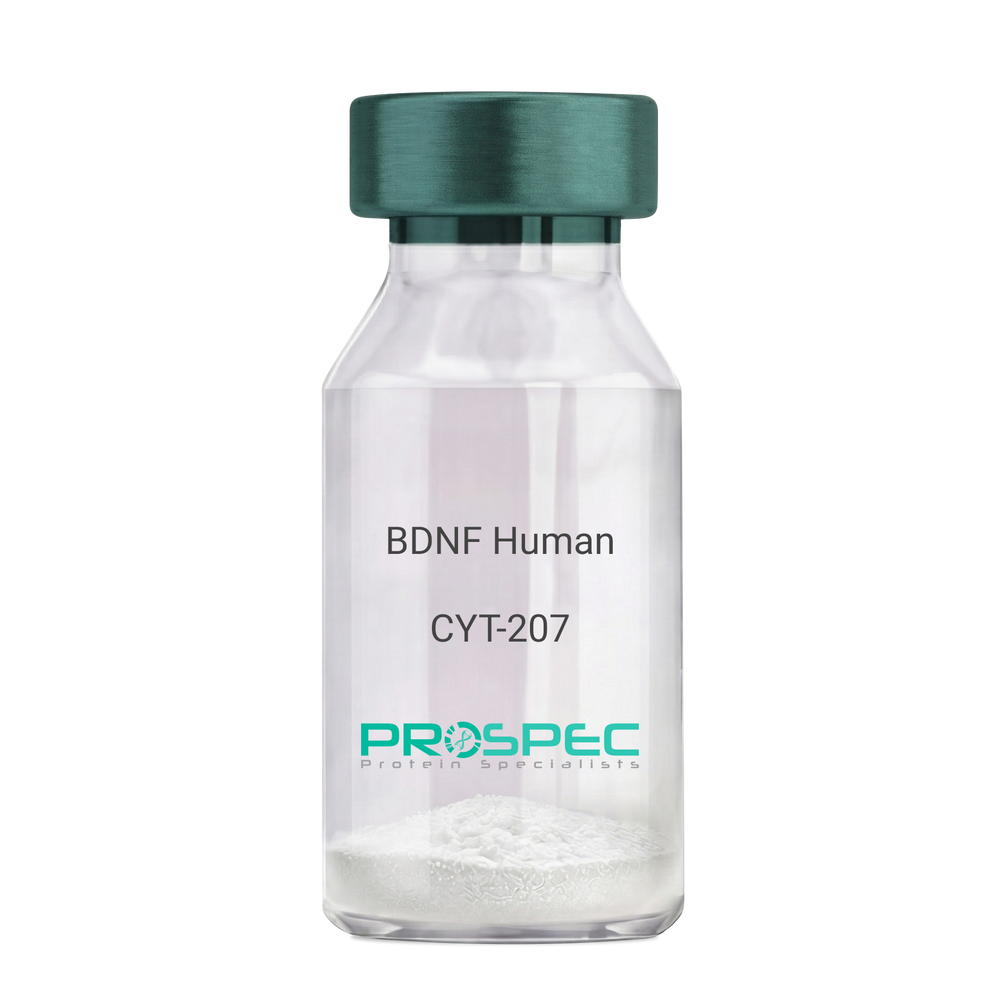
  • View Data Sheet

    Name :

    BDNF Human

    Description:

    Brain-Derived Neurotrophic Factor Human Recombinant

    Brain-Derived Neurotrophic Factor, BDNF, MGC34632.

    Product # :

    CYT-207

    Price :

    Quantity :

    Shipping Method :

    Room Temp Icon

    Shipped at Room temp

    Add To Cart

    More Info

    • description
    • source
    • formulation
    • purity
    • biological activity
    • More Info
    • Activity

    Description

    BDNF Human Recombinant produced in E.Coli is a homodimer, non-glycosylated, polypeptide chain containing 2 x 119 amino acids (and an N-terminal Met) and having a total molecular mass of 28kDa. BDNF Human Recombinant is purified by proprietary chromatographic techniques.

    Source

    Escherichia Coli.

    Formulation

    The protein was lyophilized with 20mM PB and 400mM NaCl, pH 7.2.

    Purity

    BDNF is greater than 950% as determined SDS-PAGE.

    Biological Activity

    The activity was determined using Immobilized Human TrkB-His tag protein 2ug/ml (100 μl/well) for its binding to NHS-Biotin BDNF. The ED50 of was found to be ≤20ng/mL

    Activity

    bdnf activity - Product image 1

    More Info

    • Introduction

      BDNF promotes the survival of neuronal populations that are all located either in the central nervous system or directly connected to it. BDNF is a major regulator of synaptic transmission and plasticity at adult synapses in many regions of the cns. The versatility of BDNF is emphasized by its contribution to a range of adaptive neuronal responses including long-term potentiation (ltp), long-term depression (ltd), certain forms of short-term synaptic plasticity, as well as homeostatic regulation of intrinsic neuronal excitability.

    • Synonyms

      Brain-Derived Neurotrophic Factor, BDNF, MGC34632.

    • Physical Appearance

      Sterile Filtered White lyophilized (freeze-dried) powder.

    • Stability

      Lyophilized BDNF although stable at room temperature for 3 weeks, should be stored desiccated below -18°C. Upon reconstitution BDNF should be stored at 4°C between 2-7 days and for future use below -18°C.For long term storage it is recommended to add a carrier protein (0.1% HSA or BSA).Please prevent freeze-thaw cycles.

    • Solubility

      It is recommended to reconstitute the lyophilized BDNF in sterile 18M-cm H2O not less than 100µg/ml, which can then be further diluted to other aqueous solutions.

    • Amino Acid Sequence

      HSDPARRGE LSVCDSISEW VTAADKKTAV DMSGGTVTVL EKVPVSKGQL KQYFYETKCN PMGYTKEGCR GIDKRHWNSQ CRTTQSYVRA LTMDSKKRIG WRFIRIDTSC VCTLTIKRGR.

    • Background

      Final Thoughts

      Although more research is needed on the safety and effectiveness of BDNF human recombinant, trials suggest that this laboratory-produced protein may be effective in managing and treating several neurological and psychiatric disorders. It's important for experts to stay up to date on the latest developments and research to learn more about potential risks and benefits.

      What is the molecular weight/Mw of BDNF Protein?
      BDNF Protein has a total Mw of 27kDa.

      What is the source or expression system of BDNF Protein?
      Escherichia Coli.

      What is the Purity of BDNF Protein?
      BDNF Protein is >97% pure as determined by SDS-PAGE.

      What is the Biological Activity of BDNF Protein?
      The ED50, as determined by the dose-dependent induction of C6 cells proliferation, is 1.3-2µg/ml.

      What is the amino acid sequence of BDNF Protein?
      MHSDPARRGE LSVCDSISEW VTAADKKTAV DMSGGTVTVL EKVPVSKGQL KQYFYETKCN PMGYTKEGCR GIDKRHWNSQ CRTTQSYVRA LTMDSKKRIG WRFIRIDTSC VCTLTIKRGR.

      What applications can BDNF Protein be used in?
      BDNF Protein can probably be used in western blot, ELISA and Lateral Flow.

      What is the endotoxin level for BDNF Protein?
      The endotoxin level is minimal, BDNF Protein was purified using conventional chromatography techniques.

    • Protein content

      BDNF quantitation was carried out by two independent methods:1. UV spectroscopy at 280 nm using the absorbency value of 1.6 as the extinction coefficient for a 0.1% (1mg/ml) solution. This value is calculated by the PC GENE computer analysis program of protein sequences (IntelliGenetics). 2. Analysis by RP-HPLC, using a standard solution of Brain-derived Neurotrophic Factor as a Reference Standard.

    ProSpec's products are furnished for LABORATORY RESEARCH USE ONLY. The product may not be used as drugs, agricultural or pesticidal products, food additives or household chemicals.

    Bdnf Human
  • View Data Sheet

    Name :

    COAA E.Coli

    Description:

    Pantothenate Kinase E.Coli Recombinant

    PanK, ts-9, rts.

    Product # :

    PKA-022

    Price :

    Quantity :

    Shipping Method :

    Ice Icon

    Shipped with Ice Packs

    Add To Cart

    More Info

    • description
    • source
    • formulation
    • purity
    • More Info

    Description

    COAA E.Coli Recombinant produced in E.coli is a single, non-glycosylated polypeptide chain containing 340 amino acids (1-316) and having a molecular mass of 38.9kDa.COAA is fused to a 24 amino acid His-tag at N-terminus & purified by proprietary chromatographic techniques.

    Source

    E.coli.

    Formulation

    The COAA solution (1mg/ml) contains 20mM Tris-HCl buffer (pH 8.0), 200mM NaCl, 2mM DTT and 10% glycerol.

    Purity

    Greater than 95% as determined by SDS-PAGE.

    More Info

    • Introduction

      COAA is a member of the prokaryotic pantothenate kinase family and it is the first enzyme in the Coenzyme A biosynthetic pathway. COAA phosphorylates pantothenate (vitamin B5) to form 4'-phosphopantothenate. The key factor controlling the intracellular CoA concentration is the regulation of COAA activity by feedback inhibition.

    • Synonyms

      PanK, ts-9, rts.

    • Physical Appearance

      Sterile Filtered colorless solution.

    • Stability

      Store at 4°C if entire vial will be used within 2-4 weeks. Store, frozen at -20°C for longer periods of time. For long term storage it is recommended to add a carrier protein (0.1% HSA or BSA).Avoid multiple freeze-thaw cycles.

    • Amino Acid Sequence

      MGSSHHHHHH SSGLVPRGSH MGSHMSIKEQ TLMTPYLQFD RNQWAALRDS VPMTLSEDEI ARLKGINEDL SLEEVAEIYL PLSRLLNFYI SSNLRRQAVL EQFLGTNGQR IPYIISIAGS VAVGKSTTAR VLQALLSRWP EHRRVELITT DGFLHPNQVL KERGLMKKKG FPESYDMHRL VKFVSDLKSG VPNVTAPVYS HLIYDVIPDG DKTVVQPDIL ILEGLNVLQS GMDYPHDPHH VFVSDFVDFS IYVDAPEDLL QTWYINRFLK FREGAFTDPD SYFHNYAKLT KEEAIKTAMT LWKEINWLNL KQNILPTRER ASLILTKSAN HAVEEVRLRK.

    ProSpec's products are furnished for LABORATORY RESEARCH USE ONLY. The product may not be used as drugs, agricultural or pesticidal products, food additives or household chemicals.

    Coaa
  • View Data Sheet

    Name :

    PFKM Antibody

    Description:

    Phosphofructokinase Muscle, Mouse Anti Human

    EC 2.7.1.11, GSD7, PFK-1, PFK1, PFKA, PFKX, Phosphofructokinase-M, Phosphofructokinase 1, Phosphohexokinase, Phosphofructo-1-kinase isozyme A, MGC8699, PFKM. 

    Product # :

    ANT-475

    Price :

    Quantity :

    Shipping Method :

    Ice Icon

    Shipped with Ice Packs

    Add To Cart

    More Info

    • formulation
    • More Info

    Formulation

    1mg/ml containing PBS, pH-7.4, 10% Glycerol and 0.01% Sodium Azide.

    More Info

    • Introduction

      PFKM is a regulatory glycolytic enzyme that converts fructose 6-phosphate and ATP into fructose 1,6-bisphosphate (through PFK-1), fructose 2,6-bisphosphate (through PFK-2) and ADP. Three phosphofructokinase isozymes exist in humans: muscle, liver and platelet. Mutations in PFKM gene have been related with glycogen storage disease type VII, also identified as Tarui disease.

    • Synonyms

      EC 2.7.1.11, GSD7, PFK-1, PFK1, PFKA, PFKX, Phosphofructokinase-M, Phosphofructokinase 1, Phosphohexokinase, Phosphofructo-1-kinase isozyme A, MGC8699, PFKM.

    • Physical Appearance

      Sterile Filtered colorless solution.

    • Immunogen

      Anti-human PFKM mAb, clone PAT2F11A, is derived from hybridization of mouse F0 myeloma cells with spleen cells from BALB/c mice immunized with a recombinant human PFKM protein.

    • Ig Subclass

      Mouse IgG2a heavy chain and Kappa light chain.

    • Clone

      PAT2F11A.

    • Applications

      The antibody has been tested by ELISA and Western blot analysis to assure specificity and reactivity. Since application varies, however, each investigation should be titrated by the reagent to obtain optimal results. Recommended dilution range for Western blot analysis is 1:500 ~ 1:2000. Recommended starting dilution is 1:2000.

    • Type

      Mouse Anti Human Monoclonal.

    • Storage Procedures

      For periods up to 1 month store at 4°C, for longer periods of time, store at -20°C. Prevent freeze thaw cycles.

    • Purification Method

      PFKM antibody was purified from mouse ascitic fluids by protein-G affinity chromatography.

    ProSpec's products are furnished for LABORATORY RESEARCH USE ONLY. The product may not be used as drugs, agricultural or pesticidal products, food additives or household chemicals.

    Pfkm Antibody
  • View Data Sheet

    Name :

    Thymopentin

    Description:

    Thymopentin

    Product # :

    HOR-241

    Price :

    Quantity :

    Shipping Method :

    Room Temp Icon

    Shipped at Room temp

    Add To Cart

    More Info

    • description
    • formulation
    • purity
    • biological activity
    • More Info

    Description

    Thymopentin has a molecular formula of C30H49N9O9, Arg-Lys-Asp-Val-Tyr-OH having an Mw of 679.8 Dalton.

    Formulation

    The protein (1mg/ml) was lyophilized with no additives.

    Purity

    Greater than 99.0% as determined by:
    (a) Analysis by RP-HPLC.
    (b) Analysis by SDS-PAGE.

    Biological Activity

    What is the molecular weight/Mw of THYMOPENTIN Protein? THYMOPENTIN Protein has a total Mw of 0.67kDa. What is the Purity of THYMOPENTIN Protein? THYMOPENTIN Protein is >99% pure as determined by SDS-PAGE. What is the Biological Activity of THYMOPENTIN Protein? The biological functionality of THYMOPENTIN Protein will be determined in the future. What applications can THYMOPENTIN Protein be used in? THYMOPENTIN Protein can probably be used in western blot, ELISA and Lateral Flow. What is the endotoxin level for THYMOPENTIN Protein? The endotoxin level is minimal, THYMOPENTIN Protein was purified using conventional chromatography techniques.

    More Info

    • Introduction

      Thymopentin, also known as TP-5, is a synthetic pentapeptide which is the active site of the naturally occurring hormone thymopoietin with immunomodulating properties (corresponding to the amino acids 32-36 of thymopoietin). Thymopentin enhances the production of thymic T cells and may help restore immunocompetence in immunosuppressed subjects. This agent also augments the effects of ionizing radiation by arresting cancer cells in the G2/M phase of the cell cycle.

    • Physical Appearance

      Sterile Filtered White lyophilized (freeze-dried) powder.

    • Stability

      Lyophilized Thymopentin although stable at room temperature for 3 weeks, should be stored desiccated below -18°C. Upon reconstitution TP-5 should be stored at 4°C between 2-7 days and for future use below -18°C.For long term storage it is recommended to add a carrier protein (0.1% HSA or BSA).Please prevent freeze-thaw cycles.

    • Solubility

      It is recommended to reconstitute the lyophilized Thymopentin in sterile 18MΩ-cm H2O not less than 100 µg/ml, which can then be further diluted to other aqueous solutions.

    ProSpec's products are furnished for LABORATORY RESEARCH USE ONLY. The product may not be used as drugs, agricultural or pesticidal products, food additives or household chemicals.

    Thymopentin
  • View Data Sheet

    Name :

    IFIH1 Human

    Description:

    Interferon Induced With Helicase C Domain 1 Human Recombinant

    Interferon-induced helicase C domain-containing protein 1, Clinically amyopathic dermatomyositis autoantigen 140 kDa, CADM-140 autoantigen, Helicase with 2 CARD domains, Helicard, Interferon-induced with helicase C domain protein 1, Melanoma differentiation-associated protein 5, MDA-5, Murabutide down-regulated protein, RIG-I-like receptor 2, RLR-2, RNA helicase-DEAD box protein 116, IFIH1, MDA5, RH116, Hlcd, IDDM19.

    Product # :

    PRO-1505

    Price :

    Quantity :

    Shipping Method :

    Ice Icon

    Shipped with Ice Packs

    Add To Cart

    More Info

    • description
    • source
    • formulation
    • purity
    • More Info

    Description

    IFIH1 Human Recombinant produced in SF9 is a glycosylated, polypeptide chain having a calculated molecular mass of 152,000 Dalton. IFIH1 is expressed with a -10xHis tag at N-terminus and purified by proprietary chromatographic techniques.

    Source

    Sf9 Insect Cells.

    Formulation

    IFIH1 is supplied in 20mM HEPES buffer pH-7.9, 550mM NaCl and 6M Urea.

    Purity

    Greater than 93.0% as determined by SDS-PAGE.

    More Info

    • Introduction

      IFIH1 is a DEAD box protein which is upregulated in response to treatment with beta-interferon and a protein kinase C-activating compound, mezerein. Irreversible reprogramming of melanomas can be attained by therapy with both these agents; treatment with either agent alone only achieves reversible differentiation. DEAD box proteins are implicated in several cellular processes involving alteration of RNA secondary structure such as translation initiation, nuclear and mitochondrial splicing, and ribosome and spliceosome assembly.

    • Synonyms

      Interferon-induced helicase C domain-containing protein 1, Clinically amyopathic dermatomyositis autoantigen 140 kDa, CADM-140 autoantigen, Helicase with 2 CARD domains, Helicard, Interferon-induced with helicase C domain protein 1, Melanoma differentiation-associated protein 5, MDA-5, Murabutide down-regulated protein, RIG-I-like receptor 2, RLR-2, RNA helicase-DEAD box protein 116, IFIH1, MDA5, RH116, Hlcd, IDDM19.

    • Physical Appearance

      Sterile Filtered clear solution.

    • Stability

      Store at 4°C if entire vial will be used within 2-4 weeks. Store, frozen at -20°C for longer periods of time. Avoid multiple freeze-thaw cycles.

    ProSpec's products are furnished for LABORATORY RESEARCH USE ONLY. The product may not be used as drugs, agricultural or pesticidal products, food additives or household chemicals.

    Ifih1 Human
  • View Data Sheet

    Name :

    AKR7A3, Human

    Description:

    Aldo-Keto Reductase Family 7 Member A3 Human Recombinant

    AFAR2, Aflatoxin B1 aldehyde reductase member 3, AFB1 aldehyde reductase 2, AFB1-AR 2, AKR7A3.

    Product # :

    ENZ-1129

    Price :

    Quantity :

    Shipping Method :

    Ice Icon

    Shipped with Ice Packs

    Add To Cart

    More Info

    • description
    • source
    • formulation
    • purity
    • biological activity
    • More Info

    Description

    AKR7A3 Human Recombinant produced in E.Coli is a single, non-glycosylated polypeptide chain containing 331 amino acids (1-331) and having a molecular mass of 37.7 kDa.AKR7A3 is purified by proprietary chromatographic techniques.

    Source

    Escherichia Coli.

    Formulation

    The AKR7A3 solution (1mg/ml) contains 10% Glycerol and 20mM Tris-HCl buffer (pH 8.5).

    Purity

    Greater than 90.0% as determined by SDS-PAGE.

    Biological Activity

    Specific activity is > 800pmol/min/ug. It is defined by the amount of enzyme that catalyzes the reduction 1.0pmole of 1,2-Naphthoquinone presence of NADPH per minute at pH 7.0 at 25˚C.

    More Info

    • Introduction

      Aldo-Keto Reductase Family 7 Member A3 or AKR7A3, is an enzyme, it is part of the detoxification of aldehydes and ketones process. AKR7A3 diminishes the dialdehyde protein-binding form of aflatoxin B1 to the non-binding AFB1 dialcohol. The enzyme takes partin protection of liver from toxic and carcinogenic effects of AFB1, a potent hepatocarcinogen.

    • Synonyms

      AFAR2, Aflatoxin B1 aldehyde reductase member 3, AFB1 aldehyde reductase 2, AFB1-AR 2, AKR7A3.

    • Physical Appearance

      Sterile Filtered colorless solution.

    • Stability

      Store at 4°C if entire vial will be used within 2-4 weeks. Store, frozen at -20°C for longer periods of time. For long term storage it is recommended to add a carrier protein (0.1% HSA or BSA).Avoid multiple freeze-thaw cycles.

    • Amino Acid Sequence

      MSRQLSRARP ATVLGAMEMG RRMDAPTSAA VTRAFLERGH TEIDTAFVYS EGQSETILGG LGLRLGGSDC RVKIDTKAIP LFGNSLKPDS LRFQLETSLK RLQCPRVDLF YLHMPDHSTP VEETLRACHQ LHQEGKFVEL GLSNYAAWEV AEICTLCKSN GWILPTVYQG MYNAITRQVE TELFPCLRHF GLRFYAFNPL AGGLLTGKYK YEDKDGKQPV GRFFGNTWAE MYRNRYWKEH HFEGIALVEK ALQAAYGASA PSMTSATLRW MYHHSQLQGA HGDAVILGMS SLEQLEQNLA AAEEGPLEPA VVDAFNQAWH LVAHECPNYF R

    ProSpec's products are furnished for LABORATORY RESEARCH USE ONLY. The product may not be used as drugs, agricultural or pesticidal products, food additives or household chemicals.

    Akr7A3 Enzyme
  • View Data Sheet

    Name :

    SKA1 Human

    Description:

    Spindle And Kinetochore Associated Complex Subunit 1 Human Recombinant

    Spindle and kinetochore-associated protein 1, SKA1, C18orf24, Spindle And Kinetochore Associated Complex Subunit 1.

    Product # :

    PRO-1896

    Price :

    Quantity :

    Shipping Method :

    Ice Icon

    Shipped with Ice Packs

    Add To Cart

    More Info

    • description
    • source
    • formulation
    • purity
    • More Info

    Description

    SKA1 Human Recombinant produced in E. coli is a single polypeptide chain containing 278 amino acids (1-255) and having a molecular mass of 31.9 kDa.SKA1 is fused to a 23 amino acid His-tag at N-terminus & purified by proprietary chromatographic techniques.

    Source

    Escherichia Coli.

    Formulation

    The SKA1 solution (0.25mg/1ml) contains 20mM Tris-HCl buffer (pH 8.0), 10% glycerol and 0.1M NaCl.

    Purity

    Greater than 80.0% as determined by SDS-PAGE.

    More Info

    • Introduction

      Spindle And Kinetochore Associated Complex Subunit 1 (SKA1) is a part of the kinetochore-microtubule interface which associates with microtubules as oligomeric assemblies. The complex facilitates the processive movement of microspheres along a microtubule in a depolymerization-coupled manner. SKA1 is necessary for timely anaphase onset during mitosis, when chromosomes undergo bipolar attachment on spindle microtubules leading to silencing of the spindle checkpoint.

    • Synonyms

      Spindle and kinetochore-associated protein 1, SKA1, C18orf24, Spindle And Kinetochore Associated Complex Subunit 1.

    • Physical Appearance

      Sterile Filtered colorless solution.

    • Stability

      Store at 4°C if entire vial will be used within 2-4 weeks. Store, frozen at -20°C for longer periods of time. For long term storage it is recommended to add a carrier protein (0.1% HSA or BSA).Avoid multiple freeze-thaw cycles.

    • Amino Acid Sequence

      MGSSHHHHHH SSGLVPRGSH MGSMASSDLE QLCSHVNEKI GNIKKTLSLR NCGQEPTLKT VLNKIGDEII VINELLNKLE LEIQYQEQTN NSLKELCESL EEDYKDIEHL KENVPSHLPQ VTVTQSCVKG SDLDPEEPIK VEEPEPVKKP PKEQRSIKEM PFITCDEFNG VPSYMKSRLT YNQINDVIKE INKAVISKYK ILHQPKKSMN SVTRNLYHRF IDEETKDTKG RYFIVEADIK EFTTLKADKK FHVLLNILRH CRRLSEVRGG GLTRYVIT.

    ProSpec's products are furnished for LABORATORY RESEARCH USE ONLY. The product may not be used as drugs, agricultural or pesticidal products, food additives or household chemicals.

    Ska1 Human
  • View Data Sheet

    Name :

    PRKAB1 Human

    Description:

    Protein Kinase, AMP-Activated, Beta 1 non-Catalytic Subunit Human Recombinant

    AMPK, HAMPKb, 5'-AMP-activated protein kinase subunit beta-1, AMPK subunit beta-1, AMPKb,PRKAB1.

    Product # :

    PKA-026

    Price :

    Quantity :

    Shipping Method :

    Ice Icon

    Shipped with Ice Packs

    Add To Cart

    More Info

    • description
    • source
    • formulation
    • purity
    • More Info

    Description

    PRKAB1 Human Recombinant produced in E.Coli is a single, non-glycosylated, polypeptide chain containing 293 amino acids (1-270 a.a.) and having a molecular mass of 32.8 kDa. The PRKAB1 is fused to a 23 amino acid His Tag at N-Terminus and purified by proprietary chromatographic techniques.

    Source

    E.coli.

    Formulation

    The PRKAB1 protein solution (0.5mg/ml) contains 20mM Tris-HCl buffer (pH 8.0), 0.15M NaCl, 10% glycerol and 1mM DTT.

    Purity

    Greater than 85% as determined by SDS-PAGE.

    More Info

    • Introduction

      5'-AMP-activated protein kinase subunit beta-1 (PRKAB1) hinders protein, carbohydrate and lipid biosynthesis, in addition to cell growth and proliferation. AMPK is a heterotrimer comprised of an alpha catalytic subunit, and non-catalytic beta and gamma subunits. AMPK acts via direct phosphorylation of metabolic enzymes, and longer-term effects by phosphorylation of transcription regulators. PRKAB1 is a regulator of cellular polarity by remodeling the actin cytoskeleton; most likely by indirectly activating myosin. Beta non-catalytic subunit acts as a scaffold on which the AMPK complex compiles, through its C-terminus that joins alpha (PRKAA1 or PRKAA2) and gamma subunits (PRKAG1, PRKAG2 or PRKAG3).

    • Synonyms

      AMPK, HAMPKb, 5'-AMP-activated protein kinase subunit beta-1, AMPK subunit beta-1, AMPKb,PRKAB1.

    • Physical Appearance

      Sterile Filtered colorless solution.

    • Stability

      Store at 4°C if entire vial will be used within 2-4 weeks. Store, frozen at -20°C for longer periods of time. For long term storage it is recommended to add a carrier protein (0.1% HSA or BSA).Avoid multiple freeze-thaw cycles.

    • Amino Acid Sequence

      MGSSHHHHHH SSGLVPRGSH MGSMGNTSSE RAALERHGGH KTPRRDSSGG TKDGDRPKIL MDSPEDADLF HSEEIKAPEK EEFLAWQHDL EVNDKAPAQA RPTVFRWTGG GKEVYLSGSF NNWSKLPLTR SHNNFVAILD LPEGEHQYKF FVDGQWTHDP SEPIVTSQLG TVNNIIQVKK TDFEVFDALM VDSQKCSDVS ELSSSPPGPY HQEPYVCKPE ERFRAPPILP PHLLQVILNK DTGISCDPAL LPEPNHVMLN HLYALSIKDG VMVLSATHRY KKKYVTTLLY KPI

    ProSpec's products are furnished for LABORATORY RESEARCH USE ONLY. The product may not be used as drugs, agricultural or pesticidal products, food additives or household chemicals.

    Prkab1 Human
  • View Data Sheet

    Name :

    CHIKV Capsid

    Description:

    Chikungunya Capsid Recombinant

    Product # :

    CHI-005

    Price :

    Quantity :

    Shipping Method :

    Ice Icon

    Shipped with Ice Packs

    Add To Cart

    More Info

    • description
    • source
    • formulation
    • purity
    • More Info

    Description

    Recombinant Chikungunya Full length capsid protein containing 220 amino acids produced in E.coli having a molecular weight of 25kDa.

    Source

    Escherichia Coli.

    Formulation

    Sterile Filtered solution containing 1x PBS, 2M urea and 25mM K2CO3.

    Purity

    Protein is >90% pure as determined by SDS-PAGE.

    More Info

    • Introduction

      Chikungunya is an infection caused by the chikungunya virus which is passed to humans by two species of mosquito of the genus Aedes: A. albopictus and A. aegypti. Animal reservoirs of the virus include monkeys, birds, cattle, and rodents. The features of the disease are a sudden onset of fever 2-4 days after exposure. The fever typically lasts 2-7 days, while the associated joint pains usually last weeks or months but sometimes years. The mortality rate is a little less than 1 in 1,000. The disease has occurred in outbreaks in Asia, Europe and the Americas since 2004. CHIKV is a single-stranded positive-sense RNA genome, 11,800 nts long which encodes 2 open reading frames. The nucleocapsid is tightly enveloped by a host-derived lipid bilayer (envelope) supporting the virus-encoded envelope proteins. 80 glycoprotein spikes are C- terminally anchored within the viral envelope. The structural polyprotein is translated from a viral sub genomic mRNA, while as the 5 structural proteins (capsid, E3, E2, 6K, E1) are translated as a single polyprotein, from which capsid (C) is cleaved off to encapsidate. The envelope polyprotein precursor E3-E2-6K-E1 is translocated to the endoplasmatic reticulum. Polyprotein is processed by host signalases, resulting in E3, E2 & E1 forming viral hetero-trimeric spikes. The viral spikes majorly contains E2 and E1 facilitate cell receptor recognition, cell entry thru pH-dependent endocytosis and support viral budding.

    • Physical Appearance

      Sterile filtered colorless solution.

    • Stability

      CHIKV Capsid although stable at 4°C for 1 week, should be stored below -18°C. Please prevent freeze thaw cycles.

    • Purification Method

      Purified by proprietary chromatographic technique.

    ProSpec's products are furnished for LABORATORY RESEARCH USE ONLY. The product may not be used as drugs, agricultural or pesticidal products, food additives or household chemicals.

    Chikv Capsid
  • View Data Sheet

    Name :

    MIP 5 (68 a.a) Human

    Description:

    Macrophage Inflammatory Protein-5 (68 a.a) Human Recombinant (CCL15)

    Small inducible cytokine A15 precursor, CCL15, Macrophage inflammatory protein 5, MIP-5, MIP5, Chemokine CC-2, HCC-2, NCC-3, MIP- 1 delta, Leukotactin-1, LKN-1, Mrp-2b, C-C motif chemokine 15.

    Product # :

    CHM-011

    Price :

    Quantity :

    Shipping Method :

    Room Temp Icon

    Shipped at Room temp

    Add To Cart

    More Info

    • description
    • source
    • formulation
    • purity
    • biological activity
    • More Info

    Description

    Macrophage Inflammatory Protein-5 Human Recombinant produced in E.Coli is a single, non-glycosylated, polypeptide chain containing 68 amino acids and having a molecular mass of 7.4kDa. The MIP5 is purified by proprietary chromatographic techniques.

    Source

    Escherichia Coli.

    Formulation

    MIP5 was lyophilized from a 0.2µm filtered concentrated solution containing PBS, pH-7.4.

    Purity

    Greater than 97.0% as determined by:
    (a) Analysis by RP-HPLC.
    (b) Analysis by SDS-PAGE.

    Biological Activity

    Measured by its ability to chemoattract THP-1 human acute monocytic leukemia cells. The ED50 for this effect is typically 2-4ng/ml.

    More Info

    • Introduction

      CCL15, a new human CC chemokine, was isolated from a human fetal spleen cDNA library. CCL15 cDNA encodes a predicted 113 amino acid (aa) protein containing a putative signal peptide of 21 amino acids that is cleaved to generate a 92 aa residue mature protein. Within the CC family members, human CCL15 shares 45%, 44%, 35%, and 30% aa homology with mouse C10, human MPIF-1, human HCC-1, and mouse MIP-1?, respectively. The gene for MIP-5 is found on chromosome 17 where the genes for most of the human CC chemokines are located. Human CCL15 is expressed in T and B lymphocytes, NK cells, monocytes and monocyte-derived dendritic cells. Human MIP-5 is chemotactic for T cells and monocytes and has been shown to induce calcium flux in human CCR-1-transfected cells.

    • Synonyms

      Small inducible cytokine A15 precursor, CCL15, Macrophage inflammatory protein 5, MIP-5, MIP5, Chemokine CC-2, HCC-2, NCC-3, MIP- 1 delta, Leukotactin-1, LKN-1, Mrp-2b, C-C motif chemokine 15.

    • Physical Appearance

      Sterile Filtered White lyophilized (freeze-dried) powder.

    • Stability

      Lyophilized MIP-5 although stable at room temperature for 3 weeks, should be stored desiccated below -18°C. Upon reconstitution CCL15 should be stored at 4°C between 2-7 days and for future use below -18°C.For long term storage it is recommended to add a carrier protein (0.1% HSA or BSA).Please prevent freeze-thaw cycles.

    • Solubility

      It is recommended to reconstitute the lyophilized MIP5 in sterile 18MΩ-cm H2O not less than 100µg/ml, which can then be further diluted to other aqueous solutions.

    • Amino Acid Sequence

      SFHFAADCCT SYISQSIPCS LMKSYFETSS ECSKPGVIFL TKKGRQVCAK PSGPGVQDCM KKLKPYSI.

    ProSpec's products are furnished for LABORATORY RESEARCH USE ONLY. The product may not be used as drugs, agricultural or pesticidal products, food additives or household chemicals.

    Mip 5 68 Aa Human
  • View Data Sheet

    Name :

    Leptin qA Human, PEG

    Description:

    Leptin Quadruple Antagonist Pegylated Human Recombinant

    Product # :

    CYT-1251

    Price :

    Quantity :

    Shipping Method :

    Room Temp Icon

    Shipped at Room temp

    Add To Cart

    More Info

    • description
    • source
    • formulation
    • purity
    • biological activity
    • More Info

    Description

    Leptin Pegylated Quadruple Antagonist Human Recombinant is a single non-glycosilated polypeptide chain containing 146 amino and an additional Ala at N-terminus acids. The Human Leptin antagonist is bound to 20 kDa mono-PEG at N-terminus, resulting in 35.6 kDa. The Human Leptin Pegylated Quadruple Antagonist was mutated, resulting in D23L/L39A/D40A/F41A that was purified by proprietary chromatographic techniques.

    Source

    Escherichia coli.

    Formulation

    The Human Leptin Pegylated Quadruple Antagonist was lyophilized from a concentrated (0.65mg/ml) solution with 0.003mM NaHCO3.

    Purity

    Greater than 98.0% as determined by:

    (a) Gel filtration analysis.

    (b) Analysis by SDS-PAGE.

    Biological Activity

    Human Leptin Pegylated Quadruple Antagonist inhibits leptin-induced proliferation of BAF/3 cells stably transfected with the long form of human leptin receptor. Its in vitro activity is 6-8 fold lower than the non-pegylated human leptin antagonist but in vivo it has profound weight gain effect (as compared to the non-pegylated human leptin antagonist), resulting mainly from increased food intake. The in vivo activity of human pegylated super leptin antagonist was compared to that of human pegylated leptin antagonist is 9-27 fold higher.

    More Info

    • Physical Appearance

      White lyophilized (freeze-dried) powder.

    • Stability

      Lyophilized Human Leptin Pegylated Quadruple Antagonist although stable at room temperature for several weeks, should be stored desiccated below -18°C. Upon reconstitution at > 0.1 and up to 2mM of Human pegylated leptin antagonist and filter sterilization Human pegylated leptin antagonist can be stored at 4°C or even room temperature for several weeks making it suitable for long term infusion studies using osmotic pumps. At lower concentration addition of a carrier protein (0.1% HSA or BSA) is suggested. Please prevent freeze-thaw cycles.

    • Solubility

      It is recommended to reconstitute the lyophilized Human Leptin Pegylated Quadruple Antagonist in sterile water or sterile 0.4% NaHCO3 adjusted to pH 8-9, not less than 100µg/ml, which can then be further diluted with other aqueous solutions.

    • Background

      Leptin is a~16 kDa protein which is encoded by the obese gene. Leptin is a hormone which participates in regulating body weight, reproductive function and metabolism. leptin is expressed predominantly by adipocytes, which supports the idea that body weight is sensed as the total mass of fat in the body. Smaller amounts of leptin are also secreted by cellsin the epithelium of the stomach and in the placenta. Leptin receptors are highly expressed in areas of the hypothalamus which regulates body weight, as well as in T lymphocytes and vascular endothelial cells.

    • Protein content

      Protein quantization was carried out by UV spectroscopy at 280 nm using the absorbency value of 0.88 as the extinction coefficient for a 0.1% (1mg/ml) solution at pH 8.0. This value is calculated by the PC GENE computer analysis program of protein sequences (IntelliGenetics).

    ProSpec's products are furnished for LABORATORY RESEARCH USE ONLY. The product may not be used as drugs, agricultural or pesticidal products, food additives or household chemicals.

    Leptin Human Qa Peg
  • View Data Sheet

    Name :

    Fibronectin Recombinant, Oryza

    Description:

    Fibronectin, Oryza Human Recombinant

    Product # :

    PRO-2841

    Price :

    Quantity :

    Shipping Method :

    Room Temp Icon

    Shipped at Room temp

    Add To Cart

    More Info

    • description
    • source
    • formulation
    • purity
    • More Info

    Description

    Fibronectin Human Recombinant is a single, non-glycosylated polypeptide chain having a molecular mass of 216kDa. The Fibronectin is purified by proprietary chromatographic techniques.

    Source

    Oryza sativa (rice).

    Formulation

    The protein (1mg/ml) was lyophilized with no additives.

    Purity

    Greater than 95.0% as determined by SDS-PAGE.

    More Info

    • Physical Appearance

      Sterile Filtered White lyophilized (freeze-dried) powder.

    • Stability

      Lyophilized Fibronectin although stable at room temperature for 3 weeks, should be stored desiccated below -18°C. Upon reconstitution Fibronectin should be stored at 4°C between 2-7 days and for future use below -18°C. Please prevent freeze-thaw cycles.

    • Solubility

      It is recommended to reconstitute the lyophilized Fibronectin in sterile 18MΩ-cm H2O not less than 100µg/ml, which can then be further diluted to other aqueous solutions.

    • Background

      Fibronectin takes part in several cellular processes, including tissue repair, embryogenesis, blood clotting, and cell migration/adhesion.Plasma fibronectin level is elevated in severe coronary artery disease. Increased plasma fibronectin levels are related with venous thromboembolism mainly in males, and extend the probable association between biomarkers and risk factors for arterial atherothrombosis and VTE. Fibronectin consists in 2 main forms: 1) as an insoluble glycoprotein dimer that serves as a linker in the etracellular matrix and 2) as a soluble disulphide linked dimer found in the plasma. The plasma form is produced by hepatocytes, and the ECM form is synthesized by fibroblasts, chondrocytes, endothelial cells, macrophages, as well as certain epithelial cells. Fibronectin alos takes part as a general cell adhesion molecule by anchoring cells to collagen or proteoglycan substrates. Fibronectin organizes cellular interaction with the ECM by binding to different components of the extracellular matrix and to membrane-bound Fibronectin receptors on cell surfaces.

    ProSpec's products are furnished for LABORATORY RESEARCH USE ONLY. The product may not be used as drugs, agricultural or pesticidal products, food additives or household chemicals.

    Fibronectin Human Protein
  • View Data Sheet

    Name :

    CX3CL1 Human, Sf9

    Description:

    Fractalkine (CX3CL1) Human Recombinant, Sf9

    Fractalkine, CX3CL1, Neurotactin, CX3C membrane-anchored chemokine, Small inducible cytokine D1, NTN, NTT, CXC3, CXC3C, SCYD1, ABCD-3, C3Xkine.

    Product # :

    CHM-042

    Price :

    Quantity :

    Shipping Method :

    Ice Icon

    Shipped with Ice Packs

    Add To Cart

    More Info

    • description
    • source
    • formulation
    • purity
    • More Info
    • SDS-PAGE

    Description

    Fractalkine Human Recombinant produced in Sf9 Baculovirus cells is a single, glycosylated polypeptide chain containing 323 amino acids (25-339aa) and having a molecular mass of 34.3kDa.Fractalkine is fused to a 8 amino acid His tag at C-terminus and purified by proprietary chromatographic techniques.

    Source

    Sf9, Baculovirus cells.

    Formulation

    The Fractalkine solution (1 mg/ml) contains 10% Glycerol and Phosphate Buffered Saline (pH 7.4).

    Purity

    Greater than 90.0% as determined by SDS-PAGE.

    SDS-PAGE

    CX3CL1 Human, Sf9-SDS-PAGE - Product image 1

    More Info

    • Introduction

      Fractalkine soluble form is chemotactic for t-cells and monocytes, but not for neutrophils. Fractalkine membrane-bound form promotes adhesion of those leukocytes to endothelial cells. Fractalkine regulates leukocyte adhesion and migration processes at the endothelium and binds to CX3CR1. Fractalkine gene is located on human chromosome 16 along with some CC chemokines known as CCL17 and CCL22.

    • Synonyms

      Fractalkine, CX3CL1, Neurotactin, CX3C membrane-anchored chemokine, Small inducible cytokine D1, NTN, NTT, CXC3, CXC3C, SCYD1, ABCD-3, C3Xkine.

    • Physical Appearance

      Sterile Filtered colorless solution.

    • Stability

      Store at 4°C if entire vial will be used within 2-4 weeks. Store, frozen at -20°C for longer periods of time. For long term storage it is recommended to add a carrier protein (0.1% HSA or BSA).Avoid multiple freeze-thaw cycles.

    • Amino Acid Sequence

      QHHGVTKCNI TCSKMTSKIP VALLIHYQQN QASCGKRAII LETRQHRLFC ADPKEQWVKD
      AMQHLDRQAA ALTRNGGTFE KQIGEVKPRT TPAAGGMDES VVLEPEATGE SSSLEPTPSS
      QEAQRALGTS PELPTGVTGS SGTRLPPTPK AQDGGPVGTE LFRVPPVSTA ATWQSSAPHQ
      PGPSLWAEAK TSEAPSTQDP STQASTASSP APEENAPSEG QRVWGQGQSP RPENSLEREE
      MGPVPAHTDA FQDWGPGSMA HVSVVPVSSE GTPSREPVAS GSWTPKAEEP IHATMDPQRL GVLITPVPDA QAATRLEHHH HHH

    • Background

      What is the molecular weight/Mw of CX3CL1 HUMAN, SF9 Protein?
      CX3CL1 HUMAN, SF9 Protein has a total Mw of 34.3kDa.

      What is the source or expression system of CX3CL1 HUMAN, SF9 Protein?
      Sf9, Baculovirus cells.

      What is the Purity of CX3CL1 HUMAN, SF9 Protein?
      CX3CL1 HUMAN, SF9 Protein is >90% pure as determined by SDS-PAGE.

      What is the Biological Activity of CX3CL1 HUMAN, SF9 Protein?
      The biological functionality of CX3CL1 HUMAN, SF9 Protein will be determined in the future.

      What is the amino acid sequence of CX3CL1 HUMAN, SF9 Protein?
      QHHGVTKCNI TCSKMTSKIP VALLIHYQQN QASCGKRAII LETRQHRLFC ADPKEQWVKD
      AMQHLDRQAA ALTRNGGTFE KQIGEVKPRT TPAAGGMDES VVLEPEATGE SSSLEPTPSS
      QEAQRALGTS PELPTGVTGS SGTRLPPTPK AQDGGPVGTE LFRVPPVSTA ATWQSSAPHQ
      PGPSLWAEAK TSEAPSTQDP STQASTASSP APEENAPSEG QRVWGQGQSP RPENSLEREE
      MGPVPAHTDA FQDWGPGSMA HVSVVPVSSE GTPSREPVAS GSWTPKAEEP IHATMDPQRL GVLITPVPDA QAATRLEHHH HHH

      What applications can CX3CL1 HUMAN, SF9 Protein be used in?
      CX3CL1 HUMAN, SF9 Protein can probably be used in western blot, ELISA and Lateral Flow.

      What is the endotoxin level for CX3CL1 HUMAN, SF9 Protein?
      The endotoxin level is minimal, CX3CL1 HUMAN, SF9 Protein was purified using conventional chromatography techniques.


    ProSpec's products are furnished for LABORATORY RESEARCH USE ONLY. The product may not be used as drugs, agricultural or pesticidal products, food additives or household chemicals.

    Cx3Cl1 Human
  • View Data Sheet

    Name :

    MESDC1 Human

    Description:

    Mesoderm Development Candidate 1 Human Recombinant

    Mesoderm Development Candidate 1, MESDC1.

    Product # :

    PRO-1950

    Price :

    Quantity :

    Shipping Method :

    Ice Icon

    Shipped with Ice Packs

    Add To Cart

    More Info

    • description
    • source
    • formulation
    • purity
    • More Info

    Description

    MESDC1 Human Recombinant produced in E.coli is a single, non-glycosylated polypeptide chain containing 385 amino acids (1-362) and having a molecular mass of 40.1 kDa.MESDC1 is fused to a 23 amino acid His-tag at N-terminus & purified by proprietary chromatographic techniques.

    Source

    Escherichia Coli.

    Formulation

    The MESDC1 solution (0.5mg/ml) contains 20mM Tris-HCl buffer (pH 8.0), 0.1M NaCl, 10% glycerol and 1mM DTT.

    Purity

    Greater than 95.0% as determined by SDS-PAGE.

    More Info

    • Introduction

      Mesoderm development candidate 1 (MESDC1) is a member of the MESD family. MESDC1 is a 362 amino acid protein encoded by a gene which maps to human chromosome 15q25.1. MESDC1 serves as a chaperone for low-density lipoprotein receptor (LDLR) proteins in the ER, and specifically associates with Wnt signaling pathway coreceptors LRP5 and LPR6. MESDC1 is needed for proper LRP5/6 folding and maturation to the cell surface, which has a key role in Wnt signaling.

    • Synonyms

      Mesoderm Development Candidate 1, MESDC1.

    • Physical Appearance

      Sterile Filtered colorless solution.

    • Stability

      Store at 4°C if entire vial will be used within 2-4 weeks. Store, frozen at -20°C for longer periods of time. For long term storage it is recommended to add a carrier protein (0.1% HSA or BSA).Avoid multiple freeze-thaw cycles.

    • Amino Acid Sequence

      MGSSHHHHHH SSGLVPRGSH MGSMASGSAG KPTGEAASPA PASAIGGASS QPRKRLVSVC DHCKGKMQLV ADLLLLSSEA RPVLFEGPAS SGAGAESFEQ CRDTIIARTK GLSILTHDVQ SQLNMGRFGE AGDSLVELGD LVVSLTECSA HAAYLAAVAT PGAQPAQPGL VDRYRVTRCR HEVEQGCAVL RATPLADMTP QLLLEVSQGL SRNLKFLTDA CALASDKSRD RFSREQFKLG VKCMSTSASA LLACVREVKV APSELARSRC ALFSGPLVQA VSALVGFATE PQFLGRAAAV SAEGKAVQTA ILGGAMSVVS ACVLLTQCLR DLAQHPDGGA KMSDHRERLR NSACAVSEGC TLLSQALRER SSPRTLPPVN SNSVN.

    ProSpec's products are furnished for LABORATORY RESEARCH USE ONLY. The product may not be used as drugs, agricultural or pesticidal products, food additives or household chemicals.

    MESDC1 Human
  • View Data Sheet

    Name :

    Adiponectin Human, Trimeric

    Description:

    Adiponectin Human Recombinant, Trimeric form

    Acrp30, AdipoQ, GBP-28, APM-1, ACDC.

    Product # :

    CYT-233

    Price :

    Quantity :

    Shipping Method :

    Room Temp Icon

    Shipped at Room temp

    Add To Cart

    More Info

    • description
    • source
    • formulation
    • purity
    • biological activity
    • More Info

    Description

    Trimeric form of Adiponectin Human trimeric form was expressed in HEK293 cells. The cysteine 39 was replaced with Alanine (C39A) 9. hAd-C39A can only form a trimer, but not a hexamer or an HMW form.

    Source

    HEK293 (Human embryonic kidney cell line).

    Formulation

    Filtered (0.4µm) and lyophilized from 0.5mg/ml in 0.05M phosphate buffer, 0.075M NaCl, pH 7.4.

    Purity

    Greater than 95% as determined by SDS-PAGE.

    Biological Activity

    ED50= 3-8.5 μg/ml, as determined by its ability to inhibit proliferation of HASMCs induced by HB EGF.

    More Info

    • Introduction

      Adiponectin is a hormone exclusively expressed from adipose tissue.
      Many studies demonstrate that Adiponectin has direct anti-diabetic, anti-atherogenic and anti-inflammatory functions. APM-1 can increase insulin sensitivity of skeletal muscle. Attenuate hepatic lipogenesis and gluconeogenesis, regulate NO production in endothelial cells, inhibit proliferation of smooth muscle cells and prevent lipid accumulation of macrophage cells.
      In the circulation, Adiponectin is present as three different oligomeric complexes, including the high molecular weight (HMW), the middle molecular weight (MMW, also called hexamer) and low molecular weigh (MMW, also called trimer) forms 8. Different oligomeric complex of Adiponectin activates different signaling pathways and exerts distinct functions.

    • Synonyms

      Acrp30, AdipoQ, GBP-28, APM-1, ACDC.

    • Physical Appearance

      Filtered White lyophilized (freeze-dried) powder.

    • Stability

      Store lyophilized Adiponectin at -20°C. Aliquot the product after reconstitution to avoid repeated freezing/thawing cycles. Reconstituted protein can be stored at 4°C for a limited period of time; it does not show any change after two weeks at 4°C.

    • Solubility

      Add deionized water to a working volume of 0.5mg/ml and let the lyophilized pellet dissolve completely. Product is not sterile! Please filter the product by an appropriate sterile filter before using it in the cell culture.

    • Amino Acid Sequence

      ETTTQGPGVL LPLPKGAATG WMAGIPGHPG HNGAPGRDGR DGTPGEKGEK GDPGLIGPKG DIGETGVPGA EGPRGFPGIQ GRKGEPGEGA YVYRSAFSVG LETYVTIPNM PIRFTKIFYN QQNHYDGSTG KFHCNIPGLY YFAYHIVYMK DVKVSLFKKD KAMLFTYDQY QENNVDQASG SVLLHLEVGD QVWLQVYGEG ERNGLYADND NDSTFTGFLL YHDTNDYKDD DDK.

    • Background

      What is the molecular weight/Mw of ADIPONECTIN Protein?
      ADIPONECTIN Protein has a total Mw of 25 kDa.

      What is the source or expression system of ADIPONECTIN Protein?
      HEK293.

      What is the Purity of ADIPONECTIN Protein?
      ADIPONECTIN Protein is >95% pure as determined by SDS-PAGE.

      What is the Biological Activity of ADIPONECTIN Protein?
      ED50= 3-8.5 μg/ml, as determined by its ability to inhibit proliferation of HASMCs induced by HB EGF.

      What is the amino acid sequence of ADIPONECTIN Protein?
      ETTTQGPGVL LPLPKGAATG WMAGIPGHPG HNGAPGRDGR DGTPGEKGEK GDPGLIGPKG DIGETGVPGA EGPRGFPGIQ GRKGEPGEGA YVYRSAFSVG LETYVTIPNM PIRFTKIFYN QQNHYDGSTG KFHCNIPGLY YFAYHIVYMK DVKVSLFKKD KAMLFTYDQY QENNVDQASG SVLLHLEVGD QVWLQVYGEG ERNGLYADND NDSTFTGFLL YHDTNDYKDD DDK.

      What applications can ADIPONECTIN Protein be used in?
      ADIPONECTIN Protein can probably be used in western blot, ELISA and Lateral Flow.

      What is the endotoxin level for ADIPONECTIN Protein?
      The endotoxin level is minimal, ADIPONECTIN Protein was purified using conventional chromatography techniques.

    ProSpec's products are furnished for LABORATORY RESEARCH USE ONLY. The product may not be used as drugs, agricultural or pesticidal products, food additives or household chemicals.

    Adiponectin Human Trimeric
  • 1
  • …
  • 12
  • 13
  • 14
  • 15
  • 16
  • …
  • 42
Your browser does not support the video tag.

Products

  • Cytokines
  • Growth Factors
  • Chemokines
  • CD Antigens
  • Neurotrophins
  • Hormones
  • Enzymes
  • Viral Antigens
  • Recombinant Proteins
  • Natural Proteins
  • Monoclonal Antibodies
  • Polyclonal Antibodies
  • Thermal Packaging

About

  • Company
  • Founder
  • Contribution
  • Contact Us
  • My Account

Ordering

  • Ordering Method
  • Ordering - Credit Card
  • Ordering PO
  • Shipping Fees
  • FAQ's

Legal

  • Terms & Conditions
  • Privacy
  • Site Map
  • info@prospecbio.com
  • Facebook
  • Instagram
  • Linkedin Profile

© 2026 ProSpec-Tany TechnoGene Ltd. All Rights Reserved.

  • Choosing a selection results in a full page refresh.
  • Opens in a new window.