Skip to content

High-quality research proteins.

  • 1-800-805-6531

  • Mon - Sat 8.00-18.00, Sun - Closed

  • info@prospecbio.com

  • PO Box 6591 East Brunswick NJ 08816

  • Products
    • Cytokines
    • Growth factors
    • Chemokines
    • Cd antigens
    • Neurotrophins
    • Hormones
    • Enzymes
    • Viral antigens
    • Recombinant proteins
    • Natural proteins
    • Monoclonal antibodies
    • Polyclonal antibodies
    • Thermal Packaging
  • About
    • Company
    • Founder
    • Contribution
  • Customers
    • Eastern Asia
    • Eastern Europe
    • North America
    • South America
    • South East Asia
    • Southern Asia
    • Western Europe
  • Ordering
    • Ordering Method
    • Ordering - Credit Card
    • Ordering - PO
    • Shipping Fees
    • FAQs
  • Services
    • DNA Cloning
    • Protein Expression
    • Monoclonal Antibody
    • Fermentation
    • Technology License
  • Contact us
Log in

Country/region

  • USD $ | Albania
  • USD $ | Andorra
  • USD $ | Argentina
  • USD $ | Armenia
  • USD $ | Australia
  • USD $ | Austria
  • USD $ | Azerbaijan
  • USD $ | Belarus
  • USD $ | Belgium
  • USD $ | Bolivia
  • USD $ | Brazil
  • USD $ | Bulgaria
  • USD $ | Cambodia
  • USD $ | Canada
  • USD $ | Chile
  • USD $ | China
  • USD $ | Colombia
  • USD $ | Costa Rica
  • USD $ | Croatia
  • USD $ | Cyprus
  • USD $ | Czechia
  • USD $ | Denmark
  • USD $ | Estonia
  • USD $ | Finland
  • USD $ | France
  • USD $ | Georgia
  • USD $ | Germany
  • USD $ | Greece
  • USD $ | Hong Kong SAR
  • USD $ | Hungary
  • USD $ | Iceland
  • USD $ | India
  • USD $ | Ireland
  • USD $ | Israel
  • USD $ | Italy
  • USD $ | Japan
  • USD $ | Kazakhstan
  • USD $ | Latvia
  • USD $ | Liechtenstein
  • USD $ | Lithuania
  • USD $ | Madagascar
  • USD $ | Malta
  • USD $ | Mexico
  • USD $ | Moldova
  • USD $ | Monaco
  • USD $ | Netherlands
  • USD $ | New Zealand
  • USD $ | North Macedonia
  • USD $ | Norway
  • USD $ | Panama
  • USD $ | Paraguay
  • USD $ | Peru
  • USD $ | Philippines
  • USD $ | Poland
  • USD $ | Portugal
  • USD $ | Romania
  • USD $ | Singapore
  • USD $ | Slovakia
  • USD $ | Slovenia
  • USD $ | South Africa
  • USD $ | South Korea
  • USD $ | Spain
  • USD $ | Sri Lanka
  • USD $ | Sweden
  • USD $ | Switzerland
  • USD $ | Taiwan
  • USD $ | Thailand
  • USD $ | Türkiye
  • USD $ | Ukraine
  • USD $ | United Kingdom
  • USD $ | United States
  • USD $ | Uruguay
  • USD $ | Vatican City
  • USD $ | Venezuela
  • USD $ | Vietnam
  • Facebook
  • Instagram
logoProSpec - Recombinant Protein Manufacturer for academic and R&D industry
Become a distributor
Account Log in
Wishlist
Cart Cart(0)
  • Products
    +
    • Cytokines
    • Growth factors
    • Chemokines
    • Cd antigens
    • Neurotrophins
    • Hormones
    • Enzymes
    • Viral antigens
    • Recombinant proteins
    • Natural proteins
    • Monoclonal antibodies
    • Polyclonal antibodies
    • Thermal Packaging
  • About
    +
    • Company
    • Founder
    • Contribution
  • Customers
    +
    • Eastern Asia
    • Eastern Europe
    • North America
    • South America
    • South East Asia
    • Southern Asia
    • Western Europe
  • Ordering
    +
    • Ordering Method
    • Ordering - Credit Card
    • Ordering - PO
    • Shipping Fees
    • FAQs
  • Services
    +
    • DNA Cloning
    • Protein Expression
    • Monoclonal Antibody
    • Fermentation
    • Technology License
  • Contact us

Item added to your cart

View cart
View All
  • Cytokines
  • Growth factors
  • Chemokines
  • Cd antigens
  • Neurotrophins
  • Hormones
  • Enzymes
  • Viral antigens
  • Recombinant proteins
  • Natural proteins
  • Monoclonal antibodies
  • Polyclonal antibodies
  • Thermal Packaging
  • Tumor Necrosis Factor

    Tumor Necrosis Factor

    View All
  • 4-1BB

    4-1BB

    View All
  • Adiponectin

    Adiponectin

    View All
  • AIF1

    AIF1

    View All
  • Other Cytokines

    Other Cytokines

    View All
  • AITRL

    AITRL

    View All
  • Angiopoietin

    Angiopoietin

    View All
  • Apolipoprotein

    Apolipoprotein

    View All
  • B-Cell Activating Factor

    B-Cell Activating Factor

    View All
  • Beta Defensin

    Beta Defensin

    View All
  • Bone Morphogenetic Protein

    Bone Morphogenetic Protein

    View All
  • B type Natriuretic Peptide

    B type Natriuretic Peptide

    View All
  • BST

    BST

    View All
  • Betacellulin

    Betacellulin

    View All
  • Cardiotrophin

    Cardiotrophin

    View All
  • Activin

    Activin

    View All
  • Fibroblast Growth Factor

    Fibroblast Growth Factor

    View All
  • Other Growth Factors

    Other Growth Factors

    View All
  • CSF

    CSF

    View All
  • CTGF

    CTGF

    View All
  • IGFBP

    IGFBP

    View All
  • VEGF Protein

    VEGF Protein

    View All
  • EGF

    EGF

    View All
  • Epigen

    Epigen

    View All
  • Erythropoietin

    Erythropoietin

    View All
  • Insulin-Like Growth Factor

    Insulin-Like Growth Factor

    View All
  • Growth Hormone

    Growth Hormone

    View All
  • HDGF

    HDGF

    View All
  • Hepatocyte Growth Factor

    Hepatocyte Growth Factor

    View All
  • Insulin

    Insulin

    View All
  • BCA-1/ BLC (CXCL13)

    BCA-1/ BLC (CXCL13)

    View All
  • BRAK (CXCL14)

    BRAK (CXCL14)

    View All
  • C-10 (CCL6)

    C-10 (CCL6)

    View All
  • Other Chemokines

    Other Chemokines

    View All
  • MEC (CCL28)

    MEC (CCL28)

    View All
  • LD78-beta (CCL3L1)

    LD78-beta (CCL3L1)

    View All
  • CTACK (CCL27)

    CTACK (CCL27)

    View All
  • CXCL16

    CXCL16

    View All
  • CXCL17

    CXCL17

    View All
  • Platelet Factor-4 (CXCL4)

    Platelet Factor-4 (CXCL4)

    View All
  • ENA-78 (CXCL5)

    ENA-78 (CXCL5)

    View All
  • Eotaxin (CCL11,24,26)

    Eotaxin (CCL11,24,26)

    View All
  • Exodus-2 (CCL21)

    Exodus-2 (CCL21)

    View All
  • Fractalkine (CX3CL1)

    Fractalkine (CX3CL1)

    View All
  • CXCL6

    CXCL6

    View All
  • Other CD Antigens

    Other CD Antigens

    View All
  • CD14

    CD14

    View All
  • CD164

    CD164

    View All
  • CD1

    CD1

    View All
  • CD2

    CD2

    View All
  • CD200

    CD200

    View All
  • CD207

    CD207

    View All
  • CD226

    CD226

    View All
  • CD23

    CD23

    View All
  • CD244

    CD244

    View All
  • CD247

    CD247

    View All
  • CD27

    CD27

    View All
  • CD274

    CD274

    View All
  • CD300

    CD300

    View All
  • CD33

    CD33

    View All
  • Other Neurotrophins

    Other Neurotrophins

    View All
  • Beta-NGF

    Beta-NGF

    View All
  • BDNF

    BDNF

    View All
  • CDNF

    CDNF

    View All
  • CNTF

    CNTF

    View All
  • GDNF

    GDNF

    View All
  • Glia Maturation Factor

    Glia Maturation Factor

    View All
  • MANF

    MANF

    View All
  • Midkine

    Midkine

    View All
  • Neuroglobin

    Neuroglobin

    View All
  • Neurotrophic factors

    Neurotrophic factors

    View All
  • Neuregulin

    Neuregulin

    View All
  • Neuropilin

    Neuropilin

    View All
  • Pigment Epithelium-Derived Factor

    Pigment Epithelium-Derived Factor

    View All
  • Pleiotrophin

    Pleiotrophin

    View All
  • Peptide Hormones

    Peptide Hormones

    View All
  • Other Hormones

    Other Hormones

    View All
  • HCG

    HCG

    View All
  • Endothelin

    Endothelin

    View All
  • Exendin

    Exendin

    View All
  • FSH

    FSH

    View All
  • Glucagon

    Glucagon

    View All
  • GHRP

    GHRP

    View All
  • GLP

    GLP

    View All
  • Thyrostimulin

    Thyrostimulin

    View All
  • Inhibin A

    Inhibin A

    View All
  • LHRH

    LHRH

    View All
  • Melanotan

    Melanotan

    View All
  • Procalcitonin

    Procalcitonin

    View All
  • PTH

    PTH

    View All
  • Peroxiredoxin

    Peroxiredoxin

    View All
  • Peptidase

    Peptidase

    View All
  • Synthetase

    Synthetase

    View All
  • Transferase

    Transferase

    View All
  • Hydrolase

    Hydrolase

    View All
  • Dehydrogenase

    Dehydrogenase

    View All
  • ACE2

    ACE2

    View All
  • Esterase

    Esterase

    View All
  • Protein Kinases

    Protein Kinases

    View All
  • Other Enzymes

    Other Enzymes

    View All
  • Phosphatase

    Phosphatase

    View All
  • Deaminase

    Deaminase

    View All
  • Oxygenase

    Oxygenase

    View All
  • Adenylate Kinase

    Adenylate Kinase

    View All
  • Lyase

    Lyase

    View All
  • Chagas

    Chagas

    View All
  • SARS

    SARS

    View All
  • Influenza

    Influenza

    View All
  • ASFV

    ASFV

    View All
  • Astrovirus

    Astrovirus

    View All
  • Borrelia

    Borrelia

    View All
  • Helicobacter Pylori

    Helicobacter Pylori

    View All
  • Chikungunya

    Chikungunya

    View All
  • Chlamydia

    Chlamydia

    View All
  • Cytomegalo

    Cytomegalo

    View All
  • Dengue

    Dengue

    View All
  • EBV

    EBV

    View All
  • Ebola

    Ebola

    View All
  • Feline Leukemia Virus

    Feline Leukemia Virus

    View All
  • Hepatitis A

    Hepatitis A

    View All
  • Other

    Other

    View All
  • Actin

    Actin

    View All
  • ADAM

    ADAM

    View All
  • Complement Component

    Complement Component

    View All
  • Ag85

    Ag85

    View All
  • Eukaryotic Translation Initiation Factor

    Eukaryotic Translation Initiation Factor

    View All
  • Anterior Gradient Protein

    Anterior Gradient Protein

    View All
  • Heat Shock Protein

    Heat Shock Protein

    View All
  • Alpha-2-HS-Glycoprotein

    Alpha-2-HS-Glycoprotein

    View All
  • Hemoglobin

    Hemoglobin

    View All
  • Allergy

    Allergy

    View All
  • Anaplasma

    Anaplasma

    View All
  • Angiogenin

    Angiogenin

    View All
  • Ankyrin Repeat Domain

    Ankyrin Repeat Domain

    View All
  • Annexin

    Annexin

    View All
  • Other Natural Proteins

    Other Natural Proteins

    View All
  • Aprotinin

    Aprotinin

    View All
  • Transferrin

    Transferrin

    View All
  • Avidin

    Avidin

    View All
  • Anti Coagulation Factors

    Anti Coagulation Factors

    View All
  • Natural Albumin

    Natural Albumin

    View All
  • Natural Coagulation Factors

    Natural Coagulation Factors

    View All
  • Fibronectin

    Fibronectin

    View All
  • Thrombin

    Thrombin

    View All
  • Anti Human Enzyme

    Anti Human Enzyme

    View All
  • Other Monoclonal Antibodies

    Other Monoclonal Antibodies

    View All
  • Anti Human Cytokine

    Anti Human Cytokine

    View All
  • Anti Human Heat Shock Protein

    Anti Human Heat Shock Protein

    View All
  • Anti Mouse Lymphocyte

    Anti Mouse Lymphocyte

    View All
  • Anti Human Chemokine

    Anti Human Chemokine

    View All
  • Anti Human Lymphocyte

    Anti Human Lymphocyte

    View All
  • Anti Viral Monoclonal

    Anti Viral Monoclonal

    View All
  • Anti Mouse Cytokine

    Anti Mouse Cytokine

    View All
  • Anti-GST Monoclonal

    Anti-GST Monoclonal

    View All
  • Other Polyclonal Antibodies

    Other Polyclonal Antibodies

    View All
  • Anti Viral

    Anti Viral

    View All
  • Anti-GST Monoclonal

    Anti-GST Monoclonal

    View All
Back

Search results

381 results found for “cadherin”

Name

Description

Product #

Price

Quantity

Shipping Method

  • View Data Sheet

    Name :

    CST9 Human

    Description:

    Cystatin 9 Human Recombinant

    CLM, cystatin-9 (testatin), Cystatin-like molecule.

    Product # :

    PRO-955

    Price :

    Quantity :

    Shipping Method :

    Ice Icon

    Shipped with Ice Packs

    Add To Cart

    More Info

    • description
    • source
    • formulation
    • purity
    • More Info

    Description

    CST9 Human Recombinant produced in E.coli is a single, non-glycosylated polypeptide chain containing 152 amino acids (29-159) and having a molecular mass of 17.2 kDa.CST9 is fused to a 21 amino acid His-tag at N-terminus & purified by proprietary chromatographic techniques.

    Source

    E.coli.

    Formulation

    The CST9 solution (1mg/ml) contains 20mM Tris-HCl buffer (pH 8.0), 0.4M Urea and 10% glycerol.

    Purity

    Greater than 90% as determined by SDS-PAGE.

    More Info

    • Introduction

      CST9 belongs to the CRES (cystatin-related epididymal spermatogenic) subfamily. The CRES (cystatin-related epididymal spermatogenic) protein outlines a new subgroup in the family 2 cystatins of the cystatin superfamily. A few members are active cysteine protease inhibitors, however others have lost or possibly never developed this inhibitory activity. CST9 takes part in hematopoietic differentiation or inflammation and is expressed in heart, placenta, lung, liver, skeletal muscle and pancreas. CST9 is upregulated by LPS in several cancer cell lines, such as promyelocytic leukemia (HL-60) and myelomonocytic leukemia.

    • Synonyms

      CLM, cystatin-9 (testatin), Cystatin-like molecule.

    • Physical Appearance

      Sterile Filtered colorless solution.

    • Stability

      Store at 4°C if entire vial will be used within 2-4 weeks. Store, frozen at -20°C for longer periods of time. For long term storage it is recommended to add a carrier protein (0.1% HSA or BSA).Avoid multiple freeze-thaw cycles.

    • Amino Acid Sequence

      MGSSHHHHHH SSGLVPRGSH MWCSEEEMGG NNKIVQDPMF LATVEFALNT FNVQSKEEHA YRLLRVLSSW REDSMDRKWR GKMVFSMNLQ LRQTVCRKFE DDIDNCPFQE SLELNNVRQG ISFPQVHSCG CCMGCGVGTG AADKAIPRDK GK.

    ProSpec's products are furnished for LABORATORY RESEARCH USE ONLY. The product may not be used as drugs, agricultural or pesticidal products, food additives or household chemicals.

    Cst9 Human
  • View Data Sheet

    Name :

    AGR3 Human

    Description:

    Anterior Gradient Protein 3 Homolog Human Recombinant

    Anterior gradient protein 3 homolog, AG-3, AG3, hAG-3, Breast cancer membrane protein 11, AGR3, BCMP11, UNQ642/PRO1272, HAG3, PDIA18.

    Product # :

    PRO-242

    Price :

    Quantity :

    Shipping Method :

    Ice Icon

    Shipped with Ice Packs

    Add To Cart

    More Info

    • description
    • source
    • formulation
    • purity
    • More Info

    Description

    AGR3 produced in E.Coli is a single, non-glycosylated polypeptide chain containing 169 amino acids (22-166 a.a) and having a molecular mass of 19.5kDa.AGR3 is fused to a 20 amino acid His-tag at N-terminus & purified by proprietary chromatographic techniques.

    Source

    Escherichia Coli.

    Formulation

    AGR3 protein solution (1mg/ml) containing 20mM Tris-HCl buffer (pH8.0), 20% glycerol, 0.1M NaCl and 1mM DTT.

    Purity

    Greater than 90.0% as determined by SDS-PAGE.

    More Info

    • Introduction

      Anterior gradient protein 3 homolog precursor (AGR3) is a secreted cytoplasmic protein that is involved in metastasis induction and p53 tumor suppressor inhibition. AGR3 may function as molecular marker and potential therapeutic target for hormone-responsive breast tumors.

    • Synonyms

      Anterior gradient protein 3 homolog, AG-3, AG3, hAG-3, Breast cancer membrane protein 11, AGR3, BCMP11, UNQ642/PRO1272, HAG3, PDIA18.

    • Physical Appearance

      Sterile Filtered colorless solution.

    • Stability

      Store at 4°C if entire vial will be used within 2-4 weeks. Store, frozen at -20°C for longer periods of time. For long term storage it is recommended to add a carrier protein (0.1% HSA or BSA). Avoid multiple freeze-thaw cycles.

    • Amino Acid Sequence

      MGSSHHHHHH SSGLVPRGSH MGSMIAIKKE KRPPQTLSRG WGDDITWVQT YEEGLFYAQK SKKPLMVIHH LEDCQYSQAL KKVFAQNEEI QEMAQNKFIM LNLMHETTDK NLSPDGQYVP RIMFVDPSLT VRADIAGRYS NRLYTYEPRD LPLLIENMKK ALRLIQSEL.

    ProSpec's products are furnished for LABORATORY RESEARCH USE ONLY. The product may not be used as drugs, agricultural or pesticidal products, food additives or household chemicals.

    Agr3 Human
  • View Data Sheet

    Name :

    SNAPIN Human

    Description:

    SNAP Associated Protein Human Recombinant

    SNAPAP, SNARE-associated protein Snapin, Synaptosomal-associated protein 25-binding protein, SNAP-associated protein, SNAPIN, SNAP25BP.

    Product # :

    PRO-663

    Price :

    Quantity :

    Shipping Method :

    Ice Icon

    Shipped with Ice Packs

    Add To Cart

    More Info

    • description
    • source
    • formulation
    • purity
    • More Info

    Description

    SNAPIN Human Recombinant produced in E.Coli is a single, non-glycosylated polypeptide chain containing 156 amino acids (1-136) and having a molecular mass of 17 kDa. SNAPIN is fused to 20 amino acid His Tag at N-terminus and purified by standard chromatography techniques.

    Source

    Escherichia Coli.

    Formulation

    The protein solution contains 20mM Tris-HCl pH-8, 5mM DTT, 2mM EDTA, 0.2M NaCl, and 40% glycerol.

    Purity

    Greater than 90.0% as determined by SDS-PAGE.

    More Info

    • Introduction

      SNAPIN is involved in the neurotransmitter release process through its modulation of the sequential interactions between the SNAREs and synaptotagmin. SNAPIN is part of the SNARE complex of proteins that is needed for synaptic vesicle docking and fusion. SNAPAP is enriched in neurons and exclusively located on synaptic vesicle membrane protein. SNAPIN is also an important factor of the BLOC1 multisubunit protein complex. BLOC1 is required for normal biogenesis of specialized organelles of the endosomal-lysosomal system, such as melanosomes and platelet dense granules.

    • Synonyms

      SNAPAP, SNARE-associated protein Snapin, Synaptosomal-associated protein 25-binding protein, SNAP-associated protein, SNAPIN, SNAP25BP.

    • Physical Appearance

      Sterile Filtered colorless solution.

    • Stability

      Store at 4°C if entire vial will be used within 2-4 weeks. Store, frozen at -20°C for longer periods of time. For long term storage it is recommended to add a carrier protein (0.1% HSA or BSA).Avoid multiple freeze-thaw cycles.

    • Amino Acid Sequence

      MGSSHHHHHH SSGLVPRGSH MAGAGSAAVS GAGTPVAGPT GRDLFAEGLL EFLRPAVQQL DSHVHAVRES QVELREQIDN LATELCRINEDQKVALDLDP YVKKLLNARR RVVLVNNILQ NAQERLRRLN HSVAKETARR RAMLDSGIYP PGSPGK.

    ProSpec's products are furnished for LABORATORY RESEARCH USE ONLY. The product may not be used as drugs, agricultural or pesticidal products, food additives or household chemicals.

    Snapin Human
  • View Data Sheet

    Name :

    ERLIN2 Human

    Description:

    ER Lipid Raft Associated 2 Protein Human Recombinant

    Erlin-2, Endoplasmic reticulum lipid raft-associated protein 2, Stomatin-prohibitin-flotillin-HflC/K domain-containing protein 2, SPFH domain-containing protein 2,ERLIN2, C8orf2, SPFH2, UNQ2441, PRO5003, PRO9924, NET32, SPG18.

    Product # :

    PRO-1266

    Price :

    Quantity :

    Shipping Method :

    Ice Icon

    Shipped with Ice Packs

    Add To Cart

    More Info

    • description
    • source
    • formulation
    • purity
    • More Info

    Description

    ERLIN2 Human Recombinant produced in E.Coli is a single, non-glycosylated polypeptide chain containing 338 amino acids (25-339 a.a) and having a molecular mass of 37.8 kDa.ERLIN2 is fused to a 23 amino acid His-tag at N-terminus & purified by proprietary chromatographic techniques.

    Source

    Escherichia Coli.

    Formulation

    ERLIN2 protein solution (1mg/ml) containing 20mM Tris-HCl buffer (pH 8.0), 2M Urea and 20% glycerol.

    Purity

    Greater than 95.0% as determined by SDS-PAGE.

    More Info

    • Introduction

      ER Lipid Raft Associated 2 (ERLIN2) is a domain-containing protein which is a member of the band 7/mec-2 family. ERLIN2 is a ubiquitously expressed 339 amino acid protein.ERLIN2 which is localized to the lipid raft-like domains in the membrane of the endoplasmic reticulum (ER), plays a key role in the ER-associated degradation (ERAD) pathway that eliminates metabolically regulated and abnormal proteins from the ER.

    • Synonyms

      Erlin-2, Endoplasmic reticulum lipid raft-associated protein 2, Stomatin-prohibitin-flotillin-HflC/K domain-containing protein 2, SPFH domain-containing protein 2,ERLIN2, C8orf2, SPFH2, UNQ2441, PRO5003, PRO9924, NET32, SPG18.

    • Physical Appearance

      Sterile Filtered clear solution.

    • Stability

      Store at 4°C if entire vial will be used within 2-4 weeks. Store, frozen at -20°C for longer periods of time. For long term storage it is recommended to add a carrier protein (0.1% HSA or BSA).Avoid multiple freeze-thaw cycles.

    • Amino Acid Sequence

      MGSSHHHHHH SSGLVPRGSH MGSKIEEGHI GVYYRGGALL TSTSGPGFHL MLPFITSYKS VQTTLQTDEV KNVPCGTSGG VMIYFDRIEV VNFLVPNAVY DIVKNYTADY DKALIFNKIH HELNQFCSVH TLQEVYIELF DQIDENLKLA LQQDLTSMAP GLVIQAVRVT KPNIPEAIRR NYELMESEKT KLLIAAQKQK VVEKEAETER KKALIEAEKV AQVAEITYGQ KVMEKETEKK ISEIEDAAFL AREKAKADAE CYTAMKIAEA NKLKLTPEYL QLMKYKAIAS NSKIYFGKDI PNMFMDSAGS VSKQFEGLAD KLSFGLEDEP LETATKEN.

    ProSpec's products are furnished for LABORATORY RESEARCH USE ONLY. The product may not be used as drugs, agricultural or pesticidal products, food additives or household chemicals.

    Erlin2 Human
  • View Data Sheet

    Name :

    PFN1 Human

    Description:

    Profilin-1 Human Recombinant

    Profilin-1, Profilin I, PFN1.

    Product # :

    PRO-528

    Price :

    Quantity :

    Shipping Method :

    Ice Icon

    Shipped with Ice Packs

    Add To Cart

    More Info

    • description
    • source
    • formulation
    • purity
    • More Info

    Description

    PFN1 Human Recombinant produced in E.Coli is a single, non-glycosylated, polypeptide chain containing 140 amino acids (1-140 a.a.) and having a molecular mass of 15kDa.The PFN1 is purified by proprietary chromatographic techniques.

    Source

    Escherichia Coli.

    Formulation

    The PFN1 protein solution contains 20mM Tris-HCl buffer (pH8.0) and 10% glycerol.

    Purity

    Greater than 95.0% as determined by SDS-PAGE.

    More Info

    • Introduction

      Profilin1 (PFN1) is a ubiquitous actin monomer-binding protein which is a member of the profilin family. PFN1 significantly boosts skin wound healing in-vitro and in-vivo which may be mediated by purinergic receptors. PFN1 is also active in endothelial cell migration and vessel sprouting. PFN1 is thought to control actin polymerization in response to extracellular signals. PFN1 binds to actin and affects the formation of the cytoskeleton. In addition, PFN1 has an important role in the regulation of epithelial cell-cell adhesion. At high concentrations, profilin averts the polymerization of actin, while at low concentrations it enhances the polymerization. PFN1 gene deletion is linked to Miller-Dieker syndrome.

    • Synonyms

      Profilin-1, Profilin I, PFN1.

    • Physical Appearance

      Sterile Filtered colorless solution.

    • Stability

      Store at 4°C if entire vial will be used within 2-4 weeks. Store, frozen at -20°C for longer periods of time. For long term storage it is recommended to add a carrier protein (0.1% HSA or BSA).Avoid multiple freeze-thaw cycles.

    • Amino Acid Sequence

      MAGWNAYIDN LMADGTCQDA AIVGYKDSPS VWAAVPGKTF VNITPAEVGV LVGKDRSSFY VNGLTLGGQK CSVIRDSLLQ DGEFSMDLRT KSTGGAPTFN VTVTKTDKTL VLLMGKEGVH GGLINKKCYE MASHLRRSQY.

    ProSpec's products are furnished for LABORATORY RESEARCH USE ONLY. The product may not be used as drugs, agricultural or pesticidal products, food additives or household chemicals.

    Pfn1 Human
  • View Data Sheet

    Name :

    CAMLG Human

    Description:

    Calcium Modulating Ligand Human Recombinant

    Calcium Modulating Ligand, Calcium-Modulating Cyclophilin Ligand, Calcium-Signal Modulating Cyclophilin Ligand, Cyclophilin B-Binding Protein, CAML.

    Product # :

    PRO-1612

    Price :

    Quantity :

    Shipping Method :

    Ice Icon

    Shipped with Ice Packs

    Add To Cart

    More Info

    • description
    • source
    • formulation
    • purity
    • More Info

    Description

    CAMLG Human Recombinant produced in E.coli is a single, non-glycosylated polypeptide chain containing 212 amino acids (1-189) and having a molecular mass of 23.2kDa.CAMLG is fused to a 23 amino acid His-tag at N-terminus & purified by proprietary chromatographic techniques.

    Source

    Escherichia Coli.

    Formulation

    The CAMLG solution contains 20mM Tris-HCl buffer (pH 8.0), 0.15M NaCl and 10% glycerol.

    Purity

    Greater than 85% as determined by SDS-PAGE.

    More Info

    • Introduction

      CAMLG binds to cyclophilin B and operates downstream of the TCR and upstream of calcineurin by causing an influx of calcium. CAMLG is an essential membrane protein that takes part in the calcium signal transduction pathway, connecting cyclophilin B to calcium signaling.

    • Synonyms

      Calcium Modulating Ligand, Calcium-Modulating Cyclophilin Ligand, Calcium-Signal Modulating Cyclophilin Ligand, Cyclophilin B-Binding Protein, CAML.

    • Physical Appearance

      Sterile filtered colorless solution.

    • Stability

      Store at 4°C if entire vial will be used within 2-4 weeks. Store, frozen at -20°C for longer periods of time. For long term storage it is recommended to add a carrier protein (0.1% HSA or BSA).Avoid multiple freeze-thaw cycles.

    • Amino Acid Sequence

      MGSSHHHHHH SSGLVPRGSH MGSMESMAVA TDGGERPGVP AGSGLSASQR RAELRRRKLL MNSEQRINRI MGFHRPGSGA EEESQTKSKQ QDSDKLNSLS VPSVSKRVVL GDSVSTGTTD QQGGVAEVKG TQLGDKLDSF IKPPECSSDV NLELRQRNRG DLTADSVQRG SRHGLEQYLS RFEEAMKLRK QLISEKPSQE DGNTTEEFDS FR

    ProSpec's products are furnished for LABORATORY RESEARCH USE ONLY. The product may not be used as drugs, agricultural or pesticidal products, food additives or household chemicals.

    Camlg Human
  • View Data Sheet

    Name :

    CX3CL1 Human

    Description:

    Fractalkine Human Recombinant (CX3CL1)

    Fractalkine, CX3CL1, Neurotactin, CX3C membrane-anchored chemokine, Small inducible cytokine D1, NTN, NTT, CXC3, CXC3C, SCYD1, ABCD-3, C3Xkine.

    Product # :

    CHM-235

    Price :

    Quantity :

    Shipping Method :

    Room Temp Icon

    Shipped at Room temp

    Add To Cart

    More Info

    • description
    • source
    • formulation
    • purity
    • biological activity
    • More Info

    Description

    Fractalkine Human Recombinant- produced in E.Coli is a single,non-glycosylated, polypeptide chain containing 76 amino acids and having a molecular mass of 8638 Dalton. The Fractalkine is purified by proprietary chromatographic techniques.

    Source

    Escherichia Coli.

    Formulation

    The CX3CL1 was lyophilized from a 0.2μm filtered concentrated (1.0 mg/ml) solution in 20mM Phosphate buffer, pH 7.4, 50mM NaCl.

    Purity

    Greater than 97.0% as determined by:
    (a) Analysis by RP-HPLC.
    (b) Analysis by SDS-PAGE.

    Biological Activity

    The Biological activity is calculated by its ability to chemoattract human T-Lymphocytes using a concentration range of 5.0-10.0 ng/ml corresponding to a Specific Activity of 100,000-200,000IU/mg.

    More Info

    • Introduction

      Fractalkine soluble form is chemotactic for t-cells and monocytes, but not for neutrophils. Fractalkine membrane-bound form promotes adhesion of those leukocytes to endothelial cells. Fractalkine regulates leukocyte adhesion and migration processes at the endothelium and binds to CX3CR1. Natural Human Fractalkine is produced as a long protein (373-amino acid) with an extended mucin-like stalk and a chemokine domain on top. The mucin-like stalk permits it to bind to the cell surface. Fractalkine gene is located on human chromosome 16 along with some CC chemokines known as CCL17 and CCL22.

    • Synonyms

      Fractalkine, CX3CL1, Neurotactin, CX3C membrane-anchored chemokine, Small inducible cytokine D1, NTN, NTT, CXC3, CXC3C, SCYD1, ABCD-3, C3Xkine.

    • Physical Appearance

      Sterile Filtered White lyophilized (freeze-dried) powder.

    • Stability

      Lyophilized CX3CL1 although stable at room temperature for 3 weeks, should be stored desiccated below -18°C. Upon reconstitution CX3CL1 should be stored at 4°C between 2-7 days and for future use below -18°C.For long term storage it is recommended to add a carrier protein (0.1% HSA or BSA).Please prevent freeze-thaw cycles.

    • Solubility

      It is recommended to reconstitute the lyophilized CX3CL1 in sterile 18MΩ-cm H2O not less than 100µg/ml, which can then be further diluted to other aqueous solutions.

    • Amino Acid Sequence

      QHHGVTKCNITCSKMTSKIPVALLIHYQQNQASCGKRAIILETRQHRLFCADPKEQW VKDAMQHLDRQAAALTRNG.

    • Background

      What is the molecular weight/Mw of CX3CL1 HUMAN Protein?
      CX3CL1 HUMAN Protein has a total Mw of 8.63kDa.

      What is the source or expression system of CX3CL1 HUMAN Protein?
      Escherichia Coli.

      What is the Purity of CX3CL1 HUMAN Protein?
      CX3CL1 HUMAN Protein is >97% pure as determined by SDS-PAGE.

      What is the Biological Activity of CX3CL1 HUMAN Protein?
      The Biological activity is calculated by its ability to chemoattract human T-Lymphocytes using a concentration range of 5.0-10.0 ng/ml corresponding to a Specific Activity of 100,000-200,000IU/mg.

      What is the amino acid sequence of CX3CL1 HUMAN Protein?
      QHHGVTKCNITCSKMTSKIPVALLIHYQQNQASCGKRAIILETRQHRLFCADPKEQW VKDAMQHLDRQAAALTRNG.

      What applications can CX3CL1 HUMAN Protein be used in?
      CX3CL1 HUMAN Protein can probably be used in western blot, ELISA and Lateral Flow.

      What is the endotoxin level for CX3CL1 HUMAN Protein?
      The endotoxin level is minimal, CX3CL1 HUMAN Protein was purified using conventional chromatography techniques.


    ProSpec's products are furnished for LABORATORY RESEARCH USE ONLY. The product may not be used as drugs, agricultural or pesticidal products, food additives or household chemicals.

    Fractalkine Human
  • View Data Sheet

    Name :

    JAM2 Human

    Description:

    Junctional Adhesion Molecule 2 Human Recombinant

    Junctional adhesion molecule B, JAM-B, Junctional adhesion molecule 2, JAM-2, Vascular endothelial junction-associated molecule, VE-JAM, CD322.

    Product # :

    PRO-1336

    Price :

    Quantity :

    Shipping Method :

    Ice Icon

    Shipped with Ice Packs

    Add To Cart

    More Info

    • description
    • source
    • formulation
    • purity
    • More Info

    Description

    JAM2 Human Recombinant produced in E.coli is a single, non-glycosylated polypeptide chain containing 241 amino acids (21-238) and having a molecular mass of 26.7kDa. JAM2 is fused to a 23 amino acid His-tag at N-terminus & purified by proprietary chromatographic techniques.

    Source

    Escherichia Coli.

    Formulation

    JAM2 protein solution (1mg/ml) containing 20mM Tris-HCl buffer (pH 8.0), 0.4M urea and 10% glycerol.

    Purity

    Greater than 90.0% as determined by SDS-PAGE.

    More Info

    • Introduction

      Junctional Adhesion Molecule 2 (JAM2) is a member of the immunoglobulin superfamily, and the junctional adhesion molecule (JAM) family. JAM2 is a type I membrane protein which is localized at the tight junctions of both epithelial and endothelial cells. JAM2 functions as an adhesive ligand for interacting with various immune cell types, and may have a role in lymphocyte homing to secondary lymphoid organs.

    • Synonyms

      Junctional adhesion molecule B, JAM-B, Junctional adhesion molecule 2, JAM-2, Vascular endothelial junction-associated molecule, VE-JAM, CD322.

    • Physical Appearance

      Sterile Filtered colorless solution.

    • Stability

      Store at 4°C if entire vial will be used within 2-4 weeks. Store, frozen at -20°C for longer periods of time. For long term storage it is recommended to add a carrier protein (0.1% HSA or BSA).Avoid multiple freeze-thaw cycles.

    • Amino Acid Sequence

      MGSSHHHHHH SSGLVPRGSH MGSLGYHKAY GFSAPKDQQV VTAVEYQEAI LACKTPKKTV SSRLEWKKLG RSVSFVYYQQ TLQGDFKNRA EMIDFNIRIK NVTRSDAGKY RCEVSAPSEQ GQNLEEDTVT LEVLVAPAVP SCEVPSSALS GTVVELRCQD KEGNPAPEYT WFKDGIRLLE NPRLGSQSTN SSYTMNTKTG TLQFNTVSKL DTGEYSCEAR NSVGYRRCPG KRMQVDDLNI S.

    ProSpec's products are furnished for LABORATORY RESEARCH USE ONLY. The product may not be used as drugs, agricultural or pesticidal products, food additives or household chemicals.

    Jam2 Human
  • View Data Sheet

    Name :

    TOR1A Human

    Description:

    Torsin Family 1 Member A Human Recombinant

    DQ2, DYT1, Torsin-1A, Dystonia 1 protein, Torsin family 1 member A, TOR1A.

    Product # :

    PRO-1430

    Price :

    Quantity :

    Shipping Method :

    Ice Icon

    Shipped with Ice Packs

    Add To Cart

    More Info

    • description
    • source
    • formulation
    • purity
    • More Info

    Description

    TOR1A Human Recombinant produced in E. coli is a single polypeptide chain containing 333 amino acids (21-332) and having a molecular mass of 38kDa. TOR1A is fused to a 21 amino acid His-tag at N-terminus & purified by proprietary chromatographic techniques.

    Source

    E.coli.

    Formulation

    The TOR1A solution (1mg/ml) contains 20mM Tris-HCl buffer (pH 8.0), 0.4M Urea and 10% glycerol.

    Purity

    Greater than 90% as determined by SDS-PAGE.

    More Info

    • Introduction

      TOR1A which is a member of the AAA family of adenosine triphosphatases (ATPases) is associated to the Clp protease/heat shock family and is expressed highly in the substantia nigra pars compacta.TOR1A functions as a molecular chaperone assisting in the suitable folding of secreted and/or membrane proteins. Mutations in TOR1A result in the autosomal dominant disorder, torsion dystonia one.

    • Synonyms

      DQ2, DYT1, Torsin-1A, Dystonia 1 protein, Torsin family 1 member A, TOR1A.

    • Physical Appearance

      Sterile Filtered colorless solution.

    • Stability

      Store at 4°C if entire vial will be used within 2-4 weeks. Store, frozen at -20°C for longer periods of time. For long term storage it is recommended to add a carrier protein (0.1% HSA or BSA).Avoid multiple freeze-thaw cycles.

    • Amino Acid Sequence

      MGSSHHHHHH SSGLVPRGSH MVEPISLGLA LAGVLTGYIY PRLYCLFAEC CGQKRSLSRE ALQKDLDDNL FGQHLAKKII LNAVFGFINN PKPKKPLTLS LHGWTGTGKN FVSKIIAENI YEGGLNSDYV HLFVATLHFP HASNITLYKD QLQLWIRGNV SACARSIFIF DEMDKMHAGL IDAIKPFLDY YDLVDGVSYQ KAMFIFLSNA GAERITDVAL DFWRSGKQRE DIKLKDIEHA LSVSVFNNKN SGFWHSSLIH RNLIDYFVPF LPLEYKHLKM CIRVEMQSRG YEIDEDIVSR VAEEMTFFPK EERVFSDKGC KTVFTKLDYY YDD.

    ProSpec's products are furnished for LABORATORY RESEARCH USE ONLY. The product may not be used as drugs, agricultural or pesticidal products, food additives or household chemicals.

    Tor1A Human
  • View Data Sheet

    Name :

    TXN1 Human

    Description:

    Thioredoxin Human Recombinant

    Thioredoxin, ATL-derived factor, ADF, Surface-associated sulphydryl protein, SASP, TXN, TRDX, TRX, TRX1, MGC61975, DKFZp686B1993.

    Product # :

    PRO-569

    Price :

    Quantity :

    Shipping Method :

    Ice Icon

    Shipped with Ice Packs

    Add To Cart

    More Info

    • description
    • source
    • formulation
    • purity
    • biological activity
    • More Info

    Description

    Thioredoxin Human Recombinant produced in E.Coli is a single, non-glycosylated, polypeptide chain containing 105 amino acids and having a molecular mass of 11.7 kDa.

    Source

    Escherichia Coli.

    Formulation

    Thioredoxin solution containing 1mg/ml solution containing 1xPBS pH 7.4.

    Purity

    Greater than 90.0% as determined by SDS-PAGE.

    Biological Activity

    Specific activity is>150 A650/min/mg, obtained by measuring the increase of insulin precipitation in absorbance at 650 nm resulting from the reduction of insulin.

    More Info

    • Introduction

      Thioredoxins are small disulphide-containing redox proteins (within the conserved Cys-Gly-Pro-Cys active site) that have been found in all the kingdoms of living organisms. Thioredoxin contains a single disulfide active site and serves as a general protein disulphide oxidoreductase. Thioredoxins are involved in the first unique step in DNA synthesis. It interacts with a broad range of proteins by a redox mechanism based on reversible oxidation of two cysteine thiol groups to a disulphide, accompanied by the transfer of two electrons and two protons. The net result is the covalent interconversion of a disulphide and a dithiol. It has been suggested that thioredoxin may catalyze the formation of correct disulfides during protein folding because of its ability to act as an efficient oxidoreductant. Trx also provides control over a number of transcription factors affecting cell proliferation and death through a mechanism referred to as redox regulation.

    • Synonyms

      Thioredoxin, ATL-derived factor, ADF, Surface-associated sulphydryl protein, SASP, TXN, TRDX, TRX, TRX1, MGC61975, DKFZp686B1993.

    • Physical Appearance

      Sterile filtered colorless solution.

    • Stability

      Store at 4°C if entire vial will be used within 2-4 weeks.Store, frozen at -20°C for longer periods of time.For long term storage it is recommended to add a carrier protein (0.1% HSA or BSA).Avoid multiple freeze-thaw cycles.

    • Amino Acid Sequence

      MVKQIESKTA FQEALDAAGD KLVVVDFSAT WCGPCKMIKP FFHSLSEKYS NVIFLEVDVD DCQDVASECE VKCMPTFQFFKKGQKVGEFS GANKEKLEAT INELV.

    ProSpec's products are furnished for LABORATORY RESEARCH USE ONLY. The product may not be used as drugs, agricultural or pesticidal products, food additives or household chemicals.

    Thioredoxin Human
  • View Data Sheet

    Name :

    MAP1LC3B Mouse

    Description:

    Microtubule-Associated Protein 1 Light Chain 3 Beta Mouse Recombinant

    Microtubule-Associated Protein 1 Light Chain 3 beta, ATG8F, Autophagy-related ubiquitin-like modifier LC3 B, MAP1 light chain 3-like protein 2, MAP1A/MAP1B LC3 B, LC3B, MAP1A/1BLC3, MAP1ALC3.

    Product # :

    PRO-2482

    Price :

    Quantity :

    Shipping Method :

    Ice Icon

    Shipped with Ice Packs

    Add To Cart

    More Info

    • description
    • source
    • formulation
    • purity
    • More Info

    Description

    MAP1LC3B Mouse Recombinant produced in E.Coli is a single, non-glycosylated polypeptide chain containing 144 amino acids (1-120 a.a.) and having a molecular mass of 16.7kDa. MAP1LC3B is fused to a 24 amino acid His-tag at N-terminus & purified by proprietary chromatographic techniques.

    Source

    Escherichia Coli.

    Formulation

    MAP1LC3B protein solution (0.25mg/ml) containing 20mM MES(pH6.0), 0.1M NaCl, 1mM DTT and 30% glycerol.

    Purity

    Greater than 95.0% as determined by SDS-PAGE.

    More Info

    • Introduction

      MAP1LC3B is a member of the MAP1 LC3 family. MAP1LC3B is a subunit of neuronal microtubule-associated MAP1A and MAP1B proteins, that are involved in microtubule assembly and important for neurogenesis. In addition, MAP1LC3B takes part in formation of autophagosomal vacuoles and is expressed mainly in heart, testis, brain and skeletal muscle.

    • Synonyms

      Microtubule-Associated Protein 1 Light Chain 3 beta, ATG8F, Autophagy-related ubiquitin-like modifier LC3 B, MAP1 light chain 3-like protein 2, MAP1A/MAP1B LC3 B, LC3B, MAP1A/1BLC3, MAP1ALC3.

    • Physical Appearance

      Sterile filtered colorless solution.

    • Stability

      Store at 4°C if entire vial will be used within 2-4 weeks. Store, frozen at -20°C for longer periods of time. For long term storage it is recommended to add a carrier protein (0.1% HSA or BSA).Avoid multiple freeze-thaw cycles.

    • Amino Acid Sequence

      MGSSHHHHHH SSGLVPRGSH MGSHMPSEKT FKQRRSFEQR VEDVRLIREQ HPTKIPVIIE RYKGEKQLPV LDKTKFLVPD HVNMSELIKI IRRRLQLNAN QAFFLLVNGH SMVSVSTPIS EVYESERDED GFLYMVYASQ ETFG.

    ProSpec's products are furnished for LABORATORY RESEARCH USE ONLY. The product may not be used as drugs, agricultural or pesticidal products, food additives or household chemicals.

    Map1Lc3B Mouse
  • View Data Sheet

    Name :

    RCAN1 Human

    Description:

    Regulator of Calcineurin 1 Human Recombinant

    Calcipressin-1, Regulator of calcineurin 1, Down syndrome critical region protein 1, Myocyte-enriched calcineurin-interacting protein 1, MCIP1, Adapt78, RCAN1, ADAPT78, CSP1, DSC1, DSCR1, RCN1.

    Product # :

    PRO-319

    Price :

    Quantity :

    Shipping Method :

    Ice Icon

    Shipped with Ice Packs

    Add To Cart

    More Info

    • description
    • source
    • formulation
    • purity
    • More Info

    Description

    RCAN1 Isoform-b Human Recombinant produced in E.Coli is a single, non-glycosylated polypeptide chain containing 117 amino acids and having a molecular mass of 13 kDa.

    Source

    Escherichia Coli.

    Formulation

    The protein solution (1mg/ml) contains 20mM Tris-HCl pH-7.5, 100mM NaCl and 1mM DTT.

    Purity

    Greater than 90.0% as determined by SDS-PAGE.

    More Info

    • Introduction

      RCAN1 encoded by a gene located in the human chromosome 21, interacts with calcineurin A and inhibits calcineurin-dependent signaling pathways, possibly affecting central nervous system development. RCAN1 is located in the minimal candidate region for the Down syndrome phenotype, and is over expressed in the brain of Down syndrome fetuses. Chronic over expression of this gene may lead to neurofibrillary tangles such as those associated with Alzheimer disease. Three transcript variants encoding three different isoforms have been found for this gene.
      DSCR1 Inhibits calcineurin-dependent transcriptional responses by binding to the catalytic domain of calcineurin A, possibly affecting central nervous system development.

    • Synonyms

      Calcipressin-1, Regulator of calcineurin 1, Down syndrome critical region protein 1, Myocyte-enriched calcineurin-interacting protein 1, MCIP1, Adapt78, RCAN1, ADAPT78, CSP1, DSC1, DSCR1, RCN1.

    • Physical Appearance

      Sterile Filtered colorless solution.

    • Stability

      Store at 4°C if entire vial will be used within 2-4 weeks. Store, frozen at -20°C for longer periods of time. For long term storage it is recommended to add a carrier protein (0.1% HSA or BSA).Avoid multiple freeze-thaw cycles.

    • Amino Acid Sequence

      MKLYFAQTLH IGSSHLAPPN PDKQFLISPP ASPPVGWKQV EDATPVINYD LLYAISKLGPGEKYELHAAT DTTPSVVVHV CESDQEKEEE EEMERMRRPK PKIIQTRRPE YTPIHLS.

    ProSpec's products are furnished for LABORATORY RESEARCH USE ONLY. The product may not be used as drugs, agricultural or pesticidal products, food additives or household chemicals.

    Rcan1 Human
  • View Data Sheet

    Name :

    RELM a Mouse

    Description:

    RELM-alpha Mouse Recombinant

    Resistin-like alpha, RELMalpha, Cysteine-rich secreted protein FIZZ1, Parasite-induced macrophage novel gene 1 protein, Cysteine-rich secreted protein A12-gamma, RELM-a.

    Product # :

    CYT-309

    Price :

    Quantity :

    Shipping Method :

    Room Temp Icon

    Shipped at Room temp

    Add To Cart

    More Info

    • description
    • source
    • formulation
    • purity
    • More Info

    Description

    Mouse RELM-alpha Recombinant produced in E.Coli is a monomeric, non-glycosylated, polypeptide chain containing 88 amino acids and having a molecular mass of 10 kDa. The Mouse RELM-alpha is purified by proprietary chromatographic techniques.

    Source

    Escherichia Coli.

    Formulation

    Sterile filtered and lyophilized from 0.5mg/ml in 10mM sodium phosphate buffer, pH 7.5.

    Purity

    Greater than 98% as determined by SDS-PAGE & RP-HPLC.

    More Info

    • Introduction

      Bronchoalveolar lavage fluid from mice with experimentally induced allergic pulmonary inflammation contains a novel 9.4 kDa cysteine-rich secreted protein, RELM-alpha (FIZZ1, found in inflammatory zone). RELM-alpha is a secreted protein that has a restricted tissue distribution with highest levels in adipose tissue stroma. Murine RELM-alpha (FIZZ1) is the founding member of a new gene family including two other murine genes expressed, respectively, in intestinal crypt epithelium (RELM-beta) and white adipose tissue (Resistin), and two related human genes.
      RELMalpha inhibits the differentiation of 3T3-L1 preadipocytes into adipocytes but has no effect on proliferation of 3T3-L1 preadipocytes. RELMalpha is able to form heterooligomers with resistin but not RELMbeta. Since RELMalpha is expressed by adipose tissue and it is a secreted factor, our findings suggest that RELMalpha may be involved in the control of the adipogenesis as well as in the process of muscle differentiation.
      In the lung, RELM-alpha is induced by hypoxia and was renamed as hypoxia-induced mitogenic factor (HIMF). HIMF strongly activated Akt phosphorylation. The phosphatidylinositol 3-kinase (PI3K) inhibitor LY294002 (10 micromol/L) inhibited HIMF-activated Akt phosphorylation. It also inhibited HIMF stimulated RPSM proliferation. Thus, the PI3K/Akt pathway, at least in part, mediates the proliferative effect of HIMF. Further studies showed that HIMF had angiogenic and vasoconstrictive properties. HIMF increased pulmonary arterial pressure and vascular resistance. Further studies suggest that HIMF regulates apoptosis and may participate in lung alveolarization and maturation.

    • Synonyms

      Resistin-like alpha, RELMalpha, Cysteine-rich secreted protein FIZZ1, Parasite-induced macrophage novel gene 1 protein, Cysteine-rich secreted protein A12-gamma, RELM-a.

    • Physical Appearance

      Sterile Filtered White lyophilized (freeze-dried) powder.

    • Stability

      Store lyophilized protein at -20°C. Aliquot the product after reconstitution to avoid repeated freezing/thawing cycles. Reconstituted protein can be stored at 4°C for a limited period of time; it does not show any change after two weeks at 4°C.

    • Solubility

      At 0.1mg/ml of deionized sterile water.

    • Amino Acid Sequence

      MDETIEIIVE NKVKELLANP ANYPSTVTKT LSCTSVKTMN RWASCPAGMT ATGCACGFAC GSWEIQSGDT CNCLCLLVDW TTARCCQLS.

    ProSpec's products are furnished for LABORATORY RESEARCH USE ONLY. The product may not be used as drugs, agricultural or pesticidal products, food additives or household chemicals.

    Relm Alpha Mouse
  • View Data Sheet

    Name :

    RELM b Mouse

    Description:

    RELM-Beta Mouse Recombinant

    Resistin-like beta, RELM beta, Cysteine-rich secreted protein FIZZ2, Colon and small intestine-specific cysteine-rich protein, Cysteine-rich secreted protein A12-alpha-like 1, Colon carcinoma-related gene protein, RELM-b, XCP2, HXCP2.

    Product # :

    CYT-413

    Price :

    Quantity :

    Shipping Method :

    Room Temp Icon

    Shipped at Room temp

    Add To Cart

    More Info

    • description
    • source
    • formulation
    • purity
    • More Info

    Description

    Mouse RELM-b Recombinant produced in E.Coli is a monomeric, non-glycosylated, polypeptide chain containing 83 amino acids and having a molecular mass of 8.9kDa. The Mouse RETNLB is purified by proprietary chromatographic techniques.

    Source

    Escherichia Coli.

    Formulation

    The protein was lyophilized from a concentrated (1mg/ml) protein solution containing 10mM Acetic Acid with 2:1 mannitol to protein.

    Purity

    Greater than 97% as determined by SDS-PAGE.

    More Info

    • Introduction

      RELM-beta (Resistin-Like Molecule-beta) is a member of a recently identified family of secreted proteins containing a conserved cystein-rich C-terminus. The RELM family consists of resistin (also called FIZZ3), RELM-alfa (FIZZ1), RELM-beta (FIZZ2) and RELM-gamma. Only resisistin and RELM-beta were found in humans whereas all four RELM family members were identified in rodents.
      RELM-beta appears to be produced as a homodimer exclusively by intestinal goblet cells and can be found in high quantities in stool. Remarkably, stool of germ-free mice displaying sterile intestinal tract does not contain RELM-beta until bacterial colonization takes place after pathogen-free mice entered natural environment. Some, but not all, colon carcinoma cell lines secrete RELM-beta into the cell culture supernatant.
      The physiological function of RELM-beta is not known. High doses of recombinant RELM-beta showed hyperglycemic effects including lowered glucose disposal and increased hepatic glucose production in mice.

    • Synonyms

      Resistin-like beta, RELM beta, Cysteine-rich secreted protein FIZZ2, Colon and small intestine-specific cysteine-rich protein, Cysteine-rich secreted protein A12-alpha-like 1, Colon carcinoma-related gene protein, RELM-b, XCP2, HXCP2.

    • Physical Appearance

      Brownish lyophilized powder.

    • Stability

      Lyophilized RETNLB is stable at -20°C. After reconstitution the protein should be kept at all times at -20°C. It is recommended to add a carrier protein (0.1% HSA or BSA) for long term storage.

    • Solubility

      Reconstitute at 0.1 mg/ml with sterile pyrogen free water.

    • Amino Acid Sequence

      MQCSFESLVD QRIKEALSRQ EPKTISCTSV TSSGRLASCP AGMVVTGCAC GYGCGSWDIR NGNTCHCQCS VMDWASARCC RMA.

    ProSpec's products are furnished for LABORATORY RESEARCH USE ONLY. The product may not be used as drugs, agricultural or pesticidal products, food additives or household chemicals.

    Relm Beta Mouse
  • View Data Sheet

    Name :

    CALB2 Antibody

    Description:

    Calbindin-2, Mouse Anti Human

    Calretinin, CR, Calb2, calbindin 2.

    Product # :

    ANT-667

    Price :

    Quantity :

    Shipping Method :

    Ice Icon

    Shipped with Ice Packs

    Add To Cart

    More Info

    • formulation
    • More Info

    Formulation

    1mg/ml containing PBS, pH-7.4, 10% Glycerol and 0.02% Sodium Azide.

    More Info

    • Introduction

      Calretinin is an intracellular calcium-binding protein belonging to the troponin C superfamily characterized by a structural motif described as the EF-hand domain. The immunohistochemical detection of calretinin in developing cerebellum is restricted to the later stages indicated by weak staining from week 21 of gestation, in Purkinje and basket cells and in neurons of the dentate nucleus. The intensity of staining increases as the cerebellum matures. In tumors, calretinin has been detected in mesotheliomas and some pulmonary adenocarcinomas.

    • Synonyms

      Calretinin, CR, Calb2, calbindin 2.

    • Physical Appearance

      Sterile filtered colorless solution.

    • Immunogen

      Anti-human CALB2 mAb, is derived from hybridization of mouse F0 myeloma cells with spleen cells from BALB/c mice immunized with a recombinant human CALB2 protein 1-271 amino acids purified from E. coli.

    • Ig Subclass

      Mouse IgG1 heavy chain and k light chain.

    • Clone

      PAT5C5AT.

    • Applications

      The antibody has been tested by ELISA, Western blot analysis, Flow cytometry and ICC/IF to assure specificity and reactivity. Since application varies, however, each investigation should be titrated by the reagent to obtain optimal results.

    • Type

      Mouse Anti Human Monoclonal.

    • Storage Procedures

      For periods up to 1 month store at 4°C, for longer periods of time, store at -20°C. Prevent freeze thaw cycles.

    • Purification Method

      CALB2 antibody was purified from mouse ascitic fluids by protein-A affinity chromatography.

    ProSpec's products are furnished for LABORATORY RESEARCH USE ONLY. The product may not be used as drugs, agricultural or pesticidal products, food additives or household chemicals.

    Calb2 Antibody
  • View Data Sheet

    Name :

    ARC Human

    Description:

    Activity-Regulated Cytoskeleton-Associated Protein Human Recombinant

    Arg3.1, KIAA0278, Activity-regulated cytoskeleton-associated protein, Activity-regulated gene 3.1 protein homolog, ARC.

    Product # :

    PRO-1403

    Price :

    Quantity :

    Shipping Method :

    Ice Icon

    Shipped with Ice Packs

    Add To Cart

    More Info

    • description
    • source
    • formulation
    • purity
    • More Info

    Description

    ARC Human Recombinant produced in E.Coli is a single, non-glycosylated polypeptide chain containing 416 amino acids (1-396 a.a.) and having a molecular mass of 47.4kDa. ARC is fused to a 20 amino acid His-tag at N-terminus & purified by proprietary chromatographic techniques.

    Source

    E.coli.

    Formulation

    ARC protein solution (0.5mg/ml) contains 20mM Tris-HCl buffer (pH 8.0), 0.15M NaCl, 10% glycerol and 1mM DTT.

    Purity

    Greater than 90% as determined by SDS-PAGE.

    More Info

    • Introduction

      Activity-regulated cytoskeleton-associated protein (ARC) takes part in the regulation of cell morphology and cytoskeletal organization and is required for consolidation of synaptic plasticity as well as formation of long-term memory. ARC regulates endocytosis of AMPA receptors in response to synaptic activity and is also required for homeostatic synaptic scaling of AMPA receptors. ARC is required in the stress fiber dynamics and cell migration.

    • Synonyms

      Arg3.1, KIAA0278, Activity-regulated cytoskeleton-associated protein, Activity-regulated gene 3.1 protein homolog, ARC.

    • Physical Appearance

      Sterile Filtered colorless solution.

    • Stability

      Store at 4°C if entire vial will be used within 2-4 weeks. Store, frozen at -20°C for longer periods of time. For long term storage it is recommended to add a carrier protein (0.1% HSA or BSA).Avoid multiple freeze-thaw cycles.

    • Amino Acid Sequence

      MGSSHHHHHH SSGLVPRGSH MELDHRTSGG LHAYPGPRGG QVAKPNVILQ IGKCRAEMLE HVRRTHRHLL AEVSKQVERE LKGLHRSVGK LESNLDGYVP TSDSQRWKKS IKACLCRCQE TIANLERWVK REMHVWREVF YRLERWADRL ESTGGKYPVG SESARHTVSV GVGGPESYCH EADGYDYTVS PYAITPPPAA GELPGQEPAE AQQYQPWVPG EDGQPSPGVD TQIFEDPREF LSHLEEYLRQ VGGSEEYWLS QIQNHMNGPA KKWWEFKQGS VKNWVEFKKE FLQYSEGTLS REAIQRELDL PQKQGEPLDQ FLWRKRDLYQ TLYVDADEEE IIQYVVGTLQ PKLKRFLRHP LPKTLEQLIQ RGMEVQDDLE QAAEPAGPHL PVEDEAETLT PAPNSESVAS DRTQPE.

    ProSpec's products are furnished for LABORATORY RESEARCH USE ONLY. The product may not be used as drugs, agricultural or pesticidal products, food additives or household chemicals.

    Arc Human
  • View Data Sheet

    Name :

    LYVE1 Human 25-235 a.a.

    Description:

    Lymphatic Vessel Endothelial Hyaluronic Acid Receptor 1 (25-235 a.a) Human Recombinant

    HAR, XLKD1, LYVE-1, CRSBP-1, LYVE1, Lymphatic vessel endothelial hyaluronic acid receptor 1 precursor, Cell surface retention sequence-binding protein 1, Hyaluronic acid receptor, Extracellular link domain-containing protein.

    Product # :

    PKA-349

    Price :

    Quantity :

    Shipping Method :

    Ice Icon

    Shipped with Ice Packs

    Add To Cart

    More Info

    • description
    • source
    • formulation
    • purity
    • More Info

    Description

    LYVE1 Human Recombinant produced in insect cells is a single, glycosylated polypeptide chain containing 229 amino acids and having a molecular mass of 24.8 kDa. As a result of glycosylation, the LYVE1 migrates on SDS-PAGE at approximately 50 kDa. LYVE1 is expressed with 15 amino acids His tag at C-Terminus and purified by proprietary chromatographic techniques.

    Source

    High Five insect cells.

    Formulation

    The LYVE1 protein solution contains 20mM Tris buffer pH-7.5 and 10% Glycerol.

    Purity

    Greater than 90.0% as determined by:(a) Analysis by RP-HPLC.(b) Analysis by SDS-PAGE.

    More Info

    • Introduction

      LYVE1 is a selective marker of the lymphatic endothelium & a surface endocytic receptor for both soluble and immobilized hyaluronan, LYVE1 is an extracellular glycosaminoglycan that plays a role in cell adhesion and migration. LYVE1 functions in lympathic hyaluronan transport and is involved in tumor metastasis. Recombinant human LYVE1 was expressed in and purified by conventional chromatography techniques. The normal adult human choroid is endowed with a significant number of LYVE-1 positive macrophages. LYVE-1 is expressed in a reticulum cell neoplasm in an axillary lymph node. This reticulum cell sarcoma is a lymphatic sinus lining cell sarcoma which might represent another subtype of reticulum cell sarcomas.
      LYVE-1 immunohistochemistry is a functional method for detecting lymphatics invaded by cancer cells, and detailed examination of the submucosa around the tumor is important for predicting LN metastasis.

    • Synonyms

      HAR, XLKD1, LYVE-1, CRSBP-1, LYVE1, Lymphatic vessel endothelial hyaluronic acid receptor 1 precursor, Cell surface retention sequence-binding protein 1, Hyaluronic acid receptor, Extracellular link domain-containing protein.

    • Physical Appearance

      Sterile Filtered colorless solution.

    • Stability

      Store at 4°C if entire vial will be used within 2-4 weeks. Store, frozen at -20°C for longer periods of time. For long term storage it is recommended to add a carrier protein (0.1% HSA or BSA).Avoid multiple freeze-thaw cycles.

    • Amino Acid Sequence

      DPLRAEELS IQVSCRIMGI TLVSKKANQQ LNFTEAKEAC RLLGLSLAGK DQVETALKAS FETCSYGWVG DGFVVISRIS PNPKCGKNGV GVLIRKVPVS RQFAAYCYNS SDTWTNSCIP EIITTKDPIF NTQTATQTTE FIVSDSTYSV ASPYSTIPAP TTTPPAPAST SIPRRKKLIC VTEVFMETST MSTETEPFVE NKAAFKNEAA GFGGSGRLVP RGSHHHHHH.

    ProSpec's products are furnished for LABORATORY RESEARCH USE ONLY. The product may not be used as drugs, agricultural or pesticidal products, food additives or household chemicals.

    Lyve1 Human 25 235 Aa
  • View Data Sheet

    Name :

    T.pallidum p47 (Partial)

    Description:

    Treponema pallidum p47 (Partial) Recombinant

    Product # :

    TRP-249

    Price :

    Quantity :

    Shipping Method :

    Ice Icon

    Shipped with Ice Packs

    Add To Cart

    More Info

    • description
    • source
    • formulation
    • purity
    • More Info

    Description

    The E.Coli derived recombinant protein is fused at the C- terminus with a 6xHis Tag and contains the T.Pallidum p47 immunodominant regions.

    Source

    Escherichia Coli.

    Formulation

    70mM Tris-HCl pH8.0, 50mM NaCl, 50% Glycerol and 1.5M urea.

    Purity

    Treponema Pallidum protein is >95% pure as determined by 10% PAGE (coomassie staining).

    More Info

    • Introduction

      Treponema pallidum is a gram-negative spirochaete bacterium and is considered to be metabolically crippled. There are at least four known subspecies: T. pallidum pallidum, T. pallidum pertenue, T. pallidum carateum and T. pallidum endemicum. The helical structure of T. pallidum pallidum allows it to move in a corkscrew motion through viscous mediums such as mucus. Treponema pallidum subsp. pallidum has one of the smallest bacterial genomes at 1.14 million base pairs (Mb) and has limited metabolic capabilities, reflecting its adaptation through genome reduction to the rich environment of mammalian tissue.

    • Stability

      Treponema Pallidum although stable at 4°C for 1 week, should be stored below -18°C. Please prevent freeze thaw cycles.

    • Applications

      Treponema Pallidum protein is suitable for ELISA and Western blots, excellent antigen for detection of T.Pallidum with minimal specificity problems.

    • Specificity

      Immunoreactive with sera of T.Pallidum infected individuals.

    • Purification Method

      Treponema Pallidum protein was purified by proprietary chromatographic technique.

    ProSpec's products are furnished for LABORATORY RESEARCH USE ONLY. The product may not be used as drugs, agricultural or pesticidal products, food additives or household chemicals.

    Tpallidum P47 Partial
  • View Data Sheet

    Name :

    CEA Human

    Description:

    Carcinoembryonic Antigen Human Recombinant

    CEACAM5, Meconium Antigen 100, Carcinoembryonic Antigen, CD66e Antigen, CD66e, Carcinoembryonic Antigen, CEA, oncofetal antigen.

    Product # :

    PRO-287

    Price :

    Quantity :

    Shipping Method :

    Room Temp Icon

    Shipped at Room temp

    Add To Cart

    More Info

    • description
    • source
    • formulation
    • purity
    • biological activity
    • More Info
    • SDS-PAGE, Activity Diagram

    Description

    Recombinant Human Carcinoembryonic Antigen is produced in HEK293 cells (Mammalian expression system) having a molecular mass of 72.4kDa and the target gene encoding Lys35- Ala685 is expressed with a 6xHis tag at the C-terminus.

    Source

    HEK293 cells.

    Formulation

    Lyophilized from a 0.2 μm filtered solution of PBS, pH 7.4.

    Purity

    Greater than 95.0% as determined by SDS-PAGE.

    Biological Activity

    Human CEA antibody binds Human CEA protein using a BLI (Bio-Layer Interferometry) assay. Protein A biosensor was used to capture CEA antibody using the Fc portion. Human CEA protein was flowed over the sensor to verify affinity to the antibody which was found to be 1.27nM.

    SDS-PAGE, Activity Diagram

    CEA Human sds-page - Product image 1
    CEA Human Activity Diagram - Product image 2

    More Info

    • Introduction

      Carcinoembryonic antigen (CEA) is a glycoprotein present in fetal digestive-tract tissues; it’s involved in cell adhesion. The production of CEA stops before birth. CEA is called tumor marker since its elevated levels are found in the serum from individuals with colorectal, gastric, pancreatic, lung and breast carcinomas and in heavy smokers.
      There are also benign conditions that elevate CEA levels such as smoking, infection, inflammatory bowel disease, pancreatitis, cirrhosis of the liver, and some benign tumors (in the equivalent organs which have cancers with elevated CEA). Typically, higher levels of CEA are found in men, smokers, and older individuals.
      The presence of CEA assists in screening, in evaluating recurrent or disseminated disease, and in determining the success of surgical removal of malignant tumors.
      CEA levels can be used as indicators of treatment success. The normal values range from 0.0 to 2.5 ng/ml of serum (from blood), in non-smokers, a greater amount than that may be suggestive of cancer. Levels above 20 ng/ml before treatment are associated with cancer which has already metastasized. Benign conditions do not usually cause a CEA increase over 10 ng/ml.
      The high levels of CEA should return to normal after successful therapy, however if during follow up there’s an elevation in CEA levels it indicates a recurrence of tumor.
      Carcinoembryonic antigen family belongs to the immunoglobulin superfamily; it consists of 29 genes, 18 of which are normally expressed.

    • Synonyms

      CEACAM5, Meconium Antigen 100, Carcinoembryonic Antigen, CD66e Antigen, CD66e, Carcinoembryonic Antigen, CEA, oncofetal antigen.

    • Physical Appearance

      Sterile Filtered White lyophilized (freeze-dried) powder.

    • Stability

      Lyophilized CEA although stable at room temperature for 3 weeks, should be stored desiccated below -18°C. Upon reconstitution CEA should be stored at 4°C between 2-7 days and for future use below -18°C. For long term storage it is recommended to add a carrier protein (0.1% HSA or BSA).
      Please prevent freeze-thaw cycles.

    • Amino Acid Sequence

      KLTIESTPFN VAEGKEVLLL VHNLPQHLFG YSWYKGERVD GNRQIIGYVI GTQQATPGPA YSGREIIYPN ASLLIQNIIQ NDTGFYTLHV IKSDLVNEEA TGQFRVYPEL PKPSISSNNS KPVEDKDAVA FTCEPETQDA TYLWWVNNQS LPVSPRLQLS NGNRTLTLFN VTRNDTASYK CETQNPVSAR RSDSVILNVL YGPDAPTISP LNTSYRSGEN LNLSCHAASN PPAQYSWFVN GTFQQSTQEL FIPNITVNNS GSYTCQAHNS DTGLNRTTVT TITVYAEPPK PFITSNNSNP VEDEDAVALT CEPEIQNTTY LWWVNNQSLP VSPRLQLSND NRTLTLLSVT RNDVGPYECG IQNELSVDHS DPVILNVLYG PDDPTISPSY TYYRPGVNLS LSCHAASNPP AQYSWLIDGN IQQHTQELFI SNITEKNSGL YTCQANNSAS GHSRTTVKTI TVSAELPKPS ISSNNSKPVE DKDAVAFTCE PEAQNTTYLW WVNGQSLPVS PRLQLSNGNR TLTLFNVTRN DARAYVCGIQ NSVSANRSDP VTLDVLYGPD TPIISPPDSS YLSGANLNLS CHSASNPSPQ YSWRINGIPQ QHTQVLFIAK ITPNNNGTYA CFVSNLATGR NNSIVKSITV SASGTSPGLS AVDHHHHHH

    ProSpec's products are furnished for LABORATORY RESEARCH USE ONLY. The product may not be used as drugs, agricultural or pesticidal products, food additives or household chemicals.

    Carcinoembryonic Antigen
  • View Data Sheet

    Name :

    EFNB1 Human

    Description:

    Ephrin-B1 Human Recombinant

    ephrin-B1, LERK2, EPLG2, Elk-L, EPH-related receptor tyrosine kinase ligand 2, EFL-3, ELK ligand, CFND, CFNS, Craniofrontonasal Syndrome (craniofrontonasal dysplasia), MGC8782.

    Product # :

    PRO-918

    Price :

    Quantity :

    Shipping Method :

    Ice Icon

    Shipped with Ice Packs

    Add To Cart

    More Info

    • description
    • source
    • formulation
    • purity
    • More Info

    Description

    EFNB1 Human Recombinant produced in E.coli is a single, non-glycosylated polypeptide chain containing 231 amino acids (28-237) and having a molecular mass of 25.3 kDa.The EFNB1 is fused to a 21 amino acid His-Tag at N-terminus and purified by proprietary chromatographic techniques.

    Source

    E.coli.

    Formulation

    The EFNB1 solution (1mg/ml) contains 20mM Tris-HCl buffer (pH 8.0), 0.4M Urea and 5% glycerol.

    Purity

    Greater than 95% as determined by SDS-PAGE.

    More Info

    • Introduction

      EFNB1 is a member of the Eph family. The cell-surface proteins Ephrins split into two groups, ephrin-A and ephrin-B, based on their structure and function and perform as ligands for Eph receptors. The transmembrane EFNB1 proteins have conserved cytoplasmic tyrosine residues that are phosphorylated upon interaction with an EphB receptor. In addition, EFNB1 transduces outside-in signals by C-terminal protein interfaces which influence integrin-mediated cell attachment and migration.

    • Synonyms

      ephrin-B1, LERK2, EPLG2, Elk-L, EPH-related receptor tyrosine kinase ligand 2, EFL-3, ELK ligand, CFND, CFNS, Craniofrontonasal Syndrome (craniofrontonasal dysplasia), MGC8782.

    • Physical Appearance

      Sterile Filtered colorless solution.

    • Stability

      Store at 4°C if entire vial will be used within 2-4 weeks. Store, frozen at -20°C for longer periods of time. For long term storage it is recommended to add a carrier protein (0.1% HSA or BSA).Avoid multiple freeze-thaw cycles.

    • Amino Acid Sequence

      MGSSHHHHHH SSGLVPRGSH MLAKNLEPVS WSSLNPKFLS GKGLVIYPKI GDKLDIICPR AEAGRPYEYY KLYLVRPEQA AACSTVLDPN VLVTCNRPEQ EIRFTIKFQE FSPNYMGLEF KKHHDYYITS TSNGSLEGLE NREGGVCRTR TMKIIMKVGQ DPNAVTPEQL TTSRPSKEAD NTVKMATQAP GSRGSLGDSD GKHETVNQEE KSGPGASGGS SGDPDGFFNS K

    ProSpec's products are furnished for LABORATORY RESEARCH USE ONLY. The product may not be used as drugs, agricultural or pesticidal products, food additives or household chemicals.

    Efnb1 Human
  • View Data Sheet

    Name :

    Lungkine Mouse

    Description:

    Lungkine (CXCL15) Mouse Recombinant

    C-X-C motif chemokine 15, Lungkine, Small-inducible cytokine B15, Cxcl15, Scyb15.

    Product # :

    CHM-286

    Price :

    Quantity :

    Shipping Method :

    Room Temp Icon

    Shipped at Room temp

    Add To Cart

    More Info

    • description
    • source
    • formulation
    • purity
    • biological activity
    • More Info

    Description

    Recombinant Mouse Lungkine produced in E.Coli is a single, non-glycosylated, polypeptide chain containing 142 amino acids and having a molecular mass of 16.4kDa.The CXCL15 is purified by proprietary chromatographic techniques.

    Source

    Escherichia Coli.

    Formulation

    The Lungkine protein was lyophilized from a 0.2µm filtered concentrated solution in PBS pH 7.4 and 0.02% Tween-20.

    Purity

    Greater than 95.0% as determined by:
    (a) Analysis by RP-HPLC.
    (b) Analysis by SDS-PAGE.

    Biological Activity

    The biological activity determined by a chemotaxis bioassay using human neutrophils is in a concentration of 20-100 ng/ml.

    More Info

    • Introduction

      Mouse Lungkine/CXCL15 (WECHE) belongs to the ELR motif-containing CXC chemokines. The mouse Lungkine gene has been mapped to chromosome 5. The cDNA of mouse Lungkine encodes a 166 amino acids (aa) protein with a 25 aa predicted signal peptide and a 141 aa mature protein with an exceptionally long C-terminal tail which extends beyond beyond the chemokine fold. Lungkine protein is secreted into bronchoalveolar space and is involved in lung-specific neutrophils trafficking. Furthermore, studies in Lungkine knockout mice propose that Lungkine is an imperative mediator of neutrophil migration from the lung parenchyma into the airspace. In addition, Lungkine is chemotactic for bone marrow progenitor cells and modulates hematopoietic cell differentiation. By Northern blot analysis and in-situ hybridization, Lungkine transcripts have only been specifically detected in the adult and fetal lung, and its expression is up-regulated under inflammatory conditions. There is a 35% aa sequence similarity between the mouse Lungkine and the human ENA-78 and a 31% similarity with the human IL-8.

    • Synonyms

      C-X-C motif chemokine 15, Lungkine, Small-inducible cytokine B15, Cxcl15, Scyb15.

    • Physical Appearance

      Sterile Filtered White lyophilized (freeze-dried) powder.

    • Stability

      Lyophilized Lungkine although stable at room temperature for 3 weeks, should be stored desiccated below -18°C. Upon reconstitution CXCL15 should be stored at 4°C between 2-7 days and for future use below -18°C. For long term storage it is recommended to add a carrier protein (0.1% HSA or BSA). Please prevent freeze-thaw cycles.

    • Solubility

      It is recommended to reconstitute the lyophilized Lungkine in sterile 18M-cm H2O not less than 100µg/ml, which can then be further diluted to other aqueous solutions.

    • Amino Acid Sequence

      QELRCLCIQE HSEFIPLKLI KNIMVIFETI YCNRKEVIAV PKNGSMICLD PDAPWVKATV GPITNRFLPE DLKQKEFPPA MKLLYSVEHE KPLYLSFGRP ENKRIFPFPI RETSRHFADL AHNSDRNFLR DSSEVSLTGS DA.

    ProSpec's products are furnished for LABORATORY RESEARCH USE ONLY. The product may not be used as drugs, agricultural or pesticidal products, food additives or household chemicals.

    Lungkine Mouse
  • View Data Sheet

    Name :

    Noggin Human, HEK

    Description:

    Noggin Human Recombinant, HEK

    Noggin, Symphalangism 1 (Proximal), Synostoses (Multiple) Syndrome 1, SYNS1A, SYNS1, SYM1.

    Product # :

    CYT-977

    Price :

    Quantity :

    Shipping Method :

    Ice Icon

    Shipped with Ice Packs

    Add To Cart

    More Info

    • description
    • source
    • formulation
    • purity
    • More Info

    Description

    Noggin produced in HEK293 cells is a polypeptide chain containing 211 amino acids (28-232a.a.) and having a molecular mass of 23.8kDa. (Molecular size on SDS-PAGE will appear at approximately 28-40kDa).Noggin is expressed with a 6 amino acid His tag at C-Terminus and purified by proprietary chromatographic techniques.

    Source

    HEK293 Cells.

    Formulation

    Recombinant Human Noggin hek293 derived protein is provided as a solution (0.25mg/ml) containing 50mM MES (pH 6.5) and 30% glycerol.

    Purity

    Greater than 90.0% as determined by SDS-PAGE.

    More Info

    • Introduction

      The secreted polypeptide noggin, encoded by the NOG gene, binds and inactivates members of the transforming growth factor-beta (TGF-beta) superfamily signaling proteins, such as bone morphogenetic protein-4 (BMP4). By diffusing through extracellular matrices more efficiently than members of the TGF-beta superfamily, noggin may have a principal role in creating morphogenic gradients. Noggin appears to have pleiotropic effect, both early in development as well as in later stages. It was originally isolated from Xenopus based on its ability to restore normal dorsal-ventral body axis in embryos that had been artificially ventralized by UV treatment. The results of the mouse knockout of noggin suggest that it is involved in numerous developmental processes, such as neural tube fusion and joint formation. Recently, several dominant human NOG mutations in unrelated families with proximal symphalangism (SYM1) and multiple synostoses syndrome (SYNS1) were identified; both SYM1 and SYNS1 have multiple joint fusion as their principal feature, and map to the same region (17q22) as NOG. All NOG mutations altered evolutionarily conserved amino acid residues. The amino acid sequence of human noggin is highly homologous to that of Xenopus, rat and mouse.

    • Synonyms

      Noggin, Symphalangism 1 (Proximal), Synostoses (Multiple) Syndrome 1, SYNS1A, SYNS1, SYM1.

    • Physical Appearance

      Sterile filtered colorless solution.

    • Stability

      Store at 4°C if entire vial will be used within 2-4 weeks.Store, frozen at -20°C for longer periods of time. For long term storage it is recommended to add a carrier protein (0.1% HSA or BSA).Avoid multiple freeze-thaw cycles.

    • Amino Acid Sequence

      QHYLHIRPAP SDNLPLVDLI EHPDPIFDPK EKDLNETLLR SLLGGHYDPG FMATSPPEDR PGGGGGAAGG AEDLAELDQL LRQRPSGAMP SEIKGLEFSE GLAQGKKQRL SKKLRRKLQM WLWSQTFCPV LYAWNDLGSR FWPRYVKVGS CFSKRSCSVP EGMVCKPSKS VHLTVLRWRC QRRGGQRCGW IPIQYPIISE CKCSCHHHHH H.

    ProSpec's products are furnished for LABORATORY RESEARCH USE ONLY. The product may not be used as drugs, agricultural or pesticidal products, food additives or household chemicals.

    Noggin Human Sf9
  • View Data Sheet

    Name :

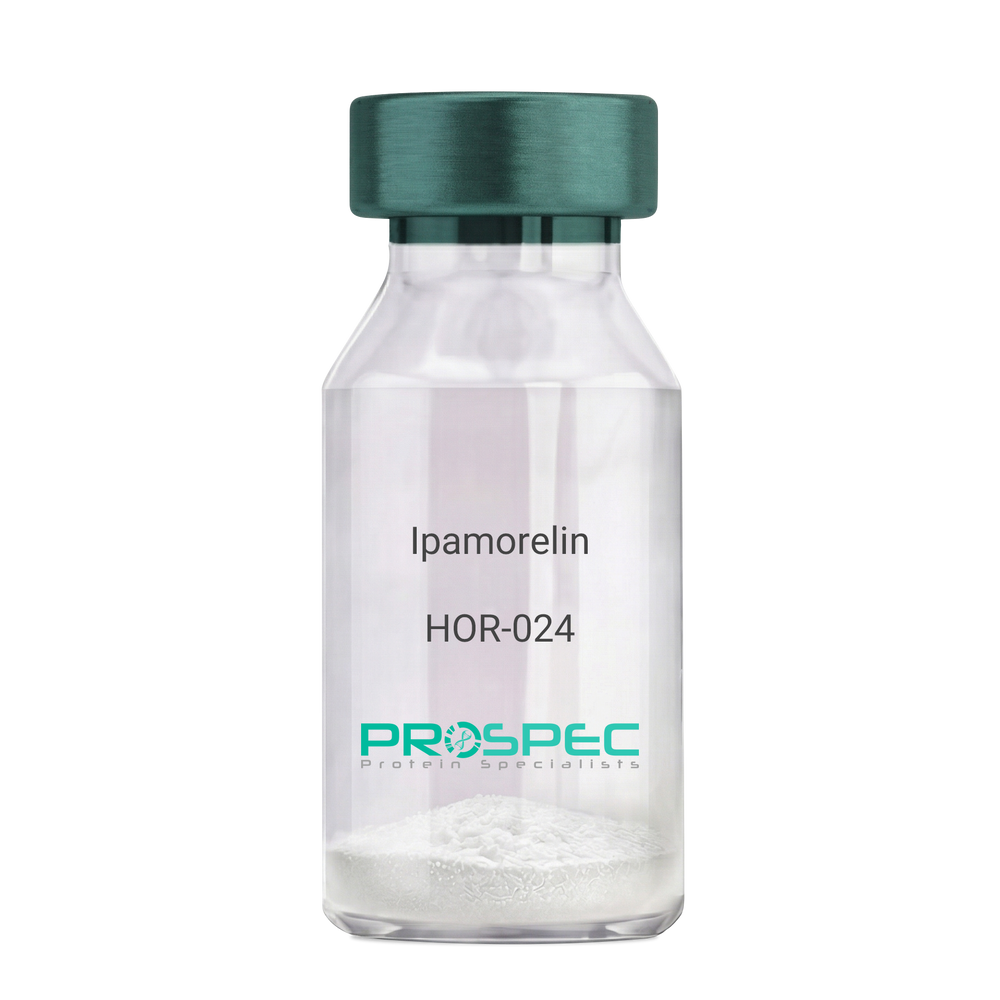
    Ipamorelin

    Description:

    Ipamorelin

    Ipamorelin

    Product # :

    HOR-024

    Price :

    Quantity :

    Shipping Method :

    Room Temp Icon

    Shipped at Room temp

    Add To Cart

    More Info

    • description
    • formulation
    • purity
    • More Info

    Description

    Ipamorelin Synthetic is a single, non-glycosylated polypeptide chain containing 4 amino acids, having a molecular mass of 711.85 Dalton and a Molecular formula of C38H49N9O5.

    Formulation

    The protein was lyophilized with no additives.

    Purity

    Greater than 97.0% as determined by analysis by RP-HPLC.

    More Info

    • Introduction

      Ipamorelin is a peptide selective agonist of the ghrelin/growth hormone secretagogue receptor and a growth hormone secretagogue. Ipamorelin is a pentapeptide that was derived from GHRP1. Ipamorelin significantly increases plasma growth hormone levels in both animals and humans. Like pralmorelin and GHRP-6, ipamorelin does not affect prolactin, FSH, LH or TSH levels. However, unlike GHRP2 and GHRP6, but as growth hormone-releasing hormone (GHRH), ipamorelin does not stimulate the secretion of adrenocorticotropic hormone (ACTH) or cortisol, and is highly selective for inducing the secretion only of GH.

    • Synonyms

      Ipamorelin

    • Physical Appearance

      Sterile Filtered White lyophilized (freeze-dried) powder.

    • Stability

      Lyophilized Ipamorelin although stable at room temperature for 3 weeks, should be stored desiccated below -18°C. Upon reconstitution Ipamorelin should be stored at 4°C between 2-7 days and for future use below -18°C. For long term storage it is recommended to add a carrier protein (0.1% HSA or BSA). Please prevent freeze-thaw cycles.

    • Solubility

      It is recommended to reconstitute the lyophilized Ipamorelin in sterile 18MΩ-cm H2O not less than 100 µg/ml, which can then be further diluted to other aqueous solutions.

    • Amino Acid Sequence

      Aib-His-D-2-Nal-D-Phe-Lys-NH2.

    ProSpec's products are furnished for LABORATORY RESEARCH USE ONLY. The product may not be used as drugs, agricultural or pesticidal products, food additives or household chemicals.

    Ipamorelin
  • View Data Sheet

    Name :

    ctxB

    Description:

    Cholera Toxin B subunit Recombinant

    Cholera enterotoxin subunit B, Cholera enterotoxin B chain, Cholera enterotoxin gamma chain, Choleragenoid, ctxB, toxB.

    Product # :

    PRO-2605

    Price :

    Quantity :

    Shipping Method :

    Ice Icon

    Shipped with Ice Packs

    Add To Cart

    More Info

    • description
    • source
    • formulation
    • purity
    • More Info

    Description

    Cholera Toxin B subunit Recombinant produced in E.Coli is a single, non- glycosylated polypeptide chain containing 103 amino acids and having a molecular mass of 11.6kDa.ctxB is purified by proprietary chromatographic techniques.

    Source

    Escherichia Coli.

    Formulation

    ctxB is supplied as a 0.2 μm filtered solution conteining 5mM PB, pH 7.0, 75mM NaCl, and 50 % glycerol.

    Purity

    Greater than 98.0% as determined by:
    (a) Analysis by RP-HPLC.
    (b) Analysis by SDS-PAGE.

    More Info

    • Introduction

      Cholera Toxin B subunit (ctxB) Cholera is a protein complex secreted by the bacterium Vibrio cholerae. ctxB is responsible for the massive, watery diarrhea characteristic of cholera infection. The cholera toxin is an oligomeric complex made up of 6 protein subunits: a single copy of the A subunit and5 copies of the B subunit, denoted as AB5. Subunit B binds while subunit A activates the G protein which activates adenylate cyclase. The five B subunits form a five-membered ring. The A subunit has 2 important segments. The A1 portion of the chain (CTA1) is a globular enzyme payload that ADP-ribosylates G proteins, while the A2 chain (CTA2) forms an extended alpha helix which sits snugly in the central pore of the B subunit ring.

    • Synonyms

      Cholera enterotoxin subunit B, Cholera enterotoxin B chain, Cholera enterotoxin gamma chain, Choleragenoid, ctxB, toxB.

    • Physical Appearance

      Sterile filtered colorless solution.

    • Stability

      Store at 4°C if entire vial will be used within 2-4 weeks.Store, frozen at -20°C for longer periods of time.For long term storage it is recommended to add a carrier protein (0.1% HSA or BSA).Avoid multiple freeze-thaw cycles.

    • Amino Acid Sequence

      TPQNITDLCA EYHNTQIYTL NDKIFSYTES LAGKREMAII TFKNGAIFQV EVPGSQHIDS QKKAIERMKD TLRIAYLTEA KVEKLCVWNN KTPHAIAAIS MAN.

    ProSpec's products are furnished for LABORATORY RESEARCH USE ONLY. The product may not be used as drugs, agricultural or pesticidal products, food additives or household chemicals.

    Ctxb Protein
  • 1
  • …
  • 12
  • 13
  • 14
  • 15
  • 16
Your browser does not support the video tag.

Products

  • Cytokines
  • Growth Factors
  • Chemokines
  • CD Antigens
  • Neurotrophins
  • Hormones
  • Enzymes
  • Viral Antigens
  • Recombinant Proteins
  • Natural Proteins
  • Monoclonal Antibodies
  • Polyclonal Antibodies
  • Thermal Packaging

About

  • Company
  • Founder
  • Contribution
  • Contact Us
  • My Account

Ordering

  • Ordering Method
  • Ordering - Credit Card
  • Ordering PO
  • Shipping Fees
  • FAQ's

Legal

  • Terms & Conditions
  • Privacy
  • Site Map
  • info@prospecbio.com
  • Facebook
  • Instagram
  • Linkedin Profile

© 2026 ProSpec-Tany TechnoGene Ltd. All Rights Reserved.

  • Choosing a selection results in a full page refresh.
  • Opens in a new window.