Skip to content

High-quality research proteins.

  • 1-800-805-6531

  • Mon - Sat 8.00-18.00, Sun - Closed

  • info@prospecbio.com

  • PO Box 6591 East Brunswick NJ 08816

  • Products
    • Cytokines
    • Growth factors
    • Chemokines
    • Cd antigens
    • Neurotrophins
    • Hormones
    • Enzymes
    • Viral antigens
    • Recombinant proteins
    • Natural proteins
    • Monoclonal antibodies
    • Polyclonal antibodies
    • Thermal Packaging
  • About
    • Company
    • Founder
    • Contribution
  • Customers
    • Eastern Asia
    • Eastern Europe
    • North America
    • South America
    • South East Asia
    • Southern Asia
    • Western Europe
  • Ordering
    • Ordering Method
    • Ordering - Credit Card
    • Ordering - PO
    • Shipping Fees
    • FAQs
  • Services
    • DNA Cloning
    • Protein Expression
    • Monoclonal Antibody
    • Fermentation
    • Technology License
  • Contact us
Log in

Country/region

  • USD $ | Albania
  • USD $ | Andorra
  • USD $ | Argentina
  • USD $ | Armenia
  • USD $ | Australia
  • USD $ | Austria
  • USD $ | Azerbaijan
  • USD $ | Belarus
  • USD $ | Belgium
  • USD $ | Bolivia
  • USD $ | Brazil
  • USD $ | Bulgaria
  • USD $ | Cambodia
  • USD $ | Canada
  • USD $ | Chile
  • USD $ | China
  • USD $ | Colombia
  • USD $ | Costa Rica
  • USD $ | Croatia
  • USD $ | Cyprus
  • USD $ | Czechia
  • USD $ | Denmark
  • USD $ | Estonia
  • USD $ | Finland
  • USD $ | France
  • USD $ | Georgia
  • USD $ | Germany
  • USD $ | Greece
  • USD $ | Hong Kong SAR
  • USD $ | Hungary
  • USD $ | Iceland
  • USD $ | India
  • USD $ | Ireland
  • USD $ | Israel
  • USD $ | Italy
  • USD $ | Japan
  • USD $ | Kazakhstan
  • USD $ | Latvia
  • USD $ | Liechtenstein
  • USD $ | Lithuania
  • USD $ | Madagascar
  • USD $ | Malta
  • USD $ | Mexico
  • USD $ | Moldova
  • USD $ | Monaco
  • USD $ | Netherlands
  • USD $ | New Zealand
  • USD $ | North Macedonia
  • USD $ | Norway
  • USD $ | Panama
  • USD $ | Paraguay
  • USD $ | Peru
  • USD $ | Philippines
  • USD $ | Poland
  • USD $ | Portugal
  • USD $ | Romania
  • USD $ | Singapore
  • USD $ | Slovakia
  • USD $ | Slovenia
  • USD $ | South Africa
  • USD $ | South Korea
  • USD $ | Spain
  • USD $ | Sri Lanka
  • USD $ | Sweden
  • USD $ | Switzerland
  • USD $ | Taiwan
  • USD $ | Thailand
  • USD $ | Türkiye
  • USD $ | Ukraine
  • USD $ | United Kingdom
  • USD $ | United States
  • USD $ | Uruguay
  • USD $ | Vatican City
  • USD $ | Venezuela
  • USD $ | Vietnam
  • Facebook
  • Instagram
logoProSpec - Recombinant Protein Manufacturer for academic and R&D industry
Become a distributor
Account Log in
Wishlist
Cart Cart(0)
  • Products
    +
    • Cytokines
    • Growth factors
    • Chemokines
    • Cd antigens
    • Neurotrophins
    • Hormones
    • Enzymes
    • Viral antigens
    • Recombinant proteins
    • Natural proteins
    • Monoclonal antibodies
    • Polyclonal antibodies
    • Thermal Packaging
  • About
    +
    • Company
    • Founder
    • Contribution
  • Customers
    +
    • Eastern Asia
    • Eastern Europe
    • North America
    • South America
    • South East Asia
    • Southern Asia
    • Western Europe
  • Ordering
    +
    • Ordering Method
    • Ordering - Credit Card
    • Ordering - PO
    • Shipping Fees
    • FAQs
  • Services
    +
    • DNA Cloning
    • Protein Expression
    • Monoclonal Antibody
    • Fermentation
    • Technology License
  • Contact us

Item added to your cart

View cart
View All
  • Cytokines
  • Growth factors
  • Chemokines
  • Cd antigens
  • Neurotrophins
  • Hormones
  • Enzymes
  • Viral antigens
  • Recombinant proteins
  • Natural proteins
  • Monoclonal antibodies
  • Polyclonal antibodies
  • Thermal Packaging
  • Tumor Necrosis Factor

    Tumor Necrosis Factor

    View All
  • 4-1BB

    4-1BB

    View All
  • Adiponectin

    Adiponectin

    View All
  • AIF1

    AIF1

    View All
  • Other Cytokines

    Other Cytokines

    View All
  • AITRL

    AITRL

    View All
  • Angiopoietin

    Angiopoietin

    View All
  • Apolipoprotein

    Apolipoprotein

    View All
  • B-Cell Activating Factor

    B-Cell Activating Factor

    View All
  • Beta Defensin

    Beta Defensin

    View All
  • Bone Morphogenetic Protein

    Bone Morphogenetic Protein

    View All
  • B type Natriuretic Peptide

    B type Natriuretic Peptide

    View All
  • BST

    BST

    View All
  • Betacellulin

    Betacellulin

    View All
  • Cardiotrophin

    Cardiotrophin

    View All
  • Activin

    Activin

    View All
  • Fibroblast Growth Factor

    Fibroblast Growth Factor

    View All
  • Other Growth Factors

    Other Growth Factors

    View All
  • CSF

    CSF

    View All
  • CTGF

    CTGF

    View All
  • IGFBP

    IGFBP

    View All
  • VEGF Protein

    VEGF Protein

    View All
  • EGF

    EGF

    View All
  • Epigen

    Epigen

    View All
  • Erythropoietin

    Erythropoietin

    View All
  • Insulin-Like Growth Factor

    Insulin-Like Growth Factor

    View All
  • Growth Hormone

    Growth Hormone

    View All
  • HDGF

    HDGF

    View All
  • Hepatocyte Growth Factor

    Hepatocyte Growth Factor

    View All
  • Insulin

    Insulin

    View All
  • BCA-1/ BLC (CXCL13)

    BCA-1/ BLC (CXCL13)

    View All
  • BRAK (CXCL14)

    BRAK (CXCL14)

    View All
  • C-10 (CCL6)

    C-10 (CCL6)

    View All
  • Other Chemokines

    Other Chemokines

    View All
  • MEC (CCL28)

    MEC (CCL28)

    View All
  • LD78-beta (CCL3L1)

    LD78-beta (CCL3L1)

    View All
  • CTACK (CCL27)

    CTACK (CCL27)

    View All
  • CXCL16

    CXCL16

    View All
  • CXCL17

    CXCL17

    View All
  • Platelet Factor-4 (CXCL4)

    Platelet Factor-4 (CXCL4)

    View All
  • ENA-78 (CXCL5)

    ENA-78 (CXCL5)

    View All
  • Eotaxin (CCL11,24,26)

    Eotaxin (CCL11,24,26)

    View All
  • Exodus-2 (CCL21)

    Exodus-2 (CCL21)

    View All
  • Fractalkine (CX3CL1)

    Fractalkine (CX3CL1)

    View All
  • CXCL6

    CXCL6

    View All
  • Other CD Antigens

    Other CD Antigens

    View All
  • CD14

    CD14

    View All
  • CD164

    CD164

    View All
  • CD1

    CD1

    View All
  • CD2

    CD2

    View All
  • CD200

    CD200

    View All
  • CD207

    CD207

    View All
  • CD226

    CD226

    View All
  • CD23

    CD23

    View All
  • CD244

    CD244

    View All
  • CD247

    CD247

    View All
  • CD27

    CD27

    View All
  • CD274

    CD274

    View All
  • CD300

    CD300

    View All
  • CD33

    CD33

    View All
  • Other Neurotrophins

    Other Neurotrophins

    View All
  • Beta-NGF

    Beta-NGF

    View All
  • BDNF

    BDNF

    View All
  • CDNF

    CDNF

    View All
  • CNTF

    CNTF

    View All
  • GDNF

    GDNF

    View All
  • Glia Maturation Factor

    Glia Maturation Factor

    View All
  • MANF

    MANF

    View All
  • Midkine

    Midkine

    View All
  • Neuroglobin

    Neuroglobin

    View All
  • Neurotrophic factors

    Neurotrophic factors

    View All
  • Neuregulin

    Neuregulin

    View All
  • Neuropilin

    Neuropilin

    View All
  • Pigment Epithelium-Derived Factor

    Pigment Epithelium-Derived Factor

    View All
  • Pleiotrophin

    Pleiotrophin

    View All
  • Peptide Hormones

    Peptide Hormones

    View All
  • Other Hormones

    Other Hormones

    View All
  • HCG

    HCG

    View All
  • Endothelin

    Endothelin

    View All
  • Exendin

    Exendin

    View All
  • FSH

    FSH

    View All
  • Glucagon

    Glucagon

    View All
  • GHRP

    GHRP

    View All
  • GLP

    GLP

    View All
  • Thyrostimulin

    Thyrostimulin

    View All
  • Inhibin A

    Inhibin A

    View All
  • LHRH

    LHRH

    View All
  • Melanotan

    Melanotan

    View All
  • Procalcitonin

    Procalcitonin

    View All
  • PTH

    PTH

    View All
  • Peroxiredoxin

    Peroxiredoxin

    View All
  • Peptidase

    Peptidase

    View All
  • Synthetase

    Synthetase

    View All
  • Transferase

    Transferase

    View All
  • Hydrolase

    Hydrolase

    View All
  • Dehydrogenase

    Dehydrogenase

    View All
  • ACE2

    ACE2

    View All
  • Esterase

    Esterase

    View All
  • Protein Kinases

    Protein Kinases

    View All
  • Other Enzymes

    Other Enzymes

    View All
  • Phosphatase

    Phosphatase

    View All
  • Deaminase

    Deaminase

    View All
  • Oxygenase

    Oxygenase

    View All
  • Adenylate Kinase

    Adenylate Kinase

    View All
  • Lyase

    Lyase

    View All
  • Chagas

    Chagas

    View All
  • SARS

    SARS

    View All
  • Influenza

    Influenza

    View All
  • ASFV

    ASFV

    View All
  • Astrovirus

    Astrovirus

    View All
  • Borrelia

    Borrelia

    View All
  • Helicobacter Pylori

    Helicobacter Pylori

    View All
  • Chikungunya

    Chikungunya

    View All
  • Chlamydia

    Chlamydia

    View All
  • Cytomegalo

    Cytomegalo

    View All
  • Dengue

    Dengue

    View All
  • EBV

    EBV

    View All
  • Ebola

    Ebola

    View All
  • Feline Leukemia Virus

    Feline Leukemia Virus

    View All
  • Hepatitis A

    Hepatitis A

    View All
  • Other

    Other

    View All
  • Actin

    Actin

    View All
  • ADAM

    ADAM

    View All
  • Complement Component

    Complement Component

    View All
  • Ag85

    Ag85

    View All
  • Eukaryotic Translation Initiation Factor

    Eukaryotic Translation Initiation Factor

    View All
  • Anterior Gradient Protein

    Anterior Gradient Protein

    View All
  • Heat Shock Protein

    Heat Shock Protein

    View All
  • Alpha-2-HS-Glycoprotein

    Alpha-2-HS-Glycoprotein

    View All
  • Hemoglobin

    Hemoglobin

    View All
  • Allergy

    Allergy

    View All
  • Anaplasma

    Anaplasma

    View All
  • Angiogenin

    Angiogenin

    View All
  • Ankyrin Repeat Domain

    Ankyrin Repeat Domain

    View All
  • Annexin

    Annexin

    View All
  • Other Natural Proteins

    Other Natural Proteins

    View All
  • Aprotinin

    Aprotinin

    View All
  • Transferrin

    Transferrin

    View All
  • Avidin

    Avidin

    View All
  • Anti Coagulation Factors

    Anti Coagulation Factors

    View All
  • Natural Albumin

    Natural Albumin

    View All
  • Natural Coagulation Factors

    Natural Coagulation Factors

    View All
  • Fibronectin

    Fibronectin

    View All
  • Thrombin

    Thrombin

    View All
  • Anti Human Enzyme

    Anti Human Enzyme

    View All
  • Other Monoclonal Antibodies

    Other Monoclonal Antibodies

    View All
  • Anti Human Cytokine

    Anti Human Cytokine

    View All
  • Anti Human Heat Shock Protein

    Anti Human Heat Shock Protein

    View All
  • Anti Mouse Lymphocyte

    Anti Mouse Lymphocyte

    View All
  • Anti Human Chemokine

    Anti Human Chemokine

    View All
  • Anti Human Lymphocyte

    Anti Human Lymphocyte

    View All
  • Anti Viral Monoclonal

    Anti Viral Monoclonal

    View All
  • Anti Mouse Cytokine

    Anti Mouse Cytokine

    View All
  • Anti-GST Monoclonal

    Anti-GST Monoclonal

    View All
  • Other Polyclonal Antibodies

    Other Polyclonal Antibodies

    View All
  • Anti Viral

    Anti Viral

    View All
  • Anti-GST Monoclonal

    Anti-GST Monoclonal

    View All
Back

Search results

1000 results found for “Exendin”

Name

Description

Product #

Price

Quantity

Shipping Method

  • View Data Sheet

    Name :

    Clusterin Human

    Description:

    Clusterin Human Recombinant

    CLI, AAG4, KUB1, SGP2, SGP-2, SP-40, TRPM2, MGC24903, Clusterin, Apolipoprotein J, Apo-J.

    Product # :

    CYT-278

    Price :

    Quantity :

    Shipping Method :

    Room Temp Icon

    Shipped at Room temp

    Add To Cart

    More Info

    • description
    • source
    • formulation
    • purity
    • More Info
    • Citations

    Description

    Clusterin Human Recombinant produced in HEK is a glycosylated, polypeptide chain containing 438 amino acids and having a molecular mass of 51.27 kDa. Clusterin (1-427 a.a.) is fused to 11 a.a. flag tag at c-terminal and purified by proprietary chromatographic techniques.

    Source

    293 cell line (Human embryonic kidney).

    Formulation

    Filtered (0.4 micron) and lyophilized PBS, pH 7.5.

    Purity

    Greater than 95% as determined by SDS PAGE.

    Citations

    More Info

    • Introduction

      Clusterin also named Apolipoprotein J (APO-J) is a 75-80 kD disulfide-linked heterodimeric protein containing about 30% of N-linked carbohydrate rich in sialic acid but truncated forms targeted to the nucleus have also been identified.
      The precursor polypeptide chain is cleaved proteolytically to remove the 22-mer secretory signal peptide and subsequently between residues 227/228 to generate the a and b chains. These are assembled in anti-parallel to give a heterodimeric molecule in which the cysteine-rich centers are linked by five disulfide bridges and are flanked by two predicted coiled-coil a-helices and three predicted amphipathic a-helices.
      Across a broad range of species clusterin shows a high degree of sequence homology ranging from 70% to 80%. It is nearly ubiquitously expressed in most mammalian tissues and can be found in plasma, milk, urine, cerebrospinal fluid and semen.
      It is able to bind and form complexes with numerous partners such as immunoglobulins, lipids, bacteria, complement components, paraoxonase, beta amyloid, leptin and others. Clusterin has been ascribed a plethora of functions such as phagocyte recruitment, aggregation induction, complement attack prevention, apoptosis inhibition, membrane remodeling, lipid transport, hormone transport and/or scavenging, matrix metalloproteinase inhibition.
      A genuine function of clusterin has not been defined. One tempting hypothesis says that clusterin is an extracellular chaperone protecting cells from stress induced insults caused by degraded and misfolded protein precipitates.
      Clusterin is up- or down regulated on the mRNA or protein level in many pathological and clinically relevant situations including cancer, organ regeneration, infection, Alzheimer disease, retinitis pigmentosa, myocardial infarction, renal tubular damage, autoimmunity and others.

    • Synonyms

      CLI, AAG4, KUB1, SGP2, SGP-2, SP-40, TRPM2, MGC24903, Clusterin, Apolipoprotein J, Apo-J.

    • Physical Appearance

      Filtered, White, Lyophilized powder.

    • Stability

      Store lyophilized protein at -20°C. Aliquot the product after reconstitution to avoid repeated freezing/thawing cycles. Reconstituted protein can be stored at 4°C for a limited period of time; it does not show any change after two weeks at 4°C.

    • Solubility

      Add deionized water to prepare a working stock solution of approximately 0.5mg/ml and let the lyophilized pellet dissolve completely. Product not sterile! Please filter the product by an appropriate sterile filter before using it in cell culture.

    • Amino Acid Sequence

      DQTVSDNELQ EMSNQGSKYV NKEIQNAVNG VKQIKTLIEK TNEERKTLLS NLEEAKKKKE DALNETRESE TKLKELPGVC NETMMALWEE CKPCLKQTCM KFYARVCRSGS GLVGRQLEE FLNQSSPFYF WMNGDRIDSL LENDRQQTHM LDVMQDHFSRA SSIIDELFQ DRFFTREPQD TYHYLPFSLP HRRPHFFFPK SRIVRSLMPF SPYEPLNFHA MFQPFLEMIH EAQQAMDIHF HSPAFQHPPT EFIREGDDDR TVCREIRHNS TGCLRMKDQC DKCREILSVD CSTNNPSQAKLRRELDESLQ VAERLTRKYN ELLKSYQWKM LNTSSLLEQL NEQFNWVSRL ANLTQGEDQYYLRVTTVASH TSDSDVPSGV TEVVVKLFDS DPITVTVPVE VSRKNPKFME TVAEKALQEY RKKHREEAAA DYKDDDDK.

    • Background

      What is the molecular weight/Mw of CLUSTERIN Protein?
      CLUSTERIN Protein has a total Mw of 51.27kDa.

      What is the source or expression system of CLUSTERIN Protein?
      293 cell line
      What is the Purity of CLUSTERIN Protein?
      CLUSTERIN Protein is >95% pure as determined by SDS-PAGE.

      What is the Biological Activity of CLUSTERIN Protein?
      The biological functionality of CLUSTERIN Protein will be determined in the future.

      What is the amino acid sequence of CLUSTERIN Protein?
      DQTVSDNELQ EMSNQGSKYV NKEIQNAVNG VKQIKTLIEK TNEERKTLLS NLEEAKKKKE DALNETRESE TKLKELPGVC NETMMALWEE CKPCLKQTCM KFYARVCRSGS GLVGRQLEE FLNQSSPFYF WMNGDRIDSL LENDRQQTHM LDVMQDHFSRA SSIIDELFQ DRFFTREPQD TYHYLPFSLP HRRPHFFFPK SRIVRSLMPF SPYEPLNFHA MFQPFLEMIH EAQQAMDIHF HSPAFQHPPT EFIREGDDDR TVCREIRHNS TGCLRMKDQC DKCREILSVD CSTNNPSQAKLRRELDESLQ VAERLTRKYN ELLKSYQWKM LNTSSLLEQL NEQFNWVSRL ANLTQGEDQYYLRVTTVASH TSDSDVPSGV TEVVVKLFDS DPITVTVPVE VSRKNPKFME TVAEKALQEY RKKHREEAAA DYKDDDDK.

      What applications can CLUSTERIN Protein be used in?
      CLUSTERIN Protein can probably be used in western blot, ELISA and Lateral Flow.

      What is the endotoxin level for CLUSTERIN Protein?
      The endotoxin level is minimal, CLUSTERIN Protein was purified using conventional chromatography techniques.

    ProSpec's products are furnished for LABORATORY RESEARCH USE ONLY. The product may not be used as drugs, agricultural or pesticidal products, food additives or household chemicals.

    Clusterin Human Recombinant
  • View Data Sheet

    Name :

    CPA4 Human

    Description:

    Carboxypeptidase A4 Human Recombinant

    Carboxypeptidase A4, Carboxypeptidase A3, CPA3, EC 3.4.17.1, EC 3.4.17.-, EC 3.4.17, Carboxypeptidase A4, Carboxypeptidase A3.

    Product # :

    ENZ-942

    Price :

    Quantity :

    Shipping Method :

    Ice Icon

    Shipped with Ice Packs

    Add To Cart

    More Info

    • description
    • source
    • formulation
    • purity
    • More Info
    • Citations

    Description

    CPA4 produced in Sf9 Baculovirus cells is a single, glycosylated polypeptide chain containing 413 amino acids (17-421a.a.) and having a molecular mass of 46.6kDa.CPA4 is expressed with an 8 amino acid His tag at C-Terminus and purified by proprietary chromatographic techniques.

    Source

    Sf9, Baculovirus cells.

    Formulation

    CPA4 protein solution (1mg/ml) contains Phosphate Buffered Saline (pH 7.4) and 10% glycerol.

    Purity

    Greater than 95.0% as determined by SDS-PAGE.

    Citations

    More Info

    • Introduction

      Carboxypeptidase A4 (CPA4) belongs to the carboxypeptidase A/B subfamily, and it is located in a cluster with 3 other family members on chromosome 7. CPA4 is a secreted, zinc-dependent metallocarboxypeptidase, which removes the C-terminal amino acid from peptides having a free C-terminal carboxyl group. CPA4 is a metalloprotease which may be involved in the histone hyperacetylation pathway. CPA4 are synthesized as zymogens which are activated by proteolytic cleavage.

    • Synonyms

      Carboxypeptidase A4, Carboxypeptidase A3, CPA3, EC 3.4.17.1, EC 3.4.17.-, EC 3.4.17, Carboxypeptidase A4, Carboxypeptidase A3.

    • Physical Appearance

      Sterile Filtered colorless solution.

    • Stability

      Store at 4°C if entire vial will be used within 2-4 weeks. Store, frozen at -20°C for longer periods of time. For long term storage it is recommended to add a carrier protein (0.1% HSA or BSA).Avoid multiple freeze-thaw cycles.

    • Amino Acid Sequence

      GQEKFFGDQV LRINVRNGDE ISKLSQLVNS NNLKLNFWKS PSSFNRPVDV LVPSVSLQAF KSFLRSQGLE YAVTIEDLQA LLDNEDDEMQ HNEGQERSSN NFNYGAYHSL EAIYHEMDNI AADFPDLARR VKIGHSFENR PMYVLKFSTG KGVRRPAVWL NAGIHSREWI SQATAIWTAR KIVSDYQRDP AITSILEKMD IFLLPVANPD GYVYTQTQNR LWRKTRSRNP GSSCIGADPN RNWNASFAGK GASDNPCSEV YHGPHANSEV EVKSVVDFIQ KHGNFKGFID LHSYSQLLMY PYGYSVKKAP DAEELDKVAR LAAKALASVS GTEYQVGPTC TTVYPASGSS IDWAYDNGIK FAFTFELRDT GTYGFLLPAN QIIPTAEETW LGLKTIMEHV RDNLYLEHHH HHH.

    ProSpec's products are furnished for LABORATORY RESEARCH USE ONLY. The product may not be used as drugs, agricultural or pesticidal products, food additives or household chemicals.

    Cpa4 Human
  • View Data Sheet

    Name :

    NAF

    Description:

    Nafarelin Acetate

    Product # :

    HOR-248

    Price :

    Quantity :

    Shipping Method :

    Room Temp Icon

    Shipped at Room temp

    Add To Cart

    More Info

    • description
    • formulation
    • purity
    • More Info
    • Citations

    Description

    Nafarelin is a decapeptide containing 9 amino acids Glu-His-Trp-Ser-Ala-Leu-Arg-Pro.Nafarelin is purified by proprietary chromatographic techniques.

    Formulation

    The protein (1mg/ml) was lyophilized with no additives.

    Purity

    Greater than 98.0% as determined by:
    (a) Analysis by RP-HPLC.
    (b) Analysis by SDS-PAGE.

    Citations

    More Info

    • Introduction

      Nafarelin acetate is a synthetic analog of the naturally occurring gonadotropin-releasing hormone (GnRH). Nafarelin stimulates the release of the pituitary gonadotropins, LH and FSH, resulting in a temporary increase of ovarian steroidogenesis.

    • Physical Appearance

      Sterile Filtered White lyophilized (freeze-dried) powder.

    • Stability

      Lyophilized Nafarelin although stable at room temperature for 3 weeks, should be stored desiccated below -18°C. Upon reconstitution NAF should be stored at 4°C between 2-7 days and for future use below -18°C.For long term storage it is recommended to add a carrier protein (0.1% HSA or BSA).Please prevent freeze-thaw cycles.

    • Solubility

      It is recommended to reconstitute the lyophilized Nafarelin in sterile 18MΩ-cm H2O not less than 100 µg/ml, which can then be further diluted to other aqueous solutions.

    ProSpec's products are furnished for LABORATORY RESEARCH USE ONLY. The product may not be used as drugs, agricultural or pesticidal products, food additives or household chemicals.

    Nafarelin
  • View Data Sheet

    Name :

    GHK-Cu

    Description:

    GHK-Cu

    Copper Tripeptide-1

    Product # :

    HOR-063

    Price :

    Quantity :

    Shipping Method :

    Room Temp Icon

    Shipped at Room temp

    Add To Cart

    More Info

    • description
    • formulation
    • purity
    • More Info
    • Citations

    Description

    GHK-Cu is a synthetic single, non-glycosylated polypeptide chain containing 3 amino acids, having a molecular mass of 401.91 Dalton and a Molecular formula of C14H22N6O4Cu.

    Formulation

    The protein was lyophilized with no additives.

    Purity

    Greater than 97.0% as determined by analysis by RP-HPLC.

    Citations

    More Info

    • Physical Appearance

      Sterile Filtered White lyophilized (freeze-dried) powder.

    • Stability

      Lyophilized GHK-Cu although stable at room temperature for 3 weeks, should be stored desiccated below -18°C. Upon reconstitution GHK-Cu should be stored at 4°C between 2-7 days and for future use below -18°C.
      For long term storage it is recommended to add a carrier protein (0.1% HSA or BSA).
      Please prevent freeze-thaw cycles.


    • Solubility

      It is recommended to reconstitute the lyophilized GHK-Cu in sterile 18MΩ-cm H2O not less than 100 µg/ml, which can then be further diluted to other aqueous solutions.

    • Amino Acid Sequence

      Gly-His-Lys.

    • Background

      GHK-Cu is located in human plasma and has an ability to modify gene expression to a healthier state, influencing more than 4,000 human genes. GHK-Cu can change pathological gene expression to a healthy mode, mainly in chronic conditions as metastatic cancer, COPD and Ulcerative Colitis. GHK-Cu was discovered to be effective in systemic repair and neuroprotection.

      What is the molecular weight/Mw of GHK-CU Protein?
      GHK-CU Protein has a total Mw of 0.40kDa.

      What is the Purity of GHK-CU Protein?
      GHK-CU Protein is >97% pure as determined by SDS-PAGE.

      What is the Biological Activity of GHK-CU Protein?
      The biological functionality of GHK-CU Protein will be determined in the future.

      What is the amino acid sequence of GHK-CU Protein?
      Gly-His-Lys.

      What applications can GHK-CU Protein be used in?
      GHK-CU Protein can probably be used in western blot, ELISA and Lateral Flow.

      What is the endotoxin level for GHK-CU Protein?
      The endotoxin level is minimal, GHK-CU Protein was purified using conventional chromatography techniques.

      Who supplies GHK-CU that is in stock and available to order?
      ProSpec has the protein in stock and available for immediate delivery.

      Where can I order bulk mg quantities of GHK-CU?
      ProSpec supplies bulk mg quantities at affordable prices that meets research and academic budgets.

    ProSpec's products are furnished for LABORATORY RESEARCH USE ONLY. The product may not be used as drugs, agricultural or pesticidal products, food additives or household chemicals.

    GHK-Cu
  • View Data Sheet

    Name :

    C-Peptide

    Description:

    C-Peptide

    Product # :

    HOR-046

    Price :

    Quantity :

    Shipping Method :

    Room Temp Icon

    Shipped at Room temp

    Add To Cart

    More Info

    • description
    • formulation
    • purity
    • More Info
    • Citations

    Description

    C-Peptide Synthetic is a single, non-glycosylated polypeptide chain containing 31 amino acids, having a molecular mass of 3020 Dalton and a Molecular formula of C129H211N35O48S .

    Formulation

    The protein was lyophilized with no additives.

    Purity

    Greater than 97.0% as determined by analysis by RP-HPLC.

    Citations

    More Info

    • Physical Appearance

      Sterile Filtered White lyophilized (freeze-dried) powder.

    • Stability

      Lyophilized C-Peptide although stable at room temperature for 3 weeks, should be stored desiccated below -18°C. Upon reconstitution C-Peptide should be stored at 4°C between 2-7 days and for future use below -18°C. For long term storage it is recommended to add a carrier protein (0.1% HSA or BSA). Please prevent freeze-thaw cycles.

    • Solubility

      It is recommended to reconstitute the lyophilized C-Peptide in sterile 18MΩ-cm H2O not less than 100 µg/ml, which can then be further diluted to other aqueous solutions.

    • Amino Acid Sequence

      H-Glu-Ala-Glu-Asp-Leu-Gln-Val-Gly-Gln-Val-Glu-Leu-Gly-Gly-Gly-Pro-Gly-Ala-Gly-Ser-Leu-Gln-Pro-Leu-Ala-Leu-Glu-Gly-Ser-Leu-Gln-OH.

    • Background

      C-peptide, a small peptide derived from proinsulin, has garnered increasing attention in recent years for its multifaceted physiological functions and clinical significance, particularly in the context of diabetes mellitus. While initially considered a mere byproduct of insulin synthesis, research has revealed that C-peptide exerts unique biological effects, extending beyond glycemic control. This research endeavors to comprehensively investigate the roles of C-peptide, shedding light on its diverse functions and potential applications in diabetes management and other areas of healthcare.

      The primary objective of this study is to unravel the mechanisms underlying the physiological actions of C-peptide. In vitro experiments using cellular and tissue models will be conducted to explore how C-peptide interacts with cellular receptors and signaling pathways. This includes investigations into its influence on insulin secretion, glucose uptake, and endothelial function. Understanding these mechanisms is essential for delineating the potential therapeutic applications of C-peptide.

      The second objective is to assess the clinical relevance of C-peptide in diabetes management. Clinical trials involving individuals with type 1 and type 2 diabetes will be conducted to evaluate the effects of exogenous C-peptide administration on glycemic control, insulin sensitivity, and microvascular complications. These studies may provide valuable insights into the use of C-peptide as an adjunct therapy in diabetes treatment.

      The third objective is to explore the broader implications of C-peptide in healthcare. Research will investigate the potential role of C-peptide in conditions beyond diabetes, such as its effects on cardiovascular health, neuroprotection, and wound healing. Understanding the multifunctional properties of C-peptide may open up new avenues for therapeutic interventions in various medical specialties.

      By delving into the diverse functions of C-peptide, this research aims to expand our knowledge of its physiological roles and clinical applications. The findings may lead to innovative approaches for diabetes management and offer insights into the broader healthcare implications of C-peptide.

    ProSpec's products are furnished for LABORATORY RESEARCH USE ONLY. The product may not be used as drugs, agricultural or pesticidal products, food additives or household chemicals.

    C Peptide
  • View Data Sheet

    Name :

    CD105 Human, His

    Description:

    Endoglin Human Recombinant, His-Tag

    CD105, ENG, END, ORW, HHT1, ORW1, FLJ41744, Endoglin.

    Product # :

    CYT-823

    Price :

    Quantity :

    Shipping Method :

    Ice Icon

    Shipped with Ice Packs

    Add To Cart

    More Info

    • description
    • source
    • formulation
    • purity
    • More Info
    • sds-page
    • Citations

    Description

    Endoglin Human Recombinant produced in E.coli is a single, non-glycosylated polypeptide chain containing 594 amino acids (26-586) and having a molecular mass of 64.9 kDa. Endoglin is fused to a 36 amino acid His-tag at N-terminus.

    Source

    Escherichia Coli.

    Formulation

    The Endoglin solution (0.25mg/ml) contains 20mM Tris-HCl buffer (pH 8.0), 1mM DTT, 150mM NaCl and 10% glycerol.

    Purity

    Greater than 85% as determined by SDS-PAGE.

    sds-page

    CD105-sds-page - Product image 1

    Citations

    More Info

    • Introduction

      Endoglin is a type I membrane glycoprotein located on cell surfaces and is part of the TGF beta receptor complex.The Endoglin protein consists of a homodimer of 180 kDA with disulfide links. Endoglin has been found on endothelial cells, activated macrophages, fibroblasts, and smooth muscle cells. Furthermore, Endoglin has been found to be part of the TGF-beta1 receptor complex. Endoglin thus may be involved in the binding of TGF-beta1, TGF-beta3, activin-A, BMP-2, and BMP-7. Beside TGF-beta signaling endoglin may have other functions. It has been postulated that endoglin is involved in the cytoskeletal organization affecting cell morphology and migration. Endoglin has a role in the development of the cardiovascular system and in vascular remodeling. Endoglin expression is regulated during heart development . Experimental mice without the endoglin gene die due to cardiovascular abnormalities.

    • Synonyms

      CD105, ENG, END, ORW, HHT1, ORW1, FLJ41744, Endoglin.

    • Physical Appearance

      Sterile Filtered clear solution.

    • Stability

      Store at 4°C if entire vial will be used within 2-4 weeks. Store, frozen at -20°C for longer periods of time. For long term storage it is recommended to add a carrier protein (0.1% HSA or BSA).Avoid multiple freeze-thaw cycles.

    • Amino Acid Sequence

      MRGSHHHHHH GMASMTGGQQ MGRDLYDDDD KDRWGSETVH CDLQPVGPER DEVTYTTSQV SKGCVAQAPN AILEVHVLFL EFPTGPSQLE LTLQASKQNG TWPREVLLVL SVNSSVFLHL QALGIPLHLA YNSSLVTFQE PPGVNTTELP SFPKTQILEW AAERGPITSA AELNDPQSIL LRLGQAQGSL SFCMLEASQD MGRTLEWRPR TPALVRGCHL EGVAGHKEAH ILRVLPGHSA GPRTVTVKVE LSCAPGDLDA VLILQGPPYV SWLIDANHNM QIWTTGEYSF KIFPEKNIRG FKLPDTPQGL LGEARMLNAS IVASFVELPL ASIVSLHASS CGGRLQTSPA PIQTTPPKDT CSPELLMSLI QTKCADDAMT LVLKKELVAH LKCTITGLTF WDPSCEAEDR GDKFVLRSAY SSCGMQVSAS MISNEAVVNI LSSSSPQRKK VHCLNMDSLS FQLGLYLSPH FLQASNTIEP GQQSFVQVRV SPSVSEFLLQ LDSCHLDLGP EGGTVELIQG RAAKGNCVSL LSPSPEGDPR FSFLLHFYTV PIPKTGTLSC TVALRPKTGS QDQEVHRTVF MRLNIISPDL SGCTSKG

    • Background

      What is the molecular weight/Mw of CD105 Protein?
      CD105 Protein has a total Mw of 64.9kDa.

      What is the source or expression system of CD105 Protein?
      Escherichia Coli.

      What is the Purity of CD105 Protein?
      CD105 Protein is >85% pure as determined by SDS-PAGE.

      What is the Biological Activity of CD105 Protein?
      The biological functionality of CD105 Protein will be determined in the future.

      What is the amino acid sequence of CD105 Protein?
      MRGSHHHHHH GMASMTGGQQ MGRDLYDDDD KDRWGSETVH CDLQPVGPER DEVTYTTSQV SKGCVAQAPN AILEVHVLFL EFPTGPSQLE LTLQASKQNG TWPREVLLVL SVNSSVFLHL QALGIPLHLA YNSSLVTFQE PPGVNTTELP SFPKTQILEW AAERGPITSA AELNDPQSIL LRLGQAQGSL SFCMLEASQD MGRTLEWRPR TPALVRGCHL EGVAGHKEAH ILRVLPGHSA GPRTVTVKVE LSCAPGDLDA VLILQGPPYV SWLIDANHNM QIWTTGEYSF KIFPEKNIRG FKLPDTPQGL LGEARMLNAS IVASFVELPL ASIVSLHASS CGGRLQTSPA PIQTTPPKDT CSPELLMSLI QTKCADDAMT LVLKKELVAH LKCTITGLTF WDPSCEAEDR GDKFVLRSAY SSCGMQVSAS MISNEAVVNI LSSSSPQRKK VHCLNMDSLS FQLGLYLSPH FLQASNTIEP GQQSFVQVRV SPSVSEFLLQ LDSCHLDLGP EGGTVELIQG RAAKGNCVSL LSPSPEGDPR FSFLLHFYTV PIPKTGTLSC TVALRPKTGS QDQEVHRTVF MRLNIISPDL SGCTSKG

      What applications can CD105 Protein be used in?
      CD105 Protein can probably be used in western blot, ELISA and Lateral Flow.

      What is the endotoxin level for CD105 Protein?
      The endotoxin level is minimal, CD105 Protein was purified using conventional chromatography techniques.

    ProSpec's products are furnished for LABORATORY RESEARCH USE ONLY. The product may not be used as drugs, agricultural or pesticidal products, food additives or household chemicals.

    Endoglin Human His
  • View Data Sheet

    Name :

    EGF (Leu 21) Human

    Description:

    Epidermal Growth Factor (Leu-21) Human Recombinant

    Urogastrone, URG, EGF.

    Product # :

    CYT-466

    Price :

    Quantity :

    Shipping Method :

    Room Temp Icon

    Shipped at Room temp

    Add To Cart

    More Info

    • description
    • source
    • formulation
    • purity
    • biological activity
    • More Info
    • Citations

    Description

    EGF 21-Leu Human Recombinant produced in E.Coli is a single, non-glycosylated, polypeptide chain containing 53 amino acids and having a molecular mass of 6205 Dalton.The EGF 21-Leu is purified by proprietary chromatographic techniques.

    Source

    Escherichia Coli.

    Formulation

    The protein was lyophilized from a concentrated (1mg/ml) solution with no additives.

    Purity

    Greater than 98.0% as determined by(a) Analysis by RP-HPLC.
    (b) Analysis by SDS-PAGE.

    Biological Activity

    The ED50, calculated by the dose-dependant proliferation of MDCK cells is < 10ng/ml concentration corresponding to a Specific Activity of 100,000IU/mg.

    Citations

    More Info

    • Introduction

      Epidermal growth factor has a profound effect on the differentiation of specific cells in vivo and is a potent mitogenic factor for a variety of cultured cells of both ectodermal and mesodermal origin. The EGF precursor is believed to exist as a membrane-bound molecule which is proteolytically cleaved to generate the 53-amino acid peptide hormone that stimulates cells to divide. EGF stimulates the growth of various epidermal and epithelial tissues in vivo and in vitro and of some fibroblasts in cell culture.

    • Synonyms

      Urogastrone, URG, EGF.

    • Physical Appearance

      Sterile Filtered White lyophilized (freeze-dried) powder.

    • Stability

      Lyophilized Epidermal Growth Factor 21 Leu although stable at room temperature for 3 weeks, should be stored desiccated below -18°C. Upon reconstitution EGF 21-Leu should be stored at 4°C between 2-7 days and for future use below -18°C.For long term storage it is recommended to add a carrier protein (0.1% HSA or BSA).Please prevent freeze-thaw cycles.

    • Solubility

      It is recommended to reconstitute the lyophilized Epidermal Growth Factor 21-Leu in sterile 18MΩ-cm H2O not less than 100µg/ml, which can then be further diluted to other aqueous solutions.

    • Amino Acid Sequence

      The sequence of the first five N-terminal amino acids was determined and was found to be Asn-Ser-Asp-Ser-Glu.

    • Background

      Deciphering the Potential of Epidermal Growth Factor (Leu-21) Human Recombinant: Unveiling Novel Insights and Therapeutic Implications

      Abstract:

      This concise research paper delves into the enigmatic landscape of Epidermal Growth Factor (Leu-21) Human Recombinant, illuminating its intricate molecular characteristics, signaling pathways, and promising therapeutic avenues. Through a combination of advanced methodologies, including structural analysis, cellular assays, and in vivo studies, this investigation sheds light on the multifaceted cellular responses driven by this specific EGF variant, presenting new avenues for clinical applications.

      Introduction:

      Central to cellular processes, Epidermal Growth Factor (EGF) stands as a pivotal cytokine. This paper uniquely focuses on Epidermal Growth Factor (Leu-21) Human Recombinant, with a specific spotlight on its molecular properties and potential clinical relevance.

      Molecular Insights and Signaling Dynamics:

      The crux of its functionality lies in the interaction between Epidermal Growth Factor (Leu-21) and its cognate receptor, initiating a cascade of intracellular events. Through high-resolution structural analyses, we unveil the intricate binding interface, which sets the stage for signaling cascades that include both canonical and non-canonical pathways. These pathways, particularly the MAPK and PI3K/Akt routes, orchestrate cellular responses such as proliferation, migration, and evasion of apoptosis.

      Experimental Profiling and Cellular Responses:

      In decoding the cellular ramifications, a repertoire of in vitro assays has been meticulously employed. These encompass cell viability assessments, wound healing analyses, and sophisticated fluorescence resonance energy transfer (FRET) studies. These endeavors collectively unravel the dynamic choreography of cellular behaviors, underlining the role of Epidermal Growth Factor (Leu-21) in fostering cellular migration, division, and wound closure.

      In Vivo Implications and Therapeutic Prospects:

      Translating these in vitro insights to clinical potential, in vivo investigations present a compelling narrative. Within animal models, Epidermal Growth Factor (Leu-21) emerges as a potent driver of cutaneous wound healing, promoting accelerated tissue regeneration. Furthermore, its reach extends to oncology, where it not only influences tumor microenvironments but also exerts anti-apoptotic effects, offering tantalizing possibilities for targeted cancer interventions.

      Future Challenges and Prospects:

      While these discoveries hold immense promise, challenges linger. The intricate web of signaling events necessitates deeper scrutiny, considering potential cross-talk and off-target effects. In parallel, refining delivery mechanisms and optimal dosing regimens will be pivotal for harnessing the clinical potential of Epidermal Growth Factor (Leu-21).

      Conclusion:

      In a symphony of complex molecular insights and tangible therapeutic potential, Epidermal Growth Factor (Leu-21) Human Recombinant emerges as a captivating enigma. Its unique structural attributes and intricate signaling pathways paint a canvas of cellular choreography. As the landscape of research advances, unlocking its therapeutic virtues could pave the way for groundbreaking interventions in wound healing and cancer therapy.

      What is the molecular weight/Mw of EGF Protein?
      EGF Protein has a total Mw of 6.2kDa.

      What is the source or expression system of EGF Protein?
      Escherichia Coli.

      What is the Purity of EGF Protein?
      EGF Protein is >98% pure as determined by SDS-PAGE.

      What is the Biological Activity of EGF Protein?
      The ED50, calculated by the dose-dependant proliferation of MDCK cells is < 10ng/ml concentration corresponding to a Specific Activity of 100,000IU/mg.

      What is the amino acid sequence of EGF Protein?
      EGF Protein is composed from 53 amino acids.

      What applications can EGF Protein be used in?
      EGF Protein can probably be used in western blot, ELISA and Lateral Flow.

      What is the endotoxin level for EGF Protein?
      The endotoxin level is minimal, EGF Protein was purified using conventional chromatography techniques.

    ProSpec's products are furnished for LABORATORY RESEARCH USE ONLY. The product may not be used as drugs, agricultural or pesticidal products, food additives or household chemicals.

    Egf 21 Leu Human
  • View Data Sheet

    Name :

    OX40L Human

    Description:

    OX40 Ligand Human Recombinant

    Tumor necrosis factor ligand superfamily member 4, OX40 ligand, OX40L, OX-40L, CD252, Tnfsf4, Ox40l, Txgp1l, gp3, OX4, Ath-1, Ath1, CD134L, gp34, Tnlg2b, Txgp1l.

    Product # :

    CYT-1226

    Price :

    Quantity :

    Shipping Method :

    Ice Icon

    Shipped with Ice Packs

    Add To Cart

    More Info

    • description
    • source
    • formulation
    • purity
    • biological activity
    • More Info
    • Citations

    Description

    OX40L Human Recombinant is a single, glycosylated, polypeptide chain (51-183 a.a) containing a total of139 amino acids and having a molecular mass of 16.2 kDa. OX40L is fused to a 6 a.a his-Tag at C-terminus and is purified by proprietary chromatographic techniques.

    Source

    HEK293 Cells.

    Formulation

    The OX40L solution (1mg/ml) contains 10% Glycerol and Phosphate-Buffered Saline (pH 7.4).

    Purity

    Greater than 90.0% as determined by SDS-PAGE.

    Biological Activity

    Measured by its binding ability in a functional ELISA with Human OX40/TNFRSF4.

    Citations

    More Info

    • Synonyms

      Tumor necrosis factor ligand superfamily member 4, OX40 ligand, OX40L, OX-40L, CD252, Tnfsf4, Ox40l, Txgp1l, gp3, OX4, Ath-1, Ath1, CD134L, gp34, Tnlg2b, Txgp1l.

    • Physical Appearance

      Sterile Filtered colorless solution.

    • Stability

      Store at 4°C if entire vial will be used within 2-4 weeks. Store, frozen at -20°C for longer periods of time. For long term storage it is recommended to add a carrier protein (0.1% HSA or BSA). Avoid multiple freeze-thaw cycles.

    • Amino Acid Sequence

      QVSHRYPRIQ SIKVQFTEYK KEKGFILTSQ KEDEIMKVQN NSVIINCDGF YLISLKGYFS QEVNISLHYQ KDEEPLFQLK KVRSVNSLMV ASLTYKDKVY LNVTTDNTSL DDFHVNGGEL ILIHQNPGEF CVLHHHHHH.

    • Background

      OX40 Ligand (OX40L), a member of the tumor necrosis factor (TNF) superfamily, plays a pivotal role in regulating immune responses and orchestrating the delicate balance between activation and tolerance. The human recombinant form of OX40L has emerged as a potent tool in immunology, offering insights into its molecular intricacies and potential applications in therapeutic interventions. This research embarks on a journey to unravel the multifaceted role of OX40L Human Recombinant, shedding light on its structural attributes, signaling pathways, and its promising avenues in immunotherapy. By delving into the properties of OX40L, scientists aim to expand our understanding of immune modulation and open new frontiers in the treatment of immune-related disorders.

      Structural Insights into OX40L Human Recombinant:

      OX40L, as a trimeric transmembrane protein, exhibits a unique structural configuration that governs its interactions with the OX40 receptor on T cells. The human recombinant form, engineered for controlled study, provides a window into the three-dimensional intricacies of the ligand. Understanding its structure is pivotal for deciphering how OX40L engages with its receptor and modulates immune responses.

      Immunomodulatory Signaling Pathways:

      OX40L binding to its cognate receptor OX40 on T cells triggers intricate signaling cascades that impact immune cell activation, proliferation, and cytokine production. The OX40-OX40L axis is a crucial regulator of T cell function, influencing both effector and regulatory T cell responses. Unraveling the specific pathways activated by OX40L Human Recombinant provides valuable insights into the modulation of immune responses in health and disease.

      Applications in Immunotherapy:

      The immunomodulatory properties of OX40L make it an attractive candidate for therapeutic interventions. OX40L Human Recombinant, in preclinical and clinical studies, is being explored for its potential in enhancing antitumor immune responses. By harnessing the ligand's ability to stimulate effector T cells and memory T cell formation, researchers aim to develop novel immunotherapies for cancer and other immune-related disorders.

      OX40L in Autoimmune Diseases:

      Conversely, OX40L's role in autoimmune diseases has spurred investigations into its inhibition as a therapeutic strategy. Blocking the OX40-OX40L interaction has shown promise in mitigating autoimmune responses, presenting a potential avenue for the development of treatments for conditions such as rheumatoid arthritis and inflammatory bowel disease.

      While the potential of OX40L Human Recombinant in immunotherapy is promising, challenges persist. Fine-tuning its applications, understanding potential side effects, and optimizing dosages are critical considerations for translational success. Additionally, comprehending the context-dependent nature of OX40L signaling is essential for tailoring therapeutic strategies to specific diseases and patient profiles.

      OX40L Human Recombinant stands at the forefront of immunomodulation research, offering a lens through which we can unravel the complexities of immune responses. Its structural insights, signaling pathways, and therapeutic applications position it as a key player in the evolving landscape of immunotherapy. As researchers continue to dissect the molecular nuances of OX40L, they not only expand our understanding of immune regulation but also pave the way for transformative advancements in the treatment of cancer and autoimmune diseases, shaping the future of precision medicine and immunotherapy.

    ProSpec's products are furnished for LABORATORY RESEARCH USE ONLY. The product may not be used as drugs, agricultural or pesticidal products, food additives or household chemicals.

    Ox40L Human
  • View Data Sheet

    Name :

    PROK Tritirachium album

    Description:

    Tritirachium album Proteinase-K Recombinant

    Proteinase K (EC:3.4.21.64), Endopeptidase K, Tritirachium alkaline proteinase, PROK.

    Product # :

    ENZ-1015

    Price :

    Quantity :

    Shipping Method :

    Room Temp Icon

    Shipped at Room temp

    Add To Cart

    More Info

    • description
    • source
    • formulation
    • purity
    • biological activity
    • More Info
    • Citations

    Description

    Recombinant Tritirachium album Proteinase-K expressed in yeast containing 285 amino acids having a Mw of 29.3 kDa is purified by standard chromatography techniques.

    Source

    Yeast

    Formulation

    The Proteinase-K was lyophilized without any additives.

    Purity

    Greater than 95% as determined by SDS-PAGE.

    Biological Activity

    36 Units/mg.
    One unit is defined as the amount of enzyme that will hydrolyze urea-denatured hemoglobin to produce color equivalent to 1.0 mol tyrosine per min at 37°C, pH 7.5 (color by Folin-Ciocalteu reagent).

    Citations

    More Info

    • Introduction

      The Proteinase K enzyme is a member of the Peptidase family S8. Proteinase K is a broad-spectrum serine protease. Proteinase K is capable of digesting hair (keratin), henceforth, the name "Proteinase K". Proteinase K is activated by calcium, the enzyme digests proteins especially after hydrophobic amino acids (aliphatic, aromatic and other hydrophobic amino acids). Proteinase K is frequently utilized in molecular biology to digest protein and remove contamination from preparations of nucleic acid. Addition of Proteinase K to nucleic acid preparations rapidly inactivates nucleases which may otherwise degrade the DNA or RNA during purification. Proteinase K is greatly fitting to this application as the enzyme is active in the presence of chemicals which denature proteins, such as SDS and urea, chelating agents such as EDTA, sulfhydryl reagents, as well as trypsin or chymotrypsin inhibitors. Proteinase K is utilized for the destruction of proteins in cell lysates (tissue, cell culture cells) and for the release of nucleic acids, given that it quite effectively inactivates DNases and RNases.

    • Synonyms

      Proteinase K (EC:3.4.21.64), Endopeptidase K, Tritirachium alkaline proteinase, PROK.

    • Physical Appearance

      Sterile Filtered lyophilized powder.

    • Stability

      Recombinant Proteinase-K although stable at room temperature, should be stored between 2-8°C. Do not freeze!

    • Solubility

      It is recommended to reconstitute the lyophilized Proteinase-K in 20mM Tris-HCl (pH 7.4~8.0), 1mM CaCl2, 50% glycerol not less than 100µg/ml, which can then be further diluted to other aqueous solutions.

    • Note

      Bulk Proteinase-K recombinant is available 1,000 grams price is $100 per gram

    ProSpec's products are furnished for LABORATORY RESEARCH USE ONLY. The product may not be used as drugs, agricultural or pesticidal products, food additives or household chemicals.

    Prok Tritirachium Album
  • View Data Sheet

    Name :

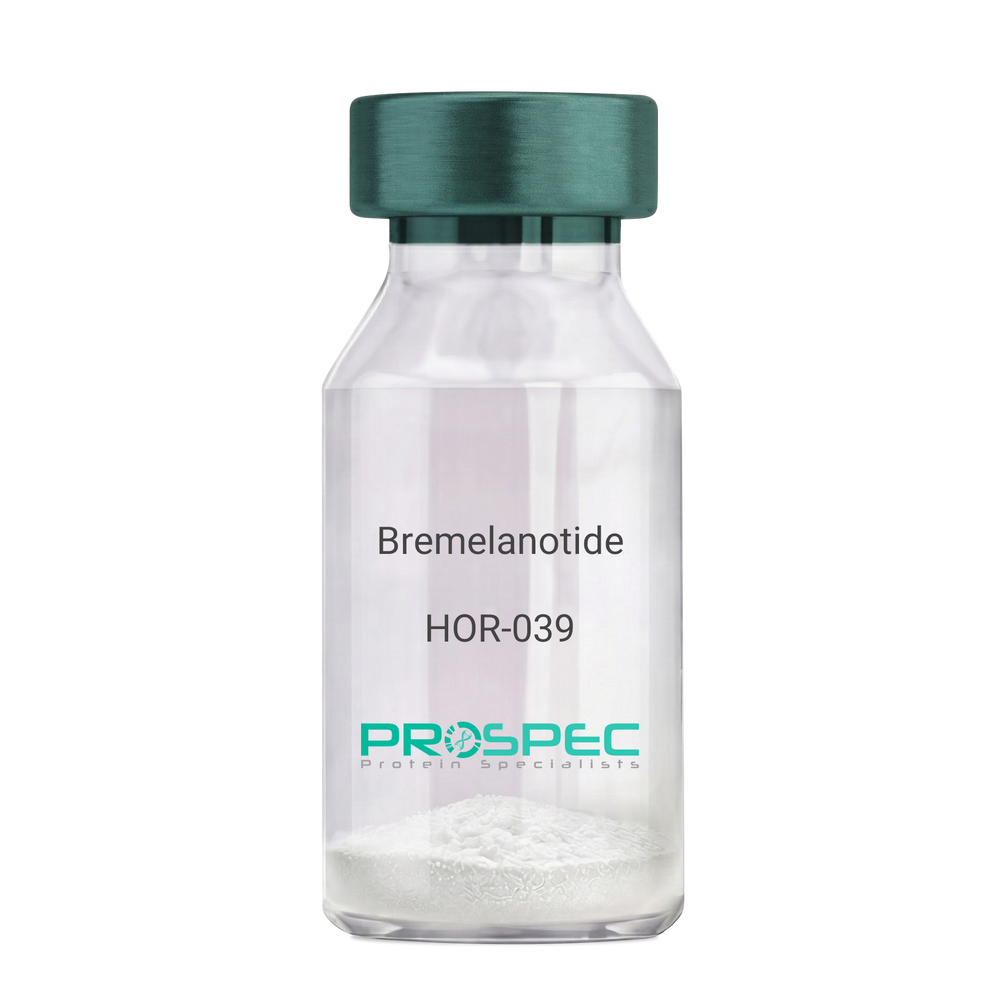
    Bremelanotide

    Description:

    Bremelanotide

    PT-141, Rekynda, bremelanotide acetate.

    Product # :

    HOR-039

    Price :

    Quantity :

    Shipping Method :

    Room Temp Icon

    Shipped at Room temp

    Add To Cart

    More Info

    • description
    • formulation
    • purity
    • More Info
    • Citations

    Description

    Bremelanotide Synthetic is a single, non-glycosylated polypeptide chain containing 6 amino acids, having a molecular mass of 1025.16 Dalton and a Molecular formula of C50H68N40O10.

    Formulation

    The protein was lyophilized with no additives.

    Purity

    Greater than 97.0% as determined by analysis by RP-HPLC.

    Citations

    More Info

    • Synonyms

      PT-141, Rekynda, bremelanotide acetate.

    • Physical Appearance

      Sterile Filtered White lyophilized (freeze-dried) powder.

    • Stability

      Lyophilized Bremelanotide although stable at room temperature for 3 weeks, should be stored desiccated below -18°C. Upon reconstitution Bremelanotide should be stored at 4°C between 2-7 days and for future use below -18°C. For long term storage it is recommended to add a carrier protein (0.1% HSA or BSA). Please prevent freeze-thaw cycles.

    • Solubility

      It is recommended to reconstitute the lyophilized Bremelanotide in sterile 18MΩ-cm H2O not less than 100 µg/ml, which can then be further diluted to other aqueous solutions.

    • Amino Acid Sequence

      Ac-Nle-cyclo(-Asp-His-D-Phe-Arg-Trp-Lys)-OH.

    • Background

      Bremelanotide (PT-141), a synthetic heptapeptide, is a novel therapeutic agent primarily utilized for the treatment of sexual dysfunction. This paper provides an exhaustive review of Bremelanotide, detailing its biochemical structure, mechanism of action, therapeutic applications, and future prospects in clinical medicine.

      Bremelanotide (PT-141), derived from Melanotan II, is a synthetic peptide developed for its role in treating sexual dysfunction in both men and women (Clayton et al., 2016). This paper presents a comprehensive examination of Bremelanotide, its biological properties, and potential therapeutic uses.

      Bremelanotide acts as a non-selective agonist of the melanocortin receptors, primarily MC3R and MC4R, present in the central nervous system. The peptide initiates its action in the hypothalamus, leading to downstream effects on sexual desire and arousal (King et al., 2007).

      The US Food and Drug Administration approved Bremelanotide for the treatment of premenopausal women with hypoactive sexual desire disorder (HSDD) in 2019. In clinical trials, it demonstrated efficacy in enhancing sexual desire and reducing distress associated with HSDD (Kingsberg et al., 2019).

      While the current focus of Bremelanotide is on treating sexual dysfunction, its future potential may extend to other areas due to its unique mechanism of action. Further research is needed to explore the full therapeutic potential of this intriguing peptide. In conclusion, Bremelanotide represents a significant advance in sexual dysfunction therapeutics, with potential implications extending beyond this realm.

    ProSpec's products are furnished for LABORATORY RESEARCH USE ONLY. The product may not be used as drugs, agricultural or pesticidal products, food additives or household chemicals.

    Bremelanotide
  • View Data Sheet

    Name :

    Gly m 4.0101

    Description:

    Stress-Induced Protein SAM22 Recombinant

    Stress-induced protein SAM22, Starvation-associated message 22, Gly m 4.

    Product # :

    PRO-2278

    Price :

    Quantity :

    Shipping Method :

    Ice Icon

    Shipped with Ice Packs

    Add To Cart

    More Info

    • description
    • source
    • formulation
    • purity
    • More Info
    • Citations

    Description

    Recombinant Stress-Induced Protein SAM22 produced in SF9 is a glycosylated, polypeptide chain having a calculated molecular mass of 19,484 Dalton. Gly m 4.0101 is expressed with a 10xHis tag at N-terminus and purified by proprietary chromatographic techniques.

    Source

    Sf9 insect cells.

    Formulation

    Gly m 4.0101 is supplied in in 20mM HEPES buffer pH-7.9 and 6M Urea.

    Purity

    Greater than 80.0% as determined by SDS-PAGE.

    Citations

    More Info

    • Introduction

      Stress-Induced Protein SAM22 (Gly m 4.0101) causes an allergic reaction in humans. Gly m 4 is the main soy allergen for patients allergic to birch pollen with soy allergy.

    • Synonyms

      Stress-induced protein SAM22, Starvation-associated message 22, Gly m 4.

    • Physical Appearance

      Sterile Filtered clear solution.

    • Stability

      Store at 4°C if entire vial will be used within 2-4 weeks. Store, frozen at -20°C for longer periods of time. Avoid multiple freeze-thaw cycles.

    • Immunological Functions

      1. Binds IgE type human antibodies. 2. Immunodot test with positive/negative sera panels.

    ProSpec's products are furnished for LABORATORY RESEARCH USE ONLY. The product may not be used as drugs, agricultural or pesticidal products, food additives or household chemicals.

    Gly M 40101
  • View Data Sheet

    Name :

    Deslorelin

    Description:

    Deslorelin

    Product # :

    HOR-240

    Price :

    Quantity :

    Shipping Method :

    Room Temp Icon

    Shipped at Room temp

    Add To Cart

    More Info

    • description
    • formulation
    • purity
    • More Info
    • Citations

    Description

    Deslorelin is a potent LHRH/GnRH agonist has a molecular formula of C64H83N17O12, pGlu-His-Trp-Ser-Tyr-D-Trp-Leu-Arg-Pro-NHC2H5 having an Mw of 1284.4 Dalton.

    Formulation

    The Deslorelin peptide was lyophilized with no additives.

    Purity

    Greater than 99.0% as determined by RP-HPLC.

    Citations

    More Info

    • Introduction

      Deslorelin is being studied in the treatment of cancer as a way to block sex hormones made by the ovaries or testicles. It belongs to the family of drugs called gonadotropin-releasing hormone analogs. It is used for the induction of ovulation in mares. Deslorelin binds to and activates pituitary gonadotropin releasing hormone (GnRH) receptors. Continuous, prolonged administration of goserelin in males results in pituitary GnRH receptor desensitization and inhibition of pituitary secretion of follicle stimulating hormone (FSH) and luteinizing hormone (LH), leading to a significant decline in testosterone production; in females, prolonged administration results in a decrease in estradiol production.

    • Physical Appearance

      Sterile Filtered White lyophilized (freeze-dried) powder.

    • Stability

      Lyophilized Deslorelin although stable at room temperature for 3 weeks, should be stored desiccated below -18°C. Upon reconstitution Deslorelin should be stored at 4°C between 2-7 days and for future use below -18°C. For long term storage it is recommended to add a carrier protein (0.1% HSA or BSA).Please prevent freeze-thaw cycles.

    • Solubility

      It is recommended to reconstitute the lyophilized Deslorelin in sterile 18MΩ-cm H2O not less than 100µg/ml, which can then be further diluted to other aqueous solutions.

    ProSpec's products are furnished for LABORATORY RESEARCH USE ONLY. The product may not be used as drugs, agricultural or pesticidal products, food additives or household chemicals.

    Deslorelin
  • View Data Sheet

    Name :

    Antide

    Description:

    Antide Acetate

    Product # :

    HOR-242

    Price :

    Quantity :

    Shipping Method :

    Room Temp Icon

    Shipped at Room temp

    Add To Cart

    More Info

    • description
    • formulation
    • purity
    • More Info
    • Citations

    Description

    Antide acetate (Ac-AA10-NH2) is an LHRH antagonist and represses LH and FSH release from the pituitary gland. Antide Mw is 1590.6 Dalton.

    Formulation

    The Antide peptide was lyophilized with no additives.

    Purity

    Greater than 98.0% as determined by RP-HPLC.

    Citations

    More Info

    • Physical Appearance

      Sterile Filtered White lyophilized (freeze-dried) powder.

    • Stability

      Lyophilized Antide although stable at room temperature for 3 weeks, should be stored desiccated below -18°C. Upon reconstitution Antide should be stored at 4°C between 2-7 days and for future use below -18°C. For long term storage it is recommended to add a carrier protein (0.1% HSA or BSA).Please prevent freeze-thaw cycles.

    • Solubility

      It is recommended to reconstitute the lyophilized Antide in sterile water at 0.1mg-0.5mg/ml.

    • Amino Acid Sequence

      Ac-D-2-Nal-D-Phe(4-CL)-3-D-Pal-Ser-Lys(nicotinoyl)-D-Lys(nicotinoyl)-Leu-Lys(Isopropyl)-Pro-D-Ala-Nh2.

    • Background

      What is the molecular weight/Mw of ANTIDE Protein?
      ANTIDE Protein has a total Mw of 1.59kDa.

      What is the Purity of ANTIDE Protein?
      ANTIDE Protein is > 98% pure as determined by SDS-PAGE.

      What is the Biological Activity of ANTIDE Protein?
      The biological functionality of ANTIDE Protein will be determined in the future.

      What is the amino acid sequence of ANTIDE Protein?
      Ac-D-2-Nal-D-Phe(4-CL)-3-D-Pal-Ser-Lys(nicotinoyl)-D-Lys(nicotinoyl)-Leu-Lys(Isopropyl)-Pro-D-Ala-Nh2.

      What applications can ANTIDE Protein be used in?
      ANTIDE Protein can probably be used in western blot, ELISA and Lateral Flow.

      What is the endotoxin level for ANTIDE Protein?
      The endotoxin level is minimal, ANTIDE Protein was purified using conventional chromatography techniques.

      Who supplies ANTIDE that is in stock and available to order?
      ProSpec has the protein in stock and available for immediate delivery.

      Where can I order bulk mg quantities of ANTIDE?
      ProSpec supplies bulk mg quantities at affordable prices that meets research and academic budgets.

    ProSpec's products are furnished for LABORATORY RESEARCH USE ONLY. The product may not be used as drugs, agricultural or pesticidal products, food additives or household chemicals.

    Antide
  • View Data Sheet

    Name :

    Adiponectin (108-244) Human

    Description:

    Adiponectin (108-244 a.a.) Human Recombinant

    Acrp30, AdipoQ, GBP-28, APM-1, ACDC.

    Product # :

    CYT-073

    Price :

    Quantity :

    Shipping Method :

    Ice Icon

    Shipped with Ice Packs

    Add To Cart

    More Info

    • description
    • source
    • formulation
    • purity
    • More Info
    • sds-page
    • Citations

    Description

    Acrp30 Human Recombinant produced in E.Coli is a single, non-glycosylated polypeptide chain containing 158 amino acids (108-244 a.a.) and having a molecular mass of 18.1kDa.Acrp30 is fused to a 21 amino acid His-tag at N-terminus & purified by proprietary chromatographic techniques.

    Source

    Escherichia Coli.

    Formulation

    Acrp30 protein solution (1mg/ml) contains 20mM Tris-HCl buffer (pH 8.0), 10% glycerol and 0.4M Urea.

    Purity

    Greater than 80.0% as determined by SDS-PAGE.

    sds-page

    Adiponectin-sds-page - Product image 1

    Citations

    More Info

    • Introduction

      Adiponectin is an adipocyte specific secreted protein that circulates in the plasma. It is induced during adipocyte differentiation and its secretion is stimulated by insulin. Mouse adiponectin shares about 83% amino acid identity with that human. Adiponectin plays a role in various physiological processes such as energy homeostasis and obesity. Adiponectin is reduced in obese humans, and decreased level is associated with insulin resistance and hyperinsulinemia.

    • Synonyms

      Acrp30, AdipoQ, GBP-28, APM-1, ACDC.

    • Stability

      Store at 4°C if entire vial will be used within 2-4 weeks. Store, frozen at -20°C for longer periods of time. For long term storage it is recommended to add a carrier protein (0.1% HSA or BSA).Avoid multiple freeze-thaw cycles.

    • Amino Acid Sequence

      MGSSHHHHHH SSGLVPRGSH MAYVYRSAFS VGLETYVTIP NMPIRFTKIF YNQQNHYDGS TGKFHCNIPG LYYFAYHITV YMKDVKVSLF KKDKAMLFTY DQYQENNVDQ ASGSVLLHLE VGDQVWLQVY GEGERNGLYA DNDNDSTFTG FLLYHDTN.

    • Background

      What is the molecular weight / Mw of ADIPONECTIN Protein?
      ADIPONECTIN Protein has a total Mw of 18.1kDa.

      What is the source or expression system of ADIPONECTIN Protein?
      Escherichia Coli.

      What is the Purity of ADIPONECTIN Protein?
      ADIPONECTIN Protein is >80% pure as determined by SDS-PAGE.

      What is the Biological Activity of ADIPONECTIN Protein?
      The biological functionality of ADIPONECTIN Protein will be determined in the future.

      What is the amino acid sequence of ADIPONECTIN Protein? MGSSHHHHHH SSGLVPRGSH MAYVYRSAFS VGLETYVTIP NMPIRFTKIF YNQQNHYDGS TGKFHCNIPG LYYFAYHITV YMKDVKVSLF KKDKAMLFTY DQYQENNVDQ ASGSVLLHLE VGDQVWLQVY GEGERNGLYA DNDNDSTFTG FLLYHDTN..

      What applications can ADIPONECTIN Protein be used in?
      ADIPONECTIN Protein can probably be used in western blot, ELISA and Lateral Flow.

      What is the endotoxin level for ADIPONECTIN Protein?
      The endotoxin level is minimal, ADIPONECTIN Protein was purified using conventional chromatography techniques

    ProSpec's products are furnished for LABORATORY RESEARCH USE ONLY. The product may not be used as drugs, agricultural or pesticidal products, food additives or household chemicals.

    Acrp30 108 244 Human
  • View Data Sheet

    Name :

    Activin-A Mouse

    Description:

    Activin-A Mouse Recombinant

    Inhba, Inhibin beta A, FSH releasing protein.

    Product # :

    CYT-146

    Price :

    Quantity :

    Shipping Method :

    Room Temp Icon

    Shipped at Room temp

    Add To Cart

    More Info

    • description
    • source
    • formulation
    • purity
    • biological activity
    • More Info
    • Citations

    Description

    Active form Activin-A Murine Recombinant produced in e.coli is a homodimeric, non-glycosylated, polypeptide chain containing 2 x 117 amino acids and having a molecular weight of 26.2kDa.The Active form Activin-A is purified by standard chromatographic techniques.

    Source

    E.Coli.

    Formulation

    Mouse Activin-A lyophilized from a concentrated 1mg/ml protein solution containing 0.1% TFA.

    Purity

    Greater than 95% as obsereved by SDS-PAGE.

    Biological Activity

    Biological activity is assessed by the ability to induce cytoxicity of MPC-11 cells and was found to be 8.8ng/ml corresponding to a specific activity of 1.1 x 10⁵ units/mg.

    Citations

    More Info

    • Introduction

      Activins are homodimers or heterodimers of the different β subunit isoforms, part of the TGFβ family. Mature Activin A has two 116 amino acids residues βA subunits (βA-βA). Activin displays an extensive variety of biological activities, including mesoderm induction, neural cell differentiation, bone remodelling, haematopoiesis, and reproductive physiology. Activins takes part in the production and regulation of hormones such as FSH, LH, GnRH and ACTH. Cells that are identified to express Activin A include fibroblasts, endothelial cells, hepatocytes, vascular smooth muscle cells, macrophages, keratinocytes, osteoclasts, bone marrow monocytes, prostatic epithelium, neurons, chondrocytes, osteoblasts, Leydig cells, Sertoli cells, and ovarian granulosa cells.

    • Synonyms

      Inhba, Inhibin beta A, FSH releasing protein.

    • Physical Appearance

      Lyophilized freeze dried powder.

    • Stability

      Lyophilized Activin-A although stable at room temperature for 3 weeks, should be stored desiccated below -18°C. Upon reconstitution Activin-A should be stored at 4°C between 2-7 days and for future use below -18°C.For long term storage it is recommended to add a carrier protein (0.1% HSA or BSA).Please prevent freeze-thaw cycles.

    • Solubility

      Murine INHBA protein should be reconstituted in distilled pyrogen free water to a concentration of 100ug /ml which can then be further diluted to other aqueous solutions.

    • Amino Acid Sequence

      MGLECDGKVN ICCKKQFFVS FKDIGWNDWI IAPSGYHANY CEGECPSHIA GTSGSSLSFH STVINHYRMR GHSPFANLKS CCVPTKLRPM SMLYYDDGQN IIKKDIQNMI VEECGCS.

    • Background

      What is the molecular weight / Mw of Activin A Protein?
      Activin A Protein has a total Mw of 26.2 kDa.

      What is the source or expression system of Activin A Protein?
      Ecoli

      What is the Purity of Activin A Protein?
      Activin A Protein is >95% pure as determined by SDS-PAGE.

      What is the Biological Activity of Activin A Protein?
      Biological activity is assessed by the ability to induce cytoxicity of MPC-11 cells and was found to be 8.8ng/ml corresponding to a specific activity of 110,000 units/mg.

      What is the endotoxin level for Activin A Protein?
      The endotoxin level is minimal, ACTIVIN A Protein was purified using conventional chromatography techniques.

      What is the amino acid sequence of ACTIVIN A Protein?
      MGLECDGKVN ICCKKQFFVS FKDIGWNDWI IAPSGYHANY CEGECPSHIA GTSGSSLSFH STVINHYRMR GHSPFANLKS CCVPTKLRPM SMLYYDDGQN IIKKDIQNMI VEECGCS.

      What applications can ACTIVIN A Protein be used in?
      ACTIVIN A Protein can probably be used in western blot, ELISA and Lateral Flow.

    ProSpec's products are furnished for LABORATORY RESEARCH USE ONLY. The product may not be used as drugs, agricultural or pesticidal products, food additives or household chemicals.

    Inhba Mouse
  • View Data Sheet

    Name :

    HK1 Human

    Description:

    Hexokinase-1 Human Recombinant

    Hexokinase-1, EC 2.7.1.1, Hexokinase type I, HK I, Brain form hexokinase, HK1-ta, HK1-tb, HXK1, HK1.

    Product # :

    PKA-226

    Price :

    Quantity :

    Shipping Method :

    Ice Icon

    Shipped with Ice Packs

    Add To Cart

    More Info

    • description
    • source
    • formulation
    • purity
    • biological activity
    • More Info
    • Citations

    Description

    HK1 Human Recombinant produced in E.Coli is a single, non-glycosylated, polypeptide chain fused to a 20 amino acids His tag at the N-terminal encoding the sequence of 937 amino acids and having a molecular mass of 104.6 kDa. HXK1 is purified by proprietary chromatographic techniques.

    Source

    Escherichia Coli.

    Formulation

    The protein (1mg/ml) contains 20mM Tris-HCl (pH 8.0) and 10% glycerol.

    Purity

    Greater than 90.0% as determined by SDS-PAGE.

    Biological Activity

    Specific activity is >2 units/ml obtained by measuring the increase of NADPH in absorbance at 340 nm resulting from the reduction of NADP. In the coupled mode, one unit will produce 1.0 umole of NADPH per minute as glucose is phosphorylated by ATP at pH 7.4 at 25C.

    Citations

    More Info

    • Introduction

      Hexokinases phosphorylate glucose to produce glucose-6-phosphate, thus committing glucose to the glycolytic pathway. Hexokinase1 encodes a ubiquitous form of hexokinase which localizes to the outer membrane of mitochondria. Mutations in this gene have been associated with hemolytic anemia due to hexokinase deficiency. Alternative splicing of HXK1 results in five transcript variants which encode different isoforms, some of which are tissue-specific. Each isoform has a distinct N-terminus; the remainder of the protein is identical among all the isoforms. A sixth transcript variant has been described, but due to the presence of several stop codons, it is not thought to encode a protein.

    • Synonyms

      Hexokinase-1, EC 2.7.1.1, Hexokinase type I, HK I, Brain form hexokinase, HK1-ta, HK1-tb, HXK1, HK1.

    • Physical Appearance

      Sterile filtered colorless solution.

    • Stability

      Store at 4°C if entire vial will be used within 2-4 weeks.Store, frozen at -20°C for longer periods of time. For long term storage it is recommended to add a carrier protein (0.1% HSA or BSA). Please avoid freeze-thaw cycles.

    • Amino Acid Sequence

      MGSSHHHHHH SSGLVPRGSH MIAAQLLAYY FTELKDDQVK KIDKYLYAMR LSDETLIDIM TRFRKEMKNG LSRDFNPTAT VKMLPTFVRS IPDGSEKGDF IALDLGGSSF RILRVQVNHE KNQNVHMESE VYDTPENIVH GSGSQLFDHV AECLGDFMEK RKIKDKKLPV GFTFSFPCQQ SKIDEAILIT WTKRFKASGV EGADVVKLLN KAIKKRGDYD ANIVAVVNDT VGTMMTCGYD DQHCEVGLII GTGTNACYME ELRHIDLVEG DEGRMCINTE WGAFGDDGSL EDIRTEFDRE IDRGSLNPGK QLFEKMVSGM YLGELVRLIL VKMAKEGLLF EGRITPELLT RGKFNTSDVS AIEKNKEGLH NAKEILTRLG VEPSDDDCVS VQHVCTIVSF RSANLVAATL GAILNRLRDN KGTPRLRTTV GVDGSLYKTH PQYSRRFHKT LRRLVPDSDV RFLLSESGSG KGAAMVTAVA YRLAEQHRQI EETLAHFHLT KDMLLEVKKR MRAEMELGLR KQTHNNAVVK MLPSFVRRTP DGTENGDFLA LDLGGTNFRV LLVKIRSGKK RTVEMHNKIY AIPIEIMQGT GEELFDHIVS CISDFLDYMG IKGPRMPLGF TFSFPCQQTS LDAGILITWT KGFKATDCVG HDVVTLLRDA IKRREEFDLD VVAVVNDTVG TMMTCAYEEP TCEVGLIVGT GSNACYMEEM KNVEMVEGDQ GQMCINMEWG AFGDNGCLDD IRTHYDRLVD EYSLNAGKQR YEKMISGMYL GEIVRNILID FTKKGFLFRG QISETLKTRG IFETKFLSQI ESDRLALLQV RAILQQLGLN STCDDSILVK TVCGVVSRRA AQLCGAGMAA VVDKIRENRG LDRLNVTVGV DGTLYKLHPH FSRIMHQTVK ELSPKCNVSF LLSEDGSGKG AALITAVGVR LRTEASS.

    ProSpec's products are furnished for LABORATORY RESEARCH USE ONLY. The product may not be used as drugs, agricultural or pesticidal products, food additives or household chemicals.

    Hk1 Human
  • View Data Sheet

    Name :

    PFDN6 Human

    Description:

    Prefoldin Subunit 6 Human Recombinant

    Prefoldin Subunit 6, PFD6, H2-KE2, KE-2, HKE2, HLA class II region expressed gene KE2, MGC70744.

    Product # :

    PRO-178

    Price :

    Quantity :

    Shipping Method :

    Ice Icon

    Shipped with Ice Packs

    Add To Cart

    More Info

    • description
    • source
    • formulation
    • purity
    • More Info
    • Citations

    Description

    PFDN6 produced in E.Coli is a single, non-glycosylated polypeptide chain containing 149 amino acids (1-129a.a.) and having a molecular mass of 16.7 kDa. PFDN6 is fused to a 20 amino acid His-tag at N-terminus & purified by proprietary chromatographic techniques.

    Source

    Escherichia Coli.

    Formulation

    The PFDN6 protein solution (0.5mg/1ml) is formulated in 20 mM Tris-HCl buffer (pH8.0), 100mM NaCl, 1mM DTT and 10% glycerol.

    Purity

    Greater than 95% as determined by SDS-PAGE.

    Citations

    More Info

    • Introduction

      PFDN6 is a subunit of the heteromeric prefoldin complex that chaperones developing actin and alpha- and beta-tubulin chains until they are transferred to the cytosolic chaperonin containing TCP1 (CCT) complex. PFDN6 binds specifically to cytosolic chaperonin (c-CPN), transfers target proteins to it and bind to developing polypeptide chain to promote folding in a setting where there are many competing pathways for nonnative proteins.

    • Synonyms

      Prefoldin Subunit 6, PFD6, H2-KE2, KE-2, HKE2, HLA class II region expressed gene KE2, MGC70744.

    • Physical Appearance

      Sterile Filtered clear solution.

    • Stability

      Store at 4°C if entire vial will be used within 2-4 weeks. Store, frozen at -20°C for longer periods of time. For long term storage it is recommended to add a carrier protein (0.1% HSA or BSA).Avoid multiple freeze-thaw cycles.

    • Amino Acid Sequence

      MGSSHHHHHH SSGLVPRGSH MAELIQKKLQ GEVEKYQQLQ KDLSKSMSGR QKLEAQLTEN NIVKEELALL DGSNVVFKLL GPVLVKQELG EARATVGKRL DYITAEIKRY ESQLRDLERQ SEQQRETLAQ LQQEFQRAQA AKAGAPGKA

    ProSpec's products are furnished for LABORATORY RESEARCH USE ONLY. The product may not be used as drugs, agricultural or pesticidal products, food additives or household chemicals.

    Pfdn6 Human
  • View Data Sheet

    Name :

    PI3 Human

    Description:

    Peptidase Inhibitor 3 Human Recombinant

    Peptidase Inhibitor 3 Skin-Derived, Skin-Derived Antileukoproteinase, Protease Inhibitor 3 Skin-Derived (SKALP), WAP Four-Disulfide Core Domain Protein 14, WAP Four-Disulfide Core Domain 14, Elastase-Specific Inhibitor, Protease Inhibitor WAP3, ESI, trappin-2, cementoin, WFDC14, WAP3, elafin, pre-elafin, SKALP, Peptidase Inhibitor 3.

    Product # :

    PRO-1627

    Price :

    Quantity :

    Shipping Method :

    Ice Icon

    Shipped with Ice Packs

    Add To Cart

    More Info

    • description
    • source
    • formulation
    • purity
    • More Info
    • Citations

    Description

    PI3 Human Recombinant produced in E.coli is a single, non-glycosylated polypeptide chain containing 118 amino acids (23-117) and having a molecular mass of 12.0kDa.PI3 is fused to a 23 amino acid His-tag at N-terminus & purified by proprietary chromatographic techniques.

    Source

    Escherichia Coli.

    Formulation

    The PI3 solution contains 20mM Tris-HCl buffer (pH 8.0), 0.15M NaCl, 1mM DTT and 10% glycerol.

    Purity

    Greater than 80% as determined by SDS-PAGE.

    Citations

    More Info

    • Introduction

      PI3 is an elastase-specific protease inhibitor, which contains a WAP-type four-disulfide core (WFDC) domain, and is thus a member of the WFDC domain family. Most WFDC gene members are localized to chromosome 20q12-q13 in two clusters: centromeric and telomeric. PI3 belongs to the centromeric cluster.

    • Synonyms

      Peptidase Inhibitor 3 Skin-Derived, Skin-Derived Antileukoproteinase, Protease Inhibitor 3 Skin-Derived (SKALP), WAP Four-Disulfide Core Domain Protein 14, WAP Four-Disulfide Core Domain 14, Elastase-Specific Inhibitor, Protease Inhibitor WAP3, ESI, trappin-2, cementoin, WFDC14, WAP3, elafin, pre-elafin, SKALP, Peptidase Inhibitor 3.

    • Physical Appearance

      Sterile filtered colorless solution.

    • Stability

      Store at 4°C if entire vial will be used within 2-4 weeks. Store, frozen at -20°C for longer periods of time. For long term storage it is recommended to add a carrier protein (0.1% HSA or BSA).Avoid multiple freeze-thaw cycles.

    • Amino Acid Sequence

      MGSSHHHHHH SSGLVPRGSH MGSAVTGVPV KGQDTVKGRV PFNGQDPVKG QVSVKGQDKV KAQEPVKGPV STKPGSCPII LIRCAMLNPP NRCLKDTDCP GIKKCCEGSC GMACFVPQ

    ProSpec's products are furnished for LABORATORY RESEARCH USE ONLY. The product may not be used as drugs, agricultural or pesticidal products, food additives or household chemicals.

    Pi3 Human
  • View Data Sheet

    Name :

    Follistatin Mouse

    Description:

    Follistatin Mouse Recombinant

    Follistatin, FST, FS, Activin-binding protein, AL033346.

    Product # :

    CYT-124

    Price :

    Quantity :

    Shipping Method :

    Room Temp Icon

    Shipped at Room temp

    Add To Cart

    More Info

    • description
    • source
    • formulation
    • purity
    • biological activity
    • More Info
    • Citations

    Description

    Follistatin Mouse Recombinant produced in E.Coli is a single, non-glycosylated polypeptide chain containing 289 amino acids and having a total molecular mass of 31.6kDa.The FST is purified by proprietary chromatographic techniques.

    Source

    Escherichia Coli.

    Formulation

    The Mouse Follistatin is lyophilized from 10mM Na2PO4 and 50mM NaCl, pH 7.5.

    Purity

    Greater than 90.0% as determined by SDS-PAGE.

    Biological Activity

    The ED50, determined by the dose-dependent neutralization of 7.5ng/ml human Activin-A on MCP-11 cells, is 0.13-0.19µg/ml.

    Citations

    More Info

    • Introduction

      Follistatin is a single-chain gonadal protein that specifically inhibits follicle-stimulating hormone release. The single FST gene encodes two isoforms, FST317 and FST344 containing 317 and 344 amino acids respectively, resulting from alternative splicing of the precursor mRNA. In a study in which 37 candidate genes were tested for linkage and association with polycystic ovary syndrome (PCOS) or hyperandrogenemia in 150 families, evidence was found for linkage between PCOS and follistatin. Follistatin binds directly to activin and functions as an activin antagonist. specific inhibitor of the biosynthesis and secretion of pituitary follicle stimulating hormone (fsh).

    • Synonyms

      Follistatin, FST, FS, Activin-binding protein, AL033346.

    • Physical Appearance

      Sterile Filtered White lyophilized (freeze-dried) powder.

    • Stability

      Lyophilized Follistatin although stable at room temperature for 3 weeks, should be stored desiccated below -18°C. Upon reconstitution FST should be stored at 4°C between 2-7 days and for future use below -18°C.For long term storage it is recommended to add a carrier protein (0.1% HSA or BSA).Please prevent freeze-thaw cycles.

    • Solubility

      It is recommended to reconstitute the lyophilized Follistatin in sterile 18MΩ-cm H2O not less than 100µg/ml, which can then be further diluted to other aqueous solutions.

    • Amino Acid Sequence

      MGNCWLRQAK NGRCQVLTKT ELSKEECCST GRLSTSWTEE DVNDNTLFKW MIFNGGAPNC IPCKETCENV DCGPGKKCRM NKKNKPRCVC APDCSNITWK GPVCGLDGKT YRNECALLKA RCKEQPELEV QYQGRCKKTC RDVFCPGSST CVVDQTNNAY CVTCNRICPE PASSEQYLCG NDGVTYSSAC HLRKATCLLG RSIGLAYEGK CIKAKSCEDI QCTGGKKCLW DS.

    • Background

      What is the molecular weight/Mw of FOLLISTATIN MOUSE Protein?
      FOLLISTATIN MOUSE Protein has a total Mw of 31.6kDa.

      What is the source or expression system of FOLLISTATIN MOUSE Protein?
      Escherichia Coli.

      What is the Purity of FOLLISTATIN MOUSE Protein?
      FOLLISTATIN MOUSE Protein is >90% pure as determined by SDS-PAGE.

      What is the Biological Activity of FOLLISTATIN MOUSE Protein?
      The ED50, determined by the dose-dependent neutralization of 7.5ng/ml human Activin-A on MCP-11 cells, is 0.13-0.19µg/ml.

      What is the amino acid sequence of FOLLISTATIN MOUSE Protein?
      MGNCWLRQAK NGRCQVLTKT ELSKEECCST GRLSTSWTEE DVNDNTLFKW MIFNGGAPNC IPCKETCENV DCGPGKKCRM NKKNKPRCVC APDCSNITWK GPVCGLDGKT YRNECALLKA RCKEQPELEV QYQGRCKKTC RDVFCPGSST CVVDQTNNAY CVTCNRICPE PASSEQYLCG NDGVTYSSAC HLRKATCLLG RSIGLAYEGK CIKAKSCEDI QCTGGKKCLW DS.

      What applications can FOLLISTATIN MOUSE Protein be used in?
      FOLLISTATIN MOUSE Protein can probably be used in western blot, ELISA and Lateral Flow.

      What is the endotoxin level for FOLLISTATIN MOUSE Protein?
      The endotoxin level is minimal, FOLLISTATIN MOUSE Protein was purified using conventional chromatography techniques.

    ProSpec's products are furnished for LABORATORY RESEARCH USE ONLY. The product may not be used as drugs, agricultural or pesticidal products, food additives or household chemicals.

    Follistatin Mouse
  • View Data Sheet

    Name :

    KEL Mouse

    Description:

    Kell Metallo-Endopeptidase Mouse Recombinant

    kell blood group antigen, kell blood group glycoprotein, Kell blood group, Kell blood group glycoprotein homolog, KEL, Kell, CD238 antigen, CD238, ECE3, Kell blood group-metalloendopeptidase, Kell blood group-metalloendopeptidase.

    Product # :

    ENZ-1158

    Price :

    Quantity :

    Shipping Method :

    Ice Icon

    Shipped with Ice Packs

    Add To Cart

    More Info

    • description
    • source
    • formulation
    • purity
    • More Info
    • Citations

    Description

    KEL Mouse produced in Sf9 Baculovirus cells is a single, glycosylated polypeptide chain containing 674 amino acids (49-713 aa) and having a molecular mass of 76.3kDa.KEL is fused to a 9 amino acid His tag at C-terminus and purified by proprietary chromatographic techniques.

    Source

    Sf9, Baculovirus cells.

    Formulation

    The KEL solution (0.25mg/ml) contains 10% Glycerol and Phosphate-Buffered Saline (pH 7.4).

    Purity

    Greater than 90.0% as determined by SDS-PAGE.

    Citations

    More Info

    • Introduction

      Kell blood group glycoprotein homolog or KEL, is an enzyme, part of the zinc endopeptidase of the neprilysin (NEP) group of proteins. KEL has a crucial part in the production of the potent bioactive ET-3, which also includes enzymes that are endothelin convertingenzymes (PEX, XCE, DINE &various NEP-like proteins). KEL uses a single disulfide bond to XK, a gated membranal transporter. The Kell antigen system that includes two proteins, is very crucial among blood group systems.

    • Synonyms

      kell blood group antigen, kell blood group glycoprotein, Kell blood group, Kell blood group glycoprotein homolog, KEL, Kell, CD238 antigen, CD238, ECE3, Kell blood group-metalloendopeptidase, Kell blood group-metalloendopeptidase.

    • Physical Appearance

      Sterile Filtered colorless solution.

    • Stability

      Store at 4°C if entire vial will be used within 2-4 weeks. Store, frozen at -20°C for longer periods of time. For long term storage it is recommended to add a carrier protein (0.1% HSA or BSA).Avoid multiple freeze-thaw cycles.

    • Amino Acid Sequence

      ADPIFRNCGP CPCETPVCME LLDHYLASGN RSVAPCTDFF SFACEKANGT SDSFQALTEE NKSRLWRLLE APGSWHLGSG EEKAFQFYNS CMDTDAIEAS GSGPLIQIIE ELGGWNITGN WTSLDFNQNL RLLMSQYGHF PFFRAYLRPH PAPPHTPIIQ IDQPEFDILL QQEQEQKVYA QILREYVTYL NRLGTLLGSN PQEAQQHASW SIVFTSRLFQ FLRPQQQQQA QDKLFHVVTI DELQEMAPAI DWLSCLQAIF TPMSLNSSQT LVVHDLDYLR NMSQLVEEGL LNHRESIQSY MILGLVDTLS PALDTKFQEA RRELIQELRK LKERPPLPAY PRWMKCVEQT GAFFEPTLAA LFVREAFGPS IQSAAMELFA EIKDAVIIRL KKLSWISEET QKEALNKLAQ LQVEMGAPKR AVKPDIATQE YNDIQLGPSF LQSFLSCVRS LRARNVQSFL QPFPYHRWQK SPWEVNAYYS ISDHMVVFPA GLLQPPFFHP GYPRAVNFGA AGSIMAHELL HIFYQLLLPG GCPACDTHVL QEALLCLERH YAAFPLPSIS SFNGSHTLLE NAADIGGVAI AFQAYSKRIV EHTGELTLPN LDLSPYQLFF RSYAQVMCRG LSSQDPQDPH SPPSLRVHGP LSNTPDFAKH FHCPRGTLLN PSARCKLWHH HHHH.

    ProSpec's products are furnished for LABORATORY RESEARCH USE ONLY. The product may not be used as drugs, agricultural or pesticidal products, food additives or household chemicals.

    Cd238 Mouse
  • View Data Sheet

    Name :

    GLK E.Coli, Active

    Description:

    Glucokinase E.coli Recombinant, BioActive

    Glucokinase, ECK2384, JW2385.

    Product # :

    PKA-121

    Price :

    Quantity :

    Shipping Method :

    Ice Icon

    Shipped with Ice Packs

    Add To Cart

    More Info

    • description
    • source
    • formulation
    • purity
    • biological activity
    • More Info
    • Citations

    Description

    GLK E.Coli Recombinant produced in E.Coli is a single, non-glycosylated polypeptide chain containing 344 amino acids (1-321) and having a molecular mass of 37.1kDa.GLK is fused to a 23 amino acid His-Tag at N-terminus and purified by proprietary chromatographic techniques.

    Source

    Escherichia Coli.

    Formulation

    GLK protein solution (1mg/ml) contains 0.15M NaCl, 20mM Tris-HCl buffer (pH 8.0) and 10% glycerol.

    Purity

    Greater than 95.0% as determined by SDS-PAGE.

    Biological Activity

    Specific activity is > 70unit/mg obtained by measuring the increase of NADPH in absorbance at 340 nm resulting from the reduction of NADP. One unit will oxidize 1.0 umole of Glucose to D-glucose 6-phosphate per minute in the presence of Beta-NADP at pH 9.0 at 37C.


    Citations

    More Info

    • Introduction

      Glucokinase or GLK, is a protein, part of the bacterial glucokinase superfamily. In the bacteria E. coli, glucose can be transported to the inner cell through a system called PTS as glucose 6-phosphate, therefore, GLK is less crucial to the bacteria.

    • Synonyms

      Glucokinase, ECK2384, JW2385.

    • Physical Appearance

      Sterile Filtered colorless solution.

    • Stability

      Store at 4°C if entire vial will be used within 2-4 weeks. Store, frozen at -20°C for longer periods of time. For long term storage it is recommended to add a carrier protein (0.1% HSA or BSA).Avoid multiple freeze-thaw cycles.

    • Amino Acid Sequence

      MGSSHHHHHH SSGLVPRGSH MGSMTKYALV GDVGGTNARL ALCDIASGEI SQAKTYSGLD YPSLEAVIRV YLEEHKVEVK DGCIAIACPI TGDWVAMTNH TWAFSIAEMK KNLGFSHLEI INDFTAVSMA IPMLKKEHLI QFGGAEPVEG KPIAVYGAGT GLGVAHLVHV DKRWVSLPGE GGHVDFAPNS EEEAIILEIL RAEIGHVSAE RVLSGPGLVN LYRAIVKADN RLPENLKPKD ITERALADSC TDCRRALSLF CVIMGRFGGN LALNLGTFGG VFIAGGIVPR FLEFFKASGF RAAFEDKGRF KEYVHDIPVY LIVHDNPGLL GSGAHLRQTL GHIL

    ProSpec's products are furnished for LABORATORY RESEARCH USE ONLY. The product may not be used as drugs, agricultural or pesticidal products, food additives or household chemicals.

    Glucokinase
  • View Data Sheet

    Name :

    Clusterin Mouse

    Description:

    Apolipoprotein-J Mouse Recombinant

    CLI, AAG4, KUB1, SGP2, SGP-2, SP-40, TRPM2, MGC24903, Clusterin, Apolipoprotein J, Apo-J.

    Product # :

    CYT-1172

    Price :

    Quantity :

    Shipping Method :

    Room Temp Icon

    Shipped at Room temp

    Add To Cart

    More Info

    • description
    • source
    • formulation
    • purity
    • More Info
    • Citations

    Description

    Clusterin Mouse Recombinant is a single, glycosylated polypeptide chain containing 433 amino acids (22-448a.a) and having a molecular mass of 50.2kDa (calculated). Clusterin is fused to a 6 a.a His tag at C-terminal.

    Source

    HEK293

    Formulation

    Clusterin filtered (0.4 µm) and lyophilized from 0.5mg/ml in 20 mM Tris buffer and 50 mM NaCl, pH 7.5.

    Purity

    Greater than 90.0% as determined by SDS-PAGE.

    Citations

    More Info

    • Introduction

      Clusterin also known as Apolipoprotein J (APO-J) is a 75-80 kD disulfide-linked heterodimeric protein containing about 30% of N-linked carbohydrate rich in sialic acid but truncated forms targeted to the nucleus have also been identified.
      The precursor polypeptide chain is cleaved proteolytically to remove the 22-mer secretory signal peptide and subsequently between residues 227/228 to generate the a and b chains. These are assembled in anti-parallel to give a heterodimeric molecule in which the cysteine-rich centers are linked by 5 disulfide bridges and are flanked by 2 predicted coiled-coil a-helices and 3 predicted amphipathic a-helices.
      Across a broad range of species clusterin shows a high degree of sequence homology ranging from 70% -80%. It is nearly ubiquitously expressed in most mammalian tissues and can be found in plasma, milk, urine, cerebrospinal fluid and semen.
      It is able to bind and form complexes with numerous partners such as immunoglobulins, lipids, heparin, bacteria, complement components, paraoxonase, beta amyloid, leptin and others. Clusterin has been ascribed a plethora of functions such as phagocyte recruitment, aggregation induction, complement attack prevention, apoptosis inhibition, membrane remodeling, lipid transport, hormone transport and/or scavenging, matrix metalloproteinase inhibition.
      Clusterin is up/down regulated on the mRNA or protein level in many pathological and clinically relevant situations including cancer, organ regeneration, infection, Alzheimer disease, retinitis pigmentosa, myocardial infarction, renal tubular damage, autoimmunity and others.

    • Synonyms

      CLI, AAG4, KUB1, SGP2, SGP-2, SP-40, TRPM2, MGC24903, Clusterin, Apolipoprotein J, Apo-J.

    • Physical Appearance

      Filtered White lyophilized (freeze-dried) powder.

    • Stability

      Store lyophilized protein at -20°C. Aliquot the product after reconstitution to avoid repeated freezing/thawing cycles. Reconstituted protein can be stored at 4°C for a limited period of time; it does not show any change after two weeks at 4°C.

    • Solubility

      It is recommended to add deionized water to prepare a working stock solution of approximately 0.5mg/ml and let the lyophilized pellet dissolve completely.

    • Amino Acid Sequence

      EQEVSDNELQ ELSTQGSRYI NKEIQNAVQG VKHIKTLIEK TNAERKSLLN SLEEAKKKKE DALEDTRDSE MKLKAFPEVC NETMMALWEE CKPCLKHTCM KFYARVCRSG SGLVGQQLEE FLNQSSPFYF WMNGDRIDSL LESDRQQSQV LDAMQDSFAR ASGIIDTLFQ DRFFARELHD PHYFSPIGFP HKRPHFLYPK SRLVRSLMSP SHYGPPSFHN MFQPFFEMIH QAQQAMDVQL HSPAFQFPDV DFLREGEDDR TVCKEIRRNS TGCLKMKGQC EKCQEILSVD CSTNNPAQAN LRQELNDSLQ VAERLTEQYK ELLQSFQSKM LNTSSLLEQL NDQFNWVSQL ANLTQGEDKY YLRVSTVTTH SSDSEVPSRV TEVVVKLFDS DPITVVLPEE VSKDNPKFMD TVAEKALQEY RRKSRAEHHH HHH

    • Background

      What is the molecular weight/Mw of CLUSTERIN Protein?
      CLUSTERIN Protein has a total Mw of 50.2kDa.

      What is the source or expression system of CLUSTERIN Protein?
      HEK293

      What is the Purity of CLUSTERIN Protein?
      CLUSTERIN Protein is >90% pure as determined by SDS-PAGE.

      What is the Biological Activity of CLUSTERIN Protein?
      The biological functionality of CLUSTERIN Protein will be determined in the future.

      What is the amino acid sequence of CLUSTERIN Protein?
      EQEVSDNELQ ELSTQGSRYI NKEIQNAVQG VKHIKTLIEK TNAERKSLLN SLEEAKKKKE DALEDTRDSE MKLKAFPEVC NETMMALWEE CKPCLKHTCM KFYARVCRSG SGLVGQQLEE FLNQSSPFYF WMNGDRIDSL LESDRQQSQV LDAMQDSFAR ASGIIDTLFQ DRFFARELHD PHYFSPIGFP HKRPHFLYPK SRLVRSLMSP SHYGPPSFHN MFQPFFEMIH QAQQAMDVQL HSPAFQFPDV DFLREGEDDR TVCKEIRRNS TGCLKMKGQC EKCQEILSVD CSTNNPAQAN LRQELNDSLQ VAERLTEQYK ELLQSFQSKM LNTSSLLEQL NDQFNWVSQL ANLTQGEDKY YLRVSTVTTH SSDSEVPSRV TEVVVKLFDS DPITVVLPEE VSKDNPKFMD TVAEKALQEY RRKSRAEHHH HHH

      What applications can CLUSTERIN Protein be used in?
      CLUSTERIN Protein can probably be used in western blot, ELISA and Lateral Flow.

      What is the endotoxin level for CLUSTERIN Protein?
      The endotoxin level is minimal, CLUSTERIN Protein was purified using conventional chromatography techniques.

    ProSpec's products are furnished for LABORATORY RESEARCH USE ONLY. The product may not be used as drugs, agricultural or pesticidal products, food additives or household chemicals.

    Clusterin Mouse
  • View Data Sheet

    Name :

    WFDC2 Human, His

    Description:

    WAP Four-Disulfide Core Domain 2 Human Recombinant, His Tag

    WAP four-disulfide core domain protein 2, Epididymal secretory protein E4, Major epididymis-specific protein E4, Putative protease inhibitor WAP5, WFDC2, HE4, WAP5, EDDM4, dJ461P17.6.

    Product # :

    PRO-1609

    Price :

    Quantity :

    Shipping Method :

    Room Temp Icon

    Shipped at Room temp

    Add To Cart

    More Info

    • description
    • source
    • formulation
    • purity
    • More Info
    • Citations

    Description

    WFDC2 Human Recombinant produced in E.Coli is a single, non-glycosylated, polypeptide chain (31-124) containing 104 amino acids including a 10 a.a N-terminal His tag. The total molecular mass is 11.3kDa (calculated).

    Source

    Escherichia Coli.

    Formulation

    WFDC2 filtered (0.4µm) and lyophilized from 0.5mg/ml in PBS buffer, pH 7.5.

    Purity

    Greater than 90.0% as determined by SDS-PAGE.

    Citations

    More Info

    • Introduction

      WAP four-disulfide core domain protein 2 (WFDC2) is a protease inhibitor, which belongs to the WFDC domain family. WFDC2 is effective with a broad range of proteases, e.g. aspartic, serine or thiol proteases. WFDC2 is expressed in several normal tissues, including the male reproductive system, regions of the respiratory tract and nasopharynx. WFDC2 may be involved in sperm maturation. WFDC2 is also highly expressed in a number of tumors cells lines, such ovarian, colon, breast, lung and renal cells lines.

    • Synonyms

      WAP four-disulfide core domain protein 2, Epididymal secretory protein E4, Major epididymis-specific protein E4, Putative protease inhibitor WAP5, WFDC2, HE4, WAP5, EDDM4, dJ461P17.6.

    • Physical Appearance

      Filtered White lyophilized (freeze-dried) powder.

    • Stability

      Store lyophilized protein at -20°C. Aliquot the product after reconstitution to avoid repeated freezing/thawing cycles. Reconstituted protein can be stored at 4°C for a limited period of time; it does not show any change after two weeks at 4°C.

    • Solubility

      It is recommended to add deionized water to prepare a working stock solution of approximately 0.5mg/ml and let the lyophilized pellet dissolve completely. WFDC2 is not sterile! Please filter the product by an appropriate sterile filter before using it in the cell culture.

    • Amino Acid Sequence

      MKHHHHHHASEKTGVCPELQ ADQNCTQECV SDSECADNLK CCSAGCATFC SLPNDKEGSC PQVNINFPQL GLCRDQCQVD SQCPGQMKCC RNGCGKVSCV TPNF.

    ProSpec's products are furnished for LABORATORY RESEARCH USE ONLY. The product may not be used as drugs, agricultural or pesticidal products, food additives or household chemicals.

    Wfdc2 Human
  • View Data Sheet

    Name :

    Resistin Mouse, Flag

    Description:

    Resistin Mouse Recombinant, Flag Tag

    Cysteine-rich secreted protein FIZZ3, Adipose tissue-specific secretory factor, ADSF, C/EBP-epsilon-regulated myeloid-specific secreted cysteine-rich protein, Cysteine-rich secreted protein A12-alpha-like 2, RSTN, XCP1, RETN1, MGC126603, MGC126609.

    Product # :

    CYT-457

    Price :

    Quantity :

    Shipping Method :

    Room Temp Icon

    Shipped at Room temp

    Add To Cart

    More Info

    • description
    • source
    • formulation
    • purity
    • More Info
    • Citations

    Description

    Resistin Mouse is manufactured with signal sequence of phage fd (21aa) and C-terminal fusion of flagTag (10aa). Resistin Mouse Recombinant Flag-Tagged Fusion Protein is 13.7 kDa protein containing 93 amino acid residues of the Resistin Mouse and 31 additional amino acid residues - signal sequence of phage fd, flagTag (underlined).

    Source

    Escherichia Coli.

    Formulation

    Filtered (0.4µm) and lyophilized from 0.5 mg/ml in 0.05M Acetate buffer pH-4.

    Purity

    Greater than 95% as determined by SDS-PAGE.

    Citations

    More Info

    • Introduction

      Resistin, a product of the RSTN gene, is a peptide hormone belonging to the class of cysteine-rich secreted proteins which is termed the RELM family, and is also described as ADSF (Adipose Tissue- Specific Secretory Factor) and FIZZ3 (Found in Inflammatory Zone). Human resistin contains 108 amino acids as a prepeptide, and its hydrofobic signal peptide is cleaved before its secretion. Resistin circulates in human blood as a dimeric protein consisting of two 92 amino acid polypeptides, which are disulfide-linked via Cys26.
      Resistin may be an important link between obesity resistance. Mouse resistin, specifically produced and secreted by adipocyte, acts on skeletal muscle myocytes, hepatocytes and adipocytes themselves so that it reduces their sensitivity. They have also suggested that resistin is present at elevated levels in blood of obese mice, and is down regulated by fasting and antidiabetic drugs. Way et al., on the other hand, have found that resistin expression is severly suppressed in obesity and is stimulated by several antidiabetic drugs.
      Other studies have shown that mouse resistin increases during the differentiation of adipocytes, but it also seems to inhibit adipogenesis. In contrast, the human adipogenic differentiation is likely to be associated with a down regulation of resistin gene expression.

    • Synonyms

      Cysteine-rich secreted protein FIZZ3, Adipose tissue-specific secretory factor, ADSF, C/EBP-epsilon-regulated myeloid-specific secreted cysteine-rich protein, Cysteine-rich secreted protein A12-alpha-like 2, RSTN, XCP1, RETN1, MGC126603, MGC126609.

    • Physical Appearance

      Filtered White lyophilized (freeze-dried) powder.

    • Stability

      Store lyophilized protein at -20°C. Aliquot the product after reconstitution to avoid repeated freezing/thawing cycles. Reconstituted protein can be stored at 4°C for a limited period of time; it does not show any change after two weeks at 4°C.

    • Solubility

      It is recommended to add 0.1M Acetate buffer pH4 to prepare a working stock solution of approximately 0.5 mg/mL and let the lyophilized pellet dissolve completely. For conversion into higher pH value, we recommend intensive dilution by relevant buffer to a concentration of 10μg/ml. In higher concentrations the solubility of this antigen is limited. Product is not sterile! Please filter the product by an appropriate sterile filter before using it in the cell culture.

    • Amino Acid Sequence

      MKKLLFAIPL VVPFYSHSTM ASMPLCPIDE AIDKKIKQDF NSLFPNAIKN IGLNCWTVSS RGKLASCPEG TAVLSCSCGS ACGSWDIREE KVCHCQCARI DWTAARCCKL QVASLEDYKD DDDK.

    ProSpec's products are furnished for LABORATORY RESEARCH USE ONLY. The product may not be used as drugs, agricultural or pesticidal products, food additives or household chemicals.

    Resistin Mouse
  • 1
  • …
  • 12
  • 13
  • 14
  • 15
  • 16
  • …
  • 42
Your browser does not support the video tag.

Products

  • Cytokines
  • Growth Factors
  • Chemokines
  • CD Antigens
  • Neurotrophins
  • Hormones
  • Enzymes
  • Viral Antigens
  • Recombinant Proteins
  • Natural Proteins
  • Monoclonal Antibodies
  • Polyclonal Antibodies
  • Thermal Packaging

About

  • Company
  • Founder
  • Contribution
  • Contact Us
  • My Account

Ordering

  • Ordering Method
  • Ordering - Credit Card
  • Ordering PO
  • Shipping Fees
  • FAQ's

Legal

  • Terms & Conditions
  • Privacy
  • Site Map
  • info@prospecbio.com
  • Facebook
  • Instagram
  • Linkedin Profile

© 2026 ProSpec-Tany TechnoGene Ltd. All Rights Reserved.

  • Choosing a selection results in a full page refresh.
  • Opens in a new window.