Skip to content

High-quality research proteins.

  • 1-800-805-6531

  • Mon - Sat 8.00-18.00, Sun - Closed

  • info@prospecbio.com

  • PO Box 6591 East Brunswick NJ 08816

  • Products
    • Cytokines
    • Growth factors
    • Chemokines
    • Cd antigens
    • Neurotrophins
    • Hormones
    • Enzymes
    • Viral antigens
    • Recombinant proteins
    • Natural proteins
    • Monoclonal antibodies
    • Polyclonal antibodies
    • Thermal Packaging
  • About
    • Company
    • Founder
    • Contribution
  • Customers
    • Eastern Asia
    • Eastern Europe
    • North America
    • South America
    • South East Asia
    • Southern Asia
    • Western Europe
  • Ordering
    • Ordering Method
    • Ordering - Credit Card
    • Ordering - PO
    • Shipping Fees
    • FAQs
  • Services
    • DNA Cloning
    • Protein Expression
    • Monoclonal Antibody
    • Fermentation
    • Technology License
  • Contact us
Log in

Country/region

  • USD $ | Albania
  • USD $ | Andorra
  • USD $ | Argentina
  • USD $ | Armenia
  • USD $ | Australia
  • USD $ | Austria
  • USD $ | Azerbaijan
  • USD $ | Belarus
  • USD $ | Belgium
  • USD $ | Bolivia
  • USD $ | Brazil
  • USD $ | Bulgaria
  • USD $ | Cambodia
  • USD $ | Canada
  • USD $ | Chile
  • USD $ | China
  • USD $ | Colombia
  • USD $ | Costa Rica
  • USD $ | Croatia
  • USD $ | Cyprus
  • USD $ | Czechia
  • USD $ | Denmark
  • USD $ | Estonia
  • USD $ | Finland
  • USD $ | France
  • USD $ | Georgia
  • USD $ | Germany
  • USD $ | Greece
  • USD $ | Hong Kong SAR
  • USD $ | Hungary
  • USD $ | Iceland
  • USD $ | India
  • USD $ | Ireland
  • USD $ | Israel
  • USD $ | Italy
  • USD $ | Japan
  • USD $ | Kazakhstan
  • USD $ | Latvia
  • USD $ | Liechtenstein
  • USD $ | Lithuania
  • USD $ | Madagascar
  • USD $ | Malta
  • USD $ | Mexico
  • USD $ | Moldova
  • USD $ | Monaco
  • USD $ | Netherlands
  • USD $ | New Zealand
  • USD $ | North Macedonia
  • USD $ | Norway
  • USD $ | Panama
  • USD $ | Paraguay
  • USD $ | Peru
  • USD $ | Philippines
  • USD $ | Poland
  • USD $ | Portugal
  • USD $ | Romania
  • USD $ | Singapore
  • USD $ | Slovakia
  • USD $ | Slovenia
  • USD $ | South Africa
  • USD $ | South Korea
  • USD $ | Spain
  • USD $ | Sri Lanka
  • USD $ | Sweden
  • USD $ | Switzerland
  • USD $ | Taiwan
  • USD $ | Thailand
  • USD $ | Türkiye
  • USD $ | Ukraine
  • USD $ | United Kingdom
  • USD $ | United States
  • USD $ | Uruguay
  • USD $ | Vatican City
  • USD $ | Venezuela
  • USD $ | Vietnam
  • Facebook
  • Instagram
logoProSpec - Recombinant Protein Manufacturer for academic and R&D industry
Become a distributor
Account Log in
Wishlist
Cart Cart(0)
  • Products
    +
    • Cytokines
    • Growth factors
    • Chemokines
    • Cd antigens
    • Neurotrophins
    • Hormones
    • Enzymes
    • Viral antigens
    • Recombinant proteins
    • Natural proteins
    • Monoclonal antibodies
    • Polyclonal antibodies
    • Thermal Packaging
  • About
    +
    • Company
    • Founder
    • Contribution
  • Customers
    +
    • Eastern Asia
    • Eastern Europe
    • North America
    • South America
    • South East Asia
    • Southern Asia
    • Western Europe
  • Ordering
    +
    • Ordering Method
    • Ordering - Credit Card
    • Ordering - PO
    • Shipping Fees
    • FAQs
  • Services
    +
    • DNA Cloning
    • Protein Expression
    • Monoclonal Antibody
    • Fermentation
    • Technology License
  • Contact us

Item added to your cart

View cart
View All
  • Cytokines
  • Growth factors
  • Chemokines
  • Cd antigens
  • Neurotrophins
  • Hormones
  • Enzymes
  • Viral antigens
  • Recombinant proteins
  • Natural proteins
  • Monoclonal antibodies
  • Polyclonal antibodies
  • Thermal Packaging
  • Tumor Necrosis Factor

    Tumor Necrosis Factor

    View All
  • 4-1BB

    4-1BB

    View All
  • Adiponectin

    Adiponectin

    View All
  • AIF1

    AIF1

    View All
  • Other Cytokines

    Other Cytokines

    View All
  • AITRL

    AITRL

    View All
  • Angiopoietin

    Angiopoietin

    View All
  • Apolipoprotein

    Apolipoprotein

    View All
  • B-Cell Activating Factor

    B-Cell Activating Factor

    View All
  • Beta Defensin

    Beta Defensin

    View All
  • Bone Morphogenetic Protein

    Bone Morphogenetic Protein

    View All
  • B type Natriuretic Peptide

    B type Natriuretic Peptide

    View All
  • BST

    BST

    View All
  • Betacellulin

    Betacellulin

    View All
  • Cardiotrophin

    Cardiotrophin

    View All
  • Activin

    Activin

    View All
  • Fibroblast Growth Factor

    Fibroblast Growth Factor

    View All
  • Other Growth Factors

    Other Growth Factors

    View All
  • CSF

    CSF

    View All
  • CTGF

    CTGF

    View All
  • IGFBP

    IGFBP

    View All
  • VEGF Protein

    VEGF Protein

    View All
  • EGF

    EGF

    View All
  • Epigen

    Epigen

    View All
  • Erythropoietin

    Erythropoietin

    View All
  • Insulin-Like Growth Factor

    Insulin-Like Growth Factor

    View All
  • Growth Hormone

    Growth Hormone

    View All
  • HDGF

    HDGF

    View All
  • Hepatocyte Growth Factor

    Hepatocyte Growth Factor

    View All
  • Insulin

    Insulin

    View All
  • BCA-1/ BLC (CXCL13)

    BCA-1/ BLC (CXCL13)

    View All
  • BRAK (CXCL14)

    BRAK (CXCL14)

    View All
  • C-10 (CCL6)

    C-10 (CCL6)

    View All
  • Other Chemokines

    Other Chemokines

    View All
  • MEC (CCL28)

    MEC (CCL28)

    View All
  • LD78-beta (CCL3L1)

    LD78-beta (CCL3L1)

    View All
  • CTACK (CCL27)

    CTACK (CCL27)

    View All
  • CXCL16

    CXCL16

    View All
  • CXCL17

    CXCL17

    View All
  • Platelet Factor-4 (CXCL4)

    Platelet Factor-4 (CXCL4)

    View All
  • ENA-78 (CXCL5)

    ENA-78 (CXCL5)

    View All
  • Eotaxin (CCL11,24,26)

    Eotaxin (CCL11,24,26)

    View All
  • Exodus-2 (CCL21)

    Exodus-2 (CCL21)

    View All
  • Fractalkine (CX3CL1)

    Fractalkine (CX3CL1)

    View All
  • CXCL6

    CXCL6

    View All
  • Other CD Antigens

    Other CD Antigens

    View All
  • CD14

    CD14

    View All
  • CD164

    CD164

    View All
  • CD1

    CD1

    View All
  • CD2

    CD2

    View All
  • CD200

    CD200

    View All
  • CD207

    CD207

    View All
  • CD226

    CD226

    View All
  • CD23

    CD23

    View All
  • CD244

    CD244

    View All
  • CD247

    CD247

    View All
  • CD27

    CD27

    View All
  • CD274

    CD274

    View All
  • CD300

    CD300

    View All
  • CD33

    CD33

    View All
  • Other Neurotrophins

    Other Neurotrophins

    View All
  • Beta-NGF

    Beta-NGF

    View All
  • BDNF

    BDNF

    View All
  • CDNF

    CDNF

    View All
  • CNTF

    CNTF

    View All
  • GDNF

    GDNF

    View All
  • Glia Maturation Factor

    Glia Maturation Factor

    View All
  • MANF

    MANF

    View All
  • Midkine

    Midkine

    View All
  • Neuroglobin

    Neuroglobin

    View All
  • Neurotrophic factors

    Neurotrophic factors

    View All
  • Neuregulin

    Neuregulin

    View All
  • Neuropilin

    Neuropilin

    View All
  • Pigment Epithelium-Derived Factor

    Pigment Epithelium-Derived Factor

    View All
  • Pleiotrophin

    Pleiotrophin

    View All
  • Peptide Hormones

    Peptide Hormones

    View All
  • Other Hormones

    Other Hormones

    View All
  • HCG

    HCG

    View All
  • Endothelin

    Endothelin

    View All
  • Exendin

    Exendin

    View All
  • FSH

    FSH

    View All
  • Glucagon

    Glucagon

    View All
  • GHRP

    GHRP

    View All
  • GLP

    GLP

    View All
  • Thyrostimulin

    Thyrostimulin

    View All
  • Inhibin A

    Inhibin A

    View All
  • LHRH

    LHRH

    View All
  • Melanotan

    Melanotan

    View All
  • Procalcitonin

    Procalcitonin

    View All
  • PTH

    PTH

    View All
  • Peroxiredoxin

    Peroxiredoxin

    View All
  • Peptidase

    Peptidase

    View All
  • Synthetase

    Synthetase

    View All
  • Transferase

    Transferase

    View All
  • Hydrolase

    Hydrolase

    View All
  • Dehydrogenase

    Dehydrogenase

    View All
  • ACE2

    ACE2

    View All
  • Esterase

    Esterase

    View All
  • Protein Kinases

    Protein Kinases

    View All
  • Other Enzymes

    Other Enzymes

    View All
  • Phosphatase

    Phosphatase

    View All
  • Deaminase

    Deaminase

    View All
  • Oxygenase

    Oxygenase

    View All
  • Adenylate Kinase

    Adenylate Kinase

    View All
  • Lyase

    Lyase

    View All
  • Chagas

    Chagas

    View All
  • SARS

    SARS

    View All
  • Influenza

    Influenza

    View All
  • ASFV

    ASFV

    View All
  • Astrovirus

    Astrovirus

    View All
  • Borrelia

    Borrelia

    View All
  • Helicobacter Pylori

    Helicobacter Pylori

    View All
  • Chikungunya

    Chikungunya

    View All
  • Chlamydia

    Chlamydia

    View All
  • Cytomegalo

    Cytomegalo

    View All
  • Dengue

    Dengue

    View All
  • EBV

    EBV

    View All
  • Ebola

    Ebola

    View All
  • Feline Leukemia Virus

    Feline Leukemia Virus

    View All
  • Hepatitis A

    Hepatitis A

    View All
  • Other

    Other

    View All
  • Actin

    Actin

    View All
  • ADAM

    ADAM

    View All
  • Complement Component

    Complement Component

    View All
  • Ag85

    Ag85

    View All
  • Eukaryotic Translation Initiation Factor

    Eukaryotic Translation Initiation Factor

    View All
  • Anterior Gradient Protein

    Anterior Gradient Protein

    View All
  • Heat Shock Protein

    Heat Shock Protein

    View All
  • Alpha-2-HS-Glycoprotein

    Alpha-2-HS-Glycoprotein

    View All
  • Hemoglobin

    Hemoglobin

    View All
  • Allergy

    Allergy

    View All
  • Anaplasma

    Anaplasma

    View All
  • Angiogenin

    Angiogenin

    View All
  • Ankyrin Repeat Domain

    Ankyrin Repeat Domain

    View All
  • Annexin

    Annexin

    View All
  • Other Natural Proteins

    Other Natural Proteins

    View All
  • Aprotinin

    Aprotinin

    View All
  • Transferrin

    Transferrin

    View All
  • Avidin

    Avidin

    View All
  • Anti Coagulation Factors

    Anti Coagulation Factors

    View All
  • Natural Albumin

    Natural Albumin

    View All
  • Natural Coagulation Factors

    Natural Coagulation Factors

    View All
  • Fibronectin

    Fibronectin

    View All
  • Thrombin

    Thrombin

    View All
  • Anti Human Enzyme

    Anti Human Enzyme

    View All
  • Other Monoclonal Antibodies

    Other Monoclonal Antibodies

    View All
  • Anti Human Cytokine

    Anti Human Cytokine

    View All
  • Anti Human Heat Shock Protein

    Anti Human Heat Shock Protein

    View All
  • Anti Mouse Lymphocyte

    Anti Mouse Lymphocyte

    View All
  • Anti Human Chemokine

    Anti Human Chemokine

    View All
  • Anti Human Lymphocyte

    Anti Human Lymphocyte

    View All
  • Anti Viral Monoclonal

    Anti Viral Monoclonal

    View All
  • Anti Mouse Cytokine

    Anti Mouse Cytokine

    View All
  • Anti-GST Monoclonal

    Anti-GST Monoclonal

    View All
  • Other Polyclonal Antibodies

    Other Polyclonal Antibodies

    View All
  • Anti Viral

    Anti Viral

    View All
  • Anti-GST Monoclonal

    Anti-GST Monoclonal

    View All
Back

Search results

1000 results found for “Calponin”

Name

Description

Product #

Price

Quantity

Shipping Method

  • View Data Sheet

    Name :

    CCN1 Human

    Description:

    Cysteine-Rich Angiogenic Inducer 61 Human Recombinant

    CYR61, Protein CYR61, Cysteine-rich angiogenic inducer 61, IGF-binding protein 10, IGFBP-10, IBP-10, Protein GIG1, CCN family member 1, CCN1, GIG1, IGFBP10.

    Product # :

    CYT-164

    Price :

    Quantity :

    Shipping Method :

    Room Temp Icon

    Shipped at Room temp

    Add To Cart

    More Info

    • description
    • source
    • formulation
    • purity
    • biological activity
    • More Info

    Description

    CYR61 Human Recombinant produced in E.Coli is a single, non-glycosylated, polypeptide chain containing 357 amino acids and having a molecular mass of 39.5kDa.The CYR61 is purified by proprietary chromatographic techniques.

    Source

    Escherichia Coli.

    Formulation

    Lyophilized from a 0.2m filtered concentrated solution in PBS, pH 7.4.

    Purity

    Greater than 95.0% as determined by SDS-PAGE.

    Biological Activity

    The ED50 was determined by the proliferation of mouse 3T3 cells is < 2.0 ug/ml, corresponding to a specific activity of > 500 units/mg.

    More Info

    • Introduction

      CYR61 is a growth factor-inducible, immediate-early gene that has multifaceted activities in various cancers. CYR61 is a secreted, cysteine-rich, binding protein which is encoded by a growth factor-inducible immediate-early gene. Acting as an extracellular, matrix-associated signaling molecule, CYR61 promotes the adhesion of endothelial cells through interaction with integrin and enhances growth factor-induced DNA synthesis in the same cell type.

    • Synonyms

      CYR61, Protein CYR61, Cysteine-rich angiogenic inducer 61, IGF-binding protein 10, IGFBP-10, IBP-10, Protein GIG1, CCN family member 1, CCN1, GIG1, IGFBP10.

    • Physical Appearance

      Sterile Filtered White lyophilized (freeze-dried) powder.

    • Stability

      Lyophilized CYR61 Human although stable at room temperature for 3 weeks, should be stored desiccated below -18°C. Upon reconstitution CYR61 should be stored at 4°C between 2-7 days and for future use below -18°C.Please prevent freeze-thaw cycles.

    • Solubility

      It is recommended to reconstitute the lyophilized CYR61 in sterile 18M-cm H2O not less than 100µg/ml, which can then be further diluted to other aqueous solutions.

    • Amino Acid Sequence

      TCPAACHCPL EAPKCAPGVG LVRDGCGCCK VCAKQLNEDC SKTQPCDHTK GLECNFGASS TALKGICRAQ SEGRPCEYNS RIYQNGESFQ PNCKHQCTCI DGAVGCIPLC PQELSLPNLG CPNPRLVKVT GQCCEEWVCD EDSIKDPMED QDGLLGKELG FDASEVELTR NNELIAVGKG SSLKRLPVFG MEPRILYNPL QGQKCIVQTT SWSQCSKTCG TGISTRVTND NPECRLVKET RICEVRPCGQ PVYSSLKKGK KCSKTKKSPE PVRFTYAGCL SVKKYRPKYC GSCVDGRCCT
      PQLTRTVKMR FRCEDGETFS KNVMMIQSCK CNYNCPHANE AAFPFYRLFN DIHKFRD

    • Background

      Title: Cysteine-Rich Angiogenic Inducer 61 Human Recombinant: A Potential Regulator of Angiogenesis

      Abstract:


      Cysteine-rich angiogenic inducer 61 (CYR61) is an important extracellular matrix-associated protein that plays a significant role in angiogenesis and cell adhesion. This research paper provides a comprehensive analysis of human recombinant CYR61, focusing on its production, characterization, and potential applications in regulating angiogenesis. The paper discusses the significance of CYR61 in physiological and pathological angiogenesis, including wound healing, tumor development, and cardiovascular diseases. Furthermore, it explores ongoing research and clinical trials investigating the therapeutic potential of recombinant CYR61 in various pathological conditions. The information presented in this paper aims to enhance our understanding of human recombinant CYR61 and its utility as a research tool and a potential regulator of angiogenesis.

      Introduction:


      Cysteine-rich angiogenic inducer 61 (CYR61) is an extracellular matrix-associated protein that plays a crucial role in angiogenesis, the formation of new blood vessels from pre-existing ones. Human recombinant CYR61, produced through genetic engineering techniques, provides researchers with a valuable tool to study its biological functions and explore its therapeutic potential.

      Production and Characterization:


      Recombinant CYR61 is typically generated using expression systems such as mammalian cells or bacteria. The protein is then purified and characterized to ensure its structural integrity and functional activity. Quality control measures are implemented to confirm the specificity and bioactivity of the recombinant CYR61.

      Role in Angiogenesis:


      CYR61 is involved in various aspects of angiogenesis, including endothelial cell proliferation, migration, and tube formation. It interacts with integrins and other cell surface receptors to modulate signaling pathways involved in angiogenic processes. Recombinant CYR61 serves as a valuable tool for studying the mechanisms underlying angiogenesis and exploring its potential as a therapeutic target.

      Therapeutic Implications:


      The dysregulation of angiogenesis is associated with several pathological conditions, including cancer, cardiovascular diseases, and chronic wounds. Recombinant CYR61 has shown promise as a potential regulator of angiogenesis and a therapeutic agent. It can be used to promote or inhibit angiogenesis, depending on the specific context. Ongoing research and clinical trials are investigating the therapeutic applications of recombinant CYR61 in various diseases, including cancer and ischemic disorders.

      Conclusion:


      Human recombinant CYR61 is a valuable research tool and a potential regulator of angiogenesis. Its production, characterization, and applications in modulating angiogenic processes contribute to our understanding of angiogenesis and the development of novel therapeutic interventions. Continued research and clinical trials exploring the therapeutic potential of recombinant CYR61 offer promising prospects for improving outcomes in cancer, cardiovascular diseases, and wound healing.

      What is the molecular weight/Mw of CCN1 Protein?
      CCN1 Protein has a total Mw of 39.5kDa.

      What is the source or expression system of CCN1 Protein?
      Escherichia Coli.

      What is the Purity of CCN1 Protein?
      CCN1 Protein is >95% pure as determined by SDS-PAGE.

      What is the Biological Activity of CCN1 Protein?
      The ED50 was determined by the proliferation of mouse 3T3 cells is < 2.0 ug/ml, corresponding to a specific activity of > 500 units/mg.

      What is the amino acid sequence of CCN1 Protein?
      TCPAACHCPL EAPKCAPGVG LVRDGCGCCK VCAKQLNEDC SKTQPCDHTK GLECNFGASS TALKGICRAQ SEGRPCEYNS RIYQNGESFQ PNCKHQCTCI DGAVGCIPLC PQELSLPNLG CPNPRLVKVT GQCCEEWVCD EDSIKDPMED QDGLLGKELG FDASEVELTR NNELIAVGKG SSLKRLPVFG MEPRILYNPL QGQKCIVQTT SWSQCSKTCG TGISTRVTND NPECRLVKET RICEVRPCGQ PVYSSLKKGK KCSKTKKSPE PVRFTYAGCL SVKKYRPKYC GSCVDGRCCT
      PQLTRTVKMR FRCEDGETFS KNVMMIQSCK CNYNCPHANE AAFPFYRLFN DIHKFRD

      What applications can CCN1 Protein be used in?
      CCN1 Protein can probably be used in western blot, ELISA and Lateral Flow.

      What is the endotoxin level for CCN1 Protein?
      The endotoxin level is minimal, CCN1 Protein was purified using conventional chromatography techniques.

    ProSpec's products are furnished for LABORATORY RESEARCH USE ONLY. The product may not be used as drugs, agricultural or pesticidal products, food additives or household chemicals.

    Cyr61 Human
  • View Data Sheet

    Name :

    LGALS4 Human

    Description:

    Galectin-4 Human Recombinant

    Galectin-4, Gal-4, Lactose-binding lectin 4, L-36 lactose-binding protein, L36LBP, Antigen NY-CO-27, LGALS4, lectin galactoside-binding soluble 4, GAL4.

    Product # :

    CYT-686

    Price :

    Quantity :

    Shipping Method :

    Ice Icon

    Shipped with Ice Packs

    Add To Cart

    More Info

    • description
    • source
    • formulation
    • purity
    • More Info
    • sds-page

    Description

    Galectin-4 produced in E.Coli is a single, non-glycosylated polypeptide chain containing 343 amino acids (1-323 a.a.) and having a molecular mass of 38.1kDa.Galectin-4 is fused to 20 amino acid His-Tag at N-terminus and purified by proprietary chromatographic techniques.

    Source

    Escherichia Coli.

    Formulation

    The LGALS4 protein solution contains 20mM Tris-HCl, pH-8, 1mM DTT and 10% glycerol.

    Purity

    Greater than 95.0% as determined by SDS-PAGE.

    sds-page

    LGALS4 Human-SDS-PAGE - Product image 1

    More Info

    • Introduction

      Galectin-4 is a member of the subfamily of galectins composed of two carbohydrate recognition domains having similar peptide chains. The galectins are a family of beta-galactoside-binding proteins having a role in modulating cell-cell and cell-matrix interactions, which inhibits chronic inflammations, GVHD, and allergic responses. LGALS4 expression is limited to small intestine, colon, and rectum, and it is underexpressed in colorectal cancer. LGALS4 binds as an endogenous ligand to glycosphingolipids having 3-O-sulfated Gal residues and bind as well to cholesterol-3-sulfate. LGALS4 takes part in cell adhesion. LGALS4 plays a role in crosslinking the lateral cell membranes of the surface-lining epithelial cells, thus supporting epithelial integrity against mechanical stress exerted by the bowel lume. LGALS4 is in charge of intestinal inflammation via selective regulation of peripheral and mucosal T-cell cell cycle, in addition to cell death by apoptosis of T-cells by a pathway independent of the activation of caspases. LGALS4 blockade decreases TNF-alpha inhibitor induced T-cell death. LGALS4 decreases pro-inflammatory cytokine secretion including IL-6 & IL-17.

    • Synonyms

      Galectin-4, Gal-4, Lactose-binding lectin 4, L-36 lactose-binding protein, L36LBP, Antigen NY-CO-27, LGALS4, lectin galactoside-binding soluble 4, GAL4.

    • Physical Appearance

      Sterile filtered colorless solution.

    • Stability

      Store at 4°C if entire vial will be used within 2-4 weeks. Store, frozen at -20°C for longer periods of time. For long term storage it is recommended to add a carrier protein (0.1% HSA or BSA).Avoid multiple freeze-thaw cycles.

    • Amino Acid Sequence

      MGSSHHHHHH SSGLVPRGSH MAYVPAPGYQ PTYNPTLPYY QPIPGGLNVG MSVYIQGVAS EHMKRFFVNF VVGQDPGSDV AFHFNPRFDG WDKVVFNTLQ GGKWGSEERK RSMPFKKGAA FELVFIVLAE HYKVVVNGNP FYEYGHRLPL QMVTHLQVDG DLQLQSINFI GGQPLRPQGP PMMPPYPGPG HCHQQLNSLP TMEGPPTFNP PVPYFGRLQG GLTARRTIII KGYVPPTGKS FAINFKVGSS GDIALHINPR MGNGTVVRNS LLNGSWGSEE KKITHNPFGP GQFFDLSIRC GLDRFKVYAN GQHLFDFAHR LSAFQRVDTL EIQGDVTLSY VQI.

    • Background

      What is the molecular weight/Mw of LGALS4 HUMAN Protein?
      LGALS4 HUMAN Protein has a total Mw of 38.1kDa.

      What is the source or expression system of LGALS4 HUMAN Protein?
      Escherichia Coli.

      What is the Purity of LGALS4 HUMAN Protein?
      LGALS4 HUMAN Protein is >95% pure as determined by SDS-PAGE.

      What is the Biological Activity of LGALS4 HUMAN Protein?
      The biological functionality of LGALS4 HUMAN Protein will be determined in the future.

      What is the amino acid sequence of LGALS4 HUMAN Protein?
      MGSSHHHHHH SSGLVPRGSH MAYVPAPGYQ PTYNPTLPYY QPIPGGLNVG MSVYIQGVAS EHMKRFFVNF VVGQDPGSDV AFHFNPRFDG WDKVVFNTLQ GGKWGSEERK RSMPFKKGAA FELVFIVLAE HYKVVVNGNP FYEYGHRLPL QMVTHLQVDG DLQLQSINFI GGQPLRPQGP PMMPPYPGPG HCHQQLNSLP TMEGPPTFNP PVPYFGRLQG GLTARRTIII KGYVPPTGKS FAINFKVGSS GDIALHINPR MGNGTVVRNS LLNGSWGSEE KKITHNPFGP GQFFDLSIRC GLDRFKVYAN GQHLFDFAHR LSAFQRVDTL EIQGDVTLSY VQI.

      What applications can LGALS4 HUMAN Protein be used in?
      LGALS4 HUMAN Protein can probably be used in western blot, ELISA and Lateral Flow.

      What is the endotoxin level for LGALS4 HUMAN Protein?
      The endotoxin level is minimal, LGALS4 HUMAN Protein was purified using conventional chromatography techniques.


    ProSpec's products are furnished for LABORATORY RESEARCH USE ONLY. The product may not be used as drugs, agricultural or pesticidal products, food additives or household chemicals.

    Lgals4 Human
  • View Data Sheet

    Name :

    Cagrilintide

    Description:

    Cagrilintide

    Product # :

    HOR-059

    Price :

    Quantity :

    Shipping Method :

    Room Temp Icon

    Shipped at Room temp

    Add To Cart

    More Info

    • description
    • formulation
    • purity
    • More Info

    Description

    Cagrilintide is a synthetic single, non-glycosylated polypeptide chain containing 37 amino acids, having a molecular mass of 4409 Dalton and a Molecular formula of C194H312N54O59.

    Formulation

    The protein was lyophilized with no additives.

    Purity

    Greater than 97.0% as determined by analysis by RP-HPLC.

    More Info

    • Physical Appearance

      Sterile Filtered White lyophilized (freeze-dried) powder.

    • Stability

      Lyophilized Cagrilintide although stable at room temperature for 3 weeks, should be stored desiccated below -18°C. Upon reconstitution Cagrilintide should be stored at 4°C between 2-7 days and for future use below -18°C.
      For long term storage it is recommended to add a carrier protein (0.1% HSA or BSA).
      Please prevent freeze-thaw cycles.

    • Solubility

      It is recommended to reconstitute the lyophilized Cagrilintide in sterile 18MΩ-cm H2O not less than 100 µg/ml, which can then be further diluted to other aqueous solutions.

    • Amino Acid Sequence

      (Eicosanedioic acid-γ-Glu)-Lys-CysAsn-Thr-Ala-Thr-Cys-Ala-Thr-Gln-Arg-Leu-Ala-Glu-Phe-Leu-Arg-HisSer-Ser-Asn-Asn-Phe-Gly-Pro-Ile-Leu-Pro-Pro-Thr-Asn-Val-Gly-SerAsn-Thr-Pro-NH2 (Disulfide bridge:Cys3-Cys8).

    • Background

      Cagrilintide plays a role as a pioneering long-acting amylin analogue and integrates into the fixed-dose combination CagriSema (Cagrilintide + Semaglutide). Unlike GLP-1 agonists, Cagrilintide mimics amylin, a hormone co-secreted with insulin takes part in regulating satiety and slows gastric emptying through brainstem pathways.

    ProSpec's products are furnished for LABORATORY RESEARCH USE ONLY. The product may not be used as drugs, agricultural or pesticidal products, food additives or household chemicals.

    Cagrilintide
  • View Data Sheet

    Name :

    CST3 Mouse

    Description:

    Cystatin-C Mouse Recombinant

    Post G-globulin, CST 3, CST3, Gamma-Trace, Cystatin 3, Amyloid Angiopathy and Cerebral Hemorrhage, Cystatin-C precursor, neuroendocrine basic polypeptide.

    Product # :

    PRO-597

    Price :

    Quantity :

    Shipping Method :

    Room Temp Icon

    Shipped at Room temp

    Add To Cart

    More Info

    • description
    • source
    • formulation
    • purity
    • More Info

    Description

    Cystatin-C Murine Recombinant produced in E.Coli is a single, non-glycosylated, polypeptide chain containing 134 amino acids and having a molecular mass of 15kDa. The Mouse Cystatin-C is fused to His tag at N-Terminus.The Mouse Cystatin-C is purified by proprietary chromatographic techniques.

    Source

    Escherichia Coli.

    Formulation

    The sterile filtered concentrated (0.5mg/ml) protein solution was lyophilized with 20mM Tris & 50mM NaCl pH-7.5.

    Purity

    Greater than 95% as determined by SDS-PAGE.

    More Info

    • Introduction

      Cystatins are a superfamily of cysteine proteinase inhibitors found in both plants and animals. They comprise a group of proteinase inhibitors, widely distributed in tissues and body fluids, and form tight complexes with cysteine proteases such as cathepsin B, H, L and S. Cystatin C, a secreted molecule of this family, is of interest from biochemical, medicine and evolutionary points of view. Cystatin C, with molecular weight of 13260 Da, is composed of 120 amino acids, lacks carbohydrate and has two disulfide bridges located near the carboxyl terminus. Cystatin C is increased in patients with malignant diseases, and is related to the insufficiency of renal function and appears to be a better marker than creatinine. On the other hand, low levels of cystatin C involve cause the breakdown of the elastic laminae and, subsequently, the atherosclerosis and abdominal aortic aneurysm.

    • Synonyms

      Post G-globulin, CST 3, CST3, Gamma-Trace, Cystatin 3, Amyloid Angiopathy and Cerebral Hemorrhage, Cystatin-C precursor, neuroendocrine basic polypeptide.

    • Physical Appearance

      Sterile Filtered White lyophilized (freeze-dried) powder.

    • Stability

      Store lyophilized protein at -20°C. Aliquot the product after reconstitution to avoid repeated freezing/thawing cycles. Reconstituted protein can be stored at 4°C for a limited period of time.

    • Solubility

      Add deionized water to a working concentration of 0.5mg/ml and let the lyophilized pellet dissolve completely.

    • Amino Acid Sequence

      MRGSHHHHHH GMASATPKQG PRMLGAPEEA DANEEGVRRA LDFAVSEYNK GSNDAYHSRA IQVVRARKQL VAGVNYFLDV EMGRTTCTKS QTNLTDCPFH DQPHLMRKAL CSFQIYSVPW KGTHSLTKFSCKNA.

    ProSpec's products are furnished for LABORATORY RESEARCH USE ONLY. The product may not be used as drugs, agricultural or pesticidal products, food additives or household chemicals.

    Cystatin C Mouse
  • View Data Sheet

    Name :

    CTSA Mouse

    Description:

    Cathepsin-A Mouse Recombinant

    Lysosomal protective protein (EC:3.4.16.5), Carboxypeptidase C, Carboxypeptidase, Cathepsin A, Protective protein cathepsin A, PPCA, Protective protein for beta-galactosidase.

    Product # :

    ENZ-945

    Price :

    Quantity :

    Shipping Method :

    Ice Icon

    Shipped with Ice Packs

    Add To Cart

    More Info

    • description
    • source
    • formulation
    • purity
    • More Info

    Description

    CTSA produced in Sf9 Insect cells is a single, glycosylated polypeptide chain containing 459 amino acids (24-474 a.a.) and having a molecular mass of 52.4kDa (Molecular size on SDS-PAGE will appear at approximately 50-70kDa).CTSA is expressed with an 8 amino acid His tag at C-Terminus and purified by proprietary chromatographic techniques.

    Source

    Sf9 Insect cells.

    Formulation

    CTSA protein solution (0.5mg/ml) contains phosphate buffered saline (pH7.4) and 10% glycerol.

    Purity

    Greater than 90.0% as determined by SDS-PAGE.

    More Info

    • Introduction

      Cathepsin-A (CTSA) is a protective protein which is crucial for both the activity of beta-galactosidase and neuraminidase, CTSA associates with these enzymes and exerts a protective function required for their stability and activity. The CTSA protein is also a carboxypeptidase and can deamidate tachykinins. CTSA is a component of the lysosomal multienzyme complex along with beta-galactosidase and sialidase Neu1. CTSA is a multicatalytic enzyme with deamidase and esterase in addition to carboxypeptidase activities.

    • Synonyms

      Lysosomal protective protein (EC:3.4.16.5), Carboxypeptidase C, Carboxypeptidase, Cathepsin A, Protective protein cathepsin A, PPCA, Protective protein for beta-galactosidase.

    • Physical Appearance

      Sterile filtered colorless solution.

    • Stability

      Store at 4°C if entire vial will be used within 2-4 weeks. Store, frozen at -20°C for longer periods of time. For long term storage it is recommended to add a carrier protein (0.1% HSA or BSA).Avoid multiple freeze-thaw cycles.

    • Amino Acid Sequence

      APDQDEIDCL PGLAKQPSFR QYSGYLRASD SKHFHYWFVE SQNDPKNSPV VLWLNGGPGC SSLDGLLTEH GPFLIQPDGV TLEYNPYAWN LIANVLYIES PAGVGFSYSD DKMYVTNDTE VAENNYEALK DFFRLFPEYK DNKLFLTGES YAGIYIPTLA VLVMQDPSMN LQGLAVGNGL ASYEQNDNSL VYFAYYHGLL GNRLWTSLQT HCCAQNKCNF YDNKDPECVN NLLEVSRIVG KSGLNIYNLY APCAGGVPGR HRYEDTLVVQ DFGNIFTRLP LKRRFPEALM RSGDKVRLDP PCTNTTAPSN YLNNPYVRKA LHIPESLPRW DMCNFLVNLQ YRRLYQSMNS QYLKLLSSQK YQILLYNGDV DMACNFMGDE WFVDSLNQKM EVQRRPWLVD YGESGEQVAG FVKECSHITF LTIKGAGHMV PTDKPRAAFT MFSRFLNKEP YVEHHHHHH.

    ProSpec's products are furnished for LABORATORY RESEARCH USE ONLY. The product may not be used as drugs, agricultural or pesticidal products, food additives or household chemicals.

    Ctsa Mouse
  • View Data Sheet

    Name :

    CUL1 Human

    Description:

    Cullin-1 Human Recombinant

    Cullin 1, CUL-1, Cullin-1

    Product # :

    PRO-268

    Price :

    Quantity :

    Shipping Method :

    Ice Icon

    Shipped with Ice Packs

    Add To Cart

    More Info

    • description
    • source
    • formulation
    • purity
    • More Info

    Description

    CUL1 produced in E.Coli is a single, non-glycosylated polypeptide chain containing 430 amino acids (1- 410a.a.) and having a molecular mass of 49.4kDa.CUL1 is fused to a 20 amino acid His-tag at N-terminus & purified by proprietary chromatographic techniques.

    Source

    Escherichia Coli.

    Formulation

    The CUL1 protein solution (1mg/1ml) is formulated in 20mM Tris-HCl buffer (pH8.0) 1mM DTT, 100mM NaCl and 10% glycerol.

    Purity

    Greater than 95% as determined by SDS-PAGE.

    More Info

    • Introduction

      Cullin1, is an essential component of multiple cullin-RING-based SCF (SKP1-CUL1-F-box protein) E3 ubiquitin-protein ligase complexes, that facilitate the ubiquitination of proteins which take part in cell cycle progression, signal transduction and transcription. In the SCF complex. Cullin1 assists in a rigid scaffold which organizes the SKP1-F-box protein and RBX1 subunits. Cullin1 contributes to catalysis by positioning of the substrate and the ubiquitin-conjugating enzyme.

    • Synonyms

      Cullin 1, CUL-1, Cullin-1

    • Physical Appearance

      Sterile Filtered clear solution.

    • Stability

      Store at 4°C if entire vial will be used within 2-4 weeks. Store, frozen at -20°C for longer periods of time.Please avoid freeze thaw cycles.

    • Amino Acid Sequence

      MGSSHHHHHH SSGLVPRGSH MSSTRSQNPH GLKQIGLDQI WDDLRAGIQQ VYTRQSMAKS RYMELYTHVY NYCTSVHQSN QARGAGVPPS KSKKGQTPGG AQFVGLELYK RLKEFLKNYL TNLLKDGEDL MDESVLKFYT QQWEDYRFSS KVLNGICAYL NRHWVRRECD EGRKGIYEIY SLALVTWRDC LFRPLNKQVT NAVLKLIEKE RNGETINTRL ISGVVQSYVE LGLNEDDAFA KGPTLTVYKE SFESQFLADT ERFYTRESTE FLQQNPVTEY MKKAEARLLE EQRRVQVYLH ESTQDELARK CEQVLIEKHL EIFHTEFQNL LDADKNEDLG RMYNLVSRIQ DGLGELKKLL ETHIHNQGLA AIEKCGEAAL NDPKMYVQTV LDVHKKYNAL VMSAFNNDAG FVAALDKACG RFINNNAVTK

    ProSpec's products are furnished for LABORATORY RESEARCH USE ONLY. The product may not be used as drugs, agricultural or pesticidal products, food additives or household chemicals.

    Cul1 Human
  • View Data Sheet

    Name :

    SERPINI1 Human, His

    Description:

    Serpin Peptidase Inhibitor, Clade I Member 1 Human Recombinant, His Tag

    Neuroserpin, Peptidase inhibitor 12, PI-12, Serpin I1, SERPINI1, PI12.

    Product # :

    PRO-1595

    Price :

    Quantity :

    Shipping Method :

    Room Temp Icon

    Shipped at Room temp

    Add To Cart

    More Info

    • description
    • source
    • formulation
    • purity
    • More Info

    Description

    SERPINI1 Human Recombinant produced in E.Coli is a single, non-glycosylated, polypeptide chain (a.a 17-410) containing 404 amino acids and including a 10 a.a N-terminal His tag. The total molecular mass is 45.9kDa (calculated).

    Source

    Escherichia Coli.

    Formulation

    Filtered (0.4 µm) and lyophilized from 0.5mg/ml in 0.025M phosphate buffer and 0.035M NaCl, pH 7.4.

    Purity

    Greater than 95.0% as determined by SDS-PAGE.

    More Info

    • Introduction

      SERPINI1 (Neuroserpin) is an inhibitory serpin which is expressed primarily in the central nervous system. Even though the physiological target of SERPINI1 is still vague, amassed evidence suggest that SERPINI1 has an imperative role in controlling proteolytic degradation of extracellular matrix (ECM) during synaptogenesis and the subsequent development of neuronal plasticity. The neuroprotective role of SERPINI1 has been demonstrated in transgenic mice lacking SERPINI1 expression. The deficiency of SERPINI1 in these mice is linked with motor neuron disease characterized by axonal degradation. In humans, defects in SERPINI1, caused by point mutations in the neuroserpin gene, trigger a hereditary disorder known as the familial encephalopathy with neuroserpin inclusion bodies (FENIB).

    • Synonyms

      Neuroserpin, Peptidase inhibitor 12, PI-12, Serpin I1, SERPINI1, PI12.

    • Physical Appearance

      Filtered White lyophilized (freeze-dried) powder.

    • Stability

      Store lyophilized protein at -20°C. Aliquot the product after reconstitution to avoid repeated freezing/thawing cycles. Reconstituted protein can be stored at 4°C for a limited period of time; it does not show any change after two weeks at 4°C.

    • Solubility

      It is recommended to add deionized water to prepare a working stock solution of approximately 0.5mg/ml and let the lyophilized pellet dissolve completely. SERPINI1 is not sterile! Please filter the product by an appropriate sterile filter before using it in the cell culture.

    • Amino Acid Sequence

      MKHHHHHHASTGATFPEEAI ADLSVNMYNR LRATGEDENI LFSPLSIALA MGMMELGAQG STQKEIRHSM GYDSLKNGEE FSFLKEFSNM VTAKESQYVM KIANSLFVQN GFHVNEEFLQ MMKKYFNAAV NHVDFSQNVA VANYINKWVE NNTNNLVKDL VSPRDFDAAT YLALINAVYF KGNWKSQFRP ENTRTFSFTK DDESEVQIPM MYQQGEFYYG EFSDGSNEAG GIYQVLEIPY EGDEISMMLV LSRQEVPLAT LEPLVKAQLV EEWANSVKKQ KVEVYLPRFT VEQEIDLKDV LKALGITEIF IKDANLTGLS DNKEIFLSKA IHKSFLEVNE EGSEAAAVSG MIAISRMAVL YPQVIVDHPF FFLIRNRRTG TILFMGRVMH PETMNTSGHD FEEL.

    ProSpec's products are furnished for LABORATORY RESEARCH USE ONLY. The product may not be used as drugs, agricultural or pesticidal products, food additives or household chemicals.

    Serpini1 Human His
  • View Data Sheet

    Name :

    BLyS Human

    Description:

    B-cell Activating Factor Human Recombinant

    BAFF, BLYS, CD257, TALL1, THANK, ZTNF4, TALL-1, TNFSF20, TNFSF13B, B-cell Activating Factor.

    Product # :

    CYT-307

    Price :

    Quantity :

    Shipping Method :

    Room Temp Icon

    Shipped at Room temp

    Add To Cart

    More Info

    • description
    • source
    • formulation
    • purity
    • biological activity
    • More Info

    Description

    BAFF Human Recombinant produced in E.Coli is a single, non-glycosylated polypeptide chain containing 153 amino acids and having a molecular mass of 17007 Dalton. The BAFF is purified by proprietary chromatographic techniques.

    Source

    Escherichia Coli.

    Formulation

    Lyophilized from a 0.2µm filtered concentrated solution in PBS, pH 7.0.

    Purity

    Greater than 95.0% as determined by:
    (a) Analysis by RP-HPLC.
    (b) Analysis by SDS-PAGE.

    Biological Activity

    The activity is determined by a mouse splenocyte survival assay. The ED50 for this effect is 0.5-2.0µg/ml.

    More Info

    • Introduction

      BAFF binds to tnfrsf13b/taci and tnfrsf17/bcma. Tnfsf13/april binds to the same 2 receptors, together, they form a 2 ligands -2 receptors pathway involved in the stimulation of b- and t-cell function and the regulation of humoral immunity. A third b-cell specific baff-receptor (baffr/br3) promotes the survival of mature b-cells and the b-cell response.
      B Lymphocyte Stimulator functions as a potent B-cell growth factor in costimulation assays.
      Administration of BAFF Human recombinant to mice disrupts splenic B-cell and T-cell zones and results in elevated levels of serum immunoglobulin.

    • Synonyms

      BAFF, BLYS, CD257, TALL1, THANK, ZTNF4, TALL-1, TNFSF20, TNFSF13B, B-cell Activating Factor.

    • Physical Appearance

      Sterile Filtered White lyophilized (freeze-dried) powder.

    • Stability

      Lyophilized BAFF although stable at room temperature for 3 weeks, should be stored desiccated below -18°C. Upon reconstitution BAFF should be stored at 4°C between 2-7 days and for future use below -18°C.Please prevent freeze-thaw cycles.

    • Solubility

      It is recommended to reconstitute the lyophilized BAFF in sterile 18M-cm H2O not less than 100µg/ml, which can then be further diluted to other aqueous solutions.

    • Amino Acid Sequence

      MAVQGPEETV TQDCLQLIAD SETPTIQKGS YTFVPWLLSF KRGSALEEKE NKILVKETGY FFIYGQVLYT DKTYAMGHLI QRKKVHVFGD ELSLVTLFRC IQNMPETLPN NSCYSAGIAK LEEGDELQLA IPRENAQISL DGDVTFFGAL KLL.

    • Background

      What is the molecular weight/Mw of BLYS Protein?
      BLYS Protein has a total Mw of 17.7kDa.

      What is the source or expression system of BLYS Protein?
      Escherichia Coli.

      What is the Purity of BLYS Protein?
      BLYS Protein is >95% pure as determined by SDS-PAGE.

      What is the Biological Activity of BLYS Protein?
      The activity is determined by a mouse splenocyte survival assay. The ED50 for this effect is 0.5-2.0µg/ml.

      What is the amino acid sequence of BLYS Protein?
      MAVQGPEETV TQDCLQLIAD SETPTIQKGS YTFVPWLLSF KRGSALEEKE NKILVKETGY FFIYGQVLYT DKTYAMGHLI QRKKVHVFGD ELSLVTLFRC IQNMPETLPN NSCYSAGIAK LEEGDELQLA IPRENAQISL DGDVTFFGAL KLL.

      What applications can BLYS Protein be used in?
      BLYS Protein can probably be used in western blot, ELISA and Lateral Flow.

      What is the endotoxin level for BLYS Protein?
      The endotoxin level is minimal, BLYS Protein was purified using conventional chromatography techniques.

    ProSpec's products are furnished for LABORATORY RESEARCH USE ONLY. The product may not be used as drugs, agricultural or pesticidal products, food additives or household chemicals.

    Blys Human
  • View Data Sheet

    Name :

    STMN3 Human

    Description:

    Stathmin Like-3 Human Recombinant

    Stathmin-3, SCG10-like protein, STMN3, SCLIP

    Product # :

    PRO-838

    Price :

    Quantity :

    Shipping Method :

    Ice Icon

    Shipped with Ice Packs

    Add To Cart

    More Info

    • description
    • source
    • formulation
    • purity
    • More Info

    Description

    STMN3 Recombinant Human produced in E.Coli is a single, non-glycosylated polypeptide chain containing 163 amino acids (39-180 a.a.) and having a molecular mass of 18.9 kDa. The STMN3 is fused to a 21 amino acid His-Tag at N-terminus and purified by proprietary chromatographic techniques.

    Source

    Escherichia Coli.

    Formulation

    STMN3 Human solution containing 20mM Tris-HCl pH-8, 1mM DTT & 10% glycerol.

    Purity

    Greater than 85.0% as determined by SDS-PAGE.

    More Info

    • Introduction

      STMN3 is a neuronal specific protein which belongs to the stathmin/oncoprotein 18 family of microtubule-destabilizing phosphoproteins. It is similar to the SCG10 protein and is involved in signal transduction and regulation of microtubule dynamics.

    • Synonyms

      Stathmin-3, SCG10-like protein, STMN3, SCLIP

    • Physical Appearance

      Sterile filtered colorless solution.

    • Stability

      Store at 4°C if entire vial will be used within 2-4 weeks. Store, frozen at -20°C for longer periods of time. For long term storage it is recommended to add a carrier protein (0.1% HSA or BSA).Avoid multiple freeze-thaw cycles.

    • Amino Acid Sequence

      MGSSHHHHHH SSGLVPRGSH MDMEVKQLDK RASGQSFEVI LKSPSDLSPE SPMLSSPPKK KDTSLEELQK RLEAAEERRK TQEAQVLKQL AERREHEREV LHKALEENNN FSRQAEEKLN YKMELSKEIR EAHLAALRER LREKELHAAE VRRNKEQREE MSG.

    ProSpec's products are furnished for LABORATORY RESEARCH USE ONLY. The product may not be used as drugs, agricultural or pesticidal products, food additives or household chemicals.

    Stmn3 Human
  • View Data Sheet

    Name :

    PI3 Human, Sf9

    Description:

    Peptidase Inhibitor 3 Human Recombinant, Sf9

    Elafin, ESI, SKALP, WAP3, WFDC14.

    Product # :

    PRO-2653

    Price :

    Quantity :

    Shipping Method :

    Ice Icon

    Shipped with Ice Packs

    Add To Cart

    More Info

    • description
    • source
    • formulation
    • purity
    • More Info

    Description

    PI3 Human Recombinant produced in Sf9 Baculovirus cells is a single, glycosylated polypeptide chain containing 101 amino acids (23-117a.a) and having a molecular mass of 10.7kDa.PI3 is fused to an 6 amino acid His-tag at C-terminus & purified by proprietary chromatographic techniques.

    Source

    Sf9, Baculovirus cells.

    Formulation

    The PI3 solution (0.2mg/ml) contains Phosphate-Buffered Saline (pH 7.4) and 10% glycerol.

    Purity

    Greater than 85.0% as determined by SDS-PAGE.

    More Info

    • Introduction

      Peptidase Inhibitor 3, also referred to PI3, is neutrophil and pancreatic elastase-specific inhibitor of skin. The protein may prevent elastase mediated tissue proteolysis. PI3 has shown inhibition of alpha-4-beta-2/CHRNA2-CHRNB2 nicotinic acetylcholine receptor, a weak inhibition on Kv11.1/KCNH2/ERG1 and on the transient receptor potential cation channel subfamily V member 1.

    • Synonyms

      Elafin, ESI, SKALP, WAP3, WFDC14.

    • Physical Appearance

      Sterile Filtered colorless solution.

    • Stability

      Store at 4°C if entire vial will be used within 2-4 weeks. Store, frozen at -20°C for longer periods of time. For long term storage it is recommended to add a carrier protein (0.1% HSA or BSA).Avoid multiple freeze-thaw cycles.

    • Amino Acid Sequence

      AVTGVPVKGQ DTVKGRVPFN GQDPVKGQVS VKGQDKVKAQ EPVKGPVSTK PGSCPIILIR CAMLNPPNRC LKDTDCPGIK KCCEGSCGMA CFVPQHHHHH H

    ProSpec's products are furnished for LABORATORY RESEARCH USE ONLY. The product may not be used as drugs, agricultural or pesticidal products, food additives or household chemicals.

    Elafin Human
  • View Data Sheet

    Name :

    LGALS7 Human

    Description:

    Galectin-7 Human Recombinant

    Galectin-7, Gal-7, HKL-14, PI7, p53-induced gene 1 protein, LGALS7, PIG1, LGALS7B, GAL7, LGALS7A.

    Product # :

    CYT-016

    Price :

    Quantity :

    Shipping Method :

    Room Temp Icon

    Shipped at Room temp

    Add To Cart

    More Info

    • description
    • source
    • formulation
    • purity
    • More Info

    Description

    Galectin-7 Human Recombinant produced in E.Coli is a single, non-glycosylated, Polypeptide chain containing 136 amino acids and having a molecular mass of 15kDa.The LGALS7 is purified by proprietary chromatographic techniques.

    Source

    Escherichia Coli.

    Formulation

    LGALS7 was lyophilized from a concentrated (1mg/ml) solution in 20mM Tris, 150mM NaCl, 1mM EDTA and 5% Trehalose, pH 8.

    Purity

    Greater than 95.0% as determined by SDS-PAGE.

    More Info

    • Introduction

      Galectins are a family of animal lectins with an affinity for beta-galactosides. This family has at least 14 identified members. Galectins share similarities in the CRD (the carbohydrate recognition domain). Galectins are synthesized as cytosolic proteins. Though localized principally in the cytoplasm and lacking a classical signal peptide, galectins can also be stimulated to secretion by non-classical pathways or alternatively targeted to the nucleus. Galectins are involved in modulating cell-cell and cell-matrix interactions. Human Galectin-7 belongs to the prototypical Galectins containing a single CRD, which is initially identified in human epidermis as a monomer. The Galectin-7 expression is induced by tumor suppressor protein p53 and associated with apoptosis. Galectin-7 is a pro-apoptotic protein which functions intracellularlly upstream of JNK activation and mitochondrial cytochrome c release. The correlation of Galectin-7 with the UV-induced apoptosis of keratinocytes presents a critical mechanism in the maintenance of epidermal homeostasis. Human Galectin-7 is localized in both nucleus and cytoplasm.

    • Synonyms

      Galectin-7, Gal-7, HKL-14, PI7, p53-induced gene 1 protein, LGALS7, PIG1, LGALS7B, GAL7, LGALS7A.

    • Physical Appearance

      Sterile Filtered White lyophilized (freeze-dried) powder.

    • Stability

      Lyophilized LGALS7 although stable at room temperature for 3 weeks, should be stored desiccated below -18°C. Upon reconstitution Galectin-7 should be stored at 4°C between 2-7 days and for future use below -18°C.Please prevent freeze-thaw cycles.

    • Solubility

      It is recommended to reconstitute the lyophilized Galectin-7 in sterile distilled H2O not less than 100µg/ml, which can then be further diluted to other aqueous solutions.

    • Amino Acid Sequence

      MSNVPHKSSLPEGIRPGTVLRIRGLVPPNASRFHVNLLCGEEQGSDAALHFNP
      RLDTSEVVFNSKEQGSWGREERGPGVPFQRGQPFEVLIIASDDGFKAVVGDAQ
      YHHFRHRLPLARVRLVEVGGDVQLDSVRIF

    • Background

      What is the molecular weight/Mw of LGALS7 HUMAN Protein?
      LGALS7 HUMAN Protein has a total Mw of 15kDa.

      What is the source or expression system of LGALS7 HUMAN Protein?
      Escherichia Coli.

      What is the Purity of LGALS7 HUMAN Protein?
      LGALS7 HUMAN Protein is >95% pure as determined by SDS-PAGE.

      What is the Biological Activity of LGALS7 HUMAN Protein?
      The biological functionality of LGALS7 HUMAN Protein will be determined in the future.

      What is the amino acid sequence of LGALS7 HUMAN Protein?
      MSNVPHKSSLPEGIRPGTVLRIRGLVPPNASRFHVNLLCGEEQGSDAALHFNP
      RLDTSEVVFNSKEQGSWGREERGPGVPFQRGQPFEVLIIASDDGFKAVVGDAQ
      YHHFRHRLPLARVRLVEVGGDVQLDSVRIF

      What applications can LGALS7 HUMAN Protein be used in?
      LGALS7 HUMAN Protein can probably be used in western blot, ELISA and Lateral Flow.

      What is the endotoxin level for LGALS7 HUMAN Protein?
      The endotoxin level is minimal, LGALS7 HUMAN Protein was purified using conventional chromatography techniques.

    ProSpec's products are furnished for LABORATORY RESEARCH USE ONLY. The product may not be used as drugs, agricultural or pesticidal products, food additives or household chemicals.

    Lgals7 Human
  • View Data Sheet

    Name :

    Clusterin Mouse

    Description:

    Apolipoprotein-J Mouse Recombinant

    CLI, AAG4, KUB1, SGP2, SGP-2, SP-40, TRPM2, MGC24903, Clusterin, Apolipoprotein J, Apo-J.

    Product # :

    CYT-1172

    Price :

    Quantity :

    Shipping Method :

    Room Temp Icon

    Shipped at Room temp

    Add To Cart

    More Info

    • description
    • source
    • formulation
    • purity
    • More Info

    Description

    Clusterin Mouse Recombinant is a single, glycosylated polypeptide chain containing 433 amino acids (22-448a.a) and having a molecular mass of 50.2kDa (calculated). Clusterin is fused to a 6 a.a His tag at C-terminal.

    Source

    HEK293

    Formulation

    Clusterin filtered (0.4 µm) and lyophilized from 0.5mg/ml in 20 mM Tris buffer and 50 mM NaCl, pH 7.5.

    Purity

    Greater than 90.0% as determined by SDS-PAGE.

    More Info

    • Introduction

      Clusterin also known as Apolipoprotein J (APO-J) is a 75-80 kD disulfide-linked heterodimeric protein containing about 30% of N-linked carbohydrate rich in sialic acid but truncated forms targeted to the nucleus have also been identified.
      The precursor polypeptide chain is cleaved proteolytically to remove the 22-mer secretory signal peptide and subsequently between residues 227/228 to generate the a and b chains. These are assembled in anti-parallel to give a heterodimeric molecule in which the cysteine-rich centers are linked by 5 disulfide bridges and are flanked by 2 predicted coiled-coil a-helices and 3 predicted amphipathic a-helices.
      Across a broad range of species clusterin shows a high degree of sequence homology ranging from 70% -80%. It is nearly ubiquitously expressed in most mammalian tissues and can be found in plasma, milk, urine, cerebrospinal fluid and semen.
      It is able to bind and form complexes with numerous partners such as immunoglobulins, lipids, heparin, bacteria, complement components, paraoxonase, beta amyloid, leptin and others. Clusterin has been ascribed a plethora of functions such as phagocyte recruitment, aggregation induction, complement attack prevention, apoptosis inhibition, membrane remodeling, lipid transport, hormone transport and/or scavenging, matrix metalloproteinase inhibition.
      Clusterin is up/down regulated on the mRNA or protein level in many pathological and clinically relevant situations including cancer, organ regeneration, infection, Alzheimer disease, retinitis pigmentosa, myocardial infarction, renal tubular damage, autoimmunity and others.

    • Synonyms

      CLI, AAG4, KUB1, SGP2, SGP-2, SP-40, TRPM2, MGC24903, Clusterin, Apolipoprotein J, Apo-J.

    • Physical Appearance

      Filtered White lyophilized (freeze-dried) powder.

    • Stability

      Store lyophilized protein at -20°C. Aliquot the product after reconstitution to avoid repeated freezing/thawing cycles. Reconstituted protein can be stored at 4°C for a limited period of time; it does not show any change after two weeks at 4°C.

    • Solubility

      It is recommended to add deionized water to prepare a working stock solution of approximately 0.5mg/ml and let the lyophilized pellet dissolve completely.

    • Amino Acid Sequence

      EQEVSDNELQ ELSTQGSRYI NKEIQNAVQG VKHIKTLIEK TNAERKSLLN SLEEAKKKKE DALEDTRDSE MKLKAFPEVC NETMMALWEE CKPCLKHTCM KFYARVCRSG SGLVGQQLEE FLNQSSPFYF WMNGDRIDSL LESDRQQSQV LDAMQDSFAR ASGIIDTLFQ DRFFARELHD PHYFSPIGFP HKRPHFLYPK SRLVRSLMSP SHYGPPSFHN MFQPFFEMIH QAQQAMDVQL HSPAFQFPDV DFLREGEDDR TVCKEIRRNS TGCLKMKGQC EKCQEILSVD CSTNNPAQAN LRQELNDSLQ VAERLTEQYK ELLQSFQSKM LNTSSLLEQL NDQFNWVSQL ANLTQGEDKY YLRVSTVTTH SSDSEVPSRV TEVVVKLFDS DPITVVLPEE VSKDNPKFMD TVAEKALQEY RRKSRAEHHH HHH

    • Background

      What is the molecular weight/Mw of CLUSTERIN Protein?
      CLUSTERIN Protein has a total Mw of 50.2kDa.

      What is the source or expression system of CLUSTERIN Protein?
      HEK293

      What is the Purity of CLUSTERIN Protein?
      CLUSTERIN Protein is >90% pure as determined by SDS-PAGE.

      What is the Biological Activity of CLUSTERIN Protein?
      The biological functionality of CLUSTERIN Protein will be determined in the future.

      What is the amino acid sequence of CLUSTERIN Protein?
      EQEVSDNELQ ELSTQGSRYI NKEIQNAVQG VKHIKTLIEK TNAERKSLLN SLEEAKKKKE DALEDTRDSE MKLKAFPEVC NETMMALWEE CKPCLKHTCM KFYARVCRSG SGLVGQQLEE FLNQSSPFYF WMNGDRIDSL LESDRQQSQV LDAMQDSFAR ASGIIDTLFQ DRFFARELHD PHYFSPIGFP HKRPHFLYPK SRLVRSLMSP SHYGPPSFHN MFQPFFEMIH QAQQAMDVQL HSPAFQFPDV DFLREGEDDR TVCKEIRRNS TGCLKMKGQC EKCQEILSVD CSTNNPAQAN LRQELNDSLQ VAERLTEQYK ELLQSFQSKM LNTSSLLEQL NDQFNWVSQL ANLTQGEDKY YLRVSTVTTH SSDSEVPSRV TEVVVKLFDS DPITVVLPEE VSKDNPKFMD TVAEKALQEY RRKSRAEHHH HHH

      What applications can CLUSTERIN Protein be used in?
      CLUSTERIN Protein can probably be used in western blot, ELISA and Lateral Flow.

      What is the endotoxin level for CLUSTERIN Protein?
      The endotoxin level is minimal, CLUSTERIN Protein was purified using conventional chromatography techniques.

    ProSpec's products are furnished for LABORATORY RESEARCH USE ONLY. The product may not be used as drugs, agricultural or pesticidal products, food additives or household chemicals.

    Clusterin Mouse
  • View Data Sheet

    Name :

    CNTF Human, His Active

    Description:

    Ciliary Neurotrophic Factor Human Recombinant, His Tag Active

    Ciliary neurotrophic factor, CNTF, HCNTF.

    Product # :

    CYT-909

    Price :

    Quantity :

    Shipping Method :

    Ice Icon

    Shipped with Ice Packs

    Add To Cart

    More Info

    • description
    • source
    • formulation
    • purity
    • biological activity
    • More Info

    Description

    CNTF Human Recombinant produced in E.Coli is a single, non-glycosylated polypeptide chain containing 220 amino acids (1-200 a.a) and having a molecular mass of 25kDa. CNTF is fused to a 20 amino acid His-tag at N-terminus & purified by proprietary chromatographic techniques.

    Source

    Escherichia Coli.

    Formulation

    CNTF protein solution (1mg/ml) containing 20 mM Tris-HCl buffer (pH 8.5), 1 mM DTT,30% Glycerol and 0.2M NaCl.

    Purity

    Greater than 95.0% as determined by SDS-PAGE.

    Biological Activity

    Measured in a cell proliferation assay using TF-1 human erythroleukemic cell. The ED50 for this effects is less or equal to 1 ug/ml.

    More Info

    • Introduction

      CNTF is a polypeptide hormone whose actions appear to be restricted to the nervous system where it promotes neurotransmitter synthesis and neurite outgrowth in certain neuronal populations. The protein is a potent survival factor for neurons and oligodendrocytes and may be relevant in reducing tissue destruction during inflammatory attacks. A mutation in this gene, which results in aberrant splicing, leads to ciliary neurotrophic factor deficiency, but this phenotype is not causally related to neurologic disease. In addition to the predominant monocistronic transcript originating from this locus, the gene is also co-transcribed with the upstream ZFP91 gene. Co-transcription from the two loci results in a transcript that contains a complete coding region for the zinc finger protein but lacks a complete coding region for ciliary neurotrophic factor.
      CNTF is a survival factor for various neuronal cell types. Seems to prevent the degeneration of motor axons after axotomy.

    • Synonyms

      Ciliary neurotrophic factor, CNTF, HCNTF.

    • Physical Appearance

      Sterile Filtered clear solution.

    • Stability

      Store at 4°C if entire vial will be used within 2-4 weeks. Store, frozen at -20°C for longer periods of time. For long term storage it is recommended to add a carrier protein (0.1% HSA or BSA).Avoid multiple freeze-thaw cycles.

    • Amino Acid Sequence

      MGSSHHHHHH SSGLVPRGSH MAFTEHSPLT PHRRDLCSRS IWLARKIRSD LTALTESYVK HQGLNKNINL DSADGMPVAS TDQWSELTEA ERLQENLQAY RTFHVLLARL LEDQQVHFTP TEGDFHQAIH TLLLQVAAFA YQIEELMILL EYKIPRNEAD GMPINVGDGG LFEKKLWGLK VLQELSQWTV RSIHDLRFIS SHQTGIPARG SHYIANNKKM.

    • Background

      What is the molecular weight/Mw of CNTF Protein?
      CNTF Protein has a total Mw of 25kDa.

      What is the source or expression system of CNTF Protein?
      Escherichia Coli.

      What is the Purity of CNTF Protein?
      CNTF Protein is >95% pure as determined by SDS-PAGE.

      What is the Biological Activity of CNTF Protein?
      Measured in a cell proliferation assay using TF-1 human erythroleukemic cell. The ED50 for this effects is less or equal to 1 ug/ml.

      What is the amino acid sequence of CNTF Protein?
      MGSSHHHHHH SSGLVPRGSH MAFTEHSPLT PHRRDLCSRS IWLARKIRSD LTALTESYVK HQGLNKNINL DSADGMPVAS TDQWSELTEA ERLQENLQAY RTFHVLLARL LEDQQVHFTP TEGDFHQAIH TLLLQVAAFA YQIEELMILL EYKIPRNEAD GMPINVGDGG LFEKKLWGLK VLQELSQWTV RSIHDLRFIS SHQTGIPARG SHYIANNKKM.

      What applications can CNTF Protein be used in?
      CNTF Protein can probably be used in western blot, ELISA and Lateral Flow.

      What is the endotoxin level for CNTF Protein?
      The endotoxin level is minimal, CNTF Protein was purified using conventional chromatography techniques.

    ProSpec's products are furnished for LABORATORY RESEARCH USE ONLY. The product may not be used as drugs, agricultural or pesticidal products, food additives or household chemicals.

    Cntf Human His Active
  • View Data Sheet

    Name :

    Resistin Mouse, Flag

    Description:

    Resistin Mouse Recombinant, Flag Tag

    Cysteine-rich secreted protein FIZZ3, Adipose tissue-specific secretory factor, ADSF, C/EBP-epsilon-regulated myeloid-specific secreted cysteine-rich protein, Cysteine-rich secreted protein A12-alpha-like 2, RSTN, XCP1, RETN1, MGC126603, MGC126609.

    Product # :

    CYT-457

    Price :

    Quantity :

    Shipping Method :

    Room Temp Icon

    Shipped at Room temp

    Add To Cart

    More Info

    • description
    • source
    • formulation
    • purity
    • More Info

    Description

    Resistin Mouse is manufactured with signal sequence of phage fd (21aa) and C-terminal fusion of flagTag (10aa). Resistin Mouse Recombinant Flag-Tagged Fusion Protein is 13.7 kDa protein containing 93 amino acid residues of the Resistin Mouse and 31 additional amino acid residues - signal sequence of phage fd, flagTag (underlined).

    Source

    Escherichia Coli.

    Formulation

    Filtered (0.4µm) and lyophilized from 0.5 mg/ml in 0.05M Acetate buffer pH-4.

    Purity

    Greater than 95% as determined by SDS-PAGE.

    More Info

    • Introduction

      Resistin, a product of the RSTN gene, is a peptide hormone belonging to the class of cysteine-rich secreted proteins which is termed the RELM family, and is also described as ADSF (Adipose Tissue- Specific Secretory Factor) and FIZZ3 (Found in Inflammatory Zone). Human resistin contains 108 amino acids as a prepeptide, and its hydrofobic signal peptide is cleaved before its secretion. Resistin circulates in human blood as a dimeric protein consisting of two 92 amino acid polypeptides, which are disulfide-linked via Cys26.
      Resistin may be an important link between obesity resistance. Mouse resistin, specifically produced and secreted by adipocyte, acts on skeletal muscle myocytes, hepatocytes and adipocytes themselves so that it reduces their sensitivity. They have also suggested that resistin is present at elevated levels in blood of obese mice, and is down regulated by fasting and antidiabetic drugs. Way et al., on the other hand, have found that resistin expression is severly suppressed in obesity and is stimulated by several antidiabetic drugs.
      Other studies have shown that mouse resistin increases during the differentiation of adipocytes, but it also seems to inhibit adipogenesis. In contrast, the human adipogenic differentiation is likely to be associated with a down regulation of resistin gene expression.

    • Synonyms

      Cysteine-rich secreted protein FIZZ3, Adipose tissue-specific secretory factor, ADSF, C/EBP-epsilon-regulated myeloid-specific secreted cysteine-rich protein, Cysteine-rich secreted protein A12-alpha-like 2, RSTN, XCP1, RETN1, MGC126603, MGC126609.

    • Physical Appearance

      Filtered White lyophilized (freeze-dried) powder.

    • Stability

      Store lyophilized protein at -20°C. Aliquot the product after reconstitution to avoid repeated freezing/thawing cycles. Reconstituted protein can be stored at 4°C for a limited period of time; it does not show any change after two weeks at 4°C.

    • Solubility

      It is recommended to add 0.1M Acetate buffer pH4 to prepare a working stock solution of approximately 0.5 mg/mL and let the lyophilized pellet dissolve completely. For conversion into higher pH value, we recommend intensive dilution by relevant buffer to a concentration of 10μg/ml. In higher concentrations the solubility of this antigen is limited. Product is not sterile! Please filter the product by an appropriate sterile filter before using it in the cell culture.

    • Amino Acid Sequence

      MKKLLFAIPL VVPFYSHSTM ASMPLCPIDE AIDKKIKQDF NSLFPNAIKN IGLNCWTVSS RGKLASCPEG TAVLSCSCGS ACGSWDIREE KVCHCQCARI DWTAARCCKL QVASLEDYKD DDDK.

    ProSpec's products are furnished for LABORATORY RESEARCH USE ONLY. The product may not be used as drugs, agricultural or pesticidal products, food additives or household chemicals.

    Resistin Mouse
  • View Data Sheet

    Name :

    Adiponectin Protein

    Description:

    Adiponectin Human Recombinant

    Acrp30, AdipoQ, GBP-28, APM-1, ACDC.

    Product # :

    CYT-280

    Price :

    Quantity :

    Shipping Method :

    Ice Icon

    Shipped with Ice Packs

    Add To Cart

    More Info

    • description
    • source
    • formulation
    • purity
    • More Info
    • sds-page

    Description

    The Adiponectin Human recombinant protein is a single, non-glycosilated polypeptide chain produced in E. coli, having a molecular weight of 25.1 kDa and containing 231 amino acids (15-244).

    Source

    Escherichia Coli.

    Formulation

    Acrp30 protein solution contains Phosphate buffered saline pH 7.4 and 1mM DTT.

    Purity

    Acrp30 purity is greater than 90% as determined by SDS-PAGE.

    sds-page

    Adiponectin-sds-page - Product image 1

    More Info

    • Introduction

      The adipose tissue exclusively expresses and secretes Adiponectin (Acrp30). Acrp30 is involved in various physiological processes such as energy homeostasis, insulin sensitivity, hormonal processes, fatty acid metabolism and obesity.
      Adiponectin circulates in the plasma. Decreased levels of Adiponectin are associated with insulin resistance and hyperinsulinemia, as seen in people with obesity insulin resistance, and diabetes type 2, whose plasma levels of adiponectin are reduced.
      The modular structure of Acrp30 is comprised of N-terminal collagenous domain followed by a C-terminal globular domain.
      Acrp30 also acts as a significant negative regulator in hematopoiesis and immune systems; it may be involved in ending inflammatory responses through its inhibitory functions. Adiponectin inhibits endothelial NF-kappa-b signaling through a cAMP-dependent pathway, it also inhibits TNF-alpha- induced expression of endothelial adhesion molecules.

    • Synonyms

      Acrp30, AdipoQ, GBP-28, APM-1, ACDC.

    • Physical Appearance

      Sterile Filtered clear solution.

    • Stability

      Store at 4°C if entire vial will be used within 2-4 weeks. Store, frozen at -20°C for longer periods of time. For long term storage it is recommended to add a carrier protein (0.1% HSA or BSA).Avoid multiple freeze-thaw cycles.

    • Amino Acid Sequence

      MGHDQETTTQGPGVLLPLPKGACTGWMAGIPGHPGHNGAPGRDGRDGTPGE
      KGEKGDPGLIGPKGDIGETGVPGAEGPRGFPGIQGRKGEPGEGAYVYRSAFSV
      GLETYVTIPNMPIRFTKIFYNQQNHYDGSTGKFHCNIPGLYYFAYHITVYMKD
      VKVSLFKKDKAMLFTYDQYQENNVDQASGSVLLHLEVGDQVWLQVYGEGE
      RNGLYADNDNDSTFTGFLLYHDTN.

    • Background

      Adiponectin Human Recombinant: Unraveling its Potential in Therapeutic Applications

      1. Abstract

      This paper aims to deliver an extensive exploration into Adiponectin Human Recombinant, a vital adipokine implicated in a multitude of metabolic processes. By delving into the structure, biological roles, and signaling pathways of adiponectin, we elucidate its contribution to pathophysiological conditions. Moreover, we examine the potential therapeutic application of adiponectin in metabolic and cardiovascular diseases.

      2. Introduction

      Adiponectin, a protein predominantly secreted by adipose tissue, plays an integral part in regulating metabolic processes such as glucose regulation and fatty acid oxidation. Understanding the intricacies of adiponectin's actions could pave the way for innovative therapeutic interventions in diseases like obesity, diabetes, and cardiovascular disease.

      3. Structure and Signaling of Adiponectin

      Adiponectin is a 30kDa protein consisting of a collagen-like domain and a C-terminal globular domain. It signals through adiponectin receptors AdipoR1 and AdipoR2, which then activate several intracellular signaling pathways, including AMP-activated protein kinase (AMPK) and peroxisome proliferator-activated receptor-alpha (PPAR-α), regulating various metabolic processes.

      4. Biological Functions of Adiponectin

      Adiponectin has been shown to enhance insulin sensitivity, stimulate fatty acid oxidation, and exert anti-inflammatory effects. Additionally, it is involved in regulating energy homeostasis and has been linked to the regulation of food intake and body weight.

      5. Adiponectin in Disease Pathology

      Reduced levels of adiponectin have been associated with obesity, insulin resistance, type 2 diabetes, and cardiovascular disease. Moreover, adiponectin deficiency has been observed in metabolic syndrome, emphasizing the adipokine's crucial role in metabolic health.

      6. Therapeutic Potential of Adiponectin

      Given adiponectin's role in metabolic regulation, its potential as a therapeutic target is of considerable interest. Approaches to increase circulating adiponectin levels or enhance adiponectin signaling could offer potential therapeutic strategies for managing metabolic diseases and cardiovascular conditions.

      7. Conclusion and Future Perspectives

      While our understanding of adiponectin and its role in health and disease has greatly advanced in recent years, there is still much to uncover. Further research on the precise molecular mechanisms of adiponectin could pave the way for novel therapeutic approaches.

      What is the molecular weight / Mw of ADIPONECTIN Protein?
      ADIPONECTIN Protein has a total Mw of 25.1kDa.
      What is the source or expression system of ADIPONECTIN Protein?
      Escherichia Coli.

      What is the Purity of ADIPONECTIN Protein?
      ADIPONECTIN Protein is >90% pure as determined by SDS-PAGE.

      What is the Biological Activity of ADIPONECTIN Protein?
      The biological functionality of ADIPONECTIN Protein will be determined in the future.

      What is the amino acid sequence of ADIPONECTIN Protein?
      MGHDQETTTQGPGVLLPLPKGACTGWMAGIPGHPGHNGAPGRDGRDGTPGE
      KGEKGDPGLIGPKGDIGETGVPGAEGPRGFPGIQGRKGEPGEGAYVYRSAFSV
      GLETYVTIPNMPIRFTKIFYNQQNHYDGSTGKFHCNIPGLYYFAYHITVYMKD
      VKVSLFKKDKAMLFTYDQYQENNVDQASGSVLLHLEVGDQVWLQVYGEGE
      RNGLYADNDNDSTFTGFLLYHDTN..

      What applications can ADIPONECTIN Protein be used in?
      ADIPONECTIN Protein can probably be used in western blot, ELISA and Lateral Flow.

      What is the endotoxin level for ADIPONECTIN Protein?
      The endotoxin level is minimal, ADIPONECTIN Protein was purified using conventional chromatography techniques

    ProSpec's products are furnished for LABORATORY RESEARCH USE ONLY. The product may not be used as drugs, agricultural or pesticidal products, food additives or household chemicals.

    Adiponectin Human
  • View Data Sheet

    Name :

    Tri a 14.0101

    Description:

    Non-Specific Lipid-Transfer Protein Tri a 14 Recombinant

    Non-specific lipid-transfer protein, ltp142.

    Product # :

    ALR-025

    Price :

    Quantity :

    Shipping Method :

    Ice Icon

    Shipped with Ice Packs

    Add To Cart

    More Info

    • description
    • source
    • formulation
    • purity
    • More Info

    Description

    Recombinant Non-Specific Lipid-Transfer Protein Tri a 14 produced in SF9 is a glycosylated, polypeptide chain having a calculated molecular mass of 13kDa. Tri a 14.0101 is expressed with a 6xHis tag and purified by proprietary chromatographic techniques.

    Source

    Sf9 insect cells.

    Formulation

    Tri a 14.0101 is supplied in 20mM HEPES buffer pH-8.0, 200mM NaCl and 20% glycerol.

    Purity

    Greater than 80.0% as determined by SDS-PAGE.

    More Info

    • Introduction

      Tri a 14.0101 is a non-specific lipid transfer protein and a major wheat allergen. Those who are sensitive to this allergen may have baker’s asthma, a frequent occupational allergic disease caused mainly by inhalation of cereal flour, especially wheat flour. Tri a 14.0101 consists of 4 helical fragments and irregular C-terminal regions which are highly stable to heat treatment and proteolytic attack.

    • Synonyms

      Non-specific lipid-transfer protein, ltp142.

    • Physical Appearance

      Sterile Filtered clear solution.

    • Stability

      Store at 4°C if entire vial will be used within 2-4 weeks. Store, frozen at -20°C for longer periods of time. Avoid multiple freeze-thaw cycles.

    • Immunological Functions

      1. Binds IgE-type human antibodies.2. Immunodot test with positive/negative samples.

    • Applications

      Tested by LAL (Limulus Amoebocyte Lysate) chromogenic endotoxin assay.

    ProSpec's products are furnished for LABORATORY RESEARCH USE ONLY. The product may not be used as drugs, agricultural or pesticidal products, food additives or household chemicals.

    Tri A 140101
  • View Data Sheet

    Name :

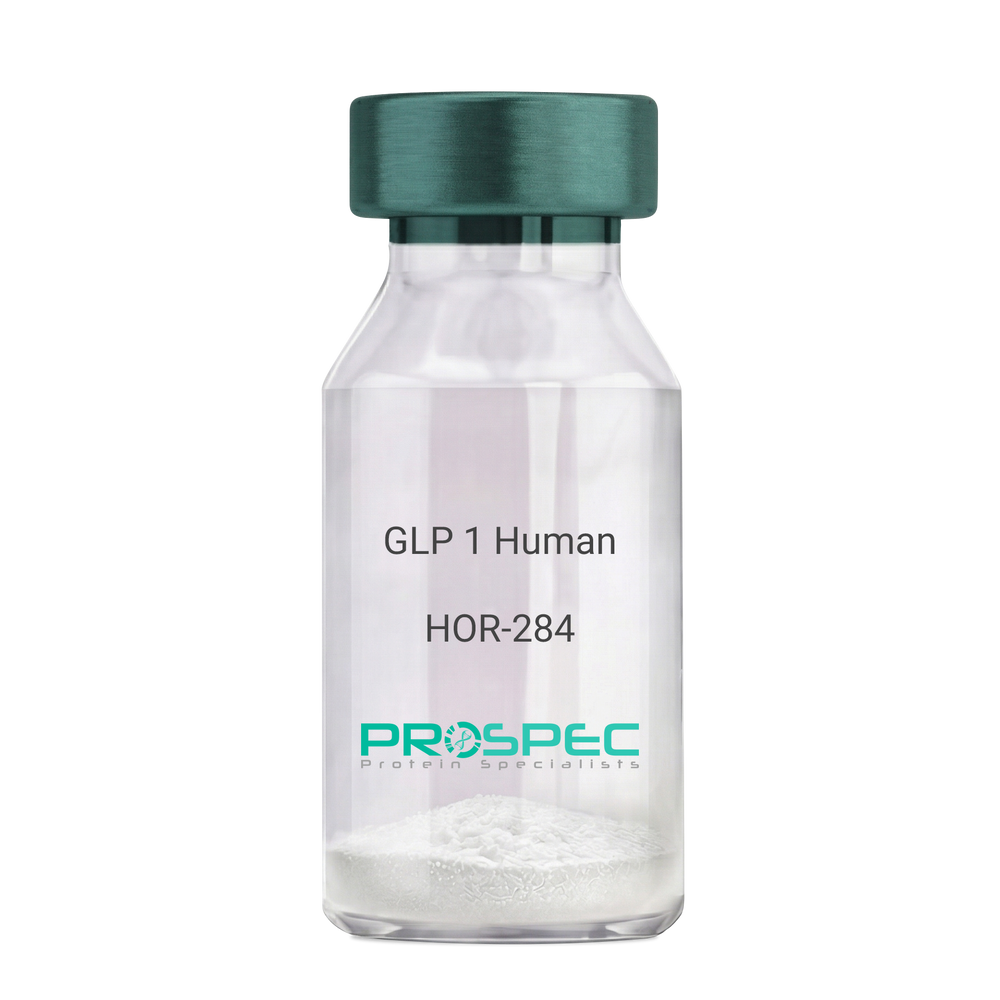
    GLP 1 Human

    Description:

    Human Glucagon Like Peptide-1

    GLP1, Glucagon Like Peptide-1, Incretin hormone.

    Product # :

    HOR-284

    Price :

    Quantity :

    Shipping Method :

    Room Temp Icon

    Shipped at Room temp

    Add To Cart

    More Info

    • description
    • formulation
    • purity
    • More Info

    Description

    Glucagon Like Peptide-1 is a single, non-glycosylated, polypeptide chain containing 30 amino acids and having a molecular mass of 3297.7 Dalton.The GLP-1 is purified by proprietary chromatographic techniques.

    Formulation

    The GLP-1 peptide was lyophilized with no additives.

    Purity

    Greater than 96.0% as determined by RP-HPLC.

    More Info

    • Introduction

      Glucagon-like peptide-1 (GLP-1) is derived from the transcription product of the proglucagon gene. The major source of GLP-1 in the body is the intestinal L cell that secretes GLP-1 as a guthormone. The biologically active forms of GLP-1 are: GLP-1-(7-37) and GLP-1-(7-36)NH2.
      GLP-1 secretion by L cells is dependent on the presence of nutrients in the lumen of the small intestine. The secretagogues (agents that causes or stimulates secretion) of this hormone include major nutrients like carbohydrate, proteinand lipid. Once in the circulation, GLP-1 has a half life of less than 2 minutes, due to rapid degradation by the enzyme dipeptidyl peptidase-4.
      GLP-1 possesses several physiological properties that make it a subject of intensive investigation as a potential treatment of diabetes mellitus. The known physiological functions of GLP-1 include: Increases insulin secretion from the pancreas in a glucose-dependent manner, decreases glucagon secretion from the pancreas, increases beta cells mass and insulin gene expression, inhibits acid secretion and gastric emptying in the stomach, decreases food intake by increasing satiety.

    • Synonyms

      GLP1, Glucagon Like Peptide-1, Incretin hormone.

    • Physical Appearance

      Sterile Filtered White lyophilized (freeze-dried) powder.

    • Stability

      Lyophilized Glucagon Like Peptide-1 although stable at room temperature for 3 weeks, should be stored desiccated below -18°C. Upon reconstitution GLP-1 should be stored at 4°C between 2-7 days and for future use below -18°C. For long term storage it is recommended to add a carrier protein (0.1% HSA or BSA).Please prevent freeze-thaw cycles.

    • Solubility

      It is recommended to reconstitute the lyophilized Glucagon Like Peptide-1 in sterile H2O at 0.5mg/ml, which can then be further diluted to other aqueous solutions.

    • Amino Acid Sequence

      H-His-Ala-Glu-Gly-Thr-Phe-Thr-Ser-Asp-Val-Ser-Ser-Tyr-Leu-Glu-Gly-Gln-Ala-Ala-Lys-Glu-Phe-Ile-Ala-Trp-Leu-Val-Lys-Gly-Arg-NH2.

    ProSpec's products are furnished for LABORATORY RESEARCH USE ONLY. The product may not be used as drugs, agricultural or pesticidal products, food additives or household chemicals.

    Glp 1 Human
  • View Data Sheet

    Name :

    MIA Human, His

    Description:

    Melanoma Inhibitory Activity Protein Human Recombinant, His Tag

    Melanoma-derived growth regulatory protein precursor, Cartilage-derived retinoic acid-sensitive protein, CD-RAP, MIA.

    Product # :

    CYT-810

    Price :

    Quantity :

    Shipping Method :

    Ice Icon

    Shipped with Ice Packs

    Add To Cart

    More Info

    • description
    • source
    • formulation
    • purity
    • More Info

    Description

    MIA Human Recombinant produced in E.coli is a single, non-glycosylated polypeptide chain containing 128 amino acids (25-131) and having a molecular mass of 14.4 kDa.MIA is fused to a 21 amino acid His-tag at N-terminus.

    Source

    Escherichia Coli.

    Formulation

    The MIA solution (0.25mg/ml) contains 20mM Tris-HCl buffer (pH 8.0), 0.4M Urea and 10% glycerol.

    Purity

    Greater than 90% as determined by SDS-PAGE.

    More Info

    • Introduction

      The Melanoma Inhibitory protein (MIA) was identified as an inhibitor of in vitro growth of malignant melanoma cells. The protein contains a SH3 domain. MIA acts as a potent tumor cell growth inhibitor for malignant melanoma cells and some other neuroectodermal tumors, including gliomas, in an autocrine fashion. In a study of human melanoma cell lines with different metastatic capacity MIA mRNA expression appeared to be inversely correlated with pigmentation. MIA has been shown to represent a very sensitive and specific serum marker for systemic malignant melanoma that might be useful for staging of primary melanomas, detection of progression from localized to metastatic disease during follow-up, and monitoring therapy of advanced melanomas.

    • Synonyms

      Melanoma-derived growth regulatory protein precursor, Cartilage-derived retinoic acid-sensitive protein, CD-RAP, MIA.

    • Physical Appearance

      Sterile Filtered clear solution.

    • Stability

      Store at 4°C if entire vial will be used within 2-4 weeks. Store, frozen at -20°C for longer periods of time. For long term storage it is recommended to add a carrier protein (0.1% HSA or BSA).Avoid multiple freeze-thaw cycles.

    • Amino Acid Sequence

      MGSSHHHHHH SSGLVPRGSH MGPMPKLADR KLCADQECSH PISMAVALQD YMAPDCRFLT IHRGQVVYVF SKLKGRGRLF WGGSVQGDYY GDLAARLGYF PSSIVREDQT LKPGKVDVKT DKWDFYCQ

    ProSpec's products are furnished for LABORATORY RESEARCH USE ONLY. The product may not be used as drugs, agricultural or pesticidal products, food additives or household chemicals.

    Mia Human His
  • View Data Sheet

    Name :

    MIP 1a Mouse

    Description:

    Macrophage Inflammatory Protein-1 Alpha Mouse Recombinant (CCL3)

    Small inducible cytokine A3, CCL3, Macrophage inflammatory protein 1-alpha, MIP-1-alpha, Tonsillar lymphocyte LD78 alpha protein, G0/G1 switch regulatory protein 19-1, G0S19-1 protein, SIS-beta, PAT 464.1, chemokine (C-C motif) ligand 3, MIP1A, SCYA3, G0S19-1, LD78ALPHA, TY-5, SIS-alpha, L2G25B.

    Product # :

    CHM-320

    Price :

    Quantity :

    Shipping Method :

    Room Temp Icon

    Shipped at Room temp

    Add To Cart

    More Info

    • description
    • source
    • formulation
    • purity
    • biological activity
    • More Info

    Description

    Macrophage Inflammatory Protein-1 alpha Mouse Recombinant produced in E.Coli is a single, non-glycosylated, polypeptide chain containing 69 amino acids and having a molecular mass of 7820 Dalton. The MIP-1a is purified by proprietary chromatographic techniques.

    Source

    Escherichia Coli.

    Formulation

    The protein was lyophilized from 1mg/ml solution containing no additives.

    Purity

    Greater than 99.0% as determined by:
    (a) Analysis by RP-HPLC.
    (b) Analysis by SDS-PAGE.

    Biological Activity

    The Activity is calculated by the ability to chemoattract of Balb3/C splenocytes using 1-10ng/ml corresponding to a Specific Activity of 100,000-1,000,000IU/mg.

    More Info

    • Introduction

      Macrophage Inflammatory Proteins (MIP) belong to the family of chemotactic cytokines known as chemokines. In humans, there are two major forms, MIP-1a and MIP-1b that are now officially named CCL3 and CCL4 respectively. Both are major factors produced by macrophages after they are stimulated with bacterial endotoxins. They activate human granulocytes (neutrophils, eosinophils and basophils) which can lead to acute neutrophilic inflammation. They also induce the synthesis and release of other pro-inflammatory cytokines such as interleukin 1 (IL-1), IL-6 and TNF-a from fibroblasts and macrophages. The genes for CCL3 and CCL4 are both located on human chromosome 17.

    • Synonyms

      Small inducible cytokine A3, CCL3, Macrophage inflammatory protein 1-alpha, MIP-1-alpha, Tonsillar lymphocyte LD78 alpha protein, G0/G1 switch regulatory protein 19-1, G0S19-1 protein, SIS-beta, PAT 464.1, chemokine (C-C motif) ligand 3, MIP1A, SCYA3, G0S19-1, LD78ALPHA, TY-5, SIS-alpha, L2G25B.

    • Physical Appearance

      Sterile Filtered White lyophilized (freeze-dried) powder.

    • Stability

      Lyophilized MIP-1a although stable at room temperature for 3 weeks, should be stored desiccated below -18°C. Upon reconstitution CCL3 should be stored at 4°C between 2-7 days and for future use below -18°C.For long term storage it is recommended to add a carrier protein (0.1% HSA or BSA).Please prevent freeze-thaw cycles.

    • Solubility

      It is recommended to reconstitute the lyophilized Macrophage Inflammatory Protein-1a in sterile 18MΩ-cm H2O not less than 100µg/ml, which can then be further diluted to other aqueous solutions.

    • Amino Acid Sequence

      The sequence of the first five N-terminal amino acids was determined and was found to be, Ala-Pro-Tyr-Gly-Ala.

    • Background

      What is the molecular weight/Mw of MIP 1A MOUSE Protein?
      MIP 1A MOUSE Protein has a total Mw of 7.82kDa.

      What is the source or expression system of MIP 1A MOUSE Protein?
      Escherichia Coli.

      What is the Purity of MIP 1A MOUSE Protein?
      MIP 1A MOUSE Protein is >99% pure as determined by SDS-PAGE.

      What is the Biological Activity of MIP 1A MOUSE Protein?
      The Activity is calculated by the ability to chemoattract of Balb3/C splenocytes using 1-10ng/ml corresponding to a Specific Activity of 100,000-1,000,000IU/mg.

      What is the amino acid sequence of MIP 1A MOUSE Protein?
      The sequence of the first five N-terminal amino acids was determined and was found to be, Ala-Pro-Tyr-Gly-Ala.

      What applications can MIP 1A MOUSE Protein be used in?
      MIP 1A MOUSE Protein can probably be used in western blot, ELISA and Lateral Flow.

      What is the endotoxin level for MIP 1A MOUSE Protein?
      The endotoxin level is minimal, MIP 1A MOUSE Protein was purified using conventional chromatography techniques.


    ProSpec's products are furnished for LABORATORY RESEARCH USE ONLY. The product may not be used as drugs, agricultural or pesticidal products, food additives or household chemicals.

    Mip 1A Mouse
  • View Data Sheet

    Name :

    CTLA4 Mouse

    Description:

    Cytotoxic T-Lymphocyte Associated Antigen-4 Mouse Recombinant

    Cytotoxic T-lymphocyte protein 4, Cytotoxic T-lymphocyte-associated antigen 4, CTLA-4, CD152, Ctla4, Cd152.

    Product # :

    CYT-950

    Price :

    Quantity :

    Shipping Method :

    Ice Icon

    Shipped with Ice Packs

    Add To Cart

    More Info

    • description
    • source
    • formulation
    • purity
    • biological activity
    • More Info

    Description

    CTLA4 Mouse Recombinant produced in Sf9 Insect cells is a single, glycosylated polypeptide chain containing 363 amino acids (38-161aa) and having a molecular mass of 40.6kDa (Molecular size on SDS-PAGE will appear at approximately 40-57kDa).CTLA4 is fused to a 239 amino acid hIgG-His-tag at C-terminus & purified by proprietary chromatographic techniques.

    Source

    Sf9 Insect cells.

    Formulation

    CTLA4 protein solution (0.5mg/ml) contains Phosphate Buffered Saline (pH 7.4) and 10% glycerol.

    Purity

    Greater than 90.0% as determined by SDS-PAGE.

    Biological Activity

    The ED50 range ≤150ng/ml and the activity is determined by the IL-2 ELISA in a using stimulated Jurkat human acute T cell leukemia cells with Human B7-1/CD80. 

    More Info

    • Introduction

      CTLA-4 is a member of the immunoglobulin superfamily and encodes a protein which transmits an inhibitory signal to T cells. The protein contains a V domain, a transmembrane domain, and a cytoplasmic tail. Alternate transcriptional splice variants, encoding different isoforms, have been characterized. The membrane-bound isoform functions as a homodimer interconnected by a disulfide bond, while the soluble isoform functions as a monomer. Mutations in this gene have been associated with ins.-dependent diabetes mellitus, Graves disease, Hashimoto thyroiditis, celiac disease, systemic lupus erythematosus, thyroid-associated orbitopathy, and other autoimmune diseases.

    • Synonyms

      Cytotoxic T-lymphocyte protein 4, Cytotoxic T-lymphocyte-associated antigen 4, CTLA-4, CD152, Ctla4, Cd152.

    • Physical Appearance

      Sterile filtered colorless solution.

    • Stability

      Store at 4°C if entire vial will be used within 2-4 weeks. Store, frozen at -20°C for longer periods of time. For long term storage it is recommended to add a carrier protein (0.1% HSA or BSA).Avoid multiple freeze-thaw cycles.

    • Amino Acid Sequence

      IQVTQPSVVL ASSHGVASFP CEYSPSHNTD EVRVTVLRQT NDQMTEVCAT TFTEKNTVGF LDYPFCSGTF NESRVNLTIQ GLRAVDTGLY LCKVELMYPP PYFVGMGNGT QIYVIDPEPC PDSDLEPKSC DKTHTCPPCP APELLGGPSV FLFPPKPKDT LMISRTPEVT CVVVDVSHED
      PEVKFNWYVD GVEVHNAKTK PREEQYNSTY RVVSVLTVLH QDWLNGKEYK CKVSNKALPA PIEKTISKAK GQPREPQVYT LPPSRDELTK NQVSLTCLVK GFYPSDIAVE WESNGQPENN YKTTPPVLDS DGSFFLYSKL TVDKSRWQQG NVFSCSVMHE ALHNHYTQKS LSLSPGKHHH
      HHH.

    • Background

      What is the molecular weight/Mw of CTLA4 Protein?
      CTLA4 Protein has a total Mw of 40.6kDa.

      What is the source or expression system of CTLA4 Protein?
      Sf9 Insect cells.

      What is the Purity of CTLA4 Protein?
      CTLA4 Protein is >90% pure as determined by SDS-PAGE.

      What is the Biological Activity of CTLA4 Protein?
      The ED50 range ≤150ng/ml and the activity is determined by the IL-2 ELISA in a using stimulated Jurkat human acute T cell leukemia cells with Human B7-1/CD80.

      What is the amino acid sequence of CTLA4 Protein?
      IQVTQPSVVL ASSHGVASFP CEYSPSHNTD EVRVTVLRQT NDQMTEVCAT TFTEKNTVGF LDYPFCSGTF NESRVNLTIQ GLRAVDTGLY LCKVELMYPP PYFVGMGNGT QIYVIDPEPC PDSDLEPKSC DKTHTCPPCP APELLGGPSV FLFPPKPKDT LMISRTPEVT CVVVDVSHED
      PEVKFNWYVD GVEVHNAKTK PREEQYNSTY RVVSVLTVLH QDWLNGKEYK CKVSNKALPA PIEKTISKAK GQPREPQVYT LPPSRDELTK NQVSLTCLVK GFYPSDIAVE WESNGQPENN YKTTPPVLDS DGSFFLYSKL TVDKSRWQQG NVFSCSVMHE ALHNHYTQKS LSLSPGKHHH
      HHH.

      What applications can CTLA4 Protein be used in?
      CTLA4 Protein can probably be used in western blot, ELISA and Lateral Flow.

      What is the endotoxin level for CTLA4 Protein?
      The endotoxin level is minimal, CTLA4 Protein was purified using conventional chromatography techniques.

    ProSpec's products are furnished for LABORATORY RESEARCH USE ONLY. The product may not be used as drugs, agricultural or pesticidal products, food additives or household chemicals.

    Ctla4 Mouse
  • View Data Sheet

    Name :

    DCTN6 Human

    Description:

    Dynactin 6 Human Recombinant

    Dynactin 6, WS3, Dynactin Subunit P27, Protein WS-3, P27, Novel RGD-Containing Protein, Dynactin Subunit 6, WS-3, Dynactin subunit 6.

    Product # :

    PRO-2094

    Price :

    Quantity :

    Shipping Method :

    Ice Icon

    Shipped with Ice Packs

    Add To Cart

    More Info

    • description
    • source
    • formulation
    • purity
    • More Info

    Description

    DCTN6 Human Recombinant produced in E.Coli is a single, non-glycosylated polypeptide chain containing 213 amino acids (1-190 a.a) and having a molecular mass of 23.1kDa. DCTN6 is fused to a 23 amino acid His-tag at N-terminus & purified by proprietary chromatographic techniques.

    Source

    Escherichia Coli.

    Formulation

    DCTN6 protein solution (1mg/ml) containing Phosphate Buffered Saline (pH7.4) and 10% glycerol.

    Purity

    Greater than 85.0% as determined by SDS-PAGE.

    More Info

    • Introduction

      Dynactin 6, also known as DCTN6 is a member of the dynactin subunits 5/6 family. DCTN6 includes an RGD (Arg-Gly-Asp) motif in the N-terminal region, which confers adhesive properties to macromolecular proteins such as fibronectin. DCTN6 has a high degree of sequence resemblance with the mouse homolog, which has been found to participate in mitochondrial biogenesis. Moreover, the precise biological function of DCTN6 is unknown.

    • Synonyms

      Dynactin 6, WS3, Dynactin Subunit P27, Protein WS-3, P27, Novel RGD-Containing Protein, Dynactin Subunit 6, WS-3, Dynactin subunit 6.

    • Physical Appearance

      Sterile Filtered colorless solution.

    • Stability

      Store at 4°C if entire vial will be used within 2-4 weeks. Store, frozen at -20°C for longer periods of time. For long term storage it is recommended to add a carrier protein (0.1% HSA or BSA).Avoid multiple freeze-thaw cycles.

    • Amino Acid Sequence

      MGSSHHHHHH SSGLVPRGSH MGSMAEKTQK SVKIAPGAVV CVESEIRGDV TIGPRTVIHP KARIIAEAGP IVIGEGNLIE EQALIINAYP DNITPDTEDP EPKPMIIGTN NVFEVGCYSQ AMKMGDNNVI ESKAYVGRNV ILTSGCIIGA CCNLNTFEVI PENTVIYGAD CLRRVQTERP QPQTLQLDFL MKILPNYHHL KKTMKGSSTP VKN.

    ProSpec's products are furnished for LABORATORY RESEARCH USE ONLY. The product may not be used as drugs, agricultural or pesticidal products, food additives or household chemicals.

    Dctn6 Human
  • View Data Sheet

    Name :

    HOPX Human

    Description:

    HOP homeobox Human Recombinant

    Homeodomain-only protein, Lung cancer-associated Y protein, Not expressed in choriocarcinoma protein 1, Odd homeobox protein 1, HOPX, HOD, HOP, LAGY, NECC1, OB1, TOTO, CAMEO, SMAP31.

    Product # :

    PRO-1158

    Price :

    Quantity :

    Shipping Method :

    Ice Icon

    Shipped with Ice Packs

    Add To Cart

    More Info

    • description
    • source
    • formulation
    • purity
    • More Info

    Description

    HOPX Human Recombinant produced in E.Coli is a single, non-glycosylated polypeptide chain containing 97 amino acids (1-73 a.a) and having a molecular mass of 10.8kDa.HOPX is fused to a 24 amino acid His-tag at N-terminus & purified by proprietary chromatographic techniques.

    Source

    Escherichia Coli.

    Formulation

    HOPX protein solution (1mg/ml) containing 20mM Tris-HCl buffer (pH8.0) and 10% glycerol.

    Purity

    Greater than 90% as determined by SDS-PAGE.

    More Info

    • Introduction

      Homeodomain-only protein (HOPX) functions via its interaction with SRF, thus modulating the expression of SRF-dependent cardiac-specific genes and cardiac development. HOPX inhibits SRF-dependent transcription either by hindering SRF binding to DNA or by engaging histone deacetylase (HDAC) proteins which prevent transcription by SRF. HOPX is a homeodomain protein which lacks certain conserved residues required for DNA binding. HOPX overexpression causes cardiac hypertrophy.

    • Synonyms

      Homeodomain-only protein, Lung cancer-associated Y protein, Not expressed in choriocarcinoma protein 1, Odd homeobox protein 1, HOPX, HOD, HOP, LAGY, NECC1, OB1, TOTO, CAMEO, SMAP31.

    • Physical Appearance

      Sterile filtered colorless solution.

    • Stability

      Store at 4°C if entire vial will be used within 2-4 weeks. Store, frozen at -20°C for longer periods of time. For long term storage it is recommended to add a carrier protein (0.1% HSA or BSA).Avoid multiple freeze-thaw cycles.

    • Amino Acid Sequence

      MGSSHHHHHH SSGLVPRGSH MGSHMSAETA SGPTEDQVEI LEYNFNKVDK HPDSTTLCLI AAEAGLSEEE TQKWFKQRLA KWRRSEGLPS ECRSVTD.

    ProSpec's products are furnished for LABORATORY RESEARCH USE ONLY. The product may not be used as drugs, agricultural or pesticidal products, food additives or household chemicals.

    Hopx Human
  • View Data Sheet

    Name :

    SERPINH1 Human

    Description:

    Heat Shock 47kDa Human Recombinant

    HSP47, HSP-47, Colligin-1, CBP1, Collagen Binding Protein-1, Serpin Peptidase Inhibitor Clade-H memebr 1, Serpin H1, Collagen-binding protein, Colligin, 47 kDa heat shock protein, Rheumatoid arthritis-related antigen RA-A47, Arsenic-transactivated protein 3, AsTP3, Cell proliferation-inducing gene 14 protein, SERPINH1, CBP2, gp46, PIG14, PPROM, RA-A47, SERPINH2.

    Product # :

    HSP-047

    Price :

    Quantity :

    Shipping Method :

    Ice Icon

    Shipped with Ice Packs

    Add To Cart

    More Info

    • description
    • source
    • formulation
    • purity
    • More Info

    Description

    Recombinant Human HSP47 produced in E.Coli is a single, non-glycosylated polypeptide chain containing 439 amino acids (18-418 a.a.) and having a molecular mass of 48.9 kDa. HSP47 human recombinant is fused to a 38 amino acid His Tag at N-terminus and purified by convential chromatogrpahy techniques.

    Source

    Escherichia Coli.

    Formulation

    The SERPINH1 protein solution (1mg/ml) contains 20mM Tris-HCl buffer (pH 8.0) and 20% glycerol.

    Purity

    Greater than 90.0% as determined by SDS-PAGE.

    More Info

    • Introduction

      SERPINH1 is part of the serpin superfamily of serine proteinase inhibitors. SEPINH1 expression is induced by heat shock. HSP47 localizes to the endoplasmic reticulum lumen and binds collagen therefore it is a molecular chaperone which takes part in the maturation of collagen molecules, facilitating the folding and assembly of procollagen molecules, retaining unfolded molecules within the ER, and assisting the transport of correctly folded-molecules from the ER to Golgi apparatus. Autoantibodies to HSP47 protein have been found in rheumatoid arthritis. SERPINH1 binds specifically to collagen and acts as a chaperone in the biosynthetic pathway of collagen.

    • Synonyms

      HSP47, HSP-47, Colligin-1, CBP1, Collagen Binding Protein-1, Serpin Peptidase Inhibitor Clade-H memebr 1, Serpin H1, Collagen-binding protein, Colligin, 47 kDa heat shock protein, Rheumatoid arthritis-related antigen RA-A47, Arsenic-transactivated protein 3, AsTP3, Cell proliferation-inducing gene 14 protein, SERPINH1, CBP2, gp46, PIG14, PPROM, RA-A47, SERPINH2.

    • Physical Appearance

      Sterile filtered colorless solution.

    • Stability

      Store at 4°C if entire vial will be used within 2-4 weeks. Store, frozen at -20°C for longer periods of time. For long term storage it is recommended to add a carrier protein (0.1% HSA or BSA). Avoid multiple freeze-thaw cycles.

    • Amino Acid Sequence

      MRGSHHHHHH GMASMTGGQQ MGRDLYDDDD KDRWGSHMAA EVKKPAAAAA PGTAEKLSPK AATLAERSAG LAFSLYQAMA KDQAVENILV SPVVVASSLG LVSLGGKATT ASQAKAVLSA EQLRDEEVHA GLGELLRSLS NSTARNVTWK LGSRLYGPSS VSFADDFVRS SKQHYNCEHS KINFRDKRSA LQSINEWAAQ TTDGKLPEVT KDVERTDGAL LVNAMFFKPH WDEKFHHKMV DNRGFMVTRS YTVGVMMMHR TGLYNYYDDE KEKLQIVEMP LAHKLSSLII LMPHHVEPLE RLEKLLTKEQ LKIWMGKMQK KAVAISLPKG VVEVTHDLQK HLAGLGLTEA IDKNKADLSR MSGKKDLYLA SVFHATAFEL DTDGNPFDQD IYGREELRSP KLFYADHPFI FLVRDTQSGS LLFIGRLVRP KGDKMRDEL.

    ProSpec's products are furnished for LABORATORY RESEARCH USE ONLY. The product may not be used as drugs, agricultural or pesticidal products, food additives or household chemicals.

    Serpinh1 Human
  • View Data Sheet

    Name :

    CXCL13 Human

    Description:

    BCA-1/BLC Human Recombinant (CXCL13)

    C-X-C motif chemokine 13, Small-inducible cytokine B13, B lymphocyte chemoattractant, CXC chemokine BLC, CXCL13, BCA1, BCA-1, CXCL-13, B cell Attracting Chemokine-1, BLC, ANGIE, BLR1L, SCYB13, ANGIE2.

    Product # :

    CHM-348

    Price :

    Quantity :

    Shipping Method :

    Room Temp Icon

    Shipped at Room temp

    Add To Cart

    More Info

    • description
    • source
    • formulation
    • purity
    • biological activity
    • More Info

    Description

    CXCL13 Human Recombinant produced in E.Coli is a single,non-glycosylated, polypeptide chain containing 87 amino acids and having a molecular mass of 10.3 kDa. The BCA-1 is purified by proprietary chromatographic techniques.

    Source

    Escherichia Coli.

    Formulation

    The BCA-1 protein was lyophilized from a concentrated (0.5mg/ml) solution containing 20mM PBS & 150mM NaCl pH-7.4.

    Purity

    Greater than 97.0% as determined by:
    (a) Analysis by RP-HPLC.
    (b) Analysis by SDS-PAGE.

    Biological Activity

    Determined by its ability to chemoattract human B cells using a concentration range of 1-10ng/ml corresponding to a Specific Activity of 100,000-1,000,000IU/mg.

    More Info

    • Introduction

      BCA-1 is a CXC chemokine that is highly expressed in thesecondary lymphoid organs, such as follicles of the spleen, lymph nodes, and Peyer's patches. CXCL13 promotes the migration of B lymphocytes (compared to T cells and macrophages), by stimulating calcium influx into, and chemotaxis of, cells expressing Burkitt's lymphoma receptor 1 (BLR1). BCA1 therefore function in the homing of B lymphocytes to follicles. Human BCA-1 shares a 64% amino acid sequence similarity with the mouse protein and 23 - 34% amino acid sequence identity with other known CXC chemokines. Recombinant or chemically synthesized BCA1 is a potent chemoattractant for B lymphocytes but not T lymphocytes, monocytes or neutrophils. BLR1, a G protein-coupled receptor originally isolated from Burkitt’s lymphoma cells, has now been shown to be the specific receptor for BCA1. Among cells of the hematopoietic lineages, the expression of BLR-1, now designated CXCR-5, is restricted to B lymphocytes and a subpopulation of T helper memory cells.

    • Synonyms

      C-X-C motif chemokine 13, Small-inducible cytokine B13, B lymphocyte chemoattractant, CXC chemokine BLC, CXCL13, BCA1, BCA-1, CXCL-13, B cell Attracting Chemokine-1, BLC, ANGIE, BLR1L, SCYB13, ANGIE2.

    • Physical Appearance

      Sterile Filtered White lyophilized (freeze-dried) powder.

    • Stability

      Lyophilized BCA1 although stable at room temperature for 3 weeks, should be stored desiccated below -18°C. Upon reconstitution BCA1 should be stored at 4°C between 2-7 days and for future use below -18°C.For long term storage it is recommended to add a carrier protein (0.1% HSA or BSA).Please prevent freeze-thaw cycles.

    • Solubility

      It is recommended to reconstitute the lyophilized CXCL13 in sterile 18MΩ-cm H2O not less than 100µg/ml, which can then be further diluted to other aqueous solutions.

    • Amino Acid Sequence

      VLEVYYTSLRCRCVQESSVFIPRRFIDRIQILPRGNG CPRKEIIVWKKNKSIVCVDPQAEWIQRMMEVLRKR SSSTLPVPVFKRKIP.

    • Background

      What is the molecular weight/Mw of CXCL13 HUMAN Protein?
      CXCL13 HUMAN Protein has a total Mw of 10.3kDa.

      What is the source or expression system of CXCL13 HUMAN Protein?
      Escherichia Coli.

      What is the Purity of CXCL13 HUMAN Protein?
      CXCL13 HUMAN Protein is >97% pure as determined by SDS-PAGE.

      What is the Biological Activity of CXCL13 HUMAN Protein?
      Determined by its ability to chemoattract human B cells using a concentration range of 1-10ng/ml corresponding to a Specific Activity of 100,000-1,000,000IU/mg.

      What is the amino acid sequence of CXCL13 HUMAN Protein?
      VLEVYYTSLRCRCVQESSVFIPRRFIDRIQILPRGNG CPRKEIIVWKKNKSIVCVDPQAEWIQRMMEVLRKR SSSTLPVPVFKRKIP.

      What applications can CXCL13 HUMAN Protein be used in?
      CXCL13 HUMAN Protein can probably be used in western blot, ELISA and Lateral Flow.

      What is the endotoxin level for CXCL13 HUMAN Protein?
      The endotoxin level is minimal, CXCL13 HUMAN Protein was purified using conventional chromatography techniques.


    ProSpec's products are furnished for LABORATORY RESEARCH USE ONLY. The product may not be used as drugs, agricultural or pesticidal products, food additives or household chemicals.

    Cxcl13 Human
  • 1
  • …
  • 12
  • 13
  • 14
  • 15
  • 16
  • …
  • 42
Your browser does not support the video tag.

Products

  • Cytokines
  • Growth Factors
  • Chemokines
  • CD Antigens
  • Neurotrophins
  • Hormones
  • Enzymes
  • Viral Antigens
  • Recombinant Proteins
  • Natural Proteins
  • Monoclonal Antibodies
  • Polyclonal Antibodies
  • Thermal Packaging

About

  • Company
  • Founder
  • Contribution
  • Contact Us
  • My Account

Ordering

  • Ordering Method
  • Ordering - Credit Card
  • Ordering PO
  • Shipping Fees
  • FAQ's

Legal

  • Terms & Conditions
  • Privacy
  • Site Map
  • info@prospecbio.com
  • Facebook
  • Instagram
  • Linkedin Profile

© 2026 ProSpec-Tany TechnoGene Ltd. All Rights Reserved.

  • Choosing a selection results in a full page refresh.
  • Opens in a new window.