Skip to content

High-quality research proteins.

  • 1-800-805-6531

  • Mon - Sat 8.00-18.00, Sun - Closed

  • info@prospecbio.com

  • PO Box 6591 East Brunswick NJ 08816

  • Products
    • Cytokines
    • Growth factors
    • Chemokines
    • Cd antigens
    • Neurotrophins
    • Hormones
    • Enzymes
    • Viral antigens
    • Recombinant proteins
    • Natural proteins
    • Monoclonal antibodies
    • Polyclonal antibodies
    • Thermal Packaging
  • About
    • Company
    • Founder
    • Contribution
  • Customers
    • Eastern Asia
    • Eastern Europe
    • North America
    • South America
    • South East Asia
    • Southern Asia
    • Western Europe
  • Ordering
    • Ordering Method
    • Ordering - Credit Card
    • Ordering - PO
    • Shipping Fees
    • FAQs
  • Services
    • DNA Cloning
    • Protein Expression
    • Monoclonal Antibody
    • Fermentation
    • Technology License
  • Contact us
Log in

Country/region

  • USD $ | Albania
  • USD $ | Andorra
  • USD $ | Argentina
  • USD $ | Armenia
  • USD $ | Australia
  • USD $ | Austria
  • USD $ | Azerbaijan
  • USD $ | Belarus
  • USD $ | Belgium
  • USD $ | Bolivia
  • USD $ | Brazil
  • USD $ | Bulgaria
  • USD $ | Cambodia
  • USD $ | Canada
  • USD $ | Chile
  • USD $ | China
  • USD $ | Colombia
  • USD $ | Costa Rica
  • USD $ | Croatia
  • USD $ | Cyprus
  • USD $ | Czechia
  • USD $ | Denmark
  • USD $ | Estonia
  • USD $ | Finland
  • USD $ | France
  • USD $ | Georgia
  • USD $ | Germany
  • USD $ | Greece
  • USD $ | Hong Kong SAR
  • USD $ | Hungary
  • USD $ | Iceland
  • USD $ | India
  • USD $ | Ireland
  • USD $ | Israel
  • USD $ | Italy
  • USD $ | Japan
  • USD $ | Kazakhstan
  • USD $ | Latvia
  • USD $ | Liechtenstein
  • USD $ | Lithuania
  • USD $ | Madagascar
  • USD $ | Malta
  • USD $ | Mexico
  • USD $ | Moldova
  • USD $ | Monaco
  • USD $ | Netherlands
  • USD $ | New Zealand
  • USD $ | North Macedonia
  • USD $ | Norway
  • USD $ | Panama
  • USD $ | Paraguay
  • USD $ | Peru
  • USD $ | Philippines
  • USD $ | Poland
  • USD $ | Portugal
  • USD $ | Romania
  • USD $ | Singapore
  • USD $ | Slovakia
  • USD $ | Slovenia
  • USD $ | South Africa
  • USD $ | South Korea
  • USD $ | Spain
  • USD $ | Sri Lanka
  • USD $ | Sweden
  • USD $ | Switzerland
  • USD $ | Taiwan
  • USD $ | Thailand
  • USD $ | Türkiye
  • USD $ | Ukraine
  • USD $ | United Kingdom
  • USD $ | United States
  • USD $ | Uruguay
  • USD $ | Vatican City
  • USD $ | Venezuela
  • USD $ | Vietnam
  • Facebook
  • Instagram
logoProSpec - Recombinant Protein Manufacturer for academic and R&D industry
Become a distributor
Account Log in
Wishlist
Cart Cart(0)
  • Products
    +
    • Cytokines
    • Growth factors
    • Chemokines
    • Cd antigens
    • Neurotrophins
    • Hormones
    • Enzymes
    • Viral antigens
    • Recombinant proteins
    • Natural proteins
    • Monoclonal antibodies
    • Polyclonal antibodies
    • Thermal Packaging
  • About
    +
    • Company
    • Founder
    • Contribution
  • Customers
    +
    • Eastern Asia
    • Eastern Europe
    • North America
    • South America
    • South East Asia
    • Southern Asia
    • Western Europe
  • Ordering
    +
    • Ordering Method
    • Ordering - Credit Card
    • Ordering - PO
    • Shipping Fees
    • FAQs
  • Services
    +
    • DNA Cloning
    • Protein Expression
    • Monoclonal Antibody
    • Fermentation
    • Technology License
  • Contact us

Item added to your cart

View cart
View All
  • Cytokines
  • Growth factors
  • Chemokines
  • Cd antigens
  • Neurotrophins
  • Hormones
  • Enzymes
  • Viral antigens
  • Recombinant proteins
  • Natural proteins
  • Monoclonal antibodies
  • Polyclonal antibodies
  • Thermal Packaging
  • Tumor Necrosis Factor

    Tumor Necrosis Factor

    View All
  • 4-1BB

    4-1BB

    View All
  • Adiponectin

    Adiponectin

    View All
  • AIF1

    AIF1

    View All
  • Other Cytokines

    Other Cytokines

    View All
  • AITRL

    AITRL

    View All
  • Angiopoietin

    Angiopoietin

    View All
  • Apolipoprotein

    Apolipoprotein

    View All
  • B-Cell Activating Factor

    B-Cell Activating Factor

    View All
  • Beta Defensin

    Beta Defensin

    View All
  • Bone Morphogenetic Protein

    Bone Morphogenetic Protein

    View All
  • B type Natriuretic Peptide

    B type Natriuretic Peptide

    View All
  • BST

    BST

    View All
  • Betacellulin

    Betacellulin

    View All
  • Cardiotrophin

    Cardiotrophin

    View All
  • Activin

    Activin

    View All
  • Fibroblast Growth Factor

    Fibroblast Growth Factor

    View All
  • Other Growth Factors

    Other Growth Factors

    View All
  • CSF

    CSF

    View All
  • CTGF

    CTGF

    View All
  • IGFBP

    IGFBP

    View All
  • VEGF Protein

    VEGF Protein

    View All
  • EGF

    EGF

    View All
  • Epigen

    Epigen

    View All
  • Erythropoietin

    Erythropoietin

    View All
  • Insulin-Like Growth Factor

    Insulin-Like Growth Factor

    View All
  • Growth Hormone

    Growth Hormone

    View All
  • HDGF

    HDGF

    View All
  • Hepatocyte Growth Factor

    Hepatocyte Growth Factor

    View All
  • Insulin

    Insulin

    View All
  • BCA-1/ BLC (CXCL13)

    BCA-1/ BLC (CXCL13)

    View All
  • BRAK (CXCL14)

    BRAK (CXCL14)

    View All
  • C-10 (CCL6)

    C-10 (CCL6)

    View All
  • Other Chemokines

    Other Chemokines

    View All
  • MEC (CCL28)

    MEC (CCL28)

    View All
  • LD78-beta (CCL3L1)

    LD78-beta (CCL3L1)

    View All
  • CTACK (CCL27)

    CTACK (CCL27)

    View All
  • CXCL16

    CXCL16

    View All
  • CXCL17

    CXCL17

    View All
  • Platelet Factor-4 (CXCL4)

    Platelet Factor-4 (CXCL4)

    View All
  • ENA-78 (CXCL5)

    ENA-78 (CXCL5)

    View All
  • Eotaxin (CCL11,24,26)

    Eotaxin (CCL11,24,26)

    View All
  • Exodus-2 (CCL21)

    Exodus-2 (CCL21)

    View All
  • Fractalkine (CX3CL1)

    Fractalkine (CX3CL1)

    View All
  • CXCL6

    CXCL6

    View All
  • Other CD Antigens

    Other CD Antigens

    View All
  • CD14

    CD14

    View All
  • CD164

    CD164

    View All
  • CD1

    CD1

    View All
  • CD2

    CD2

    View All
  • CD200

    CD200

    View All
  • CD207

    CD207

    View All
  • CD226

    CD226

    View All
  • CD23

    CD23

    View All
  • CD244

    CD244

    View All
  • CD247

    CD247

    View All
  • CD27

    CD27

    View All
  • CD274

    CD274

    View All
  • CD300

    CD300

    View All
  • CD33

    CD33

    View All
  • Other Neurotrophins

    Other Neurotrophins

    View All
  • Beta-NGF

    Beta-NGF

    View All
  • BDNF

    BDNF

    View All
  • CDNF

    CDNF

    View All
  • CNTF

    CNTF

    View All
  • GDNF

    GDNF

    View All
  • Glia Maturation Factor

    Glia Maturation Factor

    View All
  • MANF

    MANF

    View All
  • Midkine

    Midkine

    View All
  • Neuroglobin

    Neuroglobin

    View All
  • Neurotrophic factors

    Neurotrophic factors

    View All
  • Neuregulin

    Neuregulin

    View All
  • Neuropilin

    Neuropilin

    View All
  • Pigment Epithelium-Derived Factor

    Pigment Epithelium-Derived Factor

    View All
  • Pleiotrophin

    Pleiotrophin

    View All
  • Peptide Hormones

    Peptide Hormones

    View All
  • Other Hormones

    Other Hormones

    View All
  • HCG

    HCG

    View All
  • Endothelin

    Endothelin

    View All
  • Exendin

    Exendin

    View All
  • FSH

    FSH

    View All
  • Glucagon

    Glucagon

    View All
  • GHRP

    GHRP

    View All
  • GLP

    GLP

    View All
  • Thyrostimulin

    Thyrostimulin

    View All
  • Inhibin A

    Inhibin A

    View All
  • LHRH

    LHRH

    View All
  • Melanotan

    Melanotan

    View All
  • Procalcitonin

    Procalcitonin

    View All
  • PTH

    PTH

    View All
  • Peroxiredoxin

    Peroxiredoxin

    View All
  • Peptidase

    Peptidase

    View All
  • Synthetase

    Synthetase

    View All
  • Transferase

    Transferase

    View All
  • Hydrolase

    Hydrolase

    View All
  • Dehydrogenase

    Dehydrogenase

    View All
  • ACE2

    ACE2

    View All
  • Esterase

    Esterase

    View All
  • Protein Kinases

    Protein Kinases

    View All
  • Other Enzymes

    Other Enzymes

    View All
  • Phosphatase

    Phosphatase

    View All
  • Deaminase

    Deaminase

    View All
  • Oxygenase

    Oxygenase

    View All
  • Adenylate Kinase

    Adenylate Kinase

    View All
  • Lyase

    Lyase

    View All
  • Chagas

    Chagas

    View All
  • SARS

    SARS

    View All
  • Influenza

    Influenza

    View All
  • ASFV

    ASFV

    View All
  • Astrovirus

    Astrovirus

    View All
  • Borrelia

    Borrelia

    View All
  • Helicobacter Pylori

    Helicobacter Pylori

    View All
  • Chikungunya

    Chikungunya

    View All
  • Chlamydia

    Chlamydia

    View All
  • Cytomegalo

    Cytomegalo

    View All
  • Dengue

    Dengue

    View All
  • EBV

    EBV

    View All
  • Ebola

    Ebola

    View All
  • Feline Leukemia Virus

    Feline Leukemia Virus

    View All
  • Hepatitis A

    Hepatitis A

    View All
  • Other

    Other

    View All
  • Actin

    Actin

    View All
  • ADAM

    ADAM

    View All
  • Complement Component

    Complement Component

    View All
  • Ag85

    Ag85

    View All
  • Eukaryotic Translation Initiation Factor

    Eukaryotic Translation Initiation Factor

    View All
  • Anterior Gradient Protein

    Anterior Gradient Protein

    View All
  • Heat Shock Protein

    Heat Shock Protein

    View All
  • Alpha-2-HS-Glycoprotein

    Alpha-2-HS-Glycoprotein

    View All
  • Hemoglobin

    Hemoglobin

    View All
  • Allergy

    Allergy

    View All
  • Anaplasma

    Anaplasma

    View All
  • Angiogenin

    Angiogenin

    View All
  • Ankyrin Repeat Domain

    Ankyrin Repeat Domain

    View All
  • Annexin

    Annexin

    View All
  • Other Natural Proteins

    Other Natural Proteins

    View All
  • Aprotinin

    Aprotinin

    View All
  • Transferrin

    Transferrin

    View All
  • Avidin

    Avidin

    View All
  • Anti Coagulation Factors

    Anti Coagulation Factors

    View All
  • Natural Albumin

    Natural Albumin

    View All
  • Natural Coagulation Factors

    Natural Coagulation Factors

    View All
  • Fibronectin

    Fibronectin

    View All
  • Thrombin

    Thrombin

    View All
  • Anti Human Enzyme

    Anti Human Enzyme

    View All
  • Other Monoclonal Antibodies

    Other Monoclonal Antibodies

    View All
  • Anti Human Cytokine

    Anti Human Cytokine

    View All
  • Anti Human Heat Shock Protein

    Anti Human Heat Shock Protein

    View All
  • Anti Mouse Lymphocyte

    Anti Mouse Lymphocyte

    View All
  • Anti Human Chemokine

    Anti Human Chemokine

    View All
  • Anti Human Lymphocyte

    Anti Human Lymphocyte

    View All
  • Anti Viral Monoclonal

    Anti Viral Monoclonal

    View All
  • Anti Mouse Cytokine

    Anti Mouse Cytokine

    View All
  • Anti-GST Monoclonal

    Anti-GST Monoclonal

    View All
  • Other Polyclonal Antibodies

    Other Polyclonal Antibodies

    View All
  • Anti Viral

    Anti Viral

    View All
  • Anti-GST Monoclonal

    Anti-GST Monoclonal

    View All
Back

Search results

610 results found for “vascular cell adhesion molecule”

Name

Description

Product #

Price

Quantity

Shipping Method

  • View Data Sheet

    Name :

    CD300E Human

    Description:

    CD300E Human Recombinant

    CD300e Molecule, CD300e Antigen, CD300LE, IREM2, CLM2, Immune Receptor Expressed On Myeloid Cells 2, Polymeric Immunoglobulin Receptor 2,CD300 Antigen Like Family Member E, CD300 Antigen-Like Family Member E,Poly-Ig Receptor 2, CMRF35-A5, PIgR2, CMRF35-Like Molecule 2, CMRF35A5, CD300E.

    Product # :

    PRO-2114

    Price :

    Quantity :

    Shipping Method :

    Ice Icon

    Shipped with Ice Packs

    Add To Cart

    More Info

    • description
    • source
    • formulation
    • purity
    • More Info

    Description

    CD300E Human Recombinant produced in E.Coli is a single, non-glycosylated polypeptide chain containing 179 amino acids (18-173 a.a) and having a molecular mass of 19.9kDa.CD300E is fused to a 23 amino acid His-tag at N-terminus & purified by proprietary chromatographic techniques.

    Source

    Escherichia Coli.

    Formulation

    CD300E protein solution (1mg/ml) containing 20mM Tris-HCl buffer (pH8.0).

    Purity

    Greater than 90.0% as determined by SDS-PAGE.

    More Info

    • Introduction

      CMRF35-like molecule 2 precursor (CD300E) is a member of the CD300 family. CD300E is a 205 amino acid single-pass type I membrane protein which contains one Ig-like V-type (immunoglobulin-like) domain. While interacting with DAP12, CD300E probably performs as an activating receptor. CD300E is present on the surface of mature hematopoietic cells of the monocyte & myeloid lineages.

    • Synonyms

      CD300e Molecule, CD300e Antigen, CD300LE, IREM2, CLM2, Immune Receptor Expressed On Myeloid Cells 2, Polymeric Immunoglobulin Receptor 2,CD300 Antigen Like Family Member E, CD300 Antigen-Like Family Member E,Poly-Ig Receptor 2, CMRF35-A5, PIgR2, CMRF35-Like Molecule 2, CMRF35A5, CD300E.

    • Physical Appearance

      Sterile Filtered clear solution.

    • Stability

      Store at 4°C if entire vial will be used within 2-4 weeks. Store, frozen at -20°C for longer periods of time. For long term storage it is recommended to add a carrier protein (0.1% HSA or BSA).Avoid multiple freeze-thaw cycles.

    • Amino Acid Sequence

      MGSSHHHHHH SSGLVPRGSH MGSLKGPGSV TGTAGDSLTV WCQYESMYKG YNKYWCRGQY DTSCESIVET KGEEKVERNG RVSIRDHPEA LAFTVTMQNL NEDDAGSYWC KIQTVWVLDS WSRDPSDLVR VYVSPAITTP RRTTHPATPP IFLVVNPGRN LSTGEVLTQN SGFRLSSPH.

    ProSpec's products are furnished for LABORATORY RESEARCH USE ONLY. The product may not be used as drugs, agricultural or pesticidal products, food additives or household chemicals.

    Cd300E Human
  • View Data Sheet

    Name :

    CD226 Human, Sf9

    Description:

    CD226 Human Recombinant, Sf9

    CD226 antigen, DNAX accessory molecule 1, DNAM-1, CD226, CD226 Molecule, CD226 Antigen, DNAX Accessory Molecule 1, DNAM-1, DNAM1, T Lineage-Specific Activation Antigen 1 Antigen, Platelet And T Cell Activation Antigen 1, DNAX Accessory Molecule-1, Adhesion Glycoprotein, TLiSA1, PTA1.

    Product # :

    PRO-2371

    Price :

    Quantity :

    Shipping Method :

    Ice Icon

    Shipped with Ice Packs

    Add To Cart

    More Info

    • description
    • source
    • formulation
    • purity
    • More Info

    Description

    CD226 Human Recombinant produced in Sf9 Baculovirus cells is a single, glycosylated polypeptide chain containing 471 amino acids (19-247a.a) and having a molecular mass of 53.2kDa (Molecular size on SDS-PAGE will appear at approximately 50-70kDa). CD226 is fused to a 239 amino acid hIgG-His-tag at C-terminus & purified by proprietary chromatographic techniques.

    Source

    Sf9, Baculovirus cells.

    Formulation

    CD226 protein solution (0.5mg/ml) containing Phosphate Buffered Saline (pH 7.4) and 10% glycerol.

    Purity

    Greater than 90% as determined by SDS-PAGE.

    More Info

    • Introduction

      CD226 belongs to the Ig-superfamily containing 2 Ig-like domains of the V-set. CD226 is a 65kDa glycoprotein expressed on the surface NK cells, platelets, monocytes and a subset of T cells. CD226 facilitates cellular adhesion of platelets and megakaryocytic cells to vascular endothelial cells. CD226 also plays a role in megakaryocytic cell maturation.

    • Synonyms

      CD226 antigen, DNAX accessory molecule 1, DNAM-1, CD226, CD226 Molecule, CD226 Antigen, DNAX Accessory Molecule 1, DNAM-1, DNAM1, T Lineage-Specific Activation Antigen 1 Antigen, Platelet And T Cell Activation Antigen 1, DNAX Accessory Molecule-1, Adhesion Glycoprotein, TLiSA1, PTA1.

    • Physical Appearance

      Sterile Filtered colorless solution.

    • Stability

      Store at 4°C if entire vial will be used within 2-4 weeks. Store, frozen at -20°C for longer periods of time. For long term storage it is recommended to add a carrier protein (0.1% HSA or BSA).Avoid multiple freeze-thaw cycles.

    • Amino Acid Sequence

      ADPEEVLWHT SVPFAENMSL ECVYPSMGIL TQVEWFKIGT QQDSIAIFSP THGMVIRKPY AERVYFLNST MASNNMTLFF RNASEDDVGY YSCSLYTYPQ GTWQKVIQVV QSDSFEAAVP SNSHIVSEPG KNVTLTCQPQ MTWPVQAVRW EKIQPRQIDL LTYCNLVHGR NFTSKFPRQI VSNCSHGRWS VIVIPDVTVS DSGLYRCYLQ ASAGENETFV MRLTVAEGKT DNLEPKSCDK THTCPPCPAP ELLGGPSVFL FPPKPKDTLM ISRTPEVTCV VVDVSHEDPE VKFNWYVDGV EVHNAKTKPR EEQYNSTYRV VSVLTVLHQD WLNGKEYKCK VSNKALPAPI EKTISKAKGQ PREPQVYTLP PSRDELTKNQ VSLTCLVKGF YPSDIAVEWE SNGQPENNYK TTPPVLDSDG SFFLYSKLTV DKSRWQQGNV FSCSVMHEAL HNHYTQKSLS LSPGKHHHHH H.

    ProSpec's products are furnished for LABORATORY RESEARCH USE ONLY. The product may not be used as drugs, agricultural or pesticidal products, food additives or household chemicals.

    Cd226 Human Sf9
  • View Data Sheet

    Name :

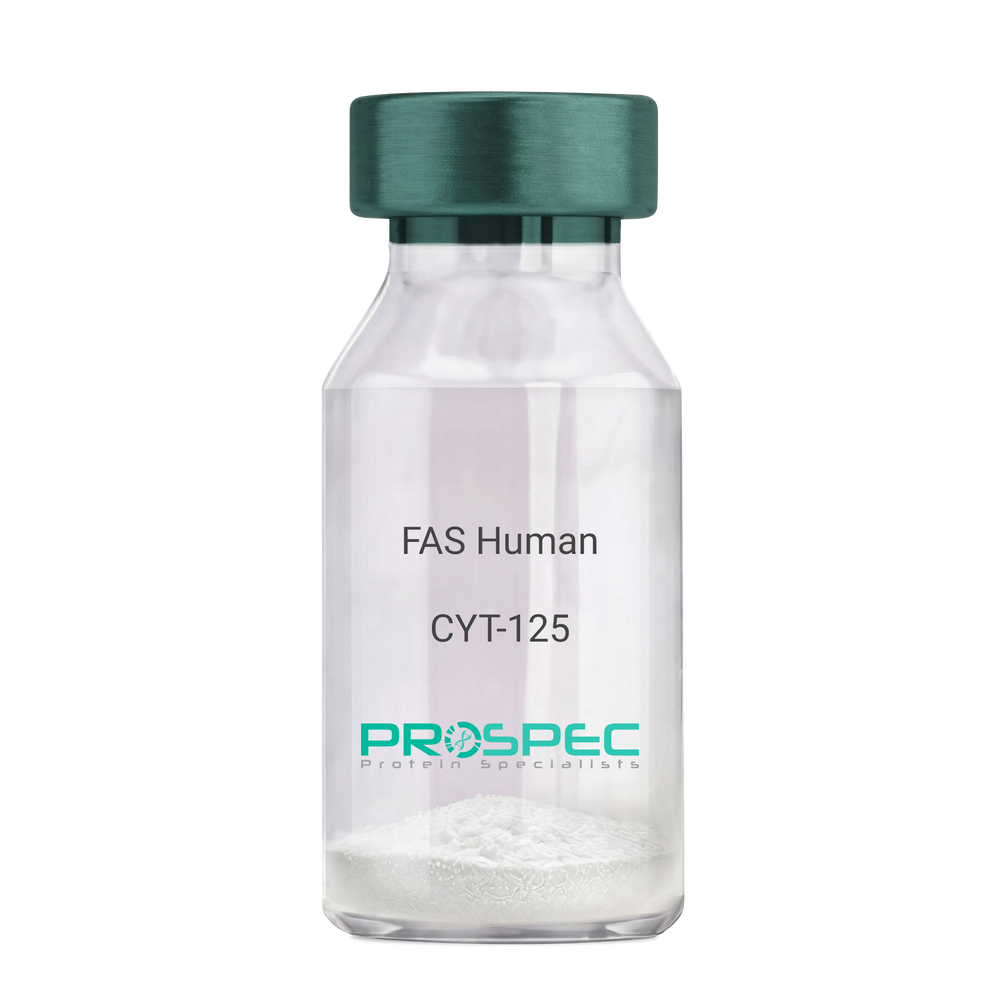
    FAS Human

    Description:

    sFas Receptor Human Recombinant

    Tumor necrosis factor receptor superfamily member 6, Apo-1 antigen, Apoptosis-mediating surface antigen FAS, FASLG receptor, CD95, FAS, APT1, FAS1, APO-1, FASTM, ALPS1A, TNFRSF6.

    Product # :

    CYT-125

    Price :

    Quantity :

    Shipping Method :

    Room Temp Icon

    Shipped at Room temp

    Add To Cart

    More Info

    • description
    • source
    • formulation
    • purity
    • biological activity
    • More Info

    Description

    sFas Receptor Human Recombinant produced in E.coli is a single, non-glycosylated polypeptide chain containing 157 amino acids and having a molecular mass of 17.6kDa.The FAS is purified by proprietary chromatographic techniques.

    Source

    Escherichia Coli.

    Formulation

    FAS protein was lyophilized from a 0.2µm filtered concentrated solution in 1×PBS, pH 7.4.

    Purity

    Greater than 95.0% as determined by:
    (a) Analysis by RP-HPLC.
    (b) Analysis by SDS-PAGE.

    Biological Activity

    The ED50 was determined by its ability to inhibit the cytotoxicity of Jurkat cells is between 10-15 µg/ml in the presence of 2ng/ml of hFasL.

    More Info

    • Introduction

      Fas and Fas Ligand (FasL) are members of the TNF superfamily and are type I and type II transmembrane proteins, respectively. Binding of FasL to Fas initiates apoptosis in Fas-bearing cells. The apoptosis mechanism involves the recruitment of pro-caspase 8 through an adaptor molecule named FADD followed by processing of the pro-enzyme to active forms. These active caspases subsequently cleave a variety of cellular substrates leading to the eventual cell death. sFasR is able to inhibit FasL-induced apoptosis by acting as a decoy receptor whicht serves as a sink for FasL. The full length Fas Receptor is a 319 a.a type I transmembrane protein, which contains a 157 a.a extracellular domain, a 17 a.a transmembrane domain, and 145 a.a cytoplasmic domain. The mature human Fas ECD shares 55%, 58%, a.a sequence identity with the mouse, rat, Fas, respectively.

    • Synonyms

      Tumor necrosis factor receptor superfamily member 6, Apo-1 antigen, Apoptosis-mediating surface antigen FAS, FASLG receptor, CD95, FAS, APT1, FAS1, APO-1, FASTM, ALPS1A, TNFRSF6.

    • Physical Appearance

      Sterile Filtered White lyophilized (freeze-dried) powder.

    • Stability

      Lyophilized FAS although stable at room temperature for 3 weeks, should be stored desiccated below -18°C. Upon reconstitution FAS should be stored at 4°C between 2-7 days and for future use below -18°C. For long term storage it is recommended to add a carrier protein (0.1% HSA or BSA). Please prevent freeze-thaw cycles.

    • Solubility

      It is recommended to reconstitute the lyophilized FAS in sterile 18M-cm H2O not less than 100µg/ml, which can then be further diluted to other aqueous solutions.

    • Amino Acid Sequence

      MRLSSKSVNA QVTDINSKGL ELRKTVTTVE TQNLEGLHHD GQFCHKPCPP GERKARDCTV NGDEPDCVPC QEGKEYTDKA HFSSKCRRCR LCDEGHGLEV EINCTRTQNT KCRCKPNFFC NSTVCEHCDP CTKCEHGIIK ECTLTSNTKC KEEGSRS.

    • Background

      What is the molecular weight/Mw of FAS Protein?
      FAS Protein has a total Mw of 17.6kDa.

      What is the source or expression system of FAS Protein?
      Escherichia Coli.

      What is the Purity of FAS Protein?
      FAS Protein is >95% pure as determined by SDS-PAGE.

      What is the Biological Activity of FAS Protein?
      The ED50 was determined by its ability to inhibit the cytotoxicity of Jurkat cells is between 10-15 µg/ml in the presence of 2ng/ml of hFasL.

      What is the amino acid sequence of FAS Protein?
      MRLSSKSVNA QVTDINSKGL ELRKTVTTVE TQNLEGLHHD GQFCHKPCPP GERKARDCTV NGDEPDCVPC QEGKEYTDKA HFSSKCRRCR LCDEGHGLEV EINCTRTQNT KCRCKPNFFC NSTVCEHCDP CTKCEHGIIK ECTLTSNTKC KEEGSRS.

      What applications can FAS Protein be used in?
      FAS Protein can probably be used in western blot, ELISA and Lateral Flow.

      What is the endotoxin level for FAS Protein?
      The endotoxin level is minimal, FAS Protein was purified using conventional chromatography techniques..

    ProSpec's products are furnished for LABORATORY RESEARCH USE ONLY. The product may not be used as drugs, agricultural or pesticidal products, food additives or household chemicals.

    Fas Human
  • View Data Sheet

    Name :

    TPA (311-562) Human

    Description:

    Tissue Plasminogen Activator (311-562 a.a.) Human Recombinant

    Tissue-type plasminogen activator, EC 3.4.21.68, tPA, t-PA, t-plasminogen activator, TPA, T-PA, DKFZp686I03148, PLAT and tPA.

    Product # :

    ENZ-1023

    Price :

    Quantity :

    Shipping Method :

    Ice Icon

    Shipped with Ice Packs

    Add To Cart

    More Info

    • description
    • source
    • formulation
    • purity
    • More Info

    Description

    TPA Human Recombinant produced in Sf9 Baculovirus cells is a single, glycosylated polypeptide chain containing 261 amino acids (311-562 a.a.) and having a molecular mass of 29.2kDa (Migrates at 28-40kDa on SDS-PAGE under reducing conditions).TPA is expressed with a 6 amino acid His tag at C-Terminus and purified by proprietary chromatographic techniques.

    Source

    Sf9, Baculovirus cells.

    Formulation

    TPA protein solution (0.5mg/ml) contains 50mM MES (pH 5.0), 5mM CaCl2, 1mM DTT, 0.5M NaCl and 30% glycerol.

    Purity

    Greater than 95.0% as determined by SDS-PAGE.

    More Info

    • Introduction

      Tissue plasminogen activator (abbreviated PLAT or tPA) is a secreted serine proteasewhich converts the proenzymeplasminogento plasmin, a fibrinolyticenzyme. Plasminogen is synthesized as a single chain which is cleaved by PLAT into the two chain disulfide linked plasmin.
      This enzyme plays a role in cell migrationand tissue remodeling. Increased enzymatic activity causes hyperfibrinolysis, which manifests as excessive bleeding; decreased activity leads to hypofibrinolysiswhich can result in thrombosisor embolism.

    • Synonyms

      Tissue-type plasminogen activator, EC 3.4.21.68, tPA, t-PA, t-plasminogen activator, TPA, T-PA, DKFZp686I03148, PLAT and tPA.

    • Physical Appearance

      Sterile Filtered colorless solution.

    • Stability

      Store at 4°C if entire vial will be used within 2-4 weeks. Store, frozen at -20°C for longer periods of time. For long term storage it is recommended to add a carrier protein (0.1% HSA or BSA).Avoid multiple freeze-thaw cycles.

    • Amino Acid Sequence

      ADPIKGGLFA DIASHPWQAA IFAKHRRSPG ERFLCGGILI SSCWILSAAH CFQERFPPHH LTVILGRTYR VVPGEEEQKF EVEKYIVHKE FDDDTYDNDI ALLQLKSDSS RCAQESSVVR TVCLPPADLQ LPDWTECELS GYGKHEALSP FYSERLKEAH VRLYPSSRCT SQHLLNRTVT DNMLCAGDTR SGGPQANLHD ACQGDSGGPL VCLNDGRMTL VGIISWGLGC GQKDVPGVYT KVTNYLDWIR DNMRPHHHHH H.

    ProSpec's products are furnished for LABORATORY RESEARCH USE ONLY. The product may not be used as drugs, agricultural or pesticidal products, food additives or household chemicals.

    Tpa 311 562 Human
  • View Data Sheet

    Name :

    FAS Antibody (CD95)

    Description:

    FAS Antibody (CD95), Mouse Anti Human

    FASLG receptor, Apoptosis-mediating surface antigen FAS, Apo-1 antigen, CD95, Tumor necrosis factor receptor superfamily member 6 TNR6, APT1, FAS1, TNFRSF6.

    Product # :

    ANT-735

    Price :

    Quantity :

    Shipping Method :

    Ice Icon

    Shipped with Ice Packs

    Add To Cart

    More Info

    • formulation
    • More Info

    Formulation

    1X PBS pH 7.4, 0.5% Saccharose, 0.2% gelatin and 0.1% NaN3.

    More Info

    • Introduction

      The Fas receptor (CD95) mediates apoptotic signaling by Fas-ligand expressed on the surface of other cells. The Fas-FasL interaction plays an important role in the immune system and lack of this system leads to autoimmunity, indicating that Fas-mediated apoptosis removes self-reactive lymphocytes. Fas signaling is also involved in immune surveillance to remove transformed cells and virus infected cells. Binding of FAS to oligimerized FasL on another cell activates apoptotic signaling through a cytoplasmic domain termed the death domain that interacts with signaling adaptors including FAF, FADD and DAX to activate the caspase proteolytic cascade. Caspase-8 and caspase-10 are first activated, to then cleave and activate downstream caspases, and a variety of cellular substrates that lead to cell death. Caspases cleave nuclear lamins, causing the nucleus to break down and lose its normal structure and another caspase substrate is DFF, inducing cleavage and degradation of the genome. Other caspase substrates are involved in cytoskeletal structure, cell cycle regulation and signaling pathways. Activation of JNK kinase, activation of Jun, and production of ceramide may also play roles in Fas-mediated apoptosis. Activation of fas-mediated apoptosis is opposed by I-FLICE and FAP. Viruses and tumors may escape immune surveillance in part through suppression of fas-mediated apoptosis using similar mechanisms.

    • Synonyms

      FASLG receptor, Apoptosis-mediating surface antigen FAS, Apo-1 antigen, CD95, Tumor necrosis factor receptor superfamily member 6 TNR6, APT1, FAS1, TNFRSF6.

    • Physical Appearance

      Sterile filtered colorless solution.

    • Immunogen

      Recombinant Human FAS.

    • Ig Subclass

      Mouse IgG2a

    • Clone

      pprro-160

    • Applications

      FAS Antibody can be used in Flow cytometry.

    • Type

      Mouse Anti Human Monoclonal.

    • Storage Procedures

      For periods up to 1 month store at 4°C, for longer periods, store at -20°C. Prevent freeze thaw cycles.

    • Purification Method

      Protein-A column.

    ProSpec's products are furnished for LABORATORY RESEARCH USE ONLY. The product may not be used as drugs, agricultural or pesticidal products, food additives or household chemicals.

    Fas Antibody
  • View Data Sheet

    Name :

    ITGB1 Antibody

    Description:

    Mouse Anti Human Integrin Beta 1

    Integrin beta-1, Fibronectin receptor subunit beta, Glycoprotein IIa, GPIIA, VLA-4 subunit beta, CD29, ITGB1, FNRB, MDF2, MSK12, Integrin beta 1, CD29, VLAB.

    Product # :

    ANT-715

    Price :

    Quantity :

    Shipping Method :

    Ice Icon

    Shipped with Ice Packs

    Add To Cart

    More Info

    • formulation
    • More Info

    Formulation

    1mg/ml containing PBS, pH-7.4, 10% Glycerol and 0.02% Sodium Azide.

    More Info

    • Introduction

      Integrins are heterodimeric proteins consist of alpha and beta subunits. There are more than 18 alpha and 8 beta subunits discovered in mammals. Integrin family members are membrane receptors that participates in cell adhesion and recognition in a variety of processes including embryogenesis, hemostasis, tissue repair, immune response and metastatic diffusion of tumor cells. ITGB1 encodes a beta subunit.

    • Synonyms

      Integrin beta-1, Fibronectin receptor subunit beta, Glycoprotein IIa, GPIIA, VLA-4 subunit beta, CD29, ITGB1, FNRB, MDF2, MSK12, Integrin beta 1, CD29, VLAB.

    • Physical Appearance

      Sterile filtered colorless solution.

    • Immunogen

      Anti-human ITGB1 mAb, is derived from hybridization of mouse F0 myeloma cells with spleen cells from BALB/c mice immunized with a recombinant human ITGB1 protein 21-461 amino acids purified from E. coli.

    • Ig Subclass

      Mouse IgG1 heavy chain and k light chain.

    • Clone

      PAT47E2AT.

    • Applications

      ITGB1 antibody has been tested by ELISA and Western blot analysis to assure specificity and reactivity. Since application varies, however, each investigation should be titrated by the reagent to obtain optimal results.

    • Type

      Mouse Anti Human Monoclonal.

    • Storage Procedures

      For periods up to 1 month store at 4°C, for longer periods of time, store at -20°C. Prevent freeze thaw cycles.

    • Purification Method

      ITGB1 antibody was purified from mouse ascitic fluids by protein-A affinity chromatography.

    ProSpec's products are furnished for LABORATORY RESEARCH USE ONLY. The product may not be used as drugs, agricultural or pesticidal products, food additives or household chemicals.

    Itgb1 Antibody
  • View Data Sheet

    Name :

    FAM19A5 Human

    Description:

    Family With Sequence Similarity 19 Member-A5 Human Recombinant

    Family With Sequence Similarity 19 (Chemokine (C-C Motif)-Like), Member A5, Chemokine-Like Protein TAFA-5, TAFA5, TAFA Protein 5, QLLK5208, UNQ5208, TAFA-5, FAM19A5.

    Product # :

    CHM-284

    Price :

    Quantity :

    Shipping Method :

    Ice Icon

    Shipped with Ice Packs

    Add To Cart

    More Info

    • description
    • source
    • formulation
    • purity
    • More Info

    Description

    FAM19A5 Human Recombinant (isoform 2) produced in E.Coli is a single, non-glycosylated, polypeptide chain (Gln26-Ser125) containing 110 amino acids including a 10 aa His tag at N-terminus. The total calculated molecular mass is 12.2kDa.

    Source

    Escherichia Coli.

    Formulation

    FAM19A5 filtered (0.4µm) solution in 20mM Tris buffer, 50mM NaCl, pH 7.5 and 10% (w/v) glycerol.

    Purity

    Greater than 95.0% as determined by SDS-PAGE.

    More Info

    • Introduction

      Family With Sequence Similarity 19 Member-A5 (FAM19A5) belongs to the TAFA family which is comprised of 5 highly homologous genes encoding small secreted proteins. These proteins have conserved cysteine residues at fixed positions, and are remotely related to MIP-1alpha, which is a member of the CC-chemokine family. The TAFA proteins are primarily expressed in specific regions of the brain, and are assumed to serve as brain-specific chemokines or neurokines which act as regulators of immune and nervous cells.

    • Synonyms

      Family With Sequence Similarity 19 (Chemokine (C-C Motif)-Like), Member A5, Chemokine-Like Protein TAFA-5, TAFA5, TAFA Protein 5, QLLK5208, UNQ5208, TAFA-5, FAM19A5.

    • Physical Appearance

      Filtered colorless solution.

    • Stability

      Store at 4°C if entire vial will be used within 2-4 weeks. Store, frozen at -20°C for longer periods of time. For long term storage it is recommended to add a carrier protein (0.1% HSA or BSA).Avoid multiple freeze-thaw cycles.

    • Amino Acid Sequence

      MKHHHHHHASQFLKEGQLAA GTCEIVTLDR DSSQPRRTIA RQTARCACRK GQIAGTTRAR PACVDARIIK TKQWCDMLPC LEGEGCDLLI NRSGWTCTQP GGRIKTTTVS.

    • Background

      What is the molecular weight/Mw of FAM19A5 HUMAN Protein?
      FAM19A5 HUMAN Protein has a total Mw of 12.2kDa.

      What is the source or expression system of FAM19A5 HUMAN Protein?
      Escherichia Coli.

      What is the Purity of FAM19A5 HUMAN Protein?
      FAM19A5 HUMAN Protein is >95% pure as determined by SDS-PAGE.

      What is the Biological Activity of FAM19A5 HUMAN Protein?
      The biological functionality of FAM19A5 HUMAN Protein will be determined in the future.

      What is the amino acid sequence of FAM19A5 HUMAN Protein?
      MKHHHHHHASQFLKEGQLAA GTCEIVTLDR DSSQPRRTIA RQTARCACRK GQIAGTTRAR PACVDARIIK TKQWCDMLPC LEGEGCDLLI NRSGWTCTQP GGRIKTTTVS.

      What applications can FAM19A5 HUMAN Protein be used in?
      FAM19A5 HUMAN Protein can probably be used in western blot, ELISA and Lateral Flow.

      What is the endotoxin level for FAM19A5 HUMAN Protein?
      The endotoxin level is minimal, FAM19A5 HUMAN Protein was purified using conventional chromatography techniques.


    ProSpec's products are furnished for LABORATORY RESEARCH USE ONLY. The product may not be used as drugs, agricultural or pesticidal products, food additives or household chemicals.

    Fam19A5 Human
  • View Data Sheet

    Name :

    CXCL7 Rat

    Description:

    Neutrophil Activating Protein-2 Rat Recombinant (CXCL7)

    Platelet basic protein, PBP, Small inducible cytokine B7, CXCL7, Leukocyte-derived growth factor, LDGF, Macrophage-derived growth factor, MDGF, pro-platelet basic protein (chemokine (C-X-C motif) ligand 7), TC1, TC2, TGB, TGB1, B-TG1, CTAP3, NAP-2, SCYB7, THBGB, LA-PF4, THBGB1, Beta-TG, CTAPIII, CTAP-III.

    Product # :

    CHM-269

    Price :

    Quantity :

    Shipping Method :

    Room Temp Icon

    Shipped at Room temp

    Add To Cart

    More Info

    • description
    • source
    • formulation
    • purity
    • biological activity
    • More Info

    Description

    NAP-2 Rat Recombinant produced in E.coli is a single, non-glycosylated polypeptide chain containing 62 amino acids and having a molecular mass of 6.8kDa.The NAP 2 is purified by proprietary chromatographic techniques.

    Source

    Escherichia Coli.

    Formulation

    NAP-2 protein was lyophilized from a 0.2µm filtered concentrated solution in 1×PBS, pH 7.4.

    Purity

    Greater than 97.0% as determined by:
    (a) Analysis by RP-HPLC.
    (b) Analysis by SDS-PAGE.

    Biological Activity

    Measured by its ability to chemoattract BaF3 mouse pro-B cells transfected with human CXCR2. The ED50 for this effect is less than 10ng/ml, corresponding to a specific activity of 100,000units/mg.

    More Info

    • Introduction

      Chemokine (C-X-C motif) ligand (CXCL7) is a small cytokine belonging to the CXC chemokine family. It is a protein that is released in large amounts from platelets following their activation. It stimulates various processes including mitogenesis, synthesis of extracellular matrix, glucose metabolism and synthesis of plasminogen activator.

    • Synonyms

      Platelet basic protein, PBP, Small inducible cytokine B7, CXCL7, Leukocyte-derived growth factor, LDGF, Macrophage-derived growth factor, MDGF, pro-platelet basic protein (chemokine (C-X-C motif) ligand 7), TC1, TC2, TGB, TGB1, B-TG1, CTAP3, NAP-2, SCYB7, THBGB, LA-PF4, THBGB1, Beta-TG, CTAPIII, CTAP-III.

    • Physical Appearance

      Sterile Filtered White lyophilized (freeze-dried) powder.

    • Stability

      Lyophilized NAP-2 although stable at room temperature for 3 weeks, should be stored desiccated below -18°C. Upon reconstitution CXCL7 should be stored at 4°C between 2-7 days and for future use below -18°C. For long term storage it is recommended to add a carrier protein (0.1% HSA or BSA). Please prevent freeze-thaw cycles.

    • Solubility

      It is recommended to reconstitute the lyophilized NAP-2 in sterile 18M-cm H2O not less than 100µg/ml, which can then be further diluted to other aqueous solutions.

    • Amino Acid Sequence

      IELRCRCTNT LSGIPLNSIS RVNVFRPGAH CDNVEVIATL KNGKEVCLDP TAPMIKKIVK KI.

    • Background

      What is the molecular weight/Mw of CXCL7 RAT Protein?
      CXCL7 RAT Protein has a total Mw of 6.8kDa.

      What is the source or expression system of CXCL7 RAT Protein?
      Escherichia Coli.

      What is the Purity of CXCL7 RAT Protein?
      CXCL7 RAT Protein is > 97% pure as determined by SDS-PAGE.

      What is the Biological Activity of CXCL7 RAT Protein?
      Measured by its ability to chemoattract BaF3 mouse pro-B cells transfected with human CXCR2. The ED50 for this effect is less than 10ng/ml, corresponding to a specific activity of 100,000units/mg.

      What is the amino acid sequence of CXCL7 RAT Protein?
      IELRCRCTNT LSGIPLNSIS RVNVFRPGAH CDNVEVIATL KNGKEVCLDP TAPMIKKIVK KI.

      What applications can CXCL7 RAT Protein be used in?
      CXCL7 RAT Protein can probably be used in western blot, ELISA and Lateral Flow.

      What is the endotoxin level for CXCL7 RAT Protein?
      The endotoxin level is minimal, CXCL7 RAT Protein was purified using conventional chromatography techniques.


    ProSpec's products are furnished for LABORATORY RESEARCH USE ONLY. The product may not be used as drugs, agricultural or pesticidal products, food additives or household chemicals.

    Nap 2 Rat
  • View Data Sheet

    Name :

    CAMLG Human

    Description:

    Calcium Modulating Ligand Human Recombinant

    Calcium Modulating Ligand, Calcium-Modulating Cyclophilin Ligand, Calcium-Signal Modulating Cyclophilin Ligand, Cyclophilin B-Binding Protein, CAML.

    Product # :

    PRO-1612

    Price :

    Quantity :

    Shipping Method :

    Ice Icon

    Shipped with Ice Packs

    Add To Cart

    More Info

    • description
    • source
    • formulation
    • purity
    • More Info

    Description

    CAMLG Human Recombinant produced in E.coli is a single, non-glycosylated polypeptide chain containing 212 amino acids (1-189) and having a molecular mass of 23.2kDa.CAMLG is fused to a 23 amino acid His-tag at N-terminus & purified by proprietary chromatographic techniques.

    Source

    Escherichia Coli.

    Formulation

    The CAMLG solution contains 20mM Tris-HCl buffer (pH 8.0), 0.15M NaCl and 10% glycerol.

    Purity

    Greater than 85% as determined by SDS-PAGE.

    More Info

    • Introduction

      CAMLG binds to cyclophilin B and operates downstream of the TCR and upstream of calcineurin by causing an influx of calcium. CAMLG is an essential membrane protein that takes part in the calcium signal transduction pathway, connecting cyclophilin B to calcium signaling.

    • Synonyms

      Calcium Modulating Ligand, Calcium-Modulating Cyclophilin Ligand, Calcium-Signal Modulating Cyclophilin Ligand, Cyclophilin B-Binding Protein, CAML.

    • Physical Appearance

      Sterile filtered colorless solution.

    • Stability

      Store at 4°C if entire vial will be used within 2-4 weeks. Store, frozen at -20°C for longer periods of time. For long term storage it is recommended to add a carrier protein (0.1% HSA or BSA).Avoid multiple freeze-thaw cycles.

    • Amino Acid Sequence

      MGSSHHHHHH SSGLVPRGSH MGSMESMAVA TDGGERPGVP AGSGLSASQR RAELRRRKLL MNSEQRINRI MGFHRPGSGA EEESQTKSKQ QDSDKLNSLS VPSVSKRVVL GDSVSTGTTD QQGGVAEVKG TQLGDKLDSF IKPPECSSDV NLELRQRNRG DLTADSVQRG SRHGLEQYLS RFEEAMKLRK QLISEKPSQE DGNTTEEFDS FR

    ProSpec's products are furnished for LABORATORY RESEARCH USE ONLY. The product may not be used as drugs, agricultural or pesticidal products, food additives or household chemicals.

    Camlg Human
  • View Data Sheet

    Name :

    CCL16 Human

    Description:

    LEC/NCC-4 Human Recombinant

    C-C motif chemokine 16, Small-inducible cytokine A16, IL-10-inducible chemokine, Chemokine LEC, Monotactin-1, Chemokine CC-4, Lymphocyte and monocyte chemoattractant, CCL-16, HCC-4, HCC4, NCC4, NCC-4, Liver Expressed Chemokine, LMC, LCC-1, LCC1, MTN-1, MTN1, SCYL4, ckB12, SCYA16, LEC, ILINCK, MGC117051.

    Product # :

    CHM-237

    Price :

    Quantity :

    Shipping Method :

    Room Temp Icon

    Shipped at Room temp

    Add To Cart

    More Info

    • description
    • source
    • formulation
    • purity
    • biological activity
    • More Info

    Description

    CCL16 Human Recombinant produced in E.Coli is a non-glycosylated, Polypeptide chain containing 97 amino acids and having a molecular mass of 11.2 kDa. The CCL16 is purified by proprietary chromatographic techniques.

    Source

    Escherichia Coli.

    Formulation

    The CCL16 protein was lyophilized from a concentrated (1mg/ml) sterile solution containing 20mM PBS pH-7.4 and 0.15M sodium chloride.

    Purity

    Greater than 97.0% as determined by:
    (a) Analysis by RP-HPLC.
    (b) Analysis by SDS-PAGE.

    Biological Activity

    Determined by its ability to chemoattract total human monocytes using a concentration range of 10-100 ng/ml corresponding to a Specific Activity of 10,000-100,000IU/mg.

    More Info

    • Introduction

      Human CCL16, also called HCC-4, liver-expressed chemokine (LEC), and lymphocyte and monocyte chemoattractant (LMC), is a novel CC chemokine recognized by bioinformatics. NCC-4 cDNA encodes a 120 amino acids along with a 23 amino acids signal peptide that is cleaved to generate 97 amino acid protein. HCC4 is vaguely related to other CC chemokines, showing less than 30% sequence identity. Among CC chemokines, CCL-16 has the largest similarity to HCC-1. 2 potential polyadenylation signals are present on the human HCC-4 gene, and as a result, 2 transcripts containing roughly 1,500 base pairs and 500 base pairs have been detected. HCC-4 is expressed weakly by some lymphocytes, including NK cells, T cells, and some T cell clones. The expression of HCC-4 in monocytes is greatly upregulated in the presence of IL-10.
      CCL16 shows chemotactic activity for lymphocytes and monocytes rather than to neutrophils. NCC-4 has potent myelosuppressive activity, suppresses proliferation of myeloid progenitor cells. CCL16 demonstrates chemotactic activity for monocytes and thp-1 monocytes, rather than for resting lymphocytes and neutrophils. HCC-4 induces a calcium flux in thp-1 cells that desensitized prior to the expression of rantes.

    • Synonyms

      C-C motif chemokine 16, Small-inducible cytokine A16, IL-10-inducible chemokine, Chemokine LEC, Monotactin-1, Chemokine CC-4, Lymphocyte and monocyte chemoattractant, CCL-16, HCC-4, HCC4, NCC4, NCC-4, Liver Expressed Chemokine, LMC, LCC-1, LCC1, MTN-1, MTN1, SCYL4, ckB12, SCYA16, LEC, ILINCK, MGC117051.

    • Physical Appearance

      Sterile Filtered White lyophilized (freeze-dried) powder.

    • Stability

      Lyophilized CCL16 although stable at room temperature for 3 weeks, should be stored desiccated below -18°C. Upon reconstitution CCL16 should be stored at 4°C between 2-7 days and for future use below -18°C.For long term storage it is recommended to add a carrier protein (0.1% HSA or BSA).Please prevent freeze-thaw cycles.

    • Solubility

      It is recommended to reconstitute the lyophilized CCL16in sterile 18MΩ-cm H2O not less than 100µg/ml, which can then be further diluted to other aqueous solutions.

    • Amino Acid Sequence

      QPKVPEWVNTPSTCCLKYYEKVLPRRLVVGYRKALNCHLPAIIFVTKRNREVCTNP NDDWVQEYIKDPNLPLLPTRNLSTVKIITAKNGQPQLLNSQ.

    • Background

      What is the molecular weight/Mw of CCL16 HUMAN Protein?
      CCL16 HUMAN Protein has a total Mw of 11.2kDa.

      What is the source or expression system of CCL16 HUMAN Protein?
      Escherichia Coli.

      What is the Purity of CCL16 HUMAN Protein?
      CCL16 HUMAN Protein is >97% pure as determined by SDS-PAGE.

      What is the Biological Activity of CCL16 HUMAN Protein?
      Determined by its ability to chemoattract total human monocytes using a concentration range of 10-100 ng/ml corresponding to a Specific Activity of 10,000-100,000IU/mg.

      What is the amino acid sequence of CCL16 HUMAN Protein?
      QPKVPEWVNTPSTCCLKYYEKVLPRRLVVGYRKALNCHLPAIIFVTKRNREVCTNP NDDWVQEYIKDPNLPLLPTRNLSTVKIITAKNGQPQLLNSQ.

      What applications can CCL16 HUMAN Protein be used in?
      CCL16 HUMAN Protein can probably be used in western blot, ELISA and Lateral Flow.

      What is the endotoxin level for CCL16 HUMAN Protein?
      The endotoxin level is minimal, CCL16 HUMAN Protein was purified using conventional chromatography techniques.


    ProSpec's products are furnished for LABORATORY RESEARCH USE ONLY. The product may not be used as drugs, agricultural or pesticidal products, food additives or household chemicals.

    Ccl16 Human
  • View Data Sheet

    Name :

    CXCL1 Human, His

    Description:

    GRO-Alpha/MGSA Human Recombinant (CXCL1), His Tag

    Growth-regulated protein alpha, CXCL1, Melanoma growth stimulatory activity, MGSA, Neutrophil-activating protein 3, NAP-3, GRO-alpha(1-73), chemokine (C-X-C motif) ligand 1, GRO1, GROa, SCYB1, MGSA-a, MGSA alpha.

    Product # :

    CHM-242

    Price :

    Quantity :

    Shipping Method :

    Ice Icon

    Shipped with Ice Packs

    Add To Cart

    More Info

    • description
    • source
    • formulation
    • purity
    • More Info

    Description

    CXCL1 Human Recombinant produced in E.Coli is a single,non-glycosylated, polypeptide chain containing 94 amino acids (35-107) and having a molecular mass of 10.1 kDa. The CXCL1 is fused to a 20 amino acid His-Tag at N-terminus and purified by proprietary chromatographic techniques.

    Source

    Escherichia Coli.

    Formulation

    CXCL1 in 20mM Tris-HCL pH-8 and 10% glycerol.

    Purity

    Greater than 90.0% as determined by SDS-PAGE.

    More Info

    • Introduction

      Chemokine (C-X-C motif) ligand 1 (CXCL1) is a small cytokine belonging to the CXC chemokine family that was previously called GRO1 oncogene, Neutrophil-activating protein 3 (NAP-3) and melanoma growth stimulating activity, alpha (MSGA-?). It is secreted by human melanoma cells, has mitogenic properties and is implicated in melanoma pathogenesis. CXCL1 is expressed by macrophages, neutrophils and epithelial cells, and has neutrophil chemoattractant activity. CXCL1 plays a role in spinal cord development by inhibiting the migration of oligodendrocyte precursors and is involved in the processes of angiogenesis, inflammation, wound healing, and tumorigenesis. This chemokine elicits its effects by signaling through the chemokine receptor CXCR2. The gene for CXCL1 is located on human chromosome 4 amongst genes for other CXC chemokines.

    • Synonyms

      Growth-regulated protein alpha, CXCL1, Melanoma growth stimulatory activity, MGSA, Neutrophil-activating protein 3, NAP-3, GRO-alpha(1-73), chemokine (C-X-C motif) ligand 1, GRO1, GROa, SCYB1, MGSA-a, MGSA alpha.

    • Physical Appearance

      Sterile Filtered colorless solution.

    • Stability

      Liquid CXCL1 although stable at 10°C for 1 week, should be stored below -18°C. For long term storage it is recommended to add a carrier protein (0.1% HSA or BSA).Please prevent freeze-thaw cycles.

    • Amino Acid Sequence

      MGSSHHHHHH SSGLVPRGSH MASVATELRC QCLQTLQGIH PKNIQSVNVK SPGPHCAQTE VIATLKNGRK ACLNPASPIV KKIIEKMLNS DKSN.

    • Background

      What is the molecular weight/Mw of CXCL1 HUMAN, HIS Protein?
      CXCL1 HUMAN, HIS Protein has a total Mw of 10.1kDa.

      What is the source or expression system of CXCL1 HUMAN, HIS Protein?
      Escherichia Coli.

      What is the Purity of CXCL1 HUMAN, HIS Protein?
      CXCL1 HUMAN, HIS Protein is >90% pure as determined by SDS-PAGE.

      What is the Biological Activity of CXCL1 HUMAN, HIS Protein?
      The biological functionality of CXCL1 HUMAN, HIS Protein will be determined in the future.

      What is the amino acid sequence of CXCL1 HUMAN, HIS Protein?
      MGSSHHHHHH SSGLVPRGSH MASVATELRC QCLQTLQGIH PKNIQSVNVK SPGPHCAQTE VIATLKNGRK ACLNPASPIV KKIIEKMLNS DKSN.

      What applications can CXCL1 HUMAN, HIS Protein be used in?
      CXCL1 HUMAN, HIS Protein can probably be used in western blot, ELISA and Lateral Flow.

      What is the endotoxin level for CXCL1 HUMAN, HIS Protein?
      The endotoxin level is minimal, CXCL1 HUMAN, HIS Protein was purified using conventional chromatography techniques.


    ProSpec's products are furnished for LABORATORY RESEARCH USE ONLY. The product may not be used as drugs, agricultural or pesticidal products, food additives or household chemicals.

    Gro A Human His
  • View Data Sheet

    Name :

    CXCL1 Rat

    Description:

    GRO-Alpha Rat Recombinant (CXCL1)

    Growth-regulated protein alpha, CXCL1, Melanoma growth stimulatory activity, MGSA, Neutrophil-activating protein 3, NAP-3, GRO-alpha(1-73), chemokine (C-X-C motif) ligand 1, GRO1, GROa, SCYB1, MGSA-a, MGSA alpha.

    Product # :

    CHM-375

    Price :

    Quantity :

    Shipping Method :

    Room Temp Icon

    Shipped at Room temp

    Add To Cart

    More Info

    • description
    • source
    • formulation
    • purity
    • biological activity
    • More Info

    Description

    CXCL1 Rat Recombinant produced in E.Coli is a single,non-glycosylated, polypeptide chain containing 73 amino acids and having a molecular mass of 7.8 kDa. The Rat CXCL1 is purified by proprietary chromatographic techniques.

    Source

    Escherichia Coli.

    Formulation

    Lyophilized from a 0.2μm filtered concentrated (1mg/ml) solution in 20mM PB, pH 7.4, and 150mM NaCl.

    Purity

    Greater than 97.0% as determined by:
    (a) Analysis by RP-HPLC.
    (b) Analysis by SDS-PAGE.

    Biological Activity

    Determined by its ability to chemoattract rat neutrophils using a concentration range of 10-100ng/ml corresponding to a Specific Activity of 10,000-100,000IU/mg.

    More Info

    • Introduction

      Chemokine (C-X-C motif) ligand 1 (CXCL1) is a small cytokine belonging to the CXC chemokine family that was previously called GRO1 oncogene, Neutrophil-activating protein 3 (NAP-3) and melanoma growth stimulating activity, alpha (MSGA-α). It is secreted by human melanoma cells, has mitogenic properties and is implicated in melanoma pathogenesis. CXCL1 is expressed by macrophages, neutrophils and epithelial cells, and has neutrophil chemoattractant activity. CXCL1 plays a role in spinal cord development by inhibiting the migration of oligodendrocyte precursors and is involved in the processes of angiogenesis, inflammation, wound healing, and tumorigenesis. This chemokine elicits its effects by signaling through the chemokine receptor CXCR2. The gene for CXCL1 is located on human chromosome 4 amongst genes for other CXC chemokines.

    • Synonyms

      Growth-regulated protein alpha, CXCL1, Melanoma growth stimulatory activity, MGSA, Neutrophil-activating protein 3, NAP-3, GRO-alpha(1-73), chemokine (C-X-C motif) ligand 1, GRO1, GROa, SCYB1, MGSA-a, MGSA alpha.

    • Physical Appearance

      Sterile Filtered White lyophilized (freeze-dried) powder.

    • Stability

      Lyophilized CXCL1 although stable at room temperature for 3 weeks, should be stored desiccated below -18°C. Upon reconstitution CXCL1 should be stored at 4°C between 2-7 days and for future use below -18°C.For long term storage it is recommended to add a carrier protein (0.1% HSA or BSA).Please prevent freeze-thaw cycles.

    • Solubility

      It is recommended to reconstitute the lyophilized CXCL1 in sterile 18MΩ-cm H2O not less than 100µg/ml, which can then be further diluted to other aqueous solutions.

    • Amino Acid Sequence

      APVANELRCQ CLQTVAGIHF KNIQSLKVMP PGPHCTQTEV IATLKNGREA CLDPEAPMVQ KIVQKMLKGV PK.

    • Background

      What is the molecular weight/Mw of CXCL1 RAT Protein?
      CXCL1 RAT Protein has a total Mw of 7.8kDa.

      What is the source or expression system of CXCL1 RAT Protein?
      Escherichia Coli.

      What is the Purity of CXCL1 RAT Protein?
      CXCL1 RAT Protein is >97% pure as determined by SDS-PAGE.

      What is the Biological Activity of CXCL1 RAT Protein?
      Determined by its ability to chemoattract rat neutrophils using a concentration range of 10-100ng/ml corresponding to a Specific Activity of 10,000-100,000IU/mg.

      What is the amino acid sequence of CXCL1 RAT Protein?
      APVANELRCQ CLQTVAGIHF KNIQSLKVMP PGPHCTQTEV IATLKNGREA CLDPEAPMVQ KIVQKMLKGV PK.

      What applications can CXCL1 RAT Protein be used in?
      CXCL1 RAT Protein can probably be used in western blot, ELISA and Lateral Flow.

      What is the endotoxin level for CXCL1 RAT Protein?
      The endotoxin level is minimal, CXCL1 RAT Protein was purified using conventional chromatography techniques.


    ProSpec's products are furnished for LABORATORY RESEARCH USE ONLY. The product may not be used as drugs, agricultural or pesticidal products, food additives or household chemicals.

    Gro Alpha Rat
  • View Data Sheet

    Name :

    SDF2 Human, sf9

    Description:

    Stromal Cell-Derived Factor 2, Sf9 Human Recombinant

    Stromal Cell Derived Factor 2, Stromal Cell-Derived Factor 2, SDF-2 

    Product # :

    CHM-034

    Price :

    Quantity :

    Shipping Method :

    Ice Icon

    Shipped with Ice Packs

    Add To Cart

    More Info

    • description
    • source
    • formulation
    • purity
    • More Info

    Description

    SDF2 produced in Sf9 Baculovirus cells is a single, glycosylated polypeptide chain containing 202 amino acids (19-211a.a.) and having a molecular mass of 22.3kDa. (Molecular size on SDS-PAGE will appear at approximately 18-28kDa). SDF2 is expressed with an 9 amino acid His tag at C-Terminus and purified by proprietary chromatographic techniques.

    Source

    Sf9, Baculovirus cells.

    Formulation

    SDF2 protein solution (0.25mg/ml) contains 50mM Tris-HCl (pH 8.0), 10% glycerol, 0.1M NaCl 0.1mM PMSF and 0.5mM EDTA.

    Purity

    Greater than 95.0% as determined by SDS-PAGE.

    More Info

    • Introduction

      Stromal Cell-Derived Factor 2 (SDF2) is a secretory protein which is partly similar to the hydrophilic segments of yeast mannosyltransferases. SDF2 protein’s expression is ubiquitous and the gene is rather conserved among mammals. SDF2 is a protein-coding gene whose alternative splicing results in coding and non-coding variants.

    • Synonyms

      Stromal Cell Derived Factor 2, Stromal Cell-Derived Factor 2, SDF-2

    • Physical Appearance

      Sterile Filtered colorless solution.

    • Stability

      Store at 4°C if entire vial will be used within 2-4 weeks. Store, frozen at -20°C for longer periods of time. For long term storage it is recommended to add a carrier protein (0.1% HSA or BSA). Avoid multiple freeze-thaw cycles.

    • Amino Acid Sequence

      ADPSSLGVVT CGSVVKLLNT RHNVRLHSHD VRYGSGSGQQ SVTGVTSVDD SNSYWRIRGK SATVCERGTP IKCGQPIRLT HVNTGRNLHS HHFTSPLSGN QEVSAFGEEG EGDYLDDWTV LCNGPYWVRD GEVRFKHSST EVLLSVTGEQ YGRPISGQKE VHGMAQPSQN NYWKAMEGIF MKPSELLKAE AHHAELHHHH HH

    ProSpec's products are furnished for LABORATORY RESEARCH USE ONLY. The product may not be used as drugs, agricultural or pesticidal products, food additives or household chemicals.

    Sdf 2 Human
  • View Data Sheet

    Name :

    TCL1A Human

    Description:

    T-cell Leukemia/Lymphoma 1A Human Recombinant

    T-cell leukemia/lymphoma protein 1A, Protein p14 TCL1, Oncogene TCL-1, Oncogene TCL1, TCL1A, TCL1.

    Product # :

    PRO-726

    Price :

    Quantity :

    Shipping Method :

    Ice Icon

    Shipped with Ice Packs

    Add To Cart

    More Info

    • description
    • source
    • formulation
    • purity
    • More Info

    Description

    TCL1A Human Recombinant produced in E.Coli is a single, non-glycosylated, polypeptide chain containing 114 amino acids (1-114 a.a.) and having a molecular mass of 13.4kDa.The TCL1A is purified by proprietary chromatographic techniques.

    Source

    Escherichia Coli.

    Formulation

    The TCL1A protein solution contains 50mM Tris-HCl buffer (pH7.5) and 10% glycerol.

    Purity

    Greater than 90.0% as determined by SDS-PAGE.

    More Info

    • Introduction

      TCL1A (T-cell leukemia/lymphoma 1A) is a protein with a possible role in intracellular regulation of T cell signaling. TCL1A enhances cell proliferation, stabilizes mitochondrial membrane potential and promotes cell survival. TCL1A is restricted in the T-cell lineage to immature thymocytes and activated peripheral lymphocytes. TCL1A is preferentially expressed early in T and B-lymphocyte differentiation. Chromosomal anomalies activating TCL1A are found in chronic T-cell leukemias (T-CLL).
      TCL1A enhances the phosphorylation and activation of AKT1, AKT2 and AKT3. TCL1A promotes nuclear translocation of AKT1. TCL1A binds to the pleckstrin homology domain of Akt (protein kinase B) family proteins, which facilitates Akt dimerization and activity. By increasing Akt activity, TCL1A can enhance the serine/threonine phosphorylation of major Akt signaling substrates, for example Ikk complex, mTOR, BAD, p70S6 kinase, FOXO transcription factors and GSK3b. These substrates regulate cellular differentiation, growth, survival, and metabolism.

    • Synonyms

      T-cell leukemia/lymphoma protein 1A, Protein p14 TCL1, Oncogene TCL-1, Oncogene TCL1, TCL1A, TCL1.

    • Physical Appearance

      Sterile Filtered colorless solution.

    • Stability

      Store at 4°C if entire vial will be used within 2-4 weeks. Store, frozen at -20°C for longer periods of time. For long term storage it is recommended to add a carrier protein (0.1% HSA or BSA).Avoid multiple freeze-thaw cycles.

    • Amino Acid Sequence

      MAECPTLGEA VTDHPDRLWA WEKFVYLDEK QHAWLPLTIE IKDRLQLRVL LRREDVVLGR PMTPTQIGPS LLPIMWQLYP DGRYRSSDSS FWRLVYHIKI DGVEDMLLEL LPDD.

    ProSpec's products are furnished for LABORATORY RESEARCH USE ONLY. The product may not be used as drugs, agricultural or pesticidal products, food additives or household chemicals.

    Tcl1A Human
  • View Data Sheet

    Name :

    MGAT2 Human, Sf9

    Description:

    Mannoside Acetylglucosaminyltransferase 2 Human Recombinant, Sf9

    Alpha-1, 6-mannosyl-glycoprotein 2-beta-N-acetylglucosaminyltransferase, MGAT2, CDG2A, CDGS2, GLCNACTII, GNT-II, GNT2, Beta-1,2-N-acetylglucosaminyltransferase II, GlcNAc-T II, Mannoside acetylglucosaminyltransferase 2, N-glycosyl-oligosaccharide-glycoprotein N-acetylglucosaminyltransferase II.

    Product # :

    ENZ-1077

    Price :

    Quantity :

    Shipping Method :

    Ice Icon

    Shipped with Ice Packs

    Add To Cart

    More Info

    • description
    • source
    • formulation
    • purity
    • More Info

    Description

    MGAT2 produced in Sf9 Baculovirus cells is a single, glycosylated polypeptide chain containing 427 amino acids (30-447a.a.) and having a molecular mass of 49.3kDa. (Molecular size on SDS-PAGE will appear at approximately 40-57kDa).MGAT2 is expressed with a 6 amino acid His tag at C-Terminus and purified by proprietary chromatographic techniques.

    Source

    Sf9, Baculovirus cells.

    Formulation

    MGAT2 protein solution (0.25mg/ml) contains 20mM Tris-HCl (pH 7.5), 10% glycerol, 0.15M NaCl and 1mM DTT.

    Purity

    Greater than 90.0% as determined by SDS-PAGE.

    More Info

    • Introduction

      MGAT2 is an enzyme which takes part in the catalyzation of a crucial step in the reaction of oligomannose which converts to complex N-glycans. MGAT2 has three domains, classic to glycosyltransferase: short N-terminal cytoplasmic domain, a C-terminal catalytic domain and hydrophobic non-cleavable signal-anchor domain. The enzyme MGAT2 is encoded by the MGAT2 gene in humans. There are no introns in the DNA coding the gene, therefore mutations in the MGAT2 will result in carbohydrate-deficient glycoprotein syndrome, type II.

    • Synonyms

      Alpha-1, 6-mannosyl-glycoprotein 2-beta-N-acetylglucosaminyltransferase, MGAT2, CDG2A, CDGS2, GLCNACTII, GNT-II, GNT2, Beta-1,2-N-acetylglucosaminyltransferase II, GlcNAc-T II, Mannoside acetylglucosaminyltransferase 2, N-glycosyl-oligosaccharide-glycoprotein N-acetylglucosaminyltransferase II.

    • Physical Appearance

      Sterile filtered colorless solution.

    • Stability

      Store at 4°C if entire vial will be used within 2-4 weeks. Store, frozen at -20°C for longer periods of time. For long term storage it is recommended to add a carrier protein (0.1% HSA or BSA).Avoid multiple freeze-thaw cycles.

    • Amino Acid Sequence

      ADPRQRKNEA LAPPLLDAEP ARGAGGRGGD HPSVAVGIRR VSNVSAASLV PAVPQPEADN LTLRYRSLVY QLNFDQTLRN VDKAGTWAPR ELVLVVQVHN RPEYLRLLLD SLRKAQGIDN VLVIFSHDFW STEINQLIAG VNFCPVLQVF FPFSIQLYPN EFPGSDPRDC PRDLPKNAAL
      KLGCINAEYP DSFGHYREAK FSQTKHHWWW KLHFVWERVK ILRDYAGLIL FLEEDHYLAP DFYHVFKKMW KLKQQECPEC DVLSLGTYSA SRSFYGMADK VDVKTWKSTE HNMGLALTRN AYQKLIECTD TFCTYDDYNW DWTLQYLTVS CLPKFWKVLV PQIPRIFHAG DCGMHHKKTC
      RPSTQSAQIE SLLNNNKQYM FPETLTISEK FTVVAISPPR KNGGWGDIRD HELCKSYRRL QHHHHHH.

    ProSpec's products are furnished for LABORATORY RESEARCH USE ONLY. The product may not be used as drugs, agricultural or pesticidal products, food additives or household chemicals.

    Mgat2 Protein
  • View Data Sheet

    Name :

    CRTAM Human

    Description:

    Cytotoxic and Regulatory T Cell Molecule Human Recombinant

    Cytotoxic and Regulatory T Cell Molecule, Class I MHC Restricted T Cell Associated Molecule, Class-I MHC-Restricted T-Cell-Associated Molecule, Class-I MHC-Restricted T Cell Associated Molecule, Cytotoxic and Regulatory T-Cell Molecule, CD355 Antigen, CD355.

    Product # :

    PRO-2247

    Price :

    Quantity :

    Shipping Method :

    Ice Icon

    Shipped with Ice Packs

    Add To Cart

    More Info

    • description
    • source
    • formulation
    • purity
    • More Info

    Description

    CRTAM produced in Sf9 Insect cells is a single, glycosylated polypeptide chain containing 278 amino acids (18-287 a.a.) and having a molecular mass of 31.0kDa. (Molecular size on SDS-PAGE will appear at approximately 40-57kDa).CRTAM is expressed with an 8 amino acid His tag at C-Terminus and purified by proprietary chromatographic techniques.

    Source

    Sf9, Insect cells.

    Formulation

    CRTAM protein solution (1mg/ml) contains phosphate buffered saline (pH7.4) and 10% glycerol.

    Purity

    Greater than 90.0% as determined by SDS-PAGE.

    More Info

    • Introduction

      Cytotoxic and Regulatory T Cell Molecule, also known as CRTAM belongs to the immunoglobulin superfamily which complies with the structural characteristics of the JAM family and is phylogenetically more closely related to nectin-like proteins. CRTAM is implicated in epithelial cell adhesion. Furthermore, CRTAM interacts with CADM1 as well as promotes natural killer (NK) cell cytotoxicity.

    • Synonyms

      Cytotoxic and Regulatory T Cell Molecule, Class I MHC Restricted T Cell Associated Molecule, Class-I MHC-Restricted T-Cell-Associated Molecule, Class-I MHC-Restricted T Cell Associated Molecule, Cytotoxic and Regulatory T-Cell Molecule, CD355 Antigen, CD355.

    • Physical Appearance

      Sterile filtered colorless solution.

    • Stability

      Store at 4°C if entire vial will be used within 2-4 weeks.Store, frozen at -20°C for longer periods of time. For long term storage it is recommended to add a carrier protein (0.1% HSA or BSA).Avoid multiple freeze-thaw cycles.

    • Amino Acid Sequence

      SLTNHTETIT VEEGQTLTLK CVTSLRKNSS LQWLTPSGFT IFLNEYPALK NSKYQLLHHS ANQLSITVPN VTLQDEGVYK CLHYSDSVST KEVKVIVLAT PFKPILEASV IRKQNGEEHV VLMCSTMRSK PPPQITWLLG NSMEVSGGTL HEFETDGKKC NTTSTLIIHT YGKNSTVDCI IRHRGLQGRK LVAPFRFEDL VTDEETASDA LERNSLSSQD PQQPTSTVSV TEDSSTSEID KEEKEQTTQD PDLTTEANPQ YLGLARKKSG LEHHHHHH.

    ProSpec's products are furnished for LABORATORY RESEARCH USE ONLY. The product may not be used as drugs, agricultural or pesticidal products, food additives or household chemicals.

    Crtam Human
  • View Data Sheet

    Name :

    CD47 Human, IgG-His

    Description:

    CD47 Human Recombinant, IgG-His Tag

    CD47 Molecule, Antigenic Surface Determinant Protein OA3, CD47 Antigen (Rh-Related Antigen, Integrin-Associated Signal Transducer), Antigen Identified by Monoclonal, Antibody 1D8, Integrin Associated Protein, Integrin-Associated Protein, Rh-Related, Antigen, CD47 Glycoprotein, MER6, IAP, Integrin-Associated Signal Transducer, Leukocyte Surface Antigen CD47, CD47 Antigen, Protein MER6, OA3.

    Product # :

    PRO-1767

    Price :

    Quantity :

    Shipping Method :

    Ice Icon

    Shipped with Ice Packs

    Add To Cart

    More Info

    • description
    • source
    • formulation
    • purity
    • biological activity
    • More Info

    Description

    CD47 Human Recombinant produced in Sf9 Insect cell is a single, non-glycosylated polypeptide chain containing 362 amino acids (19-141aa.a) and having a molecular mass of 40.9kDa (Migrates at 40-57kDa on SDS-PAGE under reducing conditions).CD47 is fused to a 239 amino acid hIgG-His-tag at C-terminus & purified by proprietary chromatographic techniques.

    Source

    Sf9, Insect cells.

    Formulation

    CD47 protein solution (0.5mg/ml) containing Phosphate Buffered Saline (pH 7.4) and 10% glycerol.

    Purity

    Greater than 95.0% as determined by SDS-PAGE.

    Biological Activity

    Determined by the binding ability in functional ELISA with Human SIRP alpha/CD172a (cat# pro-2080). The ED50 range ≤ 100 ng/ml.

    More Info

    • Introduction

      CD47, functions in cell adhesions by performing as an adhesion receptor for THBS1 on platelets, furthermore CD47 plays a role in the modulation of integrins. In addition, CD47 takes a vital part in memory formation as well as synaptic plasticity in the hippocampus. Receptor for SIRPA avoids maturation of immature dendritic cells and inhibits cytokine production by mature dendritic cells. CD47 prevents premature elimination of red blood cells, and it is also implicated in membrane permeability changes induced following virus infection.

    • Synonyms

      CD47 Molecule, Antigenic Surface Determinant Protein OA3, CD47 Antigen (Rh-Related Antigen, Integrin-Associated Signal Transducer), Antigen Identified by Monoclonal, Antibody 1D8, Integrin Associated Protein, Integrin-Associated Protein, Rh-Related, Antigen, CD47 Glycoprotein, MER6, IAP, Integrin-Associated Signal Transducer, Leukocyte Surface Antigen CD47, CD47 Antigen, Protein MER6, OA3.

    • Physical Appearance

      Sterile filtered colorless solution.

    • Stability

      Store at 4°C if entire vial will be used within 2-4 weeks. Store, frozen at -20°C for longer periods of time. For long term storage it is recommended to add a carrier protein (0.1% HSA or BSA).Avoid multiple freeze-thaw cycles.

    • Amino Acid Sequence

      QLLFNKTKSV EFTFCNDTVV IPCFVTNMEA QNTTEVYVKW KFKGRDIYTF DGALNKSTVP TDFSSAKIEV SQLLKGDASL KMDKSDAVSH TGNYTCEVTE LTREGETIIE LKYRVVSWFS PNELEPKSCD KTHTCPPCPA PELLGGPSVF LFPPKPKDTL MISRTPEVTC VVVDVSHEDP
      EVKFNWYVDG VEVHNAKTKP REEQYNSTYR VVSVLTVLHQ DWLNGKEYKC KVSNKALPAP IEKTISKAKG QPREPQVYTL PPSRDELTKN QVSLTCLVKG FYPSDIAVEW ESNGQPENNY KTTPPVLDSD GSFFLYSKLT VDKSRWQQGN VFSCSVMHEA LHNHYTQKSL SLSPGKHHHH HH.

    ProSpec's products are furnished for LABORATORY RESEARCH USE ONLY. The product may not be used as drugs, agricultural or pesticidal products, food additives or household chemicals.

    Cd47 Human Igg His
  • View Data Sheet

    Name :

    LGALS2 Mouse

    Description:

    Galectin-2 Mouse Recombinant

    Galectin-2, Gal-2, Lgals2, AI324147, 2200008F12Rik.

    Product # :

    CYT-019

    Price :

    Quantity :

    Shipping Method :

    Ice Icon

    Shipped with Ice Packs

    Add To Cart

    More Info

    • description
    • source
    • formulation
    • purity
    • More Info
    • SDS-PAGE

    Description

    LGALS2 mouse Recombinant produced E. coli is a single polypeptide chain containing 153 amino acids (1-130) and having a molecular mass of 17.3kDa.LGALS2 is fused to a 23 amino acid His-tag at N-terminus & purified by proprietary chromatographic techniques.

    Source

    Escherichia Coli.

    Formulation

    The LGALS2 solution (1mg/ml) contains 20mM Tris-HCl buffer (pH 8.0), 0.1M NaCl, 10% glycerol and 1mM DTT.

    Purity

    Greater than 95.0% as determined by SDS-PAGE.

    SDS-PAGE

    LGALS2 Mouse-SDS-PAGE - Product image 1

    More Info

    • Introduction

      LGALS2 is a soluble beta-galactoside binding lectin that controls cell-to-cell adhesion and cell-to-extracellular matrix interactions and takes part in tumor progression, pre-mRNA splicing and apoptosis. LGALS2 induces apoptosis in activated T cells and binds to the cytokine lymphotoxin-alpha (LTA) with threat of myocardial infarction.

    • Synonyms

      Galectin-2, Gal-2, Lgals2, AI324147, 2200008F12Rik.

    • Physical Appearance

      Sterile Filtered colorless solution.

    • Stability

      Store at 4°C if entire vial will be used within 2-4 weeks. Store, frozen at -20°C for longer periods of time. For long term storage it is recommended to add a carrier protein (0.1% HSA or BSA).Avoid multiple freeze-thaw cycles.

    • Amino Acid Sequence

      MGSSHHHHHH SSGLVPRGSH MGSMSEKFEV KDLNMKPGMS LKIKGKIHND VDRFLINLGQ GKETLNLHFN PRFDESTIVC NTSEGGRWGQ EQRENHMCFS PGSEVKITIT FQDKDFKVTL PDGHQLTFPN RLGHNQLHYL SMGGLQISSF KLE.

    • Background

      What is the molecular weight/Mw of LGALS2 MOUSE Protein?
      LGALS2 MOUSE Protein has a total Mw of 17.3kDa.

      What is the source or expression system of LGALS2 MOUSE Protein?
      Escherichia Coli.

      What is the Purity of LGALS2 MOUSE Protein?
      LGALS2 MOUSE Protein is >95% pure as determined by SDS-PAGE.

      What is the Biological Activity of LGALS2 MOUSE Protein?
      The biological functionality of LGALS2 MOUSE Protein will be determined in the future.

      What is the amino acid sequence of LGALS2 MOUSE Protein?
      MGSSHHHHHH SSGLVPRGSH MGSMSEKFEV KDLNMKPGMS LKIKGKIHND VDRFLINLGQ GKETLNLHFN PRFDESTIVC NTSEGGRWGQ EQRENHMCFS PGSEVKITIT FQDKDFKVTL PDGHQLTFPN RLGHNQLHYL SMGGLQISSF KLE.

      What applications can LGALS2 MOUSE Protein be used in?
      LGALS2 MOUSE Protein can probably be used in western blot, ELISA and Lateral Flow.

      What is the endotoxin level for LGALS2 MOUSE Protein?
      The endotoxin level is minimal, LGALS2 MOUSE Protein was purified using conventional chromatography techniques.


    ProSpec's products are furnished for LABORATORY RESEARCH USE ONLY. The product may not be used as drugs, agricultural or pesticidal products, food additives or household chemicals.

    Lgals2 Mouse
  • View Data Sheet

    Name :

    CXCL14 Rat

    Description:

    BRAK (CXCL14) Rat Recombinant

    C-X-C motif chemokine 14, B-cell and monocyte-activating chemokine, Chemokine BRAK, Kidney-expressed chemokine CXC, MIP-2G, Small-inducible cytokine B14, Cxcl14, Bmac, Kec, Ks1, Mip2g, Scyb14, BRAK, NJAC, AI414372, bolekine, MIP2gamma, 1110031L23Rik, 1200006I23Rik.

    Product # :

    CHM-021

    Price :

    Quantity :

    Shipping Method :

    Room Temp Icon

    Shipped at Room temp

    Add To Cart

    More Info

    • description
    • source
    • formulation
    • purity
    • biological activity
    • More Info

    Description

    CXCL14 Rat Recombinant produced in E.Coli is a single, non-glycosylated, Polypeptide chain containing 77 amino acids and having a molecular mass of 9.4kDa.The CXCL14 is purified by proprietary chromatographic techniques.

    Source

    Escherichia Coli.

    Formulation

    CXCL14 was lyophilized from a 0.2µm filtered concentrated solution in 30% Acetonitrile and 0.1% TFA.

    Purity

    Greater than 95.0% as determined by:
    (a) Analysis by RP-HPLC.
    (b) Analysis by SDS-PAGE.

    Biological Activity

    Determined by its ability to chemoattract activated monocytes using a concentration range of 1.0-10.0 ng/ml.

    More Info

    • Introduction

      CXCL14 is involved in immunoregulatory and inflammatory processes. BRAK protein is structurally related to the CXC (Cys-X-Cys) subfamily of cytokines. CXCL14 displays chemotactic activity for monocytes but not for lymphocytes, dendritic cells, neutrophils or macrophages. CXCL14 is involved in the homeostasis of monocyte-derived macrophages.

    • Synonyms

      C-X-C motif chemokine 14, B-cell and monocyte-activating chemokine, Chemokine BRAK, Kidney-expressed chemokine CXC, MIP-2G, Small-inducible cytokine B14, Cxcl14, Bmac, Kec, Ks1, Mip2g, Scyb14, BRAK, NJAC, AI414372, bolekine, MIP2gamma, 1110031L23Rik, 1200006I23Rik.

    • Physical Appearance

      Sterile Filtered White lyophilized (freeze-dried) powder.

    • Stability

      Lyophilized CXCL14 although stable at room temperature for 3 weeks, should be stored desiccated below -18°C. Upon reconstitution CXCL14 should be stored at 4°C between 2-7 days and for future use below -18°C.Please prevent freeze-thaw cycles.

    • Solubility

      It is recommended to reconstitute the lyophilized CXCL14 in sterile 18M-cm H2O not less than 100µg/ml, which can then be further diluted to other aqueous solutions.

    • Amino Acid Sequence

      SKCKCSRKGP KIRYSDVKKL EMKPKYPHCE EKMVIITTKS MSRYRGQEHC LHPKLQSTKR FIKWYNAWNE KRRVYEE.

    • Background

      What is the molecular weight/Mw of CXCL14 RAT Protein?
      CXCL14 RAT Protein has a total Mw of 9.4kDa.

      What is the source or expression system of CXCL14 RAT Protein?
      Escherichia Coli.

      What is the Purity of CXCL14 RAT Protein?
      CXCL14 RAT Protein is >95% pure as determined by SDS-PAGE.

      What is the Biological Activity of CXCL14 RAT Protein?
      Determined by its ability to chemoattract activated monocytes using a concentration range of 1.0-10.0 ng/ml.

      What is the amino acid sequence of CXCL14 RAT Protein?
      SKCKCSRKGP KIRYSDVKKL EMKPKYPHCE EKMVIITTKS MSRYRGQEHC LHPKLQSTKR FIKWYNAWNE KRRVYEE.

      What applications can CXCL14 RAT Protein be used in?
      CXCL14 RAT Protein can probably be used in western blot, ELISA and Lateral Flow.

      What is the endotoxin level for CXCL14 RAT Protein?
      The endotoxin level is minimal, CXCL14 RAT Protein was purified using conventional chromatography techniques.

    ProSpec's products are furnished for LABORATORY RESEARCH USE ONLY. The product may not be used as drugs, agricultural or pesticidal products, food additives or household chemicals.

    Cxcl14 Rat
  • View Data Sheet

    Name :

    CTACK Mouse

    Description:

    CTACK Mouse Recombinant (CCL27)

    C-C motif chemokine 27, CC chemokine ILC, Cutaneous T-cell-attracting chemokine, CTACK, ESkine, IL-11 R-alpha-locus chemokine, ALP, mILC, Skinkine, Small-inducible cytokine A27, Ccl27, Ilc, Scya27.

    Product # :

    CHM-013

    Price :

    Quantity :

    Shipping Method :

    Room Temp Icon

    Shipped at Room temp

    Add To Cart

    More Info

    • description
    • source
    • formulation
    • purity
    • biological activity
    • More Info

    Description

    CTACK Mouse Recombinant produced in E.Coli is a single, non-glycosylated, polypeptide chain containing 95 amino acids and having a molecular mass of 10.9kDa. The CTACK is purified by proprietary chromatographic techniques.

    Source

    Escherichia Coli.

    Formulation

    Lyophilized from a 0.2µm filtered concentrated solution in 20mM PB, pH7.4 and 300mM NaCl.

    Purity

    Greater than 98.0% as determined by:
    (a) Analysis by RP-HPLC.
    (b) Analysis by SDS-PAGE.

    Biological Activity

    The biological activity determined by a chemotaxis bioassay using human peripheral blood lymphocytes is in a concentration range of 10-100 ng/ml.

    More Info

    • Introduction

      CTACK is a chemotactic factor that attracts skin-associated memory T-lymphocytes. CTACK is involved in mediating homing of lymphocytes to cutaneous sites. CTACK Binds to CCR10.

    • Synonyms

      C-C motif chemokine 27, CC chemokine ILC, Cutaneous T-cell-attracting chemokine, CTACK, ESkine, IL-11 R-alpha-locus chemokine, ALP, mILC, Skinkine, Small-inducible cytokine A27, Ccl27, Ilc, Scya27.

    • Physical Appearance

      Sterile Filtered White lyophilized (freeze-dried) powder.

    • Stability

      Lyophilized CTACK although stable at room temperature for 3 weeks, should be stored desiccated below -18°C. Upon reconstitution CTACK should be stored at 4°C between 2-7 days and for future use below -18°C. For long term storage it is recommended to add a carrier protein (0.1% HSA or BSA). Please prevent freeze-thaw cycles.

    • Solubility

      It is recommended to reconstitute the lyophilized CTACK in sterile 18MΩ-cm H2O not less than 100µg/ml, which can then be further diluted to other aqueous solutions.

    • Amino Acid Sequence

      LPLPSSTSCC TQLYRQPLPS RLLRRIVHME LQEADGDCHL QAVVLHLARR SVCVHPQNRS LARWLERQGK RLQGTVPSLN LVLQKKMYSN PQQQN.

    • Background

      What is the molecular weight/Mw of CTACK MOUSE Protein?
      CTACK MOUSE Protein has a total Mw of 10.9kDa.

      What is the source or expression system of CTACK MOUSE Protein?
      Escherichia Coli.

      What is the Purity of CTACK MOUSE Protein?
      CTACK MOUSE Protein is >98% pure as determined by SDS-PAGE.

      What is the Biological Activity of CTACK MOUSE Protein?
      The biological activity determined by a chemotaxis bioassay using human peripheral blood lymphocytes is in a concentration range of 10-100 ng/ml.

      What is the amino acid sequence of CTACK MOUSE Protein?
      LPLPSSTSCC TQLYRQPLPS RLLRRIVHME LQEADGDCHL QAVVLHLARR SVCVHPQNRS LARWLERQGK RLQGTVPSLN LVLQKKMYSN PQQQN.

      What applications can CTACK MOUSE Protein be used in?
      CTACK MOUSE Protein can probably be used in western blot, ELISA and Lateral Flow.

      What is the endotoxin level for CTACK MOUSE Protein?
      The endotoxin level is minimal, CTACK MOUSE Protein was purified using conventional chromatography techniques.


    ProSpec's products are furnished for LABORATORY RESEARCH USE ONLY. The product may not be used as drugs, agricultural or pesticidal products, food additives or household chemicals.

    Ctack Mouse
  • View Data Sheet

    Name :

    TFPI Human

    Description:

    Tissue Factor Pathway Inhibitor Human Recombinant

    Tissue Factor Pathway Inhibitor (Lipoprotein-Associated Coagulation Inhibitor), Extrinsic Pathway Inhibitor, Tissue Factor Pathway Inhibitor, anti-convertin, TFPI1, EPI, LACI, TFI.

    Product # :

    PRO-1702

    Price :

    Quantity :

    Shipping Method :

    Ice Icon

    Shipped with Ice Packs

    Add To Cart

    More Info

    • description
    • source
    • formulation
    • purity
    • More Info

    Description

    TFPI Human Recombinant produced in E.coli is a single, non-glycosylated polypeptide chain containing 299 amino acids (29-304) and having a molecular mass of 34.3kDa.TFPI is fused to a 23 amino acid His-tag at N-terminus & purified by proprietary chromatographic techniques.

    Source

    Escherichia Coli.

    Formulation

    The TFPI solution (1mg/ml) contains 20mM Tris-HCl buffer (pH 8.0), 0.4M Urea and 10% glycerol.

    Purity

    Greater than 85.0% as determined by SDS-PAGE.

    More Info

    • Introduction

      TFPI is a protease inhibitor which controls the tissue factor (TF)-dependent pathway of blood coagulation. The coagulation process starts with the creation of a factor VIIa-TF complex, that proteolytically triggers additional proteases (factors IX and X) and eventually results in a fibrin clot. TFPI inhibits the activated factor X and VIIa-TF proteases in an autoregulatory loop. TFPI is glycosylated and predominantly located in the vascular endothelium and plasma in both free forms and complexed with plasma lipoproteins. A number of alternatively spliced transcript variants of this gene have are known, however the full-length nature of several of these variants were not yet established.

    • Synonyms

      Tissue Factor Pathway Inhibitor (Lipoprotein-Associated Coagulation Inhibitor), Extrinsic Pathway Inhibitor, Tissue Factor Pathway Inhibitor, anti-convertin, TFPI1, EPI, LACI, TFI.

    • Physical Appearance

      Sterile Filtered clear solution.

    • Stability

      Store at 4°C if entire vial will be used within 2-4 weeks. Store, frozen at -20°C for longer periods of time. For long term storage it is recommended to add a carrier protein (0.1% HSA or BSA).Avoid multiple freeze-thaw cycles.

    • Amino Acid Sequence

      MGSSHHHHHH SSGLVPRGSH MGSDSEEDEE HTIITDTELP PLKLMHSFCA FKADDGPCKA IMKRFFFNIF TRQCEEFIYG GCEGNQNRFE SLEECKKMCT RDNANRIIKT TLQQEKPDFC FLEEDPGICR GYITRYFYNN QTKQCERFKY GGCLGNMNNF ETLEECKNIC EDGPNGFQVD NYGTQLNAVN NSLTPQSTKV PSLFEFHGPS WCLTPADRGL CRANENRFYY NSVIGKCRPF KYSGCGGNEN NFTSKQECLR ACKKGFIQRI SKGGLIKTKR KRKKQRVKIA YEEIFVKNM.

    ProSpec's products are furnished for LABORATORY RESEARCH USE ONLY. The product may not be used as drugs, agricultural or pesticidal products, food additives or household chemicals.

    Tfpi Human
  • View Data Sheet

    Name :

    PODXL Human

    Description:

    Podocalyxin-Like Human Recombinant

    Podocalyxin, Podocalyxin-like protein 1, PC, PCLP-1.

    Product # :

    PRO-2768

    Price :

    Quantity :

    Shipping Method :

    Ice Icon

    Shipped with Ice Packs

    Add To Cart

    More Info

    • description
    • source
    • formulation
    • purity
    • More Info

    Description

    PODXL Human Recombinant produced in HEK293 cells is a single, glycosylated polypeptide chain containing 416 amino acids (23-429 a.a.) and having a molecular mass of 43.1 kDa. PODXL is expressed with a 6 amino acid His tag at C-Terminus and purified by proprietary chromatographic techniques.

    Source

    HEK293 Cells

    Formulation

    PODXL protein solution (1mg/ml) containing Phosphate Buffered Saline (pH 7.4) and 10% glycerol.

    Purity

    Greater than 95% as determined by SDS-PAGE.

    More Info

    • Introduction

      Podocalyxin (PODXL) is a greatly glycosylated transmembrane sialoprotein in the CD34 and endoglycan family. The PODXL protein is involved in the regulation of both adhesion and cell morphology and cancer progression. PODXL functions as an anti-adhesive molecule, which retains an open filtration pathway between neighboring foot processes in the podocyte by charge repulsion. Moreover, PODXL serves as a pro-adhesive molecule, enhancing the adherence of cells to immobilized ligands, increasing the rate of migration and cell-cell contacts in an integrin-dependent manner.

    • Synonyms

      Podocalyxin, Podocalyxin-like protein 1, PC, PCLP-1.

    • Physical Appearance

      Sterile Filtered clear solution.

    • Stability

      Store at 4°C if entire vial will be used within 2-4 weeks. Store, frozen at -20°C for longer periods of time.For long term storage it is recommended to add a carrier protein (0.1% HSA or BSA).Please avoid freeze thaw cycles.

    • Amino Acid Sequence

      DGS-SPSPSPS PSQNATQTTT DSSNKTAPTP ASSVTIMATD TAQQSTVPTS KANEILASVK ATTLGVSSDS PGTTTLAQQV SGPVNTTVAR GGGSGNPTTT IESPKSTKSA DTTTVATSTA TAKPNTTSSQ NGAEDTTNSG GKSSHSVTTD LTSTKAEHLT TPHPTSPLSP RQPTSTHPVA TPTSSGHDHL MKISSSSSTV AIPGYTFTSP GMTTTLPSSV ISQRTQQTSS QMPASSTAPS SQETVQPTSP ATALRTPTLP ETMSSSPTAA STTHRYPKTP SPTVAHESNW AKCEDLETQT QSEKQLVLNL TGNTLCAGGA SDEKLISLIC RAVKATFNPA QDKCGIRLAS VPGSQTVVVK EITIHTKLPA KDVYERLKDK WDELKEAGVS DMKLGDQGPP EEAEDRFSMP-HHHHHH.

    ProSpec's products are furnished for LABORATORY RESEARCH USE ONLY. The product may not be used as drugs, agricultural or pesticidal products, food additives or household chemicals.

    Podxl Human
  • View Data Sheet

    Name :

    TREM2 Antibody

    Description:

    Triggering receptor expressed on myeloid cells 2, Mouse Anti Human

    Triggering receptor expressed on myeloid cells 2, Triggering receptor expressed on monocytes 2, TREM-2, TREM2, Trem2a, Trem2b, Trem2c.

    Product # :

    ANT-429

    Price :

    Quantity :

    Shipping Method :

    Ice Icon

    Shipped with Ice Packs

    Add To Cart

    More Info

    • formulation
    • More Info

    Formulation

    1mg/ml containing PBS, pH-7.4, & 0.1% Sodium Azide.

    More Info

    • Introduction

      TREM2 is a membrane protein that forms a receptor signaling complex with TYROBP. TREM2 may be involved in chronic inflammation by triggering the production of constitutive inflammatory cytokines. Defects in the TREM2 gene are a source of polycystic lipomembranous osteodysplasia with sclerosing leukoencephalopathy (PLOSL).

    • Synonyms

      Triggering receptor expressed on myeloid cells 2, Triggering receptor expressed on monocytes 2, TREM-2, TREM2, Trem2a, Trem2b, Trem2c.

    • Immunogen

      Anti-human TREM2 mAb, is derived from hybridization of mouse F0 myeloma cells with spleen cells from BALB/c mice immunized with recombinant human TREM2 amino acids 19-161 purified from E. coli.

    • Ig Subclass

      Mouse IgG3 heavy chain and κ light chain.

    • Clone

      P2B5AT.

    • Applications

      TREM2 antibody has been tested by ELISA and Western blot analysis to assure specificity and reactivity. Since application varies, however, each investigation should be titrated by the reagent to obtain optimal results. Recommended dilution range for Western blot analysis is 1:500 ~ 1,000.Recommended starting dilution is 1:500.

    • Type

      Mouse Anti Human Monoclonal.

    • Storage Procedures

      For periods up to 1 month store at 4°C, for longer periods of time, store at -20°C. Prevent freeze thaw cycles.

    • Purification Method

      TREM2 antibody was purified from mouse ascitic fluids by protein-G affinity chromatography.

    ProSpec's products are furnished for LABORATORY RESEARCH USE ONLY. The product may not be used as drugs, agricultural or pesticidal products, food additives or household chemicals.

    Trem2 Antibody
  • View Data Sheet

    Name :

    ASS1 Antibody

    Description:

    Argininosuccinate Synthase 1, Mouse Anti Human

    ASS, CTLN1, EC 6.3.4.5, ASS1, Argininosuccinate Synthase 1.

    Product # :

    ANT-639

    Price :

    Quantity :

    Shipping Method :

    Ice Icon

    Shipped with Ice Packs

    Add To Cart

    More Info

    • formulation
    • More Info

    Formulation

    1mg/ml containing PBS, pH-7.4, 10% Glycerol and 0.02% Sodium Azide.

    More Info

    • Introduction

      ASS1 is involved in the urea cycle, which is a sequence of chemical reactions that is localized in liver cells. The urea cycle processes excess nitrogen that is generated as the body uses proteins. The surplus nitrogen is used to create a molecule called urea, which is excreted from the body in urine.

    • Synonyms

      ASS, CTLN1, EC 6.3.4.5, ASS1, Argininosuccinate Synthase 1.

    • Physical Appearance

      Sterile filtered colorless solution.

    • Immunogen

      Anti-human ASS1 mAb, is derived from hybridization of mouse F0 myeloma cells with spleen cells from BALB/c mice immunized with recombinant human ASS1 amino acids 1-412 purified from E. coli.

    • Ig Subclass

      Mouse IgG2a heavy chain and k light chain.

    • Clone

      PAT1G11AT.

    • Applications

      ASS1 antibody has been tested by ELISA, Western blot analysis, Flow cytometry and ICC/IF to assure specificity and reactivity. Since application varies, however, each investigation should be titrated by the reagent to obtain optimal results.

    • Type

      Mouse Anti Human Monoclonal.

    • Storage Procedures

      For periods up to 1 month store at 4°C, for longer periods of time, store at -20°C. Prevent freeze thaw cycles.

    • Purification Method

      ASS1 antibody was purified from mouse ascitic fluids by protein-A affinity chromatography.

    ProSpec's products are furnished for LABORATORY RESEARCH USE ONLY. The product may not be used as drugs, agricultural or pesticidal products, food additives or household chemicals.

    Ass1 Antibody
  • 1
  • …
  • 11
  • 12
  • 13
  • 14
  • 15
  • …
  • 26
Your browser does not support the video tag.

Products

  • Cytokines
  • Growth Factors
  • Chemokines
  • CD Antigens
  • Neurotrophins
  • Hormones
  • Enzymes
  • Viral Antigens
  • Recombinant Proteins
  • Natural Proteins
  • Monoclonal Antibodies
  • Polyclonal Antibodies
  • Thermal Packaging

About

  • Company
  • Founder
  • Contribution
  • Contact Us
  • My Account

Ordering

  • Ordering Method
  • Ordering - Credit Card
  • Ordering PO
  • Shipping Fees
  • FAQ's

Legal

  • Terms & Conditions
  • Privacy
  • Site Map
  • info@prospecbio.com
  • Facebook
  • Instagram
  • Linkedin Profile

© 2026 ProSpec-Tany TechnoGene Ltd. All Rights Reserved.

  • Choosing a selection results in a full page refresh.
  • Opens in a new window.