Search results
366 results found for “ubiquinol-cytochrome c reductase”
Name
Description
Product #
Price
Quantity
Shipping Method
- View Data Sheet
Name :
TARS HumanDescription:
Threonyl-tRNA Synthetase Human Recombinant
Threonine--tRNA ligase, cytoplasmic, Threonyl-tRNA synthetase, ThrRS, TARS.
Product # :
ENZ-571Price :
Quantity :
Shipping Method :
Shipped with Ice Packs
More Info
- description
- source
- formulation
- purity
- More Info
Description
TARS Human Recombinant produced in E.coli is a single, non-glycosylated polypeptide chain containing 743 amino acids (1-723) and having a molecular mass of 85.6kDa.TARS is fused to a 20 amino acid His-tag at N-terminus & purified by proprietary chromatographic techniques.
Source
Escherichia Coli.
Formulation
The TARS solution (0.5mg/ml) contains 20mM Tris-HCl buffer (pH 8.0), 2mM DTT, 20% glycerol and 150mM NaCl.
Purity
Greater than 90.0% as determined by SDS-PAGE.
More Info
-
Introduction
Threonyl-tRNA synthetase, cytoplasmic (TARS) is a member of the class-II aminoacyl-tRNA synthetase family. The main role of TARS is in tRNA aminoacylation. The N-terminal domain of the TARS enzyme is responsible for the competition with the ribosome whereas the catalytic and the C-terminal domain are involved in binding the 2 anticodon arm-like structures in the operator.
-
Synonyms
Threonine--tRNA ligase, cytoplasmic, Threonyl-tRNA synthetase, ThrRS, TARS.
-
Physical Appearance
Sterile Filtered colorless solution.
-
Stability
Store at 4°C if entire vial will be used within 2-4 weeks. Store, frozen at -20°C for longer periods of time. For long term storage it is recommended to add a carrier protein (0.1% HSA or BSA).Avoid multiple freeze-thaw cycles.
-
Amino Acid Sequence
MGSSHHHHHH SSGLVPRGSH MFEEKASSPS GKMGGEEKPI GAGEEKQKEG GKKKNKEGSG DGGRAELNPW PEYIYTRLEM YNILKAEHDS ILAEKAEKDS KPIKVTLPDG KQVDAESWKT TPYQIACGIS QGLADNTVIA KVNNVVWDLD RPLEEDCTLE LLKFEDEEAQ AVYWHSSAHI MGEAMERVYG GCLCYGPPIE NGFYYDMYLE EGGVSSNDFS SLEALCKKII KEKQAFERLE VKKETLLAMF KYNKFKCRIL NEKVNTPTTT VYRCGPLIDL CRGPHVRHTG KIKALKIHKN SSTYWEGKAD METLQRIYGI SFPDPKMLKE WEKFQEEAKN RDHRKIGRDQ ELYFFHELSP
GSCFFLPKGA YIYNALIEFI RSEYRKRGFQ EVVTPNIFNS RLWMTSGHWQ HYSENMFSFE VEKELFALKP MNCPGHCLMF DHRPRSWREL PLRLADFGVL HRNELSGALT GLTRVRRFQQ DDAHIFCAME QIEDEIKGCL DFLRTVYSVF GFSFKLNLST RPEKFLGDIE VWDQAEKQLE NSLNEFGEKW ELNSGDGAFY GPKIDIQIKD AIGRYHQCAT IQLDFQLPIR FNLTYVSHDG DDKKRPVIVH RAILGSVERM IAILTENYGG KWPFWLSPRQ VMVVPVGPTC DEYAQKVRQQ FHDAKFMADI DLDPGCTLNK KIRNAQLAQY NFILVVGEKE KISGTVNIRT RDNKVHGERT ISETIERLQQ LKEFRSKQAE EEF.
ProSpec's products are furnished for LABORATORY RESEARCH USE ONLY. The product may not be used as drugs, agricultural or pesticidal products, food additives or household chemicals.
- View Data Sheet
Name :
HPRT1 HumanDescription:
Hypoxanthine-Guanine Phosphoribosyltransferase Human Recombinant
Hypoxanthine-Guanine Phosphoribosyltransferase , EC 2.4.2.8, HGPRT, HGPRTase, HPRT, HPRT1.
Product # :
ENZ-524Price :
Quantity :
Shipping Method :
Shipped with Ice Packs
More Info
- description
- source
- formulation
- purity
- More Info
Description
HPRT1 Recombinant Human produced in E.Coli is a single, non-glycosylated polypeptide chain containing 238 amino acids (1-218 a.a.) and having a molecular mass of 26.7 kDa. The HPRT1 is fused to a 20 amino acids His-Tag at N-terminus and purified by proprietary chromatographic techniques.
Source
Escherichia Coli.
Formulation
HPRT1 Human solution containing 20mM Tris HCl pH-8, & 20% glycerol.
Purity
Greater than 95.0% as determined by SDS-PAGE.
More Info
-
Introduction
HPRT1 has a main part in the generation of purine nucleotides through the purine salvage pathway. HPRT1 primarily functions to salvage purines from degraded DNA to renewed purine synthesis. Therefore, it performs as a catalyst in the reaction between guanine and phosphoribosyl pyrophosphate to form GMP.
-
Synonyms
Hypoxanthine-Guanine Phosphoribosyltransferase , EC 2.4.2.8, HGPRT, HGPRTase, HPRT, HPRT1.
-
Physical Appearance
Sterile filtered colorless solution.
-
Stability
Store at 4°C if entire vial will be used within 2-4 weeks. Store, frozen at -20°C for longer periods of time. For long term storage it is recommended to add a carrier protein (0.1% HSA or BSA).Avoid multiple freeze-thaw cycles.
-
Amino Acid Sequence
MGSSHHHHHH SSGLVPRGSH MATRSPGVVI SDDEPGYDLD LFCIPNHYAE DLERVFIPHG LIMDRTERLA RDVMKEMGGH HIVALCVLKG GYKFFADLLD YIKALNRNSD RSIPMTVDFI RLKSYCNDQS TGDIKVIGGD DLSTLTGKNV LIVEDIIDTG KTMQTLLSLV RQYNPKMVKV ASLLVKRTPR SVGYKPDFVG FEIPDKFVVG YALDYNEYFR DLNHVCVISE TGKAKYKA.
ProSpec's products are furnished for LABORATORY RESEARCH USE ONLY. The product may not be used as drugs, agricultural or pesticidal products, food additives or household chemicals.
- View Data Sheet
Name :
CKMT1A HumanDescription:
Creatine Kinase, Mitochondrial 1A Human Recombinant
Creatine kinase mitochondrial 1A, creatine kinase mitochondrial 1 (ubiquitous), creatine kinase U-type mitochondrial, Acidic-type mitochondrial creatine kinase, Ubiquitous mitochondrial creatine kinase, CKMT1, U-MtCK, mia-CK, EC 2.7.3, EC 2.7.3.2.
Product # :
CKI-275Price :
Quantity :
Shipping Method :
Shipped with Ice Packs
More Info
- description
- source
- formulation
- purity
- biological activity
- More Info
Description
CKMT1A Human Recombinant produced in E. coli is a single polypeptide chain containing 403 amino acids (40-417) and having a molecular mass of 45.0 kDa.CKMT1A is fused to a 25 amino acid His-tag at N-terminus & purified by proprietary chromatographic techniques.
Source
E.coli.
Formulation
The CKMT1A solution (1mg/ml) contains 20mM Tris-HCl buffer (pH 8.0), 0.15M NaCl and 10% glycerol.
Purity
Greater than 95% as determined by SDS-PAGE.
Biological Activity
Specific activity is greater than 50unit/mg and is defined as the amount of enzyme that convert 1.0 umole of phosphate from phosphocreatine to ADP per minute at pH 7.5 at 37C.
More Info
-
Introduction
CKMT1A is in charge of the transfer of high energy phosphate from mitochondria to the cytosolic carrier, creatine. CKMT1A is a member of the creatine kinase isoenzyme family and exists as two isoenzymes, sarcomeric MtCK and ubiquitous MtCK, encoded by separate genes. Mitochondrial creatine kinase arises in two different oligomeric forms: dimers and octamers, unlike the exclusively dimeric cytosolic creatine kinase isoenzymes. Numerous malignant cancers with poor prognosis have displayed overexpression of ubiquitous mitochondrial creatine kinase which is linked to high energy turnover and inability to remove cancer cells through apoptosis.
-
Synonyms
Creatine kinase mitochondrial 1A, creatine kinase mitochondrial 1 (ubiquitous), creatine kinase U-type mitochondrial, Acidic-type mitochondrial creatine kinase, Ubiquitous mitochondrial creatine kinase, CKMT1, U-MtCK, mia-CK, EC 2.7.3, EC 2.7.3.2.
-
Physical Appearance
Sterile Filtered colorless solution.
-
Stability
Store at 4°C if entire vial will be used within 2-4 weeks. Store, frozen at -20°C for longer periods of time. For long term storage it is recommended to add a carrier protein (0.1% HSA or BSA).Avoid multiple freeze-thaw cycles.
-
Amino Acid Sequence
MGSSHHHHHH SSGLVPRGSH MGSHMASERR RLYPPSAEYP DLRKHNNCMA SHLTPAVYAR LCDKTTPTGW TLDQCIQTGV DNPGHPFIKT VGMVAGDEET YEVFADLFDP VIQERHNGYD PRTMKHTTDL DASKIRSGYF DERYVLSSRV RTGRSIRGLS LPPACTRAER REVERVVVDA LSGLKGDLAG RYYRLSEMTE AEQQQLIDDH FLFDKPVSPL LTAAGMARDW PDARGIWHNN EKSFLIWVNE EDHTRVISME KGGNMKRVFE RFCRGLKEVE RLIQERGWEF MWNERLGYIL TCPSNLGTGL RAGVHIKLPL LSKDSRFPKI LENLRLQKRG TGGVDTAATG GVFDISNLDR LGKSEVELVQ LVIDGVNYLI DCERRLERGQ DIRIPTPVIH TKH
ProSpec's products are furnished for LABORATORY RESEARCH USE ONLY. The product may not be used as drugs, agricultural or pesticidal products, food additives or household chemicals.
- View Data Sheet
Name :
ME2 HumanDescription:
Malic Enzyme 2 Human Recombinant
Malic enzyme 2 NAD(+)-dependent mitochondrial, NAD-ME, ODS1, Malate Dehydrogenase, NAD-dependent malic enzyme mitochondrial, pyruvic-malic carboxylase, Malic enzyme 2, EC 1.1.1.38, EC 1.1.1.
Product # :
ENZ-376Price :
Quantity :
Shipping Method :
Shipped at Room temp
More Info
- description
- source
- formulation
- purity
- More Info
Description
ME2 Human Recombinant produced in E.coli is a single, non-glycosylated polypeptide chain containing 573 amino acids and having a total molecular mass of 64.4kDa.ME2 is purified by proprietary chromatographic techniques.
Source
Escherichia Coli.
Formulation
The protein was Lyophilized from a 0.2µm filtered concentrated solution in 20mM Tris, 150mM NaCl, 1mM b-mercaptoethanol, 1mM EDTA, pH8.0.
Purity
Greater than 95.0% as determined by
(a) Analysis by HPLC.
(b) Analysis by SDS-PAGE.More Info
-
Introduction
ME2 catalyzes the oxidative decarboxylation of malate to pyruvate, malat + NAD(P)+? pyruvate + CO2 + NAD(P)H+, and is found both in eukaryotic and prokaryotic cells. Three different isoforms of ME are known to be in mammalian tissues: a strictly cytosolic NADP+-dependent enzyme, an NADP+-dependent mitochondriail isoform, and a mitochondrial isoenzyme that is able to use both NAD+ and NADP+ but is more effective with NAD+. The mammalian isoforms size is about 62-64 kDa. A native size of 240,000 Da proposes a tetrameric structure for the active enzyme.
Mitochondrial NAD+-dependent ME 2 activity is seen in tissues that experience many cell divisions, like spleen, thymus, and the basal cells of the small intestinal mucosa. ME2 is also expressed all through the rapid cleavage stages of early Xenopus development. Activity for this isoform is low or nonexistent in brain, muscle, and normal and regenerating liver tissue from rat but was observed in rat adrenal cortex, pigeon and human skeletal muscle, and in heart muscle of some species. In addition, it is expressed in mitochondria of all tumor cells inspected to detain ascites tumors, hepatoma cells, and a variety of other tumors and transformed cell lines. -
Synonyms
Malic enzyme 2 NAD(+)-dependent mitochondrial, NAD-ME, ODS1, Malate Dehydrogenase, NAD-dependent malic enzyme mitochondrial, pyruvic-malic carboxylase, Malic enzyme 2, EC 1.1.1.38, EC 1.1.1.
-
Physical Appearance
Sterile Filtered White lyophilized (freeze-dried) powder.
-
Stability
Lyophilized ME2 although stable at room temperature for 3 weeks, should be stored desiccated below -18°C. Upon reconstitution ME2 should be stored at 4°C between 2-7 days and for future use below -18°C.Please prevent freeze-thaw cycles.
-
Solubility
It is recommended to reconstitute the lyophilized ME2 in sterile 18M-cm H2O not less than 100µg/ml, which can then be further diluted to other aqueous solutions.
-
Amino Acid Sequence
MLHIKEKGKPLMLNPRTNKGMAFTLQERQMLGLQGLLPPKIETQDIQALRFHRNLK
KMTSPLEKYIYIMGIQERNEKLFYRILQDDIESLMPIVYTPTVGLACSQYGHIFRRPKGL
FISISDRGHVRSIVDNWPENHVKAVVVTDGERILGLGDLGVYGMGIPVGKLCLYTAC
AGIRPDRCLPVCIDVGTDNIALLKDPFYMGLYQKRDRTQQYDDLIDEFMKAITDRYG
RNTLIQFEDFGNHNAFRFLRKYREKYCTFNDDIQGTAAVALAGLLAAQKVISKPISEH
KILFLGAGEAALGIANLIVMSMVENGLSEQEAQKKIWMFDKYGLLVKGRKAKIDSYQ
EPFTHSAPESIPDTFEDAVNILKPSTIIGVAGAGRLFTPDVIRAMASINERPVIFALSNPT
AQAECTAEEAYTLTEGRCLFASGSPFGPVKLTDGRVFTPGQGNNVYIFPGVALAVILC
NTRHISDSVFLEAAKALTSQLTDEELAQGRLYPPLANIQEVSINIAIKVTEYLYANKMAF
RYPEPEDKAKYVKERTWRSEYDSLLPDVYEWPESASSPPVITEHHHHHH.
ProSpec's products are furnished for LABORATORY RESEARCH USE ONLY. The product may not be used as drugs, agricultural or pesticidal products, food additives or household chemicals.
- View Data Sheet
Name :
DNMT3L HumanDescription:
DNA Cytosine-5--Methyltransferase 3-Like Human Recombinant
DNMT3L, DNA (Cytosine-5-)-Methyltransferase 3-Like, Human Cytosine-5-Methyltransferase 3-Like Protein 11, Cytosine-5-Methyltransferase 3-Like Protein, DNA (Cytosine-5)-Methyltransferase 3-Like.
Product # :
ENZ-787Price :
Quantity :
Shipping Method :
Shipped with Ice Packs
More Info
- description
- source
- formulation
- purity
- More Info
Description
DNMT3L Human Recombinant produced in E.coli is a single, non-glycosylated polypeptide chain containing 411 amino acids (1-386) and having a molecular mass of 46.2kDa.DNMT3L is fused to a 25 amino acid His-tag at N-terminus & purified by proprietary chromatographic techniques.
Source
Escherichia Coli.
Formulation
The DNMT3L solution (0.25mg/ml) contains 20mM Tris-HCl buffer (pH 8.0), 0.15M NaCl, 10% glycerol and 1mM DTT.
Purity
Greater than 90.0% as determined by SDS-PAGE.
More Info
-
Introduction
DNA Cytosine-5--Methyltransferase 3-Like (DNMT3L) is a nuclear protein with similarity to DNA methyltransferases, but is not believed to act as a DNA methyltransferase since it doesn’t contain the amino acid residues needed for methyltransferase activity. Nevertheless, DNMT3L stimulates de novo methylation by DNA cytosine methyltransferase 3 alpha and is assumed to be required for the formation of maternal genomic imprints. DNMT3L also mediates transcriptional repression as a result of interaction with histone deacetylase 1. DNMT3L is a catalytically inactive regulatory factor of DNA methyltransferases, which is vital for the function of DNMT3A and DNMT3B. DNMT3L activates DNMT3A and DNMT3B by binding to their catalytic domain. Furthermore, DNMT3L accelerates the binding of DNA and AdoMet to the methyltransferases and dissociates from the complex after DNA binding to the methyltransferases.
-
Synonyms
DNMT3L, DNA (Cytosine-5-)-Methyltransferase 3-Like, Human Cytosine-5-Methyltransferase 3-Like Protein 11, Cytosine-5-Methyltransferase 3-Like Protein, DNA (Cytosine-5)-Methyltransferase 3-Like.
-
Physical Appearance
Sterile Filtered clear solution.
-
Stability
Store at 4°C if entire vial will be used within 2-4 weeks. Store, frozen at -20°C for longer periods of time. For long term storage it is recommended to add a carrier protein (0.1% HSA or BSA).Avoid multiple freeze-thaw cycles.
-
Amino Acid Sequence
MGSSHHHHHH SSGLVPRGSH MGSEFMAAIP ALDPEAEPSM DVILVGSSEL SSSVSPGTGR DLIAYEVKAN QRNIEDICIC CGSLQVHTQH PLFEGGICAP CKDKFLDALF LYDDDGYQSY CSICCSGETL LICGNPDCTR CYCFECVDSL VGPGTSGKVH AMSNWVCYLC LPSSRSGLLQ RRRKWRSQLK AFYDRESENP LEMFETVPVW RRQPVRVLSL FEDIKKELTS LGFLESGSDP GQLKHVVDVT DTVRKDVEEW GPFDLVYGAT PPLGHTCDRP PSWYLFQFHR LLQYARPKPG SPRPFFWMFV DNLVLNKEDL DVASRFLEME PVTIPDVHGG SLQNAVRVWS NIPAIRSRHW ALVSEEELSL LAQNKQSSKL AAKWPTKLVK NCFLPLREYF KYFSTELTSS L.
ProSpec's products are furnished for LABORATORY RESEARCH USE ONLY. The product may not be used as drugs, agricultural or pesticidal products, food additives or household chemicals.
- View Data Sheet
Name :
UBD HumanDescription:
Ubiquitin-D Human Recombinant
Ubiquitin D, Diubiquitin, Ubiquitin-like protein FAT10, UBD, FAT10, UBD-3, GABBR1.
Product # :
PRO-927Price :
Quantity :
Shipping Method :
Shipped with Ice Packs
More Info
- description
- source
- formulation
- purity
- More Info
Description
UBD Human Recombinant produced in E.Coli is a single, non-glycosylated polypeptide chain containing 188 amino acids (1-165 a.a.) and having a molecular mass of 20.9kDa.UBD is fused to a 23 amino acid His-tag at N-terminus & purified by proprietary chromatographic techniques.
Source
Escherichia Coli.
Formulation
UBD protein solution (0.25mg/ml) containing 20mM Tris-HCl buffer (pH8.0), 40% glycerol, 0.15M NaCl and 1mM DTT.
Purity
Greater than 90.0% as determined by SDS-PAGE.
More Info
-
Introduction
Ubiquitin D (UBD) is an ubiquitin-like modifier (UBL) of the ubiquitin protein family. UBD is an ubiquitin-like protein which can form covalent conjugates, thus targeting proteins for degradation by the 26S proteasome. It is assumed that, UBD has roles in regulation of cell cycle, innate immunity, and apoptosis. UBD is a TNF-a inducible ubiquitin-like protein with a presumed role in the immune response.
-
Synonyms
Ubiquitin D, Diubiquitin, Ubiquitin-like protein FAT10, UBD, FAT10, UBD-3, GABBR1.
-
Physical Appearance
Sterile Filtered colorless solution.
-
Stability
Store at 4°C if entire vial will be used within 2-4 weeks. Store, frozen at -20°C for longer periods of time. For long term storage it is recommended to add a carrier protein (0.1% HSA or BSA).Avoid multiple freeze-thaw cycles.
-
Amino Acid Sequence
MGSSHHHHHH SSGLVPRGSH MGSMAPNASC LCVHVRSEEW DLMTFDANPY DSVKKIKEHV RSKTKVPVQD QVLLLGSKIL KPRRSLSSYG IDKEKTIHLT LKVVKPSDEE LPLFLVESGD EAKRHLLQVR RSSSVAQVKA MIETKTGIIP ETQIVTCNGK RLEDGKMMAD YGIRKGNLLF LACYCIGG.
ProSpec's products are furnished for LABORATORY RESEARCH USE ONLY. The product may not be used as drugs, agricultural or pesticidal products, food additives or household chemicals.
- View Data Sheet
Name :
RDH12 HumanDescription:
Retinol Dehydrogenase 12 Human Recombinant
Retinol dehydrogenase 12 (all-trans/9-cis/11-cis), LCA3, LCA13, SDR7C2, All-trans and 9-cis retinol dehydrogenase, short chain dehydrogenase/reductase family 7C, member 2, FLJ30273, EC 1.1.1.100.
Product # :
ENZ-233Price :
Quantity :
Shipping Method :
Shipped with Ice Packs
More Info
- description
- source
- formulation
- purity
- More Info
Description
RDH12 Human Recombinant produced in E.coli is a single, non-glycosylated polypeptide chain containing 303 amino acids (39-316) and having a molecular mass of 33.5kDa.RDH12 is fused to a 25 amino acid His-tag at N-terminus & purified by proprietary chromatographic techniques.
Source
E.coli.
Formulation
The RDH12 solution (0.25mg/ml) contains 20mM Tris-HCl buffer (pH 8.0), 200mM NaCl, 2mM DTT and 40% glycerol.
Purity
Greater than 90% as determined by SDS-PAGE.
More Info
-
Introduction
RDH12 is a member of the short-chain Dehydrogenases / Reductases (SDR) family. RDH12 is found generally in brain, stomach, eye, skeletal muscle and kidney. RDH12 is a NADPH-dependent retinal reductase whose main activity is toward 9-cis and all-trans-retinol. In addition, RDH12 takes part in the metabolism of short-chain aldehydes but does not display steroid dehydrogenase activity.
-
Synonyms
Retinol dehydrogenase 12 (all-trans/9-cis/11-cis), LCA3, LCA13, SDR7C2, All-trans and 9-cis retinol dehydrogenase, short chain dehydrogenase/reductase family 7C, member 2, FLJ30273, EC 1.1.1.100.
-
Physical Appearance
Sterile Filtered colorless solution.
-
Stability
Store at 4°C if entire vial will be used within 2-4 weeks. Store, frozen at -20°C for longer periods of time. For long term storage it is recommended to add a carrier protein (0.1% HSA or BSA).Avoid multiple freeze-thaw cycles.
-
Amino Acid Sequence
MGSSHHHHHH SSGLVPRGSH MGSHMGKVVV ITGANTGIGK ETARELASRG ARVYIACRDV LKGESAASEI RVDTKNSQVL VRKLDLSDTK SIRAFAEGFL AEEKQLHILI NNAGVMMCPY SKTADGFETH LGVNHLGHFL LTYLLLERLK VSAPARVVNV SSVAHHIGKI PFHDLQSEKR YSRGFAYCHS KLANVLFTRE LAKRLQGTGV TTYAVHPGVV RSELVRHSSL LCLLWRLFSP FVKTAREGAQ TSLHCALAEG LEPLSGKYFS DCKRTWVSPR ARNNKTAERL WNVSCELLGI RWE
ProSpec's products are furnished for LABORATORY RESEARCH USE ONLY. The product may not be used as drugs, agricultural or pesticidal products, food additives or household chemicals.
- View Data Sheet
Name :
DDT MouseDescription:
D-Dopachrome Tautomerase Mouse Recombinant
D-dopachrome decarboxylase (EC:4.1.1.84), D-dopachrome tautomerase, Ddt.
Product # :
ENZ-1073Price :
Quantity :
Shipping Method :
Shipped with Ice Packs
More Info
- description
- source
- formulation
- purity
- More Info
Description
DDT Mouse Recombinant produced in E.Coli is a single, non-glycosylated polypeptide chain containing 141 amino acids (1-118 a.a) and having a molecular mass of 15.5kDa. DDT is fused to a 23 amino acid His-tag at N-terminus & purified by proprietary chromatographic techniques.
Source
Escherichia Coli.
Formulation
DDT protein solution (1mg/ml) contains 20mM Tris-Hcl buffer (pH8.0) & 10% glycerol.
Purity
Greater than 95.0% as determined by SDS-PAGE.
More Info
-
Introduction
DDT is an enzyme that catayzes the tautomerization of D-dopachrome to give 5,6-dihydroxyindole (DHI). DDT is part of the family of lyases, specifically the carboxy-lyases, which cleave carbon-carbon bonds. DDT shares a homologous amino acid sequence (33% identical) with MIF and has similar tautomerase activity. DDT functions a proinflammatory cytokine.
-
Synonyms
D-dopachrome decarboxylase (EC:4.1.1.84), D-dopachrome tautomerase, Ddt.
-
Physical Appearance
Sterile Filtered clear solution.
-
Stability
Store at 4°C if entire vial will be used within 2-4 weeks. Store, frozen at -20°C for longer periods of time. For long term storage it is recommended to add a carrier protein (0.1% HSA or BSA).Avoid multiple freeze-thaw cycles.
-
Amino Acid Sequence
MGSSHHHHHH SSGLVPRGSH MGSMPFVELE TNLPASRIPA GLENRLCAAT ATILDKPEDR VSVTIRPGMT LLMNKSTEPC AHLLVSSIGV VGTAEQNRTH SASFFKFLTE ELSLDQDRIV IRFFPLEAWQ IGKKGTVMTF L
ProSpec's products are furnished for LABORATORY RESEARCH USE ONLY. The product may not be used as drugs, agricultural or pesticidal products, food additives or household chemicals.
- View Data Sheet
Name :
TRDMT1 HumanDescription:
tRNA Aspartic Acid Methyltransferase 1 Human Recombinant
tRNA (cytosine(38)-C(5))-methyltransferase, DNA (cytosine-5)-methyltransferase-like protein 2, Dnmt2, DNA methyltransferase homolog HsaIIP, DNA MTase homolog HsaIIP, M.HsaIIP, PuMet, TRDMT1, DNMT2, DMNT2, RNMT1, MHSAIIP.
Product # :
ENZ-599Price :
Quantity :
Shipping Method :
Shipped with Ice Packs
More Info
- description
- source
- formulation
- purity
- More Info
Description
TRDMT1 Human Recombinant produced in E.coli is a single, non-glycosylated polypeptide chain containing 415 amino acids (1-391) and having a molecular mass of 47.2kDa.TRDMT1 is fused to a 24 amino acid His-tag at N-terminus & purified by proprietary chromatographic techniques.
Source
Escherichia Coli.
Formulation
The TRDMT1 solution (1mg/ml) contains 20mM Tris-HCl buffer (pH8.0), 20% glycerol, 0.1M NaCl and 1mM DTT.
Purity
Greater than 90.0% as determined by SDS-PAGE.
More Info
-
Introduction
tRNA aspartic acid methyltransferase 1 (TRDMT1) is a member of the C5-methyltransferase family. TRDMT1 specifically methylates cytosine 38 in the anticodon loop of tRNA(Asp). TRDMT1 is a protein responsible for the methylation of aspartic acid transfer RNA, particularly at the cytosine-38 residue in the anticodon loop. In addition, the TRDMT1 enzyme has residual DNA-(cytosine-C5) methyltransferase activity. TRDMT1 is expressed ubiquitously; however it has a higher expression in the testis, ovary and thymus and at much lower levels in the spleen, prostate, colon, small intestine, and peripheral blood leukocytes. Though similar in sequence and structure to DNA cytosine methyltransferases, the TRDMT1 gene is distinctive and extremely conserved in its function between taxa.
-
Synonyms
tRNA (cytosine(38)-C(5))-methyltransferase, DNA (cytosine-5)-methyltransferase-like protein 2, Dnmt2, DNA methyltransferase homolog HsaIIP, DNA MTase homolog HsaIIP, M.HsaIIP, PuMet, TRDMT1, DNMT2, DMNT2, RNMT1, MHSAIIP.
-
Physical Appearance
Sterile Filtered colorless solution.
-
Stability
Store at 4°C if entire vial will be used within 2-4 weeks. Store, frozen at -20°C for longer periods of time. For long term storage it is recommended to add a carrier protein (0.1% HSA or BSA).Avoid multiple freeze-thaw cycles.
-
Amino Acid Sequence
MGSSHHHHHH SSGLVPRGSH MGSHMEPLRV LELYSGVGGM HHALRESCIP AQVVAAIDVN TVANEVYKYN FPHTQLLAKT IEGITLEEFD RLSFDMILMS PPCQPFTRIG RQGDMTDSRT NSFLYILDIL PRLQKLPKYI LLENVKGFEV SSTRDLLIQT IENCGFQYQE FLLSPTSLGI PNSRLRYFLI AKLQSEPLPF QAPGQVLMEF PKIESVHPQK YAMDVENKIQ EKNVEPNISF DGSIQCSGKD AILFKLETAE EIHRKNQQDS DLSVKMLKDF LEDDTDVNQY LLPPKSLLRY ALLLDIVQPT CRRSVCFTKG YGSYIEGTGS VLQTAEDVQV ENIYKSLTNL SQEEQITKLL ILKLRYFTPK EIANLLGFPP EFGFPEKITV KQRYRLLGNS LNVHVVAKLI KILYE.
ProSpec's products are furnished for LABORATORY RESEARCH USE ONLY. The product may not be used as drugs, agricultural or pesticidal products, food additives or household chemicals.
- View Data Sheet
Name :
GSTM1 Human, Sf9Description:
Glutathione S-Transferase M1 Human Recombinant, Sf9
GST1, GTH4, GTM1, GSTM1-1, MGC26563, GSTM1a-1a, GSTM1b-1b, GSTM1, Glutathione S-transferase Mu 1, GST class-mu 1, Glutathione S-transferase GT8.7, pmGT10, GST 1-1.
Product # :
ENZ-1092Price :
Quantity :
Shipping Method :
Shipped with Ice Packs
More Info
- description
- source
- formulation
- purity
- More Info
Description
GSTM1 produced in Sf9 Insect cells is a single, glycosylated polypeptide chain (1-218a.a.) fused to a 9 aa His Tag at C-terminus containing 227 amino acids and having a molecular mass of 26.8kDa. GSTM1 shows multiple bands between 28-40kDa on SDS-PAGE, reducing conditions and purified by proprietary chromatographic techniques.
Source
Sf9, Insect cells.
Formulation
GSTM1 protein solution (0.5mg/ml) contains 40% glycerol, 0.2M NaCl, 2mM DTT and 0.1mM PMSF.
Purity
Greater than 90.0% as determined by SDS-PAGE.
More Info
-
Introduction
Cytosolic and membrane-bound types of GST are encoded by 2 different supergene families. There are 8 classes of the soluble cytoplasmic mammalian GST: alpha, kappa, mu, omega, pi, sigma, theta and zeta. The mu class of enzymes functions in the detoxification of electrophilic compounds, including carcinogens, therapeutic drugs, environmental toxins and products of oxidative stress, by conjugation with glutathione. The genes encoding the mu class of enzymes are arranged in a gene cluster on chromosome 1p13.3 and aare highly polymorphic. These genetic differences can change an individual's resistance to carcinogens and toxins as well as affect the toxicity and efficacy of certain drugs. Null mutations of this class mu gene have been linked with the rise in a number of cancers.
-
Synonyms
GST1, GTH4, GTM1, GSTM1-1, MGC26563, GSTM1a-1a, GSTM1b-1b, GSTM1, Glutathione S-transferase Mu 1, GST class-mu 1, Glutathione S-transferase GT8.7, pmGT10, GST 1-1.
-
Physical Appearance
Sterile Filtered colorless solution.
-
Stability
Store at 4°C if entire vial will be used within 2-4 weeks. Store, frozen at -20°C for longer periods of time. For long term storage it is recommended to add a carrier protein (0.1% HSA or BSA).Avoid multiple freeze-thaw cycles.
-
Amino Acid Sequence
ADPMPMILGY WDIRGLAHAI RLLLEYTDSS YEEKKYTMGD APDYDRSQWL NEKFKLGLDF PNLPYLIDGA HKITQSNAIL CYIARKHNLC GETEEEKIRV DILENQTMDN HMQLGMICYN PEFEKLKPKY LEELPEKLKL YSEFLGKRPW FAGNKITFVD FLVYDVLDLH RIFEPKCLDA FPNLKDFISR FEGLEKISAY MKSSRFLPRP VFSKMAVWGN KHHHHHH.
ProSpec's products are furnished for LABORATORY RESEARCH USE ONLY. The product may not be used as drugs, agricultural or pesticidal products, food additives or household chemicals.
- View Data Sheet
Name :
BRCC3 AntibodyDescription:
Lys-63-specific deubiquitinase BRCC36, Mouse Anti Human
Lys-63-specific deubiquitinase BRCC36, BRCA1-A complex subunit BRCC36, BRISC complex subunit BRCC36, BRCA1/BRCA2-containing complex subunit 3, BRCA1/BRCA2-containing complex subunit 36, BRCC3, BRCC36, C6.1A, CXorf53, C6.1A, RP11-143H17.2.
Product # :
ANT-448Price :
Quantity :
Shipping Method :
Shipped with Ice Packs
More Info
- formulation
- More Info
Formulation
1mg/ml containing PBS, pH-7.4, & 0.1% Sodium Azide.
More Info
-
Introduction
BRCC3 is a subunit of the BRCA1-BRCA2-containing complex (BRCC), which is an E3 ubiquitin ligase. BRCC3 is also thought to be involved in the cellular response to ionizing radiation and progression through the G2/M checkpoint.
-
Synonyms
Lys-63-specific deubiquitinase BRCC36, BRCA1-A complex subunit BRCC36, BRISC complex subunit BRCC36, BRCA1/BRCA2-containing complex subunit 3, BRCA1/BRCA2-containing complex subunit 36, BRCC3, BRCC36, C6.1A, CXorf53, C6.1A, RP11-143H17.2.
-
Immunogen
Anti-human BRCC3 mAb, is derived from hybridization of mouse F0 myeloma cells with spleen cells from BALB/c mice immunized with recombinant human BRCC3 amino acids 1-316 purified from E. coli.
-
Ig Subclass
Mouse IgG1 heavy chain and κ light chain.
-
Clone
PAT3B1AT.
-
Applications
BRCC3 antibody has been tested by ELISA and Western blot analysis to assure specificity and reactivity. Since application varies, however, each investigation should be titrated by the reagent to obtain optimal results. Recommended dilution range for Western blot analysis is 1:1000 ~ 2000. Recommended starting dilution is 1:1000.
-
Type
Mouse Anti Human Monoclonal.
-
Storage Procedures
For periods up to 1 month store at 4°C, for longer periods of time, store at -20°C. Prevent freeze thaw cycles.
-
Purification Method
BRCC3 antibody was purified from mouse ascitic fluids by protein-G affinity chromatography.
ProSpec's products are furnished for LABORATORY RESEARCH USE ONLY. The product may not be used as drugs, agricultural or pesticidal products, food additives or household chemicals.
- View Data Sheet
Name :
FDFT1 HumanDescription:
Farnesyl-Diphosphate Farnesyltransferase 1 Human Recombinant
Farnesyl-Diphosphate Farnesyltransferase 1, Squalene Synthase, SQS, SS, FPP:FPP Farnesyltransferase, EC 2.5.1.21, DGPT, ERG9, Presqualene-Di-Diphosphate Synthase, Squalene Synthetase, Farnesyl-Diphosphate, Farnesyltransferase, FDFT1.
Product # :
ENZ-820Price :
Quantity :
Shipping Method :
Shipped with Ice Packs
More Info
- description
- source
- formulation
- purity
- More Info
Description
FDFT1 Human Recombinant produced in E.Coli is a single, non-glycosylated polypeptide chain containing 306 amino acids (1-283 a.a) and having a molecular mass of 35.4 kDa. FDFT1 is fused to a 23 amino acid His-tag at N-terminus & purified by proprietary chromatographic techniques.
Source
Escherichia Coli.
Formulation
FDFT1 protein solution (0.25 mg/ml) containing 20mM Tris-HCl buffer (pH 8.0), 10% glycerol and 0.4M Urea.
Purity
Greater than 85.0% as determined by SDS-PAGE.
More Info
-
Introduction
Farnesyl-Diphosphate Farnesyltransferase 1, also known as FDFT1 is a membrane-associated enzyme sited at a branch point in the mevalonate pathway. FDFT1belongs to the phytoene/squalene synthase family. FDFT1 is the 1st specific enzyme in cholesterol biosynthesis, which catalyzes the dimerization of 2 molecules of farnesyl diphosphate in a two-step reaction to form squalene.
-
Synonyms
Farnesyl-Diphosphate Farnesyltransferase 1, Squalene Synthase, SQS, SS, FPP:FPP Farnesyltransferase, EC 2.5.1.21, DGPT, ERG9, Presqualene-Di-Diphosphate Synthase, Squalene Synthetase, Farnesyl-Diphosphate, Farnesyltransferase, FDFT1.
-
Physical Appearance
Sterile Filtered colorless solution.
-
Stability
Store at 4°C if entire vial will be used within 2-4 weeks. Store, frozen at -20°C for longer periods of time. For long term storage it is recommended to add a carrier protein (0.1% HSA or BSA).Avoid multiple freeze-thaw cycles.
-
Amino Acid Sequence
MGSSHHHHHH SSGLVPRGSH MGSMEFVKCL GHPEEFYNLV RFRIGGKRKV MPKMDQDSLS SSLKTCYKYL NQTSRSFAAV IQALDGEMRN AVCIFYLVLR ALDTLEDDMT ISVEKKVPLL HNFHSFLYQP DWRFMESKEK DRQVLEDFPT ISLEFRNLAE KYQTVIADIC RRMGIGMAEF LDKHVTSEQE WDKYCHYVAG LVGIGLSRLF SASEFEDPLV GEDTERANSM GLFLQKTNII RDYLEDQQGG REFWPQEVWS RYVKKLGDFA KPENIDLAVQ CLNELITNAL HHIPDVITYL SRLRNQ.
ProSpec's products are furnished for LABORATORY RESEARCH USE ONLY. The product may not be used as drugs, agricultural or pesticidal products, food additives or household chemicals.
- View Data Sheet
Name :
PYGL HumanDescription:
Phosphorylase, Glycogen, Liver Human Recombinant
GSD6, Glycogen phosphorylase, liver form.
Product # :
ENZ-675Price :
Quantity :
Shipping Method :
Shipped with Ice Packs
More Info
- description
- source
- formulation
- purity
- More Info
Description
PYGL Human Recombinant produced in E.Coli is a single, non-glycosylated polypeptide chain containing 879 amino acids (1-847 a.a) and having a molecular mass of 100.7kDa.PYGL is fused to a 32 amino acid His-tag at N-terminus & purified by proprietary chromatographic techniques.
Source
Escherichia Coli.
Formulation
PYGL protein solution (0.25mg/ml) in phosphate buffered saline (pH7.4), 30% glycerol and 1mM DTT.
Purity
Greater than 80.0% as determined by SDS-PAGE.
More Info
-
Introduction
Glycogen phosphorylase (PYGL) converts from inactive phosphorylase B to active phosphorylase A by phosphorylation of serine residue 15. Activity of the PYGL enzyme is further regulated by numerous allosteric effectors and hormonal controls. The liver isozyme supplies the glycemic demands of the body in general whereas the brain and muscle isozymes supply just those tissues.
-
Synonyms
GSD6, Glycogen phosphorylase, liver form.
-
Physical Appearance
Sterile Filtered colorless solution.
-
Stability
Store at 4°C if entire vial will be used within 2-4 weeks. Store, frozen at -20°C for longer periods of time. For long term storage it is recommended to add a carrier protein (0.1% HSA or BSA).Avoid multiple freeze-thaw cycles.
-
Amino Acid Sequence
MGSSHHHHHH SSGLVPRGSH MGSEFELRRQ ASMAKPLTDQ EKRRQISIRG IVGVENVAEL KKSFNRHLHF TLVKDRNVAT TRDYYFALAH TVRDHLVGRW IRTQQHYYDK CPKRVYYLSL EFYMGRTLQN TMINLGLQNA CDEAIYQLGL DIEELEEIEE DAGLGNGGLG RLAACFLDSM ATLGLAAYGY GIRYEYGIFN QKIRDGWQVE EADDWLRYGN PWEKSRPEFM LPVHFYGKVE HTNTGTKWID TQVVLALPYD TPVPGYMNNT VNTMRLWSAR APNDFNLRDF NVGDYIQAVL DRNLAENISR VLYPNDNFFE GKELRLKQEY FVVAATLQDI IRRFKASKFG STRGAGTVFD AFPDQVAIQL NDTHPALAIP ELMRIFVDIE KLPWSKAWEL TQKTFAYTNH TVLPEALERW PVDLVEKLLP RHLEIIYEIN QKHLDRIVAL FPKDVDRLRR MSLIEEEGSK RINMAHLCIV GSHAVNGVAK IHSDIVKTKV FKDFSELEPD KFQNKTNGIT PRRWLLLCNP GLAELIAEKI GEDYVKDLSQ LTKLHSFLGD DVFLRELAKV KQENKLKFSQ FLETEYKVKI NPSSMFDVQV KRIHEYKRQL LNCLHVITMY NRIKKDPKKL FVPRTVIIGG KAAPGYHMAK MIIKLITSVA DVVNNDPMVG SKLKVIFLEN YRVSLAEKVI PATDLSEQIS TAGTEASGTG NMKFMLNGAL TIGTMDGANV EMAEEAGEEN LFIFGMRIDD VAALDKKGYE AKEYYEALPE LKLVIDQIDN GFFSPKQPDL FKDIINMLFY HDRFKVFADY EAYVKCQDKV SQLYMNPKAW NTMVLKNIAA SGKFSSDRTI KEYAQNIWNV EPSDLKISLS NESNKVNGN.
ProSpec's products are furnished for LABORATORY RESEARCH USE ONLY. The product may not be used as drugs, agricultural or pesticidal products, food additives or household chemicals.
- View Data Sheet
Name :
CBX1 HumanDescription:
Chromobox Homolog 1 Human Recombinant
Chromobox homolog 1, CBX, M31, HP1-BETA, HP1Hs-beta, MOD1, Heterochromatin protein 1 homolog beta, Modifier 1 protein, p25beta, Chromobox homolog 1 (Drosophila HP1 beta), Heterochromatin protein p25.
Product # :
PRO-876Price :
Quantity :
Shipping Method :
Shipped with Ice Packs
More Info
- description
- source
- formulation
- purity
- More Info
Description
CBX1 Human Recombinant produced in E.coli is a single, non-glycosylated polypeptide chain containing 205 amino acids (1-185) and having a molecular mass of 23.6kDa (molecular weight on SDS-PAGE will appear higher).The CBX1 is fused to a 20 amino acid His-Tag at N-terminus and purified by proprietary chromatographic techniques.
Source
Escherichia Coli.
Formulation
CBX1 protein 1mg/ml is supplied in 20mM Tris-HCl, pH-8, 0.1M NaCl, 2mM DTT and
20% Glycerol.Purity
Greater than 85.0% as determined by SDS-PAGE.
More Info
-
Introduction
CBX1 is an enriched heterochromatin which belongs to the heterochromatin protein family. The centromeres related CBX1 identifies and binds histone H3 tails methylated at 'Lys-9', causing epigenetic repression. Collaboration with lamin B receptor (LBR) can impact the relations between the heterochromatin and the inner nuclear membrane. CBX1 has a vital part in the epigenetic control of chromatin structure and gene expression.
-
Synonyms
Chromobox homolog 1, CBX, M31, HP1-BETA, HP1Hs-beta, MOD1, Heterochromatin protein 1 homolog beta, Modifier 1 protein, p25beta, Chromobox homolog 1 (Drosophila HP1 beta), Heterochromatin protein p25.
-
Physical Appearance
CBX1 is supplied as a sterile filtered clear solution.
-
Stability
Store at 4°C if entire vial will be used within 2-4 weeks. Store, frozen at -20°C for longer periods of time. For long term storage it is recommended to add a carrier protein (0.1% HSA or BSA).Avoid multiple freeze-thaw cycles.
-
Amino Acid Sequence
MGSSHHHHHH SSGLVPRGSH MGKKQNKKKV EEVLEEEEEE YVVEKVLDRR VVKGKVEYLL KWKGFSDEDN TWEPEENLDC PDLIAEFLQS QKTAHETDKS EGGKRKADSD SEDKGEESKP KKKKEESEKP RGFARGLEPE RIIGATDSSG ELMFLMKWKN SDEADLVPAK EANVKCPQVV ISFYEERLTW HSYPSEDDDK KDDKN
ProSpec's products are furnished for LABORATORY RESEARCH USE ONLY. The product may not be used as drugs, agricultural or pesticidal products, food additives or household chemicals.
- View Data Sheet
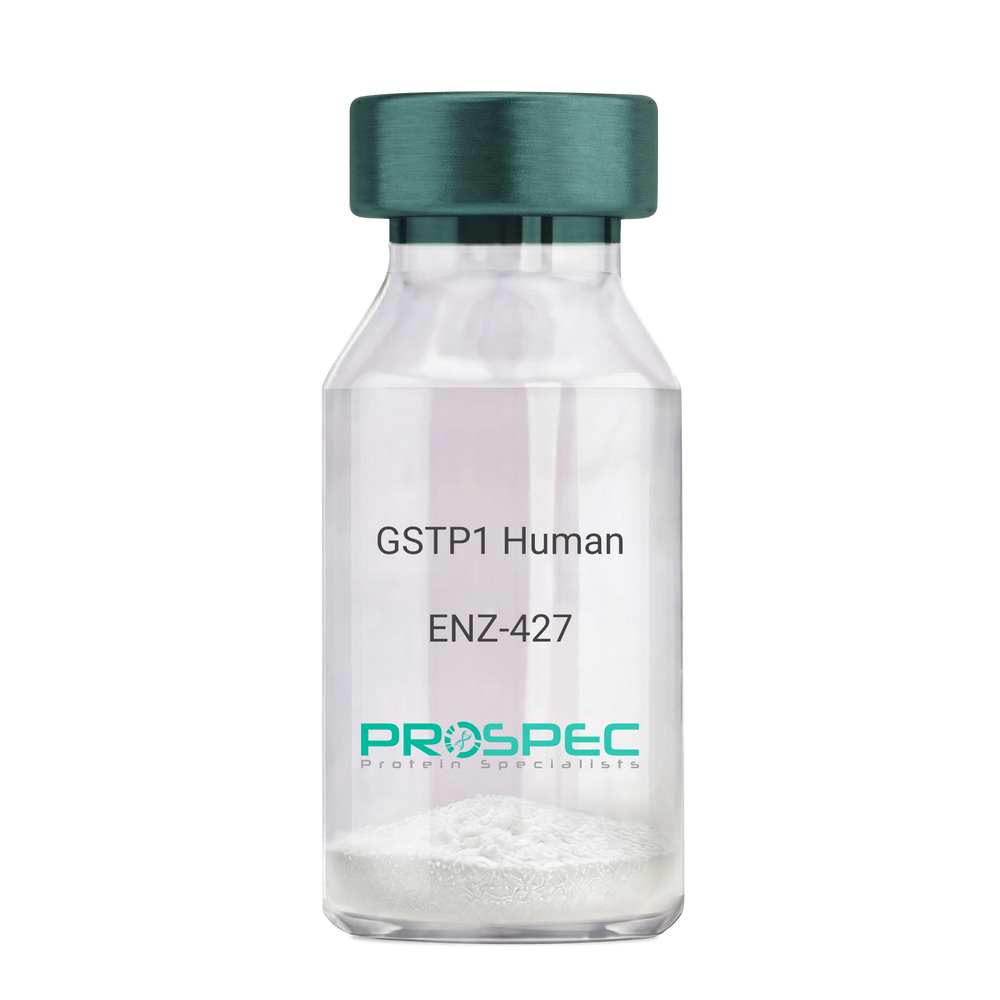
Name :
GSTP1 HumanDescription:
Glutathione S-Transferase pi 1 Human Recombinant
Glutathione S-transferase P, GST class-pi, GSTP1-1, GSTP1, FAEES3, GST3, PI, DFN7.
Product # :
ENZ-427Price :
Quantity :
Shipping Method :
Shipped with Ice Packs
More Info
- description
- source
- formulation
- purity
- biological activity
- More Info
Description
GSTP1 Human Recombinant fused with 36 amino acid His tag at N-terminus produced in E.Coli is a single, non-glycosylated, polypeptide chain containing 246 amino acids (1-210 a.a.) And having a molecular mass of 27.4kDa. The GSTP1 is purified by proprietary chromatographic techniques.
Source
Escherichia Coli.
Formulation
The GSTP1 solution (0.5mg/ml) contains 20mM Tris-HCl buffer (pH7.0), 30% glycerol, 1mM EDTA and 0.1mM PMSF.
Purity
Greater than 95.0% as determined by SDS-PAGE.
Biological Activity
Specific activity is > 80 units/mg, and is defined as the amount of enzyme that conjugate 1.0 u mole of 1-chloro-2,4-dinitrobenzene (CDNB) with reduced glutathione per minute at pH 6.5 at 25°C.
More Info
-
Introduction
GSTP1 is a polymorphic gene encoding active, functionally different GSTP1 variant proteins that are believed to function in xenobiotic metabolism and have a part in susceptibility to cancer, and other diseases. GSTP1 is a glutathione S-transferase belonging to the pi class. GST family enzymes play a significant role in detoxification by catalyzing the conjugation of many hydrophobic and electrophilic compounds with reduced glutathione. Based upon the biochemical, immunologic and structural properties of the soluble GSTs they are grouped into 4 main classes: alpha, mu, pi, and theta. The GSTP1 enzyme acts by catalyzing the reaction of glutathione with an acceptor molecule to form a Sulfur-substituted glutathione. The reactions employing glutathione contribute the transformation of a broad range of electrophiles, including reactive products of lipid, protein, carcinogens, therapeutic drugs, environmental toxins, and products of oxidative stress.
The GSTP1 inactivation through CpG hypermethylation is frequent in pituitary adenomas and may be a factor in aggressive pituitary tumor behavior. GSTP1 is may be a transcriptional target of the p53 tumor suppressor gene. Single-nucleotide polymorphism in GSTP1 is linked to modified protein binding, which influence GSTP1's contribution to carcinogen and drug metabolism, and possibly disease pathogenesis and/or drug response. GST-pi might have central roles in proliferation of androgen-independent human prostate cancer cells. -
Synonyms
Glutathione S-transferase P, GST class-pi, GSTP1-1, GSTP1, FAEES3, GST3, PI, DFN7.
-
Physical Appearance
Sterile Filtered colorless solution.
-
Stability
Store at 4°C if entire vial will be used within 2-4 weeks. Store, frozen at -20°C for longer periods of time. For long term storage it is recommended to add a carrier protein (0.1% HSA or BSA). Avoid multiple freeze-thaw cycles.
-
Amino Acid Sequence
MRGSHHHHHH GMASMTGGQQ MGRDLYDDDD KDRWGSMPPY TVVYFPVRGR CAALRMLLAD QGQSWKEEVV TVETWQEGSL KASCLYGQLP KFQDGDLTLY QSNTILRHLG RTLGLYGKDQ QEAALVDMVN DGVEDLRCKY ISLIYTNYEA GKDDYVKALP GQLKPFETLL SQNQGGKTFI VGDQISFADY NLLDLLLIHE VLAPGCLDAF PLLSAYVGRL SARPKLKAFL ASPEYVNLPI NGNGKQ.
ProSpec's products are furnished for LABORATORY RESEARCH USE ONLY. The product may not be used as drugs, agricultural or pesticidal products, food additives or household chemicals.
- View Data Sheet
Name :
POFUT1 HumanDescription:
Protein O-Fucosyltransferase 1 Human Recombinant
FUT12, O-Fuc-T, O-FucT-1, O-FUT, GDP-fucose protein O-fucosyltransferase 1, Peptide-O-fucosyltraferase 1,KIAA0180.
Product # :
ENZ-679Price :
Quantity :
Shipping Method :
Shipped with Ice Packs
More Info
- description
- source
- formulation
- purity
- More Info
Description
POFUT1 Human Recombinant produced in E. coli is a single polypeptide chain containing 385 amino acids (27-388) and having a molecular mass of 43.7 kDa. POFUT1 is fused to a 23 amino acid His-tag at N-terminus & purified by proprietary chromatographic techniques.
Source
Escherichia Coli.
Formulation
The POFUT1 solution (1mg/1ml) contains 20mM Tris-HCl buffer (pH 8.0), 2M Urea and 10% glycerol.
Purity
Greater than 85.0% as determined by SDS-PAGE.
More Info
-
Introduction
GDP-fucose protein O-fucosyltransferase 1 (POUFUT1), belongs to the glycosyltransferase O-Fuc family. POUFUT1 encodes a member of the glycosyltransferase O-Fuc family and Expressed mainly in pancreas, kidney, lung, heart, brain, liver, placenta and skeletal muscle.POUFUT1 adds O-fucose through an O-glycosidic linkage to Preserve serine or threonine residues in the epidermal growth factor-like repeats of a number of cell surface and emitted proteins. POUFUT1 is involved in ligand-induced receptor signaling. Alternative splicing of this gene results in 2 transcript variants encoding different isoforms.POFUT1 participates in Notch signaling, as Notch ligands can use as POFUT1 substrates.
-
Synonyms
FUT12, O-Fuc-T, O-FucT-1, O-FUT, GDP-fucose protein O-fucosyltransferase 1, Peptide-O-fucosyltraferase 1,KIAA0180.
-
Physical Appearance
Sterile Filtered colorless solution.
-
Stability
Store at 4°C if entire vial will be used within 2-4 weeks. Store, frozen at -20°C for longer periods of time. For long term storage it is recommended to add a carrier protein (0.1% HSA or BSA).Avoid multiple freeze-thaw cycles.
-
Amino Acid Sequence
MGSSHHHHHH SSGLVPRGSH MGSGSWDPAG YLLYCPCMGR FGNQADHFLG SLAFAKLLNR TLAVPPWIEY QHHKPPFTNL HVSYQKYFKL EPLQAYHRVI SLEDFMEKLA PTHWPPEKRV AYCFEVAAQR SPDKKTCPMK EGNPFGPFWD QFHVSFNKSE LFTGISFSAS YREQWSQRFS PKEHPVLALP GAPAQFPVLE EHRPLQKYMV WSDEMVKTGE AQIHAHLVRP YVGIHLRIGS DWKNACAMLK DGTAGSHFMA SPQCVGYSRS TAAPLTMTMC LPDLKEIQRA VKLWVRSLDA QSVYVATDSE SYVPELQQLF KGKVKVVSLK PEVAQVDLYI LGQADHFIGN CVSSFTAFVK RERDLQGRPS SFFGMDRPPK LRDEF.
ProSpec's products are furnished for LABORATORY RESEARCH USE ONLY. The product may not be used as drugs, agricultural or pesticidal products, food additives or household chemicals.
- View Data Sheet
Name :
ADH1A HumanDescription:
Alcohol Dehydrogenase 1A Human Recombinant
Alcohol dehydrogenase 1A, Alcohol dehydrogenase subunit alpha, ADH1A, ADH1.
Product # :
ENZ-580Price :
Quantity :
Shipping Method :
Shipped with Ice Packs
More Info
- description
- source
- formulation
- purity
- More Info
Description
ADH1A Human Recombinant produced in E.coli is a single, non-glycosylated polypeptide chain containing 395 amino acids (1-375) and having a molecular mass of 42kDa.ADH1A is fused to a 20 amino acid His-tag at N-terminus & purified by proprietary chromatographic techniques.
Source
E.coli.
Formulation
The ADH1A solution (1mg/ml) contains 20mM Tris-HCl buffer (pH 8.0), 1mM DTT, 10% glycerol and 0.1M NaCl.
Purity
Greater than 90% as determined by SDS-PAGE.
More Info
-
Introduction
Alcohol dehydrogenase 1A (ADH1A) is a member of the alcohol dehydrogenase family. ADH1A has a key role in ethanol metabolism. ADH1A along with coenzyme NAD catalyzes the reversible conversion of organic alcohols to ketones or aldehydes. The physiologic function of ADH1A in the liver is the elimination of ethanol formed by microorganisms in the intestinal tract. ADH1A is monomorphic and predominant in fetal and infant livers, growing to be less active in gestation and only weakly active during adulthood.
-
Synonyms
Alcohol dehydrogenase 1A, Alcohol dehydrogenase subunit alpha, ADH1A, ADH1.
-
Physical Appearance
Sterile Filtered colorless solution.
-
Stability
Store at 4°C if entire vial will be used within 2-4 weeks. Store, frozen at -20°C for longer periods of time. For long term storage it is recommended to add a carrier protein (0.1% HSA or BSA).Avoid multiple freeze-thaw cycles.
-
Amino Acid Sequence
MGSSHHHHHH SSGLVPRGSH MSTAGKVIKC KAAVLWELKK PFSIEEVEVA PPKAHEVRIK MVAVGICGTD DHVVSGTMVT PLPVILGHEA AGIVESVGEG VTTVKPGDKV IPLAIPQCGK CRICKNPESN YCLKNDVSNP QGTLQDGTSR FTCRRKPIHH FLGISTFSQY TVVDENAVAK
IDAASPLEKV CLIGCGFSTG YGSAVNVAKV TPGSTCAVFG LGGVGLSAIM GCKAAGAARI IAVDINKDKF AKAKELGATE CINPQDYKKP IQEVLKEMTD GGVDFSFEVI GRLDTMMASL LCCHEACGTS VIVGVPPDSQ NLSMNPMLLL TGRTWKGAIL GGFKSKECVP KLVADFMAKK
FSLDALITHV LPFEKINEGF DLLHSGKSIR TILMF.
ProSpec's products are furnished for LABORATORY RESEARCH USE ONLY. The product may not be used as drugs, agricultural or pesticidal products, food additives or household chemicals.
- View Data Sheet
Name :
Cyclophilin G HumanDescription:
Cyclophilin-G Human Recombinant
Peptidyl-prolyl cis-trans isomerase G, PPIase G, Rotamase G, PPIG, peptidylprolyl isomerase G, Cyclophilin G, Peptidyl-prolyl isomerase G, Rotamase G, Clk-associating RS-cyclophilin, CARS-cyclophilin, CARS-Cyp, SR-cyclophilin, SR-cyp, SRcyp, CASP10, CYP, MGC133241.
Product # :
ENZ-463Price :
Quantity :
Shipping Method :
Shipped with Ice Packs
More Info
- description
- source
- formulation
- purity
- biological activity
- More Info
Description
Cyclophilin-G Human Recombinant produced in E.Coli is a single, non-glycosylated, polypeptide chain containing 195 amino acids (1-175 a.a.) and having a molecular mass of 21.6 kDa. Cyclophilin-G is fused to a 20 amino acid His Tag at N-terminus and is purified by proprietary chromatographic techniques.
Source
Escherichia Coli.
Formulation
Cyclophilin-G solution containing 20mM Tris-HCl pH-8, 1mM DTT and 10% glycerol.
Purity
Greater than 95.0% as determined by SDS-PAGE.
Biological Activity
Specific activity is > 200 nmoles/min/mg, and is defined as the amount of enzyme that cleaves 1umole of suc-AAFP-pNA per minute at 25C in Tris-Hcl pH8.0 using chymotrypsin.More Info
-
Introduction
Cyclophilin-G is a member of the peptidyl-prolyl cis-trans isomerase (PPIase) family. PPIases catalyze the cis-trans isomerization of proline imidic peptide bonds in oligopeptides and speeds up the protein folding. PPIG catalyzes the cis-trans isomerization of proline imidic peptide bonds in oligopeptides and is involved in the folding, transport, and assembly of proteins. PPIG is localized to the nuclear speckles, a nuclear compartment rich in splicing factors, and cooperates with the splicing factors SC35 and pinin. Cyclophilin-G also takes part in the regulation of pre-mRNA splicing.
-
Synonyms
Peptidyl-prolyl cis-trans isomerase G, PPIase G, Rotamase G, PPIG, peptidylprolyl isomerase G, Cyclophilin G, Peptidyl-prolyl isomerase G, Rotamase G, Clk-associating RS-cyclophilin, CARS-cyclophilin, CARS-Cyp, SR-cyclophilin, SR-cyp, SRcyp, CASP10, CYP, MGC133241.
-
Physical Appearance
Sterile filtered colorless solution.
-
Stability
Store at 4°C if entire vial will be used within 2-4 weeks. Store, frozen at -20°C for longer periods of time. For long term storage it is recommended to add a carrier protein (0.1% HSA or BSA).Avoid multiple freeze-thaw cycles.
-
Amino Acid Sequence
MGSSHHHHHH SSGLVPRGSH MGIKVQRPRC FFDIAINNQP AGRVVFELFS DVCPKTCENF RCLCTGEKGT GKSTQKPLHY KSCLFHRVVK DFMVQGGDFS EGNGRGGESI YGGFFEDESF AVKHNKEFLL SMANRGKDTN GSQFFITTKP TPHLDGHHVV FGQVISGQEV VREIENQKTD AASKPFAEVR ILSCG.
ProSpec's products are furnished for LABORATORY RESEARCH USE ONLY. The product may not be used as drugs, agricultural or pesticidal products, food additives or household chemicals.
- View Data Sheet
Name :
CDO1 HumanDescription:
Cysteine Dioxygenase Human Recombinant
Cysteine dioxygenase type 1, Cysteine dioxygenase type I, CDO-I, CDO, CDO1.
Product # :
ENZ-449Price :
Quantity :
Shipping Method :
Shipped with Ice Packs
More Info
- description
- source
- formulation
- purity
- More Info
Description
CDO1 Human Recombinant fused with a 37 amino acids His tag at N-terminus produced in E.Coli is a single, non-glycosylated, polypeptide chain containing 207 amino acids (1-170 a.a.) and having a molecular mass of 23.9kDa.The CDO1 is purified by proprietary chromatographic techniques.
Source
Escherichia Coli.
Formulation
The CDO1 solution contains 20mM Tris buffer(pH 8.0), 10% glycerol and 1mM DTT.
Purity
Greater than 90.0% as determined by SDS-PAGE.
More Info
-
Introduction
CDO1 (Cysteine dioxygenase) is a mammalian non-heme iron enzyme that initiates a number of significant metabolic pathways associated with pyruvate and several sulfurate compounds including sulfate, hypotaurine and taurine. CDO1 catalyzes the conversion of L-cysteine to cysteine sulfinic acid (cysteine sulfinate) by incorporation of dioxygen. CDO1 is a vital regulator of cellular cysteine concentrations and has an essential role in maintaining the hepatic concentration of intracellular free cysteine within a proper narrow range. CDO1 is able to alter intracellular cysteine levels and glutathione levels. CDO1 is highly expressed in the liver and placenta. On the other hand CDO1 has a low expression in heart, brain and pancreas. CDO1 can also be detected in hepatoblastoma HepG2 cells.
-
Synonyms
Cysteine dioxygenase type 1, Cysteine dioxygenase type I, CDO-I, CDO, CDO1.
-
Physical Appearance
Sterile Filtered colorless solution.
-
Stability
Store at 4°C if entire vial will be used within 2-4 weeks. Store, frozen at -20°C for longer periods of time. For long term storage it is recommended to add a carrier protein (0.1% HSA or BSA).Avoid multiple freeze-thaw cycles.
-
Amino Acid Sequence
MRGSHHHHHH GMASMTGGQQ MGRDLYDDDD KDRWGSHMEQ TEVLKPRTLA DLIRILHQLF AGDEVNVEEV QAIMEAYESD PTEWAMYAKF DQYRYTRNLV DQGNGKFNLM ILCWGEGHGS SIHDHTNSHC FLKMLQGNLK ETLFAWPDKK SNEMVKKSER VLRENQCAYI NDSVGLHRVE NISHTEPAVS LHLYSPPFDT CHAFDQR.
ProSpec's products are furnished for LABORATORY RESEARCH USE ONLY. The product may not be used as drugs, agricultural or pesticidal products, food additives or household chemicals.
- View Data Sheet
Name :
ACADM HumanDescription:
Acyl-Coenzyme A Dehydrogenase, C-4 to C-12 Human Recombinant
ACADM, ACAD1, CAD, MCADH, MCAD, EC=1.3.99.3, Medium-chain specific acyl-CoA dehydrogenase, mitochondrial, FLJ18227, FLJ93013, FLJ99884.
Product # :
ENZ-529Price :
Quantity :
Shipping Method :
Shipped with Ice Packs
More Info
- description
- source
- formulation
- purity
- More Info
Description
ACADM Recombinant Human produced in E.Coli is a single, non-glycosylated polypeptide chain containing 417 amino acids (26-421 a.a.) and having a molecular mass of 45.9 kDa. The ACADM is fused to a 21 amino acid His-Tag at N-terminus and purified by proprietary chromatographic techniques.
Source
Escherichia Coli.
Formulation
The ACADM (0.5mg/ml) protein solution containing 20mM Tris-HCl pH-7.5, 0.1M NaCl & 20% glycerol.
Purity
Greater than 90.0% as determined by SDS-PAGE.
More Info
-
Introduction
ACADM enzyme is essential for the degradation a certain group of fats called medium-chain fatty acids. ACADM is essential for converting specific fatty acids to energy, mainly during fasting periods. ACADM functions in mitochondria, the energy-producing centers within cells. ACADM is localized in the mitochondria of numerous tissue types, predominantly the liver.
-
Synonyms
ACADM, ACAD1, CAD, MCADH, MCAD, EC=1.3.99.3, Medium-chain specific acyl-CoA dehydrogenase, mitochondrial, FLJ18227, FLJ93013, FLJ99884.
-
Physical Appearance
Sterile filtered colorless solution.
-
Stability
Store at 4°C if entire vial will be used within 2-4 weeks. Store, frozen at -20°C for longer periods of time. For long term storage it is recommended to add a carrier protein (0.1% HSA or BSA).Avoid multiple freeze-thaw cycles.
-
Amino Acid Sequence
MGSSHHHHHH SSGLVPRGSH MKANRQREPG LGFSFEFTEQ QKEFQATARK FAREEIIPVA AEYDKTGEYP VPLIRRAWEL GLMNTHIPEN CGGLGLGTFD ACLISEELAY GCTGVQTAIE GNSLGQMPII IAGNDQQKKK YLGRMTEEPL MCAYCVTEPG AGSDVAGIKT KAEKKGDEYI INGQKMWITN GGKANWYFLL ARSDPDPKAP ANKAFTGFIV EADTPGIQIG RKELNMGQRC SDTRGIVFED VKVPKENVLI GDGAGFKVAM GAFDKTRPVV AAGAVGLAQR ALDEATKYAL ERKTFGKLLV EHQAISFMLA EMAMKVELAR MSYQRAAWEV DSGRRNTYYA SIAKAFAGDI ANQLATDAVQ ILGGNGFNTE YPVEKLMRDA KIYQIYEGTS QIQRLIVARE HIDKYKN.
ProSpec's products are furnished for LABORATORY RESEARCH USE ONLY. The product may not be used as drugs, agricultural or pesticidal products, food additives or household chemicals.
- View Data Sheet
Name :
PRDX2 HumanDescription:
Peroxiredoxin-2 Human Recombinant
PRP, TSA, PRX2, NKEFB, PRXII, TDPX1, MGC4104, PRDX2, Peroxiredoxin-2, Thioredoxin peroxidase 1, Thioredoxin-dependent peroxide reductase 1, Thiol-specific antioxidant protein, Natural killer cell-enhancing factor B, NKEF-B.
Product # :
ENZ-414Price :
Quantity :
Shipping Method :
Shipped with Ice Packs
More Info
- description
- source
- formulation
- purity
- biological activity
- More Info
Description
PRDX2 Human Recombinant produced in E.Coli is a single, non-glycosylated, polypeptide chain containing 198 amino acids and having a molecular mass of 21.8 kDa.The PRDX2 is purified by proprietary chromatographic techniques.
Source
Escherichia Coli.
Formulation
The Peroxiredoxin solution contains 20mM Tris-HCl pH-8, & 10% glycerol.
Purity
Greater than 90.0% as determined by SDS-PAGE.
Biological Activity
The specific activity is > 2000 pmole/min/µg. Enzymatic activity is defined as the amount of hydroperoxide that 1ug of enzyme can reduce at 25°C for 1 minute.
More Info
-
Introduction
PRDX2 is part of the peroxiredoxin family of antioxidant enzymes, which reduce hydrogen peroxide and alkyl hydroperoxides. PRDX2 takes part as an antioxidant protective role in cells, and contributes to the antiviral activity of CD8(+) T-cells. PRDX2 has proliferative effect in cancer development or progression.
If PRDX2 protection is insufficient against peroxidases, the DNA damage results in neurological disease such as Alzheimer's or DNA damage leading to cancer. -
Synonyms
PRP, TSA, PRX2, NKEFB, PRXII, TDPX1, MGC4104, PRDX2, Peroxiredoxin-2, Thioredoxin peroxidase 1, Thioredoxin-dependent peroxide reductase 1, Thiol-specific antioxidant protein, Natural killer cell-enhancing factor B, NKEF-B.
-
Physical Appearance
Sterile Filtered colorless solution.
-
Stability
Store at 4°C if entire vial will be used within 2-4 weeks. Store, frozen at -20°C for longer periods of time. For long term storage it is recommended to add a carrier protein (0.1% HSA or BSA).Avoid multiple freeze-thaw cycles.
-
Amino Acid Sequence
MASGNARIGK PAPDFKATAV VDGAFKEVKL SDYKGKYVVL FFYPLDFTFV CPTEIIAFSN RAEDFRKLGC EVLGVSVDSQ FTHLAWINTP RKEGGLGPLN IPLLADVTRR LSEDYGVLKT DEGIAYRGLF IIDGKGVLRQ ITVNDLPVGR SVDEALRLVQ AFQYTDEHGE VCPAGWKPGS DTIKPNVDDS KEYFSKHN.
ProSpec's products are furnished for LABORATORY RESEARCH USE ONLY. The product may not be used as drugs, agricultural or pesticidal products, food additives or household chemicals.
- View Data Sheet
Name :
CIAO1 HumanDescription:
Cytosolic Iron-Sulfur Protein Assembly 1 Human Recombinant
CIA1, WDR39, Probable cytosolic iron-sulfur protein assembly protein CIAO1, WD repeat-containing protein 39, CIAO1.
Product # :
PRO-1396Price :
Quantity :
Shipping Method :
Shipped with Ice Packs
More Info
- description
- source
- formulation
- purity
- More Info
Description
CIAO1 Human Recombinant produced in E.Coli is a single, non-glycosylated polypeptide chain containing 362 amino acids (1-339a.a) and having a molecular mass of 40kDa. CIAO1 is fused to a 23 amino acid His-tag at N-terminus & purified by proprietary chromatographic techniques.
Source
E.coli.
Formulation
CIAO1 protein solution (1mg/ml) containing 20mM Tris-HCl buffer (pH 8.0), 0.15M NaCl, 20% glycerol and 1mM DTT.
Purity
Greater than 95% as determined by SDS-PAGE.
More Info
-
Introduction
CIAO1 is a vital component of the cytosolic iron-sulfur (Fe/S) protein assembly machinery. CIAO1 protein is required for the maturation of extra mitochondrial Fe/S proteins and seems to specifically modulate the trans-activation activity of WT1. CIAO1 participates in chromosome segregation as a part of the mitotic spindle-associated MMXD complex.
-
Synonyms
CIA1, WDR39, Probable cytosolic iron-sulfur protein assembly protein CIAO1, WD repeat-containing protein 39, CIAO1.
-
Physical Appearance
Sterile Filtered colorless solution.
-
Stability
Store at 4°C if entire vial will be used within 2-4 weeks. Store, frozen at -20°C for longer periods of time. For long term storage it is recommended to add a carrier protein (0.1% HSA or BSA).Avoid multiple freeze-thaw cycles.
-
Amino Acid Sequence
MGSSHHHHHH SSGLVPRGSH MGSMKDSLVL LGRVPAHPDS RCWFLAWNPA GTLLASCGGD RRIRIWGTEG DSWICKSVLS EGHQRTVRKV AWSPCGNYLA SASFDATTCI WKKNQDDFEC VTTLEGHENE VKSVAWAPSG NLLATCSRDK SVWVWEVDEE DEYECVSVLN SHTQDVKHVV WHPSQELLAS ASYDDTVKLY REEEDDWVCC ATLEGHESTV WSLAFDPSGQ RLASCSDDRT VRIWRQYLPG NEQGVACSGS DPSWKCICTL SGFHSRTIYD IAWCQLTGAL ATACGDDAIR VFQEDPNSDP QQPTFSLTAH LHQAHSQDVN CVAWNPKEPG LLASCSDDGE VAFWKYQRPE GL.
ProSpec's products are furnished for LABORATORY RESEARCH USE ONLY. The product may not be used as drugs, agricultural or pesticidal products, food additives or household chemicals.
- View Data Sheet
Name :
PRDX2 MouseDescription:
Eukaryotic Translation Initiation Factor 4E Mouse Recombinant
PRDX2, Peroxiredoxin-2 (EC:1.11.1.15), TSA, Thioredoxin peroxidase 1, Thioredoxin-dependent peroxide reductase 1, Thiol-specific antioxidant protein, Prdx2, Tdpx1, Tpx.
Product # :
ENZ-1061Price :
Quantity :
Shipping Method :
Shipped with Ice Packs
More Info
- description
- source
- formulation
- purity
- biological activity
- More Info
Description
PRDX2 Mouse Recombinant produced in E.Coli is a single, non-glycosylated polypeptide chain containing 222 amino acids (1-198 a.a) and having a molecular mass of 24.3kDa. PRDX2 is fused to a 24 amino acid His-tag at N-terminus & purified by proprietary chromatographic techniques.
Source
Escherichia Coli.
Formulation
PRDX2 protein solution (1mg/ml) containing 20mM Tris-HCl buffer (pH8.0) and 10% Glycerol 1mM DTT.
Purity
Greater than 90.0% as determined by SDS-PAGE.
Biological Activity
Specific activity is > 700 pmol/min/ug, Activity is defined as the amount of hydroperoxide that 1ug of enzyme can reduce at 25C for minute.
More Info
-
Introduction
PRDX2 is part of the peroxiredoxin family of antioxidant enzymes, which reduce hydrogen peroxide and alkyl hydroperoxides. PRDX2 takes part as an antioxidant protective role in cells, and contributes to the antiviral activity of CD8(+) T-cells. PRDX2 has proliferative effect in cancer development or progression.
If PRDX2 protection is insufficient against peroxidases, the DNA damage results in neurological disease such as Alzheimer's or DNA damage leading to cancer. -
Synonyms
PRDX2, Peroxiredoxin-2 (EC:1.11.1.15), TSA, Thioredoxin peroxidase 1, Thioredoxin-dependent peroxide reductase 1, Thiol-specific antioxidant protein, Prdx2, Tdpx1, Tpx.
-
Physical Appearance
Sterile Filtered clear solution.
-
Stability
Store at 4°C if entire vial will be used within 2-4 weeks. Store, frozen at -20°C for longer periods of time. For long term storage it is recommended to add a carrier protein (0.1% HSA or BSA).Avoid multiple freeze-thaw cycles.
-
Amino Acid Sequence
MGSSHHHHHH SSGLVPRGSH MGSHMASGNA QIGKSAPDFT ATAVVDGAFK EIKLSDYRGK YVVLFFYPLD FTFVCPTEII AFSDHAEDFR KLGCEVLGVS VDSQFTHLAW INTPRKEGGL GPLNIPLLAD VTKSLSQNYG VLKNDEGIAY RGLFIIDAKG VLRQITVNDL PVGRSVDEAL RLVQAFQYTD EHGEVCPAGW KPGSDTIKPN VDDSKEYFSK HN
ProSpec's products are furnished for LABORATORY RESEARCH USE ONLY. The product may not be used as drugs, agricultural or pesticidal products, food additives or household chemicals.
- View Data Sheet
Name :
ODC1 HumanDescription:
Ornithine Decarboxylase 1 Human Recombinant
ODC, Ornithine decarboxylase 1, EC 4.1.1.17.
Product # :
ENZ-181Price :
Quantity :
Shipping Method :
Shipped with Ice Packs
More Info
- description
- source
- formulation
- purity
- More Info
Description
ODC1 Human Recombinant produced in E.coli is a single, non-glycosylated polypeptide chain containing 484 amino acids (1-461) and having a molecular mass of 53.5 kDa.ODC1 is fused to a 23 amino acid His-tag at N-terminus & purified by proprietary chromatographic techniques.
Source
E.coli.
Formulation
The ODC1 solution (0.5mg/ml) contains 20mM Tris-HCl buffer (pH 8.0), 1mM DTT, 0.1M NaCl and 10% glycerol.
Purity
Greater than 95% as determined by SDS-PAGE.
More Info
-
Introduction
Ornithine decarboxylase is the preliminary and rate-limiting enzyme in the biosynthetic pathway of polyamines and it takes part in the alteration of ornithine to putrescine. ODC1 is a key member of various biological processes, such as cell growth, transformation, differentiation and apoptosis. Overexpression of the ODC1 gene has a vital part in cell proliferation and the progress of cancer.
-
Synonyms
ODC, Ornithine decarboxylase 1, EC 4.1.1.17.
-
Physical Appearance
Sterile Filtered colorless solution.
-
Stability
Store at 4°C if entire vial will be used within 2-4 weeks. Store, frozen at -20°C for longer periods of time. For long term storage it is recommended to add a carrier protein (0.1% HSA or BSA).Avoid multiple freeze-thaw cycles.
-
Amino Acid Sequence
MGSSHHHHHH SSGLVPRGSH MGSMNNFGNE EFDCHFLDEG FTAKDILDQK INEVSSSDDK DAFYVADLGD ILKKHLRWLK ALPRVTPFYA VKCNDSKAIV KTLAATGTGF DCASKTEIQL VQSLGVPPER IIYANPCKQV SQIKYAANNG VQMMTFDSEV ELMKVARAHP KAKLVLRIAT DDSKAVCRLS VKFGATLRTS RLLLERAKEL NIDVVGVSFH VGSGCTDPET FVQAISDARC VFDMGAEVGF SMYLLDIGGG FPGSEDVKLK FEEITGVINP ALDKYFPSDS GVRIIAEPGR YYVASAFTLA VNIIAKKIVL KEQTGSDDED ESSEQTFMYY VNDGVYGSFN CILYDHAHVK PLLQKRPKPD EKYYSSSIWG PTCDGLDRIV ERCDLPEMHV GDWMLFENMG AYTVAAASTF NGFQRPTIYY VMSGPAWQLM QQFQNPDFPP EVEEQDASTL PVSCAWESGM KRHRAACASA SINV
ProSpec's products are furnished for LABORATORY RESEARCH USE ONLY. The product may not be used as drugs, agricultural or pesticidal products, food additives or household chemicals.