Skip to content

High-quality research proteins.

  • 1-800-805-6531

  • Mon - Sat 8.00-18.00, Sun - Closed

  • info@prospecbio.com

  • PO Box 6591 East Brunswick NJ 08816

  • Products
    • Cytokines
    • Growth factors
    • Chemokines
    • Cd antigens
    • Neurotrophins
    • Hormones
    • Enzymes
    • Viral antigens
    • Recombinant proteins
    • Natural proteins
    • Monoclonal antibodies
    • Polyclonal antibodies
    • Thermal Packaging
  • About
    • Company
    • Founder
    • Contribution
  • Customers
    • Eastern Asia
    • Eastern Europe
    • North America
    • South America
    • South East Asia
    • Southern Asia
    • Western Europe
  • Ordering
    • Ordering Method
    • Ordering - Credit Card
    • Ordering - PO
    • Shipping Fees
    • FAQs
  • Services
    • DNA Cloning
    • Protein Expression
    • Monoclonal Antibody
    • Fermentation
    • Technology License
  • Contact us
Log in

Country/region

  • USD $ | Albania
  • USD $ | Andorra
  • USD $ | Argentina
  • USD $ | Armenia
  • USD $ | Australia
  • USD $ | Austria
  • USD $ | Azerbaijan
  • USD $ | Belarus
  • USD $ | Belgium
  • USD $ | Bolivia
  • USD $ | Brazil
  • USD $ | Bulgaria
  • USD $ | Cambodia
  • USD $ | Canada
  • USD $ | Chile
  • USD $ | China
  • USD $ | Colombia
  • USD $ | Costa Rica
  • USD $ | Croatia
  • USD $ | Cyprus
  • USD $ | Czechia
  • USD $ | Denmark
  • USD $ | Estonia
  • USD $ | Finland
  • USD $ | France
  • USD $ | Georgia
  • USD $ | Germany
  • USD $ | Greece
  • USD $ | Hong Kong SAR
  • USD $ | Hungary
  • USD $ | Iceland
  • USD $ | India
  • USD $ | Ireland
  • USD $ | Israel
  • USD $ | Italy
  • USD $ | Japan
  • USD $ | Kazakhstan
  • USD $ | Latvia
  • USD $ | Liechtenstein
  • USD $ | Lithuania
  • USD $ | Madagascar
  • USD $ | Malta
  • USD $ | Mexico
  • USD $ | Moldova
  • USD $ | Monaco
  • USD $ | Netherlands
  • USD $ | New Zealand
  • USD $ | North Macedonia
  • USD $ | Norway
  • USD $ | Panama
  • USD $ | Paraguay
  • USD $ | Peru
  • USD $ | Philippines
  • USD $ | Poland
  • USD $ | Portugal
  • USD $ | Romania
  • USD $ | Singapore
  • USD $ | Slovakia
  • USD $ | Slovenia
  • USD $ | South Africa
  • USD $ | South Korea
  • USD $ | Spain
  • USD $ | Sri Lanka
  • USD $ | Sweden
  • USD $ | Switzerland
  • USD $ | Taiwan
  • USD $ | Thailand
  • USD $ | Türkiye
  • USD $ | Ukraine
  • USD $ | United Kingdom
  • USD $ | United States
  • USD $ | Uruguay
  • USD $ | Vatican City
  • USD $ | Venezuela
  • USD $ | Vietnam
  • Facebook
  • Instagram
logoProSpec - Recombinant Protein Manufacturer for academic and R&D industry
Become a distributor
Account Log in
Wishlist
Cart Cart(0)
  • Products
    +
    • Cytokines
    • Growth factors
    • Chemokines
    • Cd antigens
    • Neurotrophins
    • Hormones
    • Enzymes
    • Viral antigens
    • Recombinant proteins
    • Natural proteins
    • Monoclonal antibodies
    • Polyclonal antibodies
    • Thermal Packaging
  • About
    +
    • Company
    • Founder
    • Contribution
  • Customers
    +
    • Eastern Asia
    • Eastern Europe
    • North America
    • South America
    • South East Asia
    • Southern Asia
    • Western Europe
  • Ordering
    +
    • Ordering Method
    • Ordering - Credit Card
    • Ordering - PO
    • Shipping Fees
    • FAQs
  • Services
    +
    • DNA Cloning
    • Protein Expression
    • Monoclonal Antibody
    • Fermentation
    • Technology License
  • Contact us

Item added to your cart

View cart
View All
  • Cytokines
  • Growth factors
  • Chemokines
  • Cd antigens
  • Neurotrophins
  • Hormones
  • Enzymes
  • Viral antigens
  • Recombinant proteins
  • Natural proteins
  • Monoclonal antibodies
  • Polyclonal antibodies
  • Thermal Packaging
  • Tumor Necrosis Factor

    Tumor Necrosis Factor

    View All
  • 4-1BB

    4-1BB

    View All
  • Adiponectin

    Adiponectin

    View All
  • AIF1

    AIF1

    View All
  • Other Cytokines

    Other Cytokines

    View All
  • AITRL

    AITRL

    View All
  • Angiopoietin

    Angiopoietin

    View All
  • Apolipoprotein

    Apolipoprotein

    View All
  • B-Cell Activating Factor

    B-Cell Activating Factor

    View All
  • Beta Defensin

    Beta Defensin

    View All
  • Bone Morphogenetic Protein

    Bone Morphogenetic Protein

    View All
  • B type Natriuretic Peptide

    B type Natriuretic Peptide

    View All
  • BST

    BST

    View All
  • Betacellulin

    Betacellulin

    View All
  • Cardiotrophin

    Cardiotrophin

    View All
  • Activin

    Activin

    View All
  • Fibroblast Growth Factor

    Fibroblast Growth Factor

    View All
  • Other Growth Factors

    Other Growth Factors

    View All
  • CSF

    CSF

    View All
  • CTGF

    CTGF

    View All
  • IGFBP

    IGFBP

    View All
  • VEGF Protein

    VEGF Protein

    View All
  • EGF

    EGF

    View All
  • Epigen

    Epigen

    View All
  • Erythropoietin

    Erythropoietin

    View All
  • Insulin-Like Growth Factor

    Insulin-Like Growth Factor

    View All
  • Growth Hormone

    Growth Hormone

    View All
  • HDGF

    HDGF

    View All
  • Hepatocyte Growth Factor

    Hepatocyte Growth Factor

    View All
  • Insulin

    Insulin

    View All
  • BCA-1/ BLC (CXCL13)

    BCA-1/ BLC (CXCL13)

    View All
  • BRAK (CXCL14)

    BRAK (CXCL14)

    View All
  • C-10 (CCL6)

    C-10 (CCL6)

    View All
  • Other Chemokines

    Other Chemokines

    View All
  • MEC (CCL28)

    MEC (CCL28)

    View All
  • LD78-beta (CCL3L1)

    LD78-beta (CCL3L1)

    View All
  • CTACK (CCL27)

    CTACK (CCL27)

    View All
  • CXCL16

    CXCL16

    View All
  • CXCL17

    CXCL17

    View All
  • Platelet Factor-4 (CXCL4)

    Platelet Factor-4 (CXCL4)

    View All
  • ENA-78 (CXCL5)

    ENA-78 (CXCL5)

    View All
  • Eotaxin (CCL11,24,26)

    Eotaxin (CCL11,24,26)

    View All
  • Exodus-2 (CCL21)

    Exodus-2 (CCL21)

    View All
  • Fractalkine (CX3CL1)

    Fractalkine (CX3CL1)

    View All
  • CXCL6

    CXCL6

    View All
  • Other CD Antigens

    Other CD Antigens

    View All
  • CD14

    CD14

    View All
  • CD164

    CD164

    View All
  • CD1

    CD1

    View All
  • CD2

    CD2

    View All
  • CD200

    CD200

    View All
  • CD207

    CD207

    View All
  • CD226

    CD226

    View All
  • CD23

    CD23

    View All
  • CD244

    CD244

    View All
  • CD247

    CD247

    View All
  • CD27

    CD27

    View All
  • CD274

    CD274

    View All
  • CD300

    CD300

    View All
  • CD33

    CD33

    View All
  • Other Neurotrophins

    Other Neurotrophins

    View All
  • Beta-NGF

    Beta-NGF

    View All
  • BDNF

    BDNF

    View All
  • CDNF

    CDNF

    View All
  • CNTF

    CNTF

    View All
  • GDNF

    GDNF

    View All
  • Glia Maturation Factor

    Glia Maturation Factor

    View All
  • MANF

    MANF

    View All
  • Midkine

    Midkine

    View All
  • Neuroglobin

    Neuroglobin

    View All
  • Neurotrophic factors

    Neurotrophic factors

    View All
  • Neuregulin

    Neuregulin

    View All
  • Neuropilin

    Neuropilin

    View All
  • Pigment Epithelium-Derived Factor

    Pigment Epithelium-Derived Factor

    View All
  • Pleiotrophin

    Pleiotrophin

    View All
  • Peptide Hormones

    Peptide Hormones

    View All
  • Other Hormones

    Other Hormones

    View All
  • HCG

    HCG

    View All
  • Endothelin

    Endothelin

    View All
  • Exendin

    Exendin

    View All
  • FSH

    FSH

    View All
  • Glucagon

    Glucagon

    View All
  • GHRP

    GHRP

    View All
  • GLP

    GLP

    View All
  • Thyrostimulin

    Thyrostimulin

    View All
  • Inhibin A

    Inhibin A

    View All
  • LHRH

    LHRH

    View All
  • Melanotan

    Melanotan

    View All
  • Procalcitonin

    Procalcitonin

    View All
  • PTH

    PTH

    View All
  • Peroxiredoxin

    Peroxiredoxin

    View All
  • Peptidase

    Peptidase

    View All
  • Synthetase

    Synthetase

    View All
  • Transferase

    Transferase

    View All
  • Hydrolase

    Hydrolase

    View All
  • Dehydrogenase

    Dehydrogenase

    View All
  • ACE2

    ACE2

    View All
  • Esterase

    Esterase

    View All
  • Protein Kinases

    Protein Kinases

    View All
  • Other Enzymes

    Other Enzymes

    View All
  • Phosphatase

    Phosphatase

    View All
  • Deaminase

    Deaminase

    View All
  • Oxygenase

    Oxygenase

    View All
  • Adenylate Kinase

    Adenylate Kinase

    View All
  • Lyase

    Lyase

    View All
  • Chagas

    Chagas

    View All
  • SARS

    SARS

    View All
  • Influenza

    Influenza

    View All
  • ASFV

    ASFV

    View All
  • Astrovirus

    Astrovirus

    View All
  • Borrelia

    Borrelia

    View All
  • Helicobacter Pylori

    Helicobacter Pylori

    View All
  • Chikungunya

    Chikungunya

    View All
  • Chlamydia

    Chlamydia

    View All
  • Cytomegalo

    Cytomegalo

    View All
  • Dengue

    Dengue

    View All
  • EBV

    EBV

    View All
  • Ebola

    Ebola

    View All
  • Feline Leukemia Virus

    Feline Leukemia Virus

    View All
  • Hepatitis A

    Hepatitis A

    View All
  • Other

    Other

    View All
  • Actin

    Actin

    View All
  • ADAM

    ADAM

    View All
  • Complement Component

    Complement Component

    View All
  • Ag85

    Ag85

    View All
  • Eukaryotic Translation Initiation Factor

    Eukaryotic Translation Initiation Factor

    View All
  • Anterior Gradient Protein

    Anterior Gradient Protein

    View All
  • Heat Shock Protein

    Heat Shock Protein

    View All
  • Alpha-2-HS-Glycoprotein

    Alpha-2-HS-Glycoprotein

    View All
  • Hemoglobin

    Hemoglobin

    View All
  • Allergy

    Allergy

    View All
  • Anaplasma

    Anaplasma

    View All
  • Angiogenin

    Angiogenin

    View All
  • Ankyrin Repeat Domain

    Ankyrin Repeat Domain

    View All
  • Annexin

    Annexin

    View All
  • Other Natural Proteins

    Other Natural Proteins

    View All
  • Aprotinin

    Aprotinin

    View All
  • Transferrin

    Transferrin

    View All
  • Avidin

    Avidin

    View All
  • Anti Coagulation Factors

    Anti Coagulation Factors

    View All
  • Natural Albumin

    Natural Albumin

    View All
  • Natural Coagulation Factors

    Natural Coagulation Factors

    View All
  • Fibronectin

    Fibronectin

    View All
  • Thrombin

    Thrombin

    View All
  • Anti Human Enzyme

    Anti Human Enzyme

    View All
  • Other Monoclonal Antibodies

    Other Monoclonal Antibodies

    View All
  • Anti Human Cytokine

    Anti Human Cytokine

    View All
  • Anti Human Heat Shock Protein

    Anti Human Heat Shock Protein

    View All
  • Anti Mouse Lymphocyte

    Anti Mouse Lymphocyte

    View All
  • Anti Human Chemokine

    Anti Human Chemokine

    View All
  • Anti Human Lymphocyte

    Anti Human Lymphocyte

    View All
  • Anti Viral Monoclonal

    Anti Viral Monoclonal

    View All
  • Anti Mouse Cytokine

    Anti Mouse Cytokine

    View All
  • Anti-GST Monoclonal

    Anti-GST Monoclonal

    View All
  • Other Polyclonal Antibodies

    Other Polyclonal Antibodies

    View All
  • Anti Viral

    Anti Viral

    View All
  • Anti-GST Monoclonal

    Anti-GST Monoclonal

    View All
Back

Search results

1000 results found for “prothymosin”

Name

Description

Product #

Price

Quantity

Shipping Method

  • View Data Sheet

    Name :

    GH Human

    Description:

    Growth Hormone Human Recombinant

    GH1, GH, GHN, GH-N, hGH-N,Pituitary growth hormone, Growth hormone 1, Somatotropin.

    Product # :

    CYT-202

    Price :

    Quantity :

    Shipping Method :

    Room Temp Icon

    Shipped at Room temp

    Add To Cart

    More Info

    • description
    • source
    • formulation
    • purity
    • biological activity
    • More Info

    Description

    GH Human Recombinant produced in E.Coli is a single, non-glycosylated, polypeptide chain containing 191 amino acids and having a molecular mass of 22kDa. Growth Hormone is purified by proprietary chromatographic techniques.

    Source

    Escherichia Coli.

    Formulation

    GH protein lyophilized from a 0.2µm filtered concentrated solution containing mannitol, and glycine.

    Purity

    Greater than 96.0% as determined by SDS-PAGE.

    Biological Activity

    The ED50 was determined by the proliferation assay of rat lymphoma NB2-11 cells and was found to be less than 0.1ng/ml.

    More Info

    • Introduction

      GH is a member of the somatotropin/prolactin family of hormones which play an important role in growth control. The gene, along with four other related genes, is located at the growth hormone locus on chromosome 17 where they are interspersed in the same transcriptional orientation; an arrangement which is thought to have evolved by a series of gene duplications. The five genes share a remarkably high degree of sequence identity. Alternative splicing generates additional isoforms of each of the five growth hormones, leading to further diversity and potential for specialization. This particular family member is expressed in the pituitary but not in placental tissue as is the case for the other four genes in the growth hormone locus. Mutations in or deletions of the gene lead to growth hormone deficiency and short stature.

    • Synonyms

      GH1, GH, GHN, GH-N, hGH-N,Pituitary growth hormone, Growth hormone 1, Somatotropin.

    • Physical Appearance

      Sterile Filtered White lyophilized (freeze-dried) powder.

    • Stability

      Lyophilized GH although stable at room temperature for 3 weeks, should be stored desiccated below -18°C. Upon reconstitution HGH should be stored at 4°C between 2-7 days and for future use below -18°C.For long term storage it is recommended to add a carrier protein (0.1% HSA or BSA).Please prevent freeze-thaw cycles.

    • Solubility

      It is recommended to reconstitute the lyophilized HGH in sterile 18MΩ-cm H2O not less than 100µg/ml, which can then be further diluted to other aqueous solutions.

    • Amino Acid Sequence

      FPTIPLSRLF DNAMLRAHRL HQLAFDTYQE FEEAYIPKEQ KYSFLQNPQT SLCFSESIPT PSNREETQQK SNLELLRISL LLIQSWLEPV QFLRSVFANS LVYGASDSNV YDLLKDLEEG IQTLMGRLED GSPRTGQIFK QTYSKFDTNS HNDDALLKNY GLLYCFRKDM DKVETFLRIV QCRSVEGSCG F.

    ProSpec's products are furnished for LABORATORY RESEARCH USE ONLY. The product may not be used as drugs, agricultural or pesticidal products, food additives or household chemicals.

    Growth Hormone Human
  • View Data Sheet

    Name :

    BD 1 Human

    Description:

    Beta Defensin-1 Human Recombinant

    Beta-defensin 1, BD-1, Defensin beta 1, hBD-1, HBD1, HBP1, DEFB1, HBD-1, HBP-1, DEFB101, DEFB-1, MGC51822.

    Product # :

    CYT-564

    Price :

    Quantity :

    Shipping Method :

    Room Temp Icon

    Shipped at Room temp

    Add To Cart

    More Info

    • description
    • source
    • formulation
    • purity
    • biological activity
    • More Info

    Description

    Beta Defensin-1 Human Recombinant produced in E.Coli is a single, non-glycosylated polypeptide chain containing 47 amino acids and having a molecular mass of 5 kDa.The BD-1 is purified by proprietary chromatographic techniques.

    Source

    Escherichia Coli.

    Formulation

    The Human BD-1 was lyophilized from a concentrated (1mg/ml) solution containing 20mM PBS pH-7.4 and 130mM sodium chloride.

    Purity

    Greater than 98.0% as determined by(a) Analysis by RP-HPLC.
    (b) Analysis by SDS-PAGE.

    Biological Activity

    Determined by its ability to chemoattract CD34+ dendritic cells using a concentration range of 100-1000ng/ml corresponding to a specific activity of 1,000-10,000IU/mg.

    More Info

    • Synonyms

      Beta-defensin 1, BD-1, Defensin beta 1, hBD-1, HBD1, HBP1, DEFB1, HBD-1, HBP-1, DEFB101, DEFB-1, MGC51822.

    • Physical Appearance

      Sterile Filtered White lyophilized (freeze-dried) powder.

    • Stability

      Lyophilized Beta Defensin-1 Recombinant although stable at room temperature for 3 weeks, should be stored desiccated below -18°C. Upon reconstitution BD-1 should be stored at 4°C between 2-7 days and for future use below -18°C.Please prevent freeze-thaw cycles.

    • Solubility

      It is recommended to reconstitute the lyophilized Beta Defensin-1 in sterile 18MΩ-cm H2O not less than 100µg/ml, which can then be further diluted to other aqueous solutions.

    • Amino Acid Sequence

      GNFLTGLGHR SDHYNCVSSG GQCLYSACPI FTKIQGTCYR GKAKCCK.

    • Background

      Beta Defensin-1 Human Recombinant: Unveiling its Potential in Innate Immunity and Therapeutic Applications

      Abstract:


      Beta Defensin-1 (BD-1), a member of the defensin family, plays a crucial role in innate immunity and host defense. This research paper provides an overview of BD-1 human recombinant, exploring its molecular characteristics, antimicrobial properties, and therapeutic applications. Understanding the multifaceted role of BD-1 offers new avenues for developing innovative immunotherapies. This article offers a concise analysis of BD-1, highlighting its impact on innate immunity and its therapeutic potential.

      Introduction:


      Innate immunity serves as the first line of defense against invading pathogens. BD-1, a key peptide within the defensin family, exhibits broad-spectrum antimicrobial activity and plays a pivotal role in host defense mechanisms. This paper provides an overview of BD-1, shedding light on its structure, function, and therapeutic potential.

      BD-1 Structure and Function:


      BD-1 is a cationic peptide with a conserved cysteine motif that confers its antimicrobial properties. It acts by disrupting the integrity of microbial cell membranes, leading to microbial death. Additionally, BD-1 exhibits immunomodulatory effects by stimulating immune cell recruitment and cytokine production.

      Antimicrobial Properties and Therapeutic Applications:


      BD-1 demonstrates antimicrobial activity against a wide range of pathogens, including bacteria, fungi, and viruses. Its ability to combat multidrug-resistant strains makes it an attractive candidate for the development of novel antimicrobial therapies. Furthermore, BD-1's immunomodulatory effects contribute to its potential in treating inflammatory and infectious diseases.

      Therapeutic Potential of BD-1 Human Recombinant:


      BD-1 human recombinant holds significant promise in the field of immunotherapy. Strategies aimed at enhancing BD-1 expression or delivering exogenous BD-1 may help boost innate immune responses in patients with compromised immune systems or chronic infections. Furthermore, BD-1-based therapeutics could be developed to combat antibiotic-resistant infections and prevent biofilm formation.

      Challenges and Future Directions:


      While BD-1 shows immense therapeutic potential, challenges must be addressed. Further research is necessary to optimize the delivery methods of BD-1 and evaluate its long-term safety and efficacy. Additionally, understanding the interplay between BD-1 and other immune factors will aid in developing combinatorial approaches for enhanced therapeutic outcomes.

      Conclusion:


      BD-1 human recombinant represents a promising avenue for developing novel immunotherapies and combating antimicrobial resistance. Understanding the molecular mechanisms and functional implications of BD-1 in innate immunity opens new horizons for innovative treatments. Continued research in this field has the potential to revolutionize the field of immunotherapy and improve patient outcomes.

      What is the molecular weight/Mw of BD1 Protein?
      BD1 Protein has a total Mw of 5kDa.

      What is the source or expression system of BD1 Protein?
      Escherichia Coli.

      What is the Purity of BD1 Protein?
      BD1 Protein is >98% pure as determined by SDS-PAGE.

      What is the Biological Activity of BD1 Protein?
      Determined by its ability to chemoattract CD34+ dendritic cells using a concentration range of 100-1000ng/ml corresponding to a specific activity of 1,000-10,000IU/mg.

      What is the amino acid sequence of BD1 Protein?
      GNFLTGLGHR SDHYNCVSSG GQCLYSACPI FTKIQGTCYR GKAKCCK.

      What applications can BD1 Protein be used in?
      BD1 Protein can probably be used in western blot, ELISA and Lateral Flow.

      What is the endotoxin level for BD1 Protein?
      The endotoxin level is minimal, BD1 Protein was purified using conventional chromatography techniques.

    ProSpec's products are furnished for LABORATORY RESEARCH USE ONLY. The product may not be used as drugs, agricultural or pesticidal products, food additives or household chemicals.

    Beta Defensin 1 Human
  • View Data Sheet

    Name :

    PRL R Rainbow Trout

    Description:

    Prolactin Soluble Receptor Rainbow Trout Recombinant

    PRL-R.

    Product # :

    CYT-532

    Price :

    Quantity :

    Shipping Method :

    Room Temp Icon

    Shipped at Room temp

    Add To Cart

    More Info

    • description
    • source
    • formulation
    • purity
    • biological activity
    • More Info

    Description

    Prolactin Receptor Rainbow Trout Extra Celleular Domain Recombinant ?produced in E.Coli is a non-glycosylated, Polypeptide chain containing 210 amino acids and having a molecular mass of 24034 Dalton. The Prolactin Receptor is purified by proprietary chromatographic techniques.

    Source

    Escherichia Coli.

    Formulation

    The protein was lyophilized from a concentrated (1mg/ml) solution with 0.0045mM NaHCO3.

    Purity

    Greater than 97.0% as determined by:
    (a) Analysis by SEC-HPLC.
    (b) Analysis by SDS-PAGE.

    Biological Activity

    Activity is determined by the dose-dependant inhibition of Prolactin-stimuled proliferation of Nb2 cells and by high affinity binding of oPLR and other lactogenic hormones.

    More Info

    • Introduction

      Prolactin is a pituitary hormone involved in the stimulation of milk production, salt and water regulation, growth, development and reproduction. The initial step in its action is the binding to a specific membrane receptor (prolactin receptor) which belongs to the superfamily of class 1 cytokine receptors. The function of the prolactin receptor is mediated, at least in part, by two families of signaling molecules: Janus kinases and signal transducers and activators of transcription. Prolactin (PRL) is a hormone involved in a variety of important functions including ion transport and osmoregulation, stimulation of milk, protein synthesis as well as the regulation of numerous reproductive functions. PRL exerts its influence on different cell types through a signal transduction pathway which begins with the binding of the hormone to a transmembrane PRL receptor. Immunoreactive PRL receptor, a member of the cytokine receptor family, varies in size (short and long forms) with tissue source and species, from ~40 kDa to 100 kDa. The PRL receptor consists of at least three separate domains: an extracellular region with 5 cysteines which contains the prolactin binding site, a single transmembrane domain and a cytoplasmic region, the length of which appears to influence ligand binding and regulate cellular function.

    • Synonyms

      PRL-R.

    • Physical Appearance

      Sterile Filtered White lyophilized (freeze-dried) powder.

    • Stability

      Lyophilized PRL-R although stable at room temperature for 3 weeks, should be stored desiccated below -18°C. Upon reconstitution Prolactin Receptor should be stored at 4°C between 2-7 days and for future use below -18°C.For long term storage it is recommended to add a carrier protein (0.1% HSA or BSA).Please prevent freeze-thaw cycles.

    • Solubility

      It is recommended to reconstitute the lyophilized PRL-R in sterile 18MΩ-cm H2O not less than 100µg/ml, which can then be further diluted to other aqueous solutions.

    • Amino Acid Sequence

      The sequence of the first five N-terminal amino acids was determined and was found to be Ala-Arg-His-Thr-Pro.

    • Protein content

      Protein quantitation was carried out by two independent methods1. UV spectroscopy at 280 nm using the absorbency value of 2.48 as the extinction coefficient for a 0.1% (1mg/ml) solution. This value is calculated by the PC GENE computer analysis program of protein sequences (IntelliGenetics).2. Analysis by RP-HPLC, using a standard solution of PRLr-ECD as a Reference Standard.

    ProSpec's products are furnished for LABORATORY RESEARCH USE ONLY. The product may not be used as drugs, agricultural or pesticidal products, food additives or household chemicals.

    Prlr Rainbow Trout
  • View Data Sheet

    Name :

    PTH (7-84) N15 Human

    Description:

    Parathyroid Hormone (7-84) N15 Labeled Human Recombinant

    Parathyrin, PTH, Parathormone.

    Product # :

    HOR-013

    Price :

    Quantity :

    Shipping Method :

    Room Temp Icon

    Shipped at Room temp

    Add To Cart

    More Info

    • description
    • source
    • formulation
    • purity
    • More Info

    Description

    PTH (7-84) N15 Human Recombinant produced in E.coli is a single, non-glycosylated polypeptide chain containing 78 amino acids and having a molecular mass of 8900 Dalton labeled by the stable isotope N15.The PTH (7-84) N15 is purified by proprietary chromatographic techniques.

    Source

    Escherichia Coli.

    Formulation

    PTH (7-84) N15 protein was lyophilized from a 0.2µm filtered concentrated solution in 1xPBS, pH 7.4.

    Purity

    Greater than 97.0% as determined by:
    (a) Analysis by RP-HPLC.
    (b) Analysis by SDS-PAGE.

    More Info

    • Introduction

      Parathyroid hormone (PTH), or parathormone, is secreted by the parathyroid glands as a polypeptide containing 84 amino acids. It acts to increase the concentration of calcium in the blood, whereas calcitonin (a hormone produced by the parafollicular cells of the thyroid gland) acts to decrease calcium concentration. PTH acts to increase the concentration of calcium in the blood by acting upon parathyroid hormone receptor in three parts of the body: In the bones- It enhances the release of calcium from the large reservoir contained in the bones. Bone resorption is the normal destruction of bone by osteoclasts, which are indirectly stimulated by PTH. Stimulation is indirect since osteoclasts do not have a receptor for PTH; rather, PTH binds to osteoblasts, the cells responsible for creating bone. Binding stimulates osteoblasts to increase their expression of RANKL, which can bind to osteoclast precursors containing RANK, a receptor for RANKL. The binding of RANKL to RANK stimulates these precursors to fuse, forming new osteoclasts which ultimately enhances the resorption of bone. In the kidney- It enhances active reabsorption of calcium from distal tubules and the thick ascending limb. In the intestine- It enhances the absorption of calcium in the intestine by increasing the production of vitamin D and upregulating the enzyme responsible for 1-alpha hydroxylation of 25-hydroxy vitamin D, converting vitamin D to its active form (1,25-dihydroxy vitamin D) which effects the actual absorption of calcium (as Ca2+ ions) by the intestine via calbindin.

    • Synonyms

      Parathyrin, PTH, Parathormone.

    • Physical Appearance

      Sterile Filtered White lyophilized (freeze-dried) powder.

    • Stability

      Lyophilized PTH (7-84) N15 although stable at room temperature for 3 weeks, should be stored desiccated below -18°C. Upon reconstitution PTH (7-84) N15 should be stored at 4°C between 2-7 days and for future use below -18°C. For long term storage it is recommended to add a carrier protein (0.1% HSA or BSA). Please prevent freeze-thaw cycles.

    • Solubility

      It is recommended to reconstitute the lyophilized PTH (7-84) N15 in sterile water not less than 100µg/ml, which can then be further diluted to other aqueous solutions.

    • Amino Acid Sequence

      LMHNLGKHLN SMERVEWLRK KLQDVHNFVA LGAPLAPRDA GSQRPRKKED NVLVESHEKS LGEADKADVN VLTKAKSQ

    ProSpec's products are furnished for LABORATORY RESEARCH USE ONLY. The product may not be used as drugs, agricultural or pesticidal products, food additives or household chemicals.

    Pth 7 84 N15 Human
  • View Data Sheet

    Name :

    Protein-A/G, His

    Description:

    Protein A/G Recombinant, His Tag

    Product # :

    PRO-1927

    Price :

    Quantity :

    Shipping Method :

    Room Temp Icon

    Shipped at Room temp

    Add To Cart

    More Info

    • description
    • source
    • formulation
    • purity
    • More Info

    Description

    Protein-A/G Recombinant produced in E.Coli is a single non-glycosylated polypeptide chain fused with a 6×His tag at C-terminus. Protein-A/G is comprised of 5 IgG-binding regions of protein A (E-D-A-B-C) and 3 of protein G (C1-C2-C3) containing 513 amino acids in total and having a molecular mass of 56.9kDa. Cell wall binding region, cell membrane binding region and albumin binding region have been eliminated from the recombinant Protein A/G to guarantee the maximum specific IgG binding.

    Source

    Escherichia Coli.

    Formulation

    Protein-A/G was lyophilized without any additives.

    Purity

    Greater than 96.0% as determined by:
    (a) Analysis by RP-HPLC.
    (b) Analysis by SDS-PAGE.

    More Info

    • Introduction

      The recombinant Protein A/G is a genetically engineered protein comprised of 8 IgG-binding domains EDABC-C1C2C3, corresponding to the Protein A and G domains which are included in the recombinant sequence. The Protein A part is from Staphylococcus aureus segments E, D, A, B and C. The Protein G part is from Streptococcus segments C1, C2 and C3. The recombinant Protein A/G has a broader binding capacity than either Protein A or Protein G alone. The recombinant Protein A/G is ideal for purification of monoclonal or polyclonal IgG antibodies. Protein A/G binds to various human, mouse and rat IgG subclasses such as the human IgG1, IgG2, IgG3, IgG4; mouse IgG2a, IgG2b, IgG3 and rat IgG2a, IgG2c. In addition, Protein A/G binds to total IgG from cow, goat, sheep, horse, rabbit, guinea pig, pig, dog and cat.

    • Physical Appearance

      Sterile Filtered White lyophilized (freeze-dried) powder.

    • Stability

      Lyophilized Protein-A/G although stable at room temperature for 3 weeks, should be stored desiccated below -18°C. Upon reconstitution Protein-A/G should be stored at 4°C between 2-7 days and for future use below -18°C. For long term storage it is recommended to add a carrier protein (0.1% HSA or BSA). Please prevent freeze-thaw cycles.

    • Solubility

      It is recommended to reconstitute the lyophilized Protein-A/G in sterile 18M-cm H2O not less than 0.1mg/ml, which can then be further diluted to other aqueous solutions.

    • Amino Acid Sequence

      MNAAQHDEAQ QNAFYQVLNM PNLNADQRNG FIQSLKDDPS QSANVLGEAQ KLNDSQAPKA DAQQNNFNKD QQSAFYEILN MPNLNEAQRN GFIQSLKDDP SQSTNVLGEA KKLNESQAPK ADNNFNKEQQ NAFYEILNMP NLNEEQRNGF IQSLKDDPSQ SANLLSEAKK LNESQAPKAD NKFNKEQQNA FYEILHLPNL NEEQRNGFIQ SLKDDPSQSA NLLAEAKKLN DAQAPKADNK FNKEQQNAFY EILHLPNLTE EQRNGFIQSL KDDPSVSKEI LAEAKKLNDA QAPKEEDSLE GSGSGTYKLI LNGKTLKGET TTEAVDAATA EKVFKQYAND NGVDGEWTYD DATKTFTVTE KPEVIDASEL TPAVTTYKLV INGKTLKGET TTEAVDAATA EKVFKQYAND NGVDGEWTYD DATKTFTVTE KPEVIDASEL TPAVTTYKLV INGKTLKGET TTKAVDAETA EKAFKQYAND NGVDGVWTYD DATKTFTVTE KLAAALEHHH HHH.

    ProSpec's products are furnished for LABORATORY RESEARCH USE ONLY. The product may not be used as drugs, agricultural or pesticidal products, food additives or household chemicals.

    Protein A G His
  • View Data Sheet

    Name :

    Protein G

    Description:

    Protein G Recombinant

    Product # :

    PRO-402

    Price :

    Quantity :

    Shipping Method :

    Room Temp Icon

    Shipped at Room temp

    Add To Cart

    More Info

    • description
    • source
    • formulation
    • purity
    • More Info
    • sds-page

    Description

    The Protein G is a single, non-glycosylated protein contains 200 amino acids having a molecular mass of 21.8kDa. The Protein-G migrates on SDS-PAGE around 32kDa.

    Source

    Escherichia Coli.

    Formulation

    Lyophilized white powder containing no additives.

    Purity

    >96% as determined by SDS-PAGE and RP-HPLC.

    sds-page

    Protein-G sds-page - Product image 1

    More Info

    • Physical Appearance

      Sterile Filtered White lyophilized (freeze-dried) powder.

    • Stability

      Lyophilized Recombinant Protein G although stable at room temperature for 3 weeks, should be stored desiccated below -18°C. Upon reconstitution Protein G should be stored at 4°C between 2-7 days and for future use below -18°C.Please prevent freeze-thaw cycles.

    • Solubility

      Reconstitution with deionized water or PBS.

    • Amino Acid Sequence

      LPKTDTYKLILNGKTLKGETTTEAVDAATAEKVFKQYANDNGVDGEWTYDDAT KTFTVTEKPEVIDASELTPAVTTYKLVINGKTLKGETTTEAVDAATAEKVFK QYANDNGVDGEWTYDDATKTFTVTEKPEVIDASELTPAVTTYKLVINGKTL KGETTTKAVDAETAEKAFKQYANDNGVDGVWTYDDATKTFTVTE.

    ProSpec's products are furnished for LABORATORY RESEARCH USE ONLY. The product may not be used as drugs, agricultural or pesticidal products, food additives or household chemicals.

    Protein G
  • View Data Sheet

    Name :

    IL 18 Mouse

    Description:

    Interleukin-18 Mouse Recombinant

      Interleukin-18, IL-18, IFN gamma-inducing factor, IFN-gamma-inducing factor, Interleukin-1 gamma, IL-1 gamma.

    Product # :

    CYT-882

    Price :

    Quantity :

    Shipping Method :

    Ice Icon

    Shipped with Ice Packs

    Add To Cart

    More Info

    • description
    • source
    • formulation
    • purity
    • More Info

    Description

    IL 18 Mouse Recombinant produced in E.Coli is a single, non-glycosylated, polypeptide chain containing 158 amino acids (36-192 a.a.) and having a molecular mass of 18.2kDa. The IL 18 is purified by proprietary chromatographic techniques.

    Source

    Escherichia Coli.

    Formulation

    The IL 18 protein solution (0.5mg/ml) contains Phosphate Buffered Saline (pH7.4).

    Purity

    Greater than 90.0% as determined by SDS-PAGE.

    More Info

    • Introduction

      IL-18 is a proinflammatory cytokine. This cytokine can induce the IFN-gamma production of T cells. The combination of this cytokine and IL12 has been shown to inhibit IL4 dependent IgE and IgG1 production, and enhance IgG2a production of B cells. IL-18 binding protein (IL18BP) can specifically interact with this cytokine, and thus negatively regulate its biological activity.

    • Synonyms

      Interleukin-18, IL-18, IFN gamma-inducing factor, IFN-gamma-inducing factor, Interleukin-1 gamma, IL-1 gamma.

    • Physical Appearance

      Sterile Filtered clear solution.

    • Stability

      Store at 4°C if entire vial will be used within 2-4 weeks. Store, frozen at -20°C for longer periods of time. Please avoid freeze thaw cycles.

    • Amino Acid Sequence

      MNFGRLHCTT AVIRNINDQV LFVDKRQPVF EDMTDIDQSA SEPQTRLIIY MYKDSEVRGL AVTLSVKDSK MSTLSCKNKI ISFEEMDPPE NIDDIQSDLI FFQKRVPGHN KMEFESSLYE GHFLACQKED DAFKLILKKK DENGDKSVMF TLTNLHQS.

    ProSpec's products are furnished for LABORATORY RESEARCH USE ONLY. The product may not be used as drugs, agricultural or pesticidal products, food additives or household chemicals.

    Il 18 Mouse
  • View Data Sheet

    Name :

    LLO PEST free

    Description:

    Listeriolysin-O PEST free Recombinant

    Listeriolysin-O, LLO, hlyA.

    Product # :

    PRO-373

    Price :

    Quantity :

    Shipping Method :

    Ice Icon

    Shipped with Ice Packs

    Add To Cart

    More Info

    • description
    • source
    • formulation
    • purity
    • biological activity
    • More Info

    Description

    Recombinant Listeriolysin O s a single polypeptide protein encoded by the hlyA gene and composed of 529 residues. PEST sequence is 19 amino acids peptide located at the protein NH 2-terminus, that targets the toxin for degradation. This motif is essential for bacterial virulence.

    Source

    Escherichia Coli.

    Formulation

    The protein contains 50mM NaH2PO4, 1mM EDTA, 2.7mM KCl, 1mM DTT, 5% glycerol and 0.5M NaCl.

    Purity

    Greater than 90.0% as determined by SDS-PAGE.

    Biological Activity

    7x10⁴ HU/mg. 2mM DTT could be use to reactivate the toxin.

    More Info

    • Introduction

      Listeriolysin O (aka LLO) is a hemolysin produced by Listeria monocytogenes bacteria, the pathogen responsible for causing listeriosis. The toxin may be regarded as a virulence factor, since it is crucial for the virulence of L. monocytogenes. LLO is a single polypeptide protein encoded by the hlyA gene and composed of 529 residues. LLO is a thiol-activated cholesterol-dependent pore forming toxin protein; therefore, it is activated by reducing agents and inhibited by oxidizing agents. Still, LLO differs from other thiol-activated toxins, as its cytolytic activity is maximized at a pH of 5.5. Inside the acidic phagosomes (average pH ~ 5.9) of cells that have phagocytosed L. monocytogenes, LLO is selectively activated by maximizing activity at a pH of 5.5. Following the phagosome lysis by LLO, the bacterium breaks out into the cytosol, where it is able to grow intracellularly, and the toxin has reduced activity in the more basic cytosol. Thus, LLO permits L. monocytogenes to break out from the phagosomes into the cytosol without harming the plasma membrane of the infected cell, which allows the bacteria to live intracellularly, where they are sheltered from extracellular immune system factors such as the complement system and antibodies. LLO also brings about dephosphorylation of histone H3 and deacetylation of histone H4 in the early phases of infection, before entry of L. monocytogenes into the host cell. The pore-forming activity is not implicated in causing the histone modifications. The modifications of the histones affect the down regulation of genes encoding proteins involved in the inflammatory response. Therefore, LLO may be significant in subverting the host immune response to L. monocytogenes. At its NH2-terminus it possesses a 25 residues long typical signal sequence excited during the secretion process. Moreover, in its NH2-terminus there is also a 19 amino acids PEST- like sequence that may target this toxin for degradation. The PEST-like sequence found in LLO and is considered crucial for virulence, given that mutants lacking the sequence lysed the host cell. Nevertheless, contrary to PEST's supposed role in protein degradation, evidence implies that the PEST-like sequence may control LLO production in the cytosol rather than increase degradation of LLO.

    • Synonyms

      Listeriolysin-O, LLO, hlyA.

    • Physical Appearance

      Sterile Filtered clear solution.

    • Stability

      Store at 4°C if entire vial will be used within 2-4 weeks. Store, frozen at -20°C for longer periods of time. Avoid multiple freeze-thaw cycles.

    ProSpec's products are furnished for LABORATORY RESEARCH USE ONLY. The product may not be used as drugs, agricultural or pesticidal products, food additives or household chemicals.

    Listeriolysin O Pest Free
  • View Data Sheet

    Name :

    OSM Human, 209 a.a

    Description:

    Oncostatin M Human Recombinant (209 a.a.)

    OSM, MGC20461, Oncostatin M.

    Product # :

    CYT-639

    Price :

    Quantity :

    Shipping Method :

    Room Temp Icon

    Shipped at Room temp

    Add To Cart

    More Info

    • description
    • source
    • formulation
    • purity
    • biological activity
    • More Info

    Description

    Oncostatin-M (209 a.a.) Human Recombinant produced in E.Coli is a single, non-glycosylated polypeptide chain containing 209 amino acids and having a molecular mass of 23.9kDa. The Oncostatin-M (209 a.a.) is purified by proprietary chromatographic techniques.

    Source

    Escherichia Coli.

    Formulation

    Oncostatin-M (209 a.a.) was lyophilized from a concentrated (1mg/ml) solution containing 1x PBS pH-7.4.

    Purity

    Greater than 97.0% as determined by(a) Analysis by RP-HPLC.
    (b) Analysis by SDS-PAGE.

    Biological Activity

    The ED50 as determined by the dose-dependant stimulation of Human TF-1 cells is < 2 ng/ml, corresponding to a Specific Activity of 500,000 IU/mg.

    More Info

    • Introduction

      Oncostatin M is a member of a cytokine family that includes leukemia-inhibitory factor, granulocyte colony-stimulating factor, and interleukin 6. This gene encodes a growth regulator which inhibits the proliferation of a number of tumor cell lines. It regulates cytokine production, including IL-6, G-CSF and GM-CSF from endothelial cells.

    • Synonyms

      OSM, MGC20461, Oncostatin M.

    • Physical Appearance

      Sterile Filtered White lyophilized (freeze-dried) powder.

    • Stability

      Lyophilized Oncostatin-M (209 a.a.) although stable at room temperature for 3 weeks, should be stored desiccated below -18°C. Upon reconstitution Oncostatin-M (209 a.a.) should be stored at 4°C between 2-7 days and for future use below -18°C.For long term storage it is recommended to add a carrier protein (0.1% HSA or BSA).Please prevent freeze-thaw cycles.

    • Solubility

      It is recommended to reconstitute the lyophilized Oncostatin-M (209 a.a.) in sterile 18MΩ-cm H2O not less than 100µg/ml, which can then be further diluted to other aqueous solutions.

    • Amino Acid Sequence

      AAIGSCSKEYRVLLGQLQKQTDLMQDTSRLLDPYIRIQGLDVPKLREHCRERPG
      AFPSEETLRGLGRRGFLQTLNATLGCVLHRLADLEQRLPKAQDLERSGLNIEDL
      EKLQMARPNILGLRNNIYCMAQLLDNSDTAEPTKAGRGASQPPTPTPASDAFQ
      RKLEGCRFLHGYHRFMHSVGRVFKWGESPNRSRRHSPHQALRKGVRR.

    ProSpec's products are furnished for LABORATORY RESEARCH USE ONLY. The product may not be used as drugs, agricultural or pesticidal products, food additives or household chemicals.

    Oncostatin M Human 209 Aa
  • View Data Sheet

    Name :

    F8 Protein

    Description:

    Coagulation Factor-VIII Human Recombinant

    Coagulation factor VIII, Procoagulant component, Antihemophilic factor, AHF, F8, F8C, F8B, HEMA, FVIII, DXS1253E, F8 protein.

    Product # :

    PRO-318

    Price :

    Quantity :

    Shipping Method :

    Room Temp Icon

    Shipped at Room temp

    Add To Cart

    More Info

    • description
    • source
    • formulation
    • purity
    • biological activity
    • More Info

    Description

    Antihemophilic Facor Human Recombinant produced in CHO is a glycosylated polypeptide chain having 2332 amino acids. The Factor-VIII is purified by proprietary chromatographic techniques.

    Source

    CHO cells (Chinese Hamster Ovarian Cells).

    Formulation

    Each 250IU vial was lyophilized from a solution containing 8mg Tween-80, 112mM NaCl, 40mg Mannitol, 10mg Trehalose, 1ng VWF and 4.2mM CaCl2.

    Purity

    Greater than 97.0% as determined by SDS-PAGE.

    Biological Activity

    The specific activity was found to be 7,058 IU/mg.

    More Info

    • Introduction

      Coagulation factor VIII participates in the intrinsic pathway of blood coagulation; factor VIII is a cofactor for factor IXa which, in the presence of Ca+2 and phospholipids, converts factor X to the activated form Xa. This gene produces two alternatively spliced transcripts. Transcript variant 1 encodes a large glycoprotein, isoform a, which circulates in plasma and associates with von Willebrand factor in a noncovalent complex. This protein undergoes multiple cleavage events. Transcript variant 2 encodes a putative small protein, isoform b, which consists primarily of the phospholipid binding domain of factor VIIIc. This binding domain is essential for coagulant activity. Defects in this gene results in hemophilia A, a common recessive X-linked coagulation disorder.

    • Synonyms

      Coagulation factor VIII, Procoagulant component, Antihemophilic factor, AHF, F8, F8C, F8B, HEMA, FVIII, DXS1253E, F8 protein.

    • Physical Appearance

      Sterile Filtered White lyophilized (freeze-dried) powder.

    • Stability

      Lyophilized Factor-VIII although stable at room temperature for 3 weeks, should be stored desiccated below -18°C. Upon reconstitution Factor-VIII should be stored at 4°C between 2-7 days and for future use below -18°C.Please prevent freeze-thaw cycles.

    • Solubility

      It is recommended to reconstitute 250IU lyophilized Factor-VIII in 5ml sterile 18M-cm H2O, which can then be further diluted to other aqueous solutions.

    ProSpec's products are furnished for LABORATORY RESEARCH USE ONLY. The product may not be used as drugs, agricultural or pesticidal products, food additives or household chemicals.

    Factor Viii Human Recombinant
  • View Data Sheet

    Name :

    LGALS4 Mouse

    Description:

    Galectin-4 Mouse Recombinant

    gal-4 , Galectin-4, Lactose-binding lectin 4, lectin galactoside-binding soluble 4.

    Product # :

    CYT-187

    Price :

    Quantity :

    Shipping Method :

    Ice Icon

    Shipped with Ice Packs

    Add To Cart

    More Info

    • description
    • source
    • formulation
    • purity
    • biological activity
    • More Info
    • SDS-PAGE

    Description

    LGALS4 Mouse Recombinant produced in E.Coli is a single, non-glycosylated polypeptide chain containing 349 amino acids (1-326a.a) and having a molecular mass of 38.8kDa.LGALS4 is fused to a 23 amino acid His-tag at N-terminus & purified by proprietary chromatographic techniques.

    Source

    Escherichia Coli.

    Formulation

    LGALS4 protein solution (0.5mg/ml) containing 20mM Tris-HCl buffer (pH 8.0), 0.1M NaCl, 10% glycerol and 1mM DTT.

    Purity

    Greater than 90.0% as determined by SDS-PAGE.

    Biological Activity

    The ED50 was measured by its ability to agglutinate human red blood cells and was found to be <5 ug/ml.

    SDS-PAGE

    LGALS4 Mouse-SDS-PAGE - Product image 1

    More Info

    • Introduction

      Galectin-4 is a member of the subfamily of galectins composed of two carbohydrate recognition domains having similar peptide chains. The galectins are a family of beta-galactoside-binding proteins having a role in modulating cell-cell and cell-matrix interactions, which inhibits chronic inflammations, GVHD, and allergic responses. LGALS4 expression is limited to small intestine, colon, and rectum, and it is underexpressed in colorectal cancer. LGALS4 binds as an endogenous ligand to glycosphingolipids having 3-O-sulfated Gal residues and bind as well to cholesterol-3-sulfate. LGALS4 takes part in cell adhesion. LGALS4 plays a role in crosslinking the lateral cell membranes of the surface-lining epithelial cells, thus supporting epithelial integrity against mechanical stress exerted by the bowel lume. LGALS4 is in charge of intestinal inflammation via selective regulation of peripheral and mucosal T-cell cell cycle, in addition to cell death by apoptosis of T-cells by a pathway independent of the activation of caspases. LGALS4 blockade decreases TNF-alpha inhibitor induced T-cell death. LGALS4 decreases pro-inflammatory cytokine secretion including IL-6 & IL-17.

    • Synonyms

      gal-4 , Galectin-4, Lactose-binding lectin 4, lectin galactoside-binding soluble 4.

    • Physical Appearance

      Sterile filtered colorless solution.

    • Stability

      Store at 4°C if entire vial will be used within 2-4 weeks. Store, frozen at -20°C for longer periods of time. For long term storage it is recommended to add a carrier protein (0.1% HSA or BSA).Avoid multiple freeze-thaw cycles.

    • Amino Acid Sequence

      MGSSHHHHHH SSGLVPRGSH MGSMAYVPAP GYQPTYNPTL PYKRPIPGGL SVGMSVYIQG MAKENMRRFH VNFAVGQDDG ADVAFHFNPR FDGWDKVVFN TMQSGQWGKE EKKKSMPFQK GKHFELVFMV MPEHYKVVVN GNSFYEYGHR LPVQMVTHLQ VDGDLELQSI NFLGGQPAAA PYPGAMTIPA YPAGSPGYNP PQMNTLPVMT GPPVFNPRVP YVGALQGGLT VRRTIIIKGY VLPTARNFVI NFKVGSSGDI ALHLNPRIGD SVVRNSFMNG SWGAEERKVA YNPFGPGQFF DLSIRCGMDR FKVFANGQHL FDFSHRFQAF QMVDTLEING DITLSYVQI.

    • Background

      What is the molecular weight/Mw of LGALS4 MOUSE Protein?
      LGALS4 MOUSE Protein has a total Mw of 38.8kDa.

      What is the source or expression system of LGALS4 MOUSE Protein?
      Escherichia Coli.

      What is the Purity of LGALS4 MOUSE Protein?
      LGALS4 MOUSE Protein is >90% pure as determined by SDS-PAGE.

      What is the Biological Activity of LGALS4 MOUSE Protein?
      The ED50 was measured by its ability to agglutinate human red blood cells and was found to be <5 ug/ml.

      What is the amino acid sequence of LGALS4 MOUSE Protein?
      MGSSHHHHHH SSGLVPRGSH MGSMAYVPAP GYQPTYNPTL PYKRPIPGGL SVGMSVYIQG MAKENMRRFH VNFAVGQDDG ADVAFHFNPR FDGWDKVVFN TMQSGQWGKE EKKKSMPFQK GKHFELVFMV MPEHYKVVVN GNSFYEYGHR LPVQMVTHLQ VDGDLELQSI NFLGGQPAAA PYPGAMTIPA YPAGSPGYNP PQMNTLPVMT GPPVFNPRVP YVGALQGGLT VRRTIIIKGY VLPTARNFVI NFKVGSSGDI ALHLNPRIGD SVVRNSFMNG SWGAEERKVA YNPFGPGQFF DLSIRCGMDR FKVFANGQHL FDFSHRFQAF QMVDTLEING DITLSYVQI.

      What applications can LGALS4 MOUSE Protein be used in?
      LGALS4 MOUSE Protein can probably be used in western blot, ELISA and Lateral Flow.

      What is the endotoxin level for LGALS4 MOUSE Protein?
      The endotoxin level is minimal, LGALS4 MOUSE Protein was purified using conventional chromatography techniques.


    ProSpec's products are furnished for LABORATORY RESEARCH USE ONLY. The product may not be used as drugs, agricultural or pesticidal products, food additives or household chemicals.

    Lgals4 Mouse
  • View Data Sheet

    Name :

    IL 33 Rat, His

    Description:

    Interleukin-33 Rat Recombinant, His Tag

    Interleukin-33, IL-33.

    Product # :

    CYT-906

    Price :

    Quantity :

    Shipping Method :

    Ice Icon

    Shipped with Ice Packs

    Add To Cart

    More Info

    • description
    • source
    • formulation
    • purity
    • More Info

    Description

    IL 33 Rat Recombinant produced in E.Coli is a single, non-glycosylated polypeptide chain containing 179 amino acids (109-264 a.a) and having a molecular mass of 19.8kDa. IL 33 is fused to a 23 amino acid His-tag at N-terminus & purified by proprietary chromatographic techniques.

    Source

    Escherichia Coli.

    Formulation

    IL 33 protein solution (0.5mg/ml) containing Phosphate Buffered Saline (pH7.4) and 10% glycerol.

    Purity

    Greater than 90.0% as determined by SDS-PAGE.

    More Info

    • Introduction

      nterleukin 33 (IL-33) is a 32kDa proinflammatory cytokine that may also regulate gene transcription in producer cells. IL-33 is structurally related to IL-1, which induces helper T cells to produce type 2 cytokines and acts through the receptor IL1RL-1 (IL1 receptor-like-1), which is known also as ST2. Binding of IL-33 to this receptor activates NF-kappa-B and MAP kinases and induces in vitro Th2 cells to produce cytokines. In vivo, IL-33 induces expression of IL-4, IL-5, IL-13 and leads to severe pathological changes in mucosal organs and in vitro, it can be divided to N-terminal fragment of 12kDa and C-terminal fragment of 18kDa by cleavage of caspase-1.

    • Synonyms

      Interleukin-33, IL-33.

    • Physical Appearance

      Sterile Filtered colorless solution.

    • Stability

      Store at 4°C if entire vial will be used within 2-4 weeks. Store, frozen at -20°C for longer periods of time. For long term storage it is recommended to add a carrier protein (0.1% HSA or BSA). Avoid multiple freeze-thaw cycles.

    • Amino Acid Sequence

      MGSSHHHHHH SSGLVPRGSH MGSSIQGTSL LTESCALSTY NDQSVSFVLE NGCYVINVED CGKNQEKDKV LLRYYESSFP AQSGDGVDGK KLMVNMSPIK DTDIWLNAND KDYSVELQKG DVSPPDQAFF VLHKKSSDFV SFECKNLPGT YIGVKDNQLA LVEENDESCN NIMFKLSKM.

    ProSpec's products are furnished for LABORATORY RESEARCH USE ONLY. The product may not be used as drugs, agricultural or pesticidal products, food additives or household chemicals.

    Il 33 Rat His
  • View Data Sheet

    Name :

    Prolactin Ovine Antagonist, Mutant

    Description:

    Prolactin Antagonist Ovine Recombinant, Mutant

    Mammotropin, Luteotropic hormone, Luteotropin, PRL, Prolactin.

    Product # :

    CYT-705

    Price :

    Quantity :

    Shipping Method :

    Room Temp Icon

    Shipped at Room temp

    Add To Cart

    More Info

    • description
    • source
    • formulation
    • purity
    • biological activity
    • More Info

    Description

    Prolactin Ovine Antagonist Recombinant produced in E.Coli is a single, non-glycosylated polypeptide chain containing 199 amino acids and an additional Ala at N-terminus and having a molecular mass of 23kDa. The mutant R129G is DES 9 amino acids truncated form from its N-terminus which has higher inhibitory activity. Ovine Prolactin Antagonist is purified by proprietary chromatographic techniques.

    Source

    Escherichia Coli.

    Formulation

    Ovine Prolactin was lyophilized from a concentrated (1mg/ml) solution with 0.02%-0.03% NaHCO3.

    Purity

    Greater than 99.0% as determined by Gel Filtration & SDS-PAGE.

    Biological Activity

    Ovine Prolactin Antagonist mutant form is devoid of agonistic activity and capable of inhibiting biological activity of oPRL or other lactogenic hormones as evidenced by proliferation assay of Nb2 or other cells. The truncated form is more potent inhibitor.

    More Info

    • Introduction

      Prolactin is a lactogenic hormone secreted by the adenohypophysis .Besides its major action on lactation, in some species prolactin exerts effects on reproduction, maternal behavior, fat metabolism, immunomodulation and osmoregulation.Prolactin has been shown also to have cytokine-like activities and to have important immunoregulatory activities. It contributes to the development of lymphoid tissues and the maintenance of physiological immune function and also modulates a variety of T-cell immune responses. Prolactin has been reported to activate cellular proliferation in nonreproductive tissue, such as liver, spleen, and thymus. It induces significant proliferation in aortic smooth muscle cells and also enhances proliferation of these cells induced by PDGF . Prolactin also appears to be directly mitogenic for pancreatic beta cells. Prolactin is also mitogenic for cultured astrocytes.

    • Synonyms

      Mammotropin, Luteotropic hormone, Luteotropin, PRL, Prolactin.

    • Physical Appearance

      Sterile Filtered White lyophilized (freeze-dried) powder.

    • Stability

      Lyophilized Ovine Prolactin Antagonist although stable at room temperature for 3 weeks, should be stored desiccated below -18°C. Upon reconstitution Ovine Prolactin Antagonist should be stored at 4°C between 2-7 days and for future use below -18°C. For long term storage it is recommended to add a carrier protein (0.1% HSA or BSA). Please prevent freeze-thaw cycles.

    • Solubility

      It is recommended to reconstitute the lyophilized Ovine Prolactin Antagonist in sterile 18MΩ-cm H2O not less than 100µg/ml, which can then be further diluted to other aqueous solutions.

    • Amino Acid Sequence

      The sequence of the first five N-terminal amino acids was determined and was found to be Ala-Thr-Pro-Val-Cys-Pro.

    ProSpec's products are furnished for LABORATORY RESEARCH USE ONLY. The product may not be used as drugs, agricultural or pesticidal products, food additives or household chemicals.

    Prolactin Antagonist Ovine Mutant
  • View Data Sheet

    Name :

    IL 4 Mouse

    Description:

    Interleukin-4 Mouse Recombinant

    BCGF, BCDF, B cell stimulating factor, BSF-1, Lymphocyte stimulatory factor 1, IL-4, MGC79402, Binetrakin, Pitrakinra.

    Product # :

    CYT-282

    Price :

    Quantity :

    Shipping Method :

    Room Temp Icon

    Shipped at Room temp

    Add To Cart

    More Info

    • description
    • source
    • formulation
    • purity
    • biological activity
    • More Info

    Description

    Interleukin-4 Mouse Recombinant produced in E.Coli is a single, non-glycosylated polypeptide chain containing 120 amino acids and having a molecular mass of 13500 Dalton. The IL-4 is purified by proprietary chromatographic techniques.

    Source

    Escherichia Coli.

    Formulation

    Lyophilized from a 0.2µm concentrated (1mg/ml) solution in PBS pH 7.4.

    Purity

    Greater than 96.0% as determined by:
    (a) Analysis by RP-HPLC.
    (b) Analysis by SDS-PAGE.

    Biological Activity

    The ED50 as determined by the dose-dependant induction of HT-2 cell proliferation is less than 2 ng/ml corresponding to a Specific Activity of 500,000IU/mg.

    More Info

    • Introduction

      Interleukin-4 is a pleiotropic cytokine produced primarily by activated T lymphocytes, basophils and mast cells. Multiple immune response-modulating functions are performed by IL-4 on a variety of cell types and it has an important role in the regulator of isotype switching, induction of IgE production in B lymphocytes and differentiation of precursor T helper cells. IL-4 binds to both membrane-bound and secreted soluble IL-4 receptors.

    • Synonyms

      BCGF, BCDF, B cell stimulating factor, BSF-1, Lymphocyte stimulatory factor 1, IL-4, MGC79402, Binetrakin, Pitrakinra.

    • Physical Appearance

      Sterile Filtered White lyophilized (freeze-dried) powder.

    • Stability

      Lyophilized Interleukin-4 although stable at room temperature for 3 weeks, should be stored desiccated below -18°C. Upon reconstitution IL4 should be stored at 4°C between 2-7 days and for future use below -18°C.For long term storage it is recommended to add a carrier protein (0.1% HSA or BSA).Please prevent freeze-thaw cycles.

    • Solubility

      It is recommended to reconstitute the lyophilized Interleukin 4 in sterile 10mM HAc not less than 100µg/ml, which can then be further diluted to other aqueous solutions.

    • Amino Acid Sequence

      MHIHGCDKNH LREIIGILNE VTGEGTPCTE MDVPNVLTAT KNTTESELVC RASKVLRIFY LKHGKTPCLK KNSSVLMELQ RLFRAFRCLD SSISCTMNES KSTSLKDFLE SLKSIMQMDY S.

    ProSpec's products are furnished for LABORATORY RESEARCH USE ONLY. The product may not be used as drugs, agricultural or pesticidal products, food additives or household chemicals.

    Il 4 Mouse
  • View Data Sheet

    Name :

    UMOD Feline

    Description:

    Uromodulin Feline

    Tamm-Horsfall urinary glycoprotein, THP, FJHN, HNFJ, THGP, MCKD2, ADMCKD2, UMOD, Uromodulin.

    Product # :

    ENZ-732

    Price :

    Quantity :

    Shipping Method :

    Room Temp Icon

    Shipped at Room temp

    Add To Cart

    More Info

    • description
    • source
    • formulation
    • purity
    • More Info

    Description

    Feline Uromodulin is a 95kDa glycoprotein which is produced in the thick ascending limb of Henle´s loop and early distal convoluted tubules of the nephron.

    Source

    Feline Urine.

    Formulation

    The UMOD protein was lyophilized from 0.4µm filtered solution at a concentration of 0.5mg/ml containing deionized water.

    Purity

    Greater than 95% as determined by SDS-PAGE.

    More Info

    • Introduction

      Uromodulin is the most abundant protein in normal urine. Its secretion in urine follows proteolytic cleavage of the ectodomain of its glycosyl phosphatidylinosital-anchored counterpart that is situated on the luminal cell surface of the loop of Henle. Uromodulin plays a role as a constitutive inhibitor of calcium crystallization in renal fluids. Secretion of uromodulin in urine provides protection against urinary tract infections caused by uropathogenic bacteria. Defects in Uromodulin expression are associated with the autosomal dominant renal disorders medullary cystic kidney disease-2 (MCKD2) and familial juvenile hyperuricemic nephropathy (FJHN). These disorders are characterized by juvenile onset of hyperuricemia, gout, and progressive renal failure. While several transcript variants may exist for this gene, the full-length natures of only two have been described to date. UMOD is involved in regulating the circulating activity of cytokines as it binds to il-1, il-2 and tnf with high affinity.

    • Synonyms

      Tamm-Horsfall urinary glycoprotein, THP, FJHN, HNFJ, THGP, MCKD2, ADMCKD2, UMOD, Uromodulin.

    • Physical Appearance

      Filtered White lyophilized (freeze-dried) powder.

    • Stability

      Store lyophilized protein at -20°C. Aliquot the product after reconstitution to avoid repeated freezing/thawing cycles. Reconstituted protein can be stored at 4°C for a limited period of time; it does not show any change after two weeks at 4°C.

    • Solubility

      Add deionized water to prepare a working stock solution of approximately 0.5mg/mL and let the lyophilized pellet dissolve completely. Product is not sterile! Please filter the product by an appropriate sterile filter before using it in the cell culture.

    ProSpec's products are furnished for LABORATORY RESEARCH USE ONLY. The product may not be used as drugs, agricultural or pesticidal products, food additives or household chemicals.

    Umod Feline
  • View Data Sheet

    Name :

    CXCL8 Human (1-77)

    Description:

    Interleukin-8 (1-77 a.a) Human Recombinant (CXCL8)

    IL-8, CXCL8, Monocyte-derived neutrophil chemotactic factor, MDNCF, T-cell chemotactic factor, Neutrophil-activating protein 1, NAP-1, Protein 3-10C, Granulocyte chemotactic protein 1, GCP-1, Monocyte-derived neutrophil-activating peptide, MONAP, Emoctakin, K60, NAF, LECT, LUCT, 3-10C, LYNAP, SCYB8, TSG-1, AMCF-I, b-ENAP.

    Product # :

    CHM-327

    Price :

    Quantity :

    Shipping Method :

    Room Temp Icon

    Shipped at Room temp

    Add To Cart

    More Info

    • description
    • source
    • formulation
    • purity
    • biological activity
    • More Info
    • sds-page

    Description

    Interleukin-8 Human Recombinant produced in E.Coli is a single, non-glycosylated polypeptide chain containing 77 amino acids and having a molecular mass of 8904 Dalton. The IL-8 is purified by proprietary chromatographic techniques.

    Source

    Escherichia Coli.

    Formulation

    Lyophilized from a 0.2µm filtered concentrated (1mg/ml) solution in PBS, pH 7.4.

    Purity

    Greater than 95.0% as determined by:
    (a) Analysis by RP-HPLC.
    (b) Analysis by SDS-PAGE.

    Biological Activity

    Determined by its ability to chemoattract human peripheral blood neutrophils using a concentration range of 25-150 ng/ml.

    sds-page

    IL8 Human sds-page - Product image 1

    More Info

    • Introduction

      Interleukin-8 (IL-8) is a chemokine produced by macrophages and other cell types such as epithelial cells. It is also synthesized by endothelial cells, which store IL-8 in their storage vesicles, the Weibel-Palade bodies. When first encountering an antigen, the primary cells to encounter it are the macrophages who phagocytose the particle. Upon processing, they release chemokines to signal other immune cells to come in to the site of inflammation. IL-8 is one such chemokine. It serves as a chemical signal that attracts neutrophils at the site of inflammation, and therefore is also known as Neutrophil Chemotactic Factor.

    • Synonyms

      IL-8, CXCL8, Monocyte-derived neutrophil chemotactic factor, MDNCF, T-cell chemotactic factor, Neutrophil-activating protein 1, NAP-1, Protein 3-10C, Granulocyte chemotactic protein 1, GCP-1, Monocyte-derived neutrophil-activating peptide, MONAP, Emoctakin, K60, NAF, LECT, LUCT, 3-10C, LYNAP, SCYB8, TSG-1, AMCF-I, b-ENAP.

    • Physical Appearance

      Sterile Filtered White lyophilized (freeze-dried) powder.

    • Stability

      Lyophilized Interleukin-8 although stable at room temperature for 3 weeks, should be stored desiccated below -18°C. Upon reconstitution CXCL8 should be stored at 4°C between 2-7 days and for future use below -18°C. For long term storage it is recommended to add a carrier protein (0.1% HSA or BSA).Please prevent freeze-thaw cycles.

    • Solubility

      It is recommended to reconstitute the lyophilized Interleukin 8 in sterile 18MΩ-cm H2O not less than 100µg/ml, which can then be further diluted to other aqueous solutions.

    • Amino Acid Sequence

      AVLPRSAKEL RCQCIKTYSK PFHPKFIKEL RVIESGPHCA NTEIIVKLSD GRELCLDPKE NWVQRVVEKF LKRAENS.

    • Background

      What is the molecular weight/Mw of CXCL8 HUMAN (1-77) Protein?
      CXCL8 HUMAN (1-77) Protein has a total Mw of 8.9kDa.

      What is the source or expression system of CXCL8 HUMAN (1-77) Protein?
      Escherichia Coli.

      What is the Purity of CXCL8 HUMAN (1-77) Protein?
      CXCL8 HUMAN (1-77) Protein is >95% pure as determined by SDS-PAGE.

      What is the Biological Activity of CXCL8 HUMAN (1-77) Protein?
      Determined by its ability to chemoattract human peripheral blood neutrophils using a concentration range of 25-150 ng/ml.

      What is the amino acid sequence of CXCL8 HUMAN (1-77) Protein?
      AVLPRSAKEL RCQCIKTYSK PFHPKFIKEL RVIESGPHCA NTEIIVKLSD GRELCLDPKE NWVQRVVEKF LKRAENS.

      What applications can CXCL8 HUMAN (1-77) Protein be used in?
      CXCL8 HUMAN (1-77) Protein can probably be used in western blot, ELISA and Lateral Flow.

      What is the endotoxin level for CXCL8 HUMAN (1-77) Protein?
      The endotoxin level is minimal, CXCL8 HUMAN (1-77) Protein was purified using conventional chromatography techniques.


    ProSpec's products are furnished for LABORATORY RESEARCH USE ONLY. The product may not be used as drugs, agricultural or pesticidal products, food additives or household chemicals.

    Il 8 77 Human
  • View Data Sheet

    Name :

    FGF 18 Human, His

    Description:

    Fibroblast Growth Factor-18 Human Recombinant, His Tag

    Fibroblast growth factor 18, FGF-18, zFGF5, FGF18.

    Product # :

    CYT-935

    Price :

    Quantity :

    Shipping Method :

    Room Temp Icon

    Shipped at Room temp

    Add To Cart

    More Info

    • description
    • source
    • formulation
    • purity
    • More Info

    Description

    FGF18 Human Recombinant produced in E.Coli is a single, non-glycosylated, polypeptide chain (Glu28-Ala207) containing 190 amino acids including a 10 aa His tag at N-terminus. The total calculated molecular mass is 22.3kDa.

    Source

    Escherichia Coli.

    Formulation

    FGF18 was filtered (0.4µm) and lyophilized in phosphate buffered saline and 5% w/v trehalose.

    Purity

    Purity as determined by densitometric image analysis is greater than 95%.

    More Info

    • Introduction

      Fibroblast growth factor 18 (FGF18) is a member of the large FGF family which has at least 23 members. FGF18 is a binding growth factor with a core 120 amino acid FGF domain which allows for a common tertiary structure. FGFs are expressed in the course of the embryonic development and in restricted adult tissues. FGF-18 is an indispensable regulator of long bone and calvarial development. FGF-18 signals via FGFR 1c, 2c, 3c, and 4.

    • Synonyms

      Fibroblast growth factor 18, FGF-18, zFGF5, FGF18.

    • Physical Appearance

      Filtered White lyophilized (freeze-dried) powder.

    • Stability

      Store lyophilized protein at -20°C. Aliquot the product after reconstitution to avoid repeated freezing/thawing cycles. Reconstituted protein can be stored at 4°C for a limited period of time; it does not show any change after two weeks at 4°C.

    • Solubility

      It is recommended to add deionized water to prepare a working stock solution of approximately 0.5mg/ml and let the lyophilized pellet dissolve completely. FGF18 is not sterile! Please filter the product by an appropriate sterile filter before using it in the cell culture.

    • Amino Acid Sequence

      MKHHHHHHASEENVDFRIHV ENQTRARDDV SRKQLRLYQL YSRTSGKHIQ VLGRRISARG EDGDKYAQLL VETDTFGSQV RIKGKETEFY LCMNRKGKLV GKPDGTSKEC VFIEKVLENN YTALMSAKYS GWYVGFTKKG RPRKGPKTRE NQQDVHFMKR YPKGQPELQK PFKYTTVTKR SRRIRPTHPA.

    • Background

      What is the molecular weight/Mw of FGF18 HIS Protein?
      FGF18 HIS Protein has a total Mw of 22.3kDa.

      What is the source or expression system of FGF18 HIS Protein?
      Escherichia Coli.

      What is the Purity of FGF18 HIS Protein?
      FGF18 HIS Protein is >95% pure as determined by SDS-PAGE.

      What is the Biological Activity of FGF18 HIS Protein?
      The biological functionality of FGF18 HIS Protein will be determined in the future.

      What is the amino acid sequence of FGF18 HIS Protein?
      MKHHHHHHASEENVDFRIHV ENQTRARDDV SRKQLRLYQL YSRTSGKHIQ VLGRRISARG EDGDKYAQLL VETDTFGSQV RIKGKETEFY LCMNRKGKLV GKPDGTSKEC VFIEKVLENN YTALMSAKYS GWYVGFTKKG RPRKGPKTRE NQQDVHFMKR YPKGQPELQK PFKYTTVTKR SRRIRPTHPA.

      What applications can FGF18 HIS Protein be used in?
      FGF18 HIS Protein can probably be used in western blot, ELISA and Lateral Flow.

      What is the endotoxin level for FGF18 HIS Protein?
      The endotoxin level is minimal, FGF18 HIS Protein was purified using conventional chromatography techniques.

    ProSpec's products are furnished for LABORATORY RESEARCH USE ONLY. The product may not be used as drugs, agricultural or pesticidal products, food additives or household chemicals.

    Fgf 18 Human His
  • View Data Sheet

    Name :

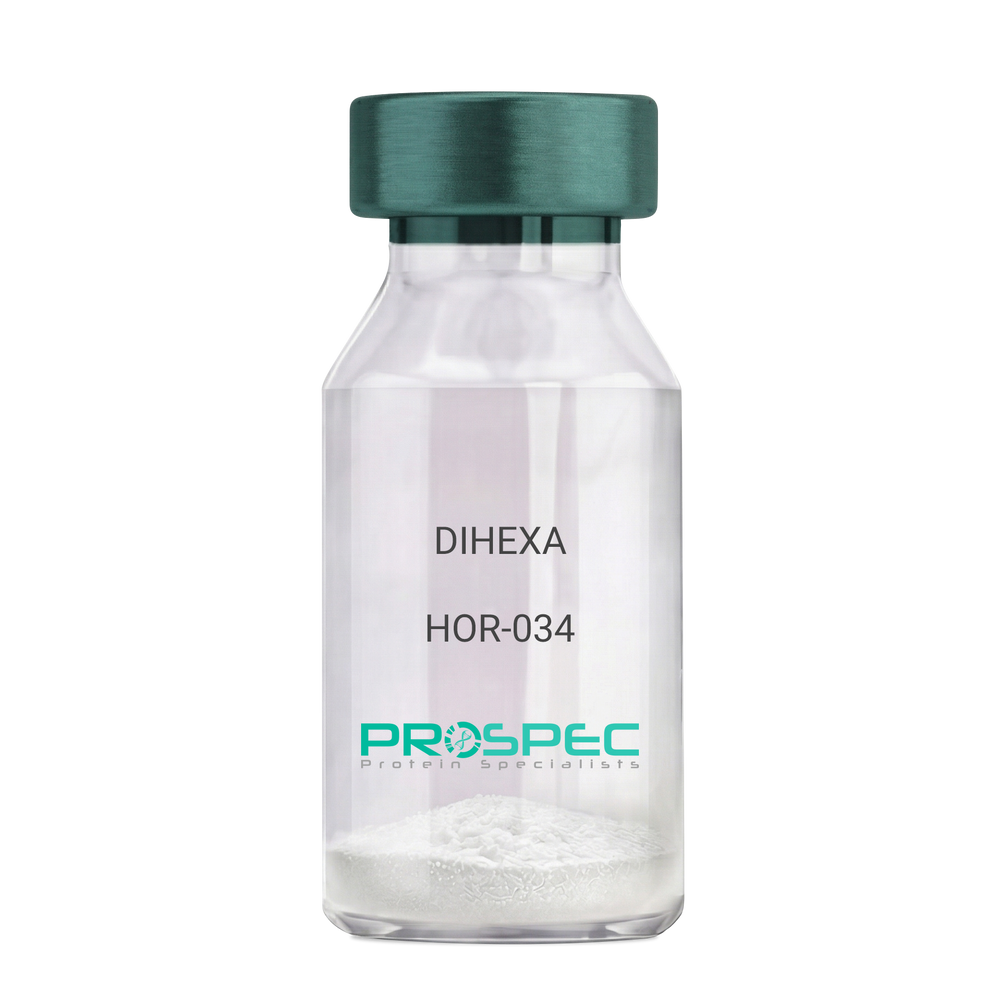
    DIHEXA

    Description:

    DIHEXA

    Product # :

    HOR-034

    Price :

    Quantity :

    Shipping Method :

    Room Temp Icon

    Shipped at Room temp

    Add To Cart

    More Info

    • description
    • formulation
    • purity
    • More Info

    Description

    DIHEXA Synthetic is a single, non-glycosylated polypeptide chain containing 3 amino acids, having a molecular mass of 504.28 Dalton and a Molecular formula of C27H44N4O5.

    Formulation

    The protein was lyophilized with no additives.

    Purity

    Greater than 97.0% as determined by analysis by RP-HPLC.

    More Info

    • Physical Appearance

      Sterile Filtered White lyophilized (freeze-dried) powder.

    • Stability

      Lyophilized DIHEXA although stable at room temperature for 3 weeks, should be stored desiccated below -18°C. Upon reconstitution DIHEXA should be stored at 4°C between 2-7 days and for future use below -18°C. For long term storage it is recommended to add a carrier protein (0.1% HSA or BSA). Please prevent freeze-thaw cycles.

    • Solubility

      It is recommended to reconstitute the lyophilized DIHEXA in sterile 18MΩ-cm H2O not less than 100 µg/ml, which can then be further diluted to other aqueous solutions.

    • Amino Acid Sequence

      Hexanoyl-Tyr-Ile-Ahx-NH2.

    • Background

      Dihexa, also known as N-hexanoic-Tyr-Ile-(6) aminohexanoic amide, is a potent and orally active small peptide that has been the focus of significant research due to its potential neurogenic and neuroprotective effects. This compound, derived from angiotensin IV, has been shown to possess a wide range of biological activities, including enhancing cognitive function, promoting neurogenesis, and potentially mitigating the effects of neurodegenerative diseases.

      Dihexa's primary mechanism of action involves its interaction with hepatocyte growth factor (HGF) and its receptor, c-Met. By mimicking the effects of HGF, Dihexa can stimulate the c-Met receptor, leading to a cascade of events that promote neurogenesis and synaptic plasticity. Studies by Benoist et al. (2014) have demonstrated that Dihexa can enhance cognitive function in rats, suggesting potential applications in cognitive enhancement and the treatment of cognitive disorders.

      In addition to its neurogenic effects, Dihexa has been shown to possess neuroprotective properties. Research by Kawas et al. (2017) found that Dihexa could protect neurons from apoptosis, suggesting potential applications in the treatment of neurodegenerative diseases such as Alzheimer's and Parkinson's disease.

      Given its neurogenic and neuroprotective effects, Dihexa has been proposed as a potential therapeutic agent for a variety of conditions, including cognitive disorders, neurodegenerative diseases, and stroke. For instance, a study by Harding et al. (2018) found that Dihexa could improve outcomes in animal models of stroke, indicating its potential as a therapeutic agent in stroke recovery.

      While research on Dihexa is promising, it is important to note that most studies have been conducted in animals or in vitro. More research is needed to fully understand the potential effects and applications of Dihexa in humans. However, the existing body of research suggests that Dihexa could be a promising tool in the treatment of cognitive disorders and neurodegenerative diseases.

    ProSpec's products are furnished for LABORATORY RESEARCH USE ONLY. The product may not be used as drugs, agricultural or pesticidal products, food additives or household chemicals.

    Dihexa
  • View Data Sheet

    Name :

    MRM1 Human

    Description:

    Mitochondrial RRNA Methyltransferase 1 Human Recombinant

    Mitochondrial rRNA methyltransferase 1 homolog, rRNA methyltransferase 1, mitochondrial, Mitochondrial large ribosomal RNA ribose methylase, MRM1.

    Product # :

    PRO-1416

    Price :

    Quantity :

    Shipping Method :

    Ice Icon

    Shipped with Ice Packs

    Add To Cart

    More Info

    • description
    • source
    • formulation
    • purity
    • More Info

    Description

    MRM1 Human Recombinant produced in E. coli is a single polypeptide chain containing 356 amino acids (21-353) and having a molecular mass of 38.8kDa. MRM1 is fused to a 23 amino acid His-tag at N-terminus & purified by proprietary chromatographic techniques.

    Source

    E.coli.

    Formulation

    The MRM1 solution (0.25mg/ml) contains 20mM Tris-HCl buffer (pH 8.0), 0.15M NaCl, 30% glycerol, 1mM DTT and 0.1mM PMSF.

    Purity

    Greater than 90% as determined by SDS-PAGE.

    More Info

    • Introduction

      Mitochondrial rRNA methyltransferase 1 homolog (MRM1) is a part of the RNA methyltransferase TrmH family. MRM1 methylates the ribose of guanosine G-2270 in the peptidyl transferase center of the mitochondrial large ribosomal RNA (21S).

    • Synonyms

      Mitochondrial rRNA methyltransferase 1 homolog, rRNA methyltransferase 1, mitochondrial, Mitochondrial large ribosomal RNA ribose methylase, MRM1.

    • Physical Appearance

      Sterile Filtered colorless solution.

    • Stability

      Store at 4°C if entire vial will be used within 2-4 weeks. Store, frozen at -20°C for longer periods of time. For long term storage it is recommended to add a carrier protein (0.1% HSA or BSA).Avoid multiple freeze-thaw cycles.

    • Amino Acid Sequence

      MGSSHHHHHH SSGLVPRGSH MGSSHAARHG ERPGGEELSR LLLDDLVPTS RLELLFGMTP CLLALQAARR SVARLLLQAG KAGLQGKRAE LLRMAEARDI PVLRPRRQKL DTMCRYQVHQ GVCMEVSPLR PRPWREAGEA SPGDDPQQLW LVLDGIQDPR NFGAVLRSAH FLGVDKVITS RRNSCPLTPV VSKSSAGAME VMDVFSTDDL TGFLQTKAQQ GWLVAGTVGC PSTEDPQSSE IPIMSCLEFL WERPTLLVLG NEGSGLSQEV QASCQLLLTI LPRRQLPPGL ESLNVSVAAG ILLHSICSQR KGFPTEGERR QLLQDPQEPS ARSEGLSMAQ HPGLSSGPEK ERQNEG.

    ProSpec's products are furnished for LABORATORY RESEARCH USE ONLY. The product may not be used as drugs, agricultural or pesticidal products, food additives or household chemicals.

    Mrm1 Human
  • View Data Sheet

    Name :

    SHFM1 Human

    Description:

    Split Hand/Foot Malformation Type 1 Human Recombinant

    SHFM1, Split Hand/Foot Malformation (Ectrodactyly) Type 1, DSS1, SHFD1, Deleted In Split Hand/Split Foot Protein 1, Split Hand/Foot Deleted Protein 1, Split Hand/Foot Malformation Type 1 Protein, Deleted In Split-Hand/Foot 1, 26S Proteasome Complex Subunit DSS1, ECD, SEM1, SHSF1, Shfdg1, Deleted In Split-Hand/Split-Foot 1, SHFDG1.

    Product # :

    PRO-1777

    Price :

    Quantity :

    Shipping Method :

    Ice Icon

    Shipped with Ice Packs

    Add To Cart

    More Info

    • description
    • source
    • formulation
    • purity
    • More Info

    Description

    SHFM1 Human Recombinant produced in E.Coli is a single, non-glycosylated polypeptide chain containing 93 amino acids (1-70 a.a) and having a molecular mass of 10.7kDa (Molecular size on SDS-PAGE will appear higher).SHFM1 is fused to a 23 amino acid His-tag at N-terminus & purified by proprietary chromatographic techniques.

    Source

    Escherichia Coli.

    Formulation

    SHFM1 protein solution (1mg/ml) containing 20mM Tris-HCl buffer (pH8.0), 10% glycerol and 0.1M NaCl.

    Purity

    Greater than 85.0% as determined by SDS-PAGE.

    More Info

    • Introduction

      26S proteasome complex subunit DSS1 (SHFM1) has been suggested as a candidate gene for the autosomal dominant form of the heterogeneous limb developmental disorder split hand/split foot malformation type 1. SHFM1 is a subunit of the 26S proteasome which plays a part in ubiquitin-dependent proteolysis. SHFM1 binds and stabilizes BRCA2 and is therefore involved in the control of R-loop-associated DNA damage and thus transcription-associated genomic instability. Furthermore, SHFM1 may have a role in the completion of the cell cycle. SHFM1 is a component of the TREX-2 complex (transcription and export complex 2), comprised of at least ENY2, GANP, PCID2, DSS1, and either centrin CETN2 or CETN3.

    • Synonyms

      SHFM1, Split Hand/Foot Malformation (Ectrodactyly) Type 1, DSS1, SHFD1, Deleted In Split Hand/Split Foot Protein 1, Split Hand/Foot Deleted Protein 1, Split Hand/Foot Malformation Type 1 Protein, Deleted In Split-Hand/Foot 1, 26S Proteasome Complex Subunit DSS1, ECD, SEM1, SHSF1, Shfdg1, Deleted In Split-Hand/Split-Foot 1, SHFDG1.

    • Physical Appearance

      Sterile Filtered colorless solution.

    • Stability

      Store at 4°C if entire vial will be used within 2-4 weeks. Store, frozen at -20°C for longer periods of time. For long term storage it is recommended to add a carrier protein (0.1% HSA or BSA).Avoid multiple freeze-thaw cycles.

    • Amino Acid Sequence

      MGSSHHHHHH SSGLVPRGSH MGSMSEKKQP VDLGLLEEDD EFEEFPAEDW AGLDEDEDAH VWEDNWDDDN VEDDFSNQLR AELEKHGYKM ETS.

    ProSpec's products are furnished for LABORATORY RESEARCH USE ONLY. The product may not be used as drugs, agricultural or pesticidal products, food additives or household chemicals.

    Shfm1 Human
  • View Data Sheet

    Name :

    STYX Human

    Description:

    Serine/Threonine/Tyrosine Interacting Protein Human Recombinant

    Serine/threonine/tyrosine-interacting protein, Protein tyrosine phosphatase-like protein, STYX, FLJ42934.

    Product # :

    ENZ-585

    Price :

    Quantity :

    Shipping Method :

    Ice Icon

    Shipped with Ice Packs

    Add To Cart

    More Info

    • description
    • source
    • formulation
    • purity
    • More Info

    Description

    STYX Human Recombinant produced in E.coli is a single, non-glycosylated polypeptide chain containing 247 amino acids (1-223) and having a molecular mass of 28kDa.STYX is fused to a 24 amino acid His-tag at N-terminus & purified by proprietary chromatographic techniques.

    Source

    E.coli.

    Formulation

    The STYX solution (0.25mg/ml) contains 20mM Tris-HCl buffer (pH8.0), 30% glycerol, 1mM DTT and 0.1M NaCl.

    Purity

    Greater than 85% as determined by SDS-PAGE.

    More Info

    • Introduction

      Serine/threonine/tyrosine-interacting protein (STYX) is a member of the protein-tyrosine phosphatase family. STYX contains a Gly residue instead of a conserved Cys residue in the dsPTPase catalytic loop which makes it catalytically inactive as a phosphatase. On the other hand, the binding pocket is adequately preserved to bind phosphorylated substrates, and may protect them from phosphatases. STYX may have a role in spermiogenesis. STYX is a possible pseudophosphatase.

    • Synonyms

      Serine/threonine/tyrosine-interacting protein, Protein tyrosine phosphatase-like protein, STYX, FLJ42934.

    • Physical Appearance

      Sterile Filtered colorless solution.

    • Stability

      Store at 4°C if entire vial will be used within 2-4 weeks. Store, frozen at -20°C for longer periods of time. For long term storage it is recommended to add a carrier protein (0.1% HSA or BSA).Avoid multiple freeze-thaw cycles.

    • Amino Acid Sequence

      MGSSHHHHHH SSGLVPRGSH MGSHMEDVKL EFPSLPQCKE DAEEWTYPMR REMQEILPGL FLGPYSSAMK SKLPVLQKHG ITHIICIRQN IEANFIKPNF QQLFRYLVLD IADNPVENII RFFPMTKEFI DGSLQMGGKV LVHGNAGISR SAAFVIAYIM ETFGMKYRDA FAYVQERRFC
      INPNAGFVHQ LQEYEAIYLA KLTIQMMSPL QIERSLSVHS GTTGSLKRTH EEEDDFGTMQ VATAQNG.

    ProSpec's products are furnished for LABORATORY RESEARCH USE ONLY. The product may not be used as drugs, agricultural or pesticidal products, food additives or household chemicals.

    Styx Human
  • View Data Sheet

    Name :

    PFDN6 Human

    Description:

    Prefoldin Subunit 6 Human Recombinant

    Prefoldin Subunit 6, PFD6, H2-KE2, KE-2, HKE2, HLA class II region expressed gene KE2, MGC70744.

    Product # :

    PRO-178

    Price :

    Quantity :

    Shipping Method :

    Ice Icon

    Shipped with Ice Packs

    Add To Cart

    More Info

    • description
    • source
    • formulation
    • purity
    • More Info

    Description

    PFDN6 produced in E.Coli is a single, non-glycosylated polypeptide chain containing 149 amino acids (1-129a.a.) and having a molecular mass of 16.7 kDa. PFDN6 is fused to a 20 amino acid His-tag at N-terminus & purified by proprietary chromatographic techniques.

    Source

    Escherichia Coli.

    Formulation

    The PFDN6 protein solution (0.5mg/1ml) is formulated in 20 mM Tris-HCl buffer (pH8.0), 100mM NaCl, 1mM DTT and 10% glycerol.

    Purity

    Greater than 95% as determined by SDS-PAGE.

    More Info

    • Introduction

      PFDN6 is a subunit of the heteromeric prefoldin complex that chaperones developing actin and alpha- and beta-tubulin chains until they are transferred to the cytosolic chaperonin containing TCP1 (CCT) complex. PFDN6 binds specifically to cytosolic chaperonin (c-CPN), transfers target proteins to it and bind to developing polypeptide chain to promote folding in a setting where there are many competing pathways for nonnative proteins.

    • Synonyms

      Prefoldin Subunit 6, PFD6, H2-KE2, KE-2, HKE2, HLA class II region expressed gene KE2, MGC70744.

    • Physical Appearance

      Sterile Filtered clear solution.

    • Stability

      Store at 4°C if entire vial will be used within 2-4 weeks. Store, frozen at -20°C for longer periods of time. For long term storage it is recommended to add a carrier protein (0.1% HSA or BSA).Avoid multiple freeze-thaw cycles.

    • Amino Acid Sequence

      MGSSHHHHHH SSGLVPRGSH MAELIQKKLQ GEVEKYQQLQ KDLSKSMSGR QKLEAQLTEN NIVKEELALL DGSNVVFKLL GPVLVKQELG EARATVGKRL DYITAEIKRY ESQLRDLERQ SEQQRETLAQ LQQEFQRAQA AKAGAPGKA

    ProSpec's products are furnished for LABORATORY RESEARCH USE ONLY. The product may not be used as drugs, agricultural or pesticidal products, food additives or household chemicals.

    Pfdn6 Human
  • View Data Sheet

    Name :

    TGM2 Human

    Description:

    Tissue Transglutaminase Human Recombinant

    Protein gamma-glutamyltransferase 2, EC 2.3.2.13, Tissue transglutaminase, TGase C, TGC, TG(C), Transglutaminase-2, TGase-H, TG2, TGM2.

    Product # :

    ENZ-394

    Price :

    Quantity :

    Shipping Method :

    Ice Icon

    Shipped with Ice Packs

    Add To Cart

    More Info

    • description
    • source
    • formulation
    • purity
    • More Info

    Description

    Tissue Transglutaminase Human Recombinant produced in E.coli is a non-glycosylated, polypeptide chain having a molecular mass of 78,018 Dalton. tTG is expressed with a -6xHis tag and purified by proprietary chromatographic techniques. By point mutation of the active center the catalytic transglutaminase activity has been eliminated, resulting in increased stability during storage and coating.

    Source

    Escherichia Coli.

    Formulation

    TGM2 is supplied in 16mM HEPES buffer pH-8.0, 400mM NaCl, and 20% glycerol.

    Purity

    Greater than 95% as determined by SDS-PAGE.

    More Info

    • Introduction

      Celiac disease is an enteropathy that is characterized by intestinal lesions of variable severity. Tissue-type transglutaminase (tTG) is believed to be the predominant autoantigen for celiac disease and the corresponding autoantibodies show higher sensitivity and specificity than anti-gliadin antibodies. Highly pure recombinant human tTG is now available to replace the traditionally used tTG fraction from guinea pig.
      Tissue-type transglutaminase antigens have been specifically modified for improved handling: exchange of an active site amino acid eliminates the protein cross-linking activity of the enzyme, while maintaining the native three-dimensional structure and the enzyme's secondary GTPase activity. This engineering assures reproducible properties of the antigen preparations through the absence of variable and ill-defined covalent aggregates of tTG antigen and host cell proteins.

    • Synonyms

      Protein gamma-glutamyltransferase 2, EC 2.3.2.13, Tissue transglutaminase, TGase C, TGC, TG(C), Transglutaminase-2, TGase-H, TG2, TGM2.

    • Physical Appearance

      Sterile Filtered clear solution.

    • Stability

      Store at 4°C if entire vial will be used within 2-4 weeks. Store, frozen at -20°C for longer periods of time. Avoid multiple freeze-thaw cycles.

    ProSpec's products are furnished for LABORATORY RESEARCH USE ONLY. The product may not be used as drugs, agricultural or pesticidal products, food additives or household chemicals.

    Tgm2 Human
  • View Data Sheet

    Name :

    LGALS3 Mouse

    Description:

    Galectin-3 Mouse Recombinant

    CBP35, GAL3, GALBP, GALIG, LGALS2, MAC2, Galectin-3, Lectin, galactose binding, soluble 3, Lectin, galactose binding, soluble 3, isoform CRA_a, Lectin, galactose binding, soluble 3, isoform CRA_d, Lgals3.

    Product # :

    CYT-188

    Price :

    Quantity :

    Shipping Method :

    Ice Icon

    Shipped with Ice Packs

    Add To Cart

    More Info

    • description
    • source
    • formulation
    • purity
    • More Info
    • sds-page

    Description

    LGALS3 Mouse Recombinant produced in E. coli is a single polypeptide chain containing 287 amino acids (1-264) and having a molecular mass of 29.8 kDa. LGALS3 is fused to a 23 amino acid His-tag at N-terminus & purified by proprietary chromatographic techniques.

    Source

    E.coli.

    Formulation

    The LGALS3 solution (0.5mg/1ml) contains 20mM Tris-HCl buffer (pH 8.0), 0.15M NaCl, 50% glycerol, 1mM DTT and 2mM EDTA.

    Purity

    Greater than 95% as determined by SDS-PAGE.

    sds-page

    LGALS3-sds-page - Product image 1

    More Info

    • Introduction

      Galectin-3 mediates with the alpha-3, beta-1 integrin the stimulation by cspg4 of endothelial cells migration. Galectin-3 plays an necessary part during the acquisition of vasculogenic mimicry and angiogenic properties associated with melanoma progression. LGALS3 overexpression is highly expressed in early stages of papillary carcinoma, and its expression intensity declines during tumor progression. Serum levels of LGALS3 are high in patients with thyroid malignancy but there is considerable overlap in serum LGALS3 concentrations between those with benign and malignant nodular thyroid disease. LGLAS3 takes part as an immune regulator to inhibit T-cell immune responses and promote tumor growth, as a result providing a new mechanism for tumor immune tolerance.

    • Synonyms

      CBP35, GAL3, GALBP, GALIG, LGALS2, MAC2, Galectin-3, Lectin, galactose binding, soluble 3, Lectin, galactose binding, soluble 3, isoform CRA_a, Lectin, galactose binding, soluble 3, isoform CRA_d, Lgals3.

    • Physical Appearance

      Sterile Filtered colorless solution.

    • Stability

      Store at 4°C if entire vial will be used within 2-4 weeks. Store, frozen at -20°C for longer periods of time. For long term storage it is recommended to add a carrier protein (0.1% HSA or BSA).Avoid multiple freeze-thaw cycles.

    • Amino Acid Sequence

      MGSSHHHHHH SSGLVPRGSH MGSMADSFSL NDALAGSGNP NPQGYPGAWG NQPGAGGYPG AAYPGAYPGQ APPGAYPGQA PPGAYPGQAP PSAYPGPTAP GAYPGPTAPG AYPGSTAPGA FPGQPGAPGA YPSAPGGYPA AGPYGVPAGP LTVPYDLPLP GGVMPRMLIT IMGTVKPNAN RIVLDFRRGN DVAFHFNPRF NENNRRVIVC NTKQDNNWGK EERQSAFPFE SGKPFKIQVL VEADHFKVAV NDAHLLQYNH RMKNLREISQ LGISGDITLT SANHAMI.

    • Background

      What is the molecular weight/Mw of LGALS3 Protein?
      LGALS3 Protein has a total Mw of 29.8kDa.

      What is the source or expression system of LGALS3 Protein?
      Escherichia Coli.

      What is the Purity of LGALS3 Protein?
      LGALS3 Protein is >95% pure as determined by SDS-PAGE.

      What is the Biological Activity of LGALS3 Protein?
      The biological functionality of LGALS3 Protein will be determined in the future.

      What is the amino acid sequence of LGALS3 Protein?
      MGSSHHHHHH SSGLVPRGSH MGSMADSFSL NDALAGSGNP NPQGYPGAWG NQPGAGGYPG AAYPGAYPGQ APPGAYPGQA PPGAYPGQAP PSAYPGPTAP GAYPGPTAPG AYPGSTAPGA FPGQPGAPGA YPSAPGGYPA AGPYGVPAGP LTVPYDLPLP GGVMPRMLIT IMGTVKPNAN RIVLDFRRGN DVAFHFNPRF NENNRRVIVC NTKQDNNWGK EERQSAFPFE SGKPFKIQVL VEADHFKVAV NDAHLLQYNH RMKNLREISQ LGISGDITLT SANHAMI.

      What applications can LGALS3 Protein be used in?
      LGALS3 Protein can probably be used in western blot, ELISA and Lateral Flow.

      What is the endotoxin level for LGALS3 Protein?
      The endotoxin level is minimal, LGALS3 Protein was purified using conventional chromatography techniques.

    ProSpec's products are furnished for LABORATORY RESEARCH USE ONLY. The product may not be used as drugs, agricultural or pesticidal products, food additives or household chemicals.

    Lgals3 Mouse
  • 1
  • …
  • 11
  • 12
  • 13
  • 14
  • 15
  • …
  • 42
Your browser does not support the video tag.

Products

  • Cytokines
  • Growth Factors
  • Chemokines
  • CD Antigens
  • Neurotrophins
  • Hormones
  • Enzymes
  • Viral Antigens
  • Recombinant Proteins
  • Natural Proteins
  • Monoclonal Antibodies
  • Polyclonal Antibodies
  • Thermal Packaging

About

  • Company
  • Founder
  • Contribution
  • Contact Us
  • My Account

Ordering

  • Ordering Method
  • Ordering - Credit Card
  • Ordering PO
  • Shipping Fees
  • FAQ's

Legal

  • Terms & Conditions
  • Privacy
  • Site Map
  • info@prospecbio.com
  • Facebook
  • Instagram
  • Linkedin Profile

© 2026 ProSpec-Tany TechnoGene Ltd. All Rights Reserved.

  • Choosing a selection results in a full page refresh.
  • Opens in a new window.