Skip to content

High-quality research proteins.

  • 1-800-805-6531

  • Mon - Sat 8.00-18.00, Sun - Closed

  • info@prospecbio.com

  • PO Box 6591 East Brunswick NJ 08816

  • Products
    • Cytokines
    • Growth factors
    • Chemokines
    • Cd antigens
    • Neurotrophins
    • Hormones
    • Enzymes
    • Viral antigens
    • Recombinant proteins
    • Natural proteins
    • Monoclonal antibodies
    • Polyclonal antibodies
    • Thermal Packaging
  • About
    • Company
    • Founder
    • Contribution
  • Customers
    • Eastern Asia
    • Eastern Europe
    • North America
    • South America
    • South East Asia
    • Southern Asia
    • Western Europe
  • Ordering
    • Ordering Method
    • Ordering - Credit Card
    • Ordering - PO
    • Shipping Fees
    • FAQs
  • Services
    • DNA Cloning
    • Protein Expression
    • Monoclonal Antibody
    • Fermentation
    • Technology License
  • Contact us
Log in

Country/region

  • USD $ | Albania
  • USD $ | Andorra
  • USD $ | Argentina
  • USD $ | Armenia
  • USD $ | Australia
  • USD $ | Austria
  • USD $ | Azerbaijan
  • USD $ | Belarus
  • USD $ | Belgium
  • USD $ | Bolivia
  • USD $ | Brazil
  • USD $ | Bulgaria
  • USD $ | Cambodia
  • USD $ | Canada
  • USD $ | Chile
  • USD $ | China
  • USD $ | Colombia
  • USD $ | Costa Rica
  • USD $ | Croatia
  • USD $ | Cyprus
  • USD $ | Czechia
  • USD $ | Denmark
  • USD $ | Estonia
  • USD $ | Finland
  • USD $ | France
  • USD $ | Georgia
  • USD $ | Germany
  • USD $ | Greece
  • USD $ | Hong Kong SAR
  • USD $ | Hungary
  • USD $ | Iceland
  • USD $ | India
  • USD $ | Ireland
  • USD $ | Israel
  • USD $ | Italy
  • USD $ | Japan
  • USD $ | Kazakhstan
  • USD $ | Latvia
  • USD $ | Liechtenstein
  • USD $ | Lithuania
  • USD $ | Madagascar
  • USD $ | Malta
  • USD $ | Mexico
  • USD $ | Moldova
  • USD $ | Monaco
  • USD $ | Netherlands
  • USD $ | New Zealand
  • USD $ | North Macedonia
  • USD $ | Norway
  • USD $ | Panama
  • USD $ | Paraguay
  • USD $ | Peru
  • USD $ | Philippines
  • USD $ | Poland
  • USD $ | Portugal
  • USD $ | Romania
  • USD $ | Singapore
  • USD $ | Slovakia
  • USD $ | Slovenia
  • USD $ | South Africa
  • USD $ | South Korea
  • USD $ | Spain
  • USD $ | Sri Lanka
  • USD $ | Sweden
  • USD $ | Switzerland
  • USD $ | Taiwan
  • USD $ | Thailand
  • USD $ | Türkiye
  • USD $ | Ukraine
  • USD $ | United Kingdom
  • USD $ | United States
  • USD $ | Uruguay
  • USD $ | Vatican City
  • USD $ | Venezuela
  • USD $ | Vietnam
  • Facebook
  • Instagram
logoProSpec - Recombinant Protein Manufacturer for academic and R&D industry
Become a distributor
Account Log in
Wishlist
Cart Cart(0)
  • Products
    +
    • Cytokines
    • Growth factors
    • Chemokines
    • Cd antigens
    • Neurotrophins
    • Hormones
    • Enzymes
    • Viral antigens
    • Recombinant proteins
    • Natural proteins
    • Monoclonal antibodies
    • Polyclonal antibodies
    • Thermal Packaging
  • About
    +
    • Company
    • Founder
    • Contribution
  • Customers
    +
    • Eastern Asia
    • Eastern Europe
    • North America
    • South America
    • South East Asia
    • Southern Asia
    • Western Europe
  • Ordering
    +
    • Ordering Method
    • Ordering - Credit Card
    • Ordering - PO
    • Shipping Fees
    • FAQs
  • Services
    +
    • DNA Cloning
    • Protein Expression
    • Monoclonal Antibody
    • Fermentation
    • Technology License
  • Contact us

Item added to your cart

View cart
View All
  • Cytokines
  • Growth factors
  • Chemokines
  • Cd antigens
  • Neurotrophins
  • Hormones
  • Enzymes
  • Viral antigens
  • Recombinant proteins
  • Natural proteins
  • Monoclonal antibodies
  • Polyclonal antibodies
  • Thermal Packaging
  • Tumor Necrosis Factor

    Tumor Necrosis Factor

    View All
  • 4-1BB

    4-1BB

    View All
  • Adiponectin

    Adiponectin

    View All
  • AIF1

    AIF1

    View All
  • Other Cytokines

    Other Cytokines

    View All
  • AITRL

    AITRL

    View All
  • Angiopoietin

    Angiopoietin

    View All
  • Apolipoprotein

    Apolipoprotein

    View All
  • B-Cell Activating Factor

    B-Cell Activating Factor

    View All
  • Beta Defensin

    Beta Defensin

    View All
  • Bone Morphogenetic Protein

    Bone Morphogenetic Protein

    View All
  • B type Natriuretic Peptide

    B type Natriuretic Peptide

    View All
  • BST

    BST

    View All
  • Betacellulin

    Betacellulin

    View All
  • Cardiotrophin

    Cardiotrophin

    View All
  • Activin

    Activin

    View All
  • Fibroblast Growth Factor

    Fibroblast Growth Factor

    View All
  • Other Growth Factors

    Other Growth Factors

    View All
  • CSF

    CSF

    View All
  • CTGF

    CTGF

    View All
  • IGFBP

    IGFBP

    View All
  • VEGF Protein

    VEGF Protein

    View All
  • EGF

    EGF

    View All
  • Epigen

    Epigen

    View All
  • Erythropoietin

    Erythropoietin

    View All
  • Insulin-Like Growth Factor

    Insulin-Like Growth Factor

    View All
  • Growth Hormone

    Growth Hormone

    View All
  • HDGF

    HDGF

    View All
  • Hepatocyte Growth Factor

    Hepatocyte Growth Factor

    View All
  • Insulin

    Insulin

    View All
  • BCA-1/ BLC (CXCL13)

    BCA-1/ BLC (CXCL13)

    View All
  • BRAK (CXCL14)

    BRAK (CXCL14)

    View All
  • C-10 (CCL6)

    C-10 (CCL6)

    View All
  • Other Chemokines

    Other Chemokines

    View All
  • MEC (CCL28)

    MEC (CCL28)

    View All
  • LD78-beta (CCL3L1)

    LD78-beta (CCL3L1)

    View All
  • CTACK (CCL27)

    CTACK (CCL27)

    View All
  • CXCL16

    CXCL16

    View All
  • CXCL17

    CXCL17

    View All
  • Platelet Factor-4 (CXCL4)

    Platelet Factor-4 (CXCL4)

    View All
  • ENA-78 (CXCL5)

    ENA-78 (CXCL5)

    View All
  • Eotaxin (CCL11,24,26)

    Eotaxin (CCL11,24,26)

    View All
  • Exodus-2 (CCL21)

    Exodus-2 (CCL21)

    View All
  • Fractalkine (CX3CL1)

    Fractalkine (CX3CL1)

    View All
  • CXCL6

    CXCL6

    View All
  • Other CD Antigens

    Other CD Antigens

    View All
  • CD14

    CD14

    View All
  • CD164

    CD164

    View All
  • CD1

    CD1

    View All
  • CD2

    CD2

    View All
  • CD200

    CD200

    View All
  • CD207

    CD207

    View All
  • CD226

    CD226

    View All
  • CD23

    CD23

    View All
  • CD244

    CD244

    View All
  • CD247

    CD247

    View All
  • CD27

    CD27

    View All
  • CD274

    CD274

    View All
  • CD300

    CD300

    View All
  • CD33

    CD33

    View All
  • Other Neurotrophins

    Other Neurotrophins

    View All
  • Beta-NGF

    Beta-NGF

    View All
  • BDNF

    BDNF

    View All
  • CDNF

    CDNF

    View All
  • CNTF

    CNTF

    View All
  • GDNF

    GDNF

    View All
  • Glia Maturation Factor

    Glia Maturation Factor

    View All
  • MANF

    MANF

    View All
  • Midkine

    Midkine

    View All
  • Neuroglobin

    Neuroglobin

    View All
  • Neurotrophic factors

    Neurotrophic factors

    View All
  • Neuregulin

    Neuregulin

    View All
  • Neuropilin

    Neuropilin

    View All
  • Pigment Epithelium-Derived Factor

    Pigment Epithelium-Derived Factor

    View All
  • Pleiotrophin

    Pleiotrophin

    View All
  • Peptide Hormones

    Peptide Hormones

    View All
  • Other Hormones

    Other Hormones

    View All
  • HCG

    HCG

    View All
  • Endothelin

    Endothelin

    View All
  • Exendin

    Exendin

    View All
  • FSH

    FSH

    View All
  • Glucagon

    Glucagon

    View All
  • GHRP

    GHRP

    View All
  • GLP

    GLP

    View All
  • Thyrostimulin

    Thyrostimulin

    View All
  • Inhibin A

    Inhibin A

    View All
  • LHRH

    LHRH

    View All
  • Melanotan

    Melanotan

    View All
  • Procalcitonin

    Procalcitonin

    View All
  • PTH

    PTH

    View All
  • Peroxiredoxin

    Peroxiredoxin

    View All
  • Peptidase

    Peptidase

    View All
  • Synthetase

    Synthetase

    View All
  • Transferase

    Transferase

    View All
  • Hydrolase

    Hydrolase

    View All
  • Dehydrogenase

    Dehydrogenase

    View All
  • ACE2

    ACE2

    View All
  • Esterase

    Esterase

    View All
  • Protein Kinases

    Protein Kinases

    View All
  • Other Enzymes

    Other Enzymes

    View All
  • Phosphatase

    Phosphatase

    View All
  • Deaminase

    Deaminase

    View All
  • Oxygenase

    Oxygenase

    View All
  • Adenylate Kinase

    Adenylate Kinase

    View All
  • Lyase

    Lyase

    View All
  • Chagas

    Chagas

    View All
  • SARS

    SARS

    View All
  • Influenza

    Influenza

    View All
  • ASFV

    ASFV

    View All
  • Astrovirus

    Astrovirus

    View All
  • Borrelia

    Borrelia

    View All
  • Helicobacter Pylori

    Helicobacter Pylori

    View All
  • Chikungunya

    Chikungunya

    View All
  • Chlamydia

    Chlamydia

    View All
  • Cytomegalo

    Cytomegalo

    View All
  • Dengue

    Dengue

    View All
  • EBV

    EBV

    View All
  • Ebola

    Ebola

    View All
  • Feline Leukemia Virus

    Feline Leukemia Virus

    View All
  • Hepatitis A

    Hepatitis A

    View All
  • Other

    Other

    View All
  • Actin

    Actin

    View All
  • ADAM

    ADAM

    View All
  • Complement Component

    Complement Component

    View All
  • Ag85

    Ag85

    View All
  • Eukaryotic Translation Initiation Factor

    Eukaryotic Translation Initiation Factor

    View All
  • Anterior Gradient Protein

    Anterior Gradient Protein

    View All
  • Heat Shock Protein

    Heat Shock Protein

    View All
  • Alpha-2-HS-Glycoprotein

    Alpha-2-HS-Glycoprotein

    View All
  • Hemoglobin

    Hemoglobin

    View All
  • Allergy

    Allergy

    View All
  • Anaplasma

    Anaplasma

    View All
  • Angiogenin

    Angiogenin

    View All
  • Ankyrin Repeat Domain

    Ankyrin Repeat Domain

    View All
  • Annexin

    Annexin

    View All
  • Other Natural Proteins

    Other Natural Proteins

    View All
  • Aprotinin

    Aprotinin

    View All
  • Transferrin

    Transferrin

    View All
  • Avidin

    Avidin

    View All
  • Anti Coagulation Factors

    Anti Coagulation Factors

    View All
  • Natural Albumin

    Natural Albumin

    View All
  • Natural Coagulation Factors

    Natural Coagulation Factors

    View All
  • Fibronectin

    Fibronectin

    View All
  • Thrombin

    Thrombin

    View All
  • Anti Human Enzyme

    Anti Human Enzyme

    View All
  • Other Monoclonal Antibodies

    Other Monoclonal Antibodies

    View All
  • Anti Human Cytokine

    Anti Human Cytokine

    View All
  • Anti Human Heat Shock Protein

    Anti Human Heat Shock Protein

    View All
  • Anti Mouse Lymphocyte

    Anti Mouse Lymphocyte

    View All
  • Anti Human Chemokine

    Anti Human Chemokine

    View All
  • Anti Human Lymphocyte

    Anti Human Lymphocyte

    View All
  • Anti Viral Monoclonal

    Anti Viral Monoclonal

    View All
  • Anti Mouse Cytokine

    Anti Mouse Cytokine

    View All
  • Anti-GST Monoclonal

    Anti-GST Monoclonal

    View All
  • Other Polyclonal Antibodies

    Other Polyclonal Antibodies

    View All
  • Anti Viral

    Anti Viral

    View All
  • Anti-GST Monoclonal

    Anti-GST Monoclonal

    View All
Back

Search results

461 results found for “mesoderm development candidate”

Name

Description

Product #

Price

Quantity

Shipping Method

  • View Data Sheet

    Name :

    MX2 Human

    Description:

    Myxovirus Resistance 2 Human Recombinant

    Myxovirus (Influenza Virus) Resistance 2 (Homolog Of Mouse), Myxovirus Resistance Protein 2, P78-Related Protein.

    Product # :

    PRO-1837

    Price :

    Quantity :

    Shipping Method :

    Ice Icon

    Shipped with Ice Packs

    Add To Cart

    More Info

    • description
    • source
    • formulation
    • purity
    • More Info

    Description

    MX2 Human Recombinant produced in E.coli is a single, non-glycosylated polypeptide chain containing 126 amino acids (626-715) and having a molecular mass of 14.9 kDa. MX2 is fused to a 36 amino acid His-tag at N-terminus.

    Source

    Escherichia Coli.

    Formulation

    The MX2 solution (1mg/ml) contains 20mM Tris-HCl buffer (pH 8.0), 0.4M Urea and 10% glycerol.

    Purity

    Greater than 90% as determined by SDS-PAGE.

    More Info

    • Introduction

      MX2 is a member of 2 protein families: the dynamin family and the large GTPases family. MX2 has a cytoplasmic and nuclear structure which is found in a granular pattern in the heterochromatin region under the nuclear envelope. The nuclear form has a NLS (nuclear localization signal) at the amino terminal end however it is missing in the cytoplasmic form as a result of the use of a different translation start codon. MX2 is upregulated by IFN-a, but unlike myxovirus resistance protein 1 has no antiviral activity.

    • Synonyms

      Myxovirus (Influenza Virus) Resistance 2 (Homolog Of Mouse), Myxovirus Resistance Protein 2, P78-Related Protein.

    • Physical Appearance

      Sterile Filtered clear solution.

    • Stability

      Store at 4°C if entire vial will be used within 2-4 weeks. Store, frozen at -20°C for longer periods of time. For long term storage it is recommended to add a carrier protein (0.1% HSA or BSA).Avoid multiple freeze-thaw cycles.

    • Amino Acid Sequence

      MRGSHHHHHH GMASMTGGQQ MGRDLYDDDD KDRWGSIGIH LNAYFLETSK RLANQIPFII QYFMLRENGD SLQKAMMQIL QEKNRYSWLL QEQSETATKR RILKERIYRL TQARHALCQF SSKEIH

    ProSpec's products are furnished for LABORATORY RESEARCH USE ONLY. The product may not be used as drugs, agricultural or pesticidal products, food additives or household chemicals.

    Mx2 Human
  • View Data Sheet

    Name :

    Leptin qA Ovine, PEG

    Description:

    Leptin Quadruple Antagonist Pegylated Ovine Recombinant

    Product # :

    CYT-1246

    Price :

    Quantity :

    Shipping Method :

    Room Temp Icon

    Shipped at Room temp

    Add To Cart

    More Info

    • description
    • source
    • formulation
    • purity
    • biological activity
    • More Info

    Description

    Leptin Antagonist Quadruple Mutant Ovine Recombinant is a single non-glycosilated polypeptide chain containing 146 amino acids and additional Ala at N-terminus. The Ovine Leptin antagonist was mutated, resulting in D23L/L39A/D40A/F41A mutant. The Ovine Leptin antagonist is bound to 20 kDa mono-PEG at N-terminus, resulting in 35.6 kDa. The Ovine Leptin Quadruple anatagonist Pegylated runs as a 48 kDa due to enlarged hydrodymanic volume. Leptin Antagonist Quadruple Mutant Ovine Recombinant was purified by proprietary chromatographic techniques.

    Source

    Escherichia coli.

    Formulation

    The Ovine Leptin Quadruple anatagonist was lyophilized from a concentrated (0.65mg/ml) solution with 0.003mM NaHCO3.

    Purity

    Greater than 95.0% as determined by:

    (a) Gel filtration analysis.

    (b) Analysis by SDS-PAGE.

    Biological Activity

    Pegylated Ovine Leptin Quadruple Antagonist inhibits leptin-induced proliferation of BAF/3 cells stably transfected with the long form of human leptin receptor. Pegylated recombinant Ovine leptin antagonist in vitro activity is 6-8 fold lower than the non-pegylated recombinant super Ovine leptin antagonist but is 15 fold higher as compared to pegylated recombinant super active ovine leptin antagonist.

    More Info

    • Physical Appearance

      White lyophilized (freeze-dried) powder.

    • Stability

      Lyophilized Leptin Antagonist Quadruple Mutant Ovine Recombinant although stable at room temperature for several weeks, should be stored desiccated below -18°C. Upon reconstitution at > 0.1 mg/ml and up to 2mM and filter sterilization LEP mutant can be stored at 4°C or even room temperature for several weeks making it suitable for long term infusion studies using osmotic pumps. At lower concentration addition of a carrier protein (0.1% HSA or BSA) is suggested. Please prevent freeze-thaw cycles.

    • Solubility

      It is recommended to reconstitute the lyophilized Leptin Antagonist Quadruple Mutant Ovine Recombinant in sterile water or sterile 0.4% NaHCO3adjusted to pH 8-9, not less than 100µg/ml, which can then be further diluted with other aqueous solutions.

    • Background

      Leptin is mainly produced by adipocytes. Leptin’s main part is to regulate long-term energy balance. Leptin is encoded by the LEP gene. Leptin effects mostly on leptin receptors in the cell mambrane of various cells in the human body. The leptin receptor can be found on a various cell types. The leptin receptor is a single-transmembrane-domain type 1 cytokine receptor. leptin levels influence satiety, appetite and triggers behaviours which save energy. High leptin levels are interpreted by the brain that energy reserves are high, whereas low leptin levels means that energy reserves are low, in the process adapting the organism to starvation through a variety of metabolic, neurobiochemical, endocrine and behavioral change.

    • Protein content

      Protein quantization was carried out by UV spectroscopy at 280 nm using the absorbency value of 0.2 as the extinction coefficient for a 0.1% (1mg/ml) solution at pH 8.0. This value is calculated by the PC GENE computer analysis program of protein sequences (IntelliGenetics).

    ProSpec's products are furnished for LABORATORY RESEARCH USE ONLY. The product may not be used as drugs, agricultural or pesticidal products, food additives or household chemicals.

    Leptin Antagonist Peg Ovine
  • View Data Sheet

    Name :

    RARRES2 Human, His

    Description:

    Retinoic Acid Receptor Responder 2 Human Recombinant, His Tag

    Chemerin, TIG2, Tazarotene-induced gene 2 protein, Retinoic acid receptor responder protein 2, RAR-responsive protein TIG2, RARRES2, HP10433.

    Product # :

    PRO-1458

    Price :

    Quantity :

    Shipping Method :

    Ice Icon

    Shipped with Ice Packs

    Add To Cart

    More Info

    • description
    • source
    • formulation
    • purity
    • More Info

    Description

    RARRES2 Human Recombinant produced in E.Coli is a single, non-glycosylated, polypeptide chain containing 158 amino acids (21-157a.a) and having a total molecular mass of 18 kDa. RARRES2 is fused to a 21 amino acid His-tag at N-terminus & purified by proprietary chromatographic techniques.

    Source

    Escherichia Coli.

    Formulation

    RARRES2 protein solution (1mg/ml) containing 20mM Tris-HCl buffer (pH 8.0), 0.4M Urea and 10% glycerol.

    Purity

    Greater than 85.0% as determined by SDS-PAGE.

    More Info

    • Introduction

      RARRES2 is a secreted chemotactic protein that initiates chemotaxis through the ChemR23 G protein-coupled seven-transmembrane domain ligand. RARRES2 is upregulated by the synthetic retinoid tazarotene and found in a vast variety of tissues. RARRES2 acts as an adipokine, and is truncated on both termini from the proprotein. RARRES2 is structurally related to the cathelicidin precursors, cystatin C and kininogens. RARRES2 promotes calcium mobilization and chemotaxis of immature dendritic cells and macrophages. RARRES2 is secreted as a precursor of little biological activity, which requires proteolytic cleavage of its COOH-terminal domain to be exchangeed into a potent and highly specific agonist of ChemR23. RARRES2 signals via its receptor, ChemR23 (CMKLR1), as a positive regulator of adipocyte differentiation and metabolic function. The Chemerin receptor acts as a coreceptor for SIV and some primary HIV-1 strains. The Chemerin receptor has another ligand, called tazarotene-induced gene.

    • Synonyms

      Chemerin, TIG2, Tazarotene-induced gene 2 protein, Retinoic acid receptor responder protein 2, RAR-responsive protein TIG2, RARRES2, HP10433.

    • Physical Appearance

      Sterile Filtered colorless solution.

    • Stability

      Store at 4°C if entire vial will be used within 2-4 weeks. Store, frozen at -20°C for longer periods of time. For long term storage it is recommended to add a carrier protein (0.1% HSA or BSA).Avoid multiple freeze-thaw cycles.

    • Amino Acid Sequence

      MGSSHHHHHH SSGLVPRGSH MELTEAQRRG LQVALEEFHK HPPVQWAFQE TSVESAVDTP FPAGIFVRLE FKLQQTSCRK RDWKKPECKV RPNGRKRKCL ACIKLGSEDK VLGRLVHCPI ETQVLREAEE HQETQCLRVQ RAGEDPHSFY FPGQFAFS.

    ProSpec's products are furnished for LABORATORY RESEARCH USE ONLY. The product may not be used as drugs, agricultural or pesticidal products, food additives or household chemicals.

    Rarres2 Human His
  • View Data Sheet

    Name :

    PLGF-1 Human

    Description:

    Placental Growth Factor-1 Human Recombinant

    PIGF, PGF, PLGF-1.

    Product # :

    CYT-1227

    Price :

    Quantity :

    Shipping Method :

    Ice Icon

    Shipped with Ice Packs

    Add To Cart

    More Info

    • description
    • source
    • formulation
    • purity
    • biological activity
    • More Info

    Description

    PLGF1 Human Recombinant produced in HEK293 cells is a single, glycosylated polypeptide chain (a.a 19-149) containing 137 amino acids and having a molecular mass of 15.5kDa. PLGF1 is fused to a 6 amino acid His tag at C-terminus and purified by proprietary chromatographic techniques.

    Source

    HEK293 cells.

    Formulation

    PLGF1 protein (0.5mg/ml) contains Phosphate-Buffered Saline (pH 7.4) and 10% glycerol.

    Purity

    Greater than 90.0% as determined by SDS-PAGE.

    Biological Activity

    Measured by its binding ability in a functional ELISA with Human VEGFR1/Flt-1.

    More Info

    • Synonyms

      PIGF, PGF, PLGF-1.

    • Physical Appearance

      Sterile Filtered colorless solution.

    • Stability

      Store at 4°C if entire vial will be used within 2-4 weeks. Store, frozen at -20°C for longer periods of time. For long term storage it is recommended to add a carrier protein (0.1% HSA or BSA). Avoid multiple freeze-thaw cycles.

    • Amino Acid Sequence

      LPAVPPQQWA LSAGNGSSEV EVVPFQEVWG RSYCRALERL VDVVSEYPSE VEHMFSPSCV SLLRCTGCCG DENLHCVPVE TANVTMQLLK IRSGDRPSYV ELTFSQHVRC ECRPLREKMK PERCGDAVPR RHHHHHH.

    • Background

      Implications in Pathological Angiogenesis:

      While PLGF1 is essential for normal vascular development, dysregulation of its expression is associated with pathological angiogenesis. In conditions such as cancer, PLGF1 can contribute to the formation of abnormal blood vessels that support tumor growth and metastasis. Investigations involving PLGF1 Human Recombinant provide insights into the mechanisms by which PLGF1 contributes to pathological angiogenesis, offering potential targets for anti-angiogenic therapies.

      Challenges and Future Directions:

      While the potential of PLGF1 Human Recombinant in understanding angiogenesis is evident, challenges persist. Fine-tuning its applications, understanding its interactions with other angiogenic factors, and deciphering the context-dependent nature of its functions are critical considerations for translational success. Additionally, developing strategies to selectively target PLGF1 in pathological conditions without compromising its physiological roles poses a challenge in the pursuit of therapeutic interventions.

      PLGF1 Human Recombinant stands at the forefront of angiogenesis research, offering a controlled platform for scientific exploration. Its structural insights, angiogenic signaling functions, and implications in both physiological and pathological contexts position it as a key player in the evolving landscape of vascular biology. As researchers continue to delve into the molecular intricacies of PLGF1, they not only enhance our understanding of angiogenesis but also pave the way for transformative advancements in vascular-targeted therapies, shaping the future of precision medicine and anti-angiogenic interventions.

    ProSpec's products are furnished for LABORATORY RESEARCH USE ONLY. The product may not be used as drugs, agricultural or pesticidal products, food additives or household chemicals.

    Plgf1 Human
  • View Data Sheet

    Name :

    MIA2 Human

    Description:

    Melanoma Inhibitory Activity 2 Human Recombinant

    MIA-2, MIA2, Melanoma Inhibitory Activity 2, FLJ22404.

    Product # :

    CYT-638

    Price :

    Quantity :

    Shipping Method :

    Room Temp Icon

    Shipped at Room temp

    Add To Cart

    More Info

    • description
    • source
    • formulation
    • purity
    • More Info

    Description

    MIA2 Human Recombinant produced in E.Coli is a single, non-glycosylated, polypeptide chain consisting of 101 amino having a total molecular mass of 11.5 kDa.The MIA2 is purified by proprietary chromatographic techniques.

    Source

    Escherichia Coli.

    Formulation

    The MIA2 protein was lyophilized from a concentrated (1mg/ml) solution containing 20mM Phosphate buffer pH=7.4 and 150mM NaCl.

    Purity

    Greater than 97.0% as determined by(a) Analysis by RP-HPLC.
    (b) Analysis by SDS-PAGE.

    More Info

    • Introduction

      MIA2 performs as a tumour suppressor in hepatocellular carcinoma. MIA2is a novel acute phase protein which its expression is found in the liver and reacts to liver damage in chronic liver diseases and is considerably higher in severe fibrosis patients . MIA2 is induced by IL6, TGF-B & and conditioned medium from activated hepatic stellate cells. MIA2 is is mainly expressed in hepatocytes.

    • Synonyms

      MIA-2, MIA2, Melanoma Inhibitory Activity 2, FLJ22404.

    • Physical Appearance

      Sterile Filtered White lyophilized (freeze-dried) powder.

    • Stability

      Lyophilized MIA2 although stable at room temperature for 3 weeks, should be stored desiccated below -18°C. Upon reconstitution MIA2 should be stored at 4°C between 2-7 days and for future use below -18°C.Please prevent freeze-thaw cycles.

    • Solubility

      It is recommended to reconstitute the lyophilized MIA2 in sterile 18MΩ-cm H2O not less than 100µg/ml, which can then be further diluted to other aqueous solutions.

    • Amino Acid Sequence

      MLESTKLLAD LKKCGDLECE ALINRVSAMR DYRGPDCRYL NFTKGEEISV YVKLAGERED LWAGSKGKEF GYFPRDAVQI EEVFISEEIQ MSTKESDFLC L.

    ProSpec's products are furnished for LABORATORY RESEARCH USE ONLY. The product may not be used as drugs, agricultural or pesticidal products, food additives or household chemicals.

    Mia2 Human
  • View Data Sheet

    Name :

    ESAT6

    Description:

    Early Secretory Target Mycobacterium Tuberculosis Recombinant

    Early Secretory Target Mycobacterium Tuberculosis, ESAT-6.

    Product # :

    PRO-291

    Price :

    Quantity :

    Shipping Method :

    Ice Icon

    Shipped with Ice Packs

    Add To Cart

    More Info

    • description
    • source
    • formulation
    • purity
    • More Info

    Description

    ESAT-6 Recombinant produced in Baculovirus is a single, glycosylated, polypeptide chain containing 104 amino acids (1-95 a.a) having a total molecular mass of 11kDa.The ESAT-6 fused to a 6 amino acid His-tag & purified by proprietary chromatographic techniques.

    Source

    Baculovirus.

    Formulation

    ESAT-6 protein solution (0.5mg/ml) containing 20mM Tris-HCl buffer (pH 8.0) and 10% glycerol.

    Purity

    Greater than 90.0% as determined by SDS-PAGE.

    More Info

    • Introduction

      Mycobacterium antigen ESAT-6 has been isolated from low molecular weight fractions of the shot-term-culture filtrate (ST-CF) and it can easily be detected in tuberculosis patients.
      The export of ESAT-6 which is a potent T-cell antigen, and related proteins requires a dedicated secretory apparatus that is encoded by a group of genes, several of which also code for proteins that are recognized strongly by T cells. The ESAT-6 systems can consequently be considered as immunogenicity islands and there is mounting evidence that the equivalent genes are subject to selective pressure imposed by the immune system of the host.
      This antigen includes many epitopes detectable in the serum of most patients with tuberculosis (more than 90%). By the attempts to obtain the vaccine on the basis of ESAT-6 it was demonstrated that the optimization of adjuvant is very important when using the combination of dioctadecylammonium bromide and monophosphoryllipide.
      Recently it was shown that ESAT-6 is very potential as diagnostic for differentiation between the mycobacterial infection and BCG vaccination. The main topic in ESAT-6 using is in antibody production and in test-systems for tuberculosis elaboration.

    • Synonyms

      Early Secretory Target Mycobacterium Tuberculosis, ESAT-6.

    • Physical Appearance

      Sterile filtered colorless solution.

    • Stability

      Store at 4°C if entire vial will be used within 2-4 weeks. Store, frozen at -20°C for longer periods of time. For long term storage it is recommended to add a carrier protein (0.1% HSA or BSA).Avoid multiple freeze-thaw cycles.

    • Amino Acid Sequence

      ADPMTEQQWN FAGIEAAASA IQGNVTSIHS LLDEGKQSLT KLAAAWGGSG SEAYQGVQQK WDATATELNN ALQNLARTIS EAGQAMASTE GNVTGMFAHH HHHH.

    ProSpec's products are furnished for LABORATORY RESEARCH USE ONLY. The product may not be used as drugs, agricultural or pesticidal products, food additives or household chemicals.

    Esat6
  • View Data Sheet

    Name :

    SPON1 Human

    Description:

    Recombinant Human Spondin-1

    F-Spondin, VSGP

    Product # :

    pro-2758

    Price :

    Quantity :

    Shipping Method :

    Ice Icon

    Shipped with Ice Packs

    Add To Cart

    More Info

    • description
    • source
    • formulation
    • purity
    • More Info

    Description

    SPON1 Human Recombinant produced in HEK293 cells is a single, glycosylated, polypeptide chain (29-807 a.a) containing a total of 785 amino acids, having a molecular mass of 88.9 kDa. SPON1 is fused to a 6 amino acid His-tag at C-terminus,and is purified by proprietary chromatographic techniques.

    Source

    HEK293 Cells.

    Formulation

    POR protein solution (0.25mg/ml) contains Phosphate buffer saline (pH 7.4) and 30% glycerol.

    Purity

    Greater than 90% as determined by SDS-PAGE.

    More Info

    • Introduction

      SPON1 is a cell adhesion protein which take part in the regulation of protein binding activity, regulation of protein processing and regulation of amyloid precursor protein catabolic mechanism. SPON1 is found in the extracellular space and it co-localizes with collagen-containing extracellular matrix. SPON1 stimulates the attachment of spinal cord and sensory neuron cells and the outgrowth of neurites in vitro.

    • Synonyms

      F-Spondin, VSGP

    • Physical Appearance

      Sterile filtered colorless solution.

    • Stability

      Store at 4°C if entire vial will be used within 2-4 weeks. Store, frozen at -20°C for longer periods of time. For long term storage it is recommended to add a carrier protein (0.1% HSA or BSA).Avoid multiple freeze-thaw cycles.

    • Amino Acid Sequence

      FSDETLDKVP KSEGYCSRIL RAQGTRREGY TEFSLRVEGD PDFYKPGTSY RVTLSAAPPS YFRGFTLIAL RENREGDKEE DHAGTFQIID EEETQFMSNC PVAVTESTPR RRTRIQVFWI APPAGTGCVI LKASIVQKRI IYFQDEGSLT KKLCEQDSTF DGVTDKPILD CCACGTAKYR LTFYGNWSEK THPKDYPRRA NHWSAIIGGS HSKNYVLWEY GGYASEGVKQ VAELGSPVKM EEEIRQQSDE VLTVIKAKAQ WPAWQPLNVR AAPSAEFSVD RTRHLMSFLT MMGPSPDWNV GLSAEDLCTK ECGWVQKVVQ DLIPWDAGTD SGVTYESPNK PTIPQEKIRP LTSLDHPQSP FYDPEGGSIT QVARVVIERI ARKGEQCNIV PDNVDDIVAD LAPEEKDEDD TPETCIYSNW SPWSACSSST CDKGKRMRQR MLKAQLDLSV PCPDTQDFQP CMGPGCSDED GSTCTMSEWI TWSPCSISCG MGMRSRERYV KQFPEDGSVC TLPTEETEKC TVNEECSPSS CLMTEWGEWD ECSATCGMGM KKRHRMIKMN PADGSMCKAE TSQAEKCMMP ECHTIPCLLS PWSEWSDCSV TCGKGMRTRQ RMLKSLAELG DCNEDLEQVE KCMLPECPID CELTEWSQWS ECNKSCGKGH VIRTRMIQME PQFGGAPCPE TVQRKKCRIR KCLRNPSIQK LRWREARESR RSEQLKEESE GEQFPGCRMR PWTAWSECTK LCGGGIQERY MTVKKRFKSS QFTSCKDKKE IRACNVHPC-HHHHHH

    ProSpec's products are furnished for LABORATORY RESEARCH USE ONLY. The product may not be used as drugs, agricultural or pesticidal products, food additives or household chemicals.

    product_image.jpg
  • View Data Sheet

    Name :

    PDGF AA Mouse

    Description:

    Platelet-derived Growth Factor AA Mouse Recombinant

    Glioma-derived growth factor, GDGF, Osteosarcoma-derived Growth Factor, ODGF, PDGF-AA, PDGF-1.

    Product # :

    CYT-590

    Price :

    Quantity :

    Shipping Method :

    Room Temp Icon

    Shipped at Room temp

    Add To Cart

    More Info

    • description
    • source
    • formulation
    • purity
    • biological activity
    • More Info

    Description

    PDGF-AA Mouse Recombinant is a disulfide linked homodimeric, non-glycosylated, polypeptide chain containing 2 x 126 amino acids and having a total molecular mass of 28.9 kDa. PDGF-AA is purified by proprietary chromatographic techniques.

    Source

    Escherichia Coli.

    Formulation

    The protein was lyophilized with no additives.

    Purity

    Greater than 97.0% as determined by:
    (a) Analysis by RP-HPLC.
    (b) Analysis by SDS-PAGE.

    Biological Activity

    Established by the dose-dependent stimulation of Balb/c 3T3 cells proliferation. The expected ED50  for this effect is 8-10 ng/ml corresponding to a specific activity of 100,000-125,000IU/mg.

    More Info

    • Introduction

      PDGF-AA, PDGF-BB and PDGF-AB, are potent mitogens for a variety of cell types including smooth muscle cells, connective tissue cells, bone and cartilage cells, and some blood cells. The PDGF is stored in platelet alpha-granules and released upon platelet activation. The PDGF is involved in a number of biological processes, including hyperplasia, chemotaxis, embryonic neuron development, and respiratory tubule epithelial cell development. Two distinct signaling receptors used by PDGF have been identified and named PDGFR-alpha and PDGFR-beta. PDGFR-alpha is high-affinity receptor for each of the three PDGF forms. On the other hand, PDGFR-beta interacts with only PDGF-BB and PDGF-AB.

    • Synonyms

      Glioma-derived growth factor, GDGF, Osteosarcoma-derived Growth Factor, ODGF, PDGF-AA, PDGF-1.

    • Physical Appearance

      Sterile Filtered White lyophilized (freeze-dried) powder.

    • Stability

      Lyophilized PDGF-AA although stable at room temperature for 3 weeks, should be stored desiccated below -18°C. Upon reconstitution PDGF-AA should be stored at 4°C between 2-7 days and for future use below -18°C.For long term storage it is recommended to add a carrier protein (0.1% HSA or BSA).Please prevent freeze-thaw cycles.

    • Solubility

      It is recommended to reconstitute the lyophilized PDGF-AA in sterile 18MΩ-cm H2O at a concentration ranging between 0.1-0.5mg per 1ml, which can then be further diluted to other aqueous solutions.

    • Amino Acid Sequence

      MSIEEAVPAV CKTRTVIYEI PRSQVDPTSA NFLIWPPCVE VKRCTGCCNT SSVKCQPSRV HHRSVKVAKV EYVRKKPKLK EVQVRLEEHL ECACATSNLN PDHREEETGR RRESGKNRKR KRLKPT.

    ProSpec's products are furnished for LABORATORY RESEARCH USE ONLY. The product may not be used as drugs, agricultural or pesticidal products, food additives or household chemicals.

    Pdgf Aa Mouse
  • View Data Sheet

    Name :

    TFB1M Human

    Description:

    Transcription Factor B1, Mitochondrial Human Recombinant

    Dimethyladenosine transferase 1 mitochondrial, Mitochondrial 12S rRNA dimethylase 1, Mitochondrial transcription factor B1, h-mtTFB, h-mtTFB1, hTFB1M, mtTFB1, S-adenosylmethionine-6-N'-N'-adenosyl(rRNA) dimethyltransferase 1, TFB1M, CGI-75, CGI75, mtTFB.

    Product # :

    PRO-903

    Price :

    Quantity :

    Shipping Method :

    Ice Icon

    Shipped with Ice Packs

    Add To Cart

    More Info

    • description
    • source
    • formulation
    • purity
    • More Info

    Description

    TFB1M Human Recombinant produced in E.Coli is a single, non-glycosylated polypeptide chain containing 340 amino acids (28-346 a.a.) and having a molecular mass of 38.8kDa.TFB1M is fused to a 21 amino acid His-tag at N-terminus & purified by proprietary chromatographic techniques.

    Source

    Escherichia Coli.

    Formulation

    TFB1M protein solution (0.5mg/ml) containing 20mM Tris-HCl buffer (pH8.0), 20% glycerol, 0.1M NaCl and 1mM DTT.

    Purity

    Greater than 90.0% as determined by SDS-PAGE.

    More Info

    • Introduction

      TFB1M is a member of the methyltransferase superfamily. TFB1M is a dimethyltransferase which methylates mitochondrial 12S rRNA at the conserved stem loop. The TFB1M protein also is part of the basal mitochondrial transcription complex and is required for mitochondrial gene expression. TFB1M stimulates transcription independently of the methyltransferase activity.

    • Synonyms

      Dimethyladenosine transferase 1 mitochondrial, Mitochondrial 12S rRNA dimethylase 1, Mitochondrial transcription factor B1, h-mtTFB, h-mtTFB1, hTFB1M, mtTFB1, S-adenosylmethionine-6-N'-N'-adenosyl(rRNA) dimethyltransferase 1, TFB1M, CGI-75, CGI75, mtTFB.

    • Physical Appearance

      Sterile Filtered clear solution.

    • Stability

      Store at 4°C if entire vial will be used within 2-4 weeks. Store, frozen at -20°C for longer periods of time. For long term storage it is recommended to add a carrier protein (0.1% HSA or BSA).Avoid multiple freeze-thaw cycles.

    • Amino Acid Sequence

      MGSSHHHHHH SSGLVPRGSH MQAAKQLSQN FLLDLRLTDK IVRKAGNLTN AYVYEVGPGP GGITRSILNA DVAELLVVEK DTRFIPGLQM LSDAAPGKLR IVHGDVLTFK VEKAFSESLK RPWEDDPPNV HIIGNLPFSV STPLIIKWLE NISCRDGPFV YGRTQMTLTF QKEVAERLAA NTGSKQRSRL SVMAQYLCNV RHIFTIPGQA FVPKPEVDVG VVHFTPLIQP KIEQPFKLVE KVVQNVFQFR RKYCHRGLRM LFPEAQRLES TGRLLELADI DPTLRPRQLS ISHFKSLCDV YRKMCDEDPQ LFAYNFREEL KRRKSKNEEK EEDDAENYRL.

    ProSpec's products are furnished for LABORATORY RESEARCH USE ONLY. The product may not be used as drugs, agricultural or pesticidal products, food additives or household chemicals.

    Tfb1M Human
  • View Data Sheet

    Name :

    BSND Human

    Description:

    Bartter Syndrome Infantile with Sensorineural Deafness Human Recombinant

    Bartter Syndrome Infantile With Sensorineural Deafness (Barttin) , Deafness Autosomal Recessive 73, DFNB73, BART, barttin.

    Product # :

    PRO-1551

    Price :

    Quantity :

    Shipping Method :

    Ice Icon

    Shipped with Ice Packs

    Add To Cart

    More Info

    • description
    • source
    • formulation
    • purity
    • More Info

    Description

    BSND Human Recombinant produced in E.coli is a single, non-glycosylated polypeptide chain containing 290 amino acids (54-320) and having a molecular mass of 31.7kDa.BSND is fused to a 23 amino acid His-tag at N-terminus & purified by proprietary chromatographic techniques.

    Source

    Escherichia Coli.

    Formulation

    The BSND solution (0.25mg/ml) contains 20mM Tris-HCl buffer (pH 8.0), 0.15M NaCl, 1mM DTT and 10% glycerol.

    Purity

    Greater than 90% as determined by SDS-PAGE.

    More Info

    • Introduction

      BSND is a vital beta subunit for CLC chloride channels. These heteromeric channels are restricted to basolateral membranes of renal tubules and of potassium-secreting epithelia of the inner ear. BSND gene mutations are linked with Bartter syndrome with sensorineural deafness.

    • Synonyms

      Bartter Syndrome Infantile With Sensorineural Deafness (Barttin) , Deafness Autosomal Recessive 73, DFNB73, BART, barttin.

    • Physical Appearance

      Sterile Filtered clear solution.

    • Stability

      Store at 4°C if entire vial will be used within 2-4 weeks. Store, frozen at -20°C for longer periods of time. For long term storage it is recommended to add a carrier protein (0.1% HSA or BSA).Avoid multiple freeze-thaw cycles.

    • Amino Acid Sequence

      MGSSHHHHHH SSGLVPRGSH MGSCQCYPKI TFVPADSDFQ GILSPKAMGL LENGLAAEMK SPSPQPPYVR LWEEAAYDQS LPDFSHIQMK VMSYSEDHRS LLAPEMGQPK LGTSDGGEGG PGDVQAWMEA AVVIHKGSDE SEGERRLTQS WPGPLACPQG PAPLASFQDD LDMDSSEGSS PNASPHDREE ACSPQQEPQG CRCPLDRFQD FALIDAPTLE DEPQEGQQWE IALPNNWQRY PRTKVEEKEA SDTGGEEPEK EEEDLYYGLP DGAGDLLPDK ELGFEPDTQG

    ProSpec's products are furnished for LABORATORY RESEARCH USE ONLY. The product may not be used as drugs, agricultural or pesticidal products, food additives or household chemicals.

    Bsnd Human
  • View Data Sheet

    Name :

    KRT20 Antibody

    Description:

    Cytokeratin 20, Mouse Anti Human

    Keratin type I cytoskeletal 20, Cytokeratin-20, CK-20, Keratin-20, K20, Protein IT, KRT20, CD20, CK20, KRT21, MGC35423.

    Product # :

    ANT-563

    Price :

    Quantity :

    Shipping Method :

    Ice Icon

    Shipped with Ice Packs

    Add To Cart

    More Info

    • formulation
    • More Info

    Formulation

    1mg/ml containing PBS, pH-7.4, 10% Glycerol and 0.02% Sodium Azide.

    More Info

    • Introduction

      KRT20 is a member of the keratin family. The keratins are intermediate filament proteins responsible for the structural integrity of epithelial cells and are subdivided into cytokeratins and hair keratins. The type I cytokeratins consist of acidic proteins which are arranged in pairs of heterotypic keratin chains. This cytokeratin is a major cellular protein of mature enterocytes and goblet cells and is specifically expressed in the gastric and intestinal mucosa. The type I cytokeratin genes are clustered in a region of chromosome 17q12-q21.

    • Synonyms

      Keratin type I cytoskeletal 20, Cytokeratin-20, CK-20, Keratin-20, K20, Protein IT, KRT20, CD20, CK20, KRT21, MGC35423.

    • Physical Appearance

      Sterile filtered colorless solution.

    • Immunogen

      Anti-human KRT20 mAb, clone PAT10D8AT, is derived from hybridization of mouse F0 myeloma cells with spleen cells from BALB/c mice immunized with a recombinant human KRT20 protein 1-424 amino acids purified from E. coli.

    • Ig Subclass

      Mouse IgG2a heavy chain and k light chain.

    • Clone

      PAT10D8AT.

    • Applications

      The antibody has been tested by ELISA, Western blot analysis to assure specificity and reactivity. Since application varies, however, each investigation should be titrated by the reagent to obtain optimal results. Recommended starting dilution is 1:200.

    • Type

      Mouse Anti Human Monoclonal.

    • Storage Procedures

      For periods up to 1 month store at 4°C, for longer periods of time, store at -20°C. Prevent freeze thaw cycles.

    • Purification Method

      KRT20 antibody was purified from mouse ascitic fluids by protein-A affinity chromatography.

    ProSpec's products are furnished for LABORATORY RESEARCH USE ONLY. The product may not be used as drugs, agricultural or pesticidal products, food additives or household chemicals.

    Krt20 Antibody
  • View Data Sheet

    Name :

    OVCA2 Human

    Description:

    Ovarian Tumor Suppressor Candidate 2 Human Recombinant

    Ovarian tumor suppressor candidate 2, candidate tumor suppressor in ovarian cancer 2, ovarian cancer-associated gene 2 protein.

    Product # :

    PRO-1123

    Price :

    Quantity :

    Shipping Method :

    Ice Icon

    Shipped with Ice Packs

    Add To Cart

    More Info

    • description
    • source
    • formulation
    • purity
    • More Info

    Description

    OVCA2 Human Recombinant produced in E. coli is a single polypeptide chain containing 251 amino acids (1-227) and having a molecular mass of 26.9kDa.OVCA2 is fused to a 23 amino acid His-tag at N-terminus & purified by proprietary chromatographic techniques.

    Source

    E.coli.

    Formulation

    The OVCA2 solution (0.5mg/ml) contains 20mM Tris-HCl buffer (pH 8.0), 100mM Nacl, 1mM DTT and 10% glycerol.

    Purity

    Greater than 90% as determined by SDS-PAGE.

    More Info

    • Introduction

      OVCA2 is a member of the UPF0483 family. Universally expressed, the OVCA2 expression is regulated by retinoids. OVCA2 cooperates with apoptosis-related protein Bag-1, which indicates that OVCA2 takes part in cell proliferation. OVCA2 is thought to perform as a serine-hydrolase due to its catalytic and structural characteristics. Additionally, OVCA2 is believed to be involved in tumor suppression because of its reduced expression in ovarian and other tumor cell lines.

    • Synonyms

      Ovarian tumor suppressor candidate 2, candidate tumor suppressor in ovarian cancer 2, ovarian cancer-associated gene 2 protein.

    • Physical Appearance

      Sterile Filtered colorless solution.

    • Stability

      Store at 4°C if entire vial will be used within 2-4 weeks. Store, frozen at -20°C for longer periods of time. For long term storage it is recommended to add a carrier protein (0.1% HSA or BSA).Avoid multiple freeze-thaw cycles.

    • Amino Acid Sequence

      MGSSHHHHHH SSGLVPRGSH MGSHMAAQRP LRVLCLAGFR QSERGFREKT GALRKALRGR AELVCLSGPH PVPDPPGPEG ARSDFGSCPP EEQPRGWWFS EQEADVFSAL EEPAVCRGLE ESLGMVAQAL NRLGPFDGLL GFSQGAALAA LVCALGQAGD PRFPLPRFIL LVSGFCPRGI GFKESILQRP LSLPSLHVFG DTDKVIPSQE SVQLASQFPG AITLTHSGGH FIPAAAPQRQ AYLKFLDQFA E

    ProSpec's products are furnished for LABORATORY RESEARCH USE ONLY. The product may not be used as drugs, agricultural or pesticidal products, food additives or household chemicals.

    Ovca2 Human
  • View Data Sheet

    Name :

    ASPSCR1 Human

    Description:

    Alveolar Soft Part Sarcoma Chromosome Region, Candidate 1 Human Recombinant

    ASPCR1, ASPL, ASPS, RCC17, TUG, UBXD9, UBXN9, Tether containing UBX domain for GLUT4, Alveolar soft part sarcoma chromosomal region candidate gene 1 protein, Alveolar soft part sarcoma locus, Renal papillary cell carcinoma protein 17, UBX domain-containing protein 9, ASPSCR1.

    Product # :

    PRO-1519

    Price :

    Quantity :

    Shipping Method :

    Ice Icon

    Shipped with Ice Packs

    Add To Cart

    More Info

    • description
    • source
    • formulation
    • purity
    • More Info

    Description

    ASPSCR1 Human Recombinant produced in E. coli is a single polypeptide chain containing 576 amino acids (1-553) and having a molecular mass of 62.6kDa. ASPSCR1 is fused to a 23 amino acid His-tag at N-terminus & purified by proprietary chromatographic techniques.

    Source

    Escherichia Coli.

    Formulation

    The ASPSCR1 solution (0.25mg/ml) contains 20mM Tris-HCl buffer (pH 8.0), 0.15M NaCl, 10% glycerol and 1mM DTT.

    Purity

    Greater than 85% as determined by SDS-PAGE.

    More Info

    • Introduction

      Alveolar Soft Part Sarcoma Chromosome Region, Candidate 1 (ASPSCR1) contains a UBX domain and interacts with glucose transporter type 4 (GLUT4). ASPSCR1 is a tether, which sequesters the GLUT4 in intracellular vesicles in muscle and fat cells, and redistributes the GLUT4 to the plasma membrane. Translocation t(X;17)(p11;q25) of this ASPSCR1 with transcription factor TFE3 gene ends with a ASPSCR1-TFE3 fusion protein in alveolar soft part sarcoma and in renal cell carcinomas.

    • Synonyms

      ASPCR1, ASPL, ASPS, RCC17, TUG, UBXD9, UBXN9, Tether containing UBX domain for GLUT4, Alveolar soft part sarcoma chromosomal region candidate gene 1 protein, Alveolar soft part sarcoma locus, Renal papillary cell carcinoma protein 17, UBX domain-containing protein 9, ASPSCR1.

    • Physical Appearance

      Sterile Filtered clear solution.

    • Stability

      Store at 4°C if entire vial will be used within 2-4 weeks. Store, frozen at -20°C for longer periods of time. For long term storage it is recommended to add a carrier protein (0.1% HSA or BSA).Avoid multiple freeze-thaw cycles.

    • Amino Acid Sequence

      MGSSHHHHHH SSGLVPRGSH MGSMAAPAGG GGSAVSVLAP NGRRHTVKVT PSTVLLQVLE DTCRRQDFNP CEYDLKFQRS VLDLSLQWRF ANLPNNAKLE MVPASRSREG PENMVRIALQ LDDGSRLQDS FCSGQTLWEL LSHFPQIREC LQHPGGATPV CVYTRDEVTG EAALRGTTLQ SLGLTGGSAT IRFVMKCYDP VGKTPGSLGS SASAGQAAAS APLPLESGEL SRGDLSRPED ADTSGPCCEH TQEKQSTRAP AAAPFVPFSG GGQRLGGPPG PTRPLTSSSA KLPKSLSSPG GPSKPKKSKS GQDPQQEQEQ ERERDPQQEQ ERERPVDREP VDREPVVCHP DLEERLQAWP AELPDEFFEL TVDDVRRRLA QLKSERKRLE EAPLVTKAFR EAQIKEKLER YPKVALRVLF PDRYVLQGFF RPSETVGDLR DFVRSHLGNP ELSFYLFITP PKTVLDDHTQ TLFQANLFPA ALVHLGAEEP AGVYLEPGLL EHAISPSAAD VLVARYMSRA AGSPSPLPAP DPAPKSEPAA EEGALVPPEP IPGTAQPVKR SLGKVPKWLK LPASKR.

    ProSpec's products are furnished for LABORATORY RESEARCH USE ONLY. The product may not be used as drugs, agricultural or pesticidal products, food additives or household chemicals.

    Aspscr1 Human
  • View Data Sheet

    Name :

    GM-CSF Rat

    Description:

    Granulocyte Macrophage-Colony Stimulating Factor Rat Recombinant

    CSF-2, MGI-1GM, GM-CSF, Pluripoietin-alpha, Molgramostin, Sargramostim.

    Product # :

    CYT-395

    Price :

    Quantity :

    Shipping Method :

    Room Temp Icon

    Shipped at Room temp

    Add To Cart

    More Info

    • description
    • source
    • formulation
    • purity
    • biological activity
    • More Info

    Description

    Granulocyte Macrophage Colony Stimulating Factor Rat Recombinant produced in E.Coli is a single, non-glycosylated, polypeptide chain containing 128 amino acids and having a molecular mass of 14590.65 Dalton. GM-CSF Rat Recombinant is purified by proprietary chromatographic techniques.

    Source

    Escherichia Coli.

    Formulation

    GM-CSF Rat was lyophilized with no additives.

    Purity

    Greater than 96.0% as determined by:
    (a)Analysis by RP-HPLC.
    (b)Analysis by SDS-PAGE.

    Biological Activity

    The ED50 as calculated by the dose-dependent stimulation of the proliferation of murine FDC-P1 cells is less than 0.01ng/ml, corresponding to a specific activity of > 1×10⁸units/mg.

    More Info

    • Introduction

      GMCSF is a cytokine that controls the production, differentiation, and function of granulocytes and macrophages. The active form of the protein is found extracellularly as a homodimer. This gene has been localized to a cluster of related genes at chromosome region 5q31, which is known to be associated with interstitial deletions in the 5q- syndrome and acute myelogenous leukemia. Other genes in the cluster include those encoding interleukins 4, 5, and 13.
      GM-CSF stimulates the growth and differentiation of hematopoietic precursor cells from various lineages, including granulocytes, macrophages, eosinophils and erythrocytes.

    • Synonyms

      CSF-2, MGI-1GM, GM-CSF, Pluripoietin-alpha, Molgramostin, Sargramostim.

    • Physical Appearance

      Sterile Filtered White lyophilized (freeze-dried) powder.

    • Stability

      Lyophilized Granulocyte Macrophage Colony Stimulating Factor although stable at room temperature for 3 weeks, should be stored desiccated below -18°C. Upon reconstitution GMCSF should be stored at 4°C between 2-7 days and for future use below -18°C.For long term storage it is recommended to add a carrier protein (0.1% HSA or BSA).Please prevent freeze-thaw cycles.

    • Solubility

      It is recommended to reconstitute the lyophilized Granulocyte Macrophage Colony Stimulating Factor in sterile 18MΩ-cm H2O not less than 100µg/ml, which can then be further diluted to other aqueous solutions.

    • Amino Acid Sequence

      MAPTRSPNPV TRPWKHVDAI KEALSLLNDM RALENEKNED VDIISNEFSI

      QRPTCVQTRL KLYKQGLRGN LTKLNGALTM IASHYQTNCP PTPETDCEIE

      VTTFEDFIKN LKGFLFDIPF DCWKPVQK.

    • Background

      What is the molecular weight/Mw of GM-CSF RAT Protein?
      GM-CSF RAT Protein has a total Mw of 14.59kDa.

      What is the source or expression system of GM-CSF RAT Protein?
      Escherichia Coli.

      What is the Purity of GM-CSF RAT Protein?
      GM-CSF RAT Protein is >96% pure as determined by SDS-PAGE.

      What is the Biological Activity of GM-CSF RAT Protein?
      The ED50 as calculated by the dose-dependent stimulation of the proliferation of murine FDC-P1 cells is less than 0.01ng/ml, corresponding to a specific activity of > 1×10⁸units/mg.

      What is the amino acid sequence of GM-CSF RAT Protein?
      MAPTRSPNPV TRPWKHVDAI KEALSLLNDM RALENEKNED VDIISNEFSI
      QRPTCVQTRL KLYKQGLRGN LTKLNGALTM IASHYQTNCP PTPETDCEIE
      VTTFEDFIKN LKGFLFDIPF DCWKPVQK.

      What applications can GM-CSF RAT Protein be used in?
      GM-CSF RAT Protein can probably be used in western blot, ELISA and Lateral Flow.

      What is the endotoxin level for GM-CSF RAT Protein?
      The endotoxin level is minimal, GM-CSF RAT Protein was purified using conventional chromatography techniques.


    ProSpec's products are furnished for LABORATORY RESEARCH USE ONLY. The product may not be used as drugs, agricultural or pesticidal products, food additives or household chemicals.

    Gm Csf Rat
  • View Data Sheet

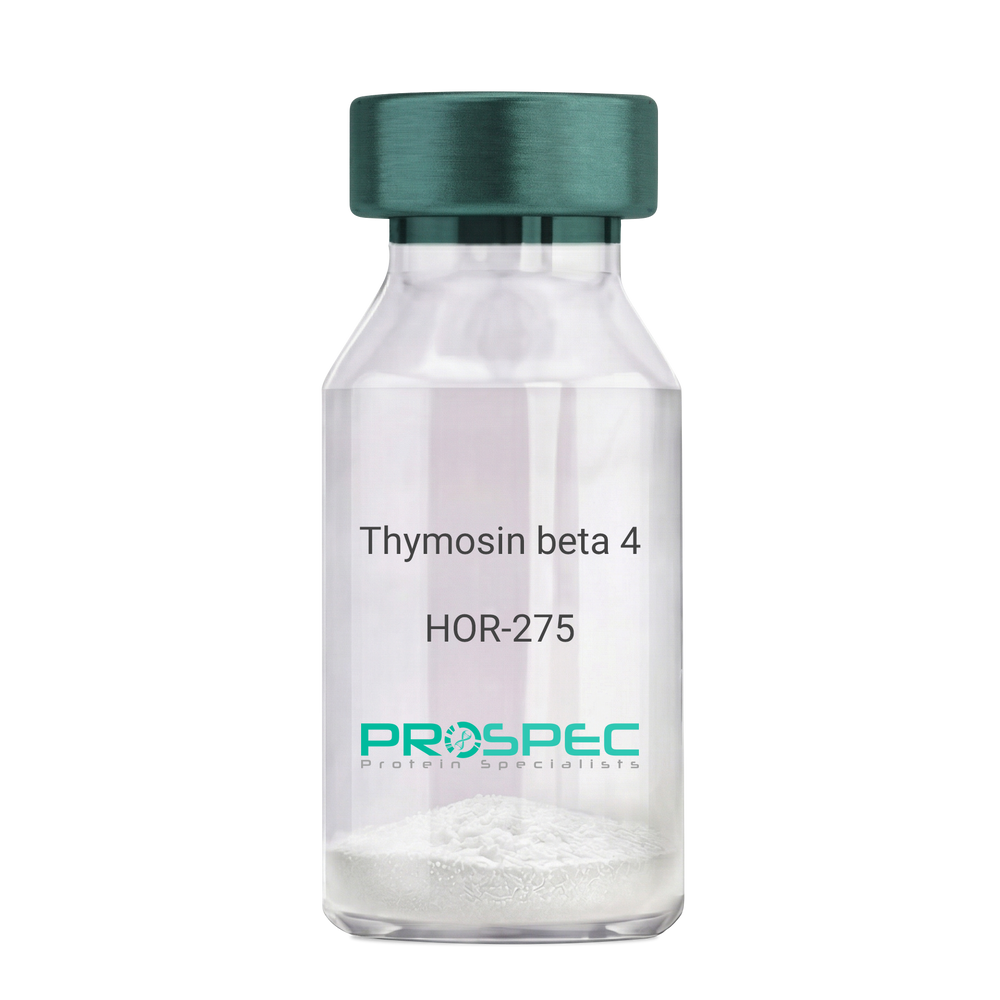
    Name :

    Thymosin beta 4

    Description:

    Thymosin β4

    Thymosin beta-4. TB500, TB-500

    Product # :

    HOR-275

    Price :

    Quantity :

    Shipping Method :

    Room Temp Icon

    Shipped at Room temp

    Add To Cart

    More Info

    • description
    • formulation
    • purity
    • More Info

    Description

    Thymosin b4 is a 43 amino acid peptide which is regarded as the main intracellular G-actin sequestering peptide. It has a molecular weight of 4963.55 Da, and its molecular formula is: C212H350N56O78S1. Extracellular Thymosin b4 may contribute to physiological processes such as angiogenesis, wound healing, and regulation of inflammation.

    Formulation

    The protein (1mg/ml) was lyophilized with no additives.

    Purity

    Greater than 98.0% as determined by RP-HPLC.

    More Info

    • Introduction

      Thymosin is a hormone secreted from the thymus. Its primary function is to stimulate the production of T cells, which are an important part of the immune system. Thymosin also assists in the development of B cells to plasma cells to produce antibodies. The predominant form of thymosin, thymosin b4, is a member of a highly conserved family of actin monomer-sequestering proteins. b-thymosins are the primary regulators of unpolymerized actin, and are essential for maintaining the small cytoplasmic pool of free G-actin monomers required for rapid filament elongation and allowing for the flux of monomers between the thymosin-bound pool and F-actin.

    • Synonyms

      Thymosin beta-4. TB500, TB-500

    • Physical Appearance

      Sterile Filtered White lyophilized (freeze-dried) powder.

    • Stability

      Lyophilized Thymosin b4 although stable at room temperature for 3 weeks, should be stored desiccated below -18°C. Upon reconstitution T beta 4 should be stored at 4°C between 2-7 days and for future use below -18°C.For long term storage it is recommended to add a carrier protein (0.1% HSA or BSA).Please prevent freeze-thaw cycles.

    • Solubility

      It is recommended to reconstitute the lyophilized Thymosin beta-4 in sterile 18MΩ-cm H2O not less than 100 µg/ml, which can then be further diluted to other aqueous solutions.

    • Amino Acid Sequence

      Thymosin b4 has an a.a. sequence of Ac-Ser-Asp-Lys-Pro-Asp-Met-Ala-Glu-Ile-Glu-Lys-Phe-Asp-Lys-Ser-Lys-Leu-Lys-Lys-Thr-Glu-Thr-Gln-Glu-Lys-Asn-Pro-Leu-Pro-Ser-Lys-Glu-Thr-Ile-Glu-Gln-Glu-Lys-Gln-Ala-Gly-Glu-Ser-OH.

    ProSpec's products are furnished for LABORATORY RESEARCH USE ONLY. The product may not be used as drugs, agricultural or pesticidal products, food additives or household chemicals.

    Thymosin Beta 4
  • View Data Sheet

    Name :

    GDF5 Mouse

    Description:

    Growth and Differentiation factor 5 Mouse Recombinant

    Bmp-14, Bp, GDF-5, Bone morphogenetic protein 14, GDF5, Growth/differentiation factor 5.

    Product # :

    CYT-941

    Price :

    Quantity :

    Shipping Method :

    Room Temp Icon

    Shipped at Room temp

    Add To Cart

    More Info

    • description
    • source
    • formulation
    • purity
    • biological activity
    • More Info

    Description

    GDF5 Mouse Recombinant produced in E.coli is a non-glycosylated disulfide linked homodimer containing 2 chains of 120 amino acids and having a molecular mass of 27.2kDa.The GDF-5 is purified by proprietary chromatographic techniques.

    Source

    Escherichia Coli.

    Formulation

    GDF-5 protein was lyophilized from a 0.2µm filtered concentrated solution in 30% Acetonitrile and 0.1% TFA.

    Purity

    Greater than 96.0% as determined by:
    (a) Analysis by RP-HPLC.
    (b) Analysis by SDS-PAGE.

    Biological Activity

    The ED50 as determined by inducing alkaline phosphatase production of murine ATDC5 cells is less than 1.0µg/ml, corresponding to a specific activity of > 1000IU/mg.

    More Info

    • Introduction

      GDF-5 is a member of the bone morphogenetic protein (BMP) family and the TGF-beta superfamily. This group of proteins is characterized by a polybasic proteolytic processing site which is cleaved to produce a mature protein containing seven conserved cysteine residues. The members of this family are regulators of cell growth and differentiation in both embryonic and adult tissues. Mutations in this gene are associated with acromesomelic dysplasia, Hunter-Thompson type; brachydactyly, type C; and chondrodysplasia, Grebe type. These associations confirm that the gene product plays a role in skeletal development.

    • Synonyms

      Bmp-14, Bp, GDF-5, Bone morphogenetic protein 14, GDF5, Growth/differentiation factor 5.

    • Physical Appearance

      Sterile Filtered White lyophilized (freeze-dried) powder.

    • Stability

      Lyophilized GDF5 although stable at room temperature for 3 weeks, should be stored desiccated below -18°C. Upon reconstitution GDF-5 should be stored at 4°C between 2-7 days and for future use below -18°C. For long term storage it is recommended to add a carrier protein (0.1% HSA or BSA). Please prevent freeze-thaw cycles.

    • Solubility

      It is recommended to reconstitute the lyophilized GDF5 in sterile 4mM HCl not less than 100µg/ml, which can then be further diluted to other aqueous solutions.

    • Amino Acid Sequence

      APLANRQGKR PSKNLKARCS RKALHVNFKD MGWDDWIIAP LEYEAFHCEG LCEFPLRSHL EPTNHAVIQT LMNSMDPEST PPTCCVPTRL SPISILFIDS ANNVVYKQYE DMVVESCGCR.

    • Background

      What is the molecular weight/Mw of GDF5 MOUSE Protein?
      GDF5 MOUSE Protein has a total Mw of 27.2kDa.

      What is the source or expression system of GDF5 MOUSE Protein?
      Escherichia Coli.

      What is the Purity of GDF5 MOUSE Protein?
      GDF5 MOUSE Protein is >96% pure as determined by SDS-PAGE.

      What is the Biological Activity of GDF5 MOUSE Protein?
      The ED50 as determined by inducing alkaline phosphatase production of murine ATDC5 cells is less than 1.0µg/ml, corresponding to a specific activity of > 1000IU/mg.

      What is the amino acid sequence of GDF5 MOUSE Protein?
      APLANRQGKR PSKNLKARCS RKALHVNFKD MGWDDWIIAP LEYEAFHCEG LCEFPLRSHL EPTNHAVIQT LMNSMDPEST PPTCCVPTRL SPISILFIDS ANNVVYKQYE DMVVESCGCR.

      What applications can GDF5 MOUSE Protein be used in?
      GDF5 MOUSE Protein can probably be used in western blot, ELISA and Lateral Flow.

      What is the endotoxin level for GDF5 MOUSE Protein?
      The endotoxin level is minimal, GDF5 MOUSE Protein was purified using conventional chromatography techniques.


    ProSpec's products are furnished for LABORATORY RESEARCH USE ONLY. The product may not be used as drugs, agricultural or pesticidal products, food additives or household chemicals.

    Mouse Gdf5
  • View Data Sheet

    Name :

    CST3 Mouse, Active

    Description:

    Cystatin-C Mouse Recombinant, Active

    Cystatin-C, Cystatin-3,  Cst3,  CST3    

    Product # :

    PRO-2433

    Price :

    Quantity :

    Shipping Method :

    Ice Icon

    Shipped with Ice Packs

    Add To Cart

    More Info

    • description
    • source
    • formulation
    • purity
    • biological activity
    • More Info

    Description

    CST3 Mouse produced in Sf9 Insect cells is a single, glycosylated polypeptide chain containing 126 amino acids (21-140 a.a.) and having a molecular mass of 14.2kDa (Molecular size on SDS-PAGE will appear at approximately 13.5-18kDa).CST3 is expressed with a 6 amino acid His tag at C-Terminus and purified by proprietary chromatographic techniques.

    Source

    Sf9, Baculovirus cells.

    Formulation

    CST3 protein solution (1mg/ml) contains Phosphate Buffered Saline (pH 7.4) and 10% glycerol.

    Purity

    Greater than 95% as determined by SDS-PAGE.

    Biological Activity

    The IC50 value is < 1.0nM. The inhibitory function of Cystatin 3 on protease activity of papain was measured by a fluorometric assay using Z-FR-AMC at pH 7.5 at 25°C.

    More Info

    • Introduction

      Cystatins are a superfamily of cysteine proteinase inhibitors found in both plants and animals. They comprise a group of proteinase inhibitors, widely distributed in tissues and body fluids, and form tight complexes with cysteine proteases such as cathepsin B, H, L and S. Cystatin C, a secreted molecule of this family, is of interest from biochemical, medicine and evolutionary points of view. Cystatin C, with molecular weight of 13260 Da, is composed of 120 amino acids, lacks carbohydrate and has two disulfide bridges located near the carboxyl terminus. Cystatin C is increased in patients with malignant diseases, and is related to the insufficiency of renal function and appears to be a better marker than creatinine. On the other hand, low levels of cystatin C involve cause the breakdown of the elastic laminae and, subsequently, the atherosclerosis and abdominal aortic aneurysm.

    • Synonyms

      Cystatin-C, Cystatin-3, Cst3, CST3

    • Physical Appearance

      Sterile Filtered colorless solution.

    • Stability

      Store at 4°C if entire vial will be used within 2-4 weeks. Store, frozen at -20°C for longer periods of time. For long term storage it is recommended to add a carrier protein (0.1% HSA or BSA). Avoid multiple freeze-thaw cycles.

    • Amino Acid Sequence

      ATPKQGPRML GAPEEADANE EGVRRALDFA VSEYNKGSND AYHSRAIQVV RARKQLVAGV NYFLDVEMGR TTCTKSQTNL TDCPFHDQPH LMRKALCSFQ IYSVPWKGTH SLTKFSCKNA HHHHHH

    ProSpec's products are furnished for LABORATORY RESEARCH USE ONLY. The product may not be used as drugs, agricultural or pesticidal products, food additives or household chemicals.

    Cst3 Mouse Active
  • View Data Sheet

    Name :

    IER3 Human

    Description:

    Immediate Early Response 3 Human Recombinant

    800x600 immediate early response 3, DIF-2, DIF2, GLY96, IEX-1, IEX-1L, IEX1, PRG1, Protein DIF-2, Immediate early protein GLY96, PACAP-responsive gene 1 protein, Differentiation-dependent gene 2 protein, IER3.

    Product # :

    PRO-1490

    Price :

    Quantity :

    Shipping Method :

    Ice Icon

    Shipped with Ice Packs

    Add To Cart

    More Info

    • description
    • source
    • formulation
    • purity
    • More Info

    Description

    IER3 Human Recombinant produced in E.Coli is a single, non-glycosylated polypeptide chain containing 105 amino acids (1-82 a.a.) and having a molecular mass of 11.4kDa.IER3 is fused to a 23 amino acid His-tag at N-terminus & purified by proprietary chromatographic techniques.

    Source

    Escherichia Coli.

    Formulation

    IER3 protein solution (0.25mg/ml) contains 20mM Tris-HCl buffer, (pH 8.0), 0.2M NaCl, 50% glycerol and 2mM DTT.

    Purity

    Greater than 85.0% as determined by SDS-PAGE.

    More Info

    • Introduction

      Immediate Early Response 3 (IER3) functions in the protection of cells from Fas- or tumor necrosis factor type alpha-induced apoptosis. IER3 has a role in the ERK signaling pathway by inhibiting the dephosphorylation of ERK by phosphatase PP2A-PPP2R5C holoenzyme. In addition, IER3 serves as an ERK downstream effector mediating survival. As a member of the NUPR1/RELB/IER3 survival pathway, IER3 provides pancreatic ductal adenocarcinoma with significant resistance to cell stress, such as starvation.

    • Synonyms

      immediate early response 3, DIF-2, DIF2, GLY96, IEX-1, IEX-1L, IEX1, PRG1, Protein DIF-2, Immediate early protein GLY96, PACAP-responsive gene 1 protein, Differentiation-dependent gene 2 protein, IER3.

    • Physical Appearance

      Sterile Filtered clear solution.

    • Stability

      Store at 4°C if entire vial will be used within 2-4 weeks. Store, frozen at -20°C for longer periods of time. For long term storage it is recommended to add a carrier protein (0.1% HSA or BSA).Avoid multiple freeze-thaw cycles.

    • Amino Acid Sequence

      MGSSHHHHHH SSGLVPRGSH MGSMCHSRSC HPTMTILQAP TPAPSTIPGP RRGSGPEIFT FDPLPEPAAA PAGRPSASRG HRKRSRRVLY PRVVRRQLPV EEPNP.

    ProSpec's products are furnished for LABORATORY RESEARCH USE ONLY. The product may not be used as drugs, agricultural or pesticidal products, food additives or household chemicals.

    Ier3 Human
  • View Data Sheet

    Name :

    CoV-2 N-Mosaic

    Description:

    Coronavirus 2019 Nucleocapsid Mosaic Recombinant

    Product # :

    SARS-015

    Price :

    Quantity :

    Shipping Method :

    Ice Icon

    Shipped with Ice Packs

    Add To Cart

    More Info

    • description
    • source
    • formulation
    • purity
    • More Info

    Description

    The E.Coli derived recombinant protein contains the Coronavirus 2019 full length nuclepocapsid Mosaic immunodominant regions [ full length N-antigen ], fused to 6xHis tag at C-terminal.

    Source

    Escherichia Coli.

    Formulation

    CoV 2019 Nucleocapsid-Mosaic Protein solution is supplied in 1x PBS.

    Purity

    CoV 2019 Nucleocapsid-Mosaic Protein ein is >90% pure as determined SDS-PAGE.

    More Info

    • Introduction

      A human infecting coronavirus (viral pneumonia) called 2019 novel coronavirus, 2019-nCoV was found in the fish market at the city of Wuhan, Hubei province of China on December 2019.

      The 2019-nCoV shares an 87% identity to the 2 bat-derived severe acute respiratory syndrome 2018 SARS-CoV-2 located in Zhoushan of eastern China. 2019-nCoV has an analogous receptor-BD-structure to that of 2018 SARS-CoV, even though there is a.a. diversity so thus the 2019-nCoV might bind to ACE2 receptor protein (angiotensin-converting enzyme 2) in humans.

      While bats are possibly the host of 2019-nCoV, researchers suspect that animal from the ocean sold at the seafood market was an intermediate host. RSCU analysis proposes that the 2019-nCoV is a recombinant within the viral spike glycoprotein between the bat coronavirus and an unknown coronavirus.

    • Physical Appearance

      Sterile Filtered clear solution.

    • Stability

      CoV 2019 Nucleocapsid-Mosaic Protein is shipped on ice packs. Upon arrival, Store at -20°C.

    • Specificity

      Reactivity with SARS infected individuals not tested.

    ProSpec's products are furnished for LABORATORY RESEARCH USE ONLY. The product may not be used as drugs, agricultural or pesticidal products, food additives or household chemicals.

    product_image.jpg
  • View Data Sheet

    Name :

    MMP 3 Human

    Description:

    Matrix Metalloproteinase-3 Human Recombinant

    CHDS6, MMP-3, SL-1, STMY, STMY1, STR1, Stromelysin-1, Matrix metalloproteinase-3, Transin-1, MMP3.

    Product # :

    ENZ-774

    Price :

    Quantity :

    Shipping Method :

    Ice Icon

    Shipped with Ice Packs

    Add To Cart

    More Info

    • description
    • source
    • formulation
    • purity
    • More Info

    Description

    MMP 3 Human Recombinant produced in E.coli is a single, non-glycosylated polypeptide chain containing 401 amino acids (100-477a.a) and having a molecular mass of 45.2kDa. MMP 3 is fused to a 23 amino acid His-tag at N-terminus & purified by proprietary chromatographic techniques.

    Source

    Escherichia Coli.

    Formulation

    The MMP 3 solution (0.25mg/ml) contains 20mM Tris-HCl buffer (pH 8.0), 0.15M NaCl, and 10% glycerol.

    Purity

    Greater than 90% as determined by SDS-PAGE.

    More Info

    • Introduction

      MMP-3 enzyme is also known as Stromelysin-1or as Transin-1 which hydrolyzes natural collagen at physiological pH and temperature. It dissolves the intervertebral nucleus pulposus and annulus fibrosus of Herniated Lumbar Intervertebral Disk . MMP-3 hydrolyzes components of the extracellular matrix like proteoglycan, laminin, fibronectin, gelatin and collagen types III, IV and IX. It also activates pro-MMP-9 and pro-MMP-8 and superactivates plasmin activated MMP-1. MMP-3 is secreted as a latent proenzyme and is activated by a variety of proteinases, e.g. plasmin, trypsin, chymotrypsin, cathepsin G or human neutrophil elastase. MMP-3 was found to be capable of activating the precursor of IL1-beta.

    • Synonyms

      CHDS6, MMP-3, SL-1, STMY, STMY1, STR1, Stromelysin-1, Matrix metalloproteinase-3, Transin-1, MMP3.

    • Physical Appearance

      Sterile Filtered colorless solution.

    • Stability

      Store at 4°C if entire vial will be used within 2-4 weeks. Store, frozen at -20°C for longer periods of time. For long term storage it is recommended to add a carrier protein (0.1% HSA or BSA). Avoid multiple freeze-thaw cycles.

    • Amino Acid Sequence

      MGSSHHHHHH SSGLVPRGSH MGSFRTFPGI PKWRKTHLTY RIVNYTPDLP KDAVDSAVEK ALKVWEEVTP LTFSRLYEGE ADIMISFAVR EHGDFYPFDG PGNVLAHAYA PGPGINGDAH FDDDEQWTKD TTGTNLFLVA AHEIGHSLGL FHSANTEALM YPLYHSLTDL TRFRLSQDDI NGIQSLYGPP PDSPETPLVP TEPVPPEPGT PANCDPALSF DAVSTLRGEI LIFKDRHFWR KSLRKLEPEL HLISSFWPSL PSGVDAAYEV TSKDLVFIFK GNQFWAIRGN EVRAGYPRGI HTLGFPPTVR KIDAAISDKE KNKTYFFVED KYWRFDEKRN SMEPGFPKQI AEDFPGIDSK IDAVFEEFGF FYFFTGSSQL EFDPNAKKVT HTLKSNSWLN C.

    ProSpec's products are furnished for LABORATORY RESEARCH USE ONLY. The product may not be used as drugs, agricultural or pesticidal products, food additives or household chemicals.

    Human Mmp 3
  • View Data Sheet

    Name :

    VPS24 Human

    Description:

    Vacuolar Protein Sorting 24 Human Recombinant

    Charged multivesicular body protein 3, Chromatin-modifying protein 3, Neuroendocrine differentiation factor, Vacuolar protein sorting-associated protein 24, hVps24, CHMP3, CGI149, NEDF, VPS24, CGI-149.

    Product # :

    PRO-872

    Price :

    Quantity :

    Shipping Method :

    Ice Icon

    Shipped with Ice Packs

    Add To Cart

    More Info

    • description
    • source
    • formulation
    • purity
    • More Info

    Description

    VPS24 produced in E.Coli is a single, non-glycosylated polypeptide chain containing 242 amino acids (1-222 a.a) and having a molecular mass of 27.2kDa (Molecular weight on SDS-PAGE will appear higher).VPS24 is fused to a 20 amino acid His-tag at N-terminus & purified by proprietary chromatographic techniques.

    Source

    Escherichia Coli.

    Formulation

    VPS24 protein solution (1mg/ml) containing 20mM Tris-HCl buffer (pH8.0), 20% glycerol, 0.1M NaCl and 1mM DTT.

    Purity

    Greater than 90.0% as determined by SDS-PAGE.

    More Info

    • Introduction

      Charged multivesicular body protein 3 (VPS24/CHMP3) is a member of the vacuolar sorting protein family and function as chromatin modifying proteins. VPS24 links directly with CHMP2 and CHMP4 for the disassembly of ESCRT-III complex in an ATP-dependent manner. During HIV-1 infection, the virus uses the ESCRT-III complex to mediate budding and exocytosis of viral proteins. VPS24 overexpression strongly hinders HIV-1 release.

    • Synonyms

      Charged multivesicular body protein 3, Chromatin-modifying protein 3, Neuroendocrine differentiation factor, Vacuolar protein sorting-associated protein 24, hVps24, CHMP3, CGI149, NEDF, VPS24, CGI-149.

    • Physical Appearance

      Sterile Filtered colorless solution.

    • Stability

      Store at 4°C if entire vial will be used within 2-4 weeks. Store, frozen at -20°C for longer periods of time. For long term storage it is recommended to add a carrier protein (0.1% HSA or BSA).Avoid multiple freeze-thaw cycles.

    • Amino Acid Sequence

      MGSSHHHHHH SSGLVPRGSH MGLFGKTQEK PPKELVNEWS LKIRKEMRVV DRQIRDIQRE EEKVKRSVKD AAKKGQKDVC IVLAKEMIRS RKAVSKLYAS KAHMNSVLMG MKNQLAVLRV AGSLQKSTEV MKAMQSLVKI PEIQATMREL SKEMMKAGII EEMLEDTFES MDDQEEMEEE AEMEIDRILF EITAGALGKA PSKVTDALPE PEPPGAMAAS EDEEEEEEAL EAMQSRLATL RS.

    ProSpec's products are furnished for LABORATORY RESEARCH USE ONLY. The product may not be used as drugs, agricultural or pesticidal products, food additives or household chemicals.

    Vps24 Human
  • View Data Sheet

    Name :

    KLK10 Human

    Description:

    Kallikrein-10 Human Recombinant

    Kallikrein-Related Peptidase 10, KLK10, PRSSL1, NES1, Normal Epithelial Cell-Specific 1, Protease Serine-Like 1, Kallikrein 10, Breast Normal Epithelial Cell Associated Serine Protease, kallikrein-10, Protease, Serine-Like 1, EC 3.4.21.- , EC 3.4.21, EC 3.4.21.74.

    Product # :

    ENZ-795

    Price :

    Quantity :

    Shipping Method :

    Ice Icon

    Shipped with Ice Packs

    Add To Cart

    More Info

    • description
    • source
    • formulation
    • purity
    • More Info

    Description

    KLK10 Human Recombinant produced in E.coli is a single, non-glycosylated polypeptide chain containing 266 amino acids (34-276) and having a molecular mass of 29.1kDa.KLK10 is fused to a 23 amino acid His-tag at N-terminus & purified by proprietary chromatographic techniques.

    Source

    Escherichia Coli.

    Formulation

    The KLK10 solution (1mg/ml) contains 20mM Tris-HCl buffer (pH 8.0), 0.4M Urea and 10% glycerol.

    Purity

    Greater than 85% as determined by SDS-PAGE.

    More Info

    • Introduction

      Kallikrein-10 (KLK10) is one of the 15 kallikrein subfamily members located in a cluster on chromosome 19. Kallikreins are a subgroup of serine proteases having various physiological functions. KLK10 is secreted and has a role in suppression of tumorigenesis in breast and prostate cancers.

    • Synonyms

      Kallikrein-Related Peptidase 10, KLK10, PRSSL1, NES1, Normal Epithelial Cell-Specific 1, Protease Serine-Like 1, Kallikrein 10, Breast Normal Epithelial Cell Associated Serine Protease, kallikrein-10, Protease, Serine-Like 1, EC 3.4.21.- , EC 3.4.21, EC 3.4.21.74.

    • Physical Appearance

      Sterile Filtered colorless solution.

    • Stability

      Store at 4°C if entire vial will be used within 2-4 weeks. Store, frozen at -20°C for longer periods of time. For long term storage it is recommended to add a carrier protein (0.1% HSA or BSA).Avoid multiple freeze-thaw cycles.

    • Amino Acid Sequence

      MGSSHHHHHH SSGLVPRGSH MGSALLPQND TRLDPEAYGS PCARGSQPWQ VSLFNGLSFH CAGVLVDQSW VLTAAHCGNK PLWARVGDDH LLLLQGEQLR RTTRSVVHPK YHQGSGPILP RRTDEHDLML LKLARPVVLG PRVRALQLPY RCAQPGDQCQ VAGWGTTAAR RVKYNKGLTC SSITILSPKE CEVFYPGVVT NNMICAGLDR GQDPCQSDSG GPLVCDETLQ GILSWGVYPC GSAQHPAVYT QICKYMSWIN KVIRSN.

    ProSpec's products are furnished for LABORATORY RESEARCH USE ONLY. The product may not be used as drugs, agricultural or pesticidal products, food additives or household chemicals.

    Klk10 Human
  • View Data Sheet

    Name :

    GCSF Monkey

    Description:

    Granulocyte Colony Stimulating Factor Recombinant Rhesus Macaque

    CSF3, MGI-1G, GM-CSF beta, Pluripoietin, G-CSF, GCSF.

    Product # :

    CYT-1121

    Price :

    Quantity :

    Shipping Method :

    Room Temp Icon

    Shipped at Room temp

    Add To Cart

    More Info

    • description
    • source
    • formulation
    • purity
    • biological activity
    • More Info

    Description

    Granulocyte Colony Stimulating Rhesus Macaque Recombinant produced in E.Coli is a non-glycosylated polypeptide chain containing 174 amino acids and having a molecular mass of approximately 18.9kDa.GCSF is purified by proprietary chromatographic techniques.

    Source

    Escherichia Coli.

    Formulation

    Lyophilized from a 0.2μm filtered concentrated solution in PBS, pH7.4.

    Purity

    Greater than 98.0% as determined by:
    (a) Analysis by RP-HPLC.
    (b) Analysis by SDS-PAGE.

    Biological Activity

    The ED50 as determined by a cell proliferation assay using murine NFS-60 cells is <   0.05 ng/ml, corresponding to a specific activity of > 2.0 × 10⁷ IU/mg.

    More Info

    • Introduction

      GCSF is a cytokine that controls the production, differentiation, and function of granulocytes. The active protein is found extracellularly. 3 transcript variants encoding 3 different isoforms have been found for the GCSF gene. Granulocyte/macrophage colony-stimulating factors are cytokines that take part in hematopoiesis by controlling the production, differentiation, and function of 2 related white cell populations of the blood, the granulocytes and the monocytes-macrophages. This csf induces granulocytes.

    • Synonyms

      CSF3, MGI-1G, GM-CSF beta, Pluripoietin, G-CSF, GCSF.

    • Physical Appearance

      Sterile Filtered White lyophilized (freeze-dried) powder.

    • Stability

      Lyophilized GCSF although stable at room temperature for 3 weeks, should be stored desiccated below -18°C. Upon reconstitution Granulocyte Colony Stimulating Rhesus Macaque should be stored at 4°C between 2-7 days and for future use below -18°C.Please prevent freeze-thaw cycles.

    • Solubility

      It is recommended to reconstitute the lyophilized Granulocyte Colony Stimulating Rhesus Macaque in sterile 18MΩ-cm H2O not less than 100µg/ml, which can then be further diluted to other aqueous solutions.

    • Amino Acid Sequence

      TPLGPASSLP QSFLLKCLEQ VRKIQGDGAA LQEKLCATYK LCHPEELVLL RHSLGIPWAP LSSCPSQALQ LTGCLSQLHS SLFLYQGLLQ ALEGISPELS PTLDTLQLDI ADFATTIWQQ MEDLGMAPAL QPTQGAMPAF TSAFQRRAGG VLVASHLQRF LELAYRVLRH LAQS.

    • Background

      What is the molecular weight/Mw of GCSF MONKEY Protein?
      GCSF MONKEY Protein has a total Mw of 18.9kDa.

      What is the source or expression system of GCSF MONKEY Protein?
      Escherichia Coli.

      What is the Purity of GCSF MONKEY Protein?
      GCSF MONKEY Protein is >98% pure as determined by SDS-PAGE.

      What is the Biological Activity of GCSF MONKEY Protein?
      The ED50 as determined by a cell proliferation assay using murine NFS-60 cells is < 0.05 ng/ml, corresponding to a specific activity of > 2.0 × 10⁷ IU/mg.

      What is the amino acid sequence of GCSF MONKEY Protein?
      TPLGPASSLP QSFLLKCLEQ VRKIQGDGAA LQEKLCATYK LCHPEELVLL RHSLGIPWAP LSSCPSQALQ LTGCLSQLHS SLFLYQGLLQ ALEGISPELS PTLDTLQLDI ADFATTIWQQ MEDLGMAPAL QPTQGAMPAF TSAFQRRAGG VLVASHLQRF LELAYRVLRH LAQS.

      What applications can GCSF MONKEY Protein be used in?
      GCSF MONKEY Protein can probably be used in western blot, ELISA and Lateral Flow.

      What is the endotoxin level for GCSF MONKEY Protein?
      The endotoxin level is minimal, GCSF MONKEY Protein was purified using conventional chromatography techniques.


    ProSpec's products are furnished for LABORATORY RESEARCH USE ONLY. The product may not be used as drugs, agricultural or pesticidal products, food additives or household chemicals.

    Gcsf Monkey
  • View Data Sheet

    Name :

    VZV ORF9

    Description:

    Varicella Zoster Virus ORF9 Recombinant

    Product # :

    VZV-232

    Price :

    Quantity :

    Shipping Method :

    Ice Icon

    Shipped with Ice Packs

    Add To Cart

    More Info

    • description
    • formulation
    • purity
    • More Info

    Description

    The E.Coli derived recombinant protein contains the VZV ORF9 immunodominant regions, amino acids 6-28, 76-100.

    Formulation

    25mM Tris-Hcl pH 8.0, 1mM EDTA and 50% glycerol.

    Purity

    Varicella protein is >95% pure as determined by 10% PAGE (coomassie staining).

    More Info

    • Introduction

      VZV is closely related to the herpes simplex viruses(HSV), sharing much genomehomology. The known envelope glycoproteins (gB, gC, gE, gH, gI, gK, gL) correspond with those in HSV, however there is no equivalent of HSV gD. VZV virons are spherical and 150-200 nm in diameter. Their lipidenvelope encloses the nucleocapsid of 162 capsomeres arranged in a hexagonalform. Its DNAis a single, linear, double-stranded molecule, 125,000 nt long. The virus is very susceptible to disinfectants, notably sodium hypochlorite. Within the body it can be treated by a number of drugs and therapeutic agents including aciclovir, zoster-immune globulin(ZIG), and vidarabine.

    • Stability

      Varicella protein although stable at 4°C for 1 week, should be stored below -18°C. Please prevent freeze thaw cycles.

    • Specificity

      Immunoreactive with sera of VZV-infected individuals.

    • Purification Method

      Varicella was purified by proprietary chromatographic technique.

    ProSpec's products are furnished for LABORATORY RESEARCH USE ONLY. The product may not be used as drugs, agricultural or pesticidal products, food additives or household chemicals.

    Vzv Orf9
  • 1
  • …
  • 11
  • 12
  • 13
  • 14
  • 15
  • …
  • 20
Your browser does not support the video tag.

Products

  • Cytokines
  • Growth Factors
  • Chemokines
  • CD Antigens
  • Neurotrophins
  • Hormones
  • Enzymes
  • Viral Antigens
  • Recombinant Proteins
  • Natural Proteins
  • Monoclonal Antibodies
  • Polyclonal Antibodies
  • Thermal Packaging

About

  • Company
  • Founder
  • Contribution
  • Contact Us
  • My Account

Ordering

  • Ordering Method
  • Ordering - Credit Card
  • Ordering PO
  • Shipping Fees
  • FAQ's

Legal

  • Terms & Conditions
  • Privacy
  • Site Map
  • info@prospecbio.com
  • Facebook
  • Instagram
  • Linkedin Profile

© 2026 ProSpec-Tany TechnoGene Ltd. All Rights Reserved.

  • Choosing a selection results in a full page refresh.
  • Opens in a new window.