Search results
1000 results found for “dickkopf-related protein”
Name
Description
Product #
Price
Quantity
Shipping Method
- View Data Sheet
Name :
TGIF2LY HumanDescription:
TGFB-Induced Factor Homeobox 2-Like Y-Linked Human Recombinant
TGIFLY, Homeobox protein TGIF2LY, TGF-beta-induced transcription factor 2-like protein, TGFB-induced factor 2-like protein, Y-linked, TGIF-like on the Y, TGIF2LY.
Product # :
PRO-1867Price :
Quantity :
Shipping Method :
Shipped with Ice Packs
More Info
- description
- source
- formulation
- purity
- More Info
Description
TGIF2LY Human Recombinant produced in E. coli is. a single polypeptide chain containing 208 amino acids (1-185) and having a molecular mass of 23.2kDa. TGIF2LY is fused to a 23 amino acid His-tag at N-terminus & purified by proprietary chromatographic techniques.
Source
Escherichia Coli.
Formulation
The TGIF2LY solution (1mg/ml) contains 20mM Tris-HCl buffer (pH 8.0), 0.15M NaCl, 10% glycerol and 1mM DTT.
Purity
Greater than 95% as determined by SDS-PAGE.
More Info
-
Introduction
TGFB-Induced Factor Homeobox 2-Like Y-Linked (TGIF2LY) is a part of the TALE/TGIF homeobox family of transcription factors. TGIF2LY is located in the male specific region of chromosome Y, in a block of sequence which is the outcome of a large X-to-Y transposition. TGIF2LY act as a regulator of TGIF2LX due to the fact that the C-terminus of TGIF2LY is different from that of its chromosome X homolog (TGIF2LX). TGIF2LY has also a transcription role in testis.
-
Synonyms
TGIFLY, Homeobox protein TGIF2LY, TGF-beta-induced transcription factor 2-like protein, TGFB-induced factor 2-like protein, Y-linked, TGIF-like on the Y, TGIF2LY.
-
Physical Appearance
Sterile Filtered clear solution.
-
Stability
Store at 4°C if entire vial will be used within 2-4 weeks. Store frozen at -20°C for longer periods of time. For long term storage it is recommended to add a carrier protein (0.1% HSA or BSA).Avoid multiple freeze-thaw cycles.
-
Amino Acid Sequence
MGSSHHHHHH SSGLVPRGSH MGSMEAAADG PAETQSPVEK DSPAKTQSPA QDTSIMSRNN ADTGRVLALP EHKKKRKGNL PAESVKILRD WMYKHRFKAY PSEEEKQMLS EKTNLSLLRI SNWFINARRR ILPDMLQQRR NDPIIGHKTG KDAHATHLQS TEASVPAKSG PVVQTMYKAC PCGPCQRARC QERSNQIRSR PLARSSPE.
ProSpec's products are furnished for LABORATORY RESEARCH USE ONLY. The product may not be used as drugs, agricultural or pesticidal products, food additives or household chemicals.
- View Data Sheet
Name :
DPH3P1 HumanDescription:
Diphthamide Biosynthesis 3 Pseudogene 1 Human Recombinant
Diphthamide Biosynthesis 3 Pseudogene 1, C20orf143, DPH3B, ZCSL1, CSL-Type Zinc Finger-Containing Protein 1, Chromosome 20 Open Reading Frame 143, DPH3, KTI11 Homolog (S. Cerevisiae) Pseudogene, DPH3B, KTI11 Homolog B (S. Cerevisiae), Zinc Finger, CSL-Type Containing 1, DPH3 Homolog B (KTI11, S. Cerevisiae), Putative DPH3 Homolog B, Zinc Finger, CSL Domain Containing 1.
Product # :
PRO-1914Price :
Quantity :
Shipping Method :
Shipped with Ice Packs
More Info
- description
- source
- formulation
- purity
- More Info
Description
DPH3P1 Human Recombinant produced in E.Coli is a single, non-glycosylated polypeptide chain containing 101 amino acids (1-78 a.a) and having a molecular mass of 11.1kDa.DPH3P1 is fused to a 23 amino acid His-tag at N-terminus & purified by proprietary chromatographic techniques.
Source
Escherichia Coli.
Formulation
DPH3P1 protein solution (0.5mg/ml) containing 20mM Tris-HCl buffer (pH8.0) and 10% glycerol.
Purity
Greater than 90.0% as determined by SDS-PAGE.
More Info
-
Introduction
Diphthamide Biosynthesis 3 Pseudogene 1 also known as DPH3P1 may stand for a processed pseudogene of DPH3 since it lacks the exon/intron structurefound in the functional gene. Yet, DPH3P1 does contain an intact open reading frame, though its translation has not been established.
-
Synonyms
Diphthamide Biosynthesis 3 Pseudogene 1, C20orf143, DPH3B, ZCSL1, CSL-Type Zinc Finger-Containing Protein 1, Chromosome 20 Open Reading Frame 143, DPH3, KTI11 Homolog (S. Cerevisiae) Pseudogene, DPH3B, KTI11 Homolog B (S. Cerevisiae), Zinc Finger, CSL-Type Containing 1, DPH3 Homolog B (KTI11, S. Cerevisiae), Putative DPH3 Homolog B, Zinc Finger, CSL Domain Containing 1.
-
Physical Appearance
Sterile Filtered clear solution.
-
Stability
Store at 4°C if entire vial will be used within 2-4 weeks. Store, frozen at -20°C for longer periods of time.For long term storage it is recommended to add a carrier protein (0.1% HSA or BSA).Please avoid freeze thaw cycles.
-
Amino Acid Sequence
MGSSHHHHHH SSGLVPRGSH MGSMAVFHDE VEIEDFQYDE DSETYFCPCP CGDNFSITKE ELENGEGVAM CPGCSLIIKV IYDKDQFACG ETVPVPSVNK E
ProSpec's products are furnished for LABORATORY RESEARCH USE ONLY. The product may not be used as drugs, agricultural or pesticidal products, food additives or household chemicals.
- View Data Sheet
Name :
DNAJB4 HumanDescription:
DnaJ (Hsp40) Homolog, Subfamily B, Member 4 Human Recombinant
DnaJ homolog subfamily B member 4, Heat shock 40 kDa protein 1 homolog, HSP40 homolog, Heat shock protein 40 homolog, Human liver DnaJ-like protein, DNAJB4, DNAJW, HLJ1, DjB4.
Product # :
HSP-054Price :
Quantity :
Shipping Method :
Shipped with Ice Packs
More Info
- description
- source
- formulation
- purity
- More Info
Description
DNAJB4 Human Recombinant produced in E.Coli is a single, non-glycosylated polypeptide chain containing 360 amino acids (1-337 a.a.) and having a molecular mass of 40kDa.DNAJB4 is fused to a 23 amino acid His-tag at N-terminus & purified by proprietary chromatographic techniques.
Source
Escherichia Coli.
Formulation
DNAJB4 protein solution (0.25mg/ml) contains 20mM Tris-HCl buffer (pH 7.5), 0.2M NaCl, 30% glycerol and 1mM DTT.
Purity
Greater than 90% as determined by SDS-PAGE.
More Info
-
Introduction
DnaJ (Hsp40) Homolog, Subfamily B, Member 4 (DNAJB4) is a member of the evolutionarily conserved DNAJ/HSP40 protein family. DNAJB4 subunit configuration is homodimer. DNAJB4 possibly functions as a chaperone. DNAJB4 C-terminal section interacts with the C-terminal tail of OPRM1. DNAJB4 also has an interaction with SDIM1. DNAJB4 is expressed in the heart, pancreas and skeletal muscle, and to a lesser extent in the brain, placenta and liver.
-
Synonyms
DnaJ homolog subfamily B member 4, Heat shock 40 kDa protein 1 homolog, HSP40 homolog, Heat shock protein 40 homolog, Human liver DnaJ-like protein, DNAJB4, DNAJW, HLJ1, DjB4.
-
Physical Appearance
Sterile Filtered colorless solution.
-
Stability
Store at 4°C if entire vial will be used within 2-4 weeks. Store, frozen at -20°C for longer periods of time. For long term storage it is recommended to add a carrier protein (0.1% HSA or BSA).Avoid multiple freeze-thaw cycles.
-
Amino Acid Sequence
MGSSHHHHHH SSGLVPRGSH MGSMGKDYYC ILGIEKGASD EDIKKAYRKQ ALKFHPDKNK SPQAEEKFKE VAEAYEVLSD PKKREIYDQF GEEGLKGGAG GTDGQGGTFR YTFHGDPHAT FAAFFGGSNP FEIFFGRRMG GGRDSEEMEI DGDPFSAFGF SMNGYPRDRN SVGPSRLKQD PPVIHELRVS LEEIYSGCTK RMKISRKRLN ADGRSYRSED KILTIEIKKG WKEGTKITFP REGDETPNSI PADIVFIIKD KDHPKFKRDG SNIIYTAKIS LREALCGCSI NVPTLDGRNI PMSVNDIVKP GMRRRIIGYG LPFPKNPDQR GDLLIEFEVS FPDTISSSSK EVLRKHLPAS.
ProSpec's products are furnished for LABORATORY RESEARCH USE ONLY. The product may not be used as drugs, agricultural or pesticidal products, food additives or household chemicals.
- View Data Sheet
Name :
GIP HumanDescription:
Gastric Inhibitory Polypeptide Human Recombinant
Gastric inhibitory polypeptide, GIP, Incretin hormone.
Product # :
PRO-1438Price :
Quantity :
Shipping Method :
Shipped with Ice Packs
More Info
- description
- source
- formulation
- purity
- More Info
Description
GIP Human Recombinant produced in E. coli is a single polypeptide chain containing 155 amino acids (22-153) and having a molecular mass of 17.3kDa. GIP is fused to a 23 amino acid His-tag at N-terminus & purified by proprietary chromatographic techniques.
Source
E.coli.
Formulation
The GIP solution (0.25mg/ml) contains 20mM Tris-HCl buffer (pH8.0), 50% glycerol 0.1M NaCl and 2mM DTT.
Purity
Greater than 90% as determined by SDS-PAGE.
More Info
-
Introduction
Gastric Inhibitory Polypeptide (GIP) which is a significant hormone of the enteroinsular axis has a functional profile of possible therapeutic value for type 2 diabetes. GIP is an important incretin hormone released into the circulation from endocrine K-cells of the duodenum and jejunum after ingestion of food1. GIP was evaluated for his ability to elevate cellular cAMP production. GIP promotes plasma triglyceride clearance in response to oral fat loading.
-
Synonyms
Gastric inhibitory polypeptide, GIP, Incretin hormone.
-
Physical Appearance
Sterile Filtered colorless solution.
-
Stability
Store at 4°C if entire vial will be used within 2-4 weeks. Store, frozen at -20°C for longer periods of time. For long term storage it is recommended to add a carrier protein (0.1% HSA or BSA).Avoid multiple freeze-thaw cycles.
-
Amino Acid Sequence
MGSSHHHHHH SSGLVPRGSH MGSEKKEGHF SALPSLPVGS HAKVSSPQPR GPRYAEGTFI SDYSIAMDKI HQQDFVNWLL AQKGKKNDWK HNITQREARA LELAGQANRK EEEAVEPQSS PAKNPSDEDL LRDLLIQELL ACLLDQTNLC RLRSR.
ProSpec's products are furnished for LABORATORY RESEARCH USE ONLY. The product may not be used as drugs, agricultural or pesticidal products, food additives or household chemicals.
- View Data Sheet
Name :
GINS4 HumanDescription:
GINS Complex Subunit 4 Protein Human Recombinant
SLD5, GINS complex subunit 4, DNA replication complex GINS protein SLD5.
Product # :
PRO-1270Price :
Quantity :
Shipping Method :
Shipped with Ice Packs
More Info
- description
- source
- formulation
- purity
- More Info
Description
GINS4 Human Recombinant produced in E.Coli is a single, non-glycosylated polypeptide chain containing 243 amino acids (1-223 a.a.) and having a molecular mass of 28.2kDa.GINS4 is fused to a 20 amino acid His-tag at N-terminus & purified by proprietary chromatographic techniques.
Source
Escherichia Coli.
Formulation
GINS4 protein solution (0.5 mg/ml) contains 20mM Tris-HCl buffer (pH 8.0), 0.2M NaCl,20% glycerol and 1mM DTT.
Purity
Greater than 90.0% as determined by SDS-PAGE.
More Info
-
Introduction
GINS4, a member of the GINS4/SLD5 family, has a key part in the initiation of DNA replication, and progression of DNA replication forks. GINS4 is significant for GINS complex assembly. GINS complex connects favorably to singlestranded DNA. Recombinant human GINS4 protein, fused to His-tag at N-terminus was purified by using conventional chromatography techniques.
-
Synonyms
SLD5, GINS complex subunit 4, DNA replication complex GINS protein SLD5.
-
Physical Appearance
Sterile Filtered clear solution.
-
Stability
Store at 4°C if entire vial will be used within 2-4 weeks. Store, frozen at -20°C for longer periods of time. For long term storage it is recommended to add a carrier protein (0.1% HSA or BSA).Avoid multiple freeze-thaw cycles.
-
Amino Acid Sequence
MGSSHHHHHH SSGLVPRGSH MTEEVDFLGQ DSDGGSEEVV LTPAELIERL EQAWMNEKFA PELLESKPEI VECVMEQLEH MEENLRRAKR EDLKVSIHQM EMERIRYVLS SYLRCRLMKI EKFFPHVLEK EKTRPEGEPS SLSPEELAFA REFMANTESY LKNVALKHMP PNLQKVDLFR AVPKPDLDSY VFLRVRERQE NILVEPDTDE QRDYVIDLEK GSQHLIRYKT IAPLVASGAV QLI
ProSpec's products are furnished for LABORATORY RESEARCH USE ONLY. The product may not be used as drugs, agricultural or pesticidal products, food additives or household chemicals.
- View Data Sheet
Name :
Cys-Protein-A/G/LDescription:
Cys-Protein A/G/L Recombinant
Product # :
PRO-1935Price :
Quantity :
Shipping Method :
Shipped at Room temp
More Info
- description
- source
- formulation
- purity
- More Info
Description
Recombinant Protein-A/G/L produced in E.Coli is a single non-glycosylated polypeptide chain fused with a Cys at N-terminus. Protein- A/G/L is comprised of 5 IgG-binding regions of Protein A (E-D-A-B-C), 2 of protein G (C1-C3) and 5 of Protein L (B1-B2-B3-B4-B5) containing 806 amino acids in total and having a molecular mass of 89.3kDa. Cell wall binding region, cell membrane binding region and albumin binding region have been eliminated from the recombinant Protein- A/G/L to guarantee the maximum specific IgG binding.
Source
Escherichia Coli.
Formulation
Protein- A/G/L was lyophilized without any additives.
Purity
Greater than 95.0% as determined by:
(a) Analysis by SEC-HPLC.
(b) Analysis by SDS-PAGE.More Info
-
Introduction
The recombinant Protein A/G/L is a genetically engineered protein which combines the IgG binding profiles of all Protein A, Protein G and Protein L. Protein A/G/L is a gene fusion product. Recombinant fusion protein A/G/L is comprised of 5 Ig-binding regions of protein L (B1-B2-B3-B4-B5), 5 IgG binding domains from Protein A (E-D-A-B-C) and 2 Ig-binding region of protein G (C1-C3). The recombinant Protein A/G/L is ideal for purification of monoclonal or polyclonal IgG antibodies. Protein A/G/L binds to IgG from humans, mice, rats, cows, goats, sheep, rabbits, guinea pigs, pigs, dogs and cats.
-
Physical Appearance
Sterile Filtered White lyophilized (freeze-dried) powder.
-
Stability
Lyophilized Protein-A/G/L although stable at room temperature for 3 weeks, should be stored desiccated below -18°C. Upon reconstitution Protein-A/G/L should be stored at 4°C between 2-7 days and for future use below -18°C. For long term storage it is recommended to add a carrier protein (0.1% HSA or BSA). Please prevent freeze-thaw cycles.
-
Solubility
It is recommended to reconstitute the lyophilized Protein-A/G/L in sterile 18M-cm H2O not less than 0.1mg/ml, which can then be further diluted to other aqueous solutions.
-
Amino Acid Sequence
CNAAQHDEAQ QNAFYQVLNM PNLNADQRNG FIQSLKDDPS QSANVLGEAQ KLNDSQAPKA DAQQNNFNKD QQSAFYEILN MPNLNEAQRN GFIQSLKDDP SQSTNVLGEA KKLNESQAPK ADNNFNKEQQ NAFYEILNMP NLNEEQRNGF IQSLKDDPSQ SANLLSEAKK LNESQAPKAD NKFNKEQQNA FYEILHLPNL NEEQRNGFIQ SLKDDPSQSA NLLAEAKKLN DAQAPKADNK FNKEQQNAFY EILHLPNLTE EQRNGFIQSL KDDPSVSKEI LAEAKKLNDA QAPKEEDSLE GSGSGTYKLI LNGKTLKGET TTEAVDAATA EKVFKQYAND NGVDGEWTYD DATKTFTVTE KPEVIDASEL TPAVTTYKLV INGKTLKGET TTKAVDAETA EKAFKQYAND NGVDGVWTYD DATKTFTVTE EPRARPGSGS GKEETPETPE TDSEEEVTIK ANLIFANGST QTAEFKGTFE KATSEAYAYA DTLKKDNGEY TVDVADKGYT LNIKFAGKEK TPEEPKEEVT IKANLIYADG KTQTAEFKGT FEEATAEAYR YADALKKDNG EYTVDVADKG YTLNIKFAGK EKTPEEPKEE VTIKANLIYA DGKTQTAEFK GTFEEATAEA YRYADLLAKE NGKYTVDVAD KGYTLNIKFA GKEKTPEEPK EEVTIKANLI YADGKTQTAE FKGTFAEATA EAYRYADLLA KENGKYTADL EDGGYTINIR FAGKKVDEKP EEKEQVTIKE NIYFEDGTVQ TATFKGTFAE ATAEAYRYAD LLSKEHGKYT ADLEDGGYTI NIRFAG.
ProSpec's products are furnished for LABORATORY RESEARCH USE ONLY. The product may not be used as drugs, agricultural or pesticidal products, food additives or household chemicals.
- View Data Sheet
Name :
CFP HumanDescription:
Complement Factor Properdin Human Recombinant
Properdin, Complement factor P, CFP, PFC, Complement factor properdin, BFD, PFD, PROPERDIN.
Product # :
PRO-2011Price :
Quantity :
Shipping Method :
Shipped with Ice Packs
More Info
- description
- source
- formulation
- purity
- More Info
Description
CFP Human Recombinant produced in E.Coli is a single, non-glycosylated polypeptide chain containing 465 amino acids (28-469 a.a.) and having a molecular mass of 50.9kDa.CFP is fused to a 23 amino acid His-tag at N-terminus & purified by proprietary chromatographic techniques.
Source
Escherichia Coli.
Formulation
CFP protein solution (1mg/ml) containing 20mM Tris-HCl buffer (pH 8.0), 0.4M Urea and 10% glycerol.
Purity
Greater than 80.0% as determined by SDS-PAGE.
More Info
-
Introduction
Complement Factor Properdin (CFP) which is a plasma glycoprotein, is a positive regulator of the alternative complement pathway of the innate immune system. CFP binds and stabilizes the C3- and C5-convertase enzyme complexes in a feedback loop that eventually ends with formation of the membrane attack complex and lysis of the target cell. Mutations in CFP lead to 2 forms of properdin deficiency that cause high susceptibility to meningococcal infections.
-
Synonyms
Properdin, Complement factor P, CFP, PFC, Complement factor properdin, BFD, PFD, PROPERDIN.
-
Physical Appearance
Sterile Filtered colorless solution.
-
Stability
Store at 4°C if entire vial will be used within 2-4 weeks. Store, frozen at -20°C for longer periods of time. For long term storage it is recommended to add a carrier protein (0.1% HSA or BSA).Avoid multiple freeze-thaw cycles.
-
Amino Acid Sequence
MGSSHHHHHH SSGLVPRGSH MGSDPVLCFT QYEESSGKCK GLLGGGVSVE DCCLNTAFAY QKRSGGLCQP CRSPRWSLWS TWAPCSVTCS EGSQLRYRRC VGWNGQCSGK VAPGTLEWQL QACEDQQCCP EMGGWSGWGP WEPCSVTCSK GTRTRRRACN HPAPKCGGHC PGQAQESEAC DTQQVCPTHG AWATWGPWTP CSASCHGGPH EPKETRSRKC SAPEPSQKPP GKPCPGLAYE QRRCTGLPPC PVAGGWGPWG PVSPCPVTCG LGQTMEQRTC NHPVPQHGGP FCAGDATRTH ICNTAVPCPV DGEWDSWGEW SPCIRRNMKS ISCQEIPGQQ SRGRTCRGRK FDGHRCAGQQ QDIRHCYSIQ HCPLKGSWSE WSTWGLCMPP CGPNPTRARQ RLCTPLLPKY PPTVSMVEGQ GEKNVTFWGR PLPRCEELQG QKLVVEEKRP CLHVPACKDP EEEEL.
ProSpec's products are furnished for LABORATORY RESEARCH USE ONLY. The product may not be used as drugs, agricultural or pesticidal products, food additives or household chemicals.
- View Data Sheet
Name :
MSMB HumanDescription:
Beta-Microseminoprotein Human Recombinant
Beta-microseminoprotein, Prostate secreted seminal plasma protein, Prostate secretory protein PSP94, Seminal plasma beta-inhibin, Immunoglobulin-binding factor, MSP, PSP, PSP57, PSP94, PSP-94, MSP-beta, beta-MSP, Microseminoprotein, IGBF, PN44, MSMB, MSP-B, MSPB, PRPS, Prostatic Secretory Protein.
Product # :
PRO-598Price :
Quantity :
Shipping Method :
Shipped at Room temp
More Info
- description
- source
- formulation
- purity
- More Info
Description
MSMB Recombinant Human produced in E.Coli is a single, non-glycosylated, polypeptide chain containing 104 amino acids and having a molecular mass of 12 kDa. The MSMB is fused to His tag at N-Terminus.The Human MSMB is purified by proprietary chromatographic techniques.
Source
Escherichia Coli.
Formulation
The sterile filtered concentrated (0.5mg/ml) protein solution was lyophilized with 20mM Tris & 20mM NaCl pH-7.5.
Purity
Greater than 95% as determined by SDS-PAGE.
More Info
-
Introduction
Microseminoprotein is a member of the immunoglobulin binding factor family. It is synthesized by the epithelial cells of the prostate gland and secreted into the seminal plasma. This protein has inhibin-like activity. It may have a role as an autocrine paracrine factor in uterine, breast and other female reproductive tissues. The expression of the encoded protein is found to be decreased in prostate cancer. Two alternatively spliced transcript variants encoding different isoforms are described for this gene. The use of alternate polyadenylation sites has been found for this gene.
-
Synonyms
Beta-microseminoprotein, Prostate secreted seminal plasma protein, Prostate secretory protein PSP94, Seminal plasma beta-inhibin, Immunoglobulin-binding factor, MSP, PSP, PSP57, PSP94, PSP-94, MSP-beta, beta-MSP, Microseminoprotein, IGBF, PN44, MSMB, MSP-B, MSPB, PRPS, Prostatic Secretory Protein.
-
Physical Appearance
Sterile Filtered White lyophilized (freeze-dried) powder.
-
Stability
Store lyophilized protein at -20°C. Aliquot the product after reconstitution to avoid repeated freezing/thawing cycles. Reconstituted protein can be stored at 4°C for a limited period of time.
-
Solubility
Add deionized water to a working concentration of 0.5mg/ml and let the lyophilized pellet dissolve completely.
-
Amino Acid Sequence
MKHHHHHHAS SCYFIPNEGV PGDSTRKCMD LKGNKHPINS EWQTDNCETC TCYETEISCC TLVSTPVGYD KDNCQRIFKK EDCKYIVVEK KDPKKTCSVSEWII.
ProSpec's products are furnished for LABORATORY RESEARCH USE ONLY. The product may not be used as drugs, agricultural or pesticidal products, food additives or household chemicals.
- View Data Sheet
Name :
DnaK Human, HisDescription:
DnaK Human Recombinant, His Tag
Heat shock 70 kDa protein, heat shock 70kDa protein 1A, HSP70.1, HSP70-1/HSP70-2, HSPA1A, HSPA1, HSPA1B, HSP72, HSP70I, HSP70-1, FLJ54303, FLJ54370, FLJ54392, FLJ54408, FLJ75127, HSP70-1A.
Product # :
HSP-170Price :
Quantity :
Shipping Method :
Shipped with Ice Packs
More Info
- description
- source
- formulation
- purity
- More Info
Description
HSP 70kDa produced in E.Coli is a single, non-glycosylated polypeptide chain (1-641 a.a.) containing 661 amino acids fused to a 20 a.a. His-tag at N-terminus and having a total Mw of 72.2 kDa.
Source
Escherichia Coli.
Formulation
The Heat Shock Protein 70kDa contains 20mM Tris-HCl pH7.5 and 2mM DTT at a concentration of 1mg/ml.
Purity
Greater than 95.0% as determined by SDS-PAGE.
More Info
-
Introduction
HSP70 is a human heat shock protein. HSP-70 is an important part of the cell's machinery for protein folding, and help to protect cells from stress. In most species, there are many proteins that belong to the HSP70 family. Some of these are only expressed under stress conditions, while some are present in cells under normal growth conditions and are not heat-inducible. They can be found in different cellular compartments (nuclear, cytosolic, mitochondrial, endoplasmic reticulum, etc...).
-
Synonyms
Heat shock 70 kDa protein, heat shock 70kDa protein 1A, HSP70.1, HSP70-1/HSP70-2, HSPA1A, HSPA1, HSPA1B, HSP72, HSP70I, HSP70-1, FLJ54303, FLJ54370, FLJ54392, FLJ54408, FLJ75127, HSP70-1A.
-
Physical Appearance
Sterile Filtered colorless solution.
-
Stability
Store at 4°C if entire vial will be used within 2-4 weeks. Store, frozen at -20°C for longer periods of time. For long term storage it is recommended to add a carrier protein (0.1% HSA or BSA).Avoid multiple freeze-thaw cycles.
-
Amino Acid Sequence
MGSSHHHHHH SSGLVPRGSH MAKAAAIGID LGTTYSCVGV FQHGKVEIIA NDQGNRTTPSYVAFTDTERL IGDAAKNQVA LNPQNTVFDA KRLIGRKFGD PVVQSDMKHW PFQVINDGDKPKVQVSYKGD TKAFYPEEIS SMVLTKMKEI AEAYLGYPVT NAVITVPAYF NDSQRQATKDAGVIAGLNVL RIINEPTAAA IAYGLDRTGK GERNVLIFDL GGGTFDVSIL TIDDGIFEVKATAGDTHLGG EDFDNRLVNH FVEEFKRKHK KDISQNKRAV RRLRTACERA KRTLSSSTQA SLEIDSLFEG IDFYTSITRA RFEELCSDLF RSTLEPVEKA LRDAKLDKAQ IHDLVLVGGS TRIPKVQKLL QDFFNGRDLN KSINPDEAVA YGAAVQAAIL MGDKSENVQD LLLLDVAPLSLGLETAGGVM TALIKRNSTI PTKQTQIFTT YSDNQPGVLI QVYEGERAMT KDNNLLGRFELSGIPPAPRG VPQIEVTFDI DANGILNVTA TDKSTGKANK ITITNDKGRL SKEEIERMVQEAEKYKAEDE VQRERVSAKN ALESYAFNMK SAVEDEGLKG KISEADKKKV LDKCQEVISW LDANTLAEKD EFEHKRKELE QVCNPIISGL YQGAGGPGPG GFGAQGPKGG SGSGPTIEEVD.
ProSpec's products are furnished for LABORATORY RESEARCH USE ONLY. The product may not be used as drugs, agricultural or pesticidal products, food additives or household chemicals.
- View Data Sheet
Name :
PICK1 HumanDescription:
Protein Interacting With PRKCA 1 Human Recombinant
Protein Interacting With PRKCA 1, PRKCABP, Protein Kinase C-Alpha-Binding Protein, Protein Interacting With C Kinase 1, Protein Kinase C, Alpha Binding Protein, Protein Interacting With PRKCA, PRKCA-Binding Protein, PICK, PRKCA-binding protein.
Product # :
PKA-072Price :
Quantity :
Shipping Method :
Shipped with Ice Packs
More Info
- description
- source
- formulation
- purity
- More Info
Description
PICK1 Human Recombinant produced in E.Coli is a single, non-glycosylated polypeptide chain containing 438 amino acids (1-415 a.a) and having a molecular mass of 49.0kDa. PICK1 is fused to a 23 amino acid His-tag at N-terminus & purified by proprietary chromatographic techniques.
Source
Escherichia Coli.
Formulation
PICK1 protein solution (0.25mg/ml) containing Phosphate buffered saline (pH7.4), 30% glycerol and 1mM DTT.
Purity
Greater than 85.0% as determined by SDS-PAGE.
More Info
-
Introduction
Protein Interacting with PRKCA 1, also known as PICK1 includes a PDZ domain, through which it interacts with protein kinase C, alpha (PRKCA). PICK1 performs as an adaptor which binds to and arranges the subcellular localization of various membrane proteins. PICK1 interacts with multiple glutamate receptor subtypes, monoamine plasma membrane transporters, in addition to non-voltage gated sodium channels, and might target PRKCA to these membrane proteins and therefore regulates their distribution as well as function. PICK1 has also been found to perform as an anchoring protein which particularly targets PRKCA to mitochondria in a ligand-specific manner.
-
Synonyms
Protein Interacting With PRKCA 1, PRKCABP, Protein Kinase C-Alpha-Binding Protein, Protein Interacting With C Kinase 1, Protein Kinase C, Alpha Binding Protein, Protein Interacting With PRKCA, PRKCA-Binding Protein, PICK, PRKCA-binding protein.
-
Physical Appearance
Sterile Filtered colorless solution.
-
Stability
Store at 4°C if entire vial will be used within 2-4 weeks. Store, frozen at -20°C for longer periods of time. For long term storage it is recommended to add a carrier protein (0.1% HSA or BSA).Avoid multiple freeze-thaw cycles.
-
Amino Acid Sequence
MGSSHHHHHH SSGLVPRGSH MGSMFADLDY DIEEDKLGIP TVPGKVTLQK DAQNLIGISI GGGAQYCPCL YIVQVFDNTP AALDGTVAAG DEITGVNGRS IKGKTKVEVA KMIQEVKGEV TIHYNKLQAD PKQGMSLDIV LKKVKHRLVE NMSSGTADAL GLSRAILCND GLVKRLEELE RTAELYKGMT EHTKNLLRAF YELSQTHRAF GDVFSVIGVR EPQPAASEAF VKFADAHRSI EKFGIRLLKT IKPMLTDLNT YLNKAIPDTR LTIKKYLDVK FEYLSYCLKV KEMDDEEYSC IALGEPLYRV STGNYEYRLI LRCRQEARAR FSQMRKDVLE KMELLDQKHV QDIVFQLQRL VSTMSKYYND CYAVLRDADV FPIEVDLAHT TLAYGLNQEE FTDGEEEEEE EDTAAGEPSR DTRGAAGPLD KGGSWCDS.
ProSpec's products are furnished for LABORATORY RESEARCH USE ONLY. The product may not be used as drugs, agricultural or pesticidal products, food additives or household chemicals.
- View Data Sheet
Name :
C12ORF5 HumanDescription:
Chromosome 12 Open Reading Frame 5 Human
Fructose-2,6-bisphosphatase TIGAR, TP53-induced glycolysis and apoptosis regulator, TIGAR, C12orf5.
Product # :
PRO-1791Price :
Quantity :
Shipping Method :
Shipped at Room temp
More Info
- description
- source
- formulation
- purity
- More Info
Description
TIGAR Human Recombinant produced in E.Coli is a single, non-glycosylated polypeptide chain containing 270 amino acids and having a molecular mass of 30.1kDa. The TIGAR is purified by proprietary chromatographic techniques.
Source
Escherichia Coli.
Formulation
TIGAR was Lyophilized from a 0.2 µm filtered concentrated solution in 20mM Tris-HCl, pH8.5, 150mM NaCl.
Purity
Greater than 95.0% as determined by:
(a) Analysis by RP-HPLC.
(b) Analysis by SDS-PAGE.More Info
-
Introduction
TIGAR is a p53-inducible enzyme which catalyzes the hydrolysis of fructose-2-6 bisphosphate (F-2-6-BP) to fructose-6-phosphate and inorganic phosphate. F-2-6-BP is an influential activator of 6-phosphofructose-1 kinase (the rate limiting enzyme of glycolysis). By lowering the intracellular level of F-2-6-BP, TIGAR expression leads to increased glucose processing through the pentose phosphate pathway, the main cellular source for NADPH.
-
Synonyms
Fructose-2,6-bisphosphatase TIGAR, TP53-induced glycolysis and apoptosis regulator, TIGAR, C12orf5.
-
Physical Appearance
Sterile Filtered White lyophilized (freeze-dried) powder.
-
Stability
Lyophilized TIGAR stable at room temperature for 3 weeks, should be stored desiccated below -18C. Upon reconstitution TIGAR should be stored at 4C between 2-7 days and for future use below -18C. For long term storage it is recommended to add a carrier protein (0.1% HSA or BSA). Please prevent freeze-thaw cycles.
-
Solubility
It is recommended to reconstitute the lyophilized TIGAR in sterile 18M-cm H2O not less than 100µg/ml, which can then be further diluted to other aqueous solutions.
-
Amino Acid Sequence
MARFALTVVR HGETRFNKEK IIQGQGVDEP LSETGFKQAA AAGIFLNNVK FTHAFSSDLM RTKQTMHGIL ERSKFCKDMT VKYDSRLRER KYGVVEGKAL SELRAMAKAA REECPVFTPP GGETLDQVKM RGIDFFEFLC QLILKEADQK EQFSQGSPSN CLETSLAEIF PLGKNHSSKV NSDSGIPGLA ASVLVVSHGA YMRSLFDYFL TDLKCSLPAT LSRSELMSVT PNTGMSLFII NFEEGREVKP TVQCICMNLQ DHLNGLTETR
ProSpec's products are furnished for LABORATORY RESEARCH USE ONLY. The product may not be used as drugs, agricultural or pesticidal products, food additives or household chemicals.
- View Data Sheet
Name :
VBP1 HumanDescription:
Von Hippel-Lindau Binding Protein 1 Human Recombinant
Prefoldin subunit 3, HIBBJ46, Von Hippel-Lindau-binding protein 1, VBP-1, VHL-binding protein 1, VBP1, PFDN3, PFD3.
Product # :
PRO-1325Price :
Quantity :
Shipping Method :
Shipped with Ice Packs
More Info
- description
- source
- formulation
- purity
- More Info
Description
VBP1 Human Recombinant produced in E.Coli is a single, non-glycosylated polypeptide chain containing 220 amino acids (1-197 a.a) and having a molecular mass of 25kDa.VBP1 is fused to a 23 amino acid His-tag at N-terminus & purified by proprietary chromatographic techniques.
Source
Escherichia Coli.
Formulation
VBP1 protein solution (0.5mg/ml) containing 20mM Tris-HCl buffer (pH 8.0), 0.2M NaCl, 50% glycerol and 2mM DTT.
Purity
Greater than 90.0% as determined by SDS-PAGE.
More Info
-
Introduction
Prefoldin subunit 3 (VBP1) is a member of the prefoldin subunit alpha family. VBP1 interacts with the Von Hippel-Lindau protein in order to create an intracellular complex. Since VBP1 serves as a chaperone protein, it is assumed to have a role in the transport of the Von Hippel-Lindau protein from the perinuclear granules to the nucleus or cytoplasm. VBP1 binds specifically to cytosolic chaperonin (c-CPN) and transfers target proteins to it. VBP1 also binds to nascent polypeptide chain and stimulates folding in an environment in which there are numerous competing pathways for nonnative proteins.
-
Synonyms
Prefoldin subunit 3, HIBBJ46, Von Hippel-Lindau-binding protein 1, VBP-1, VHL-binding protein 1, VBP1, PFDN3, PFD3.
-
Physical Appearance
Sterile Filtered colorless solution.
-
Stability
Store at 4°C if entire vial will be used within 2-4 weeks. Store, frozen at -20°C for longer periods of time. For long term storage it is recommended to add a carrier protein (0.1% HSA or BSA).Avoid multiple freeze-thaw cycles.
-
Amino Acid Sequence
MGSSHHHHHH SSGLVPRGSH MGSMAAVKDS CGKGEMATGN GRRLHLGIPE AVFVEDVDSF MKQPGNETAD TVLKKLDEQY QKYKFMELNL AQKKRRLKGQ IPEIKQTLEI LKYMQKKKES TNSMETRFLL ADNLYCKASV PPTDKVCLWL GANVMLEYDI DEAQALLEKN LSTATKNLDS LEEDLDFLRD QFTTTEVNMA RVYNWDVKRR NKDDSTKNKA.
ProSpec's products are furnished for LABORATORY RESEARCH USE ONLY. The product may not be used as drugs, agricultural or pesticidal products, food additives or household chemicals.
- View Data Sheet
Name :
SFRP2 HumanDescription:
Secreted Frizzled-Related Protein 2 Human Recombinant
FRP-2, SARP1, SDF-5, Secreted frizzled-related protein 2, UNQ361/PRO697, FKSG12, FKSG12.
Product # :
PRO-1905Price :
Quantity :
Shipping Method :
Shipped with Ice Packs
More Info
- description
- source
- formulation
- purity
- More Info
Description
SFRP2 Human Recombinant produced in E.Coli is a single, non-glycosylated polypeptide chain containing 297 amino acids (20-295 a.a) and having a molecular mass of 33.8kDa.SFRP2 is fused to a 21 amino acid His-tag at N-terminus & purified by proprietary chromatographic techniques.
Source
Escherichia Coli.
Formulation
SFRP2 protein solution (1mg/ml) contains 20mM Tris-HCl buffer (pH8.0), 10% glycerol and 0.4M Urea.
Purity
Greater than 85.0% as determined by SDS-PAGE.
More Info
-
Introduction
Secreted frizzled-related protein 2 (SFRP2) belongs to the SFRP family which contains a cysteine-rich domain homologous to the putative Wnt-binding site of Frizzled proteins. SFRP2 function as soluble modulators of Wnt signaling. Methylation of SFRP2 is a possible marker for the existence of colorectal cancer.
-
Synonyms
FRP-2, SARP1, SDF-5, Secreted frizzled-related protein 2, UNQ361/PRO697, FKSG12, FKSG12.
-
Physical Appearance
Sterile Filtered clear solution.
-
Stability
Store at 4°C if entire vial will be used within 2-4 weeks. Store, frozen at -20°C for longer periods of time. For long term storage it is recommended to add a carrier protein (0.1% HSA or BSA).Avoid multiple freeze-thaw cycles.
-
Amino Acid Sequence
MGSSHHHHHH SSGLVPRGSH MGSARGLFLF GQPDFSYKRS NCKPIPVNLQ LCHGIEYQNM RLPNLLGHET MKEVLEQAGA WIPLVMKQCH PDTKKFLCSL FAPVCLDDLD ETIQPCHSLC VQVKDRCAPV MSAFGFPWPD MLECDRFPQD NDLCIPLASS DHLLPATEEA PKVCEACKNK NDDDNDIMET LCKNDFALKI KVKEITYINR DTKIILETKS KTIYKLNGVS ERDLKKSVLW LKDSLQCTCE EMNDINAPYL VMGQKQGGEL VITSVKRWQK GQREFKRISR SIRKLQC.
ProSpec's products are furnished for LABORATORY RESEARCH USE ONLY. The product may not be used as drugs, agricultural or pesticidal products, food additives or household chemicals.
- View Data Sheet
Name :
HIF1A Human, HisDescription:
Hypoxia-Inducible Factor-1 Alpha Human Recombinant, His Tag
Hypoxia-inducible factor 1 alpha, HIF-1 alpha, HIF1 alpha, ARNT-interacting protein, Member of PAS protein 1, Basic-helix-loop-helix-PAS protein MOP1, HIF1A, MOP1, HIF1, PASD8, HIF-1A.
Product # :
PRO-415Price :
Quantity :
Shipping Method :
Shipped with Ice Packs
More Info
- description
- source
- formulation
- purity
- More Info
Description
HIF1A Recombinant Human produced in E.Coli is a single, non-glycosylated polypeptide chain containing 231 amino acids (576-785 a.a.) and having a molecular mass of 25.1 kDa. The HIF1A is fused to a 21 amino acid His-Tag at N-terminus and purified by proprietary chromatographic techniques.
Source
Escherichia Coli.
Formulation
HIF1A Human solution containing 20mM Tris-HCl pH-8, 1mM DTT, 0.2M NaCl & 10% glycerol.
Purity
Greater than 85.0% as determined by SDS-PAGE.
More Info
-
Introduction
HIF1A has a role as a master transcriptional monitor of the adaptive response to hypoxia. Under hypoxic conditions HIF1A activates the transcription of over 40 genes, including, erythropoietin, glucose transporters, glycolytic enzymes, vascular endothelial growth factor, and genes whose protein products increase oxygen release or facilitate metabolic adaptation to hypoxia. HIF1A functions as an essential role in embryonic vascularization, tumor angiogenesis and pathophysiology of ischemic disease.
-
Synonyms
Hypoxia-inducible factor 1 alpha, HIF-1 alpha, HIF1 alpha, ARNT-interacting protein, Member of PAS protein 1, Basic-helix-loop-helix-PAS protein MOP1, HIF1A, MOP1, HIF1, PASD8, HIF-1A.
-
Physical Appearance
Sterile filtered colorless solution.
-
Stability
Store at 4°C if entire vial will be used within 2-4 weeks. Store, frozen at -20°C for longer periods of time. For long term storage it is recommended to add a carrier protein (0.1% HSA or BSA).Avoid multiple freeze-thaw cycles.
-
Amino Acid Sequence
MGSSHHHHHH SSGLVPRGSH MSFDQLSPLE SSSASPESAS PQSTVTVFQQ TQIQEPTANA TTTTATTDEL KTVTKDRMED IKILIASPSP THIHKETTSA TSSPYRDTQS RTASPNRAGK GVIEQTEKSH PRSPNVLSVA LSQRTTVPEE ELNPKILALQ NAQRKRKMEH DGSLFQAVGI GTLLQQPDDH AATTSLSWKR VKGCKSSEQN GMEQKTIILI PSDLACRLLG Q.
ProSpec's products are furnished for LABORATORY RESEARCH USE ONLY. The product may not be used as drugs, agricultural or pesticidal products, food additives or household chemicals.
- View Data Sheet
Name :
DRG1 HumanDescription:
Developmentally Regulated GTP Binding Protein 1 Human Recombinant
Developmentally-regulated GTP-binding protein 1, DRG-1, Neural precursor cell expressed developmentally down-regulated protein 3, NEDD-3, DRG1, NEDD3.
Product # :
PRO-885Price :
Quantity :
Shipping Method :
Shipped with Ice Packs
More Info
- description
- source
- formulation
- purity
- More Info
Description
DRG1 Human Recombinant produced in E.Coli is a single, non-glycosylated polypeptide chain containing 387 amino acids (1-367 a.a.) and having a molecular mass of 42.7kDa.DRG1 is fused to a 20 amino acid His-tag at N-terminus & purified by proprietary chromatographic techniques.
Source
Escherichia Coli.
Formulation
DRG1 protein solution (0.5mg/ml) containing 20mM Tris-HCl buffer (pH 8.0), 1mM DTT, 30% glycerol and 1mM EDTA.
Purity
Greater than 85.0% as determined by SDS-PAGE.
More Info
-
Introduction
Developmentally-regulated GTP-binding protein 1 (DRG1) is a member of the GTP1/OBG family. DRG1 has a role in cell proliferation and differentiation, as well as in apoptosis, proposing a role in tumor formation and metastasis. Expression of the DRG1 was considerably reduced in breast tumor cells, particularly in patients with lymph node or bone metastasis as compared to those with localized breast cancer. The DRG1 protein is expressed at high levels in the heart, kidney and skeletal muscle and at lower levels in the brain, liver, placenta, lung, colon and spleen.
-
Synonyms
Developmentally-regulated GTP-binding protein 1, DRG-1, Neural precursor cell expressed developmentally down-regulated protein 3, NEDD-3, DRG1, NEDD3.
-
Physical Appearance
Sterile Filtered clear solution.
-
Stability
Store at 4°C if entire vial will be used within 2-4 weeks. Store, frozen at -20°C for longer periods of time. For long term storage it is recommended to add a carrier protein (0.1% HSA or BSA).Avoid multiple freeze-thaw cycles.
-
Amino Acid Sequence
MGSSHHHHHH SSGLVPRGSH MSSTLAKIAE IEAEMARTQK NKATAHHLGL LKARLAKLRR ELITPKGGGG GGPGEGFDVA KTGDARIGFV GFPSVGKSTL LSNLAGVYSE VAAYEFTTLT TVPGVIRYKG AKIQLLDLPG IIEGAKDGKG RGRQVIAVAR TCNLILIVLD VLKPLGHKKI IENELEGFGI RLNSKPPNIG FKKKDKGGIN LTATCPQSEL DAETVKSILA EYKIHNADVT LRSDATADDL IDVVEGNRVY IPCIYVLNKI DQISIEELDI IYKVPHCVPI SAHHRWNFDD LLEKIWDYLK LVRIYTKPKG QLPDYTSPVV LPYSRTTVED FCMKIHKNLI KEFKYALVWG LSVKHNPQKV GKDHTLEDED VIQIVKK.
ProSpec's products are furnished for LABORATORY RESEARCH USE ONLY. The product may not be used as drugs, agricultural or pesticidal products, food additives or household chemicals.
- View Data Sheet
Name :
AMBPDescription:
Alpha-1 Microglobulin Human Recombinant
Alpha-1-microglobulin/bikunin precursor, HCP, ITIL, ITI, EDC1, HI30, IATIL, ITILC, UTI, A1M, bikunin, complex-forming glycoprotein heterogeneous in charge, growth-inhibiting protein 19, inter-alpha-trypsin inhibitor light chain, protein AMBP, protein HC, trypstatin, uristatin, uronic-acid-rich protein.
Product # :
PRO-957Price :
Quantity :
Shipping Method :
Shipped with Ice Packs
More Info
- description
- source
- formulation
- purity
- More Info
Description
AMBP Human Recombinant produced in E.coli is a single, non-glycosylated polypeptide chain containing 205 amino acids (20-203) and having a molecular mass of 23.1 kDa.AMBP is fused to a 21 amino acid His-tag at N-terminus & purified by proprietary chromatographic techniques.
Source
E.coli.
Formulation
The AMBP solution (0.5mg/ml) contains 20mM Tris-HCl buffer (pH 8.0), 1mM DTT, 0.1M NaCl and 10% glycerol.
Purity
Greater than 90% as determined by SDS-PAGE.
More Info
-
Introduction
Alpha 1-microglobulin (A1M) is a lipocalin superfamily member (kernal lipocalins). A1M is a low molecular weight protein component of plasma. A1M is distributed in plasma and extravascular compartments of all organs. Alpha-1 Microglobulin is found in mammals, birds, amphibians and fish. The primary sites of A1M synthesis are the liver and the kidney. Around the opening of the lipocalin pocket three lysyl residues are situated; those residues carry yellow-brown modification derived from the binding and degradation of heme and kynurenin (a tryptophan metabolite). A1-Microglobulin’s reductase and dehydrogenase have broad biological substrate specificity properties due to its’ free cysteine side-chain which is located in a flexible loop. Alpha-1-microglobulin is glycosylated by three separate carbohydrate chains: two complex carbohydrates which are N-linked to asparagines at residues 17 and 96, and the other simple carbohydrate which is O-linked to threonine at position 5. The carbohydrates comprise 22% of the total molecular mass of the protein. The glycosylation varies between species.
A1M exists in two forms- a free form and complexed to other macromolecules: in humans- complexed to immunoglobulin A (IgA), in rat- complexed to alpha-1-inhibitor-3. Free A1M is exceptionally heterogeneous in charge (therefore also known as protein HC), and is found tightly linked to a chromophore. The free Alpha-1-microglobulin is a monomeric protein composed of one 188 residue polypeptide and contains three cysteines, two of which (residues 75 and 173) form a conserved intra-molecular disulphide link. The chromophoric group is covalently bound to the free cysteine residue at position 34. A1M binds retinol as a major ligand, but this is probably distinct from its covalent chromophore.
Half of all human plasma A1M (approximately 0.03mg/ml) forms a 1:1 complex with about 5% of plasma immunoglobulin A. The resulting macromolecular complexes’ molecular weight is 200000, and a plasma concentration of 0.3mg/ml. The complex can exhibit both antibody activity and affect many of the biological actions of free Alpha-1-microglobulin.
Alpha-1-microglobulin was first discovered in pathological human urine.
It was suggested that A1M might be involved in tissue defense against reactive oxygen species, oxidation by heme and kynurenin. Evidence also suggests that A1M functions in the regulation of the immune system. Other functions include inhibition of stimulation of cultured lymphocytes by protein antigens; induction of cell division of lymphocytes, a mitogenic effect that can either be enhanced or inhibited by the action of other plasma components; inhibition of neutrophil granulocyte migration in vitro; and inhibition of chemotaxis. -
Synonyms
Alpha-1-microglobulin/bikunin precursor, HCP, ITIL, ITI, EDC1, HI30, IATIL, ITILC, UTI, A1M, bikunin, complex-forming glycoprotein heterogeneous in charge, growth-inhibiting protein 19, inter-alpha-trypsin inhibitor light chain, protein AMBP, protein HC, trypstatin, uristatin,
uronic-acid-rich protein. -
Physical Appearance
Sterile Filtered colorless solution.
-
Stability
Store at 4°C if entire vial will be used within 2-4 weeks. Store, frozen at -20°C for longer periods of time. For long term storage it is recommended to add a carrier protein (0.1% HSA or BSA).Avoid multiple freeze-thaw cycles.
-
Amino Acid Sequence
MGSSHHHHHH SSGLVPRGSH MGPVPTPPDN IQVQENFNIS RIYGKWYNLA IGSTCPWLKK IMDRMTVSTL VLGEGATEAE ISMTSTRWRK GVCEETSGAY EKTDTDGKFL YHKSKWNITM ESYVVHTNYD EYAIFLTKKF SRHHGPTITA KLYGRAPQLR ETLLQDFRVV AQGVGIPEDS IFTMADRGEC VPGEQEPEPI LIPRV.
ProSpec's products are furnished for LABORATORY RESEARCH USE ONLY. The product may not be used as drugs, agricultural or pesticidal products, food additives or household chemicals.
- View Data Sheet
Name :
TIPIN HumanDescription:
TIMELESS Interacting Protein Human Recombinant
TIMELESS Interacting Protein, CSM3 Homolog.
Product # :
PRO-1710Price :
Quantity :
Shipping Method :
Shipped with Ice Packs
More Info
- description
- source
- formulation
- purity
- More Info
Description
TIPIN Human Recombinant produced in E.coli is a single, non-glycosylated polypeptide chain containing 324 amino acids (1-301) and having a molecular mass of 36.9kDa.TIPIN is fused to a 23 amino acid His-tag at N-terminus & purified by proprietary chromatographic techniques.
Source
Escherichia Coli.
Formulation
The TIPIN solution (0.5mg/ml) contains 20mM Tris-HCl buffer (pH8.0), 0.15M NaCl, 1mM DTT and 10% glycerol.
Purity
Greater than 85.0% as determined by SDS-PAGE.
More Info
-
Introduction
TIPIN is a member of the CSM3 family. TIPIN protein is essential for normal advancement of S-phase and vital for cell existence after DNA damage or replication stress. TIPIN is specifically necessary for the ATR - CHEK1 pathway in the replication checkpoint induced by ultraviolet light.
-
Synonyms
TIMELESS Interacting Protein, CSM3 Homolog.
-
Physical Appearance
Sterile Filtered clear solution.
-
Stability
Store at 4°C if entire vial will be used within 2-4 weeks. Store, frozen at -20°C for longer periods of time. For long term storage it is recommended to add a carrier protein (0.1% HSA or BSA).Avoid multiple freeze-thaw cycles.
-
Amino Acid Sequence
MGSSHHHHHH SSGLVPRGSH MGSMLEPQEN GVIDLPDYEH VEDETFPPFP PPASPERQDG EGTEPDEESG NGAPVPVPPK RTVKRNIPKL DAQRLISERG LPALRHVFDK AKFKGKGHEA EDLKMLIRHM EHWAHRLFPK LQFEDFIDRV EYLGSKKEVQ TCLKRIRLDL PILHEDFVSN NDEVAENNEH DVTSTELDPF LTNLSESEMF ASELSRSLTE EQQQRIERNK QLALERRQAK LLSNSQTLGN DMLMNTPRAH TVEEVNTDED QKEESNGLNE DILDNPCNDA IANTLNEEET LLDQSFKNVQ QQLDATSRNI TEAR
ProSpec's products are furnished for LABORATORY RESEARCH USE ONLY. The product may not be used as drugs, agricultural or pesticidal products, food additives or household chemicals.
- View Data Sheet
Name :
ERGIC3 HumanDescription:
ERGIC And Golgi 3 Human Recombinant
ERGIC And Golgi 3,Serologically Defined Breast Cancer Antigen NY-BR-84, Serologically Defined Breast Cancer Antigen 84, C20orf47, SDBCAG84, Erv46, Endoplasmic Reticulum-Golgi Intermediate Compartment Protein 3, Endoplasmic Reticulum-Localized Protein ERp43,Chromosome 20 Open Reading Frame 47,DJ477O4.2, NY-BR-84, PRO0989,CGI-54, ERGIC3.
Product # :
PRO-2158Price :
Quantity :
Shipping Method :
Shipped with Ice Packs
More Info
- description
- source
- formulation
- purity
- More Info
Description
ERGIC3 Human Recombinant produced in E.Coli is a single, non-glycosylated polypeptide chain containing 318 amino acids (47-341 a.a) and having a molecular mass of 36.1kDa.ERGIC3 is fused to a 23 amino acid His-tag at N-terminus & purified by proprietary chromatographic techniques.
Source
Escherichia Coli.
Formulation
ERGIC3 protein solution (1mg/ml) containing Phosphate buffered saline (pH7.4), 10% glycerol and 1mM DTT.
Purity
Greater than 95.0% as determined by SDS-PAGE.
More Info
-
Introduction
ERGIC And Golgi 3, also known as ERGIC3 is a member of the ERGIC family and interacts with ERGIC1/ERGIC32. ERGIC3 takes part in the transport between endoplasmic reticulum and Golgi. One of the diseases which is associated with ERGIC3 is Breast Cancer.
-
Synonyms
ERGIC And Golgi 3,Serologically Defined Breast Cancer Antigen NY-BR-84, Serologically Defined Breast Cancer Antigen 84, C20orf47, SDBCAG84, Erv46, Endoplasmic Reticulum-Golgi Intermediate Compartment Protein 3, Endoplasmic Reticulum-Localized Protein ERp43,Chromosome 20 Open Reading Frame 47,DJ477O4.2, NY-BR-84, PRO0989,CGI-54, ERGIC3.
-
Physical Appearance
Sterile Filtered clear solution.
-
Stability
Store at 4°C if entire vial will be used within 2-4 weeks. Store, frozen at -20°C for longer periods of time. For long term storage it is recommended to add a carrier protein (0.1% HSA or BSA).Avoid multiple freeze-thaw cycles.
-
Amino Acid Sequence
MGSSHHHHHH SSGLVPRGSH MGSQYYLTTE VHPELYVDKS RGDKLKINID VLFPHMPCAY LSIDAMDVAG EQQLDVEHNL FKQRLDKDGI PVSSEAERHE LGKVEVTVFD PDSLDPDRCE SCYGAEAEDI KCCNTCEDVR EAYRRRGWAF KNPDTIEQCR REGFSQKMQE QKNEGCQVYG FLEVNKVAGN FHFAPGKSFQ QSHVHVHDLQ SFGLDNINMT HYIQHLSFGE DYPGIVNPLD HTNVTAPQAS MMFQYFVKVV PTVYMKVDGE VLRTNQFSVT RHEKVANGLL GDQGLPGVFV LYELSPMMVK LTEKHRSF
ProSpec's products are furnished for LABORATORY RESEARCH USE ONLY. The product may not be used as drugs, agricultural or pesticidal products, food additives or household chemicals.
- View Data Sheet
Name :
NAIF1 HumanDescription:
Nuclear Apoptosis Inducing Factor 1 Human Recombinant
bA379C10.2, C9orf90, RP11-379C10.2, Nuclear apoptosis-inducing factor 1, NAIF1.
Product # :
PRO-1978Price :
Quantity :
Shipping Method :
Shipped with Ice Packs
More Info
- description
- source
- formulation
- purity
- More Info
Description
NAIF1 Human Recombinant produced in E.Coli is a single, non-glycosylated polypeptide chain containing 350 amino acids (1-327 a.a) and having a molecular mass of 37.6kDa. NAIF1 is fused to a 23 amino acid His-tag at N-terminus & purified by proprietary chromatographic techniques.
Source
Escherichia Coli.
Formulation
NAIF1 protein solution (0.25mg/ml) containing 20mM Tris-HCl buffer (pH 8.0), 0.15M NaCl, 30% glycerol and 1mM DTT.
Purity
Greater than 90.0% as determined by SDS-PAGE.
More Info
-
Introduction
Nuclear Apoptosis Inducing Factor 1 (NAIF1) is a part of the NAIF1 family. NAIF1 Interacts with HARBI1 and Induces apoptosis.
-
Synonyms
bA379C10.2, C9orf90, RP11-379C10.2, Nuclear apoptosis-inducing factor 1, NAIF1.
-
Physical Appearance
Sterile Filtered colorless solution.
-
Stability
Store at 4°C if entire vial will be used within 2-4 weeks. Store, frozen at -20°C for longer periods of time. For long term storage it is recommended to add a carrier protein (0.1% HSA or BSA).Avoid multiple freeze-thaw cycles.
-
Amino Acid Sequence
MGSSHHHHHH SSGLVPRGSH MGSMAVPAKK RKMNFSEREV EIIVEELELK KHLLVNHFNA GVPLAAKSAA WHGILRRVNA VATCRRELPE VKKKWSDLKT EVRRKVAQVR AAVEGGEAPG PTEEDGAGGP GTGGGSGGGG PAVAPVLLTP MQQRICNLLG EATIISLPST TEIHPVALGP SATAAAATVT LTQIPTETTY HTLEEGVVEY CTAEAPPPLP PETPVDMMAQ HADTSVKPQA LKSRIALNSA KLIQEQRVTN LHVKEIAQHL EQQNDLLQMI RRSQEVQACA QERQAQAMEG TQAALSVLIQ VLRPMIKDFR RYLQSNTANP APASDPGQVA QNGQPDSIIQ.
ProSpec's products are furnished for LABORATORY RESEARCH USE ONLY. The product may not be used as drugs, agricultural or pesticidal products, food additives or household chemicals.
- View Data Sheet
Name :
PRKACB HumanDescription:
Protein Kinase CAMP-Dependent Catalytic Beta Human Recombinant
Protein Kinase CAMP-Dependent Catalytic Beta, PKA C-Beta, EC 2.7.11.11, PKACB, CAMP-Dependent Protein Kinase Catalytic Beta Subunit Isoform 4ab, CAMP-Dependent Protein Kinase Catalytic Subunit Beta, Protein Kinase A Catalytic Subunit Beta, EC 2.7.11, PRKACB.
Product # :
PKA-366Price :
Quantity :
Shipping Method :
Shipped with Ice Packs
More Info
- description
- source
- formulation
- purity
- More Info
Description
PRKACB Human Recombinant produced in E.coli is a single, non-glycosylated polypeptide chain containing 421 amino acids (1-398) and having a molecular mass of 48.6kDa. PRKACB is fused to a 23 amino acid His-tag at N-terminus & purified by proprietary chromatographic techniques.
Source
Escherichia Coli.
Formulation
The PRKACB solution (1mg/ml) contains 20mM Tris-HCl buffer (pH 8.0), 0.4M Urea and 10% glycerol.
Purity
Greater than 80.0% as determined by SDS-PAGE.
More Info
-
Introduction
Protein Kinase CAMP-Dependent Catalytic Beta (PRKACB) belongs to the Ser/Thr protein kinase family and is a catalytic subunit of cAMP-dependent protein kinase. cAMP is a signaling molecule imperative for various cellular functions. cAMP activates the cAMP-dependent protein kinase, which transduces the signal by way of phosphorylation of different target proteins. The inactive kinase holoenzyme is a tetramer composed of 2 regulatory and 2 catalytic subunits. cAMP triggers the dissociation of the inactive holoenzyme into a dimer of regulatory subunits bound to 4 cAMP and 2 free monomeric catalytic subunits. PRKACB mediates cAMP-dependent signaling initiated by receptor binding to GPCRs. PKA activation regulates various cellular processes such as cell proliferation, the cell cycle, differentiation and regulation of microtubule dynamics, chromatin condensation and decondensation, nuclear envelope disassembly and reassembly, in addition to regulation of intracellular transport mechanisms and ion flux. PRKACB regulates the abundance of compartmentalized pools of its regulatory subunits via phosphorylation of PJA2 which binds and ubiquitinates these subunits, leading to their consequent proteolysis.
-
Synonyms
Protein Kinase CAMP-Dependent Catalytic Beta, PKA C-Beta, EC 2.7.11.11, PKACB, CAMP-Dependent Protein Kinase Catalytic Beta Subunit Isoform 4ab, CAMP-Dependent Protein Kinase Catalytic Subunit Beta, Protein Kinase A Catalytic Subunit Beta, EC 2.7.11, PRKACB.
-
Physical Appearance
Sterile Filtered colorless solution.
-
Stability
Store at 4°C if entire vial will be used within 2-4 weeks. Store, frozen at -20°C for longer periods of time. For long term storage it is recommended to add a carrier protein (0.1% HSA or BSA).Avoid multiple freeze-thaw cycles.
-
Amino Acid Sequence
MGSSHHHHHH SSGLVPRGSH MGSMAAYREP PCNQYTGTTT ALQKLEGFAS RLFHRHSKGT AHDQKTALEN DSLHFSEHTA LWDRSMKEFL AKAKEDFLKK WENPTQNNAG LEDFERKKTL GTGSFGRVML VKHKATEQYY AMKILDKQKV VKLKQIEHTL NEKRILQAVN FPFLVRLEYA FKDNSNLYMV MEYVPGGEMF SHLRRIGRFS EPHARFYAAQ IVLTFEYLHS LDLIYRDLKP ENLLIDHQGY IQVTDFGFAK RVKGRTWTLC GTPEYLAPEI ILSKGYNKAV DWWALGVLIY EMAAGYPPFF ADQPIQIYEK IVSGKVRFPS HFSSDLKDLL RNLLQVDLTK RFGNLKNGVS DIKTHKWFAT TDWIAIYQRK VEAPFIPKFR GSGDTSNFDD YEEEDIRVSI TEKCAKEFGE F.
ProSpec's products are furnished for LABORATORY RESEARCH USE ONLY. The product may not be used as drugs, agricultural or pesticidal products, food additives or household chemicals.
- View Data Sheet
Name :
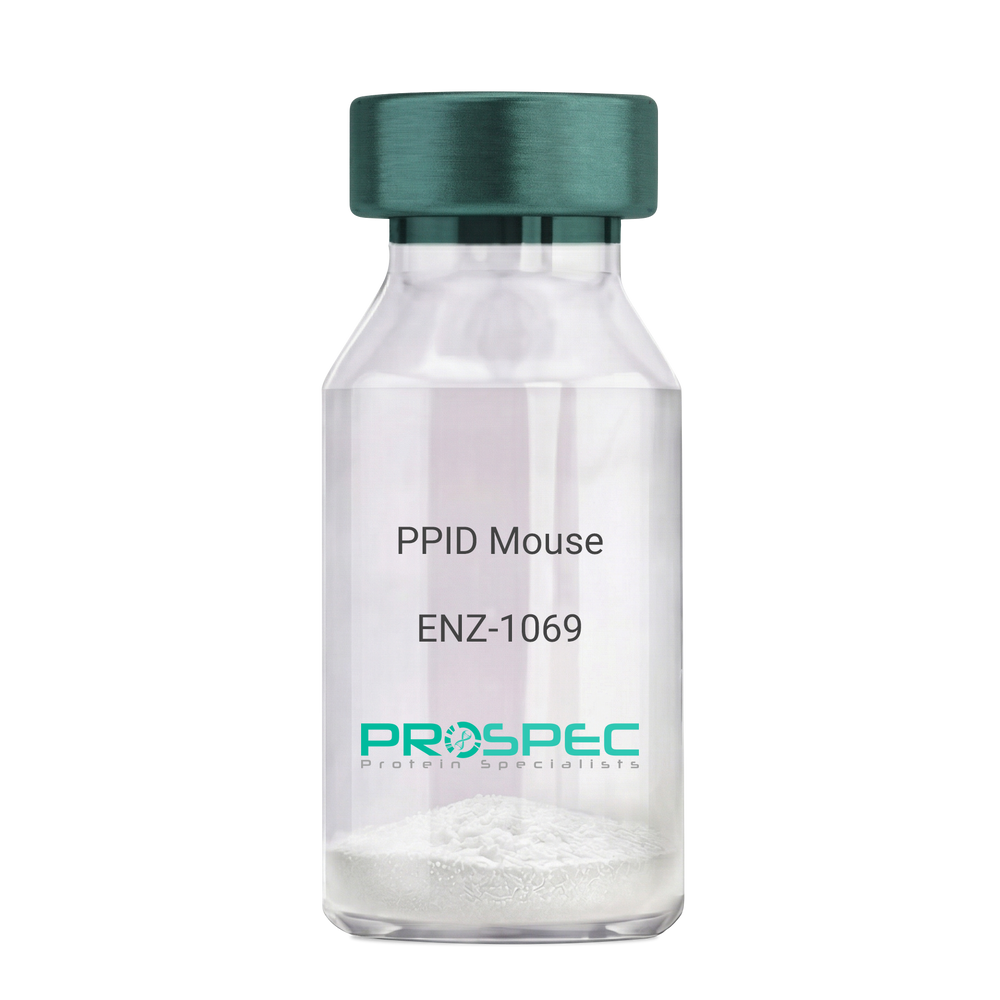
PPID MouseDescription:
Peptidylprolyl Isomerase D Mouse Recombinant
Peptidyl-prolyl cis-trans isomerase D, PPIase D, 40 kDa peptidyl-prolyl cis-trans isomerase, Cyclophilin-40, CYP-40, Cyclophilin-related protein, CYP40, CYPD, PPID, Peptidylprolyl Isomerase D.
Product # :
ENZ-1069Price :
Quantity :
Shipping Method :
Shipped with Ice Packs
More Info
- description
- source
- formulation
- purity
- biological activity
- More Info
Description
PPID Mouse Recombinant produced in E.Coli is a single, non-glycosylated polypeptide chain containing 395 amino acids (1-370a.a.) and having a molecular mass of 43.4kDa. PPID is fused to a 25 amino acid His-tag at N-terminus & purified by proprietary chromatographic techniques.
Source
Escherichia Coli.
Formulation
PPID protein solution (1mg/ml) containing 20mM Tris-Hcl buffer (pH8.0), 10% glycerol and 1mM DTT.
Purity
Greater than 90.0% as determined by SDS-PAGE.
Biological Activity
Specific activity is > 700nmol/min/mg, and is defined as the amount of enzyme that cleaves 1umole of suc-AAFP-PNA per minute at 37°C in Tris–HCl pH 8.0 using chymotrypsin.
More Info
-
Introduction
Cyclophilin-D is a member of the peptidyl-prolyl cis-trans isomerase (PPIase) family. PPIases catalyze the cis-trans isomerization of proline imidic peptide bonds in oligopeptides and speeds up the protein folding. Cyclophilin-D possess PPIase activity and binds to the immunosuppressant cyclosporin-A. Cyclophilin-D is very well known that its overexpression suppresses the apoptosis in cancer cell. Cyclophilin-D suppresses apoptotic cell death by the use of mitochondrial hexokinase-2 dependent mechanism in cancer cells.
-
Synonyms
Peptidyl-prolyl cis-trans isomerase D, PPIase D, 40 kDa peptidyl-prolyl cis-trans isomerase, Cyclophilin-40, CYP-40, Cyclophilin-related protein, CYP40, CYPD, PPID, Peptidylprolyl Isomerase D.
-
Physical Appearance
Sterile Filtered colorless solution.
-
Stability
Store at 4°C if entire vial will be used within 2-4 weeks. Store, frozen at -20°C for longer periods of time. For long term storage it is recommended to add a carrier protein (0.1% HSA or BSA). Please prevent freeze-thaw cycles.
-
Amino Acid Sequence
MGSSHHHHHH SSGLVPRGSH MGSEFMSHAS PAAKPSNSKN PRVFFDVDIG GERVGRIVLE LFADIVPKTA ENFRALCTGE KGTGSTTGKP LHFKGCPFHR IIKKFMIQGG DFSNQNGTGG ESIYGEKFED ENFHYKHDRE GLLSMANAGP NTNGSQFFIT TVPTPHLDGK HVVFGQVIKG LGVARTLENV EVNGEKPAKL CVIAECGELK EGDDWGIFPK DGSGDSHPDF PEDADIDLKD VDKILLISED LKNIGNTFFK SQNWEMAIKK YAKVLRYVDS SKAVIEKADR SRLQPIALSC VLNIGACKLK MSNWQGAIDS CLEALEMDPS NTKALYRKAQ GWQGLKEYDQ ALADLKKAQE IAPGDKAIQA ELLKVKQMIK AQKDKEKAVY AKMFA.
ProSpec's products are furnished for LABORATORY RESEARCH USE ONLY. The product may not be used as drugs, agricultural or pesticidal products, food additives or household chemicals.
- View Data Sheet
Name :
RNF34 HumanDescription:
Ring Finger Protein 34 Human Recombinant
Ring Finger Protein 34, E3 Ubiquitin Protein Ligase, RING Finger Protein 34, Caspase Regulator CARP1, Caspases-8 And -10-Associated RING Finger Protein 1, FYVE-RING Finger Protein Momo, Human RING Finger Homologous To Inhibitor Of Apoptosis Protein, CARP-1, hRFI, RING Finger Protein RIFF, RFI, CARP1, RIF, RIFF, E3 Ubiquitin-Protein Ligase RNF34, EC 6.3.2.
Product # :
PRO-1761Price :
Quantity :
Shipping Method :
Shipped with Ice Packs
More Info
- description
- source
- formulation
- purity
- More Info
Description
RNF34 Human Recombinant produced in E.Coli is a single, non-glycosylated polypeptide chain containing 396 amino acids (1-373a.a) and having a molecular mass of 44.2kDa.RNF34 is fused to a 23 amino acid His-tag at N-terminus & purified by proprietary chromatographic techniques.
Source
Escherichia Coli.
Formulation
RNF34 protein solution (1mg/ml) containing 20mM Tris-HCl buffer (pH8.0), 10% glycerol, 0.1M NaCl and 1mM DTT.
Purity
Greater than 90.0% as determined by SDS-PAGE.
More Info
-
Introduction
Ring Finger Protein 34 (RNF34) has E3 ubiquitin-protein ligase activity. RNF34 has a RINF finger, a motif recognized to be involved in protein-protein and protein-DNA interactions. RNF34 regulates the levels of CASP8 and CASP10 by targeting them for proteasomal degradation. In addition, RNF34 protects cells against apoptosis induced by TNF. RNF34 also binds phosphatidylinositol 5-phosphateand phosphatidylinositol 3-phosphate. Alternatively splicing results in multiple transcript variants encoding distinct isoforms.
-
Synonyms
Ring Finger Protein 34, E3 Ubiquitin Protein Ligase, RING Finger Protein 34, Caspase Regulator CARP1, Caspases-8 And -10-Associated RING Finger Protein 1, FYVE-RING Finger Protein Momo, Human RING Finger Homologous To Inhibitor Of Apoptosis Protein, CARP-1, hRFI, RING Finger Protein RIFF, RFI, CARP1, RIF, RIFF, E3 Ubiquitin-Protein Ligase RNF34, EC 6.3.2.
-
Physical Appearance
Sterile Filtered clear solution.
-
Stability
Store at 4°C if entire vial will be used within 2-4 weeks. Store, frozen at -20°C for longer periods of time.For long term storage it is recommended to add a carrier protein (0.1% HSA or BSA).Please avoid freeze thaw cycles.
-
Amino Acid Sequence
MGSSHHHHHH SSGLVPRGSH MGS MRKAGAT SMWASCCGLL NEVMGTGAVR GQQSAFAGAT GPFRFTPNPE FSTYPPAATE GPNIVCKACG LSFSVFRKKH VCCDCKKDFC SVCSVLQENL RRCSTCHLLQ ETAFQRPQLM RLKVKDLRQY LILRNIPIDT CREKEDLVDL VLCHHGLGSE DDMDTSSLNS SRSQTSSFFT RSFFSNYTAP SATMSSFQGE LMDGDQTSRS GVPAQVQSEI TSANTEDDDD DDDEDDDDEE ENAEDRNPGL SKERVRASLS DLSSLDDVEG MSVRQLKEIL ARNFVNYSGC CEKWELVEKV NRLYKENEEN QKSYGERLQL QDEEDDSLCR ICMDAVIDCV LLECGHMVTC TKCGKRMSEC PICRQYVVRA VHVFKS
ProSpec's products are furnished for LABORATORY RESEARCH USE ONLY. The product may not be used as drugs, agricultural or pesticidal products, food additives or household chemicals.
- View Data Sheet
Name :
Leptin-A TilapiaDescription:
Leptin-A Tilapia Recombinant
Product # :
CYT-1109Price :
Quantity :
Shipping Method :
Shipped at Room temp
More Info
- description
- source
- formulation
- purity
- biological activity
- More Info
Description
Leptin-A Tilapia Recombinant produced in E.Coli is a single, non-glycosylated polypeptide chain containing 161 amino acids and having a molecular mass of 16,491 Dalton. The Leptin-A Tilapia is purified by proprietary chromatographic techniques.
Source
Escherichia Coli.
Formulation
Lyophilized from a concentrated (1mg/ml) solution containing NaHCO3 at 1:2 salt: protein ratio.
Purity
Greater than 95.0% as determined by:
(a) Gel filtration analysis.
(b) Analysis by SDS-PAGE.Biological Activity
Tilapia leptins were found to be biologically active in promoting proliferation of BAF/3 cells stably transfected with the long form of human leptin receptor, but their activity was lower than that of mammalian leptin. Furthermore, the Tilapia leptins were biologically active in promoting STAT‐LUC activation in COS7 cells transfected with Tilapia leptin receptor but not in cells transfected with human leptin receptor. Tilapia Leptin A was more active than Tilapia Leptin B.
More Info
-
Introduction
Leptin is a protein hormone. It is mainly produced in adipose cells that regulate energy homeostasis by restraining hunger. Leptin ties to nuclear receptors in the hypothalamus (arcuate nucleus). Similar to insulin resistance in type II diabetes, in obesity there is a decrease in the sensitivity towards leptin, ending in a failure to identify satiety, even in high levels of energy stores or leptin itself. Full-length cDNA encoding 2 leptin sequences (tLepA and tLepB) and 1 leptin receptor sequence (tLepR) exists in tilapia (Oreochromis niloticus). The full-length cDNA of tLepR is 3423 bp, encoding a protein of 1140 amino acid which contained all functionally important domains conserved among vertebrate leptin receptors. The cDNAs of tLepA and tLepB are 486 bp and 459 bp in length, encoding proteins of 161 aa and 152 aa, respectively. The three-dimensional structures of tLepA and tLepB demonstrates strong conservation of tertiary structure with that of human leptin comprised of 4 helixes.
-
Physical Appearance
Sterile Filtered White lyophilized (freeze-dried) powder.
-
Stability
Lyophilized Leptin-A Tilapia although stable at room temperature for 3 weeks, should be stored desiccated below -18°C. Upon reconstitution Leptin-A Tilapia should be stored at 4°C between 2-7 days and for future use below -18°C. For long term storage it is recommended to add a carrier protein (0.1% HSA or BSA). Please prevent freeze-thaw cycles.
-
Solubility
It is recommended to reconstitute the lyophilized Leptin-A Tilapia in sterile water or 0.4% NaHCO3 adjusted to pH 8-9, not less than 100µg/ml, which can then be further diluted to other aqueous solutions.
-
Amino Acid Sequence
The first six N-terminal amino acids of recombinant Tilapia leptin A are Ala-Pro-Leu-Pro-Val-Glu.
-
Protein content
Protein quantitation was carried out by UV spectroscopy at 280 nm using the absorbency value of 1.33 for 1 mg/ml Leptin-A Tilapia as the extinction coefficient for a 0.1% (1mg/ml) solution at pH 8.0. This value is calculated by the DNAman computer analysis program of protein sequences.
ProSpec's products are furnished for LABORATORY RESEARCH USE ONLY. The product may not be used as drugs, agricultural or pesticidal products, food additives or household chemicals.
- View Data Sheet
Name :
CTGF (182-250 a.a.) HumanDescription:
Connective Tissue Growth Factor Human Recombinant (182-250 a.a.)
CCN2, NOV2, HCS24, IGFBP8, MGC102839, CTGF, Connective Tissue Growth Factor.
Product # :
CYT-526Price :
Quantity :
Shipping Method :
Shipped at Room temp
More Info
- description
- source
- formulation
- purity
- More Info
Description
The Connective Tissue Growth Factor amino acids 182-250, produced in E.Coli, is a fusion protein with His Tag (4 kDa), having a total molecular mass of 15 kDa.
Source
Escherichia Coli.
Formulation
Lyophilized without any additives.
Purity
Greater than 90.0% as determined by SDS-PAGE.
More Info
-
Introduction
Connective Tissue Growth Factor belongs to the CCN family of proteins. The CCN family presently consists of six members in human also known as: Cyr61 (Cystein rich 61), CTGF (Connective Tissue Growth Factor), Nov (Nephroblastoma Overexpressed gene), WISP-1, 2 and 3 (Wnt-1 Induced Secreted Proteins). The CCN genes encode secreted proteins associated with the Extracellular Matrix (ECM) and cell membrane. CCN proteins are matricellular proteins which are involved in the regulation of various cellular functions including: proliferation, differentiation, survival, adhesion and migration. They are expressed in derivatives of the three embryonic sheets and are implicated in the development of kidney, nervous system, muscle, bone marrow, cartilage and bone. During adulthood, they are implicated in wound healing, bone fracture repair, and pathologies such as: fibrosis, vascular ailments and tumorigenesis.
Full length secreted CCN proteins can show an antiproliferative activity, whereas truncated isoforms are likely to stimulate proliferation and behave as oncogenes. The full length protein consists of four modulesModule I shares partial identity with the N-terminal part of the Insulin-like Growth Factor Binding Proteins (IGFBPs).
Module II includes a stretch of 70amino acid residues – which shares sequence identity with the Von Willebrand Factor Type C repeat (VWC).
Module III contains sequences sharing identity with the Thrombospondin type 1 repeat (TSP1) (WSXCSXXCG), which is thought to be implicated in the binding of sulfated glycoconjugates and to be important for cell adhesion. Module IV, also designated CT, is encoded by exon5. It is the leasts conserved one of the four domains at the level of nucleotide sequence, but it appears to be critical for several of the biological functions attributed to the CCN proteins. Module IV resembles the CT domain of several extracellular protein including, Von Willebrand's factor and mucins. Sequence similarities to heparin-binding motifs are also found within this domain. Proteolysis of the secreted full-length CCN proteins that has been reported in the case of CCN2 and CCN3 might result in the production of CCN-derived peptides with high affinity for ligands that full-length CNN proteins bind only poorly. Amino-truncated CCN2 isoforms were biologically active whereas no specific biological activity has been attributed to the truncated CCN3. Although the molecular processes underlying the production of these secreted isoforms is presently unknown, it is important to note that proteolysis occur at the same amino acid residues in both CCN2 and CCN3. An elevated expression of CCN2 has also been detected by Northern blotting in human invasive mammary ductal carcinomas, dermatofibromas, pyogenic granuloma, endothelial cells of angiolipomas and angioleiomyomas, and in pancreatic tumors. A study performed with chondrosarcomas representative of various histological grades established that CCN2 expression was closely correlated with increasing levels of malignancy. In agreement with CCN2 playing a role in brain tumor angiogenesis, immunocytochemistry studies indicated that both glioblastoma tumor cells and proliferating endothelial cells stained positive for CCN2. In astrocytomas, CCN2 expression was particularly elevated in high grade tumors, with a marked effect of CCN2 on cell proliferation. Downregulation of CCN2 expression in these cells was associated with a growth arrest at the G1/S transition while over-expression of CCN2 induced a two-fold increase of the number of cells in the G1 phase. Gene profiling analysis allowed to identify a set of about 50 genes whose expression might account for the proliferative activity of CCN2 in these cells.
CCN2 was seen in a higher proportion of mononuclear cells of patients with acute lymphoblastic leukemia. -
Synonyms
CCN2, NOV2, HCS24, IGFBP8, MGC102839, CTGF, Connective Tissue Growth Factor.
-
Physical Appearance
Sterile Filtered white lyophilized powder.
-
Stability
Lyophilized CTGF although stable at room temperature for 3 weeks, should be stored desiccated below -18°C. Upon reconstitution CTGF should be stored at 4°C between 2-7 days and for future use below -18°C.For long-term storage it is recommended to add a carrier protein (0.1% HSA or BSA).Please prevent freeze-thaw cycles.
-
Solubility
It is recommended to reconstitute the lyophilized CTGF in sterile 18MΩ-cm H2O not less than 100 µg/ml, which can then be further diluted to other aqueous solutions.
-
Background
What is the molecular weight/Mw of CTGF Protein?
CTGF Protein has a total Mw of 15kDa.
What is the source or expression system of CTGF Protein?
Escherichia Coli.
What is the Purity of CTGF Protein?
CTGF Protein is >90% pure as determined by SDS-PAGE.
What is the Biological Activity of CTGF Protein?
The biological functionality of CTGF Protein will be determined in the future.
What is the amino acid sequence of CTGF Protein?
CTGF Protein is composed from 180-250 amino acids.
What applications can CTGF Protein be used in?
CTGF Protein can probably be used in western blot, ELISA and Lateral Flow.
What is the endotoxin level for CTGF Protein?
The endotoxin level is minimal, CTGF Protein was purified using conventional chromatography techniques.
ProSpec's products are furnished for LABORATORY RESEARCH USE ONLY. The product may not be used as drugs, agricultural or pesticidal products, food additives or household chemicals.