Skip to content

High-quality research proteins.

  • 1-800-805-6531

  • Mon - Sat 8.00-18.00, Sun - Closed

  • info@prospecbio.com

  • PO Box 6591 East Brunswick NJ 08816

  • Products
    • Cytokines
    • Growth factors
    • Chemokines
    • Cd antigens
    • Neurotrophins
    • Hormones
    • Enzymes
    • Viral antigens
    • Recombinant proteins
    • Natural proteins
    • Monoclonal antibodies
    • Polyclonal antibodies
    • Thermal Packaging
  • About
    • Company
    • Founder
    • Contribution
  • Customers
    • Eastern Asia
    • Eastern Europe
    • North America
    • South America
    • South East Asia
    • Southern Asia
    • Western Europe
  • Ordering
    • Ordering Method
    • Ordering - Credit Card
    • Ordering - PO
    • Shipping Fees
    • FAQs
  • Services
    • DNA Cloning
    • Protein Expression
    • Monoclonal Antibody
    • Fermentation
    • Technology License
  • Contact us
Log in

Country/region

  • USD $ | Albania
  • USD $ | Andorra
  • USD $ | Argentina
  • USD $ | Armenia
  • USD $ | Australia
  • USD $ | Austria
  • USD $ | Azerbaijan
  • USD $ | Belarus
  • USD $ | Belgium
  • USD $ | Bolivia
  • USD $ | Brazil
  • USD $ | Bulgaria
  • USD $ | Cambodia
  • USD $ | Canada
  • USD $ | Chile
  • USD $ | China
  • USD $ | Colombia
  • USD $ | Costa Rica
  • USD $ | Croatia
  • USD $ | Cyprus
  • USD $ | Czechia
  • USD $ | Denmark
  • USD $ | Estonia
  • USD $ | Finland
  • USD $ | France
  • USD $ | Georgia
  • USD $ | Germany
  • USD $ | Greece
  • USD $ | Hong Kong SAR
  • USD $ | Hungary
  • USD $ | Iceland
  • USD $ | India
  • USD $ | Ireland
  • USD $ | Israel
  • USD $ | Italy
  • USD $ | Japan
  • USD $ | Kazakhstan
  • USD $ | Latvia
  • USD $ | Liechtenstein
  • USD $ | Lithuania
  • USD $ | Madagascar
  • USD $ | Malta
  • USD $ | Mexico
  • USD $ | Moldova
  • USD $ | Monaco
  • USD $ | Netherlands
  • USD $ | New Zealand
  • USD $ | North Macedonia
  • USD $ | Norway
  • USD $ | Panama
  • USD $ | Paraguay
  • USD $ | Peru
  • USD $ | Philippines
  • USD $ | Poland
  • USD $ | Portugal
  • USD $ | Romania
  • USD $ | Singapore
  • USD $ | Slovakia
  • USD $ | Slovenia
  • USD $ | South Africa
  • USD $ | South Korea
  • USD $ | Spain
  • USD $ | Sri Lanka
  • USD $ | Sweden
  • USD $ | Switzerland
  • USD $ | Taiwan
  • USD $ | Thailand
  • USD $ | Türkiye
  • USD $ | Ukraine
  • USD $ | United Kingdom
  • USD $ | United States
  • USD $ | Uruguay
  • USD $ | Vatican City
  • USD $ | Venezuela
  • USD $ | Vietnam
  • Facebook
  • Instagram
logoProSpec - Recombinant Protein Manufacturer for academic and R&D industry
Become a distributor
Account Log in
Wishlist
Cart Cart(0)
  • Products
    +
    • Cytokines
    • Growth factors
    • Chemokines
    • Cd antigens
    • Neurotrophins
    • Hormones
    • Enzymes
    • Viral antigens
    • Recombinant proteins
    • Natural proteins
    • Monoclonal antibodies
    • Polyclonal antibodies
    • Thermal Packaging
  • About
    +
    • Company
    • Founder
    • Contribution
  • Customers
    +
    • Eastern Asia
    • Eastern Europe
    • North America
    • South America
    • South East Asia
    • Southern Asia
    • Western Europe
  • Ordering
    +
    • Ordering Method
    • Ordering - Credit Card
    • Ordering - PO
    • Shipping Fees
    • FAQs
  • Services
    +
    • DNA Cloning
    • Protein Expression
    • Monoclonal Antibody
    • Fermentation
    • Technology License
  • Contact us

Item added to your cart

View cart
View All
  • Cytokines
  • Growth factors
  • Chemokines
  • Cd antigens
  • Neurotrophins
  • Hormones
  • Enzymes
  • Viral antigens
  • Recombinant proteins
  • Natural proteins
  • Monoclonal antibodies
  • Polyclonal antibodies
  • Thermal Packaging
  • Tumor Necrosis Factor

    Tumor Necrosis Factor

    View All
  • 4-1BB

    4-1BB

    View All
  • Adiponectin

    Adiponectin

    View All
  • AIF1

    AIF1

    View All
  • Other Cytokines

    Other Cytokines

    View All
  • AITRL

    AITRL

    View All
  • Angiopoietin

    Angiopoietin

    View All
  • Apolipoprotein

    Apolipoprotein

    View All
  • B-Cell Activating Factor

    B-Cell Activating Factor

    View All
  • Beta Defensin

    Beta Defensin

    View All
  • Bone Morphogenetic Protein

    Bone Morphogenetic Protein

    View All
  • B type Natriuretic Peptide

    B type Natriuretic Peptide

    View All
  • BST

    BST

    View All
  • Betacellulin

    Betacellulin

    View All
  • Cardiotrophin

    Cardiotrophin

    View All
  • Activin

    Activin

    View All
  • Fibroblast Growth Factor

    Fibroblast Growth Factor

    View All
  • Other Growth Factors

    Other Growth Factors

    View All
  • CSF

    CSF

    View All
  • CTGF

    CTGF

    View All
  • IGFBP

    IGFBP

    View All
  • VEGF Protein

    VEGF Protein

    View All
  • EGF

    EGF

    View All
  • Epigen

    Epigen

    View All
  • Erythropoietin

    Erythropoietin

    View All
  • Insulin-Like Growth Factor

    Insulin-Like Growth Factor

    View All
  • Growth Hormone

    Growth Hormone

    View All
  • HDGF

    HDGF

    View All
  • Hepatocyte Growth Factor

    Hepatocyte Growth Factor

    View All
  • Insulin

    Insulin

    View All
  • BCA-1/ BLC (CXCL13)

    BCA-1/ BLC (CXCL13)

    View All
  • BRAK (CXCL14)

    BRAK (CXCL14)

    View All
  • C-10 (CCL6)

    C-10 (CCL6)

    View All
  • Other Chemokines

    Other Chemokines

    View All
  • MEC (CCL28)

    MEC (CCL28)

    View All
  • LD78-beta (CCL3L1)

    LD78-beta (CCL3L1)

    View All
  • CTACK (CCL27)

    CTACK (CCL27)

    View All
  • CXCL16

    CXCL16

    View All
  • CXCL17

    CXCL17

    View All
  • Platelet Factor-4 (CXCL4)

    Platelet Factor-4 (CXCL4)

    View All
  • ENA-78 (CXCL5)

    ENA-78 (CXCL5)

    View All
  • Eotaxin (CCL11,24,26)

    Eotaxin (CCL11,24,26)

    View All
  • Exodus-2 (CCL21)

    Exodus-2 (CCL21)

    View All
  • Fractalkine (CX3CL1)

    Fractalkine (CX3CL1)

    View All
  • CXCL6

    CXCL6

    View All
  • Other CD Antigens

    Other CD Antigens

    View All
  • CD14

    CD14

    View All
  • CD164

    CD164

    View All
  • CD1

    CD1

    View All
  • CD2

    CD2

    View All
  • CD200

    CD200

    View All
  • CD207

    CD207

    View All
  • CD226

    CD226

    View All
  • CD23

    CD23

    View All
  • CD244

    CD244

    View All
  • CD247

    CD247

    View All
  • CD27

    CD27

    View All
  • CD274

    CD274

    View All
  • CD300

    CD300

    View All
  • CD33

    CD33

    View All
  • Other Neurotrophins

    Other Neurotrophins

    View All
  • Beta-NGF

    Beta-NGF

    View All
  • BDNF

    BDNF

    View All
  • CDNF

    CDNF

    View All
  • CNTF

    CNTF

    View All
  • GDNF

    GDNF

    View All
  • Glia Maturation Factor

    Glia Maturation Factor

    View All
  • MANF

    MANF

    View All
  • Midkine

    Midkine

    View All
  • Neuroglobin

    Neuroglobin

    View All
  • Neurotrophic factors

    Neurotrophic factors

    View All
  • Neuregulin

    Neuregulin

    View All
  • Neuropilin

    Neuropilin

    View All
  • Pigment Epithelium-Derived Factor

    Pigment Epithelium-Derived Factor

    View All
  • Pleiotrophin

    Pleiotrophin

    View All
  • Peptide Hormones

    Peptide Hormones

    View All
  • Other Hormones

    Other Hormones

    View All
  • HCG

    HCG

    View All
  • Endothelin

    Endothelin

    View All
  • Exendin

    Exendin

    View All
  • FSH

    FSH

    View All
  • Glucagon

    Glucagon

    View All
  • GHRP

    GHRP

    View All
  • GLP

    GLP

    View All
  • Thyrostimulin

    Thyrostimulin

    View All
  • Inhibin A

    Inhibin A

    View All
  • LHRH

    LHRH

    View All
  • Melanotan

    Melanotan

    View All
  • Procalcitonin

    Procalcitonin

    View All
  • PTH

    PTH

    View All
  • Peroxiredoxin

    Peroxiredoxin

    View All
  • Peptidase

    Peptidase

    View All
  • Synthetase

    Synthetase

    View All
  • Transferase

    Transferase

    View All
  • Hydrolase

    Hydrolase

    View All
  • Dehydrogenase

    Dehydrogenase

    View All
  • ACE2

    ACE2

    View All
  • Esterase

    Esterase

    View All
  • Protein Kinases

    Protein Kinases

    View All
  • Other Enzymes

    Other Enzymes

    View All
  • Phosphatase

    Phosphatase

    View All
  • Deaminase

    Deaminase

    View All
  • Oxygenase

    Oxygenase

    View All
  • Adenylate Kinase

    Adenylate Kinase

    View All
  • Lyase

    Lyase

    View All
  • Chagas

    Chagas

    View All
  • SARS

    SARS

    View All
  • Influenza

    Influenza

    View All
  • ASFV

    ASFV

    View All
  • Astrovirus

    Astrovirus

    View All
  • Borrelia

    Borrelia

    View All
  • Helicobacter Pylori

    Helicobacter Pylori

    View All
  • Chikungunya

    Chikungunya

    View All
  • Chlamydia

    Chlamydia

    View All
  • Cytomegalo

    Cytomegalo

    View All
  • Dengue

    Dengue

    View All
  • EBV

    EBV

    View All
  • Ebola

    Ebola

    View All
  • Feline Leukemia Virus

    Feline Leukemia Virus

    View All
  • Hepatitis A

    Hepatitis A

    View All
  • Other

    Other

    View All
  • Actin

    Actin

    View All
  • ADAM

    ADAM

    View All
  • Complement Component

    Complement Component

    View All
  • Ag85

    Ag85

    View All
  • Eukaryotic Translation Initiation Factor

    Eukaryotic Translation Initiation Factor

    View All
  • Anterior Gradient Protein

    Anterior Gradient Protein

    View All
  • Heat Shock Protein

    Heat Shock Protein

    View All
  • Alpha-2-HS-Glycoprotein

    Alpha-2-HS-Glycoprotein

    View All
  • Hemoglobin

    Hemoglobin

    View All
  • Allergy

    Allergy

    View All
  • Anaplasma

    Anaplasma

    View All
  • Angiogenin

    Angiogenin

    View All
  • Ankyrin Repeat Domain

    Ankyrin Repeat Domain

    View All
  • Annexin

    Annexin

    View All
  • Other Natural Proteins

    Other Natural Proteins

    View All
  • Aprotinin

    Aprotinin

    View All
  • Transferrin

    Transferrin

    View All
  • Avidin

    Avidin

    View All
  • Anti Coagulation Factors

    Anti Coagulation Factors

    View All
  • Natural Albumin

    Natural Albumin

    View All
  • Natural Coagulation Factors

    Natural Coagulation Factors

    View All
  • Fibronectin

    Fibronectin

    View All
  • Thrombin

    Thrombin

    View All
  • Anti Human Enzyme

    Anti Human Enzyme

    View All
  • Other Monoclonal Antibodies

    Other Monoclonal Antibodies

    View All
  • Anti Human Cytokine

    Anti Human Cytokine

    View All
  • Anti Human Heat Shock Protein

    Anti Human Heat Shock Protein

    View All
  • Anti Mouse Lymphocyte

    Anti Mouse Lymphocyte

    View All
  • Anti Human Chemokine

    Anti Human Chemokine

    View All
  • Anti Human Lymphocyte

    Anti Human Lymphocyte

    View All
  • Anti Viral Monoclonal

    Anti Viral Monoclonal

    View All
  • Anti Mouse Cytokine

    Anti Mouse Cytokine

    View All
  • Anti-GST Monoclonal

    Anti-GST Monoclonal

    View All
  • Other Polyclonal Antibodies

    Other Polyclonal Antibodies

    View All
  • Anti Viral

    Anti Viral

    View All
  • Anti-GST Monoclonal

    Anti-GST Monoclonal

    View All
Back

Search results

1000 results found for “chromogranin”

Name

Description

Product #

Price

Quantity

Shipping Method

  • View Data Sheet

    Name :

    Hemopexin Human, Sf9

    Description:

    Hemopexin Human Recombinant, Sf9

    Hemopexin, Beta-1B-Glycoprotein, HX, Beta-1B-glycoprotein.

    Product # :

    PRO-2544

    Price :

    Quantity :

    Shipping Method :

    Ice Icon

    Shipped with Ice Packs

    Add To Cart

    More Info

    • description
    • source
    • formulation
    • purity
    • More Info

    Description

    Hemopexin produced in Sf9 Baculovirus cells is a single, glycosylated polypeptide chain containing 448 amino acids (24-462a.a.) and having a molecular mass of 50.4kDa. (Molecular size on SDS-PAGE will appear at approximately 50-70kDa).Hemopexin is expressed with a 9 amino acid His tag at C-Terminus and purified by proprietary chromatographic techniques.

    Source

    Sf9, Baculovirus cells.

    Formulation

    Hemopexin protein solution (0.5mg/ml) contains 10% glycerol & Phosphate Buffered Saline (pH 7.4).

    Purity

    Greater than 90.0% as determined by SDS-PAGE.

    More Info

    • Introduction

      Hemopexin (or haemopexin) is a plasma protein that binds heme with the highest affinity of any known protein. Hemopexin is generally expressed in liver, and belongs to acute phase reactants, the synthesis of which is induced after inflammation. Heme is potentially very toxic because of its ability to intercalate into lipid membrane and to generate hydroxyl radicals. Hemopexin’s function of scavenging the heme released or lost by the turnover of heme proteins such as hemoglobin defends the body from the oxidative damage that free heme can cause. Additionally, hemopexin discharges its bound ligand for internalisation upon interacting with a specific receptor located on the surface of liver cells. This hemopexin function is in order to preserve the body's iron. Hemopexin’s levels in the serum are an indication of how much heme is present in the blood. Low Hemopexin levels show that there is a lot of it in the serum. For that reason, low hemopexin levels indicate that there has been consid

    • Synonyms

      Hemopexin, Beta-1B-Glycoprotein, HX, Beta-1B-glycoprotein.

    • Physical Appearance

      Sterile filtered colorless solution.

    • Stability

      Store at 4°C if entire vial will be used within 2-4 weeks.Store, frozen at -20°C for longer periods of time. For long term storage it is recommended to add a carrier protein (0.1% HSA or BSA). Avoid multiple freeze-thaw cycles.

    • Amino Acid Sequence

      ADPTPLPPTS AHGNVAEGET KPDPDVTERC SDGWSFDATT LDDNGTMLFF KGEFVWKSHK WDRELISERW KNFPSPVDAA FRQGHNSVFL IKGDKVWVYP PEKKEKGYPK LLQDEFPGIP SPLDAAVECH RGECQAEGVL FFQGDREWFW DLATGTMKER SWPAVGNCSS ALRWLGRYYC FQGNQFLRFD PVRGEVPPRY PRDVRDYFMP CPGRGHGHRN GTGHGNSTHH GPEYMRCSPH LVLSALTSDN HGATYAFSGT HYWRLDTSRD GWHSWPIAHQ WPQGPSAVDA AFSWEEKLYL VQGTQVYVFL TKGGYTLVSG YPKRLEKEVG TPHGIILDSV DAAFICPGSS RLHIMAGRRL WWLDLKSGAQ ATWTELPWPH EKVDGALCME KSLGPNSCSA NGPGLYLIHG PNLYCYSDVE KLNAAKALPQ PQNVTSLLGC THHHHHHH.

    ProSpec's products are furnished for LABORATORY RESEARCH USE ONLY. The product may not be used as drugs, agricultural or pesticidal products, food additives or household chemicals.

    Hemopexin Protein
  • View Data Sheet

    Name :

    ITAC (63-87) Human

    Description:

    ITAC (63-87 a.a.) Human Recombinant

    ITAC, I-TAC, CXCL-11, CXCL11.

    Product # :

    CHM-049

    Price :

    Quantity :

    Shipping Method :

    Room Temp Icon

    Shipped at Room temp

    Add To Cart

    More Info

    • description
    • source
    • formulation
    • purity
    • More Info

    Description

    The I-TAC Human is created as a recombinant protein with a 4kda N-terminal fusion of His Tag. The I-TAC His-Tagged Fusion Protein, produced in E. coli, is a 9kDa protein containing 25 amino acid residues of the I-TACHuman, 63-87 amino acids.

    Source

    Escherichia Coli.

    Formulation

    Each mg was lyophilized with 1xPBS, 0.4% SDS and 4mM DTT.

    Purity

    Greater than 90% as determined by SDS-PAGE.

    More Info

    • Synonyms

      ITAC, I-TAC, CXCL-11, CXCL11.

    • Physical Appearance

      Filtered White lyophilized (freeze-dried) powder.

    • Stability

      Store lyophilized I-TAC at -20°C. Aliquot the product after reconstitution to avoid repeated freezing/thawing cycles. Reconstituted protein can be stored at 4°C for a limited period of time; it does not show any change after two weeks at 4°C.

    • Solubility

      It is recommended to add deionized water to prepare a working stock solution of approximately 0.5mg/ml and let the lyophilized pellet dissolve completely. Product is not sterile! Please filter the product by an appropriate sterile filter before using it on cell culture.

    • Background

      I-TAC is a small cytokine belongs to the CXC chemokinen family which also called inducible T-cell alpha chemoattractant and IP-9. I-TAC is expressed mainly in peripheral blood leukocytes, liver and pancreas with moderate levels in spleen, thymus and lung and low levels in small intestine, placenta and prostate. IFN-g and IFN-b induces strongly gene expression of I-TAC. The I-TAC chemokine elicits its effects on its target cells by interacting with the cell surface chemokine receptor CXCR3, with a higher affinity than do the other ligands for this receptor, CXCL9 and CXCL10.

    ProSpec's products are furnished for LABORATORY RESEARCH USE ONLY. The product may not be used as drugs, agricultural or pesticidal products, food additives or household chemicals.

    Cxcl11 Human
  • View Data Sheet

    Name :

    Insulin Human

    Description:

    Insulin Human Recombinant

    Product # :

    CYT-270

    Price :

    Quantity :

    Shipping Method :

    Room Temp Icon

    Shipped at Room temp

    Add To Cart

    More Info

    • description
    • source
    • formulation
    • purity
    • biological activity
    • More Info

    Description

    Insulin Human Recombinant produced in E.Coli is a two chain, non-glycosylated polypeptide chain containing 51 amino acids and having a molecular mass of 5807 Dalton. Insulin is purified by proprietary chromatographic techniques.

    Source

    Escherichia Coli.

    Formulation

    The protein was lyophilized from a concentrated (1mg/ml) solution with no additives.

    Purity

    Greater than 98.0% as determined by RP-HPLC analysis.

    Biological Activity

    The Biological Activity was determined to be 28 units/mg.

    More Info

    • Introduction

      Insulin decreases blood glucose concentration. It increases cell permeability to monosaccharides, amino acids and fatty acids. It accelerates glycolysis, the pentose phosphate cycle, and glycogen synthesis in liver.

    • Physical Appearance

      Sterile Filtered White lyophilized (freeze-dried) powder.

    • Stability

      Lyophilized Insulin although stable at room temperature for 3 weeks, should be stored desiccated below -18°C. Upon reconstitution Insulin should be stored at 4°C between 2-7 days and for future use below -18°C.For long term storage it is recommended to add a carrier protein (0.1% HSA or BSA).Please prevent freeze-thaw cycles.

    • Solubility

      It is recommended to reconstitute the lyophilized Insulin in sterile 0.005N HCl not more than 1 mg/ml.

    ProSpec's products are furnished for LABORATORY RESEARCH USE ONLY. The product may not be used as drugs, agricultural or pesticidal products, food additives or household chemicals.

    Insulin Human
  • View Data Sheet

    Name :

    CK2a Zea Mays

    Description:

    Casein Kinase 2 alpha Zea Mays Recombinant

    Casein kinase II subunit alpha, EC 2.7.11.1, CK II, CK2-alpha, CK2?.

    Product # :

    PKA-210

    Price :

    Quantity :

    Shipping Method :

    Ice Icon

    Shipped with Ice Packs

    Add To Cart

    More Info

    • description
    • source
    • formulation
    • purity
    • More Info

    Description

    Casein Kinase 2 alpha Zea Mays Recombinant is a non-glycosylated polypeptide having a molecular mass of 39.2 kDa. Casein Kinase 2 is purified by proprietary chromatographic techniques.

    Source

    Escherichia Coli.

    Formulation

    CK2a is supplied in 50% glycerol.

    Purity

    Greater than 99% as determined by SDS-PAGE.

    More Info

    • Introduction

      The Casein kinase 2 (EC2.7.11.1) is a serine/threonine-selective protein kinasethat is a tetramer of two alpha subunits and two beta subunits. The alpha subunits have the catalytic kinase domain. Casein kinase 2 has been implicated in cell cyclecontrol, DNA repair, regulation of the circadian rhythmand other cellular processes.
      Casein kinase 2 activity has been reported to be activated following Wnt signaling pathwayactivation. A Pertussis toxin-sensitive G proteinand Disheveled appear to be an intermediary between Wnt-mediated activation of the Frizzled receptor and activation of casein kinase 2.

    • Synonyms

      Casein kinase II subunit alpha, EC 2.7.11.1, CK II, CK2-alpha, CK2?.

    • Stability

      Store at 4°C if entire vial will be used within 2-4 weeks. Store, frozen at -20°C for longer periods of time. Avoid multiple freeze-thaw cycles.

    • Unit Definition

      No protease activity detectable, specific activity > 1U/mg (1U = 1µmol/min at 37 degree C) using the synthetic peptide RRRDDDSDDD.

    ProSpec's products are furnished for LABORATORY RESEARCH USE ONLY. The product may not be used as drugs, agricultural or pesticidal products, food additives or household chemicals.

    Ck2A Zea Mays
  • View Data Sheet

    Name :

    Tamm Horsfall

    Description:

    Recombinant Human Tamm Horsfall Glycoprotein

    Tamm-Horsfall urinary glycoprotein, THP, FJHN, HNFJ, THGP, MCKD2, ADMCKD2, UMOD, Uromodulin.


    Product # :

    ENZ-1206

    Price :

    Quantity :

    Shipping Method :

    Room Temp Icon

    Shipped at Room temp

    Add To Cart

    More Info

    • description
    • source
    • formulation
    • purity
    • More Info
    • SDS-PAGE

    Description

    Uromodulin Human Recombinant protein produced from HEK Cells, is a polypeptide chain containing 595 amino acids ( 25-613 a.a. ) and having a total Mw of 65 kDa.

    Source

    HEK293

    Formulation

    The UMOD protein was lyophilized from 0.4μm filtered solution containing 50mM NaCl, 0.02M TRIS, pH 7.5.

    Purity

    Greater than 90.0% as determined by SDS-PAGE analysis.

    SDS-PAGE

    Tamm Horsfall-SDS-PAGE - Product image 1

    More Info

    • Introduction

      Uromodulin (Tamm–Horsfall protein) is produced mainly by cells in the kidney’s thick ascending limb and is the most abundant protein in normal urine.
      Uromodulin takes part in salt and water regulation, helps prevent urinary tract infections and kidney stones, and influences inflammation and immune activity in the kidney.
      Reduced Uromodulin levels is associated with chronic kidney disease.
      UMOD mutations causes unproper protein folding and thus transported incorrectly, resulting in its accumulation inside kidney tubular cells that damages the tubules and cause kidney disease (ADTKD-UMOD), associated with high uric acid, gout, and progressive kidney failure.

    • Synonyms

      Tamm-Horsfall urinary glycoprotein, THP, FJHN, HNFJ, THGP, MCKD2, ADMCKD2, UMOD, Uromodulin.

    • Physical Appearance

      Filtered White lyophilized (freeze-dried) powder.

    • Stability

      Lyophilized UMOD although stable at room temperature for 3 weeks, should be stored at -18C. Upon reconstitution UMOD should be stored at 4C between 2-7 days and for future use below -18C.
      For long term storage it is recommended to add a carrier protein (0.1% HSA or BSA).
      Please prevent freeze-thaw cycles.

    • Solubility

      Add deionized water to prepare a working stock solution of approximately 0.5mg/ml and let the lyophilized pellet dissolve completely. Product is not sterile! Please filter the product by an appropriate sterile filter before using it in the cell culture.

    • Amino Acid Sequence

      DTSEARWCSE CHSNATCTED EAVTTCTCQE GFTGDGLTCV DLDECAIPGA HNCSANSSCV NTPGSFSCVC PEGFRLSPGL GCTDVDECAE PGLSHCHALA TCVNVVGSYL CVCPAGYRGD GWHCECSPGS CGPGLDCVPE GDALVCADPC QAHRTLDEYW RSTEYGEGYA CDTDLRGWYR FVGQGGARMA ETCVPVLRCN TAAPMWLNGT HPSSDEGIVS RKACAHWSGH CCLWDASVQV KACAGGYYVY NLTAPPECHL AYCTDPSSVE GTCEECSIDE DCKSNNGRWH CQCKQDFNIT DISLLEHRLE CGANDMKVSL GKCQLKSLGF DKVFMYLSDS RCSGFNDRDN RDWVSVVTPA RDGPCGTVLT RNETHATYSN TLYLADEIII RDLNIKINFA CSYPLDMKVS LKTALQPMVS ALNIRVGGTG MFTVRMALFQ TPSYTQPYQG SSVTLSTEAF LYVGTMLDGG DLSRFALLMT NCYATPSSNA TDPLKYFIIQ DRCPHTRDST IQVVENGESS QGRFSVQMFR FAGNYDLVYL HCEVYLCDTM NEKCKPTCSG TRFRSGSVID QSRVLNLGPI TRKGVQATVH HHHHH

    • Background

      Uromodulin is the most abundant protein in normal urine. Its secretion in urine follows proteolytic cleavage of the ectodomain of its glycosyl phosphatidylinosital-anchored counterpart that is situated on the luminal cell surface of the loop of Henle. Uromodulin plays a role as a constitutive inhibitor of calcium crystallization in renal fluids. Secretion of uromodulin in urine provides protection against urinary tract infections caused by uropathogenic bacteria. Defects in Uromodulin expression are associated with the autosomal dominant renal disorders medullary cystic kidney disease-2 (MCKD2) and familial juvenile hyperuricemic nephropathy (FJHN). These disorders are characterized by juvenile onset of hyperuricemia, gout, and progressive renal failure. While several transcript variants may exist for this gene, the full-length natures of only two have been described to date. UMOD is involved in regulating the circulating activity of cytokines as it binds to il-1, il-2 and tnf with high affinity.

      What is the molecular weight/Mw of UMOD Protein?
      UMOD Protein has a total Mw of 65kDa.

      What is the source or expression system of UMOD Protein?
      HEK293.

      What is the Purity of UMOD Protein?
      UMOD Protein is >90% pure as determined by SDS-PAGE.

      What is the Biological Activity of UMOD Protein?
      The biological functionality of UMOD Protein will be determined in the future.

      What is the amino acid sequence of UMOD Protein?
      UMOD Protein is composed from 595 amino acids.

      What applications can UMOD Protein be used in?
      UMOD Protein can probably be used in western blot, ELISA and Lateral Flow.

      What is the endotoxin level for UMOD Protein?
      The endotoxin level is minimal, UMOD Protein was purified using conventional chromatography techniques.

    ProSpec's products are furnished for LABORATORY RESEARCH USE ONLY. The product may not be used as drugs, agricultural or pesticidal products, food additives or household chemicals.

    Tamm Horsfall
  • View Data Sheet

    Name :

    Thymosin β4

    Description:

    Thymosin-b4 Human Recombinant

    Thymosin beta-4, T beta 4, Fx , TB4X, PTMB4, TMSB4.

    Product # :

    HOR-003

    Price :

    Quantity :

    Shipping Method :

    Room Temp Icon

    Shipped at Room temp

    Add To Cart

    More Info

    • description
    • source
    • formulation
    • purity
    • More Info

    Description

    Thymosin b4 Human Recombinant produced in E.Coli is a single, non-glycosylated, polypeptide chain containing 43 amino acids and having a molecular mass of 4.9kDa.The Thymosin b4 Human is purified by proprietary chromatographic techniques.

    Source

    Escherichia Coli.

    Formulation

    Lyophilized from a 0.2um filtered concentrated solution in 1xPBS, pH 7.4.

    Purity

    Greater than 95.0% as determined by SDS-PAGE and HPLC analyses.

    More Info

    • Introduction

      CB1 cannabinoid receptor-interacting protein 1 (CNRIP1) is a 164 amino acid protein and G-protein coupled receptor which is a member of the CNRIP family. The CNRIP1 interacts with the C-terminal tail of cannabinoid receptor 1. CNRIP1 is expressed in the brain tissue and, at low levels, in the testis. CNRIP1 is involved in appetite, synaptic plasticity, neuroprotection and analgesia.

    • Synonyms

      Thymosin beta-4, T beta 4, Fx , TB4X, PTMB4, TMSB4.

    • Physical Appearance

      Sterile Filtered White lyophilized (freeze-dried) powder.

    • Stability

      Lyophilized Thymosin B4 Human although stable at room temperature for 3 weeks, should be stored desiccated below -18°C. Upon reconstitution Thymosin B4 Human should be stored at 4°C between 2-7 days and for future use below -18°C. Please prevent freeze-thaw cycles.

    • Solubility

      It is recommended to reconstitute the lyophilized Thymosin B4 in sterile 18M-cm H2O not less than 100µg/ml, which can then be further diluted to other aqueous solutions.

    • Amino Acid Sequence

      SDKPDMAEIE KFDKSKLKKT ETQEKNPLPS KETIEQEKQA GES

    ProSpec's products are furnished for LABORATORY RESEARCH USE ONLY. The product may not be used as drugs, agricultural or pesticidal products, food additives or household chemicals.

    Thymosin B4
  • View Data Sheet

    Name :

    Retatrutide

    Description:

    Retatrutide

    Product # :

    HOR-058

    Price :

    Quantity :

    Shipping Method :

    Room Temp Icon

    Shipped at Room temp

    Add To Cart

    More Info

    • description
    • formulation
    • purity
    • More Info

    Description

    Retatrutide  is a synthetic single, non-glycosylated polypeptide chain containing 39 amino acids, having a molecular mass of 4731 Dalton and a Molecular formula of C221H342N46O68.               

    Formulation

    The protein was lyophilized with no additives.

    Purity

    Greater than 97.0% as determined by analysis by RP-HPLC.

    More Info

    • Physical Appearance

      Sterile Filtered White lyophilized (freeze-dried) powder.

    • Stability

      Lyophilized Retatrutide although stable at room temperature for 3 weeks, should be stored desiccated below -18°C. Upon reconstitution Retatrutide should be stored at 4°C between 2-7 days and for future use below -18°C.
      For long term storage it is recommended to add a carrier protein (0.1% HSA or BSA).
      Please prevent freeze-thaw cycles.

    • Solubility

      It is recommended to reconstitute the lyophilized Retatrutide in sterile 18MΩ-cm H2O not less than 100 µg/ml, which can then be further diluted to other aqueous solutions.

    • Amino Acid Sequence

      H-Tyr-Aib-Gln-Gly-Thr-Phe-Thr-SerAsp-Tyr-Ser-Ile-α-Me-Leu-Leu-Asp-Lys-{diacid-C20-gamma-Glu- (AEEA)-Lys}-Ala-Gln-Aib-Ala-Phe-Ile-Glu-Tyr-Leu-Leu-Glu-Gly-GlyPro-Ser-Ser-Gly-Ala-Pro-Pro-Pro-Ser-NH2.

    • Background

      Retatrutide is atriple agonist targeting the GIP, GLP-1, and glucagon receptors which offers a distinct metabolic profile that goes beyond previous dual agonists like Tirzepatide. Retatrutide takes a very important part in metabolic pharmacotherapy, achieving high weight loss of nearly 30% in Phase 3 trials. Retatrutide’s triple-receptor agonism—mainly the inclusion of the glucagon receptor—provides a superior metabolic advantage in clearing liver fat and increasing thermogenesis compared to dual agonists.

    ProSpec's products are furnished for LABORATORY RESEARCH USE ONLY. The product may not be used as drugs, agricultural or pesticidal products, food additives or household chemicals.

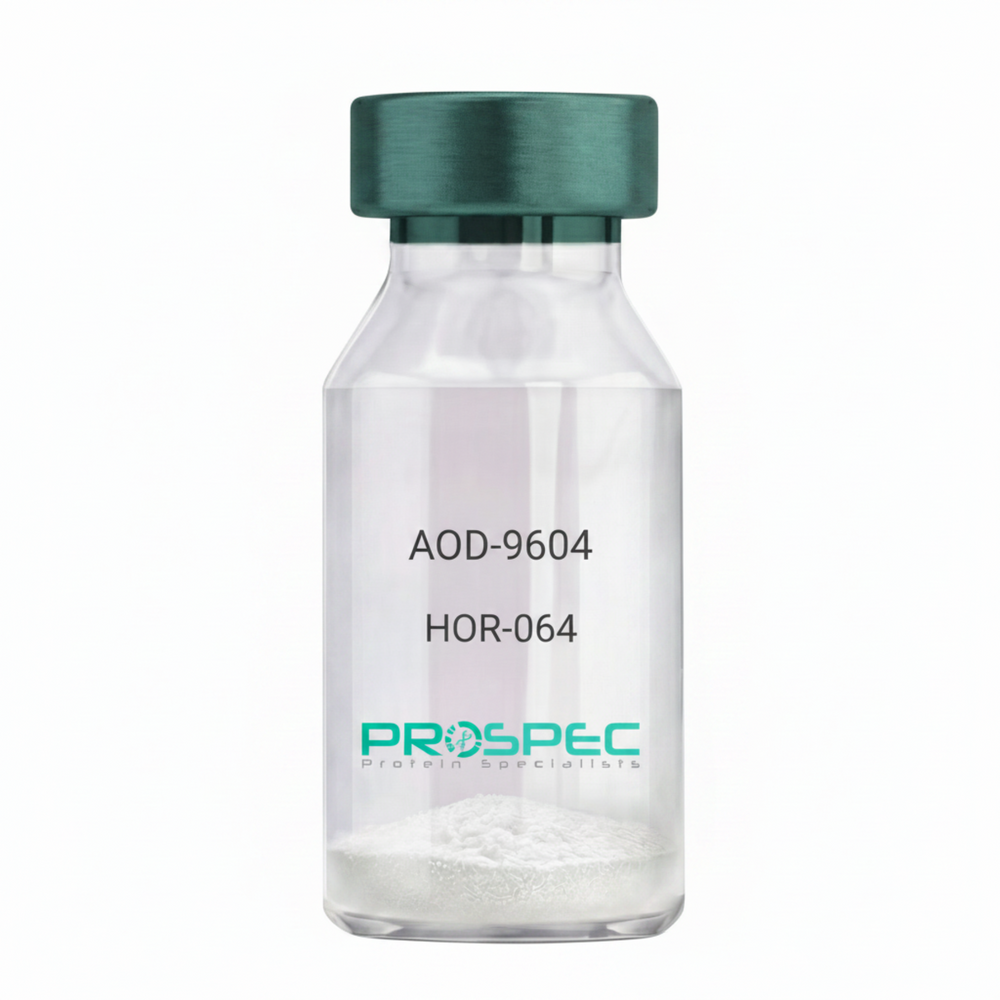
    AOD-9604
  • View Data Sheet

    Name :

    Leptin Pufferfish

    Description:

    Leptin Pufferfish Recombinant

    OB Protein, Obesity Protein, OBS, Obesity factor.

    Product # :

    CYT-530

    Price :

    Quantity :

    Shipping Method :

    Room Temp Icon

    Shipped at Room temp

    Add To Cart

    More Info

    • description
    • source
    • formulation
    • purity
    • biological activity
    • More Info

    Description

    Leptin Pufferfish (Takifugu rubripes) Recombinant produced in E.Coli is a single, non-glycosylated, polypeptide chain having a molecular mass of 16 kDa. Bioactive Leptin Pufferfish (Takifugu rubripes) Recombinant was prepared according to the sequence published by Kurokawa et al. (2005)Peptides 26, 745-750 in two forms: monomer and covalent dimer. MS analysis revealed molecular masses of 15,291 and 30,585 Da, close to the theoretical values of 15,270 and 30,540 Da. CD spectra revealed high similarity to mammalian leptins. Other details of its preparation will be soon published by Yacobovitz et al (in press), General and Comparative Endocrinology.The Pufferfish Leptin is purified by proprietary chromatographic techniques.

    Source

    Escherichia Coli.

    Formulation

    The Pufferfish Leptin was lyophilized from a concentrated (0.85mg/ml) solution with 0.003mM NaHCO3.

    Purity

    Greater than 99.0% as determined by:
    (a) Analysis by SEC-HPLC.
    (b) Analysis by SDS-PAGE.

    Biological Activity

    Biological active as evidenced by inducing proliferation of BAF/3 cells stably transfected with the long form of human leptin receptor. The affinity of human leptin receptors is considerably lower campared to mammalian leptins.

    More Info

    • Introduction

      A 16-kDa peptide hormone secreted from white adipocytes and implicated in the regulation of food intake and energy balance. Leptin provides the key afferent signal from fat cells in the feedback system that controls body fat stores.

    • Synonyms

      OB Protein, Obesity Protein, OBS, Obesity factor.

    • Physical Appearance

      Sterile Filtered White lyophilized (freeze-dried) powder.

    • Stability

      Lyophilized Pufferfish Leptin although stable at room temperature for 3 weeks, should be stored desiccated below -18°C. Upon reconstitution Leptin should be stored at 4°C between 2-7 days and for future use below -18°C.For long term storage it is recommended to add a carrier protein (0.1% HSA or BSA).Please prevent freeze-thaw cycles.

    • Solubility

      It is recommended to reconstitute the lyophilized Pufferfish Leptin in sterile 0.4% NaHCO3 pH-9 not less than 100µg/ml, which can then be further diluted to other aqueous solutions.

    • Amino Acid Sequence

      ALPGALDAMDVEKMKSKVTWKAQGLVARIDKHFPDRGLRFDTDKVE

      GSTSVVASLESYNNLISDRFGGVSQIKTEISSLAGYLNHWREGNCQE

      QQPKVWPRRNIFNHTVSLEALMRVREFLKLLQKNVDLLERC

    • Protein content

      Protein quantitation was carried out by UV spectroscopy at 280 nm using the absorbency value of 1.28 as the extinction coefficient for a 0.1% (1mg/ml) solution. This value is calculated by the PC GENE computer analysis program of protein sequences (IntelliGenetics).

    ProSpec's products are furnished for LABORATORY RESEARCH USE ONLY. The product may not be used as drugs, agricultural or pesticidal products, food additives or household chemicals.

    Leptin Pufferfish
  • View Data Sheet

    Name :

    NPPA Human

    Description:

    Natriuretic Peptide A Human Recombinant

    Natriuretic peptides A, CDD-ANF, Cardiodilatin, CDD, Cardiodilatin-related peptide, CDP, N-terminal proatrial natriuretic peptide, ANP, PND. 

    Product # :

    CYT-1028

    Price :

    Quantity :

    Shipping Method :

    Room Temp Icon

    Shipped at Room temp

    Add To Cart

    More Info

    • description
    • source
    • formulation
    • purity
    • More Info

    Description

    NPPA Human Recombinant produced in E.Coli is a single, non-glycosylated, polypeptide chain (a.a 26-123) containing 106 amino acids including an 8 a.a N-terminal His tag. The total molecular mass is 11.7kDa (calculated).

    Source

    Escherichia Coli.

    Formulation

    NPPA filtered (0.4 µm) and lyophilized from 0.5mg/ml in 20 mM Tris buffer, 50 mM NaCl and 5% w/v trehalosa, pH 7.5.

    Purity

    Greater than 95.0% as determined by SDS-PAGE.

    More Info

    • Introduction

      Natriuretic Peptide A (NPPA) is a part of the natriuretic peptide family and is involved in cardiovascular homeostasis through regulation of natriuresis, diuresis, and vasodilation. NPPA is synthesized as a great precursor which releases a peptide from the N-terminus with similarity to vasoactive peptide, cardiodilatin, and another peptide from the C-terminus with natriuretic-diuretic activity. In female pregnancy, NPPA is promoting trophoblast invasion and spiral artery remodeling in uterus.

    • Synonyms

      Natriuretic peptides A, CDD-ANF, Cardiodilatin, CDD, Cardiodilatin-related peptide, CDP, N-terminal proatrial natriuretic peptide, ANP, PND.

    • Physical Appearance

      Filtered White lyophilized (freeze-dried) powder.

    • Stability

      Store lyophilized protein at -20°C. Aliquot the product after reconstitution to avoid repeated freezing/thawing cycles. Reconstituted protein can be stored at 4°C for a limited period of time; it does not show any change after two weeks at 4°C.

    • Solubility

      It is recommended to add deionized water to prepare a working stock solution of approximately 0.5mg/ml and let the lyophilized pellet dissolve completely. NPPA is not sterile! Please filter the product by an appropriate sterile filter before using it in the cell culture.

    • Amino Acid Sequence

      MKHHHHHHNP MYNAVSNADL MDFKNLLDHL EEKMPLEDEV VPPQVLSEPN EEAGAALSPL PEVPPWTGEV SPAQRDGGAL GRGPWDSSDR SALLKSKLRA LLTAPR.

    ProSpec's products are furnished for LABORATORY RESEARCH USE ONLY. The product may not be used as drugs, agricultural or pesticidal products, food additives or household chemicals.

    Nppa Human
  • View Data Sheet

    Name :

    CMV Pp150

    Description:

    Cytomegalo Virus Pp150 (UL32) Recombinant

    Product # :

    CMV-216

    Price :

    Quantity :

    Shipping Method :

    Ice Icon

    Shipped with Ice Packs

    Add To Cart

    More Info

    • description
    • source
    • formulation
    • purity
    • More Info

    Description

    The E.Coli derived recombinant protein contains the CMV Pp150 (UL32) immunodominant regions, 1011-1048 amino acids.

    Source

    Escherichia Coli.

    Formulation

    50mM Tris pH 8.0, 1mM EDTA and 50% glycerol.

    Purity

    CMV Pp150 protein is >95% pure as determined by 10% PAGE (coomassie staining).

    More Info

    • Introduction

      CMV belongs to the Betaherpesvirinae subfamily of Herpesviridae which includes herpes simplex virustypes 1 and 2, varicella-zoster virus, and Epstein-Barrvirus. The herpesviruses share a characteristic ability to remain latentover long periods. CMV is a double-stranded linear DNA virus with 162 hexagonal protein capsomeres surrounded by a lipid membrane. CMV has the largest genome of the herpes viruses, ranging from 230-240 kilobase pairs. Human CMV is composed of unique and inverted repeats that include the existence of 4 genome isomers caused by inversion of L-S genome components (class E). Replication may be divided into immediate early, delayed early, and late gene expression based on time of synthesis after infection. The DNA is replicated by rolling circles. In vitro, CMV replicates in human fibroblasts.

    • Stability

      CMV Pp150 protein although stable at 4°C for 1 week, should be stored below -18°C. Please prevent freeze thaw cycles.

    • Applications

      CMV Pp65 antigen is suitable for ELISA and Western blots, excellent antigen for detection of CMV with minimal specificity problems.

    • Specificity

      Immunoreactive with sera of CMV-infected individuals.

    • Purification Method

      CMV Pp150 was purified by proprietary chromatographic technique.

    ProSpec's products are furnished for LABORATORY RESEARCH USE ONLY. The product may not be used as drugs, agricultural or pesticidal products, food additives or household chemicals.

    Cmv Pp150
  • View Data Sheet

    Name :

    FGF 2 Human (147 a.a.)

    Description:

    Fibroblast Growth Factor Basic 147 a.a. Human Recombinant

    Prostatropin, HBGH-2, HBGF-2, FGF-2, FGF-b.

    Product # :

    CYT-557

    Price :

    Quantity :

    Shipping Method :

    Room Temp Icon

    Shipped at Room temp

    Add To Cart

    More Info

    • description
    • source
    • formulation
    • purity
    • biological activity
    • More Info

    Description

    Fibroblast Growth Factor-2 Human Recombinant (FGF-2) produced in E.Coli is a single, non-glycosylated, polypeptide chain containing 147 amino acids and having a molecular mass of 16.5kDa. The FGF2 is purified by proprietary chromatographic techniques.

    Source

    Escherichia Coli.

    Formulation

    The bFGF was lyophilized from a sterile filtered solution containing 20mM Tris-HCl, pH 7.6 and 150mM NaCl.

    Purity

    Greater than 98.0% as determined by SDS-PAGE.

    Biological Activity

    The ED50, Calculated by the dose- dependent proliferation of mouse BALB/c 3T3 cells is < 0.05ng/ml corresponding to a specific activity of 2.0x10⁷ units/mg.

    More Info

    • Introduction

      FGF-basic is a member of the fibroblast growth factor (FGF) family. FGF family members possess broad mitogenic and cell survival activities, and are involved in a variety of biological processes, including embryonic development, cell growth, morphogenesis, tissue repair, tumor growth and invasion. This protein functions as a modifier of endothelial cell migration and proliferation, as well as an angiogenic factor. It acts as a mitogen for a variety of mesoderm- and neuroectoderm-derived cells in vitro, thus is thought to be involved in organogenesis. Three alternatively spliced variants encoding different isoforms have been described. The heparin-binding growth factors are angiogenic agents in vivo and are potent mitogens for a variety of cell types in vitro. There are differences in the tissue distribution and concentration of these 2 growth factors.

    • Synonyms

      Prostatropin, HBGH-2, HBGF-2, FGF-2, FGF-b.

    • Physical Appearance

      Sterile Filtered White lyophilized (freeze-dried) powder.

    • Stability

      Lyophilized basic-FGF although stable at room temperature for 3 weeks, should be stored desiccated below -18°C. Upon reconstitution FGFb should be stored at 4°C between 2-7 days and for future use below -18°C.For long term storage it is recommended to add a carrier protein (0.1% HSA or BSA).Please prevent freeze-thaw cycles.

    • Solubility

      It is recommended to reconstitute the lyophilized FGF-B in sterile 18MΩ-cm H2O not less than 100µg/ml, which can then be further diluted to other aqueous solutions.

    • Amino Acid Sequence

      MPALPEDGGS GAFPPGHFKD PKRLYCKNGG FFLRIHPDGR VDGVREKSDP HIKLQLQAEE RGVVSIKGVC ANRYLAMKED GRLLASKCVT DECFFFERLE SNNYNTYRSR KYTSWYVALK RTGQYKLGSK TGPGQKAILF LPMSAKS.

    • Background

      What is the molecular weight/Mw of FGF 2 Protein?
      FGF 2 Protein has a total Mw of 16.5kDa.

      What is the source or expression system of FGF 2 Protein?
      Escherichia Coli.

      What is the Purity of FGF 2 Protein?
      FGF 2 Protein is >98% pure as determined by SDS-PAGE.

      What is the Biological Activity of FGF 2 Protein?
      The ED50, Calculated by the dose- dependent proliferation of mouse BALB/c 3T3 cells is < 0.05ng/ml corresponding to a specific activity of 2.0x10⁷ units/mg.

      What is the amino acid sequence of FGF 2 Protein?
      MPALPEDGGS GAFPPGHFKD PKRLYCKNGG FFLRIHPDGR VDGVREKSDP HIKLQLQAEE RGVVSIKGVC ANRYLAMKED GRLLASKCVT DECFFFERLE SNNYNTYRSR KYTSWYVALK RTGQYKLGSK TGPGQKAILF LPMSAKS.

      What applications can FGF 2 Protein be used in?
      FGF 2 Protein can probably be used in western blot, ELISA and Lateral Flow.

      What is the endotoxin level for FGF 2 Protein?
      The endotoxin level is minimal, FGF 2 Protein was purified using conventional chromatography techniques.

    ProSpec's products are furnished for LABORATORY RESEARCH USE ONLY. The product may not be used as drugs, agricultural or pesticidal products, food additives or household chemicals.

    Fgf 2 147 Aa Human
  • View Data Sheet

    Name :

    CST6 Human

    Description:

    Cystatin E/M Human Recombinant

    Cystatin E/M, cystatin 6, Cystatin M, Cystatin-E, Cysteine proteinase inhibitor.

    Product # :

    PRO-892

    Price :

    Quantity :

    Shipping Method :

    Ice Icon

    Shipped with Ice Packs

    Add To Cart

    More Info

    • description
    • source
    • formulation
    • purity
    • More Info

    Description

    CST6 Human Recombinant produced in E.coli is a single, non-glycosylated polypeptide chain containing 142 amino acids (29-149) and having a molecular mass of 15.9 kDa.The CST6 is fused to a 21 amino acid His-Tag at N-terminus and purified by proprietary chromatographic techniques.

    Source

    E.coli.

    Formulation

    The CST6 solution (0.5mg/ml) contains 20mM Tris-HCl buffer (pH 8.0), 1mM DTT, 0.1M NaCl and 10% glycerol.

    Purity

    Greater than 95% as determined by SDS-PAGE.

    More Info

    • Introduction

      CST6 belongs to the type 2 cystatin family. Unlike other family members that act as active cysteine protease inhibitors, CST6 restrain the inhibition of cathepsin B but is not active against cathepsin C. CST6 are secretable proteins that influence osteogenesis and bone resorption, regulation of the hepatocyte growth factor receptors, and the response to systemic inflammation.

    • Synonyms

      Cystatin E/M, cystatin 6, Cystatin M, Cystatin-E, Cysteine proteinase inhibitor.

    • Physical Appearance

      Sterile Filtered colorless solution.

    • Stability

      Store at 4°C if entire vial will be used within 2-4 weeks. Store, frozen at -20°C for longer periods of time. For long term storage it is recommended to add a carrier protein (0.1% HSA or BSA).Avoid multiple freeze-thaw cycles.

    • Amino Acid Sequence

      MGSSHHHHHH SSGLVPRGSH MRPQERMVGE LRDLSPDDPQ VQKAAQAAVA SYNMGSNSIY YFRDTHIIKA QSQLVAGIKY FLTMEMGSTD CRKTRVTGDH VDLTTCPLAA GAQQEKLRCD FEVLVVPWQN SSQLLKHNCV QM.

    ProSpec's products are furnished for LABORATORY RESEARCH USE ONLY. The product may not be used as drugs, agricultural or pesticidal products, food additives or household chemicals.

    Cst6 Human
  • View Data Sheet

    Name :

    Activin-A Mouse

    Description:

    Activin-A Mouse Recombinant

    Inhba, Inhibin beta A, FSH releasing protein.

    Product # :

    CYT-146

    Price :

    Quantity :

    Shipping Method :

    Room Temp Icon

    Shipped at Room temp

    Add To Cart

    More Info

    • description
    • source
    • formulation
    • purity
    • biological activity
    • More Info

    Description

    Active form Activin-A Murine Recombinant produced in e.coli is a homodimeric, non-glycosylated, polypeptide chain containing 2 x 117 amino acids and having a molecular weight of 26.2kDa.The Active form Activin-A is purified by standard chromatographic techniques.

    Source

    E.Coli.

    Formulation

    Mouse Activin-A lyophilized from a concentrated 1mg/ml protein solution containing 0.1% TFA.

    Purity

    Greater than 95% as obsereved by SDS-PAGE.

    Biological Activity

    Biological activity is assessed by the ability to induce cytoxicity of MPC-11 cells and was found to be 8.8ng/ml corresponding to a specific activity of 1.1 x 10⁵ units/mg.

    More Info

    • Introduction

      Activins are homodimers or heterodimers of the different β subunit isoforms, part of the TGFβ family. Mature Activin A has two 116 amino acids residues βA subunits (βA-βA). Activin displays an extensive variety of biological activities, including mesoderm induction, neural cell differentiation, bone remodelling, haematopoiesis, and reproductive physiology. Activins takes part in the production and regulation of hormones such as FSH, LH, GnRH and ACTH. Cells that are identified to express Activin A include fibroblasts, endothelial cells, hepatocytes, vascular smooth muscle cells, macrophages, keratinocytes, osteoclasts, bone marrow monocytes, prostatic epithelium, neurons, chondrocytes, osteoblasts, Leydig cells, Sertoli cells, and ovarian granulosa cells.

    • Synonyms

      Inhba, Inhibin beta A, FSH releasing protein.

    • Physical Appearance

      Lyophilized freeze dried powder.

    • Stability

      Lyophilized Activin-A although stable at room temperature for 3 weeks, should be stored desiccated below -18°C. Upon reconstitution Activin-A should be stored at 4°C between 2-7 days and for future use below -18°C.For long term storage it is recommended to add a carrier protein (0.1% HSA or BSA).Please prevent freeze-thaw cycles.

    • Solubility

      Murine INHBA protein should be reconstituted in distilled pyrogen free water to a concentration of 100ug /ml which can then be further diluted to other aqueous solutions.

    • Amino Acid Sequence

      MGLECDGKVN ICCKKQFFVS FKDIGWNDWI IAPSGYHANY CEGECPSHIA GTSGSSLSFH STVINHYRMR GHSPFANLKS CCVPTKLRPM SMLYYDDGQN IIKKDIQNMI VEECGCS.

    • Background

      What is the molecular weight / Mw of Activin A Protein?
      Activin A Protein has a total Mw of 26.2 kDa.

      What is the source or expression system of Activin A Protein?
      Ecoli

      What is the Purity of Activin A Protein?
      Activin A Protein is >95% pure as determined by SDS-PAGE.

      What is the Biological Activity of Activin A Protein?
      Biological activity is assessed by the ability to induce cytoxicity of MPC-11 cells and was found to be 8.8ng/ml corresponding to a specific activity of 110,000 units/mg.

      What is the endotoxin level for Activin A Protein?
      The endotoxin level is minimal, ACTIVIN A Protein was purified using conventional chromatography techniques.

      What is the amino acid sequence of ACTIVIN A Protein?
      MGLECDGKVN ICCKKQFFVS FKDIGWNDWI IAPSGYHANY CEGECPSHIA GTSGSSLSFH STVINHYRMR GHSPFANLKS CCVPTKLRPM SMLYYDDGQN IIKKDIQNMI VEECGCS.

      What applications can ACTIVIN A Protein be used in?
      ACTIVIN A Protein can probably be used in western blot, ELISA and Lateral Flow.

    ProSpec's products are furnished for LABORATORY RESEARCH USE ONLY. The product may not be used as drugs, agricultural or pesticidal products, food additives or household chemicals.

    Inhba Mouse
  • View Data Sheet

    Name :

    PFN2 Human

    Description:

    Profilin-2 Human Recombinant

    Profilin-II, PFN2, Profilin-2, PFL, D3S1319E.

    Product # :

    PRO-809

    Price :

    Quantity :

    Shipping Method :

    Ice Icon

    Shipped with Ice Packs

    Add To Cart

    More Info

    • description
    • source
    • formulation
    • purity
    • More Info

    Description

    PFN2 Human Recombinant produced in E.Coli is a single, non-glycosylated, polypeptide chain containing 160 amino acids (1-140 a.a.) and having a molecular mass of 17.2 kDa. PFN2 protein is fused to a 20 amino acid His-Tag at N-terminus and purified by standard chromatography.

    Source

    Escherichia Coli.

    Formulation

    PFN2 protein solution (1mg/ml) containing 20mM Tris-HCl pH-8, 1mM DTT and 10% glycerol.

    Purity

    Greater than 95% as determined by SDS-PAGE.

    More Info

    • Introduction

      PFN2 is a ubiquitous actin monomer-binding protein which is part of the profilin family. PFN2 regulates actin polymerization in response to extra cellular signals. PFN2 binds to actin and affects the structure of the cytoskeleton. At high concentrations, profilin prevents the polymerization of actin, while it increases it at low concentrations. PFN2 binds to PIP2, it inhibits the formation of IP3 and DG.

    • Synonyms

      Profilin-II, PFN2, Profilin-2, PFL, D3S1319E.

    • Physical Appearance

      Sterile filtered colorless solution.

    • Stability

      Store at 4°C if entire vial will be used within 2-4 weeks. Store, frozen at -20°C for longer periods of time. For long term storage it is recommended to add a carrier protein (0.1% HSA or BSA).Avoid multiple freeze-thaw cycles.

    • Amino Acid Sequence

      MGSSHHHHHH SSGLVPRGSH MAGWQSYVDN LMCDGCCQEA AIVGYCDAKY VWAATAGGVF QSITPIEIDM IVGKDREGFF TNGLALGAKK CSVIRDSLYV DGDCTMDIRT KSQGGEPTYN VAVGRAGRVL VFVMGKEGVH GGGLNKKAYS MAKYLRDSGF.

    ProSpec's products are furnished for LABORATORY RESEARCH USE ONLY. The product may not be used as drugs, agricultural or pesticidal products, food additives or household chemicals.

    Pfn2 Human
  • View Data Sheet

    Name :

    CCNG1 Human

    Description:

    Cyclin G1 Human Recombinant

    Cyclin-G1, Cyclin-G, CCNG1, CCNG, CYCG1.

    Product # :

    PRO-1005

    Price :

    Quantity :

    Shipping Method :

    Ice Icon

    Shipped with Ice Packs

    Add To Cart

    More Info

    • description
    • source
    • formulation
    • purity
    • More Info

    Description

    CCNG1 Human Recombinant produced in E.Coli is a single, non-glycosylated polypeptide chain containing 315 amino acids (1-295 a.a.) and having a molecular mass of 36.2kDa. CCNG1 is fused to a 20 amino acid His-tag at N-terminus & purified by proprietary chromatographic techniques.

    Source

    Escherichia Coli.

    Formulation

    CCNG1 protein solution (0.25mg/ml) containing 20mM Tris-HCl buffer (pH8.0), 50% glycerol, 0.2M NaCl and 5mM DTT.

    Purity

    Greater than 85% as determined by SDS-PAGE.

    More Info

    • Introduction

      Cyclin-G1 (CCNG1) belongs to the cyclin family and contains the cyclin box. CCNG1 may have a part in growth regulation and is associated with G2/M phase arrest in response to DNA damage. CCNG1 may be an intermediate by which p53 mediates its role as an inhibitor of cellular proliferation. The CCNG1 protein lacks the protein destabilizing (PEST) sequence which is present in other family members.

    • Synonyms

      Cyclin-G1, Cyclin-G, CCNG1, CCNG, CYCG1.

    • Physical Appearance

      Sterile Filtered clear colorless solution.

    • Stability

      Store at 4°C if entire vial will be used within 2-4 weeks. Store, frozen at -20°C for longer periods of time. For long term storage it is recommended to add a carrier protein (0.1% HSA or BSA).Avoid multiple freeze-thaw cycles.

    • Amino Acid Sequence

      MGSSHHHHHH SSGLVPRGSH MIEVLTTTDS QKLLHQLNAL LEQESRCQPK VCGLRLIESA HDNGLRMTAR LRDFEVKDLL SLTQFFGFDT ETFSLAVNLL DRFLSKMKVQ PKHLGCVGLS CFYLAVKSIE EERNVPLATD LIRISQYRFT VSDLMRMEKI VLEKVCWKVK ATTAFQFLQL YYSLLQENLP LERRNSINFE RLEAQLKACH CRIIFSKAKP SVLALSIIAL EIQAQKCVEL TEGIECLQKH SKINGRDLTF WQELVSKCLT EYSSNKCSKP NVQKLKWIVS GRTARQLKHS YYRITHLPTI PEMVP.

    ProSpec's products are furnished for LABORATORY RESEARCH USE ONLY. The product may not be used as drugs, agricultural or pesticidal products, food additives or household chemicals.

    Ccng1 Human
  • View Data Sheet

    Name :

    L Selectin Human

    Description:

    L-selectin Human Recombinant

    L-selectin, Lymph node homing receptor, Leukocyte adhesion molecule 1, LAM-1, Leukocyte surface antigen Leu-8, TQ1, gp90-MEL, Leukocyte-endothelial cell adhesion molecule 1, LECAM1, CD62 antigen-like family member L, CD62L antigen, LAM1, LNHR, LSEL, CD62L, LYAM1, Leu-8, PLNHR, hLHRc, Lyam-1, L-Sel.

    Product # :

    PRO-381

    Price :

    Quantity :

    Shipping Method :

    Ice Icon

    Shipped with Ice Packs

    Add To Cart

    More Info

    • description
    • source
    • formulation
    • purity
    • More Info

    Description

    L-Selectin Human Recombinant is expressed in E. coli containing 294 amino acids 39-332 fused to an amino terminal hexahistidine tag, having a total molecular weight of 37.55kDa.

    Source

    Escherichia Coli.

    Formulation

    L-Sel is supplied in 1x PBS and 50% Glycerol.

    Purity

    Greater than 95% as determined by SDS-PAGE.
    Single band on Western Blot.

    More Info

    • Introduction

      L-Selectin belongs to a family of divalent cation-dependent carbohydrate-binding glycoproteins or adhesion molecules. The L-Selectin molecule is composed of various domains: one homologous to lectins, one to epidermal growth factor, and two to the consensus repeat units found in C3/C4 binding proteins.
      L-selectin is expressed constitutively on lymphocytes, monocytes and granulocytes and interacts specifically with carbohydrate groups on activated endothelial cells. L-Selectin may be shed by proteolytic cleavage and circulating levels in biological fluids may be used as an indicator of various pathological conditions. L-Selectin is cleaved by ADAM17.
      L-selectin works as a "homing receptor" for leukocytes to enter secondary lymphoid tissues via the high endothelial venules. Ligands present on endothelial cells will attach to leukocytes expressing L-selectin, which causes the leukocytes to become localized at that juncture. The receptor is also located on the cell surfaces of "naive" T cells, which have not yet encountered their particular antigen. This surface expression is lost following the cells activation.

    • Synonyms

      L-selectin, Lymph node homing receptor, Leukocyte adhesion molecule 1, LAM-1, Leukocyte surface antigen Leu-8, TQ1, gp90-MEL, Leukocyte-endothelial cell adhesion molecule 1, LECAM1, CD62 antigen-like family member L, CD62L antigen, LAM1, LNHR, LSEL, CD62L, LYAM1, Leu-8, PLNHR, hLHRc, Lyam-1, L-Sel.

    • Physical Appearance

      Sterile filtered colorless solution.

    • Stability

      Store at 4°C if entire vial will be used within 1-2 weeks. Store, frozen at -20°C for longer periods of time. Avoid multiple freeze-thaw cycles.

    • Applications

      L-Selectin can be used directly as a positive control in Western blotting, ELISA, immunoprecipitation and other immunological experiments.
      The biological activity of this product has not yet been tested.

    ProSpec's products are furnished for LABORATORY RESEARCH USE ONLY. The product may not be used as drugs, agricultural or pesticidal products, food additives or household chemicals.

    L Selectin Human
  • View Data Sheet

    Name :

    PRLR Human, Antagonist S.Active

    Description:

    Prolactin Receptor Antagonist, S. Active Human Recombinant

    Mammotropin, Luteotropic hormone, Luteotropin, PRL.

    Product # :

    CYT-1253

    Price :

    Quantity :

    Shipping Method :

    Room Temp Icon

    Shipped at Room temp

    Add To Cart

    More Info

    • description
    • source
    • formulation
    • purity
    • biological activity
    • More Info

    Description

    Prolactin Human Receptor Antagonist del 1-9, G129R mutant produced in E.Coli is a single, non-glycosylated polypeptide chain containing 190 amino acids + an additional Ala at n-terminal and having a molecular mass of ~ 22 kDa was modified by additional 12 mutations. The Human Prolactin Receptor Antagonist is purified by proprietary chromatographic techniques.

    Source

    Escherichia coli.

    Formulation

    The protein was lyophilized from a concentrated (1-2mg/ml) solution with 0.02% -0.03% NaHCO3.

    Purity

    Greater than 97.0% as determined by:

    (a) Analysis by Gel Filtration.

    (b) Analysis by SDS-PAGE.

    Biological Activity

    fully biologically active as evidenced by inhibiting PRLR-induced proliferation of Nb2 cells or Baf3 cells stably transfected with hPRL receptors. It also interacts at 1:1 molar ratio with human prolactin receptor extracellular domain as documented by SEC and SPR (Biacore analysis). It is ~ 100 fold more potent than 1-9 G129R hPRL in Ba/F3 cells and > 1000-fold potent in Nb2 cells.

    More Info

    • Synonyms

      Mammotropin, Luteotropic hormone, Luteotropin, PRL.

    • Physical Appearance

      Sterile Filtered White lyophilized (freeze-dried) powder.

    • Stability

      Lyophilized PRLR although stable at room temperature for 3 weeks, should be stored desiccated below -18°C. Upon reconstitution at > 0.1 mg/ml and up to 3 mg/ml and filter sterilization PRLR can be stored at 4C for several weeks. Please prevent freeze-thaw cycles.

    • Solubility

      It is recommended to reconstitute the lyophilized PRLR in sterile 0.4% NaHCO3 adjusted to pH 8-9 not less than 100µg/ml, which can then be further diluted to other aqueous solutions.

    • Amino Acid Sequence

      The sequence of the first six N-terminal amino acids was determined and was found to be Ala-Arg-Ser-Gln-Val-Thr

    • Background

      Prolactin is a pituitary hormone which takes part in the stimulation of milk production, salt and water regulation, development, growth and reproduction. The primary step in its action is binding a specific membrane receptor (prolactin receptor) which belongs to the superfamily of class 1 cytokine receptors. PRLR varies in size (short and long forms) with tissue source and species, from ~40 kDa to 100 kDa. The PRL-R consists of at least 3 separate domains: an extracellular region with 5 cysteines which contains the prolactin binding site, a single transmembrane domain and a cytoplasmic region, the length of which appears to influence ligand binding and regulate cellular function.

    ProSpec's products are furnished for LABORATORY RESEARCH USE ONLY. The product may not be used as drugs, agricultural or pesticidal products, food additives or household chemicals.

    Prlr Antagonist Human
  • View Data Sheet

    Name :

    CEACAM3 Human, Sf9

    Description:

    Carcinoembryonic Antigen-Related Cell Adhesion Molecule 3 Human Recombinant, Sf9

    Carcinoembryonic Antigen-Related Cell Adhesion Molecule 3, Carcinoembryonic Antigen CGM1, CD66d Antigen , CD66D, CGM1, Carcinoembryonic Antigen Gene Family Member 1, Nonspecific Cross-Reacting Antigen, W264, W282, CEA, CEACAM3.

    Product # :

    PRO-2443

    Price :

    Quantity :

    Shipping Method :

    Ice Icon

    Shipped with Ice Packs

    Add To Cart

    More Info

    • description
    • source
    • formulation
    • purity
    • More Info

    Description

    CEACAM3 Human Recombinant produced in Sf9 Baculovirus cells is a single, glycosylated polypeptide chain containing 130 amino acids (35-155a.a.) and having a molecular mass of 14.2kDa (Molecular size on SDS-PAGE will appear at approximately 13.5-18kDa).CEACAM3 is expressed with a 6 amino acids His tag at C-Terminus and purified by proprietary chromatographic techniques.

    Source

    Sf9, Baculovirus cells.

    Formulation

    CEACAM3 protein solution (1mg/ml) contains Phosphate Buffered Saline (pH 7.4) and 10% glycerol.

    Purity

    Greater than 95.0% as determined by SDS-PAGE.

    More Info

    • Introduction

      Carcinoembryonic Antigen-Related Cell Adhesion Molecule 3, also known as CEACAM3, is a member of the immunoglobulin super family. The genes in this family encode cell adhesion proteins, which are expressed at higher levels in tumorous tissues rather than in normal tissues. CEACAM3 plays a significant part in the clearance of pathogens through the innate immune system. In addition, CEACAM3 is accountable for RAC1 stimulation in the course of pathogen phagocytosis.

    • Synonyms

      Carcinoembryonic Antigen-Related Cell Adhesion Molecule 3, Carcinoembryonic Antigen CGM1, CD66d Antigen , CD66D, CGM1, Carcinoembryonic Antigen Gene Family Member 1, Nonspecific Cross-Reacting Antigen, W264, W282, CEA, CEACAM3.

    • Physical Appearance

      Sterile Filtered colorless solution.

    • Stability

      Store at 4°C if entire vial will be used within 2-4 weeks. Store, frozen at -20°C for longer periods of time. For long term storage it is recommended to add a carrier protein (0.1% HSA or BSA). Avoid multiple freeze-thaw cycles.

    • Amino Acid Sequence

      ADPKLTIESM PLSVAEGKEV LLLVHNLPQH LFGYSWYKGE RVDGNSLIVG YVIGTQQATP GAAYSGRETI YTNASLLIQN VTQNDIGFYT LQVIKSDLVN EEATGQFHVY QENAPGLPVG AVAGHHHHHH.

    ProSpec's products are furnished for LABORATORY RESEARCH USE ONLY. The product may not be used as drugs, agricultural or pesticidal products, food additives or household chemicals.

    Ceacam3 Protein
  • View Data Sheet

    Name :

    CEACAM8 Human

    Description:

    Carcinoembryonic Antigen-Related Cell Adhesion Molecule 8 Human Recombinant

    Carcinoembryonic antigen-related cell adhesion molecule 8, CD67 antigen, Carcinoembryonic antigen CGM6, Non-specific cross-reacting antigen NCA-95, CD66b, CGM6, CD67, NCA-95, CEACAM8

    Product # :

    PRO-2716

    Price :

    Quantity :

    Shipping Method :

    Ice Icon

    Shipped with Ice Packs

    Add To Cart

    More Info

    • description
    • source
    • formulation
    • purity
    • More Info

    Description

    CEACAM8 Human produced in Sf9 Baculovirus cells is a single, glycosylated polypeptide chain containing 292 amino acids (35-320 a.a) and having a molecular mass of 32.3kDa.CEACAM8 is fused to a 6 amino acid His-tag at C-terminus & purified by proprietary chromatographic techniques.

    Source

    Sf9, Baculovirus cells.

    Formulation

    The CEACAM8 solution (1mg/1ml) contains Phosphate-Buffered Saline (pH 7.4) and 10% glycerol.

    Purity

    Greater than 95.0% as determined by SDS-PAGE.

    More Info

    • Introduction

      Carcinoembryonic Antigen-Related Cell Adhesion Molecule 8 (CEACAM8) is a cell surface glycoprotein which takes part in cell adhesion in a calciumindependent manner.CEACAM8mediates heterophilic cell adhesion with other carcinoembryonic antigen-related celladhesion molecules (CEACAM6 for example).CEACAM8main role is cell migration,cell adhesion, and pathogen binding.CEACAM-8 isexpressed mainly on the surface of human peripheral blood eosinophils isolated from healthy individuals andused as granulocyte marker.

    • Synonyms

      Carcinoembryonic antigen-related cell adhesion molecule 8, CD67 antigen, Carcinoembryonic antigen CGM6, Non-specific cross-reacting antigen NCA-95, CD66b, CGM6, CD67, NCA-95, CEACAM8

    • Physical Appearance

      Sterile filtered colorless solution.

    • Stability

      Store at 4°C if entire vial will be used within 2-4 weeks.Store, frozen at -20°C for longer periods of time.For long term storage it is recommended to add a carrier protein (0.1% HSA or BSA).Avoid multiple freeze-thaw cycles.

    • Amino Acid Sequence

      QLTIEAVPSN AAEGKEVLLL VHNLPQDPRG YNWYKGETVD ANRRIIGYVI SNQQITPGPA YSNRETIYPN ASLLMRNVTR NDTGSYTLQV IKLNLMSEEV TGQFSVHPET PKPSISSNNS NPVEDKDAVA FTCEPETQNT TYLWWVNGQS LPVSPRLQLS NGNRTLTLLS VTRNDVGPYE CEIQNPASAN FSDPVTLNVL YGPDAPTISP SDTYYHAGVN LNLSCHAASN PPSQYSWSVN GTFQQYTQKL FIPNITTKNS GSYACHTTNS ATGRNRTTVR MITVSDHHHH HH

    ProSpec's products are furnished for LABORATORY RESEARCH USE ONLY. The product may not be used as drugs, agricultural or pesticidal products, food additives or household chemicals.

    Ceacam8 Human
  • View Data Sheet

    Name :

    CGREF1 Human

    Description:

    Cell Growth Regulator With EF-Hand Domain 1 Human Recombinant

    Cell Growth Regulator With EF-Hand Domain 1, Cell Growth Regulatory Gene 11 Protein, Hydrophobestin, CGR11, Cell Growth Regulator With EF Hand Domain Protein 1, Cell Growth Regulator With EF Hand Domain 1, Cell growth regulator with EF hand domain protein 1.

    Product # :

    PRO-2154

    Price :

    Quantity :

    Shipping Method :

    Ice Icon

    Shipped with Ice Packs

    Add To Cart

    More Info

    • description
    • source
    • formulation
    • purity
    • More Info

    Description

    CGREF1 Human Recombinant produced in E.Coli is a single, non-glycosylated polypeptide chain containing 305 amino acids (20-301 a.a) and having a molecular mass of 32.3kDa. CGREF1 is fused to a 23 amino acid His-tag at N-terminus & purified by proprietary chromatographic techniques.

    Source

    Escherichia Coli.

    Formulation

    CGREF1 protein solution (0.5mg/ml) containing Phosphate Buffered Saline (pH7.4).

    Purity

    Greater than 85% as determined by SDS-PAGE.

    More Info

    • Introduction

      Cell Growth Regulator with EF-Hand Domain 1, also known as CGREF1 is a secreted calcium ion binding protein. CGREF1 includes two EF-hand domains & both EF-hands are essential for function. CGREF1 is most likely digested extracellularly by an unfamiliar serine protease generating extremely hydrophobic bioactive peptides. CGREF1 mediates cell-cell adhesion in a calcium-dependent manner. In addition, CGREF1 is capable to inhibit growth in more than a few cell lines.

    • Synonyms

      Cell Growth Regulator With EF-Hand Domain 1, Cell Growth Regulatory Gene 11 Protein, Hydrophobestin, CGR11, Cell Growth Regulator With EF Hand Domain Protein 1, Cell Growth Regulator With EF Hand Domain 1, Cell growth regulator with EF hand domain protein 1.

    • Physical Appearance

      Sterile filtered colorless solution.

    • Stability

      Store at 4°C if entire vial will be used within 2-4 weeks. Store, frozen at -20°C for longer periods of time. For long term storage it is recommended to add a carrier protein (0.1% HSA or BSA).Avoid multiple freeze-thaw cycles.

    • Amino Acid Sequence

      MGSSHHHHHH SSGLVPRGSH MGSAPKDGVT RPDSEVQHQL LPNPFQPGQE QLGLLQSYLK GLGRTEVQLE HLSREQVLLY LFALHDYDQS GQLDGLELLS MLTAALAPGA ANSPTTNPVI LIVDKVLETQ DLNGDGLMTP AELINFPGVA LRHVEPGEPL APSPQEPQAV GRQSLLAKSP LRQETQEAPG PREEAKGQVE ARRESLDPVQ EPGGQAEADG DVPGPRGEAE GQAEAKGDAP GPRGEAGGQA EAEGDAPGPR GEAGGQAEAR ENGEEAKELP GETLESKNTQ NDFEVHIVQV ENDEI.

    ProSpec's products are furnished for LABORATORY RESEARCH USE ONLY. The product may not be used as drugs, agricultural or pesticidal products, food additives or household chemicals.

    Cgref1 Human
  • View Data Sheet

    Name :

    CLMP Human, SF9

    Description:

    CXADR-Like Membrane Protein, Sf9 Human Recombinant

    CXADR like membrane protein, ACAM, ASAM, CSBM, CSBS, Adipocyte adhesion molecule, Coxsackie- and adenovirus receptor-like membrane protein, CAR-like membrane protein.

    Product # :

    PRO-2519

    Price :

    Quantity :

    Shipping Method :

    Ice Icon

    Shipped with Ice Packs

    Add To Cart

    More Info

    • description
    • source
    • formulation
    • purity
    • More Info

    Description

    CLMP produced in Sf9 Baculovirus cells is a single, glycosylated polypeptide chain containing 226 amino acids (19-235a.a.) and having a molecular mass of 25.6kDa. (Molecular size on SDS-PAGE will appear at approximately 28-40kDa).CLMP is expressed with a 9 amino acid His tag at C-Terminus and purified by proprietary chromatographic techniques.

    Source

    Sf9, Baculovirus cells.

    Formulation

    CLMP protein solution (0.5mg/ml) contains phosphate buffered saline (pH7.4), 1mM DTT and 20%glycerol

    Purity

    Greater than 95.0% as determined by SDS-PAGE.

    More Info

    • Introduction

      CXADR Like Membrane Protein or CLMP, part of the CTX family within the immunoglobulin superfamily, is a type 1 transmembrane peptide. CLMP is expressed in the placenta and small intensine, skeletal muscle, colon, lungs and heart. CLMP is located in junction complexes across endothelial and epithelial cells and can take part in cell adhesion. The protein has influence on development of obesity via adipocyte differentiation.

    • Synonyms

      CXADR like membrane protein, ACAM, ASAM, CSBM, CSBS, Adipocyte adhesion molecule, Coxsackie- and adenovirus receptor-like membrane protein, CAR-like membrane protein.

    • Physical Appearance

      Sterile Filtered clear solution.

    • Stability

      Store at 4°C if entire vial will be used within 2-4 weeks. Store, frozen at -20°C for longer periods of time. For long term storage it is recommended to add a carrier protein (0.1% HSA or BSA).Avoid multiple freeze-thaw cycles.

    • Amino Acid Sequence

      ADPTHTEIKR VAEEKVTLPC HHQLGLPEKD TLDIEWLLTD NEGNQKVVIT YSSRHVYNNL TEEQKGRVAF ASNFLAGDAS LQIEPLKPSD EGRYTCKVKN SGRYVWSHVI LKVLVRPSKP KCELEGELTE GSDLTLQCES SSGTEPIVYY WQRIREKEGE DERLPPKSRI DYNHPGRVLL
      QNLTMSYSGL YQCTAGNEAG KESCVVRVTV QYVQSIGMVA HHHHHH.

    ProSpec's products are furnished for LABORATORY RESEARCH USE ONLY. The product may not be used as drugs, agricultural or pesticidal products, food additives or household chemicals.

    Clmp Protein
  • View Data Sheet

    Name :

    CNPY1 Human

    Description:

    Canopy FGF Signaling Regulator 1 Human Recombinant

    Protein canopy homolog 1, CNPY1.

    Product # :

    PRO-1872

    Price :

    Quantity :

    Shipping Method :

    Ice Icon

    Shipped with Ice Packs

    Add To Cart

    More Info

    • description
    • source
    • formulation
    • purity
    • More Info

    Description

    CNPY1 Human Recombinant produced in E.Coli is a single, non-glycosylated polypeptide chain containing 115 amino acids (1-92 a.a) and having a molecular mass of 13.3kDa. CNPY1 is fused to a 23 amino acid His-tag at N-terminus & purified by proprietary chromatographic techniques.

    Source

    Escherichia Coli.

    Formulation

    CNPY1 protein solution (0.5mg/ml) containing 20mM Tris-HCl buffer (pH 8.0), 0.15M NaCl, 10% glycerol and 1mM DTT.

    Purity

    Greater than 90.0% as determined by SDS-PAGE.

    More Info

    • Introduction

      Canopy FGF Signaling Regulator 1, also known as CNPY1, is expressed in the midbrain-hindbrain (MHB) boundary in zebrafish. CNPY1, which binds FGFR1, also takes part in FGF signaling.

    • Synonyms

      Protein canopy homolog 1, CNPY1.

    • Physical Appearance

      Sterile Filtered colorless solution.

    • Stability

      Store at 4°C if entire vial will be used within 2-4 weeks. Store, frozen at -20°C for longer periods of time. For long term storage it is recommended to add a carrier protein (0.1% HSA or BSA).Avoid multiple freeze-thaw cycles.

    • Amino Acid Sequence

      MGSSHHHHHH SSGLVPRGSH MGSMNDYKLE EDPVTKERTF KRFAPRKGDK IYQEFKKLYF YSDAYRPLKF ACETIIEEYE DEISSLIAQE THYLADKLCS EKSDLCETSA NHTEL.

    ProSpec's products are furnished for LABORATORY RESEARCH USE ONLY. The product may not be used as drugs, agricultural or pesticidal products, food additives or household chemicals.

    Cnpy1 Human
  • View Data Sheet

    Name :

    RCN1 Human

    Description:

    Reticulocalbin 1 Human Recombinant

    PIG20, RCAL, RCN.

    Product # :

    PRO-544

    Price :

    Quantity :

    Shipping Method :

    Ice Icon

    Shipped with Ice Packs

    Add To Cart

    More Info

    • description
    • source
    • formulation
    • purity
    • More Info

    Description

    RCN1 Recombinant Human produced in E.Coli is a single, non-glycosylated polypeptide chain containing 341 amino acids (30-331 a.a.) and having a molecular mass of 40.4kDa (real molecular weight on SDS-PAGE will be shift up). The RCN1 is fused to 39 amino acid His-Tag at N-terminus and purified by proprietary chromatographic techniques.

    Source

    Escherichia Coli.

    Formulation

    1mg/ml solution containing 20mM Tris-HCl pH-8, 1mM DTT, 0.1M NaCl & 10% glycerol.

    Purity

    Greater than 80.0% as determined by SDS-PAGE.

    More Info

    • Introduction

      RCN1 is a calcium-binding protein which binds calcium and controls calcium-dependent activities in the endoplasmic reticulum lumen or post-ER compartment. RCN1 withholds six conserved regions with similarity to a high affinity Ca(+2)-binding motif, the EF-hand.
      High conservation of amino acid residues outside of these motifs, in relation to mouse reticulocalbin, is consistent with a biochemical function further to that of calcium binding. In human endothelial and prostate cancer cell lines RCN1 protein is localized to the plasma membrane.

    • Synonyms

      PIG20, RCAL, RCN.

    • Physical Appearance

      Sterile filtered colorless solution.

    • Stability

      Store at 4°C if entire vial will be used within 2-4 weeks. Store, frozen at -20°C for longer periods of time. For long term storage it is recommended to add a carrier protein (0.1% HSA or BSA).Avoid multiple freeze-thaw cycles.

    • Amino Acid Sequence

      MRGSHHHHHH GMASMTGGQQ MGRDLYDDDD KDRWGSELEK PTVRKERVVR PDSELGERPP EDNQSFQYDH EAFLGKEDSK TFDQLTPDES
      KERLGKIVDR IDNDGDGFVT TEELKTWIKR VQKRYIFDNV AKVWKDYDRD KDDKISWEEY KQATYGYYLG NPAEFHDSSD HHTFKKMLPR
      DERRFKAADL NGDLTATREE FTAFLHPEEF EHMKEIVVLE TLEDIDKNGD GFVDQDEYIA DMFSHEENGP EPDWVLSERE QFNEFRDLNK
      DGKLDKDEIR HWILPQDYDH AQAEARHLVY ESDKNKDEKL TKEEILENWN MFVGSQATNY GEDLTKNHDE L.

    ProSpec's products are furnished for LABORATORY RESEARCH USE ONLY. The product may not be used as drugs, agricultural or pesticidal products, food additives or household chemicals.

    Rcn1 Human
  • View Data Sheet

    Name :

    HCV NS4 a+b Rhodamine

    Description:

    Hepatitis C Virus NS4 a+b Rhodamine Labeled Recombinant

    Product # :

    HCV-226

    Price :

    Quantity :

    Shipping Method :

    Ice Icon

    Shipped with Ice Packs

    Add To Cart

    More Info

    • description
    • formulation
    • purity
    • More Info

    Description

    The E.coli derived 19 kDa recombinant protein rhodamine labeled contains the HCV NS4 immunodominant regions, amino acids 1658-1863. The protein is fused with b-galactosidase (114 kDa) at N-terminus.

    Formulation

    20mM Tris-Hcl pH 8, 8M urea and 10mM B-ME.

    Purity

    Protein is >95% pure as determined by 10% PAGE (coomassie staining).

    More Info

    • Introduction

      HCV is a small 50nm, enveloped, single-stranded, positive sense RNAvirus in the family Flaviviridae.
      HCV has a high rate of replication with approximately one trillion particles produced each day in an infected individual. Due to lack of proofreading by the HCV RNA polymerase, the HCV has an exceptionally high mutation rate, a factor that may help it elude the host's immune response. Hepatitis C virus is classified into six genotypes(1-6) with several subtypes within each genotype. The preponderance and distribution of HCV genotypes varies globally. Genotype is clinically important in determining potential response to interferon-based therapy and the required duration of such therapy. Genotypes 1 and 4 are less responsive to interferon-based treatment than are the other genotypes (2, 3, 5 and 6).

    • Stability

      HCV NS4 a+b Rhodamine although stable at 4°C for 1 week, should be stored below -18°C. Please prevent freeze thaw cycles.

    • Applications

      Antigen in ELISA and Western blots, excellent antigen for detection of HCV with minimal specificity problems.

    • Specificity

      Immunoreactive with sera of HCV-infected individuals.

    • Purification Method

      Purified by proprietary chromatographic technique.

    ProSpec's products are furnished for LABORATORY RESEARCH USE ONLY. The product may not be used as drugs, agricultural or pesticidal products, food additives or household chemicals.

    Hcv Ns4 Ab Rhodamine
  • 1
  • …
  • 11
  • 12
  • 13
  • 14
  • 15
  • …
  • 42
Your browser does not support the video tag.

Products

  • Cytokines
  • Growth Factors
  • Chemokines
  • CD Antigens
  • Neurotrophins
  • Hormones
  • Enzymes
  • Viral Antigens
  • Recombinant Proteins
  • Natural Proteins
  • Monoclonal Antibodies
  • Polyclonal Antibodies
  • Thermal Packaging

About

  • Company
  • Founder
  • Contribution
  • Contact Us
  • My Account

Ordering

  • Ordering Method
  • Ordering - Credit Card
  • Ordering PO
  • Shipping Fees
  • FAQ's

Legal

  • Terms & Conditions
  • Privacy
  • Site Map
  • info@prospecbio.com
  • Facebook
  • Instagram
  • Linkedin Profile

© 2026 ProSpec-Tany TechnoGene Ltd. All Rights Reserved.

  • Choosing a selection results in a full page refresh.
  • Opens in a new window.