Skip to content

High-quality research proteins.

  • 1-800-805-6531

  • Mon - Sat 8.00-18.00, Sun - Closed

  • info@prospecbio.com

  • PO Box 6591 East Brunswick NJ 08816

  • Products
    • Cytokines
    • Growth factors
    • Chemokines
    • Cd antigens
    • Neurotrophins
    • Hormones
    • Enzymes
    • Viral antigens
    • Recombinant proteins
    • Natural proteins
    • Monoclonal antibodies
    • Polyclonal antibodies
    • Thermal Packaging
  • About
    • Company
    • Founder
    • Contribution
  • Customers
    • Eastern Asia
    • Eastern Europe
    • North America
    • South America
    • South East Asia
    • Southern Asia
    • Western Europe
  • Ordering
    • Ordering Method
    • Ordering - Credit Card
    • Ordering - PO
    • Shipping Fees
    • FAQs
  • Services
    • DNA Cloning
    • Protein Expression
    • Monoclonal Antibody
    • Fermentation
    • Technology License
  • Contact us
Log in

Country/region

  • USD $ | Albania
  • USD $ | Andorra
  • USD $ | Argentina
  • USD $ | Armenia
  • USD $ | Australia
  • USD $ | Austria
  • USD $ | Azerbaijan
  • USD $ | Belarus
  • USD $ | Belgium
  • USD $ | Bolivia
  • USD $ | Brazil
  • USD $ | Bulgaria
  • USD $ | Cambodia
  • USD $ | Canada
  • USD $ | Chile
  • USD $ | China
  • USD $ | Colombia
  • USD $ | Costa Rica
  • USD $ | Croatia
  • USD $ | Cyprus
  • USD $ | Czechia
  • USD $ | Denmark
  • USD $ | Estonia
  • USD $ | Finland
  • USD $ | France
  • USD $ | Georgia
  • USD $ | Germany
  • USD $ | Greece
  • USD $ | Hong Kong SAR
  • USD $ | Hungary
  • USD $ | Iceland
  • USD $ | India
  • USD $ | Ireland
  • USD $ | Israel
  • USD $ | Italy
  • USD $ | Japan
  • USD $ | Kazakhstan
  • USD $ | Latvia
  • USD $ | Liechtenstein
  • USD $ | Lithuania
  • USD $ | Madagascar
  • USD $ | Malta
  • USD $ | Mexico
  • USD $ | Moldova
  • USD $ | Monaco
  • USD $ | Netherlands
  • USD $ | New Zealand
  • USD $ | North Macedonia
  • USD $ | Norway
  • USD $ | Panama
  • USD $ | Paraguay
  • USD $ | Peru
  • USD $ | Philippines
  • USD $ | Poland
  • USD $ | Portugal
  • USD $ | Romania
  • USD $ | Singapore
  • USD $ | Slovakia
  • USD $ | Slovenia
  • USD $ | South Africa
  • USD $ | South Korea
  • USD $ | Spain
  • USD $ | Sri Lanka
  • USD $ | Sweden
  • USD $ | Switzerland
  • USD $ | Taiwan
  • USD $ | Thailand
  • USD $ | Türkiye
  • USD $ | Ukraine
  • USD $ | United Kingdom
  • USD $ | United States
  • USD $ | Uruguay
  • USD $ | Vatican City
  • USD $ | Venezuela
  • USD $ | Vietnam
  • Facebook
  • Instagram
logoProSpec - Recombinant Protein Manufacturer for academic and R&D industry
Become a distributor
Account Log in
Wishlist
Cart Cart(0)
  • Products
    +
    • Cytokines
    • Growth factors
    • Chemokines
    • Cd antigens
    • Neurotrophins
    • Hormones
    • Enzymes
    • Viral antigens
    • Recombinant proteins
    • Natural proteins
    • Monoclonal antibodies
    • Polyclonal antibodies
    • Thermal Packaging
  • About
    +
    • Company
    • Founder
    • Contribution
  • Customers
    +
    • Eastern Asia
    • Eastern Europe
    • North America
    • South America
    • South East Asia
    • Southern Asia
    • Western Europe
  • Ordering
    +
    • Ordering Method
    • Ordering - Credit Card
    • Ordering - PO
    • Shipping Fees
    • FAQs
  • Services
    +
    • DNA Cloning
    • Protein Expression
    • Monoclonal Antibody
    • Fermentation
    • Technology License
  • Contact us

Item added to your cart

View cart
View All
  • Cytokines
  • Growth factors
  • Chemokines
  • Cd antigens
  • Neurotrophins
  • Hormones
  • Enzymes
  • Viral antigens
  • Recombinant proteins
  • Natural proteins
  • Monoclonal antibodies
  • Polyclonal antibodies
  • Thermal Packaging
  • Tumor Necrosis Factor

    Tumor Necrosis Factor

    View All
  • 4-1BB

    4-1BB

    View All
  • Adiponectin

    Adiponectin

    View All
  • AIF1

    AIF1

    View All
  • Other Cytokines

    Other Cytokines

    View All
  • AITRL

    AITRL

    View All
  • Angiopoietin

    Angiopoietin

    View All
  • Apolipoprotein

    Apolipoprotein

    View All
  • B-Cell Activating Factor

    B-Cell Activating Factor

    View All
  • Beta Defensin

    Beta Defensin

    View All
  • Bone Morphogenetic Protein

    Bone Morphogenetic Protein

    View All
  • B type Natriuretic Peptide

    B type Natriuretic Peptide

    View All
  • BST

    BST

    View All
  • Betacellulin

    Betacellulin

    View All
  • Cardiotrophin

    Cardiotrophin

    View All
  • Activin

    Activin

    View All
  • Fibroblast Growth Factor

    Fibroblast Growth Factor

    View All
  • Other Growth Factors

    Other Growth Factors

    View All
  • CSF

    CSF

    View All
  • CTGF

    CTGF

    View All
  • IGFBP

    IGFBP

    View All
  • VEGF Protein

    VEGF Protein

    View All
  • EGF

    EGF

    View All
  • Epigen

    Epigen

    View All
  • Erythropoietin

    Erythropoietin

    View All
  • Insulin-Like Growth Factor

    Insulin-Like Growth Factor

    View All
  • Growth Hormone

    Growth Hormone

    View All
  • HDGF

    HDGF

    View All
  • Hepatocyte Growth Factor

    Hepatocyte Growth Factor

    View All
  • Insulin

    Insulin

    View All
  • BCA-1/ BLC (CXCL13)

    BCA-1/ BLC (CXCL13)

    View All
  • BRAK (CXCL14)

    BRAK (CXCL14)

    View All
  • C-10 (CCL6)

    C-10 (CCL6)

    View All
  • Other Chemokines

    Other Chemokines

    View All
  • MEC (CCL28)

    MEC (CCL28)

    View All
  • LD78-beta (CCL3L1)

    LD78-beta (CCL3L1)

    View All
  • CTACK (CCL27)

    CTACK (CCL27)

    View All
  • CXCL16

    CXCL16

    View All
  • CXCL17

    CXCL17

    View All
  • Platelet Factor-4 (CXCL4)

    Platelet Factor-4 (CXCL4)

    View All
  • ENA-78 (CXCL5)

    ENA-78 (CXCL5)

    View All
  • Eotaxin (CCL11,24,26)

    Eotaxin (CCL11,24,26)

    View All
  • Exodus-2 (CCL21)

    Exodus-2 (CCL21)

    View All
  • Fractalkine (CX3CL1)

    Fractalkine (CX3CL1)

    View All
  • CXCL6

    CXCL6

    View All
  • Other CD Antigens

    Other CD Antigens

    View All
  • CD14

    CD14

    View All
  • CD164

    CD164

    View All
  • CD1

    CD1

    View All
  • CD2

    CD2

    View All
  • CD200

    CD200

    View All
  • CD207

    CD207

    View All
  • CD226

    CD226

    View All
  • CD23

    CD23

    View All
  • CD244

    CD244

    View All
  • CD247

    CD247

    View All
  • CD27

    CD27

    View All
  • CD274

    CD274

    View All
  • CD300

    CD300

    View All
  • CD33

    CD33

    View All
  • Other Neurotrophins

    Other Neurotrophins

    View All
  • Beta-NGF

    Beta-NGF

    View All
  • BDNF

    BDNF

    View All
  • CDNF

    CDNF

    View All
  • CNTF

    CNTF

    View All
  • GDNF

    GDNF

    View All
  • Glia Maturation Factor

    Glia Maturation Factor

    View All
  • MANF

    MANF

    View All
  • Midkine

    Midkine

    View All
  • Neuroglobin

    Neuroglobin

    View All
  • Neurotrophic factors

    Neurotrophic factors

    View All
  • Neuregulin

    Neuregulin

    View All
  • Neuropilin

    Neuropilin

    View All
  • Pigment Epithelium-Derived Factor

    Pigment Epithelium-Derived Factor

    View All
  • Pleiotrophin

    Pleiotrophin

    View All
  • Peptide Hormones

    Peptide Hormones

    View All
  • Other Hormones

    Other Hormones

    View All
  • HCG

    HCG

    View All
  • Endothelin

    Endothelin

    View All
  • Exendin

    Exendin

    View All
  • FSH

    FSH

    View All
  • Glucagon

    Glucagon

    View All
  • GHRP

    GHRP

    View All
  • GLP

    GLP

    View All
  • Thyrostimulin

    Thyrostimulin

    View All
  • Inhibin A

    Inhibin A

    View All
  • LHRH

    LHRH

    View All
  • Melanotan

    Melanotan

    View All
  • Procalcitonin

    Procalcitonin

    View All
  • PTH

    PTH

    View All
  • Peroxiredoxin

    Peroxiredoxin

    View All
  • Peptidase

    Peptidase

    View All
  • Synthetase

    Synthetase

    View All
  • Transferase

    Transferase

    View All
  • Hydrolase

    Hydrolase

    View All
  • Dehydrogenase

    Dehydrogenase

    View All
  • ACE2

    ACE2

    View All
  • Esterase

    Esterase

    View All
  • Protein Kinases

    Protein Kinases

    View All
  • Other Enzymes

    Other Enzymes

    View All
  • Phosphatase

    Phosphatase

    View All
  • Deaminase

    Deaminase

    View All
  • Oxygenase

    Oxygenase

    View All
  • Adenylate Kinase

    Adenylate Kinase

    View All
  • Lyase

    Lyase

    View All
  • Chagas

    Chagas

    View All
  • SARS

    SARS

    View All
  • Influenza

    Influenza

    View All
  • ASFV

    ASFV

    View All
  • Astrovirus

    Astrovirus

    View All
  • Borrelia

    Borrelia

    View All
  • Helicobacter Pylori

    Helicobacter Pylori

    View All
  • Chikungunya

    Chikungunya

    View All
  • Chlamydia

    Chlamydia

    View All
  • Cytomegalo

    Cytomegalo

    View All
  • Dengue

    Dengue

    View All
  • EBV

    EBV

    View All
  • Ebola

    Ebola

    View All
  • Feline Leukemia Virus

    Feline Leukemia Virus

    View All
  • Hepatitis A

    Hepatitis A

    View All
  • Other

    Other

    View All
  • Actin

    Actin

    View All
  • ADAM

    ADAM

    View All
  • Complement Component

    Complement Component

    View All
  • Ag85

    Ag85

    View All
  • Eukaryotic Translation Initiation Factor

    Eukaryotic Translation Initiation Factor

    View All
  • Anterior Gradient Protein

    Anterior Gradient Protein

    View All
  • Heat Shock Protein

    Heat Shock Protein

    View All
  • Alpha-2-HS-Glycoprotein

    Alpha-2-HS-Glycoprotein

    View All
  • Hemoglobin

    Hemoglobin

    View All
  • Allergy

    Allergy

    View All
  • Anaplasma

    Anaplasma

    View All
  • Angiogenin

    Angiogenin

    View All
  • Ankyrin Repeat Domain

    Ankyrin Repeat Domain

    View All
  • Annexin

    Annexin

    View All
  • Other Natural Proteins

    Other Natural Proteins

    View All
  • Aprotinin

    Aprotinin

    View All
  • Transferrin

    Transferrin

    View All
  • Avidin

    Avidin

    View All
  • Anti Coagulation Factors

    Anti Coagulation Factors

    View All
  • Natural Albumin

    Natural Albumin

    View All
  • Natural Coagulation Factors

    Natural Coagulation Factors

    View All
  • Fibronectin

    Fibronectin

    View All
  • Thrombin

    Thrombin

    View All
  • Anti Human Enzyme

    Anti Human Enzyme

    View All
  • Other Monoclonal Antibodies

    Other Monoclonal Antibodies

    View All
  • Anti Human Cytokine

    Anti Human Cytokine

    View All
  • Anti Human Heat Shock Protein

    Anti Human Heat Shock Protein

    View All
  • Anti Mouse Lymphocyte

    Anti Mouse Lymphocyte

    View All
  • Anti Human Chemokine

    Anti Human Chemokine

    View All
  • Anti Human Lymphocyte

    Anti Human Lymphocyte

    View All
  • Anti Viral Monoclonal

    Anti Viral Monoclonal

    View All
  • Anti Mouse Cytokine

    Anti Mouse Cytokine

    View All
  • Anti-GST Monoclonal

    Anti-GST Monoclonal

    View All
  • Other Polyclonal Antibodies

    Other Polyclonal Antibodies

    View All
  • Anti Viral

    Anti Viral

    View All
  • Anti-GST Monoclonal

    Anti-GST Monoclonal

    View All
Back

Search results

1000 results found for “Other Enzymes”

Name

Description

Product #

Price

Quantity

Shipping Method

  • View Data Sheet

    Name :

    MECR Human

    Description:

    Mitochondrial Trans-2-Enoyl-CoA Reductase Human Recombinant

    NRBF1, CGI-63, FASN2B, EC 1.3.1.38, MECR, Mitochondrial Trans-2-Enoyl-CoA Reductase.

    Product # :

    ENZ-533

    Price :

    Quantity :

    Shipping Method :

    Ice Icon

    Shipped with Ice Packs

    Add To Cart

    More Info

    • description
    • source
    • formulation
    • purity
    • More Info

    Description

    MECR Recombinant Human produced in E.Coli is a single, non-glycosylated polypeptide chain containing 341 amino acids (54-373 a.a.) and having a molecular mass of 49.8 kDa. The MECR is fused to 21 amino acid His-Tag at N-terminus and purified by proprietary chromatographic techniques.

    Source

    Escherichia Coli.

    Formulation

    MECR Human solution containing 20mM Trsi pH-8, 0.2M NaCl, 5mM DTT & 20% glycerol.

    Purity

    Greater than 90.0% as determined by SDS-PAGE.

    More Info

    • Introduction

      MECR catalyzes the reduction of trans-2-enoyl-CoA to acyl-CoA with chain length from C6 to C16 in an NADPH dependent manner with preference to medium chain length substrate. MECR protein takes part in the mitochondrial synthesis of fatty acids.

    • Synonyms

      NRBF1, CGI-63, FASN2B, EC 1.3.1.38, MECR, Mitochondrial Trans-2-Enoyl-CoA Reductase.

    • Physical Appearance

      Sterile filtered colorless solution.

    • Stability

      Store at 4°C if entire vial will be used within 2-4 weeks. Store, frozen at -20°C for longer periods of time. For long term storage it is recommended to add a carrier protein (0.1% HSA or BSA).Avoid multiple freeze-thaw cycles.

    • Amino Acid Sequence

      MGSSHHHHHH SSGLVPRGSH MPAKVVELKN LELAAVRGSD VRVKMLAAPI NPSDINMIQG NYGLLPELPA VGGNEGVAQV VAVGSNVTGL KPGDWVIPAN AGLGTWRTEA VFSEEALIQV PSDIPLQSAA TLGVNPCTAY RMLMDFEQLQ PGDSVIQNAS NSGVGQAVIQ IAAALGLRTI NVVRDRPDIQ KLSDRLKSLG AEHVITEEEL RRPEMKNFFK DMPQPRLALN CVGGKSSTEL LRQLARGGTM VTYGGMAKQP VVASVSLLIF KDLKLRGFWL SQWKKDHSPD QFKELILTLC DLIRRGQLTA PACSQVPLQD YQSALEASMK PFISSKQILT M.

    ProSpec's products are furnished for LABORATORY RESEARCH USE ONLY. The product may not be used as drugs, agricultural or pesticidal products, food additives or household chemicals.

    Mecr Human
  • View Data Sheet

    Name :

    GOT2 Human

    Description:

    Glutamic-Oxaloacetic Transaminase 2 Human Recombinant

    EC 2.6.1.1, Aspartate aminotransferase 1, Transaminase A, GIG18.

    Product # :

    ENZ-684

    Price :

    Quantity :

    Shipping Method :

    Ice Icon

    Shipped with Ice Packs

    Add To Cart

    More Info

    • description
    • source
    • formulation
    • purity
    • More Info

    Description

    GOT2 Recombinant Human produced in E.Coli is a single, non-glycosylated polypeptide chain containing 424 amino acids (30-430 a.a.) and having a molecular mass of 47kDa. The GOT2 fused to a 23 amino acid his tag at N-terminus and is purified by proprietary chromatographic techniques.

    Source

    Escherichia Coli.

    Formulation

    The GOT2 solution (0.5mg/ml) contains 20mM Tris-HCl buffer (pH 8.0), 0.15M NaCl, 10% glycerol and 1mM DTT.

    Purity

    Greater than 95.0% as determined by SDS-PAGE.

    More Info

    • Introduction

      GOT2 is a pyridoxal phosphate-dependent enzyme which is found in cytoplasmic and inner-membrane mitochondrial forms, GOT1 and GOT2. GOT2 is invloved in amino acid metabolism and the urea and tricarboxylic acid cycles. The 2 enzymes are homodimeric and demonstrate close homology.

    • Synonyms

      EC 2.6.1.1, Aspartate aminotransferase 1, Transaminase A, GIG18.

    • Physical Appearance

      Sterile filtered colorless solution.

    • Stability

      Store at 4°C if entire vial will be used within 2-4 weeks. Store, frozen at -20°C for longer periods of time. For long term storage it is recommended to add a carrier protein (0.1% HSA or BSA).Avoid multiple freeze-thaw cycles.

    • Amino Acid Sequence

      MGSSHHHHHH SSGLVPRGSH MGSSSWWTHV EMGPPDPILG VTEAFKRDTN SKKMNLGVGA YRDDNGKPYV LPSVRKAEAQ IAAKNLDKEY LPIGGLAEFC KASAELALGE NSEVLKSGRF VTVQTISGTG ALRIGASFLQ RFFKFSRDVF LPKPTWGNHT PIFRDAGMQL QGYRYYDPKT CGFDFTGAVE DISKIPEQSV LLLHACAHNP TGVDPRPEQW KEIATVVKKR NLFAFFDMAY QGFASGDGDK DAWAVRHFIE QGINVCLCQS YAKNMGLYGE RVGAFTMVCK DADEAKRVES QLKILIRPMY SNPPLNGARI AAAILNTPDL RKQWLQEVKV MADRIIGMRT QLVSNLKKEG STHNWQHITD QIGMFCFTGL KPEQVERLIK EFSIYMTKDG RISVAGVTSS NVGYLAHAIH QVTK.

    ProSpec's products are furnished for LABORATORY RESEARCH USE ONLY. The product may not be used as drugs, agricultural or pesticidal products, food additives or household chemicals.

    Got2 Human
  • View Data Sheet

    Name :

    GLUL Human

    Description:

    Glutamine Synthetase Human Recombinant

    GLNS, EC 6.3.1.2, EC 4.1.1.15, GLUL, Glutamine Synthetase, GS, Glutamate decarboxylase, Glutamate--ammonia ligase, PIG43, PIG59.

    Product # :

    ENZ-544

    Price :

    Quantity :

    Shipping Method :

    Ice Icon

    Shipped with Ice Packs

    Add To Cart

    More Info

    • description
    • source
    • formulation
    • purity
    • More Info

    Description

    GLUL Recombinant Human produced in E.Coli is a single, non-glycosylated polypeptide chain containing 393 amino acids (1-373 a.a.) and having a molecular mass of 44.2 kDa. The GLUL is fused to a 20 amino acid His-Tag at N-terminus and purified by proprietary chromatographic techniques.

    Source

    Escherichia Coli.

    Formulation

    GLUL Human solution containing 20mM Tris-HCl pH-8, 5mM DTT, 0.2M NaCl & 20% glycerol.

    Purity

    Greater than 90.0% as determined by SDS-PAGE.

    More Info

    • Introduction

      GLUL catalyzes the synthesis of glutamine from glutamate and ammonia. Glutamine is a major source of energy and that takes part in cell proliferation, inhibition of apoptosis, and cell signaling. GLUL is expressed during early fetal stages, and has a role in maintaining body pH by removing ammonia from circulation. Mutations in GLUL gene are related with congenital glutamine deficiency.

    • Synonyms

      GLNS, EC 6.3.1.2, EC 4.1.1.15, GLUL, Glutamine Synthetase, GS, Glutamate decarboxylase, Glutamate--ammonia ligase, PIG43, PIG59.

    • Physical Appearance

      Sterile filtered colorless solution.

    • Stability

      Store at 4°C if entire vial will be used within 2-4 weeks. Store, frozen at -20°C for longer periods of time. For long term storage it is recommended to add a carrier protein (0.1% HSA or BSA).Avoid multiple freeze-thaw cycles.

    • Amino Acid Sequence

      MGSSHHHHHH SSGLVPRGSH MTTSASSHLN KGIKQVYMSL PQGEKVQAMY IWIDGTGEGL RCKTRTLDSE PKCVEELPEW NFDGSSTLQS EGSNSDMYLV PAAMFRDPFR KDPNKLVLCE VFKYNRRPAE TNLRHTCKRI MDMVSNQHPW FGMEQEYTLM GTDGHPFGWP SNGFPGPQGP YYCGVGADRA YGRDIVEAHY RACLYAGVKI AGTNAEVMPA QWEFQIGPCE GISMGDHLWV ARFILHRVCE DFGVIATFDP KPIPGNWNGA GCHTNFSTKA MREENGLKYI EEAIEKLSKR HQYHIRAYDP KGGLDNARRL TGFHETSNIN DFSAGVANRS ASIRIPRTVG QEKKGYFEDR RPSANCDPFS VTEALIRTCL LNETGDEPFQ YKN.

    ProSpec's products are furnished for LABORATORY RESEARCH USE ONLY. The product may not be used as drugs, agricultural or pesticidal products, food additives or household chemicals.

    Glul Human
  • View Data Sheet

    Name :

    PGAM1 Human, Active

    Description:

    Phosphoglycerate Mutase 1 Human Recombinant, Active

    Phosphoglycerate mutase isozyme B, PGAM-B, PGAMA.

    Product # :

    ENZ-979

    Price :

    Quantity :

    Shipping Method :

    Ice Icon

    Shipped with Ice Packs

    Add To Cart

    More Info

    • description
    • source
    • formulation
    • purity
    • biological activity
    • More Info

    Description

    PGAM1 Human Recombinant produced in E.Coli is a single, non-glycosylated, polypeptide chain containing 274 amino acids (1-254 a.a.) and having a molecular mass of 30.9 kDa. The PGAM1 is fused to a 20 amino acid His Tag at N-Terminus and purified by proprietary chromatographic techniques.

    Source

    Escherichia Coli.

    Formulation

    The PGAM1 1mg/ml protein solution contains 20mM Tris-HCl pH-8, 1mM DTT, and 10% glycerol.

    Purity

    Greater than 90% as determined by SDS-PAGE.

    Biological Activity

    Specific activity is >300 units/mg, in which One unit will convert 1.0 umole of 3-phosphoglycerate to 2-phosphoglcerate per minute at pH 7.6 at 37C.

    More Info

    • Introduction

      PGAM1 is part of the phosphoglycerate mutase family. PGAM1 is an essential component of glucose and 2,3-BPGA (2,3-bisphosphoglycerate) metabolism and catalyzes the reversible reaction of 3-phosphoglycerate (3-PGA) to 2-phosphoglycerate (2-PGA) in the glycolytic pathway. PGAM1 is a dimeric enzyme containing, in different tissues, different proportions of a slow-migrating muscle (MM) isozyme, a fast-migrating brain (BB) isozyme, and a hybrid form (MB). PGAM1 mutations lead to muscle phosphoglycerate mutase deficiency, a.k.a. glycogen storage disease X.

    • Synonyms

      Phosphoglycerate mutase isozyme B, PGAM-B, PGAMA.

    • Physical Appearance

      Sterile Filtered clear colorless solution.

    • Stability

      Store at 4°C if entire vial will be used within 2-4 weeks. Store, frozen at -20°C for longer periods of time. For long term storage it is recommended to add a carrier protein (0.1% HSA or BSA).Avoid multiple freeze-thaw cycles.

    • Amino Acid Sequence

      MGSSHHHHHH SSGLVPRGSH MAAYKLVLIR HGESAWNLEN RFSGWYDADL SPAGHEEAKR GGQALRDAGY EFDICFTSVQ KRAIRTLWTV LDAIDQMWLP VVRTWRLNER HYGGLTGLNK AETAAKHGEA QVKIWRRSYD VPPPPMEPDH PFYSNISKDR RYADLTEDQL PSCESLKDTI ARALPFWNEE IVPQIKEGKR VLIAAHGNSL RGIVKHLEGL SEEAIMELNL PTGIPIVYEL DKNLKPIKPM QFLGDEETVR KAMEAVAAQG KAKK.

    ProSpec's products are furnished for LABORATORY RESEARCH USE ONLY. The product may not be used as drugs, agricultural or pesticidal products, food additives or household chemicals.

    Pgam1 Human Active
  • View Data Sheet

    Name :

    Ornithine Aminotransferase Human

    Description:

    Ornithine Aminotransferase Human Recombinant

    DKFZp781A11155, HOGA, OATASE, Ornithine aminotransferase mitochondrial, Ornithine--oxo-acid aminotransferase, OAT, OKT, GACR.

    Product # :

    ENZ-472

    Price :

    Quantity :

    Shipping Method :

    Ice Icon

    Shipped with Ice Packs

    Add To Cart

    More Info

    • description
    • source
    • formulation
    • purity
    • More Info

    Description

    Ornithine Aminotransferase Human Recombinant produced in E.Coli is a single, non-glycosylated polypeptide chain containing 408 amino acids (33-439 a.a.) and having a molecular wieght of 45.2kDa.The Ornithine Aminotransferase is purified by proprietary chromatographic techniques.

    Source

    Escherichia Coli.

    Formulation

    The Ornithine Aminotransferase protein solution contains 20mM Tris, pH-8, and 10% glycerol.

    Purity

    Greater than 90.0% as determined by SDS-PAGE.

    More Info

    • Introduction

      Ornithine Aminotransferase is a mitochondrial enzyme which is an important factor that converts arginine and ornithine into the major excitatory and inhibitory neurotransmitters glutamate and GABA. Ornithine Aminotransferase mutations result in a deficiency that cause the autosomal recessive eye disease Gyrate Atrophy.

    • Synonyms

      DKFZp781A11155, HOGA, OATASE, Ornithine aminotransferase mitochondrial, Ornithine--oxo-acid aminotransferase, OAT, OKT, GACR.

    • Physical Appearance

      Sterile filtered colorless solution.

    • Stability

      Store at 4°C if entire vial will be used within 2-4 weeks. Store, frozen at -20°C for longer periods of time. For long term storage it is recommended to add a carrier protein (0.1% HSA or BSA). Avoid multiple freeze-thaw cycles.

    • Amino Acid Sequence

      MTVQGPPTSD DIFEREYKYG AHNYHPLPVA LERGKGIYLW DVEGRKYFDF LSSYSAVNQG HCHPKIVNAL KSQVDKLTLT SRAFYNNVLG EYEEYITKLF NYHKVLPMNT GVEAGETACK LARKWGYTVK GIQKYKAKIV AAGNFWGRT LSAISSSTDP TSYDGFGPFM PGFDIIPYND LPALERALQD PNVAAFMVEP IQGEAGVVVP DPGYLMGVRE LCTRHQVLFI ADEIQTGLAR TGRWLAVDYE NVRPDIVLLG KALSGGLYPV SAVLCDDDIM LTIKPGEHGS TYGGNPLGCR VAIAALEVLE EENLAENADK LGIILRNELM KLPSDVVTAV RGKGLLNAIV IKETKDWDAW KVCLRLRDNG LLAKPTHGDI IRFAPPLVIK EDELRESIEI INKTILSF.

    ProSpec's products are furnished for LABORATORY RESEARCH USE ONLY. The product may not be used as drugs, agricultural or pesticidal products, food additives or household chemicals.

    Ornithine Aminotransferase Human
  • View Data Sheet

    Name :

    Enterokinase Bovine

    Description:

    Enteropeptidase/ Enterokinase Light Chain Bovine Recombinant

    Enteropeptidase, EC 3.4.21.9, Enterokinase, Serine protease 7, ENTK, MGC133046.

    Product # :

    ENZ-311

    Price :

    Quantity :

    Shipping Method :

    Ice Icon

    Shipped with Ice Packs

    Add To Cart

    More Info

    • description
    • source
    • formulation
    • purity
    • More Info

    Description

    Enterokinase (rEK) Bovine Recombinant is the catalytic subunit of bovine enterokinase, which is expressed by E. Coli and purified to yield a high enzyme activity preparation. EK recognizes the sequence Asp-Asp-Asp-Asp-Lys and cleaves the peptide bond after the lysine residue. The enzyme can be used to cleave any fusion protein that carries this sequence. Recombinant Bovine Enterokinase is a single glycosylated polypeptide chain containing 235 amino acids and having an MW of ~28kDa.

    Source

    E. Coli.

    Formulation

    Bovine EK in 50mM Tris-HCl, pH 8.0, 0.5M NaCl and 50% glycerol.

    Purity

    Greater than 95.0% as determined by SDS-PAGE.

    More Info

    • Introduction

      Enteropeptidase or enterokinase is an enzyme involved in human digestion. It is produced by cells in the duodenum wall, and is secreted from duodenum's glands, the crypts of Lieberk?hn, whenever ingested food enters the duodenum from the stomach. Enteropeptidase has the critical job of turning trypsinogen (a zymogen) to trypsin, indirectly activating a number of pancreatic digestive enzymes. Enteropeptidase is a serine protease enzyme (EC 3.4.21.9). Enteropeptidase is a part of the Chymotrypsin-clan of serine proteases, and is structurally similar to these proteins.

    • Synonyms

      Enteropeptidase, EC 3.4.21.9, Enterokinase, Serine protease 7, ENTK, MGC133046.

    • Physical Appearance

      Sterile liquid solution.

    • Stability

      One year when stored at –20°C. Please avoid freeze-thaw cycles.

    • Unit Definition

      One unit is defined as the amount of enzyme needed to cleave 50µg of fusion protein in 16 hours to 95% completion at 25°C in a buffer containing 25mM Tris-HCl, pH 7.6, 50mM NaCl, and 2mM CaCl2.

    ProSpec's products are furnished for LABORATORY RESEARCH USE ONLY. The product may not be used as drugs, agricultural or pesticidal products, food additives or household chemicals.

    Enterokinase Bovine
  • View Data Sheet

    Name :

    SUOX Human

    Description:

    Sulfite Oxidase Human Recombinant

    Sulfite Oxidase, EC 1.8.3.1, Sulfite oxidase, mitochondrial.

    Product # :

    ENZ-887

    Price :

    Quantity :

    Shipping Method :

    Ice Icon

    Shipped with Ice Packs

    Add To Cart

    More Info

    • description
    • source
    • formulation
    • purity
    • More Info

    Description

    SUOX Human Recombinant produced in E.Coli is a single, non-glycosylated polypeptide chain containing 489 amino acids (80-545 a.a) and having a molecular mass of 53.9kDa. SUOX is fused to a 23 amino acid His-tag at N-terminus & purified by proprietary chromatographic techniques.

    Source

    E.coli.

    Formulation

    SUOX protein solution (1mg/ml) containing Phosphate buffered saline (pH7.4), 30% glycerol and 1mM DTT.

    Purity

    Greater than 90% as determined by SDS-PAGE.

    More Info

    • Introduction

      Sulfite oxidase, also known as SUOX is a homodimeric protein localized to the intermembrane space of mitochondria. Each subunit includes a heme domain as well as a molybdopterin-binding domain. The SUOX enzyme catalyzes the oxidation of sulfite to sulfate, the last reaction in the oxidative degradation of the sulfur amino acids cysteine and methionine. In addition, the deficiency of SUOX results in neurological abnormalities which are often fatal at an early age.

    • Synonyms

      Sulfite Oxidase, EC 1.8.3.1, Sulfite oxidase, mitochondrial.

    • Physical Appearance

      Sterile Filtered colorless solution.

    • Stability

      Store at 4°C if entire vial will be used within 2-4 weeks. Store, frozen at -20°C for longer periods of time. For long term storage it is recommended to add a carrier protein (0.1% HSA or BSA).Avoid multiple freeze-thaw cycles.

    • Amino Acid Sequence

      MGSSHHHHHH SSGLVPRGSH MGSESTHIYT KEEVSSHTSP ETGIWVTLGS EVFDVTEFVD LHPGGPSKLM LAAGGPLEPF WALYAVHNQS HVRELLAQYK IGELNPEDKV APTVETSDPY ADDPVRHPAL KVNSQRPFNA EPPPELLTEN YITPNPIFFT RNHLPVPNLD PDTYRLHVVG APGGQSLSLS LDDLHNFPRY EITVTLQCAG NRRSEMTQVK EVKGLEWRTG AISTARWAGA RLCDVLAQAG HQLCETEAHV CFEGLDSDPT GTAYGASIPL ARAMDPEAEV LLAYEMNGQP LPRDHGFPVR VVVPGVVGAR HVKWLGRVSV QPEESYSHWQ RRDYKGFSPS VDWETVDFDS APSIQELPVQ SAITEPRDGE TVESGEVTIK GYAWSGGGRA VIRVDVSLDG GLTWQVAKLD GEEQRPRKAW AWRLWQLKAP VPAGQKELNI VCKAVDDGYN VQPDTVAPIW NLRGVLSNAW HRVHVYVSP.

    ProSpec's products are furnished for LABORATORY RESEARCH USE ONLY. The product may not be used as drugs, agricultural or pesticidal products, food additives or household chemicals.

    Suox Human
  • View Data Sheet

    Name :

    ldhA E. coli

    Description:

    Fermentative D-lactate Dehydrogenase, NAD-Dependent E.Coli Recombinant

    D-lactate dehydrogenase, D-LDH, Fermentative lactate dehydrogenase, ldhA, hslI, htpH, b1380, JW1375.

    Product # :

    ENZ-632

    Price :

    Quantity :

    Shipping Method :

    Ice Icon

    Shipped with Ice Packs

    Add To Cart

    More Info

    • description
    • source
    • formulation
    • purity
    • More Info

    Description

    ldhA E.Coli Recombinant produced in E.coli is a single, non-glycosylated polypeptide chain containing 353 amino acids (1-329) and having a molecular mass of 39.1kDa.ldhA is fused to a 24 amino acid His-tag at N-terminus & purified by proprietary chromatographic techniques.

    Source

    E.coli.

    Formulation

    The ldhA solution (1mg/ml) contains 20mM Tris-HCl buffer, pH8.0, 10% glycerol and 100mM NaCl.

    Purity

    Greater than 95% as determined by SDS-PAGE.

    More Info

    • Introduction

      D-lactate dehydrogenase (ldha) is a member of the D-isomer specific 2-hydroxyacid dehydrogenase family. In enzymology, an ldha (cytochrome) is an enzyme which catalyzes the chemical reaction. Therefore, the 2 substrates of the ldha enzyme are (D)-lactate and ferricytochrome c, whereas its 2 products are pyruvate and ferrocytochrome c.

    • Synonyms

      D-lactate dehydrogenase, D-LDH, Fermentative lactate dehydrogenase, ldhA, hslI, htpH, b1380, JW1375.

    • Physical Appearance

      Sterile Filtered colorless solution.

    • Stability

      Store at 4°C if entire vial will be used within 2-4 weeks. Store, frozen at -20°C for longer periods of time. For long term storage it is recommended to add a carrier protein (0.1% HSA or BSA).Avoid multiple freeze-thaw cycles.

    • Amino Acid Sequence

      MGSSHHHHHH SSGLVPRGSH MGSHMKLAVY STKQYDKKYL QQVNESFGFE LEFFDFLLTE KTAKTANGCE AVCIFVNDDG SRPVLEELKK HGVKYIALRC AGFNNVDLDA AKELGLKVVR VPAYDPEAVA EHAIGMMMTL NRRIHRAYQR TRDANFSLEG LTGFTMYGKT AGVIGTGKIG VAMLRILKGF GMRLLAFDPY PSAAALELGV EYVDLPTLFS ESDVISLHCP LTPENYHLLN EAAFEQMKNG VMIVNTSRGA LIDSQAAIEA LKNQKIGSLG MDVYENERDL FFEDKSNDVI QDDVFRRLSA CHNVLFTGHQ AFLTAEALTS ISQTTLQNLS NLEKGETCPN ELV.

    ProSpec's products are furnished for LABORATORY RESEARCH USE ONLY. The product may not be used as drugs, agricultural or pesticidal products, food additives or household chemicals.

    Ldha E Coli
  • View Data Sheet

    Name :

    CA1 Human

    Description:

    Carbonic Anhydrase-1 Human Recombinant

    CA-1, CA1, CAI, CA-I, Carbonate dehydratase I, Carbonic anhydrase I, Carbonic anhydrase 1, Car1.

    Product # :

    ENZ-462

    Price :

    Quantity :

    Shipping Method :

    Ice Icon

    Shipped with Ice Packs

    Add To Cart

    More Info

    • description
    • source
    • formulation
    • purity
    • More Info

    Description

    Recombinant Human Carbonic anhydrase 1 produced in E.Coli is a single, non-glycosylated polypeptide chain containing 281 amino acids (1-261 a.a) and having a molecular mass of 31 kDa. Carbonic anhydrase 1 is fused to a 20 amino acids His-Tag at N-terminus and purified by conventional chromatography techniques.

    Source

    Escherichia Coli.

    Formulation

    The Carbonic Anhydrase-1 protein solution contains 20mM Tris-HCl, pH-8, 1mM DTT and 10% Glycerol.

    Purity

    Greater than 95.0% as determined by SDS-PAGE.

    More Info

    • Introduction

      Carbonic anhydrase 1 is a zinc metalloenzyme that catalyses reversible hydration of CO2 (CO2 + H2O ? HCO3- + H+). Carbonic anhydrase 1 is essential to many biological processes such as cellular respiration, calcification, acid-base balance, bone resorption, and the formation of aqueous humor, cerebrospinal fluid, salvia, and gastric acid. Carbonic anhydrase 1 is abundant in erythrocytes and an early marker for erythroid differentiation.

    • Synonyms

      CA-1, CA1, CAI, CA-I, Carbonate dehydratase I, Carbonic anhydrase I, Carbonic anhydrase 1, Car1.

    • Physical Appearance

      Sterile filtered colorless solution.

    • Stability

      Store at 4°C if entire vial will be used within 2-4 weeks. Store, frozen at -20°C for longer periods of time. For long term storage it is recommended to add a carrier protein (0.1% HSA or BSA). Avoid multiple freeze-thaw cycles.

    • Amino Acid Sequence

      MGSSHHHHHH SSGLVPRGSH MASPDWGYDD KNGPEQWSKL YPIANGNNQS PVDIKTSETK HDTSLKPISV SYNPATAKEI INVGHSFHVN FEDNDNRSVL KGGPFSDSYR LFQFHFHWGS TNEHGSEHTV DGVKYSAELH VAHWNSAKYS SLAEAASKAD GLAVIGVLMK VGEANPKLQK VLDALQAIKT KGKRAPFTNF DPSTLLPSSL DFWTYPGSLT HPPLYESVTW IICKESISVS SEQLAQFRSL LSNVEGDNAV PMQHNNRPTQ PLKGRTVRAS F.

    ProSpec's products are furnished for LABORATORY RESEARCH USE ONLY. The product may not be used as drugs, agricultural or pesticidal products, food additives or household chemicals.

    Carbonic Anhydrase 1 Human
  • View Data Sheet

    Name :

    HMGCL Human

    Description:

    3-Hydroxymethyl-3-Methylglutaryl-CoA Lyase Human Recombinant

    Hydroxymethylglutaryl-CoA lyase mitochondrial, HL, HMG-CoA lyase, 3-hydroxy-3-methylglutarate-CoA lyase, HMGCL.

    Product # :

    ENZ-218

    Price :

    Quantity :

    Shipping Method :

    Ice Icon

    Shipped with Ice Packs

    Add To Cart

    More Info

    • description
    • source
    • formulation
    • purity
    • More Info

    Description

    HMGCL Human Recombinant produced in E.coli is a single, non-glycosylated polypeptide chain containing 323 amino acids (28-325) and having a molecular mass of 34.2kDa.HMGCL is fused to a 25 amino acid His-tag at N-terminus & purified by proprietary chromatographic techniques.

    Source

    Escherichia Coli.

    Formulation

    The HMGCL solution (1mg/ml) contains 20mM Tris-HCl buffer (pH8.0), 10% glycerol and 0.4M Urea.

    Purity

    Greater than 85.0% as determined by SDS-PAGE.

    More Info

    • Introduction

      Hydroxymethylglutaryl-CoA lyase (HMGCL) is a mitochondrial matrix protein which is a member of the HMG-CoA lyase family. HMGCL is a homodimer and participates in leucine catabolism and ketogenesis, the hepatic synthesis of ketone bodies which, during fasting, provides a major source of energy for the heart, brain and kidney. More precisely, HMGCL catalyzes the final step of these processes, the cleavage of 3-hydroxy-3-methylglutaryl-CoA to acetoacetic acid and acetyl-CoA.

    • Synonyms

      Hydroxymethylglutaryl-CoA lyase mitochondrial, HL, HMG-CoA lyase, 3-hydroxy-3-methylglutarate-CoA lyase, HMGCL.

    • Physical Appearance

      Sterile Filtered colorless solution.

    • Stability

      Store at 4°C if entire vial will be used within 2-4 weeks. Store, frozen at -20°C for longer periods of time. For long term storage it is recommended to add a carrier protein (0.1% HSA or BSA).Avoid multiple freeze-thaw cycles.

    • Amino Acid Sequence

      MGSSHHHHHH SSGLVPRGSH MGSHMTLPKR VKIVEVGPRD GLQNEKNIVS TPVKIKLIDM LSEAGLSVIE TTSFVSPKWV PQMGDHTEVL KGIQKFPGIN YPVLTPNLKG FEAAVAAGAK EVVIFGAASE LFTKKNINCS IEESFQRFDA ILKAAQSANI SVRGYVSCAL GCPYEGKISP AKVAEVTKKF YSMGCYEISL GDTIGVGTPG IMKDMLSAVM QEVPLAALAV HCHDTYGQAL ANTLMALQMG VSVVDSSVAG LGGCPYAQGA SGNLATEDLV YMLEGLGIHT GVNLQKLLEA GNFICQALNR KTSSKVAQAT CKL.

    ProSpec's products are furnished for LABORATORY RESEARCH USE ONLY. The product may not be used as drugs, agricultural or pesticidal products, food additives or household chemicals.

    Hmgcl Human
  • View Data Sheet

    Name :

    HPRT1 Human

    Description:

    Hypoxanthine-Guanine Phosphoribosyltransferase Human Recombinant

    Hypoxanthine-Guanine Phosphoribosyltransferase , EC 2.4.2.8, HGPRT, HGPRTase, HPRT, HPRT1.

    Product # :

    ENZ-524

    Price :

    Quantity :

    Shipping Method :

    Ice Icon

    Shipped with Ice Packs

    Add To Cart

    More Info

    • description
    • source
    • formulation
    • purity
    • More Info

    Description

    HPRT1 Recombinant Human produced in E.Coli is a single, non-glycosylated polypeptide chain containing 238 amino acids (1-218 a.a.) and having a molecular mass of 26.7 kDa. The HPRT1 is fused to a 20 amino acids His-Tag at N-terminus and purified by proprietary chromatographic techniques.

    Source

    Escherichia Coli.

    Formulation

    HPRT1 Human solution containing 20mM Tris HCl pH-8, & 20% glycerol.

    Purity

    Greater than 95.0% as determined by SDS-PAGE.

    More Info

    • Introduction

      HPRT1 has a main part in the generation of purine nucleotides through the purine salvage pathway. HPRT1 primarily functions to salvage purines from degraded DNA to renewed purine synthesis. Therefore, it performs as a catalyst in the reaction between guanine and phosphoribosyl pyrophosphate to form GMP.

    • Synonyms

      Hypoxanthine-Guanine Phosphoribosyltransferase , EC 2.4.2.8, HGPRT, HGPRTase, HPRT, HPRT1.

    • Physical Appearance

      Sterile filtered colorless solution.

    • Stability

      Store at 4°C if entire vial will be used within 2-4 weeks. Store, frozen at -20°C for longer periods of time. For long term storage it is recommended to add a carrier protein (0.1% HSA or BSA).Avoid multiple freeze-thaw cycles.

    • Amino Acid Sequence

      MGSSHHHHHH SSGLVPRGSH MATRSPGVVI SDDEPGYDLD LFCIPNHYAE DLERVFIPHG LIMDRTERLA RDVMKEMGGH HIVALCVLKG GYKFFADLLD YIKALNRNSD RSIPMTVDFI RLKSYCNDQS TGDIKVIGGD DLSTLTGKNV LIVEDIIDTG KTMQTLLSLV RQYNPKMVKV ASLLVKRTPR SVGYKPDFVG FEIPDKFVVG YALDYNEYFR DLNHVCVISE TGKAKYKA.

    ProSpec's products are furnished for LABORATORY RESEARCH USE ONLY. The product may not be used as drugs, agricultural or pesticidal products, food additives or household chemicals.

    Hprt1 Human
  • View Data Sheet

    Name :

    ALDH5A1 Human

    Description:

    Aldehyde Dehydrogenase 5 A1 Human Recombinant

    Succinate-semialdehyde dehydrogenase mitochondrial, Aldehyde dehydrogenase family 5 member A1, NAD(+)-dependent succinic semialdehyde dehydrogenase, ALDH5A1, SSADH, SSDH.

    Product # :

    ENZ-567

    Price :

    Quantity :

    Shipping Method :

    Ice Icon

    Shipped with Ice Packs

    Add To Cart

    More Info

    • description
    • source
    • formulation
    • purity
    • More Info

    Description

    ALDH5A1 Human Recombinant fused with a 20 amino acid His tag at N-terminus produced in E.Coli is a single, non-glycosylated, polypeptide chain containing 509 amino acids (48-535 a.a.) and having a molecular mass of 54.6kDa. The ALDH5A1 is purified by proprietary chromatographic techniques.

    Source

    Escherichia Coli.

    Formulation

    The ALDH5A1 solution (0.5 mg/ml) contains 20mM Tris-HCl buffer(pH 8.0), 10% glycerol
    1mM DTT, 0.1M NaCl and 1mM EDTA.

    Purity

    Greater than 90.0% as determined by SDS-PAGE.

    More Info

    • Introduction

      ALDH5A1 is a mitochondrial NAD(+)-dependent succinic semialdehyde dehydrogenase, which is a member of the aldehyde dehydrogenase family of proteins. The ALDH5A1 protein functions as a mediator to the NADP+-dependent oxidation of aldehydes into acids and has an imperative role in the detoxification of alcohol-derived acetaldehyde, as well as in lipid peroxidation and in the metabolism of corticosteroids, biogenic amines and neurotransmitters. ALDH5A1 is expressed in various tissues, including the liver, heart, lung, brain, kidney and placenta. Deficiency in the ALDH5A1 enzyme, known as 4-hydroxybutyricaciduria, is a rare inborn error in the metabolism of the neurotransmitter 4-aminobutyric acid (GABA). In response to this defect, physiologic fluids from patients accumulate GHB, which is a compound with numerous neuromodulatory properties.

    • Synonyms

      Succinate-semialdehyde dehydrogenase mitochondrial, Aldehyde dehydrogenase family 5 member A1, NAD(+)-dependent succinic semialdehyde dehydrogenase, ALDH5A1, SSADH, SSDH.

    • Physical Appearance

      Sterile Filtered colorless solution.

    • Stability

      Store at 4°C if entire vial will be used within 2-4 weeks. Store, frozen at -20°C for longer periods of time. For long term storage it is recommended to add a carrier protein (0.1% HSA or BSA).Avoid multiple freeze-thaw cycles.

    • Amino Acid Sequence

      MGSSHHHHHH SSGLVPRGSH MAGRLAGLSA ALLRTDSFVG GRWLPAAATF PVQDPASGAA LGMVADCGVR EARAAVRAAY EAFCRWREVS AKERSSLLRK WYNLMIQNKD DLARIITAES GKPLKEAHGE ILYSAFFLEW FSEEARRVYG DIIHTPAKDR RALVLKQPIG VAAVITPWNF PSAMITRKVG AALAAGCTVV VKPAEDTPFS ALALAELASQ AGIPSGVYNV IPCSRKNAKE VGEAICTDPL VSKISFTGST TTGKILLHHA ANSVKRVSME LGGLAPFIVF DSANVDQAVA GAMASKFRNT GQTCVCSNQF LVQRGIHDAF VKAFAEAMKK NLRVGNGFEE GTTQGPLINE KAVEKVEKQV NDAVSKGATV VTGGKRHQLG KNFFEPTLLC NVTQDMLCTH EETFGPLAPV IKFDTEEEAI AIANAADVGL AGYFYSQDPA QIWRVAEQLE VGMVGVNEGL ISSVECPFGG VKQSGLGREG SKYGIDEYLE LKYVCYGGL.

    ProSpec's products are furnished for LABORATORY RESEARCH USE ONLY. The product may not be used as drugs, agricultural or pesticidal products, food additives or household chemicals.

    Aldh5A1 Human
  • View Data Sheet

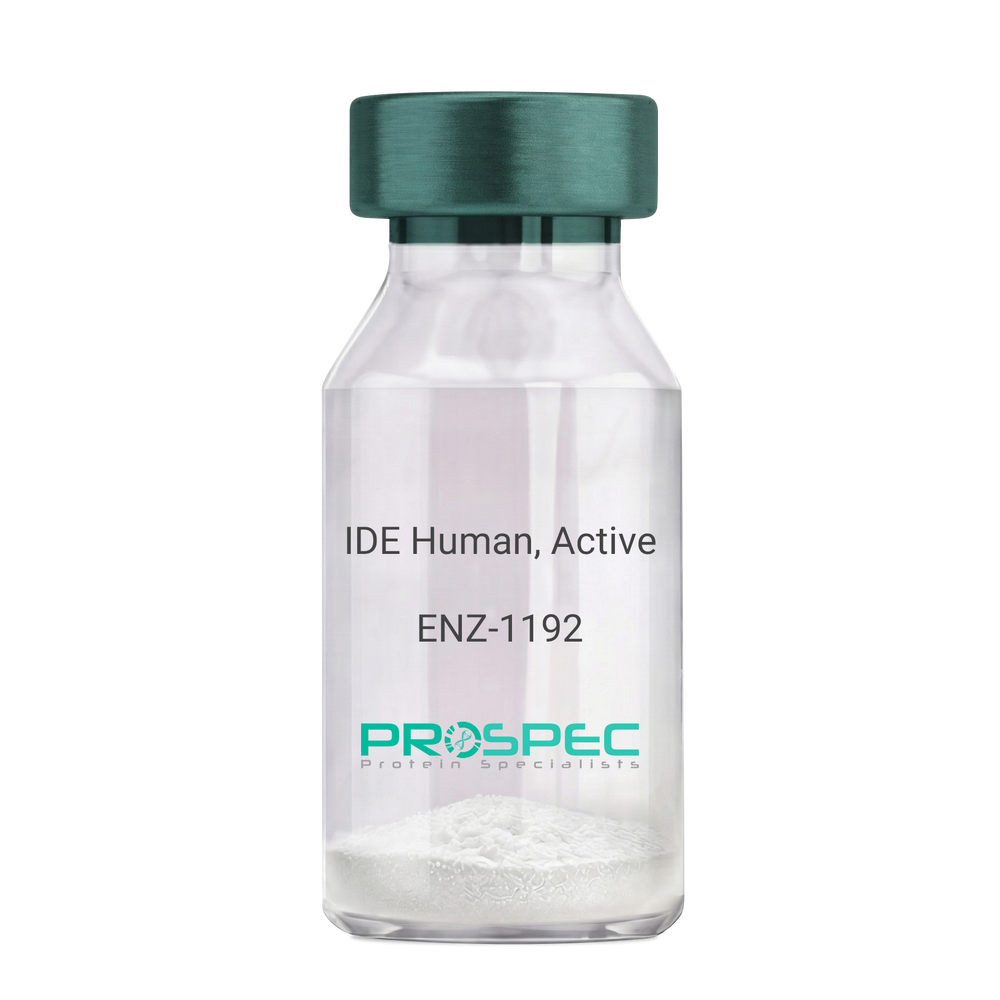
    Name :

    IDE Human, Active

    Description:

    Insulin-Degrading Enzyme Human Recombinant

    Insulin-Degrading Enzyme, Abeta-Degrading Protease, Insulysin, EC 3.4.24.56, Insulinase, Insulin Protease, INSULYSIN, EC 3.4.24, IDE, insulin-degrading enzyme isoform 1. 

    Product # :

    ENZ-1192

    Price :

    Quantity :

    Shipping Method :

    Ice Icon

    Shipped with Ice Packs

    Add To Cart

    More Info

    • description
    • source
    • formulation
    • purity
    • biological activity
    • More Info

    Description

    IDE Human, Active Human Recombinant produced in E.Coli is a single, non-glycosylated, polypeptide chain (42-1019 a.a) containing a total of 984 amino acids, having a molecular mass of 114 kDa. IDE is fused to a 6 amino acid His-tag at C-terminus and is purified by proprietary chromatographic techniques.

    Source

    Escherichia Coli.

    Formulation

    The IDE solution (0.5mg/ml) contains 10% Glycerol, 100mM NaCl, 0.05% Brij35 and 20mM Tris-HCl buffer (pH 7.5).

    Purity

    Greater than 90.0% as determined by SDS-PAGE.

    Biological Activity

    Specific activity is greater than 3,000 pmol/min/ug in which 1 unit will convert 1.0 pmole of Mca-RPPGFSAFK(Dnp)-OH to MCA-Pro-Leu-OH per minute at pH 7.5 at 25°C.

    More Info

    • Synonyms

      Insulin-Degrading Enzyme, Abeta-Degrading Protease, Insulysin, EC 3.4.24.56, Insulinase, Insulin Protease, INSULYSIN, EC 3.4.24, IDE, insulin-degrading enzyme isoform 1.

    • Physical Appearance

      Filtered colorless solution.

    • Stability

      Store at 4°C if entire vial will be used within 2-4 weeks. Store, frozen at -20°C for longer periods of time. For long term storage it is recommended to add a carrier protein (0.1% HSA or BSA). Avoid multiple freeze-thaw cycles.

    • Amino Acid Sequence

      MNNPAIKRIG NHITKSPEDK REYRGLELAN GIKVLLISDP TTDKSSAALD VHIGSLSDPP NIAGLSHFCE HMLFLGTKKY PKENEYSQFL SEHAGSSNAF TSGEHTNYYF DVSHEHLEGA LDRFAQFFLC PLFDESCKDR EVNAVDSEHE KNVMNDAWRL FQLEKATGNP KHPFSKFGTG NKYTLETRPN QEGIDVRQEL LKFHSAYYSS NLMAVCVLGR ESLDDLTNLV VKLFSEVENK NVPLPEFPEH PFQEEHLKQL YKIVPIKDIR NLYVTFPIPD LQKYYKSNPG HYLGHLIGHE GPGSLLSELK SKGWVNTLVG GQKEGARGFM FFIINVDLTE EGLLHVEDII LHMFQYIQKL RAEGPQEWVF QECKDLNAVA FRFKDKERPR GYTSKIAGIL HYYPLEEVLT AEYLLEEFRP DLIEMVLDKL RPENVRVAIV SKSFEGKTDR TEEWYGTQYK QEAIPDEVIK KWQNADLNGK FKLPTKNEFI PTNFEILPLE KEATPYPALI KDTAMSKLWF KQDDKFFLPK ACLNFEFFSP FAYVDPLHCN MAYLYLELLK DSLNEYAYAA ELAGLSYDLQ NTIYGMYLSV KGYNDKQPIL LKKIIEKMAT FEIDEKRFEI IKEAYMRSLN NFRAEQPHQH AMYYLRLLMT EVAWTKDELK EALDDVTLPR LKAFIPQLLS RLHIEALLHG NITKQAALGI MQMVEDTLIE HAHTKPLLPS
      QLVRYREVQL PDRGWFVYQQ RNEVHNNCGI EIYYQTDMQS TSENMFLELF CQIISEPCFN TLRTKEQLGY IVFSGPRRAN GIQGLRFIIQ SEKPPHYLES RVEAFLITME KSIEDMTEEA FQKHIQALAI RRLDKPKKLS AECAKYWGEI ISQQYNFDRD NTEVAYLKTL TKEDIIKFYK EMLAVDAPRR HKVSVHVLAR EMDSCPVVGE FPCQNDINLS QAPALPQPEV IQNMTEFKRG LPLFPLVKPH INFMAAKLHH HHHH.

    • Background

      Insulin-degrading enzyme (IDE) is a crucial protease that plays a significant role in maintaining glucose homeostasis by degrading insulin and other bioactive peptides. Dysregulation of IDE has been implicated in various metabolic disorders, particularly type 2 diabetes mellitus. IDE is also associated with the clearance of amyloid-beta peptides in the brain, making it relevant to Alzheimer's disease pathology. Studying the recombinant form of IDE is fundamental to understanding its functional mechanisms and exploring potential avenues for therapeutic interventions.

      The primary goal of this research is to express and purify recombinant IDE using diverse expression systems. Recombinant DNA techniques will be employed to construct expression vectors containing the IDE gene, followed by expression in bacterial, yeast, or mammalian cell-based systems. The recombinant IDE will be purified using affinity chromatography or other appropriate methods, facilitating subsequent biochemical and biophysical characterization.

      The second objective is to investigate the substrate specificity and catalytic activity of the purified IDE. In vitro enzymatic assays will be conducted to analyse the ability of the recombinant IDE to degrade insulin and other potential substrates. The effects of various factors, such as pH, temperature, and potential modulators, on IDE activity will be evaluated. Additionally, the interactions between IDE and its substrates will be explored using binding assays.

      The third objective is to elucidate the three-dimensional structure of the IDE recombinant using techniques like X-ray crystallography or nuclear magnetic resonance (NMR) spectroscopy. Structural insights into the active site and binding pockets of IDE will provide valuable information for understanding its substrate recognition and catalytic mechanisms. This knowledge could be instrumental in designing targeted therapeutic compounds.

      By characterizing the IDE recombinant, this research aims to contribute to our understanding of its role in insulin metabolism, glucose regulation, and potential therapeutic applications. The findings from this study may have implications for the development of novel treatments for diabetes and other related disorders.

    ProSpec's products are furnished for LABORATORY RESEARCH USE ONLY. The product may not be used as drugs, agricultural or pesticidal products, food additives or household chemicals.

    Ide Human Active
  • View Data Sheet

    Name :

    CEL Mouse

    Description:

    Carboxyl Ester Lipase Mouse Recombinant

    Bile salt-activated lipase, BAL, EC 3.1.1.13, EC 3.1.1.3, Bile salt-stimulated lipase, BSSL, Bucelipase, Carboxyl ester lipase, Cholesterol esterase, Pancreatic lysophospholipase, Sterol esterase, CEL, FAP, BSDL, CELL, FAPP, LIPA, Cease, MODY8.

    Product # :

    ENZ-1115

    Price :

    Quantity :

    Shipping Method :

    Ice Icon

    Shipped with Ice Packs

    Add To Cart

    More Info

    • description
    • source
    • formulation
    • purity
    • biological activity
    • More Info

    Description

    CEL Mouse produced in Sf9 Baculovirus cells is a single, glycosylated polypeptide chain containing 585 amino acids (21-599 aa) and having a molecular mass of 64.5kDa.CEL is fused to a 6 amino acid His tag at C-terminus and purified by proprietary chromatographic techniques.

    Source

    Sf9, Baculovirus cells.

    Formulation

    The CEL solution (0.5 mg/ml) contains 10% Glycerol and Phosphate-Buffered Saline (pH 7.4).

    Purity

    Greater than 90.0% as determined by SDS-PAGE.

    Biological Activity

    Specific activity is > 100,000 pmol/min/ug. Measured by the amount of enzyme that hydrolyze 1.0 umole of p-nitrophenyl butyrate to p-nitrophenol per minute at pH7.5 at 25C˚.

    More Info

    • Introduction

      Carboxyl ester lipase also known as CEL, formely called cholesterol esterase or bile salt-stimulated lipase, is an enzyme with lipolytic capablity of hydrolyzing cholesteryl esters, tri-, di-, and mono- phospholipids, acylglycerol, ceramide and lysophospholipids. The carboxyl terminus of the enzyme controls enzymatic activity by creating hydrogen bonds with the surface loop to partlyshield the active site. The active catalytic site triad of serine-histidine-aspartate is centrally located in the enzyme structure and is partly covered by a surface loop. Bile salt binding to the loop domain set free the active site for accessibility by water-insoluble substrates. CEL is produced mainly in the pancreas and lactating mammary gland, thus the protein is also expressed in liver, macrophages, and in the vessel wall.

    • Synonyms

      Bile salt-activated lipase, BAL, EC 3.1.1.13, EC 3.1.1.3, Bile salt-stimulated lipase, BSSL, Bucelipase, Carboxyl ester lipase, Cholesterol esterase, Pancreatic lysophospholipase, Sterol esterase, CEL, FAP, BSDL, CELL, FAPP, LIPA, Cease, MODY8.

    • Physical Appearance

      Sterile Filtered colorless solution.

    • Stability

      Store at 4°C if entire vial will be used within 2-4 weeks. Store, frozen at -20°C for longer periods of time. For long term storage it is recommended to add a carrier protein (0.1% HSA or BSA).Avoid multiple freeze-thaw cycles.

    • Amino Acid Sequence

      AKLGAVYTEG GFVEGVNKKL SLLGGDSVDI FKGIPFATAK TLENPQRHPG WQGTLKATNF
      KKRCLQATIT QDNTYGQEDC LYLNIWVPQG RKQVSHNLPV MVWIYGGAFL MGSGQGANFL
      KNYLYDGEEI ATRGNVIVVT FNYRVGPLGF LSTGDANLPG NFGLRDQHMA IAWVKRNIAA
      FGGDPDNITI FGESAGAASV SLQTLSPYNK GLIRRAISQS GMALSPWAIQ KNPLFWAKTI
      AKKVGCPTED TGKMAACLKI TDPRALTLAY KLPVKKQEYP VVHYLAFIPV IDGDFIPDDP
      INLYNNTADI DYIAGINNMD GHLFATIDVP AVDKTKQTVT EEDFYRLVSG HTVAKGLKGA
      QATFDIYTES WAQDPSQENM KKTVVAFETD VLFLIPTEIA LAQHKAHAKS AKTYSYLFSH
      PSRMPIYPKW MGADHADDLQ YVFGKPFATP LGYRPQDRAV SKAMIAYWTN FARSGDPNMG
      NSPVPTHWYP YTLENGNYLD ITKTITSASM KEHLREKFLK FWAVTFEVLP TVTGDQDTLT
      PPEDDSEVAP DPPSDDSQVV PVPPTDDSVE AQMPATIGFH HHHHH

    ProSpec's products are furnished for LABORATORY RESEARCH USE ONLY. The product may not be used as drugs, agricultural or pesticidal products, food additives or household chemicals.

    Carboxyl Ester Lipase Mouse
  • View Data Sheet

    Name :

    DBH Human

    Description:

    DBH Human Recombinant

    EC 1.14.17.1, DBM, DBH.

    Product # :

    ENZ-891

    Price :

    Quantity :

    Shipping Method :

    Ice Icon

    Shipped with Ice Packs

    Add To Cart

    More Info

    • description
    • source
    • formulation
    • purity
    • More Info

    Description

    DBH Human Recombinant produced in E.Coli is a single, non-glycosylated polypeptide chain containing 599 amino acids (40-617 a.a) and having a molecular mass of 67.2kDa.DBH is fused to a 21 amino acid His-tag at N-terminus & purified by proprietary chromatographic techniques.

    Source

    Escherichia Coli.

    Formulation

    DBH protein solution (0.25mg/ml) containing Phosphate buffered saline (pH7.4), 10% glycerol and 1mM DTT.

    Purity

    Greater than 85.0% as determined by SDS-PAGE.

    More Info

    • Introduction

      DBH catalyzes the chemical reaction. DBH is an oxidoreductase which belongs to the copper type II, ascorbate-dependent monooxygenase family, in particular those performing on paired donors, with O2 as oxidant and incorporation or reduction of oxygen. The oxygen incorporated can not be derived from O2 with reduced ascorbate as one donor, as well as incorporation of one ato of oxygen into the other donor.

    • Synonyms

      EC 1.14.17.1, DBM, DBH.

    • Physical Appearance

      Sterile Filtered colorless solution.

    • Stability

      Store at 4°C if entire vial will be used within 2-4 weeks. Store, frozen at -20°C for longer periods of time. For long term storage it is recommended to add a carrier protein (0.1% HSA or BSA).Avoid multiple freeze-thaw cycles.

    • Amino Acid Sequence

      MGSSHHHHHH SSGLVPRGSH MSAPRESPLP YHIPLDPEGS LELSWNVSYT QEAIHFQLLV RRLKAGVLFG MSDRGELENA DLVVLWTDGD TAYFADAWSD QKGQIHLDPQ QDYQLLQVQR TPEGLTLLFK RPFGTCDPKD YLIEDGTVHL VYGILEEPFR SLEAINGSGL QMGLQRVQLL KPNIPEPELP SDACTMEVQA PNIQIPSQET TYWCYIKELP KGFSRHHIIK YEPIVTKGNE ALVHHMEVFQ CAPEMDSVPH FSGPCDSKMK PDRLNYCRHV LAAWALGAKA FYYPEEAGLA FGGPGSSRYL RLEVHYHNPL VIEGRNDSSG IRLYYTAKLR RFNAGIMELG LVYTPVMAIP PRETAFILTG YCTDKCTQLA LPPSGIHIFA SQLHTHLTGR KVVTVLVRDG REWEIVNQDN HYSPHFQEIR MLKKVVSVHP GDVLITSCTY NTEDRELATV GGFGILEEMC VNYVHYYPQT QLELCKSAVD AGFLQKYFHL INRFNNEDVC TCPQASVSQQ FTSVPWNSFN RDVLKALYSF APISMHCNKS SAVRFQGEWN LQPLPKVIST LEEPTPQCPT SQGRSPAGPT VVSIGGGKG

    ProSpec's products are furnished for LABORATORY RESEARCH USE ONLY. The product may not be used as drugs, agricultural or pesticidal products, food additives or household chemicals.

    Dbh Human
  • View Data Sheet

    Name :

    HSD17B10 Human

    Description:

    Hydroxysteroid (17-beta) Dehydrogenase 10 Human Recombinant

    17b-HSD10, ABAD, CAMR, DUPXp11.22, ERAB, HADH2, HCD2, MHBD, MRPP2, MRX17, MRX31, SCHAD, MRXS10, SDR5C1.

    Product # :

    PRO-823

    Price :

    Quantity :

    Shipping Method :

    Ice Icon

    Shipped with Ice Packs

    Add To Cart

    More Info

    • description
    • source
    • formulation
    • purity
    • More Info

    Description

    HSD17B10 Human Recombinant produced in E.Coli is a single, non-glycosylated, polypeptide chain containing 271 amino acids (12-261 a.a.) and having a molecular mass of 28.1 kDa. HSD17B10 protein is fused to a 21 amino acid His-Tag at N-terminus and purified by standard chromatography.

    Source

    Escherichia Coli.

    Formulation

    HSD17B10 protein solution (1mg/ml) containing 20mM Tris-HCl buffer (pH8.0), 0.1M NaCl, 1mM DTT & 10% glycerol.

    Purity

    Greater than 95% as determined by SDS-PAGE.

    More Info

    • Introduction

      HSD17B10 functions in mitochondrial tRNA maturation. HSD17B10 is part of mitochondrial ribonuclease P, an enzyme composed of MRPP1/RG9MTD1, MRPP2/HSD17B10 and MRPP3/KIAA0391, which cleaves tRNA molecules in their 5''-ends. HSD17B10 interacts with intracellular amyloid-beta, and contributes to the neuronal dysfunction associated with Alzheimer disease.

    • Synonyms

      17b-HSD10, ABAD, CAMR, DUPXp11.22, ERAB, HADH2, HCD2, MHBD, MRPP2, MRX17, MRX31, SCHAD, MRXS10, SDR5C1.

    • Physical Appearance

      Sterile filtered colorless solution.

    • Stability

      Store at 4°C if entire vial will be used within 2-4 weeks. Store, frozen at -20°C for longer periods of time. For long term storage it is recommended to add a carrier protein (0.1% HSA or BSA).Avoid multiple freeze-thaw cycles.

    • Amino Acid Sequence

      MGSSHHHHHH SSGLVPRGSH MVAVITGGAS GLGLATAERL VGQGASAVLL DLPNSGGEAQ AKKLGNNCVF APADVTSEKD VQTALALAKG KFGRVDVAVN CAGIAVASKT YNLKKGQTHT LEDFQRVLDV NLMGTFNVIR LVAGEMGQNE PDQGGQRGVI INTASVAAFE GQVGQAAYSA SKGGIVGMTL PIARDLAPIG IRVMTIAPGL FGTPLLTSLP EKVCNFLASQ VPFPSRLGDP AEYAHLVQAI IENPFLNGEV IRLDGAIRMQ P.

    ProSpec's products are furnished for LABORATORY RESEARCH USE ONLY. The product may not be used as drugs, agricultural or pesticidal products, food additives or household chemicals.

    Hsd17B10 Human
  • View Data Sheet

    Name :

    MPI Human

    Description:

    Mannose Phosphate Isomerase Human Recombinant

    Mannose-6-phosphate isomerase, PMI1, CDG1B, Phosphohexomutase, Phosphomannose isomerase, EC 5.3.1.8, FLJ39201.

    Product # :

    ENZ-169

    Price :

    Quantity :

    Shipping Method :

    Ice Icon

    Shipped with Ice Packs

    Add To Cart

    More Info

    • description
    • source
    • formulation
    • purity
    • More Info

    Description

    MPI Human Recombinant produced in E.coli is a single, non-glycosylated polypeptide chain containing 382 amino acids (1-362) and having a molecular mass of 41.9 kDa.The MPI is fused to a 20 amino acid His-Tag at N-terminus and purified by proprietary chromatographic techniques.

    Source

    E.coli.

    Formulation

    The MPI solution (0.5mg/ml) contains 20mM Tris-HCl buffer (pH 8.0), 0.4M Urea and 5% glycerol.

    Purity

    Greater than 90% as determined by SDS-PAGE.

    More Info

    • Introduction

      MPI is a member of the mannose-6-phosphate isomerase type 1 family. Although MPI is expressed in all tissues, it can be found more abundantly in heart, brain and skeletal muscle. Localized to the cytoplasm, MPI exploits zinc as a cofactor and catalyzes the interconversion of fructose-6-phosphate and mannose-6-phosphate. Mutations in the MPI gene are the cause of carbohydrate-deficient glycoprotein syndrome, type Ib.

    • Synonyms

      Mannose-6-phosphate isomerase, PMI1, CDG1B, Phosphohexomutase, Phosphomannose isomerase, EC 5.3.1.8, FLJ39201.

    • Physical Appearance

      Sterile Filtered colorless solution.

    • Stability

      Store at 4°C if entire vial will be used within 2-4 weeks. Store, frozen at -20°C for longer periods of time. For long term storage it is recommended to add a carrier protein (0.1% HSA or BSA).Avoid multiple freeze-thaw cycles.

    • Amino Acid Sequence

      MGSSHHHHHH SSGLVPRGSH MAAPRVFPLS CAVQQYAWGK MGSNSEVARL LASSDPLAQI AEDKPYAELW MGTHPRGDAK ILDNRISQKT LSQWIAENQD SLGSKVKDTF NGNLPFLFKV LSVETPLSIQ AHPNKELAEK LHLQAPQHYP DANHKPEMAI ALTPFQGLCG FRPVEEIVTF LKTAAGNNME DIFGELLLQL HQQYPGDIGC FAIYFLNLLT LKPGEAMFLE ANVPHAYLKG DCVECMACSD NTVRAGLTPK FIDVPTLCEM LSYTPSSSKD RLFLPTRSQE DPYLSIYDPP VPDFTIMKTE VPGSVTEYKV LALDSASILL MVQGTVIAST PTTQTPIPLQ RGGVLFIGAN ESVSLKLTEP KDLLIFRACC LL

    ProSpec's products are furnished for LABORATORY RESEARCH USE ONLY. The product may not be used as drugs, agricultural or pesticidal products, food additives or household chemicals.

    Mpi Human
  • View Data Sheet

    Name :

    UPP1 E.coli

    Description:

    Uridine Phosphorylase E.coli Recombinant

    UPASE, UDRPASE, UPP, UDP.

    Product # :

    ENZ-258

    Price :

    Quantity :

    Shipping Method :

    Ice Icon

    Shipped with Ice Packs

    Add To Cart

    More Info

    • description
    • source
    • formulation
    • purity
    • More Info

    Description

    UPP1 E.Coli Recombinant protein produced in E.Coli is a single, non-glycosylated, polypeptide chain containing 273 amino acids (1-253) and having a molecular mass of 29.3 kDa. UPP1 is fused to a 20 amino acid His Tag at N-terminus and is purified by proprietary chromatographic techniques.

    Source

    Escherichia Coli.

    Formulation

    UPP1 solution (1mg/ml) contains 20 mM Tris-HCl buffer (pH 8.0), 1mM DTT, 50mM NaCl and 10% glycerol.

    Purity

    Greater than 95.0% as determined by SDS-PAGE.

    More Info

    • Introduction

      UPP1 catalyzes the reversible phosphorylytic cleavage of uridine and deoxyuridine to uracil and ribose- or deoxyribose-1-phosphate which are used as carbon and energy sources or in the release of pyrimidine bases for nucleotide synthesis. UPP1 is part of the family of glycosyltransferases, specifically the pentosyltransferases. Pyrimidine nucleoside phosphorylases add ribose or deoxyribose to pyrimidine bases to form nucleosides that can be incorporated into RNA or DNA.

    • Synonyms

      UPASE, UDRPASE, UPP, UDP.

    • Physical Appearance

      Sterile filtered colorless solution.

    • Stability

      Store at 4°C if entire vial will be used within 2-4 weeks. Store, frozen at -20°C for longer periods of time. For long term storage it is recommended to add a carrier protein (0.1% HSA or BSA).Avoid multiple freeze-thaw cycles.

    • Amino Acid Sequence

      MGSSHHHHHH SSGLVPRGSH MSKSDVFHLG LTKNDLQGAT LAIVPGDPDR VEKIAALMDK PVKLASHREF TTWRAELDGK PVIVCSTGIG GPSTSIAVEE LAQLGIRTFL RIGTTGAIQP HINVGDVLVT TASVRLDGAS LHFAPLEFPA VADFECTTAL VEAAKSIGAT THVGVTASSD TFYPGQERYD TYSGRVVRHF KGSMEEWQAM GVMNYEMESA TLLTMCASQG LRAGMVAGVI VNRTQQEIPN AETMKQTESH AVKIVVEAAR RLL.

    ProSpec's products are furnished for LABORATORY RESEARCH USE ONLY. The product may not be used as drugs, agricultural or pesticidal products, food additives or household chemicals.

    Upp1
  • View Data Sheet

    Name :

    ST6GALNAC5 Human

    Description:

    ST6GALNAC5 Human Recombinant

    Alpha-N-acetylgalactosaminide alpha-2,6-sialyltransferase 5, GD1 alpha synthase, GalNAc alpha-2,6-sialyltransferase V, ST6GalNAc V, ST6GalNAcV, Sialyltransferase 7E, SIAT7-E, SIAT7E

    Product # :

    ENZ-1153

    Price :

    Quantity :

    Shipping Method :

    Ice Icon

    Shipped with Ice Packs

    Add To Cart

    More Info

    • description
    • source
    • formulation
    • purity
    • More Info

    Description

    ST6GALNAC5 produced in Sf9 Baculovirus cells is a single, glycosylated polypeptide chain containing 316 amino acids (30-336a.a.) and having a molecular mass of 36.4kDa.ST6GALNAC5 is expressed with a 6 amino acid His tag at C-Terminus and purified by proprietary chromatographic techniques.

    Source

    Sf9, Baculovirus cells.

    Formulation

    ST6GALNAC5 protein solution (0.25mg/ml) contains 10% glycerol & Phosphate Buffered Saline (pH 7.4).

    Purity

    Greater than 90.0% as determined by SDS-PAGE.

    More Info

    • Introduction

      Alpha-N-acetylgalactosaminide alpha-2,6-sialyltransferase 5 or ST6GALNAC5, is part of the glycosyltransferase 29 group of proteins. ST6GALNAC5 is a sialyltransferase that takes part in the synthesis of ganglioside GD1a. This protein is part of the protein glycosylation transduction, meaning, modification of proteins. ST6GALNAC5 is expressed strictly in the brain tissue, and is a crucial component in breast cancer cells metastasis to the brain tissue. It is thought to enable cancer cells to go through the blood-brain barrier.

    • Synonyms

      Alpha-N-acetylgalactosaminide alpha-2,6-sialyltransferase 5, GD1 alpha synthase, GalNAc alpha-2,6-sialyltransferase V, ST6GalNAc V, ST6GalNAcV, Sialyltransferase 7E, SIAT7-E, SIAT7E

    • Physical Appearance

      Sterile Filtered colorless solution.

    • Stability

      Store at 4°C if entire vial will be used within 2-4 weeks. Store, frozen at -20°C for longer periods of time. For long term storage it is recommended to add a carrier protein (0.1% HSA or BSA).Avoid multiple freeze-thaw cycles.

    • Amino Acid Sequence

      ADLGGQKERP PQQQQQQQQQ QQQASATGSS QPAAESSTQQ RPGVPAGPRP LDGYLGVADH KPLKMHCRDC ALVTSSGHLL HSRQGSQIDQ TECVIRMNDA PTRGYGRDVG NRTSLRVIAH SSIQRILRNR HDLLNVSQGT VFIFWGPSSY MRRDGKGQVY NNLHLLSQVL PRLKAFMITR HKMLQFDELF KQETGKDRKI SNTWLSTGWF TMTIALELCD RINVYGMVPP DFCRDPNHPS VPYHYYEPFG PDECTMYLSH ERGRKGSHHR FITEKRVFKN WARTFNIHFF QPDWKPESLA INHPENKPVF HHHHHH

    ProSpec's products are furnished for LABORATORY RESEARCH USE ONLY. The product may not be used as drugs, agricultural or pesticidal products, food additives or household chemicals.

    St6Galnac5 Human
  • View Data Sheet

    Name :

    CAIII Human, His

    Description:

    Carbonic Anhydrase III Human Recombinant, His Tag

    Car3, CAIII, Carbonic anhydrase 3, EC 4.2.1.1, Carbonic anhydrase III, Carbonate dehydratase III, CA-III.

    Product # :

    ENZ-270

    Price :

    Quantity :

    Shipping Method :

    Ice Icon

    Shipped with Ice Packs

    Add To Cart

    More Info

    • description
    • source
    • formulation
    • purity
    • More Info

    Description

    Carbonic anhydrase III Human Recombinant produced in E.Coli, and having a molecular mass of 33.9 kDa. CAIII is expressed with an amino-terminal hexahistidine tag.The CA-III is purified by proprietary chromatographic techniques.

    Source

    Escherichia Coli.

    Formulation

    Supplied in 10mM Tris-HCl (pH 8), 250mM NaCl, 0.5mM DTT, 1.5mM Cysteine, and 50% Glycerol.

    Purity

    Greater than 95.0% as determined by SDS-PAGE.

    More Info

    • Introduction

      Carbonic anhydrase (carbonate dehydratase) is a family of metalloenzymes (enzymes that contain one or more metal atoms as a functional component of the enzyme) that catalyze the rapid (and reversible) conversion of carbon dioxide to bicarbonate and protons, a reaction that occurs rather slowly in the absence of a catalyst. Carbonic anhydrase greatly increases the rate of the reaction, with typical catalytic rates of the different forms of this enzyme ranging between 104 and 106 reactions per second. The active site of most carbonic anhydrases contains a zincion. CAIII is a cytoplasmic isoenzyme, but is released into the circulation following injury.

    • Synonyms

      Car3, CAIII, Carbonic anhydrase 3, EC 4.2.1.1, Carbonic anhydrase III, Carbonate dehydratase III, CA-III.

    • Physical Appearance

      Sterile Filtered blue solution.

    • Stability

      Store at 4°C if entire vial will be used within 2-4 weeks. Store, frozen at -20°C for longer periods of time. For long term storage it is recommended to add a carrier protein (0.1% HSA or BSA).Avoid multiple freeze-thaw cycles.

    ProSpec's products are furnished for LABORATORY RESEARCH USE ONLY. The product may not be used as drugs, agricultural or pesticidal products, food additives or household chemicals.

    Caiii Human
  • View Data Sheet

    Name :

    SHMT1 Human

    Description:

    Serine Hydroxymethyltransferase 1 Human Recombinant

    Serine hydroxymethyltransferase 1 (soluble), CSHMT, Glycine hydroxymethyltransferase, Serine methylase, 14 kDa protein, cytoplasmic serine hydroxymethyltransferase, serine hydroxymethyltransferase cytosolic, EC 2.1.2.1.

    Product # :

    ENZ-199

    Price :

    Quantity :

    Shipping Method :

    Ice Icon

    Shipped with Ice Packs

    Add To Cart

    More Info

    • description
    • source
    • formulation
    • purity
    • More Info

    Description

    SHMT1 Human Recombinant produced in E.Coli is a single, non-glycosylated polypeptide chain containing 503 amino acids (1-483 a.a.) and having a molecular mass of 55.2kDa.SHMT1 is fused to a 20 amino acid His-tag at N-terminus & purified by proprietary chromatographic techniques.

    Source

    Escherichia Coli.

    Formulation

    SHMT1 protein solution (1mg/ml) containing 20mM Tris-HCl buffer (pH8.0), 100mM NaCl, 1mM DTT and 10% glycerol.

    Purity

    Greater than 95.0% as determined by SDS-PAGE.

    More Info

    • Introduction

      SHMT1 is a member of the SHMT family. SHMT1 is the cellular form of serine hydroxymethyltransferase, a pyridoxal phosphate-containing enzyme which catalyzes the reversible conversion of serine and tetrahydrofolate to glycine and 5 10-methylene tetrahydrofolate. In addition, SHMT1 specifically provides one-carbon units for thymidylate biosynthesis, reduces methylenetetrahydrofolate pools for S-adenosylmethionine (SAM) synthesis by synthesizing serine, sequesters 5-methyltetrahydrofolate and inhibits SAM synthesis.

    • Synonyms

      Serine hydroxymethyltransferase 1 (soluble), CSHMT, Glycine hydroxymethyltransferase, Serine methylase, 14 kDa protein, cytoplasmic serine hydroxymethyltransferase, serine hydroxymethyltransferase cytosolic, EC 2.1.2.1.

    • Physical Appearance

      Sterile Filtered colorless solution.

    • Stability

      Store at 4°C if entire vial will be used within 2-4 weeks. Store, frozen at -20°C for longer periods of time. For long term storage it is recommended to add a carrier protein (0.1% HSA or BSA).Avoid multiple freeze-thaw cycles.

    • Amino Acid Sequence

      MGSSHHHHHH SSGLVPRGSH MTMPVNGAHK DADLWSSHDK MLAQPLKDSD VEVYNIIKKE SNRQRVGLEL IASENFASRA VLEALGSCLN NKYSEGYPGQ RYYGGTEFID ELETLCQKRA LQAYKLDPQC WGVNVQPYSG SPANFAVYTA LVEPHGRIMG LDLPDGGHLT HGFMTDKKKI SATSIFFESM PYKVNPDTGY INYDQLEENA RLFHPKLIIA GTSCYSRNLE YARLRKIADE NGAYLMADMA HISGLVAAGV VPSPFEHCHV VTTTTHKTLR GCRAGMIFYR KGVKSVDPKT GKEILYNLES LINSAVFPGL QGGPHNHAIA GVAVALKQAM TLEFKVYQHQ VVANCRALSE ALTELGYKIV TGGSDNHLIL VDLRSKGTDG GRAEKVLEAC SIACNKNTCP GDRSALRPSG LRLGTPALTS RGLLEKDFQK VAHFIHRGIE LTLQIQSDTG VRATLKEFKE RLAGDKYQAA VQALREEVES FASFFPLPGL PDF.

    ProSpec's products are furnished for LABORATORY RESEARCH USE ONLY. The product may not be used as drugs, agricultural or pesticidal products, food additives or household chemicals.

    Shmt1 Human
  • View Data Sheet

    Name :

    SPR Mouse

    Description:

    Sepiapterin Reductase Mouse Recombinant

    SDR38C1, SPR, Dystonia, Sepiapterin reductase, mCG_128676.

    Product # :

    ENZ-1055

    Price :

    Quantity :

    Shipping Method :

    Ice Icon

    Shipped with Ice Packs

    Add To Cart

    More Info

    • description
    • source
    • formulation
    • purity
    • More Info

    Description

    SPR Mouse Recombinant produced in E.Coli is a single, non-glycosylated polypeptide chain containing 285 amino acids (1-262 a.a) and having a molecular mass of 30.3kDa.SPR is fused to a 23 amino acid His-tag at N-terminus & purified by proprietary chromatographic techniques.

    Source

    Escherichia Coli.

    Formulation

    SPR protein solution (1mg/ml) containing 20mM Tris-HCl buffer (pH8.5), 1mM DTT and 10% glycerol.

    Purity

    Greater than 95.0% as determined by SDS-PAGE.

    More Info

    • Introduction

      Sepiapterin Reductase is an aldo-keto reductase that catalyzes the NADPH-dependent reduction of pteridine derivatives and is essential in the biosynthesis of BH4. Mutations in Sepiapterin Reductase gene result in DOPA-responsive dystonia due to sepiaterin reductase deficiency defined by the presence of sustained involuntary muscle contractions, often leading to abnormal postures. Sepiapterin reductase is part of the short-chain dehydrogenase/reductase family which reduces exogenous carbonyl compounds as well as phenylpropanedione. Sepiapterin reductase is an important enzyme for the biosynthesis of tetrahydrobiopterin, an necessary cofactor for aromatic amino acid hydrolases together with tyrosine hydroxylase, the rate-limiting enzyme in dopamine synthesis.

    • Synonyms

      SDR38C1, SPR, Dystonia, Sepiapterin reductase, mCG_128676.

    • Physical Appearance

      Sterile filtered colourless solution.

    • Stability

      Store at 4°C if entire vial will be used within 2-4 weeks.Store, frozen at -20°C for longer periods of time. For long term storage it is recommended to add a carrier protein (0.1% HSA or BSA).Avoid multiple freeze-thaw cycles.

    • Amino Acid Sequence

      MGSSHHHHHH SSGLVPRGSH MGSMEAGGLG CAVCVLTGAS RGFGRALAPQ LARLLSPGSV MLVSARSESM LRQLKEELGA QQPDLKVVLA AADLGTEAGV QRLLSAVREL PRPEGLQRLL LINNAATLGD VSKGFLNVND LAEVNNYWAL NLTSMLCLTS GTLNAFQDSP GLSKTVVNIS SLCALQPYKG WGLYCAGKAA RDMLYQVLAA EEPSVRVLSY APGPLDNDMQ QLARETSKDP ELRSKLQKLK SDGALVDCGT SAQKLLGLLQ KDTFQSGAHV DFYDC.

    ProSpec's products are furnished for LABORATORY RESEARCH USE ONLY. The product may not be used as drugs, agricultural or pesticidal products, food additives or household chemicals.

    Spr Mouse
  • View Data Sheet

    Name :

    NDUFS2 Human

    Description:

    Histidine NADH Dehydrogenase Fe-S Protein 2 Human Recombinant

    CI-49 , NADH dehydrogenase [ubiquinone] iron-sulfur protein 2, mitochondrial, Complex I-49kD, CI-49kD, NADH-ubiquinone oxidoreductase 49 kDa subunit, NDUFS2.

    Product # :

    ENZ-737

    Price :

    Quantity :

    Shipping Method :

    Ice Icon

    Shipped with Ice Packs

    Add To Cart

    More Info

    • description
    • source
    • formulation
    • purity
    • More Info

    Description

    NDUFS2 Human Recombinant produced in E.coli is a single, non-glycosylated polypeptide chain containing 410 amino acids (77-463a.a) and having a molecular mass of 46.5kDa. NDUFS2 is fused to a 23 amino acid His-tag at N-terminus & purified by proprietary chromatographic techniques.

    Source

    Escherichia Coli.

    Formulation

    The NDUFS2 solution (0.25mg/ml) contains 20mM Tris-HCl buffer (pH 8.0), 0.4M Urea and 10% glycerol.

    Purity

    Greater than 80% as determined by SDS-PAGE.

    More Info

    • Introduction

      NDUFS2 is a core subunit of the mitochondrial membrane respiratory chain NADH dehydrogenase (Complex I) which is a part of the minimal assembly required for catalysis. Complex I takes part in the transfer of electrons from NADH to the respiratory chain. Histidine NADH Dehydrogenase Fe-S Protein 2 (NDUFS2) is required for catalytic activity. Imperfections in NDUFS2 are the source of complex I mitochondrial respiratory chain deficiency, which is characterized by many symptoms including liver failure, cardiomyopathy and neurodegeneration.

    • Synonyms

      CI-49 , NADH dehydrogenase [ubiquinone] iron-sulfur protein 2, mitochondrial, Complex I-49kD, CI-49kD, NADH-ubiquinone oxidoreductase 49 kDa subunit, NDUFS2.

    • Physical Appearance

      Sterile Filtered clear solution.

    • Stability

      Store at 4°C if entire vial will be used within 2-4 weeks. Store, frozen at -20°C for longer periods of time. For long term storage it is recommended to add a carrier protein (0.1% HSA or BSA).Avoid multiple freeze-thaw cycles.

    • Amino Acid Sequence

      MGSSHHHHHH SSGLVPRGSH MGSVKNITLN FGPQHPAAHG VLRLVMELSG EMVRKCDPHI GLLHRGTEKL IEYKTYLQAL PYFDRLDYVS MMCNEQAYSL AVEKLLNIRP PPRAQWIRVL FGEITRLLNH IMAVTTHALD LGAMTPFFWL FEEREKMFEF YERVSGARMH AAYIRPGGVH QDLPLGLMDD IYQFSKNFSL RLDELEELLT NNRIWRNRTI DIGVVTAEEA LNYGFSGVML RGSGIQWDLR KTQPYDVYDQ VEFDVPVGSR GDCYDRYLCR VEEMRQSLRI IAQCLNKMPP GEIKVDDAKV SPPKRAEMKT SMESLIHHFK LYTEGYQVPP GATYTAIEAP KGEFGVYLVS DGSSRPYRCK IKAPGFAHLA GLDKMSKGHM LADVVAIIGT QDIVFGEVDR.

    ProSpec's products are furnished for LABORATORY RESEARCH USE ONLY. The product may not be used as drugs, agricultural or pesticidal products, food additives or household chemicals.

    Ndufs2 Human
  • View Data Sheet

    Name :

    ACHE Human

    Description:

    Acetylcholinesterase Human Recombinant

    AChE, ACEE, ACES_HUMAN, Acetylcholinesterase, ACHE, ARACHE, N-ACHE, VT, Acetylcholinesterase isoform E4-E6

    Product # :

    ENZ-1174

    Price :

    Quantity :

    Shipping Method :

    Ice Icon

    Shipped with Ice Packs

    Add To Cart

    More Info

    • description
    • source
    • formulation
    • purity
    • biological activity
    • More Info

    Description

    ACHE Human Recombinant produced in HEK cells is a single, glycosylated, polypeptide chain (32-614 a.a) containing a total of 592 amino acids, having a molecular mass of 65.6 kDa. ACHE is fused to a 6 amino acid His-tag at C-terminus,and is purified by proprietary chromatographic techniques.

    Source

    HEK293 Cells.

    Formulation

    The ACHE solution (0.25mg/ml) contains 10% Glycerol and Phosphate-Buffered Saline (pH 7.4).

    Purity

    Greater than 95.0% as determined by SDS-PAGE.

    Biological Activity

    Specific activity is > 6,000 nmol/min/ug. Defined by the amount of enzyme that cleaves  1 nmole of acetylthiocholine per minute at pH 7.5 at 25˚C.

    More Info

    • Introduction

      Acetylcholinesterase (ACHE) belongs to the type-B carboxylesterase/lipase family. ACHE catalyzes the breakdown of acetylcholine and other choline esters that play a role as neurotransmitters. During neurotransmission, ACH is released from the presynaptic neuron into the synaptic cleft and binds ACH receptors on the post-synaptic membrane, transmitting the signal from the nerve. ACHE is located on the post-synaptic membrane, terminates the signal transmission by hydrolyzing ACH.

    • Synonyms

      AChE, ACEE, ACES_HUMAN, Acetylcholinesterase, ACHE, ARACHE, N-ACHE, VT, Acetylcholinesterase isoform E4-E6

    • Physical Appearance

      Sterile Filtered colorless solution.

    • Stability

      Store at 4°C if entire vial will be used within 2-4 weeks. Store, frozen at -20°C for longer periods of time. For long term storage it is recommended to add a carrier protein (0.1% HSA or BSA). Avoid multiple freeze-thaw cycles.

    • Amino Acid Sequence

      DGSEGREDAE LLVTVRGGRL RGIRLKTPGG PVSAFLGIPF AEPPMGPRRF LPPEPKQPWS GVVDATTFQS VCYQYVDTLY PGFEGTEMWN PNRELSEDCL YLNVWTPYPR PTSPTPVLVW IYGGGFYSGA SSLDVYDGRF LVQAERTVLV SMNYRVGAFG FLALPGSREA PGNVGLLDQR LALQWVQENV AAFGGDPTSV TLFGESAGAA SVGMHLLSPP SRGLFHRAVL QSGAPNGPWA TVGMGEARRR ATQLAHLVGC PPGGTGGNDT ELVACLRTRP AQVLVNHEWH VLPQESVFRF SFVPVVDGDF LSDTPEALIN AGDFHGLQVL VGVVKDEGSY FLVYGAPGFS KDNESLISRA EFLAGVRVGV PQVSDLAAEA VVLHYTDWLH PEDPARLREA LSDVVGDHNV VCPVAQLAGR LAAQGARVYA YVFEHRASTL SWPLWMGVPH GYEIEFIFGI PLDPSRNYTA EEKIFAQRLM RYWANFARTG DPNEPRDPKA PQWPPYTAGA QQYVSLDLRP LEVRRGLRAQ ACAFWNRFLP KLLSATDTLD EAERQWKAEF HRWSSYMVHW KNQFDHYSKQ DRCSDLHHHH HH

    ProSpec's products are furnished for LABORATORY RESEARCH USE ONLY. The product may not be used as drugs, agricultural or pesticidal products, food additives or household chemicals.

    Ache Human
  • 1
  • …
  • 11
  • 12
  • 13
  • 14
  • 15
  • …
  • 42
Your browser does not support the video tag.

Products

  • Cytokines
  • Growth Factors
  • Chemokines
  • CD Antigens
  • Neurotrophins
  • Hormones
  • Enzymes
  • Viral Antigens
  • Recombinant Proteins
  • Natural Proteins
  • Monoclonal Antibodies
  • Polyclonal Antibodies
  • Thermal Packaging

About

  • Company
  • Founder
  • Contribution
  • Contact Us
  • My Account

Ordering

  • Ordering Method
  • Ordering - Credit Card
  • Ordering PO
  • Shipping Fees
  • FAQ's

Legal

  • Terms & Conditions
  • Privacy
  • Site Map
  • info@prospecbio.com
  • Facebook
  • Instagram
  • Linkedin Profile

© 2026 ProSpec-Tany TechnoGene Ltd. All Rights Reserved.

  • Choosing a selection results in a full page refresh.
  • Opens in a new window.