Skip to content

High-quality research proteins.

  • 1-800-805-6531

  • Mon - Sat 8.00-18.00, Sun - Closed

  • info@prospecbio.com

  • PO Box 6591 East Brunswick NJ 08816

  • Products
    • Cytokines
    • Growth factors
    • Chemokines
    • Cd antigens
    • Neurotrophins
    • Hormones
    • Enzymes
    • Viral antigens
    • Recombinant proteins
    • Natural proteins
    • Monoclonal antibodies
    • Polyclonal antibodies
    • Thermal Packaging
  • About
    • Company
    • Founder
    • Contribution
  • Customers
    • Eastern Asia
    • Eastern Europe
    • North America
    • South America
    • South East Asia
    • Southern Asia
    • Western Europe
  • Ordering
    • Ordering Method
    • Ordering - Credit Card
    • Ordering - PO
    • Shipping Fees
    • FAQs
  • Services
    • DNA Cloning
    • Protein Expression
    • Monoclonal Antibody
    • Fermentation
    • Technology License
  • Contact us
Log in

Country/region

  • USD $ | Albania
  • USD $ | Andorra
  • USD $ | Argentina
  • USD $ | Armenia
  • USD $ | Australia
  • USD $ | Austria
  • USD $ | Azerbaijan
  • USD $ | Belarus
  • USD $ | Belgium
  • USD $ | Bolivia
  • USD $ | Brazil
  • USD $ | Bulgaria
  • USD $ | Cambodia
  • USD $ | Canada
  • USD $ | Chile
  • USD $ | China
  • USD $ | Colombia
  • USD $ | Costa Rica
  • USD $ | Croatia
  • USD $ | Cyprus
  • USD $ | Czechia
  • USD $ | Denmark
  • USD $ | Estonia
  • USD $ | Finland
  • USD $ | France
  • USD $ | Georgia
  • USD $ | Germany
  • USD $ | Greece
  • USD $ | Hong Kong SAR
  • USD $ | Hungary
  • USD $ | Iceland
  • USD $ | India
  • USD $ | Ireland
  • USD $ | Israel
  • USD $ | Italy
  • USD $ | Japan
  • USD $ | Kazakhstan
  • USD $ | Latvia
  • USD $ | Liechtenstein
  • USD $ | Lithuania
  • USD $ | Madagascar
  • USD $ | Malta
  • USD $ | Mexico
  • USD $ | Moldova
  • USD $ | Monaco
  • USD $ | Netherlands
  • USD $ | New Zealand
  • USD $ | North Macedonia
  • USD $ | Norway
  • USD $ | Panama
  • USD $ | Paraguay
  • USD $ | Peru
  • USD $ | Philippines
  • USD $ | Poland
  • USD $ | Portugal
  • USD $ | Romania
  • USD $ | Singapore
  • USD $ | Slovakia
  • USD $ | Slovenia
  • USD $ | South Africa
  • USD $ | South Korea
  • USD $ | Spain
  • USD $ | Sri Lanka
  • USD $ | Sweden
  • USD $ | Switzerland
  • USD $ | Taiwan
  • USD $ | Thailand
  • USD $ | Türkiye
  • USD $ | Ukraine
  • USD $ | United Kingdom
  • USD $ | United States
  • USD $ | Uruguay
  • USD $ | Vatican City
  • USD $ | Venezuela
  • USD $ | Vietnam
  • Facebook
  • Instagram
logoProSpec - Recombinant Protein Manufacturer for academic and R&D industry
Become a distributor
Account Log in
Wishlist
Cart Cart(0)
  • Products
    +
    • Cytokines
    • Growth factors
    • Chemokines
    • Cd antigens
    • Neurotrophins
    • Hormones
    • Enzymes
    • Viral antigens
    • Recombinant proteins
    • Natural proteins
    • Monoclonal antibodies
    • Polyclonal antibodies
    • Thermal Packaging
  • About
    +
    • Company
    • Founder
    • Contribution
  • Customers
    +
    • Eastern Asia
    • Eastern Europe
    • North America
    • South America
    • South East Asia
    • Southern Asia
    • Western Europe
  • Ordering
    +
    • Ordering Method
    • Ordering - Credit Card
    • Ordering - PO
    • Shipping Fees
    • FAQs
  • Services
    +
    • DNA Cloning
    • Protein Expression
    • Monoclonal Antibody
    • Fermentation
    • Technology License
  • Contact us

Item added to your cart

View cart
View All
  • Cytokines
  • Growth factors
  • Chemokines
  • Cd antigens
  • Neurotrophins
  • Hormones
  • Enzymes
  • Viral antigens
  • Recombinant proteins
  • Natural proteins
  • Monoclonal antibodies
  • Polyclonal antibodies
  • Thermal Packaging
  • Tumor Necrosis Factor

    Tumor Necrosis Factor

    View All
  • 4-1BB

    4-1BB

    View All
  • Adiponectin

    Adiponectin

    View All
  • AIF1

    AIF1

    View All
  • Other Cytokines

    Other Cytokines

    View All
  • AITRL

    AITRL

    View All
  • Angiopoietin

    Angiopoietin

    View All
  • Apolipoprotein

    Apolipoprotein

    View All
  • B-Cell Activating Factor

    B-Cell Activating Factor

    View All
  • Beta Defensin

    Beta Defensin

    View All
  • Bone Morphogenetic Protein

    Bone Morphogenetic Protein

    View All
  • B type Natriuretic Peptide

    B type Natriuretic Peptide

    View All
  • BST

    BST

    View All
  • Betacellulin

    Betacellulin

    View All
  • Cardiotrophin

    Cardiotrophin

    View All
  • Activin

    Activin

    View All
  • Fibroblast Growth Factor

    Fibroblast Growth Factor

    View All
  • Other Growth Factors

    Other Growth Factors

    View All
  • CSF

    CSF

    View All
  • CTGF

    CTGF

    View All
  • IGFBP

    IGFBP

    View All
  • VEGF Protein

    VEGF Protein

    View All
  • EGF

    EGF

    View All
  • Epigen

    Epigen

    View All
  • Erythropoietin

    Erythropoietin

    View All
  • Insulin-Like Growth Factor

    Insulin-Like Growth Factor

    View All
  • Growth Hormone

    Growth Hormone

    View All
  • HDGF

    HDGF

    View All
  • Hepatocyte Growth Factor

    Hepatocyte Growth Factor

    View All
  • Insulin

    Insulin

    View All
  • BCA-1/ BLC (CXCL13)

    BCA-1/ BLC (CXCL13)

    View All
  • BRAK (CXCL14)

    BRAK (CXCL14)

    View All
  • C-10 (CCL6)

    C-10 (CCL6)

    View All
  • Other Chemokines

    Other Chemokines

    View All
  • MEC (CCL28)

    MEC (CCL28)

    View All
  • LD78-beta (CCL3L1)

    LD78-beta (CCL3L1)

    View All
  • CTACK (CCL27)

    CTACK (CCL27)

    View All
  • CXCL16

    CXCL16

    View All
  • CXCL17

    CXCL17

    View All
  • Platelet Factor-4 (CXCL4)

    Platelet Factor-4 (CXCL4)

    View All
  • ENA-78 (CXCL5)

    ENA-78 (CXCL5)

    View All
  • Eotaxin (CCL11,24,26)

    Eotaxin (CCL11,24,26)

    View All
  • Exodus-2 (CCL21)

    Exodus-2 (CCL21)

    View All
  • Fractalkine (CX3CL1)

    Fractalkine (CX3CL1)

    View All
  • CXCL6

    CXCL6

    View All
  • Other CD Antigens

    Other CD Antigens

    View All
  • CD14

    CD14

    View All
  • CD164

    CD164

    View All
  • CD1

    CD1

    View All
  • CD2

    CD2

    View All
  • CD200

    CD200

    View All
  • CD207

    CD207

    View All
  • CD226

    CD226

    View All
  • CD23

    CD23

    View All
  • CD244

    CD244

    View All
  • CD247

    CD247

    View All
  • CD27

    CD27

    View All
  • CD274

    CD274

    View All
  • CD300

    CD300

    View All
  • CD33

    CD33

    View All
  • Other Neurotrophins

    Other Neurotrophins

    View All
  • Beta-NGF

    Beta-NGF

    View All
  • BDNF

    BDNF

    View All
  • CDNF

    CDNF

    View All
  • CNTF

    CNTF

    View All
  • GDNF

    GDNF

    View All
  • Glia Maturation Factor

    Glia Maturation Factor

    View All
  • MANF

    MANF

    View All
  • Midkine

    Midkine

    View All
  • Neuroglobin

    Neuroglobin

    View All
  • Neurotrophic factors

    Neurotrophic factors

    View All
  • Neuregulin

    Neuregulin

    View All
  • Neuropilin

    Neuropilin

    View All
  • Pigment Epithelium-Derived Factor

    Pigment Epithelium-Derived Factor

    View All
  • Pleiotrophin

    Pleiotrophin

    View All
  • Peptide Hormones

    Peptide Hormones

    View All
  • Other Hormones

    Other Hormones

    View All
  • HCG

    HCG

    View All
  • Endothelin

    Endothelin

    View All
  • Exendin

    Exendin

    View All
  • FSH

    FSH

    View All
  • Glucagon

    Glucagon

    View All
  • GHRP

    GHRP

    View All
  • GLP

    GLP

    View All
  • Thyrostimulin

    Thyrostimulin

    View All
  • Inhibin A

    Inhibin A

    View All
  • LHRH

    LHRH

    View All
  • Melanotan

    Melanotan

    View All
  • Procalcitonin

    Procalcitonin

    View All
  • PTH

    PTH

    View All
  • Peroxiredoxin

    Peroxiredoxin

    View All
  • Peptidase

    Peptidase

    View All
  • Synthetase

    Synthetase

    View All
  • Transferase

    Transferase

    View All
  • Hydrolase

    Hydrolase

    View All
  • Dehydrogenase

    Dehydrogenase

    View All
  • ACE2

    ACE2

    View All
  • Esterase

    Esterase

    View All
  • Protein Kinases

    Protein Kinases

    View All
  • Other Enzymes

    Other Enzymes

    View All
  • Phosphatase

    Phosphatase

    View All
  • Deaminase

    Deaminase

    View All
  • Oxygenase

    Oxygenase

    View All
  • Adenylate Kinase

    Adenylate Kinase

    View All
  • Lyase

    Lyase

    View All
  • Chagas

    Chagas

    View All
  • SARS

    SARS

    View All
  • Influenza

    Influenza

    View All
  • ASFV

    ASFV

    View All
  • Astrovirus

    Astrovirus

    View All
  • Borrelia

    Borrelia

    View All
  • Helicobacter Pylori

    Helicobacter Pylori

    View All
  • Chikungunya

    Chikungunya

    View All
  • Chlamydia

    Chlamydia

    View All
  • Cytomegalo

    Cytomegalo

    View All
  • Dengue

    Dengue

    View All
  • EBV

    EBV

    View All
  • Ebola

    Ebola

    View All
  • Feline Leukemia Virus

    Feline Leukemia Virus

    View All
  • Hepatitis A

    Hepatitis A

    View All
  • Other

    Other

    View All
  • Actin

    Actin

    View All
  • ADAM

    ADAM

    View All
  • Complement Component

    Complement Component

    View All
  • Ag85

    Ag85

    View All
  • Eukaryotic Translation Initiation Factor

    Eukaryotic Translation Initiation Factor

    View All
  • Anterior Gradient Protein

    Anterior Gradient Protein

    View All
  • Heat Shock Protein

    Heat Shock Protein

    View All
  • Alpha-2-HS-Glycoprotein

    Alpha-2-HS-Glycoprotein

    View All
  • Hemoglobin

    Hemoglobin

    View All
  • Allergy

    Allergy

    View All
  • Anaplasma

    Anaplasma

    View All
  • Angiogenin

    Angiogenin

    View All
  • Ankyrin Repeat Domain

    Ankyrin Repeat Domain

    View All
  • Annexin

    Annexin

    View All
  • Other Natural Proteins

    Other Natural Proteins

    View All
  • Aprotinin

    Aprotinin

    View All
  • Transferrin

    Transferrin

    View All
  • Avidin

    Avidin

    View All
  • Anti Coagulation Factors

    Anti Coagulation Factors

    View All
  • Natural Albumin

    Natural Albumin

    View All
  • Natural Coagulation Factors

    Natural Coagulation Factors

    View All
  • Fibronectin

    Fibronectin

    View All
  • Thrombin

    Thrombin

    View All
  • Anti Human Enzyme

    Anti Human Enzyme

    View All
  • Other Monoclonal Antibodies

    Other Monoclonal Antibodies

    View All
  • Anti Human Cytokine

    Anti Human Cytokine

    View All
  • Anti Human Heat Shock Protein

    Anti Human Heat Shock Protein

    View All
  • Anti Mouse Lymphocyte

    Anti Mouse Lymphocyte

    View All
  • Anti Human Chemokine

    Anti Human Chemokine

    View All
  • Anti Human Lymphocyte

    Anti Human Lymphocyte

    View All
  • Anti Viral Monoclonal

    Anti Viral Monoclonal

    View All
  • Anti Mouse Cytokine

    Anti Mouse Cytokine

    View All
  • Anti-GST Monoclonal

    Anti-GST Monoclonal

    View All
  • Other Polyclonal Antibodies

    Other Polyclonal Antibodies

    View All
  • Anti Viral

    Anti Viral

    View All
  • Anti-GST Monoclonal

    Anti-GST Monoclonal

    View All
Back

Search results

1000 results found for “LHRH”

Name

Description

Product #

Price

Quantity

Shipping Method

  • View Data Sheet

    Name :

    DDAVP

    Description:

    Desmopressin

    Product # :

    HOR-270

    Price :

    Quantity :

    Shipping Method :

    Room Temp Icon

    Shipped at Room temp

    Add To Cart

    More Info

    • description
    • formulation
    • purity
    • More Info
    • Citations

    Description

    Desmopressin also called ADH (Anti-Diuretic Hormone) has a molecular formula of C46H64N14O12S2 , Mpr-Tyr-Phe-Gln-Asn-Cys-Pro-D-Arg-Gly-NH2 having a Mw of 1069.23 Dalton.

    Formulation

    The Desmopressin peptide was lyophilized with no additives.

    Purity

    Greater than 98.0% as determined by:
    (a) Analysis by RP-HPLC.
    (b) Analysis by SDS-PAGE.

    Citations

    More Info

    • Introduction

      Desmopressin is the first vasopressin analog with a very high and very specific antidiuretic effect, has been widely used for different therapeutic purposes and is believed to be partly responsible for the formation of memories learning and memory processes. Desmopressin increases urine concentration and decreases urine production. Desmopressin is used to prevent and control excessive thirst, urination, and dehydration.

    • Physical Appearance

      Sterile Filtered White lyophilized (freeze-dried) powder.

    • Stability

      Lyophilized Desmopressin although stable at room temperature for 3 weeks, should be stored desiccated below -18°C. Upon reconstitution DDAVP should be stored at 4°C between 2-7 days and for future use below -18°C. For long term storage it is recommended to add a carrier protein (0.1% HSA or BSA).Please prevent freeze-thaw cycles.

    • Solubility

      It is recommended to reconstitute the lyophilized DDAVP in sterile 18MΩ-cm H2O not less than 100 µg/ml, which can then be further diluted to other aqueous solutions.

    ProSpec's products are furnished for LABORATORY RESEARCH USE ONLY. The product may not be used as drugs, agricultural or pesticidal products, food additives or household chemicals.

    Desmopressin
  • View Data Sheet

    Name :

    LAGE3 Human

    Description:

    L Antigen Family Member 3 Human Recombinant

    CVG5, DXS9879E, DXS9951E, ESO3, ITBA2, EKC/KEOPS complex subunit LAGE3, L antigen family member 3, Protein ESO-3.

    Product # :

    PRO-1424

    Price :

    Quantity :

    Shipping Method :

    Ice Icon

    Shipped with Ice Packs

    Add To Cart

    More Info

    • description
    • source
    • formulation
    • purity
    • More Info
    • Citations

    Description

    LAGE3 Human Recombinant produced in E. coli is a single polypeptide chain containing 166 amino acids (1-143) and having a molecular mass of 17.2kDa. LAGE3 is fused to a 23 amino acid His-tag at N-terminus & purified by proprietary chromatographic techniques.

    Source

    E.coli.

    Formulation

    The LAGE3 solution (0.25mg/ml) contains 20mM Tris-HCl buffer (pH 8.0), 0.15M NaCl, 50% glycerol and 2mM DTT.

    Purity

    Greater than 85% as determined by SDS-PAGE.

    Citations

    More Info

    • Introduction

      L antigen family member 3 (LAGE3) is a part of the CTAG family. LAGE3 is ubiquitously expressed in somatic tissues unlike the other family members, which are usually expressed only in testis and activated in a broad range of human tumors. LAGE3 is also highly conserved in mouse and rat, suggesting that the encoded protein is functionally significant.

    • Synonyms

      CVG5, DXS9879E, DXS9951E, ESO3, ITBA2, EKC/KEOPS complex subunit LAGE3, L antigen family member 3, Protein ESO-3.

    • Physical Appearance

      Sterile Filtered colorless solution.

    • Stability

      Store at 4°C if entire vial will be used within 2-4 weeks. Store, frozen at -20°C for longer periods of time. For long term storage it is recommended to add a carrier protein (0.1% HSA or BSA).Avoid multiple freeze-thaw cycles.

    • Amino Acid Sequence

      MGSSHHHHHH SSGLVPRGSH MGSMRDADAD AGGGADGGDG RGGHSCRGGV DTAAAPAGGA PPAHAPGPGR DAASAARGSR MRPHIFTLSV PFPTPLEAEI AHGSLAPDAE PHQRVVGKDL TVSGRILVVR WKAEDCRLLR ISVINFLDQL SLVVRTMQRF GPPVSR.

    ProSpec's products are furnished for LABORATORY RESEARCH USE ONLY. The product may not be used as drugs, agricultural or pesticidal products, food additives or household chemicals.

    Lage3 Human
  • View Data Sheet

    Name :

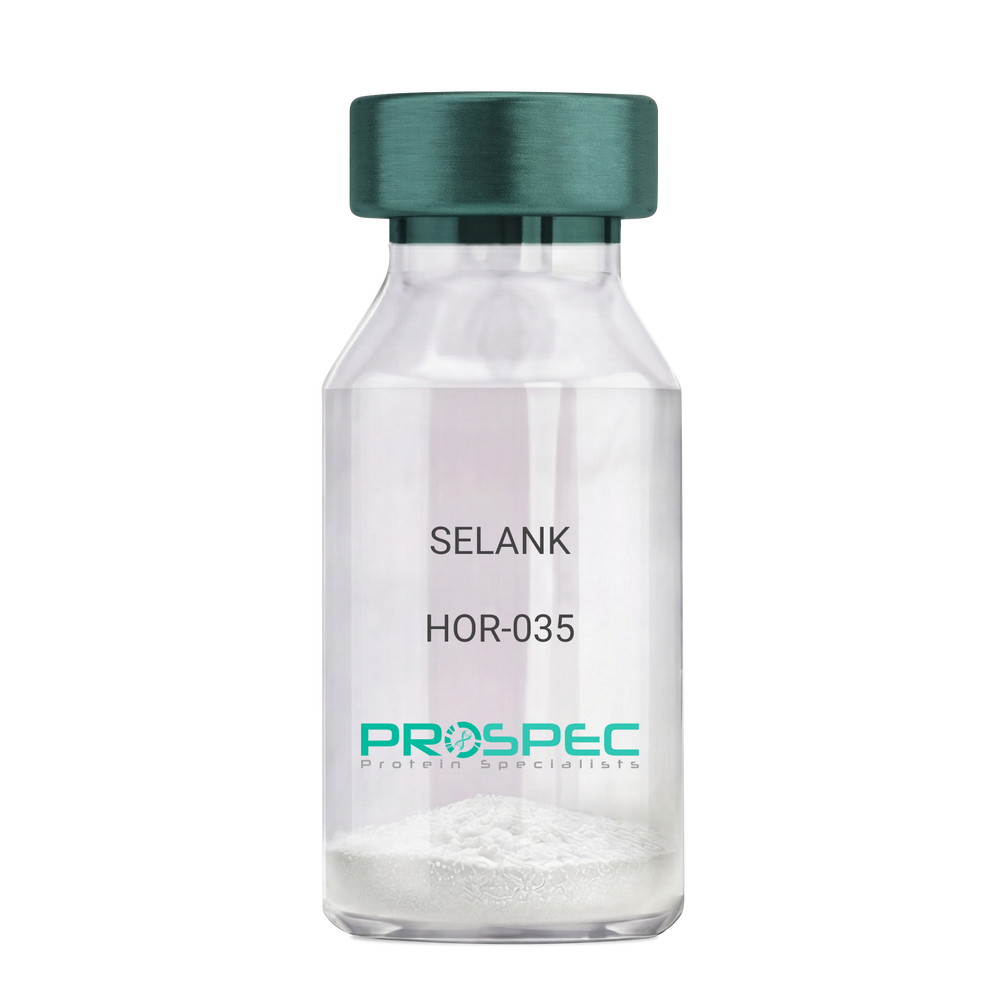
    SELANK

    Description:

    SELANK

    Product # :

    HOR-035

    Price :

    Quantity :

    Shipping Method :

    Room Temp Icon

    Shipped at Room temp

    Add To Cart

    More Info

    • description
    • formulation
    • purity
    • More Info
    • Citations

    Description

    SELANK Synthetic is a single, non-glycosylated polypeptide chain containing 7 amino acids, having a molecular mass of 751.89 Dalton and a Molecular formula of C33H57N11O9.

    Formulation

    The protein was lyophilized with no additives.

    Purity

    Greater than 97.0% as determined by analysis by RP-HPLC.

    Citations

    More Info

    • Physical Appearance

      Sterile Filtered White lyophilized (freeze-dried) powder.

    • Stability

      Lyophilized SELANK although stable at room temperature for 3 weeks, should be stored desiccated below -18°C. Upon reconstitution SELANK should be stored at 4°C between 2-7 days and for future use below -18°C. For long term storage it is recommended to add a carrier protein (0.1% HSA or BSA). Please prevent freeze-thaw cycles.

    • Solubility

      It is recommended to reconstitute the lyophilized SELANK in sterile 18MΩ-cm H2O not less than 100 µg/ml, which can then be further diluted to other aqueous solutions.

    • Amino Acid Sequence

      H-Thr-Lys-Pro-Arg-Pro-Gly-Pro-OH.

    • Background

      Selank, also known as TP-7, is a synthetic peptide that has garnered significant attention in the scientific community due to its potential anxiolytic, neuroprotective, and nootropic effects. This heptapeptide, derived from the naturally occurring human tetrapeptide Tuftsin, has been shown to possess a wide range of biological activities, including enhancing memory, reducing anxiety, and potentially mitigating the effects of neurodegenerative diseases.

      Selank's primary mechanism of action involves its interaction with the GABAergic system, the body's main inhibitory neurotransmitter system. By modulating the activity of GABA receptors, Selank can exert a calming effect on the brain, reducing anxiety and enhancing cognitive function. Studies by Semenova et al. (2014) have demonstrated that Selank can enhance memory and learning in rats, suggesting potential applications in cognitive enhancement and the treatment of cognitive disorders.

      In addition to its anxiolytic and nootropic effects, Selank has been shown to possess neuroprotective properties. Research by Ershov et al. (2016) found that Selank could protect neurons from oxidative stress, suggesting potential applications in the treatment of neurodegenerative diseases such as Alzheimer's and Parkinson's disease.

      Given its anxiolytic, nootropic, and neuroprotective effects, Selank has been proposed as a potential therapeutic agent for a variety of conditions, including anxiety disorders, cognitive disorders, and neurodegenerative diseases. For instance, a study by Medvedev et al. (2017) found that Selank could improve symptoms in patients with generalized anxiety disorder, indicating its potential as a therapeutic agent in the treatment of anxiety disorders.

      While research on Selank is promising, it is important to note that most studies have been conducted in animals or in vitro. More research is needed to fully understand the potential effects and applications of Selank in humans. However, the existing body of research suggests that Selank could be a promising tool in the treatment of anxiety disorders, cognitive disorders, and neurodegenerative diseases.

    ProSpec's products are furnished for LABORATORY RESEARCH USE ONLY. The product may not be used as drugs, agricultural or pesticidal products, food additives or household chemicals.

    Selank
  • View Data Sheet

    Name :

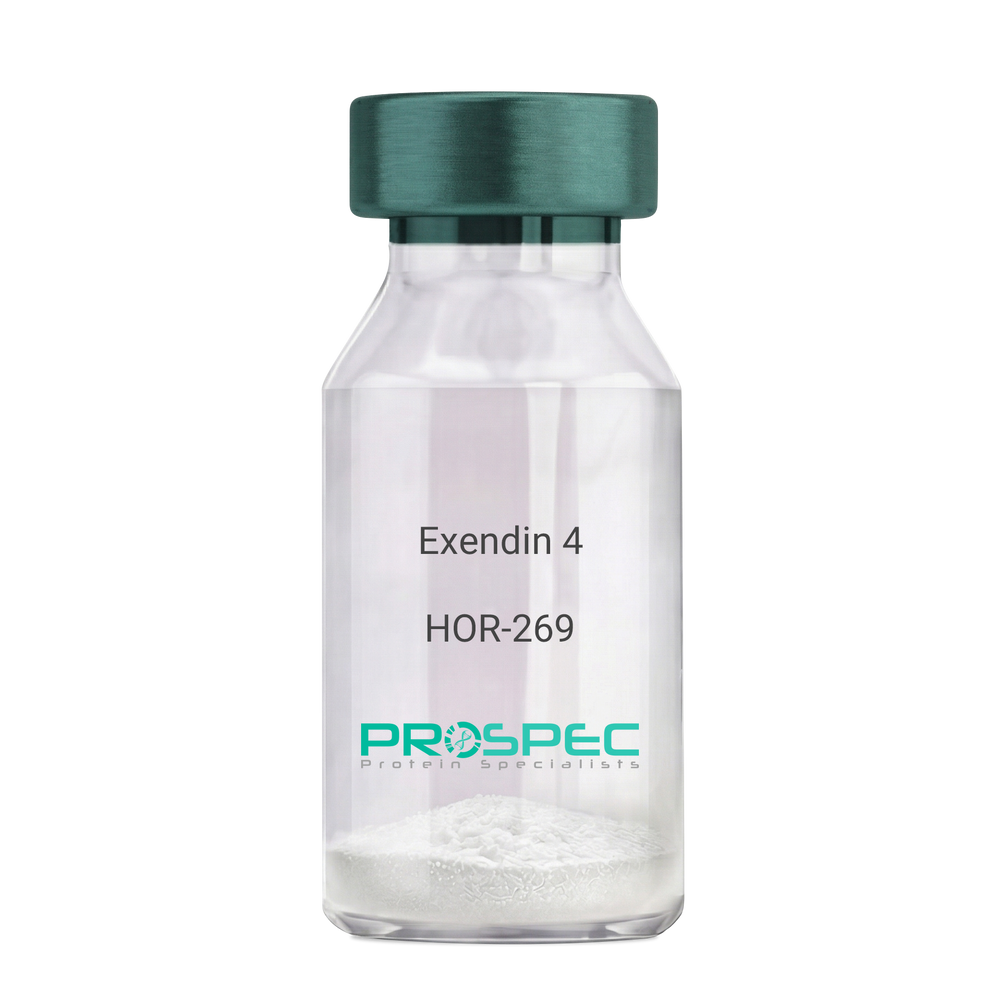
    Exendin 4

    Description:

    Exendin-4 Recombinant

    Product # :

    HOR-269

    Price :

    Quantity :

    Shipping Method :

    Room Temp Icon

    Shipped at Room temp

    Add To Cart

    More Info

    • description
    • source
    • formulation
    • purity
    • biological activity
    • More Info
    • Citations

    Description

    Exendin-4 Recombinant produced in E.Coli is a non-glycosylated polypeptide chain containing 39 amino acids and having a molecular mass of approximately 4.2kDa. Exendin-4 is purified by proprietary chromatographic techniques.

    Source

    Escherichia Coli.

    Formulation

    Lyophilized from a 0.2μm filtered concentrated solution in PBS, pH 7.4.

    Purity

    Greater than 96.0% as determined by:
    (a) Analysis by RP-HPLC.
    (b) Analysis by SDS-PAGE.

    Biological Activity

    1. Regulates Glucose levels rapidly
    2. Reduces Insulin resistance 
    3. Reduces Glucagon

    4. Stimulates beta cell growth production.

    Citations

    More Info

    • Introduction

      Exedin-4 Recombinant is a like peptide-1 receptor agonist. The native hormone is produced in the gut of Gila monster Heloderma suspectrum (a type of reptile found in the desert) that stimulates production without causing threateningly low blood sugar, which can occur after using some anti-diabetes products. Recently, researchers used extracted saliva from gila monsters to create an unprecedented breakthrough in Diabetes Type 2 treatment. Unlike other products taken for type 2 diabetes, Exedin-4 has not been linked with weight gain and actually resulted in weight loss, according to the researchers. Exedin-4 enhances glucose-dependant secretion, suppresses inappropriately elevated secretion and slows gastric emptying in vivo. It also promotes B-cell proliferation and neogenesis in vitro and in animal models. Exedin-4 stimulates an increase in acinar cAMP, without stimulating the release of amylase.

    • Physical Appearance

      Sterile Filtered White lyophilized (freeze-dried) powder.

    • Stability

      Lyophilized Exendin Recombinant although stable at room temperature for 3 weeks, should be stored desiccated below -18°C. Upon reconstitution Exendin-4 should be stored at 4°C between 2-7 days and for future use below -18°C. For long term storage it is recommended to add a carrier protein (0.1% HSA or BSA).Please prevent freeze-thaw cycles.

    • Solubility

      It is recommended to reconstitute the lyophilized Exendin Recombinant in sterile 18MΩ-cm H2O not less than 100 µg/ml, which can then be further diluted to other aqueous solutions.

    • Amino Acid Sequence

      HGEGTFTSDL SKQMEEEAVR LFIEWLKNGG PSSGAPPPS.

    • Background

      What is the molecular weight/Mw of EXENDIN 4 Protein?
      EXENDIN 4 Protein has a total Mw of 4.2kDa.

      What is the source or expression system of EXENDIN 4 Protein?
      Escherichia Coli.

      What is the Purity of EXENDIN 4 Protein?
      EXENDIN 4 Protein is > 96% pure as determined by SDS-PAGE.

      What is the Biological Activity of EXENDIN 4 Protein?
      1. Regulates Glucose levels rapidly
      2. Reduces Insulin resistance
      3. Reduces Glucagon
      4. Stimulates beta cell growth production.

      What is the amino acid sequence of EXENDIN 4 Protein?
      HGEGTFTSDL SKQMEEEAVR LFIEWLKNGG PSSGAPPPS

      What applications can EXENDIN 4 Protein be used in?
      EXENDIN 4 Protein can probably be used in western blot, ELISA and Lateral Flow.

      What is the endotoxin level for EXENDIN 4 Protein?
      The endotoxin level is minimal, EXENDIN 4 Protein was purified using conventional chromatography techniques.

      Who supplies recombinant EXENDIN 4 that is in stock and available to order?
      ProSpec has the protein in stock and available for immediate delivery.

      Where can I order bulk mg quantities of EXENDIN 4?
      ProSpec supplies bulk mg quantities at affordable prices that meets research and academic budgets.

    ProSpec's products are furnished for LABORATORY RESEARCH USE ONLY. The product may not be used as drugs, agricultural or pesticidal products, food additives or household chemicals.

    Exendin 4
  • View Data Sheet

    Name :

    Cathepsin H Antibody

    Description:

    Cathepsin H, Mouse Anti Human

    Cathepsin H, CTSH, CPSB, ACC-4, ACC-5, MGC1519, minichain, DKFZp686B24257.

    Product # :

    ANT-405

    Price :

    Quantity :

    Shipping Method :

    Ice Icon

    Shipped with Ice Packs

    Add To Cart

    More Info

    • formulation
    • More Info
    • Citations

    Formulation

    1mg/ml containing PBS, pH-7.4, & 0.1% Sodium Azide.

    Citations

    More Info

    • Introduction

      Cathepsin H is a lysosomal cysteine proteinase important in the overall degradation of lysosomal proteins. Cathepsin H is composed of a dimer of disulfide-linked heavy and light chains, both produced from a single protein precursor. Cathepsin H, which belongs to the peptidase C1 protein family, can act both as an aminopeptidase and as an endopeptidase. Increased expression of the Cathepsin H gene has been associated with malignant progression of prostate tumors.

    • Synonyms

      Cathepsin H, CTSH, CPSB, ACC-4, ACC-5, MGC1519, minichain, DKFZp686B24257.

    • Immunogen

      Anti-human Cathepsin H mAb, is derived from hybridization of mouse SP2/O myeloma cells with spleen cells from BALB/c mice immunized with recombinant human Cathepsin H amino acids 23-335 purified from E. coli.

    • Ig Subclass

      Mouse IgG2a heavy chain and κ light chain.

    • Clone

      P3G8AT.

    • Applications

      Cathepsin H antibody has been tested by ELISA and Western blot analysis to assure specificity and reactivity. Since application varies, however, each investigation should be titrated by the reagent to obtain optimal results. Recommended dilution range for Western blot analysis is 1:500 ~ 2,000. Recommended starting dilution is 1:1,000.

    • Type

      Mouse Anti Human Monoclonal.

    • Storage Procedures

      For periods up to 1 month store at 4°C, for longer periods of time, store at -20°C. Prevent freeze thaw cycles.

    • Purification Method

      Cathepsin H antibody was purified from mouse ascitic fluids by protein-G affinity chromatography.

    ProSpec's products are furnished for LABORATORY RESEARCH USE ONLY. The product may not be used as drugs, agricultural or pesticidal products, food additives or household chemicals.

    Cathepsin H Antibody
  • View Data Sheet

    Name :

    HPGD Human

    Description:

    Hydroxyprostaglandin Dehydrogenase 15-(NAD) Human Recombinant

    GDH1, SDR36C1, 15-PGDH, PGDH, Prostaglandin dehydrogenase 1, hydroxyprostaglandin dehydrogenase 15-(NAD)

    Product # :

    ENZ-564

    Price :

    Quantity :

    Shipping Method :

    Ice Icon

    Shipped with Ice Packs

    Add To Cart

    More Info

    • description
    • source
    • formulation
    • purity
    • More Info
    • Citations

    Description

    HPGD Recombinant E.coli produced in E.Coli is a single, non-glycosylated polypeptide chain containing 286 amino acids (1-266a.a.) and having a molecular mass of 31.1 kDa. HPGD is fused to a 20 amino acids His-Tag at N-terminus and purified by proprietary chromatographic techniques.

    Source

    Escherichia Coli.

    Formulation

    The HPGD protein solution (0.5mg/1ml) is formulated in 20mM Tris-HCl buffer (pH8.0) 0.1M NaCl,1mM DTT and 20% glycerol.

    Purity

    Greater than 95% as determined by SDS-PAGE.

    Citations

    More Info

    • Introduction

      HPGD is the essential enzyme of prostaglandin degradation. 15-PGDH protein strongly decreases the biologic activity of these molecules by catalyzing the oxidation of the 15-hydroxyl group of prostaglandins to a keto group. GDH1 is involved in numerous physiologic and cellular processes, for instance inflammation.

    • Synonyms

      GDH1, SDR36C1, 15-PGDH, PGDH, Prostaglandin dehydrogenase 1, hydroxyprostaglandin dehydrogenase 15-(NAD)

    • Physical Appearance

      Sterile filtered colorless solution.

    • Stability

      Store at 4°C if entire vial will be used within 2-4 weeks. Store, frozen at -20°C for longer periods of time.For long term storage it is recommended to add a carrier protein (0.1% HSA or BSA).Please avoid freeze thaw cycles.

    • Amino Acid Sequence

      MGSSHHHHHH SSGLVPRGSH MHVNGKVALV TGAAQGIGRA FAEALLLKGA KVALVDWNLE AGVQCKAALD EQFEPQKTLF IQCDVADQQQ LRDTFRKVVD HFGRLDILVN NAGVNNEKNW EKTLQINLVS VISGTYLGLD YMSKQNGGEG GIIINMSSLA GLMPVAQQPV YCASKHGIVG FTRSAALAAN LMNSGVRLNA ICPGFVNTAI LESIEKEENM GQYIEYKDHI KDMIKYYGIL DPPLIANGLI TLIEDDALNG AIMKITTSKG IHFQDYDTTP FQAKTQ.

    ProSpec's products are furnished for LABORATORY RESEARCH USE ONLY. The product may not be used as drugs, agricultural or pesticidal products, food additives or household chemicals.

    Hpgd Human
  • View Data Sheet

    Name :

    LGALS8 Human

    Description:

    Galectin-8 Human Recombinant

    Galectin-8, Gal-8, Po66 carbohydrate-binding protein, Po66-CBP, Prostate carcinoma tumor antigen 1, PCTA-1, LGALS8.

    Product # :

    CYT-017

    Price :

    Quantity :

    Shipping Method :

    Room Temp Icon

    Shipped at Room temp

    Add To Cart

    More Info

    • description
    • source
    • formulation
    • purity
    • biological activity
    • More Info
    • Citations

    Description

    Galectin-8 Human Recombinant produced in E.Coli is a single, non-glycosylated, Polypeptide chain containing 317 amino acids and having a molecular mass of 35.8kDa.The LGALS8 is purified by proprietary chromatographic techniques.

    Source

    Escherichia Coli.

    Formulation

    LGALS8 was lyophilized from a concentrated (1mg/ml) solution in 20mM PBS, pH 7.4.

    Purity

    Greater than 95.0% as determined by:
    (a) Analysis by RP-HPLC.
    (b) Analysis by SDS-PAGE.

    Biological Activity

    The ED50 of Galectin-8 as determined by its ability to agglutinate human red blood cells is 0.8~4 µg/ml.

    Citations

    More Info

    • Introduction

      Galectins are a family of animal lectins with an affinity for beta-galactosides. This family has at least 14 identified members. Galectins share similarities in the CRD (the carbohydrate recognition domain). Galectins are synthesized as cytosolic proteins. Though localized principally in the cytoplasm and lacking a classical signal peptide, galectins can also be stimulated to secretion by non-classical pathways or alternatively targeted to the nucleus. Galectins are involved in modulating cell-cell and cell-matrix interactions. Galectin-8 is a tandem-repeat-type member of the galectin family, consisting of 2 CRDs attached by a linker peptide. Galectin-8 is greatly expressed in lung carcinomas, a number of forms of prostate carcinomas, in addition to other tumor cells. Galectin-8 attaches to a subset of cell surface integrins to modulate ECM-integrin interactions. Once immobilized, Galectin-8 promotes cell adhesion by ligation and clustering of cell surface integrin receptors. On the other hand, as a soluble ligand, Galectin-8 can inhibit cell adhesion.

    • Synonyms

      Galectin-8, Gal-8, Po66 carbohydrate-binding protein, Po66-CBP, Prostate carcinoma tumor antigen 1, PCTA-1, LGALS8.

    • Physical Appearance

      Sterile Filtered White lyophilized (freeze-dried) powder.

    • Stability

      Lyophilized LGALS8 although stable at room temperature for 3 weeks, should be stored desiccated below -18°C. Upon reconstitution Galectin-8 should be stored at 4°C between 2-7 days and for future use below -18°C.Please prevent freeze-thaw cycles.

    • Solubility

      It is recommended to reconstitute the lyophilized Galectin-8 in sterile 18M-cm H2O not less than 100µg/ml, which can then be further diluted to other aqueous solutions.

    • Amino Acid Sequence

      The sequence of the first five N-terminal amino acids was determined and was found to be Met-Met-Leu-Ser-Leu.

    • Background

      What is the molecular weight/Mw of LGALS8 HUMAN Protein?
      LGALS8 HUMAN Protein has a total Mw of 35.8kDa.

      What is the source or expression system of LGALS8 HUMAN Protein?
      Escherichia Coli.

      What is the Purity of LGALS8 HUMAN Protein?
      LGALS8 HUMAN Protein is >95% pure as determined by SDS-PAGE.

      What is the Biological Activity of LGALS8 HUMAN Protein?
      The ED50 of Galectin-8 as determined by its ability to agglutinate human red blood cells is 0.8~4 µg/ml.

      What is the amino acid sequence of LGALS8 HUMAN Protein?
      LGALS8 HUMAN Protein is composed from 317 amino acids.

      What applications can LGALS8 HUMAN Protein be used in?
      LGALS8 HUMAN Protein can probably be used in western blot, ELISA and Lateral Flow.

      What is the endotoxin level for LGALS8 HUMAN Protein?
      The endotoxin level is minimal, LGALS8 HUMAN Protein was purified using conventional chromatography techniques.


    ProSpec's products are furnished for LABORATORY RESEARCH USE ONLY. The product may not be used as drugs, agricultural or pesticidal products, food additives or household chemicals.

    Lgals8 Human
  • View Data Sheet

    Name :

    HARS Human, Sf9

    Description:

    Histidyl-tRNA Synthetase Human Recombinant, Sf9

    Histidyl-tRNA synthetase, EC 6.1.1.21, Histidine-tRNA ligase, HisRS, HRS, FLJ20491, JO-1.

    Product # :

    ENZ-335

    Price :

    Quantity :

    Shipping Method :

    Ice Icon

    Shipped with Ice Packs

    Add To Cart

    More Info

    • description
    • source
    • formulation
    • purity
    • More Info
    • Citations

    Description

    Histidyl-tRNA Synthetase Human Recombinant produced in baculovirus is a single, glycosylated, polypeptide chain having a molecular mass of 58.3 kDa.The Histidyl-tRNA Synthetase is fused to 6x His Tag and purified by proprietary chromatographic techniques.

    Source

    Sf9 Insect Cells.

    Formulation

    The protein solution contains 20mM HEPES, 250mM sodium chloride 0.1% and 20% Glycerol, (pH 7.5).

    Purity

    Greater than 90.0% as determined by SDS-PAGE.

    Citations

    More Info

    • Introduction

      Aminoacyl-tRNA synthetases are a class of enzymes that charge tRNAs with their cognate amino acids. The protein encoded by this gene is a cytoplasmic enzyme which belongs to the class II family of aminoacyl-tRNA synthetases. The enzyme is responsible for the synthesis of histidyl-transfer RNA, which is essential for the incorporation of histidine into proteins. The gene is located in a head-to-head orientation with HARSL on chromosome five, where the homologous genes share a bidirectional promoter. The gene product is a frequent target of autoantibodies in the human autoimmune disease polymyositis/dermatomyositis.

    • Synonyms

      Histidyl-tRNA synthetase, EC 6.1.1.21, Histidine-tRNA ligase, HisRS, HRS, FLJ20491, JO-1.

    • Physical Appearance

      Sterile Filtered clear solution.

    • Stability

      Histidyl-tRNA Synthetase although stable at 4°C for 3 weeks, should be stored below -18°C.Please prevent freeze-thaw cycles.

    • Applications

      Western Blot: Strongly reactive with human anti Histidyl-tRNA Synthetase antisera.

    • Protein content

      Protein quantitation was carried out by using 0.25 - 2.0 mg/ml Bradford assay vs. BSA.

    ProSpec's products are furnished for LABORATORY RESEARCH USE ONLY. The product may not be used as drugs, agricultural or pesticidal products, food additives or household chemicals.

    Jo 1 Human Sf9
  • View Data Sheet

    Name :

    RAET1L Human

    Description:

    Retinoic Acid Early Transcript 1L Human Recombinant

    early transcript 1L, ULBP6, UL16-binding protein 6, RAET1L, retinoic acid early transcript 1L protein, retinoic acid early transcript 1L

    Product # :

    PRO-2723

    Price :

    Quantity :

    Shipping Method :

    Ice Icon

    Shipped with Ice Packs

    Add To Cart

    More Info

    • description
    • source
    • formulation
    • purity
    • biological activity
    • More Info
    • Citations

    Description

    RAET1L Human Recombinant produced in Sf9 Baculovirus cells is a single, glycosylated polypeptide chain containing 202 amino acids (26-218 a.a) and having a molecular mass of 22.9kDa.RAET1L is fused to a 6 amino acid His-tag at C-terminus & purified by proprietary chromatographic techniques.

    Source

    Sf9, Baculovirus cells.

    Formulation

    The RAET1L solution (1mg/ml) contains 10% glycerol and Phosphate-Buffered Saline (pH 7.4).

    Purity

    Greater than 95.0% as determined by SDS-PAGE.

    Biological Activity

    Determined by its binding ability in a functional ELISA with Human KLRK1 (CAT# pro-2474).

    Citations

    More Info

    • Introduction

      RAET1L plays a role as a stress-induced ligand for NKG2D receptor. Retinoic Acid Early Transcript 1L (RAET1L) is linked to the cell membrane by the GPI anchor. HCMV infection triggers RAET1L’sexpression but HCMV alters its function. HCMV-encoded UL16 glycoprotein retains RAET1L/ULBP6 inside the cells, preventing it from reaching the cell surface and being exposed to cells of the immune system. RAET1L has a more restricted expression profile in cell lines and primary human tissues than other NKG2D ligands.

    • Synonyms

      early transcript 1L, ULBP6, UL16-binding protein 6, RAET1L, retinoic acid early transcript 1L protein, retinoic acid early transcript 1L

    • Physical Appearance

      Sterile filtered colorless solution.

    • Stability

      Store at 4°C if entire vial will be used within 2-4 weeks.Store, frozen at -20°C for longer periods of time.For long term storage it is recommended to add a carrier protein (0.1% HSA or BSA).Avoid multiple freeze-thaw cycles.

    • Amino Acid Sequence

      ADPRRDDPHS LCYDITVIPK FRPGPRWCAV QGQVDEKTFL HYDCGNKTVT PVSPLGKKLN VTMAWKAQNP VLREVVDILT EQLLDIQLEN YTPKEPLTLQ ARMSCEQKAE GHSSGSWQFS IDGQTFLLFD SEKRMWTTVH PGARKMKEKW ENDKDVAMSF HYISMGDCIG WLEDFLMGMD STLEPSAGAP LAMSSGHHHH HH

    ProSpec's products are furnished for LABORATORY RESEARCH USE ONLY. The product may not be used as drugs, agricultural or pesticidal products, food additives or household chemicals.

    Raet1L Human
  • View Data Sheet

    Name :

    LDOC1L Human

    Description:

    Leucine Zipper, Down-Regulated in Cancer 1-Like Human Recombinant

    Protein LDOC1L, Leucine zipper protein down-regulated in cancer cells-like, Mammalian retrotransposon-derived protein 6, LDOC1L, MAR6, MART6, dJ1033E15.2.

    Product # :

    PRO-1153

    Price :

    Quantity :

    Shipping Method :

    Ice Icon

    Shipped with Ice Packs

    Add To Cart

    More Info

    • description
    • source
    • formulation
    • purity
    • More Info
    • Citations

    Description

    LDOC1L Human Recombinant produced in E.Coli is a single, non-glycosylated polypeptide chain containing 263 amino acids (1-239 a.a) and having a molecular mass of 28.7kDa.LDOC1L is fused to a 24 amino acid His-tag at N-terminus & purified by proprietary chromatographic techniques.

    Source

    Escherichia Coli.

    Formulation

    LDOC1L protein solution (0.5mg/ml) containing 20mM Tris-HCl buffer (pH 8.0), 0.1M NaCl, 40% glycerol, 2mM DTT, 0.1mM PMSF and 1mM EDTA.

    Purity

    Greater than 90% as determined by SDS-PAGE.

    Citations

    More Info

    • Introduction

      Leucine zipper down-regulated in cancer 1-like (LDOC1L) is a member of the LDOC1 family. LDOC1L is a nuclear protein containing a leucine zipper-like motif and a proline-rich region that shares noticeable similarity with an SH3-binding domain. LDOC1L localizes to the nucleus and is downregulated in certain cancer cell lines. LDOC1L is believed to regulate the transcriptional response mediated by the nuclear factor kB (NFkB).

    • Synonyms

      Protein LDOC1L, Leucine zipper protein down-regulated in cancer cells-like, Mammalian retrotransposon-derived protein 6, LDOC1L, MAR6, MART6, dJ1033E15.2.

    • Physical Appearance

      Sterile filtered colorless solution.

    • Stability

      Store at 4°C if entire vial will be used within 2-4 weeks. Store, frozen at -20°C for longer periods of time. For long term storage it is recommended to add a carrier protein (0.1% HSA or BSA).Avoid multiple freeze-thaw cycles.

    • Amino Acid Sequence

      MGSSHHHHHH SSGLVPRGSH MGSHMVQPQT SKAESPALAA SPNAQMDDVI DTLTSLRLTN SALRREASTL RAEKANLTNM LESVMAELTL LRTRARIPGA LQITPPISSI TSNGTRPMTT PPTSLPEPFS GDPGRLAGFL MQMDRFMIFQ ASRFPGEAER VAFLVSRLTG EAEKWAIPHM QPDSPLRNNY QGFLAELRRT YKSPLRHARR AQIRKTSASN RAVRERQMLC RQLASAGTGP CPVHPASNGT SPAPALPARA RNL.

    ProSpec's products are furnished for LABORATORY RESEARCH USE ONLY. The product may not be used as drugs, agricultural or pesticidal products, food additives or household chemicals.

    Ldoc1L Human
  • View Data Sheet

    Name :

    RND3 Human

    Description:

    Rho Family GTPase 3 Human Recombinant

    ARHE, memB, Rho8, RhoE, Rho-related GTP-binding protein RhoE, Protein MemB, Rho family GTPase 3, Rho-related GTP-binding protein Rho8, Rnd3.

    Product # :

    PRO-487

    Price :

    Quantity :

    Shipping Method :

    Ice Icon

    Shipped with Ice Packs

    Add To Cart

    More Info

    • description
    • source
    • formulation
    • purity
    • More Info
    • Citations

    Description

    RND3 Recombinant Human produced in E.Coli is a single, non-glycosylated polypeptide chain containing 261 amino acids (1-241 a.a.) and having a molecular mass of 29.2 kDa. The RND3 is fused to a 20 amino acid His-Tag at N-terminus and purified by proprietary chromatographic techniques.

    Source

    Escherichia Coli.

    Formulation

    RND3 Human solution containing 20mM Tris-HCl pH-8, 1mM DTT, 1mM EDTA, 0.1M NaCl & 40% glycerol.

    Purity

    Greater than 90.0% as determined by SDS-PAGE.

    Citations

    More Info

    • Introduction

      RND3 is a small GTPase which is part of the Ras superfamily that controls the association of the actin cytoskeleton in reaction to extracellular growth factors. RND3 activity causes a decrease in stress fibers and an increase in cell migration, at least in part through regulation of the Rho-dependent kinase ROCK1. RND3 inhibits DNA-damage induced apoptosis and cell cycle arrest. RND3 binds GTP and is resistant to Rho-specific GTPase-activating proteins.

    • Synonyms

      ARHE, memB, Rho8, RhoE, Rho-related GTP-binding protein RhoE, Protein MemB, Rho family GTPase 3, Rho-related GTP-binding protein Rho8, Rnd3.

    • Physical Appearance

      Sterile filtered colorless solution.

    • Stability

      Store at 4°C if entire vial will be used within 2-4 weeks. Store, frozen at -20°C for longer periods of time. For long term storage it is recommended to add a carrier protein (0.1% HSA or BSA).Avoid multiple freeze-thaw cycles.

    • Amino Acid Sequence

      MGSSHHHHHH SSGLVPRGSH MKERRASQKL SSKSIMDPNQ NVKCKIVVVG DSQCGKTALL HVFAKDCFPE NYVPTVFENY TASFEIDTQR IELSLWDTSG SPYYDNVRPL SYPDSDAVLI CFDISRPETL DSVLKKWKGE IQEFCPNTKM LLVGCKSDLR TDVSTLVELS NHRQTPVSYD QGANMAKQIG AATYIECSAL QSENSVRDIF HVATLACVNK TNKNVKRNKS QRATKRISHM PSRPELSAVA TDLRKDKAKS C.

    ProSpec's products are furnished for LABORATORY RESEARCH USE ONLY. The product may not be used as drugs, agricultural or pesticidal products, food additives or household chemicals.

    Rnd3 Human
  • View Data Sheet

    Name :

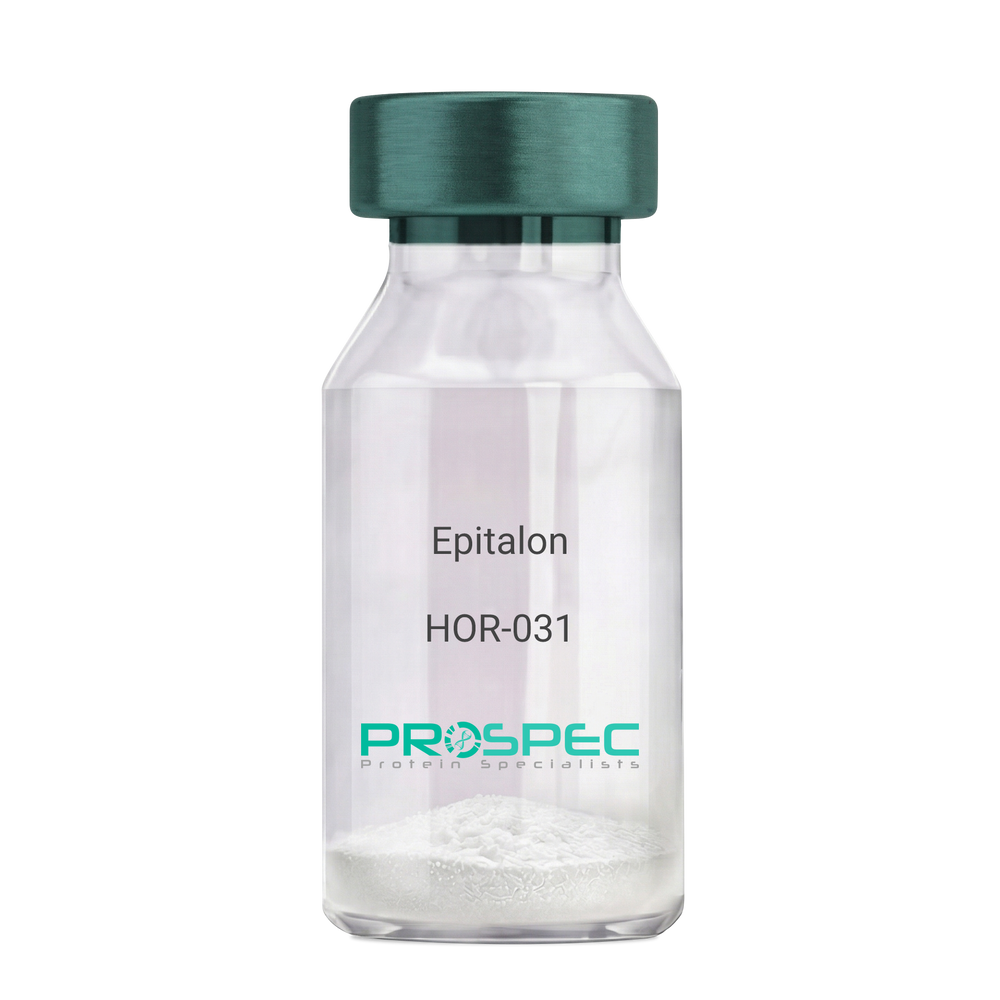
    Epitalon

    Description:

    Epitalon

    Product # :

    HOR-031

    Price :

    Quantity :

    Shipping Method :

    Room Temp Icon

    Shipped at Room temp

    Add To Cart

    More Info

    • description
    • formulation
    • purity
    • More Info
    • Citations

    Description

    Epithalon Synthetic is a single, non-glycosylated polypeptide chain containing 4 amino acids, having a molecular mass of 390.35 Dalton and a Molecular formula of C14H22N4O9.

    Formulation

    The protein was lyophilized with no additives.

    Purity

    Greater than 97.0% as determined by analysis by RP-HPLC.

    Citations

    More Info

    • Physical Appearance

      Sterile Filtered White lyophilized (freeze-dried) powder.

    • Stability

      Lyophilized Epithalon although stable at room temperature for 3 weeks, should be stored desiccated below -18°C. Upon reconstitution Epithalon should be stored at 4°C between 2-7 days and for future use below -18°C.For long term storage it is recommended to add a carrier protein (0.1% HSA or BSA). Please prevent freeze-thaw cycles.

    • Solubility

      It is recommended to reconstitute the lyophilized Epithalon in sterile 18MΩ-cm H2O not less than 100 µg/ml, which can then be further diluted to other aqueous solutions.

    • Amino Acid Sequence

      H-Ala-Glu-Asp-Gly-OH .

    • Background

      Epitalon, also known as Epithalon, is a synthetic tetrapeptide that has been a focal point in the field of aging and longevity research. This peptide, consisting of four amino acids, is derived from the pineal gland and has been associated with a variety of biological effects, most notably its potential role in extending the lifespan of cells.

      Epitalon's primary function is its interaction with telomeres, the protective caps at the ends of chromosomes that shorten as cells divide. By stimulating the production of telomerase, an enzyme that can repair and lengthen telomeres, Epitalon may slow down the aging process at a cellular level.

      Numerous studies have explored the potential of Epitalon in extending the lifespan of organisms. For instance, Khavinson and colleagues (2003) found that Epitalon increased the lifespan of fruit flies, while Anisimov et al. (2003) reported similar results in mice. These findings suggest that Epitalon could potentially have similar effects in humans.

      Epitalon has also been studied for its role in regulating circadian rhythms. Korkushko et al. (2011) found that Epitalon could restore disrupted circadian rhythms in elderly people, suggesting potential applications in sleep disorders and other conditions related to circadian rhythm disruption.

      Beyond its potential role in aging and longevity, Epitalon has been explored for its potential therapeutic applications. Anisimov et al. (2011) found that Epitalon could reduce the incidence of spontaneous tumors in mice, suggesting potential applications in cancer prevention.

      While research on Epitalon is promising, it is important to note that most studies have been conducted in animals or in vitro. More research is needed to fully understand the potential effects and applications of Epitalon in humans. However, the existing body of research suggests that Epitalon could be a promising tool in the fight against aging and age-related diseases.

    ProSpec's products are furnished for LABORATORY RESEARCH USE ONLY. The product may not be used as drugs, agricultural or pesticidal products, food additives or household chemicals.

    Epitalon
  • View Data Sheet

    Name :

    lldD E. coli

    Description:

    L-Lactate Dehydrogenase E.Coli Recombinant

    L-lactate dehydrogenase [cytochrome], lldD, lctD, b3605, JW3580.

    Product # :

    ENZ-618

    Price :

    Quantity :

    Shipping Method :

    Ice Icon

    Shipped with Ice Packs

    Add To Cart

    More Info

    • description
    • source
    • formulation
    • purity
    • More Info
    • Citations

    Description

    lldD E.Coli Recombinant produced in E.coli is a single, non-glycosylated polypeptide chain containing 420 amino acids (1-396) and having a molecular mass of 45.3kDa.lldD is fused to a 24 amino acid His-tag at N-terminus & purified by proprietary chromatographic techniques.

    Source

    E.coli.

    Formulation

    The lldD solution (1mg/ml) contains 20mM Tris-HCl buffer (pH8.0), 10% glycerol and 1mM DTT.

    Purity

    Greater than 90% as determined by SDS-PAGE.

    Citations

    More Info

    • Introduction

      L-lactate dehydrogenase (lldD) is present in a various organisms, including plants and animals. lldD is an oxidoreductase which catalyses the interconversion of pyruvate and lactate with concurrent interconversion of NADH and NAD+. Seeing that lldD can catalyze the oxidation of hydroxybutyrate, it is occasionally called Hydroxybutyrate Dehydrogenase (HBD).

    • Synonyms

      L-lactate dehydrogenase [cytochrome], lldD, lctD, b3605, JW3580.

    • Physical Appearance

      Sterile Filtered colorless solution.

    • Stability

      Store at 4°C if entire vial will be used within 2-4 weeks. Store, frozen at -20°C for longer periods of time. For long term storage it is recommended to add a carrier protein (0.1% HSA or BSA).Avoid multiple freeze-thaw cycles.

    • Amino Acid Sequence

      MGSSHHHHHH SSGLVPRGSH MGSHMIISAA SDYRAAAQRI LPPFLFHYMD GGAYSEYTLR RNVEDLSEVA LRQRILKNMS DLSLETTLFN EKLSMPVALA PVGLCGMYAR RGEVQAAKAA DAHGIPFTLS TVSVCPIEEV APAIKRPMWF QLYVLRDRGF MRNALERAKA AGCSTLVFTV DMPTPGARYR DAHSGMSGPN AAMRRYLQAV THPQWAWDVG LNGRPHDLGN ISAYLGKPTG LEDYIGWLGN NFDPSISWKD LEWIRDFWDG PMVIKGILDP EDARDAVRFG ADGIVVSNHG GRQLDGVLSS ARALPAIADA VKGDIAILAD SGIRNGLDVV RMIALGADTV LLGRAFLYAL ATAGQAGVAN LLNLIEKEMK VAMTLTGAKS ISEITQDSLV QGLGKELPAA LAPMAKGNAA.

    ProSpec's products are furnished for LABORATORY RESEARCH USE ONLY. The product may not be used as drugs, agricultural or pesticidal products, food additives or household chemicals.

    Lldd E Coli
  • View Data Sheet

    Name :

    GAPDH Antibody

    Description:

    Glyceraldehyde-3-Phosphate Dehydrogenase, Mouse Anti Human

    G3PD, GAPD, MGC88685, GAPDH, Glyceraldehyde-3-Phosphate Dehydrogenase.

    Product # :

    ANT-005

    Price :

    Quantity :

    Shipping Method :

    Ice Icon

    Shipped with Ice Packs

    Add To Cart

    More Info

    • formulation
    • More Info
    • Citations

    Formulation

    1mg/ml containing PBS, pH-7.4, & 0.1% Sodium Azide.

    Citations

    More Info

    • Introduction

      GAPDH is a catalytic enzyme normally known to play a role in glycolysis. GAPDH exists as a tetramer composed of 36-kDa subunits and has a range of intracellular functions. GAPDH catalyzes the reversible reduction of 1,3-bisphosphoglycerate to glyceraldehyde 3-phosphophate in the presence of NADPH. Besides functioning as a glycolytic enzyme in cytoplasm, GAPDH has function in intracellular processes such as membrane fusion, microtubule bundling, phosphotransferase activity, nuclear RNA export, DNA replication and DNA repair. GAPDH catalyzes a vital energy-yielding step in carbohydrate metabolism, the reversible oxidative phosphorylation of glyceraldehyde-3-phosphate in the presence of inorganic phosphate and nicotinamide adenine dinucleotide (NAD). The enzyme exists as a tetramer of identical chains.

    • Synonyms

      G3PD, GAPD, MGC88685, GAPDH, Glyceraldehyde-3-Phosphate Dehydrogenase.

    • Physical Appearance

      Sterile Filtered clear solution.

    • Immunogen

      Anti-human GAPDH mAb, is derived from hybridization of mouse F0 myeloma cells with spleen cells from BALB/c mice immunized with recombinant human GAPDH amino acids 1-335 purified from E. coli.

    • Ig Subclass

      Mouse IgG2b heavy chain and κ light chain.

    • Clone

      PAT8G4AT.

    • Applications

      GAPDH antibody has been tested by ELISA, Western blot and Immunofluorescence analysis to assure specificity and reactivity. Since application varies, however, each investigation should be titrated by the reagent to obtain optimal results. Recommended dilution range for Western blot analysis and Immunofluorescence is 1:500 ~ 10,000.
      Recommended starting dilution is 1:1,000.

    • Type

      Mouse Anti Human Monoclonal.

    • Storage Procedures

      For periods up to 1 month store at 4°C, for longer periods of time, store at -20°C. Prevent freeze thaw cycles.

    • Purification Method

      GAPDH antibody was purified from mouse ascitic fluids by protein-G affinity chromatography.

    ProSpec's products are furnished for LABORATORY RESEARCH USE ONLY. The product may not be used as drugs, agricultural or pesticidal products, food additives or household chemicals.

    Gapdh Antibody
  • View Data Sheet

    Name :

    PRH1 Human

    Description:

    Proline-Rich Protein HaeIII Subfamily 1 Human Recombinant

    Proline-Rich Protein HaeIII Subfamily 1, Parotid Acidic Protein, Parotid Isoelectric Focusing Variant Protein, Parotid Double-Band Protein, Parotid Proline-Rich Protein ½, Protein C, PRP-1/PRP-2, Pr1/Pr2, PIF-S, Db-s, PA.

    Product # :

    PRO-1552

    Price :

    Quantity :

    Shipping Method :

    Ice Icon

    Shipped with Ice Packs

    Add To Cart

    More Info

    • description
    • source
    • formulation
    • purity
    • More Info
    • Citations

    Description

    PRH1 Human Recombinant produced in E.coli is a single, non-glycosylated polypeptide chain containing 129 amino acids (17-122) and having a molecular mass of 13.4kDa (molecular size on SDS-PAGE will appear higher).PRH1 is fused to a 23 amino acid His-tag at N-terminus & purified by proprietary chromatographic techniques.

    Source

    Escherichia Coli.

    Formulation

    The PRH1 solution (0.25mg/ml) contains 20mM Tris-HCl buffer (pH 8.0), 0.15M NaCl, 1mM DTT and 30% glycerol.

    Purity

    Greater than 80% as determined by SDS-PAGE.

    Citations

    More Info

    • Introduction

      RPL22, a cytoplasmic ribosomal protein, is a member of the L22E family of ribosomal proteins and a component of the 60S subunit. RPL22 binds specifically to Epstein-Barr virus-encoded RNAs (EBERs) 1 and 2.

    • Synonyms

      Proline-Rich Protein HaeIII Subfamily 1, Parotid Acidic Protein, Parotid Isoelectric Focusing Variant Protein, Parotid Double-Band Protein, Parotid Proline-Rich Protein ½, Protein C, PRP-1/PRP-2, Pr1/Pr2, PIF-S, Db-s, PA.

    • Physical Appearance

      Sterile Filtered clear solution.

    • Stability

      Store at 4°C if entire vial will be used within 2-4 weeks. Store, frozen at -20°C for longer periods of time. For long term storage it is recommended to add a carrier protein (0.1% HSA or BSA).Avoid multiple freeze-thaw cycles.

    • Amino Acid Sequence

      MGSSHHHHHH SSGLVPRGSH MGSQDLNEDV SQEDVPLVIS DGGDSEQFLD EERQGPPLGG QQSQPSAGDG NQDDGPQQGP PQQGGQQQQG PPPPQGKPQG PPQQGGHPPP PQGRPQGPPQ QGGHPRPPR.

    ProSpec's products are furnished for LABORATORY RESEARCH USE ONLY. The product may not be used as drugs, agricultural or pesticidal products, food additives or household chemicals.

    Prh1 Human
  • View Data Sheet

    Name :

    CYTH1 Human

    Description:

    Cytohesin 1 Human Recombinant

    Cytohesin 1, D17S811E, PH, SEC7 And Coiled-Coil Domain-Containing Protein 1, Pleckstrin Homology, Sec7 And Coiled-Coil Domains 1, SEC7 Homolog B2-1, PSCD1, SEC7, Homolog Of Secretory Protein SEC7, Cytoadhesin 1, CYTOHESIN-1, B2-1, Cytohesin-1.

    Product # :

    PRO-2215

    Price :

    Quantity :

    Shipping Method :

    Ice Icon

    Shipped with Ice Packs

    Add To Cart

    More Info

    • description
    • source
    • formulation
    • purity
    • More Info
    • Citations

    Description

    CYTH1 Human Recombinant produced in E.Coli is a single, non-glycosylated polypeptide chain containing 421 amino acids (1-398 a.a) and having a molecular mass of 48.8kDa. CYTH1 is fused to a 23 amino acid His-tag at N-terminus & purified by proprietary chromatographic techniques.

    Source

    E.coli.

    Formulation

    CYTH1 protein solution (0.5mg/ml) containing Phosphate buffered saline (pH7.4), 10% glycerol and 1mM DTT.

    Purity

    Greater than 85% as determined by SDS-PAGE.

    Citations

    More Info

    • Introduction

      Cytohesin 1 also known as CYTH1 belongs to the PSCD family. CYTH1 is responsible for promoting guanine-nucleotide exchange on ARF1 and ARF5 and also promotes the activation of ARF factors by the replacement of GDP with GTP.

    • Synonyms

      Cytohesin 1, D17S811E, PH, SEC7 And Coiled-Coil Domain-Containing Protein 1, Pleckstrin Homology, Sec7 And Coiled-Coil Domains 1, SEC7 Homolog B2-1, PSCD1, SEC7, Homolog Of Secretory Protein SEC7, Cytoadhesin 1, CYTOHESIN-1, B2-1, Cytohesin-1.

    • Physical Appearance

      Sterile Filtered colorless solution.

    • Stability

      Store at 4°C if entire vial will be used within 2-4 weeks. Store, frozen at -20°C for longer periods of time. For long term storage it is recommended to add a carrier protein (0.1% HSA or BSA).Avoid multiple freeze-thaw cycles.

    • Amino Acid Sequence

      MGSSHHHHHH SSGLVPRGSH MGSMEEDDSY VPSDLTAEER QELENIRRRK QELLADIQRL KDEIAEVANE IENLGSTEER KNMQRNKQVA MGRKKFNMDP KKGIQFLIEN DLLKNTCEDI AQFLYKGEGL NKTAIGDYLG ERDEFNIQVL HAFVELHEFT DLNLVQALRQ FLWSFRLPGE AQKIDRMMEA FAQRYCQCNN GVFQSTDTCY VLSFAIIMLN TSLHNPNVKD KPTVERFIAM NRGINDGGDL PEELLRNLYE SIKNEPFKIP EDDGNDLTHT FFNPDREGWL LKLGGGRVKT WKRRWFILTD NCLYYFEYTT DKEPRGIIPL ENLSIREVED SKKPNCFELY IPDNKDQVIK ACKTEADGRV VEGNHTVYRI SAPTPEEKEE WIKCIKAAIS RDPFYEMLAA RKKKVSSTKR H.

    ProSpec's products are furnished for LABORATORY RESEARCH USE ONLY. The product may not be used as drugs, agricultural or pesticidal products, food additives or household chemicals.

    Cyth1 Human
  • View Data Sheet

    Name :

    LMX1B Human

    Description:

    LIM Homeobox Transcription Factor 1, Beta Human Recombinant

    LIM homeobox transcription factor 1, beta, LMX1.2, NPS1, LIM/homeobox protein 1.2, LIM/homeobox protein LMX1B, LMX1B.

    Product # :

    PRO-1999

    Price :

    Quantity :

    Shipping Method :

    Ice Icon

    Shipped with Ice Packs

    Add To Cart

    More Info

    • description
    • source
    • formulation
    • purity
    • More Info
    • Citations

    Description

    LMX1B Human Recombinant produced in E.Coli is a single, non-glycosylated polypeptide chain containing 418 amino acids (1-395a.a) and having a molecular mass of 46.5kDa. LMX1B is fused to a 23 amino acid His-tag at N-terminus & purified by proprietary chromatographic techniques.

    Source

    Escherichia Coli.

    Formulation

    LMX1B protein solution (1mg/ml) containing 20mM Tris-HCl buffer (pH 8.0), 10% glycerol and 0.4M Urea.

    Purity

    Greater than 80.0% as determined by SDS-PAGE.

    Citations

    More Info

    • Introduction

      LIM Homeobox Transcription Factor 1, Beta (LMX1B) is a part of LIM-homeodomain family of proteins which consists of 2 N-terminal zinc-binding LIM domains, 1 homeodomain, and a C-terminal glutamine-rich domain. LMX1B plays a role as a transcription factor and is necessary for the specification of dorsal limb fate at the zeugopodal and autopodal levels. Mutations in LMX1B are associated with nailpatella syndrome.

    • Synonyms

      LIM homeobox transcription factor 1, beta, LMX1.2, NPS1, LIM/homeobox protein 1.2, LIM/homeobox protein LMX1B, LMX1B.

    • Physical Appearance

      Sterile Filtered colorless solution.

    • Stability

      Store at 4°C if entire vial will be used within 2-4 weeks. Store, frozen at -20°C for longer periods of time. For long term storage it is recommended to add a carrier protein (0.1% HSA or BSA).Avoid multiple freeze-thaw cycles.

    • Amino Acid Sequence

      MGSSHHHHHH SSGLVPRGSH MGSMDIATGP ESLERCFPRG QTDCAKMLDG IKMEEHALRP GPATLGVLLG SDCPHPAVCE GCQRPISDRF LMRVNESSWH EECLQCAACQ QALTTSCYFR DRKLYCKQDY QQLFAAKCSG CMEKIAPTEF VMRALECVYH LGCFCCCVCE RQLRKGDEFV LKEGQLLCKG DYEKEKDLLS SVSPDESDSV KSEDEDGDMK PAKGQGSQSK GSGDDGKDPR RPKRPRTILT TQQRRAFKAS FEVSSKPCRK VRETLAAETG LSVRVVQVWF QNQRAKMKKL ARRHQQQQEQ QNSQRLGQEV LSSRMEGMMA SYTPLAPPQQ QIVAMEQSPY GSSDPFQQGL TPPQMPGNDS IFHDIDSDTS LTSLSDCFLG SSDVGSLQAR VGNPIDRLYS MQSSYFAS.

    ProSpec's products are furnished for LABORATORY RESEARCH USE ONLY. The product may not be used as drugs, agricultural or pesticidal products, food additives or household chemicals.

    Lmx1B Human
  • View Data Sheet

    Name :

    HTF Bovine

    Description:

    Holo Transferrin Bovine

    Serotransferrin, Transferrin, Siderophilin, Beta-1-metal-binding globulin, TF, PRO1557, PRO2086, DKFZp781D0156, Holo Transferrin, HTF.

    Product # :

    PRO-510

    Price :

    Quantity :

    Shipping Method :

    Room Temp Icon

    Shipped at Room temp

    Add To Cart

    More Info

    • description
    • formulation
    • purity
    • More Info
    • Citations

    Description

    Bovine Holo Transferrin is a glycoprotein of approximately 80 kDa.

    Formulation

    The protein (1mg/ml) was lyophilized with no additives.

    Purity

    Greater than 97.0% as determined by Cellulose Acetate.

    Citations

    More Info

    • Introduction

      Transferrin is the iron-transport protein of vertebrate serum and donates iron to cells through interaction with a specific membrane receptor, CD71. Transferrin appears to be indispensable for most cells growing in tissue culture.
      It is referred to frequently as a growth factor because, in analogy to other growth factor-receptor interactions, proliferating cells express high numbers of transferrin receptors, and the binding of transferrin to their receptors is needed for cells to initiate and maintain their DNA synthesis. Apart from its role as an iron transport protein transferrin acts as a cytokine and has functions that may not be related to its iron-carrying capacity.

    • Synonyms

      Serotransferrin, Transferrin, Siderophilin, Beta-1-metal-binding globulin, TF, PRO1557, PRO2086, DKFZp781D0156, Holo Transferrin, HTF.

    • Physical Appearance

      Sterile Filtered Pink lyophilized (freeze-dried) powder.

    • Stability

      Lyophilized Bovine HTF although stable at room temperature for 3 weeks, should be stored desiccated below -18°C. Upon reconstitution Bovine HTF should be stored at 4°C between 2-7 days and for future use below -18°C.Please prevent freeze-thaw cycles.

    • Solubility

      It is recommended to reconstitute the lyophilized Bovine HTF in sterile 18MΩ-cm H2O not less than 100µg/ml, which can then be further diluted to other aqueous solutions.

    • Human Virus Test

      FDA approved Plasma from each donor has been tested and found negative for antibody to HIV-1, HIV-2, HCV, HBSAG, HBc, ALT and Syphilis.Viral inactivation by pasteurization (60°C for 10 hours) has been validated using three different test viruses, with removal of 8-14.5 logs of virus documented. The purification process has also been found to remove significant additional quantities of virus.

    • Applications

      Bovine Transferrin is a crucial component for the cultivation of mammalian cells in-vitro. Bovine Transferrin is Critical for long-term cells growth in-vitro. Bovine Transferrin is used as detoxificant in media by binding contaminating metal ions. Bovine Transferrin is often used as a nutrient in fermentation media for recombinant protein and biopharmaceutical production. Additional common uses of Bovine Transferrin areMolecular weight, Affinity purification of anti-human transferrin antibodies and also as receptor mediated transfection of molecules such as DNA, into cells.

    ProSpec's products are furnished for LABORATORY RESEARCH USE ONLY. The product may not be used as drugs, agricultural or pesticidal products, food additives or household chemicals.

    Holo Transferrin Bovine
  • View Data Sheet

    Name :

    GH Mouse

    Description:

    GH Mouse Recombinant

    GH1, GH, GHN, GH-N, hGH-N, Pituitary GH, GH-1.

    Product # :

    CYT-540

    Price :

    Quantity :

    Shipping Method :

    Room Temp Icon

    Shipped at Room temp

    Add To Cart

    More Info

    • description
    • source
    • formulation
    • purity
    • More Info
    • Citations

    Description

    Growth Hormone Mouse Recombinant produced in E.Coli is a single, non-glycosylated, polypeptide chain containing 190 amino acids and having a molecular mass of 22 kDa. Mouse GH is purified by proprietary chromatographic techniques.

    Source

    Escherichia Coli.

    Formulation

    Mouse Growth Hormone Recombinant Lyophilized from a 0.2 μm filtered solution of 20mM HEPES, 4% Sucrose, 4% Mannitol, 0.02% Tween 80, pH 8.0.

    Purity

    Greater than 95.0% as determined by SDS-PAGE.

    Citations

    More Info

    • Introduction

      GH is a member of the prolactin family of hormones which play an important role in growth control. The gene, along with four other related genes, is located at the GH locus on chromosome 17 where they are interspersed in the same transcriptional orientation; an arrangement which is thought to have evolved by a series of gene duplications. The five genes share a remarkably high degree of sequence identity. Alternative splicing generates additional isoforms of each of the five GHs, leading to further diversity and potential for specialization. This particular family member is expressed in the pituitary but not in placental tissue as is the case for the other four genes in the GH locus. Mutations in or deletions of the gene lead to GH deficiency and short stature.

    • Synonyms

      GH1, GH, GHN, GH-N, hGH-N, Pituitary GH, GH-1.

    • Physical Appearance

      Sterile Filtered White lyophilized (freeze-dried) powder.

    • Stability

      Lyophilized GH mouse although stable at room temperature for 3 weeks, should be stored desiccated below -18°C. Upon reconstitution GH mouse should be stored at 4°C between 2-7 days and for future use below -18°C.For long term storage it is recommended to add a carrier protein (0.1% HSA or BSA).Please prevent freeze-thaw cycles.

    • Solubility

      It is recommended to reconstitute the lyophilized Growth Hormone Murine in sterile 18MΩ-cm H2O not less than 100µg/ml, which can then be further diluted to other aqueous solutions.

    ProSpec's products are furnished for LABORATORY RESEARCH USE ONLY. The product may not be used as drugs, agricultural or pesticidal products, food additives or household chemicals.

    Growth Hormone Mouse
  • View Data Sheet

    Name :

    SNPH Human

    Description:

    Syntaphilin Human Recombinant

    KIAA0374, MGC46096, bA314N13.5, SNPH, Syntaphilin.

    Product # :

    PRO-545

    Price :

    Quantity :

    Shipping Method :

    Ice Icon

    Shipped with Ice Packs

    Add To Cart

    More Info

    • description
    • source
    • formulation
    • purity
    • More Info
    • Citations

    Description

    SNPH Human Recombinant produced in E.Coli is a single, non-glycosylated polypeptide chain containing 444 amino acids (1-424) and having a molecular mass of 48.2 kDa.The SNPH is fused to 20 amino acid His-Tag at N-terminus and purified by standard chromatography techniques.

    Source

    Escherichia Coli.

    Formulation

    The Syntaphilin protein solution contains 20mM Tris-HCl pH-8, 1mM DTT and 10% glycerol.

    Purity

    Greater than 90.0% as determined by SDS-PAGE.

    Citations

    More Info

    • Introduction

      Syntaxin-1, synaptobrevin, and SNAP25 cooperate to form the SNARE complex, which is needed for synaptic vesicle docking and fusion SNPH is a neuron-specific protein originally characterized as a binding partner of syntaxin-1. SNPH participates with SNAP25 for the binding to Syntaxin-1 and prevents the construction of the SNARE core complex, thus manageling free syntaxin-1 availability for the assembly of the SNARE complex and potentially regulating synaptic vesicle exocytosis. Expression Syntaphilin appears to be brain-specific. SNPH is an inhibitor of both SNARE-based fusion and dynamin-mediated endocytosis.

    • Synonyms

      KIAA0374, MGC46096, bA314N13.5, SNPH, Syntaphilin.

    • Physical Appearance

      Sterile Filtered colorless solution.

    • Stability

      Store at 4°C if entire vial will be used within 2-4 weeks. Store, frozen at -20°C for longer periods of time. For long term storage it is recommended to add a carrier protein (0.1% HSA or BSA). Avoid multiple freeze-thaw cycles.

    • Amino Acid Sequence

      MGSSHHHHHH SSGLVPRGSH MAMSLPGSRR TSAGSRRRTS PPVSVRDAYG TSSLSSSSNS GSYKGSDSSP TPRRSMKYTL CSDNHGIKPPTPEQYLTPLQ QKEVCIRHLK ARLKDTQDRL QDRDTEIDDL KTQLSRMQED WIEEECHRVE AQLALKEARK EIKQLKQVID TVKNNLIDKDKGLQKYFVDI NIQNKKLETL LHSMEVAQNG MAKEDGTGES AGGSPARSLT RSSTYTKLSD PAVCGDRQPG DPSSGSAEDG ADSGFAAADD
      TLSRTDALEA SSLLSSGVDC GTEETSLHSS FGLGPRFPAS NTYEKLLCGM EAGVQASCMQ ERAIQTDFVQ YQPDLDTILE KVTQAQVCGTDPESGDRCPE LDAHPSGPRD PNSAVVVTVG DELEAPEPIT RGPTPQRPGA NPNPGQSVSV VCPMEEEEEA AVAEKEPKSY WSRH.

    ProSpec's products are furnished for LABORATORY RESEARCH USE ONLY. The product may not be used as drugs, agricultural or pesticidal products, food additives or household chemicals.

    Snph Human
  • View Data Sheet

    Name :

    Prolactin Paired Antibody

    Description:

    Anti Human Prolactin Paired Antibody Mouse

    Product # :

    ANT-789

    Price :

    Quantity :

    Shipping Method :

    Ice Icon

    Shipped with Ice Packs

    Add To Cart

    More Info

    • description
    • formulation
    • More Info
    • Citations

    Description

    Paired Prolactin monoclonal antibodies are composed of anti-Prolactin α and β subunits, the anti-Prolactin α is used for the coating and antibody to β subunit is used for colloid gold conjugation. Please note that when ordering for example: 100µg paired antibody, you receive 50µg from each antibody (100µg in total).

    Formulation

    *Prolactin α (coating) antibody in PBS, PH 7.4.

    * Prolactin β (conjugation) antibody in PBS, PH 7.4.

    Citations

    More Info

    • Physical Appearance

      2 vials of sterile Filtered clear colorless solution.

    • Stability

      For periods up to 1month Prolactin Paired Antibody should be stored at 4°C, for longer periods of time, store at -20°C. Prevent freeze thaw cycles.

    • Applications

      Lateral flow immunoassay.

    • Background

      Prolactin is a neuroendocrine hormone synthesized primarily by the pituitary gland but also a variety of other cell types including the placenta, brain and uterus. Its primary role is to promote and maintain lactation but has also a part in breast cancer development, regulation of reproductive function and immunoregulation. Prolactin also plays an important role in metabolism, pancreatic development and regulation of the immune system.

    • Type

      Mouse antibody Monoclonal.

    • Purification Method

      Purified by protein A chromatography.

    ProSpec's products are furnished for LABORATORY RESEARCH USE ONLY. The product may not be used as drugs, agricultural or pesticidal products, food additives or household chemicals.

    Prolactin Antibody
  • View Data Sheet

    Name :

    IFIH1 Human

    Description:

    Interferon Induced With Helicase C Domain 1 Human Recombinant

    Interferon-induced helicase C domain-containing protein 1, Clinically amyopathic dermatomyositis autoantigen 140 kDa, CADM-140 autoantigen, Helicase with 2 CARD domains, Helicard, Interferon-induced with helicase C domain protein 1, Melanoma differentiation-associated protein 5, MDA-5, Murabutide down-regulated protein, RIG-I-like receptor 2, RLR-2, RNA helicase-DEAD box protein 116, IFIH1, MDA5, RH116, Hlcd, IDDM19.

    Product # :

    PRO-1505

    Price :

    Quantity :

    Shipping Method :

    Ice Icon

    Shipped with Ice Packs

    Add To Cart

    More Info

    • description
    • source
    • formulation
    • purity
    • More Info
    • Citations

    Description

    IFIH1 Human Recombinant produced in SF9 is a glycosylated, polypeptide chain having a calculated molecular mass of 152,000 Dalton. IFIH1 is expressed with a -10xHis tag at N-terminus and purified by proprietary chromatographic techniques.

    Source

    Sf9 Insect Cells.

    Formulation

    IFIH1 is supplied in 20mM HEPES buffer pH-7.9, 550mM NaCl and 6M Urea.

    Purity

    Greater than 93.0% as determined by SDS-PAGE.

    Citations

    More Info

    • Introduction

      IFIH1 is a DEAD box protein which is upregulated in response to treatment with beta-interferon and a protein kinase C-activating compound, mezerein. Irreversible reprogramming of melanomas can be attained by therapy with both these agents; treatment with either agent alone only achieves reversible differentiation. DEAD box proteins are implicated in several cellular processes involving alteration of RNA secondary structure such as translation initiation, nuclear and mitochondrial splicing, and ribosome and spliceosome assembly.

    • Synonyms

      Interferon-induced helicase C domain-containing protein 1, Clinically amyopathic dermatomyositis autoantigen 140 kDa, CADM-140 autoantigen, Helicase with 2 CARD domains, Helicard, Interferon-induced with helicase C domain protein 1, Melanoma differentiation-associated protein 5, MDA-5, Murabutide down-regulated protein, RIG-I-like receptor 2, RLR-2, RNA helicase-DEAD box protein 116, IFIH1, MDA5, RH116, Hlcd, IDDM19.

    • Physical Appearance

      Sterile Filtered clear solution.

    • Stability

      Store at 4°C if entire vial will be used within 2-4 weeks. Store, frozen at -20°C for longer periods of time. Avoid multiple freeze-thaw cycles.

    ProSpec's products are furnished for LABORATORY RESEARCH USE ONLY. The product may not be used as drugs, agricultural or pesticidal products, food additives or household chemicals.

    Ifih1 Human
  • View Data Sheet

    Name :

    LGALS3 Human

    Description:

    Galectin-3 Human Recombinant

    Galectin-3, GAL3, MAC2, CBP35, GALB, GALIG, LGALS2, LGALS3, Galactose-specific lectin 3, Mac-2 antigen, IgE-binding protein, 35 kDa lectin, Carbohydrate-binding protein 35, CBP 35, Laminin-binding protein, Lectin L-29, L-31, Galactoside-binding protein, GALBP.

    Product # :

    CYT-606

    Price :

    Quantity :

    Shipping Method :

    Room Temp Icon

    Shipped at Room temp

    Add To Cart

    More Info

    • description
    • source
    • formulation
    • purity
    • More Info
    • Citations

    Description

    LGALS3 Human Recombinant produced in E.Coli is a single, non-glycosylated, polypeptide chain containing 250 amino acids and having a molecular mass of 26.2kDa. The LGALS3 is purified by proprietary chromatographic techniques.

    Source

    Escherichia Coli.

    Formulation

    The Galectin-3 protein was lyophilized from a sterile 0.2 micron filtered aqueous solution containing 10 mM sodium phosphate and 50mM sodium chloride, pH 7.5.

    Purity

    Greater than 95.0% as determined by analysis by SDS-PAGE.

    Citations

    More Info

    • Introduction

      Galectin-3 mediates with the alpha-3, beta-1 integrin the stimulation by cspg4 of endothelial cells migration. Galectin-3 plays an necessary part during the acquisition of vasculogenic mimicry and angiogenic properties associated with melanoma progression. LGALS3 overexpression is highly expressed in early stages of papillary carcinoma, and its expression intensity declines during tumor progression. Serum levels of LGALS3 are high in patients with thyroid malignancy but there is considerable overlap in serum LGALS3 concentrations between those with benign and malignant nodular thyroid disease. LGLAS3 takes part as an immune regulator to inhibit T-cell immune responses and promote tumor growth, as a result providing a new mechanism for tumor immune tolerance.

    • Synonyms

      Galectin-3, GAL3, MAC2, CBP35, GALB, GALIG, LGALS2, LGALS3, Galactose-specific lectin 3, Mac-2 antigen, IgE-binding protein, 35 kDa lectin, Carbohydrate-binding protein 35, CBP 35, Laminin-binding protein, Lectin L-29, L-31, Galactoside-binding protein, GALBP.

    • Physical Appearance

      Sterile Filtered White lyophilized (freeze-dried) powder.

    • Stability

      Lyophilized Galectin-3 Recombinant although stable at room temperature for 3 weeks, should be stored desiccated below -18°C. Upon reconstitution Galectin-3 should be stored at 4°C between 2-7 days and for future use below -18°C.For long term storage it is recommended to add a carrier protein (0.1% HSA or BSA).Please prevent freeze-thaw cycles.

    • Solubility

      It is recommended to reconstitute the lyophilized LGALS3 in sterile 18MΩ-cm H2O not less than 100µg/ml, which can then be further diluted to other aqueous solutions.

    • Amino Acid Sequence

      MADNFSLHDAL SGSGNPNPQG WPGAWGNQPA GAGGYPGASY PGAYPGQAPP GAYPGQAPPG AYPGAPGAYP GAPAPGVYPG PPSGPGAYPS SGQPSATGAY PATGPYGAPA GPLIVPYNLP LPGGVVPRML ITILGTVKPN ANRIALDFQR GNDVAFHFNP RFNENNRRVI VCNTKLDNNW GREERQSVFP FESGKPFKIQ VLVEPDHFKV AVNDAHLLQY NHRVKKLNEI SKLGISGDID LTSASYTMI.

    • Background

      What is the molecular weight/Mw of LGALS3 HUMAN Protein?
      LGALS3 HUMAN Protein has a total Mw of 26.2kDa.

      What is the source or expression system of LGALS3 HUMAN Protein?
      Escherichia Coli.

      What is the Purity of LGALS3 HUMAN Protein?
      LGALS3 HUMAN Protein is >95% pure as determined by SDS-PAGE.

      What is the Biological Activity of LGALS3 HUMAN Protein?
      The biological functionality of LGALS3 HUMAN Protein will be determined in the future.

      What is the amino acid sequence of LGALS3 HUMAN Protein?
      MADNFSLHDAL SGSGNPNPQG WPGAWGNQPA GAGGYPGASY PGAYPGQAPP GAYPGQAPPG AYPGAPGAYP GAPAPGVYPG PPSGPGAYPS SGQPSATGAY PATGPYGAPA GPLIVPYNLP LPGGVVPRML ITILGTVKPN ANRIALDFQR GNDVAFHFNP RFNENNRRVI VCNTKLDNNW GREERQSVFP FESGKPFKIQ VLVEPDHFKV AVNDAHLLQY NHRVKKLNEI SKLGISGDID LTSASYTMI.

      What applications can LGALS3 HUMAN Protein be used in?
      LGALS3 HUMAN Protein can probably be used in western blot, ELISA and Lateral Flow.

      What is the endotoxin level for LGALS3 HUMAN Protein?
      The endotoxin level is minimal, LGALS3 HUMAN Protein was purified using conventional chromatography techniques.


    ProSpec's products are furnished for LABORATORY RESEARCH USE ONLY. The product may not be used as drugs, agricultural or pesticidal products, food additives or household chemicals.

    Galectin 3 Human
  • View Data Sheet

    Name :

    LYVE1 Human

    Description:

    Lymphatic Vessel Endothelial Hyaluronic Acid Receptor 1 Human Recombinant

    Lymphatic vessel endothelial hyaluronic acid receptor 1 precursor, LYVE-1, Cell surface retention sequence-binding protein 1, CRSBP-1, Hyaluronic acid receptor, Extracellular link domain-containing protein 1.

    Product # :

    PKA-250

    Price :

    Quantity :

    Shipping Method :

    Room Temp Icon

    Shipped at Room temp

    Add To Cart

    More Info

    • description
    • source
    • formulation
    • purity
    • More Info
    • Citations

    Description

    Soluble LYVE1 Human Recombinant fused to a C-terminal His-tag (6xHis) produced in baculovirus is a monomeric, glycosylated, polypeptide containing 232 amino acids (Met-1 to Gly 232) and having a total molecular mass of 25 kDa but as a result of glycosilation the Mw is 40 kDa. The LYVE-1 is purified by proprietary chromatographic techniques.

    Source

    Insect Cells.

    Formulation

    LYVE1 was lyophilized from a concentrated (1 mg/ml) sterile solution containing no additives.

    Purity

    Greater than 95.0% as determined by(a)Analysis by RP-HPLC.
    (b)Analysis by SDS-PAGE.

    Citations

    More Info

    • Introduction

      LYVE-1 has been identified as a major receptor for HA (extracellular matrix glycosaminoglycan hyaluronan) on the lymph vessel wall. The deduced amino acid sequence of LYVE-1 predicts a 322-residue type I integral membrane polypeptide 41% similar to the CD44 HA receptor with a 212-residue extracellular domain containing a single Link module the prototypic HA binding domain of the Link protein superfamily. Like CD44, the LYVE-1 molecule binds both soluble and immobilized HA. However, unlike CD44, the LYVE-1 molecule colocalizes with HA on the luminal face of the lymph vessel wall and is completely absent from blood vessels. Hence, LYVE-1 is the first lymph-specific HA receptor to be characterized and is a uniquely powerful marker for lymph vessels themselves.

    • Synonyms

      Lymphatic vessel endothelial hyaluronic acid receptor 1 precursor, LYVE-1, Cell surface retention sequence-binding protein 1, CRSBP-1, Hyaluronic acid receptor, Extracellular link domain-containing protein 1.

    • Physical Appearance

      Sterile Filtered White lyophilized (freeze-dried) powder.

    • Stability

      Lyophilized sLYVE-1 although stable at room temperature for 3 weeks, should be stored desiccated below -18°C. Upon reconstitution sLYVE-1 should be stored at 4°C between 2-7 days and for future use below -18°C.For long term storage it is recommended to add a carrier protein (0.1% HSA or BSA).Please prevent freeze-thaw cycles.

    • Solubility

      It is recommended to reconstitute the lyophilized LYVE1 in sterile water not less than 100µg/ml, which can then be further diluted to other aqueous solutions.

    ProSpec's products are furnished for LABORATORY RESEARCH USE ONLY. The product may not be used as drugs, agricultural or pesticidal products, food additives or household chemicals.

    Lyve1 Human Sf9
  • 1
  • …
  • 11
  • 12
  • 13
  • 14
  • 15
  • …
  • 42
Your browser does not support the video tag.

Products

  • Cytokines
  • Growth Factors
  • Chemokines
  • CD Antigens
  • Neurotrophins
  • Hormones
  • Enzymes
  • Viral Antigens
  • Recombinant Proteins
  • Natural Proteins
  • Monoclonal Antibodies
  • Polyclonal Antibodies
  • Thermal Packaging

About

  • Company
  • Founder
  • Contribution
  • Contact Us
  • My Account

Ordering

  • Ordering Method
  • Ordering - Credit Card
  • Ordering PO
  • Shipping Fees
  • FAQ's

Legal

  • Terms & Conditions
  • Privacy
  • Site Map
  • info@prospecbio.com
  • Facebook
  • Instagram
  • Linkedin Profile

© 2026 ProSpec-Tany TechnoGene Ltd. All Rights Reserved.

  • Choosing a selection results in a full page refresh.
  • Opens in a new window.