Skip to content

High-quality research proteins.

  • 1-800-805-6531

  • Mon - Sat 8.00-18.00, Sun - Closed

  • info@prospecbio.com

  • PO Box 6591 East Brunswick NJ 08816

  • Products
    • Cytokines
    • Growth factors
    • Chemokines
    • Cd antigens
    • Neurotrophins
    • Hormones
    • Enzymes
    • Viral antigens
    • Recombinant proteins
    • Natural proteins
    • Monoclonal antibodies
    • Polyclonal antibodies
    • Thermal Packaging
  • About
    • Company
    • Founder
    • Contribution
  • Customers
    • Eastern Asia
    • Eastern Europe
    • North America
    • South America
    • South East Asia
    • Southern Asia
    • Western Europe
  • Ordering
    • Ordering Method
    • Ordering - Credit Card
    • Ordering - PO
    • Shipping Fees
    • FAQs
  • Services
    • DNA Cloning
    • Protein Expression
    • Monoclonal Antibody
    • Fermentation
    • Technology License
  • Contact us
Log in

Country/region

  • USD $ | Albania
  • USD $ | Andorra
  • USD $ | Argentina
  • USD $ | Armenia
  • USD $ | Australia
  • USD $ | Austria
  • USD $ | Azerbaijan
  • USD $ | Belarus
  • USD $ | Belgium
  • USD $ | Bolivia
  • USD $ | Brazil
  • USD $ | Bulgaria
  • USD $ | Cambodia
  • USD $ | Canada
  • USD $ | Chile
  • USD $ | China
  • USD $ | Colombia
  • USD $ | Costa Rica
  • USD $ | Croatia
  • USD $ | Cyprus
  • USD $ | Czechia
  • USD $ | Denmark
  • USD $ | Estonia
  • USD $ | Finland
  • USD $ | France
  • USD $ | Georgia
  • USD $ | Germany
  • USD $ | Greece
  • USD $ | Hong Kong SAR
  • USD $ | Hungary
  • USD $ | Iceland
  • USD $ | India
  • USD $ | Ireland
  • USD $ | Israel
  • USD $ | Italy
  • USD $ | Japan
  • USD $ | Kazakhstan
  • USD $ | Latvia
  • USD $ | Liechtenstein
  • USD $ | Lithuania
  • USD $ | Madagascar
  • USD $ | Malta
  • USD $ | Mexico
  • USD $ | Moldova
  • USD $ | Monaco
  • USD $ | Netherlands
  • USD $ | New Zealand
  • USD $ | North Macedonia
  • USD $ | Norway
  • USD $ | Panama
  • USD $ | Paraguay
  • USD $ | Peru
  • USD $ | Philippines
  • USD $ | Poland
  • USD $ | Portugal
  • USD $ | Romania
  • USD $ | Singapore
  • USD $ | Slovakia
  • USD $ | Slovenia
  • USD $ | South Africa
  • USD $ | South Korea
  • USD $ | Spain
  • USD $ | Sri Lanka
  • USD $ | Sweden
  • USD $ | Switzerland
  • USD $ | Taiwan
  • USD $ | Thailand
  • USD $ | Türkiye
  • USD $ | Ukraine
  • USD $ | United Kingdom
  • USD $ | United States
  • USD $ | Uruguay
  • USD $ | Vatican City
  • USD $ | Venezuela
  • USD $ | Vietnam
  • Facebook
  • Instagram
logoProSpec - Recombinant Protein Manufacturer for academic and R&D industry
Become a distributor
Account Log in
Wishlist
Cart Cart(0)
  • Products
    +
    • Cytokines
    • Growth factors
    • Chemokines
    • Cd antigens
    • Neurotrophins
    • Hormones
    • Enzymes
    • Viral antigens
    • Recombinant proteins
    • Natural proteins
    • Monoclonal antibodies
    • Polyclonal antibodies
    • Thermal Packaging
  • About
    +
    • Company
    • Founder
    • Contribution
  • Customers
    +
    • Eastern Asia
    • Eastern Europe
    • North America
    • South America
    • South East Asia
    • Southern Asia
    • Western Europe
  • Ordering
    +
    • Ordering Method
    • Ordering - Credit Card
    • Ordering - PO
    • Shipping Fees
    • FAQs
  • Services
    +
    • DNA Cloning
    • Protein Expression
    • Monoclonal Antibody
    • Fermentation
    • Technology License
  • Contact us

Item added to your cart

View cart
View All
  • Cytokines
  • Growth factors
  • Chemokines
  • Cd antigens
  • Neurotrophins
  • Hormones
  • Enzymes
  • Viral antigens
  • Recombinant proteins
  • Natural proteins
  • Monoclonal antibodies
  • Polyclonal antibodies
  • Thermal Packaging
  • Tumor Necrosis Factor

    Tumor Necrosis Factor

    View All
  • 4-1BB

    4-1BB

    View All
  • Adiponectin

    Adiponectin

    View All
  • AIF1

    AIF1

    View All
  • Other Cytokines

    Other Cytokines

    View All
  • AITRL

    AITRL

    View All
  • Angiopoietin

    Angiopoietin

    View All
  • Apolipoprotein

    Apolipoprotein

    View All
  • B-Cell Activating Factor

    B-Cell Activating Factor

    View All
  • Beta Defensin

    Beta Defensin

    View All
  • Bone Morphogenetic Protein

    Bone Morphogenetic Protein

    View All
  • B type Natriuretic Peptide

    B type Natriuretic Peptide

    View All
  • BST

    BST

    View All
  • Betacellulin

    Betacellulin

    View All
  • Cardiotrophin

    Cardiotrophin

    View All
  • Activin

    Activin

    View All
  • Fibroblast Growth Factor

    Fibroblast Growth Factor

    View All
  • Other Growth Factors

    Other Growth Factors

    View All
  • CSF

    CSF

    View All
  • CTGF

    CTGF

    View All
  • IGFBP

    IGFBP

    View All
  • VEGF Protein

    VEGF Protein

    View All
  • EGF

    EGF

    View All
  • Epigen

    Epigen

    View All
  • Erythropoietin

    Erythropoietin

    View All
  • Insulin-Like Growth Factor

    Insulin-Like Growth Factor

    View All
  • Growth Hormone

    Growth Hormone

    View All
  • HDGF

    HDGF

    View All
  • Hepatocyte Growth Factor

    Hepatocyte Growth Factor

    View All
  • Insulin

    Insulin

    View All
  • BCA-1/ BLC (CXCL13)

    BCA-1/ BLC (CXCL13)

    View All
  • BRAK (CXCL14)

    BRAK (CXCL14)

    View All
  • C-10 (CCL6)

    C-10 (CCL6)

    View All
  • Other Chemokines

    Other Chemokines

    View All
  • MEC (CCL28)

    MEC (CCL28)

    View All
  • LD78-beta (CCL3L1)

    LD78-beta (CCL3L1)

    View All
  • CTACK (CCL27)

    CTACK (CCL27)

    View All
  • CXCL16

    CXCL16

    View All
  • CXCL17

    CXCL17

    View All
  • Platelet Factor-4 (CXCL4)

    Platelet Factor-4 (CXCL4)

    View All
  • ENA-78 (CXCL5)

    ENA-78 (CXCL5)

    View All
  • Eotaxin (CCL11,24,26)

    Eotaxin (CCL11,24,26)

    View All
  • Exodus-2 (CCL21)

    Exodus-2 (CCL21)

    View All
  • Fractalkine (CX3CL1)

    Fractalkine (CX3CL1)

    View All
  • CXCL6

    CXCL6

    View All
  • Other CD Antigens

    Other CD Antigens

    View All
  • CD14

    CD14

    View All
  • CD164

    CD164

    View All
  • CD1

    CD1

    View All
  • CD2

    CD2

    View All
  • CD200

    CD200

    View All
  • CD207

    CD207

    View All
  • CD226

    CD226

    View All
  • CD23

    CD23

    View All
  • CD244

    CD244

    View All
  • CD247

    CD247

    View All
  • CD27

    CD27

    View All
  • CD274

    CD274

    View All
  • CD300

    CD300

    View All
  • CD33

    CD33

    View All
  • Other Neurotrophins

    Other Neurotrophins

    View All
  • Beta-NGF

    Beta-NGF

    View All
  • BDNF

    BDNF

    View All
  • CDNF

    CDNF

    View All
  • CNTF

    CNTF

    View All
  • GDNF

    GDNF

    View All
  • Glia Maturation Factor

    Glia Maturation Factor

    View All
  • MANF

    MANF

    View All
  • Midkine

    Midkine

    View All
  • Neuroglobin

    Neuroglobin

    View All
  • Neurotrophic factors

    Neurotrophic factors

    View All
  • Neuregulin

    Neuregulin

    View All
  • Neuropilin

    Neuropilin

    View All
  • Pigment Epithelium-Derived Factor

    Pigment Epithelium-Derived Factor

    View All
  • Pleiotrophin

    Pleiotrophin

    View All
  • Peptide Hormones

    Peptide Hormones

    View All
  • Other Hormones

    Other Hormones

    View All
  • HCG

    HCG

    View All
  • Endothelin

    Endothelin

    View All
  • Exendin

    Exendin

    View All
  • FSH

    FSH

    View All
  • Glucagon

    Glucagon

    View All
  • GHRP

    GHRP

    View All
  • GLP

    GLP

    View All
  • Thyrostimulin

    Thyrostimulin

    View All
  • Inhibin A

    Inhibin A

    View All
  • LHRH

    LHRH

    View All
  • Melanotan

    Melanotan

    View All
  • Procalcitonin

    Procalcitonin

    View All
  • PTH

    PTH

    View All
  • Peroxiredoxin

    Peroxiredoxin

    View All
  • Peptidase

    Peptidase

    View All
  • Synthetase

    Synthetase

    View All
  • Transferase

    Transferase

    View All
  • Hydrolase

    Hydrolase

    View All
  • Dehydrogenase

    Dehydrogenase

    View All
  • ACE2

    ACE2

    View All
  • Esterase

    Esterase

    View All
  • Protein Kinases

    Protein Kinases

    View All
  • Other Enzymes

    Other Enzymes

    View All
  • Phosphatase

    Phosphatase

    View All
  • Deaminase

    Deaminase

    View All
  • Oxygenase

    Oxygenase

    View All
  • Adenylate Kinase

    Adenylate Kinase

    View All
  • Lyase

    Lyase

    View All
  • Chagas

    Chagas

    View All
  • SARS

    SARS

    View All
  • Influenza

    Influenza

    View All
  • ASFV

    ASFV

    View All
  • Astrovirus

    Astrovirus

    View All
  • Borrelia

    Borrelia

    View All
  • Helicobacter Pylori

    Helicobacter Pylori

    View All
  • Chikungunya

    Chikungunya

    View All
  • Chlamydia

    Chlamydia

    View All
  • Cytomegalo

    Cytomegalo

    View All
  • Dengue

    Dengue

    View All
  • EBV

    EBV

    View All
  • Ebola

    Ebola

    View All
  • Feline Leukemia Virus

    Feline Leukemia Virus

    View All
  • Hepatitis A

    Hepatitis A

    View All
  • Other

    Other

    View All
  • Actin

    Actin

    View All
  • ADAM

    ADAM

    View All
  • Complement Component

    Complement Component

    View All
  • Ag85

    Ag85

    View All
  • Eukaryotic Translation Initiation Factor

    Eukaryotic Translation Initiation Factor

    View All
  • Anterior Gradient Protein

    Anterior Gradient Protein

    View All
  • Heat Shock Protein

    Heat Shock Protein

    View All
  • Alpha-2-HS-Glycoprotein

    Alpha-2-HS-Glycoprotein

    View All
  • Hemoglobin

    Hemoglobin

    View All
  • Allergy

    Allergy

    View All
  • Anaplasma

    Anaplasma

    View All
  • Angiogenin

    Angiogenin

    View All
  • Ankyrin Repeat Domain

    Ankyrin Repeat Domain

    View All
  • Annexin

    Annexin

    View All
  • Other Natural Proteins

    Other Natural Proteins

    View All
  • Aprotinin

    Aprotinin

    View All
  • Transferrin

    Transferrin

    View All
  • Avidin

    Avidin

    View All
  • Anti Coagulation Factors

    Anti Coagulation Factors

    View All
  • Natural Albumin

    Natural Albumin

    View All
  • Natural Coagulation Factors

    Natural Coagulation Factors

    View All
  • Fibronectin

    Fibronectin

    View All
  • Thrombin

    Thrombin

    View All
  • Anti Human Enzyme

    Anti Human Enzyme

    View All
  • Other Monoclonal Antibodies

    Other Monoclonal Antibodies

    View All
  • Anti Human Cytokine

    Anti Human Cytokine

    View All
  • Anti Human Heat Shock Protein

    Anti Human Heat Shock Protein

    View All
  • Anti Mouse Lymphocyte

    Anti Mouse Lymphocyte

    View All
  • Anti Human Chemokine

    Anti Human Chemokine

    View All
  • Anti Human Lymphocyte

    Anti Human Lymphocyte

    View All
  • Anti Viral Monoclonal

    Anti Viral Monoclonal

    View All
  • Anti Mouse Cytokine

    Anti Mouse Cytokine

    View All
  • Anti-GST Monoclonal

    Anti-GST Monoclonal

    View All
  • Other Polyclonal Antibodies

    Other Polyclonal Antibodies

    View All
  • Anti Viral

    Anti Viral

    View All
  • Anti-GST Monoclonal

    Anti-GST Monoclonal

    View All
Back

Search results

1000 results found for “Insulin”

Name

Description

Product #

Price

Quantity

Shipping Method

  • View Data Sheet

    Name :

    IFNA14 Human

    Description:

    Interferon-alpha 14 Human Recombinant

    Interferon alpha-14, IFN-alpha-14, Interferon alpha-H, LeIF H, Interferon lambda-2-H, IFNA14, LEIF2H, IFN-alphaH.

    Product # :

    CYT-135

    Price :

    Quantity :

    Shipping Method :

    Ice Icon

    Shipped with Ice Packs

    Add To Cart

    More Info

    • description
    • source
    • formulation
    • purity
    • More Info
    • SDS-PAGE

    Description

    IFNA14 Human Recombinant produced in E.Coli is a single, non-glycosylated polypeptide chain containing 191 amino acids (24-189 a.a.) and having a molecular mass of 22.4kDa.IFNA14 is fused to a 25 amino acid His-tag at N-terminus & purified by proprietary chromatographic techniques.

    Source

    Escherichia Coli.

    Formulation

    IFNA14 protein solution (0.5mg/ml) containing 20mM Tris-HCl buffer (pH8.0), 50% glycerol, 0.2M NaCl and 2mM DTT.

    Purity

    Greater than 90% as determined by SDS-PAGE.

    SDS-PAGE

    IFNA14 Human - Product image 1

    More Info

    • Introduction

      Interferon alpha-14 (IFNA14) is a member of the alpha/beta interferon family. IFNA14 is produced by macrophages (IFN-alpha have antiviral activities). The interferon stimulates the production of 2 enzymes: a protein kinase and an oligoadenylate synthetase.

    • Synonyms

      Interferon alpha-14, IFN-alpha-14, Interferon alpha-H, LeIF H, Interferon lambda-2-H, IFNA14, LEIF2H, IFN-alphaH.

    • Physical Appearance

      Sterile filtered colorless solution.

    • Stability

      Store at 4°C if entire vial will be used within 2-4 weeks. Store, frozen at -20°C for longer periods of time. For long term storage it is recommended to add a carrier protein (0.1% HSA or BSA). Avoid multiple freeze-thaw cycles.

    • Amino Acid Sequence

      MGSSHHHHHH SSGLVPRGSH MGSHMCNLSQ THSLNNRRTL MLMAQMRRIS PFSCLKDRHD FEFPQEEFDG NQFQKAQAIS VLHEMMQQTF NLFSTKNSSA AWDETLLEKF YIELFQQMND LEACVIQEVG VEETPLMNED SILAVKKYFQ RITLYLMEKK YSPCAWEVVR AEIMRSLSFS TNLQKRLRRK D.

    • Background

      What is the molecular weight/Mw of IFNA14 HUMAN Protein?
      IFNA14 HUMAN Protein has a total Mw of 22.4kDa.

      What is the source or expression system of IFNA14 HUMAN Protein?
      Escherichia Coli.

      What is the Purity of IFNA14 HUMAN Protein?
      IFNA14 HUMAN Protein is >90% pure as determined by SDS-PAGE.

      What is the Biological Activity of IFNA14 HUMAN Protein?
      The biological functionality of IFNA14 HUMAN Protein will be determined in the future.

      What is the amino acid sequence of IFNA14 HUMAN Protein?
      MGSSHHHHHH SSGLVPRGSH MGSHMCNLSQ THSLNNRRTL MLMAQMRRIS PFSCLKDRHD FEFPQEEFDG NQFQKAQAIS VLHEMMQQTF NLFSTKNSSA AWDETLLEKF YIELFQQMND LEACVIQEVG VEETPLMNED SILAVKKYFQ RITLYLMEKK YSPCAWEVVR AEIMRSLSFS TNLQKRLRRK D.

      What applications can IFNA14 HUMAN Protein be used in?
      IFNA14 HUMAN Protein can probably be used in western blot, ELISA and Lateral Flow.

      What is the endotoxin level for IFNA14 HUMAN Protein?
      The endotoxin level is minimal, IFNA14 HUMAN Protein was purified using conventional chromatography techniques.


    ProSpec's products are furnished for LABORATORY RESEARCH USE ONLY. The product may not be used as drugs, agricultural or pesticidal products, food additives or household chemicals.

    Ifna14 Human
  • View Data Sheet

    Name :

    Omentin Human

    Description:

    Omentin Human Recombinant

    Intelectin-1, HL1, LFR, HL-1, INTL, ITLN, hIntL.

    Product # :

    CYT-301

    Price :

    Quantity :

    Shipping Method :

    Room Temp Icon

    Shipped at Room temp

    Add To Cart

    More Info

    • description
    • source
    • formulation
    • purity
    • More Info

    Description

    Omentin Human Recombinant is produced in E.Coli by recombinant DNA technology is a single, polypeptide chain containing 313 amino acids and having a molecular mass of 35 kDa. Intelectin is purified by proprietary chromatographic techniques.

    Source

    E.Coli.

    Formulation

    Each mg of lyophilized powder contains 10mM NaP, pH-7.5 and 5:1 mannitol to protein.

    Purity

    Greater than 95.0% as determined by SDS-PAGE.

    More Info

    • Introduction

      Omentin is a recently recognized gene highly localized to the mental tissue (visceral adipose tissue). Omentin is present in the stromal vascular cells in the adipose tissue rather than in the adipocytes. Omentin is predominantly expressed in the visceral adipose tissue than the subcutaneous tissue, with the omentin mRNA being 150 times higher in the visceral adipose tissue. Omentin has also been detected in human blood using western blot analysis, and seems to increase INSstimulated glucose uptake in 3T3-L1 adipocytes in mice. Omentin seems to increase Akt phosphorylation irrespective of INS presence. Its role in glucose metabolism and obesity remains to be described; an INS-sensitizing action is possible.Differences in Omentin expression has been noted in adipose tissue from normals and patients with inflammatory bowel disease although its significance is unknown.

    • Synonyms

      Intelectin-1, HL1, LFR, HL-1, INTL, ITLN, hIntL.

    • Physical Appearance

      Sterile Filtered White lyophilized (freeze-dried) powder.

    • Stability

      Lyophilized Intelectin although stable at room temperature for 3 weeks, should be stored desiccated below -18°C. Upon reconstitution Intelectin should be stored at 4°C between 2-7 days and for future use below -18°C.For long term storage it is recommended to add a carrier protein (0.1% HSA or BSA).Please prevent freeze-thaw cycles.

    • Solubility

      It is recommended to reconstitute the lyophilized Omentin in sterile 18MΩ-cm H2O not less than 100µg/ml, which can then be further diluted to other aqueous solutions.

    • Amino Acid Sequence

      MNQLSFLLFL IATTRGWSTD EANTYFKEWTCSSSPSLPRS CKEIKDECPS AFDGLYFLRT ENGVIYQTFC DMTSGGGGWT LVASVHENDM RGKCTVGDRW SSQQGSKADY PEGDGNWANY NTFGSAEAAT SDDYKNPGYY DIQAKDLGIW HVPNKSPMQH WRNSSLLRYR TDTGFLQTLG HNLFGIYQKY PVKYGEGKCW TDNGPVIPVV YDFGDAQKTA SYYSPYGQRE FNNERAANAL CAGMRVTGCN TEHHCIGGGG YFPEASPQQC GDFSGFDWSG YGTHVGYSSS REITEAAVLLFYR.

    ProSpec's products are furnished for LABORATORY RESEARCH USE ONLY. The product may not be used as drugs, agricultural or pesticidal products, food additives or household chemicals.

    Omentin Human
  • View Data Sheet

    Name :

    BMP 4 Human

    Description:

    Bone Morphogenetic Protein-4 Human Recombinant

    BMP4, ZYME, BMP2B, BMP2B1.

    Product # :

    CYT-361

    Price :

    Quantity :

    Shipping Method :

    Room Temp Icon

    Shipped at Room temp

    Add To Cart

    More Info

    • description
    • source
    • formulation
    • purity
    • More Info

    Description

    Bone Morphogenetic Protein-4 Human Recombinant produced in E.Coli is a monomeric, non-glycosylated, Polypeptide chain containing 116 amino acids and having a molecular mass of 13kDa. The BMP-4 is purified by proprietary chromatographic techniques.

    Source

    Escherichia Coli.

    Formulation

    BMP-4 was lyophilized from a 0.2µm filtered concentrated (1mg/ml) solution in 20mM Na2CO3 buffer, pH 9.0.

    Purity

    Greater than 95.0% as determined by:
    (a) Analysis by RP-HPLC.
    (b) Analysis by SDS-PAGE.

    More Info

    • Introduction

      The protein encoded by this gene is a member of the bone morphogenetic protein family which is part of the transforming growth factor-beta superfamily. The superfamily includes large families of growth and differentiation factors. Bone morphogenetic proteins were originally identified by an ability of demineralized bone extract to induce endochondral osteogenesis in vivo in an extraskeletal site. This particular family member plays an important role in the onset of endochondral bone formation in humans, and a reduction in expression has been associated with a variety of bone diseases, including the heritable disorder Fibrodysplasia Ossificans Progressiva. Alternative splicing in the 5' untranslated region of this gene has been described and three variants are described, all encoding an identical protein.

    • Synonyms

      BMP4, ZYME, BMP2B, BMP2B1.

    • Physical Appearance

      Sterile Filtered White lyophilized (freeze-dried) powder.

    • Stability

      Lyophilized Bone Morphogenetic Protein-4 although stable at room temperature for 3 weeks, should be stored desiccated below -18°C. Upon reconstitution BMP4 should be stored at 4°C between 2-7 days and for future use below -18°C.For long term storage it is recommended to add a carrier protein (0.1% HSA or BSA).Please prevent freeze-thaw cycles.

    • Solubility

      It is recommended to reconstitute the lyophilized Bone Morphogenetic Protein-4 in sterile 18M-cm H2O not less than 100µg/ml, which can then be further diluted to other aqueous solutions.

    • Amino Acid Sequence

      SPKHHSQRAR KKNKNCRRHS LYVDFSDVGW NDWIVAPPGY QAFYCHGDCP FPLADHLNST NHAIVQTLVN SVNSSIPKAC CVPTELSAIS MLYLDEYDKV VLKNYQEMVV EGCGCR.

    • Background

      What You Should Know About Bone Morphogenetic Protein-4 (BMP-4) Human Recombinant

      As part of the transforming growth factor-beta (TGF-β) superfamily, Bone morphogenetic protein-4 (BMP-4) participates in multiple developmental processes, from embryogenesis to bone and cartilage formation.

      Since this signaling protein is involved in many physiological processes, its laboratory-produced version has been studied for different medical applications. Additionally, a reduction in BMP-4 expression has been associated with multiple diseases, leading to further research into its potential therapeutic benefits.

      Are you interested in learning more about Bone Morphogenetic Protein-4 (BMP-4) human recombinant? Read on to find more information!

      How Does Bone Morphogenetic Protein-4 (BMP-4) Work?

      Bone Morphogenetic Protein-4 (BMP-4) regulates microRNAs miR-494 and miR-126-5p expression, controlling endothelial cells' involvement and function in angiogenesis. As such, it has diverse effects on cell growth, differentiation, and survival.

      The Role of BMP-4

      This protein emits signals that promote the formation of different tissues and organs, including the bones and cartilage, kidneys, teeth, and the neural tube. In other words, it's essential for the development of the heart, skeleton, and central nervous system.

      However, the role of BMP-4 goes beyond these processes. It participates in different physiological activities, such as:

      • Embryonic development
      • Wound healing
      • Bone remodeling
      • Immune response modulation
      • Tissue repair
      • Cardiac development and function

      What Is Bone Morphogenetic Protein-4 (BMP-4) Human Recombinant?

      To replicate the effects of the BMP4 found in humans and explore its possible therapeutic applications, many laboratories have started producing this protein in Chinese hamster ovary (CHO) cells.

      As mentioned, decreased BMP-4 expression has been associated with different diseases, including bone disorders, fibrosis, and cancer, which can cause other conditions, such as organ dysfunction.

      More research is needed, but BMP-4 human recombinant (rhBMP4) produced in CHO has the potential to address these diseases and could be used for other medical applications. These are some examples:

      • Cancer therapy
      • Development of engineered tissues and organs
      • Bone regeneration for the treatment of osteoporosis and nonunion fractures
      • Bone growth and fusion in spinal fusion surgeries (the U.S. Food and Drug Administration approved some bone morphogenetic proteins for these procedures)
      • Promotion of tissue repair and regeneration

      Final Thoughts BMP-4

      Although BMP-4 human recombinant produced in CHO offers potential benefits, several challenges remain, including possible side effects, as high doses can cause inflammation, bone overgrowth, and other issues.

      However, the long-term effects of rhBMP4 are still under investigation. Further research will provide solutions to address these challenges and allow experts to explore this laboratory-produced protein's power in different medical fields.

      What is the molecular weight/Mw of BMP4 Protein?
      BMP4 Protein has a total Mw of 13kDa.

      What is the source or expression system of BMP4 Protein?
      Escherichia Coli.

      What is the Purity of BMP4 Protein?
      BMP4 Protein is >95% pure as determined by SDS-PAGE.

      What is the Biological Activity of BMP4 Protein?
      The biological functionality of BMP4 Protein will be determined in the future.

      What is the amino acid sequence of BMP4 Protein?
      SPKHHSQRAR KKNKNCRRHS LYVDFSDVGW NDWIVAPPGY QAFYCHGDCP FPLADHLNST NHAIVQTLVN SVNSSIPKAC CVPTELSAIS MLYLDEYDKV VLKNYQEMVV EGCGCR.

      What applications can BMP4 Protein be used in?
      BMP4 Protein can probably be used in western blot, ELISA and Lateral Flow.

      What is the endotoxin level for BMP4 Protein?
      The endotoxin level is minimal, BMP4 Protein was purified using conventional chromatography techniques.

    ProSpec's products are furnished for LABORATORY RESEARCH USE ONLY. The product may not be used as drugs, agricultural or pesticidal products, food additives or household chemicals.

    Bmp4 Human
  • View Data Sheet

    Name :

    CHGA Human, HEK

    Description:

    Chromogranin A Human Recombinant, HEK

    CHGA, CGA, Chromogranin-A, Vasostatin I, SP-I, Pituitary secretory protein I.

    Product # :

    PRO-2664

    Price :

    Quantity :

    Shipping Method :

    Room Temp Icon

    Shipped at Room temp

    Add To Cart

    More Info

    • description
    • source
    • formulation
    • purity
    • More Info

    Description

    CHGA Human Recombinant is a single, glycosylated polypeptide chain containing 445 amino acids (19-457a.a) and having a molecular mass of 49.7kDa (calculated). CHGA is fused to a 6 a.a His tag at C-terminal.

    Source

    HEK293 cells.

    Formulation

    CHGA filtered (0.4 µm) and lyophilized from 0.5mg/ml in PBS, pH 7.0.

    Purity

    Greater than 95.0% as determined by SDS-PAGE.

    More Info

    • Introduction

      Chromogranin A is a 439 amino acid protein which is encoded on chromosome 14 and is present in neuroendocrine cells throughout the body, including the neuroendocrine cells of the large and small intestine, adrenal medulla and pancreatic islets. It is an excellent marker for carcinoid tumors, phenochromocytomas, paragangliomas, and other neuroendocrine tumors.
      Coexpression of chromogranin A and neuron specific enolase (NSE) is common in neuroendocrine neoplasms.

    • Synonyms

      CHGA, CGA, Chromogranin-A, Vasostatin I, SP-I, Pituitary secretory protein I.

    • Physical Appearance

      Filtered White lyophilized (freeze-dried) powder.

    • Stability

      Store lyophilized protein at -20°C. Aliquot the product after reconstitution to avoid repeated freezing/thawing cycles. Reconstituted protein can be stored at 4°C for a limited period of time; it does not show any change after two weeks at 4°C.

    • Solubility

      It is recommended to add deionized water to prepare a working stock solution of approximately 0.5mg/ml and let the lyophilized pellet dissolve completely.

    • Amino Acid Sequence

      LPVNSPMNKG DTEVMKCIVE VISDTLSKPS PMPVSQECFE TLRGDERILS ILRHQNLLKE LQDLALQGAK ERAHQQKKHS GFEDELSEVL ENQSSQAELK EAVEEPSSKD VMEKREDSKE AEKSGEATDG ARPQALPEPM QESKAEGNNQ APGEEEEEEE EATNTHPPAS LPSQKYPGPQ AEGDSEGLSQ GLVDREKGLS AEPGWQAKRE EEEEEEEEAE AGEEAVPEEE GPTVVLNPHP SLGYKEIRKG ESRSEALAVD GAGKPGAEEA QDPEGKGEQE HSQQKEEEEE MAVVPQGLFR GGKSGELEQE EERLSKEWED SKRWSKMDQL AKELTAEKRL EGQEEEEDNR DSSMKLSFRA RAYGFRGPGP QLRRGWRPSS REDSLEAGLP LQVRGYPEEK KEEEGSANRR PEDQELESLS AIEAELEKVA HQLQALRRGH HHHHH

    ProSpec's products are furnished for LABORATORY RESEARCH USE ONLY. The product may not be used as drugs, agricultural or pesticidal products, food additives or household chemicals.

    Chga Human
  • View Data Sheet

    Name :

    Leptin Human, Mutant

    Description:

    Leptin Mutant D23L Human Recombinant

    OB Protein, Obesity Protein, OBS, Obesity factor.

    Product # :

    CYT-1243

    Price :

    Quantity :

    Shipping Method :

    Room Temp Icon

    Shipped at Room temp

    Add To Cart

    More Info

    • description
    • source
    • formulation
    • purity
    • biological activity
    • More Info

    Description

    Human Leptin Mutant D23L is a single non-glycosilated polypeptide chain containing 146 amino and additional Ala at N-terminus and having a molecular mass of ~ 16 kDa. Leptin Mutant was purified by proprietary chromatographic techniques.

    Source

    Escherichia coli.

    Formulation

    Leptin Mutant was lyophilized from a concentrated (1mg/ml) solution with 0.0045mM NaHCO3.

    Purity

    Greater than 95.0% as determined by:

    (a) Gel filtration analysis.

    (b) Analysis by SDS-PAGE.

    Biological Activity

    Human Leptin Mutant D23L is fully biologically active as evidenced by inducing proliferation of BAF/3 cells stably transfected with the long form of human leptin receptor.

    More Info

    • Synonyms

      OB Protein, Obesity Protein, OBS, Obesity factor.

    • Physical Appearance

      White lyophilized (freeze-dried) powder.

    • Stability

      Lyophilized Human Leptin Mutant D23L although stable at room temperature for several weeks, should be stored desiccated below -18°C. Upon reconstitution at > 0.1 Leptin mutant mg/ml and up to 2mM and filter sterilization LEP mutant can be stored at 4°C or even room temperature for several weeks making it suitable for long term infusion studies using osmotic pumps. At lower concentration addition of a carrier protein (0.1% HSA or BSA) is suggested. Please prevent freeze-thaw cycles.

    • Solubility

      It is recommended to reconstitute the lyophilized Leptin Mutant in sterile water or sterile 0.4% NaHCO3adjusted to pH 8-9, not less than 100µg/ml, which can then be further diluted with other aqueous solutions.

    • Amino Acid Sequence

      The sequence of the first five N-terminal amino acids of recombinant human leptin was determined and was found to be Ala-Val-Pro-Ile-Gln.

    • Background

      Leptin’s main part is to regulate long-term energy balance. Leptin is a hormone which mainly produced by adipocytes and is encoded by the LEP gene. Leptin effects mainly on leptin receptors in the cell mambrane of various cells in the human body. The leptin receptor is found on a wide range of cell types. The leptin receptor is a single-transmembrane-domain type 1 cytokine receptor. leptin levels influence satiety, appetite and triggers behaviors which lead to energy savings High leptin levels are interpreted by the brain that energy reserves are high, whereas low leptin levels means that energy reserves are low, in the process adapting the organism to starvation through a variety of metabolic, neurobiochemical, endocrine and behavioral change.

    ProSpec's products are furnished for LABORATORY RESEARCH USE ONLY. The product may not be used as drugs, agricultural or pesticidal products, food additives or household chemicals.

    Mutant Leptin
  • View Data Sheet

    Name :

    IL1A Human, HEK

    Description:

    Interleukin-1 alpha Human Recombinant, HEK

    Hematopoietin-1, Lymphocyte-activating factor (LAF), Endogenous Pyrogen (EP), Leukocyte Endogenous Mediator (LEM), Mononuclear Cell Factor (MCF), IL-1 alpha,IL1, IL-1A, IL1F1.

    Product # :

    CYT-964

    Price :

    Quantity :

    Shipping Method :

    Room Temp Icon

    Shipped at Room temp

    Add To Cart

    More Info

    • description
    • source
    • formulation
    • purity
    • biological activity
    • More Info

    Description

    Interleukin-1 alpha Human Recombinant produced in HEK cells is a glycosylated monomer, having a molecular weight of 18kDa due to glycosylation.The IL1A is purified by proprietary chromatographic techniques.

    Source

    HEK.

    Formulation

    The IL-1A protein was lyophilized from a 0.2µm filtered solution of PBS pH 7.4 with 10% trehalose as protectant.

    Purity

    Greater than 97.0% as determined by SDS-PAGE.

    Biological Activity

    Assay # 1: The biological activity was measured by its binding ability in a functional ELISA, the ED50 is typically 0.5-5 µg/ml. Assay # 2: The biological activity was determined by the dose-dependent stimulation of the proliferation of mouse D10S cells, the ED50 is typically less than 1pg/ml, corresponding to a specific activity of >1x10⁹ unit/mg.

    More Info

    • Introduction

      IL-1 alpha is produced by activated macrophages, stimulates thymocyte proliferation by inducing il-2 release, b-cell maturation and proliferation, and fibroblast growth factor activity. IL1A proteins are involved in the inflammatory response, being identified as endogenous pyrogens, and are reported to stimulate the release of prostaglandin and collagenase from synovial cells.

    • Synonyms

      Hematopoietin-1, Lymphocyte-activating factor (LAF), Endogenous Pyrogen (EP), Leukocyte Endogenous Mediator (LEM), Mononuclear Cell Factor (MCF), IL-1 alpha,IL1, IL-1A, IL1F1.

    • Physical Appearance

      Sterile Filtered White lyophilized (freeze-dried) powder.

    • Stability

      Lyophilized IL-1A although stable at room temperature for 3 weeks, should be stored desiccated below -18°C. Upon reconstitution IL1A should be stored at 4°C between 2-7 days and for future use below -18°C.For long term storage it is recommended to add a carrier protein (0.1% HSA or BSA).Please prevent freeze-thaw cycles.

    • Solubility

      It is recommended to reconstitute the lyophilized IL1A in deionized water to a stock solution of 0.5mg/ml.

    ProSpec's products are furnished for LABORATORY RESEARCH USE ONLY. The product may not be used as drugs, agricultural or pesticidal products, food additives or household chemicals.

    Il1A Human Hek
  • View Data Sheet

    Name :

    IFN gamma Antibody

    Description:

    Interferon-gamma, Rat Anti-Mouse

    Immune Interferon, type II interferon, T cell interferon, MAF, IFNG, IFG, IFI, IFN-gamma.

    Product # :

    ANT-166

    Price :

    Quantity :

    Shipping Method :

    Room Temp Icon

    Shipped at Room temp

    Add To Cart

    More Info

    • formulation
    • More Info

    Formulation

    1mg/ml in PBS (after reconstitution).

    More Info

    • Introduction

      IFN-gamma produced by lymphocytes activated by specific antigens or mitogens.
      IFN-gamma, in addition to having antiviral activity, has important immunoregulatory functions, it is a potent activator of macrophages, and has antiproliferative effects on transformed cells and it can potentiate the antiviral and antitumor effects of the type I interferons.

    • Synonyms

      Immune Interferon, type II interferon, T cell interferon, MAF, IFNG, IFG, IFI, IFN-gamma.

    • Solubility

      Reconstitute with sterile H20. Mix gently, wash the sides of the vial and wait 30-60 seconds before use.

    • Immunogen

      r.mouse IFN-g.

    • Ig Subclass

      rat IgG1.

    • Clone

      NYRmIFNg.

    • Applications

      Direct ELISA, Western Blot, Immuneprecipitation, Intracellular staining.

    • Titer

      By direct ELISA, 1:8,000 dilution will yield 0.5 O.D using alkaline phosphatase conjugated rabbit anti-mouse Ig (Jackson Laboratories).

    • Shipping Conditions

      Antibody is shipped lyophilized at ambient temperature.

    • Type

      Rat Anti Mouse Monoclonal.

    • Storage Procedures

      In lyophilized form, for long periods, store at 4oC in a dry environment. After reconstitution, if not intended for use within a month, aliquot and store at -20oC.

    • Purification Method

      Ion exchange.

    ProSpec's products are furnished for LABORATORY RESEARCH USE ONLY. The product may not be used as drugs, agricultural or pesticidal products, food additives or household chemicals.

    Interferon Gamma Mouse Antibody
  • View Data Sheet

    Name :

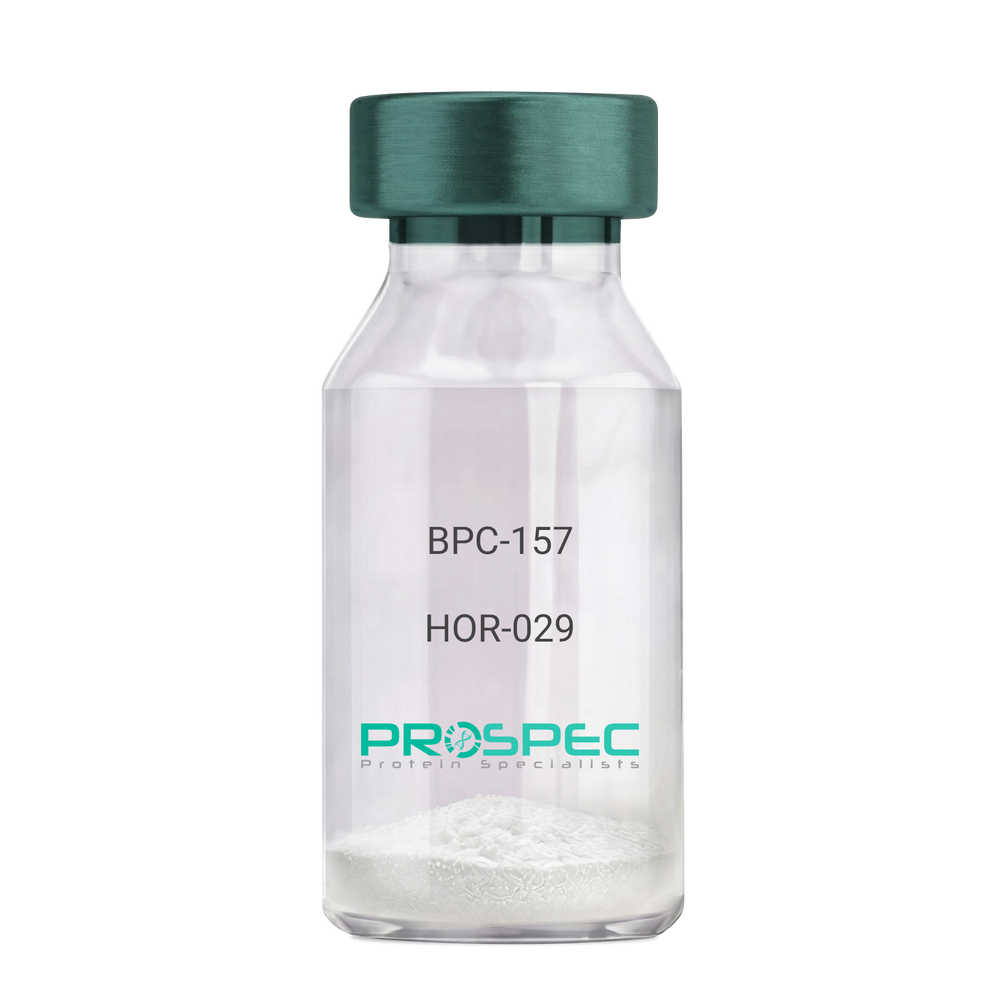
    BPC-157

    Description:

    BPC-157 Pentadecapeptide

    Product # :

    HOR-029

    Price :

    Quantity :

    Shipping Method :

    Room Temp Icon

    Shipped at Room temp

    Add To Cart

    More Info

    • description
    • formulation
    • purity
    • More Info

    Description

    BPC-157 Synthetic is a single, non-glycosylated polypeptide chain containing 15 amino acids, having a molecular mass of 1419.55 Dalton and a Molecular formula of C62H98N16O22.

    Formulation

    The protein was lyophilized with no additives.

    Purity

    Greater than 97.0% as determined by analysis by RP-HPLC.

    More Info

    • Physical Appearance

      Sterile Filtered White lyophilized (freeze-dried) powder.

    • Stability

      Lyophilized BPC-157 although stable at room temperature for 3 weeks, should be stored desiccated below -18°C. Upon reconstitution bpc-157 should be stored at 4°C between 2-7 days and for future use below -18°C. For long term storage it is recommended to add a carrier protein (0.1% HSA or BSA). Please prevent freeze-thaw cycles.

    • Solubility

      It is recommended to reconstitute the lyophilized BPC-157 in sterile 18MΩ-cm H2O not less than 100 µg/ml, which can then be further diluted to other aqueous solutions.

    • Amino Acid Sequence

      H-Gly-Glu-Pro-Pro-Pro-Gly-Lys-Pro-Ala-Asp-Asp-Ala-Gly-Leu-Val-OH

    • Background

      BPC-157, short for Body Protection Compound-157, is a synthetic peptide that has garnered significant attention in the field of regenerative medicine and sports science. This peptide, derived from a portion of the human gastric juice protein known as BPC, exhibits remarkable healing and tissue regeneration properties. BPC-157 has shown promise in various preclinical and clinical studies, demonstrating its potential for the treatment of a wide range of injuries and disorders.

      The research on BPC-157 encompasses investigations into its mechanisms of action, efficacy, safety, and potential therapeutic applications. Studies have elucidated the peptide's ability to enhance angiogenesis, promote collagen synthesis, modulate inflammatory responses, and protect against oxidative stress. These properties make BPC-157 an intriguing candidate for accelerating tissue healing, reducing inflammation, and improving overall recovery outcomes.

      Preclinical studies have revealed the beneficial effects of BPC-157 in several injury models. For instance, BPC-157 has demonstrated its potential in accelerating tendon and ligament healing, mitigating muscle damage, and promoting bone regeneration. These findings suggest that BPC-157 could be a valuable therapeutic tool in orthopedic medicine and sports-related injuries.

      Furthermore, BPC-157 has exhibited promising effects on gastrointestinal health. Studies have highlighted its ability to protect and heal the gut lining, reduce ulcer formation, and alleviate symptoms associated with inflammatory bowel disease. These observations open up avenues for BPC-157 as a potential treatment for gastrointestinal disorders.

      In addition to its regenerative properties, BPC-157 has shown potential in neurological and psychiatric conditions. Research has indicated its neuroprotective effects, with implications for the treatment of traumatic brain injury, stroke, and neurodegenerative disorders. Preliminary studies also suggest BPC-157's potential as an antidepressant and anxiolytic agent.

      Despite the promising findings, further research is needed to fully understand the mechanisms underlying BPC-157's actions and to assess its long-term safety and efficacy. Clinical trials are underway to explore its potential therapeutic applications in humans, including its use in tendon and ligament repair, inflammatory bowel disease, and neurodegenerative disorders.

      This comprehensive review aims to summarize the current state of research on BPC-157, providing an overview of its mechanisms of action and therapeutic potential. By examining relevant studies and findings, we aim to shed light on the diverse applications of BPC-157 and its implications for regenerative medicine, sports science, and various disease

    ProSpec's products are furnished for LABORATORY RESEARCH USE ONLY. The product may not be used as drugs, agricultural or pesticidal products, food additives or household chemicals.

    Bpc 157
  • View Data Sheet

    Name :

    ISG15 Human

    Description:

    ISG15 Human Recombinant

    ISG15, G1P2, IFI15, UCRP, ISG15 Ubiquitin-like modifier.

    Product # :

    PRO-611

    Price :

    Quantity :

    Shipping Method :

    Ice Icon

    Shipped with Ice Packs

    Add To Cart

    More Info

    • description
    • source
    • formulation
    • purity
    • More Info

    Description

    ISG15 Human Recombinant fused to N-terminal Calmudulin Tag (151 a.a.) produced in E.Coli is a single, non-glycosylated polypeptide chain containing a total of 308 amino acids (157 a.a. without tag) and having a molecular mass of 34 kDa.

    Source

    Escherichia Coli.

    Formulation

    The ISG15 solution contains 20mM Tris-HCl pH-8, 100mM NaCl and 1mM DTT.

    Purity

    Greater than 98.0% as determined by SDS-PAGE.

    More Info

    • Introduction

      ISG15 ubiquitin-like Modifier is conjugated to the intracellular target proteins after IFN-alpha or IFN-beta stimulation. ISG15 enzymatic pathway is partially distinct from that of ubiquitin, differing in substrate specificity and interaction with ligating enzymes. ISG15 conjugation pathway uses a dedicated E1 enzyme, but seems to converge with the ub conjugation pathway at the level of a specific E2 enzyme. ISG15 protein targets include STAT1, SERPINA 3G/SPI2A, JAK1, MAPK3/ERK1, PLCG1, EIF2AK2/PKR, MX1/MXA, and RIG-1. Deconjugated by USP18/UBP43 shows specific chemotactic activity towards neutrophils and activates them to induce release of eosinophil chemotactic factors. ISG15 serves as a trans-acting binding factor directing the association of ligated target proteins to intermediate filaments. ISG15 plays a role in autocrine, paracrine and endocrine mechanisms, as in cell-to-cell signaling, possibly partly by inducing ifn-gamma secretion by monocytes and macrophages. ISG15 displays antiviral activity during viral infections. ISG15 in response to IFN-TAU secreted by the conceptus, ligates to and regulate proteins involved in the release of prostaglandin F2-alpha and thus prevent lysis of the corpus luteum and maintain the pregnancy. ISG15 shares several common properties with other ubiquitin-like molecules, but its activity is strongly regulated by precise signaling pathways that have a role in innate immunity.

    • Synonyms

      ISG15, G1P2, IFI15, UCRP, ISG15 Ubiquitin-like modifier.

    • Physical Appearance

      Sterile Filtered colorless solution.

    • Stability

      Store at 4°C if entire vial will be used within 2-4 weeks. Store, frozen at -20°C for longer periods of time. For long term storage it is recommended to add a carrier protein (0.1% HSA or BSA).Avoid multiple freeze-thaw cycles.

    • Amino Acid Sequence

      MADQLTEEQI AEFKEAFSLF DKDGDGTITT KELGTVMRSL GQNPTEAELQ DMINEVDADG NGTIDFPEFL TMMARKMKDT DSEEEIREAF RVFDKDGNGY ISAAELRHVM TNLGEKLTDE EVDEMIREAD IDGDGQVNYE EFVQMMTAKG SMGWDLTVKM LAGNEFQVSL SSSMSVSELK AQITQKIGVH AFQQRLAVHP SGVALQDRVP LASQGLGPGS TVLLVVDKCD EPLNILVRNN KGRSSTYEVR LTQTVAHLKQ QVSGLEGVQD DLFWLTFEGK PLEDQLPLGE YGLKPLSTVF MNLRLRGG.

    ProSpec's products are furnished for LABORATORY RESEARCH USE ONLY. The product may not be used as drugs, agricultural or pesticidal products, food additives or household chemicals.

    Isg15 Human
  • View Data Sheet

    Name :

    DDAVP

    Description:

    Desmopressin

    Product # :

    HOR-270

    Price :

    Quantity :

    Shipping Method :

    Room Temp Icon

    Shipped at Room temp

    Add To Cart

    More Info

    • description
    • formulation
    • purity
    • More Info

    Description

    Desmopressin also called ADH (Anti-Diuretic Hormone) has a molecular formula of C46H64N14O12S2 , Mpr-Tyr-Phe-Gln-Asn-Cys-Pro-D-Arg-Gly-NH2 having a Mw of 1069.23 Dalton.

    Formulation

    The Desmopressin peptide was lyophilized with no additives.

    Purity

    Greater than 98.0% as determined by:
    (a) Analysis by RP-HPLC.
    (b) Analysis by SDS-PAGE.

    More Info

    • Introduction

      Desmopressin is the first vasopressin analog with a very high and very specific antidiuretic effect, has been widely used for different therapeutic purposes and is believed to be partly responsible for the formation of memories learning and memory processes. Desmopressin increases urine concentration and decreases urine production. Desmopressin is used to prevent and control excessive thirst, urination, and dehydration.

    • Physical Appearance

      Sterile Filtered White lyophilized (freeze-dried) powder.

    • Stability

      Lyophilized Desmopressin although stable at room temperature for 3 weeks, should be stored desiccated below -18°C. Upon reconstitution DDAVP should be stored at 4°C between 2-7 days and for future use below -18°C. For long term storage it is recommended to add a carrier protein (0.1% HSA or BSA).Please prevent freeze-thaw cycles.

    • Solubility

      It is recommended to reconstitute the lyophilized DDAVP in sterile 18MΩ-cm H2O not less than 100 µg/ml, which can then be further diluted to other aqueous solutions.

    ProSpec's products are furnished for LABORATORY RESEARCH USE ONLY. The product may not be used as drugs, agricultural or pesticidal products, food additives or household chemicals.

    Desmopressin
  • View Data Sheet

    Name :

    METRN Mouse

    Description:

    Meteorin Mouse Recombinant

    Meteorin, Hypoxia/reoxygenation regulatory factor, Metrn, 1810034B16Rik, Hyrac.

    Product # :

    PRO-2241

    Price :

    Quantity :

    Shipping Method :

    Ice Icon

    Shipped with Ice Packs

    Add To Cart

    More Info

    • description
    • source
    • formulation
    • purity
    • More Info

    Description

    METRN produced in Sf9 Baculovirus cells is a single, glycosylated polypeptide chain containing 276 amino acids (22-291 a.a.) and having a molecular mass of 30.2kDa (Migrates at 28-40kDa on SDS-PAGE under reducing conditions). METRN is expressed with a 6 amino acid His tag at C-Terminus and purified by proprietary chromatographic techniques.

    Source

    Sf9, Baculovirus cells.

    Formulation

    METRN protein solution (0.25mg/ml) contains Phosphate Buffered Saline (pH 7.4) and 10% glycerol.

    Purity

    Greater than 90.0% as determined by SDS-PAGE.

    More Info

    • Introduction

      Meteorin (METRN) is involved in both glial cell differentiation and axonal network formation during neurogenesis. METRN promotes astrocyte differentiation and transforms cerebellar astrocytes into radial glia. Moreover, the METRN protein stimulates axonal extension in small and intermediate neurons of sensory ganglia by activating nearby satellite glia.

    • Synonyms

      Meteorin, Hypoxia/reoxygenation regulatory factor, Metrn, 1810034B16Rik, Hyrac.

    • Physical Appearance

      Sterile Filtered colorless solution.

    • Stability

      Store at 4°C if entire vial will be used within 2-4 weeks. Store, frozen at -20°C for longer periods of time. For long term storage it is recommended to add a carrier protein (0.1% HSA or BSA). Avoid multiple freeze-thaw cycles.

    • Amino Acid Sequence

      GYSEDRCSWR GSGLTQEPGS VGQLTLDCTE GAIEWLYPAG ALRLTLGGPD PGTRPSIVCL RPERPFAGAQ VFAERMTGNL ELLLAEGPDL AGGRCMRWGP RERRALFLQA TPHRDISRRV AAFRFELHED QRAEMSPQAQ GLGVDGACRP CSDAELLLAA CTSDFVIHGT IHGVAHDTEL QESVITVVVA RVIRQTLPLF KEGSSEGQGR ASIRTLLRCG VRPGPGSFLF MGWSRFGEAW LGCAPRFQEF SRVYSAALTT HLNPCEMALD HHHHHH.

    ProSpec's products are furnished for LABORATORY RESEARCH USE ONLY. The product may not be used as drugs, agricultural or pesticidal products, food additives or household chemicals.

    Metrn Mouse
  • View Data Sheet

    Name :

    Adiponectin Mouse, HEK

    Description:

    Adiponectin Mouse Recombinant, HEK

    Acrp30, AdipoQ, GBP-28, APM-1, ACDC.

    Product # :

    CYT-435

    Price :

    Quantity :

    Shipping Method :

    Room Temp Icon

    Shipped at Room temp

    Add To Cart

    More Info

    • description
    • source
    • formulation
    • purity
    • biological activity
    • More Info

    Description

    The Acrp30 Mouse Recombinant is fused with FLAG tag having a total Mw of 26kDa.

    Source

    HEK293 (Human embryonic kidney cell line).

    Formulation

    Filtered (0.4µm) and lyophilized from 0.5 mg/ml in 0.05M PBS buffer,0.075M NaCl, pH7.4.

    Purity

    Greater than 98.0% as determined by SDS-PAGE.

    Biological Activity

    Full-length adiponectin activates AMP-activated protein kinase in hepatocyte. Adiponectin also activates AMPK in HepG2 human hepatocytes at the concentration of 1.0 µg/ml.  An in vitro gluconeogenesis assay which was performed in primary rat hepatocytes showed the murine adiponectin derived from mammalian cells can inhibit glucose production.

    More Info

    • Introduction

      Adiponectin is an important negative regulator in hematopoiesis and immune systems. It may be involved in ending inflammatory responses through its inhibitory functions. Inhibits endothelial nf-kappa-b signaling through a camp-dependent pathway. Inhibits tnf-alpha- induced expression of endothelial adhesion molecules. Involved in the control of fat metabolism and insulin sensitivity.

    • Synonyms

      Acrp30, AdipoQ, GBP-28, APM-1, ACDC.

    • Stability

      Store lyophilized APM-1 at -20°C. Aliquot the product after reconstitution to avoid repeated freezing/thawing cycles. Reconstituted protein can be stored at 4°C for a limited period of time; it does not show any change after two weeks at 4°C.

    • Solubility

      It is recommended to reconstitute the lyophilized Acrp30 Mouse in sterile 18M-cm H2O at 0.5mg/ml, which can then be further diluted to other aqueous solutions.

    • Amino Acid Sequence

      EDDVTTTEEL APALVPPPKG TCAGWMAGIP GHPGHNGTPG RDGRDGTPGE KGEKGDAGLL GPKGETGDVG MTGAEGPRGF PGTPGRKGEP GEAAYMYRSA FSVGLETRVT VPNVPIRFTK IFYNQQNHYD GSTGKFYCNI PGLYYFSYHI TVYMKDVKVS LFKKDKAVLF TYDQYQEKNV DQASGSVLLH LEVGDQVWLQ VYGDGDHNGL YADNVNDSTF TGFLLYHDTN DYKDDDDK.

    • Background

      What is the molecular weight/Mw of ADIPONECTIN Protein?
      ADIPONECTIN Protein has a total Mw of 26kDa.

      What is the source or expression system of ADIPONECTIN Protein?
      HEK293.

      What is the Purity of ADIPONECTIN Protein?
      ADIPONECTIN Protein is >98% pure as determined by SDS-PAGE.

      What is the Biological Activity of ADIPONECTIN Protein?
      Full-length adiponectin activates AMP-activated protein kinase in hepatocyte. Adiponectin also activates AMPK in HepG2 human hepatocytes at the concentration of 1.0 µg/ml. An in vitro gluconeogenesis assay which was performed in primary rat hepatocytes showed the murine adiponectin derived from mammalian cells can inhibit glucose production.

      What is the amino acid sequence of ADIPONECTIN Protein?
      EDDVTTTEEL APALVPPPKG TCAGWMAGIP GHPGHNGTPG RDGRDGTPGE KGEKGDAGLL GPKGETGDVG MTGAEGPRGF PGTPGRKGEP GEAAYMYRSA FSVGLETRVT VPNVPIRFTK IFYNQQNHYD GSTGKFYCNI PGLYYFSYHI TVYMKDVKVS LFKKDKAVLF TYDQYQEKNV DQASGSVLLH LEVGDQVWLQ VYGDGDHNGL YADNVNDSTF TGFLLYHDTN DYKDDDDK.

      What applications can ADIPONECTIN Protein be used in?
      ADIPONECTIN Protein can probably be used in western blot, ELISA and Lateral Flow.

      What is the endotoxin level for ADIPONECTIN Protein?
      The endotoxin level is minimal, ADIPONECTIN Protein was purified using conventional chromatography techniques.

    ProSpec's products are furnished for LABORATORY RESEARCH USE ONLY. The product may not be used as drugs, agricultural or pesticidal products, food additives or household chemicals.

    Adiponectin Mouse Hek
  • View Data Sheet

    Name :

    Adiponectin Rat

    Description:

    Adiponectin Rat Recombinant

    Adipocyte C1q and collagen domain-containing protein, Adipocyte complement-related 30kDa protein, Adipose most abundant gene transcript 1 protein, gelatin-binding protein, Acrp30, AdipoQ, GBP-28, APM-1, ACDC.

    Product # :

    CYT-831

    Price :

    Quantity :

    Shipping Method :

    Room Temp Icon

    Shipped at Room temp

    Add To Cart

    More Info

    • description
    • source
    • formulation
    • purity
    • More Info

    Description

    ACRP30 Rat Recombinant produced in 293 cell line is a polypeptide chain containing 238 amino acids and having a total molecular mass of 25.7 kDa. ACRP30 contains a C-Terminal linker (3 AA residue) and a C-Terminal Flag- tag (8 AA residue).

    Source

    HEK293 cell line.

    Formulation

    Filtered (0.4 µm) and lyophilized in 20 mM Tris buffer, 50 mM NaCl, pH 7.5.

    Purity

    Greater than 90.0% as determined by SDS-PAGE.

    More Info

    • Introduction

      Adiponectin, also referred to as Acrp30, AdipoQ and GBP-28, is a recently discovered 244 amino acid protein, the product of the apM1 gene, which is physiologically active and specifically and highly expressed in adipose cells (Adipokine). The protein belongs to the soluble defense collagen super family; it has a collagen-like domain structurally homologous with collagen VIII and X and complement factor C1q-like globular domain. APM-1 forms homotrimers, which are the building blocks for higher order complexes found circulating in serum.

    • Synonyms

      Adipocyte C1q and collagen domain-containing protein, Adipocyte complement-related 30kDa protein, Adipose most abundant gene transcript 1 protein, gelatin-binding protein, Acrp30, AdipoQ, GBP-28, APM-1, ACDC.

    • Physical Appearance

      White lyophilized (freeze-dried) powder.

    • Stability

      Lyophilized ACRP30 although stable at room temperature for 3 weeks, should be stored desiccated below -18°C. Upon reconstitution ACRP30 should be stored at 4°C between 2-7 days and for future use below -18°C.For long term storage it is recommended to add a carrier protein (0.1% HSA or BSA).Please prevent freeze-thaw cycles.

    • Solubility

      Add deionized water to a working concentration approximately 0.5 mg/ml and let the lyophilized pellet dissolve completely. Product is not sterile! Please filter the product by appropriate sterile filter before using it in the cell culture.

    • Amino Acid Sequence

      GITATEGPGA LVPPPKETCA GWMAGIPGYP GHNGIPGRDG RDGTPGEKGE KGDAGVLGPK GDPGDAGMTG AEGPRGFPGT PGRKGEPGEA AYMYHSAFSV GLETRVTVPN VPIRFTKIFY NQQNHYDGST GKFHCNIPGL YYFSYHITVY MKDVKVSLFK KDKAVLFTYD QYQEKNVDQA SGSMLLHLEV GDQVWLQVYG EGDNNGLYAD NVNDSTFTGF LLYHDTNAAADYKDDDDK

    • Background

      What is the molecular weight/Mw of ADIPONECTIN Protein?
      ADIPONECTIN Protein has a total Mw of 25.7kDa.

      What is the source or expression system of ADIPONECTIN Protein?
      HEK293 cell line.

      What is the Purity of ADIPONECTIN Protein?
      ADIPONECTIN Protein is >90% pure as determined by SDS-PAGE.

      What is the Biological Activity of ADIPONECTIN Protein?
      The biological functionality of ADIPONECTIN Protein will be determined in the future.

      What is the amino acid sequence of ADIPONECTIN Protein?
      GITATEGPGA LVPPPKETCA GWMAGIPGYP GHNGIPGRDG RDGTPGEKGE KGDAGVLGPK GDPGDAGMTG AEGPRGFPGT PGRKGEPGEA AYMYHSAFSV GLETRVTVPN VPIRFTKIFY NQQNHYDGST GKFHCNIPGL YYFSYHITVY MKDVKVSLFK KDKAVLFTYD QYQEKNVDQA SGSMLLHLEV GDQVWLQVYG EGDNNGLYAD NVNDSTFTGF LLYHDTNAAADYKDDDDK.

      What applications can ADIPONECTIN Protein be used in?
      ADIPONECTIN Protein can probably be used in western blot, ELISA and Lateral Flow.

      What is the endotoxin level for ADIPONECTIN Protein?
      The endotoxin level is minimal, ADIPONECTIN Protein was purified using conventional chromatography techniques.

    ProSpec's products are furnished for LABORATORY RESEARCH USE ONLY. The product may not be used as drugs, agricultural or pesticidal products, food additives or household chemicals.

    Acrp30 Rat
  • View Data Sheet

    Name :

    NCALD Human

    Description:

    Neurocalcin Delta Recombinant Human

    Rocalcin Delta, MGC33870, MGC74858, Neurocalcin-Delta.

    Product # :

    PRO-093

    Price :

    Quantity :

    Shipping Method :

    Ice Icon

    Shipped with Ice Packs

    Add To Cart

    More Info

    • description
    • source
    • formulation
    • purity
    • More Info

    Description

    NCALD produced in E.Coli is a single, non-glycosylated polypeptide chain containing 213 amino acids (1-193.a.a) and having a molecular mass of 24.4kDa. NCALD is fused to a 20 amino acid His-tag at N-terminus & purified by proprietary chromatographic techniques.

    Source

    Escherichia Coli.

    Formulation

    The NCALD protein solution (0.5mg/1ml) is formulated in 20 mM Tris-HCl buffer (pH8.0), 100mM NaCl, 1mM DTT and 40% glycerol.

    Purity

    Greater than 90% as determined by SDS-PAGE.

    More Info

    • Introduction

      NCALD belongs to the neuronal calcium sensor (NCS) family. NCALD is cytosolic at inactive calcium levels; but, high intracellular calcium levels induce a conformational transformation which exposes the myristoyl group, causing protein association with membranes and partial co-localization with the perinuclear trans-golgi network. NCALD protein is a regulator of signal transduction by G protein-coupled receptor.

    • Synonyms

      Rocalcin Delta, MGC33870, MGC74858, Neurocalcin-Delta.

    • Physical Appearance

      Sterile Filtered clear solution.

    • Stability

      Store at 4°C if entire vial will be used within 2-4 weeks. Store, frozen at -20°C for longer periods of time.For long term storage it is recommended to add a carrier protein (0.1% HSA or BSA).Please avoid freeze thaw cycles.

    • Amino Acid Sequence

      MGSSHHHHHH SSGLVPRGSH MGKQNSKLRP EVMQDLLEST DFTEHEIQEW YKGFLRDCPS GHLSMEEFKK IYGNFFPYGD ASKFAEHVFR TFDANGDGTI DFREFIIALS VTSRGKLEQK LKWAFSMYDL DGNGYISKAE MLEIVQAIYK MVSSVMKMPE DESTPEKRTE KIFRQMDTNR DGKLSLEEFI RGAKSDPSIV RLLQCDPSSA GQF.

    ProSpec's products are furnished for LABORATORY RESEARCH USE ONLY. The product may not be used as drugs, agricultural or pesticidal products, food additives or household chemicals.

    Ncald Human
  • View Data Sheet

    Name :

    IYD Human

    Description:

    Iodotyrosine Deiodinase Human Recombinant

    Iodotyrosine dehalogenase 1, IYD-1, Iodotyrosine Deiodinase, IYD, C6orf71, DEHAL1, iodotyrosine dehalogenase 1 isoform 3, dJ422F24.1, TDH4.

    Product # :

    ENZ-779

    Price :

    Quantity :

    Shipping Method :

    Ice Icon

    Shipped with Ice Packs

    Add To Cart

    More Info

    • description
    • source
    • formulation
    • purity
    • More Info

    Description

    IYD Human Recombinant produced in E.Coli is a single, non-glycosylated polypeptide chain containing 214 amino acids (24-214 a.a) and having a molecular mass of 25.1kDa.IYD is fused to a 23 amino acid His-tag at N-terminus & purified by proprietary chromatographic techniques.

    Source

    Escherichia Coli.

    Formulation

    IYD protein solution (1mg/ml) containing 20mM Tris-HCl buffer (pH 8.0), 0.4M UREA and 10% glycerol.

    Purity

    Greater than 90.0% as determined by SDS-PAGE.

    More Info

    • Introduction

      IYD is an enzyme that catalyzes the oxidative NADPH-dependent deiodination of both mono- and diiodotyrosine although acts more efficiently on monoiodotyrosine. The N-terminus of Iodotyrosine Deiodinase , also known as IYD, plays a role as a membrane anchor. IYD acts during the hydrolysis of thyroglobulin to liberate iodide, which then reenter the hormone-producing pathways.

    • Synonyms

      Iodotyrosine dehalogenase 1, IYD-1, Iodotyrosine Deiodinase, IYD, C6orf71, DEHAL1, iodotyrosine dehalogenase 1 isoform 3, dJ422F24.1, TDH4.

    • Physical Appearance

      Sterile Filtered colorless solution.

    • Stability

      Store at 4°C if entire vial will be used within 2-4 weeks. Store, frozen at -20°C for longer periods of time. For long term storage it is recommended to add a carrier protein (0.1% HSA or BSA).Avoid multiple freeze-thaw cycles.

    • Amino Acid Sequence

      MGSSHHHHHH SSGLVPRGSH MGSDRSMEKK KGEPRTRAEA RPWVDEDLKD SSDLHQAEED ADEWQESEEN VEHIPFSHNH YPEKEMVKRS QEFYELLNKR RSVRFISNEQ VPMEVIDNVI RTAGTAPSGA HTEPWTFVVV KDPDVKHKIR KIIEEEEEIN YMKRMGHRWV TDLKKLRTNW IKEYLDTAPI LILIFKQVHG FAANGKKKVH YYNE.

    ProSpec's products are furnished for LABORATORY RESEARCH USE ONLY. The product may not be used as drugs, agricultural or pesticidal products, food additives or household chemicals.

    Iyd Human
  • View Data Sheet

    Name :

    Vaspin Human, His

    Description:

    Vaspin Human Recombinant, His Tag

    Serpin A12 precursor, Visceral adipose-specific serpin, Visceral adipose tissue- derived serine protease inhibitor, Vaspin, OL-64, SERPINA12, Serine (or cysteine) proteinase inhibitor, clade A, antitrypsin, alpha-1 antiproteinase.

    Product # :

    CYT-459

    Price :

    Quantity :

    Shipping Method :

    Ice Icon

    Shipped with Ice Packs

    Add To Cart

    More Info

    • description
    • source
    • formulation
    • purity
    • More Info

    Description

    Vaspin Human Recombinant produced in E.Coli is a single, non-glycosylated, His Tag, polypeptide chain containing 415 amino acids and having a molecular mass of 47 kDa.The Vaspin is purified by proprietary chromatographic techniques.

    Source

    Escherichia Coli.

    Formulation

    Vaspin in 20mM Tris pH-8, 0.2mM PMSF and 10% glycerol.

    Purity

    Greater than 90.0% as determined by SDS-PAGE.

    More Info

    • Introduction

      Vaspin (visceral adipose-specific SERPIN), a newly identified adipokine, which is a member of serine protease inhibitor family. Vaspin is also a unique insulin sensitizing adipocytokine in obesity. A recent publication indicates that induction of human vaspin mRNA expression in adipose tissue is regulated in a fat depot-specific manner and could be associated with parameters of obesity, insulin resistance, and glucose metabolism.

    • Synonyms

      Serpin A12 precursor, Visceral adipose-specific serpin, Visceral adipose tissue- derived serine protease inhibitor, Vaspin, OL-64, SERPINA12, Serine (or cysteine) proteinase inhibitor, clade A, antitrypsin, alpha-1 antiproteinase.

    • Physical Appearance

      Sterile Filtered colorless solution.

    • Stability

      Liquid Vaspin although stable at 10°C for 1 week, should be stored below -18°C. For long term storage it is recommended to add a carrier protein (0.1% HSA or BSA).Please prevent freeze-thaw cycles.

    • Amino Acid Sequence

      MGSSHHHHHH SSGLVPRGSH MLKPSFSPRN YKALSEVQGW KQRMAAKELA RQNMDLGFKL LKKLAFYNPG RNIFLSPLSI STAFSMLCLG AQDSTLDEIK QGFNFRKMPE KDLHEGFHYI IHELTQKTQD LKLSIGNTLF IDQRLQPQRK FLEDAKNFYS AETILTNFQN LEMAQKQIND FISQKTHGKI NNLIENIDPG TVMLLANYIF FRARWKHEFD PNVTKEEDFF LEKNSSVKVP MMFRSGIYQV GYDDKLSCTI LEIPYQKNIT AIFILPDEGK LKHLEKGLQV DTFSRWKTLL SRRVVDVSVP RLHMTGTFDL KKTLSYIGVS KIFEEHGDLT KIAPHRSLKV GEAVHKAELK MDERGTEGAA GTGAQTLPME TPLVVKIDKP YLLLIYSEKI PSVLFLGKIV NPIGK.

    ProSpec's products are furnished for LABORATORY RESEARCH USE ONLY. The product may not be used as drugs, agricultural or pesticidal products, food additives or household chemicals.

    Vaspin Human
  • View Data Sheet

    Name :

    PTPRN Human

    Description:

    Protein Tyrosine Phosphatase Receptor Type N Human Recombinant

    Receptor-type tyrosine-protein phosphatase-like N, R-PTP-N, Islet cell antigen 512, ICA 512, Islet cell autoantigen 3, PTP IA-2, PTPRN, ICA3, ICA512.

    Product # :

    ENZ-1162

    Price :

    Quantity :

    Shipping Method :

    Ice Icon

    Shipped with Ice Packs

    Add To Cart

    More Info

    • description
    • source
    • formulation
    • purity
    • More Info

    Description

    Recombinant Human Protein Tyrosine Phosphatase Receptor Type N produced in SF9 is a glycosylated, polypeptide chain having a calculated molecular mass of 46kDa. PTPRN is expressed with a 6xHis tag and purified by proprietary chromatographic techniques.

    Source

    Sf9 insect cells.

    Formulation

    PTPRN is supplied in 50mM Sodium phosphate (pH 8.0) and 20% Glycerol.

    Purity

    Greater than 95.0% as determined by SDS-PAGE.

    More Info

    • Introduction

      Protein Tyrosine Phosphatase Receptor Type N (PTPRN) is a catalytically inactive protein and a major target of autoimmune response in diabetes mellitus. The long C-terminal intracellular tail covers the majority of autoantibody epitopes. PTPRN is expressed in neural, neuroendocrine and pancreatic islet cells.

    • Synonyms

      Receptor-type tyrosine-protein phosphatase-like N, R-PTP-N, Islet cell antigen 512, ICA 512, Islet cell autoantigen 3, PTP IA-2, PTPRN, ICA3, ICA512.

    • Physical Appearance

      Sterile Filtered colorless solution.

    • Stability

      Store at 4°C if entire vial will be used within 2-4 weeks. Store, frozen at -20°C for longer periods of time. Avoid multiple freeze-thaw cycles.

    ProSpec's products are furnished for LABORATORY RESEARCH USE ONLY. The product may not be used as drugs, agricultural or pesticidal products, food additives or household chemicals.

    Ptprn Human
  • View Data Sheet

    Name :

    IFN a 2a Antibody

    Description:

    Interferon a 2a Polyclonal Rabbit Anti-Human Antibody

    Leukocyte interferon, B cell interferon, Type I interferon, IFNA2, IFN-a 2a.

    Product # :

    ANT-034

    Price :

    Quantity :

    Shipping Method :

    Ice Icon

    Shipped with Ice Packs

    Add To Cart

    More Info

    • formulation
    • purity
    • More Info

    Formulation

    Lyophilized from 0.2μm sterile filtered solution in phosphate buffered saline, pH 7.4.

    Purity

    Greater than 98.0% as determined by Analysis by SDS-PAGE.

    More Info

    • Introduction

      IFN-alpha is produced by macrophages and has antiviral activities. Interferon stimulates the production of two enzymes: protein kinase and an oligoadenylate synthetase.

    • Synonyms

      Leukocyte interferon, B cell interferon, Type I interferon, IFNA2, IFN-a 2a.

    • Stability

      Store at -20°C. For long term storage freezes in working aliquots at -20°C. Repeated freezing and thawing is not recommended.

    • Solubility

      Reconstitute with H20. Mix gently, wash the sides of the vial and wait 30-60 seconds before use.

    • Immunogen

      IgG Anti Human Interferon a 2a is developed in rabbit using recombinant Human Interferon a 2a expressed in plants.

    • Applications

      ELISA: to detect Human Interferon a 2a by indirect ELISA a dilution of at least 1/500 of this antibody is required. This antibody, in conjunction with compatible secondary reagents (anti rabbit AP conjugated), allows the detection of 0.2-1 ng /well of human Interferon a 2a.

      Western Blot: to detect human Interferon a2a by WB analysis this antibody can be used in a dilution of 1/1,000.

    • Antigen Amino Acid Sequence

      CDLPQTHSLGSRRTLMLLAQMRKISLFSCLKDRHDFGFPQEEFGNQFQKAETIPVLHEMIQQIFNLFSTKDSSAAWDETLLDKFYTELYQQLNDLEACVIQGVGVTETPLMNEDSILAVRKYFQRITLYLKEKKYSPCAWEVVRAEIMRSFSLSTNLQESLRSKE

    • Type

      Polyclonal Rabbit Antibody.

    • Purification Method

      Purified IgG prepared by affinity chromatography on protein G.

    ProSpec's products are furnished for LABORATORY RESEARCH USE ONLY. The product may not be used as drugs, agricultural or pesticidal products, food additives or household chemicals.

    Ifn A 2A Antibody
  • View Data Sheet

    Name :

    CHGA Human, Sf9

    Description:

    Chromogranin A Human Recombinant, Sf9

    CHGA, CGA, Chromogranin-A, Vasostatin I, SP-I, Pituitary secretory protein I.

    Product # :

    PRO-2513

    Price :

    Quantity :

    Shipping Method :

    Ice Icon

    Shipped with Ice Packs

    Add To Cart

    More Info

    • description
    • source
    • formulation
    • purity
    • More Info

    Description

    CHGA produced in Sf9 Baculovirus cells is a single, glycosylated polypeptide chain (19-457 a.a.) and fused to a 6 aa His Tag at C-terminus containing a total of 448 amino acids and having a molecular mass of 50kDa.CHGA shows multiple bands between 50-70kDa on SDS-PAGE, reducing conditions and purified by proprietary chromatographic techniques.

    Source

    Sf9, Baculovirus cells.

    Formulation

    CHGA protein solution (0.25mg/ml) contains Phosphate Buffered Saline (pH 7.4), 20% glycerol & 0.1mM PMSF.

    Purity

    Greater than 85.0% as determined by SDS-PAGE.

    More Info

    • Introduction

      Chromogranin-A Isoform 1 Preproprotein or CHGA is part of the neuroendocrine secretory proteins of the chromogranin/secretogranin family. CHGA is a precursor of numerus enzymes such as pancreastatin, catestatin, vasostatin-1,vasostatin-2, and parastatin. The protein acts as a negative regulator the neuroendocrine activity of autocrine or nearby cells (paracrine). CHGA causes further production of secretory granules that contains insulin in pancreatic islet beta cells.

    • Synonyms

      CHGA, CGA, Chromogranin-A, Vasostatin I, SP-I, Pituitary secretory protein I.

    • Physical Appearance

      Sterile Filtered colorless solution.

    • Stability

      Store at 4°C if entire vial will be used within 2-4 weeks. Store, frozen at -20°C for longer periods of time. For long term storage it is recommended to add a carrier protein (0.1% HSA or BSA). Avoid multiple freeze-thaw cycles.

    • Amino Acid Sequence

      ADLLPVNSPM NKGDTEVMKC IVEVISDTLS KPSPMPVSQE CFETLRGDER ILSILRHQNL LKELQDLALQ GAKERAHQQK KHSGFEDELS EVLENQSSQA ELKEAVEEPS SKDVMEKRED SKEAEKSGEA TDGARPQALP EPMQESKAEG NNQAPGEEEE EEEEATNTHP PASLPSQKYP GPQAEGDSEG LSQGLVDREK GLSAEPGWQA KREEEEEEEE EAEAGEEAVP EEEGPTVVLN PHPSLGYKEI RKGESRSEAL AVDGAGKPGA EEAQDPEGKG EQEHSQQKEE EEEMAVVPQG LFRGGKSGEL EQEEERLSKE WEDSKRWSKM DQLAKELTAE KRLEGQEEEE DNRDSSMKLS FRARAYGFRG PGPQLRRGWR PSSREDSLEA GLPLQVRGYP EEKKEEEGSA NRRPEDQELE SLSAIEAELE KVAHQLQALR RGHHHHHH.

    ProSpec's products are furnished for LABORATORY RESEARCH USE ONLY. The product may not be used as drugs, agricultural or pesticidal products, food additives or household chemicals.

    Chromogranin A
  • View Data Sheet

    Name :

    IFN b Antibody

    Description:

    Interferon-beta, Mouse Anti-Human

    Leukocyte interferon, B cell interferon, Type I interferon, IFNB1, IFB, IFF, IFNB, IFN-b 1a MGC96956.

    Product # :

    ANT-185

    Price :

    Quantity :

    Shipping Method :

    Room Temp Icon

    Shipped at Room temp

    Add To Cart

    More Info

    • formulation
    • More Info

    Formulation

    1mg/ml in PBS (after reconstitution).

    More Info

    • Introduction

      Interferon-beta has antiviral, antibacterial and anticancer activities.

    • Synonyms

      Leukocyte interferon, B cell interferon, Type I interferon, IFNB1, IFB, IFF, IFNB, IFN-b 1a MGC96956.

    • Solubility

      Reconstitute with sterile H20. Mix gently, wash the sides of the vial and wait 30-60 seconds before use.

    • Immunogen

      r.Human IFN-b.

    • Ig Subclass

      Mouse IgG.

    • Clone

      NYRhIFN-b.

    • Titer

      By direct ELISA, 1:10,000 dilution will yield 0.5 O.D using alkaline phosphatase conjugated rabbit anti-mouse Ig (Jackson Laboratories).

    • Shipping Conditions

      Antibody is shipped lyophilized at ambient temperature.

    • Type

      Mouse Anti Human Monoclonal.

    • Storage Procedures

      In lyophilized form, for long periods, store at 4oC in a dry environment. After reconstitution, if not intended for use within a month, aliquot and store at -20oC.

    • Purification Method

      Protein-A.

    ProSpec's products are furnished for LABORATORY RESEARCH USE ONLY. The product may not be used as drugs, agricultural or pesticidal products, food additives or household chemicals.

    Interferon Beta Antibody
  • View Data Sheet

    Name :

    IL 12 p40 Human Baculovirus

    Description:

    Interleukin-12 p40 Human Recombinant, Baculovirus

    NKSF2, CTL maturation factor (TCMF), Cytotoxic lymphocyte maturation factor 40 kDa subunit (CLMF p40), TSF, Edodekin-alpha, IL-12 p40, IL-12B, IL-12 subunit p40, NK cell stimulatory factor chain 2.

    Product # :

    CYT-134

    Price :

    Quantity :

    Shipping Method :

    Ice Icon

    Shipped with Ice Packs

    Add To Cart

    More Info

    • description
    • source
    • formulation
    • purity
    • More Info

    Description

    IL 12 p40 Human Recombinant produced in Hi-5 cell using Baculovirus is a single polypeptide chain containing 315 amino acids (23-328) and having a molecular mass of 35.8kDa.IL 12 p40 is fused to a 6 amino acid His-tag at C-terminus & purified by proprietary chromatographic techniques.

    Source

    Baculovirus

    Formulation

    The IL 12 p40 solution (0.25mg/ml) contains 20mM Tris-HCl buffer (pH 8.0), 100mM NaCl, 2mM DTT, 100mM PMSF and 20% glycerol.

    Purity

    Greater than 90% as determined by SDS-PAGE.

    More Info

    • Introduction

      Active IL-12 is a p70 disulphide-linked dimer composed of p35 and p40 subunits. The protein is a pleiotropic cytokine produced primarily by antigen presenting cells and has multiple effects on T lymphocytes and natural killer cells in terms of stimulating cytotoxicity, proliferation, production of other cytokines and Th1 subset differentiation.

    • Synonyms

      NKSF2, CTL maturation factor (TCMF), Cytotoxic lymphocyte maturation factor 40 kDa subunit (CLMF p40), TSF, Edodekin-alpha, IL-12 p40, IL-12B, IL-12 subunit p40, NK cell stimulatory factor chain 2.

    • Physical Appearance

      Sterile Filtered colorless solution.

    • Stability

      Store at 4°C if entire vial will be used within 2-4 weeks. Store, frozen at -20°C for longer periods of time. For long term storage it is recommended to add a carrier protein (0.1% HSA or BSA).Avoid multiple freeze-thaw cycles.

    • Amino Acid Sequence

      ADPIWELKKD VYVVELDWYP DAPGEMVVLT CDTPEEDGIT WTLDQSSEVL GSGKTLTIQV KEFGDAGQYT CHKGGEVLSH SLLLLHKKED GIWSTDILKD QKEPKNKTFL RCEAKNYSGR FTCWWLTTIS TDLTFSVKSS RGSSDPQGVT CGAATLSAER VRGDNKEYEY SVECQEDSAC PAAEESLPIE VMVDAVHKLK YENYTSSFFI RDIIKPDPPK NLQLKPLKNS RQVEVSWEYP DTWSTPHSYF SLTFCVQVQG KSKREKKDRV FTDKTSATVI CRKNASISVR AQDRYYSSSW SEWASVPCSH HHHHH

    ProSpec's products are furnished for LABORATORY RESEARCH USE ONLY. The product may not be used as drugs, agricultural or pesticidal products, food additives or household chemicals.

    Il 12 P40 Human Baculovirus
  • View Data Sheet

    Name :

    TNFRSF8 igG-His Human

    Description:

    CD30 Ligand Receptor, IgG-His Tag Human Recombinant

    Tumor Necrosis Factor Receptor Superfamily Member 8, Tumor Necrosis Factor Receptor Superfamily, Member 8, Lymphocyte Activation Antigen CD30, CD30L Receptor, Ki-1 Antigen, D1S166E, CD30, Cytokine Receptor CD30, CD30 Antigen, Ki-1.

    Product # :

    CYT-983

    Price :

    Quantity :

    Shipping Method :

    Ice Icon

    Shipped with Ice Packs

    Add To Cart

    More Info

    • description
    • source
    • formulation
    • purity
    • More Info

    Description

    TNFRSF8 produced in Sf9 Baculovirus cells is a single, glycosylated polypeptide chain containing 613 amino acids (19-379 a.a.) and having a molecular mass of 66.7kDa (Molecular size on SDS-PAGE will appear at approximately 25-100kDa). TNFRSF8 is expressed with a 252 amino acid hIgG-His-tag at C-Terminus and purified by proprietary chromatographic techniques.

    Source

    Sf9, Baculovirus cells.

    Formulation

    TNFRSF8 protein solution (0.5mg/ml) contains Phosphate Buffered Saline (pH 7.4) and 10% glycerol.

    Purity

    Greater than 85.0% as determined by SDS-PAGE.

    More Info

    • Introduction

      Tumor necrosis factor receptor superfamily member 8 (TNFRSF8) is a receptor for TNFSF8/CD30L. TNFRSF8 has a role in the regulation of cellular growth and transformation of activated lymphoblasts. In addition, the TNFRSF8 protein regulates gene expression via activation of NF-kappa-B. TNFRSF8 being a regulator of apoptosis, induces cell death or proliferation, depending on the cell type.

    • Synonyms

      Tumor Necrosis Factor Receptor Superfamily Member 8, Tumor Necrosis Factor Receptor Superfamily, Member 8, Lymphocyte Activation Antigen CD30, CD30L Receptor, Ki-1 Antigen, D1S166E, CD30, Cytokine Receptor CD30, CD30 Antigen, Ki-1.

    • Physical Appearance

      Sterile Filtered colorless solution.

    • Stability

      Store at 4°C if entire vial will be used within 2-4 weeks. Store, frozen at -20°C for longer periods of time. For long term storage it is recommended to add a carrier protein (0.1% HSA or BSA). Avoid multiple freeze-thaw cycles.

    • Amino Acid Sequence

      ADPFPQDRPF EDTCHGNPSH YYDKAVRRCC YRCPMGLFPT QQCPQRPTDC RKQCEPDYYL DEADRCTACV TCSRDDLVEK TPCAWNSSRV CECRPGMFCS TSAVNSCARC FFHSVCPAGM IVKFPGTAQK NTVCEPASPG VSPACASPEN CKEPSSGTIP QAKPTPVSPA TSSASTMPVR GGTRLAQEAA SKLTRAPDSP SSVGRPSSDP GLSPTQPCPE GSGDCRKQCE PDYYLDEAGR CTACVSCSRD DLVEKTPCAW NSSRTCECRP GMICATSATN SCARCVPYPI CAAETVTKPQ DMAEKDTTFE APPLGTQPDC NPTPENGEAP ASTSPTQSLL VDSQASKTLP IPTSAPVALS STGKAAAFES RACSLEPKSC DKTHTCPPCP APELLGGPSV FLFPPKPKDT LMISRTPEVT CVVVDVSHED PEVKFNWYVD GVEVHNAKTK PREEQYNSTY RVVSVLTVLH QDWLNGKEYK CKVSNKALPA PIEKTISKAK GQPREPQVYT LPPSRDELTK NQVSLTCLVK GFYPSDIAVE WESNGQPENN YKTTPPVLDS DGSFFLYSKL TVDKSRWQQG NVFSCSVMHE ALHNHYTQKS LSLSPGKHHH HHH.

    ProSpec's products are furnished for LABORATORY RESEARCH USE ONLY. The product may not be used as drugs, agricultural or pesticidal products, food additives or household chemicals.

    Tnfrsf8 Igg His Human
  • View Data Sheet

    Name :

    Resistin Human, Antagonist

    Description:

    Resistin Antagonist Human Recombinant

    Cysteine-rich secreted protein FIZZ3, Adipose tissue-specific secretory factor, ADSF, C/EBP-epsilon-regulated myeloid-specific secreted cysteine-rich protein, Cysteine-rich secreted protein A12-alpha-like 2, RSTN, XCP1, RETN1, MGC126603, MGC126609.

    Product # :

    CYT-1255

    Price :

    Quantity :

    Shipping Method :

    Room Temp Icon

    Shipped at Room temp

    Add To Cart

    More Info

    • description
    • source
    • formulation
    • purity
    • biological activity
    • More Info

    Description

    Resistin Human antagonist is a monomeric C7A mutant that does not form covalent dimers. Resistin Human antagonist is purified by proprietary chromatographic techniques.

    Source

    Escherichia coli.

    Formulation

    Resistin was lyophilized from a concentrated (1mg/ml) solution with 0.03% NaHCO3.

    Purity

    Greater than 98.0% as determined by:

    (a) Analysis by Gel Filtration.

    (b) Analysis by SDS-PAGE.

    (c) Analysis by RP-HPLC.

    Biological Activity

    The biological activity was evidenced by resistin antagonist activity to inhibit resistin-induced Akt phosphorylation in two cell lines. It also reduced the weight (mainly the visceral fat) and normalized GTT and ITT inHFD-fed mice.

    More Info

    • Synonyms

      Cysteine-rich secreted protein FIZZ3, Adipose tissue-specific secretory factor, ADSF, C/EBP-epsilon-regulated myeloid-specific secreted cysteine-rich protein, Cysteine-rich secreted protein A12-alpha-like 2, RSTN, XCP1, RETN1, MGC126603, MGC126609.

    • Physical Appearance

      Sterile Filtered White lyophilized (freeze-dried) powder.

    • Stability

      Lyophilized Resistin although stable at room temperature for 3 weeks, should be stored desiccated below -18°C. Upon reconstitution Resistin Mouse should be stored at 4°C between 2-7 days and for future use below -18°C. For long term storage it is recommended to add a carrier protein (0.1% HSA or BSA). Please prevent freeze-thaw cycles.

    • Solubility

      It is recommended to reconstitute the lyophilized Resistin in sterile 18MΩ-cm H2O at a concentration of 100µg/ml, which can then be further diluted to other aqueous solutions.

    • Amino Acid Sequence

      The sequence of the first seven N-terminal amino acids was determined and was found to be Ala-Ser-Ser-Lys-Thr-Leu-Ala.

    • Background

      Resistin, also known as adipose tissue-specific secretory factor (ADSF) is a cysteine-rich peptide derived from adipose tissue. Resistin takes part in the inflammatory response, glucose metabolism, and angiogenesis. Resistin blocks insulin stimulated uptake of glucose by adipocytes and promote glucose release by hepatocytes. As such,Resistin considered to participate in diet‑induced insulin-sensitivity. Resistin causes high levels of low-density lipoprotein (LDL), increasing the risk of heart disease.

    ProSpec's products are furnished for LABORATORY RESEARCH USE ONLY. The product may not be used as drugs, agricultural or pesticidal products, food additives or household chemicals.

    Resistin Antagonist
  • View Data Sheet

    Name :

    HIV1 Integrase

    Description:

    HIV-1 Integrase Recombinant

    Product # :

    HIV-014

    Price :

    Quantity :

    Shipping Method :

    Ice Icon

    Shipped with Ice Packs

    Add To Cart

    More Info

    • description
    • source
    • formulation
    • purity
    • More Info

    Description

    Recombinant HIV1 Integrase produced in E. coli having a Mw of 30kDa.Recombinant HIV1 Integrase is fused to a 6xHis tag at its C-terminus and purified by proprietary chromatographic technique.

    Source

    Escherichia Coli.

    Formulation

    HIV1 Integrase solution contains PBS & 25mM K2CO3.

    Purity

    Protein is >95% pure as determined by 10% PAGE (coomassie staining).

    More Info

    • Physical Appearance

      Sterile filtered colorless clear solution.

    • Stability

      Store at 4°C if entire vial will be used within 2-4 weeks. Store, frozen at -20°C for longer periods of time. For long term storage it is recommended to add a carrier protein (0.1% HSA or BSA).Avoid multiple freeze-thaw cycles.

    • Applications

      ELISA, WB & LFA.

    • Background

      Human Immunodeficiency Virus type 1 (HIV1) is the causative agent of Acquired Immunodeficiency Syndrome (AIDS), a devastating disease that affects millions of people worldwide. The HIV1 life cycle is a complex process involving several key viral enzymes, one of which is the integrase (IN). HIV1 integrase plays a crucial role in viral replication by catalyzing the integration of viral DNA into the host cell genome, an essential step for the establishment of a persistent infection.
      The study of HIV1 integrase has been of great interest to researchers due to its significance as a therapeutic target. In recent years, advances in recombinant DNA technology have allowed for the production and purification of HIV1 integrase in recombinant form, enabling detailed structural and functional studies. This research aims to characterize the HIV1 integrase recombinant and gain insights into its mechanisms of action during viral integration.
      The first objective of this study is to express and purify recombinant HIV1 integrase using various expression systems such as bacterial, yeast, or mammalian cell-based systems. Recombinant DNA techniques, including cloning and expression vector design, will be employed to generate the desired constructs for protein production. The recombinant integrase will be purified using affinity chromatography, followed by characterization using biochemical and biophysical techniques.
      The second objective is to investigate the enzymatic activity of the purified HIV1 integrase recombinant. In vitro assays will be performed to determine its ability to catalyze the integration of viral DNA into target DNA sequences. Various substrates, including oligonucleotides and plasmids, will be used to assess the substrate specificity and kinetics of the integrase enzyme. Furthermore, the effects of potential inhibitors or small molecules on the enzymatic activity will be evaluated.
      The third objective is to elucidate the three-dimensional structure of the HIV1 integrase recombinant using techniques such as X-ray crystallography or cryo-electron microscopy. This structural information will provide valuable insights into the mechanism of integrase function and aid in the rational design of novel inhibitors targeting integrase.
      By characterizing the HIV1 integrase recombinant, this research aims to contribute to our understanding of the molecular mechanisms underlying viral integration. The findings from this study may provide crucial information for the development of novel therapeutic strategies targeting HIV1 integrase, potentially leading to the discovery of more effective antiretroviral drugs.

    ProSpec's products are furnished for LABORATORY RESEARCH USE ONLY. The product may not be used as drugs, agricultural or pesticidal products, food additives or household chemicals.

    Hiv1 Integrase
  • 1
  • …
  • 11
  • 12
  • 13
  • 14
  • 15
  • …
  • 42
Your browser does not support the video tag.

Products

  • Cytokines
  • Growth Factors
  • Chemokines
  • CD Antigens
  • Neurotrophins
  • Hormones
  • Enzymes
  • Viral Antigens
  • Recombinant Proteins
  • Natural Proteins
  • Monoclonal Antibodies
  • Polyclonal Antibodies
  • Thermal Packaging

About

  • Company
  • Founder
  • Contribution
  • Contact Us
  • My Account

Ordering

  • Ordering Method
  • Ordering - Credit Card
  • Ordering PO
  • Shipping Fees
  • FAQ's

Legal

  • Terms & Conditions
  • Privacy
  • Site Map
  • info@prospecbio.com
  • Facebook
  • Instagram
  • Linkedin Profile

© 2026 ProSpec-Tany TechnoGene Ltd. All Rights Reserved.

  • Choosing a selection results in a full page refresh.
  • Opens in a new window.