Skip to content

High-quality research proteins.

  • 1-800-805-6531

  • Mon - Sat 8.00-18.00, Sun - Closed

  • info@prospecbio.com

  • PO Box 6591 East Brunswick NJ 08816

  • Products
    • Cytokines
    • Growth factors
    • Chemokines
    • Cd antigens
    • Neurotrophins
    • Hormones
    • Enzymes
    • Viral antigens
    • Recombinant proteins
    • Natural proteins
    • Monoclonal antibodies
    • Polyclonal antibodies
    • Thermal Packaging
  • About
    • Company
    • Founder
    • Contribution
  • Customers
    • Eastern Asia
    • Eastern Europe
    • North America
    • South America
    • South East Asia
    • Southern Asia
    • Western Europe
  • Ordering
    • Ordering Method
    • Ordering - Credit Card
    • Ordering - PO
    • Shipping Fees
    • FAQs
  • Services
    • DNA Cloning
    • Protein Expression
    • Monoclonal Antibody
    • Fermentation
    • Technology License
  • Contact us
Log in

Country/region

  • USD $ | Albania
  • USD $ | Andorra
  • USD $ | Argentina
  • USD $ | Armenia
  • USD $ | Australia
  • USD $ | Austria
  • USD $ | Azerbaijan
  • USD $ | Belarus
  • USD $ | Belgium
  • USD $ | Bolivia
  • USD $ | Brazil
  • USD $ | Bulgaria
  • USD $ | Cambodia
  • USD $ | Canada
  • USD $ | Chile
  • USD $ | China
  • USD $ | Colombia
  • USD $ | Costa Rica
  • USD $ | Croatia
  • USD $ | Cyprus
  • USD $ | Czechia
  • USD $ | Denmark
  • USD $ | Estonia
  • USD $ | Finland
  • USD $ | France
  • USD $ | Georgia
  • USD $ | Germany
  • USD $ | Greece
  • USD $ | Hong Kong SAR
  • USD $ | Hungary
  • USD $ | Iceland
  • USD $ | India
  • USD $ | Ireland
  • USD $ | Israel
  • USD $ | Italy
  • USD $ | Japan
  • USD $ | Kazakhstan
  • USD $ | Latvia
  • USD $ | Liechtenstein
  • USD $ | Lithuania
  • USD $ | Madagascar
  • USD $ | Malta
  • USD $ | Mexico
  • USD $ | Moldova
  • USD $ | Monaco
  • USD $ | Netherlands
  • USD $ | New Zealand
  • USD $ | North Macedonia
  • USD $ | Norway
  • USD $ | Panama
  • USD $ | Paraguay
  • USD $ | Peru
  • USD $ | Philippines
  • USD $ | Poland
  • USD $ | Portugal
  • USD $ | Romania
  • USD $ | Singapore
  • USD $ | Slovakia
  • USD $ | Slovenia
  • USD $ | South Africa
  • USD $ | South Korea
  • USD $ | Spain
  • USD $ | Sri Lanka
  • USD $ | Sweden
  • USD $ | Switzerland
  • USD $ | Taiwan
  • USD $ | Thailand
  • USD $ | Türkiye
  • USD $ | Ukraine
  • USD $ | United Kingdom
  • USD $ | United States
  • USD $ | Uruguay
  • USD $ | Vatican City
  • USD $ | Venezuela
  • USD $ | Vietnam
  • Facebook
  • Instagram
logoProSpec - Recombinant Protein Manufacturer for academic and R&D industry
Become a distributor
Account Log in
Wishlist
Cart Cart(0)
  • Products
    +
    • Cytokines
    • Growth factors
    • Chemokines
    • Cd antigens
    • Neurotrophins
    • Hormones
    • Enzymes
    • Viral antigens
    • Recombinant proteins
    • Natural proteins
    • Monoclonal antibodies
    • Polyclonal antibodies
    • Thermal Packaging
  • About
    +
    • Company
    • Founder
    • Contribution
  • Customers
    +
    • Eastern Asia
    • Eastern Europe
    • North America
    • South America
    • South East Asia
    • Southern Asia
    • Western Europe
  • Ordering
    +
    • Ordering Method
    • Ordering - Credit Card
    • Ordering - PO
    • Shipping Fees
    • FAQs
  • Services
    +
    • DNA Cloning
    • Protein Expression
    • Monoclonal Antibody
    • Fermentation
    • Technology License
  • Contact us

Item added to your cart

View cart
View All
  • Cytokines
  • Growth factors
  • Chemokines
  • Cd antigens
  • Neurotrophins
  • Hormones
  • Enzymes
  • Viral antigens
  • Recombinant proteins
  • Natural proteins
  • Monoclonal antibodies
  • Polyclonal antibodies
  • Thermal Packaging
  • Tumor Necrosis Factor

    Tumor Necrosis Factor

    View All
  • 4-1BB

    4-1BB

    View All
  • Adiponectin

    Adiponectin

    View All
  • AIF1

    AIF1

    View All
  • Other Cytokines

    Other Cytokines

    View All
  • AITRL

    AITRL

    View All
  • Angiopoietin

    Angiopoietin

    View All
  • Apolipoprotein

    Apolipoprotein

    View All
  • B-Cell Activating Factor

    B-Cell Activating Factor

    View All
  • Beta Defensin

    Beta Defensin

    View All
  • Bone Morphogenetic Protein

    Bone Morphogenetic Protein

    View All
  • B type Natriuretic Peptide

    B type Natriuretic Peptide

    View All
  • BST

    BST

    View All
  • Betacellulin

    Betacellulin

    View All
  • Cardiotrophin

    Cardiotrophin

    View All
  • Activin

    Activin

    View All
  • Fibroblast Growth Factor

    Fibroblast Growth Factor

    View All
  • Other Growth Factors

    Other Growth Factors

    View All
  • CSF

    CSF

    View All
  • CTGF

    CTGF

    View All
  • IGFBP

    IGFBP

    View All
  • VEGF Protein

    VEGF Protein

    View All
  • EGF

    EGF

    View All
  • Epigen

    Epigen

    View All
  • Erythropoietin

    Erythropoietin

    View All
  • Insulin-Like Growth Factor

    Insulin-Like Growth Factor

    View All
  • Growth Hormone

    Growth Hormone

    View All
  • HDGF

    HDGF

    View All
  • Hepatocyte Growth Factor

    Hepatocyte Growth Factor

    View All
  • Insulin

    Insulin

    View All
  • BCA-1/ BLC (CXCL13)

    BCA-1/ BLC (CXCL13)

    View All
  • BRAK (CXCL14)

    BRAK (CXCL14)

    View All
  • C-10 (CCL6)

    C-10 (CCL6)

    View All
  • Other Chemokines

    Other Chemokines

    View All
  • MEC (CCL28)

    MEC (CCL28)

    View All
  • LD78-beta (CCL3L1)

    LD78-beta (CCL3L1)

    View All
  • CTACK (CCL27)

    CTACK (CCL27)

    View All
  • CXCL16

    CXCL16

    View All
  • CXCL17

    CXCL17

    View All
  • Platelet Factor-4 (CXCL4)

    Platelet Factor-4 (CXCL4)

    View All
  • ENA-78 (CXCL5)

    ENA-78 (CXCL5)

    View All
  • Eotaxin (CCL11,24,26)

    Eotaxin (CCL11,24,26)

    View All
  • Exodus-2 (CCL21)

    Exodus-2 (CCL21)

    View All
  • Fractalkine (CX3CL1)

    Fractalkine (CX3CL1)

    View All
  • CXCL6

    CXCL6

    View All
  • Other CD Antigens

    Other CD Antigens

    View All
  • CD14

    CD14

    View All
  • CD164

    CD164

    View All
  • CD1

    CD1

    View All
  • CD2

    CD2

    View All
  • CD200

    CD200

    View All
  • CD207

    CD207

    View All
  • CD226

    CD226

    View All
  • CD23

    CD23

    View All
  • CD244

    CD244

    View All
  • CD247

    CD247

    View All
  • CD27

    CD27

    View All
  • CD274

    CD274

    View All
  • CD300

    CD300

    View All
  • CD33

    CD33

    View All
  • Other Neurotrophins

    Other Neurotrophins

    View All
  • Beta-NGF

    Beta-NGF

    View All
  • BDNF

    BDNF

    View All
  • CDNF

    CDNF

    View All
  • CNTF

    CNTF

    View All
  • GDNF

    GDNF

    View All
  • Glia Maturation Factor

    Glia Maturation Factor

    View All
  • MANF

    MANF

    View All
  • Midkine

    Midkine

    View All
  • Neuroglobin

    Neuroglobin

    View All
  • Neurotrophic factors

    Neurotrophic factors

    View All
  • Neuregulin

    Neuregulin

    View All
  • Neuropilin

    Neuropilin

    View All
  • Pigment Epithelium-Derived Factor

    Pigment Epithelium-Derived Factor

    View All
  • Pleiotrophin

    Pleiotrophin

    View All
  • Peptide Hormones

    Peptide Hormones

    View All
  • Other Hormones

    Other Hormones

    View All
  • HCG

    HCG

    View All
  • Endothelin

    Endothelin

    View All
  • Exendin

    Exendin

    View All
  • FSH

    FSH

    View All
  • Glucagon

    Glucagon

    View All
  • GHRP

    GHRP

    View All
  • GLP

    GLP

    View All
  • Thyrostimulin

    Thyrostimulin

    View All
  • Inhibin A

    Inhibin A

    View All
  • LHRH

    LHRH

    View All
  • Melanotan

    Melanotan

    View All
  • Procalcitonin

    Procalcitonin

    View All
  • PTH

    PTH

    View All
  • Peroxiredoxin

    Peroxiredoxin

    View All
  • Peptidase

    Peptidase

    View All
  • Synthetase

    Synthetase

    View All
  • Transferase

    Transferase

    View All
  • Hydrolase

    Hydrolase

    View All
  • Dehydrogenase

    Dehydrogenase

    View All
  • ACE2

    ACE2

    View All
  • Esterase

    Esterase

    View All
  • Protein Kinases

    Protein Kinases

    View All
  • Other Enzymes

    Other Enzymes

    View All
  • Phosphatase

    Phosphatase

    View All
  • Deaminase

    Deaminase

    View All
  • Oxygenase

    Oxygenase

    View All
  • Adenylate Kinase

    Adenylate Kinase

    View All
  • Lyase

    Lyase

    View All
  • Chagas

    Chagas

    View All
  • SARS

    SARS

    View All
  • Influenza

    Influenza

    View All
  • ASFV

    ASFV

    View All
  • Astrovirus

    Astrovirus

    View All
  • Borrelia

    Borrelia

    View All
  • Helicobacter Pylori

    Helicobacter Pylori

    View All
  • Chikungunya

    Chikungunya

    View All
  • Chlamydia

    Chlamydia

    View All
  • Cytomegalo

    Cytomegalo

    View All
  • Dengue

    Dengue

    View All
  • EBV

    EBV

    View All
  • Ebola

    Ebola

    View All
  • Feline Leukemia Virus

    Feline Leukemia Virus

    View All
  • Hepatitis A

    Hepatitis A

    View All
  • Other

    Other

    View All
  • Actin

    Actin

    View All
  • ADAM

    ADAM

    View All
  • Complement Component

    Complement Component

    View All
  • Ag85

    Ag85

    View All
  • Eukaryotic Translation Initiation Factor

    Eukaryotic Translation Initiation Factor

    View All
  • Anterior Gradient Protein

    Anterior Gradient Protein

    View All
  • Heat Shock Protein

    Heat Shock Protein

    View All
  • Alpha-2-HS-Glycoprotein

    Alpha-2-HS-Glycoprotein

    View All
  • Hemoglobin

    Hemoglobin

    View All
  • Allergy

    Allergy

    View All
  • Anaplasma

    Anaplasma

    View All
  • Angiogenin

    Angiogenin

    View All
  • Ankyrin Repeat Domain

    Ankyrin Repeat Domain

    View All
  • Annexin

    Annexin

    View All
  • Other Natural Proteins

    Other Natural Proteins

    View All
  • Aprotinin

    Aprotinin

    View All
  • Transferrin

    Transferrin

    View All
  • Avidin

    Avidin

    View All
  • Anti Coagulation Factors

    Anti Coagulation Factors

    View All
  • Natural Albumin

    Natural Albumin

    View All
  • Natural Coagulation Factors

    Natural Coagulation Factors

    View All
  • Fibronectin

    Fibronectin

    View All
  • Thrombin

    Thrombin

    View All
  • Anti Human Enzyme

    Anti Human Enzyme

    View All
  • Other Monoclonal Antibodies

    Other Monoclonal Antibodies

    View All
  • Anti Human Cytokine

    Anti Human Cytokine

    View All
  • Anti Human Heat Shock Protein

    Anti Human Heat Shock Protein

    View All
  • Anti Mouse Lymphocyte

    Anti Mouse Lymphocyte

    View All
  • Anti Human Chemokine

    Anti Human Chemokine

    View All
  • Anti Human Lymphocyte

    Anti Human Lymphocyte

    View All
  • Anti Viral Monoclonal

    Anti Viral Monoclonal

    View All
  • Anti Mouse Cytokine

    Anti Mouse Cytokine

    View All
  • Anti-GST Monoclonal

    Anti-GST Monoclonal

    View All
  • Other Polyclonal Antibodies

    Other Polyclonal Antibodies

    View All
  • Anti Viral

    Anti Viral

    View All
  • Anti-GST Monoclonal

    Anti-GST Monoclonal

    View All
Back

Search results

1000 results found for “Decorin”

Name

Description

Product #

Price

Quantity

Shipping Method

  • View Data Sheet

    Name :

    DGCR6L Human

    Description:

    DiGeorge Syndrome Critical Region Gene 6-Like Human Recombinant

    Protein DGCR6L, DiGeorge syndrome critical region 6-like protein, DGCR6L.

    Product # :

    PRO-1454

    Price :

    Quantity :

    Shipping Method :

    Ice Icon

    Shipped with Ice Packs

    Add To Cart

    More Info

    • description
    • source
    • formulation
    • purity
    • More Info

    Description

    DGCR6L Human Recombinant produced in E.Coli is a single, non-glycosylated polypeptide chain containing 243 amino acids (1-220 a.a) and having a molecular mass of 27.3kDa.DGCR6L is fused to a 23 amino acid His-tag at N-terminus & purified by proprietary chromatographic techniques.

    Source

    Escherichia Coli.

    Formulation

    DGCR6L protein solution (0.5mg/ml) containing 20mM Tris-HCl buffer (pH 8.0), 0.2M NaCl, 50% glycerol, 1mM DTT and 250mM Imidazole.

    Purity

    Greater than 85.0% as determined by SDS-PAGE.

    More Info

    • Introduction

      DiGeorge syndrome critical region 6-like protein (DGCR6L) shares homology with the Drosophila gonadal protein, it is expressed in gonadal tissues and germ cells, and with the human laminin gamma-1 chain which functions in cell attachment and migration. DGCR6L is located in a region of chromosome 22 involved in the DiGeorge syndrome, one aspect of a wider collection of anomalies referred to as the CATCH 22 syndrome. Moreover, it is one of two functional genes encoding nearly identical proteins which have analogous expression patterns.

    • Synonyms

      Protein DGCR6L, DiGeorge syndrome critical region 6-like protein, DGCR6L.

    • Physical Appearance

      Sterile Filtered colorless solution.

    • Stability

      Store at 4°C if entire vial will be used within 2-4 weeks. Store, frozen at -20°C for longer periods of time. For long term storage it is recommended to add a carrier protein (0.1% HSA or BSA).Avoid multiple freeze-thaw cycles.

    • Amino Acid Sequence

      MGSSHHHHHH SSGLVPRGSH MGSMERYAAA LEEVADGARQ QERHYQLLSA LQSLVKELPS SFQQRLSYTT LSDLALALLD GTVFEIVQGL LEIQHLTEKS LYNQRLRLQN EHRVLRQALR QKHQEAQQAC RPHNLPVVQA AQQRELEAVE HRIREEQRAM DQKIILELDR KVADQQSTLE KAGVAGFYVT TNPQELMLQM NLLELIRKLQ QRGCRAGNAA LGLGGPWQSP AAQCDQKGSP VPP.

    ProSpec's products are furnished for LABORATORY RESEARCH USE ONLY. The product may not be used as drugs, agricultural or pesticidal products, food additives or household chemicals.

    Dgcr6L Human
  • View Data Sheet

    Name :

    DKK2 Human

    Description:

    Dickkopf-Related Protein 2 Human Recombinant

    Dickkopf 2 homolog (Xenopus laevis), dickkopf related protein-2, hDkk-2.

    Product # :

    PRO-1205

    Price :

    Quantity :

    Shipping Method :

    Ice Icon

    Shipped with Ice Packs

    Add To Cart

    More Info

    • description
    • source
    • formulation
    • purity
    • More Info

    Description

    DKK2 Human Recombinant produced in E. coli is a single polypeptide chain containing 250 amino acids (34-259) and having a molecular mass of 27.6 kDa.DKK2 is fused to a 24 amino acid His-tag at N-terminus & purified by proprietary chromatographic techniques.

    Source

    E.coli.

    Formulation

    The DKK2 solution (0.25mg/1ml) contains 20mM Tris-HCl buffer (pH 8.0), 0.4M Urea and 10% glycerol.

    Purity

    Greater than 90% as determined by SDS-PAGE.

    More Info

    • Introduction

      Dickkopf-related protein 2 (DKK2) is a member of the dickkopf family, which has a vital role in vertebrate development, where they locally inhibit Wnt regulated processes such as antero-posterior axial patterning, limb development, somitogenesis and eye formation. In adults, Dkks are involved in bone formation and bone disease, cancer and Alzheimer disease. DKK2 contains 2 cysteine rich regions and is implicated in embryonic development through its interactions with the Wnt signaling pathway. DKK2 may function as either an agonist or antagonist of Wnt/beta-catenin signaling, depending on the cellular environment and the presence of the co-factor kremen 2. DKK2 protein activity is also controlled by binding to the Wnt co-receptor LRP6 (LDL-receptor related protein 6).

    • Synonyms

      Dickkopf 2 homolog (Xenopus laevis), dickkopf related protein-2, hDkk-2.

    • Physical Appearance

      Sterile Filtered colorless solution.

    • Stability

      Store at 4°C if entire vial will be used within 2-4 weeks. Store, frozen at -20°C for longer periods of time. For long term storage it is recommended to add a carrier protein (0.1% HSA or BSA).Avoid multiple freeze-thaw cycles.

    • Amino Acid Sequence

      MGSSHHHHHH SSGLVPRGSH MGSMKLNSIK SSLGGETPGQ AANRSAGMYQ GLAFGGSKKG KNLGQAYPCS SDKECEVGRY CHSPHQGSSA CMVCRRKKKR CHRDGMCCPS TRCNNGICIP VTESILTPHI PALDGTRHRD RNHGHYSNHD LGWQNLGRPH TKMSHIKGHE GDPCLRSSDC IEGFCCARHF WTKICKPVLH QGEVCTKQRK KGSHGLEIFQ RCDCAKGLSC KVWKDATYSS KARLHVCQKI.

    ProSpec's products are furnished for LABORATORY RESEARCH USE ONLY. The product may not be used as drugs, agricultural or pesticidal products, food additives or household chemicals.

    Dkk2 Human
  • View Data Sheet

    Name :

    HAPLN1 Human, HEK

    Description:

    Hyaluronan And Proteoglycan Link Protein 1 Human Recombinant, HEK

    Hyaluronan and proteoglycan link protein 1 precursor, CRTL1, Cartilage-linking protein 1, Cartilage-link protein, Proteoglycan link protein, HAPLN1.

    Product # :

    PRO-2776

    Price :

    Quantity :

    Shipping Method :

    Ice Icon

    Shipped with Ice Packs

    Add To Cart

    More Info

    • description
    • source
    • formulation
    • purity
    • biological activity
    • More Info

    Description

    HAPLN1 Human Recombinant produced in HEK293 Cells.is a single, glycosylated polypeptide chain containing 345 amino acids (16-354 a.a.) and having a molecular mass of 39.3kDa. HAPLN1 is fused to a 6 amino acid His-tag at C-terminus and is purified by proprietary chromatographic techniques.

    Source

    HEK293 Cells.

    Formulation

    HAPLN1 protein solution (0.25mg/ml) containing 20% Glycerol and Phosphate-Buffered Saline (pH 7.4).

    Purity

    Greater than 95.0% as determined by SDS-PAGE.

    Biological Activity

    The ED50 range is ≤ 1 ug/ml and is measured by its binding ability in a functional ELISA with Hyaluronic acid.

    More Info

    • Synonyms

      Hyaluronan and proteoglycan link protein 1 precursor, CRTL1, Cartilage-linking protein 1, Cartilage-link protein, Proteoglycan link protein, HAPLN1.

    • Physical Appearance

      Sterile Filtered colorless solution.

    • Stability

      Store at 4°C if entire vial will be used within 2-4 weeks. Store, frozen at -20°C for longer periods of time. For long term storage it is recommended to add a carrier protein (0.1% HSA or BSA).Avoid multiple freeze-thaw cycles.

    • Amino Acid Sequence

      DHLSDNYTLD HDRAIHIQAE NGPHLLVEAE QAKVFSHRGG NVTLPCKFYR DPTAFGSGIH KIRIKWTKLT SDYLKEVDVF VSMGYHKKTY GGYQGRVFLK GGSDSDASLV ITDLTLEDYG RYKCEVIEGL EDDTVVVALD LQGVVFPYFP RLGRYNLNFH EAQQACLDQD AVIASFDQLY DAWRGGLDWC NAGWLSDGSV QYPITKPREP CGGQNTVPGV RNYGFWDKDK SRYDVFCFTS NFNGRFYYLI HPTKLTYDEA VQACLNDGAQ IAKVGQIFAA WKILGYDRCD AGWLADGSVR YPISRPRRRC SPTEAAVRFV GFPDKKHKLY GVYCFRAYNH HHHHH.

    • Background

      Bibliography:

      Armingol, E., Officer, A., Harismendy, O., & Lewis, N. E. (2020). Deciphering cell-cell interactions and communication from gene expression. Nature Reviews Genetics, 21(2), 71-88.

      Bonnans, C., Chou, J., & Werb, Z. (2014). Remodelling the extracellular matrix in development and disease. Nature Reviews Molecular Cell Biology, 15(12), 786-801.

      Bönnemann, C. G. (2011). The collagen VI-related myopathies: muscle meets its matrix. Nature Reviews Neurology, 7(7), 379-390.

      Choi, H., Lee, R. H., Bazhanov, N., Oh, J. Y., & Prockop, D. J. (2011). Anti-inflammatory protein TSG-6 secreted by activated MSCs attenuates zymosan-induced mouse peritonitis by decreasing TLR2/NF-κB signaling in resident macrophages. Blood, 118(2), 330-338.

      Lesley, J., Hyman, R., & Kincade, P. W. (1993). CD44 and its interaction with extracellularmatrix. Advances in Immunology, 54, 271-335.

      Sherman, L. S., Rizvi, T. A., Karyala, S., & Ratner, N. (2000). CD44 enhances neuregulin signaling by Schwann cells. The Journal of Cell Biology, 150(5), 1071-1084.

      Toole, B. P. (2004). Hyaluronan: from extracellular glue to pericellular cue. Nature Reviews Cancer, 4(7), 528-539.

      Yamada, Y., Itano, N., Narimatsu, H., Kudo, T., Morozumi, K., Hirohashi, S., ... & Kimata, K. (2004). Elevated transcript level of hyaluronan synthase1 gene correlates with poor prognosis of human colon cancer. Clinical & Experimental Metastasis, 21(1), 57-63.

    ProSpec's products are furnished for LABORATORY RESEARCH USE ONLY. The product may not be used as drugs, agricultural or pesticidal products, food additives or household chemicals.

    Hapln1 Human Hek
  • View Data Sheet

    Name :

    Secretin Human

    Description:

    Secretin Human

    Product # :

    HOR-273

    Price :

    Quantity :

    Shipping Method :

    Room Temp Icon

    Shipped at Room temp

    Add To Cart

    More Info

    • description
    • formulation
    • purity
    • More Info

    Description

    Secretin has a molecular formula of C130H220N44O41, a.a. sequence of H-His-Ser-Asp-Gly-Thr-Phe-Thr-Ser-Glu-Leu-Ser-Arg-Leu-Arg- Asp-Ser-Ala-Arg-Leu-Gln-Arg-Leu-Leu-Gln-Gly-Leu-Val-NH2 and having an Mw of 3055.4 Dalton.

    Formulation

    The protein (1mg/ml) was lyophilized with no additives.

    Purity

    Greater than 98.0% as determined by:
    (a) Analysis by RP-HPLC.
    (b) Analysis by SDS-PAGE.

    More Info

    • Introduction

      Human Secretin stimulates the secretion of bicarbonate by the pancreas and inhibits the production of gastrin and acid production in the stomach. It also potentiates the release of digestive enzymes from the pancreas triggered by cholecystokinin.

    • Physical Appearance

      Sterile Filtered White lyophilized (freeze-dried) powder.

    • Stability

      Lyophilized Secretin although stable at room temperature for 3 weeks, should be stored desiccated below -18°C. Upon reconstitution Secretin should be stored at 4°C between 2-7 days and for future use below -18°C.For long term storage it is recommended to add a carrier protein (0.1% HSA or BSA).Please prevent freeze-thaw cycles.

    • Solubility

      It is recommended to reconstitute the lyophilized Secretin in sterile 18MΩ-cm H2O not less than 100 µg/ml, which can then be further diluted to other aqueous solutions.

    ProSpec's products are furnished for LABORATORY RESEARCH USE ONLY. The product may not be used as drugs, agricultural or pesticidal products, food additives or household chemicals.

    Secretin Human
  • View Data Sheet

    Name :

    EXOSC1 Human

    Description:

    Exosome Component 1 Human Recombinant

    Exosome component 1, CGI-108, CSL4, Csl4p, hCsl4p, p13, RP11-452K12.9, SKI4, Ski4p, Exosome complex component CSL4, Exosome component 1, EXOSC1.

    Product # :

    PRO-1993

    Price :

    Quantity :

    Shipping Method :

    Ice Icon

    Shipped with Ice Packs

    Add To Cart

    More Info

    • description
    • source
    • formulation
    • purity
    • More Info

    Description

    EXOSC1 Human Recombinant produced in E.Coli is a single, non-glycosylated polypeptide chain containing 218 amino acids (1-195a.a) and having a molecular mass of 23.8kDa. EXOSC1 is fused to a 23 amino acid His-tag at N-terminus & purified by proprietary chromatographic techniques.

    Source

    Escherichia Coli.

    Formulation

    EXOSC1 protein solution (0.25mg/ml) containing 20mM Tris-HCl buffer (pH 8.0), 0.15M NaCl, 20% glycerol and 1mM DTT.

    Purity

    Greater than 90.0% as determined by SDS-PAGE.

    More Info

    • Introduction

      EXOSC1 is a non-catalytic component of the exosome which has 3'->5' exoribonuclease activity and participates in many cellular RNA processing and degradation occasions. EXOSC1 associates with the exosome by protein-protein interactions with ribosomal RNA-processing protein 42 and ribosomal RNA-processing protein 46.

    • Synonyms

      Exosome component 1, CGI-108, CSL4, Csl4p, hCsl4p, p13, RP11-452K12.9, SKI4, Ski4p, Exosome complex component CSL4, Exosome component 1, EXOSC1.

    • Physical Appearance

      Sterile Filtered colorless solution.

    • Stability

      Store at 4°C if entire vial will be used within 2-4 weeks. Store, frozen at -20°C for longer periods of time. For long term storage it is recommended to add a carrier protein (0.1% HSA or BSA).Avoid multiple freeze-thaw cycles.

    • Amino Acid Sequence

      MGSSHHHHHH SSGLVPRGSH MGSMAPPVRY CIPGERLCNL EEGSPGSGTY TRHGYIFSSL AGCLMKSSEN GALPVVSVVR ETESQLLPDV GAIVTCKVSS INSRFAKVHI LYVGSMPLKN SFRGTIRKED VRATEKDKVE IYKSFRPGDI VLAKVISLGD AQSNYLLTTA ENELGVVVAH SESGIQMVPI SWCEMQCPKT HTKEFRKVAR VQPEFLQT.

    ProSpec's products are furnished for LABORATORY RESEARCH USE ONLY. The product may not be used as drugs, agricultural or pesticidal products, food additives or household chemicals.

    Exosc1 Human
  • View Data Sheet

    Name :

    KLRD1 Human

    Description:

    Killer Cell Lectin Like Receptor D1 Human Recombinant

    Killer Cell Lectin Like Receptor D1, Killer Cell Lectin-Like Receptor Subfamily D, Member 1,  NK Cell Receptor, CD94 Antigen, CD94, KP43, Killer Cell Lectin-Like Receptor Subfamily D Member 1, Natural Killer Cells Antigen CD94,  KLRD1.   

    Product # :

    PRO-2483

    Price :

    Quantity :

    Shipping Method :

    Ice Icon

    Shipped with Ice Packs

    Add To Cart

    More Info

    • description
    • source
    • formulation
    • purity
    • More Info

    Description

    KLRD1 produced in Sf9 Baculovirus cells is a single, glycosylated polypeptide chain (32-179 a.a.) and fused to a 6 aa His Tag at C-terminus containing a total of 157 amino acids and having a molecular mass of 18.2kDa.KLRD1 shows multiple bands between 18-28kDa on SDS-PAGE, reducing conditions and purified by proprietary chromatographic techniques.

    Source

    Sf9, Baculovirus cells.

    Formulation

    KLRD1 protein solution (0.5mg/ml) contains Phosphate buffered saline (pH7.4) and 10% glycerol.

    Purity

    Greater than 95.0% as determined by SDS-PAGE.

    More Info

    • Introduction

      KLRD1, also known as Killer Cell Lectin Like Receptor D1, is expressed on the surface of natural killer cells in the innate immune system. KLRD1 functions as a receptor for the recognition of MHC class I HLA-E molecules by NK cells and some cytotoxic T-cells. KLRD1 can create disulfide-bonded heterodimer with NKG2 family members. CD94 & NKG2 complex interacts with (HLA)-E, Human Leukocyte Antigen on target cells on the surface of natural killer cells.

    • Synonyms

      Killer Cell Lectin Like Receptor D1, Killer Cell Lectin-Like Receptor Subfamily D, Member 1, NK Cell Receptor, CD94 Antigen, CD94, KP43, Killer Cell Lectin-Like Receptor Subfamily D Member 1, Natural Killer Cells Antigen CD94, KLRD1.

    • Physical Appearance

      Sterile Filtered colorless solution.

    • Stability

      Store at 4°C if entire vial will be used within 2-4 weeks. Store, frozen at -20°C for longer periods of time. For long term storage it is recommended to add a carrier protein (0.1% HSA or BSA).Avoid multiple freeze-thaw cycles.

    • Amino Acid Sequence

      ADPKNSFTKL SIEPAFTPGP NIELQKDSDC CSCQEKWVGY RCNCYFISSE QKTWNESRHL CASQKSSLLQ LQNTDELDFM SSSQQFYWIG LSYSEEHTAW LWENGSALSQ YLFPSFETFN TKNCIAYNPN GNALDESCED KNRYICKQQL IHHHHHH

    ProSpec's products are furnished for LABORATORY RESEARCH USE ONLY. The product may not be used as drugs, agricultural or pesticidal products, food additives or household chemicals.

    Klrd1 Human
  • View Data Sheet

    Name :

    Lymphotactin Mouse

    Description:

    Lymphotactin (XCL1) Mouse Recombinant

    XCL1, Cytokine SCM-1, ATAC, Lymphotaxin, SCM-1-alpha, Small inducible cytokine C1, XC chemokine ligand 1, LTN, LPTN, SCM1, SCM-1, SCYC1, SCM-1a.

    Product # :

    CHM-037

    Price :

    Quantity :

    Shipping Method :

    Room Temp Icon

    Shipped at Room temp

    Add To Cart

    More Info

    • description
    • source
    • formulation
    • purity
    • biological activity
    • More Info

    Description

    Lymphotactin (XCL1) Mouse Recombinant produced in E.Coli is a non-glycosylated polypeptide chain containing 93 amino acids and having a molecular mass of approximately 10.1kDa.Lymphotactin is purified by proprietary chromatographic techniques.

    Source

    Escherichia Coli.

    Formulation

    Lyophilized from a 0.2μm filtered concentrated solution in PBS, pH 7.4.

    Purity

    reater than 97.0% as determined by:
    (a) Analysis by RP-HPLC.
    (b) Analysis by SDS-PAGE.

    Biological Activity

    The ED50 as determined by a chemotaxis bioassay using human XCR1 transfected murine BaF3 cells is < 100 ng/ml, corresponding to a specific activity of > 1.0 × 10⁴ IU/mg.

    More Info

    • Introduction

      XCL1 is a small cytokine belongs to the XC chemokine family that is also known as lymphotactin. XCL1 is found in high levels in spleen, thymus, intestine and peripheral blood leukocytes, and at lower levels in lung, prostate gland and ovary. Cellular sources for XCL1 include activated thymic and peripheral blood CD8+ T cells. This chemokine attracts T cells. In humans, XCL1 is closely related to XCL2, whose gene is found at the same locus on chromosome 1. XCL1 induces it chemotactic function by binding to a chemokine receptor called XCR1.

    • Synonyms

      XCL1, Cytokine SCM-1, ATAC, Lymphotaxin, SCM-1-alpha, Small inducible cytokine C1, XC chemokine ligand 1, LTN, LPTN, SCM1, SCM-1, SCYC1, SCM-1a.

    • Physical Appearance

      Sterile Filtered White lyophilized (freeze-dried) powder.

    • Stability

      Lyophilized XCL1 although stable at room temperature for 3 weeks, should be stored desiccated below -18°C. Upon reconstitution Lymphotactin should be stored at 4°C between 2-7 days and for future use below -18°C.Please prevent freeze-thaw cycles.

    • Solubility

      It is recommended to reconstitute the lyophilized Lymphotactin in sterile 18MΩ-cm H2O not less than 100µg/ml, which can then be further diluted to other aqueous solutions.

    • Amino Acid Sequence

      VGTEVLEESS CVNLQTQRLP VQKIKTYIIW EGAMRAVIFV TKRGLKICAD PEAKWVKAAI KTVDGRASTR KNMAETVPTG AQRSTSTAIT LTG.

    ProSpec's products are furnished for LABORATORY RESEARCH USE ONLY. The product may not be used as drugs, agricultural or pesticidal products, food additives or household chemicals.

    Lymphotactin Mouse
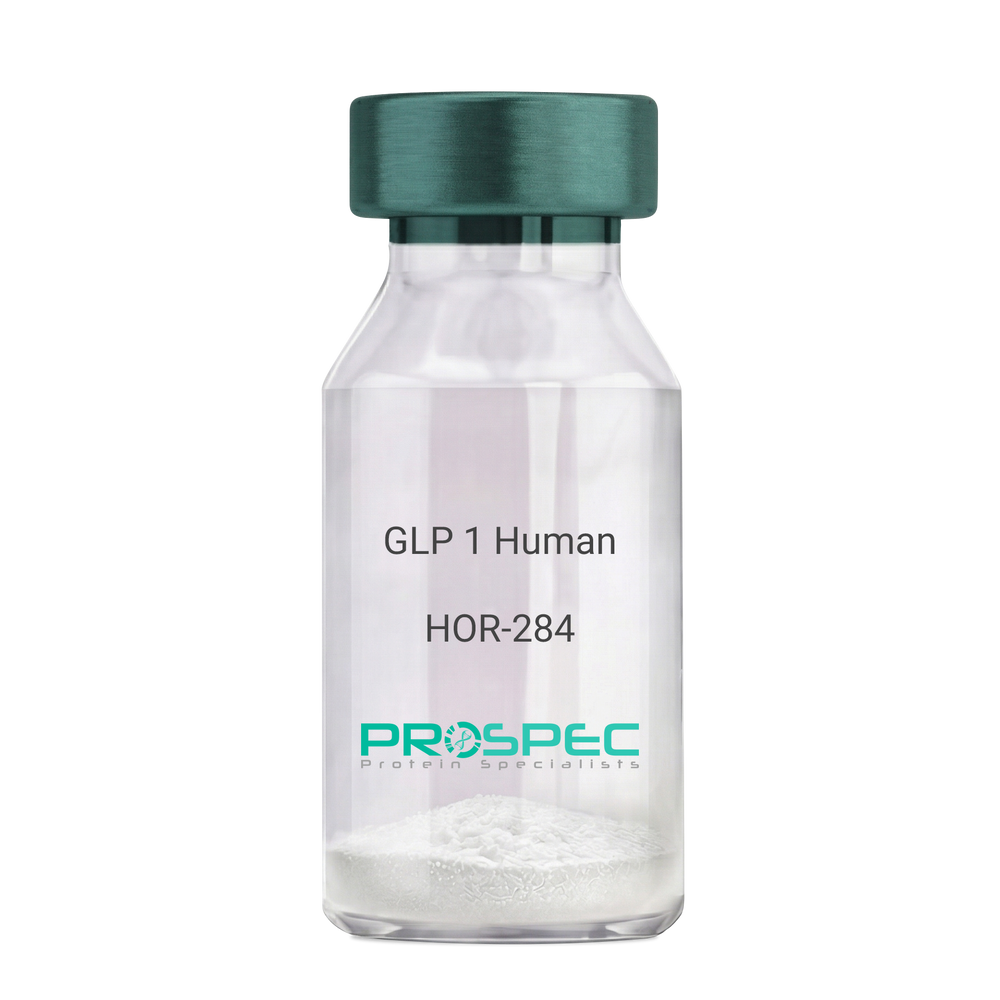
  • View Data Sheet

    Name :

    GLP 1 Human

    Description:

    Human Glucagon Like Peptide-1

    GLP1, Glucagon Like Peptide-1, Incretin hormone.

    Product # :

    HOR-284

    Price :

    Quantity :

    Shipping Method :

    Room Temp Icon

    Shipped at Room temp

    Add To Cart

    More Info

    • description
    • formulation
    • purity
    • More Info

    Description

    Glucagon Like Peptide-1 is a single, non-glycosylated, polypeptide chain containing 30 amino acids and having a molecular mass of 3297.7 Dalton.The GLP-1 is purified by proprietary chromatographic techniques.

    Formulation

    The GLP-1 peptide was lyophilized with no additives.

    Purity

    Greater than 96.0% as determined by RP-HPLC.

    More Info

    • Introduction

      Glucagon-like peptide-1 (GLP-1) is derived from the transcription product of the proglucagon gene. The major source of GLP-1 in the body is the intestinal L cell that secretes GLP-1 as a guthormone. The biologically active forms of GLP-1 are: GLP-1-(7-37) and GLP-1-(7-36)NH2.
      GLP-1 secretion by L cells is dependent on the presence of nutrients in the lumen of the small intestine. The secretagogues (agents that causes or stimulates secretion) of this hormone include major nutrients like carbohydrate, proteinand lipid. Once in the circulation, GLP-1 has a half life of less than 2 minutes, due to rapid degradation by the enzyme dipeptidyl peptidase-4.
      GLP-1 possesses several physiological properties that make it a subject of intensive investigation as a potential treatment of diabetes mellitus. The known physiological functions of GLP-1 include: Increases insulin secretion from the pancreas in a glucose-dependent manner, decreases glucagon secretion from the pancreas, increases beta cells mass and insulin gene expression, inhibits acid secretion and gastric emptying in the stomach, decreases food intake by increasing satiety.

    • Synonyms

      GLP1, Glucagon Like Peptide-1, Incretin hormone.

    • Physical Appearance

      Sterile Filtered White lyophilized (freeze-dried) powder.

    • Stability

      Lyophilized Glucagon Like Peptide-1 although stable at room temperature for 3 weeks, should be stored desiccated below -18°C. Upon reconstitution GLP-1 should be stored at 4°C between 2-7 days and for future use below -18°C. For long term storage it is recommended to add a carrier protein (0.1% HSA or BSA).Please prevent freeze-thaw cycles.

    • Solubility

      It is recommended to reconstitute the lyophilized Glucagon Like Peptide-1 in sterile H2O at 0.5mg/ml, which can then be further diluted to other aqueous solutions.

    • Amino Acid Sequence

      H-His-Ala-Glu-Gly-Thr-Phe-Thr-Ser-Asp-Val-Ser-Ser-Tyr-Leu-Glu-Gly-Gln-Ala-Ala-Lys-Glu-Phe-Ile-Ala-Trp-Leu-Val-Lys-Gly-Arg-NH2.

    ProSpec's products are furnished for LABORATORY RESEARCH USE ONLY. The product may not be used as drugs, agricultural or pesticidal products, food additives or household chemicals.

    Glp 1 Human
  • View Data Sheet

    Name :

    DDAVP

    Description:

    Desmopressin

    Product # :

    HOR-270

    Price :

    Quantity :

    Shipping Method :

    Room Temp Icon

    Shipped at Room temp

    Add To Cart

    More Info

    • description
    • formulation
    • purity
    • More Info

    Description

    Desmopressin also called ADH (Anti-Diuretic Hormone) has a molecular formula of C46H64N14O12S2 , Mpr-Tyr-Phe-Gln-Asn-Cys-Pro-D-Arg-Gly-NH2 having a Mw of 1069.23 Dalton.

    Formulation

    The Desmopressin peptide was lyophilized with no additives.

    Purity

    Greater than 98.0% as determined by:
    (a) Analysis by RP-HPLC.
    (b) Analysis by SDS-PAGE.

    More Info

    • Introduction

      Desmopressin is the first vasopressin analog with a very high and very specific antidiuretic effect, has been widely used for different therapeutic purposes and is believed to be partly responsible for the formation of memories learning and memory processes. Desmopressin increases urine concentration and decreases urine production. Desmopressin is used to prevent and control excessive thirst, urination, and dehydration.

    • Physical Appearance

      Sterile Filtered White lyophilized (freeze-dried) powder.

    • Stability

      Lyophilized Desmopressin although stable at room temperature for 3 weeks, should be stored desiccated below -18°C. Upon reconstitution DDAVP should be stored at 4°C between 2-7 days and for future use below -18°C. For long term storage it is recommended to add a carrier protein (0.1% HSA or BSA).Please prevent freeze-thaw cycles.

    • Solubility

      It is recommended to reconstitute the lyophilized DDAVP in sterile 18MΩ-cm H2O not less than 100 µg/ml, which can then be further diluted to other aqueous solutions.

    ProSpec's products are furnished for LABORATORY RESEARCH USE ONLY. The product may not be used as drugs, agricultural or pesticidal products, food additives or household chemicals.

    Desmopressin
  • View Data Sheet

    Name :

    CD105 Human

    Description:

    Endoglin Human Recombinant

    CD105, ENG, END, ORW, HHT1, ORW1, FLJ41744, Endoglin.

    Product # :

    CYT-525

    Price :

    Quantity :

    Shipping Method :

    Ice Icon

    Shipped with Ice Packs

    Add To Cart

    More Info

    • description
    • source
    • formulation
    • purity
    • More Info

    Description

    Endoglin Human Recombinant extracellular domain produced in E.Coli is a single, glycosylated, Polypeptide containing 151 amino acids (26-176) and having a molecular mass of 43 kDa.The Endoglin is purified by proprietary chromatographic techniques.

    Source

    Escherichia Coli.

    Formulation

    Endoglin solution in 50mM Tris-Acetate, pH-7.5, 1mM EDTA and 20% Glycerol.

    Purity

    Greater than 90.0% as determined by:
    (a) Analysis by RP-HPLC.
    (b) Analysis by SDS-PAGE.

    More Info

    • Introduction

      Endoglin is a type I membrane glycoprotein located on cell surfaces and is part of the TGF beta receptor complex.
      The Endoglin protein consists of a homodimer of 180 kDA with disulfide links. Endoglin has been found on endothelial cells, activated macrophages, fibroblasts, and smooth muscle cells. Furthermore, Endoglin has been found to be part of the TGF-beta1 receptor complex. Endoglin thus may be involved in the binding of TGF-beta1, TGF-beta3, activin-A, BMP-2, and BMP-7. Beside TGF-beta signaling endoglin may have other functions. It has been postulated that endoglin is involved in the cytoskeletal organization affecting cell morphology and migration. Endoglin has a role in the development of the cardiovascular system and in vascular remodeling. Endoglin expression is regulated during heart development . Experimental mice without the endoglin gene die due to cardiovascular abnormalities.

    • Synonyms

      CD105, ENG, END, ORW, HHT1, ORW1, FLJ41744, Endoglin.

    • Physical Appearance

      Sterile Filtered colorless liquid formulation.

    • Stability

      Store at 4°C if entire vial will be used within 2-4 weeks.Store, frozen at -20°C for longer periods of time. For long term storage it is recommended to add a carrier protein (0.1% HSA or BSA).Avoid multiple freeze-thaw cycles.

    • Background

      What is the molecular weight/Mw of CD105 Protein?
      CD105 Protein has a total Mw of 43kDa.

      What is the source or expression system of CD105 Protein?
      Escherichia Coli.

      What is the Purity of CD105 Protein?
      CD105 Protein is >90% pure as determined by SDS-PAGE.

      What is the Biological Activity of CD105 Protein?
      The biological functionality of CD105 Protein will be determined in the future.

      What is the amino acid sequence of CD105 Protein?
      CD105 Protein is composed from 151amino acids.

      What applications can CD105 Protein be used in?
      CD105 Protein can probably be used in western blot, ELISA and Lateral Flow.

      What is the endotoxin level for CD105 Protein?
      The endotoxin level is minimal, CD105 Protein was purified using conventional chromatography techniques.

    ProSpec's products are furnished for LABORATORY RESEARCH USE ONLY. The product may not be used as drugs, agricultural or pesticidal products, food additives or household chemicals.

    Endoglin Human
  • View Data Sheet

    Name :

    Dengue 2 NS1 Antibody

    Description:

    Polyclonal Rabbit Anti Dengue 2 NS1

    Product # :

    ANT-084

    Price :

    Quantity :

    Shipping Method :

    Ice Icon

    Shipped with Ice Packs

    Add To Cart

    More Info

    • description
    • formulation
    • purity
    • More Info

    Description

    The polyclonal antibody to dengue serotype 2 NS1 was collected from the rabbit immunized with full length recombinant dengue serotype 2 NS1 antigen.

    Formulation

    PBS + 0.02% sodium azide.

    Purity

    Protein is >90% pure.

    More Info

    • Stability

      Store at 4°C if entire vial will be used within 2-4 weeks. Store, frozen at -20°C for longer periods of time. For long term storage it is recommended to add a carrier protein (0.1% HSA or BSA).Avoid multiple freeze-thaw cycles.

    • Purification Method

      Purified by affinity chromatographic technique.

    ProSpec's products are furnished for LABORATORY RESEARCH USE ONLY. The product may not be used as drugs, agricultural or pesticidal products, food additives or household chemicals.

    Dengue 2 Ns1 Antibody
  • View Data Sheet

    Name :

    Dengue Envelope-2 & 4

    Description:

    Dengue Virus Subtype 2 & 4 fused Envelope 52kDa Recombinant

    Product # :

    DEN-026

    Price :

    Quantity :

    Shipping Method :

    Ice Icon

    Shipped with Ice Packs

    Add To Cart

    More Info

    • description
    • source
    • formulation
    • purity
    • More Info

    Description

    The E.coli derived recombinant 52kDa protein is genetically engineered peptide which is derived from Dengue Type-2 and 4 to be expressed as a fused envelope, each part in this fusion contains 170 a.a (positions 46-217),it is used in ELISA assay. This fusion protein is connected to a 6xHis Tag. Dengue Type-2 and 4 is purified by proprietary chromatographic technique.

    Source

    Escherichia Coli.

    Formulation

    The protein solution contains Phosphate buffered saline, pH-7.4 and 0.05% sodium azide.

    Purity

    Protein is >95% pure as determined by 12% PAGE (coomassie staining).

    More Info

    • Introduction

      Caused by one of four closely related virus serotypes of the genus Flavivirus, family Flaviviridae, each serotype is sufficiently different that there is no cross-protection and epidemics caused by multiple serotypes (hyperendemicity) can occur. In cell culture experiments and mice Morpholino antisense oligos have shown specific activity against Dengue virus.

    • Physical Appearance

      Sterile filtered colorless solution.

    • Stability

      Dengue Envelope-2 & 4 Recombinant although stable at 4°C for 1 week, should be stored below -18°C. Please prevent freeze thaw cycles.

    ProSpec's products are furnished for LABORATORY RESEARCH USE ONLY. The product may not be used as drugs, agricultural or pesticidal products, food additives or household chemicals.

    Dengue Envelope 2 4
  • View Data Sheet

    Name :

    Dengue NS1 Paired Antibody

    Description:

    Mouse Anti Dengue NS1 Paired

    Product # :

    ANT-531

    Price :

    Quantity :

    Shipping Method :

    Ice Icon

    Shipped with Ice Packs

    Add To Cart

    More Info

    • description
    • formulation
    • purity
    • More Info

    Description

    A paired monoclonal antibody has been developed for dengue NS1 antigen lateral flow immunoassay product. It is suggested to use 10µg/ml gold concentration (OD 1.2-1.5) to conjugate with clone 24/c, and 1.2µg/cm coating concentration for clone 2/b. The sensitivity is directly proportional to conjugated gold OD. The specimen used for the test is 80-90 µl. The rapid test developed by these 2 paired antibodies has 90% sensitivity for the samples with OD over 5 and 60% sensitivity for the sample with OD below 5 tested by ELISA. Please note that when ordering for example: 100µg antibody we ship 50µg from each of the antibodies (100µg in total).

    Formulation

    * Dengue NS1 Conjugation antibody (clone 24/c): (1.2mg/ml) in PBS and Sodium nitrate.

    * Dengue NS1 Coating antibody (clone 2/b): (3.4mg/ml) in PBS and Sodium nitrate.

    Purity

    Greater than 95%.

    More Info

    • Introduction

      Dengue NS1 is an early marker for dengue infection from the first day of fever and lasting about one week. Dengue IgM is usually detected early on the first day to 5 days of infection. Dengue NS1 could be detected from both primary and secondary infection for all four subtypes.

    • Physical Appearance

      2 vials of sterile Filtered clear colorless solution.

    • Stability

      Dengue NS1 Paired Antibody should be stored at 4°C.

    • Applications

      Lateral flow immunoassay.

    • Assay Conditions

      1. Fresh gold particle prepared within 1 to 2 days with maximal homogeneity in particle size, λ 525 to 5529, OD 1.2- 1.4. 2. Conjugation pH 8.5, conjugation time should be 6-8 hours. 3. Blocking condition: adjust OD to 8.0-8.2 for re-suspended ant-dengue NS1 conjugated colloid gold, add casein to the final 0.3-0.4%.

    • Type

      Mouse antibody Monoclonal.

    • Purification Method

      Purified monoclonal IgG by protein A chromatography.

    ProSpec's products are furnished for LABORATORY RESEARCH USE ONLY. The product may not be used as drugs, agricultural or pesticidal products, food additives or household chemicals.

    Dengue Ns1 Paired Antibody
  • View Data Sheet

    Name :

    Dengue Envelope-2 45kDa

    Description:

    Dengue Virus Subtype 2 Envelope 45kDa Recombinant

    Product # :

    DEN-022

    Price :

    Quantity :

    Shipping Method :

    Ice Icon

    Shipped with Ice Packs

    Add To Cart

    More Info

    • description
    • source
    • formulation
    • purity
    • More Info

    Description

    Recombinant Dengue Virus Subtype 2 Envelope (a.a 43-413) migrates at 45kDa, produced in E.coli, this protein is fused to 6xHis tag at the C-terminus.

    Source

    E.coli.

    Formulation

    The protein solution contains Phosphate buffer and 50mM arginine.

    Purity

    Protein is >95% pure as determined by 12% PAGE (coomassie staining).

    More Info

    • Introduction

      Dengue fever is affected by 1 of 4 closely linked virus serotypes of the genus Flavivirus, family Flaviviridae. One might have dengue fever infected by the different serotype virus after the primary infection. Detection of particular antibodies to dengue viruses is used for the diagnosis in clinic. Recently, lateral flow rapid test products have become a most suitable and known method in the clinical diagnosis. Though, there is difficulty for manufacturers to have the dengue antigens with a whole coverage for Dengue IgG & IgM recognition for all 4 serotype infections as well as with colloid gold binding ability. 8 dengue antigens have been established for the lateral flow products which are well defined for their coverage of dengue IgG & IgM recognition. The researcher can select the products below based on their own specific application.

    • Physical Appearance

      Sterile filtered colorless solution.

    • Stability

      Dengue Envelope-2 45kDa although stable at 4°C for 1 week, should be stored below -18°C. Please prevent freeze thaw cycles.

    • Purification Method

      Purified by proprietary chromatographic technique.

    ProSpec's products are furnished for LABORATORY RESEARCH USE ONLY. The product may not be used as drugs, agricultural or pesticidal products, food additives or household chemicals.

    Dengue Envelope 2 45Kda
  • View Data Sheet

    Name :

    ITAC (63-87) Human

    Description:

    ITAC (63-87 a.a.) Human Recombinant

    ITAC, I-TAC, CXCL-11, CXCL11.

    Product # :

    CHM-049

    Price :

    Quantity :

    Shipping Method :

    Room Temp Icon

    Shipped at Room temp

    Add To Cart

    More Info

    • description
    • source
    • formulation
    • purity
    • More Info

    Description

    The I-TAC Human is created as a recombinant protein with a 4kda N-terminal fusion of His Tag. The I-TAC His-Tagged Fusion Protein, produced in E. coli, is a 9kDa protein containing 25 amino acid residues of the I-TACHuman, 63-87 amino acids.

    Source

    Escherichia Coli.

    Formulation

    Each mg was lyophilized with 1xPBS, 0.4% SDS and 4mM DTT.

    Purity

    Greater than 90% as determined by SDS-PAGE.

    More Info

    • Synonyms

      ITAC, I-TAC, CXCL-11, CXCL11.

    • Physical Appearance

      Filtered White lyophilized (freeze-dried) powder.

    • Stability

      Store lyophilized I-TAC at -20°C. Aliquot the product after reconstitution to avoid repeated freezing/thawing cycles. Reconstituted protein can be stored at 4°C for a limited period of time; it does not show any change after two weeks at 4°C.

    • Solubility

      It is recommended to add deionized water to prepare a working stock solution of approximately 0.5mg/ml and let the lyophilized pellet dissolve completely. Product is not sterile! Please filter the product by an appropriate sterile filter before using it on cell culture.

    • Background

      I-TAC is a small cytokine belongs to the CXC chemokinen family which also called inducible T-cell alpha chemoattractant and IP-9. I-TAC is expressed mainly in peripheral blood leukocytes, liver and pancreas with moderate levels in spleen, thymus and lung and low levels in small intestine, placenta and prostate. IFN-g and IFN-b induces strongly gene expression of I-TAC. The I-TAC chemokine elicits its effects on its target cells by interacting with the cell surface chemokine receptor CXCR3, with a higher affinity than do the other ligands for this receptor, CXCL9 and CXCL10.

    ProSpec's products are furnished for LABORATORY RESEARCH USE ONLY. The product may not be used as drugs, agricultural or pesticidal products, food additives or household chemicals.

    Cxcl11 Human
  • View Data Sheet

    Name :

    BD 3 Rat

    Description:

    Beta Defensin-3 Rat Recombinant

    Beta-defensin 3, BD-3, Defensin beta 3, Defb3.

    Product # :

    CYT-063

    Price :

    Quantity :

    Shipping Method :

    Room Temp Icon

    Shipped at Room temp

    Add To Cart

    More Info

    • description
    • source
    • formulation
    • purity
    • biological activity
    • More Info

    Description

    BD-3 Rat Recombinant produced in E.coli is a single, non-glycosylated polypeptide chain containing 41 amino acids and having a molecular mass of 4.5kDa.The BD-3 is purified by proprietary chromatographic techniques.

    Source

    Escherichia Coli.

    Formulation

    BD-3 protein was lyophilized from a 0.2µm filtered concentrated solution in PBS, pH 7.4.

    Purity

    Greater than 98.0% as determined by:
    (a) Analysis by RP-HPLC.
    (b) Analysis by SDS-PAGE.

    Biological Activity

    Measured by its antimicrobial activity against E. coli. The ED50 for this effect is typically 4-20µg/ml, corresponding to a specific activity of 50,000-250,000units/mg.

    More Info

    • Introduction

      Defensins form a family of microbicidal and cytotoxic peptides made by neutrophils. Members of the defensin family are highly similar in protein sequence. This gene encodes defensin, beta 103A, which has broad spectrum antimicrobial activity and may play an important role in innate epithelial defense.

    • Synonyms

      Beta-defensin 3, BD-3, Defensin beta 3, Defb3.

    • Physical Appearance

      Sterile Filtered White lyophilized (freeze-dried) powder.

    • Stability

      Lyophilized BD-3 although stable at room temperature for 3 weeks, should be stored desiccated below -18°C. Upon reconstitution BD-3 should be stored at 4°C between 2-7 days and for future use below -18°C. For long term storage it is recommended to add a carrier protein (0.1% HSA or BSA). Please prevent freeze-thaw cycles.

    • Solubility

      It is recommended to reconstitute the lyophilized BD-3 in sterile 18M-cm H2O not less than 100µg/ml, which can then be further diluted to other aqueous solutions.

    • Amino Acid Sequence

      KKVYNAVSCM TNGGICWLKC SGTFREIGSC GTRQLKCCKK K.

    • Background

      What is the molecular weight/Mw of BD3 Protein?
      BD3 Protein has a total Mw of 4.5kDa.

      What is the source or expression system of BD3 Protein?
      Escherichia Coli.

      What is the Purity of BD3 Protein?
      BD3 Protein is >98% pure as determined by SDS-PAGE.

      What is the Biological Activity of BD3 Protein?
      Measured by its antimicrobial activity against E. coli. The ED50 for this effect is typically 4-20µg/ml, corresponding to a specific activity of 50,000-250,000units/mg.

      What is the amino acid sequence of BD3 Protein?
      KKVYNAVSCM TNGGICWLKC SGTFREIGSC GTRQLKCCKK K.

      What applications can BD3 Protein be used in?
      BD3 Protein can probably be used in western blot, ELISA and Lateral Flow.

      What is the endotoxin level for BD3 Protein?
      The endotoxin level is minimal, BD3 Protein was purified using conventional chromatography techniques.

    ProSpec's products are furnished for LABORATORY RESEARCH USE ONLY. The product may not be used as drugs, agricultural or pesticidal products, food additives or household chemicals.

    Bd 3 Rat
  • View Data Sheet

    Name :

    ACADSB Human

    Description:

    Acyl-CoA Dehydrogenase, Short Chain Human Recombinant

    Short/branched chain specific acyl-CoA dehydrogenase mitochondrial, SBCAD, 2-methyl branched chain acyl-CoA dehydrogenase, 2-MEBCAD, 2-methylbutyryl-coenzyme A dehydrogenase, 2-methylbutyryl-CoA dehydrogenase, ACADSB, ACAD7, SBCAD, 2-MEBCAD.

    Product # :

    ENZ-643

    Price :

    Quantity :

    Shipping Method :

    Ice Icon

    Shipped with Ice Packs

    Add To Cart

    More Info

    • description
    • source
    • formulation
    • purity
    • More Info

    Description

    ACADSB Human Recombinant produced in E.coli is a single, non-glycosylated polypeptide chain containing 424 amino acids (34-432) and having a molecular mass of 46.4kDa.ACADSB is fused to a 25 amino acid His-tag at N-terminus & purified by proprietary chromatographic techniques.

    Source

    Escherichia Coli.

    Formulation

    The ACADSB solution (0.5mg/ml) contains 20mM Tris-HCl buffer (pH 8.0), 0.1M NaCl, 10% glycerol and 1mM DTT.

    Purity

    Greater than 90.0% as determined by SDS-PAGE.

    More Info

    • Introduction

      Short/branched chain specific acyl-CoA dehydrogenase (ACADSB) belongs to the acyl-CoA dehydrogenase family of enzymes which catalyze the dehydrogenation of acyl-CoA derivatives in the metabolism of fatty acids or branch chained amino acids. ACADSB catalyzes the degradation of L-isoleucine while having the highest affinity for (s)-2-methylbutyryl-CoA, isobutyryl-CoA and 2-methylhexanoyl-CoA as substrates. ACADSB may use valproyl-CoA as substrate. ACADSB gene defects cause the short/branched-chain acyl-CoA dehydrogenase deficiency (SBCADD), which is an autosomal recessive disorder characterized by an increase of 2-methylbutyrylglycine and 2-methylbutyrylcarnitine in blood and urine.

    • Synonyms

      Short/branched chain specific acyl-CoA dehydrogenase mitochondrial, SBCAD, 2-methyl branched chain acyl-CoA dehydrogenase, 2-MEBCAD, 2-methylbutyryl-coenzyme A dehydrogenase, 2-methylbutyryl-CoA dehydrogenase, ACADSB, ACAD7, SBCAD, 2-MEBCAD.

    • Physical Appearance

      Sterile Filtered clear solution.

    • Stability

      Store at 4°C if entire vial will be used within 2-4 weeks. Store, frozen at -20°C for longer periods of time. For long term storage it is recommended to add a carrier protein (0.1% HSA or BSA).Avoid multiple freeze-thaw cycles.

    • Amino Acid Sequence

      MGSSHHHHHH SSGLVPRGSH MGSHMKSSQS EALLNITNNG IHFAPLQTFT DEEMMIKSSV KKFAQEQIAP LVSTMDENSK MEKSVIQGLF QQGLMGIEVD PEYGGTGASF LSTVLVIEEL AKVDASVAVF CEIQNTLINT LIRKHGTEEQ KATYLPQLTT EKVGSFCLSE AGAGSDSFAL KTRADKEGDY YVLNGSKMWI SSAEHAGLFL VMANVDPTIG YKGITSFLVD RDTPGLHIGK PENKLGLRAS STCPLTFENV KVPEANILGQ IGHGYKYAIG SLNEGRIGIA AQMLGLAQGC FDYTIPYIKE RIQFGKRLFD FQGLQHQVAH VATQLEAARL LTYNAARLLE AGKPFIKEAS MAKYYASEIA GQTTSKCIEW MGGVGYTKDY PVEKYFRDAK IGTIYEGASN IQLNTIAKHI DAEY.

    ProSpec's products are furnished for LABORATORY RESEARCH USE ONLY. The product may not be used as drugs, agricultural or pesticidal products, food additives or household chemicals.

    Acadsb Human
  • View Data Sheet

    Name :

    Adiponectin Mouse, Trimeric

    Description:

    Adiponectin Mouse Recombinant, Trimeric form

    Acrp30, AdipoQ, GBP-28, APM-1, ACDC.

    Product # :

    CYT-247

    Price :

    Quantity :

    Shipping Method :

    Room Temp Icon

    Shipped at Room temp

    Add To Cart

    More Info

    • description
    • source
    • formulation
    • purity
    • More Info

    Description

    Trimeric form of Acrp30 Mouse was expressed in HEK293 cells.The cysteine 39 was replaced with alanine (C39A) 9. mAd-C39A can only form trimer, but not hexamer or HMW form.

    Source

    HEK293 (Human embryonic kidney cell line).

    Formulation

    Mouse Acrp30 filtered (0.4µm) and lyophilized from 0.5 mg/ml in 0.05M phosphate buffer, 0.05M NaCl, pH 7.2.

    Purity

    Acrp30 Mouse purity is greater than 95% as determined by SDS-PAGE.

    More Info

    • Introduction

      Adiponectin is a hormone exclusively expressed from adipose tissue. Many studies demonstrate that adiponectin has direct anti-diabetic, anti-atherogenic and anti-inflammatory functions. APM-1 can increase insulin sensitivity of skeletal muscle, attenuate hepatic lipogenesis and luconeogenesis, regulate NO production in endothelial cells, inhibit proliferation of smooth muscle cells and prevent lipid accumulation of macrophage cells.
      In the circulation, adiponectin is present as three different oligomeric complexes, including the high molecular weight (HMW), the middle molecular weight (MMW, also called hexamer) and low molecular weigh (MMW, also called trimer) forms 8. Different oligomeric complex of adiponectin activates different signaling pathways and exerts distinct functions.

    • Synonyms

      Acrp30, AdipoQ, GBP-28, APM-1, ACDC.

    • Physical Appearance

      Filtered white lyophilized (freeze-dried) powder.

    • Stability

      Store lyophilized Acrp30 Mouse at -20°C. Aliquot the product after reconstitution to avoid repeated freezing/thawing cycles. Reconstituted Acrp30 Mouse can be stored at 4°C for a limited period of time; it does not show any change after two weeks at 4°C.

    • Solubility

      Add deionized water to prepare a working stock solution of approximately 0.5 mg/mL and let the lyophilized pellet dissolve completely. Product is not sterile! Please filter the product by an appropriate sterile filter before using it in the cell culture.

    • Background

      What is the molecular weight/Mw of ADIPONECTIN Protein?
      ADIPONECTIN Protein has a total Mw of 26kDa.

      What is the source or expression system of ADIPONECTIN Protein?
      HEK293

      What is the Purity of ADIPONECTIN Protein?
      ADIPONECTIN Protein is >95% pure as determined by SDS-PAGE.

      What is the Biological Activity of ADIPONECTIN Protein?
      The biological functionality of ADIPONECTIN Protein will be determined in the future.

      What applications can ADIPONECTIN Protein be used in?
      ADIPONECTIN Protein can probably be used in western blot, ELISA and Lateral Flow.

      What is the endotoxin level for ADIPONECTIN Protein?
      The endotoxin level is minimal, ADIPONECTIN Protein was purified using conventional chromatography techniques.

    ProSpec's products are furnished for LABORATORY RESEARCH USE ONLY. The product may not be used as drugs, agricultural or pesticidal products, food additives or household chemicals.

    Adiponectin Mouse Trimeric
  • View Data Sheet

    Name :

    Dengue Envelope-3, Insect

    Description:

    Dengue Virus Subtype 3 Recombinant, Insect Cells

    Product # :

    DEN-035

    Price :

    Quantity :

    Shipping Method :

    Ice Icon

    Shipped with Ice Packs

    Add To Cart

    More Info

    • description
    • source
    • formulation
    • purity
    • More Info

    Description

    Recombinant Dengue Virus Subtype 3 produced in Insect Cells is a polypeptide chain containing amino acids 281-673 and having a molecular weight of approximately 50kDa. Dengue Envelope-3 is purified by proprietary chromatographic technique.

    Source

    Insect cells.

    Formulation

    Dengue Envelope-3 protein solution in 1xD-PBS, pH7.4, 0.1% Thimerosal, 5mM EDTA, 1µg/ml of Leupeptin, Aprotinin and Pepstatin A.

    Purity

    Protein is >90% pure as determined by 12.5% SDS-PAGE.

    More Info

    • Introduction

      Caused by one of four closely related virus serotypes of the genus Flavivirus, family Flaviviridae, each serotype is sufficiently different that there is no cross-protection and epidemics caused by multiple serotypes (hyperendemicity) can occur. In cell culture experiments and mice Morpholino antisense oligos have shown specific activity against Dengue virus.

    • Physical Appearance

      Sterile filtered colorless solution.

    • Stability

      Store at 4°C if entire vial will be used within 2-4 weeks. Store, frozen at -20°C for longer periods of time. For long term storage it is recommended to add a carrier protein (0.1% HSA or BSA).Avoid multiple freeze-thaw cycles.

    ProSpec's products are furnished for LABORATORY RESEARCH USE ONLY. The product may not be used as drugs, agricultural or pesticidal products, food additives or household chemicals.

    Dengue Envelope 3 Insect
  • View Data Sheet

    Name :

    Fibronectin Human

    Description:

    Fibronectin Human

    Product # :

    PRO-448

    Price :

    Quantity :

    Shipping Method :

    Room Temp Icon

    Shipped at Room temp

    Add To Cart

    More Info

    • description
    • source
    • formulation
    • purity
    • More Info

    Description

    Human Fibronectin produced purified from Human Plasma having a Molecular Weight of 440kDa.

    Source

    Human Plasma.

    Formulation

    The Fibronectin was lyophilized from a non sterile 2mg/ml buffer of 10mM sodium phosphate, pH 7.5 and 0.15M NaCl.

    Purity

    ≥ 95.0% as determined by SDS-PAGE.

    More Info

    • Introduction

      Plasma fibronectin level is elevated in severe coronary artery disease. Increased plasma fibronectin levels are related with venous thromboembolism (VTE) particularly in males, and extend the probable association between biomarkers and risk factors for arterial atherothrombosis and VTE. Fibronectin plays a role in several cellular processes, including tissue repair, embryogenesis, blood clotting, and cell migration/adhesion. Fibronectin consists in two main forms: 1) as an insoluble glycoprotein dimer that serves as a linker in the extracellular matrix and 2) as a soluble disulphide linked dimer found in the plasma. The plasma form is produced by hepatocytes, and the ECM form is synthesized by fibroblasts, chondrocytes, endothelial cells, macrophages, as well as certain epithelial cells. Fibronectin also takes part as a general cell adhesion molecule by anchoring cells to collagen or proteoglycan substrates. Fibronectin organizes cellular interaction with the ECM by binding to different components of the extracellular matrix and to membrane-bound Fibronectin receptors on cell surfaces.

    • Physical Appearance

      Filtered White lyophilized (freeze-dried) powder.

    • Stability

      Lyophilized Fibronectin although stable at room temperature for 3 weeks, should be stored desiccated below -18°C. Upon reconstitution Fibronectin should be stored at 4°C between 2-7 days and for future use below -18°C.

    • Solubility

      We suggest reconstituting the 1mg Fibronectin with a chaotropic agent such as urea at room temperature at a concentration of 0.2mg/ml using sterile water. Let stand 1-2 hours. The recommended concentration is 4M-5M urea.

      When using the protein as an attachment factor, wash the urea off after attaching the fibronectin to the growth surface (plate or dish).

    ProSpec's products are furnished for LABORATORY RESEARCH USE ONLY. The product may not be used as drugs, agricultural or pesticidal products, food additives or household chemicals.

    Fibronectin Human
  • View Data Sheet

    Name :

    IP 10 Rhesus macaque

    Description:

    IP-10 Rhesus macaque Recombinant (CXCL10)

    C-X-C motif chemokine 10, 10 kDa, Gamma-IP10, IP-10, Small-inducible cytokine B10, CXCL10, SCYB10.

    Product # :

    CHM-010

    Price :

    Quantity :

    Shipping Method :

    Room Temp Icon

    Shipped at Room temp

    Add To Cart

    More Info

    • description
    • source
    • formulation
    • purity
    • biological activity
    • More Info

    Description

    IP-10 Rhesus macaque Recombinant produced in E.Coli is a single, non-glycosylated, polypeptide chain containing 77 amino acids and having a molecular mass of 8.7kDa. The IP-10 is purified by proprietary chromatographic techniques.

    Source

    Escherichia Coli.

    Formulation

    Lyophilized from a 0.2µm filtered concentrated solution in 1×PBS, pH 7.4.

    Purity

    Greater than 97.0% as determined by:
    (a) Analysis by RP-HPLC.
    (b) Analysis by SDS-PAGE.

    Biological Activity

    Determined by its ability to chemoattract human peripheral blood T-Lymphocytes using a concentration range of 10.0-100.0 ng/ml.

    More Info

    • Introduction

      Chemokine (C-X-C motif) ligand 10 (CXCL10) is a small cytokine belonging to the CXC chemokine family that is also known as 10 kDa IP-10. CXCL10 is secreted by several cell types in response to IFN-?. These cell types include monocytes, endothelial cells and fibroblasts. CXCL10 has been attributed to several roles, such as chemoattraction for monocytes and T cells, promotion of T cell adhesion to endothelial cells, antitumor activity, and inhibition of bone marrow colony formation and angiogenesis. The gene for CXCL10 is located on human chromosome 4 in a cluster among several other CXC chemokines. This chemokine elicits its effects by binding to the cell surface chemokine receptor CXCR3. The three-dimensional crystal structure of this chemokine has been determined under 3 different conditions to a resolution of up to 1.92A.

    • Synonyms

      C-X-C motif chemokine 10, 10 kDa, Gamma-IP10, IP-10, Small-inducible cytokine B10, CXCL10, SCYB10.

    • Physical Appearance

      Sterile Filtered White lyophilized (freeze-dried) powder.

    • Stability

      Lyophilized IP-10 although stable at room temperature for 3 weeks, should be stored desiccated below -18°C. Upon reconstitution CXCL10 should be stored at 4°C between 2-7 days and for future use below -18°C. For long term storage it is recommended to add a carrier protein (0.1% HSA or BSA).Please prevent freeze-thaw cycles.

    • Solubility

      It is recommended to reconstitute the lyophilized IP-10 in sterile 18MΩ-cm H2O not less than 100µg/ml, which can then be further diluted to other aqueous solutions.

    • Amino Acid Sequence

      IPLSRTVRCT CISISNQPVN PRSLEKLEII PPSQFCPHVE IIATMKKKGE KRCLNPESKA IKNLLKAVSK ERSKRSP.

    ProSpec's products are furnished for LABORATORY RESEARCH USE ONLY. The product may not be used as drugs, agricultural or pesticidal products, food additives or household chemicals.

    Ip 10 Rhesus Macaque
  • View Data Sheet

    Name :

    Cor a 1.0103

    Description:

    Major pollen allergen Cor a 1 Recombinant

    Major pollen allergen Cor a 1 isoforms 5, 6, 11 and 16, Allergen Cor a I, Cor a 1, Cor a 1.0103.

    Product # :

    PRO-2285

    Price :

    Quantity :

    Shipping Method :

    Ice Icon

    Shipped with Ice Packs

    Add To Cart

    More Info

    • description
    • source
    • formulation
    • purity
    • More Info

    Description

    Recombinant Major pollen allergen Cor a 1 produced in SF9 is a glycosylated, polypeptide chain having a calculated molecular mass of 17,470 Dalton. Cor a 1.0103 purified by proprietary chromatographic techniques.

    Source

    Sf9 insect cells.

    Formulation

    Cor a 1.0103 is supplied in 20mM HEPES buffer pH-7.9 and 6M Urea.

    Purity

    Greater than 80.0% as determined by SDS-PAGE.

    More Info

    • Introduction

      Major pollen allergen Cor a 1 (Cor a 1.0103) causes an allergic reaction in human. The Cor a 1 isoforms exhibit different antigenic and allergenic properties.

    • Synonyms

      Major pollen allergen Cor a 1 isoforms 5, 6, 11 and 16, Allergen Cor a I, Cor a 1, Cor a 1.0103.

    • Physical Appearance

      Sterile Filtered clear solution.

    • Stability

      Store at 4°C if entire vial will be used within 2-4 weeks. Store, frozen at -20°C for longer periods of time. Avoid multiple freeze-thaw cycles.

    • Immunological Functions

      1. Binds IgE type human antibodies. 2. Immunodot test with positive/negative sera panels.

    ProSpec's products are furnished for LABORATORY RESEARCH USE ONLY. The product may not be used as drugs, agricultural or pesticidal products, food additives or household chemicals.

    Cor A 10103
  • View Data Sheet

    Name :

    Activin-A Rat

    Description:

    Activin-A Rat Recombinant

    Inhba, Inhibin beta A, FSH releasing protein.

    Product # :

    CYT-147

    Price :

    Quantity :

    Shipping Method :

    Room Temp Icon

    Shipped at Room temp

    Add To Cart

    More Info

    • description
    • source
    • formulation
    • purity
    • biological activity
    • More Info

    Description

    Active form Activin-A Rat Recombinant produced in e.coli is a homodimeric, non-glycosylated, polypeptide chain containing 2 x 117 amino acids and having a molecular weight of 26.2kDa.The Active form Activin-A is purified by standard chromatographic techniques.

    Source

    E.Coli.

    Formulation

    Rat Activin-A was lyophilized from a concentrated 1mg/ml protein solution containing 0.02% TFA.

    Purity

    Greater than 95% as obsereved by SDS-PAGE.

    Biological Activity

    Biological activity is assessed by the ability to induce cytoxicity of MPC-11 cells and was found to be 8.8ng/ml

    More Info

    • Introduction

      Activins are homodimers or heterodimers of the different β subunit isoforms, part of the TGFβ family. Mature Activin A has two 116 amino acids residues βA subunits (βA-βA). Activin displays an extensive variety of biological activities, including mesoderm induction, neural cell differentiation, bone remodelling, haematopoiesis, and reproductive physiology. Activins takes part in the production and regulation of hormones such as FSH, LH, GnRH and ACTH. Cells that are identified to express Activin A include fibroblasts, endothelial cells, hepatocytes, vascular smooth muscle cells, macrophages, keratinocytes, osteoclasts, bone marrow monocytes, prostatic epithelium, neurons, chondrocytes, osteoblasts, Leydig cells, Sertoli cells, and ovarian granulosa cells.

    • Synonyms

      Inhba, Inhibin beta A, FSH releasing protein.

    • Physical Appearance

      Lyophilized freeze dried powder.

    • Stability

      Lyophilized Activin-A although stable at room temperature for 3 weeks, should be stored desiccated below -18°C. Upon reconstitution Activin-A should be stored at 4°C between 2-7 days and for future use below -18°C.For long term storage it is recommended to add a carrier protein (0.1% HSA or BSA).Please prevent freeze-thaw cycles.

    • Solubility

      Rat INHBA protein should be reconstituted in distilled pyrogen free water to a concentration of 100ug /ml which can then be further diluted to other aqueous solutions.

    • Amino Acid Sequence

      MGLECDGKVN ICCKKQFFVS FKDIGWNDWI IAPSGYHANY CEGECPSHIA GTSGSSLSFH STVINHYRMR GHSPFANLKS CCVPTKLRPM SMLYYDDGQN IIKKDIQNMI VEECGCS.

    • Background

      What is the molecular weight / Mw of Activin A Protein?
      Activin A Protein has a total Mw of 26.2 kDa.

      What is the source or expression system of Activin A Protein?
      Ecoli

      What is the Purity of Activin A Protein?
      Activin A Protein is >95% pure as determined by SDS-PAGE.

      What is the Biological Activity of Activin A Protein?
      Biological activity is assessed by the ability to induce cytoxicity of MPC-11 cells and was found to be 8.8ng/ml corresponding to a specific activity of 110,000units/mg.

      What is the endotoxin level for Activin A Protein?
      The endotoxin level is minimal, ACTIVIN A Protein was purified using conventional chromatography techniques.

      What is the amino acid sequence of ACTIVIN A Protein?
      MGLECDGKVN ICCKKQFFVS FKDIGWNDWI IAPSGYHANY CEGECPSHIA GTSGSSLSFH STVINHYRMR GHSPFANLKS CCVPTKLRPM SMLYYDDGQN IIKKDIQNMI VEECGCS.

      What applications can ACTIVIN A Protein be used in?
      ACTIVIN A Protein can probably be used in western blot, ELISA and Lateral Flow.

    ProSpec's products are furnished for LABORATORY RESEARCH USE ONLY. The product may not be used as drugs, agricultural or pesticidal products, food additives or household chemicals.

    Inhba Rat
  • View Data Sheet

    Name :

    SCGN Rat

    Description:

    Secretagogin Rat Recombinant

    SCGN, EF-hand calcium binding protein, Setagin, SEGN, CALBL, Secretagogin.

    Product # :

    PRO-657

    Price :

    Quantity :

    Shipping Method :

    Room Temp Icon

    Shipped at Room temp

    Add To Cart

    More Info

    • description
    • source
    • formulation
    • purity
    • More Info

    Description

    Secretagogin Rat Recombinant produced in E.Coli is a single, non-glycosylated, polypeptide chain containing 286 amino acids and having a molecular mass of 33.3 kDa. The Rat SCGN is fused to a 10 a.a. His tag at N-Terminus.The protein’s amino acids sequence is identical to UniProtKB/Swiss-Prot entry Q6R556.The Rat SCGN is purified by proprietary chromatographic techniques.

    Source

    Escherichia Coli.

    Formulation

    The sterile filtered concentrated protein solution was lyophilized with 20mM Tris & 50mM NaCl pH-7.5.

    Purity

    Greater than 95% as determined by SDS-PAGE.

    More Info

    • Introduction

      SCGN is a secreted calcium-binding protein which is found in the cytoplasm. It is related to calbindin D-28K and calretinin. Secretagogin is involved in KCL-stimulated calcium flux and cell proliferation.
      Secretagogin plays a role in human non-functional pituitary adenomas.

    • Synonyms

      SCGN, EF-hand calcium binding protein, Setagin, SEGN, CALBL, Secretagogin.

    • Physical Appearance

      Sterile Filtered White lyophilized (freeze-dried) powder.

    • Stability

      Store lyophilized protein at -20°C. Aliquot the product after reconstitution to avoid repeated freezing/thawing cycles. Reconstituted protein can be stored at 4°C for a limited period of time.

    • Solubility

      Add deionized water to a working concentration of 0.5mg/ml and let the lyophilized pellet dissolve completely.

    • Amino Acid Sequence

      MKHHHHHHAS MDNAHRQTQA HLDAACFWQI WQRFDKDEKG YIKETELDAF FDDLLAKFGI EDTLMEENVQ KMKEQLMVGH DISKEGRILM KELASMFLSE DENFLLFFRL ETPLDNSVEF MQIWRKYDAD SSGFISAAEL SNFLRDLFLH HKKVISEAEL EEYTSTMMKI FDRNKDGRLD LNDLARILAL QENFLLQFKM DASSTEERKR DFEKIFAHYD VSKTGALEGP EVDGFVKDMM ELVQPSISGV DLDKFREILL RHCDVNKDGK IQKSELALCLGLKINP.

    ProSpec's products are furnished for LABORATORY RESEARCH USE ONLY. The product may not be used as drugs, agricultural or pesticidal products, food additives or household chemicals.

    Scgn Rat
  • 1
  • …
  • 11
  • 12
  • 13
  • 14
  • 15
  • …
  • 42
Your browser does not support the video tag.

Products

  • Cytokines
  • Growth Factors
  • Chemokines
  • CD Antigens
  • Neurotrophins
  • Hormones
  • Enzymes
  • Viral Antigens
  • Recombinant Proteins
  • Natural Proteins
  • Monoclonal Antibodies
  • Polyclonal Antibodies
  • Thermal Packaging

About

  • Company
  • Founder
  • Contribution
  • Contact Us
  • My Account

Ordering

  • Ordering Method
  • Ordering - Credit Card
  • Ordering PO
  • Shipping Fees
  • FAQ's

Legal

  • Terms & Conditions
  • Privacy
  • Site Map
  • info@prospecbio.com
  • Facebook
  • Instagram
  • Linkedin Profile

© 2026 ProSpec-Tany TechnoGene Ltd. All Rights Reserved.

  • Choosing a selection results in a full page refresh.
  • Opens in a new window.