Skip to content

High-quality research proteins.

  • 1-800-805-6531

  • Mon - Sat 8.00-18.00, Sun - Closed

  • info@prospecbio.com

  • PO Box 6591 East Brunswick NJ 08816

  • Products
    • Cytokines
    • Growth factors
    • Chemokines
    • Cd antigens
    • Neurotrophins
    • Hormones
    • Enzymes
    • Viral antigens
    • Recombinant proteins
    • Natural proteins
    • Monoclonal antibodies
    • Polyclonal antibodies
    • Thermal Packaging
  • About
    • Company
    • Founder
    • Contribution
  • Customers
    • Eastern Asia
    • Eastern Europe
    • North America
    • South America
    • South East Asia
    • Southern Asia
    • Western Europe
  • Ordering
    • Ordering Method
    • Ordering - Credit Card
    • Ordering - PO
    • Shipping Fees
    • FAQs
  • Services
    • DNA Cloning
    • Protein Expression
    • Monoclonal Antibody
    • Fermentation
    • Technology License
  • Contact us
Log in

Country/region

  • USD $ | Albania
  • USD $ | Andorra
  • USD $ | Argentina
  • USD $ | Armenia
  • USD $ | Australia
  • USD $ | Austria
  • USD $ | Azerbaijan
  • USD $ | Belarus
  • USD $ | Belgium
  • USD $ | Bolivia
  • USD $ | Brazil
  • USD $ | Bulgaria
  • USD $ | Cambodia
  • USD $ | Canada
  • USD $ | Chile
  • USD $ | China
  • USD $ | Colombia
  • USD $ | Costa Rica
  • USD $ | Croatia
  • USD $ | Cyprus
  • USD $ | Czechia
  • USD $ | Denmark
  • USD $ | Estonia
  • USD $ | Finland
  • USD $ | France
  • USD $ | Georgia
  • USD $ | Germany
  • USD $ | Greece
  • USD $ | Hong Kong SAR
  • USD $ | Hungary
  • USD $ | Iceland
  • USD $ | India
  • USD $ | Ireland
  • USD $ | Israel
  • USD $ | Italy
  • USD $ | Japan
  • USD $ | Kazakhstan
  • USD $ | Latvia
  • USD $ | Liechtenstein
  • USD $ | Lithuania
  • USD $ | Madagascar
  • USD $ | Malta
  • USD $ | Mexico
  • USD $ | Moldova
  • USD $ | Monaco
  • USD $ | Netherlands
  • USD $ | New Zealand
  • USD $ | North Macedonia
  • USD $ | Norway
  • USD $ | Panama
  • USD $ | Paraguay
  • USD $ | Peru
  • USD $ | Philippines
  • USD $ | Poland
  • USD $ | Portugal
  • USD $ | Romania
  • USD $ | Singapore
  • USD $ | Slovakia
  • USD $ | Slovenia
  • USD $ | South Africa
  • USD $ | South Korea
  • USD $ | Spain
  • USD $ | Sri Lanka
  • USD $ | Sweden
  • USD $ | Switzerland
  • USD $ | Taiwan
  • USD $ | Thailand
  • USD $ | Türkiye
  • USD $ | Ukraine
  • USD $ | United Kingdom
  • USD $ | United States
  • USD $ | Uruguay
  • USD $ | Vatican City
  • USD $ | Venezuela
  • USD $ | Vietnam
  • Facebook
  • Instagram
logoProSpec - Recombinant Protein Manufacturer for academic and R&D industry
Become a distributor
Account Log in
Wishlist
Cart Cart(0)
  • Products
    +
    • Cytokines
    • Growth factors
    • Chemokines
    • Cd antigens
    • Neurotrophins
    • Hormones
    • Enzymes
    • Viral antigens
    • Recombinant proteins
    • Natural proteins
    • Monoclonal antibodies
    • Polyclonal antibodies
    • Thermal Packaging
  • About
    +
    • Company
    • Founder
    • Contribution
  • Customers
    +
    • Eastern Asia
    • Eastern Europe
    • North America
    • South America
    • South East Asia
    • Southern Asia
    • Western Europe
  • Ordering
    +
    • Ordering Method
    • Ordering - Credit Card
    • Ordering - PO
    • Shipping Fees
    • FAQs
  • Services
    +
    • DNA Cloning
    • Protein Expression
    • Monoclonal Antibody
    • Fermentation
    • Technology License
  • Contact us

Item added to your cart

View cart
View All
  • Cytokines
  • Growth factors
  • Chemokines
  • Cd antigens
  • Neurotrophins
  • Hormones
  • Enzymes
  • Viral antigens
  • Recombinant proteins
  • Natural proteins
  • Monoclonal antibodies
  • Polyclonal antibodies
  • Thermal Packaging
  • Tumor Necrosis Factor

    Tumor Necrosis Factor

    View All
  • 4-1BB

    4-1BB

    View All
  • Adiponectin

    Adiponectin

    View All
  • AIF1

    AIF1

    View All
  • Other Cytokines

    Other Cytokines

    View All
  • AITRL

    AITRL

    View All
  • Angiopoietin

    Angiopoietin

    View All
  • Apolipoprotein

    Apolipoprotein

    View All
  • B-Cell Activating Factor

    B-Cell Activating Factor

    View All
  • Beta Defensin

    Beta Defensin

    View All
  • Bone Morphogenetic Protein

    Bone Morphogenetic Protein

    View All
  • B type Natriuretic Peptide

    B type Natriuretic Peptide

    View All
  • BST

    BST

    View All
  • Betacellulin

    Betacellulin

    View All
  • Cardiotrophin

    Cardiotrophin

    View All
  • Activin

    Activin

    View All
  • Fibroblast Growth Factor

    Fibroblast Growth Factor

    View All
  • Other Growth Factors

    Other Growth Factors

    View All
  • CSF

    CSF

    View All
  • CTGF

    CTGF

    View All
  • IGFBP

    IGFBP

    View All
  • VEGF Protein

    VEGF Protein

    View All
  • EGF

    EGF

    View All
  • Epigen

    Epigen

    View All
  • Erythropoietin

    Erythropoietin

    View All
  • Insulin-Like Growth Factor

    Insulin-Like Growth Factor

    View All
  • Growth Hormone

    Growth Hormone

    View All
  • HDGF

    HDGF

    View All
  • Hepatocyte Growth Factor

    Hepatocyte Growth Factor

    View All
  • Insulin

    Insulin

    View All
  • BCA-1/ BLC (CXCL13)

    BCA-1/ BLC (CXCL13)

    View All
  • BRAK (CXCL14)

    BRAK (CXCL14)

    View All
  • C-10 (CCL6)

    C-10 (CCL6)

    View All
  • Other Chemokines

    Other Chemokines

    View All
  • MEC (CCL28)

    MEC (CCL28)

    View All
  • LD78-beta (CCL3L1)

    LD78-beta (CCL3L1)

    View All
  • CTACK (CCL27)

    CTACK (CCL27)

    View All
  • CXCL16

    CXCL16

    View All
  • CXCL17

    CXCL17

    View All
  • Platelet Factor-4 (CXCL4)

    Platelet Factor-4 (CXCL4)

    View All
  • ENA-78 (CXCL5)

    ENA-78 (CXCL5)

    View All
  • Eotaxin (CCL11,24,26)

    Eotaxin (CCL11,24,26)

    View All
  • Exodus-2 (CCL21)

    Exodus-2 (CCL21)

    View All
  • Fractalkine (CX3CL1)

    Fractalkine (CX3CL1)

    View All
  • CXCL6

    CXCL6

    View All
  • Other CD Antigens

    Other CD Antigens

    View All
  • CD14

    CD14

    View All
  • CD164

    CD164

    View All
  • CD1

    CD1

    View All
  • CD2

    CD2

    View All
  • CD200

    CD200

    View All
  • CD207

    CD207

    View All
  • CD226

    CD226

    View All
  • CD23

    CD23

    View All
  • CD244

    CD244

    View All
  • CD247

    CD247

    View All
  • CD27

    CD27

    View All
  • CD274

    CD274

    View All
  • CD300

    CD300

    View All
  • CD33

    CD33

    View All
  • Other Neurotrophins

    Other Neurotrophins

    View All
  • Beta-NGF

    Beta-NGF

    View All
  • BDNF

    BDNF

    View All
  • CDNF

    CDNF

    View All
  • CNTF

    CNTF

    View All
  • GDNF

    GDNF

    View All
  • Glia Maturation Factor

    Glia Maturation Factor

    View All
  • MANF

    MANF

    View All
  • Midkine

    Midkine

    View All
  • Neuroglobin

    Neuroglobin

    View All
  • Neurotrophic factors

    Neurotrophic factors

    View All
  • Neuregulin

    Neuregulin

    View All
  • Neuropilin

    Neuropilin

    View All
  • Pigment Epithelium-Derived Factor

    Pigment Epithelium-Derived Factor

    View All
  • Pleiotrophin

    Pleiotrophin

    View All
  • Peptide Hormones

    Peptide Hormones

    View All
  • Other Hormones

    Other Hormones

    View All
  • HCG

    HCG

    View All
  • Endothelin

    Endothelin

    View All
  • Exendin

    Exendin

    View All
  • FSH

    FSH

    View All
  • Glucagon

    Glucagon

    View All
  • GHRP

    GHRP

    View All
  • GLP

    GLP

    View All
  • Thyrostimulin

    Thyrostimulin

    View All
  • Inhibin A

    Inhibin A

    View All
  • LHRH

    LHRH

    View All
  • Melanotan

    Melanotan

    View All
  • Procalcitonin

    Procalcitonin

    View All
  • PTH

    PTH

    View All
  • Peroxiredoxin

    Peroxiredoxin

    View All
  • Peptidase

    Peptidase

    View All
  • Synthetase

    Synthetase

    View All
  • Transferase

    Transferase

    View All
  • Hydrolase

    Hydrolase

    View All
  • Dehydrogenase

    Dehydrogenase

    View All
  • ACE2

    ACE2

    View All
  • Esterase

    Esterase

    View All
  • Protein Kinases

    Protein Kinases

    View All
  • Other Enzymes

    Other Enzymes

    View All
  • Phosphatase

    Phosphatase

    View All
  • Deaminase

    Deaminase

    View All
  • Oxygenase

    Oxygenase

    View All
  • Adenylate Kinase

    Adenylate Kinase

    View All
  • Lyase

    Lyase

    View All
  • Chagas

    Chagas

    View All
  • SARS

    SARS

    View All
  • Influenza

    Influenza

    View All
  • ASFV

    ASFV

    View All
  • Astrovirus

    Astrovirus

    View All
  • Borrelia

    Borrelia

    View All
  • Helicobacter Pylori

    Helicobacter Pylori

    View All
  • Chikungunya

    Chikungunya

    View All
  • Chlamydia

    Chlamydia

    View All
  • Cytomegalo

    Cytomegalo

    View All
  • Dengue

    Dengue

    View All
  • EBV

    EBV

    View All
  • Ebola

    Ebola

    View All
  • Feline Leukemia Virus

    Feline Leukemia Virus

    View All
  • Hepatitis A

    Hepatitis A

    View All
  • Other

    Other

    View All
  • Actin

    Actin

    View All
  • ADAM

    ADAM

    View All
  • Complement Component

    Complement Component

    View All
  • Ag85

    Ag85

    View All
  • Eukaryotic Translation Initiation Factor

    Eukaryotic Translation Initiation Factor

    View All
  • Anterior Gradient Protein

    Anterior Gradient Protein

    View All
  • Heat Shock Protein

    Heat Shock Protein

    View All
  • Alpha-2-HS-Glycoprotein

    Alpha-2-HS-Glycoprotein

    View All
  • Hemoglobin

    Hemoglobin

    View All
  • Allergy

    Allergy

    View All
  • Anaplasma

    Anaplasma

    View All
  • Angiogenin

    Angiogenin

    View All
  • Ankyrin Repeat Domain

    Ankyrin Repeat Domain

    View All
  • Annexin

    Annexin

    View All
  • Other Natural Proteins

    Other Natural Proteins

    View All
  • Aprotinin

    Aprotinin

    View All
  • Transferrin

    Transferrin

    View All
  • Avidin

    Avidin

    View All
  • Anti Coagulation Factors

    Anti Coagulation Factors

    View All
  • Natural Albumin

    Natural Albumin

    View All
  • Natural Coagulation Factors

    Natural Coagulation Factors

    View All
  • Fibronectin

    Fibronectin

    View All
  • Thrombin

    Thrombin

    View All
  • Anti Human Enzyme

    Anti Human Enzyme

    View All
  • Other Monoclonal Antibodies

    Other Monoclonal Antibodies

    View All
  • Anti Human Cytokine

    Anti Human Cytokine

    View All
  • Anti Human Heat Shock Protein

    Anti Human Heat Shock Protein

    View All
  • Anti Mouse Lymphocyte

    Anti Mouse Lymphocyte

    View All
  • Anti Human Chemokine

    Anti Human Chemokine

    View All
  • Anti Human Lymphocyte

    Anti Human Lymphocyte

    View All
  • Anti Viral Monoclonal

    Anti Viral Monoclonal

    View All
  • Anti Mouse Cytokine

    Anti Mouse Cytokine

    View All
  • Anti-GST Monoclonal

    Anti-GST Monoclonal

    View All
  • Other Polyclonal Antibodies

    Other Polyclonal Antibodies

    View All
  • Anti Viral

    Anti Viral

    View All
  • Anti-GST Monoclonal

    Anti-GST Monoclonal

    View All
Back

Search results

1000 results found for “trypsin”

Name

Description

Product #

Price

Quantity

Shipping Method

  • View Data Sheet

    Name :

    ADPRH Human

    Description:

    ADP-Ribosylarginine Hydrolase Human Recombinant

    [Protein ADP-ribosylarginine] hydrolase, ADP-ribosylarginine hydrolase, ADP-ribose-L-arginine cleaving enzyme, ADPRH, ARH1.

    Product # :

    ENZ-631

    Price :

    Quantity :

    Shipping Method :

    Ice Icon

    Shipped with Ice Packs

    Add To Cart

    More Info

    • description
    • source
    • formulation
    • purity
    • More Info

    Description

    ADPRH Human Recombinant produced in E.coli is a single, non-glycosylated polypeptide chain containing 381 amino acids (1-357) and having a molecular mass of 42.1kDa.ADPRH is fused to a 24 amino acid His-tag at N-terminus & purified by proprietary chromatographic techniques.

    Source

    E.coli.

    Formulation

    The ADPRH solution (0.5mg/ml) contains 20mM Tris-HCl buffer, pH8.0, 10% glycerol, 1mM DTT and 100mM NaCl.

    Purity

    Greater than 90% as determined by SDS-PAGE.

    More Info

    • Introduction

      ADP-ribosylarginine hydrolase (ADPRH) is a member of the ADP-ribosylglycohydrolase family. ADPRH catalyzes the removal of mono-ADP-ribose from arginine residues of proteins in the ADP-ribosylation cycle. The human ADPRH enzyme is DTT-independent as opposed to the rat and mouse enzymes, which require DTT for maximal activity.

    • Synonyms

      [Protein ADP-ribosylarginine] hydrolase, ADP-ribosylarginine hydrolase, ADP-ribose-L-arginine cleaving enzyme, ADPRH, ARH1.

    • Physical Appearance

      Sterile Filtered colorless solution.

    • Stability

      Store at 4°C if entire vial will be used within 2-4 weeks. Store, frozen at -20°C for longer periods of time. For long term storage it is recommended to add a carrier protein (0.1% HSA or BSA).Avoid multiple freeze-thaw cycles.

    • Amino Acid Sequence

      MGSSHHHHHH SSGLVPRGSH MGSHMEKYVA AMVLSAAGDA LGYYNGKWEF LQDGEKIHRQ LAQLGGLDAL DVGRWRVSDD TVMHLATAEA LVEAGKAPKL TQLYYLLAKH YQDCMEDMDG RAPGGASVHN AMQLKPGKPN GWRIPFNSHE GGCGAAMRAM CIGLRFPHHS QLDTLIQVSI ESGRMTHHHP TGYLGALASA LFTAYAVNSR PPLQWGKGLM ELLPEAKKYI VQSGYFVEEN LQHWSYFQTK WENYLKLRGI LDGESAPTFP ESFGVKERDQ FYTSLSYSGW GGSSGHDAPM IAYDAVLAAG DSWKELAHRA FFHGGDSDST AAIAGCWWGV MYGFKGVSPS NYEKLEYRNR
      LEETARALYS LGSKEDTVIS L.

    ProSpec's products are furnished for LABORATORY RESEARCH USE ONLY. The product may not be used as drugs, agricultural or pesticidal products, food additives or household chemicals.

    Adprh Human
  • View Data Sheet

    Name :

    AHCY Human

    Description:

    Adenosylhomocysteinase Human Recombinant

    EC 3.3.1.1, SAHH, AdoHcyase, S-adenosyl-L-homocysteine hydrolase, Adenosylhomocysteinase.

    Product # :

    ENZ-532

    Price :

    Quantity :

    Shipping Method :

    Ice Icon

    Shipped with Ice Packs

    Add To Cart

    More Info

    • description
    • source
    • formulation
    • purity
    • More Info

    Description

    AHCY Recombinant Human produced in E.Coli is a single, non-glycosylated polypeptide chain containing 452 amino acids (1-432 a.a.) and having a molecular mass of 49.8 kDa. The AHCY is fused to a 20 amino acids His-Tag at N-terminus and purified by proprietary chromatographic techniques.

    Source

    Escherichia Coli.

    Formulation

    AHCY Human solution containing 20mM Tris pH-8, & 10% glycerol.

    Purity

    Greater than 95.0% as determined by SDS-PAGE.

    More Info

    • Introduction

      AHCY is an enzyme that catalyzes the reversible hydrolysis of S-adenosylhomocysteine (AdoHcy) to adenosine (Ado) and L-homocysteine (Hcy). AHCY controls the intracellular S-adenosylhomocysteine (SAH) concentration that is crucial for transmethylation reactions. AHCY deficiency causes hypermethioninemia.

    • Synonyms

      EC 3.3.1.1, SAHH, AdoHcyase, S-adenosyl-L-homocysteine hydrolase, Adenosylhomocysteinase.

    • Physical Appearance

      Sterile filtered colorless solution.

    • Stability

      Store at 4°C if entire vial will be used within 2-4 weeks. Store, frozen at -20°C for longer periods of time. For long term storage it is recommended to add a carrier protein (0.1% HSA or BSA).Avoid multiple freeze-thaw cycles.

    • Amino Acid Sequence

      MGSSHHHHHH SSGLVPRGSH MSDKLPYKVA DIGLAAWGRK ALDIAENEMP GLMRMRERYS ASKPLKGARI AGCLHMTVET AVLIETLVTL GAEVQWSSCN IFSTQDHAAA AIAKAGIPVY AWKGETDEEY LWCIEQTLYF KDGPLNMILD DGGDLTNLIH TKYPQLLPGI RGISEETTTG VHNLYKMMAN GILKVPAINV NDSVTKSKFD NLYGCRESLI DGIKRATDVM IAGKVAVVAG YGDVGKGCAQ ALRGFGARVI ITEIDPINAL QAAMEGYEVT TMDEACQEGN IFVTTTGCID IILGRHFEQM KDDAIVCNIG HFDVEIDVKW LNENAVEKVN IKPQVDRYRL KNGRRIILLA EGRLVNLGCA MGHPSFVMSN SFTNQVMAQI ELWTHPDKYP VGVHFLPKKL DEAVAEAHLG KLNVKLTKLT EKQAQYLGMS CDGPFKPDHY RY.

    ProSpec's products are furnished for LABORATORY RESEARCH USE ONLY. The product may not be used as drugs, agricultural or pesticidal products, food additives or household chemicals.

    Ahcy Human
  • View Data Sheet

    Name :

    HTRA2 Human

    Description:

    HTRA2 Human Recombinant

    Serine protease HTRA2 mitochondrial, EC 3.4.21.108, High temperature requirement protein A2, HtrA2, Omi stress-regulated endoprotease, Serine proteinase OMI, Serine protease 25, OMI, PARK13, PRSS25.

    Product # :

    ENZ-332

    Price :

    Quantity :

    Shipping Method :

    Ice Icon

    Shipped with Ice Packs

    Add To Cart

    More Info

    • description
    • source
    • formulation
    • purity
    • More Info

    Description

    HtrA2 Human Recombinant amino acids 134-458 His-Tag fusion protein produced in E.Coli is a single, non-glycosylated polypeptide chain having a molecular mass of 36kDa.The HtrA2 is purified by proprietary chromatographic techniques.

    Source

    Escherichia Coli.

    Formulation

    The protein (0.5 mg/ml) contains 20mM Tris-HCl buffer (pH 8.0), 50mM NaCl, 1mM DTT, and 20% Glycerol.

    Purity

    Greater than 95.0% as determined by SDS-PAGE.

    More Info

    • Introduction

      HtrA2 also called Omi is a mammalian serine protease at high temperatures and has a chaperone activity at low temperature. The full-length HtrA2 is synthesized as a precursor protein and then targeted to the mitochondria where it is matured by the removal of N-terminal 133 residues. Mature HtrA2 consists of a putative transmembrane domain; an inhibitor of apoptosis protein (IAP)-binding motif; a single C-terminal PDZ domain that mediates protein-protein interactions. Recently, HtrA2 has known to contribute both to caspase-dependent and caspase-independent cell death.

    • Synonyms

      Serine protease HTRA2 mitochondrial, EC 3.4.21.108, High temperature requirement protein A2, HtrA2, Omi stress-regulated endoprotease, Serine proteinase OMI, Serine protease 25, OMI, PARK13, PRSS25.

    • Physical Appearance

      Sterile filtered colorless solution.

    • Stability

      Store at 4°C if entire vial will be used within 2-4 weeks. Store, frozen at -20°C for longer periods of time. For long term storage it is recommended to add a carrier protein (0.1% HSA or BSA).Avoid multiple freeze-thaw cycles.

    • Amino Acid Sequence

      MAVPSPPPAS PPSQYNFIAD VVEKTAPAVV YIEILDRHPF LGREVPISNG SGFVVAADGL IVTNAHVVAD RRRVRVRLLS GDTYEAVVTA VDPVADIATL RIQTKEPLPT LPLGRSADVR QGEFVVAMGS PFALQNTITS GIVSSAQRPA RDLGLPQTNV EYIQTDAAID FGNAGGPLVN LDGEVIGVNT MKVTAGISFA IPSDRLREFL HRGEKKNSSS GISGSQRRYI GVMMLTLSPS ILAELQLREP SFPDVQHGVL IHKVILGSPA HRAGLRPGDV ILAIGEQMVQ NAEDVYEAVR TQSQLAVQIR RGRETLTLYV TPEVTEGSHH HHHH.

    ProSpec's products are furnished for LABORATORY RESEARCH USE ONLY. The product may not be used as drugs, agricultural or pesticidal products, food additives or household chemicals.

    Htra2 Human
  • View Data Sheet

    Name :

    BCAT1 Human

    Description:

    Branched Chain Amino-Acid Transaminase 1 Human Recombinant

    Branched chain amino-acid transaminase 1 cytosolic, BCT1, BCATC, Protein ECA39, placental protein 18, PP18, PNAS121, MECA39, EC 2.6.1.42.

    Product # :

    ENZ-597

    Price :

    Quantity :

    Shipping Method :

    Ice Icon

    Shipped with Ice Packs

    Add To Cart

    More Info

    • description
    • source
    • formulation
    • purity
    • More Info

    Description

    BCAT1 Recombinant produced in E. coli is a single polypeptide chain containing 409 amino acids (1-386) and having a molecular mass of 45.4kDa.BCAT1 is fused to a 23 amino acid His-tag at N-terminus & purified by proprietary chromatographic techniques.

    Source

    E.coli.

    Formulation

    The BCAT1 solution (1mg/ml) contains 20mM Tris-HCl buffer (pH 8.0), 100mM Nacl, 1mM DTT and 20% glycerol.

    Purity

    Greater than 90% as determined by SDS-PAGE.

    More Info

    • Introduction

      BCAT1 catalyzes the leading reaction in the catabolism of the indispensable branched chain amino acids isoleucine, leucine and valine.

    • Synonyms

      Branched chain amino-acid transaminase 1 cytosolic, BCT1, BCATC, Protein ECA39, placental protein 18, PP18, PNAS121, MECA39, EC 2.6.1.42.

    • Physical Appearance

      Sterile Filtered colorless solution.

    • Stability

      Store at 4°C if entire vial will be used within 2-4 weeks. Store, frozen at -20°C for longer periods of time. For long term storage it is recommended to add a carrier protein (0.1% HSA or BSA).Avoid multiple freeze-thaw cycles.

    • Amino Acid Sequence

      MGSSHHHHHH SSGLVPRGSH MGSMKDCSNG CSAECTGEGG SKEVVGTFKA KDLIVTPATI LKEKPDPNNL VFGTVFTDHM LTVEWSSEFG WEKPHIKPLQ NLSLHPGSSA LHYAVELFEG LKAFRGVDNK IRLFQPNLNM DRMYRSAVRA TLPVFDKEEL LECIQQLVKL DQEWVPYSTS ASLYIRPTFI GTEPSLGVKK PTKALLFVLL SPVGPYFSSG TFNPVSLWAN PKYVRAWKGG TGDCKMGGNY GSSLFAQCEA VDNGCQQVLW LYGEDHQITE VGTMNLFLYW INEDGEEELA TPPLDGIILP GVTRRCILDL AHQWGEFKVS ERYLTMDDLT TALEGNRVRE MFGSGTACVV CPVSDILYKG ETIHIPTMEN GPKLASRILS KLTDIQYGRE ESDWTIVLS.

    ProSpec's products are furnished for LABORATORY RESEARCH USE ONLY. The product may not be used as drugs, agricultural or pesticidal products, food additives or household chemicals.

    Bcat1 Human
  • View Data Sheet

    Name :

    Streptavidin (37-159), His

    Description:

    Streptavidin (37-159 a.a) Recombinant, His Tag

    Product # :

    PRO-1495

    Price :

    Quantity :

    Shipping Method :

    Ice Icon

    Shipped with Ice Packs

    Add To Cart

    More Info

    • description
    • source
    • formulation
    • purity
    • More Info

    Description

    Streptavidin Recombinant produced in E. coli is a single polypeptide chain containing 148 amino acids (37-159) and having a molecular mass of 15.6kDa. Streptavidin is fused to a 25 amino acid His-tag at N-terminus & purified by proprietary chromatographic techniques.

    Source

    E.coli.

    Formulation

    The Streptavidin solution (0.25mg/ml) contains 20mM Tris-HCl buffer (pH 8.0), 0.15M NaCl and 20% glycerol.

    Purity

    Greater than 90% as determined by SDS-PAGE.

    More Info

    • Introduction

      Streptavidin is a tetrameric protein secreted by Streptomyces avidinii which binds firmly to biotin. Streptavidin is widely used in molecular biology through its unique high affinity for the vitamin biotin. The dissociation constant (Kd) of the biotin-streptavidin complex is about ~10-15 mol/L. The strong affinity recognition of biotin and biotinylated molecules has made streptavidin one of the most important components in diagnostics and laboratory kits. The streptavidin/biotin system has one of the biggest free energies of association of yet observed for noncovalent binding of a protein and small ligand in aqueous solution (K_assoc = 10**14). The complexes are also extremely stable over a wide range of temperature and pH.

    • Physical Appearance

      Sterile Filtered colorless solution.

    • Stability

      Store at 4°C if entire vial will be used within 2-4 weeks. Store, frozen at -20°C for longer periods of time. For long term storage it is recommended to add a carrier protein (0.1% HSA or BSA).Avoid multiple freeze-thaw cycles.

    • Amino Acid Sequence

      MGSSHHHHHH SSGLVPRGSH MGSHMAEAGI TGTWYNQLGS TFIVTAGADG ALTGTYESAV GNAESRYVLT GRYDSAPATD GSGTALGWTV AWKNNYRNAH SATTWSGQYV GGAEARINTQ WLLTSGTTEA NAWKSTLVGH DTFTKVKP.

    ProSpec's products are furnished for LABORATORY RESEARCH USE ONLY. The product may not be used as drugs, agricultural or pesticidal products, food additives or household chemicals.

    Streptavidin 37 159 His
  • View Data Sheet

    Name :

    CA11 Human

    Description:

    Carbonic Anhydrase XI Human Recombinant

    Carbonic Anhydrase XI, Carbonic Anhydrase-Related Protein 2, Carbonic Anhydrase-Related Protein 11, CARP-2, CA-RP II, CARP XI, CARPX1, CA-XI.

    Product # :

    ENZ-726

    Price :

    Quantity :

    Shipping Method :

    Ice Icon

    Shipped with Ice Packs

    Add To Cart

    More Info

    • description
    • source
    • formulation
    • purity
    • More Info

    Description

    CA11 Human Recombinant produced in E.coli is a single, non-glycosylated polypeptide chain containing 326 amino acids (24-328) and having a molecular mass of 36.3kDa.CA11 is fused to a 21 amino acid His-tag at N-terminus & purified by proprietary chromatographic techniques.

    Source

    Escherichia Coli.

    Formulation

    The CA11 solution (1mg/ml) contains 20mM Tris-HCl buffer (pH 8.0), 0.4M Urea and 10% glycerol.

    Purity

    Greater than 85% as determined by SDS-PAGE.

    More Info

    • Introduction

      Carbonic anhydrases (CAs) are a large family of zinc metalloenzymes which catalyze the reversible hydration of carbon dioxide. These metalloenzymes participate in various biological processes, including respiration, calcification, acid-base balance, bone resorption, and the formation of aqueous humor, cerebrospinal fluid, saliva, and gastric acid. The metalloenzymes exhibit extensive diversity in tissue distribution and in their subcellular localization. Carbonic Anhydrase XI (CA11) is probably a secreted protein, nevertheless, drastic changes at active site residues completely conserved in CA isozymes with catalytic activity, make it unlikely that CA11 has carbonic anhydrase activity. CA11 shares properties in common with 2 other acatalytic CA isoforms, CA VIII and CA X. CA11 is amply expressed in the brain, and may have a general role in the central nervous system.

    • Synonyms

      Carbonic Anhydrase XI, Carbonic Anhydrase-Related Protein 2, Carbonic Anhydrase-Related Protein 11, CARP-2, CA-RP II, CARP XI, CARPX1, CA-XI.

    • Physical Appearance

      Sterile Filtered clear solution.

    • Stability

      Store at 4°C if entire vial will be used within 2-4 weeks. Store, frozen at -20°C for longer periods of time. For long term storage it is recommended to add a carrier protein (0.1% HSA or BSA).Avoid multiple freeze-thaw cycles.

    • Amino Acid Sequence

      MGSSHHHHHH SSGLVPRGSH MHIGPAPDPE DWWSYKDNLQ GNFVPGPPFW GLVNAAWSLC AVGKRQSPVD VELKRVLYDP FLPPLRLSTG GEKLRGTLYN TGRHVSFLPA PRPVVNVSGG PLLYSHRLSE LRLLFGARDG AGSEHQINHQ GFSAEVQLIH FNQELYGNFS AASRGPNGLA ILSLFVNVAS TSNPFLSRLL NRDTITRISY KNDAYFLQDL SLELLFPESF GFITYQGSLS TPPCSETVTW ILIDRALNIT SLQMHSLRLL SQNPPSQIFQ SLSGNSRPLQ PLAHRALRGN RDPRHPERRC RGPNYRLHVD GVPHGR

    ProSpec's products are furnished for LABORATORY RESEARCH USE ONLY. The product may not be used as drugs, agricultural or pesticidal products, food additives or household chemicals.

    Ca11 Human
  • View Data Sheet

    Name :

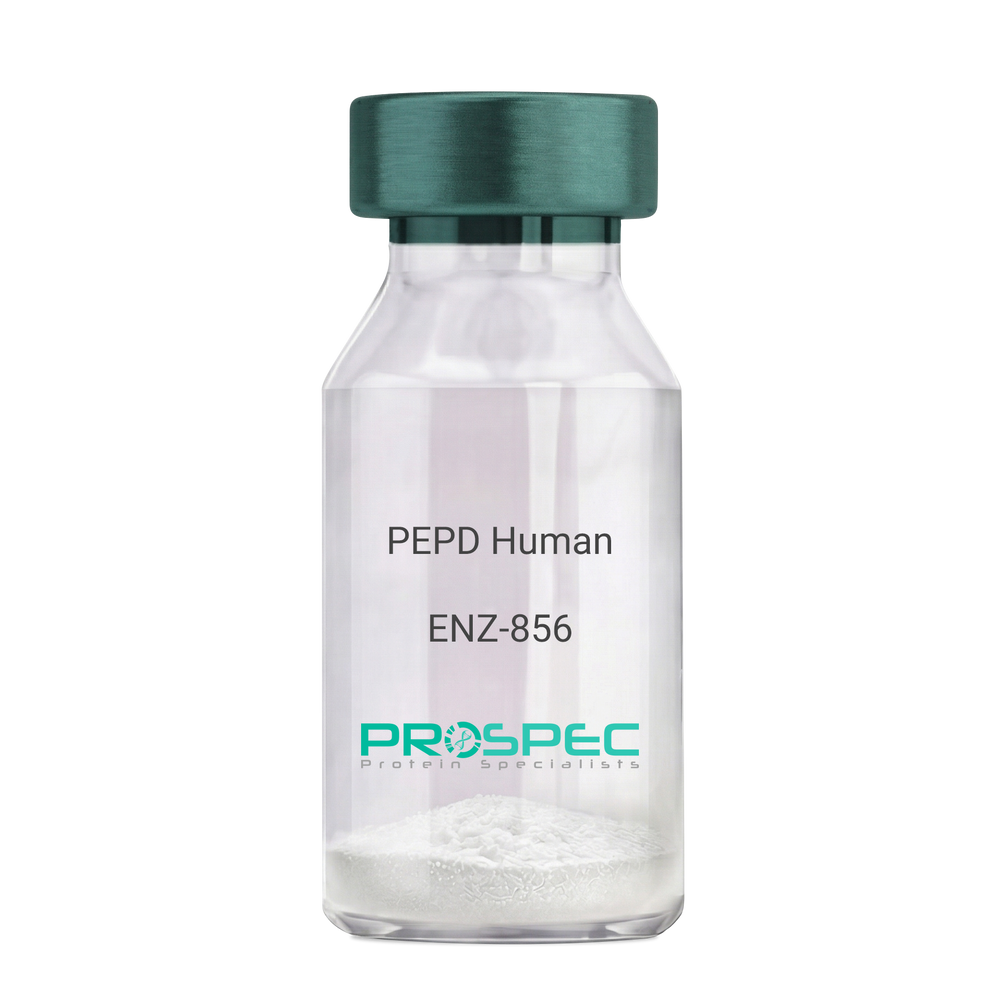
    PEPD Human

    Description:

    Peptidase D Human Recombinant

    Xaa-Pro dipeptidase, X-Pro dipeptidase, Imidodipeptidase, Peptidase D, Proline dipeptidase, Prolidase, PRD, PEPD, Xaa-Pro dipeptidase isoform 1, PROLIDASE.

    Product # :

    ENZ-856

    Price :

    Quantity :

    Shipping Method :

    Ice Icon

    Shipped with Ice Packs

    Add To Cart

    More Info

    • description
    • source
    • formulation
    • purity
    • More Info

    Description

    PEPD Human Recombinant produced in E.Coli is a single, non-glycosylated polypeptide chain containing 516 amino acids (1-493a.a.) and having a molecular mass of 56.9kDa.PEPD is fused to a 23 amino acid His-tag at N-terminus & purified by proprietary chromatographic techniques.

    Source

    E.coli.

    Formulation

    PEPD protein solution (0.5mg/ml) containing Phosphate buffered saline (pH7.4), 10% glycerol and 1mM DTT.

    Purity

    Greater than 90% as determined by SDS-PAGE.

    More Info

    • Introduction

      Peptidase D, also known as PEPD, Is a part of the peptidase family. PEPD is involved in collagen metabolism due to the high level of iminoacids in collagen. PEPD recycles proline, and sets the pace for the production of collagen. PEPD is also parts dipeptides with a prolyl or hydroxyprolyl residue in the C-terminal position.

    • Synonyms

      Xaa-Pro dipeptidase, X-Pro dipeptidase, Imidodipeptidase, Peptidase D, Proline dipeptidase, Prolidase, PRD, PEPD, Xaa-Pro dipeptidase isoform 1, PROLIDASE.

    • Physical Appearance

      Sterile Filtered colorless solution.

    • Stability

      Store at 4°C if entire vial will be used within 2-4 weeks. Store, frozen at -20°C for longer periods of time. For long term storage it is recommended to add a carrier protein (0.1% HSA or BSA).Avoid multiple freeze-thaw cycles.

    • Amino Acid Sequence

      MGSSHHHHHH SSGLVPRGSH MGSMAAATGP SFWLGNETLK VPLALFALNR QRLCERLRKN PAVQAGSIVV LQGGEETQRY CTDTGVLFRQ ESFFHWAFGV TEPGCYGVID VDTGKSTLFV PRLPASHATW MGKIHSKEHF KEKYAVDDVQ YVDEIASVLT SQKPSVLLTL RGVNTDSGSVCREASFDGIS KFEVNNTILH PEIVECRVFK TDMELEVLRY TNKISSEAHR EVMKAVKVGM KEYELESLFE HYCYSRGGMR HSSYTCICGS GENSAVLHYG HAGAPNDRTI QNGDMCLFDM GGEYYCFASD ITCSFPANGK FTADQKAVYE AVLRSSRAVM GAMKPGVWWP DMHRLADRIH LEELAHMGIL SGSVDAMVQA HLGAVFMPHG LGHFLGIDVH DVGGYPEGVE RIDEPGLRSL RTARHLQPGM VLTVEPGIYF IDHLLDEALA DPARASFLNR EVLQRFRGFG GVRIEEDVVV TDSGIELLTC VPRTVEEIEA CMAGCDKAFT PFSGPK.

    ProSpec's products are furnished for LABORATORY RESEARCH USE ONLY. The product may not be used as drugs, agricultural or pesticidal products, food additives or household chemicals.

    Pepd Human
  • View Data Sheet

    Name :

    TFF1 Human

    Description:

    Trefoil Factor-1 Human Recombinant

    TFF-1, TFF1, pS2, BCEI, HPS, HP1.A, pNR-2, D21S21, pS2 protein, Trefoil factor 1, Breast cancer estrogen-inducible protein.

    Product # :

    CYT-586

    Price :

    Quantity :

    Shipping Method :

    Room Temp Icon

    Shipped at Room temp

    Add To Cart

    More Info

    • description
    • source
    • formulation
    • purity
    • biological activity
    • More Info

    Description

    TFF-1 Human Recombinant produced in E.Coli is a homodimer, non-glycosylated, polypeptide chain containing 2 x 60 amino acids which includes a 40 amino acid trefoil motif containing 3 conserved intramolecular disulfide bonds and having a total molecular mass of 13.2 kDa. TFF-1 Human Recombinant is purified by proprietary chromatographic techniques.

    Source

    Escherichia Coli.

    Formulation

    The Human TFF1 protein was lyophilized from a 0.2µm filtered concentrated solution in 20mM PB, pH 7.4 and 150mM NaCl.

    Purity

    Greater than 97.0% as determined by:
    (a) Analysis by RP-HPLC.
    (b) Analysis by SDS-PAGE.

    Biological Activity

    The ED50 as determined by a chemotaxis bioassay using human MCF-7 cells is less than 10µg/ml, corresponding to a specific activity of >100 IU/mg.

    More Info

    • Introduction

      The Trefoil Factor peptides (TFF1, TFF2 and TFF3) are stable secretory proteins expressed in the gastrointestinal tract (gastric mucosa), and are involved in intestinal mucosal defense and repair. TFF1 is an essential protein for normal differentiation of the antral and pyloric gastric mucosa and functions as a gastric-specific tumor suppressor gene. TFF1 is a stabilizer of the mucous gel overlying the gastrointestinal mucosa that provides a physical barrier against various noxious agents. TFF1 protects the mucosa from isults, stabilizes the mucus layer, & affects healing of the epithelium. TFF1 is commonly expressed in tumors. TFF1 is related with the cell membrane of MCF-7 cells. High levels of TFF1 and TFF2 are found in serum from inflammatory bowel disease.

    • Synonyms

      TFF-1, TFF1, pS2, BCEI, HPS, HP1.A, pNR-2, D21S21, pS2 protein, Trefoil factor 1, Breast cancer estrogen-inducible protein.

    • Physical Appearance

      Sterile Filtered White lyophilized (freeze-dried) powder.

    • Stability

      Lyophilized TFF1 although stable at room temperature for 3 weeks, should be stored desiccated below -18°C. Upon reconstitution TFF1 should be stored at 4°C between 2-7 days and for future use below -18°C.For long term storage it is recommended to add a carrier protein (0.1% HSA or BSA).Please prevent freeze-thaw cycles.

    • Solubility

      It is recommended to reconstitute the lyophilized TFF1 in sterile 18MΩ-cm H2O not less than 100µg/ml, which can then be further diluted to other aqueous solutions.

    • Amino Acid Sequence

      EAQTETCTVAPRERQNCGFPGVTPSQCANKGCCFDDTVRGVPWCFY
      PNTIDVPPEEECEF.

    ProSpec's products are furnished for LABORATORY RESEARCH USE ONLY. The product may not be used as drugs, agricultural or pesticidal products, food additives or household chemicals.

    Tff1 Human
  • View Data Sheet

    Name :

    PLA1A Human

    Description:

    Phospholipase A1 Member A Human Recombinant

    Phospholipase A1 Member A, PSPLA1, PS-PLA1, Phosphatidylserine-Specific Phospholipase A1alpha, EC 3.1.1.-, NMD, Phosphatidylserine-Specific Phospholipase A1, PLA1A.

    Product # :

    ENZ-794

    Price :

    Quantity :

    Shipping Method :

    Ice Icon

    Shipped with Ice Packs

    Add To Cart

    More Info

    • description
    • source
    • formulation
    • purity
    • More Info

    Description

    PLA1A Human Recombinant produced in E.coli is a single, non-glycosylated polypeptide chain containing 454 amino acids (26-456) and having a molecular mass of 49.5kDa.PLA1A is fused to a 23 amino acid His-tag at N-terminus & purified by proprietary chromatographic techniques.

    Source

    Escherichia Coli.

    Formulation

    The PLA1A solution (1mg/ml) contains 20mM Tris-HCl buffer (pH 8.0), 0.4M Urea and 10% glycerol.

    Purity

    Greater than 80% as determined by SDS-PAGE.

    More Info

    • Introduction

      Phospholipase A1 Member A (PLA1A) is a phospholipase which hydrolyzes fatty acids at the sn-1 position of phosphatidylserine and 1-acyl-2-lysophosphatidylserine. The secreted PLA1A protein hydrolyzes phosphatidylserine in liposomes. PLA1A hydrolyzes phosphatidylserine (PS) in the form of liposomes and 1-acyl-2 lysophosphatidylserine (lyso-PS), but not triolein, phosphatidylcholine (PC), phosphatidylethanolamine (PE), phosphatidic acid (PA) or phosphatidylinositol (PI). PLA1A isoform 2 hydrolyzes lyso-PS but not PS. The hydrolysis of lyso-PS in peritoneal mast cells activated by receptors for IgE leads to stimulation of histamine production.

    • Synonyms

      Phospholipase A1 Member A, PSPLA1, PS-PLA1, Phosphatidylserine-Specific Phospholipase A1alpha, EC 3.1.1.-, NMD, Phosphatidylserine-Specific Phospholipase A1, PLA1A.

    • Physical Appearance

      Sterile Filtered clear solution.

    • Stability

      Store at 4°C if entire vial will be used within 2-4 weeks. Store, frozen at -20°C for longer periods of time. For long term storage it is recommended to add a carrier protein (0.1% HSA or BSA).Avoid multiple freeze-thaw cycles.

    • Amino Acid Sequence

      MGSSHHHHHH SSGLVPRGSH MGSDAPPTPQ PKCADFQSAN LFEGTDLKVQ FLLFVPSNPS CGQLVEGSSD LQNSGFNATL GTKLIIHGFR VLGTKPSWID TFIRTLLRAT NANVIAVDWI YGSTGVYFSA VKNVIKLSLE ISLFLNKLLV LGVSESSIHI IGVSLGAHVG GMVGQLFGGQ LGQITGLDPA GPEYTRASVE ERLDAGDALF VEAIHTDTDN LGIRIPVGHV DYFVNGGQDQ PGCPTFFYAG YSYLICDHMR AVHLYISALE NSCPLMAFPC ASYKAFLAGR CLDCFNPFLL SCPRIGLVEQ GGVKIEPLPK EVKVYLLTTS SAPYCMHHSL VEFHLKELRN KDTNIEVTFL SSNITSSSKI TIPKQQRYGK GIIAHATPQC QINQVKFKFQ SSNRVWKKDR TTIIGKFCTA LLPVNDREKM VCLPEPVNLQ ASVTVSCDLK IACV.

    ProSpec's products are furnished for LABORATORY RESEARCH USE ONLY. The product may not be used as drugs, agricultural or pesticidal products, food additives or household chemicals.

    Pla1A Human
  • View Data Sheet

    Name :

    KLK15 Human

    Description:

    Kallikrein-15 Human Recombinant

    Kallikrein-related peptidase 15, ACO, HSRNASPH, Kallikrein-15, ACO protease, KLK15.

    Product # :

    ENZ-772

    Price :

    Quantity :

    Shipping Method :

    Ice Icon

    Shipped with Ice Packs

    Add To Cart

    More Info

    • description
    • source
    • formulation
    • purity
    • More Info

    Description

    KLK15 Human Recombinant produced in E.coli is a single, non-glycosylated polypeptide chain containing 258 amino acids (22-256a.a) and having a molecular mass of 28.2kDa. KLK15 is fused to a 23 amino acid His-tag at N-terminus & purified by proprietary chromatographic techniques.

    Source

    Escherichia Coli.

    Formulation

    The KLK15 solution (1mg/ml) contains 20mM Tris-HCl buffer (pH 8.0), 10% glycerol and 0.4M Urea.

    Purity

    Greater than 90% as determined by SDS-PAGE.

    More Info

    • Introduction

      Kallikrein-15 (KLK15) is one of the 15 kallikrein subfamily members located in a cluster on chromosome 19. KLK15 contains numerous polyadenylation sites and alternative splicing results in multiple transcript variants encoding different isoforms. KLK15 is over expressed in prostate cancer and therefore uses as a diagnostic or prognostic marker for prostate cancer.

    • Synonyms

      Kallikrein-related peptidase 15, ACO, HSRNASPH, Kallikrein-15, ACO protease, KLK15.

    • Physical Appearance

      Sterile Filtered colorless solution.

    • Stability

      Store at 4°C if entire vial will be used within 2-4 weeks. Store, frozen at -20°C for longer periods of time. For long term storage it is recommended to add a carrier protein (0.1% HSA or BSA). Avoid multiple freeze-thaw cycles.

    • Amino Acid Sequence

      MGSSHHHHHH SSGLVPRGSH MGSLLEGDEC APHSQPWQVA LYERGRFNCG ASLISPHWVL SAAHCQSRFM RVRLGEHNLR KRDGPEQLRT TSRVIPHPRY EARSHRNDIM LLRLVQPARL NPQVRPAVLP TRCPHPGEAC VVSGWGLVSH NEPGTAGSPR SQVSLPDTLH CANISIISDT SCDKSYPGRL TNTMVCAGAE GRGAESCEGD SGGPLVCGGI LQGIVSWGDV PCDNTTKPGV YTKVCHYLEW IRETMKRN.

    ProSpec's products are furnished for LABORATORY RESEARCH USE ONLY. The product may not be used as drugs, agricultural or pesticidal products, food additives or household chemicals.

    Klk15 Human
  • View Data Sheet

    Name :

    KLK7 Human

    Description:

    Kallikrein-7 Human Recombinant

    kallikrein-related peptidase 7, SCCE, hSCCE, EC 3.4.21.117, hK7, Kallikrein-7, PRSS6, KLK7.

    Product # :

    ENZ-510

    Price :

    Quantity :

    Shipping Method :

    Ice Icon

    Shipped with Ice Packs

    Add To Cart

    More Info

    • description
    • source
    • formulation
    • purity
    • More Info

    Description

    KLK7 Human Recombinant produced in E.coli is a single, non-glycosylated polypeptide chain containing 249 amino acids (30-253) and having a molecular mass of 27.1 kDa.The KLK7 is fused to a 25 amino acid His-Tag at N-terminus and purified by proprietary chromatographic techniques.

    Source

    Escherichia Coli.

    Formulation

    KLK7 protein 1mg/ml is supplied in 20mM Tris-HCl, pH-8, 2M Urea and 10% Glycerol.

    Purity

    Greater than 90.0% as determined by Analysis by SDS-PAGE.

    More Info

    • Introduction

      KLK7 catalyzes the degradation of intercellular cohesive structures in the cornified layer of the skin in the continuous shedding of cells from the skin surface. Specific for amino acid residues with aromatic side chains in the P1 position. KLK7 is involved in the activation of precursors to inflammatory cytokines.

    • Synonyms

      kallikrein-related peptidase 7, SCCE, hSCCE, EC 3.4.21.117, hK7, Kallikrein-7, PRSS6, KLK7.

    • Physical Appearance

      Sterile Filtered clear solution.

    • Stability

      Store at 4°C if entire vial will be used within 2-4 weeks. Store, frozen at -20°C for longer periods of time. For long term storage it is recommended to add a carrier protein (0.1% HSA or BSA).Avoid multiple freeze-thaw cycles.

    • Amino Acid Sequence

      MGSSHHHHHH SSGLVPRGSH MGSHMIIDGA PCARGSHPWQ VALLSGNQLH CGGVLVNERW VLTAAHCKMN EYTVHLGSDT LGDRRAQRIK ASKSFRHPGY STQTHVNDLM LVKLNSQARL SSMVKKVRLP SRCEPPGTTC TVSGWGTTTS PDVTFPSDLM CVDVKLISPQ DCTKVYKDLL ENSMLCAGIP DSKKNACNGD SGGPLVCRGT LQGLVSWGTF PCGQPNDPGV YTQVCKFTKW INDTMKKHR.

    ProSpec's products are furnished for LABORATORY RESEARCH USE ONLY. The product may not be used as drugs, agricultural or pesticidal products, food additives or household chemicals.

    Klk7 Human
  • View Data Sheet

    Name :

    TRAF1 Human

    Description:

    TNF receptor-Associated Factor 1 Human Recombinant

    TRAF-1, EBI6, Epstein-Barr virus-induced protein 6, TNF Receptor-Associated Factor 1, MGC:10353.

    Product # :

    PRO-834

    Price :

    Quantity :

    Shipping Method :

    Ice Icon

    Shipped with Ice Packs

    Add To Cart

    More Info

    • description
    • source
    • formulation
    • purity
    • More Info

    Description

    TRAF1 Human Recombinant produced in E.Coli is a single, non-glycosylated, polypeptide chain containing 172 amino acids (266-416 a.a.) and having a molecular mass of 19.5 kDa. TRAF1 protein is fused to a 21 amino acid His tag at N-terminus and is purified by standard chromatography.

    Source

    Escherichia Coli.

    Formulation

    TRAF1 Human solution containing 20mM Tris-HCl pH-8, 0.1M NaCl, 1mM DTT & 20% glycerol.

    Purity

    Greater than 95% as determined by SDS-PAGE.

    More Info

    • Introduction

      TRAF1 is an adapter protein and signal transducer that connects members of the TNFR family to different signaling pathways by association with the receptor cytoplasmic domain and kinases. TRAF1 mediates activation of NF-kappa-B and JNK and participates in apoptosis. The TRAF1/TRAF2 complex recruits the apoptotic suppressors BIRC2 and BIRC3 to TNFRSF1B/TNFR2.

    • Synonyms

      TRAF-1, EBI6, Epstein-Barr virus-induced protein 6, TNF Receptor-Associated Factor 1, MGC:10353.

    • Physical Appearance

      Sterile filtered colorless solution.

    • Stability

      Store at 4°C if entire vial will be used within 2-4 weeks. Store, frozen at -20°C for longer periods of time. For long term storage it is recommended to add a carrier protein (0.1% HSA or BSA).Avoid multiple freeze-thaw cycles.

    • Amino Acid Sequence

      MGSSHHHHHH SSGLVPRGSH MDGTFLWKIT NVTRRCHESA CGRTVSLFSP AFYTAKYGYK LCLRLYLNGD GTGKRTHLSL FIVIMRGEYD ALLPWPFRNK VTFMLLDQNN REHAIDAFRP DLSSASFQRP QSETNVASGC PLFFPLSKLQ SPKHAYVKDD TMFLKCIVET ST.

    ProSpec's products are furnished for LABORATORY RESEARCH USE ONLY. The product may not be used as drugs, agricultural or pesticidal products, food additives or household chemicals.

    Traf1 Human
  • View Data Sheet

    Name :

    GSTK1 Human

    Description:

    Glutathione S-Transferase Kappa 1 Human Recombinant

    GST13, GST13-13, GSTK1-1, GST class-kappa, EC 2.5.1.18, Glutathione S-transferase kappa 1, Glutathione S-transferase subunit 13, hGSTK1, GSTK1.

    Product # :

    ENZ-476

    Price :

    Quantity :

    Shipping Method :

    Ice Icon

    Shipped with Ice Packs

    Add To Cart

    More Info

    • description
    • source
    • formulation
    • purity
    • More Info

    Description

    GSTK1 Human Recombinant produced in E.Coli is a single, non-glycosylated, polypeptide chain containing 226 amino acids (1-226 a.a.) and having a molecular mass of 25.5 kDa. GSTK1 is purified by proprietary chromatographic techniques.

    Source

    Escherichia Coli.

    Formulation

    GSTK1 solution containing 20mM Tris pH-8, 1mM DTT and 10% glycerol.

    Purity

    Greater than 90% as determined by SDS-PAGE.

    More Info

    • Introduction

      GSTK1 is involved in cellular detoxification. GSTK1 is localized to the peroxisome and catalyzes the conjugation of the thiol group of glutathione (GSH) to the electrophilic groups of a broad range of hydrophobic substrates, leading to an easier removal of the latter from the cells.

    • Synonyms

      GST13, GST13-13, GSTK1-1, GST class-kappa, EC 2.5.1.18, Glutathione S-transferase kappa 1, Glutathione S-transferase subunit 13, hGSTK1, GSTK1.

    • Physical Appearance

      Sterile filtered colorless solution.

    • Stability

      Store at 4°C if entire vial will be used within 2-4 weeks. Store, frozen at -20°C for longer periods of time. For long term storage it is recommended to add a carrier protein (0.1% HSA or BSA).Avoid multiple freeze-thaw cycles.

    • Amino Acid Sequence

      MGPLPRTVEL FYDVLSPYSW LGFEILCRYQ NIWNINLQLR PSLITGIMKD SGNKPPGLLP RKGLYMANDL KLLRHHLQIP IHFPKDFLSV MLEKGSLSAM RFLTAVNLEH PEMLEKASRE LWMRVWSRNE DITEPQSILA AAEKAGMSAE QAQGLLEKIA TPKVKNQLKE TTEAACRYGA FGLPITVAHV DGQTHMLFGS DRMELLAHLL GEKWMGPIPP AVNARL.

    ProSpec's products are furnished for LABORATORY RESEARCH USE ONLY. The product may not be used as drugs, agricultural or pesticidal products, food additives or household chemicals.

    Gstk1 Human
  • View Data Sheet

    Name :

    PTPN1 Human

    Description:

    Protein Tyrosine Phosphatase Non Receptor Type-1 Human Recombinant

    Tyrosine-protein phosphatase non-receptor type 1, EC 3.1.3.48, Protein-tyrosine phosphatase 1B, PTP-1B, PTPN1, PTP1B.

    Product # :

    PKA-219

    Price :

    Quantity :

    Shipping Method :

    Ice Icon

    Shipped with Ice Packs

    Add To Cart

    More Info

    • description
    • source
    • formulation
    • purity
    • biological activity
    • More Info

    Description

    Protein Tyrosine Phosphatase Non Receptor Type-1 Human Recombinant produced in E.Coli is a single, non-glycosylated polypeptide chain containing 321 amino acids and having a molecular mass of 37.3 kDa.

    Source

    Escherichia Coli.

    Formulation

    The protein (1mg/ml) contains 25mM Tris-HCl, pH 7.5, 2mM beta-mercaptoethanol, 1mM EDTA, 1mM DTT and 20% Glycerol.

    Purity

    Greater than 95.0% as determined by SDS-PAGE.

    Biological Activity

    Specific activity is > 10,000 units/mg, and is defined as the amount of enzyme that hydrolyze 1.0 nmole of p-nitrophenyl phosphate (pNPP) per minute at pH 7.5 at 37°C.

    More Info

    • Introduction

      Protein Tyrosine Phosphatase 1B is the founding member of the protein tyrosine phosphatase (PTP) family, which was isolated and identified based on its enzymatic activity and amino acid sequence. PTPs catalyze the hydrolysis of the phosphate monoesters specifically on tyrosine residues. Members of the PTP family share a highly conserved catalytic motif, which is essential for the catalytic activity. PTPs are known to be signaling molecules that regulate a variety of cellular processes including cell growth, differentiation, mitotic cycle, and oncogenic transformation. This PTP has been shown to act as a negative regulator of INS signaling by dephosphorylating the phosphotryosine residues of INS receptor kinase. This PTP was also reported to dephosphorylate epidermal growth factor receptor kinase, as well as JAK2 and TYK2 kinases, which implicated the role of this PTP in cell growth control, and cell response to IFN stimulation.

    • Synonyms

      Tyrosine-protein phosphatase non-receptor type 1, EC 3.1.3.48, Protein-tyrosine phosphatase 1B, PTP-1B, PTPN1, PTP1B.

    • Physical Appearance

      Sterile filtered colorless solution.

    • Stability

      Store at 4°C if entire vial will be used within 2-4 weeks. Store, frozen at -20°C for longer periods of time. For long term storage it is recommended to add a carrier protein (0.1% HSA or BSA). Avoid multiple freeze-thaw cycles.

    • Amino Acid Sequence

      MEMEKEFEQI DKSGSWAAIY QDIRHEASDF PCRVAKLPKN KNRNRYRDVS PFDHSRIKLHQEDNDYINAS LIKMEEAQRS YILTQGPLPN TCGHFWEMVW EQKSRGVVML NRVMEKGSLKCAQYWPQKEE KEMIFEDTNL KLTLISEDIK SYYTVRQLEL ENLTTQETRE ILHFHYTTWPDFGVPESPAS FLNFLFKVRE SGSLSPEHGP VVVHCSAGIG RSGTFCLADT CLLLMDKRKDPSSVDIKKVL LEMRKFRMGL IQTADQLRFS YLAVIEGAKF IMGDSSVQDQ WKELSHEDLE PPPEHIPPPPRPPKRILEPHN.

    ProSpec's products are furnished for LABORATORY RESEARCH USE ONLY. The product may not be used as drugs, agricultural or pesticidal products, food additives or household chemicals.

    Ptpn1 Human
  • View Data Sheet

    Name :

    HARS Human

    Description:

    Histidyl-tRNA Synthetase Human Recombinant

    Histidyl-tRNA synthetase, EC 6.1.1.21, Histidine-tRNA ligase, HisRS, HRS, FLJ20491, JO-1, HARS.

    Product # :

    ENZ-268

    Price :

    Quantity :

    Shipping Method :

    Ice Icon

    Shipped with Ice Packs

    Add To Cart

    More Info

    • description
    • source
    • formulation
    • purity
    • More Info

    Description

    Histidyl-tRNA Synthetase Human Recombinant produced in E.Coli is a single, non-glycosylated, polypeptide chain having a molecular mass of 55 kDa.

    Source

    Escherichia Coli.

    Formulation

    The protein solution contains 500mM NaCl and 10mM Tris (pH 8.0) and 6M Urea.

    Purity

    Greater than 95.0% as determined by Analysis by SDS-PAGE.

    More Info

    • Introduction

      Aminoacyl-tRNA synthetases are a class of enzymes that charge tRNAs with their cognate amino acids. The protein encoded by this gene is a cytoplasmic enzyme which belongs to the class II family of aminoacyl-tRNA synthetases. The enzyme is responsible for the synthesis of histidyl-transfer RNA, which is essential for the incorporation of histidine into proteins. The gene is located in a head-to-head orientation with HARSL on chromosome five, where the homologous genes share a bidirectional promoter. The gene product is a frequent target of autoantibodies in the human autoimmune disease polymyositis/dermatomyositis.

    • Synonyms

      Histidyl-tRNA synthetase, EC 6.1.1.21, Histidine-tRNA ligase, HisRS, HRS, FLJ20491, JO-1, HARS.

    • Physical Appearance

      Sterile Filtered clear solution.

    • Stability

      Histidyl-tRNA Synthetase although stable at 4°C for 3 weeks, should be stored below -18°C.Please prevent freeze-thaw cycles.

    • Applications

      Western Blot: Strongly reactive with human anti Histidyl-tRNA Synthetase antisera.

    ProSpec's products are furnished for LABORATORY RESEARCH USE ONLY. The product may not be used as drugs, agricultural or pesticidal products, food additives or household chemicals.

    Jo 1 Human
  • View Data Sheet

    Name :

    YWHAH Human, His

    Description:

    Tyr-3/Trp-5 Monooxygenase Activation Protein ETA Human Recombinant, His Tag

    14-3-3 ETA, YWHAH, YWHA1, Protein AS1, Tyr-3/Trp-5 Monooxygenase Activation Protein ETA.

    Product # :

    PKA-347

    Price :

    Quantity :

    Shipping Method :

    Ice Icon

    Shipped with Ice Packs

    Add To Cart

    More Info

    • description
    • source
    • formulation
    • purity
    • More Info

    Description

    YWHAH Human Recombinant produced in E.Coli is a single, non-glycosylated, polypeptide chain containing 266 amino acids and having a molecular mass of 30.3 kDa. YWHAH is fused to an N-Terminal His Tag and purified by proprietary chromatographic techniques.

    Source

    Escherichia Coli.

    Formulation

    YWHAH solution containing 20mM Tris pH-8.

    Purity

    Greater than 95.0% as determined by SDS-PAGE.

    More Info

    • Introduction

      YWHAH belongs to the 14-3-3 family of proteins which mediate signal transduction by binding to phosphoserine-containing proteins. 14-3-3 ETA is found in plants and mammals, and there is 99% identity to the mouse, rat and bovine orthologs. YWHAH gene contains a 7 base pair repeat sequence in its 5' UTR, and changes in the number of this repeat has been associated with early-onset schizophrenia.
      14-3-3 eta is specific to the site of joint inflammation.
      14-3-3 proteins are colocalized with Lewy bodies in Parkinson disease, though there is no specific staining for the 14-3-3 eta subunit.
      There are 3 different isoforms types of 14-3-3: Beta, Gamma and ETA that are DAL-1/Protein 4.1B-binding proteins.

    • Synonyms

      14-3-3 ETA, YWHAH, YWHA1, Protein AS1, Tyr-3/Trp-5 Monooxygenase Activation Protein ETA.

    • Physical Appearance

      Sterile filtered colorless solution.

    • Stability

      Store at 4°C if entire vial will be used within 2-4 weeks. Store, frozen at -20°C for longer periods of time. For long term storage it is recommended to add a carrier protein (0.1% HSA or BSA).Avoid multiple freeze-thaw cycles.

    • Amino Acid Sequence

      MGSSHHHHHH SSGLVPRGSH MGDREQLLQR ARLAEQAERY DDMASAMKAV TELNEPLSNE DRNLLSVAYK NVVGARRSSW RVISSIEQKT MADGNEKKLE KVKAYREKIE KELETVCNDV LSLLDKFLIK NCNDFQYESK VFYLKMKGDY YRYLAEVASG EKKNSVVEAS EAAYKEAFEI SKEQMQPTHP IRLGLALNFS VFYYEIQNAP EQACLLAKQA FDDAIAELDT LNEDSYKDST LIMQLLRDNL TLWTSDQQDE EAGEGN.

    ProSpec's products are furnished for LABORATORY RESEARCH USE ONLY. The product may not be used as drugs, agricultural or pesticidal products, food additives or household chemicals.

    Ywhah Human
  • View Data Sheet

    Name :

    NARS Human

    Description:

    Asparaginyl-TRNA Synthetase Human Recombinant

    NARS, Asparaginyl-TRNA Synthetase, AsnRS, EC 6.1.1.22, Asparaginyl-TRNA Synthetase, Cytoplasmic, Asparagine TRNA Ligase 1, Cytoplasmic, Asparagine--TRNA Ligase, Cytoplasmic, Asparagine TRNA Ligase 1, Cytoplasmic, NARS1.

    Product # :

    ENZ-915

    Price :

    Quantity :

    Shipping Method :

    Ice Icon

    Shipped with Ice Packs

    Add To Cart

    More Info

    • description
    • source
    • formulation
    • purity
    • More Info

    Description

    NARS Human Recombinant produced in E.Coli is a single, non-glycosylated polypeptide chain containing 571 amino acids (1-548 a.a) and having a molecular mass of 65.3kDa. NARS is fused to a 23 amino acid His-tag at N-terminus & purified by proprietary chromatographic techniques.

    Source

    E.coli.

    Formulation

    NARS protein solution (0.25mg/ml) containing Phosphate Buffered Saline (pH7.4) and 10% glycerol.

    Purity

    Greater than 80.0% as determined by SDS-PAGE.

    More Info

    • Introduction

      Aminoacyl-tRNA synthetases are a class of enzymes which charge tRNAs with their cognate amino acids. Asparaginyl-tRNA synthetase (NARS) is localized to the cytoplasm and is a member of the class II family of tRNA synthetases. The N-terminal domain characterizes the signature sequence for the eukaryotic asparaginyl-tRNA synthetases.

    • Synonyms

      NARS, Asparaginyl-TRNA Synthetase, AsnRS, EC 6.1.1.22, Asparaginyl-TRNA Synthetase, Cytoplasmic, Asparagine TRNA Ligase 1, Cytoplasmic, Asparagine--TRNA Ligase, Cytoplasmic, Asparagine TRNA Ligase 1, Cytoplasmic, NARS1.

    • Physical Appearance

      Sterile Filtered colorless solution.

    • Stability

      Store at 4°C if entire vial will be used within 2-4 weeks. Store, frozen at -20°C for longer periods of time. For long term storage it is recommended to add a carrier protein (0.1% HSA or BSA).Avoid multiple freeze-thaw cycles.

    • Amino Acid Sequence

      GSSHHHHHH SSGLVPRGSH MGSMVLAELY VSDREGSDAT GDGTKEKPFK TGLKALMTVG KEPFPTIYVD SQKENERWNV ISKSQLKNIK KMWHREQMKS ESREKKEAED SLRREKNLEE AKKITIKNDP SLPEPKCVKI GALEGYRGQR VKVFGWVHRL RRQGKNLMFL VLRDGTGYLQ CVLADELCQC YNGVLLSTES SVAVYGMLNL TPKGKQAPGG HELSCDFWEL IGLAPAGGAD NLINEESDVD VQLNNRHMMI RGENMSKILK ARSMVTRCFR DHFFDRGYYE VTPPTLVQTQ VEGGATLFKL DYFGEEAFLT QSSQLYLETC LPALGDVFCI AQSYRAEQSR TRRHLAEYTH VEAECPFLTF DDLLNRLEDL VCDVVDRILK SPAGSIVHEL NPNFQPPKRP FKRMNYSDAI VWLKEHDVKK EDGTFYEFGE DIPEAPERLM TDTINEPILL CRFPVEIKSF YMQRCPEDSR LTESVDVLMP NVGEIVGGSM RIFDSEEILA GYKREGIDPT PYYWYTDQRK YGTCPHGGYG LGLERFLTWI LNRYHIRDVC LYPRFVQRCT P.

    ProSpec's products are furnished for LABORATORY RESEARCH USE ONLY. The product may not be used as drugs, agricultural or pesticidal products, food additives or household chemicals.

    Human Nars
  • View Data Sheet

    Name :

    TDO2 Human

    Description:

    Tryptophan 2,3-Dioxygenase Human Recombinant

    Tryptophan 2,3-dioxygenase, TDO, Tryptamin 2,3-dioxygenase, Tryptophan oxygenase, TO, TRPO, Tryptophan pyrrolase, Tryptophanase, TDO2, TPH2.

    Product # :

    ENZ-081

    Price :

    Quantity :

    Shipping Method :

    Ice Icon

    Shipped with Ice Packs

    Add To Cart

    More Info

    • description
    • source
    • formulation
    • purity
    • More Info

    Description

    TDO2 Human Recombinant fused with a 20 amino acid His tag at N-terminus produced in E.Coli is a single, non-glycosylated, polypeptide chain containing 426 amino acids (1-406 a.a.) and having a molecular mass of 50kDa. The TDO2 is purified by proprietary chromatographic techniques.

    Source

    Escherichia Coli.

    Formulation

    The TDO2 solution (0.25mg/ml) contains 20mM Tris-HCl buffer (pH8.0), 0.2M NaCl, 5mM DTT, 1mM EDTA and 30% glycerol.

    Purity

    Greater than 90.0% as determined by SDS-PAGE.

    More Info

    • Introduction

      TDO2 is a ferrous heme enzyme that catalyzes the first and rate-limiting step in the kynurenine pathway which is the major pathway of tryptophan metabolism. TDO2 integrates oxygen into the indole moiety of tryptophan. TDO2 has broad specificity towards tryptamine and derivatives including D- and L-tryptophan, 5-hydroxytryptophan and serotonin.

    • Synonyms

      Tryptophan 2,3-dioxygenase, TDO, Tryptamin 2,3-dioxygenase, Tryptophan oxygenase, TO, TRPO, Tryptophan pyrrolase, Tryptophanase, TDO2, TPH2.

    • Physical Appearance

      Sterile Filtered colorless solution.

    • Stability

      Store at 4°C if entire vial will be used within 2-4 weeks. Store, frozen at -20°C for longer periods of time. For long term storage it is recommended to add a carrier protein (0.1% HSA or BSA).Avoid multiple freeze-thaw cycles.

    • Amino Acid Sequence

      MGSSHHHHHH SSGLVPRGSH MSGCPFLGNN FGYTFKKLPV EGSEEDKSQT GVNRASKGGL IYGNYLHLEK VLNAQELQSE TKGNKIHDEH LFIITHQAYE LWFKQILWEL DSVREIFQNG HVRDERNMLK VVSRMHRVSV ILKLLVQQFS ILETMTALDF NDFREYLSPA SGFQSLQFRL LENKIGVLQN MRVPYNRRHY RDNFKGEENE LLLKSEQEKT LLELVEAWLE RTPGLEPHGF NFWGKLEKNI TRGLEEEFIR IQAKEESEEK EEQVAEFQKQ KEVLLSLFDE KRHEHLLSKG ERRLSYRALQ GALMIYFYRE EPRFQVPFQL LTSLMDIDSL MTKWRYNHVC MVHRMLGSKA GTGGSSGYHY LRSTVSDRYK VFVDLFNLST YLIPRHWIPK MNPTIHKFLY TAEYCDSSYF SSDESD.

    ProSpec's products are furnished for LABORATORY RESEARCH USE ONLY. The product may not be used as drugs, agricultural or pesticidal products, food additives or household chemicals.

    Tdo2 Human
  • View Data Sheet

    Name :

    KLK1 Human, His

    Description:

    Kallikrein-1 Human Recombinant, His Tag

    KLK1, KLK-1, HK1, HK-1, KLKR, KLK6, Tissue Kallikrein, hKLK1, EC 3.4.21.35, Kidney/pancreas/salivary gland kallikrein, Kallikrein-1.

    Product # :

    ENZ-690

    Price :

    Quantity :

    Shipping Method :

    Ice Icon

    Shipped with Ice Packs

    Add To Cart

    More Info

    • description
    • source
    • formulation
    • purity
    • More Info

    Description

    Kallikrein-1 Human Recombinant produced in E.coli is a single, non-glycosylated polypeptide chain containing 259 amino acids (25-262) and having a molecular mass of 28.7kDa.KLK1 is fused to a 21 amino acid His-tag at N-terminus & purified by proprietary chromatographic techniques.

    Source

    Escherichia Coli.

    Formulation

    The KLK1 solution (0.25mg/ml) contains 20mM Tris-HCl buffer (pH 8.0), 0.15M NaCl, 10% glycerol and 1mM DTT.

    Purity

    Greater than 90.0% as determined by SDS-PAGE.

    More Info

    • Introduction

      Kallikreins are serine protease enzymes having various physiological functions.
      Kallikreins are implicated in carcinogenesis and have potenital as novel cancer disease biomarkers. KLK1 is one of the fifteen kallikrein subfamily members located in a cluster on chromosome 19. KLK1 is functionally conserved in its ability to release the vasoactive peptide, Lys-bradykinin, from low molecular weight kininogen.
      Human Kallikrein-1, also called as Kallidinogenase, Kininogenase or Kininogenin, is an active protein enzyme present in saliva, pancreatic juices, and urine that catalyzes the proteolysis of bradykininogen to bradykinin.
      Kallikrein-1, which derived from human or porcine, have been used as drugs for a long time, they are mainly used in the treatment f light to medium hypertension and occlusion of cerebral and surrounding blood vessels.
      KLK1 demonstrates both trypsin- and chymotrypsin-like selectivities with Tyr/Arg preferred at site P1, Ser/Arg strongly preferred at P1', and Phe/Leu at P2.
      rs5517 in the KLK1 gene is considerably connected with hypertension in a Chinese Han population. KLK1 is expressed de novo in endothelial cells and mediates relaxation of human umbilical veins. The K allele of KLK1 promoter and TT genotype of TGF-beta1 are a genetic KLK1 -130 GN and -128 G-C, and the defenselessness factor contributing to progressive renal descent in Taiwanese primary vesicoureteric reflux children.
      Induction of KLK1 in carotid arteriosclerosis doesn’t lead to kallikrein-kinins pathway activation. Transgenic rats expressing KLK1 have impaired renal response to acute volume expansion Endothelial cells synthesize and release active form of KLK1on the surface which is important function in maintenance of circulation homeostasis.
      KLK1 participates in epidermal desquamation through cleavage of desmoglein 1 and regulation by lympho-epithelial Kazal-type-related inhibitor (LEKTI).

    • Synonyms

      KLK1, KLK-1, HK1, HK-1, KLKR, KLK6, Tissue Kallikrein, hKLK1, EC 3.4.21.35, Kidney/pancreas/salivary gland kallikrein, Kallikrein-1.

    • Physical Appearance

      Sterile Filtered clear solution.

    • Stability

      Store at 4°C if entire vial will be used within 2-4 weeks. Store, frozen at -20°C for longer periods of time. For long term storage it is recommended to add a carrier protein (0.1% HSA or BSA).Avoid multiple freeze-thaw cycles.

    • Amino Acid Sequence

      MGSSHHHHHH SSGLVPRGSH MIVGGWECEQ HSQPWQAALY HFSTFQCGGI LVHRQWVLTA AHCISDNYQL WLGRHNLFDD ENTAQFVHVS ESFPHPGFNM SLLENHTRQA DEDYSHDLML LRLTEPADTI TDAVKVVELP TQEPEVGSTC LASGWGSIEP ENFSFPDDLQ CVDLKILPND ECKKVHVQKV TDFMLCVGHL EGGKDTCVGD SGGPLMCDGV LQGVTSWGYV PCGTPNKPSV AVRVLSYVKW IEDTIAENS.

    ProSpec's products are furnished for LABORATORY RESEARCH USE ONLY. The product may not be used as drugs, agricultural or pesticidal products, food additives or household chemicals.

    Klk1 Human His
  • View Data Sheet

    Name :

    KLK13 Human, sf9

    Description:

    Kallikrein-13 Human Recombinant, sf9

    Kallikrein-Related Peptidase 13, KLKL4, Kallikrein-Like Protein 4, Kallikrein 13, KLK-L4, Kallikrein-Like Gene 4, Kallikrein-13, EC 3.4.21.-, EC 3.4.21, Kallikrein-13.

    Product # :

    ENZ-911

    Price :

    Quantity :

    Shipping Method :

    Ice Icon

    Shipped with Ice Packs

    Add To Cart

    More Info

    • description
    • source
    • formulation
    • purity
    • biological activity
    • More Info

    Description

    KLK13 produced in Sf9 Baculovirus cells is a single, glycosylated polypeptide chain containing 267 amino acids (17-277a.a.) and having a molecular mass of 29.7kDa. (Molecular size on SDS-PAGE will appear at approximately 28-40kDa). KLK13 is expressed with a 6 amino acid His tag at C-Terminus and purified by proprietary chromatographic techniques.

    Source

    Sf9, Baculovirus cells.

    Formulation

    KLK13 protein solution (0.5mg/ml) contains Phosphate Buffered Saline (pH 7.4) and 10% glycerol.

    Purity

    Greater than 90% as determined by SDS-PAGE.

    Biological Activity

    Specific activity is > 8,000 pmol/min/ug. One unit will hydrolyze 1.0 pmole of BAEE to Na-Benzoyl-L-arginine per minute at pH8.0 at 25C.

    More Info

    • Introduction

      Kallikreins are a subgroup of serine proteases having various physiological functions. Many kallikreins are implicated in carcinogenesis and some have potential of becoming novel cancer and other disease biomarkers. Kallikrein-13 (KLK13) is one of the fifteen kallikrein subfamily members located in a cluster on chromosome 19. KLK13 gene expression is regulated by steroid hormones and may be useful as a marker for breast cancer.

    • Synonyms

      Kallikrein-Related Peptidase 13, KLKL4, Kallikrein-Like Protein 4, Kallikrein 13, KLK-L4, Kallikrein-Like Gene 4, Kallikrein-13, EC 3.4.21.-, EC 3.4.21, Kallikrein-13.

    • Physical Appearance

      Sterile Filtered colorless solution.

    • Stability

      Store at 4°C if entire vial will be used within 2-4 weeks. Store, frozen at -20°C for longer periods of time. For long term storage it is recommended to add a carrier protein (0.1% HSA or BSA).Avoid multiple freeze-thaw cycles.

    • Amino Acid Sequence

      GGVSQESSKV LNTNGTSGFL PGGYTCFPHS QPWQAALLVQ GRLLCGGVLV HPKWVLTAAH CLKEGLKVYL GKHALGRVEA GEQVREVVHS IPHPEYRRSP THLNHDHDIM LLELQSPVQL TGYIQTLPLS HNNRLTPGTT CRVSGWGTTT SPQVNYPKTL QCANIQLRSD EECRQVYPGK ITDNMLCAGT KEGGKDSCEG DSGGPLVCNR TLYGIVSWGD FPCGQPDRPG VYTRVSRYVL WIRETIRKYE TQQQKWLKGP QHHHHHH.

    ProSpec's products are furnished for LABORATORY RESEARCH USE ONLY. The product may not be used as drugs, agricultural or pesticidal products, food additives or household chemicals.

    Klk13 Human Sf9
  • View Data Sheet

    Name :

    GATC Human

    Description:

    Glutamyl-TRNA Amidotransferase, Subunit C Human Recombinant

    Glutamyl-TRNA(Gln) Amidotransferase Subunit C, Glu-AdT Subunit C, 15E1.2, Glutamyl-TRNA(Gln) Amidotransferase Subunit C Homolog (Bacterial), Glutamyl-TRNA(Gln) Amidotransferase Subunit C Mitochondrial, Glutamyl-TRNA(Gln) Amidotransferase Subunit C Homolog, EC 6.3.5, Protein 15E1.2.

    Product # :

    ENZ-722

    Price :

    Quantity :

    Shipping Method :

    Ice Icon

    Shipped with Ice Packs

    Add To Cart

    More Info

    • description
    • source
    • formulation
    • purity
    • More Info

    Description

    GATC Human Recombinant produced in E.Coli is a single, non-glycosylated polypeptide chain containing 159 amino acids (1-136 a.a) and having a molecular mass of 17.5kDa (Molecular size on SDS-PAGE will appear higher).GATC is fused to a 23 amino acid His-tag at N-terminus & purified by proprietary chromatographic techniques.

    Source

    Escherichia Coli.

    Formulation

    GATC protein solution (0.25mg/ml) containing 20mM Tris-HCl buffer (pH 8.0), 0.15M NaCl, 30% glycerol and 1mM DTT.

    Purity

    Greater than 85.0% as determined by SDS-PAGE.

    More Info

    • Introduction

      Glutamyl-TRNA Amidotransferase, Subunit C also known as GATC allows the formation of properly charged Gln-tRNA(Gln) through the transamidation of misacylated Glu-tRNA(Gln) in the mitochondria. The reaction occurs in the attendance of glutamine and ATP through an activated gamma-phospho-Glu-tRNA(Gln). In addition, GATC is subunit of the heterotrimeric GatCAB amidotransferase (AdT) complex, composed of A (QRSL1), B (PET112) and C (GATC) subunits.

    • Synonyms

      Glutamyl-TRNA(Gln) Amidotransferase Subunit C, Glu-AdT Subunit C, 15E1.2, Glutamyl-TRNA(Gln) Amidotransferase Subunit C Homolog (Bacterial), Glutamyl-TRNA(Gln) Amidotransferase Subunit C Mitochondrial, Glutamyl-TRNA(Gln) Amidotransferase Subunit C Homolog, EC 6.3.5, Protein 15E1.2.

    • Physical Appearance

      Sterile Filtered clear solution.

    • Stability

      Store at 4°C if entire vial will be used within 2-4 weeks. Store, frozen at -20°C for longer periods of time. For long term storage it is recommended to add a carrier protein (0.1% HSA or BSA).Avoid multiple freeze-thaw cycles.

    • Amino Acid Sequence

      MGSSHHHHHH SSGLVPRGSH MGSMWSRLVW LGLRAPLGGR QGFTSKADPQ GSGRITAAVI EHLERLALVD FGSREAVARL EKAIAFADRL RAVDTDGVEP MESVLEDRCL YLRSDNVVEG NCADELLQNS HRVVEEYFVA PPGNISLPKL DEQEPFPHS

    ProSpec's products are furnished for LABORATORY RESEARCH USE ONLY. The product may not be used as drugs, agricultural or pesticidal products, food additives or household chemicals.

    Gatc Human
  • View Data Sheet

    Name :

    GST S. Japonicum

    Description:

    Glutathione S-Transferase Schistosoma Japonicum Recombinant

    Glutathione S-Transferase class-mu 26 kDa isozyme, Sj26 antigen, SjGST, Glutathione S-Transferase class-mu 26 kDa isozyme Glutathione S Transferase.

    Product # :

    ENZ-1147

    Price :

    Quantity :

    Shipping Method :

    Ice Icon

    Shipped with Ice Packs

    Add To Cart

    More Info

    • description
    • source
    • formulation
    • purity
    • biological activity
    • More Info

    Description

    GST S. Japonicum Recombinant produced in E.Coli is a single, non-glycosylated polypeptide chain containing 218 amino acids (1-218) and having a molecular mass of 25.4 kDa.

    Source

    Escherichia Coli.

    Formulation

    GST S. Japonicum protein solution (1mg/ml) contains Phosphate-Buffered Saline (pH 7.4) and 10% glycerol.

    Purity

    Greater than 90.0% as determined by SDS-PAGE.

    Biological Activity

    Specific activity is > 30unit/mg, and is defined as the amount of enzyme that conjugate 1.0 umole of 1-chloro2,4-dinitrobenzene (CDNB) with reduced glutathione per minute at pH 6.5 at 25C.

    More Info

    • Introduction

      Glutathione S-transferase, also known as GST, is an antioxidant enzyme. It is the primary defense mechanism from reactive oxygen in the cell. The enzyme GST reduces hydroperoxides of lipids via a Se-independent glutathione peroxidase actions. GST detoxifies peroxidation of lipids bi-products, for example 4-hydroxynonenal.

    • Synonyms

      Glutathione S-Transferase class-mu 26 kDa isozyme, Sj26 antigen, SjGST, Glutathione S-Transferase class-mu 26 kDa isozyme Glutathione S Transferase.

    • Physical Appearance

      Sterile Filtered colorless solution.

    • Stability

      Store at 4°C if entire vial will be used within 2-4 weeks. Store, frozen at -20°C for longer periods of time. For long term storage it is recommended to add a carrier protein (0.1% HSA or BSA).Avoid multiple freeze-thaw cycles.

    • Amino Acid Sequence

      MSPILGYWKI KGLVQPTRLL LEYLEEKYEE HLYERDEGDK WRNKKFELGL EFPNLPYYID GDVKLTQSMA IIRYIADKHN MLGGCPKERA EISMLEGAVL DIRYGVSRIA YSKDFETLKV DFLSKLPEML KMFEDRLCHK TYLNGDHVTH PDFMLYDALD VVLYMDPMCL DAFPKLVCFK KRIEAIPQID KYLKSSKYIA WPLQGWQATF GGGDHPPK

    ProSpec's products are furnished for LABORATORY RESEARCH USE ONLY. The product may not be used as drugs, agricultural or pesticidal products, food additives or household chemicals.

    Gst Japonicum
  • View Data Sheet

    Name :

    GST, 218 a.a.

    Description:

    Glutathione S-Transferase, 218 a.a. Recombinant

    Glutathione S-Transferase, GST, Glutathione S-transferase class-mu 28 kDa isozyme, GST 28, EC 2.5.1.18, Sj28GST, Sj28 antigen, Sj26 antigen.

    Product # :

    ENZ-1079

    Price :

    Quantity :

    Shipping Method :

    Ice Icon

    Shipped with Ice Packs

    Add To Cart

    More Info

    • description
    • source
    • formulation
    • purity
    • biological activity
    • More Info

    Description

    GST Recombinant produced in E.Coli is a single, non-glycosylated polypeptide chain containing 218 amino acids (1-218 a.a) and having a molecular mass of 25.4kDa

    Source

    Escherichia Coli.

    Formulation

    GST protein solution (1mg/ml) containing PBS and 10% glycerol.

    Purity

    Greater than 90.0% as determined by SDS-PAGE.

    Biological Activity

    The Specific activity is > 30 units/mg, and is defined as the amount of enzyme that conjugate 1.0 umole of 1-chloro-2,4-dinitrobenzene (CDNB) with reduced glutathione per minute at pH 6.5 at 25C.

    More Info

    • Introduction

      Antioxidant enzyme Glutathione S- Transferase (GST) is thought to do the primary cellular defense mechanism against reactive oxygen species. GST reduces lipid hydroperoxides through its Se-independent glutathione peroxidase activity. The enzyme also detoxifies lipid peroxidation end products such as 4-hydroxynonenal (4-HNE).
      The soluble GST is a 26 kDa protein which occurs as a dimer in all aerobic organisms. Each monomer has two domains, one that binds GSH and is an /-structure similar to thioredoxin and the other, all helical, that binds the hydrophobic substrate. The GST -fusion protein expression system is a widely used recombinant protein expression system that allows a peptide or a regulatory protein domain to be expressed as a fusion to the C-terminus of Schistosoma japonicum GST. Fusion proteins also possess GST -enzymatic activity and can undergo dimerization similar to in vivo. The fusion protein can be purified via GST -affinity column chromatography. In most cases, the desired peptides or domains are removed from GST by applying a specific protease that recognizes and cleaves the linker between the protein domain and GST. The technique has been widely used to generate different kinds of proteins for crystallization, molecular immunology studies, the production of vaccines and studies involving protein-protein and protein-DNA interactions.

    • Synonyms

      Glutathione S-Transferase, GST, Glutathione S-transferase class-mu 28 kDa isozyme, GST 28, EC 2.5.1.18, Sj28GST, Sj28 antigen, Sj26 antigen.

    • Physical Appearance

      Sterile Filtered clear solution.

    • Stability

      Store at 4°C if entire vial will be used within 2-4 weeks. Store, frozen at -20°C for longer periods of time. For long term storage it is recommended to add a carrier protein (0.1% HSA or BSA).Avoid multiple freeze-thaw cycles.

    • Amino Acid Sequence

      MSPILGYWKI KGLVQPTRLL LEYLEEKYEE HLYERDEGDK WRNKKFELGL EFPNLPYYID GDVKLTQSMA IIRYIADKHN MLGGCPKERA EISMLEGAVL DIRYGVSRIA YSKDFETLKV DFLSKLPEML KMFEDRLCHK TYLNGDHVTH PDFMLYDALD VVLYMDPMCL DAFPKLVCFK KRIEAIPQID KYLKSSKYIA WPLQGWQATF GGGDHPPK.

    ProSpec's products are furnished for LABORATORY RESEARCH USE ONLY. The product may not be used as drugs, agricultural or pesticidal products, food additives or household chemicals.

    Gst Protein 3
  • View Data Sheet

    Name :

    YOD1 Human

    Description:

    YOD1 Human Recombinant

    DUBA8, OTUD2, PRO0907, RP11-164O23.1, Ubiquitin thioesterase OTU1, DUBA-8, HIN-7, HsHIN7, OTU domain-containing protein 2.

    Product # :

    ENZ-696

    Price :

    Quantity :

    Shipping Method :

    Ice Icon

    Shipped with Ice Packs

    Add To Cart

    More Info

    • description
    • source
    • formulation
    • purity
    • More Info

    Description

    YOD1 Human Recombinant produced in E.coli is a single, non-glycosylated polypeptide chain containing 371 amino acids (1-348) and having a molecular mass of 40.7kDa.YOD1 is fused to a 23 amino acid His-tag at N-terminus & purified by proprietary chromatographic techniques.

    Source

    Escherichia Coli.

    Formulation

    The YOD1 solution (0.25mg/ml) contains 20mM Tris-HCl buffer (pH 8.0), 0.15M NaCl, 30% glycerol and 1mM DTT.

    Purity

    Greater than 90.0% as determined by SDS-PAGE.

    More Info

    • Introduction

      YOD1 is a Hydrolase which removes conjugated ubiquitin from proteins and takes part in endoplasmic reticulum-associated degradation (ERAD) for misfolded lumenal proteins. YOD1 is a highly conserved deubiquitinating enzyme belonging to the ovarian tumor (otubain) family, whose function has yet to be determined in mammalian cells. YOD1 is a component of a multiprotein complex with p97 as its nucleus, proposing a functional link to a pathway responsible for the dislocation of misfolded proteins from the endoplasmic reticulum. YOD1 variant xpression deprived of its deubiquitinating activity compels a halt on the dislocation reaction, as concluded by the stabilization of various dislocation substrates.

    • Synonyms

      DUBA8, OTUD2, PRO0907, RP11-164O23.1, Ubiquitin thioesterase OTU1, DUBA-8, HIN-7, HsHIN7, OTU domain-containing protein 2.

    • Physical Appearance

      Sterile Filtered colorless solution.

    • Stability

      Store at 4°C if entire vial will be used within 2-4 weeks. Store, frozen at -20°C for longer periods of time. For long term storage it is recommended to add a carrier protein (0.1% HSA or BSA).Avoid multiple freeze-thaw cycles.

    • Amino Acid Sequence

      MGSSHHHHHH SSGLVPRGSH MGSMFGPAKG RHFGVHPAPG FPGGVSQQAA GTKAGPAGAW PVGSRTDTMW RLRCKAKDGT HVLQGLSSRT RVRELQGQIA AITGIAPGGQ RILVGYPPEC LDLSNGDTIL EDLPIQSGDM LIIEEDQTRP RSSPAFTKRG ASSYVRETLP VLTRTVVPAD NSCLFTSVYY VVEGGVLNPA CAPEMRRLIA QIVASDPDFY SEAILGKTNQ EYCDWIKRDD TWGGAIEISI LSKFYQCEIC VVDTQTVRID RFGEDAGYTK RVLLIYDGIH YDPLQRNFPD PDTPPLTIFS SNDDIVLVQA LELADEARRR RQFTDVNRFT LRCMVCQKGL TGQAEAREHA KETGHTNFGE V.

    ProSpec's products are furnished for LABORATORY RESEARCH USE ONLY. The product may not be used as drugs, agricultural or pesticidal products, food additives or household chemicals.

    Yod1 Human
  • 1
  • …
  • 10
  • 11
  • 12
  • 13
  • 14
  • …
  • 42
Your browser does not support the video tag.

Products

  • Cytokines
  • Growth Factors
  • Chemokines
  • CD Antigens
  • Neurotrophins
  • Hormones
  • Enzymes
  • Viral Antigens
  • Recombinant Proteins
  • Natural Proteins
  • Monoclonal Antibodies
  • Polyclonal Antibodies
  • Thermal Packaging

About

  • Company
  • Founder
  • Contribution
  • Contact Us
  • My Account

Ordering

  • Ordering Method
  • Ordering - Credit Card
  • Ordering PO
  • Shipping Fees
  • FAQ's

Legal

  • Terms & Conditions
  • Privacy
  • Site Map
  • info@prospecbio.com
  • Facebook
  • Instagram
  • Linkedin Profile

© 2026 ProSpec-Tany TechnoGene Ltd. All Rights Reserved.

  • Choosing a selection results in a full page refresh.
  • Opens in a new window.